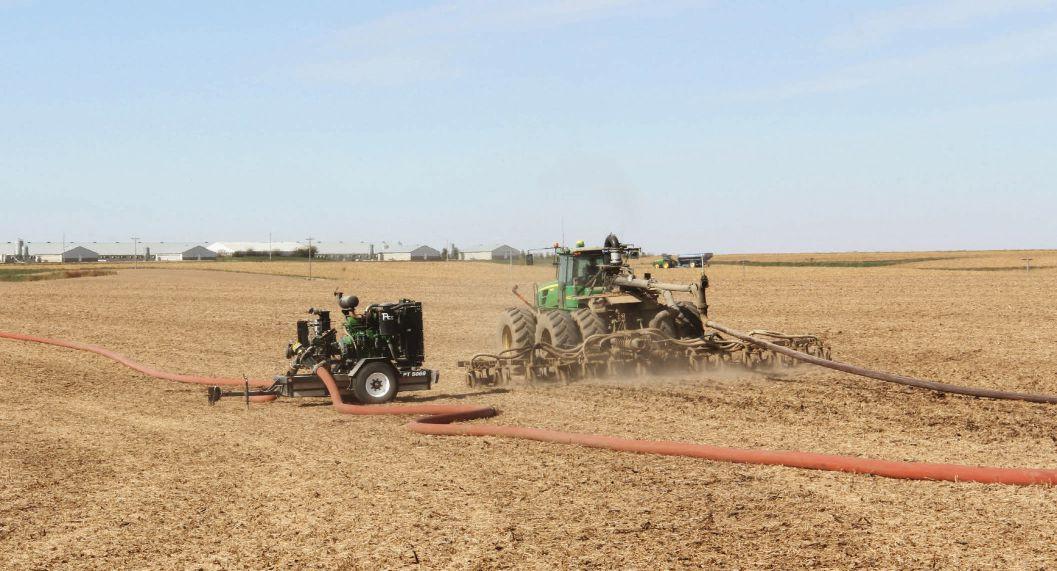
Prestage AgEnergy brings new co-gen plant online in North Carolina | 14
Farming with a conscience Utah dairy moves to new manure management system to better recycle water | 18
Achieving maximum profit
Determining limits to litter as fertilizer | 34
Stockpiling poultry litter
Best management practices are currently being updated thanks to research being conducted at Kansas State University.
4
Researchers at Kansas State University are developing best management practices for stockpiling and application of poultry litter
See page 10. Contributed photo
14 18 34
Pounds of power
Prestage AgEneregy brings new co-gen plant online with capacity to burn 60,000 tons of turkey litter
BY DIANE METTLER
Farming with a conscience
Utah dairy changes manure management system to better recycle water and create cleaner bedding
BY DIANE METTLER
Achieving maximum profit Study by researchers at the USDA’s Agricultural Research Service is determining limits to chicken litter as fertilizer
Environmental witch hunt
I really enjoy a well-written opinion piece, especially one touching on a subject I’m interested in.
So, you can imagine my delight when I read Chloe Vosters’ article in the Oct. 11 issue of Wisconsin State Farmer entitled: “A Tale of Two Manure Spills …and a Loss of Credibility.” [If you haven’t had an opportunity to read it, give it a Google] Vosters – a dairy science student at the University of Wisconsin-River Falls – plans to be the sixth generation of her family to farm and, based on her writing, is a very intelligent young lady. She was smart enough to quickly pick up on the dirty double standard present in some mainstream media – an animal manure spill is catastrophic news destined for the front-page while the release of raw human sewage is a yawner buried on page 4.
With deft skill, Vosters contrasted two articles – one covering the release of nearly 110 million gallons of raw sewage into rivers and lakes by the Milwaukee Metro Sewage District after a single rain event;
part by “exaggerated” reports from the environmental lobby. Pick up any daily newspaper in the days following the early October storm and you would be greeted by headlines such as “North Carolina’s Noxious Pig Farms” or “Exposing Fields of Filth” accompanied by aerial photos of flooded manure lagoons [handily supplied by the Waterkeeper Alliance].
Certainly, Hurricane Matthew spread destruction and flooding across eastern North Carolina farming operations. According to the N.C. Department of Environmental Quality, it flooded 14 manure lagoons, representing about 0.5 percent of the state’s permitted hog operations. But what the media and environmental lobbyists appear to be ignoring or glossing over is the fact that municipal wastewater plants spilled 62 million gallons of human sewage into rivers and streams following the hurricane. The Waterkeeper Alliance’s news releases saying nothing about municipal wastewater treatment plants.
“If it’s animal manure, it’s a disaster. Human waste? Oh well.”
the second a multi-day series investigating Wisconsin livestock operations, which have reportedly released about five million gallons of manure in the past seven years.
“As a young farmer with ambitions of my own, I am alarmed by the media’s double standard in the reporting exemplified by these two stories,” she stated in her opinion piece.
All of society should be. It’s not just occuring in Wisconsin. Recent coverage out of North Carolina following Hurricane Matthew has showed similar bias, helped in
“While people across North Carolina are working hard to protect lives and property, the Waterkeeper Alliance is exploiting this tragic situation to push their anti-farm agenda,” stated Deborah Johnson, CEO of the North Carolina Pork Council. “They remain focused on farms while ignoring the environmental impacts of spills from municipal waste systems and runoff from thousands of other sources.”
It would appear that old adage: “If it bleeds, it leads” has been replaced by: “If it’s animal manure, it’s a disaster. Human waste? Oh well.”
530 Simcoe, ON N3Y 4N5
Editor MARGARET LAND (519) 429-5190, (888) 599-2228, ext 269 mland@annexweb.com
Occasionally, Manure Manager will mail information on behalf of industry-related groups whose products and services we believe may be of interest to you. If you prefer not to receive this information, please contact our circulation department in any of the four ways listed above.
All advertising is subject to the publisher’s approval. Such approval does not imply any endorsement of the products or services advertisted. Publisher reserves the right to refuse advertising that does not meet the standards of the publication.
THE PERFECT COMBINATION
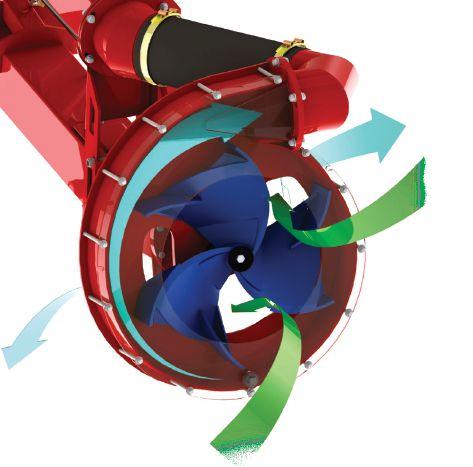
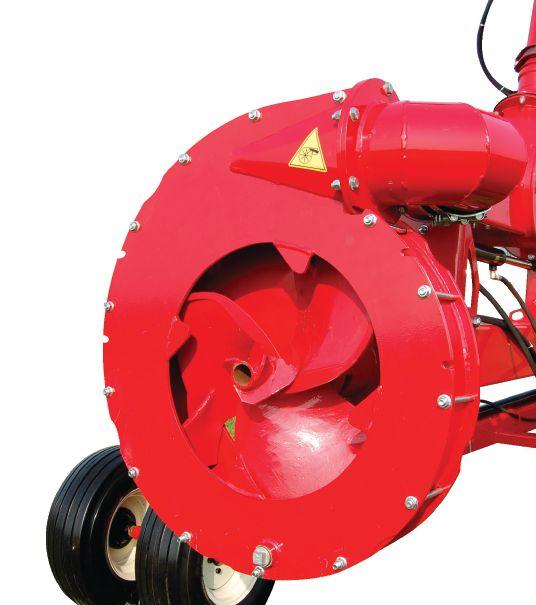
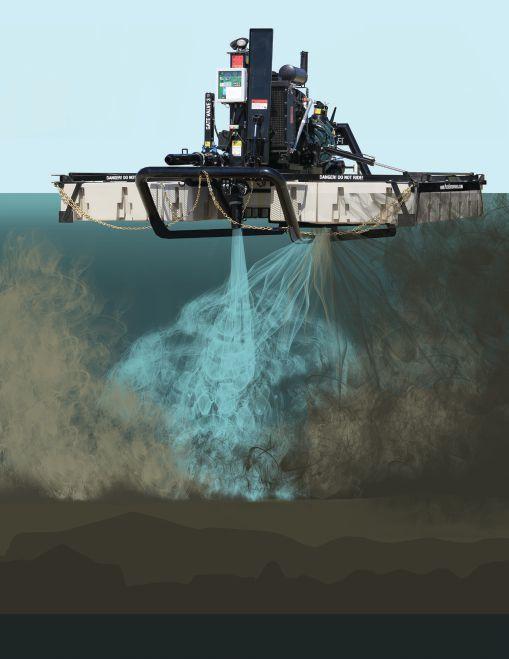
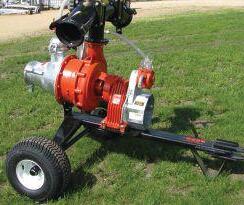
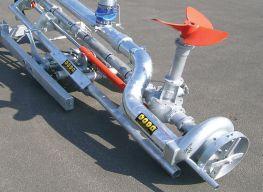
The PUMPELLER® Hybrid Turbine revolutionizes manure pump performance. Incredible intake suction pulls solids into the cutter knives, reducing the toughest crust to nothing in just seconds. The turbine combines the high-volume mixing of a propeller agitator with the power and reach of a lagoon pump, the resulting hybrid design radically outperforms both.
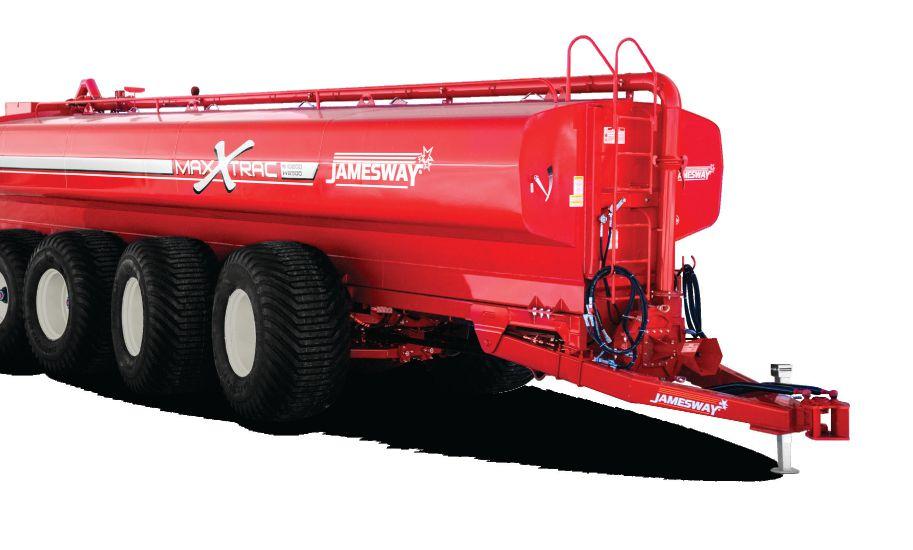
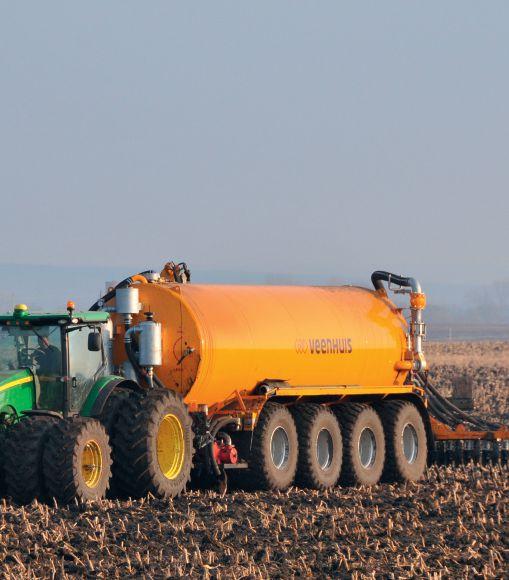
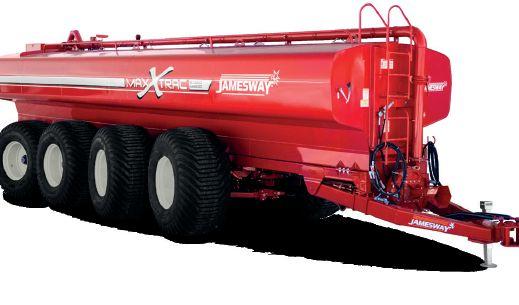
for professional haulers, Jamesway’s new MAXX-TRAC tankers deliver maximum performance.
Patented Turbine Impeller
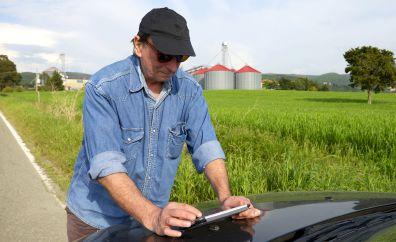
New app helps farmers make management decisions
A new app from Ohio State University allows growers to compare the effectiveness of different management decisions within fields. The aim, in part, is to improve water quality throughout the state.
Called Ohio State PLOTS, the free app allows growers, as well as consultants and others who support growers, to design replicated plot layouts by creating on-farm trials that can compare hybrids, seeding populations, fertilizer rates and nutrient management systems, among other practices and inputs.
The app allows users to digitally compare various treatments within their fields to determine the best management plan for their fields, before extending financial or labor resources.
The app was designed as a tool to help improve water quality in Ohio by allowing users to fine-tune nutrient management more accurately and reliably for a farm operation and by encouraging on-farm studies.
The app, which is available for both Apple and Android devices, includes a random number generator that removes human error when developing plot layouts. The app allows users to define an experiment that compares various response parameters such as yield, stand counts, crop health and varieties.
The report details information the user has entered regarding a specific trial, notes and photos they’ve taken throughout the growing season, and statistically analyzes parameters. The report can be shared with crop consultants and agronomists through the app. Users can also choose to keep the report private and stored in the cloud or exported as a CSV file to be used in programs such as Excel and Access.
The app can be downloaded free by searching for “Ohio State Plots” in the App Store and Google Play Store. More information on the app can be found at fabe.osu.edu/programs/precision-ag/other.
SCIENTISTS MAKE DISCOVERY THAT COULD REDUCE AGRICULTURAL WASTE
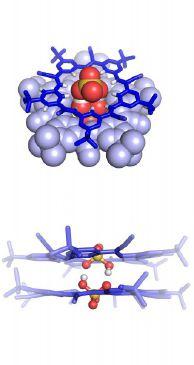
Indiana University researchers have reported the first definitive evidence for a new molecular structure with potential applications to reduce the chemicals that contaminate water and trigger large fish kills.
The study, which was published recently in the German scientific journal Angewandte Chemie International Edition, provides experimental proof for the existence of a chemical bond between two negatively charged molecules of bisulfate, or HSO4.
The existence of this structure – a “supramolecule” with two negatively charged ions – was once
regarded as impossible since it appears to defy a nearly 250-year-old chemical law that has recently come under new scrutiny.
“An anion-anion dimerization of bisulfate goes against simple expectations of Coulomb’s law,” said Amar Flood, a professor in the IU Bloomington College of Arts and Sciences’ Department of Chemistry and senior author on the study.
“But the structural evidence we present in this paper shows two hydroxy anions can in fact be chemically bonded. We believe the long-range repulsions between these anions are offset by short-range attractions.”
In molecular chemistry, two monomer molecules connected by a strong covalent bond are called a “dimer.” (A polymer is a chain of many monomers.)
In supramolecular chemistry, the dimers are connected by many weak, non-covalent bonds. A negatively charged particle is an anion.
The ability to produce a negatively charged bisulfate dimer might advance the search for chemical solutions to several environmental challenges. Due to their ion-extraction properties, the molecules could potentially be used to extract harmful phosphate ions from the environment.
“The eutrophication of lakes is just one example of the serious threat to the environment caused by the runoff of phosphates from fertilizers,” Flood said, referring to uncontrolled plant growth that results from excess phosphate nutrients running into lakes and ocean. When these chemicals get into the water supply as runoff from manure – produced by dairy farms and used to increase crop yields –they can trigger massive algae blooms that poison water supplies and kill fish in large numbers.
Reducing ammonia from cattle
Improved barn design, cleaning processes, and manure treatment could reduce ammonia emissions from commercial dairy cattle barns by 17 to 50 percent, according to a new study published in the journal Science of the Total Environment.
Under the Natura 2000 framework, EU member countries were requested to regulate their discharge of reactive nitrogen into protected natural ecosystems.
“But there is a lack of empirical data on how to do this,” said Luciano Barreto Mendes, a postdoctoral fellow in the International Institute for Applied Systems Analysis (IIASA) air quality and greenhouse gases and ecosystems services and management programs who also was the study’s lead author. “Our study aimed to assess to what extent management and design technologies could reduce emissions in full-scale commercial dairy cattle cubicle barns.”
Mendes and colleagues approached the problem using a model of ammonia emissions that was designed to calculate the ammonia emission reductions potential of new or adapted dairy cattle barns. It incorporated management technologies and processes designed to reduce emissions, including floor scraping, flushing with water, manure acidification, and using different types of flooring.
Based on results from the study, researchers proposed
TOP TURKEY PRODUCING STATES
Minnesota – 41 million
North Carolina – 31 million
Arkansas – 27.5 million
Indiana – 19.3 million
Missouri – 19 million
Virginia – 17 million
California – 11.5 million
a list of combinations of techniques that achieved the largest reductions. These include floor scraping combined with manure acidification (reduction efficiency of 44 to 49 percent), solid floor combined with scraping and flushing (reduction efficiency of 21 to 27 percent), plus floor scraping combined with flushing or floor scraping alone (reduction efficiency of 17 to 22 percent).
“Cow manure may not be the most glamorous subject for
Scraping
Flushing with water
Seperation of feces & urine
Outside storage
Acidi cation of manure
research, but the fact is that how we deal with waste has a major impact on the health of our environment. This study provides a useful set of interventions that farmers and agriculture policymakers can use to inform their compliance with … regulations.”
The model is currently being used to advice the Flemish government in Belgium on the performance of certain ammonia emission reduction systems for dairy barns in Flanders.
Average U.S. consumer eats of turkey per year Average weight mature turkey 16 POUNDS
30.3 POUNDS
233 MILLION BIRDS Number turkeys produced in U.S. (2015)
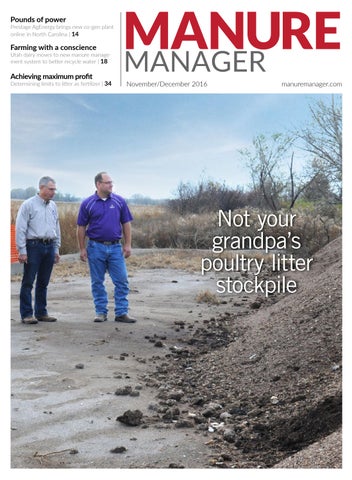
Not your grandpa’s poultry litter stockpile
New research into best management practices for stockpiling and application of poultry litter to cropland is being investigated at Kansas State University.
BY TREENA HEIN
Poultry producers in Arkansas, Missouri, Oklahoma and other areas of the United States and Canada are dealing with added nutrient management regulations on a continuous basis. Insight into best practices in stockpiling and application is critical.
Dr. Peter Tomlinson and agronomy graduate student Barrett Smith are now two years into a large research project evaluating improved storage sites for stockpiling of poultry litter for application to crop land. Dr. Tomlinson has been an assistant professor and extension specialist for environmental quality at Kansas State University since 2011 and his interest in studying manure and nutrient management began during his undergraduate years at the University of Connecticut.
ABOVE
“Poultry producers in Arkansas, Missouri and Oklahoma continue to face nutrient management regulations,” Dr. Tomlinson notes. “Kansas row crop producers in the southeast corner of the state are looking for cost-effective sources of N, P, and K and have found that poultry litter can cost effective way to meet their P, K and a portion of their N requirements. However, before the litter is applied it must be stored, and stored properly. The keys to a good storage site are that it’s accessible in all-weather conditions, is at least 300 feet away from water, has the ability to exclude extraneous drainage, and has an adequate buffer area before the runoff reaches water.”
This is exactly what Dr. Tomlinson has been studying, and he uses the word “encouraging”
sites
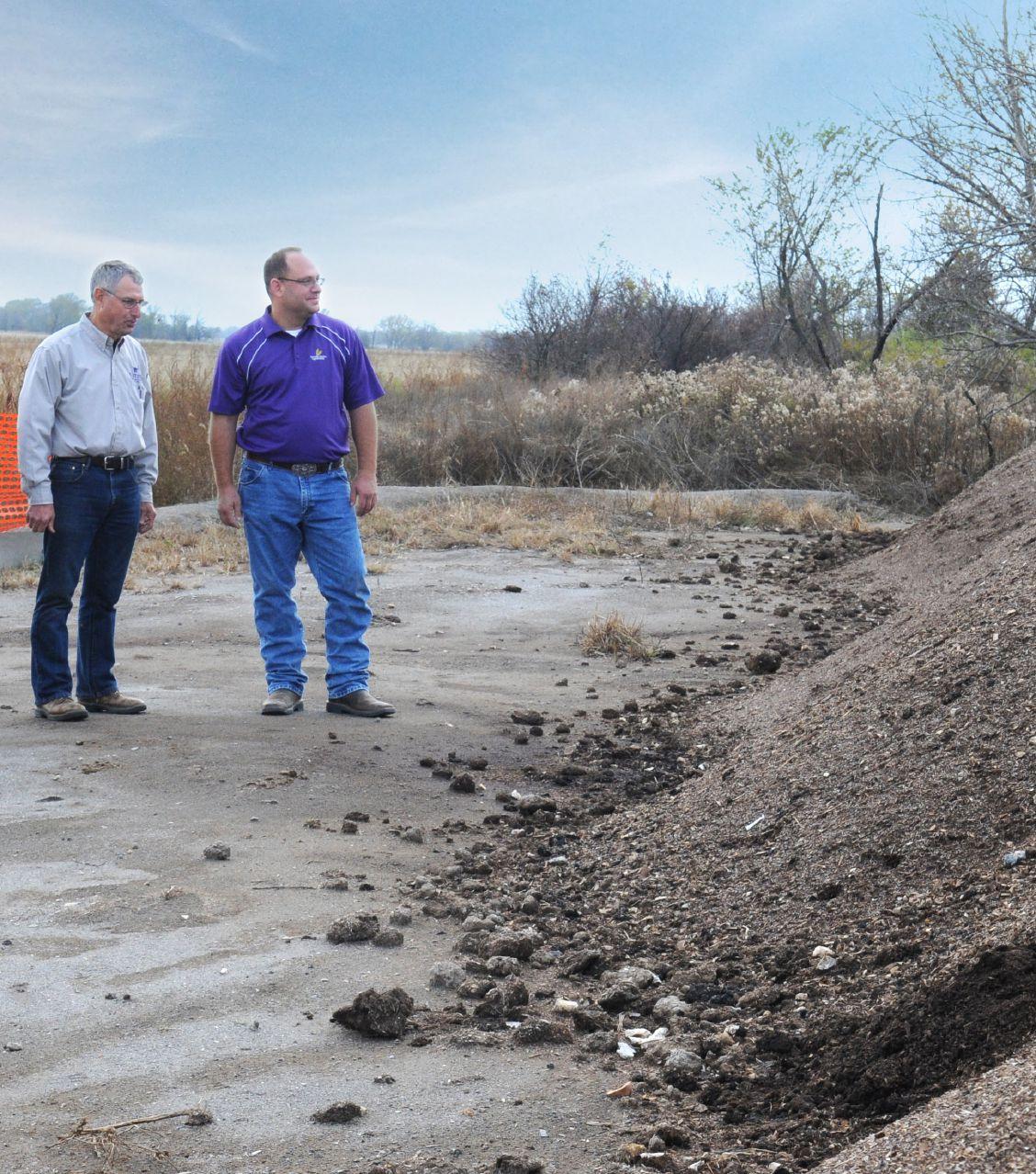
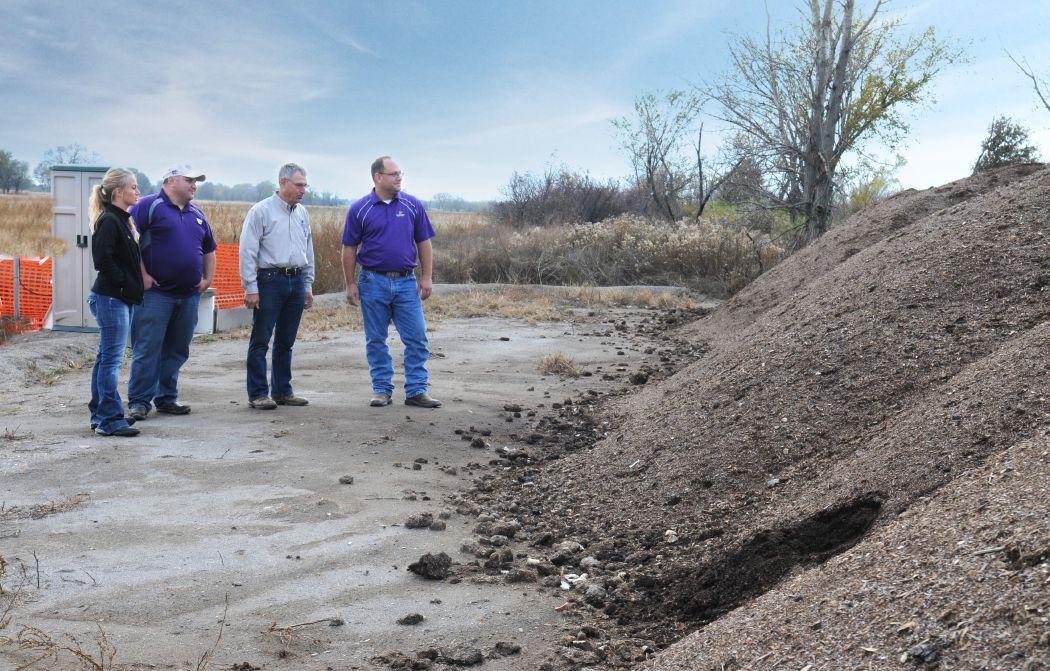
(Left to right) Jeri Geren, Kansas State Research and Extension Wildcat district agent; Josh Coltrain, Kansas State Research and Extension Wildcat district agent; Herschel George, Kansas State Research and Extension watershed specialist, and Dr. Peter Tomlinson, Kansas State Research and Extension specialist and assistant professor for environmental quality, examine a poultry litter stockpile that is part of a large research project evaluating improved storage
for stockpiling of poultry litter for application to crop land. Contributed photo
to describe his and Smith’s preliminary research findings from the last two years.
“Our initial look at the data is encouraging based on flow-weighted mean concentrations of run-off nutrients,” he explains. “We are in the process of calculating total load losses from the pad and buffer, which will allow us to determine if we are retaining the nutrients lost from the pad in the buffer area.”
From previous research and experience in small feedlot design, a chicken litter storage site evaluation sheet [agronomy.kstate.edu/extension/environmental-quality/ poultry_litter/index.html] and improved storage site specifications have been developed by Herschel George – Kansas State Research and Extension watershed specialist – and Dr. Tomlinson, with input from state agency personnel, the Kansas Farm Bureau and local watershed restoration and protection strategy groups. Dr. Tomlinson says the evaluation tool can be used to identify suitable locations for developing an improved storage site as well locating suitable locations for shortterm in field storage of poultry litter. The lowest score possible (lowest risk possible of detrimental runoff) is desirable.
The general guidelines for litter storage sites include:
1) Elevated earthen pad to eliminate ponding of water at the storage site
2) Extraneous drainage diverted around the storage site
3) From four- to six-inches of agricultural lime or equivalent added to provide an elevated level pad to store poultry litter
Year-round access to the storage site is also critical, says Dr. Tomlinson.
“In conversations with poultry litter brokers/transporters, they have indicated that they really like good all-weather access of the service entrances. What we mean by ‘all-weather’ access is access from a gravel road whereby a semi-truck with a 40-foot trailer can access the pad, even when weather conditions are rainy and or soil conditions are wet and might cause the semi to get stuck.”
Dr. Tomlinson notes that when the popularity of poultry litter increased in southeastern Kansas because fertilizer prices went up, one of the major issues was fear of getting stuck. He explains that drivers would only back the trailer into the field. By the time they finished off-loading the litter, the end of the pile was near or in the road ditch, and/or the trailer had left ruts where runoff was funneled directly into the ditch.
Dr. Tomlinson adds that producers
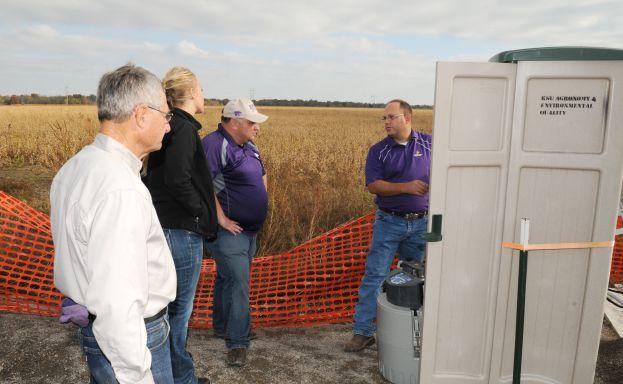
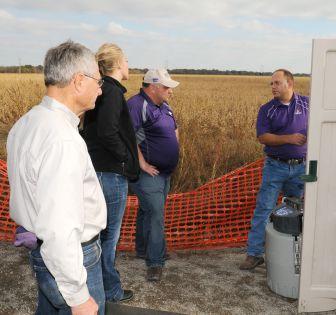
LEFT TO RIGHT Herschel George, Kansas State Research and Extension watershed specialist; Jeri Geren, Kansas State Research and Extension Wildcat district agent; Josh Coltrain, Kansas State Research and Extension Wildcat district agent, and Dr. Peter Tomlinson, Kansas State Research and Extension specialist and assistant professor for environmental quality, check out an automated water sampler housed in tool shed. CONTRIBUTED
have found the agricultural lime base of the storage pad is helpful when they are loading the manure for spreading because it gives a visual indicator that they have reach the bottom of the pile.
Farmers also need to exclude extraneous drainage from their poultry litter storage sites by limiting water from a higher landscape position from entering the site, obviously because adding water to the runoff that’s already being filtered through the buffer is not desirable.
“This typically involves constructing an earthen berm, during the pad construction building phase, that directs water that would normally run onto the pad away from, and around, the pad,”
Dr. Tomlinson explains. “The other option is to find storage locations sites that are at the top/crest of a landscape position such as the top of a hill. The key here is minimizing the water that has to be treated through the buffer to just that which is coming from the storage pad.”
In terms of best practices in creating a sufficient buffer between the storage area and natural bodies of surface water such as streams, Dr. Tomlinson says the storage site location should be at least 300 feet away. The distance from the pad to the edges of occasionally or frequently-flooded soil should be factored in as well (on the storage site evaluation sheet, the greater the distance,
the lower the score).
“We have also given different buffer types different values on the evaluation sheet,” explains Dr. Tomlinson. “Dense grass is a more efficient buffer than crop ground, for example. However, this is coupled with the buffer size calculation. So if you have crop ground present, you can reduce the score (risk) by increasing the buffer size. If the area is limited in size, then establishing a grass buffer would reduce your score.”
The project will be continuing for two more years. Although Dr. Tomlinson has only studied storage of broiler chicken litter, he anticipates that the principles and best management practices would be the same for turkey litter.
Kansas State University Soil Science Professor Dan Sweeney and colleagues have compared the application of fertilizer and turkey litter to sorghum grown in clay pan soils (common in Kansas) and found that application of litter is a viable option. At the eightleaf stage, there were no significant differences between fertilizer and/or turkey litter treatments.
“I haven’t done any price comparisons,” Dr. Sweeney says. “Pricing can certainly be important to producers, but with swings in fertilizer pricing and maybe litter pricing too, it can vary whether it is a cost savings to use poultry litter or commercial fertilizer.”
However, Dr. Sweeney says applying turkey litter annually to clay pan soils must be done carefully.
“Poultry manure has a greater ratio of P to N in comparison to other manures, so if poultry litter application is based on the crop’s N needs instead of its P needs, P can be greatly over-applied.”
Dr. Sweeney and colleagues have also studied nutrient run-off from application of turkey litter versus fertilizer. He found that run-off rates from fertilizer were usually lower than from N-based, and similar to P-based, turkey litter applications.
“Incorporation of the litter reduced the nutrient losses in runoff, but it didn’t always make any significant difference,” he explains. “Applying a lot of litter will build up soil P levels, and annual P runoff losses can accelerate when soil P values are very high.”
The chicken litter storage site evaluation sheet is available here: http://www.agronomy.k-state.edu/ extension/environmental-quality/ poultry_litter/index.html.
One hundred million pounds of power
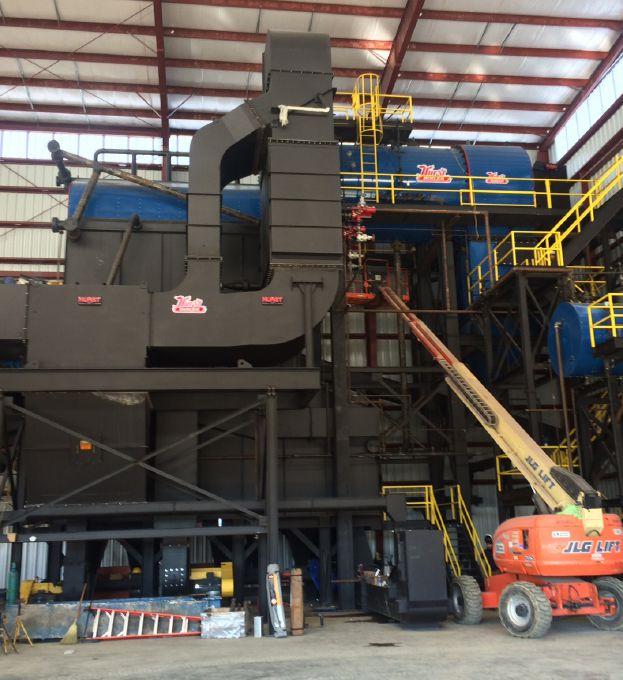
Prestage AgEnergy, a division of Prestage Farms, brings a new co-gen plant online that has the capacity to burn 60,000 tons of turkey litter annually, produce electricity, and provide steam for its feed mill.
BY DIANE METTLER
Prestage AgEnergy of North Carolina didn’t set out originally to build the largest co-gen plant to run solely on turkey litter. As vice president Michael Pope says, sometimes these things just “kind of evolve.”
Prestage began seriously considering a poultry litter project as far back as 2011. The company put in time doing its homework – and looking at various systems and why certain systems do and don’t work when dealing with poultry.
“Poultry litter doesn’t have the same BTU value as wood. It’s slightly less,” explains Pope. “But because litter is wood-based, it’s a much more traditional fuel source to work with.”
There was also a mandate to utility companies in North Carolina to purchase a certain amount
ABOVE
of renewable energy from swine, poultry, wind and solar.
“We started looking at ways to address the mandate to utilities, and also address any potential issues that may come down the road with poultry litter and land application,” says Pope. “Where we’re located – Sampson and Duplin County –there’s a lot of litter that has to be land applied.
In addition, Prestage had successfully used wood chip boilers in the past, and in particular Hurst boilers.
“We’d had great success with their [Hurst] equipment and their products, and that’s part of what lead to us collaborating with them on how we could make this work with poultry litter.”
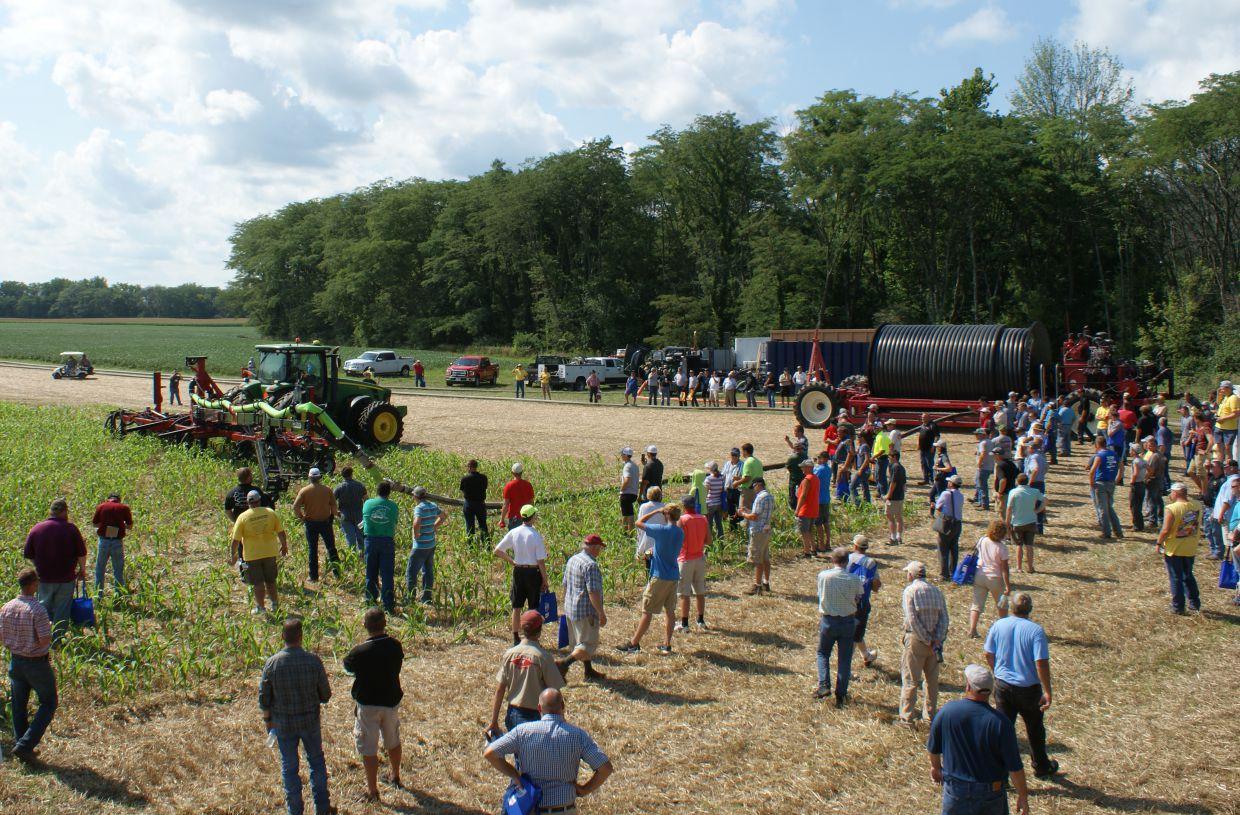
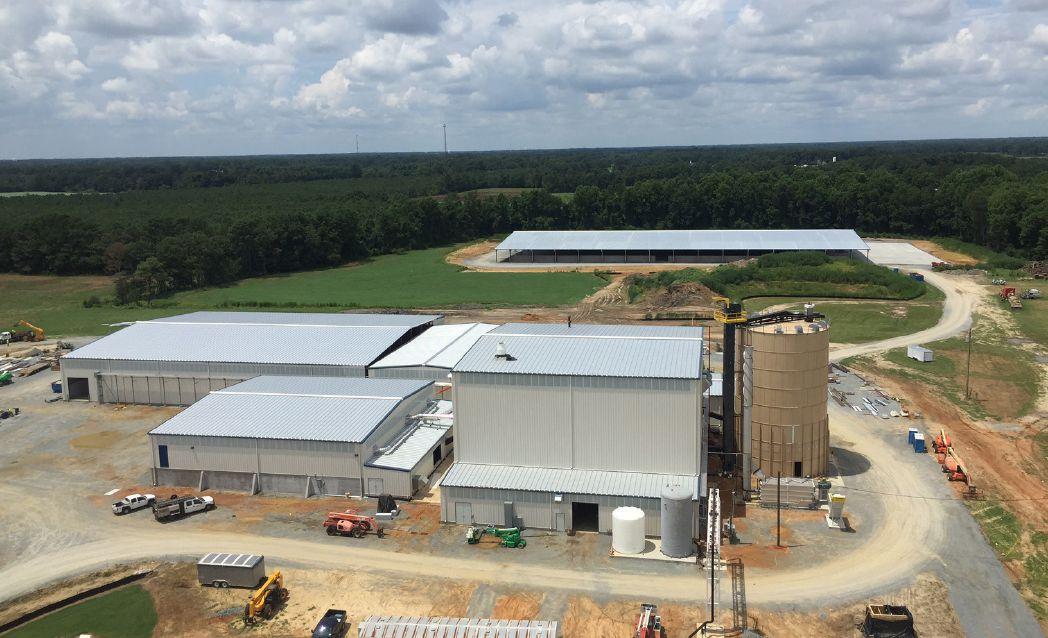
Prestage AgEnergy of North Carolina is currently constructing the largest co-generation plant to run solely on turkey litter near Clinton, NC. The facility is expected to be up and running in December 2016. INSET: Steam from the project will be used for Prestage’s feed mill to wean them off natural gas.
INNOVATIVE DESIGNS
HANDLING LIQUID WASTE SLURRY
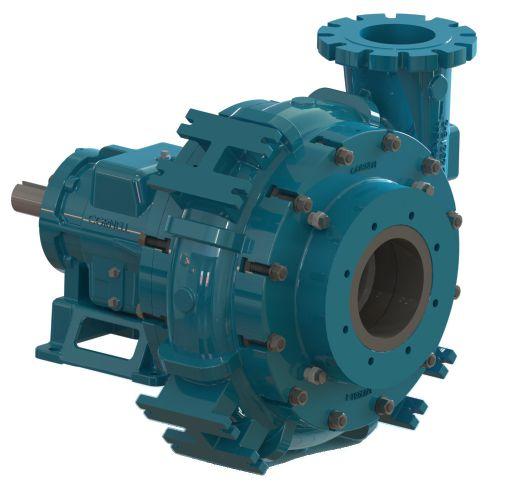
NEW 6819 MPC MODEL WITH 3” SOLIDS HANDLING ON POPULAR 6” PUMP SIZE!
Hybrid or All White Iron construction
Standard/Legacy 6” model 6NHTC19 (ductile iron construction) also available.
Talk to your authorized Cornell dealer about the superior solids handling and high head capabilities.
Hurst Boiler, out of Coolidge, Georgia, was also a good choice because of its long history in the energy business. The international manufacturer of a complete line of gas, oil, coal and hybrid biomass fuel-fired steam and hot water boilers has been operating since 1967.
When Prestage initially went to Hurst with its idea, Hurst wasn’t sure if their boilers would handle 100 percent poultry litter, but an unexpected event occurred in Guatemala that would change the course of events.
During a biomass shortage, a Guatemalan poultry company began fueling their Hurst wood chip boiler with chicken litter. As expected, the boiler ran into some issues, but it continued to operate.
“It was a very manual, and very crude process, but it demonstrated that even without treating the litter like we should, these boiler systems could handle poultry litter,” says Pope.
Creating the innovative boiler system for Prestage became a team effort. Hurst made some slight modifications to its
system and Prestage made modifications to how it would handle its litter prior to it reaching the boiler. The result was a 1500 HP biomass boiler, the largest in the United States, fueled 100 percent on poultry litter.
To run the boiler 24/7 will require approximately 175 tons of turkey litter per day. Prestage doesn’t see that as a problem. Pope says that not only is the company located in a good area for procuring litter, the industry is expanding in the region.
Crews will go out, as normally scheduled, to approximately 60 turkey farms to do a complete clean out of litter or a “cake” cleaning under the feed and water lines. The litter will be transported back to the facility. And, Pope notes, that although the boiler can run on chicken or turkey litter, the company is currently just focused on turkey litter.
At the Prestage facility, the litter will be brought to a litter building. There the litter will be blended for consistency – nutrient type and moisture content – and then conveyed to the boiler.
“Moisture content is key for utilizing litter in the boiler, and making sure that it gets a fairly consistent product coming in,” says Pope. “Our focus is power production and providing steam for our feed mill to get them off of natural gas. But we’re also focused on using the ash as a fertilizer, as it’s high in phosphorous and potassium.”
Storage is a big piece of the project –both for litter and ash.
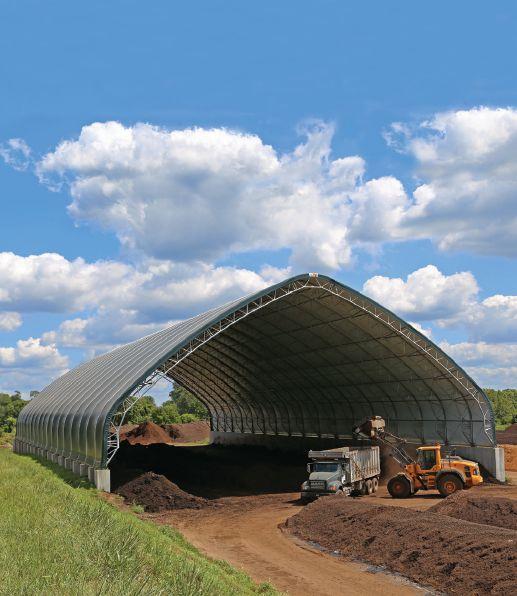
While the litter is stored in a large covered facility, the ash will be stored in an enclosed facility because once wet it tends to harden like concrete. The storage space for the ash is large because Prestage anticipates seasonal use by famers.
Prestage doesn’t see itself going into the “Prestage labeled fertilizer bag” business.
“We are teaming up with a very successful regional fertilizer company. We will be using their existing sales channels, and they’re very excited and absolutely believe they can move every ton of ash that we produce.”
The facility will be up and running in December 2016 and Prestage is estimating they will annually produce the equivalent of 95 GWh of power and 9,000 tons of quality ash.
Pope says the nutrient-rich ash product not only gives the company options, but farmers as well.
“The ash can go to fertilizer manufacturers. It can also go straight into field application for the farmers,” says Pope. “That’s nice because a lot of farmers have used poultry litter in land application for
their crops, but don’t always get consistent spread and can’t precision farm. So, instead of using litter, they sell us the litter and with the money we put in their pockets, they can take that and buy traditional fertilizer that allows them to precision farm, get better yields on their crops and give the fields exactly what they need.”
The challenges have been exactly what one would expect with a first-of-its-kind system – figuring out exactly what the boiler is capable of, and the make up of the litter to ensure it functions properly and efficiently.
“We’ve learned it’s expensive being innovative. But it’s good, because what it really does at the end of the day is benefit all the poultry growers,” says Pope.
“Growers have to get rid of the litter and land application has been an issue depending on time of the year and the weather. Currently, growers may or may not be able to get the litter out of their houses and land applied. There are certain areas that may be rich in phosphate, where you don’t want to put litter on the ground. Also, farmers never know what the EPA is going to do, and what sort of challenges they may have to face environmentally. What this system does is provide another outlet – a year-round outlet – for poultry growers to send their litter for processing.”
One challenge Prestage didn’t face was finding an experienced crew to run the new facility. An older power plant in the area wasn’t able to successfully complete a conversion from wood chips to poultry litter, and had to shut down. The timing was such that Prestage was able to step in and hire a significant number of people from that facility to operate theirs.
“We’ve got operators experienced in running a power plant and using a wood based product. And they do have some experience from testing poultry litter at their facility. We couldn’t be more blessed,” says Pope. “It was unfortunate that a facility had to close, but we were able to pick up the best of the best to operate this facility.”
Prestage is proud that it hasn’t rushed into this new area, and that it has put in the time and energy to ensure the road it’s taking and the technology sued will be successful.
“Because [Prestage] was new to this arena and because it was all poultry litter, we didn’t want to get out there, fall flat, and it be a failure and a disappointment to the industry,” says Pope. “We want to make sure it works and that it was longterm and that it would create avenues for others or ourselves to expand on what
we’re doing.
“We’ve taken our bumps and we got our lumps and bruises, and we know that going forward, we can do this more cost-effectively. I definitely think that this can be replicated at better cost and can provide more benefit to growers and producers in the industry as a whole.”
Does that mean Prestage may build more of these facilities?
“There’s definitely the possibility of putting in additional plants,” says Pope. “We always evaluate what comes along
and what makes sense, and we try to stay true to who we are as a company and focus on what we do well. We’re a very successful national pork and poultry company. We’re very good at live production and very good at poultry processing, so getting into power generation and fertilizer production is a new realm, but we’ve got 30-plus years of success behind us and we wouldn’t step out and do these types of things if we weren’t positive we’d be successful with this.”
Farming with a conscience
Mosida Farms, located near Elberta, Utah, is moving from a scrape to flush manure system to allow the operation to better recycle water and create cleaner sand.
BY DIANE METTLER
It’s 102 Fahrenheit at Bateman’s Mosida Farms in Elberta, Utah, 60 miles outside Salt Lake City. The heat is taking its toll on the dairy cows. Fans and soaker hoses run. But the heat is also taking a toll on the farmers and the community as the conflict over water usage grows.
The Batemans don’t take the water issue lightly. They continue to improve their processes, work hard to create a sustainable farm, and continually educate people about what it takes today to be a food source. Their hard work is one of the reasons they received an Outstanding Dairy Farm Sustainability award from the Innovation Center for the U.S. Dairy.
Judges evaluated the nominees’ sustainability practices based on their economic, environmental,
ABOVE
and community impact. The independent judging panel – including experts working with and throughout the dairy community – also looked for learning, innovation, improvement, scalability, and repeatability.
The Bateman family has grown their farm into one of the largest dairies in the state with 7,000 milking cows. Along with their father, Wayne Bateman, the four Bateman brothers – Jason, Steve, Brad and Lance – currently own and operate the farm.
In addition to the dairy, the brothers also farm 3,000 acres and raise all their own heifers.
Jason Bateman says his grandfather started the dairy a number of years ago in West Jordon. After his grandfather retired in 1972, his dad, Wayne, moved
The Bateman family of Elberta, Utah, has grown their farm into one of the largest dairies in the state with 7,000 milking cows. INSET Brothers Jason, Steve, Brad and Lance Bateman currently own and operate Mosida Farms with their father Wayne Bateman.
the dairy to its current location. That year they were milking around 250 to 300 cows and have steadily grown.
Today, the fourth generation is coming on board, but only if the farm remains both profitable and sustainable.
Mosida Farms is a freestall dairy and uses sand for bedding. Jason says the farm is moving from a scrape to a flush system. The flush system will allow them to both better recycle both water and create cleaner sand.
Since around 2008, Batemans have been using a gravity sand sidewalk system. They created it themselves after seeing one in California that they liked because of the low maintenance.
“It has four-foot sides and is 540 feet long,” explains Jason. “The manure comes in at one end about two-thirds up, hits a wall, angles and heads down on a slope. There are two cells so that we can get the sand to fall. We take [the sand] out of our sand cells up to the drying yards, which are sloped with southern exposure.
“We put the sand in windrows,” he adds. “And then we bake it and turn it, and bake it and turn it. It dries the sand, and kills the bacteria. Once the moisture is gone, we move it back into the stalls.”
Drying time depends on the weather. When it 100-plus Fahrenheit, like it has been this summer, it can take just four or five weeks. But other times of the year, it can take up to three or four months.
The farm is able to reclaim 11 to 12 dump truck loads of sand from the sidewalk every day.
“We’re saving about 83 to 85 percent of our sand,” says Jason. “Of course, we’re always adding to that, but we’re able to save a lot in transportation costs, because all of our sand sources are 50 miles away.”
Another area of constant improvement at the farm is the separation system. Mosida Farms is currently downsizing the number of separators to four Houle primary separators, and will be adding Houle secondary separators as well.
Once the manure is separated from the sand, it continues to a 60,000-gallon mixing tank, which allows them to get “a good mix” says Jason.
“Next it goes over to our primary separators.”
The water is collected and some is used for the cows. What water isn’t used continues to build and eventually moves to a storage tank where it pumped onto the fields. What can’t be used on the fields or for the cows, goes on to a lagoon.
“It’s been kind of an evolving thing
here since we built the big barn in 2001 perfecting it,” he says. “We’re able to recycle the water many times, that’s part of the reason why we wanted to use this system.”
The solids coming off the separators are composted in windrows and then later spread on fields.
Jason estimates it takes three to six months to fully compost the solids, but it can vary.
“At times we have to add water, because it’s so dry. And it depends on whether it comes out of our heifer pens or if it comes out of the separators. And it also depends on the weather.”
“We’re providing a food source for them and someday they’re going to be choosing between a golf course and their food supply.” – Jason Bateman
solar farm should be able to provide 90 percent of the farm’s energy needs in the winter, and somewhat lesser in the summer.
“We did it to try to hedge your power bill for the next 20-plus years,” explains Jason.
Even with all the work that the Batemans have put into their farm to conserve water – recycling the same water many times and using only 250,000 gallons a day, which is a relatively small amount for a farm of this size – many people unfamiliar with what goes into farming are upset. They would like to see water taken from the farmers for their own use.
“In Utah, water is a big issue because we’re in a drought. The lakes are drying up. It’s hot. People need to understand that we aren’t farming just to make money. We have to make money to be in business, but we’re providing a food source for them and someday they’re going be choosing between a golf course and their food supply. That’s what we’re trying to educate them towards.”
The Batemans are trying to fight this mindset through education.
“We have a lot of visitors,” says Jason.
When it comes to spreading, the Batemans use a GPS system and only apply as needed according to their CNMP (Comprehensive Nutrient Management Plan). The compost saves on commercial fertilizer says Jason.
“And it’s better because it’s organic and it’s natural. The nutrients are available. In combination with commercial fertilizer, it works really well.”
The liquids used for irrigation are held in a nearby lagoon. Jason says that in the dry state of Utah, storage is handled a bit differently.
“We don’t have to have 160 to 180 days of storage. We can haul all year if we need to, depending on the weather. If it’s stormy, then we can put it in the lagoon, and if it’s not, then we can haul and do whatever.”
Jason says it’s important to “use every resource very wisely.
“You can save millions and millions of gallons that you’re already producing for the cows that you can use later on the crops.”
The Batemans have also installed a state-of-the-art calf barn that has increased production in the herd and just finishing constructing a 600kw solar farm, which began producing power in late July. The
Some ask to tour, and others are invited. The farm recently hosted two busloads of young diary science students here from all over the country. They’ve also supplied tours for dieticians that graduated from Brigham Young University.
“We teach them that this is where their food comes from. And if not us, where are they going to get their food from? Are they going to buy it from other countries? Countries that don’t have good safety practices like we do?
“Most people don’t understand everything it takes to bring a gallon of milk to their house. And the tens of millions of dollars it takes to be a dairyman nowadays. I think if you can show them that we have nothing to hide; we treat our animals well; we provide a safe, healthy product for them; there’s value in that.”
Some day Jason foresees the farm will run digesters.
“I’ve seen lots of them and we’ve been all over the country looking at them. I’m still not ready to put one in because they still have a lot of problems. Hopefully our end goal is to generate power off of the digesters, off of the manure, and all those things, and still have the nutrients to grow the crops.”
In the meantime, the Batemans will continue to make their farm more efficient and sustainable.
“We’re not done, but we’re getting closer to the end result of what we want.”
Arctic Cat Inc. announces its new 2017 model year side-by-side recreational off-road vehicles (ROVs), the Wildcat X and Wildcat 4X models, and the Alterra 300 ATV. The three new Wildcat side-by-sides include the two-occupant Wildcat X EPS and Wildcat X Limited EPS, plus the four-occupant Wildcat 4X EPS. All three models feature an entirely new RG PRO rear suspension package. In addition, Arctic Cat is introducing the new Alterra 300 ATV, which blends full-sized features and durable engine performance. arcticcat.com
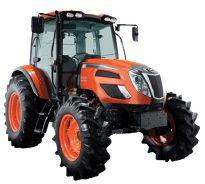
Kioti Tractor is expanding its PX tractor series with the launch of three new models: the PX9530PC, PX1053PC and PX1153PC. The new models offer operators more gross engine power than previous, with the PX9530PC, PX1053PC and PX1153PC yielding 93, 103 and 110 horsepower Tier 4 compliant diesel engines, respectively. Outfitted with a synchronized power shuttle transmission, the new models provide smooth shuffle operation and allow the operator to perform loader work without pressing the clutch pedal. In addition, the new models offer a lift capacity of more than 8,000-pounds and deliver PTO speeds ranging from 79.1 horsepower to 92.2 horsepower. The models offer many standard features including a climate-controlled cab, four-wheel drive, a category II three-point hitch and come standard with dual remote hydraulic valves to accommodate a wide variety of attachments and implements. kioti.com
McLanahan Bedding Dryer
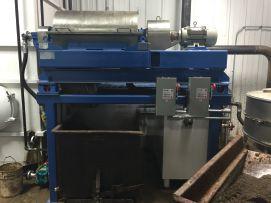
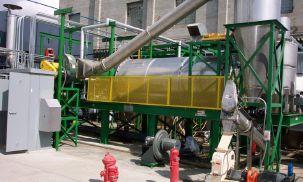
Used for both sand and manure solids, McLanahan Bedding Dryers use high temperatures to quickly reduce moisture and kill pathogens that lead to poor cow health and low milk quality. The system is mounted on ductwork and collectors, hooked up to electricity, and connected to an energy source for heat. Minimal operator interaction is required. Producers need to monitor exhaust temperatures, which help indicate dryness of the material. Once the target exit temperature is established and set, the system automatically adjusts to maintain that desired temperature. The system is fed via a hopper, which supplies material at a constant rate. Bedding material is retained in the dryer just long enough to remove moisture and kill the maximum number of pathogens possible. At the exit, the finished product is conveyed to the desired storage location and can be ready for bedding with no further handling. mclanahan.com
Big Dutchman Manure Belt Scraper
Bauer Plug and Play Manure Separator
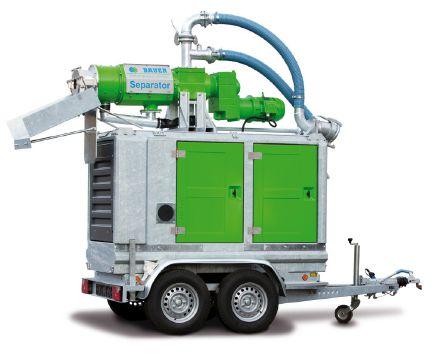
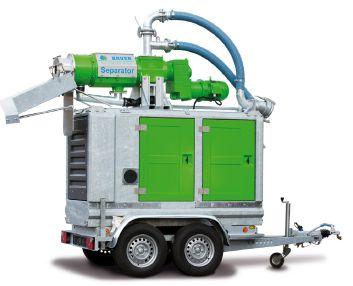
Bauer North America recently introduced its Plug and Play Portable Manure Separator, a portable, spacesaving option for dairy producers in the U.S. and Canada. All essential components – separator, pumps, controls, tubing, cables – are incorporated into a single compact unit with a footprint small enough to be mounted on a forklift. Output is approximately 177 cubic feet (5 cubic meters) per hour for dairy slurry, yielding a dry matter content of up to 36 percent depending on separator configuration. The Plug and Play is operational after just a few steps, and disconnects quickly for efficient separation at multiple locations on the same farm, or at multiple farms. bauer-at.com
Egg producers with single or multi-tier Natura aviary egg production systems can look forward to it: Big Dutchman is presenting the first manure belt scraper world-wide that does not need to be operated manually. AVC-3D folds down the scraper fully automatically, what once was very exhausting work. Apart from that, the integrated self-cleaning function significantly facilitates cleaning. This has a positive influence on hygiene in the house and on the birds’ welfare. A linear motor takes over folding down automatically saving egg producers approximately three minutes per manure removal procedure on every manure belt. A vibration motor is located below the scraper, creating micro-vibrations during the manure removal process. These vibrations clean the scraper profile thoroughly and remove even the slightest attachments. Vibration dampers avoid the transmission of vibrations to the system, which would have a negative impact on the laying hens. bigdutchman.com
Patented Chopper Pumps
Dual chopping system to prevent clogging
Open design high speed impeller with adjustable pressure plate for unsurpassed performance with mechanical seals
Electric/PTO models, 4ft to 20ft
Manure Separators
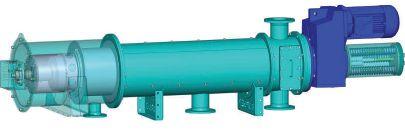
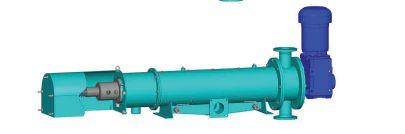
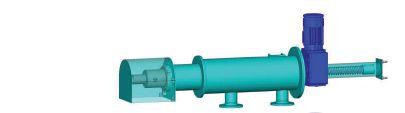
NEW Stainless casted augers with super hard coating for 40% dry bedding
NEW DODA self-adjusting weights
Heavy duty planetary gearbox with 15HP USA electric motor
Sales - Service - Install
MM_Doda_JulyAug16_CSA.indd 1
MANURE MANAGER
2017 BUYERS GUIDE
5ELEM USA INC.
10060 W. Sam Houston Parkway S. Houston, TX 77099 USA
Iowa Pork Producers Association / Iowa Pork Congress
U.S. Poultry & Egg Association
BUILDING/BARN CONSTRUCTION
Agprofessionals, LLC
ClearSpan Fabric Structures
GEA North America
Hawkeye Steel Products Inc.
CLEANING & SANITIZING EQUIPMENT
Bauer North America
Fan Separator
Hydro Ag Supply
Jeni Mobile Wash Ltd.
Udder Tech, Inc.
COMMERCIAL MANURE APPLICATION
Allegheny Ag LLC
Bambauer Equipment LLC
Cedar Crest Equipment LLC
DODA USA Inc.
Greenfield Spreading & Sales Inc.
Hydro Ag Supply
Redhand Ltd.
Suma America, Inc.
Sundstrom Pit Pumping LLC
Teamco
Vanden Bussche Irrigation & Equipment Ltd.
VTI LLC Vertical Till Injector
COMPOSTING
A & L Great Lakes Laboratories
Bauer North America
Brown Bear Corporation
Cedar Crest Equipment LLC
ClearSpan Fabric Structures
Dutch Industries Ltd.
Fan Separator
HCL Machine Works
LVI Litter Processors
Mighty Grow Organics
Patz Corporation
Press Technology & Mfg., Inc.
U.S. Screen Company
CONSULTANTS
Design Consultants
Agprofessionals, LLC
ClearSpan Fabric Structures
Industrial & Environmental Concepts Covers
KPD Consulting Ltd
PlanET Biogas Solutions Inc.
Trident Processes LLC
Veolia Water Technologies
Yunker Plastics, Inc.
Engineering Consultants
Agprofessionals, LLC
Agriment Services Inc.
ClearSpan Fabric Structures
Degelman Industries
DVO, Inc.
Industrial & Environmental Concepts Covers
KPD Consulting Ltd
McLanahan Corporation
PlanET Biogas Solutions Inc.
Trident Processes LLC
Veolia Water Technologies
Management Consultants
A & L Great Lakes Laboratories
Agprofessionals, LLC
KPD Consulting Ltd
Midwest Bio-Systems
PlanET Biogas Solutions Inc.
Teamco
Trident Processes LLC
Veolia Water Technologies
VTI LLC Vertical Till Injector
CONTROL SYSTEMS
Bazooka Farmstar
Hydro Ag Supply
KPD Consulting Ltd
PlanET Biogas Solutions Inc.
Trident Processes LLC
DRAINAGE MANAGEMENT SYSTEMS
Agprofessionals, LLC
U.S. Screen Company
DRYING SYSTEMS
McLanahan Corporation
U.S. Screen Company
Vulcan Systems
DUMP BOXES
Brochard North America
de Bie Manufacturing Ltd.
Harco Ag Equipment
Mohrlang Fabrication
Nuhn Industries Ltd.
Teamco
EDUCATION
Iowa Pork Producers Association / Iowa Pork Congress
Technical Publication Associates, Inc.
GAS PURIFICATION SYSTEMS
Veolia Water Technologies
GOVERNMENT REGULATIONS
Agprofessionals, LLC
INJECTION EQUIPMENT
Allegheny Ag LLC
Bambauer Equipment LLC
Bazooka Farmstar
Cedar Crest Equipment LLC
GEA North America
Husky Farm Equipment Ltd.
Hydro Ag Supply
Hydro Engineering
Jamesway Farm Equipment
Metal 360 Inc
Nuhn Industries Ltd.
Redhand Ltd.
Teamco
Vanden Bussche Irrigation & Equipment Ltd.
Veenhuis Machines B.V.
VTI LLC Vertical Till Injector
IRRIGATION EQUIPMENT
Hose Reels & Caddies
Automated Waste Systems LLC
Bauer North America
Bazooka Farmstar
Cadman Power Equipment Ltd.
Cedar Crest Equipment LLC
ClearSpan Fabric Structures
Hodels, Inc.
Husky Farm Equipment Ltd.
Hydro Ag Supply
Hydro Engineering
Teamco
Vanden Bussche Irrigation & Equipment Ltd.
Hoses
5ELEM USA Inc.
Automated Waste Systems LLC
Bazooka Farmstar
Cadman Power Equipment Ltd.
Cedar Crest Equipment LLC
ClearSpan Fabric Structures
FloTech Pump
Hodels, Inc.
Hydro Ag Supply
Hydro Engineering
Metal 360 Inc
Teamco
Vanden Bussche Irrigation & Equipment Ltd.
Pivot Irrigation
Automated Waste Systems LLC
Cadman Power Equipment Ltd.
Cornell Pump Company
Hydro Ag Supply
LAGOONS
Lagoon Covers
Agprofessionals, LLC
Agriment Services Inc.
ClearSpan Fabric Structures
Industrial & Environmental Concepts Covers
Yunker Plastics, Inc.
Lagoon Liners
Agprofessionals, LLC
Agriment Services Inc.
ClearSpan Fabric Structures
Industrial & Environmental Concepts Covers
Yunker Plastics, Inc.
LOADERS & ACCESSORIES
Allegheny Ag LLC
Degelman Industries
JCB Inc
Pichon
LUBRICANTS & FUEL ADDITIVES
Hydro Ag Supply
Schaeffer Lubricants & Fuel Additives
MANAGEMENT
Municipal Waste Management
Agriment Services Inc.
Bazooka Farmstar
Cadman Power Equipment Ltd.
DODA USA Inc.
DVO, Inc.
Hydro Engineering
Industrial & Environmental Concepts Covers
KPD Consulting Ltd
McLanahan Corporation
Patz Corporation
PlanET Biogas Solutions Inc.
Teamco
VTI LLC Vertical Till Injector
Vulcan Systems
Yunker Plastics, Inc.
Nutrient Management
A & L Great Lakes Laboratories
Aerway/SAF-Holland Canada Limited
Agprofessionals, LLC
Agriment Services Inc.
Bambauer Equipment LLC
Bauer North America
Bazooka Farmstar
Cadman Power Equipment Ltd.
ClearSpan Fabric Structures
Digi-Star LLC
DVO, Inc.
Fan Separator
GEA North America
KPD Consulting Ltd
Livestock Water Recycling, Inc.
LVI Litter Processors
McLanahan Corporation
Midwest Bio-Systems
Mighty Grow Organics
Patz Corporation
PlanET Biogas Solutions Inc.
Pro-Act Biotech
Slurrystore
Trident Processes LLC
VTI LLC Vertical Till Injector
MANURE CONVEYOR SYSTEMS
Cedar Crest Equipment LLC
Jamesway Farm Equipment
KPD Consulting Ltd
McLanahan Corporation
Patz Corporation
Press Technology & Mfg., Inc.
Teamco
Trident Processes LLC
MANURE TANKERS
Allegheny Ag LLC
Bambauer Equipment LLC
Bauer North America
Cedar Crest Equipment LLC
de Bie Manufacturing Ltd.
Fliegl US
Geneva Logistics, Inc.
Hodels, Inc.
Husky Farm Equipment Ltd.
Hydro Ag Supply
Jamesway Farm Equipment
Nuhn Industries Ltd.
Pichon
Teamco
Veenhuis Machines B.V.
VTI LLC Vertical Till Injector
MEASUREMENT SYSTEMS
Agprofessionals, LLC
Digi-Star LLC
METHANE COLLECTION
DVO, Inc.
Geomembrane Technologies Inc. (GTI)
Industrial & Environmental Concepts Covers
Livestock Water Recycling, Inc.
PlanET Biogas Solutions Inc.
Veolia Water Technologies
POLYMERS
Agriment Services Inc.
Boerger, LLC
KPD Consulting Ltd
Livestock Water Recycling, Inc.
Trident Processes LLC
PUBLICATIONS
Technical Publication Associates, Inc.
PUMPS
Allegheny Ag LLC
Bambauer Equipment LLC
Bauer North America
Bazooka Farmstar
Boerger, LLC
Cadman Power Equipment Ltd.
Cedar Crest Equipment LLC
Cornell Pump Company
DODA USA Inc.
Fan Separator
Gator Pump, Inc.
GEA North America
Hodels, Inc.
Husky Farm Equipment Ltd.
Hydro Ag Supply
Hydro Engineering
Jamesway Farm Equipment
McLanahan Corporation
Metal 360 Inc
Nuhn Industries Ltd.
Patz Corporation
PlanET Biogas Solutions Inc.
Puck Custom Enterprises, Inc.
Remote Load, Inc.
Smart Turner Pumps
SRS Crisafulli Inc.
Teamco
Vanden Bussche Irrigation & Equipment Ltd.
Vaughan Company Inc.
Veolia Water Technologies
RESEARCHERS
Degelman Industries
Livestock Water Recycling, Inc.
SAFETY EQUIPMENT
White Mountain Chain Inc
SCRAPERS
Allegheny Ag LLC
Cedar Crest Equipment LLC
GEA North America
Jamesway Farm Equipment
Patz Corporation
SEPARATORS
Agriment Services Inc.
Bambauer Equipment LLC
Bauer North America
Boerger, LLC
Cedar Crest Equipment LLC
DODA USA Inc.
Fan Separator
GEA North America
KPD Consulting Ltd
Kyte Centrifuge LLC
Livestock Water Recycling, Inc.
McLanahan Corporation
Patz Corporation
PlanET Biogas Solutions Inc.
Press Technology & Mfg., Inc.
Teamco
Trident Processes LLC
U.S. Screen Company
Vanden Bussche Irrigation & Equipment Ltd.
Vincent Corporation
SPREADERS
Liquid
Agriment Services Inc.
Allegheny Ag LLC
Automated Waste Systems LLC
Bazooka Farmstar
Cadman Power Equipment Ltd.
Cedar Crest Equipment LLC
de Bie Manufacturing Ltd.
GEA North America
Harry West (Prees) Ltd.
Hodels, Inc.
Husky Farm Equipment Ltd.
Hydro Ag Supply
Jamesway Farm Equipment
McLanahan Corporation
Patz Corporation
Pichon
Remote Load, Inc.
Teamco
Veenhuis Machines B.V.
VTI LLC Vertical Till Injector
Solid
Agriment Services Inc.
Allegheny Ag LLC
Artex Manufacturing
Automated Waste Systems LLC
Brochard North America
Cedar Crest Equipment LLC
de Bie Manufacturing Ltd.
Harry West (Prees) Ltd.
Hydro Ag Supply
Jaylor
Kuhn North America Inc.
McLanahan Corporation
Mohrlang Fabrication
Pichon
Pik Rite Inc.
STORAGE
Portable/Temporary Manure Storage
Bambauer Equipment LLC
Bazooka Farmstar
Cadman Power Equipment Ltd.
ClearSpan Fabric Structures
Hodels, Inc.
LSC Pre-Cast Systems Ltd.
Slurrystore
Storage Lagoons
Agprofessionals, LLC
Agriment Services Inc.
Green Earth Naturally/EarthCleanz
Industrial & Environmental Concepts Covers
LSC Pre-Cast Systems Ltd.
Yunker Plastics, Inc.
TANK SYSTEMS
Bambauer Equipment LLC
Bazooka Farmstar
de Bie Manufacturing Ltd.
Diller Equipment
F.S.R.C. Tanks Inc.
Geneva Logistics, Inc.
Industrial & Environmental Concepts Covers
Nuhn Industries Ltd.
PlanET Biogas Solutions Inc.
Pro-Act Biotech
Slurrystore Teamco
TILLAGE
Allegheny Ag LLC
Dutch Industries Ltd.
JCB Inc
VTI LLC Vertical Till Injector
TIRES
Allegheny Ag LLC
Alliance Tire Americas, Inc.
TRAILERS
Allegheny Ag LLC
Artex Manufacturing
Circle R Side Dump
de Bie Manufacturing Ltd.
Fliegl US
Geneva Logistics, Inc.
Harry West (Prees) Ltd.
Hodels, Inc.
Husky Farm Equipment Ltd.
Mohrlang Fabrication
Nuhn Industries Ltd.
Pichon
Veenhuis Machines B.V.
WATER TREATMENT
Waste Water Treatment
Agprofessionals, LLC
REGULATE NUTRIENT APPLICATION
Agriment Services Inc.
ATD Waste Systems Inc.
Bauer North America
Boerger, LLC
ClearSpan Fabric Structures
DVO, Inc.
Fan Separator
Geomembrane Technologies Inc. (GTI)
Green Earth Naturally/EarthCleanz
Industrial & Environmental Concepts Covers
KPD Consulting Ltd
Livestock Water Recycling, Inc.
LSC Pre-Cast Systems Ltd.
McLanahan Corporation
MGD Process Technology Inc.
PlanET Biogas Solutions Inc.
Press Technology & Mfg., Inc.
Pro-Act Biotech
Suma America, Inc.
Trident Processes LLC
Veolia Water Technologies
Vulcan Systems
Water Treatment
A & L Great Lakes Laboratories
Boerger, LLC
ClearSpan Fabric Structures
Livestock Water Recycling, Inc.
McLanahan Corporation
Penergetic Canada
Press Technology & Mfg., Inc.
Trident Processes LLC
Veolia Water Technologies
• Application rate is maintained by varying the unloading rate in proportion to ground speed
• Optimum performance with varying load profiles and densities
• Accurate traceability, with date, time and mapping capabilities
Achieving maximum profit
A study by researchers at the U.S. Department of Agriculture’s Agricultural Research Service is determining limits to chicken litter as fertilizer.
Each year, more than 14 million tons of chicken litter is generated in the U.S. Studies have shown that using poultry litter to fertilize crops can be as effective as using synthetic fertilizers.
In a new study, researchers at the USDA’s Agricultural Research Service have calculated how much chicken litter farmers need to apply to cotton crops to maximize profits.
“Most research focuses on the amount of poultry litter needed to maximize crop yields,” says Haile Tewolde, lead author of the study. “We wanted to know if aiming for maximum yield always makes economic sense for farmers.”
Tewolde and his colleagues found that it doesn’t. Using less chicken litter than what was needed to maximize crop yields actually increased profits for farmers. Profits increased even though crop yields were lower.
It might appear that higher crop yields would lead to higher profits. But using more fertilizer also increases costs for farmers. The researchers predicted that once an optimal amount of
ABOVE
fertilizer had been applied to crops, any more would raise costs more than profits.
The study was conducted in two farms in Mississippi. Researchers applied varying amounts of chicken litter as fertilizer on replicated plots then compared yield and profitability. They also compared the use of synthetic fertilizers and chicken litter.
They found that chicken litter applications over a certain level did not result in net economic gains. Instead, it led to economic losses even though yields were somewhat higher.
Maximum cotton yields were achieved by applying between 9,000 to 12,000 pounds of chicken litter per acre. In contrast, applying about 7,000 pounds of chicken litter per acre each year was enough to maximize profits.
The researchers also confirmed studies that showed chicken litter to be as effective –sometimes more so – than synthetic fertilizers. If farmers can use less poultry litter and still maximize profits, pollution can be managed more effectively.
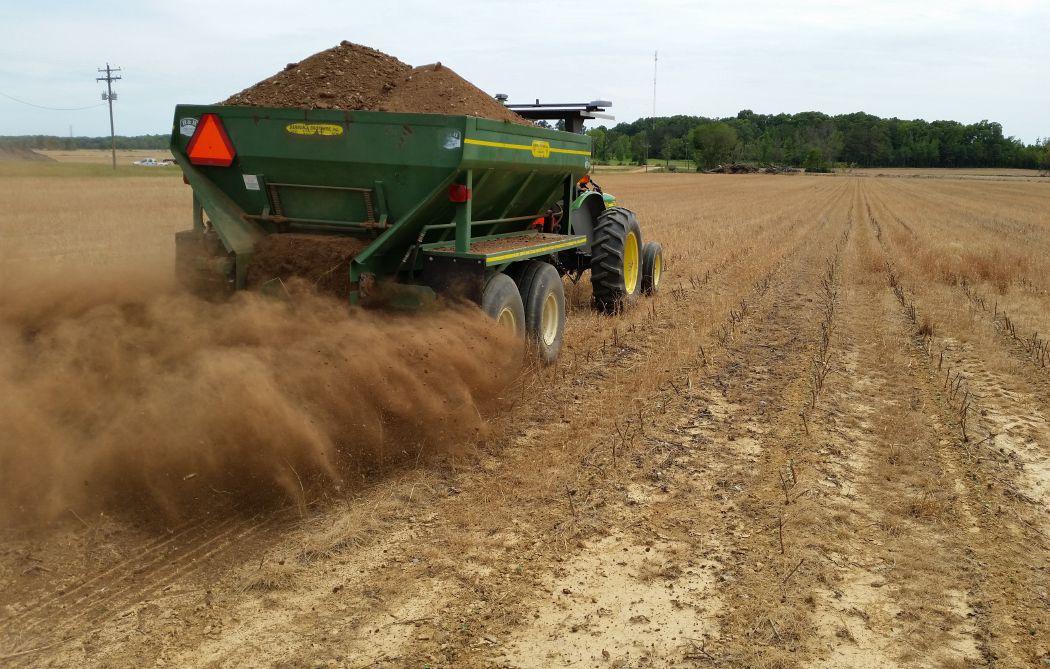
Applying raw broiler litter on a no-till cotton field just before planting cotton using a small mechanical spreader. Photo by H. Tewolde
Work with the TOUGHEST
Put to the test by Jerry for 13 years
Two liquid manure spreaders, a screw agitator, two Super Pumps and two trailer pumps pumping 30 to 40 million gallons of manure a year.
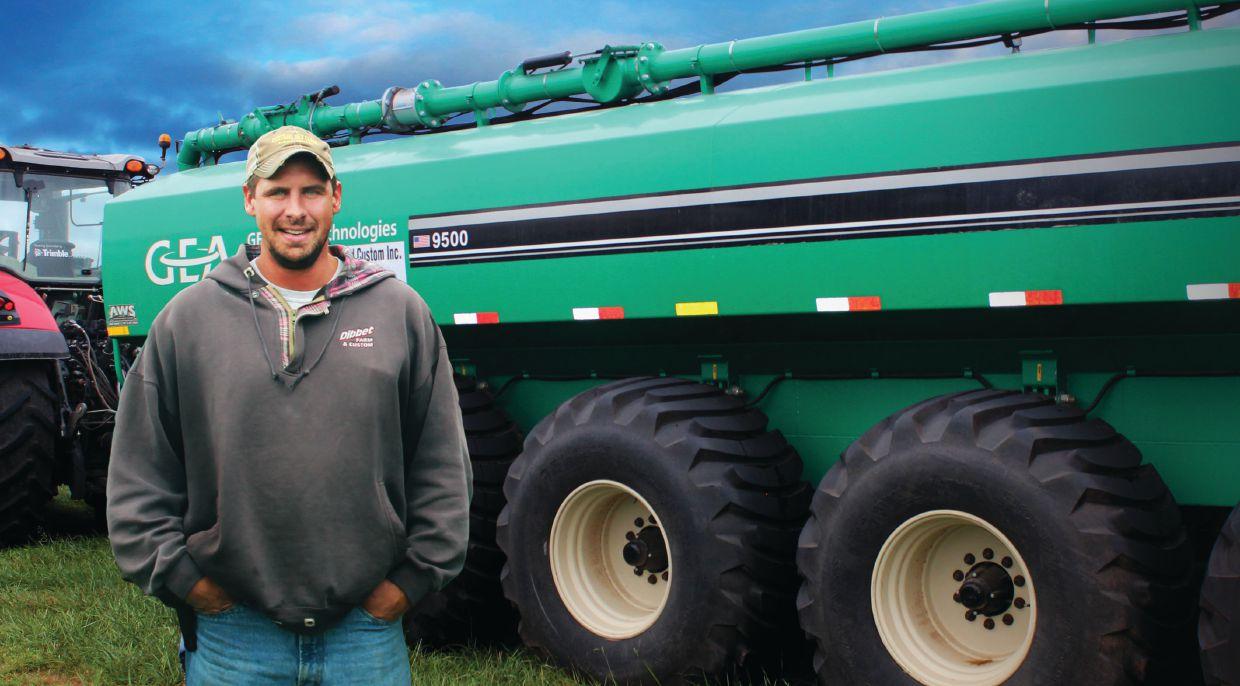
“What I like best about my GEA spreader are the options that it has like the hydraulic powered wheel steering and the weight transfer system to lift the front axle of the spreader when returning empty. It helps reduce hitch “slapping” due to the negative tongue weight with the larger tool bars. I also like the easy maintenance and how easy it pulls which leads to better fuel economy and quicker cycle times.”