Laws requiring conversion of swine manure into energy means big opportunities | 14
Digester revolution
Multi-stage modular high-solids digester solves problems of plug-flow systems | 18
System removes phosphorus
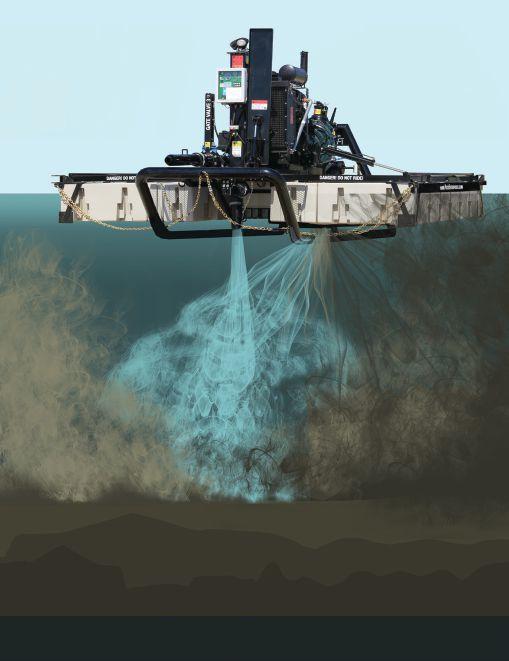
Mobile system offers more flexibility | 34
March/April 2017
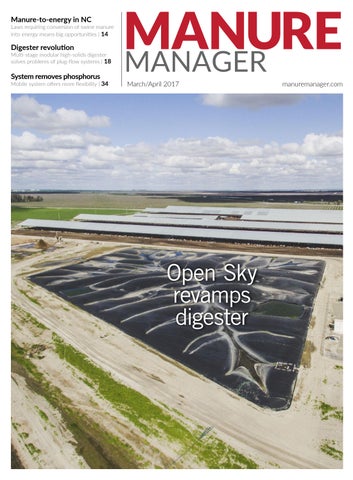
Biogas rebirth on the West Coast California’s cap-and-trade cash breathes life back into a mothballed manure digester at Open Sky Dairy Ranch, located near Riverdale, Calif.
14 18 24
Manure-toenergy in North Carolina Laws requiring conversion of swine manure into energy means big opportunities
BY TREENA HEIN
Digester revolution
New multi-stage modular high-solids digester solves many problems of conventional plugflow systems
BY TREENA HEIN
dairies
DIANE METTLER
Sky
The Gift that Keeps on Giving
According to my youngest child, he’s just too darn healthy.
He recently made this eyebrowraising claim during one of his almost daily rants against school attendance.
“----- doesn’t have to go to school all the time,” he whined, naming one of his friends.
Curious – and somewhat irked by the idea another kid’s slacker habits were providing my son with even more anti-school ammunition – I asked why.
“He has this breathing thing.”
Breathing thing? I instantly felt guilty for my uncharitable thoughts toward slacker kid. “Breathing thing” sounded serious.
“He’s got asthma or allergies or something,” my son added, shoving a handful of granola bars in his lunch bag. “I wish I had allergies.”
His glare felt a bit accusatory as he stomped out to wait for the bus.
Hours later, as I checked my email messages for the umpteenth time that morning, I was still thinking about my 13-year-old’s
less likely to suffer from allergies. Obviously, it was a bit unethical to experiment on children so they did the next best thing – they experimented on mice, country and city mice specifically. In quite possibly the strangest twist on an old cliché, they introduced mice to a cow barn and then monitored the resulting generations for ear swelling [which I guess is a sign of allergies].
The results? Mice born in the cow barn reacted less intensely to an artificial allergen than those born in the laboratory. And mice transferred to the barn four weeks after birth were slightly less well protected than the native population.
“Children of farmers’ wives who worked in animal sheds while they were pregnant accordingly have fewer problems with allergies,” said Philippe Eigenmann, a researcher at Geneva University Hospitals.
Based on a comparison of cells and signaling substances in the immune systems of both populations of mice, the immune defense of the farm-born mice was constantly
The answer was suddenly staring me in the face – manure.
wistful wish. Why do some kids develop allergies and others don’t? Where had I gone right? Or wrong [depending on your point of view]?
As I opened my next email, the answer was suddenly staring me in the face – manure.
That’s right – manure. According to recent research funded by the Swiss National Science Foundation, it’s the gift that keeps on giving.
Apparently, some Swiss scientist types were shooting the breeze when they came up with an interesting experiment idea. Why not investigate the “farmhouse effect,” the idea that children who grow up on a farm are
activated but also regulated by germs from the cow barn.
“The immune system evidently learns to moderate its response,” said Eigenmann, adding it might be time society rethought the concept of cleanliness.
So, it would appear that all those hours I spent mucking out stalls and hauling manure while pregnant with both my children had a benefit beyond good exercise and a clean barn. My kids turned out healthier than some of their peers. And I was to blame.
How Freudian. Wasn’t he Swiss? Wait – no – that was Jung.
MANURE MANAGER
March/April 2017 Volume 15, No. 2
Published by: Annex Business Media, P.O. Box 530 Simcoe, ON N3Y 4N5
Editor MARGARET LAND (519) 429-5190, (888) 599-2228, ext 269 mland@annexweb.com
Contributing Editors Daniel Andersen, Kapil Arora, Treena Hein, Tony Kryzanowksi, Diane Mettler, Adam Russell, Jan Suszkiw
Kuhn North America, Inc. is looking for customers and dealers to submit high-quality photos of their Kuhn branded equipment to be featured in an upcoming calendar.
Photos need to be in jpeg format (minimum of 2,000 pixels wide, 300 dpi) and are due to Kuhn North America, Inc. no later than June 30, 2017.
Up to 15 entries will be selected as winners at the discretion of the Kuhn North America marketing
department. Winning entries will be announced the week of July 3, 2017. Winning contestants will each receive a calendar featuring their winning photo and a $75 gifts and gear promotional gift certificate. If you have questions, please contact the Kuhn North America at knacontest@kuhn.com.
To view the full contest rules, please visit: http:// www.kuhnnorthamerica.com/us/news-kuhncalendar-photo-contest.html.
NY DEC RELEASES CAFO PERMIT RENEWAL
Officials with the New York State Department of Environmental Conservation (DEC) recently announced the renewal of two general permits for technical programs designed to reduce the potential for water pollution on large livestock farms. The permits, developed with input from the agricultural and environmental communities, provide new requirements for Concentrated Animal
Feeding Operations (CAFOs) to ensure proper management of nutrients while increasing water quality protection. The new permits provide farmers with a better understanding of permit terms and conditions to ensure compliance with state and federal laws.
The DEC developed the initial renewal drafts after nearly two years of outreach and communication
with stakeholders
Throughout this process, DEC held numerous meetings with stakeholders to hear their concerns.
DEC also received hundreds of written comments.
“We appreciate the time and effort that DEC staff took in preparing the permits,” said David Fisher, president of the New York Farm Bureau. “They worked to balance the need of protecting our
important natural resources with having permits that are workable for the state’s livestock farmers.”
New York State has more than 500 CAFO farms, the majority of which are dairy farms with 300 or more cows. CAFO permits must be renewed every five years to meet New York and federal requirements, as well as to respond to concerns from stakeholders.
BY
THE NUMBERS
1.8
1,300 11.8
1.8 million 1.8
New process transforms dairy manure into precision ag fertilizer
Midwestern BioAg, a Wisconsin-based company, recently unveiled a new manufacturing process that transforms dairy manure into a uniform, dry fertilizer granule that can stored, transported and spread. Referred to as TerraNu Nutrient Technology, the process infuses essential crop nutrients into a manure base to give more farms access to the benefits of manure. Products made through the process offer precision application – each granule has the same guaranteed analysis, allowing for even distribution. The fertilizers will deliver a full suite of crop nutrients, including micronutrients. The base material is made primarily of decomposed microbes from the digested manure. This biological matter is food for living soil microbes when the product is used as fertilizer; it draws nutrients into the soil life food chain, helping make them more plant available.
“This helps close a nutrient gap in farming,” said Anthony Michaels, Midwestern BioAg CEO. “A typical farm once had both crops and livestock. Today, with necessary specialization, there is a disconnect. The crops are in one place, the cows in another, and many farms miss out on the benefits of manure.”
The new manufacturing facility is located at Indiana-based Fair Oaks Farms, a collection of 12 dairies with herds totaling 36,000 milking cows. Midwestern BioAg committed to the location largely because of the Farms’ prior investments to maximize nutrient use and reduce environmental impacts.
“We don’t like seeing anything go to waste,” said Mike McCloskey, co-founder of Fair Oaks Farms. “Our manure powers parts of the farm, runs a fleet of trucks and feeds many of our own crops. Now, it can provide essential nutrients for other farms.”
The technology can help address nutrient loading challenges faced by some dairies. Because it is cumbersome and expensive to transport, cow manure rarely travels more than 10 miles from dairies.
TerraNu Nutrient Technology facilitates transfer of excess nutrients to distant farms, thereby reducing impacts to local water supplies.
Production is expected to begin in March. Three products will be available this spring: TerraNu MicroPack, TerraNu Calcium and TerraNu Ignite.
Animal
waste technology project unveiled in MD
Governor Larry Hogan and Agriculture Secretary Joe Bartenfelder recently toured the Murphy family’s Double Trouble Farm – the first Maryland poultry operation to install cutting-edge technology that converts poultry litter to energy.
The Maryland Department of Agriculture awarded a $970,000 animal waste technology grant to Biomass Heating Solutions, Inc. (BHSL) for the manure-to-energy project and an additional $139,000 to monitor its operation for one year.
“I am excited that a unique piece of technology designed in Ireland is going to transform U.S. poultry production and play a crucial role in reducing the environmental impact of the industry on the Chesapeake Bay,” said Denis Brosnan, chairman of BHSL. “I hope this pilot project is the start of a broader initiative to turn poultry manure from a potential pollutant into a valuable source of energy.”
BHSL will use electricity generating technology (fluidized bed combustion) to process poultry litter into energy for heating two of four poultry houses during the demonstration period. The system is projected to generate 526
megawatts of electricity per year. Adding heat to poultry houses has been proven at other sites to improve the flock growth rate and overall bird health. These benefits will enhance potential profit margins, reduce payback period for the technology, and improve the likelihood of transferability to other poultry operations. The Murphys are working with BHSL to explore markets for the high-phosphorus ash byproduct including Maryland fertilizer companies. As a result of energy production and marketing the ash, 90 percent of nutrients in the poultry litter produced by 14 poultry houses will have alternative uses.
“I am proud to recognize the Murphy family for bringing this innovative technology to Maryland,” said Governor Hogan. “I commend the Murphy’s and the entire Double Trouble Farm team for leading the way for farmers to improve water quality, increase energy independence, and improve animal waste management to ensure the sustainability of animal agriculture in our state.”
Maryland’s Animal Waste Technology Fund is a grant program that provides seed funding to companies that demonstrate innovative technologies to manage or repurpose manure resources. These technologies generate energy from animal manure, reduce on-farm waste streams, and repurpose manure by creating marketable fertilizer and other products and by-products. To date, the program has approved $3.7 million in grants to six projects.
Carbon Cycle Energy breaks ground in NC
A biogas facility, capable of transforming animal and food waste into enough energy to power 32,000 homes annually, recently broke ground near Warsaw, N.C.
The $100-million facility, located on 82 acres, is the first in a series of anaerobic digestion and biogas treatment plants planned by Carbon Cycle Energy (C2e).
Upon completion in late 2017, the biogas facility will process in excess of 750,000 tons of organic waste per year. It will produce enough fuel annually to generate approximately 290,000 MWH of electricity, according to C2e CEO James Powell.
C2e has secured access to manure and other agricultural waste plus industrial food processing waste, which will be converted into raw biogas, upgraded on-site, and injected directly into the natural gas pipeline system.
C2e has signed contracts to supply Duke Energy and a second, unnamed company.
BIOGAS REBIRTH ON the West Coast
California’s cap-and-trade cash breathes life back into mothballed dairy manure digester
BY TONY KRYZANOWSKI
BELOW
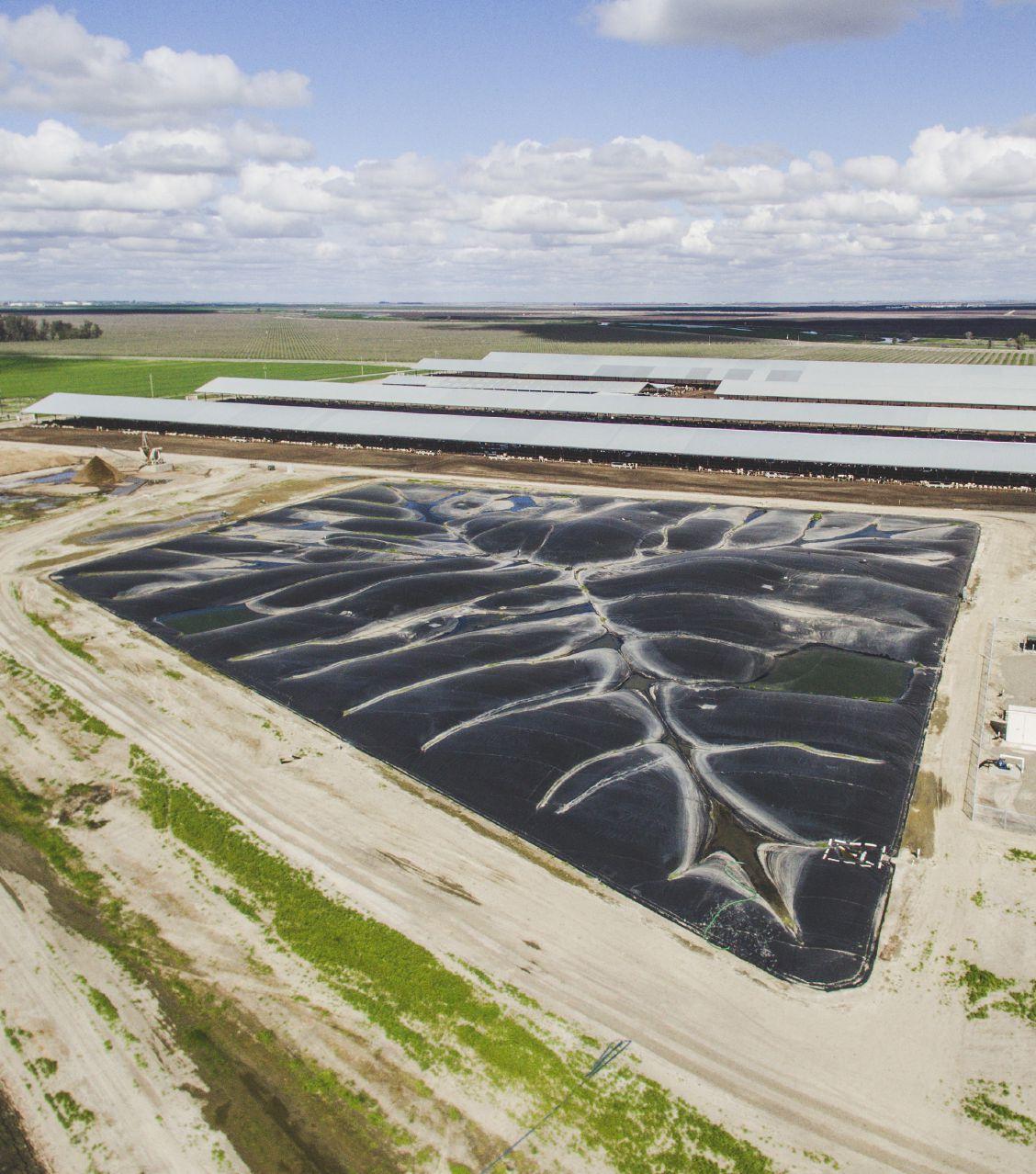
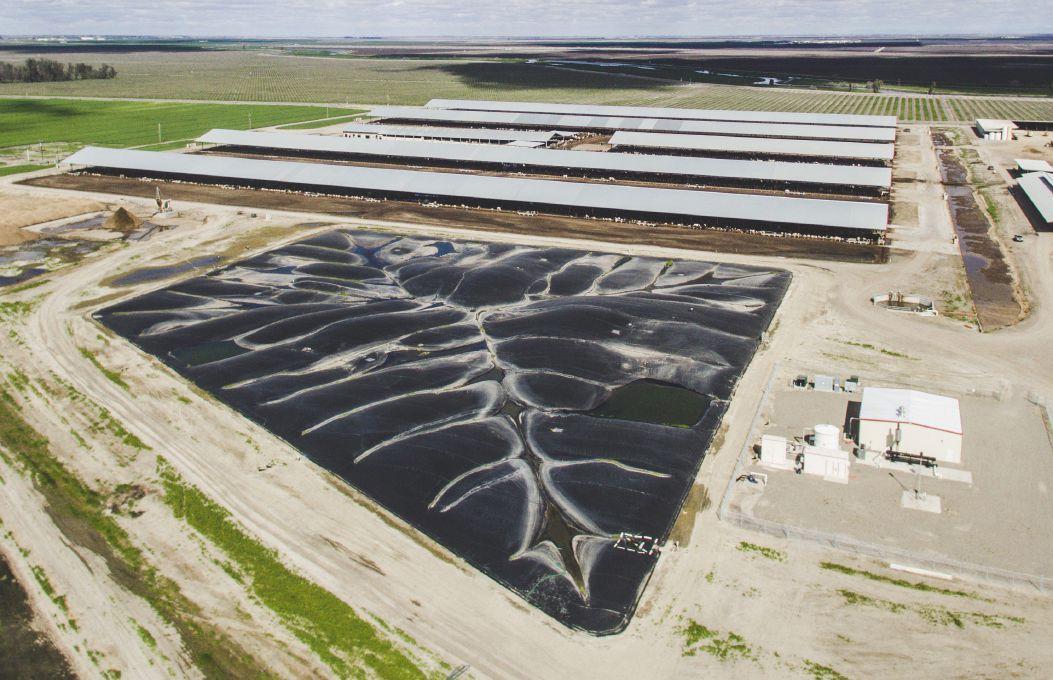
The cover on the anaerobic digester at the Open Sky Ranch dairy captures the biogas released by the raw manure. It stops the methane from entering the atmosphere.
For Eric TeVelde, owner of Open Sky Ranch Dairy near Riverdale, Calif., the business case to purchase a deeply discounted, mothballed, but structurally sound anaerobic digester on his newly-acquired farm was just too good to ignore.
TeVelde, who purchased the Central Valley dairy in 2012, now operates five, free-stall milking barns on the farm with about 4,500 milk cows. They have an additional 4,500 dry cows and replacement cattle in what is one of the largest dairy farms in Fresno County. TeVelde and his family had been dairy farming in the Central Valley for generations.
The dairy operates a closed flush manure management system where barns are flushed clean with water two to three times a day. This generates about 30 million gallons of liquid manure annually. The manure and waste water mix is transported through a storage and piping system, eventually being pumped into one of several nearby lagoons, which all told have a holding capacity of about 100 million gallons.
The dairy farms about 1,500 acres, primarily growing feed for their cows. Prior to the restart of the anaerobic digester, the raw manure was processed through a US Farm Systems-brand solid separator, with the liquid manure continuing on to the lagoons and the solids reused as bedding. TeVelde says the liquid manure was sold or land applied on the dairy’s cropland as organic fertilizer. It is this approach to manure management
LEFT
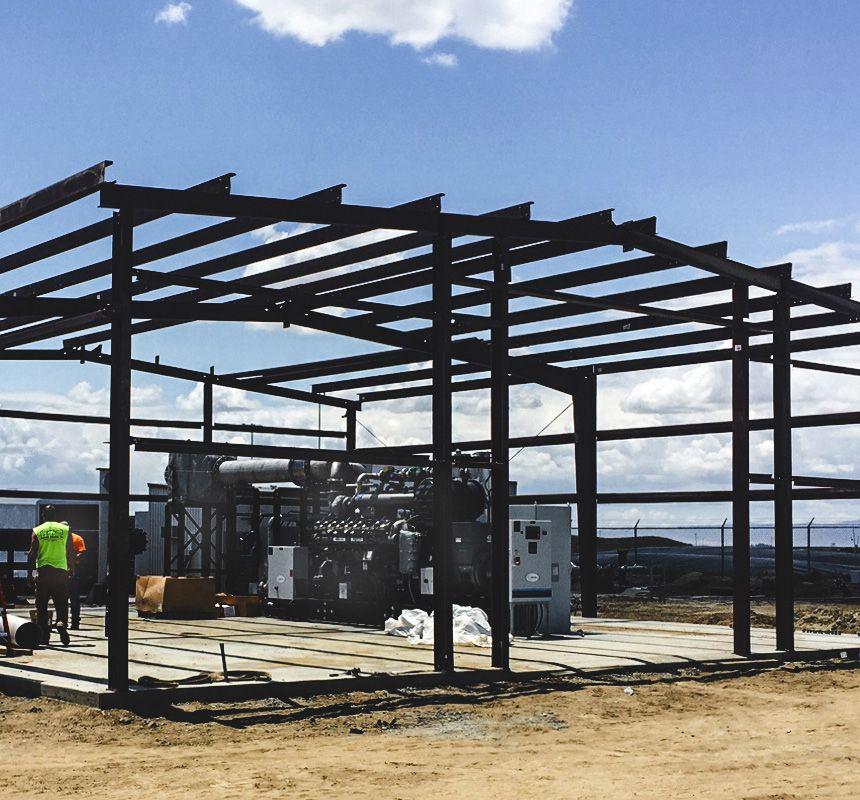
A new building was constructed to house the electrical setworks and 800 kW Dresser Rand Guasor engine and generator at Open Sky Ranch dairy. The dairy is contemplating a second power generator.
In California, an anaerobic digester is often a lined, underground, covered lagoon where biologically-rich waste material – like liquid manure – is collected and retained over a specified time period. The microbes within the manure in the oxygen-free environment generate methane, which can be captured, scrubbed, and used as fuel, with the liquid and solid by-products still available for organic fertilizer or cow bedding.
“The manure system hasn’t changed much. The main thing is that we are getting energy out of the manure now and stabilizing it” – Daryl Maas
that concerned state legislators because of the amount of methane released by storing the raw liquid manure. By treating the manure through an anaerobic digester prior to land application, this removes the methane while retaining all of the other beneficial nutrients, which is why the state is financially supporting this approach to manure management to help reach its methane emissions reduction target. The Environmental Protection Agency (EPA) says that methane emissions have 25 times greater impact on climate change than carbon dioxide over a 100-year period.
The decommissioned anaerobic digester and the accompanying biogas management technology that TeVelde purchased was situated on the Open Sky Ranch Dairy property. After talking to other dairy farmers who had installed anaerobic digesters and working with California-based biogas power developer, Maas Energy Works (MEW), TeVelde recognized the potential of refurbishing the facility and using the biogas for power production. He decided to purchase the installation in 2015.
California, the largest milkproducing state in the U.S., announced last November that it wants its dairies and other livestock operations to reduce methane emissions by 40 percent below 2013 levels by 2030. The regulations currently in development will take effect in 2024.
TeVelde says his purchase of the digester was not in response to this specific regulation, but he definitely was anticipating that the dairy industry was on legislators’ radar.
A state grant to cover nearly half the $2 million cost of redesigning and refurbishing Open Sky’s digester helped to sweeten the deal. It was a $973,000 matching grant under the California Department of Food and Agriculture’s Dairy Digester Research and Development Program. In July 2015, the department distributed grants totaling $11.1 million to five dairy digester projects from the program.
What gave TeVelde further assurance that his biogas recovery and power generation system would succeed where the previous owner had failed was working with Maas Energy Works. MEW already had nine biogas recovery and power generation systems working on dairies throughout the western U.S. Once they sat down and crunched the numbers, TeVelde could see the business sense in purchasing the digester and pursuing the redesign project, with the government grant
LEFT
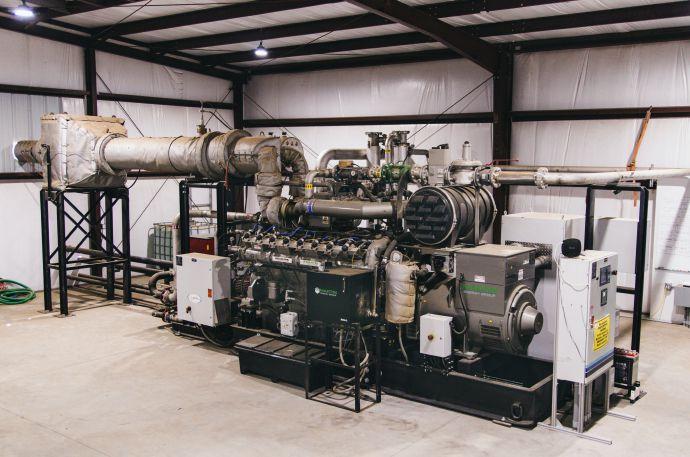
The 800 kW Dresser Rand Guasor engine and generator at Open Sky Ranch generates enough power from manure-based biogas to provide for the dairy’s entire power needs. Contributed photo
support.
The biogas recovery and power generation system designed and built by MEW and owned by the dairy came on line last August. The dairy looks after day-to-day operations, with ongoing and contracted monitoring by MEW.
“What the dairy has contracted with us to do is that we monitor the equipment 24/7 and control the equipment from our control centre in our office,” says Daryl Maas, owner of MEW. “We do all the parts ordering, calibration of the equipment and all the maintenance check list.”
TeVelde says he and a hired contractor look after what needs to be done to maintain the digester and power generating system, with direction provided by MEW. The contractor looks after such details as regular oil changes on the engine powering the generator and any other maintenance requirements.
“The maintenance list provided by Maas Energy is not very extensive, and if I miss one day, it’s not the end of the world,” says TeVelde. “I just want to make sure everything is working properly.”
So far, he has found the system manageable and functioning as advertised, and is anxious to see how well it performs over the next five to 10 years.
He says the power generated by the 800 kilowatt (kW) system replaces all of the dairy’s power consumption, and estimates that with saving of about
$500,000 per year, the system should pay for itself within five years.
In fact, the system is generating more biogas than the current power generator can consume. California restricts power generation from a single generator to offset the dairy’s own power bill and using the same system to sell excess production. So the dairy is seriously considering installation of a second power generator, using the excess biogas currently being flared to produce power to sell to the grid.
Restarting the digester has not caused a major disruption in manure flow at the dairy. Maas says the company’s goal is to take a plug-in approach to work within the existing manure management system.
He describes the Open Sky Ranch Dairy redesign and refurbishing project as unusual, because the biogas produced by the previous system owner was not used as fuel for power production. The goal of the old system was to capture the biogas, scrub it, and then sell it as a commodity through existing natural gas transmission lines. However, the owner had difficulty cleaning the biogas economically so it met utility grade specifications. Given the current low price for natural gas, this led to the project’s ultimate failure. Maas agreed that given current natural gas prices, using the biogas as fuel in power generation makes more business sense for most dairies.
“Although the State of California
wants more of those projects, and were working very hard to try to build those projects, that’s a hard lift,” says Maas.
“That’s a complicated business model, so most people do electricity,” Maas adds.
One further incentive for Open Sky Ranch Dairy to voluntarily pursue the project prior to any regulations requiring methane reduction from the dairy is that the dairy is eligible to sell greenhouse gas offset credits, also known as carbon credits, to help pay for the project. As part of its service, MEW conducts all the paperwork for the verification of the carbon credits generated by the facility.
Upon inspection, Maas says the digester portion of the mothballed installation was in, “pretty good shape. It was built to all the latest water board requirements here in California. It just needed some repairs and redesign.”
This was a huge advantage for TeVelde because construction of the anaerobic digester is by far the most expensive part of any biogas recovery system. The major expense of the project was to remove the old biogas recovery, treatment and transmission hardware down to the concrete foundation, and then install all the new hardware needed to clean the biogas, power the generator, and monitor the overall system.
The project required the installation of blowers to circulate the biogas in the digester, an iron sponge scrubber to remove sulfur from the biogas, a building to house equipment, electrical switch gear to connect the generator to the power grid, and the 800 kW Dresser Rand Guasor engine and generator.
The digester is a continuous flow model with a retention of about 40 days. The raw liquid manure is processed through the solids separator, then through the digester, with the liquid byproduct continuing on to the storage lagoons. It is land applied as fertilizer in the spring and summer.
“The manure system hasn’t changed much,” says Maas. “The main thing is that we are getting energy out of the manure now and stabilizing it somewhat. All the existing (manure management) structures have remained in place. We have just added one more step in the process . . . Also, we take out the carbon and the hydrogen for fuel, but we leave in the nitrogen, phosphorus and potassium, all the things that the soil wants.”
Manure-To-Energy Potential in North Carolina
Laws requiring conversion of swine manure into energy means big opportunities for companies like Blue Sphere
BY TREENA HEIN
North Carolina has long been a major porkproducing state, with the industry providing well over 50,000 full-time direct and indirect jobs. However, being the second largest pork-producing state in the U.S. means that North Carolina must contend with mind-bending amounts of swine manure and associated ammonia. The 2.3-plus million pigs housed in more than 2,000 facilities produce so much waste that the state government has mandated the conversion of manure into energy.
ABOVE
That means biodigesters. But which digester designs might be best to address the situation?
Shlomi Palas believes he has found the best technology to handle North Carolina’s serious swine manure problem.
“There have been some biogas plant designs tried by other parties in this state, but we believe we have found the right solution,” says Palas, CEO of Charlotte, NC-based Blue Sphere Corporation.
Blue Sphere has operated for more than two decades and has facilities in several countries,
Blue Sphere’s 3.2-MW food waste biogas facility in Johnston, RI, will be connected to the grid in that state by March. Photo by Creative Chica
INSET
Blue Sphere’s 5.2-MW food waste facility in Charlotte, NC, began supplying electricity to Duke Energy in mid-November 2016.
including Italy, the UK, and now Holland and the U.S. The firm oversees entire waste-to-energy facilities, choosing appropriate technologies from wellestablished contractors and arranging to generate and sell electricity, scrubbed biogas, organic fertilizer, compost and other valuable products.
Electricity production at Blue Sphere’s $20-million, 3.2-MW food waste biogas facility in Johnston, RI, will be connected to the grid in that state by March. Its $27-million, 5.2-MW food waste facility in Charlotte began supplying electricity to Duke Energy in mid-November 2016, with full commissioning and feedstock ramp-up occurring over the next few months.
After almost two years of researching the most suitable technologies for hog manure, Blue Sphere feels it has succeeded in finding the best, most-efficient systems for its two new digester facilities under development in North Carolina.
Palas says they are confident in the chosen vendors for several important reasons.
“The technology providers have long-
proven experience and track records of many installations in swine manure processing, and their technologies are working 100 percent,” he reports. “While American hog manure has a little more liquid than European hog manure, the combination of the U.S. and Europe technologies will have the appropriate adaptations to be successful with us here, and the companies involve have also provided us with financial assurances.”
European hog manure has about two to three percent solids, but due to feeding regime differences, American hog manure contains one to 1.5 percent solids.
Removal of liquid from the hog manure will be done onsite at individual farms using a combination of technologies. Again, Palas says these sorts of separation system are new to North America, but are working well in Europe and have been successfully tailored for U.S. swine manure.
“Transporting liquid is very costly, so the need to pre-treat on site is critical,” he notes. “We bring the manure dry matter up to 20 to 30 percent and then transport it to the digester.”
Once fully operational, the new NC facilities will produce an annual revenue of about $10 million [estimated] from renewable energy. However, while the biogas from both the Charlotte and Rhode Island projects is being used to generate electricity, Palas foresees a significant shift coming and so the hog manure biogas may be used differently.
“There is a change going on in the gas market, from electricity production to production of bio-methane, compressed natural gas and liquefied biogas for vehicles,” he says. “The engines that use this gas are already well-developed and already many Fortune 500 countries use trucks and cars that run on this fuel.”
Blue Sphere is developing other sites in North Carolina and worldwide, and Palas attributes his firm’s success to many factors, chief among them is an ‘agnosticism’ to digester technologies.
“The biggest mistake that other firms have made, and are still making, is that they get stuck with specific systems,” he explains. “We are open to using tech from Italy, Canada, Germany, China, Japan, United States and other parts of the world to find the best fit for the feedstock we have. We focus on the waste first. We actually have a dedicated staff member to find and keep up with technologies from all over the world. But no matter the technology, the systems must be bankable and well-established so that we can obtain funding and build a project successfully. We cannot work with startup technology.”
Having said that, Blue Sphere cannot handle North Carolina’s colossal swine manure problem alone, and the company is strongly encouraging other renewable energy players to participate.
“The process begins with permits, site selection, establishing a market for the gas and so on, and that can take over a year,” Palas explains. “Construction can take another 12 to 18 months. We have every intention of being a primary player, but due to the timelines involved, we cannot do it alone, and we are inviting others to get involved in this serious challenge. Hog manure is a huge market.
“We are starting with these two food waste digester projects and will make sure they are running well,” he adds. “Once we have proved our solution is workable, we’ll know we have a winner and then we can go across the country.”
In January, Blue Sphere also held some meetings in Canada, so stay tuned for developments north of the border as well.
ABOVE
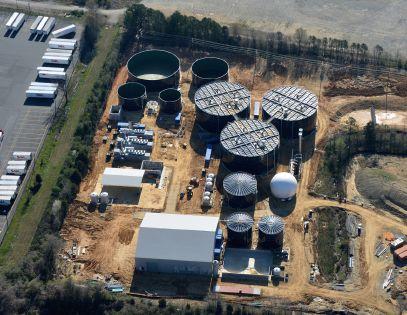
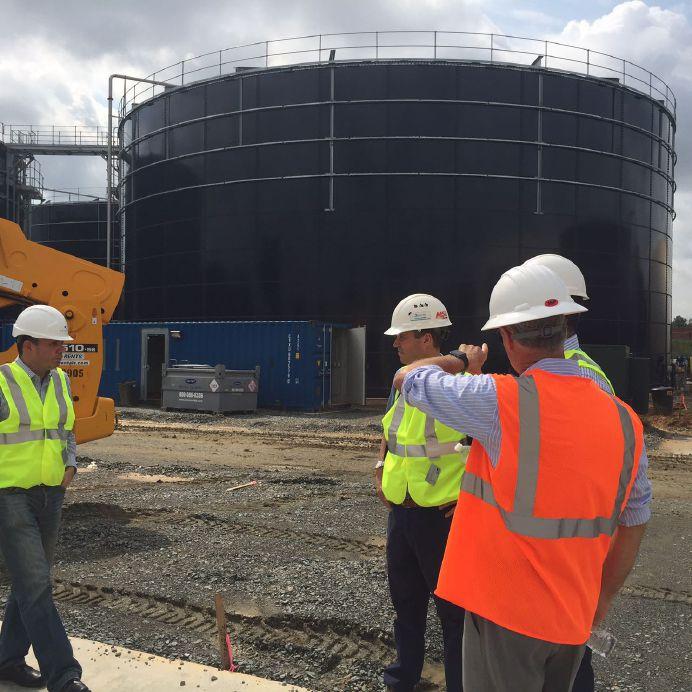
Blue Sphere currently has two new digester facilities under development in North Carolina.
Digester Revolution
New multi-stage modular high-solids digester solves many problems of conventional plug-flow systems
BY TREENA HEIN
Many would say that solids are the most critical component to handle in a digester, but water is a critical factor as well, logistically and financially.
“There is a great deal of time and expense involved with handling the large volumes of water involved in a typical plug-flow system,” says Dr. Syed Reza, president of Nexus Bioenergy in Fort Collins, Colo. “This challenge to financial viability is avoided with our multi-stage design, which has a circulating volume that’s only 20 per cent of a typical plug-flow digester. There are no massive water storage tanks or lagoons, no tankers needed to move wastewater to the fields, and no centrifuge for processing the wastewater. The whole process is much simpler, and automated.”
Nexus Bioenergy was launched in 2015 by Syed Reza and two academics from Colorado
ABOVE
State University (CSU): Dr. Sybil Sharvelle, an assistant professor in the Department of Civil and Environmental Engineering and her graduate student Lucas Loetscher, who is now vice president of technology at Nexus. They were initially tasked by the Colorado Governor’s Energy office with investigating how anaerobic digestion could best be applied to Colorado’s feedlots and dairies, and main barriers to adoption were pinpointed to be the relatively slow digestion rates and extensive wastewater handling requirements of existing digester systems.
“We saw early on that 30 to 40 percent of the capital expense of a farm digester was tied to wastewater treatment and disposal,” explains Loetscher. “Through much trial and error in January of 2009, I came to Sybil with a concept for a high solids anaerobic digester that has
Lucas Loetscher is vice president of technology at Nexus Bioenergy and a graduate student at Colorado State University in the Department of Civil and Environmental Engineering. Nexus Bioenergy was launched in 2015 and is currently developing a high solids anaerobic digester.
ABOVE
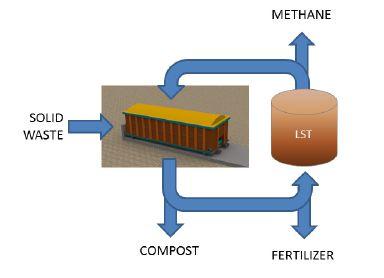
A diagram showing the flow of product through the Nexus Bioenergy system.
formed the basis of our technology at CSU and Nexus. Later that year, we were awarded a grant to begin researching this new concept.”
The pilot system at the CSU Foothills Campus allowed the team to gather information about overall performance and how best to scale up. Nexus is now gathering seed funding to build two commercial-scale units at two food processing plants in Colorado, one 1.5 MW and the other about 2 MW.
“The total potential power generation from our units in Northeastern Colorado food processors alone is 24 MW,” Reza notes.
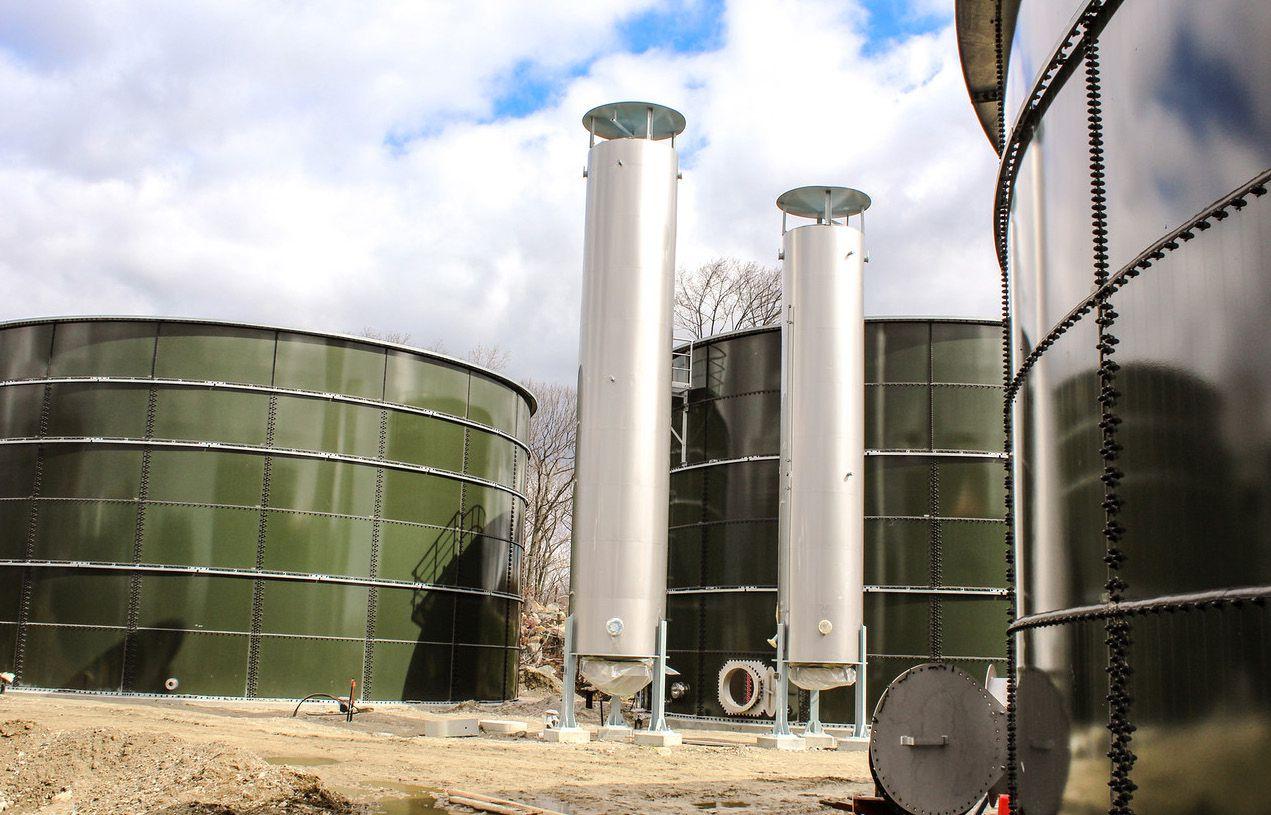
The Nexus Bio1 features a three-stage process. In the first stage of primary breakdown, liquid recycled from the third stage is added to manure or other feedstock such as food waste or poultry bedding. The liquid circulates and bacteria hydrolyze the biomass into a rich soup of intermediate organic compounds and minerals. This soup then flows to the second stage, a fermentation reactor where acidogenic bacteria break down sugars and other organic molecules into acidic intermediates. In the final stage, a high-rate methanogenic reactor, bacteria convert the organic acids into methane and carbon dioxide. Much of the digested leachate is recirculated back to stage one.
The optimized design of each of the three reactors, says Reza, allows the entire process to occur at maximal rates and increases throughput.
“In our smaller systems, the economics are not suitable for electricity generation, so the biogas is burned to produce hot water,” he notes. “In our larger-scale MW unit designs, the biogas is scrubbed to remove sulfur and is burned in a cogeneration turbine to produce electricity and heat.”
In terms of products produced in the Bio1, remaining solids from stage one are converted into a rich compost, and part of the rich stage three fluid is harvested to be sold as a highquality black organic fertilizer – a product that fills a critical organic farming need. Reza explains that in California and other mountainous states, there just isn’t enough land or rain to breakdown plug-flow digestate, and the regulatory limits for nutrient spreading are also being reduced all the time.
LEFT
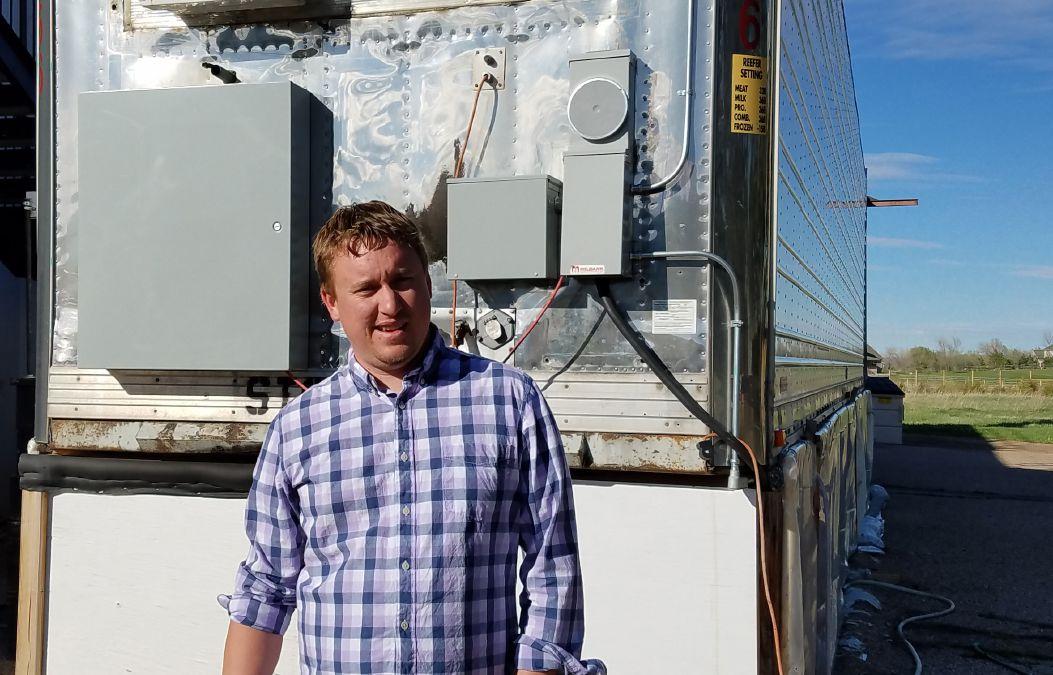
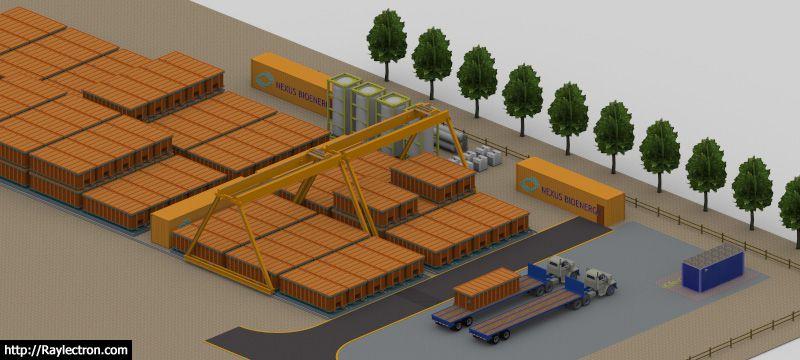
The Nexus Bioenergy system can be expanded through module add-ons. Modules 20 and 50 feet long are delivered by truck and assembled on site in four to six weeks.
“We designed our system so that we don’t require land application,” he says. “Our black organic fertilizer is being developed to be a drop-in equivalent replacement to organic commercial liquid fertilizer. It is of particular value to organic farmers because the National Organic Program-compliant commercial liquid fertilizers available on the market are just too expensive for most farms and ends up being a limiting factor in organic crop production. We can produce thousands of gallons per week from a single Bio1 system and make it available locally at rates competitive to synthetic fertilizers. The local organic commercial farmers we spoke with are quite excited at this opportunity. We aim to start field trials [this] summer.”
In addition to the low water requirements and the production of valuable fertilizer and compost, the Bio1 also provides the benefits of easily transportable components. Modules 20 and 50 feet long are delivered by truck and assembled on site in four to six weeks (compare that to 18 to 24 months to build a conventional tankbased digester). For dry cattle manure, a Bio1 unit that produces 1 MW of power takes up 2.5 acres of land and uses 150 tons of feedstock per day – roughly the output of a 30,000 head feedlot.
Through the use of different modules, a single Bio1 system can also accept and optimize the use of various feedstocks, from food waste to dairy manure to poultry bedding.
“So, it’s very exciting that a single project can accept waste from multiple sources,” Reza explains. “In addition, wastes of various solids contents are segregated into the appropriate reactors, with high solids wastes placed in the first stage, and soluble wastes such as milk processing water, run-off lagoon water or other food processing liquid wastes sent straight to the last stage.”
The ability to add modules over time, he adds, also enables projects to evolve in the face of potentially changing local conditions and reduces the financial risks in scaling up.
“Anaerobic digesters have a poor track record for financial success, but
the modular nature, turnkey design and flexibility makes this system a totally different ballgame,” Reza concludes. “No food company wants to be locked into a long-term obligation. They want to be able to change their business focus, move a system to another site or relocate it on the same site, scale up or down, accept different feedstocks and so on. The Bio1 allows all that.”
Ultimately, Nexus has bigger ambitions for its Bio1 digestion technology, ambitions far beyond agriculture.
“After we learn all we can from scaling up our first generation system commercially, we plan to then miniaturize our technology into a compact design to create digesters for hot water and heat production in the home,” says Reza. “A big benefit from this is the possibility of reducing trash collection and hauling costs. Most
“Anaerobic digesters have a poor track record for financial success, but the modular nature, turnkey design and flexibility makes this system a totally different ballgame” – Dr. Syed Reza
communities have at least weekly trash collection not because of volume, but because food waste starts to smell within just a few days. If the putrescible portion of waste is removed, then regular curbside collection could be reduced to perhaps just once monthly.”
Reza says that since about 75 percent of the cost of trash disposal is from curbside collection, this approach would cut down significantly on the carbon footprint from garbage trucks and could save each individual residence hundreds of dollars annually in waste disposal fees.
“Ultimately, we think our zerowastewater technology is extremely suitable for becoming a standard appliance, easy to use with the simple push of a button,” he notes. “You’ll have your fridge, stove, microwave – and digester!”
Video series highlights water
The U.S. Poultry & Egg Association has released a new video series highlighting companies with exemplary performance at water reclamation. The first video features a Clean Water Award winner, Simmons Foods, Inc. Its Southwest City Complex processes and treats about 2.28 million gallons per day. The facility currently converts Dissolved Air Flotation (DAF) skimmings into an ingredient for cattle feed. This process allows more than 130 million pounds of material to be recycled into the food chain each year. The complex’s rendering facility also uses about 5,000 hp of thermal oxidizing technology to reduce odors. Simmons Foods is the first rendering plant in the U.S. to use this European technology. The video can be viewed at www.uspoultry.org.
Verify Calibration, Distribution when Applying Manure
Variations in tank capacity, manure densities and foaming can cause application rate to differ
BY KAPIL ARORA & DANIEL ANDERSEN
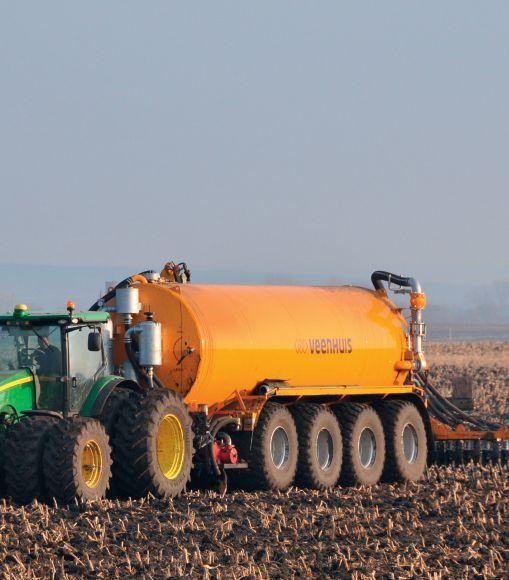
Liquid manure application in the Midwest typically happens in spring and fall each year. The majority of liquid manure application takes place using a tank or a dragline applicator, providing additional nutrients to crops.
Tank applicators transport manure from the livestock facility to agricultural fields and apply manure using a tank-mounted tool-bar. For fields that are close-by, manure can be pumped directly to the dragline-mounted tool-bar. In either case, a pre-determined application rate is used to pump manure through a manifold, which distributes manure to the application points across the toolbar.
“Environmental regulations require producers to make sure manure is being applied to agricultural fields in accordance with their manure management plans,” said Dan Andersen, assistant professor and extension agricultural engineering specialist with Iowa State University.
ABOVE
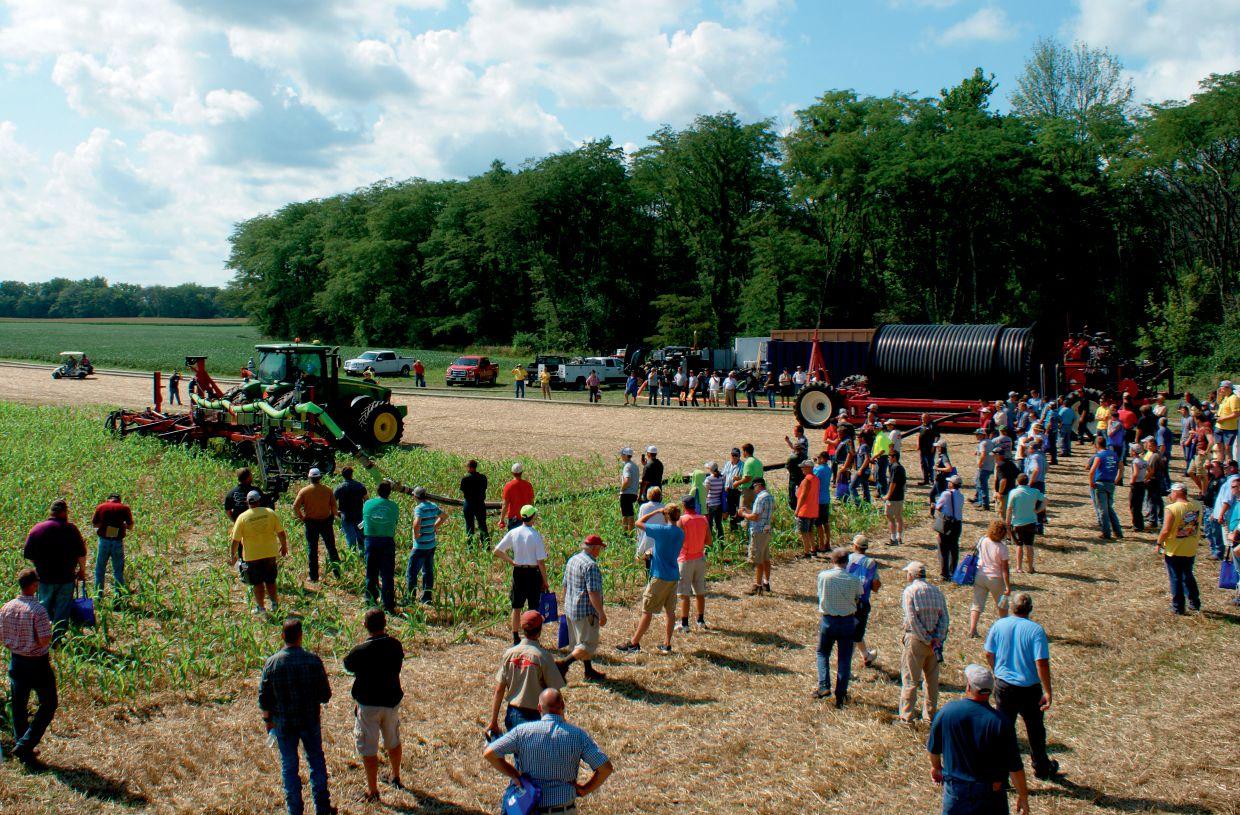
Variations in tank capacities, manure densities and the presence of foam can cause the application rate to be different from the target number, as can variations in drive speed. Application rate should be verified, and both tank and dragline applicators need to be calibrated to ensure accurate application.
Both distribution of manure and calibrating the applicators are covered in a pair of new ISU Extension and Outreach publications –“Distribution of Liquid Manure Application” (AE 3600) and “Calibrating Liquid Tank Manure Applicators” (AE 3601A). Both are available through the Extension Store. A “Calibration Worksheet for Liquid Manure Tank Applicators” (AE 3601B) is also available.
Calibration of the application rate, in terms of gallons per acre applied, can be achieved using an area volume method. For applicators without automated controls, the volume of manure applied
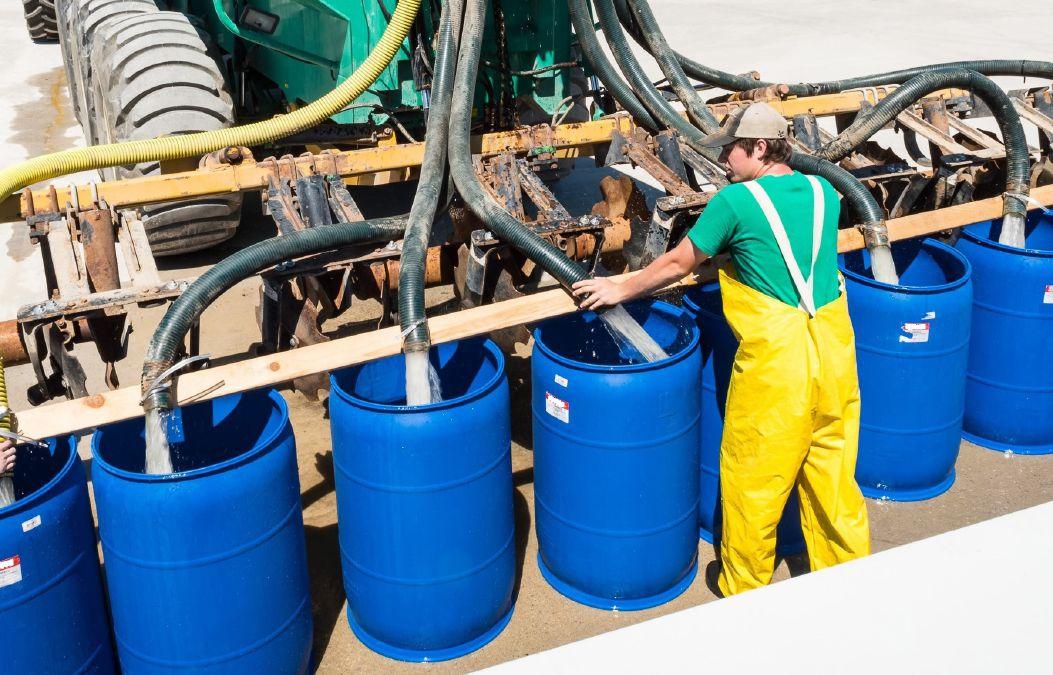
Distribution across the toolbar swath can be verified by capturing and measuring the discharge from individual application points. Photo by Rachel Kennedy.
in a given pass should be determined. Knowing the density of the manure and the area covered in the pass, the application rate can be determined. Instructions for determining density and coverage area are included in publication AE 3601A.
There are manure applicators that use tractor-mounted automated flow controls to achieve accurate application rates. In these cases, flow controllers use a flow meter with an actuator to govern the flow rate and, subsequently the application rate.
“The majority of flow meters are set at the factory for their rated measurements, which can potentially be different when used for manure application,” said Kapil Arora, agricultural engineering specialist with ISU Extension and Outreach. “The flow meters should be verified to ensure they are providing correct flow rate readouts to the flow controls.”
Achieving calibration of the target application rates only provides an average amount applied on a per acre basis. This application rate is delivered to the manifold mounted on the tool-bar, which then distributes the manure to the application points. This distribution of the manure across the tool-bar swath should be uniform so the variability among application points is minimal. This distribution should be verified only after the calibration for the application rate has been completed.
Split manure application, manure application to soybeans, high total nitrogen testing manures, and use of the Maximum Return to Nitrogen Rate Calculator can all cause the manure application rates to be lower than what was previously being used.
“Distribution across the toolbar points can be verified by
capturing the discharge from each point for a known time,” Arora said. “Care should be taken to set up the equipment as close to the field conditions as possible. Aim for as low a variation as possible in the captured discharge so that better distribution is achieved across the toolbar swath.”
Kapil Arora is an agricultural and biosystems engineering specialist with Iowa State University Extension and Outreach. Daniel Andersen is an agricultural and biosystems engineer, also with ISU Extension.
ABOVE
California Dairies Digest The Future
If there is one thing that California dairies know a lot about, it’s regulations.
The California dairy industry is faced with reducing methane emissions by 40 percent and is looking to new technologies – and how to pay for them
BY DIANE METTLER
California dairies are the most highly regulated in the country, and those regulations just became even more onerous. In 2016, SB 1383 will require the dairy industry to reduce manure methane emissions by 40 percent by January 1, 2030, from a 2013 baseline. The good news is that the regulations can’t be implemented until 2024, giving farms time to complete the task.
Some dairies will need to make substantial capital investments to meet these new standards. However,
ABOVE
with other costs of production set to increase, including increased minimum wage and mandatory overtime, these capital investments will likely push more California dairies to retire, consolidate or move. For those dairies that stay in California, and take on the new challenges, the next years will see substantial change . . . and potential gains.
James Williamson is a research analyst for Rabobank. One of the sectors he follows is California dairies. He recently authored a paper entitled, Digesting Environmental Policy. The purpose of his
For dairies that stay in California and take on the state’s new regulation challenges, the next years will see substantial change and potential gains.
Photo courtesy of Real California Milk Advisory Board
investigation was twofold – to help industry members stay up-todate on current industry challenges, and to also help Rabobank understand what challenges the dairies are facing and how it can help finance and manage its relationship with those dairies.
Williamson says the first thing he wants to communicate to farmers is not to get too stressed.
“Dairies are looking at theses regulations, and they look overwhelming. But we’ve still got 10 to 15 years before a lot of these regulations are fully enacted. That gives them some time.”
Dairies will be using that time to reduce the primary source of methane on their farms – methane released into the atmosphere from uncovered lagoons. The California Air Resources Board (CARB) suggests lagoons could account for nearly 55 percent of dairies’ methane emissions.
One of the most common ways to capture that methane is through digesters, where the methane is then scrubbed, used as natural gas or used to fuel generators to produce electricity.
side, however, is that covered lagoons aren’t as productive as other digesters, are impossible to heat, and typically develop sludge at the bottom that may need to be cleaned about every 10 years.
Williamson says he knows of one dairy already using a covered lagoon.
Williamson says currently there are three general digester options out there, each with their own pros and cons.
Covered Lagoon: This digester is generally the least expensive to install and, because of its simplicity, is the easiest and least expensive to repair. Dairies can also make modifications to mix the waste for increased methane production. The down
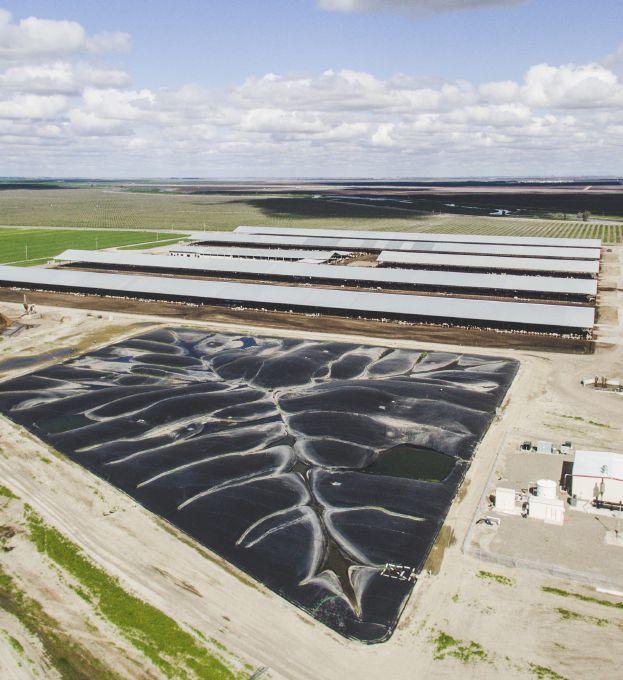
“Open Sky Diary in Riverdale, California, has a covered lagoon digester, that produces enough energy [548,00 kilowatt per month, enough to power 600 homes a month] to offset the milking parlor costs and more. The farm is considering putting in a second engine.”
Complete Mix: These digesters are solid structures that agitate and can also be heated to create greater methane production. The down side is that they are more expensive, and because there are more moving parts are more prone to breakdowns.
Plug Flow: These digesters, although the most expensive, are the more efficient in producing marketable energy, says Williams.
ABOVE
Open Sky Diary in Riverdale, Calif., has a covered lagoon digester that produces enough energy to offset the milking parlor costs and more.
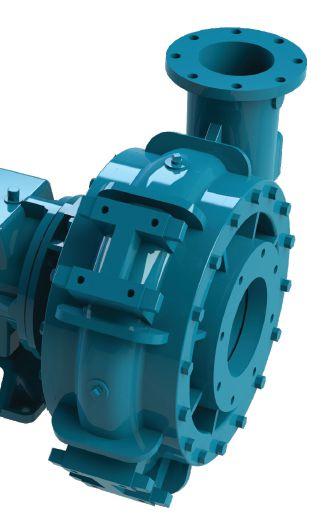
Patented Chopper Pumps
Dual chopping system to prevent clogging
Open design high speed impeller with adjustable pressure plate for unsurpassed performance with mechanical seals Electric/PTO models, 4ft to 20ft
Manure Separators
NEW Stainless casted augers with super hard coating for 40% dry bedding
NEW DODA self-adjusting weights
Heavy duty planetary gearbox with 15HP USA electric motor
- Service - Install
CONTRIBUTED PHOTO
“What goes in on day one comes out on day 30. This allows the influent to be completely digested – free from pathogens and bacteria that can be introduced by manure, which is added and mixed into the systems that same day, as can happen with covered lagoons and complete mix digesters.”
Rabobank estimates that, depending on the style of digester, they could cost anywhere from $1,000 to $2,000 per cow.
“And the profitability of the digester
depends on the style and efficiency of the digester,” says Williamson. “They can be profitable – $75 to $500 per cow per year.”
This is compounded by the fact that California dairy producers typically receive anywhere from 50 cents to a couple dollars less per hundredweight than their counterparts in the U.S. for milk.
“It makes it that much more challenging when California dairies have these regulations requiring capital
expenditures of a digester that you are going to have to install, pay for and manage. And it’s going to cost an extra $3 million dollars,” says Williamson.
It’s an enormous capital expense that Rabobank, as an agriculture lending institution, would like to help find a way for the industry to finance. “Because there’s not a lot of collateral that a dairy can put up, and because most digesters are solid set, we’re working on financing options for dairies as we speak,” says Williamson. “It’s something that’s important to us as an institution, to help the industry.”
The large expenditures are going to be exceptionally difficult for smaller dairies –under 1,000 cows. One option for smaller dairies will be to pool their resources. By combining their methane at one cleaning facility, and also hooking into a centralized natural gas line, they avoid each dairy purchasing its own methane cleaner and gas line.
“The CDFA (California Department of Food and Agriculture) is working on a project in Bakersfield where they are looking at the feasibility of that,” says
“There are a wide variety of people coming out of the woodwork saying their solution is the answer – Anja Raudabaugh
Williamson. “Another example is Calgren Renewables Fuels, an ethanol plant near Tulare, Calif. They currently have a longterm contract with a local dairy. They invested in a digester for the natural gas and carbon credits. As part of their deal with the dairy, they built the infrastructure to pipe the dairy’s manure over a mile to the facility.
“[The] Western United Dairymen (WUD) has been largely responsible for working to get a significant portion of grant funds to be made available to dairies so they can look at alternative methane reduction technologies, such as digesters and scrape or separator technology,” says Anja Raudabaugh, CEO of WUD. “The CDFA has been a good partner. We’re trying to make sure that not just the digesters receive funding but other forms of methane reduction are considered too.
It’s really important to our dairy as we represent the small and the large.
“For 2017, there will be $50 million dollars available for methane reduction technology and possibly that same amount until 2024,” she adds. “But our preliminary estimates of what is needed is about 200 digesters, plus some other reduction technologies. And for 1,300 dairies, that doesn’t sound like a lot, but definitely, each of these digesters is between $4 and $6 million dollars.”
Farmers should definitely do their research before going out and investing in new technology.
“Farmers should be very cautious about anyone who approaches them with these solutions,” says Raudabaugh. “There are a wide variety of people coming out of the woodwork saying their solution is the answer to methane reduction. And there is just no data to back those claims up. And it’s very important farmers vet these digester development companies. There are some reputable ones and there are some not reputable ones.”
She invites farmers to visit the CDFA website where there is a lot of good information.
Williamson agrees. Digesters vary in quality, but it also depends on the contractor the dairy hires to do the work.
“There are a few in the California who are working on building a reputation for having a quality product. But the same goes for any project that anybody is going to spend a lot of money on. You’ve got to do your research and determine who is offering the best product at the best price.”
But digesters are not the only answer. New technologies are being tested and will be coming onboard. Williamson says the CDFA is currently working with industry members to find alternatives that will be more economical, especially for those smaller dairies that can’t afford a digester.
If things weren’t challenging enough, there are air quality districts in California that add another, even more expensive, layer to the emission reduction challenge. There are some air districts in California that may not allow many more combustion engines. For farms in these areas they will have to look to far more expensive options.
“These [non-combustion] options are have not been implemented on many dairies,” says Raudabaugh. “It can turn a $4 million digester into a $6, $7 or $8 million really quickly.”
Raudabaugh adds, dairymen are practical people and this change will be difficult. “If the purchase of an extremely expensive digester is not for the health and safety of the animal and or for the viability of the farm, this is going to be a big adjustment for them. We just want to make sure that this is a process that not only will the farmers get credit for their investment and credit for their emissions reductions, but that they don’t end up with a massive headache.”
WUD will continue to help dairies
through this transition, making sure there are other methane reduction technologies available, but also working with authorities to determine the methane baseline. And Rabobank will continue to look at financing options for farmers.
It will be a big hurdle for dairies, but Raudabaugh doesn’t see methane putting an end to the dairy industry in California any time soon.
“It’s going to be very challenging times. You have to have a passion. And it’s not a business of pushing buttons.”
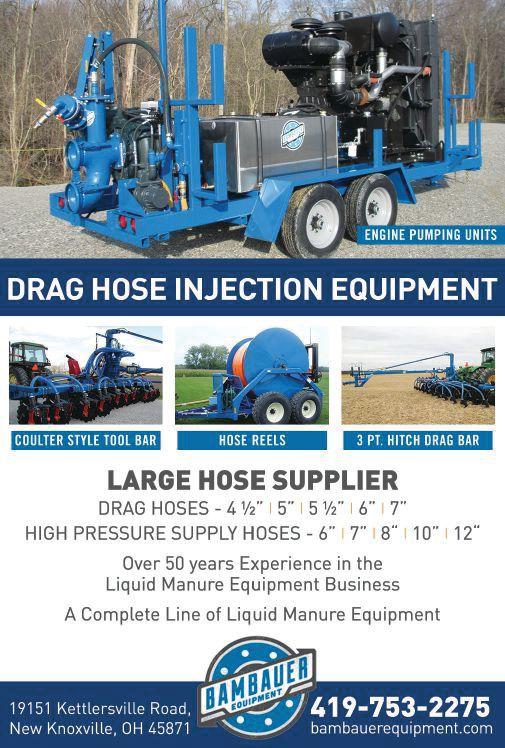
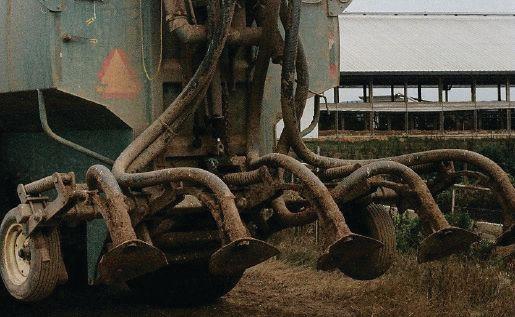
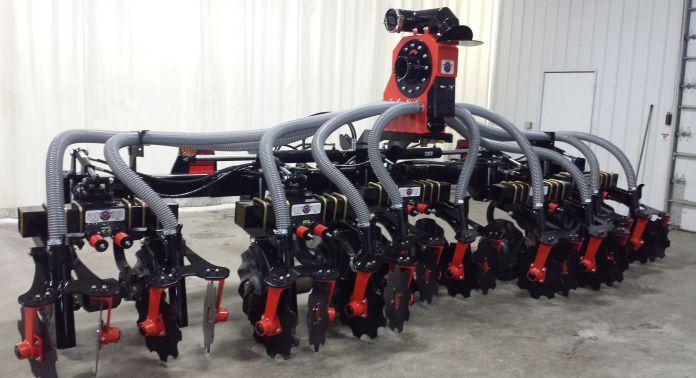
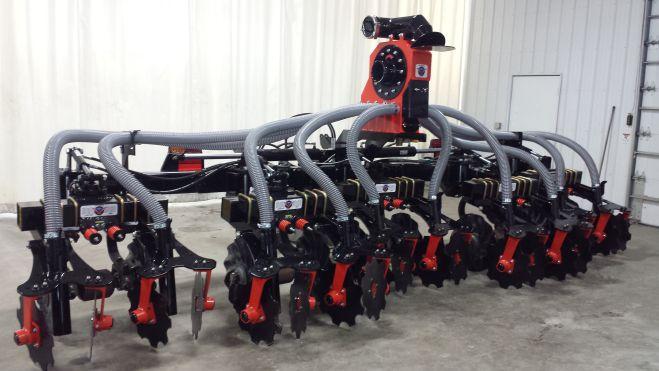
Manure Injection System Minimize Soil Disturbance
a High Speed - 3-12 MPH with excellent performance a High Residue - Heavy corn stalks without clogging a Low Draft Manure Injection - up to 15,000 gal per acre and up to 50% less draft than prior technology • Adaptable to different bar sizes & drag hose systems a Built for Commercial and Custom Pumping a Custom Drag Hose Bars & High Flow a Even Flow/High Flow Maniflow Available
Closed-loop Concept Could be Future of Sustainable Farms
Texas A&M engineer develops concept that could change the way dairy, swine and poultry farms manage their manure.
BY ADAM RUSSELL
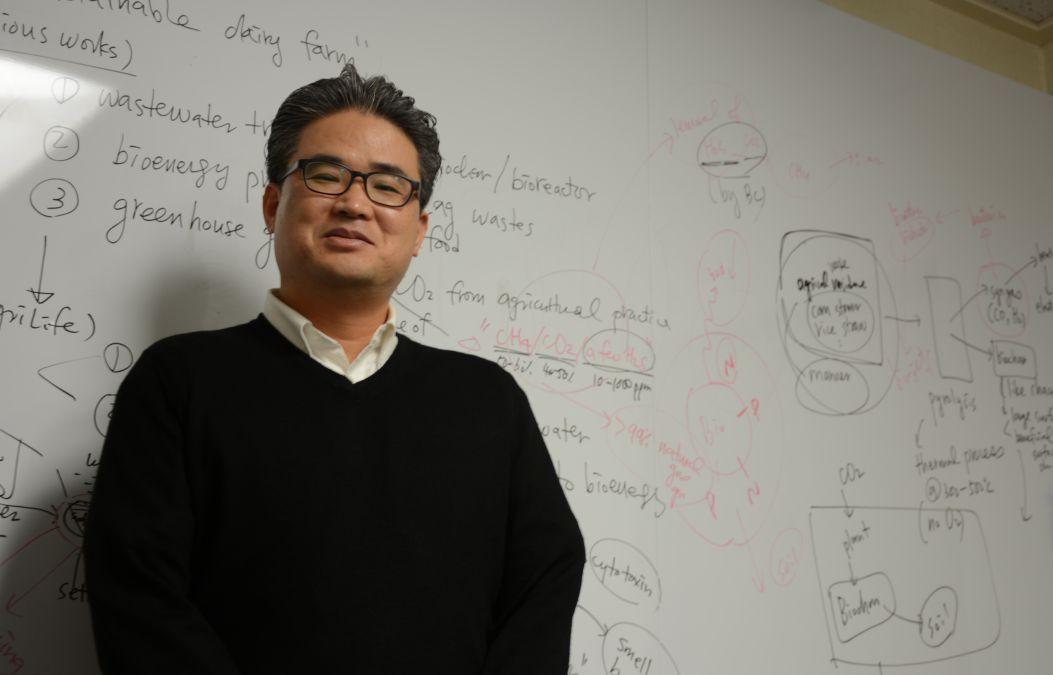
Dr. Eunsung Kan sees his concept of a closedloop dairy farm – which reuses wastewater, emits zero waste and powers itself on manure – as the future of sustainable animal farming.
Dr. Kan, a Texas A&M AgriLife Research chemical and environmental engineer, said his concept could change the way farms deal with manure, wastewater and greenhouse gasses while utilizing the waste to generate electricity.
Manure is sold to local farmers who need to infuse nutrients into the soil for crops and forage. However, tons of manure can also be logistically taxing as facilities keep up with the treatment and distribution of large quantities of environmentally problematic materials monitored by state and federal environmental regulators.
Dr. Kan’s research would utilize existing technology – biochar, a carbon material similar to charcoal, created from animal manure and agricultural waste, such as corn stubble or rice
ABOVE
straw – that would be used to filter solid waste and effluent. The biochar could be used as a slowrelease fertilizer or converted, via pyrolysis, into energy to power the farm.
The closed-loop dairy concept focuses on three main goals – wastewater treatment using dairy manure-derived biochar, producing bioenergy using dairy manure and capturing greenhouse gasses via adsorption onto dairy manure-derived biochar, Dr. Kan said.
Biochar has proven to provide a beneficial surface chemistry that can filter a wide range of contaminants, including nitrogen and phosphorous, he said. When the surface of biochar is modified with several methods in a lab, it has shown an ability to capture antibiotics, pesticides, hormones, heavy metals and other possible contaminants.
Last year, Dr. Kan received a $1 million grant from the Texas A&M University Chancellor’s Research Initiative Fund to research the viability of
Dr. Eunsung Kan stands in front of a dry-erase board used to explain his closed-loop dairy farm concept and use of biochar to filter wastewater and create electricity.
the closed-loop dairy system. Before joining AgriLife Research, he also received about $400,000 in research grants to research the concept’s potential to treat animal waste, control greenhouse gas emissions and convert manure to energy.
The closed-loop dairy is a relatively simple concept, Dr. Kan said. Cows produce manure, which when mixed with remnants of local crops, can become a seemingly endless supply of filtering material, fertilizer and energy.
Columns filled with biochar would act as a water purification system that filters nitrogen, phosphorous and other contaminants from liquid as it passes through, Dr. Kan said.
“The affluent from the column would then be very low in nitrogen and phosphorous,” he said. “If we filter to low levels of nitrogen and phosphorus, it wouldn’t cause any environmental problem.”
The biochar used to filter nitrogen and phosphorous could then be used as slow-release fertilizer that provides needed nutrients to plants and would not wash away as runoff from heavy rains. In addition, biochar immobilized with photocatalysts would decompose toxic contaminants to harmless products when irradiated by exposure to ultraviolet light.
For energy, dairy manure would be fed into a pyrolysis reactor on site that would use relatively low heat, 500 to 1,000 Fahrenheit, to create compressed hydrogen and carbon monoxide syngas that can be used to create electric power, Dr. Kan said. Excess electricity could be sold to local utility companies. The byproduct from pyrolysis of dairy manure is biochar.
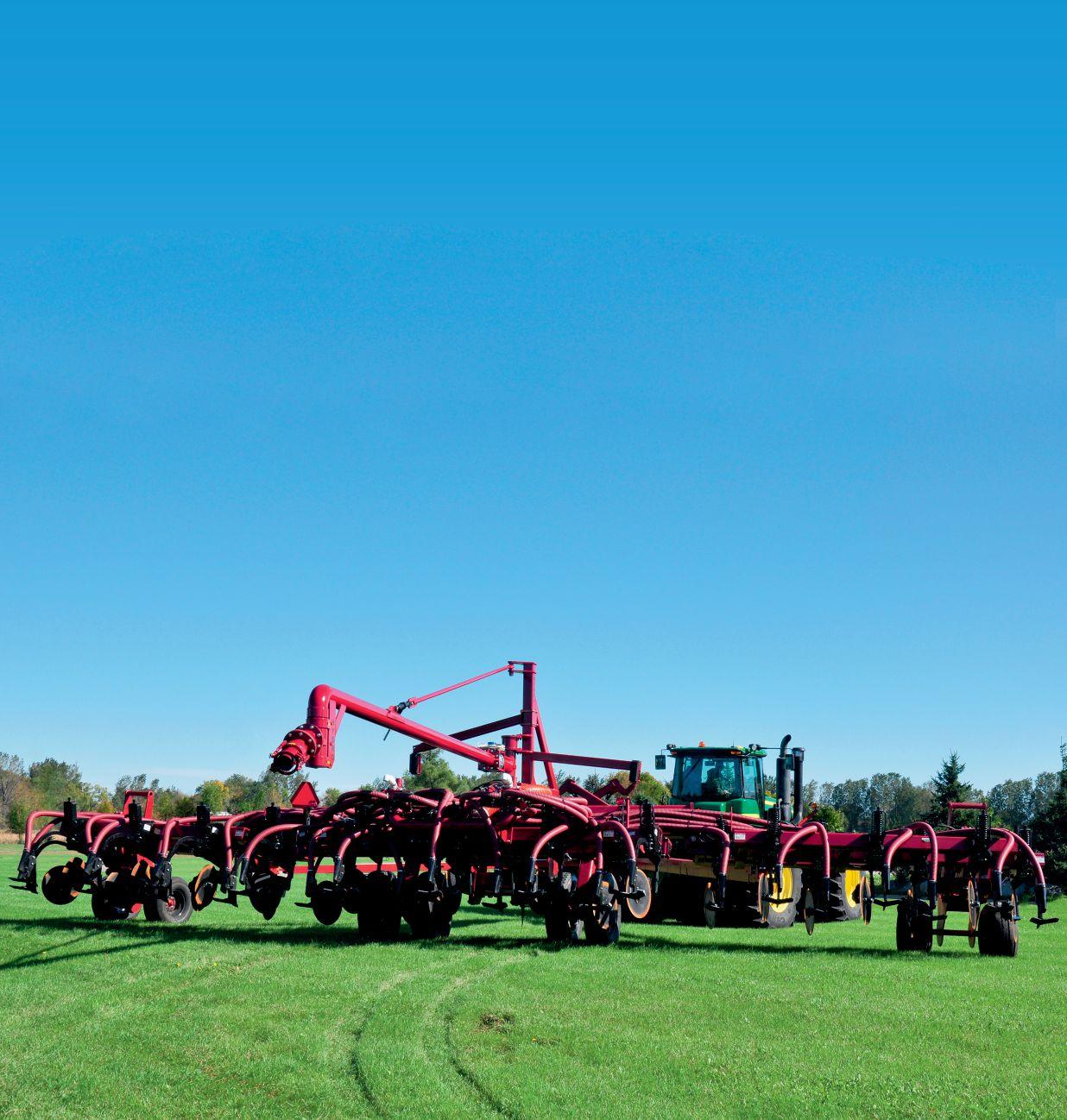
EFFICIENT SLURRY APPLICATION
“The principle is very simple,” Dr. Kan said. “The dairy would just need a different size reactor to meet its scale of manure output and energy needs.”
Dr. Sergio Capareda, an AgriLife Research agricultural engineer, proved the pyrolytic conversion of dairy manure to syngas and biochar from his USDA-funded project. Dr. Kan plans to advance this concept by biologically converting syngas to butanol and bio-jet fuel as alternative transportation fuels, and developing biochar-based processes for wastewater treatment and greenhouse gas control.
Dr. Kan will produce a lab-scale version of the closedloop dairy to determine the necessary scale for application and experimentation at the neighboring Southwest Regional Dairy Center in Stephenville, a privately owned working dairy operated by Tarleton State University used for educational purposes. He hopes to have a system, including the pyrolysis reactor, operating at the dairy within three to four years.
Clay Dameron, the dairy’s waste manager, said between 300 to 400 cows are milked daily. Those cows produce manure and effluent that is treated via a conventional lagoon system. Around 90 to 130 tons of solids are moved to nearby croplands and pastures every three weeks where it’s used as fertilizer. Treated liquids from the lagoon are dispersed via sprinklers in nearby fields.
Dr. Kan said he believes the closed-loop system will prove to be a logistically and financially viable model for dairy producers to implement in the future.
Adam Russell works with Texas A&M.
ON TRACK
Bobcat M2 Series
Bobcat is expanding on current M Series loaders by introducing the new M2 Series skid-steer, compact track and all-wheel steer loaders. M2 Series offers a variety of performance, operator comfort and visibility enhancements to help increase operator productivity and provide enhanced uptime protection. The M2 Series lineup includes Bobcat 400-, 500-, 600-, 700- and 800-frame-size skid-steer, compact track and all-wheel steer loaders. Bobcat compact loader operators can now turn the automatic ride control option on or off from inside the cab. When the auto mode is selected, the system will work at any travel speed. It is automatically activated by detecting increased hydraulic lift arm pressure, such as when the loader is carrying material, and will deactivate when hydraulic lift arm pressure is reduced. A new reversing fan option allows operators to temporarily reverse the cooling fan direction to blow dust and small debris from the radiator and rear screens. This option helps minimize downtime and can reduce the cooling area cleaning frequency. M2 Series loaders have also been improved to increase operator comfort, thanks to new front and rear cab isolators, door seals and side screen dampers. These design elements reduce noise, vibration and dust inside the loader cab.
bobcat.com
Compost Cat
Aggero presents a Compost Cat tuned to tackle the demands of the broiler industry. Growers constantly balance the need to provide a healthier environment with saving time and money. The Compost Cat does both. The windrow process refreshes litter – saving on fresh bedding and chemicals – and burns off ammonia and pathogens, minimizing disease and maximizing air quality. Improvements include a higher horsepower engine and 50 percent more auger power to rapidly collect caked litter and shred it into a windrow in minimal time. At over 10 feet wide, the collector head creates two large windrows with fewer passes. Additional features specifically designed for the broiler house include side-conveyor and spreader disk add-ons that attach with a hook and pin system for quick set up. aggero.com
Vaughan Conditioning Pump
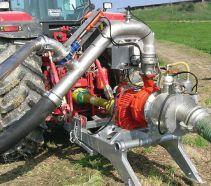
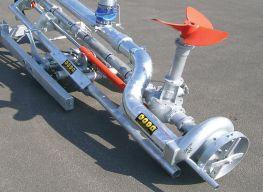
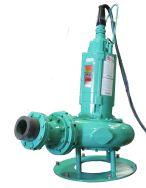
This submersible chopper pump is mounted on a portable stand and fitted with a high-velocity mixing nozzle. The pump recirculates contents by chopping and mixing to produce an easily pumped slurry.
chopperpumps.com
Hard Metal or White Iron materials available for abrasion resistance (MP Series)
Low head transfer to high head booster pumps
High efficiency — Lower HP required
Heavy duty construction — Low maintenance
50+ years’ experience in manure handling
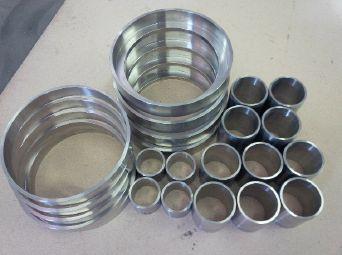
Stainless Wear Rings and Sleeves
Mobile System Removes Phosphorus from Manure
BY JAN SUSZKIW
A mobile system for removing phosphorus from cow manure may offer dairy farmers greater flexibility in where, when, and how they use the nutrient to fertilize crops.
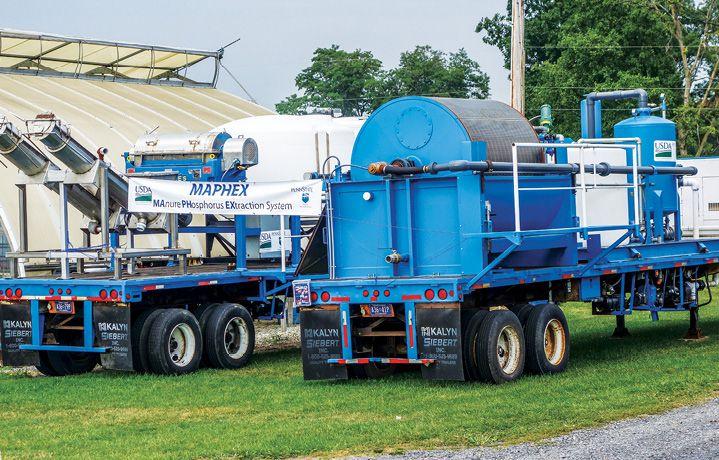
The idea behind the Manure Phosphorus Extraction System (MAPHEX) is to remove phosphorus and concentrate it in a form easier to manage, says Clinton Church, an Agricultural Research Service (ARS) environmental chemist.
“Some farmers with plenty of land may need to drive 20 miles or more to reach some fields,” says Church. “That makes transporting large volumes of manure uneconomical (or impractical), even if the crops there need phosphorus.”
Working with Pennsylvania State University collaborators, Church and his colleagues developed and tested MAPHEX as a way farmers could “mine” phosphorus from their manure and market it as a value-added product.
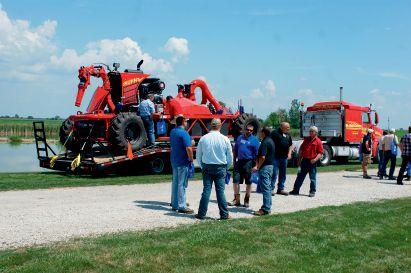
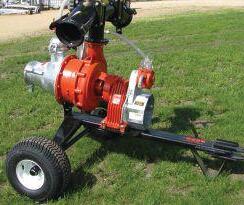
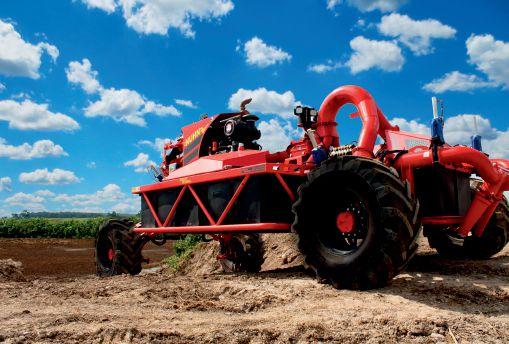
To do this, the team mounted an auger press, centrifuge, vacuum-filter unit, and other components atop two trailer beds so the entire system could be driven to a farm and operated
onsite on a daily or rotational basis.
MAPHEX works in three stages, each removing progressively smaller fiber particles and other phosphorus-containing matter from the manure. In addition, there is a chemical treatment step between the last two stages to convert dissolved phosphorus into a filterable particle. Water extracted from the manure is retained on the farm; it contains most of the manure’s nitrogen.
MAPHEX works quickly. In about 10 minutes, it can extract 99 percent of the phosphorus from 250 gallons of manure. Additionally, it removes odor from the manure.
The fiber and other phosphorus-containing particles exit the system as concentrated solids, which can be transported for use off-farm or sold to nurseries. Solids from MAPHEX’s first treatment stage could also be sold as cow bedding.
The MAPHEX team will begin demonstrating a full-scale version of its system on a working dairy farm this spring.
Jan Suszkiw is with the U.S. Department of Agriculture’s Agriculture Research Service office.
YOUR MANURE: A goldmine waiting to be developed
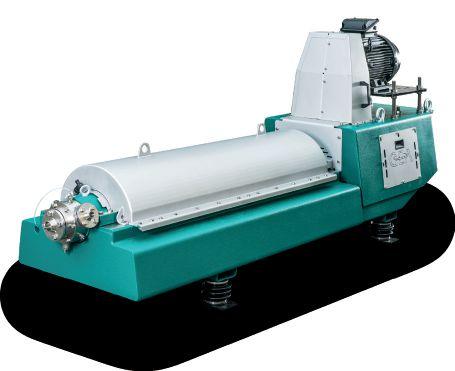
Make the most of your resources and the benefits of sound manure management thanks to the GEA Decanter Centrifuge.
Separating manure by a centrifuge process makes it possible to manage the solid and liquid fractions individually, with greater flexibility and efficiency. By eliminating up to 100% of the phosphorus content in the liquid, you will have more options and leeway in your manure spreading schedule to apply the necessary nutrients at the time when your crops need them the most. The solid fraction, which is more nutrient-rich, is easily transportable at a reduced cost to deficient fields further away.
You can rely on GEA’s expertise and farming knowledge to transform the manure produced by your livestock into gold!