President Mike Fredericks mfredericks@annexweb.com
Publication Mail Agreement #40065710
RETURN UNDELIVERABLE CANADIAN ADDRESSES TO CIRCULATION DEPARTMENT, P.O. BOX 530, SIMCOE, ON N3Y 4N5
email: subscribe@manuremanager.com
Printed in Canada
Circulation
email: subscribe@manuremanager.com
Tel: 866-790-6070 ext. 211
Fax: 877-624-1940
Mail: P.O. Box 530 Simcoe, ON N3Y 4N5
Subscription Rates
Canadian Subscriptions
$35.24 Cdn, one year (with GST $37.00, with HST/QST $39.82)
U.S. Subscriptions: $47.00 USD, one year
Occasionally, Manure Manager will mail information on behalf of industry-related groups whose products and services we believe may be of interest to you. If you prefer not to receive this information, please contact our circulation department in any of the four ways listed above.
All advertising is subject to the publisher's approval. Such approval does not imply any endorsement of the products or services advertisted. Publisher reserves the right to refuse advertising that does not meet the standards of the publication.
Website: www.manuremanager.com
By Margaret Land
Have your voice heard
In June, the U.S. EPA did something that actually brought words of thanks from farmers across the nation – it extended the comment period deadline for a controversial change to the Clean Water Act.
Interested parties now have until October 20 to comment on the proposed Waters of the United States rule, originally introduced by the EPA and the Army Corps of Engineers back in late March.
“Dairy farmers are committed to protecting U.S. waters both voluntarily and under the Clean Water Act,” said National Milk Producers Federation president and CEO Jim Mulhern, “but the EPA needs to go about this effort in the right way. Allowing more time to consider the EPA’s draft will give everyone the chance to adequately consider the issues raised in the draft and make it less likely the final regulation will be harmful to dairy farmers.”
It was a sentiment shared by the American Farm Bureau Federation, which has launched a “Ditch the Rule” campaign (ditchtherule.fb.org) urging farmers to get involved in fighting the proposed rule.
“(The) EPA has misled the regulated community about the rule’s impacts on land use,” stated Bob Stallman, president of the AFBF. “If more people knew how regulators want to require permits for common activities on dry ground, or penalize landowners for not getting them, they would be outraged.”
According to the AFBF, the proposed law would expand federal regulations to cover routine farming practices, such as building fences and constructing buildings. It will also expand federal control over ditches and areas of land that can become wet during storms.
“This rule is an end run around congressional intent and rulings by the U.S. Supreme Court, alike,” Stallman said. “Congress and the courts have both said that the 50 states, not the EPA, have power to decide how farming and other land uses should be restricted. It’s time to ditch this rule.”
For the NMPF, the lack of scientific proof backing up the proposed changes plus the need for key concepts of the draft to be interpreted by government legislators, have it call for more discussion of the proposed regulations.
“For dairy farmers to understand and assess the proposed changes, the science behind them must be clear and conclusive,” said Mulhern. “And yet, the draft relies on the scientific conclusions of an EPA report still under review by the agency’s Science Advisory Board.”
Terms such as “floodplain” and “tributary” have also not been defined.
“These terms are murky at best, and, therefore, will create confusion for dairy producers.”
EPA administrator Gina McCarthy has been touring around the U.S. trying to smooth the waters regarding the proposed changes to the CWA.
The EPA is encouraging people to submit written comments on the proposal. Instructions for doing so can be found at: http://water.epa.gov/lawsregs/guidance/wetlands/CWAwaters.cfm#comment.
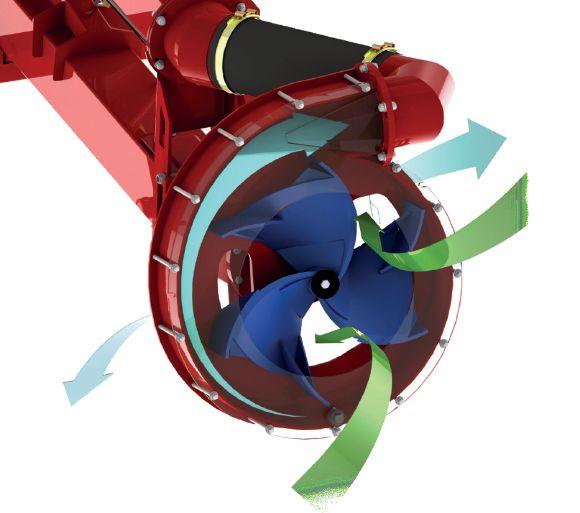
The PUMPELLER® Hybrid Turbine revolutionizes manure pump performance. Incredible intake suction pulls solids into the cutter knives, reducing the toughest crust to nothing in just seconds. The turbine combines the high-volume mixing of a propeller agitator with the power and reach of a lagoon pump, the resulting hybrid design radically outperforms both.
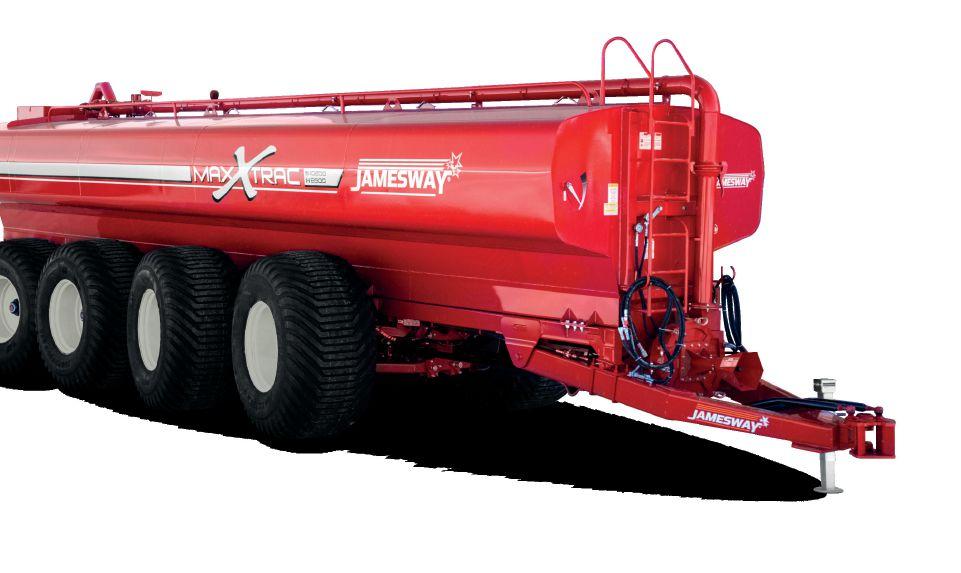
Jamesway’s new MAXX-TRAC tankers deliver maximum performance.
MEETS ART SCIENCE
By Tony Kryzanowski
Veteran compost producer says conversion method partly science and partly art
It’s spring at the Rosenholm Dairy in Waumandee, Wisc., when the snow melts. The robins start chirping, and the half-ton trucks start pulling up to the dairy’s gate to purchase compost and potting soils produced from its cow manure solids.
Compost sold under the brand name Cowsmo Compost has been produced at the dairy since 1990, and there have been years when the net revenue from this side of the business has been greater than from the dairy.
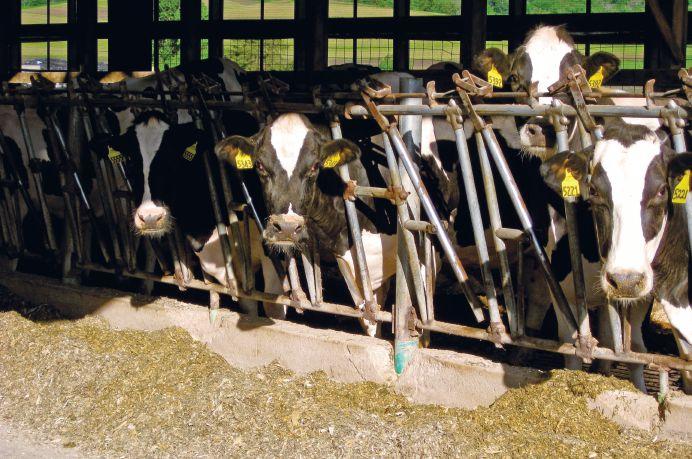
There are about 1,000 animals at any one time on the dairy owned by fifth-generation farmers, John and Nettie Rosenow, with 550 milking cows, all situated in three barns. The herd generates about 14 million gallons of liquid manure annually,
Manure solids from the Rosenow Dairy collect on a weeping pad after being separated from the liquid stream through a Key Dollar separator. Contributed photo
which separates out to about 20 million pounds of organic matter and a high nutrient liquid stream that is stored in lagoons and land applied as organic fertilizer. The separated solid gold produces between 10 to 15 million pounds of compost and potting soils, sold year round to a variety of retailers, wholesalers, and direct customers primarily throughout the American Midwest.
The Rosenows first started making compost instead of land applying their manure after a barn fire in 1990 because they only had about half the cropland they deemed they needed to safely dispose of their raw manure through land application. They put about 1,000 acres into corn, alfalfa and cover crops for feed, with about 700 acres close to the dairy. They calculated that they’d need about three acres per cow to safely land apply their manure. This meant that they’d have to access about twice as many acres as they owned. Reducing their raw manure output by composting has
helped the dairy avoid what John describes as “bidding wars for rents” because they have enough farmland of their own to spread their separated liquids and for disposing of their manure during those months when it is too cold to make compost.
Initially, they gave the compost away for free. Then the price went up to $5 a pickup load. Today, it sells for about $67 per pickup load and they are having difficulty keeping up with demand. So John says that they are actively in the process of establishing another composting site with another dairy to ramp up production.
“We know that we need to continue to grow and we want to do that, but we are doing that on the compost side,” says John. Manure disposal through composting has benefitted the dairy in a number of ways. First, it removes the manure nutrients from the farm so it requires less land for manure disposal.
“Manure becomes less valuable the
farther away you haul it and we would have had to haul farther away,” says John. “Now the farthest we haul the manure is about a quarter of a mile to the compost site.”
Secondly, they have acquired a new skill set for making compost and potting soils as well as selling it, which has developed a new income stream for the dairy.
Thirdly, John says that developing the composting business has been a very enjoyable experience.
“In the process of marketing our compost, we meet very intelligent and very exciting people, and that’s a lot of fun,” he says. “Every spring, when the snow goes away, we start having people come with their pickups and their trailers to get compost. They are all very happy because spring is here and they can garden and that’s been fun as well.”
And in the final analysis, it’s also been profitable for the dairy.
During each milking, the barn alleys containing the mixture of raw manure and bedding are flushed using recycled lagoon water to a centralized collection tank where an agitator and a submersible Flygt discharge pump are located. The pump transports the mixture across a Key Dollar incline screen separator. The separated liquids travel by gravity to the six million gallon, three-stage lagoon. The separated solids collect on a weeping pad and are blended with drier waste like that collected from the maternity barn to achieve the correct moisture content for composting, and from there the mixture is loaded into a New Holland apron beater spreader and transported to the composting site.
The Rosenows take their production of compost very seriously, having taken the training to learn how to properly convert their herd’s manure solids into compost and through a couple of decades of on-the-job training to fine tune their approach. The result has been the development of a tried and true method and a focus on four specific potting soil blends, resulting in high quality products manufactured with just the right amount of affordable sweat equity from farm labor. At one time they had a full-time person dedicated to compost production. Now they are able to accomplish the same end product with four hours of labor a week based on the knowledge they have acquired.
Speaking about their approach to compost production, John says, “it’s partially an art and partially a science, and you need
both of them . . . you have to have a proper carbon and nitrogen ratio so that it doesn’t get too hot and also so that it does heat. We manage that.”
Over the years, they have expanded their product lines and have even teamed up with Joshua Frye, a West Virginia poultry farmer who is producing biochar and syngas from his poultry manure.
Frye is using the syngas generated from pyrolysis of his poultry manure to heat his poultry barns and markets the remaining biochar, which is a form of carbon, as a soil amendment. Rosenow purchases some of the biochar, which has been used as a
soil amendment in the world as far back as during the Inca Empire, and mixes it with some of his potting soil products.
“I was interested in the carbon sequestration part of biochar, where it would sequester carbon by putting it into the soil and keep it there,” says Rosenow. “It’s a very tight and porous carbon molecule and it has some agronomic advantages, so we thought that was a pretty good fit, especially with our customer base.”
The organic material the Rosenows use to manufacture their compost is a combination of the pine shavings bedding that they use in the barns and cow manure
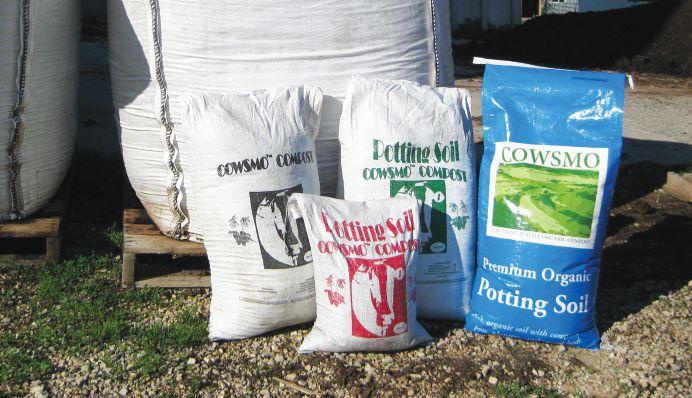
The Rosenow Dairy manufactures four blends of potting soil from its compost, sold primarily throughout the American Midwest. Contributed photo
Raw manure and pine sawdust bedding from the Rosenow Dairy milking barns are what provide the material for their production of Cowsmo Compost. Contributed photo
solids. They have taken this bedding approach because there is a readily available supply of pine sawdust from a nearby Ashley Furniture manufacturing plant, which delivers three semi truckloads of sawdust per week. They don’t use any of their manufactured compost as barn bedding or as an organic soil amendment on their cropland because John says it is just too valuable as a saleable commodity.
Rosenow adds that manure composting was a novel idea back when they adopted it in 1990 and to a great degree is still a novel idea among confined animal feeding operations (CAFOs) today. By far the biggest job and challenge in this business endeavor has been marketing, which he says has been and will be the key to success for any compost producer.
“We always tell our customers that the two things we sell are products and service,” says John.
Compost production occurs on a specially selected, 3.5 acre, blacktopped site about a quarter mile from the dairy, engineered to primarily control water runoff from the site. The runoff collection system consists of a reception area that settles it out and stops the flow. After a heavy rain, it will fill up and then discharge through a filtering system that consists of gravel and cement. It travels across a grass filter strip that consumes the nutrients from the discharge before it ends up in the stream.
This has helped to protect the integrity of the nearby trout stream and the site has been approved by the Wisconsin Department of Natural Resources.
The manure solids transported by the beater spreader from the weeping pad at the dairy to the composting site are placed in windrows measuring about 300-feet long, 6-feet high and 14-feet wide. Actual compost production takes place over about 10 months from mid-March to mid-December. During the non-production, two-month interval, the raw manure solids are land applied because the air temperature is too cold to produce compost at that time, and, throughout the year, about 800 acres farmed by the dairy does have manure applied to it.
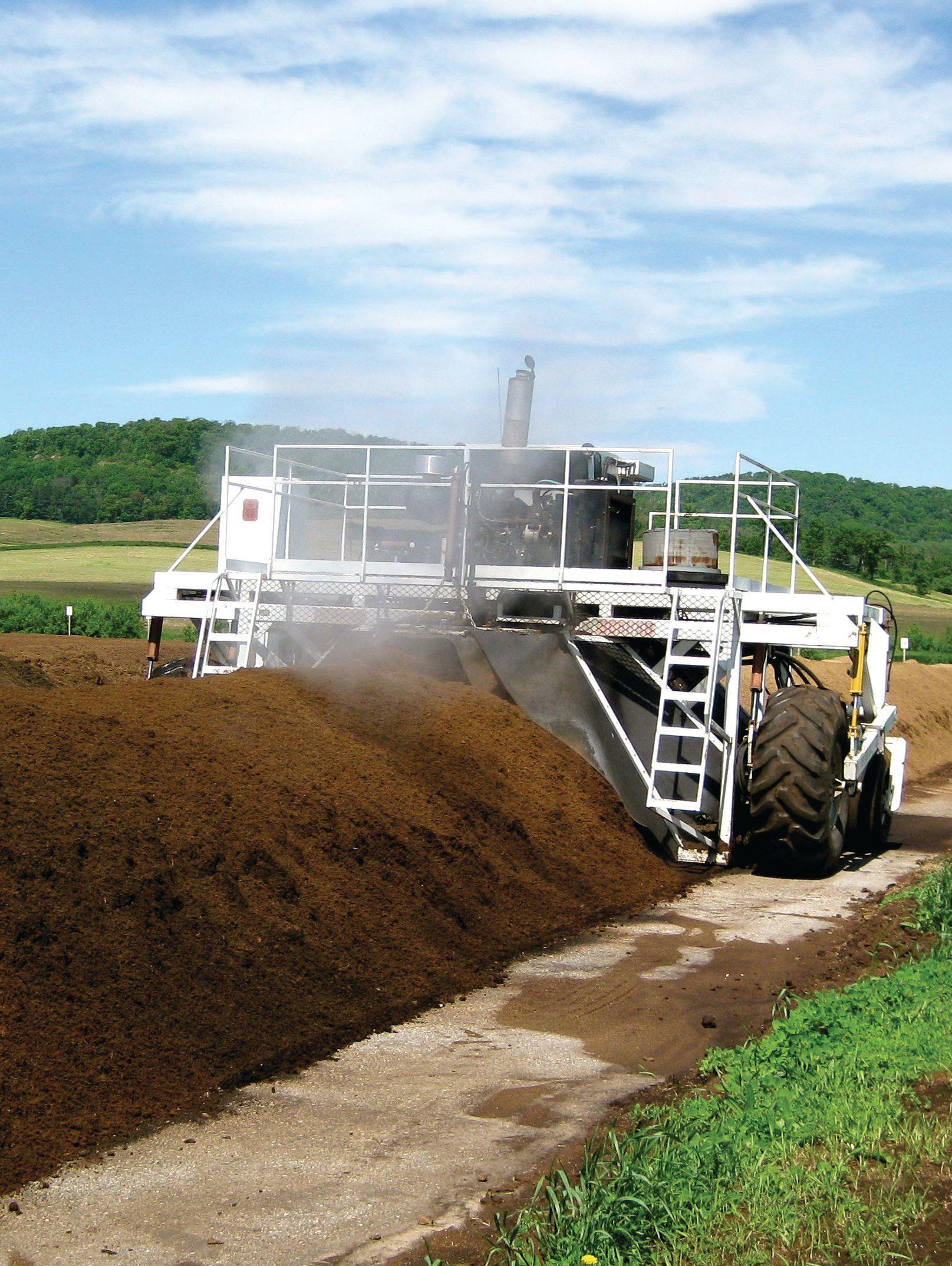
The natural conversion process from raw manure to compost occurs through carefully timed mechanical turning and monitoring of important parameters such as heat and moisture content within the windrows. The Rosenow dairy uses a Scarab, self-propelled compost turner in their
three months
operations. The piles are turned on average about 15 times and the compost is typically ready for market in about three months. They sell potting soil blends year round and have customers that pick up a “significant amount” every three weeks, meaning that the dairy derives some income from this area year round. Compost sales take place typically from February to the end of November, with demand dictated to some degree by geography. It will first start further south and move north as the weather warms up in spring.
Rosenow says they have to carefully balance their marketing effort with how much product they can supply, which explains their plans for expansion.
“We’re actually making a product that people want,” says John. “We’re not just trying to get rid of something. You can’t tell by looking at it where it came from, it has no smell, it’s stable, and you can apply it to any kind of growing crop . . . now I think it is safe to say that we probably produce the best compost that you can buy in the upper Midwest and our customers agree.”
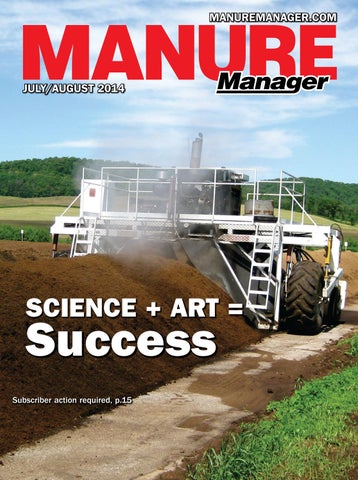
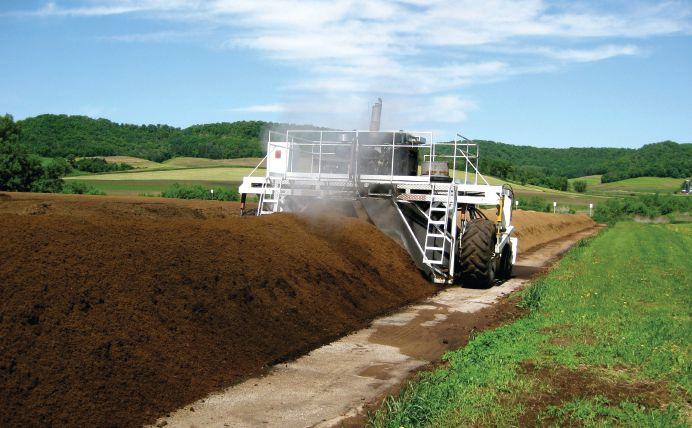
A Scarab self-propelled compost turner ensures that Rosenow Dairy can consistently produce its high quality compost. It takes about
for the mixture of raw manure and pine sawdust to be converted to compost. Contributed photo
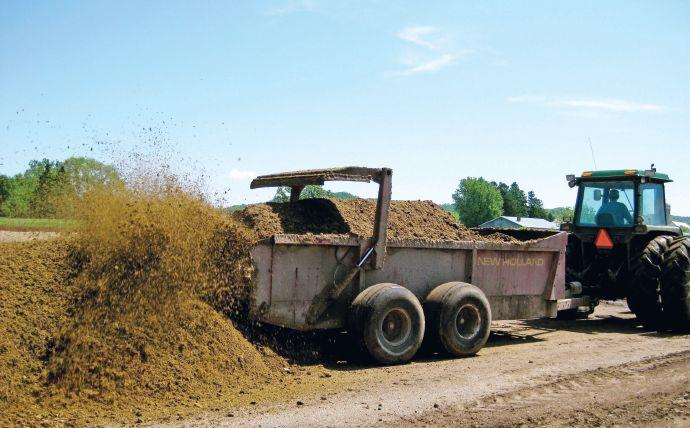
The windrows that become compost are put in place with manure transported from the Rosenow Dairy to a compost production site a quarter mile away using a New Holland beater spreader. Contributed photo
GEA Farm Technologies offers you a brand new and improved range of drive units that will make your life easier – more freedom in installation location, effective operation, and minimum maintenance. This unique design allows lateral movement of the drive as the cable is being wrapped around the rotating drum. The coiling is made without stress and without excessive friction – which is usually the cause of premature wear of the equipment and cable. The SW Drive Unit is another piece of well thought out equipment that will work for you through the years, just like the first day it was installed.
Failing farm takes lemons and makes lemonade — or more accurately takes composted manure and makes a retail product
When the recession hit, some farmers went down for the count. Others, like Glenn Vander Woude and his two partners, got back up, produced a new product and created a national buzz.
Glenn Vander Woude tells people that as a ninth-generation dairy farmer, he’s genetically pre-dispositioned to be in the dairy business. Glenn worked on his dad’s dairy through the 1980s and then
and Glenn
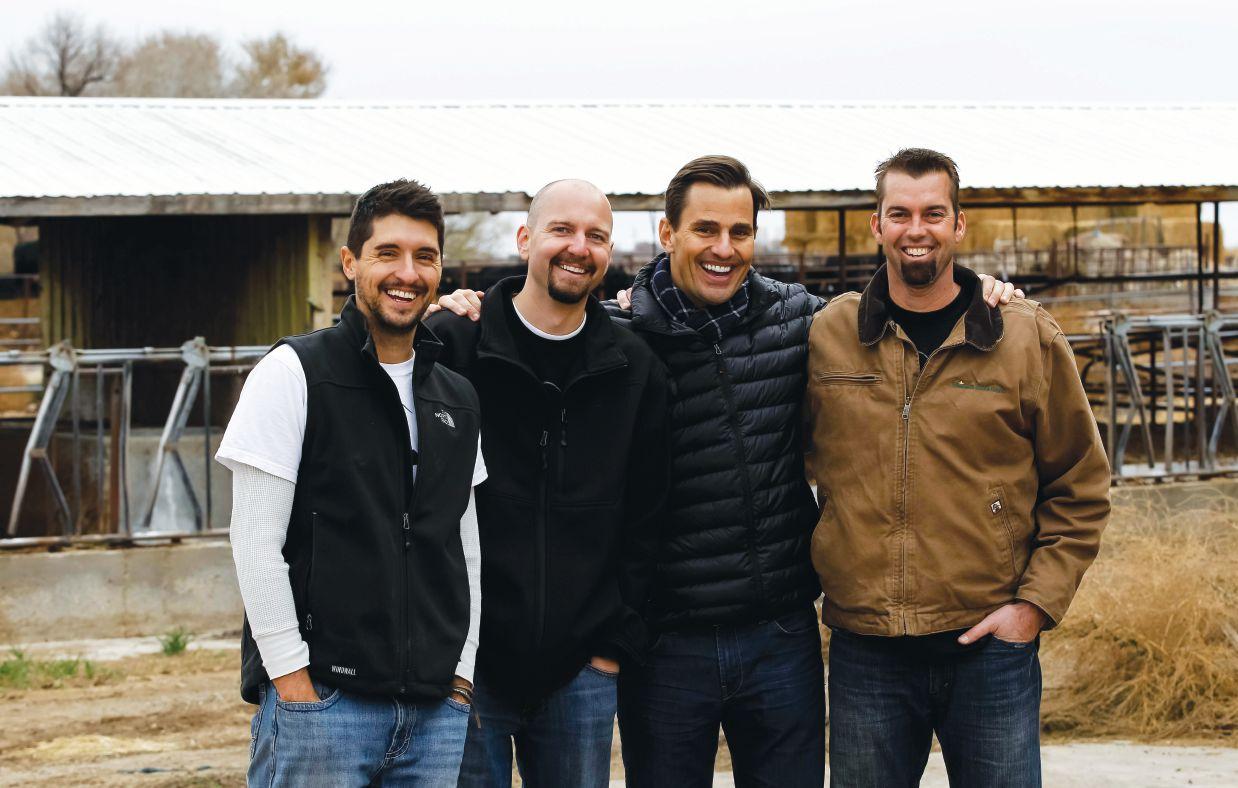
Rancic, an entrepreneur and Small Business Big Game advocate, visited the three business partners’ operation to inform them they were advancing in Intuit’s firstever Super Bowl ad competition.
his uncle’s dairy after he graduated from college with an ag business degree.
He and his wife worked hard, saved their money and in 1999 were able to start their own farm outside Nampa, Idaho. It was a humble beginning, milking just 47 cows. “I still have a framed copy of my first milk check for $400,” says Glenn.
The farm grew, and by 2008 the couple were milking 300 cows and farming about 300 acres where they grew alfalfa, corn, and small grains — both barley and wheat. They purchased another piece of farmland about 20 miles away because of the encroaching development. They had gotten their dairy permit on the new place, and were ready to sell the original farm, when it happened. The recession hit.
“That changed everything,” says
Glenn. “We had plans, but economics dictated otherwise.”
A new plan
The couple tried to stay in the dairy business, but it didn’t look good, and Glenn was facing unemployment. One possibility presented itself. Composting.
Glenn had always been an advocate and studied composting in college. “For twelve years we had been composting our manure just because I felt it was better to spread compost on farm ground, especially rented ground, versus raw manure. You have less odor and it’s a really good way to control your nutrients and to get more consistency in what you’re land applying.”
Glenn says now that many farmers are using nutrient management plans, and
Diane Mettler (Left to right) Scott Hartog, Ben Beiri, Bill Rancic,
Vander Woude.
Don’t let manure handling agitate you. Save time and fuel with More Than Manure® (MTM®) Nutrient Manager. MTM can break through crusts and solids in pits and lagoons, and cuts down on foam when pumping into tanks, so manure is easier to handle with less agitation. Visit us at sfp.com to request a free MTM kit.
compost allows you to “kind of dial it in a little bit better than raw manure.”
In February 2013, Glenn and his wife sold the cows. What remained were tons of compost and manure . . . and a new dream.
New business venture
As the dairy side came to a close, a new venture presented itself.
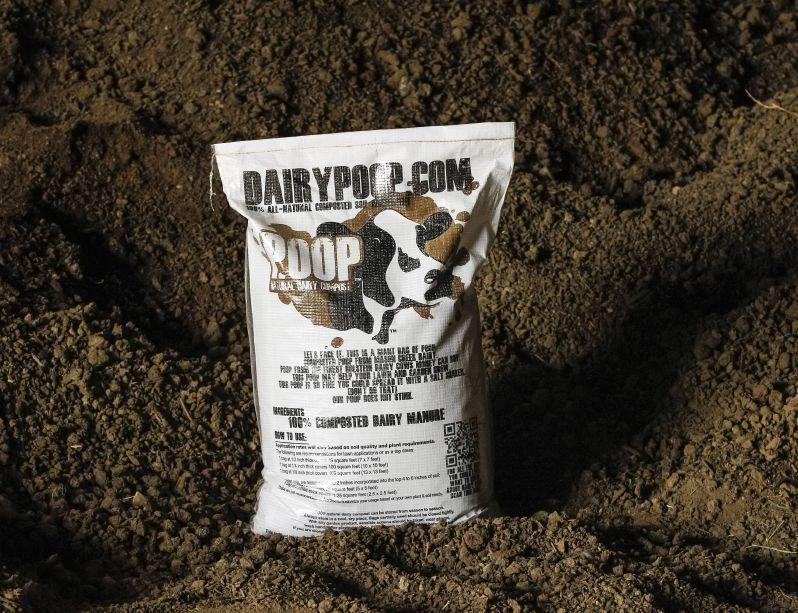
Glenn, his brother-in-law, Scott Hartog, and his cousin-in-law, Ben Bieri, could visualize a new business that all three could be involved in — selling the compost at a retail level. In short, they would take the composted manure, screen it, bag it and sell it. They would call their product Poop - Natural Dairy Compost.
“A bag of compost isn’t going to catch your attention,” says Glenn. “But ‘Poop,’ does catch your attention.”
The three men, who are all in their 30s, put their energy and skills to the test. Glenn continued composting. “I’ve got a whole composting yard where we put all the manure into windrows, about 4- or 5-feet high by about 10-feet wide, and then compost it all down. Next, we bring it in. We’re using my old hay barn to screen and bag.”
They needed a product that was a little more refined than what you spread on a field. So, they had a 1/8-inch screener, custom built by Frank’s Welding.
“It lets us get an odorless compost that has a nice, fine consistency like coffee grounds,” says Glenn. That consistency makes it easy for customers to spread with hand-operated compost spreaders.
“We’re doing everything very economically, taking what we already have and modifying it to make it work,” says Glenn. And that includes not only the three guys providing all the manual labor, but also applying their mental skills. Glenn is the compost guru. Ben, a managing partner of Slyngshot Marketing Strategies, handles the marketing, and Scott, an HR manager for Wells Fargo, is in charge of logistics.
“Scott helped us form the corporation. He’s the one who takes care of all the paperwork and keeps Ben and I organized,” says Glenn.
Supply
The men can already see a number of challenges ahead of them, but they are ready to take them on.
First, Glenn admits, he doesn’t have an
Glenn Vander Woude shows off the company’s final product . They needed a product that was more refined so had a 1/8-inch custom screen constructed.
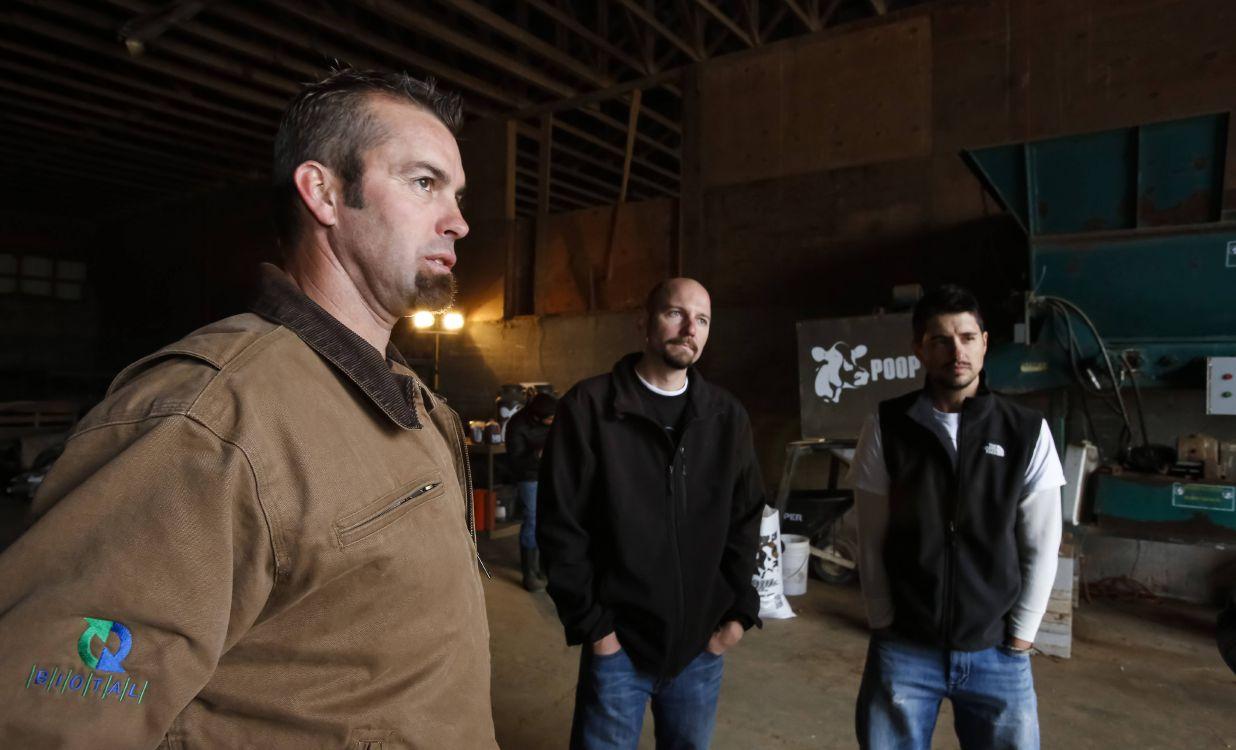
After selling his dairy herd, Glenn Vander Woude was left with a farm yard filled with compost and manure. He and his business partners decided to create PoopNatural Dairy Compost.
unlimited supply of manure or compost at the farm. The current supply is helping keep costs low while the business grows, but at some point they will have to go elsewhere. Glenn’s not too worried though. “We have contacts within the dairy industry if our composting business does take off.”
They also need to make sure they have capacity, although that won’t be a problem for a while. “With our current system, if we had full-time labor — not just me and my partners part time — our maximum capacity would probably be 3,000 pallets annually,” explains Glenn. Each pallet holds 40 cubit foot bags of compost, but Glenn says they aren’t close to reaching that yet.
Right now, Poop is just taking hold in the Treasure Valley region near Boise. “We’re hoping to get some more retail locations and are meeting now with larger retailers. We don’t want explosive growth — just sustainable,” he says.
Competition and Super Bowls
The partners haven’t relied on just
word of mouth about their Poop. They recently went after a highly coveted and competitive Super Bowl ad.
Intuit held its first Super Bowl ad competition last football season. Companies could submit a 90-second video to explain why their company should be considered for a Super Bowl ad. Glenn and his partners jumped at the opportunity.
The men created a humorous clip, where the partners and their children talked about how important it was to “Poop your plants.” (Say it out loud if you don’t immediately get the humor.)
Almost 15,000 businesses submitted videos and Glenn and his team came in second. Just getting that far provided them some local notoriety, but there was more to come. Intuit produced a commercial for the men that aired on Fox Sports 1 for a number of weeks. (You can see the commercial on their website www.dairypoop.com and even pick up a Poop cap while you’re there.)
The team also received an allexpenses paid trip to New York City for
The three partners earned an allexpenses paid trip to New York City, where they were featured on the NASDAQ big screen.
the Super Bowl weekend. “All three of us went and took our wives,” says Glenn. “We had a blast. I’m pretty sure we stuck out like sore thumbs — a bunch of hicks from Idaho out in the Big Apple.”
New business challenges
Currently all three men have full-time jobs, with Glenn working as a sales representative for Lallemand, which sells animal nutrition and inoculation products. Because of that, direct sales aren’t an option and their focus is almost solely on retail, the biggest challenge — even with the Intuit success — is now penetrating the market and getting customers to choose their product over others.
Glenn says the bags of compost sell for $7.49 and their target is urban gardeners who would use Poop for raised beds and lawn applications. To set Poop apart from other fertilizers, they have gone after the niche they call “fully composted manure.”
“We’re not adding peat moss, sawdust, or any fillers,” says Glenn. “The
selling points on the compost [are] that you’ve got nutrients that are readily available for your plants whether you’re using it as a lawn application or a garden application. And you’ve got a slow release of the nutrients. A lot of your chemically manufactured fertilizers will have a quick response, and then you’ll have to refertilize later. With our compost you get a slow release of those nutrients throughout the growing season. Lastly, it really helps on water retention so that you’ll be able to use less water.”
Another challenge for the guys is adjusting to the fact that fertilizers are a seasonal product. They have already seen a bump in sales in the spring and fall. And they are seeing higher sales this year than last.
“A retailer actually tripled their order from their initial offering last August. So that was very helpful,” says Glenn.
Distribution and getting the product to stores is also difficult for a new company that is only run by three parttime guys. “Right now we’ve been taking it to the retailers. Just to their distribution
hub, and then from there, they’ll take it out to their individual stores,” says Glenn.
The team is looking forward to larger sales that will in turn help bring their costs down and allow them to ship Poop out further to more customers.
Getting kids through college
Right now the three men are putting in a lot of sweat equity. “We spend eight to ten hours every Saturday doing the direct labor. Indirect labor, as far as talking about ideas and figuring out different things with marketing, I don’t know how much time we spend. We’re kind of always thinking about it,” says Glenn.
The three partners have 11 children between them. “And our main objective when we started this thing back at the end of 2012 was to make enough money on this to cover the tuition costs for our kids,” says Glenn.
Will Poop get them all college degrees? If it’s based on their dads’ determination, creativity and not letting a thing like a recession stand in their way, then the answer is definitely: yes!
Glenn Vander Woude (left), Ben Beiri, and Scott Hartog provide all the manual labor and also apply their mental skills.
THE MOTHER OF ALL WINTER STORMS
By Treena Hein
How a colossal livestock carcass clean-up job was quickly undertaken after an historic U.S. snowstorm last year
It is now known as Winter Storm Atlas, and while it only lasted about 13 hours, its walloping impact will be felt for years to come.
Atlas whipped up its frenzy in October 2013, dumping as much as 55 inches of snow on much of South Dakota, with lots of preceding rain and winds at some points of over 60 miles per hour. The storm also touched areas of North Dakota, Nebraska and Wyoming. Afterward, no less than nine tornadoes hit northeastern Nebraska and northwest Iowa, adding to the emergency response burden.
Marvin and Kathy Jobgen’s herd near Scenic, SD, was one of many cut down by Atlas. “We have about 300 head usually, but
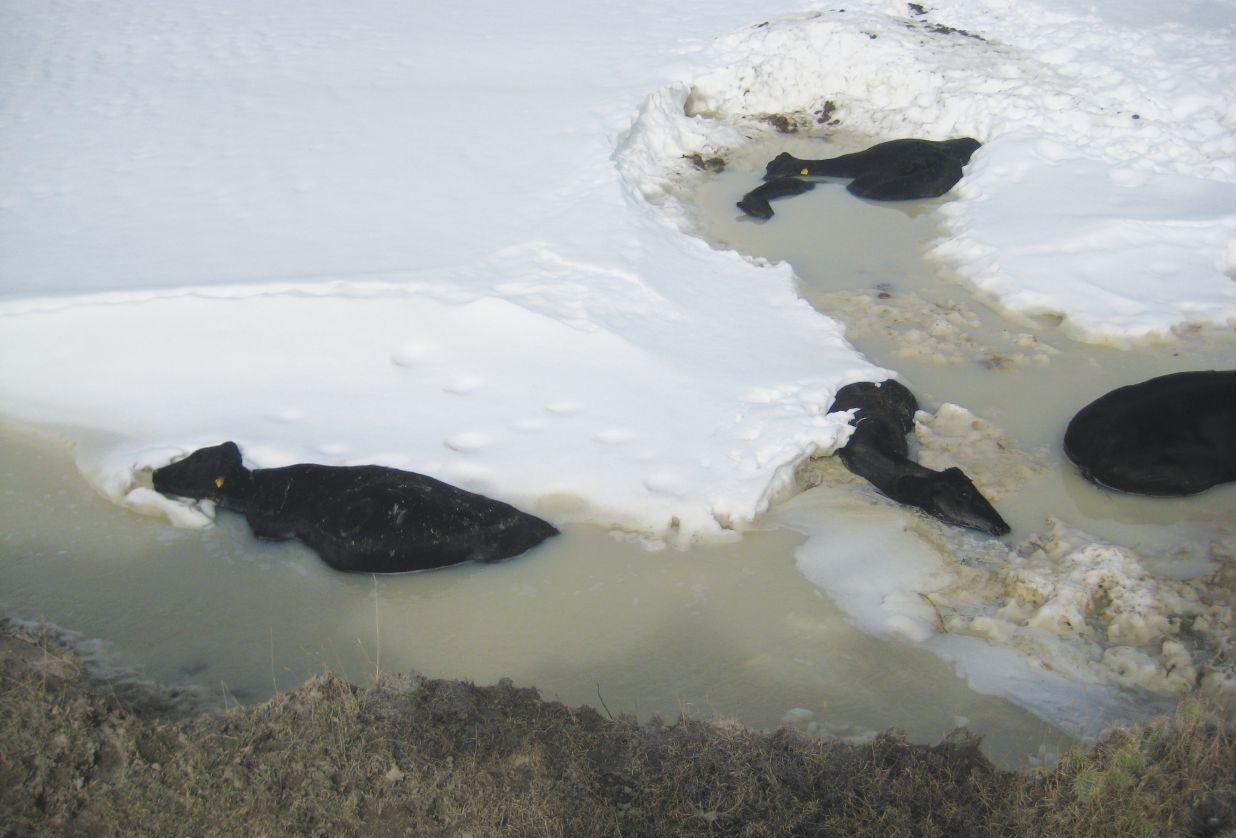
Winter Storm Atlas killed about 100 cattle from Marvin and Kathy Jobgen’s herd, located near Scenic, SD. “I’ve never lost a mature cow in a snowstorm in my life and to lose that many cows in that short of a period of time was a shock,” said Marvin.
the storm killed about 100 cows,” Marvin explains. “The cattle were on summer rangelands and hadn’t put on winter hair. The predictions were for 7 to 10 inches of snow and our area got over 30, so we were not as ready as we could have been. I’ve never lost a mature cow in a snowstorm in my life and to lose that many cows in that short of a period of time was a shock.”
The conditions Marvin refers to are only part of what created Atlas. It was, as they say, a perfect storm. A number of powerful factors all came together simultaneously to create a critical situation for cattle and other livestock, one that led to widespread physiological stress, hypothermia and death. First of all, as Marvin says, at the time of the event, livestock were still in summer coats and experiencing mild weather.
Secondly, the snowstorm was preceded by hours and hours of rain. “Wet hair has reduced insulating properties and increases
body heat loss,” notes Dr. Dustin Oedekoven, South Dakota’s State veterinarian and executive secretary of the South Dakota Animal Industry Board. “In addition, the strong winds further chilled the animals, and of course, much of the livestock hit by the storm were out on open range and experienced the full brunt of the elements.”
A further factor was feed quality. The grass the cattle, sheep and other livestock were feeding on at the time of the storm last fall was energy-poor due to the weather conditions the month before. Unusually large amounts of rain fell in September, which led to rapidly growing grass in many areas of South Dakota and beyond, and this type of grass is very high in moisture and quite low in energy. Under normal conditions, not such a big deal – but leading up to and during a chilling rainstorm and blizzard, it was a serious contributing factor.
Lastly, during the storm, animals tried
Although devestating and shocking, both ranchers and county crews mobilized right away after the storm. The ensuing carcass cleanup was very fast with most being buried and a few composted.
to seek shelter, and this walking for hours through ever-deepening snow further boosted their energy losses. And because they could not see for the snow, some of them fell to their deaths in gullies. Others got caught in slushy creeks, or were crushed by other animals against fences and so on.
Estimates of how many cattle died vary from 40,000 to 60,000. At this point, Oedekoven and his colleagues have verified the Atlas storm deaths of 21,980 cattle, 1,382 sheep, 299 horses and 40 bison. The storm killed calves that were due to be sold around that point in time, as well as cows
NRS – Nutrient Recovery System
that would give birth to this year’s calves, so the repercussions will be felt for some time to come.
In this one event, ranchers lost several million dollars and many did not have insurance relating to this sort of incident. However, they are applying for some financial loss assistance through the U.S. Department of Agriculture’s Farm Service Agency.
Cleaning up
Although it was devastating and shocking, both ranchers and county crews mobilized right away after the storm. The ensuing carcass cleanup was very fast, says Sylvia Christen, rancher and executive director at South Dakota Stock Growers Association, which represents about 1,500 ranchers. Most carcasses were buried, Christen says, a quick disposal method that was the most efficient option, with a few being composted.
In terms of where to bury the livestock, solid guidelines were already in place.
“During the Atlas storm response, my staff and I worked with producers, veterinarians, county emergency managers, and others
to advise them on proper carcass disposal procedures,” Oedekoven explains. “Of most help was the state ‘Carcass Disposal Guidelines’ document that was published in 2011.” The South Dakota Geological Survey Program was also used as a resource to help government crews and ranchers select burial location. It provides mapping with soil types as well as aquifer and hydrology information (http://www.sdgs.usd.edu).
“These animals died of natural causes rather than disease,” Oedekoven notes, “so there were no direct pathogen threats to be concerned with. However, timely and proper carcass disposal is an important aspect of disease prevention, as it removes potentially contaminated carcasses from the environment where they may serve as a reservoir of disease.”
The state Carcass Disposal Guidelines of 2011 contains common sense advice. Burial should not take place within 1,000 feet of surface water or within the boundaries of a floodplain, river or wetland. They should also not occur within 1,000 feet of an occupied dwelling (without permission of the owner), within 1,000 feet of any private
or public drinking water well or within 200 feet of a road right-of-way or property boundary (again, without the permission of the adjacent property owner). “Ranchers and government crews also made strong efforts to abide by the guidelines in terms of not burying carcasses where the primary subsurface material 20 feet below the bottom of the burial trench is primarily sand or gravel,” Oedekoven says.
In terms of depth, where an aquifer is less than 20 feet from the bottom of the burial trench, the burial site should be covered with at least four feet of soil to allow for compaction of soil to occur. The burial sites are also supposed to be able to be accessed in varying climate conditions, aesthetically acceptable and not in close proximity to public roadways or viewing public. The Guide advises that ranchers must keep an eye on burial sites, because maintenance will be necessary to ensure water does not collect over them. Additional soil cover will also be needed as compaction occurs with carcass decay.
The Jobgens buried some of their carcasses, and county crews disposed of
their cattle that had perished near county roads (by burial as well.) Some of the carcasses were inaccessible in ravines and so on, Marvin adds, and have stayed where death occurred for scavengers to feast on.
“The industry did quite a job in mobilizing carcass disposal for the severity of the impact,” Marvin observes. “It was not a typical situation and we were all charting new waters, but I think everyone did a fine job of doing what had to be done.” Kathy adds, “We will put one foot in front of the other and continue forward to rebuild our herd. We both love the ranching life!”
Oedekoven agrees that this was an extremely challenging time for affected ranchers. “Through all the turmoil, it was encouraging to see neighbors helping each other out to do their best to take care of surviving livestock, dispose of the carcasses and move on with the business of ranching,” he notes. “Pasture conditions are good this spring, and cattle prices remain at all-time highs. Ranchers are a resilient bunch and with a little luck, most of those affected will be back on their feet soon.”
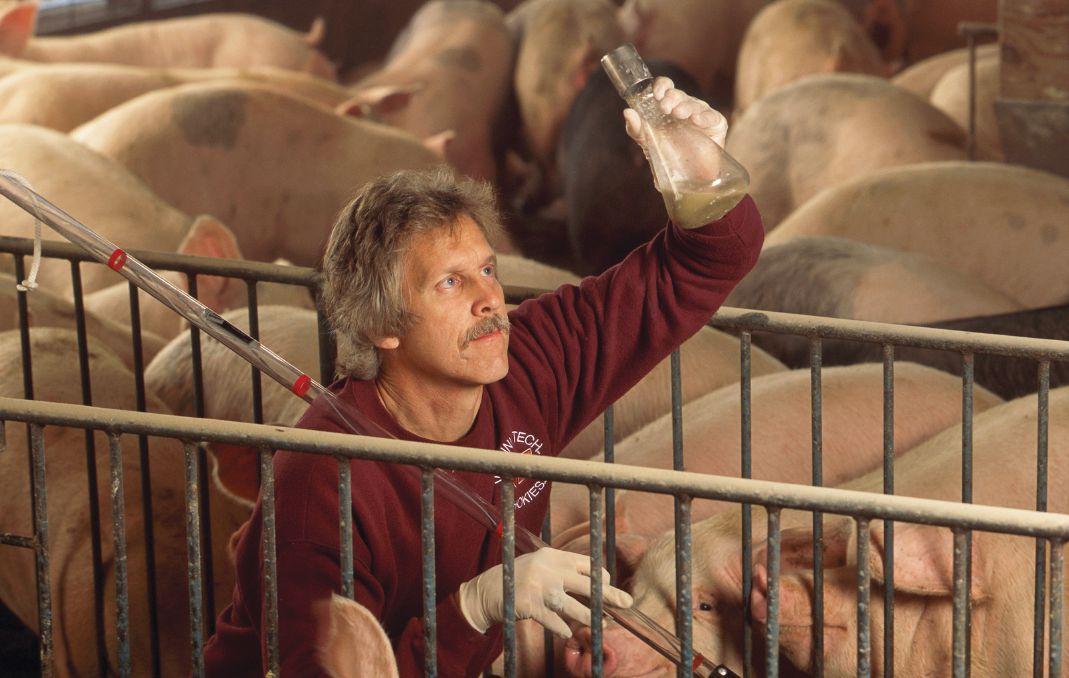
In a swine facility near Peoria, Illinois, microbiologist Terry Whitehead collects fresh manure samples to use in tests to identify bacteria that may be involved in odor production. Photo courtesy of USDA-ARS
CONTROLLING ODORS, GHG EMISSIONS FROM STORED SWINE MANURE
Storing and reusing swine manure for fertilizer makes good environmental and economic sense, but managing foul-smelling manure is probably one of the least favorite tasks on a producer’s to-do list. Now, findings by Agricultural Research Service microbiologists Terry Whitehead and Mike Cotta may someday give farmers options for odor control that will protect livestock health and help restore harmony between rural producers and nearby residents.
Odor from swine manure contains hundreds of compounds, so it’s difficult to find the specific ones that are the main culprits contributing to the bad smell. These compounds are made by microbes that break down undigested feed and other materials in the manure. Scientists have determined that one group of these microbes, sulfatereducing bacteria, produces hydrogen sulfide. Hydrogen sulfide and other sulfur compounds make up about half of the offensive odorants from swine manure.
But manure generates more than just a distinctive odor. Bacterial activity in manure pits also generates methane and nitrous oxide, which are both greenhouse gases.
Elsewhere, research conducted by scientists has indicated that tannins — compounds naturally present in tree leaves and other feed materials — can block bacterial activity in the guts of ruminant livestock such as dairy cows, which in turn lowers digestive efficiency and effectiveness.
To Whitehead and Cotta, who are in the ARS Bioenergy Research Unit in Peoria, Illinois, this observation suggested that perhaps the tannins could be an effective agent for controlling the compounds that produce odor associated with manure.
The scientists conducted a laboratory study to evaluate the effectiveness of tannins from the quebracho tree, which have been used in other studies of ruminant digestion, in reducing the emission of odors and greenhouse gases from swine manure pits. The scientists collected swine manure from a local producer and incubated it under laboratory conditions that mimic on-farm conditions. This allowed them to test the effects of adding tannins to the manure by monitoring gas emissions. They also determined the levels of sulfate-reducing bacteria that typically flourish in that environment.
Seven days after the researchers added quebracho tannins to the manure, they found that hydrogen sulfide and methane production had been reduced more than 90 percent and that production continued to dwindle for another three weeks.
Sulfate-reducing bacteria populations also significantly declined, by 70 to 90 percent, in the tannin-enriched mix.
Larger-scale testing at swine facilities is needed to determine whether the tannins have similar rates of efficacy in commercial swine production facilities. If these findings are replicated in field-scale studies, quebracho tannins could be used in manure pits to reduce the activity of sulfate-reducing bacteria and the amounts of hydrogen sulfide and methane. The benefits of this approach would be twofold: Producers would have a cost-effective way of mitigating odors and greenhouse gas emissions, and when the manure is eventually spread onto the fields as fertilizer, the added tannins would not pose a risk to the environment.
Whitehead and Cotta published their results in the December 2012 issue of Applied Microbiology and Biotechnology.
NAQSA tool helps farmers learn about air emissions from farms
By Jerry May & Dr. Wendy Powers
The National Air Quality Site Assessment Tool (NAQSAT) is an online program originally developed to help livestock farmers evaluate the air emissions from their farms and determine the greatest opportunity for reducing those emissions.
Air emissions are a local, regional and global concern. Rural residents and state and federal regulatory agencies have an increased interest in the air emissions from livestock operations. With that in mind, it is in a livestock farmer’s best interest to take steps to better understand the pollutants emitted from their facilities.
Fresh and stored manure emits volatile organic compounds (VOCs). Up to 300 different VOCs have been identified within manure air emissions, including phenyls, acids and indoles. Although emitted from manure in small amounts, the VOCs are largely responsible for manure’s offensive odor character.
Odor is a local concern and contributes to community unrest and neighbor dissatisfaction with nearby livestock facilities. Most states have some type of odor regulation, however, between states, their application to livestock facilities is highly variable. In Michigan, odor is addressed within the Michigan Department of Agriculture and Rural Development (MDARD) Generally Accepted Agricultural and Management Practices (GAAMPs) for Site Selection and Odor Control for New and Expanding Livestock Facilities. Although not a regulation, the GAAMP suggests increased property line setbacks based on the number of animal units housed at a livestock production site. The property line setbacks rise as the number of animal units
Ammonia is emitted from livestock manure from both livestock housing and the manure storage area. An online tool – the National Air Quality Site Assessment Tool – has been developed to help livestock farmers evaluate air emissions from their farms and determine the best way to reduce those emissions.
at a site increase.
Ammonia is emitted from livestock manure both from livestock housing and the manure storage area. Ammonia has been associated with atypical forest growth as well as excessive plant growth and decay in surface water. Ammonia emissions may combine with other air emissions to form small atmospheric particulates similar to smog. These particles may drift long distances before they are deposited, making ammonia emissions a regional concern.
Greenhouse gas (GHG) emissions present a global concern. Carbon dioxide, methane and nitrous oxide are all greenhouse gases emitted from livestock production sites. During the normal respiratory process, animals release carbon dioxide and plants absorb it. The generation of carbon dioxide from respiration is not included when considering a “carbon footprint.” Carbon dioxide is released from manure storages and can be stored in
soils as soil organic carbon. Methane is emitted from manure storage facilities and fields, and by ruminants during the digestive process. Manure storage facilities and fields also emit nitrous oxide. Using information provided by the United States Environmental Protection Agency (EPA), Pitesky, Stackhouse and Mitloehner (2009) reported that livestock production contributes only 2.8 percent of the total U.S. GHG emissions. The GHG emissions from livestock sites are comparatively small and at present these emissions are largely unregulated.
Emitted from stored manure, hydrogen sulfide presents both an odor and a health concern. The EPA has defined exposure limits to hydrogen sulfide. With respect to livestock farms, the greatest concern and risk to both human and animals from exposure to hydrogen sulfide occurs during the agitation and pumping of deep-pitted barns.
The National Air Quality Site Assessment Tool (NAQSAT) is an online program originally developed to help livestock farmers evaluate the air emissions from their farms and determine the greatest opportunity for reducing those emissions. The tool is also a useful program for livestock producers with a desire to learn more about the air emissions from their farms.
NAQSAT was first made available in 2010. Currently, the tool will evaluate air emissions from dairy, beef, swine, turkey, broiler chicken, layer hens and horse farms. As an online tool, it is not intended to be downloaded onto the user’s computer. Users of the tool provide inputs in eight management categories: animals and housing, feed and water, manure collection and transfer, manure storage, land application, mortalities, on-farm and nearby roads, and neighbor relations (perception). Users answer questions that pertain only to their situations since the program generates questions determined by answers to previous questions. Photos provide a useful visual comparison to aid users in answering. Users do not need to input facility size, number of animals and farm location to utilize the tool. Data entered into the tool can’t be identified back to the user, making all entries strictly confidential.
The tool’s output page includes seven air emissions: odor, dust, ammonia, hydrogen sulfide, methane, volatile organic compounds (VOCs) and nitrous oxide in each of the eight management categories. Estimates of the quantity of each air pollutant are not part of the report. Rather, the tool utilizes a bar graph to indicate how well the farm is doing at controlling emissions for each of the seven pollutants in each of the management categories. In the sample results shown in the graphic, the green area in the boxes indicates how well the farm is doing for each pollutant and the white area indicates opportunity for improvement. Within the “Animals and Housing” management category the report indicates less opportunity for improvement of four emissions and greater opportunity to reduce ammonia and methane. (The seventh emission, nitrous oxide, was not applicable for this category in this sample.) The user may either click on the boxes associated with the emissions of concern (in this case,
ammonia and methane) to find suggested resources or run additional scenarios to determine where improvements may be made to reduce those emissions. The amount of white showing in each bar for mortalities indicates there are many opportunities to improve management of dead animals on this farm.
NAQSAT is available online at: http:// naqsat.tamu.edu/ or by typing NAQSAT into most search engines.
In the future, addressing air
emissions may become a component of conservation planning. Tools such as NAQSAT will play an important role in helping livestock farmers incorporate air emissions into those plans.
Jerry May is a senior Extension educator with Michigan State University Extension. Dr. Wendy Powers is a professor and director of Environmental Stewardship for Animal Agriculture Livestock Environment Management with Michigan State University.
In the NEWS
Final rule to ID additional fuel pathways under the RFS program
The EPA has qualified additional renewable fuel production pathways and pathway components that could be used in producing qualifying renewable fuel under the Renewable Fuels Standard (RFS) program. This final rule describes EPA’s evaluation of biofuels derived from biogas fuel pathways under the RFS program.
This action qualifies the following as cellulosic and advanced fuel pathways under the RFS program:
• Compressed natural gas produced from biogas from landfills, municipal wastewater treatment facility digesters, agricultural digesters, and separated MSW digesters
• Liquefied natural gas produced from biogas from landfills, municipal wastewater treatment facility digesters, agricultural digesters, and separated MSW digesters
• Electricity used to power electric vehicles produced from biogas from landfills, municipal wastewater treatment facility digesters, agricultural digesters, and separated MSW digesters
These pathways have the potential to provide notable volumes of cellulosic biofuel for use in complying with the RFS program, since significant volumes of advanced biofuels are already being generated for fuel made from biogas, and in many cases this same fuel will qualify for cellulosic RINs when this rule becomes effective.
Dairy farmers keep flies guessing by alternating pesticides
Old-fashioned fly swatters may be the most foolproof housefly killer, but for dairy farms,
insecticides are the practical choice. Flies spread disease and a host of pathogens that cost farms hundreds of millions of dollars in annual losses.
Unfortunately, with the repeated use of the same insecticides, flies develop resistance through genetic mutations that make these products less effective.
Cornell entomologist Jeff Scott and colleagues analyzed levels of resistance to six insecticides in flies, and they have identified the mutations that led to resistance in houseflies and from cattle farms in nine states around the country. They found high levels of resistance to the most common insecticide, permethrin, used by farmers around the country. Other treatments varied by location, and levels of resistance to different compounds varied as well.
What does Scott recommend? “Only use insecticides when they are needed,” he said. Some farmers decide, “it’s Tuesday and I need to spray. We recommend that farmers monitor fly levels and only use an insecticide when they will benefit from spraying.” In addition, Scott suggests alternating insecticides over a season or each month and using biological control agents such as tiny parasitoid wasps.
Genetic mutations are random and can occur from sunlight radiation or from errors in copying DNA, Scott said. “They happen by chance,” he said. “When you use an insecticide and one mutation lets a fly survive, then that mutation is carried forward in the population.”
Scott and colleagues published findings last fall in the journal Pesticide Biochemistry and Physiology and are working to understand three main mutations that confer pesticide resistance in houseflies.
Unexpectedly, one of the mutations – which was not the most common
– caused the highest resistance to permethrin, and another mutation that led to the lowest levels of resistance was the most common in some locations. The scientists expected the most effective mutation to be the most common. Future research will solve the dilemma.
“We think it is due to fitness costs,” where a mutation allows the fly to survive insecticides, but is not optimal in terms of overall health, Scott said.
Input sought for revision of ASABE box manure spreader standard
The American Society of Agricultural and Biological Engineers (ASABE) is revising a standard on manure spreaders, ASAE S324.1, Volumetric Capacity of Box Type Manure Spreaders – Dual Rating Method – and is seeking comment on the proposed draft.
Last revised in 1986, the standard is being updated for clarity and simplification of the calculation process. The proposed revision will be applicable to vertical beater-type machines and add a box-width relation to heaped capacity for improved accuracy.
To ensure all affected parties are involved in the development of the revision, users of this equipment are needed on the drafting committee, which currently comprises spreader manufacturers, consultants and members of academia. Those wishing to share their expertise should contact ASABE Standards Director Scott Cedarquist, at cedarq@asabe.org or 269-932-7031.
For information on this or any other ASABE standard, contact Scott Cedarquist at 269/932-7031, cedarq@asabe.org. A current listing of all ASABE standards projects can be found on the ASABE web site at www.asabe.org/projects.
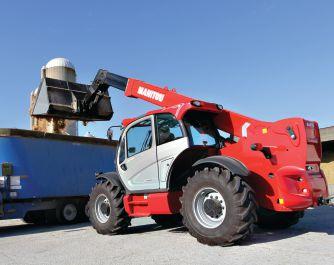
Manitou MLT 960 multi-purpose telescopic loader
With a maximum capacity of 13,200 lbs. (6000 kg) and a maximum lift height of 29’6” (9 m), the MLT 960 telescopic loader is specialized for material handling tasks for agriculture, waste management and biogas applications.
The MLT 960 is equipped with a 141 HP (104 kW) Interim Tier IV John Deere diesel engine. The new Continuously Variable Transmission (CVT) gearbox provides smooth drive operation while maintaining maximum tractive effort at any speed. The transmission control reacts to the demand on the machine to provide the correct torque and speed automatically without interruption. By enabling the engine to run at its most efficient speed, the CVT system provides better fuel economy than other transmission systems. Reinforced Dana axles ensure no drop in torque from 0 – 25 mph (40 km/hr). Additionally, an inching pedal has been implemented into the MLT 960 to assist in managing forward movement and hydraulic-powered attachment speed separate from the vehicle engine speed.
Load sensing hydraulics are made possible by a variable piston pump, which delivers more efficiency and less heat than a standard gear pump. Standard auxiliary hydraulics bring 3900 psi (270 bar) of pressure and a flow rate of 47.7 gpm (180 L/min.)
The new Duplex boom provides 360 degrees of visibility due to its low mount position. High quality steel results in a stronger overall design. A reduction in overall weight of the internal components increases lifting capacities with a minimal increase in machine size.
Comfort is key for operators. For efficiency, switches and controls are grouped according to function. Drive, boom and hydraulic functions are all controlled by the JSM (joystick, switch
& move) control, leaving the other hand free to operate the steering wheel. A highly-visible, side-mounted interactive dashboard digitally displays the hour meter, speed, travel direction and maintenance reminders.
With its large lift capacity and high lift height, the MLT 960 telescopic loader provides a unique alternative to large wheel loaders. The MLT 960 provides a fixed load capacity while turning, extended forward and vertical reach, and extra bucket curl over large wheel loader models. The unit also provides versatility. The quickfit mounting system connects easily to a wide range of Manitou-tested attachments. A hydraulic lock option provides for fast attachment changes without leaving the operator’s seat. A wide variety of approved attachments include forks, rotating carriages, buckets (including a 5 cu.yd. bucket), grapples, bale handlers, and hay handlers.
Additional comfort is gained by the use of cushioned stops on the lift cylinders. This creates smoother operation when lowering and extending the boom. The optional Comfort Ride Control (CRC) boom suspension system minimizes the loss of material when traveling.
Extra attention was paid to the ease of service and maintenance for the all-new MLT 960 telescopic handler. A large engine cover is hinged and equipped with gas springs to assist in the lifting and holding in place during servicing. The engine, cooling system and daily maintenance points are
easily accessible through the large engine cover. Grease fittings are centralized, making regular axle lubrication easy. www.ca.manitou.com/cms
LWR system awarded New Zealand Patent
Livestock Water Recycling, Inc. (LWR) recently announced it has been awarded a New Zealand patent for its manure treatment technology.
The system recycles water and concentrates fertilizer nutrients from livestock waste at intensive dairy, hog, and anaerobic digester operations.
“Receiving this patent is very significant to us,” said Ross Thurston, president of LWR. “Not only will it help us solidify our position in the agriculture industry, but it speaks to our international expansion efforts into new markets, and provides us with the opportunity to continue to develop this unique product that we are so excited about.”
The LWR system employs a mechanical and chemical process that reportedly is able to completely treat livestock effluent without any discharge; all parts of the manure are reused as outputs.
The dairy industry is New Zealand’s biggest export earner, accounting for over a third of the world’s dairy trade. The country has a rapidly growing cow population that is increasing at a rate faster than that of their human population. New Zealand attributes its world-class dairy industry to its efficient all-grass farming system, large-scale processing, high research and development investment and creative marketing.
LWR is a Calgary based environmental company with more than 20 years of experience in wastewater treatment and remediation. Currently, LWR has systems operating at farms throughout Canada and the U.S.
In addition to the New Zealand patent, LWR’s technology has been awarded a Canadian Patent and is currently patent-
Best Storage for Maximum Nutrient Value!
Consistent Nutrient ValueAgitation Makes the Difference
• Center agitation system evenly blends nutrients.
• Better utilization of “waste” translates into less purchased fertilizer.
Environmentally Sound
• Designed and constructed using bolted glass-fused-to-steel panels for secure storage and high corrosion resistance.
• Above ground - minimizes the danger of run-off, leaching and ground water contamination.
• Environment-friendly odor control - releases odors above ground level into higher air currents.
345 Harvestore Drive Dakalb, IL 60115
Visit www.cstindustries.com to find your local dealer, or call 815-756-1551.
It Happens - Pelletize It! It Happens - Pelletize It!
pending in the U.S., Europe, Australia, South Korea, China, Japan, Brazil, and Russia.
Case IH releases new digital tool
Case IH is simplifying the decision of choosing the right red tractor for many operations with the new digital Right Red Tractor tool.
“We designed the Right Red Tractor digital tool in the spirit of helping producers be ready to make beneficial equipment purchasing decisions for their operations,” says Zach Hetterick, tractor marketing manager for Case IH. “From landscaping to livestock, from feedlot to vineyard, Case IH has a tractor that will meet customers’ needs and we are dedicated to helping them find it.”
Using the Right Red Tractor digital tool is simple for producers looking for a tractor up to 120 horsepower. After logging on to caseih.com/ RightRedTractor, producers are asked five simple questions they need to consider when purchasing a new tractor. The questions include how much they will be using the tractor, how much power they will need, whether or not they would like a cab, etc. As soon as the questions are answered, the producer gets a recommendation of which Case IH model will best meet their needs.
The Right Red Tractor tool was designed specifically as a digital tool, optimized for mobile use, because research shows producers are increasingly using mobile technologies. Float Mobile Learning, a consulting firm that develops mobile strategies for major agricultural organizations, conducted research in 2012 that shows 94 percent of producers own a mobile phone or smartphone and smartphone adoption among U.S. producers jumped from 10 percent in 2010 to 40 percent a year later.
Furthermore, recent research showed Case IH what livestock producers look for when purchasing equipment. Producers in the study, sponsored by Case IH, who reported a significant portion of their income as generated from livestock operations, say they look for lowmaintenance and easy-to-use equipment.
www.caseih.com/RightRedTractor
FARM POLL: ROOM FOR IMPROVEMENT IN NUTRIENT MANAGEMENT STRATEGIES
By J. Gordon Arbuckle Jr. & Laura Sternweis
The Iowa Nutrient Reduction Strategy sets ambitious goals for keeping agricultural nutrients out of the state’s waterways. To reach the reduction targets, Iowa farmers and their advisers will have to work together to improve nutrient management strategies, according to the Iowa Farm and Rural Life Poll.
Nitrogen management is important to Iowa agriculture. Most of the nutrients that are applied to agricultural lands serve their intended purpose of increasing crop yields. However, substantial quantities flow from fields into waterways, where they degrade water quality in Iowa’s streams, lakes and other water bodies. The loss of nitrogen and other nutrients from agricultural activities leads to economic and environmental costs in Iowa and elsewhere, since some of that nutrient flow eventually finds its way into the Mississippi River and then the Gulf of Mexico.
A new farm poll report presents data on the types of nitrogen management practices that Iowa farmers are using, the methods they use to determine fertilization rates, and the information sources they look to for advice on nutrient management. It was developed primarily to support the efforts of ISU Extension and Outreach and other agricultural stakeholders as they strive to help farmers meet nutrient loss reduction targets set in the Iowa Nutrient Reduction Strategy, said J. Gordon Arbuckle Jr., a sociologist with Iowa State University Extension and Outreach. Arbuckle co-directs the annual poll with Paul Lasley, also an ISU Extension and Outreach sociologist.
“Some of the most innovative and effective nitrogen management practices, such as nitrogen inhibitors and calculators for determining optimal fertilization rates,
are not used by many farmers, and large percentages of farmers are not familiar with them,” Arbuckle said. “Farmers and farmland owners need to learn more about which practices are most effective for their particular situations. They will have to set nutrient management goals and then implement the right mix of practices to reach those goals.”
The data comes from the 2012 Farm Poll, which measured farmers’ knowledge and use of various methods for managing nitrogen based on the 2011 corn and soybean crop season. Nearly 1,300 farmers participated in the poll, and Arbuckle and graduate student Hanna Rosman have published the findings in a new report, Iowa Farmers’ Nitrogen Management Practices and Perspectives
Another important finding was that fertilizer suppliers are the advisers that farmers tend to look to first for guidance on nutrient management. “These and other stakeholders that provide products, advice and technical assistance to farmers should shoulder some responsibility to help their clients set and meet nutrient loss reduction goals,” Arbuckle said. “They must be prepared to provide information and technical assistance on the most effective management and structural practices to reduce loss of nitrogen and other nutrients into Iowa waters.”
Arbuckle said that more than half of the survey participants believed that farmers over-apply fertilizer to ensure yields. At the same time, 75 percent thought the amount of fertilizer that Iowa farmers apply is “about right.” This means that many farmers who feel that farmers use excess fertilizer to ensure yields also believe that the amount applied is about right. These results support anecdotal evidence that applying excess nitrogen as yield insurance is a common practice.
“With variation in weather, soil types,
time constraints and other factors, it can be difficult to calculate and time application to ensure that the exact amount of nitrogen that plants will need is there when they need it. The perceived economic risks of under-applying are high, and these results suggest that, for at least some farmers, over-applying, as insurance, is simply part of farming,” Arbuckle said.
In 2013, the state of Iowa released the Iowa Nutrient Reduction Strategy, a science and technology-based framework to guide actions that reduce the loss of nutrients to surface water. It was developed through the collaboration of Iowa State University, the Iowa Department of Agriculture and Land Stewardship, the Iowa Department of Natural Resources and USDA’s Agricultural Research Service and Natural Resources Conservation Service.
Iowa Farmers’ Nitrogen Management Practices and Perspectives (PM 3066) and previous Iowa Farm and Rural Life Poll summary and topical reports are available to download from the ISU Extension and Outreach Online Store, https://store. extension.iastate.edu/, and Extension Sociology, http://www.soc.iastate.edu/ extension/ifrlp/about.html.
Conducted every year since its establishment in 1982, the Iowa Farm and Rural Life Poll is the longest-running survey of its kind in the nation. ISU Extension and Outreach, the Iowa Agriculture and Home Economics Experiment Station, the Iowa Department of Agriculture and Land Stewardship, and the Iowa Agricultural Statistics Service are all partners in the Farm Poll effort.
J. Gordon Arbuckle Jr. is a sociologist with Iowa State University Extension and Outreach who also co-directs the annual Iowa Farm and Rural Life Poll. Laura Sternweis is an Extension communications specialist at Iowa State University.
fendt.com/us
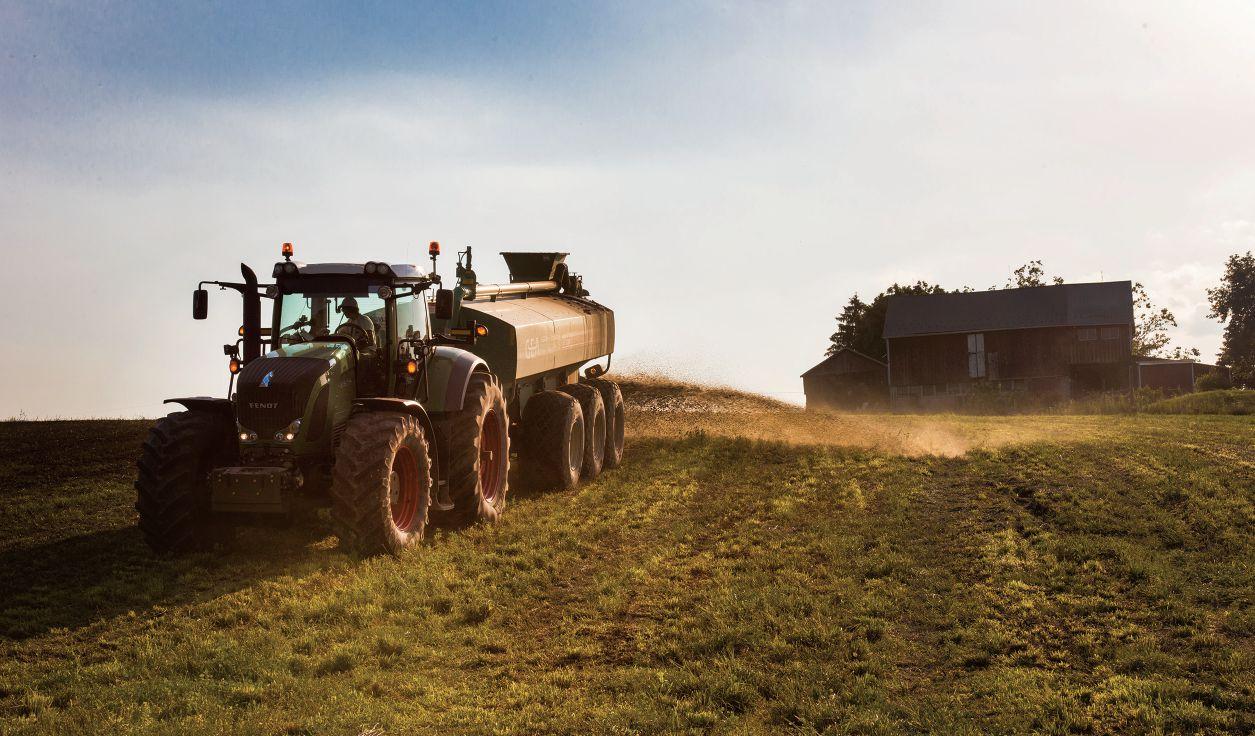
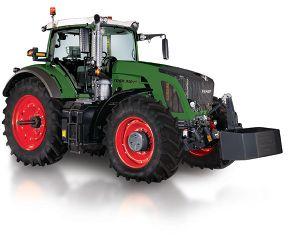
Even in the manure business, we’re not afraid to stand behind our tractor.
Hauling and spreading is tough on a tractor. That’s why we not only make our tractors as tough and capable as they come, but we also back them with a service program that is second to no one.
From the speed and safety of our Vario transmission and Reactive Steering System, to our Fendt Gold Star Customer Care program that gives you 3-years or 3,000 hours of comprehensive warranty with included routine maintenance, there is no better partner for your operation than Fendt.
In the hauling business, you need a tractor that’s capable and dependable.
That’s why the best run operations run Fendt.
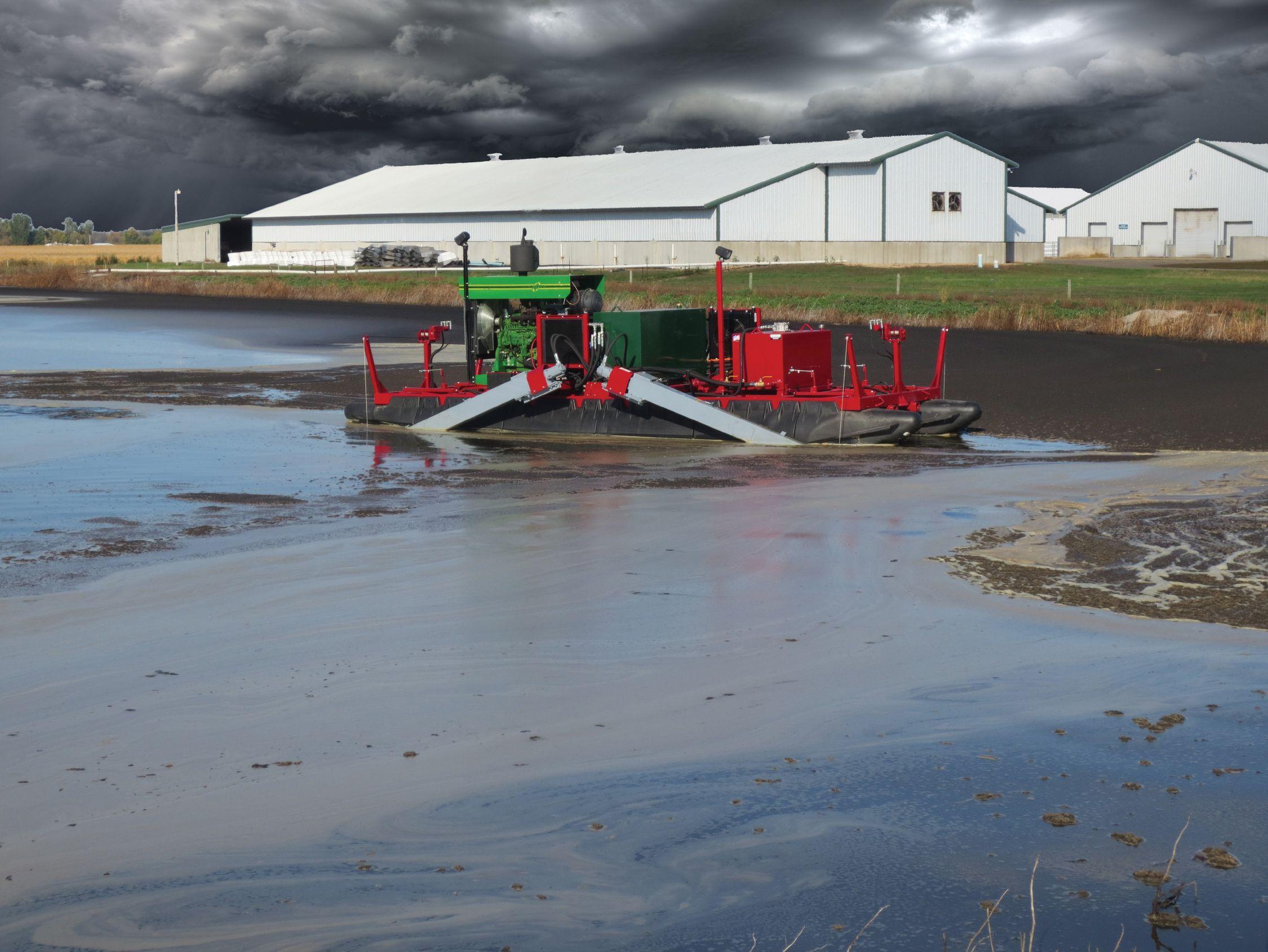
2014 Hydro Agitation Pontoons
Hydro Agitation Pontoons are able to reach depths where no other agitation product has gone before. Utilizing low maintenance 17” hydraulic props these pontoons send an intense cyclone of destruction to the bottom of your lagoon. Now you can reach even the deepest parts of the lagoon to get all the nutrients your crops need.
HYDRO F1 FEATURES:
60 HP Engine
1 - 17” Hydraulically Driven Prop for Agitation.
Hand Held Control
Cable and Winch Steering System
120 Gallon Fuel Tank
HID Spot Lights
HYDRO F4 FEATURES:
200 HP John Deere Engine
4 - 17” Hydraulically Driven Props for Agitation and steering.