Biochar lagoon covers can reduce odor and gas emissions while capturing nutrients | 16
Managing winter manure
Beef farmers can choose the system that fits best with their weather | 20
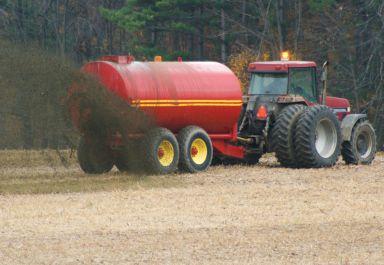
Dry weather and feedlot runoff
Extended dry periods are the perfect time for manure maintenance | 26
January/February 2018
Preserving and regenerating the land
A new style of lagoon cover
Biochar
Preserving and regenerating the land
Iowa feedlot SFI Inc. demonstrates nutrient management options as water quality concerns in the area mount.
BY TREENA HEIN
Managing winter manure
Depending on weather, labor and equipment, beef farmers can choose a system that fits.
BY JIM ISLEIB & FRANK WARDYNSKI
Dry weather and feedlot runoff
Extended dry periods are the perfect time for manure maintenance. BY
SHAWN SHOUSE
Seth Smith (center), wife Etta and father Lynn. See page 10. Photo courtesy of ICA.
Commonsense prevails in Manitoba
Christmas came early for pork producers in Manitoba, Canada, last month.
In November, the provincial government passed its Red Tape Reduction and Government Efficiency Act, finally bringing to an end confusing and restrictive legislation that, at one point, required all new swine barns built in the province to include an anaerobic digester or alternative manure treatment system.
“The initial goal [of requiring anaerobic digesters] was to reduce phosphorus levels,” explained George Matheson, chair of the Manitoba Pork Council during his deposition to the Manitoba government on the red tape act. “You cannot reduce phosphorus levels in manure. You can reduce the amount of manure but not the phosphorus in it. If you’re trying to keep less phosphorus in the soil, then an anaerobic digester isn’t your answer.”
For more than 10 years, Manitoba pork producers have done business under either a total or partial
In the past five years, Manitoba hog producers have only built four or five barns, all under old permits with no requirements for anaerobic digesters, he added.
“Over the next 10 years, the sector will need to invest almost $2 billion in new facilities to replace existing stock and about $400 million in new finisher barns.”
In light of this, the Manitoba Pork Council has created a Swine Development Corporation to assist producers interested in building new barns. Already since the passage of the new act, four new barns are in the planning stages and are to be constructed in 2018.
Hopefully, this interest in rebuilding and revitalizing the province’s hog industry will continue.
According to one pork producer who presented to the government’s Standing Committee on Legislative Affairs, being freed from under the shadow of previous rules will allow the industry to advance.
“In terms of environment … I
“We have to shift our thinking from manure as a risk.”
moratorium on new swine barn construction, a holdover from previous government mandates.
According to Andrew Dickson, general manager of the Manitoba Pork Council, as a result, more than 90 percent of swine barns in the province are 20 years old and approaching the end of their life.
“The industry now faces the challenge of having to catch up with higher construction costs and lower asset values to borrow against,” he said in his deposition. “To maintain the stock of buildings, the industry needs to build 20 to 30 barns per year.”
think there’s a whole host of other areas where we can start applying innovation in the industry,” said William Gould, a one-time lawyer who returned to rural Manitoba to raise pigs with his family. “And by always being handcuffed to the previous rules and never allowed innovation, I think there’s actually going to be opportunities in spinoff industries related to technology. I think that’s going to be a huge growth industry.
“We have to shift our thinking from manure as a risk to manure as an opportunity.”
Mail: 111 Gordon Baker Rd., Suite 400, Toronto, ON M2H 3R1 Occasionally, Manure Manager will mail information on behalf of industry-related groups whose products and services we believe may be of interest to you. If you prefer not to receive this information, please contact our circulation department in any of the four ways listed above.
All advertising is subject to the publisher’s approval. Such approval does not imply any endorsement of the products or services advertisted. Publisher reserves the right to refuse advertising that does not meet the standards of the publication.
– Kithma D.,Truro, Nova Scotia
Manure, biosolids program launched in Ontario
A new funding program being delivered by the Ontario Soil and Crop Improvement Association (OSCIA) aims to improve soil health through investments in nutrient application equipment. With 60 percent cost-share support, up to a maximum of $25,000 per business, the Manure and Biosolids Management Program is a significant opportunity for Ontario’s nutrient applicators. It is available to all licensed custom applicators
in Ontario and encourages the use of Best Management Practices (BMPs). Funding is available to customize spreading equipment to allow in-crop application, or to allow slurry seeding of cover crops. There is also an innovative approaches that allows businesses to invest in technology that is not yet available in Ontario. Funding for the program is available on a first-come, first-served basis. For more information, visit ontariosoilcrop.com.
CORNELL WINS $1 MILLION CHALLENGE
Tulane University awarded the $1 million grand prize for the Tulane Nitrogen Reduction Challenge to Adapt-N, a team from Cornell University that developed a cloud-based computer modeling system to predict optimum nitrogen application rates for crops using data on weather, field conditions and soil management practices. Adapt-N competed against three others
challenge finalists, Cropsmith of Farmer City, Illinois; Pivot Bio of Berkeley, California and Stable’N of Carmi, Illinois. Teams tested their innovations during a growing season on a farm in northeast Louisiana along the Mississippi River. Adapt-N gives farmers precise nitrogen recommendations for every section of their fields using U.S. Department of Agriculture soil
BY
THE NUMBERS - SFI. INC.
2,200
210
$47
1886
databases, field-specific soil and management information and highresolution weather data. The system is designed to enable farmers to reduce the overall nitrogen rate while increasing profitability. The Tulane Nitrogen Reduction Challenge is an international competition to find a significant, scalable solution to reduce nitrogen runoff from farming, a primary culprit behind vast algae blooms that cause massive annual “dead zones” in water.
510 acres pasture
Tulane launched the grand challenge in 2014 to identify and nurture the most innovative and adaptable technologies to fight hypoxia. Seventy-seven teams from 10 countries entered the contest. Phyllis Taylor, president of the Patrick F. Taylor Foundation and a member of the board of Tulane, funded the effort.
1,900 acres row crops
3 Year family settled in Iowa head number of manure spreaders amount time practicing conservation tillage cow-calf pairs value of nutrients provided to crops per animal
600 acres certified organic
40 years
Increasing farm mechanization
to boost manure spreader market
The global manure spreaders market is expected to grow at a compound annual growth rate (CAGR) of close to seven percent during the period 2017 to 2021, according to a market research report by Technavio.
The report presents a comprehensive outlook of the global manure spreaders market by distribution channel (offline and online stores). It also determines the geographic breakdown of the market in terms of detailed analysis and impact, which includes key geographies.
According to the report, vendors are coming up with advanced features such as fully automated processes, homogenous distribution of manure, multi-language user interfaces, and many more, which are expected to improve the performance of the machines and earn high profit margins. Such factors will increase the demand and sales of manure spreaders.
“The launch of new manure spreaders can increase the use and sales of machinery in the coming years,” said Shikha Kaushik, a lead analyst at Technavio for agricultural equipment research.
“The growing demand for advanced features, improved performance, and better capacity in machinery has contributed to the development of new machinery, which augurs well for the growth of the market.”
The global manure spreaders market is fragmented with the presence of many medium and largesized competitors. The market is anticipated to experience a sizable rise in production capacity as competitors embrace advanced technological methods to produce manure spreaders. Many competitors are adopting several strategic activities to increase their visibility and production capacities. The increase in production capacity will allow the competitors to meet the growing demand for manure spreaders.
A creative use for new technology
In October 2017, John Deere announced the release of HarvestLab 3000, an upgrade of Harvest Lab, which can monitor forage constituents at harvest. With the 3000 model, the tool can also be removed from the harvester and used in stationary mode to evaluate forage nutrient quality at feeding.
But, according to a recent report in Farm Industry News, farmers in Europe are doing something interesting with the unit – they’re attaching it to the outlet pipe of their manure spreaders and getting real-time nitrogen readings from the manure being applied. No more sampling at different times from the same load or pump-out, which has been a benefit for European farmers, who face strict nutrient management regulations and lots of paperwork.
According to the blog post by Willie
Toyota’s
renewable power station will use dairy manure
Toyota Motor North America, Inc. plans to build the world’s first megawatt-scale carbonate fuel cell power generation plant with a hydrogen fueling station to support its operations at the Port of Long Beach. The Tri-Gen facility will use waste – including dairy manure –sourced from California agriculture operations to generate water, electricity and hydrogen. Tri-Gen was developed by FuelCell Energy, with the support of the U.S. Department of Energy, California agencies – including the California Air Resources Board, South Coast Air Quality Management District, Orange County Sanitation District – and the University of California at Irvine, whose research helped develop the core technology.
Vogt, John Deere needs to calibrate the unit to measure nitrogen, phosphorus and potassium in the manure before use and the application information is forwarded to the John Deere Operations Centre for recordkeeping. It’s uncertain when the manure use concept of HarvestLab 3000 will be launched in North America. If interested, contact your local John Deere dealer for more details.
FuelCell Energy’s distributed hydrogen solution co-produces hydrogen and clean power from methane based fuels such as renewable biogas. The methane is reformed to hydrogen using water and heat produced by the fuel cell, resulting in clean hydrogen production without water consumption.
In addition to serving as a key proofof-concept for 100 percent renewable, local hydrogen generation at scale, the facility will supply all Toyota fuel cell vehicles moving through the port, including new deliveries of the Mirai sedan and Toyota’s heavy duty hydrogen fuel cell class 8 truck, known as Project Portal. When it comes online in 2020, TriGen will generate approximately 2.35 megawatts of electricity and 1.2 tons of hydrogen per day, enough to power the equivalent of about 2,350 averagesized homes and meet the daily driving needs of nearly 1,500 vehicles.
PRESERVING AND regenerating the land
Iowa feedlot SFI Inc. demonstrates nutrient management options as water quality concerns in the area mount.
BY TONY KRYZANOWSKI
Iowa’s Smith family, owners of SFI Inc, have been on a decades-long quest to prove and demonstrate that it pays to practice good land stewardship that includes manure composting, capturing nutrients before they leave their feedlots, and recycling them as organic fertilizer on their row crops. Unfortunately, despite these efforts, they were still included in a Des Moines Water Works lawsuit that blamed runoff from 10 area drainage districts for high nitrate levels in the city’s water supply. Des Moines is Iowa’s largest city and state capital.
ABOVE
Although the lawsuit was recently dismissed, concerns over water quality persist.
“It’s not over for sure,” says Seth Smith, co-owner of SFI, who says it is frustrating to have their few thousand acres of cropland included among millions of acres in the watershed named in the lawsuit.
It’s a complicated issue, he adds, because of the amount of drainage tile being used by farmers to drain their fertile cropland. Because the terrain in Iowa is generally flat, the low spots tend to hold water, especially in spring.
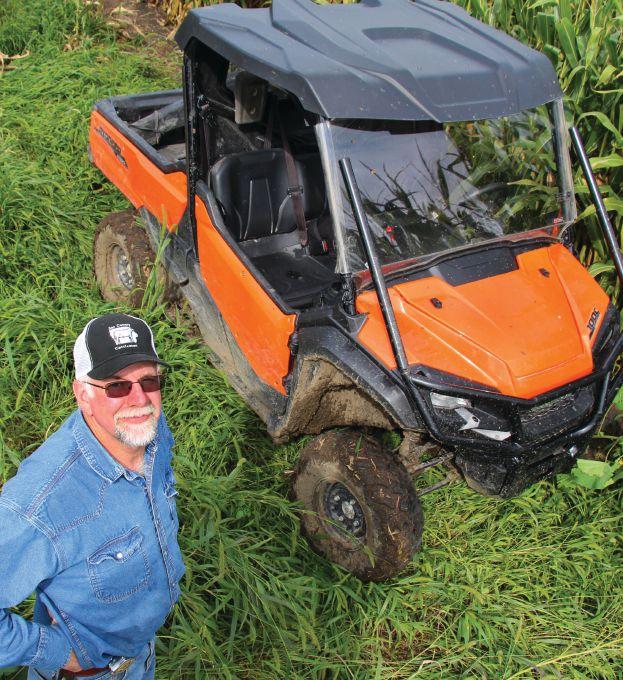
Seth Smith (center), his wife, Etta, and father, Lynn, are working hard to improve upon the quality of their cropland for the benefit of the next generation, with about 75 percent of the organic fertilizer they apply being composted cattle and cornstalk manure. Courtesy of the Iowa Cattlemen’s Association.
Smith says not many farmers, himself included, are about to give up their drainage tile because it is important for their success as farmers. However, that doesn’t mean that farmers shouldn’t try to do a bit more to contain, divert and reuse organic nutrients within these drainage districts.
“It’s hard to get started,” Seth says. “Once you get started trying some of these initiatives, having some successes, it’s not so hard. Then it’s easier to do the next thing. One leads into the other, and pretty soon you start seeing how it all goes hand in hand. I’m excited to see what we will be doing in 10 years, because I wouldn’t have guessed that 10 years ago, we’d be right where we are now.”
He is carrying on the family tradition, following on the farm management heels of his grandfather and father, who he described as, “fairly early adopters of concepts like composting, GPS and cover crops,” and being highly successful in the process.
“I always say that that if you can get a financial gain from it and an environmental gain, why the heck wouldn’t you do it?” Seth says. “That’s everything that you are after. You make the money for today’s needs, but you preserve and regenerate the land.”
Owned by Lynn and Joy Smith, along with their son, Seth, and his wife, Etta, SFI Inc consists of a 2,200-head feedlot, 210 cow-calf pairs, 510 acres of pasture and 1,900 acres of row crops located in Douglas and Delaware Townships in Sac County. Described as pioneers in conservation practices in Iowa, they started conservation tillage 40 years ago in 1977. They also transitioned some of their row-crop acres to organic production in 2001, and now, 600 acres are certified organic. Seth is past president of the Organic Crop Improvement Association.
Over the years, they have made many investments into animal
comfort to improve health and achieve better feed conversion, farming efficiency, and nutrient management at both their feedlot sites and on their pastureland, and they are happy to share their findings with other farmers.
Seth says that the conservation decisions they have taken over the years have been about 25 percent “have to” and 75 percent “want to.” But the decisions they have made because they wanted to, had to first and foremost make business sense.
Their actions align with Iowa’s Nutrient Reduction Strategy, aimed at reducing nutrient runoff into the Raccoon River. On a larger scale, Iowa is part of the Mississippi River/Gulf of Mexico watershed, and for a couple of decades, there has been a major focus on reducing the amount of nutrients draining into this watershed because they encourage algae growth, leading to a condition called hypoxia. This is an area of low oxygen, which has a negative impact on marine life.
SFI Inc was recently presented with the 2017 Environmental Stewardship Award by the Iowa Cattlemen’s Association and in describing the Smith operation, they wrote: “Lynn and Seth’s farm stands in stark contrast to the image of Iowa farmers depicted by the Des Moines Water Works and media.”
“As pressure to improve water quality has increased in Iowa, most of the efforts have focused on row crops. But the Smiths are showing other Iowa farmers that environmental stewardship makes more sense from an effort and economic standpoint when there are cattle involved,” says Matt Deppe, CEO of the Iowa Cattlemen’s Association.
The Smith family originally settled outside of Nemaha, Iowa, in 1886. Lynn, who is currently on the Iowa Cattlemen’s Association
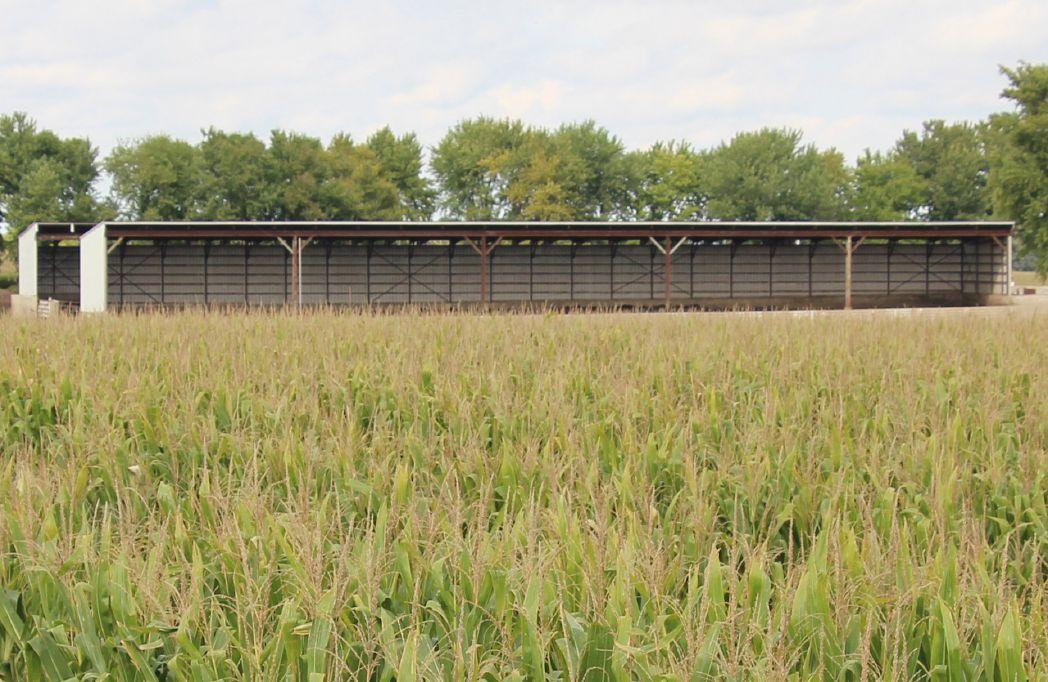
Monoslope roof shelters at both their cattle feedlots not only provide shelter for their cattle, but also keep the rain off the mixture of cornstalk bedding and manure to minimize nutrient runoff into local watersheds. Courtesy of the Iowa Cattlemen’s Association.
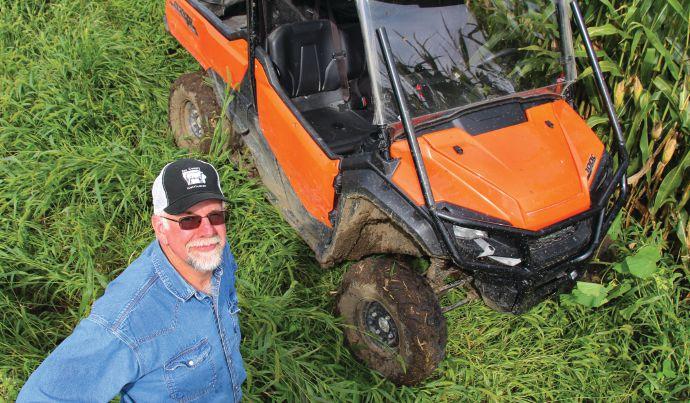
Like his father before him, Lynn Smith has worked hard to be at the forefront of farming practices that make both environmental and business sense, and passing on his wisdom to the next generation. Courtesy of the Iowa Cattlemen’s Association.
board of directors, began his farming career in 1971. Seth, who has a university degree from Iowa State University in agriculture systems technology, joined him in 2001.
The home site houses 800-head and features a double containment system for both manure and fuel, even though it is not required given the size of their operation. It consists of two, deep-bedded monoslope roof barns, with cornstalks used as bedding. Essentially, they have developed a closed loop. The cornstalks from their rowcrop operation are used as bedding, where it combines with the cattle manure, and later gathered, composted, and returned to the soil as organic fertilizer.
The monoslope barns help to keep rain off the cornstalk bedding, which helps to reduce nutrient run off, while providing shelter for the cattle in both winter and summer. In addition to the monoslope barns, the site also consists of open lots, with some equipped with concrete foundations and concrete in high traffic areas, such as around the feed bunks. The concrete makes it easier to scrape the manure in advance of composting. Manure runoff is also minimized with a settling basin and dike system.
The second feedlot is called the riverside feedlot and is situated in a rather environmentally sensitive area overlooking the Raccoon River. It was built in 1977. Seth says that 40 years ago, the hillsides around the river were covered with feedlots without anyone really realizing the problems this was creating downstream. SFI has taken a variety of remedial measures to ensure it is not perpetuating
the problem. For example, settling basins were part of the original feedlot design. It also consists of two monoslope roof barns with cornstalk bedding. Most of the feedlot has a concrete foundation, with solids collected in the settling basins. A lagoon captures any remaining waste. All told, it captures 17 acres of feedlot, corral, and manure storage area runoff so that no nutrients reach the Raccoon River. The water collected in the lagoon is then used to irrigate and fertilize surrounding fields through a pivot sprinkler system.
Like the home location, the solid manure and cornstalks are windrowed and composted for use as fertilizer in surrounding fields.
SFI estimates that, based on their nutrient recycling system, each of its animals provides about $47 worth of nutrients for their row-crops.
The Smith’s decision to compost their manure is one example where converting the raw manure to a more benign form of organic fertilizer is helping the environment, but it was business considerations that drove the decision. Seth says it was a desire to reduce the volume of organic fertilizer transported to the field that was the main motivation behind the composting decision.
Raw manure is transported with a side dump trailer from the feedlot and put in place into a windrow at a dedicated and properly sloped and diked composting site. To turn the compost as is required to ensure a proper conversion, SFI uses a modified, payloader-mounted, Wildcat compost turner.
Overall, the Smiths apply very little commercial fertilizer on their rowcrop acres, which itself brings nutrient reduction benefits. They typically only side-dress liquid nitrogen in summer, with their primary fertilizer sources being composted cornstalk bedding, cattle manure and turkey manure from a neighbor’s operations. Using cattle manure as an alternative to commercial fertilizer is estimated to reduce the phosphorus load on their row-crop acres by 46 percent. Use of organic matter also increases biological activity within the soil.
They do fertilize some of their row-crop acres with raw manure. Seth says they apply some raw manure because they are still working toward installing an entire concrete foundation for their feedlots. At present, there is just too much clay mixed in with the cornstalks in some lots for composting to work well, but they are investing in more concrete pens all the time and expect to be entirely on concrete in a couple of years. He estimates that about 75 percent of the organic fertilizer they apply is compost and 25 percent raw manure. They have three manure spreaders. One is a Knight manure spreader with a spinner broadcast system and the other two are custom spreaders – one with a beater-style broadcast design and the other with a spinner design.
As a further demonstration of how serious they are about minimizing nutrient runoff, SFI diverts water that collects into a drainage ditch on their pastureland into a collection pond. The pond is fenced off so that cattle can’t access it, but a gravity system carries the water to other nearby pastures where it is used to water cattle while keeping them away from the drainage ditch.
The Smiths are strong believers in the importance of maintaining and improving soil quality for the benefit of future generations, believing that it is not enough to sustain current farm practices but that there is a need to improve soil quality. Using compost helps to accomplish that.
“It’s extremely important that we improve this land,” Seth says. “From the time that the Earth was created up until we started plowing this ground, it just kept getting better. But generally, in the years since people have been farming it, the soil has been degrading.”
It’s not only important to sustain the land in its current state, but Seth says it needs to be improved upon before it can be sustained.
A new style of floating lagoon cover
The potential of biochar lagoon covers to reduce odor, gas emissions while capturing nutrients
BY TREENA HEIN
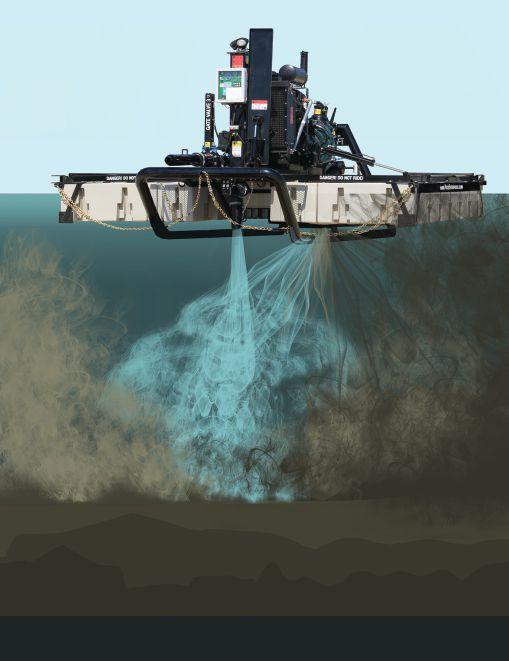
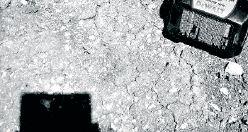
There has been some success with using biocovers to reduce the odors and environmentdamaging gas emissions from liquid manure lagoons – and a promising new cover material that has the potential to do even more is biochar.
“Biochars have unique physical and chemical properties that make them promising covers in terms of reducing odor and gas emissions, and also nutrient sorption, which other covers don’t address,” notes Brian Dougherty, who recently completed a bachelor’s degree at Oregon State University and is now pursuing a master’s degree at Iowa State University.
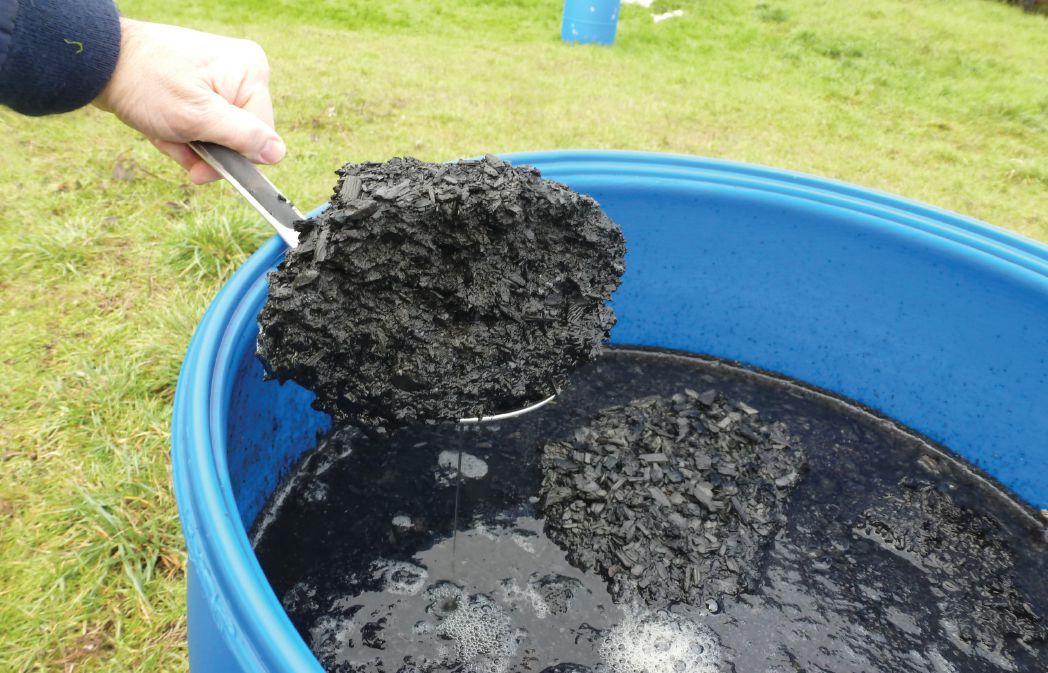
Biochar is a black material, explains Dougherty, produced when biomass is heated to high temperatures. The process results in volatilization and loss of organic compounds, leaving behind a carbon-rich material similar to charcoal. Biochars are resistant to decay in the environment and can persist for long periods of time, meaning that a portion of the carbon in
ABOVE
biochars can be considered sequestered carbon if returned to the soil.
“In addition to sequestering carbon, biochars can improve soil productivity, particularly for degraded and lower-quality soils,” Dougherty adds. “Biochars also have unique chemical and physical properties, including a highly-porous structure at scales ranging from nanometers to millimeters, and large surface area. This makes them suitable for a range of environmental applications including possibly being used to cover liquid manure lagoons.”
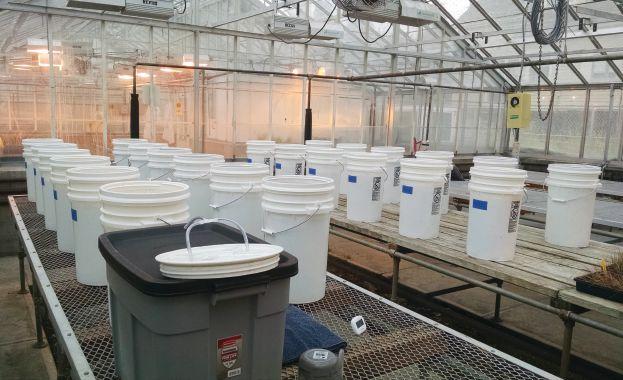
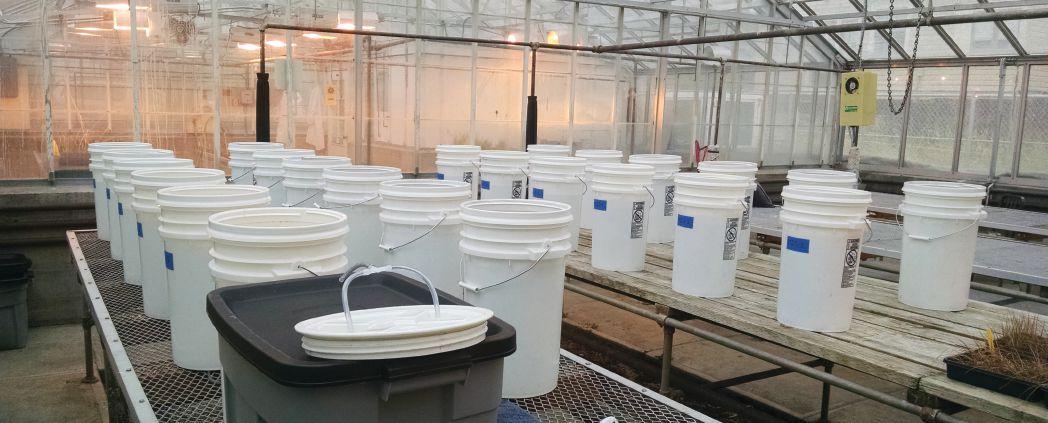
Dougherty and colleagues tested the effectiveness of both floating biochar covers and straw covers at a lab scale. He applied the materials by hand to a thickness of five centimeters on buckets of liquid dairy manure to test nutrient adsorption, and a thickness of 10 centimeters on open barrels of manure to test odor-reduction capabilities. (He notes that largescale experimentation would require applying the biochar to a lagoon with a blower or some
Biocovers to reduce the odors and environment-damaging gas emissions from liquid manure lagoons could be the next big thing and a promising new cover material is biochar.
Maximize
other type of spreading equipment.)
Dougherty chose two locallyavailable (and therefore more economical) biochars, one made via gasification of Douglas fir chips and the other made from a pyrolyzed mixture of Douglas fir bark and center wood. The production of biochar through gasification and slow pyrolysis differ in that they result in different percentages of end product (slow pyrolysis produces more biochar whereas gasification produces more gases). The end product also possesses different characteristics. Slow pyrolysis biochars, for example, tend to be more hydrophobic (repel water) and to have less surface area, lower pH and lower ash content than biochars made via gasification, with all of these exact characteristics depending on feedstock, production process, time and temperature. Fast pyrolysis is also a method of biochar production, and again, it produces different percentages of biochar, gas, and liquids, with different characteristics.
Dougherty found that over the eight weeks of the experiment, the straw cover absorbed nutrients similarly to the biochar covers – approximately 18
percent of the N and 24 percent of the P from the manure in the buckets was absorbed.
“Using some extrapolations and various assumptions, I can speculate that we might see three to four
“Biochar persists for long periods in the soil and therefore has the potential to hold those nutrients and release them more slowly than other materials.” – Brian
Dougherty
percent uptake of N and P in a fullscale scenario, but this could vary tremendously depending on the biochar used, cover thickness, duration, manure nutrient content and other factors,” he notes. “However, as explained, the potential benefit of using biochar in
comparison to straw or other cover materials is that biochar persists for long periods in the soil and therefore has the potential to hold those nutrients and release them more slowly than other materials.”
The pyrolyzed biochar came out ahead for potassium absorption, perhaps due to an initial lower potassium content. Similarly, the gasified biochar had a much higher initial potassium content, so that might have made additional uptake less likely. Indeed, Dougherty notes that the initial elemental composition of a biochar is an important consideration that was identified in his study.
“It seems that biochars made from feedstock with a lower nutrient content might perform better for subsequent nutrient uptake,” he says. “A woodbased biochar, for example, will have a much lower elemental composition of nutrients on a mass basis compared to a manure-based biochar, and thus may be more suitable as a biocover material.”
Absorption is more complex, however, than just starting material composition. Other research has shown, notes Dougherty, that the
Measuring the gases vented from the floating biochar cover.
surface of biochar is typically negatively charged due the presence of oxygenated ‘functional’ atomic groups. This can enhance sorption of positively charged ions such as ammonium but may inhibit sorption of negatively charged ions, including nitrate and phosphate. Dougherty explains that the surface chemistry of biochars can be very complicated and it therefore not easy to predict what will or won’t adhere to a particular biochar without knowing its exact surface chemistry characteristics.
In terms of cost, biochar is not among the cheapest lagoon cover materials. Dougherty estimates that a biochar cover would cost roughly anywhere from three to 10 times more than a straw cover depending on cover thickness and purchase costs. However, along with straw, other materials that have been used as biocovers – corn stover, corncobs, wood chips, sawdust and rice hulls – could potentially be blended with biochar, especially those that are lower cost and locally-available. How well the blends would perform, and what the optimal blend ratio would be, are matters for further research.
“Straw, for example might cost $75 to $125 per ton, depending on location,” Dougherty says. “The least expensive bulk biochar I have seen for sale is about $400 per ton, but other prices run much higher. Biochar is typically sold by the cubic yard and density can vary quite a bit, so direct comparisons to straw on a mass basis are difficult. Also, a biochar cover may not need to be applied to the same thickness as a straw cover to achieve the same odor and gas emissions reduction, so again, apples-to-apples comparisons are difficult to make.”
Dougherty thinks the idea of biochar lagoon covers really merits full-scale experimentation, as it has the potential to provide other benefits (carbon sequestration, improved soil health and so on) beyond what traditional biocover materials can provide. Biochar is particularly attractive, he says, if costs come down and biochar becomes more available as more companies produce it as a by-product of energy production. There is potential for generating electricity, fuels and other by-products with more sophisticated equipment, but biochar could be produced on-farm with available feedstocks and fairly low-tech equipment.
“The pyrolysis process generates energy that could be used to heat water and warm buildings during colder months,” Dougherty notes. “Many livestock operations struggle with excess nutrient loading and leaching from farm fields. It is a very serious issue and heavily regulated in several states. It may be possible to collect and sell the biochar as a high-value fertilizer product after using it as a biocover as a means for exporting excess nutrients off the farm.”
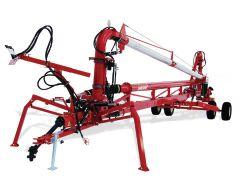
Zoske Mfg Reels, Toolbars, and Custom Built Pumping Units
Coupler Sets, Menders and Fittings and Valves
Krone Flowmeters
Broadcaster 2
Remote Pump Control
Vertical and Lagoon Pumps
Inline Choppers
Top quality Main line, Draghose, and Suction hose
Dsi Dietrich Injector
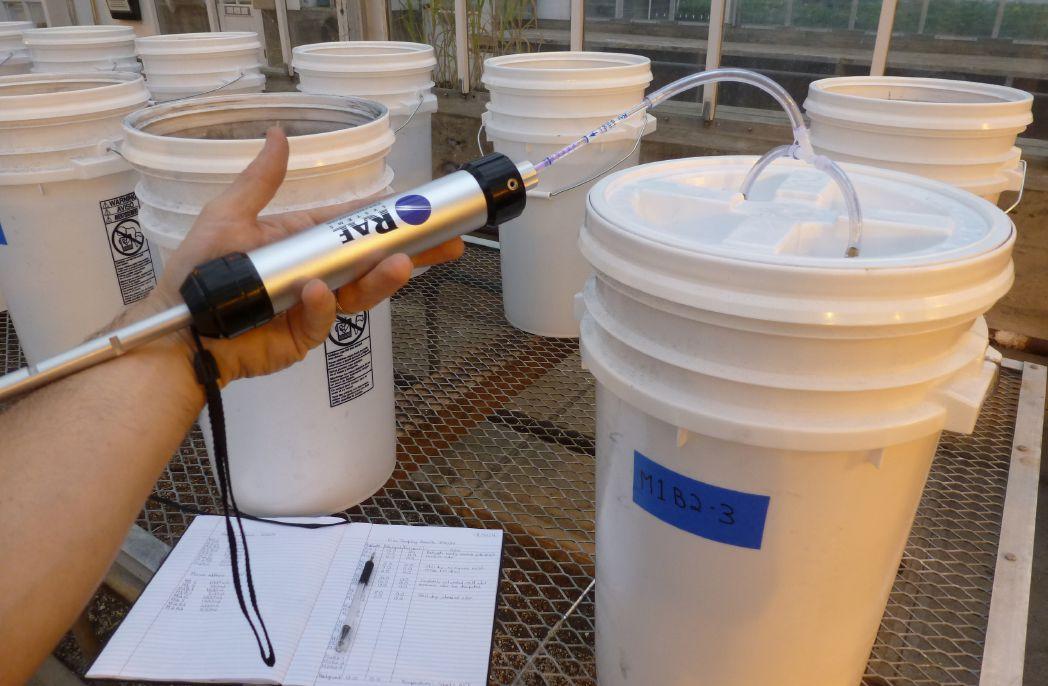
Biochar was also applied to liquid dairy manure in covered buckets to test nutrient adsorption.
Options for managing winter manure on beef farms
Depending on weather, equipment and labor, beef farmers can choose the system that fits best.
BY JIM ISLEIB & FRANK WARDYNSKI
An over-wintering cow-calf beef herd produces manure – quite a lot of it.
In one day, the average 1,250-pound beef cow produces 75 pounds of manure and urine. This manure has approximately 0.31 pound of nitrogen (not all of this is retained), 0.19 pound of phosphate and 0.26 pound of potassium. The feeding method beef farmers use to deal with this nutrient resource can have a positive impact on their forage and other crop production system. Care should be taken to not overfeed in an area. Too great of an accumulation of wasted hay and manure can have a negative impact on forage yield next year.
There are four basic approaches to feeding the cow-calf herd over the Michigan winter: Dry lot feed yard – Confining and feeding cattle in a dry lot pen from October through April, or later. Cows are fed daily and nutrients accumulate in manure/straw pack over the winter.
ABOVE
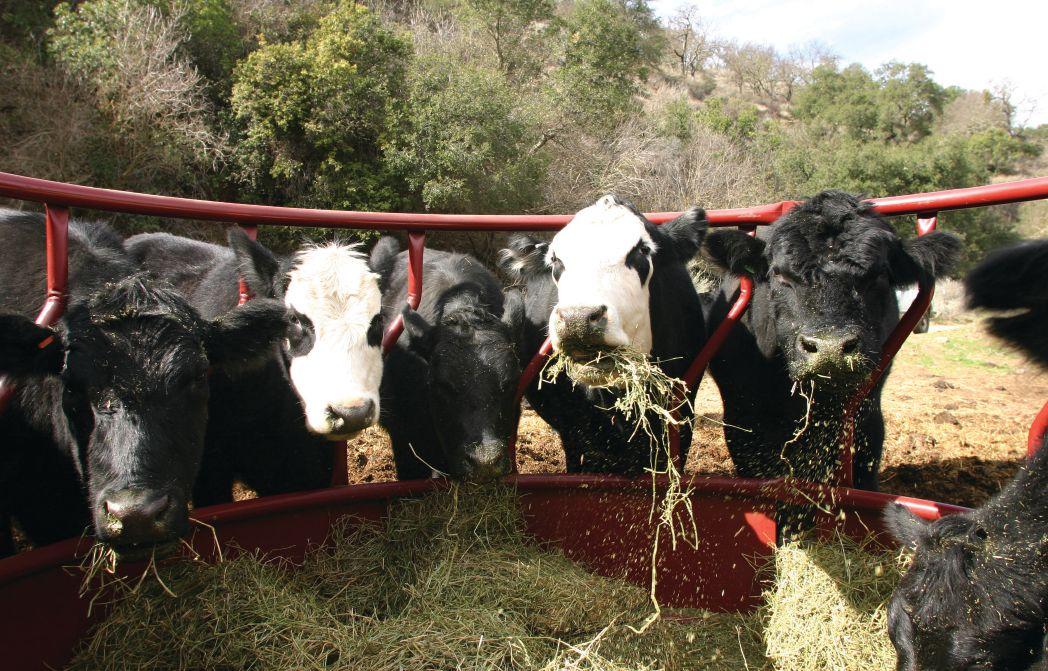
In-field bale feeders – Bale feeders are placed in a field with frequent relocation of the feeders to better distribute manure and waste feed nutrients and avoid sod damage.
Bale processing – Unrolling or grinding and spreading one large round bale at a time in a windrow on the ground, or packed snow, out in a field. The feeding site is moved each time to allow waste feed and manure to be evenly distributed across an area.
Bale grazing – Bales are set in place in a field in the fall. They can be pre-arranged by forage quality. Cattle are allowed gradual access to the bales on a planned schedule by moving temporary electric fencing.
What becomes of the nutrients from cattle manure and wasted feed under each of these systems? According to University of Wisconsin Extension’s publication Guidelines for Applying
Bale feeders should be placed in a field with frequent relocation to better distribute manure and waste feed nutrients plus avoid sod damage.
The most desirable winter feeding system, with regard to manure nutrient retention and recycling, is bale grazing.
Manure to Cropland and Pasture in Wisconsin as much as 50 percent of the total nitrogen and phosphorus and 40 percent of the potassium may be lost
PRO-PUMPING ESTATE
AUCTION
Thursday, March 8 | 11AM 2018
LOCATION: Westport St., Villard, MN 56385
To Include: 2013 MF 8690 MFWD tractor
(2) 2012 MF 8690 MFWD tractors
Complete line of pumping equipment
NUHN Lagoon Crawler
(4) power units 2 with 6591TA engines and 2 with JD 6068T engines, Cornell pumps on trailers
24’ and 26’ 3 pt. injectors
(5) hyd. hose reels with hose
(4) 3 pt. hyd. hose reels, (3) Houle agitators
6” Drag Hose, Hose movers, Load Chutes Trucks, trailers, and many more support items
from manure on an open lot through volatilization, runoff or leaching. Up to 40 percent of the nitrogen and from 5 to 15 percent of the phosphorus and potassium may be lost during daily hauling and spreading. Much less of the nutrients are lost when cattle are winter fed in-field.
Bart Lardner from the Canadian Western Beef Development Center conducted research on this issue in 2003 to 2005. His paper – Winter Feeding Beef Cows – Managing Manure Nutrients – states there was a definite difference in capture and utilization of manure nutrients between beef winter feeding systems.
feeding systems with regard to manure nutrient retention and recycling (in order of efficiency):
• Bale grazing
• Bale processing
• Dry lot feeding
In-field bale feeders were not included in Lardner’s study as a separate feeding system type. It is reasonable to assume the effect on manure nutrient retention would be better than the dry lot feeding system if the bale feeder was moved frequently over a large field area.
Watch for complete listing and photos coming soon!
“Significant benefits can result from winter feeding beef cows on preselected sites due to increased capture and utilization of manure nutrients,” he concluded. “Deposition of nutrients with cows versus machinery indicates more efficient cycling of nitrogen for subsequent pasture growth. In this study, economic calculations favored infield feeding. Cow cost per day was lower for field feeding than wintering cows in dry lot pens. Feed costs were similar between the systems, but field feeding had savings in machinery use and manure handling costs. Results also indicate that benefits from wintering cows on feeding sites can be managed to reduce daily costs with minimal impacts on cow performance.”
In effect, the most desirable winter
There are certainly some cow-calf farmers who feed their herds over winter in dry lot settings and do not scrape, haul and spread the accumulated manure in spring. This practice results in wasting manure nutrient resources and may present a situation posing risk to nearby surface and groundwater resources. Investment in machinery (e.g., manure spreader, bucket loader) to facilitate scraping, hauling and spreading dry lot manure should be considered.
This article was published by Michigan State University Extension. Jim Isleib and Frank Wardynski are with Michigan State University Extension.
Fendt 900 Vario MT
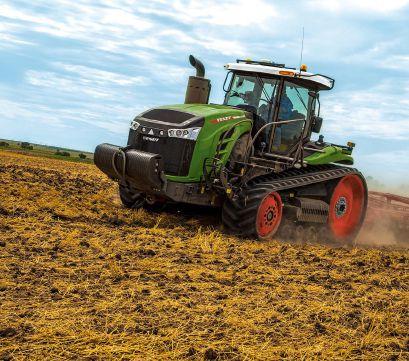
With the Fendt 900 Vario MT tracked tractors, the company can now offer high-performance traction machines above 500 HP for farmers who need maximum power. It is available in three output levels: Fendt 938 Vario MT with 380 HP, Fendt 940 Vario MT with 405 HP and Fendt 943 Vario MT with 431 HP (ECE R120). The Fendt 900 Vario MT tracked tractor is especially suited to difficult traction work, and operates at maximum efficiency when used mainly in the fields. Due to the low drag over a wide range of ground
GEA Super Slider Pump
GEA has launched a new 8-inch, adjustable-length manure pump, which can be used in pits of varying depth. The Super Slider Pump has been specifically designed for use by dairy, hog and beef farmers with multiple pits and by contract manure haulers who travel from farm to farm. The pump is available in two depth ranges: 8- to 12feet (2.44 to 3.66m) and 10- to 16-feet (3.05 to 4.88m). The sliding feature of the pump frame means that one pump can replace two or three other pumps, thereby reducing costs and increasing efficiency. The Super Slider Pump is equipped with GEA’s dual nozzle design; the lower nozzle sweeps sediments from the bottom of the pit while the upper nozzle agitates and disperses the slurry. Both Super Slider Pump nozzles can be individually closed and the pump has been equipped with intuitive nozzle and rotative valve position indicators to enable the operator to monitor the direction of the discharge throughout the process. The Super Slider Pump is available in 540 rpm and 1,000 rpm versions. The pump is currently available in the extended tilting three-point hitch, new tilting two-point hitch and trailer mounting configurations. gea.com
conditions, maximum efficiency is achieved when unfavorable weather conditions and the resulting short working window demand it. Its large
ground contact area and the larger crawler track makes it ideal when it comes to completing a pass as quickly as possible whilst protecting the ground. The 900 Vario MT allows a small turning circle on the headland, and is ideally suited to wide implements or equipment with a large operating depth. fendt.com
F
Dry weather and feedlot runoff
BY SHAWN SHOUSE
You might wonder what dry weather and feedlot runoff would have in common. On the one hand, a spell of dry weather can cause expanding areas of moderate drought and dry soils. But dry conditions also make for an excellent time to maintain your feedlot runoff control system.
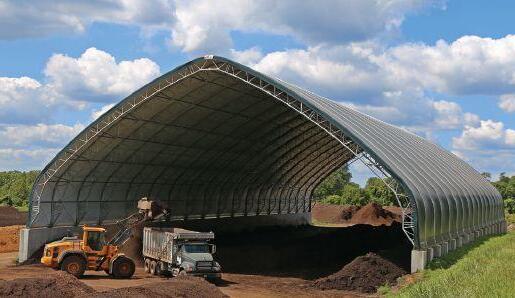
Extended dry periods create the perfect opportunity to remove settled solids from your basin or other areas where manure solids collect. Whether it’s a settling basin, a settling bench or terrace, or even the bottom end of feedlot pens, dry weather is a great time to get out there with the loader, box scraper, or other equipment to remove accumulated solids. Land apply the solids at the proper time if you have application areas available, or stockpile them in a controlled area if they need to wait. Make sure the stockpile area is either within the runoff control boundaries for your feedlot, or in an area that is protected from runoff and water flow when it rains. High and dry is the short description of a good stockpile location.
While you’re removing separated solids, be sure to check the liquid outlet from the settling area. If you’re using a picket dam or perforated riser to control the outflow, make sure the openings are clean and in good condition. Remember, the purpose of
the controlled outlet is to hold liquid in the settling area until solids can settle, and then slowly drain the settled effluent off to an area where it can soak into the ground. Too much opening can let liquids through before solids can settle. Plugged openings can prevent dewatering and drying of the solids.
While you’re tending to the settled solids removal, take the opportunity to evaluate other parts of the system as well. Check the clean water diversion portions: rain gutters on buildings, clean water diversion terraces, and clean water tile drains. Then check your runoff controls beyond the settling area. If you pump your effluent to an application area, check the pump, controls and piping. If you let gravity do the work, follow the flow path down the hill from your settling area and see where it ends. If it ends on flat ground in a pasture, field, or treatment area, you’ll see a few more manure solids that settle and accumulate there, with no eroded gully beyond. If it ends in a waterway, ditch or stream, your manure could be causing negative impacts and putting your operation in regulatory and financial risk.
Shawn Shouse is an agriculture engineer with Iowa State University Extension. He can be reached at 712769-2650, sshouse@iastate.edu.
Widen Your Horizons
The road to more efficient manure transport is now wide open with the STR Series Manure Semi-Tanker from GEA.
GEA’s STR Series Manure Semi-Tanker streamlines manure transportation for faster, farther hauling. From farm to field, this first-class manure hauling system saves time, fuel and equipment wear and tear. The STR Series SemiTanker can also haul and apply slurry directly on hard soils after harvesting, giving you flexibility in hauling times.
The GEA STR Series Semi-Tank meets all traffic safety regulations for vehicle weight and width for increased safety for you and everyone on the roads.
Don’t let distance slow you down. Hit the road with GEA’s STR Series Manure Semi-Tanker.