Feeding less reactive trace minerals can increase broiler performance and health by Lilian Schaer
14
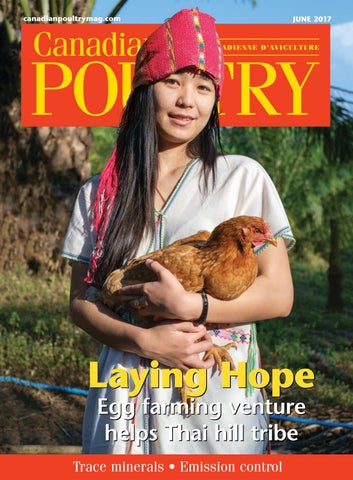
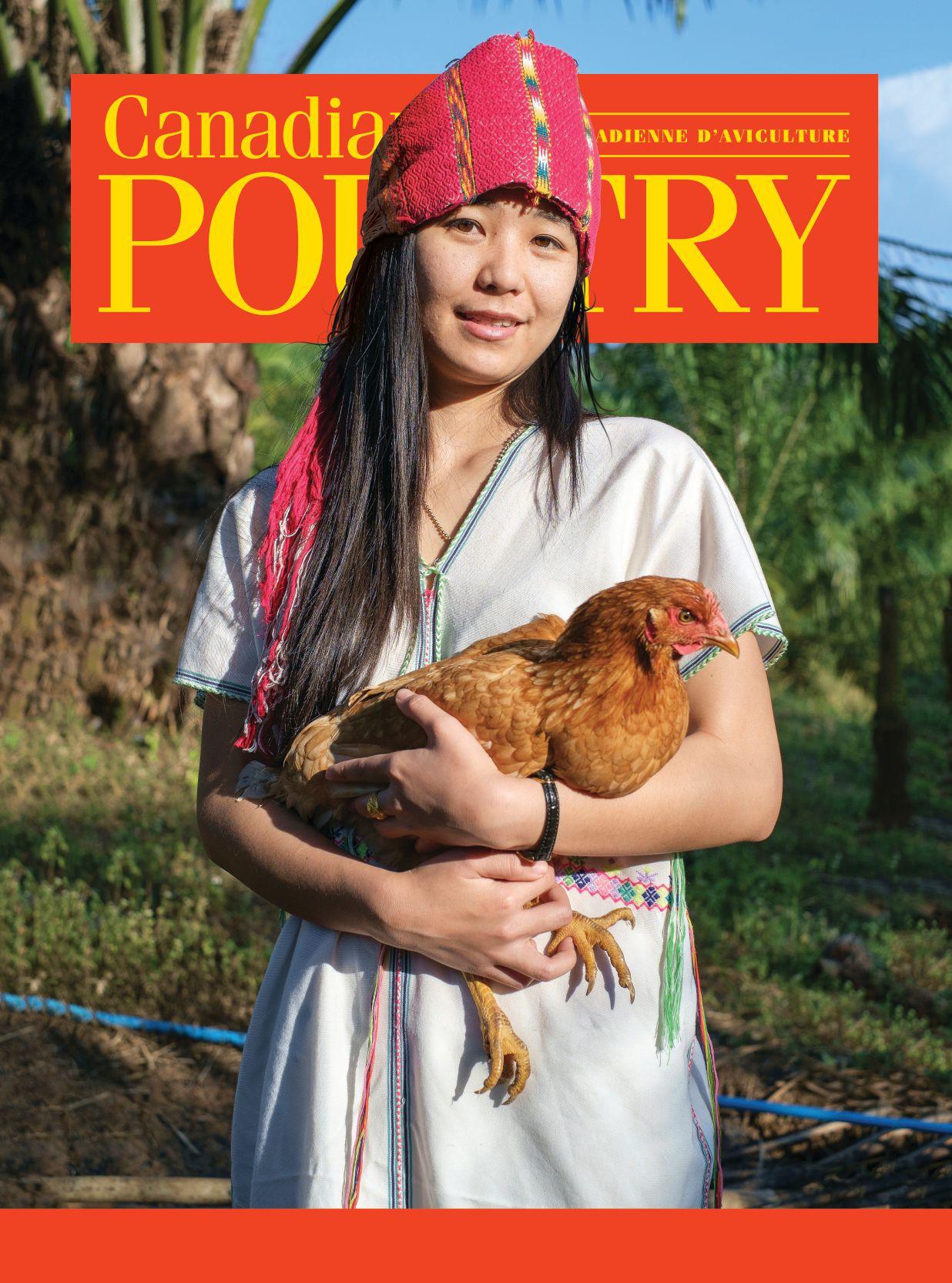
COVER STORY: What a difference an egg makes
A look at the efforts being made by Hilltribe Organics, an organization helping hill tribe communities in northern Thailand by Melanie Epp
18
INDUSTRY: Aviagen opens New York hatchery
New broiler breeding stock facility evidence of company’s commitment to Canadian customers by Madeleine Baerg
22
TECHNOLOGY: Talking emission control at EuroTier
The world’s largest trade fair for animal production hosted a special exhibit by Melanie Epp
Brett Ruffell
FROM THE EDITOR
BY BRETT RUFFELL
A stark contrast
In my first week as Canadian Poultry magazine’s new editor, I had the privilege of learning the lay of the land at the London Poultry Show. One message was clear from the many conversations I had: while there are a few challenges, the poultry industry is remarkably stable and producers are thriving.
This stood in stark contrast to what I witnessed in my previous role. A bit about myself: I’m a career-long trade journalist. Born and raised in Toronto, I recently moved to London, Ont. Before joining Canadian Poultry, I spent several years covering pharmacy practice.
Pharmacists turned out to be much more capable and the profession much more politically charged than I’d expected. As I was settling in to the new job, angry druggists across Ontario were hitting the streets en masse to protest Premier Dalton McGuinty’s plan to cut hundreds of millions of dollars in annual funding from the profession.
Perhaps he mistakenly thought pharmacists, known for being quiet and mildmannered, would just suck it up. Their passionate resistance proved futile, however, and the profession is still recovering from the cuts.
On the other hand, walking the aisles of the London Poultry Show, I sensed much more optimism. The industry’s success was reflected in the event’s turnout – the show apparently drew record numbers this year. “The key for us is the industry is in a growth area,” Poultry Industry Council executive director Keith Robbins explained.
Underlining that prosperity is supply management, I heard from people like Scott Graham, chair of Egg Farmers of Ontario. “We call it fair farm pricing because that’s what it does – it allows us to get a fair return from the marketplace
for what we’re producing,” he said.
But just as I’m learning about the merits of the system, it’s come under attack from multiple fronts. For one, President Donald Trump, who’s looking to open up Canada’s poultry market (see page 7), criticized the practice. Maxime Bernier, a front-runner to lead the Conservative Party of Canada, shared the president’s sentiment, saying he’d scrap supply management if elected because he believes it drives up prices for consumers.
Graham says this isn’t the first time the system has been targeted. And in the same vein as a pharmacist standing up to Queen’s Park, he insists farmers must protect something that’s allowed so many families to prosper. “We have to stand up and defend it.”
However things shake out, we’ll be sure to bring you industry-leading coverage. Which brings me to another topic. During week one, several readers also told me how important they feel this publication is for the industry. I’d love to hear from even more of you! Please email me at bruffell@annexweb.com to share your thoughts and ideas or just to say hi.
ANOTHER NEW FACE
There’s another new addition to the Canadian Poultry fold. Jennifer Paige recently joined us as associate editor. Before moving to Ontario and joining the team, she covered agricultural issues for a number of titles in Manitoba. In her new role, she’ll be contributing to the print magazine and also taking our digital presence to the next level. She’s already set us up on Facebook – be sure to like us! n
U.S.A. - 1 Year $ 66.95 USD Foreign - 1 Year $ 70.95 USD
GST - #867172652RT0001
Occasionally, Canadian Poultry Magazine will mail information on behalf of industry-related groups whose products and services we believe may be of interest to you. If you prefer not to receive this information, please contact our circulation department in any of the four ways listed above.
As easy as 1, 2, 3. and still maintaining exceptional litter
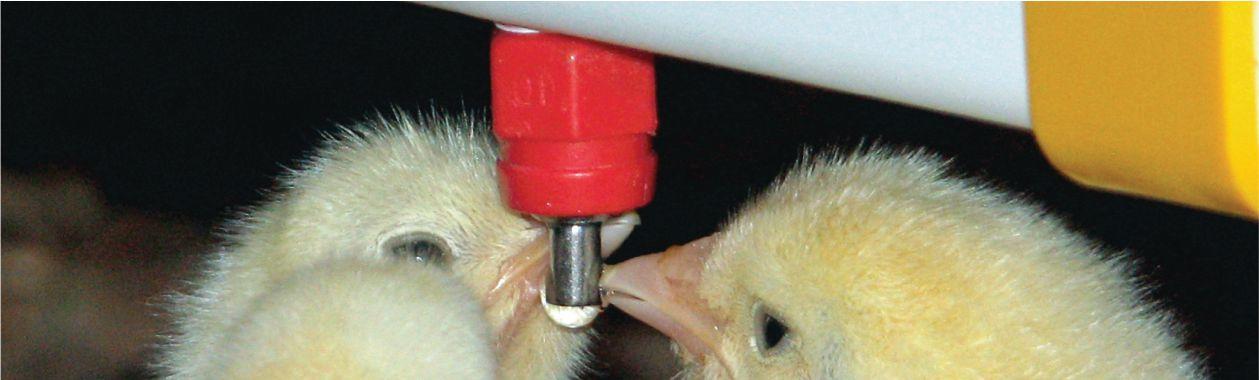
1) Large bottom pin that holds a drop of water to attract day old birds to nipple / great starts / average first week mortality below 1%.
Got Lubing? Contact your local Lubing Distributor for more detailed information.
2) Greater side flow with minimal triggering force allows all birds to easily trigger the nipple and get off to a great start. Great Starts = Greater Finishes!
Glass-Pac Canada
St. Jacobs, Ontario
Tel: (519) 664.3811
Fax: (519) 664.3003
Carstairs, Alberta
Tel: (403) 337-3767
Fax: (403) 337-3590
3) Both, vertical and side action, deliver the Opti-mum flow rates and ability to grow a 4 lb small bird up to a 10 lb Jumbo bird with the same nipple. After hundreds of house updates, customers are consistently seeing improved weight gains of up to 1/2 lbs/bird with dry litter conditions!
Les Equipments Avipor
Cowansville, Quebec
Tel: (450) 263.6222
Fax: (450) 263.9021
(423) 709-1000
Specht-Canada Inc.
Stony Plain, Alberta
Tel: (780) 963.4795
Fax: (780) 963.5034
WHAT’S HATCHING HATCHING
New Code of Practice for Layers
Egg Farmers of Canada and the National Farm Animal Care Council (NFACC), an organization dedicated to bringing together animal welfare groups, government and farmers under a collective decision-making model for the purpose of advancing farm animal welfare, recently released the new Code of Practice for the Care and Handling of Layers.
Updates to the layer code were led by a 17-person code committee comprised of egg farmers, animal welfare and enforcement representatives, researchers, transporters, egg processors, veterinarians and government representatives. Aiding in their work was a fiveperson scientific committee that included research and veterinary expertise in laying hen behaviour, health and
welfare. A public comment period was held in the summer of 2016 to allow the public and all stakeholders to provide input.
“Canada’s more than 1,000 egg farmers are deeply committed to and strive for continuous improvements when it comes to the care and well-being of their hens,” said Roger Pelissero, chairman of Egg Farmers of Canada, in a press release. “Egg Farmers of Canada is a long-time supporter of the National Farm Animal Care Council. We value the leadership of the code committee and their dedication to evidence-based standards that serve as a key building block to our national animal care program.”
Canada’s codes of practice are powerful tools for meeting rising consumer, marketplace and societal expectations relative to farm animal welfare.
“The new code provides progressive standards for hen welfare in Canada,” said poultry welfare expert Dr. Ian Duncan, representing
the Canadian Federation of Humane Societies on the Code Committee. “We worked diligently to secure these important new welfare commitments.”
Codes of practice help to keep everyone involved in farm animal care on the same page and strive to promote acceptable standards in such a way that achieves a workable balance between the welfare needs of animals and the capabilities of farmers.
“The code of practice is an important tool for egg farmers across the country,” explained Glen Jennings, egg farmer and chair of the code development committee, in a press release. “The new code is the result of four years of in-depth scientific evaluation and rigorous discussion. The outcome balances hen welfare, behaviour and health in a manner that is sustainable and achievable by farmers.”
The new layer code is available online at nfacc.ca/ codes-of-practice/poultry-layers.
ONTARIO CANADA-WIDE
COMING EVENTS
London Poultry show marks 60th anniversary
Industry members flocked to the two-day London Poultry Show earlier this month to take in the event’s trade show and networking opportunities and to discover the latest and greatest products and services the industry has to offer. The London Poultry Show is one of North America’s premier poultry events and this year
Ed Verkley and Terrina Fitzgerald of the Poultry Industry Council
Trade, supply management and our southern neighbours
CANADA & U.S.
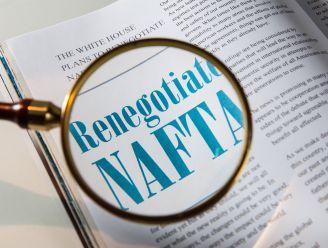
Discussions around trade and supply management have been heating up. In early April, the Trump administration took its initial step in renegotiating the North American Free Trade Agreement (NAFTA), sending the U.S. Congress a draft list of priorities for the negotiation.
The letter makes reference to a number of changes, including the specific mention of “opening Canada’s protections on
marked its 60th anniversary. Chicken Farmers of Ontario was a signature sponsor of the event and provided educational sessions, which featured discussion on Ontario’s transition to modular loading, the board’s commitment to chick supply optimization, best management practices for brooding and early chick performance, and what the Feather Board Command Centre is doing to combat potential disease outbreaks, such as avian influenza.
JUNE 2017
June 1, 2017
Turkey Academy 2017 Elmhurst Inn, Ingersoll, Ont.
For more information, visit: newlifemills.com/turkeyacademy-2017/
June 5-7, 2017
Canadian Meat Council 97th Annual Conference
The Westin, Ottawa, Ont. For more information, visit: cmc-cvc.com/en/events/ canadian-meat-councils-97thannual-conference
June 21-23, 2017
Canada’s Farm Progress Show
dairy and poultry imports.”
The letter also touches on government procurement, tax policy, intellectual property and rules of origin for things like car parts, telecommunications and dispute resolution. It also suggests a mechanism to impose tariffs if imports flood in and threaten U.S. industry.
The U.S. Congress will now be involved in revising the list. The administration will then issue a formal notice that it wants to renegotiate the deal and spend a minimum of 90 days consulting lawmakers and industry.
Prime Minister Justin Trudeau says he will continue to protect Canada’s agriculture producers, including the supply management system, as he tries to engage in “factbased” conversation with
the U.S. administration on a variety of trade irritants.
“Let’s not pretend we’re in a global free market when it comes to agriculture,” Trudeau said in a questionand-answer session with Bloomberg television. “Every country protects, for good reason, its agricultural industries. And we have a supply management system that works very well here in Canada... The Americans and other countries chose to subsidize to the tunes of hundreds of millions of dollars, if not billions of dollars, their agriculture industries, including their dairy.”
He said the U.S. currently enjoys a $400-million dairy surplus with Canada.
“Different countries have different approaches and we’re going to engage in a thoughtful, fact-based conversation on how to move forward in a way that both protects our consumers and our agricultural producers,” Trudeau added.
Evraz Place, Regina, Sask.
For more information, visit: myfarmshow.com
JULY 2017
July 17–20, 2017
2017 PSA Annual Meeting Orlando World Center Marriott, Orlando, Fl. For more information, visit: poultryscience.org/psa17
We welcome additions to our Coming Events section. To ensure publication at least one month prior to the event, please send your event information eight to 12 weeks in advance to: Canadian Poultry, Annex Business Media, P.O. Box 530, 105 Donly Dr. S., Simcoe, ON N3Y 4N5; email bruffell@annexweb. com; or fax 519-4293094. Please write “Event Submission” in the subject line.
WHAT’S
HATCHING HATCHING
AI threat re-emerges as outbreaks reported in U.S.
oultry and animal disease experts with Pennsylvania State University’s College of Agricultural Sciences are urging commercial poultry producers to ramp up their vigilance and biosecurity in the wake of recent outbreaks of avian influenza in several states.
In early March, the U.S. Department of Agriculture’s Animal and Plant Health Inspection Service (USDA-APHIS) announced a commercial flock of breeder chickens in Tennessee tested positive for highly pathogenic avian flu, or HPAI.
Since then, USDAAPHIS has revealed another case of the same H7N9 virus at a second Tennessee farm and Alabama agriculture officials announced an outbreak of suspected lowpathogenic avian flu affecting three premises in that state.
In addition, low-pathogenic avian flu was reported in a Wisconsin turkey flock and a Kentucky broiler breeder flock, and routine surveillance has found the presence of lowpathogenic avian flu in wild waterfowl in various states.
Infection with North American strains of low-pathogenic avian flu is a common natural occurrence in wild birds, such as ducks and geese, which usually show few or no symptoms.
The recent Tennessee outbreak occurred within the Mississippi flyway, which is one of four paths taken by wild birds when migrating in the spring and fall in North America.
During the 2014-15 outbreak of highly pathogenic H5N2 avian flu that led to the loss of about 50 million turkeys and laying hens in the Midwest, the Atlantic flyway – which connects with the Mississippi flyway – was the only migratory flyway not affected.
Poultry Industry Council: CELEBRATING 20 YEARS OF SERVICE TO THE INDUSTRY
What are the most significant changes you’ve seen during the past 20 years?
“We have never seen a change in priorities such as we have seen in the past 10 years. Twenty years ago, poultry industry research priorities reflected production and bird health, with some emphasis on bird environment and the effect of farming on the environment, food safety and related microbes. In production, layers were kept mainly in conventional cages and broilers and turkeys were housed on the floor.
Dr. Helen Anne Hudson, director of corporate social responsibility, Burnbrae Farms
Today, broilers and turkeys are still on the floor, but there is strong emphasis now on antimicrobial stewardship. Growing broilers in large cages to separate them from their manure is being explored to reduce the need for antimicrobial therapies. Focus on diseases has shifted, too, due to the increased frequency of the emergence of pathogenic diseases locally and globally. There is increased emphasis on diseases and global spread. Also, poultry farming has become much more mechanized, and data collection has evolved into precision agriculture.”
What do you see ahead for the poultry industry?
“One of the biggest changes in the egg industry is the shift toward alternative housing, and research priorities have largely shifted towards welfare and housing. For the first time, the direction is being driven not by the market, but by outside forces reinforced by misconceptions. With conventional cages being phased out over the next 19 years, there will be an increase in free run and enriched cage housing, which will bring new challenges to our industry in the future. Management and training will have to evolve. New and old diseases will appear and more use of antibiotics and other strategic supplements will be necessary to control and treat disease. The challenge moving forward is for industry to connect with consumers.”
If you could protect your farm this way, you wouldn’t need any cleaners or disinfectants.
These are some of the products eligible for the Vetoquinol Club points program. Sign up today at vetoquinolclub.ca and reap the benefits. club
Vetoquinol would like to remind you of the importance of a good biosecurity protocol and its implementation on a daily basis.
NEED MORE INFORMATION? CONSULT YOUR BIOSECURITY SPECIALIST.
Nutrition Trace minerals support bird health
Feeding less reactive trace minerals can increase broiler performance and health
BY LILIAN SCHAER
Supplementing poultry rations with trace minerals like copper, zinc and manganese can help improve flock health and profitability.
Although trace minerals themselves are not new, the latest products coming to market in Canada are presenting an alternative to low cost and highly soluble sulfate-based minerals, as well as the more expensive organic trace minerals.
Trace minerals support bone and tissue development, reproduction, and basic health and growth.
Mineral feed ingredient company Micronutrients, which has been owned by Nutreco since 2016, produces hydroxy trace minerals for poultry diets. These are specialty trace minerals that, as a result of their unique chemical structure, improve the stability of premixes and feeds.
Two of Micronutrients’ three IntelliBond mineral source products – copper and zinc – are now available in Canada. A third, using manganese, is currently undergoing regulatory review by the Canadian Food Inspection Agency (CFIA) and has not yet been released onto the Canadian market.
According to company officials, hydroxy trace mineral products are less soluble than sulfate minerals, which means they’re less likely to react with other feed ingredients or cause damage
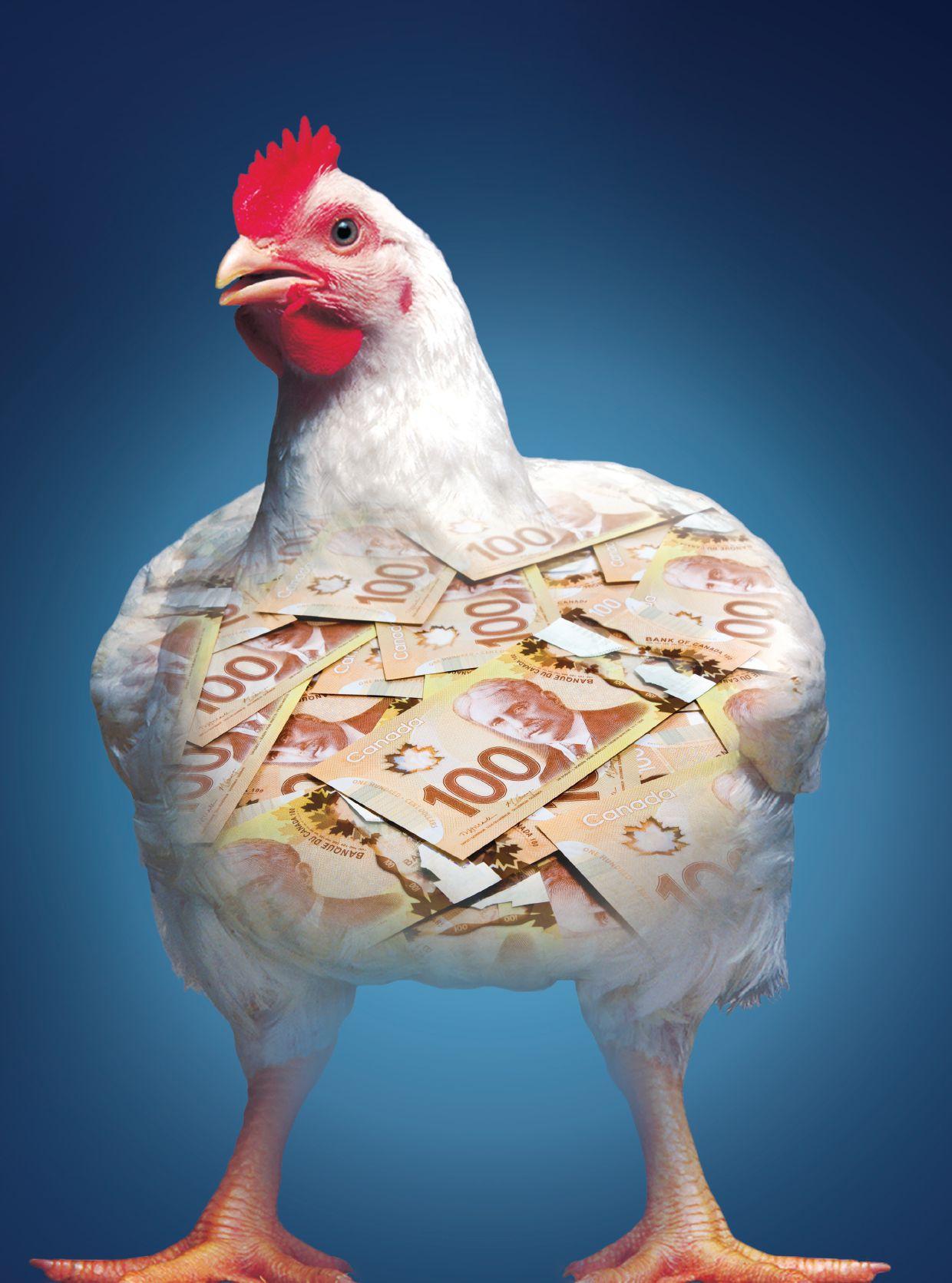
According to Jeff Cohen, vice-president of marketing and sales with Micronutrients, making the switch from the cheapest copper sulfate on the market to hydroxy would cost producers about half a cent per bird, but the benefit on feed conversion would be anywhere from 2.5 to 3.5 cents per bird.
to the gastrointestinal tract, and they’re less costly than organic trace minerals.
EXTOLLING BENEFITS
In a presentation at the International Production and Processing Expo in Atlanta this past winter, Micronturients’ technical sales manager, Dr. Kurt Perryman, stated supplementing poultry rations with hydroxy copper trace
mineral reduces oxidative stress and can prevent the gastrointestinal tract damage that can occur when feeding birds copper sulfate.
He added that the company’s zinc product has higher bioavailability, meaning the birds are better able to make use of the mineral in their systems. This lowers the environmental impact of trace mineral feeding.
According to Jeff Cohen, vice-president
BENEFIT ON FEED CONVERSION
of marketing and sales with Micronutrients, copper in broiler rations contributes to better gut health, making the birds grow more efficiently, and zinc improves feed conversion and breast meat yield.
“Both areas provide better economics for producers,” Cohen said. “Manganese is more difficult to research and determine significant areas of improvement, but research has shown us that getting trace inorganic sulfates out seems to help improve growth in breast meat yield.”
RETURN ON INVESTMENT
Micronutrients’ products fall between inorganic and organic trace minerals on the cost scale, and the company calculates the return on investment for producers in the United States at about one cent per bird for the copper supplement.
According to Cohen, making the
Nutrition
“Trace minerals support bone and tissue development, reproduction, and basic health and growth.”
switch from the cheapest copper sulfate on the market to hydroxy would cost producers about half a cent per bird, but the benefit on feed conversion would be anywhere from 2.5 to 3.5 cents per bird.
“We conservatively quote the benefit of improving feed conversion through improving the source of copper at a penny a bird,” Cohen said. “We grow nine billion birds a year in the U.S., so that’s $90 million a year.”
IMMUNE SYSTEM
Zinc shows similar feed conversion
improvement numbers, but its real value lies in helping poultry better resist disease. In a world where antibiotic use in animal agriculture is becoming increasingly restrictive, zinc can play a key role in improving livestock immune system response, lessening the need for antibiotic use to combat disease.
“Our zinc and sometimes manganese help offset negative impacts of disease better than sulfate and at lower levels than sulfates,” Cohen said.
AVAILABILITY
The company estimates 70 per cent of all broilers in the United States use Micronutrients’ copper product, and that zinc is being used by over half of the top 15 U.S. broiler integrators.
In Canada, the copper product has been available for several years and use has been growing steadily, Cohen said. Zinc, by comparison, has only recently been approved for sale in Canada, so adoption is just beginning.
Manganese is currently undergoing regulatory review but is not yet approved in Canada; Cohen called the Canadian approval process “one of the strictest in the world.”
“Our emphasis on doing research and exploring mode of action is leading us in some exciting directions in terms of how trace minerals bolster the immune system, help animals grow more efficiently and provide protection against disease challenges,” Cohen said. “We’re seeing the same immune improvements in swine and in ruminants too. Minerals are like vitamins, they’re very basic to nutrition and solidly contribute in all species to nutrition.”
Two distributors in Canada currently sell the products; more information is available from Trouw Nutrition. n
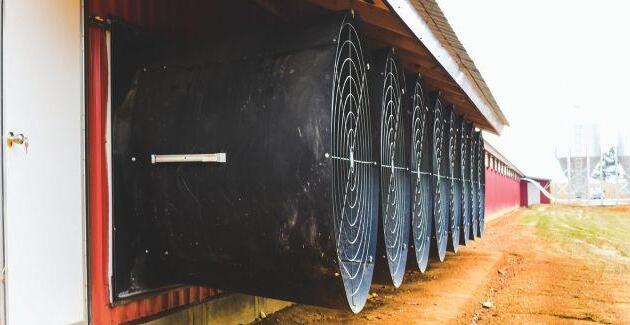
54” CORROSION RESISTANT HI-CAPACITY FAN:
Our new corrosion resistant fan is easy to clean, extremely durable, and highly efficient. Your flock can breathe easy in the fresh air these fans provide, and you can breathe easy knowing you invested in a fan that is long lasting, easy to clean, and efficient to run, saving you time and money
DOL53 AMMONIA SENSOR:
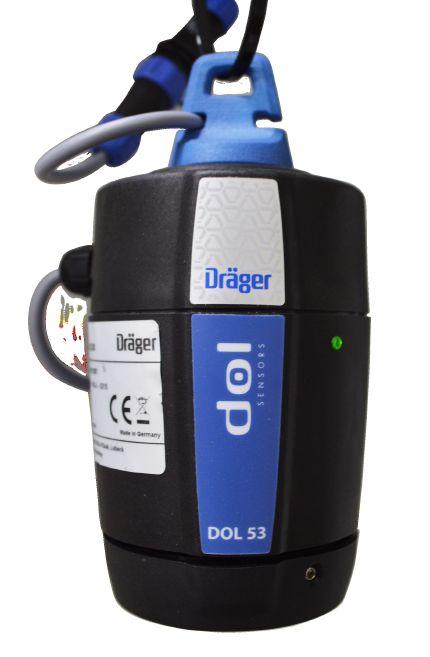
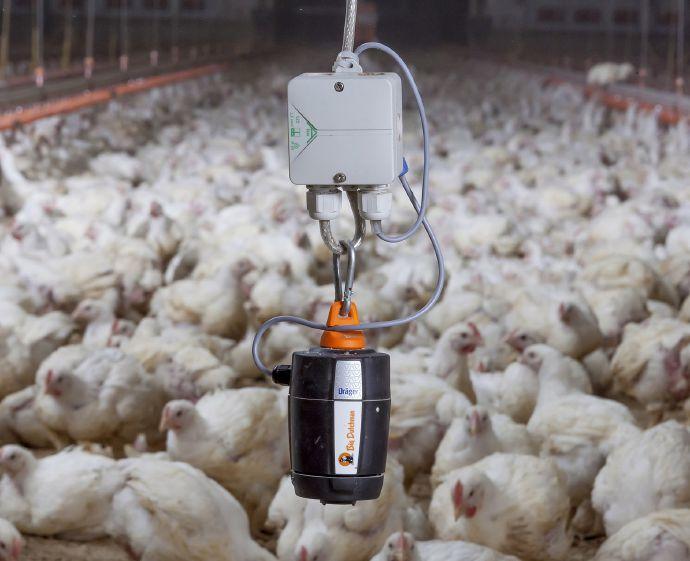
The first NH3 sensor for continuous measuring of the ammonia concentration in the house air The DOL53 is an electrochemical, long-term, stable NH3 sensor that is robust and well-suited for livestock houses. Combined with a 0-10v input controller, the DOL53 provides accurate monitoring of the air, allowing you to make quick and easy changes.
Cover Story What a difference an egg makes
by Melanie Epp
In the November 2016 issue of Canadian Poultry magazine, we published a story on building inclusive businesses: “Growing bottom lines with social impact.” The story was based on a talk given by Markus Dietrich, co-founder and director of Asian Social Enterprise Incubator Inc., at the International Egg Conference in Warsaw, Poland. Dietrich is the co-founder and CEO of his own social enterprise, Hilltribe Organics, an organization that helps hill tribe communities in northern Thailand build thriving egg businesses. Freelancer Melanie Epp had an opportunity to visit the organization in October 2016. This is the story of how one social enterprise helped raise a marginalized community out of poverty, proving that eggs can make a difference.
DIFFERENCE MAKER
Thailand in October is unbelievably hot and humid. Temperatures soar to 30°C and above, and humidity reaches a sticky 98 per cent. Even your sweat sweats. Chiang Rai, where Hilltribe Organics is based, is no different. It’s a place where the weather is unpredictable. One minute the lush green hillsides are bathed in sunlight, the next they’re soaking up a torrential downpour. It is here that our story begins.
The hill tribe communities of northern Thailand – the Akah, the Karen, the Hmong and the Lahu – are nearly one million strong. Today, the communities are marginalized and in some ways considered outlaws. During the late 1980s, the Royal Thai Government decided to relocate the hill tribes, claiming their traditional practice of slash-and-burn agriculture was responsible for destroying national forests. It wasn’t the first time government policy had led to the resettling of farmers in the lowlands.
Some, however, decided to stay, hiding out in the forests. With their traditional way of life disrupted, many opted to ride motorbikes into the city of Chiang Rai to work in factories and markets. This was evident as we climbed deep into the mountains to visit the Karen tribe in the village of Wawi. Motorbikes, sometimes carrying three or four individuals at a time, careened down the hills at break-neck speed towards the city below.
An agricultural people by nature, the hill tribe communities grow maize, rice, coffee and tobacco. They also raise livestock. But agriculture is not enough and communities suffer as a result. Earning, on average, US$150 per month, they live well below the poverty line. This forces them into unsavoury alternatives, like human and drug trafficking, or into migrating to cities, abandoning their way of life in the mountains.
Our small party of five arrived at Hilltribe Organics’ local office in the early morning. There, production manager Eknarin Manola, operations manager Taweekiat Kamthep, and Wawi’s office manager, Anuwat Wongsong, greeted us with stereotypical Thai smiles – wide, bright and friendly. While we put on our biosecurity boots, the managers explained how the organization works. Contracted farmers, Kamthep said, are supplied with all necessary inputs, including young chickens, feed and farmer training. Hilltribe Organics guarantees a market for the farmers and they are paid a fair and predictable price when the company buys back the eggs. The farmers, of whom 50 per cent are women, are responsible for covering the cost of henhouses and labour. If money is an issue, the organization offers interest-free loans that can be
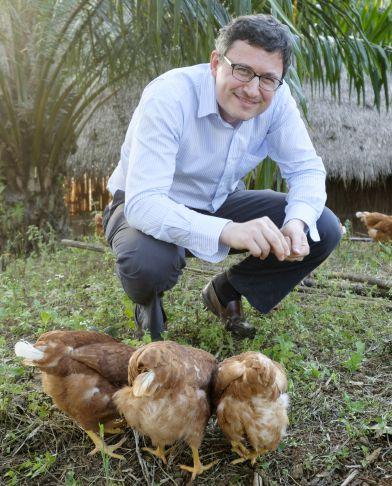
Markus Dietrich is co-founder and CEO of Hilltribe Organics, an organization that helps hill tribe communities in northern Thailand build thriving egg businesses.
paid back either in cash or through the purchase of eggs. Once the loan is paid back, farmers, on average, make US$350 per month. Typically, it takes no more than a few months to pay back the loan.
To date, Hilltribe Organics has employed 26 local workers and 44 hill tribe families. By the end of 2017, their goal is to work with 200 families. The project is making an obvious impact. Abu, one of the organization’s first Akah farmers, was about to leave his family to find work in the city and put an end to his children’s education. Costs were simply too high. During his first year with Hilltribe Organics, Abu earned US$7,000. He was able to send his kids to school and now sees a future in living on his ancestral land.
In the village of Wawi, Wiyada Pinidkam, a young mother, operates her own farm, and Deekum and Temdong Sanchareananurak have found success in the program as well. Both families applied to Hilltribe Organics’ program and were selected after the organization conducted a series of interviews and background checks. The organization asked them to sign a contract, which stipulated payment and details on deliverables. Following that they were offered one month of training before
the hens arrived, 650 in total for each family.
The hens are fed 100 per cent organic feed, sourced from locally contracted farmers. Participating farmers receive the birds at 16 weeks old, raising them to 85 weeks. After 85 weeks, they are sold as meat. The chicks receive a suite of vaccines, approved under organic standards. Farmers collect the eggs twice per day, delivering them to one of the local packinghouses, often on the back of motorbikes.
Entering the organic, free-range market offers more room for growth, Dietrich explained in his talk, since the sector currently accounts for less than one per cent of the total egg market. Overall, the organic food market is expected to grow at an annual rate of eight per cent in the Asia-Pacific region over the next five years. Raising the hens organically fetches farmers a higher price for the eggs they produce.
Hilltribe Organics sells the eggs to consumers through two distribution channels: retail and food services, and export markets. The retail players are the leading premium to mid-market supermarkets, whereas the food services channel consists of hotels, resorts and restaurants. The organization plans to export to Hong Kong in the near future.
Hilltribe Organics has employed 26 local workers and 44 hill tribe families. By the end of 2017, their goal is to work with 200 families.
Can eggs make a difference? Dietrich says they can. By empowering farmers through training and free financing, Hilltribe Organics helps farmer families receive a stable income, which in turn supports their local community. Furthermore, the farm operations not only make sustainable, long-term improvements to the families’ livelihoods, but also to the surrounding environment.
Hilltribe Organics is a social enterprise that was developed out of the Young Presidents’ Organization (YPO) Catapult Social Entrepreneurship Program in 2012. It was founded by four Asia-based entrepreneurs – Arvind Narula, Richard Blossum, Markus Dietrich and Marc Castagnet – with the goal to increase the quality of life of indigenous hill tribe communities in the northern region of Thailand through the production of high-value agricultural products. n
Cover Story
IMPACT IN NUMBERS
Last year, a group of grad students from the France-based business school HEC Paris performed a social impact assessment of Hilltribe Organics’ activity in Thailand. For the study, which took place from June 6 to July 15, 2016, researchers interviewed 49 chicken farmers, seven community members and 42 corn farmers about their experiences working for the organization. The results showed Hilltribe Organics is having a profoundly positive impact on the lives of chicken farmers, the researchers concluded. It has also improved the local environment, they believe. Here are some of the highlights of responses from chicken farmers:
93%
said their gross income has increased
87%
claimed their monthly control over income has improved
71%
would stop chicken farming if Hilltribe left
57%
reported a positive change in health
94% feel prouder about their new job
61%
cited increased income as a reason of that pride
Industry Aviagen opens New York hatchery
New broiler breeding stock facility evidence of company’s commitment to Canadian customers
BY MADELEINE BAERG
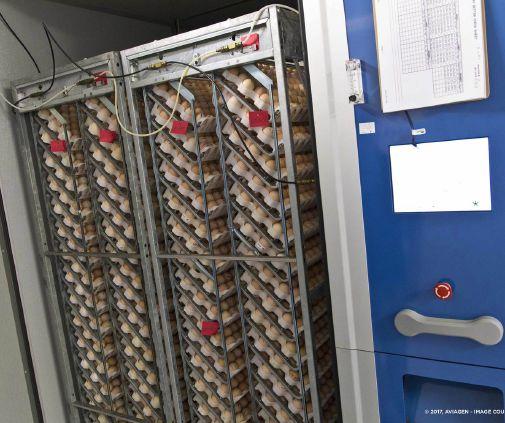
The opening of a new broiler breeding stock hatchery by industry powerhouse Aviagen in January in northern New York State is good news for the Canadian poultry industry. Located just a 30-minute drive from the Canadian border and fairly close to JFK International Airport, the new facility will minimize transport time to eastern Canadian broiler chicken breeder barns.
“The Watertown hatchery isn’t located where we’d put hatchery to supply most of our customers in the U.S.,” says Frank Dougherty, Aviagen’s vice-president of sales and technical service for North America. “It’s a commitment from us to support the industry in Eastern Canada. Since our priority is to get the chicks to farms as quick as we can, close proximity via road or air will help safeguard the chicks’ health, safety and welfare.”
Approximately two-thirds of the chicks hatched at the Watertown facility will be destined for Canadian broiler breeding barns. Giuseppe Caminiti, executive director of the Canadian Hatching Egg Producers, applauds the new facility’s Canada-oriented location.
“From our perspective, it is very beneficial that the new Watertown hatchery is located so close to the Ontario border,” Caminiti says. “The shorter the transport time, the better.”
Broiler breeder farmers are unlikely
Most of the chicks hatched at the Watertown facility will be destined for Canadian broiler breeding barns.
to notice significant changes to service or quality.
“Our priority is to grow steadily,” says Jason Mack, Aviagen’s vice-president of operations for North America. “We typically operate at 80 to 90 per cent capacity in any of our hatcheries. As we begin to reach full capacity in other facilities, we bring another on stream. The opening of this facility won’t cause significant ripples within the industry. That’s the opposite of what we want.”
Currently, Aviagen supplies approximately 75 per cent of all Canadian broiler breeding stock. Virtually all of these birds are Ross brand genetics, which is celebrating its 61st year of production
this year. Each year, Aviagen invests 10 per cent of all revenue into research and development to further improve its stock’s performance.
“The new location allows us to better service and supply our Canadian customers. They’ll still be able to expect the same top quality breeding stock as from any of our other facilities, just now in their backyard. At the end of the day, it’s all about the product that customers are ultimately producing. Our buyers choose us not just for location, but also for feed conversion, growth rate and livability,” Mack says.
While the new facility’s opening is due in part to strong market capture, the
CLOSE PROXIMITY
PHOTO
company is also benefitting from growing consumer demand for chicken.
Poultry sales continue to increase due to changing socioeconomic conditions globally, as well as positive domestic drivers like low-carb diet trends and changing protein preferences
Industry
among consumers. Annual per capita consumption of chicken in Canada has grown steadily from 16.88 kilograms (kg) in 1980 to 31.86 kg in 2015. Meanwhile, beef and pork consumption during this same period has dropped by approximately one-third
each, from 38.81 kg and 32.16 kg per capita respectively in 1980 to 24.40 kg and 22.16 kg respectively in 2015.
The Canadian Hatching Egg Producers group is anticipating 1,196 million kg of chicken to be produced in 2017, an increase of 4.2 per cent over 2016.
“We continue to see strong demand in both Canada and the U.S., with poultry now the number one source of protein in both countries,” Dougherty says. “The market fundamentals in Canada are much simpler than they are in the U.S. In Canada, there’s been a consistent two to three per cent increase in quota allocation. In the U.S., we’ve had tremendous business growth, some because of increased consumer demand per capita but most at the expense of our competition.”
“The new location allows us to better service and supply our Canadian customers.”
The Watertown facility is Aviagen’s seventh commercial breeding stock hatchery in the U.S. The facility has a capacity of 135,000 chicks per week, totalling about seven million chicks per year. In addition, Aviagen expanded its Sallisaw, Okla., facility and is currently developing another project in Georgia, though ground has not yet been broken on this location.
Broiler breeding stock form the parent generation for Canada’s broiler hatching egg producers. According to Statistics Canada, there were approximately 244 broiler hatching egg producers in Canada in 2015, 46 per cent of which were located in Ontario or Quebec. In the same year, these farms produced 707.7 million broiler stock eggs for Canadian hatcheries. The total farm cash receipts Canada’s hatching egg producers earned in 2015 increased to $289.1 million, up 1.5 per cent from the previous year. n
Technology Talking emission control at EuroTier
The world’s largest trade fair for animal production hosted a special exhibit dedicated
to emission control solutions
BY MELANIE EPP
Poultry production generates dust, ammonia and odour emissions that have the potential to impact air quality both within the barn and in the environment. The subject of emission control was addressed at EuroTier, the world’s largest trade fair for animal production, in November 2016. The fair takes place every other year in Hanover, Germany.
The most recent edition of EuroTier offered a special exhibit with the goal of providing information about indoor emission control measures for minimizing those dust, ammonia and odour emissions. The companies that exhibited products all claim to provide alternative solutions to exhaust air purification, as well as offer health and welfare benefits to both animals and humans.
Three areas of production were addressed: flooring, feeding and air conditioning technology.
TECHNOLOGY
Some methods to reduce emissions in poultry housing involve the filtering or scrubbing of exhaust air before it leaves the building. The EuroTier exhibit, however, looked at indoor solutions that
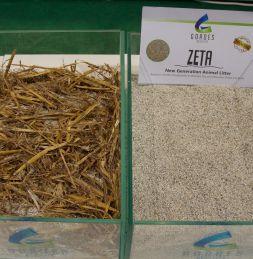
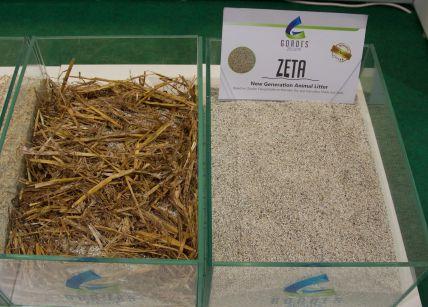
DOL 53 constantly measures ammonia concentrations. When levels get too high, a message is sent to the user’s smartphone (top); Zeta poultry litter adsorbs moisture, maintaining a dry environment and therefore reducing emissions.
could be used as an alternative to air cleaning. If effective, these solutions have the potential to improve animal welfare, environmental conditions and the working conditions of those who work in the barn.
NH3-Stable ammonia sensor by ExTox Gasmess-Systeme: According to Christian Baer, in sales and
marketing at ExTox Gasmess-Systeme, the average ammonia monitoring system costs 500 euros (approximately $700) and has a lifespan of just one month. Most producers, he said, find this to be too expensive and not worth the cost. ExTox Gasmess-Systeme has designed a new ammonia sensor, NH3Stable, that addresses this problem. The
MOBILE MONITORING
BROILER SIGNALS
A P RA ct I c AL Gu I d E t O
B ROILER F O cu SE d M ANAGEMEN t
Broiler Signals follows the life cycle of these fast growing animals and points out issues specific to each developmental stage.
Broilers are fast growing animals that need constant care. There is no time for correcting mistakes; mistakes mean high costs. The prevention of mistakes is therefore crucial.
Proper management starts with recognizing signals in practice. For broiler-keepers, this means being alert when in the poultry house, watching and listening to the animals, paying attention to their environment and their behaviour as individuals and as a group. This usually provides important information about their animals’ health, well-being and production. This information helps poultry-keepers to improve their economic results, the well-being of their animals and their own.
innovative filter measures air quality for five minutes every one to 12 hours, depending on the user’s specifications, and is exposed to filtered air in between readings. This allows the NH3-Stable to overcome the main limitation with traditional sensors: aging due to exposure to ammonia. The sensor has a lifespan
Technology
of more than one year, and according to Baer, produces stable results.
The benefit of using the NH3-Stable sensor is that it makes running ventilation at 100 per cent unnecessary, which has the added benefit of reducing overall production costs.
Baer said that NH 3 -Stable is
particularly useful in barns located close to residential areas, where regulations require farmers to control and measure emissions. “Our device is perfect for this,” he said.
DOL 53 ammonia sensor by Big Dutchman International: Winner of the 2016 EuroTier Innovation Award, DOL 53 is an electrochemical, long-term stable NH3 sensor used for continuous measuring of ammonia concentration in poultry barns. The device, which has a lifespan of three to four years, measures emissions every five to 10 seconds. The sensor needs a power supply, but can be connected to the climate computer, explained Andreas Boeske, head of marketing communications at Big Dutchman.
“Another route for tackling emissions in poultry production is through the feeding regime.”
DOL 53 constantly measures ammonia concentrations. When levels get too high, a message is sent to the user’s smartphone. Knowing in-house ammonia levels allows producers to take action before those levels become too high, Boeske said. The device is much better than its primitive predecessor: the human nose.
While DOL 53 is sold by Big Dutchman, the sensor was designed by Dräger. To learn more about how DOL 53 works, you can watch a short YouTube video at https://goo.gl/3fuyG9.
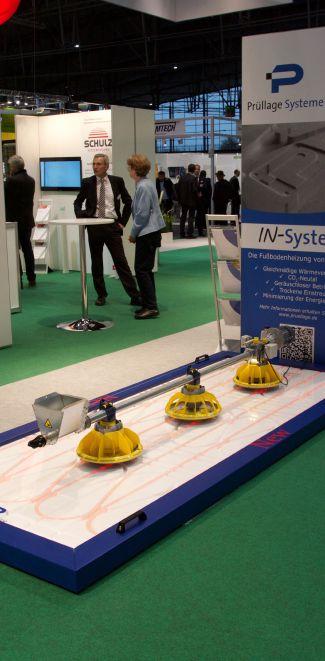
IN-System heated flooring by Prüllage Systeme: IN-System, designed by Germany’s Prüllage Systeme, is a floor heating system specifically designed for poultry houses. Heating pipes, which run every 15 centimetres across the width of the house, are heated using 35°C water. The system requires little
Technology
NH3-Stable measures air quality for five minutes every one to 12 hours, depending on the user’s specifications, and is exposed to filtered air in between readings.
energy to heat, and according to Björn Prüllage, assistant to management, the flooring provides uniform heating without leaving any cold spots.
“The IN-System is operating with warm water in closed tubes under the floor, so there are no carbon dioxide emissions in-house using this heating system because there is no burning or open flame,” he said.
Because the piping is laid out under the floor, warmth rises through the floor, right where the birds need it most. “The floor level temperature is about 29.5°C, and the rest of the house could be colder,” Prüllage said. “Furthermore, the warm water has a low temperature level [of] about 35°C, so low energy is necessary to heat up the water, which saves energy costs.”
Prüllage said the floor heating
system also helps to dry bedding, further reducing carbon dioxide levels inhouse. A short YouTube video can be found at https://goo.gl/C4qh46 that demonstrates how the product works.
FEED
Another route for tackling emissions in poultry production is through the feeding regime. Excess ammonia can suggest inefficiencies in the birds’ diets – a problem that can be addressed through feed additives and customized feeding.
L-valine by Kaesler Nutrition GmbH: According to Dr. Jörg Bartelt, nutritional expert and head of technical marketing at Kaesler Nutrition, many broilers show a deficiency in valine.
“We have enzymes and amino acids that can improve strongly the efficacy of
The IN-System runs heating pipes every 15 centimetres across the width of the barn, heating the floor with warmed water.
feed conversion with the result of reduction of phosphorus and nitrogen emissions,” Bartelt said in a recent interview.
“In broiler nutrition, the usage of L-valine is a very new approach,” he continued. “In many broiler diets, valine is – after methionine, lysine and threonine – the fourth limiting amino acid. A crude protein reduction of about one percentage point is possible by inclusion of L-valine into broiler feed.”
One per cent less crude protein equals a 10 per cent reduction in ammonia emissions, Bartelt said. To learn more about the benefits of L-valine, visit kaesler.de/en/products/l-valine/.
Digestarom by Biomin: Stress, such as a change in diet or challenging housing or environmental conditions, can lead to all sorts of problems in poultry production, namely decreased
Metabolic Disor D ers in Poultry
This book addresses the problems of all the significant metabolic disorders such as ascites, sudden death syndrome, liver and kidney problems and skeletal disorders. In some instances, methods of treatment or prevention are indicated.
Metabolic disorders by their very nature are a perennial challenge to efficient modern poultry production. Their control requires astute management and a nutritional strategy geared towards health maintenance and general disease avoidance in poultry.
Modern poultry production now has the ability to control most infectious diseases and it is evident that the economically significant issues relating to poultry health and welfare worldwide are noninfectious, most commonly referred to as metabolic disorders.
poultry_BookAd_jan 14.indd 1
appetite, poor digestion and poor nutrient uptake. Furthermore, these issues can lead to an imbalance of gut microbiota. According to Michael Noonan, Biomin global product manager (phytogenics), a well-balanced gut is key to protecting animals against enteric diseases and increasing health and performance.
Digestarom, a phytogenic designed by Biomin, is a flavouring substance that is designed to increase palatability of feed and decrease both aerobic and anaerobic microbial counts in a bird’s gastrointestinal tract. How does this improve emissions? According to a trial conducted on a broiler farm in Germany, adding Digestarom to a base diet of pelleted cereals and soy led to better air quality in the barn (-12.12 per cent) and significantly lower ammonia emissions (-11.71 per cent). Its inclusion
Technology
was also shown to lower total nitrogen in the litter by 8.01 per cent.
To learn more about Digestarom, visit biomin.net/en/home/.
FLOOR
Bedding materials and additives that can be used on the floor were also included in the special exhibit at EuroTier. Some were simple bedding solutions treated to prevent dust creation. Others were more complex solutions, such as bedding materials that are meant to capture ammonia and other odour-causing compounds.
Zeta poultry litter by Gordes Zeolite: The build-up of unpleasant odour, caused by ammonia in urine, is one of the most common and serious health problems encountered in poultry barns and other agricultural buildings
AGRO-DESIGN CONSTRUCTION
that house livestock. Ammonia emissions can be addressed using a product called Zeta, explained Özge Akgül, sales support specialist at Gordes Zeolite.
The chemical reaction of water and urea produces ammonium and carbon dioxide, Akgül explained. Zeta adsorbs the moisture on the base plate. This maintains a dry environment and therefore reduces emission in poultry production.
“Zeta is a 100 per cent natural product that can be used on its own, or mixed with other bedding materials,” Akgül said. “It has a very high water retention capacity, can adsorb ammonia gas due to ammonia gas selectivity with its ion exchange feature and can initiate both of these two positive effects on a bedding material.”
More detailed information can be found at gordeszeolite.com/animal-litter-and-beddings.
BEYOND EUROTIER
Researchers at the University of Delaware are also working on lowering ammonia and greenhouse gas emissions from poultry houses. Specifically, they’re looking at how adding alum to poultry litter can reduce ammonia concentrations and greenhouse emissions.
The researchers, including Hong Li, assistant professor in the department of animal and food sciences, knew that ammonia and carbon dioxide were the two bi-products of uric acid being broken down by microbial activity. They also knew that alum could be used to slow microbial activity, thereby reducing overall emission. What they didn’t know was its effects on greenhouse gases. But they thought if they could lower ammonia emissions they could lessen the need for ventilation. They were right. Producers using acid-based litter amendments can reduce greenhouse gases that are produced through ventilation and fuel used for heating. Constant ventilation is not necessary when ammonia emissions are under control. The research was recently published in the Journal of Environmental Quality n
EQUIPMENT FOR SALE
Yamasa 100cs per hr Egg Grader
9 yrs old, all Stainless Steel construction, includes Modern Matic Egg washer ,pre accumulator for inline use, Egg loader,4 automatic packers with Denesters. Domino A200+ inkjet system (for egg coding). Runs perfect, we are upsizing. Available early 2018.
Please contact Marcel at 613-806-2847 for viewing or any questions. Can be seen in operation on appointment. Call for pricing
Saskatchewan Poultry Farm
Broiler Breeder Farm near Yorkton, Sask.
• 1,925,000 units of quota
• 15 year old barns
• Updated 6 bdrm home on 142 acres Asking $4,100,000.00
Transparency, sustainability and traceability have become basic consumer expectations, making them essential to food production, says John Scott, former president of the Canadian Federation of Independent Grocers (CFIG).
After analyzing food strategies of major retailers for more than 40 years, Scott now consults and speaks on how to respond to consumer food trends. He believes the time for producers to push back on sustainability, traceability and animal welfare is over.
“Producers have to find ways to meet consumer expectations. Social licence is one component you need to be aware of,” Scott explained while presenting at the Alberta Chicken Producers’ annual meeting held this spring. The grocery expert spoke on current food retailer strategies and what implications they may have for primary producers.
Put simply, retailers have only one basic strategy: to respond to consumer demands. And, what the consumer wants, the consumer gets.
“It’s not retailers who want sustainability and traceability, it is the consumers,” Scott said. “If you’re running against consumers’ demands and expectations, you won’t sell any product.”
Sobeys, one of Eastern Canada’s major food retailers, experienced the recourse of consumer demand after purchasing the Safeway chain in Western Canada.
“They tried to integrate Safeway with the Sobeys style,” Scott said. “They didn’t realize how much consumers missed the quality of the Safeway produce and how ingrained private labels were with Safeway shoppers. They learned how quickly consumers make judgments.”
Scott says discount marketers, such as Real Canadian Superstore, Costco and Walmart, now command 50 per cent of the retail food business. As a result, traditional retailers like Safeway, who can’t compete on the price of generic boxed and canned goods, are forced to focus more on providing quality fresh meats, produce and baking.
“Canadian consumers won’t spend more than nine per cent of their income on food. Baby boomers have less influence than they used to, are eating smaller portions and
buying healthier foods. Meanwhile, millennials are spending $5 on a coffee at Starbucks but just 50 cents on a package of Kraft dinner,” Scott said.
According to the grocery expert, technology is creating the biggest change in food retailing. Not so much technology within the supermarket, but the technology that is now available to consumers themselves.
Anyone with a smartphone can now access more information about their food than most retailers are able to provide.
“Retailers have over 30,000 products in their store and they can’t be expected to know everything about each of their products. They expect producers to provide that information in a way that’s easily accessible to consumers. Retailers want producers to be able to explain exactly their practices,” he said, noting that consumers crave transparency.
“They want to know what’s in the food well beyond what’s on the nutritional label. They want to know where it’s from and who’s behind it.”
To that end, he compliments the Alberta Chicken Producers’ website, calling it one of the best he’s seen at imparting information about chicken production to consumers. n
What the consumer wants, the consumer gets, says John Scott
Vice-Chair
Chair
r As a second generation farmer, Mark Davies raises turkeys in Nova Scotia. In March 2017, Mark was acclaimed as Chair for his 11th term. Mark has been involved with the Board for 20 years and he is a strong advocate for the turkey industry both domestically and in the international trade arena.
In addition to being a turkey farmer, Darren Ference has a large cow/calf herd and crop farm in Monitor, AB. Darren has been on the Board of Alberta Turkey Producers for the past eight years and has been on the TFC Board for over four years.
Your Vision. Your Voice. Your New TFC Executive Committee
Executive Member
Calvin McBain is entering his second term on the TFC Executive Committee. Calvin has served on the Comité des éleveurs de dindon of the Les Éleveurs de volailles du Québec for the last seven years and has been the TFC Board delegate from Québec for the past five years. An accomplished horseman and hunter, Calvin is a second generation turkey farmer.
Ex-Officio Member
Brian Ricker is the first to hold this new position on the TFC Executive Committee. He raises chickens and turkeys and has a crop farm in Ontario. Brian has been on the Turkey Farmers of Ontario Board for 14 years and is currently Chair, and he has been on the TFC Board for one year and a half.
Reaching Consumers: Canadian Turkey
One year ago, TFC launched its new Canadian Turkey Brand with the focus on “It’s a Whole New Season for Turkey”. TFC has been actively increasing consumer engagement, and, in 2016, there were over 430,000 visits to the website and over 90 million social media impressions. TFC and the Provincial Boards will continue to engage consumers to highlight the nutritious, premium quality turkey meat available.
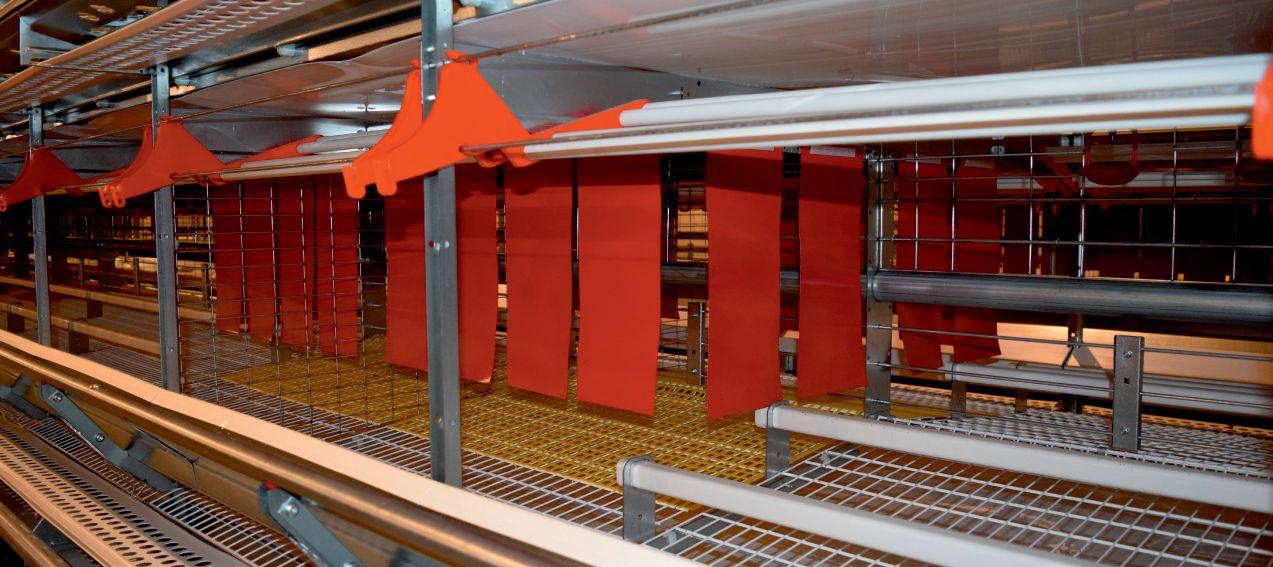
Automatic Enriched & Alternative Housing
ECO II The Next Generation of Enriched Colony Housing
• New Mushroom Perching
• New Low Profile Self Securing Nest Mat
• Farmer Automatic Patented Plastic Doors
• Center partition allows for more efficient monitoring of birds
• LED in system tube lighting promotes increased activity on scratch mat, more natural bird behavior and laying performance
• Optional nest positions improving production
• New manure door option
COMBI II Colony or Aviary Housing System
• Proven performance for over a decade
• Easily converts from enriched to cage-free
• LED system lighting
• Compact design with low height for easy inspection of all tiers