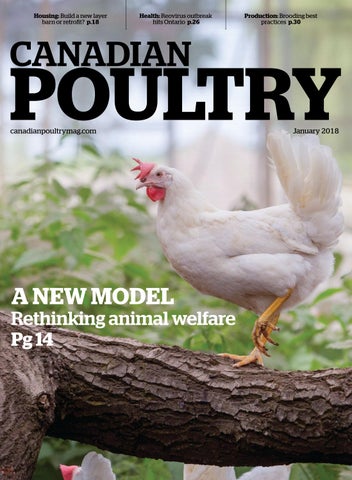
04 | From the Editor Canadian Poultry gets a makeover
Perspectives
Animal welfare should be precompetitive 10 | Ask the Vet Comparing anticoccidial classes 12 | Research
Lowering greenhouse gas emissions in turkeys
KAREN DALLIMORE
KAREN DALLIMORE
ON
From the editor
by Brett Ruffell
Canadian Poultry gets a makeover
Like the new look?
Similar to many people, we’ve decided to ring in the New Year with a makeover. After all, it had been a long time. But we’ve made more than just some cosmetic changes. We’ve also added timely new content features. Allow me to give you a tour and a short preview of the year ahead.
With so many poultry health-related issues emerging and rapidly evolving, you likely have a burning question or two. That’s where our new Ask the Vet column comes in. We’ve tapped Tom Inglis and his colleagues at Poultry Health Partners to answer your queries.
Send your questions to poultry@annexweb.com and our team of experts will be happy to answer them in an upcoming column. You can read the first Ask the Vet instalment on page 10, where Inglis helps you make sense of different anticoccidial classes.
In our What’s Hatching section, the Q&As paying homage to Poultry Industry Council’s 20th anniversary (one of my favourite sections) have wrapped up. But we’re carrying on the discussions with interesting industry players in the new 5 Questions interview section.
Our first conversation, which can be found on page 7, is with Egg Farmers of Canada CEO Tim Lambert. In September, the
executive became one of just three Canadians ever elected to chair the International Egg Commission – a prestigious position.
On the back page, you’ll now see modernization on display. I’ve heard repeatedly in my time with Canadian Poultry that one of the beauties of supply management is that it allows the industry to put resources into innovation.
We’ve also launched new efforts to improve reader engagement
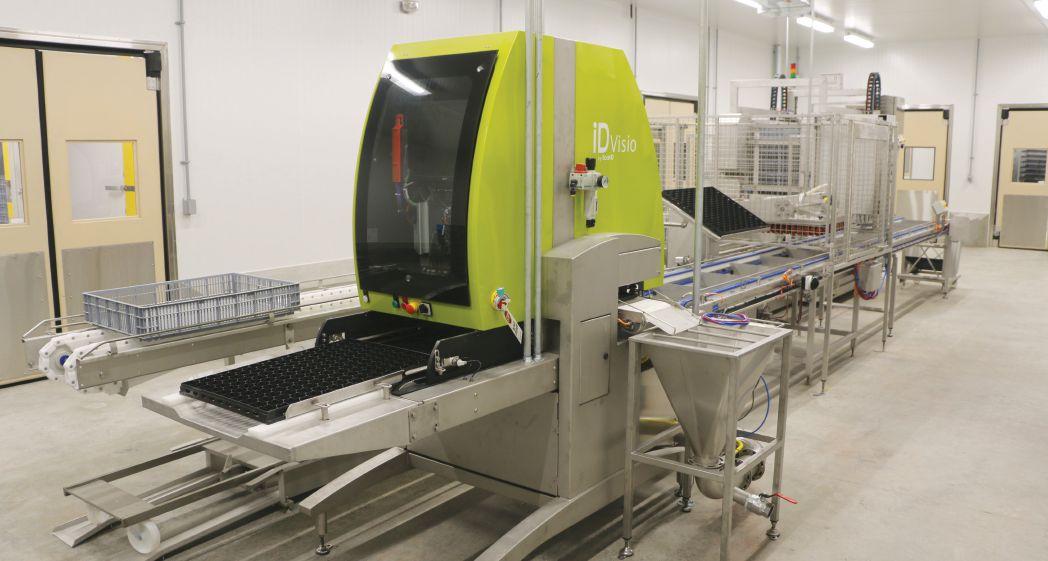
On our revamped back page, we’ll be showcasing that innovation. We’ll be featuring barns, hatcheries and other facilities that are pushing the boundaries with technology and creative practices. In our inaugural edition, we take a look inside a new hatchery from Archer’s Poultry in Trenton, Ont. Do you know another fascinating poultry operation that’s doing things differently? Again, drop us a line.
If you value strong views like I do, you’ll be happy to know we’ve kept our Perspectives column – it’s simply moved from the back to near the front of the book. This year, we’re recruiting a more diverse range of opinions. And we’re urging people to let loose with their views like never before.
This time around, Robin Horel, president and CEO of the Canadian Poultry and Egg Processors Council, argues why animal welfare should be precompetitive. His members have committed to doing just that. And on page 8 he explains why every player in the poultry supply chain should follow suit.
We’ve also launched new efforts to improve reader engagement. For one, we’d like to hear your thoughts on the magazine. We want you to share what you like about the magazine, what you want more of and areas where we could improve.
Visit CPSurvey.ca and take our quick reader survey by Feb. 9, 2018 and you’ll be entered into a draw for an iPad mini.
In addition, we want you to help us craft this year’s Who’s Who issue, our annual special edition packed with profiles and a comprehensive directory. This year, we want you to choose who we feature. And we have a theme – up and comers. Know a promising new producer, vet, researcher or other poultry industry upstart? Send us their name and contact details and they could be profiled in this summer’s edition. Think you’d be an ideal candidate? You can even put your own name forward.
Finally, as is the trend in media these days, we’ve committed to enhancing our online product. That includes rolling out exciting web exclusive offerings like blogs, videos and webinars.
Until next time, happy New Year and best of luck in 2018!
Mail: 111 Gordon Baker Rd., Suite 400, Toronto, ON M2H 3R1
Subscription Rates
Canada – 1 Year $32.00 (plus applicable taxes)
USA – 1 Year $69.00 USD Foreign – 1 Year $78.00 USD GST - #867172652RT0001
Occasionally, Canadian Poultry Magazine will mail information on behalf of industry-related groups whose products and services we believe may be of interest to you. If you prefer not to receive this information, please contact our circulation department in any of the four ways listed above.
With nearly 70 years of experience and more than 3 billion birds around the world drinking from a Lubing system on a daily basis, Lubing has established a rock solid position as a global leader developing innovative products for poultry production.
Our Tradition of Innovation keeps us at the forefront of the industry by continually offering cutting-edge technology that helps producers gain every possible advantage in production to maximize profits.
Got Lubing? You can’t afford not to. Contact us to find out how we can help improve your bottom line.
Nestle commits to sourcing only cagefree eggs by 2025
Nestle, the world’s largest packaged foods company, has committed to sourcing only eggs from cage-free hens for all its food products globally by 2025. This includes all shell eggs and egg products directly sourced as ingredients by the company. In Europe and the U.S., Nestle will make the transition by the end of 2020. For the rest of the Americas, the Middle East, Africa and Oceania it will happen by 2025, with the move in Asia to be completed in the same transition period, as conditions allow. Several of the company’s rivals have already made similar pledges.
Burnbrae, World Vision partner on gift donations
World Vision Canada and Burnbrae Farms are once again giving Canadians the opportunity to provide families with hens, roosters and eggs this holiday season. For the sixth year, Burnbrae will match every Hens and Roosters gift purchased from World Vision’s Gift Catalogue (up to $10,000).
Cargill piloting traceable turkeys
Consumers can now trace Honeysuckle White brand turkeys from a family farm to their table as part of a new pilot project enabled by Cargill. Shoppers in select U.S. markets can simply text or enter an on-package code at HoneysuckleWhite.com to access the farm’s location by state and county, view the family farm story, see photos from the farm and read a message from the farmer. The project uses a first-to-market blockchain-based solution. Such models build a trusted, transparent food chain that integrates key stakeholders into the supply chain and creates a distributed ledger with immutable records.
PER CENT of eggs Nestle uses in Europe are already from cage-free sources.
Poultry excrement a promising renewable energy source: study
1 M
is the approximate number of eggs the Burnbrae/World Vision partnership has provided families to date.
A new study shows that poultry excrement may have a future as a renewable energy source, potentially replacing about 10 per cent of coal used in electricity generation.
For the study, researchers from Israel’s Ben-Gurion University of the Negev (BGU) evaluated two biofuel types to determine which one is the more efficient poultry waste solid fuel.
They compared the production, combustion and gas emissions of biochar with those of hydrochar. Biochar is produced by slow heating biomass at a temperature of 450°C (842°F) in an oxygen-free furnace. Hydrochar, in contrast, is produced by heating wet biomass to a much lower temperature of up to 250°C under pressure using a process called hydrothermal carbonization (HTC). HTC mimics natural coal formation within several hours.
“We found that poultry waste
processed as hydrochar produced 24 per cent higher net energy generation,” says student researcher Vivian Mau, who collaborated with BGU professor Amit Gross on the study. “Poultry waste hydrochar generates heat at high temperatures and combusts in a similar manner to coal, an important factor in replacing it as a renewable energy source.”
For the first time, the researchers also showed that higher HTC production temperatures resulted in a significant reduction in emissions of methane (CH4) and ammonia (NH3) and an increase of carbon dioxide and carbon monoxide. “This investigation helped in bridging the gap between hydrochar being considered as a potential energy source toward the development of an alternative renewable fuel,” Gross explains. “Our fndings could help significantly reduce greenhouse gas emissions.”
5 QUESTIONS FOR TIM LAMBERT
In October, Egg Farmers of Canada (EFC) CEO Tim Lambert got exciting news – he had just been elected chair of the International Egg Commission (IEC). Lambert is only the third Canadian to serve in this role since the organization’s beginnings in 1964. We asked him five questions.
What does it mean to you to be the new IEC chair?
It’s a very progressive organization and it’s an honour to be asked by my peers around the world to lead the board. The egg industry globally is very dynamic and I’m excited about the opportunity to help it continue to thrive.
Tell us about your background. While I don’t have a farming background, I always had an interest in agriculture and science growing up. There was nothing else I wanted to study or work in. I did have a sheep farm in Fergus for years when I worked in Guelph. On the home front, I’ve been married to Barbara since 1983. We have two sons and a daughter. In my spare time I play hockey twice a week and also enjoy painting and drawing.
How did you first become familiar with IEC and its work?
When I started at EFC in 2003, the IEC board asked me to get involved. I served on and chaired various IEC committees, helped start the Young Egg Leaders Programme and then served as vice chair for the last five years.
What specific areas of growth will you focus on during your term?
We always want to get more
companies and organizations involved. One way we do this is through our two annual conferences. The Young Leaders Programme will be expanded. We invite young farmers and industry leaders to attend various programs and meetings, and then they do outreach in their countries and that drives new IEC interest and membership. My other main focus will be to elevate global standards for sustainability, disease management and social responsibility.
What has enabled you to reach this point?
My international involvement all stems from my connection with EFC, which embraces social responsibility and building public trust. For example, Project Canaan/Heart for Africa is very much an EFC project. EFC also started a young egg leaders program in Canada and established an extensive egg research program. If it weren’t for the progressive views of EFC board members, I would not be IEC chair today.
Coming Events
JANUARY 2018
JANUARY 22, 2018
PIC Science in the Pub Guelph, Ont. poultryindustrycouncil.ca
JANUARY 25, 2018
PIC Eastern Ontario
Poultry Conference St. Isidore, Ont. poultryindustrycouncil.ca
JANUARY 25-27, 2018
Pacific Agriculture Show Abbotsford, B.C. agricultureshow.net
JANUARY 29-30, 2018
International Poultry Scientific Forum Atlanta, Ga. ippexpo.com/ipsf
JANUARY 30-FEB. 1, 2018
International Production and Processing Expo Atlanta, Ga. ippexpo.com
PIC Poultry Producer Update Mount Brydges, Ont. poultryindustrycouncil.ca
FEBRUARY 21-24, 2018
NTF Annual Convention San Diego, Calif. eatturkey.com
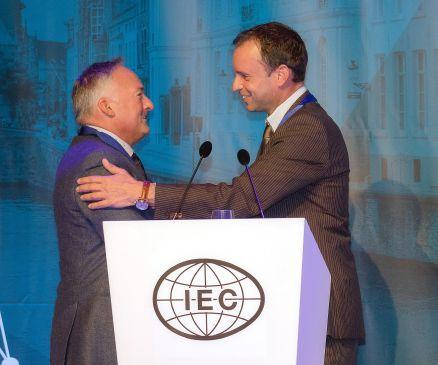
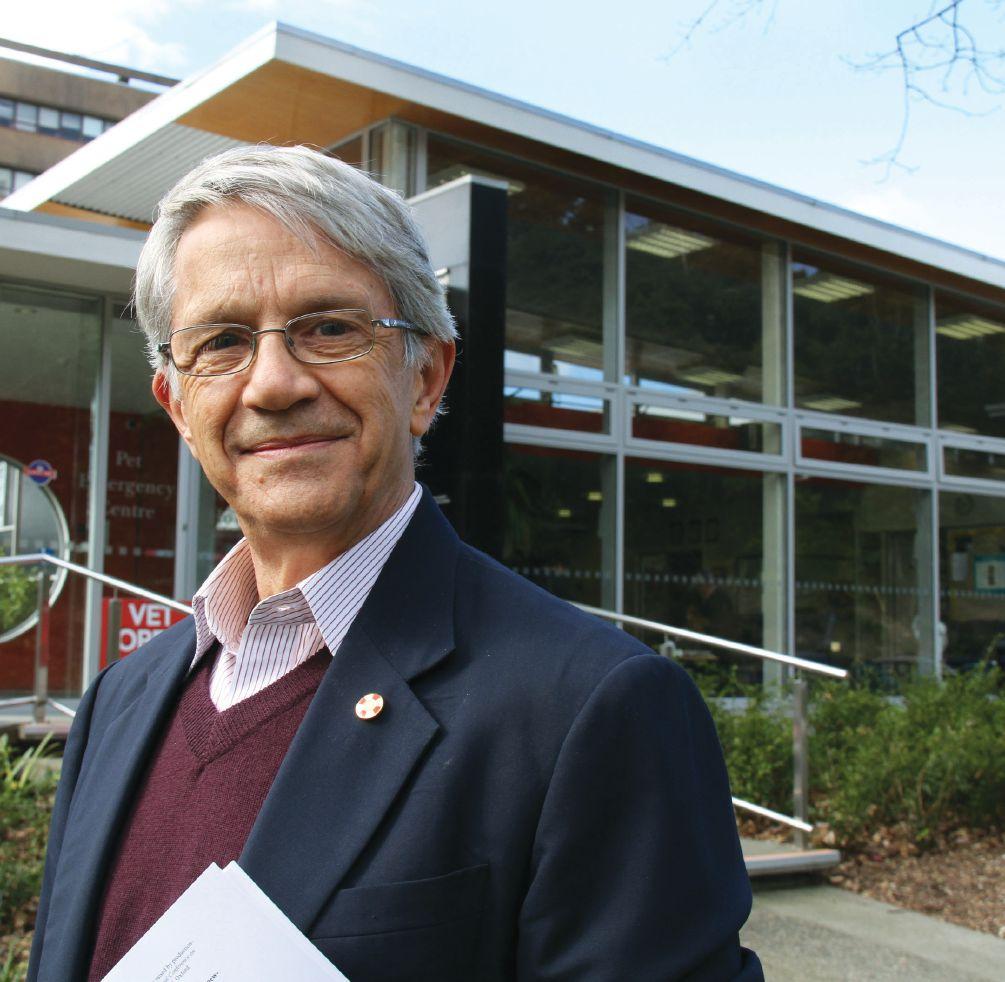
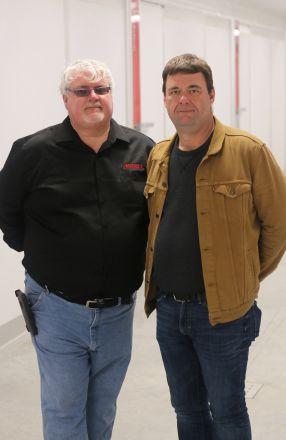
Tim Lambert (left) took on the role of IEC chairman in September 2017 at the IEC Conference in Bruges, Belgium.
By Robin Horel
Animal welfare should be precompetitive
The Canadian poultry industry is facing pressure on animal welfare from a number of sources, including from vegan activist groups. Some of the most active have changed tactics and are pressuring our customers, retail and food service companies to adopt their demands or face significant pressure against their brands.
The poultry industry has also decided to change its response and is now publically calling out the tactics for what they are. The key to helping our customers resist activist pressure is to ensure our animal welfare practices are science based, up-to-date and built through robust processes.
We rely on the National Farm Animal Care Council (NFACC) process to update codes of practice. This made-in-Canada approach requires input and collaboration among numerous stakeholders. The result is a number of codes of practice, including the two newly updated poultry codes. I can tell you from my personal interactions that our approach is the envy of the rest of the world.
As robust a system as this is, it is not very useful until it is combined with the individual commodity on-farm animal care programs that ensure the codes are translated into practice on the farm. NFACC has a process to ensure that the onfarm programs go through the same robust process as was used in the creation of the codes themselves. It’s called the Animal Care Assessment
Framework (ACAF).
All of this great work is the base but is not, in itself, enough. In my view, animal welfare in the Canadian poultry industry should be precompetitive.
Members of the Canadian Poultry and Egg Processors Council (CPEPC) agree and have formally stated that animal welfare is precompetitive for our part of the industry. This means that:
• Ensuring high standards of animal welfare is a priority for the poultry and egg processing, egg grading and hatchery industry.
• Members will be open and willing to discuss research and advances in the areas of animal welfare.
• Members will share their experiences, best practices, training experience and other insights.
• Advertising should be clear and in no way misleading.
• Any claims (on label or other advertising) will not put current accepted production methods in a negative light.
• The goal of this non-competitive declaration is to raise the overall industry standards for animal welfare and increase consumer and regulator confidence in the industry.
Of note: This agreement should not interfere with any individual company’s business decisions, marketing plans or strategies.
CPEPC conducts twice-yearly animal welfare workshops. At these events, members freely share their innovations and experiences regarding animal welfare. These range from investments in technology, new processes, work with employees and farmers and more. This shows our commitment to the principle of declaring animal welfare to be precompetitive.
Canadian consumers are further away from the farm and food production than ever before. Nevertheless, they want to know “where their food comes from” and many of them
are concerned with how we treat the animals in our care. That is reasonable and we should let them know about our programs and how serious we are about ensuring good animal welfare.
We are fortunate to live in a country where many of us don’t have to worry about whether food is available, safe and affordable. In addition, we are able to choose foods based on different methods of production like locally produced and sustainable.
Some of our customers may choose to market to their consumers using certain animal welfare claims. That is their prerogative and the Canadian poultry industry will endeavour to give them and our consumers all the choices they desire.
However, if we can ensure that our customers understand the good animal welfare standards that accompany all our products, this would reduce the need for competing claims, multiple programs in our plants and on our farms.
Most importantly, it would eliminate much of the confusion in the consumers’ minds about what attributes are important for them and their families.
Our goal needs to be to ensure that all Canadian produced and processed poultry and egg products are raised to a very high standard for animal welfare. Canadians should feel comfortable with whatever poultry product they choose, regardless of production method.
Robin Horel is president and CEO of the Canadian Poultry and Egg Processors Council, an Ottawa-based organization representing the interests of chicken, turkey and egg processing, egg grading and hatchery establishments.
Corporate animal welfare policies around issues like layer housing should be driven by evidence, not marketing strategies.
LEADER IN TECHNOLOGY
Investing in Our Future
Accelerating
Progress
• Genomics = Improved Selection Accuracy
• State-of-the-Art Data Management Systems
• Advanced Ultrasound Technology for Improved Meat Quality
• Improved Measurements for Broiler Efficiency
Ask the Vet
By Tom Inglis
Tom Inglis is managing partner and founder of Poultry Health Services, which provides diagnostic and flock health consulting for producers and allied industry. Please send questions for the Ask the Vet column to poultry@annexweb.com.
Comparing anticoccidial classes
What is the difference between ionophores and non-ionphores (chemicals)?
Virtually all poultry become exposed to the coccidial parasite, which often causes the important disease coccidiosis, noted by mortality and enteritis. Often, the enteritis can trigger another important disease, necrotic enteritis. Between coccidiosis and necrotic enteritis, flocks can experience high mortality (=>20 per cent), unthriftiness, poor feed efficiency, and is the case with all disease, undue bird suffering.
Because coccidiosis is such a threat to poultry, industry has come up with a number of compounds (anticoccidials) that reduce the risk of this parasite. Coccidiosis is a risk throughout the life of a bird so it is not surprising that anticoccidials were developed for use in feed to be where the parasite resides (the digestive system) and to give continuous protection for the life of the flock.
Since 1948, many anticoccidials have entered the market for the poultry industry – there is virtually a product for each letter of the alphabet! But coccidia (made up of different families or species) are survivors and certain anticoccidials were not effective against all species and coccidia rapidly became resistant to others. As a result, today we have 12 that can be divided into two classes, ionophores and non-ionophores (commonly called chemicals) based on the origin of the compound and their mode of action against coccidia. It is fortunate for the Canadian
poultry industry that this range of products is available, allowing rotation programs to be used to prevent the development of resistance. There is no indication that there will be new anticoccidials in the near future. It is important to know the difference between ionophores and non-ionophores (chemicals) to design rational rotation programs. This is especially important in today’s discussion on antimicrobial resistance and antimicrobial use. Certain production programs may restrict the use of ionophores (e.g., raised without antibiotics [RWA]) but permit use of non-ionophores.
Ionophores
They are natural substances secreted by certain fungi spp. that, at specific dosage, kill coccidia but do not harm the host (poultry). They also have some degree of antibacterial activity and fit the classical definition of an antibiotic: “A substance formed by one microorganism that has detrimental effect on another organism”. Ionophores are not used in human medicine so are classified as nonmedically important (category IV). The reason ionophores were not permitted in RWA programs is that they do have some antimicrobial activity in addition to their targeted anticoccidial activity.
What are the ionophores?
Products that contain monensin, iasalocid, salinomycin, narasin or maduramicin are ionophores. Each has a proprietary trade name, respectively: Coban/Monensin, Avatec, Coxistac/Sacox, Monteban
Source: Ceva
and Cygro. Ionophores and nonionophores (chemicals) are used concurrently in some situations.
How do they work against coccidia?
Although each ionophore originates from different fungi, they have a similar chemical structure and share a common property of being able to capture electrolytes (salts in the digestive system) and carry them into the coccidia. Ionophores are fatty materials, allowing them to readily penetrate the fatty walls of the coccidia with the electrolytes. The coccidia try to expel the incoming electrolytes to keep osmotic balance but eventually run out of energy and die. Ionophores are generally not toxic to birds when used at recommended levels because ionophores are poorly absorbed from the intestine of birds. However, there are exceptions.
What should I know about them?
All ionophores are approved for use in broiler chicken production, but not all ionophores are approved or safe for turkeys. In fact, salinomycin and narasin are quite toxic for both turkeys and equines.
By definition, ionophores are antibiotics. They should not be used continuously but instead rotated with different anticoccidials. The reason for that is eventually resistance and even cross-resistance (resistance that carries over from ionophore to another) will develop.
Source: Ceva
Because ionophores are poorly absorbed into tissues, they all have a zero-day withdrawal aside from maduramicin (five days). Ionophores, besides having activity against coccidia, also have varying antibiotic activity against
Since 1935, more than 30 anticoccidials have lost some, if not all, of their efficacy.
The last new anticoccidial hit the market more than years ago.
Gram-positive bacteria (e.g., Clostridium perfringens – the cause of necrotic enteritis).
Non-ionophores (chemical) anticoccidials
These are compounds produced by chemical synthesis. Each anticoccidial in this category are quite different from each other and from ionophores. They either kill coccidia (cidal activity) or suppress coccidia (static activity). They have no known antibacterial activity and, hence, are not antibiotics. They are not used in human medicine and are classified as not medically important (category IV).
What are the non-ionophore anticoccidials?
They are products containing nicarbazin, amprolium, zoalene, decoquinate, clopidol, robenidine and diclazuril. Proprietary trade names, respectively, include: Nicarb, Amprol, Zoamix, Deccox, Coyden, Robenz and Clinacox.
How do they work against coccidia?
Unlike ionophores, each non-ionophore anticoccidial works against coccidia in a unique way; there is not a common mode of action. Generally, nonionophores (chemicals) act by interfering with one or more stages of the life cycle of the parasite. Amprolium, for example, acts by providing a fake nutrient (vitamin B1) to the coccidia, starving them in the process.
What should I know about them?
Non-Ionophores are generally safe, but birds do not tolerate nicarbazin in hot weather. Also, there may be changes in eggshell colour as well as reduced fertility in reproductively active birds. All non-ionophore anticoccidials are approved for use in broiler chicken production but only amprolium, zoalene, robenidine and diclazuril are approved for use in turkey production. They all have a zero-day withdrawal except for Robenz (six days).
Coccidia develop resistance to
non-ionophores so each product should be used with careful planning. It is recommended to not use the same nonionophore back-to-back for more than two grow-outs and also allow a one year rest period. The exception to this is nicarbazin, which has no reported development of resistance. It is important to note that cross-resistance does not develop with non-ionophore anticoccidials, making them invaluable in rotation programs.
Although non-ionophores have been used in rotation programs for many years, the latest use is for reduction of the third peak of cycling in broiler chickens vaccinated against coccidiosis. To counteract the disadvantages (mortality, unevenness, wet litter, necrotic enteritis) of excessively high oocyst counts with
cycling of coccidia, zoalene (nonionophore) is being used to reduce the third peak of cycling. Note: zoalene is optimal for this purpose because it reduces the peak but does not entirely shut down cycling (development of immunity).
Summary
The Canadian poultry industry is fortunate to have a wide range of anticoccidials available to use in the prevention of coccidiosis and, indirectly, necrotic enteritis. Knowing whether a product is an ionophore or non-ionophore (chemical) is invaluable in designing rotation programs. We have to save the products we have now since each one has a contribution to make and there are no new ones on the horizon!
Research
By Lilian Schaer
Better feed efficiency lowers greenhouse gas emissions in turkeys
The environmental impacts of livestock and poultry production are a challenge for agriculture. Ammonia, along with greenhouse gases like nitrous oxide, carbon dioxide and methane, are key areas of concern.
A heightened focus on greenhouse gases and their impact on climate change have led Ontario’s turkey producers to take a closer look at emissions from their flocks. They’re interested in seeing whether they could be impacted by feed efficiency or production traits.
“We wanted to see if we could identify any variation in greenhouse gas emissions at the bird level,” explains University of Guelph adjunct professor Ben Wood, who led the project. “In ruminant livestock production, for example, this is being used as a genetic selection tool.”
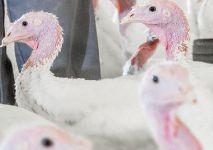
Wood and his research team found that a high efficiency genetic line of turkeys emitted less greenhouse gas per kg of turkey produced than a low efficiency genetic line. This was evident at the flock level, but was much harder to detect within individual birds.
Turkeys are genetically selected for high feed efficiency, which means they consume less feed and make better use of available nutrients while at the same time producing more meat, ultimately resulting in lower emissions.
“A lot of the greenhouse gases are created in the manure the birds produce, but if you can produce less manure, you’ll have fewer nutrients going into the litter,” Wood says. “Litter is where a lot of the greenhouse gases are produced where
bacteria will break down the nitrogen protein in the litter, which is what forms the greenhouse gases.”
“For producers, the key point here is that traditional selection for feed efficiency is working to reduce greenhouse gas emissions from turkey production”
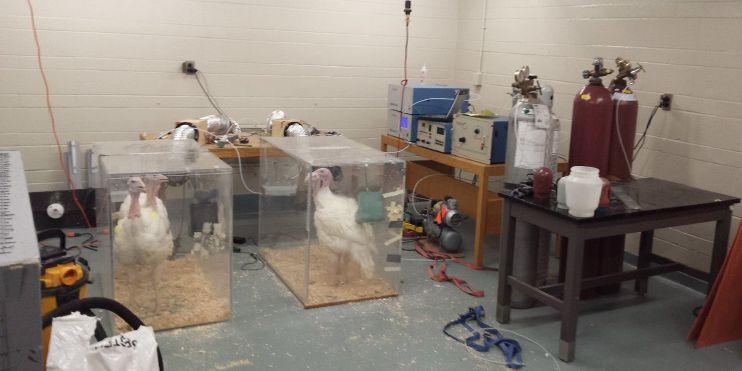
The research team, which included graduate student Clayton Gionet, tested birds from two different genetic populations (10 high efficiency and nine low efficiency birds). Birds were provided feed and water and monitored in enclosed environmental chambers with consistent environmental conditions between the two groups of birds.
Over a 28-day sampling period, emissions data for ammonia, methane and carbon dioxide were collected. Fecal analysis was also conducted, and bird weight and feed intake were monitored to establish each bird’s feed conversion ratio.
Emission estimates were calculated for ammonia, methane and carbon dioxide and showed that low efficiency birds produced these gases at 51.2 per cent, 40.1 per cent and 33.2 per cent higher levels respectively than high efficiency birds.
Ammonia and methane production, in particular, are linked to manure production. Since all birds
in the study consumed the same type of feed and lived in similar conditions, the difference in volume of manure produced can be attributed to production trait differences.
“For producers, the key point here is that traditional selection for feed efficiency is working to reduce greenhouse gas emissions from turkey production,” Wood explains. “It’s small to begin with, but it’s a great first step in helping us to understand how feed conversion ratios can both directly and indirectly impact emissions.”
With this knowledge, the industry can take other steps to mitigate greenhouse gas emissions as well, such as different ways to treat litter, for example. “A lot of work can be done on the barn level, but we will continue to select for feed conversion so we will continue to make progress in reducing greenhouse gas emissions from turkey production,” Wood adds.
This project was funded by the Canadian Poultry Research Council, Turkey Farmers of Canada and Turkey Farmers of Ontario.
For the study, high and low efficiency birds were monitored in enclosed environmental chambers with consistent conditions to compare their emissions.
PHOTO CREDIT: B. WOOD, UNIVERSITY OF GUELPH
Lilian Schaer is a freelance writer and editor and communications specialist with Agri-Food Project Services Ltd. in Guelph, Ont.
Moving beyond the Five Freedoms
New animal welfare model prompts a rethink.
By Karen Dallimore
The Five Freedoms of animal welfare outline five areas of handling and care that have guided animal husbandry since their formalization in 1979. They were first written to include: the freedom from hunger or thirst; discomfort; pain, injury or disease; the freedom to express normal behaviour; and freedom from fear or distress.
As the Five Freedoms became accepted as an industry standard welfare assessment tool for the care of all animals, they became amalgamated with provisions to provide for these needs.
The objective of being free from hunger or thirst became associated with the requirement to have ready access to a diet and water that would ensure good health and vigour, for example.
However, we now recognize that the Five Freedoms can’t be free. Negative states such as hunger or thirst or pain are essential to survival; without them you won’t eat or drink or flee.
Does this mean that the foundation of good animal welfare was actually based on something unachievable? Is it time for a new model? David Mellor thinks so.
“We research to progress,” Mellor said. “We shouldn’t be doing things
the same way we did 30 years ago.”
Mellor is a professor of applied physiology and bioethics at Massey University in New Zealand. As a guest lecturer at the University of Guelph, Mellor acknowledged that good husbandry is usually sufficient to maintain neutral welfare, but asks, is the minimalist aim of mere survival efficient, one that only seeks to minimize negative affective states? The Five Freedoms allow an animal to survive, but do they allow it to thrive?
“Originally, it’s all we had,” Mellor said. If you asked a veterinarian in the late 80s what animal welfare was, you would likely get a recital of these Five Freedoms followed by what he called the goldfish response, sort of a blank stare. Discussions about animal welfare have since become less threatening now that we have come to understand more.
A reflection of change
When the Five Freedoms were introduced, animal welfare was all about minimizing the negatives. What was the problem? What were the mechanisms of the problem? How can we manipulate those mechanisms?
By the late 90s, it was okay to measure behaviour but not okay to interpret it without being called anthropomorphic. “We’ve moved on from that,” Mellor said. At the turn of this century, the list of negative experiences was expanded but it wasn’t until 2009 that the discussions began to include positive experiences, albeit reluctantly at first, he added.
The field of animal welfare is
continually changing, said Mellor, who saw a need to modify the Five Freedoms into something he has called the Five Domains model of welfare assessment. This new approach characterizes animal welfare into key features, which can be modified and kept up-to-date as our knowledge and understanding increases.
As early as 1997, the Five Domains model was being included in recommendations for regulations regarding livestock, pets, sports animals and pest control in New Zealand. In 2012, the use of the model was expanded to include auditing of zoos and aquariums in New Zealand and Australia. It has since been used as a basis of assessment of animal welfare in court cases and proactively in the development of animal handling guidelines.
The Five Domains
The Five Domains model identifies both the positive and negative elements in each domain, distinguishing between survival-related functions in domains one through three, environmental factors in domain four and mental state in domain five. The model does not define animal welfare. Rather, it helps us think about animal welfare in a different way. Mellor describes it as an aid memoir – one that doesn’t restrict the user nor restrict ideas that may apply to different circumstances or species.
1. Nutrition
The first domain is nutrition. The original freedom acknowledged
freedom from hunger, but the new first domain asks, are we feeding the same thing over and over? Are we considering the quality of the feed? Is there a potential of salt hunger, malnutrition malaise, bloating or overeating?
These factors also bear on the mental state of the animal, as do the experience of pleasure through taste and smell, mastication and satiation. This new description incorporates minimizing thirst and hunger while further enabling the categorization of eating as a pleasurable experience. In this way, the new assessment helps you to think comprehensively, Mellor explained.
2. Environment
For the environment – domain number two – the assessment goes beyond the requirement of providing shade and shelter to include suitable air quality and resting areas and even consideration of the distress an unnatural constancy or the lack of a stimulating environment may cause.
3. Health
Domain number three addresses good health through the prevention or rapid detection of disease and injury, fostering good muscle tone, posture and cardiovascular function while at the same time minimizing pain, nausea or other adverse experiences.
4. Behaviour
Domain four defines behaviour that may involve the assessment of physical constraints or opportunities to socialize, explore, forage, rest, move freely, make choices or escape danger.
5. Mental state
Domain five recognizes the mental state of the animal. It goes beyond recognizing negative aspects such as frustration, boredom, loneliness, pain or hunger to recognizing calmness, engagement, affectionate sociability and playfulness.
Simple measures
The Five Domains model doesn’t involve a numerical scale because
Mellor’s Milestones 1966
Graduated from Australia’s New England University with a BSc (Hons)
Completed his PhD with Edinburgh University
Became the founding director of the Animal Welfare Science and Bioethics Centre at Massey University in New Zealand
Appointed chairman of the National Animal Welfare Advisory Committee
Made an honorary associate of the Royal College of Veterinary Surgeons
Appointed an officer of the New Zealand Order of Merit
Awarded the prestigious Universities Federation for Animal Welfare Medal for Outstanding Contributions to Animal Welfare Science 2016 Honoured with the Global Health and Pharma Animal Welfare Award –Best Animal Welfare Academic, New Zealand
David Mellor, a professor of applied physiology and bioethics at Massey University in New Zealand, led the development and subsequent refinement of the the Five Domains model of animal welfare. He was a recent guest lecturer at the University of Guelph.
scoring implies a precision that we can’t achieve. Instead, parameters can be measured on a subjective scale that can be as simple as okay or bad, or a range of values in between as needed. We all have the capacity to pick out animals that are okay or bad, Mellor said. It’s not necessary to measure objectively to manage practically.
It is necessary, however, to have an experienced handler conduct the evaluation. Does a snake smile when it’s happy? Of course not, but how then does a snake show happiness? Only a person versed in normal snake behaviour can make that call.
How does a farmer know if a chicken is happy? Don’t start by telling the farmer about the Five Domains or you’ll see their eyes glaze over, Mellor said. Instead, alert them to the possibilities for positive
behaviours and start looking.
Sometimes we can become habituated to states that are considered happy when there may be more that can be done. What opportunities have been provided for an animal’s comfort, pleasure, confidence, choice and challenge? How will expressions of normal behaviour be encouraged and harmless wants met?
Mellor isn’t talking about putting animals in nirvana-like bliss, but replacing negative or neutral states with positive ones. Using the Five Domains as a guideline stimulates people to look at different species from mammals, birds and spiders to reptiles and fish, and to think comprehensively basing prescriptions on scientifically supported good judgment.
EGG SIGNALS: A PRACTICAL GUIDE TO IMPROVING EGG QUALITY
Optimising egg quality is one of the most important points in the entire poultry chain. You can certainly influence an egg’s quality before the hen lays it, but it is critical to take steps to maintain egg quantity after laying as well. Successful professionals know how to manage egg quality, keep it under control, and make decisions based on their production and their flock.
That involves an eye for detail. Egg Signals shows you how to develop and train that ‘eye’.
In addition, Egg Signals provides answers to questions such as these: How are eggs with optimal quality created? What type of hen lays them? How do you prevent abnormalities? How do you add value? Even the position of a crack, for example, can tell you a lot about the cause.
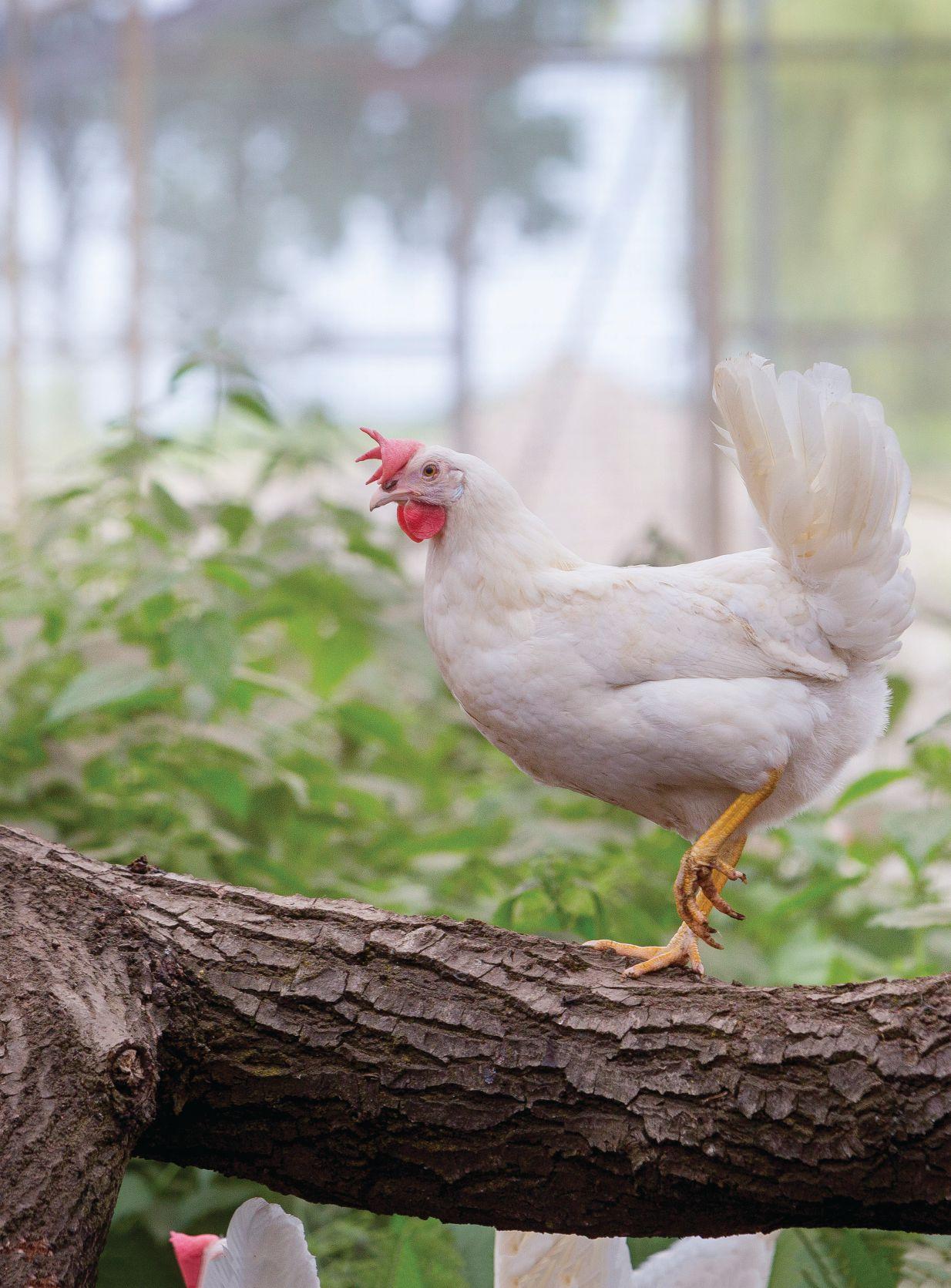
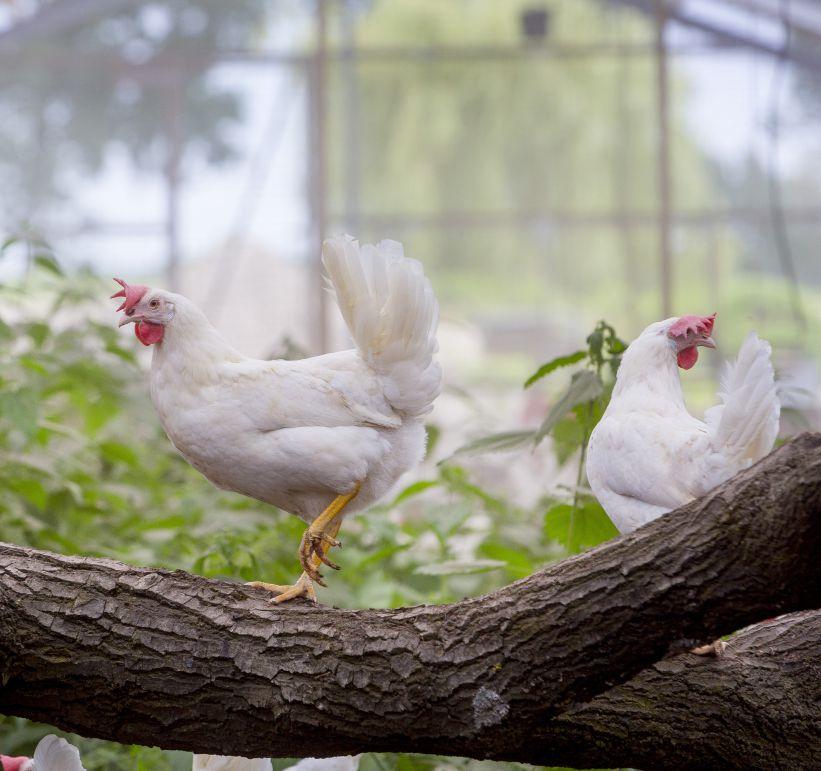
Much of Mellor’s work is focused on ensuring animals are thriving, not just surviving. For poultry, this could include adding enrichments like perches, which Perdue has done as part of an animal welfare study.
New build or retrofit?
It’s a complex question egg farmers must answer as they shift away from conventional housing.
By Treena Hein
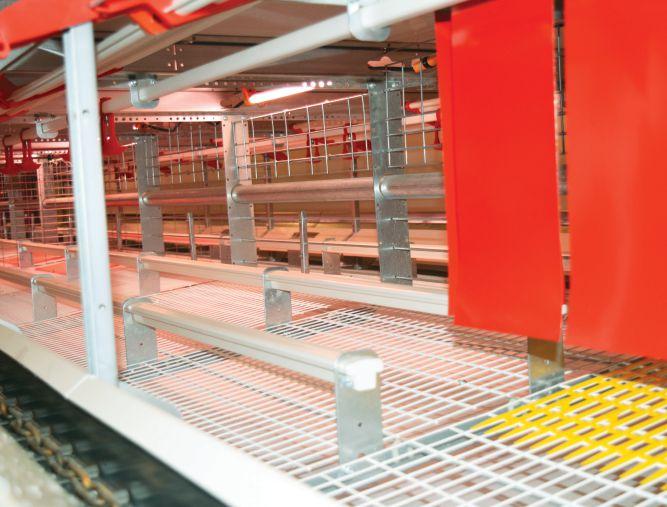
As the Canadian egg industry phases out conventional cages, most farmers will decide to install free-run or enriched cage housing. For its part, poultry housing maker Big Dutchman is presently seeing a 50/50 split on its Canadian sales of the two housing types, but sales lead Ron Wardrop says he’s recently seeing a little more interest from producers in enriched cages.
Whatever type of housing farmers choose, they also must decide whether to do a complete teardown and build a new barn or retrofit an existing barn. Housing and equipment is the capital cost in egg production, notes Big Dutchman aviary specialist Bill Snow.
Operational costs include ongoing maintenance, feed, heating and electricity, rearing, labour and vaccination.
What you spend and how you spend on your building and housing system will affect your operational costs, Snow says, and careful decision-making upfront will minimize long-term costs in terms of not only money but bird welfare and performance down the road.
FACTORS TO CONSIDER
While it’s not always possible, Snow observes that new construction is ideal because you can design a building to the exact size required. “The exact size takes
everything into account – aisle widths, bird numbers, ventilation, lighting and design for management and bird movement,” he explains. “With a new build, you also have the exact height of the building needed for the equipment you’ve chosen and proper spacing for everything. Fan placement and air inlets are where they need to be, and everything is planned for the bird number you have. You are not having to sacrifice.”
Simply put, sacrifices in the placement of lighting and ventilation obviously present risks to layer performance. That is,
if the placement of lights and ventilation and heating ducts is not uniform, birds will group around what they perceive as the only resources that are available to them (whereas they will not group if resources are uniformly spaced).
Grouping due to perceived scarcity of food, water and roost space at night creates a competitive mindset in the birds, often resulting in higher levels of aggression, stress, injury and mortality. “The point is that if a farmer doesn’t ensure that equipment is placed properly, the whole
Cindy Huitema and her husband Nick tore down an old pig barn and are using its foundation to build a new layer barn with enriched cages. They estimate this approach will save them about $70,000.
At
YOUR SUCCESS IS OUR SUCCESS
environment won’t be one that’s best for hen welfare,” Snow explains. “We must have that good environment for hens to feel comfortable laying their eggs and to ensure those eggs are not subject to cracking and other quality issues.”
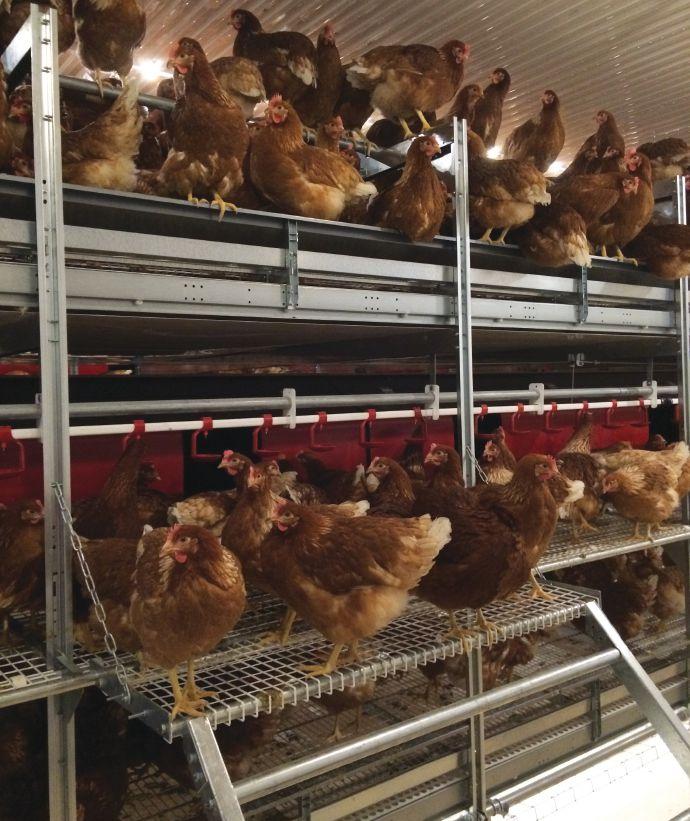
He notes that with enriched colony housing, you have more control over the environment (lighting and temperature in particular) and are, therefore, better able to provide an optimized laying environment for hens. However, maintenance is higher than with free-run housing. On the other hand, cage-free systems require a bigger building footprint.
Retrofits of an existing building are easier for enriched systems versus cage-free, but Snow again stresses that you need the correct ventilation and lighting layouts either way. “I guess it really depends on what lengths you are willing to go to in the retrofitting,” he reflects. “If you have a solid barn, it can still be used. You just need to make sure that you are not driven in your decision by bird numbers – that you are not fitting a system into an existing house to get a desired bird number. While this can work, you need to make sure you are fully informed about how any sacrifice can affect your barn’s performance and, therefore, your hens’ performance.”
He believes a retrofit can work very well for a cagefree flock as long as the new housing system ensures good flock movement and enables daily management that can be performed at a high level with ease. He reiterates that, in the end, it’s all about hen welfare and supporting the hens to lay.
“Many houses are in great shape and are working very well right now for farmers,” Snow notes. “Farmers really need to understand how each variable or element of cage-free or enriched affects performance and hen welfare. It is not just simply fitting a new system into an existing house, achieving bird numbers and getting desired results. Enriched is an easier environment to control, but management, ventilation, lighting, flock size and aisle widths are factors that will change performance and must be examined and understood.”
Al Dam, poultry specialist with the Ontario Ministry of Agriculture, Food and Rural Affairs, agrees. “You can try to make an aviary out of a cage barn,” he concludes, “but you may be better off getting a new building if there are too many limitations with what you have now, such as ventilation, feed, water, building footprint, heating and so on.”
PRODUCER DECISION
Cindy and Nick Huitema, who farm 9,000 layers near Dunnville, Ont., are currently building a new barn for 12,000 layers. It’s a new build with a touch of retrofit tossed in – they’ve torn down an old pig barn and are
using its foundation for the new barn, with the foundation extended at the front with new cement. Nick believes using the existing foundation will save them about $70,000 over having to start from scratch.
In terms of their decision-making process, Cindy notes that going to the poultry show in London,Ont. was very useful in that it allowed her and her husband to see all the different housing types in one place. “Touring barns and going to open houses is also very important,” she says. “You can talk to the farmer and industry people and ask questions.”
The Huitemas chose an enriched colony system from Clark Ag Systems and used a consultant there who had a lot of experience. One thing that stand outs for Cindy about the entire process is the need to make sure the barn’s packing room and cooler are spacious and well-lit, as a lot of time will be spent there over the years and it should be comfortable.
Snow doesn’t know if there is any financial difference in a tear-down/new build versus a retrofit, but certainly factors such as the capabilities and expertise of your contractor, the size of the buildings and the current condition of the building will play a role in what costs turn out to be. “I think a tear-down and rebuild might be faster, but that’s just a thought,” he adds.
Custom fit
Experts say new construction is often ideal because you can design a building to your exact requirements.
“What matters is, as I’ve said, don’t sacrifice with what you’re putting in. If you can retrofit and not sacrifice in terms of providing the right conditions for good bird welfare and performance and also to have an environment that people will want to work in, then do it. You are paying for the building one time but if you don’t do it right, you will be paying for it in other ways for a long time to come.”
In deciding to re-build or retrofit, farmers should work with at least one consultant who will visit, do research and then discuss the winning scenario. “It’s a big decision, but once the research is all done,” says Snow, “the best option should become clear.”
The Huitemas are installing the ECO II enriched housing system from Clark Ag Systems. Experts say retrofitting older barns is usually simpler with furnished cages than it is with cage-free systems.
Sharing solutions
How L.H Gray & Son is addressing respiratoryorigin E. coli issues in laying hens.
By Treena Hein
There are some types of E. coli (known as avian pathogenic E. coli [APEC]) that can cause serious or fatal colibacillosis infection in chickens. Many factors predispose birds to the infections. Poultry scientist Leanne Cooley, technical service lead for L.H. Gray & Son, has been collaborating for several years with Greg Brown of Archer’s Hatchery and Merck poultry veterinarian Dr. Elise Myers to investigate patterns of persistent mortality or periodic mortality spikes observed throughout the lay cycle at some Canadian egg farms. Colibacillosis, mostly caught through respiratory infection, was pinpointed as the leading cause of death.
“Part of the difficulty in identifying the relationship between respiratory challenge, immune competence and APEC mortality at problem farms was the variety of clinical observations and presentations we were observing, and it has taken several years of investigation and data collection for some of the patterns to emerge,” Cooley explains. The greatest frequency of issues was observed in brown leghorn strains in cage-free (free-run) barns of both aviary style (with litter) and those with slatted floors (with and without scratch areas). Incidences in enriched colony and traditional cage housing were also observed.
To investigate, Cooley and her colleagues conducted detailed post-mortems and extensive blood serology in pullets and layers, and when possible, did E. coli serotyping. They tracked illness and death patterns in relation to vaccination, flock changeovers
In some aviary designs, water is only available on particular elevated terraces or tiers of the system and often not located close to feeders. Producers should keep this in mind with water vaccinations.
and seasonality as it pertained to ventilation rates and air quality.
“In addition to infectious bronchitis (IBV) and Newcastle disease (NCD), we also began to measure Infectious Bursal Virus (IBD) titres in response to pullet vaccinations for this disease,” she notes. “IBD titre monitoring is not commonly conducted in laying hens, but I believe that it is important because while IBD can be sub-clinical, an injured/damaged bursa leads to immune suppression, which
increases the risk of APEC infection.”
The blood work often showed many birds with little to no IBV vaccine titre response after live virus vaccinations. These ‘missed birds’ were now more susceptible to field challenge with IBV, which paralyzes the respiration system’s protective mucous and tiny hairs (cilia) that catch and clear dust particles from the lungs.
“When this mechanism is impaired, dust particles that can be bound to bacteria like APEC are retained within the
PHOTO: LEANNE COOLEY
respiratory tract, and from there APEC can penetrate the bloodstream to cause infection. High levels of aerosol dust alone can also overwhelm this protective mechanism.”
PROGRAM ALTERATIONS
The team tried many alterations to vaccination programs, from changing the number of applications during the pullet-rearing period, comparing water and spray applications and much more. “We became increasingly aware of the fragility of IBV live virus,” says Cooley. “It was becoming obvious that it’s easy to inactivate the live virus in the vaccine during water and spray applications.”
Cooley says that work by Netherlands scientist J.J. de Wit and his colleagues helped direct her team in identifying factors that lead to successful live IBV vaccination. They found that if administering live IBV vaccine at one day of age, it is important to wait at least 13 days before spray vaccinating again for optimum immune response. They also found application to be less effective in larger flocks, and that turning off ventilation during spray vaccination increased immune response
Cooley advises that, when possible, leave fans turned off for 15 to 20 mins after vaccination and also ensure you are using the correct aerosol droplet size. De Wit also found that use of some light during vaccination increased immune response by 41 per cent because applicators can better see where and how much they are applying, and because it promotes birds to open their eyes, which allows the vaccine to make contact with the mucous tissue.
Cooley notes that live IBV virus is very fragile and that warmer water will inactivate the vaccine. She advises using water of 6°C to 8°C (employ frozen blocks of distilled water and stabilizer in your bulk tank as needed) and to always use
vaccine stabilizer and neutral pH water. She notes that farmers need to be confident that vaccine was always handled and stored properly. She adds, “No medication, vitamin or cleaner should ever be used in your sprayer or bulk tank, and it should never have contained chlorine, peroxide, acid or other chemicals. Use only hot water with vaccine stabilizer to clean bulk tanks and sprayers. Flush waterlines with clean, untreated water 24 to 48 hours prior to administering vaccine and again immediately prior to be -
vaccination and more. Some additives also reduce E.coli shedding.
WATER VACCINATION TIPS
With water vaccination in alternative housing, Cooley says a common misconception is that all birds drink as soon as the lights turn on or following water deprivation. “Many birds immediatelyhop out to the litter areas as lights come on. They may spend some time in the litter prior to returning to the aviary to eat and drink. If the volume of water used to administer the vaccine is
“ An improvement in flock livability, egg production and percentage of Grade A eggs has generally accompanied these efforts”
ginning a water vaccination.” In-line water medicators are generally not recommended for administration. Cooley, in some types of cage-free housing, has used two persons spraying simultaneously in opposite directions. “This is a technique that takes practice to identify the best approach based on the housing system design and age of the birds at time of vaccination,” she notes. Culling unhealthy birds (or waiting if there is a flock health issue) is wise, as immune-suppressed birds will not respond properly to a vaccination with a live virus, and may also become reservoirs for virus mutations. Cooley also advises talking to your poultry nutritionist or veterinarian about increasing any nutrient levels in the hens’ feed or water at times of vaccination. She says there are also some interesting ‘immune modulator’ feed additives available in Canada that are supported by research to reduce inflammatory response, increase antibody titres in response to
consumed too quickly, some birds may miss receiving any vaccine.”
Water-line layout is also a factor in aviaries. “In some designs, the water is only available on particular elevated terraces or tiers of the system and often not located close to feeders,” Cooley says. “If a bird doesn’t transit to a waterline quickly enough during a water vaccination because she’s remaining on a different tier, then she can be missed. Farmers need to closely consider these factors of their housing system when determining how much water volume to use for a vaccination, and the time duration that water containing vaccine is administered to the flock.” This may necessitate switching between two bulk tanks.
“E. coli vaccine and management efforts to reduce aerosol dust have led to a progressive reduction in colibacillosis mortality,” she notes. “An improvement in flock livability, egg production and percentage of Grade A eggs has generally accompanied these efforts.”
Pattie Ganske, Agvocate Former Owner, Ag Retail
Reovirus hits Ontario
Experts weigh in on the recent outbreak.
By Karen Dallimore
The chicks started showing signs of reovirus at 10 days of age – some lameness, some culls for leg issues and a lot of general lethargy. By 12 days old the birds were becoming significantly worse with 40 to 60 per cent displaying lameness or gait issues. Feed and water consumption was dropping; lethargy was more apparent.
By day 15, feed and water consumption had dropped dramatically. The birds no longer wanted to get up to eat or drink. Runting and stunting was obvious. On day 18 the attending veterinarian decided to depopulate 12,500 birds, a process that was carried out on day 20. By that time most of the birds weighed less than 1.25 kg.
This was the timeline for the first of three Ontario flocks that had to be destroyed due to reovirus, as recounted by Cargill’s Chanelle Taylor. In a webinar hosted by the Poultry Industry Council, the veterinarian reported that two more farms
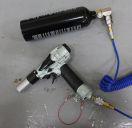
were depopulated during this recent outbreak in August 2017, one with 10,000 birds and another with 30,000 birds, using either CO 2 gas stunning or the Zephyr captive bolt dispatch tool.
This recent outbreak of reovirus affected roughly 500,000 Ontario birds over a five-week period, Taylor said. Ten flocks shipped early with mortality ranging from 10 to 30 per cent; by day 14, producers were culling upwards of 200 birds every day in almost all of the affected flocks. Those flocks that did ship had between 500 to 4,000 birds left behind to euthanize after catching due to lameness and runting.
The effects of reovirus
Reovirus is a viral arthritis that causes an inflammation of the leg joints. The disease can be vertically transmitted – from hen to chick – with no signs seen in the broiler hen. It can also be horizontally transmitted from chick-to-chick in the barn after
placement. There is, unfortunately, no treatment for this disease.
Clinical signs can be seen as early as 10 days of age, presenting as tendon swelling, gait abnormalities and lameness, splayed legs, wing walking, lethargy, decreased food and water consumption and non-uniformity of growth. Mortality is usually low from the disease itself, usually through culling for leg issues.
The struggle is to get the birds to market weight for processing, Taylor said. Many birds couldn’t get to feed and water because of lameness. Lame birds would sit in the feeders, blocking or intimidating the others from eating. Some flocks intended for a larger weight category were able to make arrangements for early shipment at the minimum processing size of 1.8 kg.
Birds from the affected flocks tested positive for avian reovirus type variant D, an abnormal strain from what we usually see in Ontario and different from vaccination strains as well.
This recent outbreak of reovirus affected roughly 500,000 Ontario birds over a five-week period.
I
– MerelV., Salmon Arm, British Columbia
Viral evolution
This evolution of viral strains is posing a challenge to combatting the disease, said Dr. Jack Rosenberger, who joined the PIC webinar from his office in Newark, Delaware. His company, Aviserve LLC, provides laboratory and consulting services for the poultry industry. Rosenberger reported the isolation of reovirus in broilers and broiler breeder pullets from 16 states.
Viral arthritis is widespread in North America, Rosenberger said, and reovirus variants continue to evolve. Prior to 2011, there was only one serotype known as S1133. From 2011 through 2014, the variant chicken viruses could be grouped into three major serotypes. In 2014, more variant reoviruses were isolated and characterized, bringing the number of serotypes recognized to at least five, with many subtypes and pathotypes (degrees of virulence).
This lies at the root of the issue surrounding available vaccines, since conventional licensed reovirus vaccines don’t generally protect against variant reoviruses. While young birds under two weeks of age are most susceptible to the virus, older birds can be readily infected and transmit the virus without developing viral arthritis. Rosenberger referred to this as “age associated resistance”.
Dealing with the disease
Maple Leaf Foods veterinarian Dr. Kathleen Long suggested that dealing with a flock infected with reovirus depends on the severity of the disease. Euthanizing affected birds is best done early, Long said, and where possible the processing date may be adjusted to compensate for poor growth. Unfortunately, there is little flexibility in processing schedules.
If a large proportion of the birds is affected it may be necessary to euthanize the entire flock. This would be a joint decision among the vet, producer, hatchery and processor based on bird welfare.
Once that decision has been made the challenge then becomes a lack of equipment and trained personnel to perform the depopulation. Ontario farmers are currently
A Zephyr captive bolt dispatch
was one tool used to depopulate farms during the recent reovirus outbreak in Ontario.
relying on the Egg Farmers of Canada to support mass depopulation with their CO2 gassing equipment. Long said the industry is currently discussing a unified approach on this issue among the feather boards.
“Proper biosecurity is very important,” Long emphasized. Reoviruses are extremely hardy. Once the flock has left the barn, it is necessary to remove contaminated material and use a disinfectant that is labeled for reovirus. Combination products containing quaternary ammonium compounds plus aldehyde are best; Virkon and three per cent formalin are not considered to be effective. Long stressed the need for biosecurity between infected barns and other barns, advising to not spread used litter near other poultry barns. Both shower and change after working with an infected flock or service infected flocks at the end of the day; remove dead birds promptly and remove litter away from other flocks.
What about vaccines?
In Ontario, Long reported that all broiler breeders receive multiple commercial live vaccines and two inactivated commercial reovirus vaccinations. A small percentage of broilers receive a commercial live vaccine. These reovirus vaccines are very effective against the viral strains they contain. That said, since 2012 numerous variants have emerged for which there is no vaccine.
Many companies are using autogenous vaccines to control the variants, which the dictionary defines as “a vaccine prepared from cultures of microorganisms obtained from an individual and then used to immunize that same individual against further spread and progress of the same microorganisms.” Going forward, Long says that autogenous vaccines are not being used in Ontario because the issue has not yet been clearly demonstrated in domestic broiler breeders. At present, the source of infection has been focused on U.S. sources.
“We are preparing by characterizing isolates so that, if an autogenous vaccine becomes necessary, we can move quickly”
“We are preparing by characterizing isolates so that, if an autogenous vaccine becomes necessary, we can move quickly,” Long said. However, autogenous vaccines are not a “magic bullet” – they can drive the emergence of new mutations. Live vaccines are not recommended because there is some evidence that commercial live vaccine can worsen the response of birds to the disease.
Long recommends focusing on surveillance for clinical cases of the disease with PCR testing and genotyping where reovirus is suspected.
Meanwhile, the Industry Broiler Health (IBH) Working Group, led by Maple Lodge Farms veterinarian Rachel Ouckama, has outlined a focused reovirus project. It will include a financial impact study, enhanced surveillance, a communication plan and a comprehensive evaluation of the suitability of autogenous vaccine development.
Strong out of the gate
Brooding best practices and common pitfalls for broiler chicks and turkey poults. By Treena
Hein
In livestock farming – or really, in any complex endeavour – a good start is critical. With raising broilers, deficiencies in starting care have often been overlooked in years past for several reasons, according to Dr. Stewart Ritchie, a poultry veterinarian and owner of Canadian Poultry Consultants and S. J. Ritchie Research Farms Ltd. in Abbotsford, B.C. He notes that while advances in broiler genetics, automated management, precision nutrition and more have resulted in continuous and significant improvements in production efficiencies, the specific requirements of chicks are still numerous, and the negative impacts associated with deficiencies in brooding care are significant. “The genetic potential of modern poultry cannot be achieved,” he says, “without strict attention to brooding.”
Deficiencies in brood management, in Ritchie’s view, can be a barrier to achieving everything from body weight targets, feed utilization and flock health to flock
uniformity, meat yield and reducing the incidence and severity of disease. “Brooding is so critical,” Ritchie explains, “that detailed brooding programs have been developed and we developed our own program called Platinum Brooding that we started offering to our clients as a class in early 2001. It is focused on the establishment of accurate measurements and the thorough, accurate and precise completion of a checklist, and a constant review of progress through the use of the platinum brooding app and dashboard reports. It is a very disciplined approach that works.”
Over the last 16 years, the Platinum Brooding class evolved into a formal education program, and includes presenting experts from companies and institutions such as Phibro Animal Health, Aviagen North America, IDEXX, CEVA, Royal DSM, Big Dutchman and others. Courses and presentations are held at various locations across North America (recently in Cambridge, Ont. and the Annapolis Valley in Nova Scotia) and throughout
Australia. Indeed, the BC Chicken Marketing Board and the BC Broiler Hatching Egg Commission have mandated completion of the program as a new grower entry requirement. It is also part of the Aviagen International Production School in Alabama (past nine years), and part of courses/ programs at the University of Georgia and the University of Arkansas.
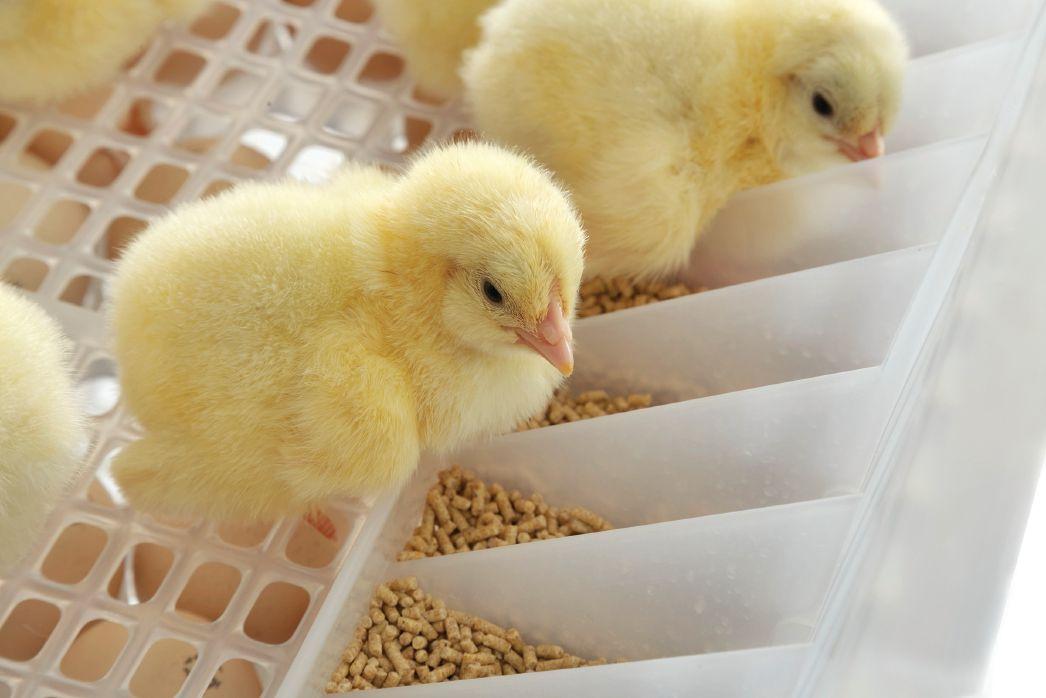
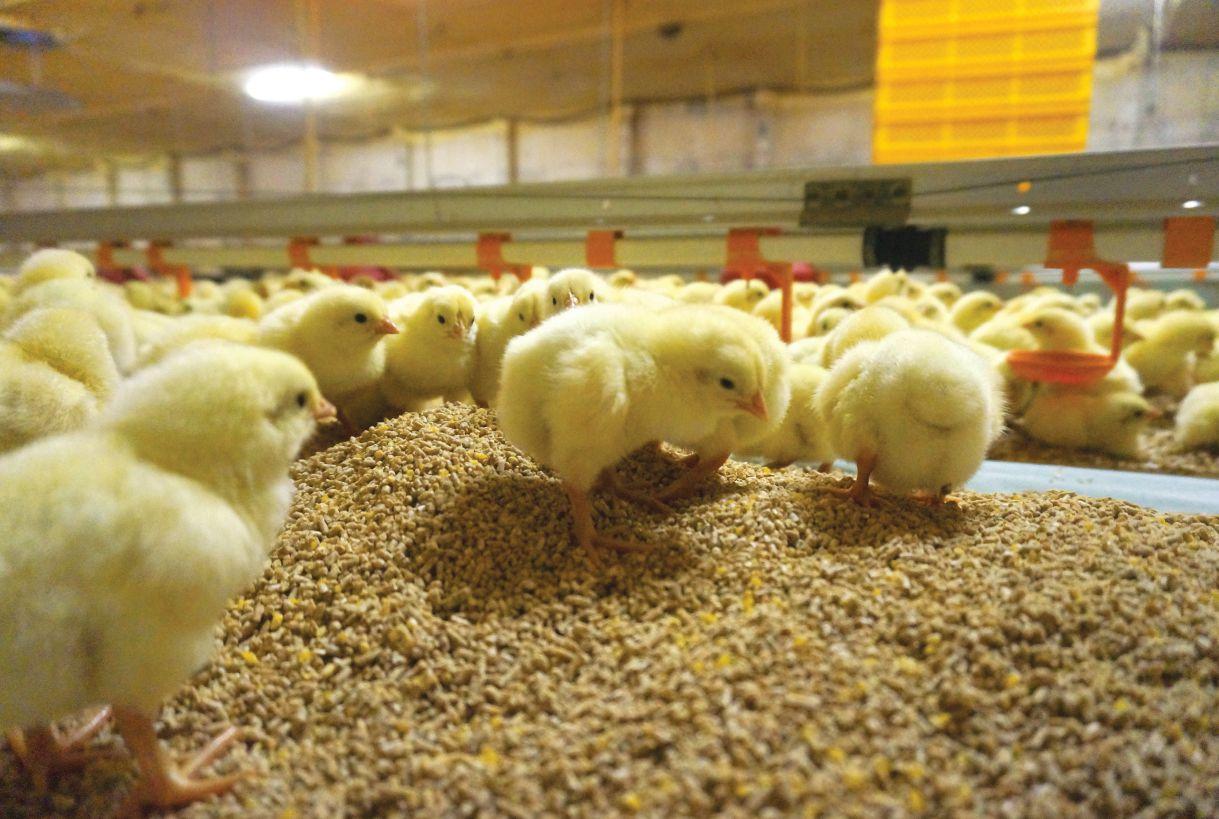
With regard to good brooding, Ritchie notes that factors in place before chick delivery (downtime, cleaning water lines, pre-warming of barn, correct layout of heaters, feeders and drinkers) and after chick delivery are both critical for success. “There should be a focus before and after chick arrival in measuring moisture, temperature and other metrics to achieve a comfort zone,” he explains. “We want good early feed uptake in the first 24 hours, and the establishment of steady state eating patterns. The digestive tract of a chick is very short and anything that disrupts eating patterns is a problem. Many of these management metrics are critical as well for
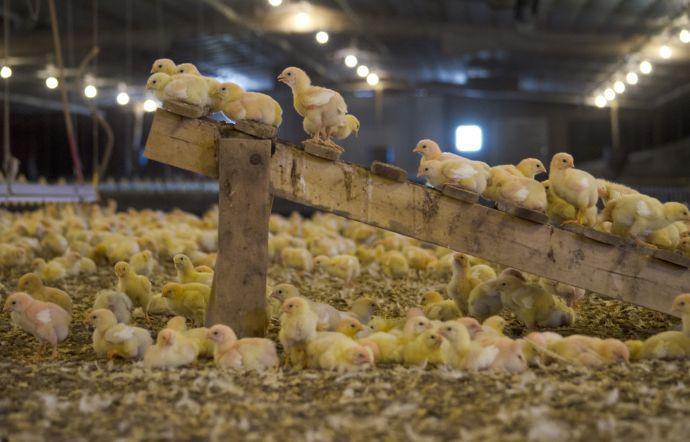
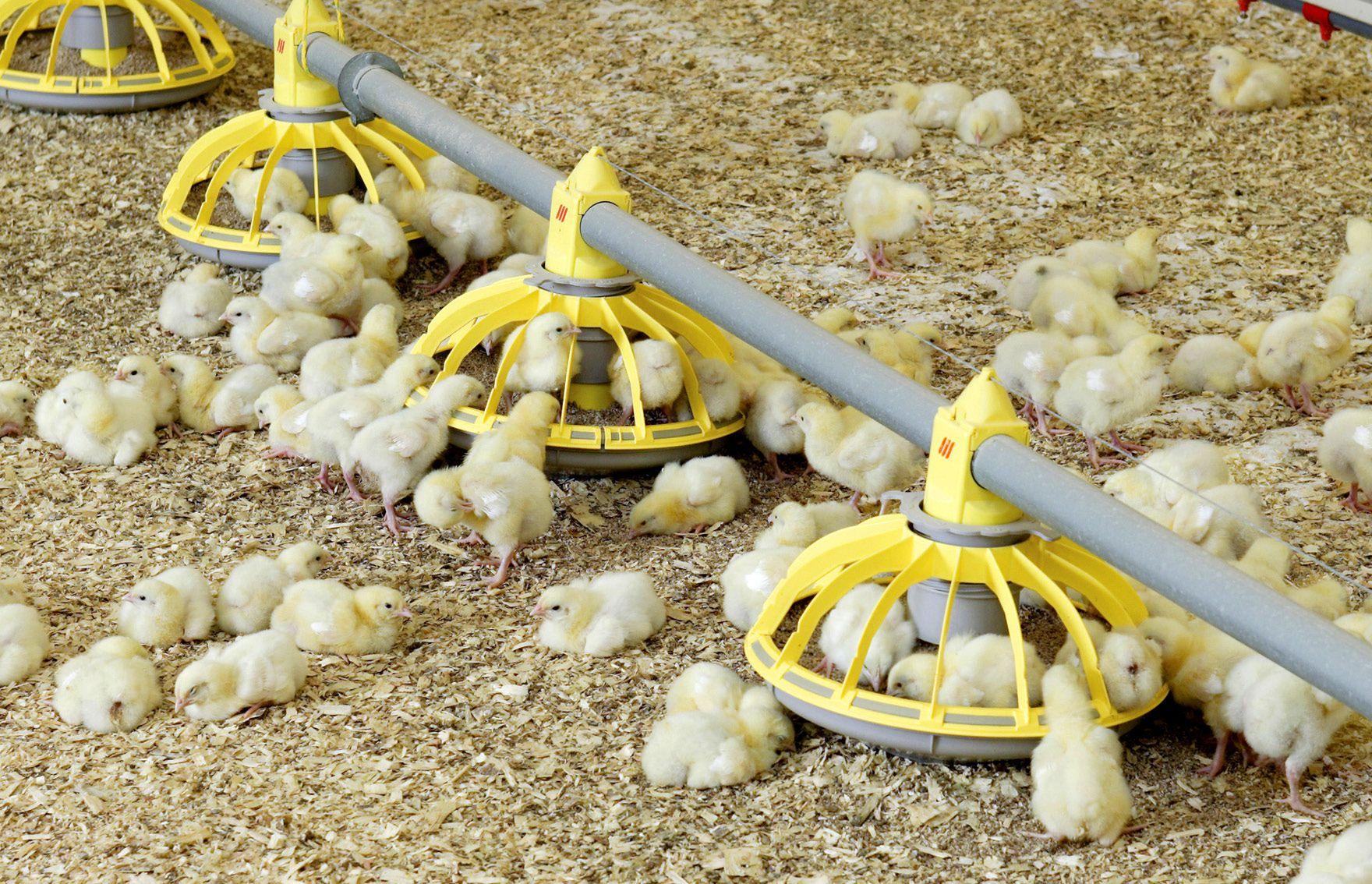
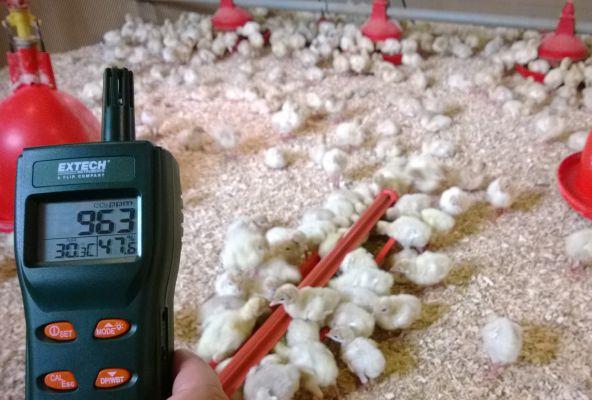
At the very start, the closer you monitor your chicks the better.
the prevention of coccidiosis.”
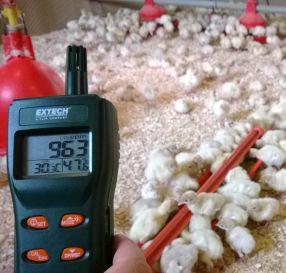
At the very start, Ritchie advises that chicks be watched very closely – the more the better. “I find that producers are doing a much better job of monitoring CO 2 levels, especially in the winter, and in general, chicks are being watched well to avoid chilling and overheating,” he notes. “Do your measurements and make sure they are on target and make sure you are double-checking your readings and that your instruments are working correctly.”
The new broiler genetics are so good, he concludes, that farmers must now look after their birds like never before. “With using less or no antibiotics, management is now more important as well,” he says. “I think producers are doing very well. We have learned a lot from successful turkey, leghorn and broiler-breeder brooding programs. It’s a huge topic and we have all come a long way. Nothing is broken – we just have a lot of fine-tuning to do. I find producers are open to trying things, are very enthused and are very responsive to instruction.”
Broiler brooding basics
Before chick delivery: Ensure proper downtime has been respected, water lines are pristine, barn has been pre-warmed and layout of heaters, feeders and drinkers is optimized
After chick delivery: Close monitoring and promotion of good early feed uptake in the first 24 hours is critical to establish steady state eating patterns.
Before and after chick arrival: The Platinum Brooding program promotes the establishment of accurate measurements and the thorough, accurate and precise completion of a checklist (in measuring moisture, temperature and other metrics to achieve a comfort zone). It also encourages a constant review of progress through the use of the app and dashboard reports.
Turkeys
Excellent turkey poult care – and long-term performance success – also relates to conditions that should be in place both before and after poult delivery. According to William Alexander, all the factors of importance before poult arrival (adequate downtime, clean water lines, pre-warming, correct layout of heaters, feeders and drinkers) are equally important. “I would say that at this time of year, it’s particularly important to pre-heat the brooder house,” explains the technical service representative with Kitchener, Ont.-based Hybrid Turkeys.
“During the first days of life, a poult’s thermoregulatory system is not yet fully developed, so it depends heavily on the environment to maintain its body temperature.” Alexander strongly advises checking the temperature of the floor, not just the air, prior to poult
arrival. “By doing this, you will get a clear indication of what the poults will feel, rather than what you feel,” he explains. “A water sanitation program is also important, and begins with clean water lines before the poults enter the farm.”
“The genetic potential of modern poultry cannot be achieved without strict attention to brooding”
After poult delivery, ventilation is one of the most complex areas to manage, according to Alexander. “There are many variable factors on each barn, including number of fans, number of heaters, type of heaters, number of inlets and number of birds,” he explains. “All these factors can impact the air quality. The first step towards excellent air quality is to begin monitoring things like gases and humidity, in addition to temperature. Once you know the conditions you are dealing with, then you can begin looking into what may be causing them to be outside the recommended levels, and then you can seek to resolve and improve those areas.” He’s found that providing optimal air quality not only protects flock health, but can also save growers money in heating costs.
As far as evaluating the comfort level of poults, there are several ways to do it and these are generally categorized into direct and indirect observations. “Indirect observation means you watch the bird’s behaviour,” Alexander explains. “This is a useful method if you have a clear understanding of what is good versus undesirable behaviour – huddling versus spread out or noisy versus quiet, for example. Another indirect evaluation is to check that the crop of the bird is almost full the morning after placement. This shows that they are eating. Poults will only seek out food when they are at the right temperature and comfort level. This understanding of poult behaviour differences comes with time and experience.”
However, indirect observations are not definitive.
Monitor and adjust air quality not only to protect flock health but to also save money on heating costs.
Alexander believes the only way to be sure how poults are doing is through measuring vent temperatures. Indeed, he recommends it as a best practice for all growers to be used during the brooding phase regardless of whether there are any perceived problems. However, he notes that training is required to both achieve a proper measurement technique and ensure no harm or discomfort is felt by the poult.
Alexander thinks most turkey producers understand the importance of these recommendations, but acknowledges that paying attention to things like water sanitation, humidity and gases are newer developments in poultry production. In the past, he says, turkey farmers tended to use medication if there was a problem, but as producers aim to lessen or eliminate the use of medication, they must focus on using proactive management techniques.
In his view, a proper environment will result in comfortable birds with a desirable internal temperature, birds that will naturally seek out food and water. As with broiler chicks, getting them eating well is critical for long-term health and excellent performance. Alexander concludes that there is no one magic brooding solution that can be applied to all farms, but that “success depends on hard work and dedication to all the little details before, during and after poult placement.”
Poult brooding basics
Before poult delivery: Ensure proper downtime has been respected, water lines are pristine, barn has been prewarmed and layout of heaters, feeders and drinkers is optimized. Also, check the air temperature at floor level to ensure the proper temperature is being achieved.
After poult delivery: Closely monitor gas, temperature and humidity levels. Ensure poults are eating by maintaining ideal environmental conditions, observing overall behaviour, checking the crop and checking vent temperatures.
Emerging alt-protein trends
Updates on factorygrown and plant-based ‘meat’ and ‘egg’ products.
By Treena Hein
There is hardly a month that goes by without a new story on cultured meat or plant-based products that look, smell, cook and taste just like meat. Commercialization of both types of foods is moving forward. This progress is spurred by increasing consumer concerns about conventional livestock agriculture – issues related to animal welfare, human starvation and protein deficiencies in many regions, the massive amounts of resources used to support it and risks to human health related to meat and egg products.
On the cultured meat front, 2017 was the second year for a global conference called New Harvest. The event is dedicated to cellular agriculture, the production of agricultural products from cell cultures that are exactly the same as products harvested from an animal or a plant. The meeting was held in mid-October in San Francisco, Calif., organized by a non-profit organization called New Harvest.
It states that “compared to their conventional counterparts, cellular agriculture products have fewer environmental impacts, a safer, purer product and a more consistent supply. This is because the product is being produced in safe, sterile, controlled conditions. Another exciting aspect of cellular agriculture is the ability to design and tune what you are making. For instance, you could make milk without lactose or eggs without cholesterol.”
The company’s communications director Erin Kim says its early activities include launching start-ups Perfect Day Foods (cellular production of milk proteins) and Clara Foods (egg white proteins) in 2014.
“Since then,” Kim says, “the organization has pivoted its focus towards cultured meat via its research fellowship program, which provides grants for open academic research, as well as [our] annual conference.”
MEAT, THE MEMPHIS MEATS WAY
Among the planet’s largest cellular ag firms is Memphis Meats based in San Francisco,
Calif. It has attracted investment from the likes of Bill Gates and Richard Branson. It’s also received support from Cargill and multiple research institutions.
In early 2016, the firm produced the world’s first meatball made from cultured beef cells, and in March 2017, it achieved chicken and duck meat production from poultry cells. “It is thrilling to introduce the first chicken and duck that didn’t require raising animals,” Dr. Uma Valeti, cofounder and CEO, said in a press release. “Chicken and duck are at the center of the table in so many cultures around the world,
In March 2017, Memphis Meats achieved chicken and duck meat production from poultry cells. The company is targeting 2021 for commercial launch.
but the way conventional poultry is raised creates huge problems for the environment, animal welfare and human health.
“It is also inefficient. We aim to produce meat in a better way, so that it is delicious, affordable and sustainable. We really believe this is a significant technological leap for humanity, and an incredible business opportunity – to transform a giant global industry while contributing to solving some of the most urgent sustainability issues of our time.”
The company points out that chicken is the most popular protein in America. In addition, China consumes more than six billion pounds of duck meat every year –more than the rest of the world combined. “Our meat is the same product that humans have enjoyed for millennia,” Memphis Meats states.
“Our process is very different. We start by harvesting meat cells from the highest
quality livestock. Then, we identify cells that are capable of self-renewal. We’ve learned which cells give us the flavour, textures and aromas we want. We grow those cells into meat in a clean, safe and nutritious environment. After four to six weeks, depending on the cut, we harvest the meat, cook it and enjoy it.”
Memphis Meats says its unique platform will enable it to accelerate innovation, produce many types of cultured meat, finetune the taste, texture and nutrition profile of its products, scale up production and reduce costs. The company is targeting 2021 for the commercial launch of its products.
For its part, Cargill has invested in Memphis Meats as a way to explore new opportunities. “We know that global demand for protein will continue to grow in the coming years,” says Sonya Roberts, Cargill Protein president of growth ventures and strategic
pricing. “And while cultured protein consumption is very limited today in comparison to traditional animal protein, this is a growing trend that could potentially be a part of this greater picture to feed nine billion people by 2050.”
Roberts notes, however, that more than 90 per cent of the world still eats meat and as demand for it continues to rise, Cargill is firmly committed to growth in traditional animal protein. While her firm has not invested in other cultured meat ventures, Roberts says, “We will continue to monitor…trends in this space and will evaluate additional opportunities as they arise.”
PLANT-BASED ‘MEAT’
Bill Gates, along with Google Ventures and other investors, is also supporting the commercialization of plant-based ‘meat’ products. The leader in this sector, Silicon Valley-based Impossible Foods, introduced
UPGRADE PERFORMANCE IN A SNAP!
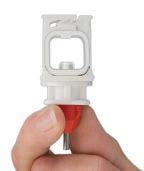
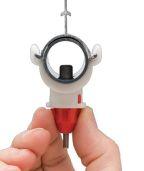
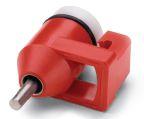
Ziggity makes upgrading your watering system fast, easy and affordable with its lineup of drinkers and saddle adapter products, designed to easily replace the nipples of most watering system brands with our own advanced technology drinkers. So if your watering system nipples show signs of wear, leaking and poor performance, just upgrade to Ziggity drinkers to start enjoying improved results! See how easy it is and request a quote at www.ziggity.com/upgrade.
Aktive Drinker
Max3 Drinker
Big Z Drinker
VAL/Cumberland Lubing
ChoreTime ® Plasson®
When you invest in a Big Dutchman ENRICHED OR CAGE-FREE SYSTEM, you get a dedicated team of specialists to help you maximize your investment.
From rearing to layer, we have the most complete and versatile lineup of options, and more experience to help you than any other company. Our dedicated specialists are here to partner with you, and to help you prosper.
the Impossible Burger in 2016, aiming “to deliver, without compromise, every pleasure that meat lovers get from burgers, from the visual appearance and versatility of the raw meat, to the smell and sizzle during cooking, to the ultimate taste and texture of the burger…but made entirely from plants.”
How does this work, you ask? In short, through much experimentation. Company scientists have spent years breaking down the components of ground beef and then finding, extracting and assembling the same molecules (or molecules with the same properties) from plant sources. For example, a central molecule in the Impossible Burger patty is heme, which is found in hemoglobin in blood and myoglobin in muscle tissue, but is also found in many plants. It gives the Impossible Burger’s raw patty its reddish colour and turns it a crispy brown when cooked. The Impossible Burger is available at about 260 restaurants across the U.S. In July, the company received another $75 million in investment funding, and this fall it completed a facility in Oakland, Calif., where it produces 1.4 million pounds of its ‘meat’ every month.
Bill Gates has also invested in another major player in the plant-based mock meat market. Poultry firm Tyson Foods joined him. The business is called Hampton Creek. Also based out of San Francisco, it’s another company using plant proteins to make meat and egg alternatives. Its own ‘egg’ ingredients go into its Just Mayo and Just Cookie Dough products, and it’s currently developing its own scrambled eggs, ice cream and more made from mung beans and other ingredients. It’s also developing lab-grown poultry meat.
Hampton Creek’s manufacturing process involves rapid heating, cooling and pressurizing a mixture of non-GMO soy and pea proteins and other ingredients into a structure similar to that of meat. Its products are in Whole Foods, Safeway and other grocery stores.
Stay tuned for new developments in the alternative protein sector, which appears to be thriving.
EQUIPMENT FOR SALE
Yamasa 100cs per hr Egg Grader 9 yrs old, all Stainless Steel construction, includes Modern Matic Egg washer ,pre accumulator for inline use, Egg loader,4 automatic packers with Denesters. Domino A200+ inkjet system (for egg coding). Runs perfect, we are upsizing. Available early 2018. Please contact Marcel at 613-806-2847 for viewing or any questions. Can be seen in operation on appointment. Call for pricing
Archer’s Poultry Farm, Ltd.
Production
Since 1946, the family-run Archer’s Poultry Farm has been focused on producing Lohmann’s LSL-LITE and Brown LITE day-old pullets to the Ontario layer sector.
Equipment specs
In 2016, Archer’s Poultry Farm collaborated with Pas Reform to equip its newly constructed 30,000 sq. foot hatchery with 10 SmartSetPro-6 setters, located in each of the two separate hatch rooms, as well as four SmartSetPro-3 setters.
The facility also includes integrated HVAC system designed from NatureForm, Pas Reform’s North American partner. The entire operation is monitored and controlled by Pas Reform’s SmartCentre Pro hatchery information system, a web-based software capable of capturing data from every aspect of the operation, from incubation to delivery.
Innovation factor
The new facility allows for maximum biosecurity and chick traceability while increasing operation capacity by 40 per cent. “By combining stateof-the-art setters and hatchers, both of which feature the latest incubation technologies with robust HVAC system, the hatchery has been designed to optimize work flow efficiencies and biosecurity,” says Stuart Archer, president of Archer’s Poultry Farm.
SECTOR
Layer, hatchery
LOCATION
Trenton, Ont.
Greg Brown (l) and Stuart Archer.
E-cat-iD transfer system with fertility detection and removal.
Don’t Cut Us Out, Cut Us Up!
Canada’s Food Guide revision includes a recommendation to seek protein primarily from plant-based sources.
Chicken Farmers of Canada supports an increase in plant-based proteins in Canadians’ diets, and these pair very well with Canadian chicken – but they shouldn’t replace it altogether.
22g protein per 100g grilled salmon
5g protein per 100g cooked quinoa
Here’s what you need to know
28g protein per 100g lean chicken
8g protein per 50g cooked lentils
Protein quality is not created equal among foods.
10g protein per 115g raw, firm tofu
The quantity of protein required for optimal health is significant.
Health Canada’s own data indicates that there is no plant-based source that qualifies as an “Excellent Source of Protein”.
Aim for a minimum of 20g protein per meal*
Evidence suggests that protein is used less efficiently with aging, which may translate to higher protein requirements. Current protein recommendations appear to be under-estimated by about 30% for adults and elderly and women and 70% for children1 .