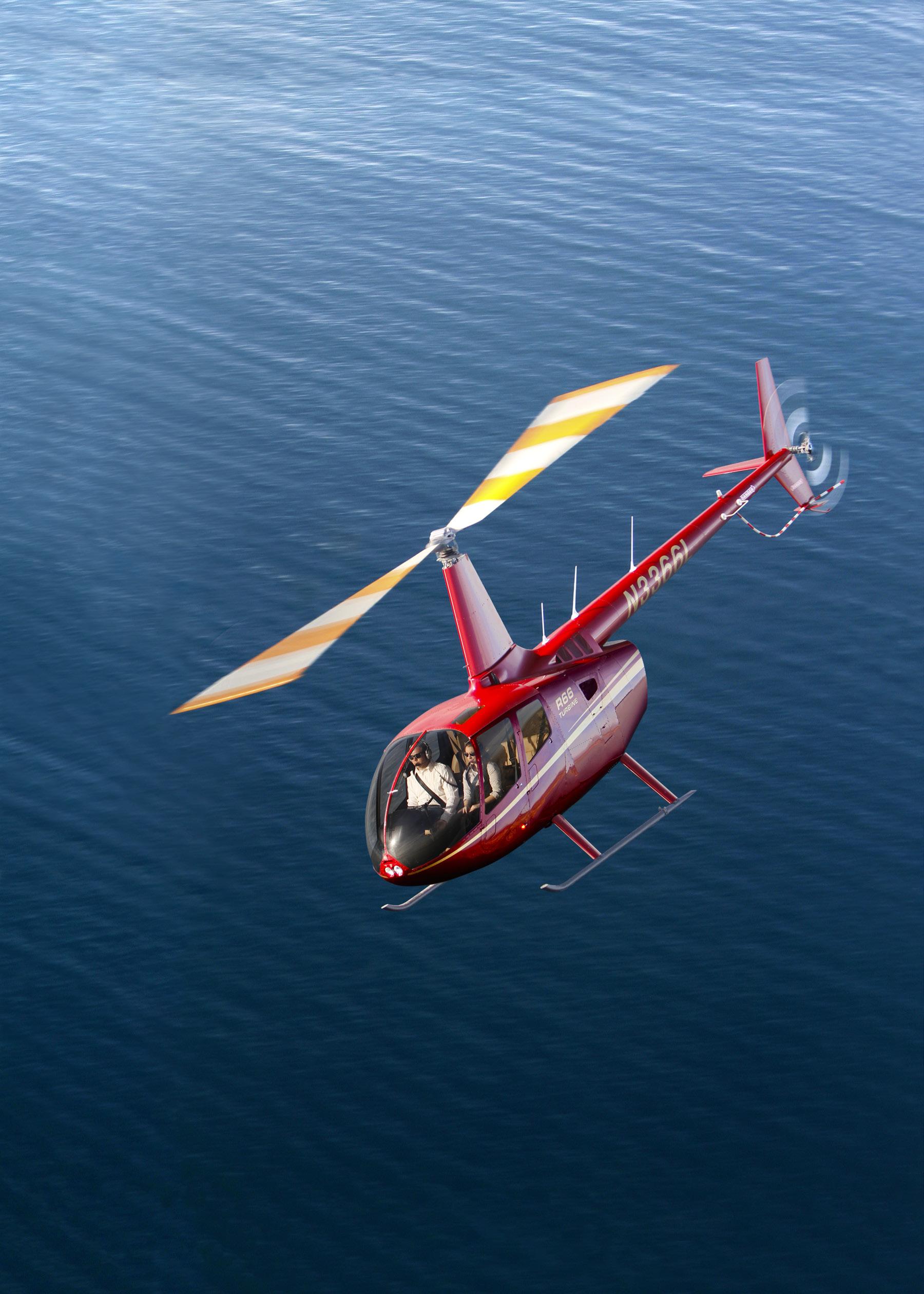
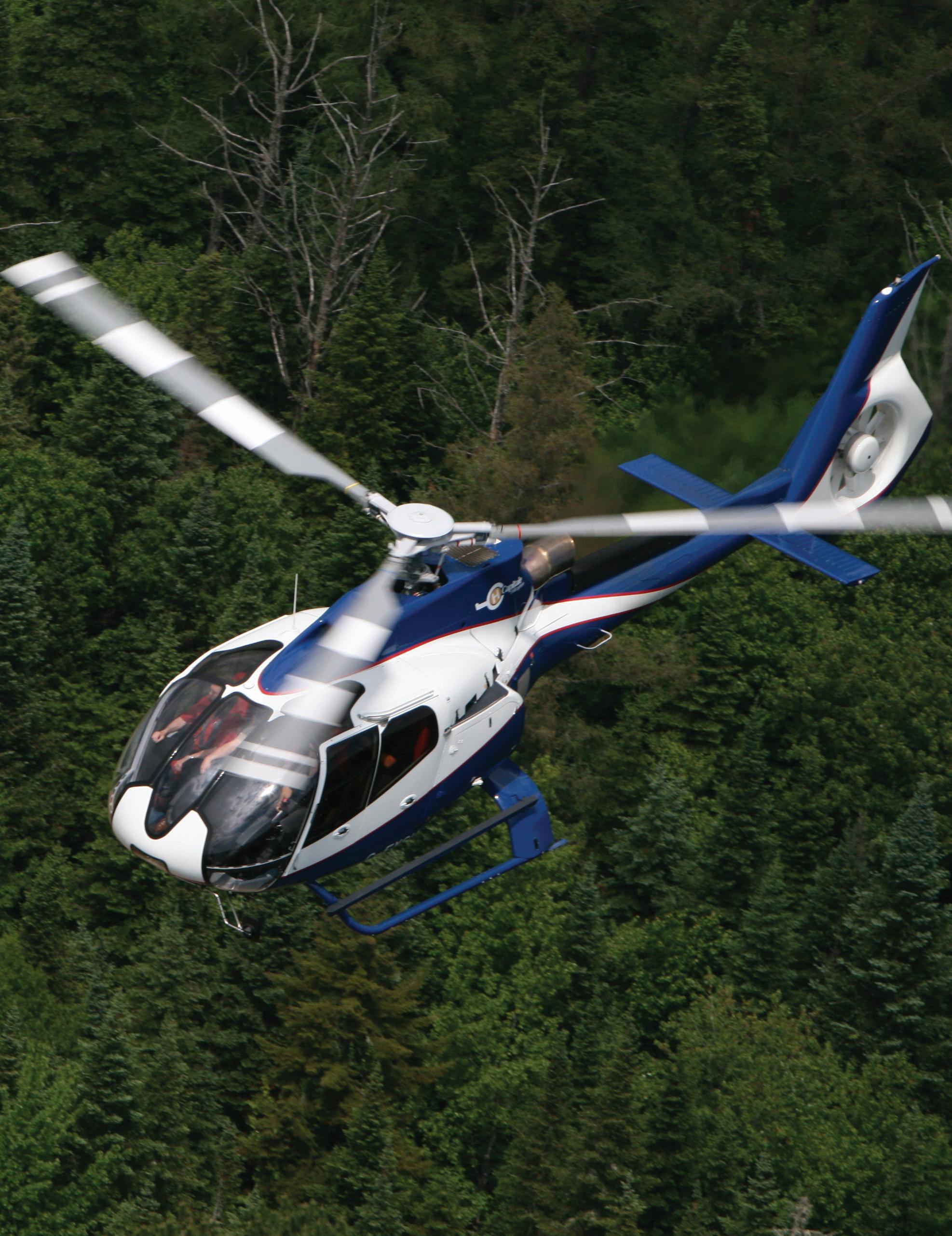
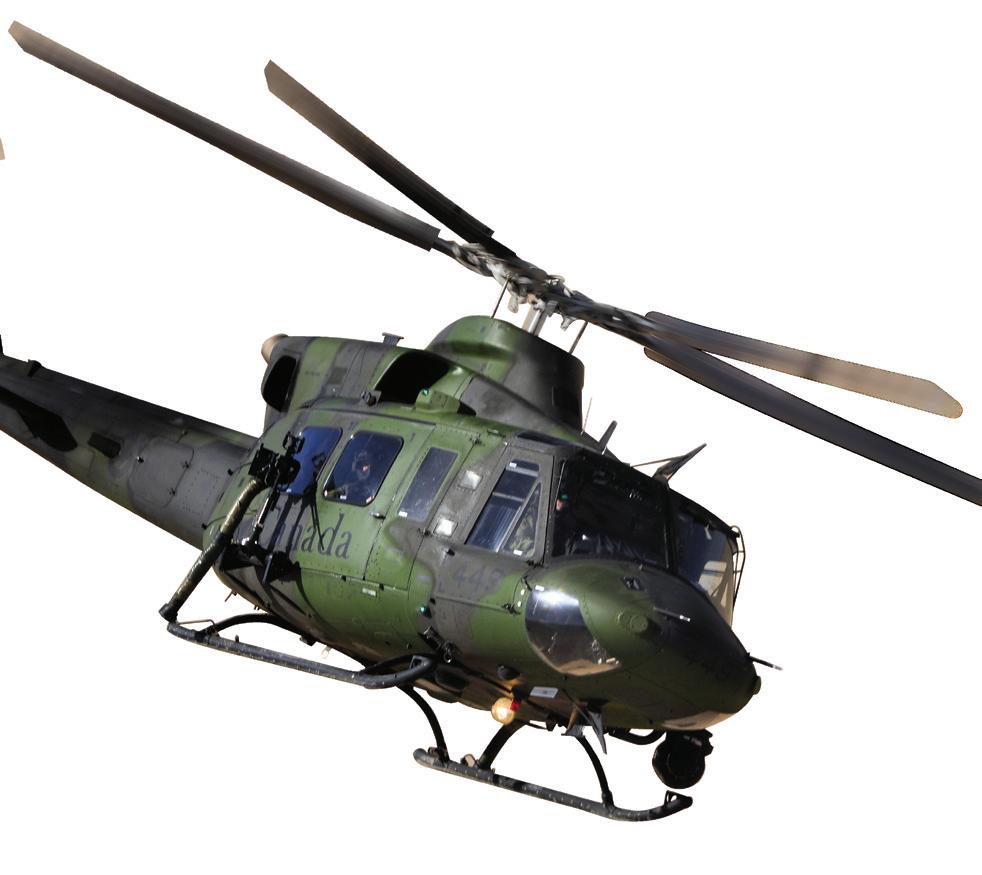
You didn’t get to where you are by compromising. Neither did Bell Helicopter, which is why there are no compromises in a 429. With impressive range and speed, plus an astonishingly smooth and quiet ride, the 429 gets you where you need to go in comfort and style. Spacious and adaptable, it was designed precisely for your fast-paced, high-stakes world.
Brian Dunn
David Carr
– Nido Qubein
HMatt niCHolls editoR
iring qualified workers and finding ways to retain those who consistently exceed expectations is a top concern for operators – and it was a key discussion point at Helicopters’ first industry roundtable this spring.
For many, impending staffing issues will put a serious strain on their firms, especially smaller operations where longtime, dedicated employees wear multiple hats and live and breathe the company brand.
Jimmy Emond, operations manager for Panorama Helicopters in Alma, Que., understands the challenges when it comes to training and retaining staff. His firm boasts a small fleet of 12 and competes in a tough market for government and mining contracts. Attracting competent team members, specifically pilots with sufficient experience, is critical to staying competitive – especially when competitors are also taking steps to enhance operations.
“For us, retaining staff is very important because pilots make the job a success – and it ensures customers keep coming back. That’s why we are paying maybe more than other Quebec-based operators,” Emond said. “But to keep your personnel, you have to give them an opportunity to fly. If business is slow, sometimes they will be looking around . . . and the other companies are aggressive, too.”
While finding experienced pilots is paramount, it’s only part of the equation. As Walter Heneghan, VP of safety and quality at Canadian Helicopters, pointed out, the real challenge won’t be finding someone
Minding the Gap
Taking Steps to Replenish the Diminishing Talent Pool
void, and the Helicopter Association of Canada (HAC) tried to do just that at this year’s conference. HAC offered discount rates for students and catered some sessions to the younger set, including, “Green Pilots and Engineers, What Do Employers Want?” look for more educational opportunities for developing members of the industry in the future.
“It was a way to help people get into our industry,” said HAC president/CEo Fred Jones. “Recently, the Canadian Council for Aviation and Aerospace (CCAA) completed its flight crew study. What was clear from that study was it’s not a number shortage, it’s a qualified individual shortage – and getting people to fit the job more quickly. We need to bridge the gap between the student that graduates from school and how they move into the industry.”
A follow-up study by the CCAA will help both colleges and flight schools better develop curricula to meet industry standards and help graduates better fit with what industry requires faster.
offering developing pilots opportunities to enhance skills will also help fill the void. Bob Toews, senior pilot at STARS, said that, while it’s harder to find an ATPlH 3,000-hour plus, multi-crew experienced pilot that can quickly slot into a captain’s seat, there is an opportunity to implement other options such as a two-pilot system.
“As the EMS operations expand in Canada – and I have heard rumours about increasing interest in two-pilot operations in oil and gas – I think we will have a new opportunity we haven’t had before in the helicopter industry to start moving low-time pilots through as co-pilots,” he said. “Then the challenge is to figure out some way to feed them back into the industry so they can get the pilotin-command, bush experience.”
The big crisis in our industry is going to be driven by the lack of qualified AMEs.
’’
to fly the aircraft, it will be keeping it fit to take to the skies. It’s a point correspondent David Carr expands upon in “The Skill Quotient,” pg 26.
“operators aren’t having much difficulty finding pilots today,” Heneghan said. “But there’s an awful lot of AMEs over the age of 50, and I personally think the big crisis in our industry is not going to be driven by a lack of pilots; it’s going to be driven by the lack of qualified AMEs.”
Providing sufficient educational opportunities and getting the right candidates into the pipeline will be imperative to fill the
In the past, STARS has offered co-pilots up to a 12-month leave of absence to get that experience. They offer them time off, maintain their benefits, don’t pay them, but “we give them a chance to get back in the industry and work for another operator. Sometimes, they don’t come back, they enjoy getting out on their own so much that they keep on doing it and that’s great.
“But it’s a win-win situation because when we get them back, they will probably be in a better position to get upgraded in a slot. I think there are synergies there and I think we can work creatively with the rest of industry to figure out how to upgrade these pilots.”
Whatever the solution, this much is clear: creativity will be needed to fill the staffing voids looming on the horizon.
‘Afghanistan Factor’ Propels Canadian Helicopters
Canadian Helicopters Group is experiencing one of its strongest years on record and it can attribute much of its impressive financial gains to a support role for the u.S. army in Afghanistan.
Canadian Helicopters is more than two years into its mission to support the u.S. army and the financial benefits have been staggering. To wit, profits soared in the second quarter of 2011 as Canadian reported a net income of $15.1 million boosting revenue nearly 43 per cent to $63.3 million. Pre-tax operating earnings, or EBITDA, nearly doubled to $23.4 million from $12.3 million a year earlier.
The recovery in the Canadian mining industry has also benefited the Montreal-based helicopter transport firm, but as president
and CEo Don Wall noted in an early August conference call, the commitment to servicing the needs in Afghanistan has created countless opportunities –including looking forward to the post-conflict opportunities.
“We are striving to be involved on a post-war basis to assist
with the reconstruction effort,” Wall said. “Having won the respect of the u.S. military and others, we believe that we will be invited to bid on all overseas opportunities that may arise in both Afghanistan and elsewhere.”
Canadian operates 11 heli-
davis Bids faReWell to CHC
Rick Davis has stepped down as executive vice-president and chief financial officer of CHC Helicopter, the world’s largest helicopter-services company.
Davis left his post at the Vancouver-based company in August and was replaced by Doug Yakola, a senior advisor at McKinsey & Co. William Amelio, CHC’s president and chief executive officer, said Davis played a central leadership role as the company doubled in size to U.S. $1.4 billion revenue during his six years as CFO.
“CHC has always been highly regarded by customers and our industry for exceptional discipline in flight safety and quality,” said Amelio. “Rick and the finance organization have been helping us make
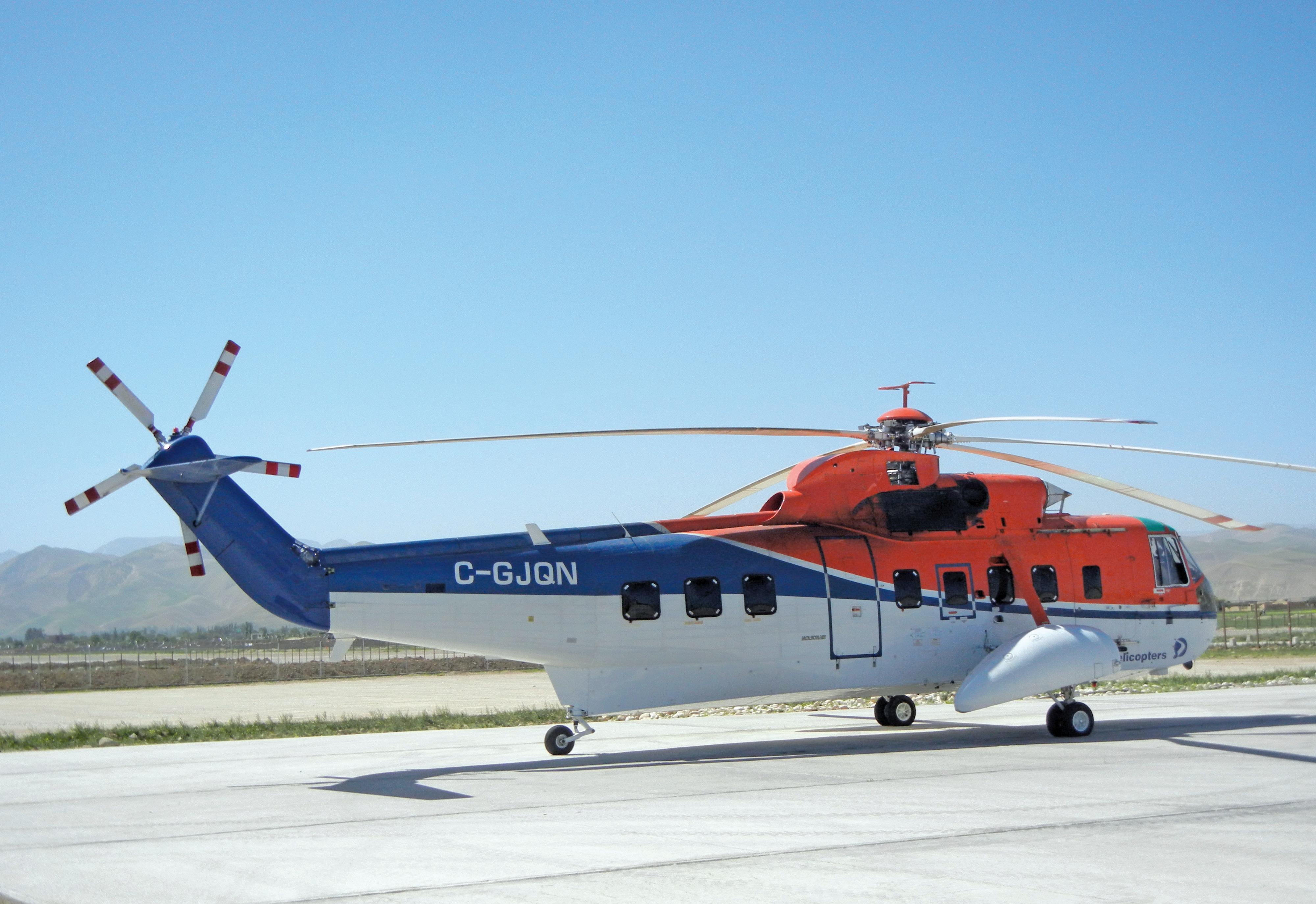
copters for the u.S. military in a support role and continues to bid on other contracts in the country. So far this year, total flying hours have increased 27 per cent to 19,776 hours. (For more on Canadian Helicopters’ role in Afghanistan, see “Flying ‘Molson Air’,” pg 22).
important progress in bringing that same type of discipline to our overall operations in a way that sustains the entrepreneurial, get-itdone culture that sets CHC apart.”
Davis joined CHC in 2004 as vice-president of internal audit, and later headed financial reporting, prior to his promotion to CFO in 2006. Among his accomplishments as CFO were creating an integrated CHC finance organization and achieving Sarbanes-Oxley compliance with no interruption of its fiduciary reporting and other obligations. Under Davis, the team also completed the privatization process, and later an important debt and lease-restructuring project associated with First Reserve’s acquisition of CHC.
Canadian Helicopters has experienced record profits thanks in part to its strong presence in Afghanistan. (Photo courtesy of Canadian Helicopters)
daRt expands the team STARS Save CEOs for Good Cause
eDART Helicopter Services has a new VP marketing and business development.
Steffan Bay took the helm in early September and brings more than 10 years of industry experience in international marketing and business development. Bay will seek to continue to expand DART’s global presence by providing leadership, new insight and strategic planning in regards to international markets.
Before joining the DART team, Bay was director of business development for Aeroleo Taxi Aero (Rio de Janeiro, Brazil).
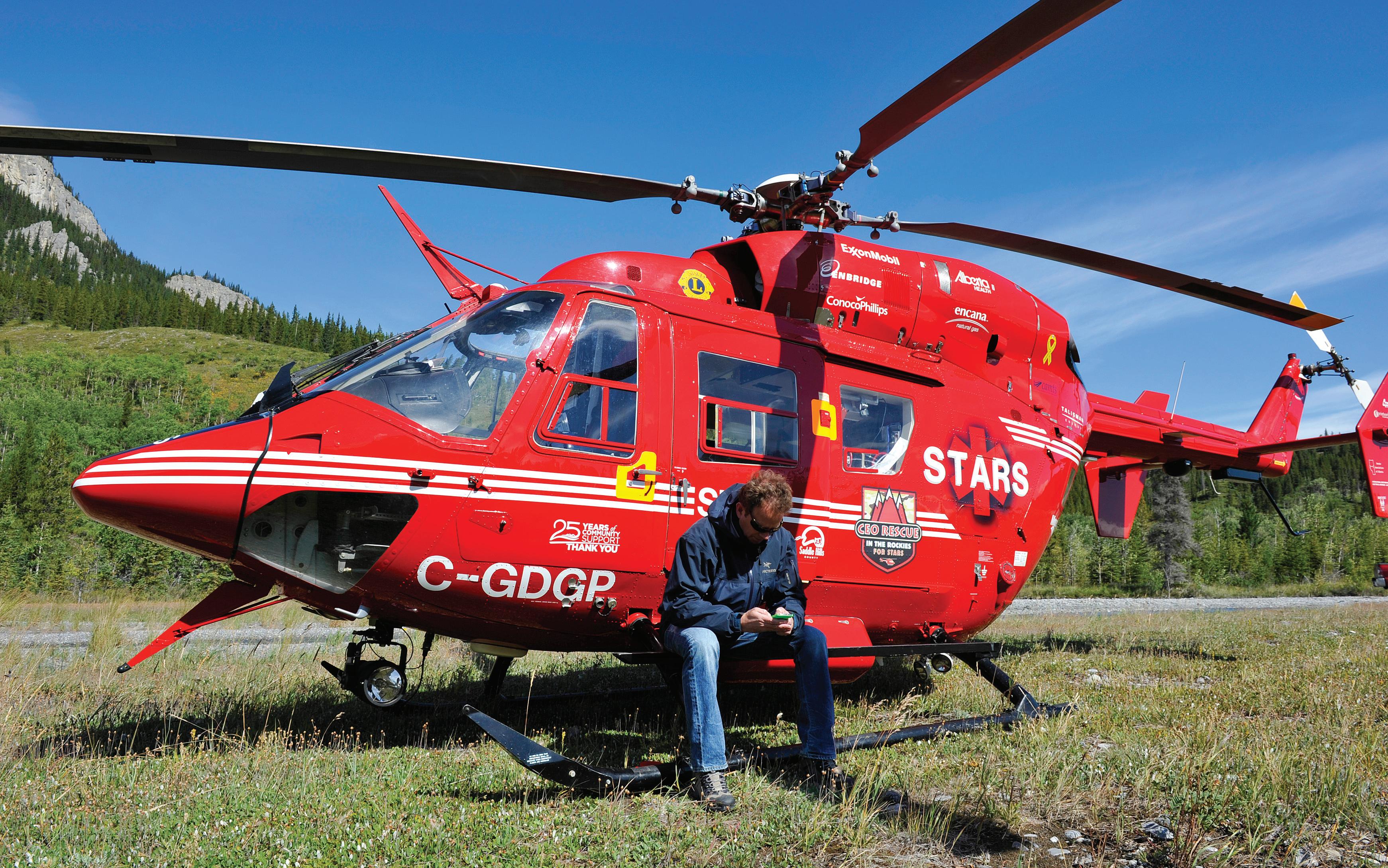
ver wish your boss would just plain get lost for a while? Well, that’s precisely what happened to five prominent Calgary-based CEos in late August as the Shock Trauma Air Rescue Society (STARS) partnered with industry leaders in a unique fundraising event.
The five brave CEos –George Gosbee, president and founder of Altacorp Capital Inc.; Bill McCaffrey, president/CEo of MEG Energy Corp.; Kevin Neveu, president/CEo of Precision Drilling Corporation; Don MacDonald, chairman of Sanjel Corporation; and Craig Stewart, executive chairman of RMP Energy ltd. – were dropped off in Kananaskis Country, 25 kilometres northeast of Canmore, just east of lake Minnewanka. using only their cellphones to collect donations, the CEos had to “earn” their survival by remaining on the mountain until they raised $100,000 each. once they reached their goal, they were “rescued” by STARS
Air Ambulance.
The CEos faced a series of challenges during the event, including the “Telus King of the Mountain” survivor challenge, which rewarded Kevin Neveu an extra $10,000 in fundraising dollars after he lit a fire first and boiled a pot of water using the limited resources at his disposal.
Bill McCaffrey won a hot lunch for raising the most money on the mountain in half an hour.
CAE to Develop UAS
M
ontreal simulator firm CAE and Aeronautics, a leading manufacturer and supplier of unmanned systems, has formed a partnership to develop unmanned Aerial Systems (uAS).
The firms announced the deal at the Association of unmanned Vehicle Systems International (AuVSI) annual forum in August. The first phase of this agreement will see the development of a suite of comprehensive uAS mission training
solutions for Aeronautics Dominator XP twin engine medium-altitude long-endurance (MAlE) uAS.
CAE’s uAS mission training solutions feature an immersive synthetic environment, highlevel sensor simulations, common database (CDB) architecture and additional simulation capabilities to support the complete mission crew training and rehearsal requirements.
“As the uAS continues to
HELICOPTERS MAGAZINE P.O. Box 530 105 Donly Drive South Simcoe ON N3Y 4N5 Tel.: 519-428-3471 Fax: 519-429-3094
EDITOR MATT NICHOllS e-mail: mnicholls@annexweb.com 416-725-5637
PRODUCTION ARTIST KRISTA MISENER
CONTRIBUTING WRITERS
MICHAEl BEllAMY, DAVID CARR, BRIAN DUNN PAUl DIxON, DAN GIBSON, WAlTER HENEGHAN, FRED JONES, NEIl MACDONAlD, JAMES MARASA, PETER PIGOTT
ASSOCIATE PUBLISHER AlISON DE GROOT e-mail: adegroot@annexweb.com 519-429-5191 • 1-888-599-2228 ext. 246
GROUP PUBLISHER/EDITORIAL DIRECTOR SCOTT JAMIESON e-mail: sjamieson@annexweb.com
PRESIDENT MIKE FREDERICKS e-mail: mfredericks@annexweb.com
RETURN UNDElIVERABlE CANADIAN ADDRESSES TO ANNEx PUBlISHING & PRINTING INC., P.O. BOx 530, SIMCOE, ON N3Y 4N5 CANADA. email: ncuerrier@annexweb.com
Published five times a year by Annex Publishing & Printing Inc. Printed in Canada ISSN 0227-3161
The “CEo Rescue in the Rockies” event raised more than $1.3 million for STARS to ensure a safe, rapid and highly specialized emergency medical transport system for the critically ill and injured.
“The outcome of this event has been quite remarkable, and we hope it motivates our challengers to participate again next year,” said STARS CEo Dr. Greg Powell.
SUBSCRIPTION RATES Canada – 1 Year - $25.00 (all taxes included) USA – 1 Year $35.00 Foreign – 1 Year $45.00
Occasionally, Helicopters magazine will mail information on behalf of industry-related groups whose products and services we believe may be of interest to you. If you prefer not to receive this information, please contact our circulation department in any of the four ways listed above.
take on increasing importance, and becomes more complex and expensive to operate, there is a growing need for training the entire mission crew with increasingly complex and realistic mission profiles,” said Avi leumi, CEo of Aeronautics. “A simulation-based synthetic environment is ideal for meeting these new and evolving requirements.” (For more on unmanned Aerial Systems, see “Sharing the Skies,” pg 17.)
Helicopters Magazine is a corporate member of the
Helicopters Magazine is an associate member of the following Canadian aviation associations:
George Gosbee, president and founder of Altacorp Capital Inc., dialing up a storm. (Photo courtesy of STARS)
neil MaCdonald
Chances are you’ve never heard of Bob Waldron, David Rupert, George Heath, Alec Moffat or Gerry Binnema, and – with tongue firmly planted in cheek – that may not be a bad thing.
Chances are though, if you’ve ever been involved in an aviation incident or an accident anywhere in the world, they may well have heard of you. And again, that’s not necessarily a bad thing. This is because R.J. Waldron & Company are the experts who are called upon to solve mysteries surrounding aircraft incidents and accidents.
Forget about CSI: Miami. Armed with more than 35 years of experience, the latest gadgets, and a good dose of common sense, these guys are “Accident Scene Investigation”: Vancouver!
R.J. Waldron & Company has been in business since 1975 and has participated in more than 2,000 accident and incident investigations around the world. Their main focus is on aircraft failure analysis, accident reconstruction and accident investigation. They check into when and why a system or a component may have failed. And while their main business focus is aviation, they also do failure analysis for other industries including construction.
Many accidents are attributed to pilot error, at least initially, and it’s not hard to see why. Things go bang and then get quiet. As pilots, we race to the scene of the incident, arriving in seconds. After things settle down, everyone else arrives with their own opinions, wondering why
From the lab to the Field
R.J. Waldron & Company is aviation’s CSI unit
come in after the Transportation Safety Board has finished its investigation or they may investigate right alongside them.
It really doesn’t matter when or how they begin the investigation and it matters even less who pays for it. The team are not advocates for the party who pays their bill – sometimes the party who pays may not like the results that are found!
R.J. Waldron & Company tries to get to the right answer regardless of who they represent. This is one of the reasons they have been involved in this industry for so long, and why they have such a good reputation worldwide.
Case in point, the team went to Saudi Arabia a number of years ago to look into a KV 107 accident; there was a post-crash fire with fatalities. The only witness was a camel driver, so the team had its work cut out for it. one contributing factor they uncovered was that the aircraft manuals had been translated from English to Japanese, then back into English. This led to some temperature discrepancies that resulted in incorrect flight control cable tension settings. A premature failure in one cable created an uncontrollable aft rotor system for the pilots.
The pilot has seconds to react, while everyone else has months to figure things out. ‘‘ ’’
we did this or that, asking why we did not think to do something else. They forget that the pilot has seconds to react, while everyone else has months – even years – to figure things out.
It’s true, sometimes pilots make mistakes. The answer to an incident may be right there on the surface and we all learn from it straight away. other times, however, we need a closer look. We need to see if there was something – not so obvious – that happened, such as whether a component or a system failed. This is where R.J. Waldron & Company comes in.
They may be asked to investigate an incident by an insurance company, a law firm, or maybe even by the pilot themselves. They may
But not all investigations are done in exotic places in the field – much of the real detective work takes place back in the lab. That’s where you’ll find the team’s Scanning Electron Microscope, used to capture images up to 300,000 times their normal magnification. The Energy Dispersive Spectrometric analysis system with X-ray mapping is used to analyze component materials for defects, or to find contaminants or corrosion. other important equipment used to help decipher just cause includes a Stereomicroscope, which shows a 3-D image; a Metallurgical Microscope; and Standard Rockwell, Superficial Rockwell and Micro-Hardness testers used to determine the characteristic hardness of metals. With this type of equipment and expertise, it’s not difficult to see why the team is in such demand in the aviation incident and accident investigation business. like their TV counterparts, this team finds the answers – and they do it without all the annoying commercials!
Neil MacDonald is an aviation lawyer practising in B.C. He has completed an ISO 9001:2008 QMS Lead Auditor course, holds an ATPL-H, and flies as an IFR Off-Shore Captain. neil.j.macdonald@gmail.com This is not a legal opinion. Readers should not act on the basis of this article without first consulting a lawyer for analysis and advice on a specific matter.
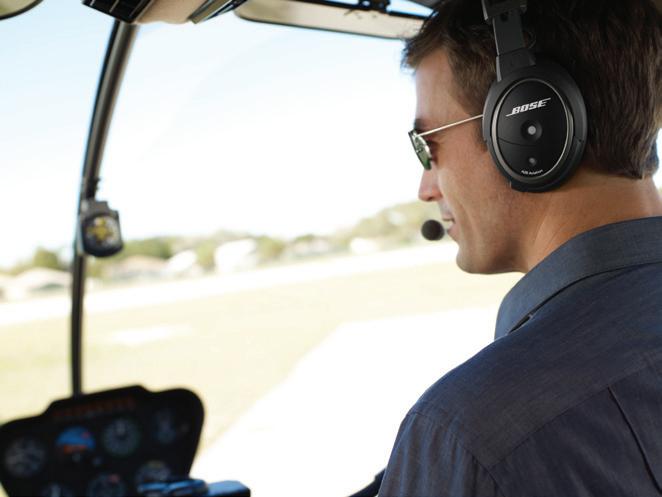
When you fly helicopters, you know being focused is critical. e acclaimed noise reduction, comfortable fit and clear audio of the Bose A20 Aviation Headset helps reduce distractions so you can concentrate on flying. In fact, it’s engineered for the high noise levels that are found in helicopter cockpits. Certified Helicopter Flight Instructor Stephen Boatwright summed it up this way, “…if you want to be able to hear everything, if you don’t want fatigue, if you don’t want to miss those radio calls…then go with the A20.”
In addition, it has an auxiliary audio input, available Bluetooth® communications interface and meets or exceeds all TSO standards. Plus, its optional flexible power circuitry allows for a connection from a 6 pin to U174, letting you take the headset from one helicopter to another. No other headset offers this advanced combination of features and benefits. Prove it to yourself. Try the A20 Aviation Headset for 30 days, satisfaction guaranteed.
paul dixon
grew up in a house with one single black telephone, bolted to the wall in the main hall. With a little practice, you learned how to stretch the cord and contort your body into the hall closet so you could hide behind the overcoats and umbrellas while communicating with your friends; only we didn’t call it “communicating.”
Information gathering – information sharing – is communication that leads to decision-making, or at least that’s the theory. For example, the Treaty of Ghent, signed in December 1814, marked the end of the War of 1812. In January 1815, at the Battle of New orleans, Andrew Jackson defeated a numerically superior British force. The victory occurred three weeks after that war was officially over – and it would be well into February 1815, before word of the end of the war reached all the combatants in North America. But 200 years ago, that was the speed of communications.
About the same time, inventors were tinkering with the first electrical telegraph, though it was another 30 years before Samuel Morse patented the first practical telegraph in North America. In 1861, the brief existence of the Pony Express was snuffed out by the first transcontinental telegraph. Then came trans-Atlantic submarine cables and, by the mid-1870s, all corners of the British Empire were connected by telegraph.
Alexander Graham Bell beat Elisha Gray to the patent office by a
saluting the Change agents
Are
the
Aviators Really Ready for
New World Order?
hall closet and heading off to the BC Telephone Company to arrange the rental of my very own telephone, in 1973, something happened in New York City that turned the world on its ear. A man named Martin Cooper made a friendly phone call to a competitor by the name of Joel Engle. What’s the big deal? Cooper worked for Motorola and Engle worked for Bell labs. Cooper was using a cellular phone and, having a few minutes to kill before going into a press conference where he would introduce the cellphone to the world, he called Dr. Engle. It has been said that Engle’s reaction was total silence. That’s understandable, because at AT&T, the parent of Bell labs held all the patents relevant to mobile telephony. The problem lay in the fact that the people at Bell were trying to solve the problem of mobile communications using the automobile as the base of the system. Cooper and his team created a personal communications device, which, as we now know, is much more than just a method of mobile communications.
It was only four years before “the call heard ’round the world” that another tiny communications step was taken. on oct. 29, 1969, ARPANET came to life – and a link joining the computers at four research universities in the u.S. was activated. ARPANET spawned the Internet, but as with the cellphone, it took some time for technology to catch up with the concept. The Internet became the World Wide Web, driven by computing horsepower and high-speed data transmission capabilities (remember your first dial-up modem?).
Is there a new Martin Cooper out there who sees the future just a little differently from the mainstream?
matter of hours and thus became the father of Ma Bell. The irony being, of course, that while Bell was awarded the patent, the telephone he eventually brought to market relied on Gray’s design. Double the irony in that Bell never really saw the potential of his invention. To him, it would simply replace private telegraph systems that existed in many businesses, thereby eliminating the need for telegraph operators. It took others to come up with the switchboard and the exchange, which led to a broader market for the telephone.
About the same time as I was extricating myself from my parents’
Now, 20 years after “www” entered our vocabulary, the android phone in my pocket serves as an access point to more than I will ever need to know – and barely 40 years removed from that basic black telephone in the hall. There was nothing wrong with that basic black telephone. It met my expectations, but consider how our needs and expectations have grown over these past 40 years.
’’
These changes came not from the invention of the physical entity so much as from the minds of people who saw the world as it was – and imagined what it could be. What will commercial aviation look like in 40 years? How about 10 years from now? With all the buzz about unmanned Aerial Vehicles (uAVs) and removing the human touch from the interface, is there a new Martin Cooper out there who sees the future just a little differently from the mainstream?
Paul Dixon is freelance writer and photojournalist living in Vancouver.
MiCHael BellaMY
the helicopter has been described as “a miracle with a starter button,” and for those of us who fly them, the exhilaration is intoxicating and contagious. We’ve all been queried by interested candidates at one time or another as to what it takes to occupy the pilot’s seat, but divulging the cost of training usually sends those candidates wandering off, discarding momentary interest.
Yet, others are not easily dissuaded and dig deep for the cost of tuition. But soon the questions come – did you really research how difficult it is to find a job? Did you consider the long tours away from home in isolated locations where weekends are just another work day?
And wait, there’s more! Having an accident in those early years will sometimes end a promising career, and even if the fault isn’t yours, it takes a special person to overcome the stigma. For those in flight school or with newly acquired licence in hand, let’s drop the candy coating. Here’s what’s probably waiting for you with that first job experience.
There are a few helicopter schools that will offer graduates more experience in a controlled environment. However, the notion of a freshly-minted helicopter pilot joining the flight line in a charter operation is almost unheard of. Yes, you have met Transport Canada’s requirements, but large corporate clientele are far more selective – especially when it comes to the safety of their employees. Carriers have to be approved to gain their patronage, and this is usually done through an aviation consultant either in house or contracted. The consultants’
Grab that broom!
New
Recruits Must Prove Their Value
enhancing an operator’s business tops the list. Sweeping floors may be required, and for smaller charter operators this is also expected from pilots with 5,000 hours. Here’s another tip – if you identify something that needs to be done, step in and do it. Companies appreciate someone who can work without constant supervision.
one of my contacts at a successful and respected company related to me that they look at a pilot’s vehicle to determine what a potential candidate is all about. Empty coffee cups and fast-food containers littering the floor indicate to them, that, in all probability, their helicopter will be subjected to the same treatment.
Appearance is another consideration. Do you look the part? Ear buds isolating your attention and an inseam on your jeans equating your hat size is not going to impress management.
Then there’s the evaluation flight. This can be a tense time for the new pilot, and no one expects you to “wow” them after 100 hours of flight training. There are, however, indicators that suggest potential. Nothing is more irritating to the check pilot than wasting flight time listening to a candidate relate how he once handled a similar situation. Instead, listen up, take your time and remember the golden rule, “Aviate, Navigate and Communicate.” If the check pilot directs you to a confined area and you determine it’s too small, tell him. He may have set you up to see if you can make that determination on your own. Making a negative call before the check pilot has to make it for you is a good thing.
Making a negative call before the check pilot has to make it for you is a good thing.
mandate is to ensure the charter company exceeds industry standards before granting approval, and for pilots, this is determined by regular evaluation and extensive flying experience. Consultants appreciate the difficulties this imposes on new pilots, but would you consider striking off on a trip with just the minimum fuel required, or would you recommend adding some extra just to be on the safe side?
Your first job is all about being able to add additional value in a related capacity. A new licence and 100 hours is not going to get you into the pilot’s seat right away. So, once you’re in the door, here’s what your employer might be watching for. A willingness to contribute in
It’s true, advancement in the your chosen company might not happen as quickly as you might like. There might be mitigating factors not foreseen by the operation, such as a slow season, or expected pilot attrition not materializing. Couple that with a downturn in revenue, and your tenure as a ramp rat may be extended. occasionally, the company may no longer be in a position to offer you a seat, and you must decide if it’s time to move on to (hopefully) better prospects.
Piloting a helicopter in a charter operation requires a multitude of skills; determination learned early is without a doubt the most enduring. And once you’ve paid your dues and your name is on the pilot roster, then, you can say, “Atta boy!” or “Atta girl! There will be little doubt, you have earned it.
A native of Spruce Grove, Alta., Michael Bellamy has been flying fixedand rotary-wing aircraft in a variety of capacities since 1971, and is an accomplished author of several books, including Crosswinds
dan GiBson
in parts 1 through 4 of our “Survival” series, we drew up a dire crash scenario that left you alone in the wilderness. We examined the considerable role that psychology plays in survival, the benefits of fire, as well as how to set priorities, build emergency shelters, stock a flight survival kit and facilitate your own rescue.
Continuing where we left off, it’s time to assess your situation. Your first 24 hours since the crash of your aircraft has been both frightening and demanding, but your ability to remain composed has served you well. Encouraged by the cache of provisions in your survival kit, you reward yourself by completely draining what remains in your stainless steel water bottle, as you can always boil more water in this type of bottle . . . that is, if you can find more water.
Recalling your Please Remember What’s First mantra – and with Protection established and Rescue signals at the ready, Water becomes top priority, followed lastly by Food. Finding a reliable source of fresh water is essential to your survival but, although you’ve seen a few stagnant puddles, you haven’t seen any streams or lakes around.
You quickly do a perimeter scout, keeping your eyes open for wildlife. It’s best to look for well-traversed animal trails, which always lead to water. As well, birds settle on or near wetlands. Checking out the sky may also help – the distant sky may appear slightly darker blue over larger bodies of water. Bees may also give
Quenching that thirst
If You Can’t Locate Fresh Water, Make Some!
walking around and then wringing out your pant legs
• making a catch basket to collect rainwater
• wedging a thin rope or shoelace into a cracked wet rock and routing the hanging end into your container
• tying plastic bags over bushy green branches overnight to capture the condensation
• tap birch or maple trees for nutritiously thirst-quenching sap
• You can even distil water from a freshly dug dirt hole if you can seal it well enough. Truth is, locating a reliable water source in the boreal forest isn’t the challenge – locating the two litres you require to sustain yourself daily is, however, so you must decide to employ many methods simultaneously. on your trek, you come across blueberries, thimbleberries, Queen Anne’s lace (wild carrot) and wild onion. You also find what appears to be a patch of wild sorrel, which, when consumed in moderation, can be eaten like spinach. While Food is not your immediate priority, harvesting now will conserve your energy so you gather as you go. You can’t be sure of the sorrel-like plant without a field guide – the one item (and by far the most important) that you failed to stock in your flight survival kit – but a test would help, so you pick that, too. You know that edibility tests are never failsafe and despite the “if you aren’t sure, don’t eat it rule,” you sometimes have no choice so you start the test and wait. (For more on testing for edible plants go to www.helicoptermagazine.com).
It’s best to look for well-traversed animal trails, which always lead to water.
you a clue – they rarely travel more than one nautical mile from a clean water source.
If you don’t find water (which, sadly, means no fish, frogs, crayfish or aquatic edibles such as cattails) you can always improvise by trying any of the following:
• digging at the lowest point of a ravine and straining the damp mud through a cloth
• wrapping moisture-laden vegetation in a T-shirt and wringing it into a container
• collecting morning dew from plants and tall grass by
Suddenly, the hum of a distant engine breaks the silence and you explode into action, racing to light your signal fire. Gathering colourful clothing and signal mirror, you position yourself in the widest expanse you can get to. As the SAR aircraft breaks the horizon, you flash your mirror right in his face. He cuts the smoke from your signal with his wing, acknowledging your presence – they know where you are and you are alive!
Fine Dining: Survival Style is the final segment in our series aimed at providing pilots with critical wilderness survival skills and insight. Look for future useful survival tips in coming editions.
Dan Gibson is a consultant with the Helicopter Association of Canada, an award-winning pilot and president of Bear Beaver Aviation Services. He teaches Wilderness Survival Skills for the Ottawa Flying Club in the Commercial Pilot/Aviation Management Program at the Algonquin School of Advanced Technology in Ottawa.
Your Mission: experience world class support
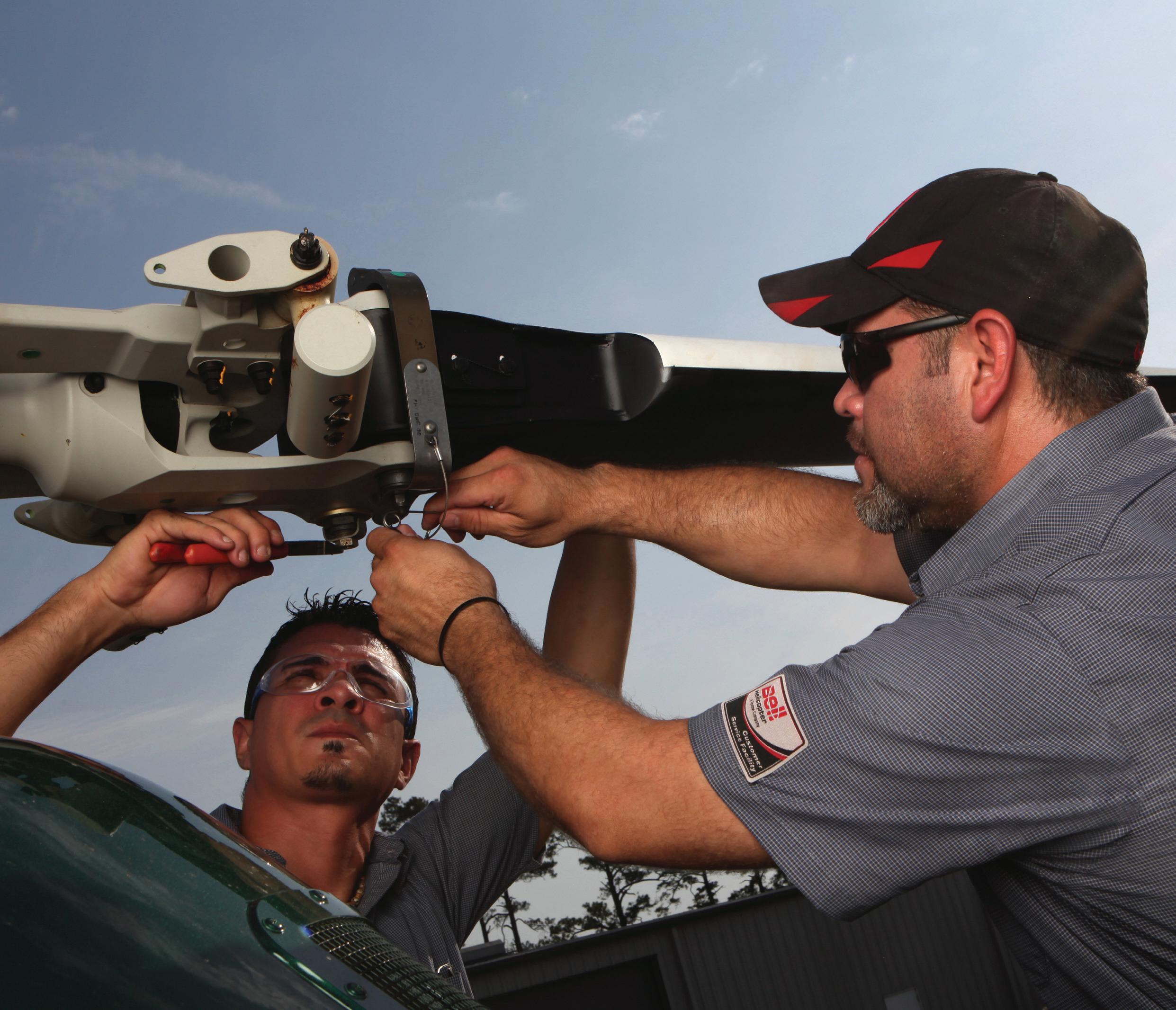
We know you wouldn’t trust the service of your aircraft to just anyone. That’s why technicians at our authorized Customer Service Facilities have been trained at Bell Helicopter’s industry-leading training academy. As certified, factory-trained maintenance technicians they are dedicated to providing you with the highest level of service using Bell Helicopter’s rigorous standards of quality. With more than 115 customer service facilities across 34 countries, you’ll get the best support in the industry.
Air Asia Company Ltd.
Alpine Aerotech Ltd.
Arrow Aviation Co. LLC
Avialta Helicopter Maintenance Ltd.
Eagle Copters Maintenance Ltd.
Fuji Heavy Industries Ltd.
Helipark Taxi Aereo E Manutencao Aeronautica Ltda.
Motorflug Baden-Baden GmbH
Northwest Helicopters LLC
Patria Helicopters AB
Rotorcraft Support, Inc.
Sikorsky Aircraft Australia Ltd.
DBA Sikorsky Helitech
Servicio Tecnico Aereo De Mexico (STAM) Uniflight, LLC
Bell Helicopter 2011 Platinum Customer Service Facilities:
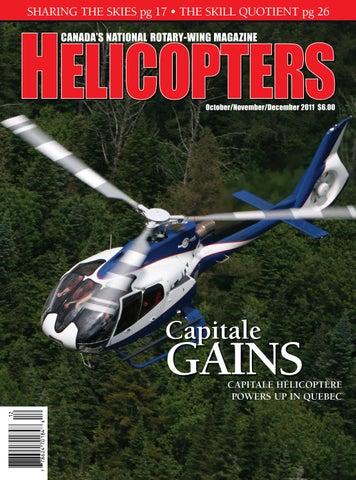
CoveR stoRY
seizing opportunities
Capitale Hélicoptère Is in Full Expansion Mode
BY BRian dunn
While many companies are still licking their wounds from the recession, Capitale Hélicoptère of Quebec City is expanding its horizons.
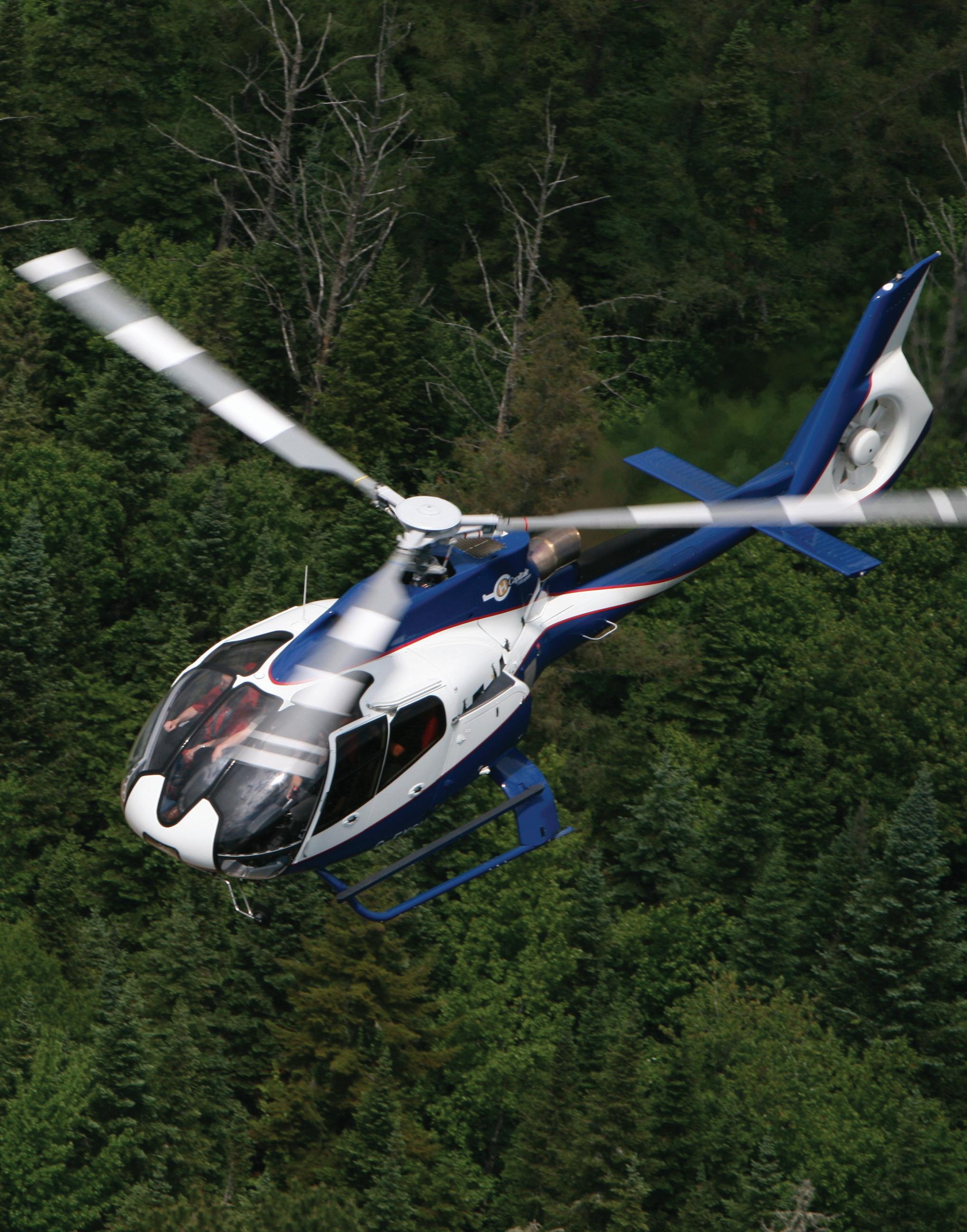
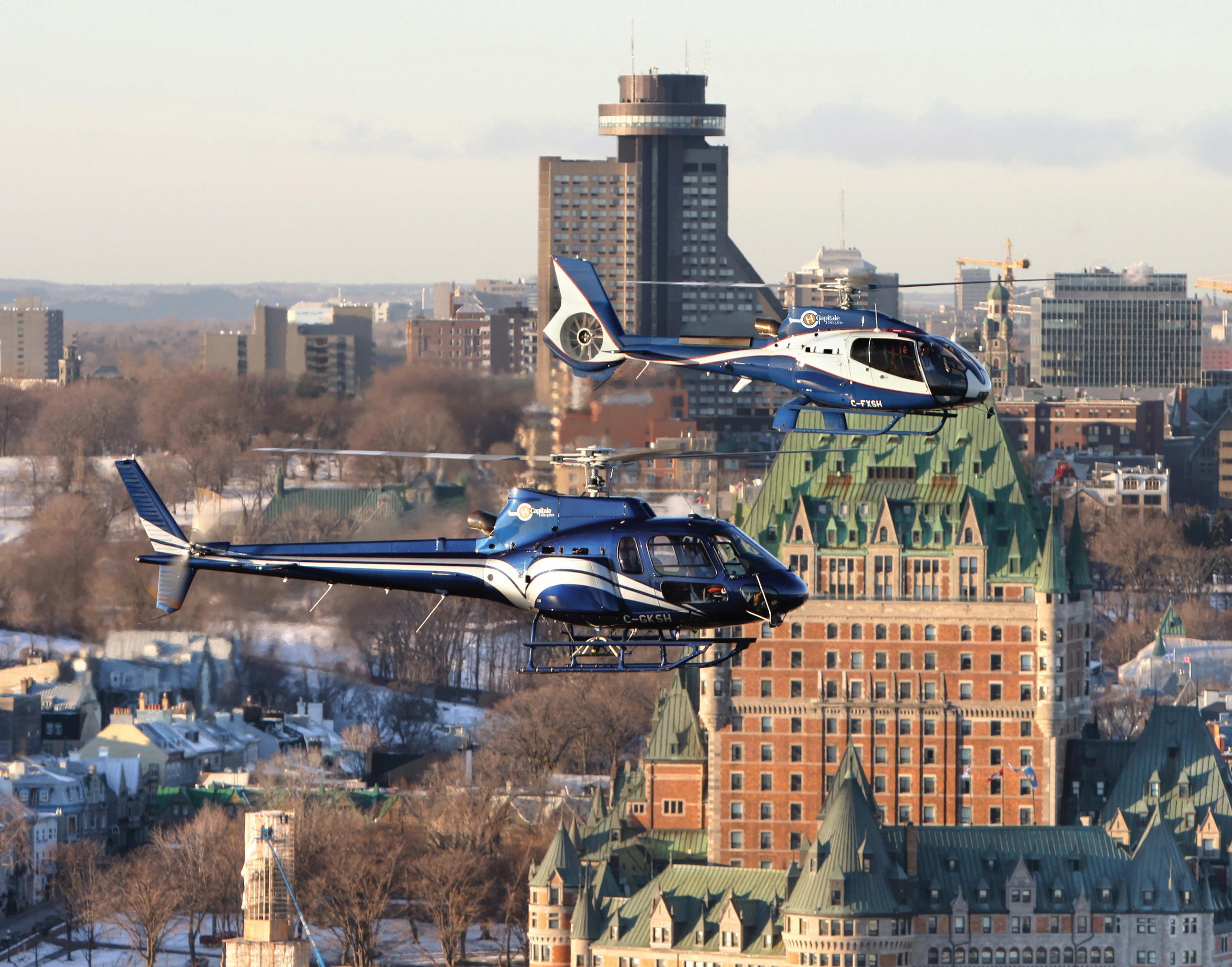
This new kid on the block ordered three AS-350B2s, two EC-130B4s and one AS-350B3 aircraft from Eurocopter Canada in Fort Erie, ont., during Heli Expo in orlando this past March. The company followed that up by signing a contract with AgustaWestland in July for three AW-169 helicopters. The agreement marked the first Canadian order for the AW-169, which Capitale plans to use for charter, VIP transport, utility and medevac operations. Capitale Hélicoptère now boasts a total fleet of three AW-169s and 11 Eurocopter aircraft: five B2s, three B3s and three B4s, in addition to three Robinson R-44 Ravens.
It will also make the company the largest fleet owner in Quebec City, according to CEo Danny Ricard, who formed the company in october 2009 with partner Stéphane Huot, a local real estate magnate with several start-up successes under his belt and a passionate chopper pilot who initially owned an R-44 and now flies a B4.
In addition to its rapid fleet buildup, Capitale is constructing a new 58,000-square-foot facility at the Québec City Jean lesage International Airport. This impressive expansion is attracting new private helicopter owners and will help in the development of its pilot training school, as it has recently received a large influx of students.
The project is long overdue, as after only 18 months, Capitale has already outgrown its current rented office and hangar space next to the airport’s main runway. That’s a quick turnaround period that Ricard attributes to his partner’s experience in the construction business. The new facility will house administrative offices and a flight school on the second floor of the mostly glass-enclosed front of the structure that will include a 12,000-square-foot showroom for Capitale’s helicopter sales side of the business. The remainder of the building will be divided into two sections; one side will house the helicopters of its VIP clients and the other will house its own fleet and maintenance area.
Although similar in size, the VIP side will be able to accommodate
about 30 helicopters, while Capitale’s side will be able to handle about 40 helicopters. That’s because the VIP clients want more space between their machines, explains Ricard. Capitale is also a certified service centre for R-44 and R-66 helicopters and offers support for Eurocopter products.
Ricard, 55, got into the aviation business in 1975 when he acquired his private pilot’s licence from Quebec Aviation. But he became intrigued with helicopters at Trans Quebec Helicopters, which was leasing space next door. He soon switched vocations and became a helicopter pilot in 1980 at Fredericton Helicopters. He landed his first job at Trans Quebec.
“I got my training at Fredericton Helicopters, an affiliate of Trans Quebec, because there was no helicopter pilot training here in Quebec at the time,” says Ricard.
In the spring of 1981, Trans Quebec was bought by Viking
Helicopters, which in turn was bought by Canadian Helicopters. In 1998, Ricard was asked by Canadian Helicopters to open its Quebec City office. And from 1998 until 2009, he helped build up the regional business.
Ricard met Huot at Canadian Helicopters, where Huot was a client, before the two decided to strike out on their own by opening Capitale Hélicoptère with two R-44s and one B2. Today, there are 15 employees consisting of nine pilots, four mechanics, a secretary and a marketing specialist.
While short on history, Capitale is long on experience. Ricard has been a pilot for more than 30 years, and his head mechanic, Christopher Stapor, has 20 years under his belt.
The R-44s in the fleet are sometimes used for leasing, but are used primarily for Capitale’s pilot training school. Ideally, Ricard would like to see between 10 and 15 students enrol in his school every year: currently there are eight ab initio students and the school is providing recurrent training for Mexican professional pilots.
Ricard ordered the Eurocopters while attending Heli-Expo, even though Bell Helicopter Textron is only a three-hour drive away in Mirabel north of Montreal. He says the Eurocopter models are better configured for his needs, can carry more cargo and have a more attractive price.
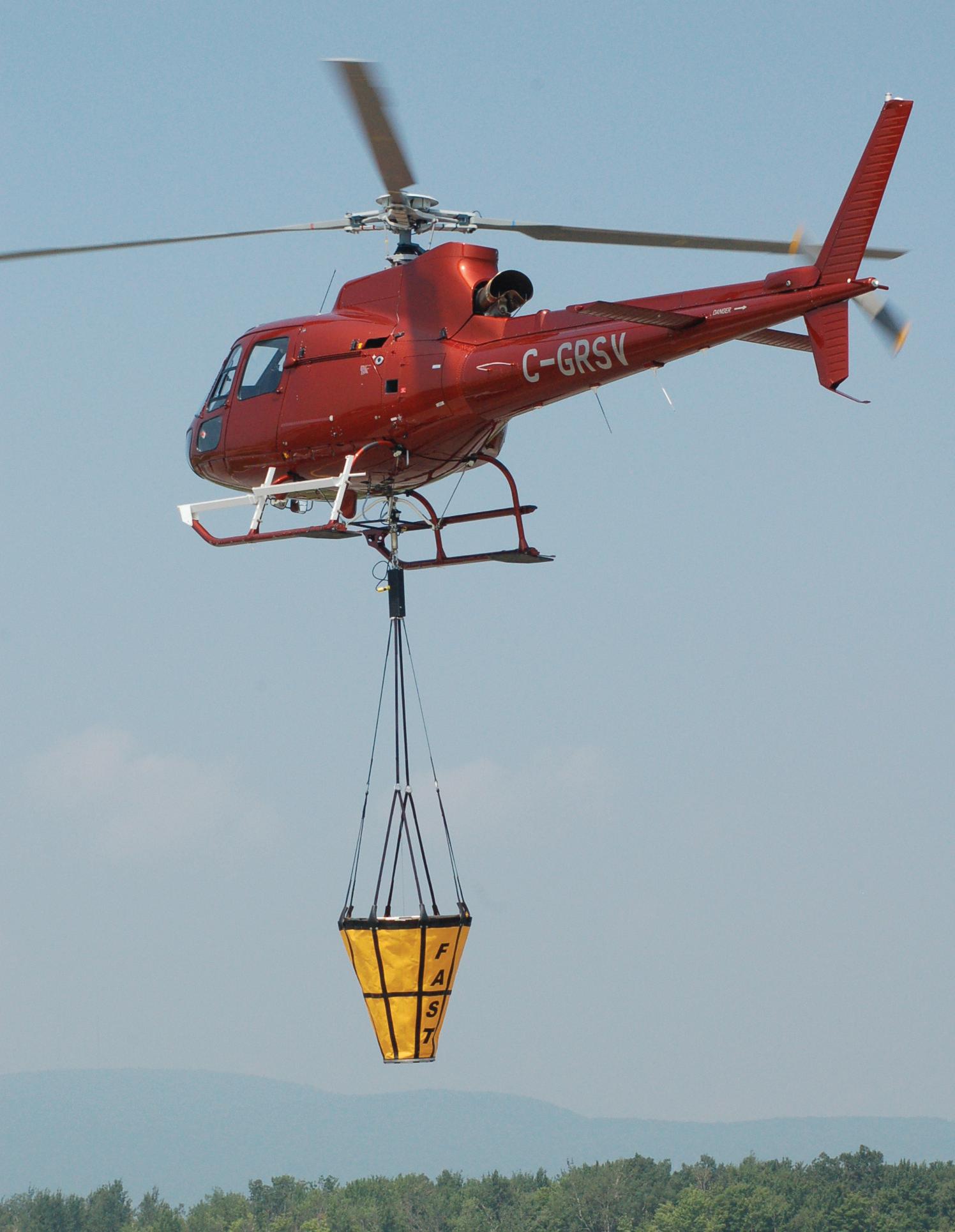
BOTTOM LEFT: Fire fighting remains a key component of Capitale Hélicoptère’s operations. The firm has key contracts with the Ontario Ministry of Natural Resources and SOPFEU. (Photo courtesy of Capitale Hélicoptère)
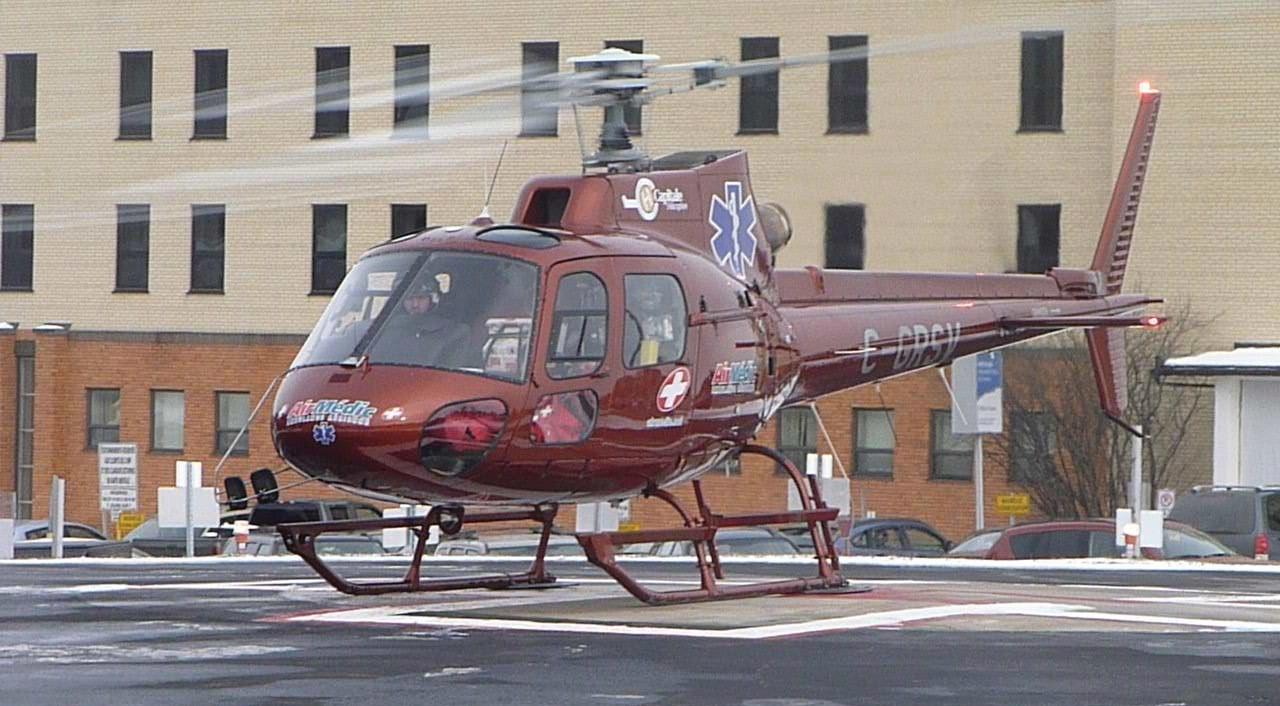
ABOVE: One of Capitale’s B2s is under contract with Air Médic air ambulance service in St. Honoré near Chicoutimi in the Saguenay. (Photo courtesy of Capitale Hélicoptère)
one of Capitale’s B2s is under contract with Air Médic air ambulance service in St. Honoré near Chicoutimi in the Saguenay. The other B2s and B3s have been busy this summer working in the mining sector in Northern ontario as well as doing line maintenance for HydroQuebec. The company has also been certified by the ontario Ministry of Natural Resources and Quebec’s Socété de protection des forêts contre le feu for forest fire fighting.
“This summer, we have been really busy fighting forest fires, but the biggest market is the charter business,” says Ricard. “The pilot training
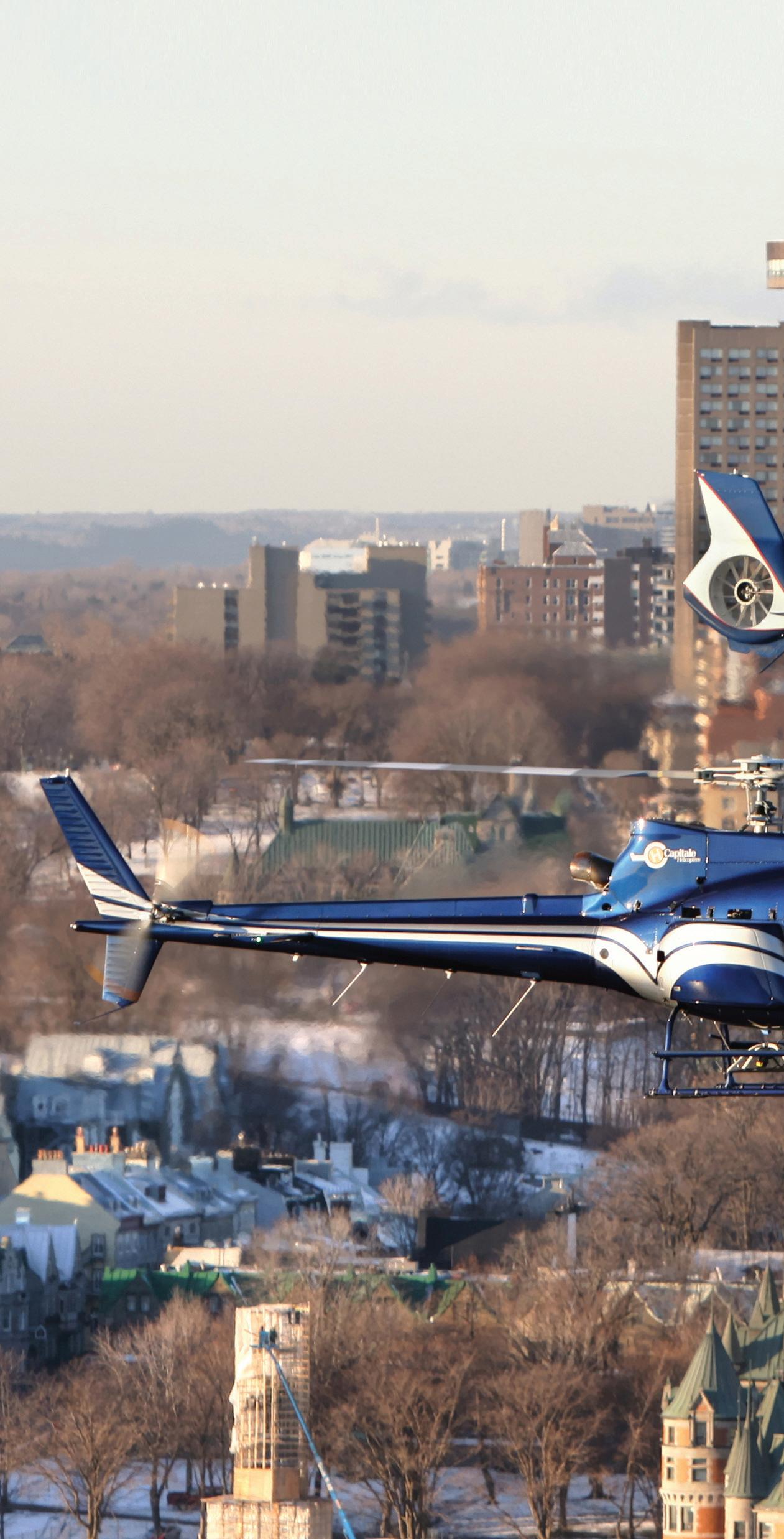
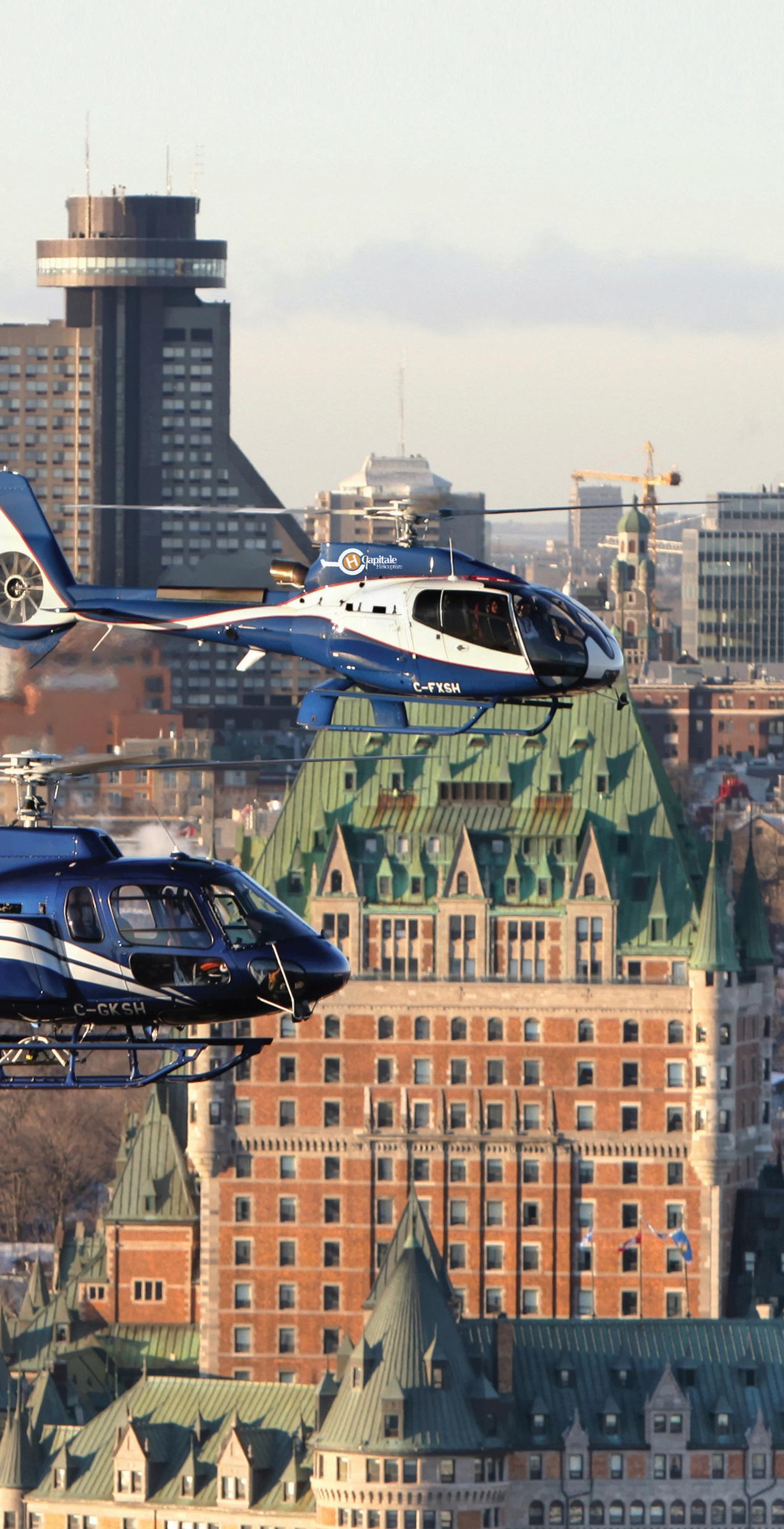
TOP LEFT: A Eurocopter AS-350B2 and EC-130B4 fly in tandem above Quebec City. (Photo courtesy of Capitale Hélicoptère)
CoveR stoRY
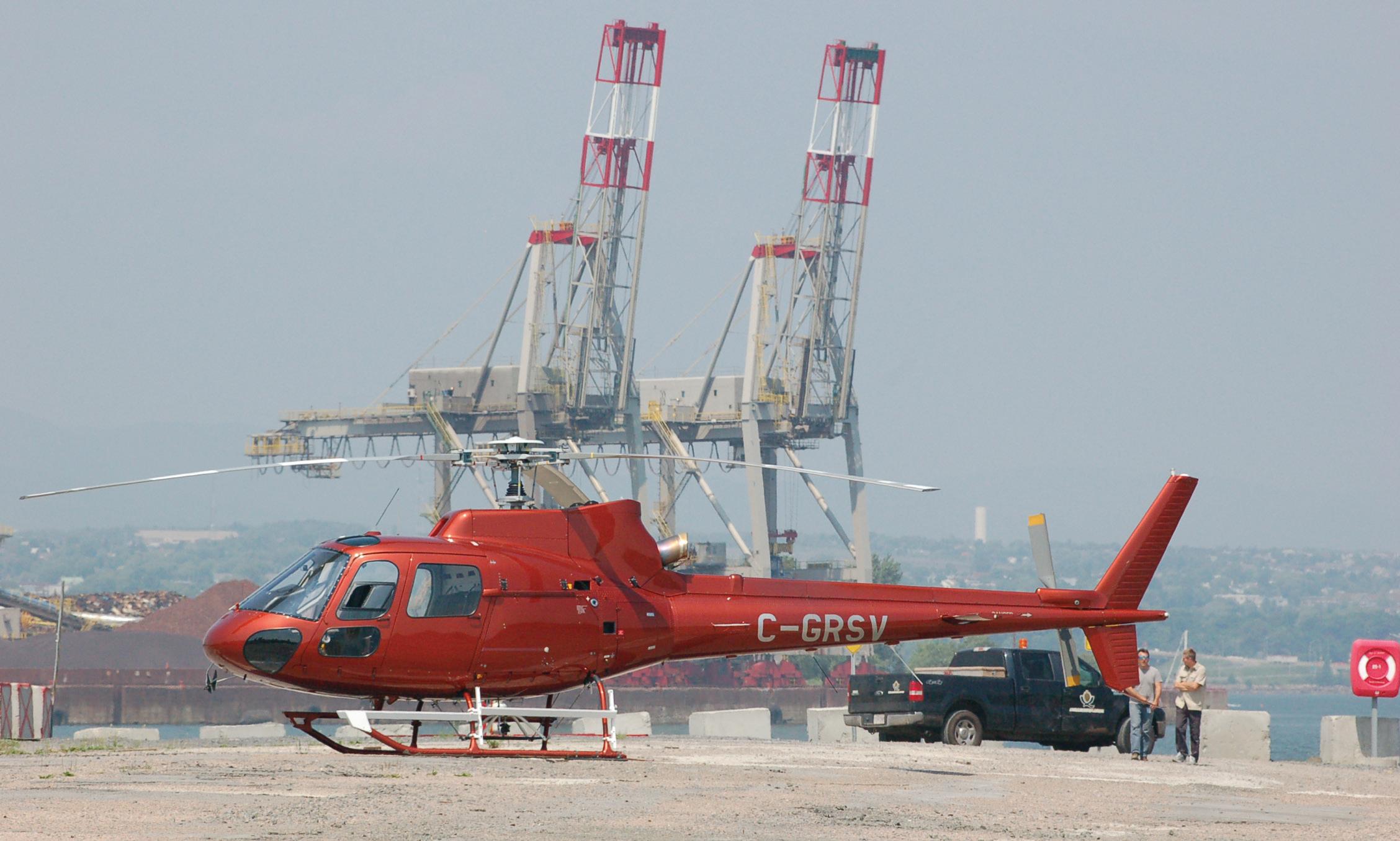
A diverse client base has helped Capitale Hélicoptère rapidly expand in the Quebec market. (Photo courtesy of Capitale Hélicoptère)
is a small source of revenue, but it gives us more pilots if we need them. And the sales side of the business should pick up once we have our new showroom.”
His VIP and maintenance businesses are very strong. “There are a lot of wealthy people in the region,” Ricard says. “We have six private B4s in the Quebec-Montreal area.”
With its new fleet, Ricard figures he has a leg up on the competition, particularly in the leasing business. “The VIP market is not well served here,” he says. “If we look at the competition, some of their helicopters are 30 years old. Clients want new technology and new engines. A 1980 reconditioned aircraft is not what they want.
“We have the most modern fleet around, with clean interiors and air conditioning. And very few of our competitors have B3s or B4s. As well, with our competitors’ helicopters tied up all summer, we can fill in the gaps for last-minute projects because we have a larger fleet to choose from.”
As for the aircraft sales sector, the main reason for the dearth of B3s and B4s is their price, according to Ricard. For example, at $500,000, the R-44 is considered an entry-level machine. The tendency is to upgrade from there, says Ricard, to a turbine such as a Jet Ranger or the EC-120, which costs between $1 million and $1.8 million. The B2 costs about $2.2 million and the B4 close to $2.8 million.
With such a large fleet, Ricard has a solid plan to support his company’s growth – the challenge now is finding new clients and raising the profile of the company worldwide in both operations and training.
Tourism is another area in which there is a growing demand. other popular destinations include tours of downtown Quebec City with its majestic view of the St. lawrence River and the nearby Jacques-Cartier River that flows into the St. lawrence.
For Danny Ricard, seizing opportunities to grow his business isn’t a pipe dream. If he sees a potential market, he’ll make it happen.
expanding the fleet
At Heli-Expo in March, Ricard ordered three AS-350B2s, two EC-130B4s and one AS-350B3 from Eurocopter Canada. He followed that up by signing a contract for three AW-169s from AgustaWestland. Here is a quick rundown of the new fleet:
• The single-engine AS-350B2 is powered by a Turbomeca Arriel 1D1 engine. Its flexibility makes it ideal to perform a wide range of missions, including passenger transport, aerial work and fire fighting.
• The AS-350B3 is a high-performance, light, single-engine Ecureuil helicopter powered by a Turbomeca Arriel 2B turbine engine and equipped with the FADEC system (Full Authority Digital Engine Control). It is ideally suited for operations in mountainous areas or extreme heat, and for missions that are otherwise very demanding.
• The EC-130B4 is a light seven- to eight-seat single-engine helicopter renowned for it qualities of silence, comfort and space. It features low external noise emission due to the low-noise “Fenestron” and the FADEC system, which optimizes noise signature in overflight without operational limitations.
• The AW-169 is a 5-ton twin-engine light intermediate helicopter equipped with advanced rotor systems, engines, avionics transmission and electric power generation and distribution systems. It is most commonly used for EMS/SAR, law enforcement, passenger, and offshore transport and utility missions.
sharing the skies
UAVs Will Invariably Change the Operating Environment
BY paul dixon
drone, unmanned Aerial Vehicle (uAV), unmanned Aerial System (uAS), Remotely Piloted Aircraft (RPA) or even Pilot-optional. What’s in a name? It’s the future calling, where the second century of powered flight promises to be as innovative and exciting as the first 100 years. once the stuff of science fiction and futurists, a host of aerial vehicles are poised to fly higher and faster or even lower and slower without a human presence in the cockpit or even a cockpit. From mini-flyers that barely cover the palm of your hand to solarpowered flyers at stratospheric heights, unmanned aviation is a bit of a wild frontier for aerospace.
unlike conventional aircraft, uAVs can exceed the operational parameters of crewed missions, such as dangerous low-level operations and extended missions where human fatigue becomes a crucial factor in decision-making and information gathering. As airframe designs, control systems, and onboard sensors become more reliable, smaller, lighter, longer-lasting, safer, and cheaper, the economic advantages of uAVs will become more attractive to civilian operators. So, is it something to keep an eye on? Most definitely.
Fred Jones, president of the Helicopter Association of Canada, suggested during Helicopters’ first roundtable discussion in Vancouver this spring that uAVs “will eat your lunch” if you don’t pay attention to their development. In the years ahead, there’s little doubt they will fill the skies in what have historically been helicopter-operating areas.
a foRCe to Be ReCkoned WitH
As the Canadian Forces completes its mission in Afghanistan, Col. Gordon Reid of the A3 Aviation Patrol and Transport at 1 Canadian Air Division, reports that the CF has “fallen in love” with the uAVs it deployed in Afghanistan. In 2003, the CF deployed the Cu-161 Sperwer. The rail-launched truck-mounted Sperwer proved to have a steep operational learning curve, but it provided an invaluable education to the CF and filled the gap until the next generation of uAVs could be fully assessed.
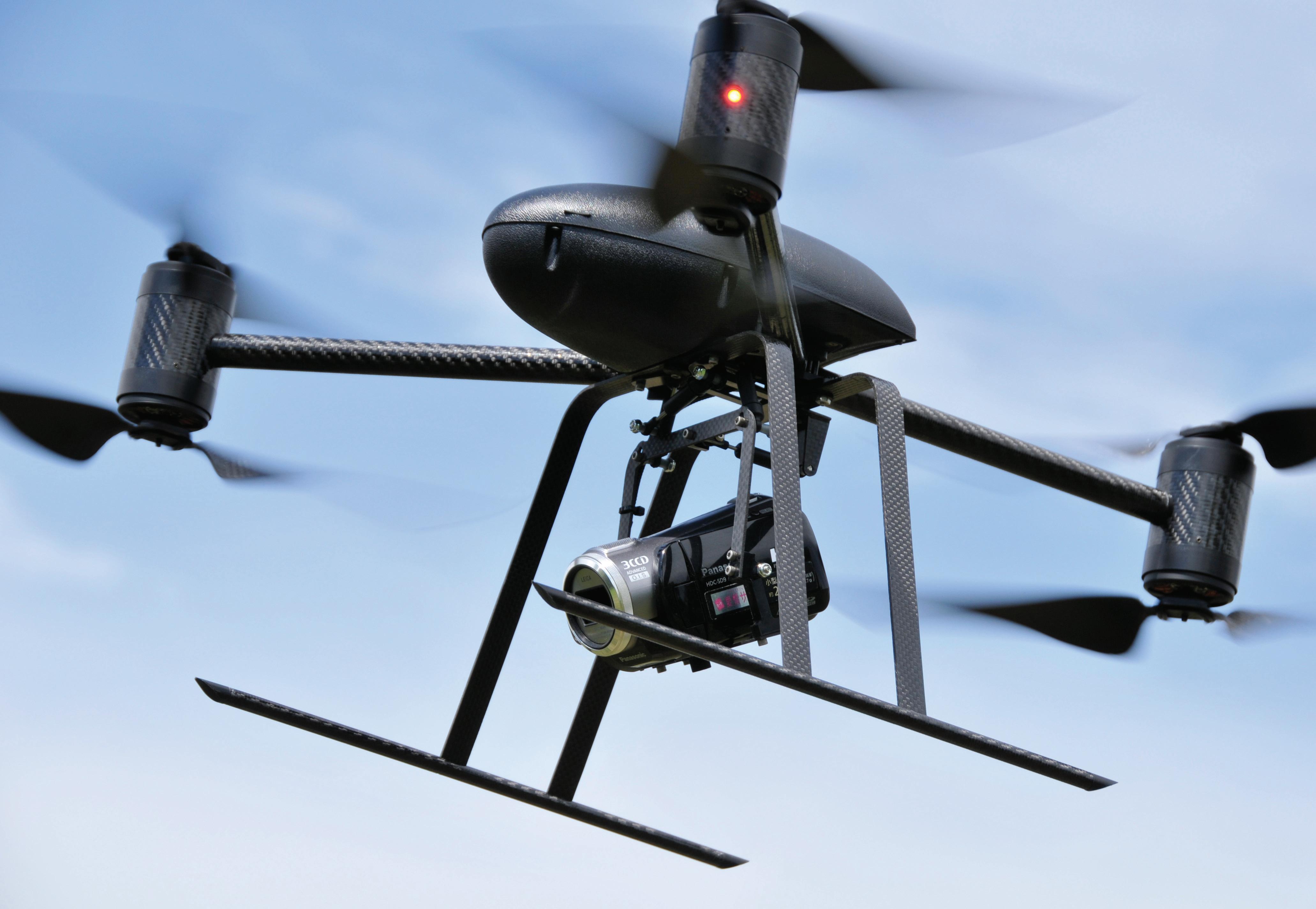
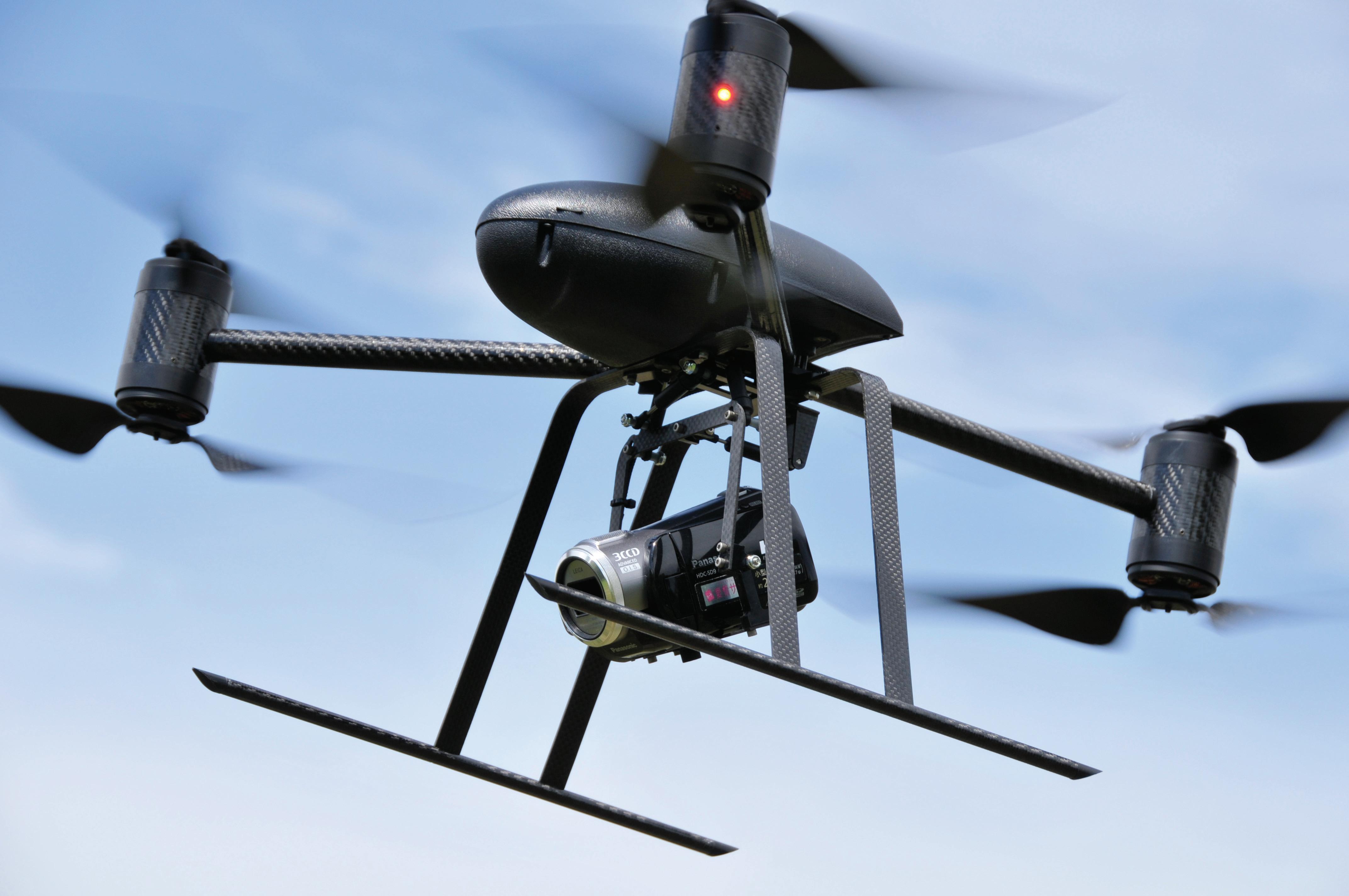
ABOVE: The Ontario Provincial Police uses UAVs at six of its detachments. The X-6, manufactured by Saskatoon’s Draganfly Systems, is a valuable crime fighter. (Photo courtesy of Draganfly Systems)
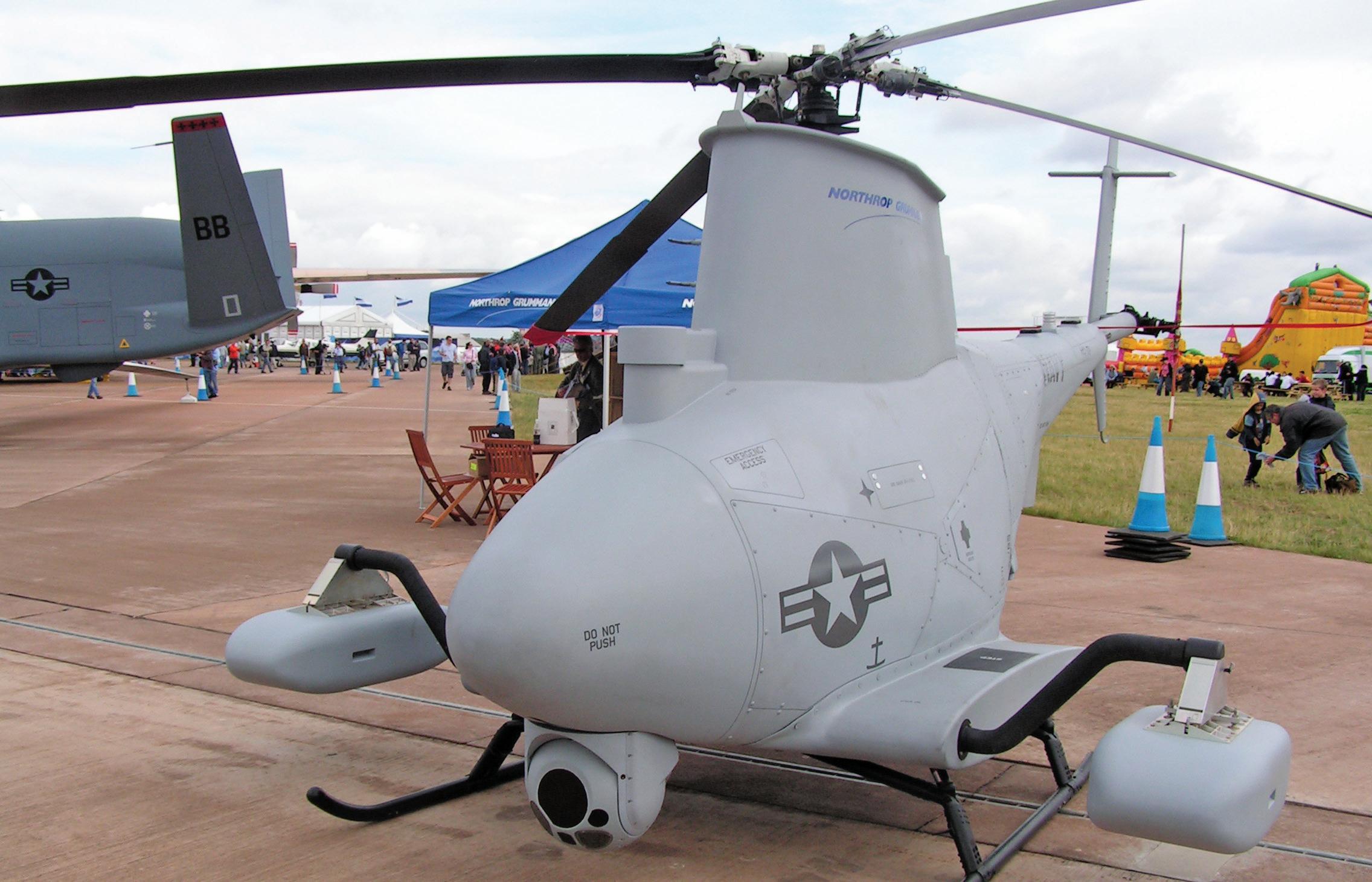
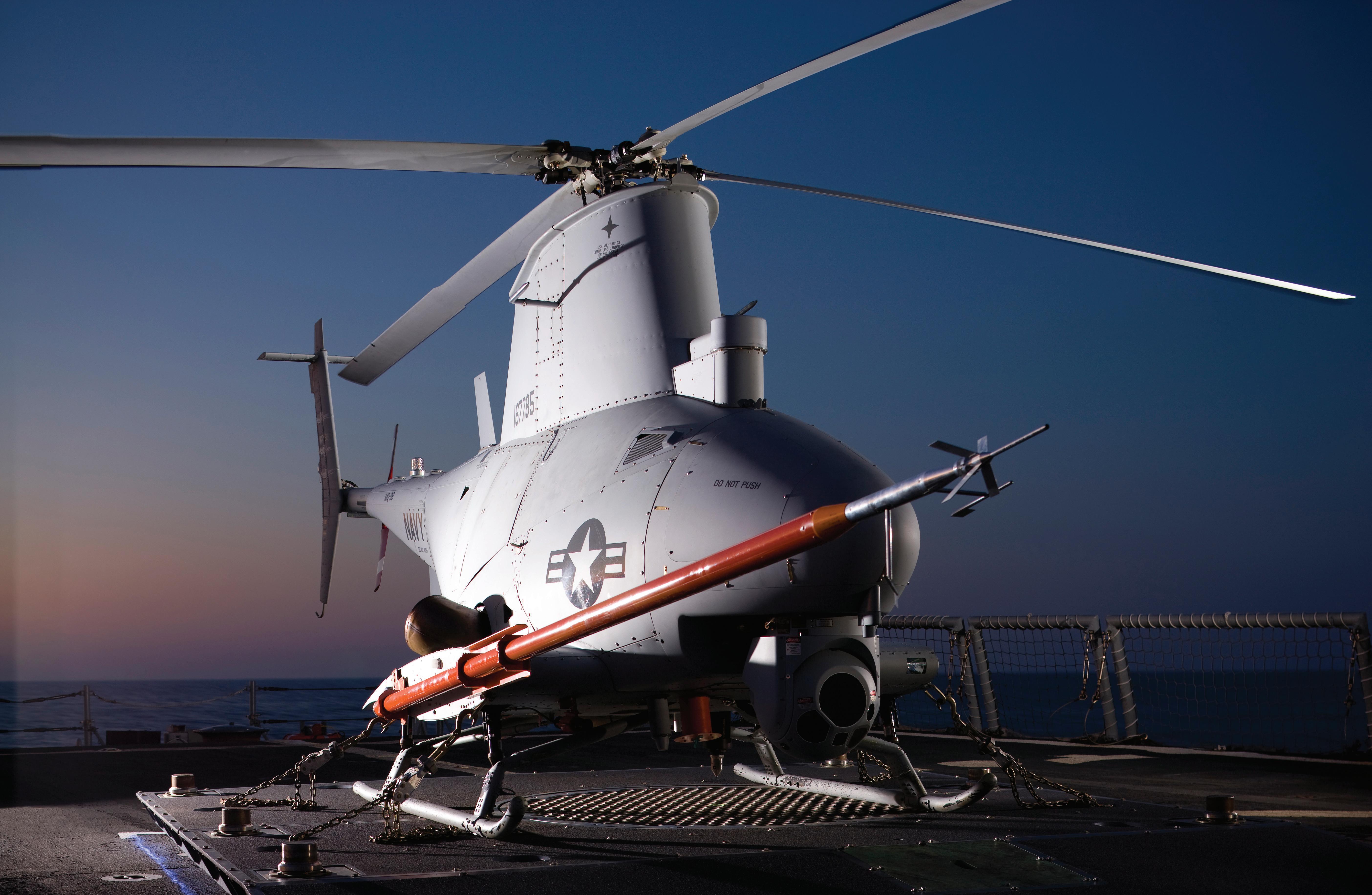
ABOVE: In August of this year, a Northrop Grumman MQ-8B rotary-wing UAV completed a six-month deployment on the frigate USS McInerney. (Photo courtesy of Northrop Grumman)
RIGHT: The U.S. navy has successfully used UAVs such as the MQ-8B Fire Scout in a wide variety of military applications. (Photo courtesy of Northrop Grumman)
While the world’s attention was focused on Predators and their lethal cousin, the Grim Reaper, Canadians focused on uAVs that were specific to the needs of the mission in Afghanistan. The Sperwers were replaced by Medium Altitude long Endurance (MAlE) Cu-170 Herons, leased from McDonald, Dettwiler and Associates of Richmond, B.C. The Heron, with a service ceiling of 27,000 feet and reported endurance in excess of 40 hours, was able to provide what Col. Reid describes as “persistent and constant surveillance” across the entire Canadian area of responsibility operating on a 24/7 basis.
At the tactical level, ground troops had small uAVs such as the Scan Eagle and Skylark. The Scan Eagle, pneumatically launched from a small trailer, has a range of up to 100 kilometres and an endurance of up to 20 hours. The Scan Eagle can provide reconnaissance capabilities to larger military units across a wide battlefront. The Skylark is designed to be carried in a backpack and assembled in the field as needed. Hand-launched, the electrically powered craft has a range of five to 10 kilometres and can stay aloft for up to two hours. operated from a control system the size of a laptop computer, the Skylark allows troops in the most forward positions to literally look around corners and determine what is behind buildings, walls and other obstructions without exposing themselves to ambush.
Col. Reid says the CF is likely a year or two away from making a
decision as to the next generation of uAVs that will be employed. The CF is looking at a number of systems, from the simplest to the highflying long-range models. Reid goes on to say that there are other considerations dependent on the decisions, such as the personnel requirements for operating any given system. Following a long-standing tradition, Canada currently has personnel serving with Australian and American military units employing uAVs in order to better bridge the gap between today and the day when the CF acquires its next generation of uAVs.
The CF is also looking ahead with an eye to integrating uAVs with existing platforms, as “force multipliers,” in military jargon. “Much as a helicopter complements a warship, the uAV can greatly expand the effective coverage area if it is paired with a helicopter or a long-range aircraft such as the CP-140 Aurora,” Reid says. “The uAV can monitor patterns of activity for extended periods across a broad area.”
The helicopter or patrol aircraft can be used much more effectively for investigating contacts made by the uAV. “(This pairing) can be used for military purposes such as enforcing the naval blockade of libya,
anti-piracy patrols or extending current domestic programs such as assisting the Department of Fisheries and oceans in monitoring foreign fish boats and monitoring drift nets,” says Reid.
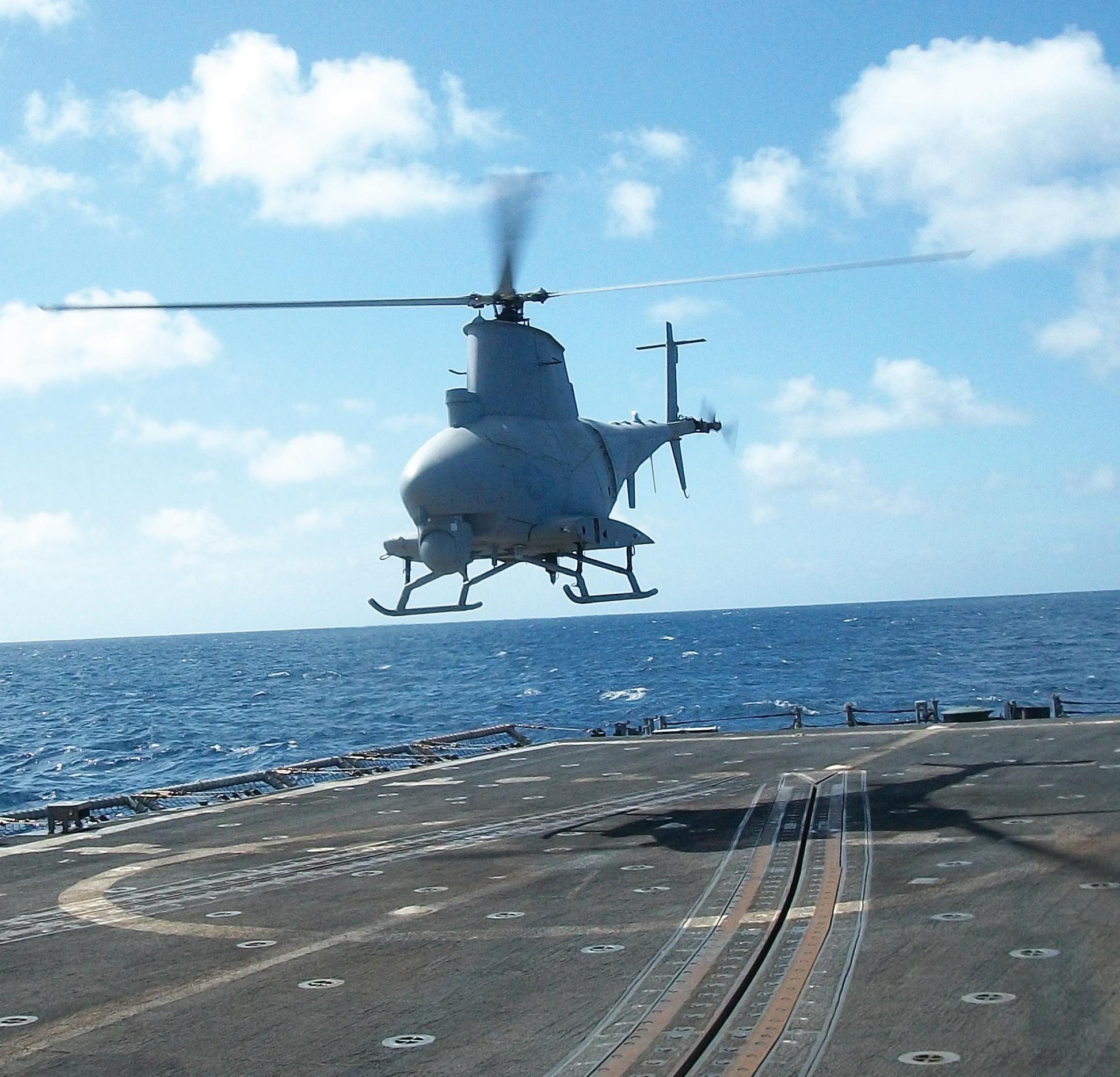
To illustrate the point, in August of this year, a Northrop Grumman MQ-8B Fire Scout rotary-wing uAV completed a six-month deployment on the frigate uSS McInerney. The uAV flew 435 operational hours during the deployment on piracy patrols off the Horn of Africa and in the Mediterranean off the coast of libya, often paired with a uH-60B helicopter.
‘‘
unlike conventional aircraft, uAVs can exceed the operational parameters of crewed missions.
’’
eYes to tHe futuRe
While the military use of uAVs expands exponentially, civilian aviation has two major obstacles to overcome. Firstly, there has to be a level of safety equivalent to that of manned aircraft. uAVs will have to be able to “see” and avoid other aircraft, before there will be operations in regulated airspace. Then there’s the matter of having a viable business plan – matching the aircraft to the job.
unmanned Systems Canada (uSC) is a national not-for-profit organization that represents the Canadian unmanned vehicle systems community: aviation (uAS), ground vehicles (uGV) and underwater (uuV). Formed in 2009 from the merger of two groups, uSC has grown from a handful of members to more than 50 corporate members. uSC executive director Wayne Crowe explains that Transport Canada has commissioned a working group comprising all interested stakeholders to develop the regulations necessary to integrate unmanned aircraft systems (uAS) into Canadian airspace.
“This is a controversial issue of great importance to our membership,” says Crowe. “Accordingly, unmanned Systems Canada is well represented – the working group charged with developing the regulations is co-chaired by Transport Canada and unmanned Systems Canada and many of our members have positions in the actual working group.” The work has been subdivided into three sub-groups concentrating on: People (pilot, operator and maintenance training, competencies and licensing); Product (registration, flight authority and airworthiness); and operations and Access to Airspace.
These sub-groups are currently meeting and have divided the exercise into four phases:
• Phase 1 – uAS below 25 kilograms and operated within visual line of sight
• Phase 2 – uAS below 25 kilograms operated beyond visual line of sight
• Phase 3 – All operations of uAS between 25 and 150 kilograms
• Phase 4 – All uAS operations in Canadian airspace (file and fly)
The working groups are expected to present a set of proposed regulations for the initial phase to the TC advisory committee by the spring
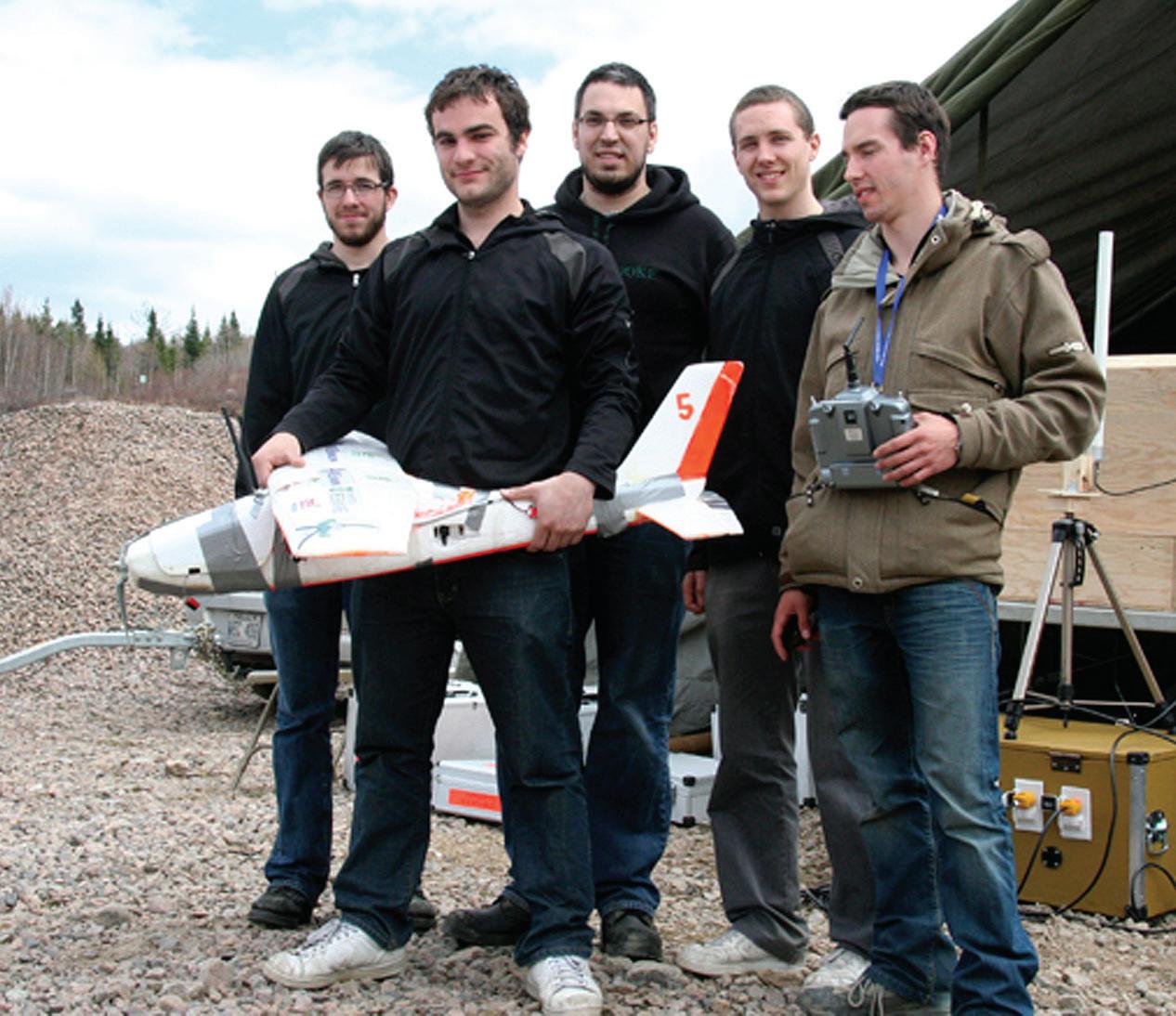
Unmanned Systems Canada (USC) annually sponsors a student competition to promote and develop Canadian expertise and experience in unmanned systems technologies at the university and college levels. This year’s winning team from Université de Sherbrooke: (left to right) Simon William Kirouac, Sébastien Léonard Godbout, Jonathan Bouchard, William Lemaire and David Tremblay. Missing is Eric Demers. (Photo courtesy of Unmanned Systems Canada)
of 2012, and all phases are to be addressed within six years. Formal uAS air regulations will be issued following government approval; however, it is anticipated that the results of the deliberations and recommendations will be reflected in internal guidelines for special flight authorizations on an ongoing basis as they are accepted. If everything goes as planned, Crowe says, “by the time the proposed regulations
The MQ-8B Fire Scout conducts operations aboard the USS Halyburton (FFG 40) during its second at-sea deployment. (Photo courtesy of Northrop Grumman’s Ryan Colebourn)
become law they will have already become everyday practice.”
In terms of research and development, uSC sponsors a student competition to promote and develop Canadian expertise and experience in unmanned systems technologies at the university and college levels. The 2011 competition attracted 18 teams from Canadian schools, up from four in 2007 and 10 in 2009. The theme of this year’s event was support to forest fire fighting, with a parallel
competition that included two unmanned ground vehicles (uGVs). The ground vehicles were to patrol a designated firebreak, and when an event occurred that triggered their sensors, the uGV was to report to the uAS overhead. The uAS would then investigate using its sensors and stream information back to the base station.
The competition, held at CF Citadel Val Cartier outside Quebec City, had two phases: Phase 1, the preparation of design papers for
review, comment and scoring by a panel of experts; and Phase 2, the operational demonstration event. The winner of both phases of the uAS competition was the team from université de Sherbrooke.
uSC has also been researching Canada’s role in Arctic monitoring and assessment with a view to assisting in the implementation of unmanned vehicles in meeting Canada’s international Arctic obligations. The Arctic Monitoring and Assessment Program (AMAP) is an international organization that reports to the Arctic Council. It is actively supported by the eight Arctic countries, responding to governmental requests for information on the Arctic. unmanned Systems Canada is a member of the AMAP uAS Expert Group established at the request of the Arctic Council in response to needs voiced by the scientific community for access to gather important environmental and climate data using unmanned aircraft systems (uAS). Mark Aruja, uSC’s communications director describes it as “working with the scientists to understand what they want to achieve and what technology they can use . . . a helicopter or fixed-wing aircraft can’t fly 100 feet above the ground for hundreds of kilometres in the high Arctic.”
an enHanCed BoRdeR pResenCe
The u.S. Department of Homeland Security started using a fleet of six Predator uAVs last year to patrol the u.S.-Mexico border. Earlier this year, Predators started flying the Canadau.S. border across the prairies. In a demonstration of potential uses of the technology, sensors on several Predators were used to gather information on wildfires burning close to the border in Arizona and New Mexico this spring. The data was streamed in real time to firefighting authorities. At the 2010 Aerial Firefighting Conference in Richmond, B.C., representatives of lockheed Martin extolled the virtues of the Predator as an informationgathering tool for wildland firefighters. The problem they admitted to facing was that, under current air space regulations, the Predator could not be operated over any populated areas, making it applicable in about one per cent of the potential market.
At the same conference, Kathe Rich of the university of Alaska-Fairbanks talked about her experience the previous year using a Scan Eagle uAV to support the Bureau of land Management and the Alaska Fire Service. When dense and widespread smoke made manned flights too dangerous, the uAV was deployed over several massive fires, using its infrared sensors to track the progression of the fires and identify hot spots. Rich described
the missions as, “nothing fancy, just a matter of identifying where the actual fire is and in case of it being able to tell if the fire had crossed a river.” For this mission, the university needed to obtain an emergency certificate of authority from the FAA to fly in civil airspace. While the Scan Eagle was in the air, no other aircraft were permitted.
In Canada, law enforcement has taken the low road, so to speak. In 2007, Const. Mark Sharpe of the Kenora Detachment of the ontario Provincial Police (o rience with radio-controlled aircraft to work on his day job as a forensic identification officer, by testing and operating small RC uAVs equipped with digital cameras for crime scene photography. Today, the at six detachments around X-6 manufactured by Draganfly Systems of Saskatoon, Sask., and the Scout, manufac tured by Aeryon labs of Waterloo, about $30,000 each, the small effective to operate. Since November last year, the oPP has operated them under a Special Flight operations Certificate covering all of ontario that permits flight over urban areas.
Multiple appliC
In a “back to the future” moment, the airship or blimp may return as a pilot-optional “heavy lifter” or “ultralifter” as a result of a program initiated by the u.S. Defense Advanced Research Projects Agency (DARPA). In 2006, DARPA announced a project to develop and evaluate a “very large airlift vehicle, “capable of carrying 500 tons a distance of 12,000 nautical miles in less than seven days. While the DARPA project has yet to see the light of day, several companies are promising delivery in the near future of hybrid airships that have lifting capacity in the range of 20 tons. Heavier than air, hybrids combine the lifting power of helium with conventional motive power, with the result being extra-large ST
From the world of science fiction, a press release issued by the Southampton, England, in July states “engi neers at the university of Southampton have designed and flown the world’s first ‘printed’ aircraft, which could revolutionize the eco nomics of aircraft design.” The release goes on to say, “the SulSA (Southampton laser Sintered Aircraft) plane is an unmanned air vehicle (uAV) whose entire structure has been printed, including wings, integral con trol surfaces and access hatches. It was printed on an EoS EoSINT P730 nylon laser-sinter ing machine, which fabricates plastic or metal objects, building up the item layer by layer. No fasteners were used and all equipment was attached using ‘snap fit’ techniques so the
entire aircraft can be put together without tools in minutes.” Powered by an electric motor, the aircraft has a wingspan of two metres and is capable of speeds up to 100 kilometres per hour. The university is initiating a postgraduate program in September 2011 covering the design, manufacture and operation of robotic vehicles.
Helicopters talked to a number of leading
Introducing the
R66®
- Rotor & Wing
awareness and some interest, few are willing to talk on the record – understandable in an industry with a high degree of competition. The general consensus was pretty much the same – “no plans to incorporate uAVs in our operations at this time.” But down the road? Jones said it best with his “eat your lunch” quip. “It will depend on the ability of the industry to accept and adapt to the tech-
“Robinson Helicopter scores a third win with the turbine-powered R66”
- AOPA Pilot
“priced to turn heads”
- Business & Commercial Aviation
“rock-solid handling”
- Vertical Magazine
“a seriously capable high performance, five-place helicopter”
- Helinews Asia-Pacific
Lowest acquisition and operating costs of any turbine helicopter
Hover ceiling OGE at maximum gross weight over 10,000 ft 300 lb capacity dedicated baggage compartment
www.robinsonheli.com • 310-539-0508
flying ‘Molson air’
An Inside Look at Canadian Helicopters’ Afghanistan Operations
BY WalteR HeneGHan
Canadian Helicopter’s operations in Afghanistan have become an integral part of the company’s growth. In the second quarter of 2011 alone, the company’s net income soared by $15.1 million, boosting overall revenues nearly 43 percent to $63.3 million. Much of the increase can be attributed to its contract work with the U.S. army. Walter Heneghan, VP safety and quality, had a chance to join the team in Afghanistan. What follows is fascinating account of flying “Molson Air” during his three-week visit to the operation – and how it made him appreciate the efforts of every member of the Canadian team.
Saigon . . . shit: I’m still only in Saigon . . . Every time I think I’m gonna wake up back in the jungle.” – Capt. Willard, Apocalypse Now
This catchphrase bit of pop culture rattles through my head virtually every day that I’ve been here. Except this isn’t 1971 Vietnam as portrayed by Martin Sheen in the movie, Apocalypse Now: it’s modern-day, 21st century Afghanistan and I wake up in my plywood covered “B” hut.
I’m on standby today but a sleep-in is not in the cards as my body is now finely tuned to awaking at 0500, whether I want to or not. I lay there momentarily pondering my options – go back to sleep, lie there or just get up. It takes about 10 seconds to decide to get on with my day; the showers and latrine are quieter early in the morning and I know that I will only feel lousy if I force the sleep.
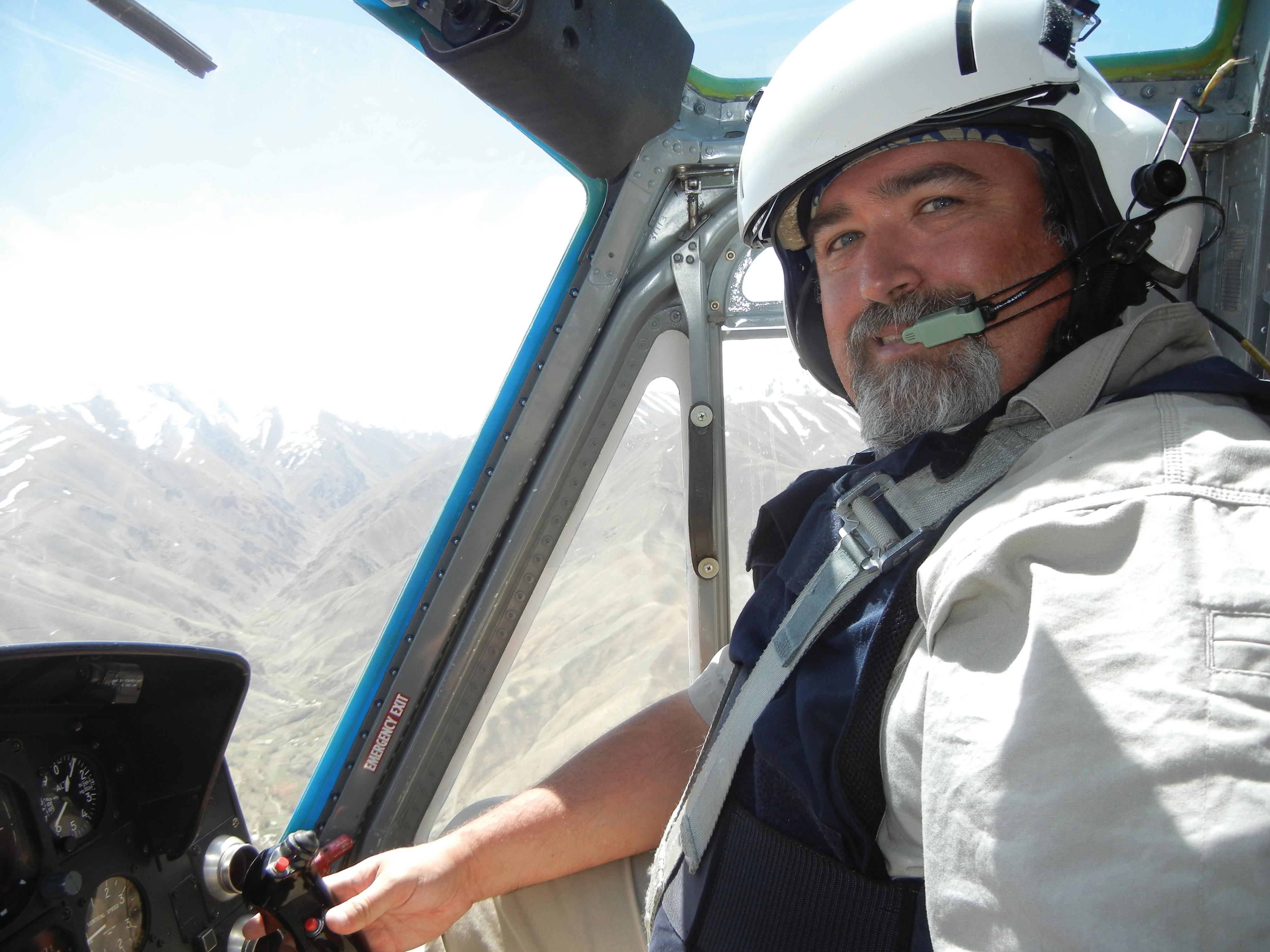
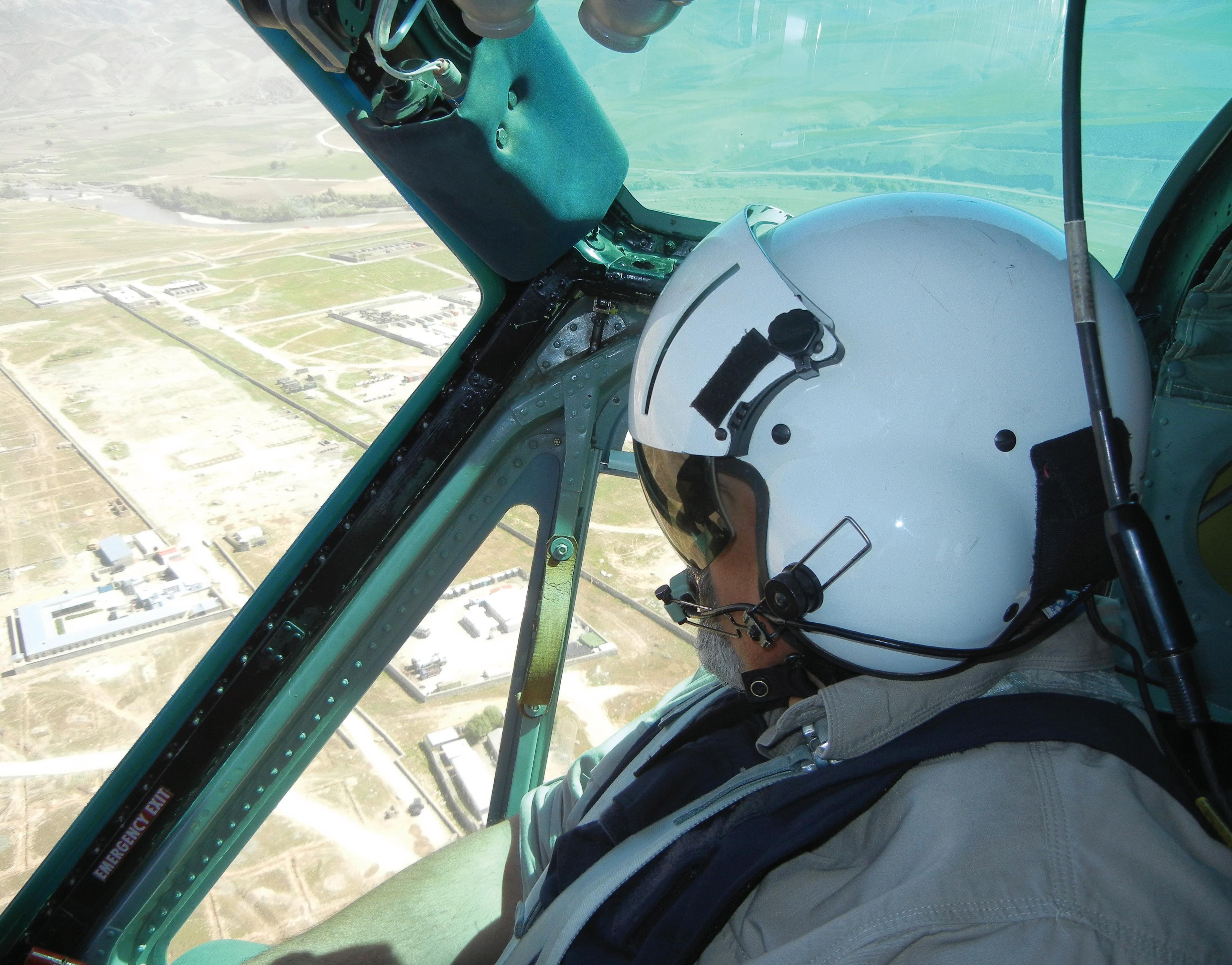
Yesterday, I was paired with a junior, low-time pilot, again on standby. We flew 4-1/2 hours! The area in east Afghanistan is spectacular. At the confluence of several valleys, one leaves the confines of a very industrious airfield and can fly westward over flat, dry, brown mud-like terrain towards the distant Tora Bora mountain range or northeasterly up the Pech or Kunar valleys toward Pakistan. These are severe valleys with mountain peaks of more than 10,000 feet, lush wherever the land is touched by water, caked mud brown otherwise. If the country could be irrigated, it would be green from valley floor to the sky. I feel like I am flying around Banff National Park all day, except I’m not . . .
our mission here is to fly logistical, non-combat-related support
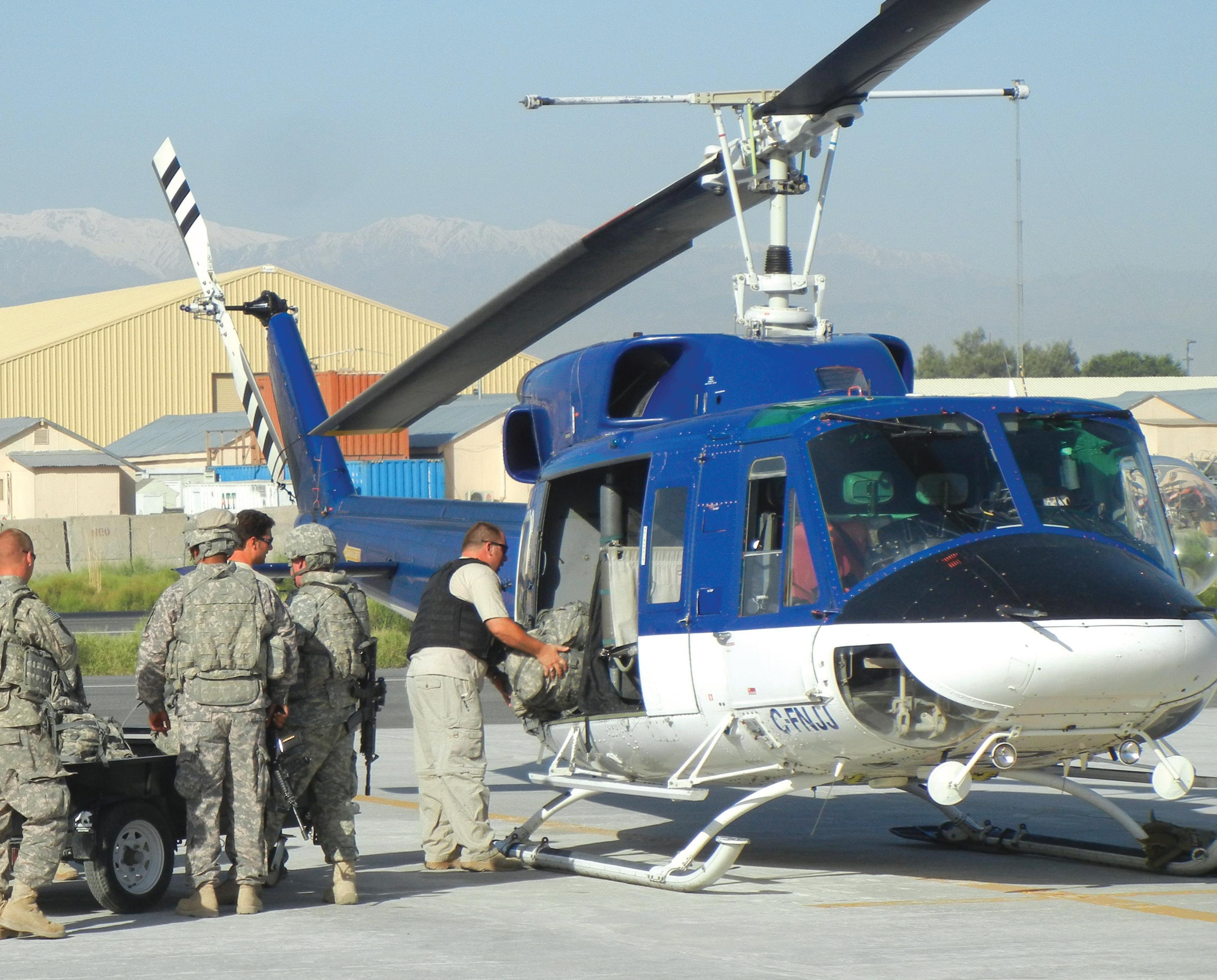
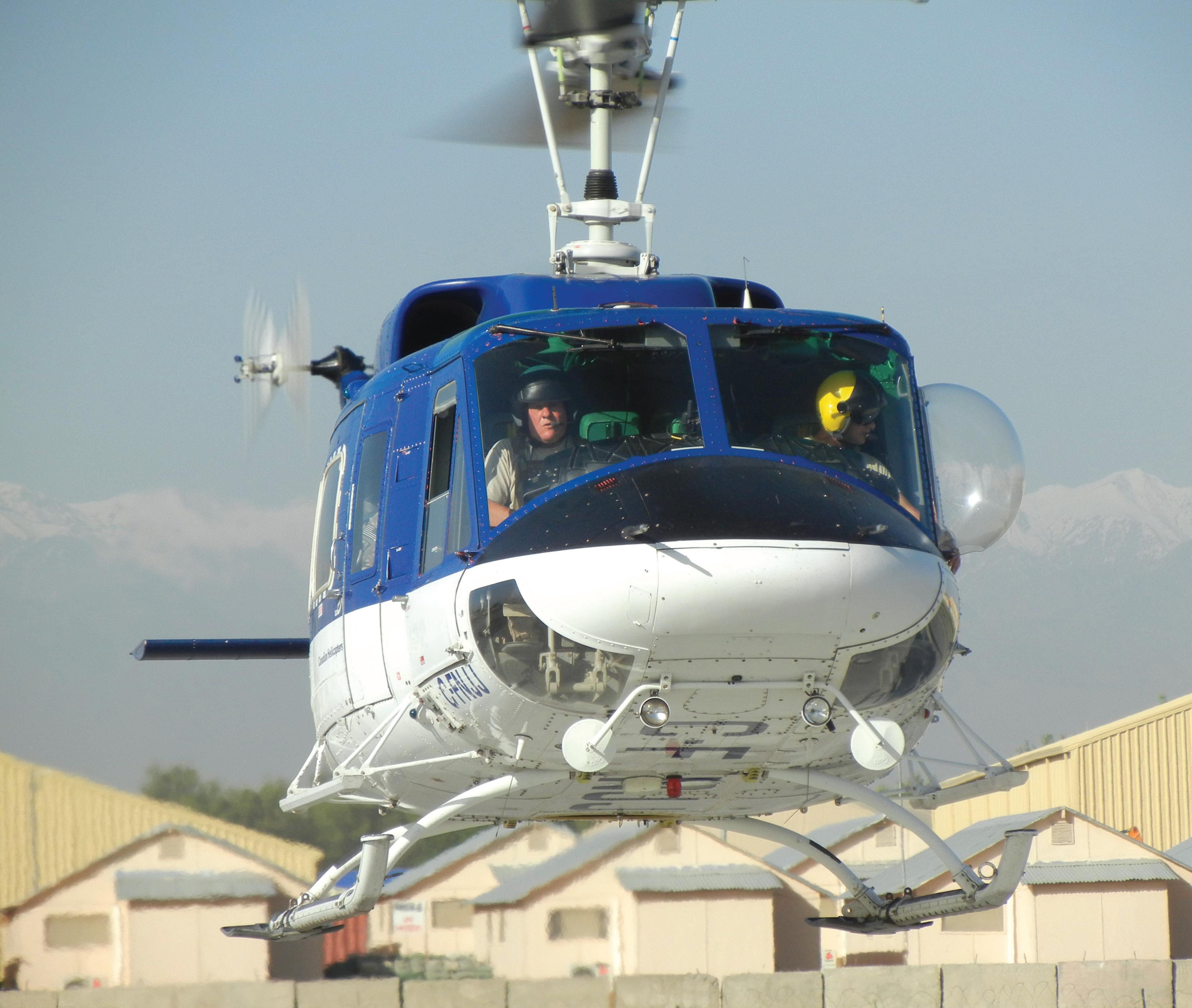
flights for the u.S. army effort as part of the ongoing o peration Enduring Freedom (oEF). And we are busy: flying our fleet of Sikorsky S-61 and Bell 212 aircraft daily on round trips up and down the valleys; shuttling soldiers, supplies, mail, aid workers, logistical support personnel, you name it.
Flying starts in the relative coolness of early morning (24 C at 7 a.m.) and continues through the dead heat (up to 40-plus C) of midday until an hour before sundown. “It’s a dry heat!” is a comment often heard coming from the flight crews, laughing as they swig bottle after bottle of Gatorade or water. Sweating is imperceptible; I can disembark for my aircraft soaking wet and, after standing on the ramp for five minutes, be bone dry. It is an amazing phenomenon. I heard a pilot a few days ago remark that he spent all day drinking water but never found the urge to go pee! It is that hot and dry.
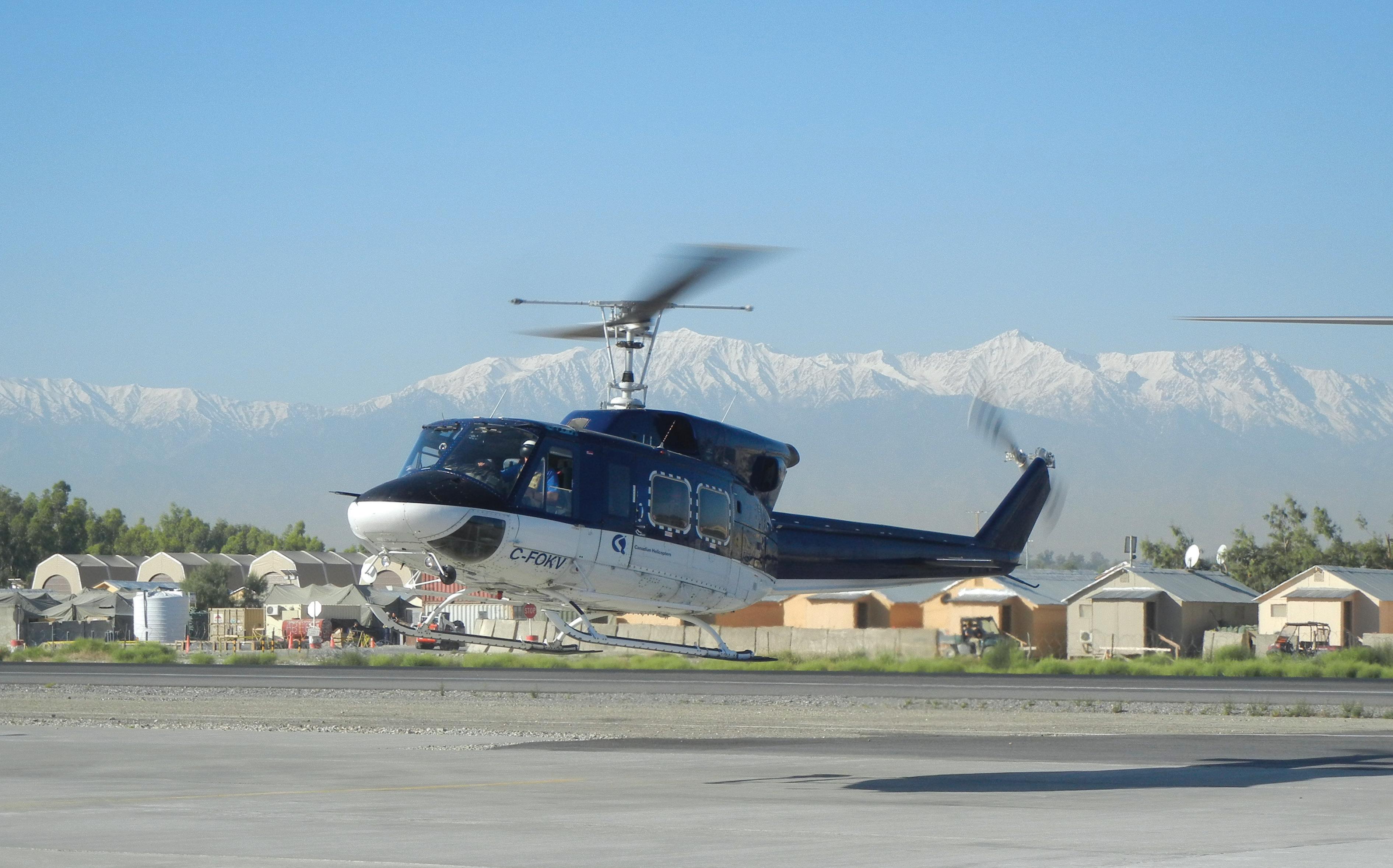
The operation here has been running now for more than two years, and by all impressions is working very well. Canadian Helicopters initially won a single support contract to provide three B-212 aircraft. They arrived via Antonov 124 heavy-lift transport aircraft and set up shop: no facilities, no hangar, bare bones accommodations. And they started flying. Today, there is a quasi-permanent tent style “Sprung Shelter” hangar, and a series of sea containers used as storage, lounge and office space. The fleet has expanded to include two S-61s and with a spare helicopter; there are now seven helicopters here. A second northern base of operations has another three S-61s and two B-212s. That makes 11 aircraft on contract with a spare shared between the two locations.
We are known here as “Molson Air.” Yes, it is a bit of a cliché but the anecdote goes like this: early in the operations, our aircraft began flying using their civil registrations, Charlie Mike Alpha Hotel Delta, for instance, for each movement in the operating area. The tower
controllers were u.S. army; they were more accustomed to Cougar o ne-Niner, or Horseman Seventeen. Civil registrations as call-signs just were not going to work. The tower chief approached us with this problem: “We need something shorter, something distinct, something that will identify your operations but not be too specific,” he said. He suggested a single word would do; something quintessentially Canadian. I don’t know who he looked at but he thought that one thing Canadians do well is drink beer, and since we are Canadian Helicopters, he asked: “Isn’t there a beer in Canada called Canadian?” And so, “Molson Air” was born.
The team here is a conglomerate of the international helicopter pilot and mechanic industry. The men and women working at Molson Air come from every nook and cranny of experience and many have thousands of hours of flight time. They have travelled the world in pursuit of flying; Afghanistan is just another stop. The S-61 pilots are
largely ex-heli logging experts, and they are used to long, hot days full of non-stop, production flying. The B-212 guys have tons of offshore and hot, dry and dusty exposure. The mechanics also bring decades of experience to the job. And the dispatchers; well, they are generally women. Somehow, it seems, that if you want to soothe the savage beast when it comes to ironing out the day’s plan of operations, a woman’s touch works best!
one of the biggest surprises for me is the sheer and raw beauty of the country. The mountains rise majestically from the desert sand, small towns of mud huts and terraced plateaus are woven throughout, and
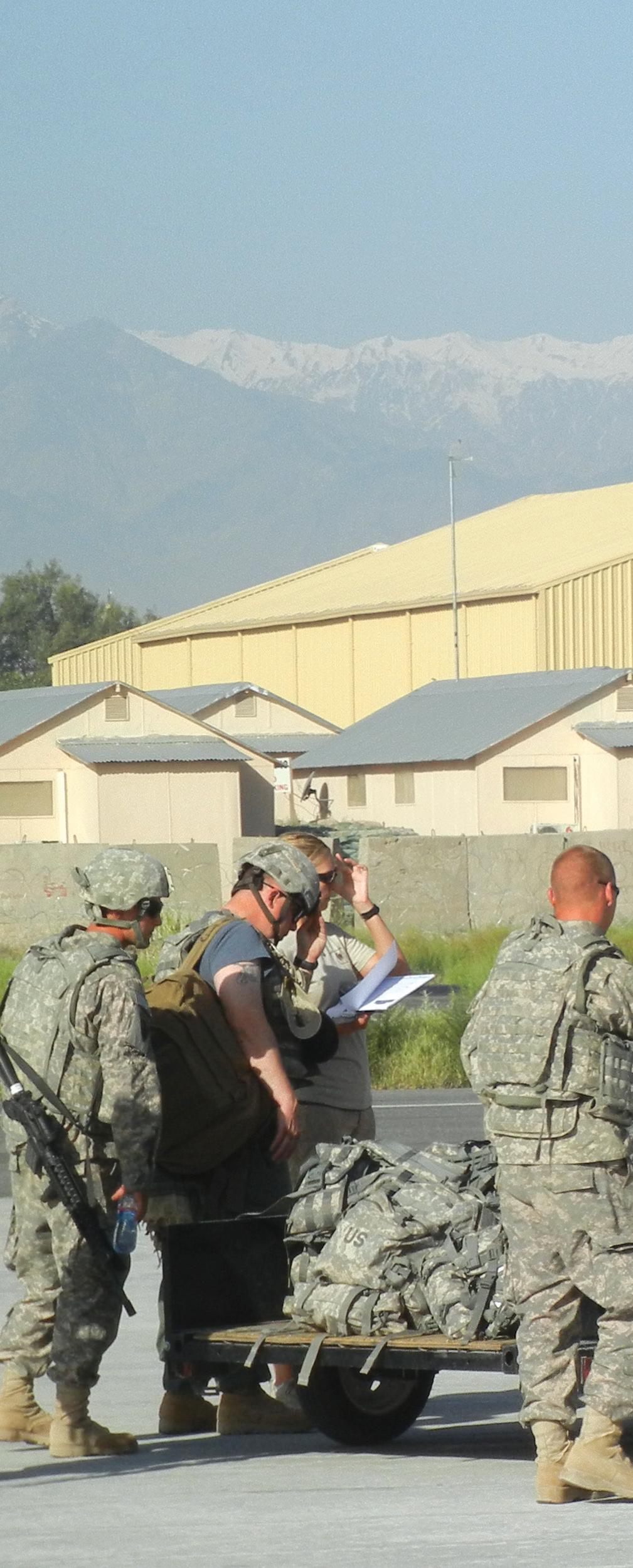
ABOVE: A passenger/cargo load of U.S. army soldiers prepares for departure. (Photo courtesy of Canadian Helicopters)
RIGHT: The author calls his three weeks flying in Afghanistan the experience of a lifetime. (Photo courtesy of Canadian Helicopters)
where water meets sand, there are lush fields of green, orchards and crops. At altitudes of 8,000 or 9,000 feet, it is common to see small collections of huts with mud-holding pens for the herds of sheep or goats that are grazing just beneath the snow line. The weather in the eastern province can be unpredictable, with rolling thunderstorms and swirling shifting winds throughout the day.
Earlier, during my stay at the northern base, I had the privilege of flying through the Barniyan Pass. The colours of the mountains, shifting from tan to black to copper to rust to green to orange – I have never seen anything like them. The land would be a rock-hound’s nirvana.
I don’t know who he looked at, but he thought that one thing Canadians do well is drink beer.
one thing this experience has revealed to me is that our staff are real pros. They are working half a world away from their families, in the desert heat and dust, and in a country at war. Their days are long; the aircraft are working to their design limits. The customer is demanding and the job is getting done, day after day, enduring.
for landing at a German-controlled FOB in northeastern Afghanistan.
I had a jaded view of the coalition effort here in Afghanistan before coming over to see our operation. It is less jaded now. Partly through the excellent novel, Three Cups of Tea bookended with the thrilling recounting of the Special Forces operations that started the Afghan offensive, The Horse Soldiers there is still, for me, a real cognitive dissonance about being here.
When I am flying at 8,500 feet, MSl with six soldiers in the back en route to one of many forward operating bases, I am surrounded by the
The Hindu Kush mountains loom in the background as a Bell 212 lands at the eastern Afghanistan base. (Photo courtesy of Canadian Helicopters)
Preparing
(Photo courtesy of Canadian Helicopters)
majesty of the Hindu Kush and Tora Bora mountain ranges – the “foothills” to the Himalayas. The greenery, the colours of the landscapes – it’s a privilege to experience the total sensual onslaught of the local topography that is juxtaposed with the reality that below on the valley floor, there is a ground war and that we are involved in a serious business. There is a real dissonance inside me.
I appreciate the work that is being done here now more than ever. As the VP of Safety and Quality at Canadian Helicopters, my ongoing condition is one of constant un-ease: Are we doing enough to manage risks?
Fatigue? Client demands? operational pressures? I now appreciate what we are achieving here, which goes beyond the business side of things: the dedication of the crews, the camaraderie, the coming together of a disparate group of aviation professionals from every conceivable background to make it work, to get the job done, and to do it, again and again, with full regard to safety. It is truly an impressive feat – one that’s hard to fully fathom.
Walter Heneghan joins Helicopters as a regular columnist beginning in the Jan/Feb 2012 issue, reporting on safety and quality issues.
Flying starts in the coolness of the morning – 24 C. It generally warms up to more than 40 C, sending pilots for water and Gatorade. (Photo courtesy of Canadian Helicopters)
Money Isn’t Threatening MRO Competitiveness
BY david CaRR
the skill Quotient a
viation maintenance, repair and overhaul (MRo) is on a rebound. Helicopter MRo in Canada has traditionally cashed in on several assets, including a skilled and reliable workforce and excellence in niche markets such as gas turbine overhauls and composites. A lower dollar may have tipped some North American and international customers in Canada’s direction, but the overall benefit of a weaker currency is questionable given that parts typically make up 80 per cent of an invoice and are priced in u.S. dollars.
So as Canadian MRo climbs out of the doldrums, it will be a shrinking talent pool and not a soaring dollar that will hurt future competitiveness. operators are feeling the pinch, says Fred Jones, president of the Helicopter Association of Canada (HAC). “We are regularly getting calls from operators looking for flight crews and technicians,” he says. “There is a shortage in Canada of qualified people who are prepared to do what it takes to keep the helicopter industry going.”
The concern now is avoiding a repeat of three years ago, prior to the economic downturn, when machines were parked because there was nobody to fly or maintain them. At a recent industry consultation put on by the Canadian Aviation Council for Aviation and Aerospace (CCAA, formerly the Canadian Aviation Maintenance Council), attracting and retaining people with the right skills was the top issue among MRo operators. “A strong dollar is a concern but we can overcome that,” Robert Donald, executive director of the CCAA, points out. “But it doesn’t matter where the dollar is if you don’t have the right people.”
When it comes to helicopter MRo, at least, too many of the right people are staying away in numbers and that should make the industry nervous. “It is a lifestyle thing, especially among younger people. There is some resistance to going out in the bush and spending 30 or 40 hours away from home,” notes Jones, who cut his teeth flying helicopters in northern ontario for up to five weeks at a time before returning home. “For me, at least, it was an adventure. They don’t look at it the same way.”
Jones suggests that the industry is going to have to adapt to the changing culture, although he points out it can only bend so far. “An operation that is close to a base lends itself to regular shift changes, more reliable time off and periodic and shorter rotations up north and to isolated areas. But the reality is, if you are working in a camp
in the Arctic Circle, distance and accessibility make it impossible to do those things. But we are going to have to adapt or watch the talent pool disappear.”
By 2017, 40 per cent of the Canadian labour force will be over 55 years of age and considering retirement, including more than 80,000 aviation maintenance engineers (AME). Perhaps Canadian MRo dodged a bullet during the recent downturn as demand weakened and the monetary meltdown caused older AMEs to postpone retirement. The current economic crisis and the elimination of mandatory retirement in provinces such as British Columbia, ontario and Saskatchewan may prompt a similar rethink.
“That can only take you so far,” says les Aalders, executive vicepresident of the Aerospace Industries Association of Canada. “At some point these people are going to have to retire and it is going to be a wave crashing against the bow.” When they do eventually leave, years of knowledge and experience will be going out the door with them.
Adding to the frustration is the skills imbalance in the Canadian labour force. In 2011, Canada had a shortage of 560,000 skilled workers versus a surplus of 88,000 unskilled workers. By 2016, an already yawning gap is expected to widen to a shortage of 1.4 million skilled workers versus a surplus of over half a million unskilled workers.
As the retirement clock keeps ticking down the number of students enrolling in aviation maintenance programs is not keeping pace with the 5.2 per cent compound annual growth rate in MRo forecast by oliver Wyman. Furthermore, there is no guarantee that those who graduate will follow the string onto the floor of an airline, MRo or original equipment manufacturer (oEM). Recently, 100 per cent of British Columbia Institute of Technology aviation graduates bypassed aviation entirely to work on Vancouver’s Skytrain light rail transit system. Graduates from similar programs across the country are finding higher-paying jobs in the oil patch, with bus companies or among the ups and downs of elevator repair.
CCAA’s Donald argues that the upcoming skills shortage is going to be markedly different from the shortages of the past. Traditionally, there has been a “pipeline effect” where bigger players such as Pratt & Whitney Canada (the world’s largest supplier of engines for helicopters, regional and business aircraft), Bell Helicopter’s production facility in Mirabel, and Vancouver-based Vector Aerospace (now part of the EADS/Eurocopter group of companies) had a steady pipeline to the skills they needed, leaving smaller operations to struggle. This has been especially true of the helicopter industry, which operates in some of Canada’s harshest climates and is more vulnerable to having skilled staff poached with offers of greater compensation. “This shortage is going to flow up the pipeline and it is going to hit everybody,” Donald adds.
The picture is not all gloom. Some MRos such as StandardAero are not waiting for recruits to walk through the hangar door. The Winnipeg-based MRo that has been twisting the spanner on aero engines for almost as long as Canadians have been piloting airplanes (see, “Setting the Standard,” pg 28) is playing a larger role in the education system, working with the Manitoba government and local schools to identify the skills.
Apprenticeship programs give the next generation of technicians a taste of the industry, but Jones maintains if operators want to hold onto personnel, they have to do a better job of educating young people about the nature of the beast before they sign on. “I don’t think it is in anybody’s interest for new personnel to arrive at a camp
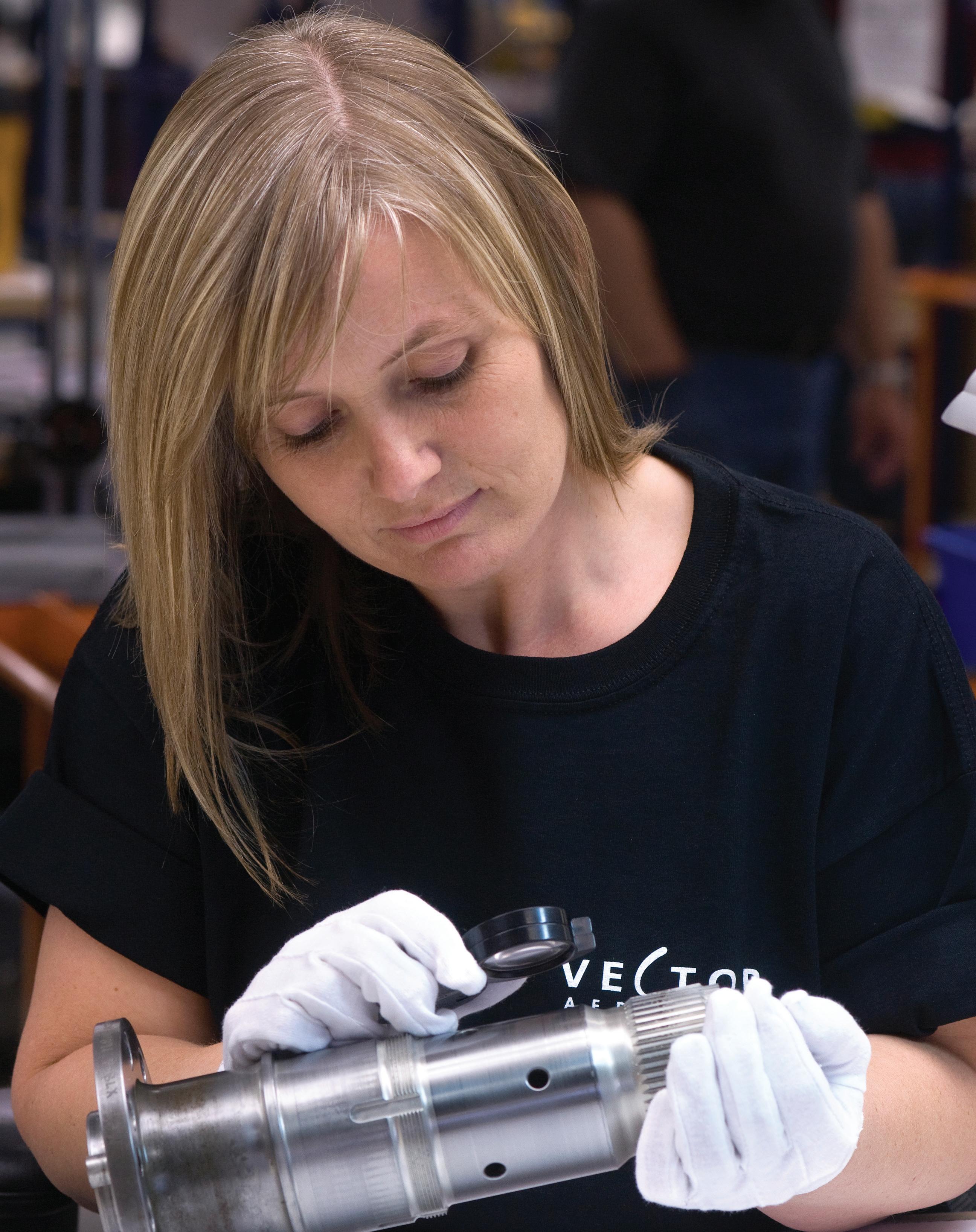
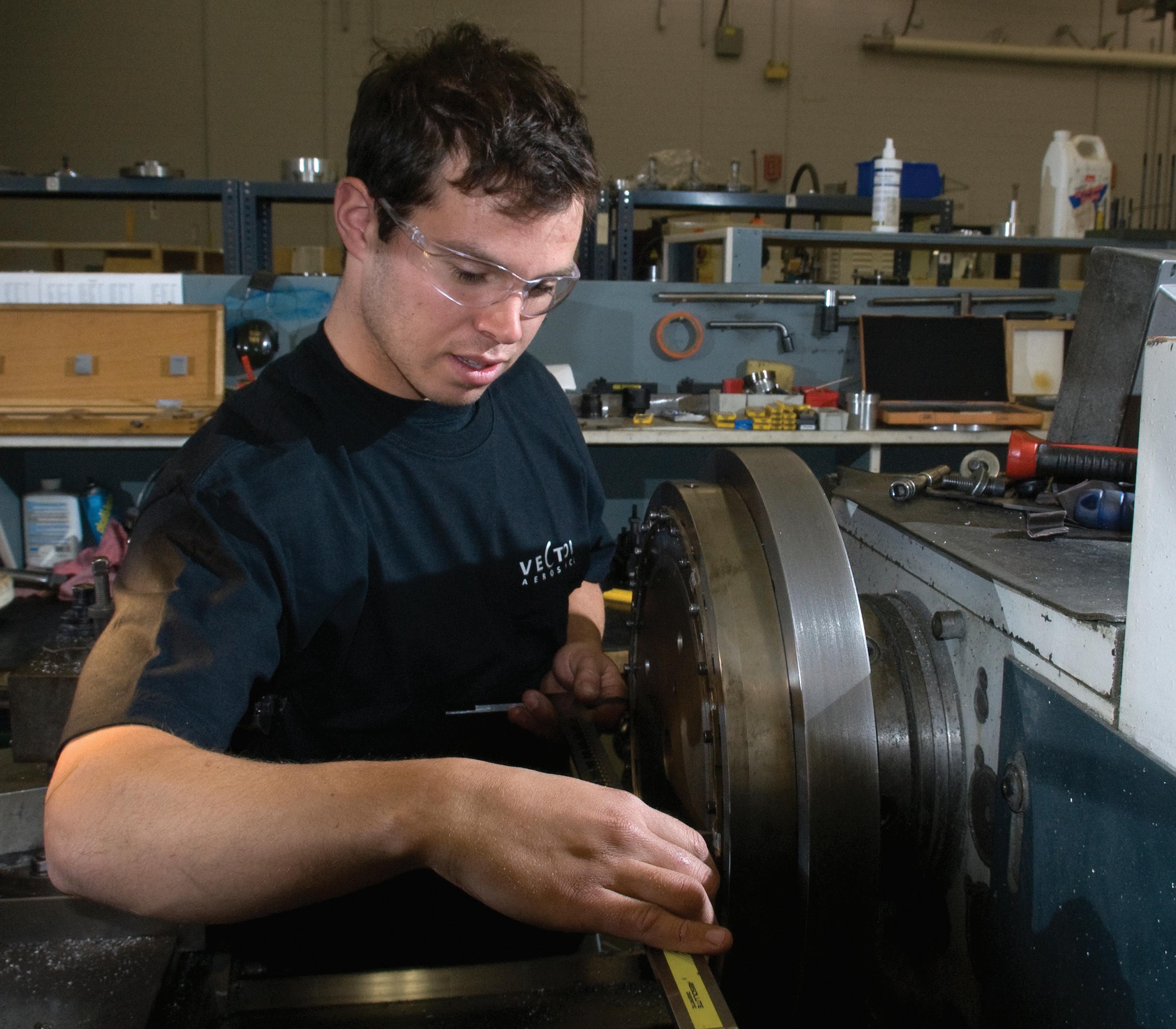
TOP: Canada needs to do a better job of attracting foreign AMEs and fast-tracking accreditation if it hopes to stay competitive. (Photo courtesy of Vector Aerospace)
BOTTOM: StandardAero is working with the Manitoba government and local schools to ensure the pipeline of skilled workers remains steady. (Photo courtesy of Vector Aerospace)
with false expectations,” he says. “There is a percentage of the new generation who will see this (as an adventure). But we haven’t been particularly good at preparing them for the time away from home or irregular shifts.”
Still, apprenticeship does not come cheap and can be a drag on already thin operating margins, which may explain why so many MRos remain hesitant about launching inhouse training programs. Moving forward they may have little option, discovering as StandardAero has that a good apprenticeship program does deliver the skills. Canada also needs to do a better job of attracting foreign AMEs and fast-tracking accreditation. The number of foreign trained AMEs contributing to the unskilled shortage by driving cabs and sweeping floors is not as severe as with other professions, but they do exist and in increasing numbers. There is also a concern that federal budget cuts might compromise Human Resources and Skills Development Canada’s
setting the standard
Dubai’s $15-billion road map into aerospace manufacturing and aviation services runs through Canada. launched in 2006 by the emirate government, Dubai Aerospace Enterprise’s (DAE) early focus was to be on new airport development and management, especially in China and India. One year later, DAE made a $1.9-billion acquisition into North American MRO buying Winnipeg-based StandardAero and Arizona-based landmark Aviation from the Carlyle Group, a global asset management company.
ability to help the MRo industry solve the skills puzzle.
A simple straight-line analysis points to at least 32,000 Canadian AMEs (40 per cent of supply) set to retire over the next 10 years. For the most part, the Canadian MRo industry has been lucky. Despite an enormous talent bank, offshore operators have been slow to poach Canadian AMEs the same way they do pilots, and foreign students who have trained here are just as likely to stay. But Canada is not the only country confronting a tightening MRo labour market, a situation that makes foreign AMEs more difficult to attract and Canadian AMEs more vulnerable to lure.
It is entirely possible that a sharp increase in jet fuel prices and a depressed market could knock the fragile recovery off course and push the bottom of the skills shortage into the future. But that is a dangerous assumption that few MRos should base their calculations on.
Celebrating 100 years, StandardAero is still going strong. The Winnipeg location recently cut the ribbon on a $50-million engine testing plant. (Photo courtesy of StandardAero)
Celebrating 100 years, StandardAero was an early pioneer in third-party aero engine maintenance and repair. In 1911, two years after John McCurdy first flew the Silver Dart over Baddeck Bay, N.S., Charles Pearce and William Bickell founded Standard Machine Works, specializing in car, truck and tractor engine repair. In 1936, the company expanded into aircraft engines, beginning with the rebuilding of a British Armstrong Siddeley Cheetah piston engine that would power training aircraft in the Second World War.
StandardAero has changed hands several times over the decades and head office has strayed a bit from its Winnipeg roots. DAE consolidated its North American operations under the StandardAero banner. Headquartered in Temple, Ariz., the entity is one of the world’s largest independent providers of MRO services, which include engine and airframe repair and overhaul, engine component repair, engineering services, interior completions and paint for the business, airline and military sectors.
In 2010, the Reuters news agency reported that DAE had retained the services of Deutsche Bank to advise on the sale of StandardAero after the company had received interest from several potential buyers. StandardAero quickly denied the story, although Dubai’s state-owned enterprises continue to cope with a $100-billion debt pile and merger and acquisition within global MRO is expected to ramp up after three years of little activity.
Whatever the outcome, StandardAero’s Winnipeg operation continues to jump from strength to strength. later this year, the company will cut the ribbon on a $50-million engine testing plant in partnership with GE Canada.
OVERHAUL SPECIALISTS
SAlES AND tRAINING
BY fRed Jones
have been around the Canadian Aviation Regulatory Advisory Council (CARAC) table since its inception and have watched the process evolve with keen interest. And you may not believe it when you have finished reading this article, but I am a big CARAC supporter – and always have been.
Admittedly the process has some warts, but fundamentally, I believe the concept is still sound. I have learned a lot through my participation on working groups, and through the open exchange of views that takes place in a face-to-face setting when a Notice of Proposed Amendment (NPA) to the regulations is tabled. It’s a lot like the judicial process – it has its problems that we should work to resolve, but no one has come up with a better concept yet, anywhere.
In some ways the process has matured. The associations that have participated have become less positional and process-oriented, and have become more collaborative. At the end of the day, Transport Canada (TC) has consistently delivered a better regulatory product using a process that offered industry a chance to comment. However, a backlog of more than 600 NPAs has choked the regulatory process and affected its credibility, and the Cabinet Directive on Streamlining Regulation is a misnomer if ever I heard one. What’s more, the process has not evolved to accommodate TC’s economic reality or SMS principles.
The Helicopter Association of Canada (HAC) has articulated its concern that there will be a diminishing pool of TC inspectors who are in a position to appreciate the complexities of helicopter operations in
I’m still a little fuzzy on what ‘accepting more responsibility’ means. ‘‘
‘‘
today’s environment. Historically, TC has always had some ability to draw upon industry-trained inspectors to provide guidance when TC was developing new regulations for the helicopter community. The following factors will intensify the need for TC to work collaboratively with industry to develop meaningful rules and guidance that reflect industry’s best safety practices:
• An aging demographic of inspectors with recent industry experience who will be expected to do more-with-less in an environment where they have little contact with industry.
• A trend by TC to hire inspectors who have less operational experience, but who are better trained to audit SMS requirements.
under siege
Sorting Out the CARAC and SMS Processes
• Increased responsibility on industry to develop and monitor its own safety performance and mitigate its own risks in an SMS environment.
• A CARAC process that has evolved in an environment where TC identifies regulatory priorities for the helicopter industry.
• The latest reorganization and cutbacks will result in a lower profile for helicopter operations inside TC and there will be fewer heli-specific resources available to attend to the needs of the Canadian helicopter community.
In the face of diminishing resources, TC’s mantra has been to urge the industry and its associations to step up and accept more responsibility. I’m still a little fuzzy on what “accepting more responsibility” means in an era when TC has gone in to full retreat on the Canadian Business Aviation Association’s (CBAA’s) private operator’s certificate program (PoC), and still tables regulatory initiatives based solely on its own assessment of safety priorities. What responsibility ever comes without some authority?
The regulator is becoming increasingly distant from the operational realities of the helicopter industry, but still refuses to accept that prudent operators can be relied upon to help identify and establish best practices in our industry. At the very least, wouldn’t it make sense to consider what a “reasonable operator” is doing out there?
In short, HAC recommends that TC adopt the following recommendations:
• Establish a forum as part of the CARAC process, where industry can influence the Departmental safety agenda.
• Consider industry best practices when developing new regulations.
• Provide some form of “credit” (as part of a departmental risk management program) for operators who can demonstrate that they embrace industry best practices.
• Work with the helicopter industry to develop a governance model that will provide industry with a mechanism to influence the course of regulation. only in this way can TC ensure the rules that govern our conduct result in the greatest safety impact, and respect the operational realities of the helicopter community.
Ever the optimist, I believe CARAC’s founding principles are sound. I also believe SMS can enhance safety, but TC and CARAC must evolve to adapt to the new safety culture they urged on the aviation community.
Fred Jones is the president of the Helicopter Association of Canada (HAC).
Dallas Daily
Exhibits open February 12-14
In February 2012, more than 18,000 helicopter industry professionals from more than 100 countries will come togeth er at the Dallas Convention Center in Dallas, Texas. They will explore a comprehensive exhibit hall within the con vention center’s one million square feet of exhibit and meeting space, with more than 65 helicopters
displayed, and more than 600 exhibitors with everything anyone in the industry would need for success. These industry profession‑ als will meet to learn about the latest regulations that will affect their busi ness. They will hear about HAI’s involvement within the industry through more than 20 committee meetings. And these helicopter indus try professionals will receive the most current education through HAI’s extensive professional development courses. HELI‑EXPO®, the largest trade show dedicated to the international helicop ter community, will converge in Dallas, Texas, February 11-14, 2012.
Committed to protecting Canadian communities. Ready for the mission. Anywhere. Anytime.
Equipped to meet the growing responsibilities and tasks of law enforcement agencies, our helicopters offer safe, versatile and innovative solutions with proven reliability. When it comes to operating in the toughest situations, our helicopters ensure a fast response time and high performance. When you think public safety, think without limits.