Going Digital
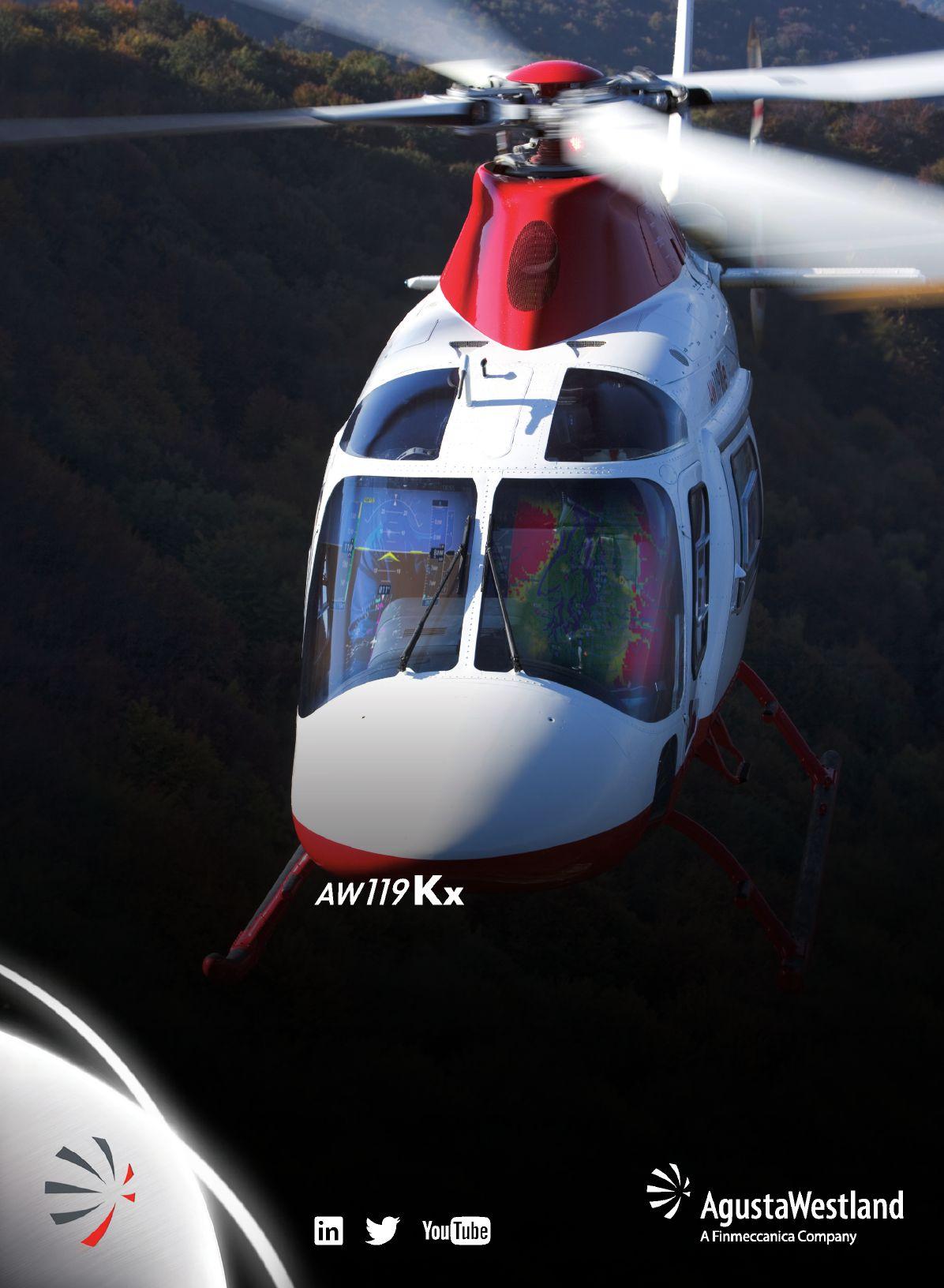
The largest and most powerful single engine multi-role helicopter in the marketplace is now enhanced by advanced digital avionics. As the latest evolution of the AW119 “Koala”, the AW119Kx features a state of the art Garmin G1000HTM-integrated cockpit; critical flight information is shown on two large multi-function displays in real time, allowing the highest levels of safety with ultimate situational awareness and reduced pilot workload.
LEADING THE FUTURE
Helicopter's
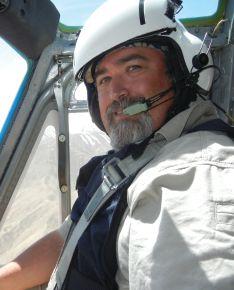
leader Barry Kohler (Photo courtesy of Bell Helicopter)
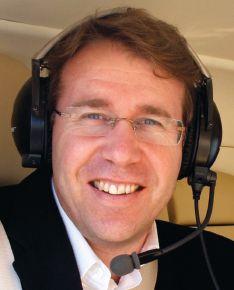
Matt niCHolls is editor of Helicopters
s a young man not yet versed in the day-to-day processes of life, my parents taught me two important lessons that helped shape my philosophies today: don’t put something off that may very well come back to bite you, and if you failed to remember point number one, always fix the problem pronto before it turns into a bigger one down the road. procrastination, indecision and uncertainty are anything but aspects of strong leadership and such a road is usually full of minefields.
Which brings us to the decision of the federal conservatives to push some $3.1 billion in planned capital spending for canada’s military to the back burner in its recently released federal budget. long expected by some in military circles, the delays in purchasing new fighter jets to replace the aging CH-18 and new maritime helicopters to replace the veritable cH-124 sea Kings, and the introduction of new search-and-rescue (sar) aircraft for the much-needed sar efforts nationwide, are simply the latest examples of just how mismanaged the military procurement and budgetary processes are in this country.
Minister of finance Jim flaherty suggests the delay in decisionmaking will not mean a reduction in military spending but instead gives the government time to make a proper decision on each of these procurements. “there’s no point in having money sitting there when they can’t spend it this year,” flaherty told the canadian press
Time to Get it Right
Delaying Military Spending Compounds the Problem
manageable maintenance and upkeep of equipment costs – all apparently are not part of the immediate equation. i wonder what the political ramifications of these might be? Would they influence the deficit? given the escalating costs of upkeep, maintenance, training and more, of course they would.
the three aforementioned military procurements have become political footballs over the past number of months (and years), exposing major problems in government structure and leadership. the much-maligned CH-148 Cyclone project continues to drag on with sikorsky only recently being granted the chance to redeem itself and get the blades turning. the sea King fleet is in desperate need of replacement and doubts remain as to the viability of the late december decision to forge ahead with the cyclone project. sikorsky, which has incurred millions of dollars in late fees, came within inches of losing the deal to a competitor and has vowed to meet all deadlines going forward. With so much swirling in the wind, it’s anyone’s guess as to whether or not the cyclone will live up to expectations, though sikorsky president Mick Mauer said at Heli-expo in anaheim feb. 25 that the program is back on track. in terms of the Cf-18 replacement, the political backlash over the f-35 continues. the program was put on hold in december 2012 and a decision has yet to be made as to whether or not a competition will be held to determine a new supplier. critics maintain it’s entirely the wrong option for the job, which simply underscores the mess this has become.
procrastination, indecision and uncertainty are anything but aspects of strong leadership.
prior to the budget’s release. “We’re pushing it forward, not taking it back.” How much time does it take to make the proper decision? such a spin may sound like fiscal prudence, but it seems like it has more to do with political posturing than with being prudent or providing the hardware canadians need, expect and deserve. the move is simply meant to help cut the deficit and place the conservatives in a much better position for a 2015 election.
improved maritime operations, more efficient sar capability, enhanced arctic sovereignty, greater border security, more efficient and safer operational situations for the royal canadian air force,
in early february, the feds took steps to redefine the military procurement process. defence minister rob nicholson and public works minister diane finley announced changes to bring more scrutiny to military spending. the new system will see increased cooperation among defence, public works and industry officials under an umbrella secretariat at public works. it’s a good first step and will hopefully rein in a process that is terribly out of control. With as much as $200 billion earmarked for military spending on trucks, helicopters, fighter jets and ships over the next 20 years, indecision, procrastination and mismanagement will simply lead to bigger mistakes. it can’t continue. canadians need leaders to lead –we deserve and demand a stronger sense of order when it comes to military spending and procurement.

• Whether you are looking for a career change or just about to start one, come learn about different career paths the aviation industry has to offer: airplane pilots, helicopter pilots, maintenance engineers, aerospace design & engineering, aviation business management, air navigation, flight operations and more.
• Meet with Canada’s leading aviation colleges, universities, flight schools and hiring managers from Canada’s largest aviation operators and aerospace companies.
• Find out what it takes to get hired!
YOuR RegistRatiOn includes: speaker sessions covering a variety of aviation career paths, networking with Canada’s top training programs and hiring managers, luncheon with keynote speaker, coffee breaks and the Careers in Aviation exhibit hall.
For information on sponsorship and exhibitor opportunities, please contact:
Weng Ng · 905-713-4351 • wng@annexweb.com
Jarah Stefek · 519-429-5191 • jstefek@annexweb.com


Airbus Helicopters Canada to Add 40 Jobs in Ontario
airbus Helicopters canada (formerly eurocopter canada) is adding a new production line at its fort erie, ont., helicopter production facility, creating approximately 40 new high-skill manufacturing jobs.
the canadian facility will be manufacturing engine cowlings for the ec225. the ec225 is an aircraft sold in markets around the world and is known as the “workhorse” of the oil and gas industry, where it is used to transport workers to offshore drilling rigs.
“With this multi-million investment, airbus Helicopters is demonstrating its confi-
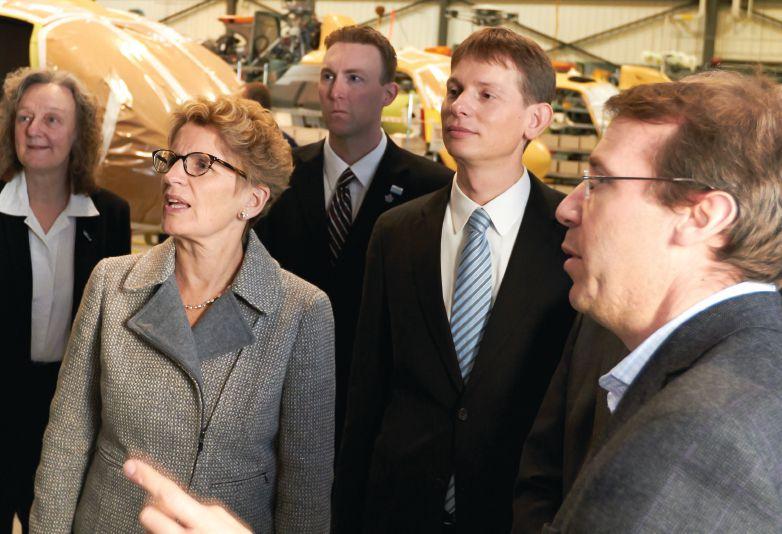
Ontario premier Kathleen Wynn was on hand in Fort Erie, Ont. for Airbus Helicopters Canada’s expansion plans. (Photo Courtesy of Airbus Helicopters)
dence in and commitment to ontario and canada,” said romain trapp, chief executive officer of airbus Helicopters canada. “this is very good news for the niagara region. the expansion of our composite department will also help protect the jobs already here as
CHl opens its dooRs
Canadian Helicopters Limited (CHL) held an open house event on Jan. 30 to celebrate the opening of its new hangar and office facility in Terrace, B.C.
Staying true to its heritage, the company located the hangar just down the road from its legacy facility, from which it has been operating since 1951. Construction on the 13,000-square-foot structure began in mid-2012 and was completed and occupied in May of last year, just in time to support one of the busiest flying seasons in recent history for the base.
Company president and CEO Don Wall was joined by four members from the board of directors of the HNZ Group, who took the opportunity to take a local area familiarization flight around the spectacular operating area on
we continue to grow.” airbus Helicopters canada is the largest employer in fort erie and an employer of choice in the niagara region.
the fort erie facility is recognized as a centre of excellence for composite component manufacturing within
what was a picture perfect, cloud and rain free day. In addition, a number of key managers from Montreal and Edmonton were in attendance. Wall was quick to praise the efforts of the base staff in maintaining excellent relationships with the CHL’s clients.
“We are committed to re-investing in those areas that are key to the company’s success,” said Wall, as he addressed the crowd of more than 150 well-wishers that included customers, former employees and line personnel who have spent countless hours flying as passengers in the CHL helicopters over the years.
– Photo and story by Walter Heneghan
airbus Helicopters thanks to the expertise of its team and its competitive manufacturing capabilities. it produces several composite components for a variety of airbus Helicopters’ leading aircraft models, which are sold internationally in more than 100 markets.
HeliJet flying High to Beat Cancer
Fortune smiled this Valentine’s Day in Vancouver. The rain stopped, clouds parted and the winter sun shone long enough for a freshly painted HeliJet S-76 to drop in to the Downtown Vancouver Helipad. The arrival of the helicopter was the kickoff to a noon-hour press conference announcing HeliJet’s commitment to work with the Canadian Breast Cancer Foundation – B.C./Yukon Region, for a future without breast cancer. HeliJet president and CEO Danny Sitnam and HeliJet chair Alistair MacLennan were joined by CBCF CEO Wendy Slavin for the announcement.
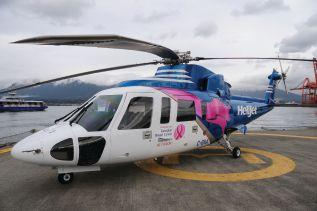
A HeliJet S-76 decked out in pink ribbon livery in support of breast cancer for the Vancouver-Victoria run.
HeliJet has committed to donate a minimum of $25,000 a year to CBCF for each of the next five years as well as provide passenger tickets for CBCF use. The Helijet S-76, decked out in pink ribbon livery, will be used in daily scheduled service on the Vancouver-Victoria run as well as making special appearances at fund-raising events throughout the year.
Sitnam credited Karen Sabourin, HeliJet’s director of human resources, as being the driving force behind the partnership. Sabourin, a breast cancer survivor, was surrounded by like-clad members of her dragon boat team, Abreast In A Boat. A 26-year employee of HeliJet, she says that she has literally grown up with the company and that their support of her during her illness and recovery was nothing short of “fantastic.”
Slavin thanked HeliJet: “It’s partnerships like this that allow us to fund critical research that makes a difference. For us at the foundation and for the many women and their families who have been touched by cancer, when we see HeliJet flying high, it will serve as a reminder that we truly believe that the future is bright.” – Photo and story by Paul Dixon
Veteran Industry Leader Louden Passes Away
one of canada’s leading advocates for safety in the canadian helicopter industry has died. grant louden, co-founder and president of skyline Helicopters, passed away on Jan. 26 at his dream home in Kelowna, B.c louden was a true industry pioneer who worked passionately to create a safer working environment for not only his own operation but also the industry as a whole. a pilot, business owner and outspoken member of the Helicopter association of canada (Hac) for more than five years, his commitment to the industry and Hac was an example for all operators to follow. His passion for industry and the many issues that governed it was matched only by the commitment he had to the people who kept the blades turning. as a member of the Hac board, louden spent countless hours working with various
committees to help create a safer and stronger working environment, particularly with the oil and gas committee. a leader and mentor to many pilots and friends over the years, he truly understood the concept of “giving back.”
Born on april 5, 1954 in niagara falls, ont., louden attended a n. Meyer secondary school before getting his training in toronto at niagara Helicopters. in 1975, he headed west and flew out of calgary and canmore, alta., before settling in Kelowna in 1991 and buying his dream home in 1992. His impressive flying career includes a wide variety of operations including fighting forest fires, flying heliskiers to the top of mountains and moving oil drills for oil and gas clients. a dedicated humanitarian, he also supported his deeply rooted faith by flying famine relief in ethiopia for several years.

Grant Louden was an industry veteran who was passionately involved with the Helicopter Association of Canada and Skyline Helicopters.
in 1996, louden became the co-founder of skyline Helicopters. operating out of Kelowna and terrace, B.c skyline specializes in a variety of missions including oil and gas, seismic, heli-skiing, forestry and fire fighting, mining exploration, film work, aerial construction and more.
HELICOPTERS MAGAZINE P.O. Box 530
105 Donly Drive South Simcoe ON N3Y 4N5 Tel.: 519-428-3471 Fax: 519-429-3094
Toll Free: 1-888-599-2228
Website: www.helicoptersmagazine.com
EDITOR MATT NICHOLLS e-mail: mnicholls@annexweb.com 416-725-5637
MEDIA DESIGNER GERRY WIEBE
CONTRIBUTING WRITERS
MICHAEL BELLAMY, DAVID CARR BRIAN DUNN, PAUL DIxON, WALTER HENEGHAN, FRED JONES, JAMES MARASA, CARROLL MCCORMICK, ASSOCIATE PUBLISHER WENG NG e-mail: wng@annexweb.com 905-713-4351
ADVERTISING SALES JARAH STEFEK e-mail: jstefek@annexweb.com 519-429-5191 • 1-888-599-2228 ext. 246
SALES ASSISTANT STEPHANIE DEFIELDS e-mail: sdefields@annexweb.com 1-888-599-2228 ext. 257
GROUP PUBLISHER SCOTT JAMIESON e-mail: sjamieson@annexweb.com
PRESIDENT MIKE FREDERICKS e-mail: mfredericks@annexweb.com
RETURN UNDELIVERABLE CANADIAN ADDRESSES TO ANNEx PUBLISHING & PRINTING INC., P.O. BOx 530, SIMCOE, ON N3Y 4N5 CANADA. e-mail: subscribe@helicoptersmagazine.com
Published five times a year by Annex Publishing & Printing Inc.
Printed in Canada ISSN 0227-3161
CIRCULATION e-mail: subscribe@helicoptersmagazine.com Tel: 866-790-6070 ext 208 Fax: 877-624-1940 Mail: P.O. Box 530 Simcoe, ON N3Y 4N5
SUBSCRIPTION RATES Canada – 1 Year - $25.00 (all taxes included) USA – 1 Year $35.00 Foreign – 1 Year $45.00
Occasionally, Helicopters magazine will mail information on behalf of industry-related groups whose products and services we believe may be of interest to you. If you prefer not to receive this information, please contact our circulation department in any of the four ways listed above.
No part of the editorial content of this publication may be reprinted without the publisher’s written permission ©2014 Annex Publishing & Printing Inc. All rights reserved. Opinions expressed in this magazine are not necessarily those of the editor or the publisher. No liability is assumed for errors or omissions. All advertising is subject to the publisher’s approval. Such approval does not imply any endorsement of the products or services advertised. Publisher reserves the right to refuse advertising that does not meet the standards of the publication.
Helicopters Magazine is a corporate member of the

Helicopters Magazine is an associate member of the following Canadian aviation associations:
there is an oft-used adage in the helicopter business, indeed in all of aviation, that “any accident affects all of us.” Being directly involved in safety management for more than seven years now, i am all too familiar with this saying and it keeps me in a state of “constant un-ease” regarding our operations. lately, though, i have taken to contemplating the safety management challenges in other aspects of the canadian transportation industry – planes, trains and pipelines. since lac Megantic, i look at trains from a different perspective and the recent pipeline explosion in southern Manitoba together with the ongoing northern gateway and Xl pipeline debates have placed the pipeline industry in the forefront. for these industries, the adage has rung true and has focused the public eye on how safety is managed by railways and pipeline companies. safety Management systems (sMs) are getting plenty of attention; how do they compare to what’s required in aviation? the railway safety act was amended in 2001 to require rail companies to “…implement and maintain a safety management system…” the railway sMs regulations apply to all railways regardless of size and specify the components required to meet the regulations including the need for safety policies, performance targets, risk control strategies and documentation. there is also a mandated requirement to submit a report each year to the Minister of transport although there is no mention in the regulations of what type of audit, inspection or program validation process is in effect. certainly, the transportation safety Board investiga-
Building a Framework
Should
SMS in the Transportation Sector be Mandatory?
regulations by stating only this: “a company shall develop, implement and maintain a safety management program that anticipates, prevents, manages and mitigates potentially dangerous conditions and exposure to those conditions during all activities relating to construction, operation, maintenance, abandonment and emergency situations.”
for aviation, the requirements for a sMs are set out in more explicit detail as stated in part 107 of the canadian aviation regulations, albeit currently just for part 705 operations. in addition, there is considerable guidance provided on the transport canada (tc) website for establishing a sMs, even if it is not yet required for the majority of canadian operators.
the language for aviation sMs requirements is much more specific than that for the railway companies. ‘‘ ’’
tion into the lac Megantic tragedy is likely to champion changes. the national energy Board (neB) through the national energy Board onshore pipeline regulations (opr) largely regulates the pipeline industry. revised in 2013, the update stipulated the requirement of an accountable officer who “…has the authority over the company’s human and financial resources required to establish, implement and maintain its management system and protection programs, and to ensure that the company meets its obligations for safety, security and protection of the environment.” there is no specific sMs language in the regulation and the safety management requirements are addressed in section 47 of the
it appears that the aviation side of things is certainly leading the pack – we have comprehensive audit schedules, there is substance to the regulation and there is plenty of guidance regarding how to establish an effective sMs the results of the program Validation process (pVi) are part of the public record and available to anyone who is interested to pursuing a freedom of information request. aviation companies are audited by a wide range of customers on a regular basis, often against standards that are much more stringent than what is being asked from the regulator. it appears that we are well ahead of both the pipeline and railway industries, begging the question, “Why doesn’t the federal government standardize the language of sMs?” there is a wide variance in regulatory guidance and in oversight. the language for aviation sMs requirements is much more specific than that for the railway companies and the audit process appears much more comprehensive. for my money, this is worrisome. While tc has provided plenty of guidance regarding sMs, the fact that the regulations do not apply to the majority of operators should be cause for concern. Much of the progress in the development of sMs is being driven by our client base just as much of the progress in the railway and pipeline industries appear driven by reactive processes to major events. sMs, if properly implemented and validated, can make the transportation sector safer. Why doesn’t the government take these lessons learned and standardize the language of sMs and ensure implementation across these industries through proper regulation and adequate funding? as citizens, we are owed nothing less.
Walter Heneghan is the VP of Safety and Quality at Canadian Helicopters. A passionate advocate for aviation safety and sound risk management, the veteran pilot presents his regular column for Helicopters magazine.
WalteR HeneGHan
MiCHael BellaMY
We needn’t venture very far to witness confirmation that aviation is still a very dangerous occupation. all one has to do is tune into the several television reality series whose main theme is devoted to nonscheduled charter or ferry flying. Helicopters have so far been excluded from this venue, but with public perception being what it is, rotary-wing crews have always been associated with greater risk.
for many of us in the aviation industry these flying programs hold an interest. We can easily discard the distortions and identify the genuine risk as the commentator rambles on, grossly exaggerating the seriousness of every malfunction or manoeuvre. We know that when a turbine compressor gauge starts to wander and without collaboration from the exhaust temperature it is usually just indicative of a tired tach generator. it’s no big deal and in spite of the presenter’s dire prediction, we don’t believe that the airplane is about to crash. on another occasion, the pilot is depicted fighting the controls combating a malfunctioning autopilot when simply hitting the disengage switch should stabilize the airplane. these are just some examples of the many embellishments required to maintain high drama in the hopes that the series will attract sponsors.
our formal aviation knowledge enables us to distinguish concocted rhetoric from reality, but that is not the case with the majority of viewers. to the uninitiated, the catastrophic predictions are believed and when they don’t materialize, the narrow escape is attrib-
Distorting Realities
Made-for-TV Aviation Shows Are Woefully Inaccurate
customers that fly with us on a regular basis are familiar enough to identify specious dangers, but what about the people whose only association is indirect, such as safety auditors, staff preparing helicopter contract requirements or insurance underwriters? is it any wonder that a lot of companies we contract to now include in their indoctrination a 30-minute lecture highlighting the proper use of a stepladder?
social media gatherings such as facebook have become very popular catering to distinct groups such as fire bombers, helicopters, air rescue and so on. Members post photographs and relate experiences. all are very interesting and useful, but when you read some of the well-intentioned comments following the post, you begin to understand how little confidence the general public has about safety in our industry.
flight crews are not unlike everyone else and appreciate compliments; they richly deserve the accolades when a job is well flown. However, when commentators focus on a helicopter lifting someone out of harms way or fighting a forest fire, then refer to the pilots as heroes, it reveals just how dangerous they believe flying a helicopter must be.
demonstrating competence at the controls of a helicopter is a recurrent requirement given to all pilots. combine this with a modern high performance helicopter and piloting is little more dangerous than city driving. there is no place at the controls for a pilot who endangers the lives of his crew by exceeding his own and the machine’s capability even when the mission is a medevac.
demonstrating competence at the controls of a helicopter is a recurrent requirement given to all pilots.
uted to either luck or incredible airmanship. the popularity and spinoffs that have accumulated only increase the director’s enthusiasm for even more theatrics. the weekly adventures provide entertainment, but moreover succeed in deceiving the viewers with spurious emergencies that reflect poorly on our industry. during the introduction of one popular series the camera records a sequence of tripping accidents while working around aircraft. the show depicts employees falling off ladders, stumbling on an icecovered ramp and so on. it’s no wonder life insurance providers insist on a risk rider for the aircrew.
Who hasn’t witnessed news groups giving secondary status to a fatal traffic pile up, instead focusing on an airplane that has just made an uneventful forced landing. the on-site reporter is there to provide additional suspense by directing attention to emergency vehicles and passengers who appear stressed. their agenda is to gain viewers and in doing so, reinforce the public’s perception of the dangers of flying.
flying helicopters is not a hazardous occupation, but those outside the industry feel compelled to elaborate on insignificant dangers instead of expressing an overall admiration for an industry and a machine with wonderful capabilities.
A native of Spruce Grove, Alta., Michael Bellamy has been flying fixed- and rotary-wing aircraft in a variety of capacities since 1971, and is an accomplished author of several books, including Crosswinds.
Have you ever had a great idea for an aviation-related business but did not know how to secure the funds to get started? aviation is a business that requires technological and other forms of innovation. it is possible that many of you have thought of a great idea yet were discouraged by an inability to secure adequate funds to make that idea a reality. if you have never considered crowdfunding before, it may be time to sit up and take notice.
crowdfunding is a process through which small- and medium-sized businesses might secure funding for their business or project by appealing to the public to invest through an online portal. today, crowdfunding in canada is done through websites such as indiegogo.com or Kickstarter.com. However, these websites facilitate donations to an idea or a project or the pre-purchase of a product. Because of securities laws, investors are unable to buy shares in a company in this way.
i was recently struck by the story of terrafugia, a company based in Woburn, Mass., that plans to have a flying car for sale to the public and ready to ship in 2015. this company turned to crowdfunding on a site called Wefunder.com to find additional money to achieve its funding targets. on Wefunder.com, the company was seeking $500,000 in additional funding. to date, they have raised more than double their target. until the american Jobs act is in force, only “accredited investors” can invest in this company through the web portal, so investment is not currently available to the average person. But in mid-2014, it is expected that everyone – not only sophisticated investors – will be able to put their
Entrepreneur alert!
Crowdfunding Could Be An Innovative Solution
tus requirements ought to be broadened for crowdfunding purposes. the initial concept created for the purposes of the osc consultation included restrictions on the issuer such as the requirement that the issuer be incorporated and have its head office in canada, that it have a $1.5 million cap on the funds raised in a 12 month period, and that it cannot advertise an investment outside of its own website or the funding portal. it also included investor protection measures such as placing a dollar limit on how much a person can invest in a single transaction or in a calendar year, disclosure about the offering, the issuer and the funding portal as well as certified or audited financial statements. investors would have to sign a risk acknowledgement and would have two business days to withdraw from their investment decision. the issuer would also have to provide ongoing disclosure such as financial statements and would have to keep records with certain information about the securities issued, names of security holders and the size of their holdings and the use of the funds raised. the portal itself would have to be registered in the manner required by the osc as a dealer or adviser.
Based on the results of its public consultation, the osc has directed its staff to develop a crowdfunding regulatory framework and will build on the initial concept with a focus on the following areas:
• developing a regulatory framework for funding portals that will include the due diligence portals will be required to conduct on issuers and their management as well as the viability of the issuer’s business;
• the screening of investors to ensure they understand the risks associated with investing in the business.
if you have never considered crowdfunding before, it may be time to sit up and take notice. ‘‘ ’’
money into start-ups in the u s canada is undergoing its own exploration of the crowdfunding model for startups to raise capital. the legal question becomes how crowdfunding ought to be regulated in order to protect investors from fraud, while at the same time ensuring that start-ups are not overly burdened by the levels of disclosure normally required by our securities regulators. the ontario securities commission (osc) engaged in a public consultation process in 2013 with respect to crowdfunding and has sought the input of various stakeholders into what kind of regulations would be appropriate for new start-ups, and whether the exemption from prospec-

• the additional services to be provided by the portal to enhance investor protection. the regulator has its work cut out for it. at the end of the day, if regulators make the process too burdensome, it will inhibit participation and it will also inhibit innovation, yet a lack of reasonable controls or regulations will put investors at risk. the osc appears keen to find a way to facilitate the crowdfunding equity model and is proactively addressing major stakeholder concerns. if things continue to progress at this rate, a new source of equity financing may be on its way that can turn your idea into reality. so if any of you have ideas for flying cars, or any other innovative aviation ideas, you should keep your eyes peeled for the latest legal developments in crowdfunding.
Krista Bulmer is a lawyer practising aviation law, business law, and civil litigation with the law firm Wires Jolley LLP in Toronto. This is not a legal opinion. Readers should not act on the basis of this article without first consulting a lawyer for analysis and advice on a specific matter.
KRista BulMeR
paul dixon
first met tim Jones about 15 years ago, through my work at the local police office and my involvement with the local emergency management program. you couldn’t live in north Vancouver and not be aware of tim Jones, both as a paramedic with Bc ambulance and to a much greater extent, for his role with north shore rescue. Jones passed away earlier this month while participating in a sar operation.
i don’t like to use the work “hero” as it has become so overused in recent years that it has lost any sense of meaning. i call tim Jones a champion, defined by the concise oxford english dictionary as “a person who fights or argues for a cause or on behalf of another person.” that was the tim i knew, the “3p tim” – passionate, persistent, sometimes profound and even occasionally profane. He was opinionated, outspoken and definitely someone who didn’t mince words. tim was a lightning rod. He spoke his mind and the media loved him for it, though it sometimes didn’t play well in the broader community of first responders and emergency workers. the people he seemed to upset the most, where those who were most comfortable sitting behind a desk and listing the reasons that they couldn’t do what tim thought was required. that’s when i might hear from tim, on the phone or in person. the conversation would be one-sided, with 15 minutes of tim venting his frustrations with what had happened, or more often not happened, and would usually end with him saying, “i know you can’t do anything about it, but thanks for listening.”
in Praise of a SaR Legend
Tim Jones Was a Champion Who Led by Example
and pilot could be placed on standby for local sar groups on a regional basis in the same way that the provincial government contracts helicopters for firefighting purposes.
if you saw the cBc Doc Zone show that aired four days before tim’s death – “to the rescue” – you saw a broad overview of canada’s search-and-rescue responsibilities and capabilities, with a particular focus on north shore rescue. the point was made during the show that as tourism and outdoor recreation increases in this province, so does the burden on community-based volunteer sar teams, with deliberate emphasis on “volunteer.” community-based sar is not free by any stretch of the imagination.
people volunteer their time and most of them are exceedingly generous, by what they give up in terms of family time and personal enjoyment. if the sar member is in a relationship or has a family, there is huge burden placed on the partners who are left to juggle their own responsibilities, childcare and those thousands of little details that make a house a home.
Many teams across the province are finding it more difficult to attract people with the physical and mental skills required. they are also finding it tough to retain members whose outside lives are catching up with them. to work a full-time job and then simply take on the training schedule required to be an active team member is a Herculean task. on top of everything else, fundraising activities can take huge chunks out of the calendar. Many teams are registered charities, which can make them more attractive for donations, but it still takes a lot of time over the course of the year.
i call tim Jones a champion, defined as ‘a person who fights or argues for a cause or on behalf of another person’. ‘‘ ’’
last year, tim ignited a firestorm with his comments about the need to provide some degree of financial support to search-and-rescue (sar) volunteers. during the peak summer season, when local helicopters may be engaged in firefighting duties, it may be difficult to find a Hets pilot who can respond in a timely manner. it can be equally difficult to expect Hets qualified sar volunteers to stay close to home in case a call comes.
tim wasn’t asking for volunteers to be paid an actual wage, but rather a stipend for carrying the pager for a weekend and staying close to home. for helicopters, he was suggesting that one helicopter
it must be extremely challenging for teams outside the core population areas to raise money. over the years, many teams have relied on provincial gaming grants, but these have to be applied for every year and there is never any guarantee that the money will be forthcoming. the funding model for volunteer sar programs has to change, or there is a very real chance that many of these teams will cease to exist or exist in a diminished capacity. We don’t need to have a “conversation” or a “consultation.” We need a few more people (like tim Jones) who care – care about what they do and care about the people they do it for.
Paul Dixon is freelance writer and photojournalist living in Vancouver.
RiCK adaMs
the name petawawa is said to originate from the word biidaawewe in the algonquin language, roughly translated as “where one hears a noise like this.” it seems appropriate, then, that the reactivated 450 tactical Helicopter squadron garrisons at canadian forces Base petawawa, ont., the nation’s largest military base and featuring more than 300 square kilometre of the petawawa training area, is adjacent to the algonquin provincial park. the squadron is going to need all that airspace and forested terrain to dissipate the distinctive noise of its new tandemrotor cH-147f Boeing chinook heavy-lift helicopters, which generate a sound that has been described as an “enormous jackhammer, a penetrating basso thunder that can be heard miles away, and makes the earth shake when the aircraft passes close by.”
unfortunately, or fortunately, depending on your decibel tolerance, the new chinook fs will have somewhat limited flying opportunities, given the budget woes in the capital, 170 km downstream along the ottawa river. Much of the flying and mission training for the cH-147f crews will be conducted in a weapon system trainer (Wst) to be delivered by cae this spring to the 450 squadron’s new home in the southeastern portion of the Mattawa plain. the Wst will be supplemented by a suite of relatively quiet, ground-tethered training aids – a tactical flight training device (tftd) at petawawa and a deployable tftd that can travel to a combat or humanitarian mission theatre, an integrated gunnery trainer, and computer-based cae simfinity virtual simulators.
Montreal-based cae will also provide a tactical control centre, training
introducing the ‘F’ Factor
CAE’s Chinook SIM
Suite is Primed for Petawawa
deliveries of the 15 cH-147f aircraft on order began last summer, so 450 squadron pilots, co-pilots, and flight engineers have been conducting their interim training at another cae-supported installation, the Medium support Helicopter aircrew training facility (MsHatf) at raf Benson, oxfordshire, in the u.K., where canadian aircrews also trained for cH-47d missions in afghanistan. the MsHatf is cae’s flagship contractor-owned, contractor-operated helicopter training facility with six advanced flight simulators – three chinooks, two agustaWestland aW101 Merlins, and a eurocopter puma.
“the level of experience the [ex-military] instructors bring to bear in the flying school is phenomenal,” managing director andrew naismith told me when i visited Benson recently. Before becoming managing director, naismith was a cae customer, leading raf chinook squadrons, including tours in iraq and afghanistan. He said the trend of the royal air force, royal netherlands air force, Japanese ground self defence force, and others who use the MsHatf is decidedly toward more synthetic training, currently perhaps 50-50 between live and virtual but progressing toward 70 per cent in simulators.
last year, cae upgraded the puma device to the Hc2 lep (life extension program) glass cockpit configuration. the chinook simulators were also upgraded, including one cockpit, which can be swapped between a Block 5 cH-47d avionics control and Management system (acMs) model and the acMs Block 6 cH-47f flown by the dutch. as the canadian forces’ reduced-budget strategy shifts to what they term “adapted dispersed operations,” one obvious adaptation is fewer training flights. that leaves simulation to take up the slack plus fill in mission skills gaps that are simply not possible via live flying.
not only is there less wear-and-tear on the aircraft, but it keeps noise levels down for the campers and cross-country skiers. ‘‘ ’’
management information system, and visual databases of various strategic locales, including petawawa, which are shared with canada’s cc-130J super Hercules aircrew training program. cae won the cH-147f contract in 2010 as an add-on to the operational training systems provider (otsp) arrangement, which supports cc-130J training in trenton, ont. the otsp is an omnibus contract, worth more than $600 million thus far, in which cae serves as prime contractor for training systems and services for canada’s tactical airlift, medium and heavy helicopters, and potentially other aircraft fleets. their pan-canadian team includes atlantis systems, Bluedrop performance learning, ngrain and cascade aerospace.

not only is there less wear-and-tear on the aircraft, but it keeps the noise levels down for the campers and cross-country skiers.
the 450 traces its heritage to the royal canadian army service corps’ 1 transport Helicopter platoon (1 tHp) – or “1 thump,” which flew Voyageur helicopters in the 1960s. seems appropriate for the new chinook f squadron, considering the “thump-thump-thump-thump” now heard around petawawa.
Rick Adams is Chief Perspectives Officer of AeroPerspectives, an aviation communications consultancy based in the south of France. He has been writing about technology and training for 30 years. This is his debut column for Helicopters.
CoVeR stoRY
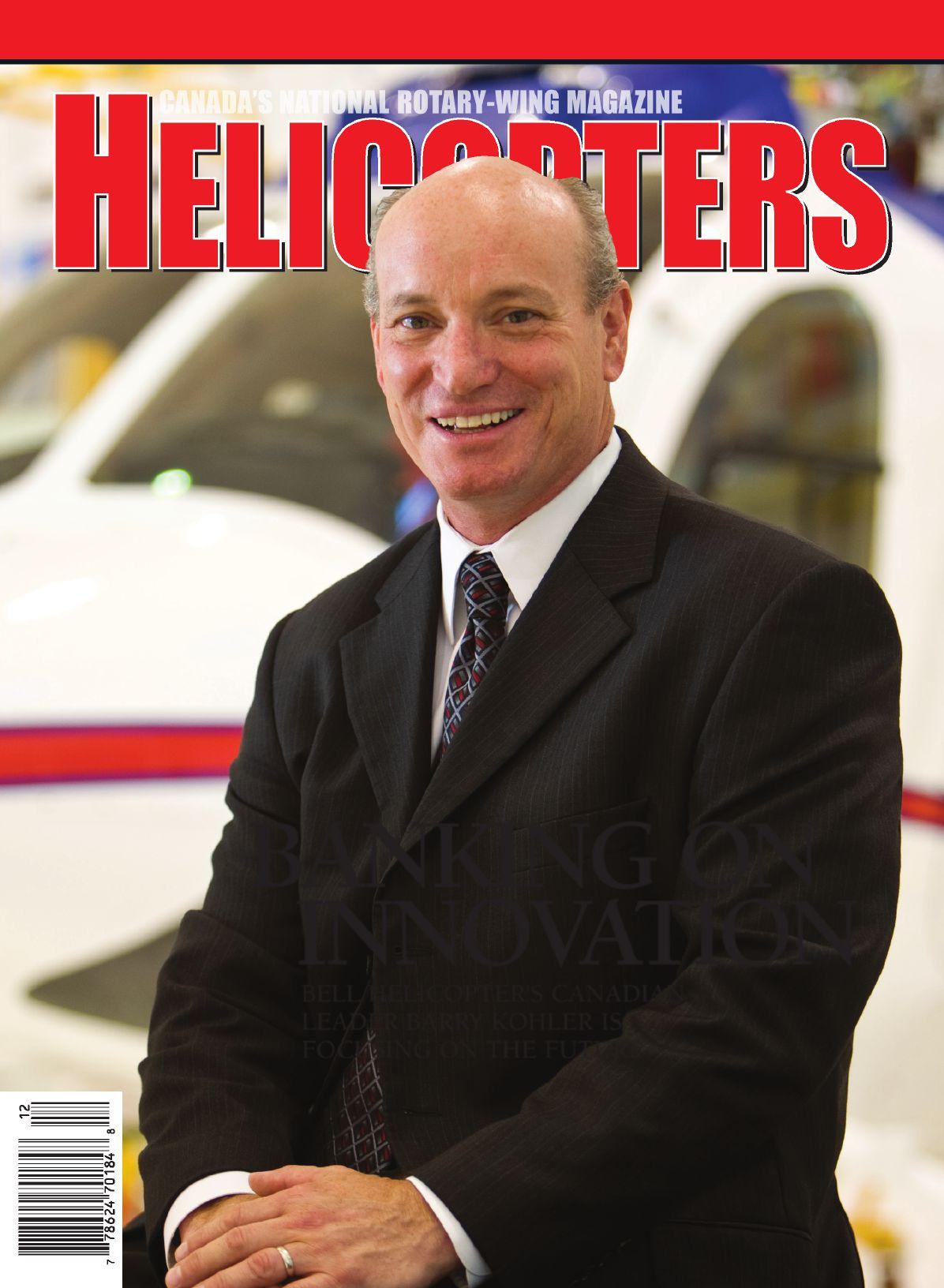
Banking on innovation R
Bell Helicopter Working to Solidify its Canadian Presence
BY Matt niCHolls
esting on your laurels is something that really doesn’t fly at Bell Helicopters. such a statement, such behaviour, is pretty much taboo – and there’s a rich history to illustrate just how foreign it is. as one of canada’s – and the world’s – most influential aerospace leaders, Bell continues to diversify its product line, innovate and refine its worldwide operations to stay one step ahead of the competition. it’s a philosophy that shapes the very foundation of parent company textron, and it’s been the driving force of the Bell brand north of the border since it entered the canadian market in 1947.
With a current fleet size of 2,500 aircraft used by more than 300 operators, Bell currently holds a 40 per cent market share in canada. some 4,200 aircraft have been manufactured at its Mirabel, Que., facility since it opened in 1986 and its efficient supply centre in calgary ensures that the company is staying competitive in a demanding landscape. it’s anything but an easy task. facing increased competition from airbus Helicopters, sikorsky and agustaWestland, Bell is now very much on the aggressive, working to keep existing customers happy while offering a bevy of technologically-advanced products to replace a rapidly-aging canadian fleet.
Barry Kohler, president of Bell Helicopter textron canada, is tasked with the challenge of keeping the Bell brand flying high north of the border, at both the calgary and Mirabel sites, and with the department of national defence’s fleet of griffon c-146 helicopters. it’s a challenge the textron veteran relishes and he’s had plenty of opportunity to use his skills garnered over a successful 25-year aerospace career to help Bell remain a strong player on the canadian aerospace stage. Kohler sat down with Helicopters to discuss a number of key issues, from Bell’s grip on the canadian
market to his own future plans as the new chairman of the board for the aerospace industries association of canada (aiac).
Helicopters: What are the growth opportunities for Bell Helicopter Canada for both the civil and military markets over the next few years?
BK: given that we export 95 per cent of our product, we look at things from a global perspective. i think we see it the way the rest of the market does. there’s offshore oil and gas, utility, eMs, and parapublic service – these are the areas that we see continued growth. We have been pleased with our progress in these market
segments. When you transfer that over to our current product portfolio, and more importantly, what our product portfolio is going to be in the next three years, we see we have a really strong lineup – products that are well-focused and well-placed within their market segments. the complement to that is we are going to supplement our global manufacturing portfolio by having Mirabel build the four models it is producing. and since i have been at the facility, we have essentially doubled our output.
Helicopters: Which aircraft are being produced at Mirabel and what is the North American demand like for each?
BK: We produce the 206l, which is very popular in canada, and are enjoying a steady demand in single-engine eMs in the u s We also produce the 407, and with the gX, we’ve almost doubled the annual output on the 407 the past few years; it’s taken a nice position in the light-single market segment. the 429 is highly capable and becoming a market leader because it’s the newest and most capable in that segment. We’re now winning business in places we were not winning before. We traditionally haven’t had much success in europe, but we’re starting to put the aircraft in the hands of new customers. the fourth aircraft is the 412, and we’re increasing production on it to meet demand. the 412 is the basis for the cH-146 griffon and we’re doing a lot of work with the royal canadian air force because we have the weapons systems support contract and the canadian government’s objective is to make it a model contract, because it was a 10-year contract with a four-year option. the griffon is the aircraft they will be using for that role for the foreseeable future.
Helicopters: Where are the significant international growth opportunities for Bell Helicopter right now?
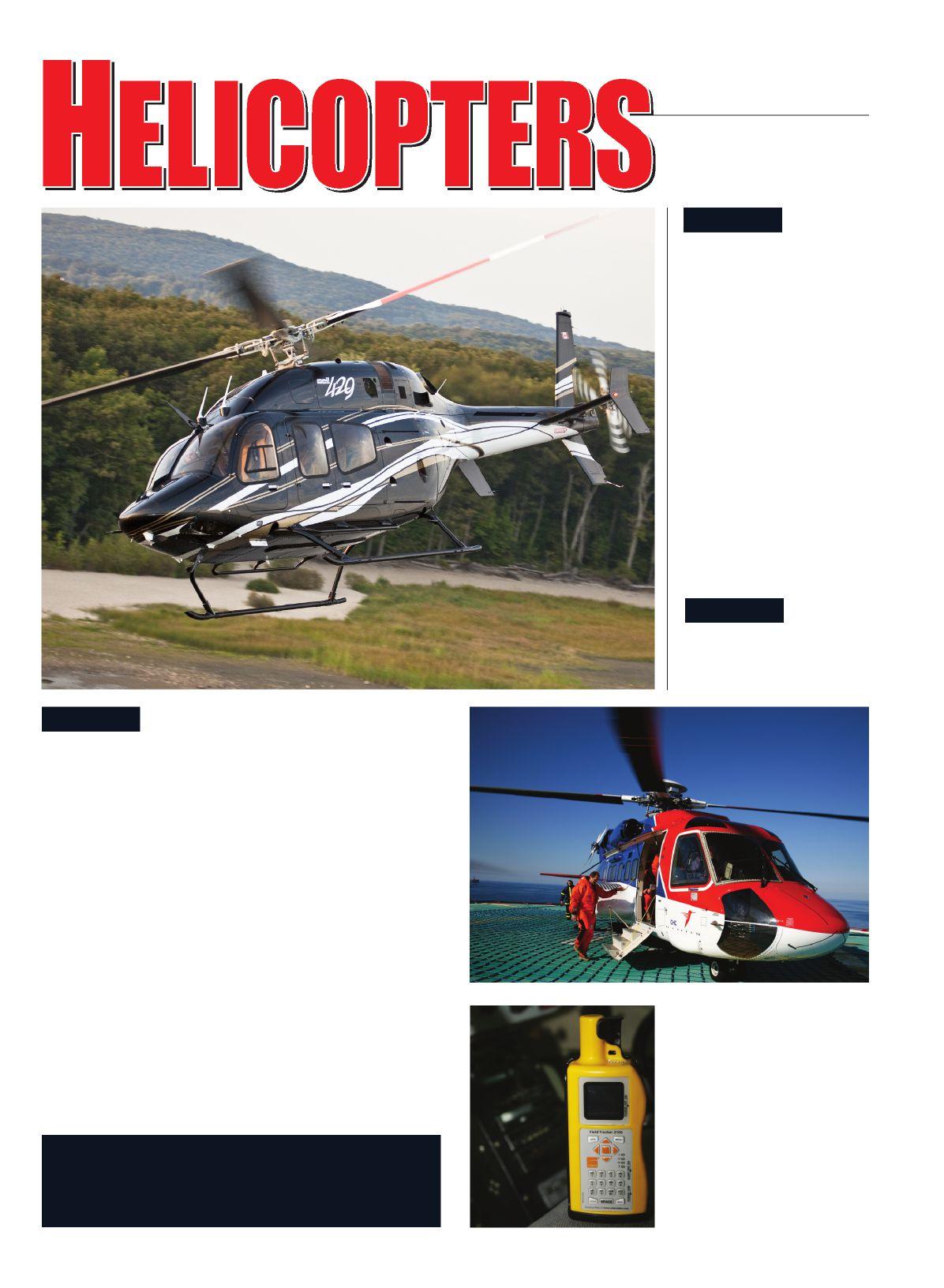
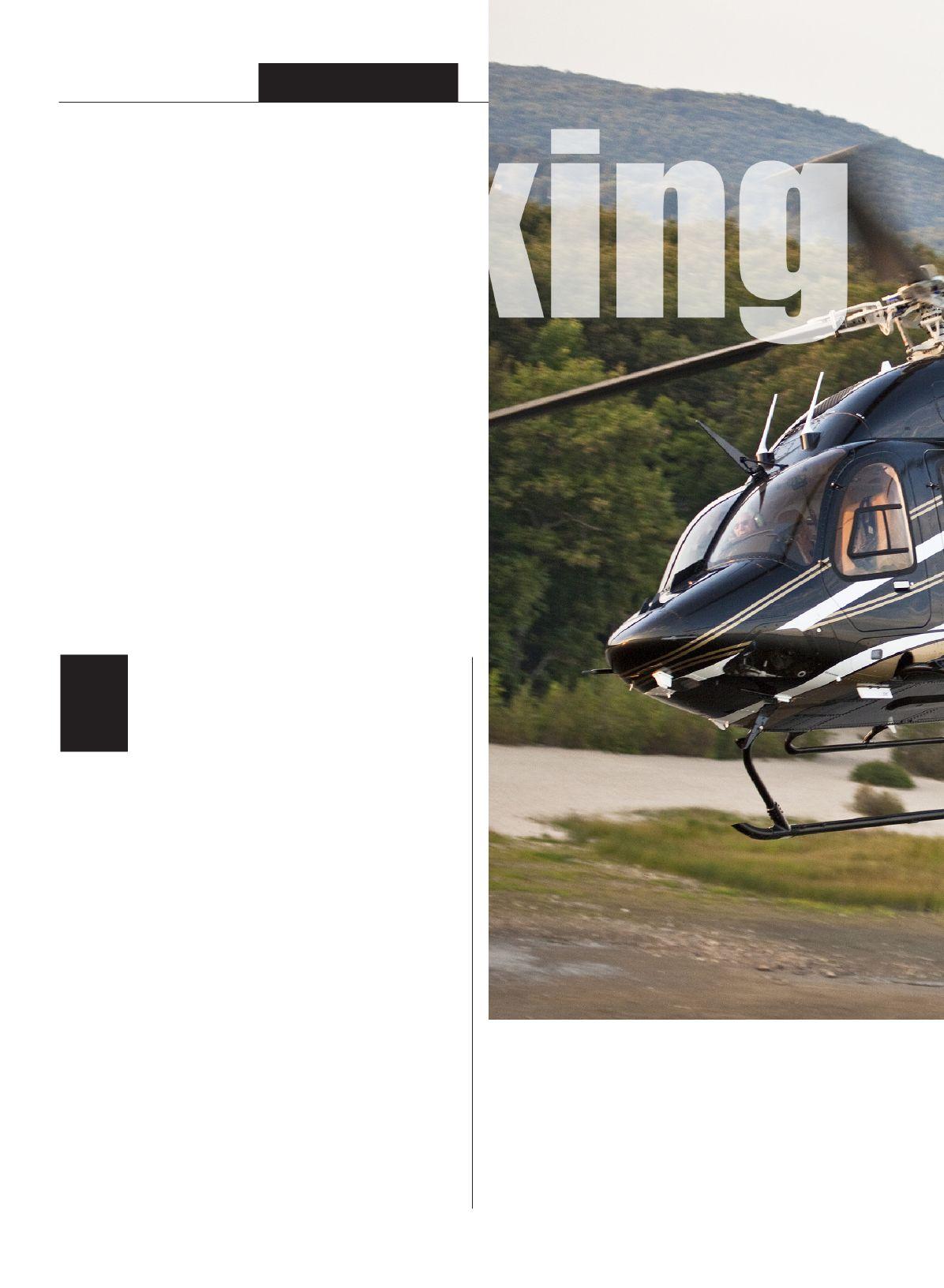
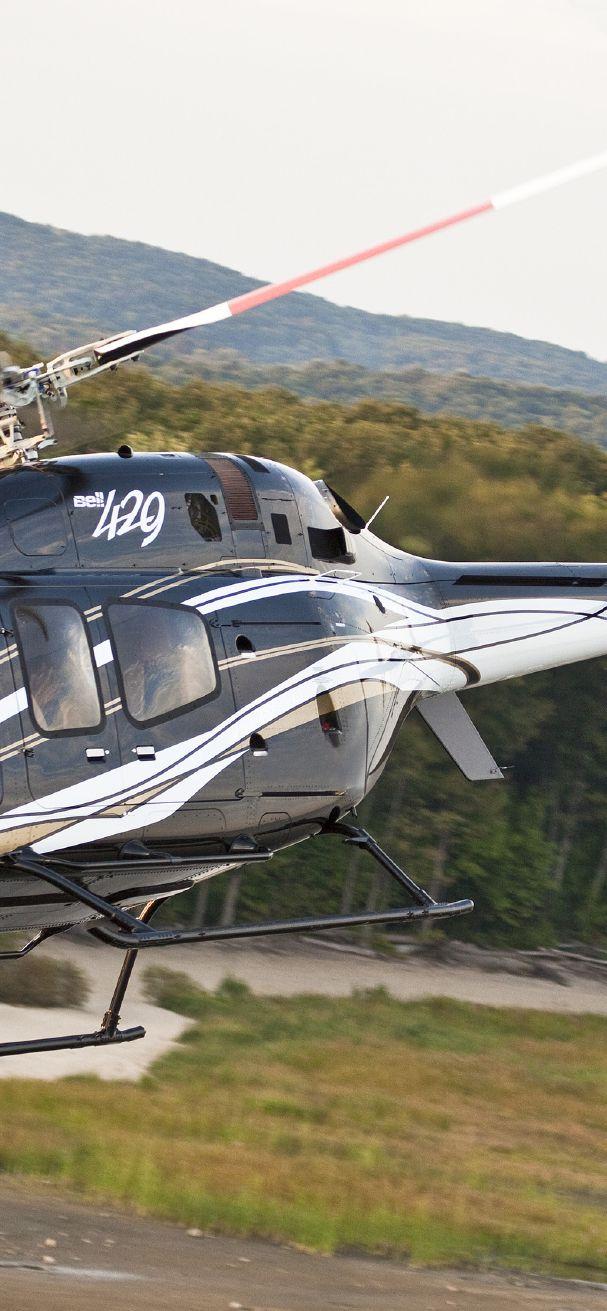
MAIN PHOTO: The Bell 429 is just one of four models manufactured at the Mirabel, Que., plant. (Photo courtesy of Bell Helicopter)
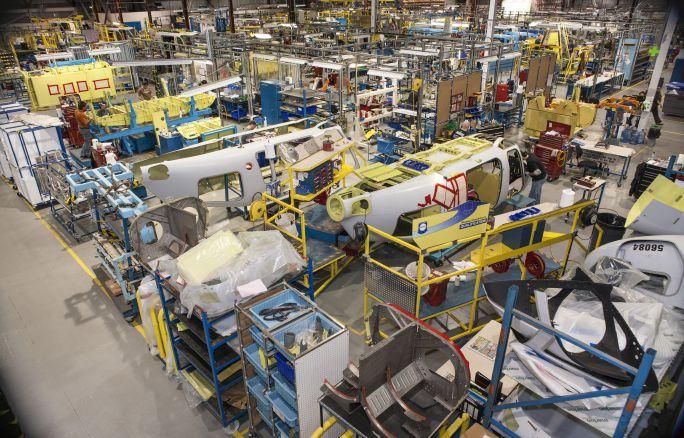
BELOW RIGHT: Bell’s busy Mirabel facility has produced some 4,200 aircraft since opening in 1986. (Photo courtesy of Bell Helicopter)
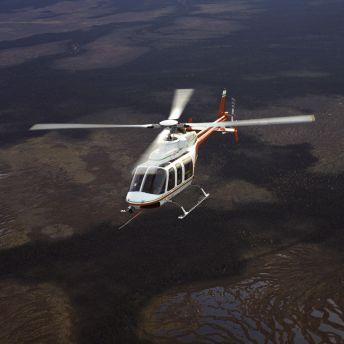
BELOW LEFT: Newfoundland’s Universal Helicopters has had plenty of success with its versatile Bell 407. (Photo courtesy of Universal Helicopters)
CoVeR stoRY
BK: We’ve always been pretty successful in north america, latin america and asia, as well as africa and the Middle east. But what we’ve always seen though is a disproportionately poor performance in europe from a market perspective. We’re really focusing on turning that around with the right product and making sure we are getting the right message sent there. t here is an affinity for twin-engine machines in europe, and the 429 is doing exceptionally well. at the same time, they operate single engines over there, too, so the gX with its best in class situational awareness, best in class cockpit – there’s an awfully lot of opportunity there.
Helicopters: In terms of product development, the aging Canadian fleet offers real opportunity for Bell Helicopter. Which aircraft will best suit the needs of Canadian operators now and in the future?
BK: the big opportunity for change in canada is we seem to be less enamoured with helicopter eMs than other parts of the globe, particularly europe and the u s and when you look at the fact we are very spread out and have major cities – and less than one per cent of the population
density of the u s. yet our economy is stronger – you ask why don’t we go after more eMs here? that’s an area we are definitely looking at. there is a behaviour process on the government realm and public side; however, that must be worked on. (eMs growth) is something that is going to happen. it’s just a matter of when. if you look at an aircraft like the 429, look at what would be suitable for the rural and semi-rural areas, the 429 is very capable for this situation. if you look at the city of Montreal, the city from an infrastructure standpoint, and you look at the traffic, i can’t think of a place that is more right for a public/private or entirely public eMs role. and i know there are a lot of civic leaders who are trying to do this. i just think there is a little bit of paralysis about how. Bell has to develop a focused effort in canada on educating people as to the benefits of an aerial eMs strategy.
Helicopters: Following up with operators is a great way to find out their perceptions of product, their needs etc. What feedback have you received from operators about your products? Any areas you’d like to improve?
BK: the feedback we continue to get is operators are very content with the durability of our machines and the strength of our product support. people are going to continue to operate their Bell’s as long as they can, and we see that in the canadian market. We let the operators decide what type of equipment they need to have and if they continue to service the tried-andtrue Bell product that they own, then that’s great. at the same time, there is finality to this. the average age of the canadian fleet is, pick a number, in the 20s (years), so 10 years from now it will be in the high 30s. at some point, we are going to have to have the right solutions for operators, at the right price, when they are ready to go.
Helicopters: In what ways are you working to improve service to Canadian operators? What challenges are you having?
BK: if you look at the annual survey done by ain magazine, we lead in most or all segments when it comes to industry service standards. But that doesn’t mean we can’t be better. We’re best-in-class at parts provisioning, but at the same time, we went through our sap implementation
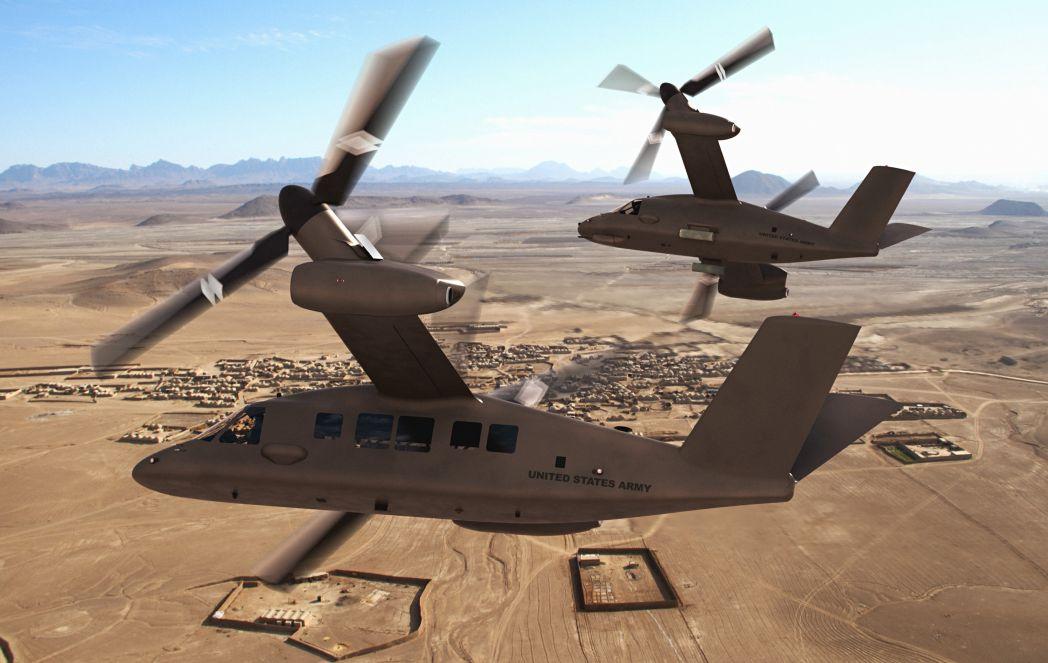
The technologically advanced Bell V-280 Valor is an improved version of the tilt-rotor V-22 Osprey. (Photo courtesy of Bell Helicopter)
earlier this year and that resulted in some pain for some of our operators. We’re digging out of that and are committed to being even better than we were before the changes and widening the gap between our competitors and us. t here was a period of pain for everyone, no question about it. everyone goes through it, we were well prepared, but maybe we could have done things a little bit better; we wish we were more transparent to our customers, but we are very focused on getting out of it. We are in a much better position now.
Helicopters: What are some of the differences in market demand in Canada versus those in the U.S. and Europe? What makes the Canadian market unique?
BK: c anada is blessed in natural resources and the management of those natural resources is the predominant opportunity for helicopters in this country. When you combine that with the fact that the operators are really accomplished at taking care of their equipment, you have a smaller percentage of replacement aircraft and new aircraft that you might have in other parts of the world. that makes the utility market very competitive. the opportunity there is to continue to offer better value. if you look at our 407, we have not had the market success in canada in the utility segment that we would like to have had, but i think part of that is that operators maybe didn’t fully understand the 407s value proposition. But as we do a better job of getting the numbers and attributes of the aircraft in people’s hands, we are seeing there is much stronger interest in the 407 than the competition. in terms of aircraft, there are a lot of l’s our there, there are a lot of B’s out there. We continue to have a lot of aircraft that were made in canada and they are still operating successfully. for the replacement and the new opportunity aircraft we have to continue to let people objectively evaluate the 407, for example, against the competition, and i think that is going to generate additional interest as people see the 407’s capability. in the future, the 525 relentless may be an option for a lot of companies in the off shore oil and gas industry. there are a lot of canadian companies that operate in the offshore oil and gas industry around the globe, so it’s going to be a strong player in that segment. and because of its cost per seat mile and the advancements of aircraft, it will be a top choice when
people need something in the super medium category. like the 429, there will be some market opportunities that will create themselves just because of the aircraft’s capabilities.
Helicopters: Working to create the safest helicopter environment possible is a top priority for operators and OEMs alike. How is Bell Helicopter working to ensure the Canadian operating environment is as safe as possible?
BK: it really starts with the corporate culture; across the board, safety has to be the no. 1 priority, bar none. if you look at our internal safety, both in the u s. in fort Worth and amarillo, tex., the 2013 performance is one of the best ever in terms of a real aerospace manufacturing company, and we had similar results in Mirabel. every year, we continue to improve and we are bordering on world-class safety
specific to canada; they are more aimed at the global market. safety comes down to making sure that you have the right mission equipment, that you are giving the pilots the best opportunity possible to operate safely, and that the pilots are always in a position to make good decisions about their missions – and providing them the opportunity to safely operate all aspects of their mission. if you look at the statistics, there is room for improvement in the decision-making process –and that is what we have to do, help operators and pilots make good decisions.
Helicopters: Many corporate leaders I have spoken with speak of finding the right talent to drive their operations in the future. How do you create a corporate environment at Bell Helicopter that establishes trust and promotes growth, development and initiative?
in the future, the 525 relentless may be an option for a lot of companies in the off shore oil and gas industry. ‘‘ ’’
performance for a manufacturing organization. We have more plans this year. the whole purpose is to have a corporate culture where everybody understands how important safety is and it starts with our internal manufacturing and extends to the safety of our flight test operations. it then extends to the safety of our operators around the world and out in the community. everybody in our plant knows that safety is the no. 1 priority and it starts at our supply base. We encourage our suppliers to have safety programs and we award business ensuring that they have adequate safety programs. We also participate in all of the international safety ventures; iHst is one example, where we took a leadership role with our employees out of Mirabel in helping to start up the organization. at the same time, the rotorcraft industry clearly has some room, collectively, for improvement.
Helicopters: What areas need improvement in the Canadian market when it comes to training and safety?
BK: My safety comments are not
BK: at textron, at Bell as a whole, and at Mirabel, we are doing a tremendous job at talent development. our ceo, scott donnelly, says it all the time: “talent is our no. 1 priority.” in terms of internal improvement, it’s safety, no question, but talent development is at the top of his list and he will stress it regularly to us. as senior leaders in the company we should be spending most of our time on talent development. it is incredibly true. John garrison gives us a lot of opportunity to move talent around the organization, and from my standpoint, i happen to be in one of the three biggest aerospace cities in the world in terms of what can be done – and we happen to live in the best. i respect what they can do in seattle, but Montreal is a better city. and we have so many people working in aerospace – 50,000 in Quebec, 40,000 in the Montreal area. there’s an incredible amount of talent, there are several high level academic institutions. We have to compete for the talent available with Bombardier, cae, pratt & Whitney, and so many smaller players, but
CoVeR stoRY
we’re doing a nice job of moving that talent in the right spots. a good example, we had someone in supply chain management for a couple of years. i put her in charge of the biggest part of our manufacturing organization at the beginning of last year, and because of her supply chain perspective, she was able to have essentially unprecedented levels of quality improvements.
We also have a very good working relationship with the Quebec government so if we’re able to do some technology and research cooperation that works to improve us all, we can. We have internships for people that are currently in school in Montreal, and once they are out of school, we have the textron leadership development program where we have people move through various textron divisions. We’re moving that pipeline around, keeping it fresh. We have a very strong focus on developing our talent internally or indirectly out of college.
Helicopters: So, you’re not a pilot Barry, but what got you into this business and what excites you most about the business in general? What’s the best part about being on the leadership team of a major helicopter manufacturer?
BK: i am a propulsion guy. i started my career technically working on what is now the rolls-royce 250 engine. i have turned fuel into propulsion my whole career . . . it’s all i know how to do and all i ever will do. i’ve run the gamut from gas turbine engine design to under sea propulsion systems, such as torpedoes and missile control systems. and then the opportunity to get back into the helicopter business presented itself and it was
Longer Lasting

ideal for me because i love the business, i love the product, i love what we can do with our product . . . it’s unlike any other business. the versatility of helicopters is just incredible and frankly, it’s just really fun.
When i look at the canadian aerospace industry, which i am very passionate about by virtue of my position with aiac, the other thing that i like seeing is canada’s aerospace role. canada has a strong economy. We survived the economic crisis as well as or better than any other nation. But that means we do not have developing nation labour rates. so, watching our ability to be globally cost competitive at Mirabel by using our talent and technical capability to meet the demand is a real challenge. We have to find a way to compete with customers in countries who have much lower labour rates. How do we do that? if you look at the progress we have made in terms of our cost structure and taking the direct cost out of developing our aircraft, you do that with finding the right talent. . . and this is the kind of thing that excites me.
another thing that excites me the most is our helicopter facility in Mirabel. We do it all here: composites, research and development, flight-testing. anyone that walks into our facility no matter what industry they come from, they are struck at how world-class our assembly facility is, looks and is organized. g roundbreaking was in 1984, production in 1986, we’ve been a force there for more than 20 years.
Helicopters: Congratulations on your recent appointment as

chairman of board for AIAC. What is your reaction to the appointment and what will be your first order of business upon taking over the role? What are your goals for the organization?
BK: there’s really three things. the first one and the over arching priority is to create and support the environment for the canadian aerospace industry to succeed on a global basis. We are a small country, which means we don’t buy a lot of aerospace products but we have a lot of aerospace manufacturing, we’re selling a lot of product. By definition we are an export business and so we need to be competitive at that export business. the immediacy of that for my tenure is to continue to work with the canadian government to implement the policies and recommendations from the emerson and Jenkins reports and to help guide the government to implement those recommendations. step two is we have to recognize that the vast majority of companies are small and medium enterprises (sMes). if you look at the economics of it, we have to put them in a position so that they are growing as an entity, growing at least at a global gdp this means that for them to succeed they need to be globally cost competitive. this is critically important. the oeMs are successful by globalizing the supply chains and staying globally cost competitive. the sMes by nature have to be somewhat less reliant on the domestic oeMs and look more toward global cost competitiveness to win business in an export market. We have to develop a strategy that allows them to do that. the third priority is we executed a superb strategy with getting the government and pubic award of the aero-
space sector, and although we haven’t finished it, it is largely done. My predecessors did a great job. We need to develop our next multi-year strategy.
Helicopters: You have had tremendous success in your career at Bell Helicopter. Are there any experiences that stand out that have helped you in the process of growing the organization? What has been the most satisfying experience at Bell Helicopter for Barry Kohler?
BK: i break it into three things. first, seeing successful product in production, be it the market penetration of the 429, watching the 525 roll out, seeing the 407 gX go into production . . . we can’t make them fast enough. i am thrilled with the development and execution of product development; it’s always special to see. But at the same time, it’s all about the people and i am passionate about people and developing talent. When i see the people in the organization have an opportunity to succeed and thrive, especially hidden gems of talent step into new roles and grow . . . that’s exciting for me. the third thing is to set a strategy for our organization and convince them that, even though we are in a strong economy, we can be globally cost competitive. and we can substantially improve our position with respect to our supply chain stability and our year-over-year approach. Watching all of the elements together and having Bell achieve its goals . . . it’s just very exciting.
For more features, visit www.helicoptersmagazine.com
Meeting in the name of safety
The CHC Safety & Quality Summit Sets Industry Standards
BY paul dixon
it’s a milestone year in 2014 for canadian-based operator cHc as it’s celebrating the 10th anniversary of its cHc safety & Quality summit. conceived as a one-off in-house training session, the summit has grown by popular demand across the industry to become the premier rotary-wing safety event in the world.
cHc prides itself on being not just the largest commercial helicopter operator in the world, employing 250 helicopters to carry more than one million passengers a year, more than 87,000 flight hours, but by being the industry leader as it operates in more than 30 countries on every continent. the company provides 24/7/365 service in some of the most hostile environments imaginable.
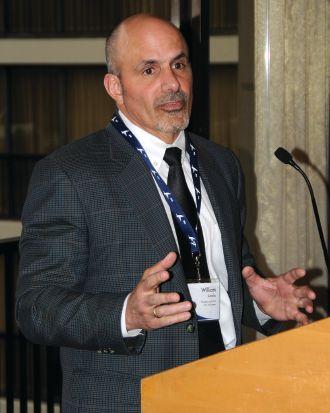
in his opening remarks at last year’s summit, cHc president and ceo William amelio spoke of his company’s enviable safety record, one-eighth the number of accidents compared to all offshore operations and one-13th the number of accidents when compared to all rotary operations. “i’m proud, but i’m not satisfied,” he said because of the realization that perception of helicopter safety is based on the performance of the entire helicopter industry and not just cHc that is why it is so important that the entire industry is able to come together and work collaboratively, because safety is not proprietary. it’s also why amelio isn’t shy about sharing the stage with the ceos of his fiercest business competitors. operators, oeMs, insurance companies – everybody comes together at the summit and they all sing off the same page.
the summit had its beginning when greg Wyght was given the job of taking cHc’s various operating divisions around the world and building one common safety standard, a common vision of what safety and quality meant across the entire organization – which literally meant around the world. it was a real challenge that meant working with operating units in different countries that had different cultures (in more ways than one!), different languages and differing concepts of safety and quality. that meant bridging the culture gap(s), identifying weaknesses within the company and then looking for the best training in order to develop a data driven risk management approach. this search led to peter gardiner at the southern california safety institute. the first session had such a profound impact that word spread quickly across the industry and Wyght started getting calls from people outside cHc asking when the next one would be and could they please come.
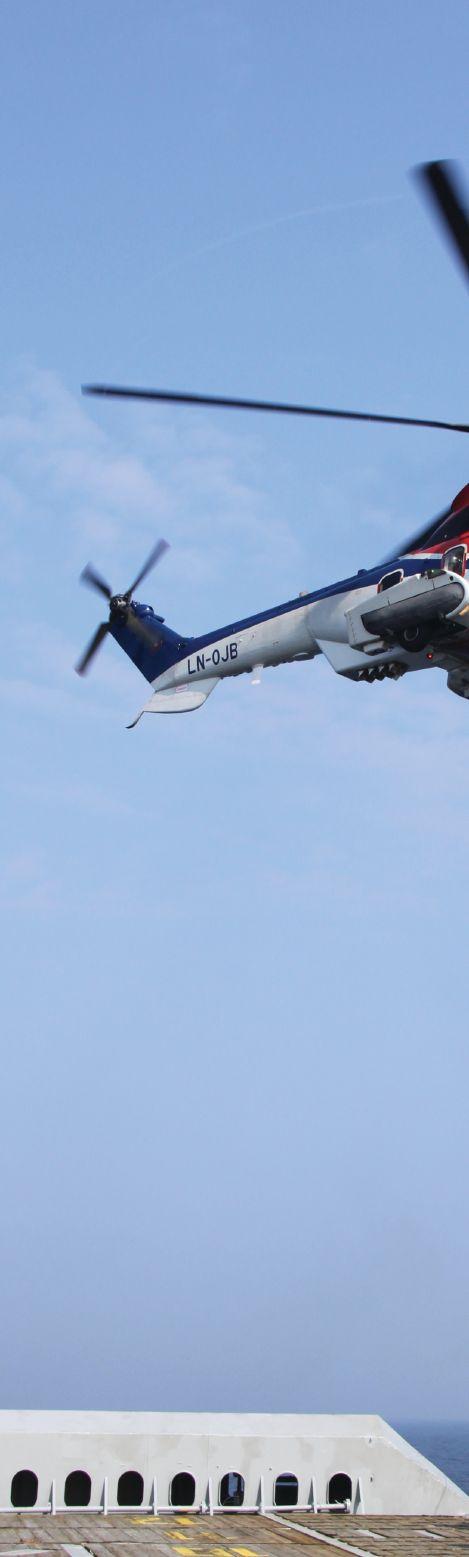
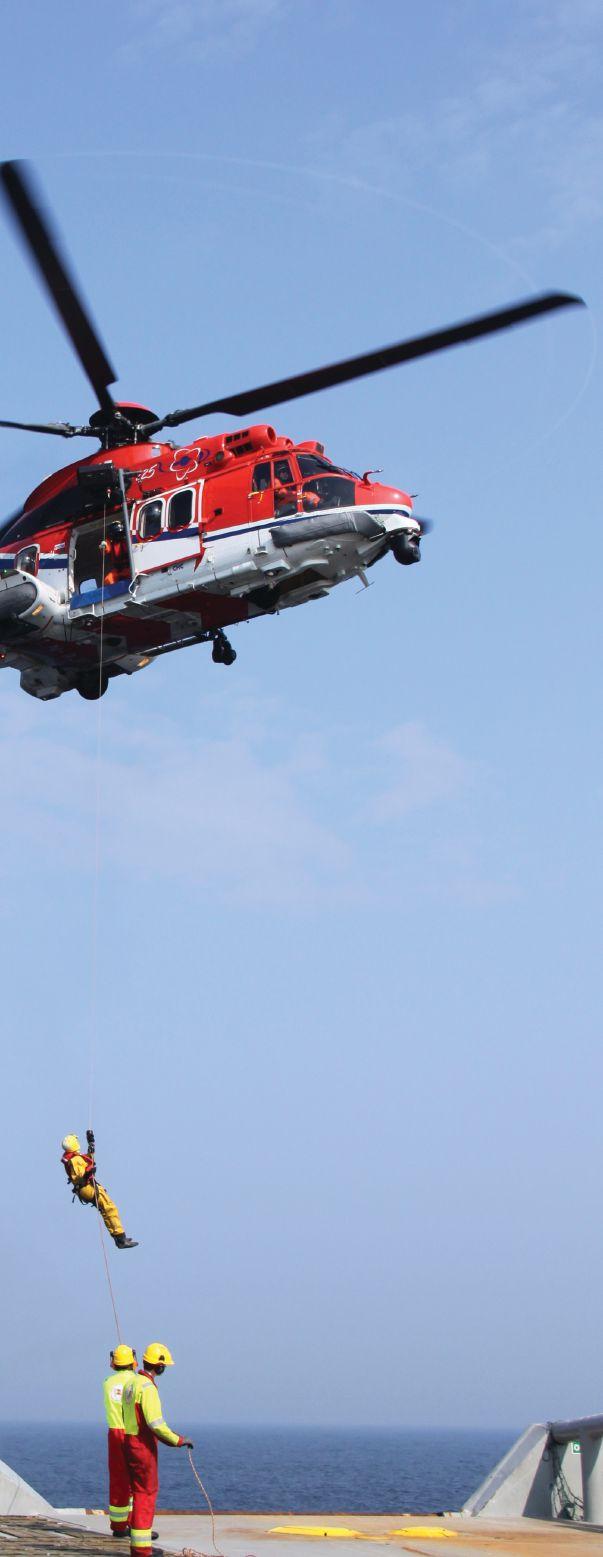
attendance has grown steadily every year, from the 35 people in the first year to almost 800 last year, getting close to absolute capacity at Vancouver’s the Westin Bayshore resort & Marina. Wyght shepherded the summit through its first eight years of existence, before taking a promotion to become vice-president of systems operations, overseeing cHc’s global operations centre in dallas, tex. duncan trapp, who succeeds Wyght as vice president of safety & quality, also assumed the mantle of organizer for the summit.
planning for the summit is a year-round enterprise, done by a small group of cHc employees in addition to their “regular” jobs. it comes as a surprise to many that cHc does not hire an event organizer, but is able to rely on people working off the corner of their desks. it speaks volumes to the issue of the corporate culture at cHc, or as liam fitzgerald says as a member of that small team, “it’s something we all like working on and it’s important.”
planning for next year doesn’t start the day after this year’s conference ends: it’s incorporated right into the conference. delegates are asked to fill out feedback forms for each presentation and the forms are used to rate the presenters and the subject matter. those who failed to connect with their audience won’t be invited back, while on the other end of the spectrum there is a core group of presenters that come back year after year and consistently draw sro crowds. the speakers program runs up to eight concur-
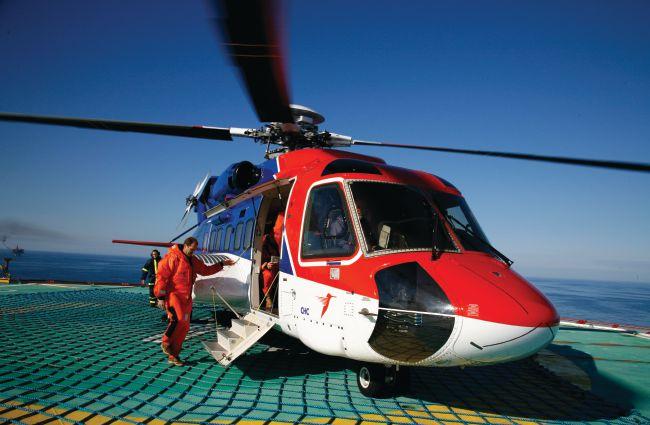
rent sessions, with the more popular sessions repeating, with the intention of offering something for everyone in every time slot. When it comes to setting a theme for the conference and filling out the roster of speakers, the team takes ceo amelio’s statement about working for the industry and not just for the company to heart. “When it comes to safety,” fitzgerald says, “it’s one area where we can definitely say there can be no competitive advantage or pursuit of a competitive advantage. it’s about creating safety for the entire industry and a safety record for the entire industry. When we’re looking at the summit, our team is very involved with
MAIN PHOTO: CHC is the largest helicopter operator in the world, employing 250 helicopters to carry more than one million passengers a year. (Photo courtesy of CHC) INSET: CHC continues to up the ante in the safety realm. (Photo courtesy of CHC)
in praise of the Rocket Man featuRe
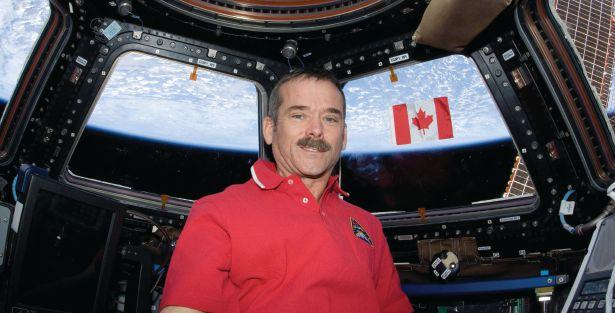
Chris Hadfield was born with the love of flying in his DNA. We hear about how he grew up on a farm in southern Ontario, but we rarely hear that his father was a captain for Air Canada and his brothers are both commercial pilots. He was already used to looking up at the skies when he went outside into the night air on July 29, 1969 and stared up at the moon. Just shy of his 10th birthday, he had found the purpose to his life. He was going to be an astronaut. Not in the way that most boys that age want to be a firefighter one week and something else a week later. He was going to be an astronaut and that was all there was to it. He excelled in high school, followed by Royal Military College. Top pilot in his basic flight training, he was tops in his basic jet training before moving on to CF-5s and CF-18s. As an operational CF-18 pilot he was the first CF pilot to intercept a Soviet Tu-95 “Bear.” There are a lot of firsts.
There was no Canadian astronaut program at the time Chris graduated from RMC, though he was still committed to going into space. He thought about moving to the United States, but ultimately decided that if he was going to be an astronaut then he was going to be a Canadian astronaut. If you look at his career progression there are some sharp turns, often unexpected. It can be said that things happen for a reason or that you make your own breaks. At the times a door shut on him, another one opened. After attending the U.S. Air Force Test Pilot School (top of his class) he then served as an exchange officer at the U.S. Navy Strike Test Directorate at Patuxent River Naval Air Station, where he was U.S. Navy Test Pilot Of The Year in 1991.
In 1992 Hadfield was selected as one of four Canadian astronauts from more than 5,300 applicants. The rest is history as the saying goes. There were two missions on the space shuttle and in 2012-13, 146 days aboard the International Space Station. In 2009, we had a chance to talk with Chris at the Abbotsford Air Show, where he was flying the F-86 Hawk One as part of the Centennial of Flight. At the time, he had just finished a year as understudy to the team leader on a 2008-09 mission to the ISS. Talking with him then was like talking to your next door neighbour. There’s no doubt that he is as proficient as any other pilot at the airshow, but there’s none of that “top gun” attitude that comes along with a few too many of the airshow types. It was fascinating to talk with someone who still had all the enthusiasm of that nine-year-old who had looked up at the night sky 40 years previously and to know that he was even more stoked about space now than he was then. That said, what brought out the smile was talking about the thrill of flying the F-86. Absolute perfection as an airplane, “like someone had given him a pair of wings.” It was like Goldilocks critiquing the three bowls of porridge in describing the other two aircraft in the Heritage Flight. The CF-18 is a wonderful aircraft, but there’s so much power and with the CT-114 Tutor, you’re always trying to catch up to the other two, but the F-86 is “perfect.”
Now retired from the Canadian Space Agency, Chris Hadfield is anything but “retired” in any sense of the world. He is a college professor (at the University of Waterloo), author (#1 on the bestseller list), CBC commentator, public speaker and much, much more.
what is going on, not just at cHc but across the industry. it’s definitely based on what is going on across the industry, not just what is going on in the company. We like to think that what’s happening in the company can be representative of what is happening in the industry, but it’s trying to find a balance there.”
i ndustry stalwarts such as s cott shappell, doug Weigmann, tony Kern and graham Braithwaite keep coming back to the summit as marquee speakers. they are all world leaders in academia, with the rare ability to transform accumulated knowledge into operational practice. What they do best is to highlight the importance of human factors in every facet of safety and quality management, from design through implementation. d r. s happell and d r. Weigmann are lynchpins of the summit, from the three-day workshop, “Human factors analysis classification system” that precedes the summit to individual presentations in the concurrent sessions.
disciples of peter gardiner, shappell and Weigmann sponsor a student bursary program that enables a student enrolled in post-secondary aviation studies to attend the conference and pre-conference course. the award includes airfare and accommodation and this year a second bursary will be awarded due to the generosity of the host hotel, the Westin Bayshore resort & Marina, allowing a second student to attend.
the keynote speakers at the gala dinner
CHC president and CEO William Amelio isn’t shy about sharing the stage with the CEOs of his fiercest business competitors. (Photo by Paul Dixon)
have been human embodiments of the conference themes, always with the emphasis on the human side of the equation. in 2010, capt. gene cernan, u s. navy (ret.), astronaut widely known as “the last man on the moon,” talked about his astronaut experience and especially the importance of fully understanding the risks involved with any task before you can progress. passion for what you are doing and a desire for success are essential. in 2011, cmdr. fred Baldwin, u s. navy (ret.), one of an elite group of carrier pilots with more than 1,000 landings (traps), talked about the challenges of directing flight deck operations on an aircraft carrier, one of the most dangerous workplaces in the world, where the workforce was renewed every year, mainly with new recruits straight out of boot camp.
the next year, capt. chesley sullenberger recounted his foray into the Hudson river; a man who had devoted his flying career to being an advocate for safety, saying that he had hoped to be remembered for a lifetime of work and now he was bound to be
known for what happened in five minutes out of a career that spanned more than 30 years.
last year saw a departure from the norm when the keynote, simon sinek, was summoned from outside the aviation world. fitzgerald says that was a deliberate choice, “a bit of a change, to look at management style and why things happen.” sinek appears at conferences and forums around the world with his presentations on subjects such as “start With Why” and “How g reat l eaders i nspire a ction.” fitzgerald says feedback on sinek’s speech was excellent.
“i thought it was really positive because his whole idea of understanding why we do things, why we operate the way we do and what our purpose is was fantastic,” he says. “that fits in with cHc’s purpose, to bring everyone home safely. so, we looked at that, spread it out across the industry and looked at why we fly these helicopters.”
this year started with another significant moment in the lifespan of cHc – a

lifespan that has taken a long and winding road over the past 60-plus years to its position as the world’s largest commercial helicopter operator.
on January 21, ceo amelio, surrounded by cHc directors and senior management, rang the opening bell at the new york stock exchange in honour of cHc’s initial public offering. outside, under the grey skies and blowing snow of a cold winter’s day, normally blasé n ew yorkers stopped to ponder the brightly painted s-76 parked in front of 11 Wall st.
cHc got to be the biggest by being an innovative, pioneering organization. Having the desire and ability to create programs and provide training across the entire industry is what separates leaders from also-rans. it’s also what enables cHc to go further, do more and come home safely – by demanding the best, all day, every day.
On Jan. 21, CHC directors and senior management rang the opening bell at the New York Stock Exchange. The moment was celebrated outside with a brightly painted S-76 parked in front of 11 Wall Street. (Photo courtesy of CHC)
finding the Right solution
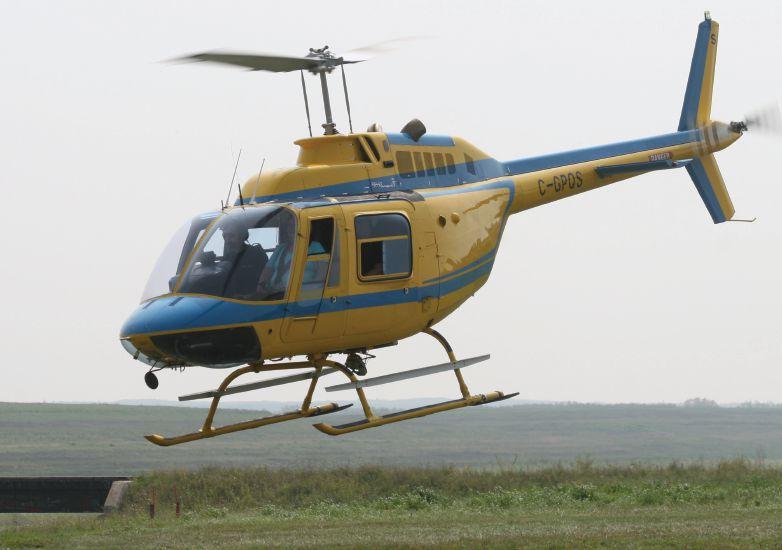
LEFT: Manitoba’s Custom
was
of the
BELOW: Hardly the mad scientist type, Tom Tessier has invented a GPS product that is both highly versatile and is an invaluable mission tool. (Photo by

Solara-Global’s GPS Helps Helicopters Bring ’Em Home
BY Bill zuK
tom tessier appears to be the very antithesis of an inventor, looking nothing like the public perception of the mad scientist. He is down-to-earth, warm and friendly as he describes the invention that is the cornerstone of his company’s product line – a tracking device that is finding favour in aerospace industry mounting on everything from spacecraft to helicopters.
the latest solara 2000 tracker series has found a home in helicopters in remote operations where direct communication is essential in providing automatic gps (global positioning system) tracking, two-way messaging at a fixed price from a central monitoring station, monitoring of single to multiple users on a Web map and, first and foremost, maintaining a secure and continuous link to a home base. “you want people to be safe, that goes without saying,” says tessier.
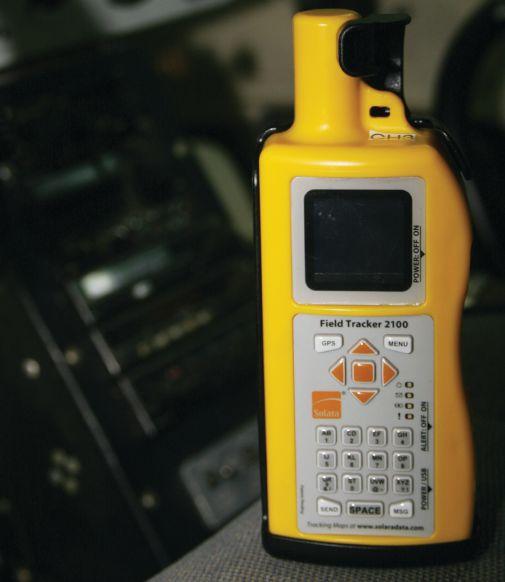
at first glance, the latest solara field tracker 2100 looks like the overgrown “brick” mobile phone that first appeared in the 1980s, yet it is still small and light enough to be a handheld unit. the shell is either a bright yellow in civil versions or a matte black in other applications. composed of thick poly-carbonite that has already withstood drop tests over four feet onto concrete (able to
withstand +50g impacts) and has been virtually indestructible. a recent test of a solara tracker mounted in a cradle, continued to operate at over 70g the case is built at e.H. price in Winnipeg.
it is also shock- and vibration-proof (meeting MiL-StD-810g certification for shock and vibration), water-resistant up to threefoot depths for 30 minutes with an iP68 cap, able to operate from -50 to +50 c in a rugged, sealed compartment that need only be sent back to solara for battery replacements. nickel-metal hydride battery life, depending on the setup of the device, can last days on a single charge.
the tracker connects through a helical antenna at the top of the unit, to a communications satellite in the i ridium communications inc. constellation of 66 satellites. Working with iridium, in business since 2000, ensures that solara can provide service 24/7 with enough backup capacity to never leave a user without service. the iridium satellites deployed in an orbital pattern passing over the north and south poles provide continuous global coverage and have a built-in redundancy capacity to cover any negative event.
trackers can be purchased with a variety of peripherals including software customized to such users needs as data packet size,
Helicopters
one
first aerospace companies to adopt Solara Trackers. (Photo courtesy of Custom Helicopters)
Bill Zuk)
an ac/ dc charge adapter, a 100V to 240V universal adapter, a foldable solar panel for use in areas where there is no external power and mounting equipment – all packed in a travelling hardcase that can float. customers can optimize use, as in batteryoperation by an individual on foot or the unit can be plugged into the 12- or 24-volt system of a cockpit as non-std portable equipment. the solara trackers can send locations in as little as every 20 seconds, serving as emergency beacon. With two-way text, with the future potential of being directed through a phone line, communication can be maintained in a variety of circumstances.
the origins of the solara trackers go back to the 1990s, when engineer tessier, as manager of computer applications at akjuit aerospace inc. (spaceport canada), was based in churchill, Man. launching rockets over frozen tundra had led to an environmental concern and the need to recover the debris of the shattered rockets; tessier had to come up with a unique solution.
Knowing that local trappers and hunters had developed an ability to live off the land, following herds of caribou for hundreds of miles inland, he contacted inuit hunters from nunavut who would retrieve the rocket components. tracking the individuals out on the ice, however, necessitated a search-and-rescue (sar) tracking device that would work in one of the world’s harshest and most unpredictable environments, and nothing seemed to be up for the job. after struggling with contemporary data and communications devices that were largely cumbersome and unreliable, one of his inuit friends simply made it a challenge: “look, you’re the engineer from the south. Why don’t you come up with something that works?”
With that, tessier began an odyssey to develop a tracking device that would make it possible to live and work in remote and isolated parts of the world. His next role as a space
communications and satellite system designer with Bristol aerospace led to work in 2004 on a satellite-ground receiver that was portable enough to go into small tracked vehicles. field tests in northern latitudes produced enough data to encourage him that he was on the right path. other projects included a stint with the european space agency and involvement in the launch of the scisat-1 in 2003. later, as the president of an aerospace consulting firm, he assisted programs at the university of california (Berkeley) and provided support and training to companies and agencies working with the canadian space agency. throughout this period, tessier continued to work on a sar - sat tracking device.
after tessier founded solara remote data delivery inc. in 2006, he began to look for clients. at that point, still in the development and proving stages for new prototypes, he was approached by Jim Hawes, the founder and president of custom Helicopters, based in st. andrew’s airport, on the outskirts of Winnipeg, whose far-flung operations led to a second base in thompson, Man. in a recent interview, tessier recalled that Hawes “was a mentor whose advice and support” came at a time when the tracker that he was working on was being readied for production. Hawes saw tessier as a “hometown boy who was not only an innovative engineer with an intriguing product, but someone who could help make helicopter operations safe for everyone who flies up north.”
tessier has described the design process that his products have undergone as a “learning exercise.” He says, “you have to make it intuitive because people just want to pick it up and go with it, not read a manual. every single thing on here is a design decision; even the screws are stainless steel to make sure that they don’t corrode. the silicon adhesive to seal the unit means that the units are returned and exchanged when batteries need servicing. Batteries
Solara Trackers are used worldwide in many applications from security at the 2010 Olympics to snow grading, mining and prospecting, marine, and even in space vehicles. (Photo by Bill Zuk)
Trackers are now found in all of the Custom fleet and bring a heightened safety level, necessary when the fleet is far from home. (Photo courtesy of Custom Helicopters)
have been known to explode. We chose the batteries specifically that would not only have the greatest performance but offer the safest operation.”
Hawes had laid out some of the specifications that he required for a tracking device: mobility, battery-operation, burst or intermittent signaling, gps location finding, one or two-way communication capability and velocity readings. the com-
pany’s first product, the solara tracker 1000 was adopted for use in polar communication with a select group of clients including mining and exploration companies as well as the military. it would turn out to be the world’s first automatic gps tracking and text-messaging device.
With the initial specifications that were laid out by prospective customers like Hawes, tessier knew that he could produce

a tracking device that not only met the stringent requirements of sar/sat equipment but that also could be unique in the field of data communications, an economical, study and reliable unit that could go anywhere.
one of the first aerospace clients to adopt the solara trackers was custom Helicopters. trackers are now found in all of the custom fleet, and according to Brian dawes, the current president and ceo of the company, taking over after his dad’s recent death, the tracking devices “continue to provide an element of safety to operations that are often far from home.”
starting from a small, one-person operation, solara is now headquartered in the national research council building in Winnipeg in a compact but efficient twooffice location, where data and communication tracking, servicing, and research and development is carried out. sales are made globally through the main office and a network of select dealers across north america and beyond (australia is the latest dealer location) to a wide range of clients. trackers are in use worldwide including at a station in antarctica and in many applications, among them security at the 2010 olympics, snow grading, mining and prospecting, marine, and even use in space vehicles.
one of the selling points of the solara trackers is the flexibility of design, which allows for customizing of individual units. the degree of flexibility solara offers allows for “an almost endless number of options and possibilities,” tessier says. for example, since a heavy case is not required for south american use, a miniaturized tracker has been developed for that market.
tessier continues to upgrade and develop new features for the trackers, making use of the assent Works in Winnipeg, a private, non-profit “inventor’s studio” where industry and educational leaders have provided a workspace for engineers, designers, architects, artisans and artists to create new products. tessier is one of the active participants who can be found at the cad and 3d equipment with his latest prototype of the solara tracker.
Who says an engineer from the south can’t produce a tool that all northerners can truly appreciate?
Recognizing the next geneRation in the canadian aviation and aeRospace industRy!
Canada is full of young, skilled and knowledgeable people who are driving the aviation and aerospace industry forward. From pilots and AMEs to ground crew and business managers, they are the best and brightest in our industry. Join us as we celebrate the future of aviation and aerospace in Canada.
WHO CAN BE NOMINATED?
Anyone in the aviation or aerospace industries who is under the age of 40 as of December 31, 2014. Equipment and technology suppliers as well as operators are welcome.
ALL NOMINEES SHOULD:
• Demonstrate a strong work ethic
• Show leadership and initiative
• Actively seek new opportunities for training and education
• Be involved in industry association or broader industry initiatives
NOMINATIONS ARE NOW OPEN
To nominate someone to be recognized as one of the Top 10 under 40, visit www.wingsmagazine.com or www.helicoptersmagazine.com and click on the “Top 10 Under 40” link to complete a nomination form.
Nominations close on May 1st, 2014

The Top 10 Under 40 will be featured in the July/August 2014 issue of WINGS Magazine and the July/August/September issue of HELICOPTERS Magazine.
preparing to share the skies
UAV Invasion Will Ultimately Alter the Civil Aviation Landscape
BY paul dixon
Coming soon to a sky near you – drones! there is no shortage of hyperbole, distortion and misunderstanding in public perception of the current and future state of unmanned aerial vehicles (uaVs) in canada. the public has become aware of “drones” after more than a decade of nightly news reports on their use in a variety of military roles in conflicts around the globe.
the announcement by amazon ceo Jeff Bezos in december 2013 that amazon was developing its own airborne delivery service, amazon prime air, with the intention of delivering an order to the customer in 30 minutes made everyone sit up and listen. apart from the fact that current regulations would currently prohibit such a service, there is also the little matter of whether such an endeavour would ever be technically feasible. reality aside, it certainly did get Bezos some serious media exposure for free and did spark public interest.
the term “drone” has won common acceptance to describe a wide variety of systems and technologies that more accurately can be referred to as unmanned (or uninhabited) aerial vehicles (uaVs), remotely piloted vehicles (rpVs), remotely operated aircraft (roa) and unmanned combat aerial vehicles (ucaVs) to more accurately describe the aircraft and its intended uses. section 101.01 of the Canadian Aviation Regulations (cars) states, “unmanned air Vehicle” means a power driven aircraft, other than a model aircraft, that is operated without a flight crew member on board. Whatever they are called, they are all considered to be aircraft from a regulatory point of view and for the purposes of this article we shall use the terms uaV and drone interchangeably.
the canadian military has had considerable experience in afghanistan with uaVs and in the words of rcaf lt. gen. yvan Blondin, the experience was overwhelmingly positive and he was personally impressed with the incredible amount of information these systems can provide in a military context. appearing before the senate defence committee in March 2013, lt. gen. Blondin spoke of his desire to acquire a platform that is able to fly on extended, long-range

surveillance patrols far out to sea off canada’s atlantic and pacific coasts, as well as conducting arctic sovereignty patrols. He went on to say that these machines could be deployed in humanitarian missions such as the response to Haiti in 2010, where the ability to more quickly determine the damage to roads and other infrastructure in remote areas would have been invaluable.
Blondin’s comments were backed by the chief of defence staff, gen. tom lawson, in a november 2013 speech to the center for strategic and international studies. lawson said the purchase of a fleet of drones was included in the 2008 Canada first Defence Strategy. the decision to be made is whether canadian drones will be armed or strictly for intelligence, surveillance and reconnaissance (isr) purposes. reportedly, the government is considering purchasing of up to 18 UaVs for the royal Canadian air force, either Medium altitude long endurance (Male) aircraft such as the Heron, which the canadian forces has operated in afghanistan or High altitude long endurance (Hale) machines such as the predator or possibly a combination of types. no specific costs have been released but the project’s price tag is estimated to be more than $1.5 billion.
in 2011, canadian frigates operating in the Mediterranean in support operations in libya and on piracy patrols in the gulf of aden and off the coast of somalia deployed the scaneagle uaV. originally developed by the american firm insitu, now a subsidiary of Boeing, to conduct off-shore surveys to assist commercial fishermen by collecting weather information and tracking offshore fish, the scaneagle is equipped with either an optical camera or an ir camera in an inertia stabilized system and has and endurance of up to 20 hours. the uaV is launched by compressed air and is retrieved using a “skyhook.” in 2009 a scaneagle was used by the u s. navy for surveillance purposes during the Maersk Alabama highjacking incident.
the current state of uaVs is akin to aviation at the end of the first World War. in the past decade, the military have come to rely on uaVs to fill a number of roles and are seeking to expand both the technology and the roles. on the civil side, many operators see the commercial
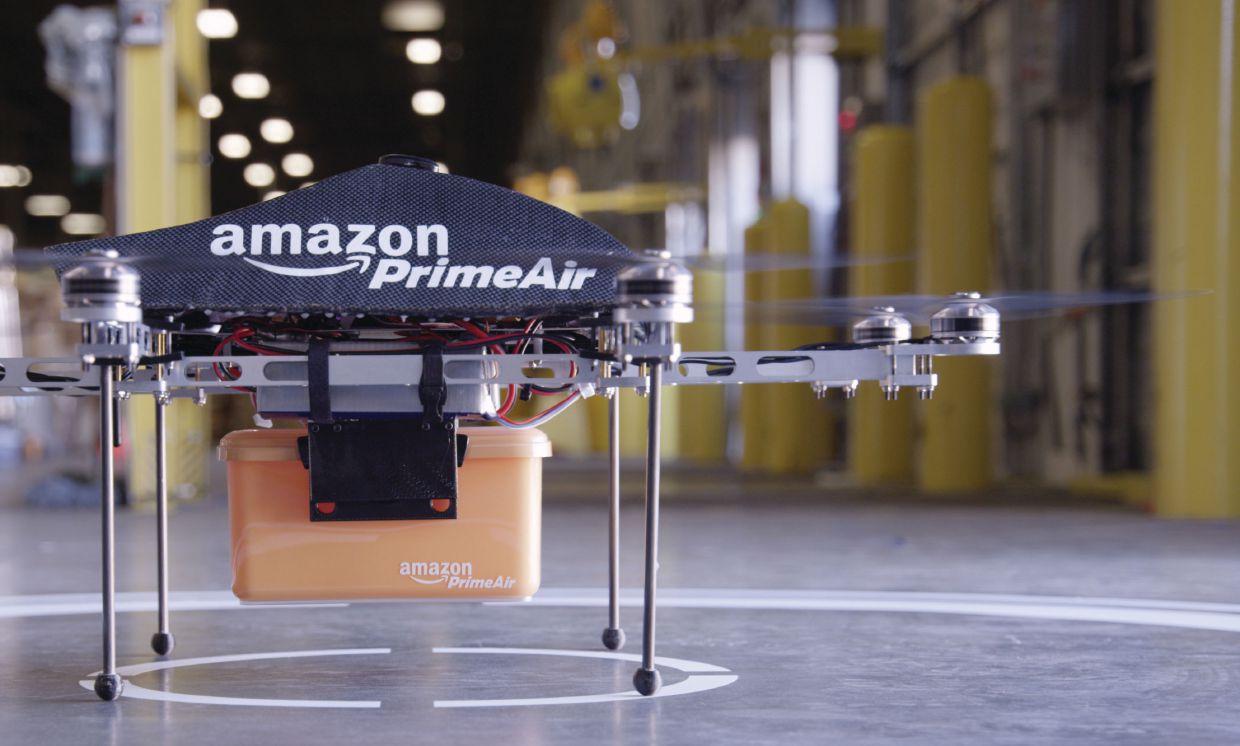
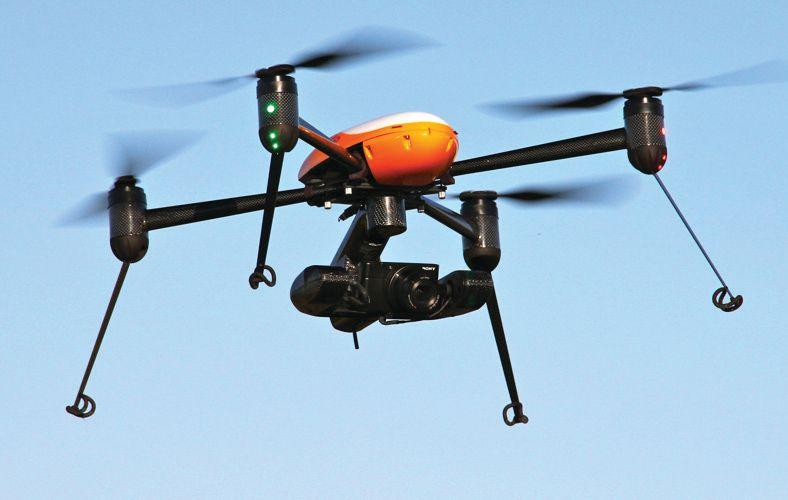
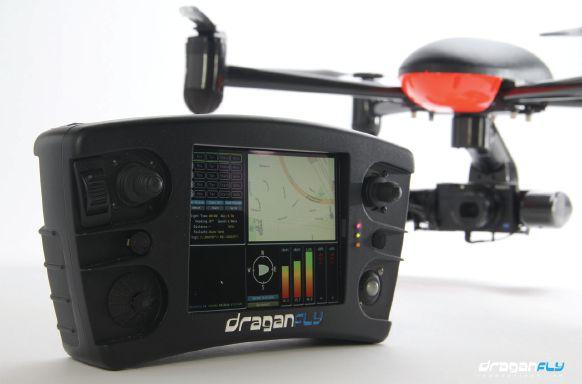
ABOVE: Amazon’s PrimeAir delivery systems – 30 minutes to you from time of order. (Photo courtesy of Amazon)
LEFT: The Draganflyer X4-ES is used by RCMP in rural and remote areas of Canada by collision reconstruction analysts and forensic crime scene investigators. (Photo courtesy of Draganflyer)
LOWER LEFT: The Draganflyer X4-ES control unit. (Photo courtesy of Draganflyer)
potential for uaV operations in a number of areas, but current regulations restrict a wholesale unleashing of machines in a repeat of the barnstorming era of the 1920s. if the canadian military is to enter the world of uaVs to the extent suggested, there are lessons that can be learned by those in the civilian world who have designs on commercial uaV operations. there are a number of issues that will have to be addressed before uaVs can enter commercial service in any meaningful numbers, including certification process, registration, maintenance regimes and especially, pilot/operator training and certification.
it may come as a surprise to many canadians to know that transport canada (tc) has been working closely with industry over the same period to develop regulations for the operation of uaVs in canadian airspace. under current tc regulations, uaVs operating in canada must meet “equivalent” levels of safety as manned aircraft and no one may operate an “unmanned aerial vehicle” without a special flight operation certificate (sfoc). the terms of reference for the working group state that “the primary goal of the Working group is to define a performance-based regulatory framework for medium to longrange, medium altitude, beyond line-of-sight uaV operations in canadian airspace.”
that said, the group realized very early in the process that most future uaV operations would likely be small uaVs operated at low altitudes, rather than larger, general aviation-sized aircraft that are
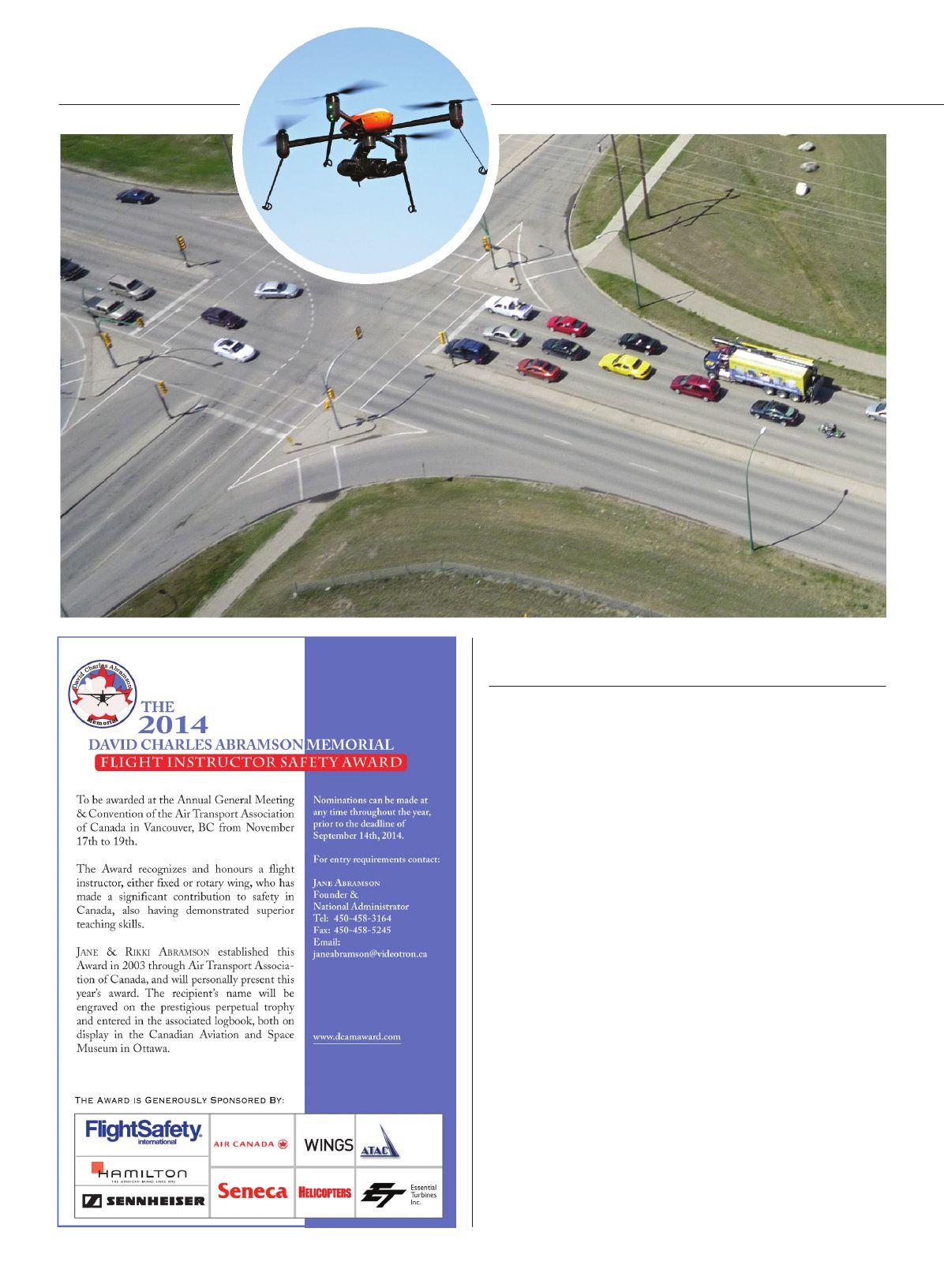
capable of flying in class a or class B airspace. the Working group includes representation from transport canada, dnd, naV canada, national research council, canadian owners and pilots association and 16 private sector canadian uaV stakeholders including uas system developers, operators, uaV sector associations and academia.
stewart Baillie, chairman of unmanned systems canada, sees this as an exceptionally positive arrangement, “the regulator and the industry are collaborating and working together. everyone has a lot of time for us and certainly we are having good discussions,” he says. Baillie describes tc as being very pragmatic given that they are working with limitations of budget and staff. “they’ve been very receptive, we’re helping to develop the syllabus, we’re talking about registering aircraft and they are quite open to us (the industry) doing some of the legwork and then trying to adopt (suggestions) as best they can.” an example of the willingness of the regulator to work with the industry was the full-day workshop at the 2013 unmanned systems canada conference in Vancouver that featured Martin eley, director general of civil aviation and other officials from tc
While public attention is riveted on the large, high-flying military drones it quickly became apparent to the members of the working group that future civil uaV operations in canada would not be based on general aviation-sized aircraft, but rather small, lightweight uaVs operated at low to medium altitudes and beyond visual range. at present, there are a very limited number of uaV models that are capable of flying in class a and/or B airspace, and they are very expensive. While the tc working group recommendations include “medium to long-range, medium altitude, beyond line-of-sight operations” uaVs, the bulk of the recommendations are intended to
An unobstructed overhead view of a collision scene or crime scene can be critical to an investigation.(Photo courtesy of Draganflyer)
address the small uaV market.
transport canada has taken a very simple approach with the small uaVs under 35 kilograms. if the machine is used for any commercial purpose, it falls under the regulations. even if it is sold or marketed as a “toy” or “model,” an sfoc is required. you can buy a $200 quadcopter at your local big box store, equip it with a small digital camera and use it to take aerial photos or video of your own house, but if you do it for your brother-inlaw the real estate agent and charge for your services, you need the paperwork. canadians have been operating uaVs for a number of years in a number of different applications. the opp and rcMp were amongst the first law enforcement agencies to embrace the utility of small rotary uaVs to provide a level of service to police officers in rural and remote areas. Being able to use a small uaV to take aerial photos of serious motor vehicle accident scenes or major crime sites adds a level of sophistication to investigations that would not otherwise be accessible. low level aerial videos are increasingly being incorporated into real estate marketing schemes, for high-end residential properties and for presenting views of proposed developments that would not otherwise be possible. search-and-rescue teams in suburban Vancouver have been investigating the potential of integrating small uaVs into ground search protocols.

Bezos and amazon may have grabbed the lion’s share of the headlines with his futuristic uaV delivery system, but he was far from the first to conceive of the idea. in australia, Zookal, a startup textbook rental company, announced that it would deliver textbooks to clients in urban centres utilizing gps co-ordinates, while in Wisconsin, regional brewer lakemaid ran an ad on youtube (check it out) demonstrating its beer drone delivery system. Beer, textbooks and the
the opp and rcMp were amongst the first law enforcement agencies to embrace the utility of small rotary uaVs. ‘‘ ’’
cornucopia that is amazon – all in 30 minutes or less. can life get any better?
Hold on to that thought, because a simple reality check tells us that any of these schemes is a long way from coming to an airspace near you. Bezos’ was quite right to refer to the current faa policies on uaV operations during his reveal on 60 Minutes and the truth behind the video that amazon provided demonstrating how it might
look in the future was actually shot outside the u s. so as not to antagonize the regulators. in the case of the beer and book schemes, it’s a question of whether small rotary uaVs are actually capable of lifting the proposed loads, not to mention a myriad of other questions in regards to the business model. it has been suggested that the box of beer in the lakemaid video is just the box and no beer. notwithstanding, once it came to the attention of the faa, the word came from Washington to cease and desist. of course, whether or not these schemes ever get off the ground, they have generated more media attention and free publicity on an unprecedented scale.
in canada, the chokepoint will come as more uaV operators come on line and sfoc requests increase accordingly. sfocs are issued by the tc regional offices, by general aviation inspectors who have a wide range of responsibilities. Within tc there is not a single position that is specifically responsible for uaVs and this situation will create a bottleneck as sfoc requests increase. the good work done by working with industry may come to naught if certificate requests cannot be handled in a reasonable timeline. as much as the regulations are required to enable the industry to grow, tc needs to be given enough staff with the requisite skills to support the industry as it moves out of the incubator and into its growth phase.

future growth in the canadian uaV industry has to come from within. canadian universities and colleges are seeing a surge in interest around uaVs. the unmanned systems canada student competition started a decade ago with three entrant teams. this year’s competition will see 16 teams from institutions across canada converge on southport, Man. the three-day competition will see teams integrate an aircraft, sensor package and ground control station as they are given a complex series of tasks to perform based entirely on real-world situations.
the potential exists for uaVs to operate in many environments in a wide variety of roles, in some cases potentially replacing piloted aircraft while in other situations working in concert with piloted aircraft to increase the efficiency and effectiveness of the mission. this is especially applicable to the existing rotary-wing community, who may wish to adopt uaVs as a value-added proposition. the day is coming when uaVs will operate in civil airspace, but until the technology is developed that will enable uaVs to be fully integrated and until the regulatory framework is in place, that potential will remain untapped.
For under $400, you can record HD video or photos, under the control of your phone or tablet. The distinction between toy and functional aircraft has become even more blurred. (Photo courtesy of Parrot SA)
Campbell River Base e-mail: info@ebhelicopters.com www.ebhelicopters.com
Gold River Base
Tel: 250-283-7616
Fax: 250-283-7555
Port Alberni Base
Tel: 250-720-8915
Fax: 250-720-3641

Commercial Charter Services
• Astar 350, Bell 407 and Bell 206
• Robinson R22, R44, R66
Approved Robinson Dealer
• New & Used helicopter sales
• Complete overhaul facility R22, R44 and R66
Avionics
• Helicopter and Fixed-wing complete avionic services
RR300 parts distributor and service center Flight Training Available
Fatal t raps F or Helicopter p ilots
Acquire the life saving skills needed to eliminate or reduce most helicopter accidents.
Fatal Traps for Helicopter Pilots analyzes all aspects of helicopter accidents, including flight basics, engineering, meteorology, flight training, and human factors. This life saving guide shows how proper preparation can help prevent accidents by addressing causes such as aerodynamic problems, mechanical failures, poor loading, mid-air collisions, and more.
Filled with case studies and first-hand accounts of accidents, the book organizes accident types by primary causes, presenting proven methods for eliminating or reducing the possibility of each type. Greg Whyte, an ex-commercial helicopter pilot and professional aviation writer, draws on his own flying experiences and those of other flight veterans to provide a wealth of practical information and safety tips that are essential for everyone who flies, maintains or crews in helicopters.
Photo by Bill Campbell MAINTENANCE CENTER
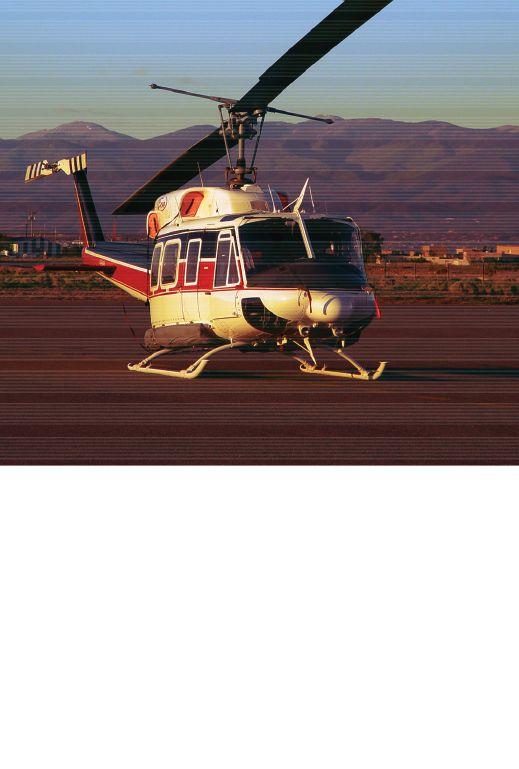




fred Jones
t has been over a year since the Helicopter association of canada (Hac) and eight other associations made their final submissions to the fatigue risk Management Working group report. since then, transport canada (tc) senior management has been reviewing the report and multiple written dissents thereto.
the Working group final report in reality is a report generated by the Working group’s leaders (http://www.h-a-c.ca/f&dt_Wg final_ report.pdf), in this case, by a tc employee and the president of the airline pilot’s association canada Board (alpa – canada). in fairness to them, it was their best effort to bring together the views of the Working group’s members around a single report that no one completely agreed with – but some groups more than others, it would be fair to say. Hac believes that the report is biased in favour of the large scheduled international airline community.
Virtually everyone in the operational commercial and business aviation communities – except the members of the national airlines council of canada (nacc) and their unions, were signatories to a single dissent. We were so disturbed by the content of the report, that our nine associations jointly made one submission. the report’s recommendations advanced a one-size-fits-all regulatory structure – with some minor variations available to some segments of the commercial aviation community. the report’s recommendations, if they were to be implemented in their current form, would devastate canada’s commer-
the Heat is on – again
Contentious Flight and Duty Time Issue Reaching Boiling Point
Cumulative Duty Hours
• current (none)
• Proposed – 1,928 hours in any 365 days; 190 hours in any 28 days (average of eight hours/day duty time); and 60 hours in any seven days if using time free from duty (option 1 above) or 70 hours in any seven days if using time free from duty (option 2 above)
Flight time Limitations
• current (720.15) – 60 hours in seven days; 150 in 30; 210 in 42; 450 in 90; 1,200 in 365; 30, 42, 90-day flight times “Zeroed” after five consecutive days off
• proposed – single pilot eight hours in any 24-hour period and 112 hours in any 28 days (down from 140 in 28 currently), 1,000 hours in any 365 days. also, “Zeroing” provisions would be Deleted
Flight Duty Period Limits
• current – 14 or 15 hours (with nine hours daily rest and a daily flight time limit of eight hours)
• proposed – reduction in the fdp for early morning and late-day starts; 13 hours maximum but available only for fdps starting between 07:00 and 12:59 local; reduced progressively for early morning and late day starts using a matrix
Rest Periods
• current – eight hours
• proposed – 12 hours between fdps at home to accommodate familyrelated responsibilities; 10 hours away from home base (or where the employer provides accommodation)
Hac has been engaged in an advocacy campaign on this subject for over two years now. ‘‘ ’’
cial helicopter community. let me refresh your memory with a short summary of the final report’s proposed changes. you can decide for yourself what the effect would be on your operations: time Free from Duty
• current (720.19) – five days off before a 42-day tour and five days off afterwards
• Proposed – (option 1) one day off in eight and four days off in 28 or (option 2) five days off in 20 for deployed operations (15-day tours)

one of the things i believe that the Working group leaders did right was to focus on the latest fatigue-related science. unfortunately, much of the fatigue-related science is either inapplicable to helicopter operations or it is ambiguous – that is, there is conflicting science – and Hac believes the Working group leaders strayed in to dangerous territory. once you stray outside a very short list of unambiguous anchor points in the scientific literature, there are studies on both sides of most issues.
Hac has been engaged in an advocacy campaign on this subject for over two years now. i believe it is the single most important regulatory issue on the horizon for the canadian commercial helicopter community. if you are not an Hac member, i suggest you join the association and get your proverbial oars in the water on this subject, as the next stage in our advocacy efforts spin-up.
Fred Jones is the president/CEO of the Helicopter Association of Canada and a regular contributor to Helicopters magazine.

This year’s show features more than:
• 10,000 industry suppliers and government customers;
• 300 exhibitors and 120,000 sq. ft. of indoor and outdoor display space; and
• a dozen international defence delegations;
plus Ministerial-level keynote speakers.
THINK SERVICE
Because you need your helicopters to be available around the clock, we have the largest network of helicopter training, logistics and maintenance centers across the globe. Airbus Helicopters - Ready to serve you 24/7.