roviding a safe, stable work environment that delivers the highest quality assurance standards possible backed by ironclad operating procedures is the ultimate goal of every Canadian helicopter operator – and it’s becoming even more paramount as client demands continue to escalate.
lucrative industries such as oil and gas, helicopter medical services, construction, mining, forestry, firefighting and more are demanding increased commitments from operators. The bottom line is simple: sound business practice dictates the introduction – and long-term nurtering – of a corporate culture that provides operational safety and quality enhancements that exceed regulatory and client-based requirements. Such an environment reduces accidents and saves lives . . . and nothing is more important than that.
How can one expect to compete without such a commitment? Can you afford not to implement and commit to a Safety Management System (SMS) regardless of the cost or logistical elements of the process? How can you afford not to invest in key technologies that save lives, such as flight Data Monitoring (fDM), health and usage Monitoring systems (huMs), satellite tracking systems, or any other advanced technology that can help improve safety? And shouldn’t the standards that clients demand of you and your organization be the same standards by which you already strive and demand of yourself? Don’t your passengers (and their families) deserve the best? they trust
Committed to Safety
CHC’s Efforts Are Worth Emulating
bases around the world.
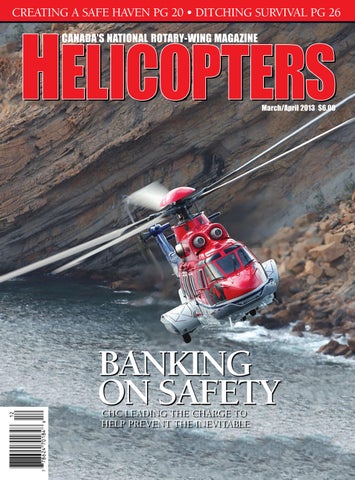
CHC is “walking the walk” when it comes to safety and quality assurance and operational integrity. Its successful CHC Safety & Quality summit (see, “banking on safety,” pg. 16) sets the standard for tradeshow excellence, bringing together key industry leaders to discuss technologies, strategies, innovations and more that redefine the safety and quality commitment on a global scale.
The CHC Quality & Safety Summit is not some “party hardy” shin dig where pilots, ops managers and engineers saddle up to the bar after a day of dry industry presentations to exchange stories of yore. Yes, there are networking opportunities, and yes, stories of grandeur are indeed exchanged . . . i have heard them. but this is business and the tentacles and scope of the discussions at this event are many. It’s a shining example of how one company can implement change when it acts on its purpose, integrity and commitment to change.
CHC’s safety focus doesn’t end with its successful spring event; the company leads by example. as Dixon points out in his piece, establishing a corporate culture that follows through on concepts discussed at its own conference illustrates this point. For example, ensuring the latest technologies are onboard its new aircraft – including fDM, huMs, engine and vibration Monitoring systems (evMs), terrain Awareness and Warning Systems (TAWS) and more – illustrates a high level of operational integrity to provide clients, pilots and passengers with a safer operating environment.
Such an environment reduces accidents and saves lives . . . and nothing is more important than that.
’’
you with their lives.
The answer, or course, is “yes” to all of these questions, and there are countless operators that are striving to reach the pinnacle of safety and quality excellence. Vancouver-based CHC is one such organization. A global leader in helicopter transportation for the offshore oil and gas industry, CHC operates some 250 aircraft in more than 30 countries around the world. It is a leader in civilian search and rescue services and is the parent company of heli-one, one of the world’s largest helicopter maintenance companies. Also based in Vancouver, Helione provides maintenance services for a wide range of helicopters at
Not every operator has the financial means or resources to create an industry-leading safety conference. Not every operator can equip its fleet with the latest technologically-advanced bells and whistles. of course not. but working on the core competencies of an operation’s corporate philosophy –its ability to embrace change and strive to create a safer, more secure environment for passengers, clients, and employees – is something all operators large and small can work to achieve. What’s the end result? There will be fewer incidents, fewer accidents, more accountability and a safer operational landscape for all. And the kicker? It’s simply a sound business strategy.
Through its successful Safety & Quality Summit and its commitment to strive for operational excellence, CHC is trying to establish a better global helicopter landscape. operators everywhere should work diligently to follow its lead.
WORLDCLASS TRAVELERS
David Beckham. A global icon who insists on perfection. Precision and style. A legend forged by accomplishments. On his wrist is the Breitling Transocean Chronograph Unitime, the ultimate traveler’s watch. Manufacture Breitling Caliber B05, officially chronometer-certified by the COSC, endorsed by a 5-year Breitling warranty. High-performance selfwinding chronograph. Universal time function enabling permanent readings of the time in all 24 timezones thanks to a patented mechanism and an ultra-user-friendly crown-operated correction system. Comfort and elegance for first-class travelers. Signed Breitling.
Cyclone Program
Stalled
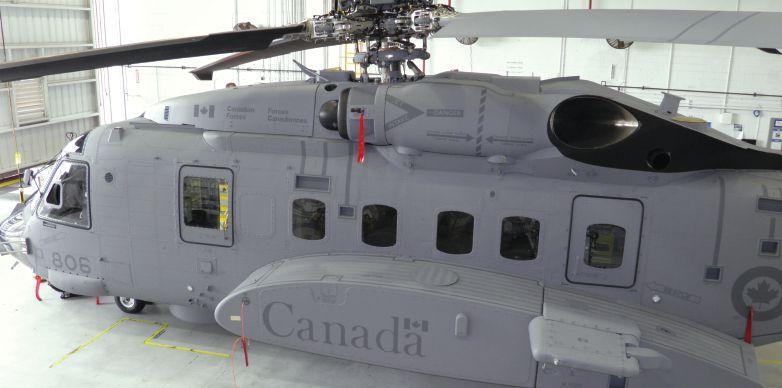
the delivery of fully capable maritime helicopters for the Canadian air force could take another two years, as the Sikorsky Cyclone program remains mired in myriad issues.
The annual statement from united technologies Corp., the parent company of Sikorsky, illustrates a procurement gone bad, showing an ongoing backroom dispute with the Conservative government over delivery dates and the machine’s final configuration, notes the Canadian Press.
A report filed in February revealed protracted negotiations are taking place with the Department of Public Works to “resolve open disputes” including the delivery of interim helicopters.
“If these efforts are unsuccessful and the Canadian government requires the delivery of only final configuration aircraft under current contractual requirements, no deliveries are expected to occur until 2015 at
Sikorsky could lose as much as $14 million for every CH-148 it produces off the assembly line.
the earliest,” the report noted.
The contract dispute and development issues with the program have put the Cyclones in a precarious position and “provide substantial uncertainty and risk in regards to the future profitability of the overall program,” the report continues.
Public Works Minister Rona Ambrose vowed that Sikorsky will meet its obligations under the terms of the contract. “our government expects Sikorsky’s obligations under this contract to be met,” she told the House of Commons in early February. “To date, they have not been met. In fact, they have missed every
deadline and every timeline. To that end we have already applied millions of dollars in liquidated damages, and we are going to be applying significant additional charges that have begun to accrue against this company.”
Paul Martin’s liberal government signed a contract with Sikorsky in 2004 to replace the air force’s fleet of CH-124 Sea Kings, which this year celebrate 50 years of service flying off the decks of warships. There are currently four Cyclones at Cfb Shearwater, N.S., and the remaining 24 are on order or are in production, assembly or flight testing. The Cyclone program,
possible fRaud
As Helicopters went to press, Italian police arrested Finmeccanica chief executive officer Giuseppe Orsi following an investigation into alleged international corruption.
Orsi is alleged to have paid $670 million in bribes for the sale of 12 helicopters to the government of India, according to the Canadian Press. Prosecutors in the Busto Arsizio north of Milan ordered a search of Orsi’s home, as well as the headquarters of Finmeccanica’s AgustaWestland helicopter division. AgustaWestland CEO Bruno Spagnolini was also ordered under house arrest.
which originally anticipated the first helicopter to be delivered in 2008, was meant to catch up to the 1993 procurement of EH-101 helicopters, ordered by the Mulroney government, but cancelled in 1993 by former prime minister Jean Chretien. united technologies’ yearend statement estimated Sikorsky could lose as much as $14 million for every CH-148 it produces off the assembly line, under the current arrangement. Those losses could mount with the in-service support contract, which charges for maintenance based upon the number of hours the aircraft is flown.
Finmeccanica, which is 30-per-cent government owned and was once considered a jewel among Italian companies, said in a statement that the company will continue operating as usual and expressed support for the executives. The statement called the measures against Orsi and Spagnolini “precautionary.” Orsi has repeatedly denied paying any bribes.
The company and its executives have been the target of a wideranging investigation into alleged corruption in the awarding of international contracts.
Top Canadian Leaders Honoured
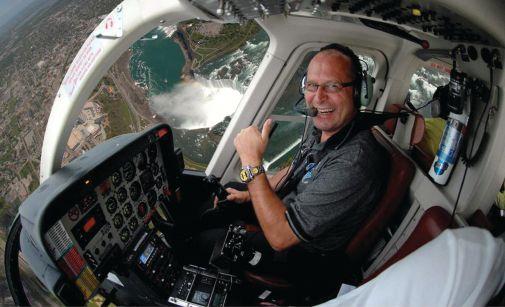
Ruedi Hafen is one of the nation’s most esteemed pilots, and now the 31-year veteran has another honour to add to his crowded mantel.
Hafen was named Helicopter Association International’s pilot of the year for 2013, the 58th award Hafen has garnered over an illustrious career. He was honoured March 6 at a gala dinner during HAI’s Heli Expo.
The former owner and vicepresident of public relations for Niagara Helicopters has flown more hours than any pilot in Canada since arriving from his native Switzerland in the earlier 1980s, deftly transforming the Pan Air heliport in Niagara Falls into a thriving tourism business. He worked tirelessly for tourism outfit Niagara Helicopters until last year, when his role was reduced after it was sold to Helicopter Transport Services.
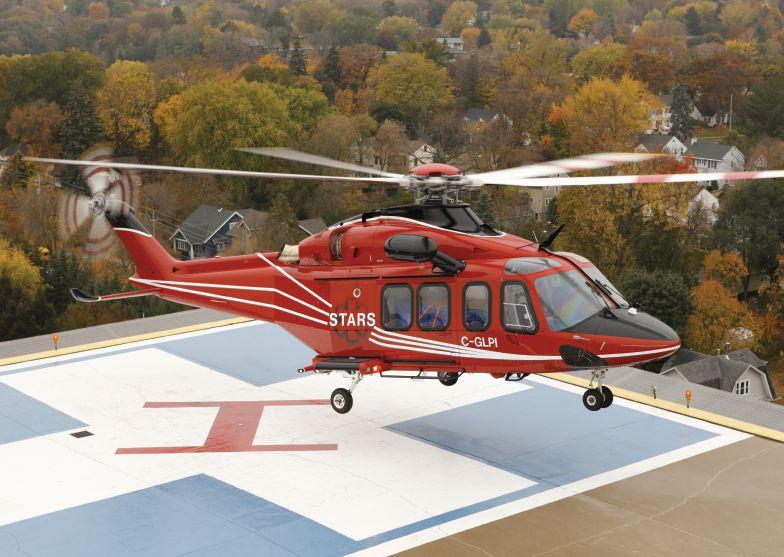
Hafen wasn’t the only Canadian to be honoured by the hai this year. Dr. gregory Powell, o.C, the founder and director emeritus of the Shock Trauma Air Rescue Society (STARS), was named winner of the Eurocopter Golden Hour Award. STARs has been a leader in medical transport in Canada for years, and has successfully expanded its presence throughout western Canada.
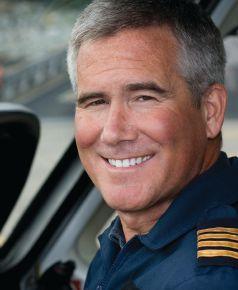
Greg Whyte, vice-president of system operations with CHC Helicopter, captured the AgustaWestland Safety Award. Among his many accomplish-
Seeking Women Who Shine
do you know an awesome woman in aviation or aerospace? With a mission to recognize excellence and inspire more women to enter the aviation and aerospace industries in Canada, the Northern lights award foundation is now accepting nominations for its fifth annual Awards.
ments, Whyte has been instrumental in the development of the impressive CHC Safety & Quality Summit, one of the industry’s must-attend annual events.
Shawn Corwyn Coyle, director of training with the Marinvent Corporation, was named the winner of HAI’s Excellence in Communications Award. The veteran pilot is the author of The Art and Science of Flying Helicopters, a required read on many academic must read lists for young pilots.
A compete list of winners:
• Rolls-Royce Excellence in Helicopter Maintenance Award: gary Dennis rogers, Maintenance Controller PNG, Columbia Helicopters, Inc.
• Sikorsky Humanitarian Service award: ast1 o’brien starrHollow and AST3 Tyler J. gaenzle, u s. Coast guard Sector Columbia River
Each year, the national notfor-profit Foundation recognizes the achievements of Canadian women in aviation and aerospace.
The Foundation’s award program, the Elsie MacGill northern lights (eMnl) Awards, is named after aviation pioneer and human rights advocate Elsie Gregory MacGill, the world’s first female aircraft designer. MacGill graduated from the university of toronto’s electrical engineering program in 1927 and later became pivotal
systems operations, ChC Helicopter
• W. a. (Dub) blessing Certified Flight Instructor of the Year Award: Randal Rock Rowles, VP/General Manager, Era training Center llC
• Eurocopter Golden Hour award: Dr. gregory Powell, o.C. founder and Director Emeritus, Shock Trauma Air Rescue Society (STARS)
• Excellence in Communications Award: Shawn Corwyn Coyle, Director of training, Marinvent Corporation
• bell helicopter lifetime Achievement Award: Roy G. Fox
• MD helicopters law Enforcement Award: Airborne law enforcement association (alea)
• Pilot of the Year Award: Ruedi H. Hafen, Commercial Pilot, HTSC/Niagara Helicopters limited
in the design and production of the Hawker Hurricane in Canada during the Second World War.
Honourees will be presented with their awards at the 2013 gala ceremony and dinner in September.
To nominate an outstanding woman in one of the six award categories, or for more information about the Foundation and sponsorship opportunities, visit www.northernlightsaward.ca. The nomination deadline is March 31, 2013.
HELICOPTERS MAGAZINE P.O. Box 530 105 Donly Drive South Simcoe ON N3Y 4N5 Tel.: 519-428-3471 Fax: 519-429-3094
Toll Free: 1-888-599-2228
Website: www.helicoptersmagazine.com
EDITOR MATT NICHOllS e-mail: mnicholls@annexweb.com 416-725-5637
MEDIA DESIGNER BROOkE SHAW
CONTRIBUTING WRITERS
MICHAEl BEllAMY, DAVID CARR, BRIAN DUNN, PAUl DIxON, WAlTER HENEGHAN FRED jONES NEIl MACDONAlD, jAMES MARASA, CARROll MCCORMICk, ROB SEAMAN
ASSOCIATE PUBLISHER AlISON DE GROOT e-mail: adegroot@annexweb.com 519-429-5191 • 1-888-599-2228 ext. 246
ADVERTISING SALES ADAM SZPAkOWSkI e-mail: aszpakowski@annexweb.com 1-888-599-2228 ext. 273
Helicopters Magazine is an associate member of the following Canadian aviation associations:
Ruedi Hafen has flown more hours than any pilot in Canada since arriving from his native Switzerland.
ColuMn
neil J. MaCdonald
Many Canadian aviation firms profess to have a bona fide safety management system (SMS) in place at their organization, but I’m not convinced that’s always the case. To wit, an SMS is not a monthly meeting, nor is it posters on the wall. SMS is, in fact, a culture; it is a mindset. It comes from the top down and from the ground up. SMS meets in the middle and is the stew that everything in your organization marinates in.
If you do not believe in the idea of SMS as a holistic entity embracing your organization, then you do not have a proper SMS program, regardless of how many times your operations manual says you do.
It’s also worth noting that if you do not have an SMS program, it could be costing you money. Maybe not today, but it may well do so in the future. It could cost you in lost worker-hours or broken equipment. It could also cost you in insurance premium increases down the road.
“If you think safety is expensive – try an accident.” This saying is so well known to us in the aviation industry, yet we ask ourselves why it is not always followed in practice. The answer may be that we are not having very many accidents these days.
The total number of accidents and incidents has been on a steady decline for well over the past decade, experts say. The 10-year average for accidents in Canada, or accidents involving Canadian aircraft, was 307 occurrences. There was a step down of occurrences in each of 2009, 2010, and 2011 (last full year of
Stepping Up With SMS
Meetings and Posters Can’t Create a Complete SMS Culture
that regulators monitor companies with respect to SMS once every 12 months. This is not that practical in Canada due to the (large) size of our industry and the (small) size of Transport Canada’s budget.
There are approximately 34,000 aircraft registered in Canada, with more than 5,000 companies authorized to operate. Transport Canada was only able to inspect roughly 30 per cent of the organizations in 2010-11. This is well short of their stated goals, and potentially allows for a high degree of non-compliance within the industry.
The Auditor General of Canada found that even within those organizations inspected, there was some confusion on the part of the inspectors as to what they should be looking for or at. Part of this confusion may well have been because only 40 per cent of inspectors had been trained on the new surveillance methodology by that time.
a ccording to the transportation s afety b oard website, “Watchlist,” Transport Canada does not provide proper oversight on those carriers it requires to have an SMS, and while at the same time does not require smaller operators to have a system in place. Small operators, it says, account for 91 per cent of all commercial aircraft accidents, and 93 per cent of commercial fatalities between 2002 and 2011.
The Auditor General tends to agree. While it found that Transport Canada has “implemented a suitable regulatory framework for civil aviation safety” it is “…not adequately managing the risks associated with its civil aviation oversight.” Transport Canada is working hard on making the appropriate changes.
If you do not believe in the idea of SMS as a holistic entity . . . you do not have a proper SMS program. ‘‘ ’’
reporting). last year’s number appears to be lower again still.
Private aircraft accidents account for more than twice the average of commercial accidents, although they too are on the decline over the same reporting period. It is important to note that only those entities involved in commercial operations will be required to have an SMS program in place by 2015.
The aviation industry itself has the overall responsibility for aviation safety. Transport Canada as the regulator, is tasked with ensuring industry has effective systems in place to manage safety.
the international Civil aviation organization (iCao) requires
I believe it’s time we remind ourselves that we in the aviation industry have the overall responsibility for aviation safety. We should not need to wait for Transport Canada to inspect us before we act on implementing a proper safety management system.
If you are holding monthly meetings and displaying posters on the wall – keep it up – that is certainly a good thing. It’s a beginning, and a way to demonstrate your commitment to the safety management system philosophy. Just make sure they are not the only things you are doing!
This is Neil’s last column for Helicopters after several years of offering readers ironclad legal advice. We wish to thank Neil for his efforts and wish him all the best on his future endeavours.
As a world wide leader in helicopter maintenance, repair & overhaul (MRO) - Vector Aerospace provides comprehensive support for Eurocopter, Sikorsky, AgustaWestland, Bell & Boeing helicopters.
paul dixon
Watching the recent goings-on in our nation’s capital with the debacle over the F-35, the Fixed-Wing Search and Rescue (FWSAR) replacement and yet another announcement of more delays in the delivery of the CH-148 Cyclone, gave me a strong sense of deja vu, all the way back to those halcyon days when I actually had a job.
i used to have several Dilbert cartoons posted on the wall in my (government) office, my favourite being a strip from 1997 that featured Wally jubilantly proclaiming, “good news! our business plan is in complete disarray!” followed in the second pane by “Free time!! No Deliverables!! and it’s not our fault!,” as Dilbert chimes in with a “Yippee!!” the final frame has Dilbert posing the question, “Do you realize that all our joy comes from perverse sources?” with Wally’s rejoinder, “I didn’t know there was an alternative.”
treating ottawa as a piãata makes for wholesome entertainment, but the truth of our spending on our military over the years lies in the often-wary relationship between our government and those who wear the uniform(s). From time to time, reality intrudes into the masterservant relationship and drives the process by which decisions are made. This is illustrated by the soul-sourcing of contracts to meet operational requirements for the recent mission in Afghanistan such as the desert uniforms and the leopard tanks, new Chinook helicopters to name but a few. At the same time, other projects far removed from the front line are beginning to follow a similar pattern.
Procurement Paradox
In Canada, Long-Term Planning Is Trumped by Political Survival
equipment to do the job.” It’s also difficult to stay on budget when there’s no shooting war; the process starts to stretch out and priorities take on a mind of their own.
The problem with working to meet immediate requirements is that what fits today may well be obsolete tomorrow. Fortunately, that’s not the case with the Chinooks, C-17 globemasters and leopard tanks that were purchased to support the Afghanistan mission. Yet the problem is that the equipment for a peacetime military is purchased on a replacement timetable that supposedly considers a number of factors beyond simply looking at the most effective machine for the job. Effectiveness is indeed one factor, but equally important are the costs of operating and maintaining these systems over their projected life cycle. Another factor is the political consideration of actual Canadian content and what part of the country that Canadian content is coming from. In these situations, the military may have its wish list, but there are many other players in ottawa that have a thumb in the pie. as a result, it’s difficult to figure out who’s fingerprints will be on any final decision.
As delivery of the CH-148 Cyclone is once again delayed, it looks like the search is underway for the replacement for the Ch-146 griffon. on the naval side, there still seems to be some indecision about the future of the current frigates, ships that were designed to meet our Cold War nato commitments. of course with that scenario, the geopolitical playing field had changed by the time they came on line in the mid-’90s. You will recall that these ships were originally slated to receive the Sea King replacement, the EH/AW-101. This is how we deal with “non-essential” purchases in Canada; we punt them around the political arena.
The problem with working to meet immediate requirements is that what fits today may well be obsolete tomorrow.
of course, the next step is trying to figure out who makes the actual decisions at the end of the day. We would like to think our elected officials have the final say, but in reality, by the time the paperwork reaches them, the actual decision has been made apart from the politics. Given the culture of secrecy within the current government, it’s virtually impossible for an outsider to follow the inner workings. In situations such as the combat mission in Afghanistan, the military takes the lead by highlighting the problem and presenting the solution. It’s easy for the government of the day to say, “we signed on to do a job and we have to spend this money to give our people the right
With our recent lineup of minority governments, we’ve had governments that make decisions based on whatever will get them through the day. The sad reality is that even with a solid majority government – solid in terms of the number of seats, not as a comment on the individuals filling those seats – there are only four years before the next election. Immediate survival is what drives all decision-making, no matter on which side of the closed doors the decisions are being made. It’s no wonder confusion reigns when it comes to the procurement process and accurately determining what Canada’s requirements are in various realms. With governments that have become increasingly sensitive to surviving the next election, it’s difficult to make decisions beyond that cycle of short-term thinking.
Paul Dixon is freelance writer and photojournalist living in Vancouver.
in the helicopter industry, no one has more to lose with the omission of safe practices than the pilot in command or the engineer who released the machine to service. It’s their contributions that come under severe scrutiny in the event of an accident or incident.
With regulatory sources ever expanding from Transport Canada, company operations and customers, it’s difficult to think of any action that can’t be construed as contrary to some regulation or another. Whether or not safety has been compromised is in the eye of the originator, and is not necessarily an opinion shared by the aircrew tasked with the responsibility.
Flying and servicing helicopters in the field provides us with intimate familiarity not available to the desk-bound safety consultant or to boardroom discussions. Therefore, in a coordinated approach to safety, shouldn’t we be contributing our individual insight and practices? And shouldn’t our recommendations on proposed regulation carry more weight?
Regulation has been in place for many years, protecting pilots from fatigue with established duty days, and it’s being modified once again, yet engineers are still called upon to chase a helicopter by day and then perform maintenance at night. Is their contribution no less important?
on numerous occasions arriving after a night’s sleep, i have been asked by the engineer to accompany him, verifying that all
Pilots, Engineers Working in Tandem Prevent Accidents Safety in numbers
that may appear to be cursory, but are effective nonetheless, and if adhered to, need no further addition.
Recognizing the potential of a “close call” in operations automatically triggers a thought and an implementation process. Each discovery culminates in a code of conduct we refer to as experience. Through experience, we develop habits or procedures that we adhere to with almost religious fervour, knowing full well the risk we take in their absence.
Proper safety briefings involving a pilot and engineer are necessary and may prevent occurrences such as these:
• the engineer who will not interrupt a particular task until it’s completed or the pilot who shuts down to refuel and then lays a section of the long line on top of the pilot’s step reminding him/her that it’s still attached to the cargo hook
• a pilot who, having missed an exhaust cover that someone else had installed, realizes that his/her upward vision had been impeded by the peak of a baseball cap
• an AStar pilot who leaves the gas cap not on the step but on the pilot’s seat, likely because he forgot it once or was told how easy it is to forget and decides it won’t happen to him
usually a pilot and engineer before embarking on a job, will discuss personal preferences when working around the machine. The crew that respects and adheres to this procedure are acknowledging practices that have been established to prevent an accident. once seated in the cockpit or having twisted the last dzus on the cowl, there is nothing more unsettling than the nagging suspicion that you have forgotten something.
Whether or not safety has been compromised is in the eye of the originator.
maintenance completed during the night was properly safety wired. I appreciated that I was the safeguard he had in place during times of fatigue, but can only speculate as to why, with the myriad regulations in place, that some things had never been addressed.
Pilots and engineers institute some of the most pertinent safety contributions. Exposure in day-to-day operations invariably unmasks situations that could lead to an accident. I am continually impressed with safeguards implemented by individuals who, with little encouragement, share their perceptions on how to avoid the traps. Aircrew determine where the hazards are, then establish safeguards
There will always be an element of risk associated with helicopter operations. until more safety procedures are solicited from the aircrews, uninformed or extraneous regulation will contribute more frustration than safety.
Pilots and engineers know it is often the most innocuous mistake that can lead to tragedy and all it takes is to adhere to an elementary proviso to avoid it. A discipline doesn’t necessarily have to be preceded by three digits and a decimal point to be effective in preventing an accident. A professional routine developed over time becomes entrenched with unique safeguards. Sometimes it’s trivial in execution, but it’s no less important and it’s all worth sharing.
A native of Spruce Grove, Alta., Michael Bellamy has been flying fixed- and rotary-wing aircraft in a variety of capacities since 1971, and is an accomplished author of several books, including Crosswinds.
MiCHael bellaMY
RECOGNIZING THE NEXT GENERATION IN THE CANADIAN AVIATION AND AEROSPACE INDUSTRY!
Canada is full of young, skilled and knowledgeable people who are driving the aviation and aerospace industry forward. From pilots and AMEs to ground crew and business managers, they are the best and brightest in our industry. Join us as we celebrate the future of aviation and aerospace in Canada.
WHO CAN BE NOMINATED?
Anyone in the aviation or aerospace industries who is under the age of 40 as of December 31, 2013. Equipment and technology suppliers as well as operators are welcome.
ALL NOMINEES SHOULD:
• Demonstrate a strong work ethic
• Show leadership and initiative
• Actively seek new opportunities for training and education
• Be involved in industry association or broader industry initiatives
NOMINATIONS ARE NOW OPEN
To nominate someone to be recognized as one of the Top 10 under 40, visit www.wingsmagazine.com or www.helicoptersmagazine.com and click on the “Top 10 Under 40” link to complete a nomination form.
Nominations close on May 1st, 2013.
The Top 10 Under 40 will be featured in the July/August 2013 issue of WINGS Magazine and the July/August/September issue of HELICOPTERS Magazine.
ColuMn
the email comes across your desk – XYZ Company wants to complete an audit at your Northern base next week. Can you facilitate the visit? This event happens every week in our industry, as our customer base is relying less on regulatory oversight and more on audits, inspections and base visits to assure safety in the operations of their service providers. is it time to panic? go on vacation? or look for the junior pilot to host the auditor? There is no mystery to hosting a successful audit: honesty and openness are usually keys.
Many of you are aware of the quality improvement cycle: plan, do, check, act (PDCa), also know as the Deming (or shewhart) Cycle. this construct is named after quality guru W. edwards Deming who championed a framework that provides a methodical approach to problem solving and continuous improvement. He recommended that business processes be placed in a continuous feedback loop so that managers can identify and change the parts of the process that need improvements. Regular audits fulfil the “check” function of this cycle. Auditors are looking for confirmation that the company is actually “doing what they say they do.”
Audits take several forms: self-audit questionnaires, one-day head office visits or multi-day, team-oriented, multi-location comprehensive reviews. The old standby, the Transport Canada audit, used to be a large, multi-week comprehensive inspection of a company’s management, maintenance and safety systems with a five-year cycle. These have now
Surviving an audit
Do
Such Evaluations Truly Reveal Organizational Competence?
regulated to enact such systems. While I am not arguing that helicopter companies do not need some form of SMS, validating a system that is not yet regulated seems a bit of a stretch.
Among the next hurdles many of us face are visits from the audit companies that churn audit reports on behalf of several clients. Some of us will be audited by the same auditing company or even the same auditors four or five times a year, and each time for a different client, and each generating a separate audit report. These quasi-due-diligence exercises do little to advance safety and serve mostly to fill a check box.
bob sheffield, the former Ceo of shell aircraft international (sai), used to refer to these as “…nugatory audits.” In a move to reduce the number of these cookie cutter audits, an operator can opt to undergo a comprehensive systems audit by an accredited entity. There are a number of these organizations such as Wyvern, the International Standard for business aircraft operations (is-bao), the flight safety foundation’s basic aviation risk standard (bars), ar/gus Pros and even helicopter Association International (HAI) accreditation. In fact, HAI has tied its new accreditation program to the is-bao standard but some major companies – the oil and gas producers (ogP), for instance – have indicated they would still do their own audits.
So, I wonder, where is the value of following these other permeating processes when it is likely that major clients will want to complete a separate audit anyway?
There is no mystery to hosting a successful audit: honesty and openness are usually keys. ‘‘ ’’
been replaced by the safety management system (SMS) related program validation inspection (PVI); an audit process by any other name.
In my experience, they are intrusive audits from which no operator can emerge unscathed and that usually start with a finding related to the Transport-Canada-approved company operations manual! The five-year cycle has now been replaced by a one – five-year cycle dependent on your organization’s risk profile, a profile that Transport does not share with the operator. With the staffing shortfalls at Transport and the removal of the “old” audit process, it’s an interesting exercise in validating safety management systems in operators who have not yet been
I feel audits may present a false image of competence. Any operator can spruce up its facilities, tidy up things on the occupational health and safety side, send the hangar queens into the field for an audit –“lipstick on a pig” in other words. but if you have confidence in the way you do things, if you really believe in a proper safety management process, then these audits can serve as a check/balance on your ops and provide you with ongoing feedback on your safety and maintenance and operations processes.
transport will always have findings and the big ogP companies will always have “their way.” but you can use these audits to augment your own internal quality assurance paradigm and provide opportunities for improvement. In taking these steps, you will ensure some payback for your time and energy expended during the external audit process.
Walter Heneghan is the VP of Safety and Quality at Canadian Helicopters. A passionate advocate for aviation safety and sound risk management, the veteran pilot presents his regular column for Helicopters magazine.
WalteR HeneGHan
• Whether you are looking for a career change or just about to start one, come learn about different career paths the aviation industry has to offer: airplane pilots, helicopter pilots, maintenance engineers, aerospace design & engineering, aviation business management, air navigation, flight operations and more.
• Meet with Canada’s leading aviation colleges, universities, flight schools and hiring managers from Canada’s largest aviation operators and aerospace companies.
• Find out what it takes to get hired!
• Tour the Downsview FlightSafety simulator training centre.
Your registration includes: speaker sessions covering a variety of aviation career paths, networking with Canada’s top training programs and hiring managers, tour of a leading edge flight simulator training facility, luncheon with keynote speaker, coffee breaks and the Careers in Aviation exhibit hall.
CoVeR stoRY
banking
on safety
CHC’s Safety & Quality Summit Reflects Its Internal Philosophy
bY paul d ixon
March in Vancouver means only one thing, at least in the aviation world. While the spring bulbs are blooming throughout the city and the first cherry blossoms appear on thousands of trees, the Westin bayshore resort and Marina in vancouver will be packed with hundreds of people from around the world attending the ninth annual CHC Safety & Quality Summit.
the theme of this year’s summit is, “building an accident free legacy: Predictive safety to avoid ‘the inevitable’.” the oxford english Dictionary defines the word “inevitable” as “sure to happen. What is bound to occur.” Inevitable can be used in several contexts to describe the outcome of events in relation to the safety summit.
The CHC Safety & Quality Summit started as an in-house, company training workshop. The first year in Prague drew 75 people from CHC’s world-wide operations. Greg Wyght, at the time CHC’s newly minted vice-president for safety and quality, brought CHC’s safety and quality managers together in one venue as a first step in the development of a single internal safety management system for the entire organization. Word spread across the industry of what CHC was doing and requests to attend the session started pouring in from others in the rotary-wing community to be allowed into the session.
As Wyght told Helicopters in a previous interview, this is a subject that carries across the entire industry. Safety is not a competitive issue and this was an opportunity that was too good to pass up. In 2013, more than 800 attendees representing every facet of the helicopter industry from all corners of the world will strain the facilities of the bayshore in downtown vancouver.
The non-competitive nature of the safety summit has been amply demonstrated by the willingness of ChC president/Ceo bill amelio to share the stage at the 2011 safety summit with bill Chiles, the Ceo of ChC’s largest competitor, bristow group, as the two of them
spoke of the paramount importance of safety to the helicopter community.
It is made very clear during the opening remarks to everyone that this is a gathering of equals: there are no job titles or ranks, just first names. The summit is deliberately non-commercial – there is no concurrent trade show but the event succeeds in drawing sponsorship from the major players in the industry – AgustaWestland, Eurocopter, Sikorsky, Swiss Re, Chartis and Willis to name but a few. Without the distraction of a trade show, the speakers’ program is as broad as it is deep, offering up to 90 presentation slots over three days with as many as nine sessions running concurrently.
From the very beginning Wyght recalled in a previous interview with Helicopters that he was driven to develop a data-driven riskmanagement approach. He talked with industry insiders around the
world, looked at universities and curricula, especially in terms of who was talking about the training realm and who was available. based on his criteria, the best training he could find was through Peter Gardiner at the Southern California Safety Institute and a great relationship was forged. as president and Ceo of the southern California safety institute (sCsi), Dr. gardiner’s goal was to provide the aviation community with the best tools and training available to reduce accident rates and at the same time increase the safety of those who fly.
Gardiner died in 2009, but his legacy lives on within the CHC safety summit with the awarding of an annual Dr. Peter gardiner Aviation Student Grant. The award is underwritten jointly by CHC, hfaCs inc. and the usC viterbi school of engineering for the purpose of bringing a full-time engineering student to the summit and the three-day Accident/Incident Response Preparedness course that runs in conjunction with the event.
the co-founders of hfaCs, Dr. scott shappell and Doug Wiegmann, are two very hands-on participants at the summit, offering a number of sessions over the three days on a range of subjects in the realm of human factors. shappell’s packs in sro crowds to his session provocatively titled, “Spin and Puke,” and taking a lighthearted yet thoroughly informative journey through the mysterious workings of the inner-ear and exploring the wide range of factors that can interfere with balance and perception.
Shappell has the ability to present material that is as serious as a snakebite in an upbeat manner that fully engages his audience. For the opening plenary session of the 2012 summit, Shappell served as the moderator of a panel comprising of Tom Casey, Tony Kern and Steven Covey. Actually, provocateur may be a better description of his role in coercing three people at the top of their fields to share
LEFT: CHC shows its commitment to the industry through its highly successful Safety & Quality conference. (Photo courtesy of CHC)
BOTTOM LEFT: CHC president/CEO Bill Amelio is a strong advocate of the Safety & Quality Summit, one of the industry’s “must-attend” events. (Photo by Paul Dixon)
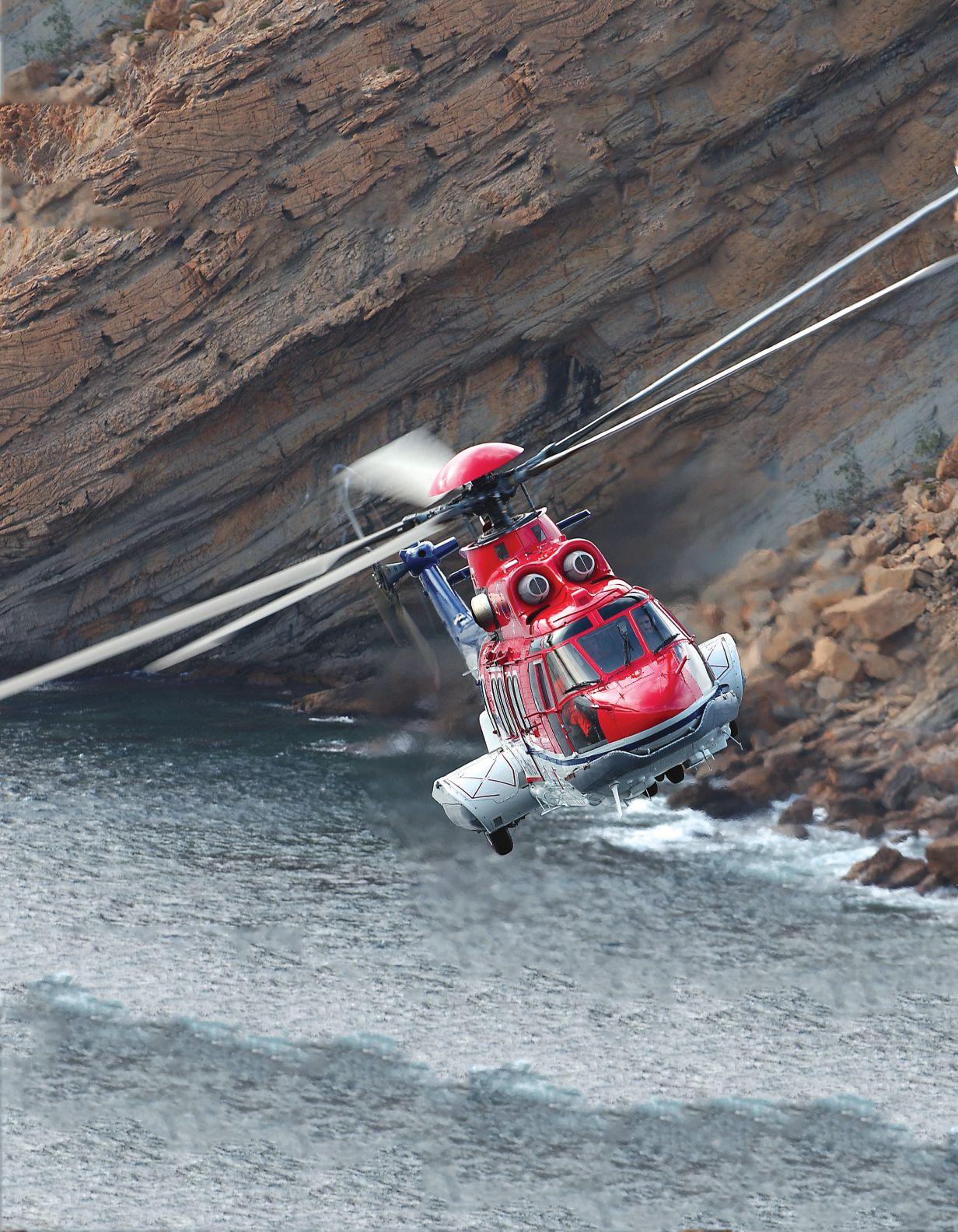
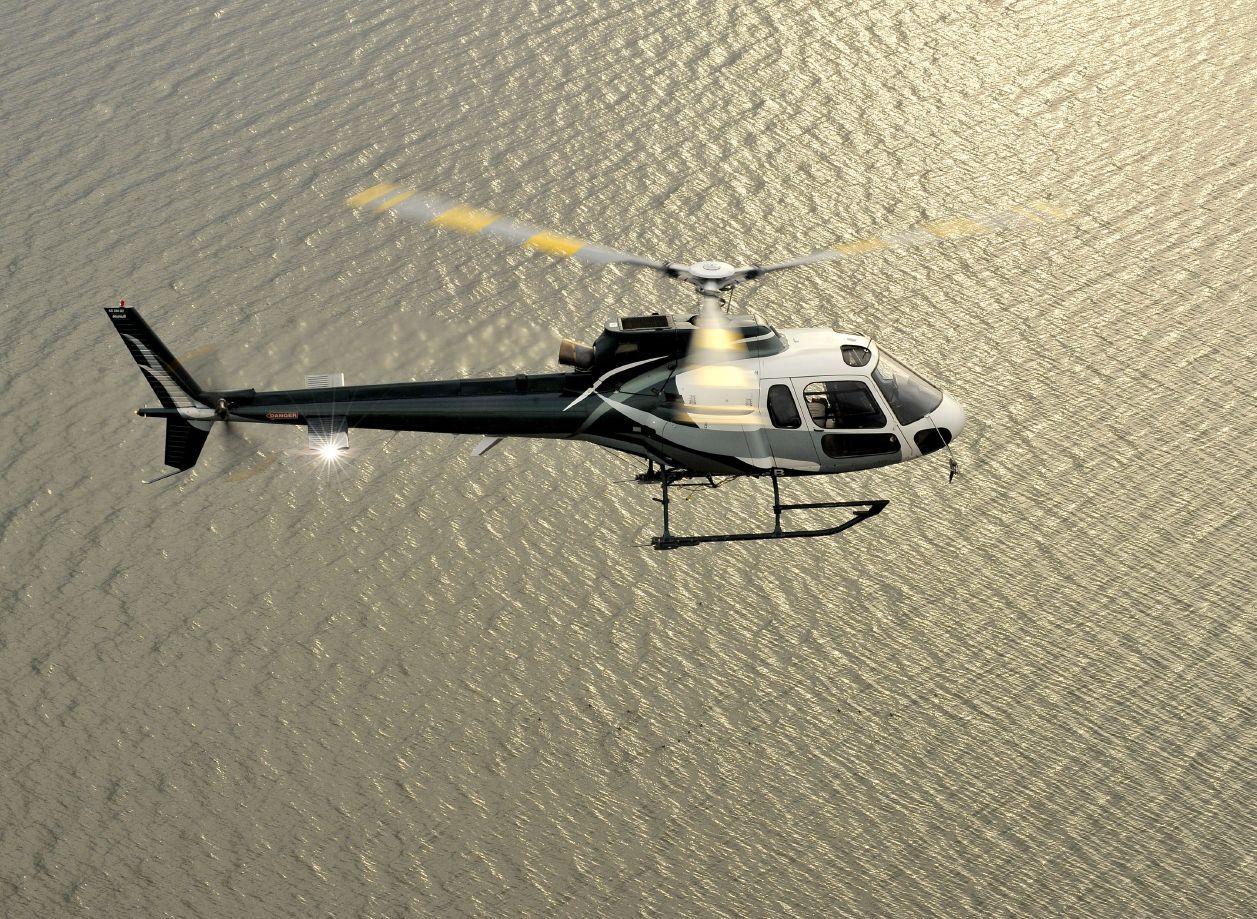
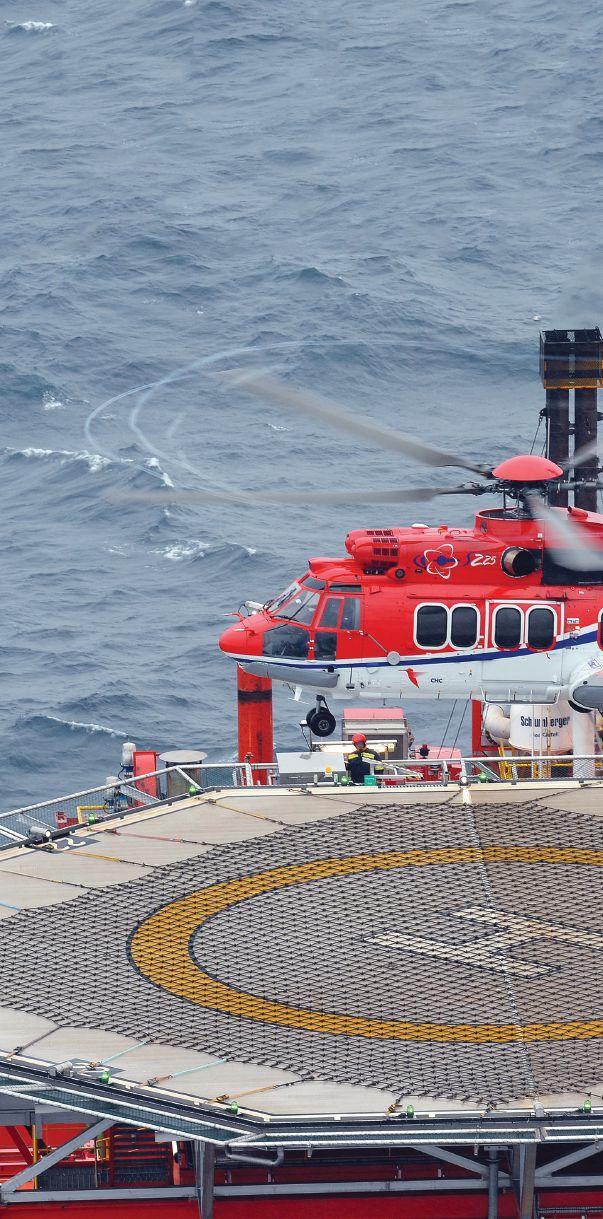
BELOW: CHC’s fleet of 270 aircraft operates from 80 bases in 35 countries around the world. (Photo courtesy of CHC)
CoVeR stoRY
their thoughts on the theme of “improving safety culture through talent, training and trust.”
The human factors that influence aviation safety has been the cornerstone of the summit from the beginning and this focus has seen the summit develop as a catalyst or incubator for industry-wide safety initiatives. the global helicopter flight Data Management (hfDM) steering group was formed as the result of a one-day workshop held the day following the 2009 event in Vancouver. Mike Pilgrim, a longtime advocate of hfDM and ChC’s fDM advisor for european operations at the time, sensed the opportunity and was able to attract 70 people representing operators, manufacturers suppliers and other interested parties from the four corners of the globe. Pilgrim was driven to promote what he describes as “joined-up thinking,” which is exploiting the power of many across a broad spectrum to foster industry-wide adoption of the technology and the resultant improvements in safety.
Many conferences place as much or more emphasis on the social side, offering “fun” nights and cabaret nights, but the CHC Safety & Quality Summit stays on message pretty much from start to finish. It’s not a social gathering, but there is ample opportunity for networking and for like-minded types to get down into serious discussions. The after-dinner speakers in recent years have been the epitome of aviation safety: Capt. al haynes of united 232; u s. astronaut Eugene Cernan, the last man to walk on the moon; and last year’s speaker, Capt. Chesley sullenberger of us air 1549.
They are all people who are larger than life, with lives that are as common as they were diverse, yet they had a common message –that being that they were able to survive the challenges that ultimately confronted them largely because they had spent their professional lives preparing for that moment. Someday, somewhere, something was going to happen and without knowing anything about “it” they had to be prepared. A particular concern for Cernan was the dependence of young pilots on technology, to the exclusion of the human side of the equation, of people being more concerned with “managing” the aircraft as opposed to flying it and the loss of, or failure to acquire, the intuitive skills.
settinG a Good exaMple
CHC definitely walks the walk as it continues to refine its operations on a global scale. After conceiving and nurturing the safety summit, Wyght marked his last year behind the podium in 2012. He was promoted to vP of systems operations and moved to Dallas to take charge of CHC’s new global operations centre. Patterned on the operations of major commercial airlines, all of CHC’s global operations will be tied into a common reporting structure on a real-time basis, a first in the helicopter industry.
In a recent conversation with Helicopters, he once described the summit as simply a continuation of the concept of one CHC, one commitment and one global standard for safety. “one standard globally will drive a consistency that enables a level of monitoring (through common metrics) that will allow us to identify anomalies and avoid them. Identifying problems well in advance that are related to things like licensing, flight and duty limitations or even parts availability, supply chain and technical services (among others), will enable us to maintain a margin of safety through better planning and execution.”
starting with approximately 60 employees, staffing will increase as more responsibilities are taken on by the centre, ultimately serving CHC’s fleet of 270 aircraft operating from 80 bases in 35 countries around the world.
CHC walks the walk when it comes to safety, ensuring new aircraft are equipped with Flight Data Monitoring (FDM), Health and Usage Monitoring Systems (HUMS), Engine and Vibration Monitoring Systems, Terrain Awareness and Warning Systems, and Satellite Tracking and Communication. (Photo courtesy of CHC)
In a project that addresses safety while maintaining operational reliability, CHC is participating with other operators in the development and testing of a triggered lightning forecast algorithm for the north sea. the u.K. Meteorological office, with funding from North Sea oil and gas producers, has identified the factors involved in triggered lightning, which is lightning that occurs in areas where it is not anticipated.
Triggered lightning occurs during the winter months over the North Sea when certain conditions occur, a combination of temperature, precipitation and wind velocity creating conditions that lead to the helicopter actually precipitating the lightning simply by its proximity. While strikes are relatively rare, there have been several helicopters lost or severely damaged in recent years and even though a helicopter may initially appear undamaged from a lightning strike, damage can exist that is difficult to identify without taking the aircraft out of service for a lengthy investigation. Although the project is ongoing, recent data speaks of an 80 per cent success rate in identifying areas that meet the established criteria for triggering lightning, a strategy that allows pilots to detour around the danger zone while still being able to complete their mission.
CHC employs technology as part of its ongoing commitment to safety. New aircraft are equipped with safety enhancements during post delivery modification, including flight Data Monitoring (fDM), health and usage Monitoring systems (huMs), engine and Vibration Monitoring Systems, Terrain Awareness and Warning Systems, and Satellite Tracking and Communication. A byproduct of this approach is a reduction in the environmental impact of operations and a reduction in downtime resulting from unscheduled maintenance events.
the use of huMs has become commonplace in the fixed-wing sector and is growing in acceptance in he rotary-wing world. It is standard or at least optional equipment on new machines and many operators are retrofitting huMs to their existing fleets as in investment in predicative safety, monitoring anomalies that can lead to expensive failures in components such as engines and gearboxes. Flight data recording in itself is a significant improvement to helicopter operations in its own right.
from a business perspective, huMs increase helicopter availability and ultimately reduce operator costs. the u s. army ran a comparison on two helicopter units of the 101 Airborne operating uh-60 blackhawks, one unit equipped with huMs and one without. the helicopters of the huMs-equipped unit were reported as flying 27 per cent more missions than the other group and maintained a higher readiness rate. An even more important benefit was a significant reduction in the number of serious accidents.
The collaborative approach within CHC and its robust reporting structure that encourages communications upwards, downwards and laterally, integrated with the one-world global operations centre is what makes the technology work. Information sharing combined with technology is the heart of the solution and allows lessons learned are to be shared across the organization and applied by pilots, mechanics, technicians and others throughout the supply chain to predict and prevent future incidents.
Creating a safe Haven
Building the ‘Perfect’ Medical Interior Rife With Challenges
bY WalteR HeneGHan
from bell 206 Jet rangers to the 21st century, nextgeneration AgustaWestland AW139, virtually every certified helicopter type in operation today has at one time or another served as an airborne ambulance. The bell 47 immortalized in the series Mash had a stretcher strapped to the skid and military bell 412s can be outfitted with a mass casualty configuration for up to six patients accompanied by two medical attendants.
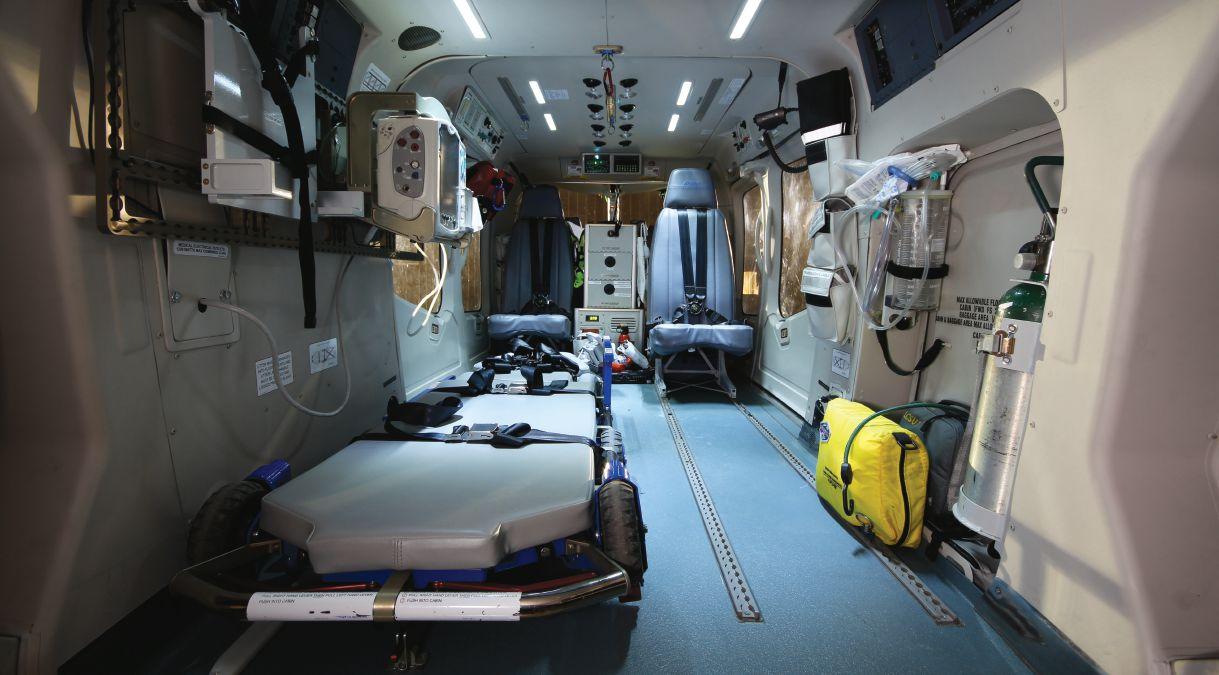
Yet, the “perfect” medical interior retains a somewhat mystic status among Emergency Medical Services (EMS) programs, at times proving to be an elusive engineering feat and almost always a complicated dance between “form” and “function.”
For more than 100 years, industrial designers and architects have used the mantra that “form follows function” as the guiding light for industrial design. A review of the guiding principles for some of Canada’s major airborne EMS programs delves into the successes and failures of program managers in their quest to be true to this advice.
Perhaps it would be instructive to consider form and function by looking into the history of this philosophy. The American architect louis sullivan is credited with coining the phrase in the late 19th century. Sullivan is widely considered to be America’s first truly modern architect by creating many original details and forms. The full quote informs the task at hand quite completely: “It is the pervading law of all things organic, and inorganic, of all things physical and metaphysical, of all things human and all things super-human, of all true manifestations of the head, of the heart, of the soul, that life is recognizable in its expression, that form ever follows function. This is the law.”
So, how closely has the air ambulance industry succeeded in the evolution of interior design? A close analysis of air medical transport conferences reveals that there are dozens of different EMS interiors. In fact, one could take a random sample of 20 different EMS companies and it’s highly probable that there will be 20 unique
interiors. Some of the bigger completion centres for EMS aircraft include swiss-based aerolite, Washington state-based lifeport, air Methods in Colorado and Peterborough, ont.-based airtech.
Several considerations must be addressed when it comes to proper air medical design. When asked which is the most important, Preston Palmquist, account manager at lifeport, a Sikorsky Aircraft EMS completion company, noted that the primary function of design is component based.
“our core competencies are the medical deck (med-deck) plus ancillary systems,” Palmquist said at last fall’s Air Medical Transport Conference (AMTC) in Seattle. “Fixed-wing solutions are our bread and butter, such as King Airs and PC-12s. Many of these aircraft are multi-purpose, so the medical systems need to be modular and removable.”
lifeport Med decks are well-known around the world and can be removed to enable reconfiguration of aircraft for air ambulances or passengers. “Rotary-wing aircraft tend to be more dedicated to EMS,” Palmquist added. The biggest challenges for operators in EMS interior design, involved next gen aircraft – specifically, tougher FAR 29 certification requirements. “The challenge is to take what the industry wants from design to certification,” Palmquist said. “For instance, we had to go from a med-deck certified at 4 g to one certified for 16 g in order to meet the new airworthiness standards.”
Meeting such stringent requirements often adds cost and weight to new EMS interior systems – for example, add a stretcher system that requires self-contained wheels and the problems multiply. “We created a wheeled stretcher for use in the AW139, for example, but the FAR 29 requirements for G loading resulted in a stretcher that weighed 85 pounds. This was not a workable solution,” he said.
Calgary-based medical transport provider STARS knows all about the complexities of making interiors work out just right. After announcing in 2007 that it had purchased an AgustaWestland
ABOVE: Ontario’s Ornge came under scrutiny last year when its AW139 medical interior prevented paramedics from performing certain medical procedures. (Photo by Matt Nicholls)
AW139 for its Edmonton base, the subsequent interior design proved to be too heavy and ultimately not certifiable – it was back to the drawing board.
“our initial prototype wasn’t going to be successful due to weight and balance and dimensional considerations, so there was a change,” said Dr. greg Powell, the former Ceo of stars as a result, the interior design was scrapped and a different solution was created, ultimately delaying the introduction of the aircraft until late in 2012.
Designing the “perfect” medical interior is all about knowing the client and understanding the limitations of the aircraft – which is a fine balance, says European general manager Marcus Inabnit from aerolite Max bucher ag, a swiss-based eMs completion specialist. “We are not the owner of the interior,” he said. “Aerolite is the architect but the client owns the interior.” And there’s another key challenge in the process: translating the medical vision into a workable EMS interior. “Every customer has certain needs and requirements. We specialize in custom solutions; different medical programs have different medical needs.”
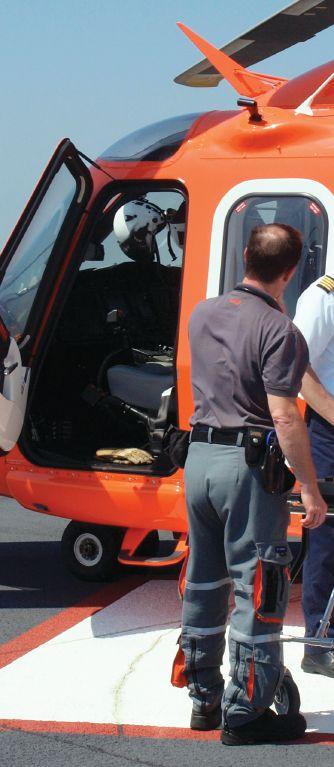
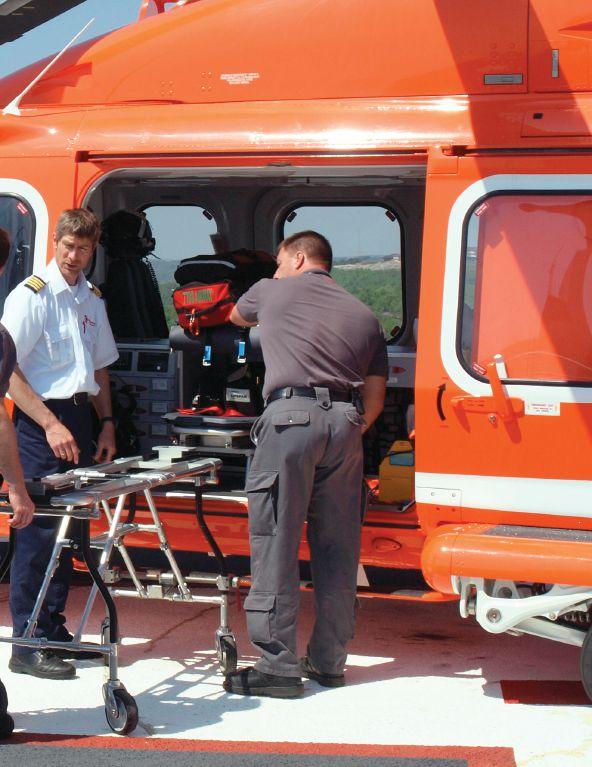
RIGHT: Designing the “perfect” medical interior is all about knowing the client and understanding the limitations of the aircraft – which is a fine balance. (Photo courtesy of Aerolite)
o rnge introduces new aW139 interior
Ornge has redesigned the interior of its AW139 aircraft to offer patients improved safety – and work to stem the controversy created last year over its alleged inadequate design.
The new interiors will allow Ornge paramedics to perform CPR at any time during flight in a safe, secure environment. Designed by Swiss-based Aerolite, the improvements are in response to paramedics’ concerns about their ability to perform certain medical procedures effectively in the AW139 interior.
“We transport the most critically-injured or ill patients, which means our paramedics must have an effective working environment,” said Ornge president and CEO Dr. Andrew McCallum. “The new interim interior solution will make it much easier for our paramedics to provide the care that patients need as we continue to improve patient safety.”
Transport Canada granted a temporary exemption Feb. 2 to use the existing interior with modifications for one year. This addressed the most significant clinical concerns, since it allowed for life-saving CPR to be performed during all phases of flight if necessary for the patient.
It’s a sound business model, yes, but the question remains: why are there no standard, commercial off-the-shelf oeMsupported medical interiors? Shouldn’t there be industry standards that dictate specific requirements? Aerolite’s American general manager hans brechner has the answer. “[it’s because] the doctors get involved, the medics get involved, the organization gets involved. A standard interior would never be sold, that’s the beauty of customization.”
b rechner admits customization adds complexity and subsequently price, and he echoed the sentiment expressed by Palmquist that new airworthiness standards present unique challenges. “We need to go in sequence,” he said. “We need to develop the product, create a functional mock-up, go to EASA for an STC, then go into production. This is a long process, taking about a year from design to certification.”
In terms of standardization, adopting a consistent interior across the board is not necessarily realistic. “even if the oeM offered a standard interior like Eurocopter does with the EC-135 and EC-145, this is just the starting point for specific customer modifications.”
aiR inteRioRs in foCus
The precarious nature of medical interior design was front and centre in ontario earlier this year, when the province’s medical transport provider, ornge, was questioned about its custom designed, purpose built interior for its new Aerolight AW139 aircraft, which has since been redesigned (see sidebar).
the company built exactly what ornge wanted, “to the millimeter,” notes brechner, but really had no opinion about the final design. The interiors have come under scrutiny by the provincial government in an investigation over their medical functionality. “our task is to answer the question of whether or not we can get it certified for use in an aircraft,” brechner said. “We are not medical people, just engineers. We built it to their specs.”
A functional, lightweight layout, simplicity, and redundancy are all key elements of an effective medical interior layout, say the experts – all designed to help the administration of medical care as quickly and efficiently as possible. rob blakely, Canadian Helicopters’ general manger and VP for EMS, says it’s all about ease of operation. blakely has been involved in the HEMs world since 1977, first as a line pilot, then with increasing levels of responsibility. blakely was a key influencer in the design of three different aircraft when Canadian held the ontario eMs contract prior to its transfer to ornge.
“The mission was critical to our thinking,” blakely said. “for example, we have operations that have flown over 1,000 hours per year at a single, aircraft base, sometimes at distances over 250 nautical miles. oxygen capacity was critical for us. With back-to-back missions and the aircraft not returning to its base for sometimes more than 12 hours, we needed lots of capacity.”
b lakely played a key role in the completion of the sikorsky s-76, and says
• Commercial and Private Flight Training
• Recurrent, Advanced and Specialty Training
• Instructor Rating
• Night Rating
• Type Rating
• Numerous Operational Courses
• Certified Winter Survival
• Certified Underwater Egress
• Expertise with Foreign Licence Conversions and International Students
• Full and Part-time Courses available
• We hire from our Graduates!
Our charter division specializes in Mining and Exploration, Survey, Tourism and Specialty Flying
STARS' initial prototype for the AW139 wasn't going to work due to weight, balance and dimensional issues. (Photo courtesy of STARS)
though it was utilitarian in design, it weighed less than 500 pounds and provided redundant electrical and oxygen systems. Functionality was critical to the solution.
appearance, but are simple, durable, easy to maintain and very functional,” he said. “We have utilized both methods (an interior design/manufacturer provider and a local product which more closely met the requirements of the operation.”
James Mewitt, President of AIRTECH Canada, has been involved with EMS interior completions in the Canadian marketplace since 1984, and worked very closely with Canadian Helicopters and
and design people, was over-engineered, and done the hard way,” according to Mewitt. “They put a lot of money into the design as they saw a potential resale market.”
interiors, Mewitt explained, they discerned
AIRTECH interior’, evolved accordingly.
brochure,” he added, “. . . without considering the real world effect of their decisions.”
Mewitt’s relationship with Canadian through the numerous evolutions was critical. He suggested that while an operator can manage the certification process of an interior that was originally certified through EASA or the FAA, “. . . being a Canadian facility and working with only one regulatory body is a real plus.” He said the best relationships are ones that are collaborative and where, “my company’s success mirrors the success of our clients.”
The most important aspect of any interior project is identifying a champion. “Having a champion, an experience aviation person with his eye on the big picture is critical to the process.”
Simplicity and functionality in design are sentiments reinforced by Frank Graham, a senior manager with Air Methods Corporation and EMS completion expert. Air Methods is the world’s largest air ambulance provider, operating more than 400 helicopters and fixed-wing aircraft worldwide and considered to be a leader in EMS completions. The company operates both dedicated and multi-function aircraft with many of the fixed-wing aircraft
‘‘
’’ retains a somewhat mystic status among emergency medical services (EMS) programs.
equipped with lifePort equipment.
Graham spent more than 17 years with l ifeport, before moving over to a ir Methods after Sikorsky Aircraft purchased the interior provider, and says all the major interior designers are capable firms working to best meet the needs of their clients. Air Methods uses both Commercial off the shelf (Cots) products and designs from scratch. They are currently developing their own interiors to compete in the u s marketplace with Spectrum Aeromed and Aerolite. His mantra is simple: the aircraft must be functional above all else. “Form, fit and function. It is the engineer’s responsibility to understand what is the function of the interior,” he said.
Graham contends that when issues arise in the development of an interior, it’s often because a company is focusing on engineering the perfect solution, a solution that was achievable from an engineering perspective but did not necessarily meet the operational goals of the programs and their medical missions. Committees with
varying perspectives on the design are important, he maintains, but there needs to be someone in charge, a traffic cop.
Dr. Powell concurs. “first and foremost, especially from the patient care aspect, you think about the mission,” he said. “Is it short or long range? Rescue and medical? Are you responding to trauma or inter hospital? once you sort out the mission, only then can you proceed with the design build or interior purchase.”
Dr. Powell adds that it’s not always particularly easy to determine how the program will evolve. Even for experienced medical providers, the choices in medical design aren’t ever easy and wrong decisions can have devastating effects on the program’s mission.
Graham sums it up with one word: focus – focus on patient care, safety and providing the best product to save lives. “It is very rare for us to make a mistake that involves patient care,” he said. “We might miss the boat from a profit perspective, but the product will take care of the patient.”
Medical transport is indeed a delicate balance, one which Dr. Powell maintains must always stay focused on the patient first. “Medicine is a complex issue. We all seize the opportunity to be innovative especially when there is an opportunity to be creative,” he said. “Sometimes, from what I have seen, custom solutions come about because there is choice in the marketplace and the aircraft are customized simply because they can be.” looking ahead to the future, the next generation of avionics will offer challenges with programs that want real time data or video transmission to their home hospitals. operators and engineers will be tasked with keeping the weight of these devices, and ultimately the entire EMS completion, as low as possible while addressing the next generation engineering concerns. Whatever the solution, for operators to continue to succeed, they will need to be slaves to form, fit and function. It’s all about safety and creating that safe haven in a time of need – patients deserve as much.
Air Methods’ Frank Graham says when issues arise in the development of an interior, it’s often because a company is focusing on engineering the perfect solution, a solution that was achievable from an engineering perspective but did not necessarily meet the operational goals of the programs and their medical missions. (Photo courtesy of Air Methods)
DEFENCE & SECURITY TRADE SHOW
May 29-30, 2013
Ernst and Young Centre (Formerly CE Centre)
Ottawa, Canada
Show Sponsors:
Produced by:
improving ditching survivability
Integrated Breathing Apparatus Training Will Change Industry Standards
bY CaRRoll MCCoRMiCk
occupants of helicopters that ditch into water have a good chance of surviving the impact with only minor injuries. They also stand a good chance, sadly, of drowning before they can escape the wreckage, according to accident research. Helicopter underwater emergency breathing apparatuses (hueba) give passengers extra time to escape, but only if training prepares them to act correctly and quickly in such unusual and highly stressful conditions.
buoyed by the conclusions of a study carried out last year in Nova Scotia that tested alternative hueba training methods, in early February six instructors at Survival systems training limited (sstl) in Dartmouth, n s. began using a new way to instruct students in the use of hueba in its helicopter ditching training programs. Instead of teaching students how to use hueba while sitting in a shallow-water trainer, which is essentially a chair that rotates them under the water, instructors are now teaching students how to use hueba as part of their full-scale helicopter simulator training.
“This was the first time on the planet offshore personnel have been in the escape trainer with compressed air,” said John swain, owner of sstl
alana Maclellan was in the first group of students to take the refined program. A registered nurse with atlantic offshore Medical Services, she works on the Sable offshore energy Project’s thebaud gas platform off Sable Island. This was her third ditching course.
Maclellan compares the first two, which were breath-hold training sessions in the full-scale simulator, with the feb. 6 session focused on using compressed air. “The breath-hold sessions were anxiety-producing. My anxiety came in when I had to hit a window out. I cannot describe the difference in the experience.
“For the first time, doing the underwater ditching course, I could comprehend every step of the course. I no longer felt any panic. Now, I have a comfort in how to use the compressed air when the helicopter is turning. It made the training so much more realistic. It was an excellent experience.”
The study showed that integrating hueba training with full-scale simulator
ditching survival training improved retention of the training a month later. The expectation then, is that passengers will have better recall of their training in the event of a crisis that lands them in water and will therefore be more likely to escape submerged helicopters with their lives. This conclusion validated what Swain
has long believed. “at sstl we believe in whole-part learning. bringing all the sequences together and having the proper sequencing profile maximizes the training outcomes,” he said.
Encana Corporation commissioned and funded the study and sstl lent its facilities, trainers, volunteer students and expertise. Dalhousie university scientists designed and ran the study, and collected and analyzed the data. The 42-page study is titled Investigation of emergency breathing apparatus skill set Knowledge transfer between helicopter underwater escape training simulators. sstl has posted an abstract of the study on its website and will provide the full study upon request.
“We proved that getting the hueba training in a full-scale simulator is the best way,” says Swain. “This finding will change the standards of safety training and will have implications for offshore training programs.”
sstl presented the results of the study in february to the Qualification for Safety Training and Certification subcommittee of the Canadian Association of Petroleum Producers (CAPP). Swain is confident the subcommittee will consider changing the training standards as a result of the study.
training for civil organizations in the use of hueba began in 2009, the year that Canadian oil and gas companies committed to carrying compressed air emergency breathing systems in helicopters. hueba training has been done separately from full simulator training because of what the study refers to as a perceived risk that trainees might experience a gas embolism while using hueba. in order to comply with CAPP guidelines, training schools use shallow-water trainers that ensure that students are submerged to a depth of no more than about 100 centimetres while using hueba. (an inverted full-scale helicopter simulator submerges students to a depth of about 160 centimetres.)
the guidelines have two consequences: hueba training cannot be integrated with the rest of full-scale simulator training; and students are not required to demonstrate hueba skill proficiency in a full-scale simulator.
It is well understood that part-task training, of which this way of teaching hueba skills is an example, is weak pedagogy. the study
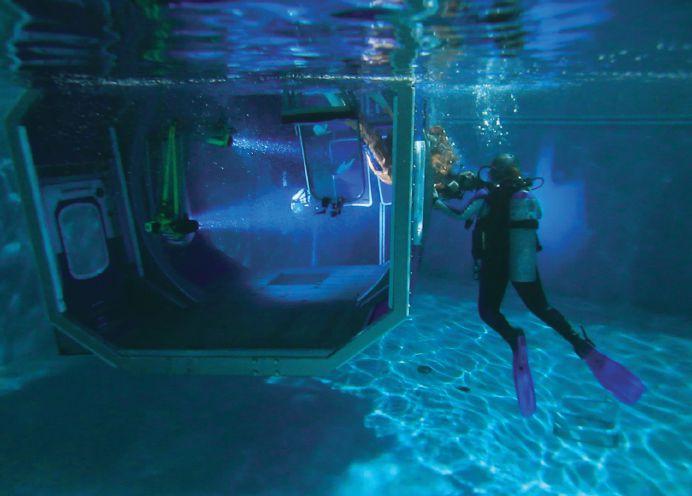
ABOVE: A revolution in where to learn how to use compressed air during helicopter ditching training began this February in Nova Scotia. (Photo courtesy of SSTL)
RIGHT: A study showed that integrating compressed air and egress training is superior to part-task training. (Photo courtesy of SSTL)
authors write, “Consistent findings indicate that during the development of motor programs, movements practiced in the simulated environment should closely match those that will be used in a real environment . . . current offshore employees . . . are not given the chance to combine all of the skills associated with underwater escape and the use of emergency breathing systems.”
What about the fear of gas embolisms while using hueba in deeper water? As part of the study, CAPP commissioned a diving medical doctor to examine all possible medical complications associated with doing hueba training in a full-scale simulator. he concluded that there was minimal risk. The authors could only find one officially reported case of compressed gas embolism while training with hueba and it was considered to be a result of improper use of the system.
Having found ample confirmation in the literature for the value of integrating different elements of training, and having assuaged concerns about gas embolisms, the business of conducting the study could begin.
because reading scientific papers is an acquired skill, here are the highlights of the study and conclusions, minus most of the methodological and statistical palaver.
The study had three primary goals: to determine whether integrated hueba training would result in a higher success rate in correctly using hueba during egress than part-task hueba training; to determine whether or not military-style overtraining would lead to even better performance; and to examine whether integrated training improved performance, that is retention, in tests 30 days after training.
The researchers created four groups, with either 29 or 30 volunteers. The control group, Gc, received the current offshore training standard for helicopter underwater egress training (huet). they began with four training trials in the full-scale simulator, followed by two hueba exercises in the shallow-water trainer.
the second group, gp1, did two hueba exercises in the shallowwater trainer, then additional hueba training in the full-scale simulator integrated with the egress training. This group’s training represented one version of the proposed new huet/hueba training standard.
The third group, Gp2, trained according to a second version of the proposed new huet/hueba training standard. it was identical to that taught to Gp1, but with one twist: Instead of receiving hueba training in the shallow-water simulator, they simply floated
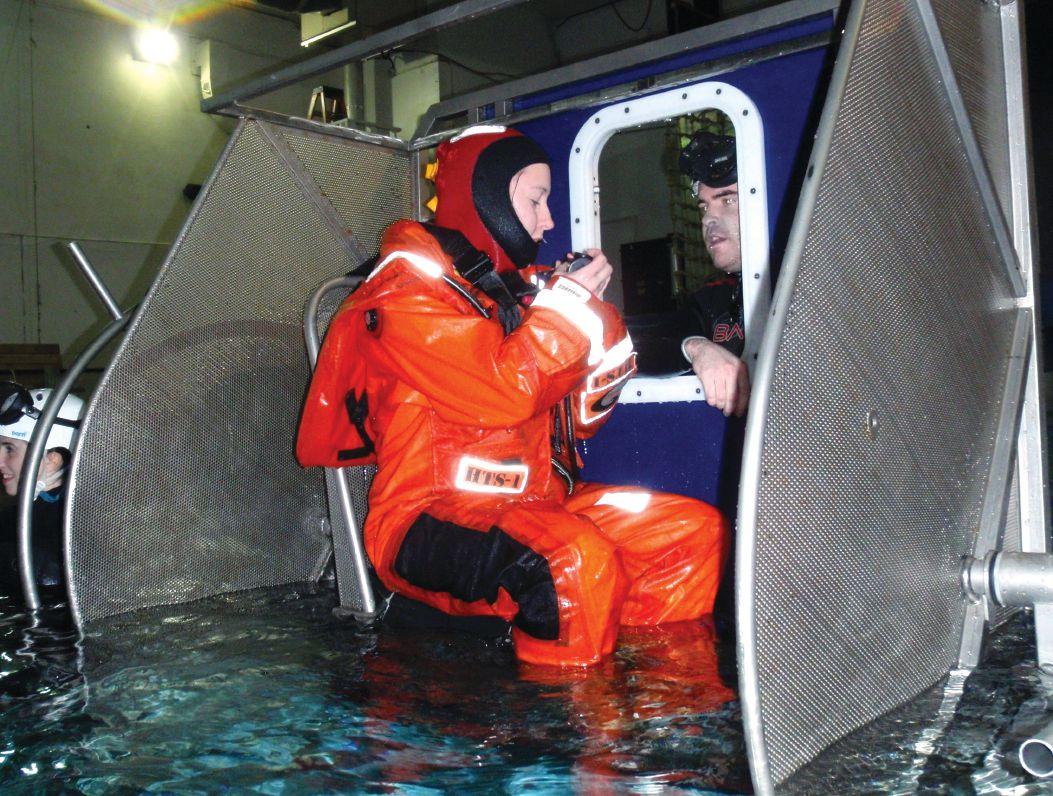
Alana MacLellan was one of the first students in the world to be taught how to use compressed air while inside a full-scale training simulator. (Photo courtesy of SSTL)
on their backs, and instructors tilted them back until their upper torsos and heads were fully under the water. This twist let the researchers explore the difference between this simple method of shallow-water hueba training and the shallow-water simulator, for which little assessment research exists.
The fourth group, Gm, trained to a more military-level training standard. The training was the same as that undergone by Gp1, except that gm did four hueba training exercises in the shallowwater trainer and four integrated hueba/huet egress exercises in the full-scale simulator.
To test retention, the researchers retested all of the volunteers 30 days after their initial training, rating their performance (egress speed and use of the hueba) in the full-scale simulator.
The researchers made these key findings: Initial training of hueba skills influenced how the volunteers used the system during the retest. Gc participants, who did the breath–hold trials (egress training in the full-scale simulators without using hueba) were significantly less likely to use hueba during retention testing and required significantly more assistance during egress. In fact, 23 per cent of gc did not use their hueba during the egresses during the retention tests. Twenty per cent of Gc participants also committed
task-sequencing errors in the retention test; for example, starting hueba tasks before bracing for impact or disconnecting the seat harness before inserting the hueba demand valve.
About 10 per cent of the Gp1 and Gp2 volunteers, and none of the gm volunteers, failed to use their hueba these three groups required less assistance during egress than did Gc.
The researchers also observed that Gc, which received the hueba training after the full-scale simulator training, were less likely to pay attention to the hueba instruction than the other groups. gc seemed to regard the hueba training as an afterthought. the other groups, which received hueba training before the fullscale simulator training, appeared to pay closer attention to the hueba training.
In addition to the main findings, there were other revelations; for example, video analyses showed that a number of participants had difficulties with their nose plugs and face seals on the immersion suits. This equipment may need a rethink for future designs. Female volunteers required more assistance in opening the exit. That there is a strength component to jettisoning push-out exits, and smaller people have somewhat more difficulty, suggests another problem that needs attention.
SSTL instructor Matt MacVicar teaches Tiffanny Fewer how to use compressed air in a shallow-water trainer before taking it into the full-scale simulator for egress training. (Photo courtesy of SSTL)
bringing it all together
The Establishment of a GTA Aerospace Cluster Would Provide Real Rewards
bY Matt niCHolls
ith some 350 companies, 22,000 employees and more than $7 billion in total annual economic output, ontario’s aerospace sector is easily one of the most robust in Canada. leading firms such as bombardier aerospace, Pratt & Whitney Canada, honeywell, goodrich landing gear (utC aerospace inc.), safran, Messier-bugattiDowty and hundreds of smaller, dynamic tier-two, tierthree and tier-four companies are making a huge impact in the manufacturing, research and development, IT, engineering, aircraft modification, Mro and other realms both domestically and on the world stage. (See, “Trending up!, page 32) The province also boasts some of Canada’s leading educational facilities involved in hundreds of toplevel research and development projects.
Wbut as Canadian aerospace review lead David Emerson aptly points out in his comprehensive, two-volume report on the state of the Canadian aerospace industry, much more needs to be done to ensure Canada continues to maintain its role as a global aerospace leader – in ontario, the gta and nationwide. Globalization, competition from emerging countries, volatility, fluctuating exchange rates and a diminishing skilled workforce are significant challenges facing the Canadian aerospace industry going forward.
in “beyond the horizon: Canada’s interests and future in aerospace,” released just prior to the Dec. 5-6, 2012, aerospace industries association of Canada (aiaC) annual conference in ottawa, Emerson makes 25 recommendations to federal
industry minister Christian Paradis to help the nation’s space and aerospace industries stay competitive and trending upward in the future.
so, exactly what’s at stake? on the aviation side of the coin, plenty. Some $3.2 trillion in new commercial aircraft orders and an additional $661 billion in business aircraft orders will be on the books over the next 20 years, and Canada needs to step up its game in order to score a larger chunk of the projected business. Add in an impending skilled-workforce shortage and the stakes are indeed very high.
From a space perspective, halting the malaise that has, in the words of many space leaders, caused the Canadian space program to flounder in recent years – and arguably led to the recent resignation of Steve Maclean, head of the Canadian Space Agency, prior to the end of his five-year tenure as the agency’s leader – is also paramount. Without a larger commitment to drive innovation, research and development and more, Canada will continue to lag behind competitors for a large piece of the global aerospace pie.
“If you look at the future demand for aircraft and the economies that are going to dominate that demand, there’s no doubt in my mind that if you are not prepared to put a physical presence on the ground such as joint ventures and production, you are not going to be particularly successful,” Emerson said at the Aerospace Industries Association of Canada conference. “Messy developments” are emerging in the global economy and steps need to be taken in order to stay competitive. That means a more strategic, cohesive unified approach from industry, educational facilities and governments alike.
Centennial College is helping to lead the charge for the establishment of an aerospace centre of excellence in Toronto’s Downsview Park area. It would be a welcome move for students and faculty alike, as its Ashtonbee Campus in Scarborough is not sufficient for its needs. (Photo courtesy of Centennial College)
tHe ClusteR pHilosopHY
building on the more cohesive approach, one of emerson’s recommendations involves the establishment of an aerospace training and research “cluster” in ontario which would unite colleges, universities, aerospace firms and government-supported research and technology transfer centres in close proximity to one another to develop the skills necessary to help continue to elevate ontario’s aerospace footprint. Within that cluster would exist a hub “centre of excellence” in the GTA. It’s a model that currently exists in Montreal’s world-renowed aerospace hub with the Ècole nationale d’aerotechnique and the Centre Technologique en Aérospatiale, for example, closely aligned with industries and universities to help form the Montreal aerospace cluster.
With four prime aerospace contractors – bombardier aerospace, Pratt & Whitney Canada, bell helicopter and Cae – 15 tier-one suppliers and 215 tier-two to -four suppliers, the Montreal aerospace cluster is one of the largest and most successful in the world. Strategically organized under the direction of Aéro Montréal, the cluster brings together key decision makers from industry players including aerospace companies, educational institutions, research organizations, associations, unions and government to help set a course for the successful development of all aerospace interests for the region.
Aéro Montréal was formed with the financial commitment from all three levels of government to help increase the city’s aerospace footprint both here and abroad. This industry-driven initiative has helped unite the individual components in the Montreal aerospace community to give it a strong, cohesive voice.
speaking at last June’s “taking flight: Making an ontario aerospace Cluster a reality” conference in toronto, suzanne benoit, president of aéro Montréal, told ontario and gta aerospace leaders, that an aerospace cluster offers “a proactive position to leverage new opportunities. It is not a defensive position but one that allows organizations to act collectively for a common goal.” Through its six strategic committees, Aéro Montréal helps drive innovation, heightens the sectors’ value, enhances the supply chain, focuses on human resources development, protects the interests of small and mediumsized enterprises (SMEs) and much more.
The cluster philosophy is not new and is not exclusive to the aerospace industry. Successful clusters have been established worldwide in a number of industries and while a GTA-based aerospace cluster would be a much different animal than its Montreal counterpart due to the size of aerospace firms in this region, their proximity to one another and many more factors, mean its benefits would be just as fruitful. Some include:
• greater opportunities for collaboration
• strengthened and more vertically integrated supply chain
• stronger industry profile to solicit government support
• sharing of best practices from cluster partners leading to greater innovation
• a pipeline of well-trained graduates who are “industry ready”
• creates an industry that is better positioned to deal with the escalating demands of the sector
Simon Roberts, vice president and general manager, Turboprops and
featuRe
trending up!
The GTA is blessed with myriad cutting-edge aerospace leaders in a variety of fields including manufacturing, research and development, IT, completions and engineering. Here are 10 companies, large and small, who are making names for themselves here at home and on the world stage.
AversAn Inc. This global engineering firm based in Scarborough, Ont. has its tentacles in several key projects in North America and around the globe in commercial and military arenas. It offers embedded systems hardware design, automated test station and systems integration labs and flight SIMS.
BomBArdIer AerospAce One of the world’s largest aircraft manufacturers and the largest aerospace OEM in Ontario, Bombardier’s Toronto site serves as the final assembly plant for both the Global Express business jets and the popular Q400 turboprop.
celestIcA This influential Toronto-based electronics manufacturing and supply chain leader has found global success on a number of fronts. With 2012 revenues in excess of $6.5 billion, Celestica boasts more than 30,000 employees worldwide at some 20 locations.
FIeld AvIAtIon Internationally renowned for its extensive aircraft modifications, particularly on government services aircraft, this Mississauga, Ont.-based firm has also expanded operations to include aircraft sales.
FIrAn technology group This growing Scarborough, Ont.-based aerospace and defence electronics product and subsystem supplier develops technologically advanced cockpit panels and keyboard solutions for a growing international client base.
honeywell One of the GTA’s leading aerospace companies, Honeywell boasts a 330,000 square-foot facility in Mississauga that supports the global aerospace market in the design, development, manufacture and aftermarket support of a number of key initiatives.
l-3 wescAm Two GTA locations of l-3 Wescam are helping to increase the company’s profile on the local aerospace scene. The company’s Burlington, Ont., location serves as the company head office and is home to the development of the Mx-15 and Mx-20 imaging devices used on both fixed wing and rotary wing aircraft. Applied Physics Specialties, based in Don Mills, Ont., specializes in the development of custom opto-mechanical lens assemblies and aspheric components.
mAgellAn One of Canada’s leading aerospace players, Magellan has made a significant footprint on the world stage in a number of key capacities including the development of engine components, structures, rotating parts (shafts, disks and spacers), static assemblies (exhaust systems, compressor cases frames, combustors, by-pass ducts), and more.
shImco For the past 25 years, the Markham, Ont.-based firm has been creating a variety of precision shims, tapers, spacers and more for both the fixed and rotary-wing markets. key suppliers include Bell Helicopter and Bombardier.
utc AerospAce systems UTC Aerospace Systems designs, manufactures and services integrated systems and components for the aerospace and defense industries and is once again showing solid growth both here and abroad. The company’s Goodrich landing Gear operation based in Oakville and Burlington has long been one of the top aerospace entities in the region.
toronto operations, bombardier is a strong proponent of the cluster philosophy and the key advocate for the establishment of a GTA cluster. as the most prominent oeM in the toronto area, bombardier’s support is essential – and the company is more than happy to oblige. A fixture in toronto for many years, bombardier’s Q400 and global business jets are currently being assembled there.
“There are many examples in our industry and outside of our industry whereby the convergence of industry, government, academia, research and development, coming together in a coordinated – and in many cases geographically centred way – has real benefits,” Roberts told Helicopters. “We definitely see the benefits of how those particular industries or jurisdictions have really accelerated their ability to collaborate.”
Dan s breitman, vice president of engine development programs at Pratt & Whitney Canada in Mississauga, agrees. With more than 800 GTA-based employees, Pratt has been in the Mississauga area since 1979 producing its PW300 engine line and working on research and development.
“to me, collaboration is what spawns innovation,” breitman says. “if you can form a cluster which allows for proximity, and with the proximity you spawn collaboration, with that collaboration you will have aerospace. So, in that sense it would be good for anyone to be involved in a cluster. That’s why it makes sense and why we think it really needs to happen.”
The prospects of like-minded companies participating and contributing towards progression in many facets of the industry is an exciting prospects, notes frank Karakas, vice president, airbus business unit, utC aerospace systems. With two sites in ontario in burlington and oakville, utC’s legacy goodrich plants create landing gear systems for military, regional and commercial airlines. the oakville plant serves as boeing unit headquarters and is an airbus regional and business aircraft unit. Another significant leader in the GTA space, Karakas says his team fully supports a cluster formation.
“I think there are clearly opportunities for synergy, collaborative research and development, and there are obvious areas of mutual interest,” Karakas says. “overall, it would make for a strengthened supply chain when you look at the vertical integration that will ultimately take place. That already exists to some extent in a very informal manner in ontario, but when you look at the heritage of the industry in this area that goes back decades, clearly there has been a handful of dominant players that have led to the establishment and growth of a variety of ancillary companies.”
tHe doWnsVieW effeCt – a ‘CentRe of exCellenCe’
an intriguing element of the proposed ontario cluster is the development of a gta hub or “centre of excellence” at the Downsview Park site in Toronto. As Emerson notes in his report, “one of the significant constraints to industry growth identified is an aging workforce and skilled labour shortage.” the Downsview hub would do just that – leveraging the province’s best educational institutions in a partnership to develop innovative new technologies, aid in workforce training and skills development, and participate in supply chain initiatives.
A public-private partnership has formed to promote the establishment of a cluster at the Downsview Park site, which would serve as an ideal focal point of a GTA cluster with its highly developed transit infrastructure (go train, commuter train and ttC, subway stop nearby), close proximity to universities with innovative research and development opportunities. the Downsview aerospace Cluster for innovation and research (Dair) team involves key industry players and the province’s
Pratt & Whitney Canada has been in the Mississauga area since 1979 producing its PW300 engine line and working on research and development. (Photo courtesy of Pratt & Whitney Canada)
best educational institutions. founding partners include bombardier, Centennial College and the university of toronto institute for aerospace studies (utias), with the support of several other firms and educational institutions.
the Downsview site was developed in 1939 as an airfield next to an aircraft manufacturing plant owned and operated by de Havilland Canada. It has had a very rich history, including being home to the Royal Canadian Air Force, who, in 1947, set up an air base there and expanded the property. the base closed in 1996, and since 1998, the land has been administered by Crown Corporation Parc Downsview Park, which co-manages the airfield with bombardier.
bombardier owns numerous hangars at the airport and with one 7,000-foot operational runway and parallel taxiway, it makes for an ideal location as a starting point to bring in not only colleges and universities for future research, training and development initiatives, but other aerospace tenants as well. A centre of excellence would serve as a focal point of a province-wide initiative and help ignite the passion from the grassroots level to help highlight the value and influence of the industry.
“I think it’s very important to have something like that here,” Roberts says. “And let’s not just focus on the manufacturing footprint that we
have here . . . Given the benefit of our facilities, the runway obviously being a key component of that, and also when you look at the infrastructure that has been developed around our facilities, with the public transport developments and investment, the ability for us to connect this location for growth – and with public transport being a key strategy for the province, there is a great connection point there specifically around the actual subway extension that is currently taking place, some of the future plans around rail transportation around this location.”
Andrew Petrou, special projects officer with Toronto’s Centennial College, is a key driver of the initiative. Centennial is searching for a new
home for the college’s aerospace maintenance program, as the Ashtonbee campus location in Scarborough is simply not adequate for the program’s needs. relocating to the Downsview location makes a lot of sense.
Petrou is working closely with industry partners, educational institutions and government to make the centre of excellence at Downsview a reality. “the potential for something special here is immense,” he says. “It’s the biggest city in the country with three subway access points and go train station. there’s a physical presence that i think is hard to compare.”
Petrou isn’t the only one passionate about the possibilities. David
‘‘
to point out that the ontario cluster would be unique to the gta and this province – building on its unique strengths.
“What we’re trying to create here is something very different from Aéro Montréal,” Zingg says. “We’re trying to create a physical infrastructure that complements the whole thing. If you start with the big picture, you have the ontario aerospace scene and you have some scope with that, then you come down to the gta area. it’s a subset of ontario but a very large chunk of the ontario aerospace scene is in the gta so, what we’re trying to create is a hub. We use the word hub quite carefully as it includes everything along with that – universities, colleges, industries, SMEs, and it’s right beside bombardier.”
’’ It is not a defensive position but one that allows organizations to act collectively for a common goal.
Zingg, Professor, Canada Research Chair in Computational Aerodynamics and environmentally-friendly aircraft Design and Director at utias, is equally intrigued with the possibilities. utias is keen to locate from its aging facility and join Centennial as an early adopter. Zingg is also quick
Timing, of course, is everything and Zingg maintains all the elements are working to make a centre of excellence a reality. “You have these institutions that can move, you have some land that has come available in a perfect location, a large chunk of land in an urban centre that’s at the epicentre of ontario aerospace, and it has constraints on it – you can’t build condos on it because you have a runway there. So, everything is lining up on this and if we don’t move on it, shame on us.”
rod Jones, executive director of the ontario aerospace Council, maintains the Downsview centre of excellence is a tremendous idea but cautions it is just one piece of the overall ontario aerospace pie. the cluster itself would not be confined to Downsview, but include the province as a whole – a collective unit.
“the cluster is industry, it’s academia, it’s r&D both in universities and other research organizations like the National Research Council and others, it’s engineering development organizations,” he says. “Industry represents everyone from business consultants to technical consultants to the whole raft . . . a centre for education, engineering excellence, r&D, all of that, those are the drivers, those are the pieces that are the difference makers in our situation going forward.”
bReakinG doWn tHe baRRieRs
Putting all the pieces together in the development of an ontario cluster will take time and there are several things that must be accomplished. Getting the support of all three levels of government is needed to sustain it going forward, and incentives must be in place to make it attractive for aerospace companies to take part.
Industry leaders are also needed to help generate interest in the project and create momentum to champion the initiative on a day-to-day basis. finally, industry associations such as the oaC will be needed to help co-ordinate efforts and provide industry oversight – from a collective position. It must be viewed in the best interests of all players. And it won’t happen overnight. While the framework for a cluster is starting to take shape, it realistically will be three to five years for a strong semblance to evolve.
“There’s enough conceptual strategic alignment, but now the business case needs to be real,” says Roberts. “We also need to see the first move physically in 2013 or 2014 and I am keen with our discussions with Centennial College around our needs, in terms of the Toronto site, in terms of workforce growth, and the anticipated retirements.
“once we have that business case and we can promote what this is and how attractive it will be to suppliers, to research institutes, we will have something. The pieces of the jigsaw will quickly follow. I don’t think it’s unreasonable to imagine that in five years’ time we will have a very well-established footprint across all of the sectors in place, but what dictates five years time is really the progress we are going to make
Toronto’s University of Toronto Institute for Aerospace Studies is looking to move out of its aging facility and will likely be one of the first to move into a Downsview Park aerospace centre of excellence. (Photo courtesy of UTIAS)
in the next 12 to 18 months.”
Jones agrees and notes a big advantage is that all industry players already know each other well and have worked together on a project basis in the past. It will certainly help in the formation of a cohesive strategy going forward.
“What we don’t have is the ongoing, day in, day out and progressing work that builds on those assets and that’s my notion of what a cluster would do for us,” he says. “It needs a leadership team, it needs some resources to help make it all happen. having bombardier leading is a very positive idea, but I think the strength of this initiative is it doesn’t serve the position of just one company, it serves the sector. it’s not a utias initiative, it’s not a Centennial initiative, it’s not a bombardier initiative – it’s an ontario aerospace initiative.”
MakinG soMetHinG GReat eVen betteR
With more than 28 per cent of the employment base in Canadian aerospace, the formation of an ontario aerospace cluster and gta hub will only help to galvanize the industry – and continue to enhance Canada’s role in the global aerospace industry.
“this is going to be a flagship that shows that ontario is recognized as a powerhouse of aerospace even including outreach,” says Zingg. “there is a rich history here in ontario . . . emotion is great, but we have a phenomenal sector that is in an export-driven sector that is going to grow, is inspiring people, it’s creating high level jobs with both skilled workers and engineers. Canada is already doing well in it, how can you not invest in this?”
It’s a great point, and one the key drivers in the development of a GTA aerospace cluster will hope to capitalize on the near future to help this impressive plan take off.
Campbell River Base e-mail: info@ebhelicopters.com www.ebhelicopters.com
Gold River Base
Tel: 250-283-7616
Fax: 250-283-7555
Port Alberni Base
Tel: 250-720-8915
Fax: 250-720-3641
Commercial Charter Services
• Bell 407, Bell 206 and Bell 206L
• Robinson R22, R44, R66
Approved Robinson Dealer
• New & Used helicopter sales
• Complete overhaul facility R22, R44 and R66
Avionics
• Helicopter and Fixed-wing complete avionic services
Flight Training
Photo by Bill Campbell
MARKETPLACE
COMPONENT OVERHAUL SPECIALISTS
MARKETPLACE
last spring, the fatigue-risk-management working group concluded its deliberations before issuing its final report to the Canadian Aviation Regulatory Advisory Council Technical Committee in November 2012.
Ironically, it’s HAC’s view that the report focuses less on fatigue and risk, and more on the needs of the large scheduled international air carriers represented by the National Airlines Council of Canada (NACC), and their pilots’ unions. What started out as an effort to update the Canadian Aviation Regulations (CARs) in light of the latest available fatigue-related research, turned into an airline-centric overhaul of the Canadian regulations.
“Pilots are pilots,” as they say. We all get fatigued. but we get fatigued in different ways because we do different jobs. In terms of our respective job descriptions, airline drivers and helicopter pilots share the sky . . . but that is where the similarity ends.
Helicopter pilots operate largely in an unscheduled, VFR, selfdispatch, seasonal environment, and in some of the most remote areas of the country. We generally operate without crew-scheduling or dispatch offices. Airline pilots have their “pairings” and “blocks” weeks in advance. Helicopter pilots frequently don’t know what they are doing tomorrow morning.
In their respective fatigue-risk management working group processes, the Europeans and Americans concentrated on the commercial and business aviation communities first to consider and implement
When Size Matters
Fatigue-Risk-Management Issues Are Excluding Helicopter Pilots’ Needs
The working group co-chairs have recommended a series of new and significantly more restrictive changes to the current regime of flight and duty time limitations set out in the CARs which would apply to helicopter operators. These include:
• cumulative duty hour requirements, completely new to the CARs
• sector limits requiring a reduction in the flight duty period, completely new to the CARs (The more landings and takeoffs you do, the shorter your flight duty period. This new limit, according to the recommendations in the report would apply only to scheduled and medevac helicopter operations)
• new, more conservative seven-day (down from 70 to 56 hours) 28-day (down from 140 to 112 hours) and 365-day (down from 1,200 to 1,000 hours) cumulative flight time limits
• new, less-flexible rest period requirements that impose a 10- or 12-hour minimum rest period (depending on whether the pilot is deployed or at home-base), rather than imposing a requirement on the air operator to ensure eight-hours of uninterrupted sleep is protected
• new, maximum daily flight duty periods that vary depending on when the flight crew member starts his/her day – new to the CARs
• removal of the current industry segment-specific standards which applied to non-scheduled and helicopter operations and to helilogging operations
• new more conservative time free from duty requirements for rotational crews, down from a maximum of five days off after 42 consecutive days to five days off after 15 days!
Airline drivers and helicopter pilots share the sky . . . but that is where the similarity ends.
regulatory solutions sensitive to the needs of these segments. This is something the co-chairs in the Canadian working group steadfastly refused to do. Instead, they focused on developing rules of broad application with a few small variations, which were ill-suited to the industry segments they were developed to accommodate.
The working group co-chairs relied heavily on controversial european aviation safety agency recommendations, the new u s Federal Aviation Regulations and International Civil Aviation organization standards and recommended Practices (sarPs) – all of which were only intended to apply to large airlines.
• new, and lower, maximum flight duty period, down from 14 hours to 13 hours
• in spite of strong scientific evidence that multiple consecutive days free from duty will serve to significantly reduce fatigue, the co-chairs eliminated the “zeroing” of accumulated flight time for five days-off – without even mentioning the issue in the report
In the final analysis, nine associations came together to reject the recommendations contained in the working group report. The bottom line? “one-size-does-not-fit-all,” Minister lebel. it’s time the needs of helicopter operators are taken into consideration in this critical issue.
Fred Jones is the president/CEO of the Helicopter Association of Canada and a regular contributor to Helicopters magazine.
fRed Jones
When you fl y helicopters, you know being focused is critical. To help you concentrate on fl ying, the A20 Aviation Headset is engineered to be more comfortable, deliver clear audio and provide more noise reduction than any headset we’ve ever made – an average of 30% greater noise reduction than conventional noise reducing aviation headsets. In fact, it’s engineered for the high noise levels that are found in helicopter cockpits. Certified Helicopter Flight Instructor Stephen Boatwright summed it up this way, “…if you want to be able to hear everything, if you don’t want fatigue, if you don’t want to miss those radio calls… then go with the A20.”
In addition, it has an auxiliary audio input, available Bluetooth® communications interface, is C-139 TSO certified and is made in the U.S.A. Plus, its optional flexible power circuitry allows for a connection from a 6 pin to U174, letting you take the headset from one helicopter to another. No other headset offers this advanced combination of features and benefits. Prove it to yourself. Try the A20 Aviation Headset for 30 days, satisfaction guaranteed. And ask about our easy payment plan with no interest charges from Bose.
( THINK VERSATILITY )
Eurocopter is committed to protecting Canada’s coast… At present, and in the future. The longest coastline in the world deserves the world’s most capable helicopters. Eurocopter offers safe, reliable, and innovative solutions to customers around the world.