
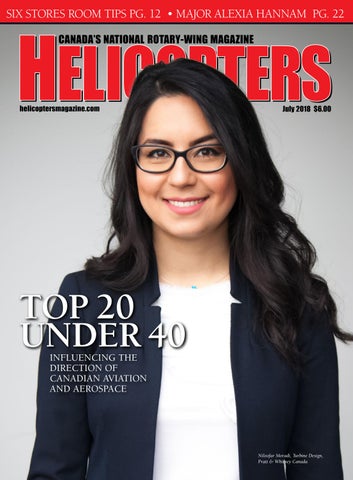
Niloofar Moradi, Turbine Design, Pratt & Whitney Canada
Quality • Experience Service • Technology
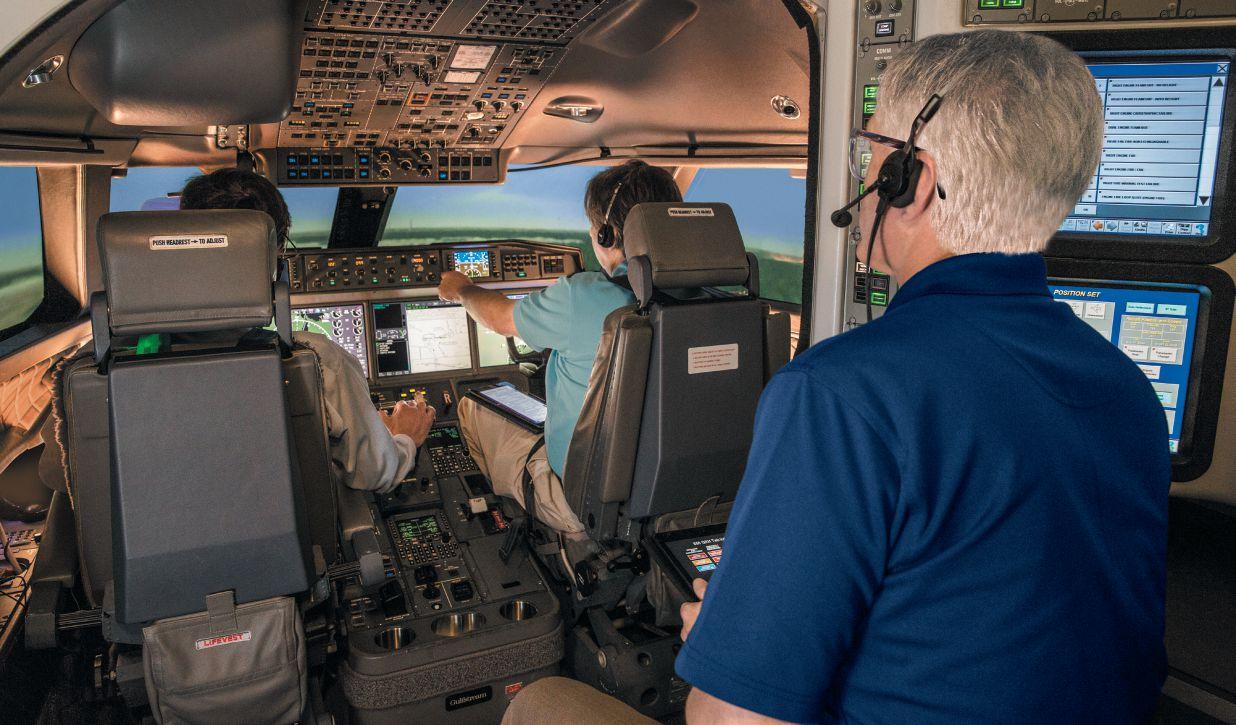
Customers choose FlightSafety for our unequaled experience, master instructors and advanced-technology training devices. But they return for the consistent value they receive in every safety-focused training program we offer. At each of our numerous locations that span the globe, Customers know they’re trained by experts, and assisted by FlightSafety teammates who go above and beyond to ensure the best possible experience. With unmatched service and support, Customers become part of the FlightSafety family during and after their training. They train on precision simulators designed and manufactured by engineers and technicians with decades of real-world training experience to match today’s sophisticated aircraft. Expect the greatest value from your most trusted training provider. Only FlightSafety delivers it.
• 1,800 master instructors deliver 1.4 million hours of instruction annually
• Outstanding Customer service, amenities and benefits including Proficiency Protection
• Global network of Learning Centers provides worldwide reach for training
• Unequaled advanced training programs and most complete range of courses
• Master Aviator™ takes pilots beyond proficiency delivering the highest standard in safety
• Largest fleet of advanced-technology simulators manufactured by our experts
• Dedicated to enhancing aviation safety since 1951
Aviation professionals from around the world trust us to provide the highest-quality training and outstanding service. More than 1,800 highly experienced professional instructors deliver aircraft- and mission-specific courses, using our comprehensive training systems and advanced-technology flight simulators designed to enhance safety. Trust your training to FlightSafety. You’ll see why so many aviation professionals make the same choice. And have since 1951. For more information, please contact Steve Gross,
The power of the blockchain in aviation
Luc Boily
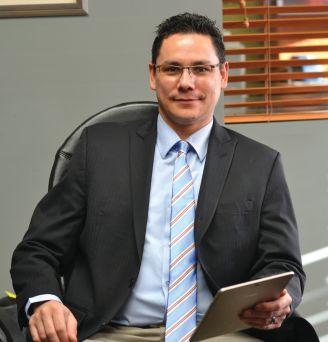
Niloofar Moradi, Turbine Design, Pratt & Whitney Canada. (Photo courtesy of Concordia University)

JON ROBINSON, EDITOR
n mid-2017, the Government of Canada challenged Canadian businesses to collaborate with post-secondary and research institutions to propose what it described as bold and ambitious strategies that would transform regional economies and create jobs. Led by Navdeep Bains, federal minister of innovation, science and economic development, the goal of this collaboration is to create superclusters of industrial innovation.
In March 2018, Bains announced five winning applications, from more than 100, to be a part of the Innovation Superclusters Initiative, into which the government is investing up to $950 million. The investment, which is to be matched dollar for dollar by the private sector, is expected to create more than 50,000 jobs and grow Canada’s economy by $50 billion over the next 10 years.
The five Superclusters include: Ocean Supercluster, based in Atlantic Canada, focusing on industries like fisheries, oil and gas, and clean energy; SCALE.AI Supercluster based in Quebec, focusing on intelligent supply chains, artificial intelligence and robotics; Advanced Manufacturing Supercluster based in Ontario, focusing on connecting technology to manufacturing; Protein Industries Supercluster based in the Prairies, focusing on plant proteins and worldwide food shortages; and the Digital Technology Supercluster based in British Columbia, focusing on Big Data and digital technologies in key sectors like healthcare, forestry and manufacturing.
The Digital Technology Supercluster already includes aerospace enterprises like Avcorp, which provides supply chain tools to aircraft manufacturers and supports airline operators with component repair services. This group also includes software developer Aeroinfo and the Vancouver digital aviation labs division of Boeing, which focuses on applied analytics for airlines, company’s needing fleet maintenance, and Boeing’s Defense, Space & Security business.
Any company incorporated in Canada, regardless of origin or headquarter location, is eligible for the initiative. The government wants its Superclusters to attract investment from the world’s best companies, regardless of location. The BC Supercluster also includes the likes of MDA, CAE and YVR, as well as Hatch, which has been involved in key Vancouver airport infrastructure projects like the South Airfield Runway End Safety Areas.
To date, 118 companies, academic institutions, professional associations, government partners, banks, incubators, venture capital firms and consultants have joined forces to support the SCALE.AI Supercluster in Quebec. Together, they have committed $700 million toward developing intelligent supply chains for sectors like automotive, aerospace, mining, utilities, and oil and gas. Based in the province with Canada’s primary aerospace hub, SCALE.AI may prove to be the most impactful aero-cluster, which will leverage disruptive technologies like blockchain (see Jennifer Rideout’s column, page 30) and 3D printing. The SCALE.AI initiative includes aerospace and aviation powers like Air Canada, Bombardier, CAE and Thales.
The ecosystem will provide a network of support and services to accelerate technology adoption.
’’
At least three of the Superclusters present opportunities for fixedand rotary-wing companies; to leverage findings from what must be considered one of Canada’s most-ambitious plans to spread innovation across its economy – to remain competitive within an increasingly complex business world. There are already several aviation and aerospace companies involved in the early stages of the SCALE.AI, Advanced Manufacturing and Digital Technology Superclusters. The Superclusters already represent more than 450 businesses, 60 postsecondary institutions and 180 other participants in sectors covering what the government describes as 78 per cent of Canada’s economy.
The focus of the Advanced Manufacturing Supercluster will include the Internet of Things, machine learning, cybersecurity, and additive manufacturing (3D printing), the latter of which is becoming an increasing vital part of manufacturing and supply chains in aviation. This OntarioSupercluster is now a coalition of more than 140 partners, led by a newly incorporated entity called Next Generation Manufacturing Canada (NGM Canada).
Jayson Myers, CEO, NGM Canada, explains: “Whether firms need help with technical assessments, pilot and testing facilities, sales and marketing strategies, talent acquisition, skills development, or go-to-market advice... [The] ecosystem will provide a network of support and services to accelerate technology adoption in manufacturing firms and generate new customers and scale-up opportunities for technology firms.”

We offer training on eight helicopter types to get your service team certified and keep your business in the air.
Delivered by instructors with field maintenance experience, we are a Transport Canada approved training organization with an excellent reputation in the industry.
Upcoming courses include the Lycoming LTS 101, T-53, and Allison 250 20 engines and Bell 204/5/6 airframes
For more details, visit nlc.bc.ca/ame
Technicians with the Royal Canadian Air Force’s 2 Air Movements Squadron and 450 Tactical Helicopter Squadron on July 3 loaded a CH-147F Chinook onto a CC-177 Globemaster at the 8 Wing Trenton base in Southern Ontario. The Chinook is one of two such helicopters, in addition to four Griffons, headed to Mali where it will be part of Operation PRESENCE-Mali. This is the United Nations Multidimensional Integrated Stabilization Mission in Mali (MINUSMA), where a Canadian Air Task Force (ATF) is to participate for a period of 12 months.
The two CH-147F Chinook helicopters will provide what the Royal Canadian Air Force (RCAF) describes as urgently needed transport and logistics capacity for the MINUSMA mission. The four CH-146
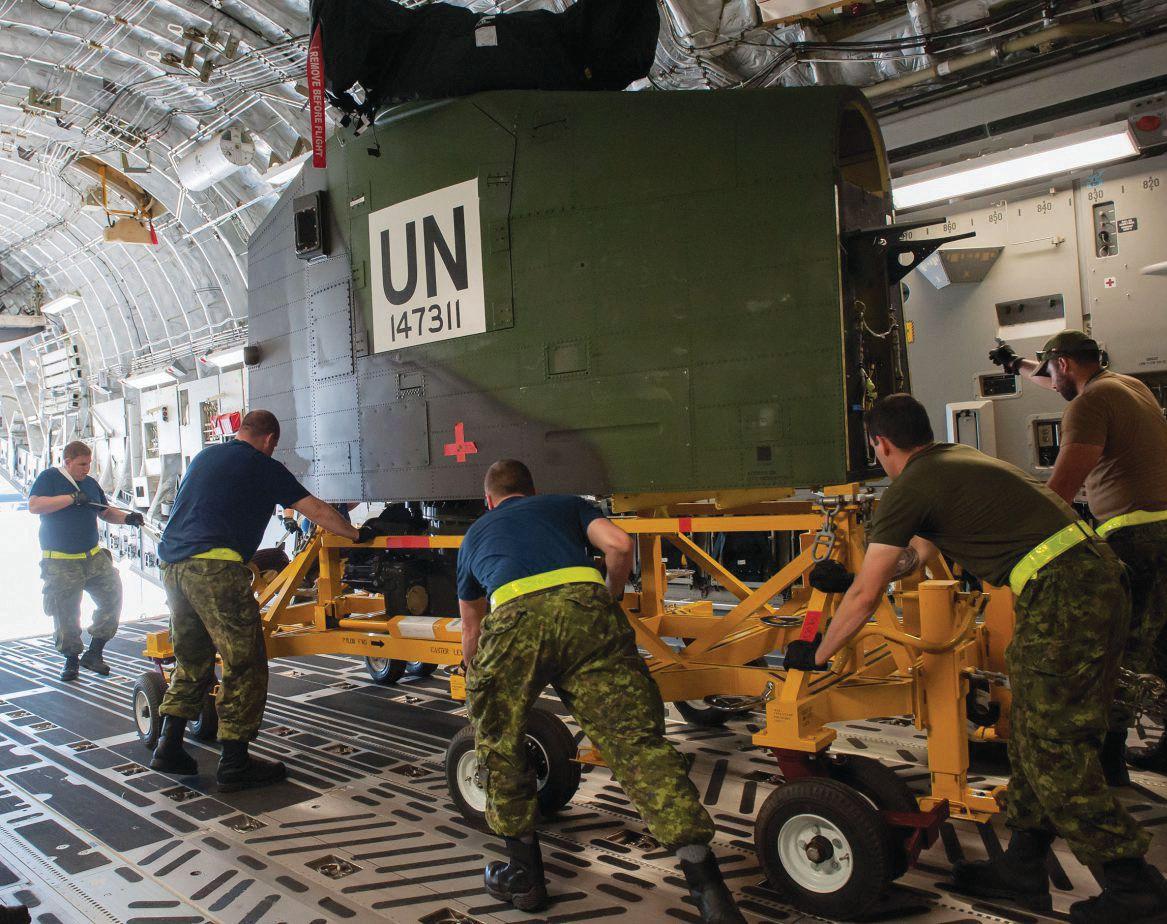
Technicians with 2 Air Movements Squadron guide a CH-147F Chinook helicopter component into a CC-177 Globemaster in preparation for deployment to Mali.
Griffon helicopters will provide armed escort and protection, along with aircrew and groundcrew. The deployment will include a number of Canadian Armed Forces troops who will facilitate medical evacuations for troops on the ground and
provide logistical support. Canada joins 57 MINUSMA partner countries in continuing efforts to bring stability to Mali and the Sahel, explains the RCAF. The deployment to Mali represents the second Smart Pledge made by the
Government of Canada during the UN Peacekeeping Defence Ministerial conference in Vancouver in November 2017. At that time, Canada announced its return to peace keeping operations and the support of such UN operations.
Leonardo and Polska Grupa Zbrojeniowa signed a Letter of Intent that will see the two companies collaborate on the AW249, a new combat helicopter currently being developed to meet the needs of the Polish Armed Forces. With this agreement, Leonardo and PGZ are to explore collaboration in areas like design, manufacturing, final assembly, marketing and aftersales support for the AW249 helicopter.
The Letter of Intent, explains Leonardo, reinforces its common interest with Polska Grupa Zbrojeniowa (PGZ) in the development
and production of a new combat helicopter, created for the needs of the Italian Army, and its Polish variant which is being considered under Poland’s Kruk procurement. Leonardo signed a multiyear contract with the Italian Ministry of Defence in January 2017, aimed at replacing its current fleet of AW129s, which are expected to be retired by 2026 after more than 35 years of operation. The AW249 will have a MTOW of seven to eight tonnes, useful load in excess of 1,800 kg, and speed and endurance to sustain air support and armed escort operations.
Airbus delivered four H125 helicopters to Nova Scotia Department of Natural Resources (NSDNR), completing the province’s air fleet renewal, following a competitive bid in 2016. The aircraft, explains Airbus, will play a key role in increasing service capacity for NSDNR missions like search and rescue, forestry programs, wildlife and geological surveys, and firefighting. Airbus points to the H125’s lifting power capacity, endurance and maneuverability as being particularly suitable for rigorous hot and high missions, as well as swing operations.
Customized specifically for NSDNR, the H125 fleet is equipped with a glass cockpit, floor window, high-visibility doors, cable cutters, cargo mirror and cargo pods. The H125 helicopter will also allow the NSDNR to double its water carrying capacity when fighting wildfires.
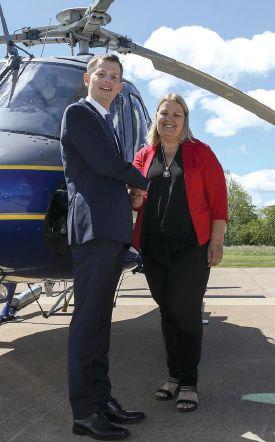
The Department of Natural Resources’ mandate is to develop, manage, conserve and protect forest, mineral, parks and wildlife resources, in addition to the administration of the province's Crown land. “The protection and management of Nova Scotia’s natural resources is mission critical and the H125 is a workhorse that is up for this challenging task,” said Romain Trapp, president of Airbus Helicopters Canada.
Safran states it has significantly reduced the direct maintenance costs of its Arriel 2D engine, which equips both single-engine Airbus H125 and H130 helicopters. One of the two main improvements provided, according to Safran, is an extension of 25 per cent in time between overhaul (TBO) to 5,000 hours for new and in-service helicopters.
The company also points to its new three-year/2,000-hour warranty conditions – replacing the previous twoyear/1,000-hour warranty – for all H125 and H130 helicopters delivered in 2018. Safran explains H125 and H130 customers will also benefit from the removal of a calendar limitation, which until now required an engine inspection at a repair centre every 15 years, regardless of the number of hours logged. The company states the robustness of the Arriel 2D eliminates the need for a calendar limit on modules 1, 2, 4 and 5. For module 3,
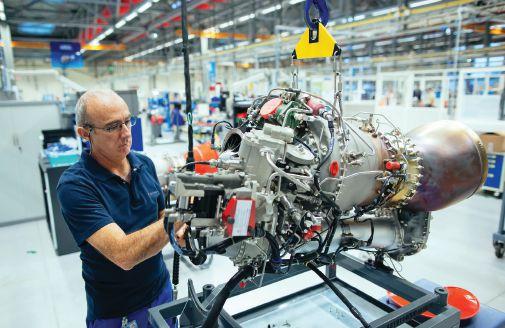
More than 1,000 Arriel 2D-equipped H125 and H130 helicopters, first delivered in 2011, are in service. (Photo Cyril Abad, Safran)
Safran explains the engine’s condition can be restored during a periodic visit performed at a maintenance centre.
The H125 and H130, according to Safran, lead the single-engine helicopter market, accounting for almost 70 per cent of deliveries in the last five years. More than 1,000 Arriel 2D-equipped H125 and H130 helicopters, first delivered in 2011, are in service worldwide,
HELICOPTERS MAGAZINE
P.O. Box 530
105 Donly Drive South Simcoe ON N3Y 4N5
Tel.: 519-428-3471 Fax: 519-429-3094
Toll Free: 1-888-599-2228
Helicoptersmagazine.com
EDITOR JON ROBINSON jrobinson@annexbusinessmedia.com
MEDIA DESIGNER EMILY SUN
CONTRIBUTING WRITERS
RICK ADAMS, DAVID CARR, BRIAN DUNN, PAUL DIXON, WALTER HENEGHAN, FRED JONES, JAMES MARASA, CARROLL MCCORMICK, COREY TAYLOR
NATIONAL ADVERTISING MANAGER MENA MIU mmiu@annexbusinessmedia.com 416-510-6749
ACCOUNT MANAGER KORY PEARN kpearn@annexweb.com 519-902-8574
ACCOUNT COORDINATOR BARB VOWLES bvowles@annexbusinessmedia.com 416-510-5103
CIRCULATION MANAGER JAY DOSHI jdoshi@annexbusinessmedia.com 416-442-5600 ext. 5124
GROUP PUBLISHER MARTIN MCANULTY mmcanulty@annexbusinessmedia.com
PRESIDENT & CEO MIKE FREDERICKS
RETURN UNDELIVERABLE CANADIAN ADDRESSES TO ANNEX PUBLISHING & PRINTING INC., 111 Gordon Baker Rd., Suite 400, Toronto ON M2H 3Rq subscribe@helicoptersmagazine.com
Published five times a year by Annex Publishing & Printing Inc.
Printed in Canada ISSN 0227-3161
CIRCULATION apotal@annexbusinessmedia.com Tel: 416-510-5113 Fax: 416-510-6875 (main) 416-442-2191
Mail: c/o Circulation, 111 Gordon Baker Rd., Suite 400, Toronto, ON M2H 3R1
SUBSCRIPTION RATES Canada - 1 year $30.85 USA- 1 year $56.00 Foreign - 1 year 62.00 plus applicable taxes Helicoptersmagzine.com/subscribe
Annex Privacy Officer privacy@annexbusinessmedia.com Tel: 800-668-2384
Occasionally, Helicopters magazine will mail information on behalf of industry-related groups whose products and services we believe may be of interest to you. If you prefer not to receive this information, please contact our circulation department in any of the four ways listed above.
collectively logging more than one million flight hours. Safran claims an Arriel-powered helicopter now takes off each day every 15 seconds. Over the past 40 years, over 12,000 units have been produced, together logging more than 50 million flight hours. With power outputs ranging from 650 to over 1,000 shp, the Arriel family now powers more than 40 different helicopter types.
No part of the editorial content of this publication may be reprinted without the publisher’s written permission ©2018 Annex Publishing & Printing Inc. All rights reserved. Opinions expressed in this magazine are not necessarily those of the editor or the publisher. No liability is assumed for errors or omissions. All advertising is subject to the publisher’s approval. Such approval does not imply any endorsement of the products or services advertised. Publisher reserves the right to refuse advertising that does not meet the standards of the publication.

Helicopters Magazine is an associate member of the following Canadian aviation associations:
Leonardo welcomed the Government of Canada’s intention to proceed with the CH-149 Cormorant Mid-Life Upgrade Program (CMLU). While an exact timetable has not yet been set, Leonardo explains it will deliver a comprehensive upgrade to Canada’s AW101 primary search and rescue helicopter fleet and expand the current fleet of 14 AW101s by up to seven additional AW101s. Leonardo with IMP Aerospace and Defence and the other members of Team Cormorant – CAE, Rockwell Collins Canada, and GE Canada – will work together in CH-149 CMLU.
Leonardo explains the Government of Canada’s CMLU announcement recognizes that
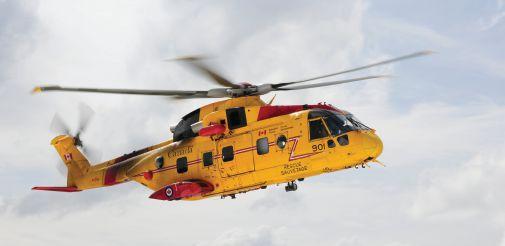
Since its introduction into service in 2002, the CH-149 Cormorant has successfully carried out a number of SAR missions in Canada with its challenging weather conditions.
strength and ability of the AW101 helicopter to meet the country’s primary rotary wing search-and-rescue requirements for Royal Canadian Air Force squadrons.
Leonardo, together with
Team Cormorant, will continue working with the Government of Canada to conclude an Options Analysis and finalize the requirements for the CH-149 CMLU and fleet augmentation, simulation and
training program. Based on the AW101-612 standard, Leonardo and Team Cormorant will provide a low-risk plan to upgrade, enhance and address obsolescence, as well augment the fleet to return the Cormorant to all four RCAF Main Operating Bases.
Over the past two years, support from Leonardo, IMP and GE Canada, has helped the Government of Canada achieve significant reduction in cost of operating the current Cormorant fleet, explains Leonardo. The CH-149 CMLU and augmentation will position the rotary wing SAR fleet for further cost reductions and extend life of the fleet to 2040 and beyond.




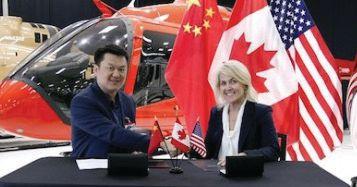
Bell Helicopter in early June delivered the first three Bell 505 Jet Ranger X helicopters destined for the Chinese market during a ceremony held at Bell’s facility in Mirabel, Quebec. These are the first three aircraft of 110 ordered in 2017 by Reignwood International Investment Group Company Ltd., launch operator and exclusive reseller in China for the 505. This first delivery follows the recent certification of the Bell 505 by the Civil Aviation Administration of China.
The Bell 505 Jet Ranger X is a five-seat, single-engine, turbine helicopter. It is the first helicopter in its class equipped with the Garmin G1000H Integrated Avionics Suite, described as providing pilots critical flight information at a glance to maximize
situational awareness. Pilot workload is further reduced, explains Bell, by the Turbomeca Arrius 2R engine with dual channel Full Authority Digital Engine Control (FADEC).
Bell also recently completed its 100th delivery of the Bell 505 Jet Ranger X to Hunt
Companies for corporate travel. Bell revealed its first customer delivery for the 505 Jet Ranger X at Heli-Expo 2017. Bell explains 505 customer deliveries are taking place around the world from Mexico to Poland and Czech Republic to New Zealand.
More than a month ago, DART’s new firefighting bucket – its first such entry into this sector – was delivered to Guardian Helicopters for a second phase of testing. DART states this testing phase exceeded expectations as its team of engineers put the bucket through a variety of rugged flight conditions.
Testing included functionality checks in damaged conditions, in-flight stability assessments, simulated bucket maneuvers and a large number of drops in forward flight and banked turns. As the bucket flew at speed, the accuracy of the drops were also assessed. Phillip DiFiore, president of Guardian Helicopters, said, “Our test pilot was impressed that even with the removal of parts to try and disable the bucket, it continued to be stable in flight, had no issues picking

up and dumping water as before.” The full menu of inhouse tests for the new bucket included: Operability testing, working environment testing, component structural testing, endurance vibration testing, and control head cycle testing.
DART’s firefighting bucket was introduced at the end of February, when only a mock-up of the 320-gallon bucket had
been built. Multiple prototypes were then tested at DART’s San Diego facility, which includes testing pools and fabric tooling that have been used for DART flotation systems.
In late June, production of the bucket began to fulfill what DART describes as a strong order backlog. The next available bucket delivery is scheduled for August 2018.
Bell Boeing Joint Program Office based in Amarillo, Texas, has been awarded a variant contract for US$4.2 billion in regard to a previously awarded V-22 tiltrotor aircraft acquisition. This contract provides for the manufacture and delivery of 39 CMV22B aircraft for the U.S. Navy; 14 MV-22B aircraft for the Marine Corps; one CV-22B for the Air Force; and four MV-22B aircraft for the government of Japan.
“This multiyear production contract provides program production stability through at least 2024,” said Chris Gehler, Bell VP for the V-22 program, noting the versatility of the new platform. The U.S. Navy will use its new CMV-22B for transporting personnel and cargo from shore to aircraft carriers, eventually replacing the C-2 Greyhound, which has been in service since the mid-1960s.
“By combining aircraft for three services and a key U.S. ally into one multiyear order, the U.S. Navy gets more capability for its procurement dollar,” said Kristin Houston, VP, Boeing Tiltrotor Programs, and director, Bell Boeing V-22 program.
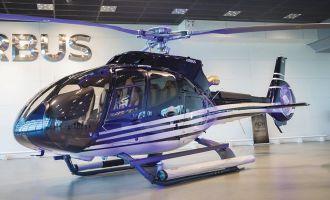
After launching its new entity Airbus Corporate Helicopters (ACH) in mid2017, as a new brand for high-end corporate and VIP helicopters, Airbus made its first delivery and public display of an aircraft in late May at EBACE in Geneva. The ACH130 helicopter is described by the company as a high-quality yet lightweight completion, suitable for high intensity flights and transport in extreme comfort.
Airbus continues to explain the aircraft was delivered in the racing-inspired,
The Royal Canadian Air Force team of search and rescue helicopter Rescue 901, based at CFB Gander, won the 2018 Cormorant Trophy for the rescue of five crewmen forced to abandon a fishing vessel 250 km offshore in fierce weather and rough seas. The Cormorant Trophy was commissioned by Leonardo (formerly AgustaWestland) in 2002 as an award to be presented annually to a Canadian civilian, government or military helicopter crew performing the most demanding helicopter rescue of the year.
The compromised boat was 250 km offshore in 10-metre-high waves and facing wind gusts of more than 110 km per hour.
The Rescue 901 SAR crew stripped their AW101 Cormorant helicopter of nonessential equipment to maximize fuel and the amount of time they could stay on the rescue scene. As the crew arrived on the scene, explains Leonardo, they saw the fishing vessel being tossed in different directions at the mercy of the sea. Multiple obstacles on the ship, such as fishing equipment, as well as sea ice, meant changing the original plan to lower a rescue hoist to pick up the fisherman. Instead, the fishermen would have to jump into the freezing water and be picked up one by one.
This year's Cormorant Trophy recipients from 103 Squadron at CFB Gander include: Major Jim Pinhorn, aircraft commander; Captain Nicole Lively; First Officer, Master Corporal Sean O’Callaghan; Flight Engineer, Sergeant Damien Robison; Search and Rescue Technician (SARTech) Lead, Master Corporal Anthony Bullen, SARTech Member.
in-house Stylence by ACH configuration. Acquired by an unnamed customer, the ACH130 will be operated by Monacair.
“The ACH130 combines unique passengerfocused design, exceptional single-engine performance and first class quality and comfort, making it very popular with private customers worldwide and a favourite of world-leading VIP and charter operator, Monacair, who operate a total fleet of eight ACH130,” said Frederic Lemos, who leads ACH.

“How is your TIME Spent?”


Aviation in Cannada a is becoming g harder and more complex x with new requiremeents s coming from the regulator on n a continuing bases. The m mandate of hav a ing g a Safety Management Systeems, SMSS, for
705 carriers
604 Business and Commercial Aviation and Airports
Even if you are a simple Aircraft Maintenance Organizationn, AM A O you u are required to have a Quality Assurance e System, QA, wh w ich is component 5 of the SMS. Even the smaller enterrprises are required e to ha h ve “Operationaal l Control,” which is in n reality is a quasi SMS. Don’t take on this burdeen alone You can have a team of experts with over 20 years r experience dealing with SMS, QA and Reg e ulatory requirements DTI Training was s the facilitators to Transport Canada’s Safet e y inspector cadre for over 5 yeearrs. Teachhiing SMS/QA and d facilitating Trannsport C Canada’s own Surveillance Proccedures Traaining workshops to over 10000 0 Transport Canada employees. “HHannds-on” work k with the U.S. DoD, NAASAA’s Safety & Mi M ssion Assurance Pr P o ogram, and Transpoort Canada give DTI a u uniique combinati t on of resources and knowlledge unmatched d in the Aviation

sponso s red content
business DTI has wor o keed d with over 100 Aviation enterprrisses e in the U United States, Canada, Korea and t the Caaribbean with ma m ny references avaiilable.
What we can provide:
• Approved manual crrea e tion and simpli l fication,

• (COM, , SM S S Manual, FOQA Manuals, MCCM, MPM P .etc.)
• Correcctive v Acttion n Plan a Development
• De D veloping an n Effective SMS and QA in your company
• Pre-As A sessment and Pre-PVI Audits
• Accident Investigati t on
• Compliance Auditin i g
• Procedure and Process creation and control
• In House customized Training for your employees
DTI Also offers Public Workshops, Free Youtube Channel, SMS Blog and consulting. dtiquality.com/workshops
YouTube: dti training - dtitraining blogspot.com
dtiatlanta.com 1-866-870-5490 dtaboada@dtiatlanta.com



Depending on the size of your business, scope of services, number of bases in operation, and available resources, managing an efficient stores room and tracking inventory can be somewhat of a challenge. Regardless of business size and stock on hand, however, if you are not accurately maintaining proper inventory control, you are negatively impacting the company’s bottom line.
To maximize profits, it is crucial to monitor stock levels and comply with industry best practices for managing inventory effectively. This will ensure you are able to carry acceptable stock counts without having to face running out of inventory or having too much stock on hand. Both of these scenarios can be significant burdens to any operation. To assist you with better managing your stores room and improving your supply chain management, the following six key tips are largely based on experience and knowledge gained at WinAir. When applied correctly, these six tips can save countless work hours, preserve capital and enhance business efficiencies.
To ensure parts within a stores room are easily identified and located during busy times, it is imperative for the location of parts to be clearly defined on the parts label when received. A recommended method to use is a 6-code bin-location system consisting of: Building, Room, Row, Section, Shelf and Box.
Saving countless work hours and substantial capital investment
Another key element to managing a stores room more effectively is using a batch reference field. This field can be populated as consumable batches get split apart, which makes tracing back to the original Vendor Lot number a simple task. It can be vital for an operation to easily ascertain the original vendor, for example, if there is a recall on parts. A recall on defective washers could turn out to be a nightmare for a business that does not utilize a batch reference field. It would be horrible and costly to ground an aircraft (or multiples) because you do not know if the parts issued originated from the recall. Moreover, all suspected washers would have to be replaced.
Software again can be leveraged to automatically inform an operator which batches were received under a particular recall notice, along with where those parts have been used.
In order to run a smooth stores room and keep the accuracy of stock on hand, no parts should ever leave the room without a listed job that they were used on, along with corresponding details. This practice of real-time data processing benefits not only the stores room when issuing parts, but can also extend to other activities like receiving, shipping, returns, and so on.
It is essential for an operation to easily ascertain the original vendor, for example, if there is a recall.
It is better to use an alpha-based system, as opposed to a numerical one, since the former provides you with more options per character than the latter (26 letters versus 10 numbers). A code like AAAEFC, for example, would describe to a stores clerk that the part is located in Building A, Room A, Row A, Section E, Shelf F and Box C. If all stock is to always be housed in a main building and not at any other base, then this system can be applied using a 4-code structure, by using the titles Row, Section, Shelf and Box. Available software can assign parts by master locations, meaning it predefines where to put parts upon receiving, not the other way around.
Stores departments can leverage a ‘No task Card, No Parts’ mentality. This means that if there is no job card to work with, then there is no reason to request the parts in the first place. A strict policy like this may seem rigid and overbearing, particularly to those technicians who follow their own set of procedures out of habit, but, in reality, one of your highest expenses is carrying stock. So when stock walks out of the room and cannot be traced, you end up with inaccurate counts, causing shortages or overages. This can be a tremendous burden for your organization. When all batches are issued to a task, there is always the ability to trace what went where and to whom. This will ensure that your accuracy stays at a high level.
When managing stores rooms, especially those with various parts for various aircraft types, it is important that the principles of Min/Max are implemented. This is key to guaranteeing that you have adequate stock levels at all times, without exceeding what is economically
feasible. Setting these values will benefit stores rooms of all sizes, and not just those of larger organizations.
Individual parts can all have a master Min/Max level set, but this can be taken to another level, as software also allows for the setting of an economic value. When factored into the equation for restocking (how much do I need to order), you ideally want a number that complies with your minimum required stock level, while also not surpassing an economic level of your choosing. A good system should be able to recommend a reorder quantity without over-purchasing – as defined by the Max level.
Min/Max values in any setup should be adhered to as closely as possible. Similarly, reporting should be done on a weekly basis to ensure that there will always be enough stock on hand. After all, you do not want to end up in a situation where technicians are unable to complete work tasks because someone forgot to order grease.
Inventory counts are arguably the most despised part of any stores clerk’s job, but such counts are also one of the most critical functions they perform. In today’s aviation industry it is not uncommon for operators to perform counts on a biannual or, in some cases, quarterly basis. Simply put, regular stock counts ensure a more accurate current inventory.
This goes hand-in-hand with the first four principles, as they all lead up to the inventory count. As time consuming as it may seem, the more frequently a count is performed, the more accurate your inventory. It can also result in quicker stock counts and bigger cost savings.
I recommend that you take inventory one step further and facilitate cyclical stock counts. These types of counts occur all year long, simply by counting a few boxes a day. Quarterly and biannual stock counts are a real distraction to your team, because they take much longer to complete. This will cost a business more in terms of labour hours, as counts are often completed outside of normal work hours. In the grand scheme of things, it is easy to count each bin multiple times a year, without having to shut down the entire inventory room and make the exercise a big event.
Another area likely requiring more attention and consideration in your stores room is the quarantine area. Depending on the size of the operation, this can range from a single locked cage to an entire dedicated room
with its own shelving system. It is critical to conduct consistent reviews of what is in your quarantine area, and actioning anything required on an ongoing basis (repairs, scrapping parts, sales, etc.). Addressing these issues in a timely fashion can save an organization on costs – not only from AOG situations, but also from having to constantly purchase parts (repairs can often be less expensive and fulfill the needs of the operation).
A regular process of review and actioning
allows users to always stay on top of the items within the quarantine area. A good system should also tag any items waiting to be actioned. Then the item is dispersed to the correct area by actioning and recording. This ability to manage your inventory and quarantine allows for greater overall organization of what is in your system and where.
Michael Perrotta is a subject matter expert at WinAir, an industry leading aviation management software provider. info@winair.ca.

COMPILED BY JON ROBINSON
In the annual Top 20 Under 40 program, sponsored by Seneca School of Aviation and organized by Wings and Helicopters, 20 inspiring young leaders are recognized for actively influencing the direction of Canadian aviation and aerospace. Presented here alphabetically, this diverse group of exceptional leaders represent industry innovation, corporate development, entrepreneurial leadership and pure passion for the vast possibilities of aviation and aerospace.
These 20 leaders, who are all under the age of 40 as of December 31, 2018, were selected by our editorial team following a nomination process over several months and through industry outreach to find individual achievement and commitment to the communities and companies they help lead.

Aviation Sales Lead, Canada, World Fuel Services
Montreal, QC
Bonnie Bhalla, age 32, joined World Fuel Services Corp. as a sales executive in late 2016, after that company acquired the aviation fuels business of Imperial Oil in Canada. The Imperial acquisition made World Fuel Services (WFS) an ever stronger player in Canada’s aviation industry. World Fuel manages more than 7.3 billion gallons annually in the worldwide aviation sector, its largest revenue-generator over land and marine operations, which equates to dealing with some 3,000 airports, 15,000 customers and more than 3.2 million annual transactions.
Beginning with Imperial, Bhalla has been in the aviation fuels business for more than 10 years. In July 2017, she was named as WFS's aviation sales lead for Canada. “With World Fuel's acquisition of Imperial Oil's assets in Canada, Bonnie has been a critical link insuring the needs of the Canadian marketplace are met as the business undergoes a major transformation,” explains David Munger of WFS.

“Without her efforts many airlines, FBOs, and airports would have seen a much larger negative impact during the transition. We have placed Bonnie in a leadership role due to her natural understanding of the marketplace and her ability to motivate and connect with both customers and employees.”

ROBERT BRUNNENMEIR
Founder and President, Flightpath Charter Airways Breslau, ON
Robert Brunnenmeir, age 36, started Flightpath Charter Airways with a Piper Navajo back in 2006 at the Region of Waterloo International Airport (YKF), in Breslau, Ontario. Today, Flightpath has expanded to hold more than 15 different private jets and turboprops with bases not only in Breslau (Waterloo), but also Charlottetown (YYG), Montreal (YUL), Barrie (YLS), Toronto (YYZ) and Winnipeg (YWG).
Flightpath now operates a variety aircraft to meet diverse client needs, such as a Beachcraft King Air 200, Bell 206 Long Ranger, Embraer Phenom 100 and 300, Cessna Citation CJ3, Bombardier Learjet 45, Embraer Legacy 450, Bombardier Challenger 604, and Bombardier Global Express types.
“Rob insures his staff has the tools they need to succeed and he would never ask us to do anything that he wouldn’t do himself. He has demonstrated this on many occasions,” explains Ryan Collins of Flightpath. “He will personally fly flights to help out when it gets busy or even to give a deserving employee a day off. You will never see this man running his company from the sidelines. I can say he truly leads by example.”
A graduate of Western University’s Commercial Aviation Management program, Brunnenmeir gained his first professional experience working in the banking industry for three years before becoming a fight instructor at the Waterloo Wellington Flight


Manager, Cargo Customer Relations, Air Canada
Toronto, ON Sebastian Cosgrove, age 31, has developed an impactful career with Air Canada in seven short years. In his current role, Cosgrove formed the Cargo Customer Relations department to resolve customer issues, globally. He developed the policies, procedures and compensation framework for the department. Cosgrove also manages all media escalations for Cargo, including social media and traditional media outlets. This past year, he organized hurricane relief efforts at Cargo, which delivered more than 8,000 kilograms of aid to impacted regions. In addition to this, he organized an company event where employees and GlobalMedic worked together to create humanitarian aid kits, which would serve more than 1,000 families.
Centre. A year later, he founded Flightpath to combine his passions for business and aviation.
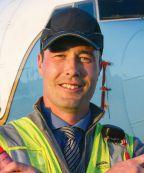
Marshaller and Chief Union Shop Steward, Signature Flight Support Mississauga, ON
Matthew Cook, age 36, as a marshaller with Signature Flight Support’s location at the Toronto Pearson International Airport, is responsible for directing aircraft traffic on one of the company’s busiest ramps. As Markus Brucks of Signature explains, “Matt has managed to turn the faceless job of a marshaller into the role of a customer service ambassador, despite being only one member of a large service team. Wearing his trademark shirt and tie, no matter what the weather conditions are, his presence simply says first class.”
Brucks continues to explain how Cook utilizes his nine years of experience with Signature: “His innovative single point of contact approach and willingness to tackle any of the multitude of issues that may arise from aircraft, crew, weather conditions and passengers have made him an indispensable asset to the everyday operations at Signature.” Cook also trains new marshallers at Signature Toronto.
Cook was elected as chief union shop steward, Local 2413, in January of 2017. As a result, he became an integral part of the bigger operations picture at Signature Toronto.
His interest in aviation began at a young age, receiving his recreational solo pilot permit at age 14. Today, Cook is the youngest lifetime sustaining member of the Brampton Flying Club where he bases his Cessna 172.
Cosgrove also launched Air Canada’s internal social network, Yammer, in 2012 for In-Flight Service (a user group of around 7,000). The pilot project was then rolled out to the rest of the organization’s 30,000 employees. This internal social platform won Best Social Intranet of 2012 from Ragan Communications.
Cosgrove began his career at Air Canada as a temporary flight attendant. Throughout the summer, he would fly for the company as a trilingual (English, French and Italian) flight attendant. In the fall, he would return to school to complete his B.A and B.Ed degrees at Trent University and Queen’s University, respectively. He is an active volunteer on Trent University’s Alumni Council, where he was recently elected as VP, communication and membership services.
With these accomplishments and more, Cosgrove received the 30th edition of Air Canada’s Award of Excellence, the airline’s highest recognition and a peer-driven program. He was selected for the award along with 57 others out of the company’s 30,000 employees.

VP, Apron Fuel Services
Dorval, QC
Tyler Hunt, age 33, has played a major role at Apron Fuel Services, enabling its growth within the aviation industry over the past nine years. His involvement includes supplying de-icing fluid to many key Canadian airports such as Toronto Pearson, Kelowna, Hamilton, and Whitehorse.
Hunt is also responsible for ensuring all major airports maintain a supply of ground fuel, in addition to supplying jet fuel to airlines and FBOs from coast to coast. “He has continued to meet all our clients ever changing needs while developing a positive work environment for his colleague, clients and suppliers,” explains a colleague. “AFS benefits from his ability to suggest creative, out-of-thebox ways to solve our clients and our supplier’s problems, while keeping a clear focus on the task at hand.”
A national supplier known for its close relationships with major oil refineries, fuel brokers and transportation providers, Apron appointed Hunt as VP in August 2017, after he spent more than two years as the company’s director of business development. He built an
understanding of the industry serving as a sales manager for five years when he first joined Apron, before becoming GM for a year. Hunt holds a Bachelor Science degree from McGill University, where he was a member of the varsity ski and sailing teams.
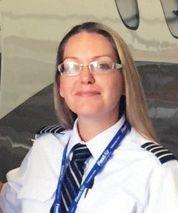
Chief Pilot, Fast Air Winnipeg, MB
Cecily Kennedy, age 37, has been in Canada’s aviation industry since 2002. After becoming an assistant chief pilot in 2013, she moved to Fast Air in 2016 to serve as its chief pilot. Founded in 1995, Fast Air today holds Manitoba’s largest charter fleet of turboprop, rotary wing and business jet aircraft (20 aircraft in total) operating out of a private terminal at the Winnipeg Richardson International Airport. The company also provides expertise in sales, avionics, maintenance, aircraft management, charter services and an FBO location.
Kennedy is current on the Hawker 800, King Air 200 and 350 aircraft, while also providing expertise as an Approved Check Pilot. In this capacity, and serving as chief pilot, she ensures that the training standards for up to 40 pilots is managed and maintained to meet Fast Air’s standards. “This position is especially challenging with the high turnover of flight crews at this time. In addition to this, she has gained the respect of the flight crews for her ability to get things done on their behalf,” explains Dennis Lyons of Fast Air.
Kennedy recently became involved with the Elevate Aviation program, based out of Edmonton, AB, to help provide opportunities for young woman in Canadian aviation. She has already hosted one group of aspiring aviation youth from Manitoba at Fast Air, showing them firsthand what career opportunities are available. In May 2018, Elevate received $426,000 in funding from the Federal government to expand its program across the country.

NOLAN KIELY
Founder, Crimson Air Services
London, ON Nolan Kiely, age 33, after graduating from the Commercial Aviation Management program at the University of Western Ontario, gained key industry experience working in operations for Sunwing Airlines,
Image Air Charter and Flightexec.
Moving back to the London area in 2016, Kiely joined New United Goderich (NUG) to develop an entirely new program to promote NUG’s multiple initiatives to the global marketplace. This program includes initiatives like obtaining a Special Flight Operations Certificate, introducing UAVs onsite, obtaining panoramic footage of NUGs facility and work, and expanding business relationships.
Kiely is now directing efforts toward his startup enterprise called Crimson Air Services. The company is structured to fill what he sees as a gap in the market for a locally based aircraft charter brokerage and to overcome what he describes as a disconnect between private-jet clients and the companies servicing them. Crimson Air is structured to provide custom-tailored private jet travel services to clients.
MICHAEL KLEYWEGT
CEO and Lead Developer, AirSuite Thunder Bay, ON Michael Kleywegt, age 38, is the founder of AirSuite and lead developer of its flagship product, Cirro, described as flight management software to meet the needs of an entire aviation operation. Over AirSuite’s past two quarters, Cirro was integrated onto 280 civil and military aircraft, as the company secured 35 worldwide clients.
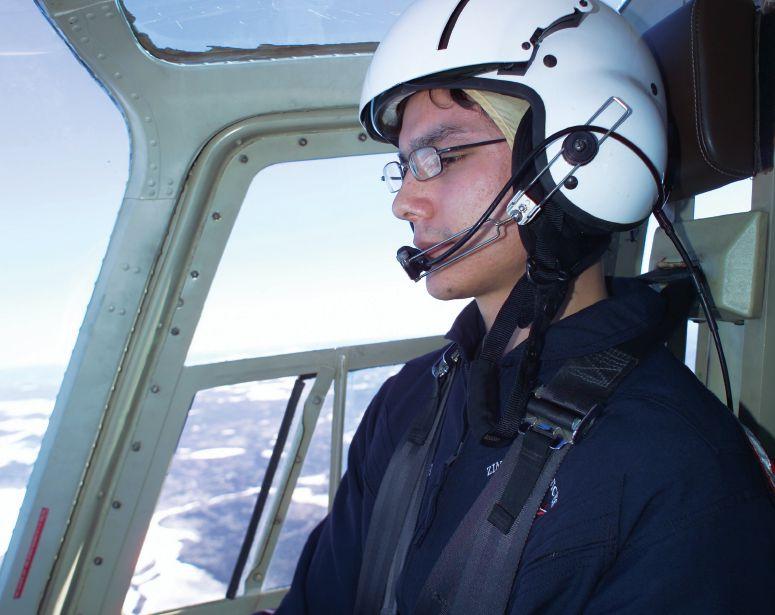
Kleywegt, a First Nations person and father of five, is also a helicopter pilot with 5,000 hours of flight experience. A selftaught software developer, he began developing these skills to build an in-house solution for a local helicopter company. After an arduous Transport Canada audit, he explains, the company decided it needed a better solution to streamline the auditing process.
After Transport Canada’s positive response to the program he built during a subsequent audit, Kleywegt was motivated to brand and sell the Cirro product to the wider market in Canada. AirSuite continues to work with that original Helicopter client and has since become a leading provider of flight management software in Canada’s commercial rotary market. AirSuite has also expanded into the small- to-medium-sized fixed-wing market, as well as air cargo, air medical, rotor-wing aviation schools and the business-jet market.
AirSuite is now an active member of HAC, HAI and an authorized distributor of NAV Canada charts. The company employs a staff of eight and its developers are continually working on software improvements. The team is now working to break into the export market and reach clients in the United States
and Europe. The newest development feature in Cirro is the roll out of a complete Safety Management System, which is fully customizable and embedded into Cirro.
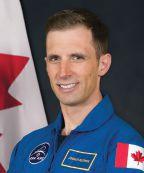
JOSHUA KUTRYK
Astronaut, Canadian Space Agency
Fort Saskatchewan, AB
Lieutenant-Colonel Joshua Kutryk, age 36, was raised on a cattle farm in eastern Alberta and in July 2017 became one of two recruits selected by the Canadian Space Agency to become an astronaut, only the country’s fourth such recruitment process that happens approximately every seven years.
Kutryk previously served as a test pilot, fighter pilot and engineer in the Royal Canadian Air Force. He holds a bachelor's degree in mechanical engineering; master's in space studies; master's in flight test engineering; and master's in defence studies. His certifications include airline transport pilot licence, fixed wing experimental test pilot, fighter pilot, civilian and military instructor pilot. He has more than 2,800 hours of flying experience on more than 25 aircraft types.
Prior to joining the Canadian space program, Kutryk worked as an experimental test pilot and a fighter pilot in Cold Lake, AB, where he led the unit responsible for the operational flight-testing of fighter aircraft in Canada. As the officer in charge of fighter evaluations, he was responsible for safely conducting the initial airborne evaluations of new technologies and systems on the CF-18. He worked with a team of aerospace engineers, analysts, aircraft technicians and program managers in order to make the CF-18 safer and more effective in its mission.
LCol Kutryk has worked on a variety of technical flight test projects, ranging from out-of-control flying to automated navigation and flight control systems to weapon guidance and control. In addition, he has worked extensively as an instructor, teaching other pilots how to fly the CF-18.
In 2012, Kutryk received the prestigious Liethen-Tittle Award from the United States Air Force for being its top test pilot graduate, an award also presented to Colonel Chris Hadfield in 1988. From 2007 to 2011, LCol Kutryk served as a CF-18 fighter pilot with 425 Tactical Fighter Squadron in Bagotville, QC. During that time he flew missions in support of NATO, UN and NORAD commitments around the world. He has been deployed in both Libya and Afghanistan.

STÉPHANIE LAFOREST
Senior Director, Lead of Integration Management Office, Airbus and CSeries Joint Venture, Bombardier
Montreal, QC Stéphanie Laforest, age 35, was responsible for the integration of the Airbus-CSeries joint venture. The transaction – one of the largest in North American aviation – closed earlier than first planned on June 7, 2018 (officially July 1, 2018). As a result, Airbus acquires a majority stake in the C Series Aircraft Limited Partnership (CSALP), which expects to capture a large share of the projected need for more than 6,000 100- to 150-seat airliners over the next 20 years.
Laforest joined Bombardier in 2008 as part of the strategy and product development team for the chief engineer of Bombardier Aerospace, contributing to the company’s aircraft development. She was promoted to marketing account manager in 2009, leading the marketing activities of the Africa and Middle East regions within the Commercial Aircraft business unit (CSeries, Q400, and CRJ). In 2010, she was transferred to Berlin, Germany, to join the Corporate Audit and Risk Management unit of Bombardier, focused on mitigating business risks in locations like China, Romania, Hungary, U.S., France and the UK.
In 2012, Laforest became manager, strategy and business development for Bombardier's Locomotives division based in Zurich, Switzerland, and then promoted to senior director, strategy and business development in November 2013. For this role, she returned to Berlin and was responsible for the strategic orientation, business development and alliances with key partners and also helping to incubate a new product concept. Laforest returned to Bombardier's corporate office in Montreal in late 2016, working on various strategic projects in close collaboration with Bombardier’s CEO and the executive committee.
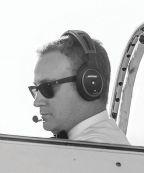
CARTER MANN Manager of Government Affairs & Communications, Canadian Owners & Pilots Association
Ottawa, ON Carter Mann, age 30, is a third-generation pilot who has been a member of the Canadian Owners & Pilots Association (COPA) before starting to fly. He joined COPA’s staff in January 2017, after



Your safety management system should be … well, manageable. Cirro’s SMS is built for all operations with the aim of making it easy for pilots and operators to proactively identify, assess, and control safety-related hazards. See for yourself at air-suite.com



growing his career in Ottawa and Vancouver in various communications roles for governmental and political offices, including his recent work for the Premier of BC (2016). Mann previously served as press secretary for the Department of National Defence (spring 2013) and the Canada Revenue Agency (2013-2015), in addition to assisting the Minister of Public Safety Canada from 2011 to 2013.
After graduating from the University of British Columbia with a bachelor’s degree in International Affairs, he interned with the Office of the Minister of State (Transport), before his first aviation job as a linecrew technician for Signature Flight Support (Esso Avitat), at the Vancouver International Airport (YVR), where he stayed for six years.
As part of COPA’s partnership with Transport Canada in the General Aviation (GA) Safety Campaign, Mann now plays a key role in the planning of new initiatives. His mandate is to improve safety across GA without imposing harsh, costly new regulations on pilots and aircraft owners. Mann also works closely with organizations like NAV Canada, provincial aviation councils, and with local COPA chapters. He led initiatives like COPA’s Members Choice Awards to rejuvenate membership and GA interest. His revamping of COPA’s flight school/student membership program has seen participation grow from four to almost 200 in one year. He is also refreshing COPA's brand, logo and professional position.
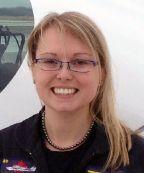
Assistant Chief Flying Instructor, KF Aerospace Defense Programs
Southport, MB
Leah Marcoux, age 30, has spent nine years building her aviation career with KF Aerospace, currently serving as assistant chief flying instructor for Grob Operations within the organization’s Defense Programs division. She helps manage the flight training for approximately 200 student pilots and navigators annually for the Royal Canadian Air Force (RCAF).
Marcoux joined KF Aerospace’s instructor team in 2009 and was promoted to assistant chief flying instructor in 2011. Her position is only one of two in Canada, where she manages a staff of civilian flight instructors and military students, while working in concert with the CFI and various DND staff members. She manages to maintain her civilian
qualifications in addition to her RCAF supervisory training duties. She now instructs students on the Grob 120, which is fully IFR and aerobatic certified. As a Class I instructor, she helps students to often realize their dreams by graduating as winged military pilots with the RCAF, ready to be deployed around the world. As a former air cadet, Marcoux gives back to the cadet program by serving as a board member, helping to select cadets for power flying scholarships.
The training aspect of KF Aerospace took on even more importance in May 2018, when it aligned with CAE to form SkyAlyne Canada, a 50/50 joint venture that will focus on developing military pilot and aircrew training in Canada. KF Aerospace will continue to focus on flight training and support, as SkyAlyne focuses on synergies with CAE's contributions. The move gives KF Aerospace more power to provide RCAF with worldclass training, which becomes critical as the Canadian government works toward determining its next generation fighter jet.

Civil Aviation Safety Inspector, Flight Operations, Transport Canada, Prairie & Northern Region Winnipeg, MB Kristen McCallum, age 36, began her aviation career as a reservations agent in 2004 at Skyward Aviation in Thompson, MB. She then became a Metro first officer with Perimeter Aviation in 2006 and after two years became captain. In March 2009, she successfully landed a Metro II “gear-up” in Winnipeg, MB, after the landing gear failed to extend. McCallum and her fellow crew member were credited for safely landing the aircraft, which resulted in no injuries to passengers or crew.
From 2011 to 2014, McCallum progressed through the flight line in the Dash 8, as she also focused on a training role to develop operationally safe and effective flight crew. In 2014, she joined Transport Canada as a civil aviation inspector, flight operations. In this role she is responsible for: Aviation safety oversight of, and service activities for, individuals, enterprises, organizations, and Minister’s delegates. McCallum is also responsible for verifying, in the context of flight operations, compliance with the Canadian Aviation Regulations and she promotes proactive enterprise-wide Safety Management Systems for the safety of civil aviation operations.
Through her work at Transport Canada,
McCallum has led several planned surveillance activities of air operators.

SCOTT MCFADZEAN CEO, Diamond Aircraft Industries London, ON Scott McFadzean, age 37, has spent the past 16 years of his career with the Canadian operation of Diamond Aircraft Industries (DAI), shortly before graduating from the University of Western Ontario’s Bachelor of Administrative and Commercial Studies/ Commercial Aviation Management Program in 2003.
Diamond, established by Austrian aircraft designer Wolf Hoffmann in 1981, sold 60 per cent share of its Diamond Aircraft Canada operation in late-2016 to the Wanfeng Aviation, part of the Wanfeng Auto Holding Group. DAI today is noted as the third largest manufacturer of aircraft for the general aviation sector, with manufacturing facilities in London, Austria and joint venture production lines in other nations like China. In May 2018, DAI, with the lead of McFadzean, made its largest fleet sale in a 50 aircraft order (DA40NG and DA42-V) by Republics Airways.
McFadzean’s first position with Diamond Aircraft Canada was as supply chain manager (2002-2005), before being promoted to continuous improvement manager (20052006), where focused on improving Diamond’s manufacturing efficiency. In 2006, McFadzean was promoted again to serve as project manager to the president (2006-2007), working closely with company leader Peter Maurer. McFadzean soon took on the additional responsibilities as acting director, sales and marketing (20062007), and in 2008 accepted a new challenge as director of operations (2008-2011) for Diamond Aircraft.
In 2011, Diamond Aircraft sales exceeded $100 million annually for the first time in the company’s history and production increased to one aircraft per day. During this time, McFadzean took on the additional workload of completing his post-graduate degree. He graduated from Georgetown University in Washington, DC, and ESADE School of Business in Barcelona, Spain, with a master's. In 2011, McFadzean accepted the role of VP of operations (2011-2013), then executive VP (2013-2016) and chief operating officer (2017). In December of 2017, McFadzean succeeded Peter Maurer as chief executive officer of DAI.

Turbine Design, Pratt & Whitney Canada
Montreal, QC
Niloofar Moradi, age 31, earned her undergraduate degree in mechanical engineering from Concordia University in 2010 and launched her career at Rolls Royce Canada in the energy sector. Drawn to aviation and aerospace, Moradi later joined Pratt & Whitney Canada (P&WC) as an aerodynamicist, where she was involved in all aspects of turbine aerodynamics, from research and airfoil design to engine development and production support.
In 2016, concurrent with her design work at P&WC, Moradi earned her master’s degree from École de Technologie Supérieure as a significant player in the creation of a multi-disciplinary design optimization system. She was responsible for creating a rapid three-dimensional airfoil generator program that is now an integral part of this overall design system.
Moradi has done design work for several P&WC engines, including the PT6C-67A,
powering the AW609 Tiltrotor. She currently works in the Turbine Mechanical Design department, where she designs and integrates turbine components.
Moradi, also focused on encouraging and creating new opportunities for the next generation of engineers, is a member of the Industrial Advisory Board for the MIA Engineering Department of Concordia University. She works in conjunction with faculty members to continuously adapt engineering education according to industry needs. She is also a member of the Aerospace sub-committee of the Palais des Congrès de Montréal, helping to organizing major aerospace events in Montreal such as the 2015 ASME Turbo Expo and, most recently, the 2018 Global Power and Propulsion Society conference.
She has been involved with P&WC’s Women Leadership Committee since 2015, while also promoting charitable organizations such as Dress for Success, L’envol, and Operation Christmas Child. Moradi was recently named the 2018 Young Alumnus/ Alumna of the Year by Concordia University and received the 2018 Engineering Award from Elsie MacGill Northern Lights.



JEFF MUIR
Business
Development Manager,
WinAir London, ON Jeff Muir, age 36, oversees a team of sales, marketing and account management professionals at WinAir, which develops aviation management software with hundreds of installations at worldwide aviation organizations – from airlines and heli-ops to law enforcement agencies and oil suppliers. WinAir technology is designed to manage aircraft maintenance and inventory control.
Muir joined WinAir in 2009 as a business development representative and quickly began to develop his sales skills at client locations in Africa, North America and Europe. After focusing on the business-side of aviation maintenance, Muir worked to expand his understanding of consultative services, project planning, software and process implementation, and change management.
Today, he manages accounts for a range of global aviation industry subsets. He has been directly involved in the implementation



of new product installations and client upgrades at hundreds of aviation-specific organizations in more than 30 countries.
In 2017, Muir was promoted to his current managerial position at WinAir. In addition to setting group expectations, defining sales and marketing priorities, and establishing company goals, he is charged with generating new business opportunities.
General Manager, EASi Montreal Design Centre
Montreal, QC
Malak Sedra, age 39, spearheads EASi, which is part of the global recruiting giant Aerotek. He took on his current role in May 2017 with the goal of creating a culture change at the centre. Leveraging his aerospace design experience, Sedra works closely with business development teams to grow engagements like designing aircraft interiors and ducting or aero-derivatives gas turbines.
Sedra holds a bachelor’s degree in mechanical engineering, specializing in thermo-fluids and propulsion, as well as an executive MBA from John Molson School of
Business, and a PMP designation.
Working with companies like Pratt and Whitney Canada (P&WC), Goodrich and Triumph, Sedra is proficient in electrical hardware, engine certification, EMI, and fuel control design, among other skills. At P&WC, he was one of its youngest team leads responsible for the PT6C-67A, the power plant on the BA609 tilt rotor. He worked on almost all engine models at P&WC during his tenure and as a systems engineer focused on hydro-mechanical design within fuel systems and supported engine tests.
He was certified by Andrew’s Airforce base to be the systems engineer for tests on P&WC's Boeing 720, which included altitude testing at up to 40,000 feet. At P&WC, he then took on an aftermarket project management position before working with Goodrich as a program manager for its pump engine controls.
EASi was also attracted to Sedra because of his entrepreneurial mindset, having founded businesses like Sedracorp.com and Sedratech.com, which have been put on hold since taking leadership of EASi. He remains CEO of training platform e-SKY.ca.

Astronaut, Canadian Space Agency Calgary, AB
Dr. Jenni SideyGibbons, age 29, was one of two recruits selected in July 2017 by the Canadian Space Agency (CSA) to become an astronaut, only the country’s fourth such recruitment process. She relocated to Houston for a 2-year training program at Johnson Space Center as a part of NASA's new astronaut class.
Sidey-Gibbons holds an honours bachelor’s degree in mechanical engineering from McGill University (2011), where she conducted research on flame propagation in microgravity in collaboration with CSA and the National Research Council Flight Research Laboratory. She then moved to the UK to earn a Ph.D. focusing on combustion from the University of Cambridge (2015).
Her research at Cambridge was built around flames, how we use them, and how to stop them from emitting harmful pollutants. She worked on the development of lowemission combustors for gas turbine engines,







2018-04-24 10:35 AM
while also serving as assistant professor in Energy, Fluid Mechanics and Turbomachinery the program. Sidey-Gibbons is also the cofounder of the Cambridge chapter of Robogals, an organization that aims to empower young women in STEM. Through this work, she has taught programming to more than 3,000 young girls across the UK.

ALEX WELCH
Vice President, Route and Network Planning, InterVISTAS Consulting Vancouver, BC Alex Welch, age 35, began working with InterVISTAS 12 years ago and is now providing critical support to Canadian airline and airline clients with analytical route and network development. His consulting is also delivered in places like New Zealand, the Caribbean and Africa.
“Alex has brought innovative approaches to route and network development in Canada, not only using large data and global scope route and network development software, but recognizing their limitations and supplementing with unique contributions of
his own to tailor results to the realities of Canadian aviation,” explains Dr. Michael Tretheway, managing director of InterVISTAS. Several airports have realized new air services as a consequence of his marketing efforts, explains Tretheway, and carriers have been able to improve fleet utilization and market profitability.
In addition to his Masters in Economics from the University of British Columbia, Welch recently completed InterVISTAS' leadership development program though the TIAS School for Business and Society. His selection for the program marks him as a future corporate leader.
Welch is a frequent guest lecturer at the British Columbia Institute of Technology and currently sits on an advisor board for the Vancouver School of Economics at the University of British Columbia.

SOPHIA WELLS
Chief Flight Instructor, Edmonton Flying Club, and Director of Advocacy, Elevate Edmonton, AB Sophia Wells, age 31,
has been with the Edmonton Flying Club for nine years, including the past five as chief flight instructor. She has also worked with Elevate Aviation for the past three years as one of its first executives. In May 2018, Elevate received $426,000 in funding from the government's Support for Women's Economic Security program.
Wells is a graduate of the Mount Royal University's aviation program. She holds an airline transport pilot’s license and serves as a Transport Canada pilot examiner. She is also a Navajo captain for Morgan Construction and often works at North Cariboo Air in customer service and passenger screening.
At Elevate, Wells primarily works to encourage young women to join the industry. She leads the Elevate Mentorship program, training and connecting mentors from across the country with those who are looking for support and guidance. She has also been a key part of Elevate's fundraising calendar that promotes inspiring stories of women in of aviation and raises funds for both the Lois Hole Hospital for Women and the Elevate Aviation Bursary program that has raised more than $80,000.

Pre-assessment review from the team that taught the Regulator how to perform surveillance activity. The DTI team will audit your SMS and QA systems using the same approach that the regulatory would use. Any gaps or problems with your SMS will be discovered BEFORE the regulator finds them. Avoid costly regulatory actions while making your system stronger.
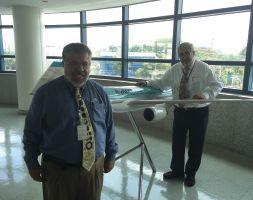
Dennis & Sol Taboada of DTI Training.
for a Workshop
dtitrainingcanada.ca/ workshops
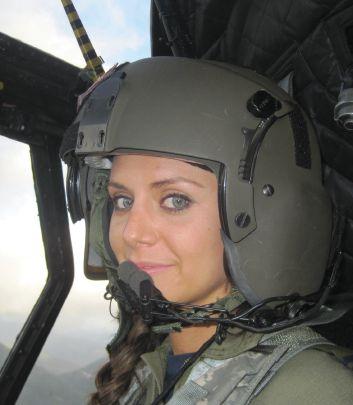
BY KENDRA KINCADE
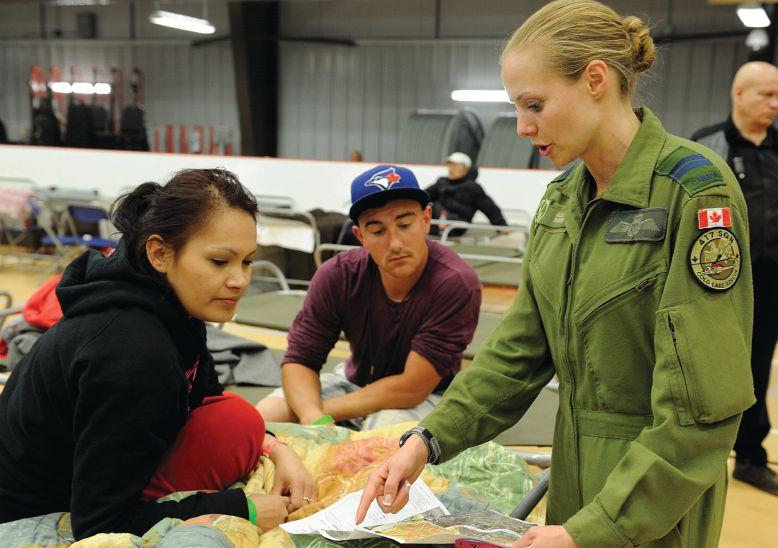
Every once in a while you meet someone who you think is really cool. And that’s what I thought shortly after meeting Alexia Hannam, a helicopter pilot with the Royal Canadian Air Force. I fully expected she would be a strong and intelligent woman, carrying traits befitting a military leader, but I was also quickly struck by her fun, friendly and passionate nature.
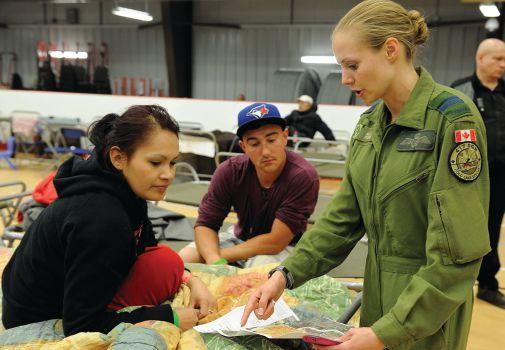
On August 4, 2017, Hannam assumed command of 417 Combat Support Helicopter Squadron, which at the time was in Kamloops, BC, for Operation Lentus after the province declared a state of emergency. A system of strong winds and lighting had ignited more than 220 wildfires in BC’s dry interior region. More than 45,000 people had been displaced by the wildfires in the first two weeks, including some 14,000 evacuations from Williams Lake and surrounding areas. It was the second time in little over a year that 417 had responded to a state of emergency after a devastating wildfire swept through Fort McMurray, AB, forcing upwards of 88,000 people from their homes.
It is a rare occurrence for a change in command to take place in the field, but with BC’s wildfires continuing to burn into early August 2017 it might have been several more weeks before 417 returned to their base at 4 Wing Cold Lake, which is Canada’s busiest fighter base. With more
than 10 base squadrons, 4 Wing hosts Canada’s world-class tactical fighter force training and deploys and supports fighter aircraft to fulfill the roles of Canada’s Air Force. 417 Squadron is a dedicated on base search and rescue unit primarily tasked to conduct rescue for 4 Wing’s fighter units, with a secondary role to augment national search and rescue capabilities.
The squadron holds three CH-146 Griffon tactical transport helicopters – in service since 1995 – and some 50 personnel. On that day in August, Major Hannam joined Major Lauri Darras, Commander of 444 Combat Support Squadron from 5 Wing Goose Bay, as the first two female officers to command Combat Support Squadrons in the Royal Canadian Air Force.
Hannam’s first memory of wanting to fly was from when she was five years old in kindergarten, hoping that if she ran fast enough up a hill in the schoolyard at recess that she just might take off high up into the sky. By grade three, her experiments in flight materialized into a crude self-made hang-glider. Neither effort worked out as planned, but it didn’t stop her from figuring out how to attain her dreams.
Major Hannam never thought about getting into the military at a young age, but she would not look back after realizing it was an
opportune and potentially rewarding path to becoming a pilot. She has now served in the military for 17 years. Hannam has moved around Canada during her training including five years in Ontario, one year in Quebec, and some time in Saskatchewan.
Seven years of her career were spent in Edmonton as a tactical helicopter pilot at 408 Squadron, from where she was deployed to Afghanistan to fly Chinooks, huge twin-engine, tandem-rotor, heavy-lift helicopters. She now has more than 40 combat missions under her belt and has spent the last three years in Cold Lake moving into the base’s critical search and rescue role, where you can be deployed at a moment’s notice.
When I asked what it is like to be a woman in the military, Hannam, without missing a beat, says, “I work with awesome women and awesome men. Because of women who have paved the way, I don’t feel like I have to prove myself all the time.”
‘‘ ’’

She then describes her deployment to Afghanistan as extremely rewarding, explaining how flying troops around meant keeping them off the roads, where there were a lot of improvised explosive devices, to keep them in a safer environment.
Now Hannam spends her time in Cold Lake, preparing the squadron and its modified B412 Griffons to rescue fighter pilots from ejection scenarios, or to respond to natural disasters, or search and rescue missions. She has also begun to mentor young women who are interested in aviation careers through Elevate Aviation.
“Find what you are interested in and do the research on it,” explains Hannam, when asked to share career advice. “It’s one thing to read articles, but another to meet someone and talk to someone who is really doing what you want to do.”
Kendra Kincade is founder of Elevate Aviation and an air traffic controller with NAV Canada.






ENHANCED CUSTOMER SERVICE
FASTER TURN TIMES INCREASED CAPABILITIES
For over a century, customers have relied on StandardAero and Vector Aerospace as the industry experts for operational efficiency, innovation and custom MRO solutions. Today, we’re one company – Bigger…Better…and Bolder – committed to providing best-in-class rotary-wing support for our customers! Contact us to see how we can help you.
Engines
• GE T700/CT7
• Pratt & Whitney Canada PT6T
• Rolls-Royce M250 and RR300
• Safran Arriel 1 and 2
Airframes
• Airbus AS350/EC130 series and AS332/H225 Super Puma
• Sikorsky S-92, S-76 and S-61
www.standardaero.com/heli helicopters@standardaero.com +1.204.318.7544
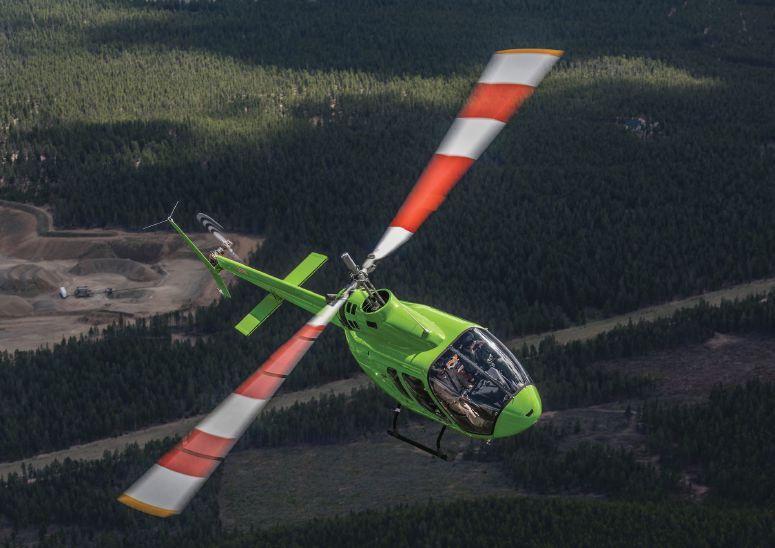
LEFT: Since 1986, Bell's Mirabel facility has manufactured more than 5,000 helicopters for delivery worldwide. (photo Bell)
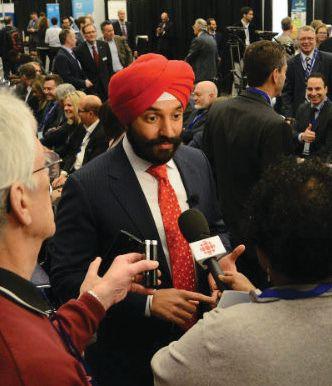
BELOW: Navdeep Bains at Aero Montréal after his $49 million pledge. (photo CNW Group)
$49.5 million in funding to help develop a consortium led by Bell
BY LUC BOILY
Aéro Montréal, self described as a think tank for Québec’s aerospace cluster, held the 6th edition of its Aerospace Innovation Forum under the theme of Aerospace in the Era of Disruptive Technologies. This even, held in collaboration with the National Research Council Canada (NRC), appears to be the largest gathering of aerospace professionals in the country. More than 1,000 Canadian and international aerospace representatives attended this major happening, which was held April 16 to 17 at the Palais des congrès de Montréal – as part of International Aerospace Week 2018.
The forum’s luncheon conference on the final day was entitled In search of talent, the aerospace industry is mobilizing to create the future. It should be remembered that in the coming years this industry will need to staff some 30,000 additional jobs in the province of Québec. No doubt that the players have to leverage the latest digital tools available to keep and grow their market share – this is the main challenge everybody was talking about at Aéro Montréal’s forum.
Gathering nearly 90 international speakers, the forum focused on six areas that Aero Montréal sees as holding enormous potential for changing the aerospace sector, including: Advanced manufacturing; additive manufacturing; clean technologies; Big Data for mobility,
‘‘ ’’
It will instill a new dynamic in the aerospace community.
–
Cynthia Garneau, Bell
aviation and space; autonomous vehicles; on-demand mobility; and, finally, virtual design and testing.
Representing both Wings and Helicopters magazines at the event, I met with Aéro Montréal’s president, Suzanne Benoît, and its chair of the board, Hélène Gagnon, to discuss what the forum in particular, means to Québec. “More than 1,400 business meetings between Québec SMEs and world-class OEMs are being arranged during the Forum,” Benoît says. “Since its launch in 2013, the event has multiplied business opportunities leading to the signing of international agreements.”
In addition to a high-calibre exhibition hall and networking events, participants have the opportunity to take part in activities

like plenaries, conferences, workshops and B2B meetings with major OEMs, such as Airbus, Bell, Boeing, Bombardier, CAE, Embraer, GE Aviation, L-3 MAS, NASA, Pratt & Whitney, Rolls-Royce and Uber. Aéro Montréal is leveraging the increasing global focus on Québec’s aerospace sector, often described as North America’s third largest industry centre.
“The cluster design creates a synergy between industry players, encouraging them to exchange and benefit from the breakthroughs made by each other,” Gagnon adds.
Aéro Montréal explains Québec has been a mainstay of Canada’s aerospace industry since the 1920s and 1930s, describing the province as the birthplace of bush and commercial aviation in the country. PierreGabriel Côté, CEO of Investissement Québec, describes what the sector means to the province today. “We are currently experiencing the most innovation-friendly environment of the past 25 years,” he says. “Every dollar invested by the Québec government generates about three dollars in private funds. We also invest approximately $100 million in venture capital each year, primarily in start-ups, to promote the emergence of new products and technologies.”
The importance of Québec’s aerospace sector to Canada was cemented at the forum by Navdeep Bains, Minister of Innovation, Science and Economic Development. On day two, April 16, Bains announced the Federal government will provide $49.5 million to a consortium led by Bell Helicopter Textron Canada. “Aerospace is one of the most innovative industries in Canada,” Bains explains. “Our government’s investment in this new aerospace consortium will create 300 well-
paying research and manufacturing jobs, contribute $178 million to Canada’s GDP and make Canada a global aerospace innovation leader.”
A report presented at the forum predicts, that by 2036, the expected demand for new helicopters may reach 22,000 in addition to
35,000 new commercial airplanes.
The new consortium funding is earmarked to help Bell and 18 industry and academic partners develop next-generation helicopters, which can fly with or without a crew on board, and fully autonomous aerial systems. The consortium will also focus on making aircraft more energy efficient and environmentally sustainable, as well as noisereduction projects.
The 18 industry partners include companies like Pratt & Whitney Canada, CMC Electronics, Esterline Technologies Corp., several small and medium-sized businesses, and nine Canadian universities. Bell and its partners are investing more than $125 million in Canada’s aerospace industry through this project.
“This program will foster the development of new engineering and manufacturing knowledge and technologies by the Bell team in Canada,” Cynthia Garneau, president, Bell Helicopter Textron Canada, explains. “It will instill a new dynamic in the aerospace community and strengthen Canada’s role as an innovation leader in the vertical lift and unmanned aerial systems segments.”








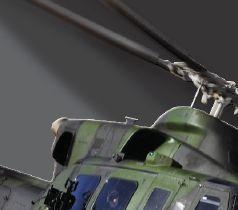





Field Maintenance for Bell 206, 206L, 205, 212, 412 and Robinson R22 and R44.
Dynamic and hydraulic component overhaul and part sales for the Bell 204, 205, 206, 206L, 212, 407 and 412.

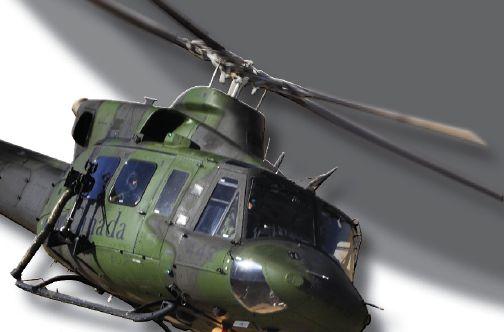

Structural Repairs Fixtures for Bell 206, 206L, 407, 205, 212, 412. Approved Woodward HRT
Canada Approval # 3/86 EASA Approval Number 145.7106
























































JENNIFER RIDEOUT
Arecent survey by Accenture finds approximately 86 per cent of all aerospace executives expect to employ blockchain technology in the next two years. This technology, coupled with drivers like artificial intelligence, are affecting industries with complex supply chains and significant aftermarkets, including both the fixed- and rotary-wing sectors. Among numerous advantages, it can provide even the smallest aircraft operators with tools for managing critical areas like parts, pilot certifications and aircraft maintenance.
Don and Alex Tapscott, authors of Blockchain Revolution (2016), explain: “The blockchain is an incorruptible digital ledger of economic transactions that can be programmed to record not just financial transactions but virtually everything of value.” It’s an accurate definition, but not necessarily one that is easily understood.
A blockchain is a continuously growing list of records or transactions between peers who are linked together sequentially in ‘blocks.’ Each block in the link (or chain) contains a cryptographic hash for the previous block, a timestamp and transaction data. Blocks include a record of every transaction that occurred on the network during that period, and every transaction is validated to guarantee accuracy. Blockchain data is secured using cryptography. It is also stored across the blockchain network in a decentralized system, meaning that every node on the network stores the entire chain. This means the data being recorded is transparent to all nodes on the chain – albeit encrypted so

say you created a blockchain network (or leveraged an existing one) to track products across your supply chain. Because of the incorruptible nature of the data being recorded, it can be trusted – you would never need to worry that shipment times, environmental conditions, or a slew of other recordable data points were modified or inaccurate.
Furthermore, smart contracts are possible with blockchain technology, which can automate actions and transactions between parties. For example, a smart contract can be created that only allows payment, or acceptance of delivery, if products are kept at a certain temperature during travel, which can be tracked with sensors. Blockchain in the real estate industry can record, track and transfer land titles, property deeds and more, and ensure every document is accurate. The technology is gaining ground in virtually every sector, because the possibilities are nearly endless. Blockchain technology could mean healthcare providers finally have a way to share data across hospitals, doctors, patients and other parties without compromising data security or integrity. For retailers, blockchain can provide an irrefutable product history that verifies where, when, how and by whom their products were made.

’’
Blockchain guarantees trust in peer-to-peer transactions, limiting the need for intermediaries like banks.
only the persons involved in a given transaction can access their digital assets. What makes blockchain technology appealing is that it guarantees trust in peer-to-peer transactions, limiting the need for intermediaries like banks, car dealerships or retailers.
Consider that provider Ethereum has 25,000 nodes across the world on its network. In order for a hacker to steal or modify data on the chain, they would need to find a way to do so on every node at the same time. They would then need to repeat this for every subsequent block in the chain, forever. Data contained within a blockchain, therefore, is considered incorruptible. Put another way, let’s
In the near term, the biggest impact of blockchain for manufacturers is in the supply chain. I’ve provided some examples already, but the data accuracy and automation that smart contracts offer make it ideal for use across production and distribution. The ability, for example, to guarantee product quality can improve brand loyalty and make manufacturers more desirable. Blockchain also goes hand-in-hand with another network-based technology – the Industrial Internet of Things (IIoT). Manufacturers should know that the more data being captured across their supply chain, the better results they will receive from blockchain technology. For example, the smart contract scenario outlined above is only possible if environmental sensors are deployed in delivery trucks and send data to the network.
Like other technologies before, we are still discovering how blockchain will impact industries, but, as its use expands, it will become difficult for organizations to ignore.
Jennifer Rideout is the manufacturing marketing manager for Cisco Canada. She is responsible for developing go-to-market strategies for the manufacturing sector in Canada, including channel alignment and content development. She can be contacted at jerideou@cisco.com.















It’s no surprise the H145 is the helicopter of choice for rescue missions. Whether at sea, on a mountain or in a blizzard, it can bring help to where it’s needed. Compact and versatile, it provides outstanding flight performance under the most extreme conditions.
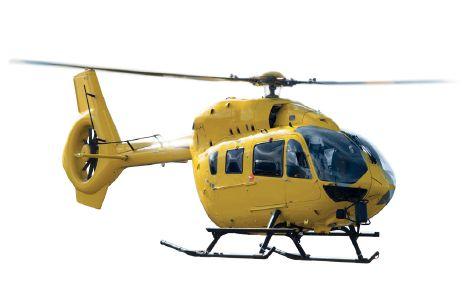
Resilience. We make it fly.