Flight and duty time spells catastrophe for commercial
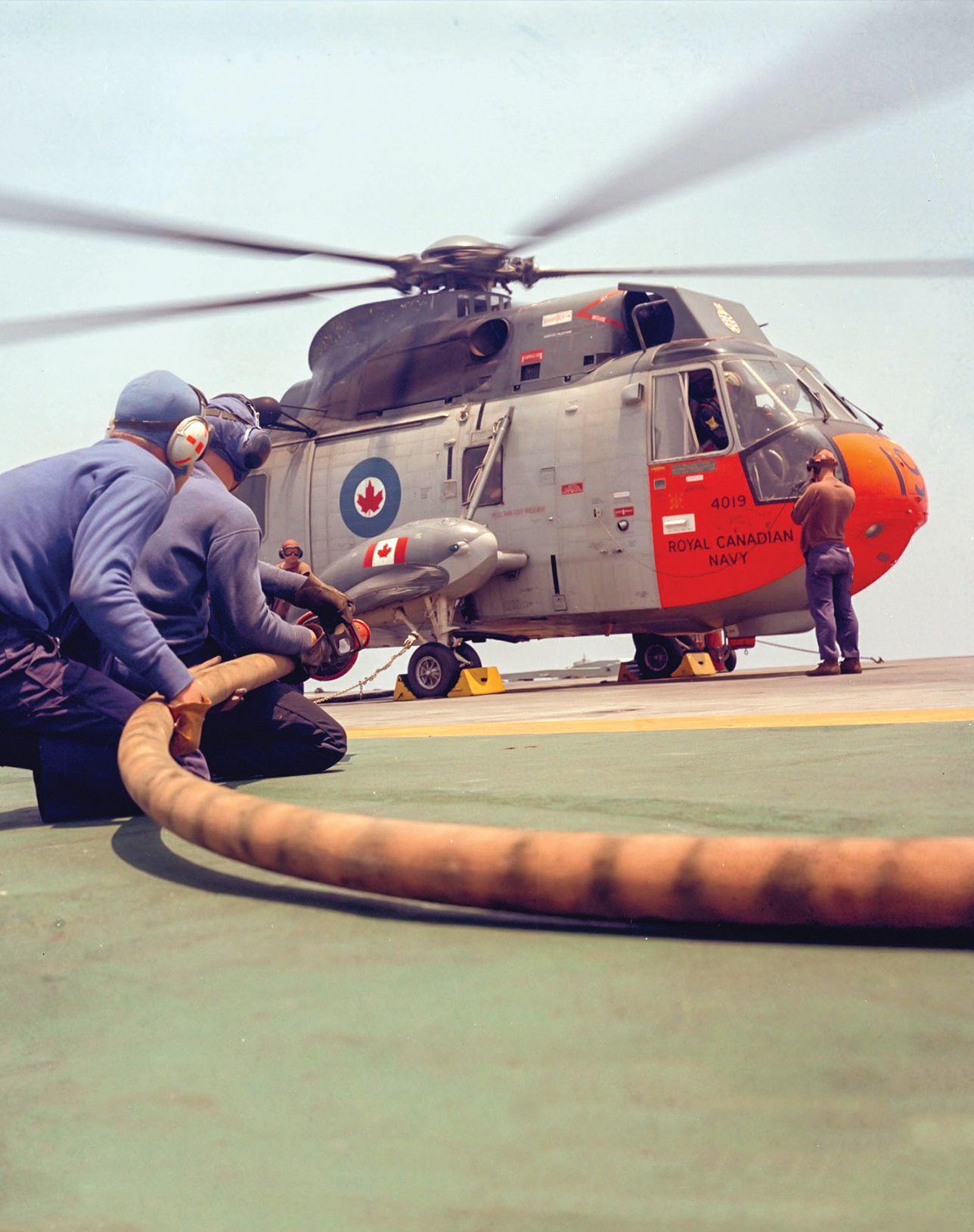
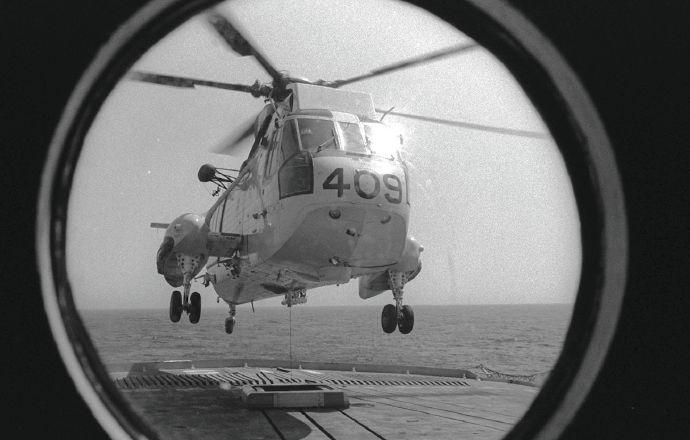
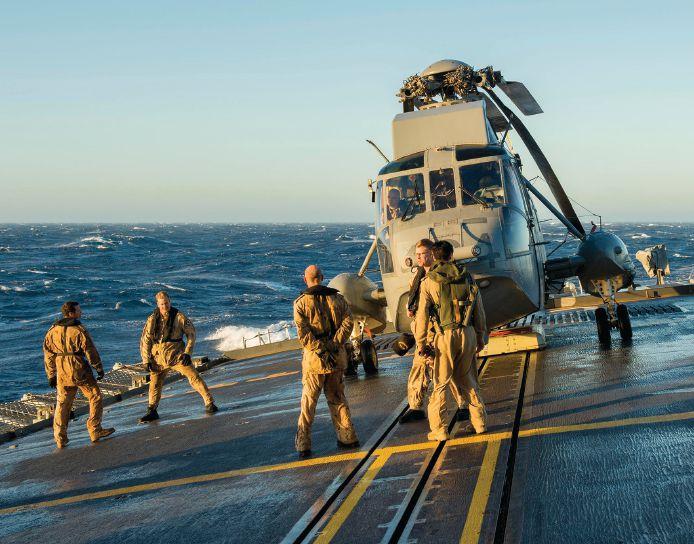
Boatswains stand by with a fire hose as a Sea King refuels on the Bonaventure, June 1968. (Photo: DND)
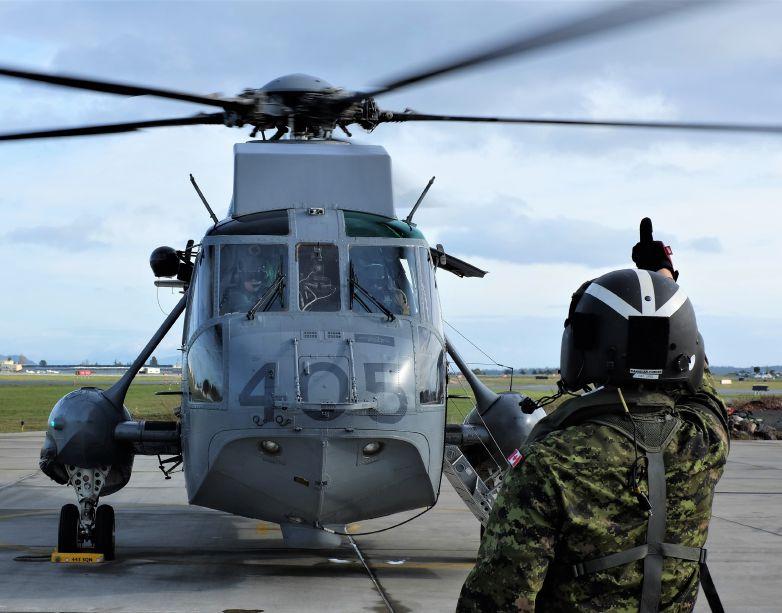
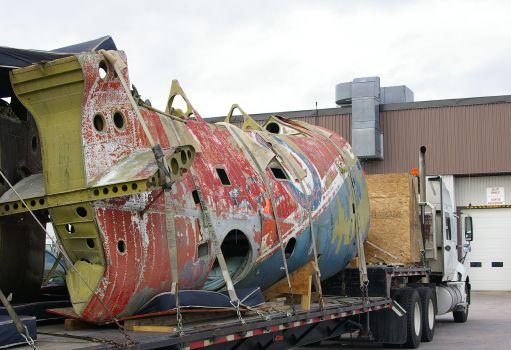
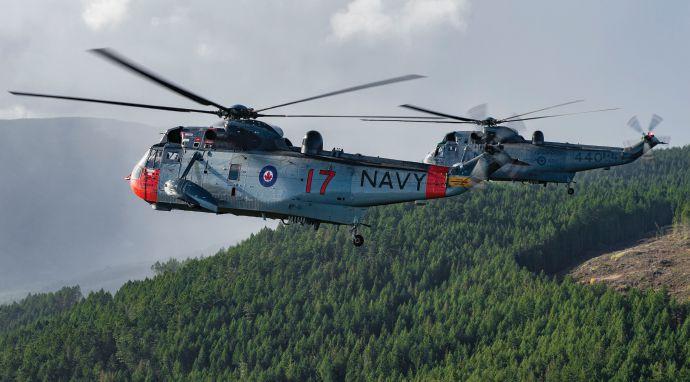
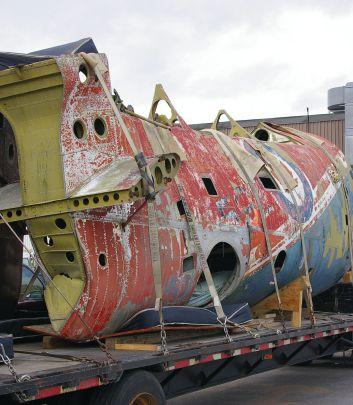
Sea King CH12405 prepares to depart on its final trip from BC to its new home at 8 Wing Trenton. (Photo: Captain Brian Norwick)
JON ROBINSON, editor
n September 2018, Schiebel helped bring the Red Bull Air Race World Championship to Wiener Neustadt, Austria. Schiebel is based in Vienna, a 45-minute train ride north, but the company in 2006 opened up its primary production facility dedicated to the CAMCOPTER S-100 unmanned aerial system (UAS) in Wiener Neustadt.
It was the first time for Red Bull to hold one of its aerobatic fixed-wing races in Wiener Neustadt, but the series actually began in Austria 15 years ago this past June. The event allowed Red Bull and Schiebel to highlight a hotbed of Austrian aeronautical history and the S-100. An international audience watched Schiebel’s Vertical Take-Off and Landing vehicle operate two flight displays per day. It also allowed the S-100 to show off some of its intelligence, surveillance and reconnaissance (IRS) abilities by simultaneously broadcasting an aerial overview of the venue on big screens. This Red Bull flight capped off an important year for the S-100 in terms of market acceptance.
Originally designed for the United Arab Emirates (UAE) Army, where Schiebel also maintains a production facility, and then the German Navy, the S-100 now has total orders of around 200, including the UAE’s original order for 40 aircraft. The S-100 has logged more than 30,000 operational flight hours worldwide, as more countries test this disruptive technology for a range of mission models like general surveillance, facility inspections,
Maritime Wide Search
nally developed heavy-fuel engine that is interchangeable with the S-100’s standard Diamond engine. The heavy-fuel engine allows for the use of fuels that are standard on marine vessels and safer to store and handle than gasoline. The standard 55 horsepower (41 kW) Diamond engine has a maximum speed of 220 kilometres per hour (140 mph) and a ceiling of 5,500 metres (18,000 feet).
The S-100 can launch in 15 minutes in rugged environments, with the system predominantly still geared toward marine use. Ultimately, the S-100 has a relatively small logistical footprint, helping with its ideal application for high-value, rapid-deployment missions.
The Belgian Navy in July 2018 spent three weeks testing the S-100 as part of its goal to acquire new maritime-surveillance and search-and-rescue equipment. The flights were the first S-100 customer demonstrations with the recently integrated PT-8 Oceanwatch payload. This wide-area maritime search capability aims to solve issues around searching for people and small objects over vast areas of sea. This topic is explained in greater detail in the article Optical Radar Wide Open by Simon Olsen (page 24), who describes ViDAR applications in the U.S., Australia and – with upcoming upgrades to Canada’s CH-149 Cormorant fleet – potentially closer to home.
RAN tested the S-100 in a range of up to 60 nautical miles and at an altitude above 10,000 feet.
border patrol, re-supply, fire control, damage assessment, search and rescue operations, aerial photography and crowd control, among others.
Developed between 2003 and 2005, based on earlier UAV R&D conducted by Schiebel, the S-100 now has a beyond line of sight capability out to 200 km, over land and sea, night or day. With a payload of 25 to 50 kg, the aircraft holds a flight time of around six hours. Flights can be extended to more than 10 hours with optional external AVGAS fuel tanks, carrying around 35 kg. This capability finished testing in March 2012 based on an inter-
’’
Oceanwatch was used together with the L3 Wescam MX-10 primary payload to test coastal security applications for Belgium’s confined airspace and relatively straight coast line of around 70 km. Weeks earlier, Schiebel demonstrated the heavy-fuel variant of the S-100 for the Royal Australian Navy (RAN), which is looking for a shipborne ISR platform. Equipped with Wescam MX-10S, RAN tested the S-100 in operational ranges of up to 60 nautical miles (111.12 km) and altitudes above 10,000 feet (3,048 metres) to showcase its imaging capabilities.
In March 2018, MDA, primarily operating out of Brampton, Ont., as a Maxar Technologies company, commissioned a fleet of S-100s to fulfill a contract with an international customer. Domestically, Canada is in the process of evaluating UAS platforms under its Remotely Piloted Aircraft System (RPAS) Project, attracting attention from the likes of MDA, CAE, L3 WESCAM and General Atomics, among others. | H
Heli-One agreements with Air Center and CSAGA
Heli-One, with Canadian facilities in Richmond and Delta, BC, reached an agreement to support Air Center Helicopters’ Airbus H225 helicopters through a multi-year, parts-by-the-hour (PBH) contract. The deal covers airframe and a combination of dynamics, small components and avionics.
Air Center Helicopters is based in Fort Worth, Texas, and operates a diverse fleet of aircraft including Airbus H225s, AS332, Bell 412, and Bell 407 aircraft. The company provides helicopter services for civil and government purposes, including: charter flights, utility work, cargo
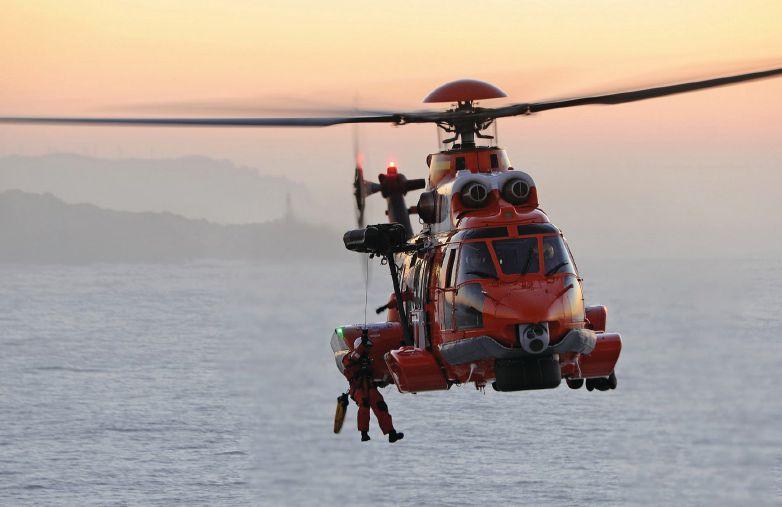
Heli-One will support Air Center Helicopters with a parts-by-hour contract for the H225, which is the newest member of Airbus’ Super Puma family, a 11-ton-category twin-turbine helicopter. (Photo: Airbus)
Heli-One also reached a deal to expand its global maintenance, repair, and overhaul footprint after signing a Letter of
Intent to provide services to China Southern Airlines. Focusing on providing China Southern Airlines with helicopter component MRO and design engineering support, Heli-One explains this deal signifies the beginning of a strategic agree-
ment for a long-term cooperation between the two companies. China Southern Airlines’ helicopter division, called China Southern Airlines General Aviation (CSAGA), was founded in 1980 and is China’s largest Sikorsky helicopter operator.
RCMP TAKES DELIVERY OF CANADA’S FIRST AIRBUS H145
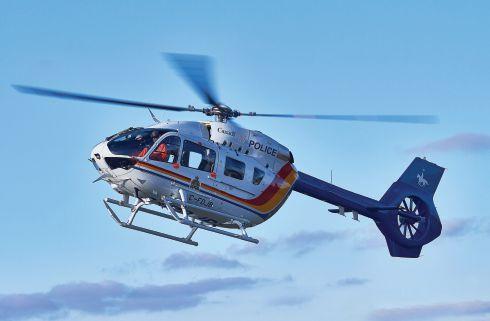
Airbus in December delivered Canada’s first H145 helicopter to the Royal Canadian Mounted Police. The aircraft will be based in Langley, BC, and support operations throughout the province. This new aircraft delivery builds on Airbus' dominant helicopter position in Canadian law enforcement, where it claims to have captured 83 per cent of the market. The light twin-engine H145 is the latest variant of Airbus’ H145 family of aircraft.
Airbus explains RCMP’s new H145 will support tactical deployments day and night over land and water for the Emergency Response Team, expand options in the area of fast roping and hoisting, assist with missing persons investigations, and add capabilities to search and rescue operations. The H145 has been equipped with a variety of mission-specific equipment, including external hoist and rope down device (for one to two persons), Trakka A800 searchlight, Enhanced Reality System, Health Monitoring System (HMS), FLIR, Night Vision Goggles, Tactical Flight Officer (TFO) workstation and internal long-range fuel tank system.
Airbus states its helicopters have captured 83 per cent of the law enforcement market in Canada. (Photo: Airbus)
Niagara Helicopters receives Safety Award
Niagara Helicopters is the 2018 recipient of Airbus Helicopters Canada’s Innovation in Safety Award. Flying close to 100,000 passengers annually, as part of the company's more than 2,800 flight hours accumulated per year, Niagara Helicopters primarily provides charter flights and also works with local authorities in search and rescue efforts. Airbus Helicopters Canada’s Innovation in Safety Award is presented yearly to an individual or organization whose business initiatives have demonstrated a great impact on the overall goal of safe flying operations. The winner receives a $10,000 prize.
Airbus notes Niagara Helicopters' continuous focus on safety throughout its 50 years of operation, including being one of Canada’s first operators to voluntarily implement Safety Management Systems.
“This recognition from Airbus on our commitment to safety is a true honour,” said Anna Pierce, VP and GM, Niagara Helicopters. “This award belongs to the whole team at Niagara Helicopters who are diligently devoted to safety in all our operations. Every day, we put the safety of our crew, customers and communities above all else.”
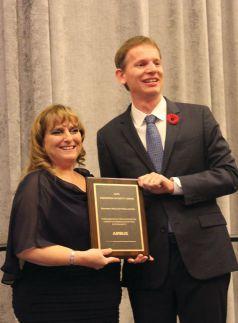
Romain Trapp, president of Airbus Helicopters Canada and COO of the North America operation, presents the 2018 Innovation in Safety Award to Anna Pierce, VP and GM of Niagara Helicopters. (Photo: Jon Robinson)
Carlyle Group to acquire StandardAero
The Carlyle Group announced it has agreed to acquire StandardAero, a global provider of aftermarket engine maintenance, repair and overhaul (MRO) services for the aerospace and defense industries, from Veritas Capital. The transaction is subject to customary regulatory conditions and is expected to close by the end of the first quarter of 2019. This
would be the second round of ownership of StandardAero under Carlyle, which first acquired the company in 2004 and sold it to Dubai Aerospace Enterprise in 2007. Veritas acquired StandardAero three years ago for US$2.1 billion.
Financial terms were not disclosed, but Reuters subsequently reported the deal to be worth US$5 billion, including debt.
Equity for the investment will come from Carlyle Partners VII, an US$18.5 billion fund that focuses on buyout transactions in the United States.
Founded in 1911, StandardAero is one of the world’s largest independent MRO providers offering services for commercial aviation, business aviation, military and industrial power customers.
Polish Air Force University adds Robinson
R44s
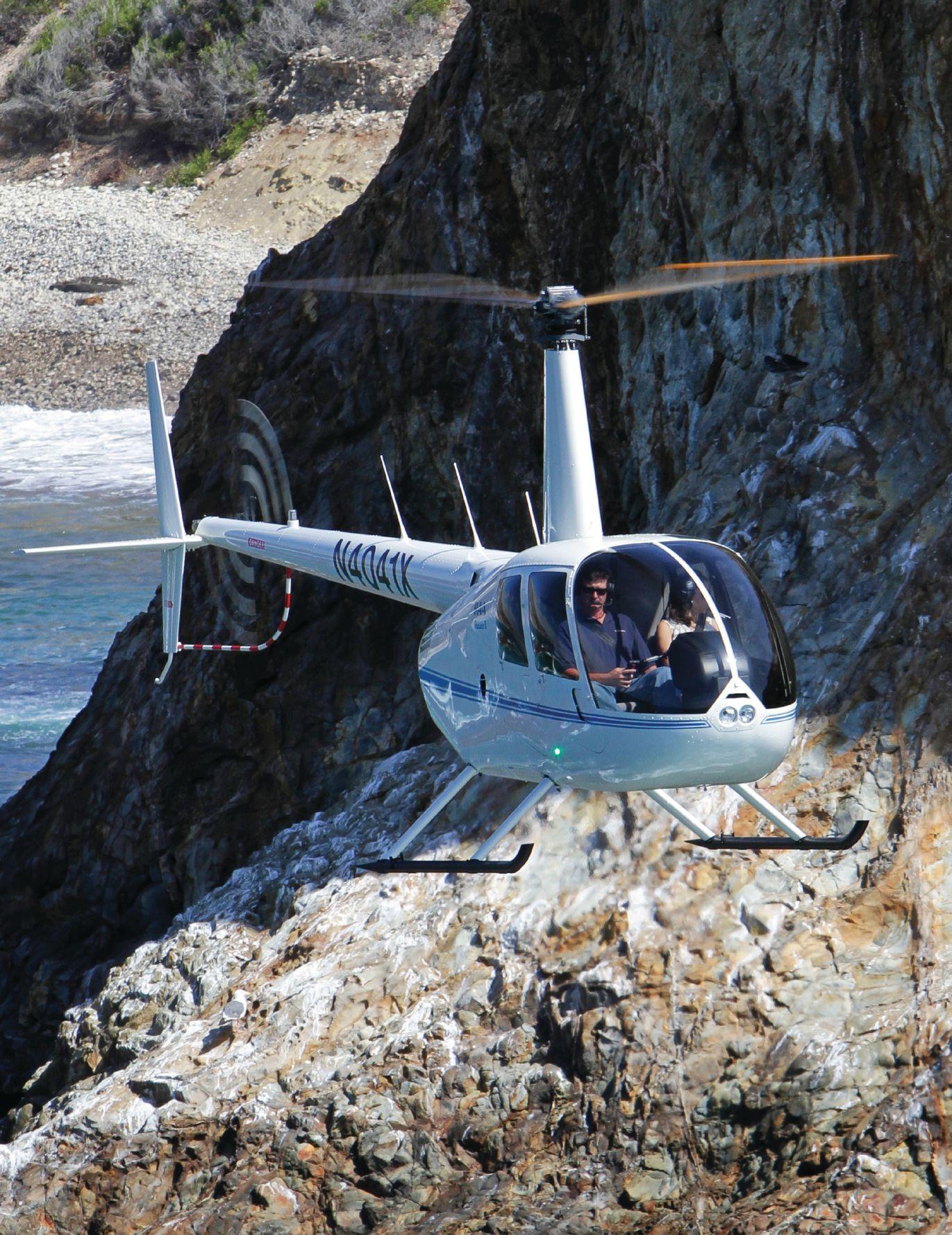
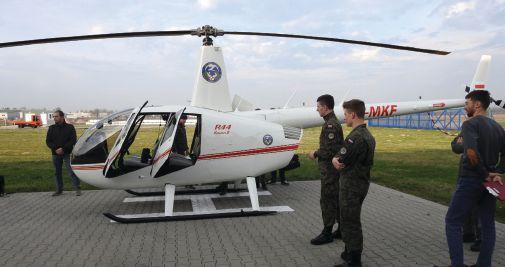
Robinson Helicopter Company delivered two R44 Raven IIs to long-time Robinson dealer, PHU Polinar of Poland. PHU Polinar then delivered the aircraft to the Polish Air Force University, marking the first acquisition of American helicopters to be used for military training in Poland. Founded in 1927, the Polish Air Force University is an accredited, state-owned institution that offers undergraduate degrees for officers in the Polish military and commercial ratings for civilian students.
HELICOPTERS MAGAZINE P.O. Box 530 105 Donly Drive South Simcoe ON N3Y 4N5
Tel.: 519-428-3471 Fax: 519-429-3094
Toll Free: 1-888-599-2228
Website: www.helicoptersmagazine.com
EDITOR JON ROBINSON email: jrobinson@annexbusinessmedia.com
MEDIA DESIGNER CURTIS MARTIN
CONTRIBUTING WRITERS
RICK ADAMS, DAVID CARR, BRIAN DUNN, PAUL DIXON, WALTER HENEGHAN, FRED JONES, JAMES MARASA, CARROLL MCCORMICK, COREY TAYLOR
NATIONAL ADVERTISING MANAGER MENA MIU email: mmiu@annexbusinessmedia.com 416-510-6749
CIRCULATION MANAGER JAY DOSHI email: jdoshi@annexbusinessmedia.com 416-442-5600 ext. 5124
GROUP PUBLISHER MARTIN MCANULTY email: mmcanulty@annexbusinessmedia.com
PRESIDENT & CEO MIKE FREDERICKS
RETURN UNDELIVERABLE CANADIAN ADDRESSES TO ANNEX PUBLISHING & PRINTING INC., 111 Gordon Baker Rd., Suite 400, Toronto ON M2H 3R1 email: subscribe@helicoptersmagazine.com
Published four times a year by Annex Publishing & Printing Inc.
Printed in Canada ISSN 0227-3161
CIRCULATION
Email:apotal@annexbusinessmedia.com
Tel: 416-510-5113
Fax: 416-510-6875 (main) 416-442-2191
Mail: c/o Circulation, 111 Gordon Baker Rd., Suite 400, Toronto, ON M2H 3R1
SUBSCRIPTION RATES
Canada - 1 year $31.50
USA- 1 year $57.00
Foreign - 1 year 63.00 plus applicable taxes
www.helicoptersmagzine.com/subscribe
Annex Privacy Officer
Privacy@annexbusinessmedia.com
Tel: 800-668-2384
Occasionally, Helicopters magazine will mail information on behalf of industry-related groups whose products and services we believe may be of interest to you. If you prefer not to receive this information, please contact our circulation department in any of the four ways listed above.
According to PHU Polinar, the more than 70 Robinson helicopters operating in Poland convinced the state that the R44 is reliable and the right vehicle for its flight training programs. Both R44s are equipped with a fully integrated glass cockpit featuring Garmin’s GDU 1060 TXi, GTN 750 navigator, GTX 345 transponder with ADS-B In/Out and Spidertracks for real-time tracking.
Helicopters Magazine is an associate member of the following Canadian aviation associations:
The two R44s delivered to Polish Air Force University feature fully integrated glass cockpits. (Photo: Robinson Helicopters)
LA Fire adding fifth Leonardo AW139
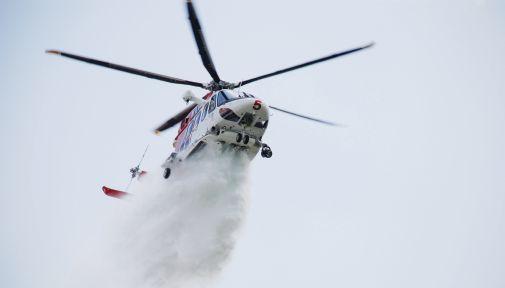
The Los Angeles Fire Department is set to introduce a fifth Leonardo AW139 intermediate, twin-engine helicopter into its fleet. The aircraft is expected to be delivered from Leonardo’s Philadelphia facility in Spring 2019 and will be used to perform a range of missions like fire suppression, emergency medical service (EMS) and search and rescue (SAR). The Los Angeles Fire Department (LAFD) protects more than four million people in America’s second largest city. It is responsible for more than 400 square miles, 106 stations, and over 3,200 firefighters. LAFD Air Operations’ mission includes fire suppression, air ambulance transport, hoist rescues, reconnaissance and mapping. Its helicopter fleet is housed at Van Nuys Airport (KVNY).
The existing fleet of four
LAFD-owned AW139s combined have logged more than 7,000 flight hours since the first helicopter entered service in 2008, responding to more than 700 incidents
annually. Leonardo explains these AW139s have been crucial for suppressing wildfires throughout Southern California. Features customized for the LAFD AW139 include, among others, search light, rescue hoist, advanced water tank for fire suppression, wire-cutter and modular cabin interior. More than 270 customers from some 70 nations have ordered over 1,100 AW139s, used for roles like government and public utility, EMS, SAR, patrol, homeland security and transport duties. More than 900 AW139s have been delivered worldwide to date and have logged in excess of two million flight hours.
LAFD’s Leonardo AW139s have been crucial in suppressing wildfires throughout Southern California. (Photo: Leonardo)
Bell marks V-280 Valor first year of flight
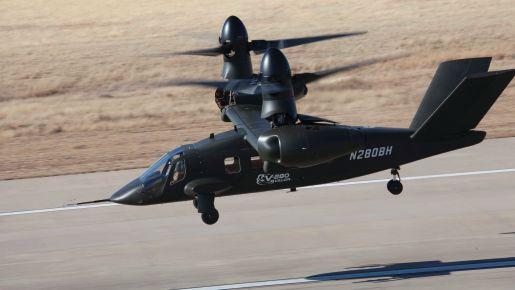
Bell Helicopter and Team Valor in December marked the one-year anniversary of the V-280 Valor’s first flight by focusing on the aircraft’s continuing proof of performance and technical maturity. The V-280 is part of the U.S. Army led Joint MultiRole Technology Demonstrator (JMR-TD) program.
After nearly 85 hours of flight and more than 180 rotorturn hours, Bell points to some of the following V-280 flighttesting milestones: Forward flight at 250 knots true airspeed, In-flight transitions between cruise mode and vertical takeoff and landing, 50-degree banked turns at 200
Bundeswehr
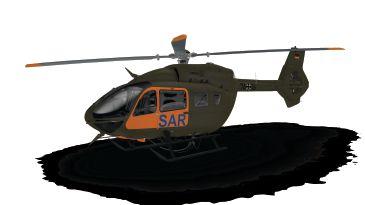
Seven Airbus H145 helicopters have been ordered to replace the German Armed Forces’ Bell UH-1D search-andrescue fleet, which first entered into service in the early 1970s. The new aircraft, ordered through the Federal Office of Bundeswehr Equipment, Information Technology and In-Service Support, will be delivered to the German Armed Forces (Bundeswehr) in 2020.
knots indicated airspeed, 4,500 feet per minute rate of climb and sustained flight at 11,500 feet altitude, Single ferry flight of over 370 miles, and Demonstrating low- and highspeed agility with fly-by-wire
controls. Bell expects flight testing will complete all the key performance parameters of the V-280 in the coming months, including additional low-speed agility tests and full cruise speed in forward flight.
orders H145 SAR helicopters
Helicopters will also be responsible for logistics support, repair, and maintenance of the helicopters. Bundeswehr is already operating the military version of
the H145, H145M, from a previous order that saw deliveries begin in 2015.
The helicopters will be stationed at sites in Niederstetten, Holzdorf and Nörvenich. Airbus
CHC
CLockheed Martin Canada and L3 MAS join forces
According to an agreement with the Federal Ministry of Transport, the Bundeswehr is also responsible for search-andrescue operations in the event of aircraft accidents on German territory. Airbus explains Bundeswehr, therefore, maintains a fleet of search-and-rescue helicopters on permanent standby; and these helicopters are also available for use in national disaster management operations.
contract for Norwegian sea drilling
HC Group has been awarded the contract from OMV (Norge) AS, to provide helicopter services in support of its forthcoming drilling program at the PL 644 field in the Norwegian Sea. “This project allows us continue to build on our decades of experience supporting oil and gas customers in the Norwegian Continental
Shelf,” said Helge Nesvåg, CHC sales director for Europe, Middle East and Africa (EMEA).
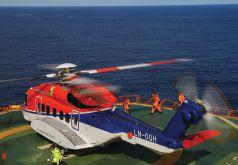
The new field operation will begin in the second quarter of 2019, which involves flying to the Deepsea Bergen drilling rig from CHC’s base in Kristiansund. There will be up to four flights per week using a Sikorsky S92.
Lockheed Martin Canada and L3 MAS are working together in the procurement competition to provide military aircrew training services for the Government of Canada’s Future Aircrew Training Program. This will include a range of classroom instruction, simulator and flight training, on-site support activities, as well as delivery of pilot training, aircrew training for air combat systems officers and airborne electronic sensor operators currently being performed in-house by the RCAF.
In 2016, industry was advised of the new scope of this procurement process. After engaging with 84 companies earlier this year to determine its needs, Canada in December 2018 established a list of Qualified Suppliers with an ability to meet the government’s needs, including (in alphabetical order): Airbus Defence and Space, Babcock Canada Inc., BAE Systems, Leonardo Canada, Lockheed Martin Canada Inc., and SkyAlyne Canada Limited Partnership.
As an In-Service Support integrator for the RCAF, L3 MAS provides fleet management, logistics and maintenance in support of training assets. | H
Bell’s first year of flight testing with the Bell V-280 Valor achieved a performance milestone of 50-degree banked turns at 200 knots indicated airspeed. (Photo: Bell Helicopters)
The Airbus H145 LUH SAR helicopter. (Image: Airbus)
A Sikorsky S92 will be used for the CHC project. (Photo: Rune Meyer Amundsen)
COLUMN
Uniting AMEs in Canada
A
new
national association for Aircraft Maintenance Engineers
Most people in the aviation community have a good grasp of what Aircraft Maintenance Engineers do. To put it simply, we maintain and repair aircraft to keep the flying public safe. The pilots may get all the glory but the quiet tech with the wrench must still sign on the dotted line to verify every aircraft as airworthy. Their professional technical contribution to a safe flight is completed long before those dashing pilots stroll aboard. Like the T-shirt says “God created Aircraft Mechanics because Pilots need heroes too.”
The majority of the flying public are likely unaware of how many AME associations across Canada do a stellar job promoting this critical profession. There are currently six regional associations, specifically, Pacific, Western, Central, Ontario, Quebec and Atlantic. The role of these volunteer associations is to “Promote and Mentor” AMEs in Canada, but their full mandate runs much deeper.
The Canadian Federation of AME Associations (CFAMEA) was created to bind these regional associations together into a cohesive working group, formed specifically for the purpose of giving a collective voice to all Aircraft Maintenance Engineers. To paraphrase its goals: To promote safe practices in the workplace; To communicate and advise the entire aviation industry of any concerns pertaining to the duties we perform as AMEs. Finally, and perhaps most importantly, to promote our profession and mentor young people who may be contemplating a career path in aircraft maintenance. With the
association first and a regional one second. In addition, all AMEs hold a Federal Licence, not a Provincial one, so the organization that we belong to should also reflect that reality.
The second issue with the past CFAMEA model is that government and industry need a clear and powerful voice from AMEs when recommendations and/or changes are at hand concerning aircraft maintenance. A loosely associated and often splintered group is just not good enough when seeking clear, concise, and accurate feedback. Ideally, we must keep our regional strengths, but forge a much stronger nationwide organization. Another one of our biggest hurdles is lack of membership. Hopefully moving toward a Canada-wide association will boost our numbers. There are approximately 17,000 Aircraft Maintenance Engineers in Canada. The total number of members in all the regional associations combined comes to just under 1,000. Despite efforts to increase member benefits, this sad reality needs to be vigorously challenged to bolster future growth.
In October of this year, I was elected as the next president of CFAMEA, taking over a daunting task from our much respected past President, Uli Huber. Along with my new VP, Xavier Pallares (current President of Quebec AME Assoc.), we plan to work with the other association presidents to begin a transformation. Our first step is to re-brand and refocus the current framework of CFAMEA. Its board has already approved our new name, Aircraft Maintenance Engineers of Canada (AMEC) - Techniciens D’Entretien D’Aeronefs du Canada (TEAC). We are working on a new logo and will hopefully be launching an AMEC/TEAC membership card sometime in 2019 to all existing regional members. Their regional affiliation will be proudly displayed on the card as part of this new initiative.
Total members in all regional associations is under 1,000... This needs to be vigorously challenged. ‘‘ ’’
current shortage of AMEs in Canada, this last mandate is rapidly becoming one of our most-critical endeavours.
Despite all these achievements carried out by many dedicated individuals, there are a few short circuits with the way the CFAMEA model works. Canada is a very large country and each region has its own unique differences and concerns within our industry. The first challenge is that each individual association often loses sight of the big picture. Not to negate the terrific work each region does to promote our profession, they simply need to refocus and be a Canadian
These are only the first baby steps toward our new united vision. We have the perfect climate of agreement from all regions to move forward, a scenario that was rarely realized in CFAMEA’s past. There will be a great deal of work required to massage the old CFAMEA platform into the new AME Association of our dreams. I believe it is a worthwhile goal and I am determined to see it through. | H
Sam Longo, AME A&P, is president of CFAMEA (AMEC/TEAC). He has worked for Nordair, DeHavilland and Air Canada, as well Centennial College, and has been a licenced AME for more than 40 years.
SAM LONGO
Cyber Attacks in Aviation
Right: Saab in December initiated what it calls UK’s first digital tower at Bedfordshire Airport, operated by Cranfield University, located in the Cambridge-Milton Keynes-Oxford growth arc. (Photo: Saab)
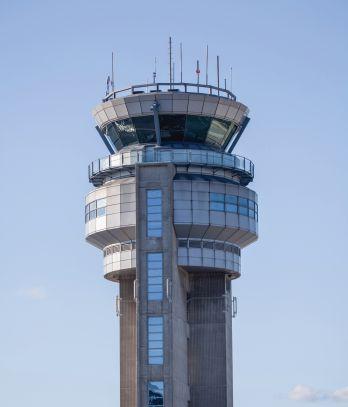
Below: Montreal control tower within one of Canada’s busiest controlled airspaces. (Photo: NAV Canada)
Canada and the aviation world adjust to growing digital threats
BY BRIAN DUNN
With today’s technologically advanced airports, there are basically no areas or functions that do not rely on some type of digital network, Tampa International Airport general counsel Michael Stephens told a joint hearing of the House Homeland Security Committee’s Cyber security and Transportation Security subcommittees in September. The importance of these systems makes airports appealing targets and vulnerable to cyber threats from criminal organizations and state sponsored actors.
In his testimony, Stephens said U.S. airports have reached a point where voluntary compliance is no longer sufficient and asked lawmakers to consider mandating the adoption of “uniform minimum cyber security standards and frameworks.”
He added that “human factor remains the most highly exploited vector” for breaching cyber defences and threat awareness and information security training programs for airport, airlines and aviation industry employees are “perhaps one of the most effective and cost-efficient ways of increasing airports’ and airlines’ cyber security readiness.”
The committee also heard from Christopher Porter, chief intelligence strategist at cyber security group FireEye, Inc., who testified that state-backed hackers are regularly targeting the U.S. aviation industry
through cyber espionage to steal industrial secrets from manufacturers, researchers and operators of military and civilian aircraft.
Porter called cyber espionage the “most common cyber threat facing the aviation industry,” and said that hackers sponsored by China, Russia and more recently Iran have all “targeted the U.S. or its close allies for stealing aviation secrets. All three countries also routinely target ticketing and traveller data, shipping schedules and even partner industries like railways or hotels as part of their counterintelligence efforts, Porter added.
However, he reminded lawmakers that, because cyber-espionage is routine, “it should not be viewed as destabilizing.”
“When cyber espionage operators get a foothold on a system, they can often use that access for stealing information or to launch a disabling or destructive attack using the same technology,” Porter said. “But they rarely choose to do so, and in the U.S., there are significant redundancies in place to ensure safety. A crashed IT system does not mean a crashed plane, and it’s important for the public to keep that in mind.”
The International Civil Aviation Organization (ICAO) held a summit on cyber security in Dubai to address the issue and stated it is the responsibility of States to act in such a way as to mitigate the risk posed by cyber threats, to build their capability and capacity to
Helos and cranes
Four Seasons and Sprint Mechanical team up at a suburban mall to move more than 25 HVAC units as heavy as 2,700 pounds
BY SAUL CHERNOS
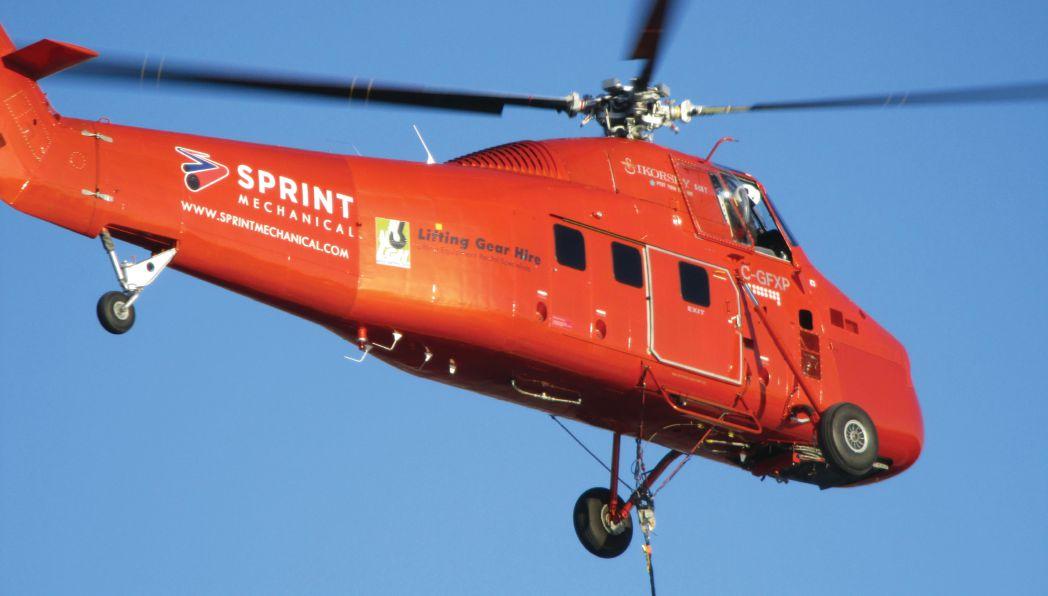
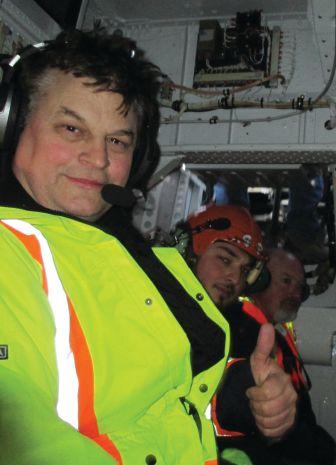
Ian Bergeron gives a thumbs-up as the Sikorsky S58T lifted off from a Brampton, Ont. hangar that Sprint Mechanical shares through a partnership with Four Seasons Aviation.
Were it not for their radio communication headsets, the eight crew members would have relied fully on hand signals and yelling as the twin-engine helicopter whirred deafeningly towards Cambridge Centre shopping mall in Cambridge, Ont.
“We’re flying at about 115 miles per hour and we’re at about 500 feet above ground level, so we’ll have to watch out for cell towers,” explains Bergeron, Sprint’s vice president of safety and legal affairs. Sprint Mechanical Inc. is a 31-year-old mechanical engineering and construction firm focused on infrastructure projects from retrofits to multi-million
dollar commercial construction.
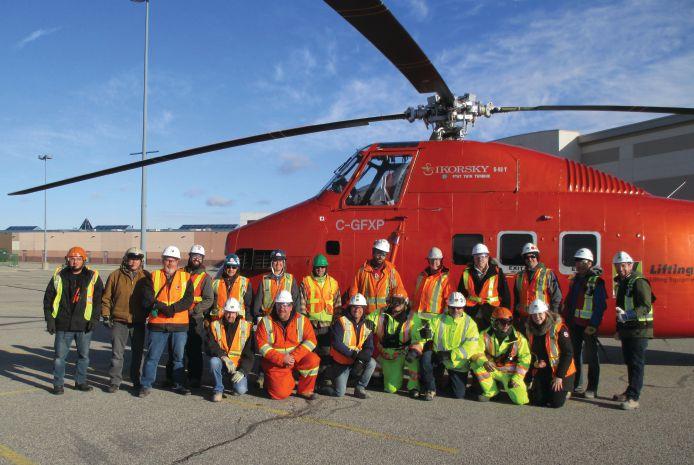
A half-hour later, about the time it took the sun to rise into full view, we pass over small woodlots, ponds and farm fields and land onto a parking lot that was empty; save for a fuel truck, 19 large HVAC units and two dozen crew members. Bergeron takes attendance and runs through safety considerations.
The chopper’s carrying capacity is 4,500 pounds and the HVAC units range from 760 to 2,700 pounds, so no looking away from the load or standing directly underneath. And watch out – the rooftop’s slippery.
A 50-foot kevlar longline offers sufficient distance to protect the ground crew from the gale-force winds exuded by the helicopter’s blades, as each load rises from the ground or returns at a precise angle to ensure safety. In eye-pleasing synchronicity, crews release their straps and another load rises into the sky.
Case for helicopters
The sheer effortlessness of the Sikorsky’s work made a compelling case for using a helicopter rather than a crane when circumstances warrant. Nineteen HVAC units went up and eight old ones were hauled off in little more than half an hour on this suburban mall.
“There wasn’t much to set up,” Bergeron says. “We didn’t have to bring in any loadbearing beams for shoring, or any cribbing. We didn’t need a trailer or counterweights, or another crane to set up the [main] crane. We took 15 minutes to set up and 10 minutes to clean up. We were in and out in less than an hour.”
Depth and reach enhance Bergeron’s case. The two-storey mall was not terribly high, at roughly 50 feet, yet its 720,000-square-foot area of roof equalled a half dozen downtown city blocks; and Bergeron explains he’s worked
Left to right: Four Season’s Sikorsky S58T, Sprint’s Ian Bergeron, and members of the Cambridge Centre project team. (Photos: Saul Chernos).
with rooftops three times larger.
“We could reach areas of the roof you couldn’t reach with a crane without moving the crane,” Bergeron says. “It’s a big deal to move a 350- or 400-ton crane, whereas we could locate our helicopter anywhere we wanted. And there wasn’t space to locate a crane on the far side of the mall without tearing up a garden.”
A helicopter also offers considerable flexibility at a jobsite, in that materials can be loaded and unloaded pretty well anywhere. Scrap can be taken directly to designed piles.
“We can take things anywhere you want and not just put it next to the crane, so you don’t have to handle the material again,” Bergeron explains.
The ability to compress a schedule from days to hours helps minimize and even avoid traffic congestion. Fire routes remain open. And work can be done in the scant time between dawn and mall opening hours.
“Time is money,” Bergeron says. “If your crane takes up 100 parking spaces during a revenue day that’s a lot of lost revenue for the mall.”
Bergeron also stands by his Sikorsky in terms of project costs. “For what we did [in one morning] in Cambridge you’d need a 600-ton crane, a 600-ton crane with 500 feet of boom, and a luffing jib will take you several days to set up and take down and will cost you $160,000,” he says. “With a helicopter, the cost to set it up might be just over $40,000.”
Case for cranes
Bergeron recognizes why many jobs in his field are still meant for cranes. In fact, the company maintains a 5-ton boom truck and an 8-ton carry deck crane for work it does as a mechanical services provider. “We use them mainly for installing piping underground in downtown Toronto,” he says.
Helicopters could literally dance circles
around a crane, yet Dwight Crane president Brian Dwight doesn’t see them as competing. In fact, the Ajax, Ont. crane service provider subcontracts to Sprint-Four Seasons when helicopter services are optimal for a particular task.
“I see them as very complementary,” says Dwight, who wasn’t involved in the Cambridge project. “Any time we have something that’s within the range or practicality of a crane, or where it’s going to take two or three days to set up and take it down just to put up one unit, it makes sense. Any smart crane operator should have a helicopter company in their back pocket.” Dwight’s confidence in helicopters might enjoy a boost because he flies one recreationally. Nevertheless, he farms out the work because he considers flying professionally as outside his company’s core expertise.
“Being a helicopter pilot myself I’ll know if a job is really doable in this way. This puts us in the right position to suggest the right choice to the customer,” he says.
In the case of Cambridge Centre, SprintFour Seasons was commissioned by PCL Constructors Canada (Toronto), which is overseeing renovations at the mall. Project manager Jason Toste explains PCL has used helicopters for previous, similar hoists.
“We only had a short window of opportunity,” Toste says. “So at the end of the day, from a schedule point of view and to lessen the impact on our client, Morguard [the mall’s owner], and mall operations, it was best to go with the helicopter.”
Still, Toste and PCL acknowledge appropriate occasions for each machine. PCL retained Sprint-Four Seasons for an initial lift of 23 units in March, with 12 old ones coming down, and a second visit in April job saw 19 units go up and eight come down. In early May, however, PCL used a mobile crane to hoist eight remaining units and retrieve 14
units where the rooftop HVAC set-up was relatively concentrated and the units were easily accessed.
“We were able to get a [Liebherr] LTM 1130-5.1 165-ton mobile in there and place the eight units in a little over an hour and a bit; and then do the same taking the old units down,” Toste says.
Ian Bergeron concurs: “They were small units, probably 60 feet from the edge of the roof, so it wouldn’t make sense to use a helicopter when you can reach easily and efficiently [with a mobile crane],” he explains.
Four Seasons Aviation
For Sprint, much of the preparation for helicopter lifting is comparable for using a crane. Bergeron supplies engineering designs and plans, including the rigging, shackling, lifting points and centres of gravity. Four Seasons Aviation operates the aircraft under a Transport Canada licence and handles piloting and maintenance.
Dave Tommasini, president and chief pilot with Four Seasons, said it makes sense for crane companies to team up with a helicopter provider because of the complexities required to meet Transport Canada protocol. “It’s quite involved and expensive and it takes time to get everything accomplished,” he says.
While Four Seasons works with contractors such as Sprint, Tommasini explains the company also maintains working relationships with Dwight Crane and has made inroads with other crane companies.
“Originally we were concerned we might be taking business away from them,” he says. “But I think they realize we can be a nice complement to what they do. There’s certain occasions when a crane can’t do a job, or where we can be an option. So it’s become more of a cooperative effort. We respect each other’s capabilities and it seems to work pretty well.” | H
COVER STORY
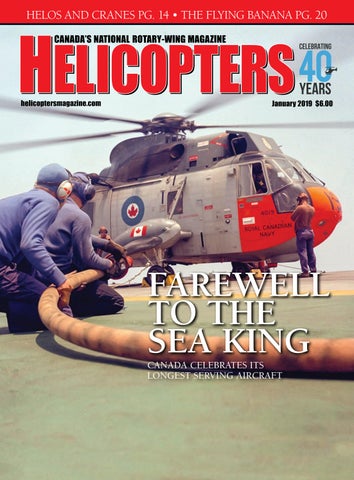
Farewell to the Sea King
Canada’s longest service aircraft retires after 55 years of innovation and support
BY JON ROBINSON
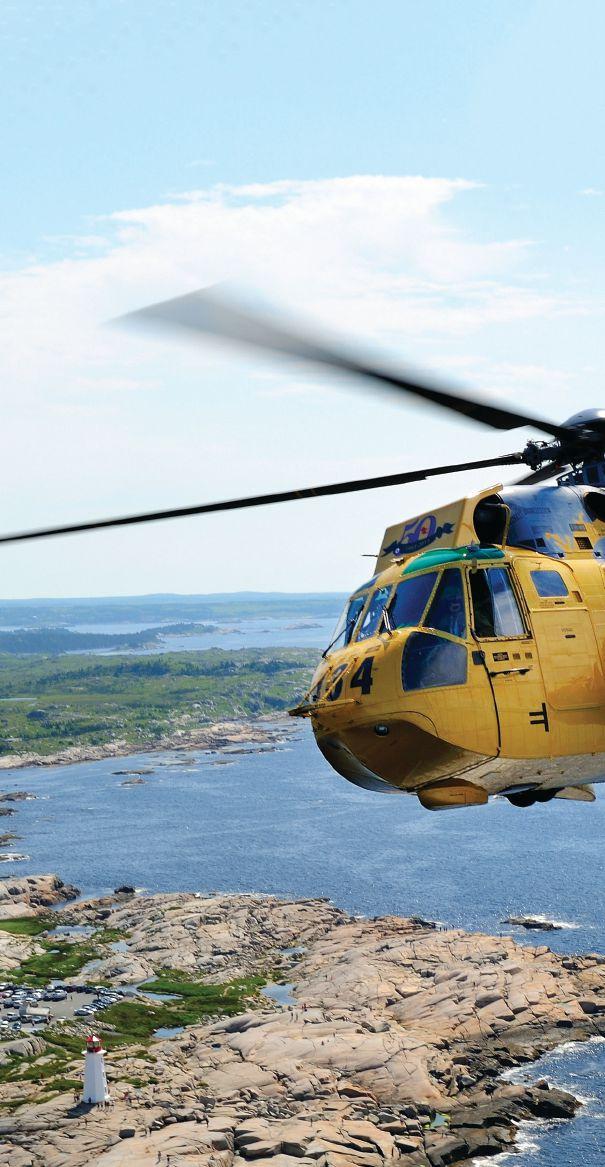
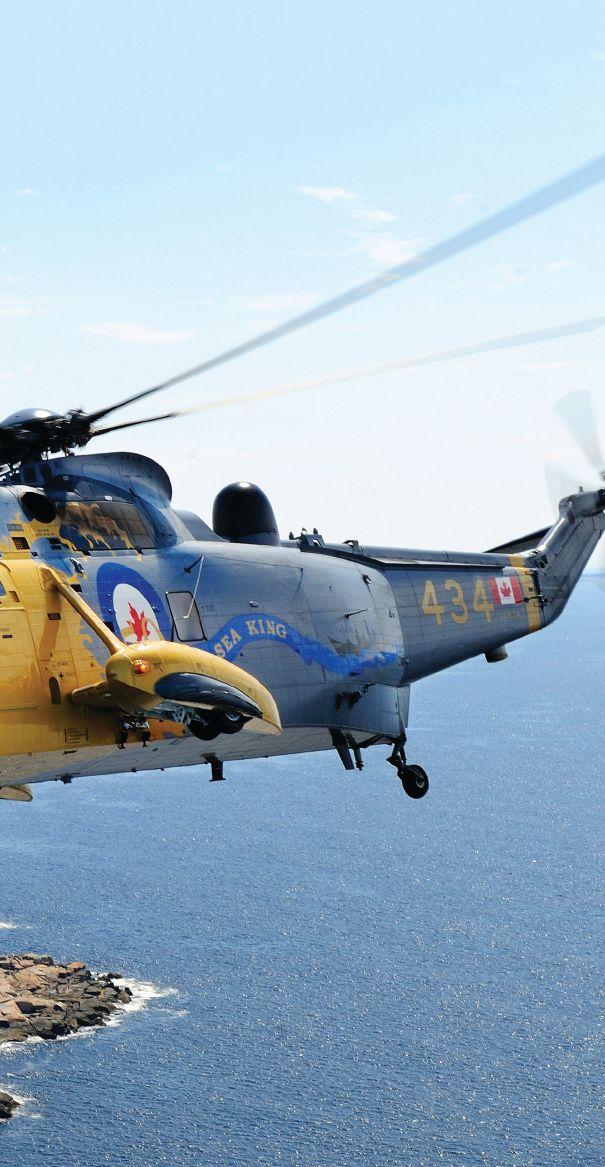
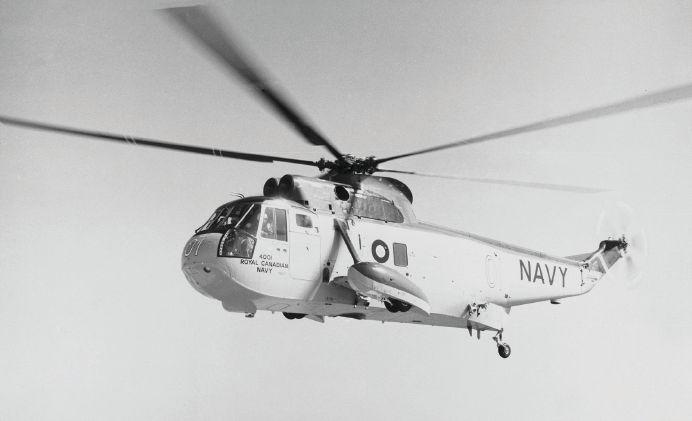
In December 2017, the Royal Canadian Air Force had one of its Sea Kings painted in its original Royal Canadian Navy colours. The project was initiated a year before the retirement of the CH-124 Sea King fleet by Major Trevor Cadeau. This was but one of the many of the initiatives by the RCAF to celebrate the achievements of Canada’s longest-serving military aircraft, which undertook a cross-country flight to share this historic aircraft with Canadians from coast to coast.
Officially retired at the end of December 2018, below are some of the final dispatches from the Canadian Armed Forces to recognize the legacy of the Sea King.
July 26, 2018, Sea King, going out with style, by LieutenantColonel Travis Chapman: Designed in the late 1950s and procured by Canada through a dynamic acquisition program in the early 1960s, the CH-124 Sea King helicopter has served Canadians with distinction since May 24, 1963. Longevity, avionics and mission system upgrades, and the utility of a medium-lift helicopter came together to create a legacy that ignites a passion spanning multiple generations, unlike any other Royal Canadian Air Force asset.
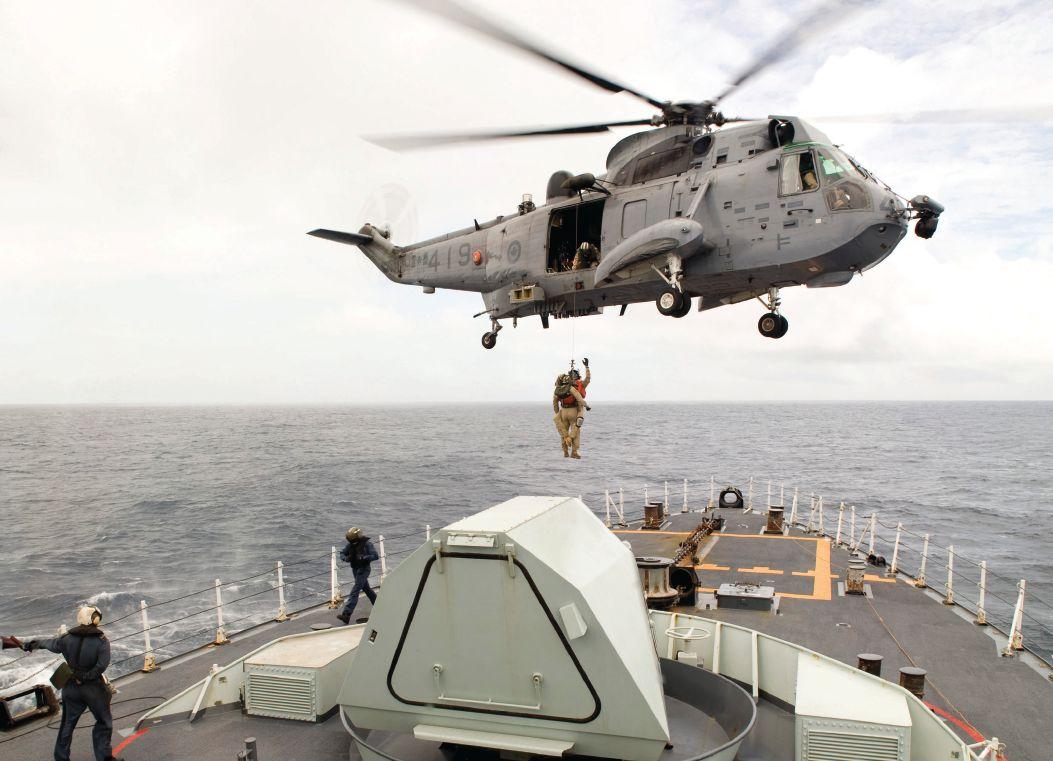
The CH-124 pre-dates Bill C-243, The Canadian Forces Reorganization Act, and so the Sikorsky HSS-2 was acquired as a Royal Canadian Navy (RCN) anti-submarine warfare (ASW) weapon system, and was designated CHSS-2 upon entering Canadian service. A maritime helicopter, it has operated from aircraft carrier Her Majesty’s Canadian Ship (HMCS) Bonaventure, St. Laurent-class destroyer escorts and Iroquois-class destroyers, auxiliary oiler
replenishment ships, and Halifax-class frigates.
In many ways, Canada’s efforts to embark a large aircraft on a small flight deck revolutionized the concept of organic air support to naval operations by showing the theoretical to be possible. Given the capabilities of a larger helicopter, crews could carry more armament, more fuel, and a suite of avionics – with capacity for growth.
Considering the rapid advancement of submarine capabilities in the 1950s, the CHSS-2 became a potent counter-punch to non-friendly submarines. Over time, it proved capable of acting as an autonomous, multi-role ASW weapon system through several permanent and temporary modifications that included radar, sonobuoy processing, GPS, automatic identification system, tactical common datalink, and various iterations of tactical navigation computers, as well as the development of aircraft-specific tactics for crews to employ.
To pay tribute to the history of Canada's esteemed maritime helicopter, Major Trevor Cadeau, 443 Maritime Helicopter Squadron
CAREERS IN AVIATION & AEROSPACE 2019
CANADIAN EDUCATION AND TRAINING RESOURCES FOR FIXED WING, ROTARY WING AND REMOTELY PILOTED SYSTEMS
CENTRE FOR AEROSPACE AND AVIATION
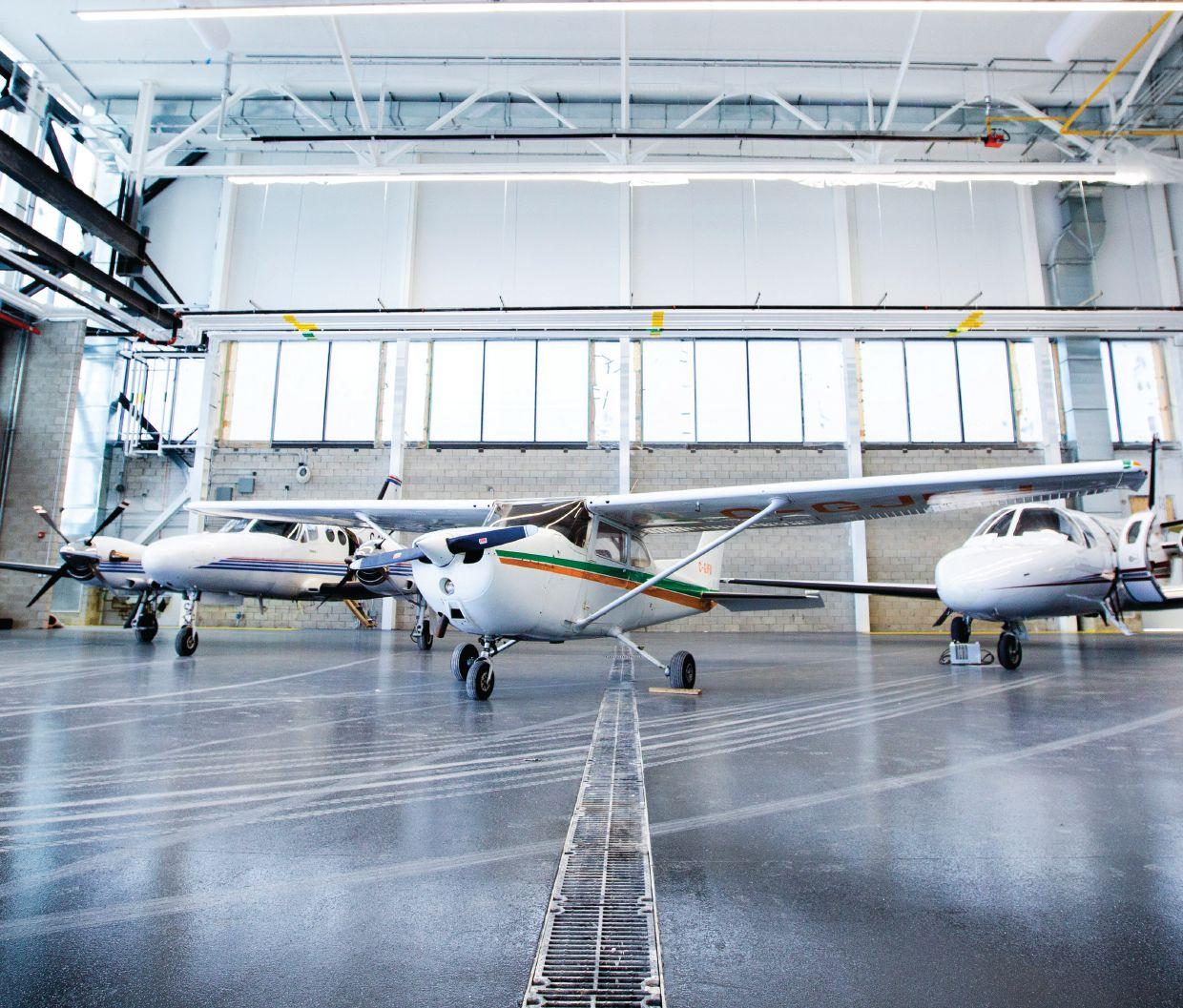
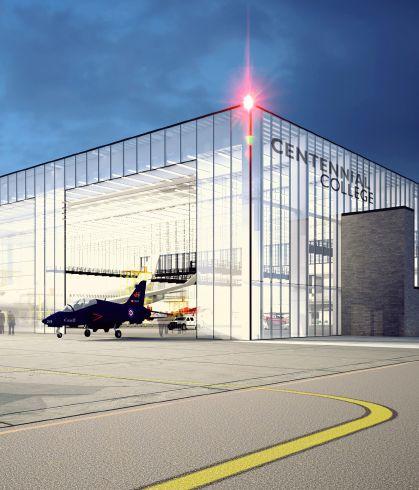
With the renovation of the historic de Havilland of Canada site in Toronto’s Downsview Park, our new Centre for Aerospace and Aviation is a sophisticated and beautifully designed facility that puts Centennial at the forefront in avionics, aircraft maintenance and aerospace manufacturing education.
Featuring two aircraft hangars, structural labs and unique programs such as Aerospace Manufacturing Engineering Technology and Aircraft Maintenance and Management, this campus is the industry’s answer to the growing demand for skilled aerospace and avionics workers.
Learn more about our new campus and programs at: centennialcollege.ca/downsview
PILOT AND TECHNICIAN
OUTLOOK TO 2037
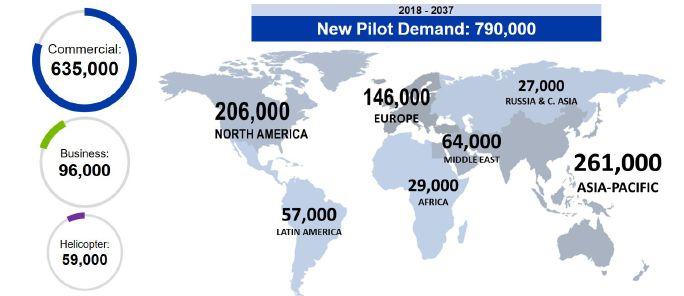
Boeing in mid-2018 released its annual Pilot & Technician Outlook report, projecting demand for 790,000 pilots over the next 20 years. This represents double the current workforce, explains the company, and what it describes as the most significant demand in the report’s nine-year history.
Boeing explains this demand is being driven by an anticipated doubling of the global commercial airplane fleet (as outlined in its recent Commercial Market Outlook), recordhigh air travel demand, and tightening labour supply. This year’s Pilot & Technician Outlook also includes data from the business aviation and civil helicopter sectors for the first time.
“Despite strong global air traffic growth, the aviation industry continues to face a pilot labour supply challenge, raising concern about the existence of a global pilot shortage in the near-term,” said Keith Cooper, vice president of training and professional services, Boeing Global Services. “An emphasis on developing the next generation of pilots is key to help mitigate this.”
Even as the commercial pilot demand forecast holding nearly steady, Boeing explains maintenance technician demand decreased slightly from 648,000 to 622,000. The company says this is primarily due to longer maintenance intervals for newer aircraft. Collectively, the business aviation and civil helicopter sectors will demand an additional 155,000 pilots and 132,000 technicians.
Boeing offers the Pilot Development Program – an accelerated training program that guides future pilots from early stage ab-initio training through type rating as a first officer – to help operators meet their growing pilot needs. Several aerospace suppliers, operators and airlines offer similar types of programs to help promote and foster careers in aviation.
Demand for commercial cabin crew increased slightly from 839,000 to 858,000, according to Boeing, due to changes in fleet mix, regulatory requirements, denser seat configurations and multi-cabin configurations. In addition, 32,000 new cabin crew will be required to support business aviation.
Over the next 20 years, the report found that the largest projected growth in cabin crew demand is in the Asia Pacific region, with a requirement for 321,000 new cabin
crew. Europe will require 187,000, North America 174,000, Middle East 97,000, Latin America 53,000, Russia/Central Asia 29,000, and Africa 29,000.
The Pilot & Technician Outlook report also forecasts, that over the next 20 years, the Asia Pacific region will lead the worldwide growth in demand for pilots, with a requirement for 261,000 new pilots. North America will require 206,000, Europe 146,000, the Middle
need for aircraft maintenance technicians.
On top of the demand for new pilots to support fleet and traffic growth, Boeing explains several regions of the world also have a large wave of pilots approaching mandatory retirement age. The report points out that airlines in Japan and the United States received a reprieve when regulations were updated to increase the mandatory pilot retirement age. However, these updated
East 64,000, Latin America 57,000, Africa 29,000 and Russia/Central Asia 27,000.
As the pilot labour supply continues to tighten around the world, Boeing explains regional markets are not only relying on recruiting pilots from outside their home locations, but also investing more to recruit, train, and develop locally sourced pilots. .
Over the next 20 years, Boeing explains the global fleet will increase from 24,400 to 48,540 airplanes, which again is a primary reason for the current unprecedented demand for pilots. The 2018 report found fleet growth rates have been especially high in emerging markets that have a comparatively small pilot pool – creating regional supply challenges for qualified, ready-to-fly pilots.
In addition, the airline industry is in its 10th consecutive year of above average air travel demand growth, which Boeing describes as creating an urgency for airlines to quickly hire pilots and put new airplanes into revenue service. . These same two factors currently creating unprecedented demand for pilots are driving an equally important
regulations provided only temporary relief, according to Boeing, which found airlines in the United States will lose more than 8,000 pilots to retirements in the next five years. This equates to more than four pilots lost from active duty per day.
In Japan, thje 2018 Pilot & Technician Outlook found that more than 50 per cent of airline captains are over the age of 45, and a wave of retirements are expected starting in 2030.
Again looking at aircraft maintenance technicians, Boeing explains that as new generation airplanes become more prominent in the global fleet, advances in airplane technology will drive an increased need for technicians skilled in avionics, composites, and digital troubleshooting. The need for maintenance personnel is largest in the Asia Pacific region, which will require 257,000 new technicians. Airlines in North America will require 189,000, Europe 132,000, the Middle East 66,000, Latin America 55,000, Africa 28,000, and Russia/Central Asia 27,000.
ON THEWEB
CIA2019
SUPPORTING THE GROWTH OF WOMEN IN CANADIAN AVIATION
The Northern Lights Aero Foundation in September 2018 presented its 10th annual Elsie MacGill Northern Lights Awards. Each year, the not-for-profit foundation honours outstanding women who have made significant contributions in Canadian aviation and aerospace.
The program is named after aviation pioneer Elsie Gregory MacGill, the world’s first female aircraft designer. She graduated from the University of Toronto’s electrical engineering program in 1927. During the second World War, MacGill was a key figure in the design and production of the Hawker Hurricane in Canada.
Anna Rusinowski of Northern Lights worked with the 2018 honourees to compile favourite stories from their journey through Canadian aviation and aerospace, including this year’s two Rising Star Award recipients, university students Larissa Chiu and Katie Gwozdecky.
RISING STAR AWARD WINNER
Larissa Chiu, President | University of British Columbia Aviation Club, and chair, Waypoint Aviation Connections Chiu enrolled into the Royal Canadian Air Cadet program and obtained her glider and private pilot licenses, becoming the only female cadet familiarization pilot in her
region. She graduated from the cadet program in May 2018 and currently serves as the president of the University of British Columbia’s Aviation Club, as well as chair of the Waypoint Aviation Connections Conference, a student-lead initiative built around aviation networking. Chiu aspires to become an Angel Flight pilot, flying passengers who are in need of medical treatments without access to nearby facilities.
A favourite story on my journey, by Larissa Chiu: Breathe. Bank left, enter downwind leg at circuit altitude. Prelanding checklist. Check. Power back, slow down airspeed, flaps down to 10 degrees. Breathe. Bank left, continue to decrease airspeed. “This is the shortest field I’ve ever seen! Now I know why Charlie said you have to come in at 60 knots to make it,” said Victor, who joined my on the flight.
Breathe. Bank left, flaps down to 30 degrees, maintain airspeed at 60 knots, keeping that approach path and attitude steady. Landing too low... ditch. Coming in too high... ditch. Making the finest adjustments in power, not teetering off that approach path. Approaching aiming point, power idle, flare right over the runway numbers, eyes on the horizon, hold off and hover just over the pavement for a smooth landing. Main wheels down. Flaps up. Breaks. Breathe.
Laying out my maps and charts, I looked over the flight plan I had prepared the night before as I anxiously awaited for my friend to arrive. I thought landing on an 1,800foot runway with both ends bound by water would be fun and challenging for an amateur pilot like myself. I ran through my flight plan again before departing for our home airport.
“Hey where are you heading off to?” asked Mike, the flight instructor. “Victoria International Airport then over to Courtney
Airpark.” He said, “Oh – that’s a short runway. Have yet to land there myself. Just you?”
“Well, Victor will be flying with me, and he’s flying the leg back.” I then saw Mike's eyes relax; he wished me good luck and left. Exiting off the taxiway at CAH3, a grin stretched across my face over the excited commotion of my friends and I after a textbook short field landing. This is why I live to fly: To share these exhilarating moments with fellow pilots, but beyond that, to inspire others to fly. It gives me great joy and sense of honour to be able to take my friends, family, cadets and anyone in the community who is willing to let me share my passion for aviation, and show them a different perspective of the world we live in.
I love finding new challenges that push me to perfect my skills. This landing was nothing out of the ordinary for any pilot, but it was one of many that pushed aside and of my stirring self-doubt. Bit by bit, every time you push beyond your own perceived capabilities, you build self-confidence. Never doubt yourself. I really believe one can do anything they set their mind to.
Gwozdecky is a private pilot and graduate of the University of Toronto’s Mechanical
RISING STAR AWARD
Katie Gwozdecky I MSc candidate, Flight Lab, University of Toronto
THE SKY IS LITERALLY THE LIMIT.
AEROSPACE EDUCATION FOR A COMPLEX WORLD.
With a 300,000 square-foot Aerospace Technology Campus, a fleet of over 20 aircraft, and an airport control simulation tower, BCIT is Canada’s largest post-secondary aerospace trainer.
Attend an upcoming info session or spend a day with us to explore our Aircraft Gas Turbine Technician, Aircraft and Aviation Maintenance, Airport Operations or Commercial Pilot programs. Learn how BCIT gives our students the best opportunity to launch their careers at bcit.ca/aerospace
CIA2019
Engineering program. She joined the University of Toronto Aerospace Team, where she served as Director of Space Systems and helped pass a student levy, raising nearly half a million dollars to fund the launch of the first amateur satellite from U of T, HERON MKII, in 2019 – a first of its kind program in Canada. Gwozdecky is now pursuing a MASc at the U of T’s Space Flight Lab.
A favourite story on my journey, by Katie Gwozdecky: The cross-country flight for my PPL was quite an experience. I had already completed my PPL flight test, so I wasn’t worried about my skills, but flying alone to two different airports is very different than performing steep turns and special landings with an instructor. I flew the trip with my primary instructor a few days prior so I was familiar with the route –CYRO -> CYGK -> CXBR -> CYRO.
When I arrived, I had to brief with a different instructor (on any other flight, no problem, but on my qualifying cross country, I was getting nervous). So, I get the plane ready, open my flight plan and I’m off to Kingston. At each airport, I had to turn off the plane and get stamped by dispatch. Leaving Kingston, I had a pretty strong headwind so I had to gun it as fast as I could.
Nobody was on dispatch answering the radio at Brockville. I had to park the plane and run around the airfield with time ticking to bring the plane back, not only before my booking expired and before my flight plan was due. After finding no one to stamp my book, I texted my primary instructor who just said to take a selfie. So of course, like any self-respecting millennial, I did. But I was late at this point and my primary said, “Get back in the plane!”
I climbed back in to get back to Ottawa airspace. At 6,000 feet heading into Ottawa Terminal airspace, I’m on the radio giving my intentions when a passenger side latc comes undone, flinging open the window. I continue communicating with terminal, while reaching over to close the window. I succeeded once, but the window opened two more times on my approach to CYRO. I decided to prop it open with an old map, which, of course, went flying!
As I descended, the window managed to stay closed, but I’m nervous it’s going to pop open the moment I turn final for runway 27 at CYRO. Thankfully, it doesn’t and I make it down. Not only did I survive my trip but I was greeted by my brother and mom with a bottle of champagne. What an incredible way to complete my PPL training.
I am so appreciative of everyone at Rockcliffe for their support, humour and optimism throughout my licensing. I was able to train there twice a day, every day, over the course of a couple months in 2016. In that time, not only did I gain a
greater appreciation for the family I found there, but also for my own – especially for my Mom, who motivated and financed me. I also discovered how adventurous and brave pilots must be to fly.
GOVERNMENT AWARD
Emily Crombez, Captain I WestJet Airlines
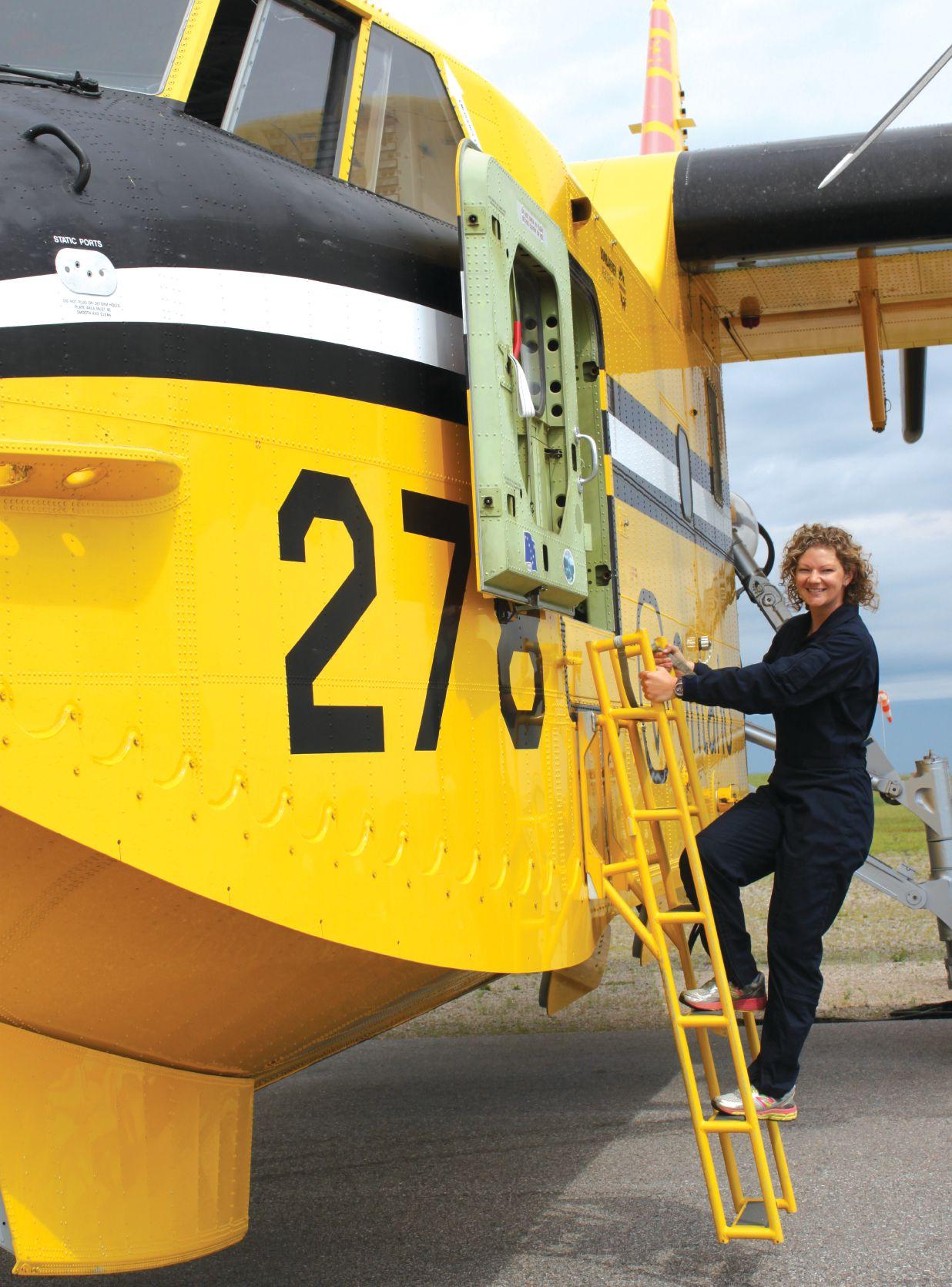
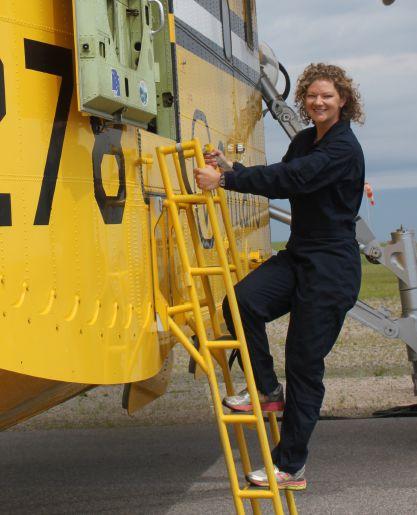
Crombez was the first female to crew a Bombardier CL-415 waterbomber for the Ontario Ministry of Natural Resources and Forestry. She graduated from Confederation College’s Aviation Flight Management program as class valedictorian and Female Athlete of the Year.
Crombez then flew as a bush pilot in Northeastern Ontario, which included flying the iconic de Havilland Beaver. She was then hired by the Ministry of Natural Resources and Forestry as a Twin Otter captain, particapting aerial rabies vaccinations and polar bear surveys. Crombez is currently flying a Boeing 737 for WestJet Airlines.
PIONEER AWARD
Major Micky Colton, Retired I Royal Canadian Air Force
Colton joined the Canadian Forces as a pilot March 1980 and graduated with wings in 1982. She was posted on the C130 Hercules at the following squadrons: 436 Trenton, 429 Winnipeg, 435 Edmonton, 424 Trenton and 426 Trenton.
Colton also served as an Air Transport Operations Duty Officer, Wing Flight Safety Officer and C130 Standards and Evaluation Officer. Colton retired from the regular force in October 2011, joining its reserves the next day. In May 2018, she retired as a Reservist Duty Operations Officer for 424 Squadron in Trenton.
FLIGHT OPERATION AWARD
Julie Beverstein, Assistant Chief Pilot I Porter Airlines
Beverstein began taking flying lessons at Billy Bishop Airport around 20 years ago, while pursuing a BSc at the University of Toronto.
She then attended Seneca College to complete initial flight training. Beverstein was a flight instructor for five years before working for Air Georgian. She joined Porter Airlines in 2009 and now serves as a line pilot and training captain. She also leads pilot recruitment initiatives at Porter.
BUSINESS AWARD
Julie Mailhot, Chief Operating Officer I Air Georgian Mailhot started with Air Canada in 1987 as a Customer Service Agent and became the company’s first female flight dispatcher. She then served as the division’s chief of operations, managing up to 80 flight dispatchers. Mailhot, who received the Art of Excellence Award from Air Canada, currently serves as COO at Air Canada Express/Air Georgian. She is also president of the Dreams Take Flight Toronto Chapter, which she has been involved in for 21 years.
EDUCATION AWARD
Dr. Alexandra Kindrat, Research Scientist Kindrat is a Montreal-based educator and research scientist who worked on a visual depth perception program with NASA’s Johnson Space Centre in Houston, including science for the International Space Station.
A private pilot, Kindrat has been a member of the teaching faculty at NASA’s High School Aerospace Scholar Program. She has also has served as co-chair of the International Astronautical Congress in the Human Space Endeavours Virtual Forum. She served as an educational consultant for the Canadian Space Agency’s advisory board focused on Canada’s future in space.
ENGINEERING AWARD
Niloofar Moradi, Turbine Design I Pratt & Whitney Canada Moradi earned her undergraduate degree in mechanical engineering from Concordia University and launched her career at Rolls Royce Canada in the energy sector. She later joined Pratt & Whitney Canada as an aerodynamicist focused on turbines.
In 2016, working at P&WC, Moradi earned her Master’s degree from École de Technologie Supérieure. She currently works in P&WC’s Turbine Mechanical Design department, designing and integrating turbine components. She received the 2018 Concordia Young Alumni Award and was a 2018 recipient in Wings magazine's Top 20 Under 40 program.
CIA2019 FLIGHT TRAINING
FIXED WING, ROTARY WING AND REMOTELY PILOTED TRAINING CENTRES BY PROVINCE
YUKON
Alkan Air Flight Academy | Whitehorse
Alkan Air is partnered with Yukon College to offer one year or 30 credits toward the school's two-year Aviation Management diploma program. The majority of ground school courses occur during the evening at Alkan Air and flight training must take place during daylight hours (exception is night time flight training). Alkan Air itself provides Private Pilot and Commercial Pilot License training. The operation provides a unique environment to learn in a northern climate, with access to an international airport and gravel strips in remote areas.
BRITISH COLUMBIA
Canadian Flight Centre | Boundary Bay & Kamloops
Canadian Flight Centre opened in 1979 at B.C.’s Boundary Bay Airport, near Vancouver, and became one of the first flight schools to specialize in instrument flying and other advanced training. CFC has trained thousands of pilots and today its students come from six continents (Antarctica excluded). Kamloops proximity to the mountains provides the opportunity for mountain checkouts.
Canadian Helicopters | Penticton Canadian Helicopters operates its flight school under the name HNZ Topflight, providing training programs to both company pilots and external clients. The school traces its origins to 1951 when it was known as the Canadian Helicopters School of Advanced Flight Training. Canadian Helicopters also provides ground based and simulation instruction for Royal Canadian Air Force pilots as a subcontractor to Allied Wings Flight Training Services. This facility is located at the Canada Wings Aviation Training Centre near Portage La Prairie, Manitoba. Other clients include the United States Navy Special Forces, Royal Canadian Mounted Police and the Royal Danish Air Force.
Chinook Helicopters | Abbotsford Chinook Helicopters began training operations in 1982 at the Abbotsford Airport, from where it continues to operate. The
Abbotsford area is well suited for year-round helicopter training. Chinook utilizes the expansive Fraser Valley for all initial flight exercises, and the Coastal Mountain Range for intermediate and advanced exercises. Due to the extensive commercial helicopter activity in southwestern British Columbia, most approaches and landings are to actual industry helipads.
Coastal Pacific Aviation | Abbotsford
Coastal Pacific Aviation, located at Abbotsford Airport, partners with The University of the Fraser Valley to combine a diploma or degree together with a Commercial Pilot’s Licence with multi-engine and instrument rating. Its programs also include Seaplane Endorsement, Private Pilot Licence, Commercial Pilot Licence, Multi-Engine Rating, Instrument Rating, Night Rating and Instructor Rating.
Glacier Air | Squamish
Glacier Air, operating from Squamish Municipal Airport, trains within the Sea-to-Sky corridor from Vancouver to Whistler, specializing in mountain training for fixed- and rotary-wing aircraft. Glacier also offers survival ground school, which includes studies in weather, flight techniques, effects of density altitude, emergencies, route planning and aircraft preparation, and survival gear.
Ocean Air Floatplanes | Victoria
Ocean Air training specializes in seaplanes for both commercial and private licenses, helping more than 300 pilots earn their Canadian Seaplane Rating since 2002. With Transport Canada Floatplane/Seaplane Endorsement training, the company provides 15- and 50-hour programs amid the Gulf Islands with close proximity to Vancouver.
Okanagan Mountain Helicopters | Kelowna
Okanagan Mountain Helicopters started as a helicopter flight training school in 2003. Its courses are designed to address commercial helicopter companies with a range of operational flying. Its facility at Kelowna International Airport also introduces students to controlled radio procedures, multiple training locations for confined areas and mountain flying introduction within a
control zone, and the best blend of controlled and uncontrolled practice areas.
Pacific Flying Club | Boundary Bay
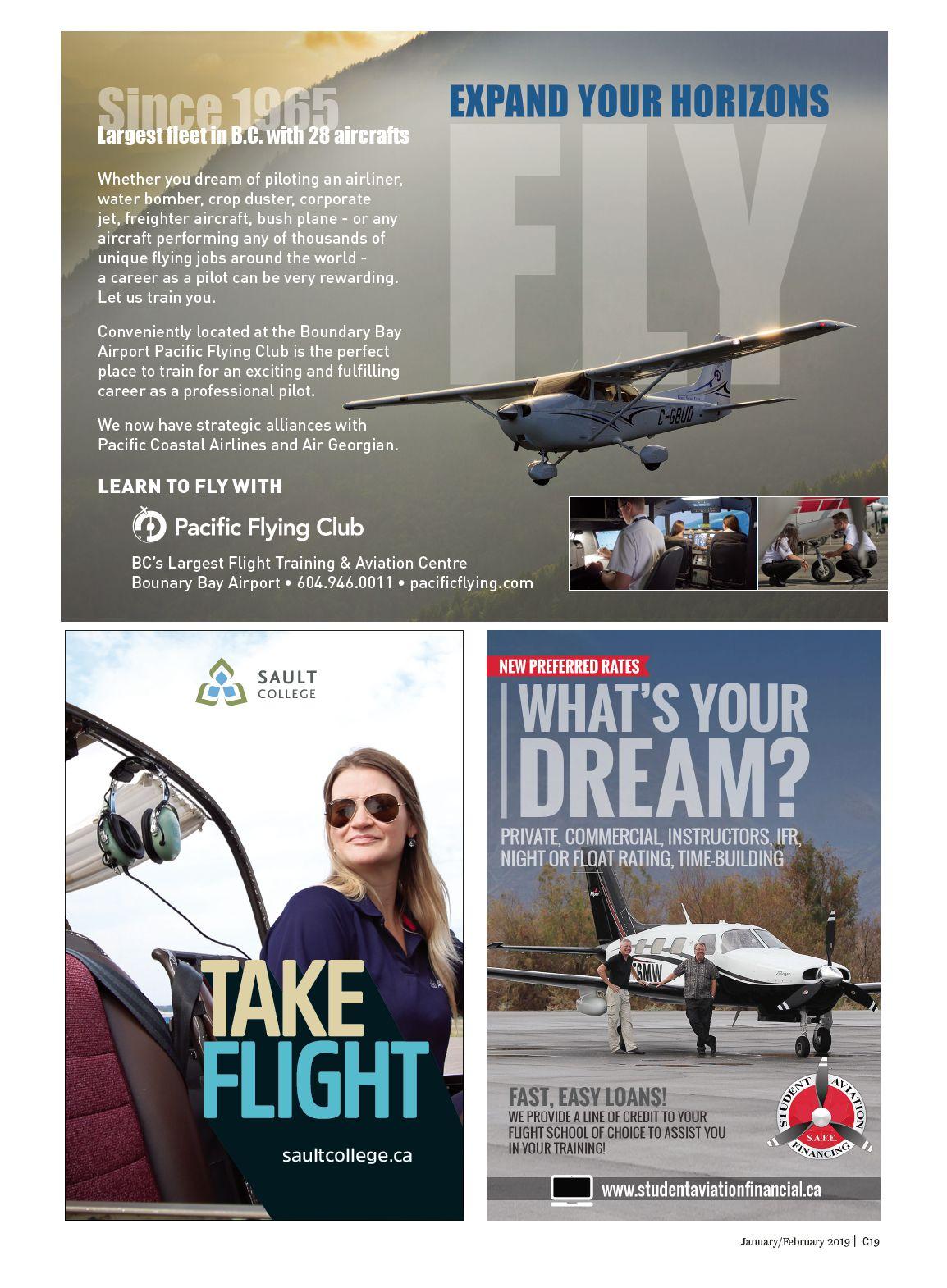
The Pacific Flying Club (PFC) was formed in 1965 as the Canadian Pacific Airlines Employees Flying Club. Students train at Boundary Bay Airport, where it has been located since 1985. The not-for-profit organization has a fleet of 27 aircraft and three simulators. It is a partner with the British Columbia Institute of Technology’s flight program.
Southern Interior Flight Centre | Kelowna
Southern Interior Flight Centre is located at Kelowna International Airport in the Okanagan Valley is also surrounded by small air strips, which allows for exposure to every level of controlled and uncontrolled environments a pilot might encounter. The operation provides instruction for Recreational, Private, Commercial, Multi-Engine, Instrument, Night, VFR OTT and Instructor Rating
Victoria Flying Club | Victoria
The Victoria Flying Club (VFC) has been training professional pilots since 1946. Located at Victoria International Airport, VFC provides a range of flight environments on a standardized fleet of Cessna 172SP Model aircraft. VFC has partnered with the University of Victoria to offer a Diploma in Business Administration – Aviation Option program.
ALBERTA
Absolute Aviation | Wetaskiwin
Absolute Aviation is a flight training and aircraft maintenance facility, largely serving students from Edmonton and central Alberta. Absolute operates out of Wetaskiwin Regional Airport in close proximity to Edmonton International. The school operates in both uncontrolled and controlled airspace with a fleet including Cessna 172 aircraft and also the Citabria 7ECA for single engine training and the PA-60 for multi-engine training.
Calgary Flight Training Centre | Olds
The Calgary Flight Training Centre (CFTC) provides training for professional and private
FLIGHT TRAINING SINCE
CIA2019
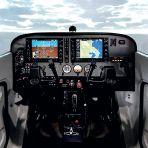
within the Olds-Disdury Airport, which itself is in an uncontrolled airspace. The school operates a fleet of new aircraft with G500 Glass Cockpit trainers.
Canadian Centre for Unmanned Vehicle Systems | Medicine Hat
The Canadian Centre for Unmanned Vehicle Systems (CCUVS) offers a 1.5-day Unmanned Vehicle Systems ground school course to both civil and commercial operators, covering topics like aerodynamics, air law and regulations, weather, and aviation chart and flight supplements. Canadian Unmanned Inc. is the exclusive UAV training provider of CCUVS.
Centennial Flight Centre | Edmonton
Centennial Flight Centre, in operation since 1967, is located at Villeneuve Airport, approximately 20 kilometres northwest of Edmonton. It provides training for Recreational Pilot Permit, Private Pilot Licence, Commercial Pilot Licence, Multi-Engine and Instrument Rating. Centennial maintains a fleet of four Cessna 172Ms (primary trainer), one Cessna 172S, one Piper Arrow and one Piper Seneca I.
Edmonton
Flying
Club
| Edmonton Edmonton Flying Club, home of the Edmonton Flight College, is located just west of Edmonton, operating out of Parkland Airport in Parkland County. Originally founded in 1927 as the Edmonton and Northern Alberta Aero Club, the club's first president was Canadian World War 1 flying ace, Wilfrid R. May. Today, the Edmonton Flying Club is a member-owned organization with a diverse fleet of aircraft and providing flight training at all levels from recreational pilots to Commercial Multi-Instrument rated, career-ready pilots.
PilotExams | Edmonton
PilotExams.com provides practice exams for Canadian pilots and student pilots. Originally created by a group of student pilots, PilotExams now develops exams with flight instructors and commercial pilots across Canada. They write thousands of practice questions focuses on Transport Canada examinations for all levels flying, whether seeking a Recreational Permit or looking at aviation as a career. Pilot Exams recently released the INRAT and AIRAT/AIRAF exams.
Mountain View Helicopters | Springbank
Mountain View Helicopters (MVH) has trained pilots for commercial or private helicopter licences from its Springbank Airport location since 1995, near Calgary International. MVH is able to provide flying weather found on the prairies and also proximity to mountains. It is a commercial operator
and able to design courses to develop skills sought by other operators.
SASKATCHEWAN
Mitchinson Flight Centre | Saskatoon
Founded in 1946, Mitchinson today is located in its own hangar at the Saskatoon John G. Diefenbaker International Airport. This allows students to fly in an ATC-controlled environment, providing experience for flying in larger centres, but without the traffic delays and congestion of a larger airport In 2013, Mitchinson was purchased by professional airline pilots who previously trained at the school.
MANITOBA
Brandon Flying Club | Brandon
The Brandon Flying Club’s Flight Academy has served the region since 1936. Located at Brandon Municipal Airport, just outside of Winnipeg, BFA offers a continuous ground school, as well as Recreational, Private, and Commercial courses. Night VFR Over the Top and Instrument Ratings are also available. Transport Canada Written Recreational, Private, Ultra Light, and Helicopter exams can be completed at the centre as well.
Harv’s Air | Steinbach
Harv’s Air is a family owned and operated flying school that also provides air taxi and aircraft maintenance from two locations, Steinbach and St. Andrews, in the Winnipeg area. In business since 1973, the company offers a range of training from Recreational Pilot Liscence to Airline Transport Licence programs.
PilotTraining | Steinbach
Founded in 1999, PilotTraining.ca provides online instruction for aviation written examinations. Courses can be used as credit toward the Transport Canada ground-school requirement. The operation is approved to conduct ground schools with Harv’s Air, its parent company. Courses are completed by using multimedia tools such as video, mp3, presentations, animations, web pages, and automatic correcting and referenced practice questions.
Prairie Helicopters | Gimli
Prairie Helicopters, which also provides charter helicopter services, describes itself as Manitoba’s only turbine helicopter flight school. Its head office and main hangar are located at the Gimli Airport approximately 45 minutes north of Winnipeg. The operation holds a fleet of Bell 407, Bell 206L3 and Bell 206B helicopters.
Winnipeg Aviation | St. Andrews
Winnipeg Aviation has provided pilot training for more than 45 years. The school is
based at St. Andrews Airport, 15 kilometres outside of Winnipeg. This provides for proximity to an international airport and uncontrolled grass strips. St. Andrews holds three runways for training with and without crosswinds.
ONTARIO
Altohelix | Markham and Oshawa
Altohelix is partnered with Toronto Airways to run full time UAV ground school and flight training with units based in two Greater Toronto locations, including Markham and Oshawa. It provides training required for the Transport Canada Special Flight Operation Certificate (SFOC) and Pilot Permits, leveraging instructors who hold Air Transport Pilot Licenses with Flight Instructor rating.
Aerocourse | Oakville
AeroCourse has provided aviation ground school training courses for more than 20 years. This includes online programs and IFR and ATPL/IATRA seminars with instruction and practical course materials. Its courses are offered in most major Canadian cities, while offering customized programs to groups upon request.
Brampton Flight Centre | Brampton
The Brampton Flight Centre (BFC) has training pilots since 1946. Located close to Toronto Pearson International Airport, BFC teaches students to fly in controlled and uncontrolled environments. BFC is controlled by the Brampton Flying Club, which owns its airport that covers almost 240 acres. It provides a one-year Professional Pilot Diploma program as a registered Private Career College, as well as industry partnerships with Air Georgian, Jazz and Porter.
Diamond Flight Centre | London
Diamond Flight Centre has been training pilots at the London International Airport since 2009 and, as a registered Private Career College (PCC) in the province of Ontario, holds a full-time staff of 16 certified flight instructors. The school also holds a fleet of 10 training aircraft manufactured in London, Ontario, by Diamond Aircraft, which develops aircraft like the 2-seat DA20 and the new 7-seat DA62.
Durham Flight Centre | Oshawa
Durham Flight Centre began operations in 1997 and now provides training, aircraft rentals, and sightseeing services. Located in the Enterprise Airlines buildings on the grounds of Oshawa Municipal Airport, providing access to nearby modern aviation infrastructure. It is a Transport Canadaregistered flight training operation and also registered as a Private Career College in Ontario.
CIA2019
Genesis Flight College | Collingwood
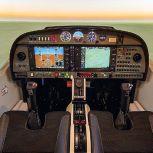
Genesis Flight College is a registered Private Career College providing a one-year dipoloma program. Located at Collingwood Regional Airport, Genesis owns the real estate and buildings on the field in which it operates. Leveraging its fleet of Diamond DA40 and DA42 aircraft, Genesis runs 100 per cent of its training with glass cockpits with electronic flight information systems. Students are exposed to these systems on the first flight and learn deeper functions in each successive training module.
Great
Lakes Helicopter | Waterloo
Great Lakes Helicopter is a Transport Canada-approved, Ontario Private Career College, while also offering charters. Based at the Region of Waterloo International Airport, the operation offers training yearround and focuses on both commercial and private licensing. Great Lakes is partnered Conestoga College for a program that provides both a Commercial Helicopter Pilot's Licence and a diploma.
Helicopters Canada | North Bay Helicopters Canada for approximately 20 years has provided commercial and private flight training to both domestic and international students. Its training area is situated at the Jack Garland Airport, which provides access to heavily forested areas with lakes and rivers for developing the skills needed for a large sector of the Canadian helicopter industry.
Ottawa
Aviation Services | Ottawa
Ottawa Aviation Services is a professional flight training and maintenance operation based out of Ottawa International Airport. The operation, registered as a Private Career College in Ontario, provides commercial and private training. The operation provides training with modern glass-cockpit, multi-engine and aerobatic aircraft, and simulators.
Ottawa Flight College | Ottawa
The Ottawa Flying Club, operating as the Ottawa Flight College (OFC) has been training pilots since 1928. Located at Ottawa MacDonald Cartier International Airport, the Ottawa Flying club offers a controlled zone environment for learning IFR procedures, with access to uncontrolled airports in the area.
St. Thomas Flight Centre | St. Thomas Established in 1996, the St. Thomas Flight Centre offers flight training from Recreational Pilot Permit through to Commercial Pilot Licence and Multi-Engine Instrument Ratings. The centre holds Private Career College status and operates out of St. Thomas Airport in an uncongested flight training environment. School offices are located
in the main terminal building and ground school classes are held on site. The Flight Centre has two additional satellite locations at Chatham airport and London airport.
Spectrum Airways | Burlington
Spectrum Airways has been training pilots for more than 40 years. The training facility is situated at the heart of Burlington Executive Airport, one of the busiest airparks in Ontario. The airport averages 30 flights on weekdays. Registered as a Private Career College, Spectrum’s training programs include Private Pilot License, Commercial Pilot License, Night Rating, Multi-Engine Rating, Instrument Rating/Multi Instrument Rating and Instructor Rating.
Toronto Airways | Oshawa
Toronto Airways has been providing flight training services beginning in 1963 from the Buttonville Municipal Airport. In 1998, Toronto Airways purchased Canadian Flight Academy, as a growing flight training provider located at the Oshawa Executive Airport. In 2016, Toronto Airways moved into a new facility at Oshawa Executive Airport. With a full compliment of ground school courses, the training operation’s services allow for a student to obtain either a Private Pilot and Commercial Pilot License. The operation has access to more than 15 training aircraft and two advanced simulators.
Waterloo Wellington Flight Centre | Waterloo
Waterloo Wellington Flight Centre (WWFC) is located at the Region of Waterloo International Airport. The training centre is partnered with Conestoga College and the University of Waterloo to offer diploma and degree programs. WWFC also offers a Remotely Piloted Aircraft System (RPAS) course designed to introduce people to regulations, operation and maintenance of UAVs/drones. The course offers customized training up-to-date information based on new regulations from Transport Canada.
QUEBEC
Air Richelieu | Montreal
Air Richelieu is an accredited flight training centre with facilities that include multimedia classrooms and flight preparation rooms. The school is located at St-Hubert Airport, approximately 20 minutes from Montreal, and controlled by the Montreal Flying Club. Programs allow students to earn commercial and private pilot licences, along with the multi-engine, instruments and night rating, as well as a diploma recognized by the Ministry of Higher Education, Research and Science of Quebec.
CQFA Aviation Industry Training | Montreal
Established in the late-1980s, the CQFA offers more than 50 different on-demand aviation courses, providing assistance for a range of training like Accredited Check Pilot, Crew Resource Management, Flight Crew Training, GPS, CFIT Avoidance Training, and Proficiency Checks. Some courses are also available via the Internet. CQFA has been training UAV pilots since 2007, offering a range of courses training for recreational and professional pilots. This includes an introduction to the Canadian regulatory framework, a ground school, several advanced workshops, applied human factors and risk management, in addition to practical courses.
Dorval Aviation | Montreal
Dorval Aviation is a commercial air operator and a flight training centre located at the Montreal International Airport. We operate a diversified fleet of aircraft that can fulfill all of your traveling requirements, or flight training needs. It provides courses from simple introduction to aviation to Commercial Pilot License, as well as an internship program. Dorval Aviation also provides specialized recurrent training courses for commercial air operators, as per Canadian Regulations.
Laurentide Aviation | Montreal
Laurentide Aviation has been providing professional flight training since 1946. Based at Les Cedres Aerodrome, an uncontrolled airport, approximately 25 kilometres west of Montreal, Laurentide offers bilingual inflight and ground school instruction, as well as recreational, private and commerical pilot lisence courses.
NOVA SCOTIA
Debert Flight Centre | Truro
Debert Flight Centre is part of the Truro Flying Club and operates out of Debert Airport, which has been home to the club since 1972. Debert Airport is an uncontrolled air space located less than is less than five minutes flight time from training areas. It has an inhouse Designated Flight Test Examiner for private and commercial licenses, so that students do not have to travel to another airport to take their flight test.
NEWFOUNDLAND
GFT Aerospace College | Gander
GFT Aerospace has provided flight training since 1992, evolving from its roots as EVAS Air (Exploits Valley Air Services). Its facility is located at Gander International Airport. The aerospace college provides a fleet of 17 aircraft, including a helicopter, a flight simulator, large classrooms, individual briefing rooms, and a large technical library for students.
AVIATION TECHNICIAN COLLEGES
MAINTENANCE, REPAIR AND OVERHAUL (MRO) EDUCATION BY PROVINCE
BRITISH COLUMBIA
British Columbia Institute of Technology | Vancouver
British Columbia Institute of Technology (BCIT) School of Transportation prepares students for careers as Aircraft Maintenance Engineers, Aviation Maintenance Technicians (Avionics) and Gas Turbine/ Jet Engine Technicians. Its Aerospace Technology Campus is located at the Vancouver International Airport and features a 40,000-square-foot hangar that holds BCIT’s fleet of light piston, turboprop, corporate and jet transport aircraft, as well as light and medium helicopters. The school is currently developing augmented reality/virtual reality (AR/VR) training tools to help deliver accredited programs to provide skills needed for the transport industry. BCIT’s Airport Operations diploma program is designed for the demands of airport operation environments. The 16-month Airport Operations program provides students with a comprehensive, interdisciplinary program of study. BCIT also offers an online Airport Operations Part-time studies Associate Certificate.
Northern Lights College | Dawson Creek
Northern Lights College (NLC) opened the Aerospace Centre of Excellence in 1981 at its Dawson Creek Campus. Students and current aircraft maintenance engineers receive hands-on training in a 26,000-square-foot hangar. Its fleet includes helicopters such as a Robinson R44, MD500D, AS350D, Hughes 300C, Bell 205 and 206; and fixed-wing airplanes like a Cessna 180, Cessna 310, Piper Aztec 250, King Air B90, and British Aerospace JetStream 31.
ALBERTA
SAIT Polytechnic | Calgary
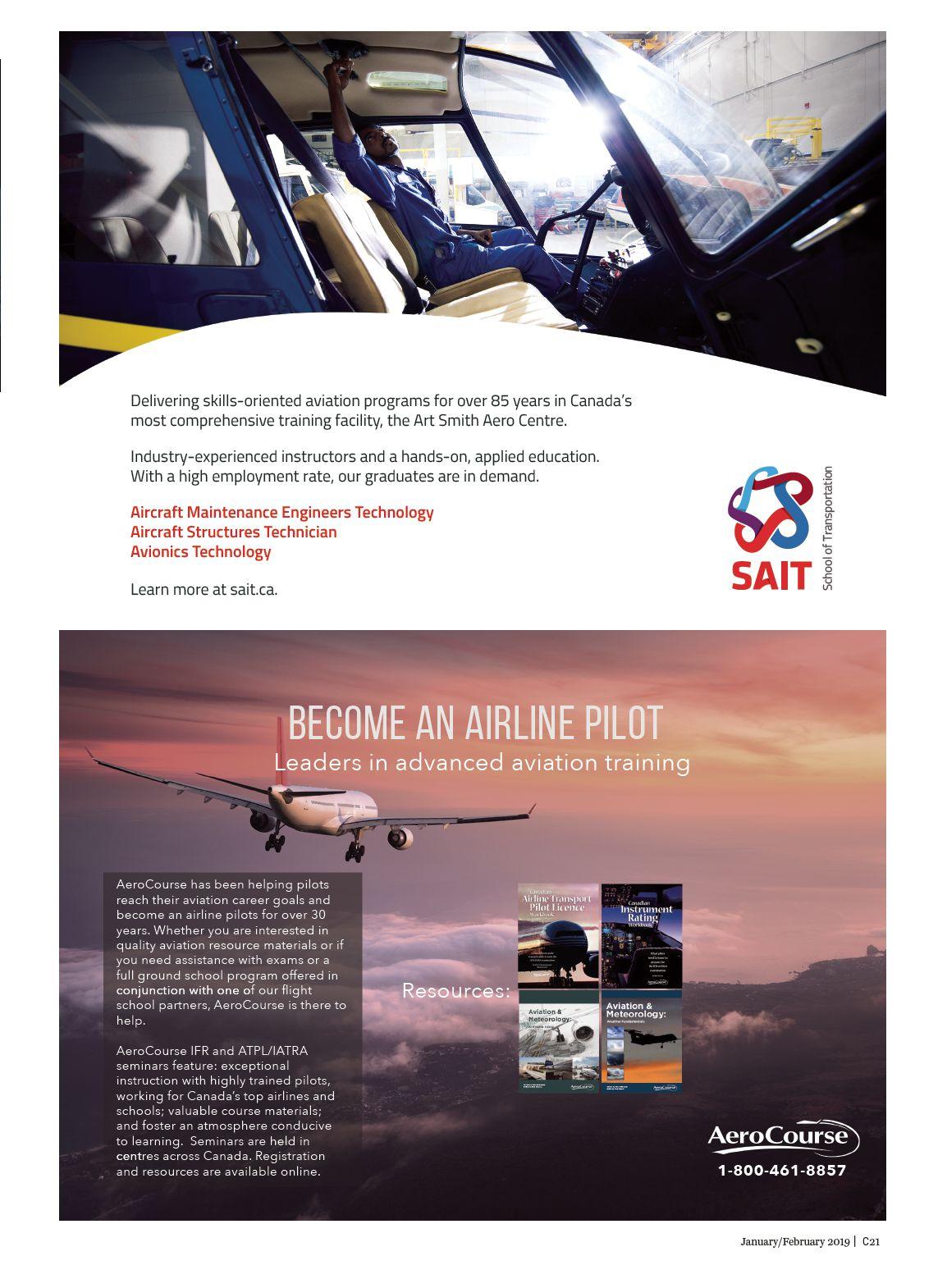
The Southern Alberta Institute of Technology (SAIT) Polytechnic is a member of
Polytechnics Canada, a national alliance of research-intensive colleges and institutes of technology. SAIT’s School of Transportation provides hands-on, practical education for the automotive, aviation, heavy equipment and rail industries. This includes two-year diploma programs called Aircraft Maintenance Engineers Technology and Avionics Technology. The aircraft maintenance program provides skills for the service and repair of airplanes and helicopters — with the eventual opportunity to obtain an Aircraft Maintenance Engineer license.
The avionics technician programme, also leading to an Aircraft Maintenance Engineer license, provides skills to repair and maintain the electrical and electronic systems (communication, navigation and data systems) in airplanes and helicopters. SAIT also provides a one-year Aircraft Structures Technician program focused on the modification and repair of aircraft, helicopters and their structural components, again leading to an Aircraft Maintenance Engineer license. . All programs are taught at the Art Smith Aero Centre for Training and Technology, located at Calgary International Airport.
SASKATCHEWAN
The Saskatchewan Indian Institute of Technologies | Saskatoon
The Saskatchewan Indian Institute of Technologies (SIIT) was created in response to the need for quality, post-secondary education for First Nations people. The SIIT Aircraft Maintenance Engineer program is open to First Nation and nonFirst Nation students, and delivers the knowledge and skills required for eligibility to apply as an apprentice in the aircraft maintenance industry. This includes learning to troubleshoot, maintain, repair and overhaul aircraft to meet Transport Canada’s standards.
This is a 2-year diploma program that provides credit for 19 months of the 48 months aviation maintenance apprenticeship experience required to obtain a
Category M License. IIT AME students attend this program at the Saskatoon Aviation Learning Centre at the Saskatoon Airport for classes and hands-on training.
MANITOBA
Red River College | Winnipeg
Red River College (RRC) Aircraft Maintenance Engineer program is designed to develop the knowledge and skills in maintenance of both large and small airplanes and helicopters. It is designed to develop skills in maintenance of both airplanes and helicopters. Time in the program is split between the study of aircraft maintenance theory and practical projects. Upon graduation, if the student attained Transport Canada approved training status, they will be granted 19 months of the 48 months aviation maintenance experience and the three technical examinations required to obtain an AME license.
After graduation, students are required to gain on-the-job work experience for the balance of the 48-month Transport Canada requirement and write the CARs exam. Once these requirements are meet, the student will be eligible for a Transport Canada M license. This program has been accredited by the Canadian Forces for their Non-Commissioned Member Subsidized Education Plan. RRC also offers programs called Aerospace Manufacturing and Aircraft Structural Repair Technician.
ONTARIO
Algonquin
College | Ottawa
The School of Advanced Technology at Algonquin College features With 23 laboratories, including precision machining, automotive, electronics, optical fiber, high-powered laser labs, mechanical modeling and element analysis, industrial controls, aviation maintenance and robotics labs. The includes two diploma programs in the school’s Transportation Technology segment called Aircraft Maintenance Technician and Aviation
CIA2019
Management, General Arts and Science –both running for two years.
Canadore College | North Bay Canadore has been involved in aviation training for more than 40 years. Its School of Aviation Technology provides two-year. diploma programs, Aviation Technician -Aircraft maintenance. This includes a dedicated aviation facility with courses delivered at the college’s Aviation Campus at Jack Garland Airport. Students learn to troubleshoot aircraft components and systems, including piston and turbine engines, for fixed- and rotary-wing aircraft. The program is approved by Transport Canada and graduates receive 18 months of accreditation towards a Transport Canada-issued Aircraft Maintenance Engineer's Licence, Category M.
In addition to maintenance and repair, students in Canadore’s School of Aviation Technology can learn aerodynamics for fixed wing and rotary wing aircraft, gas turbine and reciprocating engines, aircraft handling and taxiing, power and drive train component maintenance, sheet metal structures and repairs, composite structures and repairs, communication and navigation systems, and electrical systems
Centennial College | Toronto Centennial College’s Aerospace programs offered within the School of Transportation includes Aviation Technician (Aircraft Maintenance and Avionics Maintenance) programs and Aviation Technology (Aircraft Maintenance & Management and Avionics Maintenance & Management) programs. In the fall of 2018, Centennial College opened its Centre for Aerospace and Aviation at Toronto’s Downsview Park in the relocation of its Aviation Technician programs, as well as the related aircraft and equipment from the Ashtonbee Campus Hangar in Scarborough. The new campus provides additional instruction space for the existing programs, as well as new programs in Aerospace Manufacturing delivered by the School of Engineering Technology and Applied Science.
The four-acre Downsview campus repurposes the historic de Havilland of Canada building with selective demolition and new construction to create approximately 138,000 square feet of instruction space. The $72-million project includes a new hangar large enough to accommodate today's commercial jets, as well as new classrooms, laboratory space, workshops, offices, a library and, for the first time, access to working runways.
The Aircraft Maintenance program provides mechanical, electrical, electronic and other science skills related to aircraft maintenance. It emphasizes
the repair of electrical and mechanical systems within the aircraft. Students will study hydraulics, fuels, environmental systems, engines, flight controls, landing gear system and airframes and structure. The Avionics Maintenance program covers aircraft communications, navigation and data systems, and inspection and troubleshooting of basic electronics circuits. In this program, a significant portion of time is spent on practical applications in labs.
Confederation College | Thunder Bay
Confederation College offers various aerospace and aviation technician courses at its Aviation Centre of Excellence (ACE) at Thunder Bay International Airport. The two-year Aviation Technician, Aircraft Maintenance, diploma program allows students to receive 18-months credit towards experience requirements for an Aircraft Maintenance Engineer license, Category M, with 95 per cent attendance record. Topics include aircraft construction and science, electrical and electronics, airframe systems and inspection, rotary wing (helicopter) maintenance and structural repair.
The 2.5-year Aviation, Flight Management, advanced diploma program includes private pilot flight training that begins the first week of first semester right from the school’s hangar at the Thunder Bay International Airport. The program holds 13 aircraft, three flight simulators and industry-based instruction to learn skills required to work as a commercial pilot.
Fanshawe College | London
Fanshawe’s Norton Wolf School of Aviation Technology is located at the London International Airport and holds an 80,000-square-foot hangar. The school specializes in offering Transport Canada-approved diplomas in Aircraft and Avionics maintenance. It also provides new graduate certificate programs in Aerospace Manufacturing and Remotely Piloted Aerial Systems Operations.
The school’s Aviation Technician – Avionic Maintenance program covers all aspects of aircraft avionics systems used in general aviation, corporate, charter transport category aircraft and helicopters. The school focuses on aircraft structural repair and applied aerospace manufacturing.
NOVA SCOTIA
Nova Scotia Community College | Dartmouth
The Nova Scotia Community College’s (NSCC) Aviation Institute is located in
a 43,000-square-foot training facility. The school provides a two-year Aircraft Maintenance Engineer, Mechanical, diploma program. Courses focus on aircraft servicing and ground handling functions, Canadian Aviation Regulations, using specialized equipment to repair and maintain aircraft systems, interpret wiring diagrams and aircraft drawings, and assess sheet metal damage and appropriate repair procedures.
The school also provides a one-year Aircraft Maintenance Engineer, Structures, certificate program to develop skills for the repair and maintenance of airframes and associated systems for fixed-wing and rotary-wing aircraft. This includes the area of aircraft metal and composite assembly and repair, skills eessential to the maintenance, repair, overhaul, inspection and testing of aircraft structural systems. Graduates will be able to assess damage and corrosion of aircraft structures and repair, replace and modify sheet metal, fabric surfaces and composite and wood structures.
PRINCE EDWARD ISLAND
Holland College | Summerside Holland College provides a one-year Aircraft Turbine Technican certificate program at its Summerside Waterfront Campus in PEI. Aircraft turbine technicians inspect aircraft engines, troubleshoot issues with mechanical systems, and modify, repair, and test turbine engines.
Students learn techniques, procedures, and documentation requirements with an emphasis on practical training using a variety of turbine engines. This includes the Pratt and Whitney 100 series turbine engine used on the de Havilland Dash 8 aircraft, the Pratt and Whitney PT6 engine, and the Rolls Royce 250 engine.
NEWFOUNDLAND
College of the North Atlantic | Gander
The College of the North Atlantic (CNA) is part of the Lufthansa Technical Training network of approved schools. The two-year Aircraft Maintenance Engineering Technician program is located at the school’s Gander campus in Newfoundland.
Graduates of this program earn North American and European certification and can attend the Institute of Technology in Carlow, Ireland, to earn an undergraduate degree in Aircraft Systems Maintenance with only one additional year of school. The one-year Aircraft Structural Repair Technician program also takes place at the Gandar campus.
Two-year
Hands-on Experiences
Apply Now
EMPLOYERS:
CIA2019 UNIVERSITY PROGRAMS IN FIELDS OF AVIATION AND AEROSPACE
UNIVERSITY-LED EDUCATION BY PROVINCE
BRITISH COLUMBIA
Fraser Valley University | Fraser Valley
Completion of the program provides students with a university degree, private and commercial pilot licenses certified by Transport Canada, supplemented by both night and multi-engine instrument ratings. In fourth year, students have the option to specialize in either heavy jet transport operations or professional flight instruction. In the classroom, students gain knowledge necessary to pass Transport Canada examinations, cover human factors affecting pilot decisionmaking, and learn how to be a member of an airline crew. UFV provides an opportunity to finish this training in four years, when it can typically take up to six years to complete.
ALBERTA
MacEwan University | Edmonton
MacEwan’s partnership with Transport Canda allows allows students to earn a Business Management diploma with a specialization in aviation management. To complete the Aviation major, students must apply to the Business Management program. Upon graduation students declare the Aviation major. Students can block transfer credits to the third year of MacEwan's Bachelor of Commerce.
Mount Royal University | Calgary
Mount Royal University’s Aviation Diploma program combines an academic diploma with the flight training needed to become a commercial pilot. Students require a completed Private Pilot's License in order to begin the program. Practical flying experience is accumulated on Mount Royal's fleet
of aircraft consisting of Cessna single-engine aircraft and Seneca multi-engine aircraft. The fleet, located at the school’s Springbank Hangar at the nearby Springbank Airport, is equipped with the advanced GPS avionics. Mount Royal also provides simulator training on an ALSIM ALX Flight Training Device.
ONTARIO
Carleton University | Ottawa
Carleton’s Aerospace Engineering program emphasizes the development of analytical, computational, and hands-on engineering and design skills related to the aerospace field. The broad range of topics and applications included in this discipline are covered in four main streams: Aerodynamics (aerospace propulsion and atmospheric flight); Aerospace Structures (lightweight vehicles for flight and space travel); Aerospace Electronics and Systems (aircraft control, communication and navigation systems); and Space Systems Design (astronautics and space/satellite technology). All four streams emphasize the development of practical and problem-solving skills based on hands-on laboratory and design work.
Ryerson University | Toronto
Ryerson’s Aerospace Engineering bachelor’s program provides students with the opportunity to study aerodynamics, stress analysis and structural design, flight mechanics, stability and control, aircraft performance, propulsion, avionics and systems. Students also learn to design, test, manufacture and maintain aircraft or spacecraft, as well as vehicles for transport on land and water. The program provides knowledge to work in fields involving commercial and military aircraft
or spacecraft engineering; space exploration, teaching, research, military service; air transportation and space-based telecommunications. Pursue a graduate degree (MEng, MASc, PhD) in aerospace engineering.
University of Toronto | Toronto
Students who wish to study Aerospace Science and Engineering at the University of Toronto enroll in the four-year undergraduate Engineering Science program. In the first two years, this program emphasizes mathematics, chemistry, physics and computing. Towards the end of the second year of Engineering Science, students must select a speciality option for their third and fourth years of study. This includes an Aerospace Engineering option, taught primarily by UTIAS professors. UTIAS is the university’s graduate program focused on scientific exploration and aerospace research. UTIAS faculty members are international leaders in computational aerodynamics, micro and nanosatellites, combustion and propulsion, robotics for space and terrestrial applications, and in other fields of aerospace engineering.
University of Waterloo | Waterloo
Established in 2007, Waterloo’s Aviation program allows students to earn a Bachelor of Science degree and, working with the Waterloo Wellington Flight Centre, a Commercial Pilot Licence. Welcoming approximately 45 new people each year, Students in the Aviation program have a choice of pursuing either the Geography and Aviation (BES) and Science and Aviation (BSc). In the BSc program students will have a further choice of specializing in either Earth Sciences or Physics or remaining in the broadly based unspecialized program. Students in the BES program will automatically receive a Geomatics option.
University of Windsor | Windsor
Windsor’s Aeronautics Leadership program combines a liberal arts and leadershipfocused education with commercial flight training. Students enroll in a Bachelor of Arts, Liberal Arts and Professional Studies. This includes courses in arts, humanities, social sciences, business, science, and engineering. This is coupled with flight training run by industry partner Journey Air, at Windsor International Airport.
Western University | London
Western’s Commercial Aviation Management program allows students to earn a Bachelor’s degree in Management and Organizational Studies, with specialized courses in aviation management. Within the program, students have the option to combine a degree with professional pilot flight training, ultimately receiving a Transport Canada approved Integrated Commercial Pilot’s License (ICPL) with Multi-Engine and Instrument Ratings.
York University | Toronto
The Space Engineering program at York’s Lassonde School of Engineering provides an Beng degree. It focuses on areas of study from orbit control and space-based optics to ground station communications and
robotics. Students learn about the management of complex multidisciplinary projects, including missions within the solar system. The co-op program allows students to gain professional experience.
QUEBEC
Concordia University | Montreal
Concordia’s Aerospace Engineering (BEng) program is offered by the Department of Mechanical, Industrial and Aerospace Engineering, Gina Cody School of Engineering and Computer Science. The program allows students to specialize in Aerospace and Propulsion, Aerospace Structures and Materials, or Avionics and Aerospace Systems. The program provides access to areas like mechanical, electrical, computer, and industrial engineering to the conception, design, implementation and operation of aerospace systems and processes.
Ecole Polytechnique | Montreal
Ecole Polytechnique de Montreal provides undergraduate and graduate Aerospace engineering programs. Students in the graduate program follow at least two specialization courses (with the exclusion of case studies) given by the other participating institutions. Candidates who successfully
complete the professional master’s in Aerospace Engineering program obtain a Master of Engineering (MEng) degree.
McGill University | Montreal
Established in 1951, McGill’s Institute of Air & Space Law has trained more than. 1,000 specialists in air and space law from all over the world. Today, IASL graduates today serve in some 120 nations around the world. The program also holds a research arm called the Centre for Research in Air & Space Law.
NEW BRUNSWICK
Mount Allison University | Moncton
The Aviation program is a degree-level educational platform combining professional flight training. The flying portion of the program is offered through a partnership with Moncton Flight College. In the first year, students will take introductory courses in mathematics, computer science, physics and geography. Flight training begins in the second year, with students continuing to take three courses per term on campus and ground school training in second, third, and fourth year. Students complete more than 200 hours of flying and graduate with a Commercial Pilot Licence, multi-engine class rating and Group 1 instrument rating.
DOWNSVIEW AEROSPACE INNOVATION AND RESEARCH CONSORTIUM
Leaders from Canada’s aviation and aerospace sector in June 2018 gathered at Downsview Park in Toronto to celebrate investments made into what will become one of North America’s leading aerospace hubs. The event took place in a heritage aviation building that has been transformed into an aircraft cabin interior research facility of Ryerson University’s Aerospace Engineering program.
Across the street sits Centennial College’s newly Downsview campus dedicated to aviation and aerospace. Scheduled to open in January 2019 as part of a $72 million investment, the college’s new four-acre campus will include approximately 138,000 square feet of instruction space and a new hangar large enough to accommodate today’s commercial jets.
“We expect to welcome our students here for the start of winter semester this coming January, after we move all of our aircraft and related equipment from our small hangar at Ashtonbee Campus to this historic facility, which served as the headquarters of de Havilland of Canada,” said Ann Buller, President of Centennial College. “Our new space will allow us to expand our aviation technician AME programs and introduce new ones in aerospace manufacturing, which will triple our aviation-related enrolment to more than 1,000 full-time students.”
Chris Damaren, Director of the University of Toronto Institute for Aerospace Studies (UTIAS), then explained to attendees that UTIAS, recognized as one of the world’s leading aerospace research programs, is working on plans to establish facilities at the Downsview aerospace hub within the next few years. Development of the new Ontario aerospace hub is being led by the Downsview Aerospace Innovation and Research Consortium (DAIR).
Francois Caza and Mike Nadolski of Bombardier began the event by reinforcing the company’s continuing commitment to the DAIR initiative. “Bombardier is investing in the continued growth and competitiveness of the province’s aerospace sector through multi-million-dollar contributions, research, training activities and by supporting the establishment of an aerospace hub in Toronto’s Downsview area,” said Caza, VP, product development and chief engineer, aerospace, Bombardier.
Bombardier will provide $1.5 million over five years to fund core research at the Aeromaterials Research Centre, to be established at the DAIR Innovation Centre. As a founding member of the DAIR Consortium, Bombardier will also provide $900,000 over the next three years to support formal operations of the Innovation Centre. The centre will bring together industry and academic partners in a collaborative space for aerospace training and education, R&D, and sector advisory services. Bombardier will also contribute an aggregate $1 million over five years for the creation of two Aerospace Research Centres at Ryerson University and the University of Toronto. These centres will focus on research in the areas of advanced interiors and acoustics.
“With their five-year commitment to support the Ryerson cabin interiors research team, Bombardier is taking action to follow through on our collective mandate to catalyze research and development in an aerospace hub at Downsview Park, advance the commercialization of next generation commercially available business jets and commuter aircraft, and empower Ryerson’s cabin interior research team to solidify its role in this space,” said Thomas Duever, Dean of Ryerson’s Faculty of Engineering & Architectural Science.
Bombardier will also provide funding to
Centennial College for the completion of its Landing Gear Research project, while extending its existing training program to train a minimum of 50 individuals for each of the next three years at Centennial College’s Downsview Campus.
“I am thrilled with the ongoing support and leadership demonstrated by Bombardier and the opportunity this will unlock for aerospace in Ontario,” said Andrew Petrou, executive director, DAIR, and director, Strategic initiatives and external relations, Centennial College. “This commitment will enable the growth of the Downsview Aerospace Hub through support for training and research, DAIR Innovation Centre physical space and operations, and preservation of the site’s aerospace heritage.”
Finally, in recognition of Downsview’s historical importance in the development of the aerospace industry in Ontario, Bombardier explains it will be providing a total of $2.5 million in capital funding to refurbish the heritage Moth Building, which will be the cornerstone of the DAIR Innovation Centre.
The Canadian headquarters of de Havilland Aircraft of the United Kingdom was established at Downsview airfield just north of Toronto, whose brick buildings and hangars housed an assembly facility for the Moth training plane and the plywood Mosquito bomber. The long-dormant facility will become Centennial College’s fifth campus. The Centre for Aerospace and Aviation will be the new home of Centennial’s aerospace faculty, aircraft and related equipment relocated from Ashtonbee Campus in January.
Centennial College is a founding member of the DAIR consortium, which also includes academic and industry partners like the University of Toronto Institute for Aerospace Studies, Ryerson University, York University, Bombardier, Safran Landing Systems, MDA and others.
CIA2019
COLLEGE FLIGHT AND OPERATIONAL PROGRAMS
CANADIAN COLLEGE OPTIONS BY PROVINCE
YUKON
Yukon College | Whitehorse
The Aviation Management diploma program at Yukon comprises a block transfer of pilot training credentials earned at Alkan Air (or other recognized flight schools) that equals one year or 30 credits and an additional 30 credits earned at Yukon. Students are expected to earn a Commercial Pilot License while concurrently earning academic credits. However, students may enter the program with some pilot training (a Private Pilot License, for example) or a completed commercial license.
Students may complete the ground school and flight training component of the Aviation Management diploma in a flexible manner. The majority of ground school courses occur during the evening at Alkan Air and flight training must take place during daylight hours (exception is night time flight training). All flight training components are organized directly with Alkan Air Flight School. Students receive a Diploma of Aviation Management after completing Transport Canada’s Commercial Pilot License, Yukon First Nation core competency, a total of 10 academic courses (30 credits) over a two-year period, as well as a 40-hour, non-credit course in Advanced Wilderness and Remote First Aid/CPR-C.
BRITISH COLUMBIA
British Columbia Institute of Technology | Burnaby
The British Columbia Institute of Technology (BCIT) is partnered with Pacific Flying Club to provide students with the skill set to become airline pilots. The program is fully integrated, combining flight training with industry focused academic training. Flight training for fixed-wing aircraft is conducted at Pacific Sky Aviation’s flight school at Boundary Bay Airport, outside of Vancouver.
Rotary-wing flight training, for those interested in becoming helicopter pilots, is provided by Chinook Helicopters in Abbotsford.
BCIT’s Airport Operations diploma program is designed for the demands of airport operation environments. The 16-month Airport Operations program provides students with a comprehensive, interdisciplinary program of study. BCIT also offers an online Airport Operations Part-time studies Associate Certificate.
College of New Caledonia | New Caledonia
The College of New Caledonia provides an Aviation Business diploma program, which accepts applications for continuous intake. The program is designed to provide trained single engine VFR pilots for entry-level pilot in command positions with Canada’s northern air carriers and with similar air taxi companies operating in difficult conditions around the world.
The program centers around a PilotPlus approach to providing a supply of pilots to Canada's northern air carrier industry. If taken in the minimum possible time, the ABD is a five semester program running over 24 months, with a four month break between semesters two and three. The program includes all training for both the Private and Commercial pilot licenses and float rating, as well as 13 university level business courses. In addition to pilot positions within commercial, business, military and police avation, the school’s diploma program also provides skills for managerial positions, air traffic control services, aviation marketing and sales, and aviation entrepreneurship.
Douglas College | New Westminster
Douglas College’s Associate of Arts Degree for Future Professional Pilots is a program for students who wish to continue to a career in the aviation industry. This program is jointly offered with Professional Flight
Centre, located at Boundary Bay Airport in Delta. Douglas provides the academic instruction leading to the Associate of Arts Degree and Professional Flight Centre provides the ground and flying instruction with enough flight experience to obtain a Commercial Pilot License and Multi-engine Instrument Rating.
Students need to apply to both Douglas College and the Professional Flight Center. The Associate of Arts portion at Douglas College consists of 60 credits of University Transfer courses which are mainly offered within the Faculty of Humanities and Social Sciences. The recommended courses have relevance to the aviation industry. Students graduate with an Associate of Arts degree.
Okanagan College | Kelowna
The Commercial Aviation diploma program at Okanagan College consists of two distinct and separate areas of study: flight training and business studies. The business portion is completed at Okanagan College and normally consists of two business courses per semester for a total of eight courses over two years. The flight-training portion taken with Southern Interior Flight Centre, out of Kelowna Airport, and consists of flight training, theory and exams. Southern Interior Flight School offers graduating students the opportunity to become flight school instructors.
ALBERTA
Red Deer College | Red Deer
Red Deer College’s (RDC) partnership with Sky Wings Aviation Academy combines a foundation in business with flight training. The 1-year Certificate program holds its business management courses at the Donald School of Business. Sky Wings Aviation Academy is located in Penhold, Alberta, near Red Deer and halfway between Calgary and Edmonton. Sky Wings states its students can expect a wide variety of flying conditions
CIA2019
during their training. Flight training is provided approximately ten minutes from the RDC campus at Red Deer Regional Airport. Sky Wings Aviation Academy has providing flight training since 1982. Highlights of the Aviation Diploma Program include a transcontinental flight crossing the Canadian/ U.S. border, familiarization training for a regional or national airline and crew resource management. Most RDC courses are university transferable.
SASKATCHEWAN
Saskatchewan Polytechnic | Saskatoon
The Saskatchewan Polytechnic is a member of Polytechnics Canada, an alliance of 11 research-intensive, industry-responsive post-secondary institutions. The Polytechnic’s Commercial Pilot program is offered in partnership with the Saskatchewan Aviation Council, a membership-based association. The Commercial Pilot diploma program provides a strong foundation in the basic principles of aviation. Students study aviation-related topics such as the theory of flight, advanced aircraft systems and flight. Flight training takes place at a student’s home flying school.
ONTARIO
Algonquin College | Ottawa Algonquin College’s Aviation Management is a two-year diploma program designed to provide students with the knowledge and skills required to become a commercial pilot. Through a series of classroom courses and practical labs, students have the opportunity to complete the Transport Canada Commercial Pilot Licence written examination (CPAER) and practical flight test. Algonquin has contracted the Ottawa Flying Club and Ottawa Aviation Services to provide up to 250 hours of flight time experience.
During the final term, students can select one of the following areas of specialization: flight instructor, Initial Airplane Type Rating (IATRA) or seaplane rating. Flight Training is a non-funded activity and is an additional cost to complete this program of study. The program also offers practical skills that enhance employment opportunities, such as fuel handling, aircraft handling, winter operations, cockpit resource management, maintenance skills and dispatching. First year courses run from September to June and Flight Training continues throughout the Spring/Summer term. Upon graduation, students receive an Ontario College Diploma in General Arts and Science, with concentration in Aviation Management.
Conestoga College | Kitchener
Conestoga provides the opportunity to earn an Ontario College Diploma in its twoyear Aviation, General Arts and Science, program. The pilot training portion of the program provides students with a choice between flying airplanes at Waterloo Wellington Flight Centre or flying helicopters at Great Lakes Helicopter. Training takes place at the Region of Waterloo International Airport. In addition to the regular Conestoga College tuition costs, fees for the Waterloo Wellington Flight Centre and Great Lakes Helicopter training are additional. The pilot training of Conestoga program is designed to allow students to undertake the Transport Canada commercial pilot license testing.
Confederation College | Thunder Bay
The Aviation Flight Management program at Confederation College combines business, management and flight training into one program. The 2 1/2-year program has been running at Confederation since 1973. The business and management training provide students with background knowledge to complete a detailed and comprehensive understanding of today’s aviation industry, while the college operates its owns aircraft (13) and three advanced flight simulators at its Aviation Centre of Excellence hanger at Thunder Bay International Airport.
A student’s private pilot flight training begins in the first week of the first semester right from our hangar at the Thunder Bay International Airport. This training provides the opportunity become a commercial pilot. Confederation College explains its graduates have found aviation employment in northwestern Ontario, as well as with major (international) airlines, medevac and charter operations, scheduled services, flight instruction and the Canadian Armed Forces.
Georgian College | Barrie
The Georgian College Aviation Management program gives students knowledge and hands-on experience in Aviation and Management, in addition to providing cooperative work within the aviation industry. A variety of aviation courses provide students with a solid understanding of the aviation industry in Canada and around the world. The 3-year Ontario College Advanced Diploma program includes six semesters plus three work terms. A variety of aviation courses provide students with a solid understanding of the aviation industry in Canada and around the world. Students are given the opportunity to pass the examination to receive their Restricted Aeronautical Radio Operation License. Management courses are designed to give students an understanding of management practices and procedures in order to be prepared for future promotional opportunities. Some of Georgian College’s grad employers are Air
Canada, Lester B. Pearson Airport, Sunwing Airlines, Air Georgian, Transport Canada, the Ministry of Natural Resources and other aviation-related organizations. Its Aviation Management program is the only three-year program in Canada that allows students to progress directly into Griffith University's Masters in Aviation Management degree. Earn a master's degree in aviation with only an additional one-and-a-half years of study. A student can also choose to complete one of two Bachelor of Science degrees with Embry-Riddle Aeronautical University with only one additional year of study.
Sault College | Sault Ste. Marie
Sault College`s Aviation Technology – Flight program is designed to prepare students for a career as a professional pilot. Graduates of the program who meet qualification criteria established by Transport Canada, will have successfully completed the requirements for the Integrated Commercial Pilot License Aeroplane, including the multi-engine instrument rating (CPL(A)IR). This licence meets all the requirements for a student to be a commercial pilot.
Individuals with previous flight training start with a modified flight training program in the beginning; however, all students will be at the same level by second year. Students gain hands-on training with the college’s own fleet of aircraft, including 10 Zlin and two Seminole Piper planes. These aircraft are supported by advanced flight simulators. Each aircraft includes advanced radio navigation systems and real-time aircraft tracking systems.
Seneca College | Peterborough and Toronto
Seneca College is now educating students at the degree level with its 4-year Honours Bachelor of Aviation Technology program, which provides a technology-based curriculum and application of this theory to aviation. Flight training and classroom instruction for students in year’s two to four of the program takes place at Seneca’s Peterborough Campus. As a graduate, students may pursue future career options like professional pilot, flying instructor, air traffic controller, and civil aviation inspector.
Seneca’s Airline Pilot Operations program focuses on the study of airline operations and administration, as well as practical training to prepare students for direct entry into a First Officer position in airline operations.
Offered at its Toronto campus, Seneca’s Flight Services program encourages students to develop career-related skills, knowledge and behaviours needed for passenger service. As a Flight Services graduate, students may find employment as a passenger service representative, check-in agent or reservation agent.
AGENTS OF CHANGE, TOP 20 UNDER 40
INFLUENCING THE FUTURE OF CANADIAN AVIATION AND AEROSPACE
WINGS magazine’s annual Top 20 Under 40 program, sponsored by the Seneca School of Aviation, recognizes exceptional young leaders influencing the direction of Canadian aviation and aerospace. Last year's diverse group of recipients represent the range of career opportunities available through their innovation and vision, corporate development, entrepreneurial leadership and pure passion for the vast world of aerospace.
Bonnie Bhalla, Aviation Sales Lead, Canada, World Fuel Services I Montreal, QC Bhalla, age 32, joined World Fuel Services Corp. as a sales executive in late 2016, after that company acquired the aviation fuels business of Imperial Oil in Canada. World Fuel manages more than 7.3 billion gallons annually in the worldwide aviation sector, its largest revenue-generator over land and marine operations, which equates to dealing with some 3,000 airports, 15,000 customers and more than 3.2 million annual transactions. Beginning with Imperial, Bhalla has been in the aviation fuels business for more than 10 years. In July 2017, she was named as WFS’s aviation sales lead for Canada.
Robert Brunnenmeir, Founder and President, Flightpath Charter Airways I Breslau, ON Brunnenmeir, age 36, started Flightpath Charter Airways with a Piper Navajo back in 2006 at the Region of Waterloo International Airport (YKF), in Breslau, Ontario. Today, Flightpath has expanded to hold more than 15 different private jets and turboprops. A graduate of Western University’s Commercial Aviation Management program, Brunnenmeir gained his first professional experience working in the banking industry for three years before becoming a fight instructor at the Waterloo Wellington Flight Centre. A year later, he founded Flightpath to combine his passions for business and aviation. Brunnenmeir is an active member of the CBAA and NBAA.
Matthew Cook, Marshaller, Signature Flight Support I Mississauga, ON Cook, age 36, as a marshaller with Signature Flight Support’s location at the Toronto Pearson International Airport, is responsible for directing aircraft traffic on one of the company’s busiest ramps. Cook was elected as chief union shop steward, Local 2413, in January of 2017. As a result, he became an integral part of the bigger operations picture at Signature Toronto. His interest in aviation began at a young age, receiving his recreational solo pilot permit at age 14. Today, Cook is the youngest lifetime sustaining member of the Brampton Flying Club where he bases his Cessna 172.
Sebastian Cosgrove, Manager, Cargo Customer Relations, Air Canada I Toronto, ON Cosgrove, age 31, formed the Cargo Customer Relations department to resolve customer issues, globally. He developed the policies, procedures and compensation framework for the department. Cosgrove also manages all media escalations for Cargo, including social media and traditional media outlets. He began his career at Air Canada as a temporary flight attendant. Throughout the summer, he would fly for the company as a trilingual (English, French and Italian) flight attendant. In the fall, he would return to school to complete his B.A and B.Ed degrees at Trent University and Queen’s University, respectively.
Tyler Hunt, VP, Apron Fuel Services I Dorval, QC
Hunt, age 33, has played a major role at Apron Fuel Services, including supplying de-icing fluid to many key Canadian airports like Toronto Pearson (YYZ), Kelowna (YLW), Hamilton (YHM), and Whitehorse (YXY). Hunt is also responsible for ensuring all major airports maintain a supply of ground fuel. Apron appointed Hunt as VP in August 2017, after he spent more than two years as the company’s director of business development. Hunt holds a Bachelor Science degree from McGill University.
Cecily Kennedy, Chief Pilot, Fast Air I Winnipeg, MB
Kennedy, age 37, has been in Canada’s aviation industry since 2002. After becoming an assistant chief pilot in 2013, she moved to Fast Air in 2016 to serve as its chief pilot. Founded in 1995, Fast Air today holds Manitoba’s largest charter fleet of turboprop, rotary wing and business jet aircraft (20 aircraft in total) operating out of a private terminal at the Winnipeg Richardson International Airport. Kennedy is current on the Hawker 800, King Air 200 and 350 aircraft, while also providing expertise as an Approved Check Pilot. In this capacity, and serving as chief pilot, she ensures that the training standards for up to 40 pilots is managed and maintained to meet Fast Air’s standards.
Nolan Kiely, Top Aces, Business Development Manager, and Crimson Air, Founder I London, ON
Kiely, age 33, after graduating from the Commercial Aviation Management program at the University of Western Ontario, gained key industry experience working in operations for Sunwing Airlines, Image Air Charter, Flightexec, and New United Goderich. These positions exposed him to both the structured airline world, as well as the often more frenetic pace of the business aviation sector. Drawing on his previous experience in the executive jet charter world, Kiely is now also directing efforts toward his startup enterprise called Crimson Air Services.
Michael Kleywegt, CEO, AirSuite I Thunder Bay, ON
Kleywegt, age 38, is the founder of AirSuite and the lead developer of its flagship product, Cirro, described as flight management software to meet the needs of an entire aviation operation. Kleywegt is a helicopter pilot with 5,000 hours of flight experience. A selftaught software developer, he began developing these skills for an in-house solution for a local helicopter company. The newest development feature in Cirro is the roll out of a complete Safety Management System, fully customizable and embedded into Cirro.
Earn a Master’s Degree in Aviation with an additional 1 ½ years of study Georgian’s Aviation Management program is the only 3 year program in Canada that allows students to progress directly into Griffith University’s Masters in Aviation Management degree program.
With only 1 additional year of study our grads also have a choice to complete one of two Bachelor of Science degrees with Embry-Riddle Aeronautical University.
CIA2019
Joshua Kutryk, Astronaut, Canadian Space Agency I Fort Saskatchewan, AB Lieutenant-Colonel Kutryk, age 36, was raised on a cattle farm in eastern Alberta and in July 2017 became one of two recruits selected by the Canadian Space Agency to become an astronaut, only the country’s fourth such recruitment process that happens approximately every seven years. Kutryk previously served as a test pilot, fighter pilot and engineer in the Royal Canadian Air Force. He holds a bachelor's degree in mechanical engineering; master's in space studies; master's in flight test engineering; and master's in defence studies. His certifications include airline transport pilot licence, fixed wing experimental test pilot, fighter pilot, civilian and military instructor pilot. He has more than 2,800 hours of flying experience on more than 25 aircraft types. Prior to joining the Canadian space program, Kutryk worked as an experimental test pilot and a fighter pilot in Cold Lake, AB, where he led the unit responsible for the operational flight-testing of fighter aircraft in Canada.
Stéphanie Laforest, Senior Director, Bombardier I Montreal, QC Laforest, age 35, was responsible for the integration of the Airbus-CSeries joint venture. The transaction was one of the largest in North American aviation history. Laforest joined Bombardier in 2008 as part of the strategy and product development team for the chief engineer of Bombardier Aerospace. In 2010, she was transferred to Berlin, Germany, to join the Corporate Audit and Risk Management unit of Bombardier. Laforest returned to Bombardier’s corporate office in Montreal in late 2016, working on various strategic projects in close collaboration with Bombardier’s CEO and the executive committee.
Carter Mann, Manager of Government Affairs & Communications, COPA I Ottawa, ON Mann, age 30, is a third-generation pilot who has been a member of the Canadian Owners & Pilots Association (COPA) before starting to fly. He joined COPA’s staff in January 2017, after growing his career in Ottawa and Vancouver in various communications roles for governmental and political office. As part of COPA’s partnership with Transport Canada in the General Aviation (GA) Safety Campaign, Mann now plays a key role in the planning of new initiatives. He works closely with organizations like NAV Canada, provincial aviation councils, and with local COPA chapters.
Marcoux, age 30, has spent nine years building her aviation career with KF Aerospace, currently serving as assistant chief flying instructor for Grob Operations within the organization’s Defense Programs division. She helps manage the flight training for approximately 200 student pilots and navigators annually for the Royal Canadian Air Force (RCAF), based in Southport, Manitoba.
Kristen McCallum, Civil Aviation Safety Inspector, Flight Operations, Transport Canada I Winnipeg, MB McCallum, age 36, began her aviation career as a reservations agent in 2004 at Skyward Aviation in Thompson, MB. She then became a Metro first officer with Perimeter Aviation in 2006 and over the next two years worked her way into the position of Metro captain. In 2014, she joined Transport Canada as a civil aviation inspector, flight operations. In this role she is responsible for: Aviation safety oversight of, and service activities for, individuals, enterprises, organizations, and Minister’s delegates.
Scott McFadzean, CEO, Diamond Aircraft Industries I London, ON McFadzean, age 37, has spent the past 16 years of his career with the Canadian operation of Diamond Aircraft Industries (DAI), shortly before graduating from the University of Western Ontario’s Bachelor of Administrative and Commercial Studies/Commercial Aviation Management Program in 2003. DAI today is noted as the third largest manufacturer of aircraft for the general aviation sector, with manufacturing facilities in London, Austria and joint venture production lines in other nations like China.
Moradi, age 31, earned her undergraduate degree in mechanical engineering from Concordia University in 2010 and launched her career at Rolls Royce Canada in the energy sector. Moradi later joined Pratt & Whitney Canada (P&WC) as an aerodynamicist, where she was involved in all aspects of turbine aerodynamics, from research and airfoil design to engine development and production support.
Jeff Muir, Business Development Manager, WinAir I London, ON Muir, age 36, oversees a team of sales, marketing and account management professionals at WinAir, which develops aviation management software with hundreds of installations at worldwide aviation organizations – from airlines and heli-ops to law enforcement agencies and oil suppliers. WinAir technology is specifically designed to track and manage aircraft maintenance and inventory control. In 2017, Muir was
promoted to his current managerial position at WinAir.
Malak Sedra, GM, EASi Montreal Design Centre I Montreal, QC
Sedra, age 39, spearheads the EASi Montreal Design Centre, which is part of the global recruiting giant Aerotek, and has close to 20 years of experience in the aerospace domain. Sedra holds a bachelor’s degree in mechanical engineering, specializing in thermo-fluids and propulsion, as well as an executive MBA from the John Molson School of Business and a PMP designation. Working with companies like Pratt and Whitney Canada (P&WC), Goodrich and Triumph, Sedra is proficient in electrical hardware, engine certification, EMI, and fuel control design, among other skills.
Jenni Sidey-Gibbons, Astronaut, Canadian Space Agency I Calgary, AB
Dr. Sidey-Gibbons, age 29, was born in Calgary and in July 2017 became one of two recruits selected by the Canadian Space Agency (CSA) to become an astronaut, only the country’s fourth such recruitment process that happens approximately every seven years. She relocated to Houston, TX, to start the two-year Astronaut Candidate Training Program at the Johnson Space Center as a member of the 2017 National Aeronautics and Space Administration astronaut class.
Alex Welch, VP, Route and Network Planning, InterVISTAS Consulting I Vancouver, BC
Welch, age 35, began working with InterVISTAS 12 years ago and is already providing critical support for airline and airline clients in Canada with analytical route and network development services. These projects include airline and airport consulting projects around the world in places like New Zealand, the Caribbean and Africa. Welch is a frequent guest lecturer at the BCIT and actively participates in industry associations like the Airports Council International (ACI) and the British Columbia Aviation Council.
Sophia Wells, Chief Flight Instructor, Edmonton Flying Club, and Director of Advocacy, Elevate I Edmonton, AB Wells, age 31, has been with the Edmonton Flying Club for nine years, including the past five as hief flight instructor. She has also worked with Elevate Aviation for the past three years as one of its first executives. She leads the Elevate Mentorship program, training and connecting mentors from across the country. Wells is a graduate of the Mount Royal University’s aviation program. She holds an airline transport pilot’s license and serves as a Transport Canada pilot examiner.
Prepare Your Career for Take-Off
World-Class Facilities
Industry-Leading Programs
• Airline Pilot Flight Operations
• Aviation Operations
• Aviation Safety
• Honours Bachelor of Aviation Technology
FIND OUT MORE. senecacollege.ca/aviation
Where do I start to pay tribute to this great aircraft, the CH-124 Sikorsky Sea King.
aircraft maintenance engineering officer, initiated a project in December 2017 with technical and operational staff at Director Aerospace Equipment Program Management (Maritime) and 1 Canadian Air Division to change Sea King tail number CH12417’s modern livery to one inspired by the original RCN livery from 1963 (pictured at the bottom of page 19).
The success of the latest livery project belongs to a large team from Patricia Bay, BC; Shearwater, Nova Scotia; Ottawa, Ontario; and Winnipeg, Manitoba. Essential to its impressive execution were technicians from 12 Air Maintenance Squadron (AMS), and 423 and 443 Maritime Helicopter Squadrons. Of course, once painted, it had to be reassembled. Again, personnel from 12 AMS, and 423 and 443 Squadrons worked tirelessly, putting the aircraft back together.
December 1, 2018, Final farewell to the Sea King, by RCAF: The Canadian Armed Forces gave a final salute to the CH-124 Sea King maritime helicopter, marking its more than five decades of service, in a parade held today in Victoria, British Columbia. The Sea King will officially retire from service by December 31, 2018, as the RCAF completes its transition to the CH-148 Cyclone maritime helicopter.
“The retirement of the CH-124 Sea King is truly historic for the Royal Canadian Air Force,” said Lieutenant-General Al Meinzinger, commander of the RCAF. “No other fleet has served as long as the Sea King, and its 55 years of service are a monument not only to its durability and capability, but to the men and women who operated, maintained and otherwise supported this incredible helicopter.”
The CH-124 Sea King is a ship-borne maritime helicopter and the longest-serving aircraft in the RCAF fleet. The Sea King supported operations at home and around the world for 55 years. “The Royal Canadian Navy has been well served by the Sea King – our longest range weapon and sensor – for decades. It was an honour to fly with the crew of Black Horse, the helicopter deployed with HMCS St. John’s, during the Sea King’s last operational deployment supporting NATO assurance measures this summer,” said Vice-Admiral Ron Lloyd, commander of the Royal Canadian Navy. “Canada’s Navy and the Royal Canadian Air Force continue to forge ahead with an excit-
Above: The Sea King 50th Anniversary aircraft in Halifax. (Photo: DND) Below: A Sea King, circa 1976, is winched to the deck of HMCS Iroquois at sea, using the Canadian Beartrap system. (Photo: RCAF)
ing new chapter, marked by the first operational deployment of Avalanche, the Cyclone helicopter currently deployed on NATO operations with HMCS Ville de Quebec.”
Thousands of men and women have been involved in the operations and maintenance of the CH-124 Sea King. There are several examples of more than one generation of serving military aircrew and technicians from the same family working on the aircraft, sometimes at the same time.
The CH-124 Sea King fleet has flown more than 550,000 hours, which, at a cruising speed of 162 km/h, is roughly equivalent to flying 7,200 times around the Earth, or the equivalent of the distance from Earth to
Mars. Over its long history, the CH-124 Sea King participated in a wide variety of operations, including NATO and other international maritime operations; search and rescue; disaster relief; counter-narcotic operations; international peacekeeping; counterpiracy; and pollution and fisheries patrols.
Most recently, a CH-124 Sea King was deployed in a transport role during Operation Lentus 18-05, the Canadian Armed Forces’ support to fire-fighting operations in BC. The last overseas deployment for the Sea King came during the first half of 2018 aboard Her Majesty’s Canadian Ship (HMCS) St. John’s as part of Operation Reassurance.
On January 26, 2018, the last operational
Sea King flight for 423 Maritime Helicopter Squadron, based at 12 Wing Shearwater, Nova Scotia, was marked with a flypast in Halifax-Dartmouth. The final Sea King flight will occur at 443 Maritime Helicopter Squadron, Patricia Bay, BC, December 2018. As the fleet nears final retirement, disposal planning for the CH-124 Sea King is ongoing. This includes some aircraft being put up for sale and some being retained by the Department of National Defence and the Canada Aviation and Space Museum for display or training purposes. Those going to museums will continue their service as ambassadors of maritime aviation.
December 7, 2018, Honouring the Sea King on a day like no other, excerpts from Lieutenant-General Al Meinzinger, Commander, RCAF: Today we say farewell to an aircraft that has seen more than a half century of service and has become an icon to both the Royal Canadian Navy and the Royal Canadian Air Force.
Where do I start to pay tribute to this great aircraft – the CH-124 Sikorsky Sea King – its aircrew, its maintainers, its support personnel and of course its manufacturer. Over the 55 years of proud Sea King operations, hundreds of thousands – and perhaps millions – of words have been written or spoken about this particular phenomenal helicopter.
In September 2008 during deployment in Somalia, crewmembers from the Canadian Halifax-class Patrol Frigate HMCS Ville de Québec are hoisted onboard a CH-124 Sea King helicopter during an exercise in the Indian Ocean. (Photo: Corporal Dany Veillette)
A CH-124 Sea King embarked on HMCS St. John’s deploys flares during flight operations in the Mediterranean during Operation Reassurance, May 2017. (Photo: Leading Seaman Olge Henry)
When the first Sea King took flight in March 1959, the Cold War was in full swing and the Soviet Union was our primary threat… After the Cold War ended, the Sea King became a multi-purpose naval helicopter, serving in places ranging from Somalia, to the Persian Gulf, to Libya, the Baltic Sea, the Caribbean and many more, conducting counter-piracy operations, counter-narcotic operations, counter-terrorism work, and humanitarian aid missions, and even supporting search and rescue here at home.
During the First Gulf War, the Sea King took on a new role, anti-surface warfare. The Sea King was already 28 years young at that point and replacing her was a topic for discussion in Ottawa. Little did we know, she was only half way through her journey with plenty of magnificent contributions [remaining] to deliver for Canada.
As we celebrate the Sea King and its incredible team, we must also remember those whom we have lost. You may know that I’m from the helicopter community, but my background is flying Twin Hueys and Griffons. I confess that I only flew in the back of a Sea King once. In 2007, we were very concerned about flooding on the lower Fraser River, planning for a potential disaster and subsequent Canadian Armed Forces response. I was designated the air task force commander for this contingency operation that would have seen us cobbling together a good portion of the RCAF had the Fraser River spilled over her banks, thankfully she did not. Intending to mount our operations in Abbotsford, I flew in a Sea King for a [reconnaissance] of the river.
My battle buddy for this trip was my designated maritime helicopter liaison officer – Captain Tim Lanouette – whom I met in Abbotsford upon arrival. He was an absolutely super fellow who I befriended immediately after meeting him. Sadly, Tim later tragically died in a helicopter crash in Newfoundland. So although Tim was not lost during Sea King service, he is very much on my mind today.
As we individually and collectively reflect on 55 years, I am sure many of you will be toasting – and telling many stories about –the 10 aircrew who retired Colonel John Orr has determined were lost during maritime helicopter operations, including: SubLieutenant Allen Altree, Petty Officer First Class Ron Greenbury, Commissioned Officer Claire Tully, Petty Officer First Class Douglas Mander, Lieutenant Lawrence Ostaficiuk, Naval Lieutenant Allan Dick, Leading Seaman John McCrea, Naval Lieutenant Kenneth McDonald, Major Wally Sweetman, Major Robert Henderson. We will forever remember these brave souls. Lest we forget. | H
RCAF CH-124 Sea Kings in Victoria, BC, just prior to a December 1 ceremony marking the fleet’s retirement after 55 years of service. (Photo: DND)
The 55-plus years of the reign of the Sea King in Canadian maritime aviation began with this helicopter on May 24, 1963. (Photo: DND)
Air detachment crew members aboard Charlottetown prepare the recovery of the CH-124 Sea King into the hanger, October 2017, Operation Reassurance. (Photo: Corporal J.W.S. Houck).
The Flying Banana
Below: After a cross-country journey, the H-44 rear fuselage arrives in Greenwood. (Photo: Malcolm Uhlman)
The latest restoration success at the Greenwood Military Aviation Museum is now on display
BY CARROLL MCCORMICK
After five years of work, the restoration team at the Greenwood Military Aviation Museum rolled the forward and rear fuselage sections of a Piasecki/Vertol H-21/H-44 twin-rotor helicopter out of the workshop, bolted them together and moved it onto its newly poured display pad this October.
It is a fine acquisition for the museum, which has only one other helicopter on display – a CH-113 Labrador. Also, it was a homecoming of sorts, as this machine, serial number 9592, saw duty at CFB Greenwood in Nova Scotia in the 1950s with 103 Rescue Unit.
The Reynolds Heritage Preservation Foundation in Wetaskiwin, Alberta, donated the machine and the museum trucked it home in 2013. The restoration work began that fall.
Because an accident had destroyed the forward section of the H-44 during a mid-seventies sojourn in Northern Canada, making it unfit for restoration, the restoration team used the front fuselage from a US Army H-21C airframe. To render it faithful to the 9592, restorers modified it to have the access panel, life raft and survival gear storage particular to the Canadian version of the H-44.
“To convert the nose section to the Canadian configuration they
built a blister for the life raft section,” says Major Allan Baillie, 14 Wing Heritage Officer. As well, he adds, “They manufactured parts from nothing, from pictures, as best they could. They made the [cockpit instrument] bezels from tomato soup cans.”
The restoration team salvaged other cockpit pieces and an external hoist from the remains of an H-21B USAF airframe. Other parts for the rebuild came from the Reynolds Heritage Preservation Foundation.
In a stroke of good fortune the restorers located some old stock of Perspex, which they trimmed down to build window panes for the nose. They completely disassembled and refurbished the nose gear. Other work included stripping out and remanufacturing floor sections, and dismantling and refurbishing the main rotor heads, which are now able to move.
The H-44, which the restorers painted to its 103 Rescue Unit red, white and blue colour scheme, is still missing an engine. Whether the restoration team should hold out for one that is true to the H-44, or use a Cyclone engine that is similar, if not true, should one come up for grabs, is grist for interesting discussions amongst the restoration team. “They added some valid arguments
Left: Joining the front and rear fuselage. (Photo: Malcolm Uhlman)
to have any suitable engine installed. In particular, they want to be able to open up the engine panels/cowls to visitors during special events to display the engine mounted in the aircraft,” Baillie says.
The mandate of the Greenwood Military Aviation Museum is to collect and show aircraft and artifacts used at CFB Greenwood, or at least examples of the types that were used there. One of 14 aircraft the museum owns, the H-44 brings will be one of 10 that are on display outdoors. They leave visitors no doubt they have arrived at the right place, which is just a few metres away from the 14 Wing guardhouse.
The H-44 joins the one other helicopter on display, like the CH-113, with the signature double reverse lightning bolt. It flew out of Greenwood from 1991 to 2002, when it was replaced by the CH-149 Cormorant.
Other aircraft in the collection include a Lancaster, Neptune, Arcturus, Hercules and a Dakota, all of which look huge on the compact, roughly amphitheatre-shaped museum lawn. An Argus sub hunter, which rattled windows as they clawed for altitude above the houses beyond runway 08/26, guards one corner of the grounds. Visitors are likely to see its successor, the Aurora, roar into the sky over the museum, on a practice flight or heading off on an ocean patrol.
Inside, the museum offers a surprisingly intimate experience. This is partly because it is absolutely packed with aircraft hardware, paintings, photographs, models, uniforms, descriptive displays and much, much more, and partly because it is so clear that this is as much a museum about people and their squadrons and missions as it is about aircraft.
For example, there are 58 paintings by the Greenwood Art Association, including portraits of airmen who served out of Greenwood. Over 200 tiny model airplanes built by Donald Lee – trained as a RCAF pilot during WWII and re-mustered as a flight engineer – and donated by his wife after his death in 1995, fill display cases just inside the entrance.
The displays range from a write-up on the Royal Air Force Distinguished Flying Cross to a Rolls-Royce Nene 10 engine from a T-33. Nearby, a restored Sperwer unmanned aerial vehicle dangles from the ceiling, and below it, visitors can take a close look at its on-board camera and circuitry.
In the newest section of the museum is an Avro Anson Mk II. Beside it, a photo display shows some details of how the museum volunteers restored this beautiful plane. They completed it in 2009 after five and a half years and 16,528 hours of work. Keeping it company is a Bolingbroke Mk IV-T that has
been under restoration since 2009.
There is information and memorabilia on the Wing Squadrons; e.g., the 405 Long Range Patrol Squadron, including its standard, the 415 Swordfish Squadron, and an active display of the 404 Buffalo Squadron. An 2/3 scale model of a Spitfire occupies a good chunk of prized floor space.
The displays, which cover nearly every available surface, are a visual buffet. They include stained glass, war medals, German helmets, and a model of a USS Growler sub. There are many write-ups of events, such as the February 9, 1945 Black Friday aerial attack by 404 Squadron on German ships. Another explains Canada’s role in the Cuban missile crisis.
There is a display of WWII Victoria Cross airmen, male and female mannequins in uniform, and cabinets full of radio gear, model ships and various uniform caps. A 36-panel history of the Greenwood base runs the length of a wall beside the actual Argus Tactical Crew Procedures Trainer used to train Argus crews. Visitors can saunter through it and listen to a recording of an actual submarine hunt.
“Live” displays include a cabinet, within which is a scene, animated with light and sound, of what the write-up describes as “A
DTI Training
typical bomb run with 405 Squadron ... what the bomb aimer would see through his circular window in the nose of a Lancaster aircraft.” Another live display is titled “413 Squadron crew finds the Japanese fleet.” It depicts an April 4, 1942 event in which RCAF pilot Leonard Birchall, whose career included flying out of Nova Scotia, spotted a fleet of Japanese ships steaming toward Ceylon to attack the Royal Navy’s Eastern Fleet.
For Grade Six students, the museum runs a Flight Education Program. Treats they will enjoy include a busy Search and Rescue corner featuring a large model of a Labrador, parachutes being used as shelters, and mannequins dressed in their SAR gear. Large action photographs, posters, models and SAR tools of the trade, such as a rescue basket, tell more of their story.
Elsewhere, the students learn about an ejection seat, flight controls, engines and propellers, and how an air-dropped torpedo works.
And lest we forget history as it unfolds under the feet of today’s active soldiers, there is a panel containing 165 photographs of Canadian soldiers who have lost their lives in the conflict in Afghanistan. This is a museum well-worth visiting. | H
DTI, having spent the last 15 years helping develop and deliver training to Transport Canada, NASA and the U.S. DoD, on Quality Assurance, SMS and Surveillance Procedures, is now ready to help you achieve all you can
The workshops are designed to familiarize the participants with the basics of a QA/SMS system and what Transport Canada, the FAA and other governing bodies will be looking for, as they implement their system. It is being taught by the same group (DTI) that has helped Canadian Regulators develop the QA & Surveillance portions of the SMS, and has spent the last ten years facilitating the implementation of the new process to all its inspectors
Three Ways to Attend the Workshops!
1. Sign up to the workshops at a location most convenient to you below!
2. Host our workshops and receive incentives and discounts.
3. Bring DTI to your Enterprise for Company Specific workshops! Receive Discounts, Incentives and more! (this applies to even a single workshop!)
FEATURE
Creating Vision for Aerospace
The Aerospace Industries Association of Canada begins a program for investment and growth
BY BRIAN DUNN
anada is the second-most attractive country for aerospace manufacturing behind the United States, according to a new index rating produced by PricewaterhouseCoopers, up from fifth place last year. The 2018 index is based on a weighted score of category and subcategory rankings that include labour, infrastructure, industry, economy, cost, tax policy and geopolitical risk.
CLabour refers to the size and quality of the labour force, infrastructure refers to the quality of roads, railroads, ports and air infrastructure (available airline seat kilometres per week) and industry refers to total aircraft and spacecraft sales. Economy refers to real GDP, cost means operating expenses as a percent of sales, while tax policy refers to tax ranking among all countries.
Rounding out the top five countries with the 2017 rankings in parenthesis are: Singapore (11), Switzerland (2) and the UK (3). Canada ranked third in labour (8), industry (8) and geopolitical risk (13) and ninth overall in cost (24) and infrastructure (13). But it ranked 16th (17) in tax policy and 23rd (26) in economy, the last two categories only marginally better than in 2017.
Canada has a similar aerospace profile to the U.S., with an educated labour force, stable government, relatively low costs, and good infrastructure, the study noted. In 2017, the industry contributed close to $25 billion to the Canadian economy and employed almost 190,000 people.
In 2017 globally, the Aerospace and Defence (A&D) sector reported record profits of US$77 billion, an 18 percent increase over the prior year, surpassing the previous record set in 2014.
The top 100 A&D companies, by revenue, reported $728 billion in revenue, an increase of four percent over 2016. Operating margin also set an industry record at 10.6 per cent. This year, the A&D industry is poised to achieve new record results. “Over the last five years, the aerospace industry has become an increasingly important part of the economy, supported by global demand for Canadian exports. Canada is especially strong in the production of civilian flight simulators, busi-
ness and regional aircraft, and turboprop and helicopter engines,” according to the PWC study.
There are several reasons for Canada’s improved performance, starting with the resolved dispute between Boeing and Bombardier over threatened tariffs from the U.S. If the tariffs had remained, it would have had a disastrous impact on local suppliers. The exit terms under Brexit have still not been hammered out, resulting in a lot of uncertainty in Europe, especially how the movement of goods and employees will be impacted. The exchange rate has helped Canadian industry in certain categories.
Probably one of the biggest factors affecting the industry is the acquisition of Bombardier’s CSeries program by Airbus which has since be renamed the Airbus A220. Airbus’ presence at Bombardier’s Mirabel manufacturing facility can only be positive for the local economy. One of the subcategories in the PricewaterhouseCoopers (PWC) study was profit margins in 2017 which improved significantly after two challenging years in 2015 and 2016. Labour relations have also improved compared to a lot of other countries in the study.
Canada and other top countries might want to keep an eye on Singapore which sits just behind Canada in third place, climbing from 11th in 2017. It offers a stable government and strong support of its aerospace industry. Singapore is capable of serving the entire AsiaPacific region while attracting talent from neighbouring countries. And in these times of high production and low unemployment, 75 per cent of respondents of a survey by PWC said they are concerned with the availability of key skills. The need for talent will become even more critical in the next few years, as the Baby Boom Generation moves beyond traditional retirement age and the unavoidable loss of their expertise and knowledge.
Companies will need to ensure a smooth transition of talent by identifying key skills and developing plans to facilitate the transfer of knowledge. Given the increasingly technological nature of today’s business environment, skill sets that were once most in demand in aerospace and defense (A&D) are now highly desired by many other
Charest pointed out and he plans to address those issues in a crosscountry tour of major aerospace centres.
While his mandate is not necessarily seeking more financing for the industry, Charest said he will work closely with economic development and finance departments and noted that no country in the world with an aerospace sector doesn’t receive some type of government backing. The growth of the industry in Asia and other developing countries is staggering. “It’s the industry of the future as it is a knowledge-base industry and we’re recognized for it, but we can’t take it for granted and we lack a long-term vision, which is a weakness of the federal government,” Charest said. “There needs to be closer cooperation between both levels of government, the industry, the public and other stakeholders. We might be fifth in the world, but it’s not good enough. We can do better by tying all the pieces together. It’s a call to arms, but mostly it’s a positive situation as its part of our DNA.”
industries, placing A&D squarely in competition with the likes of Apple, Google, Amazon, Uber, tech startups and financial services organizations, according to PWC.
And Canada still faces steel and aluminum tariffs from the U.S., despite a new trade deal with the U.S. and Mexico, in addition to Canada’s counter measures which could impact our competitiveness. However, the tariffs are also starting to have a negative impact south of the border which may force congressmen and senators to pressure the White House to drop them.
Despite Canada’s rise to the number two position, while other countries have been increasing their investments in aerospace, this country has fallen from 8th place in 1992 to 18th place as a percentage of GDP spent on aerospace and hasn’t had a long-term plan to guide investments for decades. In addition, Canada’s aerospace manufacturing employment has declined five per cent and its GDP contributions have dropped four per cent since 2012, according to the Aerospace Industries Association of Canada (AIAC). Those are some of the reasons why AIAC launched Vision 2025, an initiative to start a new dialogue between industry, government and the public.
“It’s time for Canada to do a reset for the whole industry which is not doing badly, but has gone through a number of changes in the last 30 years,” said former Quebec Premier Jean Charest who is heading up Vision 2025. “During the 1990s, the federal government was a major source of support for the industry, but has pulled back somewhat. In Quebec, Investissement Québec has filled in some of the gap.”
The industry requires some sort of realignment in training programs, education programs and technical programs, among other areas,
While Bay St. is wary about any new initiatives, Charest doesn’t expect any provincial rivalries, since the industry has a strong presence throughout the country, even in PEI, he noted. “There’s a reason why they’re called the Winnipeg Jets,” as a point of reference. Charest doesn’t want a prolonged process and hopes to have a report ready early next year in time for the next federal budget in April.
The choice of Charest to lead the initiative was a no-brainer, according to AIAC president and CEO Jim Quick. “He was the premier of a province that made aerospace one of its priorities and he was also deputy prime minister in Ottawa who knew how to get things done.”
Even though Canadian aerospace’s share of science, technology, engineering and math workers is three times the national manufacturing average and the industry spends over $1.8 billion on research and development annually, it cannot afford to be complacent, said Quick. And like Charest, he believes all provinces will be on board with any new initiative to help the industry.
“If the regions are strong, the country is strong. Aerospace is growing and evolving at an unprecedented rate and we have a huge opportunity to leverage our advantage. But new markets and new technologies are disrupting the industry, while emerging countries are being aggressively pursuing other markets while increasing production at home. We have to ensure we don’t slip behind.”
At the rate the industry and technology was changing, the AIAC felt there needed to be a consensus and long-term strategy to keep up with the changes and to challenge the government to have the proper framework in place in addition to letting the public know how important aerospace is to the Canadian economy.
“The pitch to outside investors is that Canada’s aerospace industry is sustainable with a long-term outlook and a vision that will propel us forward with a full suite of government programs and incentives to help companies establish their businesses here.”
Given the heated competition coming from every corner of the globe, Canada will need every tool it can muster to stay ahead of the game and remain on top. | H
Roberto Garavaglia of Leonardo's helicopter division, describes rotary-wing advances at the 2018 AIAC conference, including an update on Leonardo's AW609, scheduled for delivery to Era Helicopters in 2020. (Illustration: Leonardo/ Photo: Jon Robinson)
Optical Radar Wide Open
Left: ViDAR is in service on Australia's Challenger 604 SAR aircraft for wide-area search.
Below: ViDAR can extend a sweep width by some 30 times over radar.
ViDAR technology is empowering maritime SAR with unprecedented capability to recover people and objects lost at sea
BY SIMON OLSEN
Whenever a search and rescue operation is initiated, time is of the essence. This is especially true of maritime SAR where a difference of minutes can mean a life is spared or lost. Bordered by three oceans, Canada has one of the world’s most-challenging marine SAR regions. Canada also has more ice floating on its oceans and waterways than any other nation in the world. It comes as no surprise that maritime SAR incidents occur on every coast, every day, in Canada. According to sencanada.ca, on an average day, 27 SAR incidents occur, 15 lives are saved and 52 people are assisted because a vessel runs aground, takes on water, capsizes, is lost in fog or on fire, needs medical assistant or someone goes overboard. In 2017, 62 per cent of a total 10,003 SAR calls were related to maritime incidents. As arctic waterways open up – and new commercial shipping routes and cruise ships access the Northwest Passage, maritime SAR incidents are sure to rise. Finding small objects in open ocean in high sea states continues to be a challenge even for the best maritime radars. No maritime radar in the world today can find people in the water during high sea states. Even where a person is carrying a transponder or electronic
beacon, geolocation inaccuracy still leaves searchers with a large area to scan using the human eye. Planes must painstakingly track back and forth across a search area to ensure they do not miss anything or anyone. New advancements in optical radar are revolutionizing the time it takes to recover people lost at sea. With upcoming upgrades to the CH-149 Cormorant helicopter fleet, Canada will be in an ideal position to test and deploy this technology in the next few years.
Using high resolution imagery to scan the ocean is not new, but a high-resolution optical surveillance system called ViDAR, is shaking up the world of maritime SAR by finding everything on the surface, including objects too small for the human eye to detect. Software powering the system leverages an autonomous learning algorithm that can analyze the ocean, understanding how the ocean changes and how the sun reflects off the water. It identifies anything on the surface that is distinctly different from the natural environment.
It learns how sea tides move and evolve, unaffected by white caps and other effects that impede radar. ViDAR can detect small objects with no prior knowledge of location points. It sends a thumbnail and location on a map to the aircraft’s mission system where operators can view it, determine their interest and, by selecting the object, can
then initiate a slew to cue of an inspection turret for closer investigation.
Detection to classification takes only a few seconds even in challenging weather conditions and ViDAR can distinguish people in the water from vessels and items such as rubber rafts, fast boats and fishing trawlers. With a special SAR mode of operation, only objects relevant to a SAR mission are called out and identified to operators. This helps reduce the incidence of objects being investigated that are legitimate but not relevant to the mission at hand – dramatically reducing response time to rescue.
Increasing mission area coverage
With its optical capabilities, the system allows for a much wider area to be surveilled. The CAMSAR Canadian SAR manual defines a sweep width of 0.1 nautical miles when conducting a visual search for a person in the water. ViDAR configured to search for the same person in water from the same helicopter operates with a sweep width of 3.2 nautical miles, enabling more than 30 times the mission area coverage. In other words, ViDAR can find people in the water more than 30 times faster than other available methods. The technology is being used in various applications, installed in both
unmanned and manned aircraft.
The Royal Australian Navy is flying it on a Boeing Insitu ScanEagle UAV as a wide-areasearch capability for general maritime domain awareness. It has been used in illegal counter immigration efforts in Australia and routine naval activities in the Middle East. Beyond search-and-rescue and counter-narcotics operations, potential applications include maritime security, illegal fishing, counter piracy, illegal immigration and pollution monitoring.
The technology has been extensively tested by the U.S. Coast Guard. At a trial off the coast of Massachusetts, ViDAR was evaluated against a range of SAR situations and found 100 per cent of those targets, including a life raft at 3.7 nm and a mannequin designed to represent a single person in the water, at 1.5 nm. Former USCG Captain and Booz Allen UAS division head Craig Schnappinger, who ran the trial, concluded ViDAR “seems to have broken the paradigm that you can only surveil wide areas of water using radar.”
ViDAR has since been installed on ScanEagles operating from one of the USCG’s high-endurance National Security Cutters, the Stratton. It has aided the interdiction of several small go-fast boats that smugglers were using to move $700 million worth of cocaine from Colombia to an offload point.
Finally, ViDAR is now in service on the Australian Maritime Safety Authority’s Challenger 604 SAR aircraft, tasked to find life rafts and people in the water around Australia’s vast search and rescue region.
Attempting to get greater range with aircraft is vital in Canada because of the massive coverage field – more than 18 million square kilometers of land and sea – and a complex environment. Adapting tech to work more effectively in challenging conditions and enabling aircraft to operate for longer periods of time are essential objectives for the optimization of this technology. It entails being more efficient with fuel outputs and reducing the size and power of technology onboard to enable the plane to fly further. A small footprint is important to provide a payload-friendly, cost-effective solution that is easily integrated with existing airframes and compatible with commercially available sensors. ViDAR comes with compact Canadian-made processors, hardware and cameras, enabling SAR personnel to see further and longer and process more data faster. All of that adds endurance and range to the helicopter to rescue people lost further away at sea. | H
Simon Olsen is director of business development for Sentient Vision.
COLUMN
Challenges of F&DT update
New regulations spell catastrophe for commercial operators
On December 12, 2018, after a long and acrimonious debate with industry, Transport Canada published new Flight and Duty Time Regulations in Canada Gazette II They come into force for airline operators on December 12, 2020; and for Air Taxi and Commuter operators on December 12, 2022.
Aerial Work operators will be excluded from the application of the new regulations, however, don’t get too excited – we’re in an industry that switches between CAR 702 and CAR 703 multiple times in the same day. Clearly, if you operate your aircraft in a CAR 703 operation, even if that amounts to just one flight, you would be constrained by the new, more conservative limits. The new regulations will be problematic for all commercial air operators, many already struggling with a shortage of experienced drivers. But they are particularly damning for Canada’s commercial helicopter community. Here are some of the major reasons why:
1. Transport Canada has deleted the “zeroing provisions”, which allowed flight crew members to erase accumulated flight time after five days off. The proposition that consecutive days free from duty eliminates fatigue is grounded in the fatigue-related science, and has been used for 15 years. What’s more, if Transport Canada insists on Cumulative Duty Hour regulations then Cumulative Duty Hours should be zeroed, too;
2. New Time Free from Duty Provisions require 36 hours off in
5. New Flight Time Limits are considerably more conservative than the current rules – down from 150 hours in 30 days in the current rules to 120 hours; and down from 450 hours in 90 days in the current rules to 300 hours. A single pilot is limited to eight hours flying in any 24 hours; and
6. The Maximum Duty Day has been reduced to 13 hours – and only if it starts after 7am.
Transport Canada has included new provisions for Fatigue Risk Management Systems (FRMS), which are intended to provide operators with a way to find relief from the prescriptive regulations – if they can prove that they are able to provide an alternative means of compliance that is not more fatiguing. The system is great, in theory. It remains to be seen whether Transport Canada can come up with standards for approving an FRMS that are scalable for the size and complexity of a small operator. Transport Canada has been working for more than 15 years to develop SMS regulations that are scalable for CAR 703 and CAR 704 operators, so HAC has some doubts.
It is problematic for all commercial air operators, many already struggling from a shortage of experienced drivers.
seven days, and three days off in 17 days. This eliminates the potential for a pilot to provide continuous service to a camp for more than six days, consecutively. As a result, operators will provide shorter periods of time-off in camp, rather than more extended periods of time-off at home;
3. Tour Lengths will likely be reduced to 14 days, from a maximum of 42 days – industry norm is roughly 21 to 28 days;
4. New Cumulative Duty Hour Limitations will limit the Duty Day to 70 hours in any seven consecutive days (with conditions);
Where to, from here? HAC and others are not done attacking the new regulations. In some ways, they are more conservative than draft regulations published in Canada Gazette I on July 1 2017 – something that should not have occurred. How could industry have possibly commented on the impact of these changes, made during a phase of the regulatory process, where there is no opportunity for consultation? These changes affected validity of the Regulatory Impact Analysis Statement, which, we believe was seriously flawed the first time it was conducted. We also believe there are some segment-specific changes to the regulations which should occur in the form of exemptions, because some parts of the regulations are simply not supported by science.
Finally, if certain particularly damaging elements of the new regulations survive these challenges, then our industry – through HAC or company-specific applications, must apply for FRMS relief. These regulations in their current form will be a tremendous hardship for our industry segment, and will cause some businesses to fail. Our customers, particularly in northern and remote communities, will undoubtedly face higher rates and reduced services. | H
Fred Jones is CEO of the Helicopter Association of Canada.