Going Digital
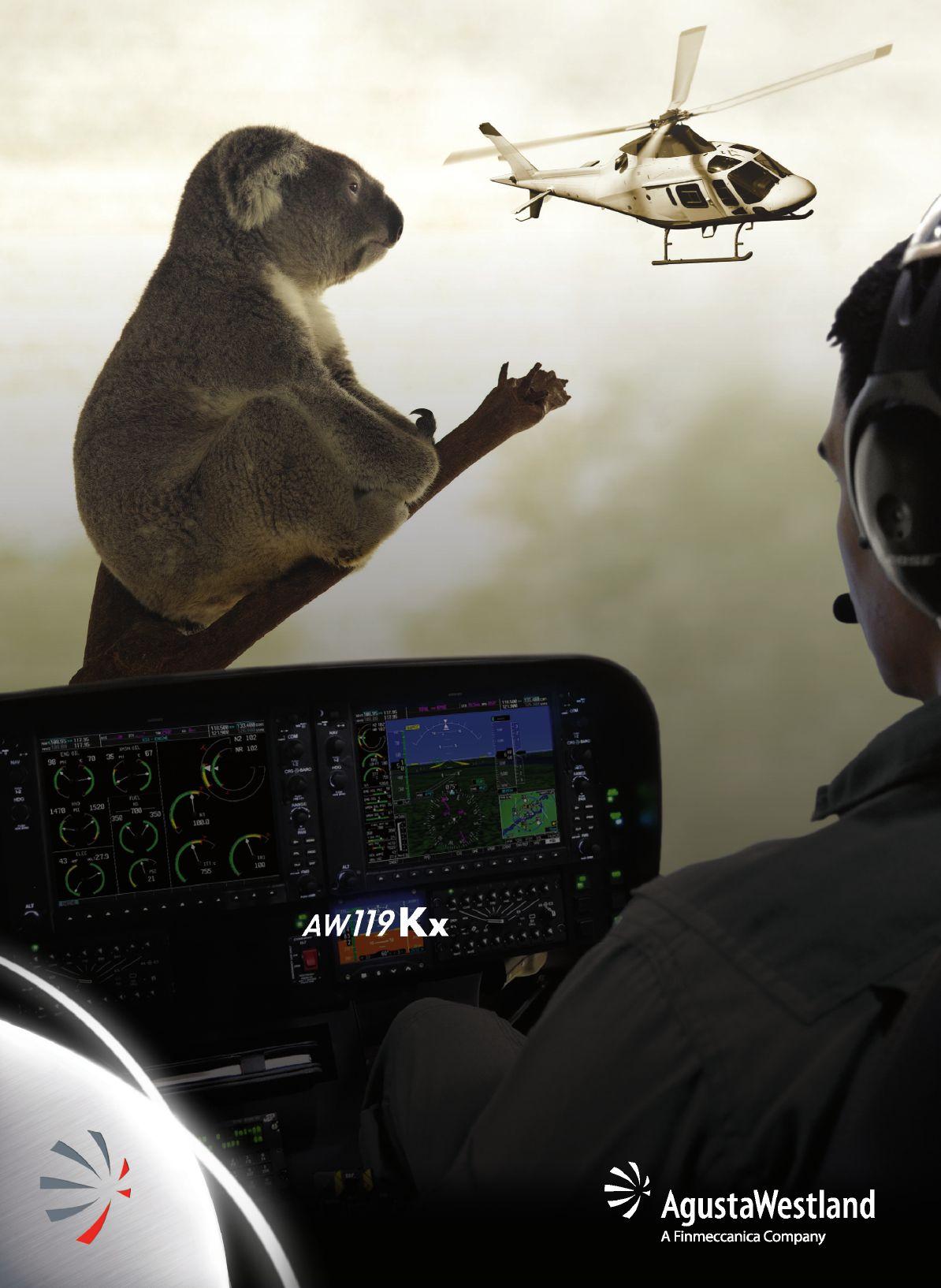
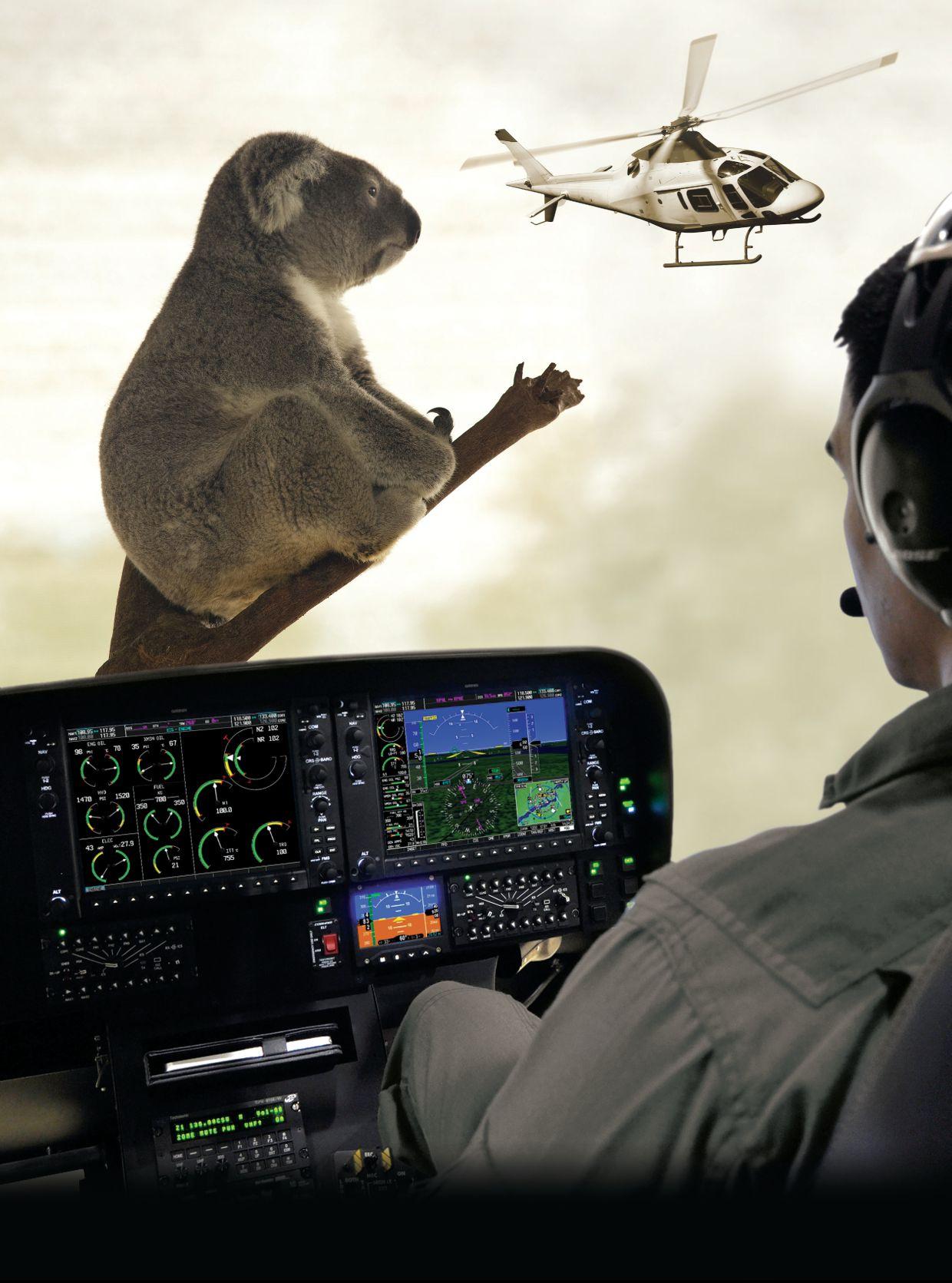
The largest and most powerful single engine multi-role helicopter in the marketplace is now enhanced by advanced digital avionics.
As the latest evolution of the AW119 “Koala”, the AW119 Kx features a state of the art Garmin G1000HTM-integrated cockpit; critical flight information is shown on two large multi-function displays in real time, allowing the highest levels of safety with ultimate situational awareness and reduced pilot workload.
LEADING THE FUTURE
Story Cultivating Resources pg 16

16 Cultivating Resources
Operators share insights in our annual market report. by Matt
Nicholls
C1 Careers in Aviation 2013
Positive indicators mean real career opportunity. by David
Carr
23 Flying Quebec's Plan Nord
There is endless potential for firms like Héli-Boréal. by Carroll McCormick
26 From Russia With Love
VIH’s Kamov heavy hitters help set the organization apart. by Paul Dixon
32 Learning to Switch Gears
Canada’s MRO sector is warming but qualified workers are in short supply. by David Carr
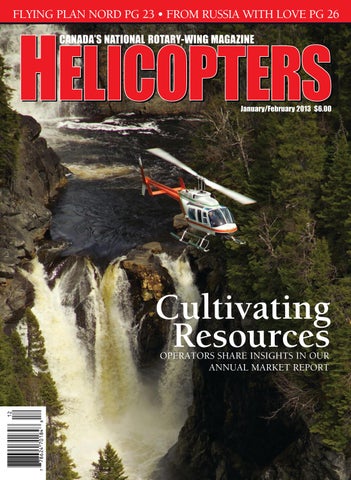
Jan/Feb. 2013 Volume 34: Issue 1
Flying Quebec's Plan Nord pg 23
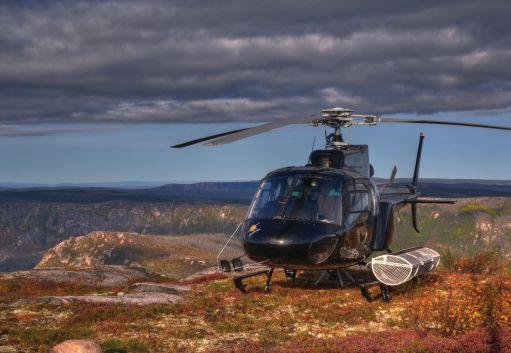
From Russia With Love pg 26
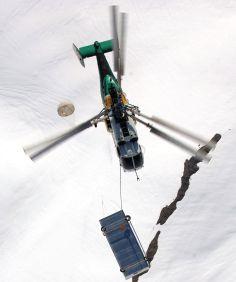
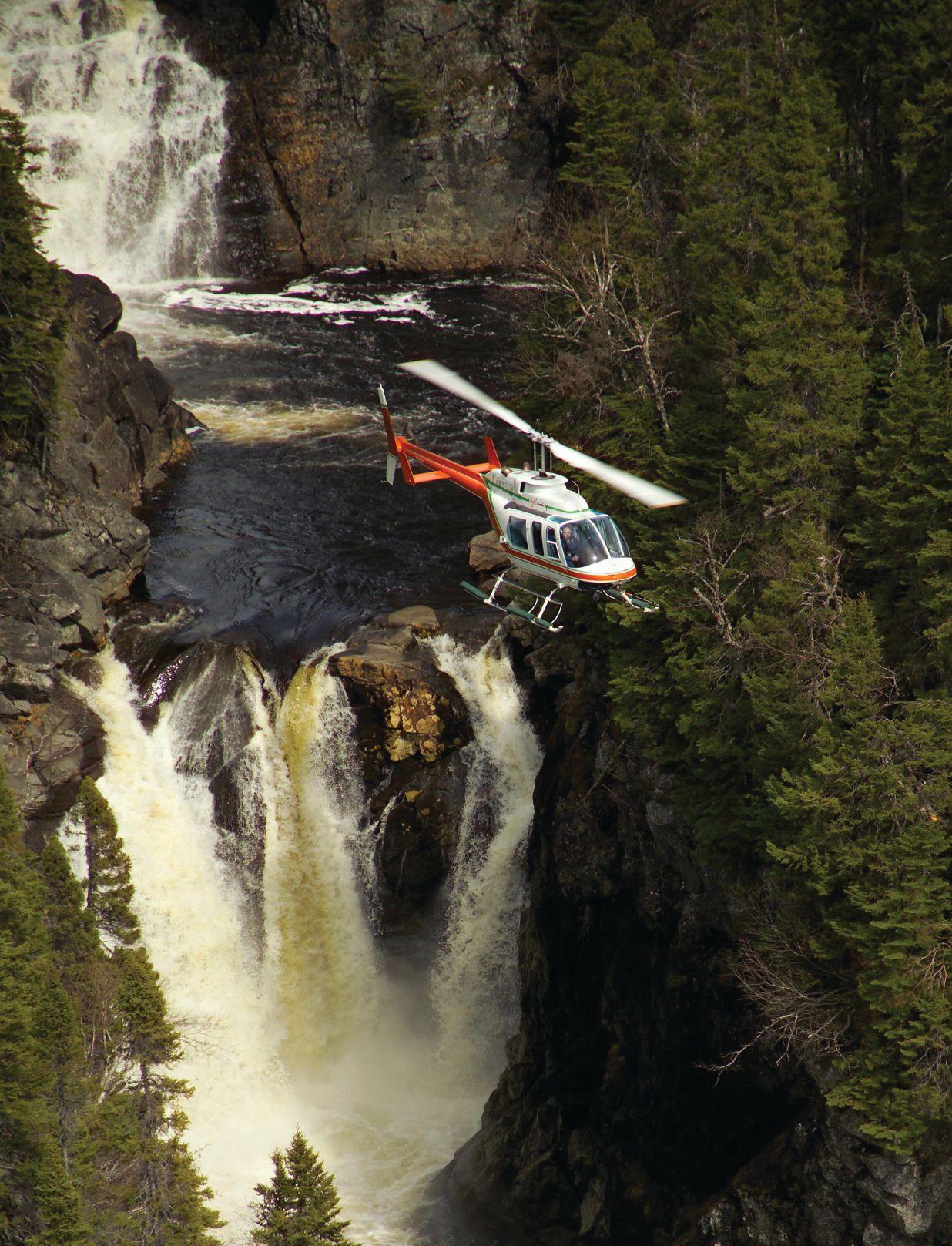
Newfoundland’s Universal Helicopters is set to celebrate 50 years of operation this year.

leditoRial

Matt niCHolls is editor of Helicopters
ose 10 pounds by easter? Finally hit the weights again and get in some sort of pitching shape for next season’s vintage men’s baseball league? that might cut it as a New Year’s resolution for yours truly, but what are Canadian operators’ most critical resolutions for their industry in 2013?
I asked several industry stalwarts to share their resolutions while researching the Helicopters annual market report (see “Cultivating resources,” pg 16). the results? While there are plenty of challenges to conquer to make the industry more efficient, safer and more professional, most operators do have resolutions and are eager to make 2013 the safest, most successful season ever.
helicopter association of Canada president Fred Jones is cautiously optimistic about the new season and said his resolution is to encourage operators to pursue new opportunities in spite of economic fears. it’s an apt point, and one that operators we spoke with in the market report are readily embracing.
“We need to avoid the chill of the global economic circumstances that drag us down,” Jones said, adding that industry vets have seen this routine many times before. “the fundamentals are sound in Canada and in many international locations as well, so there are still good opportunities out there.”
Concentrating on operational integrity without wreaking havoc by undervaluing one another was another resolution shared by more
Great Resolutions
Operators Share New Year’s Wishes for the Industry
acknowledge the value in your operation . . . and sell that. and always remember, you can’t be everything for everyone.”
Developing more effective communication with client groups was another resolution shared by more than one operator. maintaining ironclad relationships with key clients is paramount to goose Bay, n l.based universal helicopter’s success, and president/Ceo geoff goodyear said 2013 will bring much of the same. Working closely with those clients to develop improved safety initiatives is another critical goal.
“as an industry, we pride ourselves on being able to do this going forward and there are great examples of it, such as the Best Practices documents created by haC, which were done in conjunction with key client groups,” goodyear said.
goodyear said that some haC members have had issues in the past with the way they are treated by some clients, specifically in the oil and gas industries. “i have pointed out that there are several times when we have bumped up against client groups and they have standards that don’t reflect the world we work in. so, we have to work to try and fill those gaps,” he said.
mark Wiskmann, president/Ceo of thunder Bay, ont.-based Wiskair helicopters hit on another significant issue that may have huge ramifications going forward – transport Canada’s (tC’s) proposed changes to flight and duty times that don’t fit with the helicopter profile. as Jones has noted several times in his regular Helicopters column, it’s a critical issue for operators, as it may mean inefficiencies, particularly with aircraft and personnel deployment. Wiskmann’s concerns are definitely valid as these proposed changes could significantly alter the playing field.
We need to avoid the chill of the global economic circumstances that drag us down.
’’
than one operator. rob Carroll, president/Ceo of yellowknife, n.W.t.-based trinity helicopters, told Helicopters that operators need to work together to service clients instead of taking measures to work against one another. maintaining courteous relationships with other operators based on integrity and sound principles is an honourable goal, one that will help raise the level of professionalism in the Canadian helicopter industry.
“For me, a new year’s resolution for the industry is simple,” Carroll said. “We need to stop undercutting everyone else by five bucks. it’s not helpful to the industry. operators everywhere need to
“if i see one major issue out there, it’s definitely this,” said Wiskmann. “it will bring extra costs for operators, huge inefficiencies that will affect flying hours, customer interests and a diminished number of operators.” Wiskmann is spot on and Helicopters will continue to monitor this issue throughout 2013 and report on all key issues going forward.
While these are just some of the issues affecting the industry heading into 2013, it’s safe to say the operators Helicopters spoke with for this year’s market report understand the importance of having clear-cut operational goals and a realistic vision for the industry as a whole. let’s hope their collective operational integrity and concern for the betterment of the industry leads to positive change in 2013 and beyond.

WORLDCLASS TRAVELERS

David Beckham. A global icon who insists on perfection. Precision and style. A legend forged by accomplishments. On his wrist is the Breitling Transocean Chronograph Unitime, the ultimate traveler’s watch. Manufacture Breitling Caliber B05, officially chronometer-certified by the COSC, endorsed by a 5-year Breitling warranty. High-performance selfwinding chronograph. Universal time function enabling permanent readings of the time in all 24 timezones thanks to a patented mechanism and an ultra-user-friendly crown-operated correction system. Comfort and elegance for first-class travelers. Signed Breitling.


Kootenay Helicopters Expands Fleet
anew year spells opportunity at kootenay valley helicopters with the addition a new aircraft to the fleet.
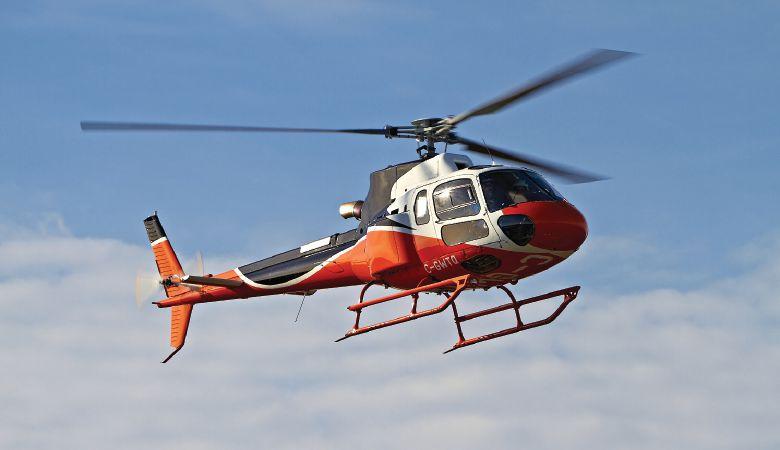
the Creston, B.C.-based operator added a eurocopter as350 B3e to its fleet in late december. the aircraft will be used for a number of key missions in various industry segments including mining, forestry, air taxi and aerial work, as well as other charter and tourism-based endeavours.
“the selection of an as350 B3e was easy. acquiring quality aircraft satisfies our customers as well as, helping us reach our goals of advancement in
the industry,” said Wendell maki, owner/chief pilot at kootenay valley helicopters.
“the as350 B3e is a welcome addition to our fleet and we look forward to utilizing the aircraft in various types of missions.”
the as350 B3e is an updated version of eurocopter’s singleengine as350 B3, offering a high-performance helicopter capable of carrying out missions in extreme weather and geographical conditions. the aircraft is powered with a
JoHn sCHultz: passinG oF a leGend
On Remembrance Day last fall, the Canadian helicopter industry lost one of its pioneers, when John Schultz passed away in Newmarket, Ont. Schultz wasn’t just a footnote in the history of Canadian Aviation, he was an entire chapter.
Schultz began his helicopter career in 1954 on Toronto Island and had a long and prosperous career under a rotor. His aviation career includes more than a decade as the vice president of Viking Helicopters, and he was a key participant at the Toronto Air Show on a number of occasions. Schultz also flew for Dominion Helicopters for several years and was a pilot with Ontario’s medical transport service, Ornge. And he didn’t fly just on Canadian soil. While working for Viking, he flew in Africa, the Caribbean and the Arctic, including introducing the Bell 47G2 in the Bahamas as an effective tourism aircraft.
Schultz was also one of the first pilots in Canada to earn his helicopter licence and witnessed the evolution of the industry into what it is now. He was instrumental in the creation and development of various techniques that are still used today, and his vision, profes-
turbomeca arriel 2d engine, including a new generation dual digital engine control system (FadeC), backed up with one independent control system for automatic start-up sequences and carefree engine handling.
sionalism and dedication to safety and quality following 50 years in the cockpit were without reproach.
Matt Millar, a close friend of Schultz's, told Helicopters the industry veteran always spoke positively and had a smile on his face. Millar did Schultz’s check ride for his IFR rating in the latter part of his career and was impressed that even in his 60s, Schultz was not afraid to take on new skills. Alex Gontier, another close flying friend, says Schultz made the long shifts on the medical transport beat more bearable – he was always entertaining.
Just about everyone at Schultz’s memorial celebration had a story to tell. A common thread in the stories was you’d be hard pressed to find a set of hands on the controls as talented as Schultz’s. His celebration of life was very much a reflection of who he was. He liked a good party and always wanted to buy all of his friends a drink (or two). Ultimately, his wish came true – family, friends and pilots from across the country gave him the sendoff he so rightly deserved. Helicopters salutes Schultz and mourns the loss of a truly iconic Canadian aviator.
– Leanne Schmidt
Kootenay Helicopters of Creston, B.C., has added a new AS350 B3e. (Photo courtesy of Eurocopter)
Charging Into Retirement
With a land mass of more than one million square kilometres and some of the most diverse terrain in the country, it’s an immense challenge for ontario’s hydro one team to keep the power coming to some 12 million residents on a daily basis.
the province boasts some of the most rugged terrain in the country and with both a 123,500-kilometre circuit low voltage distribution system and a 28,951-circuit high voltage distribution system, keeping the lights on in all weather situations can be taxing. the province uses a fleet of eight helicopters including six eurocopter astar B2 and B3 aircraft, and two Bell Longrangers to keep things humming. in the past, the fleet has included Alouette 11, sikorsky 55, s58, hughes 500C and super Puma machines for various tasks including crew deployment, pole setting, arm installations, thermovision, storm restoration, emergency patrols and more.
Few helicopter pilots know Ontario better than Ron densmore. the veteran hydro One senior pilot from Arthur, ont., knows virtually every nook and cranny in the province following a distinguished career of more than 41 years. With an incredible 19,400 flying hours over his career starting with a Bell 47 in the Arctic, Densmore finally called it quits last fall.
“From Calabogie to kenora, Ron knows virtually all parts of this province,” hydro one chief pilot John Bosomworth said. “and it’s a big responsibility. ron has been flying various helicopters for so long, he has an intimate understanding of the equipment.”
helicopters are invaluable tools in the field and have proven themselves time and time again in ensuring power is supplied to key urban centres and key locations province
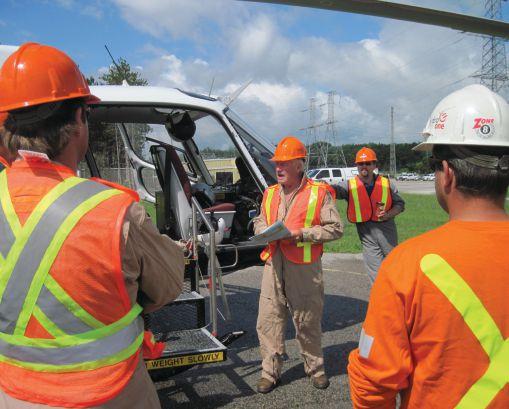
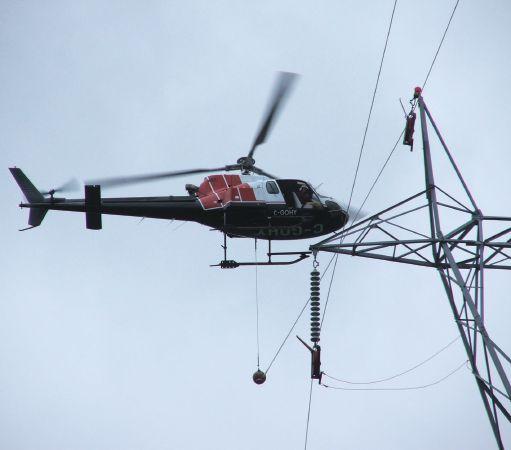
The province uses a fleet of eight helicopters including six Eurocopter AStar B2 and B3 aircraft and two Bell Longrangers, to keep things humming. (Photo
wide. densmore, who has also flown most of the aircraft in the fleet right up to today’s technologically advanced astars and learned to adapt and keep pace with multiple changes in procedure both in and out of the cockpit, has proven to be a galvanizing force for an organization that expects the utmost safety and professionalism from all pilots.
“in a lot of ways, there
weren’t a lot of rules back then,” Bosomworth noted of the earlier stages of Densmore’s career, a time when certain procedures and processes were not part of the equation. “you did what you had to do to get the job done. Ron always had to create ways to get solve problems.”
Helicopters magazine salutes Densmore and wishes him luck in the months and years ahead.
HELICOPTERS MAGAZINE
P.O. Box 530
105 Donly Drive South Simcoe ON N3Y 4N5
Tel.: 519-428-3471 Fax: 519-429-3094
Toll Free: 1-888-599-2228 Website: www.helicoptersmagazine.com
EDITOR MATT NICHOLLS e-mail: mnicholls@annexweb.com 416-725-5637
MEDIA DESIGNER KELLI KRAMER
CONTRIBUTING WRITERS
MICHAEL BELLAMY, DAVID CARR, BRIAN DUNN, PAUL DIxON, DAN GIBSON, WALTER HENEGHAN, FRED JONES, NEIL MACDONALD, JAMES MARASA, ROB SEAMAN
ASSOCIATE PUBLISHER ALISON DE GROOT e-mail: adegroot@annexweb.com 519-429-5191 • 1-888-599-2228 ext. 246
ADVERTISING SALES ADAM SZPAKOWSKI e-mail: aszpakowski@annexweb.com 1-888-599-2228 ext. 273
SALES ASSISTANT STEPHANIE DEFIELDS e-mail: sdefieldsi@annexweb.com 1-888-599-2228 ext. 257
GROUP PUBLISHER/EDITORIAL DIRECTOR SCOTT JAMIESON e-mail: sjamieson@annexweb.com
PRESIDENT MIKE FREDERICKS e-mail: mfredericks@annexweb.com
RETURN UNDELIVERABLE CANADIAN ADDRESSES TO ANNEx PUBLISHING & PRINTING INC., P.O. BOx 530, SIMCOE, ON N3Y 4N5 CANADA. e-mail: subscribe@helicoptersmagazine.com
Published five times a year by Annex Publishing & Printing Inc.
Printed in Canada ISSN 0227-3161
CIRCULATION e-mail: subscribe@helicoptersmagazine.com
Tel: 866-790-6070 ext 208 Fax: 877-624-1940 Mail: P.O. Box 530 Simcoe, ON N3Y 4N5
SUBSCRIPTION RATES Canada – 1 Year - $25.00 (all taxes included) USA – 1 Year $35.00 Foreign – 1 Year $45.00
Occasionally, Helicopters magazine will mail information on behalf of industry-related groups whose products and services we believe may be of interest to you. If you prefer not to receive this information, please contact our circulation department in any of the four ways listed above. No part of the editorial content of this publication may be reprinted without the publisher’s written permission ©2013 Annex Publishing & Printing Inc. All rights reserved. Opinions expressed in this magazine are not necessarily those of the editor or the publisher. No liability is assumed for errors or omissions. All advertising is subject to the publisher’s approval. Such approval does not imply any endorsement of the products or services advertised. Publisher reserves the right to refuse advertising that does not meet the standards of the publication.
Helicopters Magazine is a corporate member of the

Helicopters Magazine is an associate member of the following Canadian aviation associations:
With an incredible 19,400 flying hours over his career starting with a Bell 47 in the Arctic, Ron Densmore finally called it quits last fall. (Photo courtesy of Hydro One)
courtesy of Hydro One)
ColuMn
neil J. MaCdonald
With a new operating season upon us, crews will be looking for jobs and employers will be looking for crews. it sounds pretty simple, right? Well, it may be business as usual yes, but that’s only until someone wants you to sign a training bond.
Regardless of whether you’re a pilot or an engineer, training bonds seem to be here to stay. the main concept – where employees either stay for an agreed amount of time, or the employer agrees to pay for a percentage of an employee’s training costs – is not going away any time soon, although the law is evolving.
It seems reasonable that since employees are the ones who will benefit in the long run, they should bear the cost of their own education. it’s no different for many other professionals. doctors, lawyers, and accountants, for example, spend thousands of dollars to get the skills that allow them to work in their chosen fields.
Pilots and engineers are in much the same boat. some will come from the military where it can be argued that they had most of their credentials paid for. of course, it sounds good while they are in the military, but once out, these professionals are in the same situation of having to convert to civilian licences and bear the associated costs.
modern cockpits in both helicopters and fixed-wing aircraft are more sophisticated than they were in earlier generations, so it takes training to learn the latest systems.
For the most part, many training costs are paid for by an employer.
The Bond Experiment
Understanding the Role of Training Bonds in the Workplace
term used to describe this concept. if you already had the training, then were subsequently asked to sign a training bond, that bond “contract” could or should fail for lack of consideration in court. the inequality in bargaining power can also come into play in situations where a junior employee is told they need to sign a bond in order to continue to work. employers can avoid being off side of the law by laying everything out in advance, in detail.
this is also the case for the financial and time elements. the financial commitment the employee signs on for should reflect the true cost of the training. Courts are reluctant to enforce a contract where an employee is asked to pay well above the actual value of the training costs.
the time an employee is required to stay with the company after training needs to be realistic as well. a five-year term should easily fail the test, while a one- to two-year minimum seems reasonable. having the employee pay back costs on a pro-rata basis is also common. divide the cost of training by the number of months you require the employee to stay, and forgive the bond debt by that quotient each month.
If employers use this type of formula, employees should not be reluctant to sign training bonds as these types of contracts are mutually beneficial. the employer has a trained work force that they can count on for a minimum period, and the employee has an upgraded skillset and an employment commitment from the company.
We should also mention a note to employers. sometimes an employee signs on to a training bond and for whatever reason decides to leave early. We should view this as a simple business transaction, and not a personal vendetta. We should not expect the employee to pay the costs of the bond per the above formulas, and move on with bad feelings – never to be hired back again.
employers can avoid being off side of the law by laying everything out in advance, in detail. ‘‘ ’’
as an example, pilots usually don’t have to pay for a PPC each year. the training bond is an amount the employee agrees to pay back should they decide to leave the company before a specific time. this is where the law comes into the picture. in order for a bond to be effective in the eyes of the court, it should adhere to the standard conditions of any legal contract. i have written several articles on contracts, so i don’t want to get too in-depth here regarding contract law. the main areas to look for are consideration, which links in with bargaining equality, and the financial and time elements.
Contracts are an exchange of “something”; consideration is the
things happen in life, and people can and do change their minds – or circumstances can also change. If one views these movements as part of the cost of doing business (accounting for those costs properly, of course) training bonds will be viewed as simply a normal part of the education of aviation professionals.
Neil J. MacDonald is a lawyer practising in B.C. He holds an ATPL-H, flew as an IFR offshore aircraft commander internationally and on the B.C. Air Ambulance. He has consulted on quality and safety issues in the Middle East. njm@neiljmacdonald.com This is not a legal opinion. Readers should not act on the basis of this article without first consulting a lawyer for analysis and advice on a specific matter.






paul dixon
elcome to next year already. y2k+13. seems like not very long ago, I was one of those people preparing for the end of civilization as we know it. We did find some interesting little tidbits buried in legacy data programming, but luckily the things that failed were in standalone situations and had zero impact on the bigger picture.
the y2k issue was a holdover from the early days of computing, when computer memory was incredibly expensive and it was a matter of economy to encode year information as two characters rather than four. What seemed like a good idea in 1960 was revealed to be a really bad idea as the 20th century drew to a close. once again we found ourselves neck-deep in alligators, long past the point of forgetting what our original mission had been.
It’s part of the basic human condition that we set off down a path, think we’ve come to the end without realizing that we haven’t even reached the half-way mark and don’t seem to remember why we set out in the first place. a recent cover story in Maclean’s magazine was devoted to the return of the flying car. in the giddy days following the second World War, a number of manufacturers set out to capture the market. one of them, Consolidated vultee, builders of the B-24 and B-36, were promoting a flying car based on a studebaker, a mind-boggling blend of design and technology. the crash of the prototype killed the project. memories of my father’s 1949 studebaker would suggest that operators would need to be IFR-rated due to the permanent cloud of blue smoke from all the oil it consumed.
A 40,000-Foot Perspective
Planning for Future Opportunities Is Responsible Business Acumen
eisenhower becoming president in the u s. was the creation of the interstate super-highway system, which sprang from Ike’s appreciation of the german autobahns.
vancouver’s main post office is slated to close in 2014, replaced by a complex currently under construction at yvr the current building, conceived in the post-war infrastructure boom and built in the mid1950s, had two technological advances that unwittingly linked the 19th and 21st centuries. the building was designed at a time when mail moved across the country on trains. a tunnel connected the building to the Canadian Pacific railway station, allowing the movement of mail by conveyor. airlines took the mail away from the railroads a year before the building opened. the tunnel was never used. looking ahead, the post office was the first building in vancouver with a rooftop helipad. like the tunnel, the helipad was never used – so with no trains and no helicopters, the mail was moved by trucks.
the fact is, as a society we look for solutions to problems, forgetting that every solution creates a new set of problems requiring a new set of solutions. here’s another momentous event that took place right after the war; the leduc no. 1 hit on Feb. 13, 1947. i won’t say it changed our lives forever, because forever is a long, long time to think about, but it sure ranks up there. What does the future hold and how far down the road can we see?
We look for solutions to problems, forgetting that every solution creates a new set of problems.
the Macleans’s article notes that there were at least 300 flying car designs in the years before the second World War, with the comment that people were trying to invent a flying car before there were even airports to fly from. But the author missed the point. Flying cars were not meant to exploit the few airfields that did exist at the time, but rather they were seen as a solution to a lack of passable roads outside the city limits in most of north america. What better way to commute from orillia into downtown toronto? the post-war economic boom killed the flying car, however. People moved out to the suburbs, the automobile was king, and roads, bridges and other infrastructure followed. one of the benefits of
leduc no.1 was the right thing at the right time for a country coming out of the great depression and the second World War. it fuelled an economic revolution, which has given us the world we live in today, but as our society has changed over time, the world we live in has changed as well and it is not necessarily moving in the same direction or at the same speed. When that first generation of computer programmers created a standard system of recording the year in date information as two digits, it never occurred to them what might happen at some point in the future when a computer was unable to progress past the last day of “99.” it’s not that they ignored the possibility, it’s that it was never considered. Which raises the question – what is it that we are missing in our future – that thing that is out there and staring at us from 40 years away?
As we turn the clock into a new year, as helicopter operators, it’s prudent to remember not only to look for solutions to the challenges of this year or even next, but also to focus on 40,000 feet – the philosophical changes that will shape our businesses for years to come.
Paul Dixon is freelance writer and photojournalist living in Vancouver.

Going That Extra Mile
Being a
Helicopter Pilot Means More Than Just Flying
n owner of a helicopter company once questioned me as to why he should be hiring high time pilots for normal charter operations when pilots still looking to build hours were so enthusiastic and not wanting to overlook the smallest detail.
the owner wasn’t looking for an answer, just stating what he determined to be fact, which he had gained from years of personal experience. he went on to describe instances of pilots having reached a milestone in their logbook. these pilots had the notion that they no longer had to exert themselves other than just to fly the helicopter. the said pilots arrived five minutes before the planned departure time and immediately upon their return, were climbing into a truck heading off to something more interesting. a lower time pilot he contended would be enthusiastic for the flight, conferring with the client and preparing the machine well beforehand. during the flight, passengers were reassured by this pilot’s constant attention to monitoring the helicopter. When the mission was completed, this low-time pilot, before leaving, would ensure the machine was ready for the next charter. this manager’s perception was simple: not all high-time pilots contribute to profitability relative to their experience. upon hearing this story, I immediately analyzed my own work habits to pilots and engineers i had worked with to see if this theory held water. in more than a few instances, i believe he was right. it’s easy to see how complacency and sometimes lethargy can creep into our work habits. Flying a heli-
briefing was given. that omission may have had no bearing on the incident, but it will be noted as your indifference to professionalism.
management should also brief pilots on long-term contracts located away from home base until they fully understand what the job entails. After this is accomplished, only then should they be expected to participate in their client’s daily discussions involving objectives, weather outlooks and safety. management also has a responsibility to voice concerns or commend individuals when safe practices are followed. i do know that customers prefer flying with a pilot who displays an interest in their operation, not just the solitary mechanics of flying the helicopter.
In previous columns, I have expounded upon how important customer liaison is in helicopter operations. one recent example i heard involved a pilot and engineer pitching in to help set up a mobile camp. Later that evening, the party chief commended them both, saying they were the best crew he had ever had. Why was this noteworthy? the machine had yet to fly. on a tour, if you find spending time lounging at the motel or a camp is much more appealing than ensuring the contract requirements are fully met, than perhaps an assessment of career choices should be considered.
Flying a helicopter in a customerorientated operation takes more effort then showing up on time.
copter in a customer-orientated charter operation takes much more effort then showing up on time.
For those pilots on day-to-day casual charter with regular customers, published procedures are sometimes overlooked. Who among us hasn’t climbed into a machine with familiar faces ignoring company policy about a passenger safety briefing? a quick reminder of what equipment is onboard and cautions takes just a few minutes – yet it’s an often overlooked but necessary procedure. it’s also important to note that when investigating an incident or accident, the transportation safety Board will review a pilot’s pre-flight procedures and ask passengers if a safety
Years ago, I remember reading an interesting article about cockpit complacency. the author suggested that inattention on longer flights could be minimized if the pilot provided a focal point in plain view that would remind him or her to concentrate on the task at hand. the theory went that by affixing a small yellow triangle or some other mnemonic device on the instrument panel, when observed, would remind them why they put it there and direct his or her attention back to flying. in practice, i found that if my attention was drawn to the device, chances are I was already into an instrument scan and the reminder was redundant. the article reminded me of the importance of avoiding cockpit complacency and the fact being aware of the problem will enable you to deal with it more effectively.
spring training is just around the corner and with it comes a myriad exams and flight tests. the effort we extend relating to all facets of helicopter operation will be assessed and graded. We should all be reminded that just because you passed the “Pilot Proficiency Check” doesn’t mean the customer deserves less.
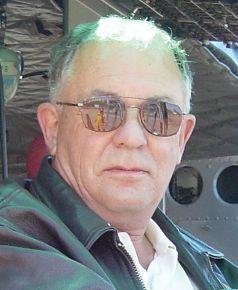
A native of Spruce Grove, Alta., Michael Bellamy has been flying fixed- and rotary-wing aircraft in a variety of capacities since 1971, and is an accomplished author of several books, including Crosswinds.

MiCHael BellaMY
PDM Training: Do More!
Increased Commitment Needed to Help Prevent Accidents
n a quest to avoid repeating myself, I want to address pilot training. i want to explain why we need to shift focus on how we train and, what we teach, and why we need to shift paradigms.
most operators use the shoulder season to fix their aircraft after a busy flying season and to tweak their training regimes to prepare for the next year of flying. earlier this year, I wrote about what is causing accidents, and controlled flight into terrain (CFit) is a big one. in november 2012, the transportation safety Board (tsB) released its findings into a fatal accident at drayton valley in october 2011. according to the tsB report (a11W0152), “. . . a search of the tsB database for the period of January 1992 through may 2011 revealed 24 occurrences involving vFr helicopter flight that resulted in collision with terrain in instrument meteorological conditions. these occurrences resulted in 32 fatalities.”
Furthermore, in this report, the tsB reiterated a comment from a 2000 accident report. “the Board concluded that, without a systemic approach to improving Pilot decision making (Pdm) training, accidents resulting from ineffective decisions in complex situations would continue to affect commercial operations.”
twelve years later, the toll continues to rise. it is not just the regulator who bears responsibility for this shortfall in training. all commercial operators who train to the bare, regulatory minimum share the
even Wendy tadros, tsB chair in her speech at the helicopter Association of Canada’s fall convention, was beating the drum about changing the way we do things. said tadros: “Because when you get right down to it, all accidents are ultimately organizational. and the reason is because it’s the decision makers of an organization – the supervisors, managers, presidents, owners – who set the goals and communicate the priorities for everyone else. these senior members of an organization have to be aware of risks.”
so what can we do about it as managers and pilots? Well, for starters, take personal responsibility. read. upgrade your skills. take personal training. and as pilots, advocate within your own companies for more comprehensive support. as managers, it’s time to take a hard look at your operations manuals. do you really need half mile vis ops specs? do your customers understand how low that is? take a leadership position and stand up for higher limits. the bulk of our industry is made up of single pilot, single-engine operations. What is happening in training for single-pilot Crm? how comprehensive is it? does this training encompass customer input?
a case in point. i recently was invited to attend a course provided by advanced Crew solutions titled helicopter awareness training. its target audience is our client base – forestry workers, linemen, anybody really who flies as a passenger in our aircraft. the day-long course addresses the helicopter industry, regulations, pilot and passenger duties and responsibilities – the full range of concerns that passengers may have. But more importantly, it provides a level of awareness and skill to our client base to make them more aware and maybe to facilitate their intervention in the decision-making process so that they stay safe.
All commercial operators who train to the bare, regulatory minimum share the burden.
burden. and quite frankly, maybe it’s time for pilots to insist on better training, more training days and more professional development. i am not just talking about in aircraft or simulator training. i am talking about honest to goodness Pdm training coupled with comprehensive Crew resource management (Crm) and threat and error management training. i am talking about the squishy skills. From my own analysis of accident data, we know that decision and Crm errors account for some 40 per cent of significant accidents. We have been completing Crm training since the dryden air ontario disaster yet we are still having too many Crm/Pdm related accidents.
Companies that provide this type of training to our client base are speaking loud and clear that the more knowledge their employees have, the safer we all will be.
so, let’s not wait for transport Canada to dictate or for the transportation safety Board to investigate or for our clients to mandate. Let’s as an industry step up to the plate and improve, by quantifiable measures, the quality and frequency of the decision-making training we provide our pilots so that we can take meaningful steps in reducing the fatal accident rate in our industry.
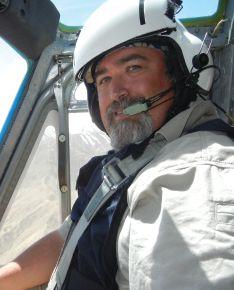
Walter Heneghan is the VP of Safety and Quality at Canadian Helicopters. A passionate advocate for aviation safety and sound risk management, the veteran pilot presents his regular column for Helicopters magazine.

WalteR HeneGHan
18th - 20th March 2013
Westin Bayshore Resort & Marina, Vancouver, BC, Canada
CoVeR stoRY
Cultivating Resources
Operators Share Insights in Our Annual Market Report
BY Matt n i CH olls
trimmed out for fair sailing.”
It’s the perfect phrase to describe how many Canadian operators are preparing for another challenging season. and given the uncertain economic conditions of the past couple of years, it’s understandable why many smaller operators are working to establish stronger relationships with existing clients and concentrating on tried and true markets while at the same time carefully analyzing new opportunities.
In Helicopters’ annual look at key market segments, industry trends and “crystal ball” forecasts for the next 12 months and beyond, we found many smaller operators are generally happy with their progress over the past year, but are holding their cards close to their chests when it comes to operational enhancements, fleet growth, diversification opportunities and future investments. surviving, and ultimately thriving, in fickle, unstable, and at times volatile, market conditions can be a challenge: operators must find ways to keep the blades turning, keep costs in line, and maintain the highest safety standards possible while adapting to the “new normal.”
helicopter association of Canada president Fred Jones, who is in close contact with operators from coast to coast, notes that while most operators are cautiously optimistic and carefully positioning themselves in reaction to market fluctuations, there are reasons for optimism that the industry is coming out of its doldrums.
“We’ve started to see a small recovery this past season and the summer before this one, but the year or two before that, it was really quite bad,” says Jones. “We’re still seeing the oil Patch activities, for sure, but generally oil and gas has been down. seismic has seen a rebound and fires are a roll of the dice from one year to the next, but it’s the bread and butter for many of our members who still largely depend on it. there has been some exploration but there is a

huge shortage of drill pilots that is, in some ways, holding back the industry. as well, there is a real shortage of engineers.”
Jones adds that while some organizations may be new to understanding the effects of slower market conditions, more experienced industry veterans are aware situations can change as the wind blows – and they plan for said fluctuations.
“We’ve been through some lean years and i think that has made operators who might otherwise be drunk with prosperity say hold it, ‘we came through some of the two or three most difficult years in our industry in memory and maybe we’d better be conservative until we’ve really moved out of the doldrums here,’ ” he notes.
taking a slow and steady road to growth is an important organization philosophy at goose Bay, n l.-based universal helicopters, where president/Ceo geoff goodyear and his team are
set to celebrate 50 years of business. universal commenced operations in 1963 as part of the okanagan helicopters group and is now a successful separate organization with bases in st. John’s, Pasedena and gander. universal operates some 20 aircraft including Bell 407, 206l4 and 206lr and eurocopter as350Ba and B2 machines.
universal's longevity in the industry is impressive and goodyear realizes surviving the troughs and valleys is about never taking things for granted – working hard to build a safe, nimble operation while solidifying client trust. it was his apt maritime phrase noted at the beginning of this article that captures the spirit of operators heading into the new year.
“i don’t see us heading for any significant storms, nor do i see us arriving ahead of schedule,” goodyear says. “i know that sounds like the cowardly way out, but I don’t see the year presenting any extra opportunities with regards to utilization nor do I see it as a potential disaster.”
universal is coming off what goodyear calls an “ok” 2012 that saw the “bloom off the rose” in many sectors, including mineral exploration – a trend experienced by some operators in Canada. mining represents some 30 to 40 per cent of the organizational market makeup at universal, followed closely by provincial government support work, including environmental assessment work. the remaining breakdown includes casual and/or support work for other government programs, mainly federal.
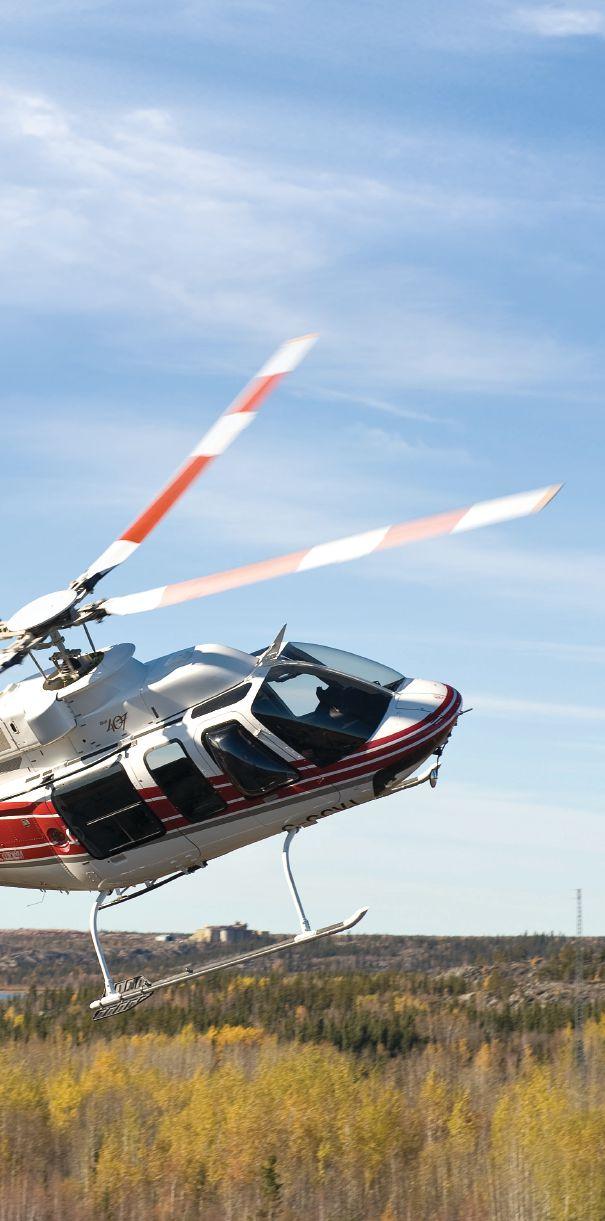
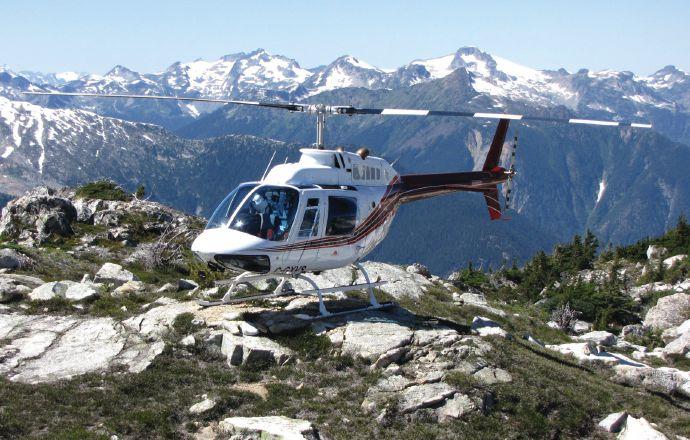
LEFT: Operating in Canada’s far north, Trinity Helicopters is expected to utilize 13 to 15 aircraft in 2013 to serve its northern clients. (Photo courtesy of Trinity Helicopters)
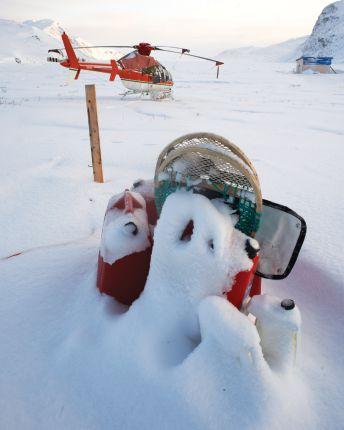
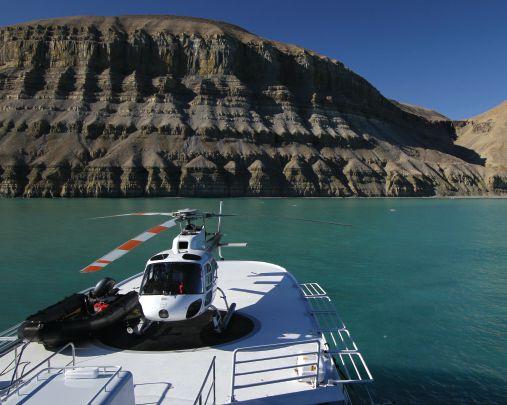
BOTTOM LEFT: Newfoundland’s Universal Helicopters is set to celebrate 50 years of operation this year. Surviving the troughs and valleys is about never taking things for granted – working hard to build a safe, nimble operation while solidifying client trust,” says president/CEO Geoff Goodyear. (Photo courtesy of Geoff Goodyear, Universal Helicopters)
BELOW: Valley Helicopters' general manager Brad Fandrich says his company’s clients are concerned about price, yes, but will pay the price for assured professionalism and consistency. (Photo courtesy of Valley Helicopters)
CoVeR stoRY
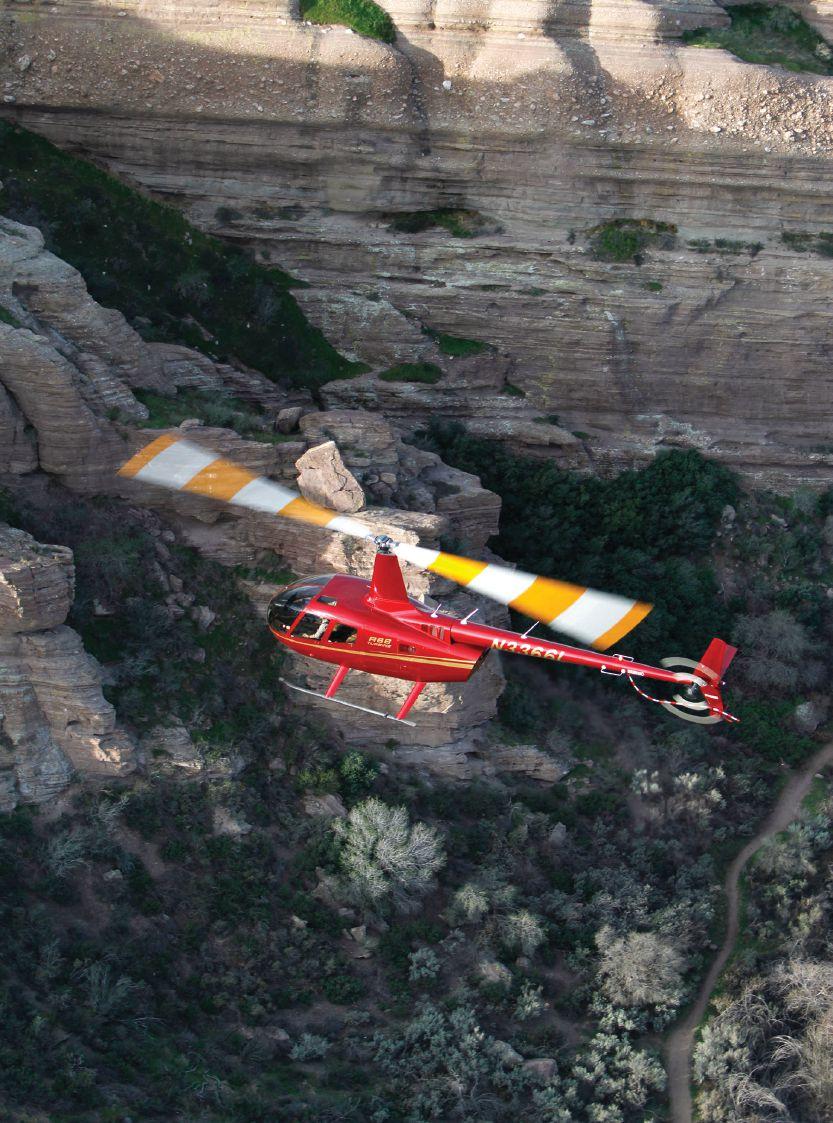
Jimmy Emond, operations manager for Alba, Que.-based Panorama Helicopters, says 2012 was a very solid one for his operation. He's hoping for even more success in the new year. (Photo courtesy of Panorama Helicopters)
to accurately illustrate the sometimes precarious nature of how key political decisions can turn the operating environment on a dime, as Helicopters was going to press, Newfoundland premier kathy dunderdale gave her stamp of approval to the muskrat Falls hydroelectric project, a joint venture between newfoundland Crown corporation nalcor energy and nova scotia private equity firm emera inc. the hydro mega project in labrador is expected to cost the province $6.2 billion and will bring hydro power from the lower Churchill river in labrador to newfoundland and then nova scotia. the project has been discussed for years, but with its go-ahead, it
driving Business Home
Key projects that could mean strong opportunities for industry in 2013:
• Continued Oil Sands Development
PetroChina is poised to move ahead with taking full control of the Dover oil sands project now co-owned with Athabasca Oil Corp, while Indian companies are also trying to get a foothold, notes the Financial Post. On the natural gas side, Encana Corp. could lock up some joint-venture partners, while Exxon Mobil Corp. and its Canadian affiliate, Imperial Oil Ltd., may enter the race to export liquefied gas from the West Coast.
• The Keystone XL Pipeline
The controversial project will be granted the go-ahead sometime in 2013 by U.S President Barack Obama. Once completed, the pipeline will transport some 900,000 barrels of oil per day from Alberta to the Gulf Coast. TransCanada Pipelines will commence work immediately if it gains presidential approval.
• The Northern Gateway Project
Enbridge, the driving force behind the Northern Gateway pipeline project that could pump oil from the oil sands to the West Coast, will likely get word on its proposal by the end of the year. The project could mean steady work for helicopter operators.
will garner potential contracts for operators in the region.
“once this starts, it will spread a lot of supplementary environmental assessment work as well as the obvious support that is required for the infrastructure projects themselves,” goodyear says. “the involvement for helicopter support will be marginal when they are building the dam, but from our perspective with power line construction, these tenders are something we will be watching very, very closely because they rely almost exclusively on aerial support.
“the levels of activity will likely carry on for four or five years. they are talking about producing electricity in 2016 so even beyond that there will be power lines to finish off or subsea cables to lay.” universal has been involved in the project for the past year or two in some of the initial environmental assessment work. they are hopeful that there will be more work once the infrastructure contracts start to come out in early 2013 for a march/april start. “We’re hoping, and there are no guarantees, but we will be jumping for the ball just like other companies,” goodyear says.
a noRtHeRn peRspeCtiVe
taking a humble approach and realizing there are no guarantees in operational success is a philosophy shared by trinity helicopters’ president/Ceo rob Carroll. Based in yellowknife, n.W.t., trinity has 24 pilots servicing Canada’s far north. the company’s fleet consists of a combination of Bell 206, 407 and eurocopter as355 and as50 light and intermediate series helicopters, a diverse mix to service a large clientele across an immense geographical area.
the good portion of trinity’s operations are based around the oil and gas market in the north, north of the sahtu region, along with base metal, diamond exploration heli support and forestry. they are also heavily involved in government transport.
Carroll knows all too well about the dangers of expanding too quickly, and the importance of establishing key partnerships and sticking to your core competencies. he started the organization in 2009 with one key partner, had a falling out, expanded too fast and
• Muskrat Falls Hydroelectric Development
The controversial Muskrat Falls hydroelectric development was given the go-ahead in Labrador and Newfoundland on Dec. 18. The development of dams and a 824-megawatt generating station has been talked about for the lower Churchill region for some 50 years, and will mean years of contracts for operators in the Newfoundland region.
• MacKenzie Valley Gas Project
A decision on the long-discussed MacKenzie Valley Gas Project could come in 2013. First proposed in the 1970s, the 1,196-kilometre line would transport natural gas from the Beaufort Sea to North American markets. Project leaders include Imperial Oil and an aboriginal group funded by Calgary-based TransCanada Corp, Exxon Mobil Corp., Royal Dutch Shell and ConocoPhillips. The project cleared the final major regulatory hurdle last August.
• Enhanced Opportunities in Natural Gas
Canada’s natural gas sector could be one of the main economic drivers in Canadian resource development long term with $386 billion in investments by 2035, according to a report released in December by the Canadian Conference Board of Canada.
adjusted his business model when the mining market went south late last year. a new partner is now on board and his team is looking at 2013 as a stabilizing year with the prospect of some growth.
“We did expand fairly aggressively, but when the markets went down in base metal exploration by 30 per cent, we quickly adjusted in July, made a restructuring plan for the season itself and went down from 19 to 15 aircraft, so we were able to adjust. For us, in 2013, i think 13 to 15 aircraft is a good number.”
With more than two decades’ experience as a pilot with Canadian helicopters and rival northern competitor great helicopters, Carroll is quite aware of the importance of being cautiously conservative but ready to make necessary changes when markets turn. “throw in the fact we are a three-year-old company and we’ve gone from two to a hundred in a few seconds, so you just have to be smart.”
CHanGinG it up
Adapting to changing market conditions and diversifying product offerings is a trend that will be more pronounced mov ing forward, notes Jones. however, he cau tions that creative diversification must be tempered and cultivating core competen cies is crucial.
“the economic conditions have caused many operators to start thinking about ways to stabilize the peaks and valleys,” he says. “and that’s generally what you see in the industry, some companies are getting out there in what is, in an agricultural term, cash crop business mentality – get in, make your money and get out. that’s what a good fire season can do for an operator, and par ticularly the upstarts.
“But once you’re in the industry for a while, you realize it’s a bit of a mugs game when you depend entirely on a fire season that may or not materialize. then, you must think about ways of stabilizing that revenue in other industry segments like hems and gas to a degree, some government work . . . companies that generally will pay their bills and provide work year over year. when economic times are bad, it tends to exaggerate that phenomenon where opera tors are saying we can’t tolerate a season like 2008.”
Diversifying products after a significant change in market conditions is just what oliver, B.C.-based transwest helicopters did after the B.C. logging industry went south in 2008. notes transwest president
ernst ulrich-mass: “We basically shut down by the end of august 2008. all the logging contracts were cancelled after the major logging companies got out, so I had to do some fast pedaling.”
Fast pedal the industry veteran did, transforming his operation from a flyingheavy logging support operation to a maintenance and repair facility. the organiza-


12, but it’s now back to a healthy 28 – “a full house,” he says.
transwest is a Bell and tCCa authorized overhaul facility and is also a honeywell service Centre. its engine test facility is capable of full functional and performance inspections of the honeywell/lycoming t55 series engine, servicing clients from across Canada. ulrich says he hopes to expand
CoVeR stoRY
in addition to its solid mro operation, transwest has a small fleet of Bell 214B, Bell 412, and as350 B2 machines. the company is still actively involved in the firefighting and fire suppression markets.
“it actually didn’t take us a long time to establish ourselves as a maintenance facility, but it was a shock to the system initially,” says ulrich-maas. “the ups and downs of the business are a little more painful than they used to
be because there are greater sums of money involved. and it’s now a far more global business. things have also changed in Canada. not long ago, if you worked in saskatchewan, that’s where you flew, alberta, B.C., whatever. now, you work all over the place. and in the spring, there’s the great Canadian helicopter race from B.C. to ontario looking for fires. everyone migrates back and forth, descending on anything that smokes.”

Goodyear cautions that while there are distinct advantages to expanding operations under the right circumstances, the impetus to delve into other avenues can’t come at the cost of hurting your tried and true core competencies. in the end, it’s all about value.
“you can diversify, but if you are in a trough, you can diversify all you want but the chances are, you are going to see a reduction in your utilization,” he says. “and the only way you can deal with that is controlling costs and, from our perspective, making sure that if you are going to spend any money you get good value for it.
“there has to be a return on it – and it’s not necessarily something tangible or exoteric. it can be an esoteric value. For example, your employees. it could be an investment in your workforce.”
tHe ties tHat Bind
maintaining strong client relationships is imperative in today’s environment, and the need to do so is getting even more pronounced as client demands rise. implementing airtight sms systems; adopting new technologies such as flight data monitoring systems, electronic ticketing, or the latest in satellite technology; enhancing training initiatives – it all helps to win (or keep) clients.
“the oil and gas industry is probably the best example of this,” Jones says of a new client/operator playing field. “situations like multiple audits from different customers, different standards, that’s been a real challenge for the industry but in some ways it has also raised the bar for companies that want to stay in the game.”
Carroll maintains the trend extends to other industries. “i can tell you that it’s not just oil and gas,” he says. “it’s changing all the time in forestry; it’s changing all the time in base metal exploration and government transport as well. everyone’s looking for technology enhancements, such as satellite tracking. it’s a standard now, you have to do it but it’s an expensive standard.”
it’s not just a case of clients asking for more, they are demanding it, notes goodyear. But in the end, the ultimate payoff will be a safer industry as a whole. Working with clients to understand the helicopter world – one that is slowly moving toward a performance-based operating standard – is a necessary part of ironing out the ground rules.
“in many cases, particularly in the construction world, our clients live by very
prescriptive rules, yet our industry is moving to more of a performance-based environment. having the two of those mesh is sometimes difficult . . . higher safety standards are always better, but when you’ve got client industries that are really not experienced in how we do certain things, that are not aware of the CARs that we have to live by, they’re setting rules and regulations that run headlong into the rules and regulations we have to live by and follow . . . it’s this lack of experience coupled with their authority that I find sometimes a little disturbing. it speaks to a need for really good client/operator relations before things come off the rails.”
mark Wickmann of thunder Bay, ont.based Wiskair helicopters says transparency and honesty still go a long way in ensuring the operator/client relationship is a healthy one. the president/Ceo has more than 30 years’ experience flying in northwestern Ontario and his firm has made its mark with hundreds of clients in various sectors including mining exploration, forestry services aerial construction and more. Wiskair helicopters has had a longstanding involvement in the Ring of Fire in northwestern Ontario – the mineral-rich swamps in the James Bay Lowlands that is rich in nickel, copper and palladium.
“the key with us is we don’t baloney anyone,” Wickmann says. “if we make a mistake, we put our hand up and correct it instantly . . . the attempt is to always remain clear and transparent to the clients. and that earns you loyalty.”
Jimmy emond, operations manager with alma, Que.-based Panorama helicopters, is competing in the ultra competitive Quebec market, where loyalty and strong client interactions make a marked difference. he says keeping his organization’s safety standards high has helped the organization secure new clients and stay profitable. emond was, in fact, happy to say his operation did very well in 2012 and he’s buoyed about the prospects of an equally lucrative 2013.
“We are still upgrading our safety procedures in the company and we feel this is the best way to grow and secure future customers,” he says. “and for the most part, it’s not really expensive to improve your safety procedures per se; you just need to have the time and personnel in place to do it. our big challenge this winter is to improve safety procedures while still saving money.”
Brad Fandrich, general manager with valley helicopters of hope, B.C., adds the final caveat when it comes to client relations
– always give personalized service. “to be honest, that’s how we have been able to compete in the past,” he says. “We don’t do well when it comes to winning the lowest rate game. We are not the low bidder. most of our work is with customers who want a certain type of product whether that’s consistency in the same pilots coming back or higher experienced technical jobs that the pilot can provide. the old saying goes
that your best customers are not your cheap customers.”
B.C. hydro is the perfect example, Fandrich says. valley is on B.C. hydro’s approved vendor list and the client is well aware it can’t get valley for lowest price if it wants the value the firm brings. “they realize what they are asking for comes at a cost and when you ask for technology in a helicopter, it can cost a lot of money.”

CoVeR stoRY
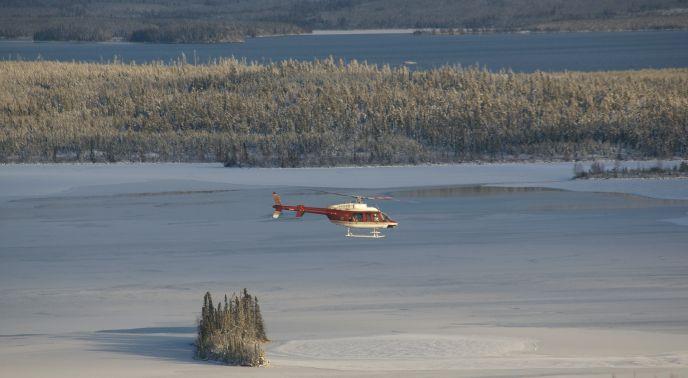
Thunder Bay, Ont.’s WiskAir Helicopters has had a longstanding involvement in the Ring of Fire – the mineral-rich swamps in the James Bay Lowlands area that is rich in nickel, copper and palladium. (Photo courtesy of WiskAir Helicopters)
staYinG tRue to tHe Cause It’s easy, in competitive environments and challenging economic circumstances, to head off course from your original bearing.
Operators we spoke to are adamant they are keeping their eyes on the prize and despite fickle markets, are not in panic mode. and while few are overly optimistic, they aren’t
exactly hitting the distress button, either. in a word? it’s just so “Canadian.”
“two or three years ago, you might have had a lot more enthusiasm with the various interviews that you do from operators,” says goodyear. “i find that it’s ironically comforting that other operators see the same uncertainty we do. the economy is very much about psychology and if everybody is in a bad mood, it becomes a self-fulfilling prophecy. But for those of us who have been around a while, and I don’t want to suggest that I am getting old, I have seen these cycles three or four times in my relatively short career. it allows you to prepare if you realize ‘it’s doing that again; it’s not necessarily something to be feared, it’s something to be dealt with.”
emond concurs, adding that a more robust market is not too far on the horizon.
“i believe the industry will be strong again in two to three years,” he says. “since the crash, the seasons have been fine. in two or three years, the best companies will still be there.”
Properly trim the sail, and the journey will be more than fair. it’s a great motto to live by.


CAREERS IN AvIATION 2013
poSitivE iNDiCAtoRS iN SEvERAl KEY mARKEtS CoUlD mEAN
oppoRtUNitiES FoR thoSE SEARChiNg FoR AviAtioN CAREERS
BY DAviD CARR
if you’re thinking of a career in aviation, here’s some handy advice: think checklist. Canada has one of the most dynamic and diverse aviation and air transport industries in the world, including a rebounding airline sector, strong corporate aviation prospects, the second largest helicopter fleet in the world, and Montreal; which represents the third largest cluster of aerospace jobs in the world.
The Aerospace Industries Association of Canada (AIAC) estimates that more than 80,000 Canadians are employed by more than 400 aerospace firms across the country. And while many basic aircraft maintenance, repair and overhaul (MRO) functions have peeled away to lower-wage countries, Canada remains strong in higher end and more sophisticated MRO.
In the most recent downturn, equipment manufacturers and repair and overhaul shops were able to stem the full impact of the skills shortage by holding onto older workers whose retirement plans were also put on hold by the same fiscal crisis. They will not be able to continue pulling at that thread for much longer.
This adds up to strong demand for hundreds of thousands of skilled professionals to keep the airplanes flying and maintain Canada’s position as a leading global manufacturer and exporter of aircraft engines, flight simulators and components.
For those who have landed on the idea of a career in aviation – along with those who are still weighing career options or even considering a mid-career reboot – it’s a case of choices and choosing. Hence the need for a checklist. And while the jobs are available or will be opening up in the near future, aviation is a more complex industry now than when the pilots getting ready to exit the cockpit or the maintenance technician putting down the tools first joined. Flight school on its own may no longer be sufficient, and that pilot licence may need to be linked with a college degree or university diploma.
Fortunately, Canada’s training programs are just as diverse. The country’s flight schools, colleges and universities offer excellent programs to help chart a course along one of the hundreds of career paths available,
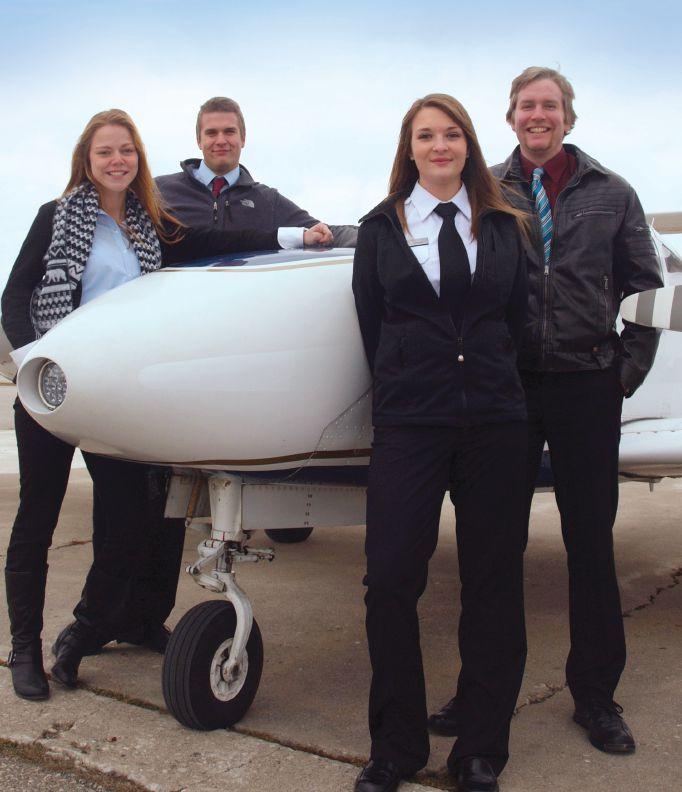
both in the air and on the ground at airports, in air traffic control or with one of the major equipment manufacturers.
In starting your career options, consider what job in aviation best matches your skill potential and ambition and map out your approach from there. Talk to professionals in your chosen field. These interactions will be invaluable to your pursuit, and don’t be afraid to approach industry professionals in all fields – they were in your shoes once, too, and are more than happy to share their experiences and insights.
Industry associations such as the Canadian Business Aviation Association, the Helicopter Association of Canada and the Air
Transport Association of Canada are also excellent sources for information and career guidance.
Research what education and licensing requirements will give you a competitive edge and which training schools offer the courses and programs you will need. Don’t be shy about looking out of province and don’t forget to consider costs. Learning to fly, for example, is very expensive and not all schools help to arrange financing.
Valuable information on education, training and job prospects is available here in Wings Careers in Aviation 2013, your onestop resource to launch a rewarding career in aviation. | W
FLIGHT OPERATIONS PILOT
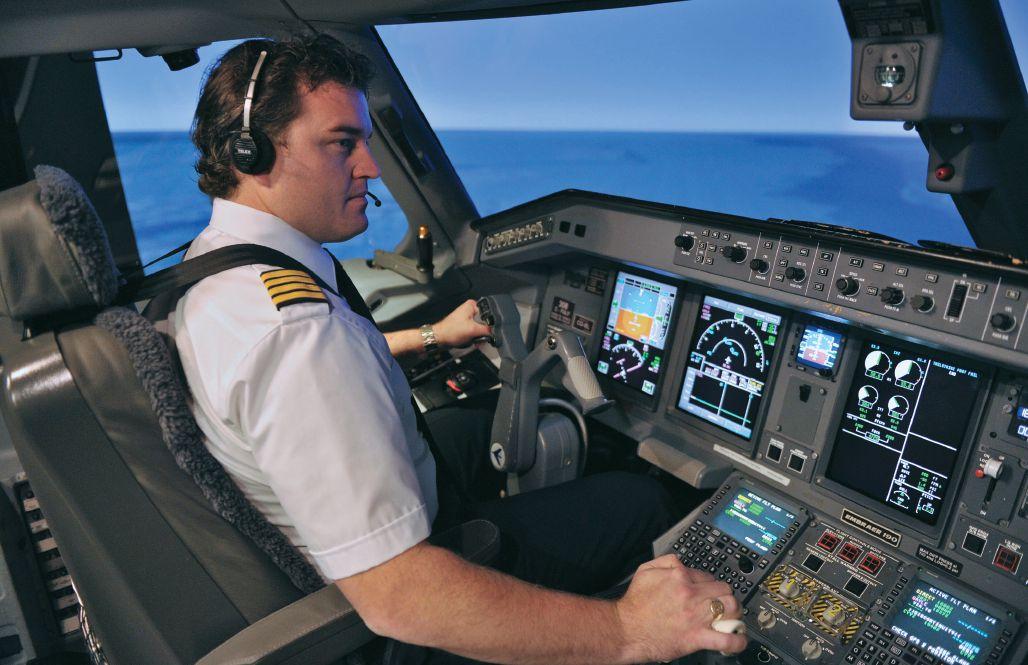
in late 2012, representatives of 14 major U.S. airlines and regional carriers joined Embry-Riddle, the world’s largest university specializing in aviation and aerospace, for a Pilot Supply Summit to address the looming projected shortage facing the aviation industry as veteran pilots retire from the flight deck and more airplanes enter the sky.
In 2010, there were an estimated 460,000 licensed pilots in the world. “More than 980,000 are expected to be needed by 2030,” according to the Montreal-based International Civil Aviation Organization (ICAO). 2030 seems like a long time off, but as Dr. Tim Brady, dean of Embry-Riddle’s College of Aviation at its Daytona Beach Campus pointed out, “it’s not a future problem; it is upon us now.”
Indeed, ICAO calculates that approximately 52,500 pilots will have to be trained each year in Canada and elsewhere to meet demand. This means a lot of opportunities for Canadian flight school and aviation college graduates. In addition to major
airlines such as Air Canada, WestJet, Porter and Jazz (branded as Air Canada Express), Transport Canada estimates there are more than 800 on-demand aviation service providers.
Canada’s geography and resource-based economy presents many interesting flight opportunities outside of the airline sector, including piloting floatplanes along the British Columbia coast, flying into remote mining towns in the booming north, taking the controls of a new-generation corporate jet out of Pearson, and passing your knowledge onto students as a flight instructor. There are also a variety of speciality services such as law enforcement and medical emergency.
Future pilots should enter flight school with a sense of direction on where they want their career to go, and whether that careers fits with their preferred lifestyle. For example, being a pilot for a charter operator often involves flying on short notice and has less routine than flying for a scheduled operator.
Most pilots work toward the 1,500 hours
flying time necessary for an Airline Transport Pilot Licence, which means there is a lot of time to fill from the less than 200 hours that the average flying school student graduates with. Entry-level jobs at this stage would include flight instructor, air taxi pilot or general aviation pilot as you build up the time.
There is also the Canadian Forces. As would be expected, military flying is one of the most demanding careers in aviation, including fighter pilots, search and rescue, and flying heavy-lift transports into some of the world’s toughest airports.
Larger airlines such as Air Canada, WestJet and Air Transat tend to hire pilots who have built up flying time over several years. It is not uncommon for a recruit to have clocked more than 500 hours flying heavy jets. As Canada’s larger airlines accelerate recruitment by hiring from the military (less of a source of new pilots than once was the case) and regional airlines, it has a “pull” effect on the industry as a whole as pilots from operators and flight instructors are recruited higher up the chain.
HELICOPTER PILOT
Anybody can land and stop. It takes real skill to stop and land.” So Geoff Goodyear, president of Newfoundland-based Universal Helicopters, told a novice Helicopters magazine editor at his first industry meeting. There is an attitude among pilots in the rotary-wing community that is not as evident among fixed-wing pilots, even though most helicopter pilots start out with a fixed-wing licence.
With approximately 1,700 aircraft, Canada has the second largest fleet of helicopters in the world, and the sector needs pilots. According to a 2010 Human Resources Study published by the Canadian Council for Aviation and Aerospace and the Air Transport Association of Canada, Canadian helicopter pilots are retiring at a rate of 17 per cent a year.
Most of Canada’s rotary-wing operations are resource based, so there are many exciting job opportunities open to helicopter pilots including exploration for oil and mining companies, flying in and out
of rural communities, heli-logging, aerial construction, fire suppression, dropping of skiers on mountain peaks and medevac flights to hospitals with landing pads.
As with fixed-wing, it is a gradual climb to the desired career spot. Most graduates leave school with 100 hours flight time, while most operators are looking for pilots with 1,000 hours minimum experience to satisfy customer demand. Entry-level positions often require 175 to 200 hours flying experience and include flight instructor or working as first officer in a twocrew operation. Many flight schools have commercial businesses such as tour operations that help students build up flight time and gain more experience.
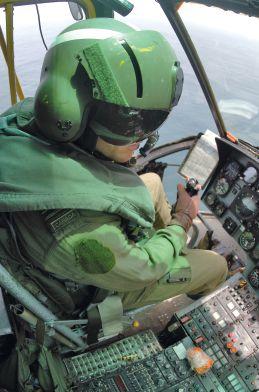
The cost of acquiring a commercial helicopter licence is between $70,000 and $80,000 depending on the school and type of aircraft. Some students choose to learn on piston machines only to reduce costs, but given that the bulk of Canada’s helicopter fleet is turbinepowered, that is a careerlimiting strategy.
The bread and butter of Canada’s helicopter sector is utility-based and supports the country’s vast resource industry, which makes work cyclical. As a result, helicopter pilots often find themselves “on the road” and camped in remote locations. There is also a growing executive charter sector in large urban areas such as Vancouver, Calgary and Toronto that will add an element of stability and predictability to your career.
Educating Aviation Professionals for 40+ Years
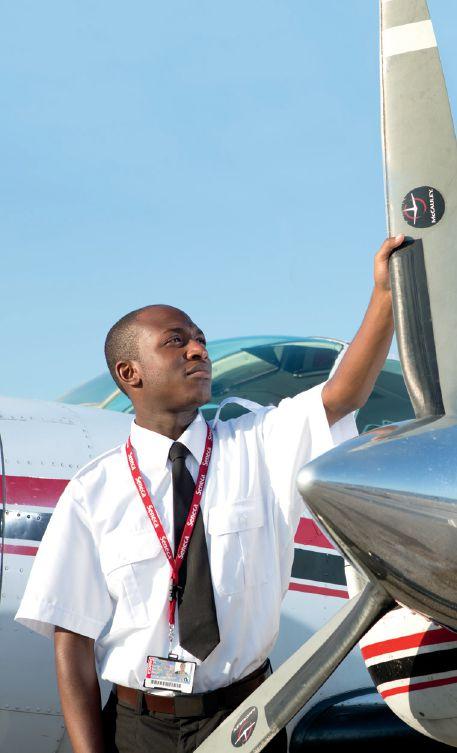
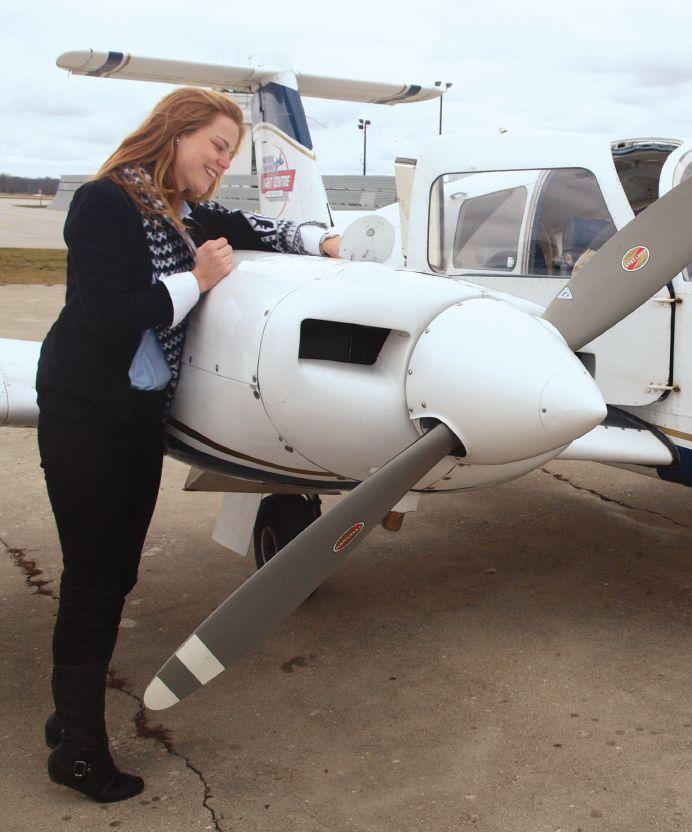
F LIGHT SCHOOLS
Canada has many excellent flight schools for both fixedwing and rotary-wing pilots.
The flight school listings in Wings Careers in Aviation 2013 are intended to offer a snapshot of schools across Canada and some of their specialties. Transport Canada recommends determining your aviation goals and researching the school that will help you to achieve those goals.
Many factors should go into making that determination, including location of the school, facilities, the number of training aircraft available and the quality of maintenance. An unwritten industry standard is one training aircraft for every four or five full-time students, although that ratio changes with part-time students. These
airplanes clock a lot of air time and are often put through tough paces. Maintenance is also an important consideration for both safety and scheduling.
None of the final determinations should be made based on school literature alone. Make a list of potential schools, narrow the field and visit as many as you can. Arrive with questions for the instructors, insist on looking at the equipment and make certain you learn more about the school by talking with students.
Flight school is split between hands-on airplane training and ground school, where students learn such things as the principles of flight, pilot decision-making, navigation, etc. Before making a final decision, ask about a school’s approach to ground school. Many schools offer simulator training to
WHAT DID IT COST TO BECOME A PILOT IN 2010?
PRIvATE PILOT LICENCE
(Minimum costs based on average times for a Private
PILOT LICENCE
MuLTI-ENGINE RATING (estimated cost based on Twin Seneca I aircraft)
$2,875
figures courtesy of Pacific Flying Club, Vancouver, B.C.
build up skills, which can be a very attractive option that avoids the constant cost of renting a training aircraft.
Finally, learning to fly is expensive. Most flight schools in Canada are cost competitive but the final cost will depend on what you want to get out of your training. Aircraft rental and instructor time, for example, is typically based on when the airplane is running and not just in the air. Some flight schools may charge extra for different instructors (see, "A Guide to Flight Instructors," next page.). You may also have to factor in travel and accommodation. Most schools allow students to “pay as you go’” and one option to lower costs is to pay for “blocks” of instructor and aircraft rental time in advance. Ask if a school offers financing or has links with financial institutions that offer loans for flight training.
o cean Air Floatplanes | Seaplanes
Victoria, B.C.
Seaplanes are a way of life along coastal Canada. Coastal jobs require high levels of experience because of the many challenges that the coast offers. Victoria, B.C.based Ocean Air Training offers both a 15-hour course and 50-hour professional pilot course. The company’s beautiful
Gulf Island’s setting just outside Victoria and close in proximity to Vancouver, creates a perfect training environment for learning to be an experienced bush/ urban seaplane pilot. The Professional Seaplane Training Course is designed for the ambitious student seeking a career in seaplane piloting. The cost is approximately $14,500. Training to fly a Cessna 180 with floats takes place in confined areas, wherever water is a runway – in lakes, rivers, high-altitude mountain ranges and the coastal environment at real working seaplane docks. Ocean Air has two highly experienced instructors with an extensive background in float operations throughout Canada on floats both on the coast and in the Canadian North. www.oceanair.ca
g lacier Air | m ountain Flying
Squamish, B.C.
Glacier Air is one of southwest B.C.’s premier mountain flying operators with extensive experience over the Sea-to-Sky Corridor, from Vancouver to Whistler. Glacier Air offers a number of flight training programs from its base at Squamish Municipal Airport, including commercial pilot licence. This course includes 35 hours
of dual flight instruction, plus 30 hours of solo flight training. The dual includes five hours night, five hours cross-country and 20 hours of instrument training. The solo time must include a flight to a point at least 300 nautical miles from the departure airport, as well as five hours of night flying. To issue a licence, the candidate must have a total of 200 hours flight time, with at least 100 hours of pilot-in-command (PIC). A successful candidate will require an increased level of theoretical knowledge beyond that of a private pilot and will be tested through a written examination administered by Transport Canada. Glacier offers a Commercial Ground School course to students to gain the knowledge and experience required for the written examination.
www.glacierair.com
m ountain v iew h elicopters Flight School | Rotary Wing Drumheller, Springbank, Alta. Alberta’s Mountain View Helicopters has been training pilots for commercial or private helicopter licences from its Springbank Airport headquarters since 1995. The company also provides advanced and recurrent training for pilots working in Western Canada. (Unlike with
Our Aviation programs can help you take flight.
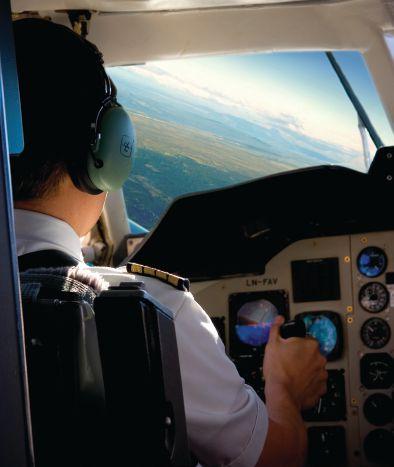
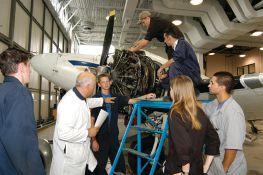
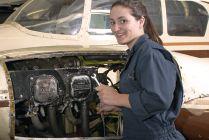
Our leading-edge programs in Aircraft Maintenance and Avionics Maintenance are taught at one of the largest aircraft maintenance training facilities in Canada. Our instructors are equipped with years of experience, and our program offers an intense mix of theoretical learning and hands-on training that will get you career ready.
If you want to sit in the pilot’s seat, our Professional Pilot training program could allow you to earn your private and commercial licence as well as a multi-engine IFR rating in just 12 months.
For more information, contact: Mike Barleben, 416-289-5000 ext. 7280, mbarleben@centennialcollege.ca or James Passant, 416-289-5000 ext. 7510, jpassant@centennialcollege.ca or visit us at centennialcollege.ca/transportation
See where experience takes you.
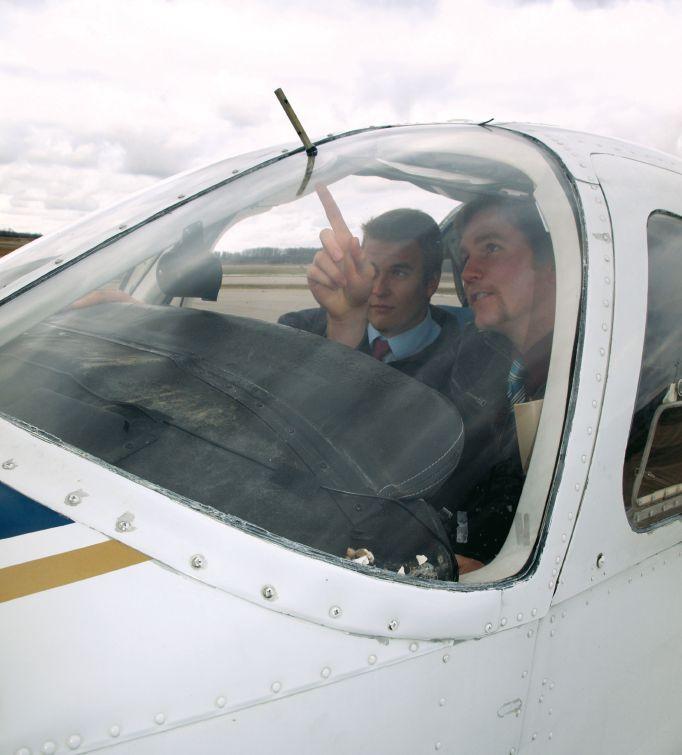
a fixed-wing pilot, an aspiring rotary-wing pilot does not require a private license before progressing to a commercial license.)
Mountain View’s staff of four Class 1 instructors trains on a fleet of Robinson RH22, RH44 and Bell BH06 helicopters. The Springbank facility provides several advantages, including exceptional flying weather found on the Prairies, the proximity to the mountains for use as a valuable training tool and the experience gained through frequent contact with air traffic controllers in nearby Calgary. For the uncertain novice, Mountain View offers a discovery or familiarization flight, which offers the opportunity to pilot a helicopter. The discovery flight consists of a 20- to 30-minute ground briefing followed by 30 minutes in the helicopter. www.mvheli.com
m illennium Aviation | Fixed Wing (including Aerobatic training) Saskatoon, Sask.
Millennium Aviation is Saskatoon’s only dedicated flight school, offering a wide range of courses, including private and commercial licensing, night ratings and aerobatic training for those who wish to unleash their inner daredevil. Environment Canada statistics illustrate that Saskatoon has some of the best weather in
Canada for visual flight rules (VFR) flight training. Millennium’s airport in Saskatoon offers a varied flight experience with light aircraft, commuter twins, military trainers and commercial jets using the facility daily. Accelerated learning is possible because the company runs a complete operation, including a diverse fleet of Cessna 150, Piper PA 28 140 and 180, Mooney M20F and Piper Twin Commanche. The ground school runs continuously and is supplemented by video assisted learning. www.millenniumaviationltd.com
h arv’s Air | Fixed Wing/ o nline g round School training
St. Andrews, Steinbach, Man. Manitoba’s four extreme seasons allow pilots to experience all types of flying conditions from cold air performance to hot summer day. Harv’s Air is a family-owned training operator with locations near Steinbach and St. Andrews, Man., both in the Winnipeg area. In business since 1973, the company offers comprehensive courses for both recreational flying and those seeking a career in aviation. Harv’s Air operates a large mixed fleet of airplanes consisting of trainers, highand low-wing aircraft, and airplanes with the latest computerized cockpits, including the Diamond DA40 equipped with the Garmin G-1000 glass cockpit. Harv’s Air also offers
A GUIDE TO FLIGHT INSTRUCTORS
In Canada, there are four classes of instructor.
• Class 1: This is the highest level of instructor. A Class 1 instructor is a supervising instructor who not only trains people to be pilots, but also trains people who wish to become instructors. To become a Class 1, you have to have 750 hours of instructing time, pass a written test and pass a flight test to the Class 1 Standard.
• Class 2: This is also a supervising instructor. To become a Class 2, again must pass a written and flight test and complete 500 hours of instructing.
• Class 3: An instructor becomes a Class 3 after having completed all requirements from Transport Canada while they are a Class 4 instructor. This includes a specific number of students who have gone solo and successfully passed flight tests, and completed 100 hours of instructing (in most cases have done more).
• Class 4: This is the most novice of instructors, having recently completed their training with a Class 1, and successfully passed the written and flight tests. They are under direct supervision of a Class 1 or 2 instructor and cannot send anyone solo or on a flight test without the approval or a Class 1 or 2. All instructors are accountable to the chief flight instructor (CFI), who has been deemed suitable to fill the position by Transport Canada.
an online ground school option that allows students to complete theoretical material at their own pace while remaining connected to fellow students and instructors through discussion forums and email. www.harvsair.com
Waterloo Wellington Flight Centre | Fixed Wing
Waterloo, Ont.
The Waterloo Wellington Flight Centre (WWFC) is located at the Region of Waterloo International Airport and is one of the largest flight training centres in Canada. Founded in 1932 as a flying club, WWFC offers programs and services for students pursuing aviation as a career, as well as for individuals who enjoy flying as a hobby. Its
PHOTO:
fleet consists of 24 Cessna, Diamond and Piper aircraft, and ground training takes place at a recently opened 15,000-squarefoot flight school facility. WWCF has 20 flight instructors on staff, including 12 that hold a Class 1 or Class 2 rating. The flight centre is partnered with Conestoga College and the University of Waterloo to offer diploma and degree programs in combination with a Commercial Pilot Licence and MultiEngine Instrument Rating. It also offers a Fast Track Professional Pilot program for students who already have a postsecondary education. WWFC has a well-developed network among entry-level aviation employers across the country. www.wwflightcentre.com
Brampton Flight Centre
| Fixed Wing
Brampton, Ont.
For a quality pedigree it is tough to beat the Brampton Flight Centre, which is owned and operated by the Brampton Flying Club, an organization that has been training pilots for careers in global aviation since 1946. With a staff of more than 30 instructors, BFC the “Centre” (which should not be mistaken for BFC the “Club”) offers a broad base of courses from recreational flying up to career starters such as a one-year college program
and a four-year degree program that take advantage of the centre’s tie-up with Sheridan College’s Bachelor of Business in Global Business Management, described as a strong fit for an ambitious professional pilot. Advanced training instructors include an experienced Air Canada pilot and Sunwing first officer. BFC has 23 aircraft available for training, including Cessna 172s and Piper Seminole aircraft. College flight and ground school instruction is provided by primarily aviation college graduates, supported by active airline pilots for the Advanced Airline Training courses. The top graduates in each class are offered jobs with BFC as instructors. www.bramptonflightcentre.com
Silverline h elicopters
| Rotary Wing Holland Landing, Ont.
Silverline Helicopters was established in 1999 as a flight training operation. The company’s base of operation is the Holland Landing Airport north of Toronto. This location provides a very diverse training environment with confined areas both in bush and marshlands. To expose students to a busy airspace environment, some training is done at controlled airports such as the Buttonville Municipal Airport. Silverline currently offers private license training only. The operator’s
CONSIDER JOINING THE AIR CADETS
Want a jump-start on an aviation career? Then check out the Royal Canadian Air Cadets. Operated by the Canadian Forces, the Air Cadets are open to Canadians 12-18 years old. As Air Cadets, students get to take part in a variety of flight opportunities. Top cadets can even earn their glider or Private Pilot’s Licence through the program. The Air Cadets program also offers sports, model aircraft building and music. And although being an Air Cadet can help students get ahead in aviation, joining in no way obligates them to serve in the Canadian military. Learn more at www.cadets.ca.
two flight instructors have a variety of flying experiences, including IFV, fire suppression, ENG and remote bush flying. The training fleet consists of a Robinson R44 and Bell 206 JetRanger for students wishing to add a turbine rating to their licence. Night ratings are available for licensed pilots with required experience. www.silverlinehelicopters.com
AEROSPACE
A leader in aerospace and aviation training since 1957, BCIT produces the job-ready grads industry demands. Our Aerospace Technology Campus – a 300,000 square-foot state-of-the-art facility adjacent to the Vancouver International Airport –offers globally-recognized, accredited programs in areas including:
> Aircraft Gas Turbine Engine Technician
> Aircraft Maintenance Technician
> Avionics Technician
> Commercial Pilot Training
> Airport Operations
Find out why our grads are in demand.
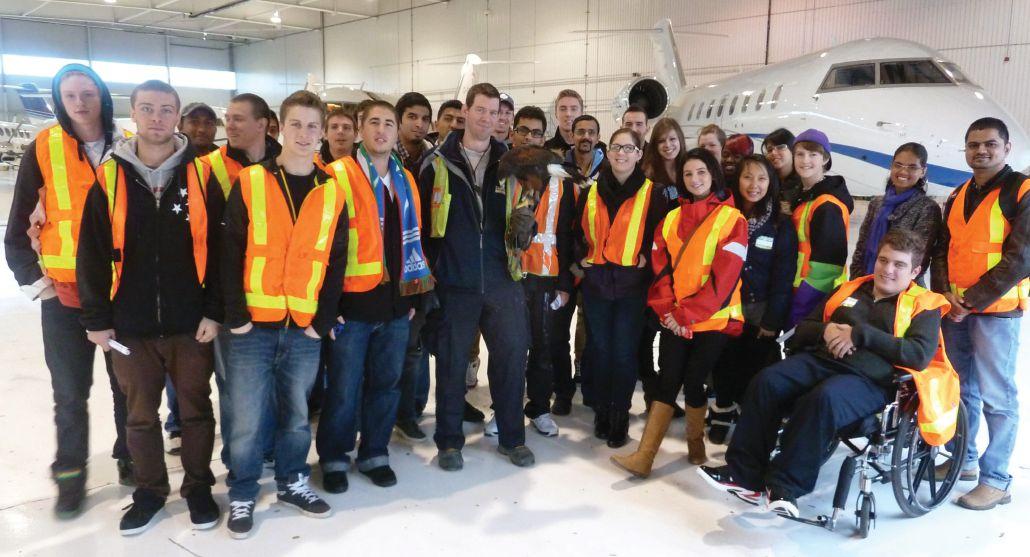
AvIATION COLLEGES: THE BENEFITS
how do you want to position yourself in the job market?
Aviation is an increasingly complex and high-techdriven industry. A pilot licence alone may not cut it, especially when you consider that an estimated 95 per cent of the competition for higher-end airline jobs will also hold a college degree.
Canadian colleges with aviation programs teach essential skills not always found at flight schools, which is why many of the larger schools are associated with colleges to give students a better rounded education, and make them more attractive candidates for recruiters. Listings of select colleges with aviation programs that offer a flight-training component in Careers in Aviation 2013 include the partnering flight school for easier reference.
Not everything taught in the college setting will be directly linked to aviation. However, college offers students a deeper understanding of the technical aspects of the industry, teaches critical decisionmaking and communication skills when working with crews both in the flight deck and on the ground. Many flight schools recommend that students with no intention of ever trading a cockpit seat for a desk job consider a college degree as a safeguard
against unexpected circumstances such as a failed health check or a company that is grounded.
Aviation colleges help to shape the raw pilot into an industry professional. They also offer career counselling and open students up to broader networks so it is easier to make the right connections to that important first job.
Selkirk College
| professional pilot program
Castlegar, B.C.
The Selkirk College Aviation-Professional Pilot program is an integrated approach to flight training emphasizing Multi-Crew Coordination Training and Airline Transport Pilot Licence standards. The college delivers university level courses, ground school, computer-based training exercises and professional flight training. Selkirk’s aviation facility offers an advanced classroom-training environment, dispatch area and modern flight-training simulators. Flight training is completed in a fully equipped fleet consisting of five Cessna 172P and two twin-engine Beech Travelaire aircraft. Graduates are licensed and qualified to enter the industry as Group 1 Instrument Rated Commercial pilots. A unique part of the Selkirk program is its
approach to two-crew training. The traditional model endorsed by most schools involves a single condensed block of twocrew training in the later stages of the program. This isn’t the case at Selkirk. Five years ago, the school adopted a model that integrates two-crew training into the simulator syllabus throughout the entire two-year program. From the first semester onward, students receive instruction in two-crew and single-pilot IFR. Selkirk aviation courses are transferable toward an aviation degree at Embry Riddle Aeronautical University. www.selkirk.ca/programs/ba/aviation/
British Columbia institute of technology | Airline and Flight operations program
Flight School partner: pacific Flying Club
Vancouver, B.C.
The British Columbia Institute of Technology (BCIT) has partnered with the Pacific Flying Club to offer the Airline and Flight Operations program. BCIT is a leader in aviation technology training and the Pacific Flying Club is the largest flighttraining centre in Western Canada. Together, their Airline and Flight Operations program produces graduating students
with a variety of aviation skill sets. The program covers a range of aviation-related subjects such as aviation safety and risk management, crew resource management, survival skills, air carrier and airport security systems and airline ground handling procedures. Licences and rating obtained during this intensive 16-month program include the Private Pilot License, Commercial Pilot Licence, Night Rating, Multi-Engine Rating, M-IFAR Rating and an introduction to multi-crew flying. Students must obtain at least 70 per cent in all courses.
www.bcit.ca
www.pacificflying.com
Confederation College | Aviation Flight management Thunder Bay, Ont.
Confederation College’s Aviation Flight Management program includes Private and Commercial Flight Training with additional units on “floats and skies.” The college’s fleet of Cessna 172 and Cessna 180 aircraft are continuously being updated with advanced technologies. The college also offers training on advanced simulators. The program has its roots in the remote northern climate of bush flying under extreme conditions. It sets the standard for
job opportunities all over the world, from the freedom of bush pilot work in the north, to joining major airlines. Ground school is provided at the School of Aviation, located at Thunder Bay International Airport, with learning conducted next to the runway.
www.confederationc.on.ca
georgian College
| Aviation Flight management Barrie, Ont.
Georgian College’s three-year diploma program in Aviation Management has an integrated paid co-op component so students can graduate with the equivalent of one year of work experience in the aviation industry. Georgian provides in-depth classroom sessions studying the aviation industry and specifically aviation business management to provide real world work experience. Successful graduates of the program can continue on to complete a four-year degree through a unique articulation agreement with Embry-Riddle Aeronautical University in the U.S., the world’s largest university specializing in aviation and aerospace. Georgian also has articulation agreements with Griffiths University in Australia and Loughborough University in the U.K. www.georgiancollege.ca
Conestoga College
| Aviation – general Arts and Sciences program
Flight School partners: Waterloo Wellington Flight Centre, great lakes helicopter Breslau, Ont.
The Aviation-General Arts and Sciences program is a two-year Ontario college diploma program for both fixed-wing and rotarywing pilots. Students in this program will take classes at Conestoga College as well as at the Waterloo Wellington Flight Centre (WWFC) or Great Lakes Helicopter depending on whether they choose the fixed- or rotary-wing option. Graduates will acquire a commercial pilot’s licence as well as a diploma in general arts and science. Founded in 1932 as a flying club, the Waterloo Wellington Flight Centre is one of the largest flight-training centres in Canada, with 20 instructors on staff and a fleet of 24 Cessna Diamond and Piper aircraft. A very low ratio of students to instructors for the Conestoga College program enables the instructor to spend more one-on-one time with students. The collaboration with Great Lakes Helicopter will include 50 hours of flight instruction on a Robinson R22 during the first year, and 55 hours on the larger R44 during the second
Continued on page C-13
Your Career On Wings
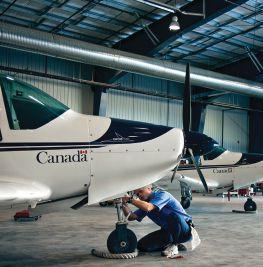
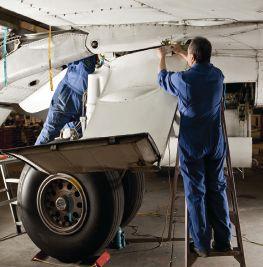
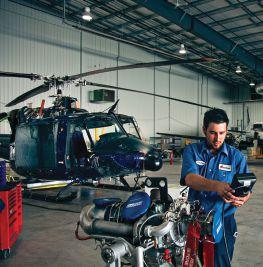


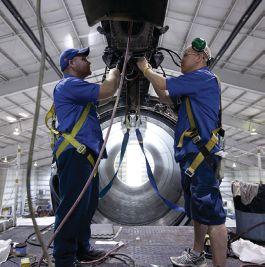

AvIATION MAINTENANCE ENGINEERS
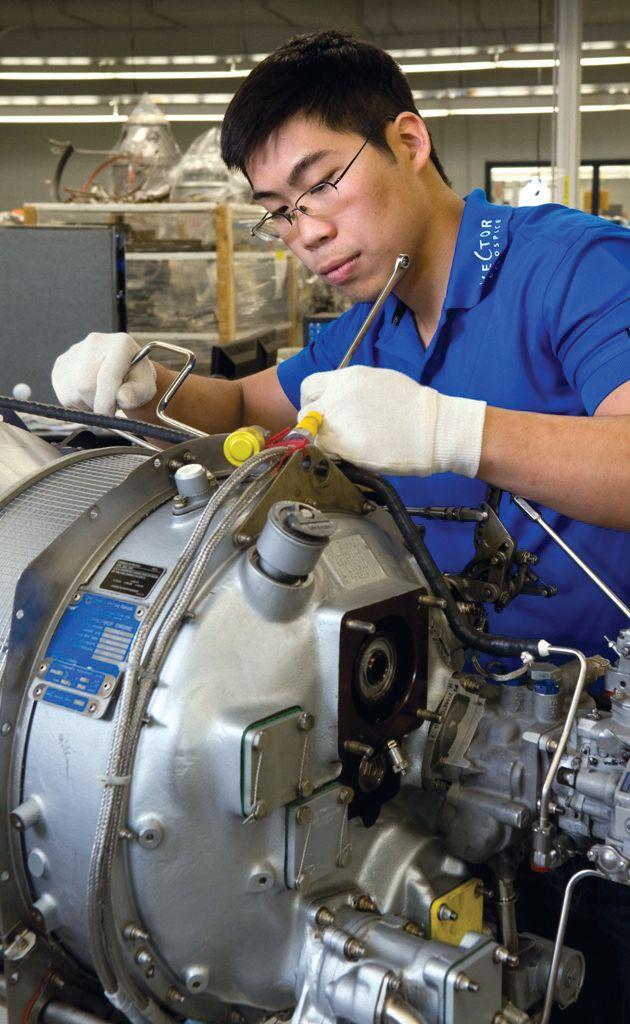
teams of technicians power every airplane. Mechanics maintain and overhaul aircraft structures, repair the engine, install new systems such as flight deck avionics and conduct essential safety checks.
Canada has the fifth largest aerospace manufacturing sector in the world, producing aircraft components, avionics, engines and complete aircraft construction. A joint study by Foreign Affairs and International Trade Canada and the Canadian Council for Aviation and Aerospace (CCAA) reports that there is a labour shortage in nine of 10 key occupations in the Canadian aerospace manufacturing sector and a skills shortage in all 10. By 2017, 40 per cent of the Canadian labour force will be over 55 years of age and considering retirement, including the more
than 80,000 aviation technical personnel.
The company that represent Canada’s cluster of heavy-hitters – among them Bombardier (the world’s fourth largest civil aircraft manufacturer), Pratt & Whitney Canada (the largest supplier of engines for regional and business aircraft and helicopters) and CAE (the world leader in simulation and modeling), are also creating an additional need for maintenance of their new products.
Still, it is not as simple as backfilling the vacancies. New-generation aircraft, carbon composites and more complex systems will require sophisticated skill sets and more education than once was the case. Aviation technical personnel must possess a strong knowledge of aircraft systems, aerodynamics and aircraft structures along with a clear understanding of the interrelationship among components on an aircraft. Aircraft maintenance is also a very manual-driven industry that requires a high level of literacy and numeracy skills and the ability to follow technical drawings and blueprints.
A variety of skilled trades are required for the building and maintenance of aircraft, requiring different licence ratings, levels of study and documented work experience. The list of aviation maintenance colleges in Wings Careers in Aviation 2013 also includes examples of a specific program, although most Canadian colleges on the list have a broader scope of programs available.
AmE ASSoCiAtioNS iN CANADA
• The Canadian Council for Aviation & Aerospace (CCAA) www. avaerocouncil.ca
• Canadian Federation of AME Associations www.cfamea.com
• Central AME Association www.camea.ca
• Western AME Association www.wamea.com
• Pacific AME Association www.pamea.com
• Atlantic AME Association www.atlanticame.ca
• Ontario AME Association www.ame-ont.com
AVIATION TECHNICAL CAREERS
Qualified aircraft maintenance technicians have found challenging careers in all areas of Canada’s airline and aerospace sectors. Below is a brief description of several specialized roles.
Avionics maintenance technician
In the past 10 years, avionics has penetrated every aspect of an aircraft’s operation, and has ensured a strong demand for avionics maintenance technicians. An avionics maintenance technician installs, repairs and maintains various complex aircraft computers and subsystems including “fly by wire,” auto flight, global positioning and satellite navigation. Avionics technicians are involved in integrating avionics systems into the aircraft, technical writing and troubleshooting. An avionics technician is eligible to obtain an Aircraft Maintenance Engineer Licence and release aircraft for service.
Aviation machinists
Aviation machinists fabricate, repair, rework or modify aircraft parts and components to exacting specifications. They must be familiar with exotic and specialized materials used in aviation, and will often be called upon in the design phase of a project because of their knowledge of materials, processes and fabrication techniques. Newer carbon-fibre composites such as those being used in the Boeing 787 will bring new opportunities for aviation machinists.
Aerospace Engineers
In Canada, aerospace engineers are at the core of a vibrant industry, developing new systems and aircraft that meet the highest standards for safety and performance. Each year, more than 1,200 new and modified aeronautical products are built or operated in Canada. A day in the life of an aerospace engineer could include developing new aircraft flight systems, designing new propulsion systems, or studying and analyzing aircraft aerodynamics.
Aviation maintenance inspector
An aviation maintenance inspector inspects the structural and mechanical systems of an aircraft to ensure it complies with Transport Canada, operator and manufacturer performance and safety standards. In some organizations, the aviation maintenance inspector plans and implements every aspect of inspection techniques to make sure the quality of aircraft repairs and maintenance performed meets industry standards. An inspector can also be an AME who releases aircraft.
Aircraft line maintenance technician
Aircraft line maintenance involves technicians who diagnose and correct troubles on the aircraft conduct major aircraft checks and effect repairs.
year. The program will also include a winter survival course and night rating. Students also have an option for a turbine rating on a Bell 206 JetRanger.
www.conestogac.on.ca
www.flightcentre.com
www.greatlakeshelicopter.ca
Seneca College
| Bachelor of Aviation technology Flight School partner: toronto Airways
Markham, Ont.
Seneca College and Toronto Airways have been offering joint aviation training for more than 30 years. Seneca’s Bachelor of Aviation Technology program is described as the only aviation technology-based degree program in Canada. The program provides a rigorous aviation technology-based curriculum that applies this theory to aviation. The breadth of knowledge and skills prepared students to cooperate safely in a complex aircraft, to understand the technologies and human factors that affect the successful operation of an aircraft and to assume the professional responsibility associated with being a commercial pilot. Students will also learn business management, airport operations and
planning and air carrier administration to gain a larger sense of the aviation industry. Classes are conducted at Seneca’s facilities in Markham and at Toronto’s Buttonville Airport.
www.seneca.on.ca
www.torontoairways.com
Algonguin College
| general Arts and Science
Flight School partner: ottawa Flying Club
Ottawa, Ont.
This two-year Ontario College Diploma program delivers more than 16 months of concurrent training designed to provide students with the knowledge and skills required to become a commercial pilots. The program officers practical skills such as fuel and aircraft handling, winter operations (always comes in handy in Canada, less so if a student intends to pursue a career in the Gulf States), cockpit resource management, maintenance and skills and dispatching. Through a series of classroom-based courses and hands-on practical labs, students develop the required level of proficiency to complete the Transport Canada Commercial Pilot Licence written examination and practical flight test. A college contract with the Ottawa Flying Club provides up to 250 hours of flight time
experience. During the final term, students can select one of several areas of specialization, including flight instructor, advanced multi-IFR or seaplane rating. www.algonguincollege.com www.ofc.ca
moncton Flight College
| B.Sc. Aviation technology Moncton, N.B.
The Moncton Flight College (MFC) is the oldest and one of the largest flight schools in Canada, offering a broad range of aviation courses, including Private, Commercial, Instrument, Multi-Engine, Instructor and Aerobatic. MFC’s fleet of 40 aircraft is made up largely of the Diamond DA20-CI Eclipse, Cessna 172 and King Air C90B. The college also has eight simulators, including the DA40 Level 5 FTD, ATC810 Level 2 and nine situational awareness trainers. MFC offers a four-year bachelor of science degree in partnership with Mount Allison University and is a member of the CAE Global Academy, the world’s largest flight school network operated by the Montreal-based flight simulator firm, services and training giant CAE. The college was the school of choice for the first two phases of CAE’s Multi-crew Pilot Licence program. www.mfc.nb.ca

TAKE FLIGHT

If you would like to become a fully qualified commercial pilot, trained by some of the best instructors in Canada in the nation’s most challenging terrain, Selkirk College Aviation will exceed your expectations and prepare you well for the Canadian Aviation Industry.
View after take off over Selkirk College and West Kootenay Regional Airport, Castlegar BC
AvIATION COLLEGES –MAINTENANCE
the British Columbia institute of technology
| Aircraft maintenance Engineer
Vancouver, B.C.
The British Columbia Institute of Technology (BCIT) is Canada’s largest aerospace training facility. The Institute offers aircraft maintenance engineering programs in avionics, maintenance and structures at its state-of-the-art Aerospace Technology Campus (ATC) located at Vancouver International Airport. The Aircraft Maintenance Engineer program consists of 16 continuous months. Approximately 50 per cent of the day is spent on theory discussions in a classroom setting, followed by hands-on practical training. The program is designed to follow a national/international set of standards and is approved by Transport Canada and the CCAA. Successful completion of the diploma program will result in an experience credit of 18 months of the 48 months required by Transport Canada to obtain an AME M licence.
www.bcit.ca
okanagan College | Aircraft maintenance Engineer, Structures
Kelowna, B.C.
The Okanagan College AME Structures program consists of 37 weeks of full-time studies. Approximately 50 per cent of the day is spent on theory discussions in a classroom setting, followed by hands-on practical training in the shops located in the College’s Aerospace Campus at Kelowna International Airport. The program follows a national/international set of standards and is approved by Transport Canada and the CCAA. Transport Canada grants graduates of this program with 10 months experience credit toward the 36-months’ experience requirement. www.okanagan.bc.ca
SAit polytechnic | Aircraft Structure technician, Avionics technology and Aircraft maintenance Engineers technology Calgary, Alta.
SAIT Polytechnic offers three full-time aviation programs at its Art Smith Aero Centre, located at the Calgary International Airport. The Aircraft Structure Technician, Avionics Technology and Aircraft Maintenance Engineers Technology programs cover all aspects of aircraft structure repair, including general
aviation, corporate, charter, transport category aircraft and helicopters. Some of the courses in these programs are web-based and will require students to access information from the Internet.
www.sait.ca
Red
River College | Aerospace manufacturing technician Winnipeg, Man.
In 1989, Winnipeg-based Stevenson Aviation Technical Training Centre introduced Canada’s first nationally accredited Aircraft Maintenance Engineer Apprenticeship Program. Part of Red River College, the Stevenson Campus offers a wide range of aviation maintenance courses in partnership. The Aerospace Manufacturing Technician program, a collaborative effort between Boeing Canada and Bristol Aerospace prepares students for positions as skilled production workers in the area of aerospace composite manufacturing. The Gas Turbine Engine Repair and Overhaul program in partnership with StandardAero provides students with the technical knowledge, skills and techniques required to be a skilled worker in the area of repairing and overhauling gas turbine engines. Non-Destructive Testing teaches inspection techniques designed to detect discontinuities or defects (such as cracks) in different types of materials. The Aircraft Maintenance Engineer program will develop knowledge and skills in maintenance of large and small aircraft, including fixedwing aircraft and helicopters, and to provide Transport Canada approved training toward an AME licence. A good portion of program hours will be devoted to the study of aircraft maintenance theory. www.rrc.mb.ca
Confederation College
| Aerospace manufacturing Engineer technician
Thunder Bay, Ont.
The Confederation College School of Aviation is located at Thunder Bay International Airport. The college has a well-established Aviation Technician – Maintenance Program designed and developed in consultation with the industry and Transport Canada. Confederation College also offers Aerospace Manufacturing Engineering Technology and Technician programs at its Aviation Centre of Excellence (ACE). The centre is located on the north side of runway 25 and has its own apron and taxiway. ACE has a sizeable fleet
of non-flying fixed-wing and rotary-wing aircraft, including a McDonnell Douglas DC9, Cessna’s and Bell 47 and 206 helicopters. www.confederationc.on.ca/ aircraftmaintenance
Canadore College
| Aircraft Structures technician
North Bay Ont.
Canadore College offers its Aircraft Structural Repair program at its 87,000-squarefoot Aviation Campus located at the North Bay Airport. The college also has two partner programs through First Nations Technical Institute and Essential Helicopters. The Aircraft Structural Repair Technician curriculum focuses on the maintenance, repair and fabrication of aircraft structural components. In addition, students will be prepared with job-entry skills that include sheet metal layout, blueprint reading, structural repair of fuselages, wing and empennage sections, and heat and corrosion treatment. Students of the Aircraft Maintenance Technician program will study the complexities of fixed and rotary-wing aircraft while gaining theoretical skills necessary for apprenticeship employment. This program also prepares graduates to write the Transport Canada Aircraft Maintenance Engineer examinations www.canadorec.on.ca
Centennial College
| Aircraft maintenance technician Toronto, Ont.
Centennial College’s Aircraft Maintenance Technicians program teaches skills in aircraft maintenance, power plant structures, inspections, troubleshooting, mechanical, electrical and electronic applications. Students will also acquire other sciences related to aircraft maintenance. A significant portion of time is spent on practical application in labs working on aircraft engines, conducting aircraft and component inspections in a maintenance environment and performing flight-line activities. Centennial’s Option M, Aircraft Maintenance, emphasises the repair of a wide range of electrical and mechanical systems within an aircraft, including: hydraulics, fuels, environmental systems, engines, surface controls and undercarriage systems, and the aircraft’s frame and external skin. The college also teaches aviation maintenance servicing practices and procedures and aviation regulation requirements.
mohawk College | Aircraft maintenance Engineer
Hamilton, Ont.
Building on its unique partnerships with the Canadian Warplane Heritage Museum and the Hamilton International Airport, Mohawk’s two-year program offers students an excellent balance of theoretical knowledge and practical application. Students in this CCAA-accredited two-year program have an opportunity to work on a variety of aircraft, including a helicopter, vintage aircraft and heavy jet transports. In addition, Kelowna Flightcraft Ltd. recently donated a Boeing 727-100 for the Aviation Technician program, bringing the fleet up to 13. The Mohawk program is a living laboratory that focuses on developing key skills students will need to maintain aging aircraft as well as understand rapidly changing technologies – a blend of living history and modern standards.
www.mohawkcollege.ca
NSCC| Aircraft maintenance Engineer, Avionics
Dartmouth, N.S.
NSCC’s Aviation Institute is a modern 43,000-square-foot training facility where students build their skills using the latest technology applied to real aircraft. The
AME Avionics program provides the skills needed to service, maintain, repair, overhaul, inspect and test aircraft systems. Systems include electrical power distribution, communication, navigation, data and various instrumentation systems. Students learn the use and maintenance of hand tools as well as sophisticated and specialized tools and equipment.
www.nscc.ca
holland College
| gas turbine technician
Summerside, P.E.I.
Holland College’s Aircraft Gas Turbine Engine Repair and Overhaul Technology program is CCAA accredited. In this program, students will learn the techniques, procedures and the documentation requirements necessary to perform the disassembly, inspection, repair, reassembly and testing of the turbine engines used to power today’s aircraft. The program consists of approximately 60 per cent practical and 40 per cent theory. Hands-on, practical training is carried out on a variety of turbine engines including the Pratt and Whitney 100 series turbine engine used on the de Havilland Dash 8 aircraft, the Pratt & Whitney PT6, one of the world’s most popular turbine engines and the Rolls Royce 250 for
light turbine-powered helicopters. www.hollandcollege.com
College of the North Atlantic | Aircraft Structural Repair technician
Gander, N.L.
The College of the North Atlantic Gander campus is part of the Lufthansa Technical Training network of approved schools. The two-year Aircraft Maintenance Engineering Technician (AMET) program offers training in the inspection, maintenance and repair of aircraft, and aircraft components. Topics include the role of the AME as being responsible for aviation safety and airworthiness. Courses cover all aspects of aircraft maintenance for both fixed-wing and rotary-wing aircraft, and include safety practices, ground handling, inspection techniques, power plant, structural repair, aircraft systems and avionics. Graduates are granted 21 months experience credit toward the 48-months’ requirements for the licence. An optional semester allows graduates of the AMET program to carry on and also meet the training requirements for the issuance of a European Aviation Safety Agency Aircraft Maintenance Licence. This standard is currently recognized in 33 countries in Europe. www.cna.nl.ca
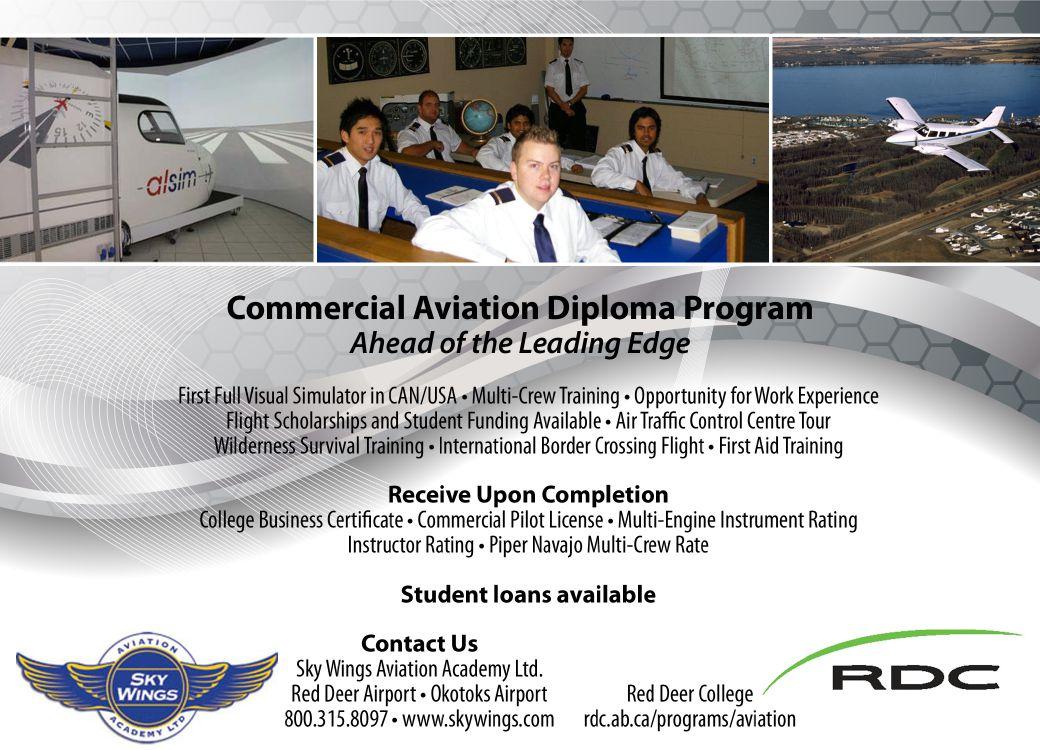
uNIvERSITIES WITH AvIATION DISCIPLINES
Canada has the fifth largest aerospace industry in the world and is home to industry giants such as Bombardier, the world’s third largest commercial aircraft manufacturer, and Pratt & Whitney Canada, the world’s largest supplier of small turbine engines for business jets, regional aircraft and helicopters. Aerospace is also the second most research-intensive industry in Canada.
Feeding the necessary skills to this high-tech industry are many excellent Canadian universities with Aerospace Engineering programs at the undergraduate, graduate and PhD levels. Aerospace has become an increasingly global industry, and so too is the search for talent, especially during a worldwide shortage of skills. Many international students are choosing to study aerospace engineering
at a Canadian university, and many Canadian graduates are able to find high value jobs at home and abroad.
University of Fraser valley | Abbotsford, B.C.
The University of Fraser Valley (UFV) offers one, two and four year aviation training programs in cooperation with Vancouver-based Coastal Pacific Aviation. Aviation subjects are taught by Coast Pacific instructors and academic courses are taught by instructors at the university’s Abbotsford campus. UFV’s one and two year diploma programs consist of training for a commercial licence followed by advanced training, including multi-engine and instrument training. The four-year degree program takes students through the private licence, commercial licence and advanced training, and meets the academic requirements for the UFV Bachelor of Business Administration.
mount Royal University | Calgary, Alta.
Mount Royal University’s Aviation Diploma program combines flight training to become a commercial pilot with an academic diploma. This comprehensive two-year program combines flight training with business, technology and human resources training. Students will earn approximately 250 hours of total flying experience, and 420 hours in basic commercial ground school. Mount Royal also offers non-credit private pilot training that is focused on preparing students for the Aviation Diploma program. Some courses in the program are transferable to the prestigious degree program at Embry-Riddle Aeronautical University in the U.S., the only aviation-oriented university in the world.
University of manitoba | Winnipeg, man.
The University of Manitoba’s Mechanical

Engineering program offers courses in aerodynamics, propulsion systems, engineering and aircraft/spacecraft dynamics. This program is aimed at students wanting to be part of designing and redesigning aircraft and spacecraft components.
University of Western ontario | london, ont.
Commercial Aviation Management (CAM) at the University of Western Ontario (UWO) was launched in 1999. Within the CAM program, students have the option of combining their four-year bachelor’s degree with professional pilot flight training. CAM students graduating with the flight option would receive a bachelor’s degree in Management and Organizational Studies and a Transport Canada approved Integrated Commercial Pilot’s Licence with Multi-Engine and Instrument Ratings. Students in the commercial aviation stream pursue courses in human factors in aviation, aviation law, airport planning and management, and more.
Ryerson University | toronto, ont.
Ryerson University offers comprehensive, accredited undergraduate and graduate degrees in conjunction with conducting leading edge research in diverse aerospace fields. Ryerson’s Bachelor of Aerospace Engineering
degree includes directly related studies in aerodynamics, stress analysis and structural design, flight mechanics, stability and control, aircraft performance, propulsion, avionics and systems, together with courses in the fields of Mechanical and Electrical Engineering. The program is one of only two Canadian undergraduate programs in Aerospace Engineering accredited by the Canadian Engineering Accreditation Board.
University of toronto | toronto, ont.
The University of Toronto Institute of Aerospace Studies (UTIAS) includes undergraduate and graduate studies. The undergraduate program is offered through the Engineering Science Program. At the graduate level UTIAS offers researchintensive programs leading to MASc and PhD degrees, and a professionally oriented program leading to the MEng degree. The scope of UTIAS research includes aeronautical engineering (aircraft flight systems, propulsion, aerodynamics, computational fluid dynamics and structure mechanics) and space systems engineering (spacecraft dynamics and control).
Concordia University | montreal, Que.
The John Molson Executive Education
Centre’s Aviation Management Institute (AMI) at Concordia University offers noncredit courses in leadership development and aviation management to partners in the aviation industry. AMI has developed e-learning programs for both the International Civil Aviation Organization (ICAO) and Airports Council International (ACI). AMI offers two public programs: Aviation Security Professional Management in response to the growing demand to maintain aviation security, and the Airport Executive Leadership Program, targeted at future airport CEO’s, Deputy CEO’s and vice presidents.
mount Allison University | moncton, N.B.
Mount Allison University’s Bachelor of Science (Aviation) is offered in partnership with the Moncton Flight College (MFC) and is targeted at students wanting a university degree while preparing for a career in aviation. The major is an interdisciplinary science program, featuring in-depth study of geography, mathematics and physics, together with professional flight training. First-year courses are taken at the Mount Allison campus at Sackville. Students then complete an intensive flight training program at the MFC campus in Dieppe, that includes ground school and flying instruction. ➤


➤ The only advanced training simulation centre in the GTA that includes a generic single and multi-engine simulator plus both a C172 and a King Air C90A with 6 axis motion!
➤ IFR renewals for single and multi-IFR ratings on simulators.
➤ Airline Transition courses available.



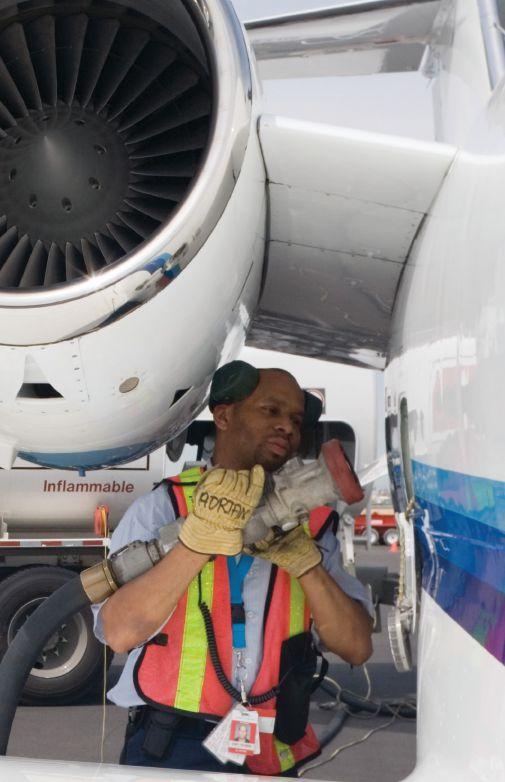
AIRCRAFT MAINTENANCE CREW
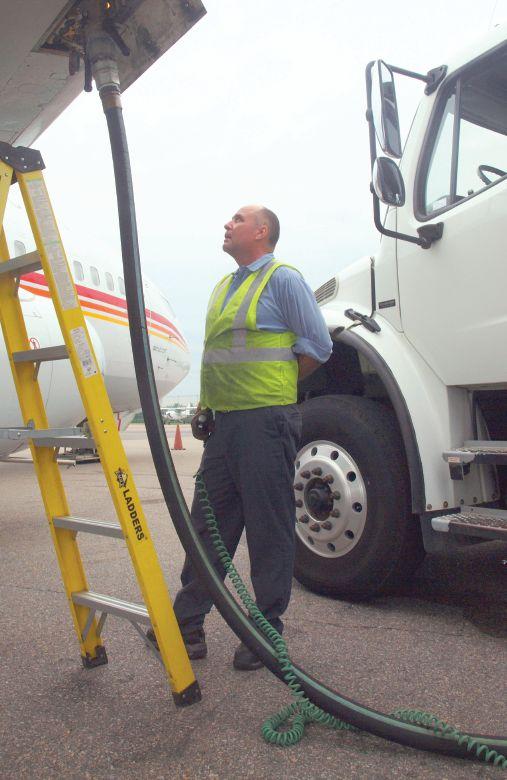
Leaders in Advanced Aviation Training
AeroCourse offers both IFR and ATPL groundschool seminars and refresher courses taught by professional pilots specialized in training. The ATPL and IFR groundschools are three-day courses, designed to lead students through the steps and knowledge necessary to obtain their IFR or ATPL ratings.
Recently, an online IFR course has been added to enhance our IFR training. Workbooks are also available that significantly contribute to your success in obtaining the IFR and ATPL ratings. Courses are available across Canada and in conjunction with leading flying clubs.

For those looking for a career in aviation but not interested in becoming either a pilot or an aircraft maintenance technician, the airport ramp provides a number of worthwhile career opportunities.
The ramp attendant – or ramp agent – is an integral part of any airline or private aviation fixed-base operator (FBO), and typically works out of the passenger terminal, aircraft hangars or airfreight buildings.
Most ramp attendants are employed by airlines, third-party air service providers or airport authorities. Attendants operate aircraft service vehicles and equipment such as towing trucks, food service trucks, de-icing and lavatory servicing trucks. They marshal aircraft to and from the gate and are most visible loading and unloading baggage and freight, or running bags to connecting flights, especially in cases where domestic, international and trans-border baggage is coming off a single flight.
It is demanding physical work and airlines typically have standards on how much a candidate is able to lift on a regular basis, or repetitively lift on raised services. On some aircraft the ramp attendant must climb into the hold and manually load and shift baggage.
There is also more to the job than meets the eye. Each aircraft is different, and the weight of an aircraft changes daily. The way freight and baggage is distributed will have a direct effect on aircraft performance and fuel consumption. For this reason, the attendant must keep in close communication with the aircraft dispatcher, who will have already calculated how much weight can be placed in each hold.
Ramp agents may also perform the duties of a Provisioning Agent, including stocking aircraft with cabin items necessary for the flight.
Essential skills include document use, excellent oral communication, time management and decision making skills. Candidates are expected to pass a security check. Air Canada insists that its “station attendants” be available for two weeks of full-time training. The job involves working around loud aircraft and machinery and typically includes shift work, weekends and holidays.
FLIGHT OPERATIONS DISPATCH
Aflight dispatcher is like a ground captain, except where the captain is operating a single aircraft, an airline dispatcher can be responsible for up to 50 aircraft during a single shift, including charting routes and alternates, calculating fuel loads and aircraft weight, monitoring flights (known as “flight watch”) and taking decisions whether to divert or cancel flights if an aircraft cannot continue to operate safely. A dispatcher is also plugged into air traffic control to ensure the most efficient routings and minimize costly air traffic control delays.
According to the U.S. Department of Labor, flight dispatch jobs are expected to grow at an annual rate of 12 per cent over the next five years as older dispatchers retire, aircraft systems become more complex and the skies become more crowded. It is not just large airlines that rely on dispatchers. Smaller carriers are also hiring dispatchers for the operations team. As the rate of retirement for air traffic controllers increases, flight operations centres are going to be competing with NAV CANADA and one another for these skills.
An airline dispatcher makes joint decisions with the flight captain to ensure a safe and efficient flight, including giving the

crew a situational update prior to departure, including aircraft activity and weather information and feeding data to the flight deck en route.
Flight dispatchers must be Transport Canada licensed, scoring at least 70 per cent on every exam. The dispatcher is also expected to demonstrate the same level of knowledge and proficiency in decision-making as the flight crew. A commercial pilot licence, flight services specialist experience, air traffic control experience or related experience within a flight operations centre can improve career prospects, especially with the larger air carriers.
making contact with Canada’s leading aviation associations is an excellent way to gain knowledge about a potential career in aviation.
Air transport Association of Canada (AtAC)
www.atac.ca
Aerospace industry Association of Canada (AiAC) www.aiac.ca
Canadian Business Aviation Association (CBAA) www.cbaa-acaa.ca









AIR NAvIGATION
the world’s air navigation service (ANS) providers are responsible for the safe and efficient movement of aircraft across the globe. As the country’s civil ANS provider, NAV CANADA keeps watch over 18 million square kilometres of airspace, including the western half of the North Atlantic, the busiest oceanic air space in the world (the U.K.’s NATS keeping its eye on the eastern half). Its 40,000 customers range from the weekend recreational pilot to the biggest international airlines. NAV CANADA guided more than 12 million aircraft in 2011, making it the second largest ANS service in the world.
NAV CANADA operates seven area control centres in major cities across Canada, 42 control towers, 56 flight service stations and eight flight information centres, and while the airport control tower remains the most visible symbol of air navigation, the company’s support of domestic and international air transport runs much deeper.
The ANS is a high-performance business providing air traffic control, weather briefings, aeronautical information services, airport advisory services and electronic aids for navigation. In addition, NAV CANADA works closely with airlines to improve
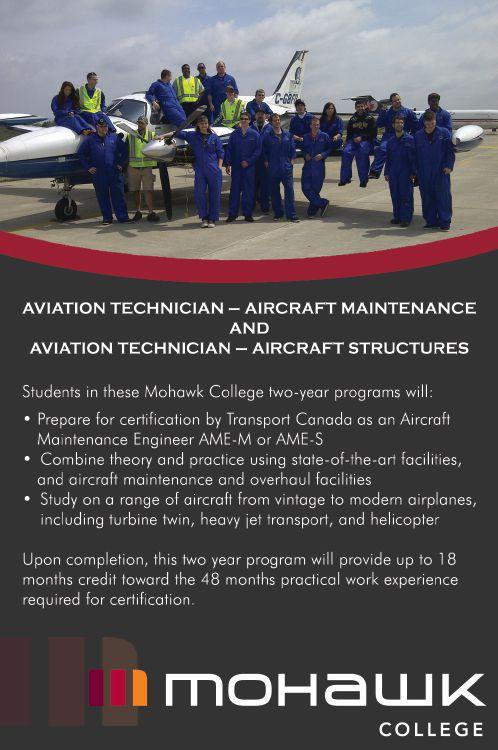

safety, cut costs and reduce greenhouse gas emissions.
Recruitment opportunities at NAV CANADA are moderate but steady. The company is recruiting 80 air traffic controllers and flight service specialists a year, and also has demand for technologists and engineers. Air traffic control recruits should not expect to land in a major control centre or control tower within the first year. Be prepared for postings to remote facilities.
Candidates for air traffic and flight services positions do not need aviation-related experience to apply for a career, but will

The Northern Lights Award Foundation is hosting a Women of Aviation Worldwide Week event
March 9 and 10, 2013 Buttonville Airport, Markham, Ontario
Come experience the thrill of flying a small aircraft ; meet some wonderful pilots and other aviation industry professionals.
For more information or to register visit: www.womenofaviationweek.org
Visit our booth at the 2013 WINGS Careers in Aviation Expo, Saturday, April 6th, 2013 at the Holiday Inn Yorkdale, 3450 Dufferin Street, Toronto, Ontario. www.careersinaviation.ca
PHOTOS:
Women and Girls – have you dreamed of flying, of becoming a pilot?
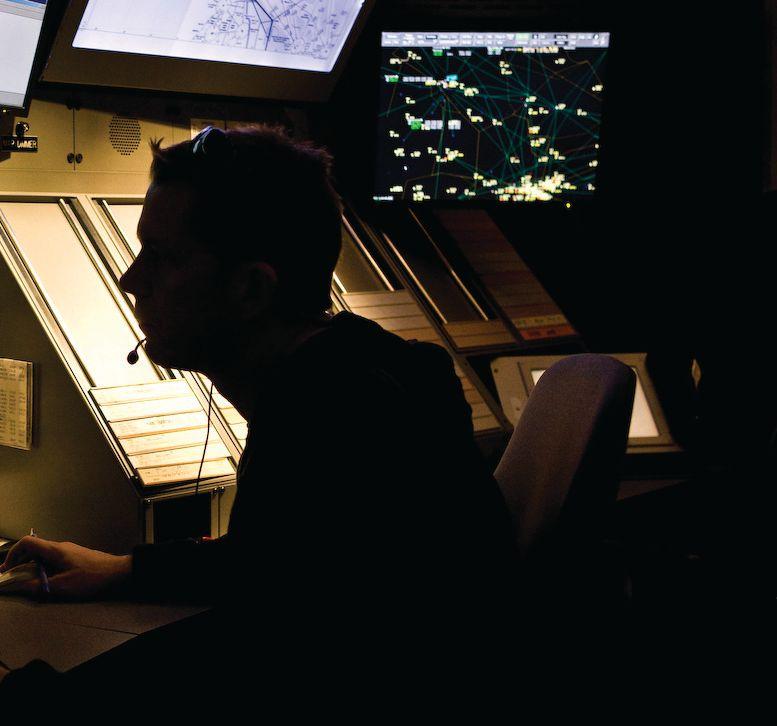
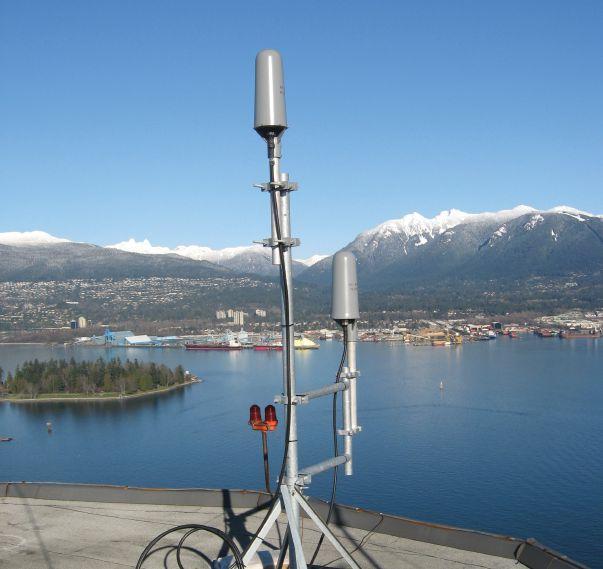
be subject to an intense comprehensive screening process that includes online testing and an in-depth assessment session and interviews. In addition to basic requirements NAV CANADA looks for additional qualities in potential candidates including, sharp judgment, excellent problem-solving abilities and information processing skills, strong motivation, a good memory and strong spatial-reasoning abilities.
Training for a career in air traffic services takes eight months to two and a half years, depending on the career stream. Programs
• Commercial and Private Flight Training
• Recurrent, Advanced and Specialty Training
• Instructor Rating
• Night Rating
• Type Rating
• Numerous Operational Courses
• Certified Winter Survival
• Certified Underwater Egress
• Expertise with Foreign Licence Conversions and International Students
• Full and Part-time Courses available
• We hire from our Graduates!
Our charter division specializes in Mining and Exploration, Survey, Tourism and Specialty Flying
are full-time and challenging. Trainees receive a salary once they enter on-the-job training.
Once training is successfully completed, employees receive very competitive salaries and benefit – including a pension plan –with opportunities for career advancement and work on special projects.
NAV CANADA also supports youth enrolled in academic programs by offering work experience through a Summer Student Enrolment Program.
FLIGHT ATTENDANTS
Flight attendants greet passengers, explain and demonstrate safety procedures, check the general condition of the aircraft cabin, ensure that all necessary supplies are on board, attend to the safety of passengers during takeoffs, landings and emergencies, serve food and beverages to passengers and make flight announcements. Always a demanding job, in these turbulent days they also have to know how to deal with Deportees, Reporting Device Interference, Animals in the Cabin and Prisoners and Escorts. The work environment consists of long hours “on your feet” in confined spaces under varying conditions, including turbulence. There are varied and changing work schedules and shifts, which may include on-call demands, time zone changes, extended time away from home, and work on weekends and statutory holidays. This is not a job for the faint-hearted: candidates are warned that, despite having to look poised and neat at all times, the

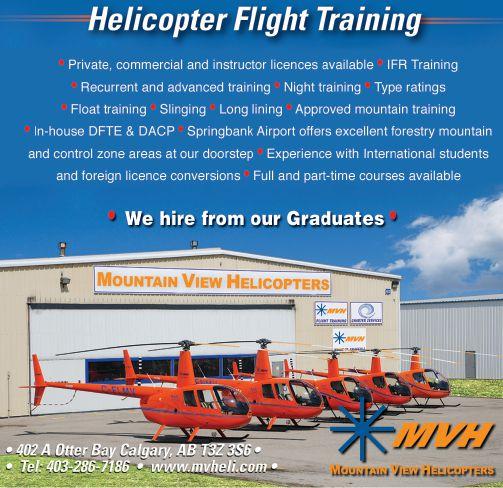
position requires strenuous physical work and that they must be able to lift, push and pull heavy items or equipment. Here are some of the skills you need to have to be a flight attendant in Canada:
• Must be able to an “ambassador of customer service” for a given airline or organization
• Must have a strong commitment to safety
• Must be a caregiver – able to help in all situations
• Must be able to accept assignments nationwide depending on airline or service. This could mean international destinations
• Must be willing to work odd hours
• Must be fluent in English and potentially other languages including French
• Must possess a valid passport, be able to attain a Transport Canada Security clearance and be self-confident and well-groomed
• Must be able to interact and work well with people.


• Whether you are looking for a career or just about to start one, come learn about different career paths the aviation industry has to offer: airplane pilots, helicopter pilots, maintenance engineers, aerospace design & engineering, aviation business management, air navigation, flight operations and more.
• Meet with Canada’s leading aviation colleges, universities, flight schools and hiring managers from Canada’s largest aviation operators and aerospace companies.
• Find out what it takes to get hired!
• Tour the Downsview FlightSafety simulator training centre
YOuR REgistRatiON iNcludEs: speaker sessions covering a variety of aviation career paths, networking with Canada’s top training programs and hiring managers, tour of a leading edge flight simulator training facility, luncheon with keynote speaker, coffee breaks and the Careers in Aviation exhibit hall.

The sky is calling









Air Canada and Air Georgian are looking for the next generation of pilots.
This is not a career path for underachievers. We’re looking for applicants who want to train with the best, and pursue a career with an industry-leader in commercial aviation.
Through our training and development program we offer young people a fast track to becoming a commercial pilot. In just 50 weeks we can put you in the cockpit of an Air Georgian airplane, a member of the Air Canada Express family, with future progression to a position with Air Canada.
If you’re a high school graduate or a college or university student with an excellent academic record, a history of community involvement, and a desire to take on new challenges, we invite you to contact us and learn more about joining our team.


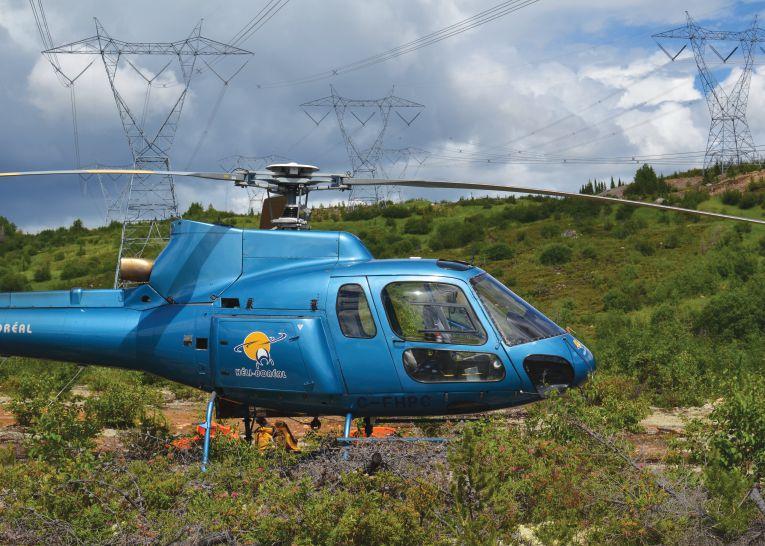
LEFT: The construction of new power lines will require helicopter surveys. (Photo courtesy of Héli-Boréal)
BELOW: Mineral exploration throughout the vast province of Quebec will mean extensive use of helicopters. (Photo courtesy of Héli-Boréal)
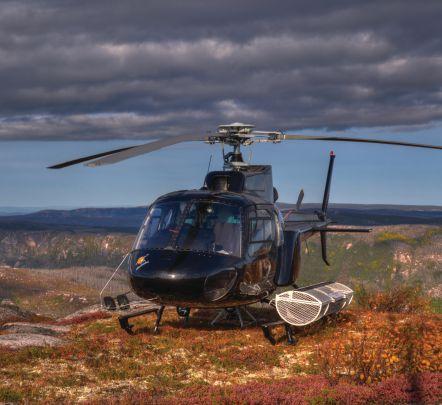
Flying Quebec's plan nord
Endless Potential For Firms Like Héli-Boréal
BY CaRRoll MCCoRMiCk
if ever there were a megaproject tailor-made for helicopters’ unique capabilities, the Quebec government’s Plan nord is it. an economic program encompassing 1.2 million square kilometres, from the 49th Parallel just north of lac saint-Jean to just beyond the 62nd Parallel at the northern tip of Quebec on the hudson strait, Plan nord is a helicopter operator’s dream.
unveiled on may 9, 2011, by Quebec’s liberal government and reaffirmed by the recently elected Parti Québécois, Plan Nord is nothing less than a mission statement of new directions in the province’s economic development and future. declared to be a 25-year effort to invest more than $80 billion in public and private money, including $1.625 billion between 2011 and 2016, it not only encompasses predictable goals such as mining, forestry, hydroelectric and infrastructure development, but also has environment, tourism, cultural and social dimensions.
the tableau on which this will play out is vast. “People cannot imagine how immense Quebec is. We can fly over forest for hours without getting a glimpse of civilization,” says michel séguin, chief pilot with sept-îles-based héli-Boréal, formed in 2006 by Carol soucy. “helicopters are the perfect first-line tools. the helicopter industry, as
it relates to northern development, will reach its apogee before the whole of Plan nord reaches its own.”
take mining development, for example. the government reported $958 million in mineral exploration and mining operations in 2009 and forecasts that there will be 31 operating mines by 2015 and 35 by 2020. a 2010 government map shows just over 100 exploration projects for 2010-2011.
séguin has noted a sharp uptick in mining industry business since 2008. “since 2008, we have been working more and more in the mining sector. it has accounted for 25 per cent of our activities in 2012.”
What he cannot say for certain, however, is whether any of its recent contracts have been spun out of Plan nord. after all, the manifesto is a recent arrival on a long-established northern development landscape. “Plan nord is like an inspiration that favours this development, but we have no contracts that have been awarded explicitly for this goal. We have several contracts that have an indirect or direct connection with the development of the north, but there are no stamps on them mentioning ‘Plan nord certified.’ ”
séguin anticipates that héli-Boréal’s major customers, as Plan nord unfolds, will be mining companies. héli-Boréal flies seven eurocopter astar 350 B1, B2 and B3 helicopters and an eC-120. tasks in the
FeatuRe
mining sector include aerial surveys, ferrying drills used to delineate deposits and transporting personnel such as engineers, land surveyors, investors and consultants.
“this summer, we conducted several drilling campaigns for numerous mining companies in the shefferville, Fermont/Wabush and sept-îsles regions. We have also worked on environmental studies between sept-îsles and shefferville,” séguin says. “each project consists of many phases that use helicopters.”
strateco resources, for example, used helicopters for drilling and prospecting in earlier phases of its uranium project in matoush, about 275 kilometres north of Chibougamau. helicopter companies working for the stornoway diamond Corporation have logged many hours in recent years supporting the exploration of 400,000 square kilometres of northern Quebec for diamonds for the renard diamond Project and 494 square kilometres of claims for its aeon Project.
renard, for which there is no road access, is 350 kilometres north of Chibougamau. the aeon claims, 300 kilometres north of renard, are even more remote. “aeon was helicopter supported for till sampling and prospecting in 2011 using a Long Ranger,” says nick thomas, manager, investor relations, of stornoway. “any future work will also be helicopter supported as we don’t have roads or a camp nearby the area of interest right now.
“renard is still very active in its use of helicopters – Jetrangers and 206 longrangers – in all of the engineering work and all the environmental work that has been going on in the last two years,” thomas says. “We also rely on helicopters during the freeze-up and thaw-out times when we can’t use floatplanes for getting in and out of camp.”
New mines will need rail, road and port access, all of which are in short supply in northern Quebec. the only highways of note north of the 49th Parallel are Route 379 connecting Baie-Comeau to labrador City, the top of routes 167 and 113 that meet in Chibougamau, the last few kilometres of route 109 to matagami and local roads stretching to Chisasibi on James Bay’s eastern shore. there are also 51,000 kilometres of logging roads.
an aMBitious Goal
the Plan nord action plan calls for the spending of $821 million for transportation infrastructure by 2016. For example, in February 2012 transports Quebec began building a 240-kilometre extension of route 167 to the renard mine. When the extension is completed in the fall of 2013, construction at Renard, the province’s first diamond mine, will begin.
helicopters play an important role in northern highway projects, bringing equipment into otherwise inaccessible areas. in a project far to the east of renard, for example, héli-Boréal is involved in the extension of Route 138 eastward from Natashquan on the north shore of the saint lawrence, across from anticosti island.
“We have been working for three years on a block of work on the route 138 extension. this summer we have been working in the la tabatière sector to see to its successful conclusion studies for the location of the 138,” séguin says.
Northern Quebec’s rail network, which currently spans 1,190 kilometres for transporting ore, appears likely to be extended to serve new mines. For example, in collaboration with five mining companies and in partnership with La Caisse de dépôt et placement du Québec, Cn is looking at laying down a 550-kilometre railway from the mineral-rich labrador trough, which straddles northern
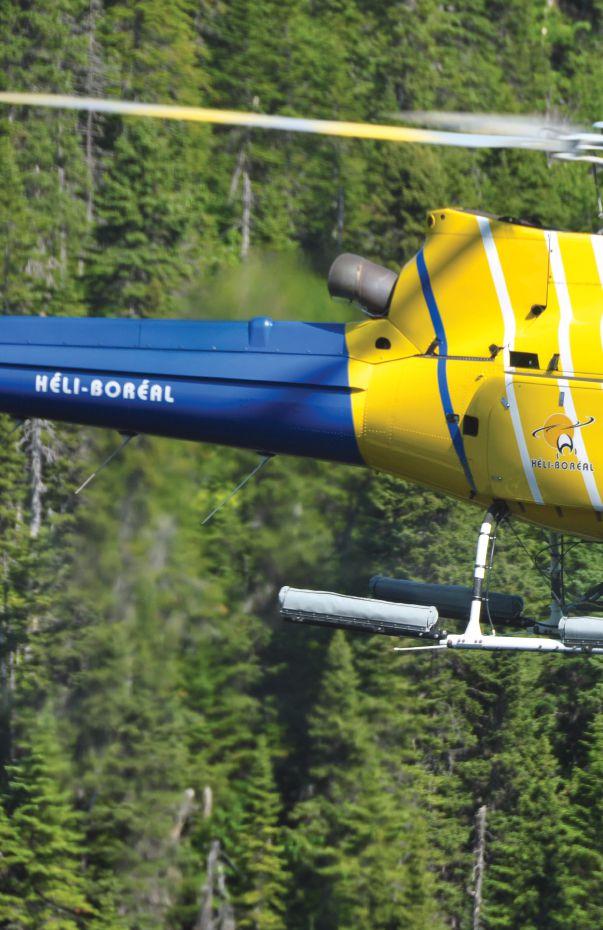
Quebec and labrador to Port sept îsles. although Cn declined to comment on whether it uses helicopters in new railway projects, surely the challenges facing railroaders resemble those facing builders of remote highways, with helicopters standing by to help overcome them.
the Plan nord action plan mentions several studies that will look at road and rail links, route extensions and at least one deepwater port. new electrical power and telecommunications infrastructure is also planned. although hydro Quebec counts its helicopter bills as a small-ticket item in its overall operations, séguin observes, “héli-Boréal is one of a number of suppliers of helicopters to hydro Quebec. transporting electricity from one end of the province to the other is an enormous challenge. in my opinion, the helicopter is the most economical and effective way to manage a vast system on virgin and uneven terrain.”
séguin ticks off other areas where helicopters will play a role in Plan Nord, including environmental control, the supply of all sorts of services and tourism. on the flip side of this shiny coin, however, are a variety of challenges facing helicopter companies. “lodging is already a problem and all the players are suffering. this is probably the biggest resource problem at present. the shortage of qualified help is another, but the slowdown associated with the global economic crisis gave us a reprieve to train competent personnel,” séguin says.
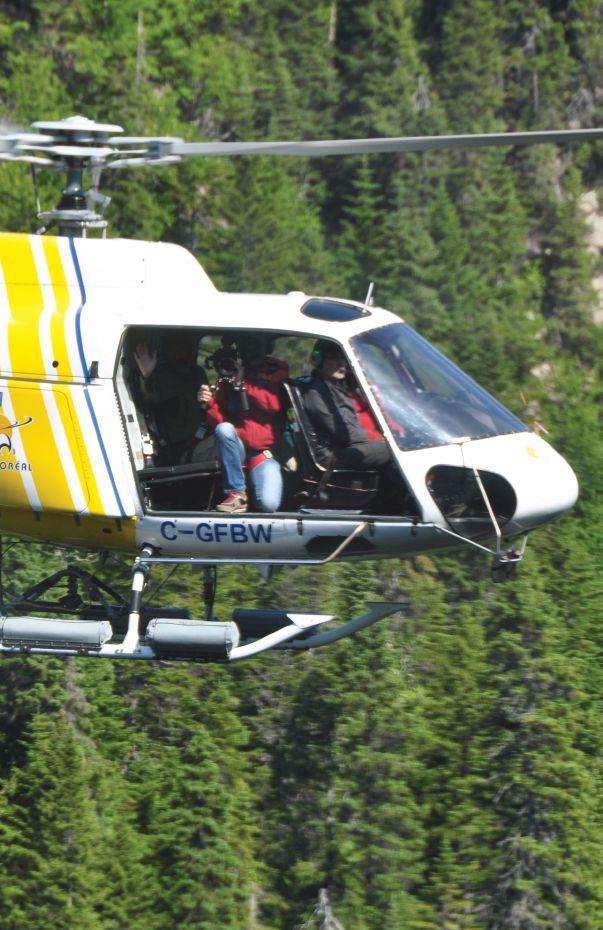
TOP: Aerial geophysical surveys are taking place over thousands of square kilometres of Northern Quebec. (Photo courtesy of Héli-Boréal)
TOP RIGHT: Helicopters will play a key role in the development of more northern roads. (Photo courtesy of Transports Quebec)
MIDDLE RIGHT: Construction on Quebec’s first diamond mine will begin in 2013. (Photo courtesy of Stornoway Diamond Corporation)
RIGHT: Scenes like this will become more common in the next 25 years as Plan Nord heats up. (Photo courtesy of Strateco Resources)
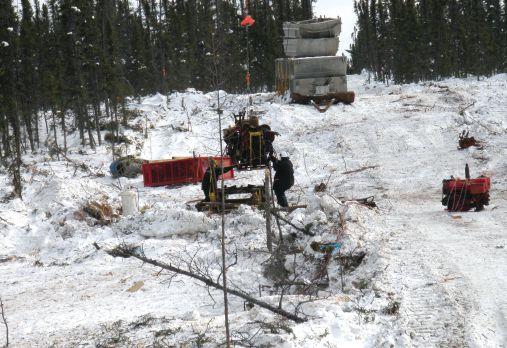

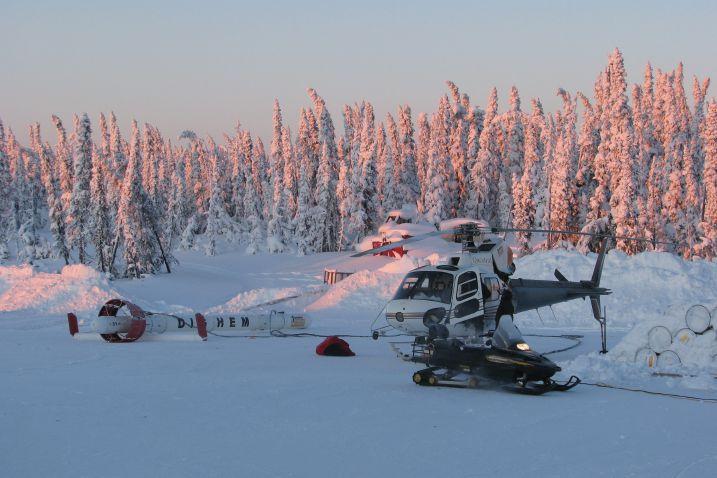
Quebec plans to spend $110 million to rebuild northern Quebec’s airport facilities, but will that include more appropriate helicopter facilities? “For helicopters, it is, above all, space for parking that is problematic. it is not always obvious where to find a 30-by-30-foot-space on an airport for a bird, or one with two drills in tow, let alone the fact that the client will be working on his equipment and the mechanics on the helicopters,” séguin observes. And then there is the global economy, which floats or sinks
resource development projects. “We believe that if the economy continues to grow, the demand will be there,” séguin predicts. “that said, we are being very prudent, as there is no guarantee with Plan nord. northern development relies heavily on the global economy and everything could come to a halt very quickly.”
If markets remain stable and Plan Nord comes to its complete fruition, it will mean a big payoff for héli-Boréal and other operators working with companies to tap and tame Quebec’s vast natural resources.
FRoM Russia WitH loVe
VIH’s Kamov Heavy Hitters Help Set Organization
BY paul dixon
Apart
Vancouver island helicopters commenced operations in a very modest manner in 1955 with a single Bell 47G2, but today, having grown by leaps and bounds, the vih aviation Group operates more than a dozen helicopter types in operations worldwide through a network of subsidiary companies.
three helicopters in particular have helped set the victoria, B.C.-based operator apart from its competition – the powerful and distinctive russian-built ka-32a11BC. the kamov ka-32 is the civilian version of the russian ka-27 (helix) naval helicopter, used by several military operators worldwide for countless heavy-lift missions. Operators for missions ranging from searchand-rescue to aerial firefighting and more also use the civilian version of the aircraft globally. vih designates the “BC” in its aircraft for British Columbia as homage to the aircraft’s first home outside russia.
vih brought its first kamov to Canada in the mid-’90s to use in logging operations on vancouver island. the company felt the machine would be a good match for high-value heli-logging operations where sheer pulling power and flight stability made it a very effective platform. one of the initial challenges it faced, however, was gaining t ransport Canada ( t C) certification for the aircraft. initially, it could only be flown by Russian pilots and under a special permit. e ventually, however, tC certified the aircraft, enabling vih to return the original lease machine and purchase the first of what would become three machines. t oday, the
aircraft are the highest hour operating russian helicopters in the world. vaughn gouws, vih operations manager, says working with kamov has been highly beneficial for both his operation and the russian helicopter manufacturer. “We’ve both learned a lot about the machine, us as an operator and them as a supplier,” says gouws. “it’s a fantastic aircraft and we’ve made a lot of money with it over the years, but it hasn’t been without its problems as with any other machine. But we don’t ever regret having become involved with it.”
One of the unique traits of the aircraft is its unique coaxial rotor. this design helps create an aircraft that is inherently stable, yet highly manoeuvrable. With no tail rotor, all the power is directed to the main rotors. With the entire body of the aircraft within the disc of the main rotors, the ka-32a11BC can operate in tighter situations than other helicopters in its class. the powerful downwash from the rotors, however, can be a challenge; it necessitates the use of a 250-foot long line to lessen the impact on ground crew.
adJustinG to a neW teaMMate
Introducing such a unique aircraft into a highly established operation was not without its challenges for vih pilots. Jim neill, former chief pilot of vih heavy helicopters, compares the kamov to his experience on the sikorsky s-61 (which vih also operates) and the eurocopter super Puma.
“When i first started flying the kamov, the yaw control was probably the hardest thing to get used to as you could move the pedals from stop to stop at low collective

settings with little or no change in heading,” neill says. “When the aircraft is hovering, it uses differential pitch between the upper and lower rotor systems for yaw control. the more pitch on the rotor blades, the more yaw control you have and vice versa.
“For example, if you’re hovering close to a hillside where you have an updraft and you’re using very little collective pitch, the aircraft will weather-cock and stay into the
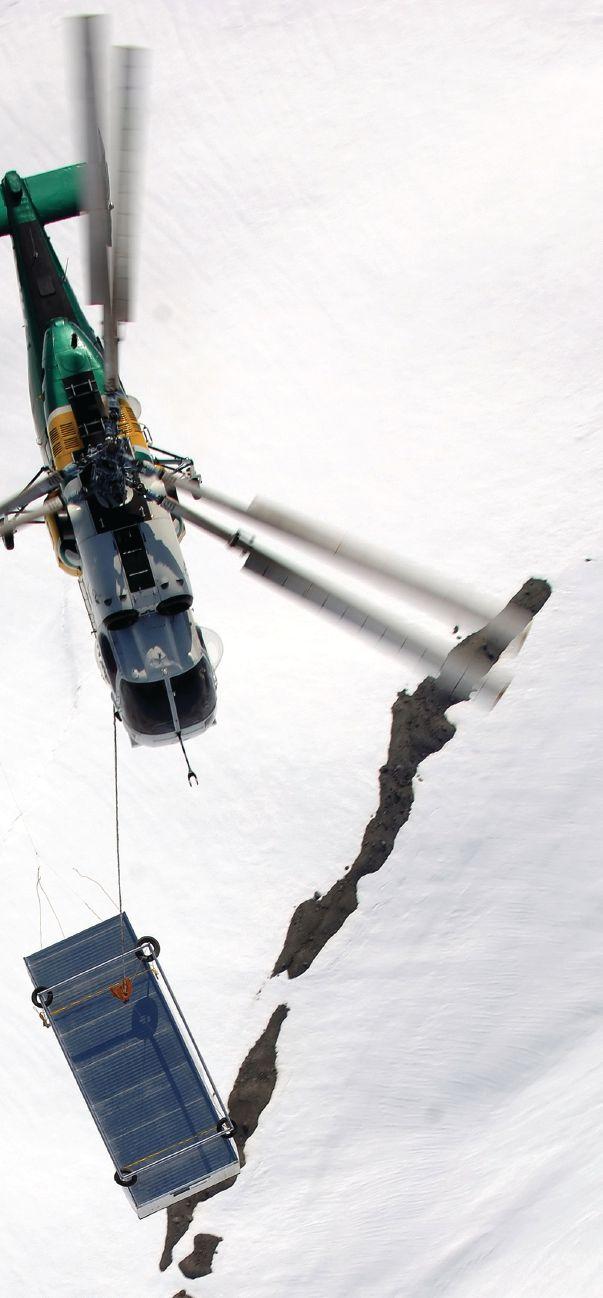
ABOVE: Long-lining a load over a glacier in northwestern B.C., the helicopter’s coaxial rotors are clearly visible. (Photo courtesy of the VIH Aviation Group)
RIGHT: A VIH hangar party. Two KA-32A11BCs and two of the company’s S-61s inside the heavy shop at VIH’s facilities at Victoria International Airport (YYJ). (Photo by Paul Dixon)
wind until you pull collective. it takes a little bit of getting used to. at airspeeds above 54 knots, the dual rudders on the tail controlled by the pedals help you with directional control and do not rely solely on the differential pitch. this makes it interesting in an autorotation as we rely on airspeed only for directional control. however, when you start the flare, you have to increase the collective pitch by two thirds to slow the rate of descent and regain directional control with differential pitch as the airspeed becomes too slow for the rudders to have any effect. this brings us to another very good safety feature of this helicopter: the loss or jamming of yaw control in flight can be demonstrated to a safe zero speed touchdown.”
neill maintains that like all russian aircraft, the kamov ka-32a11BC is very robust, and for the most part very forgiving. he calls it “a good pilot’s aircraft” and finds it easier to operate than the s-61. the machine monitors its own engine starts, including the aPu, which is required to supply compressed air for the engine starters. and from an enhanced safety point of view, in the event of an engine fire, it will engage the first extinguisher into the affected engine automatically.
Another positive feature about the helicopter, Neill says, is there is no requirement for a torque metre. the engines are governed by an engine electronic governor (eeg) that monitors the maximum take-off power. Changing the ng topping automatically with the change in barometric pressure and temperature does this. there is also an amber maximum power light for each engine on the centre console, which illuminates when you reach take-off power. if you continue to pull the collective, the main rotor revolutions per minute (rpm) will droop and activate the low rpm light and audio horn without exceeding any engine or transmission limits.
in addition to key safety and engine features, the ka-32a11BC gets high marks for its payload capabilities. in comparing the payload capabilities of the s-61 and the kamov, neill gives the nod to the 32a11BC mainly because of its stability and power. “it’s stable because the kamov, with its coaxial rotor system, has the reactive moment on the mast and not 35 feet back at the tail rotor,” neill
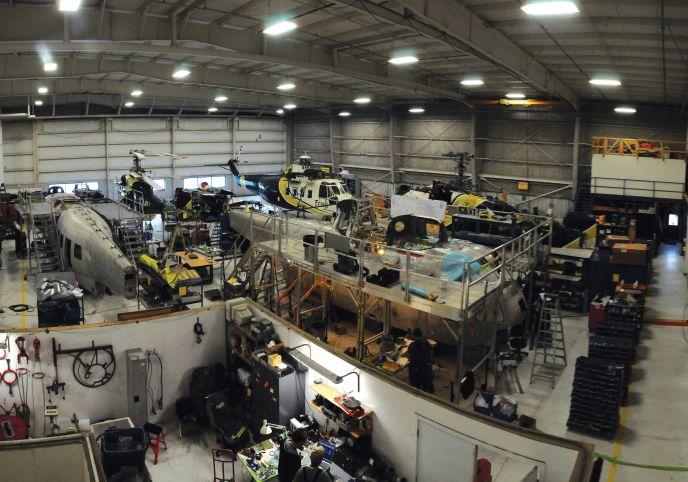
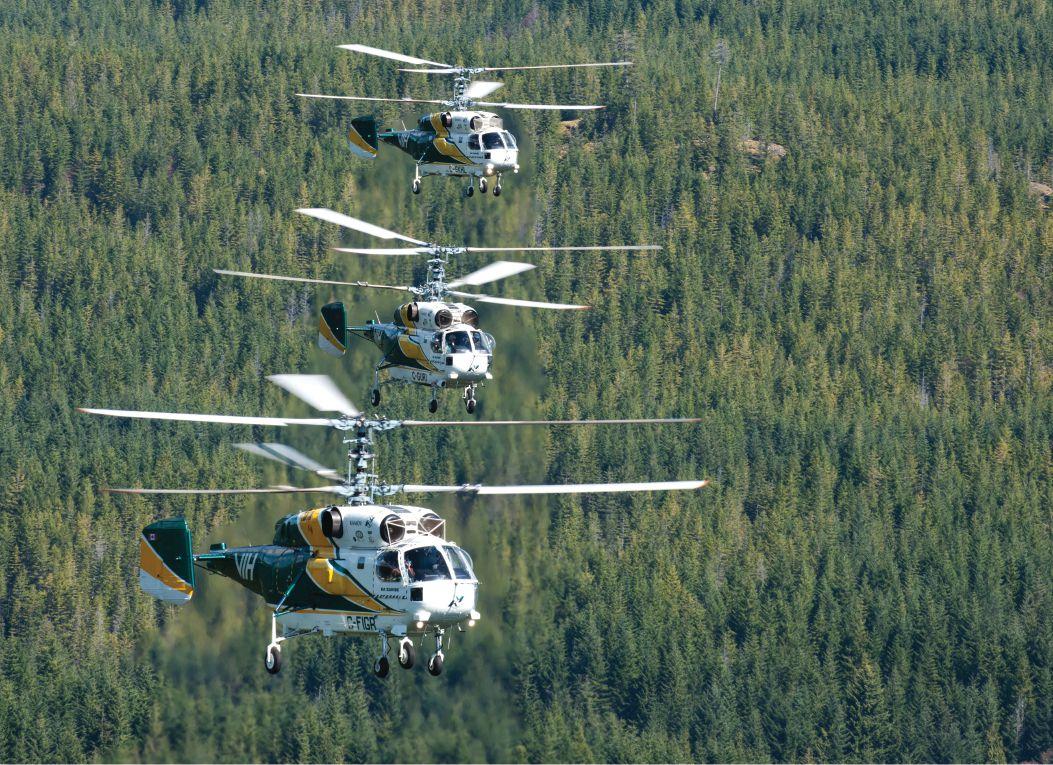
says. “From a power point of view, there is no need for a tail rotor, which robs a conventional helicopter of lifting power. it also has two klimov tv3-117 turbine engines, which have 4,400 horsepower at maximum takeoff. the s-61 has two ge Ct-58-140-2 engines, which have 2,500 hp at max takeoff. the maximum gross weight of the kamov ka-32a11BC for external lift operations is 28,000 pounds, compared to the sikorsky sk61 at 22,000 lb.”
dealinG WitH MaRket Conditions
Logging in British Columbia is a fickle business, driven largely by the export market and world economic realities. a s logging cycles have dipped over the years, vih has become adept at providing heavy-lift capability in a wide range of markets, not just in B.C., but also around the world. m ining, oil and gas exploration and development, disaster relief, power line construction and specialty “one-off” missions, such as delivering new air conditioning units to the roof of the r oyal British Columbia m useum in the downtown core of v ictoria, are just some of the unique projects the company has taken on.
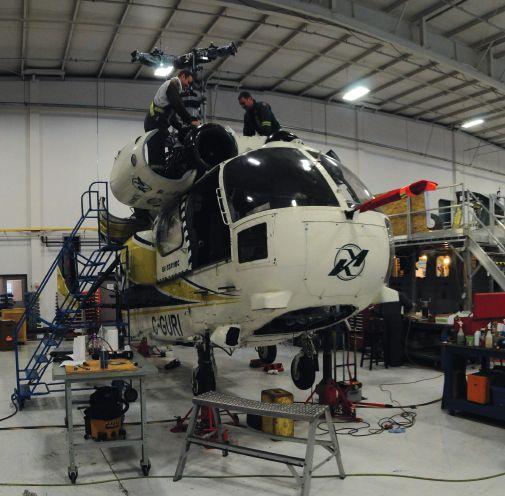
vih ’s experienced workforce has played an important role in helping it bid on and win contracts worldwide in a variety of different industries. “When logging went away here on the West Coast, we were really lucky to be able to retain a good pool of experienced logging pilots and engineers and mechanics and loadmasters and keep them busy on other projects,” g ouws says. t he first big international project vih secured saw two k amovs dispatched to t aiwan, where they spent more than a year supporting a large power transmission construction project. i n recent


ABOVE: VIH’s three KA-32A11BC aircraft are the highest hour operating Russian helicopters in the world. (Photo courtesy of VIH Aviation Group)
RIGHT: Aircraft maintenance technicians are close to completing a 16,000-hour check on C-Guri. (Photo by Paul Dixon)


years, projects have included mining and exploration missions in s outh a merica and providing assistance to Canada’s d isaster a ssistance r esponse t eam in Pakistan in the wake of a major earthquake. Firefighting in a ustralia has also become an annual event, as vih has joined a number of Canadian operators in heading to the southern hemisphere for the winter months.
mining and mineral exploration along with oil and gas pursuits have been driving the economic boom in northern B.C – and the kamovs have been very useful in this regard. this is especially true of the rugged, isolated northwest corner of the province. vih has
‘‘
done. equally owned by novagold and teck resources and managed by the galore Creek mining Corporation (gCmC), galore Camp is described as one of the largest copper/gold/silver mines in the world. located in one of the most isolated areas of B.C., 300 kilometres north of terrace and 43 miles from the nearest road, it’s a project that is forecasted to produce 6.2 billion pounds of copper, 4.0 million ounces of gold and 65.8 million ounces of silver over an approximate 18-year mine life.
’’ the ka-32a11BC can operate in tighter situations than other helicopters in its class.
played in integral part in this development by providing the heavylifting aircraft and personnel to make it happen.
the galore Camp operation in particular established vih and its kamovs as the “ones to call” when a job absolutely had to be
o ver a period of 15 days in m ay 2005, the k amovs made 85 trips into the camp from the airstrip on h ighway 37, delivering a total of 766,000 pounds in slung loads, while s -61s ferried human cargo and internal loads. t he superior lifting capacity of the k amovs allowed the trailers that were used for the 180-person modular camps to be designed in larger sections, which were delivered in 35 separate loads. t he mine project was placed on hold in 2007 due to a combination of rising costs, fluctuating world metal prices and the state of the Canadian dollar on world markets, but in 2012, work started once again. t oday, there is enough work in the northwest sector of the province for vih to station one k amov in s tewart, B.C. (where the average annual snowfall is 572 centimetres annually) on a year-round basis.

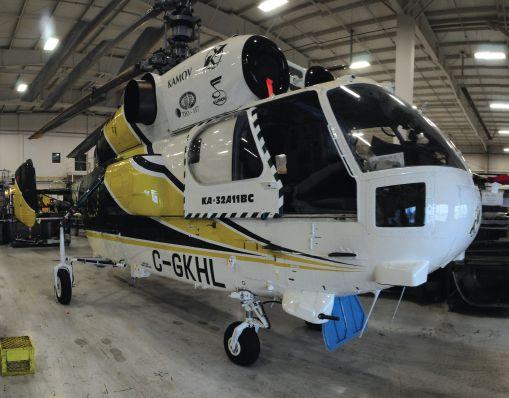
Everything is like new again. A KA-32A11BC displays its naval heritage – note the cluster of folded rotor blades. (Photo by Paul Dixon)
pRoVidinG a saFe enViRonMent at vih, the commitment to safety in the air and on the ground defines corporate operations on all levels. gouws says experiences in the logging industry helped shape the safety culture and recognize how it impacts productivity.
“With most construction and logging projects, you determine the success or failure of the project in the planning stage. if you don’t do your planning phase or preparation, it just falls apart, costing your clients a lot of money and they don’t call you again,” gouws says. “so, we go out and sell expertise, 20 years of expertise, not just with the kamovs, with the 61s and the rest of our fleet of helicopters. We sell safety, we sell safety as productivity and we sell efficiency and competency. the helicopter is just one of the tools we use. People come to us because they know we’ll get the job done as safely and efficiently as it can be done. that’s our business model.”
vih goes a step further by putting its own loadmasters and riggers out on large projects. as gouws says, “it’s not overly glamorous, but we do hundreds of thousands of loads every summer and we find that having a rigger on site contributes to safety. We can consistently monitor people in the field to make sure they are working to your best practices for rigging, using the right equipment, maintaining the equipment, ensuring they doing proper inspections on the rigging they hook up to an aircraft every day.
“We’ve had this culture since the logging days and now it’s starting to permeate into oil and gas and into mineral exploration – and clients are really buying into that now. it’s a culture change that’s slowly taking place from the old frontier mentality.”
MakinG tHeMselVes at HoMe the kamovs are designed to work in the hostile environment of the russian winter, so the snow and ice of a northwestern B.C. winter is water off a duck’s back for these machines. mark Junker, vih ka32 project manager, says a detailed 16,000-hour inspection was done last February on two of the aircraft.
“there were 17 kamov engineers here for these two inspections and we went through the aircraft with a fine tooth comb,” Junker says. “there was very little corrosion, very few structural cracks or structural problems that we would expect to see in other heavy helicopters. here we are [in the ka-32] at over 16,000 hours and we’re not seeing those kinds of problems.” the vih-kamov relationship remains strong and vih is quite
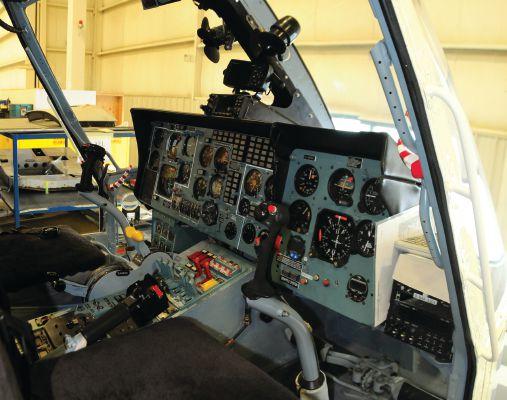
The Kamov KA-32A11BC boasts simple, straightforward instrumentation.
pleased to have machines that can outperform any helicopter in its class and deliver larger payloads at lower costs for clients. For the russians, it has been an opportunity to prove that their aircraft can operate literally anywhere in the world at a rate their designers never considered. From russia with love – it truly is a warm relationship.

(Photo by Paul Dixon)
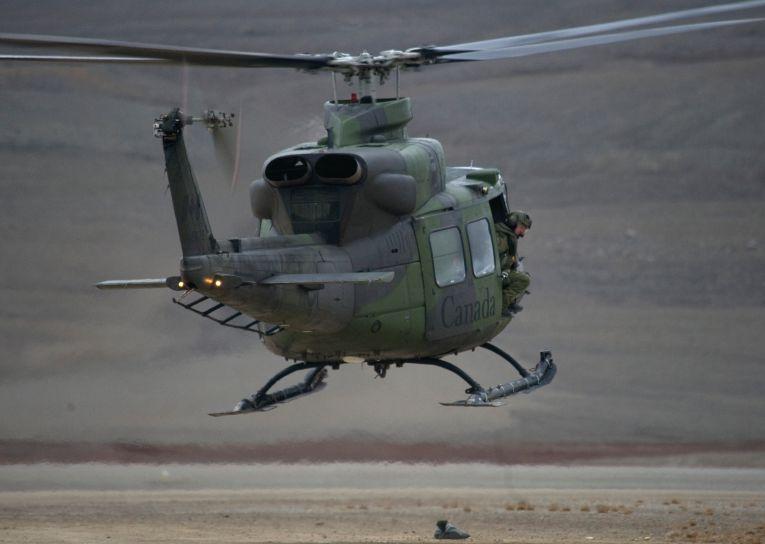
learning to switch Gears
LEFT: The Royal Canadian Armed Forces is having a difficult time finding the skills to keep its helicopter fleet flying. (Photo courtesy of the Royal Canadian Armed Forces)
BELOW: There’s a growing demand in Canada for skilled MRO engineers to keep aircraft in the air. (Photo courtesy of Pratt & Whitney Canada)

Canada’s MRO Sector Warming but Workers in Short Supply
BY daVid CaRR
Canadian helicopters are coming off a strong second half of 2012, which should translate into good news for the maintenance, repair and overhaul (mro) sector heading into 2013. at the same time, a shift to newer machines by some operators is going to put added pressure on the existing demand for workplace skills.
“it has been a couple of rough years,” says Fred Jones, president of the helicopter association of Canada, especially for shops that struggled to adapt. “the mro community was experiencing the same fallout from the economic downturn as the rest of the industry. Fortunately, the industry is starting to climb out.”
Operators did not scrimp on safety items during the lean years, but were more likely to put off the type of discretionary spending decisions that keep shops ticking. it is this level of mro that is expected to come back, especially in western Canada and Quebec, and that is rebounding from a couple of very bleak years.
As in previous rebounds, not all shops will be positioned to cash in, with some having to limit the scope and amount of work they can take on due to a lack of in-house skills. “the name of the game seems to be adapting to changing circumstances,” Jones says. “the larger ones are busy and the Canadian shops with a global reach seem to be doing
particularly well.”
A recent report by ICD Research, an international consultancy, noted a global shift to military maintenance by civil aviation mro providers. “in the current economic environment, companies in the aviation mro domain are finding it hard to sustain strong revenues by focusing solely on civil mro services and are looking to use their expertise for providing military mro services,” according to the global military aviation mro market report 2012-2022.
the scope for military work is less in Canada, especially among smaller mros, although the report notes that the Canadian Forces are having a difficult time finding the skills to keep helicopters flying. “a good example of the shortage of skilled personnel is the Canadian military helicopter mro market, which is witnessing a public bias against manual labour as a career choice and many youngsters are now opting for other vocations such as computer technology,” notes Jones.
delta, B.C.-based heli-one is one Canadian shop that has recently extended its reach into the international paramilitary sector. last year, at the ila Berlin air show, heli-one, the world’s largest independent provider of helicopter mro services, announced a 10-year, multimillion-dollar contract to support the german Bundespolizei’s (BPol) fleet of eurocopter super Puma as332l 1 helicopters. BPol is a

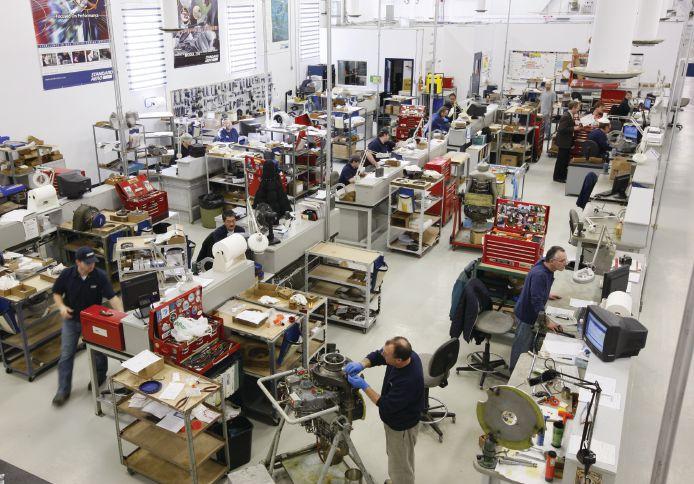

uniformed federal police service that engages in a variety of activities, including border security, counter-terrorism and air rescue.
“We have enjoyed a long-standing relationship with BPol with regard to providing helicopter maintenance services, and to have been entrusted with delivering long-term depth maintenance for a fleet we have previously supported is a testament to the quality we deliver to the critically important national defense and security markets,” says larry alexandre, president of heli-one. the work will be carried out at heli-one’s operations and maintenance base in stavanger, norway.
As Helicopters went to press, heli-one scored another major international mro deal, setting itself up well heading into the new year. on dec. 18, the company received Part 145 maintenance organization approval from the Polish Civil aviation authority. With the certification, heli-one’s rzeszow, Poland facility is up and running and ready to provide customers with a range of base maintenance services. the first project in the hangar was set to start Jan. 7 – the overhaul and modification of a super Puma as-332l aircraft for ChC helicopter. organizations such as heli-one, vector aerospace and standard Aero have been successful in planting the Canadian flag on the global helicopter mro market. But will smaller Canadian rotary-wing mros see more of their business go to international competitors, as has happened in the fixed-wing sector? not as likely, says haC’s Jones. “Certainly components, engines and transmissions can be moved over longer distances, but moving an entire helicopter is more difficult than moving a business jet and presents cost issues that tend to make the mro market more national than international.”
even so, Jones cautions “local” shops to not get too complacent. “there will always be things that can offset proximity, including economies of scale. if a larger shop with economies of scale can do the work cheaper, then an operator might deal with distance. But it’s a fairly complicated equation.”
the over-riding challenge that continues to impact both rotary- and fixed-wing mros in Canada is that the demand for skills is outpacing
supply, especially in the north where operators have had to keep machines on the ground because of a lack of flight crews and maintenance support. like his counterparts at the Canadian Council for Aviation and Aerospace and the Canadian Business Aviation association, Jones reports that haC’s telephone is ringing as companies look for skilled workers, and rings loudest during the June/July peak periods.
“if there is any good news in an economic downturn, it’s that didn’t aggravate skilled labour. now that we are seeing the industry climbing out of bleak economic circumstances, we are seeing the shortage in spades.”
the problem will grow more acute as some of Canada’s larger operators go through a fleet renewal process, moving out legacy aircraft for more sophisticated machines that are going to require a different mro skill set. Fortunately, there should be some breathing room. unlike the last rebound when several operators rushed out to replace the fleet, renewal this time is likely to rise on a much slower slope. Operators have learned that one good season does not mean the industry has turned around. still, mros are going to have to prepare.
Likewise, the resource boom in the north, where the cost of shipping helicopters over longer distances is greater than in the south, is going to require a steady supply of engineers to execute day-to-day maintenance and overhaul. “it is not going to be a seasonal thing,” insists Jones. “even in the north demand for aircraft is at its peak in the summer, but the mro work can be steady year round, which creates opportunities for mros with a shop in the north with close proximity to the customer.”
Both community colleges and oems are doing their part to feed demand and provide the training that engineers require to stay on top, but for now at least, it remains a race against time. Jones suggests that a trademark of the broader Canadian mro sector has been its resilience. “as always the biggest opportunities will present themselves to operators that are nimble enough to take advantage at home and internationally. it is about turning lemons into lemonade – and helicopter mros are particularly adept at that.”


LEFT: The overriding challenge that continues to impact both rotary- and fixed-wing MROs in Canada is that the demand for skills is outpacing supply. (Photo courtesy of StandardAero) RIGHT: Although components, engines and transmissions can be moved over long distances, moving an entire helicopter is more difficult than moving a business jet and presents cost issues that tend to make the MRO market more national than international. (Photo courtesy of Vector Aerospace)
Campbell River Base e-mail: info@ebhelicopters.com www.ebhelicopters.com
Gold River Base
Tel: 250-283-7616
Fax: 250-283-7555
Port Alberni Base
Tel: 250-720-8915
Fax: 250-720-3641

Commercial
•
• Robinson R22, R44, R66
• New & Used helicopter
• Complete overhaul
R22, R44 and R66
• Helicopter and Fixed-wing
Photo by Bill Campbell


MARKETPLACE

COMPONENT OVERHAUL SPECIALISTS
Canada is full of young, skilled and knowledgeable people who are driving the aviation and aerospace industry forward. From pilots and AMEs to ground crew and business managers, they are the best and brightest in our industry. Join us as we celebrate the future of aviation and aerospace in Canada.
WHO CAN BE NOMINATED?
Anyone in the aviation or aerospace industries who is under the age of 40 as of December 31, 2013. Equipment and technology suppliers as well as operators are welcome.

Recognizing the next geneRation in the canadian aviation and aeRospace industRy!
ALL NOMINEES SHOULD:
• Demonstrate a strong work ethic
• Show leadership and initiative
• Actively seek new opportunities for training and education
• Be involved in industry association or broader industry initiatives
NOMINATIONS ARE NOW OPEN
To nominate someone to be recognized as one of the Top 10 under 40, visit www.wingsmagazine.com or www.helicoptersmagazine.com and click on the “Top 10 Under 40” link to complete a nomination form. Nominations close on May 1st, 2013.
The Top 10 Under 40 will be featured in the July/August 2013 issue of WINGS Magazine and the July/August/ September issue of HELICOPTERS Magazine.
as president/C eo of the h elicopter a ssociation of Canada, I am often asked about career development and what it’s like to be part of this important Canadian industry. When asked these questions, i often wonder if the same considerations that drove my career choices still drive today’s youth.
I must confess that while my love of aviation began at 12, it didn’t become a career option for me until much later in life. t he idea of a career that involved working closely with other people, adventure, and travel had always appealed to me – and still does. i loved working outdoors and i detested routine. t he idea of a nine-to-five office job couldn’t have been less attractive; a career in aviation looked like a perfect fit.
In 1977, I became a commercial airline pilot and when placement options were looking bleak, I went back to university and built time instructing during the summers. i also took a critical look at the airline industry as a whole. i realized it was a heavily unionized environment so any progression up the ladder would largely depend on my seniority number. t his did not appeal to me. What’s more, many of the older airline pilots i came in contact with didn’t appear to be particularly happy with their work. In short, the path in aviation I considered to be a passion and a privilege was for many simply a sizeable paycheque.
As I completed university, I focused on getting a rotary-wing
No Life Like It
The Many Rewards of a Career in Helicopters
of h uisson h elicopters, once said to me, “ i t’s a great life for a young person” and he was right. i t’s largely a physical job in a seasonal industry with long summer hours. o n top of that, it’s an industry that has taken me to the four corners of Canada and everywhere in between.
As a helicopter pilot, I have had so many adventures and seen things few can ever claim to have experienced – mountain tops, glaciers, caribou, whales, polar bears, and fishing like you can only imagine. Yes , there were unpleasant experiences in less-thandesirable mosquito and blackfly-infested camps – and some demanding customers, to boot – but the positive memories far outweigh the negative ones.
I believe times haven’t changed that much for young pilots and engineers, but the current shortage of flight crews and engineers has caused some concern. e ach spring, i receive more calls regarding the shortage of qualified pilots and engineers than on any other subject – except perhaps the diminishing levels of service from t ransport Canada.
A recent study by the Canadian Council for Aviation & a erospace (CC aa ) reveals the challenge going forward will be not so much about the looming shortage of pilots, but the shortage of experienced pilots who can fill the roles of aging, but qualified drivers. i know, as operators, one can only prevail upon them to stay “one more season” for so long.
“ i receive more calls regarding the shortage of qualified pilots and engineers than on any other subject. ‘‘
licence and set my sights on a career in the helicopter industry. i t was a career path that involved travel, was devoid of routine – be careful what you ask for! – was non-unionized, meant working outdoors most of the time and offered adventure. What i didn’t appreciate at the time, but have quite enjoyed since, are the extended periods of time I have spent in Canada’s most isolated regions. i t’s a privilege few are blessed with.
I started my career at a time when operators routinely deployed crews for 42-day tours, followed by a few days off, followed by another extended tour. m y first employer, the late d ick h uisson
Going forward, the message for those in the helicopter industry will be to “sell” the positive aspects of our industry to young people to rekindle their collective passions, but also, and particularly in the case of pilots, to give a mechanism to transition from “100-hour wonders” to pilots who are capable of operating safely and independently in a single-crew environment that changes constantly from one day to the next.
’’
t o accomplish this, we must create a more structured industrywide program developed in concert with schools, colleges and the insurance industry, that will ensure we have a steady stream of qualified flight crews to operate our aircraft, and a plan to fuel the passion in a new generation of pilots and engineers.
Fred Jones is the president/CEO of the Helicopter Association of Canada and a regular contributor to helicopters magazine.

FRed Jones


When you fl y helicopters, you know being focused is critical. To help you concentrate on fl ying, the A20 Aviation Headset is engineered to be more comfortable, deliver clear audio and provide more noise reduction than any headset we’ve ever made – an average of 30% greater noise reduction than conventional noise reducing aviation headsets. In fact, it’s engineered for the high noise levels that are found in helicopter cockpits. Certified Helicopter Flight Instructor Stephen Boatwright summed it up this way, “…if you want to be able to hear everything, if you don’t want fatigue, if you don’t want to miss those radio calls… then go with the A20.”
In addition, it has an auxiliary audio input, available Bluetooth® communications interface, is C-139 TSO certified and is made in the U.S.A. Plus, its optional flexible power circuitry allows for a connection from a 6 pin to U174, letting you take the headset from one helicopter to another. No other headset offers this advanced combination of features and benefits. Prove it to yourself. Try the A20 Aviation Headset for 30 days, satisfaction guaranteed. And ask about our easy payment plan with no interest charges from Bose.
( THINK VERSATILITY )
Eurocopter is committed to protecting Canada’s coast… At present, and in the future. The longest coastline in the world deserves the world’s most capable helicopters. Eurocopter offers safe, reliable, and innovative solutions to customers around the world.

Thinking without limits