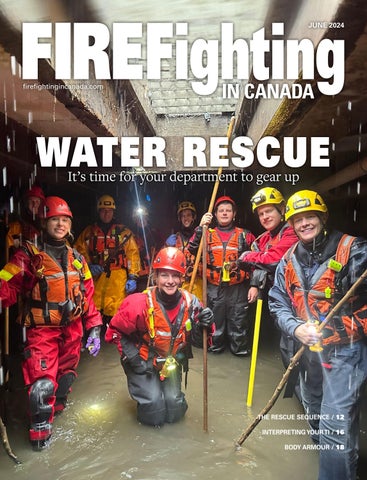
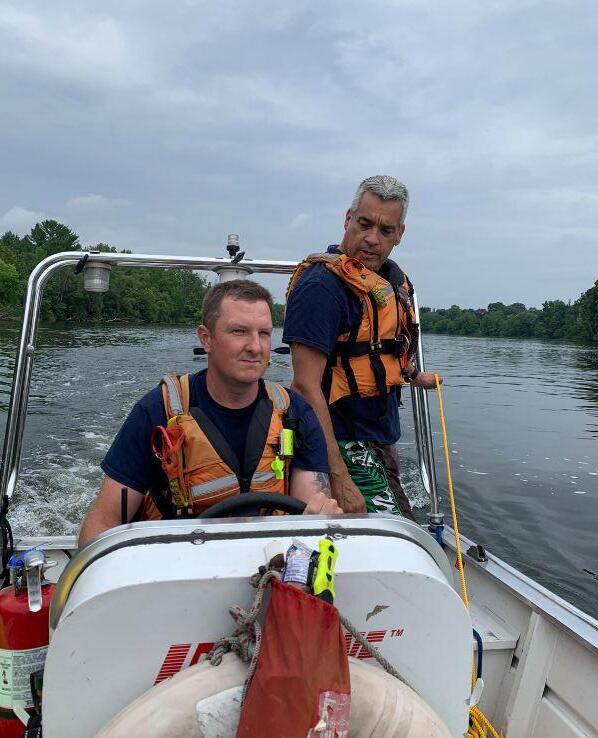
The time has come to be sure your department is ready for summer and the potential for danger by the water.
By David Gillespie
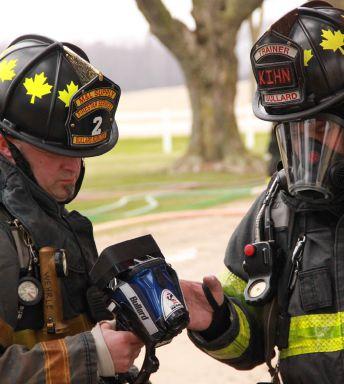
A thermal imager presents images, but you need to be able to interpret what they mean. Here are three scenarios to consider.
By Manfred Kihn
Facing increasing dangers on non-fire calls, some departments are equipping firefighters with additional layers of protection.
By Julie Fitz-Gerald
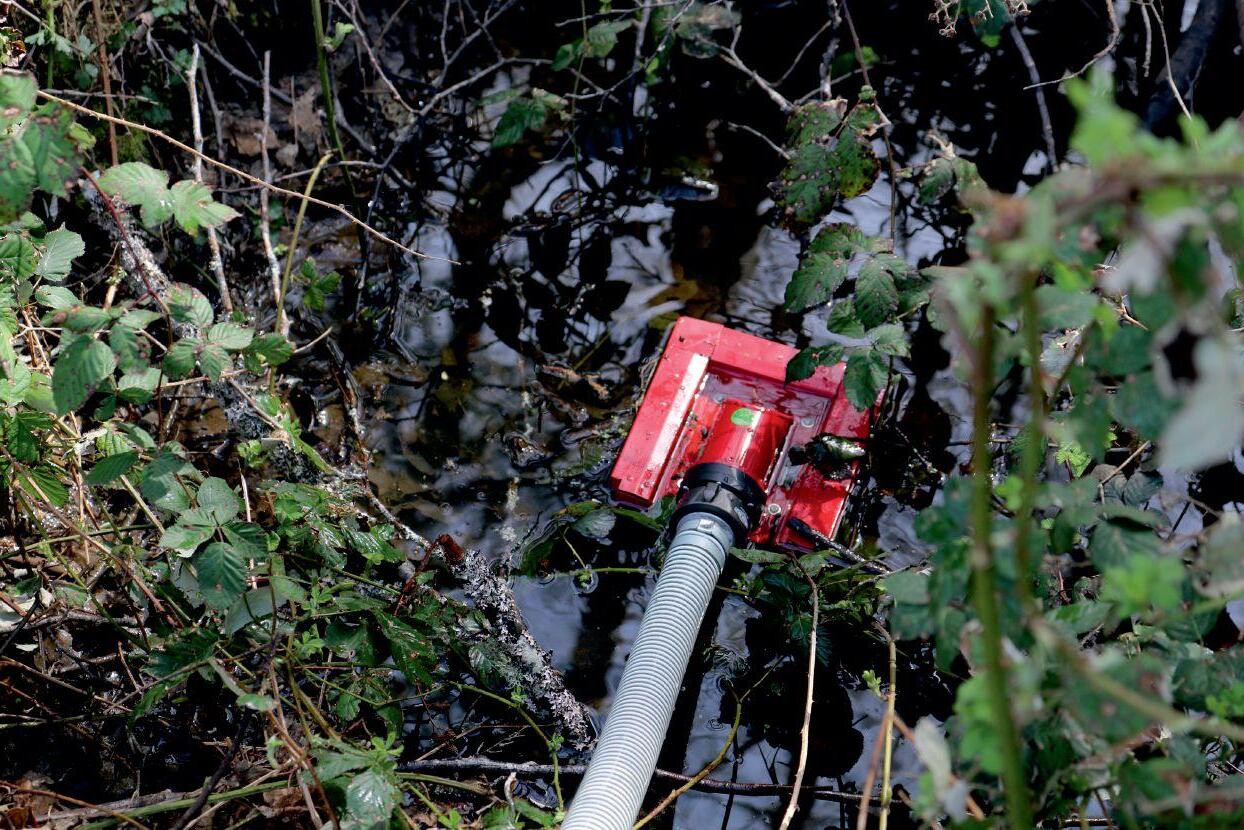
Cover photo: David Gillespie captured this image of firefighters from Peterborough Fire Service completing underground orientation of Jackson Creek.

The federal government’s Infrastructure Canada arm took its fingers and, for the third time, conducted a nationally coordinated point-in-time count of homelessness for “Everyone Counts 2020-2022”. There were 67 communities studied in 2020-2022, which showed the number of people dealing with homelessness increased by 20 per cent since the last count in 2018.
The biggest contributor to this change was unsheltered homeless, which increased by 88 per cent. Substance abuse (41 per cent) and mental health (60 per cent) were the most common health challenges reported by the 40,000 people counted.
Fire halls, particularly in communities where homeless encampments and drug problems have burgeoned, are increasingly facing unpredictable danger in responding
do not follow predictable paths due to a drug or mental health crisis is a growing concern for some Canadian departments. Fire fighting is an inherently dangerous job, and danger mitigation is a big piece. Some departments, with stories to tell (turn to page 10 for some of them), are purchasing armoured “slash” vests for their members to wear that offer an additional layer of protection against injuries like stabbing.
Running into a burning building while everyone else runs out has always been part of the firefighter DNA. Fire has been studied, smoke gets read, there are training, tactics, standards and equipment to face this danger with so that one can be practiced and on guard for the additional inevitable surprises that can come along on the fire ground. What kind of training and equipment is needed for
your department have them?
I do not see a decline in homelessness on the horizon. No federal or provincial strategy has made a significant impact on what is an extremely complicated and multifactorial human crisis, considering the trajectory of the statistics. And, experiencing homelessness is not a bypass on procreation. There will be legacies of children impacted. A study by Raising the Roof showed by link between child and youth homelessness and adult homelessness. Government approaches to homelessness and encampments will continue to evolve, and fire chiefs will continue to be vocal, but there is not a whit of easy answer to be had. Considering the factors of fire risk in tent communities, and the safety for firefighters responding, fire chiefs deserve an influential and heard voice at the table.





The Columbia Shuswap Regional District Board voted unanimously to establish the region’s fourteenth fire department at the Kicking Horse Mountain Resort.
The CSRD received approval from 267 of the 395 property owners in the area, or 66 per cent, before passing this bylaw, which councillors have been working towards for over a decade.
“It has been 17 years trying to get this fire service,” said Electoral Area A Director Karen Cathcart at a May 16 board meeting. “The engagement to finally move this fire service forward has been truly amazing.”
An agreement has been reached for fire service to be provided by the Town of Golden until a full-service fire department can be established.
Doug Greek remembered for his commitment to the service and Canadian
Retired Lunenburg and District fire captain Douglas Aubrey Greek passed away on May 2 at the age of 88. Born in Lunenburg in 1935, he
ABOVE The view of Golden from Golden Eagle Express in Kicking Horse Mountain Resort in B.C., home to worldclass skiing and serious mountain biking terrain with the fourth highest vertical drop in North America.
joined the volunteer fire service in 1957, and served for 45 years before retiring in 2002, remaining active with the service through the Firefighters Honorary Club.
Greek will be remembered, in part, for his passionate commitment to the Canadian Fallen Firefighters Foundation.
He was asked to attend the first ever Canadian Firefighters Memorial Ceremony on Parliament Hill in 2004 to represent the town of Lunenburg.
Greek stood as a silent sentry with the Lunenburg District Fire Department’s Silver Trumpet, a speaking trumpet purchased in 1887 and traditionally used to amplify the orders of firefighters on scene.
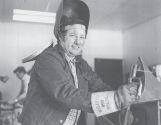
RIGHT In service as a silent sentry, captain Doug Greek worked full-time as a high pressure pipe welder over his 45 year volunteer fire career.
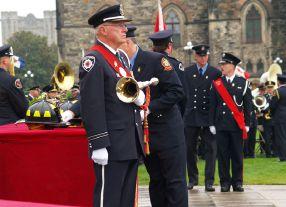
This trumpet, which he first assumed responsibility for in 1988, holds a special significance to the fire service, as discovered by Greek.
During a standard cleaning session, he noted the acoustic tool has been made on Grand Street in New York City. The date: September 11, 1877, 124 years before the attack on the World Trade Centre and the death of 343 firefighters.
The significance of the trumpet
and the gravity of Greek’s solemn vigil could be felt by attendees, and both he and the trumpet became mainstays of the event for the following nine years as he continued to attend annually at his own expense.
It was this passion and dedication to the service that exemplified Doug Greek, who received commendations from event organizers and the mayor for his contributions.
He is survived by his wife of 53 years Peggy, sisters Marguerite and Carleen, brother Andrew, and many cousins, nieces and nephews, and extended family.
In partnership with the province of Nova Scotia, the Halifax Regional Fire & Emergency launched a pilot program using artificial intelligence software to detect wildfires in three areas across the municipality.
The program will use specialized cameras positioned in Musquodoboit Harbour, Middle Sackville, and Hammonds Plains that will monitor the landscape for signs of smoke.
This continuous feed of images is fed into an AI-powered software called FireScout, which identifies signs of smoke and alerts personnel, facilitating quicker decision making and dispatching of fire crews to respond as necessary.
The cameras and software can detect wildfires up to 29 kilometers away during daylight hours and up to 21 kilometers away during the night.
As part of the municipality’s urban wildland interface strategy, this program will provide insight for recommendations to improve wildfire detection and mitigation, the fire department said in a press release.

JOE READMAN is the new fire chief of the Burk’s Falls and District Fire Department in Ontario. He began his career as a volunteer firefighter for the Gravenhurst Fire Department in 2006 and he has held a number of positions over the years.

The municipality of Leamington in Ontario chose DON WILLIAMSON as the full-time fire chief, a position he filled in an interim capacity since May 2023. Williamson first joined the fire service in 2003, being named the first full-time deputy chief for the Lakeshore fire department before being promoted to fire chief in 2005.

SCOTT YOUNG was appointed fire chief for the city of Coquitlam, B.C. He has served with the department for more than 25 years and was named deputy chief of operations in 2020.

The township of North Huron in Ontario promoted former Deputy Fire Chief CHAD KREGAR to the role of interim fire chief. He has served as a North Huron firefighter for over 30 years while also serving as the county’s emergency management coordinator.

The Kaslo Fire Department in British Columbia has named ERIC GRAHAM as their new fulltime fire chief. He has 21 years of experience across three fire departments, and previously served as the deputy fire chief in Lacombe, Alta.

JAMIE MACNEIL is the new first full-time fire chief for the township of Puslinch, Ont. He started his nearly 23-year career as a volunteer firefighter in Beeton and has also been a training officer and deputy fire chief.
Volunteer firefighter MIKE ROWNTREE was chosen as the new deputy fire chief and

fire prevention officer for the Elizabethtown-Kitley Fire Department in Ontario. He has served with the department for almost 10 years.

Fire Chief BRETT OGINO retired from the Sicamous Fire Department in B.C. after 28 years of service. Joining the department in 1995, he was appointed as the parttime fire chief in 2003 and named the first fulltime chief for the District of Sicamous in 2016.

Fire Chief DWAINE KOPP retired from the Unity Fire Department in Saskatchewan. He has been a member of the department for 27 years and served as the deputy fire chief for almost 10 years before being promoted to his role as chief in 2021.

SCOTT WILKINSON retired from his position as deputy chief with Ontario’s Niagara Falls Fire Department after 31 years of service. He spent his entire career with the department, beginning as a probationary firefighter in 1993 and earning promotions to captain, platoon chief, and eventually to deputy fire chief in 2021.

Ret. Fire Chief FRANK HAYLOW passed away on March 31 at the age of 77. He began his career with the fire service in 1973 as a firefighter with Ontario’s York fire department.

THOMAS E. JOHNSON, the retired fire chief of the St. Catharines fire department, passed away on Feb. 29 at the age of 85. Johnson retired from the fire service after 39 years of service.


Chris Harrow , Director of Fire Services, Town of Minto and Township of Wellington North
Working in any profession for a long duration can become stale and monotonous. The mundane day-today operations and routine can make you become bored and more robotic with your job. Ultimately, it’s the responsibility of the individual to find new challenges or create new ways to become more efficient to get that drive back into their working life.
The fire service is steeped in tradition that at times is hard to overcome. It can make the daily operations stale fairly quickly. Traditions are not a bad thing. In fact, we need to respect them and cherish our history. But challenging ourselves to find new, more efficient methods of accomplishing our work can be very rewarding and keep you striving ahead in your career.
While listening to a sports radio station, I heard a fantastic quote: “Tradition is peer pressure from dead people.” It made me stop and think (and kind of chuckle). The quote challenges you to not get stuck in the traditions and yourself to think outside of the box and work with your team to push things forward.
Recently, our management group has pushed the envelope and began working with a third fire department. The six-person team now oversees the departments while they each maintain their own identity. The group of us have been looking at the culture and landscape of the fire service for quite some time, and think this is a unique way of working together to enable the survival of our volunteer departments. To everyone’s credit, councils and the firefighters are participating in moving
When challenging someone to try something different, you have to be prepared for some setbacks.
our departments forward.
It is extremely important for all fire service leaders to continue seeking further education, networking and research into new methods. The world around us is changing quickly and at times we are slow to advance in the fire service. As leaders, we need to continually challenge ourselves and, just as importantly, all of those around us to seek new ways of doing things. It is not only limited to operations or fire tactics, but management ways, new fire prevention initiatives...these can all be looked at.
Watching those that you work with be empowered to come up with new ideas and strive to implement them is a fantastic way to build a team and make your job more fun. Your co-workers get the opportunity to grow themselves as well as the organization. Many leadership experts have stated that you should train those around you so they have the ability to take your job. Nothing is more satisfying to me than watching those around you grow and become successful. I enjoy that at times more than any successes I may have.
Challenging those around you to find new methods to accomplish tasks will lead to some failures and some missed opportunities. A true leader will show their skills in these situations and be able to pick up those around you and motivate them to try again. When challenging someone to try something different, you have to be prepared for some setbacks. Work together to identify the gaps or opportunities and then push them forward
to try again.
Create an atmosphere that encourages seeking out challenges and pushing the envelope of your career, though it is difficult getting by the nay-sayers, internally and externally. The perseverance it takes to get past this negativity can be a fantastic team building exercise.
In volunteer/paid-on-call departments, there is nothing more satisfying to me than seeing a firefighter or one of your other staff get hired into a full-time department or reach similar career goals with another department. That individual was challenged to push themselves to achieve certain goals they had set and to watch them succeed can be very rewarding as an organization if you allow it to be. Celebrating these achievements can bring an organization together because it shows everyone that you won’t punish those that want to push themselves to become better. Creating an organization that challenges everyone from top to bottom will lead to a higher functioning group. It will drive everyone to work together to achieve their goals. The achievements will also result in new and exciting methods for accomplishing the organization’s goals. Finally, it will keep that spark in those leaders guiding the organization to want to push the group forward to try new things. All of this will make work fun sh and wanting to go to work each day. After the last few years, and all that we have been through, enjoying your job and being excited to adapt and change with a successful group is a challenge I think we can all accept.




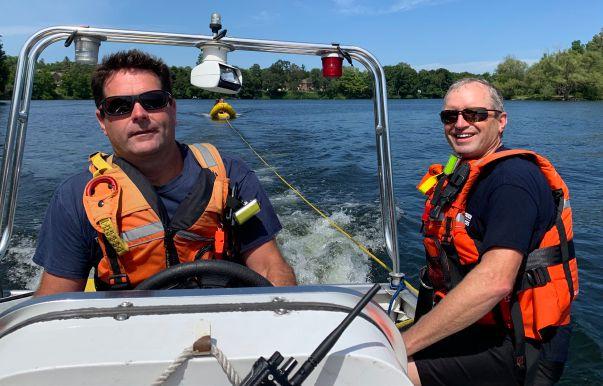
By Dave Gillespie , firefighter, training officer and swiftwater/ice rescue instructor
Whether it’s a car in a creek, a person overboard, or a person in a pool, these are calls of extreme urgency. Six minutes underwater and brain death occurs. It’s a high-risk but low-frequency situation. And it will hit your area again this year.
The Drowning Prevention Research Centre reports that Canada averages over 400 fatal drownings per year. The calculation for non-fatal drownings (recently revised term from the old term near-drownings) is 4:1. That means for every one person drowning, there are four non-fatal drownings that require emergency department visits. Time to ensure you are ready.
DO WE HAVE THE EQUIPMENT?
With climate change, early spring runoffs and more civilian activity all four seasons of the year, dry suits had become the norm for water rescue PPE in Canada. Beyond the standard one-size-fits-all ice rescue suit, dry suit manufacturers have been producing specific rescue designs for rescue swimmers. Prices range from $900 to $1300. They have quickly become the norm for agencies responding to water rescue calls in spring, summer and autumn. Unlike ice rescue suits, available in one size only, three-season dry suits come in small to extra-large. Some come with special liner, but most responders wear it over their station uniform.
Some chiefs may see multiple sizes as expensive, but not all firefighters fit in one size suit. The jury of the 2017 KendallBrunt coroner’s inquest into two drownings of firefighters in two separate training exercises heard the importance of appropriately sized PPE. Make sure your rescue team have access to PPE that fits their size. A dry suit must fit the rescuer, and therefore some agencies are setting up three to four simple PPE kit bags with a range in sizes and matching footwear sizes. These suits require independent footwear, such as neoprene boots, Haix water rescue boots, or specialized OTB (over the beach) boots. Prepared fire services have added multiple sets, such as including foot sizes eight to 13.
Removeable gloves are best for cold water temperatures, or working on watercraft, shorelines or hazards. These come in different thicknesses, from 2 mm to the heavier 3 mm, that still allow dexterity to handle ropes, carabiners and handling patients.
There is a range of helmets used in water rescue. Popular helmets on the market include the ProTec, NRS Havoc, WRSI Current or the Pacifica R6V Mk2. Standard recreational personal flotation devices (PFDs) are rated for only one person to be supported at surface. Transport Canada and the Canadian General Standards Board has set the minimum buoyancy at 15.5 lbs of buoyancy. That is based on 150N (150newtons = 33.7lbs of force) — CAN/CGSB-65.18-M86. Canada does not have a standard specific to professional rescue swimmers, unlike the USA that has a standard for Type IV PFDs. Therefore, manufacturers who sell to Canadian fire departments must certify through Transport Canada’s recreational standard CAN/ CGSB-65.18-M86. With feedback from professional rescue swimmers, there is a need to support one rescuer plus one patient. Therefore, manufacturers have developed “rescue PFDs” with increased buoyancy and quick release tethers. This is far more appropriate for rescuer plus victim, aided by a tether line for retrieving the rescuer.
Was the water rescue training once per year with 60 per cent of the crew, or two to three times per year with 90 per cent attendance and completion of JPRs? It will set up to be a good call when we can rely on how the crew responds and see them each as skilled and competent. When our hopes are pinned on one specific person showing up because they are the only competent rescuer, our training program is not adequate.
Do you recognize water rescue terms such as point-last-seen, eddies, laminar flow, search grids, offensive swim, live bait rescue, rescue PFD, quick release tether, standing waves, and hydraulics? If you scored 10 out of 10 then you have water rescue training. If you score three or less, it is time to up your game.
With many jurisdictions committing to do Surface Operations and Swiftwater Operations to NFPA 1670, or other provincial standards, some agencies in Canada are writing their own curriculum and or using third-party agencies or standards. Jones and Bartlett Learning is the current textbook on all water rescue.
Other resources include the International Association of Water Rescue Professionals (www.iawrp.com) which holds an annual conference in South Bend
Indiana and California. YouTube has a variety of water rescue videos, but selecting credible sources is key.
Canadian statistics show that 65 per cent of non-fatal drownings take place in June, July, and August. We need to be prepared.
With Canadian immigration, our population demographics are changing and so is our rescue profile. No longer are we just mainly rescuing people who grew up with cottages, canoeing, or swim lessons. Many new Canadians come from cultures where swimming was not a recreational opportunity, swim lessons were not the norm, and possibly neither was clean water.
Considering how water is a magnet for all cultures and ages, we have a duty to put up signage that includes infographics and notes dangers of unsupervised beaches, steep banks, or beaches with undertows in the different languages of people who frequent the area.
If you are the old kid on the block, you know local rivers and lakes by the local nickname, cross-street and the neighbour’s house. But does that match the latest computer aided dispatch (CAD) name assigned by GPS technology?
Since 911 dispatchers are covering a larger area, when someone calls 911 and refers to their famous favourite swimming hole, or a visitor only sees a sign with no address, the dispatcher scrambles to roll a rescue team to possible save their family. Can we promote better signage by municipalities and conservation areas on local water spots? Can you check your CAD maps also have the local names matched in the CAD search engine? These trouble-shooting moves are simple to execute.
Many local fire departments are shifting to regional and provincial dispatch centres. The use of CAD requires attaching local names and matching local signage, which all enables faster recognition of the caller’s location. This leads to a more efficient response of the nearest water rescue team.
Have you completed pre-plans and training in your water rescue areas of highest probability? Your team knows it. Your team talks about it every call that happens there.
Has your service promoted the use of geo-locating phone apps like the popular What3Words? We can even add the specific 3 words onto safety signage at the exact swim-
ming spot for non-locals who call the 911 centre. Now is the time to set up hands-on training in that high-frequency area and perform a spinal accident at a backyard pool, rescue simulations in the local pond or quarry, and search patterns at the local jumping cliff.
A simple one is to set up a dry simulation for that curve on roadway where cars have flipped into the creek.
Swimming, boating and peak water rescue season is here. Be sure your department is geared up and has the training to execute the best possible response.
Dave Gillespie is a 29-year firefighter, swiftwater and ice rescue instructor, and chief training officer for Peterborough, Ont. He developed his water rescue skills as a consultant for fire services, municipalities, film companies, and as an author, and speaker at FDIC. He can be reached at david.gillespie.fire@gmail.com.
By Mark van der Feyst
Mark van der Feyst has been in the fire service since 1999 and is currently a firefighter with the FGFD. Contact him at Mark@FireStarTraining.com.
In our last edition, we looked at occupant drags with respect to removing the occupant from the residential structure once located by the search team. In our continued look at this topic, we are going to work backwards, in essence, with detailing the rescue sequence leading up to the removal of the occupant.
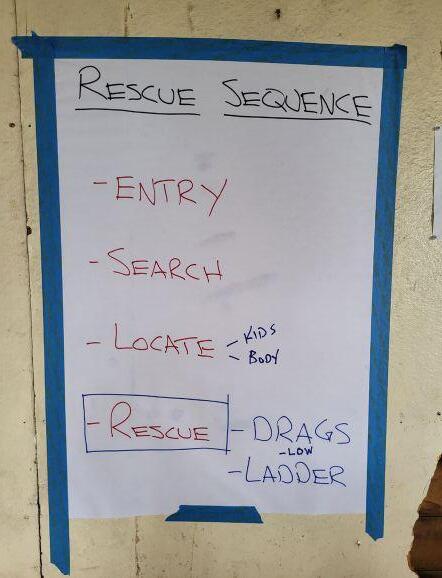
In Photo 1, we have an outline showing what the rescue sequence looks like. This posted note was used for a hands-on class that was being taught in Nairobi, Kenya. The rescue sequence has four distinct phases or segments that are conducted either simultaneously or consecutively: Entry, Search, Locate & Rescue or Remove. In part one of our miniseries, we are going to look at the Entry and Search portion of the sequence.
Entry into the residential structure can be accomplished in multiple ways and by multiple means. The traditional method is through the main or front door of the residence and heading in either a right- or left-hand direction using the building as the orientation to safety. This will involve no hose line going in with the crew.
If a hose line is being taken in as part of the operation or is required by SOG or SOP, then the crew will enter the main door or front door and head directly towards the fire location, if known. Sometimes the fire location will be visible to the interior crews and sometimes it will not be visible. In a vent limited fire, this will be the case and the advancing crew will need to rely upon locating the fire by reading air currents with their flashlight, the convection currents with the thermal imager (TI) or by listening to the sound of the fire.
The fast attack tactic is a combi-
1
This sequence note was used for a hands-on class in Nairobi, Kenya, and shows the four phases of rescue.
nation of both fire suppression and searching being completed at one time with the initial crew on arrival. The fire conditions are such that allow for an interior attack and there are survivable spaces that may contain viable occupants for rescue.
Besides the traditional method, entry can also be accomplished by using another doorway that may be closer to occupant locations based upon the time of day the fire is occurring at or reports of where the occupants may be known to have been at last.
Using a ground ladder to gain access through a window is also possible for second or third storey structures. This method allows for quicker access to certain parts of the structure by going direct to the area. An aerial ladder can also be used for taller buildings that are out of reach from a ground ladder.
Using a window, generally, is also available for ground floor applications as well. We normally associate this with a tactic called vent, enter, search (VES), where entry is made directly at the known location of the occupant – either on the ground floor or an elevated floor with a ladder. For more information on VES, refer to our fourpart series on VES from 2022.
Regardless of the entry method used, the one factor to be aware of is the creation of a new vented opening. This will require closing a door either at the front door, the main door, the patio door, or the bedroom door. Closing the door will cut off the new vented opening and will increase the time available to complete the search and removal of the occupant. This will require having a firefighter posted at the main door of entry to control the door or with the VES tactic, getting to the bedroom door first to close it.
Once the entry has been made, the search begins. If there is no hose line being taken in, the search will be quicker and easier for both crew members. One of the team members will always keep in contact with the building while they search the immediate area within their reach, with the second firefighter searching off the first firefighter also searching their immediate area within their reach. This will be a very quick search operation and especially so if the two firefighters are not “tied” to each other by holding a part of the other firefighter’s body or SCBA.
If searching with a hose line, the search portion of the advance must be conducted off the hose line. The advancing hose line cannot be taken into every room to search as this will slow down the crew immensely as well
2
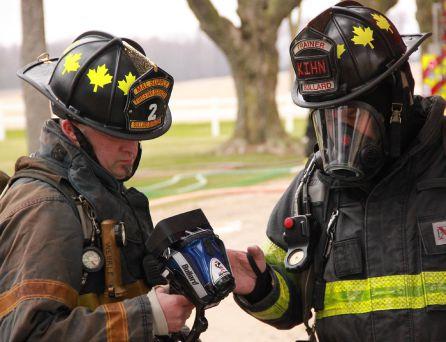
A thermal imager can be useful in both the entry and search phases.
as not be possible to do so. The one firefighter needs to leave the hose line to search the areas passed by the hose line advancing in. The one firefighter on the nozzle will be able to protect the search operation by controlling the fire until the search is complete or by putting out the fire completely. The two firefighters will be able to stay
in contact with each other by vocal means – the hose line will be the orientation line out to safety once back on it.
Another method for searching is to use the oriented search tactic where one firefighter will stay at the doorway of the room, let the other firefighter go in and search the room while the oriented firefighter at the door maintains contact with the building and the search firefighter.
The search can be enhanced by using a TI to visually scan the room to locate the occupant(s) as well as to account for and observe the search firefighter in the room. The TI can also be used to visibly observe the fire conditions around the area to keep an eye on advancing fire conditions or even locate the fire.
If the fire location is discovered by the search team, this information must
be relayed to both Incident Command and the advancing hose line so that they know exactly where to go to suppress it.
Does the search team need to have tools with them to conduct the search? Without going into a long debate over this, the short answer is yes and no. There is a place or need for hand tools to be used or present for a search and there is also a time or place where there will be no tools present, but the search and removal still occurs. If advancing a hose line, having hand tools may not be present or possible to bring in along with a hose line because both hands are needed to move hose into and around the building – they may be left at the front door after forcing it open.
Next month we will look at the Locate and Rescue/Remove portions of the rescue sequence.
By Laura King, NFPA Regional Director, Canada
Not a day goes by that I don’t receive a request for information about lithium-ion batteries, specifically electric vehicles, EV chargers, and the risks of EVs in parking garages.
While the NFPA has lots of information and standards, the technology evolves quickly and we’re often playing catch up. However, standards, along with the work by NFPA’s Fire Protection Research Foundation (FPRF) provide research, testing, and best practices.
So integral is research into the way lithium-ion batteries burn, the toxic gases produced, the effect and impact on responders, the environment and other life and safety issues, the FPRF in 2021 launched the Energy Storage Research Consortium to provide a forum for discussion about energy storage systems including lithium-ion batteries, identify research methods, and provide funding for the studies.
The consortium comprises organizations such as FM Global, UL Research Institutes, GM, and Tesla.
Already, the research foundation has completed studies on sprinkler protection of li-ion based energy storage systems (2019), li-ion battery hazard and use assessment (2016), li-ion battery flammability (2013), and modern vehicle hazards in parking garages and vehicle carriers (2020).
According to NFPA senior engineer Brian O’Connor, there were about 300 EV fires globally between 2010 and 2022, when there were about 16 million EVs on the roads worldwide. O’Connor says EV vehicle fires are less common than fires involving internal combustion engine vehicles, “but more com-

Standards, along with the work being done by NFPA’s affiliate Fire Protection Research Foundation, provide research, testing, and best practices based on data that answers many of the common queries.
plicated of an event, since EV fires can last longer and have the potential for electrical shock and reignition.”
The 2022 edition of NFPA 13, Standard for the Installation of Sprinkler Systems, increases the recommended hazard classification for parking structures from an Ordinary Hazard Group 1 to an Ordinary Hazard Group 2. The effect is a 33 per cent increase in the sprinkler design density, moving from 0.15 gpm/ft2 to 0.2 gpm/ft2.
As of January 2021, FM Global data sheets also increased the hazard category for parking garages and car parks from a Hazard Category 2 to a Hazard Category 3.
New to the 2023 edition of NFPA 88A, Standard for Parking Structures, all parking garages are required to have sprinkler systems installed in accordance with NFPA 13. Prior to this edition, sprinklers didn’t have to be installed in open parking structures.
It’s important in Canada to support the standards development process – apply to be on NFPA technical committees, pay attention to the standards cycles, provide input and information to NFPA – and to encourage standards bodies to reference the most recent versions of standards in the current codes.
For example, NFPA 855, Standard for the Installation of Stationary Energy Storage Systems, provides critical information for fire departments and municipalities about preparing for and dealing with lithium-ion car fires, fire in homes with energy storage systems, and best practices for all types of battery energy storages system fires. Several entities including NFPA,
UL and the Canadian Association of Fire Chiefs are working to have NFPA 855 referenced in the building and fire codes. Regardless, anyone can use the standard as a best practice.
The research foundation is now working its way through a list of important studies:
• The environmental impact of li-ion incidents compared to other types of fires – expected at the end of August.
• Development of explosion prevention/control guidance for ESS installments, Phase 1– expected in September.
• Lithium-ion battery transit bus fire prevention and risk management –expected August 2025.
• Classification of modern vehicle hazards in parking structures/ systems, phase II – expected early April. There are plans for a next phase that will include large scale testing looking at sprinkler protection for EVs and ICEs.
• PPE contamination from lithium-ion fires and cleaning best practices; this is part of a larger threeyear report. Some insights may be available in 2025.
Several proposed projects:
• Marine transport of battery energy storage systems: regulatory and hazard assessment.
• EV infrastructure near gas stations: risk assessment.
• Protection of battery manufacturing facilities.
If you’d like a presentation or workshop about lithium-ion batteries, EVs and energy storage systems, contact me!


The most advanced thermal imager forfirefighting
Larger 3.5″ display for a clearer view of thefire scene and lightweight at just 830g(1.8Ibs) Extended dynamic temperature range to 1100˚C (2000˚F) for greater scene detail inlarger, hotter fire scenarios
Enhanced feature set includinglaser pointer to aid communication, electronic compass for greater scene awarenessandheat/cold seeker technology NFPA approved


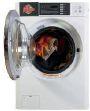
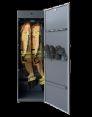

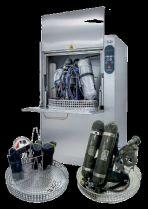
The Solo SCBA Decon/Washing machine was designed and built for one purpose only…to protect Fire Fighters from Cancer causing agents found in the Smoke and residue left on their SCBAs. As an added bonus it can clean Gloves, Boots and Helmets. In addition, it substantially lowers the time spent decontaminating firefighter equipment. The SOLO is the only SCBA decon machine that meets both NFPA and CSA standards.
ü REDUCED HEALTH RISK ü SAVES TIME 2/PKS IN 8 MIN ü EASY TO USE





Dries 2 suits of
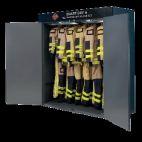
Dries 6 suits of gear, boots, gloves, Helmets or SCBAs. 220VAC 1 phor 3



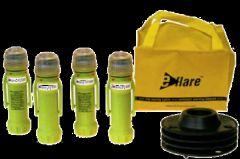




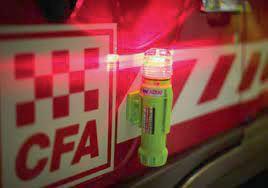
EFLARE electronic road flares are intrinsically safe, waterproof and nontoxic. Designed to warn workers of dangerous areas. Sets up in seconds
Qualified by MSA, SCOTT, DRAEGER & INTERSPIRO for cleaning their SCBAs. NOW AVAILABLE






WASH/DECON TWO SCBAs In 8 minutes. Also cleans, boots, gloves Aand helmets.


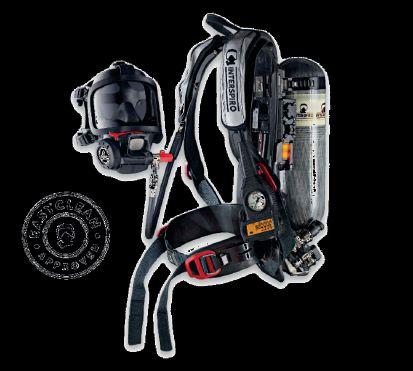
CANADIAN SAFETY EQUIPMENT IS PROUD TO BE A DISTRIBUTOR FOR THE INTERSPIRO RESPIRATORY PROTECTION LINE. THEIR STATE OF THE ART S9 INCURVE IS ONE OF THE MOST COMFORTABLE SCBAs YOU WILL EVER WEAR.
GIVE US A CALL AT 0182 OR EMAIL US AT INFO@CDNSAFETY. COM
No company has a richer history in respiratory protection than Interspiro. Their innovations have become industry standards, time and time again.
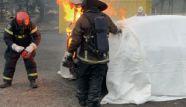
FIRE ISOLATOR is a concept for isolating and fighting EV car fires based on best practices and live testing In general, there is not one single solution to extinguish or control EV car fires, as all firefighters who have dealt
lot that can be done beforehand to minimize the damages Fighting EV car fires with the Fire Isolator concept has been thoroughly tested and proven to be effective
Fire Isolator blanket, when used with the FlameGuardFire grenade is an Excellent method of getting an
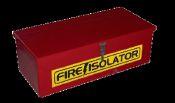
fire under control. The blanket can be
and reused a number of times.
By Manfred Kihn
Every time I pick up a thermal imager (TI), I am amazed at what it is telling me. Does my imager talk to me? NO, but it does tells me what it sees. In other words, I must interpret the image that is being displayed. Even if it is showing me in black/white/grayscale or colourization of yellow/orange/red, I need to understand the interpretation of the images being displayed. Not all calls that a fire department responds to are actual fires or have working fire conditions but there are many calls that they respond to where a thermal imager (TI) should be used. The unknown is anything that can’t be seen by the visible eye and we know that heat signatures can come from passive emitters (inanimate objects), active emitters (living organisms) and direct emitters (energy sources). So, besides the task of fighting fires, other applications include size up, overhaul, search and rescue, hazmat, industrial and smells & bells calls. All these calls require some sort of investigation with a thermal imager. In this article I would like to share three scenarios and walk through what the thermal imager telling you.
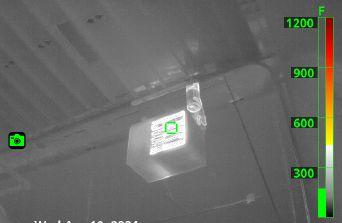
For an investigative purpose, we use a thermal imager to find the cause of the unknown in the location you have been called to. The public or homeowner looks upon the fire department as experts in their fields and to make a mistake or miscalculation is not an option. A TI is a valuable tool that often gets forgotten in the apparatus, which I consider under-utilized technology. Where there is fire there is always heat, but
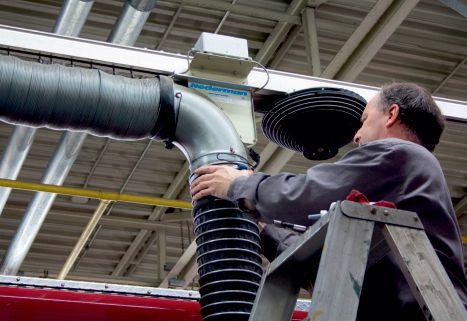
LEFT The TI is showing an overhead gas heater found left on found during investigation.
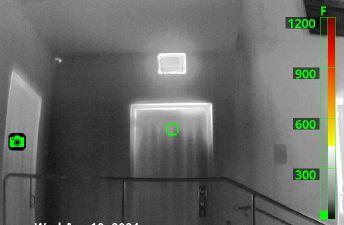
RIGHT An exterior door with elevated temperature at the top level: What is the TI telling you?
there can be heat and no fire, which the TI will detect but what caused this heat is what needs to be investigated. Using your senses plus a TI can help you mitigate any potential invisible situations. An automatic alarm response call for an unknown problem can take some time to investigate, but the aid of a TI can help shorten that process.
Frequently, a smells and bells call for electrical issues such as overheated light ballasts, electrical panel breakers and improperly wired dryer plugs or receptacles, etc., all take time to ensure we identify the issue. Calls to industrial locations where there are mechanical issues with overheated motors or bearings on conveyors is another example. See what your thermal imager is telling you!
The National Fire Protection Association (NFPA) 1801-2021 Standard on Thermal Imagers for the Fire Service removed the digital spot temperature indicator that was in the lower left side of the display screen. The reasoning for this is that some situations occurred where firefighters were using the thermal imager as a thermometer and the temperature was misread.
No thermal imager on the market can give a 100 per cent accurate temperature as there are too many variables such as:
• Emissivity, affected and changed by:
• temperature of emitter
• surface geometry
• wavelength being measured
• surface roughness
• angle of view
• atmospheric attenuation
• particulate, gases, humidity/water particulate
• atmospheric augmentation
• focal point/area of measurement
• optical transmission
• background/reflected energy
For the sake of argument, I will say that the temperature the imager is giving me is a range. The photo of the door indicates a temperature range of around 77 F, but in my opinion and experience, that door is nowhere near that temperature. Think about what you have on the inside or your door jam — some plastic or rubber weather stripping that will be the first to melt away during high heat conditions. On your next on-scene arrival, when you are looking at the top and both sides of the door, what can you see and what is your thermal imager telling you?
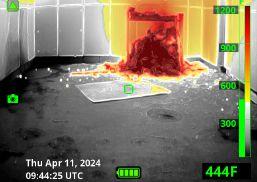
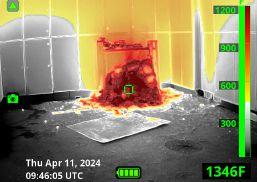
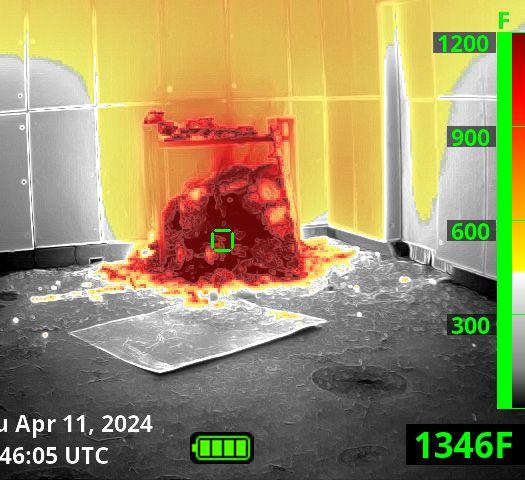
is reading two different temperatures at the same fire. What could be causing emissivity?
The importance of thermal imaging training is to understand what a thermal imager is showing you on the display screen. It cannot tell you anything — you must interpret what it is you are looking at. Let’s consider the same fire but two different temperatures. One is from a piece of sheet metal on the floor causing reflectance which is only inches away from the fire and the second is showing the temperature at the fire itself.
Emissivity is defined as the ratio of the energy radiated from a material’s surface to that radiated from a perfect emitter, known as a blackbody, at the same temperature and wavelength and under the same viewing conditions. It is a dimensionless number between 0 (for a perfect reflector) and 1 (for a perfect emitter).
Any material that has a shiny or glossy surface will cause reflections to a TI. Just to name a few, all stainless-steel appliance’s, mirrors, ceramic tile, hardwood floors and glass, etc., all have a low emissivity value. Extra or additional images can show up on your display screen. Understand what is real and what is not as the imager can’t tell you that. Even in a fire situation, temperature disruption can occur so be careful of what you are looking at.
If there was a concrete cinder block lying next to the fire, it would have absorbed the heat energy from the fire as it has a high emissivity value and would be glowing white.
Whatever the response or wherever it takes you, be sure to take your thermal imager with you as it is a valuable tool to aid you in investigating, but you need to understand what your thermal imager is telling you.
Until next time, stay safe and practice often.
Manfred Kihn is a 19-year veteran of the fire service, having served as an ambulance officer, emergency services specialist, firefighter, captain, and fire chief. He has been a member of Bullard’s Emergency Responder team since 2005 and is the company’s fire training specialist for thermal imaging technology. If you have questions about thermal imaging, you can e-mail him at manfred_kihn@bullard.com.
By Julie Fitz-Gerald
Encampments, drug use and rising mental health issues are changing the job for firefighters across the country. Many Canadian fire service members face increasing threats and acts of violence when attending calls, which has led some departments to implement the use of body armour vests to protect their staff.
In Mission, B.C., Fire Chief Mark Goddard of Mission Fire Rescue Service (MFRS) received approval from city council to purchase $15,000 worth of body armour for his firefighters back in November after his membership expressed concerns about their safety.
“It was brought from the floor because they were seeing
increasing violence and increasing threats…there were a lot of things that led to this,” Goddard explained.
Acting on this concern, MFRS’ safety management committee discussed the data and confirmed that incidents of violence against its staff were increasing and were particularly tied to homelessness and addiction-related calls. Education of staff was key in handling these calls, Goddard noted, but he and the committee felt certain that an “engineered control” – body armour – was needed.
“If it’s a medical emergency with overdose and we administer Naloxone and the person becomes violent, now we’re inside a hazard that wasn’t there beforehand. We can’t educate the risk right out of this. We can’t educate the risk out of the work, so we needed an engineered control that would benefit our people.”
The decision to implement the use of body armour – also referred to as “slash vests” – to protect against stabbing was based on the likelihood of most threats being blunt force trauma. While a new MFRS internal operational guideline leaves the wearing of armoured vests at the firefighter’s discretion, Goddard said it will be mandatory for the following calls: civil disturbances where there may be riots; report of assault with a weapon; domestic assault or dispute with a dispatch note on it for known violence; attempted suicide with a weapon, and any other situation where it’s deemed appropriate.
“Like all things, we’ve identified the hazard, we’re issuing controls and measures,

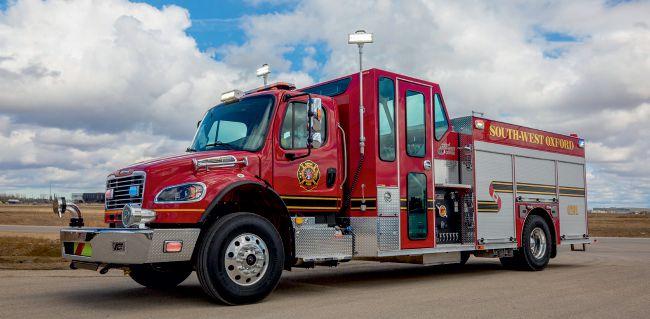
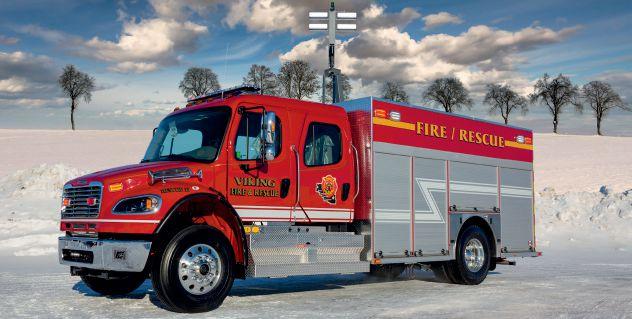
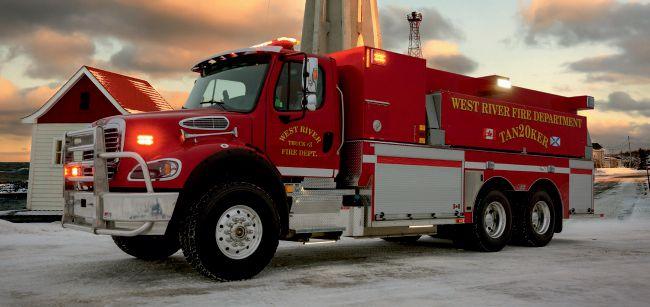

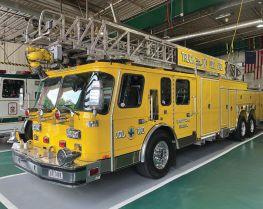
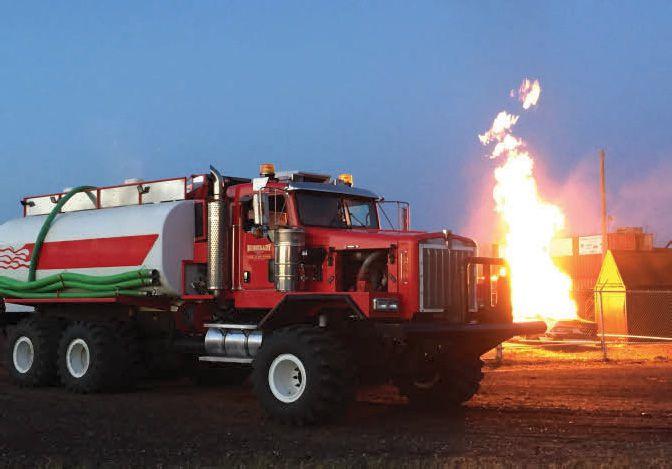
Fort Garry Fire Trucks excels in crafting robust emergency rescue-max bodies, walk-in rescues, command rescues, fire tankers/tenders, and pumper tankers/ tenders. Engineered for the toughest road conditions globally, these vehicles boast a full-framed 6061- T6 aluminum extruded sub-frame with 5083 saltwater marine-grade aluminum compartments. With over 12,000 custom options, clients can tailor their apparatus, ensuring it’s One Tough Truck that precisely meets their fire
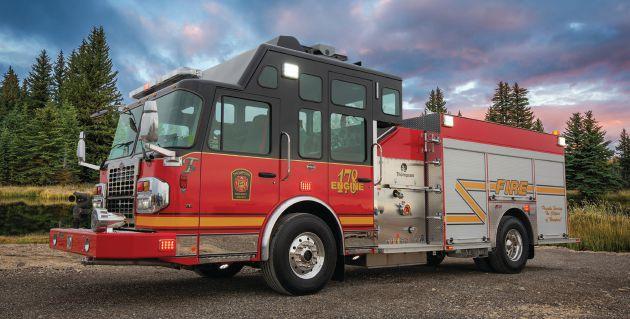

department’s unique needs.
The emergency rescue-max bodies merge pumper performance with rescue storage, providing flexibility and maximum capability. Tailored options include sidemount, top-mount, and top-mount enclosed 3-man and 4-man crown configurations. The assurance of being properly equipped for diverse situations comes from the fullframed 6061- T6 aluminum extruded subframe with 5083 saltwater marine-grade aluminum compartments.
The walk-in rescues, command rescues, and walk-around rescues share the same durable design, thriving in challenging environments. Fort Garry’s commitment is underscored by the largest fire apparatus engineering department among Canadian competitors, dedicated to designing vehicles that surpass fire department demands.
Fort Garry Fire Trucks epitomizes confidence in functionality, resilience, and customization, ensuring these vehicles serve communities for years to come.
and now we need to study it.”
The protective vests purchased for MFRS are a bold red but can be discreet when worn under a jacket.
“We don’t want people thinking we’re scared of them, but on the flipside, we made sure that it’s bright red so that if we’re dealing with an active shooter, it’s distinctly different than an armed division like police. If someone’s targeting law enforcement, then they may pass up our people as they realize we’re unarmed.”
The need for greater body protection was highlighted for Mission firefighters when they found themselves in a precarious situation last October after attending a fire call on Gunn Ave. Arriving on scene to several structure blazes that appeared to be intentionally set, firefighters were preparing to douse the flames when they were quickly called back due to a potentially armed individual on the property. “We didn’t have any real indication that there was any threat outside of a structure fire, but quickly they realized the person responsible was potentially on the property we were now actioning, so we were really in harm’s way. One of my guys could hear somebody coughing on the other side of the door in the house and when the emergency response team came, they told us to back out. It turned out he was likely armed and having a mental health crisis. It could have been a bad situation.”
In Vancouver, Deputy Fire Chief Rob Renning of Vancouver Fire Rescue Services (VFRS) says armoured vests are already in use for his inspectors
who are heavily involved with the encampments but are not used by operational staff. Also heading up the Community Safety & Risk Reduction division, Renning said VFRS has enough vests to cover his roughly 30 inspectors and educators. Speaking about the changing dynamics of encampments, which he said have gone from cordial, relationship-based interactions to now being very confrontational and defiant, greater protection for staff was an easy decision.
“In 2020, someone came at our inspectors with a machete and the police had to intervene. That was the tip of the iceberg. Offering our staff that protection was the right thing to do.”
On Oct. 18, 2022, the level of threat from encampments turned tragic when 31-year-old RCMP Const. Shaelyn Yang, a homeless and mental health outreach officer, was fatally stabbed after responding to a call about a man in a tent in a Burnaby, B.C., park.
“She had just been at our office, our staff had worked with her for a workshop,” said Renning. “She was fatally stabbed in an encampment that we deal with on a regular basis.”
Const. Yang’s death was felt deeply by VFRS and bolstered Renning’s resolve around ensuring armoured vests were available to his staff. While not a mandatory part of the uniform, inspectors and educators can choose when to wear them depending on where they’re going that day. For fire calls, Renning notes that because Vancouver firefighters are responding in groups of four and are more well received, he “has not seen a real push for








it in operations at this point.”
VFRS also opted for coloured vests, and they chose to go with red in order to stand out.
“It’s to identify that we’re not police when we’re on scene, so that was the thought process. If you have staff working alone or in twos, it’s a tool that they should consider using.”
On the changing nature of the job, Renning said encampments and single room occupancies (SROs) are impacting VFRS is a big way.
“When I take away the violence and just look at our statistics for false alarms, they’re through the roof. A lot of times our firehalls are responding 150 times to one building for smoking. Sometimes there are 20 fires a year in SRO buildings. There’s definitely a trend that correlates to when drug use changed from injection to inhalation. That has changed all of our fire data…the false alarms have a huge ripple effect that no one really talks about. The violent side of it is another result of the opioid crisis, too, and the psychosis that comes with that.”
In Calgary, the mood is similar. Fire Chief Steve Dongworth of the Calgary Fire Department (CFD) recently went on several ride-alongs and was shocked by how much has changed in the downtown core, pointing out all-too-familiar concerns that are cropping up across Canada.
“Over the last number of years, we’ve had staff who have said our work environment is more difficult, particularly with opioid overdoses and mental health challenges in our community,” explained Dongworth.
While in previous years risk assessment determined that CFD wasn’t yet at a point of needing body armour, the changing dynamics and increased risk to firefighters is now apparent.
“Our joint occupational health and safety committee recommended we’re at that point and should evaluate slash vests with our people,” Dongworth said. “We now believe it’s a place where we need to go, because we don’t want to wait until someone is stabbed before we get the slash vests.”
The task now is to determine which Calgary fire halls receive the body armour first as they roll out the added protection.
“It takes awhile to procure it, with proposals and bids from companies to supply us and we’re in that process right now. We’re at a place where we’d like our firefighters to try this and then we’ll make a decision to provide the vests across the organization or only to certain areas,” Dongworth noted, his voice reflecting the gravity of that decision. “My fear is being too late to provide this, and also if we only provide it downtown, yet these things are happening right across the city – the opioid addictions and mental health challenges aren’t exclusive to our downtown core.”
CFD is in the process of ordering 20 slash vests to start and is currently developing protocols detailing when the vests must be worn – a crucial step in their implementation.
“The tragedy could be that someone is stabbed at a call and out in the truck is a vest that could have protected them.”



When we speak about volunteer fire fighting, we often talk about two specific things: recruitment and retention. I’ve been co-authoring the Volunteer Vision column for almost 15 years and this hasn’t changed. Recruitment and retention have been the focus of our columns, podcasts, symposiums and conferences all these years, and will for many more to come.
A properly indoctrinated recruit brings an injection of energy and life into a fire department.
Recruitment, of course, means bringing new people into the fire department. It could be the indoctrination process itself or it could be the actual enticement or selling of the department and encouraging people to apply. In a perfect world, applications continually come forward providing a steady stream of new recruits to choose from. Reality sees many department members and officers worried about their futures and who is coming to take their place.
But, what does retention mean in your department, and do you think it has an impact on recruitment itself? Would you consider retention as the process of keeping the new people engaged and onboard, or is it more focused on the existing force and keeping them interested in being a part of the team? It’s a little of both and each have a hand in helping the other.
Think back to the 1980s when recruitment in the volunteer service wasn’t necessarily a regularly scheduled event. New people were either brought in as they appeared or by request of existing volunteers who, for example, had a friend they wanted to introduce to the department. Those candidates were often voted on by the existing members. In this case, reten-
tion wasn’t really a concern as these elected members were invited onto the team and therefore should almost consider themselves lucky to be a part of it.
Today, many volunteer departments have recruit drives or intakes on an annual basis. Some more often than that. This likely involves a process of applications, interviews, indoctrination, and training. A methodic and calculated curriculum that ideally brings in more quality than quantity on a regular basis. For those recruits, this kind of regime demonstrates commitment to detail all the while building retention into the process. They should be left feeling confident, honoured and proud to be a volunteer firefighter. This begs the question: Who exactly are we trying to retain? If you’re a firefighter with a few or more years of experience, how do you feel when new members come on board? Are you intimidated or do you feel pushed aside? You shouldn’t feel either. New recruits should bring about a feeling of pride and excitement by sharing with them what makes you happy. Honoured, in fact, that they want to be a part of this with you. I call this the rookie effect
A properly indoctrinated recruit brings an injection of energy and life into a fire department. You can’t help but feel their level of excitement through each accomplishment and personal encounter. Today’s better training has instilled a feeling of confidence in this next generation and they come to us thirsting for all the knowledge they can get and you are a large part of where they get it.
Tom DeSorcy joined the fire service in 1983 and became the first paid firefighter in his hometown of Hope, B.C., when he became fire chief in 2000, retiring in 2023. E-mail Tom at tdesorcy@telus.net media.
If you currently have new recruits in your fire department today, or the next time you do, step back and take a look at the effect they have on you and your peers. What you should see and feel, is an injection of energy that can lead to a rejuvenation of sorts for some.
Consider the confidence they instill in our older members. Those on our team that may be reluctant, shall we say, to retire or step aside from front line duties. I would consider this another twist to my Moss and Grass theory of leadership. One where those members that are reluctant to change and progress move out of the way when they are no longer paid attention to or “fed” as well as the grass (or new recruits in this case). Shall we consider them existing and weaker grass that’s made stronger because of the rookie effect? Some may even be made to feel better about stepping away from the front and putting their experience to valuable use away from the hot zone.
It’s hard to say if the rookies recognize the impact they have on the existing members, but this is something we need to consider and bring forward adding to their importance and impact they, as new recruits, have on the department. Their role beyond response cannot be overstated enough, in that they can bring a certain “life” back to the fire hall, giving existing members needed validation and purpose that may have been lost.
Recruit firefighters are becoming less and less in the volunteer fire service. For most of the volunteer fire departments, new members are not necessarily lining up at the door to get in. But with new training standards and a commitment to quality, those we do get are more confident and committed to the process. That’s why it’s so important to recognize all the recruits bring to the fire department.
They may well be our future but never underestimate the contribution they can make to the past and always take advantage of the rookie effect.







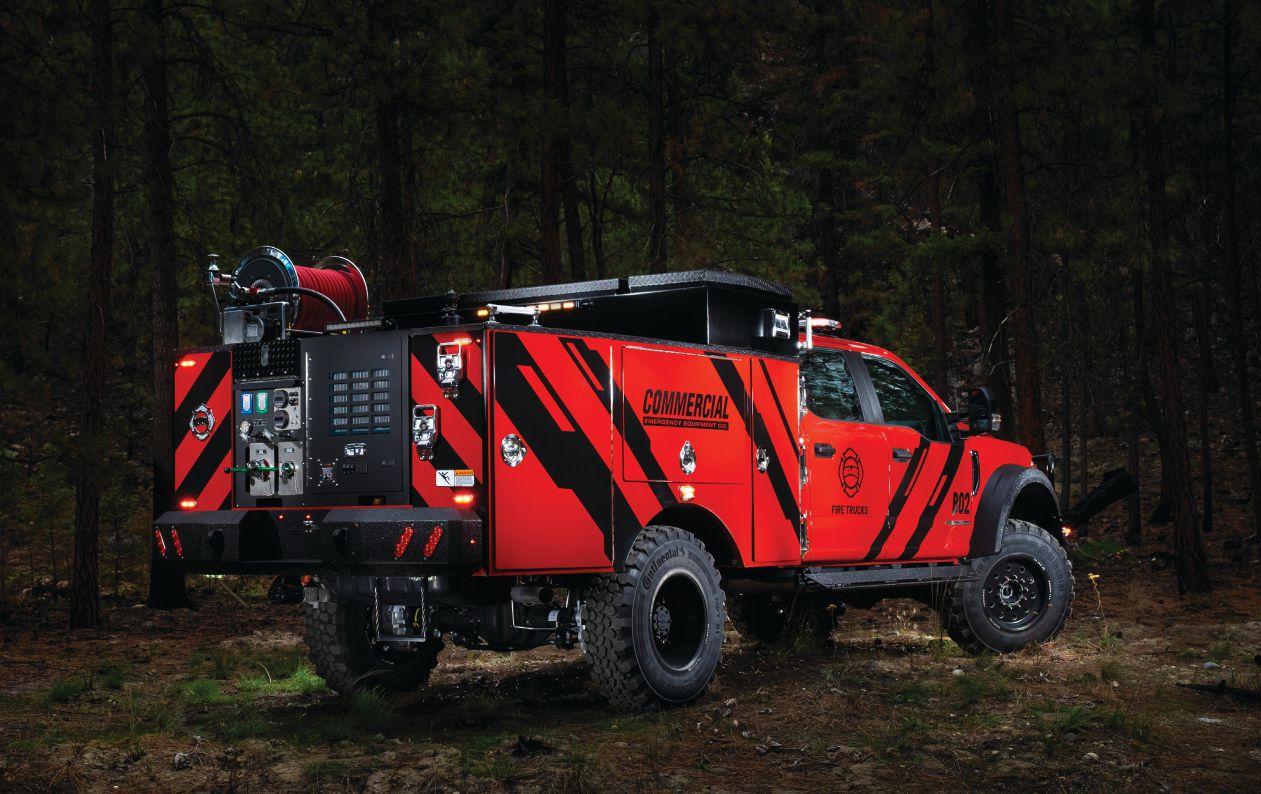

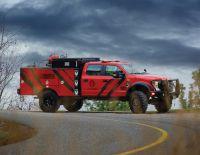
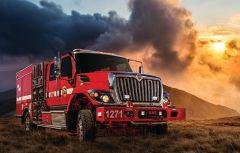
Commercial Emergency Equipment are Canada’s wildland apparatus specialists. With an expansive branch network across Canada, and access to the best wildland apparatus available, Commercial is a clear choice for your next wildland project. From the most capable offroad vehicles to value-driven light-attack trucks, Commercial has multiple apparatus in stock, on the ground, and available now. WILDLAND APPARATUS IN STOCK AND AVAILABLE FOR IMMEDIATE DELIVERY ACROSS CANADA.
Contact an Apparatus Specialist today to discuss your next wildland truck.