

THE FIRST FULLY ELECTRIC, NORTH AMERICAN-STYLE FIRE
We’re charged up for the future as we introduce a revolutionary, new electric fire apparatus. As a true all-electric fire truck, fire departments can drive and pump on electric power only—a first in North America. Developed with technology partner Emergency One Group LTD in Scotland—maker of the world’s first EV fire truck, our new electric fire truck is set to change the future of firefighting.
The new electric fire truck arrives on the scene in 2022. Contact your E-ONE, KME, Ferrara, or Spartan ER dealer to pre-order or schedule an exclusive virtual session with our engineers today.


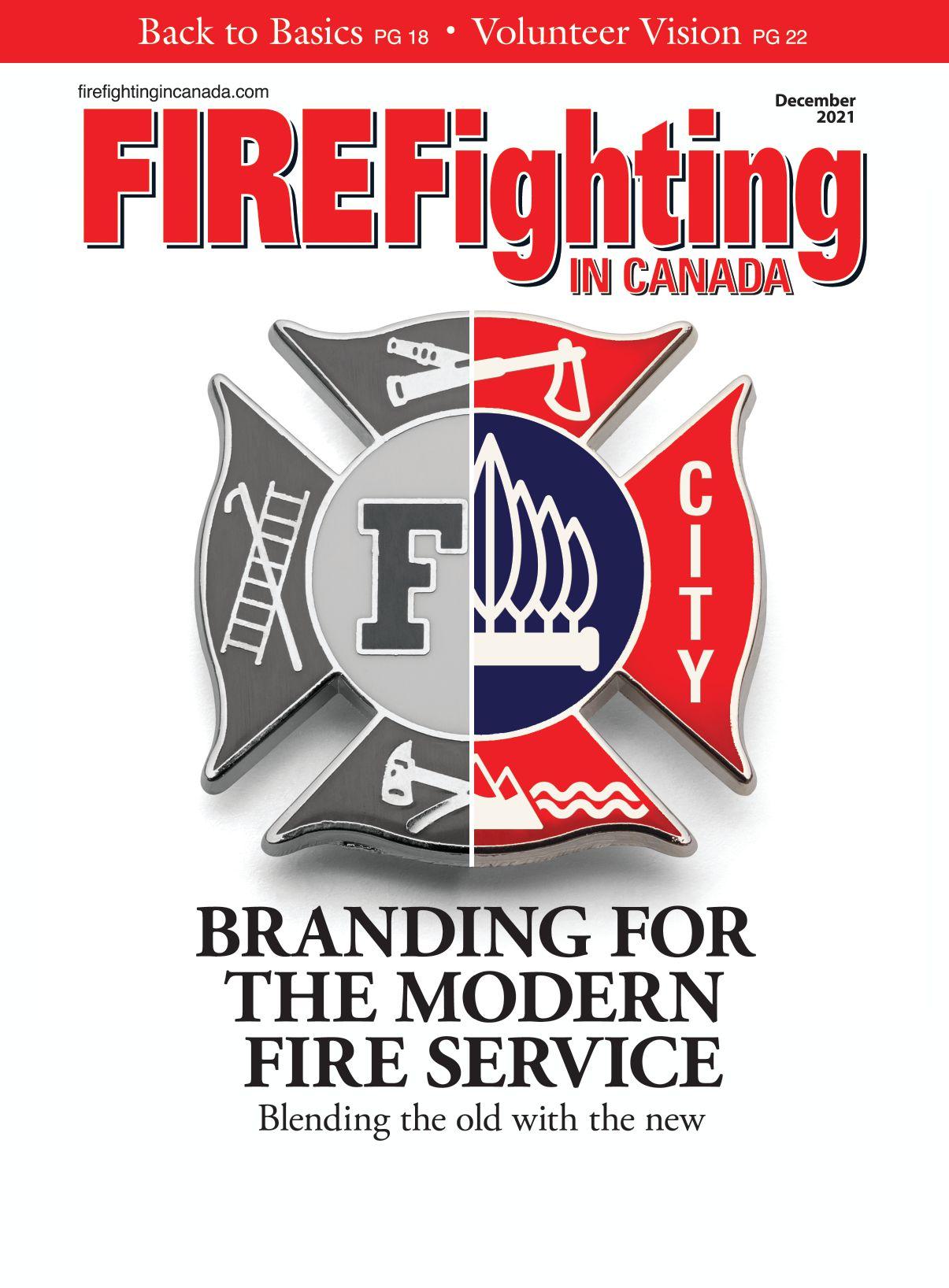
BRANDING FOR THE MODERN FIRE SERVICE
Here are some tips for rebranding and refreshing your fire department’s image, including the importance of putting a public face to your service, and the keys of consistent, coherent branding.
By Kirk Hughes
12
DEPLOYING MULTIPLE THERMAL IMAGERS
Thermal imagers increase efficiency, and safety and deploying multiples helps save lives and mitigate property damage. Here’s guidance on how to most effectively deploy multiple thermal imagers in your department.
By Manfred Kihn

BY LAURA AIKEN Editor laiken@annexbusinessmedia.com
got my winter boots out the week I began writing this in November. And my coat. Hesitantly, my mittens. I’m a reluctant embracer of the cold, though there are great things to look forward to in a Canadian winter. We have two columnists, Chris Harrow and Gord Schreiner, who both used hockey analogies in their articles for December. I’m not surprised. Is there no more comforting sign of a return to Canadian normalcy than community pucks back on the ice? Though many in the fire service have had a difficult year of uncertainties and high demands, there is a lot to be grateful for as we look towards holidays perhaps spent again with families in person, rather than over Zoom.
dusty social and work event calendar that’s been the best boon of all.
Pandemics end, and this one looks like it will too, though a global end is a very different conversation than geographical endemicity, even within our own country. We’ll be talking about COVID-19 for a long time to come, but we’ll be talking about a lot of other things too. We already are.
ON THE COVER
This slow slide to a new normal’s been a bit of a buzz, as I sit here in Ontario, knowing my experience is regional and still uncertain, still cautious. Could be upended by Christmas Eve, if covid precedents are to be accounted for, but there is reason for cautious optimism with high vaccination rates. Consider this may be the end of large scale lockdowns, schools may stay open, and those hockey pucks might be back on the ice for a long time to come. This winter may be the turbulant receding of this virus that made a mockery of the word ‘unprecedented’ for the memories of most. And as nice as it is that the barricades and traffic directing has ceased in my Ontario grocery store, it’s the blossoming of the
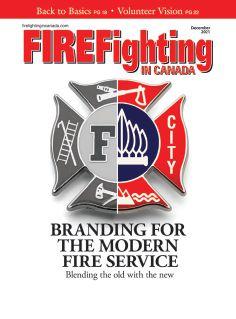
Logos and shoulder flashes can communicate a lot about today’s modern fire service. Is yours in need of an update? For more, turn to page 10.
I hope you enjoyed your 2021 editions of Fire Fighting in Canada and that they helped inform and foster your connection with the fire service. If there’s anything you’d like us to be talking about, please reach out to me at laiken@annexbusinessmedia.com or 416522-1595. Many of our greatest reads come from our readers.
Happy holidays to you and yours; to all those who show up to help on the worst day of someone else’s life. May it be a restful, festive, holiday season of fun and good cheer.
ESTABLISHED 1957
DECEMBER 2021 VOL. 65 NO. 7
Reader Service
Print and digital subscription inquiries or changes, please contact Beata Olechnowicz, Audience Development Manager
Tel: (416) 510-5182
Fax: (416) 510-6875
Email: bolechnowicz@annexbusinessmedia.com
Mail: 111 Gordon Baker Rd., Suite 400, Toronto, ON M2H 3R1
EDITOR LAURA AIKEN laiken@annexbusinessmedia.com 416-522-1595
ASSOCIATE EDITOR KAITLIN SECORD ksecord@annexbusinessmedia.com 416-435-1779
PUBLISHER ADAM SZPAKOWSKI aszpakowski@annexbusinessmedia.com 289-221-6605
ACCOUNT COORDINATOR CATHERINE GILES cgiles@annexbusinessmedia.com 416-510-5232
MEDIA DESIGNER BROOKE SHAW bshaw@annexbusinessmedia.com
GROUP PUBLISHER PAUL GROSSINGER pgrossinger@annexbusinessmedia.com
COO SCOTT JAMIESON sjamieson@annexbusinessmedia.com
PUBLICATION MAIL AGREEMENT #40065710
RETURN UNDELIVERABLE CANADIAN ADDRESSES TO CIRCULATION DEPT.
P.O. Box 530, SIMCOE, ON N3Y 4N5 e-mail: subscribe@firefightingincanada.com
Printed in Canada ISSN 0015–2595
SUBSCRIPTION RATES Canada – 1 Year - $25.50 (GST - #867172652RT0001) USA – 1 Year $58.50 (CDN)
Annex Privacy Officer Privacy@annexbusinessmedia.com Tel: 800-668-2374
Occasionally, Fire Fighting in Canada will mail information on behalf of industry-related groups whose products and services we believe may be of interest to you. If you prefer not to receive this information, please contact our circulation department in any of the four ways listed above.
No part of the editorial content of this publication may be reprinted without the publisher’s written permission ©2021 Annex Business Media. All rights reserved. Opinions expressed in this magazine are not necessarily those of the editor or the publisher. No liability is assumed for errors or omissions.
All advertising is subject to the publisher’s approval. Such approval does not imply any endorsement of the products or services advertised. Publisher reserves the right to refuse advertising that does not meet the standards of the publication.

www.firefightingincanada.com
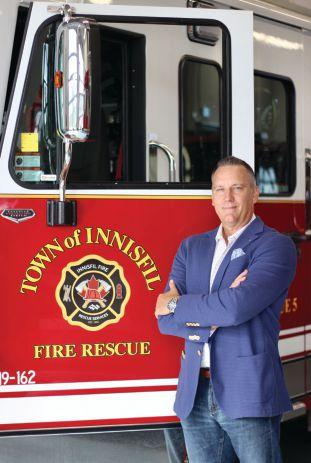
Kip Cosgrove, VFIS Canadian regional manager, visits Innisfil Fire Rescue.
In 1991, Kip Cosgrove moved to Canada from the United States and brought his job with American-based VFIS with him.
Starting out with accidental death and dismemberment
policies, VFIS has since adapted to include coverage for occupational cancers, cosmetic disfigurement from the burns, and other policies to cover the niche market of emergency service organizations.
The company now insures over 2,100 fire departments across Canada, and works with every major provincial and national fire service organization in Canada.
The first 30 years of VFIS in Canada were full of innovative thinking. When asked what the next 30 will look like, Cosgrove said, “VFIS will continue to develop its benefits plans and policies, and keep a close eye on how the fire service evolves, and evolve alongside it.”
Cosgrove gives the COVID19 pandemic as an example of how VFIS continues to grow with the times.
“Ten years ago, we would have never considered

BRYAN BURBIDGE has been appointed fire chief for the city of Richmond Hill, Ont. Serving as interim chief since May, Burbidge moved into the role permanently on Oct. 12. He has served 30 years in the fire service.

After a nation-wide search, TED RUITER has been named the new fire chief for Sooke Fire and Rescue Services in B.C. Ruiter has worked as a firefighter for 34 years. He joins the team after serving as fire chief in Fernie, B.C., for the last eight years.
LEIGHTON WOODS is the new deputy fire chief for Cornwall
this being a possibility of something that could happen, but because of it, we have adapted our benefits to suit the needs of a fire service who is serving a global pandemic.”
VFIS prides itself on listening to its market.
“We see new claims come through the door and ask ourselves, how can we pay these? We take these scenarios and research and develop a plan to figure out a way to be more inclusive.”
Cosgrove said the biggest change he’s seen in the industry in the past five years has been the increase in conversations surrounding mental health, namely PTSD.
“It’s difficult to talk about PTSD and mental health in any situation, but when you put on the pressure of having a job that’s all about running into situations other people fear the most, and needing to be this big and brave person, it makes taking away the
stigma just that much more challenging.”
VFIS introduced a total disability benefit for cancer and PTSD.
“It’s important that firefighters are in their best shape, mentally and physically. We want to support that.
VFIS was the first to actually specialize our coverage within the Canadian fire industry. What’s impressive is that worker’s compensation is now recognizing these two serious situations that firefighters are facing on their presumptive legislation.” said Cosgrove The industry is also talking a lot about critical illness and stress management.
“Firefighters learn how to cope with things like occupational stress from one another, and know they aren’t alone in dealing with it,” said Cosgrove “If it wasn’t for the fire service wanting more for its firefighters, VFIS Canada wouldn’t be where it is today.”
Fire Services. His work there will focus on emergency management, public education and fire prevention. Woods began his career as a paramedic in 2006 before transitioning to the fire service.
After months as acting fire chief, MIKE PRIOR has been appointed the new fire chief for the Township of Leeds and Thousand Islands in Ontario.
Prior has 34 years of fire fighting experience and is a strong advocate for the fire service.
MICHAEL VAN DOP started his new role as fire chief for the city of Maple Ridge, B.C., on Oct. 4. Van Dop joined the Maple Ridge Fire Department in 2005 as a paid-on-call firefighter. He became a career firefighter in 2009. He’s served in Maple Ridge and Pitt
Almost every building owner in Ontario is required to have a fire safety plan approved and implemented at their building. Part of this implementation, required by the Ontario Fire Code, is that all “supervisory” staff of that building be trained on how to implement the fire safety plan, and understand their own roles and responsibilities under that plan – before being given any responsibilities at the building.
Building owners and building staff responsible for fire safety must understand that their specific roles and responsibilities impact both occupant and firefighter safety. This makes it essential that before firefighters arrive at the building, staff must have successfully implemented the fire safety plan. The most appropriate way to do this is through training.
Helping to meet this obligation, the new online fire safety training program launched by the National Life Safety Group (NLSG) is providing critical knowledge to ensure that both public and private organizations not only comply with the Fire Code, but truly understand their fire safety plan so they can effectively implement it.
The new NLSG training program also provides a solution to the recent “Raising the Alarm” report by the City of Toronto’s Auditor General, which highlighted the need for industry recognized training aimed at building owners and staff to assist and support them in understanding their roles and responsibilities under the Fire Code.
The new NLSG online training enables building owners, property managers, security personnel, concierge and fire wardens to complete their mandatory fire safety compliance courses through the only fire safety plan implementation course available in Canada, accredited by the Institution of Fire Engineers - Canada (IFE), an internationally recognized accrediting body with membership around the globe.
“Implementing a Fire Safety Plan – through training at your building is much more than a fire code requirement. Your building occupant safety depends on it. In fact, firefighters who will respond to your building also expect the fire safety plan has been implemented. Firefighters expect all systems functioning, tested
and recently inspected when they arrive. They also depend on knowledgeable building staff at times of emergencies,” said Jason Reid, senior advisor of fire and emergency management with NLSG, whose team of NFPA 1035 certified fire and life safety educators created the new online program.
In a 1995 Coroner’s Inquest into the Forrest Laneway fire that resulted in multiple deaths, the Coroner recommended that the building owners have mandatory training to better understand their accountabilities. Specifically, the Inquest recommended to, “Develop a mandatory, certification training course for building supervisory staff which includes the following subjects: the use of emergency voice communication systems (EVAC), fire alarms systems, sprinkler systems, smoke control measures, emergency power, elevator operations and control, fire safety planning, maintenance of door closures, understanding / scheduling of maintenance as detailed in the Ontario Fire Code.” NLSG’s course delivers on this and more.
With thousands of firefighters and 441 fire departments across Ontario risking their lives for public safety every day, completing the online or in-person training for residential or commercial buildings is a small but legally required step that every responsible property owner, property management team and employer must complete. This new training program allows everyone with responsibilities included in Section 2.8 of the Ontario Fire Code, to fully understand their fire safety plan.
Meadows for 17 years.
MICHAEL THURLOW , is set to retire from his role as fire chief for the Scarborough, Ont., fire department on Jan. 7, 2022. Thurlow has been with the department for over 45 years, having just celebrated his 20th year as fire chief. He started in the fire service
at Pine Point Fire Company when he was 16.
Deputy Fire Chief FRANK MACDONALD of the Saanich, B.C., fire department retired on Sept. 29 after a 35-year career. MacDonald began his career with the District of North Vancouver Fire Department in 1993, where he spent six seasons fighting wildland fires.
Adelaide Metcalfe, Ont., Fire Chief AREND NOORDHOF is set to retire at the end of 2021. Noordhof started his career in 1982, and served as the Adelaide Metcalfe Fire Department’s chief for 20 years. Alongside his role as chief, Noordhof has also chaired the Middlesex County Fire Training Association for six years
Fire Chief BRIAN LEDUC passed away in July of this year at the age of 54. He served as fire chief for the McDougall Fire Department in Ontario since 2002, and took on additional duties of bylaw, parks and recreation. Leduc dedicated a lifetime of service to the area’s residents.
BY CHRIS HARROW Director of Fire Services
The hockey season in Ontario is back after nearly a year and a half off. It is a welcome part of many of our lives and a sign of things returning to a new normal, thankfully, for our kids. They are so grateful to get back to a sport that allows them to hang out with their friends and work together as a team again after so long in isolation.
This year, I volunteered to help coach my son’s team. It’s a great opportunity to be with my son and see him and his teammates grow throughout the year. Some of the best time as parents is the one-onone time you get with your child in a car driving to a hockey game. It has led to some great conversations over the years, time I would not trade for anything.
A recent conversation him and I had was about naming the captains and assistant captains for the team. He asked first why we hadn’t done it yet (we were two games into the year) and what did he have to do to get one of the letters? It was a great opportunity for us to talk about leadership, what it is and how he can improve his own leadership skills. My son was really interested in a leadership role on the team and what it would mean to him to be seen as a leader amongst his peers.
The first thing we talked about was that a leader does not have to have a letter on his jersey and having a letter does not automatically elevate you to leader status. Leader status is given to those who demonstrate leadership and have earned the respect of all teammates. It is someone who has earned the trust of the team and is a positive influence on everyone even when the team is losing. The team will dictate who their leaders are, not a group of coaches.
This year is unique to our team. We have a large team of 18 players, which is unusual for a minor hockey team. There are a wide variety of personalities and skill sets. The leaders on our team need to lead the way to making every player feel included.
find tasks. As a result, other players started doing extra tasks around the team following the lead of my son. Leading by example was happening right before our eyes.
All of this led me to think of how this related to the fire service. We are very big on titles and making sure everyone has titles. Firefighters strive to make certain titles for a variety of reasons. But sometimes we don’t realize that respect and leadership do not automatically come with a new title or “letter on our jersey”. We get wrapped up in titles and structure, but don’t realize that leadership is earned and many of our leaders emerge on their own, not through being awarded promotions. I don’t want anyone to think that rank and titles do not have their place in the fire service. There is definitely a time and place for this structure. But we sometimes lose the concept that leadership and respect is not automatic with a title.
I am sure we can all look at our personnel and see where leaders are emerging. They don’t necessarily have titles or extra responsibilities; you can just tell they have the respect of the people they are with and
We get wrapped up in titles and structure, but don’t realize that leadership is earned and many of our leaders emerge on their own, not through being awarded promotions. ‘‘ ’’
My son spoke about some of the things he could do to make lesser skilled players feel included, simple thinks like going out of his way to have a conversation with them and find out what their thoughts are about the team. All great suggestions and definitely a proud Dad moment. We also talked about the extra duties he could do around the team to show the others and the coaching staff he has leadership skills. He picked up on the ideas quickly and went out of his way to
Chris Harrow is the director of fire services for the Town of Minto and Township of Wellington North in Ontario. He is a graduate from fire programs at Lakeland College and Dalhousie University and holds a graduate certificate in Advanced Care Paramedics from Conestoga College. He can be reached at c.harrow@mintofiredept.on.ca.
others just naturally will follow them. They are always looking for the extra tasks to do. You notice the others follow their lead, just naturally following and respecting them. They don’t ask for recognition or a title, they just do it because it is the right thing to do.
I could go on and on about the parallels between our hockey team and our fire fighting team, such as working together to ensure we are successful. If the team isn’t functioning, there are going to be issues. Natural leaders are a key to any team’s successes. If we identify who they are and quietly foster their development, they will assist greatly in the team moving forward successfully.
It is a blast seeing my son and others on his team grow up and taking an interest in leadership. It gives me as much pride as fostering our fire fighting team. Two teams, both emerging leaders from its ranks. Who knows, the leaders from our hockey team may someday be future leaders in the fire service.

By KIRK HUGHES
The life cycle of a fire department is one marked with benchmarks, such as anniversaries, and the people that make them up change over time. The vehicles, training and tools need to adapt and grow to remain viable and relevant as benchmarks go by. These events make up the history of the department, which in turn forms the “culture” or the “soul” of a service. As the makeup of a department is altered, a new sense of ownership is created. It is made up of the traditions of the past, the entrusted legacy of those that came before, and the reputation that was built through adversity and triumph. Since change is inevitable, modernization should be anticipated and embraced. When a fire department moves towards the future, it has a lot of transitional components in play, from leadership movement, acceptance of new technology and forming
a new sense of self-identity. When that time comes to contemplate what the department stands for — being mindful of the past, but striving forward towards the future – that is the time to think about branding.
Branding is about putting a public face on your entire service. It’s the way your specific department “talks to people” through visual cues like a shoulder crest and logo or social media presence. Branding is part of how that talk convinces them that you are providing the best emergency service to them at the moment they need it most. Branding is what your department says to the public. When exploring some simple key factors that make up a successful modernization strategy, branding is certainly at the top of the chart. Transitioning away from the past is always a difficult task, but a new shoulder flash, logo/decaling and a sound social media
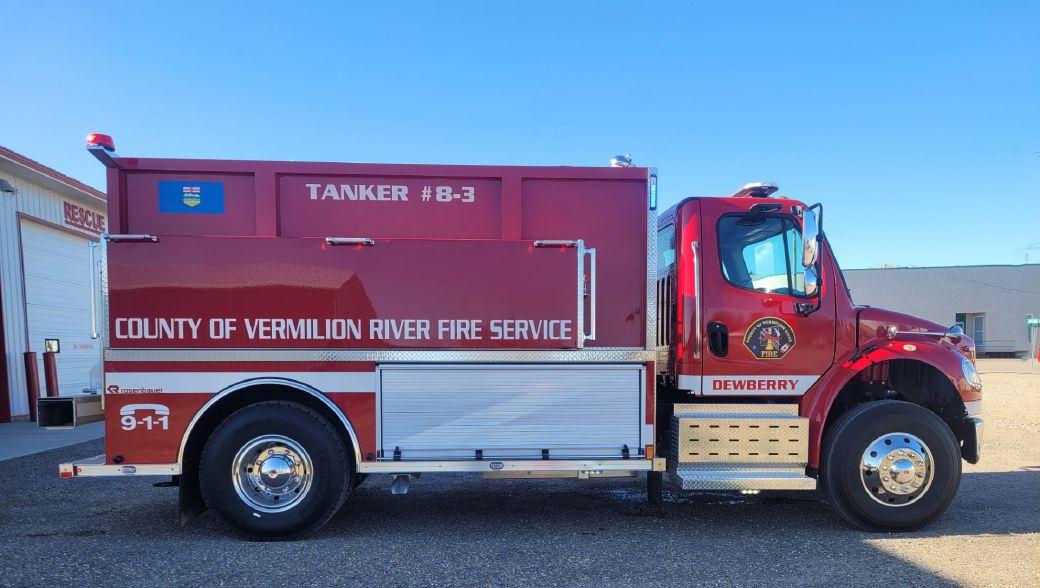
An example of the shoulder crest being used dually, as a logo for the door. Note the colour scheme includes a bottom door rocker indicating a station identifier “Dewberry” and links the regional service with the province through the inclusion of the provincial flag.
outside of an emergency situation.
platform can reap dividends in pulling a department into the future.
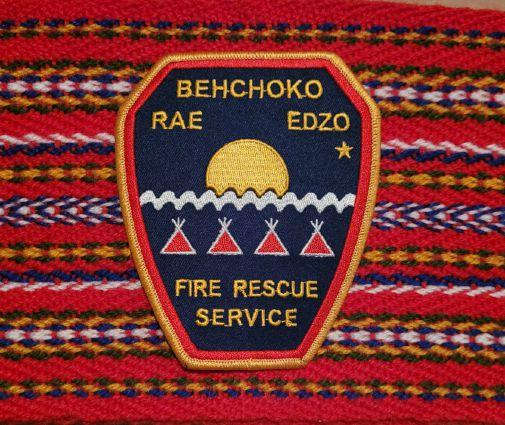
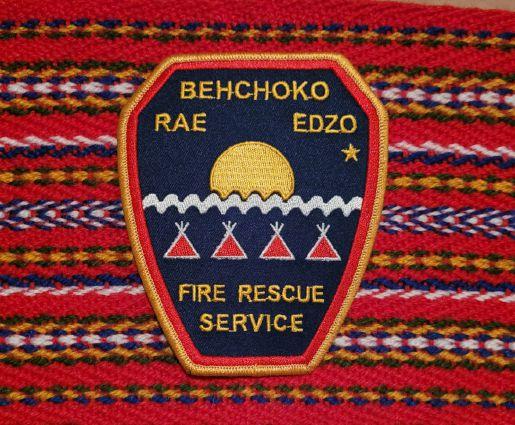
If you look around your fire service, you’ll likely see many examples of ‘brands’: shoulder flashes, door decals, the time-tested Maltese cross, perhaps. All of these are fine representations of traditional branding, but do they speak to the current state of a department? The old generic shoulder flash may have been the solid standard many years ago, but its time is well past and now it’s time to rejuvenate and create a new emblem. This is one of the primary steps when deciding to re-brand: what does a shoulder flash represent to the public? What could it say about the future direction of the organization? This is where the creative juices get to flow. A good re-brand should incorporate the customs associated with the fire service, while blending in the nuances of the modern role of first responders. It should be clean in appearance, not overloaded with too many auditory distractions, contain crisp lettering, clear patterns and be incorporated within a set boundary to look professional and official. A recent practice has been using local landmarks within the centre of the patch, like you see in the FDNY and Toronto Fire patches. These two patches that have instant recognition power due to their branding. In 2015, the Behchoko Fire Department in the Northwest Territories went from the traditional gold threaded Canadian Maltese cross shoulder flash with “Rae-Edzo” embroidered on the top to a modern patch. The catalyst was the adoption of the traditional Aboriginal name of “Behchoko” (Tli-Cho for “The place with the long knives”) from the original name of Rae, named after John Rae the explorer. The new shoulder flash consisted of the Indigenous Tli-Cho First Nation flag superimposed on a shield, with simple text spelling out their roles as a fire and rescue service which also included their non-indigenous names, Rae and Edzo, linking the past with the future. It is a gorgeous crest that spurred additional changes within the service, and lead to a notable brand across the North.
Following up with the shoulder flash is usually a logo – and that could be one in the same. The idea of a logo is that it can be

By MANFRED KIHN
In its simplest role on the fireground, the thermal imager (TI) is about improving efficiency. Increased efficiency and safety of the individual firefighter and the company as a whole is always a priority. Completing specific functional tasks as part of the overall plan to save lives and mitigate property damage is what fire fighting is all about.
Many of us know that thermal imagers, in the hands of trained operators, enable firefighters to:
• search a smoke-obscured area much faster
• assess the interior fire flow path more quickly and accurately
• maneuver through a smoke-filled environment in a fraction of the time
Having another TI on the apparatus and in the hands of a single crew is quickly becoming the norm in the fire service. I have seen several departments that provide a TI for the company officer and a second imager in the back of the cab for the crew members. This is becoming increasingly common with truck companies that use a “split crew” deployment of their manpower. Each part of the crew, whether they have VES (vent, enter, search), roof, outside vent or other duties, has the additional capability the thermal imager brings with it in the hands of a trained operator.
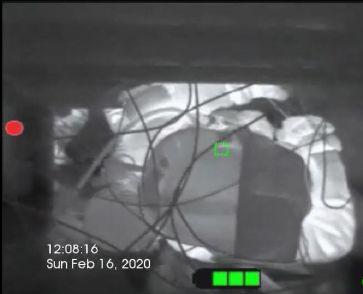
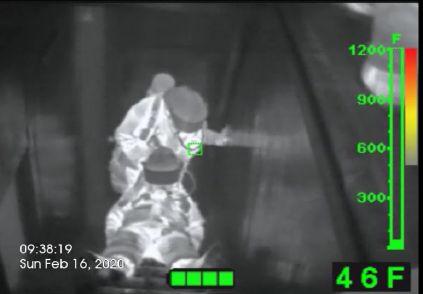
During a recent Rapid Intervention Team (RIT) training exercise with a fire department, their assignment was to locate and disentangle a firefighter from a large pile of debris, provide immediate life support functions, and get the member to the exterior of the building. This evolution was conducted under live fire conditions and at near zero visibility. For the purposes of providing a solid debriefing tool, the department used the Digital Video Recorder (DVR) within their TI in order to video the session.
There were challenges with disentanglement in zero-visibility conditions. One thing became clear to everyone present during the debrief: if one member of the RIT team was equipped with a TI and had been assigned to monitor the situation and provide instruction to the team, the task could have been done in a considerably shorter time. Since a RIT team can advance only as fast as its slowest member, this compels the deployment of multiple thermal imagers for the team.
Unfortunately, having a TI on the truck is one thing, while having a firefighter actually grab it before entering a burning structure is, too often, quite another thing. It’s still too common for firefighters, in the heat of the moment, to forget to grab TIs while rushing off the apparatus. As a community, we need to continuously reinforce to firefighters and their supervisors that TIs are critical components of the tool kit. Increased team efficiency and accountability are key benefits, but so is the advantage of having more eyes on the fire. The
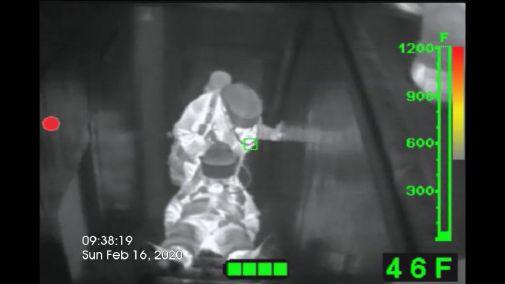
TI’s ability to portray fire progression, display the cooling effects of water or foam, and signal extreme heat buildup enables firefighters to react in the moment to limit property loss, conserve water or foam supplies, and potentially evacuate before conditions become unsafe.
All of this thinking should not be limited to well-staffed career departments. Departments, whether career, volunteer, combination, or industrial can all benefit from having additional thermal imagers on their apparatus as well as defined operating procedures for deploying them. In fact, the efficiency that the TI brings to a department can be magnified in situations where available manpower is not optimal. Thermal imager prices have decreased markedly in the last several years. The lower cost of acquisition goes hand in hand with the deployment of additional thermal imagers at the company level. When I first came on the job, there was only one air pack on the truck. Now, everyone has a dedicated SCBA. Thermal imagers are destined for the same deployment.
There is no question that thermal imagers save lives. With the cost of TIs dropping, fire departments can now more easily afford these valuable life-saving tools and embrace the use of multiple imagers within their organizations. The time is now to make this happen.
Manfred Kihn is a 19-year veteran of the fire service, having served as an ambulance officer, emergency services specialist, firefighter, captain, and fire chief. He has been a member of Bullard’s Emergency Responder team since 2005 and is the company’s fire training specialist for thermal imaging technology. He is certified through the Law Enforcement Thermographers’ Association (LETA) as a thermal imaging instructor and is a recipient of the Ontario Medal for Firefighters Bravery. If you have questions about thermal imaging, you can e-mail him at manfred_kihn@bullard.com.
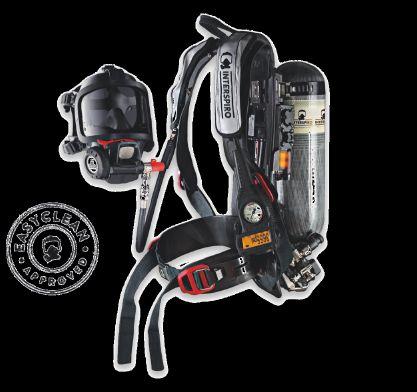


CANADIAN SAFETY EQUIPMENT IS PROUD TO BE A DISTRIBUTOR FOR THE INTERSPIRO RESPIRATORY PROTECTION LINE. THEIR STATE OF THE ART S9 S ONE OF THE MOST COMFORTABLE SCBAs YOU WILL EVER WEAR.
GIVE US A CALL AT 0182 OR EMAIL US AT INFO@CDNSAFETY.
No company has a richer history in respiratory protection than innovations have time and


MORE COMPACT MORE COMFORT BETTER PROTECTION

ü KEVLAR REINFORCED SHELL
ü Extremely comfortable
ü Lightweight and Compact
ü Internal drop down eye protection
ü External detachable face shield
ü Optional Earmuff clips and earmuffs
ü Custom logo available
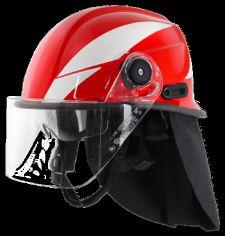
ü Also suitable for Auto Extrication, Confined space, High Angle Rescue, Wildfire etc.

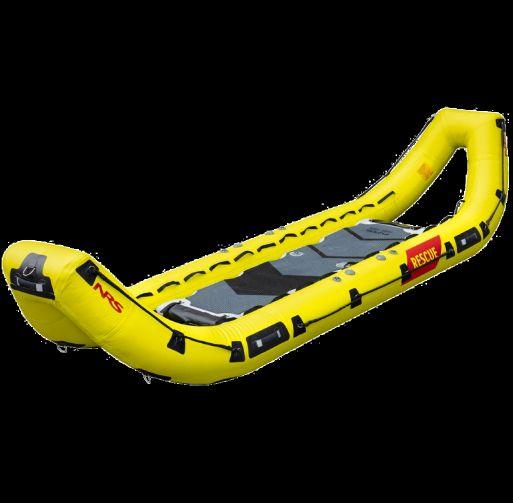

On water, ice or snow, the NRS ASR (All Surface Rescue) 155 Rescue Boat puts your rescue team where it needs to be. Backed by NRS's many years of boat-building expertise, rescuers rely on rugged dependability and efficient design for success in unpredictable situations
Includes a heavy-duty carry bag, two highly visible Red 280cm NRS PTR SAR Paddles and a Super 2 HP Pump, SCBA cylinder adapter available. 3 Year warranty
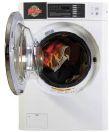
The Solo SCBA Decon/Washing machine was designed and built for one purpose only…to protect Fire Fighters from Cancer causing agents found in the Smoke and residue left on their SCBAs. As an added bonus it can clean Gloves, Boots and Helmets. In addition to the safety factor it substantially lowers the time spent decontaminating firefighter equipment.


Qualified by MSA and INTERSPIRO for cleaning the G1 and S9 SCBAs.

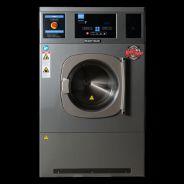
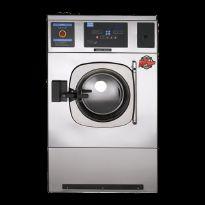
IN ONE HOUR YOU CAN CLEAN/DECON:
-14 SCBAs W/MASKS and CYLINDERS



WASH/DECON TWO SCBAs IN 8 minutes


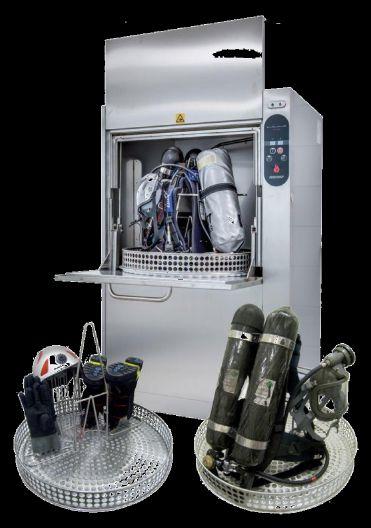
ü REDUCED HEALTH RISK
ü SAVES TIME 2/PKS IN 8 MIN ü EASY TO USE

IN ONE HOUR YOU CAN CLEAN/DECON:
• 30 HELMETS
• 60 PAIRS OF GLOVES
• 20 PAIRS OF BOOTS
• Double the above numbers with the second rack.
Low Power use. Minimal moving parts. Low maintenance costs


BY ELIAS MARKOU Naturopathic Doctor Mississauga Ontario
ave you ever asked your medical doctor to run a 25 hydroxy vitamin D blood panel? I highly recommend you do as the science on vitamin D3 and health is very convincing. Everyone should be taking vitamin D3, but there is a “however.” Before you self-prescribe vitamin D3 you should continue reading. Here is a quick lesson, vitamin D and vitamin D3 is the same, we all talk about taking vitamin D, but a quick trip to your local health food store you find out the vitamin D supplement you are looking for is called vitamin D3, the active form that your body needs. These terms are interchangeable. The vitamin D blood test you want your medical doctor to run is called the 23 hydroxy vitamin D or 25 vitamin D for short. In this article when we talk about vitamin D and vitamin D3 we are talking about the same thing.
As the pandemic slowly comes to an end, and as we look back at the last 18 months, there has been an explosion of scientific literature not seen in a while. Every topic you can imagine has had a scientific study, meta-analysis and clinical trial published. The abundance of medical and scientific research that has been published would make any researcher giddy. Vitamin D has been at the forefront of a lot of medical research that has made this vitamin the superstar of all vitamins in 2021. It is back and ready to take on the supplement aisle by storm.
In my office, testing vitamin D is the first thing I do with every patient. Over the years, I have observed that almost 90 per cent of my patients are vitamin D deficient. That is a staggering number. Research shows there is currently a worldwide vitamin D deficiency in various populations including infants, pregnant and lactating women, the elderly, individuals living far from the equator such as Canadians, persons who avoid the sun and populations with dark skin pigment. 28 studies looked at vitamin D serum levels in certain populations. Only the population of Thailand had normal vitamin D levels (Ref 1). I have measured the vitamin D in many firefighters and the data is very consistent — firefighters are deficient in vitamin D too.
The first step in managing your vitamin D is to get it tested. Have your medical professional, medical doctor or naturopathic doctor test your 25 hydroxy vitamin D or 25 vitamin D. This will require a requisition and a visit to your local blood lab clinic. Once you have your results, have your health professional determine the amount of vitamin D you should be taking. It is highly recommended that
Dr. Elias Markou is one very busy naturopathic doctor. He is in private practice in Mississauga, Ont., and is the chief medical officer for the Halton Hills Fire Department. Dr. Markou was a firefighter for six years; he has a special interest in firefighter health, is a writer and blogger who is regularly featured on television and radio and in print. Contact him at drmarkou@mypurebalance.ca
you have your doctor re-test your 25 vitamin D in four months after starting your vitamin D3 supplement. Some of you will have an easy time getting your vitamin D up. I call those patients absorbers and converters. There will be a group of you that will require a higher dose of vitamin D3 to get the results you need. The vitamin D ideal lab range is from 75 to 250 nmol/L (Ref 2). The ideal 25 vitamin D range is between 170 to 200 nmol/L. You want to get to this level and maintain this level, so it does require a few lab tests to find that sweet spot. For the many patients I’ve treated, usually they are taking 1000iu of vitamin D3. Usually it takes a few tries before we can nail the recommended vitamin D3 dose for maintenance. I have seen a few patients self-prescribe vitamin D3 and discover either their 25 vitamin D blood levels are too low or their have taken so much vitamin D3 that they have shot past the high 250nmol/L mark and now you are dealing with levels that are dangerous for their liver. Please consult a medical professional. Drug interactions with vitamin D3 include mineral oil, phenobarbitals (dilantin), digoxins and cholestyramines. Patients with hypocalcemia and parathyroid pathology should avoid vitamin D (Ref 3).
There are many studies that have shown vitamin D can fight colds and flus, they show that the vitamin D3 manages the expression of genes that teaches your immune system to attack and neutralize a virus and bacteria. A 2017 British Medical Journal Article looked at vitamin D supplementation to see if it can prevent upper respiratory infection and the results were overwhelmingly positive. Vitamin D3 can reduce the risk of a cold or viral infection (Ref 4). A final word for firefighters: Vitamin D found in the food supply is limited and most often inadequate to prevent deficiencies. An eight-ounce serving of dairy milk only contains 100IU of vitamin D. Supplementing your diet with vitamin D3 is likely necessary to avoid deficiency all year round (Ref 5).
• Mohr SB, Garland CF, Gorham ED, et al. Relationship between low ultraviolet B irradiance and higher breast cancer risk in 107 countries. Breast Journal 2008;14:255-260
• https://www.lifelabs.com/test/25-hydroxy-vitamin-d-test/
• Jellin JM et al. Natural Medicines Comprehensive Database 3rd Edition. Stockton California: Therapeutic Research Faculty 2000. 1070-1074.
• BMJ 2017; 356 doi: https://doi.org/10.1136/ bmj.i6583 (Published 15 February 2017)Cite this as: BMJ 2017;356:i6583
• Murray M. ND, Pizzorno J. ND. Vitamin D. The Encyclopedia of Natural Medicine 1st Edition. Prima Publishing 1996: 39-43.

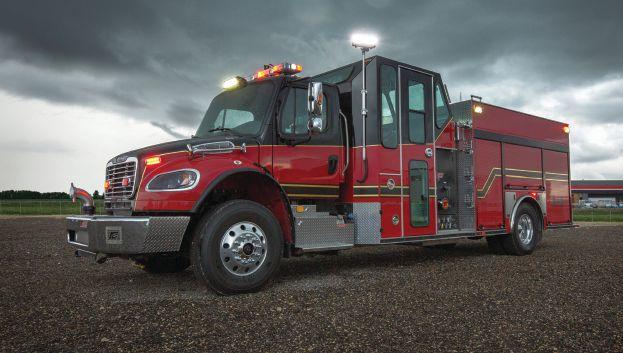
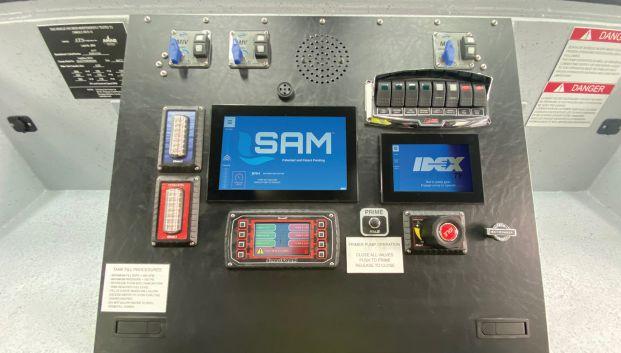


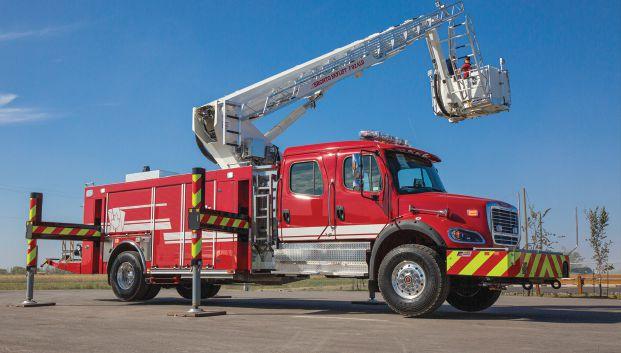
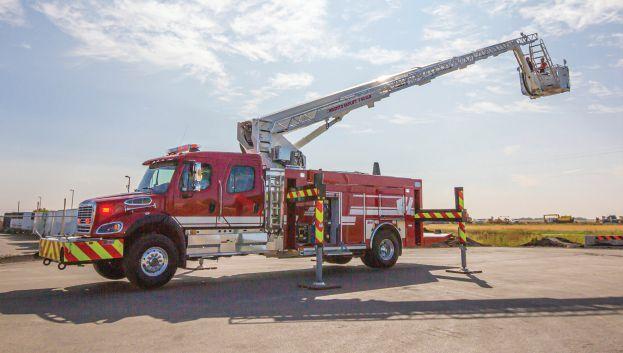
ITS LATEST SAM UNIT THE ER-X 4-MAN CROWN PUMPER
Fort Garry Fire Trucks is proud to introduce our new SAM ER-X 4-MAN Crown Pumper. SAM is an integrated total water control system that manages your truck’s pump, tank, intakes and discharges freeing up the pump operator to focus on the scene. The SAM system replaces your pressure governor and takes care of opening and closing valves based on operator settings all from a 10 inch touch screen display or by using the system’s mobile tablet.
We are also a proud distributor of sales, service, and parts for the versatile Bronto aerial platforms that are designed for easy maneuvering, quick set-up, and safe and efficient operation. Last year we unveiled our Bronto All - Rounder. This resourceful apparatus features a 92-foot articulated ladder platform built on a single axle Freightliner chassis and measures exactly 12.96 feet tall, 41.66 feet long, and 8.50 feet wide and it is available for

immediate possession. Scan the QR codes above for specification details on either truck or call our sales department for pricing information.
BY GORD SCHREINER Fire Chief Comox
British Columbia
ike many kids who grew up in Canada, hockey was a big part of my life. I started playing at five years old and played for almost 50 years. When I joined the fire service I started to compare the many similarities between a hockey team and a fire service team. There is so much in common, from team work, pride, hard work, and fun, to the desire to become a better team. Hockey Night in Canada is part of our culture and so is fire practice night in many small to mid-size towns.
A few years ago, I had the honour and pleasure of coaching my two sons. Once I got into coaching, the similarities between a hockey team and a fire department team became even more apparent, especially when I started to develop and plan hockey practices. Each hockey practice had to be very carefully planned well in advance to ensure the best use of the limited ice time. The practices needed to include individual as well as team development time. I have often used the same format to develop fire practices. If I showed up at the rink without a written practice plan, the practice session would not be very productive and the team would not develop or be ready for their next game. I would spend hours researching and planning my hockey practices. I would think about past games to see where we needed to improve on. I would go watch successful teams practice to see what they were doing. We need to do the same in the fire service. Check in with other fire departments to see what they are doing and steal their best ideas. Train with them!
I would show up at the rink well before the scheduled start time of practice to ensure I was ready to deliver my planned practice and that I had the necessary resources to run my practice. We need to do the same in the fire service. Show up early!
be vent, enter, search, auto ex. etc. With the assistance of additional coaches, we might work on more individual skills. In the fire service these individual skills might be driver/pump operator or coaching a new incident commander.
After the practice, I would make adjustments to my practice plan and put it away to be used later, maybe even next year. You can do the same for a fire practice. Design a solid practice plan and save it for future use.
Next time you are tasked with putting together a great fire practice, think about it terms of a hockey practice. Just like a fire, do not show up to deliver a fire practice or training session without a well-prepared plan. It will not go well and your department will suffer. You could even get replaced by the team manager. The best departments train hard using well structured and meaningful practice plans.
One big difference between hockey and the fire service is that in the hockey world, we would know our schedule and opponent well in advance, whereas in the fire world, we do not know when our next event will be and who we will be playing (nature of the event). Furthermore, in the fire world, if we do not play well, we are exposed
The best departments train hard using well structured and meaningful practice plans.
Before a typical hockey practice started, I would meet with the other coaches to discuss the plan and assign tasks. We would then have a team meeting to discuss the goals and objectives of the hockey practice with an emphasis on training hard but safe. The best fire practices start the same way and include a tail board safety talk. Next, we would do some individual skills like skating and shooting. The same could be done for fire practice, only these drills might be donning and doffing, knot tying, etc. Then, we would work on some specialty teams drilla - in the fire service, these drills might
Gord Schreiner joined the fire service in 1975 and is a full-time fire chief in Comox, B.C., where he also manages the Comox Fire Training Centre. He has delivered countless presentations in fire stations all over Canada and is available to assist your department in many areas. For more information please contact: Chief Gord Schreiner, firehall@comox.ca.
to great personal risk including death.
Our hockey and fire teams are constantly changing. Sometimes a stronger player moves up to a bigger team, get injured or retires. Sometimes we need to release weaker players and replace them with new players who have the potential to become stonger players. This never ends. We are constantly adjusting our team to try to become the best team we can and win more games, akin to responding safely to emergencies and having a quick and effective solution.
Remember a hockey coach is a lot like a fire service leader. Poor coaching (leadership) equals a poor team. Often replacing the coach (or coaches) can greatly improve our team. Our team manager is our local government and our fans are our citizens. We are in a very competitive business and need to work hard each and every day to ensure we can compete successfully and safely.
Keep improving your team and get ready for your next big game!
BY MARK VAN DER FEYST
Last month we looked at the importance of focusing on the floor when conducting the primary search. The reason behind this is the fact that the majority of our occupants who require rescue will be on the floor. This month I want to dive deeper into the primary search by focusing on the importance of maintaining building orientation.
Building orientation is when a person or a team are using the building’s features, such as the wall, to keep them orientated to their current position and use that same feature to get them in and out of the structure. Maintaining building orientation is required because it is the only way for us to get in/out when we need to – and fast!
When initiating a primary search, there are two options: with a hose line or without a hose line. Both of these options provide orientation to the building for access in and access out in different manners. There are stark differences between the two in terms of benefits and negatives. Either way, no matter what option is chosen, the common denominator is that team; each person needs to maintain building orientation.
Searching with a hose line is a common practice for most Canadian fire departments. This is where the initial hose line pulled off will be used to provide fire suppression/control efforts while at the same time allowing for a primary search to be conducted. We associate this with the “fast attack” tactic.
One benefit of using a hose line with the search is it provides the path, or lifeline, out of the building. When the team enters the structure, they will be advancing a hose line with them heading towards the fire location. This may involve following a wall if the conditions warrant it. If there is slight visibility, then the team will be using their sight to get to that location. Meanwhile, dragging behind them is their lifeline — the hose — which will provide them with the direct path to get back out.
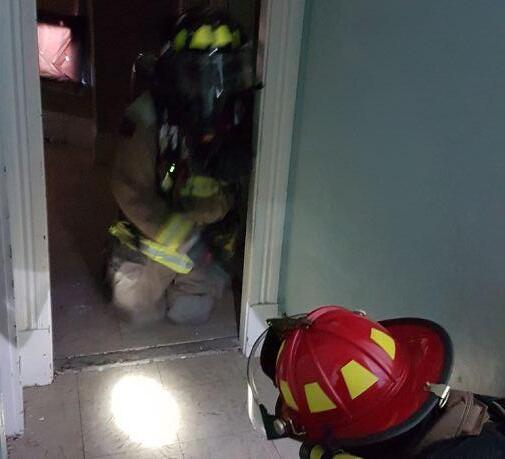
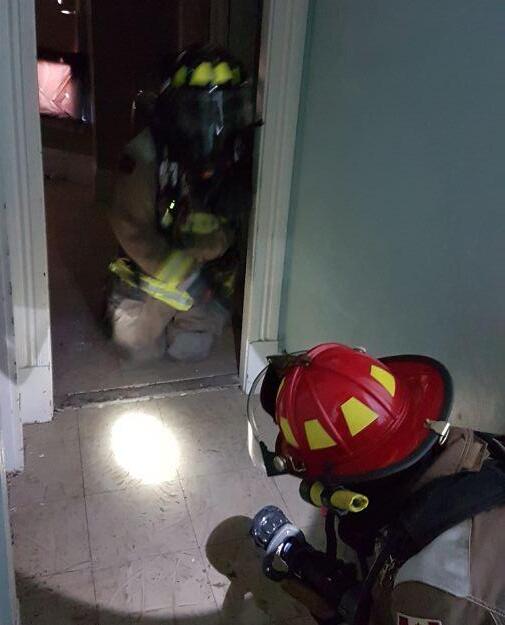
In Photo 1, you will see a firefighter staged with the nozzle in their hands while the other team member is in front of them. This is where/ how the search is conducted having a hose line. The lead firefighter stays in a central position near a wall or by the doorway of a room, while the other firefighter leaves the hose line and searches the immediate area. The search firefighter is maintaining building orientation in two ways: by keeping themselves on the wall when they leave the hose line and also by verbal or line of sight with the lead firefighter on the hose line.
Once the search has been completed, they can rejoin the hose line to keep advancing or for fire suppression efforts. Should a rescue be required after locating an occupant, the search firefighter can drag the occupant back to the nozzle firefighter for assistance in leading the
way out or to the nearest exit point such as a window or a door. The hose line can stay right where it is – do not bring the hose line back with the rescue, it will slow down the rescue greatly.
Another benefit of using a hose line with the search is that it provides protection for the team while they conduct the search. The lead firefighter’s main job is to maintain building orientation and also provide water protection for the team member that is searching. This is going to be fire control and not fire suppression – suppressing the fire right away may solve the issue and allow for the rescue but it can also add to the environment becoming untenable for the occupant with steam conversion and the products of combustion dropping down to the floor.
The one negative of using a hose line with the search is time. According to Firefighter Rescue Survey, only 11 per cent of recues were made with a team having a hose line with them and 89 per cent of the time the rescue was made without a hose line present.
Searching without a hose line is not a common practice in Canada, although some departments will have SOGs allowing the officer to make the decision to go with a hose line or not to based upon the conditions, crew training and confidence level and imminent rescue required.
The one benefit to searching without a hose line is it provides for a search team to quickly get in, search the structure, locate the occupant and conduct the rescue. With this option, the search team must rely and maintain contact with the building at all times!

This is where the saying “body to the building” comes into play. This saying comes from Lt. Mike Ciampo from FDNY in reference to using ground ladders, but it can also be applied for the search team. The body of the lead firefighter must be in contact with the building at all times. The wall is the way in and it will also be the way out. If the lead firefighter is doing their job right, they will be mapping out a blueprint in their head of what features they have come across like windows or other doors. This will allow the lead firefighter to lead the team in, but more importantly, lead them out quickly using the nearest exit or the main exit that they came in by.
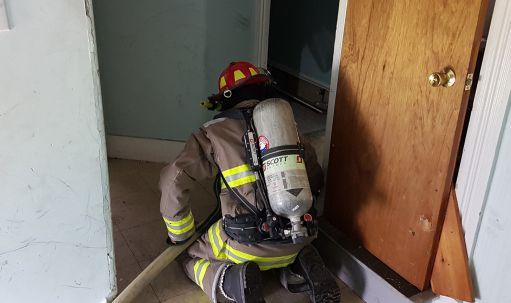
In Photo 2, you will see a firefighter using their hand to keep in contact with the building. The hand is part of the body, it is not just the side of the body that must stay in contact with the building, body parts also count, like the hand.
Using a body part will allow the lead firefighter to stretch out from the wall if they need to assist with the search firefighter or they need to verify something with both hands or need to use both hands for something, as long as one part of the body is in contact with the wall or building at all times.
Regardless of what option is used, familiarity with doing both is required and that comes with training and training, and training!

Mark van der Feyst has been in the fire service since 1999 and is currently a firefighter with the FGFD. He is an international instructor teaching in Canada, the United States, FDIC and India. Contact him at Mark@FireStarTraining.com.
placed on apparatus, such as fire trucks and buildings, and aids in promoting the service in conjunction with the shoulder flash. Many departments use their shoulder flashes on their trucks, tying the personnel and the apparatus together. This is an advisable practice, as it increases brand recognition, however, some departments opt for a stand-alone separate logo, which has also has its merits.
A logo can also be used for letterhead, formal certificates, and public material. Either way, a strong logo connects the administrative side of the house with the operational, ensuring that the public understands that both represent one service. Whether the choice is to use the shoulder flash as the logo, or create a logo, the main point is that they should be used consistently to avoid confusion which lessens the brand power.
From the shoulder to the door, another key component of branding is consistency in application. An affordable way to deliver brand recognition is in the decaling of apparatus, this is especially important when dealing with more than one station, such as in a regional system when the service is made up of more than one fire district. In those situations, you want the public to identify your emblem, be it on a firefighter or on a piece of apparatus, but also strengthen the individual mark of a particular region or district. That means highlighting the differences, like a village station name, in a manner that is uniform to other trucks within the service. This creates a link between all, but showcases the geographical



Branding is about putting a public face on your entire service. It’s the way your specific department “talks to people” through visual ques from logos to social media presence.
diversity of others. By standardizing the colour schemes and decal placements, the brand remains strongly linked to the entire service, while the uniqueness of a particular station or district is enhanced. This, in turn, reinforces the brand identity by promoting diversity within similarities. A neat marketing strategy and a sure-fire way to heighten brand recognition.
Linking a new shoulder flash, logo and apparatus scheme together in a nice little package is a strong social media platform. The most widespread way to connect with rate payers and residents alike is through the use of online networks to share current events, showcase exceptional work, educate and inform followers. It is also the perfect arena to display the brand and market it. Getting the message out to as many people as possible through “likes” and “shares” raises awareness of the brand and helps with the consumption of the media to the public. Once people associate a particular branding campaign with the fire service, it aids in building trust through familiarity and spins off so many other positives, like recruiting and donations. Most social media platforms are free, with just time and effort needed to polish it to gain the public’s attention. As a branding technique, social media networking remains one of the top ways to sell a brand concept.
Although a comprehensive marketing program can take many complicated forms, and even an evolving branding campaign takes time, forethought and energy, the first steps are generally the most beneficial. Creating a meaningful, sleek and modern patch is a simplistic way to begin the evolution of a fire department culture. A logo and colouring scheme aid in extending the brand outreach, as they are usually seen out in the public, either at emergency calls or public relations events, and a well-built social media presence heightens the brand awareness. Combined, these projects form the beginning of a modern branding program that builds public confidence, while encasing a sense of pride in the membership of that service. A brand is more than just a logo or crest, it’s a reflection of the attitude of the people that wear it, and to the people that see it in their time of need, it is a symbol of professionalism and relief that help has arrived.
page is can be found at Protective Services – County of
Kirk Hughes is the Director of Protective Services and the Fire Chief for the County of Vermilion River in Alberta, Canada. Kirk previously served in the Royal Canadian Mounted Police as well as several fire services across Ontario, Manitoba, the NWT and Alberta. His
River.
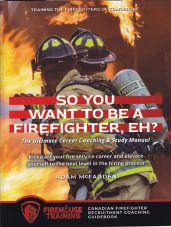
So You Want to Be A Firefighter, Eh? Item # 0987979704

A great resource for aspiring and established firefighters! This training book will help you navigate the fire department hiring and recruitment process, as well as provide comprehensive content to manage your fire service career over the long term. NFPA 10: Standard for Portable Fire Extinguishers, 2022 Edition Item #1022
NFPA 72: National Fire Alarm and Signaling Code Handbook, 2022 Edition Item #72HB22 $259.85
This essential guide represents an excellent value used as a companion to NFPA 72 or to access complete code content alongside the NFPA® knowledge and commentary you won’t get with any other publication. Fully revised for compatibility with the 2022 edition of the code, the handbook provides content on significant revisions.
Portable fire extinguishers are a critical first line of defense against small fires. For the best protection, be sure to select, use, and maintain extinguishers using the latest requirements in the most up-to-date edition, the 2022 edition of NFPA 10, Standard for Portable Fire Extinguishers.

BY TOM DESORCY Fire Chief Hope British Columbia
eople are often quick to give credit to the volunteer firefighter, and rightfully so. Where else do you find such an important and often lifesaving role placed in the hands of a little or no pay organization? I challenge that no one sees the importance of this more than us, the fire chiefs, who rely upon these dedicated men and women to respond as part of our team. This importance is what the community doesn’t see, or often, understand when they take these truly unselfish volunteers for granted.
I would consider the volunteer fire service to be a unique yet fragile organization. Just think about the extent to which we train and constantly put our members in tense and often life threating situations. It is a volunteer group that is like no other in the community and those volunteers could all walk away at any time. The trouble is, we’ve gotten so good at what we do, it’s hard to justify an alternative.
With the years of evolution in training and service delivery, the good just keeps getting better. So, how do we fight the demands that are constantly placed upon our members? Not just the physical and mental demands that come with first response, but the demands from outside the department.
The public rarely understands the commitment of their firefighters and that’s where the ‘taking for granted’ comes into play. What they see is the response to their call for help. They also see our non-emergency side, such as fire prevention and training out and about in the community. What they don’t see are the challenges firefighters may face at home from too many calls or the demands on their time for training. Or the pressures at work when the volunteer job starts to get in the way of the real one. This is where the true leaders in the fire service excel in recognizing the need for balance and protection of their team.
exception. Not many wished to pursue this as a full-time job. In turn, not many career departments considered our training an asset. We were simply giving back to our town, not to mention having some fun socially as a result.
In contrast to what I have said about the fragile nature of our service, there is the career development side. More and more volunteer departments have become “farm teams for the big leagues”, so to speak, and career departments are recognizing this valuable experience. This brings to mind a thought on how we can expand on this relationship. As we all know, about 85 per cent of the fire service in Canada is made up of volunteers. When you consider all of those in the fire service today that are either current or former volunteers, then we have a greater percentage impact on public safety than we ever thought. How’s that for pressure on a person that could leave you at any time?
I often wonder why career departments don’t lean more on volunteer ones to either endorse or mentor training programs. Have a bigger input on the farm teams that may ultimately supply their department. What do you think it would do to your department to have your training program endorsed or supported by a nearby career department? No
What do you think it would do to your department to have your training program endorsed or supported by a nearby career department? ‘‘ ’’
Every organization has seen the evolution of the volunteer. The pressures today that we put upon those that simply just want to contribute in their community are almost overwhelming. Yet, how many volunteers join a group or association with the sole intent to make it a career? Not many. The fire department back in the day was no
Tom DeSorcy became the first paid firefighter in his hometown of Hope, B.C., when he became fire chief in 2000. Originally a radio broadcaster, Tom’s voice could be heard in the early 1990s across Canada as one of the hosts of Country Coast to Coast. Tom is very active with the Fire Chiefs’ Association of British Columbia as communications director and conference committee chair. Contact Tom at TDeSorcy@hope.ca and follow him on Twitter at @HopeFireDept.
guarantees or commitments, but support and recognition of what you do. What would that do for recruitment?
I’ve said before that we will see less and less of the long service awards in the volunteer fire service. Today’s recruits will likely get those from a career department as many more aspire to move on, and hopefully they do as the alternative is simply not doing anymore.
There will always be pressure, but that pressure should be focused on us as leaders. We need to constantly be mindful of the men and women that have our backs each and every day. We need to always remind the public of just what they have and how fortunate they are to have it, and we need to cherish the team that makes us look good. Remember to “feed the grass and ignore the moss” and do whatever is needed to put the people first and treat them as you would anything else that’s very fragile.
We pondered for a long time why this critical sector has lagged behind when it comes to digitization and automation of processes. We saw the same manual routines, and random inefficient document management everywhere. – So we decided to do something about it.
Now, we have made professional applications as user-friendly and efficient as entertainment apps.
Cubit Fire is an ‘end to end’ solution for fire inspections and related processes. Developed in close cooperation with fire departments.
Cubit Fire integrates with the rest of your eco-system and offers unparalleled user experience and performance.
In October our associates will start reaching out to you. Take our call and we will donate 25 dollars to our friends at Firefighter Cancer Support.
Cubit Fire – Developed in close cooperation with fire fighters