Maintaining mechanical nests ‘Automatic’ doesn’t mean ‘hands-off’
David Engel, Cobb-Vantress
MEAT QUALITY: Turkey hens like it hot The effects of temperature and humidity during transport on turkey meat quality By
Karen Dallimore
Ford’s new generation of big trucks What’s new or unique with the 2017 Super Duties?
Howard J. Elmer
uses
Support for poultry health
and Uta Parks have donated almost $40,000 to the Poultry Health Research Network
FROM THE EDITOR
BY LIANNE APPLEBY
Election selection
As I write this, I have the luxury of not yet knowing the outcome of the Nov. 8 U.S. presidential election. I say “luxury” with tongue firmly planted in cheek, because I went about deciding who I would have voted for with a “who do I dislike the least?” mindset. The actual content of the candidates’ campaigns was an afterthought.
The campaigning became more amusing as time went on and the world watched with morbid curiosity – the kind of rubbernecking you see when a bad car accident has happened on the other side of the road.
U.S. citizens are now digesting the outcome of their vote and with the Electoral College (EC) vote pending – which doesn’t necessarily have to follow the popular vote, but typically does – all that’s left is for inauguration on Jan. 20 to make that choice a reality.
It’s a time of weighty reflection about whether the U.S. people collectively made the right decision – or the least wrong one. Americans were ultimately presented with candidates that no one dared accuse of having fantastic potential as the leader of the third most populous nation in the world, and its largest economy.
The democratic process is not perfect. We’ve seen two shining examples of that in 2016 (don’t forget Brexit). It is, nevertheless, fair.
December is typically the time when marketing boards and other agricultural associations begin a democratic process of their own. With annual general meetings dotting the calendar over the next few months, industry associations will also be looking to fill open positions on their board of directors. It’s a time for a renewal and a chance for fresh blood to come in.
The shame for our sector, though, is that for every one person who lets his or
her name stand for a board position, there are probably many more equally worthy candidates who need the encouragement to take that important step in seeking nomination. In agriculture, after all, humility does trump all. No pun intended.
I’ve been involved with several industry recognition awards in the last decade and it has always been a struggle to entice applicants. The problem is not a lack of aptitude. The fact is that farmers just aren’t comfortable with recognition.
Regardless of that, poultry producers DO have passion for their industry and an inherent desire to do what’s right. Across Canada, we are lucky to have astute people in the right positions to help move the industry forward. But there needs to be keen talent waiting in the wings as partial turnover occurs each year – new faces to take on challenges and keep momentum.
In his inaugural speech, John F. Kennedy succinctly said, “Ask not what your country can do for you, but what you can do for your country.” That quote can easily be applied to our sector by interchanging the word industry for country.
We’ve just witnessed a presidential election where neither top candidate inspired confidence from the voting masses. Take the time to reflect on how different the next four years could look for the U.S. if a selection of better-qualified candidates had entered the race and ultimately been on the final ballot.
If you have ever considered running for a board position, I sincerely encourage you to pursue it. For support, talk to your peers and ask for input. The decision to give so much of your time to the industry should not be taken lightly, but in a democratic society, it truly is a shame when leaders are acclaimed simply because they had no serious or competent challengers. n
Subscription Rates Canada - 1 Year $ 30.95 (plus applicable taxes) U.S.A. - 1 Year $ 66.95 USD Foreign - 1 Year $ 70.95 USD
GST - #867172652RT0001
Occasionally, Canadian Poultry Magazine will mail information on behalf of industry-related groups whose products and services we believe may be of interest to you. If you prefer not to receive this information, please contact our circulation department in any of the four ways listed above.
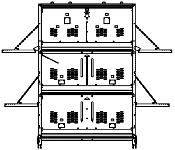
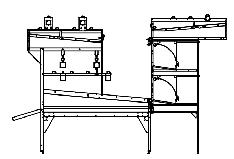
As the egg laying industry continues to evolve, equipment manufacturing companies must do the same. At LUBING, our tradition of innovation keeps us at the forefront of the industry continually offering cutting-edge technology for improved performance. LUBING is leading the way by offering a wide variety of products for today’s Cage-Free housing demands as well as bio-security concerns.
Glass-Pac Canada
St. Jacobs, Ontario
Tel: (519) 664.3811
Fax: (519) 664.3003
Carstairs, Alberta
Tel: (403) 337-3767
Fax: (403) 337-3590
Nipple Drinking Systems
Pullets / Layers with and without LitterGuard Cups
Egg Conveying Systems
Curve conveyors customized to nearly any application Belt Conveyors ranging from 18, 24, 36, and 48 inches (capable of delivering up 600 cases/hr)
Accumulator Tables
Custom-made, all-stainless tables for all situations
Perch Systems
Ergonomic design allows birds to perch comfortably Reduces stress and helps create a calm environment
Les Equipments Avipor
Cowansville, Quebec
Tel: (450) 263.6222
Fax: (450) 263.9021
Specht-Canada Inc.
Stony Plain, Alberta
Tel: (780) 963.4795
Fax: (780) 963.5034
L Professorship announced WHAT’S HATCHING HATCHING
ibro Credit Union (Libro) and the University of Guelph (UofG) have announced Ryan Gibson, PhD, as the Libro professor of regional economic development for southwestern Ontario. The professorship is a partnership between Libro and the Ontario Agricultural College (OAC), focused on building economic development and innovation across the region, through research, teaching, outreach and collaboration.
with the communities of southwestern Ontario.”
Ryan Gibson has been named UofG professor of regional economic development for southern Ontario.
Gibson joins the UofG from St. Mary’s University in Halifax, N.S. He’ll be working through the OAC’s school of environmental design and rural development.
“Ryan’s expertise and experience are a perfect fit for this new position,” says Rene Van Acker, OAC dean. “His focus on community-engaged scholarship combined with his enthusiasm, assures me he will do great things while working
Gibson’s research examines issues related to the future of rural communities and regions, and topics such as governance, immigration and revitalization. He is also president of the Canadian Community Economic Development Network, a national organization committed to strengthening communities by creating economic opportunities that enhance social and environmental conditions.
Originally from rural Manitoba, Gibson has a deep respect for rural communities, rural people and the events that shape their futures.
Growing up witnessing the transformations in rural development, agriculture and their influence on communities instilled a fascination and commitment to rural issues.
Libro has committed to
endow the professorship with $500,000 over 10 years, which will be matched to existing donations, for a combined gift of $1 million. Overall goals of the professorship include:
• Establishing southwestern Ontario as a defined economic region of the province and identifying strategies to shape the future vision of economic development
• Strengthening links between rural and urban communities to establish solutions for an integrated regional economy
• Building a network among Ontario’s post-secondary institutions and research facilities to collaborate on initiatives to grow regional economic development
The professorship will be hosted at the UofG within the OAC, bolstered by the Ridgetown campus.
COMING EVENTS
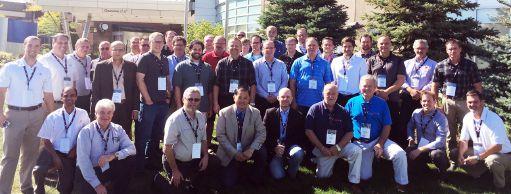
Cobb hosts Canadian hatchery roundtable in Toronto
Cobb-Vantress, Inc. recently welcomed hatchery managers and owner/operators from across Canada for the 2016 Hatchery Roundtable in Toronto, Ont., where incubation companies
Jamesway and Chickmaster also took part providing insights on their specific equipment and programs.
“These hatchery managers and owner/operators play
a key role in the Canadian poultry industry and this type of roundtable meeting provides an ideal opportunity for everyone to visit with Cobb experts in person, share ideas and best practices, and network with other industry professionals that deal with similar issues in
Scholarship winners bring farm and food together
Louis Ditner of Ontario is one of six students pursuing a career in nutrition or the culinary arts who join 61 agriculture students as recipients of the 2016 Monsanto Fund Opportunity Scholarships.
To celebrate 25 years of the program and embrace the link between agriculture and food, the scholarship criteria was opened this year to include students raised on- or off-farm, who have chosen to pursue a post-secondary education in agriculture or food.
More than $1.8 million has been released since the
Farmers to benefit from expansion of efficiency grants
The Alberta government is investing $10 million to help energy-intensive farm operations reduce their emissions and save on energy bills. The additional support is being provided through the industry-supported Climate Change Emissions Management Fund.
“In my discussions with agricultural producers, I have heard the importance of supporting greenhouses, dairy and livestock sectors in the transition to a lower carbon future,” says Oneil Carlier, Alberta’s agriculture and forestry minister.
“That’s why, in addition to our farm fuel rebate, we are putting additional
their operations,” says Trevor Gies, Cobb North America marketing manager.
In addition to Cobb presentations, topics of discussion included vaccination, sanitation, maintenance and many other important hatchery procedures and practices.
program launched in 1991. Administered on behalf of the Monsanto Fund by Agriculture in the ClassroomManitoba Inc. (AITC-M), the scholarship program received 157 applications from across Canada this year.
Details on the launch of the 2017 Monsanto Fund Opportunity Scholarship Program will be released in February 2017 and will be available online at monsanto.ca.
funding in programs that will help producers become more efficient and reduce consumption, emissions and costs.”
The funding will support the expansion of the following programs: on-farm energy management, on-farm solar PV, irrigation efficiency and the accelerating agricultural innovation program.
The programs are projected to mitigate 120,000 tonnes of carbon emissions per year.
DECEMBER 2016
December 14, 2016
Prairie Livestock Expo 2016, Victoria Inn Hotel & Convention Centre, Winnipeg, Man. For more information, please visit: prairielivestockexpo.com
JANUARY 2017
January 30-31, 2017
International Poultry Scientific Forum Georgia World Congress Center, Atlanta, Ga. For more information, visit: ippexpo.com
January 31February 2, 2017
International Production & Processing Expo (IPPE) Georgia World Congress Centre, Atlanta, Georgia USA
For more information –ippexpo.com
FEBRUARY 2017
February 14 - 16, 2017
Atlantic Poultry Conference 2017 Old Orchard Inn, Wolfville, Nova Scotia
For more information –atlanticpoultryconference. com
February 27, 2017
Western Poultry Conference, Sheraton, Red Deer, Alta. For more information, visit western poultryconference.ca
WHAT’S
HATCHING HATCHING
Egg Farmers of Canada receives second Crystal Egg
Egg Farmers of Canada (EFC) has received the Crystal Egg Award for outstanding commitment to corporate and social responsibility for a second time. The award was presented by the International Egg Commission (IEC), at its global leadership conference in Kuala Lumpur.
EFC partners with many organizations and initiatives
to ensure more people benefit from the essential protein and nutrients in eggs.
EFC is also fostering the next generation of leaders through a national young farmer program and a partnership with the Canadian Young Farmers’ Forum, and investing in research that reduces the environmental footprint of the Canadian egg industry.
Keeping visitors safe on your farm
TAny producer expecting on-farm visitors should take the proper precautions to ensure their safety.
he Canadian Agricultural Safety Association (CASA) is reminding producers that fall and winter can be especially dangerous times for visitors to your farm. While all poultry producers should follow proper and recommended biosecurity practices, agritourism can draw non-farming visitors to the country.
Any time people are in a situation where they could be in contact with animals, farm equipment or other hazards, there is the potential for injury. Each farm is unique and it’s important to remember that visitors may
not see the hazards or understand the risks of farm life, so it’s up to farm operators to tell them. If visitors can’t be directed away from hazardous areas, take steps to warn them with signage or even barriers.
It’s crucial for farm owners to determine the unique hazards and risks associated with their operation.
For more information about agritourism and how to make your farm safe for visitors, please visit safeagritoursim.org. For more information about farm safety, visit casa-acsa.ca.
COMING EVENTS
MARCH 2017
March 1-3, 2017
AgExpo, Exhibition Park, Lethbridge, Alta. For more information, visit: exhibitionpark.ca/ ag-expo/
March 1-3, 2017
B.C. Poultry Conference, Sheraton Wall Centre Hotel, Vancouver, B.C. The four feather boards in B.C. are hosting a joint conference that will feature breakout sessions, trade exhibits, keynote speakers and each commodity’s annual general meeting. For more information, email bcpinfo@ mci-group.com
APRIL 2017
April 5-6, 2017
London Poultry Show, Metroland Media Complex, Western Fairgrounds, London, Ont. For more information, visit: westernfairdistrict.com/ london-poultry-show
JUNE 2017
June 21-23, 2017
Canada’s Farm Progress Show, Evraz Place, Regina, Sask. For more information, visit: myfarmshow.com
We welcome additions to our Coming Events section. To ensure publication at least one month prior to the event, please send your event information at least eight to 12 weeks in advance to: lappleby@annexweb.com; or fax 519-429-3094. Please write ‘Event Submission’ in the subject line.
Management Maintaining mechanical nests
‘Automatic’ doesn’t mean ‘hands-off’ when it comes to mechanical nests
BY DAVID ENGEL, COBB-VANTRESS
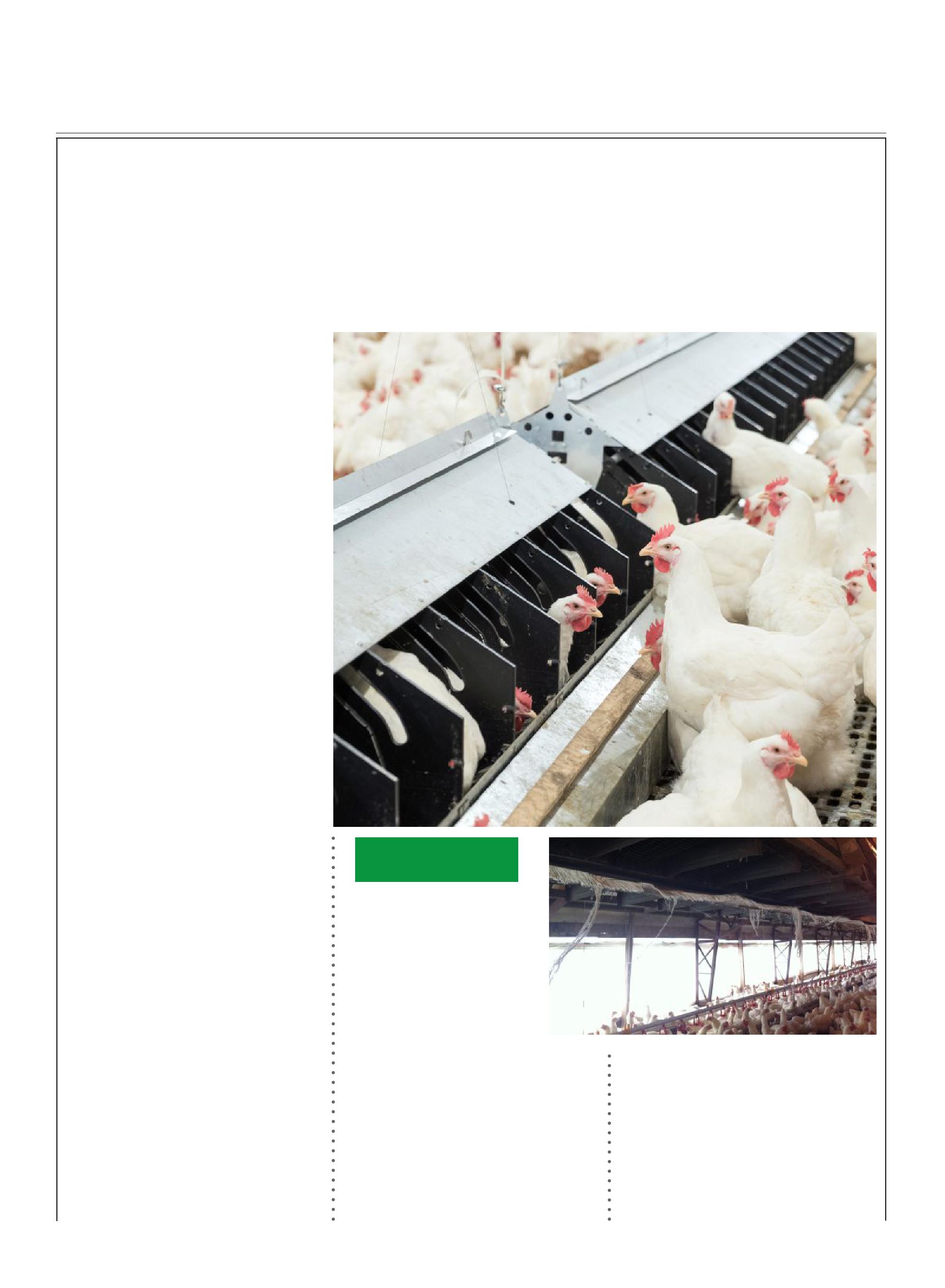
As the broiler breeder industry has evolved, there has been considerable change in equipment. A large percentage of production houses have moved from manual egg collection to mechanical systems based on a community nest or an individual, single-hole system.
When mechanical nests were first introduced, many people began referring to them as ‘automatic’ nests. While the term technically applies to mechanical nests, they still require a lot of human involvement to operate efficiently.
Key to achieving outstanding performance with mechanical nests is the proper training and rearing of the females. This should start in the pullet barn, by placing slat sections, or perches, to help get the birds used to going up on to the slats.
The training should continue in the laying barn by routinely walking the birds to encourage them to move on to the slats and towards the nests. The females should also be in the right condition at lighting and carrying the proper amount of fleshing and fat reserve, to help them come into production with the correct nesting behavior.
Most mechanical nests are placed on slat sections, which play an important role in how the nests perform. Make sure slat areas are not too tall; 20-25 cm (8-10
David Engel notes that close attention to detail can help achieve a high-performing flock that produces clean, high quality eggs.
inches) is a good height. Anything taller will discourage birds from jumping up from the scratch area, and a step or ramp would be useful in helping the birds move up on to the slat.
The nests should be down and open for the females to enter one week before the expected first egg. This will be approximately one week after light
stimulation, which gives the pullets an opportunity to explore the nests and become comfortable using them. Close the nests at night to help keep the nest pads clean, which will also prevent the eggs from becoming contaminated. This becomes even more important as we move into an era of antibiotic-free broiler production.
LONDON POULTRY SHOW
5 & 6, 2017
Management
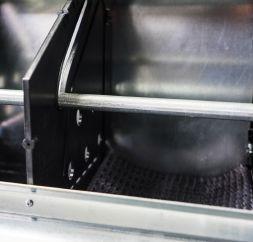
Three areas of nest maintenance that have a huge impact are the nest pad, the curtain and the nest belt itself. Nest pads must be clean, because if dirty, a bird may be less likely to use that nest box. Secondly, if it is used, the egg laid on that pad will most likely be contaminated.
As well, nest pads installed at the wrong angle will cause issues. If the angle of the nest pad is not great enough, the eggs will not roll out of the nest box properly. If the angle is too much, it will discourage hens from using that nest box.
On center belt nests, if the curtain that separates the nest box and the egg belt is missing or curled up where the hen can see the egg belt moving, hens are discouraged from utilizing the nest box. If multiple nests are affected, you will soon see many of the hens laying their eggs outside the nest.
Egg belts should always be kept clean and in good repair. A belt that is not clean will often have an odour that the hens do not like and will keep them from using the nests. If the edges of the belts become frayed, the edges can rub the hen while the belt is running and cause her to leave the nest.
Producers should have a consistent program for running egg belts. It is best not to run the belts until you see 10 to 15 eggs. When starting the belt, run it slowly late in the afternoon. A rapidly
moving belt creates excessive vibration, which scares the birds out of their nests. By slowing down the speed of the egg belt, you are less likely to scare the birds out of the nests.
Once the daily production reaches 5 per cent, run the belts at noon and again later in the day, around 5 p.m. When production reaches 20 per cent, go to more frequent gatherings. A good rule of thumb is to gather eggs at 8 a.m., 11 a.m., 2 p.m. and 5 p.m. This will help acclimatize the birds to the sound and vibration of the belt. Multiple, consistent gatherings can prevent eggs from building up on the belt and also allow for an accurate daily count of egg production.
It is very important to accurately calculate and plan the nest space required. With a community style nest, a good rule is no more than 48 birds per meter of nest space. With a single-hole nest, allow for a maximum of 5 hens per hole, which will give the hens enough space to lay their eggs in the nest.
OTHER CONSIDERATIONS
1. Correct equipment layout:
a. With a community nest system: have a mix of feed lines in the scratch area and on the slats Water lines approximately 60 cm (24 inches) from the nest entrance,
WORLD
YOU
and adequate spacing between water and feed lines to allow the birds to comfortably use them
b. With individual nest systems, have an adequate landing area from the front edge of the slat to the nest of 35-40 cm (14 -16 inches). The distance from the back of the nest to the feeder and the feed to the drinker line should be at least 45-60 cm (18-24 inches), and the height from the slat to the bottom of the feeder should be 20-22 cm (8-9 inches)
2. Ventilation:
a. High temperatures on the slats can stop the hens going into the nest
b. Improper inlet pressure can cause air to enter the nest at a rate that causes a draft, forcing the hen out of the nest
3. Light intensity and distribution:
a. A minimum of 60 lux (6 FC) at bird level is desired, but an approximate six-fold increase in intensity from the brightest spot in rearing to the darkest spot in laying is needed
b. No more than a 20 per cent difference in intensity across the barn
Close attention to these details will help achieve a high-performing flock producing clean, high quality eggs. n
CPRC Update Funded projects for industry priorities
The Canadian Poultry Research Council, (CPRC) completed its 2016 funding process at the board of directors’ June meeting by providing funding approval for seven research projects that address several poultry industry priorities. Final approval for some projects is based on the researchers securing full funding for their proposed research projects, while other projects are fully funded and ready to commence. The board also awarded the 2016 Postgraduate Scholarship. Both the 2016 funding process and Postgraduate Scholarship were extremely difficult tasks, given the high caliber of the applicants.
LAYERS AND BROILERS
Three projects that received funding support from CPRC precisely address the layer, broiler and broiler breeder industries directly. Elijah Kiarie, a newly appointed assistant professor at the University of Guelph (UofG) will perform research investigating the optimal feed structure for promoting pullet gut and skeletal development for enhanced layers productivity. This study will determine the comparative effects of introducing diet structure at pullet and/ or laying phases to test the hypothesis that introduction of diet structure in pullet rearing is beneficial to layer hen productivity.
Doug Korver at the University of Alberta will research the effect of barn sanitation on performance, microbiological and processing traits of commercial broilers. The research project will provide an understanding of the linkages between barn sanitation, innate immune activation, broiler productivity and processing traits, food safety and
a thorough economic analysis of those characteristics.
Martine Boulianne at the University of Montreal will perform a broiler breeder national survey on food-borne pathogen prevalence, antimicrobial resistance and antimicrobial use. This study will fill knowledge gaps in understanding the ecology of enteric organisms and antimicrobial resistant organisms and antimicrobial use in broiler chickens in Canada.
POULTRY HEALTH
The remaining four research projects encompass poultry health, a major industry priority. Douglas Inglis, an Agriculture and Agri-Food Canada scientist, will conduct research on alternatives to antibiotics using a novel symbiotic technology to mitigate enteric inflammatory disease. The project objective is to develop tailored probiotics as a non-antibiotic treatment for these enteric inflammatory diseases.
Juan Carlos Rodrigues-Lecompte, an associate professor at the University of Prince Edward Island, will investigate nutritional regulation of genes associated with avian B cell receptors involved in innate and adaptive immunity. The overall objective of this research is to establish a chicken model of nutritional intervention to regulate immunity through nutrients. Shayan Sharif, also at the UofG, will perform research to determine if it is possible to control avian influenza (AI) virus transmission among poultry. Avian influenza viruses are of great importance to poultry health and viability of the poultry industry in Canada and across the globe. The research involves development of vaccine formulations that
can effectively control virus shedding. Another novel aspect of this research is combining experimental findings with modeling and cost-benefit analysis to inform decisions in regard to control measures against AI. Joenel Alcantara, an adjunct assistant professor at the University of Calgary, will research an inexpensive plant-derived multi-component vaccine for poultry coccidiosis and necrotic enteritis. The research aims at expressing these components in plant organisms to reduce the cost of isolating the antigens from their native hosts.
SCHOLARSHIP APPLICATIONS
Several strong applications were received for the 2016 CPRC Postgraduate Scholarship. Charlene Hanlon, UofG graduate student under the supervision of Grégoy Bédécarrats, was selected by the CPRC board of directors as this year’s scholarship recipient. Her research objectives are to clarify the dynamics of the reproductive system in layer hens and apply these findings to promote better management of pullets and adult birds. Specifically, her studies will determine the factors behind the early start and extended laying period observed in commercial hens.
CPRC, its board of directors and member organizations are committed to supporting and enhancing Canada’s poultry sector through research and related activities. For more details on these or any other CPRC activities, please contact the Canadian Poultry Research Council, 350 Sparks Street, Suite 1007, Ottawa, ON, K1R 7S8. Phone: 613-566-5916, fax: 613-2415999, email: info@cp-rc.ca, or visit us at cp-rc.ca. n
PEDIGROW 2
HIGH RISE 3
Meat quality Turkey hens like it hot
Research looks at the effects of temperature and humidity during transport on turkey meat quality
BY KAREN DALLIMORE
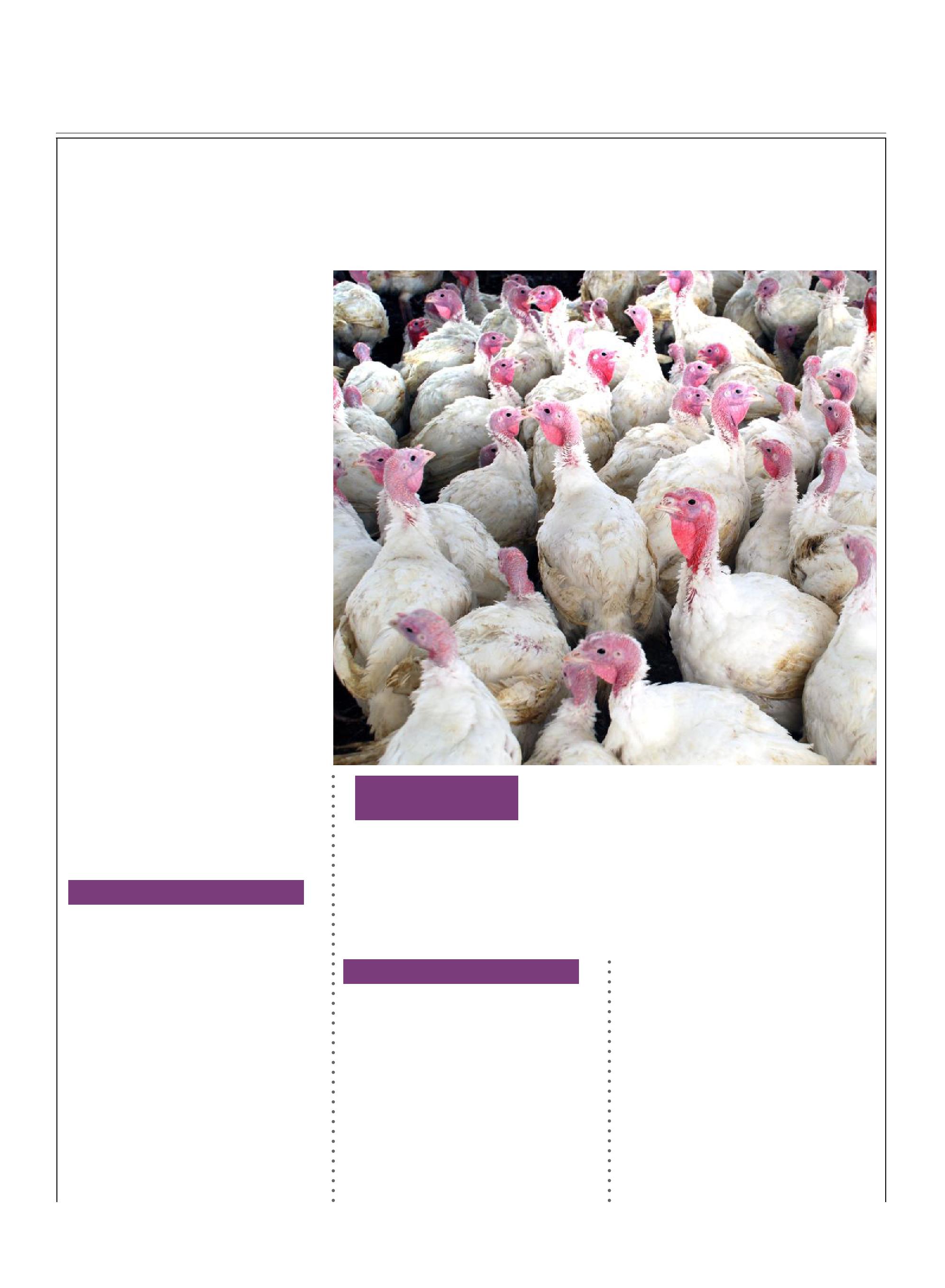
Do turkeys respond the same way as broilers to transportation?
That’s the question professional engineer Trever Crowe has been investigating at the University of Saskatchewan (UofS).
“Animal welfare is the greatest impetus for our work,” Crowe told the audience at the Poultry Industry Council 2016 Research Day in Guelph, Ont., with his work focusing on the transportation of turkeys to market. “The turkey industry is facing increased demands from regulatory agencies and consumers but current broiler data may not be directly applicable to turkeys.”
TRAVELLING TURKEYS
Crowe’s objective was to investigate the response of turkey hen and tom physiology, behaviour and meat quality to different temperatures and humidity levels during simulated transport.
Crowe, the associate dean in the College of Graduate Studies and Research at the UofS and a faculty member in the department of mechanical engineering, was the principal investigator, along with his research assistant, Catherine Vermette, graduate student Zoe Henrikson, and a platoon of other casual workers helping to collect the data.
Trever Crowe at the University of Saskatchewan is studying the response of turkey hen and tom physiology, behaviour and meat quality to different temperatures and humidity levels during simulated transport.
ENVIRONMENTAL SIMULATION
Researchers mimicked a typical farmrearing environment at a barn on campus with 120 12-week old turkey hens and 120 16-week old turkey toms, growing them for a week with ad lib feed and water under 16 hours of light. After reaching market age the birds were crated and exposed to simulated transportation conditions where they were randomly assigned to one of five treatments: two warm
treatments at 28 C with 30 and 80 per cent relative humidity, two moderate treatments at 20 C with 30 and 80 per cent relative humidity, and one cold treatment at -18 C, all at a stocking density of approximately 83 kg/m 2
Crated birds were placed inside a preconditioned environmental chamber for eight hours under these experimental conditions before being processed at a mini slaughter plant set up at the university’s College of Engineering.
HEAT RESPONSE
Meat quality
Experimental measures included live shrink; core body temperature; behavioural observations during exposure such as sitting, standing, huddling, shivering, panting, pecking, ptiloerection and preening; blood glucose levels before and after exposure; heterophil/ lymphocyte ratio and the meat quality – the pH and colour of the breast and thigh.
HYPOTHESIS
In terms of meat quality, Crowe hypothesized that warm exposure would result in pale, soft, exudative (PSE) meat, demonstrating a decline in pH and subsequent water holding capacity that results in tougher, paler meat. He also expected that cold exposure would result in dark, firm, dry (DFD) meat, due to an increase in muscle pH. There was the potential that meat exposed to cold would provide a larger yield, reduced drip and cook loss, with improved texture and taste scores.
RESULTS
The results indicate that toms tolerate the cold better than hens but hens did better in the warmer conditions.
For cold transport at -18 C, hen live shrink was greater, core body temperature tended to be lower, thermoregulatory behaviours such as huddling, shivering, ptiloerection increased, both breast and thigh pH tended to increase and became darker when compared to both treatments at 20 C. Under the same cold conditions the blood glucose of toms had a tendency to decrease, thermo-regulatory behaviours increased and thigh pH increased.
Comparing warm transport conditions, the opposite was true. Crowe found overall, that hens were less susceptible to the effects of warm transport than toms. Comparing both 28 C treatments to 20 C treatments at 30 and 80 per cent relative humidity, hen live shrink was greater and thermo-regulatory behaviours such as panting increased at 28 C. For toms
Turkey physiology and behaviour seem to be affected to a greater degree than meat quality measures as a result of cold or warm transport temperatures and humidity.
live shrink increased, core body temperature increased, thermo-regulatory behaviours increased and breast pH increased under 28 C treatment compared to 20 C.
RESEARCH CONDITIONS
Crowe suggested that the exposure conditions were not extreme enough to cause consistent and widespread physiological changes but that changes in core body temperature indicate birds were possibly beginning to reach the limit of their thermal coping abilities. Crowe pointed out that the research was conducted under ideal conditions, with all birds healthy and dry.
Turkey physiology and behaviour were affected to a greater degree than meat quality measures; meat quality was not compromised and defects did not occur in cold or warm transported hens or toms.
Crowe suggested that the large size of turkeys relative to broilers and size differences between hens and toms
likely account for some of the variation in results and make it difficult to extrapolate work done with broilers to turkeys. As he says, turkeys are not just big chickens.
FUNDING PARTNERS
This work with turkeys was one of the Growing Forward II projects sponsored by Turkey Farmers of Canada and Agriculture Canada. Crowe is now looking ahead to do similar work with end-of-cycle hens in a collaborative project with Karen Schwean-Lardner and he has also explored the possibility of similar work with broilers. There are no immediate plans to extend this work on turkeys, although there are other turkey-related projects ongoing at the UofS. n
Equipment
Ford’s new generation of big trucks
What’s new or unique with the 2017 Ford Super Duties?
BY HOWARD J. ELMER
Almost twenty years ago the Super Duty line of Ford trucks was born. Built to tackle the biggest jobs that pickups could handle, the Super Duty gained a following right away. Today, the newest Super Duty introduction is just as important as that original one – because the number of jobs for these trucks just keeps on growing.
This F-series Super Duty line-up of trucks is all new for 2017, including the adoption of the same aluminum cab that the F-150 got two years ago. That fact alone makes this next generation of Super Duty special. With the engineers adding the all-aluminum body, this now means there is only one design for both classes of Ford trucks; and that in turn means that updates and improvements to any and all the cab systems will now be available to both half-ton and Heavy Duty trucks in the same year. It also seems appropriate then that this alignment of truck bodies is coming on an all-new chassis as well.
Adding strength and reducing weight, this new Super Duty is 24 times stiffer than its predecessor. The fully boxed frame is taller and has up to 10 cross-members, which include the under-box supports for the factoryinstalled fifth wheel/gooseneck hitch receiver.
The new Super Duty is claiming
The new line of Super Duty trucks has more towing convenience features than any that have come before it.
several victories - its latest top numbers are 32,500 pounds towed, with an F-450 and a maximum payload of 7,630 pounds. Both these numbers are now being touted as best in class. But as every truck guy knows, what you can haul is just as important as being able to brag about your engine. So the second generation of the 6.7-litre Power
Stroke turbo-diesel (the most common Super Duty powerplant) has also boosted its horsepower and torque to 440 and 925 pound-foot respectively.
Of course, one of Ford’s strengths is the offer of multiple features, including engines. The base engine is a 6.2-litre V8 that makes 385 horsepower and 430 pound-foot of torque. For Super Duty
FORD TOUGH
ANTIBIOTICS and CHICKEN
Consumers have questions about antibiotics and chicken – and farmers want to answer them. Chicken Farmers of Canada has created a video and brochure that you can show to anyone who may have questions.
Ask a farmer –know the facts.
Watering Wisdom y
YOUR ONLINE SOURCE FOR POULTRY WATERING
WISDOM.
Even the best watering systems won’t give you the best results if they are not managed properly. And there is, frankly, a lot of misinformation in the industry that leads to improper system management. Because of this, you’ll find us talking about best management practices more than about our products.
That’s why we started Poultry Watering U at poultrywatering.com. This is where we help you get the best information and best practices that enable producers to maximize flock performance.
Go to Poultrywatering.com. You won’t find a formula or a magic number. Just information and videos to help you get your best results.
www.PoultryWatering.com
• How-to videos
• Poultry Watering U news
• Management downloads
•
Equipment
chassis cab buyers there is also a gas V10 option.
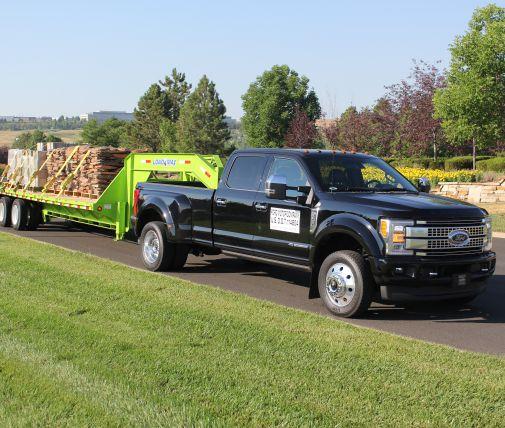
At the press drive in Denver, there were a variety of trucks available to drive but I was immediately drawn to the F-450 towing the gooseneck trailer with a nice 30,000-pound load of landscaping stone. I too wanted to experience those maximum tow limits, in part because I still find it amazing that pickups today are built to haul weights that were considered commercial loads back when I started driving tractor-trailers in the early 1980s.
The Power Stroke powered F-450 handled the weight and the chassis is noticeably stiffer – even in jackknife 180-degree U-turns the truck does not tilt or squat. Under moderate braking it retains a level attitude without any hobbyhorseing and much of the driving was up and down the foothills at the start of the Rocky Mountain range. So, while my initial focus was devoted to the weight claims that Ford was making, as the kilometers clicked by, another side of the towing experience caught my attention. This new line of Super Duty has more towing help/convenience features than any that have come before it.
It starts with seven cameras placed around the truck, including one in the rooftop brake light array. With this one you can easily see the trailer pin as the truck backs up to the hitch. It even has a “magnify” button that doubles the image size. Hooking up (bumper or in-bed) is now an easy oneman job. Meanwhile the other cameras offer 180-degree views off the nose or a 360-degree birds-eye-view.
In this Super Duty, Ford has installed an inter-related series of new stopping features meant to keep you cool and your shorts clean.
It starts with the Towhaul feature that uses the transmission to slow the load, as does the engine exhaust brake found on the diesel. The gearshift lever also has a manual gear selector; and if the transmission is kicked down using the brake, it will hold its gear. But the most significant improvement comes with an
addition to the adaptive cruise control. It will use the truck’s brakes, engine brake and the trailer’s brakes – through the trailer brake controller to hold the pre-set speed of the rig; while going downhill, all automatically. Similar to the system that General Motors uses, this improvement will relieve the white knuckles often caused by being pushed by your load.
The other feature that made itself noticeable was adaptive steering. As the name implies the steering ratio “adapts”. At slower speeds when the driver is turning pin to pin the travel shortens up (by as much as one complete revolution of the wheel) while at highway speeds it gets longer offering a more sensitive on-centre feel. Again, for backing up while towing, this is a great innovation.
How about tire pressure monitoring? Old hat you say. Yes - but this is tire pressure monitoring of your trailer. Ford offers wireless sensors that can be fixed to the trailer tires to display pressures right in the centre dash display.
If you’re sensing a theme, it’s because clearly there is one. First you have to build a truck that can handle the weight it’s claiming – Ford has done that. Then – you need to give the driver the tools to haul all that weight safely and create systems that reduce the stress that comes with trailering. Sure you may have the skills that towing demands, but the systems in this truck can only make you better at it. The 2017 Super Duty Ford has accomplished both goals.
The pricing for the 2017s starts at $39, 849 for the base F250, regular cab, gas model and walks up through the varied cab models and trims to $46,749 for the F-350 crew cab – again the two-wheel-drive, gas model. Add four-wheel-drive and dual wheels (F-350s) and you’ll plunk down another $6,000 on average on each model. For pricing with the Power Stroke diesel, just add another $9,950 to any model you choose.
Trucks will be at dealers this fall. n
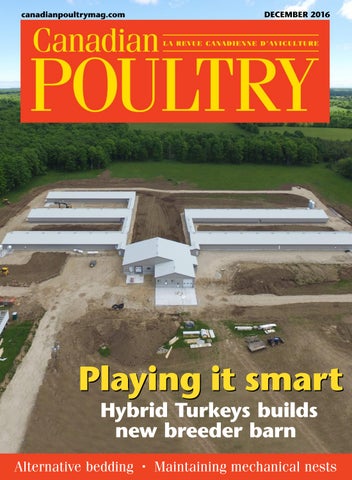
Cover story Playing it smart New Hybrid Turkey facility operational in southern Ontario
by Treena Hein
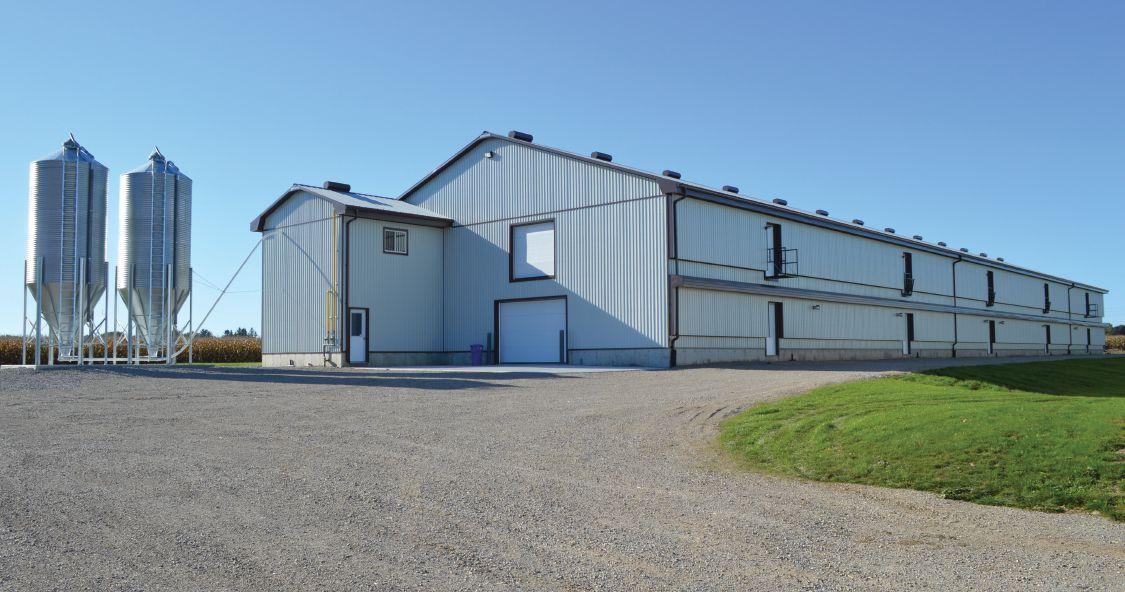
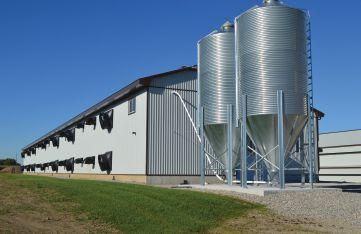
Hybrid Turkeys, a division of Hendrix Genetics, has built a new breeder facility between Berkeley and Markdale, Ont. The name of the farm, “Berkdale” is a mix of the two.
While construction of a new turkey breeder farm might not seem terribly newsworthy, this one is, firstly because of its location. The site was chosen at a significant distance from the company’s other operations in southern Ontario, mainly for biosecurity reasons.
“Five years ago we wouldn’t have even considered a location so far away from our other farms,” says Hybrid Turkeys’ farm division manager, Marek Mirda. “To ensure secure supply to our customers, especially during disease outbreaks and establishment of quarantine zones, we looked for an area with distance from our own and other poultry farms. During disease outbreaks there can be an impact on healthy farms due to restriction of movement within quarantine zones, so we want to minimize or eliminate this potential risk.”
STATE-OF-THE-ART
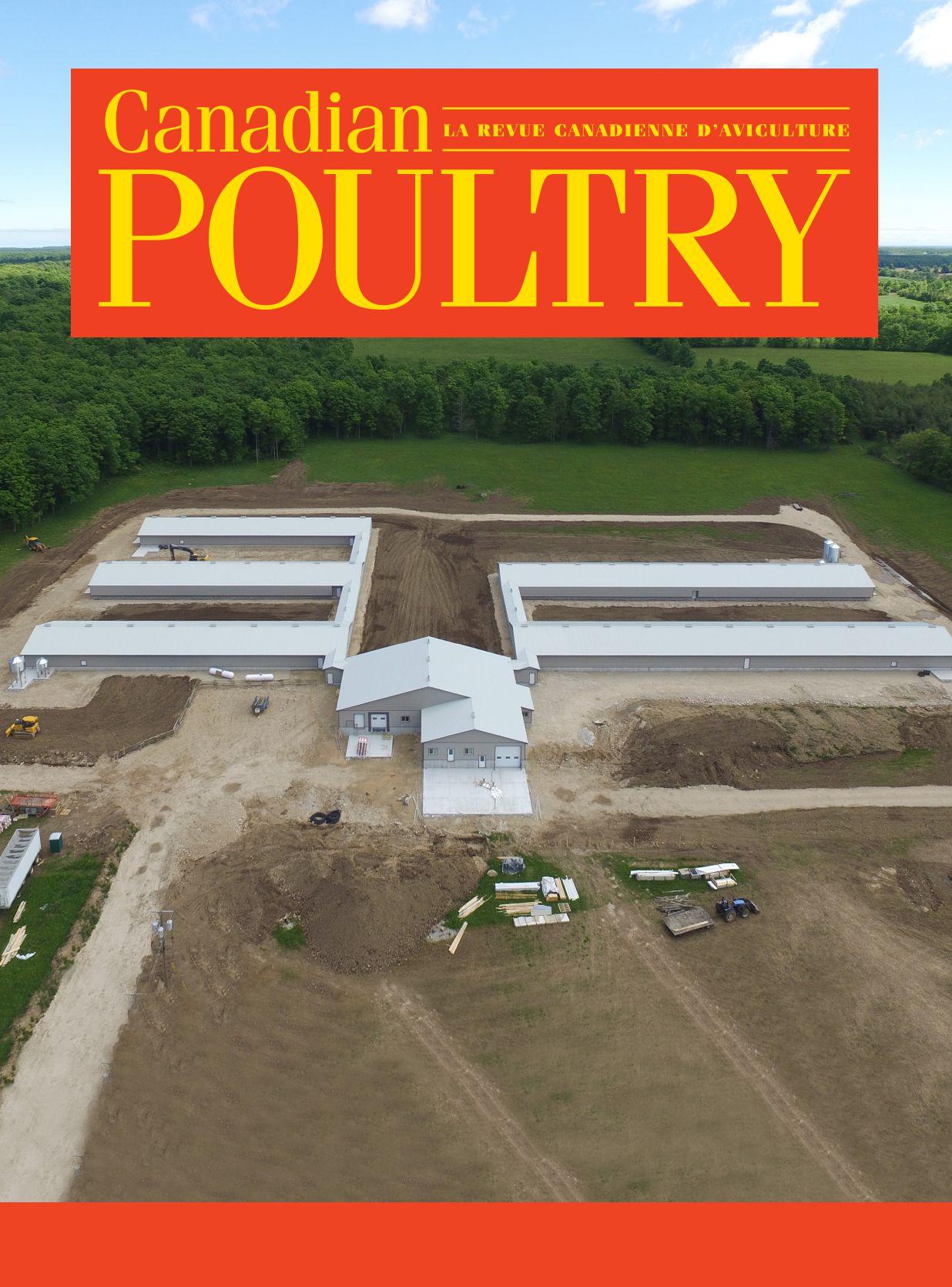
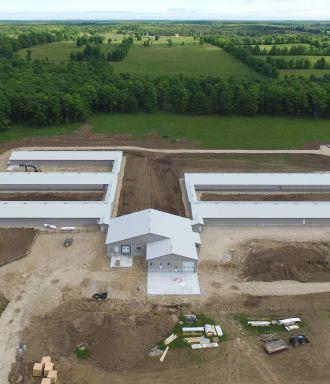
A drone shot showing construction of the new breeder facility between Berkeley and Markdale, Ont. shows its somewhat protected location and the unique layout of the facility.
Hybrid Turkeys began its search for a location by examining a Canadian Food Inspection Agency map of Ontario that pinpoints all types of livestock operations. “We evaluated this area on the map to choose a location with the least amount of poultry operations,” Mirda notes. “After working with real estate firms, we found this property between Berkeley and Markdale.”
NEW DESIGN
Location aside, Berkdale has other important biosecurity aspects, with the most significant being a farm design that
connects the barns.
In the past, Hybrid Turkeys would have designed the farm so the egg house and lay barn (for example) were separate buildings, and staff would therefore have to change clothing and boots every time they would go between.
“A system of separate entry and exit not only adds risk of picking up outside organisms, but is also difficult during winter months in Canada,” Mirda explains. “The new system has staff go through biosecurity procedures once and then they have safe access to the entire barn system.” Hendrix Genetics is in the final stages of upgrading a layer breeder facility in Ontario that will have the same design, he adds.
In addition, Berkdale (and a Hybrid Turkeys pedigree facility as well) have a dry shower and other additional measures to keep foreign organisms as far away from the barn as possible - on both the brood/grow side as well as lay barn side. Upon arrival at the farm, staff and any visitors must enter the dry shower facility, which requires individuals to change out of street clothes into farm clothing and footwear. Next, individuals exit the dry shower into a neutral air pressure zone before accessing the completely enclosed wet shower rooms. After using the shower facilities, individuals change again into new farm clothing and boots, ready to enter the clean zone of the farm.
Outside the buildings, there is complete separation of the clean and dirty zones. Dirty zone roads are for external suppliers to deliver fuel and other supplies without entering the farm area. Clean zone roads are only for internal clean vehicles that transfer staff or supplies between barns. All the buildings’ mechanical equipment can be accessed from the
Photo courtesy of John Ernewein Limited.
Better acidification.
dirty zone so that contracted service technicians have quick access in case of urgent need. Hybrid Turkey employees have access to a storage garage in the clean zone with equipment only to be used within the clean zone, and one on the dirty side for use only in the dirty zone.
Additional biosecurity was gained through filling any saw cuts on concrete with caulking to prevent particulates from settling in. “One of the project members suggested we used ‘an entire truckload of caulking’ to ensure no cut was missed!” Mirda reports.
In addition, as part of the ventilation system, the farm features darkout hoods large enough for a person to fit inside, which makes it easier to ensure proper cleaning of these areas. There is also a wash station for vehicles on the ‘lay side’ of the farm.
Berkdale also features an innovative truck-loading dock for the egg cooler, complete with dock-levelling equipment and seal for the truck. This system allows for the use of trolleys to transfer eggs from the storage room into the trucks rather than the traditional moving of eggs by hand.
“Temperature shock is avoided,” explains Mirda, “and there is also no need for an outside connection, in that the delivery driver can stay in the cab while the eggs are loaded by internal staff. It’s a best-practices system that improves worker health and safety and minimize the handling of eggs.”
RESULTS SO FAR
Berkdale began operation in August and all systems are running smoothly with birds doing extremely well. Mirda says the winter season is when staff expects to see the new design of this facility to show its full benefits. This will be in part because use of the barns on the lay side (that are connected between egg house and laybarn) will begin then, and also, from a comfort and efficiency standpoint, workers will not have to go outside as much during the harsh weather.
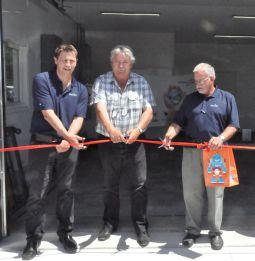
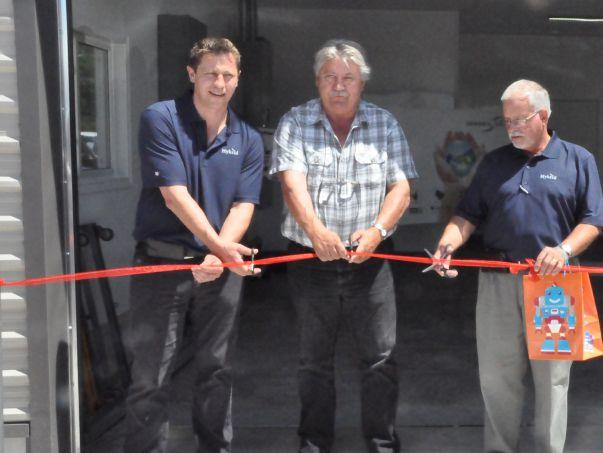
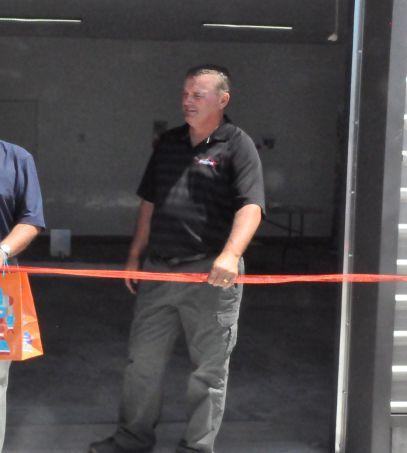
(Left to right): Marek Mirda, Juraj Mirda and Harry ribbon-cutting ceremony on July 4 with Trevor Reading
When asked what factors other poultry operators should consider in building a similar facility isolated from all other farms in the company, the Berkdale staff had good input. They pointed to the decision of whether to try and relocate current employees or search for new employees close to the new facility who may need a lot of training and support. They also pointed out that you have to be ready for staff and equipment from other company facilities to be dispatched as needed for hands-on assistance at the ‘orphan’ facility.
Scott Rowland, general manager, Americas at Hybrid Turkeys says that although this facility came at a significant cost, the company leaders feel that the investment in Berkdale is the next step in biosecurity for both customers and staff.
“The features of this facility were designed to secure the supply to meet our customers’ needs, while ensuring excellent health and safety of our workers,” he says. “This investment signifies our dedication to continuous improvement. By spreading out our operations, we are working towards the next generation of biosecurity.”
Hybrid Turkeys also has production and research facilities in several other locations in Canada, as well as in the U.S., France, Poland and Hungary. n
van de Hoef participate in a Reading of John Ernewein Limited.
Technology Precision livestock farming
Nanotechology uses tiny biomarkers to detect subclinical signs of disease at the molecular level in a non-invasive manner
BY KAREN DALLIMORE
When a farmer enters the barn, he or she hears first, then sees, then smells the environment. Nanotechnology sensors can detect all of these parameters, providing novel solutions to practical issues in poultry health.
Suresh Neethirajan is an assistant Professor and the director of the BioNano laboratory at the University of Guelph. He calls this agricultural revolution towards using nanotechnology ‘precision livestock farming’, a progressive movement over the past decade where technological advances are being used to save time - the time to test results or make management decisions.
The ultimate goal of precision livestock farming is to transmit real time data related to health parameters using a combination of mobile phones and Internet to enable the end user to monitor and track flock health to enhance the productivity and welfare of the birds. The data is then used to proactively predict and prevent disease. This strategy is made possible by using nanotechology, which, in turn, uses tiny biomarkers to detect subclinical signs of disease at the molecular level in a non-invasive manner.
Suresh Neethirajan calls the agricultural revolution towards using nanotechnology ‘precision livestock farming’, a progressive movement over the past decade where technological advances are being used to save time.
Neethirajan uses the example that preventing the spread of Avian Influenza (AI) might be the best way to keep the disease under control. Using nanotechnology, he is developing a hand-held AI virus detection tool that will be able to differentiate and classify different strains of the AI virus - information that is crucial to optimize management strategies to treat and help prevent the spread of the disease. The tool will be able to replace the current laboratory RT-PCR
analysis that can take from six hours to three days.
Two types of nanotechnology are being investigated for this AI detection tool. The first type uses an optical sensor device, where light is reflected off specific nanomaterials, which bind in specific ways to proteins on the surface of the virus, fluorescing differently to allow identification of the strain of the pathogen. This information can be gathered in real time and records can
GOOD THINGS COME IN SMALL PACKAGES
HAPPY HOLIDAYS!
On behalf of the Board of Directors of Chicken Farmers of Canada, I would like to extend to you our best wishes for a happy holiday season and a peaceful and prosperous New Year.
– Dave Janzen, Chair, Chicken Farmers of Canada
be transferred through an android app to the entire value chain or veterinarians as required.
Another option is an electrochemical type of sensor, similar to a handheld glucose meter. Just a droplet of blood can be read immediately using nanomaterials that focus on the virus pathogen rather than the chemical biomarker.
Both optical and electrochemical options are being investigated, mainly to ease the interfacing with the smart phone and Internet for real-time transmission of data. Each of these modules has unique advantages, while optical seems to be easier to adapt, mainly because of the presence of cameras in the phones.
At this stage the research focus is on multiplexing - refining the biosensor to identify multiple strains of the AI virus from a single drop of blood.
Following a similar predictive and preventative approach, Neethirajan is
Technology
also developing an Internet of Things (IoT)-based poultry monitoring telemetry system that will monitor bird health in a non-invasive manner, looking for subtle signs of disease that can be addressed proactively.
With this telemetry system, a looniesized sensor placed on the bird will detect movement, monitor skin temperature and other biomarkers such as relative humidity, temperature, carbon dioxide, methane and ammonia levels, in real time fashion that could then become predictors of disease. This technology would not be feasible to monitor thousands of birds individually, but the data from sample birds in a flock can be applied to mathematical models to generate holistic predictions of flock health.
Nanotechnology can also supply micro electrical mechanical systems (MEMS) - based sensor probes that can monitor blood flow in a non-invasive
manner. Even sound can become a predictor of disease because the sound of a healthy chicken differs from a bird under any kind of stress. Integrating this vocalization with movement gives a more holistic picture of the health of the bird. More work is needed regarding practical application before this technology can be valid for on-farm use. For example, wearable sensors need to be lightweight and made of biological materials where possible so that the birds don’t peck at the ‘foreign’ object. Where sound is measured, random barn noise needs to be excluded from detection. Wireless technology doesn’t work in all barns in all locations, and adaptations will need to be made to accommodate differences between caged and cage-free systems. Meanwhile thresholds of disease are being better established through mathematical prediction models and apps for reporting data are being refined. n
An eggcellent
twist on tradition
Our Caramel Eggnog will get you and your guests in the holiday spirit! Find this recipe and more at eggs.ca and eggcentric.tv
SEASON’S GREETINGS!
Une tradition
déliciœufsement
renouvelée
Notre lait de poule au caramel mettra vos invités dans l’esprit des Fêtes! Obtenez cette recette et plein d’autres à lesoeufs.ca et eggcentric.tv
MEILLEURS VŒUX!
Research Support for poultry health
Vic
and Uta Parks
have donated almost $40,000 to be used in the area of most need for the Poultry Health Research Network
BY KAREN MANTEL, ONTARIO VETERINARY COLLEGE
Arecent donation to the University of Guelph’s (UofG) Poultry Health Research Network (PHRN) will further enhance research and outreach opportunities connected to this hub of poultry research excellence.
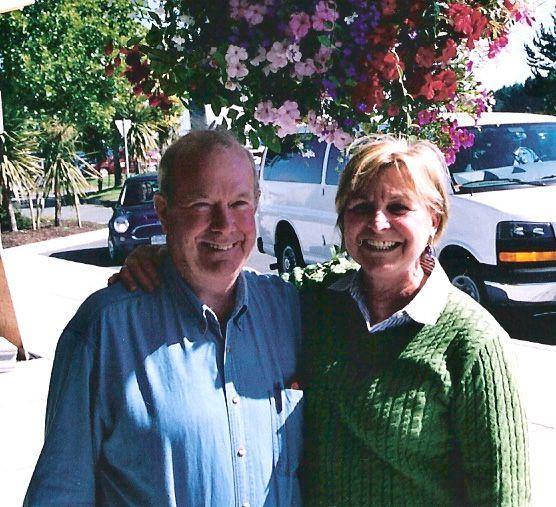
UofG alumni Vic Parks and his wife, Uta, have generously donated almost $40,000 to be used in the area of most need for the PHRN.
“The generous gift by the Parks family will have an immense impact on the PHRN,” says Shayan Sharif, an immunologist in the Ontario Veterinary College’s department of pathobiology and leader of the PHRN. “This gift will afford PHRN the opportunity to serve its stakeholders, including industry, government and academia, more effectively through enhanced learning opportunities, research activities and knowledge mobilization.”
The Parks have a strong family history with the University of Guelph and particularly the Ontario Veterinary College (OVC) and Ontario Agricultural College (OAC).
Vic Parks graduated from the Ontario Veterinary College with his DVM in 1964 and both the Parks’ daughters are also OVC grads. Both Mrs. Parks and their
son, Jason, graduated from OAC’s School of Landscape Architecture.
With their daughters’ close ties to poultry health and welfare, “it seemed a good fit to provide this most recent donation to support poultry research at OVC,” says Vic, who began his career in large animal practice, before moving into companion animal medicine. He worked in marketing with Novartis Animal Health in Mississauga for 20 years before his retirement in 2006. During this time the Parks also had a farm near Guelph where they raised Limousin cattle.
The Parks fell in love with Salt Spring Island on a trip to British Columbia more than 30 years ago and now live there, near Mount Maxwell Provincial Park.
In addition to their donation to the PHRN, the Parks previously established an endowed Parks Family Travel Grant in OAC, as well as an endowed Parks Family Travel Grant in OVC. The latter is presented annually to a fourth-year Doctor of Veterinary Medicine student entering the Food Animal Stream for assistance travelling outside of Ontario on an external rotation. n
Vic Parks and his wife Uta have generously donated almost $40,000 to be used in the area of most need for the PHRN.
ALUMNI DONATION
Providing a wealth of background knowledge on poultry anatomy, physiology, and immunology, this comprehensive reference explores poultry diseases that are directly related to or influenced by the gastrointestinal tract.
Filled with useful images, this informative record discusses the impact of human pathogens harbored by poultry and offers alternatives to antibiotics in the treatment of intestinal disorders in poultry.
Housing Alternative bedding
ABC of Woodstock produces litter material that could improve poultry health
BY TREENA HEIN
Bedding is being examined as an increasingly important factor in poultry health, and can affect a producer’s bottom line through how much labour is involved in spreading it and how well it cleans up.
Jillian Jasper, self-proclaimed “head of the herd” at ABC (Animal Bedding Company) in Woodstock Ont., is a firm believer that producers should be taking a much closer look at their bedding choices. “We are told over and over by producers of poultry and every other livestock species that outside of a vet making bedding suggestions in times of health crises, [that they] are never approached to talk bedding,” she notes. “We believe that our products outperform straw, shavings, drywall, peat moss, sand and everything else on the market in terms of animal health and positive environmental inputs. When cull rates with our poultry clients consistently come back with zeroes for respiratory and zeroes for pad/leg health issues, it confirms our complete belief in what we offer.”
ABC provides bedding for poultry, cattle, horses, sheep, pigs and exotic animals. It was founded in 2013. Ray Batchelor, a retired Chrysler engineer, got all of the equipment and manufacturing processes up and running. Jeffrey Moore, a chartered professional accountant, runs the overall organization. Jasper takes the lead with sales, marketing and education, using skills
BETTER BEDDING?
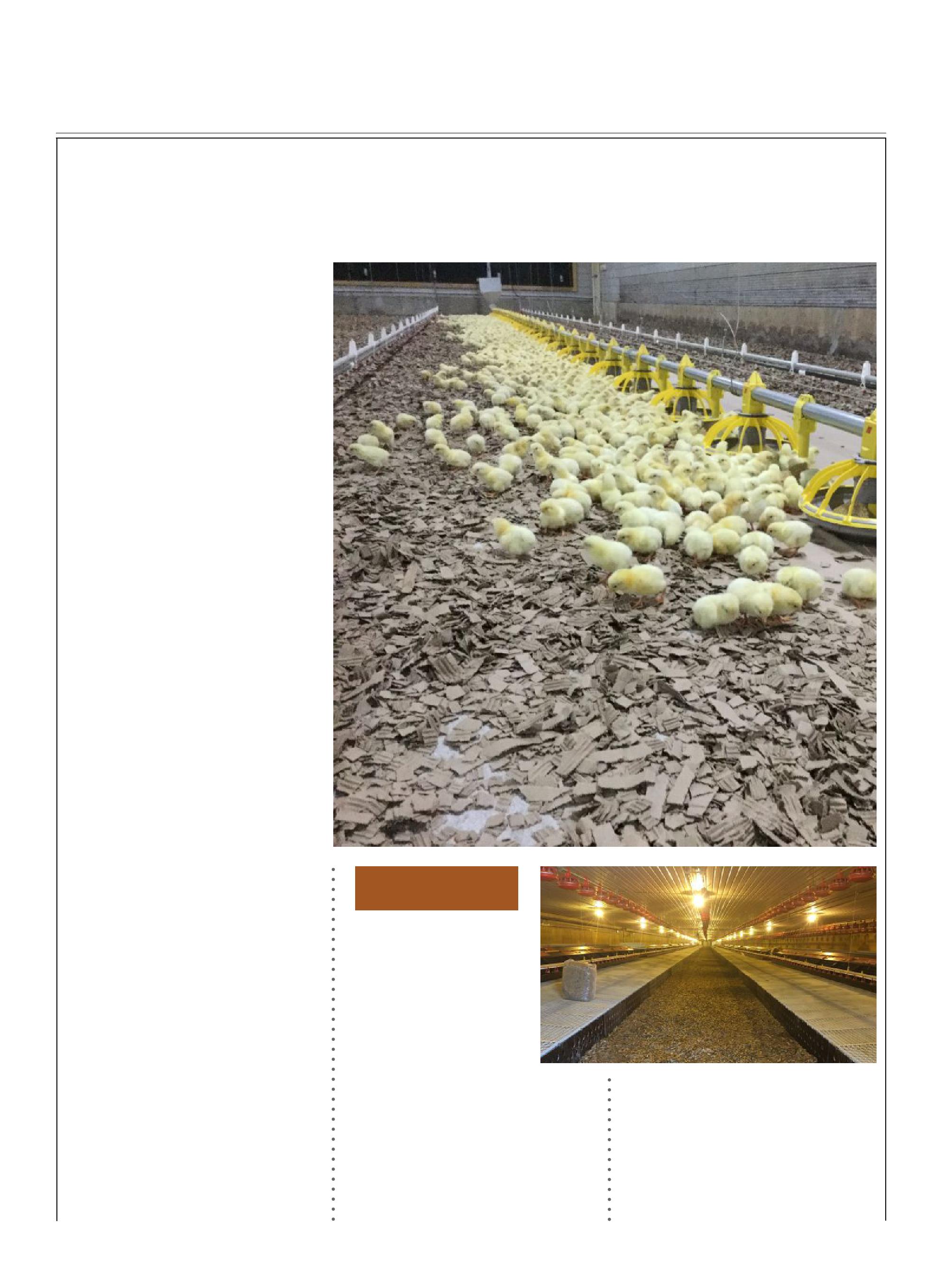
Animal Bedding Company in Woodstock, Ont. offers alternative bedding choices for various livestock species.
gained earlier in her career in animal health pharmaceuticals. She says that during her years of representing other products, she was always searching for her own proprietary product to bring to market. About 15 years ago while showing her horses in Ohio, she came across bedding that appeared to be made
from chopped-up cereal boxes. It never left her mind. “After years of research into adhesives, dyes, components of cardboard, other materials, packaging, and so on, I developed a cardboard product that seems simple,” she says, “but it is brought to its greatest potential through addressing the growing
Housing
consciousness in the ag sector of better animal husbandry and environmental stewardship.”
HOOF-PRINT is one of the company’s five products. It manufactured by chopping up virgin corrugated cardboard, extracting the dust and compressing the product into 35-pound bales. It is free of salmonella, toxins, labels, tapes or inks, with what Jasper calls “an overwhelming absorption capacity.” After use, it turns into black, composted material in six to nine weeks.
TRACK-PRINT is a mineral bedding which is widely used in all species. It balances pH, absorbs moisture, is noncaustic, acts as a natural insecticide and reduces ammonia. It works similarly to diatomaceous earth, killing insects by scraping at their shells when they crawl through it but Jasper says it is better because it does not lose stability when exposed to moisture. She says it is very effective for darkling beetle control in poultry barns.
Bedding for each species required its own dedicated focus.
“Eighty per cent of our market is poultry,” Jasper notes. “Initially, it was twenty per cent, but this changed rapidly as we educated and gained exposure in the poultry segment. Our products are very conducive to the biosecurity and
general sensitivity of the poultry segment.” ABC distributes across Canada, and will currently ship to the U.S. if Canadian customers have operations there. “Holland is a big potential market for us,” Jasper adds. “We have both a dairy and poultry contingent in Holland…they are very innovative. They love our stuff. And all of those Holland connections come through our existing users.”
TRIALS
Both HOOF-PRINT and TRACK-PRINT are being trialed at many operations in southern Ontario.
Hybrid Turkeys recently trialed HOOF-PRINT as part of its continuous overall company focus on innovation and improvement, especially in this case, the potentially improved environmental conditions due to the ‘dust free’ nature of this bedding. The trial lasted 15 weeks (from 5 weeks to 20 weeks of age) and the following were evaluated: curability, absorption, ammonia levels, dust levels and overall acceptability/comfort of the birds. Overall, Hybrid Turkeys is pleased with the results of the trial but feels further testing is required at different ages and at different stages of production (e.g. rearing phase and lay/production phase). The company also wishes to find out more about the biosecurity processes for the manufacturing of this type of bedding.
University of Guelph doctoral candidate (pathobiology) Ryan Snyder is currently studying the effect of bedding and other factors on coccidiosis survival at several area farms. He will have results in years to come.
Peter Greydanus who raises broiler breeders for Maple Leaf at Greyda Plains Poultry in Petrolia has used TRACK-PRINT since last October. “It’s controlling the flies and it’s a bit cheaper and less dusty than diatomaceous earth,” he says. “I like it. I think Jillian’s on the right track with it, it’s nonchemical. You have to re-apply after manure builds up and I’m curious to see how it works on darkling beetles.”
Greydanus has used HOOF-PRINT bedding in one pullet cycle so far. “I used it combined with straw and it was a rough cycle for coccidiosis because it was too dry,” he says. “Whether it was the product or my management, you’d have to add moisture I think. There’s a lot less dust with it than straw or shavings. I think it would be the same cost as shavings and fewer bags to handle.”
In October however, Greydanus was very happy with the performance of HOOF-PRINT in a breeder barn cycle. He plans to definitely use it in the breeder barn going forward instead of straw, at least for winter flocks because it dries “very nicely.” n
PERSPECTIVES
BY THE CENTER FOR FOOD INTEGRITY
Science and the cage-free egg discussion
Fortune magazine in September took a deep dive into the cage-free egg movement, chronicling how McDonald’s made its decision to go cage-free and the company’s prospects for being able to follow through on its pledge.
McDonald’s announcement a year ago spurred a tidal wave through the food industry. Around 200 companies, including every major fast food chain and many major brands, have said they will go cage-free. Most of them target 2025 for completing the transition.
The Fortune article cites results from Coalition for Sustainable Egg Supply (CSES) research that examined three different hen housing systems – conventional cage, enriched colony and cage-free – and concluded there are positive and negative trade-offs with each.
Food beat writer Beth Kowitt cites that the CSES study considered the housing systems as a whole – worker health, animal health, food affordability, food safety and environmental impact, while activist groups focus solely on animal welfare. An excerpt: In the end, science wasn’t the deciding factor. The study intentionally excluded one component – consumer sentiment – and that turned out to be the most important of all. The phrase “enriched cage” means nothing to the average person. So if McDonald’s had shifted to that option, it wouldn’t get any credit from consumers. “Science was telling us enriched, but when talking with the consumer, they had no clue what enriched was,” says Hugues Labrecque, who runs the egg business that serves McDonald’s at Cargill. Once that became clear, cage-free became the inevitable consensus.
Department of Agriculture legal definition for “cage-free” and that, “…transparency of what the term actually means will anger many as they discover their imagery of a happygo-lucky hen running through the field is far from the truth.”
People with strong feelings about hen housing tend to bypass scientific studies such as that conducted by CSES. Food companies want to give customers what they want regardless of the science.
There are a number of barriers to consumers integrating scientific information into their decision-making process. The influence of group values, confirmation bias, scientific illiteracy, the tribal nature of online communication and other factors all pose challenges to successfully introducing technical information into the social conversation about food and agriculture.
Many of the barriers can be overcome by following the formula developed through CFI’s research. Establishing shared values opens the door for technical information to be introduced into the conversation. It begins by first identifying and then communicating values from a credible messenger. Only then can incorporating technical information be viewed as trustworthy, building on a message platform that encourages informed decisionmaking.
There are a number of barriers to consumers integrating scientific information into their decision-making process
In a Forbes op-ed, contributor Steve Banker, who covers logistics and supply chain management, cites the Fortune article and analyzes what will have to happen in the marketplace in order for McDonald’s to meet its cage-free commitment by 2025. He concludes, “McDonald’s shows us that companies have a chance to do ‘good,’ where ‘good’ is defined in a way that resonates with their customer base….”
In a Forbes article back in May, “Supermarket Guru” Phil Lempert noted there currently is no United States
Building trust is a process. Authentic transparency and continued engagement will encourage objective evaluation of scientific information that supports informed decisionmaking. Encouraging informed decision-making requires meeting people in the communities where the discussions are taking place, acknowledging their scepticism and committing to long-term engagement.
CENTER FOR FOOD INTEGRITY
CFI is a not-for-profit organization whose members and project partners represent the diversity of today’s food system, from farmers and food companies to universities, nongovernmental organizations to retailers and food processors.
Visit foodintegrity.org for more information. n
RODENT CONTROL trapped like rats » They’ll be «
These are some of the products eligible for the Vetoquinol Club points program. Sign up today at vetoquinolclub.ca and reap the benefits. club
GREAT PALATABILITY BAITS
• Low or no wax formulations
• Grains and food grade oils ingredients
• Greater acceptance for better results
• Different actives for rotation
GIVE THEM BAITS THAT THEY WILL LIKE!
Clark Ag Systems is your local expert, offering a full range of Farmer Automatic alternative housing options, as well as a complete line of quality products for broiler, turkey and egg production. Sales, parts, and service are available across Canada to meet your needs. Contact us today to learn more!