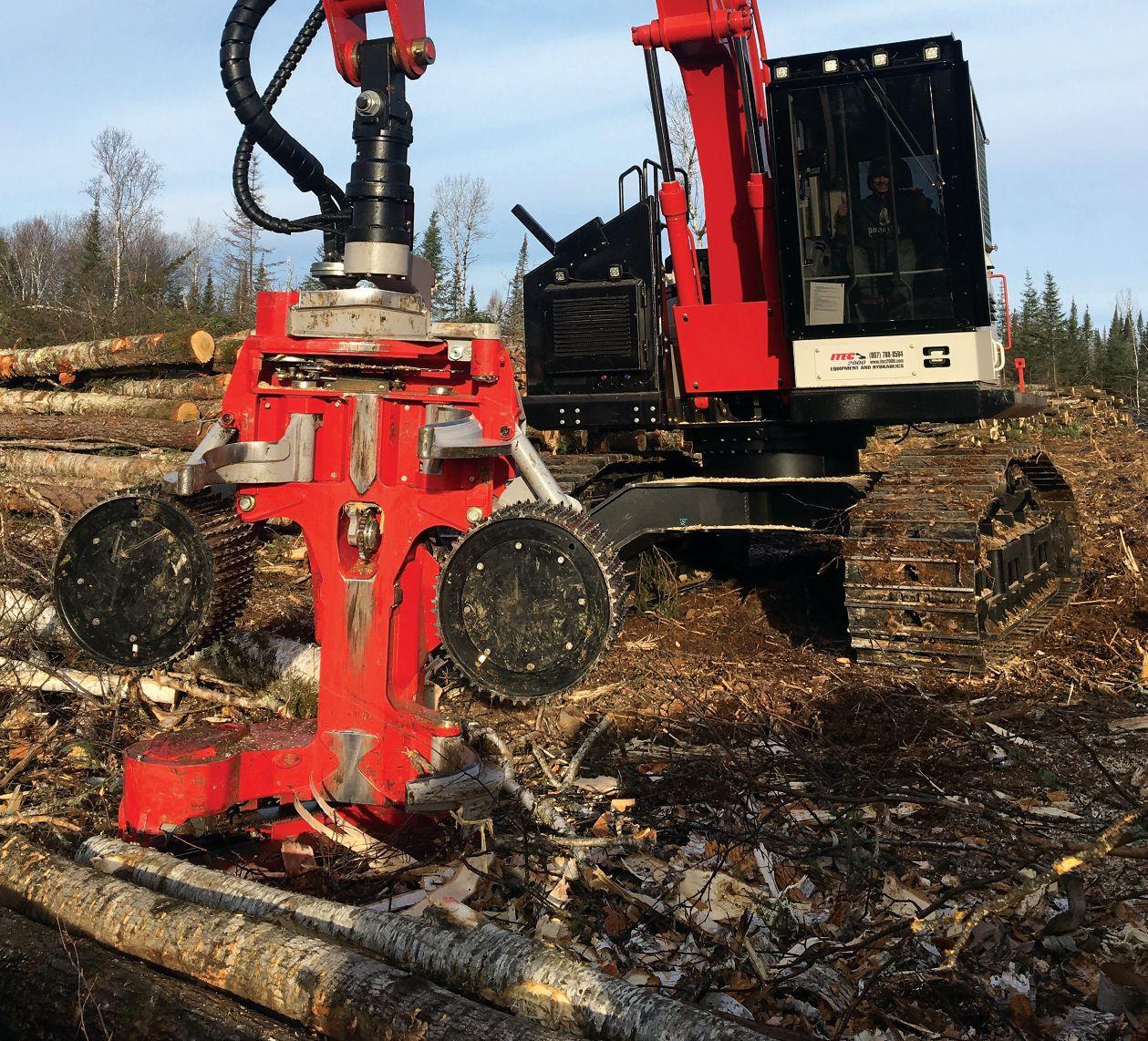
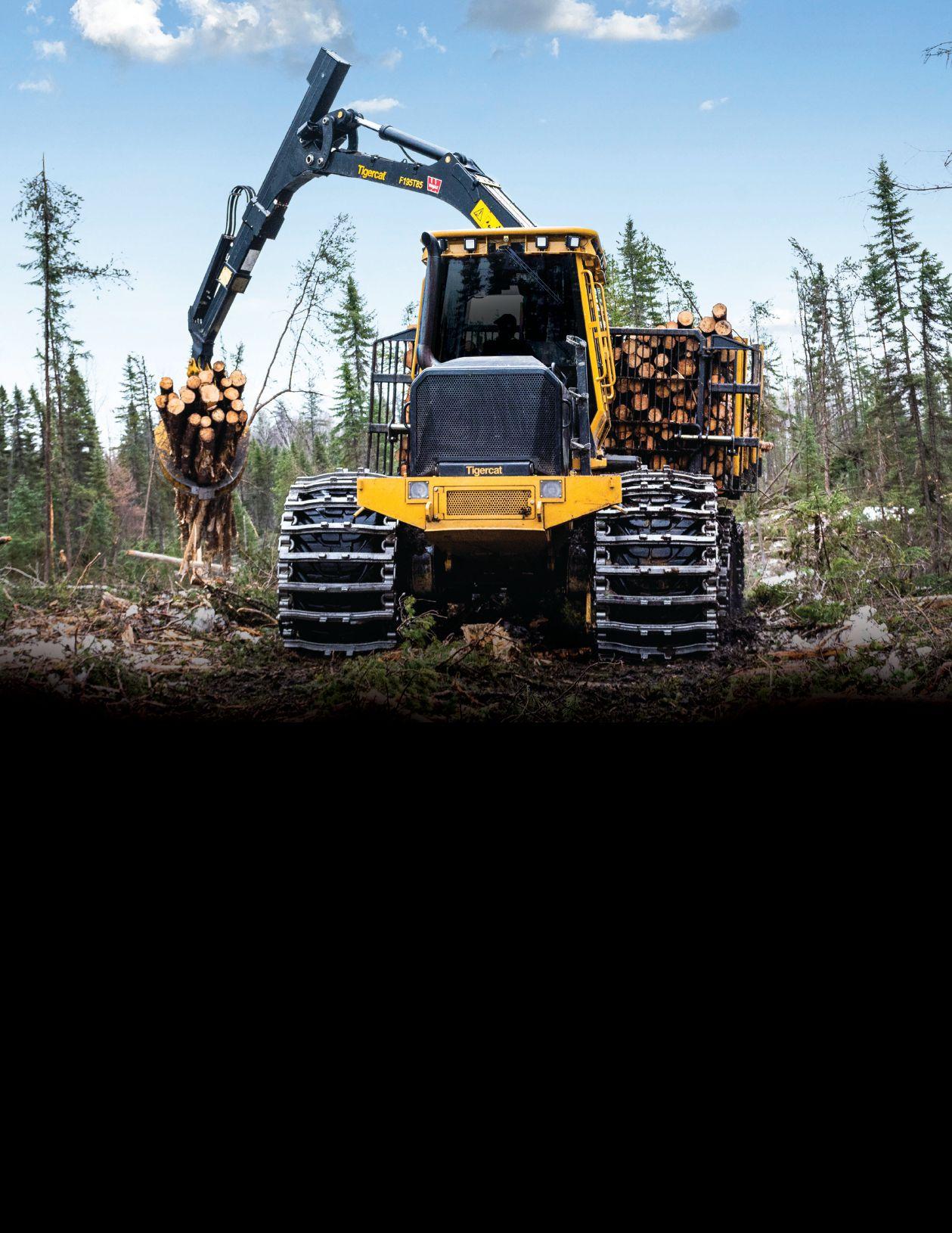
Freya Logging focuses on selective cutting and commercial thinning
Snapshot
Susanne and Mirko Jansen
Freya Logging
Challenging terrain
Mid-year
H
fleet
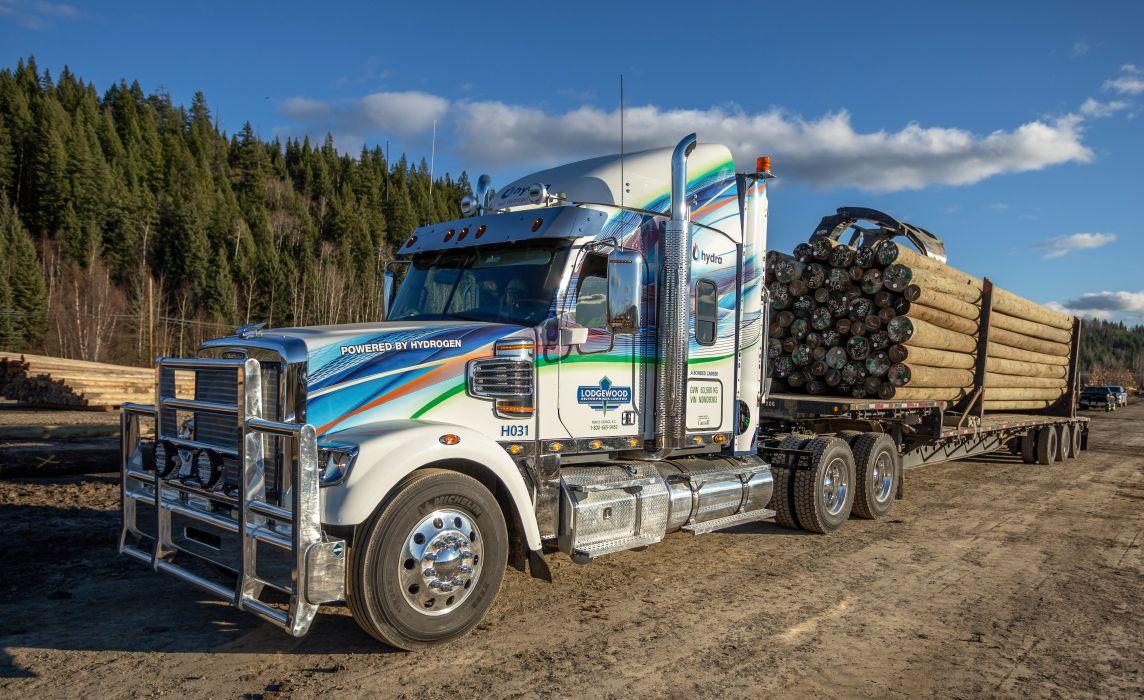
Hydrogen trucks to transport logs in B.C.
Circular
micro-geometry edge prep process
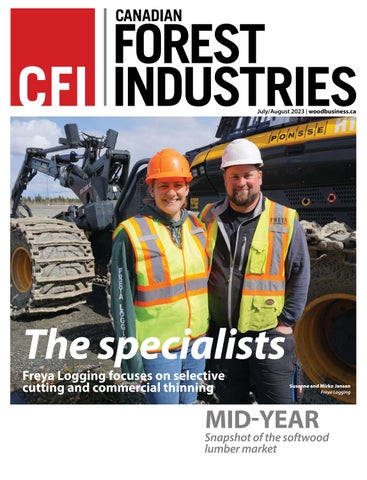
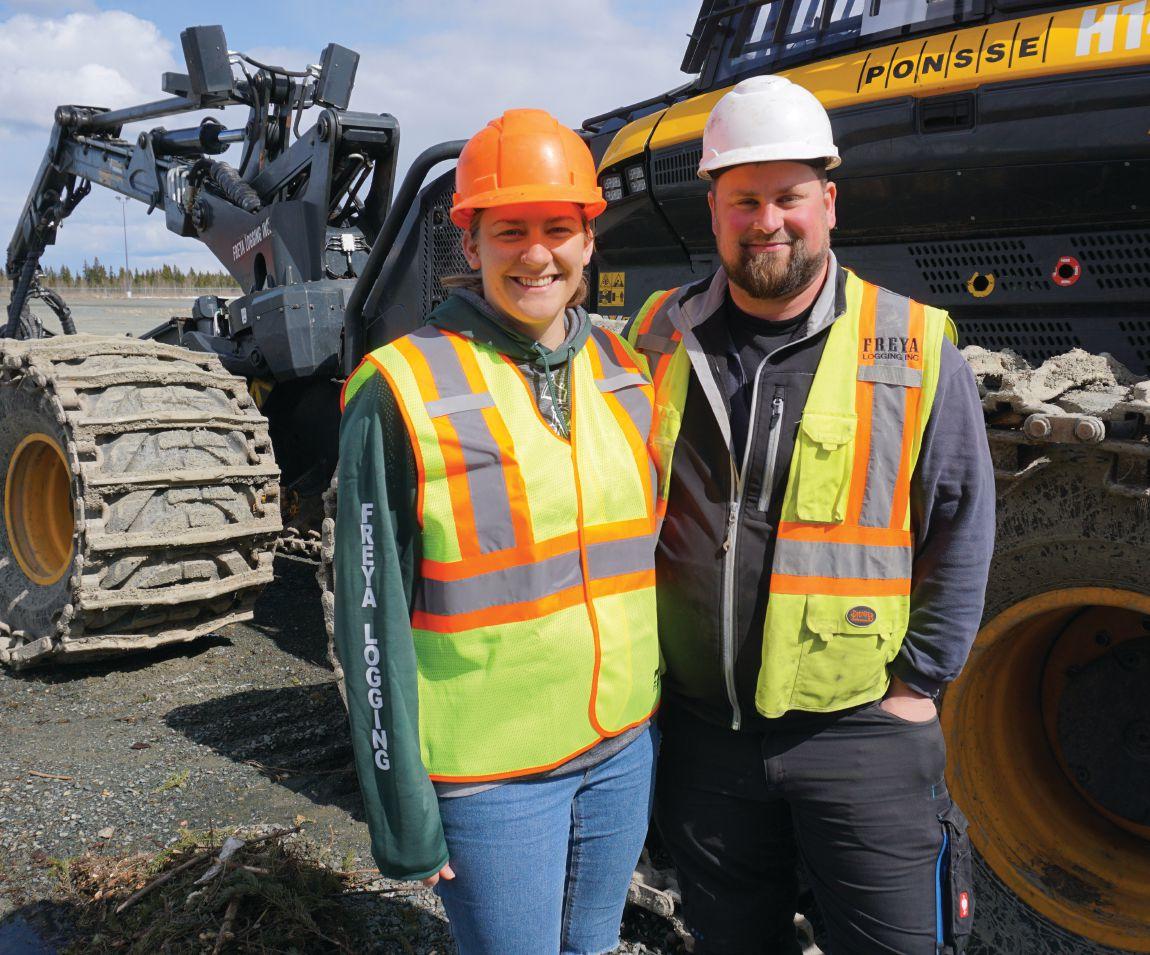
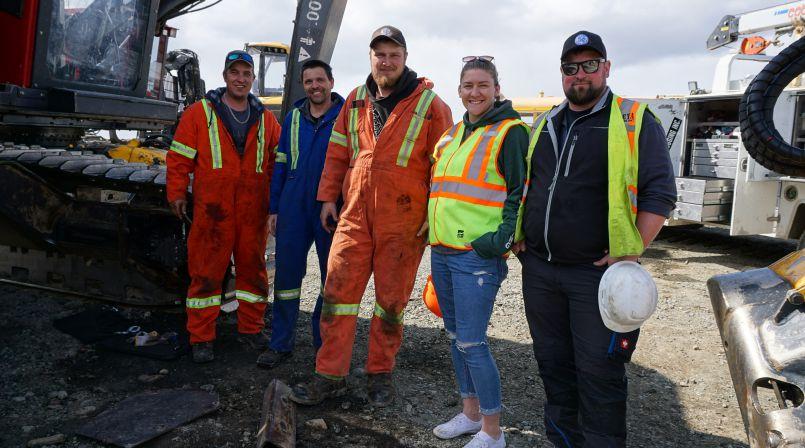
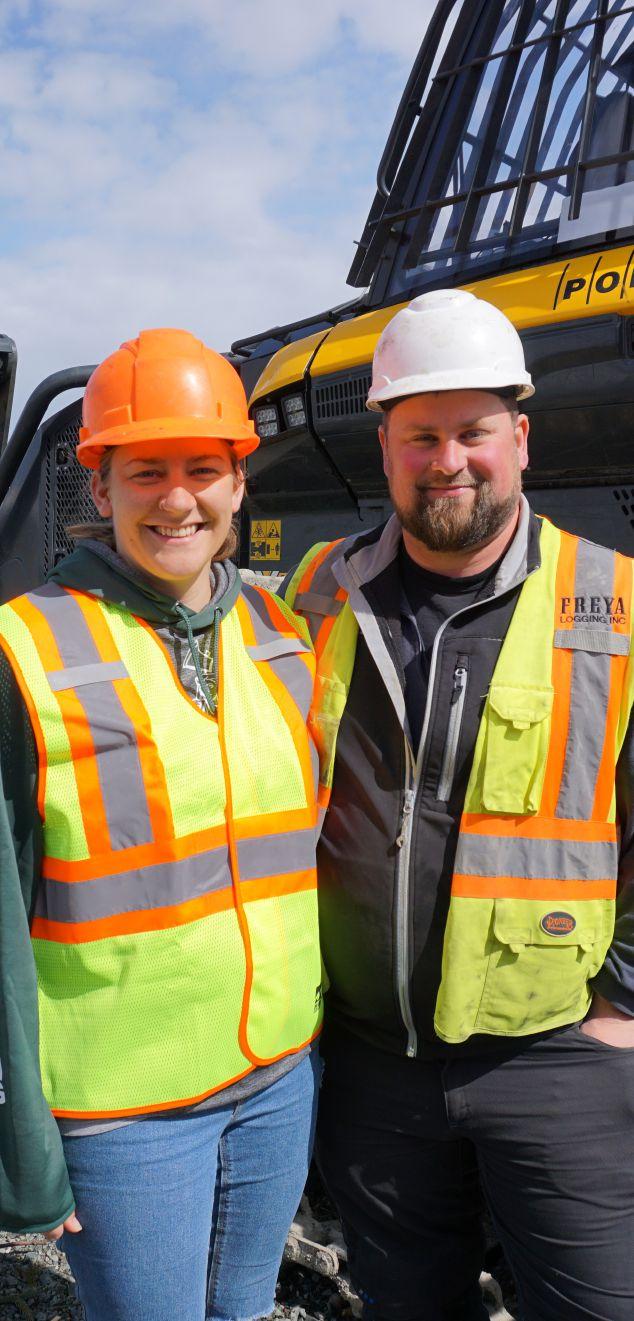
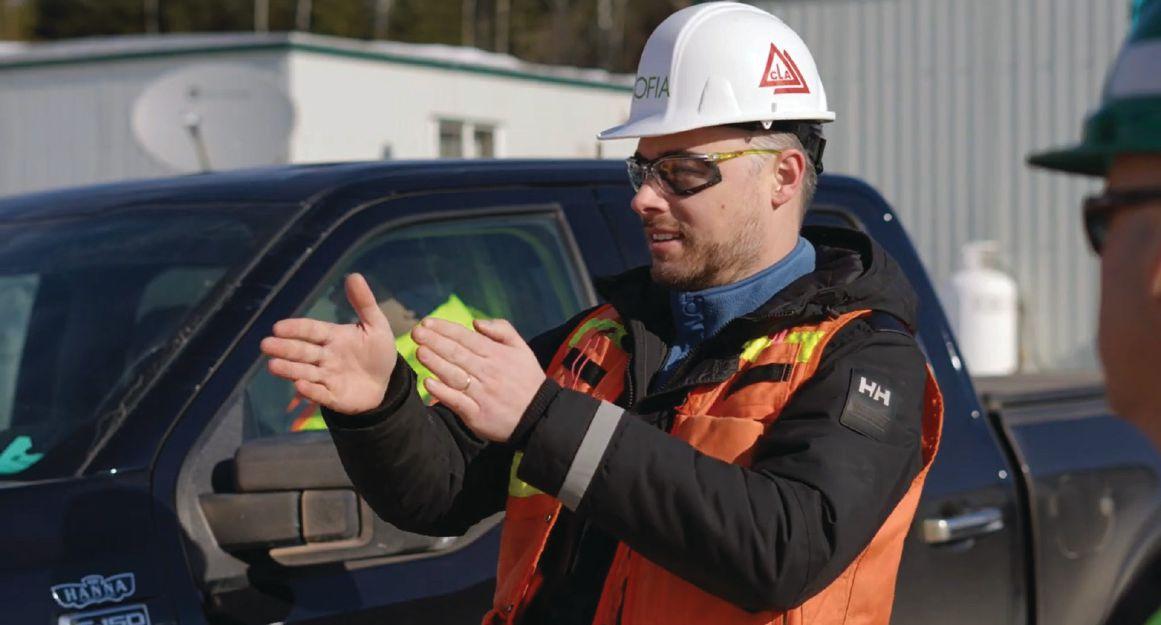
Husband-and-wife team Susanne and Mirko Jansen are part owners of Freya Logging, based in Prince George, B.C. The contractors are specialists in selective cutting and commercial thinning. Read all about it on page 10.
JENNIFERellson
jellson@annexbusinessmedia.com
The heat is on
Feeling the burn as mercury levels, interest rates continue to soar
How’s your summer doin’?
By now you must have heard that Earth is enduring its hottest period in modern history. The mercury rose at the start of July and smashed records around the globe. As I type, a heat wave is searing the province of Quebec, and in my area of Montreal, energy demand is causing regular, sporadic power outages. But that is nothing compared to what the rest of our fellow Canadians are enduring right now. As of this writing, almost 900 wildfires are burning across Canada, and we mourn the loss of two wildfire fighters who died in the line of duty. I join the rest of our industry in thanking and paying tribute to our brave firefighters battling record blazes.
Climate change, we see you, and we’re not taking your punches lying down. Our forests are feeling the heat with wildfires, pesky pests, and crazy weather events, but guess what? We’re fighting back. We’re restoring our forests, diversifying our tree species, and getting smarter about managing those fiery blazes. And hey, we’re not just sitting on the sidelines; we’re actively involved in carbon offset programs and sustainable bioenergy production. We’re in this climate change battle together, and we’re ready to make a difference.
First things first, sustainable forest management is the name of the game. As true stewards of our incredible forest resources, Canadian forest companies are leading the charge in responsible practices. We’re all about preserving biodiversity, combating climate change, and making sure our forests stay healthy and productive. We’re talking selective harvesting, reforestation efforts, and getting certified to show the world we mean business when it comes to sustainability. And here’s a big shout-out to our Indigenous partners because we know collaboration is where it’s at. We’ve recognized the incredible wisdom and knowledge that Indigenous communities bring to the table. By combining traditional prac-
tices with modern techniques, we’re finding more holistic ways to manage our forests sustainably. It’s all about walking hand in hand towards success. Our cover story on Freya Logging illustrates these points very well.
Now, let’s talk tech! We’re living in a world of mind-blowing advancements, and the forest industry isn’t one to be left behind. We’ve got remote sensing, artificial intelligence, and data analytics making waves and revolutionizing how we do things. These nifty innovations are helping us make smarter decisions, like improving forest inventory assessments and managing our supply chains like pros. Oh, and the cherry on top? They’re also helping us cut down on waste and minimize our impact on the environment. Win-win! You will find that our features on the latest innovations in steep slope harvesting, as well as our story about an efficient combustible dust safety program address these points, and more.
You see, the mercury is not the only thing rising. Interest rates are also climbing, and lumber prices have also seen hikes since the beginning of June. With these factors, how is the industry doing? Find out via our mid-year report on the North American softwood lumber market, as well as the coverage of the Global Softwood Log and Lumber Conference held in Vancouver last June.
For now, flip through the pages of this magazine, and get ready to be blown away by the incredible stories, interviews, and articles that highlight the achievements and ongoing adventures in our forest industry.
And remember, although we’re feeling the heat of the summer and the heat brought by economic factors, let’s celebrate our successes, learn from our experiences, and join forces to keep our forests thriving and our industry booming.
So, grab a cup of coffee and let’s jump right in!
NEWS upfront
On-off B.C. port strike affects forest industry
The on-again, off-again B.C. port workers strike that started on Canada Day and ran for 13 days had shut down major B.C. ports and affected the forest industry supply chain.
Some 7,400 port workers – members of International Longshore and Warehouse Union (ILWU) walked off the job on July 1. A proposal was tabled by a federal mediator that the BC Maritime Employers Association and ILWU tentatively accepted on July 13. But the workers went back on the picket line July 18, which was deemed illegal as the union did not provide a 72-hour notice. The union then issued a strike notice for July 22, which it later rescinded with no details.
“The shutdown of our ports landlocks our products and prevents them from getting to market, especially overseas. Asia is a growing market for B.C.’s high quality forest products and is critically important for B.C.,” said BC Council of Forest Industries
CANADIAN MILLS UPDATE: JULY 2023
Roseburg Forest Products Pembroke, Ont.
president and CEO Linda Coady. The labour dispute led Canfor Pulp Products to temporarily curtail its Northwood Pulp Mill in Prince George, due to limited storage space for pulp products that cannot be transported overseas due to the port closures.
$3M for robotic equipment at MDF facility
Tolko - High Prairie High Prairie, Alta. Q4 2023 Mill fire (May, 2022); Reconstruction and repairs Massive Canada Williams Lake, B.C. Q1 2024 New $80M mass timber and building prefabrication facility
Skeena Sawmills Terrace, B.C. Restart
Lack of a secure fibre supply and weak markets
Western Forest Products Various – B.C. 3 weeks Weak market conditions
Resolute Forest Products Various – Que. 2 weeks Wildfires limit access to log supply
Uniboard Val-d’Or, Que. 1Q 2025
Paper Excellence Crofton, B.C. 2 weeks
Paper Excellence Port Alberni, B.C. 30 days
$350 million particleboard plant modernization program going to plan
Temporary curtailment due to global market oversupply
Temporary curtailment due to global market oversupply
Source: Madison’s Lumber Reporter
Massive Canada to build new mass timber plant
The B.C. government is footing up to $10 million of the $75-million bill for Massive Canada to construct a new mass timber manufacturing facility in Williams Lake in
the Central Interior.
Massive Canada is renovating and equipping an existing 91,000 square-foot manufacturing plant to pre-fabricate laneway homes, apartment units, townhouses and commercial projects using mass-timber building products and systems.
Photo: Annex Business Media.
Alberta names new forestry minister
Todd Loewen was sworn in as Alberta’s minister of forestry and parks on June 9.
Prior to his service as an elected official, Loewen owned a small outfitting business and an operational farm. Born and raised in rural Alberta, he grew up in a farming family. He has lived in the community of Valleyview for the past 50 years.
Ontario invests in training for lucrative millwright careers
The Ontario government is investing over $364,000 to help 100 journeypersons and apprentices in Sarnia and southwestern Ontario upgrade their skills in millwrighting.
Participants will be trained and certified on four pieces of equipment including boom lifts and elevating work platforms, forklifts, telehandlers, and scissor lifts. They will also get help with technical skilling and employment support so they can progress in their careers and meet the needs of local employers.
Hybrid-electric prototype trailer makes headway
FPInnovations has achieved very promising results in fuel economy and reduction of greenhouse gas emissions during the field testing of an innovative electric drive trailer for use in forest operations. The prototype trailer, developed in collaboration with Deloupe, features an electric drive axle implemented by FPInnovations with support of Voltari Power, a subsidiary of Voltari Marine Electric, and shows the possibilities for the forest transportation sector to fight climate change.
Mercer Mass Timber acquires Structurlam
Mercer Mass Timber’s acquisition of Structurlam Mass Timber Corporation and its subsidiaries has been completed. Mercer will immediately take possession and continue the operation of Structurlam’s manufacturing facilities, which
will now operate under the ‘Mercer Mass Timber’ brand, including a production facility located in Conway, Ark., and in Penticton, B.C. Mercer now holds all of Structurlam’s brand assets, product and project portfolios, and intellectual property.
Canada mourns two wildfire fighter deaths
Two firefighters died in the line of duty while battling separate wildfires.
The B.C. Wildfire Service said 19-yearold firefighter Devyn Gale had died while tackling the blaze near Revelstoke on July 13. Revelstoke RCMP said she had been clearing bush in a remote area when she lost contact with her team and was discovered caught under a
Reader Service Print and digital subscription inquires or changes, please contact Angelita Potal, Customer Service Tel: 416-510-5113
Email: apotal@annexbusinessmedia.com
Mail: 111 Gordon Baker Rd., Suite 400, Toronto, ON M2H 3R1
EDITOR - Jennifer Ellson (438) 483-7451 jellson@annexbusinessmedia.com
MANAGING EDITOR - Maria Church (226) 931-1396 mchurch@annexbusinessmedia.com
GROUP PUBLISHER - Anne Beswick (416)410-5248 • Mobile: (416) 277-8428 abeswick@annexbusinessmedia.com
fallen tree. First aid was administered and she was airlifted to a hospital where she succumbed to her injuries.
On July 16, the Government of Northwest Territories said a firefighter had died on July 15 while battling wildfires near Fort Liard, near the B.C. border. The Fort Nelson First Nation identified him as Adam Yeadon, 25, a member of the Acho Dene Koe band.
Photo: Gov of Alta.
Photo: Annex Business Media.
THE SPECIALISTS LOGGING profile
Freya Logging focuses on selective cutting and commercial thinning
BY JENNIFER ELLSON
In the heart of Prince George, B.C., Freya Logging stands tall as a shining example of a thriving Canadian forest industry enterprise. Founded in 2016 by two families with a shared passion for sustainable logging, Freya Logging has since evolved into a powerhouse in the region. With its diverse team of dedicated professionals, the company has carved a niche for itself in the areas of commercial thinning, selective cutting, blowdown recovery, fire proofing, and more.
Led by the husband-and-wife duo of Susanne and Mirko Jansen, Freya Logging exemplifies the essence of hard work, expertise, and unwavering commitment to the craft.
EARLY DAYS AND STEADY GROWTH
Freya Logging’s humble beginnings trace back to 2016 when two families embarked on a journey to bring their logging expertise to the Canadian forest industry. Armed with a single piece of equipment –a Ponsse Buffalo King forwarder – and an abundance of determination, Sofia and Liam Parfitt and their friends Claudia and Olaf Weber laid the foundation for what would become a remarkable success story. The early years were marked by persistence, as the team honed their skills and steadily expanded their operations.
EXPANDING FLEET AND HORIZONS
In 2019, a significant shift in Freya Logging’s ownership occurred when Mirko and Susanne acquired a majority stake in the company upon Olaf’s retire-
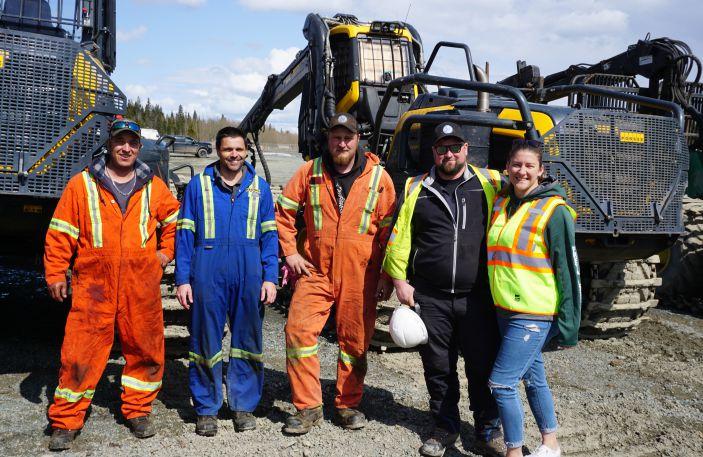
Freya Logging’s journey from humble beginnings to becoming a force to be reckoned with in the Canadian forest industry is a testament to the owners’ passion, expertise and unwavering dedication. Photos: Annex Business Media.
ment. With a profound understanding of the logging industry, Mirko’s invaluable expertise provided the necessary impetus for Freya Logging’s continued growth. Under the Jansens’ leadership, the company witnessed an unprecedented transformation, leveraging their collective experience to drive operational excellence.
“My wife and I are very fortunate to be presented with the opportunity to own a majority share of the company. We’re very proud of what we’re doing, and so is our crew. I feel the industry is changing and we’re part of it,” says 35-year-old Mirko.
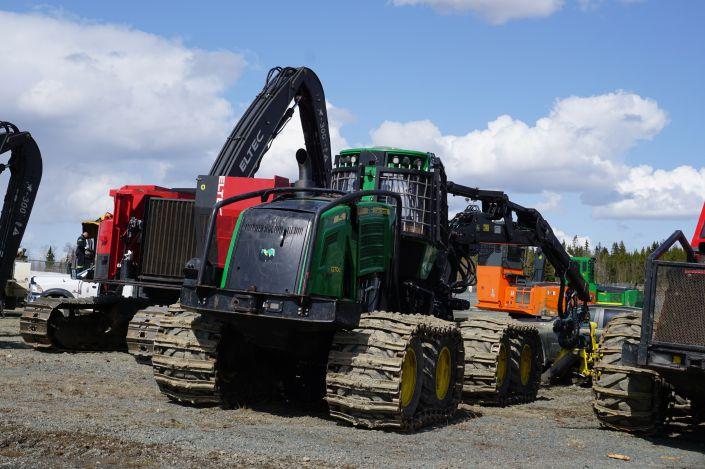
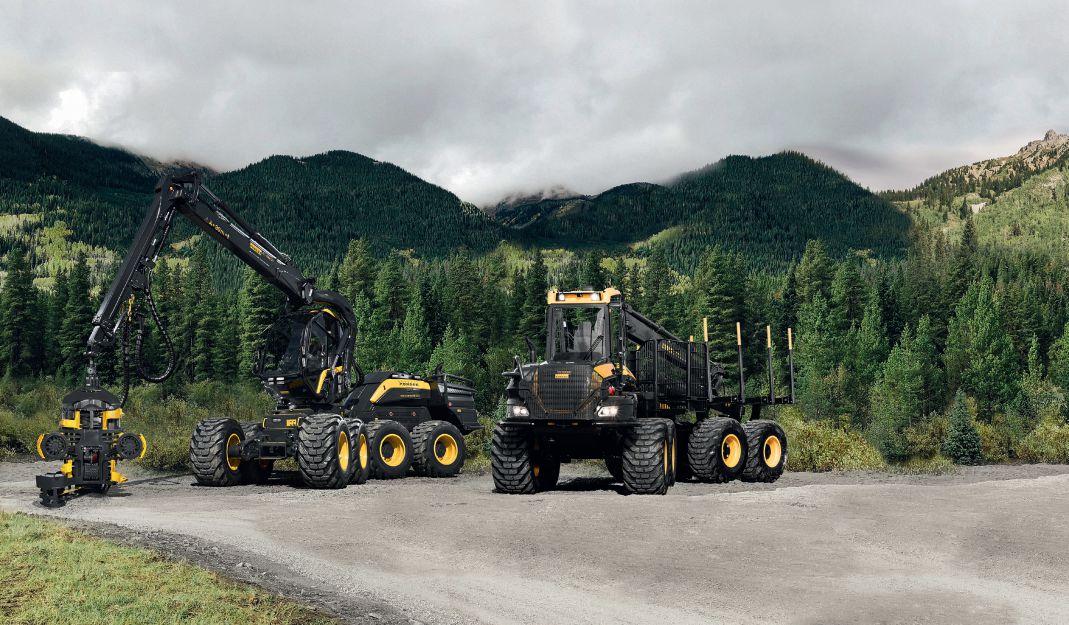
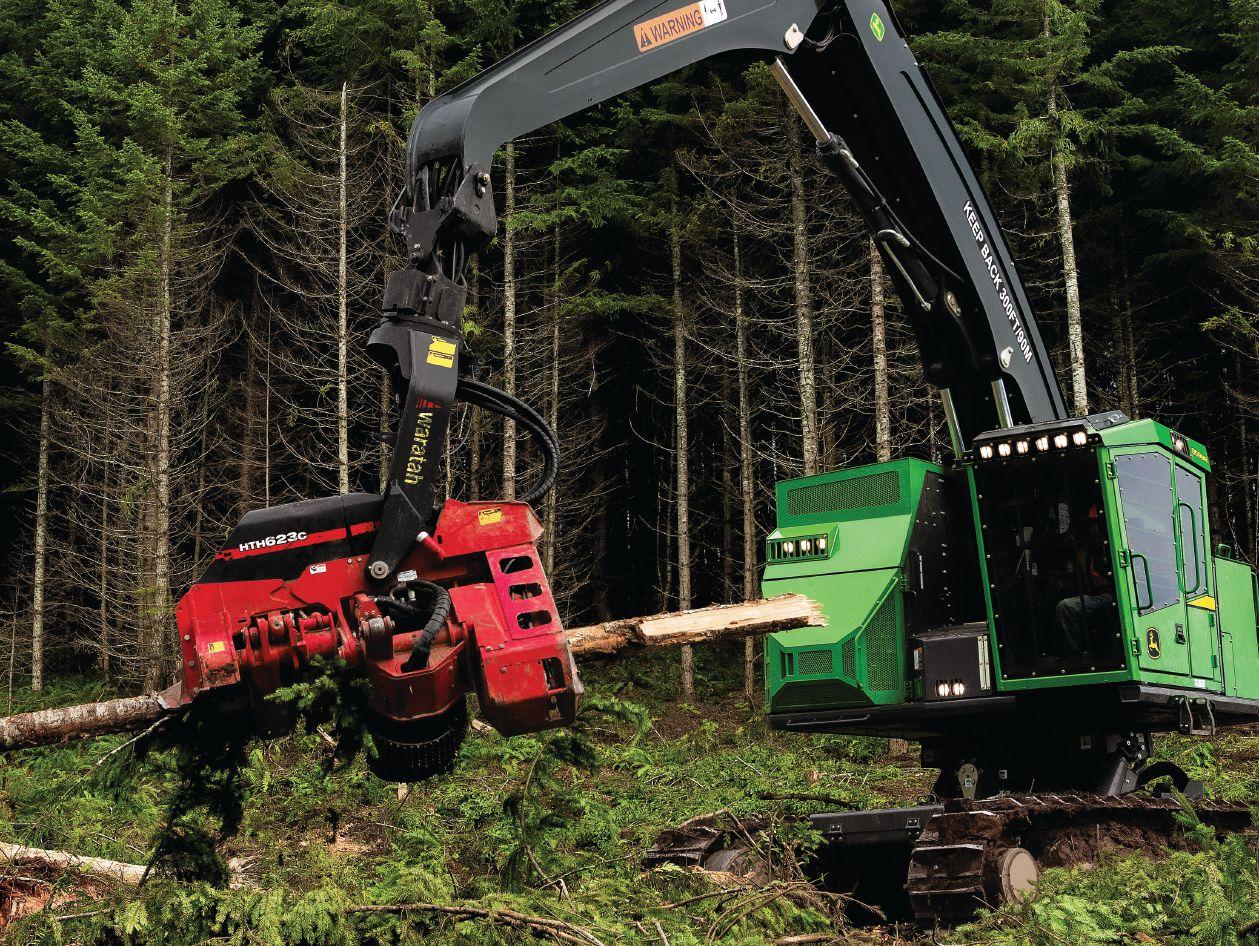
Canadian Forest Industries met with the husband and wife and their team last spring, and they proudly showed us their fleet consisting of eight harvesters: two Ponsse Scorpions; one Ponsse Bear, two Eltecs with Ponsse harvesting heads; one John Deere 1270G 8WD; one Komatsu 931; one Hitachi 210 with 622 Waratah harvesting head.
“We just got our new Ponsse Scorpion with Ponsse H7 head that went to work on the first day of the 2023 logging season,” Mirko tells CFI. “To us the Scorpion is a good machine that can do anything from thinning, to blowdown, to clearcut –basically an all-rounder. We do all of our hauling with subcontractors, the same with low bedding.”
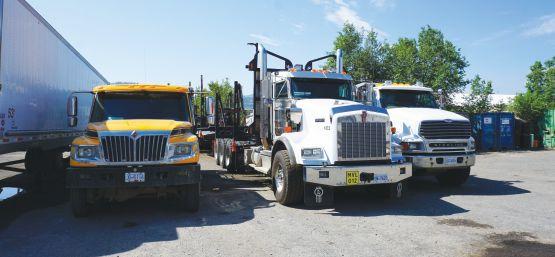
Freya Logging owns six forwarders: four Ponsse Elephant Kings; one Ponsse Buffalo King; and one John Deere 1910. The three log loaders comprise a Hitachi 210 and 240; and one John Deere 2656G. The company also has a Hitachi 260 and two Volvo 290 excavators. As for bulldozers, Freya Logging has two Cat D6 dozers and a Komatsu D85 dozer. Other equipment include one John Deere 772 grader, one dump truck and one Albach Diamant 2000 wood chipper.
“We do cut-to-length with our harvesters and forwarders, and also chipping with the mobile chipper,” says Mirko.
“We purchased the Albach chipper last December to be able to present the full circle of fibre recovery to our customers – mainly chipping for pellet plants and fire proofing blocks, and to be proactive on fibre recovery since we are in a fibre shortage,” he explains. “We at Freya don’t like fibre being wasted or burnt. Sometimes chipping is hard to do due to hauling distances, but if it’s feasible it will
be applied.”
On an annual basis, Freya harvests around 350,000 cubic metres of wood, mainly spruce, pine, fir, and balsam, but also cedar and hemlock in Prince George’s McBride and Valemount districts.
“We harvest everything from 0.1-0.5 cubic metre, but majority is 0.4-0.5 cubic metre. Tree sizes are from six to 20 inches in diameter mostly, but we can do up to 35 inches, and if bigger we have hand fallers to help us.”
Mirko adds that their products are mostly saw logs and pulp, “with some peelers every once in a while,” and the average lengths are between 16 to 20 feet.
“Average skidding distance is 250 meters, average haul distance is around 200 km. We work in a radius of about 600 km around Prince George,” Mirko says. “We have some 30 employees and 15 trucks. We try to have the operators in the seat for nine hours, plus servicing and travelling. An average workday is probably 12 hours,” he explains.
“We mainly work for Carrier Lumber in Prince George, but also do work for Sinclar Group, West Fraser and Drax.”
ROLES AND EXPERTISE
At Freya Logging, each owner brings their unique talents and expertise to the table, ensuring a well-rounded and efficient operation. Mirko, armed with a special-
ized four-year Swiss degree in logging, spearheads the harvesting side of the business. His deep understanding of forestry practices and commitment to sustainable logging has enabled Freya Logging to establish itself as an industry leader in responsible timber harvesting. Meanwhile, Susanne skillfully manages the company’s administrative operations and ensuring seamless co-ordination across various departments, all while expecting their first-born in August.
The Parfitts take charge of sales and marketing. With their combined entrepreneurial acumen and a customer-centric approach, they have successfully positioned Freya Logging as a trusted partner for forestry contractors and stakeholders. Sebastian Mayer, a talented mechanic, ensures that the company’s equipment remains in optimal condition, maximizing productivity and minimizing downtime. James Kelly lends his expertise to the critical task of tree-planting, fostering ecological balance and reaffirming Freya Logging’s commitment to sustainable forestry practices.
SPECIALIZING IN SUSTAINABLE PRACTICES
Freya Logging has earned a stellar reputation in the Canadian forest industry for its specialization in commercial thinning and selective cutting. By meticulously removing
On an annual basis, Freya harvests around 350,000 cubic metres of wood, mainly spruce, pine, fir, and balsam, but also cedar and hemlock.
select trees, the company enhances forest health, mitigates fire risks, and promotes the growth of high-quality timber. Freya Logging’s focus on sustainable practices, including strict adherence to government regulations and employing state-of-the-art technology, showcases their commitment to environmental stewardship.
Commercial thinning and selective cutting can have a big impact on climate change, fire mitigation and biodiversity, which is one of Freya’s main priorities, especially when it comes to protecting moose
COMMUNITY ENGAGEMENT AND SOCIAL RESPONSIBILITY
Beyond their exceptional logging operations, Freya Logging places a strong emphasis on community engagement and social responsibility. They actively participate in local initiatives that promote environmental education and awareness, collaborate with First Nations and empowering communities to make informed decisions regarding forestry practices. Freya Logging
With a diverse ownership structure and a team of professionals who excel in their respective roles, Freya continues to push boundaries and set new standards for sustainable logging practices.
also prioritizes the hiring of local talent, contributing to the economic growth of the region and fostering a sense of pride and ownership among employees.
Freya Logging’s journey from humble beginnings to becoming a force to be reckoned with in the Canadian forest industry is a testament to the owners’ passion, expertise, and unwavering dedication.
With a diverse ownership structure and a team of professionals who excel in their respective roles, the company continues to push boundaries and set new standards for sustainable logging practices. As they look towards the future, Freya Logging remains committed to innovation, responsible stewardship, and further strengthening their position as an industry leader in Prince George, and beyond.
“We are pretty positive about the future and are hoping that inflation will level out and lumber price recover,” says Mirko.
and mule deer habitat.
Maximum Productivity
Get things done right the first time with
More Intuitive
IBC offers simple functionality for new
Ultimate Support
Backed by Brandt, true 24/7/365 support minimizes downtime and saves you money.
steep slope
Forests on challenging terrain
Recent developments as discussed at COFE-FETEC conference
BY DZHAMAL AMISHEV
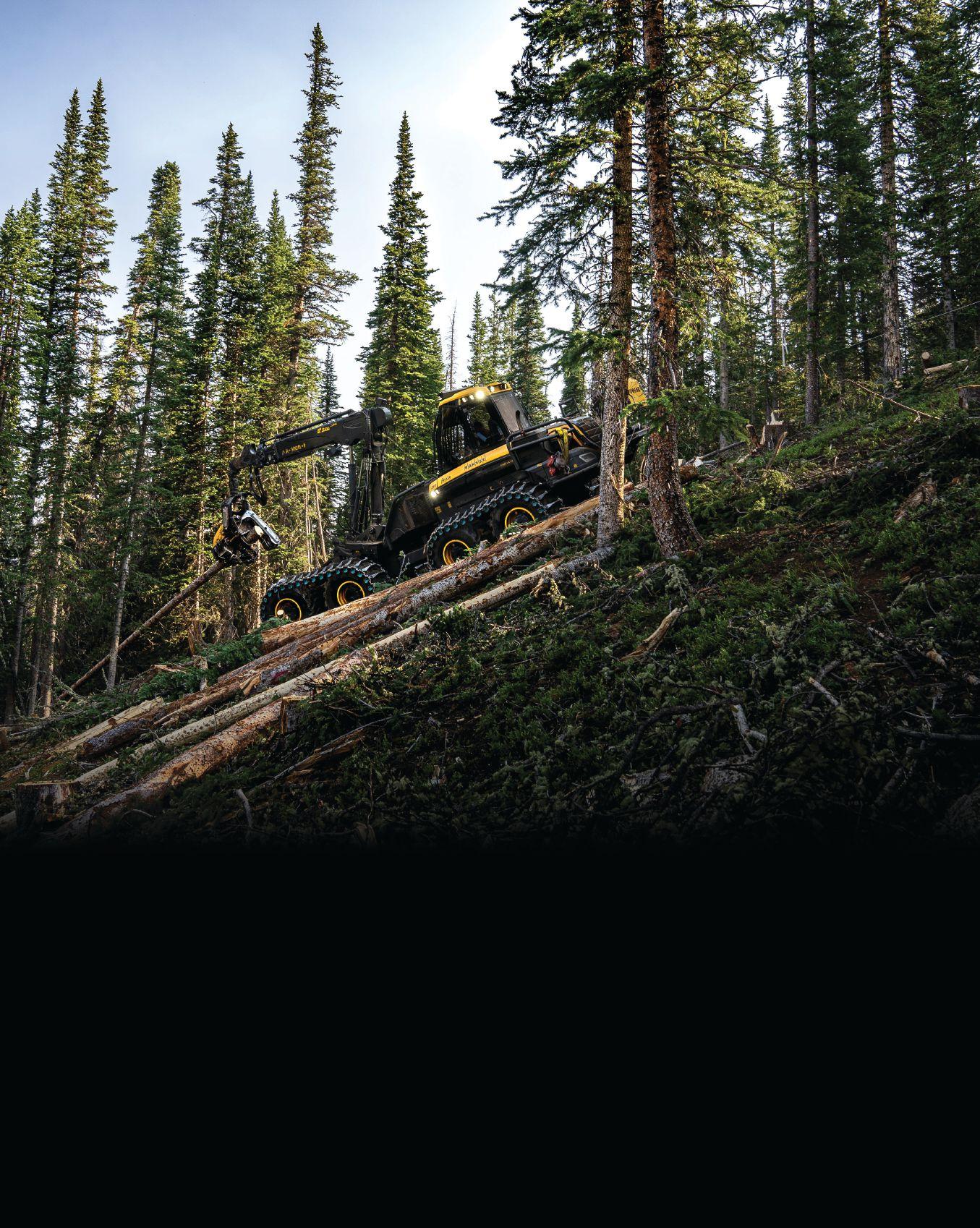
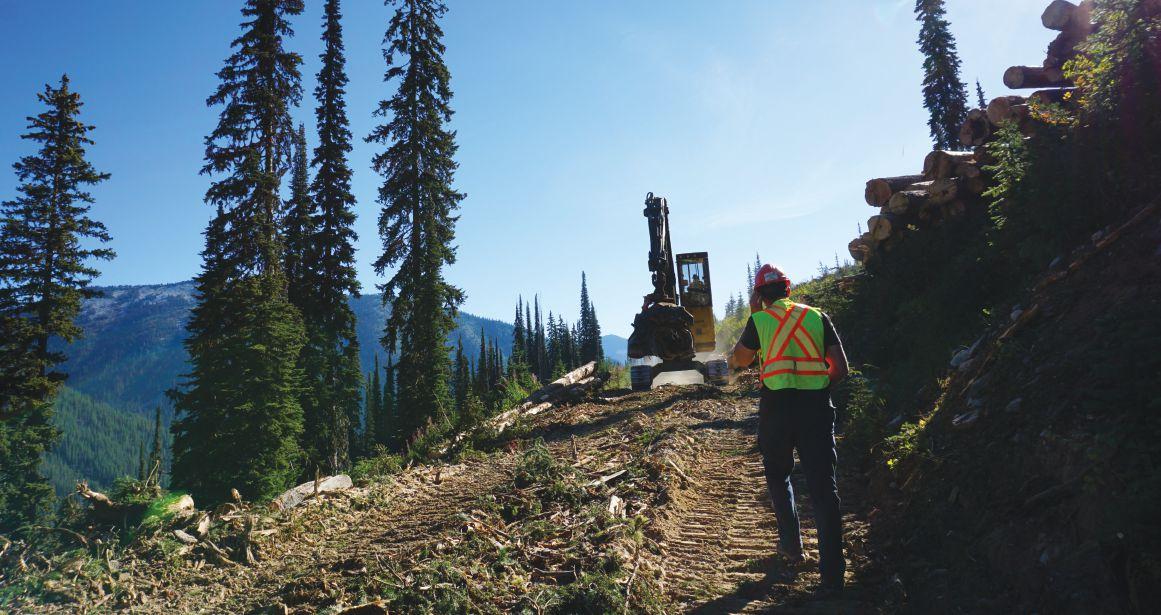
Steep slope harvesting presents unique challenges and risks to the forest industry. At the COFE-FETEC international conference in Flagstaff, Ariz., in May, recent advancements and innovations in technology, safety measures, and operational practices have paved the way for more efficient and sustainable logging on challenging terrain.
FOREST FIRES: A GROWING CONCERN
Forest fires have become an increasingly significant threat to forest ecosystems and human settlements
in recent years. Canada in particular has experienced an alarming increase in the scale and intensity of wildfires. As of June 27, Canada has already surpassed its historical record for the total area burned in a single season. This poses a significant challenge for the forest industry, as it necessitates the adoption of proactive measures to mitigate the risks associated with forest fires. Effective forest management practices, silvicultural and operational adaptations are crucial in protecting valuable forest resources and minimizing the impact of wildfires.
Safety remains a paramount concern in forestry operations. Smart sensors and wearable assistive technology, such as exoskeletons, are being explored. Photo: Annex Business Media.
THINNING AS A TOOL FOR INCREASED RESILIENCE
The interior forests of B.C. are facing unprecedented disturbances such as insect outbreaks and wildfires, compromising the long-term stability of forest stands. Commercial thinning (CT) has emerged as a widely implemented silvicultural treatment to address these challenges. By selectively removing trees in mid-rotation even-aged conifer stands, CT enhances the resilience of the remaining trees to stressors and improves the potential of harvested wood, contributing to sustainable forest management. Thinning operations help create healthier forests by reducing competition among trees for resources, promoting better tree growth, and increasing resistance to insect infestations and wildfire risks. However, the financial feasibility of forest thinning operations has been a challenge. High operational costs and low revenues, especially when targeting low-value and small-diameter trees, hinder landscape-scale planning and treatment prioritization. To address this, a systematic literature review and a new thinning cost model have been developed. These tools aid foresters in developing cost-effective plans for thinning operations, optimizing forest management objectives, and ensuring a sustainable balance between environmental stewardship and economic viability.
RESIDUE MANAGEMENT ON COMPLEX TERRAIN
Residue management plays a crucial role in ensuring post-harvest environmental sustainability and maximizing the value of accumulated materials – substantially more so when thinning on steep terrain. Georeferenced unmanned aerial vehicle (UAV) imagery has proven effective in measuring large harvest residue piles on rolling-tosteep terrain. By capturing photogrammetric models of residue piles, it becomes possible to remotely measure volume and depth accurately, allowing for informed management decisions. Active management and measurement of residue piles are increasingly important not only to maximize their value but also to mitigate potential environmental risks, such as erosion and nutrient loss.
Subsequent biomass utilization and the production of bio-based products present exciting opportunities for the forest industry. Traditional practices such as pile burning for
fuel treatment removals are being reevaluated, and alternative solutions explored. Financial and operations research models are being developed to overcome barriers to utilizing fuel treatment removals as an alternative to pile burning. This shift towards sustainable biomass utilization helps reduce GHG emissions, improve air quality, and create value-added products such as biochar, with multiple applications in agriculture and environmental remediation. Modelling inventory management policies for pellet facilities to adapt to sea-
sonal biomass supply and demand fluctuations can optimize production and ensure a steady supply of bio-based products.
ELECTRIFICATION AND DIGITIZATION FOR SUSTAINABLE OPERATIONS
The forest industry is increasingly exploring electrification and digitization as climate-smart solutions. Battery-electric log trucks are being considered for steep forest roads in regions like Western Oregon. The feasibility of battery-electric log trucks depends on factors such as cost, battery ca-
A LONG WAY TOGETHER
FS 216
No matter how challenging your needs, FS 216 is your best ally for all operations with loggers and skidders. This aramid-belted forestry tire has a robust log design with optimum angle and larger width for enhanced traction performance. FS 216 provides excellent cut and chip resistance as well as maximum protection against possible damages at any time.
FS 216 is BKT’s response to your needs even under the most critical operating conditions in forestry.
pacity, topography, charging infrastructure, and operational requirements. Preliminary studies suggest that these trucks offer environmental benefits by reducing emissions and noise pollution while maintaining performance and efficiency. The potential of battery-powered chainsaws in forestry operations is also being investigated, with promising results that could revolutionize traditional logging practices by minimizing emissions, reducing maintenance costs, and improving operator comfort and safety.
SAFETY AND PRODUCTIVITY ADVANCEMENTS THROUGH TECHNOLOGY AND INNOVATION
Safety remains a paramount concern in forestry operations. Smart sensors and wearable assistive technology, such as exoskeletons, are being explored to detect and mitigate danger zones, reducing the risk of accidents. Technologies like proximity sensors and machine vision systems can help identify and manage danger zones more effectively. Understanding the frictional performance of wire ropes is helping improve anchoring techniques and enhance occupational safety both in winch-assist
and cable yarding operations. Accurate knowledge of rope friction coefficients allows for secure anchorage, reducing the risk of accidents during logging operations.
Enhancing productivity in forest operations is a continuous pursuit. An integrated approach for production performance analyses of winch-assist harvesting in Western Canada has provided valuable insights into operational efficiencies. By analyzing key performance indicators, such as cycle times, productivity rates, and machine utilization, forest managers can identify areas for improvement and optimize the use of machinery and labour resources. Similarly, analysis of grapple yarding operations using on-board computer systems and remote sensing-based enhanced forest inventories has provided valuable data for productivity and utilization analysis. By leveraging technology and digital solutions, the forest industry can streamline operations, reduce downtime, and improve overall productivity.
Automation holds immense potential for the forest industry, offering cost reductions, increased safety, and the ability to manage labour shortages effectively. While
progress in developing autonomous forest machines has been slow due to the challenging environment and complex tasks involved, recent advances indicate that the pace might speed up. Significant progress has been made toward automated and fossil-free operations in forestry, showcasing the feasibility of autonomous solutions. Successful field demonstrations of autonomous forwarding have also provided promising results, highlighting the potential for automation in streamlining operations and reducing reliance on manual labour.
Steep slope harvesting is undergoing a transformation through technological advancements, safety improvements, and innovative practices. Continued research and collaboration among industry stakeholders, researchers, and technology developers will further drive advancements in steep slope harvesting, leading to a more resilient and sustainable forest sector.
Dzhamal Amishev is an assistant professor at Lakehead University in Thunder Bay, Ont., and has over 15 years of experience in forestry research, including improving safety, increasing efficiency and reducing costs of steep slope forest operations.
THE LEGENDARY FORESTRY GRAPPLE
Hultdins has long been a world leader in highly engineered by-pass style grapples. SuperGrip SG Grapples are the forest industry standard on log trucks and forwarders. Our traditional SuperGrip SG Grapple models have become common on excavators for tree service, land clearing, feeding chippers or grinders, and part time logging. All SG Grapples are equipped with Indexator GV Rotators. Links are available to match any forwarder, log truck, or excavator mounts. Since its launch in the mid-1990s, we’ve continually improved the SuperGrip to meet increasing productivity demands.
Hydrogen production is just half the forestry story
BY LAURA GUZMAN
Although hydrogen was discovered hundreds of years ago, only recently has it experienced unprecedented political and business momentum around the world, thanks to its potential to curb carbon emissions and leverage existing infrastructure and resources.
For example, the Canadian government laid out its hydrogen strategy back in 2020 highlighting its commitment to becoming an international leader in producing and using clean hydrogen to reduce greenhouse gas (GHG) emissions and displace the
country’s reliance on carbon-intensive fossil fuel energy.
However, even the most abundant, readily available, and emissions-friendly chemical substance in the universe has its challenges. Most notably, it’s been plagued by high production costs, potentially “dirty” production processes, and lack of infrastructure. But this has not dissuaded both the public and private sectors from continuing their financial and regulatory support mainly driven by hydrogen’s promise to help reduce carbon emissions on the
world’s path to net-zero.
This is why organisations like the Forest Products Association of Canada are committed to moving Canada towards a greener tomorrow, outright supporting the government’s goal of net-zero emissions by 2050. Similarly, provincial groups like the B.C. Council of Forest Industries have committed to growing a more sustainable forest sector through a continuous focus on innovation and responding to community needs. But how is the industry utilising hydrogen today?
transport companies, to convert their existing heavy-duty Class 8 trucks to run on Hydra’s proprietary hydrogen-diesel, co-combustion technology, immediately reducing emissions up to 40 per cent per truck at no cost to fleet owners.
Not only have these fleet owners realised the most economical way to run greener and comply with the sustainability-related requirements of their contracting forestry clients, but they’ve also managed to optimise their truck performance and fuel efficiency in the process.
“The first internal combustion engine powered by hydrogen occurred as far back as 1804, yet progress since then has been limited.”
To date, most hydrogen-related talk within forestry has focused on turning forestry waste into green hydrogen. Additionally, there have been reports of hydrogen-fuelled machines like Volvo’s world-first hydrogen-articulated hauler and the H2 dual power hydrogen-powered tractor from New Holland and Blue Fuel Solutions. But this is just half of the forestry story when it comes to hydrogen. Where the full opportunity exists is when it comes to both producing and using clean hydrogen to replace reliance on fossil fuels and to reduce GHG emissions – at all points in the supply chain –providing a cleaner approach end-to-end including where it’s needed most: the transport of goods.
Case in point: in March of this year, B.C.-based hydrogen trucking pioneer Hydra Energy signed MOUs with eight commercial fleets in the Prince George region, including many forestry-related
Hydrogen is ideal for heavy-duty trucking applications since it meaningfully reduces GHG emissions, provides the high torque and power needed for traction and heavy payloads, works in cold temperatures, refuels as quickly as diesel, and doesn’t add weight of heavy batteries that reduce payload and revenue.
With a practical, hydrogen transition solution like Hydra’s, the overall economics make sense as noted by Annie Horning, CEO of Excel Transportation that services the B.C. forest industry.
“Once we heard about the progress Hydra has been making on their hydrogen refuelling station right in our own backyard, the fact their hydrogen wouldn’t cost us more than diesel, and that it would cost nothing to retrofit our trucks to run cleaner and more efficiently, we couldn’t pass on the opportunity. Hydra allows us to make a positive difference
A rendering of the world’s largest hydrogen refuelling station Hydra is currently building in Prince George, B.C. to service Hydra-converted trucks in the region.
Hydra signed MOUs with commercial fleets in B.C. to convert their existing heavy-duty Class 8 trucks to run on Hydra’s proprietary hydrogen-diesel, co-combustion technology.
sooner than later while eliminating our range anxiety concerns that could impact our service reliability,” Horning said.
But how is Hydra able to make hydrogen transportation possible within Canadian forestry right now when hydrogen has continued to be touted as the “fuel of the future”, not the fuel of today? The first internal combustion engine powered by hydrogen occurred as far back as 1804, yet progress since then has been limited.
The secret lies in Hydra’s innovative Hydrogen-as-a-Service (HaaS) business model, which makes the economics work now. That means the company’s zero-cost, proprietary dual-fuel conversion kit for heavy-duty trucks is just one piece of the larger puzzle.
Hydra’s HaaS approach uniquely connects low-carbon hydrogen supply and demand in a way that helps companies profitably bring hydrogen to market at scale and commercial fleet operators secure reliable, long-term, local clean fuel contracts at diesel-equivalent prices with no-up front investment.
For example, if you’re a forestry company that is producing hydrogen from operational waste, that same fuel could potentially be used to support Hydra-converted trucks of your own or fleets you contract to move your wood products. That or converted trucks in Northern B.C. could leverage the world’s largest hydrogen refuelling station Hydra is currently building in Prince George to be operational next year.
Hydra continues to sign commercial fleets serving the B.C. forestry industry in its quest to help reduce the province’s excessive transportation-related emissions. The company has also expanded its HaaS offering into Alberta and is working with potential licensees around the world looking to monetize their own hydrogen at scale in the most profitable way possible, proving hydrogen can be utilised along all aspects of the supply chain.
As Hydra CEO Jessica Verhagen puts it, “Hydra’s HaaS business model and proven performance on real-world truck routes over past years demonstrate the possibil-
ities for hydrogen across the value chain in forestry right now. Yes, as a country we have the potential to leverage our incredible natural resources to produce the hydrogen the world needs and we also have the innovation to leverage that same hydrogen right in our own backyard.
“Our practical, transition solution is one that forestry company fleets or transport service providers want to adopt
today, we think hydrogen has already proven it has a role to play in the future of Canada’s forest sector.”
Laura Guzman is Hydra’s vice-president, partnerships. She has opened up critical opportunities for Hydra to advance new partnerships with government, industry, NGOs and First Nations. She is responsible for advocating for improved hydrogen policy across governments.
We’ve been a leading force in air flow design for almost 3 decades, with 4-, 6-, 8-, and 12-bladed propellers, designed and manufactured exclusively for the lumber industry. Now, they are even more capable with higher- temperature capacity for certain applications. We combine this technology with unsurpassed customer service, design consultation and technical expertise, so whatever your air flow need, you can trust SmithCo to deliver.
2023 MID-YEAR UPDATE
BY KETA KOSMAN
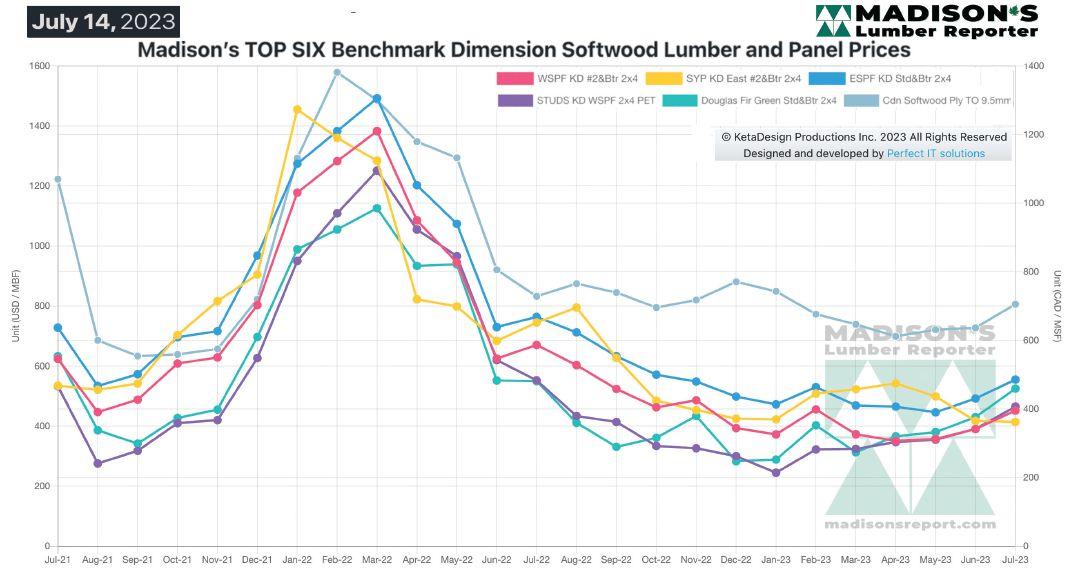
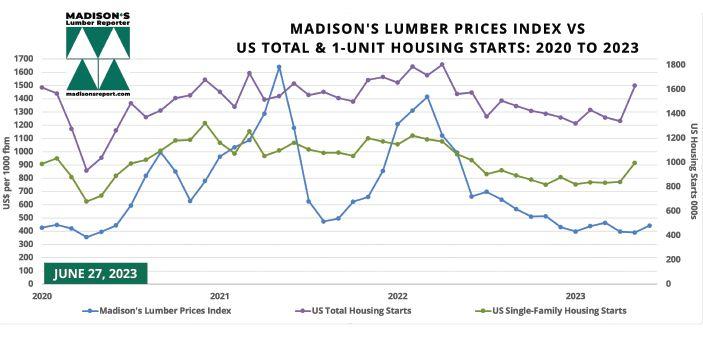
As June reached its latter weeks, a stellar new housing construction report for May, and continued very low inventory levels served to pop up lumber demand. Prices on many items rebounded somewhat, with specialty commodities like studs leading the charge. Customers were caught flatfooted with diminishing supply as actual building activity got into high-gear for the first time this year.
Severe wildfires in the North were ongoing, while weather conditions provided little hope of a respite any time soon. The unknowns of possible sawmill curtailments and lowered lumber production volumes served to motivate buyers to step in with booking purchases for wood needed in the coming
Source: Madison’s Lumber Reporter.
weeks and month.
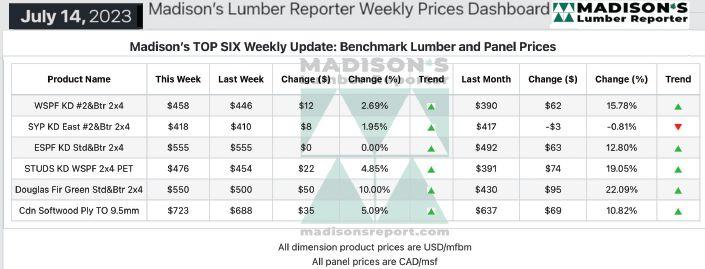
After staying flat at US$360 mfbm for two months, at the beginning of June lumber prices finally started to increase as construction activity got into full swing for the season. In the week ending July 14, the price of benchmark softwood lumber item Western Spruce-Pine-Fir 2x4 #2&Btr KD (RL) was US$458 mfbm, which is up $12, or three per cent from the previous week when it was US$446 mfbm. This is up by $68, or 17 per cent from one month ago when it was $390. Compared to the same week last year, when it was US$650 mfbm, the price of Western S-P-F 2x4s was down by $192, or 30 per cent, and was down $302, or 40 per cent
compared to two years ago when it was $760.
Suppliers of Western S-P-F lumber and studs in the United States were kept busy by steadfast demand from underbought customers. Retailers were running low on inventory and the revolving door of just-in-time buyers spun faster with each passing day. On the buying side, players stuck to short-term strategies as the last few weeks of strengthening prices and dwindling supply flew in the face of the typical wind down to summer doldrum quietude that is expected at this time of year. A common sentiment among experienced traders in the United States was that of a flattening price trend over the next several weeks.
In Canada, hearty ongoing sales of Western S-P-F dimension continued to show strength as supply still lagged behind demand. Takeaway remained robust. National sawmills had thinner product offer lists than regional outfits, as those latter suppliers maintained on-ground inventory and experimented to see what top-end numbers the market would bear.
An important measure of seasonal lumber market activity, the dual Canada Day/U.S. Independence Day long weekend this year did show some strengthening to demand. While still due to tight inventories, lumber prices rose sharply during the first week in July as customers began to order at significant volumes. The next seasonal measure is the Labour Day long weekend, which usually marks the beginning of the winter slow-down.
Panel prices are also an excellent indicator of market conditions, especially benchmark item Oriented Strand Board 7/16” Ontario, because panel products are used for other purposes besides new housing construction. In addition, there are fewer companies making panel (many of which are not publicly traded), and there are fewer manufacturing facilities making OSB and plywood than
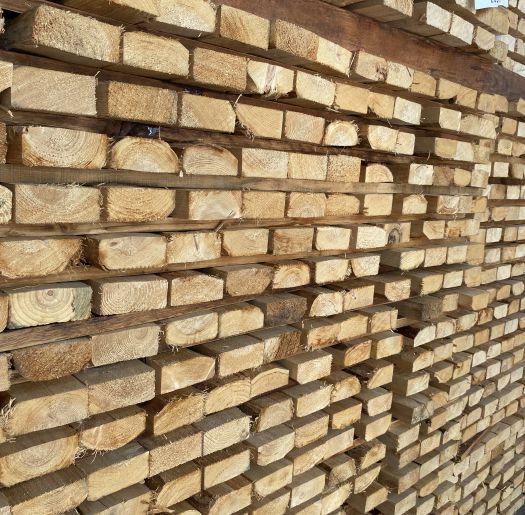
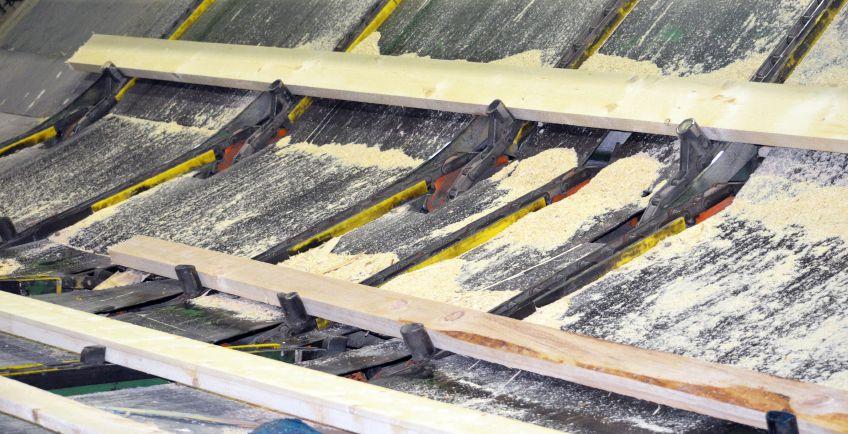
After staying flat for two months, prices finally started to increase in June. Photo: Annex Business Media.
there are dimension lumber sawmills. So, this marketplace is more “disciplined” (for lack of a better word), than are sawmill operators.
In mid-July, prices of both OSB and plywood climbed hand over fist while production lead times stretching well into August.
In the week ending July 14, the price of benchmark panel item Oriented Strand Board 7/16” Ontario was C$600 msf, which is up $35 or six per cent, from the previous week when it was C$565 msf. This is up by $150, or 33 per cent, from one month ago when it was $450.
Compared to the same week last year, when it was C$510 msf, the price of OSB 7/16” was up by $90, or 18 per cent, and was down $1,050, or 64 per cent, compared to two years ago when it was $1,650.
As end-users digested some of their previously bought material, secondary suppliers decided the risk of buying one month out in such an uncertain market was too great. Thus, once again, almost no one was stocking inventory. Between the higher price levels and order files into mid-August, buyers weren’t comfortable covering much if any volume. With panel mills consistently shipping
ALL SYSTEMS GO!
WOODPRODUCTS CANADIAN
Source: U.S. Census Bureau and Madison’s Lumber Reporter.
one- to two-weeks late, it was even more difficult to justify increasing inventory in the current climate.
As for the all-important housing market, U.S. housing starts and new home sales data for May 2023 both show a turnaround point from the slowdown
of mid-2022, when lending rates started to rise. Providing indication that the backlog of homes under construction is easing, housing completions improved considerably over the very high numbers of the past year.
Total housing starts in the U.S. for
May 2023 shot up by 22 per cent from the previous month, to 1.631 million units, compared to the 1.340 million units reported for April, and were up six per cent from the May 2022 rate of 1.543 million units. An indicator of growing construction activity to come, building permits also increased, up by more than five per cent, at 1.491 million units from the April rate of 1.417 million. This is 13 per cent below the May 2022 rate of 1.708 million. These permits will eventually become starts and will help to underpin residential construction.
May starts of single-family housing, the largest share of the market and construction method which uses the most wood, also jumped wildly, up almost 19 per cent to a rate of 997,000 units from April’s 841,000 units.
Single-family authorizations were at 897,000 units, which is almost five per cent above the April figure of 856,000
units. Building permits are generally submitted two months before the home building begins, so this data is as indicator of July construction activity.
Still very high compared to historical figures, housing completions grew by 9.5 per cent from April, rising to an estimated annual rate of 1.518 million housing units. Units under construction also remained high compared to historical averages, at 1.689 million units. Of those, 695,000
were single-family homes, compared to 699,000 in April.
The past three years have brought a fundamental shift for the building and construction industry across North America, as well as for lumber manufacturers. This combination of circumstances, completely unknown and unprecedented, will not happen again. However, the world of business and economics has changed forever. We don’t
know entirely what those changes are or how they will play out just yet.
As such, sawmills remain cautious with their plans for the future, while keeping firmly in mind the possibility that the next two months could be quite good for business. These past three years of wild swings have demonstrated that there isn’t really a “season” for construction anymore the way there used to be. So the old adage of Labour Day marking the usual start to slow-down for lumber sales might not be the case this year.
Keta Kosman is the owner of the weekly Madison’s Lumber Reporter, the premiere source for North American softwood lumber news, prices, industry insight, and industry contacts. Established in 1952, it publishes current Canadian and U.S. construction framing dimension lumber and panel wholesaler pricing information 50 weeks a year and provides access to historical pricing as well.
Sawmill Solutions Virtual Showcase
WEDNESDAY, September 13, 2023 1:00 pm – 4:00 pm. EST | 10:00 am – 1:00 pM PST
Welcome to TechniSaw, a fully virtual showcase event where a select group of manufacturers will present their advanced sawmilling solutions to an audience from across Canada.
This will be a free one-stop opportunity for industry players to learn about sawmill products on the cutting edge, become familiar with available technologies and services, and ask questions.
WOODPRODUCTS
WOODPRODUCTS
CIRCULAR SAWBLADE
BY WILLIAM R. SHAFFER
Poor performance of saw blades due to premature chipping has been a significant issue in wood processing industries for many years. The weak, chip-prone, up-sharp cutting edge is the root cause of the failure and excessive wear of saw blades because the cutting edges lack sufficient strength.
The goal of applying proper edge prep to the circular saw blade cutting edges is to reduce maintenance and production costs related to tool wear, resharpening, and replacement. In the test of the edge prepped blades, the lapse of time where saws require tip replacement and resharpening could be easily extended by an additional 12 hours. With edge prep applied, under normal industrial conditions, the carbide tipped circular saw blade could efficiently operate 24 hours, or two times its normal life, without the need for resharpening instead of 11 hours as is currently the case in a typical sawmill.
The results also show that saws with edge prep perform better in terms of sawing variation of lumber produced. Substantial gains in productivity, process reliability, and sustainability could be achieved by implementing engineered microgeometry in the first transformation of wood and extending it to other fields of wood transformation.
ENGINEERED MICRO-GEOMETRY
For many years, maximizing the life of circular saw blades has been a major challenge for the lumber and sawmill industry. The edge prep process engineered micro-geometry developed by Conicity Technologies is used to show the difference in wear rate experienced in sawing variation, with and without edge prep, for two specific saw testing time intervals, four hours and 15 hours. The tests were conducted under industrial production conditions with two sets of circular saws; one set with upsharp tips (without edge preparation) and a second set with cutting edges honed with engineered
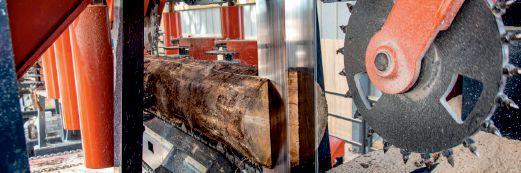
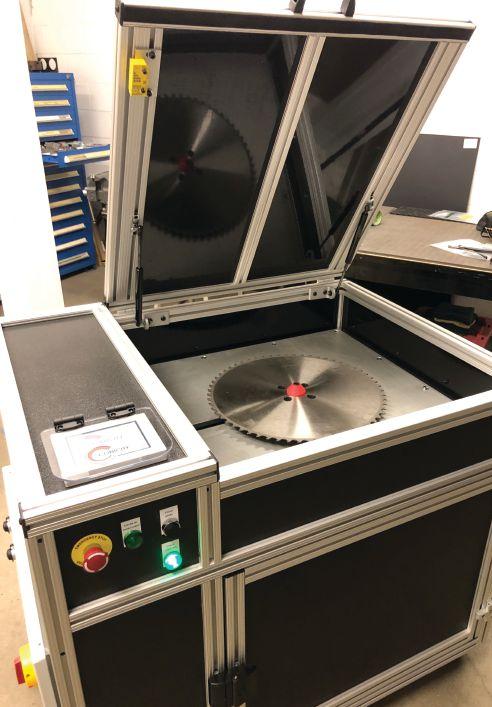
ABOVE: Conicity Technologies’ circular saw blade
edge prep machine. Photo courtesy Conicity.
micro-geometry (with edge preparation). Chipping and cracking were the dominant wear patterns observed on the tips of the saw blades without edge prep. The wear rate of up-sharp saws was two- to three-times higher than that of saws with edge prep. Between-board and within-board sawing variations decreased by more than 1/3rd when saws with engineered micro-geometry edge prep were used.
The edge preparation modifies the original up-sharp geometry of the cross-section of the cutting edge. The waterfall profile was used on the test circular saw blades because this edge prep has shown to be highly effective in absorbing the shock of interrupted cutting applications.
In the initial four hours of sawing, most of the saw tips without edge prep had small chips at the cutting edges.
After approximately 15 hours of sawing, the saw tips without edge prep had large chips at the cutting edges.
The circular saw blades with edge prep applied had very minimal chipping after the blade was sawing for approximately four hours.
After approximately 15 hours of sawing with edge prepped blades, the saw tips had minor chipping when compared to the sharp, un-edge prepped tips.
A comparison of the cutting tips, with edge prep and without edge prep shows that the edge prepped cutting edge has considerably less cutting corner damage than the tip without edge prep.
After approximately 15 hours of sawing, the clearance face surface of the cutting edges of without edge prep of the primary cutting edges were no longer straight. This condition can be the major contributor of the blade cuts becoming wavy and going out of board straightness tolerance.
SAWING VARIATION
Saws with edge prep yielded lower sawing variations than saw blades without edge prep. After approximately four hours of sawing with the edge prep applied, between-board variations were reduced, and within-board sawing variations were reduced by 1/3 .
The edge preparation delays the rounding and breakdown of the primary cutting edges. The reduced wear at the primary cutting edge keeps the blade sharp enough to continue to cut, as opposed to being dull and compressing the wood fibres.
The reduction in compression reduces the effects of wood spring back, the greatest source of degradation of the board surface finish. Spring back is also the root cause of frictional heat developed when sawing wood. The spring back in wood progressively increases as the primary cutting edge of the tip wears, increasing rubbing friction, increasing saw blade temperature while negatively affecting sawing variation and board surface finish. The increased heat also affects the stability of the steel body of the saw blade.
REDUCED COSTS, INCREASED PRODUCTIVITY
It has been seen that after the primary cutting edges of the tips are edge prepped, edge chipping, corner wear (edge rounding), and breakage are markedly reduced. The pressure build up is minimized at the cutting tip and the decrease in pressure delays the onset of spring back in the wood.
This reduces frictional heat and provides an increase in cutting efficiency and precision. Benefits include reduced blade changes, longer up time for the sawmill, reduced number of blades for refurbishing, reduction of saw tip replacement due to less damage, more regrinds per blade.
The edge prep process for a 24-inch diameter saw blade takes less than 60 seconds and does not require altering the refurbishing process at the grind shop at the sawmill.
The results presented clearly demonstrate that engineered micro-geometry can allow reducing the green target sizes, thereby helping to lower costs, increase productivity as well as sawmill revenues accordingly.
This article is a condensed version of a technical paper co-written by William R. Shaffer, who is the owner and president of Conicity Technologies. Other authors are Maryam Torkghashghaei, Bruna Ugulino, Remi Georges, Roger E. Hernandez, and Carl Blais.
SIMPLY BETTER
DUST SAFETY
BY BILL LATURNUS
Combustible wood dust hazards and incidents are significant and at times catastrophic. The 2021 Combustible Dust Incident Report produced by Dust Safety Science list the following global combustible dust incidents that occurred in 2021:
• Fires: 163
• Explosions: 53
• Injuries: 215
• Fatalities: 69
Of the 216 fires and explosion incidents, 49 (22.7 per cent) of these were wood dust. The B.C. sawmilling industry has been developing strategies to address these significant hazards since the two combustible wood dust sawmill explosions in 2012. In the 11 years since the explosions, the B.C. sawmilling industry worked to minimize the potential for catastrophic wood dust explosions in their operations.
COMBUSTIBLE WOOD DUST MITIGATION PROGRAM ELEMENTS
WorkSafeBC lists nine main components for a sustainable and effective combustible wood dust program. These are: Policy Statement: a statement that formulizes the program and defines overall aims, objectives and responsibilities of the program. Integral in building a
sustainable and effective program is senior leadership support and commitment to the program activities.
Wood Dust Risk Assessments: a formalized risk assessment to identify site-specific wood dust hazards. This may be a Dust Hazard Assessment (DHA) or similar industry-developed process. Hazard Area Classifications should be included in the risk assessment process.
Controls to Mitigate Identified Hazards: using the hierarchy of controls that should include knowledgeable workers of the work activities, safety committee members, maintenance staff, operational management staff and third party consultants when there are gaps in mitigation control knowledge.
Inspections: using risk assessment process learnings of accumulation rates of wood dust helps to determine site inspection frequencies to ensure there are no excessive accumulations of hazardous wood dusts.
Investigations: incorporating wood dust incidents into the investigation process helps to identify issues and the development of improvements to the combustible wood dust program. Near misses, fire events, flash fires and all sizes of deflagrations all need to be formally investigated.
Education, Training & Supervision: a key to the success of the combustible wood dust mitigation
The B.C. sawmilling industry worked to minimize the potential for catastrophic wood dust explosions in their operations. Photo: Annex Business Media.
and control program is education, training and mentoring for combustible wood dust identification, maximum accumulation thresholds, mitigation strategies for workers, supervisors, managers and contractors.
Program Review and Auditing: formalize in your program an annual review of all sections of the mitigation and control program. Also consider third party auditing to assess the various elements of the mitigation and control activities. Auditing frequencies may be annually or other frequencies such as every three years.
Corrective Action Plans: all combustible wood dust related action plans should be tracked in a corrective action management system. These items should be rated as high risk and be reviewed by all levels of management including senior leadership. Flagging these types of actions as critical and must be addressed by their due dates helps to make the overall program more effective.
Records and Statistics: developing a simple system to control and track relevant records such as housekeeping activities, inspection results, investigations, training and maintenance work order activities allows for quick reference and the development of key performance indicators (KPIs). Tracking KPIs for fire events, excessive accumulations, housekeeping activities, completion of relevant work orders for engineered systems and training compliance helps to develop trend data and leading and lagging indicators.
HOW B.C. CREATED OUR INDUSTRYBASED PROGRAM
The creation of a sustainable and effective combustible wood dust program for the sawmilling industry took years of collaboration with industry safety specialists and a recognition that combustible dust mitigation and control needs to be an important focus for all employees every day. The Manufacturing Advisory Group (MAG) members were the driving force that made it happen.
“Safety is shared and we don’t compete on safety” is a main belief of the Manufacturing Advisory Group (MAG) in B.C.
The MAG group began in late 2008 with six founding members. They agreed to meet regularly to share incident statistics
for benchmarking and best practices to improve safety performance in all sawmill operations. Today there are 14 member companies that represent over 80 per cent of the sawmilling capacity in B.C. In 2012, two tragic explosions at B.C. sawmills resulted in four workers killed and another 41 workers injured. The sawmill CEOs met to discuss the combustible dust challenges and developed three key action plans:
1. Understand wood dust and its explosive nature
2. Develop a wood dust audit
3. Understand NFPA 664 and the implications to industry.
These action plans were addressed by the group with the help of BC Forest Safety Council, FPInnovations, insurance brokers and industry insurers. A MAG working group was created and in a short amount of time the industry increased their knowledge of the hazards associated with wood dust, shared best practices and created the
Combustible Wood Dust Mitigation and Control Audit. To support the activities of the BC Forest Safety Council and MAG group, the CEOs that originally met after the sawmill explosions also formalized their role as the steering committee for the MAG Groups activities.
An ongoing key activity for the MAG group is to share and support best practices for combustible dust mitigation and control. Over time, the MAG Group also expanded their focus to include a dedicated sawmill audit that focuses on five main high-risk activities that includes combustible dust.
The CEO steering committee still meets bi-annually to provide leadership and focus and the MAG Group meets quarterly to share injury statistics, incidents, best practices and develop strategies to address industry high risk activities.
Bill Laturnus is a senior safety advisor, manufacturing, with BC Forest Safety. blaturnus@bcforestsafe.org
WOODPRODUCTS
CHANGING LANDSCAPE
BY SARAH STOTLER
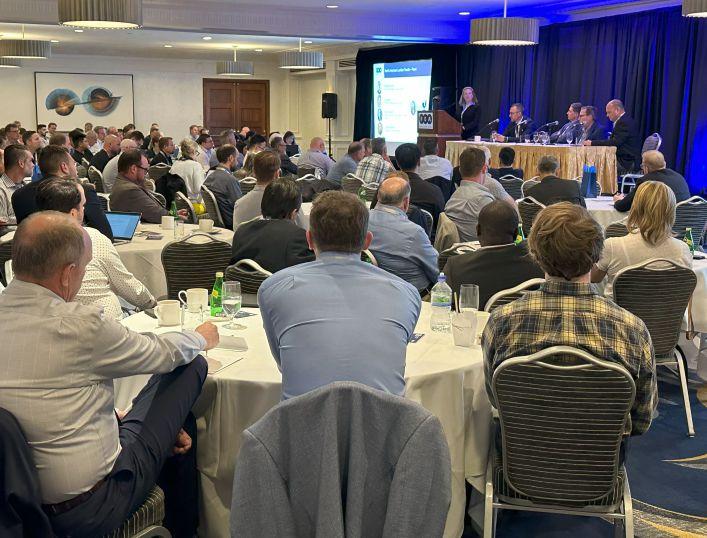
The sold-out 2023 Global Softwood Log and Lumber Conference, hosted by Forest Economic Advisors (FEA), made its in-person return on June 7-8 in Vancouver, B.C. The conference provided attendees with valuable insights from over 20 industry experts. These experts delivered comprehensive market analyses and presented global industry outlooks, equipping attendees with the knowledge to navigate the uncertain and everevolving landscape of the softwood log and lumber sector.
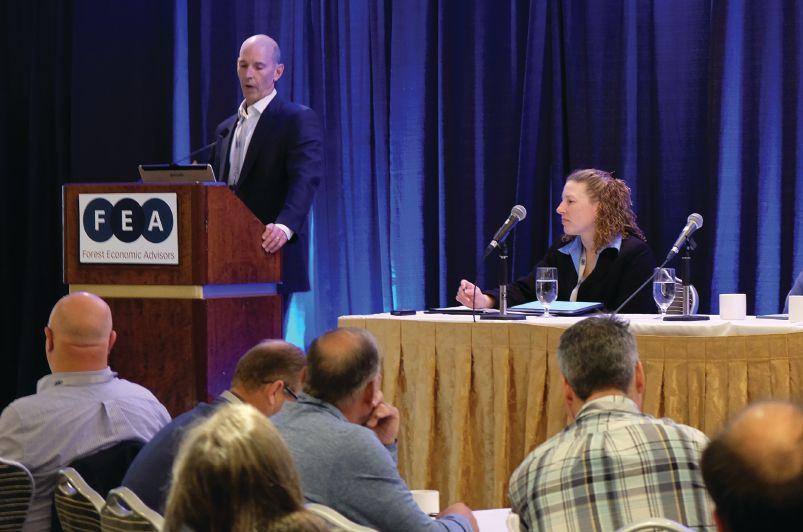
Brendan Lowney, principal of macroeconomics at FEA kicked off the conference with an overview of the current macroeconomic landscape specific to the wood products industry. Lowney highlighted key industry drivers such as population growth,
urbanization, and infrastructure development. According to Lowney, “The Big Kahuna, as far as wood demand, is the residential construction market. Between new construction and renovations and restorations spending, it’s over 70 per cent of wood demand in the U.S.” He explained that as the global population grows, the corresponding demand for wood products such as construction materials and home furnishings also rises. Expanding infrastructure further fuels the demand for wood products like lumber, plywood, and engineered wood. Additionally, more and more consumers are prioritizing eco-friendly and sustainable materials, making wood a favourite choice.
In the post-COVID economic landscape, Lowney emphasized the importance of recovery
Photos: Annex Business Media.
and resilience. Work-from-home policies, stimulus packages, tax incentives, and low-interest rates implemented during the pandemic continue to shape economic trends. He stressed the need to reconfigure supply chains as the vulnerabilities exposed during the COVID-19 pandemic highlighted risks associated with reliance on single sources.
Next, Paul Jannke, principal of lumber at FEA, took the stage to discuss the lumber industry. Although the industry had anticipated a downturn, Jannke revealed that it was taken by surprise by a more significant decline in prices than initially predicted. Despite the concerns raised by the drop in lumber prices over the past year, Jannke provided reassurance that prices are expected to remain elevated in comparison to historical levels. The residential construction sector, which is a key driver of lumber consumption, is expected to experience a modest recovery in North America. However, uncertainties regarding the global economic outlook and potential trade disputes continue to pose challenges to the lumber industry’s growth.
Rocky Goodnow, vice-president of timber at FEA, covered global log market trends and outlooks in his presentation. He emphasized that the current outlook aligned with expectations, with weakened markets and decreased demand for softwood logs. According to Goodnow, the drop in log demand is primarily due to the anticipated decline in China. He explained that the strong pricing of wood products and logs over the past few years “drove the Chinese industry to utilize more of their domestic resources and we think that is going to continue to be a moderate impact in addition to the weaker outlook consumption in China.”
On the supply side, Goodnow highlighted the standing inventory of hardwood in North America. Advancements in genetics and cultivation techniques have led to higher log production capacity. Eastern Canada has the potential to increase log production, but is hindered by the lack of robust
markets and significant distances between mills and log supply. The Canadian interior region also faces challenges, as their logs supply has been impacted by wildfires, disease outbreaks, and the effort to protect mountain caribou habitat.
Moving south, Goodnow was pessimistic when it came to the U.S. West Coast’s ability to increase log output. He noted Western Washington and Oregon have been affected by higher prices, losses of timberland due to wildfires, and stricter regulations on logging practices.
Next, Bill Parson delivered the keynote presentation on WoodWorks - Project Conversion, Education, and Mass Timber. Woodworks’ mission is to grow demand for wood construction in North America by removing barriers and providing resources and education to architects, engineers, contractors, and developers.
Parson utilized a case study in Northern California to demonstrate the multi-year process of engagement and education. The story began with an architect reaching out to WoodWorks for a lunch and learn session. Over the course of five years, the
architect’s interest grew, leading to the design and construction of several wood buildings, including a 17-storey tallwood building and a six-storey overbuilding project. Parson emphasized that project conversion requires time, engagement, and collaboration among architects, developers, contractors, and engineers but is well worth the effort.
The first day of the conference wrapped up with a panel session on North American lumber trends. Representatives from Boscus Canada, Interfor, Centurion Lumber Manufacturing, and Christensen Lumber discussed key developments, challenges, and opportunities in the lumber market. Echoing earlier presentations, panelists noted that the North American market is off to a slow start in 2023, but is showing signs of improvement.
The panelists agreed that the industry is expected to experience significant growth in the next decade. A key factor driving this growth is the need for new housing, especially starter homes, combined with the repair and remodeling market, which is gaining momentum as homeowners
Although the industry had anticipated a downturn, it was taken by surprise by a more significant decline in prices than initially predicted.
WOODPRODUCTS CANADIAN
invest in upgrades and renovations.
However, challenges remain in meeting the demand for lumber materials, especially with the potential rise of crosslaminated timber (CLT). While CLT has gained popularity in Europe, its acceptance has been slower in North America. The panelists agreed that if the industry wants to push the use of CLT it must embrace standard sizing for ease of use and costeffectiveness.
The second day of the conference started with a panel discussion focusing on potential supply issues surrounding timber supply. The panelists underscored the importance of evaluating supply trends, adapting to industry changes, and addressing regional and global challenges to ensure a sustainable and resilient future for the forest industry.
Diego Benedetti, economic and policy advisor for the European Organisation of the Sawmill Industry, discussed the raw
The 2023 Global Softwood Log and Lumber Conference in Vancouver, B.C.
material supply situation in Europe. He highlighted concerns related to the aftermath of the bark beetle crisis, evolving timber policies, and the changing composition of forests in the European Union. He showcased data reflecting an overall upward trend in log supply over the past 22 years in Europe while cautioning about the potential impact of legislative measures on the industry’s competitiveness and log supply.
David Halm, senior forest economist at Campbell Global, emphasized the importance of considering macroeconomic factors, log prices, housing market conditions, and both foreign and domestic timber supply outlooks in developing log and lumber price forecasts for timberland investments.
Ross Lennox, vice-president of Woodlands Canada at Canfor, focused on log supply issues specific to B.C. He acknowledged the influence of natural disturbances such as the mountain pine beetle infestation and wildfires on timber supply in the B.C. Interior. Lennox stressed the importance of adaptive responses and considering these factors in the overall timber supply perspective.
The discussion also covered the challenges faced by the forest industry in eastern Canada, particularly in Ontario and Quebec. Issues highlighted included undercapitalization of mills, under-harvesting compared to declared cuts, labour shortages, an aging workforce, limited markets for certain wood products, and transportation costs. The panelists emphasized the need for capital investment, innovation, collaboration between industry and government, and addressing environmental and societal concerns to ensure industry sustainability in the region.
The panelists agreed that as the forest sector navigates potential supply issues, collaboration, innovation, and proactive measures will be crucial in maintaining a balance between sustainability goals and the dynamic nature of the industry. By addressing these challenges collectively, stakeholders can pave the way for a thriving forest sector that meets the needs of both present and future generations.
The two-day conference provided attendees with valuable insights into the current and future outlook of the industry. Macroeconomic drivers, market trends, and supply challenges provide both opportunities and risks. As the demand for wood products continues to grow, stakeholders must remain vigilant,
adapt to changing circumstances, and embrace innovative approaches to ensure a sustainable future for the softwood log and lumber industry. “The team at FEA was very pleased to be back in person and with the turnout,” said Lowney, adding that they “look forward to bigger and better next year.”
Unexpected downtime?
Fast Track service is here
USNR has made powerful changes that have cut our lead times for manufactured parts in half. This means we can make your parts faster and get them to you quicker.
Reduce the stress of unexpected downtime with Fast Track service. It accelerates the production of high-quality OEM parts and expedites them to your door. Next time you need it fast, Fast Track it.
AVOID A TENSION HEADACHE
Paul
Let me start by asking, how much tension are you running in your guided saws? The answer should be, “Only as much as needed for the saws to stand up straight, both in and out of the cut.”
The higher the RPMs, the more tension will be needed. The RPMs will spin the saw while the tension will determine if the saw stands up straight. When a specific RPM is reached, the saw should stand up straight both in and out of the cutting process. One important factor with saw tension is that all the saws in the set are tensioned the same on both arbors. One saw out of tension can cause the saw or adjacent saws to cut bad lumber.
What does this look like? A correctly tensioned saw where the RPMs have the saw standing up, cutting straight, but the saw next to it isn’t, produces wedge-shaped boards. Another scenario: the saw that has too much tension and is right on the verge of being correct, but RPMs are just not enough to keep the saw standing straight, resulting in the saw going from one side of the guide to the other, all the while making thick and thin lumber.
Just as the tooth angles and side clearance must be the same, it is so very important for each saw to have the same amount of tension. Remember that a saw plate should never rub or come into contact with the babbitt in the guides. They should run in the centre of the babbitted guides and only have contact with the thin film of lubricant. If the saws are tensioned correctly, they will run in the centre of the guides, cutting quality lumber. Keep in mind that saws should be benched flat, with even tension. Before ever tensioning a saw, flatness should be checked. Once the saw is tensioned, knots can be hidden from the gauge.
Most professional sawfilers can use a straight edge and “light” to properly tension a saw body. To
be even more accurate, it is suggested that a tension gauge that fits your saws be used instead of a straight edge. Most saw suppliers can provide you with the tension gauges and straight edges you need. Smith Sawmill Service (SSS-BID) makes straight edges and tension gauges every Friday. When ordering tension gauges for circle saws, you will be asked for the length of the gauge and what tension is needed. I am sure different manufacturers will have their own way of checking for tension. We use a chordal measurement; this is the amount of curve calculated for the given length of the tension gauge where we take the diameter of the circle in inches. After many trials and studies in the mills we have concluded that the best running saws will be tensioned somewhere between 450-foot diameter and 250-foot diameter. Therefore, we machine tension gauges anywhere in-between these parameters – mostly between 200 and 400. The goal is to find your best running saw and build your tension gauge to best fit that saw plate. If we are currently selling your saws, you may want us to send you the same tension gauge that we use for your saws. By having that correct tension gauge, you will be able to check tension and make sure the same tension is repeated each time. SSS-BID regrinds and manufactures straight edges and tension gauges on a milling machine. We have found milling these products is far superior to grinding them.
We also have a saw design program that can check the load index on your saws. This will let us know if the saw design will allow the saw to stand straight up in the cut. This is a measurement of sawing accuracy that considers blade stiffness and the cutting forces. Saws must stand up straight to cut straight. Hopefully this information will help you and your team to avoid a tension headache.
PAULsmith
Smith is a saw filing consultant and founder of Smith Sawmill Service, now part of BID Group. You can reach him at Paul.Smith@bidgroup.ca.
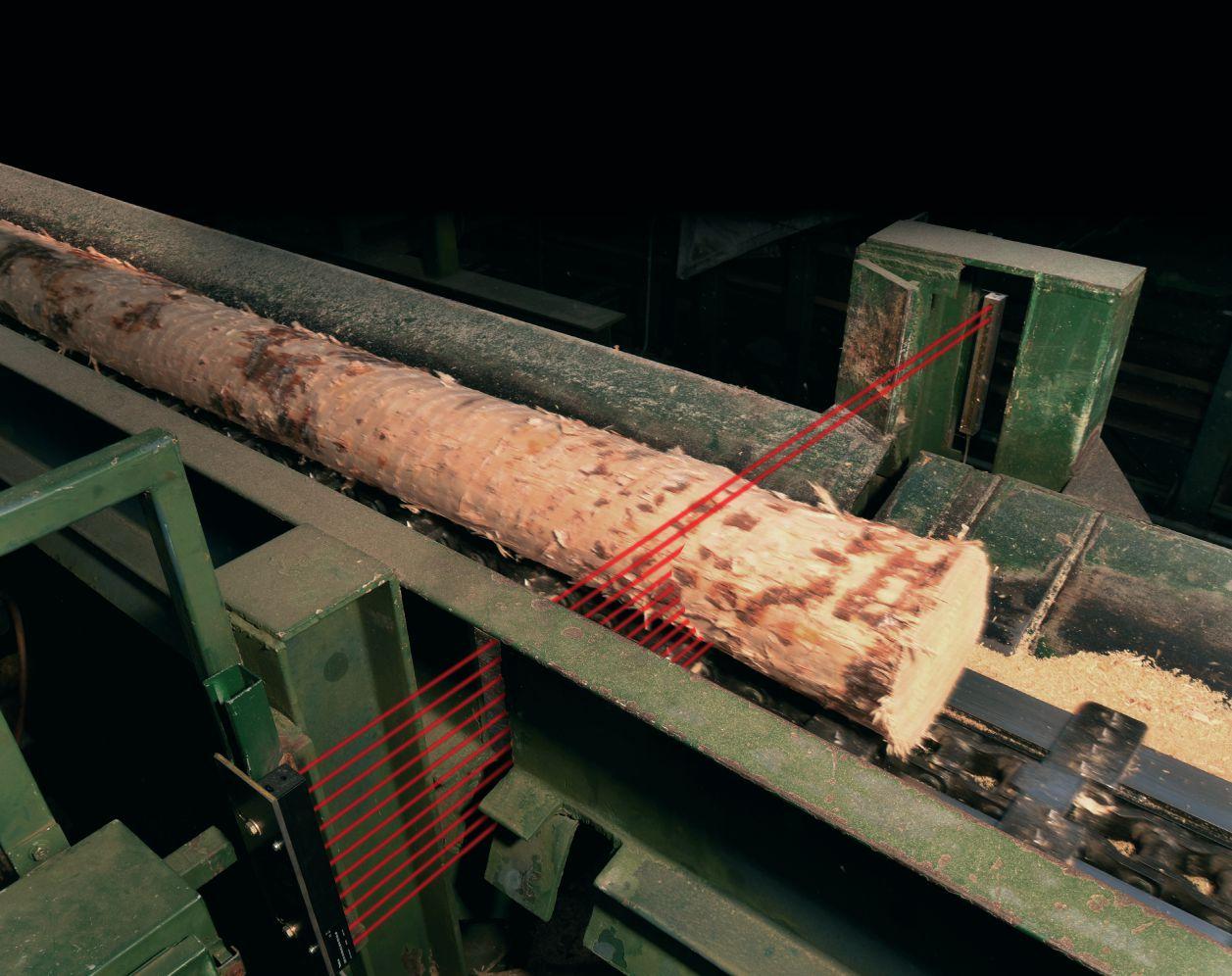
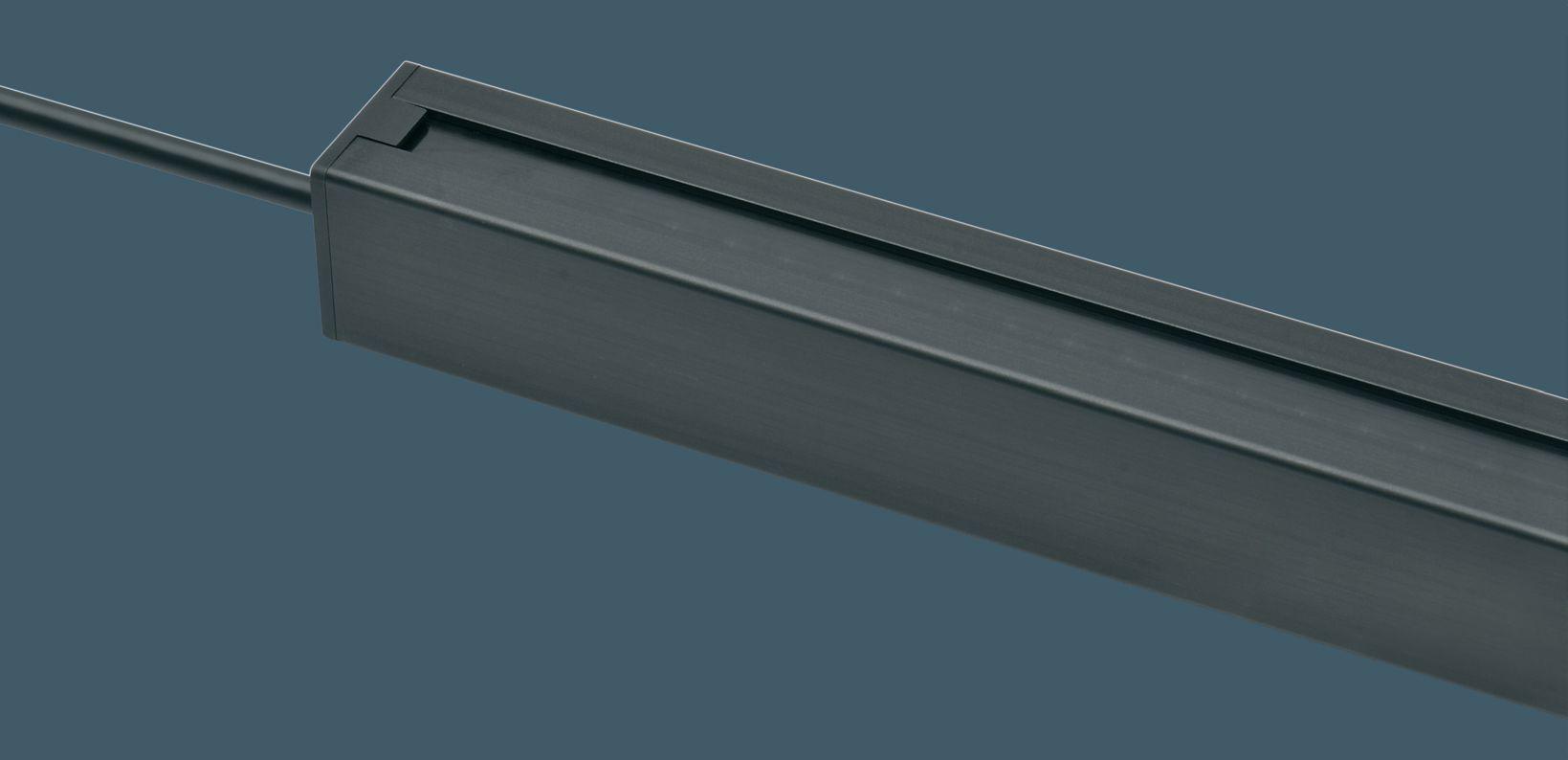
HIGH PERFORMANCE LIGHT CURTAINS MADE FOR SAWMILLS
Telco Sensors has been supplying high-performance photoelectric sensors for the harshest, most demanding applications in the wood products industry for over 30 years. Simply put, Telco works where others fail.
Like all Telco products, our new SpaceScan series light curtain is designed and built around 5 core values: water resistance, extreme penetration power, resistance to shock & vibration, easy alignment and immunity to sunlight. All Telco products carry a full 3-year warranty.
Telco offers light curtains in discrete, analogue, RS485, IO-Link and diffuse proximity models.
Telco Sensors Inc.
Toll Free: 800 253 0111
Email: info@telcosensorsusa.com
Web: www.telcosensors.com
FORESTS TO BOARDROOMS:
Q&A with OFIA president and CEO Ian Dunn
BY MARIA CHURCH
Ian Dunn is here for the forests.
As president and CEO of the Ontario Forest Industries Association (OFIA) for nearly three years, he’s seen more boardrooms than cutblocks lately, but the registered professional forester still takes every opportunity to connect with members on forestry sites across the province.
With the Ontario forest industry poised for growth to meet global demand, Dunn wants to see concrete strides to improve mill and contractor competitiveness in the province.
CFI: What drew you to forestry and what has been your experience helming the Ontario industry?
Forests drew me to forestry. I wanted to do something good for forests – I didn’t really know how to do that or how it would happen. But working with forests, cool equipment, machines, that all drew me in. I grew up in the GTA [Greater Toronto Area], so I had no exposure to forestry whatsoever and knew very little about the opportunities out there. I did an undergrad in environmental studies and in my third year there was a soil science class
ABOVE: Ian Dunn. Photo courtesy Canadian Wood Council.
where we started talking about silviculture. That was interesting. I did a postgrad master’s program at UofT in forestry. That’s where I got started.
When I graduated from school, I wanted a job that was physically and intellectually challenging. This sector turned out to be a perfect fit. The OFIA, at its core, is an industry full of very hard working, committed people. These are the people I represent and it’s been a real pleasure so far. For me, in my current role as president and CEO, it’s not new, I’ve been around the association for quite some time, just in different roles. I’m getting further from the forest, but I still have opportunities to go and meet the members on the ground.
CFI: What are key priorities for the OFIA this year?
The overarching goal for us right now in the association is to see Ontario’s Forest Sector Strategy fully implemented, and to improve the competitiveness of our industry. That strategy was developed beginning in 2018, finalized in 2020, and it was really the result of us looking at other jurisdictions, seeing what they were doing with their resource. Finland had a national forestry strategy that came out in 2015. Their goal was to increase their harvest level from about 60 million cubic meters in 2015 to 80 million cubic meters in 2025. To put it into context, Finland is a third of the size of Ontario, similar forest type and climate, but we harvest about 14
million cubic meters annually so it’s much more intensively driven system.
This sector strategy was developed through lot of consultation, regional roundtables and eventually it was produced and finalized in 2020.
Among a number of goals cited by the strategy is to fully utilize the sustainable annual allowable cut of 30 million cubic meters per year representing a huge growth opportunity for our industry. So in terms of priorities, there’s no easy solution to this, but I would say broadly: improvements to forest road infrastruc-
ture, workforce development, carbon pricing, reducing red tape and administrative burden, and market access.
CFI: What do you see as the biggest challenge facing the Ontario industry?
If I was to choose a biggest challenge, it’s the cost of doing business in this country. Costs continue to climb for labour, fuel, carbon pricing, truck insurance and licensing, availability of timber, trade restrictions, and the list goes on.
Ontario has made some good strides among our peers in this respect. The cur-
ABOVE: Ian Dunn serves as the president and CEO of the Ontario Forest Industries Association.
Photo courtesy OFIA.
tailments and closures that you’re seeing in B.C. aren’t happening here yet, but we could see these closures if costs continue to climb. We need a policy environment that supports growth in the industry. Too often forest policy is driven by emotion or politics, not always listening to regulated professionals like foresters. All levels of government need to be pulling in the same direction. But there’s also a lot to be very excited about and I am very opportunistic about the future.
CFI: Ontario introduced a nearly $20-million Forest Bioeconomy Program, a first in Canada. What does it mean for the sector?
Across the board, increasing the use of forest biomass is good news for our industry and the sustainability of our forests. Currently, using forest biomass for electricity and energy consumption or production is the most deployable and scalable technology that exists in the industry. There are five facilities in Ontario that use forest biomass to generate electricity that is sold back to the Ontario grid – together generating about 270
MW of power, which is about 300,000 homes. Within our membership there is a significant amount of energy production, producing clean, green energy to the province.
We’ve also seen some really interesting announcements about the use of forest biomass to decarbonize the steel and mining industry here in Ontario. So there’s all kinds of opportunities and emerging products for forest biomass. We’re also seeing the potential for pairing that technology with carbon capture and storage to generate negative carbon emissions. I think that’s really exciting.
The most immediate opportunity is in the form of energy and electricity and I really hope that this fund assists in these types of projects.
CFI: What’s your take on the Ontario forest industry’s social license?
Social license to operate refers to an industry’s level of support by its stakeholders. Using that definition, we work with an extensive network of Indigenous communities, unions, chambers of commerce, and municipalities that are incredibly
Combustible Dust Specialists
49 years
supportive of this industry and want to see it flourish in Ontario. This support has only solidified and increased over time.
I would say the challenge is that there are some people who read a misinformed or poorly researched article casting the industry in a negative light – or worse, go on social media – and conclude that the industry doesn’t have a social license or it’s weakening. But I don’t think that’s a true measure of what the term social license is meant to capture. It ignores those stakeholders, employees, and Indigenous communities that are incredibly supportive of this industry. They are often just not the most vocal.
As with any issue in this industry, I find the more specific you get the better it is. Does a community have an issue with consultation? Is the community or stakeholder aware of the issue resolution process within the legislation? Is it even a forest management-related issue to begin with? Occasionally some other concerns are brought into the process. Is it road use? Or herbicides? Let’s find out what element is causing the concern and take it from there.
I caution against drawing too many conclusions from the term social license. I think as an industry we need to showcase our work, be transparent and let the work speak for itself.
CFI: What inspires you to continue as a leader in the forest sector?
I said that I got into the industry because of forests, but I stayed in the industry because of the people.
We work with fantastic people with the OFIA. The OFIA team – Lauren, Sarah, Sabrina, Mark, George, and Robert – they’re all incredible resources and so valuable to the industry. I get a lot of inspiration from them.
Mayors, Indigenous leaders, forestry workers, they really are the inspiration. Getting out on the ground with our members, meeting their employees, that really motivates me and the whole OFIA team to deliver and execute. Meeting face-to-face we realize what’s at stake in this industry if we get it wrong.
We’ve also seen some really amazing results of our work at the association over the last couple years, what’s possible, and I want to continue on that momentum. That’s the inspiration for me.
CUTTING edge gear
Log Max introduces 5000V versatile harvesting head
The new Log Max 5000V is a versatile head for wide carrier selection and efficient felling. It provides a balance between flexibility, capacity and durability.
The new 318 MK2 saw unit of the 5000V will make work easier. The need for maintenance will be minimised, and durability will increase. The changes make it easy to change the bar, maintain the saw unit easily, and increase the durability to its maximum. The 5000V measurement unit has received mechanical, electronic and hydraulic
updates. The construction of the measuring wheel cylinder is updated, the hydraulic circuit is new, the measuring wheel arm and its attachment are reinforced, there is a new contactless encoder in the measuring wheel, and two conical roller bearings that are lubricated from the outside. Altogether, the changes will allow the measuring wheel to follow the contour of the stem even better and provide the best measurement result.
www.logmax.com
Tigercat introduces new 630H silviculture carrier
Tigercat has recently released the 630H silviculture carrier.
Many forestry companies struggle to prepare post-harvest sites for replanting with modified ag tractors. These machines are not up to the task, often suffering from insufficient power, cooling capacity and structural durability. The 630H was launched to address these deficiencies.
Based on Tigercat’s skidder platform, the machine is equipped with hydraulic connectors and several drawbar receiver variations to adapt to a variety of plow or mounding implement connection points. In addition, the carrier can be equipped with an optional winch and bolt-on fairlead system. The whole package is factory-equipped and ready to work.
www.tigercat.com
USNR unveils new advances in log turning and profiling
USNR has designed the ultimate primary breakdown log profiler. This new design includes smart anvils that allow precise positioning against sideboards cut at any angle, reducing defects and improving chip containment while still allowing flexibility to cut sideboards at an angled solution. The new system allows more volume through the mill while capturing equal recovery. It delivers higher quality finished products and reduces edger demand.
The world’s first stand-alone knuckle log turner, the Sidewinder, has also been produced. Based on our proven knuckle turner infeed technology, this unique standalone unit provides more versatility in new and existing primary line applications and requires less infrastructure, thus reducing installation costs. The Sidewinder offers higher turn accuracy and lower operating and maintenance costs. Its wide operational envelope handles 3 to 24 inches in diameter logs with feed speeds up to 700 FPM. Two sets of turning rolls mounted to shifting carriages enable it to be mounted behind slewing and skewing infeeds.
www.usnr.com
COLUMN final cut
DOMENICO
Iannidinardo
Domenico leads forestry operations, forest and watershed health, government and public affairs, climate and carbon credit sales, Indigenous investments and partnerships for Mosaic as senior VP, forest and climate, and chief forester.
Innovation and partnerships are vital for the future of forestry. At Mosaic Forest Management, so much of what we do in our operations across Coastal B.C. is driven by innovation and partnerships.
Last year, we launched the innovative BigCoast Forest Climate Initiative – the largest of its kind in Canada. We deferred timber harvesting for at least 25 years on nearly 40,000 hectares of private land – an area over three times the size of Vancouver set aside. These lands contribute to the broader regional ecosystem, home to bears, elk, salmon, orca, and more.
Some people may ask how can a forest company be in the business of not cutting down trees? Simple: it’s about seeing the other values that can be harvested from the forest. The increased carbon storage and avoidance of 20 million tonnes of GHG emissions through the deferral are independently verified and packaged and then sold to global markets as carbon credits. These credits are certified by the Verified Carbon Standard, the world’s most widely used and rigorous voluntary carbon program.
The deferral is for a minimum quarter century, and we’re only at the beginning. Learning as we move forward is critical, which is why part of the proceeds from BigCoast Forest are going to local partners, the Pacific Salmon Foundation and the Indigenous Protected and Conserved Areas (IPCA) Innovation Program. This investment will support scientific and First Nations cultural research on and around the project lands and helps the initiative evolve and grow.
Eli Enns, the knowledge co-leader of the IPCA Innovation Program and an expert in Indigenous-led conservation, told me about the opportunity that will come from BigCoast Forest related to how original ecosystems can guide climate adaptation and build more resilient communities. The goal is to work with the environment, now and into the future, thanks to retaining old forests as an intact, diverse ecosystem. It’s an approach that has the potential to stretch beyond carbon credits. Eli told me about a unique approach to housing. The T’Sou’ke Nation on Van-
couver Island, with funding from the Canada Mortgage and Housing Corporation, has already spent a couple of years looking at what housing would look like in an IPCA context. One idea is an eco-village associated with the BigCoast Forest protected areas to support sustainable livelihood programs, and jobs created by restoring ecosystems.
The importance of learning from the land was something Chief Gordon Planes of the T’Sou-ke Nation, another IPCA member, explained to me recently. He suggested thinking about the forest by thinking about a cedar tree and what will happen in 25 years. Those trees are important because of the teachings members of his First Nation will hand down. Young children today will know that if they need to build a canoe in the future, the opportunity will be there. He said the next 25 years of the project will be about looking at the health of the old forests and their diversity, then comparing that to the health of second and third growth. Those comparisons will help the IPCA Innovation Program and Mosaic understand more about how water quality, air quality, and wildlife function together in the territory.
The project may be new and innovative, but Mosaic’s commitment to sustainability and partnerships remains steadfast over the decades. More than 20 years ago, we were Canada’s first forestry company to be certified under the Sustainable Forestry Initiative (SFI), and earlier this year received the SFI Leadership in Conservation Award for working to mitigate climate change and advancing SFI’s climate smart forestry objective. We were the first forest company globally to achieve certification of its land base by the Carbon Trust, and B.C.’s first forestry company to achieve Progressive Aboriginal Relations certification from the Canadian Council of Aboriginal Business.
We’re not going to stop. And the next few years and the next 25 will be exciting times for what BigCoast Forest and the partnerships with the IPCA Innovation Program and the Pacific Salmon Foundation can deliver for a more sustainable future.
Not being one to shy away from trying something new, Stéphane Dubé Slashing’s most recent purchase certainly falls into that category. His purchase - a new Log Max 7000 Xtreme with top saw and a new Linkbelt 3240 carrier from Thunder Bay dealer Itec 2000 Equipment and Hydraulics was finalized in the Fall of 2021.
Originally from central New Brunswick, Stéph Dubé moved with his family to Ontario 33 years ago and started slashing with Timrick slashers in the Geraldton area, just north of Nakina and 3 ½ hours Northeast of Thunder Bay. Somewhat isolated to say the least.
That said, in just 14 months Stéph and his team have been able to clock over 5,000 hours on the package! “Our guys work double-shift and will harvest standing timber or process felled timber depending on the inventory. It’s a great package. Its good and strong and I’m really happy with the support from both Log Max and Itec”.