Electric vehicles (EVs) are becoming mobile power stations capable of energizing everything from camping equipment to entire buildings. Vehicle-to-Everything (V2X) technologies, including Vehicle-to-Equipment (V2E) applications, are changing how engineers design EV power architectures.
Bidirectional charging is the core concept behind these systems. This article examines the progress of bidirectional charging systems, including converter types and semiconductor advancements.
What is V2X, and how does V2E fit?
V2X consists of five primary applications, including Vehicle-to-Grid (V2G), Vehicleto-Home (V2H), Vehicle-to-Building (V2B), Vehicle-to-Load (V2L), and Vehicle-to-Vehicle (V2V). Each places unique demands on the vehicle’s power architecture (Figure 1).
However, V2E/V2L stands out for its simplicity and practicality.
Unlike V2G, which requires complex grid synchronization and external bidirectional chargers, V2E operates independently through the vehicle’s
integrated power conversion systems. V2X applications show multiple ways EVs can connect, building a complete ecosystem where EVs serve purposes beyond transportation.
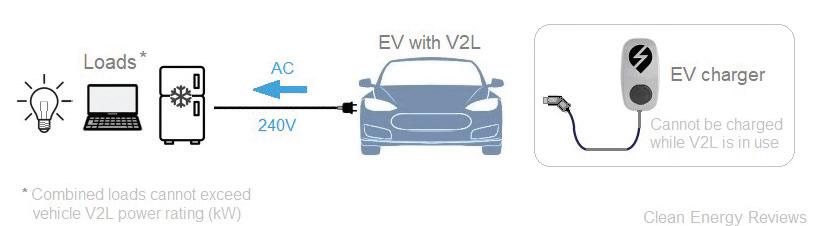
The simplest entry into this ecosystem is V2E/V2L, which needs minimal external infrastructure and can power equipment or applications immediately (Figure 2).
V2E technology lets EVs power external devices and equipment with standard ac power through built-in inverters and outlets. EVs can now act as mobile power stations providing 2.4 to
Almaz | Adobe Stock
Vehicle to Everything (V2X)
V2G: Vehicle-to-Grid
V2H: Vehicle-to-Home
V2B: Vehicle-to-Building
V2L: Vehicle-to-Load
V2V: Vehicle-to-Vehicle
9.6 kW of continuous power. The system draws on the EV’s large battery, typically 65 kWh or more, capable of powering camping gear or backup systems during emergencies.
How have EV power architectures evolved to support V2X?
EV power architectures have changed significantly with the addition of V2X and V2E capabilities.
Earlier EVs had power flow systems that were only unidirectional and designed solely for propulsion. Bidirectional applications, however, require more complex power
management. To be safe and efficient, these systems must handle energy flow in both directions.
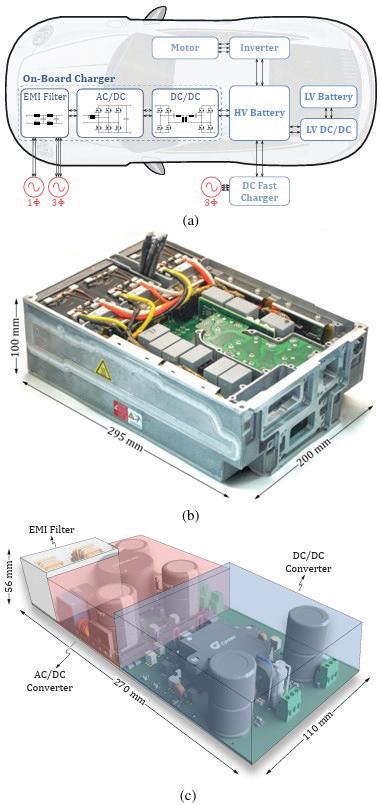
Modern EV power architectures use multi-stage conversion, with each stage optimized for specific functions. As shown in Figure 3, the first stage typically uses an ac/dc converter that corrects power factor so EVs can charge from the grid. Dc/dc converters in the second stage manage the battery and stabilize voltage.
For V2E uses, an extra dc/ac inverter changes the dc voltage from the battery to a normal ac output. In this configuration, the vehicle can work as a power source on its own.
Figure 1. The five V2X applications driving bidirectional power architecture evolution in EVs.
Vehicle-to-Load (V2L)
From an engineering point of view, this is where things get interesting. Because of how complex the architecture is, converter topology design has come a long way.
Two-stage bidirectional onboard chargers (OBCs) are now common among manufacturers. These systems separate grid-interface and batterymanagement functions, allowing performance optimization in each mode. Totem-pole power-factor-correction circuits and isolated dc-dc converters are typical, while dual active bridge (DAB) and CLLC resonant converters are the most common designs.
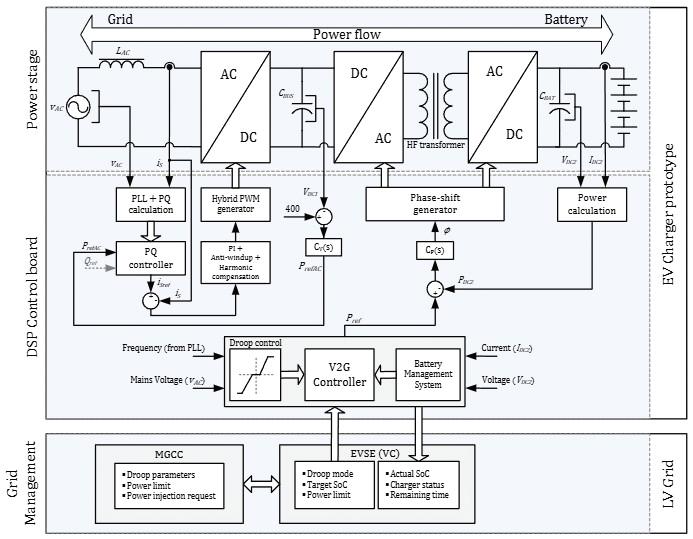
The detailed architecture of the bidirectional charger in Figure 4 illustrates its complex control systems that regulate power-flow direction, battery-charging profiles, and grid synchronization.
How do dc-dc converter technologies support V2E?
As V2X and V2E capabilities have grown, they have sped up development in dc-dc converter technologies. Hybrid energy storage systems in EVs need complex power management. They must work together with different energy sources, like supercapacitors, main traction batteries, and other systems.
What does this mean for system designers? Because of this need, more advanced bidirectional dc-dc converter topologies have been used. These topologies make it easy for power to flow between different types of energy storage elements.
This level of integration is an improvement over older charging systems that only worked unidirectionally. It’s enabled safety protocols and power management algorithms required for V2X to work reliably.
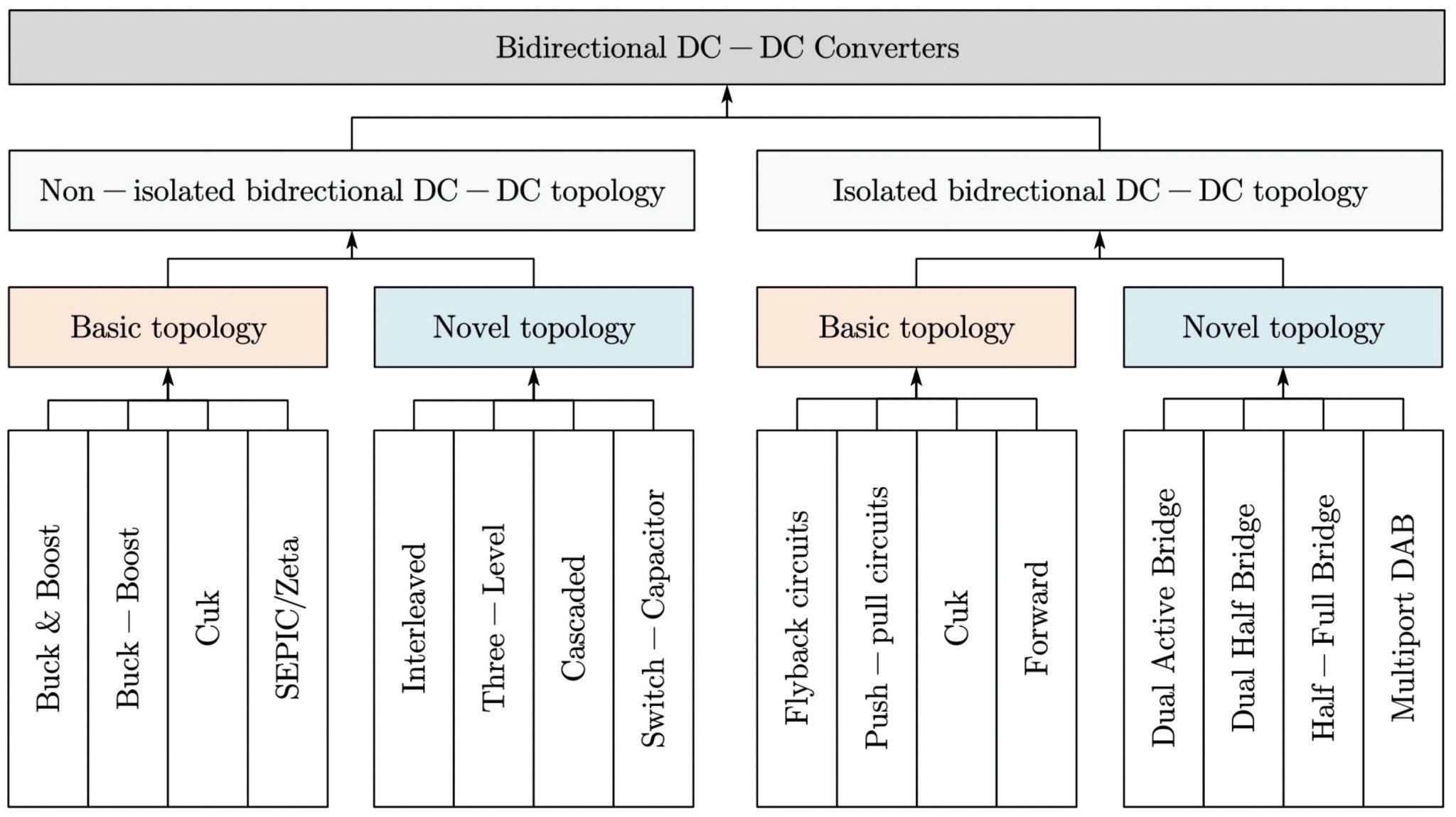
A detailed classification of topologies shows the wide range of converter architectures used in EVs. It has become more popular to use non-isolated topologies like interleaved buck-boost
Figure 2. Vehicle-to-Equipment (V2E) configuration showing 240-V ac power delivery to appliances and loads. Clean Energy Reviews
and three-level converters. They’re compact and efficient.
These converters lower the voltage stress on power switches and make the whole system more reliable. When galvanic isolation is required, isolated topologies offer higher safety and better voltage conversion. Dual active bridge and bidirectional forward converters are two examples.
Coupled inductors and soft-switching technologies have been added to make converters even better. They cut down on switching losses and current ripple.
These changes are especially important for V2E applications, where power quality and efficiency have a direct effect on the user experience and battery life in V2E systems.
Why have SiC and GaN become essential for V2X architectures?
Wide bandgap (WBG) semiconductors such as silicon carbide (SiC) and gallium nitride (GaN) have transformed EV power architectures. Compared to traditional silicon, they deliver higher breakdown voltages, superior thermal performance, and faster switching speeds, enabling compact and efficient bidirectional converters.
Over the last decade, these materials have rapidly replaced silicon in advanced two-way charger designs, establishing the foundation for next-generation V2X systems. As EVs evolve into integral parts of the broader energy network, these semiconductor advances will define the efficiency, reliability, and scalability of future electric mobility. EV
Figure 4. Bidirectional battery charger architecture with advanced control systems for V2X power management. ResearchGate
Figure 3. An EV powertrain architecture featuring bidirectional onboard charger with multi-stage power conversion. ResearchGate
Figure 5. Bidirectional dc-dc converter topologies classification for hybrid energy storage systems. MDPI
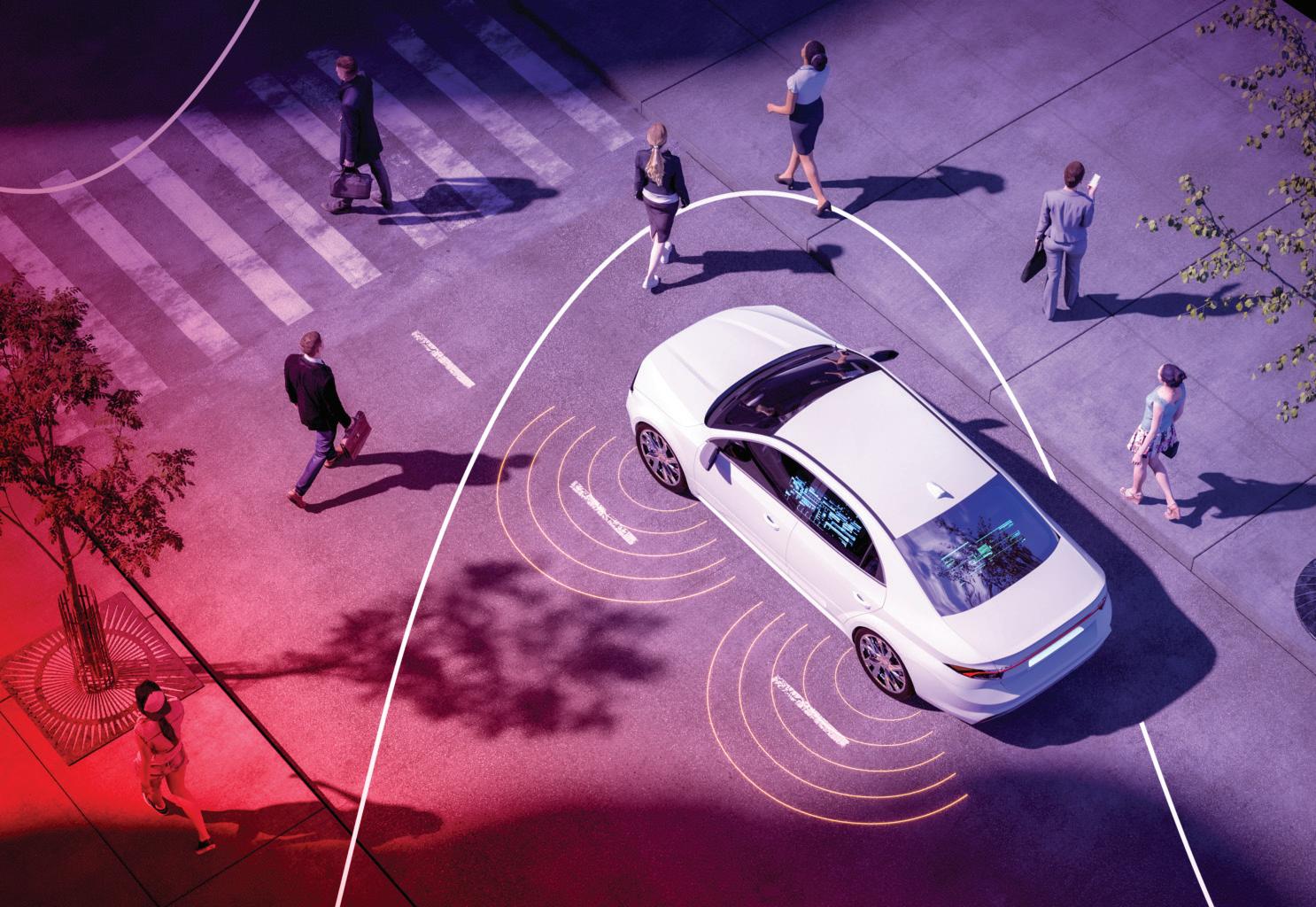
Figure 1. As electric vehicles become smarter, more connected, and software-driven, their susceptibilities expand, giving cybercriminals a wider attack surface. Cybersecurity is essential.
ELECTRIC WHY MATTERS VEHICLE SECURITY
MARIE HATTAR SENIOR VICE PRESIDENT KEYSIGHT TECHNOLOGIES
Electric vehicles (EVs) have rapidly digitized over the last decade, morphing into a complex web of software and hardware. Technology under the hood now spans lidar sensors, radars, driver assistance systems, and in-vehicle networks. The average EV runs 150 embedded electrical control units and 100 million lines of code.
These innovations are being integrated to improve vehicle performance and increase driver safety. However, while physical safety has benefited, connected cars present many emerging securityrelated threats.
As a result, cybersecurity is one of the top concerns of automotive manufacturers. Security impacts their bottom line in the form of cyberattacks, resulting in billions (yes, billions) of system downtime costs annually.
Software introduces new threat vectors
As EVs become more intelligent and additional software is embedded, their vulnerabilities increase as cybercriminals gain a larger attack surface to exploit (Figure 1).
A couple of years ago, researchers identified several security weak spots that impacted 16 automakers. The flaws affected 20 different API endpoints, and if hackers had exploited them, they could have taken control of the vehicles, tracked locations, and accessed systems containing personally identifiable information (PII) of employees and customers.
Here are five critical areas of vulnerability that cybercriminals may target, as EVs become increasingly connected and autonomous.
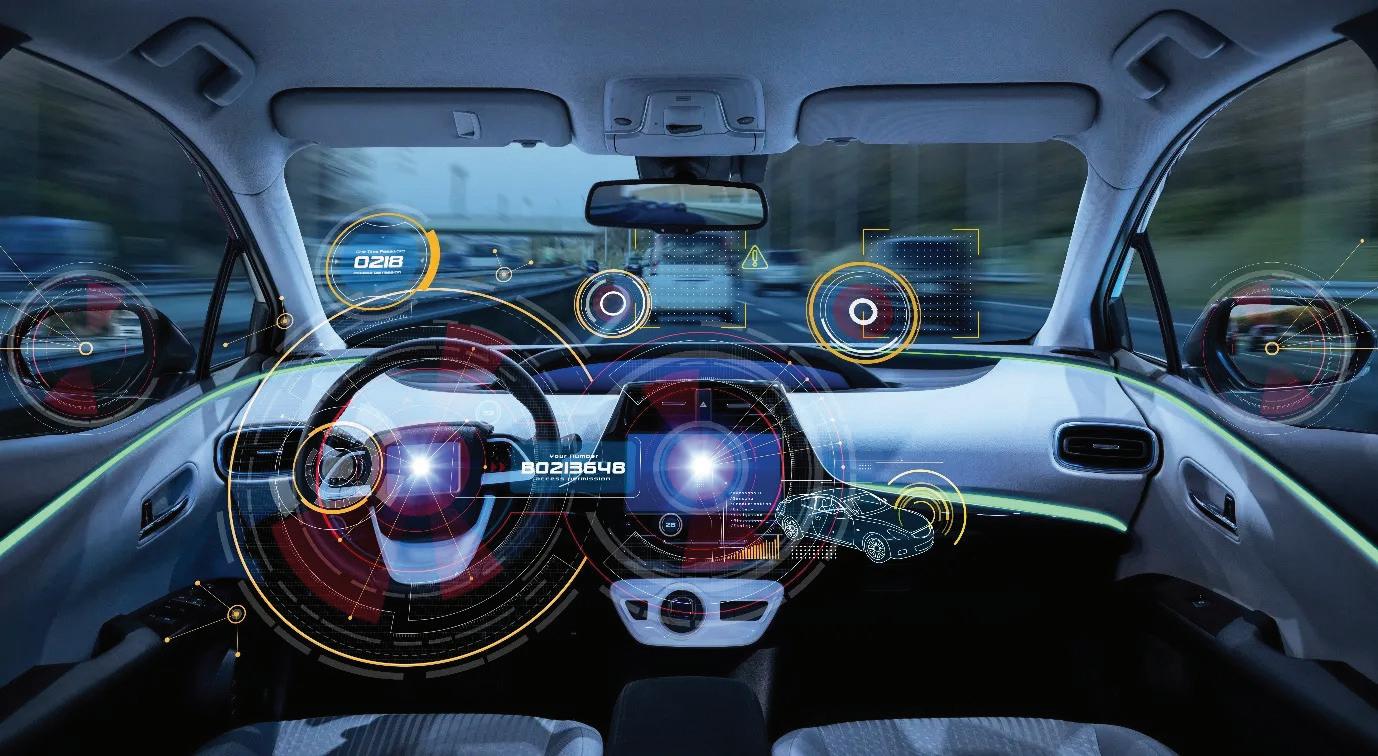
1. Over-the-air (OTA) updates and malware-infected apps can introduce vulnerabilities through wireless code updates delivered over Wi-Fi or cellular networks. This lets hackers inject malicious code, modify vehicle firmware, or alter system functionality unless the OTA process is protected with end-to-end encryption, authentication, and verification protocols (Figure 2).
2. Networked attacks exploit wireless, backend networks, and vehicle-toeverything (V2X) communications. If successful, this tactic can impact electric car systems and disrupt traffic. Securing messages transmitted by V2X communication channels remains a critical problem for the EV and the broader automotive industry.
3. Connectivity and control systems are
prime targets. By intercepting and altering signals, bad actors can take over the EV’s controller area network. If successful, hackers can affect braking and powertrain components, potentially causing sudden stops or acceleration.
4. Infotainment systems connect with a vehicle’s Internet and other devices via Bluetooth, cellular, USB, and Wi-Fi, creating potential entry points for bad actors. These systems contain personal information, such as payment details and location data, making them attractive targets for cybercriminals. Automakers can mitigate this risk by implementing strict access controls, deploying secure communication protocols, and using software and firmware to patch vulnerabilities.
5. Charging infrastructure is a major target for adversaries to install malware that can compromise a car’s safety and functionality. Hackers can tap into these public systems remotely or physically. In addition, EV supply equipment may be susceptible to malware attacks, threatening the integrity of the charging infrastructure and causing widespread disruptions in the power distribution system. Once compromised, bad actors can alter charging speeds, disrupt availability, or switch between alternating and direct currents.
2. Wireless code updates, often done via Wi-Fi and cellular connections, can introduce vulnerabilities that hackers use to insert malware into vehicle software.
Prioritizing cybersecurity
Each point of connectivity is now a pathway hackers are eager to exploit. However, despite widespread awareness of the risks, security is not a focus for EV manufacturers at the start of the vehicle design cycle.
Automakers must rethink this approach and identify and address vulnerabilities as early as possible. Every element requires testing, from sensors to software to telematics to charging infrastructure, to avoid costly delays and mitigate the risk of a successful cyberattack.
Once a vehicle is on the road, security testing can’t grind to a halt either. Every
HTX8045C Series
LLC Half-Bridge Transformers
software or system update requires the same rigorous evaluation to ensure it doesn’t introduce vulnerabilities. For example, each app must be tested before being integrated into a vehicle’s software system, and embedded firewalls should be integrated with firmware to provide reliable end-to-end encryption.
EV manufacturers must prioritize security and collaborate with all stakeholders to rigorously test for security vulnerabilities to ensure a safe driving experience. This will ensure that the technology transformation within the EV industry doesn’t provide an entry ramp for hackers to glide through and exploit. EV
• Low interwinding capacitance (as low as 0.55 pF) to minimize EMI and achieve high CMTI (Common Mode Transient Immunity)
• Optimized for isolated bias supplies for SiC and GaN gate drivers, such as the UCC25800-Q1 from Texas Instruments and the MPQ18913 from Monolithic Power Systems
• Ideal for automotive OBC and traction inverters in EV/HEV
Figure
EV fleet operations How AI is supporting
Fleet electrification is often framed as a capital project: secure the vehicles, install the chargers, and you’re on the road to zero-emission operations. But the real work begins once the hardware is in place.
For many fleet operators, day-today operational complexity becomes the barrier to success. Ensuring vehicles are fully charged and ready to depart on schedule, managing energy costs, avoiding demand charges, achieving charger uptime goals, and maintaining healthy vehicle and infrastructure systems can quickly overwhelm teams.
When these challenges are worked through disparate platforms or outdated
tools, the impact can be profound, increasing operating costs and decreasing fleet reliability.
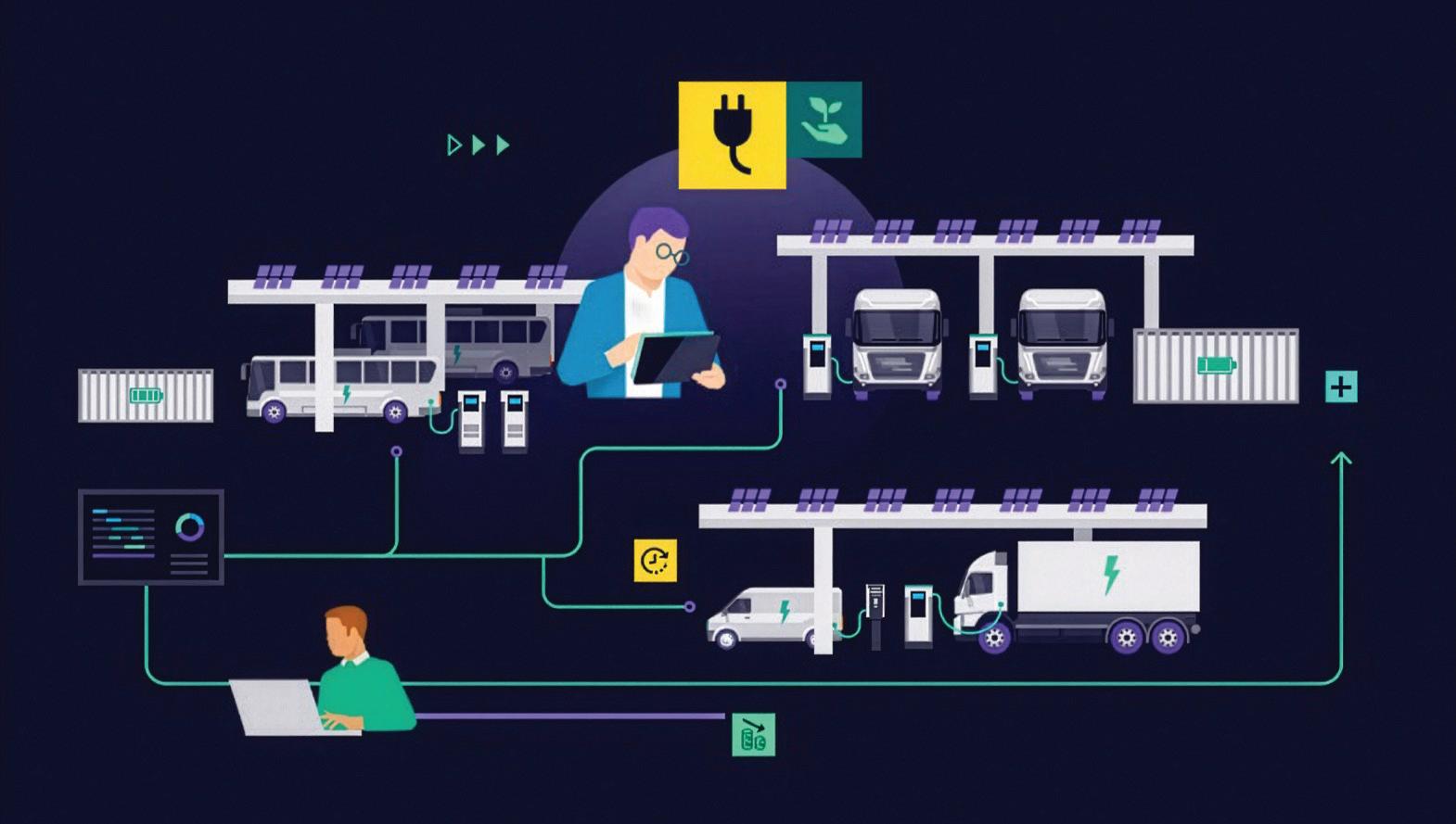
In this new landscape, systems must align across vehicles, grid capacity, utility tariffs, charging infrastructure availability, and cost. Artificial intelligence (AI) is beginning to emerge as the orchestrator that brings order to that post-deployment complexity.
A survey from logistics provider Penske revealed that 91% of executives understand the next generation of fleet and logistics professionals must be equipped with AI-enabled skills and tools.
By interpreting real-time data from vehicle telematics (which capture and
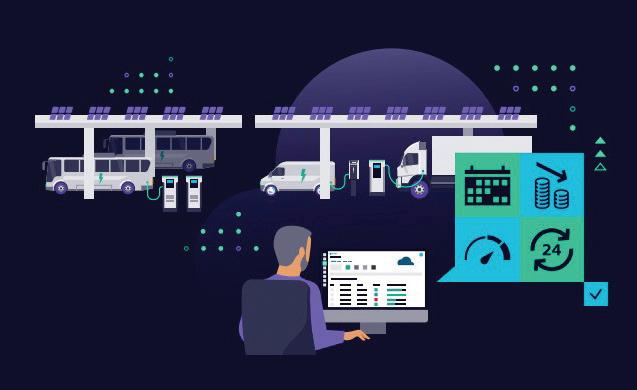
AI-enabled platforms connect vehicles, chargers, and grid systems to keep fleets charged and mission-ready.
ALAN WHITE • HEAD OF EMERGING TRANSPORTATION PLATFORMS
transmit location and performance information), chargers, energy tariffs, and fleet operations, AI-enabled platforms can help managers and operators make smarter, faster decisions that improve reliability and reduce costs.
Let’s explore a few critical ways AI is expected to help address the most pressing challenges of post-deployment fleet management.
AI and human oversight: A formula for fleets
Beyond the upfront investment in vehicles and chargers, one of the toughest ongoing challenges for EV fleet operators is ensuring each vehicle hits the proper state-of-charge (SoC) to match its daily route and duty cycle.
In conventional systems, this is a semi-automated process where planners estimate energy needs and schedule charging with limited data. Looking ahead, AI could dramatically improve this equation by automating route-aligned charging.
AI also has the potential to keep vehicles charged and moving with AIpowered predictive maintenance. This is becoming a must-have for modern fleets. EV chargers generate an enormous amount of operational data including charging cycles, fault codes, energy throughput, and environmental conditions.
With more data and time, AI could sift through this information to detect early warning signs and flag components or chargers likely to fail.
Not only that, but by pairing charging capabilities supported by AI with a humanmanaged Network Operations Center (NOC), operational anomalies could be minimized thanks to the two working in tandem. This enables fleet operators to act on insights from the NOC team, making adjustments that keep vehicles mission-ready and schedules intact.
In short, charging could be shifted to off-peak periods, infrastructure strain could be minimized, and vehicle availability maintained all without vehicle operator intervention.
Factoring in variables like climate, terrain, and battery health, AI-driven platforms will play a growing role in ensuring every vehicle is properly charged and ready to roll. Additionally, when a charger exhibits irregular behavior, AIenabled monitoring tools could correlate
that signal with other fleet-wide data and notify support teams.
Currently, this takes the form of automated alerts from monitoring patterns within the charging infrastructure, while the rest of the lifting — diagnosis, action, and resolution — is handled by trained personnel in the NOC, who can intervene before the issue impacts route readiness or delays departures.
While much of AI’s promise in fleet management is still developing, its influence is already evident in today’s EV operations. At one depot, for example, staff assumed a vehicle had been properly connected to its charger after a shift.
In reality, the plug was not fully engaged. Within minutes, AI-enabled monitoring flagged the issue, allowing the operations team to intervene and prevent what could have been a costly disruption the next morning.
In practice, predictive diagnostics could shift fleet operations from reactive fixes to proactive uptime management, keeping schedules on track and costs under control.
Turning data into savings
Traditional charge management systems can help schedule sessions and monitor utility tariffs, but they often fall short when confronted with unexpected factors like weather disruptions, route changes, or equipment downtime.
AI introduces an added layer of intelligence by going beyond static schedules. These systems can evaluate day-ahead energy prices, anticipate demand charge windows, and automatically shift charging to optimize for cost without sacrificing operational readiness.
The benefits only grow over time. With each data point, ranging from local climate patterns and driver behavior to rate variability and equipment performance, AI platforms continuously refine their models, uncovering new opportunities to improve efficiency. The result is a compounding effect: incremental adjustments today lead to accelerated gains tomorrow.
This means fleets can consistently minimize energy expenses while maintaining the confidence that vehicles will be charged and deployment-ready when needed.
This transition is already underway, as AI is helping fleets get ahead of problems, lower their TCO, and deliver more consistent, cost-effective service. The challenge for operators isn’t whether to adopt these tools; it’s how quickly they can start using them.
Essentially, the success seen by EV fleet managers won’t hinge on the number of chargers installed or vehicles deployed but on how seamlessly and cost-effectively fleets can operate every day after deployment. EV