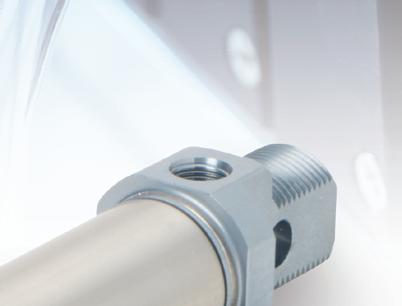
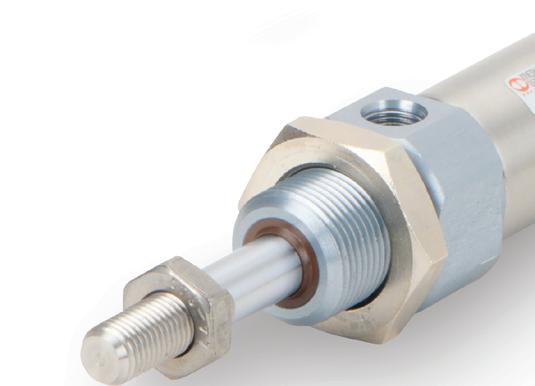
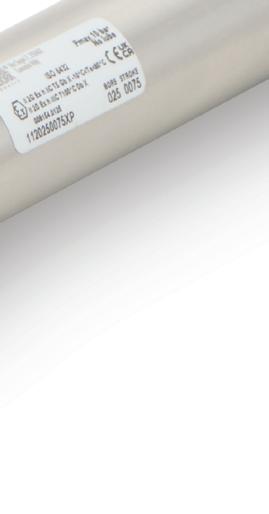
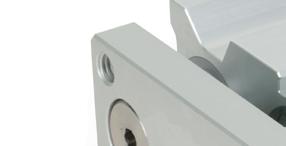
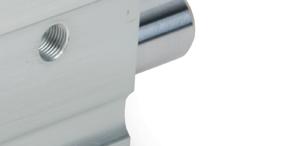
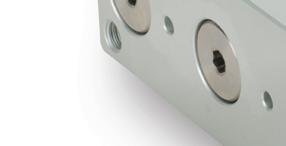
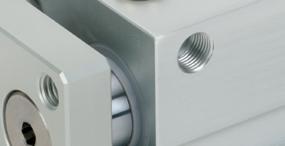
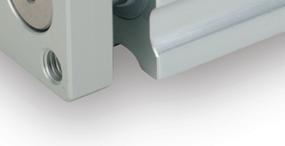
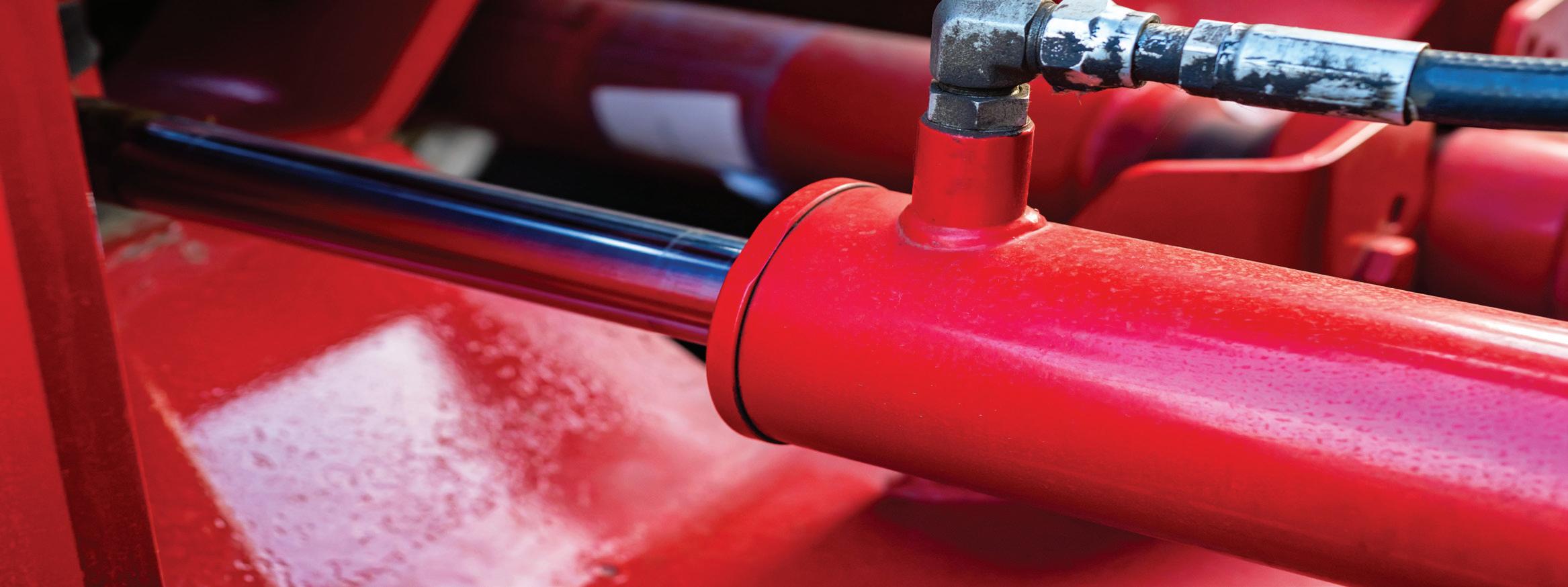
Metal Work ISO 6432 pneumatic air cylinders offer an ideal solution for metric applications where an inexpensive actuator is desired. They feature a magnetic piston for position sensor compatibility.
• Double-acting models are interchangeable with other common brands of ISO 6432 cylinders
• Bore sizes from 12mm to 25mm
• Stroke lengths from 50mm to 300mm
• Universal mount dependent on accessories selected to include: foot mount, rod clevis, rod eye, rear clevis, pivot mount, and flange mount
• Chamfered 304 stainless steel barrel
• 145 psi maximum operating pressure
starting at $151.00 (W143016A010N)
NEW! Metal Work Dual Guide Rod Cylinders
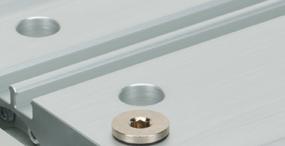
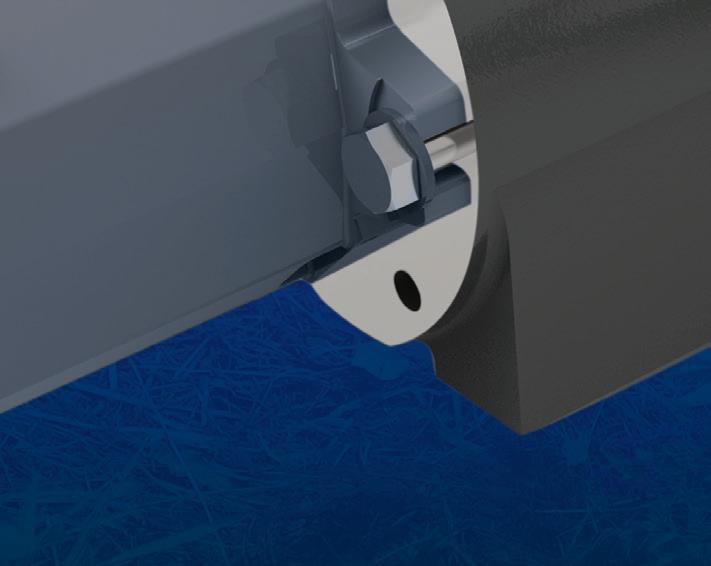
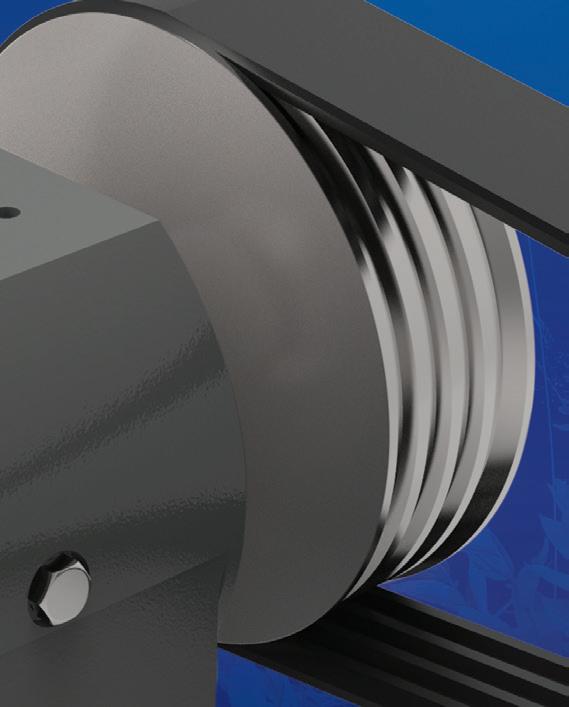
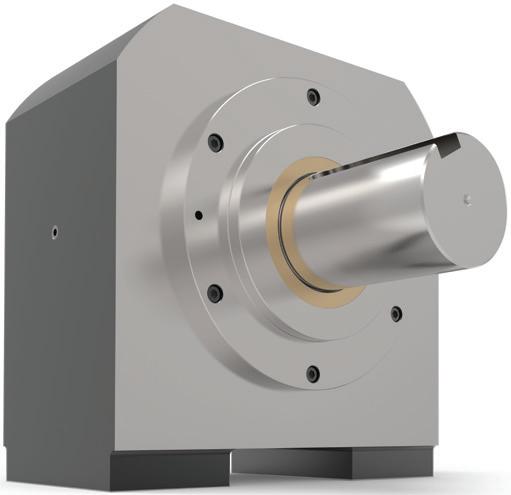
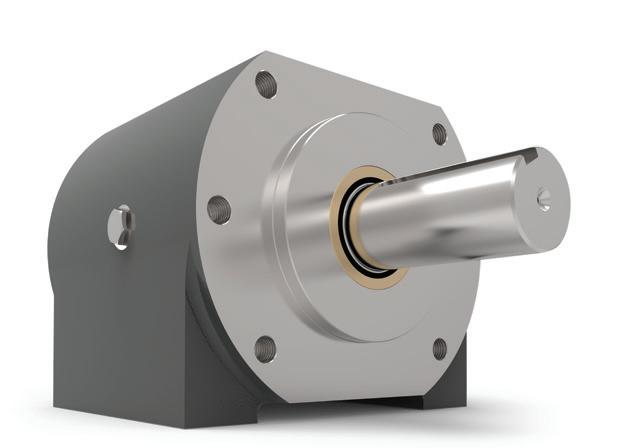
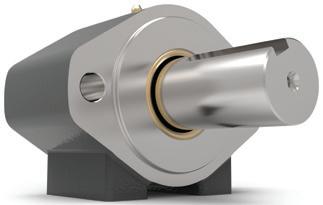
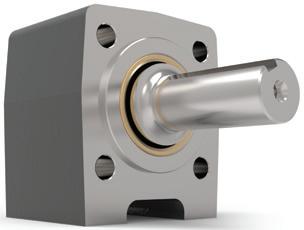
Metal Work heavy-duty metric dual guide rod cylinders are ideal for applications requiring precision mounting and tolerance to a sideload. These cylinders feature magnetic pistons, bronze bushings, anodized extruded aluminum alloy housing, and switch mounting tracks.
• Interchangeable with other common brands of metric guide rod cylinders
• Bore sizes from 16mm to 63mm
• Stroke lengths from 10mm to 400mm
• Double-acting
• Maximum operating pressure of 145 psi
• Maximum sideload of 10N to 250N
Mary C. Gannon • Editor-in-Chief
Onward with a more integrated CONEXPO/CON-AGG
DESPITE A MIXED FORECAST for the sectors that make up the construction market, all signs point to a positive experience as we prepare for CONEXPO/CON-AGG next month in Las Vegas. Industry analysts from ITR Economics and Interact Analysis show that in 2026, single home construction will likely continue to be a bit stalled, and office space and warehouse construction is emerging from a mild downturn, while other areas, like healthcare and education, remain stable. This shows a market in the second half of the year that will be ready for growth and so should we.
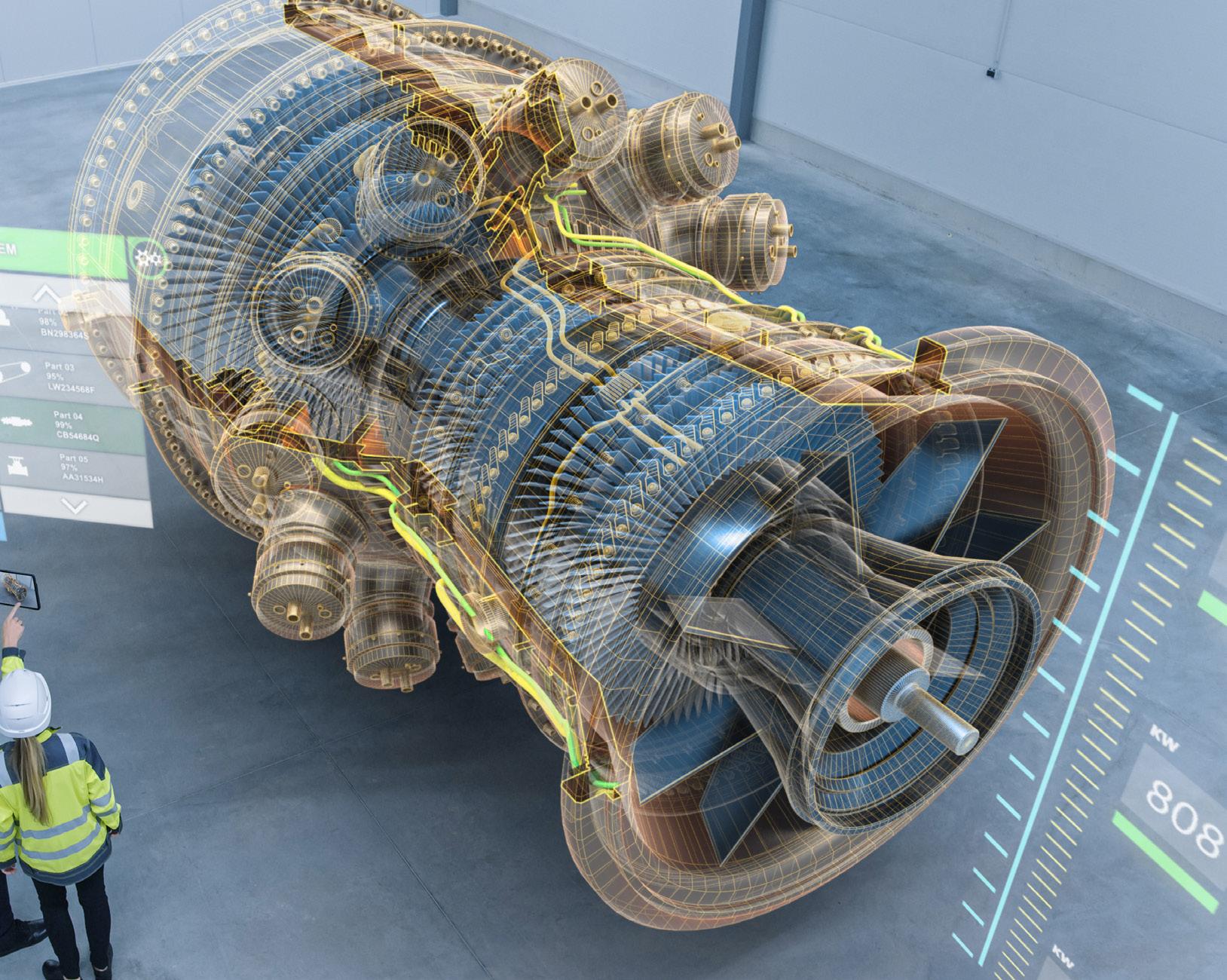
Every three years, CONEXPO/CON-AGG serves as a barometer for where the construction industry is headed. While IFPE no longer exists as a standalone destination, the technology, people, and conversations that defined this event are still preparing their booths, as they work on more system integration discussions. Many will focus on hydraulics being an enabling technology for electrification, automation, efficiency, and total cost of ownership across off-highway equipment.
Our coverage of CONEXPO/CON-AGG 2026 reflects that reality. As OEMs and component suppliers navigate uneven global growth, infrastructure investment cycles, labor shortages, and rising regulatory complexity, hydraulics and pneumatics are being
asked to do more — often with different energy sources, less space, and tighter integration with electronics and software. On the show floor, this translates into smarter architectures, digital hydraulics, hybrid systems, and components designed for system-level optimization. Over the past few years, we’ve seen a shift from component focuses to systems integration for many of the big manufacturers and we will continue to see that in Vegas once again. On page 28, you can read brief overviews of several fluid exhibitors’ booth plans, including key technology highlights, new product launches, and more.
We kick off our coverage on page 22 with a special report from Paul Heney, as he shares insights from Dana Wuesthoff, the Show Director and Denise Husenica, NFPA’s Membership Manager, about what attendees can expect. Wuesthoff noted that indoor exhibit space is sold out and registration is looking strong.
Education plays a critical role in that transition, and the NFPA’s Advanced Hydraulics Conference exemplifies how the industry is responding. The technical sessions focus on the future of fluid power systems on mobile machinery, as machines turn to electrification for power generation but still need the unmatched power density and reliability of hydraulics. From battery-electric excavators
and digital displacement pumps to steer-bywire systems and mechatronic integration, the message is clear: fluid power remains a crucial part of construction machinery but must evolve, particularly with regards to efficiency, to meet these changing needs.
We may have shifted away from our standalone fluid power show-within-a-show, but just as fluid power remains foundational to construction equipment, its future lies in how seamlessly it integrates with electronics, software, and alternative powertrains.
Stay tuned throughout the show to see our coverage at the event and be sure to read your show daily newsletters, which will be delivered to your inboxes March 3-6. And be sure to stay tuned in April, as we launch a special report on efficiency requirements and how they are impacting our industry, as well as a post-show report with all we learned in one easy-to-access place.
Read on and see you in Vegas! FPW
Mary C. Gannon • Editor-in-Chief mgannon@wtwhmedia.com linkedin.com/in/marygannonramsak
22 SHOW COVERAGE
CONEXPO/CON-AGG: A fluid power focused preview
Fluid power exhibitors and education opportunities give attendees much to be excited about.
36 MOBILE HYDRAULICS
Steer-by-wire: the next generation of machine design
Tips for designing safe, scalable steering for modern machines.
42 INDUSTRIAL AUTOMATION
Can hydraulics and pneumatics get along together in automation?
Combining air and oil on modern automation machinery helps to balance force, speed, precision, reliability, and cost.
Customer Service Representative Tracy Powers tpowers@wtwhmedia.com
Customer Service Representative JoAnn Martin jmartin@wtwhmedia.com
Customer Service Representative Renee Massey-Linston renee@wtwhmedia.com
Customer Service Representative Trinidy Longgood tlonggood@wtwhmedia.com
WTWH Media, LLC
1111 Superior Ave., Suite 1120, Cleveland, OH 44114
Ph: 888.543.2447 • Fax: 888.543.2447
FLUID POWER WORLD does not pass judgment on subjects of controversy nor enter into dispute with or between any individuals or organizations. FLUID POWER WORLD is also an independent forum for the expression of opinions relevant to industry issues. Letters to the editor and by-lined articles express the views of the author and not necessarily of the publisher or the publication. Every effort is made to provide accurate information; however, publisher assumes no responsibility for accuracy of submitted advertising and editorial information. Noncommissioned articles and news releases cannot be acknowledged. Unsolicited materials cannot be returned nor will this organization assume responsibility for their care.
Jami Brownlee 224.760.1055 jbrownlee@wtwhmedia.com
Mary Ann Cooke 781.710.4659 mcooke@wtwhmedia.com
Jim Powers 312.925.7793 jpowers@wtwhmedia.com
Judy Pinsel 630.538.2638 jpinsel@wtwhmedia.com
LEADERSHIP
CEO Matt Logan mlogan@wtwhmedia.com
Co-Founders Scott McCafferty Mike Emich
SUBSCRIPTION RATES: Free and controlled circulation to qualified subscribers. Non-qualified persons may subscribe at the following rates: U.S. and possessions: 1 year: $125; 2 years: $200; 3 years: $275; Canadian and foreign, 1 year: $195; only US funds are accepted. Single copies $15 each. Subscriptions are prepaid, and check or money orders only.
SUBSCRIBER SERVICES: To order a subscription please visit our web site at www.fluidpowerworld.com
FLUID POWER WORLD (ISSN 2375-3641), USPS
PUBLICATION #18060 is published six times a year: in February, April, June, August, October, and December by WTWH Media, LLC; 1111 Superior Ave., Suite 1120, Cleveland, Ohio 44114. Periodicals postage paid at Cleveland, OH & additional mailing offices.
POSTMASTER:
Send address changes to: Fluid Power World, 1111 Superior Ave., Suite 1120, Cleveland, OH 44114
Getting the most out of CONEXPO CON/AGG 2026
I HAVE AN EMBARRASSING ADMISSION:
I haven’t been to the CONEXPO-CON/AGG trade show since 2017. In fact, at the 2017 show, when it co-hosted with IFPE (The International Fluid Power Exhibition), I represented Canada at the IEOC (NFPA's Industry & Economic Conference), where, as the Director of Communications for the Canadian Fluid Power Association, I highlighted the state of the Canadian fluid power market at the time.
Nine years is a long time, especially given the acceleration of technology that has swept past Industry 4.0 and into artificial intelligence, so I'm excited to see what new and exciting technologies are on display at this triennial event. What won’t be there, unfortunately, is the aforementioned IFPE component of the show. According to NFPA President and CEO Eric Lanke, construction at the Las Vegas Convention Center (ironically enough) squeezed IFPE out due to the growth of that very same construction industry.
Regardless, I’ll be there, so keep an eye out for the big, bald Canadian with a Higginson Equipment polo, despite the absence of the IFPE. There’s just too much to see for me to risk missing another three years, and if you’re a fluid power professional, I recommend you attend as well. The show is more than cranes and cement trucks, so let’s break down what you need to know and why you should attend.
Of course, the primary purpose (despite all the great reasons to visit Las Vegas) is to see the exposition itself, especially when you need
to pitch this event to your boss as more than just a free gambling getaway. The show has a new format for keynotes, with its Ground Breakers stage in West Hall 108-110, so you can expect to learn the latest from talks on AI, sustainability, and connected smart systems.
On the education tip, look out for a series of workshops offering real-world, handson experiences to help you build your construction and business foundation. You can register for one- or two-day events covering equipment maintenance, small business, and the EmpowerHER workshop for women in construction to build their leadership skills, network, and garner strategies to advance their careers.
It goes without saying that if you're in the market for machinery or components, this is the place to be, as over 2,000 manufacturers are exhibiting at the show. Personally, I just love checking out hydraulic machinery — if you're new to fluid power, this show is a must for you to see how and where hydraulics are used on machinery. Mobile machines wear their muscles on the outside of their skeletons, so it's really easy to see pumps, motors, cylinders, and valves.
I hope I didn't let your hopes down when I said IFPE was no longer part of this show, because there are still plenty of fluid power manufacturers. Head over to the South Hall, where you can find all the big players in the game; all the familiar fluid power names, plus a bunch of the small, specialty manufacturers. According to my quick headcount, there are
around a hundred of your favorite fluid power brands, so don't think you're only seeing harvesters and front-end loaders at this show.
Finally, don't forget that you're in Las Vegas! When you register on the show's website, you can also get a deal on a partner hotel or resort. Prices vary widely depending on whether you want the carnival feel of Circus Circus or the luxury aesthetic of Bellagio. The good news is that you're eligible for Marriott Bonvoy points if you're so inclined, which is why we're staying at New York New York (Platinum Elite, for the win).
Once you're registered for the show and nearing the date, be sure to download the Vegas Unlocked All Access Pass, which is included with your show badge. You get discounts on dozens of shows, restaurants, attractions, and the Vegas monorail. So whether you’re into Cirque du Soleil or Magic Mike, you can get your tickets at up to 20% off.
Despite the absence of the IFPE component, I’m excited for this show. I’m excited to see all the new technologies and the direction equipment manufacturers are taking in this current climate of artificial intelligence. If you see me, get my attention and say, “hi.” FPW
Fluid power technologies dominate Design World’s LEAP Awards
IN DESIGN WORLD'S annual LEAP Awards for 2025, two components were recognized in the Fluid Power category, and five other hydraulic technologies were awarded across several other categories.
Taking the gold this year was Danfoss Power Solution's X1P open circuit pump. Built on the all new X1 Platform, it is designed to deliver increased performance and power density over the competition and previous generations. The first release of X1P includes nominal displacements of 60 and 75 cc and is built around a patent-pending swashplate installation technique which delivers both the shortest 75-cc pump in the market, and up to 80% lower control hysteresis. This means that X1P fits into very tight spaces while being ready for advanced electronic controls of the future. These advantages come from a class-exclusive roller element cradle bearing, which also enables the highest temperature rating of the Danfoss lineup and contributes to elevated circularity and ease of remanufacturing.
This innovative X1P architecture is covered by an invention disclosure with the intent to file a provisional patent according to IN18020. Part of what makes X1P unique is that it brings a higherpressure rating of 280 bar to the 75-cc displacement, and 310 bar to the 60-cc offering, all while fitting in the same compact housing. All these advanced design approaches and elevated performance levels make X1P particularly well-suited for construction, forestry, and specialty markets in machines such as mini excavators, compact track loaders, telehandlers, harvesters, and sprayers.
Judges were impressed with the X1P's ability to "pack more power into a smaller package with its unique swashplate design."
The X1P pump’s housing and unique angular control mounting reduce hydraulic noise by up to 3 dBA at 2,200 rpm, increasing operator comfort. The control mounting also eliminates common leak points and extends control longevity. It also features the highest standard temperature rating in its class — 115°C — which helps reduce cooling system requirements and wastes less energy cooling the machine.
IMI Norgren's KIP series proportional valve took silver this year. The KIP series offers variable and precise control of air and fluid flow in a compact, cost-effective design. Engineered for accuracy and responsiveness, the valve delivers smooth, precision flow control, best for applications that require exact dosing, mixing, or modulation. Its ability to adjust flow dynamically helps reduce energy and material waste by eliminating the need for constant full-flow operation.
Programmable and easily integrated with PLCs and control systems, the valve supports automated adjustments in real time, enhancing process efficiency and consistency. In addition to improving system responsiveness, the valve
also promotes safety and longevity through its gentle ramp-up and ramp-down control, which reduces mechanical wear.
The KIP proportional valve delivers versatile, precise control across industries such as food & beverage, metal fabrication, and packaging. In food & beverage, it ensures accurate ingredient spraying and dosing; in metal fabrication, it dynamically adjusts coolant and shielding gas flow for optimized machining and laser cutting; and in packaging, it fine-tunes actuator speeds to align with varying production demands.
Additional fluid power wins included the following:
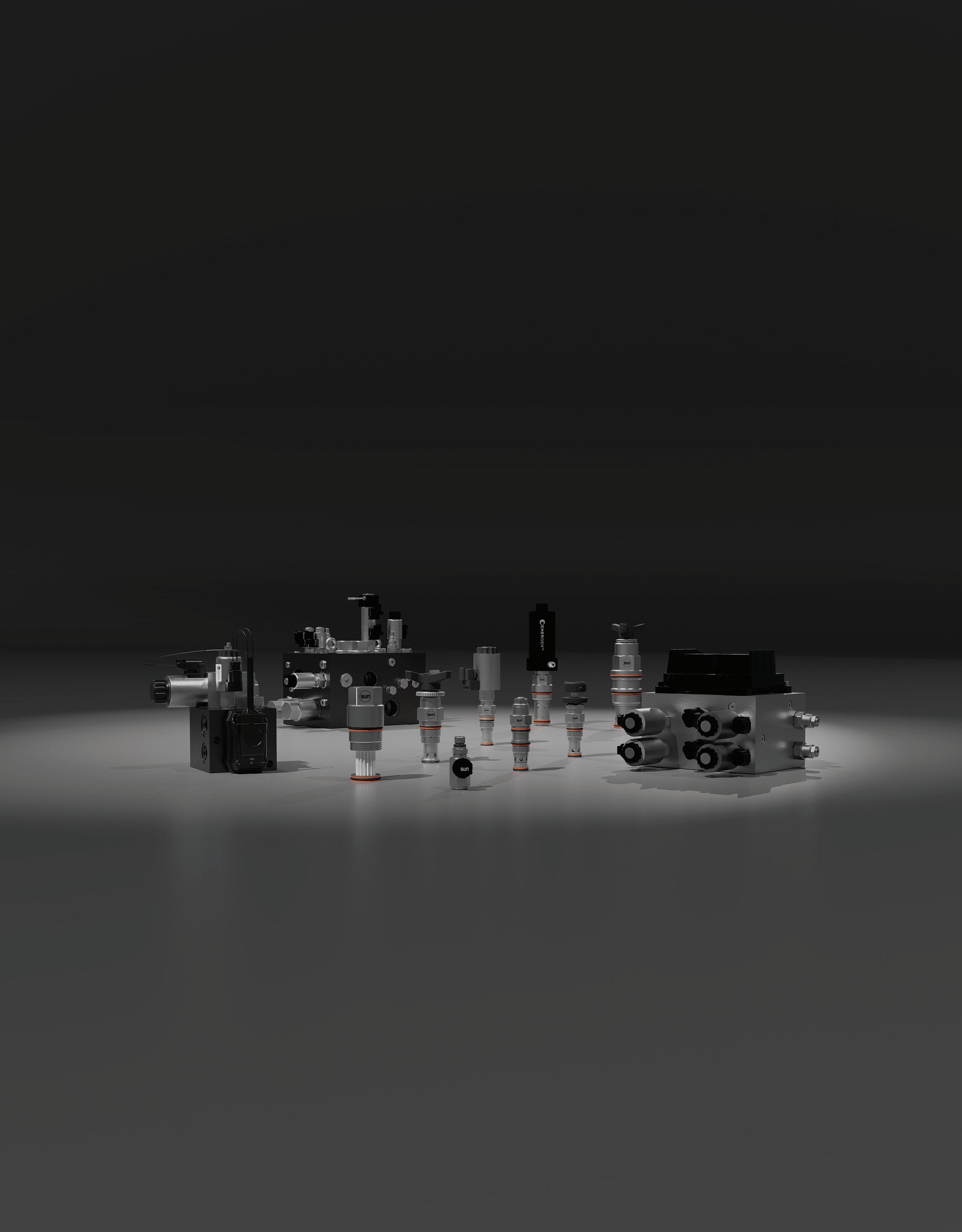
• Sun Hydraulics, LLC for its Energen valve took the Gold in the Motion Control category. This unique cartridge valve converts hydraulic flow into electric energy. The energy regeneration capability of Energen is attributed to an integrated generator that converts otherwise lost power into usable energy. This energy can be redirected to control electronics, such as solenoid valves and sensors, or to charge a battery within an application’s system. The highly engineered generator within a cartridge valve produces supplemental electrical power in situations where increasing demands for electrification have made some electrical power sources insufficient. Equally important, Energen provides energy where manufacturers have tra
DANFOSS POWER
SOLUTIONS WON GOLD IN THE LEAP FLUID POWER CATEGORY FOR ITS X1P OPEN CIRCUIT PUMP.
IMI NORGREN'S KIP SERIES PROPORTIONAL VALVE TOOK SILVER THIS YEAR.
ditionally not been able to run an electrical harness, unlocking functionality that was previously not possible.
• Delta Motion's EtherCAT MainDevice with Redundancy Port took Bronze in the Motion Control category. Adding an EtherCAT communication module to its flagship RMC200 Motion Controller family, enables it to efficiently connect to EtherCAT-enabled devices, and control electric motor drives and hydraulic valves over EtherCAT, reaffirming Delta Motion’s commitment to delivering high-performance technology solutions for servo-hydraulic and servo-electric motion applications. The new module is compatible with both the RMC200 Lite and Standard, allowing control of up to 18 and 50 axes, respectively.
• DGD Fluid Power’s CFT-Max (J1939 w/ temp) took Gold in the Switches & Sensors category. The CFT-MAX monitors hydraulic flows on mobile equipment and is J1939
compliant with an IP69 rating. Flows up to 150 gpm and a 6,000 psi pressure rating allow the CFT-Max to be used on the vast majority of systems in use today. The transmitter now offers a temperature sensor range from –40° to 125° C. The capability was added to the internal electronics and software and thus required no additional changes to the construction or materials.
• GoldLeaf App Inc. was awarded Silver in the Computer Hardware and Software category for its GoldLeaf App hose configuration web application. The software program for hose distributors and users promises to transform the way they manage, configure, and quote their hydraulic hose assemblies. The app provides a seamless experience for technicians and engineers tasked with navigating multiple catalogs and website pages, reducing errors and improving operational efficiency. Goldleaf is a web-based platform designed to simplify and standardize the
hose specification and assembly process. It addresses critical pain points in two major market segments: OEMs with high-volume, repetitive hose configurations, and counter repair services that handle diverse and unique requests.
• Joral was awarded silver in the Motion Control category for a Multiturn Position Sensor for Danfoss Hydraulic Motors – A DropIn Motion Control Upgrade. This multiturn absolute position sensor mounts directly to Danfoss hydraulic motors equipped with the EMD (Electronic Motor Displacement) speed sensor pickup. By leveraging the existing mechanical interface, it converts a traditional speed sensor port into a high-resolution, multiturn position feedback system — unlocking advanced motion control capabilities without altering the motor housing.
Visit Design World for a complete list of winners. FPW
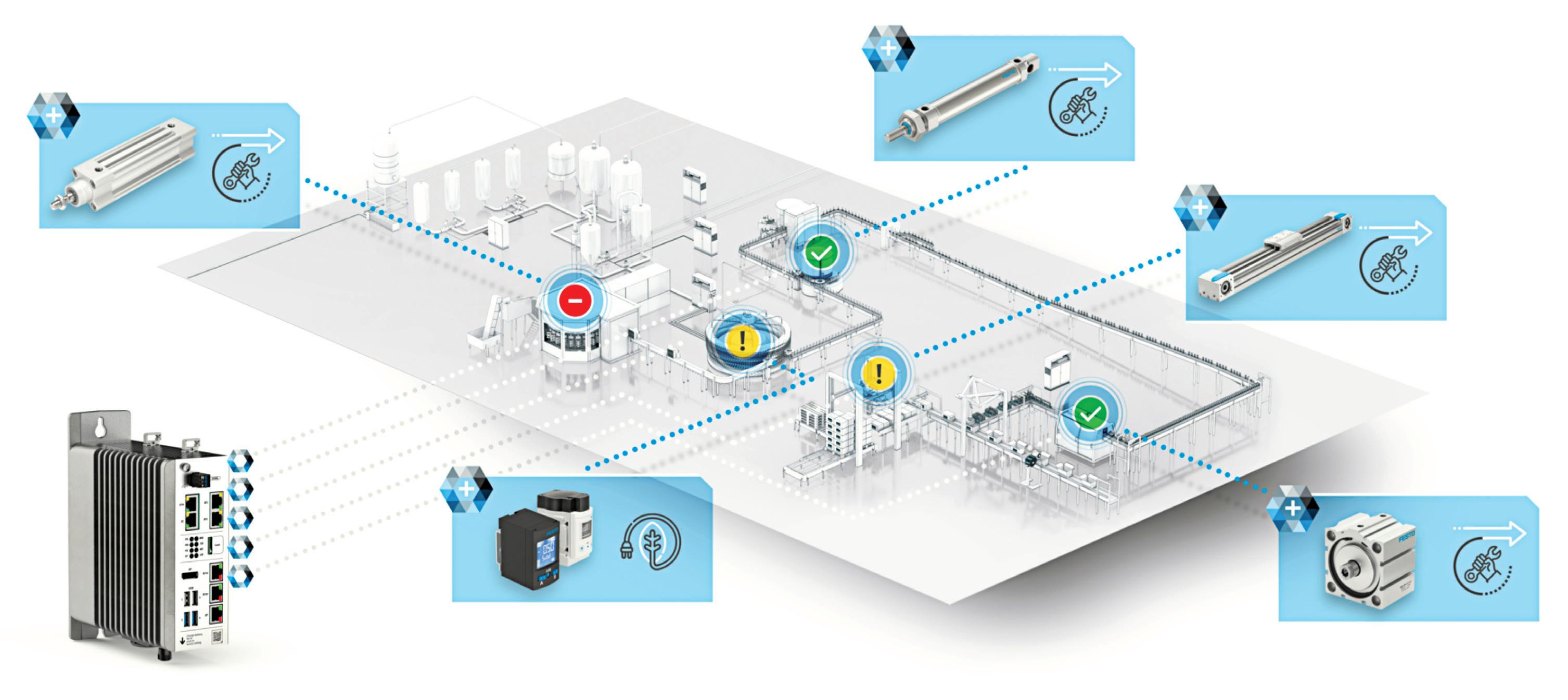
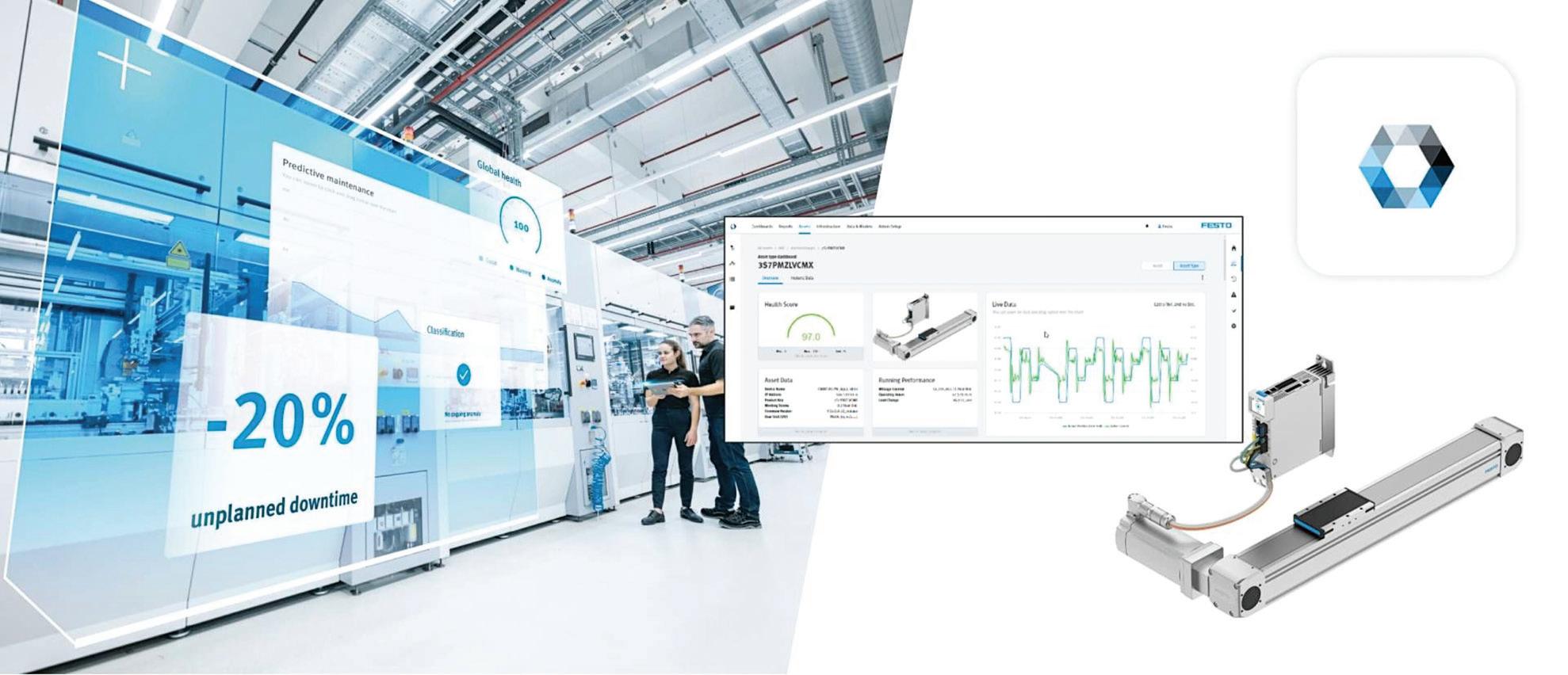
FESTO’S AI-ENABLED MONITORING and predictive maintenance system AX Motion Insights Pneumatic is a cost-effective, easyto-use solution for preventing unscheduled machine downtime by monitoring pneumatic cylinders for wear and anomalies. This AI-based industrial app ensures operations are more reliable, efficient, and ultimately more profitable.
The system uses AI to detect anomalies in the behavior of pneumatic drives and cylinders without the need for additional sensors. It provides a “health score” as a “risk of failure” indicator for each cylinder. Connectivity is achieved via a PLC function block. The system is compatible with actuators from different manufacturers and has specific connectivity details for Siemens, Rockwell, and Beckhoff controllers.
Jonas Schimmele, Business Driver Digital Business, Festo, said the app does not require additional sensors because the system leverages existing PLC signals and actuator end-position sensors already present in most machines. “No extra hardware is needed beyond the con-
nectivity function block for PLC integration,” Schimmele said. “AI models analyze motion profiles, timing, and stroke completion data to detect deviations from learned baselines.”
The system measures signal edges of valves and limit switches, as well as looks for behavioral anomalies in motion profiles, Schimmele noted. These are captured via PLC data streams and processed by AI models to assign a “Health Score” for each cylinder, indicating risk of failure. Continuous monitoring enables trend analysis and anomaly detection.
Motion Insights Pneumatic enables maintenance teams to schedule tasks in advance, significantly reducing the risk of unexpected downtime. The platform offers the flexibility of on-premises computing, giving end users full control over their data and deployment. This is an open system and works with both Festo and third-party components. The AX platform features ease of use and seamless integration, opening the door for customers to embrace AI, data-driven solutions, and digital transformation.
AX MOTION INSIGHTS PNEUMATIC IS A COST-EFFECTIVE, EASY-TOUSE SOLUTION FOR PREVENTING COSTLY UNSCHEDULED MACHINE DOWNTIME BY MONITORING PNEUMATIC CYLINDERS AND DRIVES.
“Predictive maintenance for pneumatics existed in basic forms (manual trend analysis and extra sensors), but AI makes it far more feasible, scalable and user-friendly,” Schimmele said. “Festo combines decades of mechanical expertise with machine learning to create standardized, plug-and-work apps that learn normal operating behavior and detect anomalies automatically.”
A critical element of Motion Insights Pneumatic is its integration with Festo’s Smartenance maintenance management system. Motion Insights Pneumatic works in tandem with Smartenance; the Insights app identifies when maintenance is needed, and Smartenance manages the resulting tasks. The integration of the two creates a cohesive, end-to-end workflow that ensures predictive insights are not just seen but also efficiently acted upon.
Motion Insights Pneumatic is easy to set up and use. The “plug-and-play” aspect of this app, combined with its user-friendly interface and standardized AI models, makes the technology
PROVEN SOLUTIONS TRUSTED EXPERTISE
Innovation starts with Bosch Rexroth and HydraForce. Our expert application engineers design efficient electro-hydraulic systems, delivering proven compact hydraulic solutions that enhance machine performance. Whether it’s an upgrade, redesign or new motion control application, rely on our global team and comprehensive product line to help you gain a competitive edge. Innovate
with Us
Las Vegas, USA
March 3-7, 2026 Booth S80245
more accessible than otherwise possible. This is beneficial for original equipment manufacturers (oems) and end-use companies that are just beginning their digital journey, as it lowers the barrier to entry and brings the benefits of AI without requiring deep data-science expertise. OEMs and end users simply download the app, install it, and integrate it themselves.
“This approach removes the need for deep data-science skills and accelerates adoption — no data scientist needed, quick installation, and low investment risk,” Schimmele said. “It’s ready for large-scale rollouts as you do not need to adapt to every single asset.”
Festo AX Motion Insights Pneumatic joins the Festo AX Motion Insights Electric app, which focuses on electric components, and Festo AX Data Access, which makes operation technology (ot) data available for information technology (it) analysis. These apps can be used singly or in combination. Other similar tech includes energy monitoring (AX Energy Insights), as well
as vacuum generation, Schimmele said, forming a complete digital ecosystem for predictive maintenance and efficiency.
CODI Manufacturing, Littleton, Colorado, recently installed all three on its new, compact gantry palletizer to give customers the ultimate in uptime and insights into operational efficiency.
The solution is broadly applicable, Schimmele said, noting a few key uses could include the following:
“Essentially, any system with linear motion critical for process performance, multiple pneumatic cylinders, and high uptime requirements benefits from predictive insights,” he said.
As for how it impacts system life, Schim -
mele said that industry benchmarks indicate that there is between a 5–20% productivity loss linked to component failure. AX aims to eliminate this. Festo highlights its quick turnaround on ROI by focusing on 5–10% critical cylinders. “While exact numbers depend on the application, predictive maintenance typically reduces unplanned downtime by 20% and can extend component life significantly by preventing catastrophic failures,” he said. “Festo reports improved OEE (Overall Equipment Effectiveness), reduced maintenance costs, and longer service life for pneumatic systems when using AX Motion Insights.”
The apps can be deployed on-premises using standard hardware and container technology such as Docker. Containerization allows the apps to be deployed flexibly on various computing environments, including industrial PCs, virtual machines, servers, and edge devices. Insights Electric and Pneumatic are purchased on a subscription basis, while “time-limited”
traditional supply chains can’t keep pace. That’s where Adaptall steps in We stock a full line of high-quality SS316 fittings engineered for critical liquid-cooling systems, from cold plates to chillers, manifolds, immersion cooling tanks, CDUs, filtration units, and sensors When lead times stretch for others, we deliver immediate availability straight from our shelves
When your customers need stainless fittings fast, Adaptall responds Our rapid quoting on non-standard configurations and deep inventory of ready-to-ship SS316 components make us the ideal partner for distributors facing urgent project demands. Keep your customers cool, and your business moving with Adaptall’s speed, quality, and reliability
Powered by decades of machining expertise, ISO 9001:2015 certification, and full traceability We offer flexible small batch runs, rapid prototyping, and custom solutions. All delivered on time, every time.
In Stock. On Spec. On Time.
options (3 and 5 years) will be released at the end of 2025. Data Access is purchased under a perpetual license.
Festo AX apps run on customer infrastructure (on edge, on-premises, in customer cloud instances) using container technology (e.g., Docker), giving full control over data. Common industrial protocols like OPC-UA and MQTT are
supported for secure integration. Schimmele said that cybersecurity best practices such as network segmentation, encrypted communication, and role-based access are recommended. The app is not cloud dependent unless chosen by the user.
Through Festo App World, customers can select a license package based on the number
of cylinders they want to monitor. Unlike competitors that might offer a single software tool, Festo AX apps are a seamless part of a complete one-stop-shop automation solution, including its electrical and pneumatic components. This simplifies integration and offers a single point of contact for support.
Finally, as concerns grow for energy usage by AI technologies, Schimmele highlights the energy savings that can be achieved through the app. “AI itself has minimal energy impact compared to the savings achieved,” he said. “By detecting wear early, it prevents inefficient cylinder operation. Combined with Festo AX Energy Insights, users can monitor compressed air consumption and detect leaks, which can reduce pneumatic energy losses by up to 50%. So, while AI requires computing resources, the net effect is lower compressed air usage and improved energy efficiency.” FPW
Festo festo.com
AX MOTION INSIGHTS ELECTRIC PROVIDES CONDITION-BASED MAINTENANCE BY MONITORING THE ELECTRIC DRIVE CHAIN FOR WEAR AND ANOMALIES.
Josh Cosford • Contributing Editor
Unconventional KPIs to keep your hydraulic system running optimally
I DON’T EVEN HAVE TO ASK — I know you’re already datalogging your power unit’s particle counter to track contamination levels, and you’re using the latest wireless pressure transducers and flow meters to track case drain pressure and flow. Perhaps you have another halfdozen metrics that your custom maintenance software automatically tracks, including mean time between failures and machine uptime percentage.
You're logging your filters' pressure drops, mapping your major components' temperatures, and sampling your oil every quarter to track water saturation and total acid number, all the while posting Mean Time Between Failures charts on the Lean Six Sigma whiteboard outside your office. Because, of course you are. Because I know each and every one of you is doing all this and more (Right? RIGHT??), let's step outside the box and talk about unconven-
TRACKING
UNCONVENTIONAL KPIS LIKE VIBRATION, VALVE SHIFT, AND TEMPERATURE GIVES YOU MORE DATA TO ENSURE YOUR SYSTEM IS RUNNING OPTIMALLY.
field to move a metal pin, subsequently shifting the spool. Some manufacturers publish these shift speed curves, which vary based on both flow and pressure differential through the valve. Still, installing pressure sensors at the workports just downstream of the valves allows you to track the baseline data relevant to your application. Over the years, you can monitor shift performance to see if spools are sticking or coils are weakening, giving you the opportunity to repair or swap out valves on the verge of failure.
I've mentioned previously that mapping the temperatures of pumps, actuators, reservoirs, and valves provides valuable insight to potentially discover hydraulic energy being lost before doing useful work. However, those recommendations involved laser thermometers or infrared cameras. However, by installing temperature transducers in strategic locations, you can trend fluid bypass over time to predict imminent failures.
tional KPIs you can add to your repertoire that aren't so pedestrian.
We all know hydraulic power units vibrate, and we all know those vibrations lead to frequently insidious auditory torture. Those vibrations are packets of information ready to be collected and analyzed. By installing high-speed, high-resolution pressure transducers, you can track pressure waves near pumps, motors, and valves to detect anomalies. Despite an even sounding vibration, just like soundwaves, the frequency and amplitude can be measured from 1-20 kHz (or higher). You want to see consistent, dominant amplitude expected from pistons or gears, for example, with no new harmonics possibly caused by cavitation/aeration, metal-on-metal wear, or cylinders chattering.
Valves are expected to shift quickly to provide the responsiveness your actuators require to perform well. Electric coils create a magnetic
Temperature sensors in pump case drain lines, relief valve tank lines, valve manifold return lines, and other strategic locations allow you to track heat, which can be compared to both ambient conditions and previously trended data. An increase in temperature in the relief valve tank lines, for example, points to either an issue causing over-pressurization or with the valve itself. You can go a step further and add temperature sensors to the actuator work lines. If your PLC senses a temperature rise at the capside port of your cylinder during retraction, followed by a head-side rise during extension, you should investigate whether your piston seal(s) are leaking and generating heat.
Today's rise in cheap technology and electronics has given us the resources to collect and process data like never before. Such datalogging of KPIs would have been impossible twenty years ago outside of spaceships and Formula 1 racing cars. You simply have no excuse for avoiding the tracking of KPIs, even unconventional ones. FPW
Solutions Under Pressure
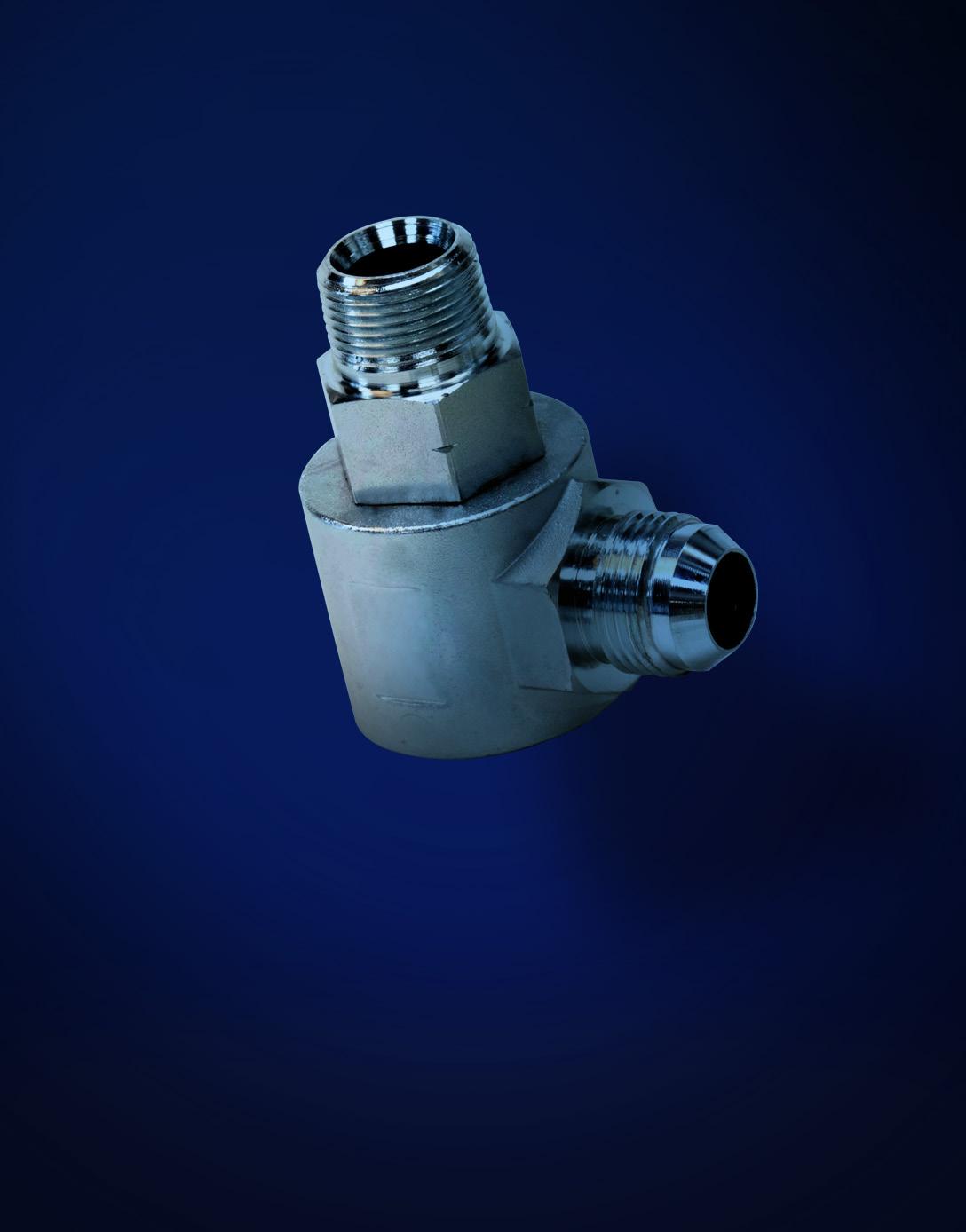
The Gold Standard in Live Swivels.
Ron Marshall • Contributing Editor
VSD compressors: Put your system on cruise control
WHEN DANA TOOK OVER as production manager at a packaging plant, she quickly learned that compressed air pressure was a constant source of frustration. Operators often complained about pressure swings, too low during peak demand and too high during quieter shifts. The compressors seemed to be either racing at full throttle or idling wastefully.
Energy costs were climbing, and Dana knew something had to change.
During a Compressed Air Challenge seminar, she heard about variable speed drive (vsd) compressors. The instructor compared them to a car’s cruise control, automatically adjusting speed to match road conditions, keeping the speed constant. That analogy clicked with Dana. If cars could drive smoothly and efficiently with cruise control, why couldn’t compressors?
downs became less frequent, and service intervals stretched longer. It was as if the system itself had learned to run smoother and gentler.
She arranged a trial installation of a VSD compressor at the plant. The difference was immediate. Instead of the old system’s constant start-stop and load-unload cycles, the VSD compressor adjusted its motor speed to precisely match the plant’s demand. Pressure fluctuations smoothed out, and operators noticed that their tools performed more consistently. Production quality improved simply because air pressure was stable.
The energy savings were even more impressive. By slowing down during periods of low demand, the VSD compressor consumed far less electricity than the fixed-speed units. Dana’s utility reports showed a dramatic reduction in kilowatt-hours consumed per 100 cfm of air delivered. In just the first year, the plant saved thousands of dollars in electricity costs.
Her maintenance team also appreciated the change. Fewer start-stop cycles meant less mechanical stress on motors and drives, reducing wear and extending equipment life. Break-
One day, Dana explained the new setup to her operators: “Think of this compressor like cruise control in your car. When you’re going uphill, it speeds up just enough to maintain the pace. When the road levels out, it eases off the gas. That’s exactly what’s happening here, our compressor only works as hard as it needs to.” The crew nodded in understanding, and some even began referring to the VSD unit as the “cruise machine.”
The success convinced Dana to permanently install the VSD compressor in the plant. The compressor kept the system more balanced, efficient, and reliable. The investment not only cut operating costs but also gave her peace of mind — she no longer had to worry about sudden pressure crashes disrupting production.
Dana’s experience highlights a growing trend in industry: VSD technology is transforming compressed air management. For operators and owners, the message is clear — if you want stable pressure, lower energy bills, and longer equipment life, putting your system on “cruise control” with VSD compressors may be the smartest move you can make. FPW
MOST MODERN SYSTEMS THAT ARE AT PEAK EFFICIENCY HAVE AT LEAST ONE PROPERLY SIZED VSD INSTALLED AND RUNNING.
Edited by Mary C. Gannon • Editor-in-Chief
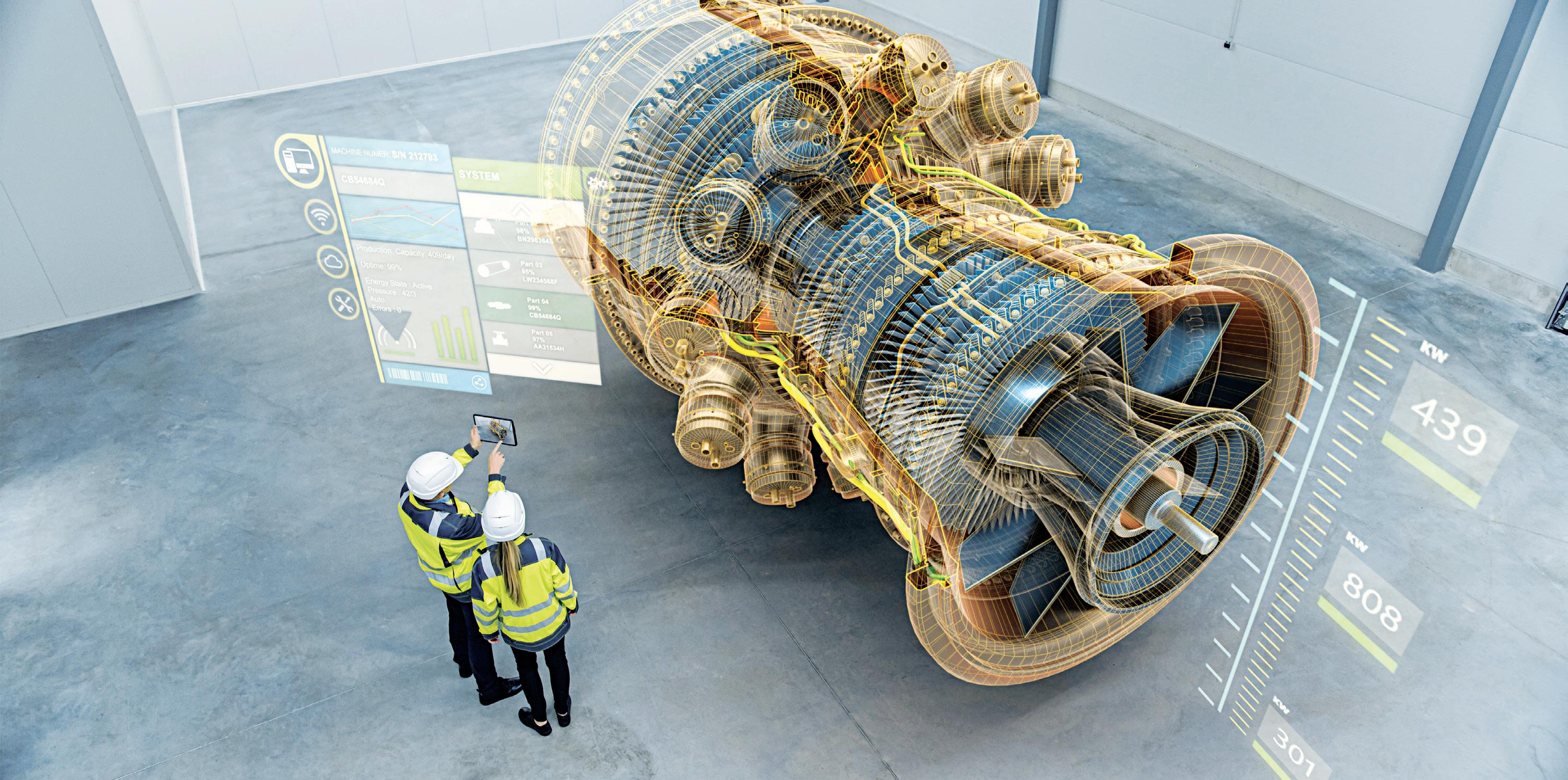
Electrohydraulics systems ensure safe processes in the energy sector
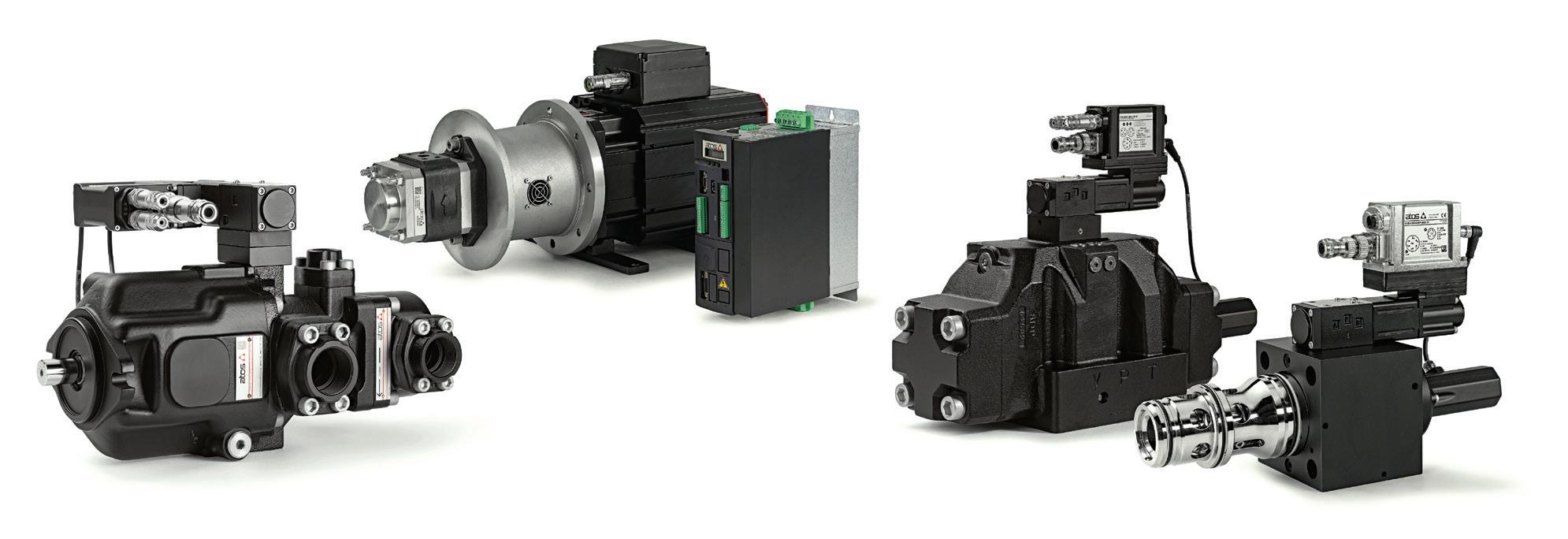
ATOS PROVIDES INNOVATIVE AND SAFE ELECTROHYDRAULIC SYSTEMS TO CONTROL PROCESS ACTUATORS AND VALVES, OF STEAM, GAS OR HYDRO TURBINES. CUSTOMIZED SOLUTIONS INCLUDE THE USE OF DIGITAL DIRECTIONAL SERVO PROPORTIONAL VALVES, SAFETY VALVES, SERVO PUMPS OR VARIABLE DISPLACEMENT PISTON PUMPS TO MAXIMIZE ELECTRICAL EFFICIENCY, EITHER WITH HLP MINERAL OILS, SYNTHETIC FLUIDS OR PHOSPHORIC-BASED FLAME-RESISTANT FLUIDS.
IN POWER GENERATION PLANTS, large ball, gate or butterfly process valves control the flow of steam, oil, water, or gas. Because of the massive amount of power required and the intrinsic risks within, hydraulic systems and power units designed for operation in non-classified or hazardous classified areas, are used to maximize power generation efficiency and reliability. Solutions that include the use of digital directional servo proportional valves, safety valves, servo pumps or variable displacement piston pumps maximize electrical efficiency, either with HLP mineral oils, synthetic fluids or phosphoric-based flame-resistant fluids. There are two types of process valves: open/ close or regulating. The former can be handled by on-off solenoid valves, while the latter are controlled through servo-proportional valves or axis control systems, which regulate their opening and holding in position, according to the exact power consumption the system requires. Precise position control lets the system work inside the operative range where the maximum point of electrical efficiency is reached, boosting the entire energy production process. In
PERFORMANCE
both cases, Atos offers a range of industrial or explosion-proof electrohydraulic components.
Based on their role within the system and potential hazard they could generate in a sudden stop, process valves are classified according to the desired reaction in case of unexpected event, resulting in emergency status:
• Fail closed, where the valve closes completely
• Fail open, where the valve fully opens
• Fail last, where the valve maintains the last actuated position
Using power units and hydraulic safety systems with redundant architecture gives process systems options in case of power supply breakdown. Such custom options could include power supply voltages for solenoid valves, for applications powered through mains power supply and with backup battery packs.
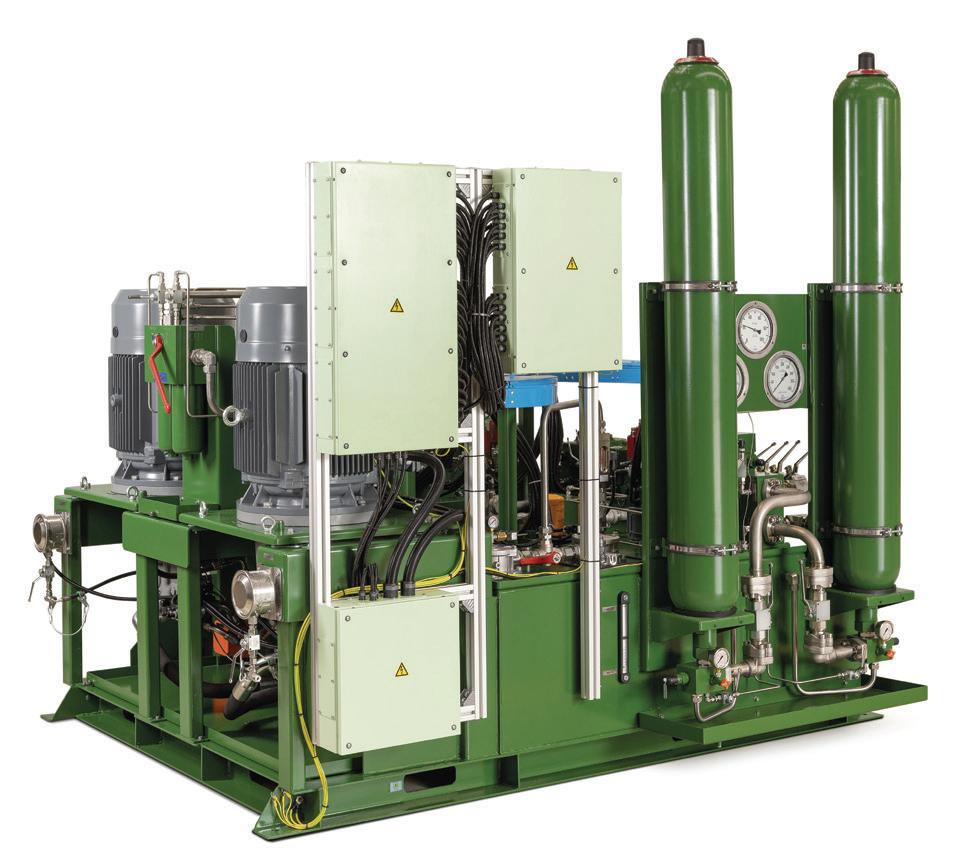
Additionally, hydraulic systems for turbine control consist of an HPU that generates the hydraulic power required for the movements of individual actuators. The presence of dual or
HIGH
HYDRAULIC COMPONENTS FROM ATOS
triple redundant subsystems maximizes system safety and maintenance while keeping the turbine in full operation, without having to shut it down, even in case of failure of some crucial components for proper operation.
Variable displacement piston pumps or, increasingly, servo pumps equipped with brushless motors, deliver hydraulic power only when requested with the exact amount of flow rate needed to feed the power generation system, optimizing energy consumption and classifying hydraulic power packs as environmentally friendly units.
Often due to the high working temperatures at which steam turbines operate, or due to placement within classified areas for gas turbines, hydraulic control systems require special fire-resistant synthetic or phosphoric-based hydraulic fluids. Atos electrohydraulic systems are equipped with FKM seals that are suitable with these types of fluids, or even with EPDM
compounds when using avionic fluids. At the same time, some types of turbines are designed to operate in very cold environments, where seals with special compounds and stainless steel components are used, which can operate down to –60°C.
The wide industrial, ex-proof and stainlesssteel products portfolio, which includes servo pumps, variable displacement pumps, safety valves, servo proportional valves, servo cylinders with built-in transducers, axis & p/Q controls, forms the bedrock of the Atos electrohydraulics systems engineering. FPW Atos atos.com
Fluid power exhibitors and education opportunities give attendees much to be excited about.
By Paul J. Heney, Editorial Director, Mary C. Gannon, Editor-in-Chief
CONEXPO CON-AGG: A fluid power focused preview
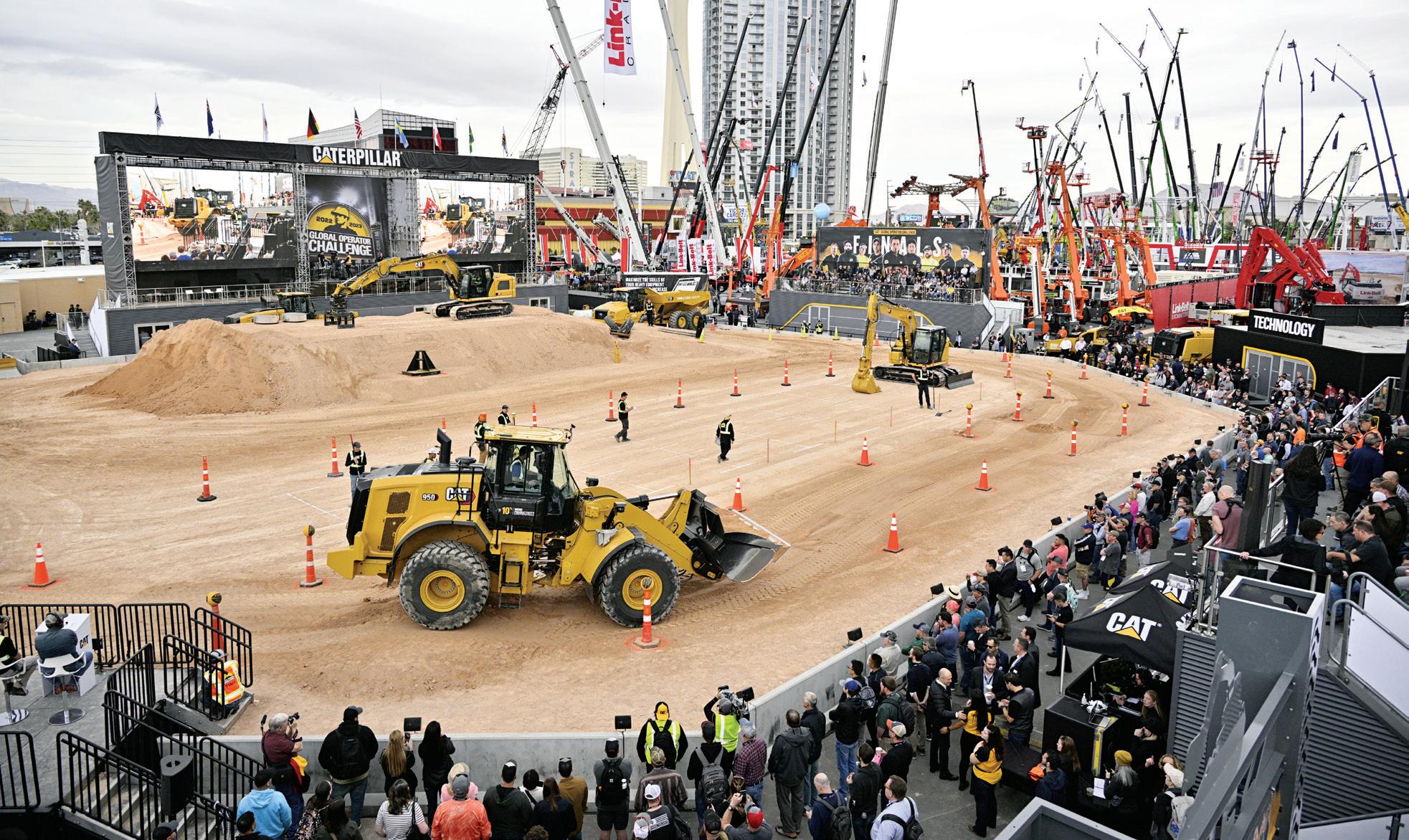
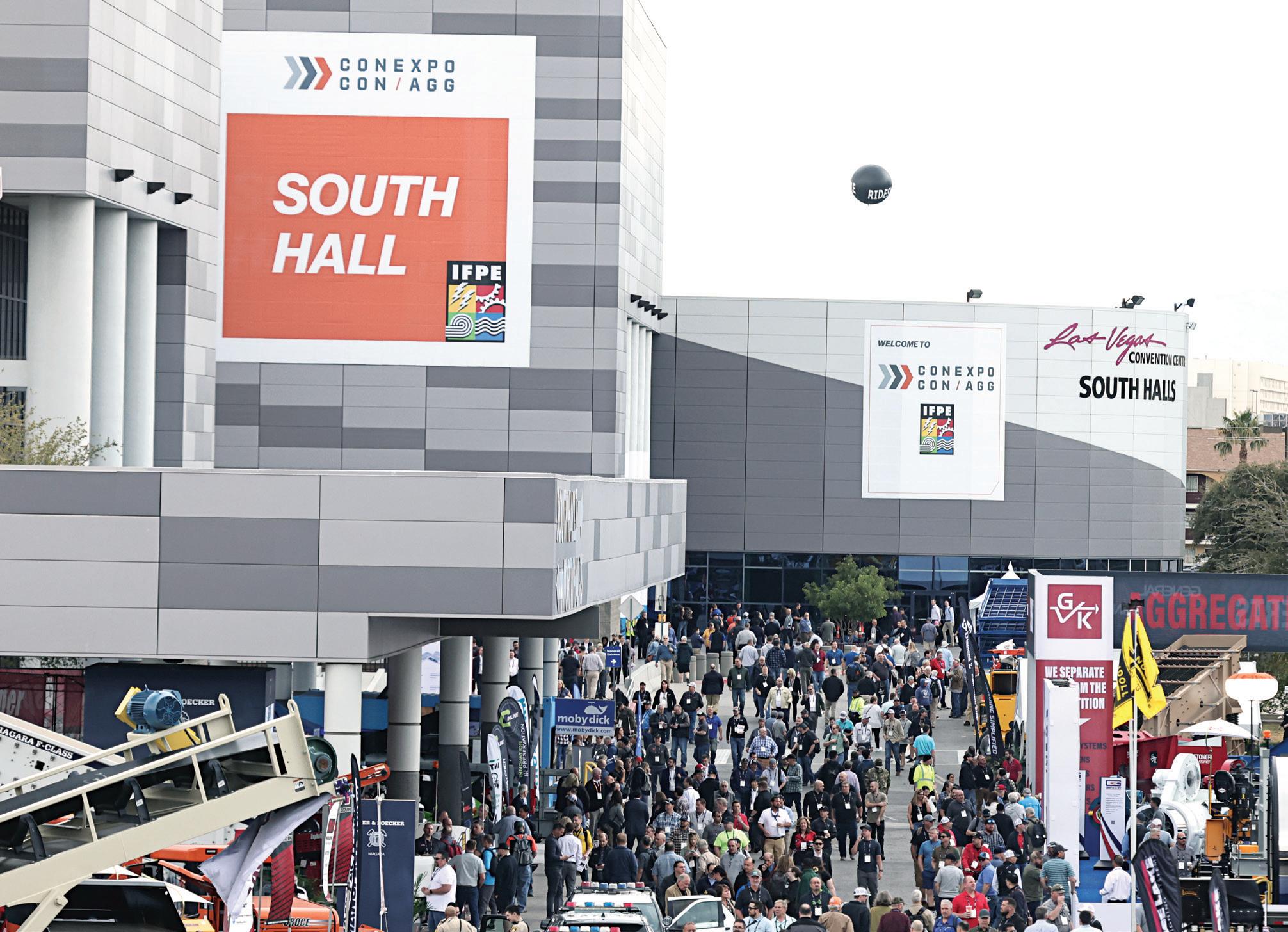
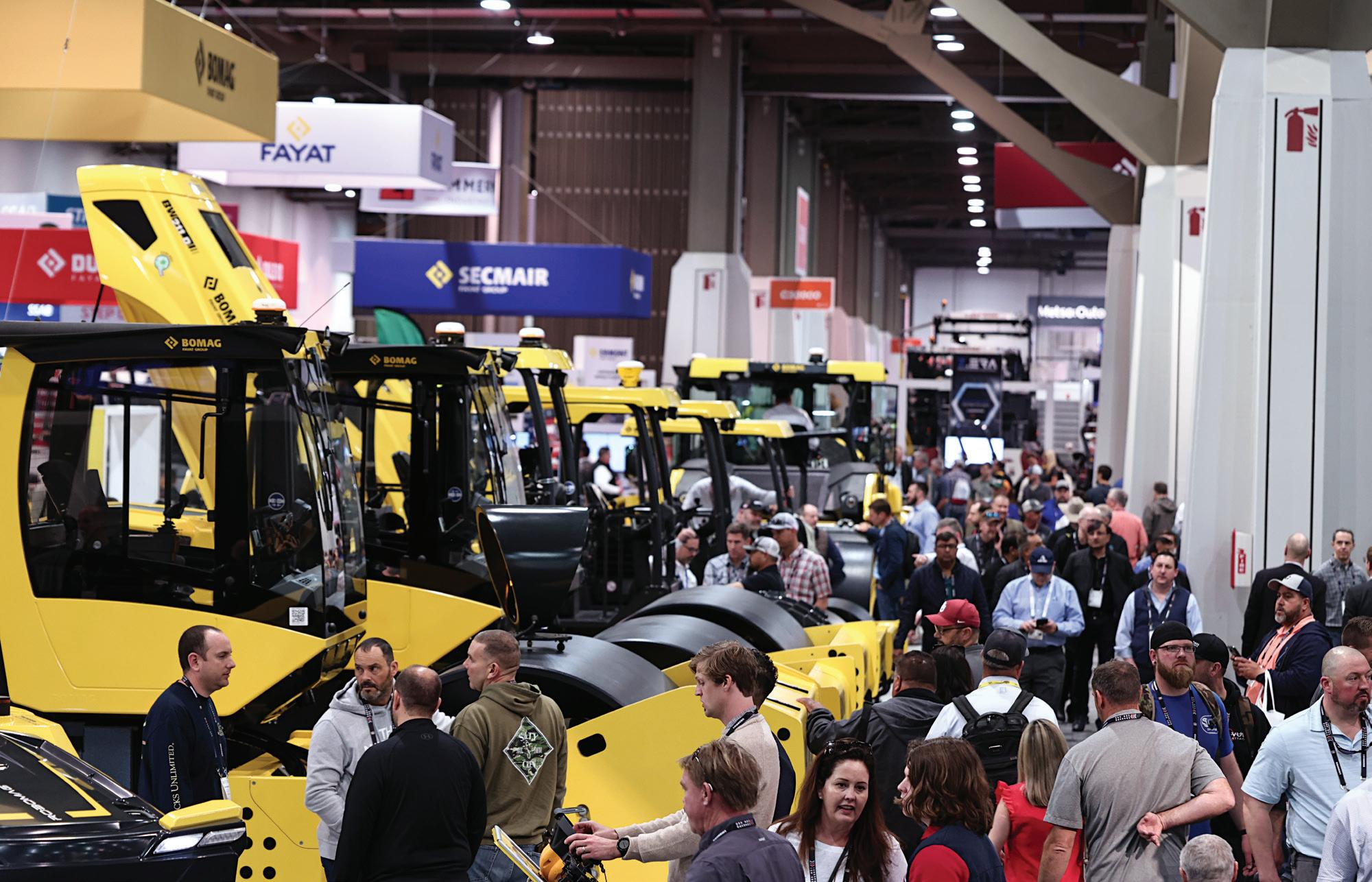
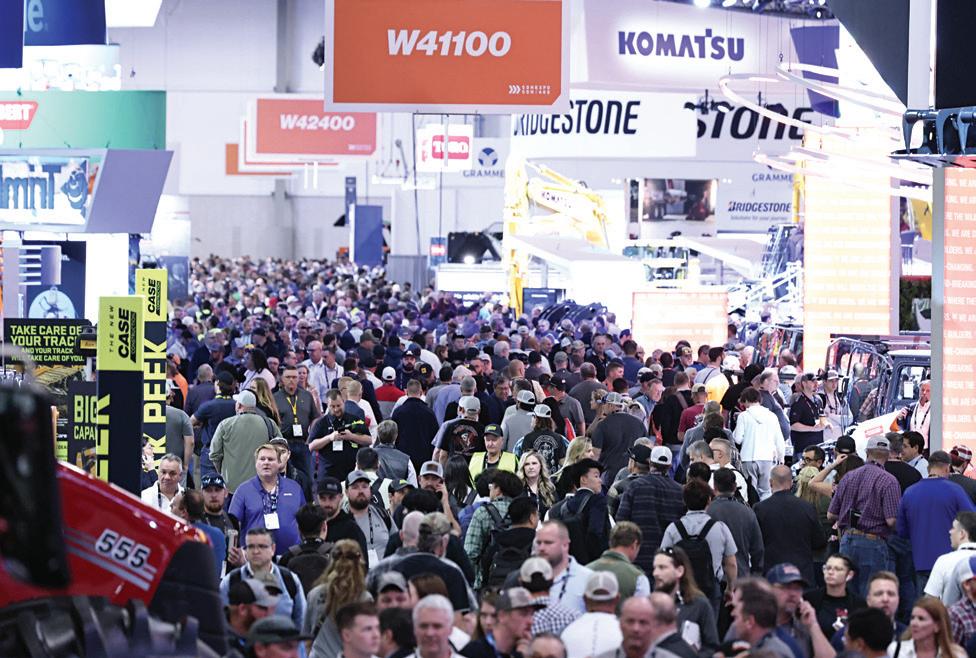
Attendees to this year’s CONEXPO/CON-AGG event will notice some changes, starting with the fact that IFPE, the fluid-power focused portion of the show, is not returning in its old form. IFPE, originally, the International Fluid Power Exposition, was a quadrennial show held at Chicago’s McCormick Place starting in 1984, until the NFPA and AEM teamed up to move it to Las Vegas in 2002. There, it was held in conjunction with CONEXPO/CON-AGG, moving it to a triennial cadence, which it maintained until 2023.
Dana Wuesthoff, the CONEXPO-CON/AGG Show Director, said that for attendees used to coming for the IFPE portion of the mammoth trade shows, they’ll have a similar feel in 2026.
“Expect the same deep bench of fluid power and component innovation, but with a more integrated experience across the broader construction ecosystem,” she said. “The show is leaning into ‘components as enablers’ of the bigger megatrends attendees are tracking (automation, electrification, advanced hydraulics, controls, telematics), so it will be easier to connect what you see in fluid power to the machines and jobsite systems those components power. There is also a dedicated components product concentration planned for fluid power and other OEM-sold components.”
Wuesthoff said that while fluid power remains a major part of the show, the footprint is evolving. Fluid power exhibitors will not be held to a single dedicated space, but she said that they will still be primarily on the 2nd level of South Hall, where they had been in the IFPE days.
For exact 2026 placement by company and any first floor vs. second floor clustering, she explained that the most reliable source is the live official floor plan, where attendees can view by hall and level, and filter by product category/exhibitor. The link to the 2nd floor of the South Hall is at directory.conexpoconagg.com/8_0/floorplan, and a list of all fluid power companies can be found running in the following pages. Highlights from variety of fluid power exhibitors begin on page 28
There has been concern with some manufacturing events about how tariffs and political rhetoric may affect international attendance at events here in the U.S. But Wuesthoff sounded positive, noting that for 2026, they are on-track with their registration pacing.
“Many organizers and industry outlets have expressed expectations for a very strong 2026 show, with 2,000+ exhibitors and a goal to top the 2023 benchmark,” she said.
CONEXPO-CON/AGG has historically drawn large international participation. International travel policies and company travel approvals can shift, but Wuesthoff explained that the show continues to plan for a global audience and will update registration information at the close of show.
She also shared some data from previous years:
• 2017: nearly 128,000 attendees; about 26,000 international attendees from 150 countries.
• 2020: registered attendance reported as 130,000+ (the event ended a day early because of the burgeoning Covid pandemic and final attendance was often discussed in terms of registrations).
• 2023: 139,000+ registered attendees; 24,000+ international registered attendees from 133 countries.
From an exhibitor perspective, the show looks strong. Indoor exhibit space demand is “extremely strong for 2026, to the point that the show is no longer accepting applications for indoor exhibit space and the indoor waitlist is full,” she said.
NFPA’s Advanced Hydraulics Conference
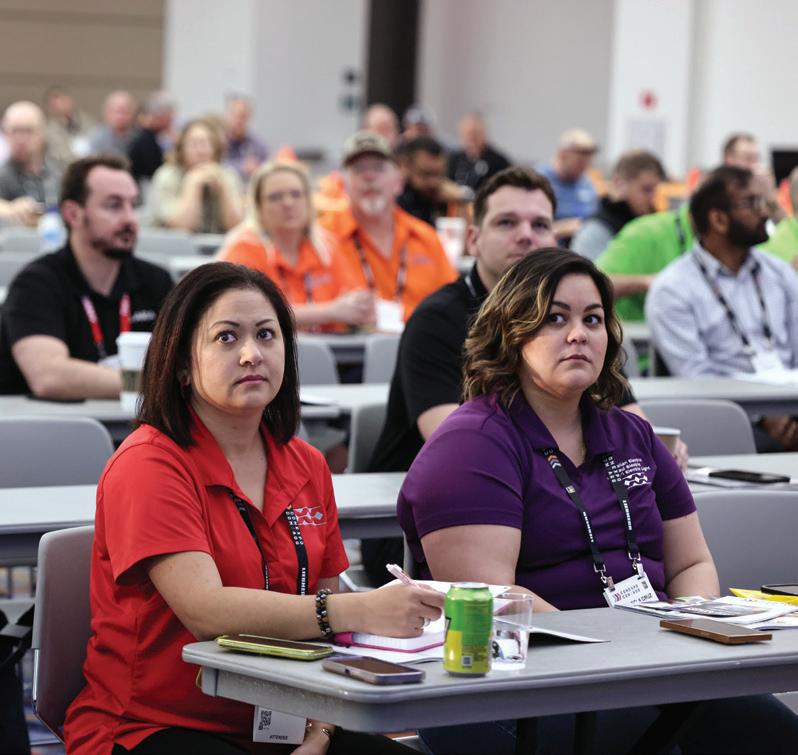
While at the show, make sure to plan on attending the NFPA’s technical conference on site, scheduled for March 4-5 in the South Hall, Room S224. This two-day conference is aimed at off-highway vehicle and fluid power engineers and will run from 9:00 to 11:00 a.m. and 1:00 to 3:00 p.m each day, offering valuable insights into the latest hydraulic technologies, applications, and innovations shaping the future of offhighway equipment.
Densie Husenica, NFPA’s Membership Manager, explained that this year’s confer-
ence features a great line-up of presentations that reflects the industry’s ever-evolving technologies. The scope is similar to previous education sessions held at IFPE. Presentations will include the following:
• Increased runtime for battery-electric excavators with digital hydraulics
• Smart hybrid architectures for off-highway machines: standard components, smarter controls
• Hydraulic data from the heart of the circuit: pump output digitization
• Hydraulic system efficiency optimization leveraging quasistatic & dynamic models
• Variable flow with fixed displacement helical pump
• Steer-by-wire steering systems enabling autonomy and automation, and
• How mechatronics integration eases the adoption of electrification.
“The conference this year is focused on hydraulics, with increasing attention to the interaction of hydraulics with new power sources, such as battery power, as well as advancements in the electronic control of hydraulics,” said Husenica.
Husenica noted that registration numbers are difficult to compare at this point because registration is no longer part of the overall process of the trade show. Plus, as in the past, people tend to register close to the event. But this year, the NFPA is making it easier to register at the event, and she expects this will help.
“Individuals walking the show will be able to register on the spot at the NFPA exhibit and at the conference door,” she said. “We’re focusing on audience quality over quantity, with the aim of reaching engineers who make decisions about the motion technology that is used on the equipment.”
THE IN WORLD LEADER ADVANCED MOTION CONTROL
Sun Hydraulics, part of Helios Technologies Inc. (NYSE: HLIO), specializes in designing and manufacturing high-quality hydraulic cartridge valves and integrated packages. For over 50 years, our innovative floating nose cartridge construction and cavity design have delivered precise and reliable performance, even in demanding high-pressure and high-flow applications. With a steadfast commitment to innovation, Sun Hydraulics consistently surpasses industry performance standards on a global scale.
Maximizing time at the show
Here are Wuesthoff’s top tips for making the most of your time while on the ground in Las Vegas:
• Start with the official floor plan and use filters: Build a targeted list by product category (valves, pumps, cylinders, controls, hoses, connectors, filtration, etc.) and save it in the planner.
• Cluster by “must-see” blocks: plan two to three concentrated hall/level blocks per day rather than bouncing all over the convention center campus.
• Book meetings early: Fluid power conversations get technical fast, and ad hoc booth chats can run long.
• Use a two-pass approach: Use day 1 for scouting and short demos and then days 2 and 3 for deeper engineering conversations, pricing, and integration details.
• Leave buffer time: The show is massive and walking time is real, so build that into your schedule.
Her other recommendations include using the live floor plan early and often. She noted that the easiest way to make the show feel smaller is to plan by hall/level and product category before you land in Las Vegas. And once the app is released, be sure to download and use it as your on-thego planner.
AEM has seen a number of future themes come to the forefront with its
members since the last time they gathered, in 2023. While at the show, make sure to look for these themes as you move from booth to booth and hall to hall, to learn more about what your work will have to focus on in the coming years:
• Efficiency and total cost of ownership (energy efficiency, uptime, serviceability).
• Electrification where it fits the duty cycle, along with charging and jobsite power realities.
• Automation and advanced technology adoption (from machine control to autonomy-ready architectures) to improve productivity and address workforce constraints.
• Regulatory complexity and compliance planning, including longer-term reporting and data challenges that influence product roadmaps.
• Hydrogen tends to be discussed as part of a broader “multiple pathways” conversation alongside hybrids and batteryelectric, often depending on application and infrastructure readiness.
Wuesthoff also implored attendees to come with an integration mindset.
“The most valuable conversations will be about how components enable the next generation of machines and jobsite systems, not just standalone part specs,” she said. “That is where you will find the ‘what’s next’ stories in 2026.”
Fluid power exhibitors bring their A-game
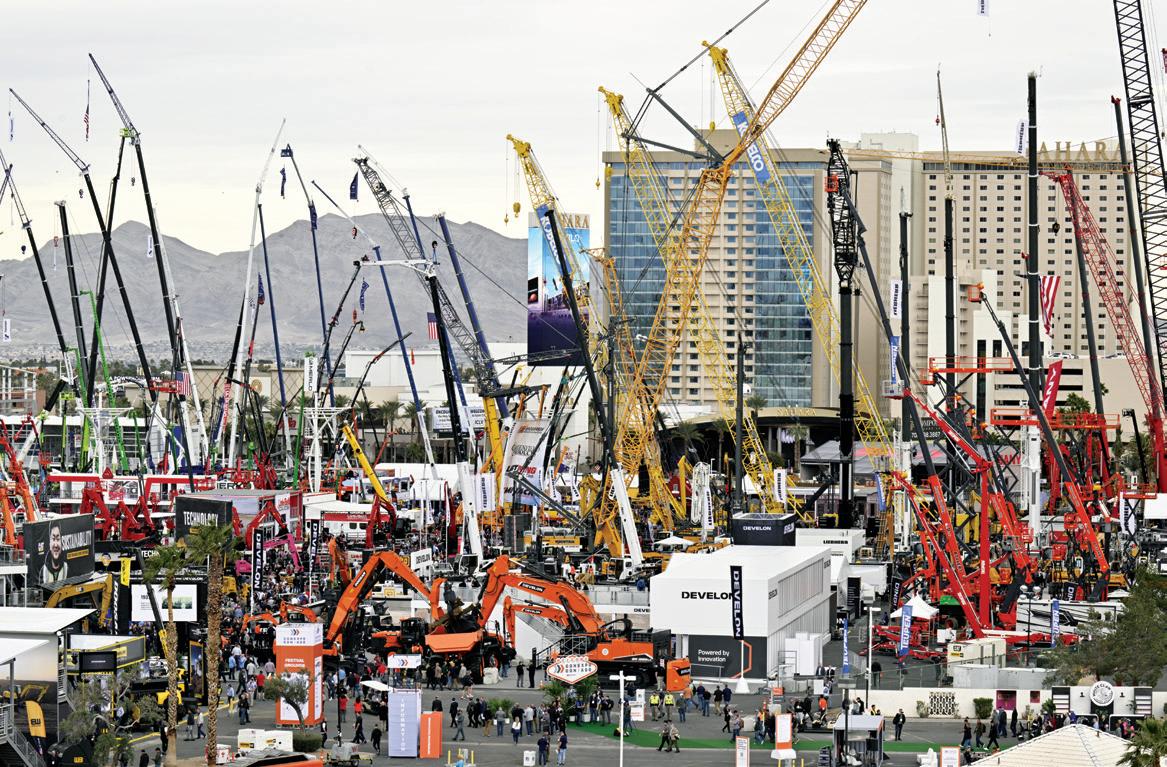
ALTHOUGH THE IFPE SHOW is now a memory for long-time CONEXPO/CON-AGG attendees, fluid power exhibitors are still a large portion of the show, taking up almost all of the South Hall exhibition space as in years past. A run-through of the more than 2,400 exhibitors throughout the entire event came up with about 233 hydraulic, pneumatic, and compressed air companies exhibiting at the event. Although a handful are located on the lots, west and north halls, the bulk of our industry will be highlighting new and existing technologies on the second floor of the South Hall.
Fluid Power World spoke to a variety of manufacturers to see what attendees can expect. Read on for details from both the biggest companies in the industry down to smaller, niche technology providers.
In Booth S80245, HydraForce will showcase compact hydraulic solutions designed to simplify and enhance the performance of machines for OEM customers in the construction industry. Their booth will feature a Collaboration Zone that invites show
ALTHOUGH THE IFPE SHOW IS A NOW A MEMORY, MOST FLUID POWER EXHIBITORS WILL REMAIN IN THE UPPER FLOOR OF THE SOUTH HALL.
attendees to collaborate with application engineers to discuss machine challenges they face and how the companies can design efficient electro-hydraulic systems to help enhance machine performance and gain a competitive market edge. Key technologies on display will include Hybrid Hydraulic System Solutions, EDG-OBE
Piloted Compact Directional Valves, Load Holding Valves, EHBL Digital Boom Control Valve and HF-Impulse 2.0 and Rexroth Compact Power Modules, and the new i-CHoose All-in-One Compact Hydraulics Configuration Tool.
Also in S80245, Bosch Rexroth will demonstrate an approach to simplifying solutions. They will feature digital demos, product displays and mobile machine technology experts. A few of the featured solutions and technologies in the Bosch Rexroth booth include Simplified Engineering, including collaboration and support over machine life; Construction Solutions will showcase a broad range of construction solutions for a variety of heavy
Visit STAUFF Corporation at CONEXPO - CON/AGG 2026 March 3 - 7 in Las Vegas.
As North America’s largest construction trade show, CONEXPO - CON/AGG brings together the industry’s leading innovators, and we are proud to be amoung them. Discover our complete range including our latest innovations engineered to exceed the industry standards. Stop by our booth to connect with STAUFF experts and explore our solutions built to keep heavy-duty equipment performing at its best. www.stauffusa.com
Stand Details:
Indoor / South Hall 3-4 Booth #: S-83345
machines, complete with hydraulic components, mobile automation capabilities, electronic controls and electric drives; Automation Solutions, such as modern sensors and intuitive operating devices to make heavy machines safer, more productive, and eco-friendly; Compact Solutions with HydraForce; and Service Solutions, including OEM and aftermarket support, spare parts sourcing, remanufacturing, component replacement and traditional service for mobile hydraulics, electronics and electric drives.
In West Hall Booth W41645, Moog Inc. will introduce its Adaptive Electrification
cables and hoses by 30%, simplifying assembly, maintenance, and reducing cost.
In booth S83340, IC-Fluid Power will be showcasing a full range of hydraulic solutions designed to help construction engineers achieve more power and efficiency in compact spaces. Key here will be its rotary actuators. Eckart actuators are fully customizable for OEM-specific applications and its IC series is a fast, direct dropin replacement for popular Helac actuators. Another compact solution includes IC-Fluid Power’s 10,000 psi check valves. These give OEMS the ability to operate at higher system pressures, far beyond the
Management System (aems). Tailored for construction vehicle OEMs, it offers a transformative path to electrify, automate, and digitalize construction machinery efficiently and cost-effectively. The AEMS electronics system sits inside the vehicle like a compact “bookshelf” holding a configurable controller, DC/DC converter, high-voltage distribution, and single- and dual-axis inverters. This modular, universal system allows OEMs to electrify and automate a broad range of machinery — from 6-ton compact track loaders to 25-ton excavators — with just one standardized part number per module. Dr. Nate Keller, Moog’s strategic business manager, described AEMS as the “brains of the system” which uses a high-voltage busbar and shared coolant manifold to reduce
standard 3,000 psi in the market while providing a low-profile design to minimize the space required. IC-Fluid Power also provides ultra-lightweight carbon hybrid cylinders. These hydraulic cylinders are up to 70% lighter than conventional steel designs while maintaining exceptional durability.
In Booth S80614, Danfoss Power Solutions will exhibit a range of components and systems in mobile and industrial hydraulics, including eHydraulics, electrification, digitalization, autonomy, and software. The Danfoss booth will feature more than 100 products organized by their use in the subsystems common to construction machinery: propel, steer, work, and control. A display featuring two wheel loader system architectures — one a modern
hydraulic-powered machine and the other an electric machine — will demonstrate how Danfoss components work together to maximize efficiency and productivity. Visitors can experience the enhanced controllability and operator comfort of the company’s advanced steering solutions on a new steering simulator. eHydraulics will be a key topic at the event, with solutions such as the Danfoss ePump and eTraction systems showcased in the booth. They will also debut the BMV Integrated Drive Motor, FC619C Corrugated Suction Hose, ICMB Industrial Cam Lobe Motor, and upcoming additions to the PVG Valve family.
In Booth S84212, Bailey International will debut a proprietary new cylinder line, engineered to give customers the best of both worlds: the rugged durability of a welded cylinder and the versatile serviceability of a tie-rod. Bailey will highlight its expanded portfolio for the work truck market. The booth itself reflects a strategic shift towards holistic system integration, featuring an interactive simulator where visitors can experience Bailey’s hydraulic and electronic solutions working in tandem.
At Parker Hannifin’s Booth S81628, the company will show how its approach to whole vehicle integration connects hydraulics with intelligence to help OEMs design for the future of mobile machinery. They will showcase system solutions for hydraulics, controls, functional safety, electrification, thermal management, filtration, sealing & shielding for on- and off-highway applications. Six areas of technology focus will include Electrification & Thermal Management, Compact Construction, Steer-byWire, Enabling Digitalization, Work Function, and Fuel Agnostic by Design. The company will be introducing new genera-
The world has outgrown traditional hydraulic design. It needs engineered fluid architecture.
You can’t fix system-level problems with component-level thinking.
Today’s compact, electrified, tightly packaged machines demand more than oversized tanks and add-on filtration. Real system reliability depends on how fluid is conditioned, stored, deaerated, filtered, routed, and monitored.
More than a product. A partnership.
Delivered through a collaboration with HYDAC, Fluid Architecture Engineering begins with a Fluid Architecture Audit to uncover risks in air, fluid health, tank sizing, and integration. It then identifies opportunities for space savings, efficiency gains, and electrification-readiness.
Start the transition to engineered fluid architecture by visiting HYDAC at:
Or to learn more about Fluid Architecture Engineering and take the next step now: Contact your HYDAC sales representative or the Advanced Systems Team to start rethinking your fluid architecture.
Fluid Architecture Engineering from HYDAC
is the industry’s first major shift in hydraulicsystem thinking in decades—moving from rule-of-thumb hydraulic design to an approach that optimizes the fluid architecture first to build reliability from the fluid level up. The result is smaller, more efficient, more reliable machines that don’t sacrifice performance or maintainability.
ZHEJIANG SONGQIAO PNEUMATIC AND HYDRAULIC CO., LTD.
ZHEJIANG ZHANPENG HYDRAULIC TECHNOLOGY CO., LTD.
tions of existing series of mobile hydraulic valves and pumps. Additionally, there will be a focus on the acquisition of Curtis Instruments, which has expanded Parker’s portfolio in electrification.
At Trelleborg Sealing Solution’s Booth S82506, Stefa Cassette seals designed for tractors, construction equipment and heavy-duty vehicles will be highlighted. Attendees can also learn about Trelleborg’s hydraulics solutions, as hydraulic systems typically use a complex configuration of high-performance seals. This product range includes seals and wipers designed for hydraulic cylinders such as the Zurcon polyurethane U-Cup RU9, O-Ring Energized Zurcon Glyd Ring D and Zurcon Scraper DA24. Other highlights include high-performance thermoplastic solutions, advanced composite materials, mechanical face seals, silicone products and conductive materials.
In Booth S82619, Hallite Seals will feature interactive displays equipped with apps to allow hands-on exploration of its advanced materials and testing capabilities. Attendees will find digital tools to support informed material selection and showcase testing capabilities, a video presentation highlighting Hallite’s global manufacturing expertise, and a display of advanced sealing solutions integrated into hydraulic cylinder applications.
S84046
S84152
ZHEJIANG ZHENHANG INDUSTRIAL GROUP CO., LTD. N13276
ZHENJIANG HYDRAULICS CO., LTD.
S84146
In Booth S81040, Hydac is introducing Fluid Architecture Engineering. This new engineering discipline finally optimizes compact, electrified, automated machines by engineering the fluid first. It is Hydac’s first-principles alternative to traditional, rule-of-thumb hydraulic design. Instead of relying on oversized tanks and energy-intensive safety margins, this rigorous approach shifts the paradigm, prioritizing the fluid environment as a design strategy. The booth will have live, immersive demonstrations as well as opportunities to receive a no-cost Fluid Architecture audit, which unlocks hidden hydraulic performance. Other key interactive opportunities will include Hydac's Filter Deaeration Solutions, automation/ electrification, and SUSTAIN-MICRON Filter Element. FPW
the Next Generation of Machine Design
Contributed by: David Schulte Industry Market Manager—Agriculture For Parker Hannifin
Jonathan Thomas Market And Business Development Manager for Parker Lord
Tips for designing safe, scalable steering for modern machines.
In today’s highly competitive market, OEMs are constantly looking for new technologies, approaches and products that can significantly reduce costs, support faster vehicle launches and provide them with a competitive edge. Steerby-wire technologies are creating a lot of excitement and attracting interest because they can do all that, plus more, including serving as a key investment toward safe “semi-autonomous operation.”
Evolution of steer-by-wire technology
In the past century, the off-highway market has seen many different approaches to steering, especially in figuring out the best way to steer large equipment. Early machines started with mechanical steering systems consisting of gears and linkages
OFF-HIGHWAY
that required a lot of human effort to steer the machine.
A major change occurred in the 1950s when hydraulic power steering was introduced, effectively launching a new era for steering design that continues today for different types of off-highway machinery.
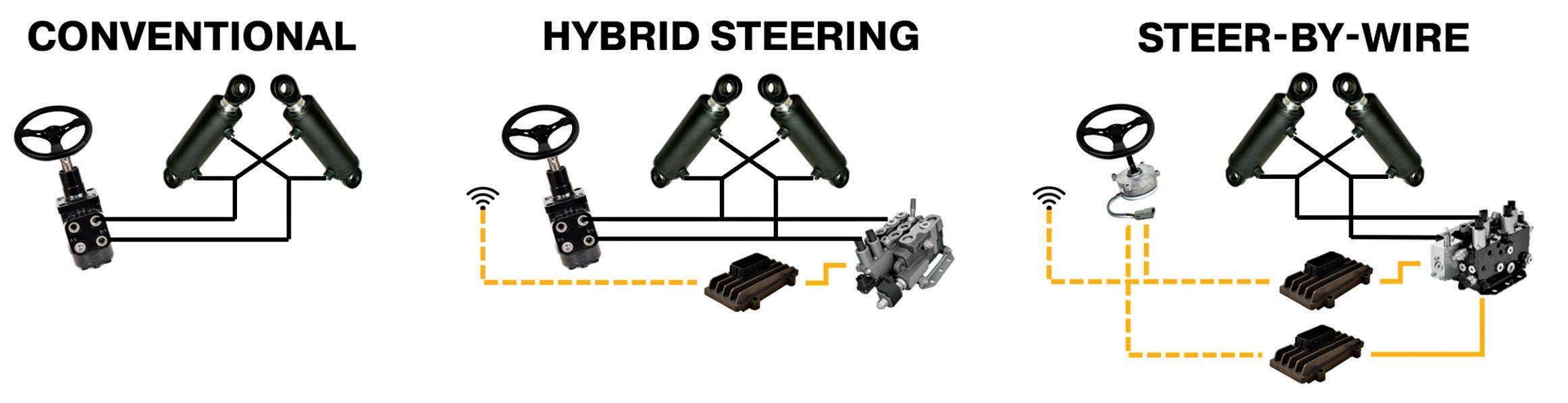
These conventional hydraulic steering systems typically consist of a hydraulic orbital valve that regulates the flow of hydraulic fluid directly to the steering cylinders which turn the vehicle. A newer approach is a hybrid type of system which includes the addition of an electric valve that receives a signal from a GPS system and runs in parallel with the conventional system.
Most recently is the migration to steerby-wire technology which removes the hydraulics from the cab altogether such that steering signals are communicated exclusively “by wire.” These systems consist of several critical components, including a steering input device (typically either a joystick or a steering wheel) which sends a steering signal to a controller (typically the vehicle controller). Then the controller commands some sort of output device (possibly an electric actuator, though typically an electrohydraulic valve) as hydraulic cylinders still remain a practical method of controlling steering axles.
Electrohydraulic valves used in steerby-wire systems often need to comply with functional safety regulations and may include diagnostics and redundant controls. These were not as prevalent in traditional hydraulic steering systems. Many off-highway OEMs are choosing fully redundant dual channel steering systems that allow an operator to continue to steer even when a fault is detected.
Parker's experience with steer-by-wire dates back to the late 1990s, when the company supported forklift manufacturers’
EXPLORING OPERATOR STEERING FEEL IN A STEER-BY-WIRE SYSTEM
efforts to shift from gas/diesel engines to fully electric powertrains and, concurrently, from mechanical/hydraulic steering systems to fully electric steer-by-wire systems. Since that time, steer-by-wire technology has been deployed in other markets beyond material handling, including turf, agriculture, mining, precision construction, marine, and for an array of niche off-highway vehicles.
Why the interest in steer-by-wire?
A primary driver of increased steer-by-wire adoption is the off-highway market’s interest in fully autonomous machines in order to automate a process for optimal performance, efficiency and reliability; and to reduce the reliance on costly highly skilled human labor. Until fully autonomous machines become more viable, many OEMs are investigating the feasibility of automating specific machine functions, including steering. Steer-by-wire allows for softwarebased systems to directly control the steering, with those inputs typically coming from a GPS signal instead of the operator. Greater machine design flexibility is another goal. By removing the mechanical steering column and orbital valve, the operator has better line of sight. Plus, space is cleared within the cab to deploy
more flexible cab interiors, new operator control designs, or even things like flexible 180-degree swivel seating.
By disconnecting the steering wheel from the mechanical system, steer-by-wire systems tend to isolate the operator from jolts, noise and vibration, which can reduce operator fatigue over long shifts. It also allows OEMs to select between various steering input devices to suit their target market (i.e. steering wheel versus joystick), or to even relocate the steering wheel to the seat armrest, for example.
Also, with steer-by-wire, OEMs can more easily design a base steering system architecture that can be used across several machine platforms and then fine-tune each platform with its own steering performance or steering identity via software changes. This approach could significantly reduce the engineering development time for future vehicles and allow OEMs to better match steering performance with customer expectations.
Of course, cost is always a consideration when deciding whether or not to change technologies. With steer-by-wire systems, there are typically fewer components — especially a lot less hydraulic hose routing — which results in a lower assembly cost
and, potentially, lower warranty costs for hydraulic-related leaks.
The right architecture for safety
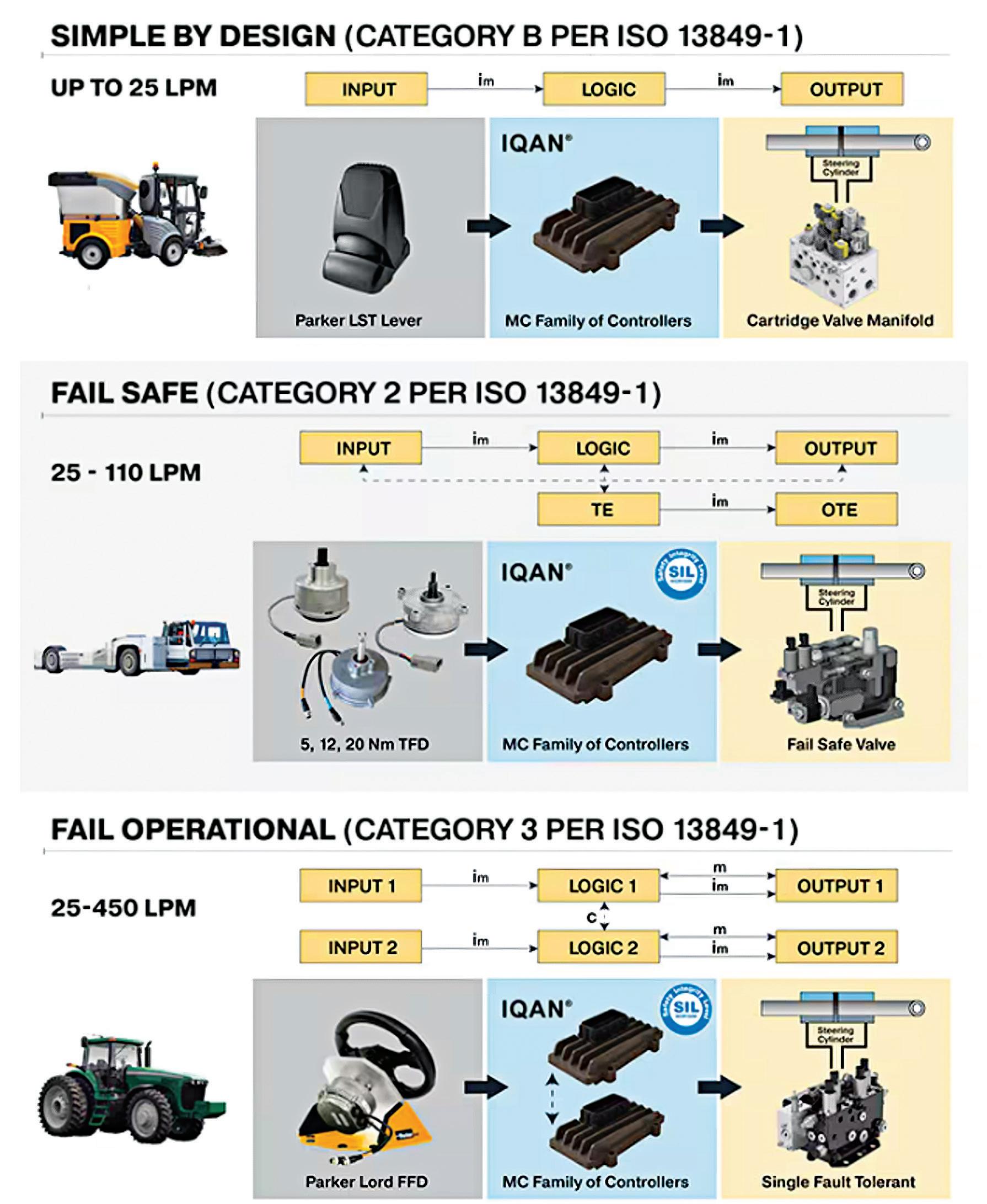
Since the level of functional safety varies with these types of systems, two different steer-by-wire system architectures have evolved. The first one could be referred to as a “fail-safe” system. When a failure is detected, the vehicle alerts the operator with some kind of warning and then safely slows the machine to a stop so that repairs can be made.
The other is a “fail-functional” system, where two full channels of independent and redundant systems exist. In the event of a failure, the vehicle again alerts the operator that something's wrong, but it’s still possible to steer the vehicle.
The category architecture defines, among other things, the input, the logic device, and the output. Common questions to ask when deciding on a particular architecture address whether or not you need redundancy (which is commonly used to ensure a fail-functional architecture), and do you need a certain level of diagnostics and sensors associated with them.
Since steer-by-wire systems do not have a direct mechanical connection between the driver and the front wheels during normal operation, a key component of the functional safety concept is that the driver retains a minimum level of steering capability following any fault in the system.
There are multiple standards that specify the requirements for the functional safety of steer-by-wire systems. Safety standards IEC 61508 and ISO13849 are two prominent functional safety standards. They provide the safeguards to mitigate risks methodically and transparently, establishing trust with regulators and customers. Among other things, the standard provides functional safety guidelines for the design, deployment, maintenance and application of automatic
protection systems. It is applied to safetyrelated systems that use electrical, electronic or programmable electronic devices.
Key features of IEC 61508 include safety integrity levels (sils) which indicate how well a system meets its safety functions. Another feature is hazard analysis which evaluates potential hazards and the likelihood of their occurrence.
IEC 61508 also defines software-related requirements based on SILs, including techniques for verification and development. Under these requirements, it’s important to document what the system should do in
detailed software specifications and then document the test procedure and the fact that the test procedure was tested. Finally, confirm that what has been validated matches the requirements.
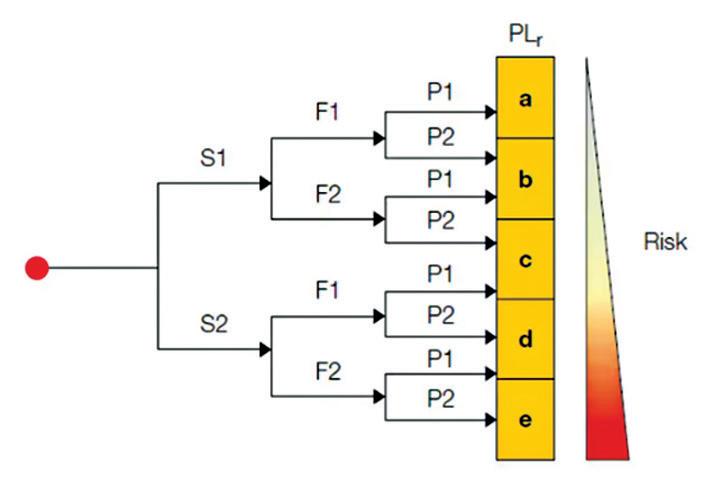
ISO 13849 also provides for a method of determining risk that is related to a SIL rating. While not specific to steering, many OEMs utilize ISO13849 because it defines requirements for safety-related control systems. Most designers would place steering in this category. The standard helps designers in selecting architectures, component robustness and diagnostic strategies for
matching system design with appropriate levels of performance determined by the risk assessment.
Customizing the operator’s steering experience
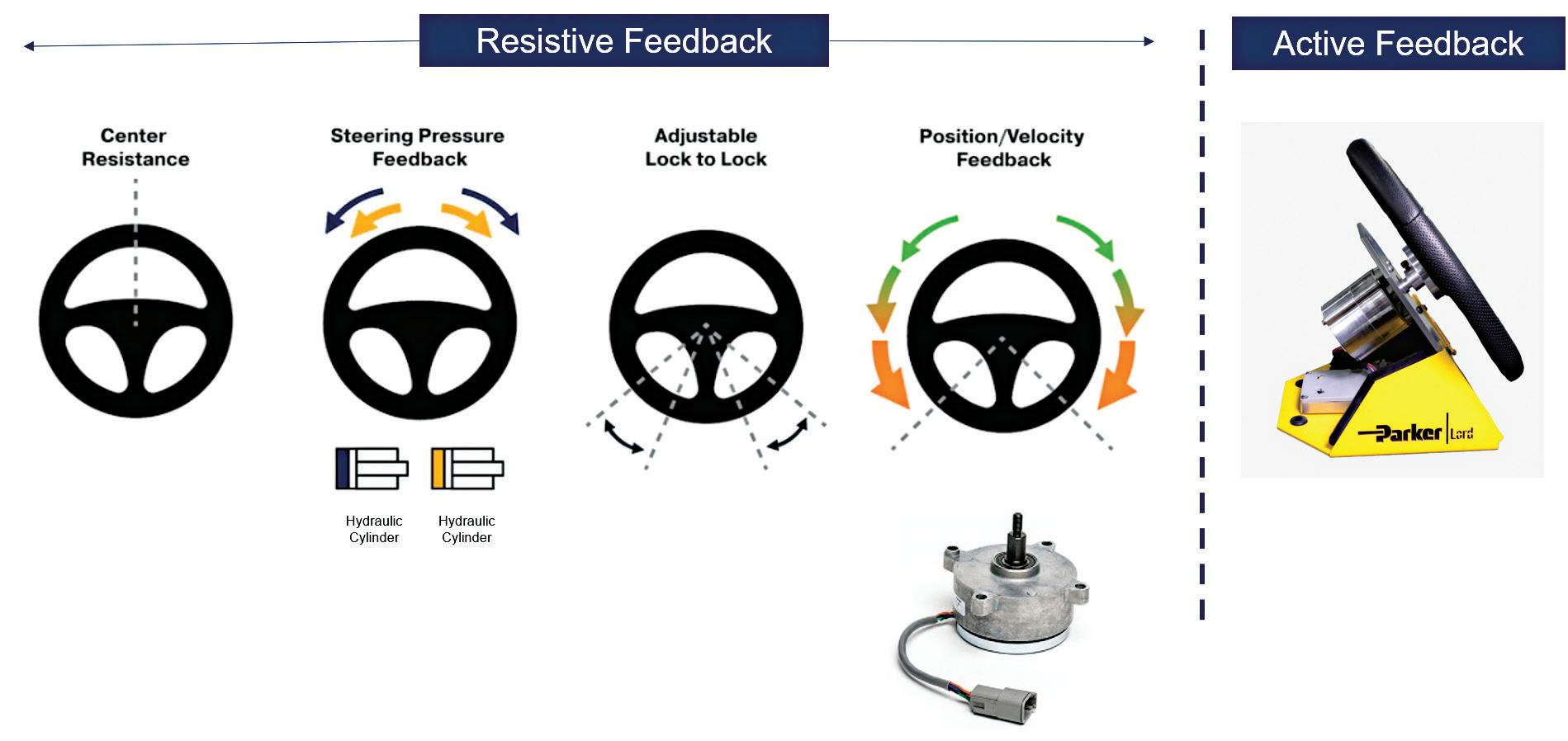
Some early adopters of steer-by-wire technology initially complained about the overall steering feel for operators since the steering wheel is no longer mechanically or hydraulically connected to the system. The steering wheel would continuously spin without ever reaching an end stop, and the steering resistance was constant for all operating conditions leaving operators feeling disconnected from the vehicle and, ultimately, hindering their productivity. However, over the last 25+ years, input devices have evolved to reproduce controllable tactile feedback that simulates the feel of legacy hydraulic systems while remaining stable, safe, and quiet.
To recreate this tactile feedback, most equipment manufacturers have deployed “resistive feedback” control using an electric rotary brake. The steering resistance can be controlled in real time by modulating current to the rotary brake to produce a specific torque resistance, which can be customized for unique operating conditions. The rotary brake can be tuned to enhance the human-to-machine interface (HMI) in ways that would otherwise be challenging to implement in legacy steering systems.
For example:
• Adjusting the steering resistance for different operating conditions, including higher sensitivity for precise, low-speed maneuvering, and lower sensitivity for stable, high-speed travel.
• Adjusting the steering ratio (i.e. turns lock-to-lock) for different operating functions.
• Adjusting the steering resistance with the steering cylinder pressure to account for potential latency in the downstream hydraulic circuits.
• Creating detents during steering wheel motion to inform the operator of specific steering wheel positions, or potential vehicle faults/warnings.
Parker produces a steering input device called a Tactile Feedback Device (tfd) that leverages the company’s proprietary magneto-rheological (mr) fluid technology, which is a type of smart fluid that, when subjected to a magnetic field, greatly increases its sheer strength to the point of becoming a semi-solid. The properties of the MR fluid in the active (“on”) state can be controlled very quickly and accurately by varying the magnetic field intensity with an electro-magnet. As a result, electrical current to the TFD can be modulated to change the properties of the MR Fluid and alter the steering resistance in real time, as well as to simulate end stops at full left and full right of a steering turn.
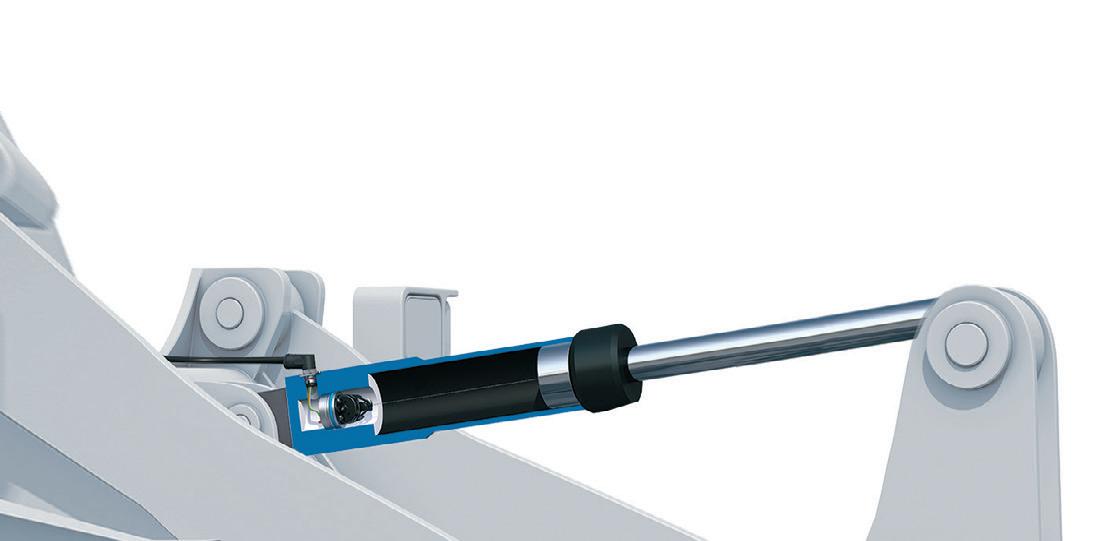
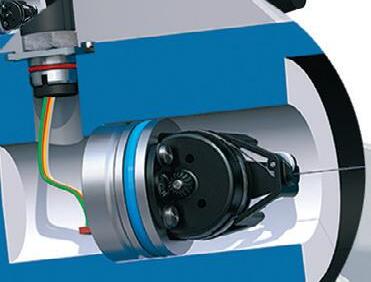
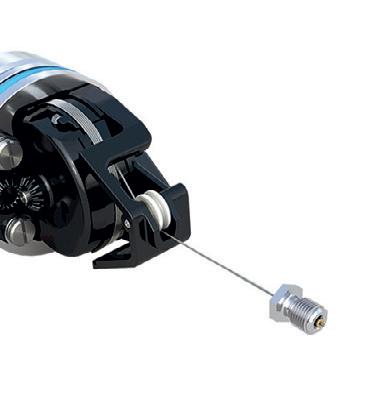
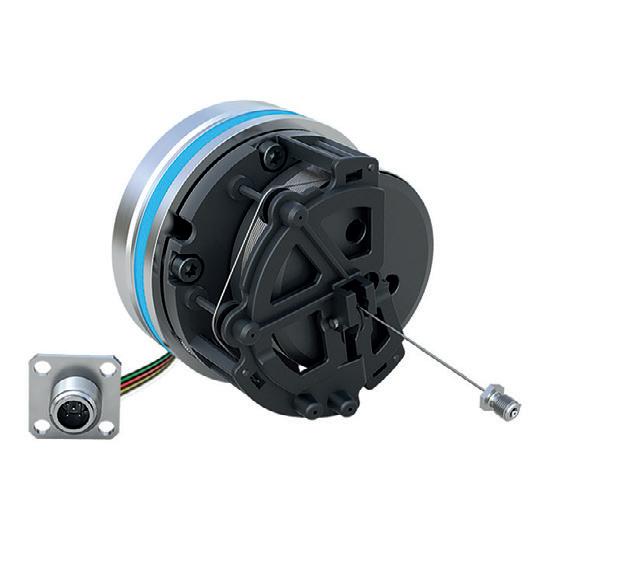
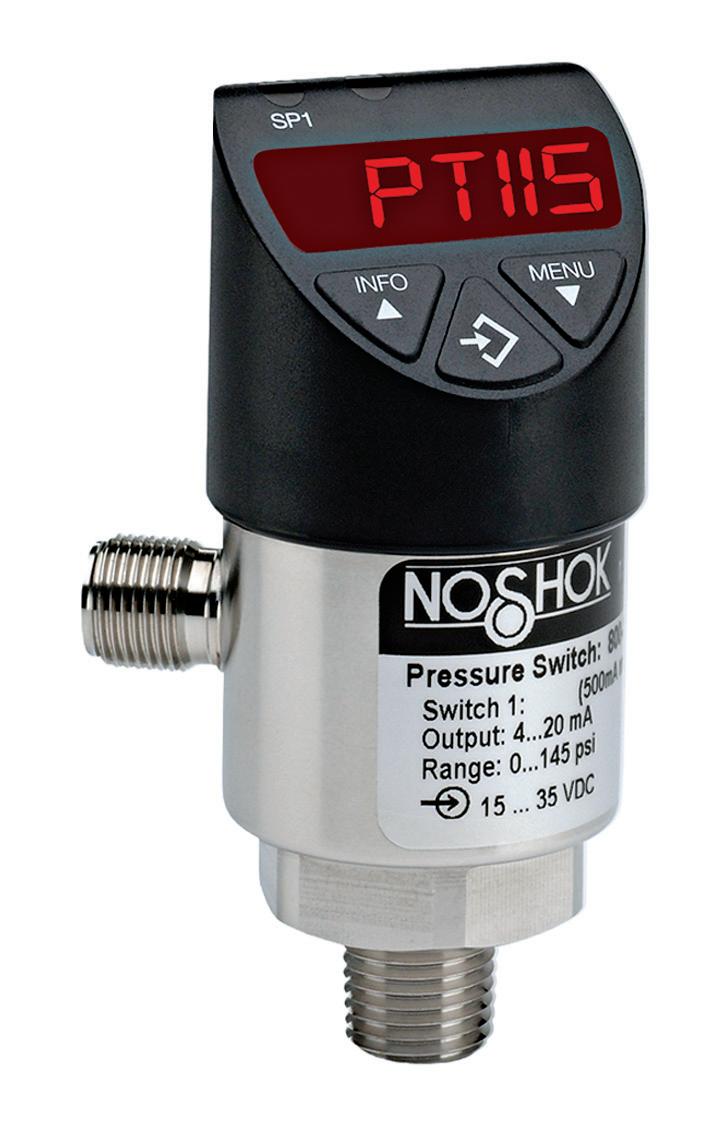
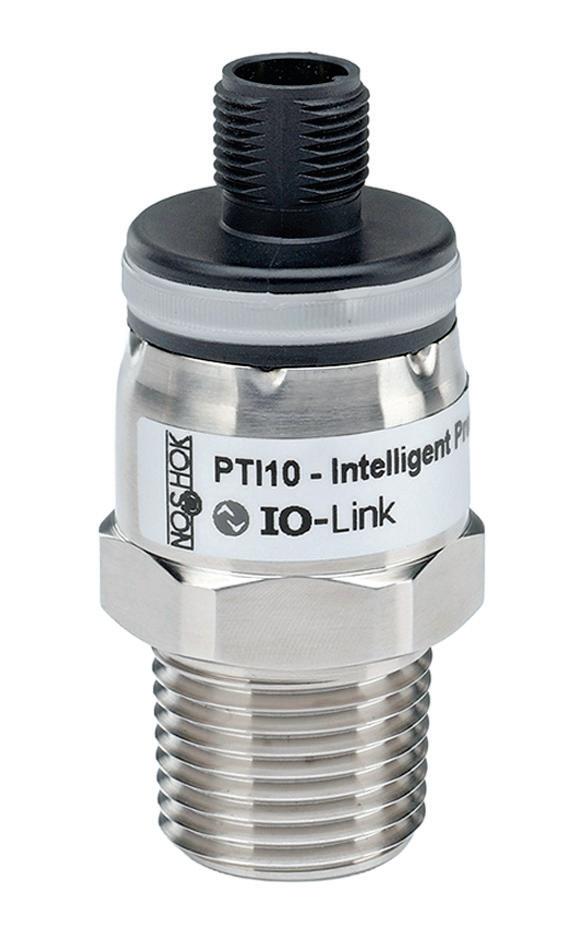
POSITION SENSORS FOR HYDRAULIC CYLINDERS
Parker is also currently developing a rotary input device known as a Force Feedback Device, or FFD, which adds a small 2 to 3 Nm servo motor to a 12 to 16 Nm MR rotary brake, along with the steering sensors and integrated controls. This product offers an automotive-like steering feel for an industrial vehicle. The motor is direct drive, so there's no gear mesh noise or backlash. Using a small motor also significantly helps with the functional safety analysis, because a large motor could inadvertently fail and overpower the operator.
Conclusion
Steering a tractor is very different from steering forklifts. That’s why there is no one-size-fits-all design when converting to steer-by-wire. The type of vehicle, application and performance requirements, as well as the necessary level of functional safety, must all be taken into consideration. Steer-by-wire systems are gaining in popularity because of their design flexibility, operator comfort, increased safety and lower overall costs. But safety concerns persist due to their autonomous nature. These newer systems must meet multiple safety standards, and have redundant warning systems to ensure machine failures are flagged in advance to minimize user and OEM liability. FPW Parker Hannifin parker.com
By Josh Cosford, Contributing Editor
Can HYDRAULICS and Get Along Together in
PNEUMATICS Automation?
Combining air and oil on modern automation machinery helps to balance force, speed, precision, reliability, and cost.
I KNOW WHAT YOU’RE THINKING –“forget it, just use electronic components for automation instead of hydraulics or pneumatics.” Well, you can put the brakes on that idea, fella, because this is Fluid Power World, and I pushed my technical chips all-in nearly two decades ago when I went to school for fluid power. As far as I’m concerned, electronics is just the stuff that powers hydraulic and pneumatic control systems, thank you very much.
Indeed, industrial automation is now a mature discipline, defined more by integration than by a single technology. Before PLCs, we had pneumatics running the automation show with clever use of cam-, roller-, or plunger-operated directional valves. These pneumatic logic systems sequenced a machine through its operation automatically, either in continuous or single-cycle operation. These systems operated nearly a century ago and pioneered familiar jargon such as AND/OR, IF-THEN, while employing timers, one-shots, and shuttle valves.
And of course, pneumatic logic systems could control hydraulic machinery, and it did. If you’re ever scrolling through an old hydraulic valve datasheet and see the option for pneumatic pilot, you know why. The pneumatic valves handled the logic functions and rapid actuation, while the
hydraulics brought two tickets to the gun show. Automated presses come to mind, where the loading, positioning, and clamping could be facilitated quickly pneumatically, while the stamping or pressing function uses the power of hydraulics.
But does it make sense to combine hydraulics and pneumatics on the same machine? After all, you require double the support system with air compressors and hydraulic power units, along with the ancillary components for each arrangement. Pneumatic presses are common, and you could even build them with air-overhydraulic systems using intensifiers, so why aren’t those more common? And if hydraulic power units are required for a press, why not run the material-handling functions hydraulically as well?
Either option is viable but comes with limitations and sacrifices. For example, a 110-ton hydraulic press can make do with a single 10-in. bore cylinder. Conversely, a pneumatic press would require the equivalent of four 25-in. bore cylinders to achieve the same force at just over 100 psi. And if you want that press to move quickly, your air compressor will nearly dwarf your press. Hydraulics running material-handling processes is common when loads are heavy, but for simple pick-and-place applications, for example, high flow, not high pressure, is required. Hydraulics is often overkill for material handling, such as pick-and-place, unless you’re moving blocks of tungsten. For modern automation machinery, it's
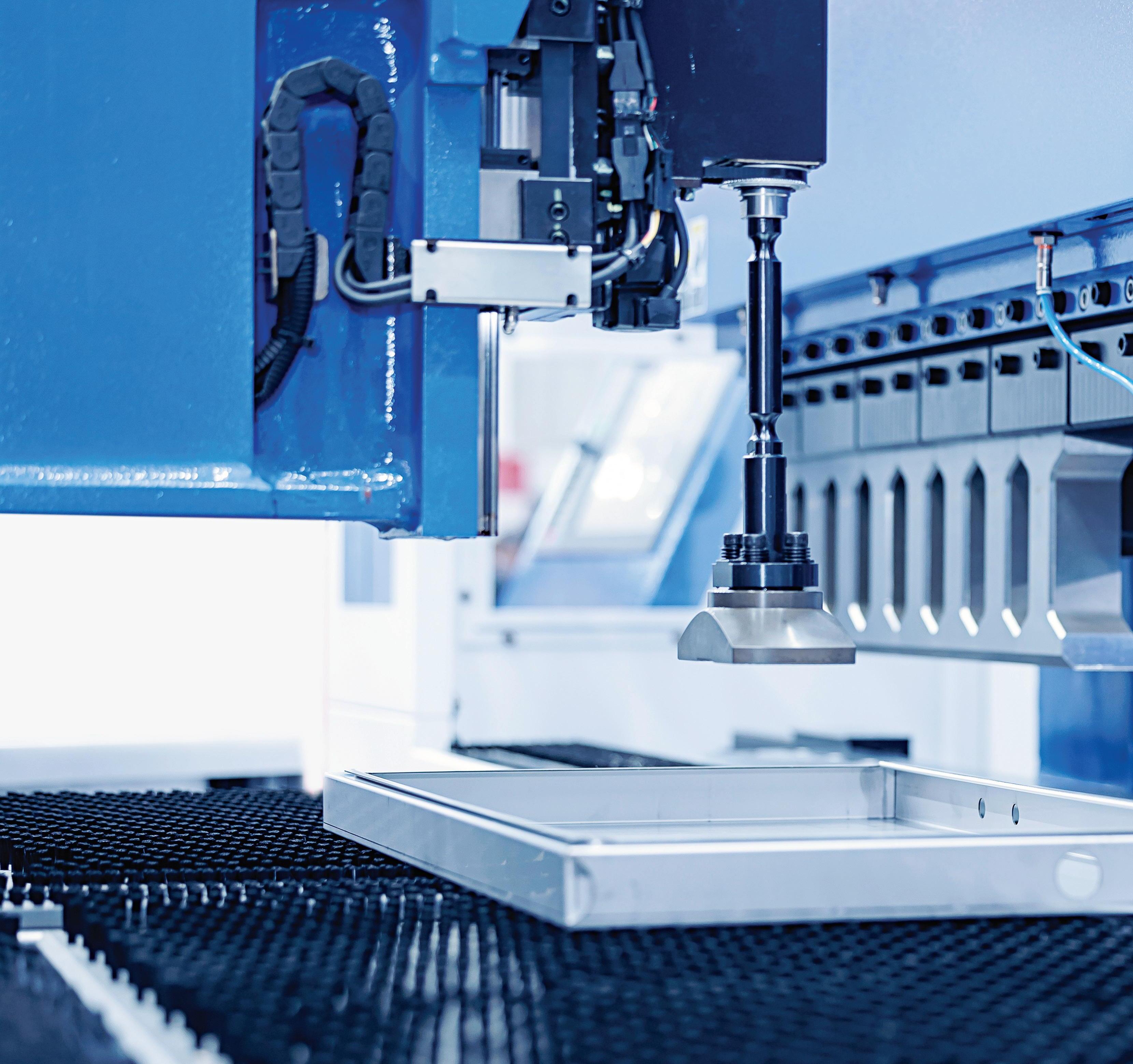
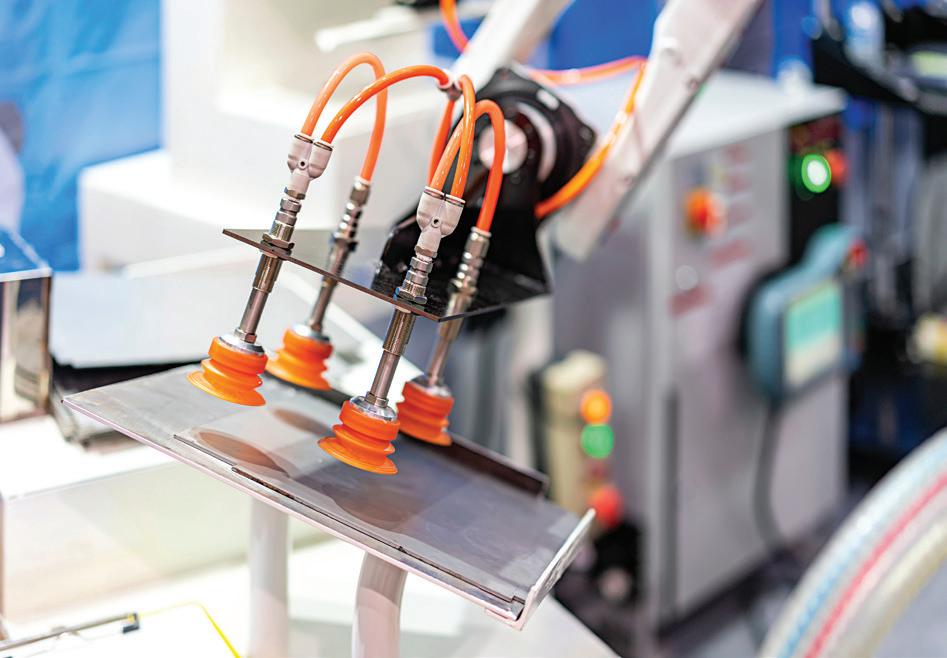
PNEUMATICS ARE OFTEN REQUIRED FOR GENTLE HANDLING OF FRAGILE MATERIALS, LIKE PLASTICS, HERE, AND THIN MATERIALS, BELOW.
best to use a combination of air and oil to balance force, speed, precision, reliability, and cost. We choose pneumatic actuators for different reasons than we choose hydraulic ones, and vice versa. Hybrid systems take advantage of the strengths of each form of motivation.
Let’s explore the qualities of both technologies to see why you need to consider automating with a hybrid fluid power system. It’s easy to mistake the purpose of hydraulics as only power while forgetting its superiority in control and precision. If you need positioning with micrometer accuracy, hydraulics is the only choice. Modern sensing technology, such as LDTs (linear transducers), has been combined with ultra-precise proportional and servo valves to deliver high accuracy for automotive welding robots and fine blanking presses, for example.
Conversely, pneumatics are notorious for rapid motion but are also precise with discrete positioning (meaning end-of-stroke each cycle). Using our blanking press example, sheets and blanks are fed into and out
of the machine at blinding speed, delivering productivity well beyond hydraulic actuation while providing a level of safety for machine operators who no longer need to reach squishy fingers inside the machine.
This division of labor improves overall system efficiency, reduces energy consumption, and often lowers the total cost of ownership. It also simplifies machine architecture by avoiding oversized hydraulic systems designed to perform tasks better suited to air or oversized air distribution systems for high-volume pneumatics.
Key applications benefit from hybrid fluid power automation
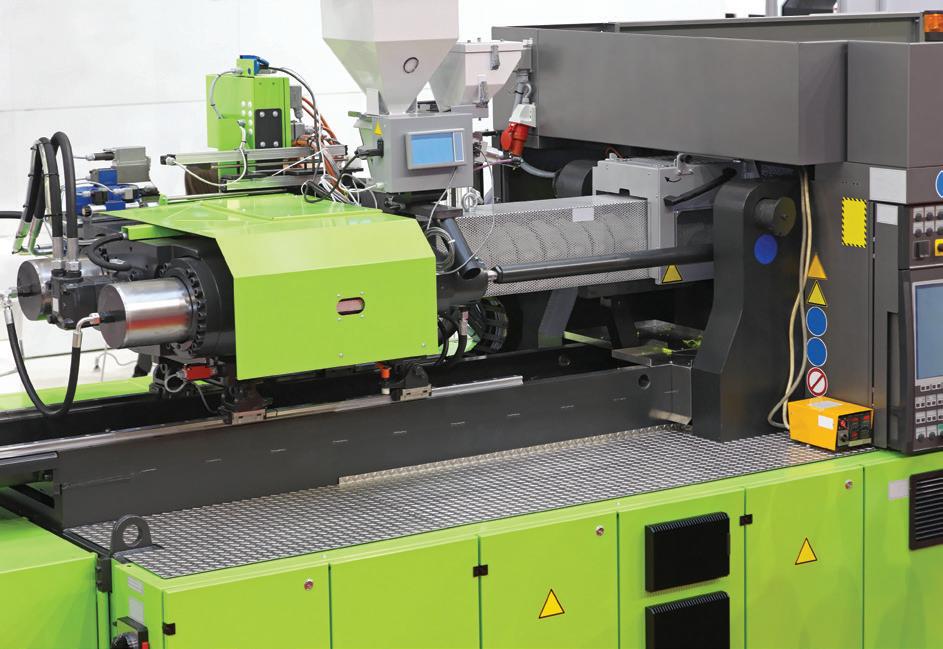
So, other than welding robots or blanking presses, what other technology benefits from automation through hybrid fluid power? Injection molding machines are another classic hybrid application. The clamping cylinders are hydraulic because of the strength required to keep the die shut during injection, and the injection system itself uses a hydraulic motor and cylinder combination, both of which are large.
The accessory functions on injection molding machines may be fully hydraulic, hybrid, or other, more sophisticated and specialized systems, such as ejectors. The ejection process can be very difficult — especially with complex geometry and undercuts — because the plastic shrinks onto the mold as it rapidly cools. Hydraulic ejectors may be suitable for thick plastics, but pneumatic systems offer a gentler force profile that reduces pin impressions in the plastic.
Additionally, pneumatics are widely used for core pulls, valve gates, robot grippers, and material handling inside and outside of the molding cell. Compressed air is already present in most molding facilities, and pneumatic components integrate easily with automation networks and PLCs. For IMMs manufacturing high-volume commercial components with the same molds for weeks or months, pneumatics have the opportunity to automate post-ejection handling.
Pneumatic actuators can enter the mold space at high speed, where grippers or vacuum cups can orient the part and remove
it from the machine. Once placed into racks or nests for cooling, pneumatics can remove the sprue and runners or shear/ trim gates, if required. Packaging, automotive, medical, and appliances, just to name a few, are industries that benefit from automated post-ejection handling.
High-speed packaging lines sometimes use both technologies on a single machine. Pneumatics dominate in pick-and-place operations, carton folding, labeling, and product transfer due to their speed and low inertia. Short-stroke pneumatic cylinders and air-driven grippers are best for rapid, repetitive motions.
Hydraulics, however, appear where controlled force is required — such as crimping, sealing, compacting, or forming packages. For example, a packaging machine may use pneumatics to position a container and hydraulics to apply a precisely controlled sealing force. Again, these operations could use air-over-oil systems or intensifiers, but limitations with these systems may prevent consistently accurate performance. They are designed to generate pressure, not move much fluid, and you may experience pressure or flow pulsation due to the reciprocating nature of these systems.
With material handling systems, hydraulics are often tasked for lifting, tilting, or positioning heavy loads, such as with automated palletizers, stackers, or transfer carts. Hydraulics provides the necessary force density and durability for continuous operation under heavy loads. Pneumatics complement these systems by handling end-effector tooling and clamps, as well as vacuum cups. Despite this discussion being primarily fluid power, even in facilities dominated by electric robotics, pneumatic actuators remain prevalent because of their simplicity and reliability.
Coexistence does come with challenges
The coexistence of hydraulics and pneumatics in these systems reflects a pragmatic design philosophy: use the right tool for each task. Each is so good at what it does, you’d be silly not to take full advantage of each to increase performance and produc-
INJECTION MOLDING USES HYDRAULICS PRIMARILY BUT PNEUMATIC EJECTION MAY HELP REMOVE PARTS WITHOUT DAMAGE.
tivity. There is no other technology with the force potential of hydraulics, and no other technology with the speed-to-cost ratio of pneumatics.
Granted, while hybrid fluid power systems offer clear advantages, they also introduce integration challenges, which we should discuss. Hydraulics and pneumatics have different dynamic characteristics, operating pressures, and control requirements, so coordinating them within a unified automation system requires careful design from a fluid power specialist trained in both. Personally, I know a fair amount about pneumatics, but I’m not a “pneumatics guy.” My specialty is hydraulics, and if I were designing a complex system using both technologies, I’d secure the assistance of a pneumatic specialist colleague to confirm my choices. If you’re a specialist in one rather than both, know your limitations and seek help.
And just because we’re ignoring electric actuators for the purpose of this discussion, no talk about modern automation would be complete without discussing electronic control. Advanced programmable logic controllers (plcs) and industrial networks have largely solved this problem of integrating multiple technologies. Electro-hydraulic valves with proportional or servo control can now be synchronized with pneumatic solenoid valves using the same control architecture. Feedback from pressure sensors, position transducers, and flow meters allows precise coordination between systems.
Energy management is another consideration, because hydraulics typically consumes more power and generates heat, while pneumatics can be inefficient due to air compression losses (although they heat your shop well in the winter). Fluid power designers increasingly incorporate energysaving features such as VFD- or servo-
driven hydraulic pumps and accumulator circuits, for hydraulics, and air-saving valves or pressure zoning, for pneumatics, to reduce waste. Always remember that any pressure lost before achieving useful work is wasted as pure heat.
Both forms of motivation require unique considerations for safety, as well. Hydraulics, of course, is capable of turning vehicles into small cubes, so that kind of power must be respected by machine designers to prevent injury or death. And pneumatic actuators are still plenty powerful enough to remodel extremities, especially when you throw high velocity into the mix. Hybrid systems commissioning must include a pre-start safety review to ensure all the protocols are adhered to, such as press-safety guidelines, appropriate lockout and redundancies, and electronic safeguarding such as light curtains.
A secure future together
As industrial automation continues to evolve, hybrid fluid power systems are not disappearing — they are becoming smarter. Hydraulics and pneumatics just have too much to offer to disappear entirely (or quickly, for that matter).
Electro-hydraulic actuators, intelligent pneumatic manifolds, and IO-Link-enabled components make it easier to integrate fluid power into Industry 4.0 environments. Predictive maintenance, energy monitoring, and digital twins (virtual copies of your machine) are increasingly applied to both hydraulic and pneumatic subsystems. Rather than choosing between hydraulics and pneumatics, machine builders are refining how the two interact within automated systems.
With the proliferation of electronics and digital environments, there’s never been a better time to automate with fluid power, including pneumatics’ golden age of logic systems. Sensors, controllers, busses, HMIs, and other technology are at commodity-level prices and are offered most fluid power manufacturers, not just the big players. I have no problems saying, “forget electric actuators … use hydraulics and pneumatics for automation.” FPW
Intelligent pressure transmitters with IO-Link
Noshok noshok.com
Aeroquip hose offers flexibility, lower weight to tractors
Aeroquip by Danfoss GH888 Main Pump Hose is a two-wire braided hydraulic hose designed for the main pump line on tractors. It can be used in place of four-wire spiral hose, offering greater flexibility, reduced weight, increased heat resistance, and lower total cost of ownership. GH888 Hose features a novel composite inner tube with increased stability that enhances its robustness and boosts its pressure capability. This enables the hose to operate at pressures to 350 bar for size 12 (3/4-in.) and 300 bar for size 16 (1-in.).
High-temperature regenerative dryer for mobile systems
High-temperature regenerative dryer manages humidity in mobile compressed air applications with elevated ambient temperatures and limited equipment space. It integrates a wall-mounted aftercooler with Tsunami’s Pure 5, Pure 7, or Pure 10 regenerative desiccant dryers in a single system. It handles compressed air inlet temperatures up to 300°F, cooling the air before final drying to support consistent operation and reduce heat-related stress on downstream equipment. They offer a maximum flow rate of 15, 25 or 40 cfm, maximum inlet temperature of 300°F, and maximum inlet pressure of 175 psi.
PTI10 and PTI15 intelligent pressure transmitter and transmitter/ switch with IO-Link communication feature bidirectional digital communication, to deliver simplified installation, remote configuration, continuous diagnostics, and enhanced data transparency — optimizing uptime and streamlining system integration. They offer highly accurate and repeatable pressure measurement for many industrial applications and feature a robust stainless steel construction. The PTI10 allows digital IOLink to be used for pressure monitoring or as an electronic PNP switch for process control. The PTI15 is replacing the 800 series electronic indicating pressure transmitter/switch and has a reduced price.
5JMC series molded connector for DO3 and DO5 hydraulic valves
5JMC series double solenoid ISO DIN molded connector is engineered to simplify wiring and enhance reliability for DO3 and DO5 hydraulic valve applications. Two solenoid valve connections are combined into a single over molded assembly — allowing for separate control or parallel control configurations while reducing wire runs, pass-throughs, and control box connections. Molded polyurethane housing and integrated gasket deliver NEMA 6/IP67-rated sealing for long-term environmental protection. Ultrabright LEDs are visible from 360°, providing easy diagnostics in any orientation. Low-profile 90° cord exit enables installation in tight valve manifolds, while optional surge suppression (MOV or diode) and multiple wire configurations allow for flexible OEM integration.
Danfoss Power Solutions danfoss.com
Tsunami Compressed Air Solutions tsunami.us.com
TRUSTED PARTNER. PROVEN ENGINEERING.
We enable our partners to move with confidence and engineer with purpose. Find out more at ConExpo 2026, Las Vegas Convention Center - South Hall, March 3–7, 2026 at Booth S81628.