Reflections on Discovery and Growth at the University of Miami Libraries

Reflections on Discovery and Growth at the University of Miami Libraries
Archives In Action to Preserve the Ephemeral Moments and Complex Character of a Community
The University of Miami Libraries (UML) serves a broad community of researchers and scholars, innovators and explorers, educators, students, and lifelong learners whose interests and endeavors thrive on the promise of access— access to work environments, research materials, tools, and services—and access also to higher knowledge and pathways to discovery made possible through libraries and their collections. Access is at the core of UML’s mission, and this publication reflects on the many ways that mission is being carried out in our collections, events, exhibitions, services, and other forms of programming. Here you will learn more about the wide range of efforts and initiatives at UML that are connecting library users to a diverse landscape of resources and leading to scholarly and cultural enrichment throughout our community.
A Learning Commons Is Coming to the U
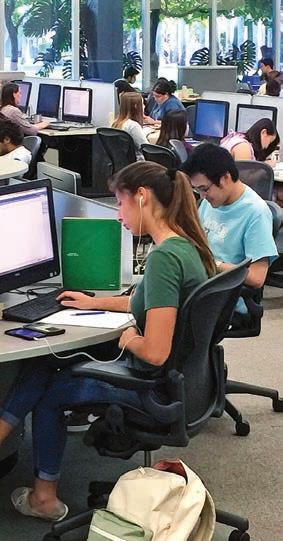
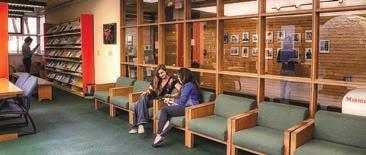
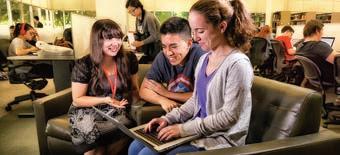
UML is working with several campus partners to make the first floor of the Otto G. Richter Library the next great place on campus. With a Learning Commons, scheduled to open in 2016, the library will make key educational services centrally and conveniently available to the entire UM community.
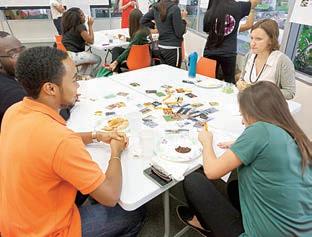
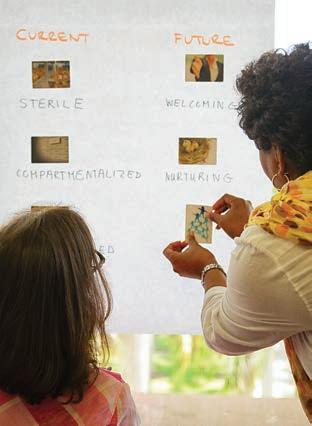
Campus partners, including the Camner Academic Resource Center, Academic Technologies , Writing Center, and Math Lab, are joining with UML to design this exciting new facility. New York City-based brightspot strategy is consulting with them on the multistage design process that involves active engagement with students, faculty, staff, University leaders, and community members. Additional details on the future space are available on the UML homepage. There, users can also share ideas on creating a space that encourages and inspires new generations of ’Canes on their intellectual journeys.
Interdisciplinary Library
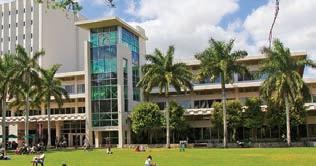
Otto G. Richter Library
Subject Specialty Libraries
Paul Buisson Architecture Library, School of Architecture
Judi Prokop Newman Information Resource Center, School of Business Administration
Rosenstiel Library, Rosenstiel School of Marine and Atmospheric Science
Marta and Austin Weeks Music Library, Frost School of Music
Independent Libraries
Louis Calder Memorial Library, Miller School of Medicine
Law Library, School of Law
To learn more about our libraries and their collections, including contact information and directions, please visit library.miami.edu or call 305-284-3233.
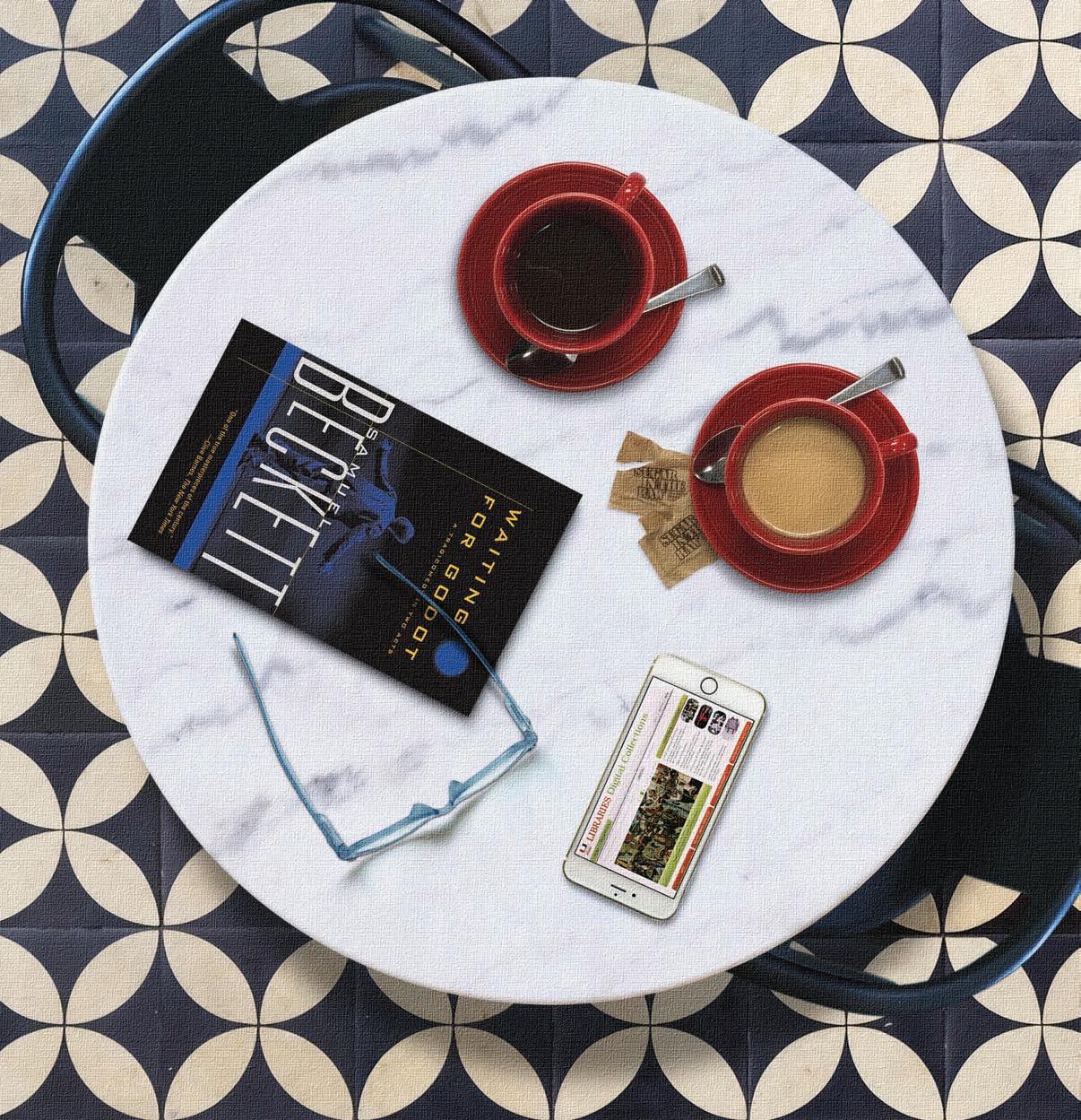
What do you feel when you hear the phrase “coffee shop” or “café?” I connect it invariably with certain characteristics: aromatic scents; customers placing orders with the barista; the sound of the espresso machine; newspapers; laptops; and the “buzz” of engaged dialogue. This issue of access is centered around a dialogue one might hear when two special collections librarians get together in a café to reflect on their archival work. The names of these two librarians (Maria and Cristina) will be familiar to avid fans of UML’s Cuban Heritage Collection and Special Collections programs. Their conversation touches on the ways in which distinctive collections are built, how life in an archive is evolving, and how artifacts now more than ever fascinate and inspire all who come into contact with them.
The University of Miami Libraries are fully committed to the role of preserving community memory through special collecting and providing facilities that encourage community members to engage with their histories. Anyone who has visited the Cuban Heritage Collection will understand the validity of that commitment. And during 2016 the Libraries will be establishing a world-class facility for our Special Collections and Archives program that will encourage interaction, exploration, and discovery in those collections.
Community, collections, and storytelling—these things connect and overlap in endless permutations. They define our collective past, present, and future. Their dynamic relationship is reflected throughout this issue of access, from stories relating how students and scholars engage with our unique and distinctive collections to recent examples of donors who have been inspired to support them. The range of UM Libraries’ events this past year celebrating new buildings, distinctive collection acquisitions, author talks, artist presentations, and exhibit openings is emblematic of the vitality of the Libraries, their staff, and donors.
I hope that as you read this issue of access you will experience the same passion and sense of enlightenment (and desire for a cup of coffee) that washed over me.
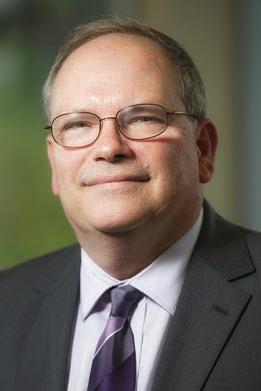
Chuck Eckman, Dean and University Librarian

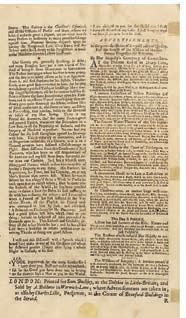
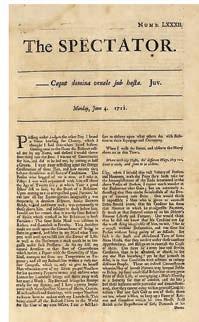
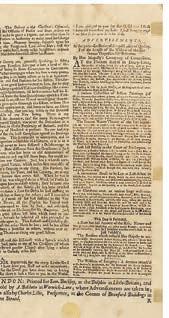
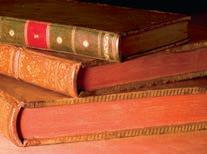
The following one-act play was inspired by prose in The Spectator (1711), an English daily publication founded by Joseph Addison and Richard Steel that is remembered as one of the transformative literary series of the Enlightenment. Comprised of commentary and insight based on social observations by its fictional narrator Mr. Spectator, the publication was often disseminated in coffee houses (then just emerging as informationsharing hubs) with the aim of “bringing philosophy out of closets and libraries, schools and colleges” and into the public sphere. Its wide success in coffee houses, places accessible to the common person, helped promote an information-rich and engaged society during a critical cultural turning point. Several rare issues of The Spectator are housed at Special Collections.
TWO WOMEN SIT ACROSS FROM EACH OTHER IN A MIAMI COFFEE SHOP IN THE EARLY AFTERNOON, SURROUNDED BY THE HUSTLE AND BUSTLE OF A WEEKDAY LUNCH CROWD. THEY ARE ENGAGED IN CONVERSATION OVER COFFEE.
Maria: My answer to her was “people.” Simple as that. It’s “people” that belong in archives.
Cristina: Well, yes, of course. Their papers, letters, photos, scrapbooks. The magazines and postcards they collected. The flyers they saved from concerts and readings. It’s everything.
Maria: And it’s everyone. From the donor that gives us the stuff, to the families that experience what the archives document, to the students and faculty who later use the archives.
Cristina: People’s things can be of great value to other people. Just look at how people have been
able to use our own collections in recent years, the important work so many have accomplished by being able to explore archives. There’s the straight research, the historical and investigative work that relies on access to collections. And there are those inspirational, creative, zany moments that you can have in an archive. Sometimes with things that no one else had really noticed or paid attention to. Someone just needed to discover them and bring them to light outside of the archive, so they could be made known.
Maria: You know, a few days ago we had some students from a
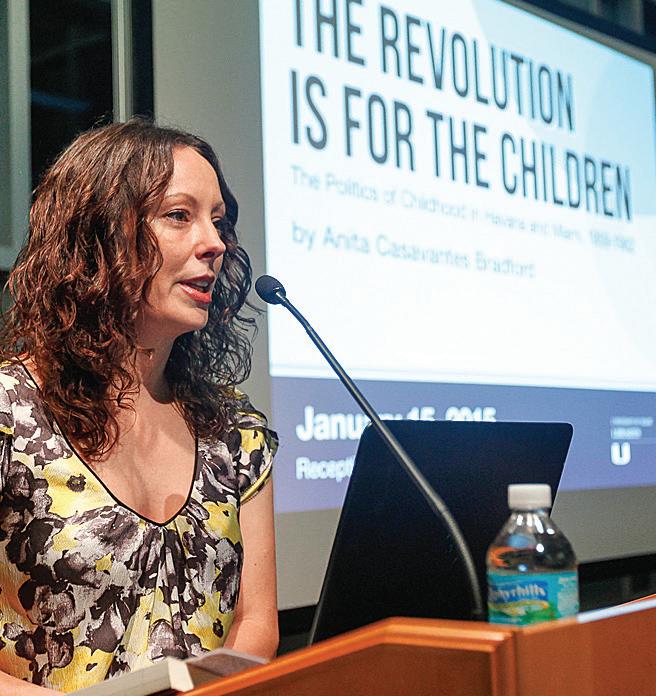
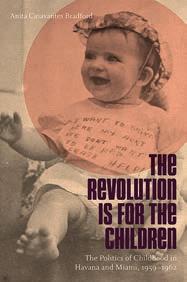
In a milestone event in January at UM’s Roberto C. Goizueta Pavilion, Anita Casavantes Bradford, an associate professor of Latino/Chicano studies at the University of California, Irvine, and former fellow of CHC’s fellowship program, returned to the Collection to discuss her research that had just been published in book form. The stories and perspectives that Casavantes Bradford encountered while conducting three months of research at CHC during the inaugural year of its fellowship program supported the narrative for The Revolution Is for the Children: The Politics of Childhood in Havana and Miami, 1959-1962 (UNC Press, 2014), the first published book based on research by a former fellow. At her talk, Casavantes Bradford described many of these stories found in historical newspapers, Cuban and U.S. organizational papers, and other records that led to the completion of her thesis on the role of children during the Cuban Revolution. “There simply wouldn’t have been a book without my work at CHC,” she said. Since 2010, the program has grown to support 67 doctoral and graduate students from 36 universities across the United States. Casavantes Bradford’s work and that of other former fellows recently inspired a major gift from The Goizueta Foundation to permanently endow the program, continuing the opportunity for emerging scholars to use CHC’s collections toward the creation of new knowledge on Cuban studies and the Cuban diaspora.
musicology course here and one of the assignments they had to do was an interview with a musician—the class is on Latin American musicians. Well recently we received a number of scrapbooks from Cuban-born singer Roberto Torres—a.k.a. Caballo Viejo?
Cristina: Oh, yes!
Maria: Well, we facilitated access to him on campus so the students could interview him, but we also emphasized to them that we had his archive, so they spent some time in the Collection looking at his scrapbooks. This in turn became a valuable component of the interview, providing both relevant history and the cues for important questions.
Cristina: [FINISHES A SIP AND PUTS DOWN HER MUG] In a way that is so
much more resourceful than what, say, his bio alone could provide. When you are able to physically touch these items from people’s pasts, their experiences and their stories become relatable. We’ve both seen it with some of our student employees who had never before set foot in an archive and are now pursuing careers in libraries and special collections because of that experience.
Maria: Yes, it’s unpredictable how folks will react; how deeply the materials can inspire them.
Cristina: That’s the thing about special collections materials. They become something you can activate history with. And sometimes people are reconnecting with their own memories.
Maria: And sometimes to relive their own experiences, to revisit them. I think all of these different applications are part of what makes an archive so dynamic. Everyone is looking for information and knowledge, and ultimately the archives are a site of knowledge, whether you’re discovering it or you’re creating it.
Cristina: And particularly in Miami, where there is so much, politically and culturally, to explore. There are so many stories of growth and change, the merging of cultures and ideas that make these collections a draw. And it’s so important, from an institution’s point of view, that we reflect the region in all of its permutations.
Stories about Stories
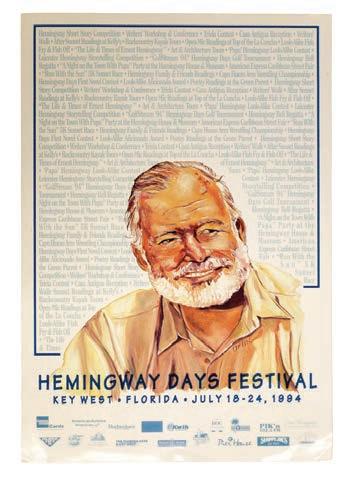
Explorers of Special Collections’ Key West Literary Seminar (KWLS) archive will find enrichment and inspiration in the words of Joyce Carol Oates, Amy Tan, Gore Vidal, Robert Pinsky, and many other influential writers who have lectured or presented their work on essential topics at the annual seminar, now researchable through records from the inaugural 1983 event onward. Documenting activity and discussion surrounding themes ranging from Whodunit? The Art and Tradition of Mystery Literature (1988) and Spirit of Place (2002) to Writers on Writers (2013), this newly acquired archive will make unique discussion and insight on writing technique and creativity permanently accessible; help preserve South Florida’s distinctive literary heritage; and make way for new storytelling endeavors and creative collaborations.
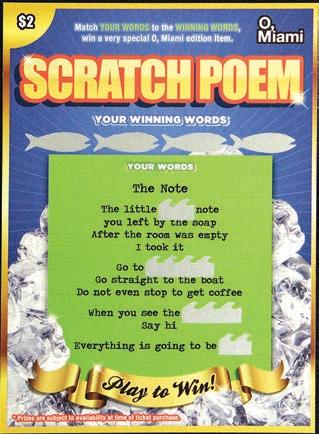
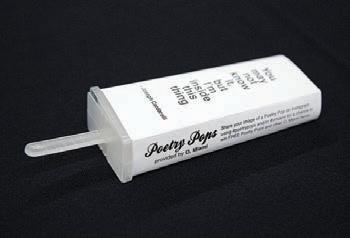
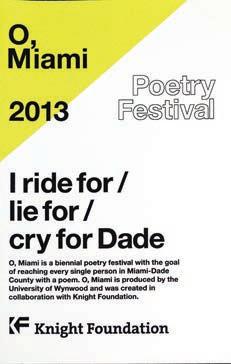
Special Collections is helping preserve the work of established and emerging literary voices in South Florida through a partnership with the Wynwood-based organization O, Miami. The O, Miami archive, now being processed, will include records of past and future O, Miami writer series and poetry festivals, among other artistic programs dedicated to the expansion and advancement of local literary culture.
Maria: And to have our finger on the pulse of these things as they continue to evolve.
Cristina: Right. For instance, Special Collections recently acquired the Key West Literary Seminar archive, which is filled with manuscripts and letters and all kinds of materials from the seminar, which has been going on for decades and has many renowned writers involved in it. And these materials are a channel of literary dialogue and at the same time exploring local and international topics. They’re documenting how people are talking about writing. How people are telling stories, and expressing themselves.
Maria: That’s the thing about collecting locally. It adds life to
IBIS Yearbook (1927-1959)
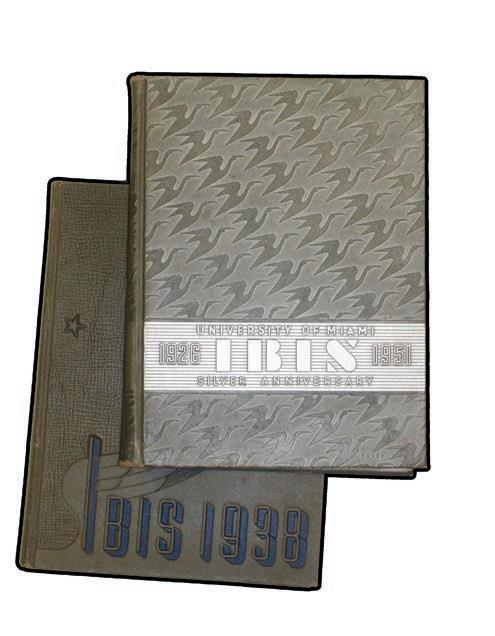
View the University’s oldest and most cherished publications anytime, anywhere! The first 33 volumes of the IBIS yearbook have been digitized and are available to the public on the Libraries’ website at UM Digital Collections. Browse IBIS by issue or search the collection by key word. Users can also print and download yearbook images for research or personal use.
an archive because you’re not only thinking about history, you’re also thinking about what will become history down the line. And working with local issues and topics lets you do that in a different way.
Cristina: I think we’ve continued to grow in that aspect, especially through outreach efforts. Really engaging with our community and being a place for people to share and exchange ideas and perspectives.
Maria: Which goes beyond the traditional function of an archive, as a place of research. Now it’s much more than that.
Cristina: And it’s attracting more people beyond the traditional, scholarly researcher. People from all walks of life enjoy being in a

library environment, and engaging in different topics, and then becoming exposed to new topics. We have creative writing classes coming here to look at our artists’ books and study this very unique, poetic and visual form of expression, and then come back to present their own. I think people are realizing that an archive isn’t only for an elite. You don’t have to have three letters of recommendation. It’s truly a community resource.
Maria: Speaking of community, I think social media has really allowed us to connect with these nontraditional audiences—I mean with our Facebook, we post a digitized photo of one of our materials, and people like it and continue to share it, and that gets the word out
that there’s a full collection of historic photos or that of a particular artist or writer whose life’s story is housed here.
Cristina: Yes, we’re able to join in these conversations happening in social media, and that generates interest in not only the materials we may be promoting but also in “what else do they have?”
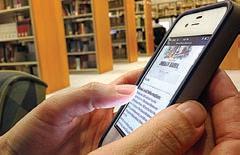
Maria: And even if they don’t have a computer, if they have a cell phone they could be doing these things. Obviously this environment has changed the way that people learn, the way that people process information, the way that people look for info. So it’s about staying active on social media and keeping your website looking refreshed so that through this medium we
can join in these conversations all around us that we wouldn’t have been a part of otherwise.
Cristina: Which allows us to showcase these materials in a whole new light. More and more I’m noticing these really interesting ways people are using collections. And it’s because of this kind of exposure. Recently we had a visit from an artist who creates massive working mechanical things, or in this instance he was creating an airplane out of paper. But he actually uses construction plans for aircrafts. So he used our Pan Am Collection to look at a specific aircraft design to then inspire this work. He has a hangar somewhere in Miami and he creates these large items and they’re all out of paper and they work.
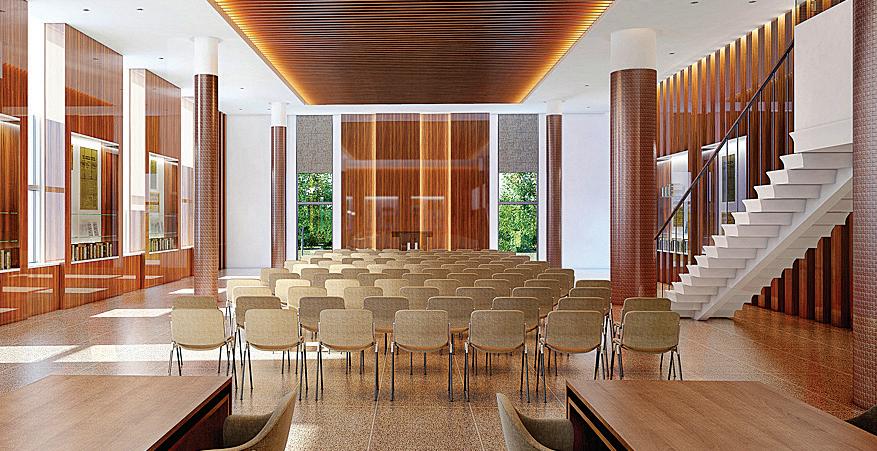
Brockway Hall, a former event venue and lecture hall in Richter Library’s southeast wing, is being transformed to serve as the Special Collections and Archives Center (SPARC), providing an inspiring and functional space to work with the hundreds of thousands of historical books, photographs, rare manuscripts, letters, maps, and other items preserved by Special Collections and University Archives. As detailed in the rendering below, SPARC will also incorporate Brockway’s adjacent mezzanine space, repurposed to include a permanent exhibit gallery, curatorial offices, and a seminar room.
“The SPARC project is about improving access to our scholarly treasures and engaging our community through library- and faculty-driven programming. It restores to us a vital place for dynamic discourse and essential dialogue,” says former University of Miami President Donna E. Shalala. “I look forward to seeing it evolve into the intellectual heart of the campus— and what better home for such a special setting than the library.”
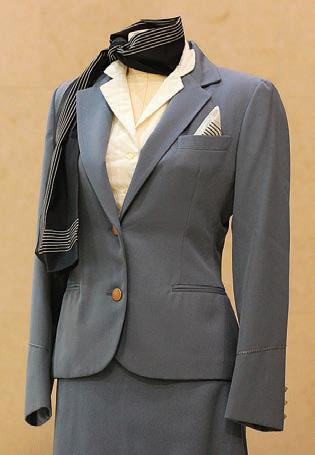
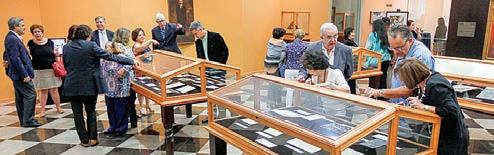
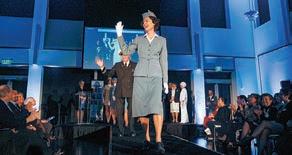
Pan American World Airways enthusiasts and former employees, as well as researchers of the airline giant, gathered for a reception at the Robert and Judi Prokop Newman Alumni Center to celebrate the completion of a two-year cataloging effort that has expanded access to the history of the company that spent more than 60 years in the sky. A grant from the National Historical Publications and Records Commission provided support for Special Collections to reorganize the materials and create a new finding aid on the Libraries’ website, resulting in a far more navigable Pan Am archive—one of UM’s largest and most popular collections. The festive Cleared to Land celebration marking the achievement included a runway performance by former flight attendants of World Wings International, Inc. highlighting the company through the decades, an exhibition of photographs and historical records, and other tributes to the highflying past of Pan Am.
Maria: [TAKES A SIP OF HER COFFEE]
I’m glad you brought up Pan Am, because it’s the kind of resource that helps define a special collection, especially in how it supports the local community. These materials documenting this iconic company that at the same time reflect Miami’s transition into this very Pan American place. It makes me think about these other collections that in various ways are devoted to the cultural heritage we are all setting out to preserve and make accessible.
At the University of Arizona, for instance, there’s this collector who is interested in how cultures meet up and connect, such as Christians in Africa. And things like that. And in this very broad scope of what he collects he became interested in the Chinese in Cuba. They have a very large and important collection of
Chinese in Cuba, in Arizona. So sometimes all these things kind of play into how a collection is formed or ends up in a certain place. I think about the Latin American Library at the University of Texas. They do a lot of work collecting in Latin America. So traditionally speaking, that is not a local collection, but it reflects the local interests and investments of that university. It’s invested in Latin American studies and Latin American relationships and Latin America, so their collections support that.
Having said that, in regards to the Cuban Heritage Collection, we would not be the collection we are if not for the local community that we live in, that we work in, that has really helped to create the Collection. And whether it’s our library collections or our archival collections, we depend
Following a long tradition of investment in learning and research at the Libraries, The Amigos of CHC are leading efforts in partnership with The Goizueta Foundation to raise funds to permanently sustain the growth and preservation of historical resources at CHC and make materials accessible to a broader audience through digitization initiatives. The Amigos, a volunteer group of community members that has supported CHC since 1995, are rallying for community support to create a $1 million endowment for CHC. If CHC raises $500,000, the Foundation will provide a matching gift of $1 million, all in support of core programming areas. The Amigos’ current efforts reflect one of their many forms of involvement, ranging from identifying donations of materials and planning exhibitions to establishing fellowships for students conducting research in the Collection. The success of this challenge would allow the Collection to continue expanding as a community resource center—supporting the research and learning endeavors of patrons local and from far and wide.
a lot on this community to help us build our collections, as it does reflect the community, the interests of the community, and, in a way, a part of the identity of Miami.
[LOOKS AROUND THE ROOM OF PEOPLE DISCUSSING THIS AND THAT OVER COFFEE, OTHERS ENGAGED IN THEIR NEWSPAPERS, SMARTPHONES, OR TABLETS.]
I also feel that as we become a more global society there’s a lot more shared culture because of that globalization and shared experience that again the digital environment helps to deliver. It’s the same thing you see reflected in academic libraries, where more and more with subscription services and all these things that everybody can subscribe to if they have the budget to do
it, the things that become more and more special are the special collections because they are more unique and they set you apart. You look at things like the craft beer movement and Etsy and all these things that are going back to the handmade, locally sourced—all of this is pointing to the uniqueness and the personal connection people feel with their local environment. And I think you can see that in the work of special collections.
Cristina: It’s a symbiotic relationship, with our community.
Maria: Absolutely. Community members really drive you to create things you didn’t know you could. I mean, we had been thinking of oral histories for a while—and it really took a committee of the Amigos that felt very personally motivated by the
need to capture the testimonies of elderly Cubans and really felt a sense of urgency that time was ticking, and they had a responsibility to make sure these stories could be known. And they raised $100,000 in less than a year, which over the course of about four years let us interview 115 people and allow them to tell their story and have it preserved here for research.
Cristina: The fact is that the great libraries survive and thrive because of that kind of community involvement. That intimate connection. Many of those names that are deeply entrenched in our history, people like Finlay B. Matheson, the Munroe Family, Marjory Stoneman Douglas, all of whose papers we received in just the past few years have brought so much to the collection as far as reflecting the character of
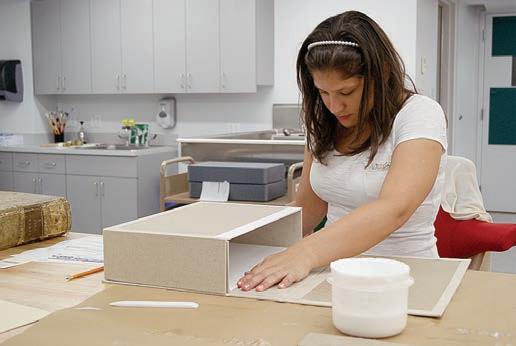
Standing over an open box wrapped tightly in a light brown textured fabric at UML’s Conservation Lab, Assistant Conservator Duvy Argandona begins to adhere the pieces to it that will serve as the cradle for a rare and delicate edition of Redoute’s Roses from 1817, allowing its fragile pages to be turned and stories within explored. She stretches the bookbinder’s fabric tightly around the corners and picks up an ivory tool she calls a bone fodder to smoothen each surface, ensuring the folds are crisp for when the book needs to be propped up or gently lowered back into its case. Once the process is complete, a total of 140 steps, the book will be returned to Special Collections to be used for research. “It’s actually the students who have made many of the boxes,” Argandona says. “I’ve taken a number of them through the process who have mastered it and are then able to contribute to their learning environment in a very hands-on way.” The lab, located at the Richter Library, has produced thousands of the boxes for materials in UML’s unique and distinctive collections. The conservation team, made up of students and staff, also restores damaged materials and provides preventative care to materials through treatments such as deacidification.
Pledge your support for UM Libraries at library.miami.edu/ support or contact University Advancement at 305-284-4443 to learn about other UML giving opportunities.

Media coverage of UML events, book talks, lectures, symposia, and faculty have appeared in various news sources. Visit the “UML in the News” page on our website (library.miami. edu) to view the latest media mentions.
South Florida in its development through their photographs, their personal letters, their travelogues, or the books they read and held onto. But then we’re also collecting things like zines, which capture the essence of a subculture in the 1970s up to the modern age. And through these handmade booklets that could have been made to be passed out at a punk rock concert or mailed between friends, we can see how people were or are thinking about the world around them. Anyone can make a zine, and they are a valued part of our collections. I tell anyone who donates their own collections
or their family’s, don’t censor these papers! To look down the road 200 years—because that’s what makes them unique. At this point in my career I am humble enough to say I don’t know what couldn’t go in an archive. The challenge is making the space to continue growing. There is a famous comedian Steven Wright who used to say, “You can’t have everything, where would you put it?” So I guess we can’t save everything, but we want to give an accurate snapshot.
A SERVER REFRESHES THEIR COFFEES.
Maria: An accurate snapshot. That reminds me of a saying: “The victors
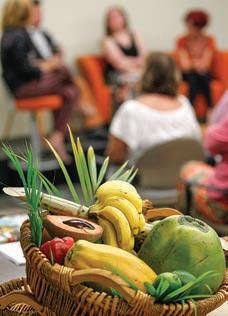
Historic culinary traditions and multicultural flavorings of South Florida took focus in UML’s three-part exhibition series in spring and summer 2015, which included: Food and Memory: An Exploration of Cuban Cooking, 1857-today, featuring books, ephemera, and photographs from the Cuban Heritage Collection that illustrate the idea of a distinct Cuban cuisine and how this cuisine shaped the way Cuban culture developed.
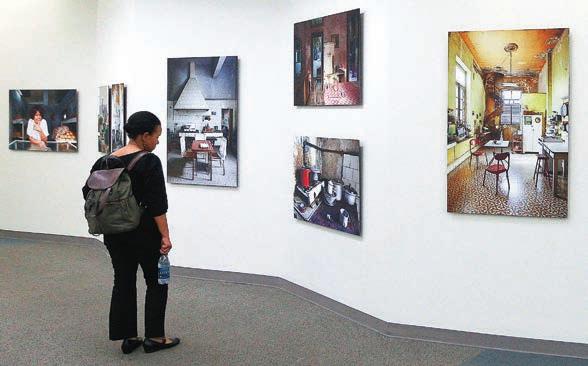
Spare Beauty: The Cuban Kitchen, including the work of food and travel photographer Ellen Silverman from her travels to Cuba, where she was welcomed into people’s kitchens and found “sparse spaces where time has stopped.”
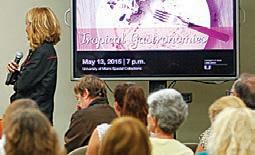
Tropical Gastronomies: Documenting the Food Cultures of South Florida, surveying the complex food history of South Florida, starting with the earliest uses of tropical crops, through a range of historic materials housed at Special Collections. The exhibition highlighted restaurants of the tourism boom, the emergence of Caribbean flavors, and the local impact of modern fresh-food trends.
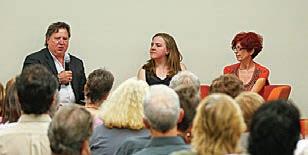
At a May 13 panel discussion featuring food experts Norman Van Aken, Mandy Baca, and Gretchen Schmidt, Special Collections announced the establishment of the Culinary History Collection of Florida, which will expand the department’s collection of official restaurant menus, local and regional recipe books, oral histories with chefs, and images of restaurants, grocery stores, and farmers markets, among other culinary-related materials from the community, to help form a “locally grown smorgasbord snapshot of our unique food scene.” Anyone interested in contributing materials to this collection is encouraged to contact Special Collections at 305-284-3247 or asc.library@miami.edu.
write the history.” Because we’re always thinking about the snapshot. It’s a constant process of surveying the landscape for these parts of our culture that are underrepresented but that tell a part of our story. And in the 14 years I’ve been doing this what I’ve come to learn is there’s the stuff—the materials we are preserving. You go to school to learn how to take care of the stuff, how to organize the stuff, how to describe the stuff so that people will use it, and how to place the stuff in exhibits. Obviously the stuff helps define and structure what we do, but behind the stuff
is really the beating heart of our work—which is again the people whose lives and whose experiences and whose activities, whose successes and failures, you are helping to document and make known. I really believe the voices in the archive represent stories that archives can tell because those individual stories are what together weave the fabric of history. So the human element of this work has awakened me to the fact that that ultimately is what we’re here for. Is that history is defined by these individual experiences that together make this kind of shared social experience, and what we
UM faculty and graduate students at the Frost School of Music transformed one of the Marta and Austin Weeks Music Library’s cherished reading areas by day into a packed performance hall in honoring UM Trustee Marta Weeks Wulf at the library’s tenth anniversary celebration in January. Nodding to the generosity of the Weeks family, who provided critical funding for the building’s construction, and the many others who have supported the library in different ways, students demonstrated in their performances of historical works by Mozart, Puccini, and Berberian how the library is a significant resource for their musical education and enrichment, with community-wide impact.
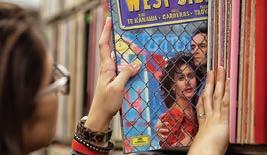
“We studied the different lives of singers from throughout the history of opera and discussed the relationships between the composers that they sang for, the performances they presented, and just the general artistry—who they were and why they were important to the field of opera,” said graduate vocal student Max Moreno, preceding his performance of an aria written by Mozart in 1797 for German singer Ludwig Fischer. He and fellow students originally drew from the historical compositions, which are housed in the library’s renowned, recently acquired Roger Gross Opera Collection, for a project for their musicology class taught by Associate Professor Karen Henson. The collection, acquired after the death of Roger Gross (1938-2013), a well-known New York autograph dealer and opera connoisseur, includes thousands of books and other historical materials.
are doing will allow other people to continue to draw from it.
Cristina: And to create new stories, sharing their lives and their experiences, which later someone else might draw from and explore. So in saying “people belong in archives,” it really is about everyone—people of the past, present, and future. Do you think she got that?
Maria: I hope so. I guess we’ll only know for sure when she publishes the piece.
THE TWO MOMENTARILY PAUSE, TURN THEIR ATTENTION TO THE WINDOW, AND WATCH THE PEOPLE PASSING BY.
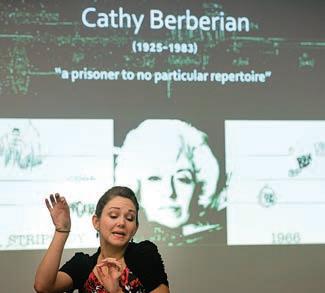
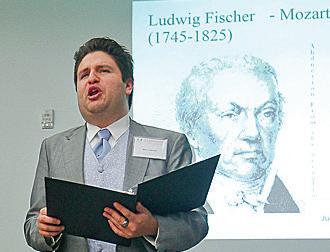
“Seeing the collection explored and brought to life is deeply inspiring,” said music librarian Nancy Zavac following the performance. “We have so many marvelous collections and materials on hand for our users and so many of them thanks to the suggestions, donations, perseverance, and passion from our faculty, students, and friends—friends like [Marta]. This facility would not exist without her and her family’s thoughtfulness and generosity,” Zavac said.
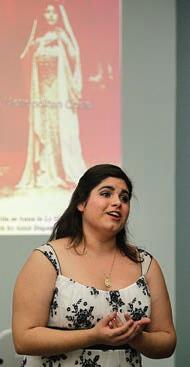
September 2014
The Weeks Music Library presented Celebrating Irving Berlin, an exhibition honoring the legendary composer and lyricist on the 25th anniversary of his death. Featuring a selection of sheet music from the Larry Taylor-Billy Matthews Musical Theater Archive, accompanied by some of Berlin’s most popular musical films, the exhibition reflected Berlin’s lasting impact on the great American songbook.
December 15
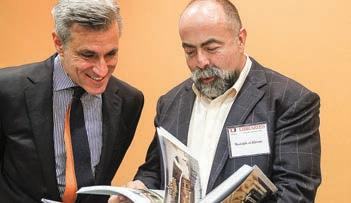
Author, architect, and UM alumnus Hermes Mallea discussed his latest book, Escape: The Heyday of Caribbean Glamour, with a multimedia tour of historic architecture from South Florida to Barbados. The event was co-presented with Books & Books and Florida International University’s Cuban Research Institute at the Roberto C. Goizueta Pavilion.
January 15
Dr. Anita Casavantes Bradford presented her book The Revolution Is for the Children: The Politics of Childhood in Havana and Miami, 1959-1962 at the Roberto C. Goizueta Pavilion.
January 23
UML celebrated the 10th anniversary of the Weeks Music Library and the acquisition of the Roger Gross Opera Collection with a reception and vocal performance by graduate students from the Frost School of Music.
January 29
Special Collections hosted Cleared to Land at the Robert and Judi Prokop Newman Alumni Center to celebrate the culmination of a twoyear reorganization of the Pan American World Airways, Inc. Records Collection. The event included a reception, exhibition, and runway performance by World Wings International, Inc., an organization of former Pan Am flight attendants
February
A UML exhibition series at Richter Library explored the rich culinary traditions of South Florida, Cuba, and the Caribbean as documented in library collections and outside works, with the Cuban Heritage Collection’s Food and Memory: An Exploration of Cuban Cooking, 1857-today, Special Collections’ Floribbean Gastronomies, and Spare Beauty: The Cuban Kitchen, Ellen Silverman’s stunning photographic series on cooking and living spaces in Cuba.
March 5
Food and travel photographer Ellen Silverman presented her work at the Cuban Heritage Collection in an event co-presented with Books & Books marking the official opening of her photography exhibition Spare Beauty: The Cuban Kitchen. The event included a film screening and discussion of Silverman’s documentary, My Roots Lie Here, about four elderly Cubans who have lived in their homes all their lives.
April 22
Special Collections presented a film screening of Sanjay Rawal’s Food Chains: The Revolution in America’s Fields and panel discussion on labor exploitation in farming. Panelists included Will Pestle, an associate professor of anthropology in the College of Arts and Sciences, Silvia Perez, farmworker leader of the Coalition of Immokalee Workers, and Natali Rodriguez, national staff member of the Student/Farmworker Alliance.
May
Tasty Tunes, at the Weeks Music Library featured a selection of playbills, records, and other materials from the Larry Taylor-Billy Matthews Musical Theater Archive highlighting sweet and savory songs from musical theater’s history, and demonstrating the many ways food and drink references have been used in the theater for expressing the ideas and attitudes of the day.
Ochoa featured a collection of records from the life and work of Cuban conductor Manuel Ochoa, who died in 2014. The exhibition, hosted at the Roberto C. Goizueta Pavilion, included personal photographs and audiovisual materials from Ochoa’s remarkable career, now researchable in CHC.
May 13
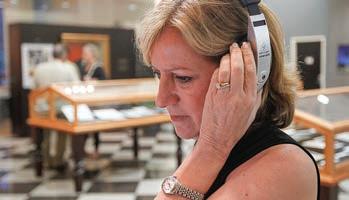
Special Collections hosted Tropical Gastronomies, an evening of discussion on the history of eating, drinking, and cooking in Florida, featuring regional food experts Norman Van Aken, Gretchen Schmidt, and Mandy Baca. May 28
Cuban sculptor Roberto Estopiñán (1921-2015) was remembered in an event at the Cuban Heritage Collection and co-presented with the Cuban Museum. The evening included readings by the poets Alina Galliano and Gastón Álvaro, remarks by art historian Alejandro Anreus, and recognition of his widow, Carmina Benguría, followed by a screening of the documentary Artists in Exile: Roberto Estopiñán, directed by Ray Blanco (1994).
September 9
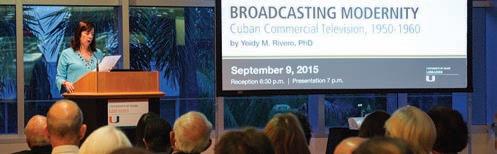
Yeidy M. Rivero presented her book Broadcasting Modernity: Cuban Commercial Television, 1950-1960 at the Roberto C. Goizueta Pavilion, shedding light on the history of commercial television in Cuba. The event was co-presented with Florida International University’s Cuban Research Institute.
September 24
The Book Traces event drew students, faculty, and community members to Richter Library’s stack tower and the Weeks Music Library to search for old library books made unique by the marginal notes and additions of original readers. More than 300 volumes were found and will be featured in an upcoming digital exhibit on local marginalia.
Currently on View
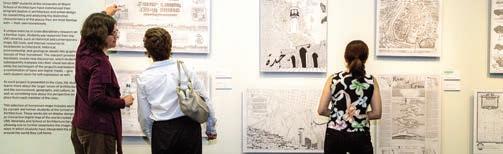
Hometown Maps: Where in the World Do Architects Come From? highlights a selection of imaginative, hand-drawn urban layouts created by former and current students at UM School of Architecture. Works are displayed in print form and through an interactive digital map of the world created by UM librarians and SoA faculty. The exhibition is on view on the first floor of Richter Library through December 2015.
Natural Cuba focuses on the diversity of Cuban flora and fauna through a display of materials from the Cuban Heritage Collection highlighting activities that take place in the natural environment, both on land and in water. The exhibition is on view at the Roberto C. Goizueta Pavilion (second floor of Richter Library) through December 2015.
The Pan American University: The Original Spirit of the U Lives On celebrates the University of Miami’s 90th anniversary with an exhibition of historical materials reflecting early UM activities and traditions up to the present day, with an emphasis on the University’s enduring connection to Latin America and the Caribbean. The exhibition is on view on the first floor of Richter Library through May 2015.
Quince Sellos Cubanos features a portfolio of gelatin silver prints by internationally renowned artist María Martínez-Cañas, along with the original Cuban stamps that inspired her work, all recently donated to the Cuban Heritage Collection. The exhibition is on view on the second floor of Richter Library through Spring 2016.
Celebrating the centennial birthday of Frank Sinatra (1915-1998), the Weeks Music Library presents a selection of materials from its collections that highlight the profound, multifaceted cultural influence of the artist—perhaps best reflected in the assortment of nicknames including “Chairman of the Board,” “The Voice,” “Ol’ Blue Eyes,” and others by which he is still remembered. This exhibition spans Sinatra’s many memorable musical hits as well as his acting achievements, including his involvement in the Rat Pack and other influential endeavors throughout his life.
A selection of award-winning peer-reviewed research posters from the 2015 Undergraduate Research, Creativity, and Innovation Forum (RCIF) are on view on the first floor of Richter Library through December 2015. This is the first exhibit of Discover Create Innovate, a space designated for showcasing student work from across the academic landscape.
The winning images of the Rosenstiel School’s 11th annual Underwater Photography Contest including stunning marine life portraits by students and the public, are on display at the Rosenstiel Library.
A selection of renowned international sea life photography by Myron Wang from the diving and photography instructor’s 50-year career is on display at the Rosenstiel Library. The vibrant and transporting underwater photos are some of 3,400+ images donated by Wang to the library and now used by students, scholars, and the public as an in-depth access point to reefs and underwater sanctuaries in all parts of the world.