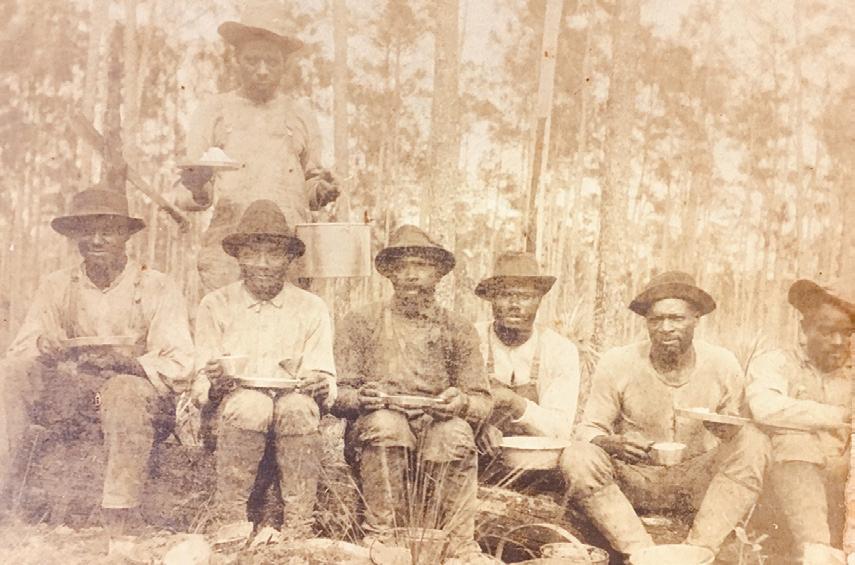
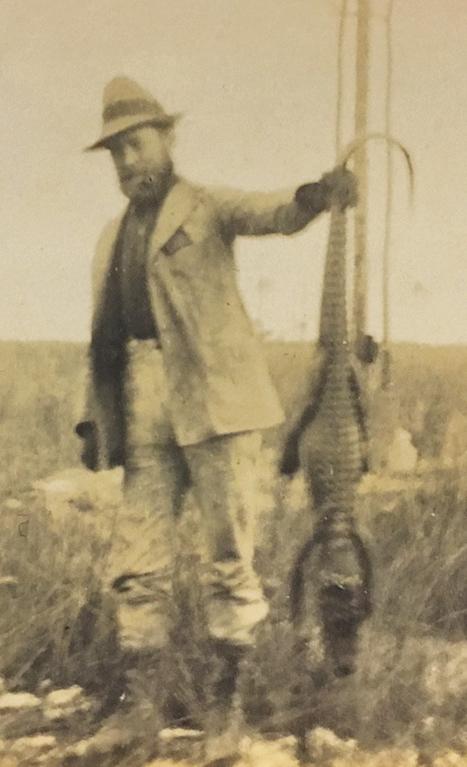
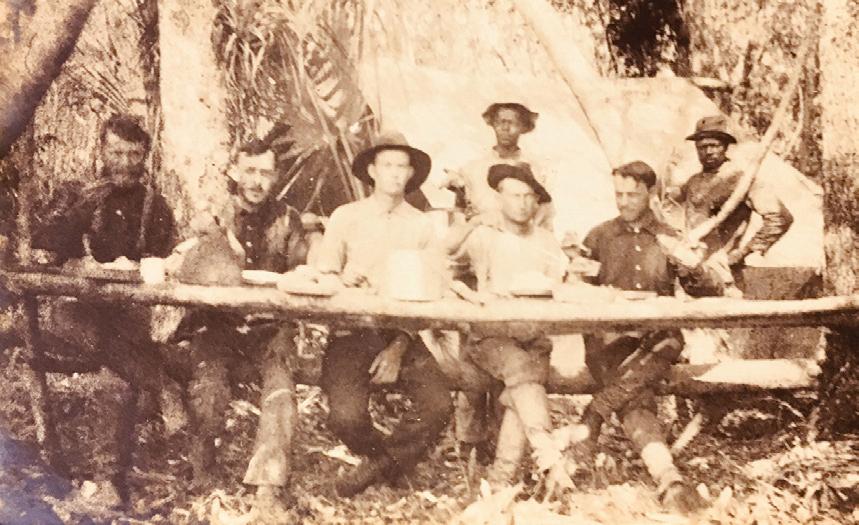
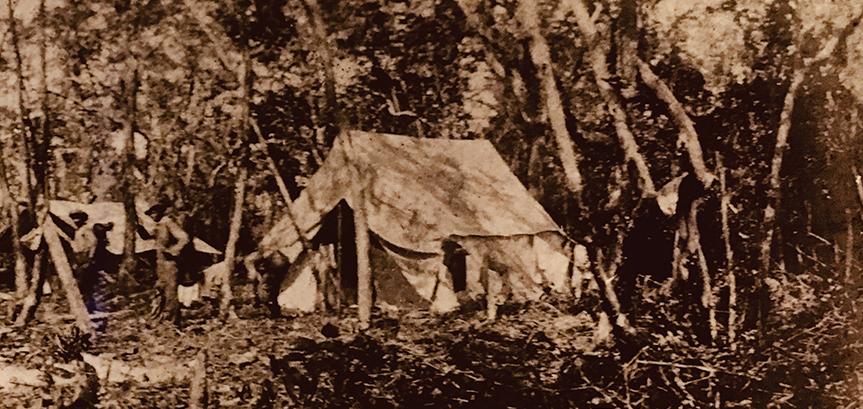
It Is mIdday, mId-July In south FlorIda. The “country route” to Key West was once scenic and hassle-free this time of year, too humid for tourists, so hot that locals kept to their AC or escaped north. But today on Krome Avenue, U.S. Route 27, cars, vans, trailers, and trucks hauling rock and fill crowd the road heading both north and south. Two lane traffic backs up at the intersection of Krome Avenue and Avocado Drive, and travelers know it will only get worse. An official looking sign announces that drivers are “Entering Redland Agricultural Area,” but it doesn’t look like farm land.
Poinciana trees that just months ago lifted flame flowers along the swale have been reduced to mulch mountains. Fiber optic cables snake dance at regular intervals along the west side of the road. New power poles sprout up overnight like Jack’s bean stalks that have taken giant steps back away from both sides of the roadway.
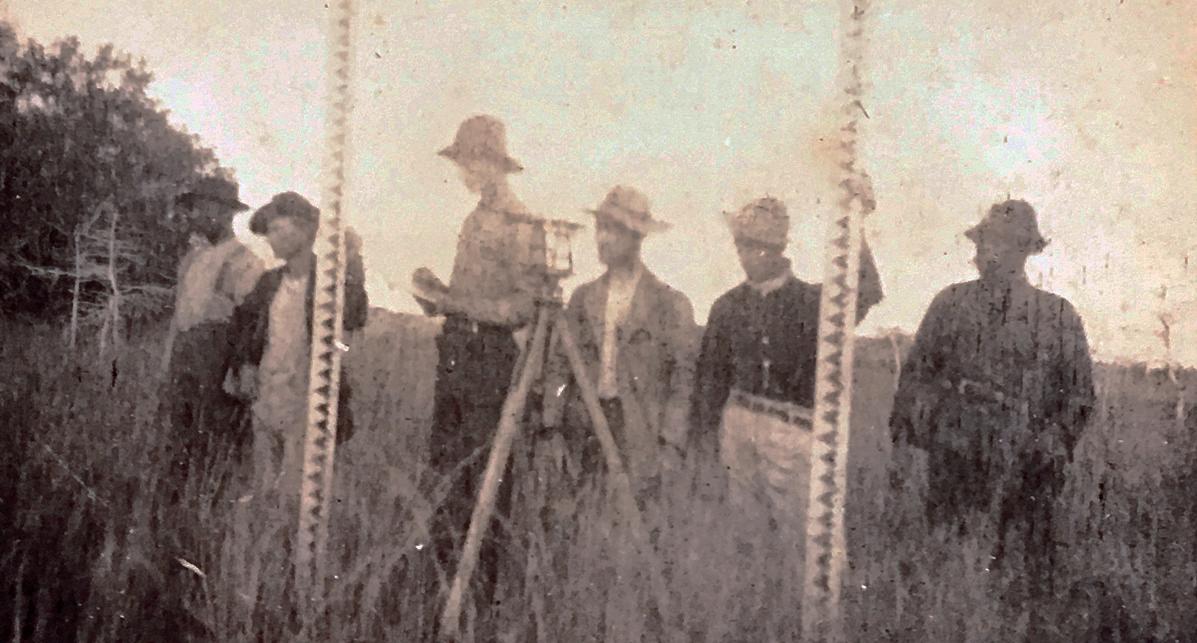
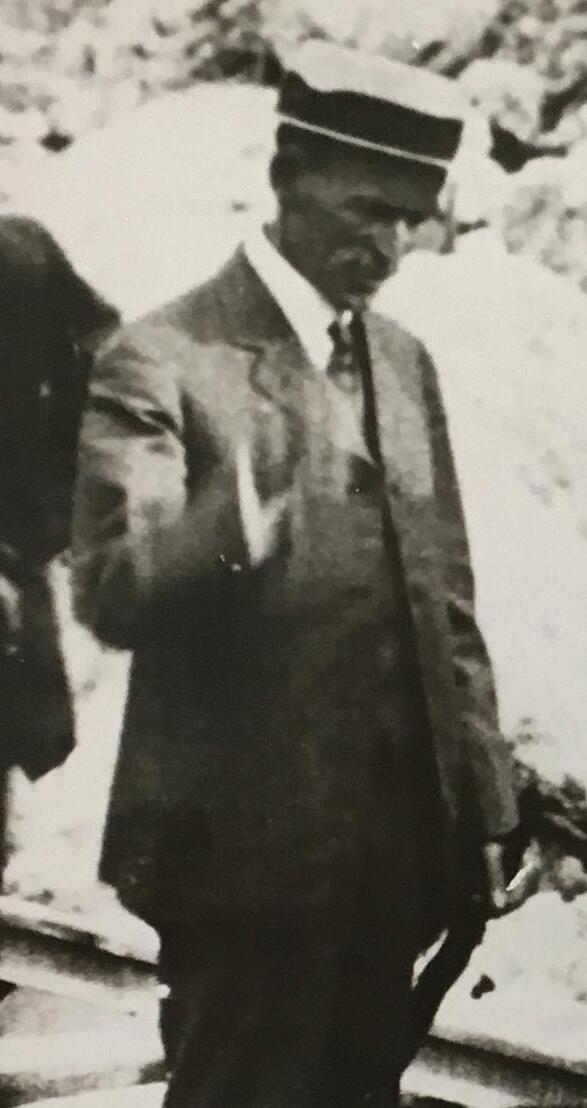
The Florida DOT’s Krome Extension is coming like a freight train from the north with its four lanes, which will abruptly narrow at this intersection, the crossroads that pioneers named Krome’s Corner for the man who homesteaded the property in 1903. Locally, he is remembered as an avocado grower and recognized for his advances in horticulture and agribusiness, but a recent discovery in the attic of his pioneer home illuminates his pivotal role as Construction Engineer in the completion of Flagler’s Overseas Railroad to Key West.
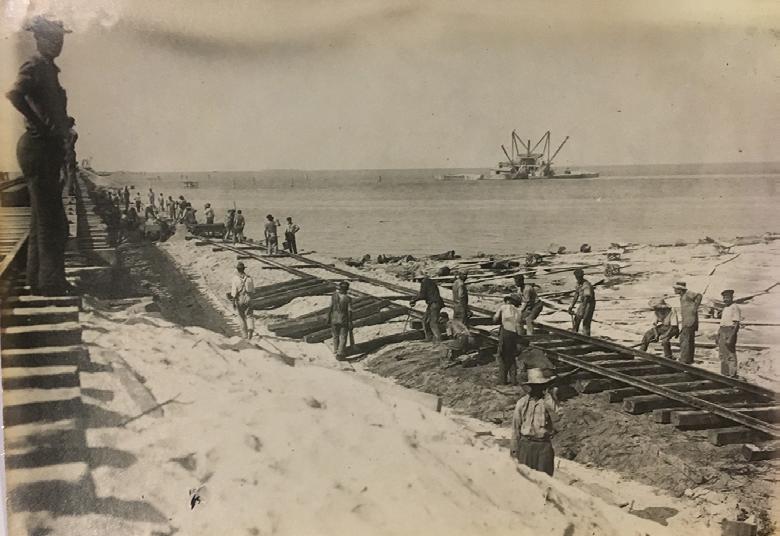
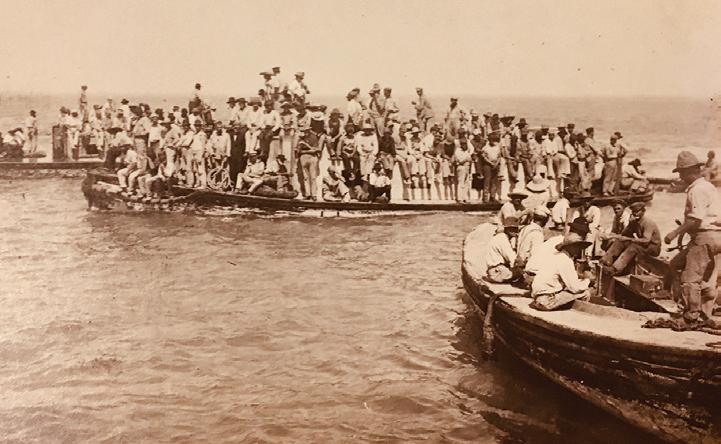
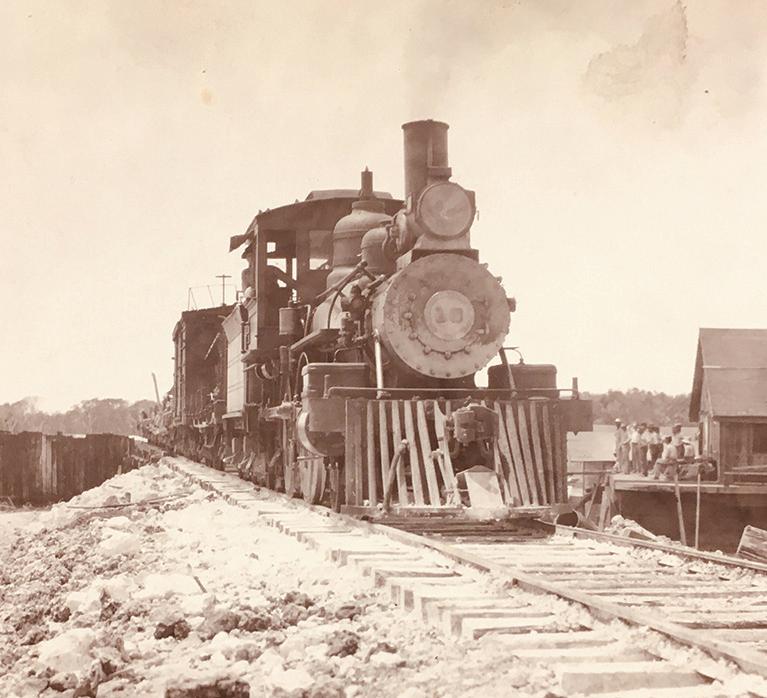
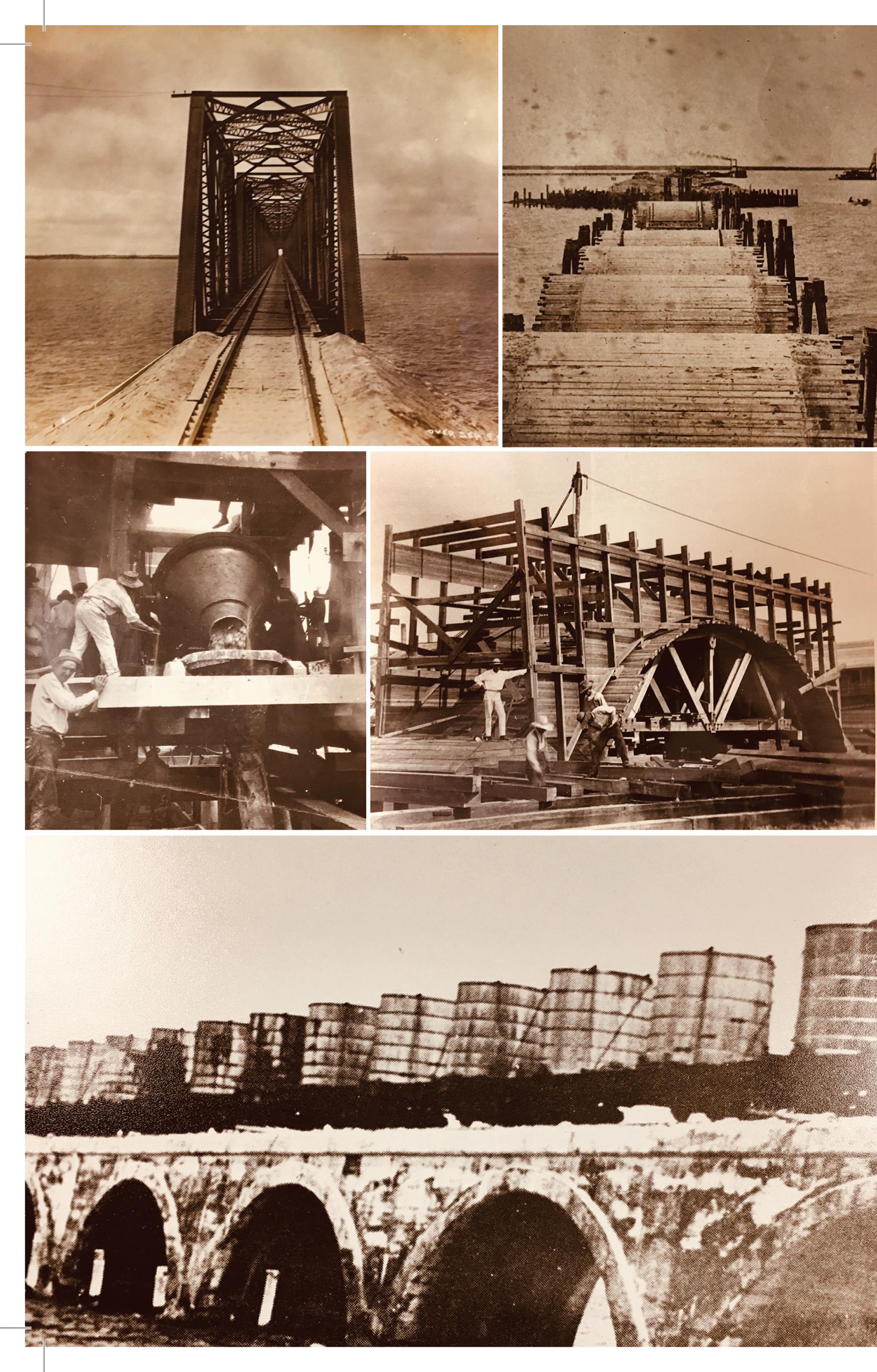
The conception of such a road that would travel the 125-mile length of the chain of islands formed on top of coral reefs, linked together with 42 water bridges, was the work of the imagination. The reality of it was the work of unimaginable hardship and seemingly insurmountable obstacles: blazing heat, ferocious mosquitoes, limited food supplies, no fresh water source, sickness and injury, equipment failures and hurricanes. No eight hour days. No weekends off. On every front the challenges called for superhuman competence and adaptability, determination and drive. Here was an engineering feat that had never before been attempted, and it was the engineer on the ground and in the salt water, in the swamp and on the rock, that brought conception to fruition. Flagler’s dream train rode on the railway that Krome built.
The disparate profiles of the engineer and the horticulturist create an enigmatic character on the South Florida frontier landscape. This little
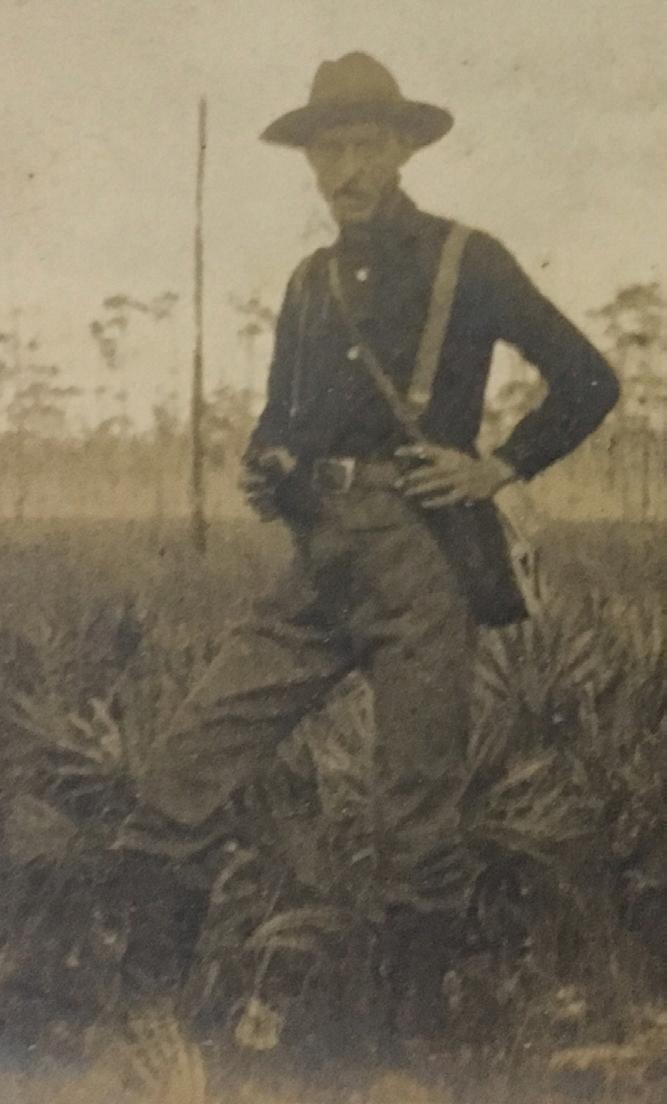
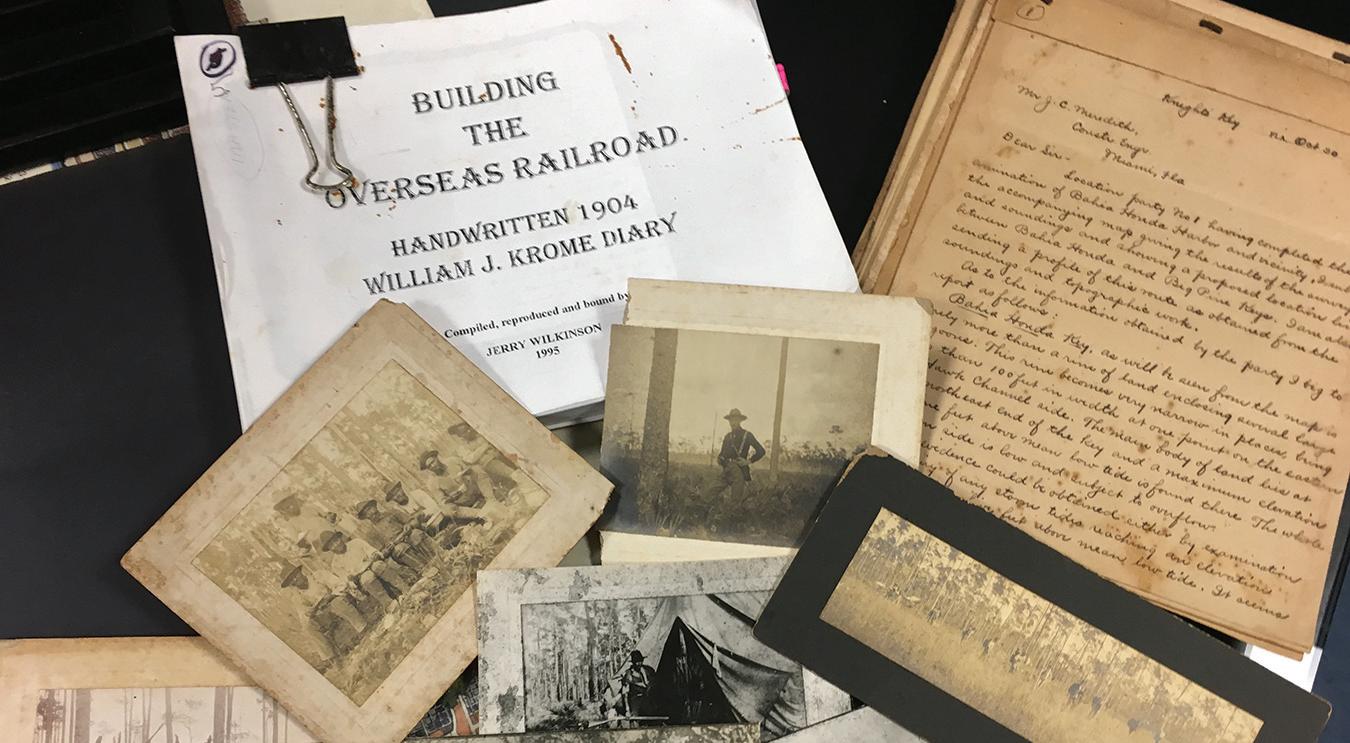
“Krome Book” gathers the story of William Julius Krome in his own words: diaries, journals, letters, and official reports, in newspaper collections and interviews, in blueprints and photographs, many of them taken by Krome himself, which are part of the Krome Collection, gifted by historian Jerry Wilkinson to the Florida Keys History and Discovery Foundation. Without Wilkinson’s curiosity and passion to connect past with present, to collect and safeguard artifacts, this story would still be buried.
It is the story of the man, of his family, his house, his homestead, his genius, his determination, and his passion, which not only built a railroad across the sea to carry a dream train, but brought his own “air castles” into reality, transforming virgin acreage into avocado and citrus groves. It is a story that would have remained covered in dust, food for mice and silver fish, or turned to ash on a burn pile if not for a network of individuals and institutions who recognize and celebrate the power of discovery and preservation to breathe new life into past dreams.
The Discovery
It was time to tackle the attic. For months, Jeff had been redirecting and redistributing the accumulation of three generations of collections: magazines, newspapers, photographs, and boxes of seashells, labeled with their Latin names and nestled in cotton cubbies like antique Christmas ornaments. The family was determined to sell the property at the intersection of roads named for his daughter’s greatgrandfather and the avocado groves he planted there. They no longer wanted any of the things left in the house. He had offered many of the collected items: Literary Digest magazines from 1932, National Geographic, enough to fill a library, to his friends with whom he had practiced Yoga for over ten years. They had followed development of the sale of the property, knowing that once the contract was signed, the pace of their friend’s careful placement of memorabilia would quickly accelerate.
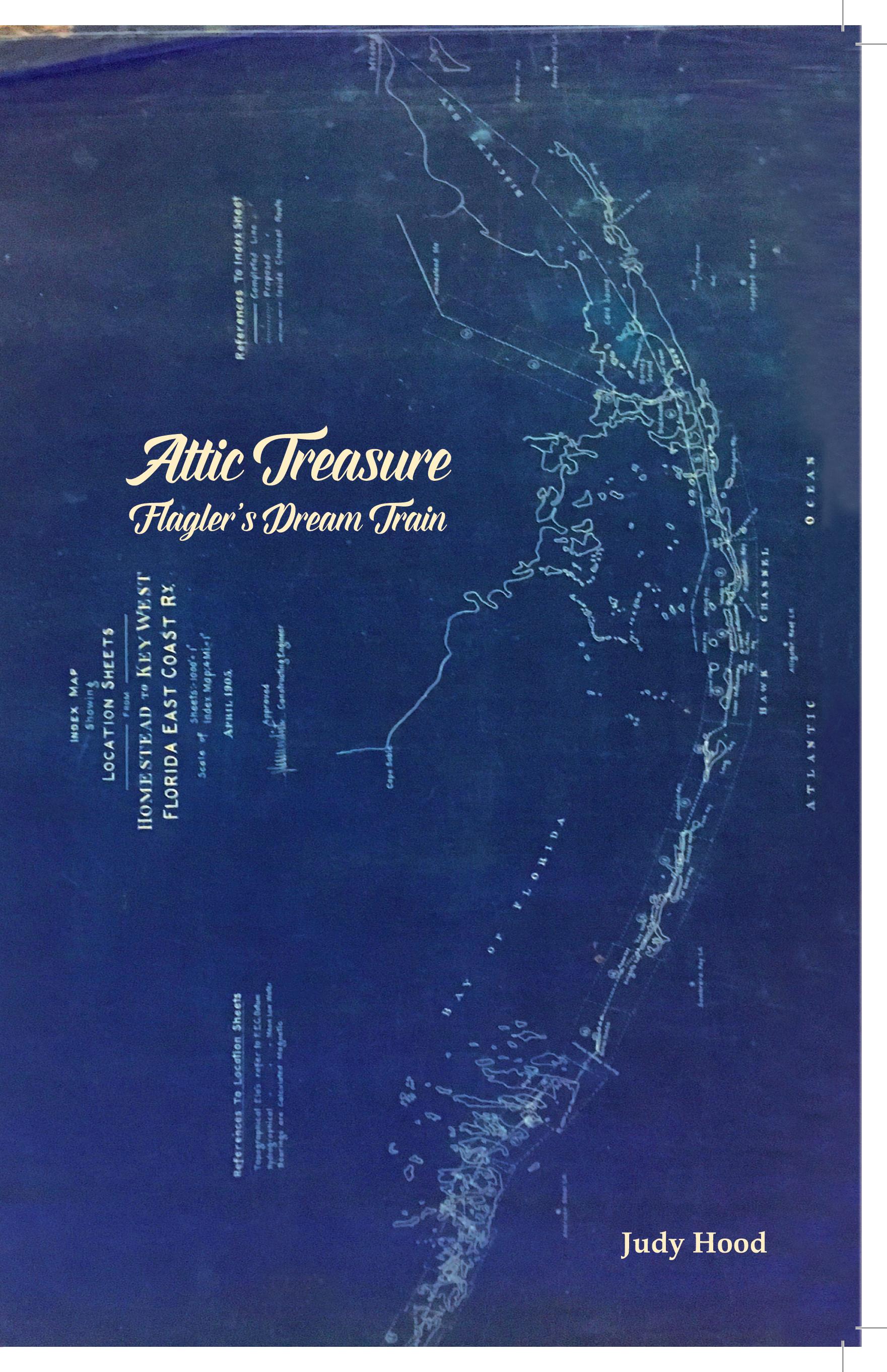
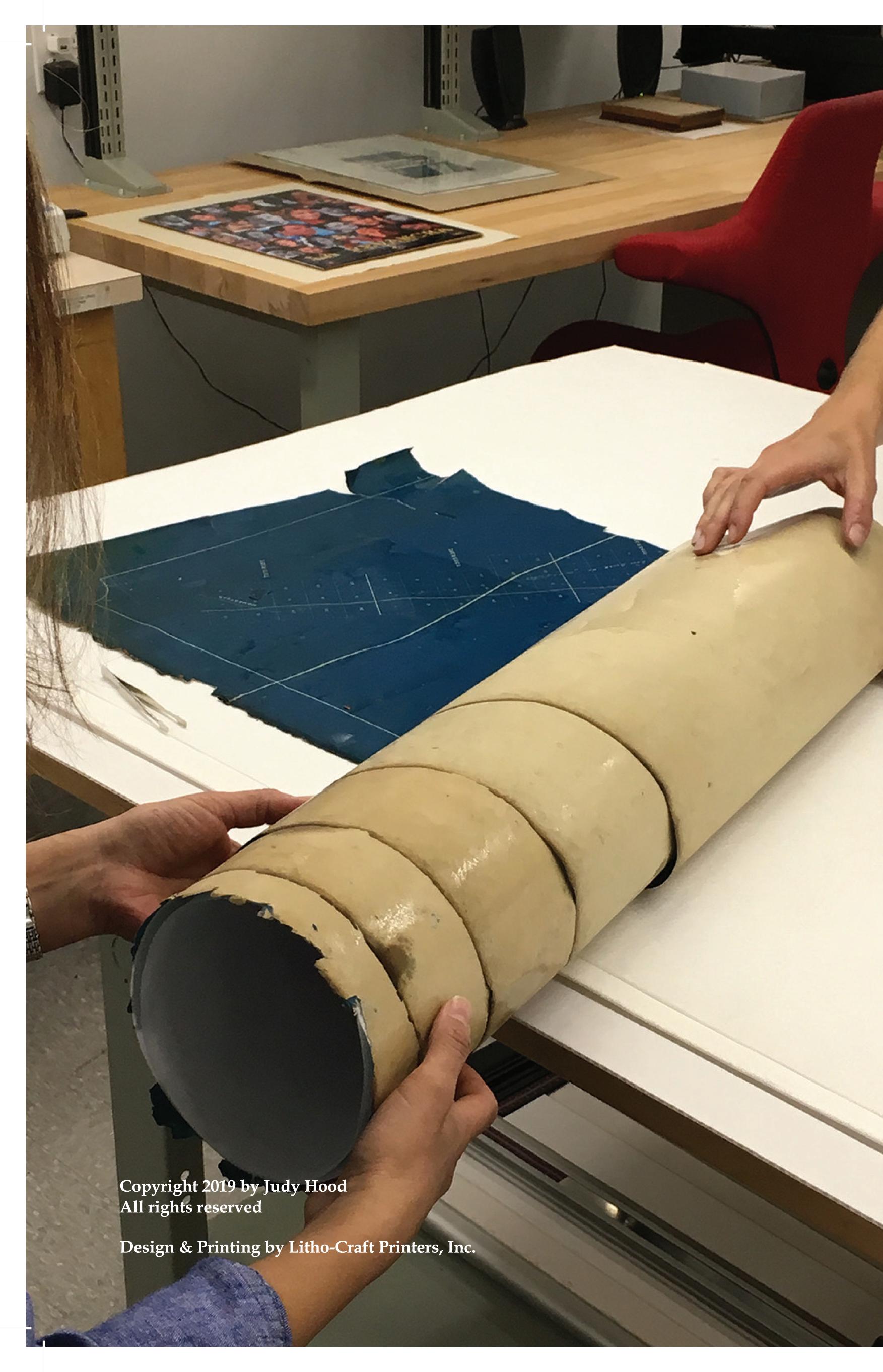
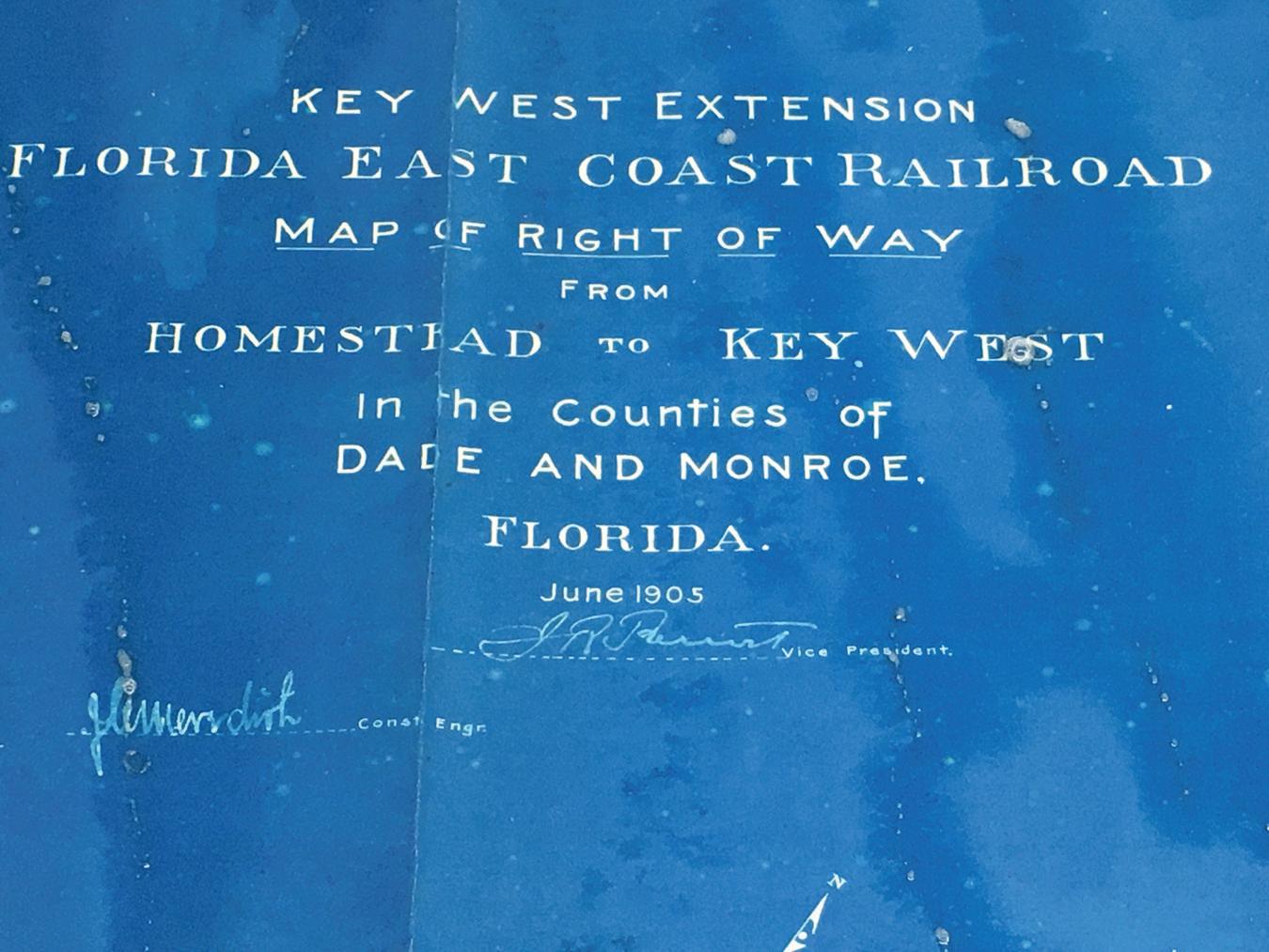
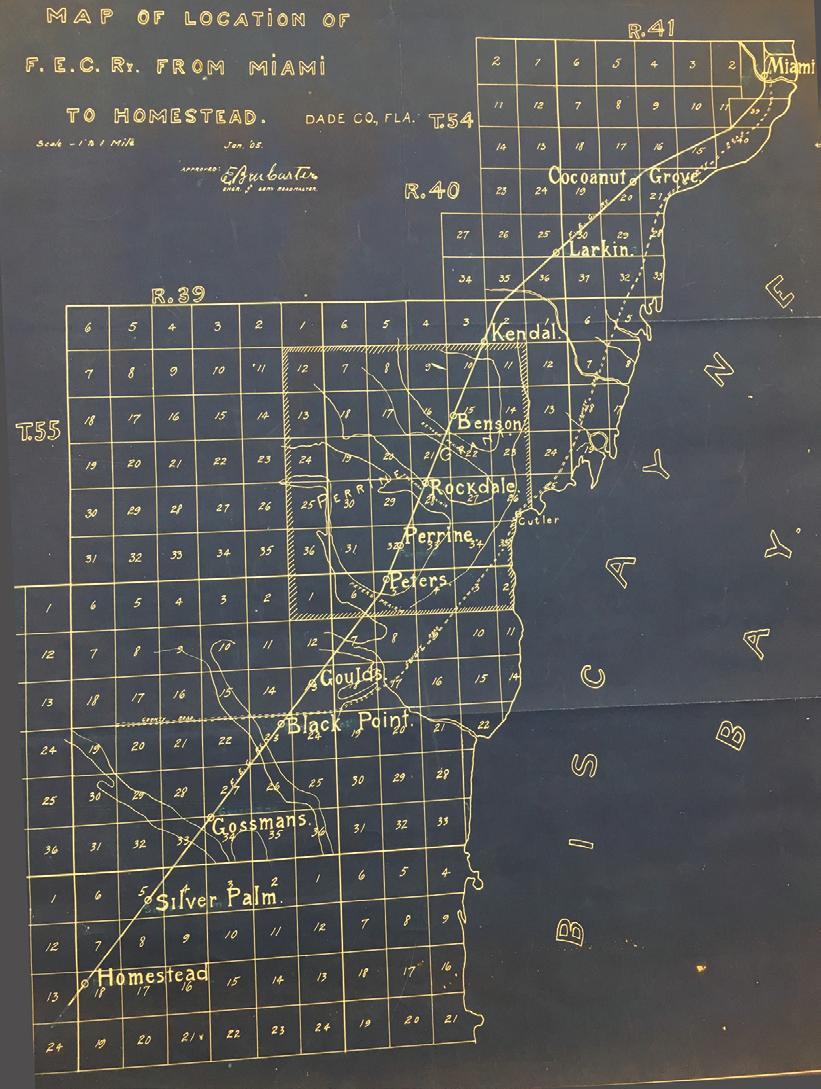
“If there is any old wallpaper up there, don’t throw it out. Bring it to me.” Fran, his Yoga teacher, was also a crafter and coveted antique wallpaper, a rare resource for creating holiday ornaments. The following Sunday, after class, he brought in an armful of paper rolls, frayed and faded, some tied with twine, some with shredded ribbonall covered in dust and smelling of mildew, held together with decades of neglect. The indigo at the edges and the thickness of the paper made it evident that these rolls were not wallpaper. He wasn’t sure what they were, but he was sure he did not want them back. Fran placed them carefully onto the back seat of her car, fearing they would disintegrate before she could find a safe place for them, and determined with her friend of forty years that they would unroll them together on guava jelly-making day. So the following weekend, they gingerly lifted the edges, untied the square-knotted waxed string, and carefully unwrapped one of the smaller rolls, uncovering at every turn the extraordinary and unmistakable indigo of a blueprint, the blueprint of a railroad, Flagler’s railroad, from Homestead to Key Largo. Then came the Location Map of the Territory from Miami to Homestead, bearing Assistant Engineer, W. J. Krome’s signature, the plat map of old Key West, two of the Krome residence’s fire place, and finally, stretching across her family
room floor over ten feet long, the preliminary blueprint of the Overseas Railroad from Homestead to Key West, signed and dated 1905.
Her friend took the blueprints home, hoping to find some answers at the University of Miami, about where to begin to verify their authenticity, how to keep them safe when even a light cloth covering seemed too much weight for them to bear, and where to find the experts who could preserve them and at what cost.
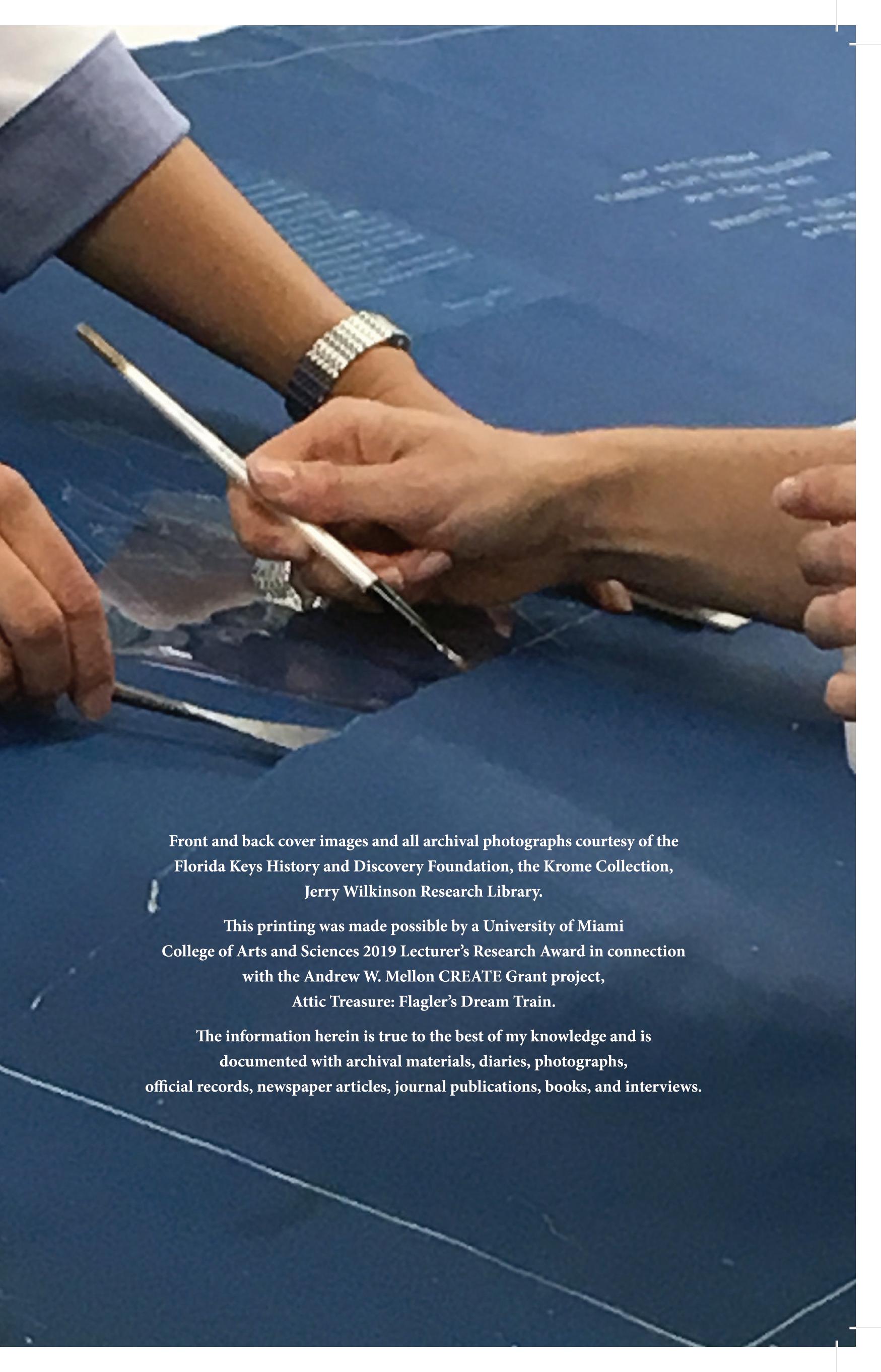
Serendipitously, a line in her email inbox compelled her to open News at The U. Reading “What’s old is new again,” she learned that the University has its own Preservation Strategies Department and “unique Conservation Lab.” Head of Preservation Strategies, Martha Horan, invited her friend and colleague, Gilda Santana, Head of the Architecture Library, to examine the blueprints that arrived wrapped in a cotton sheet and tied with a silk ribbon, carried in arms like a precious child.
Yes, they were authentic. Yes, they could be left in the best of hands in the Lab. Yes, Architecture, Engineering, History, English, and Writing Studies would be invested in the preservation of these treasures, the inquiries they would foster, the connections they would nurture, the interdisciplinary collaboration they would inspire. Yes. After verifying that the family did not want to keep them, the blueprints were gifted to the University of Miami Special Collections. The emerging narrative in this “Krome Book” captures the story of the man, and the land, and the spirit of the times, and records how the blueprints for a dream train came to be in the attic of a pioneer house in an avocado grove at the corner of Krome Avenue and Avocado Drive in South Dade County, Florida, in 2018.
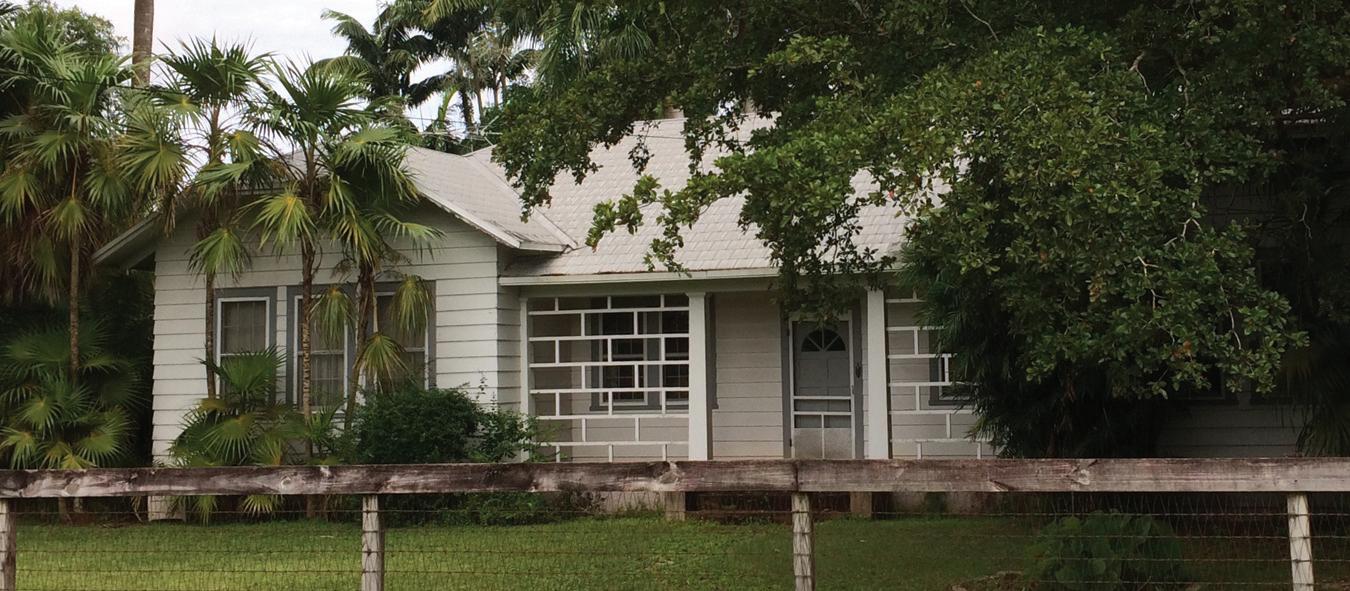
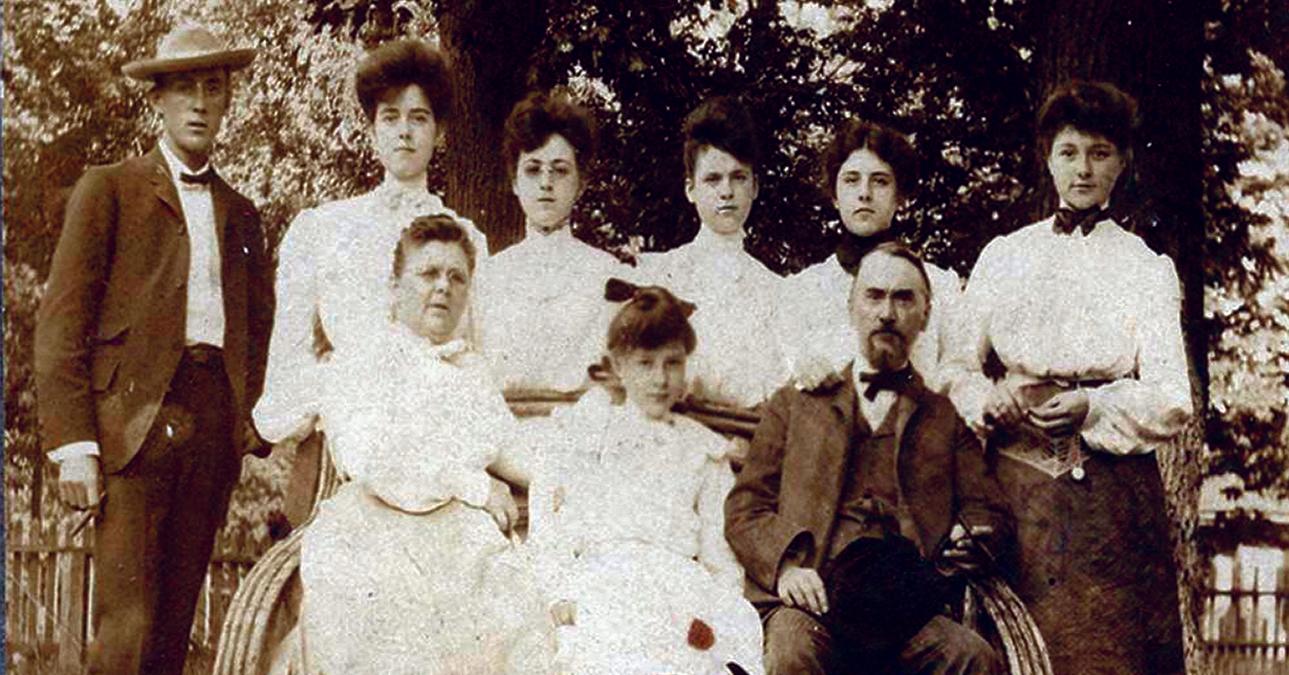
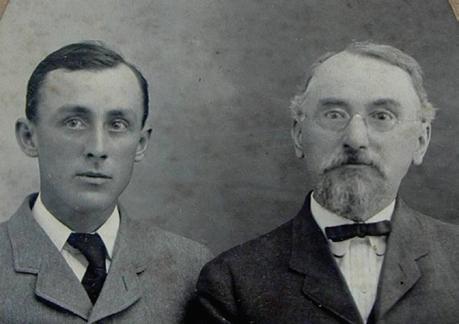
the house, in which the blueprints were found, was built by the Kromes in 1920. By then the William Julius and Isabelle Burns Krome family included four children: Mary Elizabeth, born 1911, William Henry (Bill) born 1914, Robert (Bob) born 1916, and John (Jack) born 1918. Married in 1910, the newlywed couple lived for a time with Krome’s father, Judge William Henry Krome on property William J. had purchased in 1909, half of which, 80 acres, he put in his father’s name.
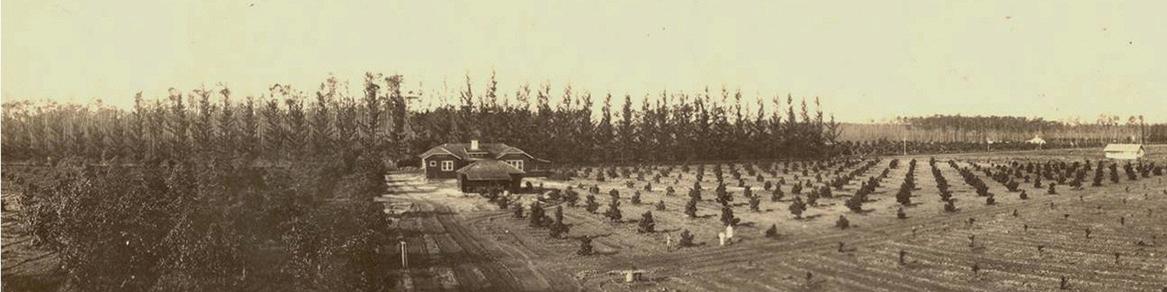
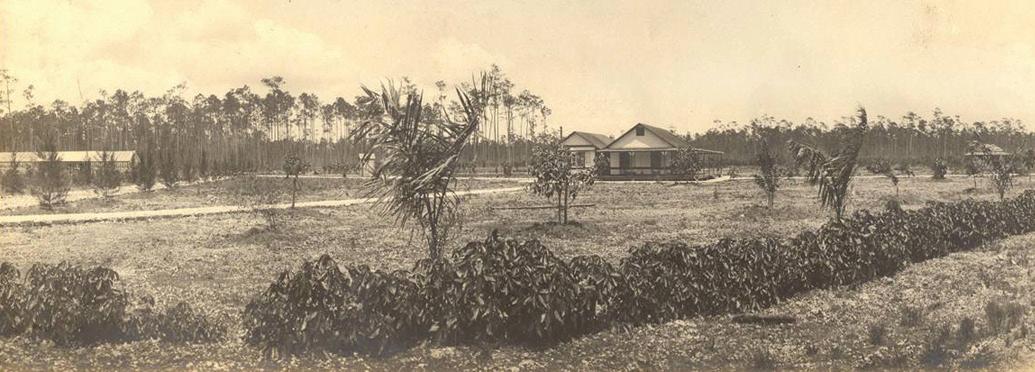
The young Kromes’ first house was a pre-fabricated structure, put together with nuts and bolts, set deep into the property. In October 1903, William J. Krome had filed for homestead on those 40 acres to the northwest of the intersection and 120 acres to the northeast. By 1910, his property included the purchase of two 80 acre parcels on the southeast and southwest sides of the intersection. The homestead site was called Krome’s Corner by the locals; Krome named it Medora Grove for his mother.
Closer than the “Bolt House” to the rock road, the one and a half story wood frame vernacular house they built in 1920, faced Avocado Drive, which stretched west to the Judge’s house and the homes of friends, now remembered for their role in establishing community, fighting citrus canker, and developing grove and agri-business. It was designated an individual historic site by Metro-Dade Preservation Board, June 7, 1989.
Beginnings
How did “Mr. Krome, the Construction Engineer” who, despite three hurricanes, brought the Eighth Wonder of the World, from exploratory survey to reality, become a citrus and avocado grower, recognized in the Florida Horticulture Hall of Fame? Practicably speaking, his profession, for which his education at Cornell prepared him, sustained and supported an adventurous, inquisitive, innovative, and entrepreneurial nature.
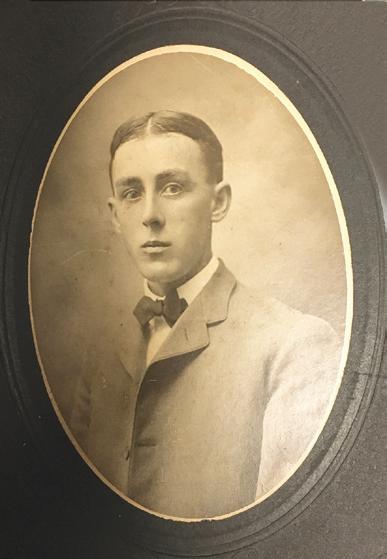
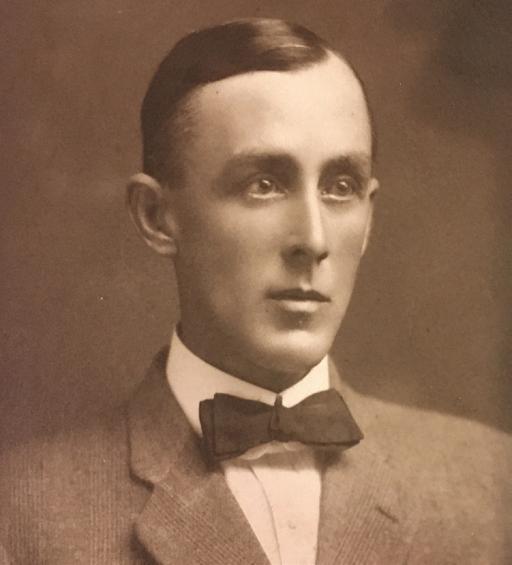
As a six or seven-year-old, his grand-father took him to St. Louis to hear and meet the renowned explorer Sir Henry Morton Stanley, who made an impression on the youngster. That grandfather, Charles William Krome, had been a risk-taker himself, whose law studies in Germany were interrupted by mandatory military service, and who stowed away on a ship bound for a new country when a forced service extension was rumored. In St. Louis, he put to use the skills he learned in the military as a cobbler and made it possible for his own son to also study law and eventually become a Judge in Illinois. William Julius was born to William Henry and Lucy Medora Gillham Krome on February 14, 1876, the only son among six daughters. He studied at Northwestern, Depau, and Cornell, which he left before graduating with an engineering degree.
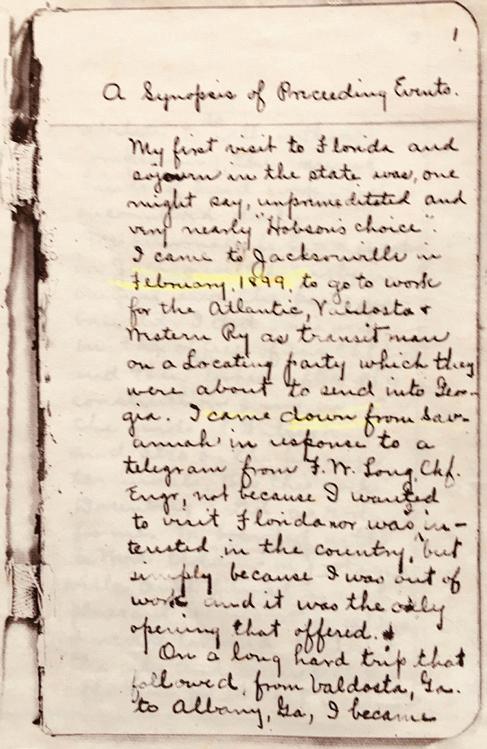
In his synopsIs oF precedIng events, Krome writes without artifice:
My first visit to Florida and sojourn in the state was, one might say, unpremeditated and very nearly “Hobson’s choice.” I came to Jacksonville in February 1899, to go to work for the Atlantic, Valdosta & Western Ry as transit man on a Locating party which they were about to send into Georgia. I came down from Savannah…not because I wanted to visit Florida nor was interested in the country, but simply because I was out of work and it was the only opening that offered.
Relationships formed with fellow engineers, through “enduring various privations and hardships together” and because of “their ability to do well without complaining, the various kinds of hard work which we encountered daily,” cemented lifelong friendships for the young engineer and led eventually to his accepting a position with the Florida East Coast (F.E.C.) Railway. When a few years later in July 1902, while working on a preliminary location and construction in the Ozark region, he “noticed in the ‘Engr News’ a paragraph concerning a survey which Flagler’s road, the FEC Ry was making into the Everglades,” and his old friend, Hunt, urged him to consider the position, he applied. By September 15, 1902, he and his friend Dusenbury, who was to accompany him all the way to the end of the line, reported to E. Ben Carter, Chief Engineer and Roadmaster of the F.E.C. Railway in St. Augustine, “Ye Ancient City,” where “to my surprise they offered me a better salary than I had named.” He was to “take a party into the field and make a location for about 22 miles southwest of Miami to where the preliminary line turned west into the Everglades.”
Krome’s experience on what he names in his Synopsis the locatIon survey cutler extensIon introduced him to Miami, “the truly tropical city. Situated at the mouth of the Miami River, on Biscayne Bay, embowered in royal palm and palmetto, with an ever-summer climate, it is an ideal resort for the tourist, the fisherman, and the yachtsman.” On the flip side, “we had our introduction to the
Florida mosquito and, particularly at night, he was very much of a nuisance.” That nuisance pursued him as he planned and prepared for the “preliminary…collecting a party, getting up maps and data and overhauling the outfit,” tents, cots, bedding, and camp supplies. We found the mosquito at ‘Camp Miami’ something fearful. It was bad enough during the daytime but at night they became almost unbearable. As soon as it began to get dark we were compelled to build smudge fires and hug them closely. We drenched ourselves with “Citronella” and other varieties of “dope” until our clothing and persons were saturated but the effect was at best only temporary and very slight. To accomplish anything in the way of platting or computing after dark was an impossibility.”
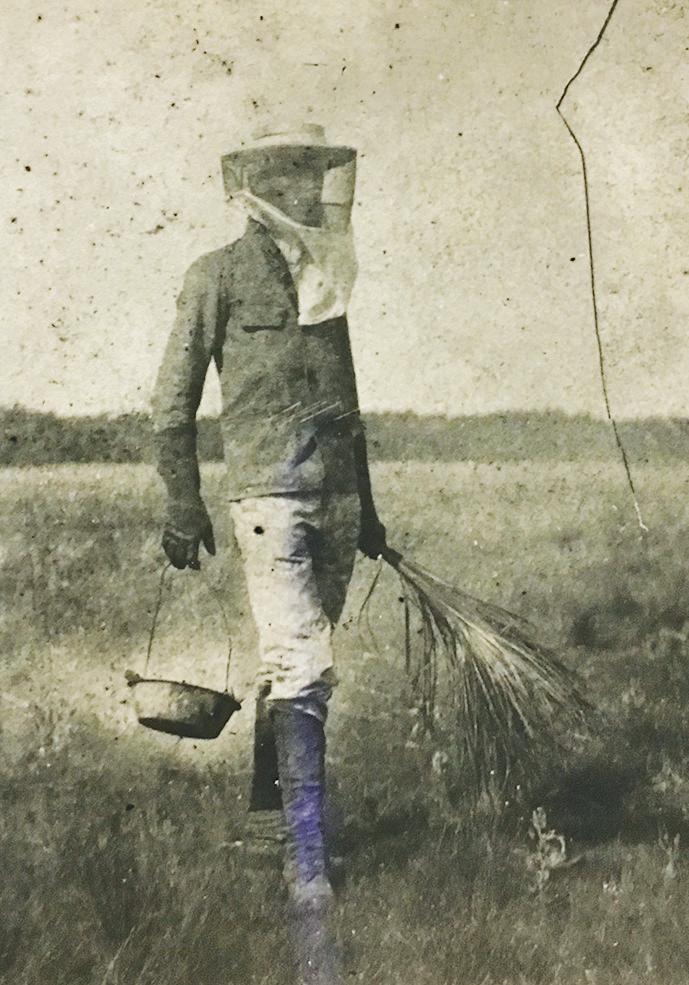
In the field, “tropical vegetation forms a tangle almost like a solid wall,” and against mosquitoes, “their numbers and ferocity almost beyond belief...ordinary pants and shirts were no protection at all.”
Ameliorating challenges of the field work, surprises in fruit and foliage brought delight. “We learned to relish the avocado or alligator pear…the meat is very rich, firm and of a nutty flavor and is eaten with pepper and salt or in a salad.” With Cocoanut Grove two miles to the east of their camp and the survey line principally in the pinelands, the road to Miami, “very picturesque, narrow and in many places overarched by tropical vegetation, commands a splendid view of Biscayne Bay. It is well worth admiring.”
Cape Sable Expedition
The Cutler Extension Location Survey complete, Krome prepares for his cape sable expedItIon, beginning December 1902, exploring one of three routes being considered for the extension of the railroad. In his Cape Sable Monthly Time Book, Krome records his two parties, the first for the survey work: transit, two rodmen, recorder, steward, and chief packer, and the second for support: two axmen, five packers and a cook. He had the responsibility, not only for surveying the territory, for planning and provisioning, gathering tools, camp equipment, and transport, but also for hiring and care of the men in his party. Meticulous and attentive to detail, his supply list for the Everglades survey included white cloth for signals, cheesecloth bars for mosquito protection, and a shoe repair outfit. But by December 30, he was writing to E. Ben Carter, urgently requesting all-wool blankets, the kind Burdines called “cow hunter” blankets, “about 9 of them no matter how rough but heavy” for his support party which was “as good a bunch…as could be found anywhere, and I should hate to lose any of them at this stage of the work.”
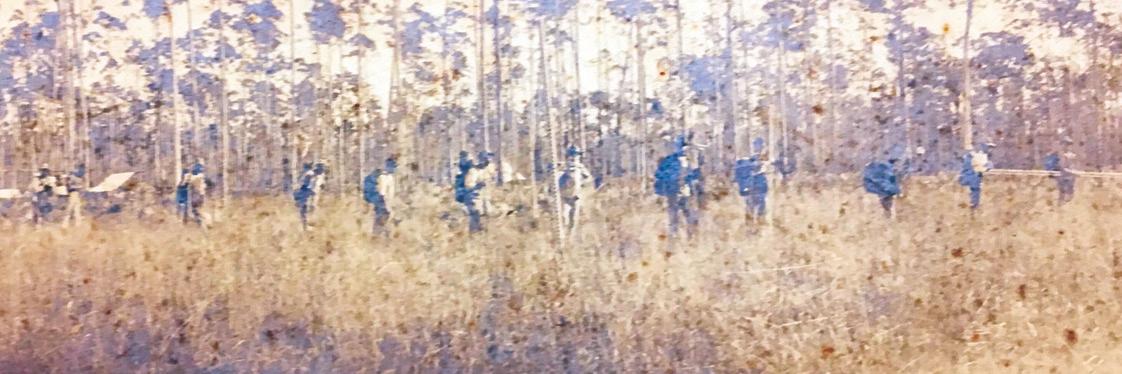
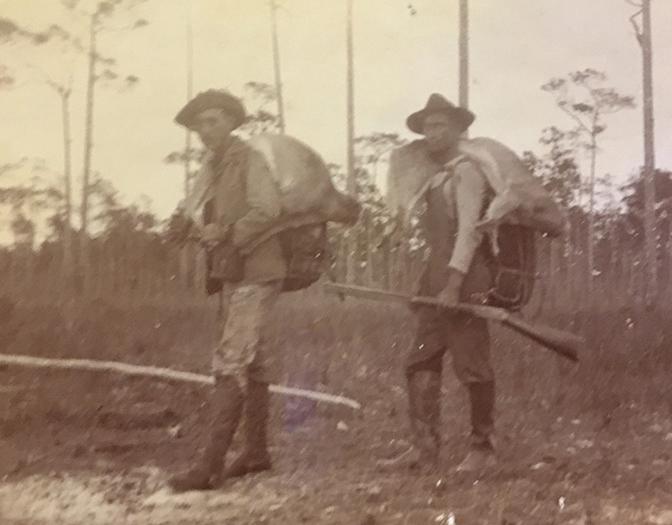
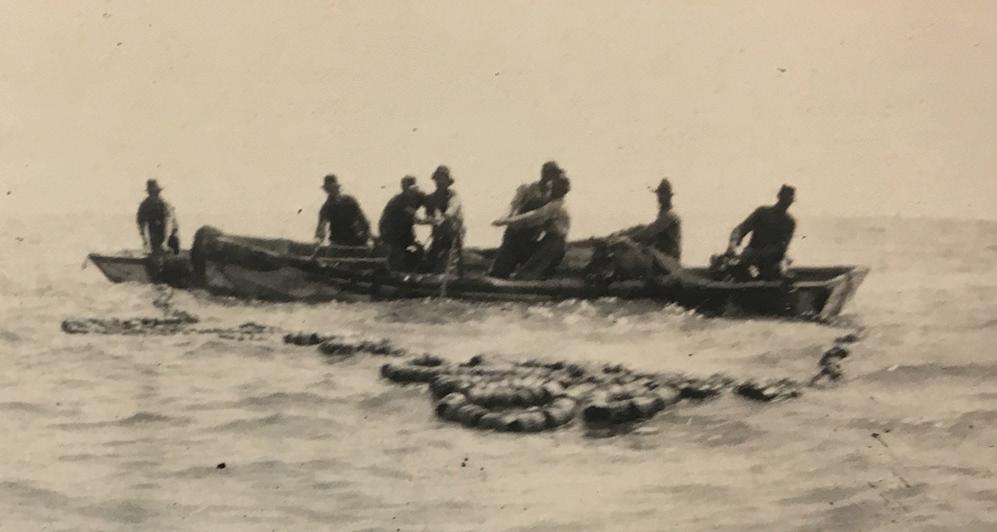
Field notes recorded the exploration step by laborious step. January 17, 1903, found the party “loading provisions into two steel boats and hauling them by dragging through shallow water for about two hours… Progress made nearly entirely by dragging. Terribly exhausting work. Rained at intervals all aft…passed bad night being rained on most of the time.” It was necessary to cut their way through cypress and mangrove with machetes, to climb pine trees to a height of 60 feet, making daily observations with a field glass and recording compass readings in all directions, as well as noting vegetation, soil, and water. Locating fresh water was a primary objective as well as finding enough depth to float them and their boats; they were always “looking for a stream that…didn’t split up all over creation.” Most of the time they found themselves in a “slough much choked with sawgrass and knee deep in muck.” If they were lucky they avoided rattlers and found fresh game in the wilderness.
Every day the process was the same: dragging through swamp, recording observations from tree tops, tending to workers who were sick or suffering injury, setting out stadia lines, recording levels and water elevations at each location: Snake Hammock, Coot Bay, Fresh Water Lake, Camp Weaver, and finally Flamingo, where the time sheets end on June 3, 1903, and the party returns by boat to Card Sound.
Three months later, Krome heads up a locatIon party In the cutler praIrIes area that gets the attention of local news reporters. According to a September 25, 1903, report in Miami Metropolis, when “Mr. Krome, the engineer [began] locating the line” that would “cover the ‘homestead country’ entire, reaching to Long Key which is 28 miles south of Miami,” it would “take but a short time to have the road ready…to give the growers all along the line transportation facilities in time for them to ship their fertilizers down. This…great convenience would doubtless be highly appreciated by those who have so long been away from such valuable assistance, in getting them to and from the markets with their product.” The laying of track was to begin at Miami, October 5, and on October 19, 1903, William J. Krome filed for homestead on 40 acres on the northwest side of the road that would eventually bear his name and 120 acres to the east. His working diaries from September 3 - November 13, 1903, record location notes and levels, water elevations and stadia lines on prairies in the “homestead country” area, including Black Creek, Goulds, and Gossman Prairies, but when that job is completed, Krome faces the New Year out of work.
Krome’s 1904 Diary
K rome ’s 1904 dIary opens in Miami. He is expecting a visit from his father within two weeks and decides “to remain here for the present…This New Year finds me in about as uncertain a state as Jan 1, 1900 did. I hope the next year will not be as hard.” The following day he sees a doctor who gives him liniment and medicine for a groin wound which is “getting no better lately…Feeling blue.” In town he spends time discussing “homestead matters” with a neighbor and “gassing in the hotel office [the Biscayne] with the real estate men.”
By January 4, he writes, “This being out of work is a killing business with me. I don’t live, I simply exist. Read, smoke, eat.” He rallies to get his Homestead account book in shape, wishing “to keep a carefully distributed account of all my expenditures down there to see what it is costing me.”
By the 8th, he is “feeling better each day now, but anxious to be doing something again,” and he has some ideas about what that “something” might be. He goes to Oxley Grove to see about some avocado pear plants and discusses a contracting company idea with several friends. Again in St. Augustine before his father’s arrival, he “talked contracting.” He bought a “new panoram Kodak, a small flip flop affair… all right for Everglades work.” When his father arrives in Jacksonville on January 16, they spend time sight-seeing, but their conversations come around to the “contracting company” idea. His father, Judge William H. Krome advises a stock company and is “inclined to stake” his son if he needs it. Krome admits that he “will probably need some assistance in that line and while I would rather have only my own money in it, I am grateful for his help. It has been a long time since he has been called upon to help me any, not in fact since I left Cornell.”
Father and son travel to Daytona with its “very beautiful shell streets overarched with live oaks festooned with gray moss” and then two miles to Seabreeze Beach which the Judge, seeing the ocean for the
first time, finds “certainly magnificent.” Although the return to Miami was dusty and uncomfortable, a trip up the Miami River with tropical fruit trees, a view from the old house at the head of the river, and a pleasant evening on the veranda of the hotel restored their good humor.
Back south in Cutler, Krome’s father, impressed with “the very evident newness of this country” counsels his son to “hold on to the land he has in Dade County,” even though while traveling back north they found Rockledge “the prettiest place we have been yet. There are great numbers of fine orange groves here all loaded with fruit, splendid fishing, good drives, and good hotels.” Krome continues to complain of boils which “pretty nearly laid me up,” but didn’t stop him from walking “nearly up to Cocoa along the beautiful Indian River Road,” before putting his father on the train in Jacksonville.
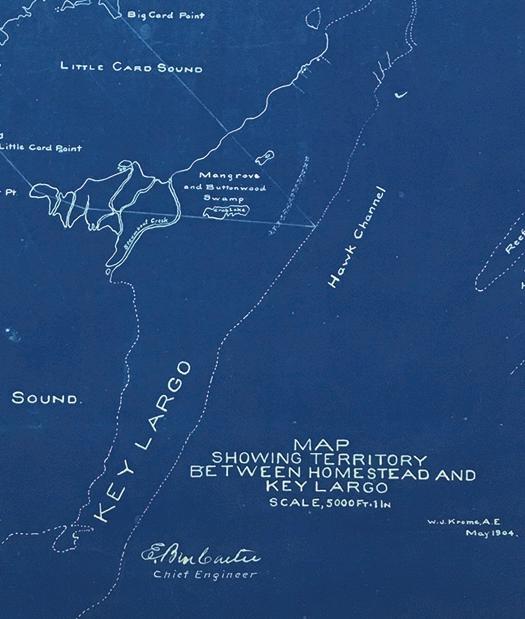
On January 27, he returns to St. Augustine and continues discussing the contracting company with Mr. Parrott, who is the F.E.C. Railway General Manager and First Vice President, Chief of Operations. Two days later, he has a “confab” with Parrott who “wanted me to run a line from Homestead across the Front to Key Largo, explore a harbor known as Turtle Harbor there and then run a line to the lower end of the Key.” Conducting this location survey would make Krome the on-site engineer to explore all three potential lines for the F.E.C. Extension: the Everglades route overland to Cape Sable, the Turtle Harbor destination across Key Biscayne and Card Sound, and the center line down the Keys from Homestead.
On Saturday, January 30, in a confab with Mr. Carter, Krome looked over his outfit, got maps together, and met with F.E.C. third Vice President Mr. Ingraham who was “glad to see me and apparently knew all about the proposed trip.” From him, Krome “learned for the first time that our destination was liable to be Key West.” Less than two weeks after “talking contracting” with his father and less than two days after a similar conversation with Mr. Parrott about starting up his own company, William J. Krome signed on for a job that would take him and the country into uncharted waters.
He was ready for the challenge. On February 1, Krome was in the office in St. Augustine, “all day, checking up the outfit, packing charts and generally getting ready” to leave for Miami and organize a party. He was anxious to get away. On February 14, his 28th birthday, he went up to “my place” and “staked out a couple of acres for Dan to set out in alligator pears.” By February 16, he was “5 miles out on the line…the going was bad from the start…and the last mile was hell. About as bad a pack as I ever went on…only one on the Cape Sable trip was worse.” Seven and a half miles out, they were short of sugar and flour, packers were grumbling about the weight of their packs, and “Young Ingraham is about barefoot from his shoes giving out.”
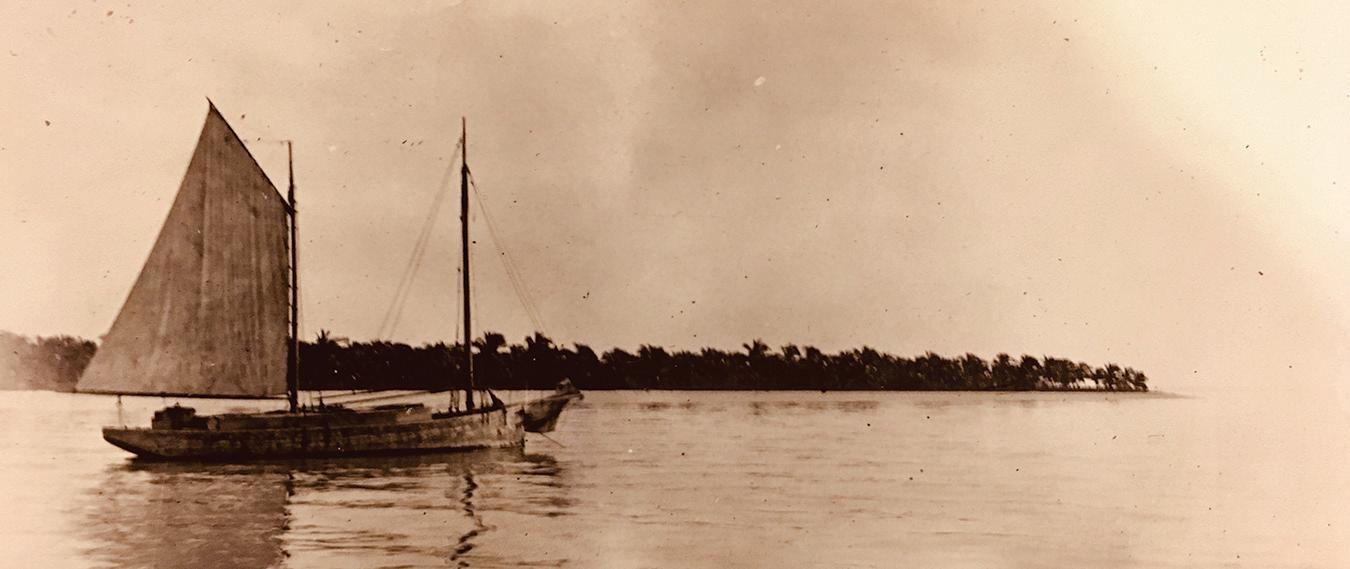
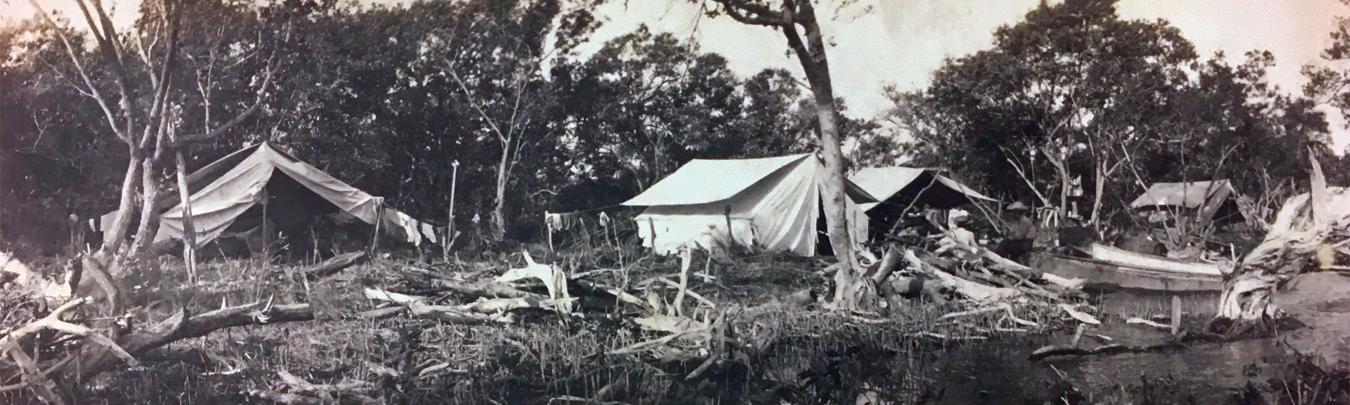
The conditions he describes are debilitating, but the engineer recognizes when his party “pitch[es] as good a camp as is often found.” He appreciates that “we are living high now,” when they find a “shell sand beach so rare in this region” that makes a “good landing and bathing place… a splendid site for tent and plenty of grass, good bedding and firewood and the ‘Willie’ can lay in close to shore… where the buttonwood, black mangrove swamp looks for all the world like an old apple orchard.”
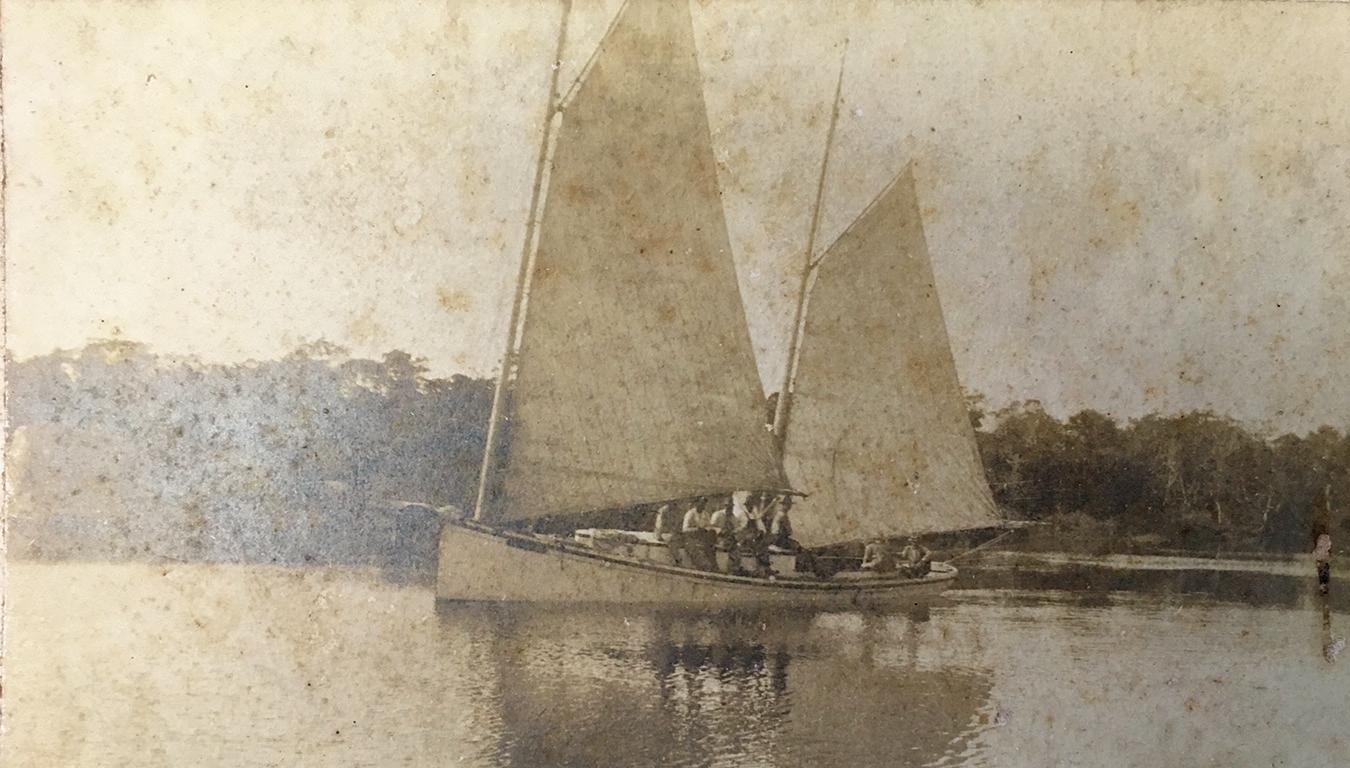
Back in Cutler, “the tomato crop is in fine condition expecting to raise big money.” At the homestead, “Roberts has all my pear trees out and is at work clearing land.” In the Miami office, Krome made up the payrolls, slept on a cot in the office and in the foresail of Captain Billy’s schooner the next night. In camp, March 7, he “worked all day figuring up the traverses which have already been run. I want to get them platted up as soon as I can now. The boys came in late after a long day’s run.”
On March 13, Sunday, Krome notes the first “quiet, restful, peaceful day...In the afternoon we all went in bathing. I am learning to swim a little. Everybody read magazines, smoked, and rested...” and went out spear-fishing at night. He makes the rustic camp seem like a Palm Beach resort.
The next week demanded much from the whole party, “bucking line across Key Largo.” The following week, the party having reached Turtle Harbor, Krome headed to St. Augustine per E. Ben Carter’s instructions. On the trip, he was called to the platform in Palm Beach by F.E.C. Railway President, Henry Flagler, whom he had never met before, and “he put me through a hurried catechism on what I had found below. His ideas of the country were pretty hazy.”
Reaching St. Augustine, he completes office work, reports, and comparable estimates of routes, location maps, and profiles. He takes meals with acquaintances, reads, and writes letters, and waits. “I always get lonesome and blue here in St Augustine where I know as few people and have long evenings on my hands alone.” By April 17, all reports having long since been submitted, and “figures placed before the man with the money,” he knows “something [is]doing among the powers that be.” He learns from “what EBC says we will probably go ahead and with Key West as our destination and not Turtle Harbor. He says they may put someone in charge of that whole work down there…Why not me?”
It was not he, however, even though he accompanied Parrott and Flagler to Bahia Honda and then to Key West, and “of course was hoping for steady work as it is a bread and butter proposition with me.” By May 5, “for the first time in my career, I find myself hampered with ties that a change of location will seriously affect. I have too much invested in my homestead to let it go and yet if this work stops how can I afford to keep it?” On the next day, May 6, “Mr. Carter announced that the work would go ahead for certain,” but when Krome discovered in the office a copy of a letter from E. Ben Carter offering someone else the job of Chief Construction Engineer, it “tumbled some of my air castles pretty badly…I don’t think it is intended as any reflection on me. Still it has been hard to take it cooly…it hurts, and there is no getting around it…Tonight I feel how absolutely alone I am.”
By the next day, however, he had “shaken off my fit of blues” and “after quite a talk with EBC” he was “ready to get away this coming week.” Instructions had come in for a location as far as Bahia Honda; the new men had been sent for. “They evidently want to give me every comfort and convenience that can be had down there and the Lord knows we will need them all.”
While his diary mentions few comforts and continual hardships, Krome seems to thrive under adverse conditions. Plagued with boils, headaches, fever, eye infections, and, of course, ferocious mosquitoes, which he “would try to bear with as little fuss as possible to set an example for the boys...” he is nevertheless attentive to the dynamic and condition of his party, his camp, and his fellow engineers, as well as the caliber of their work. He often took the place of those
who were ill, exhausted, or injured. He ordered food and provisions, arranged for medical care, managed the equipment and the people and sent them fishing and hunting when they were “low on grub.” He moved the line forward under grueling conditions, recording their progress, yard by yard, day by day. Every stage of planning, securing, and managing provisions “necessary and convenient.” Every hire and replacement of those who couldn’t withstand the conditions. Every part of the survey work from traversing, sounding, and leveling to mapping, charting, and platting. Every inch of the Railroad that went to Sea advanced under William J. Krome’s scrutiny and supervision. He was restless and unhappy in town, totally engaged when he was in the field. “The more I see of this thing, the more I think we are up against a mighty stiff proposition,” but “although it will necessitate some sacrifices I am glad of the opportunity of looking after as important a piece of work.”
Krome in the Keys:
Correspondence between the Engineers
As Assistant Engineer, Krome reported to Constructing Engineer Joseph C. Meredith, recruited by Flagler, who judged that he needed a master bridge builder to oversee his project since half of the Key West Extension involved laying track over water. Instead of using conventional ironwork for the series of arches and columns, Flagler wanted to use reinforced concrete and fast hardening cement for submarine applications, shipped from Alsace. Meredith had experience heading up the construction of a half mile pier for the Mexican government and the reputation for taking on problematic projects. Correspondence between Meredith and Krome however, reveals that the Chief Construction Engineer’s success depended on his Assistant.
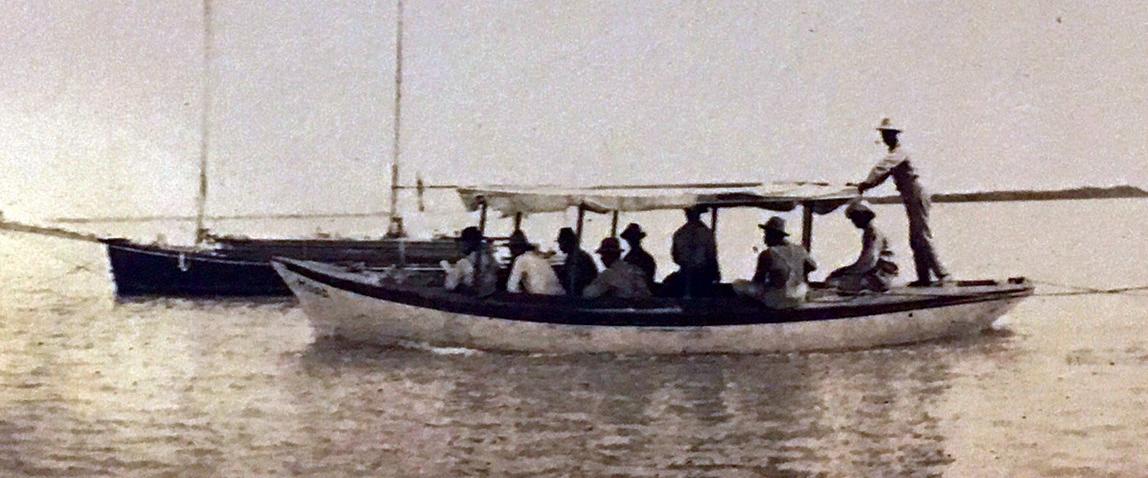
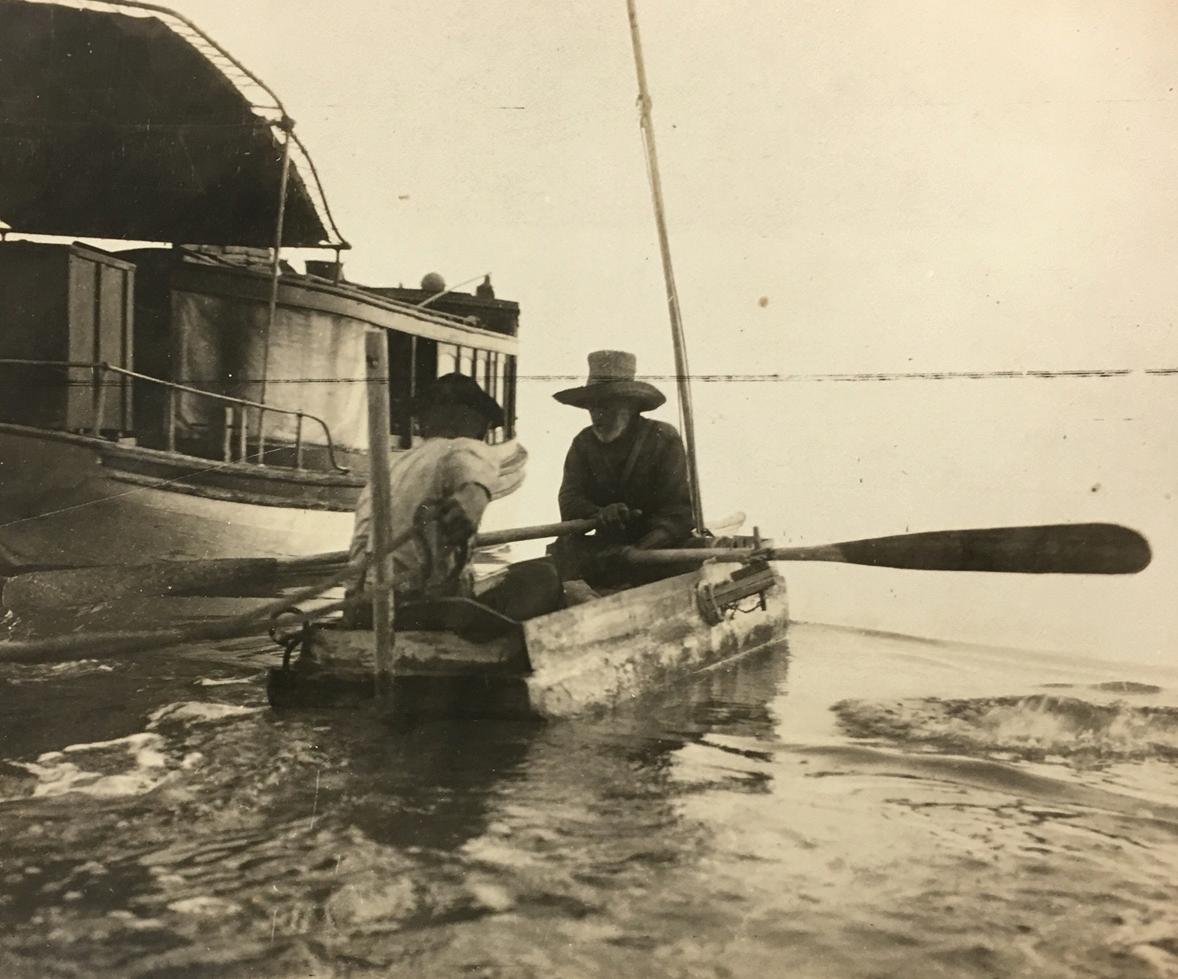
While Krome sent handwritten, and later typewritten reports from Houseboat No. 2 and No. 3 and Houseboat Cruiser, from Knight’s Key and Spanish Harbor, from Long Key and Cow Pens, every response from Meredith originates in Miami between September 1, 1904 and May 5, 1905. His knowledge and comprehension of location, hydrography, topography, physical and agricultural conditions of the Keys, of her people, and her waters came by way of William J. Krome.
Correspondence between Krome and Meredith, side by side with Krome’s personal diary creates a dialogue which reveals that the progress of the Overseas Railroad depended on one man, only briefly noted in the history books. On September 1, 1904, Meredith outlines expectations for the location party: surveys, charts, work on openings between the Keys, and his intention to send supplies
Krome has requisitioned at the end of each week. He expects his Assistant Engineer to submit a full report of the week’s operation in the returning tender. On that same date Krome notes in his diary that he “took out the party and reran measurements… This Knight’s Key-Bahia Honda opening I consider the worst on the proposed line, being across deep channels, unprotected and very long…Worked on the line all day.” He notes a new “germ slayer” medicine he is trying and will try it on Joe Ziegler’s eyes. “They are very bad and he is in bad shape all around.” He notes when Capt. Billy leaves for Planter and that a new draftsman seems “pretty fair.”
While some days he is doing office work, checking field work, finding mistakes and correcting them, preparing reports, and attending to payroll, he is always in touch with the needs of his parties. On the same date that Meredith acknowledges receipt of his “quite satisfactory” report, Krome is preparing another in the morning and by afternoon, in the field, he “had to build a tripod” to get accurate readings, and “it was six o’clock when we headed for camp. Kept off neuralgia by hammering and beating my soaked legs all the way in.”
Meredith’s October 15 letter instructs his Assistant Engineer to submit a special report on Bahia Honda. On that date in Key Vaca, “the wind is blowing a gale from the N.E. We have out three anchors and can probably ride all right. The boys have played cards all day while I have platted soundings…Roof of the ‘Cruiser’ leaks like a sieve and it is rather sloppy in the cabins.” By October 26, Meredith sends “changes made in the work plans.” In addition to doing preliminary and location work when the weather is unsuitable for hydrographic work at openings, Krome is to “fully induct” the new engineer and join the party at Knight’s Key, complete all preliminary and
hydraulic work in this direction and then “go over it afterwards on the different Keys as you go back towards Key West.” Meanwhile the Krome party in the field is expecting a launch the next day; they “needed supplies very much as they are very low in the grub line.” But the next day, no launch arrives.
And so it goes. Meredith demands and Krome delivers. Krome requests, and often Meredith comes up short. When Meredith receives Krome’s request for a boat, he writes, “...impossible to comply...can find nothing in this market...impossible to procure more except by building...” Other engineers are also short of boats. From Meredith comes the message, “if you can get one in the vicinity, do it.” And of course, Krome did. His diary notes he “succeeded in getting 6 very good ones. Tonight there are 19 craft of various kinds in the fleet lying in this anchorage.”
Krome rarely missed an entry in his diary, but November 6-9 pages are blank. By November 14, however, Krome submitted a twenty-twopage, hand-written report from Tom’s Harbor not only meticulously recording detailed data, but also including valuable analysis and evaluation. His comparison of advisability of Knight’s Key with Bahia Honda as a terminal specifies the advantages and disadvantages of each. He also considers hurricane tide records, fresh water availability, number of vessels passing, and the need for drawbridges. Future reports follow the same pattern: General Description of the site: houses, families, property owners, legal issues, general attitude toward the potential railroad, Physical Description, Hydrography, Banks and Bars, Topographical Report, Agriculture, Plants, and Soil. No engineer had more expert knowledge of the Keys than William J. Krome.
Two weeks after that extraordinary report, by December 2, Krome is called to Miami where “Mr. Meredith explained to me that …I am to have entire charge of the field work. So things have finally worked around my way.” On December 3, 1904, an official announcement from the office of the Constructing Engineer “...Hereby appointed Mr. W.J. Krome Principal AE taking immediate charge of all field work. Chiefs of location parties will transmit reports to this office through Mr. Krome.” On the same date, only the last lines of Krome’s journal entry briefly note the promotion that acknowledges his pivotal role and responsibility for the progress and eventual completion of the Overseas Railroad, saying simply, “the appointment is what I’ve been after.”
As early as December 7, Meredith “earnestly desire[s] to complete field work and have all maps and data in before Jan. 1... leave of absence into town will not be considered at present.” Meredith continues to press for more profiles “as fast as you possibly can” and criticizes one of the engineer’s work even though he insisted it be sent in “whether finished or not.” On December 20, Krome sends his usual thorough report from Long Key despite stormy weather and mosquitoes and a launch that “will hardly move at all.” In his diary he notes that there is to be no leave of absence for Christmas trips to Miami or Key West, which put one of the engineer’s men “almost in a state of mutiny.” On December 23, Meredith reiterates that it is “entirely impracticable to consider any leave of absence.” In a separate letter, he lays out the scheme of operation and says he “will try to get down for a conference,” but he doesn’t make it. Meanwhile Christmas Eve finds Krome on location “working all a.m. finishing up report on Dusen’s work. Haskell [Chief of Party #3] is all broken up over not getting to take his men to Key West.” Two days afterwards, on December 27, Krome is “in Office all day. Knocked off at 1:30 a.m. dead tired and sleepy.”
Through the following months, Meredith forcefully reminds Krome to “disabuse the members of various parties of the idea that ‘any’ portion of their time is at their own disposal…” and insists that “each and every assistant in charge of Location parties... look carefully after matters of sustenance.” While the intention was to furnish plenty of wholesome food, “some articles held at such high prices in the market...” that it was incumbent upon the engineers to look for ways to supplement their rations. In addition to completing all the soundings, leveling, hauling, sand and rock sample-gathering, and reporting, they had to go fishing for food.
Krome’s letters continue to meticulously report on each location: the land, the waters, the people, the agriculture. He answers requests for concrete samples and collects construction material; he locates fresh water springs and assesses opportunities for development in fishing, agriculture, and navigation. He evaluates problems with land owners and deals with disgruntled employees: hires them, houses them, pays them, and finds food and water for “his boys.” He is Mr. Flagler’s representative to his engineers and location crews and ombudsman for those who bake in the heat and shiver in the wind, who bathe in salt water and search for fresh, who, with stadia rod and tripod, level and traverse, profile and plat map, boat and schooner, barrow and haul, rail and spike, bring Flagler’s road from dream to reality.
From Miami, Mr. Meredith addresses his May 2, 1905, correspondence to Principal Assistant Engineer W.J. Krome at Box 96, Key West, enclosing “three blueprint sheets representing different terminal projects. Maybe you
can offer some suggestions…” The F.E.C. Railway continued to rely on Krome’s reliability, accuracy, expertise, and experience for the rest of his life. Although he left the railroad to give attention to his homestead and his citrus and avocado groves from 1907-08, when Meredith died in 1909, he returned to the F.E.C. Railway as Chief Construction Engineer. He had survived the 1906 hurricane with the railroad and learned from that experience, so when he took over after Meredith’s death, he had devised ways to protect the workers and restore the line by the time the 1909 hurricane hit.
By then Krome had become reacquainted with Isabelle Greenwood Burns whom he met through an engineer friend, in 1904. She worked for the U.S. Land Office in Miami and had friends in the Homestead area. It was not until 1908, walking to her friend’s house on Avocado Drive west of Krome’s Corner, that she stopped and talked with the engineer, “working in his garden.” Their long conversation that day grew into a life-long relationship. They married in 1910, and their first child, Mary Elizabeth was born shortly before the first train arrived in Key West on Flagler’s Overseas Railroad, January 22, 1912.
Having delivered Flagler’s dream train to its destination, he continued as its guardian and Chief Construction Engineer after Flagler’s death in 1913. But his own “air castle” floated over his and Isabelle’s homestead, where they raised their children and their trees in the Medora Grove and their Coral Rock Nursery. They were pioneers who, according to their son Bill, “put in on their drawing boards and then went out and did things that had never been done before.”
Acknowledgements
This little book only begins to tell the story inspired by the 115-yearold blueprints discovered in the attic of a pioneer house in South Dade County and gifted by the William J. Krome family, Jeff Alleman, and Frances L. Mitchell to the University of Miami Special Collections. Preservation, conservation, and a most remarkable transformation of the blueprints are the mission and accomplishment of Head of Preservation Strategies, Martha Horan and her gifted team of Conservators, Duvy Argandona and Laura Fedynyszyn, in the Richter Preservation Laboratory.
Transportation, digitization, and reproduction of the oversized blueprints, one longer than ten feet, will be made possible by the Andrew W. Mellon CREATE grant, facilitated by Mellon Fellow Christina Larson, whose knowledge and experience have guided this project. Head of Digital Reproductions, Laura Capell and Digital Production Manager, Veronica Cabrera will complete the digitization of the smaller blueprints in the Richter Library. Archiving the materials and making them accessible to the University and community are the forte of Special Collections Head, Cristina Favretto and her colleague Beatrice Skokan, who oversees the processing and cataloging of the archival materials. Special thanks to Gilda Santana, Head of the Architecture Library, who, recognizing the value of these blueprints, brought her expertise and her energy to advocate for the preservation of them.
Everyone who hears about the discovery wants to hear more, and the preservation project has taken on a life of its own. It captured the interest of Peter Howard, Assistant Vice President of Communications and Public Relations, whose team of reporters, News Writer Janette Neuwahl Tannen and Videographer Evan Garcia, enthusiastically recorded and reported the story, which was brought to their attention by Creative Director, Jose Miguel Cabrera. Head of the Creative Studio, Vanessa Rodriguez and Multimedia Specialist, Edwin Gilmore contributed their enthusiasm and advice as the research moved from handwritten draft to publication. The proposal to research how these blueprints came to be in this attic and who the person was who left them there, won a College of Arts
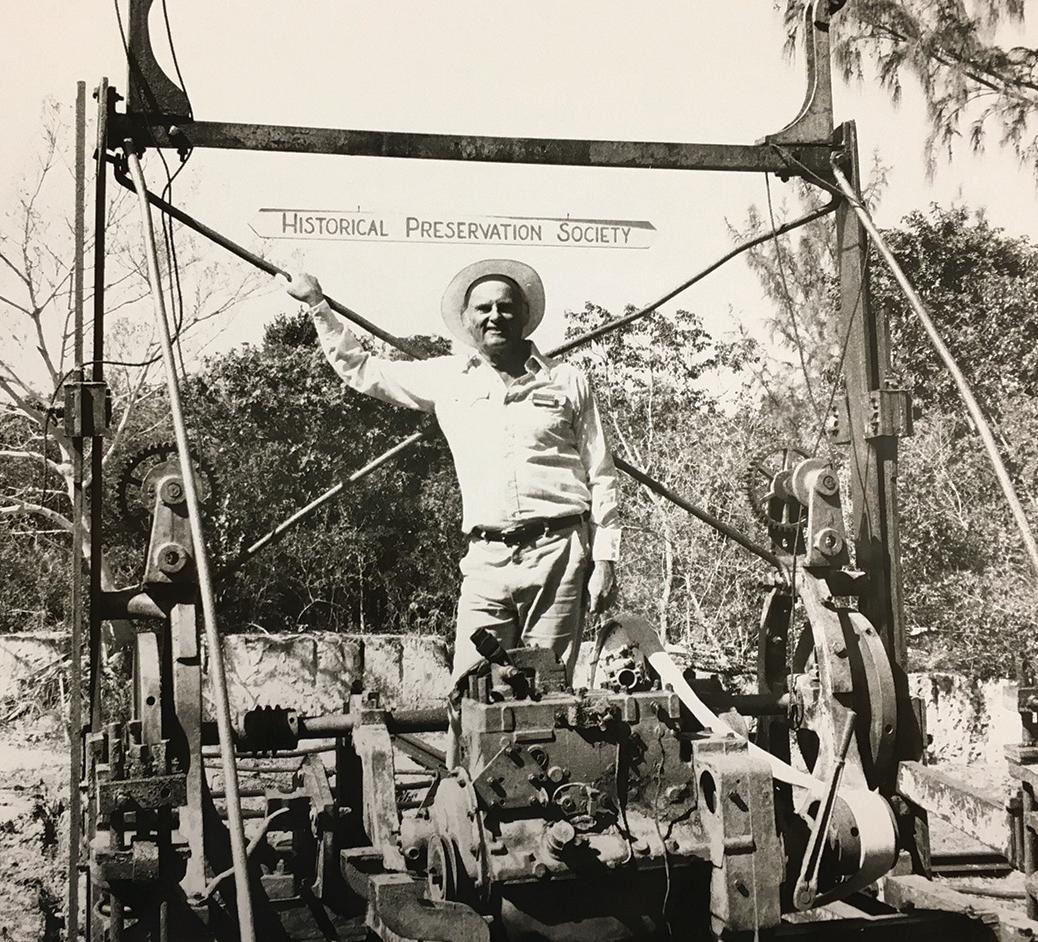
and Sciences 2019 Lecturer’s Summer Research Award. This little book is the result of summer days spent visiting with Jerry Wilkinson, Florida Keys historian and President of the Historical Preservation Society of the Upper Keys, and his wife, Mary Lou, co-collector of Krome memorabilia, and with Homestead historian Jeff Blakley and archivist Katherine Fleming in the Historic Homestead Town Hall Museum.
Many thanks to Curator Brad Bertelli, Librarian Nicky Laak, Archivist Lisa Kelman, and Executive Director Jill Miranda Baker of the Florida Keys History and Discovery Foundation for their generous assistance and access to the entire Krome Collection in the Florida Keys History & Discovery Center’s Jerry Wilkinson Research Library. The Krome family artifacts, collections, and photographs donated by Wilkinson are nearly as familiar to me, now, as my own family’s photo albums. While the substance of this little book is the result of research, the form of it reflects the artistry, skill, and efficacy of designer Earlene Johnson. Thank you for saying yes. Appreciation to Melissa Burley for taking that final look. Many thanks to Don Shipp for every critical and constructive response to each draft, from first to last.
The greatest appreciation, for which I can find no adequate expression, goes to Jerry Wilkinson, whose collection of all things Krome: diaries, handwritten correspondence, photographs, and newspaper collections, reminds us of the value of the artifact in a virtual world. Jerry’s passion for capturing moments and memories lifts history off the page and brings fresh significance and new meaning to the story of our lives.
Sources
Bethel, Rod. Flagler’s Folly. Key West: Bethel.1996. Blakley, Jeff. “Homestead Claims in South Dade.” Historic South Dade, https://hsdade.com/researchers/research-aids-homesteadclaims/
---. “Homestead’s First Postmaster.” Historic South Dade, 7 January 2016, https://hsdade.com/homesteads-first-postmaster/ Ceo, Rocco. Redland A Preservation and Tourism Plan. Miami: Metropolitan Dade County Historic Preservation Division and the University of Miami School of Architecture. 1993.
Grunwald, Michael. The Swamp. New York:Simon & Shuster. 2006. 112-113.
Knetsch, Joe. “The Peonage Controversy and the Florida East Coast Railway.” Tequesta. digital collections. fiu.edu/tequesta/file 1999.
Krome, William J. Beginnings. Compiled and reproduced by Jerry Wilkinson, 1995. Wilkinson personal collection.
---. Five Hand-Written Diaries: A Synopsis of Preceding Events, Cape Sable Monthly Time Book, General Notes of Cape Sable Expedition, September 1903, February 1904. Compiled and reproduced by Jerry Wilkinson, 1995. Wilkinson personal collection.
---. Building the Overseas Railroad, Handwritten Diary 1904. Compiled and reproduced by Jerry Wilkinson, 1995. Historic Homestead Town Hall Museum.
---. Building the Overseas Railroad, Handwritten Diary January 1 to March 9, 1915. Compiled and reproduced by Jerry Wilkinson, 1995. Wilkinson personal collection.
Meredith, Joseph C. and William J. Krome. Original hand and typewritten official correspondence, F.E.C. Railway, September 1, 1904-October 28, 1905. Krome Collection. Jerry Wilkinson Research Library. Florida Keys History and Discovery Foundation and Center, Islamorada, Florida. June-July, 2019.
Metro-Dade Historic Preservation Board Resolution No. 8888, Krome Residence. June 7, 1989.
Miami Metropolis. September 4 and 25, 1903. Historic Homestead Town Hall Museum.
Parks, Pat.The Railroad that Died at Sea. Lakeland: The Ketch and Yawl Press. 1968.
Standiford, Les. Last Train to Paradise. New York: Broadway Books, 2002. 90-911, 60-161.
Taylor, Jean. William H. “Bill” Krome Interview Notes for The Villages of South Dade. St. Petersburg: Byron, Kennedy and Company. Historic Homestead Town Hall Museum. July, 2019. Wilkinson, Jerry. Interview. Islamorada, Florida. June 8, July 10, 2019
---. “Introduction” Beginnings. Compiled from interviews with W.J. Krome’s son, William H.”Bill” Krome
Timeline: William Julius Krome
Born February 14, 1876, only son, six sisters; died 1929
Father William Henry Krome, Judge
Mother Lucy Medora Gillham Krome
Grandfather Charles William Krome (studied law in Germany, stow-away, cobbler in St. Louis)
Education Northwestern, Depau; Engineering, Cornell (leaves before graduating)
1899 February-October in Jacksonville, FL, working for Atlanta, Valdosta, & Western Ry
October-July, 1900, Beginnings, St. John’s venture with Blake
1900 October-1902, So Mo Ry, Ozarks. July, 1902 saw article in Engineering News for FEC Ry.
1902 September, St. Augustine, FEC Ry, hired.
October, Location Survey Cutler Extension, F.E.C. Ry
1902-03
December-June, Cape Sable Expedition
1903 September, Location Party Cutler Prairies
October 19, Homestead application:
40 acres NW side and 120 acres NE side of the intersection of US Rt. 27 and SW 296 Street
1904 Meets Isabelle Greenwood Burns with engineer friend, Ernest Cotton February begins work for FEC on Extension (Turtle Harbor, Key West)
1906 Hurricane, Keys
1907 Purchased land on Upper Matecumbe Key, laid out 22 homesites, Townsite of Islamorada
1907-8 Leaves railroad
1908 Oldest existing grove planted Reacquainted with Isabelle in Homestead
1909 Meredith dies, Krome returns to F.E.C. Railroad as Chief Construction Engineer. Hurricane
1910 Marries Isabelle
Hurricane
1911 Daughter Mary Elizabeth born
1912 January 22, Overseas Railroad arrives in Key West