
Reflections on Discovery and Growth at the University of Miami Libraries

Reflections on Discovery and Growth at the University of Miami Libraries
University of Miami Libraries teams pooled expertise, energy, and entrepreneurial spirit to do an end run around the COVID-19 pandemic. The results have expanded access, forged connections, spurred dialogue, boosted impact, and changed learning forever.
“The health of our civilization, the depth of our awareness about the underpinnings of our culture, and our concern for the future, can all be tested by how well we support our libraries.”
– Carl Sagan, astronomer and planetary scientist
“The library is an arena of possibility,” said American poet and essayist Rita Dove, “opening both a window into the soul and a door onto the world.”
Indeed, the concept of a library — as a repository of knowledge and a resource for learning and research — transcends geography and time. Even the Library of Alexandria of the ancient world, after lying dormant for millennia, has now been reborn as a modern institution that honors its inspiration’s legendary legacy in utterly contemporary ways.
The University of Miami Libraries system is a gateway to transformative adventures in inquiry and insight. Our guiding vision is to become an influential model of excellence for research institutions across the nation and a guiding light for hemispheric growth. The pandemic has only strengthened our resolve to continually develop and implement effective new ways to pursue our mission and goals.
The University’s Ever Brighter campaign is poised to provide the financial resources that will be required to realize our extraordinary potential.
With holdings of more than 4 million volumes, 100,000 serial subscriptions, rare and distinctive collections, and state-of-the-art digitization and preservation laboratories, University of Miami Libraries is a magnet for scholars around the world. From ancient volumes to contemporary word art, from rare musical scores to
sagas of pioneering exploration, we are home to a distinguished and constantly growing collection. Through our ongoing acquisitions, the Libraries empowers scholars to discover, understand, and engage the challenges and opportunities of the Americas and beyond.
Without expert care and specialized conservation techniques, what was built over centuries can be lost in a fraction of that time. As we move toward an increasingly digital and digitized collection, the University seeks to build our capacity for preservation of irreplaceable artifacts for future generations.
Though an increasing portion of our assets have been digitized as well as “born digital,” there is no real substitute for human interaction and physical access to extraordinary resources. Toward that end, University of Miami Libraries will soon implement an expansive redesign and renovation in the Otto G. Richter Library, our subject specialty libraries, and in other common spaces across our campuses. A new Research Commons space will foster interdisciplinary work and collaboration, while a reimagined gallery space will allow for expanded collections, enhanced exhibitions, and increased public engagement.
Digital troves, a deluge of streaming web content, and vast
databases require a well-trained staff to guide patrons through the staggering amounts of sheer information now available.
In addition to generalists and educational specialists, our libraries are staffed by a growing cadre of experts in research data management, spatial analysis, digital humanities, bioinformatics, STEM research, and other professional fields.
The University of Miami Libraries’ commitment to transforming lives and opening worlds drives everything we do. As we approach our second century, we are working tirelessly to capitalize on the potential of this pivotal moment: to enhance access to our superb resources, cultivate critical thought and discovery, and increase our beneficial impact on hemispheric and global well-being. We invite you to discover the varied and exciting ways that University of Miami Libraries is moving toward these goals and to join us on this exciting journey.


Learn more about Ever Brighter:
everbrighter.miami.edu/ school-units/universitylibraries
At first glance, the phrase “mind over matter” may evoke an image of a magician’s uncanny ability to bend a spoon with an intently furrowed brow. But the concept originally appeared in 1863, in Sir Charles Lyell’s “The Geological Evidence of the Antiquity of Man.”
“It may be said,” observed the renowned Scottish geologist, “that the introduction of sensation, instinct, the intelligence of the higher Mammalia, and … the improvable reason of Man himself, presents us with a picture of the ever-increasing dominion of mind over matter.”
Universities are places for learning, research, and the creation of knowledge. The modern university is increasingly focused on education and research designed to address a range of local and global problems. Efforts to control the COVID-19 virus and its biological impacts on human health are, of course, the purview principally of science and medicine. But mental faculties of a very different sort came into play as society at large — and the University of Miami and its Libraries in particular — have sought to overcome the pandemic’s disruptive effects on education, communication, culture, and community.
In a true demonstration of “minds over matter,” Libraries personnel made a series of brilliant end runs around the limitations imposed by COVID. When people could not directly access our resources, we brought our resources to them. We leveraged abundant creativity, resilience, imagination, and expertise in a vibrant reimagining of the very essence of a research library.
Our challenge now is to keep the spirit of innovation as an essential tool of engagement going forward and to foster a culture of ongoing experimentation. COVID’s grip over our lives has revealed devastating inequities that are much more difficult to eradicate. And so, as we slowly emerge from the most critical aspects of the pandemic, we at the Libraries are not only rebuilding operations, but also seeking out novel ways to spur and support the building of a more just society. In these pages, you will learn more about our various teams’ innovative responses to a truly unprecedented challenge — and the ways they are shaping our future.
This issue of “access” is dedicated to the Libraries’ amazing personnel who did so much to advance and ensure our recovery during these challenging times. Just as importantly, we salute the faculty, students, and community supporters of the Libraries who remained engaged with us and each other during the most difficult of circumstances. Together, we proved that our minds can overcome the most daunting challenges the physical world can throw at us and achieve extraordinary things.
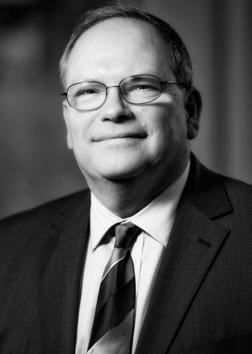
Charles D. Eckman, Ph.D. Dean and University Librarian
“At the end of the day, we can endure much more than we think we can.”
– Frida Kahlo, artist
Libraries conquered COVID lockdowns with virtual spaces for minds to meet
It was the worst of times; it was a test of minds.
When COVID-19 rendered the world an impassable landscape in March 2020, it also set off an explosion of creativity at University of Miami Libraries. Powered by in-depth analysis and out-of-the-box thinking, seasoned expertise and sophisticated technological savvy, these responses to a once-in-a-generation challenge redefined what a library is in this day and age, amplifying its ability to provide knowledge, context, tools, inspiration, and community even in exceedingly difficult circumstances.
Upgraded systems were needed to enable students and faculty to virtually attend or teach courses, take tests, learn communication technologies, and participate in events. Exhibitions, resources, and events migrated online. Seminars, consultations, and other interactions blossomed into new digital formats.
“Fortune favors the prepared mind.”
– Louis Pasteur, chemist and microbiologist
Says Dean Charles Eckman, “Our library personnel, in effect, reinvented a broad spectrum of services and workflows — the essence of our library system.”
In the beginning … was the end of business as usual.
When University of Miami’s campuses limited access during the COVID-19 pandemic, the Libraries scaled
back in-person operations by nearly 75 percent. During that surreal interregnum, spaces and workflows had to be drastically reconfigured; data and materials had to be digitized at a rapid pace. As pandemic restrictions took hold, recalls Glen Wiley, associate dean for Access and Discovery Services, “My departments and services just expanded and accelerated at an unprecedented rate.”
Because many Digital Strategies personnel were already working intensively with online systems, software, and collections, “Our division was well-positioned to support the Libraries’ teaching and learning services during the pandemic,” says Elizabeth Gushee, the division’s associate dean.
In addition to digitizing research materials and resources, Gushee’s team updated websites and revamped digital tools to support online presentations and outreach activities on a variety of themes produced by the Libraries’ distinctive collections.
University Archives is home to an array of digital collections and online exhibits about the University, from sports teams to campus architecture, from desegregation to the counterculture of the 1960s, and more.
“Faculty, students, and researchers made ample use of the digitized materials in our distinctive collections for both remote classes and online presentations during the pandemic,” notes Béatrice Skokan, head of Manuscripts and Archives Management.
Data and Visualization Services, which provides software, data visualization, Open Science Framework access, and other research services, offered consultations and workshops to orient users, according to department head Cameron Riopelle.
The Digital Scholars’ Lab and Information Literacy Lab, a bank of workstations loaded with an array of specialized software for research, also made the transition to online access, which will likely continue even after its third-floor Richter Library location reopens.
The Architecture Research Center started a contingency plan for library resources to “shift to online education only” in April 2020, according to its head, Gilda Santana. “Whenever possible, the library acquired and guided users to media, such as electronic books, journals, video streaming services, open educational resources, and fair-use compliant digital facsimiles of print matter.”
Zoom, that online interaction tool that became ubiquitous with the advent of COVID, was a game-changer, delivering events and workshops that otherwise would not have been possible during lockdown. The Libraries’ popular Mainly Mozart concert series, for example, continued with great success in a virtual format, as did an online version of the One Book, One U talk by ljeoma Oluo about her book, “So You Want to Talk About Race.”
“The reach, frequency, and attendance of instructional sessions actually increased during the switch to virtual meetings and sessions,” says Gushee. “Because accessing services no longer required physical travel, patrons across our campuses, as well as those working from home or internationally, were able to access services in a standardized manner.”
The Libraries’ Peer Research Consultants, Library Research Scholars, and Adobe Scholars programs were “extremely resilient amid this rapid shift of just about everything to an online setting,” says Lauren Fralinger, who co-manages the programs.
“Students communicated regularly with the librarians who were leading or mentoring the programs. Librarians stepped up in important ways to ensure our students were supported throughout the pandemic, that their learning was still comprehensive and their experiences were informative and enlightening.”
“Our teams have worked so hard during the pandemic,” says Vanessa Carreño Valle, Community Relations and Events manager. “Everyone remained positive and kept us visible. Our collections actually became more accessible and easier to discover.”
While the new technologies are powerful tools, the ingenuity and creativity of librarians and staff were truly the secret sauce that kept University of Miami Libraries not only surviving, but thriving, during these challenging times. “So many library teams came up with real-time solutions to keep the tradition of teaching and learning relevant and growing,” says Kelly Miller, associate dean for Learning and Research Services.
“They were truly the heroes who kept things going.”
In the process, innovative learning and teaching platforms have been developed that will endure long after the COVID crisis.
Facilities and access teams ramped up lockdown workarounds in record time
As of this writing, the COVID-19 pandemic is still something of a wild card. But it’s safe to say that we know a lot more about how it spreads and have far better tools to minimize its dangers than we did in early 2020.
Remembering the fear and uncertainty of that time — and the countless dilemmas it spawned for those responsible for the safety and security of the University community — is a sobering exercise. Yet, it’s worth reflecting on the lessons learned — and celebrating how effectively these bewildering challenges were handled.
“The urgency of COVID restrictions made us more agile, and more willing to implement changes and experiment
with new point-of-need services,” says Associate Dean Glen Wiley. “People quickly adapted to the new reality, and were primed to try a plan B if the first attempt didn’t work.”
Memories of those early pandemic days are vivid for Cheryl Gowing. As associate dean for Information Systems and Facilities, she oversees a broad array of library operations.
“Starting around St. Patrick’s Day 2020, we knew we had to implement a great number of restrictions,” Gowing recalls. “A dramatic transformation was needed, but no one knew exactly how COVID-19 spread, what had to be done, or how long it would last.”
Those uncertainties, says Gowing, led to the closing of stacks and multipurpose rooms. Richter Library’s first and second floors, while accessible by staff, were cordoned off from public use. The comings and goings of patrons had to be monitored in all buildings, especially facilities that remained open during the pandemic, such as the health sciences library at the Miller School of Medicine, and the music library, which served as additional classroom space for the Frost School.
It soon became clear that the issues presented by the pandemic were not going away any time soon. That, says Gowing, “meant that we had to create, build, and implement an array of innovative solutions in a very compressed time frame.”
Migration to online settings for learning and research resources, as well as both routine and special events, kicked into high gear. Programs ranging from class sessions to instructional videos produced by the business library and the Mainly Mozart concert series were reborn in remotely accessible virtual formats.
For the limited number of students and staff who would study and work on-site in the autumn of 2020,
all building spaces were reconfigured to comply with COVID health protocols, including appropriate physical distancing.
“To accommodate six-foot spacing between seats, we had to reduce classroom density and seating capacity by about 70 percent,” recalls Gowing. “Furniture had to be removed and rearranged, study pods were broken up, and library entries and exits had to be redesigned to facilitate physical distancing without creating huge lines. We had to know exactly how many people were in a building,” says Gowing, “and when that capacity was reached.”
That necessitated development of a seat booking system, with half-hour buffer periods between each reservation for cleaning. Hygienic wipes were strategically stationed at multiple points across the University Libraries.
Since stacks and resource centers were off-limits and the handling of materials was limited to a few staff members, a coded-locker system, located in the Kislak Center at the University of Miami’s anteroom, was installed and quickly became a popular service. Patrons can order materials online, and staff prepare the items and place them in a locker to be picked up at the patron’s convenience.
Greater numbers of loaner laptops — IT-optimized and also delivered via coded lockers — were made available to the University campus community. Gowing notes that the enhanced loaner program will be a permanent change, as will the code-access lockers.
All these adjustments, affecting every area of the library system, were made in quick succession with input from various departments, technical specialists, students, and faculty. The COVID crisis “underscored the need for stakeholders to work closely together to identify what was needed,” Gowing reflects. “Those strengthened partnerships turned out to be a silver lining in an otherwise fairly difficult period.”
Even more important than what the Libraries learned about effective emergency management, according to Gowing, was a broader recognition of what features are most important for an optimal system.
“In our mobile age, faculty, staff, and students will continue to work both on and off campus,” Gowing points out. “The physical adjustments we made planted the seeds for imagining and designing future places and spaces where people can work together or alone, where meetings and classes can be in-person, virtual, or even hybrid.”
Overall, Gowing says, the COVID closings and retoolings — including making use of building closures at the marine and atmospheric science library for timely updates and renovations — pointed the way to fresh approaches on how library facilities will be organized going forward: “We need to be continually rethinking space and staying aware of how it is actually being used.”
“The mind is not a vessel to be filled, but a fire to be kindled.”
– Plutarch, philosopher
A vibrant hub for academic services based at the Otto G. Richter Library was only two years old when COVID-19 threatened to derail it.
The Learning Commons is a carefully crafted partnership among an array of academic services to support scholarly projects. Launched in 2018, the Learning Commons embraces and reflects the evolving role of libraries in the 21st century, combining handson assistance with high-tech tools, such as data analysis, language and math labs, and digital and audio/video technologies.
Then came COVID.
According to Roxane Pickens, director of the Learning Commons, the program’s response to the pandemic encompassed the use of technologies (such as Zoom) to facilitate remote undergraduate tutoring, guidance with multimedia software, and consultations on research papers — even across time zones.
The 2019-2020 Library Research Scholars and Adobe Scholars, a group of five undergraduate students who each works collaboratively with a librarian mentor on a yearlong project, were interrupted mid-course by the pandemic. So, says program comanager Lauren Fralinger, “We shifted the program, including cohort and mentor meetings, online.”
That arrangement formally continued for the 2020-2021 scholars. While the students could not at first visit Richter Library’s distinctive or archival collections in person, says Fralinger, “Virtual talks by guest speakers from these departments provided them with helpful knowledge.”
The Libraries’ Peer Research Consultants, a group of undergraduate and graduate students who work closely with library staff to help fellow ’Canes with research projects, likewise moved operations online. “Working from kitchen counters, dining room tables, and lap desks in homes across the country,” Fralinger says, “they provided uninterrupted service to students.” Service hours were also expanded to meet demand.
The Learning Commons’ Creative Studio provides support and consultation for digital audio, video, and graphic design technology, as well as an equipment loan program. As physical spaces closed and services migrated online, says program head Vanessa Rodriguez, “We tried to keep business running as usual as much as we could.”
In addition to joining the widespread migration to online consultations and meetings, Rodriguez notes, “We set up a chat service to replace our drop-in hours.” Creative Studio will continue to offer virtual consultations, tutoring, and presentations as part of the core services moving forward.
Wherever members of the ’Canes and South Florida communities happened to be when COVID lockdowns were imposed, they — along with the population at large — found themselves living through a unique time in history.
It didn’t take the University Libraries long to realize that the impact of this extraordinary situation on people’s lives deserved preservation.
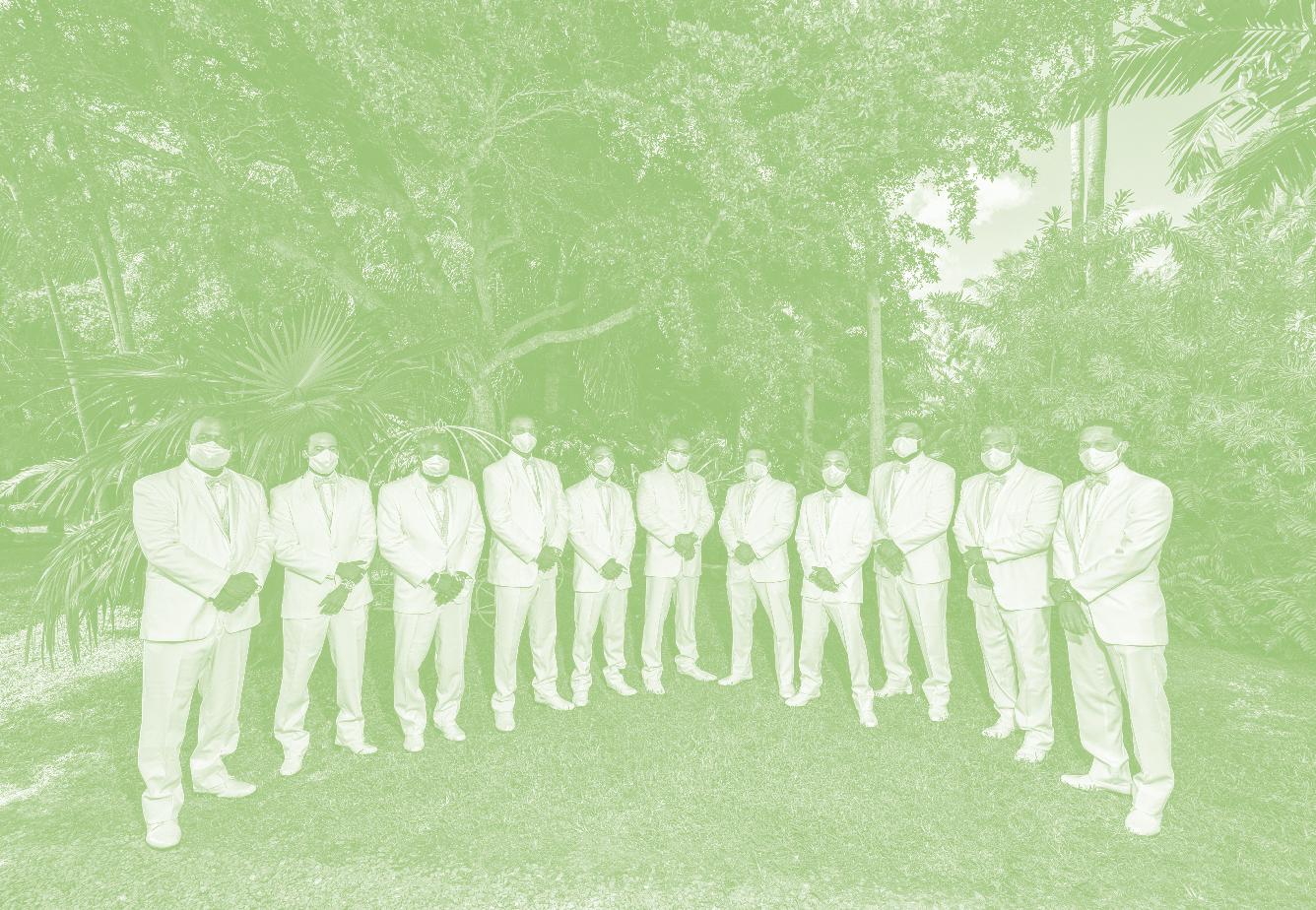
In May 2020, a collaborative effort among distinctive collections (the Cuban Heritage Collection, Special Collections, and University Archives) and Digital Strategies was launched to solicit personal documentation of pandemic experiences. Contributions to this archive may include articles and artwork, photographs and poetry, blog posts and short stories, either digital or physical.
Much of the content received thus far has been digital in nature, including short films by faculty and students around the world.
“These are stories not only of lives tragically lost to a global pandemic,” says Béatrice Skokan, the Libraries’ head of Manuscripts and Archives Management, “but also of issues and themes it brought to the fore, such as racial and social inequity, individual agency, communal responsibility, and global interdependence.”
Documenting COVID-19: South Florida’s Pandemic Experience “is an opportunity for University of Miami faculty, students, and staff, as well as people from the South Florida community, to share their stories,” says Skokan. “It will enable the Libraries to preserve the COVID-19 experience from multiple perspectives for current and future study and research.”

Learn more about the COVID-19 documentation project, including how to add your voice to the collection: library.miami.edu/covid-19
As COVID-19 put some activities on hold, it energized others. Complementing the nimble adaptations made by internal collaborative initiatives, such as the Learning Commons and U-LINK (University of Miami Laboratory for Integrative Knowledge), productive partnerships with external organizations continued to flourish.
Among those organizations was HathiTrust, a collaboration of academic and research institutions comprising a collection of millions of titles digitized from libraries around the world.
“With HathiTrust, we set up the Emergency Temporary Access Service, providing the University community with over 40 percent of the Libraries’ print collection online,” says Associate Dean of Digital Strategies Elizabeth Gushee. She notes that the initiative also contributed to U-LINK, providing services such as expertise in GIS (geographic information systems) and data analysis.
Creative Studio also benefited from some new COVID-era
collaborations. Explains Vanessa Rodriguez, who manages the program, “The new Southeastern Multimedia Libraries group, formed in summer 2020, began meeting bi-weekly to discuss how we could continue to offer support in the multimedia and makerspace labs in our libraries while complying with COVID restrictions and making sure everyone stays safe.”
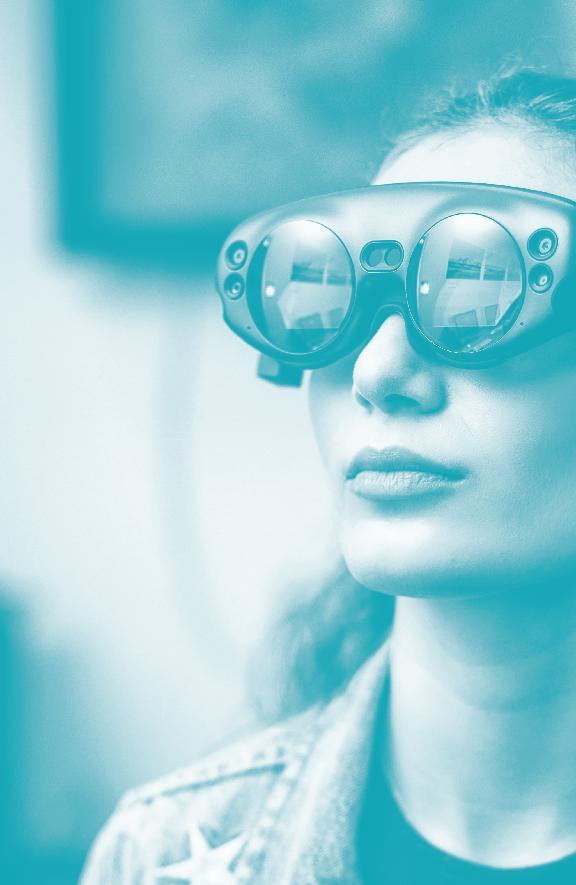
The Studio also worked with Magic Leap, a technology company founded by University of Miami alumnus Rony Abovitz. The company, which has partnered with the University since 2019, produces mixed-reality headsets. “The Libraries managed the initial donation of headsets from Magic Leap,” notes Rodriguez. “We continue to circulate the headsets and participate in on-campus demonstrations of the technology.”
According to Rodriguez, the Magic Leap Lab, closed during lockdown, is now open as the more technology-inclusive XR (Extended Reality) Community Lab.
“I have learned over the years that when one’s mind is made up, this diminishes fear; knowing what must be done does away with fear.”
– Rosa Parks, civil rights activist
It seemed, for a moment, that we were all in it together. But the pandemic’s impacts on society were quickly revealed to be anything but equitable. Instead, COVID-19 highlighted and exacerbated many socioeconomic disparities, from housing to healthcare, to criminal justice and climate change.
The virus was still consolidating its grip when George Floyd, an unarmed Black man in Minneapolis, Minnesota, was choked to death by a white police officer on May 25, 2020. He immediately became a tragic symbol of the systemic inequalities that plague every aspect of life in America.
Amid protests across the nation and a growing awareness of the especially harsh effects of the pandemic on people of color came a renewed emphasis on social justice issues.
As director of the Libraries’ multidisciplinary Learning Commons and director of American studies at the College of Arts and Sciences, Roxane Pickens oversaw the creation of programming designed to address some of these social justice topics.
“The Libraries excels at providing educational resources, so in times of social unrest, we seek to be a site of learning for the University community,” Pickens says.
Even the more archivally oriented departments within the Libraries became involved. “As we tackle the technological challenges of the digital age, we are fully aware of the social discourse spurred during the pandemic,” says Béatrice Skokan, head of Manuscripts and Archives Management. “Our team has formed a working group with colleagues from Metadata and Discovery Services and Digital Production to address issues of social inequality and bias that are part of the history of cultural institutions.”
The Libraries’ Lauren Fralinger, who serves as a liaison to several academic departments in the College of Arts and Sciences, led the creation of a guide inspired by the Black Lives Matter and George Floyd protests. Reflecting the collaborative efforts of librarians across the Libraries, Fralinger says that the initiative’s goal was “to bring together the racial justice resources of the Libraries into one place and provide a platform on which we could share useful information with the University of Miami community.”
Those resources include links to the Miami Black History Museum’s Virtual University, films such as Spike Lee’s “When the Levees Broke: A Requiem in Four Acts” and Ava DuVernay’s “Selma,” and digitized materials documenting topics such as Black women’s suffrage.
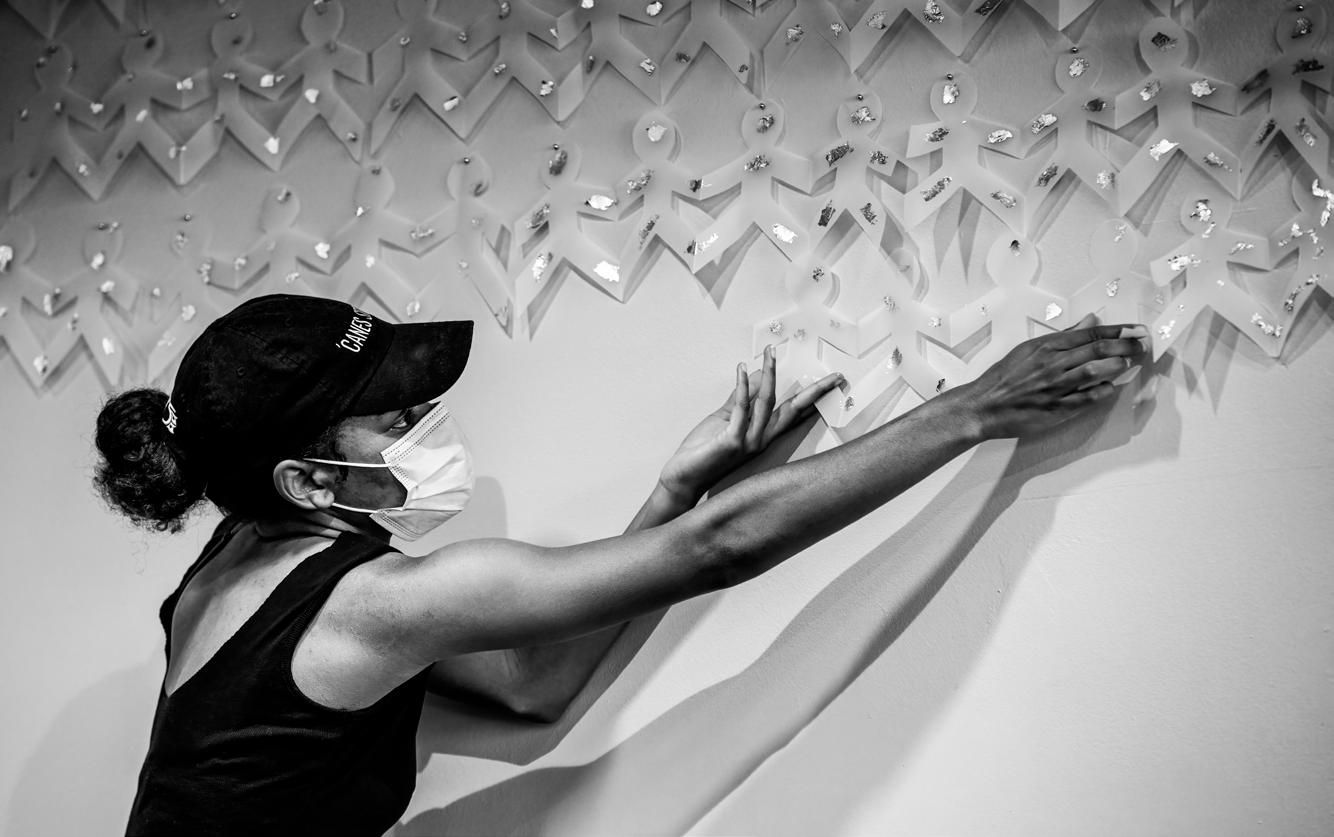
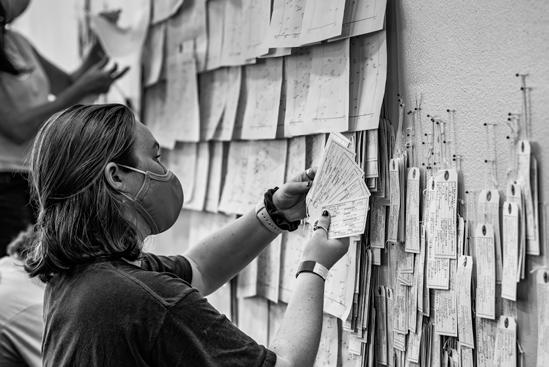
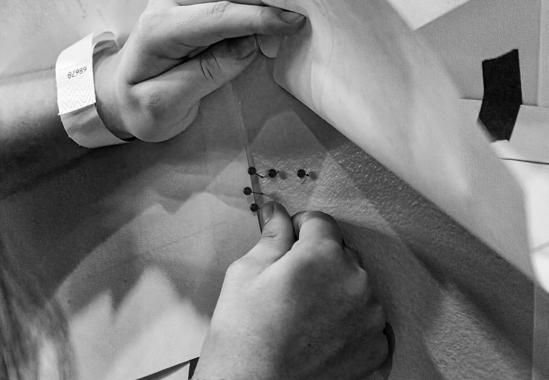
In spring 2021, the Libraries hosted two exhibitions depicting the contemporary immigration crisis along the United States-Mexican border. The exhibitions were sponsored by the Libraries’ Learning Commons in collaboration with several academic departments and initiatives, and installed by student volunteers as a meditative exercise.
“Hostile Terrain 94,” developed by the Undocumented Migration Project and previously on display in the Otto G. Richter Library, remembered the more than 3,000 people who died attempting to cross the Sonoran Desert since 1994. A sister exhibition, “Separated,” was an original Libraries’ concept that focused on the ongoing plight of the children who were separated from their parents and caregivers at the southern U.S. border between 2017 and 2020, including more than 600 who were still in state custody at the end of 2020.
A University-wide student reading group designed to create a dialogue around issues of diversity and equity, One Book, One U facilitated conversations around social justice issues with its spring 2021 selection, Ijeoma Oluo’s “So You Want to Talk About Race.” Pickens’ team spearheaded the creation of reading groups for instructors and a remote keynote presentation by the author for an audience of more than 300.
“These online events during the peak of the pandemic broadened the Libraries’ outreach while giving the community the opportunity to see all the content we have,” says Vanessa Carreño Valle, Community Outreach and Events manager for the Libraries.
Several students in the Library Research Scholars and Adobe Scholars programs selected projects related to racial and social dynamics. Among them, senior Taylor Washington created the “Virtual University of Miami Black History Museum” to educate others about the Black achievements and contributions at and beyond the University. With assistance from University Archives, Washington compiled more than 150 photos and videos that she said “depict Black excellence on the University of Miami campus.” Marcia Tyrrell Heath, archives technician for Manuscripts and Archives Management, assisted Washington with photos and videos for the virtual museum.
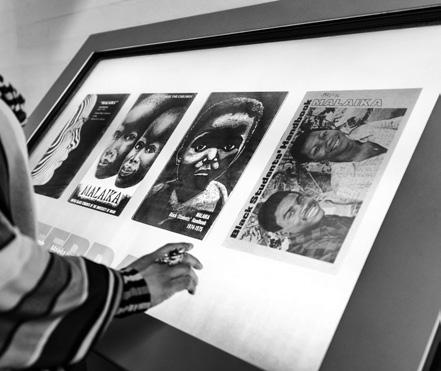
“I’m always happy to help students with their requests,” says Heath, who in 2015 discovered a copy of “Malaika,” one of a series of 11 handbooks published in the 1970s and 1980s by the United Black Students organization. Named for a Swahili word for togetherness, the “Malaika” guides are now a Learning Commons featured resource in the University Archives’ digital collections.
A hemispheric take on issues surfaced by the pandemic was “Documenting Diversity and Democracy in Brazil,” a seminar organized by Associate Professor Steven Butterman to highlight the sociopolitical commonalities between Brazil and the United States. “One of my greatest hopes for the symposium,” Butterman says, “was to empower each other to resist and contest misogyny, racism, and sexism in our respective countries and well beyond our borders.” The symposium was sponsored in part by the Andrew W. Mellon Foundation’s CREATE Grants Program.
“The opposite of love is not hate; it’s indifference.”
– Elie Wiesel, author, political activist, Nobel laureate, and Holocaust survivor
An innovative multidisciplinary initiative administered by the University of Miami Office of the Vice Provost for Research and Development in partnership with the Libraries, U-LINK (University of Miami Laboratory for Integrative Knowledge) fosters collaborative research to study complex contemporary issues confronting the nation and the globe.
Librarians have been embedded in more than a dozen interdisciplinary U-LINK research teams since the initiative was launched. As Associate Dean Kelly Miller explained in a presentation to the Coalition for Networked Information, “Librarians are playing significant roles by providing information discovery and access, serving as connectors to experts and resources, and improving team collaboration and communication — especially by serving as informal ‘cultural translators’ between disciplines.”
When the pandemic brought socioeconomic disparities into devastating relief, U-LINK responded boldly, deploying a series of Social Equity Rapid Response grants to quickly fund vital projects responding to the interconnected crises of systemic racism and the COVID-19 pandemic.
Studies receiving these fast-tracked grants explore community-based budgeting as an antidote to police violence, boosting antiracism and climate justice dialogues, developing solutions to health disparities, nurturing underrepresented students in arts and sciences educational initiatives, promoting resilience in young children of color, and addressing bias in data collection and criminal justice.
“The power of imagination makes us infinite.”
– John Muir, naturalist, author, and environmental philosopher
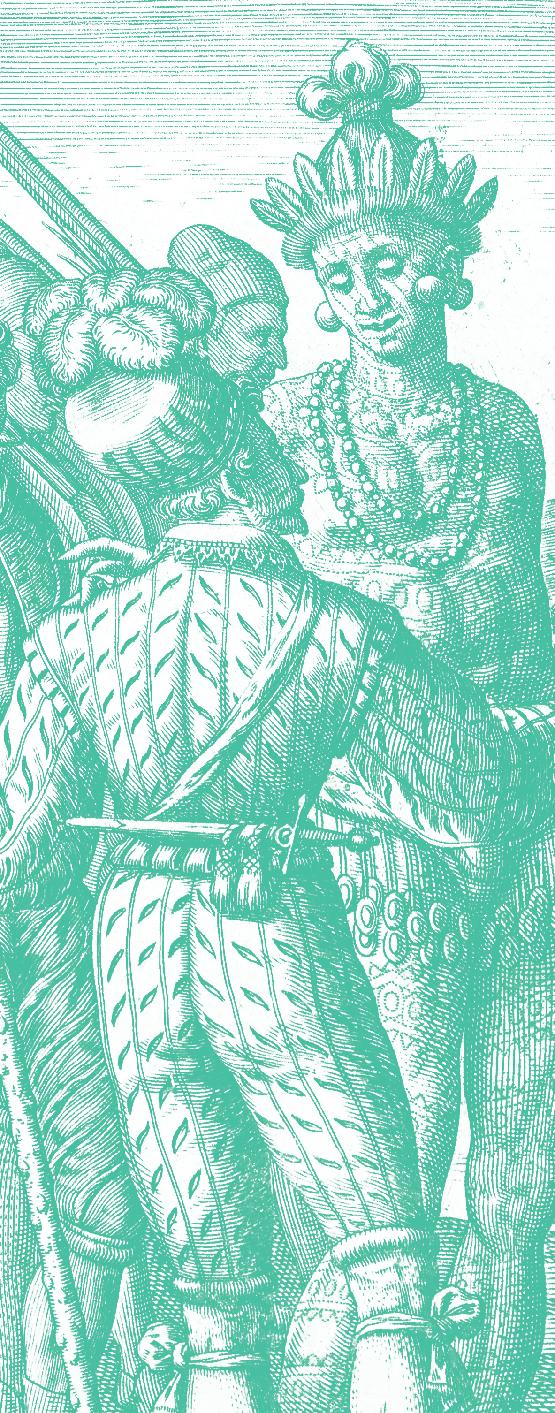
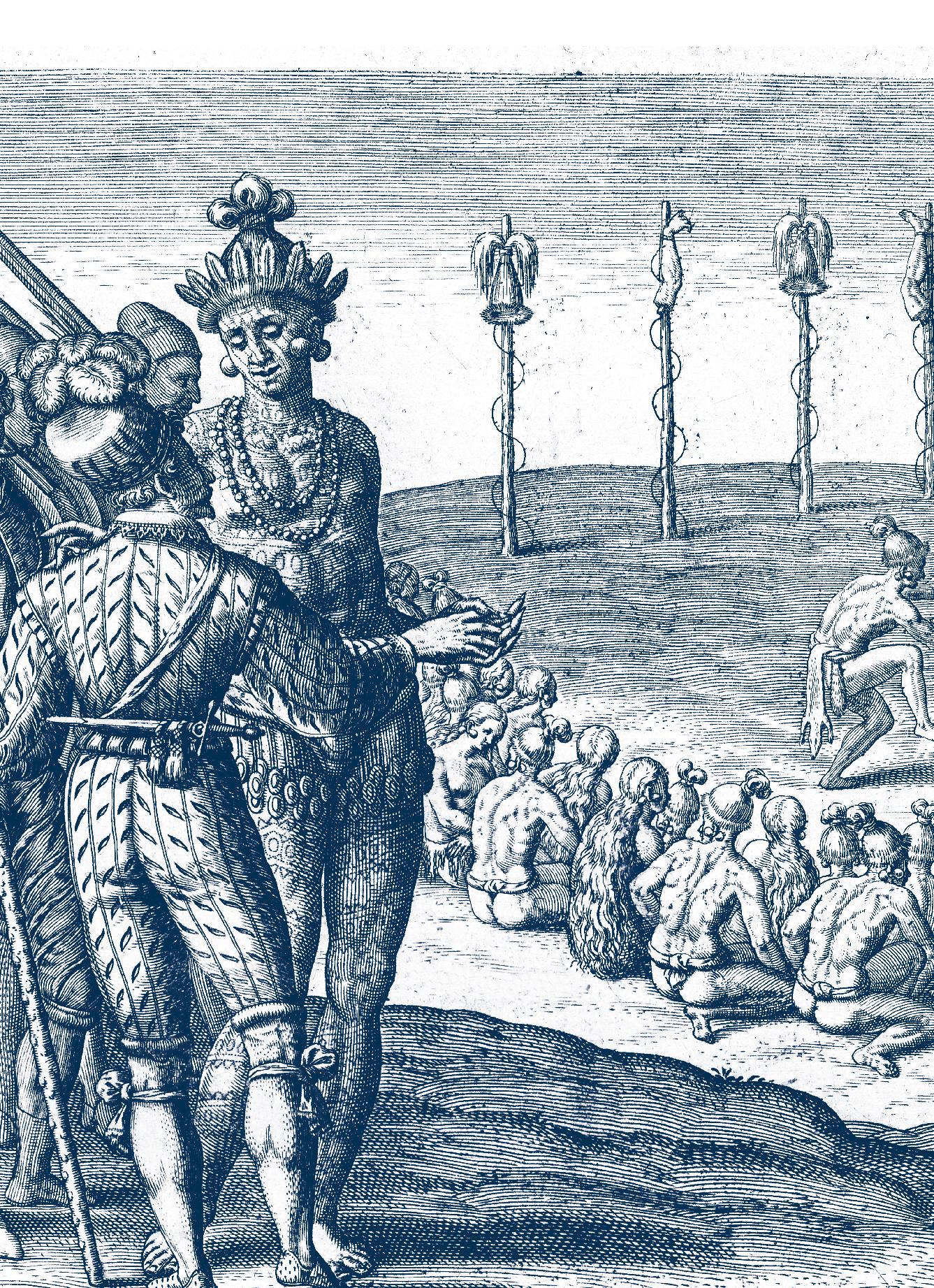
One such U-LINK grant provided support for the new interdisciplinary Native American and Global Indigenous Studies. The project, the University’s first Indigenous studies initiative, was created to raise awareness and understanding of the history, perspectives, and realities of Indigenous cultures. (The University itself sits on land that once was home to the Miccosukee, Seminole, and Tequesta peoples.)
The inaugural course, offered in spring 2021, featured Native guest lecturers and experts from across the country. Complementing the Indigenous studies initiative, the Libraries Indigenous Studies Group supports curricula, collection development, speaker series, workshops, and other Indigenous studies programs in the Libraries and across the institution.
During the COVID lockdowns, Learning Commons’ Data Services “remained a collaborative partner for grantfunded research, including U-LINK projects,” says its director, Cameron Riopelle. “Some of our colleagues were co-investigators; for other projects, we provided support through workshops and consultations.”
Through U-LINK’s Research Sprints service, debuted in the 2021-2022 academic year, research teams partner with a cohort of library experts on a component of their broader project for collaborative problem solving and brainstorming. Each Research Sprint will take place over the course of two days, and should deliver a tangible plan or outcome at the end. Sprints are part of the ongoing planning for a Faculty Research Commons, envisioned as a future home for U-LINK support to be based in the University of Miami Libraries.

Learn more about U-LINK: ulink.miami.edu
"It is the mark of an educated mind, to entertain a thought without accepting it."
– Aristotle, philosopher
A one-minute video clip of Martin Luther King Jr. speaking on the University of Miami’s Coral Gables Campus in 1966.
News clippings and photographs of a student-led sit-in to demand more Black representation in the student body, faculty, and curriculum.
Pages from handbooks produced in the 1970s to help underrepresented students navigate college life during the early years of desegregation at the University.
These are just a few of the many archival items featured in a University of Miami Libraries exhibition chronicling the history of the institution’s first Black graduates.
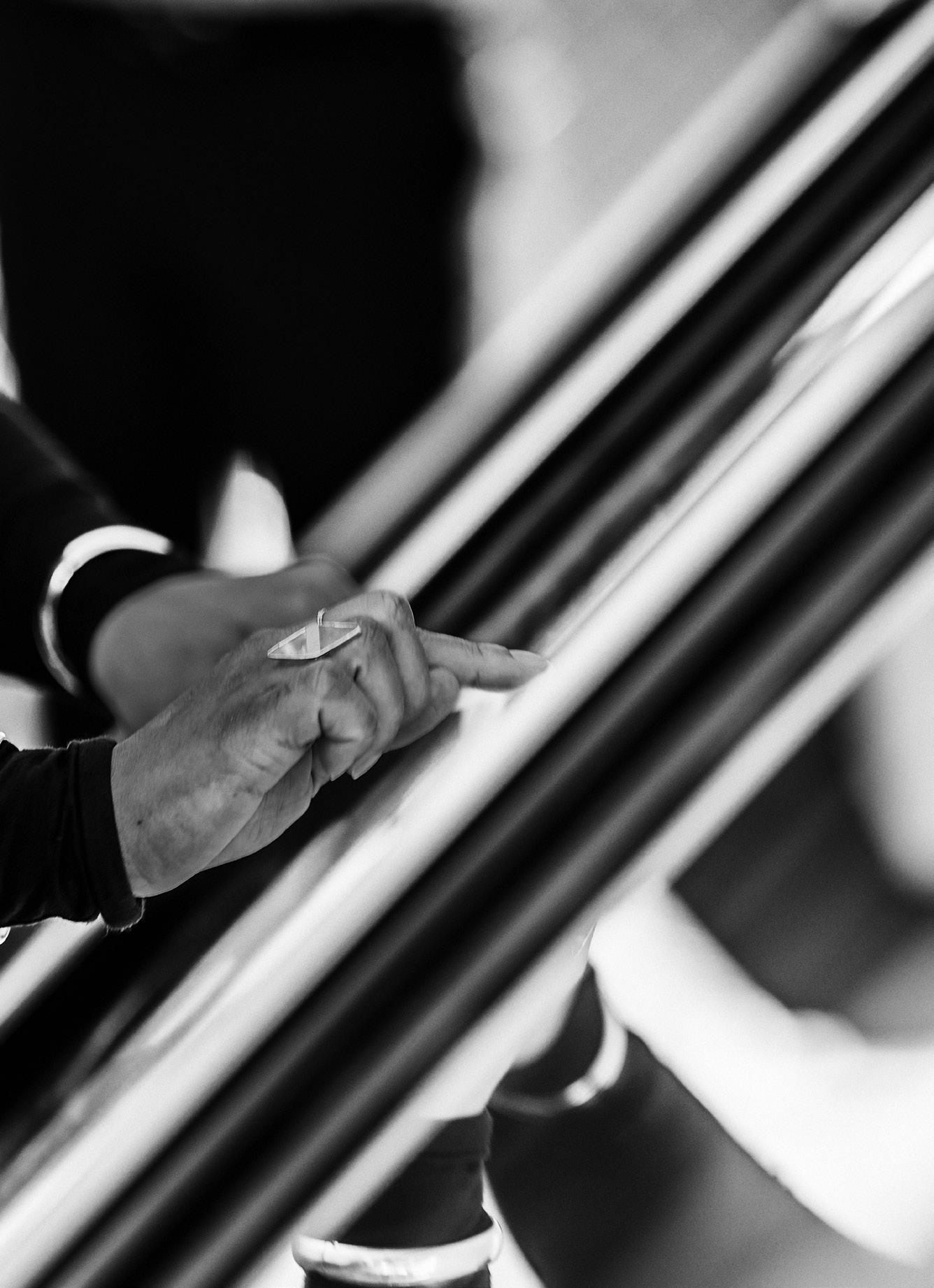
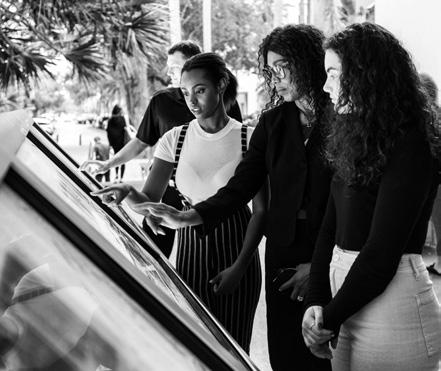
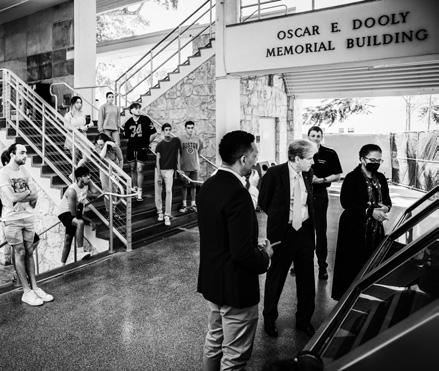
“The Taylor Family / UTrailblazers Experience,” an interactive three-screen kiosk display with touchscreen technology, allows users to scroll through hundreds of photographs, documents, newspaper articles, film footage, biographies, and other artifacts from the years just after the University’s Board of Trustees voted in 1961 to admit qualified students without regard to race or color.
The exhibit depicts “the arc of the experiences of the Black community at the University,” says Roxane Pickens, librarian assistant professor and director of the Learning Commons, who led the exhibit’s curation. She describes it as a “living exhibit,” whose technology allows subsequent graduates and current students to share their own stories.
Inspired by the 50th anniversary of the University’s desegregation, a group of members of the Black Alumni Society, all of them 1979 graduates, began to unearth the stories and struggles of the first Black students. Johnny C. Taylor, Jr., B.S.C. ’89, a vice chair of the University’s Board of Trustees, stepped forward with a generous donation as part of the University’s Ever Brighter capital campaign to turn the project into a permanent installation.
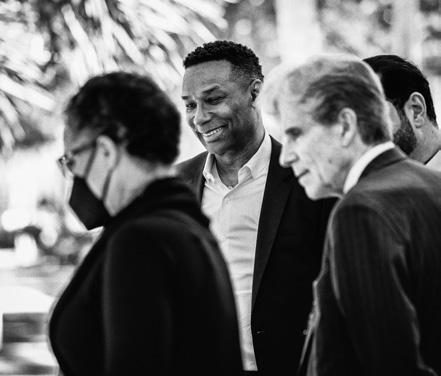
“The first Black graduates of this institution probably didn’t consider themselves pioneers, but they were,” says Taylor, president and CEO of the National Society for Human Resource Management. “This exhibit is a way of showing appreciation for the path they paved not only for people like me, but also for current and future generations of students.
“Just as importantly, it demonstrates that the University is capable of practicing true diversity and inclusion without sacrificing quality and competitiveness.”
“‘The Taylor Family / UTrailblazers Experience’ reflects the University of Miami Libraries’ desire to engage our constituents in meaningful and accessible ways,” says Charles Eckman, dean and University librarian. “The collaborative work that made it possible demonstrates the tremendous capacity of libraries to preserve, digitize, and re-create content in ways that build shared understanding.”
“There aren’t many exhibits, even in the museum world, that are designed to grow over time,” notes University Archivist Nick Iwanicki. “We’re engaging with audiences in ways that libraries previously wouldn’t have thought about.”

Learn more about “The Taylor Family / UTrailblazers Experience” interactive exhibition:
library.miami.edu/exhibitions/taylorfamily-utrailblazer-experience
“There’s power in allowing yourself to be known and heard, in owning your unique story, in using your authentic voice.”
– Michelle Obama, former first lady of the United States
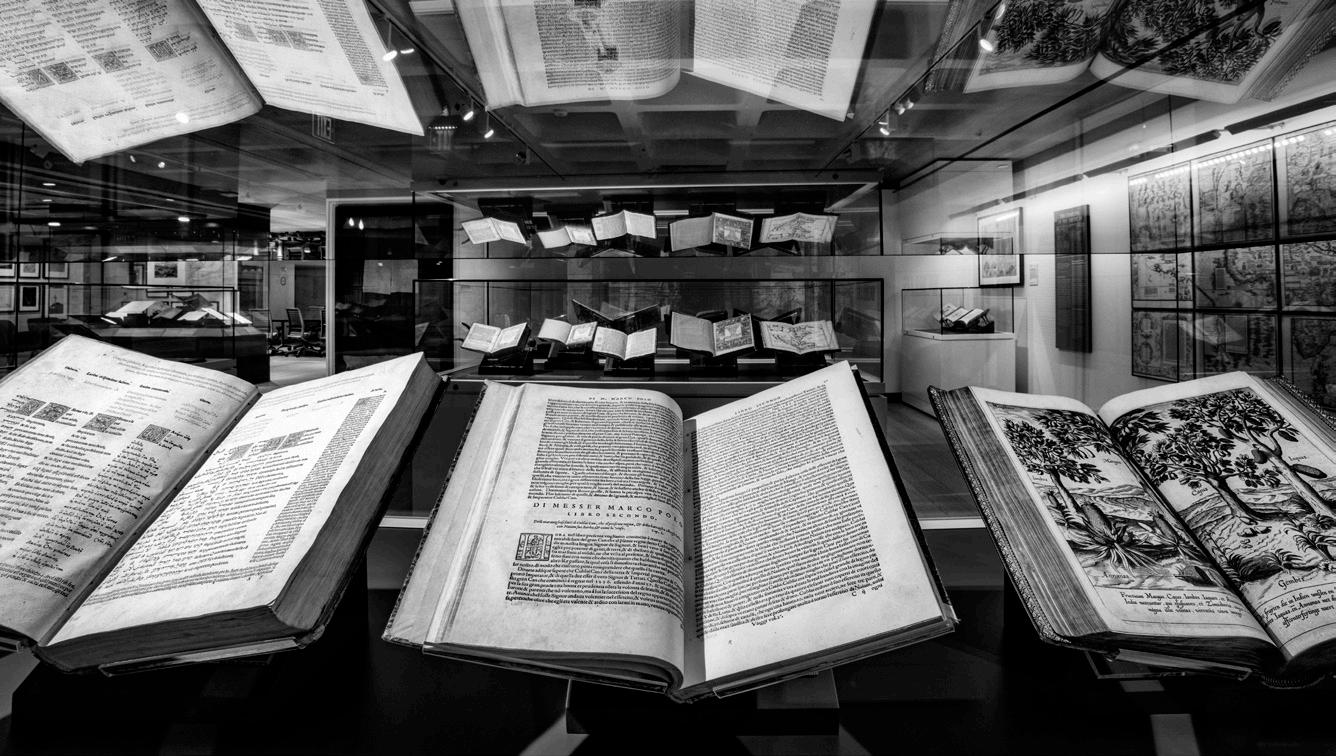
Home to a dazzling trove of manuscripts, newspapers, photographs, maps, and art encompassing everything from agriculture to architecture, politics to playwriting, and refugee sagas to railroad bonds, the Cuban Heritage Collection (CHC) houses the largest assemblage of materials about Cuba, the Cuban diaspora, and the Caribbean basin outside the island nation itself.
Much more than simply a historical archive, “We want the collection to be a living entity that fosters debate about topical events,” says Elizabeth Cerejido, Esperanza Bravo de Varona Chair of the CHC. In this digital age, she notes, that can mean novel initiatives, such as responding to widespread protests on the authoritarian island by archiving dissident posts on Twitter.
“Change happens by listening and then starting a dialogue with the people who are doing something you don’t believe is right.”
– Jane Goodall, environmental activist
When the pandemic restricted the hosting of inperson events and programming in 2020, the CHC bounced back with an all-virtual series of webinars, film screenings, and virtual talks titled, “El efecto Mariel: Before, During, and After.” The six monthly presentations focused on the short- and long-term consequences of the Mariel boatlift that brought some 125,000 Cubans to Miami in 1980, creating a controversial, high-profile refugee crisis.
Cerejido designed the series around previously untold stories of Mariel and its aftermath: Ernesto PintoBazurco Ritter, the then-Peruvian ambassador to Cuba recalled the storming of his nation’s Havana embassy by a crowd of more than 10,000 Cubans;
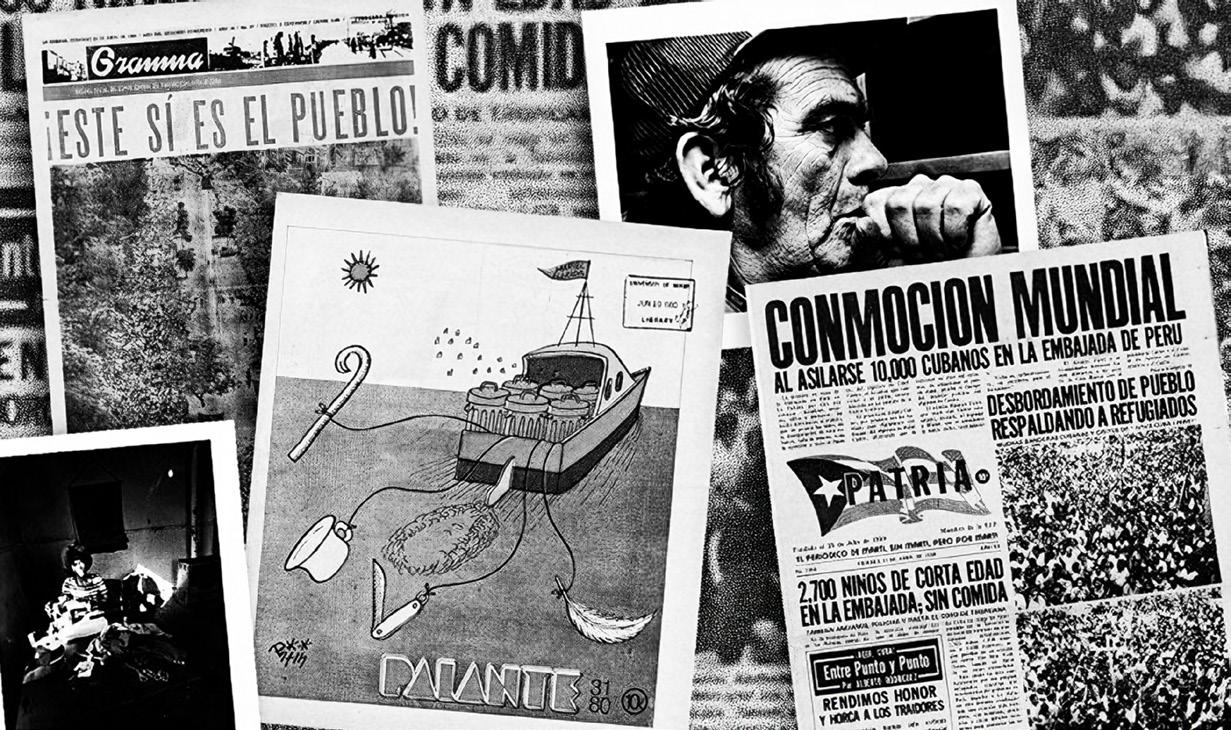

René Cifuentes, a lifelong friend and fellow Mariel arrival with Reinaldo Arenas, shared intimate recollections of the great poet; and another presentation focused on racial tensions between the predominantly white early Cuban exiles and Mariel’s more diverse arrivals.
Launched on the 40th anniversary of the boatlift, the series drew roughly 4,000 virtual attendees, dramatically expanding awareness of the CHC.
Under the direction of Cristina Favretto, Special Collections has mixed whimsy with more serious scholarly resources, both physical and digital: from board games and Coral Gables Garden Club scrapbooks to the saga of Pan American World Airways, the papers of legendary environmental activist Marjory Stoneman Douglas, and much more.
To keep Special Collections’ programming active when COVID-19 arrived, Favretto got creative, putting together a provocative array of digital imagery on diverse topics. The resulting online series, “Deep Dives into Special Collections,” delves into topics ranging from polar explorations and the liberation of Paris to the marketing of Miami Beach in the early years. The popular series is “light and fun,” says Favretto, enhancing the accessibility of its good-for-you educational content. She notes that future iterations focused on other topics, such as fashion,
women’s history, climate change, interior design, and even pirates of the Spanish Main.
In addition to continuing to offer an array of virtual and hybrid events, Favretto is eager for library patrons to return to the historically restored and recently reopened Special Collections reading room and events space in the Kislak Center at the University of Miami, which features terrazzo floors and a distinctly Miami Beach flavor.

All virtual events from the distinctive collections and other departments were recorded and are available to view on-demand.
library.miami.edu/about/ library-past-events
“The mind ought sometimes to be diverted that it may return to better thinking.”
– Plato, philosopher
“It is the mind that makes the body.”
– Sojourner Truth, abolitionist and women's rights activist
“To the mind that is still, the whole universe surrenders.”
- Lao Tzu, philosopher
The college years are, typically, a lively time in a young person’s life as students forge new friendships, study together, partner on assignments, and socialize at every opportunity.
COVID threw a monkey wrench into that archetypal campus experience, with devastating effects for students across the board.
Though healthy young people have the lowest risk of serious illness from COVID, the pandemic propelled the mental health issues sometimes faced by college students to stratospheric levels. According to studies, more than 9 in 10 college students have experienced negative mental health symptoms, such as anxiety, the inability to focus, loneliness, and depression.
One of the most effective tools for working with such feelings is also one of the most accessible. Mindfulness meditation involves the cultivation of kind or non-judgmental awareness of breathing and body sensations during periods of formal practice, in which practitioners may be seated, walking, or lying down. As research shows, mindfulness can help to slow down racing thoughts, release difficult emotions, improve relationships, and reduce bias.
For the past several years, the University of Miami has been developing and promoting mindfulness programs in a variety of settings. Associate Dean Kelly Miller, herself a certified mindfulness teacher, has been instrumental in this initiative.
In collaboration with Scott Rogers, a law professor who directs the School of Law’s Mindfulness in Law Program, Miller created the “Mindfulness at Richter” series in 2017. Led by Miller, Rogers, and Gisele Rocha, Creative manager for the Libraries and certified yoga teacher, the weekly 45-minute sessions introduce the fundamentals of mindfulness with periods of guided practice and opportunities for reflection and questions.
The Libraries’ mindfulness programs didn’t go into hibernation during the pandemic. Rather, they took firm hold online, delivering more than 50 virtual mindfulness sessions for students, faculty, and the community.
“It was great that we could offer mindfulness programs online during the lockdowns,” says Vanessa Carreño Valle, Community Relations and Events manager. “Attendees, from South Florida and beyond, really appreciated being able to access the sessions from the comfort of their homes.”
“We discovered that the Libraries can provide real support in promoting well-being for the University community,” agrees Miller.
Complementing the classes and catalog holdings dedicated to mindfulness, the Libraries recently unveiled an ideal new setting for seeking serenity. The meditation room on the second floor of Richter Library — open whenever the library is — ensures that all University of Miami students, staff, faculty, and visitors have convenient access to a dedicated space in the library for the purposes of meditation, prayer, contemplation, and reflection.
Libraries around the world were already hard at work on digitizing and sharing resources when the COVID pandemic upended life as we know it, highlighting the importance of developing new ways to foster productive cross-fertilization and collaboration.
That made the launch of the Hemispheric University Consortium (HUC) Library Network especially timely.
HUC itself was formed in 2018, when presidents from 14 universities in the United States, Canada, Latin America, and the Caribbean, including the University of Miami, met to brainstorm ways for their educational institutions to collaboratively engage significant issues confronting our hemisphere and the world at large.
The consortium seeks to foster innovative, high-impact solutions to key challenges identified by the United Nations Sustainable Development Goals 2030, comprising critical
areas, such as public health and safety, sustainability, entrepreneurship, and inclusivity. Toward that end, the HUC developed specific initiatives, such as the COVID-19 Hemispheric Response and the Library Network.
By providing access to digital resources located in institutional repositories, catalogs, and journal portals across the hemisphere, the Library Network website “facilitates access to open research content and experts available at member institutions,” explains Dean and University Librarian Charles Eckman. “Because the Library Network disseminates expertise and insights as well as learning and research resources, it will be a critical resource for every HUC researcher seeking to advance and share their work.
“The most difficult thing is the decision to act. The rest is merely tenacity.”
– Amelia Earhart, aviation pioneer and author
“The website also makes research content and learning opportunities freely available to the broader community.”
At the inaugural Library Network summit in February 2021, thirteen member library directors laid the groundwork for four initial Library Network projects:
• A website and blog to facilitate communication among member organizations and showcase webinars on topics of interest to researchers
• Librarian development and education to help library staff enhance users’ educational experiences and offer collaborative webinars on digital literacy skills training
• Sharing and developing expertise to foster collaborative work that enables libraries to serve as centers of innovative projects
• Archiving and dissemination of research to promote utilization of existing scholarly communication services
All HUC Library Network projects involve coordinators and volunteers from participating institutions and feature simultaneous translation services as well as technology and platform administrative resources.

Visit and explore the HUC Library Network. Englishlanguage and Spanish-language versions are available.
thehuc.org/libraries
“Let us make our future now, and let us make our dreams tomorrow’s reality.”
– Malala Yousafzai, activist for female education and 2014 Nobel
laureate
As the grip of COVID
on every aspect of life begins to loosen, a lot of thinking and discussion is being devoted to “the new normal.” What will that look like for the University of Miami Libraries?
“The challenge now,” says Dean Eckman, “is to maintain the spirit of innovation and client engagement, that culture of ongoing experimentation” that served the Libraries so well during the early days of the pandemic.
While pedagogy is, says Eckman, experiencing “a new way of learning,” conventional books won’t disappear anytime soon. As he wrote in 2021, “Print books continue to enjoy a number of features that people like — intuitive structure, ability to read without purchasing a reading device, ability to reread later without having to repurchase, and ability to share with friends and family.”
The libraries of tomorrow will thus combine physical books and texts with digital resources and technologies that support new media.
While the distinctive collections continue to receive paper-based artifacts, “We are curating more borndigital materials and developing strategies for capturing this often-ephemeral content,” says Béatrice Skokan, head of Manuscripts and Archives Management. “Both physical and digital content documenting the past few centuries of history needs to be preserved to provide truly robust cultural records for future generations.”
Special Collections’ Cristina Favretto explains that the unique nature of the artifacts housed there means that it’s “never going to be all digital.” Virtual programming “expanded our scope” in terms of viewership, and Favretto says her team will continue to use Zoom for some lectures, hold hybrid classes, and build up online content.
Elizabeth Cerejido, chair of the Cuban Heritage Collection, notes that one of the collection’s top growth priorities over the next several years is the capture of more online data and digital content.
Meanwhile, many lectures, workshops, and presentations will continue in both digital-only and hybrid
“In my opinion, there is no aspect of reality beyond the reach of the human mind.”
– Stephen Hawking, theoretical physicist, cosmologist, and author
events. The Cuban Heritage Collection’s online offerings will continue in 2022 alongside physical events, such as the exhibition at the Lowe Art Museum titled, “Radical Conventions: Cuban American Art From the 1980s.”
This broader reach will help the libraries of tomorrow bridge the worlds of academia and the larger community — making them lively centers of civic discourse. Indeed, one of the Libraries’ official goals, “A Place for Dialogue,” promotes the development of library spaces as venues for lectures and colloquiums to tackle issues of diversity, accessibility, and equity — and as spaces for creative public interaction.
“Libraries have long been on the forefront of providing online access to resources, expertise, and collections,” says Elizabeth Gushee, associate dean for Digital Strategies. “Today and in the future, we can expect an increased demand for more of the Libraries’ collections to be online and for librarians to meet patrons where they are, virtually.
“Libraries will need to continuously build and refine our technology infrastructure and workflows to meet those needs and requirements.”
Community Relations and Events Manager Vanessa Carreño Valle focuses on the positive effects of a difficult time. “From Mainly Mozart to mindfulness programming, from One Book, One U to an in-depth symposium on democracy in Brazil,” she says, “all reached broader audiences and served to highlight what the Libraries have and can do for education.”
Though the essential mission of the Libraries is unchanged, the way it is pursued will be more varied, she adds. “Libraries will continue with digital and virtual resources as well as physical. Students, researchers, and others will now have even more options through which to access our resources and tools.”
Together, these examples point to a future where the Libraries will interact with the University community and the community at large, both in person and virtually, with more convenience and varied options in accessing information. And that, most everyone agrees, is a cause for celebration.
University of Miami Libraries’ diverse community thrives on access to higher knowledge and pathways to discovery, as well as the work environments, research materials, tools, and services that enable them to pursue these pathways to their fullest. Our publication, “access,” reflects the many ways that the mission of the University of Miami is advanced through our collections, events, exhibitions, services, and the many other initiatives and activities that facilitate the endeavors of our users and lead to scholarly and cultural enrichment throughout our community.
Our faculty and staff look forward to seeing you online or in person at any of the seven accessible locations:
Coral Gables Campus
Otto G. Richter Library (Interdisciplinary)
Architecture Research Center | School of Architecture
Judi Prokop Newman Information Resource Center | Miami Herbert Business School Law Library | School of Law
Marta and Austin Weeks Music Library and Technology Center | Frost School of Music
Medical Campus in the Health District
Louis Calder Memorial Library | Miller School of Medicine
Rosenstiel Campus on Virginia Key
Rosenstiel School of Marine and Atmospheric Science Library
To learn more about our libraries and their collections, including contact information and directions, please visit library.miami.edu
Images featured in “access” are licensed by or from the holdings of the University of Miami or were photographed on University property. Reproduction in whole or in part without written permission is prohibited. The comments and opinions expressed in this publication do not necessarily reflect those of the University of Miami.
You can help shape a brighter future for our students, our community, our health, and our planet. Your gift of any amount can make a positive impact and help transform lives through education, research, innovation, and service. Pledge your support for the University of Miami Libraries: everbrighter.miami.edu/schoolunits/university-libraries
Stories about University Libraries’ events, book talks, lectures, symposia, and faculty have appeared in various news sources. Visit the News & Events page on our website to view the latest coverage: news.miami.edu/libraries
