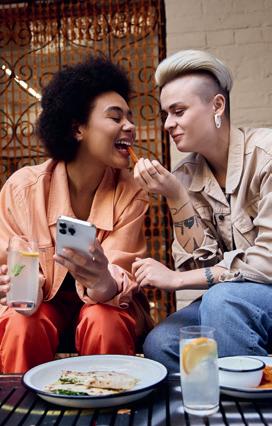
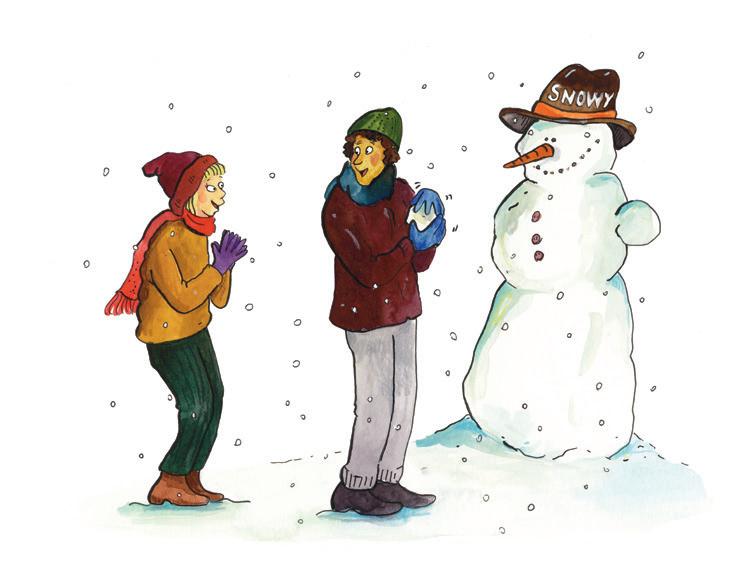
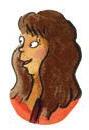
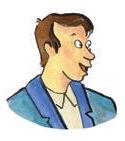
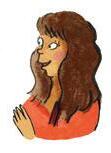
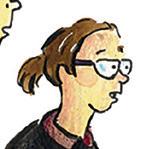
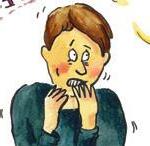
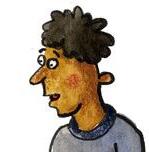
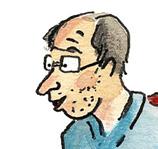
1 Fill in the fact file about yourself. writing Step 1 Speed dating Getting to know someone PR UD to be ME!
Fact file about me
What I’m good at What I’m bad at
Me in 3 words: What makes me happy?
My favourite social media platform
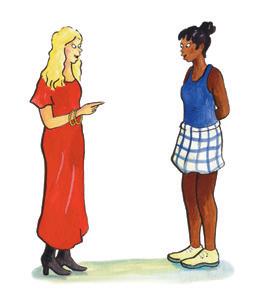
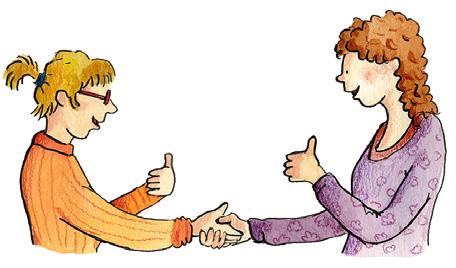
2 You are going to speed date with your classmates.
a Preparation: read your own fact file again.
b Action: use the speed-dating cards to speed date with your classmates. Follow this procedure:
Checklist: speed dating
• Write the name of your classmate on the worksheet.
• Student A asks student B a question from the speed-dating cards.
• Student B answers the question.
• Student A writes down the answer to the question of student B.
• Then student B asks student A a question from the speed-dating cards.
• Student A answers the question.
• Student B writes down the answer to student A’s question.
• Repeat the exercise until your teachers says that time is up.
c Reflection: check your conversation!
SPOKEN INTERACTION
3 Choose one person you had a speed date with, and complete the fact file about them. If you can’t fill in all the information after the speed date, ask your chosen person additional questions.
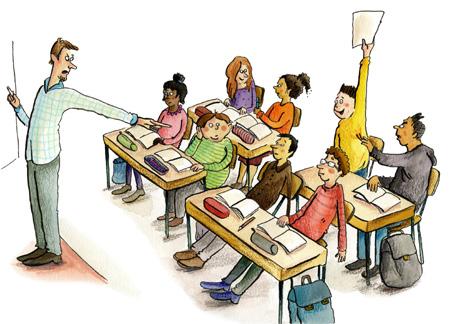
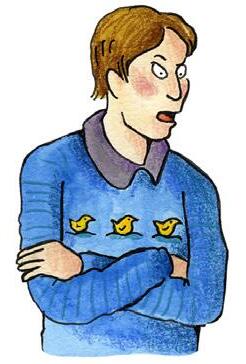
d How do the students behave during the lesson? Explain your answer.
e What would you do if you were the teacher? watchING
2 Watch the second video and answer the questions.
a How does the new teacher start the second lesson with her class?
b Put a check in the box next to the class rules that the teacher mentions in the clip.
When I talk, you don’t.
Don’t drink in class.
No more ‘catching z’s in my classroom. Raise your hand when you want to say something.
Take off the hats.
Comb your hair before coming to class.
Don’t shout.
Put your notes away.
Put your make-up away. Do your homework every day. Respect me; and I’ll respect you. Respect deadlines. Be in class on time.
Take off your sunglasses.
Don’t cheat on tests.
c Do you like the teacher’s new rules? Explain your answer.
d Highlight the 3 rules you think are the most important in one colour.
e Highlight the 3 rules you think are the least important in another colour.
f Are there rules that aren’t mentioned in the video that you would add to the teacher’s rules?
3 Go back to the class rules from exercise 2b.
a Underline all the verbs in the sentences.
b What do all the sentences start with?
c Complete the grammar box on how to give instructions.
How to give instructions
To give instructions or to say that someone has to do something, we use The imperative is the base form of the verb. e.g. Raise your hand in class. Do your homework every day.
To say that someone is not allowed to do something, we use e.g. Don’t shout. Don’t drink in class.
For a detailed overview of the form and use of the imperative, check the Summary of this unit.
4 Complete the class rules with the correct positive or negative form of the imperative. Choose verbs from the box below. to ask – to be (2x) – to complete – to copy – to distract – to interrupt –to leave – to listen – to participate – to raise – to shout – to talk – to use
1 carefully.
2 while the teacher is speaking.
3 your hand to ask questions.
4 others when they are speaking.
5 respectful to your classmates.
6 offensive language.
7 your assignments on time.
8 someone else’s work.
9 in class discussions.
10 others during lessons. 11 trash on the floor.
12 on time for class. 13 out answers. 14 for help if you need it.
5 Make your own class rules.
a Preparation: follow the instructions below to make your own class rules.
Checklist: making classroom rules
• Form groups.
• Write down at least five classroom rules you would like to have during your English lessons.
• Discuss the rules you have written down with the other students in your group.
• Write down 5 class rules you all agree on in the middle of the place mat.
• Use the imperative correctly.
b Discuss the class rules with your entire class. Write down the 5 class rules that everyone agrees on.
2
/ Classroom phrases
1 Listen to the conversation between a teacher and the students. Does the teacher or a student say the following phrases?
Phrase
1 Open your workbook to page 15.
2 Excuse me, Sir. Can you repeat that, please?
3 Raise your hand.
4 How can I help you?
5 I don’t understand. Can you explain it, please?
6 What does the word ‘sharpener’ mean?
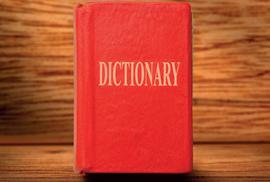
7 May I use a dictionary, please?
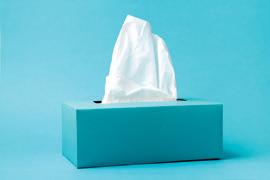
8 May I have a tissue, please?
9 May I go to the toilet, please?
10 Of course, here you go. listening
StudentTeacher
2 What can you say if … ? Use some phrases from the conversation to complete the exercise. Listen to the conversation again if necessary.
1 Riddle time! Decipher what this riddle is about. reading
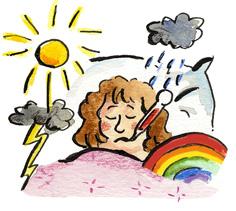
I dance in the sky, yet I’m not a ballet, I can bring you sunshine or a rainy day. I’m sometimes fluffy, sometimes I roar, what am I, that you can’t ignore?
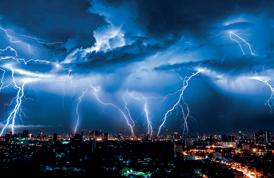
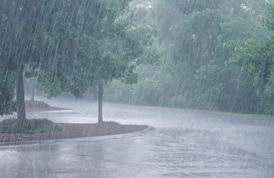
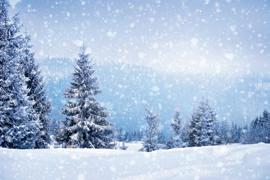
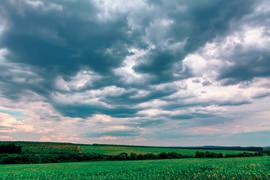
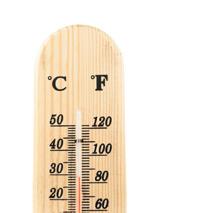
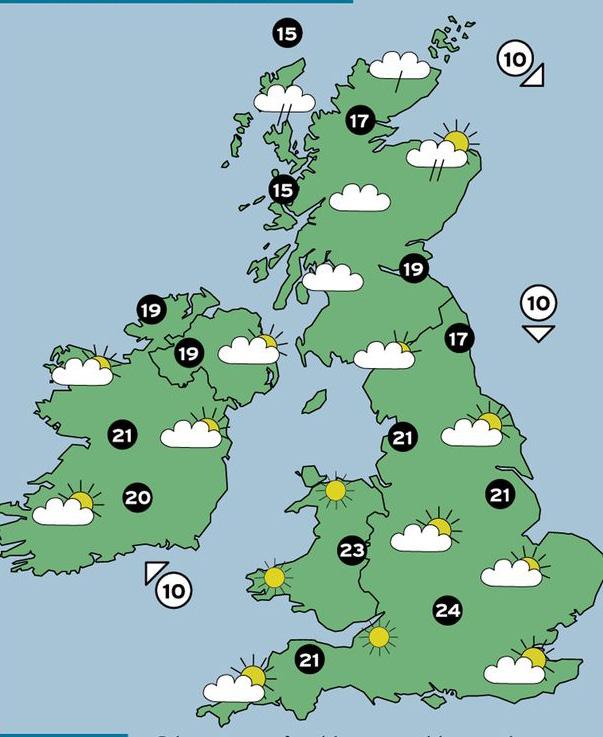
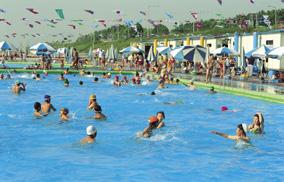
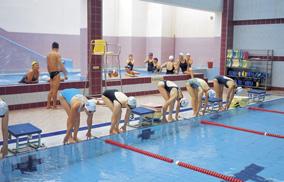
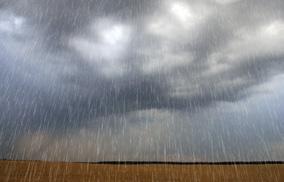
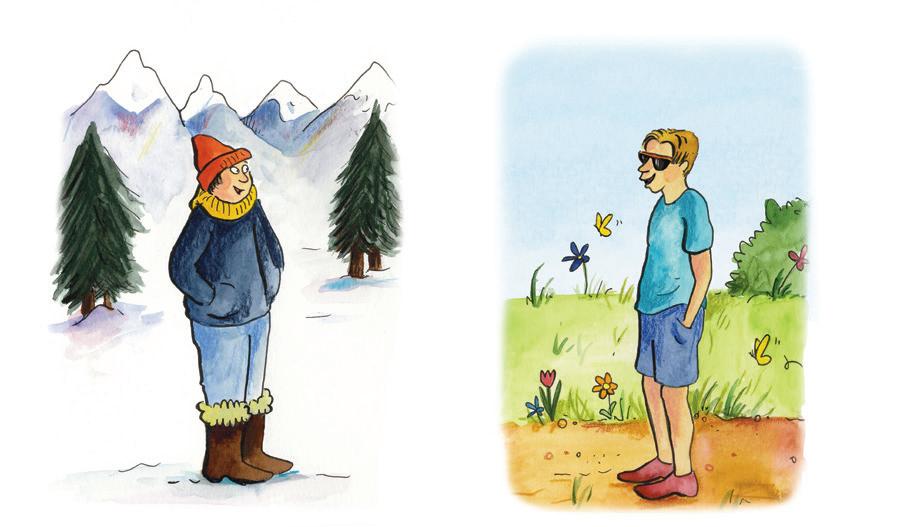
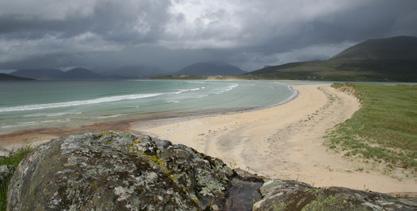
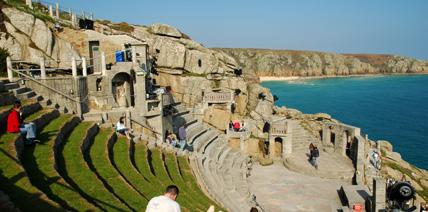
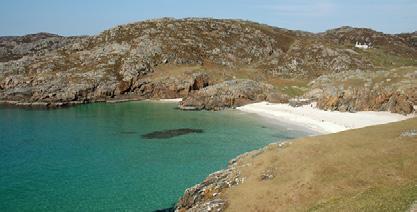
2 Look at the pictures and describe what you see.
a First write a few keywords under each picture.
b Get into small groups or walk around the classroom. Interview at least 3 classmates about the weather forecast. Complete the worksheet your teacher gives you.
SPOKEN INTERACTION
MAIN TRACK
Step 1 Four seasons in one day Describing seasons and the weather
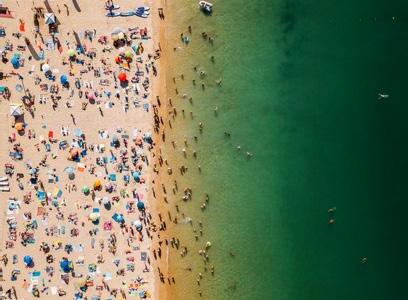
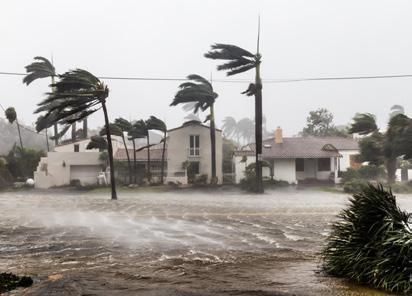
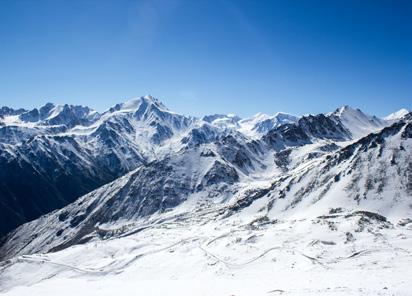
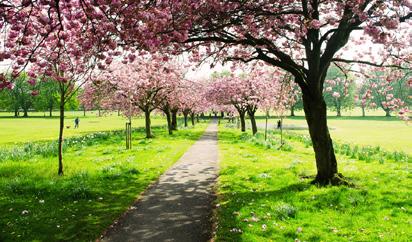
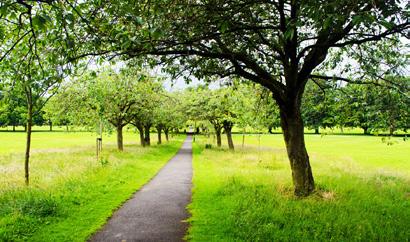
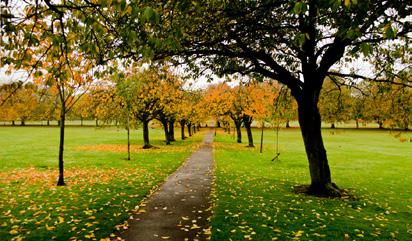
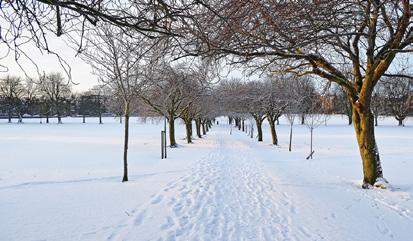
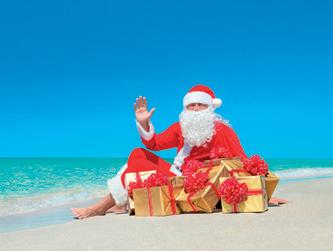
a Put these words under the correct photo. blossoms – cold – colourful (2x) – falling leaves – green (2x) – hot – no leaves
b Connect the seasons to the photos. autumn – spring – summer – winter
3 When are the four seasons in Belgium? Write the months of the year under the right season.
January – February – March – April – May – June – July – August –September – October – November – December
Spring Summer Autumn Winter Starts in Ends in
Did you notice? All the months are written with a
4 Which season is your favourite season? First prepare your answer in writing, and then discuss your favourite season with a classmate. Do you like the same season? If not, why is that?
Fall and autumn are both accepted and widely used terms for the season that comes between summer and winter.
Fall is in fact an old term for the season, originating in English in the 16th century or earlier. It was originally short for fall of the year or fall of the leaf, but the one‑word form was used by the 17th century, long before the development of American English. So while the term is now widely used in the US, it is not exclusively American, nor is it American in origin.
Autumn came to English from the French automne in the 15th or 16th century, but it didn’t become popular until the 18th century. After that, while fall became the preferred term in the US, autumn became the term in Britain.
Source: www.grammarist.com
5 The weather in Australia. Read the chart below, and then answer the questions.
SEASONAL WEATHER IN SYDNEY SUMMERAUTUMN WINTER SPRING DecJanFebMarAprMayJunJulAugSepOctNov
a What kind of information do you see in the chart?
b What difference do you see between this chart and your answers for exercise 2 in which you wrote down the seasons and months? reading
Did you know?
In English a decimal point is used and not a comma. e.g. The thermometer shows a temperature of 38.8°C. A comma is often used to separate the thousands from the hundreds. e.g. At least 15,000 people were at the protest.
6 Watch the video, and then answer the questions.
a What is the video about?
b What do people from Australia (Australians) often call themselves?
c The voice over uses very special Australian words. What is the Australian word for the following:
h What is the problem when people do want to celebrate Christmas inside with a hot meal?
I What is Chrissy New Years?
j What is the highlight of Chrissy New Year’s?
7 Answer these questions about the weather in Australia versus the weather in Belgium.
a What is the difference between Christmas in Belgium and in Australia?
b Explain why the seasons in Australia are different than in Belgium.
2 / What is the weather like?
1 Watch the weather forecast and answer the questions.
a What TV channel is it on?
b What is the weather woman’s name?
c Which days are mentioned on the screen?
d How is the weather today?
e For which day is the weather report?
f What are the numbers in the yellow boxes?
g What are the numbers in the white circle?
h What is the arrow attached to the white circles?
i Which country is the weather forecast about?
Did you know?
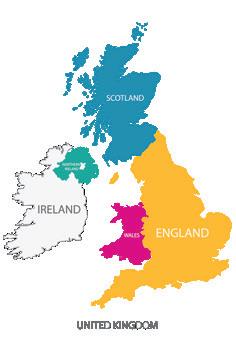
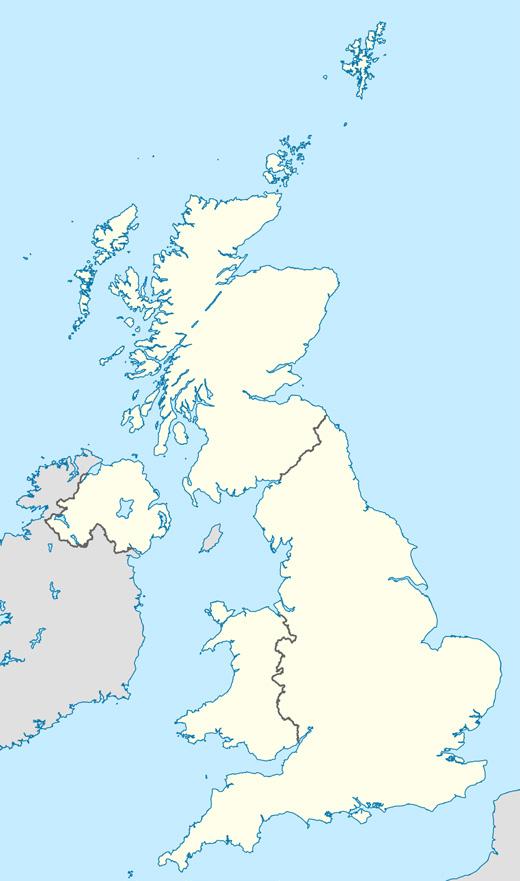
The United Kingdom is made up of Great Britain (which is made up of the countries England, Wales and Scotland) and the northern part of the island of Ireland (known as the country of Northern Ireland). The full name of the UK is the United Kingdom of Great Britain and Northern Ireland.
2 Watch the clip again. Match the weather description to the correct place.
1South of England
2Northern England
3 Northern Ireland and Western Scotland
4Northern England and Wales
DCloudy damp start, the sky brightens. 1234 watchING
A The weather is changing; skies clouding over; outbreaks of rain.
B Pretty cloudy sky and outbreaks of rain.
CA beautiful afternoon to come.
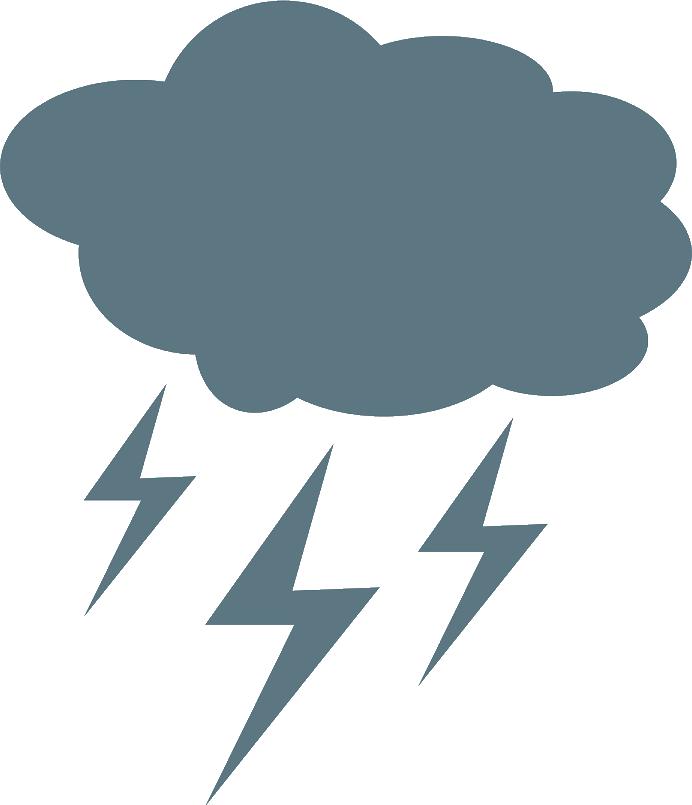
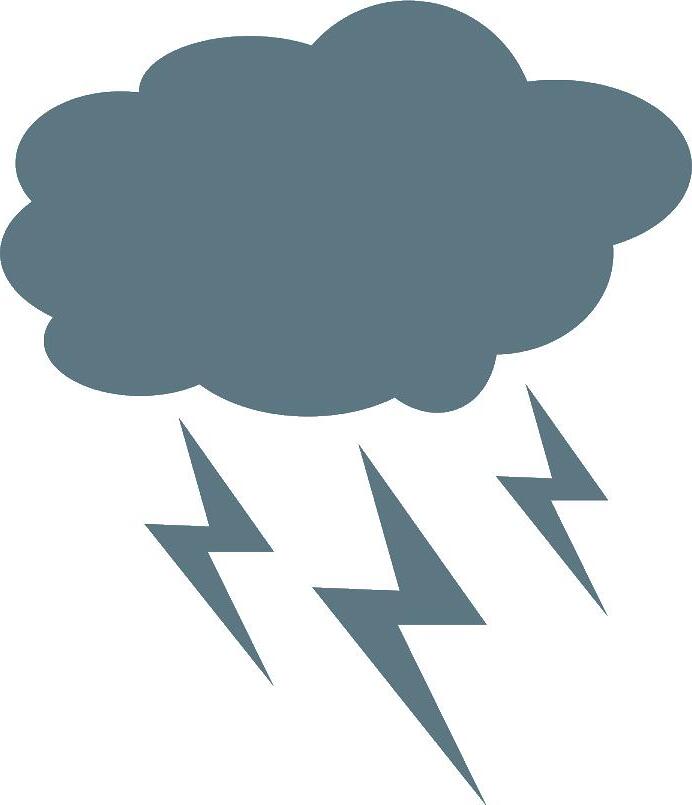
3 When we talk about the weather, we use certain symbols. Connect the words with the correct weather symbol. clouds – fog – hail – lightning – rain/shower – snow – sun – thunderstorm – wind
4 Give the adjective for the given nouns. Use a(n) (online) dictionary if necessary.
5 Complete the sentences with words from exercise 3 and 4.
1 It is a day, perfect for a walk in the park.
2 The roads became slippery as the weather continued into the evening.
3 A morning made it difficult to see more than a few feet ahead.
4 The lit up the sky as the storm approached from the west.
5 We had to take shelter when the began to fall, hitting the ground like small stones.
6 The sky grew dark and , signalling that rain was on the way.
7 A fierce rolled in, causing power outages across the city.
8 I grabbed my umbrella as the started drenching everything in sight.
9 The conditions knocked over a few trees and made it hard to walk outside.
6 There are different ways to talk about the weather in English. Complete the grammar box with the correct information.
How to describe the weather
GRAMMAR
In English, we usually use ‘it is’ or ‘there is/are’ to talk about the weather followed by an adjective, a noun or a verb
‑ There is / There are + (the name of the type of weather).
e.g. There is a lot of sun. There is a clear sky. There are clouds.
‑ It is + (a description of the weather).
e.g. It is sunny. It is cloudy. It is very hot
‑ It is + (the type of weather that is happening now). In this case the verb ‘to be’ is used as an auxiliary verb as part of the present continuous tense.
e.g. The sun is shining. It is raining. It is snowing.
Some words have a noun form, a verb form and/or an adjective form:
Noun Verb Adjective rain
e.g. There will be rain. e.g. It is raining heavily. e.g. It is a rainy day
Often, but not always, when we are talking about the weather, we can add to the end of a noun to make it an adjective.
When to use a noun, a verb or an adjective:
• Use a when you are talking about the weather phenomenon itself, like rain, snow, or fog.
• Use an when you want to describe that phenomenon or the conditions it creates, like rainy, snowy.
• Use a when you are describing the action happening in the weather. e.g. It is snowing.
Keep in mind:
To predict the weather, you can use ‘will + verb’.
e.g. It will be cloudy tomorrow. See p. xx
7 Complete the sentences. Use ‘there is’, ‘there are’ or ‘it is’.
a subarctic climate in Iceland. very cold in winter and short, cool to mild summers.
In Greece a Mediterranean climate and the geography is unique.
humid and it has some maritime features. In the east of the Pindus mountain range, drier and windier in summer.
mountainous areas that have an alpine climate. In this alpine Mediterranean climate, a harsh winter and cold and snowfall from time to time, while in summer cool and thunderstorms.
alpine: relating to the Alps
humid: said of air and weather conditions; containing extremely small drops of water in the air
maritime: near the sea or coast
Mediterranean: the countries next to the Mediterranean Sea
subarctic: belonging or relating to the cold regions of the world immediately south of the Arctic
8 Describe the weather in the pictures in full sentences. Use a noun, verb or adjective.
9 Read the weather forecast and answer the questions.
a What is the hottest day?
b What is the coldest day?
c What are the coldest nights?
d What is the best day to play outside?
e Which day is the best for plants that need a lot of water?
a Preparation: look at the weather map and decide which 5 things you are going to write about.
b Action: describe the weather in full sentences. Follow this procedure:
Checklist: describing the weather
• Write minimum 5 full sentences.
• Use ‘it is’ and ‘there is/there are’ in your sentences.
• Use the correct words to describe the weather.
• Mention the place.
• Pay attention to your spelling and punctuation. writing
c Reflection: check your text! Then read it to your classmate. Did you write about the same things?
11 Read the weather reports and match them to the correct image. Pay attention to the unit of measurement of the temperatures! reading
A CANTERBURY, KENT (GB)
It is partly cloudy. The highest temperatures are around 10°C. Dew point is around 6°. There is an average humidity of 86%.
At night it will be cloudy and there’s a chance of rain.
C MALMÖ (SE)
It is partly cloudy and there’s a slight chance of rain. High temperature around 9°C. There’s a strong wind (19.4 mph from the W).
At night it continues to be rainy and mostly cloudy.
1234
B ANCHORAGE, ALASKA (US)
There is snow in the morning and a slight chance of snow in the afternoon. The high temperature will be between 15 and 25°F.
At night it will be partly cloudy, with temperatures between 0 and 5°F.
D JOHANNESBURG (SA)
During the day it is mostly sunny, with high temperatures around 30°C. There is an average humidity of 43%.
At night it will be mostly clear, with low temperature of about 18°C, with winds from the ENE.
12 Describe the seasons in these places to a classmate.
a Preparation: decide who is going to describe the seasons in Brisbane (Australia) and who is going to describe the seasons in London (England). Check the chart below and write down a few keywords about what you want to say about each season. speaking
• Describe a situation with a friend (Is there a problem? Are you fighting? Are they in trouble?).
• Ask your classmate for help with this situation. Give some tips or advice if your classmate asks for it.
• Use at least 2 idioms each in your conversation.
• Say goodbye to each other.
• Pay attention to your pronunciation.
c Reflection: perform your dialogue for another pair of students. They will give you some feedback.
d Practise talking about the weather with Vox on iDiddit. Start the conversation by saying ‘hello’ to Vox.
CHECK 1
Step 2 Weather or climate? Revising present tenses
1 / What’s the difference between weather and climate?
1 Watch the video and answer the questions.
a What can you see when you look through a window?
b What is the difference between weather and climate? Highlight the words that refer to the weather in one colour and highlight the words related to the climate in another colour.
a long time – at the moment – outside – a region – temporary – today –tracking sea level – typical – weather conditions
c Now explain in your own words what the difference is between the weather and the climate. watchING
2 Read the text on p. xx and xx and answer the questions.
a What is the text about?
b What sort of text is this? fiction non fiction
c What is the purpose of this text? to entertain the reader to give the reader information about something to give the reader instructions on how to do something to persuade the reader
d Are these statements true, false or not in the text? Correct the false statements.
Statement
1 The weather can change in a short period of time.
2 The climate is determined by the wind, air pressure and temperature.
3 There is only one atmosphere on Earth, and it consists of 4 layers: the troposphere that we live in, the stratosphere; the mesosphere, and the thermosphere.
4 The climate is based on averages of temperature, sunshine, wind, and other measures of weather that occur over more than 20 years in a particular place.
5 Climate Normals give us the details about the weather.
e Which 5 factors can change the atmosphere in a certain area?
f Explain this quote: ‘Weather tells you what to wear each day. Climate tells you what types of clothes to have in your closet.’
g Give an example of changing patterns.
h What is altered (changed) by the changing regional climates? Give 5 examples.
I Find the words in the text.
• a measurement of how much water there is in the air:
• to become larger in amount or size:
• particular situations, events, or facts:
• a period of 10 years:
• the result you get by adding 2 or more amounts together and dividing the total by the number of amounts:
j Do these statements apply to weather or climate?
Statement
1It is normal to have a lot of snow in the Alps each year.
2Conditions outside on a daily basis.
3In the south of Spain, we usually have mild winters, it rarely snows and we have hot summers.
4Yesterday it was a rainy day but today we have a cold but dry day.
WeatherClimate
What’s the difference between weather and climate?
Climate is what you expect, weather is what you get
Take a moment and think about the weather today where you are. Is it normal or typical? Is it what you’d expect? If it’s been cool the past few days but the temperature is climbing today, is that weather or climate? Are weather and climate the same thing? Though they are closely related, weather and climate aren’t the same thing. Climate is what you expect. Weather is what actually happens.
What exactly is weather?
More specifically, weather is the mix of events that happen each day in our atmosphere. Even though there’s only one atmosphere on Earth, the weather isn’t the same all around the world. Weather is different in different parts of the world and changes over minutes, hours, days, and weeks. Most weather happens in the part of Earth’s atmosphere that is closest to the ground – called the troposphere. And, there are many different factors that can change the atmosphere in a certain area like air pressure, temperature, humidity, wind speed and direction, and lots of other things. Together, they determine what the weather is like at a given time and location.
What exactly is climate?
Whereas weather refers to short term changes in the atmosphere, climate describes what the weather is like over a long period of time in a specific area. Different regions can have different climates. To describe the climate of a place, we might say what the temperatures are like during different seasons, how windy it usually is, or how much rain or snow typically falls.
When scientists talk about climate, they’re often looking at averages of precipitation, temperature, humidity, sunshine, wind, and other measures of weather that occur over a long period in a particular place. In some instances, they might look at these averages over 30 years, also called Climate Normals.
Looking at Climate Normals can help us describe whether the summers are hot and humid and whether the winters are cold and snowy at a particular place. They can also tell us when we might expect the warmest day of the year or the coldest day of the year at that location. But, while descriptions of an area’s climate provide a sense of what to expect, they don’t provide any specific details about what the weather will be on any given day.
Here’s one way to visualize it. Weather tells you what to wear each day. Climate tells you what types of clothes to have in your closet.
How does the climate change?
While the weather can change in just a few minutes or hours, climate changes over longer time frames. Climate events, like El Niño, happen over several years, with larger fluctuations happening over decades. And, even larger climate changes happen over hundreds and thousands of years.
Today, climates are changing. Our Earth is warming more quickly than it has in the past according to the research of scientists. Hot summer days may be quite typical of climates in many regions of the world, but warming is causing Earth’s average global temperature to increase. The amount of solar radiation, the chemistry of the atmosphere, clouds, and the biosphere all affect Earth’s climate. As global climate changes, weather patterns are changing as well. While it’s impossible to say whether a particular day’s weather was affected by climate change, it is possible to predict how patterns might change. For example, scientists predict more extreme weather events as Earth’s climate warms.
Why do we study climate?
Climate, climate change, and their impacts on weather events affect people all around the world. Rising global temperatures are expected to further raise sea levels and change precipitation patterns and other local climate conditions. Changing regional climates could alter forests, crop yields, and water supplies. They could also affect human health, animals, and many types of ecosystems. Deserts may expand into existing rangelands, and features of some of our National Parks and National Forests may be permanently altered.
Source: www.ncei.noaa.gov
altered: changed the Biosphere: the part of the earth’s environment where life exists crop yields: the amount produced or harvested per unit or piece of land fluctuations: a change, or the process of changing continuously between one level or thing and another to occur: to happen precipitation: water that falls from the clouds towards the ground, especially as rain or snow rangelands: grasslands, shrublands, woodlands, wetlands, and deserts that are grazed by domestic livestock or wild animals
2 / Present simple or present continuous?
1 Read the following short texts about the weather and answer the questions.
a Underline the verbs in each sentence.
b Do you remember?
‑ Which tense is used in the text on the left? Write the name of the tense above the text.
‑ Which tense is used in the text on the right? Write the name of the tense above the text.
c Can you explain the difference between the two tenses based on the examples in the texts?
If you have a look at the seasons, we know that they all have certain characteristics. In summer the weather is usually good. Normally it is warm, and the sun always shines. Normally it doesn’t rain much. In autumn it is colder and there is more rain. In winter the weather is usually cold. It usually snows or rains heavily. Winter and autumn don’t have much sunlight.
But the last few years, there have been some changes. Now it is raining in summer. It isn’t snowing in winter. Temperatures are rising. The sun is shining more in autumn. How come? Can you say why?
2 What do you remember about the form of these tenses?
a Fill in the examples in each column. Look back in the texts from the previous exercise if necessary.
b Complete the rules on how to form the tenses.
Form of the present simple Positive (+) Negative ( ) Questions (?)
(we / to know / seasons have certain characteristics)
(winter and autumn / not to have / much sunlight)
(the sun / to shine / in winter)
(the sun / to shine)
(it / not to rain / much)
(when / to rain / a lot)
Keep in mind: 3rd pers. Singular: +
Keep in mind: 3rd pers. Singular: +
Keep in mind: 3rd pers. Singular:
Form of the present continuous Positive (+) Negative ( ) Questions (?)
Examples (temperatures / to rise)
(it / to rain / in summer) (I / to bring / my umbrella) (it / not to snow / in winter)
(why / temperatures / to rise)
(it / to rain / more this summer)
Rule
3 Do you also remember why we use these present tenses and how to use adverbs of frequency? Complete the grammar box.
How to talk about facts, routines and actions going on now
1/ Present simple
We use the present simple to talk about:
1
2
GRAMMAR
e.g. It rains a lot in Belgium.
e.g. In S candinavia, it usually snows in winter.
In this case, we often use words like ‘normally’, ‘usually’, ‘always’, ‘often’, etc. e.g. It always rains in Meghalaya, India. It is the wettest place on earth. It sometimes snows in winter in Belgium.
These words are called adverbs of frequency and tell you how often things happen. They go . There is one exception, the verb ‘to be’. The adverb of frequency goes after the form of ‘to be’.
e.g. The sun always shines in Egypt. It is always sunny in Egypt!
2/ Present continuous
We use the present continuous to talk about:
1
2
e.g. Look, the sun is shining.
e.g. Temperatures are rising, and our Earth is getting warmer.
Common signal words for the present continuous include time expressions such as ‘now’, ‘at the moment’, ‘this week’, and ‘for the time being’, as well as the words ‘Look!’ and ‘Listen!’.
e.g. Look! It is snowing outside. It isn’t raining at the moment.
For a detailed overview of the form and use of the present simple and present continuous, check the Summary of this unit. See p. xx
4 Complete the sentences by putting the verbs in the present simple (a) or the present continuous (b).
a Present simple
1 It (to rain) a lot in this region during the winter.
2 In summer, it usually (to get) very hot.
3 We often (to have) thunderstorms in the afternoon during the summer.
4 The forecast (to predict) rain for tomorrow.
5 It (to get) colder at night during the winter.
6 We (to expect) sunny weather for the weekend.
7 It usually (to rain) a lot in April.
8 In the spring, flowers (to bloom) everywhere.
9 The forecast (to say) it will be windy tomorrow.
10 The weather (to seem) perfect for a picnic today.
8 Rewrite the sentences and use the correct tenses.
a First say what these people usually do, and then say what they are doing now.
1 Dad – usually to wash the car – Saturday – now to read a book.
2 Sharon – normally to go out – Friday night – now to watch TV.
3 Phyllis and Tina – normally to go to school – Tuesday – now to go out.
4 I – usually to watch a movie – at the weekend – now to walk the dog.
5 The dog – usually to play outside – now to sleep on the rug.
6 You – usually to study for school – evening – now to play football.
b Add 5 sentences about members of your family or friends. You know what they usually do, but you can invent (funny) things they are doing now. e.g. The teacher usually talks for hours, but now he is treating his pupils to ice cream.
2 Watch the trailer from the film Twisters and answer the questions.
a What is the clip about?
b Who is the main character?
c What sort of video is this? fiction non fiction
d What is the main purpose of this video? to entertain to give information about something to give instructions on how to do something to make someone do something
e Watch the trailer again and say whether the statements are true or false. Correct the false statements.
1 Tyler Owens calls himself the Tornado Strangler.
2 Their goal is to destroy a tornado.
3 They drive headfirst into blizzards.
4 Tyler Owen’s slogan is, ‘if you see it, chase it’.
5 Two tornadoes happening at the same time are called twins.
f Would you like to see the whole film? If you have seen the whole film, what did you think of it?
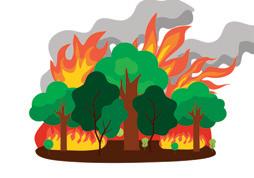
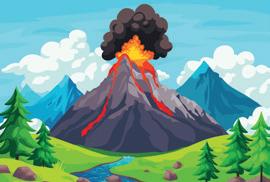
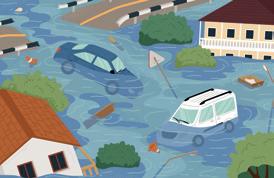
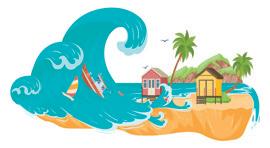
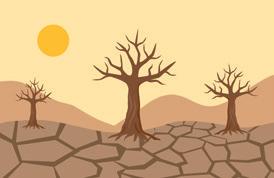
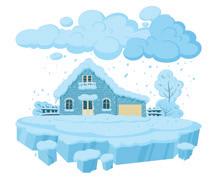
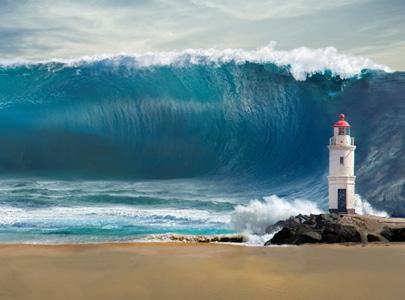
3 Match the natural disasters to the correct picture. Look up the words in a dictionary if necessary.
4 Read these short articles and fill in the gaps with the correct term. Choose words from the previous exercise. reading
AUSTRALIA : ARE THIS YEAR’S FIRES UNPRECEDENTED?
Australia has suffered a devastating early bushfire season with fires across several states burning through hundreds of thousands of hectares and destroying hundreds of properties with the loss of six lives. New South Wales has been the most severely hit, with more than 1.65m hectares razed, an area significantly larger than suburban Sydney.
Source: www.theguardian.com
Somerset : ‘A thunderous roar’ leaves residents shaken – and keen to share tales
The 3.2 magnitude quake rattled homes and moved furniture – but no reported injuries.
Houses rumbled, beds shook, and items came crashing off shelves and tops. The Somerset earthquake that struck late Thursday night may not have been quite as dramatic as some shakes can be – but residents have woken up Friday morning keen to share tales of the night the earth moved.
Source: www.independent.co.uk
Torrential rain causes in northern England
Torrential rain has caused the banks of the River Don in South Yorkshire to burst onto roadways, affecting traffic in the northern English cities of Sheffield and Rotherham.
Cars became stranded in floodwater with gridlock resulting on many routes.
South Yorkshire Police have advised only essential travel in the area.
Source: www.euronews.com
5 Read the text below and answer the questions.
More
than 50
elephants starve to death amid severe in Zimbabwe
At least 55 elephants have died in Zimbabwe’s largest national park amid the country’s worst in recent years.
The lack of food and water has meant elephants have increasingly wandered into inhabited areas, according to the Hwange National Park authorities.
Source: www.independent.co.uk
a What type of text is this? argumentative informative narrative persuasive
e What is the name for someone who studies the scientific processes that cause particular weather conditions?
f What other words do we use to talk about a hurricane?
g There are 3 types of extreme weather mentioned. Complete the table.
reading
Where does the word ‘hurricane’ come from?
The word ‘hurricane’ is widely known and recognized, but its etymology is lesser-known.
Named for Mayan god
The English word ‘hurricane’ comes from the Taino (the indigenous people of the Caribbean and Florida) word ‘Huricán’, who was the Carib Indian god of evil. Their Huricán was derived from the Mayan god of wind, storm, and fire, ‘Huracán’. When the Spanish explorers passed through the Caribbean, they picked it up and it turned into ‘huracán’, which remains the Spanish word
for hurricane today. By the 16th century, the word was modified once again to our present-day ‘hurricane’. (Hurricane isn’t the only weather word with roots in the Spanish language. The word ‘tornado’ is an altered form of the Spanish words tronado, which means thunderstorm, and tornar, ‘to turn’.)
Not hurricanes until 74 mph
We tend to call any swirling storm in the tropical ocean a ‘hurricane’, but this isn’t true. Only when a tropical cyclone’s maximum sustained winds reach 74 mph or more do meteorologists classify it as a hurricane.
Not called hurricanes everywhere
Tropical cyclones have different titles depending on where in the world they are located.
Mature tropical cyclones with winds of 74 mph or more that exist anywhere in the North Atlantic Ocean, Caribbean Sea, Gulf of Mexico, or in the eastern or central North Pacific Ocean east of the International Date Line are called hurricanes.
Mature tropical cyclones that form in the Northwest Pacific basin – the western part of the North Pacific Ocean, between 180° (the International Date Line) and 100° East longitude are called typhoons. Such tempests within the North Indian Ocean between 100° E and 45° E are simply called cyclones.
Named for people they impact
Many storm names are unique to the basin they exist in and regions they impact. This is because names are lifted from those popular in the nations and territories of the lands within that basin. For example, tropical cyclones in the northwest Pacific (near China, Japan, and the Philippines) receive names common to the Asian culture as well as names taken from those of flowers and trees.
Adapted from: www.thoughtco.com
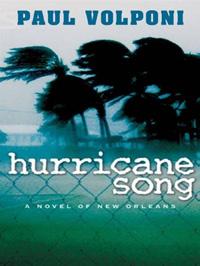
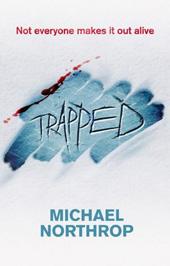
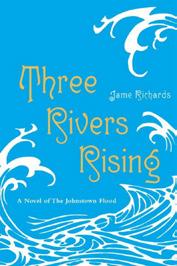
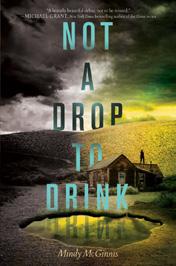
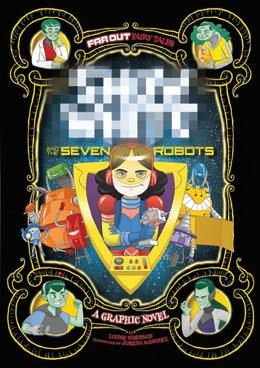
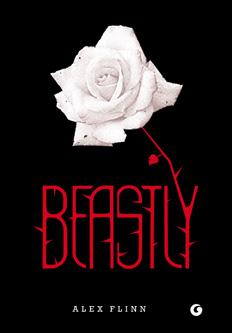
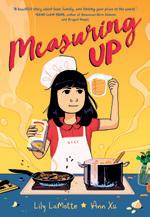
6 Look at the covers of these books and answer the questions.
a Who is the author of each book?
b Read the summaries. Match the summaries to the correct book cover. Which one is left out?
c What is the main topic of each book?
d There is 1 book cover left. What do you think the story is about?
Sixteen year old Celestia spends every summer with her family at the elite resort at Lake Conemaugh. Celestia likes to swim and fish with Peter, the hotel’s hired boy. It’s a friendship she must keep secret, and when companionship turns to romance, it’s a love that could get Celestia disowned. One tragic day in May, 1889, after days of heavy rain, the dam fails, unleashing 20 million tons of water onto Johnstown, Pennsylvania, in the valley below. The town where Peter lives with his father. The town where Celestia has just arrived to join him. This searing novel in poems explores a cross class romance – and a tragic event in U.S. history.
B Lynn knows every threat to her pond: drought, a snowless winter, coyotes, and, most importantly, people looking for a drink. She makes sure anyone who comes near the pond leaves thirsty or doesn’t leave at all. For Lynn, life means dedicating it to survival, and the constant work of gathering wood and water. But wisps of smoke on the horizon mean one thing: strangers. The mysterious footprints by the pond, night time threats, and gunshots make it all too clear Lynn has exactly what they want, and they won’t stop until they get it …
C The day the blizzard started, no one knew that it was going to keep snowing for a week. Scotty and his friends Pete and Jason are among the last seven kids at their high school waiting to get picked up that day, and they soon realize that no one is coming for them. Still, it doesn’t seem so bad to spend the night at school, especially when distractingly hot Krista and Julie are sleeping just down the hall. But then the power goes out, then the heat. The pipes freeze, and the roof shudders. As the days add up, the snow piles higher, and the empty halls grow colder and darker …
7 Read the opening page from the fourth book on p. xx. Answer the following questions about it.
a While reading, underline all the words you don’t understand in the text.
b What is the text about?
c Did you need to understand all the difficult words to understand what the text is about? Explain your answer.
How to deal with difficult words in a text
STRATEGY
You don’t need to understand every (difficult) word to know what a text is about. Even if some words are hard, you can guess their meaning by looking at how they are used in the sentence. It is easier to understand the message if you know all the words, but it is not always necessary.
When you do need the meaning of a word to understand the sentence, follow these steps:
1 Don’t stop reading when there is a word you don’t understand.
2 Look for clarifying images (if there are any).
3 Look for: synonyms – examples – a definition – a description – a word with the opposite meaning in the same sentence/paragraph.
4 Do you recognise parts of the word?
5 Is it a compound word? (e.g. sweatpants)
6 Does the word have a prefix (un /in /il /ir /…) or a suffix ( able/ ful/ ion/…)?
7 Consult a dictionary
8 Ask a peer, a parent or your teacher to explain it.
For more information about how to deal with difficult words in a text, look up the strategies in the summary of this unit. See p. xx
d Match the difficult words from the text to their meaning. Use the strategies above if necessary.
1cussed at
2a gig
3gonna
4gotta
Ashort form of ’have got to’
Ba student in the second year of high school or college
Ca performance by a musician or group of musicians
Dhere: being less important than something else
5second linin’Eslang word for ‘cursed at’ (= insulted)
6a sophomore
Fshort form of ‘going to’
Chapter one
Late Saturday night, after Pop finished his gig, he told me to collect up all the things I couldn’t live without. That we were driving to a motel in Baton Rouge the next morning with Uncle Roy in his old Chevy, because of Katrina – a monster hurricane that was coming.
“And Miles, call your mother. I want her to know you’re okay, in case the phone lines get knocked out,” Pop said. “I’m not gettin’ cussed at ‘cause she’s worried sick over where you are.”
I’d been with Pop in New Orleans maybe two months, since just after school let out. Mom had got remarried to a mailman with three kids of his own back in Chicago, and living in that two bedroom apartment with them all was like being stuck on the Lake Street El train without a seat at rush hour. (…)
My parents split before I could remember them ever being together. So I really only knew Pop from the times he’d come around our way to play jazz festivals. But once I turned twelve, Mom said I was grown enough to ride the train to New Orleans myself and spend summer vacations with him. He’d play trumpet at the different clubs in the French Quarter, with my uncle on slide trombone. I didn’t give a shit about jazz. Neither did any kid I ever knew. But once I learned to stomach all that crap about what music meant to his soul, and feeling like I didn’t exist to him when that damn horn was in his hands, every night around Pop was like New Year’s Eve.
“You think it’s gonna be a party livin’ with your father full time. It’s not,” Mom warned me. “Maybe it’s all good in the summer ‘cause there’s no school. But you’re ‘bout to be a sophomore in high school and don’t put near enough into your grades now – everything’s football and horseplay. Somebody’s gotta see that you study, and
Source: Paul Volponi, Hurricane Song
8 Reading for details. Read the text again and answer the questions.
a Who is the main character? How do you know this is the main character?
b Name three other characters and write down what you know about them. List at least 2 facts about each.
Character
Facts reading make somethin’ of yourself. He’s not gonna put you ‘head of his music. You’ll be second-linin’ it with him, just like I did. That’s where you march behind the band in the parade. Only your father’s so into his playin’, he won’t even know when you’re not there anymore.” Before I left, Mom said, “Maybe the two of you can grow up and learn some responsibility together.” (…)
c Are these statements true or false? Correct the false statements.
1 Miles is living with his father, Pop, in New Orleans.
2 Miles’ father, Pop, plays the guitar in jazz clubs.
3 Miles enjoys jazz music and thinks it is important.
4 Miles has been living with Pop since the summer when school let out.
5 Pop’s music is more important to him than spending time with Miles.
6 Pop tells Miles to call his mom so she knows he is safe before the hurricane.
7 Miles’ mom got remarried to a man with no children.
8 The coming hurricane is the reason Miles and Pop are leaving New Orleans.
d What 2 things did Miles’ father tell him to do?
e Why do they flee?
f Why does Miles live with his father?
g What do you think the relationship with his father is like? Why do you think so?
9 Read the paragraphs about what happens next in the story. Match the paragraphs to the correct summary.
Main idea
They arrive at the shelter.
The hurricane has become so bad that people have to evacuate.
Pop, Miles and Uncle Roy have packed, and they are trying to leave New Orleans. They are not the only people who want to leave. Their car breaks down.
There is a traffic jam and the hurricane is getting worse.
Pop and Uncle Roy have already been through a lot of hurricanes.
Paragraph 1
Paragraph
We got to the highway and it was bumper to bumper, with cars stretching as far as I could see. Only none of them were moving an inch.
“This must be the highway to heaven ‘cause everybody’s tryin’ to get on it at the last minute,” said Uncle Roy, shaking his head.
The three lanes on the opposite side, coming into New Orleans, were totally empty. People had their car doors swung wide open, and were standing around on the divide. Plenty of them took their dogs, too. They were barking and growling at each other, and the ones outside kept pissing to mark their territory.
Paragraph 2
I’d never seen a hurricane before, but Pop and his brother had been through lots of them without a scratch. Uncle Roy even told a story where he stood outside on a balcony and blew his trombone right into the face of one because it was named after some woman who did him dirty.
“Christine, Christine, blowin’ all over town,” Uncle Roy sang, with Pop joining him in the middle. “You’re so damn mean, you want my soul to drown.”
Paragraph 3
At first, I thought Pop was being paranoid about leaving. We lived on the second floor, maybe fifteen feet over the street. I didn’t know how the water could reach that high. The landlord had already boarded up the windows, so unless the wind blew the roof off, I figured we’d be safe. But the news reports said Katrina was the hurricane everybody always feared. That because she was so powerful, and New Orleans was built below sea level, the whole city could get swallowed up in a flood if the levees on the river ever busted. Even the mayor said people had to evacuate. (…)
Paragraph 4
We sat in that traffic jam for three hours, and didn’t get ahead more than four or five light poles. I had to beg for them to change the radio from the jazz station, and even settled for the news. The weatherman said the real storm was still almost a day off. But the wind was already kicking up fierce, and I could smell the rain coming. (…)
The needle on the temperature gauge started rising up into the red. Then there was smoke from under the hood, and Uncle Roy cursed the Chevy up and down. He pounded the car horn for enough room to pull off to the side. After the engine died out, Pop and me pushed it the rest of the way to the exit ramp, and watched my uncle coast down into a row of empty parking spots on the street. (…)
All morning, the radio said the Superdome was the only safe place for anybody staying behind, and we could see the top of it from where we were.
Uncle Roy opened the trunk and looked at all his shoes lined up there in pairs. Since he didn’t have a house that trunk was like a closet to him. “I just pray no water seeps into here,” he said, slamming it back down. (…)
Paragraph 6
Pop stopped us on the steps of the Superdome with the rain rolling down his face and said, “I don’t care how big it is or what kind of slick name they give it – it’s still a shelter. Son, your uncle and me spent plenty of days when we were young in places like this, and I won’t forget ‘em. People are tight over everything. Drama can jump up out of nothin’. Goin’ in here ain’t a game. I want you to be respectful of people – of what they have and what they don’t have. But don’t close your eyes on anybody either.”
“You right on the money ‘bout that, Doc,” Uncle Roy said, climbing the next step. “Lord knows, you on the money ‘bout that.”
10 Give your opinion about these extracts.
a Preparation: read the different extracts again if necessary.
b Action: share your opinion about the text. Follow this procedure.
Checklist: giving your opinion about a fictional text
• First fill in the opinion card.
• Pay attention to your spelling and punctuation.
• Read the opinion card a couple of times so you know what you need to talk about.
• Tell a partner your opinion about the text.
• Pay attention to your pronunciation. writing speaking
OPINION CARD
The extracts were about (name main characters) I think this extract was (add adjectives) and because (give 2 reasons)
What 2 questions would you like to be answered after having read the whole book?
How do you think the story ends?
c Reflection: check your task! Do you and your classmates have the same or different opinions about the text? Share your opinions with a different pair of students.
In English we usually use ‘it is’ or ‘there is/are’ to talk about the weather followed by an adjective, a noun or a verb
Form and use
to name the type of weatherto describe the weather to talk about the type of weather that is happening now
There is / There are + noun e.g. There is a lot of sun. There is a clear sky. There are clouds.
In this case, the verb ‘to be’ is used as a main verb and the noun is the complement
It is + adjective
e.g. It is sunny. It is cloudy. It is very hot.
In this case, the verb ‘to be’ is used as a main verb and the adjective is the complement
It is + ing-form of the verb e.g. The sun is shining. It is raining. It is snowing.
In this case, the verb ‘to be’ is used as the auxiliary verb of the present continuous tense.
Some words have a noun form, a verb form and/or an adjective form.
e.g. There will be rain. to rain
e.g. It is raining heavily.
e.g. It is a rainy day.
snow
e.g. There is snow on the roof. to snow
e.g. It is snowing in the mountains. snowy
e.g. It is a snowy day.
Many times (but not always), when we are talking about the weather, we can add the letter y to the end of a noun to make it an adjective: e.g. snow snowy.
When to use a noun, a verb or an adjective:
‑ Use a noun when you are talking about the weather phenomenon itself, like rain, snow, or fog.
‑ Use an adjective when you want to describe that phenomenon or the conditions it creates, like rainy, snowy.
‑ Use a verb in the present continuous tense when you are describing the action happening in the weather.
e.g. It is snowing.
Keep in mind:
To predict the weather (= in the future), you can use ‘will + verb’ e.g. It will be cloudy tomorrow.
HOW TO talk about facts, routines and actions going on now
Present simple and present continuous
I live in Norway. It usually snows here in winter. Where do you live?
I live in Belgium. It rains a lot here, but now the sun is shining. I don’t like the rain!
I live in Belgium. You live in Belgium. He/she lives in Belgium. We live in Belgium. You live in Belgium. They live in Belgium.
Rule: Subject + base of verb
FORM
Negative (-)
I don’t live in Belgium. You don’t live in Belgium. He/she doesn’t live in Belgium. We don’t live in Belgium. You don’t live in Belgium. They don’t live in Belgium.
Keep in mind: 3rd pers. sing: + s Subject + don’t/doesn’t + base of verb
Question (?)
Do I live in Belgium?
Do you live in Belgium?
Does she live in Belgium?
Do we live in Belgium?
Do you live in Belgium?
Do they live in Belgium?
Keep in mind: 3rd pers. sing: doesn’t Do/does + subject + base of verb
Keep in mind: 3rd pers. sing: does
Spelling and grammar exceptions
1 3rd pers. sing. with verbs ending in Verb ends in Rule
Examples o add es do he does go she goes a sibilant (ch, sh, s, x)add es wash he washes kiss she kisses consonant + y y changes to ie before s worry she worries carry he carries
2 The verb ‘to have’ is irregular in the positive form: he/she/it has.
Keep in mind:
There are some words in English that tell you how often you do things: e.g. always, sometimes, often, regularly, never.
e.g. It never snows in summer. It often rains in autumn. It usually rains a lot in April.
These words are called adverbs of frequency and tell you how often things happen. They go before the main verb.
There is one exception, the verb ‘to be’. The adverb of frequency goes after the form of ‘to be’: e.g. It is always cold in winter in Belgium.
USE
We use the present simple to talk about – habits and routines. In this case, we often use words like ‘normally’, ‘usually’, ‘always’, ‘often’, etc. e.g. In Scandinavia, it usually snows in winter. – facts
We use the present continuous to talk about – actions going on now
e.g. Look, the sun is shining. – changing situations
e.g. Temperatures are rising, and the Earth is getting warmer.
Keep in mind:
Common signal words for the present continuous include time expressions such as ‘now’, ‘at the moment’, ‘this week’, and ‘for the time being’, as well as the words ‘Look!’ and ‘Listen!’. e.g. Look! It is snowing outside. It isn’t raining at the moment.
Every cloud has a silver lining.Er is altijd iets goeds, zelfs in slechte situaties.
It is raining cats and dogs.Het regent heel hard. to save something for a rainy day iets bewaren (meestal geld) voor een moment waarop het nodig is to have your head in the cloudsdromerig zijn of niet opletten to be under the weatherzich niet goed voelen, ziek zijn It’s just a storm in a teacup.een klein probleem dat groter wordt gemaakt dan het is to have a face like thunderheel boos of verdrietig kijken
HOW TO deal with difficult words in a text
Do you really need the word to understand the sentence?
Yes, I do
Look for:
- a definition - a description - an example - an image
I need more information. !
Look for a part of the word you know:
- a compound word
e.g. bread + crumbs = breadcrumbs
- a prefix
e.g. im , il , un , pre
- a suffix
e.g. ion, ful, able ...
I still don’t understand.
Ask a peer or your teacher. Look up the word.
I get it!
No, I don’t.
Read on!
CHECK OUT: WEATHER IN FICTION
Orientation
You will watch a video and read a text about an extreme weather phenomenon or natural disaster.
Preparation
1 Look at the pictures and label the disaster/weather phenomenon you see.
2 Write 3 sentences about the weather phenomena you see.
3 Choose 1 of the phenomena and follow your teacher’s instructions for the next steps. Action
4 Watch the extract associated with your weather phenomenon and answer the questions you will get.
5 When you have finished, give your worksheet to your teacher and go to the next step.
6 Read the extract associated with your weather phenomenon and answer the questions.
Reflection
7 What is your opinion about the extract from the book? Complete your opinion card. WRITING
OPINION CARD
The extract was about (name main character) I think this extract was (add adjectives) and because (give 2 reasons)
What 3 questions would you like to be answered after having read this whole book?
How do you think the story ends?
I would/would not like to read the whole book because
I would/would not recommend reading the book because
Rate the extract:
8 Share your opinion with a classmate who didn’t read what your story is all about. SPEAKING
Step 2: making comparisons trace your steps on different tracks
check out: going shopping
CHECK IN
Are you a big spender?
1 Take the shopping test on iDiddit. Read your results below. What is your profile?
9-14 You have a hole in your pocket! And not a small one either! Your money is probably gone the instant you receive it. It’s likely that you regularly encounter financial problems (unless you have a lot of money) because you never save any money. Spending money is fun while it lasts, but you should try to save some for when you really need it!
15-21 Your spending habits are OK. You know how to handle money; you never get into debt. Without being mean, you don’t spend a penny more than you have to. So, when there’s a special occasion, you always have some money to spend. Thumbs up!
22-27 You’re too cheap!
You never spend any money because you’re either mean or you don’t have any money. You almost certainly miss out on a lot of fun because of this. It’s a shame, and you should try to do something about it. What good is money if you never spend it?
2 Discuss these questions.
a Do you agree with the results of the test? Why (not)?
b Listen to your classmates. What do they think of their results?
c Discuss what you like to spend money on.
I’m [quite good / not very good] with money.
I get € a week/month pocket money.
I save € a week/month and put it in my bank account.
I spend my money on: games sweets clothes magazines games and apps make up accessories food
I enjoy shopping: online (e.g. Zalando, Asos, Vinted …) at shopping centres at second-hand stores at street markets
1 Read the text about Rachel and her friends. Then listen to their conversation and answer the questions. listening
Meet Rachel and Ayisha. Rachel is a real shopaholic. Her friends don’t understand her obsession with new clothes and the latest fashion trends. Today, Rachel has convinced Glen and Ayisha to come with her to Oxford Street, one of London’s most famous shopping areas.
a While you are listening, try to find the answers to the following questions.
1 What kind of shop are they in?
They’re in a clothes shop.
2 What shop does Glen want to go to?
He wants to go to the Disney store.
3 How many places do they go to?
They go to 3 places.
4 Where in the shop does Rachel go to try on the clothes?
She goes to the changing rooms/fitting rooms.
5 How does Rachel ask if the trousers look good on her?
Do they suit me?
b Name Rachel’s new clothing items. 1
2 Brainstorm clothing vocabulary
a Get a piece of paper.
b Create a word cloud or mind map for each of the following categories: - clothes - accessories - patterns - colours
c List as many words as you know.
d Swap your mind maps with a classmate. If you know any other words, add them to their list. Explain to your classmate what the words mean if they don’t know.
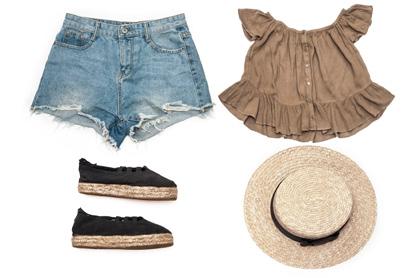
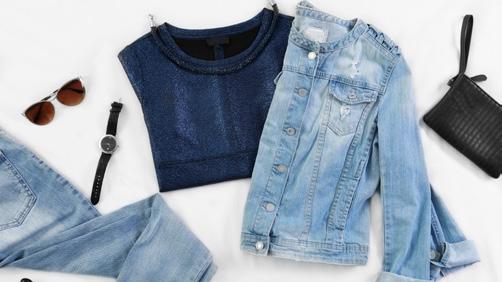
3 Name these clothing items. Use articles where possible.
4 Match these names with the correct pattern. Choose from the words below. checked – flowery – pin-striped – plain – polka-dotted – spotted – striped – tartan
5 Let’s find out what these teens’ favourite outfits are. a Form groups and discuss these questions.
- Whose outfit do you like? Why?
- Whose outfit would you not wear? Why not?
- Which outfit looks most like the way you dress?
This is my party dress. My mother bought it for me to wear on special occasions. At my parents’ anniversary party I wore this expensive striped silk dress with very fancy jewellery: a necklace, earrings and a bracelet. My mother also made me wear fancy black shoes. The heels were very high, so they were hard to walk in. I’m a huge fan of glasses and sunglasses. They are a very important accessory for me. striped spotted checked flowery plain pin-striped polka-dotted tartan
Jamila:
This is my absolute favourite outfit. I usually wear it to hang out with my friends. They all say my jeans are really cool because they’re ripped here and there. I love my blue denim ripped trousers. I also love this off-white blouse. On colder days I wear a dark jumper over it. To add some colour on darker days, I wear these clothes with a very colourful leather jacket and my black boots.
Jill:
b Focus on words.
Jamie: I wear these clothes for school. All the boys in my school have to wear this uniform: a white shirt and a tie, green trousers, brown leather shoes and a green jacket. In winter we can also wear a warm coat, a woollen hat, some warm woollen knitted gloves and a scarf. The girls in my school don’t have to wear a tie. They can also wear a skirt with long socks instead of trousers.
Ella:
This is my most sporty outfit. I usually wear skirts. I am wearing trainers, a pair of dark blue shorts and a nice loose blue T-shirt. It is easy to move around in these clothes, so I wear them to play football. This is my favourite uniform.
- Circle the clothing items (focus on the nouns) in the text and underline the adjectives that describe them.
- Get two pieces of paper. Create two categories: nouns and adjectives. Write the nouns in one colour and the adjectives in another. List the words from the text in the correct category.
- Use the words in context. Cut out the cards and create 2 stacks, one with the adjectives and one with the nouns. Pair up, take a card from each stack and make sentences.
Did you know?
Plural nouns
Trainers, shorts, glasses, trousers are always used in the plural. If you want to express there is more than one, you can say: e.g. There are two pairs of jeans on the table. NOT There are two jeans on the table.
6 Read the text about traditional Indian clothing and answer the questions.
a What word is used to refer to designs that take us back to our cultural roots?
c What type of dress is most common for Indian women to wear? reading Indian women often wear a sari.
It is very popular in the region of Punjab. ethnic
b Why is Shalwar Kameez also often called a Punjabi suit?
Traditional Indian clothing has become important once again. Well, if you notice the trends in fashion industry, you’ll realize that modern fashion has aped the styling and designing of the bygone eras, the period of royalty, when Maharajas and Ranis used to spend extravagantly on their clothing. Whatever the royals chose to wear was reminiscent of splendour and luxury. The creative fashion designers of today are on the lookout for ethnic designs that brings us closer to our cultural roots and remind us of the glorious past. In this section, we will provide you with information on the different kinds of traditional clothing in India, so read on…
Dhoti
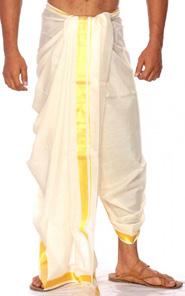
Dhoti kurta is the traditional Indian clothing of men. Unlike other dresses, it is an unstitched piece of cloth usually 5 yards long that is tied around the waist and legs. The knot is tied at the waist. Dhoti is known by different names in different places, such as Laacha in Punjabi and dhuti in Bangla.
Kurta
Kurta is a term used to refer to a long loose shirt, the length of which falls below or may be just above the knees of the wearer. In olden times, it was primarily worn by men, but today, it has become a unisex dress that both men and women can wear.
Indian shalwar kameez
Shalwar kameez is the traditional Indian clothing for women. Due to its high popularity in the region of Punjab, shalwar kameez is commonly referred to as Punjabi suit. The fashion of shalwar kameez in India is not new. For the last few centuries, women have been wearing this wonderful attire.
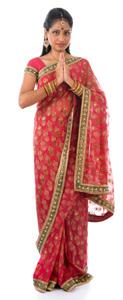
Sari is one of the most wonderful dresses worn by Indian women. In fact, when one thinks of a typical Indian woman, the first thing that comes to mind is a woman dressed in a sari, who is wearing the solah shringar including bindi, chudi and kajal, etc.
Sherwani for men
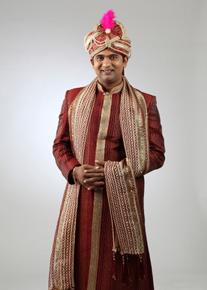
Sherwani is a long coat resembling achkan in styling. It is buttoned up to the collar, and it usually comes below the knee. It adds to the charm and grace of men, especially the taller ones. Indian men spend a lot on buying the sherwani suit for the special occasion of their wedding.
Turban
In India, one can spot many men wearing turbans. A turban is tied not for the sake of fashion, but because it has a lot of significance in the lives of Indians. The hair turban is a headdress that basically consists of a long piece of unstitched cloth, which is wrapped around the head.
Source: www.culturalindia.net
attire: clothes, mostly formal bygone: belonging to or happening in the past Maharajas: the male ruler of an Indian state in the past primarly: mostly
Rani: a female Indian ruler or the wife of a male Indian ruler reminiscent: makes you think of significance: importance splendour: brilliance yards: a unit of measurement, equal to 3 feet or 90 centimeters
7 Go through the text again and write the correct names of these clothing items under the picture. reading
kurta shalwar kameez
8 Are there certain traditional clothing items in your culture too? If so, what are these items called? When are they worn?
India is a country in South Asia. It is the seventh largest country and the second most populous country with over 1.4 billion people. It is surrounded by the Indian Ocean on the south, the Arabian Sea on the southwest and the Bay of Bengal on the southeast. It shares borders with Pakistan, China, Nepal and Buthan.
India was a British colony in the 18th and 19th century; therefore English is still one of the most spoken languages in this country. British influence in India remains quite strong, as cricket is the most popular national sport and cars drive on the left.
turban
sherwani sari dhoti
2 / A gorgeous blue silk scarf
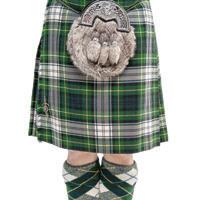
1 Match the images to the right descriptions.
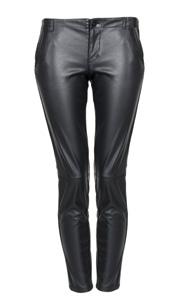
A black leather pants
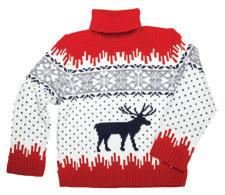
B a colourful knitted Christmas sweater
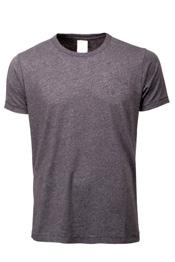
C 2 nice loose grey T-shirts
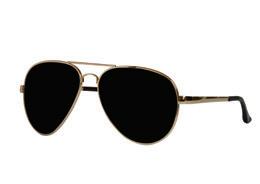
D expensive dark sunglasses
E a traditional Scottish kilt
F stylish gold shoes
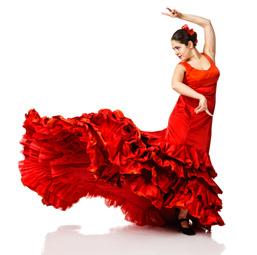
G a beautiful long red Spanish dress
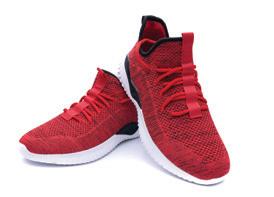
H new red running shoes
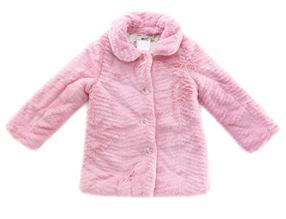
I a cute little pink baby jacket
2 Look at the examples in exercise 1 and try to complete the grammar box below. Choose words from the box.
adjectives – factual – a noun – opinion – order
How to describe people and things
tell us something more about
We use them to describe people and things.
When you use more than one adjective, the adjectives are in a particular
GRAMMAR
Adjectives a noun order opinion factual
1/ The general rule is that adjectives describing come before more descriptive (or ) adjectives.
2/ Two or more adjectives? The natural order of adjectives in English is:
opinion size condition shape age colour origin pattern material purpose a beautiful clean A-line checked
(quantifier/determiner)
dress an oversized new multicoloured Hawaiian shirt
Here are some more examples:
- Aisha has 2 nice loose grey T-shirts.
- Sam is wearing a cute little pink baby jacket.
- Mila is wearing a beautiful long red Spanish dress.
- Sandeep is wearing new checked cotton pants.
Keep in mind:
Using 3 adjectives in front of a noun is unusual in English. Don’t do this in formal writing. In natural speech or writing, people usually only use 1 or 2 adjectives in front of a noun.
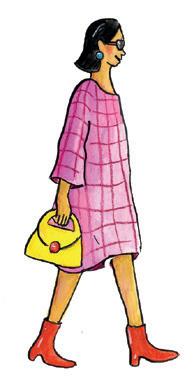
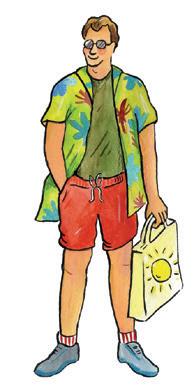
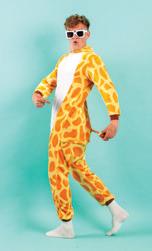
3 Complete the table below to describe these images. Use 2 or 3 adjectives. Try to vary the categories of the adjectives.
yellow and orange funny (?) giraffe tartan shirt flowery dress Personal answer suit onesie / pyjamas
5 Write the adjectives in the correct order.
1 (black/metal) sunglasses:
2 (fancy/new/2) school bags: 3 a (brown/leather/small) wallet: 4 (fantastic/mini/modern/3) skirts: 5 (blue/cool/new/nylon/some) trainers:
cool (?) large black metal sunglasses 2 fancy new school bags a small brown leather wallet 3 fantastic modern mini skirts some cool new blue nylon trainers
4 Now look around the classroom and write 3 sentences in which you use 2 or 3 adjectives in combination with a noun, as in exercise 3.
6 What do you see here? Use 2 or 3 adjectives to describe the items.
7 What do you think about the clothes in exercise 6? Use the expressions from the box below to give your opinion. speaking
How to express your preferences
I love … because …
I’m fond of … because …
I prefer … / I prefer … to …
I have a slight preference for …
I like … because…
I like … (much) more than … because …
I don’t (really) like … because …
I don’t like … at all because …
I (really) hate …
USEFUL EXPRESSIONS
I wouldn’t be caught dead wearing … because … See p. xxx
8 Pair up. You will get a stack of cards with some items of clothing on them. Describe the items of clothing (use adjectives) and say what you think of them.
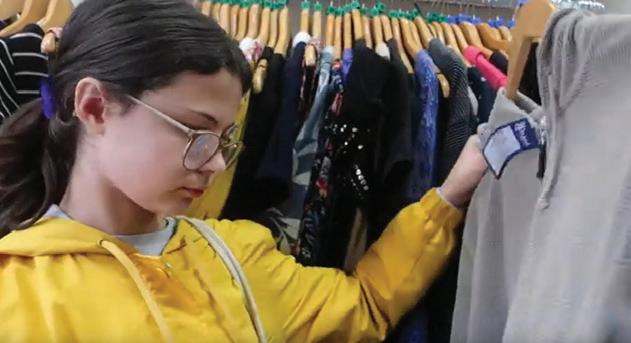
9 Watch the video about the girl who explains thrift shopping in the UK. Answer the questions.
a What is thrift shopping?
It’s shopping for second-hand clothing. Second-hand clothes are clothes which have been previously sold, worn (to varying extents) and resold.
b What is it called in the UK?
It is called shopping in charity shops.
c What is the main difference between the USA and the UK?
The girl says the shops in the USA are bigger with a lot of good clothes and in the UK, you mainly find ‘granny clothes’.
d Why is thrifting good?
You help others by donating your clothes to a thrift (charity) shop.
10 Now watch this American boy who goes thrifting. Answer the questions.
a How many clothing items did the boy buy?
He bought 21 items. (11 T-shirts, 1 long shirt, 5 sweaters, 4 jackets)
b Name at least 5 items. Make sure you describe the items using 2 or 3 adjectives.
c Reflection: check your text. Then give your text to a classmate who will give you feedback too. writing
13 Class auction. Is anyone interested in the clothing item you don’t want anymore?
a Preparation: bring your clothing item to class. Read your description in exercise 12 again and practise saying it out loud. Decide if you will ask money for it or do a clothes swap.
b Action: auction off your item. Follow these steps.
Checklist: class auction
• Use an index card with some keywords.
• Show the item and describe it.
• Say how much money you want for it, or whether you just want to swap it.
• Make eye contact with the class.
• Speak loud enough and be enthusiastic.
• Pay attention to your pronunciation.
c Reflection: check your short presentation. Did anyone buy your item? Did you swap it?
14 Write a poem about clothes.
a Preparation: find a piece of paper.
b Action: follow the instructions below and write a poem about clothes.
Checklist: clothing poem
• Read the examples for inspiration.
• Use the structure provided below to write your own poem.
• Use vocabulary from this unit.
• Write at least one clothing poem. Can you write more than one? writing
Title: THE OUTFIT or your piece of clothing
Line 1 – Start with a piece of clothing (e.g. a jacket, some boots).
Line 2 – Describe the colour and pattern (e.g. bright red with polka dots).
Line 3 – Add a texture or material (e.g. soft as velvet, made of leather).
Line 4 – Say how it makes you feel (e.g. I feel bold when I wear it).
Line 5 – Compare it to something (e.g. like a superhero’s cape).
Line 6 – Where or when you wear it (e.g. on rainy days in the city).
Like an elephant stomping I wear it to the park I wear them in the rain
Happy. Powerful.
c Reflection: read your poem out loud. What does the class think?
CHECK 1
Step 2 Good, better, best Making comparisons
1 Watch the video about how men should dress and do the tasks below.
a Complete the transcript with the correct words.
Most men wear jeans that are too or too . If you can fit 2 fingers comfortably between the hip and waist band, you found the right . Unless you’re a surfer, avoid shorts that fall below the . On the other hand, no one wants to see your entire thigh. Wear shorts by choosing a length that either breaks at the knee or no more than 2 to 3 above it. In general don’t tuck in shirts and and don’t untuck dress shirts or you’ll look like you’re wearing, well, a Tuck formal shirts in, which are longer with a straight Untuck casual shirts when the hemline curls upward at the
b Answer the questions about the video.
1 How can you tell that a jacket is too large?
There will be a divot under the shoulder.
2 What should be the maximum depth of the V in a V-neck shirt?
The bottom of the V shouldn’t be lower than about 2 or 3 inches below your collar bone.
3 Which tips are given about not limiting yourself? Give 2.
Experiment with new styles; don’t be afraid of colour; embrace different patterns and textures, wear what makes you confident.
4 Were there any good tips in the clip? Which ones?
Personal answer
5 Did you see anything you really disagree with? If so, what? watchING large tight baggy size knee wisely inches casual polos dress hem hip
Personal answer
2 Rana is going to a party and wants a new outfit. He went shopping with his mother and they selected 3 outfits. Read what they have to say about each one and answer the questions.
a What outfit do you prefer?
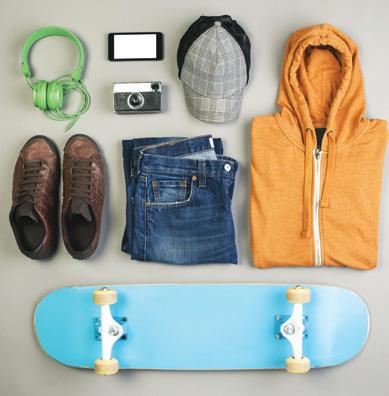
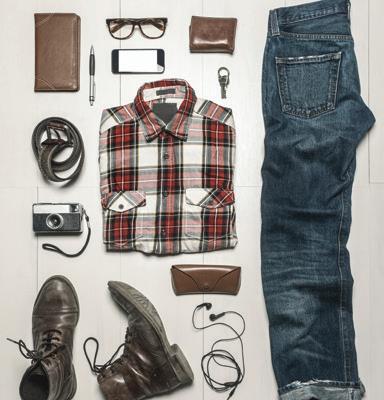
b Underline the words that Rana and his mother use to describe the outfits.
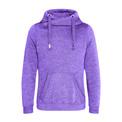
Rana: I really like outfit A; it’s the trendiest,and I think it would make me the coolest guy in the room. The colour of the hoodie is not what I am used to, but my skateboard will make it look quite sporty. It’s way cooler than the shirt in B. I would feel more comfortable wearing this outfit; to me, it’s the most comfortable outfit. And let’s not forget the price. This outfit is cheaper than the others. In fact, it’s the cheapest. Outfit C is less suitable; I think it’s just too formal for me.
Mum: I am crazy about outfit C. This suit makes Rana look really smart; it’s actually the smartest of all 3 outfits! The trousers and the jacket are very simple and modern, the belt is of good quality leather. Maybe the tie is a bit much? I don’t really mind that this outfit is the most expensive because it is so stylish. My least favourite is outfit B. I think outfit A is nicer than this one.
c How would you describe outfit B? Use words from the box to complete the sentences. affordable – casual – cheap – colourful – cool – expensive – fancy – fashionable – modern –old-fashioned – original – stylish – trendy – ugly – ultra-posh
d This is what Rana and his mum think about the 3 outfits. Complete the sentences with a form of the adjective you find in the texts in b.
1 Rana thinks the shirt from outfit A is than the shirt from outfit B. (cool)
2 Outfit C is the , but Rana’s mother thinks that’s fine, because it is also the . (expensive – smart)
3 Outfit A is than outfit B and it is than outfit C. Outfit A is the . (cheap)
4 Outfit B is than outfit C but outfit A is the (comfortable)
3 Use the text in exercise 2 to complete the table.
small cheap smaller than than the smallest the large nice larger than than the largest the big hot bigger than than the biggest the happy sporty happier than than the happiest the popular expensive more popular than than the most popular the
Personal answer cooler most expensive smartest cheaper cheaper cheapest more comfortable most comfortable cheaper cheapest nicest nicer hotter hottest sportiest sportier more expensive most expensive
4 Use the information from exercise 3 to complete the grammar box.
How to make comparisons
Comparative and superlative
Adjectives
Comparative
can be used to make comparisons.
Superlative
USE
To compare 1 person or thing with another person or thing.
– Used with ‘than’: e.g. Outfit A is cheaper than outfit B.
FORM
– Short adjectives: add e.g. cheaper, smarter
– Long adjectives: add e.g. more expensive, more popular
Keep in mind:
USE
GRAMMAR
– To compare 1 person or thing with all of their group.
– Used with ‘the’: e.g. Outfit A is the cheapest.
FORM
– Short adjectives: add e.g. cheapest, smartest
– Long adjectives: add e.g. most expensive, most popular
– Depending on the adjective, the spelling of the comparative and superlative may be a little bit different.
– There are irregular forms!
– To say that something is the same, we use ‘as + adjective + as’ e.g. Outfit B is as expensive as outfit C.
- Less and least are the opposites of more and most. e.g. less expensive, least expensive See p. xxx
5 Complete the sentences with the adjective in the comparative or superlative form.
1 Who is the woman on earth? (rich)
2 My new shoes are than my old pair. (comfortable)
3 I couldn’t wear my new dress because the weather was very bad; tomorrow it will be than today. (hot)
4 This is the outfit I have, perfect for this occasion. (pretty)
5 Brandy Melville is the shop at the moment. (popular)
6 They sell that item in the shop in town. (large)
7 The way to buy a lot of clothes is to buy them during the sales; then they’re . (good – cheap)
8 This is the dress in the entire collection — it would be perfect for a special event. (stylish)
9 These jeans are than the ones I saw last week, so I think I’ll go back to the other shop to buy those jeans. (expensive)
10 That store has the selection of jackets I’ve seen in the mall. (wide)
richest more comfortable hotter prettiest most popular largest best cheaper most stylish more expensive widest
6 Compare two outfits.
a Preparation: look at these 2 outfits. Write a few keywords next to each picture to describe the items. Decide which one is your favourite.
b Action: write a text to compare the outfits. Follow these steps.
b Where can you find this text? blog book newspaper
c What do the following expressions mean? - it’s bigger than you and me = - to have a moment = - clothes make the man = - to look slick as a whistle =
d What is the sacred ceremony of remembrance for the Dark Days called?
to have a moment of inspiration, to have a great idea clothes make you look beautiful to look good It is called the Hunger Games.
e Connect the outfits to the correct person. A person can sometimes be linked to more than one outfit.
1Wyatt Aeight-ball cuff links on my white silk shirt
2Me Ba rakish vest embroidered with cocktail glasses
3Lou Lou Ca boa
4Maysilee Da black lace dress
Ea tuxedo
Fa roomy pair of patent leather shoes
Gan off-the-shoulder velvet gown
Hblack lace gloves
f Who is the designer of the clothes?
The designer is Effie Trinket.
g Why does she decide to help the group with clothing and makeup?
h What does Proserpina say about ‘great-aunt Messalina’. Why is that important?
Because she doesn’t want her sister and her friends to fail. She sees it as her responsibility and also enjoys the chance to make them look better. She says Great-Aunt Messalina never throws anything out. This is important because it means they had access to old, but fashionable, clothing for the event. it’s more important than us
E
A, B, F D C, G, H
I Why does Effie suggest a lighter lipstick for Lou Lou?
It is to get sponsors for the Hunger Games. It is Haymitch.
l What does Haymitch do that surprises Effie?
He compliments her fashion sense.
He helps her adjust her dress.
He thanks her for doing the group’s makeup.
He picks up the spilled makeup and hands it to her.
13
“Effie!” cries Proserpina, flinging herself into the newcomer’s arms.
Effie pats her back. “Well, I’m not going to let my baby sister — or her friends! — fail because some slacker didn’t do his job!”
All the prep teams break into cheers or tears or both as they crowd around her. She accepts the adulation, but then gets serious.
“Listen, everybody. There is something bigger than you and me happening here. As we all know, the Hunger Games are a sacred ceremony of remembrance for the Dark Days. A lot of people lost their lives to guarantee peace and prosperity for our nation. And this is our chance — no, it is our duty — to honor them!”
Well, she’s swallowed the Capitol propaganda hook and took the line and sinker with it, but at least she’s brought us some decent footwear. She begins unzipping bags.
“When you called, Prosie, at first, I didn’t know what to do, and then I thought, GreatAunt Messalina!”
“Great-Aunt Messalina!” crows Proserpina. “She never throws anything out!”
“A lot of it’s really old, but fortunately all the war-era styles are back in fashion,” explains Effie. She holds up a black lace dress with matching gloves. “And there’s loads of black because there were so many funerals.”
“I confess to having a moment,” says Effie. “Don’t worry, boys. Great-Uncle Silius was no slouch in the threads department either.”
He certainly wasn’t, and even better, he seemed to be roughly the same size as Wyatt and me, with a few adjustments. We find a tuxedo for Wyatt and a three-piece suit with a rakish vest embroidered with cocktail glasses for me. Just the thing for a rascal. Or a bootlegger. By the time I’ve added a roomy pair of patent leather shoes and eight-ball cuff links on my white silk shirt, I look slick as a whistle.
“Clothes make the man,” says Effie with satisfaction, giving me an approving pat on the shoulder. At least the Trinkets aren’t mean, just clueless, which makes for a big improvement over Drusilla and Magno. The girls look sensational, too, with Lou Lou in the black lace dress, expertly pinned up to fit her, and Maysilee in an off-theshoulder velvet gown, a boa, and the black lace gloves. I know we’re being prettied up for slaughter, but at least we might have some sponsors now.
“Who could believe they’re from District Twelve? It was really nice of your great-aunt to let you borrow everything,” says Vitus.
“Well, she owes us after all the disgrace she brought to the name of Trinket. We’ll be recovering from that for years,” Effie says, crinkling her brow. “If even only half the stories are true…”
Vitus puts a consoling arm around her and says, “You don’t pick your ancestors.”
Then his voice drops to a shamed whisper. “My grandfather was a rebel sympathizer.”
“You win,” concedes Effie. “But look at you now!”
When Drusilla swings out of the kitchen, she does a double take at our outfits. “What happened here?”
“Oh, it was a privilege to dress them for Panem,” says Effie modestly.
Drusilla’s face twists through a range of expressions — confusion, relief, admiration, with bitterness ultimately winning. “These cannot be credited to Magno. You.” She grabs Effie by the arm. “You’re coming with us, and I’m telling everyone you’re responsible.”
“But — I don’t even have a backstage pass,” objects Effie. “That, at least, I can remedy.” Drusilla waves us toward the door. “Come on, you lot, let’s try to make it to at least one event on time.”
Proserpina shoves a makeup box into Effie’s hands.
“Touch-ups!”
“I’m on it,” promises Effie. “For everybody!” She gives Lou Lou, who’s baring her teeth, a worried look. “Maybe a lighter shade of lipstick for you.”
“And tone down the blush,” says Maysilee.
“Exactly,” agrees Effie. For a moment, they’re just two girls on a mission to beautify the world. Effie holds up a compact for her opinion. “I’m thinking maybe a peach?”
“Much better.”
“Hold on.” Effie reaches over and removes a broken feather from Maysilee’s boa.
“There. You’re perfect.”
“Is my mascara okay?”
“Yes, but I can see it’d be a problem with those long lashes of yours.” Effie digs in the makeup box and hands her a little pad. “Take this in case it smudges.”
Drusilla starts to haul Effie to the elevator, sending the makeup box to the floor. It cracks open and tubes of color roll across the burnt-orange carpet. I lean over and collect them, returning it all to Effie, who looks slightly surprised.
“Thank you, Haymitch,” she says. “That was very considerate, especially given your circumstances.”
“Well, thank you for bringing us some dress-up clothes.”
Source: Collins, Suzanne. Sunrise on
8 What do you think? Discuss.
- Do you think Effie is a likable character in these pages? Explain your opinion with an example from the text.
- If you were one of the characters being dressed by Effie, how would you feel? Excited, embarrassed, grateful, or something else? Explain your answer.
- Would you enjoy being part of this group getting ready for the Games? Why or why not? speaking
Throughout the United Kingdom the currency used is the Pound, or Pound Sterling. The bank reference for this currency is GBP.
One pound is divided into 100 pennies, or pence. To specify sums of money, pence is the normal plural form of the word penny
The symbol for the Pound is £. It is written in front of the price. There are coins and banknotes.
5 Pair up and have a conversation with a classmate.
a Preparation: before you start, read through the useful expressions on how to buy something in a shop in the Summary of this unit (p. xxx).
b Action: have a conversation with your classmate. Follow these steps.
Checklist: conversation in a shop
• Decide who will be the shop assistant and who will be the customer.
• You will get some cards. Use them in your conversation! When you see this sign complete the dialogue with the information on your card.
• Start and end your conversation correctly.
• Speak fluently.
• Pay attention to your pronunciation.
c Reflection: check your first conversation. Then take new cards and switch roles. Act out your second conversation for another pair of students. Listen to their feedback!
CHECK 3
SPOKEN INTERACTION
SUMMARY
HOW TO describe people and things
That’s a nice fitted blue top! And I adore that short checked skirt.
Adjectives tell us something more about a noun. We use them to describe people and things. When you use more than one adjective, the adjectives are in a particular order.
1/ Opinion or descriptive adjectives?
We usually put opinion adjectives before more factual or descriptive adjectives: e.g. a nice black dress g nice is an adjective that gives my opinion about the dress
2/ Two or more adjectives?
The natural order of adjectives in English is as follows:
Here are some examples:
(quantifier/determiner)
- Aisha has 2 nice loose grey T-shirts.
- Sam is wearing a cute little pink baby jacket.
- Mila is wearing a beautiful long red Spanish dress.
- Sandeep is wearing new checked cotton pants.
Keep in mind:
- Using three adjectives in front of a noun is unusual.
e.g. a lovely little black dress
- Using more than three adjectives in front of a noun is very unusual and should be avoided in writing.
- When using 2 adjectives from the same group, place a comma or the word ‘and’ between the adjectives:
e.g. a loose-fitting blue and green Hawaiian shirt
- The typical order may change if you want to emphasize something.
HOW TO make comparisons
Comparative and superlative I am really cheap! But I am the cheapest! I am cheaper! I’m good. I’m better! I’m the best!
USE
–
Adjectives can be used to make comparisons.
Comparative
To compare 1 person or thing with another person or thing.
– To say that something is the same, we use ‘as + adjective + as’. e.g. Outfit B is as expensive as outfit C. - Less and least are the opposites of more and most.
No, thanks. I’m just looking. Hi! Yes, I’m looking for … Yes, do you have this/these (name object) in (name size or colour)?
Let me check what we have in stock. Let me check that for you. What size/ colour do you need?
Sure, we’ve got this in (name other sizes/colours).
I’m sorry, I’m afraid we haven’t got any (name size) left.
Oh, I’m sorry, we don’t have that colour anymore.
Yes, of course. The fitting rooms are over there.
Is it OK?
How do you like it?
Do you need anything else?
2 Giving information 3 Paying
I need a size (xs, s, m, l, xl). I’d like this in (name colour).
Can I try it on?
Oh, it’s perfect. I’ll take it! It fits perfectly. I’ll take it!
No, not really. It’s too (small, big, etc.). Can I try on another size?
No, that’s it, thanks.
How would you like to pay today? Cash or card? Would you like to pay by credit card or cash?
That’ll be (name price), please.
4 Finishing the conversation
Thanks!
Here’s your change.
Here’s your receipt. Have a nice day.
We appreciate your business.
I'll pay cash/ by credit card.
Here you go!
Thanks! You too.
CHECK OUT: GOING SHOPPING
Orientation
You will have 2 conversations:
– There is a special occasion coming up. Try to find/buy the perfect outfit for it!
– You are a shop assistant and you will try to sell your best pieces.
Preparation
1 You will get a role card with a special occasion.
2 Check magazines, social media, websites of famous brands/shops and look for a good outfit for your occasion. Make sure you know what you are looking for.
3 Don’t forget that you will have to stick to your budget.
Action
4 You are going to the shop to buy your outfit. Act out your conversation.
A: shop assistant You help the customer, ask about the size, the colour, the material, etc. and you try to sell extra clothing or accessories.
B: customer You buy the things you need. Describe at least 3 different pieces of clothing. Compare at least 2 items with each other and be precise when describing the items.
5 Now take on the role of shop assistant and try to help your customer.
Reflection
6 Check your task by filling in the checklist.
Checklist: going shopping
Content and structure
• I started and ended the conversation well.
• I kept the conversation going.
• I compared at least 2 pieces (as the customer).
• I described at least 3 pieces of clothing (as the customer).
• I tried to sell extra items (as the shop assistant).
• I convinced the customer (as the shop assistant).
Language
• I used the words to describe the clothes correctly.
- Try to tell a classmate the plot of your favourite fairy tale in English. speaking
Snow White and the Seven Dwarfs
Cinderella
The Three Little Pigs
Hansel and Gretel
Beauty and the Beast
The Little Mermaid
Jack and the Beanstalk
MAIN TRACK
Step 1
A true love’s kiss The language of fairy tales
1 / From A (as in apple) to Zzzz (as in sleep)…
1 Look at these book covers and do the tasks below. Discuss with a partner.
a The titles of these stories were given a modern update. Do you know which fairy tales they are based on?
b Colour the heart if you would like to read these graphic novels. Explain why. speaking reading
Snow White and the Seven Dwarfs
Beauty and the Beast
Little Red Riding Hood
Puss in Boots
The Princess and the Pea
Rumpelstiltskin
Did you know?
Dwarfs is the standard plural of the noun dwarf Dwarves is a variant popularized – but not invented – by English author J.R.R. Tolkien in his fantasy fiction works, including The Hobbit and The Lord of the Rings. The ‘Tolkien spelling’ is only used when referring to little people in fantasy worlds.
In fact, Tolkien admits dwarves was actually a misspelling: ‘I am afraid it is just a piece of private bad grammar, rather shocking in a philologist; but I shall have to go on with it. […] The real “historical” plural of dwarf (like teeth of tooth) is dwarrows […]. I rather wish I had used the word dwarrow.’
One can ask the question: what would the world of fantasy literature have looked like if Tolkien had really used dwarrow… ?
Source: thebettereditor.wordpress.com
2 Read the summaries of the stories and do the tasks.
a Link a summary to a book cover.
b Write the title of the ‘classic’ fairy tale under each cover. reading
stepmother and two stepsisters treat her like dirt. Each and every day, they force her to clean their clothes, cook their meals, and only give her rags to wear and crumbs to eat. But each night, in secret and in shadows, trains to be a ninja! More than anything, wants to become the Prince’s personal bodyguard. When the opportunity to prove her worth to the Prince finally arrives in the form of an invitation to a royal costume ball, stepmother won't let her go! But this time around, Ninja-rella isn’t going to take ‘no’ for an answer ...
The Little Mermaid
Cinderella’s
Cinderella’s
Cinderella
Cinderella
Cinderella
Sleeping Beauty
In a faraway land, a princess named Aurora lives in a castle … honing her enchantments amid a slumbering kingdom! When the princess was just a baby, a wicked fairy cursed the realm with unending sleep. But a kind fairy had her own spell to cast – she saved the newborn and granted the girl the gift of magic! Now, Aurora is the only one who can awaken her subjects by making a potion made up of the world’s rarest ingredients. Faced with strange places and fantastical creatures, can Aurora succeed in her epic quest, or will the kingdom – and she – be doomed to doze forever?
In a remote mountain valley lives a special pack of wolves: one night a month, when the moon is full, they turn into werewolves. Little werewolves are taught never to venture to the far side of one mountain because of the grave dangers there. But the youngest daughter of the pack’s alpha wolf just can’t contain her curiosity. She sneaks a peek at the forbidden side to discover it is a ski resort, where she befriends a young boy. But will their friendship survive if he discovers her dark secret? Experience Hans Christian Andersen’s tale of ‘ ’ like you never have before in this graphic novel retelling.
The Little Mermaid
honing > to hone: to refine, to improve remote: far away slumbering: sleeping to venture: to undertake a risky/daring journey
c Highlight the words related to fairy tales and put them in the correct place in the mind map.
Place
CharactersObjects
Theme/Event/Actions
faraway landstepmothercrumbs royal costume ball
castle stepsisterspotion the gift of magic forbidden sideprince enchantments
mountain valleyprincess cursed kingdom wolves dark secret a wicked fairy
enchanted forestgnome mirror kiss palace witch magic wandwish woods genie apple spell
d Can you add other words? Add at least 3 other words to each category.
e What other words do you associate with fairy tales? Listen to your teacher. Can you build a complete fairy tale alphabet?
3 What word are we looking for? Fill in the correct word.
1 is a person who fights with a sword and wears armour.
A knight
A fairy
2 is a magical woman with wings who can help people.
A dragon
3 is a dangerous creature that breathes fire.
A castle
4 is a very big house for a king and queen.
5 is a stick used to do magic.
A magic wand
The woods / the forest
6 is a place full of trees.
A village
7 is a small town where people live.
A flying carpet
8 is a flying object used for travel in fairy tales.
9 is a person who turns into a wolf during the full moon.
10 is a tall building where a princess might live. apple, archer, amulet noble, night beast, broomstick, ball ogre, oak castle, crown prince, princess, potion dragon, dwarf, dungeon queen, quest enchanted, elf, evil robe, rose, ring fairy, forest, frog spindle, sword, spell giant, goblin, glass slipper tower, troll, treasure huntsman, hood unicorn incantation, ivy villain, valley jester, jewel, jack wand, witch, wolf kingdom, knight, key x-ray vision (modern fairy tale ��?) lamp, locket yonder, yarn mirror, magic, mermaid zzz (sleep)
4 Watch the intro of the animation show, Awesome Magical Tales. Highlight the words you see in the show.
5 Draw and describe a fairy tale scene.
a Preparation: find paper, pens and crayons.
b Action: draw your own fairy tale scene and explain it. Follow the steps below.
Checklist: drawing and describing a fairy tale scene
• Choose 1 item from each category in exercise 2c.
• Create a drawing of a fairy tale scene, including at least one character, one place, and one magical item from the vocabulary list.
• Label the elements in your drawing using the correct words.
• Describe your drawing by writing a minimum of 50 words about your picture using the words.
E.g. This is a big castle. A princess and a knight live here. The knight has a sword. There is a dragon in the cave.
• Pay attention to your spelling and punctuation.
• Find a partner or form groups. Share your story: show your drawing and read your sentences to each other.
c Reflection: before you start talking to your classmates, check your work. Next, listen to each other. Ask questions if you don’t understand or want additional information. Whose scene did you like best? Why?
2 / Once there was…
1 Read the opening scenes of these stories and answer the questions.
a Write the appropriate title above each story.
b Complete the table below.
EXTRACT 1:
Goldilocks and the 3 bears
Once upon a time there were 3 bears who lived together in a house of their own in the woods. One of them was a little wee bear and one was a middle-sized bear and the other was a great big bear. They each had a bowl of porridge: there was a little bowl for the little wee bear and a middle-sized bowl for the middle-sized bear and a big bowl for the great big bear. And there were 3 chairs. They each had a chair to sit in: a little chair for the little wee bear and a middle-sized chair for the middle-sized bear and a big chair for the great big bear. And they had each a bed to sleep in: a little bed for the little wee bear and a middle-sized bed for the middle-sized bear and a great bed for the great big bear. One day, after they had made the porridge for their breakfast, and poured it into their porridge bowls, they walked out into the woods while the porridge was cooling, so that they might not burn their mouths by beginning too soon, because they were polite, wellbrought-up bears. And while they weren’t at home, a little girl called Goldilocks, who lived on the other side of the woods, passed by the house. She had to run errands for her mother but stopped at the house and looked in at the window. ‘Whose house was this? What was that on the table?’, she thought. And then she peeped through the keyhole …
Adapted from: www.storynory.com
EXTRACT 2:
Hansel and Gretel
Long, long ago and far away from here lived a poor woodcutter. He lived in a tiny village near a forest with his two children and his second wife. They weren’t rich. The children were called Hansel and Gretel. Hansel was Gretel’s big brother. One day, they had no more food. The woodcutter’s wife said to him that they must send the children into the forest. She wanted them to be lost forever. Then she and the woodcutter would have more food to eat. The woodcutter was devastated. Hansel heard them talking. ‘Was that true?’ he thought, he went outside and filled his pockets with little white pebbles. The next day the woodcutter and his wife took the children into the forest. The woodcutter was not happy about leaving his children, but his wife made him. Was he too afraid to say no? So, Hansel and Gretel were left all alone.
A long time ago, in Persia, a poor boy called Aladdin was playing with his friends in the streets of the city. He was not alone. And then suddenly a stranger came up to him and asked him if he was the son of Mustapha the tailor. ‘I am, sir, or rather I was,’ replied Aladdin, ‘but he died a long while ago.’ When the stranger heard this, he embraced Aladdin saying: ‘My boy – I wasn’t there before, but I am here now. I am your long lost uncle.’ ‘Where were you all this time?’ asked Aladdin, but he didn’t wait for an answer and ran home, told his mother all about this newly found relative, and she prepared supper for them all.
2 Look at the underlined verbs in the extracts in exercise 1 and answer the questions.
a Which verb are these verbs from?
to be
b When is this set? in the past in the present in the future
c Complete the table with the missing forms.
Subject Positive formNegative long form Negative short form I was not you were were not weren’t he/she/it we were were not weren’t you were were not weren’t they
d Find some examples of questions with the simple past of ‘to be’ in the extract. Complete the table.
3 Answer the questions about the extracts in exercise 1. Write complete sentences and use the past form of ‘to be’ in your answers.
a Were the bears in the house when Goldilocks looked through the window?
b Where were the 3 bears then?
c What was their breakfast?
d Why did the woodcutter‘s wife want to send the children away?
e Was the woodcutter devastated when he had to send his children away?
f Was Aladdin alone?
g Who was Aladdin?
h Who was the man that Aladdin met? reading was wasn’t wasn’t weren’t was not were not was were
Whose house was this? What was that on the table? Where wereyou all this time? No, they weren’t. They were in the woods. Their breakfast was porridge. There was not enough food. Yes, he was. No, he wasn’t. He was the son of Mustapha, the tailor. He was his uncle.
(Question word)to besubjectrest of sentence
4 Look at the questions in exercise 3. Make 2 groups of questions and complete the table. Tip: look at the answers.
a Complete the sentences with the past simple form of the verb ‘to be’.
b Who said it? The characters are taken from the extracts in exercise 1.
I in the woods and I found this little house. I wanted to go in and nobody there. There 3 bowls with porridge. I tasted them all and eventually ate the medium bowl entirely. It delicious. I very tired so I went to bed and when I woke up, there 3 bears, a little one, a middle-sized one and a big bear. They friendly, so I afraid of them.
The woodcutter
We very poor, and there enough food for the children. My wife cruel, and I able to stop her plan. The children so small, but very brave. The forest dark, and the path hard to follow. I heartbroken when I realised they gone.
Life in the city hard for us. We poor and hungry; we had to steal sometimes to survive. It always easy, we in trouble sometimes but I brave. I more than just a thief and one day the people able to see that. were wasn’t was wasn’t were was was was were Goldilocks was were wasn’t were was was were Aladdin was was were was was were weren’t was
6 Now use the information from the previous exercises to complete the grammar box.
Step 2 Happily ever after? Exploring the past simple
1 / Modern versions of old fairy tales
1 Watch the extract from the film Beastly and answer the questions.
a Who are the people in the pictures? watchING
b Use 2 different colours to highlight which characteristics belong to each character.
eccentric – famous father – tattoos – ambitious – handsome – weird – jealous –into dark powers – wants to become president of the high school green committee –rich – witch – popular
c Who is the good and who is the bad character? Why do you think this?
2 Read the text and decide which fairy tale was the inspiration for this story. reading
Beauty and the Beast
‘I am a beast. A beast. Not quite wolf or bear, gorilla or dog, but a horrible new creature who walks upright – a creature with fangs and claws and hair springing from every pore. I am a monster.
You think I’m talking fairy tales? No way. The place is New York City. The time is now. It’s no deformity, no disease. And I’ll stay this way forever – ruined – unless I can break the spell.
Yes, the spell, the one the witch in my English class cast on me. Why did she turn me into a beast who hides by day and prowls by night? I’ll tell you. I’ll tell you how I used to be Kyle Kingsbury, the guy you wished you were, with money, perfect looks, and a perfect life. And then, I’ll tell you how I became perfectly beastly.’
e Pay attention to the spelling of some of these verb forms! Complete the table below. Leave the extra line for an example sentence blank for now.
Base form of the verb
stab
Example sentence
Kendra stabbed Kyle.
Rule
Short vowel + consonant:
wrap I wrapped a scarf around my chin and cheeks. double consonant + -ed verb + d -y g -ied
curse arrive move reply hurry cry play
stay enjoy travel X
Kendra cursed Kyle.
When it arrived, it wasn’t crowded. A woman in a nearby seat moved away.
Kyle replied that it was a joke.
I hurried close to the buildings.
Kyle cried. Kyle played with girls’ feelings.
They stayed in the Hamptons. The people enjoyed getting drunk.
Kyle’s father travelled a lot.
Verb ends in -e:
Consonant + -y:
Vowel + -y:
Vowel + -l:
(regular) verb +ed double l + -ed
(!) In AmE the -l is not doubled! appear greet ask
6 Complete the sentences with the correct form of the verb in brackets in the past simple. Pay attention to your spelling.
1 He was very little. That’s why they (to call) him Little Thumb.
2 He (to enjoy) playing with his brothers and they never (to carry) him when they (to play) basketball.
3 He (to drop) a pebble while walking through the woods.
4 He (to hurry) to the river side very early in the morning and (to fill) his pockets with pebbles.
5 His brother (to cry) when their parents were away.
6 He (to try) to bring them home again.
7 Little Thumb (to climb) up to the top of the tree and (to look) around, he (to turn) his head and (to notice) a glimmering light.
7 Read the extract from the book Beastly and answer the questions.
a Who is talking? I =
b Where was he?
c How did Kyle make himself invisible?
d Where did he want to go?
e Why did he fear Sloan seeing him?
f Why couldn’t he go in?
g Why didn’t he want to go in anyway?
He wore a big coat with a hood and pulled it up over his face. He wrapped a scarf around his chin and cheeks. He wanted to go to Gin Elliott’s party in SoHo. He feared that she would show him to everyone and they would make fun of him. Because there was a doorman at the door. He didn’t like going in because he didn’t want to deal with the light, the faces and the fact that the party was going on without him.
h Did you read or see Beauty and the Beast when you were little? Yes, I did/No, I didn’t.
i Did you enjoy the story? Why/why not? reading called enjoyed carried played dropped hurried filled cried tried climbed looked noticed turned Kyle He was in Brooklyn, New York.
Personal answer
That night, for the first time since moving to Brooklyn, I went out onto the street. I waited until night, and even though it was early October, I wore a big coat with a hood, which I pulled up over my face. I wrapped a scarf around my chin and cheeks. I hurried close to the buildings, turning so people wouldn’t see me, ducking into alleys to avoid coming too close to anyone. I shouldn’t have to do this, I thought. I am Kyle Kingsbury. I’m someone special. I shouldn’t have been reduced to skulking in alleyways, hiding behind garbage Dumpsters, waiting for some stranger to yell, ‘Monster’. I should have been with people.
Yet, I hid and ducked and skulked and luckily went unnoticed. That was the weird thing. No one noticed me, even those who seemed to look right at me. Unreal.
I knew where I wanted to go. Gin Elliott, from my class at Tuttle, had the hottest parties at his parents’ place in SoHo when they were away. I’d been watching the mirror, so I knew they’d be away this weekend. They always stayed in the Hamptons over the weekend. I couldn’t go to the party – not as a stranger, and certainly not as myself, as Kyle Kingsbury reduced to nothing.
But I thought that maybe – just maybe – I could stand outside the party and watch people going in and out and who enjoyed getting drunk. I could watch them from Brooklyn, sure. But I wanted to be there. No one would recognize me. My only risk was that maybe someone would see me, that I would be captured, held as a monster, maybe made a zoo creature. Not a small risk. But my loneliness made me brave. I could do it. And still, as people travelled to where they wanted to go, it seemed they were looking, but they never really saw me.
Did I dare to take the subway? I did dare. It was the only way. I found the station I’d seen so many times from my window, and pushing back once again the thought of being placed in a zoo and having my friends come there on field trips to see me, I bought a MetroCard and waited for the next train.
When it arrived, it wasn’t crowded. Rush hour was over. Still, I sat away from the other passengers, taking the worst seat in back. I faced the window. Even so, a woman in a nearby seat moved away when I sat. I watched her, reflected in the windowpane, as she passed me, holding her breath. She would have been able to see my animal reflection if she’d looked. But she didn’t look, just walked, lurching against the movement of the train, wrinkling her nose as if she smelled something bad. She went to the farthest part of the car to sit, but she didn’t say anything.
Then I figured it out. Of course! It was warm. In my heavy coat and scarf, I looked like a homeless person. That’s what they thought I was, the people on the street and the train. That’s why they hadn’t looked at me. No one looked at the homeless. I was invisible. I could walk the streets, and as long as I kept my face sort of hidden, no one would notice me. It was freedom, in a way.
Braver, I looked around. Sure enough, not one eye met mine. Everyone looked at their books, or their friends, or just … away.
Adapted from: Alex Flinn, Beastly
8 Not all verbs follow the regular ‘verb + -ed’ rule in the past simple. Do the following tasks.
a Check exercise 5d again. These verbs are regular, but the spelling of the past simple form is different. Find another example for each of the types of verbs listed in the extract. Add the example sentences to the table.
b Many verbs are irregular. Find the irregular past simple forms of these verbs in the extract in exercise 7. Base form Past simpleBase form Past simple
9 Use the information from the previous exercises to complete the grammar box.
How to talk about the past
Past simple: use
– We use the past simple to talk about actions and events that happened in the and that are completely
– The past simple is often used to tell e.g. It all started in November 2014
Past simple: form
Base form of the verb + -ed e.g. walk g walked
You have to learn them by heart (see list p. XXX).
There are some spelling difficulties and some regular verbs don’t exactly follow the regular rule!
How to study vocabulary and grammar
Knowing the irregular verbs by heart is an absolute must! You will find a list of irregular verbs in this unit on page XXX.
– Divide the list into smaller parts (e.g. 7 verbs) and study one part every day.
– There are a lot of (online) tools that can help you study. Try using an app like Quizlet or Verbuga to study irregular verbs and word lists, etc.
10 Complete the extract from Beastly with the missing verb in the past simple form.
I’ve changed my name. There (to be) no Kyle anymore. There (to be) nothing left of Kyle. Kyle Kingsbury (to be) dead. I didn’t want his name anymore.
I (to look up) the meaning of Kyle online, and that (to clinch) it. Kyle means ‘handsome’. I (to be). I (to find) a name that means ‘ugly’, Feo (who would name their kid that?), but finally (to settle) on Adrian, which means ‘dark one’. That (to be) me, the dark one. Everyone – by which I mean Magda and Will – (to call) me Adrian now.
I (to be) darkness. I (to live) in darkness too.
I (to start) sleeping during the day, walking the streets and riding the subways at night when no one could really see me. I (to finish) the hunchback book – everyone (to die) – so I (to read)
The Phantom of the Opera. In the book – unlike the dorky Andrew Lloyd Webber musical version – the Phantom (not to be) some misunderstood romantic loser. He (to be) a murderer who (to terrorize) the opera house for years before kidnapping a young singer and trying to force her to be the love he was denied. was was was looked up clinched wasn’t found settled was called was lived started finished died read wasn’t was terrorized
11 Test yourself. Use the speech coach to practise the irregular verbs.
12 You are a character in a fairy tale. Write what happened to you in your diary. a Preparation: look at the keywords below. Group them and find the fairy tales in which these objects/characters occur.
Aladdin
Snow White Cinderella
Hansel and Gretel
b Action: choose one of the fairy tales and write a diary entry. Follow these steps.
Checklist: writing a fairy tale diary entry
• Write a text of about 100 words.
• Divide your text in paragraphs.
• Use the keywords.
• Write your text using the past simple tense. Use at least 5 of the following verbs: to appear – to be – to enter – to find – to fly – to go – to hide – to leave –to live – to put – to run – to sleep – to wake up
It is filled with mountains of gold and precious jewels.
3 Why were they there?
Jafar sent them there to find the lamp.
4 Who did they meet inside?
a shy Magic Carpet
5 How did they find the lamp?
The Enchanted Magic Carpet knew where the lamp was.
6 What went wrong inside?
Abu took a ruby.
7 How did they get out?
The Magic Carpet helped them.
8 What did the evil man do?
He took the lamp and gave them their eternal reward.
9 What happened when Aladdin rubbed the lamp?
A Genie appeared and told Aladdin he could make three wishes.
Still disguised as an old man, Jafar led Aladdin and his friend Abu to the Cave of Wonders in the middle of the desert. Sure enough, the Cave gave Aladdin permission to enter, (it didn’t give permission to Jafar), as long as he didn’t touch anything except the lamp.
While Jafar was waiting outside, Aladdin and Abu nervously entered the Cave. There were mountains of gold and precious jewels, which could have made Aladdin and Abu very rich, beyond their wildest dreams. But they didn’t see the lamp.
Aladdin and Abu searched through the vast Cave and met a shy Magic Carpet. It didn’t leave them alone and luckily the enchanted Carpet knew exactly where the magic lamp was. However, just as Aladdin collected the lamp, Abu took an enormous ruby.
The Cave was angry that its rule had been broken. It tried to trap Aladdin and Abu, but the Carpet came to their rescue.
Aladdin handed the lamp to Jafar and the evil man tried to give him his ‘eternal reward’–death! Abu managed to stop Jafar by biting his arm and stole the magic lamp back.
Aladdin and Abu were still trapped inside the Cave, but were safe from Jafar for now. Aladdin didn’t understand what was so special about the lamp, until he rubbed it. A Genie appeared and told Aladdin that he would grant him three wishes. Aladdin thought carefully about his wishes. He didn’t know it would work but he tricked the Genie into freeing him from the Cave. He didn’t lose a wish.
Adapted from: Disney Princess Enchanted Character Guide
2 Do you recognise the irregular verbs? Tip: highlight the forms that you make mistakes on and study them again.
3 Find 4 negative sentences in the text and complete the table below.
Past simple
Positive sentence
Negative sentence Regular verbs He touched something.
Irregular verbs It gave permission. They saw the lamp. He lost a wish.
Rule: Regular: Irregular: unpredictable
4 Practise the past simple by doing the following tasks.
He didn’t touch anything. It didn’t give permission. They didn’t see the lamp. He didn’t lose a wish.
a Complete the stories in the left column with the verb in the past simple form.
b Rewrite the sentences in the right column and make them negative.
Past simple positive form
Humpty Dumpty
1 Humpty Dumpty (to sit) on a wall, Humpty Dumpty (to have) a great fall.
Subject + didn’t/did not + base form of the verb base form of the verb + -ed sat
Past simple negative form
Humpty dumpty didn’t sit on a wall, Humpty Dumpty didn’t have a great fall.
2 All the king's horses and all the king's men (to help) Humpty Dumpty.
3 They (to warn) him.
4 Humpty Dumpty (to ignore) the warnings.
5 Humpty Dumpty (to break) his shell.
6 Humpty Dumpty (to stay) on the wall.
Humpty Dumpty didn’t stay on the wall. had helped warned ignored broke stayed
All the king's horses and all the king's men didn’t help Humpty Dumpty. They didn’t warn him.
Humpty Dumpty didn’t ignore the warnings.
Humpty Dumpty didn’t break his shell.
Past simple positive form
The Lazy Prince
1 Once upon a time, a prince (to live) in a big castle.
2 He (to wake up) late every day and (to do) no work.
3 He (to ignore) his teachers and (to play) games all day.
4 He (to avoid) the people in his kingdom.
5 One day, a dragon (to attack) the village.
6 The prince (to run) away and (to hide) behind a tree.
7 The villagers (to fight) the dragon and (to save) the town.
8 They (to thank) each other, but they (to forget) the prince.
9 The king (be) angry and (send) the prince to a farm to learn hard work.
Past simple negative form
Once upon a time, a prince didn’t live in a big castle.
He didn’t wake up late every day and didn’t do any work.
The king wasn’t angry and didn’t send the prince to a farm to learn hard work. woke up did ignored played avoided attacked ran hid fought saved thanked forgot was sent
He didn’t ignore his teachers and didn’t play games all day.
He didn’t avoid the people in his kingdom.
One day, a dragon didn’t attack the village.
The prince didn’t run away and didn’t hide behind a tree.
The villagers didn’t fight the dragon and didn’t save the town.
They didn’t thank each other, but they didn’t forget the prince either.
5 What didn’t happen in the fairy tale?
a Preparation: choose a well-known fairytale. Think of 5 things that happened in the story; these are key events.
b Action: rewrite the fairy tale in the negative form.
Checklist: writing a fairy tale
• Write 5 negative sentences for your 5 key events.
• Don’t write the names of the characters.
• Use the past simple correctly.
• Pay attention to your spelling and punctuation.
c Reflection: first, check your sentences. Then read your sentences to your classmate. Can they guess what the story is?
6 Retell the ending of a fairy tale.
a Preparation: choose a well-known fairytale character and think about what happened to them at the end of the story.
My character:
b Action: tell your story to a classmate.
Checklist: retelling the ending of fairy tale
• Say what the main character didn’t do (at least 5 things!).
• Don’t mention the name of the character when you tell the story.
• Use the past simple (in the negative) correctly.
• Pay attention to your pronunciation.
c Reflection: ask your classmate to guess which character you talked about. Did they get it right?
3 / The Big Bad Wolf?
1 Discuss! Look at the picture and describe what you see. reading
We see the headlines of the Guardian: it says the Big Bad Wolf is boiled alive. The picture shows a house (on a normal street?).
2 Now watch the video and answer the questions.
a What happened in the story? Write down 3 key events you saw in the video. Use the past simple.
The police arrested the Three Little Pigs.
People protested in the streets, defending the pigs. The police found evidence that changed the case.
b How is the version different from the traditional fairy tale?
In the traditional story, the wolf is the villain, but in this version, the pigs are suspects in a crime.
The story is presented as a modern news investigation, rather than a simple fairy tale. There is a twist ending where the pigs are arrested, implying they may have killed the wolf on purpose.
- Highlight the questions that have yes/no as an answer in one colour.
- Highlight the questions that have an open answer in another colour.
d How are these questions formed? Complete the table with the rule on how to form questions in the past simple. Then add at least 2 of your own questions! subject rest of sentence?
Yes/Noquestion Did you kill the wolf?
Question word question How did the wolf die ?
e How are (short) answers to yes/no questions formed? Answer the question: ‘Did you kill the wolf?’
Yes, I did. you you you the bank try do go accuse to help them? your homework? last night? you? base form of the verb rest of sentence? the fire in the fireplace? at your house that night?
Yes, subject + auxiliary verb (= ) No, subject + auxiliary verb + not (= )
question word auxiliary verb Did Did did did Where Why did didn’t
No, I didn’t.
5 Turn these sentences into yes/no questions.
1 The frog jumped into the lake.
Did the frog jump into the lake?
2 They visited the princess’ tower.
Did they visit the princess’ tower?
3 The evil queen looked after the baby.
Did the evil queen look after the baby?
4 She made the invitation cards herself.
Did she make the invitation cards herself?
5 The wolf gave Little Red Riding Hood directions.
Did the wolf give Little Red Riding Hood directions?
6 Make good question word questions for the underlined parts of the answers.
1 Aladdin found the lamp in the cave.
Where did Aladdin find the lamp?
2 Aladdin found the lamp in the cave.
Who found the lamp in the cave?
Who ran after the little goats?
3 The wolf ran after the little goats.
4 They left Hansel and Gretel in the woods.
Where did they leave Hansel and Gretel?
5 The Big Bad Wolf felt tired after eating grandma.
How did the Big Bad Wolf feel after eating grandma?
7 Make questions in the past simple.
a Write yes/no questions in the column on the left.
b Ask for the underlined part of the sentence in the middle column.
Yes/no question
Question word questionSentences
Did Cinderella go to the ball?Where did Cinderella go? Cinderella went to the ball.
8 Pair up. You will get a stack of cards. Your partner needs to find out what character you are by asking questions about what you did. Follow the example. e.g. Did you live in the woods? Yes, I did / No, I didn’t.
9 Play the past simple board game.
10 The fairy police investigation! Something strange happened in the enchanted forest. The fairy tale police want to find out what happened.
a Preparation: pair up and decide who will be the police officer and who will be the suspect/ witness.
b Action: conduct the interview, following these steps.
Checklist: the fairy police investigation
• Set the scene, to make it clear for your audience.
• As a police officer: ask at least 10 questions!
• As a suspect or witness: answer the questions. Provide details when necessary.
• Use the simple past correctly.
• Pay attention to your pronunciation.
c Reflection: act out your investigation for another pair of students. They will give you feedback.
CHECK 2
SPOKEN INTERACTION
SPOKEN INTERACTION
Step 3 And so the story goes…
Reading and building stories
1 Listen to the original story of Beauty and the Beast and answer the questions.
a How does it end?
b What is the last sentence? listening
Beauty falls in love with the Beast and agrees to marry him. Because they fall in love, she breaks the spell and the Beast turns into a handsome prince and they live happily ever after.
And that was the story of Beauty and the Beast.
• In a fairy tale we don’t know/know exactly where and when it took place.
• The story usually starts with:
Once upon a time … / There once was a … / A long time ago … / Long, long ago …
• Take a closer look at the verbs. When is the story set? past – present – future
3 Watch the clips about Hansel and Gretel and do the tasks.
a Put the pictures you will get in the correct order.
b Match the verbs/words you have with the correct pictures.
c Complete the text with the given clues. watchING
There . A man at night and his wife to take the children to the forest. The children were sleeping but he them and them to the forest but they He to be back soon and then the father and he in the forest. They and what to do or where to go. They started walking and Hansel and . But suddenly and Hansel and Gretel . When they were inside the candles and a strange creature
d Watch part 1 again and complete the story builder.
e Watch part 2 of the story and use the prompts below to say what happened. Use the past simple! to appear – to ask for help – to enter the house – to find a strange house –to knock on the door – to light up was a full moon came home told him woke up took didn’t want to stay there promised blew out the candle left the children were afraiddidn’t know found a strange house knocked on the door asked for help the door opened entered the house lit up appeared …
When there was a full moon. in a forest Hansel, Gretel and their father dark clothes He leaves the children in the woods. They try to find their way back.
4 Use all the information to complete the rest of the story builder.
What was the conflict?
The witch scared them and she wanted to eat Hansel. That’s why she locked him up.
Why did this conflict occur?
How did they resolve the conflict?
Gretel had to save her brother and they had to try to escape.
Because they broke into the house. and or but then when
5 Some words link ideas and sentences in a story together. They are called linking words. Underline them in the text in exercise 3 and match them with the correct explanation below.
6 Link the sentences with a suitable linking word. Write the compound sentences below.
1 Goldilocks tasted the porridge she fell to the ground.
3 Hansel dropped the breadcrumbs it was too hot.
7 Snow White bit the apple she sat down to rest. 1 2 3 4 : joins words or ideas : shows there is a choice between two or more things : shows a contrast : shows that the second event comes after the first : gives a time
2 You can enter the house Goldilocks went inside.
4 She ate the porridge the bricks didn’t move
5 The bears went for a walk you can stay outside.
6 The wolf tried to blow the house downGretel walked beside him.
Goldilocks tasted the porridge, but it was too hot. You can enter the house, or you can stay outside. The wolf tried to blow the house down, but the bricks didn’t move. When the bears went for a walk, Goldilocks went inside.
7 Practise making more complex sentences using linking words.
a Fill in the correct linking word to complete each sentence.
1 The witch opened the door she saw a trail of crumbs leading to the forest.
2 The princess wanted to explore the tower, her father told her it was forbidden.
3 The knight was brave tired after fighting the dragon all night.
4 You can follow the talking cat, you can wait for the next full moon.
5 Jack climbed to the top of the beanstalk. he found a giant’s castle in the clouds.
6 Rapunzel let down her hair the prince climbed up the tower.
7 The dwarfs were kind a bit suspicious of the stranger.
8 Do you want to open the treasure chest now wait until the others arrive?
9 The mirror spoke the truth. the queen became furious.
10 The troll asked a riddle the goat crossed the bridge.
Hansel dropped the breadcrumbs and Gretel walked beside him. She ate the porridge, and then she sat down to rest. Snow White bit the apple, and then she fell to the ground. when but and or Then and but or Then when
b Complete the sentences with your own ideas.
1 The fairy waved her wand but
Personal answer
2 He wanted to steal the golden goose and
3 The door creaked open and then
4 You can follow the magic map or
5 They entered the cave when
8 Read the text about the fox and the crow on the next page and do the tasks.
a Complete the fable with correct linking words.
b Paraphrase what happens in this story in your own words. reading
The fox saw a crow and he noticed that she was carrying some cheese in her beak. He wanted it and flattered (said kind things to) her to make her do something (open her beak), so the cheese would fall out and he had something to eat!
The fox and the crow
It was a fine bright morning I was following my sharp nose through the woods in search of a bite to eat,
I caught a cheesy smell on the breeze. I looked up into the tree there on the branch I saw Miss Crow, looking terribly pleased with herself, for in her beak she held a large piece of cheese. It was stolen, no doubt, from a farmer up the hill in the village, I’m not one to go around accusing people of this and that.
I called up to my neighbour said: ‘Good morning Miss Crow, you are looking very lovely today, if I may say so.’ Miss Crow cocked her head on one side and looked at me with her beady little eye, she kept her beak firmly closed on the cheese. ‘Such a charming creature,’ I mused to myself, making sure that she could overhear. ‘Such a fine sheen on those wonderous black feathers. What wings! What legs! that beak, exquisite!’
I could see that Miss Crow was paying close attention to my words, even though she was pretending ever so hard not to hear.
So I gazed up at the tree with admiration and love in my eyes said: ‘Ah, my heart is smitten by this wonderful bird. If only I could hear her voice. I’m sure that such a charming creature must sing most sweetly! If I could but hear one line of her song, I would hail her as the Princess of The Forest!’
Now I could see my words had hit home. Swelling with pride, Miss Crow puffed up her feathers began to sing the most lovely music I have ever heard.
‘CAAWWWWWWWWW!’
Well alright, I know that you are saying that Miss Crow’s voice is not exactly star quality, to me that ‘cawww!’ was just the sound that I’d been waiting for. Because she opened her beak, the cheese fell to the ground
c What is the moral (= lesson) of the story? and when and or but and but And and and but then (when) and Try not to be lured by flattery; everybody likes to be complimented but sometimes people give compliments that are not totally true. They do it for their own benefit.
I snapped up my breakfast.
This only goes to show that: flattery will get you anywhere.
Adapted from: www.storynory.com
9 Write your version of what happened next in the story of Hansel and Gretel.
a Preparation: check the words in the box and make sure you understand the meaning of each word.
after that – battery – a big push – a black cat – a bone – her brother – to burn – to cry –to find – to heat – to knit – to leave – not to see very well – oven – to roast – to run away –to save – to sit – a smartphone – suddenly – the witch – wood
b Action: write your own alternative ending.
Checklist: writing a fairy tale ending
• Use at least 10 words from the box.
• Write about 75 words. Use paragraphs.
• Decide if your story will have a moral or not (like in ‘The Fox and the Crow’).
How did the conflict and its resolution affect the characters?
They were now rich and their father would never have to chop wood again and they would never be hungry again.
Gretel ran to set her brother free as fast as she could, opened the cage, and cried, ‘Hansel, we are saved! The old witch is dead!’ Hansel sprang out like a bird from its cage when the door opened. How they did rejoice, and threw their arms around each other’s necks, and danced around and kissed each other! Since there wasn’t anything to fear, they went inside the witch’s house. They ate some more of the house, until they discovered amongst the witch’s belongings, a huge chocolate egg. Inside lay a casket of gold coins and precious stones. ‘These are better than pebbles’ said Hansel, and stuck as many in his pocket as he could. ‘The witch is now burnt to a cinder,’ said Hansel, ‘so we’ll take this treasure with us.’
They filled a large basket with food, stuffed the precious stones and coins in their pockets, and set off into the forest to search for the way home. This time, luck was with them. A little white duck came to their aid as they tried to cross a wide lake. The little white duck carried them, one by one, safely, to the other side. Pretty soon they came to a forest that kept looking more and more familiar, and at last in the distance they saw their father’s house. Then they started to run, burst into the living room, and threw themselves on their father’s neck. Since he had left the children in the forest, he had not had a single happy hour. Their father said, weeping, ‘Your stepmother is dead. You are with me now, my dear children!’ The two children hugged the woodcutter. Gretel shook out her apron, and pearls and precious stones rolled all over the room, and Hansel threw down out of his pocket one handful after another. ‘Look, Father! We’re rich now . . . You’ll never have to chop wood again and we’ll never be hungry again.’ And they all lived happily together ever after.
11 Now that you have read several fairy tales, add some typical phrases and expressions in the correct place in the story builder.
Once upon a time, there was a little girl who lived in a village near the forest. Whenever she went out, she wore a red riding cloak, so everyone in the village called her Little Red Riding Hood.
1 Past simple REGULAR VERBS
SubjectPositive (+)
1st p. sing.
2nd p. sing.
3rd p. sing.
1st p. plur.
2nd p. plur.
3rd p. plur.
I visited You visited
He/she visited
We visited
You visited They visited
Rule: Subject + base form of the verb + -ed
FORM
Negative (-)
I didn’t visit
You didn’t visit
He/she didn’t visit
We didn’t visit
You didn’t visit
They didn’t visit
Subject + didn’t/did not* + base form of the verb
Questions (?)**
Did I visit?
Did you visit?
Did he/she visit?
Did we visit?
Did you visit?
Did they visit?
Did + subject + base form of the verb
*In the negative, the auxiliary can have a long or short form: e.g. He didn’t visit. = He did not visit.
**You can answer a yes/no question with a short answer: e.g. Q: Did you visit Paris?
A: Yes, I did. / No, I didn't.
Past simple
Spelling exceptions!
Base form of verbPast simpleRule:
enjoy enjoyed
vowel + -y: regular verb + -ed stay stayed
hurry hurried
consonant + -y: -y g -ied try tried stop stopped stressed vowel + consonant: double the consonant + -ed plan planned arrive arrived
verb ends in -e: verb + -d use used
travel travelled
vowel + -l: double l + -ed cancel cancelled
IRREGULAR VERBS
Many verbs are irregular! You have to learn them by heart. See Summary, p. XXX.
I was. You were. He/she/it was. We were. You were. They were.
To be’ is a special verb.
I wasn’t / was not. You weren’t / were not. He/she/it wasn’t / was not. We weren’t / were not. You weren’t / were not. They weren’t / were not.
– It has an irregular form in the past simple.
– There is inversion to ask questions.
e.g. He was happy. g Was he happy?
USE
Questions (?)
Was I?
Were you?
Was he/she/it? Were we?
Were you? Were they?
We use the past simple:
- To talk about past facts and states
e.g. The prince was handsome.
- To talk about actions that happened in the past and that are completely over e.g. When I was little, my grandmother always told me stories.
I went to Canada in the summer of 2023.
I saw a really scary film yesterday.
- To tell stories
e.g. Once upon a time, there was a little girl who lived in a village near the forest. Whenever she went out, she wore a red riding cloak, so everyone in the village called her Little Red Riding Hood.
When I was little Yesterday in the summer of 2023 Now
3 Irregular verbs
Base formPast simpleMy notes
Base formPast simpleMy notes be was/were knowknew becomebecame lay laid beginbegan lead led bet bet leave left breakbroke let let bringbrought lose lost buildbuilt makemade buybought meanmeant catch caught meetmet choosechose pay paid comecame put put
costcost readread cut cut ringrang dealdealt say said do did seesaw draw drew sellsold drinkdrank sendsent drive drove set set eat ate showshowed fall fell shutshut feed fed singsang feelfelt sit sat fightfought sleepslept findfound speakspoke forgetforgot spendspent get got standstood givegave steal stole go went stickstuck growgrew take took hanghung teachtaught havehad tell told hearheard thinkthought hidehid throwthrew hit hit understandunderstood holdheld wear wore hurthurt win won keepkept writewrote
It is about children trying out food from TV shows.
b What foods do they not try? spinach fruitcake roasted chicken strawberry shortcake dino ribs
c What TV shows do they refer to? Do you know them? Have you ever watched them?
Popeye – Tom & Jerry – The Flintstones
Personal answer
d Link the comments to the foods. Choose A for spinach, B for roasted chicken and C for dino ribs.
1 They’re as big as an elephant’s ear!
2 Smells really good.
3 A bear wouldn’t finish this in one bite.
4 It tastes like wet leaves.
5 Can’t get enough of that stench.
6 Ewww!
7 It could use some salt.
8 It tastes juicy and good.
9 It has really good flavourings; it’s sweet and salty.
e Here is a list of other TV foods that these children tried. Which of these would you like to try? Why?
MAIN TRACK
Step 1
That is to die for!
Talking about food and drinks
1 / Food is life
1 Food is life, right? How many food items can you think of in English?
a Take a piece of paper and write down as many food items as you can think of in the time set by the teacher.
b Find different coloured highlighters or coloured pencils. What foods belong together? Give them the same colour.
c Can you give each group a title?
2 Put the food in the correct food groups.
a Name the food items.
Brussels sprouts
(bell) peppers
lemonade
grapefruit salmon
(scrambled) eggs
flour cereal
anchovies
biscuits
cauliflower
grapes
(a head of) lettuce
beef
spinach
yoghurt
b Name the food groups. Then add the foods from exercise a to the correct group. 1
Did you know?
Animal or food?
Many types of meat are named after the French word for it. That is because after the Norman Conquest of Britain in 1066 many French words became part of the English language. Animals, alive and walking around on the farm, kept their English names: pig, cow, sheep, calf. But when they are on your plate (like they were for the French upper class), ready to be eaten, we call it: pork (porc), beef (boeuf), mutton (mouton) and veal (veau).
Chicken and fish kept their original English names, because the lower-class Anglo-Saxons could afford those. It was the ‘cheaper food’.
3 What does it taste like?
a Write down the foods from the previous exercises in the correct column. Some foods may go in more than one column.
b Can you think of anything else yourself? Write it in the bottom part of the table.
Umami is one of the five basic tastes, along with sweet, sour, salty, and bitter. It’s a savoury, rich taste often found in foods like cheese, soy sauce, mushrooms, and meat. People sometimes describe it as ‘meaty’ or ‘brothy’. It makes food taste deeper and more delicious!
4 Talk to Vox about your favourite food. Start the conversation by saying 'hello' to Vox. SPOKEN
2 / Tastes better than it looks!
1 Match these food idioms with their correct meaning.
1That’s not my cup of tea.
2The icing on the cake.
3This exercise is as easy as pie.
4Ginny is a smart cookie!
5 He’s in a pickle now! He lost his keys and missed the bus!
AHe is very busy.
BShe is a clever person.
CThat is not something I enjoy.
DHe’s in a difficult situation.
E This makes a good thing even better.
6I would take her stories with a grain of salt!FDon’t try to do too much.
7 That’s a piece of cake! I can do it in two minutes!
8 My father has a lot on his plate right now. I should leave him be for a while.
9 Don’t bite off more than you can chew! You can’t handle all this at the same time.
GThat’s very easy.
H Don’t believe everything she says completely.
123456789
2 Fill in the blanks with a correct idiom (see exercise 1). You may need to change the form.
a I tried the new math game, but it’s . I prefer word games.
b Maria is ! She learns new things so fast!
c This test was . I finished it in 10 minutes.
d I think he’s lying. I would
e He’s right now. He was late for class and he forgot to bring his calculator for the maths test.
f I already with work and school. I can't help you today.
g Winning the prize was great, but getting a free trip too was
h Be careful! Don’t . You can’t do five projects at the same time.
i Don’t worry, the game is . You’ll be fine.
3 Use the food idioms in a short dialogue.
SPOKEN INTERACTION CEGBDHGAF not my cup of tea a smart cookie a piece of cake / as easy as pie take it with a grain of salt in a pickle have a lot on my plate the icing on the cake bite off more than you can chew as easy as pie / a piece of cake
a Work in pairs. Choose 2-3 idioms from the list.
b Create a short dialogue (1-2 minutes) between two people (e.g., friends or family members) in a situation where those idioms are used naturally.
c Act out the conversation in front of the class or another pair of students.
4 Watch the Kids vs Food video and answer the questions.
a What is this video about?
Children try haggis and comment on it.
b Do they like the way it looks? How do you know?
No, they make funny faces.
c After they have tried it, do they like it? Why do you think so?
Some say ‘mmmm’ or ‘wow’, or they smile. One girl spits it out.
d Do they still think that way after they heard what it is made of?
Most of them do; 5 out of 8 children still recommend it.
e What did you think about haggis? Does it look good? Have you ever eaten it? How did it taste?
Personal answer
5 Watch the video again and do these tasks.
a Highlight the words used to comment on the food.
a bit bitter – disgusting – gross – I like it – it’s too spicy – looks healthy – looks like a sausage –looks nice – looks weird – no bad taste – not that bad – smells amazing – smells good –smells like chicken – tastes better than it looks – very salty – way too sweet for me
b Put the phrases in the correct column.
looks nice smells good I like it smells amazing no bad taste not that bad smells like chicken looks healthy tastes better than it looks looks like a sausage disgusting gross very salty a bit bitter way too sweet for me it’s too spicy looks weird
watchING
6 Pair up and discuss food with your partner. Use the expressions on ‘How to express your likes and dislikes (food)’.
a Find out what your classmate’s favourite dish is and what they don’t like.
b Report to the class, and then list the top 3 choices of the class.
How to express your likes and dislikes (food)
Look, smell and taste:
It looks … awful / amazing / delicious / good / weird / gross … It looks like … (e.g. a sausage)
It smells … awful / amazing / delicious / good / weird / gross … It smells like … (e.g. fish)
It tastes … awful / amazing/ delicious / good / weird / gross … It tastes like … (e.g. chicken)
Overall opinion:
This is delicious. This is great/(very) good. I like it.
It tastes better than it looks. It’s not that bad.
It is too fatty / salty / spicy / bitter / sweet / … I don’t like it (at all).
7 Read the description about the graphic novel Measuring Up. Then discuss the following questions.
a Measuring Up is a graphic novel. Have you read a graphic novel before? Which one? Did you like it?
b Who do you think A-má is?
c What do you think ‘channelling her inner Julia Child’ means?
d Why does she want to cook American food so badly?
e Does Cici have any real friends, you think? Why do you think so?
f Have you ever felt like you had to balance between two worlds?
Twelve-year-old Cici has just moved to Seattle from Taiwan, and the only thing she wants more than to fit in is to celebrate A-má's 70th birthday together. Since she can't go to A-má, Cici cooks up a plan to bring A-má to her and surprise her parents –by winning the grand prize in a kids' cooking contest to pay for A-má's ticket! There's just one problem: Cici only knows how to cook Taiwanese food. And after her pickled cucumbers are mistaken for worms at lunch, she's determined to cook something American. Channelling her inner Julia Child, she cooks her way closer to the prize money – that is until she starts to lose herself in the competition. But Cici can't let A-má down, even if it means combining her newfound American identity with the flavors of home. Cici navigates the blending of her Taiwanese culture and her new American identity with heart and bravery.
Source: https://www.amazon.com
8 Now read the extract and answer the questions.
a What are Cici and her teammate Miranda doing in the extract?
b Do you know all the spices they try? Do you like them? Which ones do you not like? Why?
a Preparation: read the list of most hated foods around the world and tick the foods that you like. Look up an image of the ones you don’t know. Put an X next to the ones that you hate. Think of the reasons why you like/hate this food. Plan what you want to say below.
beets
olives
broccoli cilantro mushrooms tomatoes aubergine
peanuts
bologna sausage
pineapple pizza
liver ginger
mayonnaise
spam
candy corn
tuna
black liquorice
pickles
cantaloupe
Brussels sprouts
I hate because it tastes like
I also don’t like because it smells looks like and that’s why I think it is I think is too for me.
b Action: now discuss the list with your classmates. Try not to read from your plan.
Checklist: discussing food you don’t like
• Take turns describing the foods you don’t like.
• Use good expressions to discuss the look, smell and flavour of the foods.
• Give reasons why you (dis)like the food.
• Pay attention to your pronunciation.
• Observe at least one of your classmates in more detail so you can give them feedback.
c Reflection: sit with the person who observed you and discuss what went well and what could be improved.
CHECK 1
Step 2 How much do you need? Talking about quantity
1 Brandon’s mother wants him to go grocery shopping. Look at his shopping list and answer the questions.
6 apples
8 carrots 250g of butter
1 loaf of bread
3 bananas
1 box of mushrooms
2 bottles of milk
1 head of lettuce
1 pound (lb) of sugar
1 pound (lb) of flour
4 pork chops
1 bag of crisps
a How many apples does he need?
b How much milk does he have to buy?
Did you know?
1 pound = 0.454 kg
In Latin a pound is ‘libra’. The English use this Latin word for the abbreviation of pound: lb. How many pounds is 10 kg?
How many kg is 4 lb?
c How many pork chops are on his list?
d How many bananas does he want?
e How much bread does he have to buy?
f How many mushrooms does Brandon need?
g How many crisps does his mother want?
h How much lettuce do they need? reading
2 Sometimes the things you buy are packages, sometimes they aren’t. And sometimes certain types of containers are associated with them. Complete the phrases underneath the pictures.
1 2 3 4 He needs 6 apples. He has to buy 2 bottles of milk. There are 4 pork chops on the list. He wants 3 bananas. He has to buy 1 loaf of bread. He needs a box of mushrooms. She wants 1 bag of crisps. They need 1 head of lettuce.
a bottle of a cup of a slice of a spoonful of
a can of a box of a bar of a carton of
a packet of a jar of a bag of a bunch of
3 Complete these columns with foods you know. Write 3 words in each column. a bottle of …a box of … a packet of …a can of … a jar of … a bag of … a bunch of … a slice of …
4 Can you count this?
a Look at the questions in exercise 1. What words do they begin with?
b Mark the items that you can count and complete the table with items from Brandon’s list in exercise 1 on page xx.
c Complete the table below.
5 Work with a partner. Ask each other questions about the classroom/school. Use ‘how much’ and ‘how many’.
e.g. How many subjects do we have? How much does a sandwich cost?
6 Are these dishes healthy or not? Underline the correct answer.
1 Eating a salad is healthy / unhealthy because salads are made with a lot of different vegetables.
2 Fast food is healthy / unhealthy because there is too much fat in it.
3 Coke, lemonade, Ice Tea: these drinks are healthy / unhealthy because they contain a lot of sugar.
4 Eating too many sweets is good / bad for your teeth.
5 Fruit is good / not good for you because it is healthy to eat a lot of vitamins.
6 Drinking water is healthy / unhealthy because water doesn’t have any sugar.
7 Bangers and mash is / is not a healthy dish because there aren’t many vegetables in it.
8 It is healthy / unhealthy to eat many vegetables.
9 It is good / bad for you to eat fruit with the skin because most of the vitamins are closest to the skin.
10 Eating a little bit of dark chocolate is healthy / unhealthy for your heart.
7 Look at the words in bold in exercise 6. Complete the table below with the correct words.
8 Complete the grammar box with the correct information.
How to talk about quantity
When you don’t know the exact amount of something you can use ‘quantifiers’.
We use with nouns.
e.g. There are many students in my school.
We use with nouns.
e.g. Don’t put too much salt in that soup!
can be used with and nouns and is mostly used for large quantities.
e.g. There is a lot of sugar in soft drinks. My mother always buys a lot of vegetables at the market. See p. XXX
9 Complete the sentences with ‘much’, ‘many’ or ‘a lot of’.
1 How rice should I cook for two people?
2 She has too things to do today so we can’t go shopping now.
3 Have you got friends in this school?
4 Our teacher gives us too homework!
5 Do you eat fruit?
6 Whoa! There is too salt in this soup!
7 How money have you got in your wallet?
8 There aren’t vegetables I don’t like.
9 I think you eat too sweets.
10 There are pupils in our school.
10 Write three sentences about what you eat and drink every day. Use ‘much’, ‘many’, or ‘a lot of’.
Suggested answers: I eat a lot of bread for breakfast. I don’t drink much water.
I don’t eat many sweets after school, but I eat a lot of sandwiches or cornflakes.
11 Look at the following pictures, and then answer the questions in complete sentences; follow the example.
No, there isn’t any water in the glass. much many many/a lot of much a lot of much much many many a lot of/many
No, there aren’t any pens on the desk. Yes, there is some orange juice in this glass. Yes, there are some apples on the table. Yes, there are some pens in the pencil case.
12 Use the words from the previous exercise to complete the table. any negative sentences
Is there water in the glass? Is there lemonade in the glass? No, there isn’t water in the glass. No, there isn’t lemonade in the glass. Yes, there is water in the glass. Yes, there is lemonade in the glass. Are there pens on the desk?
No, there aren’t pens on the desk. Yes, there are pens on the desk.
13 Complete the grammar box with the correct information.
How to talk about quantity
General rule:
We use for sentences. e.g. There is some fruit in my lunch box.
We use for sentences and e.g. There isn’t any water left in the bottle. Are there any apples in the fruit basket?
But:
Sometimes we can use in questions when we are offering or asking for something, especially when we expect a positive answer.
e.g. Can I have some coffee, please? Would you like some more cake?
GRAMMAR
And sometimes we can use in a positive sentence when we mean ‘it doesn’t matter which’.
e.g. Give me any pen! See p. XXX
14 Complete the sentences with ‘some’ or ‘any’.
1 There aren’t biscuits in the cupboard.
2 Is there water left in that bottle?
3 There are apples on the table; can you get them for me?
4 Are there carrots on your shopping list? No, not yet. Should I get ?
5 There is fruit in the fruit basket on the kitchen counter.
6 Are there potatoes in that bag?
7 There are pancakes left over from the party. Do you want one?
8 I have grapes in my lunchbox.
9 Do you have homework today?
some positive sentences questions any any any any any any some some some some positive any negative questions some any any any some any some any some some any some
15 What is in the fridge?
a Preparation: look at the picture and circle at least 5 things.
b Action: write about what is in the fridge. Follow the steps below.
Checklist: What is in the fridge?
• Write 5 questions.
e.g. Is there / Are there ____ in the fridge?
• Give answers to the 5 questions. e.g. Yes, there is some / there are many ____ in the fridge. No, there isn’t any ____ in the fridge.
• Use quantifiers correctly (much / many / a lot of / some / any).
2 Watch the video on how to make egg fried rice. Follow the recipe and add the missing words. watchING
RECIPE
◊ Crack 4 eggs.
◊ the eggs with a pinch of salt.
◊ the eggs with chopsticks, this will change the flavour.
◊ Set aside.
◊ Chop 4 green onions.
◊ them diagonally.
◊ You will need cold rice; Jacob it this morning.
◊ Heat up a wok.
◊ 1 tablespoon of oil.
◊ the egg in, scramble the egg.
◊ Add more oil and then add the rice.
◊ with salt and/or soy sauce.
◊ a pinch of salt. Turn of the heat, add the green onion, and bam!
◊ Let’s it on a plate!
4 What utensils did you see? Write the name under the pictures.
3 Put the words from the box under the correct pictures below. to bake – to boil – to cut – to fry – to pour – to season – to whisk a knife a plate a tablespoon a teaspoon a bowl a wok to fry to whisk to season to boil to bake to pour to cut
5 Are there any other utensils you use at home? Add them to your own vocabulary list.
6 Choose a dish that you want to try and make a list of the utensils you need to make it yourself. Choose from this list. chicken tika masala – chocolate mousse – lasagne – mac’n cheese – pancakes – rice bowl
7 Look at the instructions in exercise 2.
a What do they all start with?
b Do you remember the verb form to give instructions? Complete the grammar box below.
How to give instructions
To give instructions or to say that someone has to do something, we use The imperative is the base form of the verb. e.g. Add a teaspoon of ginger.
To say that someone is not allowed to do something, we add e.g. Don’t forget to share the recipe!
We also use to give the order in which we have to do something: e.g.
a verb in the base form the imperative don’t linking words first, second, after, and, next, then, finally
GRAMMAR
8 Complete this recipe for falafel with the correct verbs from the box. blend – combine – drizzle – form – fry – heat – season (3x) – serve – transfer – whisk (3x)
1 In a food processor fitted with a metal blade, chickpeas, garlic, shallots, parsley, cumin, coriander and flour, and season with salt and pepper. until the mixture resembles a thick paste.
2 the mixture into falafel balls of about 2” in diameter.
3 In a pot, 1” vegetable oil until a drop of water added to the oil sizzles and pops.
4 the falafel balls until golden, then them to a paper towel-lined plate and immediately with salt.
5 To make the yoghurt sauce: in a medium bowl, together with the yoghurt, lemon juice, oil, and dill. with salt and pepper.
6 To make the tahini sauce: in a medium bowl, together the tahini, garlic, lemon juice, and warm water. with salt. (If you prefer a thinner sauce, in more warm water, 1 tablespoon at a time.)
7 the falafel in a pita with lettuce, tomatoes, and cucumber and with either sauce.
9 Play ‘Simon says’, your teacher will tell you what to do.
10 Give instructions on how to prepare your favourite dish.
a Preparation: look up the recipe for your favourite meal or choose a card from the teacher’s stack and look up that recipe.
There isn’t any sugar left, I’m afraid. How much milk do you want?
1 Counting nouns
Countable nouns
– You count them with numbers.
e.g. 1 apple – 2 apples
– They have a plural and a singular form.
– The singular can use the indefinite article ‘a’ or ‘an’:
e.g. a carrot – an apple
Keep in mind:
Uncountable nouns
– You can’t count them with numbers.
e.g. 1 money – 2 moneys
– They don’t have a plural form.
– They can only use the definite article ‘the’: e.g. the rice, the butter
– Some words can be both countable and uncountable with a change in meaning. Drinks are usually uncountable but if we think of a cup or a glass, we can say e.g. ‘a coke’ or ‘two coffees’
– When you don’t know the exact amount of something you can use quantifiers: some, any, much, many.
a bowl to bake a teaspoon to grill to whisk a knife to boil a wok to mix a plate to cut to pour a tablespoon to fry to season een eetlepel frituren kruiden een bord snijden gieten een mes koken
My notes as easy as pie zo gemakkelijk als maar kan / een fluitje van een cent not my cup of tea niet mijn ding piece of cake een makkie the icing on the cake de kers op de taart to be a smart cookie een slimme meid/kerel zijn to be in a pickle in nesten zitten to bite off more than you can chew te veel hooi op je vork nemen to have a lot on your plate veel te doen hebben to take something with a grain of salt iets met een korreltje zout nemen
HOW TO express your likes and dislikes (food)
This is delicious! All the flavours really come together.
You are part of The Foodie Forum, an online community for young people who love talking about food. This week’s theme is: ‘Foodie Battles’. On the forum, everyone starts a thread with their idea for the battle and explains why they think it is a winner. Then, other forum members respond with questions, compliments, or suggestions for improvement.
Preparation
1 Brainstorm food ideas.
You will pick a card for the foodie battle. The card gives the theme of the battle (lunchbox, comfort food, quick and easy meals, first date, etc.).
Think about what you would usually eat in this situation. What do you love? What do you dislike?
• I wrote about 3-5 ingredients I often eat in this situation.
• I used 3 different words to describe how they taste.
• I wrote about how it is prepared.
• I gave 2 reasons why my meal is tasty, healthy or fun.
• I included a question for the readers to react to.
• I answered the reader’s questions.
• I gave my fellow classmate a suggestion or alternative.
3 Language
• I used the correct vocabulary to talk about food, flavours and smells, etc.
• I used the correct grammar to give instructions.
Feedback
Trace your steps on iDiddit.
UNIT 5: ONLY TIME WILL TELL
check in
main track
Step 1: describing people’s character
summary
Step 2: predicting the future trace your steps on different tracks
check out: predicting the future
CHECK IN
Signs in the sky
1 Riddle time! Decipher this riddle. reading
Your birth date is my secret key, To tell you who you’re ‘meant to be’. Am I real? Well, that’s a debate — But many read me to guess their fate. From Aries to Pisces, I take my turn, In the stars, your future I learn.
What am I?
the zodiac or horoscope
2 Discuss these questions with a classmate. Then discuss with another pair of students.
a Do you know what the signs of the zodiac are? Can you name them in English?
b Do you know what your sign is?
c Do you believe the signs of the zodiac mean anything? Why (not)?
3 Watch the first part of the Lineup video and answer the following questions.
a What is Ray Couture’s job?
He is a professional astrologer.
b Explain what he is doing in the video.
He is trying to match the zodiac signs to the correct person. He looks at their appearance and asks questions about their personality.
c Indicate the zodiac signs that are mentioned in the clip.
d Do you think he matched all the zodiac signs to the correct people?
Personal answer
e Do you believe you can tell someone’s zodiac signs based on their personality traits and appearance? watchING
Personal answer
Sagittarius
Scorpio
Taurus
Velora
Virgo
4 Watch the second part of the clip and discuss the following questions.
a How many people did the astrologer predict correctly?
He predicted 4 correctly.
b Did he use science to make his predications? Explain your answer.
c Do you think astrology is real? Why or why not?
d Do you think you can tell a person’s personality based on their birthday? Explain your answer.
e What is the difference between science and belief? Highlight the phrases that can be associated with science in one colour and the phrases that can be associated with belief in another colour.
1can be tested through experiments8may include spiritual or moral ideas
2based on tradition or culture 9focuses on measurable results
3changes when new evidence appears10doesn’t need physical evidence to feel true
4uses observation and data 11can be proven wrong or revised 5involves faith or trust without proof12peer-reviewed by other experts
6often shaped by family or community13requires careful testing and analysis
7helps people find meaning 14may stay the same over centuries
f Would you trust an astrologer to predict your future? Why or why not?
Step 1 Do you believe in the stars? Describing people’s character
1 / Signs of the zodiac
1 Read the text about the zodiac and answer the questions.
a What is the text about?
It is about the constellations of the stars and the zodiac.
b What sort of text is this? fiction non-fiction
c What is the purpose of this text? to entertain the reader to give the reader information about something to give the reader an instruction on how to do something to make the reader do something reading
2 Are these statements true or false? Correct the false statements.
Statement
1 The zodiac is made of star groups called constellations
2 The imaginary line from Earth through the Sun points to the same stars all year.
The line points to different stars during the year.
3 Long ago, people knew a lot about space and stars.
Long ago, people did not know much about space and stars.
4 People thought constellations were important and told stories about them.
5 The zodiac constellations change places during the year. reading
6 The universe is very small.
7 Astrology started because people thought stars could tell the future.
Ancient astronomers thought the universe was small, but now we know it is very big. X X
3 What did people in ancient times think the constellations were all about?
They thought they were important symbols and linked them to myths about gods and goddesses.
WHAT IS THE ZODIAC AND WHAT IS SPECIAL ABOUT THESE CONSTELLATIONS?
Imagine a straight line drawn from Earth through the Sun and out into space way beyond our solar system where the stars are. Then, picture Earth following its orbit around the Sun. This imaginary line would rotate, pointing to different stars throughout one complete trip around the Sun – or, one year. All the stars that lie close to the imaginary flat disk swept out by this imaginary line are said to be in the zodiac.
The constellations in the zodiac are simply the constellations that this imaginary straight line points to in its year-long journey.
In ancient times, astronomers did not fully understand how Earth, the Sun, and the stars moved. Nor did they have any idea the Universe is so vast. But they were good observers of the sky and tried very hard to make sense of it.
constellations: if you connect the stars they create constellations, e.g. the Little Bear, the Great Bear nor: and also not (‘noch’, ‘ook niet’) an orbit: a rotation, a path a solar system: the sun and all the planets vast: big, endless
People had already imagined that the constellations might be important symbols, telling stories of their gods and other myths. It was not a big step to suppose that the changing positions of the constellations at different times of the year might be important to people and events on Earth.
Adapted from: www.spaceplace.nasa.gov
4 Watch the extract from the film Zodiac, Signs of the Apocalypse and answer the questions.
a What are the carvings in the cave? zodiac signs the old Mayan Calendar a Greek myth
b What does the man think this is?
He has no idea.
He thinks it is a special date. He thinks it is a countdown.
c What did the company want?
They wanted to find the cave. They wanted the stone. They wanted the bodies from the dead scientists.
d What is so special about that object?
They think it is an undiscovered gemstone of great value. They think it is a power source, energy.
e What is the legend about? It is about the end of the world. It is about the end of the sun. It is about natural disasters.
5 Each sign of the zodiac supposedly has certain character traits. Read the text and answer the questions.
a Read the text and answer the questions.
1 Which sign is reliable?
2 Which sign plans carefully to achieve their ambitions?
3 Which sign is careful?
4 Which sign is full of surprises?
5 Which sign has good self-control?
7 Do you think the text accurately describes what you are like? reading X X X X X Scorpio
Those born under this sign are very active people, as a result they can be impulsive. But they are also innocent. They like planning ahead but they can’t foresee problems and tend to overlook details.
Gemini (May 21 – June 20):
They are lively. They like to chat, but are restless and are always looking for new things. They don’t like hard, monotonous work, because they like change.
Leo (July 23 – August 22):
Leos are demanding and sometimes bossy. But despite this they also have a generous nature. They love to be the centre of attention. They have a lot of respect for family life and children. They are good organisers.
Taurus (April 20 – May 20):
Taurus are reliable and practical people but they can be really stubborn when dealing with other people. They only work hard if they are enjoying what they are doing. They hate change.
Scorpio (October 23 –November 21):
Those born under this sign are determined to get their own way and are very jealous. They enjoy solving problems and can be difficult to live with. They have good self-control.
Cancer (June 21 – July 22):
They are loyal to their friends and very sensitive. They can be moody, however. They like staying in one place and hate travelling. They like living in the past.
Virgo (August 23 – September 22):
Virgos are thorough and careful. They are reasonable, but can be very critical. They like things to be perfect and places to be tidy, as they are terribly fussy.
Libra (September 23 – October 22):
Libras typically need balance and stability in their lives. They are creative and artistic. They want to settle down, they need marriage and a harmonious life.
Sagittarius (November 22 –December 21):
They are independent, but friendly. They love sports and outdoor activities. They can be outspoken in their opinions about everything, but they are quiet as well. They seek the unknown all the time.
Capricorn (December 22 – January 19): They are career-oriented people. They are ambitious and have opinions about everything. They plan carefully to achieve their ambitions.
Aquarius (January 20 – February 18): Aquarians are intelligent and inventive. They are full of unusual ideas on how to change the world. They are great speakers and thinkers. They are friendly, but also unpredictable and full of surprises.
monotonous: always the same (boring) reasonable: fair thorough: detailed
Adapted from: en.islcollective.com
Pisces (February 19 –March 20):
They are sensitive and understanding. They cannot stand to see other people suffer. It makes them angry when things do not run smoothly. They are also unpredictable in their behaviour.
6 Describe yourself. Scan the text ‘Signs of the Zodiac’ on page xx to find your sign. Compare the character traits from the text to how you really are. Fill in the box below. Discuss the answers with your partner. Do they agree?
My zodiac sign is
. The text says that are
This is also how I am. / This is not how I am at all. (Cross out the wrong statement.)
On a scale from 1 to 10, this is how much I agree with the text (also say why):
Did you know?
Astronomy is the study of the universe and everything in it. This includes stars, planets and galaxies as well as other things. The word astronomy comes from the Greek words astron, which means star, and nomos, which means law. Astronomy is a science.
Astrology is the study of how positions of the stars and movements of the planets have an influence on events and on the lives and behaviour of people. Astrology is not a science but a belief.
7 Design your own zodiac sign.
a Preparation: draw a symbol for a new zodiac sign and write down some characteristics for this new sign.
Drawing Name of your new zodiac signCharacteristics
b Action: write a text about your new zodiac sign. Follow these steps.
Checklist: designing your own zodiac sign
• Write a minimum of 3 full sentences (about 25 words).
• Use the characteristics you listed in the graphic organiser.
• Pay attention to your spelling and punctuation.
c Reflection: check your text! Discuss your new sign with your class.
2 / What are people like?
1 Read all the character traits from the text in exercise 5 on page xx again. Mark all the good character traits in green and the bad character traits in red. Mark them in blue if you think they can be both good and bad. If you are not sure, discuss with a classmate before you consult a dictionary.
How to describe people and things
The character traits to describe what people are like are all adjectives An adjective is a word that describes people, things or places.
- In English they mostly appear before the word they modify, mostly a noun e.g. an ambitious person, a generous girl, intelligent people
GRAMMAR
In Unit 2 you can read up on what to do when you use more than one adjective: the adjectives are in a particular order.
- Adjectives are also used in combination with the word ‘to be’. e.g. I am ambitious. See p. XXX
2 Complete the following sentences with the correct adjective from exercise 1.
1 When someone is good at drawing and painting, they are very
2 Someone who knows what they want and doesn’t want to change their mind is
3 When someone always tells you what to do, they are being
4 Someone who changes their mind all the time is
5 Someone who doesn’t talk much is
6 Someone who is is good at inventing and creating things.
7 If you have made a firm decision to do something and will not let anything stop you, you are
8 Someone who is never satisfied with the results and always pushes for more, is
9 Someone who thinks things through and doesn’t take a decision lightly is
3 What are opposites for the following character words? Use an online dictionary if necessary.
4 Below is a list of synonyms to the words in exercises 1 and 2. Fill in the table. Use an online thesaurus if necessary. big-hearted – creative – dependable – detailed – determined – devoted – efficient – energetic –grumpy – imaginative – pushy – smart – spontaneous – strong-willed
10 Someone who does things on their own and doesn’t need help is determined demanding/critical thorough/careful/ critical independent mean rude serious hard-working unfriendly uninterested confident calm unhelpful talkative big-hearted grumpy determined spontaneous creative pushy strong-willed dependable devoted energetic detailed smart efficient imaginative
5 Pair up. You will get a stack of cards with character traits. Pick a card and use it in a sentence so your partner understands its meaning. If they do, keep the card. If they don’t, put the card back in the stack. Continue until all the cards have been used. SPOKEN INTERACTION someone who isn’t afraid of danger e.g. Fire fighters are really brave! They aren’t afraid of fire.
6 These pictures represent idioms about the future.
a Match the idioms to the correct drawing.
b Then match the idioms to the correct explanation. Use a dictionary if necessary.
1The writing's on the wall.
2It's on the horizon.
3a sign of things to come
4It's in in the cards.
5to look ahead
6 The cards are stacked (in someone’s favour / against someone).
AThe odds are for or against you.
B Something is destined or fated to happen.
Clikely to happen soon
D an obviously certain or positive future
Elikely or destined to happen
Fan early indication of future events
7to have a crystal-clear future GA bad outcome is clearly predictable.
Everything will be great this week. You will win something. French will be OK this week.
Capricorn:
You will have to study for a maths test. Be careful; you won’t feel very good at the weekend.
Pisces:
This will be a good week to solve problems. If you don’t, you won’t feel good. Your friends will help you.
2 Read the text again and answer these questions.
a Which verb forms are used a lot in the text?
will/won’t
b These verb forms refer to the: past present future
c In the text:
They talk about plans or intentions.
They talk about predictions.
They talk about things that are certain in the future.
They talk about things that are uncertain in the future.
d Underline the verb forms and complete the grammar box.
How to talk about the future
We use the : – to make about the future. The future is e.g. You will have a good week.
Form of the future simple:
Positive (+) + +
future simple predictions uncertain subject will
e.g. Tuesday will be your lucky day.
Negative (-) + +
GRAMMAR
base form of the verb
e.g. You won’t stay at home this weekend. See p. XXX
3 Complete the sentences with the correct form of the future simple.
Zoe asked a fortune teller about her future. This is what he said:
1 You (to travel) the world.
2 You (not to earn) a lot of money, but you (to be) happy.
3 You (to meet) a lot of interesting people.
4 You (not to have) any problems.
5 Everybody (to love) you.
6 You (to find) the job of your dreams.
7 You (not to have) any difficulty making decisions.
8 Someone (to help) you with your homework this weekend.
9 A friend (not to come) to the party.
10 You (to travel) to Italy next summer.
11 You (not to play) football tomorrow.
12 You (to visit) your grandparents on Sunday.
13 You (not to study) on Saturday.
14 Your dad (to cook) dinner tonight.
15 You (not to be) something you desperately need this weekend.
base form of the verb will not/won’t subject will travel won’t earn will meet won’t have will love will find won’t have will be will help won’t come will travel won’t play will visit won’t study will cook won’t find
4 Use the prompts to write complete positive or negative future simple sentences.
1 (I / not / to eat / pizza tonight)
2 (She / to visit / her grandma)
3 (They / not / to go / to school tomorrow)
4 (We / to play / football on Saturday)
5 (He / not / to watch / the movie)
6 (You / to read / a book this weekend)
7 (The dog / not / to bark / at night)
8 (My friends / to help / me with my project)
I won’t eat pizza tonight. She will visit her grandma. They won’t go to school tomorrow. We will play football on Saturday.
He won’t watch the movie.
You will read a book this weekend.
The dog won’t bark at night.
My friends will help me with my project.
9 (It / not / to rain / tomorrow)
10 (We / to be / on time for the bus)
5 Write 6 predictions for 2 people you know (3 predictions each). Use the future simple. e.g. to my mother Aquarius: You will have some extra laundry this week. �� writing
Personal answer
6 Imagine what your life will look like 30 years from now.
a Preparation: look at the questions below. Think about your answers in English. Take 2 or 3 minutes to write down keywords or ideas.
- What job will you have?
- Where will you live?
- Will you have a family or pets?
- What will you do in your free time?
- What won’t you do anymore?
b Action: now write a short paragraph about your life in 30 years. Follow these steps.
to dry – to fold – glue – index finger – materials – middle finger – paperclip –thumb – two ends
Suggested answers:
Take a pair of scissors, paper clips, messages, a glue stick and some paper circles.
Use your index finger to gently press the middle of the cookie inward to get that fortune cookie look. Add your message!
Place a small glue dot to hold the 2 ends together.
Put your thumb on 1 end of the cookie and your middle finger on the other end.
Fold the circle in half, but DO NOT crease the cookie. Keep folding until it looks like a fortune cookie.
Use a paperclip to keep the ends together while the glue dries.
b Action: put your instructions to the test.
Checklist: making fortune cookies
• Give your instructions to a classmate. They will use them to make 2 fortune cookies of their own.
• Write 2 predictions on a long, thin piece of paper. Use the correct tense.
• Put the messages in the fortune cookies and give them to your teacher. One will be handed out in class immediately. The other one is for you to keep or to give away.
• When you get your fortune cookie, read your fortune. Are you happy with the prediction? Explain why (not).
• Check your spelling and punctuation.
• Pay attention to your pronunciation.
c Reflection: check your task.
8 There are other ways to predict the future, such as tarot cards. Use a regular deck of cards to predict a classmate’s future. One of you is the tarot reader and the other is the client. Afterwards, switch roles. Interpret the cards using the guidelines you will be given.
1 The following spread is to be used with regular playing cards. This spread is called ‘the Seven Fates or Seven Triplets’. It needs 21 cards from a regular deck of 52.
2 Shuffle the cards carefully, have the client divide the deck into 3 stacks. This is done with the right hand for future and alternating both for present.
3 Make 7 groups of 3 cards, taking 1 from each pile. The middle stack should be the middle card of each set, and this middle card will be the focal point of all readings.
2 / In the next 60 seconds …
1 In the following video, you will see what will happen in the next 60 seconds. Tick the facts that are mentioned.
A hummingbird will flap its wings 4 000 times.
Two species will vanish forever.
1.2 million plastic bottles will be purchased.
watchING
You will blink an average of twelve times.
4,500 McDonalds burgers will be eaten.
Lightning will strike the earth 360 times.
A glacier will lose 5 000 tons of ice.
There will be 5 earthquakes.
A child will laugh for the very first time.
250 babies will be born.
The internet will carry 25 million gigabytes of data.
2,040 trees will be cut down in the rain forest.
37 people will move to a city for the first time.
2 Can you think of 2 things that will also happen in the next 60 seconds? Write them down here. e.g. I will blink a couple of times. / I won’t tell a lie.
3 Watch the clip again and answer the questions in full sentences or use a short answer if you have to answer yes or no (Yes, they will / No, they won’t).
1 Where will 31,600 tons of water flow over?
2 Will Nike make 36,000 dollars?
3 Will a factory worker in Vietnam make 10 dollars an hour?
4 Will 1,800 stars explode?
X X X X X X It will flow over Niagara Falls. Yes, they will. No, they won’t. Yes, they will.
5 How many deaths will there be?
There will be 107 deaths.
6 What will be the cause of 17 of those deaths?
watchING
The cause will be starvation. X
4 Highlight all the verbs in exercise 1. What do you think? Tick off the correct answer.
The statements in exercise 1 talk about plans and intentions. The statements in exercise 1 talk about predictions. The statements in exercise 1 talk about things that are certain in the future. The statements in exercise 1 talk about things that are uncertain in the future.
5 Complete the grammar box.
How to talk about the future
GRAMMAR
We can also use the future simple: – to talk about that will happen in the . The future is e.g. 5,000 babies will be born in the next 60 seconds.
To ask questions in the future simple:
Questions (?) + +
e.g. Will I make a lot of money?
Short answers:
Positive (+) Yes, + e.g.
Negative (-) No, + e.g.
Keep in mind:
facts future certain base form of the verb? subject Will subjectwill. Yes, you will. subjectwon’t. No, you won’t.
– Question word questions: e.g. When will I make a lot of money? – Subject questions: e.g. Who will make a lot of money? What will happen in the future? See p. XXX
6 Make questions in the future simple tense.
1 tomorrow / to go / you / school / to / ?
2 to be / who / teacher / your / ?
3 to have / when / test / we / the / ?
4 to win / team / which / ?
5 party / to come / he / to / the / ?
6 dinner / to eat / what / we / for / ?
7 to arrive / train / the / when / ?
8 they / on / to go / holiday / where / ?
9 it / to be / cold / tomorrow / ?
10 to help / you / me / homework / my / with / ?
Will you go to school tomorrow? Who will be your teacher?
When will we have the test? Which team will win?
Will he come to the party?
What will we eat for dinner? When will the train arrive?
Where will they go on holiday?
Will it be cold tomorrow?
Will you help me with my homework?
7 Read the questions and answer them about yourself with a short answer in the future simple.
1 Will you do your homework tonight?
2 Will you eat vegetables for lunch?
3 Will you go to school tomorrow?
4 Will you play video games after dinner?
5 Will you help your friend this weekend?
Yes, I will. / No, I won’t.
Yes, I will. / No, I won’t.
Yes, I will. / No, I won’t.
Yes, I will. / No, I won’t. Yes, I will. / No, I won’t.
8 Invent 2 facts for each of the following people: your best friend, the teacher, a parent or sibling. writing
9 Asking and answering questions about the future.
a Preparation: read the questions below and think about your answers. Write down 1 or 2 key words for each answer.
- What will happen to the environment in 20 years?
- Will people use flying cars in the future?
- How will schools change in the next in 50 years?
- Which jobs will robots take over in the future?
- Why will the world be better or worse in 100 years?
b Action: work with your partner to ask and answer the questions about the future.
Checklist: asking and answering questions about the future
• Follow the example to ask and answer questions:
Student A: Will people use flying cars in the future?
Student B: Yes, they will. At first, only rich people will be able to afford them.
• Give short, clear answers using ‘will’ or ‘won’t’.
• Add one extra sentence to explain your answer.
• Pay attention to your pronunciation.
c Reflection: reflect on your answers with your partner or class.
- Did you and your partner have the same predictions?
- What was the most interesting or surprising prediction?
- Which question was the easiest or most difficult to answer?
10 Play the future tense board game.
3 / Do you believe?
1 Read the short zodiac sign description your teacher gives you. Walk around and talk to classmates. Try to find one person who matches the description. Tell the person you handed the card to why you chose them.
2 Write your own horoscope.
a Preparation: answer the questions below on a piece of paper to help organise your thoughts.
- What’s one thing you hope will happen this week?
- How do you usually feel at the start of a new week?
- What advice would you give yourself for the next few days?
b Action: pretend you are a horoscope writer for a magazine. Follow these steps.
Checklist: writing your own horoscope
• Write 4-5 predictions about your upcoming week. Use the answers from exercise 2a.
• Use the future simple correctly.
• Write at least one sentence about how you think you will feel. (I think I will …)
• Decide on one piece of advice you would give yourself to stay positive or be successful this week. (Start your sentence with: I should … or I shouldn’t …)
• Be creative and have fun — horoscopes can be serious or playful.
• Pay attention to your spelling and punctuation.
SPOKEN INTERACTION
c Reflection: check your text. writing
3 Responding to horoscopes.
a Preparation: form groups (of 3-4).
b Action: respond to each other’s horoscopes, following these steps.
Checklist: responding to horoscopes
• Exchange your horoscope with someone from your group (e.g. the person sitting on your left). Read their horoscope carefully. Try to understand what their week might be like, based on what they wrote.
• Write a short response to this person’s horoscope:
- Write about 3 to 4 sentences.
- Use some of the useful phrases to keep a conversation going, e.g., show empathy, give encouragement and give advice, etc.
- Ask a follow-up question.
• Repeat the previous two steps until you have read and given advice to all the horoscopes of the people in your group.
• Pay attention to your spelling and punctuation.
When you get your paper back, read the advice written on your original horoscope and respond.
Checklist: writing a response to your partner
• Highlight the advice you liked best.
• Write a short paragraph to explain why you liked this advice. (Was it truthful, funny or caring, etc.?)
• Pay attention to your spelling and punctuation.
c Reflection: discuss the following questions in class.
- What did you learn about your partner from their horoscope?
- Was it fun or difficult to write a prediction?
- Do you think horoscopes are true, or are they just entertainment?
How to keep a written or spoken conversation going
In any language, you can use short, authentic phrases to keep an exchange (written or spoken) flowing and to show that you are really engaged.
USEFUL EXPRESSIONS
If you want to sound more natural, don’t overuse a phrase, such as ‘That’s interesting’ every time. If you’re texting or writing online, you can also use brief responses, such as ‘Wow!’ or ‘Oh, I see’, combined with short follow-up questions.
Check the Summary of this unit for more details on these phrases by function. See p. XXX
CHECK 2
HOW TO talk about the future
What will my future look like?
In 15 years, you will have lots of money.
That sounds great!
Future simple
Sorry, no wait, … that was someone else. I’ll look in my crystal ball again ... You won’t have a job, but I promise you that you will be happy.
‘My horoscope says something terrible will happen to me this week!’
‘I can only imagine …’
‘You’ve got this.’
‘Don’t worry about it.’
‘That must be tough.’
‘I hope all goes well!’
‘There is no reason to doubt yourself.’
‘Believe in yourself.’
‘I’ve been there.’
‘Do you really believe that (prediction)?’
‘What will you do if something happens?’
‘Have you ever felt like this before?’
‘How do you feel about that?’
6 Giving advice
‘My horoscope says I’ll go on a date this week!’
‘Well, I think you should make the most of it!’
‘I think you should …’
‘Be careful about …’
‘Try to stay calm/positive … if …’
CHECK OUT: PREDICTING THE FUTURE
Orientation
This Check Out consists of 3 parts.
– You are going to be a fortune teller and predict someone’s future. – You are going to be the customer, let someone predict your future. – You are going to evaluate a group when they are talking to each other.
Preparation
1 Fortune teller: decide your way of predicting the future. Choose from the following options and use the guidelines to help you interpret the prediction. I will be … a palm reader a tarot reader a horoscope reader
Make sure you have your guidelines and some props, like a crystal ball, a card deck, candles, etc.
2 Client: before you go to a fortune teller prepare a list of 3 questions. My questions: 1 2 3
summary main track trace your steps on different tracks
Step 3: presenting a holiday destination
Step 2: describing holiday and tourist destinations
check out: presenting a holiday fact file
CHECK IN
Travel hacks
1 Pair up and decide who will be student A and who will be student B. Ask each other these questions. Afterwards report what your partner said to another pair of students or the class. Pay attention to the similarities and differences.
Student A
Do you like travelling? Why (not)?
Where was your last holiday?
How did you get there? (car, bus, train, plane, etc.)
Who did you go with?
What was the most interesting thing you saw or did on that holiday?
Who do you usually travel with?
How do you choose where to go on holiday?
What is the longest trip you have taken?
What do you always take with you when you travel?
Student B
Do you like travelling? Why (not)?
Where would you like to travel in the future?
Who would you like to go with?
What do you want to do there?
What food would you like to try there?
What is your favourite place you have visited? Why?
Do you like to try new food when you travel? Why (not)?
Is there anything you don’t like about travelling? If so, what?
What place(s) is (are) on your bucket list?
2 Watch the video about travel hacks and answer these questions.
a List 3 so-called ‘hacks’ you see.
– Wrap shoes in a shower cap, add teabags to keep them smelling fresh.
– A hoodie is a good laptop protector.
– Make a clothes bundle with a T-shirt, underwear and socks.
– Use a sandwich bag or your sunglasses to hold your phone when you are in a train or plane, etc.
b Do you think these hacks could be useful? Why?
c Which of these hacks have you tried before? Did it work?
d Are there any hacks that you think won’t work? Why?
e Do you know any other travelling hacks?
SPOKEN
MAIN TRACK
Step 1
Hello from everywhere Discussing countries and nationalities
1 / Countries and nationalities
1 Look at these nicknames of countries. Can you tell what countries they refer to?
2 Do you know what the (missing) nicknames are of the countries on the map? Look them up if you don’t know.
The Land of Fire and Ice
The Land of the
3 The Great White North
Greenland
Russia
Iceland
Canada
6 The Land of the Rising Sun
Japan
China
Spain
Ireland
The land of a Thousand Lakes The Elongated Country
Albion Danevang
Blue Lakes The Land of Storks White Russia
Holland The Flat Country
The Hexagon
Lusitania The Bull Skin
The Land of Poets and Thinkers
Helvetia The Land of Fields
Bohemia
The Musical Centre Heart Magyars
The Land of Honey
Anatolia
The Land of Dracula
The Bread Basket of Europe
The Land of Roses
Midnight Sun
The Emerald Isle
The Boot Hellas
3 Answer the following questions.
a Have you ever been to one or more of these countries? If so, which one(s)?
b Did you like it there? Why (not)?
4 Watch the following clip from ‘The DNA Journey’ and answer the questions.
a Write two nationalities the people identify with in the beginning.
English, Icelandic, Kurdish, Cuban
b These people were asked which countries or nationalities they feel they don’t get along with. Give two nationalities they mention.
Turkish, German, Indian, Pakistani, French
c What do the people in the video learn about their DNA? They are 100% from one country. They have DNA from many countries. They have no DNA from other places.
d One person finds out she has a cousin in the room. True / False?
e What happens to their opinion of the nationalities they ‘think they don’t get along with’?
They all have a part of those nationalities in their DNA. They change their mind.
f What is their overall conclusion?
They are from everywhere. They are a real part of the world. They would definitely travel to those places.
g Aurelie says that this test should be compulsory. Do you agree?
Personal answer
5 Can you locate the countries and the corresponding nationalities? Do you know where these people are from?
a You will get a world map. Look at the map and complete the statements with the country where each person lives.
1 Oonagh lives in Dublin. That is the capital of She is
2 Bart lives in Brussels: that is situated in He is
3 Stuart is from Edinburgh, the capital of He is
The Republic of Irelaand. Irish. Belgium. Belgian. Scotland. Scottish.
4 Jan lives in Amsterdam, the capital of He is 5 Elena lives in Madrid in She is 6 Felipe lives in Buenos Aires, the capital of He is 7 Umberto lives in Rome, the capital of He is 8 Tahrim is from New Delhi, the capital of She is 9 Jess is from Wellington in She is 10 Ethan is from Canberra. That is in He is 11 Lee-Ann lives in the capital of , Ottawa. She is 12 Gabriella is from Warsaw in She is 13 Mikey lives in Washington in He is 14 Ali is from Ankara: that is situated in He is 15 Imane lives in the capital of , Rabat. She is 16 Alexander is from Moscow, the capital of He is The Netherlands. Dutch. Spain. Spanish. Argentina. Argentinian. Italy. Italian. India. Indian. New Zealand. a New Zealander. Australia. Australian. Canada Canadian. Poland. Polish. the United States of America. American. Turkey. Turkish. Morocco Moroccan. Russia. Russian.
With a population of little over 350,000, Belfast has grown into a cosmopolitan destination and become a popular weekend break spot. With feelings of optimism and life all over the city, Belfast is an energizing getaway. It is easy to tour the city, thanks to a number of fascinating bus, taxi, boat and pedestrian options. Don’t miss the Ulster Folk Museum or the Belfast Cathedral, and make sure to experience some of the lively nightlife, award-winning restaurants, bars, clubs, galleries and theaters.
Reviewed April 5, 2026
Steeped in Celtic and ancient, medieval history, the way Edinburgh looks is defined by the many hills, cathedrals, and the stone turrets of Edinburgh Castle. The city is not only picturesque but also never boring – it is the site of several annual celebrations of art, music, theater, and comedy. Cheer on your favorite team at a football or rugby match, then relax over a pint in a local pub. A Scotch Whisky tour is a must, as is pinching your nose and digging bravely into a steaming plate of haggis.
Reviewed June 26, 2026
It was in the top five of most polluted cities in the UK in 2024. But Manchester is more famous for its soccer team and music scene, which has produced the likes of the Smiths and Oasis. This center for sports and the arts is a down-to-earth and friendly city. The so-called Capital of the North has had a very tough history: industries collapsed and the city was bombed in WWII and by the IRA, but now it is an exciting and cosmopolitan city of well over two million. It is well served by a bus and light rail network.
Reviewed August 11, 2026
Scotland’s largest city is a friendly, bustling town with imposing 19th-century buildings, vibrant theater life, the most talked-about independent music scene outside the U.S. and a bustling nightlife from trendy bars to traditional pubs. The city’s buses and subway system make it easy to explore. Don’t miss the Kelvingrove Art Museum, the Victorian Necropolis, or the surprisingly delicious local delicacy: deep-fried pizza. Glasgow is the gateway to the Highlands and Islands.
haggis: traditional Scottish dish that combines meat with oatmeal, onions, salt and spices, cooked in a sheep’s stomach. a turret: a tower, a part of a castle
These city descriptions all appeared on the American website Trip Advisor. When you look at the spelling and even some of the words that are used, you can tell this is an American website and not a British one.
American English
British English theater theatre center centre
favorite favourite soccer football
Can you think of other words like this?
3 Read the descriptions in exercise 2 again. Answer the questions.
a Which of these cities is the calmest?
Edinburgh
b Which of these cities is the most polluted?
Manchester
c Which cities have a lively nightlife?
Belfast, Edinburgh, Glasgow
d Which of these cities is the most picturesque?
Edinburgh
e Which of these cities has the most talked-about music scene?
Glasgow
READING
4 Underline the adjectives in the texts that describe these cities best.
5 Use a (n online) dictionary to find out what these words mean.
1 ancient:
2 charming: 3 cosmopolitan: 4 fascinating:
5 crowded:
6 vibrant: 7 polluted:
8 picturesque:
9 pedestrian:
6 Match these adjectives to their opposites.
7 Do you remember? Complete the grammar box with the correct words.
How to describe people and things
very old nice, very pleasing with a rich and varied mix of cultures and languages very interesting full of people full of energy and life dirty, contaminated visually attractive, charming going on foot adjectives
To give more information about a noun, we can use words like small, old, calm or beautiful. These words are called e.g. a calm ocean a beautiful city an old man a small town
a Preparation: choose a place you would like to go to one day. Look up some information about this place: what are some sights, typical food, interesting things to do, scenery, climate, language(s) spoken, etc.
b Action: have a conversation with a classmate about your chosen destination. Make sure to follow the different steps below.
Checklist: where do you want to go?
• Decide who will be student A and who will be student B first.
• Student A: ask your partner one question at a time (what are some sights, typical food, interesting things to do, scenery, climate, language(s) spoken, etc?). Listen carefully to the answers and ask follow-up questions if you can.
• Student B: listen carefully to the questions and give the appropriate answer.
• Switch roles when you are done.
• Use adjectives correctly to describe sights, food, activities, scenery and weather, etc.
• Use correct basic grammar.
• Pay attention to your pronunciation.
c Reflection: check your conversation!
9 Promoting your bucket list place.
a Preparation: read the descriptions in exercise 2 on page xxx again. Decide if you will write your text about the place you talked about in exercise 8 or another place.
b Action: write a short promotional text about this place.
Checklist: where do you want to go?
• Explain why this is a place everyone should visit.
• Mention sights, typical food, interesting things to do, scenery and climate.
• Use at least 5 descriptive adjectives. (Tip: check exercises 4 to 6 on page xxx.)
c Reflection: check your text. Then read it to a classmate. Have you convinced them to visit your chosen destination?
CHECK 1
Step 2 Let’s go there
Describing holiday and tourist destinations
1 / Reading and writing leaflets
1 Look at these photos. Which text describes which photo? Match the picture to the appropriate description.
St Peter-on-the-Wall
This simple chapel on the windy Essex coast of south-east England dates back nearly 1,400 years, making it the country’s oldest church. It was built in 654 AD on the foundations of a Roman fort by Saint Cedd, a Christian missionary who wanted to convert the local people to Christianity. Travellers who take the scenic route along the coast will find this peaceful spot well worth the journey, even though it’s off the beaten track.
Puzzlewood
‘Puzzlewood’ in Gloucestershire is such a unique and enchanting wood that it has been used as a set for popular British shows including Merlin and Doctor Who. The woodland’s unusual, puzzle-like rock formations have taken millions of years to form; forces of erosion and uplift worked together over time to reveal a series of underground cave systems. Visiting this place is a wonderful way to broaden your horizons, but you might want to make a pit stop in the nearby village before exploring.
The North Yorkshire Moors
The North Yorkshire Moors offer beautiful rolling landscapes of purple heather, and what is thought by most to be a Roman road. However, local legend says the road, known as ‘Wade’s Causeway’, was actually built by a giant called Wade to connect his home at Mulgrave Castle to the home of his giantess wife at Pickering Castle. Whether you believe the legend or not, it’s an area worth exploring, especially for those travelling on a shoestring and happy to enjoy nature for free.
E
Chanctonbury Ring
Chanctonbury Ring is an Iron Age hill fort in West Sussex. The hill is topped with a crown of beech trees planted in 1760 by a local landowner, and this area has long been linked to strange and spooky events. Perhaps the oldest superstition about Chanctonbury Ring is that if a person runs backwards around the Ring seven times, they will summon the Devil, who will then offer them a bowl of milk, soup or porridge in exchange for their soul. Some visitors prefer to simply hit the road before trying anything so risky.
St Nectan’s Glen
In this ancient woodland in Cornwall, a magnificent waterfall was formed where the River Trevillet cuts through prehistoric slate. Some say that before King Arthur’s knights set out on their quest to find the Holy Grail, they first spiritually purified themselves at the Glen. For visitors today, it’s a perfect place for a change of scenery and a moment of peace. As the saying goes, when in Rome, do as the Romans do — take your time and enjoy the surroundings like the locals.
Cheddar Gorge
Just over one hundred miles north-east of King Arthur’s stomping ground is Cheddar Gorge – England’s largest gorge. It is thought to have been a hunting ground for StoneAge people, and it is also where Britain’s oldest complete skeleton, dating back to around 7,150 BC, was discovered in 1903. A walk here is another great way to broaden your horizons, and you can make a pit stop in the village to try the famous cheese before you hit the road again.
Source: www.toptenz.net 123456
2 Some phrases are underlined in the texts in exercise 1. These are idioms. Match the idioms (1-8) with their meanings (A-H).
Idiom
1 Take the scenic route
2 Off the beaten track
3 Broaden your horizons
4 Make a pit stop
5 On a shoestring
6 Hit the road
7 A change of scenery
8 When in Rome, do as the Romans do
Meaning
A Start a journey or leave a place.
B Travel in a way that takes longer but is more beautiful.
C Go somewhere different from your usual surroundings.
D Follow the customs of the place you are visiting.
E Go to a place that is far from busy areas and not visited by many people.
F Stop for a short time while travelling.
G Do something with very little money.
H Learn new things or have new experiences.
3 Complete the sentences with the correct idiom from the previous exercise.
1 That small fishing village was lovely and completely
off the beaten track take the scenic route
2 We decided to and drive through the countryside instead of taking the motorway.
3 Before we get to the castle, let’s for some tea.
4 She travelled around Europe , staying in hostels and eating street food.
5 Studying English with people from other countries will really help you
6 It’s getting late we should if we want to be home before dark.
7 Moving to the seaside will give us after living in London for so long.
8 In Morocco, people eat with their hands, so we did too; you know what they say, !
4 Read this leaflet and answer the questions.
a What is the purpose (goal) of this type of text?
To tell a story to the reader.
To give the reader information.
To advertise something.
To tell the reader to do something.
b Do you know what the short texts under the photos are called? What is their purpose?
broaden your horizons hit the road a change of scenery when in Rome, do as the Romans do X X They are called captions. They explain what you can see in the photos.
5 If you had to make a leaflet using these photos, what captions would you write for them? Use some of the adjectives from Step 1.
6 Look at the leaflet you will get and answer the questions.
a Read the following questions and tick the corresponding answer by looking at the leaflet.
1 Does the leaflet have a big, interesting picture on the cover?
2 Is the place name easy to see?
3 Are there more pictures inside?
4 Are the sentences short and easy to read?
5 Does it tell you what you can see and do?
6 Does it tell you what food or drink to try?
7 Does it give practical information (opening times, prices)?
8 Is there a map or directions?
9 Are there interesting words to describe the place (beautiful, exciting, historic)?
10 Does it make you want to visit the place?
b What information is on the leaflet?
what you can visit (name and description)
location details
contact information
opening hours
price website nice photos
c What strategies are used to convince you to go to that place? Look at the layout.
clean layout
easy-to-read font type
short texts
use of bullet points
7 Use the information from exercise 6 to complete the strategy on how to write a leaflet.
How to write a leaflet
1 Spark curiosity with an interesting photo on the cover or a catchy
2 KISS: keep it and !
• simple and easy-to-read
• short sentences or bullet points
3 Use good visual imagery to grab the reader’s attention:
• Use good
• Write short descriptive for the photos.
• Use colours wisely.
4 Give and details.
• address
• website
STRATEGY
5 Add prices and opening hours. See p.
8 Make your own leaflet.
a Preparation: pair up. Use the destination you described in exercise 9 page XXX. Choose which destination you are going to make a leaflet about.
b Action: make your leaflet using the template you will get or make your own design. Keep the following in mind.
Checklist: making a leaflet
• Start with an eye-catching cover.
• Use at least 5 photos with short catchy captions.
• Use clear (sub)headings.
• Use colours wisely and choose readable fonts.
• Keep your texts short and simple.
• List all practical information: opening hours, prices, location, contact details and accessibility, etc.
• Use some good descriptive adjectives.
• Use correct basic grammar.
• Use spelling and punctuation correctly.
c Reflection: check your work. Compare your leaflet with that of another pair of students and give each other feedback. Make changes if necessary. writing title short simple fonts photos captions contact location
c How well does Fadil know Isa? Explain your answer.
They might be a couple; he calls her ‘dear’ and sends her ‘lots of love’.
d Why was everyone quiet at the museum?
They were moved by the way Anne Frank had to live.
2 Discuss these questions.
a Do you ever send postcards?
b When do you send them?
c Who do you send them to?
d What do you write on them?
Did you know?
When you are writing or talking to a friend, a family member or someone you know well, you are using informal language. You can use emoticons and abbreviations in your writing. When you speak, you will often use shorter or simpler forms. Certain words are also mainly used in informal language (e.g. chill, stuff, dude ...)
When you are writing or talking to someone who outranks you (e.g. a teacher, a headmaster/ headmistress) or someone you don’t know well, you should use formal language. Respect all grammar and spelling rules, write complete sentences and be polite.
3 Read this postcard. Then complete the strategy box with the correct information.
6 August 2026
Dear Ceylan, I’m having a great time here in Budapest. The weather is really nice. Yesterday I went swimming. Did you know they play chess IN the pool here?
The photo on the back is of the monument on the Danube Promenade. It is a symbol for the Jews who were killed here in WWII. Help me remember to look up a recipe for goulash. It’s really delicious! You’ll love it! Tomorrow we’re off to Esztergom for a day trip.
Hugs from Hungary!
Nafi
Ceylan Znati
34 Birdcage Road Manchester M1 1AN
ENGLAND
How to write an informal postcard
STRATEGY
Although it may seem very ‘old school’, sending postcards to friends, family, or loved ones while travelling can be a great way to show your affection. Postcards are quite small, so think about what you really want to write. Here are some tips on what to include on your card.
– Describe a favourite day or moment: what did you love about it?
name where weather photo
– Explain the on the card or describe typical things for the destination.
– Say something personal or touching.
– End your postcard with your Hugs from OR Love / Wish you were here / See you soon /…
Your name
destination
future plans
First name + surname Number + street City Postal code Country
See p. XXX
4 Write a postcard.
a Preparation: read the leaflet one of your classmates made in exercise 8 on page. XXX. This is where you are staying.
b Action: write a postcard to a friend about your trip. Write your draft version on the postcard in your book. You’ll get a handout with two postcards. Write your message on the top postcard. Follow these steps. written INTERACTION
STAMP
Checklist: writing a postcard
• Start and end the card appropriately.
• Write where you are and what the weather is like.
c Reflection: check your work. Then give (send) your postcard to your classmate, write an answer and return the postcard.
CHECK 2
Step 3 From Britain with love
Presenting a holiday destination
1 / Around Britain
1 Watch the video and label the countries and the capitals.
a Write the names of the UK countries on the map.
b Can you link the capitals to the correct countries? Write them on the map. – Belfast – Cardiff – Edinburgh – London
Republic
British
2 Watch the clip and answer the questions.
a What is it about?
the Island of Jersey
b Why was this clip made?
To attract people to go there. To tell people to come to the island.
c What information do we already have about Jersey?
It is an island.
d What is the slogan?
Jersey, the island break
3 Look at the text and the images on the next page and answer the questions.
a What is the source of the text?
b Why did the author write the text (purpose)? to entertain the reader to inform the reader to persuade the reader to do something
X http://www.visitchannelislands.com/about-the-channel-islands
c What information can you find in the pictures?
The Channel Islands are a beautiful archipelago, each with their own unique character.
Enjoy the hustle and bustle of our capitals, Jersey’s St Helier and Guernsey’s St Peter Port, or head to the smaller islands of Alderney, Sark and Herm, which ooze old world charm.
A walker’s paradise, the islands offer miles of stunning coastline routes to explore as well as rural towns. Feel the sand between your toes and the fresh sea breeze in your hair on our beautiful beaches, where our rock pools teem with marine life and our glorious golden sands are washed by the tides each day.
With exceptional eateries which serve up the freshest seafood, caught and served up within hours, and our world-class produce, including Jersey Royals and Guernsey tomatoes, the Islands are a real culinary treat for food lovers.
With our award-winning beaches and unique history, coastal castles and iconic produce, the Islands offer the ideal break, just a short 30-minute hop from the UK.
The Channel Islands are officially the sunniest place in the British Isles so what are you waiting for?
Whether you escape to Jersey or uncover all the great things that happen in the Bailiwick of Guernsey, book your break today.
d Would you like to visit the Channel Islands? Explain why (not).
5 Look at the map.
a Give a title to the map.
b Label the islands correctly. Look up the names of the islands if you do not know them.
SPOKEN INTERACTION
Jersey Guernsey Alderney
Herm Sark
6 Scan the text about Gibraltar and answer the questions.
a Who wrote this text?
Alison
b What kind of text is this? Why do people write them?
It is a blog. People write it on the internet so that others can read about their adventures.
c Do you like reading this type of text? Why (not)? READING
Personal answer
CHANNEL ISLANDS
Gibraltar is weird and we like it
that way
BY ALISON
Gibraltar is weird. It’s owned by England, yet dangles off the end of Spain. You have to drive across an airport runway to get to it and its main feature is a giant rock riddled with caves and inhabited by monkeys. We couldn’t wait to visit it.
Andrew and my father were intrigued by Gibraltar’s complicated history. Mom and I, we were after the monkeys. So we decided to take a day-trip from Malaga and see what ‘The Rock‘ had to offer.
Arriving in La Línea de la Concepción, the Spanish town bordering Gibraltar, we were met by a queue of traffic. We had been warned this line-up could get extremely long, particularly when Spain and England are disagreeing over political matters.
Here is the plane taxiing across the only road into Gibraltar. You can see the traffic lined up, waiting to cross.
You see, you have to cross out of the Schengen territories and into the UK to visit Gibraltar so that means a passport inspection. We arrived in the second queue of the day; the line-up to cross the airport runway. Yes, you did read that correctly. In order to visit Gibraltar, you have to drive (or walk) across the airport’s only runway. That means when planes are landing or taking off, all traffic stops and waits.
Finally in Gibraltar, we decided the first order of business was to head to ‘The Top of the Rock’. There are several ways to do this: You can walk – it’s free, but on a hot day it’s a long way up; you can ride the cable car, which was our original plan; or you can take a guided taxi tour. If you ride the cable car, you have a nice view but you still have to walk through the city to go there.
On our way to the cable car entrance we spotted several taxi guides (or rather they spotted us). We weren’t given a hard sell, but simply offered an alternative – a guided tour taking in St Michael’s Cave, the Great Siege Tunnels, the Pillars of Hercules and of course, a visit to the Barbary Macaques.
For 25 euros each (which included our admission fees to the attractions), it sounded like a good deal to us. Best of all, our guide, a member of the Gibraltar Taxi Association, was born and raised in Gibraltar and had lots of stories to share about life on the Rock, he told us things you won’t read in any guide.
The Pillars of Hercules
Our first stop was the Pillars of Hercules for a view of Africa. The Pillars of Hercules was the name given to Gibraltar and its equivalent point in Africa, by the ancient Greeks. There is a monument here, representing the ancient world. But we came for the view.
Sure enough, hovering above the clouds, we could see Africa. It looked almost close enough to touch.
St. Michael’s Cave
Our next stop was St Michael’s Cave, located in the Upper Rock Nature Reserve. It is one of 150 caves in the Rock of Gibraltar and is over 300 metres above sea level. These days St Michael’s Cave is a tourist destination and concert venue. When we visited it, it was being set up for an evening DJ party.
The Great Siege Tunnels
From the cave, we headed back underground to the Great Siege Tunnels. The tunnels were carved out of the Rock by the Merchant Marines to defend Gibraltar during the Great Siege of 1779 to 1783. The Siege was Spain and France’s attempt to take The Rock back from Britain during the American War of Independence.
Gibraltar’s Barbary Macaques
Finally the time had arrived to drive to the very Top of the Rock – home to Gibraltar’s colony of Barbary Macaques.
Although they are often called Barbary apes or rock apes because they don’t have tails, the Macaques are actually monkeys.
Gibraltar’s Macaques are closely monitored by the Gibraltar Ornithological and Natural History Society (GONHS) and each one is tattooed and micro-chipped. They are fed, watered and given regular health checks. Each of the monkeys is photographed and catalogued and an annual census is taken to monitor the population.
Legend has it that as long as the Macaques are on Gibraltar, it will remain under British rule. During WWII, the population dwindled to seven monkeys so Sir Winston Churchill ordered more be brought in from Africa.
The taxi drivers and monkeys have developed a symbiotic relationship, over the years, and drivers can recognize most of the Macaques by name. The drivers know which young monkeys are safe to interact with and arrange photos with the macaques for those who want to hold them. Boy did I!
On the top of the Ape Den look-off we watched the monkeys play, groom each other and relax in the sun.
After our monkey safari we headed back down to the city and bid our driver farewell. He pointed us in the direction of our last stop – because when in Britain, you can’t not have Fish and Chips.
Gibraltar may be weird, but we sure liked it that way.
Adapted from: www.cheeseweb.eu
to dwindle: to become smaller, to shrink to groom: to remove parasites from the skin symbiotic: dependent riddled with: here: full of an annual census: they are counted every year
Did you know?
Gibraltar is a small piece of land, located at the southern edge of Spain, but it is part of Britain. The people in Gibraltar speak English and pay in pounds. It is known for the Strait of Gibraltar. On the Rock of Gibraltar there are monkeys. It is said that if the monkeys ever leave the Rock of Gibraltar it will not be British anymore.
7 Read the text in detail and answer the questions.
a Why is Gibraltar weird according to the author? Find 3 reasons in the text.
– It’s owned by England but situated at the end of Spain.
– You have to drive across an airport runway to get to it.
– Its main feature is a giant rock riddled with caves and inhabited by monkeys.
b What are the 2 queues the girl talks about in the text? Explain.
– At the border: you have to cross out of the Schengen territories and into the UK to visit Gibraltar so that means a passport inspection.
– The second queue of the day: the line-up to cross the airport runway
c What are the possible means of transport to get to ‘The Top Of The Rock’? Find an advantage and a disadvantage for each.
the cable car
a guided taxi tourThey tell you things you won’t read in a book. nice view It’s free.
On a hot day it’s a long way up.
You have to walk through the city to get there.
costs € 25 per person
on foot
8 Compile a fact file about Gibraltar. Before you start, read the Strategy on how to find information on the internet in the Summary of this unit on page XXX.
a Look for information in the text to complete the fact file about Gibraltar in one colour.
b Look up the missing information on the internet. Add the information you find in another colour.
FACT FILE: (name place)
Country Flag
Spoken languages
National day
Anthem
Monuments (in capital city)
Area
Monarch
Gibraltar
British Overseas Territory
English – Spanish
10 September
God Save the King
The Pillars of Hercules
St. Michael’s cave
The Great Siege Tunnels
Gibraltar’s Barbary Macaques
6.7 km²
King Charles I
2 / Promoting a destination
1 Watch the clip about why you should really visit Ireland. Would you like to go? Tick off the things the speaker did to convince you.
Talked about all the good, positive things
Talked calmly and quietly
Was shy and nervous
Spoke fluently and enthusiastically
Spoke in negative sentences
Summed up the bad things
Read everything from a paper
Smiled
Was confident
Looked unhappy
Made eye contact
Used a cheat sheet with keywords
2 Watch the video again. List 5 positive things that the speaker pointed out.
– the beauty of the scenery and the landscapes
– the people are amazing
– cute villages
– great pubs
– tasty breakfast
3 Do you remember how to be a good public speaker? Read the strategy box below.
How to be a good public speaker
In Track 1 you learned how to be a good public speaker. Keep these tips in mind:
1 Preparation is key: – Know your audience. – Prepare what you want to say.
2 Have strong opening: – Be confident and stand up straight. – Be clear: the strong points come first.
3 Inspire the audience: – Be enthusiastic.
– Make eye contact.
– Speak in the affirmative (positive).
– Use cue cards but don’t read!
Check iDiddit if you need more information.
4 Watch the videos and complete the tasks below.
a Complete the table.
What is the destination?
Write 3 adjectives to describe the destination.
Give 2 reasons why people should go there on vacation.
Ireland Costa Rica cultural calm peaceful amazing beautiful quiet
You can enjoy the peace and calm of the lakes and forests.
Idiom Translation My notes off the beaten trackbuiten de bekende paden treden to broaden your horizon je horizon verbreden / iets nieuws doen of ervaren a change of sceneryeen verandering van de omgeving to hit the road op weg gaan / op pad gaan to make a pit stopeen tussenstop maken when in Rome, do as the Romans do andere landen, andere zeden / je volgt de gewoonten van het land waar je op bezoek bent on a shoestring met weinig geld to take the scenic routede mooiere (langere) route nemen
AI = Most search engines have the option to work with AI these days. You can choose to turn this on or off. AI uses all the information of the internet, even the information that isn’t correct. Ask for specific information and the sources it has used. Check the sources yourself and don’t just copy and paste.
Add search items if you don’t find what you are looking for
1st try: Gibraltar 3
2nd try: Gibraltar information
4
Use the tabs
e.g. looking for images, news articles, videos and much more
6
Refine your search
– Use quotation marks to look for an exact phrase e.g. ‘Gibraltar monkeys’
–
2
Enter keywords Keep it simple!
Use the search suggestions.
gibraltar
gibraltar gibraltar airport
gibraltar map
gibraltar weather Press Enter to search Report offensive query
Word order matters. Google ranks the first word higher than the second, the second more than the third, etc.
– Use site: to look on specific sites e.g. gibraltar: guardian g site of The Guardian
– Use OR to include multiple keywords
e.g. Gibraltar OR monkeys g will give you results for 1 of the 2 terms.
– Use a plus sign (+) or a minus sign (-) to include or exclude words in your results. e.g. Gibraltar -monkeys g will search Gibraltar except for the monkeys.
How to write a leaflet
Before writing
Why and what? 1
What is your goal?
What are you writing about?
Do your research
Look for the most essential information.
Look for good photos
Prepare what you want to write
Check the spelling of words.
Learn how to use use digital tools
Word or Powerpoint?
Canva or Piktochart?
2 While writing
Strong opening
Spark curiosity with an interesting photo on the cover or a good title.
KISS
Keep it short and simple.
Be clear
Use your best photos and write short descriptive captions. Add price and opening hours.
Give location and contact details.
Pay attention to the layout
Use simple and easy-to-read fonts.
Use contrasting colours.
After writing
Edit!
Avoid mistakes and check the text.
Type everything in your favourite programme.
Check your goal
Is the audience convinced?
3
How to write an informal postcard
Before writing
Why and what? 1
Why are you writing? What are you writing about?
Be prepared
Do you have the address of the person you are sending the postcard to?
2 While writing
Keep it short and simple!
Pay attention to the structure
Dear/Hi + name,
• Say where you are and what the weather is like.
• Describe a favourite day or moment. What did you love about it?
• Explain the photo on the card or describe typical things for the destination.
• Say something personal or touching.
• End your postcard with your future plans.
Hugs from + destination OR Love / Wish you were here / See you soon /… Your name
Country date
First name + surname
Number + street
City
Postal code
After writing
Avoid mistakes, read your postcard again. Mail the postcard.
3
CHECK OUT: PRESENTING A COUNTRY
Orientation
You are going to compile information about a country and present it.
Preparation
1 Take a card from the stack to find out your destination.
2 Gather your information: do your research.
Action
3 Complete the fact file with all the necessary information. READING
FACT FILE
Country
Nationality
Population Flag
National anthem
National symbol
Languages spoken
Link to the UK
Date of independence
History:
3 important dates and what happened (use your own words)
Traditional clothes
National dishes/food
• Start with an eye-catching cover.
• Use at least 5 photos with short catchy captions.
• Use clear (sub)headings for the different sections you want to add to the leaflet.