Higley Unified officials plan for inperson graduations, proms. P. 10
BY CECILIA CHAN GSN Managing Editor
Nicole Gutierrez said she was exposed to COVID-19 while in math class last month and unknowingly brought the deadly virus home – putting her father in the hospital.
The Highland High School senior is vigi-
lant about wearing a mask because her dad has Type 2 diabetes, her mom is a severe asthmatic and her grandmother, who lives with them, has hypertension, Type 1 diabetes and heart issues.
“I gave it to my father first,” Nicole said. “He thought he had a normal cold and it got so bad until he couldn’t breathe and was terrified and had to go to the hospital. He ended up on a heavy breathing tube pushing 90 percent of the oxygen into his lungs. That didn’t work. He had to go onto a ventilator, which he was there for around 15 days.
“He was scared for his life, that he would never be able to see us again.”
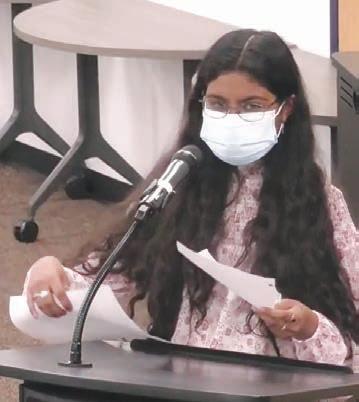
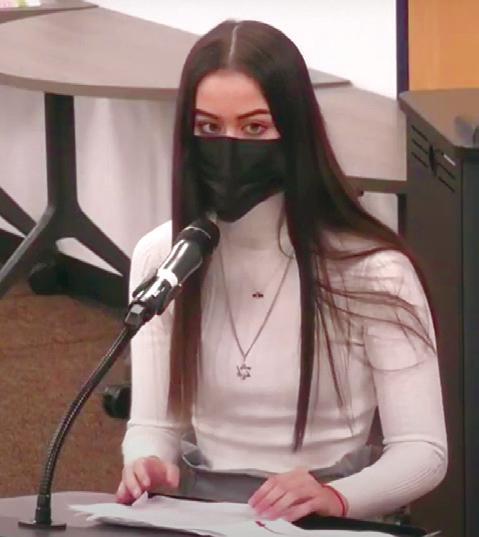
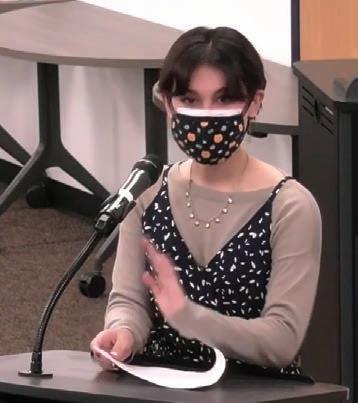
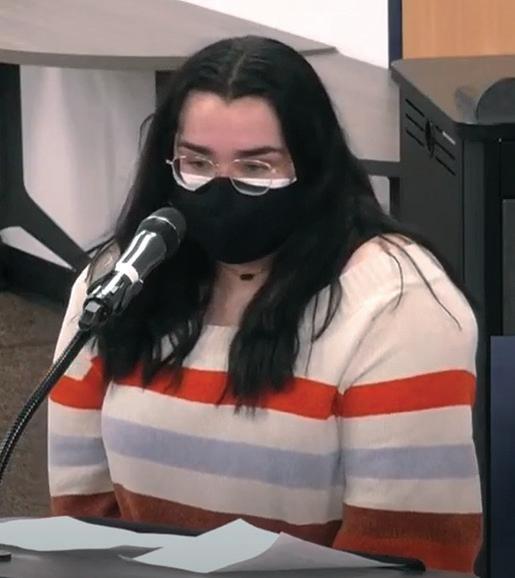
Nicole was one of four Highland students who told the Gilbert Public Schools Governing Board how faculty at the school have not enforced the district’s mandatory mask policy, allowing untold numbers of students to walk around without a face covering.
Although Nicole’s dad told her not to blame herself for what had happened, the
Gilbert training center ready for next recruits
BY CECILIA CHAN GSN Managing Editor
ilbert firefighters used to practice in an empty parking lot or at a park, pulling out the truck hoses and pretending to combat a house fire.
Town police officers often had to travel down to Central Arizona College’s track in Coolidge to hone their tactical driving skills.
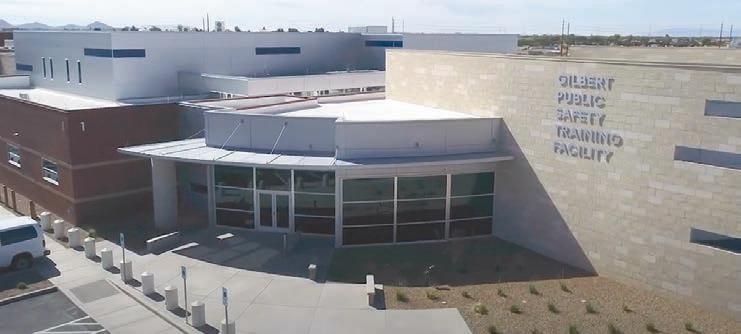
Those days are now gone, thanks to a 50-acre Public Safety Training Facility that has officially opened near Powe and Pecos roads. No public tours are allowed for now due to COVID-19.
“Well, if I had to brag, it’s the best,” said Fire & Rescue Chief Jim Jobusch. “I have to give a big hand to the team who worked on the design of the facility. They went throughout the region
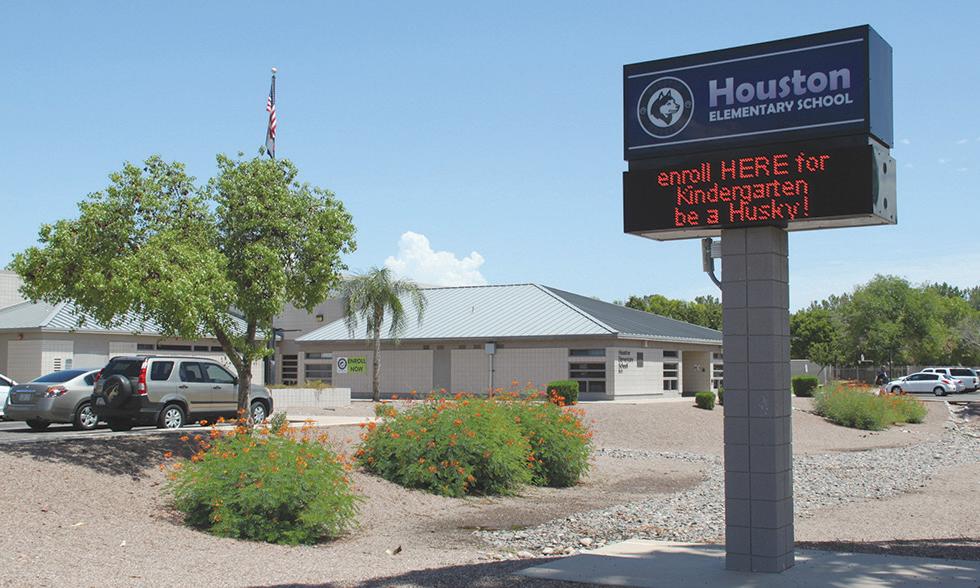
Gilbert Public Schools Superintendent Shane McCord met last week with parents at Houston Elementary, which the district wants to close by putting Neely Traditional Academy students there. For the story, see page 4. (Pablo Robles/GSN Staff Photographer)
Bring in this notice and receive the following:
FREE- Video Otoscope Examination. It may just be wax!
FREE- Hearing Test to see what you hear and what you don’t
FREE- Demonstration of best-in-class hearing technology
FREE- Pack of Hearing Aid Batteries after your evaluation
FREE- Hearing Aid Inspection. All makes and models
FREE- Trade-in Appraisal of your old hearing aids
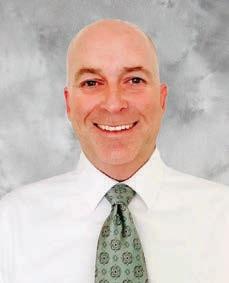
FREE- Hearing Consultation with Ted Anderson
FINANCING AVAILABLE Call for details!
An edition of the East Valley Tribune
Gilbert Sun News is published every Sunday and distributed free of charge to homes and in single-copy locations throughout Gilbert.
Casteel High School students and a Gilbert community are mourning the death last week of a sophomore who sustained severe injuries in a car accident as she headed to school Feb. 16.
Ava Mericle, 15, of Gilbert, was removed from life support Feb. 23.
Ava was a passenger in a car her brother was driving to school at 7 a.m. Feb. 16 when their sedan was struck by a van at Riggs and Higley roads, near a Gilbert fire station.
The Gilbert teenager was rushed to the hospital and underwent eight hours of brain surgery but never regained consciousness. Her 18-year-old brother sustained non-life-threatening injuries, as did a 22-year-old passenger in the other vehicle.
A police spokeswoman said the accident is still under investigation but impairment does not seem to have been a factor.
Casteel High administrators said they were in the process of working with Ava’s family to coordinate a memorial service.
Chandler educator and suicide prevention specialist Katie McPherson of Chandler also was helping to organize a poster parade last Friday at the school “to welcome staff and students as they arrive with positive messages…to help lift this student community.”
Casteel High officials also provided onsite counseling for grief-stricken stu-
‘Safe ball!’
BY TOM SCANLON GSN Staff Writer
Mto him or her,” administrators recommended. “If he or she wants to talk, answer questions simply, honestly and be prepared to answer the same questions repeatedly.”
Some Casteel students began honoring Mericle by wearing pink ribbons to school.
Jacob Hoewing, Ava’s boyfriend, started a gofundme.com account the day after the accident to help the family pay the teen’s medical bills. Within the week, it raised $22,000, exceeding a $20,000 goal.
He described Ava as a straight-A student who had a bright future ahead of her.
“She looks out for everyone and makes sure everyone is happy and content,” Jacob said. “With that being said, Ava (was) one of the best people in this world and only wanted the best.”
dents and sent a letter to parents advising them to look out for signs of depression.
“We know that many in our community have been keeping the Mericle family in their thoughts and prayers over the last week, and many are grieving,” the letter stated. “This can be a difficult time.”
The school further advised parents to respect their child’s grief process and to not dwell on the news of Ava’s death.
“One of the most helpful things you can do for your child is simply to listen
Kendra Llewellyn, another friend, described Ava as “truly the most beautiful soul I have ever met” and a smile that could light up every room.
Calling Ava was one of the “sweetest, most hard-working girl” she ever knew, Kendra recalled how Ava often helped classmates do better on their assignments.
In a tribute on Instagram written directly to Ava, Kendra also wrote, “walking into sports med and seeing your empty seat makes my heart shatter.”
“Ava was the best person I’ve ever met,” she wrote on social media. “Being friends with Ava these past few years have been a blessing.”
cry starts Cactus League
tenance of physical distancing and mandatory masks, all aimed at mitigating the spread of COVID-19.
asks aren’t just for catchers and umpires, anymore: Everyone has to wear them.
While watching veterans and rookies sliding into home, Major League Baseball wants fans to be safe in stands. The tradeoff to having a Cactus League season in 2021 includes severely-reduced attendance, cashless transactions, main-
“Take me out to the ballpark” is becoming “take out your Ballpark app.” Autographs?
Fuggettaboutit,, as old Brooklyn Dodgers fans used to say.
The casual intimacy of chatting with players and asking for them to sign hats, shirts, programs etc., long a cherished Spring Training tradition, is another vic-
tim of the pandemic.
The Cactus League is pitching “safeball,” but baseball fans are hungry, as they snatched up tickets in about the time of a long home run’s flight.
Spring Training 2021 begins this week in Mesa at Sloan Park, home of the Chicago Cubs since 2014, and historic Hohokam Stadium, where the Oakland Athletics play home games at 1235 N.
see CACTUS page 14
Ava Mericle, a 15-year-old sophomore at Casteel High School, succumbed last week to injuries sustained in a Gilbert crash Feb. 16 on her way to school. (Special to GSN)
Houston parents hear details of their school closing
BY CECILIA CHAN GSN Managing Editor
Melissa Cannon planned to send her daughter to kindergarten at Houston Elementary School this fall but now that is up in the air.
Gilbert Public Schools officials held a community meeting last week to discuss possibly closing the neighborhood campus and relocating Neely Traditional Academy to the site and expanding Burk Elementary School’s attendance boundaries.
Houston students could then choose to attend either school.
“If this continues and Neely Traditional moves here and Houston teachers have priority to stay, we will continue to utilize this school,” said Cannon.
“One reason why we stayed (at Houston) is because the teachers are amazing,” she continued. “The main reason is the education here has been great. All my kids love it.”
Cannon’s oldest son, now a junior at Gilbert High School, attended Houston as a kindergartener and her second son is a 6th grader there.
“These are difficult decisions to make,” Superintendent Shane McCord told the approximate 30-35 parents and four school board members who attended the on-campus meeting. “They are never easy.”
McCord shared that he was principal at Houston Elementary for three years in the early 2000s and the possibility of it closing “hits me right in the middle of the heart.”
But falling enrollment both at Houston and district-wide are forcing GPS’ hard look at this option to better utilize dollars and ensure that space is efficiently used.
GPS is looking at a preliminary budget shortfall of approximately $23 million for the next school year.
What was once a 40,000-student population for the district has now dwindled to 33,000 students, McCord said. And, Houston, which once boasted 900 students, now has 240 – making it for several years one of GPS’ smallest
Houston has the biggest campus among all GPS elementary schools, and that makes it perfect for the growing Neely Traditional Academy, according to district officials. (Special to GSN)
elementary schools.
“All the demographic numbers say we are on a steady decline,” McCord said.
For the past three years, the number of students works out to 6.6 to 8.4 per classroom at Houston when larger schools are seeing 15 to 20 students per classroom, according to Jason Martin, elementary education executive director.
Fewer students on a campus means fewer class sections, which makes it harder to give all district students a “premier education,” Martin said.
Neely Traditional Academy with over 600 students, on the other hand, is bursting at the seams with eight classrooms housed in four portables buildings.
The aging campus often has a waiting list to get in and continually is one of the highest-performing schools in the district, officials say.
Martin said Neely will need $3 million worth of renovations, just to the current building, over the next five years.
“Houston is the only one large enough to accommodate Neely’s needs,” Martin said.
Neely’s building minus the portables measures at 47,946 square feet – compared with Houston’s 62,646 square feet, the district said.
taken care of no matter what,” McCord said. “In March HR will come here and sit with all employees, classified and non-classified, and talk what their wishes are but we can’t guarantee their first choice.”
Two other community meetings were held last week – at Burk and at Neely. Staff will take feedback from the meetings and from online and give a presentation to the Governing Board at a work study on March 2. The board is scheduled to vote on the change on March 30.
If the board rejects the proposal, staff will have to look at “what do we do for Neely structurally and atheistically to give them more space and bring some of the building up to a higher quality,” McCord said.
Houston has the district’s largest elementary campus with 45 classrooms when most other elementary campuses nearby have 37 to 40 classrooms.
He added that the Houston campus can accommodate up to 940 students.
Houston families would have first priority in enrollment at both Neely and Burk, which has 261 students and can handle several hundred more, officials said.
Busing would be available to Houston students who chose to go to Burk and are over a mile away. A crossing guard also would be stationed before and after school at the intersection of Burk Street and Guadalupe Road to help students walking or biking to the campus.
“Staff is committed to make the transition with (Houston) staff and students as painless as possible,” Martin told the audience.
McCord encouraged parents to visit both campuses over the next few weeks to see which would work for their children. He pointed out that Neely has a traditional curriculum, which would be different from what they are used to.
McCord also assured parents that the district would make sure employees at Houston find jobs at Burk, Neely or elsewhere in the district.
“The Houston folks are going to be
Administration officials currently did not have plans for what to do with the Neely campus should it move to Houston but the closing would save the district $1 million.
Brad Freed said he was concerned the traffic would be made worst with the relocation of Neely, which had 772 students pre-COVID.
“People generally try to bypass schools and go down side streets,” said Freed, who was accompanied by his 5-year-old son Cal, who attends Pre-K at Houston. “They would be flying through my neighborhood.”
Should Houston close, it would be the second campus in the district to do so.
In 2017, the Governing Board unanimously voted to close Gilbert Junior High School due to declining enrollment. Students were moved to Mesquite Junior High and Gilbert Classical Academy relocated into the former Gilbert Junior High building.
“These decisions aren’t taken lightly,” McCord said. “It’s something we’ve thought through for a long time.”
GIVE FEEDBACK
For more information about the proposed changes and to leave feedback, go to gilbertschools.net/ campuschanges
MASKS from page 1
teenager fell into a depression and experienced anxiety and panic attacks.
“I was thinking ‘I’m causing my own father to die,’” Nicole told the board last Tuesday. “There’s not a second that I don’t blame myself for his sickness. I was wrong about how I wasn’t going to put my family in danger.”
Nicole, who is in a number of AP courses, ended up with pneumonia and bronchitis caused by COVID-19 and missed a month of school.
What happened with the Gutierrez family likely could have been avoided had students in her math class followed the safety protocol set in place, according to the teen.
“No one in that class wears a mask at all,” said Nicole, who is mildly asthmatic and is worried about the mutated coronavirus strains. “If they do, it’s under their chin or under their nose. Being that class isn’t available online along with a lot of my other classes has put not only me but my family in grave danger.”
Nicole and the three other classmates begged the board to enforce and put more teeth into the mask mandate it adopted as part of the district dress-code policy, which includes bans against bare midriffs and baggy pants.
The teens proposed the district do what other districts have done – require defiant students to do two weeks of online learning if caught not wearing or incorrectly wearing a mask in school.
According to the Centers for Disease Control and Prevention, masks help
condition, said they have brought their concerns to counselors, administrators and the principal at Highland High.
“Our principal has taken some steps,” Lindsey said. “But due to the number of students overwhelming the staff, she said she cannot control this.”
slow the spread of the virus and earlier this month the agency recommended people wear double masks.
“In previous years, I’ve seen firsthand that the dress code is very important to teachers and to other administrators,” senior Milana Withee-Lara said.
“Many students, mostly females, have been dress-coded in the past almost every single day because showing skin is distracting to other students,” Milana added. “To me, wearing your mask incorrectly is more distracting.
“Wearing masks is included in the dress code, yet many teachers do not enforce it if someone is violating the rule. So, people breaking this rule is way more distracting and detrimental than a student wearing a tank top in the hot Arizona weather.”
Milana said because there is no enforcement, she and others are afraid to sit near or walk down hallways with other students who aren’t wearing or are incorrectly wearing masks.
“Why does my education have to be compromised because someone doesn’t
have any sympathy for their peers?” Milana asked, adding:
“No other dress-code rule affects someone’s education. No other rule makes one afraid to even show up for class.”
She said according to the CDC, the age group of her peers at her school are mostly going to be asymptomatic so there’s no way to tell who has COVID or not.
“We have 3,000 students walking these hallways,” Milana added. “We need to go back to hybrid. Half of our staff here is not enforcing the rules.”
She said she’s been told to take her courses online to avoid being on campus but that’s not possible.
“I personally tried to go online but all of my classes, which are AP, have all been at the exact same time and other classes weren’t being offered at all,” Milana said. “We have no other options but to step into an infected building. We are forced to hurt Gilbert Public Schools families just to attend school.”
Senior Lindsey Stevens, who has a family member with a pre-existing lung
The campus has 3,234 students and staff and last Wednesday reported three active cases and 138 resolved COVID-19 cases – the highest among all GPS schools.
Highland Principal Melinda Murphy did not respond to the Gilbert Sun News’ requests for comment.
“Tonight we are just asking for the enforcement of masks while inside the building,” Lindsey said. “There are giant crowds of mask-less kids we have to swerve and avoid outside. It’s impossible for us to avoid the influx of people not wearing masks inside.
“To take our own measures, we wear multiple masks all day long, we hold our breath and shield our eyes in the hallway. We take every long route to do our best to avoid them.”
She said mask rules have created a “grim divide” between students on her campus.
Milana added they have experienced damage to relationships with other students simply for asking they pull up
Hannah Siby
Lindsey Stevens
Milana Withee-Lara
Nicole Gutierrez
Gilbert Public Schools Governing Board could not respond by law to the Highland students’ concerns since they were raised during the public comments portion of the meeting. (Special to GSN)
476 homes, townhomes OK’d for NE Gilbert
BY CECILIA CHAN GSN Managing Editor
Amaster-planned community of 476 residences is coming to 94.2 acres near Recker and Warner roads in northeast Gilbert with concessions after the Town Council originally rejected the project.
Council this month on consent agenda approved the final plat for Phase 2 of Warner Meadows, which calls for 163 townhomes.
In January it approved in January the final plat for Phase 1, which includes 313 single-family homes.
But there are more steps to go before ground is broken.
“Town Council approval of the final plat is one of the first steps in the approval of construction plans and permitting,” said Tom Condit, development engineering manager and floodplain administrator.
“There are a combination of civil, architectural and landscaping improvement plans that must be approved, permit fees paid, and construction assurances posted,” he said.
“In the case of Warner Meadows, the project also has off-site easement –dedications to the Town and dedications from the Town to other agencies.”
Lennar bought the site from Recker and Warner LLC and later sold the land to AG Essential Housing Multi State 2 but remained the project developer.
MASKS from page 6
their mask.
“Some of us have been called derogatory names because we are vocal and care about our families and friends,” Milana said.
Senior Hannah Siby asked who can sign off on a mask-exemption form and if a student can’t wear a mask why not have them wear a face shield instead, like students who have physical disabilities.
According to the district, only medical doctors can sign a student’s mask waiver and each individual school man-
Although it’s been smooth sailing through town government so far, that has not always been the case for the project.
In 2018, developer Lennar Arizona proposed 560 homes on 116.6 acres with 8.2 acres set aside for neighborhood commercial at the northeast corner of Warner and Recker roads.
But the Council majority in December 2018 voted down the requested major General Plan amendment and rezone, which would have changed the land use from mostly light industry to residential.
The developer’s attorney at the time
ages its face-covering exemptions.
Superintendent Shane McCord informed Hannah they were unable to respond to her because she spoke during the public comments section of the meeting.
“I’m asking you to sympathize with us and to hear your students out,” Melina said. “The board is supposed to protect us and we are begging you to do your part. This is our last resort and we need people like you who have the power to please do something.”
District spokeswoman Dawn Antest-
argued the land had drawbacks such as a lack of visibility that made it impossible to attract commercial interest to the site. Although the project got the backing from the Planning Commission and the nearby residents from two sizeable communities, the Gilbert Chamber of Commerce and planning staff did not support it, voicing concerns with losing land that could bring jobs to town.
Weeks after the Council rejected the developer’s request, it rescinded its vote and allowed Lennar to work on a new proposal for the site and fasttracked the process.
In October 2019, the Council unanimously approved the developer’s application, after changes in the project now include reserving 30.6 acres of the site for light-industrial development. The chamber also voiced its support.
“When we see properties of this magnitude and this large that has been des-
ignated for commercial, light industrial and so forth, we tend to want to maintain and keep those properties as is in anticipation of possible revenue generation from commercial or light industrial or even retail,” then-Vice Mayor Eddie Cook said at the meeting.
He noted it was nice to see some giveand take from both the developer as well as staff on the project.
“This is actually a good compromise for both sides,” Cook said. “This is really a good example of a win-win for everybody.”
Former Councilman Jared Taylor said previous councils have planned development well and as a result purchased extra commercial lands that gave the town flexibility.
“This is one of those cases where you can ‘down-zone,’” he said. “As the town develops some (commercially zoned lands) are less viable than others.”
Warner Meadows also has 20.97 acres of open space and a central amenity area that includes a pool with restrooms, shade structures with seating, playground and lawn areas, according to a town staff report.
Six additional parks are located throughout the overall community with each including a shade structure, children’s play equipment and seating.
Other amenities such as grills and game areas like shuffleboard/ping pong table, sand pits, play mounds and pipe crawl structures also are planned
enis said “on all of our campuses, our administrators, teachers and support staff are working diligently to promote the wearing of face coverings preschool-12th grade.”
She said the promotion includes regular announcements, posted notifications on campus and reminders both school-wide and within the classroom.
“If a student comes to school without a face-covering there are supplies on every campus and employees ensure these are distributed as needed,” Antestenis said.
“If a student refuses to wear a face-covering and does not have an exemption, the administration will call their parent/guardian and request that they be picked up from school.”
Antestenis said the district does not track how many students are sent home for refusing to wear a mask.
Board member Jill Humpherys, the only board member to respond to a request for comment, said she didn’t have anything more to add to what was issued by Antestenis.
The footprint of the new Warner Meadows development is outlined in red. (Town of Gilbert)
State rescues college vaccination site from closure
The state has stepped in to keep Chandler Gilbert Community College as a COVID-19 vaccination site after the Maricopa County Department of Public Health tried to shut it down.
Gov. Doug Ducey and the Arizona Department of Health Services said the state is “avoiding the closure of a successful mass vaccination site and further expanding the state’s nationally recognized model for speeding up vaccine administration.”
The vaccination site at Chandler-Gilbert Community College will begin operating as a state-run location on Wednesday, March 3.
“We’re committed to making the COVID-19 vaccine accessible to all Arizonans. Keeping this successful vaccination site open and operating is an important step,” said Ducey.
“Arizona has called on the federal government to provide our state with more vaccine doses. As more supply becomes available, we’ll be ready to administer the vaccine and protect Arizonans.”
The county planned to end vaccinations at the school even though it is one of the busiest distribution sites.
Dignity Health currently manages
the site in collaboration with the county and it will be replaced in partnership with the Arizona Department of Emergency and Military Affairs, Blue Cross Blue Shield of Arizona and the Maricopa County Community College District.
At full capacity, the Chandler Gibert Community College site will have a similar capacity to State Farm Stadium at 12,000 vaccines per day and can be operated 24/7, state officials said.
Due to the limited amount of vaccine
allocated to the state, the site will initially operate from 7 a.m. to 5 p.m. It will continue to provide the Pfizer vaccine and will be available to provide second doses to individuals who received their first at the site.
Appointments for first and second doses will open for registration at 9 a.m. Monday, March 1.
“A region with well more than half of our state’s population will now have three state-run vaccination sites that
position Arizona to vaccinate large numbers rapidly as vaccine supplies expand,” said state health Director Dr. Cara Christ. “Arizona has proven that the state’s nationally recognized model for these vaccination sites is scalable and transferable to other locations. By combining state resources with the support of partners, we can continue getting more doses into the arms of Arizonans.”
ADHS opened the 24/7 State Farm Stadium site Jan. 11 and opened the site at Arizona State University’s Phoenix Municipal Stadium on Feb. 1.
On Feb. 18, ADHS and the University of Arizona marked the conversion of a vaccination site in central Tucson into the first state site serving southern Arizona. Planning is also underway for state-operated sites in western and northern Arizona.
Information about all the vaccination sites across Arizona can be found at azhealth.gov/findvaccine. Those without computer access or needing extra help registering can call 1-844-5428201 to be connected with an operator who can assist.
People can use the patient portal at podvaccine.azdhs.gov to make an appointment for someone else in a prioritized group, such as someone 65 and older.
Higley sees in-person graduations this spring
BY CASEY FLANAGAN GSN Staff Writer
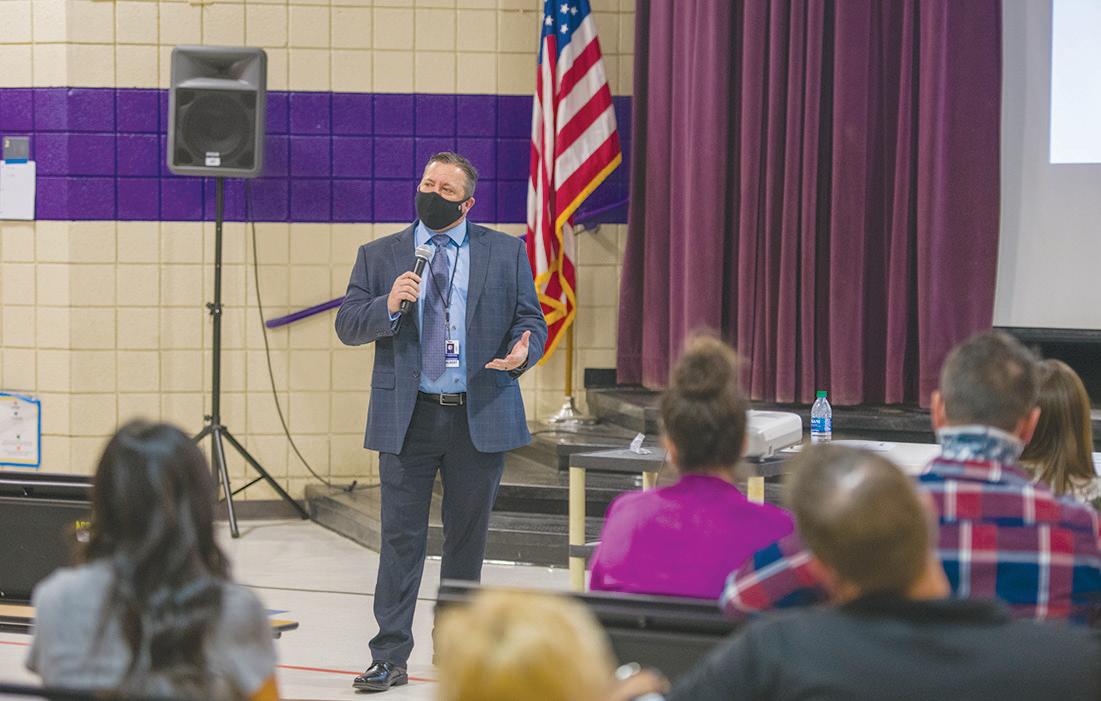
The Higley Unified School District announced Wednesday a proposal to host graduations on its two high school campuses after initial plans fell through due to the pandemic. Officials even are considering proms and awards nights.
Higley and Williams Field high schools will host limited-capacity, live-streamed graduation ceremonies on their own football fields, HUSD Executive Director David Loutzenheiser said.
Loutzenheiser said the district originally hoped to host ceremonies at Arizo-
na State University’s Wells Fargo Arena, but it will not be available for graduation ceremonies.
According to Loutzenheiser, ASU promised in December if it hold its own in-person graduation, the district can do the same at the arena.
“Obviously, things are not going the way that we want them to do. They’re not going to be holding a graduation, and therefore we’re not going to be allowed to host,” Loutzenheiser said.
The district researched other large venues around Phoenix but turned to hosting on-campus because none were available or fit their criteria, Loutzenheiser said.
To mitigate the spread of COVID-19, Loutzenheiser said “we would look at doing two spectators per graduate.”
“We still have a few months,” he added, “and let’s hope and pray that in the next few months things go to where we are allowed to have more.”
Because each high school has between 500 and 550 seniors, Loutzenheiser said, the district expects about 1,100 spectators at each event – “around 40 percent capacity at our fields.”
Loutzenheiser said the district is being conservative with the guest limit because “we don’t want to overshoot at the start and then have to withdraw and retract.”
“This is the bare minimum, and I know this isn’t the best, but if we’re able to add, that’s better than having to pull back,” he explained.
The maximum number of guests the district would consider if pandemic conditions improved would be four, Loutzenheiser said.
Governing Board member Amy Kaylor expressed support for four guests per student if conditions improve, noting, some students “have two moms and two dads, and I think that’s going to be really hard on our students to have to pick if it’s just two.”
The vaccine distribution center at Chandler Gilbert Community College has been one of the region’s busiest. (Special to GSN)
Associate Superintendent Dr. Dawn Foley said, “We will stress the fact that this is going to be live-streamed so that any and every one can have access to watching this in real time, live, who are not able to be with their family in the field.”
Loutzenheiser said the district expects an additional 120 staff and workers, as well as about 50 students for band, orchestra and choir at the events.
The two high schools will host their graduations on separate nights. Williams Field High’s graduation is May 26 and Higley High’s will be May 27.
“We will be using some of the same instrumentation on one field and then the next and so that’s going to help us alleviate some costs,” Loutzenheiser said. “With only two high schools, we have families that are very connected to both of the high schools and would want to watch those events.”
Both ceremonies will be held at 7:30 p.m. to avoid the heat, Loutzenheiser said.
Board President Kristina Reese said, “Even though it’s at 7:30 at night, it is hot, it is still hot.”
She said in past outdoor graduations, “we’ve had to have paramedics there because people were fainting and they were too hot.”
“We’re going to have to hope and pray that we don’t have rain, which doesn’t happen often but it happens when you don’t want it to,” Reese added.
Reese said unpredictability with weather was “another reason that helped us make the choice to go to Wells Fargo Arena,” but added, “We’re going back to traditional, and that’s okay, and I’m just glad that we’re looking at being able to do something.”
Loutzenheiser said there will be a $50 graduation fee per student. “Even though we’re having it on our fields, the costs are still quite a bit,” he said.
He added that the $50 fee “does not cover the overall cost of the entire graduation ceremony. We supplement using M&O funds to be able to cover the ceremonies.”
The graduation fee will help to cover costs for the streaming service and sound system rentals, chair, stage, and
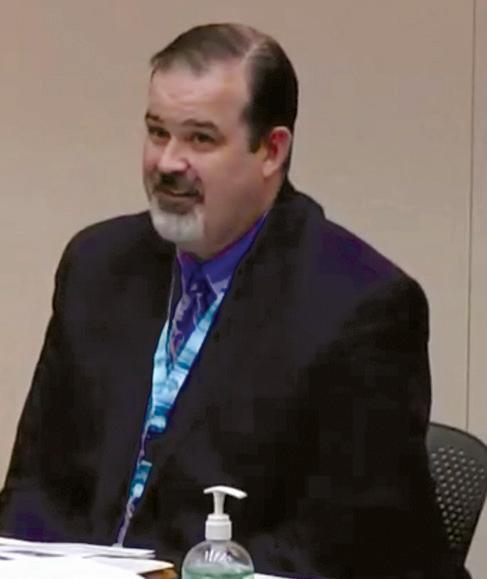
David Loutzenheiser, Higley Unified executive director, said the district not only plans in-person high school graduations but also proms and awards ceremonies. (Special to GSN)
ramp rentals, decorations, fireworks, and wristbands to keep track of guests, Loutzenheiser said.
According to Loutzenheiser, “we also know that spring for seniors is much more than graduation,” and the district is considering ways to host a prom in some capacity, as well as other school events.
Both high schools “will be holding some kind of event that we will celebrate with our seniors in a formal manner,” he said.
He said the schools may limit the events to only include seniors, rather than a traditional junior-senior prom.
The district also is considering ways to host student assemblies again, Loutzenheiser said.
He said assemblies would be held “outside on our football fields,” and “instead of holding one assembly, we would hold three, and we would have a third of the school at a time, which is much less than the capacity of our fields.”
Loutzenheiser said this would allow for social distancing, but “help have some of that comradery and school spirit.”
Loutzenheiser said the district also plans to host senior awards nights for both Higley and Williams Field at the Higley Center for Performing Arts. He said they would limit guests to two per
senior. He also said they are looking into hosting an awards night for underclassmen.
Also at Wednesday’s board meeting, HUSD assistant director Robert Schrope laid out the district’s plans to complete a 1:1 student-to-device ratio.
Schrope said Bridges Elementary and Higley Traditional Academy will receive enough devices to achieve that ratio this summer and Centennial, Chaparral, Cortina, and San Tan elementary schools will complete their ratio this fall.
The district will also complete a fiveyear teacher and staff technology refresh this year, Schrope said. Schools across the district will or have received “teacher laptops, display panels or projectors, phones, printers, administrator desktops, and copiers,” he said.
The district will upgrade student and staff devices by three or four schools each year, ending in fall 2026 at a cost of between $2.4 million-$3.7 million annually.
Higley Virtual Academy, the district’s entirely virtual school set to open next school year, was not included in the five-
year refresh.
The district is “anticipating our students that are filling HVA are already members of our district for the most part, so their computer will come from the school they came from,” Loutzenheiser said.
Loutzenheiser said the district will already have a stockpile of devices “because we do know things break.” He said the district “will have available devices to help fill in gaps for when we’re having problems.”
Loutzenheiser said the district is staying flexible with the virtual academy because “the school doesn’t know how many students might be interested in a virtual academy in a post-pandemic world, but “we will have the devices that we need that any kid who is attending HVA will have the opportunity to have a district device.”
The board approved John Dolan to be principal of Higley Virtual Academy at Wednesday’s board meeting. Dolan was previously principal of Sossaman Middle School.
from page 1
and other parts of the country to look for best practices.”
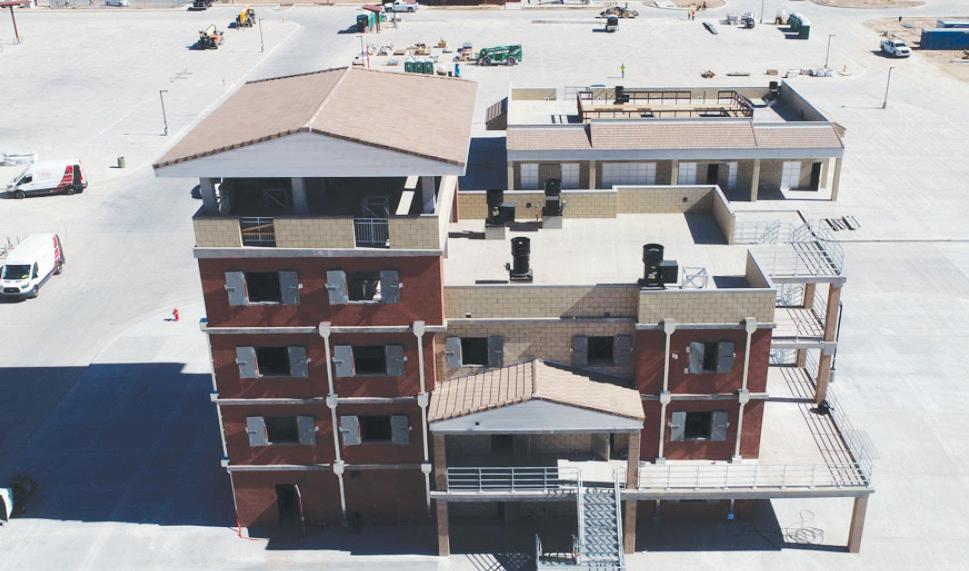
What the town ended up with was a top-notch facility with classrooms, indoor shooting ranges, two driving tracks, K-9 training area and fire-training props like a five-story apartment building, a two-story home modeled after a typical Gilbert house and a typical strip mall – even a tanker railcar and for hazardous materials training.
“This gives them the ability to train in real-life situations,” Jobusch explained, adding that all the props were built to mimic what firefighters might encounter in town. “The props are better than what we had.”
The strip mall and house are flexible so walls can be rearranged or different training scenarios.
The strip mall includes a gas-fired commercial kitchen trainer, rack storage trainer, commercial ventilation prop, loading dock and space with reconfigurable walls.
There’s even a five-story apartment/ hotel burn structure with multiple gas fire props, stairwells, hallways, balcony, furniture, manhole props.
The buildings will be used by both fire and police recruits to learn repelling, handling rooftop situations and other scenarios.
“Skill pads” will offer a chance to learn maneuvers in police and fire vehicles of all kinds and the are two tracks,
each approximately around a half-mile long. One has 10 serpentine curves for state certification and the other has “super-elevated curves” and other features to learn pit maneuvers and other tactics.
Jobusch said partner agencies, such as Mesa and Chandler, helped when they could with training space.
All these goodies didn’t come cheap.
Voters in November 2018 approved a $65.3-million bond to help pay for the facility, which was estimated to cost $84.6 million.
Town officials say the project came in under budget and ahead of the planned two-year construction schedule. Ground broke in May 2019.
Both Jobusch and Police Chief Mi-
chael Soelberg said the final expenses were still being calculated.
Parks and Recreations Department will oversee the maintenance for the facility. Director Robert Carmona said he has budgeted $450,000 annually for maintenance.
Both departments began training on the driving tracks in August and firefighters have been using the props over the past few weeks to ensure everything was working correctly.
The Fire Department will welcome its first academy class at the end of March and Police Department in the fall.
Fire academy will have about eight Gilbert cadets with a few from other agencies while Police is looking at an income class size of 15 to 20.
Both departments intend to hold two academies a year.
The Fire Department has 197 sworn personnel and nine vacancies while Police with 301 sworn officers currently have 16 vacancies.
Soelberg said building the training facility was vital for the still-growing town of approximately 260,000. Gilbert is expected to reach build-out in 2030 with about 330,000 residents. Officials say the new facility is built to accommodate the town up to build-out and beyond.
Soelberg said when the department relied on Phoenix and Mesa police training centers, it could send up to five recruits for training. Now, with a town facility, the department can train up to 50 Gilbert recruits for each academy class, he said.
Unlike at the other two training centers, everything needed to train a cadet is all under one roof, according to Soelberg.
Phoenix’s driving track is in Avondale and Mesa’s shooting range is 3 miles away from its training academy, he said.
For now, the facility will be limited to Gilbert’s use to ensure the needs of both departments are being met before opening up to other agencies.
Queen Creek, Scottsdale, Apache Junction are just some of the Valley municipalities interested in using the new facility, Soelberg said.
The training facility was primarily funded by a bond that covered $65.3 million of a projected $84.6 million cost. However, officials said they don’t know the final cost yet. (Town of Gilbert)
SAFETY
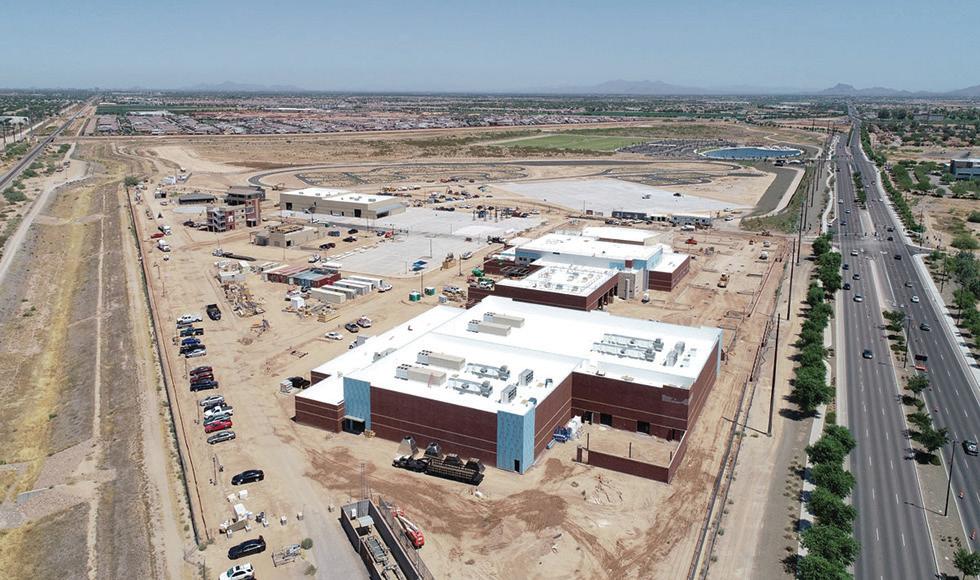
The 50-acre Gilbert Public Safety Training Facility at Power and Pecos roads will be getting its first crop of firefighter trainees late next month. (Town of Gilbert)
This high-rise replica will be used by both fire and police trainees to prepare for a variety of scenarios. Walls are flexible so they can be arranged to create different kinds of emergency situations. (Town of Gilbert)
No consensus on next CUSD superintendent’s qualities
BY KEVIN REAGAN GSN Staff Writer
Arecent survey shows leaders of the Chandler Unified School District don’t have much consensus on the type of leader they’d want to see succeed outgoing Superintendent Camille Casteel.
The district’s Governing Board and 50 senior administrators appear to have varying opinions on the qualities they’d like to see in the interim superintendent that will be appointed next month to replace Casteel.
Most responses given to a 10-question survey ended being split, indicating a wide divide in opinion on the types of experience and skills CUSD’s next chief executive should have.
“That shows you it’s pretty spread out in terms of what you’re looking for,” said Steve Highlen of the Arizona School Boards Association. “There’s no real consistency there.”
Highlen, the association’s senior policy consultant, has been recruited by CUSD to help coordinate the district’s superintendent search and thinks the district has some work to do to ensure the school board picks a candidate that satisfies everyone’s preferences.
The board’s five members did not unanimously agree on any of the 10 questions either, he said, and many responses were split down the middle.
Board members came close to consensus on a question regarding academics: four thought the next superintendent should “possess a keen mission to raise student achievement for all students.”
In addition to divisions among board members, Highlen highlighted the differing expectations between the board and Chandler’s administrative staff.
“Some things the board picked, the administrators didn’t pick,” he noted. “Some things the administrators picked, the board didn’t pick.”
When asked about leadership skills, about half of the survey’s respondents prioritized a superintendent who had
experience motivating staff and boosting morale while the other half favored other attributes.
Highlen said it will be vital for CUSD to unify its expectations before the board starts interviewing superintendent applicants or the district risks drawing out the recruitment process.
“To make a good decision, you need to know where you’re headed,” Highlen added. “Right now, it would be difficult to determine where you’re headed.”
Casteel’s decision to retire at the end of this school year after a 50-year career in Chandler Unified has pushed the board into a position it hasn’t been in for a couple decades.
CUSD has not had to appoint a superintendent since Casteel got the job in 1996, resulting in an impressively long tenure, considering many school districts end up hiring a new superintendent every few years.
It’s not normal for districts to have a superintendent for 25 years, Highlen noted, which demonstrates how well Casteel has gotten along with the district’s various boards.
Highlen has several years of experience helping districts in Sedona, Casa Grande, Tuba City, Prescott, and Fountain Hills find their next superintendent.
He will be spending the next couple of weeks assisting Chandler’s school board crafting the types of questions they want to ask its superintendent applicants.
The search is expected to take at least a year because CUSD decided to appoint an interim superintendent for the 2021-22 school year before selecting a permanent candidate.
The deadline for submitting interim applications has recently expired and the board is hoping to fill the position by the end of March. The interim would officially start July 1.
Highlen said the work done now on setting a vision for CUSD will be helpful for when the time comes to pick a perma-
Our clinic is taking every precaution and we follow strict CDC guidelines to ensure that our patients, clinic and staff are SAFE!
Mesa, AZ — The most common method your doctor will recommend to treat your chronic pain and/or neuropathy is with prescription drugs that may temporarily reduce your symptoms. These drugs have names such as Gabapentin, Lyrica, Cymbalta, and Neurontin, and are primarily antidepressant or anti-seizure drugs. These drugs may cause you to feel uncomfortable and have a variety of harmful side effects.
Chronic pain and/or peripheral neuropathy is a result of damage to the nerves often causing weakness, pain, numbness, tingling, and the most debilitating balance problems. This damage is commonly caused by a lack of blood flow to the nerves in the hands and feet which causes the nerves to begin to degenerate due to lack of nutrient flow.
As you can see in Figure 2, as the blood vessels that surround the nerves become diseased they shrivel up which causes the nerves to not get the nutrients to continue to survive. When these nerves begin to “die” they cause you to have balance problems, pain, numbness, tingling, burning, and many additional symptoms.
The main problem is that your doctor has told you to just live with the problem or try the drugs which you don’t like taking because they make you feel uncomfortable. There is now a facility right here in Mesa that offers you hope without taking those endless drugs with serious side effects.
(See the special neuropathy severity examination at the end of this article)
In order to effectively treat your neuropathy three factors must be determined.
1) What is the underlying cause?
2) How much nerve damage has been sustained.
NOTE: Once you have sustained 95% nerve loss, there is likely nothing that we can do for you.
3) How much treatment will your condition require?
The treatment that is provided at Aspen Medical has three main goals.
1) Increase blood flow
2) Stimulate and increase small fiber nerves
3) Decrease brain-based pain
The treatment to increase blood flow, stimulate small nerve fibers and get you back to health is our new $50,000.00 SANEXAS UNIT!
In addition, we use a state-of-the-art diagnostics like the TM Flow diagnostic unit to accurately determine the increase in blood flow and a small skin biopsy to accurately determine the increase in small nerve fibers!
The Sanexas electric cell signaling system delivers energy to the affected area of your body at varying wavelengths, including both low-frequency and middle-frequency signals. It also uses amplitude modulated (AM) and frequency modulated (FM) signaling. During a treatment session, the Sanexas system automatically changes to simultaneously deliver AM and FM electric cell signal energy.
THE GREAT NEWS IS THAT SANEXAS IS COVERED BY MEDICARE AND MOST INSURANCE! Depending on your coverage, your treatment could be little to no cost to you!
The amount of treatment needed to allow the nerves to fully recover varies from person to person and can only be
determined after a detailed neurological and vascular evaluation. As long as you have not sustained at least 95% nerve damage there is hope!
Aspen Medical will do a chronic pain and neuropathy severity examination to determine the extent of the nerve damage as a public service to you and/or your family and friends. This neuropathy/ pain severity examination will consist of a detailed sensory evaluation, extensive peripheral vascular testing, and a detailed analysis of the findings of your neuropathy.
Aspen Medical will be offering this chronic pain and neuropathy severity examination from now until March 31, 2021. Call 480274-3157 to make an appointment to determine if your chronic pain and peripheral neuropathy can be successfully treated.
Due to our very busy office schedule, we are limiting this FREE consultation offer to the first 15 callers. YOU DO NOT HAVE TO SUFFER ANOTHER MINUTE, CALL Call 480-274-3157 … NOW!
We are extremely busy and if your call goes to our voicemail, please leave a message and we will get back to you asap.
Center Street. The A’s host the Los Angeles Dodgers at 1:05 p.m. today. First pitch at Sloan Park is 1:05 p.m. Tuesday, when the Cubs take on the Kansas City Royals.
While Cubs fans grabbed all the Sloan Park tickets in a flash, some single-game tickets remained on sale for A’s games.
Instead of the usual 15,000 crammed into Sloan Park and 10,000-plus at Hohokam, attendance will be limited to 2025 percent of capacity here and at other Cactus League parks.
Sloan Park, at 2330 West Rio Salado Parkway, is the centerpiece of a rapidly-developing area.
The ballpark lures Cubs-ravished fans and is the reason Power Hotel Groups built two hotels, Sheraton Wrigleyville West and Courtyard Wrigleyville West. The latter just opened in September and will have its first Spring Training guests.
You can’t get much closer to the ballpark than at the Courtyard Wrigleyville West.
From some rooms, “you can see down into the stadium,” said Kevin Thorpe, general manager of the Sheraton Mesa
hotels. “I joke that I’m going to put some stands next to the window.”
Thorpe said baseball fans and others just looking for a reason to get out of the frigid Midwest and East are starting to head to Mesa.
“Weekend business is looking strong for Spring Training,” Thorpe added.
He’s projecting around 70 percent occupancy for March at the two hotels, which is solid but hardly the 95-100 percent he expects for “normal” Cactus League seasons.
While electronic tickets sold via the Major League Baseball app flew out the door, “We were able to secure 50 tickets per game for hotels that we’re packaging,” Thorpe said.
The Sheraton/Courtyard packages are part of Visit Mesa’s VisitMesaDeals.com, “an online hub where locals and out-oftowners can browse tons of specials targeted to upcoming spring season staycations and day trips to the East Valley.”
DoubleTree by Hilton Mesa has a Spring Training package inducing breakfast and drink vouchers.
Also through Visit Mesa’s deals, Jake’s Unlimited arcade on Baseline Road offers a $25 “Pro Pass” with all-day admission, unlimited food/drinks, rides, laser tag, arcade games and two mini-bowling games.
Restaurant deals include all-day happy hour at Desert Eagle Brewing Co. and 20 percent discounts at Knuckle Sandwiches in East Mesa, both with ticket stubs.
But there won’t be paper tickets, this year.
Steve Adams and his HoHoKam staff will be checking electronic tickets on fans’ phones and making sure they are properly wearing masks.
“It will be different from what we’ve ever experienced,” said Adams, president of the Mesa HoHoKams, which started in 1951 to bring Spring Training to Mesa.
The HoHoKams provide parking, usher and guest service staff for Sloan Park and HoHoKam Stadium. They sell 50/50 raffle tickets at games, with the proceeds going to local youth organizations and charities.
Even with reduced attendance, “We
will still have quite a few members serving at each of the games,” Adams said.
“Our first training was last night with the Cubs, and almost all of it was COVID protocols. Cleanliness, masks, how we’re checking in customers and fans,” Adams said. “It’s a very different thing.”
Staff “are going to have to wear masks the whole time. Even fans have to wear masks unless they’re immediately eating or drinking. Having a beer walking around isn’t going to work,” Adams said.
The message from the Cactus League: Bring your credit cards.
“Sloan Park will be cashless in 2021. From parking and retail to concessions and 50/50 raffle tickets, all purchases will be cashless and require a credit card,” according to the Cubs’ website.
Similarly, the A’s note, “Hohokam Stadium will be a cash-free ballpark in 2021. Fans can use major credit cards and debit cards for all food, drink and merchandise purchases.”
A new thing: “Reverse ATMs” will be
available to convert cash to a credit card that can be used for purchases at Sloan Park and elsewhere.
And fans will be able to whip out their phones to order food and drinks: “You can order food and beverages on your phone via the MLB Ballpark app or online via a scanned QR code,” said the Cubs’ website.
“You can order at your seat and then go pick up your food,” said Adams.
The Cubs and the rest of the Cactus League stress “We’re taking extensive precautions to ensure our protocols cover all the bases and adhere to the Centers for Disease Control and Prevention (CDC), the State of Arizona and MLB guidelines.”
“Whether you’re entering the ballpark, enjoying the game in your seat or grabbing food in the concourse, you must practice physical distancing and keep a safe space between you and others.”
The A’s promote a nearly identical message.
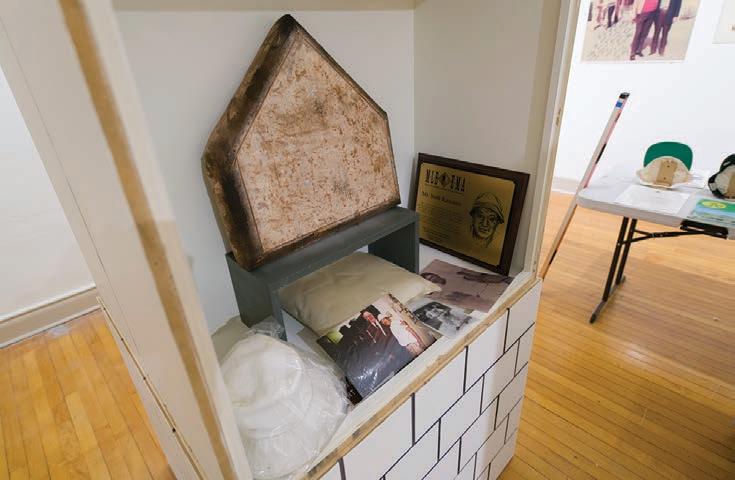
To mark the beginning of the 2021 Cactus League season, the Mesa Historical Museum is unveiling a new permanent exhibit containing numerous artifacts from the early days of Spring Training in the East Valley. (Pablo Robles/GSN Staff Photographer)
Adams said the HoHoKams will be on the lookout for fans not following guidelines.
“We’re trying to make sure people remain socially distanced, asking people to pull their masks up,” Adams said.”
“Ours will be friendly, ‘Can you please
wear your mask?’ If people don’t listen and it escalates we’ll go to security.”
But will that be enough to keep baseball fans safe?
In the last month, the number of peo-
ple contracting COVID-19 in Maricopa County fell sharply, while the number of people getting vaccinated accelerated.
Joshua LaBaer, executive director of ASU’s Biodesign Institute, said there is a flip side to the good news: “There’s always a concern that people will ease up (and resume) risky behavior,” he said. “They’ll start to go out more and go to events more and that could trigger another surge. Especially as we know these higher transmission variants are around.”
Asked if he had concerns about Spring Training, even without a reduced number of fans allowed, LaBaer said, “It’s really important to remember the fraction of the population that has been vaccinated is really quite small. At least 70 percent of the population has not seen the virus, that means they’re all susceptible.”
“Until we get a much bigger portion vaccinated, we continue to urge people not to gather in large groups, not to gather in close proximity to others and certainly not without wearing masks and following guidelines.”
SUPER from page 13
nent superintendent later this year.
“The things you learn from the interim search will carry over to the superintendent search,” he said.
The interim’s appointment comes as CUSD is still recovering from a pandemic that has drastically impacted the district’s operations and divided the community.
Student enrollment has fallen districtwide and the CUSD is facing a potent $21-million deficit in state funding.
The Arizona Department of Education announced earlier this month that CUSD is eligible to receive $13 million in extra funding to offset financial shortfalls caused by the pandemic.
CUSD intends to spend the $13-million allotment on virus-mitigation costs it has incurred over the past year.
The district estimates it had to spend more than $18.5 million on technology, protective gear and cleaning supplies in order to keep schools operating.
Before ADE announced its allotments of relief funding, Chandler had been reimbursed for only about $3 million of its
pandemic-related mitigation expenses.
The district’s budget problems have been further complicated by the fact that Arizona has been funding virtual learning at a lower rate than in-person learning.
CUSD has previously said it stands to lose up to $12 million for the several weeks students spent learning virtually from home at the beginning of this school year.
As CUSD continues to grapple with financial issues, Highlen said it will be critical in the next couple of weeks for the district’s leaders to focus on hashing out a singular vision among their varying opinions regarding the next superintendent.
He compared the upcoming hiring process to being analogous to filling a large funnel with too much material.
“At the top of the funnel you can pour a lot of things in, but very little comes out at the bottom and it comes out slowly,” Highlen said. “This will be a slow process.”
GPS, Higley getting millions in new federal funds
The latest round of federal pandemic relief and recovery funding is coming – and for school districts, it will be a big help.
State Superintendent of Public Instruction Kathy Hoffman recently announced the amounts each school district and charter organization will be eligible to receive under the Elementary and Secondary School Emergency Relief Fund.
For Gilbert Public Schools, it’s $9.7 million while Higley Unified School District is looking at $2.7 million.
“The ESSER II money won’t fix everything, but it is important to Higley Unified School District and school districts across the state in being able offset some of the expenses incurred with the coronavirus pandemic,” said
Tyler Moore, HUSD finance director, said, “Higley Unified School District has had preliminary conversations on how the district will utilize the ESSER II funds, which include offsetting COVID-related
costs associated with the maintenance and operations and capital-outlay funds.”
HUSD is on a better financial footing than GPS as it was forecasting a budget surplus for the coming school year.
With the additional $7.8 million, Higley Unified officials were contemplating 5-percent pay raises to teachers and staff.
GPS was facing a preliminary $23 million shortfall for next fiscal year and the $9.7 million “will help close the budgetary gap,” said district spokeswoman Dawn Antestenis in an email.
Less funding due to a projected drop in the student count, a 2-percent pay raise, increased costs for employee health benefits and retirement plan and a minimum-wage increase that took effect in January are factors contributing to GPS’ budgetary woes.
Hoffman also announced the use of discretionary dollars available to the Arizona Department of Education under the Coronavirus Response and Relief Supplemental Appropriations Act to guarantee a baseline-funding amount for every public
school district and charter organization in the state.
According to Hoffman, the Education Department will use poverty data to ensure a per-pupil award amount and will guarantee $150,000 in relief funding for every public school district and nonprofit charter organization in Arizona, with $175,000 guaranteed for rural school districts and charter organizations, and $200,000 guaranteed for the most remote school districts and charter organizations.
“It’s critical that every school has the necessary resources to support their students, staff and families throughout the COVID-19 pandemic. That’s why I prioritized ensuring that every public school –regardless of size or location – had access to federal relief funding,” Hoffman said.
“While this significant infusion of federal recovery dollars is good news for Arizona’s schools, it is not a substitute for sustainable funding from the state as they move through and beyond the crisis of this pandemic.”
Districts and charter schools must now apply for the ESSER II funding in order to receive their allotment, according to spokeswoman Morgan Dick of the state education department.
“Districts and charters who apply will be able to use ESSER II funds until September 30, 2023,” Dick said.
The funds can be used on expenses such as coordination of COVID-19 response efforts, activities to address unique needs of low-income children with disabilities and provide training and professional development for staff on sanitation and minimizing the spread of infectious disease.
New under ESSER II, districts also can spend the funds to address learning loss, make school repairs and improvements and improve the indoor air quality in schools.
This may not be the last of federal pandemic relief money both districts will be seeing.
The Biden Administration’s $1.9 trillion stimulus package contains over $1 billion for schools alone.
Mesnard wins victory in expanding county board
BY HOWARD FISCHER
Capitol Media Services
State Sen. J.D. Mesnard has won a victory in his effort to expand the number of Maricopa County supervisors from five to nine beginning in 2024.
Mesnard, whose district includes part of Gilbert, last week won preliminary Senate approval on a 15-13 margin of SB 1498, which adds four seats to the Maricopa County Board of Supervisors and boosts the size of the Pima County board from five to seven.
The move came over the objection of several Democrat lawmakers who said the board members in the two affected counties are opposed. Sen. Victoria Steele of Tucson said the issue for the supervisors in her county is, at least in part, cost. They figure the cost of operating an office, including salaries and equipment, is about $500,000. So, two new supervisors will increase public spending by $1 mil-
lion, what she called an “unfunded mandate.’’
Sen. Lela Alston, D-Phoenix, said there were similar objections from the Maricopa supervisors.
But Mesnard said the two counties have grown so large that individual supervisors can no longer adequately represent their constituents.
He said the situation is particularly pronounced in Maricopa County where each of the five supervisors represents close to 900,000 residents. Adding four more board members would cut that to about 635,000 per district.
It’s not quite as severe in Pima County where a supervisory district now consists of about 200,000 residents. Going to seven would cut that to about 150,000.
Still, Mesnard defended extending his legislation to Pima County. He said it’s a “similar principle though obviously not as extreme.’’
The idea of linking the number of su-
pervisors to population is not new.
Arizona law already says that once a county hits 175,000 the size of the board has to go from three to five.
Mesnard’s bill simply adds two new thresholds.
At a million, the minimum becomes seven. And at three million, that requires nine.
“There comes a point in time when trying to represent a very large number of people is difficult,’’ Mesnard said. In fact, he said, at 900,000 the size of Maricopa County districts is larger than any of the state’s congressional districts.
Steele does not dispute that number.
But she said that most county residents actually live within the incorporated limits of a city.
In Pima County, the most recent estimates show just 35 percent of the population is in an unincorporated area. It’s even more pronounced in Maricopa County where just 7 percent of residents don’t
live within a city.
And Steele said that means they are more likely to call a council member with a problem than a supervisor.
Mesnard said that may be true. But he said it doesn’t make them any less important.
“They’re still elected officials who have a constituency,’’ he said. “I am a believer in the idea that the smaller the constituency that you represent, the more tailored, the more focused, the better representation you get.’’
Mesnard said that it is “absolutely true’’ that a government can be more efficient when there are fewer people in charge. But he said that doesn’t tell the whole story.
“They would be very efficient having single persons governing everything,’’ Mesnard said. “But we all know that’s not a good principle.’’
The measure still needs a final roll-call vote in the Senate before going to the House.
Community
Legendary photojournalist’s work on display here
BY SRIANTHI PERERA GSN Contributor
In 1955, LIFE magazine assigned photojournalist John G. Zimmerman to document Detroit’s old Mariners’ Church being moved to a new location across town.
The move took four weeks to complete, yet Zimmerman created a photo that gives the effect of the church hurtling through downtown Detroit at top speed. This is just one example of how the late legendary photojournalist pushed the boundaries of the time; the use of technology to show on film what the naked eye could never see became a hallmark of Zimmerman’s mature work.
Zimmerman’s innovative work is on display for the first time in Arizona
through April 17 at Gilbert-based Art Intersection. The photographs are from the John G. Zimmerman Archive based in Pacific Grove, California.
“Americanicity –Photographs by John G. Zimmerman” was
curated by Alan Fitzgerald and features 60 photographs taken during his career that included working for Time, LIFE, Ebony and Sports Illustrated magazines during the mid-20th century onward.
They reflect the lives and lifestyles of American families, politics, sports, and society roughly from the 1950s through mid-1970s.
“We first met Alan Fitzgerald about two years ago and I think it’s true what they say about timing being everything. Alan kept John’s black and white work in mind and has curated an exhibition that resonates with what’s going on in America now,” said Linda Zimmerman, daughter of the photojournalist, who, together with her brother Darryl, operates the archive.
see ART page 19
HD SOUTH hosts a variety of programs
NEWS STAFF
HD SOUTH, home of the Gilbert Historical Museum and an arts, culture and history center, has a full lineup of programs for this month.
The programs are led by artists, historians, storytellers, health and wellness specialists, botanists and scientists – experts in their field who share their knowledge and skills with our community.
Originally opened as Gilbert Elementary School in 1913, HD SOUTH is the oldest building still standing in Gilbert and is the only one on the National Register of Historic Places. Gilbert Museum is a repository of artifacts chronicling the town’s rich history, featuring newly remodeled exhibits and interactive displays.
The programs and events at HD SOUTH focus on six community pillars and are designed for all generations.
These pillars include history, health & wellness, science, literature, art, and music.
To register, visit hdsouth.org/calen-
dar. Unless noted otherwise, programs are free but registration is required. All participants will be required to wear facial coverings and adhere to physical
distancing guidelines. HD SOUTH is open 9 a.m.-4 p.m. Tuesdays, Thursdays and Saturdays.
Art of Quilting
The 16th annual Art of Quilting show with a special focus on blue and white quilts will feature nearly 75 pieces made by the HD SOUTH quilting group starting March 9 and running through May 31.
Fine Art Show and Sale
Gilbert Visual Art League has sponsored a juried fine art show since 2003 and 2021 is no exception. All pieces can be viewed online at gval.org. In the past, the show has included over 80 pieces of assorted paintings, drawings, photography and sculptures.
The show runs March 6-April 2. GVAL
GSN
Laurie Abdo brought her mother’s quilt to HD South last year and was inspired to join the bee. (File photo)
The title, Americanicity, comes from an essay from a book published of his work.
“It describes how John’s photographs, whether the subject matter is sports, politics or popular culture, helped create an image or idea of America that is constantly being reconstructed,” Linda Zimmerman said.
“His (Fitzgerald’s) desire to create resonance between John’s black and white work and the politics and culture of America today is something he’s uniquely attuned to, living where he does in Arizona, where people with antithetical ideas about American values and what the country is about live in close proximity,” Linda Zimmerman added. “I think it’s an insightful approach that will appeal to a wide range of visitors.”
“Americanicity seeks to bridge the photographs of John G. Zimmerman illustrating American social, political, and lifestyle from the mid-twentieth century to the recurrence in today’s contemporaneous news and lifestyle,” Alan Fitzgerald wrote. Zimmerman’s images bring into view the patriotic symbol of the American flag, distribution of a new polio vaccine in the African American community, the first televised presidential inauguration, portraits of political leadership, intimate family dinners and life in American black communities.
Fitzgerald calls it “the golden era of the Fourth Estate,” before the internet and
SOUTH from page 18
is a nonprofit that offers a venue for local artists.
The Power of Acupuncture
March 9, 6:30-8 p.m.
Jamie Fitzgerald will discuss the history of acupuncture, what it treats, how it works and what to expect during and after a treatment. She is the founder of East Valley Community Acupuncture and is currently serving on the State Acupuncture Board of Examiners.
cable news evolved.
The difference is night and day. There were no cell phones taking pictures and disseminating them to the public in a flash via Twitter or Facebook.
It was a time when photojournalism projected influence through print media, newspapers, magazines, and billboards into our homes and businesses. Photojournalism also informed social behavior, personal knowledge and political policy.
Among the photographs, there are several of American flags and Washington politicians from the 1950s, along with images showing life in the Jim Crow South and American sports and entertainment.
“If you’re someone who values the need for social change, you’re going to view these images differently than someone who is nostalgic about the past and the need to preserve it,” Linda Zimmerman said.
“The images become like mirrors that reflect a complex mix of one’s values and perspectives, and that’s what makes the show fascinating.”
In the exhibition, four to five photo-
Celtic Knots Workshop
March 16, 6:30-8 p.m.
Sue Eddy presents samples of Celtic knots, discusses their meaning and how they were used. Participants will have the opportunity to draw their own Celtic knot and create their own take home art project. Eddy is a painter who lived in Ireland for many of the past 20 years.
Spring Health and Wellness Class
March 20, 10 a.m.-Noon
Marilynn Igleski guides the class through a yoga practice focusing on renewal and rejuvenation. Marilynn has a 600-hour yoga certification from the Southwest Institute of Healing Arts. She has been teaching yoga for over 10 years.
graphs document efforts to combat a polio epidemic in Montgomery Alabama in 1953. While the segregated community successfully inoculated more than 30,000 children, Zimmerman’s photos show disparities between the African American and white experience that invites comparison with today’s unequal access to Covid-19 vaccinations.
Two images show mesmerized Amer-
icans watching President Dwight Eisenhower’s Inauguration in 1953 on department store televisions.
Two photographs of America’s largest flag being cleaned in Detroit in 1955. The Americanicity exhibition is free to the public. Art Intersection is located at 207 N. Gilbert Road, suite 201, Gilbert. Details: 480-361-1118 or artintersection.com.
This is open to teen through adult. Bring your own mat and water. Members: $5, non-members, $8.
Amazing Stories in DNA
March 23, 6:30-8 P.M.
East Valley DNA Special Interest Group founder McKell Kenney, is a genealogist experienced in using DNA results to build family trees and connect family members. Participants will learn about DNA, how to interpret their DNA results from such programs as Ancestry.com and 23andme.com.
See It Saturday With Blakely Glass
March 27, 10:30 a.m.-Noon
Every month the public can come
and see artifacts normally not available for viewing. This month the museum is showcasing Blakely Glass from the 1950’s. Customers of the Blakely Garage in downtown Gilbert were given a piece of Blakely Glass with every fill-up. This highly collectible glassware is gorgeous. Museum admission is required.
Cooking Up Good Health
March 30, 6:30-8 p.m.
Learn how to make summer salads and dressings at home. Conducted by Rachel Thomas, who has hosted thousands of cooking demonstrations and has an extensive library of healthy recipes which she will demonstrate during this workshop.
Pandemic-fueled stress is hurting many people’s sleep and in turn weakening their immune systems and overall health.
Fatigue and chronic insomnia are complaints that Joey Holt, Amerisleep chief operating officer and sleep expert, has become all too familiar with.
He and his staff at their San Tan Village store have come to recognize “Coronasomnia” and relied on research to lead them in their efforts to help costumers get more and better z’s.
“We actually noticed signs of Coronasomnia before COVID-19 hit the states because many guests who’d come into the showroom were already changing and canceling their travel plans.” Holt recalled. “Many had also expressed con-
cerns about friends and family overseas.
“While the term hadn’t been out yet, it was clear that many customers were already worried about the looming pandemic and that it had begun to affect their quality of life and sleep.”
Disrupted routines, social isolation, job loss, ongoing uncertainty and questions about vaccines are causing a surge in what sleep experts now call Coronasomnia, according to the American Medical Association.
A recent sleep study by University of Arizona researchers found more than half of 1,000 participants reported experiencing insomnia during the pandemic.
If Coronasomnia is ignored, it could lead to profound health issues including elevated risks for high blood pressure,
Jobless pay benefit could be upped in Arizona
BY HOWARD FISCHER
Capitol Media Services
Arizonans who find themselves out of work through no fault of their own could get their first increase in benefits in 17 years.
Members of the Senate Appropriations Committee voted 9-1 last week to set the maximum benefit to $320 a week as early as this summer. The current cap of $240 was set in 2004 and is the second lowest in the country; only Mississippi pays less.
And then, if the employer-financed trust fund that pays for benefits gets back into healthy territory, the maximum automatically would go to $400 a week.
Individuals would be able to earn up
to $160 a week without losing benefits, whether while looking for a new full-time gig or remaining on a parttime status with a current employer. Now, anything over $30 disqualifies the employee.
To finance all that, employers would pay more in the taxes that finance the benefits.
What makes all that significant is that SB 1411 is being pushed by Senate President Karen Fann, R-Prescott. Prior perennial efforts to increase the benefits by Democrats have met with GOP resistance.
Fann said she worked with business interests to get the necessary buy-in. The result is that no one from the business community has come out in opposition.
Current law allows state benefit to continue for up to 26 weeks, not counting special federal programs. SB 1411 would drop that to 20 weeks when the state’s jobless rate is less than 6 percent.
Still, there are objections.
Sen. Michelle Ugenti-Rita, R-Scottsdale, the lone dissent on the measure, said she’s concerned that there isn’t enough in the law to ensure that people collecting benefits are actually out searching for a new job.
There already are requirements in law, including a mandate to make contacts with potential employers at least four days a week. And after four weeks of benefits, people generally have to take any job that pays them at least 20 percent more than they’re collecting.
But that work search requirement has
been suspended during the pandemic by the executive order Gov. Doug Ducey signed last year due to the COVID-19 pandemic.
“So we’re just going to pay people to be unemployed?’’ Ugenti-Rita asked.
And there’s another potential hurdle. Ducey has consistently opposed any benefit increase, saying there are plenty of jobs for people to find “at any time’’ and he sees no need to adjust that $240 figure.
Fann said she has informed the governor’s office about the details of her measure. The only thing that gubernatorial press aide C.J. Karamargin would say is that Ducey is “reviewing the measure.’’ Much of the resistance until now has
Joey Holt, chief operating officer and sleep expert at Amerisleep in San Tan Village, said the pandemic is causing more people more sleep-deprived nights. (Special to GSN)
see SLEEP page 22
depression and overwhelming anxiety, they warned.
When the pandemic started, prescriptions for anti-anxiety medications increased 34.1 percent, sleep meds increased 14.8 percent and antidepressants increased 18.6 percent, according to Express Scripts.
The developers of Ginger, an app that provides video and chat-based mental health services, reported its psychiatrists wrote almost 90 percent more prescriptions for psychotropic drugs last March and April than in the previous two months last year.
“Fast forward eight months and at least 75 percent of our customers come in expressing concerns,” Holt said. “Many of them just can’t stop worrying and in most cases, those worrisome thoughts turn into nonstop chatter inside their heads when they try to go to sleep at night.”
There are several things Holt recommends doing on a daily basis that will allow people to slowly flip their sleepless routines into a good night’s rest. They include waking up when there is bright light as early as possible. This includes exposing yourself to artificial or natural light within the first one or
from page 20
come from business interests because those payments are financed by a tax that employers pay on the first $7,000 of each worker’s salary.
Fann proposes to finance the higher benefits in SB 1411 by increasing the base on which the tax is paid, which she said has not been altered since 1986, to $8,000 next year and $9,000 in 2023. SB 1411 goes to the full Senate after a required review by the Rules Committee of its constitutionality.
Fann isn’t the only Republican interested in adjusting jobless benefits.
Rep. David Cook, R-Globe, is sponsoring HB 2805 which would raise the cap to $300 a week. That measure, like what Fann is proposing, also would allow people to earn up to $160 a week without losing benefits.
His bill cleared a House panel and awaits action by the full chamber.
two hours after waking.
Staying off of social media while lying in bed is a guilty pleasure that can contribute to a sleepless night, Holt said, adding people should get out of bed and read a book because it will work wonders to calm a cluttered mind.
“We rarely note our sleep positions
because we’re not really thinking about it when we fall asleep or wake up, but try and remember,” he said “Knowing your favorite sleep position and choosing a mattress that best supports it will definitely help you fall asleep.”
“Also, if you have a partner who moves around or is up and down at night,
choose a mattress that isolates motion, produces little to no noise and provides a sleep surface that improves sleep quality for both sleepers.”
Switching to decaffeinated drinks, especially after 2 p.m., and keeping your bedroom as your bedroom are also crucial.
“Try not to turn a bedroom into an office, even though you might be working from home, as it helps disconnect the mind from stress at night,” Holt said.
Amerisleep’s SanTan Village store not only offers hypoallergenic mattresses and bedding but general sleep health coaching in its sanitized showroom.
Options such as memory foam and hybrid mattresses as well as pillows, sheets, blankets and adjustable beds make a visit the perfect way to recreate a comfortable sleep space in one stop, Holt said, adding:
“One of our trained sleep coaches will individually assess each guest’s needs to ensure they not only leave the showroom feeling educated about sleep options, but comforted that a good night’s rest is possible in these trying times.”
State Sen. J.D. Mesnard, whose district includes part of Gilbert, is proposing an end-run around the new income tax surcharge for wealthy earners that would allow some business owners to avoid paying it.
SB 1783 would create an entirely new alternate tax category for small businesses, generally those organized in a way so their income passes through to the owners. That means the owners compute what they owe the state on their personal income tax forms after deducting all business expenses.
What makes that significant is that Proposition 208 imposes a 3.5 percent surcharge on adjusted personal income of more than $250,000 for individuals
and $500,000 for married couples filing jointly. That is on top of the current 4.5 percent rate that applies for income above those figures.
Mesnard’s bill would give business owners the option of paying a 4.5 percent tax on their adjusted business income.
The surcharge in Proposition 208 would not apply because this new tax category did not exist at the time voters approved the measure.
So, business owners could compute their tax liability using both the existing formula or the new one and then choose the one that costs them less.
During his reelection campaign last year, Mesnard expressed concern about the surcharge’s impact on businesses during the Clean Elections Commission debate.
He told Capitol Media Services that creating this new category makes sense because it will allow lawmakers to craft special tax provisions targeted at helping small businesses.
He acknowledged, though, that a prime reason was to help business owners escape paying that new voter-approved surcharge.
Mesnard said that’s justified.
“We heard time and time again this will not or is not meant to impact small businesses,’’ he said. “And so, what this is doing is ensuring that’s the case.’’
But David Lujan, who helped organize the Prop 208 fight, said what’s subject to the tax is not the gross proceeds of any business. It’s what’s left after an owner pays all expenses, from employee salaries to equipment purchases, and what remains after any other deductions.
Amerisleep in San Tan Village not only offers an array of mattresses and linens, but also provides sleep coaching in its sanitized showroom. (Special to GSN)
Second Opinion Plumbing and Air is a well established family run business we are currently looking to grow our team.
- NOW ACCEPTING
APPLICATIONS
for Plumbers and HVAC technicians. If you’re looking for job security, great pay and excellent healthcare benefits with an essential business, Second Opinion might be for you! We pride ourselves on being a great place to work and providing our customers with an excellent experience.
Sports & Recreation
Chandler-native Taylor Mouser building Iowa State pipeline
BY ZACH ALVIRA GSN Sports Editor
The pipeline between Arizona and Iowa State University continues to be built year after year in the form of national football recruits.
Four years ago, it was Perry quarterback Brock Purdy who chose the Cyclones over the likes of Alabama and Arizona State. He was joined by Deer Valley offensive tackle Joey Ramos and later by his former teammate, Perry wide receiver D’Shayne James and Desert Ridge long snapper Koby Hathcock.
The four were part of Iowa State’s best season in program history in 2020-21, which culminated with a second-place finish in the Big 12 Conference and Fiesta Bowl win in Glendale. The buzz in Ames surrounding the football team, especially with Purdy at quarterback, has opened the flood gates for other Arizona recruits to target Iowa State as a potential landing spot.
And that can be directly attributed to Chandler-native and Iowa State tight ends coach Taylor Mouser.
“Growing up in Arizona, I remember going to some of those Fiesta Bowl games. That was the premier game to me,” Mouser said. “To be able to come back to Arizona and win the Fiesta Bowl in front of my friends and family and to bring a BCS trophy to Iowa State, it’s amazing.”
Mouser grew up in the East Valley and played football for Basha High School. He later went on to play for Adams State, a Division II school in Colorado.
He dreamed of an opportunity to become a coach at the college ranks and was able to become a graduate assistant wide receiver coach at Toledo under then-coach Matt Campbell. Mouser followed Campbell to Iowa State in 2015 where he became the offensive quality control coach and just recent-
with Brock, D’Shayne, Koby, Joey, he’s got a good feeling now for what football is like there in Arizona.
“Arizona isn’t in the elementary phase of recruiting anymore. I no longer have to convince these guys to watch film on players from there.”
When the Cyclones searched for a quarterback to be part of their 2018 signing class, Mouser put Purdy on their radar. An undersized and under recruited quarterback at the time, Mouser, Campbell and other coaches visited Purdy at his East Valley home ahead of the February signing period. The coaches didn’t make it past Purdy’s driveway after the meeting before Alabama called with an offer.
Nonetheless, Purdy signed with Iowa State, kickstarting what has since led to five others playing their college careers in Ames with two more on the way as part of the 2021 class.
Among the 2021 class is Mountain Pointe tight end Kevin Sawitzke. He had direct contact with Mouser, who was elevated to Iowa State’s tight ends coach. Sawitzke was forced to meet his future coach virtually due to the pandemic, but he felt a connection right away.
“The first phone call we had we talked about Arizona and the way life is compared to Iowa,” Sawitzke said. “It felt good talking to someone who knows where I’m from and how things are in Arizona. There was an instant connection.
“Everyone wants to play for someone they feel like they can connect with and I think that was a big factor into my decision to play for him.”
ly, the tight ends coach. From early on at Iowa State, Campbell and the rest of the staff relied on him for recruiting insight, especially as it related to Arizona.
“I think I’m certainly a point of reference for some guys,” Mouser said. “Now going into our sixth year, I’ve been able to get Campbell out there a few times
It’s that same connection that led to Chandler running back Eli Sanders’ signing with Iowa State earlier this month. Originally committed to Boise State, Sanders chose the Cyclones over
see MOUSER page 26
Iowa State tight ends coach and Chandler-native Taylor Mouser has been instrumental in the Cyclones’ recruitment of Arizona athletes, as the roster next season will have six players from the state, five of which from the East Valley. (Courtesy Iowa State University Athletics)
Among the six recruits on next year’s roster is Perry alum Brock Purdy, who has started for the Cyclones the last two seasons and led the team to a Fiesta Bowl win in 2020. (Corey Cross/GSN Contributor)
the Broncos, Iowa and San Diego State.
While not the direct point of contact, “Mouse” — as he has with the rest — helped put Sanders on the Cyclones’ radar.
Mouser attributes some of Iowa State’s success in Arizona with his ability to connect on a personal level. Being from the area, it’s not uncommon for him to ask the player’s favorite menu item at local taco shop Los Favoritos. He asks about Chandler Fashion Center and other shopping establishments he frequently visited himself when he was their age.
He builds a connection with the players that goes well beyond the X’s and O’s of the game. Though his ability to do that isn’t surprising to most. Even in high school he never shied away from conversation.
“He was a kid you enjoyed talking to and could carry out a conversation with him as a coach,” said Collin Bottrill, who coached Mouser at Basha and is now on Chandler’s varsity football staff. “He’s been instrumental in put-
ting Iowa State off the map and that’s what I told him when he was promoted to tight ends coach. He was a big part of getting Eli Sanders to commit to Iowa State.
“Now with his connections, he’s opening up that pipeline from Arizona to Iowa State.”
Before the pandemic, home visits were an essential aspect of recruiting. It allows coaches to get a feel for who a player is off the field, while also persuading parents their respective program is a good fit for their son.
Just as he did with Purdy, Mouser aimed to make a good impression with Koby Hathcock in 2019. Though, familiarity with his father, Jeremy, helped.
“Taylor is the one who got the ball rolling in Arizona,” Jeremy Hathcock said. “Mouse played with one of my former players in college, so when we went to Iowa on Koby’s official visit we hung out with him.
“He’s one of the most chill guys I’ve ever met, and he just knows how to connect with kids.”
Mouser’s impact in Arizona and especially the East Valley is far from over.
Just in the last two weeks he and the Iowa State staff have extended scholarship offers to other players, including Desert Ridge defensive end Lance Holtzclaw and a pair of from his Alma mater, Basha quarterback Demond Williams III and linebacker Wyatt Milkovich.
The pipeline, while in good standing, is still far from finished. Mouser aims to continue building Iowa State’s roster with local recruits sprinkled in. And with Iowa State projected to only improve next season with six Arizona natives on the roster, there’s no telling how big the pipeline could grow.
“I think coach Mouser has done a great job of finding guys in Arizona and with that connection, I feel like it is putting Iowa State on the map,” Sawitzke said. “I feel like the Iowa State-Arizona pipeline can be huge.
“I can’t wait to compete and grow as a player and as an athlete. I can’t wait to get out there and start working.”
Richard M. "Dick" Teater died Saturday, 13th of February at his home in Sun Lakes, AZ. He was 72 years old. He is survived by his wife, Pranee "Dang" Teater, of 48 years; Sons Thomas Nigel Teater and Austin Richard Teater; Sister Susan Martin, and Brother Paul Teater.
Dick was born to Max and Joyce Teater in Grinnell, IA and was raised in Des Moines,IA,graduatingfromLincoln High School. He achieved Eagle Scout, swam on the high school Swim Team, and was appointed to the US Naval Academy. He graduated with a BS (Mechanical Engineering), was commissioned an Ensign in the US Navy Civil Engineer Corps, and after assignments in the Navy Seabees, attended Purdue University where he received his MS (Construction Management). He then served assignments in Public Works and Force Civil Engineering for the Nav y in San Diego, CA.
After leaving the Navy, he pursued a career in international engineering and construction working for Holmes and Narver, Inc. and Fluor Corporation, rising to Group President. His career took him to seven continents. Upon leaving his corporate career, he purchased Big J Enterprises (a mechanical contractor) in Albuquerque, NM where he continued ownership until retirement in 2013. During his career, he served on the Purdue Engineering Visitors Council and the American Society of Mechanical Engineers International Advisory Board. While business owner in Albuquerque, he served on the Boards of the Chamber of Commerce, Association of Commerce and Industry, Heart Association, United Way, Bank of Albuquerque, Associated Builders and Contractors, Association of General Contractors and Presbyterian Healthcare System.
After five years as snowbirds, he and Dang settled in Sun Lakes, AZ. His interests included riding his motorcycle, fishing, BBQ and playing golf. Contact: dangteater@gmail.com
Sign the Guestbook at: obituaries.EastValleyTribune.com
75 W. Baseline Rd. Ste. A-8 Gilbert, AZ 85233 www.everlastingmonumentco.com info@everlastingmonument.phxcoxmail.com Make your
CLASSIFIEDS
Announcements
Looking for anyone who worked for Tanner Brothers Contracting between 19721974 or at Western Electric aka Phoenix Works in the 1980’s.
Please call Curt 314-402-4557
Prayer Announcements
Thank You St. Jude For Prayers Answered - JRH
Religion
Healing Ministry Sufi Tradition If interested send letter of inquiry care of Master Warren Muen 4340 E. Indian School Rd, Ste 21-126, Phoenix, AZ 85018.
Motorcycles/ Scooters
1969 Yamaha R3. 350cc Engine. Great Condition. Located in San Tan Valley. Asking $4,000.00. Call for Appointment to see 480-223-2022
Condos/ Townhomes
2 Bed / 2 Bath Condo In The Heart of Old Scottsdale Art District
$1,800 Per Month. Utilities Included. Gated Community Call 602-399-0400
Manufactured Homes
Wanted to Buy
Cash 4 Diabetic Strips! Best Prices in Town. Sealed and Unexpired. 480-652-1317
Diabetic Test Strips by the box, unused. Any type or brand. Will pay top dollar. Call Pat 480-323-8846
Prayer Announcements
O Holy St Jude! Apostle and Martyr, great in virtue and rich in miracles, near kinsman of Jesus Christ, faithful intercessor for all who invoke you, special patron in time of need; to you I have recourse from the depth of my heart, and humbly beg you, to whom God has given such great power, to come to my assistance; help me now in my urgent need and grant my earnest petition. I will never forget thy grac es and favors you obtain for me and I will do my utmost to spread devotion to you. Amen. St. Jude, pray for us and all who honor thee and invoke thy aid. (Say 3 Our Father's, 3 Hail Maryʼs, and 3 Glory Be’s after this.)
BRAND NEW NEVER LIVED IN 2 BED / 2 BATH HOMES $58,900 Financing Available
55+ Mobile Home Park in Great Chandler Loc. Call Kim 480-233-2035
BRAND NEW 2019 Clayton, 2B/2B, in AJ. 16x66, Central A/C, Front Porch, Covered Concrete Drive, W/D Hkups, 2 Door Refer, Gas Range, MW, DW, Spacious Floor Plan, Steps, Skirting, all set in a 55+ Active Resort Community, near Banks, Shopping and More. $68,800 Call Sandy 480-228-7786
2021 Champion Park Model 11x36, 1B/1B, Awning, Steps, Skirting, 2 Door Refer, Elec Range, Laminate Wood Like Flooring, Walk in Shower, 2" Blinds, Patio Door. All set on 5 Star, 55+ RV Resort in Apache Junction. $39,999. Call Sandy at 480-2287786
l ess or Custom Doors , W e also install insul ated glass, mirrore d
c loset doors, windo w g lass, mirrors, pati o d oors, glass table protectors. If it’s glass, w e c an help you. QUALITY SERVICE at Competitive Prices. FREE Estimates WESLEY'S GLASS & MIRROR wesleysglass.com SERVICING THE
& CUSTOM INTERIOR PAINTING
Move a wall; turn a door into a window. From small jobs and repairs to room additions, I do it all. Precision interior painting, carpentry, drywall, tile, windows, doors, skylights, electrical, fans, plumbing and more. All trades done by hands-on General Contractor. Friendly, artistic, intelligent, honest and affordable. 40 years' experience. Call Ron Wolfgang Pleas text or leave message Cell 602-628-9653 Wolfgang Construction Inc. Licensed & Bonded ROC 124934