






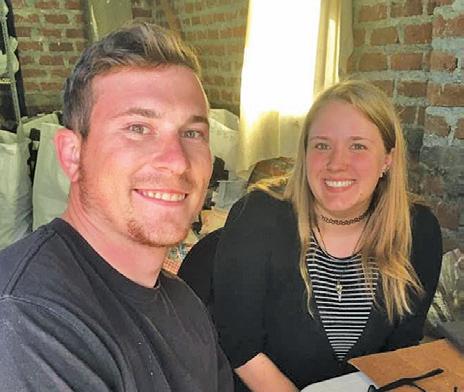
BY GARY NELSON Tribune Contributor
East Valley, say hello to the folks at city hall.
They are the ones who pave your streets, send police and firefighters when you are in danger, bring clean water to your home, haul off your garbage and, with one flush, make your sewage disappear.
They build the parks where you and your kids can play, supply transit services, dispense the knowledge of the world at no charge via modern libraries, weave arts and culture into the fabric of our communities and, in a couple of cases, even give you a front-row seat to Major League Baseball.
None of this happens, of course, without dollars – millions and millions of dollars. And now is the time when city councils must weigh the available dollars against the public’s insatiable demand for services, on the one
hand, and its natural desire to reduce taxes on the other.
As this budget season rolls toward final adoption of municipal spending plans in June, there is a general air of optimism fueled by one of the longest economic recoveries in American history, tempered by still-fresh cautionary memories of the Great Recession. Mesa, in fact, is planning for a downturn; Candace Cannistraro, Mesa’s management and budget director, told the City Council in March there may be trouble ahead.
“At this point we are adding an economic correction to the forecast,” Cannistraro said. “We have not had an economic correction in quite some time … we feel relatively confident that the next five years we will experience some type of a correction.”
“Correction” is the term economists use to describe a slowdown in an overheated econ-
BY PAUL MARYNIAK Tribune Executive Editor
The petition drive for a ballot question on a proposed tax surcharge on high-income Arizonans to raise more money for public education has created a potential tempest with a Tshirt for teachers and East Valley school districts.
District superintendents or their lawyers have warned teachers and other staff that wearing the signature red shirts to class could violate state law and cost them as much as $5,000 in civil penalties – at least if there is any message on them, including #RedforEd.
Some districts, including Kyrene and Chandler Unified, specifically warned teachers that opponents of their six-day walkout might try to turn them in for violating Arizona statute 15-511, which prohibits the “use of school district or charter school resources or employees to influence elections.”
Besides that, it also strictly forbids district employees from wearing any buttons or other items advocating for any political initiative or candidate while on school grounds as well as trying to influence
omy, sometimes severe enough to be called a recession.
That could create a double whammy for city budgets: First, local tax collections slow during the actual downturn. Then, two years later, the slowdown is reflected in lower payments from state-shared revenue because state revenue-sharing operates on a two-year time lag.
Chandler doesn’t share Mesa’s worry about a future economic setback.
But Dawn Lang, Chandler’s management services director, said recent robust increases in the city’s income are likely to be replaced by more modest growth over the next five years. During that span, Chandler is projecting 2 percent annual increases in operating-fund revenue.




The East Valley Tribune is published every Sunday and distributed free of charge to homes and in singlecopy locations throughout the East Valley. To find out where you can pick up a free copy of the Tribune, please visit www.EastValleyTribune.com.
Times Media Group: 1620 W. Fountainhead Parkway, Suite 219 Tempe, Arizona, 85282
CONTACT INFORMATION
Main number: 480-898-6500 | Advertising: 480-898-5624
Circulation service: 480-898-5641
Publisher: Steve T. Strickbine
Vice President: Michael Hiatt
ADVERTISING DEPARTMENT
Senior Account Sales: Ryan Brown | 480-898-6482 | rbrown@timespublications.com
Local Advertising Sales: Chris Ross | 480-898-5649 | cross@timespublications.com Woody Rogers | 480-898-5622 | wrogers@timespublications.com
Classifieds/Inside Sales: Elaine Cota | 480-898-7926 | ecota@evtrib.com TJ Higgins | 480-898-5902 | tjhiggins@evtrib.com
Advertising Office Manager: Lori Dionisio | 480-898-6309 | ldionisio@evtrib.com
Director of National Advertising: Zac Reynolds | 480-898-5603 | zac@evtrib.com
National Account Coordinator: Patty Dixie | 480-898-5940 | pdixie@evtrib.com
NEWS DEPARTMENT
Executive Editor: Paul Maryniak | 480-898-5647 | pmaryniak@timespublications.com
Managing Editor: Rick Barrs | 480-898-6825 | rbarrs@timespublications.com
Reporters: Wayne Schutsky| 480-898-6533 | wschutsky@timespublications.com Jim Walsh | 480-898-5639 | jwalsh@timespublications.com
Sports Editor: Brian Benesch | 480-898-5630 | bbenesch@timespublications.com
Get Out Editor: Christina Fuoco-Karasinski | 480-641-4518 | christina@timespublications.com
Photographer: Kimberly Carrillo | kcarillo@timespublications.com
Designer: Ruth Carlton | 480-898-5644 | rcarlton@timespublications.com
Production Coordinator: Courtney Oldham | 480-898-5617 | production@timespublications.com
Circulation Director: Aaron Kolodny | 480-898-5641 | customercare@evtrib.com
BY JIM WALSH Tribune Staff Writer
Jessica Curtis and Nicole McIntire have both suffered the unbearable pain of suddenly losing a small child to a drowning in a home swimming pool.
Although they both suffer flashbacks to their real-life horror stories and are filled with anguish, the two men have chosen not to surrender – not when an average of 16 pediatric drownings occur in Maricopa County each year, according to Tracey Fejt, trauma outreach and injury prevention coordinator at Cardon Children’s Medical Center in Mesa.
Although that figure represents major progress from the 34 child drownings recorded in Maricopa County 1986, Fejt said the death toll has plateaued at this stubborn level despite constant safety messages that have been repeated from year to year.
So far this year, there have been 5 pediatric and nine adult drownings in Pinal and Maricopa counties, though none were in the East Valley.
Curtis and McIntire have dedicated their lives to turning that number into a zero, sharing their stories with East Valley adults in the hope they remember that children can’t be trusted when a swimming pool is nearby. They need to be watched like hawks.
Curtis even started a support group for parents who have experience the tragedy of a child-drowning. She has 70 members, including many in the East Valley.
Through organ donations, Curtis helped saved the lives of two children after Parker, her 22-month-old son, drowned

on June 29, 2013, and was declared brain dead four days later: His heart was donated to a child in California; his liver to a child in Pennsylvania.
Curtis also teaches water survival classes several days a week at Swim Kids in Mesa.
“It’s everything I can do to keep other families from going through what I’ve been through,’’ Curtis said. “I don’t want another family to suffer another loss like I did.’’
“There’s not a second that I don’t think about it. When I get down, I look for light at the end of every horrible scene.’’
ing and Hope After Drowning support, which is associated with the Drowning Prevention Coalition of Arizona.
“There are days where I want to lay in my bed and cry,’’ Curtis said.
But she knows that accomplishes nothing. She knows Parker would want her to save others.
Nicole McIntire suffered the same crushing loss when her daughter Emily Rose, 16 months old, drowned in a relative’s pool in Los Angeles. The pool did not have a fence.


It’s hard to imagine a worse scene than Curtis witnessed the day Parker drowned. Parker was taking a nap and she was in the bathroom, getting ready to go to a July 4 event. She stepped outside the bathroom and then noticed the backdoor open.
What she did not realize was that landscapers had left a pool gate open. Curtis darted outside and saw something that she can’t possibly forget, no matter how hard she tries.
“I saw Parker at the bottom of the pool. I thought, no way, I rubbed my eyes,’’ she said, before she dove into the pool in hopes of saving her son.
In the end, it was too late. Parker had some faint brave waves. The paramedics and the doctors at Phoenix Children’s Hospital did everything they could. Finally, after four desperate days, the doctors said a prayer with the family, declared Parker brain-dead and harvested his organs.
The memory returns periodically.
“We all have our bad days,’’ Curtis said, alluding to fellow members of her Heal-
McIntire said she was not present during the incident and only learned what had happened after a friend called, told her there had been accident and that she needed to come to the hospital. By the time McIntire arrived, her daughter was already gone.
Eventually, she moved to Arizona with her husband Jason and her older son Chris to start a new life.
“I don’t know where I would be in my life if I didn’t find the coalition and become an advocate. It can happen to anyone,’’ McIntire said. “I don’t want my daughter’s life to go in vain.’’
A talented seamstress, McIntire had made Emily Rose, “a sweet little beautiful girl,’’ a Tinker Bell costume, because Tinker Bell was her favorite character. She never dreamed that she would also bury Emily in the costume.
Today, she makes special dresses as a side business or for the daughters of her friends, always knowing that she’d rather be making them for Emily Rose.
Lang has been helping chart Chandler finances for almost 11 years, a span that includes having to work through the loss of 130 city positions during the Great Recession. Lang said Chandler accomplished the reductions with voluntary retirement and buyout packages.
Now, she said, “Chandler is in very good shape. … We are experiencing a positive economic environment.”
Chandler’s City Council received a final budget proposal in early April that reflects a 6.3 decrease in overall spending over 2017-18. Most of that is attributed to lower capital spending, but Lang said even with a 0.3 percent decrease in general-fund outlays, the city has been able to add a few positions by shifting funds among departments.
‘
Tempe, like Chandler, thinks the economy is more likely to produce slow growth in coming years than a downturn.
“The budget is stable,” said Ken Jones, who is Tempe’s deputy city manager and chief financial officer. “The city has a little bit of expansion in the budget from one year to the next. We are keeping up with maintaining our programs and services and maintaining the capital assets that we have.”
A recent pattern of slow growth in the U.S. economy, Jones said, may reduce the chances of a recession in the near future.
“A lot of economists you talk to will say we’re due for one, but … other economists say it could be a lot longer.”
Rather than trying to predict a recession, Jones said, “We just make sure we

build up our fund balances to the point where we could overcome a normal economic downturn.”
Although Mesa thinks the economy could stumble in the coming few years, current projections are optimistic to the degree that some departments will be able to add staffing in the new fiscal year.
That includes the addition of a park ranger and four code-compliance officers. Both of those departments were decimated during the recession.
Further, Mesa is feeling good enough about its finances to consider a generalobligation bond election this fall – the city’s first since 2013 – to finance publicsafety projects and other capital improvements.
“There’s a lot of requests (for projects),” City Manager Chris Brady said during a March 22 council study session. “But we have to be mindful of the impact that has on our residents.”
In addition to a bond vote, Mesa also is considering asking residents to increase the local sales-tax rate, which currently sits at 1.75 percent. The idea would be to provide more money for ongoing city expenses. Mesa voters in 2016 rejected a sales-tax increase aimed mostly at financ-
ing a proposed downtown campus for Arizona State University.
The gap between what the public wants and what a city can afford was never more starkly on display than when Chandler hosted its “Budget Connect” meeting on Feb. 22.
In that meeting the City Council heard the results of an online citizen survey to gauge where Chandler could enhance city services.
Among the requests: More lighted ballfields, better community-based policing, more public transit, more downtown entertainment options, street improvements, more bike paths and bus routes, a light-rail connection to downtown, more frequent street sweeping, more pickleball courts, better traffic enforcement, more downtown bicycle cops, more help for the homeless, better environmental enforcement, weekend and evening recreation programs for kids, additional parks, better park maintenance, more free shows at the arts center, more senior services, a new lineup of special events, an art museum, cheaper utilities, better code enforcement and a better city website.
Other than that, the survey found, most Chandler residents are pretty happy with what their city has to offer.
Juggling wants, needs and available dollars can be harder during good times than bad, Lang said.
“When times are really tight and we’re having to do reductions,” you’re really looking at trying to save as many services as possible. But when times are positive like they are right now … I think there’s just more and more needs that come out.”
Chandler works hard, she said, to include citizen requests into its final budget plans.
Gilbert council members grappled with the same kinds of issues during a day-long financial retreat in early March – hearing, for example, that the town does not have enough money to fully build out two new parks under development, or to fund training facilities for police and firefighters.
That meeting also produced a discussion of Gilbert’s utility rates, which have not changed since 2009. City staffers recommended in March that water rates be hiked 11 percent. The money, Town Manager Patrick Banger said, would address water-quality issues and keep that utility’s financial reserves healthy.
On top of all that, Gilbert may ask voters for at least $48 million in bond money in the November election to fund capital projects – spending that would hike the average resident’s property tax bill. Although the local retail economy and sales-tax revenues are strong, Gilbert Budget Director Kelly Pfost said the operating budget is tight – a reflection, she said, of Gilbert’s overall fiscal conservatism.
BY GARY NELSON Tribune Contributor
What would it cost you every year to have your own armed and trained security force, your own firefighting equipment, your own truck for weekly trips to the dump, your own roadbuilding crew?
The number probably would be astronomical. Which explains why people live in cities: The costs come way down when resources and efforts are pooled. Even so, city services don’t come cheap.
For years, Mesa has published what it calls the “average homeowners cost comparison,” looking at what residents in the Valley’s seven largest cities pay
their cities per year.
The chart does not include all sources of city funds, such as state shared revenue and fees assessed for, say, recreational activities. Instead, it tallies what residents pay in taxes and for three basic utilities – water, sewer and solid waste.
The mix is different in each city.
Mesa, for example, decided in the 1940s that it would rather rely on utility income than on a primary property tax to fund government operations. Even in the face of a dire budget crisis, more than 60 percent of Mesa voters in 2006 rejected a primary property tax, and Mayor John Giles said in a recent City Council meeting that the idea remains toxic in Mesa politics.
Only in 2008 did Mesa voters embrace
the idea of a secondary property tax, which is used to pay off bonds on capital improvement projects. Until then, Mesa was virtually alone among American cities in relying on day-to-day revenue to pay general-obligation bond debt.
Gilbert also does not levy a primary property tax, relying on sales taxes and utilities to fund its operations.
Among East Valley cities, this is what the average homeowner pays per year for city services, according to the Mesa survey:
■ Tempe: $1,907. Almost half of that comes from taxes – primary and secondary property taxes and sales taxes. The rest is from utility payments.
■ Mesa: $1,893. The average Mesa tax bill is only about 70 percent of that
in Tempe, but utility payments – especially for water – make Mesa almost as expensive as its western neighbor.
■ Chandler: $1,570. Costs in Chandler are lower across the board than in Mesa or Tempe.
■ Gilbert: $1,419. The lack of a primary property tax is a major factor in keeping Gilbert homeowners’ costs lower than in Chandler.
Among other Valley cities, the most expensive for homeowners is Glendale. The average cost there is $2,192, fueled by large city debts for sports complexes and a 2.9 percent local sales tax rate. Phoenix is in the middle of the seven largest Valley cities, with an average cost of $1,830, and Scottsdale comes in at $1,707.

With online appointment booking, you can reserve a spot at any of our Urgent Care facilities ahead of time, so you can relax and not worry about the wait.
students toward a particular viewpoint.
Right now, districts apparently are worried for their employees.
“We’re not an enforcement agency. There are eyes out there,” said Kyrene Assistant Superintendent Mark Knight at the district’s governing board meeting May 8.
Chandler Unified Superintendent Camille Castille told teachers and staff in a memo: “Now that #RedForEd has morphed into #InvestInEd, the rules have changed. Districts, schools and individuals will be under more scrutiny.”
“To ensure we are all meeting the letter of the law, especially as we gather more information, we are going to prohibit all shirts with political messages,” Castille added. “You can wear red on Wednesday, but there can be no politically related message on your clothing. And please remember to not engage with students on this topic.”
The warnings reflect district officials’ sensitivity to the fact that not everyone agreed with the walkout and that teachers and other #RedforEd supporters with district jobs are vulnerable.
“Our job is not to police but to protect,” said Kyrene Superintendent. “We want to keep our teachers safe.”
That would mean safe from penalties that the law provides – and that the Legislature several years ago increased. Moreover, Knight noted, those penalties cannot be paid by the district or insurance but must come out of the individual’s pocket.
And they can be assessed on every individual act deemed against the law. In other words, wearing a shirt with a political message on five different days could mean five separate offenses with a potential maximum total penalty of $30,000.
Kyrene officials stressed that their warnings are normal during any election year and that they routinely make them during years when overrides are on the ballot.
But Mesa school officials, like their Chandler Unified counterparts, said #RedforEd-turned-InvestforEd is a particularly significant consideration.
“We don’t track calls, but we jumped on this fairly quickly to help answer questions we knew our districts would soon have,” said Mesa Public Schools spokeswoman Heidi Hurst.
Mesa schools General Council Tom Pickrell issued a stern warning to staff last Friday, calling for “a return to our traditional rule that teachers and other
staff members will not wear T-shirts that convey, directly or indirectly, a political, religious or moral message while on duty.”
“The traditional standard regarding message T-shirts was relaxed in the days before the RedforEd walkout because, frankly, more teachers were wearing RedforEd T-shirts than not,” Pickrell continued. “The walkout is now over, The Legislature approved a state budget that will enable our governing board to substantially improve salaries.”
Calling the message ban “a reasonable effort to avoid nedless controversies,” he said the ban is meant to spare coworkers, parents and staff from feeling “they are held captive” to a message they don’t agree with.”
Gilbert Public Schools Superintendent Shane McCord wrote an equally stern warning, but said he wasn't basing it on the law.
"Rather," he told staff, "I believe that it is in the best interest of students and our overall educational mission to avoid potential or actual conflicts, discomfort or other negative outcomes and instead focus on student instruction and professional responsibilities."
Stating the T-shorts "are distracting," McCord wrote:
"It has become evident that not all members of our school community are in accord with recent teacher activities or the #RedforEd movement. Further, parents and students are expressing their strong desire that the remaining days of the school year focus on instruction and not advocacy for legislative or election action."
Tempe Union officials also stressed their warnings were different this time.
“On the advice of our district legal team, we are asking that TUHSD employees refrain from wearing red shirts bearing a reference to the #RedforEd movement,” the district told staff, adding:
“By all means, feel free to wear red, just not anything related to the movement or with the hashtag. We have been very clear with employees that we are providing the guidance to protect them from potential personal liability if someone were to file a complaint regarding A.R.S. § 15-511.”
Even the Kyrene board meeting May 8 meeting showed #RedforEd added urgency to whatever warnings have been traditional during election years.
“The dress code. It’s not working,” parent Steve O’Hanian told the board, noting that Kyrene’s policies prohibit clothing and symbolism that create “an atmosphere of threats, intimidation or

undue influence” and “disrupt or may disrupt the educational environment or interfere” with education.
“This is precisely what will happen in today’s very high political environment,” he said.
O’Hanian asserted that Kyrene’s dress code prohibited employees – when on school grounds – from wearing “colored clothing containing symbols being worn by a group for displaying solidarity with a political activist group.
“Not only have students been wearing such clothing, but (so are) teachers and principals – in the school during school hours,” he said.
“We want our children to attend school each day with enthusiasm and an open mind, not being exposed en masse to any curriculum favoring one ideology or another,” O’Hanian added, adding that such clothing is “intimidating and disruptive to the educational objectives and must not be tolerated.”
But Kyrene parent Cathy Zinkhon Matsumoto, a special education teacher in another district, told the board she participated in teacher protests at the Capitol and noted some parents who opposed the walkout are wearing purple shirts as a public protest of the protest.
“I see people in purple,” she said. “I hear that’s a political color now. Who gets to make that decision on what colors we get to wear?
“Is everything we do political?” Matsumoto continued, calling #RedforEd a movement that has been around for “many many years.”
Those exchanges reflect a more fundamental disagreement on the law between lawyers for the Arizona Education Association, which helped lead the walkout, and the Arizona School Boards Association, which advises governing boards on a wide array of policy and legal issues. Josh Buckley – president of the Mesa Education Association and the teacher leader who ac tually introduced to the public the initiative for surcharging the incomes of Arizonans earning more than $250,000 annually – said the AEA attorney believes that no violation exists by wearing RedforEd shirts.
But because the matter has not been resolved, most teachers will probably wear red shirts without the catchy messages on Wednesday.
Buckley said Mesa’s governing board told association officials, “We’d rather not do any message on T-shirts. We know there are a lot of options that don’t say “RedforEd’’ on them.’’
He said most teachers have purchased some other red clothing, noting, “I will break out my red button-up shirt on Wednesday.”
Kyrene teacher Amanda McDaniels said, “We are now organized. We are smarter and we will not forget. We will continue to wear red on Wednesdays to remind us that the fight for our children and Arizona’s future continues.”
But McDaniels also was playing it safe with her red T-shirt bearing the profile of Arizona on it.
Instead of “#RedforEd” within the border, there was a small apple.
Kyle Wade Cummins, a junior varsity basketball coach and psychology teacher at Mountain View High School was indicted last week by a federal grand jury on charges he downloaded child pornography between last March and April.
The FBI said a search of his home yielded dozens of child porn files on his computer and that he admitted doing downloading the porn for five or six years when his wife and son were not at home.

Mesa Public Schools suspended Cummins, who is out on bond but forbidden from approaching either schools or his home. District officials said they would rely on “investigation findings from law enforcement and our district policies as the basis for any future employment decisions regarding” him.

Coming soon to a sidewalk near you: 200-pound autonomous delivery robots, after Gov. Doug Ducey signed legislation that authorizes their use, paving for the devices to deliver everything from mail to pizza – all more cheaply than by people driving cars and trucks.
State Rep. Kelly Townsend, R-Mesa, reinserted some protections and limits into her bill –including weight limits, minimum liability insurance and a requirement for brakes – that the Senate had stripped out of the measure after it cleared the House. She insisted on that in the wake of the crash of an Uber in autonomous mode killing a pedestrian in Tempe.
Townsend said she believes the new law is a good thing for Arizona.
Officially called “personal delivery devices,’’ Townsend said she first saw them on a trip to the nation’s capital. And the idea got a push when lobbyists from Estonia-based Starship Technologies sought permission to deploy them in Arizona.
Because current law prohibits motorized devices on sidewalks, Townsend carved out a special exception giving them the same rights and duties as pedestrians. That includes a mandate to follow all traffic and pedestrian-control signals.
“It has to obey the laws and it can’t be mowing people down, obviously,’’ Townsend explained earlier in the session. “I want them to have to abide by our laws so that they’re not just running amok.’’

Gabrielle Myers, a second-grade student at Quartz Hill Elementary School in Gilbert, will have a special spot in the Arizona State Fair this fall – and will get a special treat.
She is one of three young artists who won Gov. Doug Ducey’s third annual design contest for the fair’s Read & Ride program bookmarks.
The youngster beat out more than 300 other contestants in grades K-6 who entered the contest showcasing the theme “AmazingAZ.”
“I’m beyond impressed by the artistic talent Arizona students continue to showcase year after year and want to thank all the students who participated,” said Ducey. Gabrielle, who will receive a fair VIP package and get a chance to meet the governor, will see her design on bookmarks that are distributed at local libraries and to students touring the Arizona State Capitol Executive Tower.

are asking for donations this year for our Homeless Vets.
will have an event tent with a box where items such as: toothpaste, toothbrushes,
can be dropped off the day of the event.









BY JIM WALSH Tribune Staff Writer
Mesa Mayor John Giles leaves no doubt that he supports the Church of Jesus Christ of Latter-day Saints’ plans to renovate its historic 91-year-old Mesa Arizona Temple and revitalize the surrounding area.
When the church’s plans are combined with the city’s proposal for a downtown Arizona State University campus, Giles anticipates a dramatic transformation of downtown Mesa, with several other major projects getting built and light rail fulfilling its promise.
“I am excited about both projects for the same reason. We will look back at this someday as the new beginnings of downtown Mesa,’’ Giles said. “This is reinvigorating and reinvesting in a very strategic, historic neighborhood. I am not the first mayor of Mesa to go to Salt Lake City and urge them to reinvest.’’
from page 3
McIntire struggled with how to tell Chris, now 9, that his sister had passed away. She also had to deal with questions that broke her heart, like when Chris asked her, “Mom, when is Emily coming home?’’
“I have to put on a façade for him sometimes. Sometimes I am hurting so bad. I don’t want him to know I feel horrible about this,’’ she said.
She said she has heard Chris tell other children when they see Emily Rose’s picture, “That’s my sister. She died three years ago. Now she is my guardian angel.’’
McIntire shares her story on social media and with parents she meets in her neighborhood and through her son’s baseball team. She also has appeared with Curtis, her mentor in the drowning prevention crusade, at water-safety events.
“She’s given me a lot of support and encouragement. She has inspired me to help when I can,’’ McIntire said.
Firefighters and safety advocates say all drownings are preventable but that it takes a concentrated, unending effort to keep small children safe around water.

The two separate redevelopment plans are anticipated to have a synergistic economic impact, with the scaled-back ASU campus proposal expected to generate $1 million a year, Giles said. It features an academic building that would be owned by the city and leased long-term to ASU under the terms of a 99-year agreement, at Pepper Place and Centennial Way. It would be a five-story,
115,000-square-foot building housing an expanded film, gaming and design program.
The council, which has been divided on the issue, is scheduled to consider the financing the long-awaited building with utility revenues at a June meeting. A much larger proposal was previously approved by the council but later rejected by voters as part of a bond issue.

They recommend focused adult supervision, a fence with a self-latching gate around the pool and swimming lessons, which can start as young as 9 months old. They say even a momentary distraction on an adult’s part can create enough time for a child to drown, and the fence is required as a backstop to buy additional time.
The problem is so severe that Michele Long, the Mesa Fire Department’s drowning prevention coordinator, recommends putting a life vest on any child visiting a home without a pool fence.
“When you are telling family members, ‘Watch my children,’ that is not enough,’’ Long said. “It has to be direct supervision.’’
The Children’s Safety Zone, a website operated by the Drowning Prevention Coalition of Arizona, reflects the chronic nature of the heartbreaking problem, with the number of pediatric drownings in Maricopa County dropping from 27 in 2001 to 15 in 2017.
But Giles, a historic preservationist as well as an education advocate, wants to know more details about the LDS Church’s plans to demolish at least seven homes in the Temple Historic District before endorsing their project entirely. The LDS church also has notified 19 tenants of church-owned homes of plans to evict them at the end of June.
“I am looking forward to seeing and hearing the details,’’ Giles said. “I think they will be sensitive. I think the entire project is motivated with historic preservation in mind.’’
While the partially disclosed plans have given new hope for downtown redevelopment, they also have raised the specter of peril for a historic district at the heart of Mesa’s history.
No formal plan has been filed by the LDS church, leaving plenty of room for speculation.
In the East Valley, four children ages 5 and younger, the official age range defined pediatric drownings, drowned in 2017. That includes three in Mesa and one each in Gilbert and Chandler.
Phoenix had six, which represents a typical death toll but a significant improvement from the 15 recorded in 2001.
More adults than children drown in Maricopa County. In 2017, 43 out of 61 victims in were adults.
Gilbert’s number of water-related incidents dropped from 19 to nine in 2017, but the town still recorded two drownings – one pediatric and one adult.
Gilbert does not have an ordinance requiring a fence to surround a pool, but a state law passed in the 1990s during a drowning epidemic requires them.
Deputy Fire Chief Josh Ehrman was less than elated, however, realizing there also are near-drownings, in which being underwater too long cuts off oxygen to the brain, resulting in cognitive deficits that last a lifetime.
“We had a great year in the sense that the numbers are down, but a perfect year is zero,’’ Ehrman said. “It’s an absolute
nightmare for everyone involved.”
While firefighters preach constant vigilance, they say there is a high risk of a momentary lapse in supervision of children around water – the kind that leads to fatalities or a lifetime of disabilities caused by nearly drowning.
“Yes, we all want to watch our kids. At the same time, we need multiple barriers to succeed,’’ Fejt said. She said many drownings still occur at pools not enclosed by a fence or with an inappropriate fence.
Many times, people don’t understand the brief amount of time it takes for a child to drown, or the multitude of scenarios that can contribute to a drowning, Fejt said. Nearly every year, for instance, a Maricopa County child climbs through a doggie door and drowns.
In a world full of distractions, Long said, the risk of human factors contributing to drowning is very high.
“A lot of people automatically think you can blame the parents. That’s not true,’’ Long said. “Most of it is a lapse in supervision. It could be a cell phone or another child.’’
Ehrman hopes he has responded to his last drowning call, but he knows the risk is always lurking in a desert community with a lot of children and pools.
“I wish we knew the right formula for people to be aware all the time and watch kids around water,’’ Ehrman said. “Every agency does prevention every year. The hope is that one family is saved.’’
Most East Valley high schools will bid their senior classes adieu this week. The only exception will be those in Chandler Unified School Districts, where most high school graduations will occur May 30, with the exception of the May 29 commencement for Perry High. Valley Christian in Chandler will also graduate this week with a commencement on Friday, May 25.


Mesa Public School’s six high schools will graduate 4,021 seniors the day before that, May 24. That breaks down to Red Mountain High, 812; Mesa High, 741; Mountain View, 712; Westwood, 669; Dobson, 545; and Skyline, 542. Six of Tempe Union’s seven high schools also bid their seniors farewell on Thursday while Compadre graduates its seniors a day earlier.
In Gilbert Public Schools, Highland, Mesquite and Gilbert Classical Academy seniors march off on Tuesday, followed by Gilbert High, Desert Ridge and Campo Verde the next day.
The 415 graduating seniors at Williams Field High their 410 counterparts at Higley High reeled in scholarships totaling $15.1 million and $16.3 million, respectively. Among them are Williams Field seniors Alexandria Herring and Liam Petri, who each earned $168,560 in scholarship offers – the highest individual totals among all Higley Unified grads-to-be.
Herring, who’s graduating with a grade point average of 4.9, is heading to ASU to major in biomedical engineering and pre-medicine, noting “Everything I learn will help when I am a doctor.” Petrie, whose GPA is 4.8, also is heading to ASU with an eye on a biomedical engineering degree, said, “I’m excited about the college culture and campus environment."

Gilbert and Mesa public swimming pools will open just as the 2017-18 school year ends. All nine City of Mesa pools will open for the summer beginning Saturday, May 26, while Gilbert’s aquatic centers open the following day.
Mesa pools are open for public swimming at 1 p.m. most days. Skyline and Rhodes will be open on Sundays. For specific pool hours, visit mesaparks.com/pools. Family season pool passes are on sale at a 50 percent discount and individual passes are 20 percent off through May 24 at the Mesa Parks and Recreation Office, 200 S. Center St., Building No. 1, Monday through Thursday, from 7 a.m. to 5:30 p.m.
Gilbert will start selling passes when the pools open; they’re available at the pools.
In Chandler, Nozomi Aquatic Center opens Friday and Folley Pool opens May 31 while the remainder open Saturday.
City and company officials are touting a scheduled groundbreaking Tuesday, May 22, at Chandler Municipal Airport as the beginning of “a new era of aviation service.”

WingSpan Aviation Center-Chandler will offer “highend, customized hangar and office space in the heart of the East Valley’s flying community” and is the first of its kind offered at the airport, spokeswoman Jane Poston said, noting that the company will capitalize on the growing needs of pilots and aircraft owners.
Chandler resident Jim Moore, developer and CEO of WingSpan Business Investments, said, the 80,000-square-foot development, which sits on a 4.8-acre site, will include four two-story hangars and 28,000 square feet of office space.
The property is expected to be built out in about five years with 250,000 square feet of space.








Chandler, Arizona 85224

Drive
Chandler, Arizona 85224
Alzheimer’s & Dementia Care
Rehabilitation & Skilled Nursing
2555 North Price Road Chandler, Arizona 85224
To learn more about how Brookdale serves veterans and their families in the Phoenix area, call (855) 505-8350.





















BY HOWARD FISCHER Capitol Media Services
Anew ruling Monday by the U.S. Supreme Court could open the door to Arizonans legally betting for – or against – the Diamondbacks, the Cardinals and even the Wildcats, Sun Devils and Lumberjacks.
And it could mean more money for the state.
Gov. Doug Ducey is open to the idea of allowing Arizonans to place bets on sporting events at 55 off-track betting sites around the state.
The governor said he wants to “maintain the culture and flavor of our state’’ in deciding who should get the right to offer wagering on professional and amateur sports. And historically, casino gaming has been limited to tribal lands, a finding cemented into state law by voters in 2002.
Ducey said he’s looking for what could be the best deal for the state – and generate the most money.
In a 6-3 decision, the justices struck down a 1992 federal law forbidding most states from allowing such wagering. The majority concluded that the Professional and Amateur Sports Protection Act is an unconstitutional move by Congress to tell states what they can and cannot legalize.
The ruling comes as Ducey already is negotiating with tribes to “modernize’’ the gaming compacts that voters authorized in 2002. These give the tribes the exclusive right to operate certain forms of casino gambling in exchange for the state getting a share of the profits.

cey said.
The governor’s musings come as several Native American tribes already are expressing interest in revamping their agreements with the state to also allow them to offer sports wagering.
were to offer a new form of off-reservation gaming without their consent.
Ducey gave all indications he’s willing to listen to what the track has to offer.
“We want to build out the stakeholder group, look at some best practices around the country, and see how we can maximize this for the citizens of Arizona and for the general fund,’’ he said.
Greg Marek, Mesa’s former historic preservation officer and downtown redevelopment director, is far less convinced than Giles about the church’s commitment to historic preservation after meeting with Carl Duke of City Creek Reserve, the LDS church’s property wing, about the plan.
Marek said he urged Duke to consider other options, including moving the homes to another location in the district and turning them into a boutique shopping and dining area.
“Three of the homes extend into the project area. They need to be demolished or moved,’’ Marek said. “The mentality is newer is better.’’
“The plans are locked in place,’’ Marek said, based upon his conversation with Duke.
Those compacts begin to expire after 2022. And Ducey has made no secret he thinks there’s a better deal to be had, with the state getting more cash.
“I do think there’s a significant opportunity with gaming,’’ he continued. “But I do think we should have the public discourse and debate on where those dollars will be spent and where the highest priority is.’’
But the governor said it would be wrong to presume that whatever new revenues sports gaming brings into the state, whether through revenue sharing with the tribes or a share of the handle at tracks and OTB sites, will end up being earmarked for education.
He said while he looks at funding needs for education he also has to be concerned with funding child safety, public safety and the state’s infrastructure.
“There’s a long, long list of funding needs in this state that I’m aware of,’’ Du-
“Of course we want to respect that and make sure we’re properly communicating with the tribes,’’ the governor continued. “But there’s also other factors we want to take into account.’’
There already is sports gaming of a sort in Arizona.
That’s not just horse racing at Turf Paradise in Phoenix. There also are 55 OTB sites scattered throughout the state where Arizonans can place bets not only on the ponies racing in Phoenix but on horse and dog-racing throughout the country.
Vince Francia, general manager of the horse track, which also runs most of those OTB sites, told Capitol Media Services he would not expect Ducey and state lawmakers to limit sports wagering to the track.
Such a move would raise all sorts of legal issues, including a “poison pill’’ provision in the agreements the state has with tribes that would void the compacts – and the revenues they now share with the state from other casino operations – if the state

month reprieve under city ordinances, during which other options can be considered.
“They are waiting out the six months,’’ Marek said, and plan to bulldoze the homes after the moratorium expires.
Ducey has not been averse to the idea of expanded gaming to help balance the budget. In fact, his original proposal to fund teacher raises included allowing the Arizona Lottery to start a keno game, a plan that was subsequently scrapped.
Odds are the tribes see opportunities, too.
“I think the Navajo Nation is very interested in sports betting and in finding ways to expand their casino offerings,’’ said attorney Steven Hart who represents the state’s largest tribe.
Stephen Roe Lewis, chairman of the Gila River Indian Community, said, “We are looking forward to discussing with the state how we can go about working together on developing this opportunity, which could be a win-win for the state of Arizona and Arizona tribes.’’
Arizona Attorney General Mark Brnovich, who had sided with New Jersey in its challenge of the federal law, called Monday’s ruling a significant victory for states’ rights.
The American Gaming Association produced a similar statistic for this year’s Super Bowl, saying that 97 percent of total wagers, equaling more than $4.6 billion, was expected to be bet illegally.
to follow through with plans to demolish additional homes nearer to First Avenue, replacing them with new housing.
Duke said he could not comment on the LDS church’s plans for the properties, but he confirmed that a media briefing is being in the near future. He referred further questions to Dale Bills, a City Creek spokesman, who confirmed the evictions in an emailed statement.
Mesa officials blocked the demolition of these homes, on Udall and LeSueur streets west of the Temple, by rejecting the permits. That forces a meeting with the Mesa Historic Preservation Board on June 5 where additional details seem likely to surface. The rejection also started a six-
Marek, a historic board member, said he plans to question church officials on whether they have considered options other than demolition when they appear before the board in early June.
He said he believes the district could survive even if the three homes were demolished, but he fears the district would lose its historic designation if Duke were
“I can’t comment on plans for specific properties, but I can tell you that in preparation for redevelopment on the block west of the temple, City Creek Reserve (CCRI), a real estate investment affiliate of the church, has given notice to 19 renters that month-to-month leases will not be extended past mid-July,’’ Bills wrote.
“Because we understand that moving is never easy,’’ Bills wrote, City Creek is helping renters find new homes.













the offer, you must open the account with at least $25,000 as indicated above. Interest rates and APYs may change at any time without notice. At any time, interest rates and APYs offered within two or more consecutive tiers may be the same. When this is the case, multiple tiers will be shown as a single tier. The following collected balance tiers and corresponding APYs are effective as of May 7, 2018 and are subject to change at our discretion at any time: 0.05% for balances less than $10,000; 0.20% for balances between $10,000 and $24,999.99; 0.40% for balances between $25,000 and $49,999.99; 0.50% for balances between $50,000 and $99,999.99; 0.60% for balances between $100,000 and $249,999.99 and 0.75% for balances of $250,000 or more.
BY RICK BARRS Tribune Managing Editor
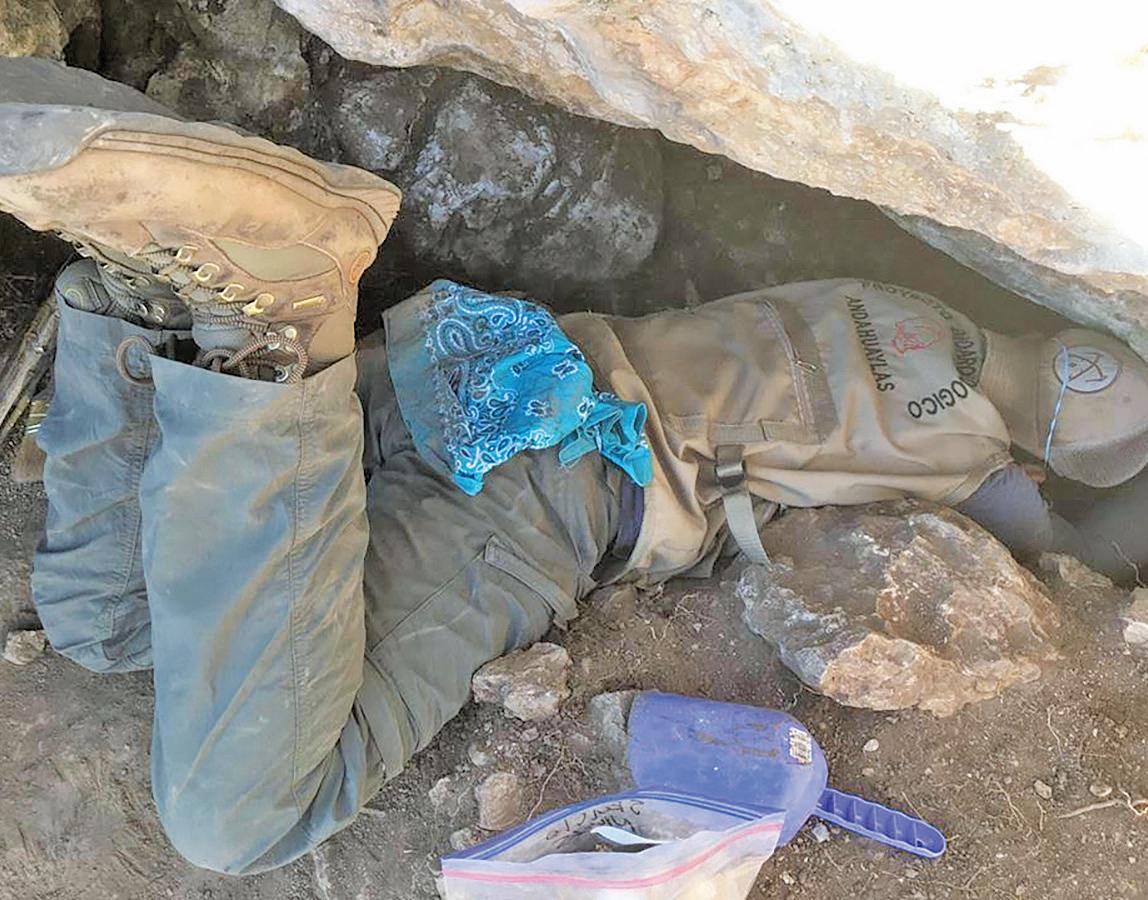
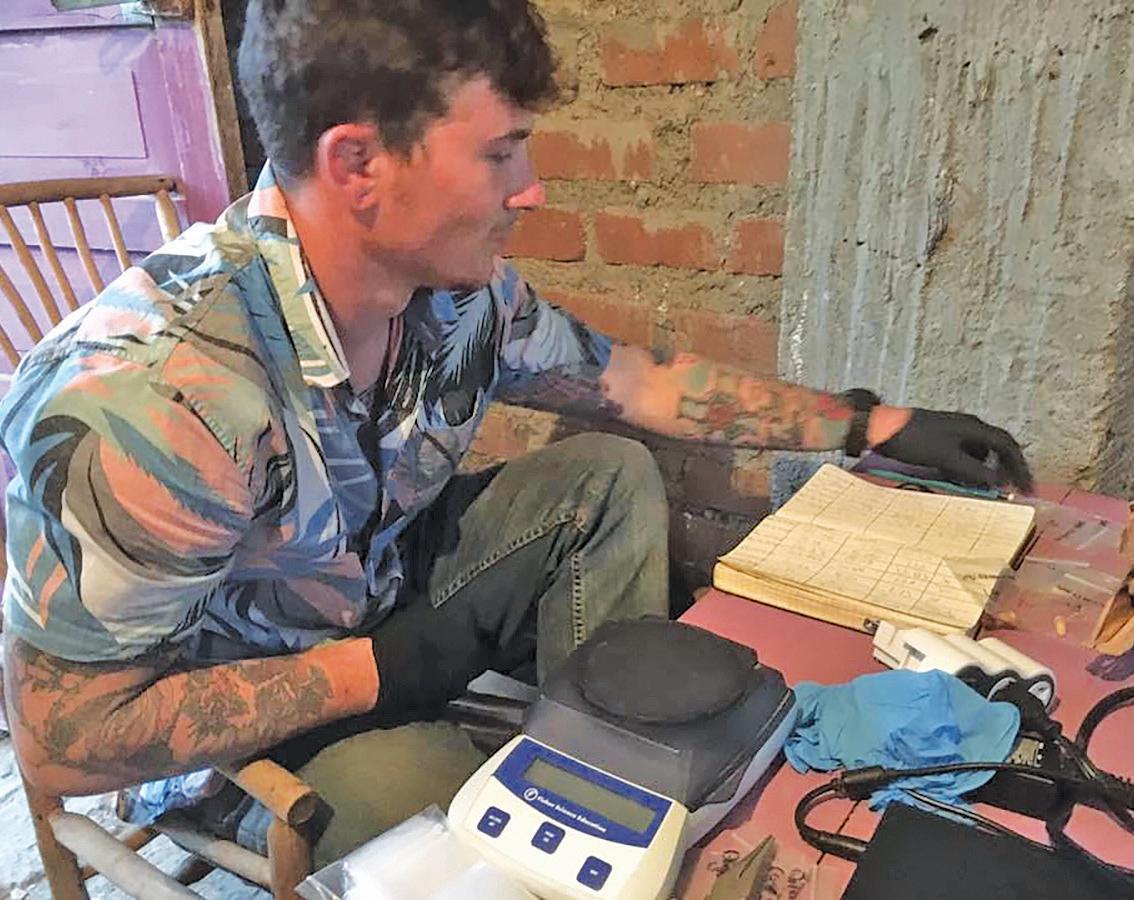
Army veteran Ricky Nelson is heading to the south-central Andes in Peru on May 21 to study the ancient Chanka people of the region.
Nelson, 26, of Mesa, is scheduled to be there for 11 weeks doing what he loves, participating in a dig as a future full-fledged archeologist.
A junior in the Barrett Honors College at Arizona State University, he credits his discovery of the field of archeology, first as a student at Mesa Community College, with not just enriching his life – but saving it.
“I was a hopeless drug addict, and I might have stayed that way if I hadn’t walked into that archeology class (at MCC),” the Mesa resident said.
When Nelson left the Army after three years, following a six-month tour of duty in Afghanistan and a brain injury suffered
in a freak training exercise accident, he couldn’t work because of his injury and because he was suffering from post-traumatic stress disorder.
He wound up on the streets of Colorado Springs, Colorado, one of the places he was stationed in the Army and not that far south of Elizabeth, where his parents had moved after living in Apache Junction during his childhood.
Nelson said he started using drugs in the service and had stepped up their use to feel better, but it didn’t work. His drugs of choice were methamphetamines and opioids. His alienated parents wouldn’t help him, he said, telling him he had to battle his demons on his own.
The result was that he spent three years as a homeless veteran, getting a fix whenever he could scrape together enough money.
Contributing to his depression during that period, he said, was the death of his infant son, who died of fetal drug syndrome after being born a crack baby to his addicted mother.
This happened while Nelson was still in the Army, but he believes it was a big factor in what he went through later as a homeless vet.
Not many Boy Scouts reach the pinnacle of their membership by achieving the rank of Eagle.
And that makes Mesa Troop 565’s achievement all the more impressive.
The troop, chartered to St. Timothy Catholic Church, fielded an even dozen Eagle Scouts from across the East Valley last year.
To put that achievement in perspective, Bryan on Scouting blog author Bryan Wendell estimates that only 2 percent of all Scouts have attained Eagle rank since the award was created in 1912. The Troop 565 Scouts who earned Eagle rank last year made up 24 percent of their group.

He was so devastated by the boy’s death that he went AWOL for a few months, turning up in Holland, where he worked for a man in his rose gardens. He wears rose tattoos on his right arm to commemorate that time of grief, with his son’s name wrapped around one of them.
When he was medically discharged from the Army, Nelson said he was denied benefits for a long time.
“I loved the Army,” he said, citing a long, patriotic tradition of serving in the military in his family – so much so that he had considered making it a career.
But the former Specialist 4 said, “The Army abandoned me at first. I couldn’t work (because of the medical problems), and I had nowhere to go.”
His salvation began when the Army reconsidered his case, declared him 80 percent disabled and awarded him benefits, including an initial back payment of $30,000. His parents found him and told him the news.
The money and “sheer willpower” got him off the streets and out of Colorado, he said.
“I had to get out of there. I had to leave all that darkness behind,” he said. “So, I headed back to Arizona”
Nelson said his will to leave the streets was bolstered by the death of a close friend in his homeless community: “When I saw my buddy shoot himself, I realized that some people don’t make it out – and I became determined not to become one of those people. “
Nelson at first moved into a cheap hotel in Peoria and eventually into a $500-a-month apartment in Mesa.
“To tell the truth, I was still using then,” he said. But he entered MCC, took that anthropology class and kicked the habit. He almost immediately knew that he never would go back to drugs because he suddenly had a purpose in life, something to live for.
“I was home,” he said.


Once he got off drugs, he said, his weight went from 105 to 162 pounds.
“I went to (Narcotics Anonymous) for a time, but I had to stop,” he said. “I just couldn’t be around the kind of people who went there, who were so down on themselves.”
This will be a return trip for him.
Nelson was at the same Sondor dig last summer, excavating Chanka remains as a fellow at the Institute for Field Research, a nonprofit study-abroad program for anthropology students that has participated in excavations on every continent except Antarctica.
Sondor is one of three formal digs across the world where Nelson has worked.
After he graduates ASU with a bachelor of science degree in anthropology, Nelson plans to pursue bioarchaeology, with a specialty in strontium isotopes
and ancient DNA.
What this means, he said, is that he wants to find out how ancient civilizations were affected by what they ate and how, for example, their diets may have stunted growth.
His goal is to someday teach archeology to college students in the field and in the classroom.
He wants to make his parents proud, he said, by becoming “not only the first person to get a college degree in my family but the first to get a doctorate.”
In addition to his selection to ASU’s Barrett, Nelson said, he has received a Benjamin A. Gilman Scholarship for study abroad.
IFR board member and anthropologist Danielle Kurin, who mentored Nelson in Peru and will again on his return trip, recalled that he helped lead excava-
tions of an Inca fortress from the 15th century, that he was involved in some of the most physically demanding tasks during his time at the dig and that he was an upbeat mentor to younger students involved.
“Always diligent and disciplined, Ricky meticulously helped exhume dozens of skeletonized individuals and thousands of artifacts from beneath ancient house floors and from within the maws of precipitous slope-side burial caves,” she said. “Ricky has faced many challenges in life, but he has always persevered.”
Kurin described Nelson’s infectiously friendly personality as enabling him to “gracefully (embed) himself within the local indigenous Quechua community.”
Many indigenous cultures mistrust foreigners on their turf, but the situation is different for archeologists, Nelson said:
“As an archaeologist, people look at you differently. You’re not trying to change the culture, you’re trying to protect it.”
Nelson said it boggles his mind that about three years ago, he “was on the streets with no hope in the world.
“Now I have all the hope in the world,” he said “I have filled that hole in my heart with archeology, with learning how to be a scientist.”
Ran Boytner, IFR’s founding executive director, lauded Nelson’s dedication to archeology and predicted that he will have a long, productive career in his chosen profession.
But Boytner took exception to the ASU undergrad’s belief that archeology saved him from the horrors of drug-addicted homelessness:
“Ricky is an intelligent, quite extraordinary young man who pulled himself up by his bootstrings with hard work and perseverance,” Boytner said.
“He did it all himself – he just needed an excuse.”














They also belong to what is the largest class of class of Eagles since 2013 and the fourth largest in the BSA’s 108-year history, parent Conni Knoblach said.
Though the 12 boys came from five different Cub Scout packs when they became old enough to become Boy Scouts, “they all have become good friends with each other,” Troop 565 Scoutmaster and Chandler resident Mike Coomer said. “I have no doubt in my mind that these young men will do great things in the future thanks to the skills and adventures that they have had along the way to Eagle.”
Knoblach added: “Every troop is thrilled to celebrate the achievement of an Eagle Scout. However, this troop celebrated on average one Eagle Ranked Scout a month this past year, a year that they will not soon forget.”
Since it started at St. Timothy Catholic Church in 1991, Troop 565 has produced a total of 49 Eagle Scouts.
Eagle Scout is a lifelong rank and the highest in the BSA program. Scouts must progress through the six ranks, earn a minimum of 21 merit badges, prove leadership qualities and plan and execute a major service project to benefit the community. Combined, the 12 Troop 565 Eagle
Scouts served 11 community organizations with more than 1,800 hours of community service. They earned more than 375 merit badges, and seven of them joined the Order of the Arrow – a kind of Boy Scout honor society that recognizes Scouts who best exemplify the Scout Oath and Law and lead a life of cheerful service to others.
Three of the Scouts received the BSA Triple Crown award, earned by attending all three of the BSA High Adventures. Two received the BSA Medal of Merit award, which was given for meritorious service above and beyond when they helped rescue an injured hiker at the secluded end of the Grand Canyon, at Havasupai Falls.
Parent Joe Milburn, an Eagle Scout and Eagle adviser for the troop, said the dozen boys’ success is partly the result of “a strong outdoor program with a variety of scheduled outings each month that kept the Scouts active and involved.”
Kristine Steinmetz, an Eagle parent, said she appreciates the “close partnership that the Scouts develop while working together.
“When they are having fun, it becomes easy to motivate each other and keep going,” she added.
And parent Angie Almanza appreciates the entire Scout program because it
“teaches our sons to become knowledgeable young men of character that will help them in their adult years.”
None of this surprises Coomer, who noted, “Not having been a Boy Scout myself, I learned the skills that I helped teach right alongside with these boys. I had a great time watching them do their thing and hone their skills.”
The 12 Eagle Scouts and their projects are:
Robert Buessing, son of Maureen Buessing of Chandler, painted and equipped a basketball court for Hospice of the Valley.
Johnny Kominska, son of Mike and Cindy Kominska of Tempe, built a playground sun/shade structure for Prescott Valley Elementary School.
Alex Knoblach, son of Gerald and Conni Knoblach of Chandler, built a 60foot retaining wall with railroad ties and landscape and area for the Arizona Railway Museum;
Spencer Steinmetz, son of David and Kristine Steinmetz of Chandler, helped the House of Refuge renovate the yards of homes and added flowers, plants and watering systems.
Benjamin Stanley, son of Rose Stanley of Chandler, built a small-dog training area for Friends for Life Rescue in Gilbert.
H. Geryk, son of Bailey Freed of Chandler, converted a kitchen into a storage area, installing new flooring and other infrastructure at St. Mary Basha Elementary School.
L. Kelly, son of Melanie and Mathew Kelly of Chandler, built an extra-large donation bin and filled it with supplies for Maggie’s Place.
Ben Campbell, son of Jeff and Christina Campbell of Chandler, installed a paver walkway outside St. Mary Basha Elementary classrooms.
Noah Almanza, son of Ruben and Angie Almanza of Mesa, helped the Dobson High School Future Farmers of America Club by building a wooden garden and tables for the green house.
Solomon Milburn, son of Joe and Terri Milburn of Gilbert, gave Mesquite High School a bit of a facelift by building benches and tables for the auditorium foyer.
Mac Coomer, son of Mike and Lynn Coomer of Chandler, helped Child Crisis Arizona by collecting hygiene items for toddlers.
Ryan Kilde, son of Dan and Kim Kilde of Chandler aided the Paz de Cristo Community Center with a collection of clothing and hygiene items and raising money for the Paz Homeless Shower program.



BY HUNTER ROBINSON Cronkite News
As the baseball season nears the halfway mark, the crack of a wooden bat is in full swing as a soundtrack of summer.
Some of that sound is courtesy of Chandler-based Zinger Bats, which provides bats for all levels of baseball – including the major leagues.
“I’ve enjoyed them,” Diamondbacks pitcher Zack Godley said. “They don’t necessarily work for me – but that’s not the bat’s fault, that’s me – but as far as feel and stuff during (batting practice), I love them.”
Zinger Bats originated in Utah but relocated to Arizona in 2012 when Scott Hanish bought the company and moved it to the area where he was born and raised.
“Utah is a great place (but) there isn’t as much baseball there as there is here,” Hanish said. “During spring training, you could walk in (the shop) and there could be 10 to 15 pro guys looking around. There is always baseball here. … Not a bad place to have a bat company.”
Hanish, who played collegiate and independent league baseball, received a few old bats one day by a former major leaguer. They came from Zinger Bats and he remembers thinking they were the best he had ever used. A few years later, he received a call about an investment opportunity.
It was for Zinger Bats.
The company, founded in 1998 by Kelly Eastman, is among dozens of bat manufacturers that have found their way to the major league market.
The top companies include Louisville Slugger and Marucci, but others, like Zinger, are making inroads. During the six weeks of spring training, the company sent approximately 4,000 bats to teams for spring use, Hanish said.
In 2016, Chicago Cubs infielder Addison Russell hit a grand slam and drove in six RBIs in Game 6 of the World Series with a bat made by Zinger. His teammate, Miguel Montero, hit the game-winning RBI in Game 7 of that same World Series, also with a Zinger


bat.
“There’s 32 professionally approved bat companies out there. Every one of them can make a really good bat. It’s not like we have secret trees,” Hanish said.
“At the end of the day, it is that dedication to providing that professional experience regardless of the age-level. …
Our whole philosophy is put in that effort here for them on the production side, so that they can put in that same effort out there.”
That process of putting in the effort is a labor of love.
It starts with the maple, ash and birch wood pallets Zinger Bats order from the New York-Pennsylvania area. The wood is transported to Arizona by truck and when it arrives, it has to sit at the Zinger warehouse for a few weeks before it is ready to become a bat.
“Most people don’t understand that wood constantly adapts to its environment,” Hanish said. “So, the relative moisture level of wherever that wood is at, if it is coming from the East Coast or wherever, will actually have different properties and gain or lose moisture depending on which way the wood travels.”
Arizona, a dry region, is vastly different than the very moist area of the New York-Pennsylvania region. The wood has
to adapt to the climate the same way a tourist does after arriving in Arizona in the middle of July.
Once the wood is ready, it is weighed to address the needs of the bat’s designer. Maple, for example, is the heaviest type of wood and finding the right weight can be difficult.
Once the desired weight is found, that piece of wood has made the cut to the next round of the process. The wood is fed into a machine that cuts it to specifications. Zinger’s machine has the specs of thousands of bats saved within its system, which allows for a reorder of a bat to be done with ease.
From there, the process becomes hands-on. In the sanding and finishing process, three or four workers will work on the bat to make sure it is as high quality as possible, Hanish said.
“I didn’t really like woodshop in high school,” he said. “This is the one I would have wanted to be at.”
Next comes the painting process. Depending on how a player wants a bat to look, some bats are painted by hand, other are dipped into a bucket of paint and a few are sprayed.
“It is literally like art. They are literally in there hand-painting bats,” Hanish said.
After the painting process is done, the
bat is engraved by an industrial-size laser that burns the desired engraving into the wood. Zinger has done everything from a player’s signature to the New York City skyline.
At one point, Zinger was the official bat provider of the “Tonight Show with Jay Leno” on NBC. Bats have been made for actors Matthew McConaughey, Charlie Sheen and Jimmy Fallon, to name a few.
Chad Harding, the head of bat manufacturing for Zinger, has done every step of the process, starting out as one of the people that makes sure the bats are cut to size.
“It is a lot more of an intricate process than what people think,” Harding said. “A lot more steps than I think people realize.”
Finally, the engraving is filled with white paint, so that it stands out, and a Zinger sticker is put on the bat. After that, it is ready to make contact with a baseball or given out to a famous celebrity.
“Every single one of these bats tell a story,” Hanish said. “I can see one of our bats being used and I can say, ‘That bat was made three weeks ago and it came in a little light so we chopped it down and now there it is on the rack for you.’
“There’s a lot of time that I can tell the story of the bat as it comes across.”










BY HOWARD FISCHER Capitol Media Services
mishap, and $10,000 in property damage, usually the other motorist’s vehicle.







The Inogen One G4 delivers the independence of a portable oxygen concentrator in one of the smallest, lightest, and quietest packages available to the oxygen user today.
With the Inogen One you can jump in the car to run errands, take a weekend trip to see family, or even take it on vacation!
The Inogen One G4 is one solution for oxygen at home, away, and for travel, 24/7.

rizonans who don’t take pretty much any job after being out of work for at least four weeks will lose their unemployment benefits while vehicle owners won’t have to get higher liability insurance minimums as a result of actions last week on two bills by Gov. Doug Ducey.
Ducey signed into law a bill that requires an unemployed person collecting unemployment insurance for four weeks to take any job where the employer is offering to pay someone at least 20 percent more than they are collecting in benefits.
And that’s not much, since individuals who are laid off or fired through no fault of their own are entitled to collect payments equal to one-half of what they were earning for up to 26 weeks. The money comes out of a special funds financed by premiums paid by employers.
Ducey provided no explanation for his decision to sign the change in unemployment insurance requirements measure which was approved by the Republicans in the Legislature without a single Democrat vote.
Sen. Steve Smith, R-Maricopa, who championed the measure, said he is not concerned that people will be forced to accept unsuitable work.
The solution, he said, is simple: Don’t apply for such jobs in the first place. If there’s no offer on the table, he said, someone collecting benefits can’t be accused of refusing to take it.
During legislative debate on the measure, DES lobbyist Kathy Ber pointed out existing Arizona law requires those on unemployment insurance to engage in “a systematic and sustained effort to obtain work during at least four days of the week.’’
That same law mandates the person make at least one job contact per day on each of those four days.

It’s oxygen therapy on your terms.
Weight - only 2.8lbs!






Arizona law limits benefits to $240 a week, no matter how much the person was earning. Only Mississippi has a lower cap. That means someone would have to take any work that pays at least $288 a week – the equivalent of about $15,000 a year – no matter how much she or he was earning before.
“We shouldn’t say, ‘Pretty please, here’s a job, would you please take it?’ ‘’ Smith said. “If you’re offered a job that pays you more than your benefit, you should take it.’’













Meanwhile, motorists are going to be able to operate their cars and trucks on Arizona roads with the same level of liability insurance they had to purchase in 1972 after Ducey vetoed legislation which would have nearly doubled the amount of coverage necessary.
Ducey also expressed concern that increasing those limits beyond what they were when he was 8 years old – he’s 54 now – would make insurance less affordable for those at the bottom of the income scale. And that, he said, could result in some motorists choosing to drop coverage altogether, even though it’s required under state law and carries a $500 minimum penalty.
The veto is a major defeat for Sen. Kate Brophy McGee, R-Phoenix, who has waged a multi-year effort to bring the minimum coverage more into line with how costs of everything from medical care to car repairs have changed.
Current law requires motorists to purchase so-called 15/30/10 coverage: $15,000 for injuries to any one person, $30,000 for all injuries from the same
That also is the attitude of Rep. Jeff Weninger, R-Chandler, part of owner a firm that runs Dilly’s Deli which has several sandwich shops as well as Floridino’s Pizza and Pasta.
Like all employers, Weninger pays into the account that funds unemployment benefits. Premiums range from less than 1 percent of the worker’s first $7,000 of wages to nearly 13 percent, with the actual rate dependent on how often a company lays off or fires a worker without cause.
Weninger said he has close to 100 employees.
“I’ve paid a ton of money into this,’’ he said, blasting “this notion that the government or employers or everybody has to take care of someone cradle to the grave.’’
The measure does have a carrot of sorts. It requires DES to set up a return-towork program where those collecting unemployment insurance could become an apprentice or intern at certain companies for up to six weeks. The sweetener is they can continue to collect their weekly checks.
BY WAYNE SCHUTSKY
When it comes time to buy a home, millennials are relying on their parents for financial assistance, including help coming up with the down payment and furnishing it.
An Apartment List study found that 17.1 percent of millennials nationwide expect to receive down payment assistance from their parents.
That figure is slightly lower in the Phoenix-metro, where 16 percent of prospective millennial homebuyers expect parental down payment assistance.
Ben Andrus, branch manager at On Q Financial in Gilbert, says he has seen younger buyers receiving down payment assistance from parents, though it is not at a significantly higher rate than in the past.
“What I am seeing is some buyers taking advantage of some of the down payment assistance programs from cities and counties,” Andrus says.

Those programs include the Chenoa Fund, the Home in 5 Advantage in Maricopa County and the HOME Plus Home Loan Program from Arizona Industrial Development Authority.
Even if parents are not helping with the down payment, they often contribute in other ways, says Christie Ellis of Ahwatukee, real estate agent and associate broker with United Brokers Group. Ellis primarily operates in Ahwatukee, Tempe and Chandler.
“Most of the financial assistance I have
seen comes in with furniture,” Ellis says. “I have seen younger buyers saying, ‘I can buy the house, but I can’t furnish the house.’”
Beyond financial help, parents also offer less tangible assistance, with many parents tagging along on house hunting trips and providing advice for their children.
“For the ones I have worked with, the kids are looking for their parents’ advice,” Ellis says.
That includes helping the first-time buyers decide which home improvement projects they can accomplish themselves and which homes will require a costly professional renovation.
In many cases, parents are the ones pressuring their adult children into home ownership.
Many millennials grew up during the last housing crisis and are hesitant to purchase a home, because of the negative effects it had on their family in the past,
BY SHERRY JACKSON
Craft homes in a craft neighborhood is a little different than the mega-subdivisions usually touted in the East Valley. And that’s exactly what sets Gilbert-based Porchlight Homes apart from the rest.
The home developer recently opened its newest craft community, Eastpoint, in Gilbert on the southwest corner of Power and Guadalupe roads. The gated neighborhood has 78 homesites with three floor plans and will feature a community pool with ramada, restrooms and barbecue grills along with greenspaces and pocket parks with tot lots.
“At Porchlight, we consider ourselves a craft builder, focusing on smaller communities and infill locations,” said Ryan Larsen, vice president of Porchlight Homes. “This enables us to put more
details into the home and to build a home that has more features than a comparable home in a neighboring community.”
The company was founded in 2010 and prides itself on its core focus of finding premier infill locations, while also appealing to entry-level buyers, Larsen aid. “Our main competitor isn’t the new home builder down the street. It’s the renovated home. That’s our competition.”
The two-story homes at Eastpoint will start in the $280,000s, a price point hard to find for a new home in Gilbert.
Three floor plans offer Spanish colonial, desert prairie and modern ranch elevations with 1,772 to 2,225 square feet of living space. Each home will have a twocar garage, 9-foot ceilings, hardwood cabinetry, granite countertops, stainless steel appliances, ceramic tile and private, fenced yards. Energy Star features in each home include a tankless water
heater, high energy-efficient natural gas furnace, dual-pane windows and WaterSense toilets and fixtures.
Porchlight Homes has built several communities in the Valley but only two are active –Eastpoint as well as Lazy Day Manor in Phoenix. Larsen said the company has several other craft neighborhoods in the works, including a townhome community in Tempe and several in the West Valley,


but is picky about where they build.
“Eastpoint is a prime suburban infill location in between two highly
BY JORDAN ROSE AND JIM BELFIORE
In just the last month, through the implementation of Trump’s tax plan, a compelling new tool to spur investment into property across Arizona has been adopted. The Opportunity Zone was created to promote investment in areas that states want to see further economic activity.
The tax bill allowed governors to submit for approval on various sites. In Arizona, Gov. Doug Ducey was approved for 168 sites that will provide a tax incentive for new investment. The law provides for a reduction or total waiver of capital gains tax if an investment is made into an O Zone location.
The O Zone promotes investment in assets like commercial property or land – pumping some serious oxygen and
Builder from page 1
sought-after schools. It’s close to the Loop 202 and U.S. 60. It’s a parcel of land that a lot of people have tried to develop over the years, but we were fortunate enough to secure it and offer this community,” Larsen said.
“It goes back to the passion of the owners and my partners,” he said. “We really get a lot of satisfaction in creating something unique and special. We want to leave something behind that our homeowners and neighborhoods and Porchlight can all be proud of.”
For more information, visit porchlighthomes.com.
opportunity into the Arizona market that didn’t exist a week and a half ago. An interested investor would create his own O Fund and then direct the funds through that corporation to one of the permitted uses, or invest in a pre-existing O Fund.
The law is really quite broad and definition will occur over the next many months as guidance is issued at the federal level. The advantage is you are not taxed on the capital gains you invest into the O Fund to buy property until (1) the property is sold; or (2) December 31, 2026. The capital gains you will have to pay are reduced 10 percent when the property is held for five years and an additional 5 percent when held for seven years. In tax terms, this is referred to as a stepped-up basis.
If the fund owns the property for at least 10 years, you will pay no tax on

(Courtesy Porchlight Homes) Eastpoint by Porchlight Homes will feature 78 homesites in a gated community at Power and Guadalupe roads in Gilbert.

the appreciation of the property, other than the original deferred capital gains that must be recognized by December 31, 2026. So, you can see this is really compelling for anyone who has assets they might sell for a gain. If you purchase a commercial performing asset, there are requirements about necessary improvements you must make to get the advantage so it becomes a bit more involved than the land holding option. In any case, many types of business can operate in an O Zone and the law details how each will be treated.
In just the month since the federal government approved Gov. Ducey’s suggested sites, we have collectively advised a wide variety of people and corporations on how to fully use this new (and really fantastic) tool. This ranges from the stock investor who has no property assets but intends to sell stock this
Millennials from page 1
Andrus says.
“(Millennials) have a bad taste in their mouth, so their parents are pushing them and telling them that home ownership is still a good investment,” he says.
Rising home prices, which have outpaced income growth for young people, is a major factor contributing to young homebuyers’ reliance on financial help from their parents.
Home prices have risen 75 percent since 2000 while incomes for younger households – those headed by someone under 35 years old – have only increased 31 percent over the same time span, according to the Apartment List report.
Andrus says the typical young buyer in
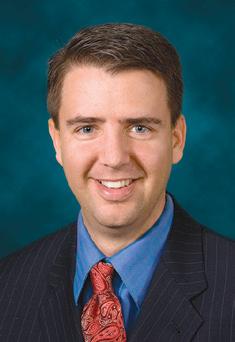

year for a significant gain, to those who own property that is designated as an O Zone, and those who are selling property and want to invest their gains into an O Zone property to defer capital gains tax. Regardless of your political feelings about our current administration, we can all agree that this is a most rare gift from the federal government.
Jim Belfiore is president of Belfiore Real Estate Consulting.
Jordan Rose is president of Rose Law Group.
the East Valley is purchasing homes in the mid-to-high $200,000s.
“Many of them would buy at $150,000 if they could,” he says, adding that competition in the market has driven prices above that target purchase price. Ellis says it is not uncommon to see 10 to 15 offers on a single property. That competition has driven young buyers to get creative, even going so far as writing “love letters” to home owners. These letters include notes about how much they love the house and small gifts for the sellers.
“Anything to make their offer standout,” Ellis says.


BY SHERRY JACKSON
It’s pool season here in the East Valley. So, whether you’re buying a new home equipped with a pool, having one constructed or upgrading a pool, there are many technological advances to make your pool smarter.
Taking care of a pool and hot tub can be time consuming, but new technology can make it a little easier. pHin offers a WiFi-enabled smart monitor and a mobile phone app to take away the guesswork when it comes to balancing water quality. The monitor continuously checks your pool or hot tub water chemistry and temperature and notifies your phone when you need to balance your chemicals. Once notified, you add pHin’s premeasured, single-dose, color-coded pods or get dosing instructions to use it with your own chemicals. The company also offers a one-touch pool service with a network of pre-qualified pool technicians with pre-negotiated pricing, if needed. phin.co/
Sutro is another company that offers a drop-in monitor with a smartphone application. The Sutro Smart Monitor can measure pH, free chlorine and alkalinity. The device stays on 24/7 and can predict your water chemistry.
The Sutro app tracks your chemical inventory and can automatically order more to restock. It also tracks how your pool is doing from historical testing and chemical dosage information and spot trends and issues before they happen. mysutro.com
Solar heating extends the swimming season, cuts down on chemicals needed and lowers or eliminates the cost of heating a pool. Tempe-based AquaScience does this via solar panels to harness the thermal energy of the sun. The company said there are no monthly costs after the solar collectors are installed. aquascienceaz.com Don’t want to invest in solar panels? Solar Sun Rings are made from two sheets
of heavyweight, ultraviolet resistant vinyl. The upper clear layer holds insulating air and focuses sunlight on the blue colored lower layer. The blue layer absorbs about 50 percent of the sunlight and converts it to heat. The balance of the sunlight can pass through for deep water heating. You simply place the rings on top of the water in your pool when you need them. solarsunrings.com
Lights are lights, right? Not necessarily. IntelliBrite lights from PentAir offers LED color-changing lights that can change speeds and hues. The lights work with the company’s IntelliTouch or EasyTouch Control Systems and can be controlled via a smart device. pentair.com
What if you didn’t have to use all those different pool chemicals? The SpectraLight Ultraviolet Pool System harnesses the power of ultraviolet light to lower chemical levels, eliminate chlorine byproducts, and claims to make pools safe, healthy and easier to manage. The ultraviolet system destroys more than 99.5 percent of pathogens that may enter your pool and lowers chemical demand up to 90 percent, said the company’s website. spectralightuv.com/pool-uv-systems
Smart detection
Pool safety is important, especially if there are young children or pets around.
The Coral Manta from Coral Detection Systems, watches the pool 24/7 with its built-in underwater video camera, using computer vision and artificial intelligence technology.
The company said the Coral Manta was programmed to detect people in the pool, as well as their position and motion. Using this technology, it constantly analyzes the real-time video it captures from the underwater camera and whenever it identifies a neardrowning event it generates an alarm to all household members smartphone or tablet. coraldrowningdetection.com








$296,000 to $389,000 Family Oriented

Enclosed courtyard, designated hobby room and three-car garage.
GATEWAY QUARTER Queen Creek, AZ Selling Now



866-696-7432 sheahomes.com


2 bed, 2 ba/1,432 SF/1



















BY CHRISTINA FUOCO-KARASINSKI
Maracay Homes’ Hawthorn Manor in Chandler was selected as the winner of the Innovative Project, Residential award at the U.S. Green Building Council (USGBC) Arizona’s 2018 Arizona Leader Awards in April.
Held during the USGBC’s sixth annual Heavy Medals Award Ceremony, the Arizona Leader Awards recognizes the state’s’ building owners, designers and construction professionals who have earned LEED certification. Achievement of LEED demonstrates a commitment to greater energy, water and waste savings and improves the health and well-being of building occupants and the surrounding environment.
“Maracay’s commitment to constructing environmentally friendly homes began more than a decade ago, and since then, we’ve increased our use of green technology and sustainable building practices in an effort to protect the environment and build a better quality of life for Arizona homebuyers,” said Stephen Burris, Maracay Homes product development manager.
The 84-home gated community is registered with the certification goal of the LEED Certified designation with the USGBC and will use 30 to 50 percent less energy than typical homes. The homes also meet the EPA’s Indoor airPLUS specifications and feature water-efficient fixtures, LED lighting, energy-efficient heating and cooling systems, and Energy Star appliances.

Homes’ Jade plan is featured at the Arizona homebuilder’s newest Chandler community, Hawthorn Manor. One of four distinct single-story floor plans within the gated enclave, the Jade plan offers 5 bedrooms, three and a half to four and a half baths and features options like a kitchen nook, extended master bedroom, walk-in shower in the master bathroom, 8-foot sliding glass doors in the dining area and twoway fireplace in the courtyard.

Chandler community,
One of four distinct single-story floor plans within the gated community, the Quartz plan features 4,007 square feet of living space with options like a 20-foot center pull sliding glass door at the great room, extended nook, laundry room sink with cabinets and raised vanities in all baths.

One of four distinct floor plans at Hawthorn Manor in Chandler, the single-story Jade plan offers five bedrooms, three and a half to four and a half baths and includes 3,651 square feet of open living space. Luxurious features include this great room and living area that seamlessly folds into a spacious kitchen with granite countertops and stainless steel gourmet gas appliances.

BY SHERRY JACKSON
There’s a lot that goes into buying a new home – choosing the right floor plan, checking out neighborhoods and schools and, oftentimes, figuring out when and how to sell your home. Do you put your existing home up for sale as soon as you sign the new home sales contract, or do you wait until it’s built? Maybe waiting isn’t an option, especially with mortgage qualification. But what if your home sells quickly? Do you move twice?
Luckily, there are options. Selling your current home with a traditional Realtor is an obvious choice, but if you haven’t
bought or sold a home in a while, you may be surprised by the options that are available. Several new or “alternative” realty companies are competing in the East Valley market and offer online cash offers, flat fee options and the ability to pick a closing date. Here’s a look at a few.
OfferPad (offerpad.com)
Brian Bair and Jerry Coleman teamed up in 2009 and created Gilbert-based OfferPad “to empower homeowners and provide convenience, control, freedom and certainty during their real estate transactions.”
Home sellers can go online and request a cash offer for their home through
OfferPad after filling out a form and uploading photos. Sellers can expect an offer in about 24 hours, said Cortney Read, director, communications and outreach for OfferPad.
The property is assessed with local comps and algorithms that go down to a neighborhood level, she said. Home sellers can also choose their own closing date with OfferPad.
“Everyone’s needs are different. Those who are wanting to move quickly can move quickly,” Read said.
Those buying a home can access and self-tour OfferPad-listed homes through its Instant Access app. They can also view home details and initiate an offer. In
addition, buyers can view other nearby homes, provide feedback or request an Agent-on-Demand to help them with the process if they choose.
OfferPad will also manage renovation processes if a home needs repairs before selling. OfferPad will move customers within a 50-mile radius at no additional charge. A partnership with Loan Depot allows customers to get qualified and then buy an OfferPad-listed home so they only have to deal with one company.
“The biggest advantage of going with a company like ours is you’re getting certainty,” Read said. “You have to look at
Options from page 6
the big picture. It can take three months (or more) to sell, do renovations, and continue to make mortgage payments. There’s so much uncertainty until your house closes on what you’re going to net. Also knowing when your house is going close is a huge sense of relief.”
Opendoor (opendoor.com)
Although headquartered in San Francisco, Opendoor’s first office, and its flagship location, opened in the Valley in 2014. Helmed by Glendale native Eric Wu, Opendoor has grown to more than 120 employees with the company continuing to balloon and invest in its Arizona operation.
Opendoor simplifies the real estate process by offering a quick sale online. Homes can be bought and sold within 24 hours, with home valuation rates that are the best in the market, says Mark Won, head of customer experience. The company also offers a 30-day money back guarantee, so if you move in and don’t like the house, Opendoor will buy it back within 30 days, no questions asked.
“Selling a home is one of the most important things you do in your life and it can be a stressful experience,” Won said. “We were the first in this market to bring simplicity and control to the home selling process.”
Customers can go online and request an offer. If the homeowners accept it, they can select their closing date. There are no home showings, so sellers don’t have to worry about making repairs, tidying up and have strangers traipsing through their homes, Won said. “These are the things that really resonate with families.”
“Generally speaking, the fees we charge are comparable to what a normal real estate commission might be.”
If the company determines the home will sell quickly, the fees will be a little lower. If they expect to hold onto the home a little longer, the fees may be a little higher. Opendoor handles any repairs needed to the home after closing.
On the buying side, homebuyers can enjoy personal open houses on their schedule, he said. Opendoor’s app allows customers to check out any of their 600plus properties for sale in the Valley (269 in the East Valley in early May) on their schedule and allows them complete access into any Opendoor house for sale with no Realtor escort to coordinate.
“It’s a tremendous amount of convenience,” Won said.
Zillow (Zillow.com)
Known for its online presence as a place to shop and find homes, Zillow is still primarily a media company. But, Zillow has just launched its Instant Offer service in the Valley.
Like Opendoor and OfferPad, potential home sellers can go online and get an instant cash offer to purchase their home.
Zillow created the service for those wanting to sell, but who also want to avoid the selling process, said Jeremy Wacksman, chief marketing officer with Zillow. “You can get a sense of your home price with our Zillow Zestimate. But then come to Zillow, upload pictures of your home and fill out the form. Within 48 hours get a cash offer. Homeowners can really get an idea of what their options are.”
Wacksman said the company strives to get the cash offers “as close to market price as we can.” The company partners with agents and others to review the information submitted online, estimate the costs to sell your home and obtain the market value. Zillow also allows home sellers to pick their own closing date. Once a cash offer is accepted, a home inspection will be scheduled to verify the estimate is correct.
Zillow still pays commissions to agents on both sides of the transaction. “It’s a new concept for a lot of people and a majority are still going to list traditionally,” Wacksman said. With Zillow, they can choose either option.”
Instant Offer is still new in the East Valley market, but Wacksman says there is “really strong consumer interest.”
“The idea of having a choice, with no obligation, is super empowering for a home seller,” he says.
Johnny Hanna, founder and CEO of Homie, said consumers looking to buy and sell homes end up doing a lot of the work themselves.
The Utah-based Homie is entering the East Valley market. The company offers a flat-fee listing service to home sellers with the average fee just under $2,000, Hanna said. “We are Realtors. We are lawyers. We give you all the things a traditional agent gives you, including an assigned agent, it’s just a better experience and saves money.”
Homie’s pitch is the staff helps “list your home, market it, and negotiate with buyers to get the best possible offer.” The home seller does most of the work taking phone calls, scheduling showings and even handling offers.
Homie still feels like a full-service
brokerage, Hanna said. “Anytime our customers need assistance, we’re there.” But the dynamics have changed. “Technology has changed, but the role of the traditional agent hasn’t changed. Traditional agents were once compensated because they did all the work,” he said. “Now, consumers are doing much of the transaction on their own.”
On the buying side, Homie will refund up to $5,000 of the real estate commission. The company also has technology to request tours or submit an offer from your smartphone. “When you go into a home listed by Homie, you’re a far more attractive buyer,” Hanna said. “The savings is just a cherry on top.” Homie also has a mortgage company, homie loans, where costs “are dramatically different” and can save customers money, he said.
Redfin got its start inventing map-based searched and running ads for traditional real estate brokers. But the company decided to approach the real estate market differently using technology.
Redfin’s real estate agents are salaried instead of commission-based. Sure, Redfin agents get bonuses, but it’s based-on customer satisfaction, not making the actual sale.
“Our focus on technology and value and putting clients ahead of commission is what makes us stand out,” said Matthew Frary, a Redfin real estate sales agent in the East Valley. “One of the biggest things we offer is the technology and tools that really streamlines the process. Redfin.com is updated every 15 minutes so customers get good up-to-date info. We save our customers a lot of money and even refund a portion of commissions to our customers.”
Because agents do not need to make a sale to pay their bills, they can focus on their clients’ needs to make sure they get the home they want, Frary said. “It’s a tailored, personalized service.”
With Redfin’s focus on tech, Frary said the company can pass along savings on the selling side, too, with listings as low as 1 percent instead of the traditional 3 percent. “That can make the cost savings significantly lower,” he said. Redfin also provides a listing dashboard with details on showings and offers premium placement on its website for listing customers.
“We’re redefining how real estate is done,” Frary said. “People don’t want to be sold a house. They want an honest customer advocate. It’s about transparency. Its about doing the right thing by our clients and its changing the tide.”


BY DAVID LEIBOWITZ Tribune Columnist
Today’s “Sign of Impending Apocalypse” comes to us courtesy of Mr. Fairway Dog Walker of Phoenix, who enjoys strolls along a golf course where I am a regular player. While I have yet to successfully brain this gent with an iron shot, I have spoken to him frequently about his dog. He’s very proud of the animal, which currently weighs 25 ounces and resembles a ball of dryer lint after you do a load of beige towels.
“Her name is Khaleesi, after the queen from Game of Thrones,” he told me while the dog barked at my golf ball, positioned in rough that came up to the dog’s tiny snout. “She’s a Teacup Morkie.”
As it so happens, a Morkie is not named after the spaceman character Mork from Robin Williams’ late 1970s sitcom “Mork and Mindy.” Instead, a
Morkie is a tiny designer puppy created by breeding a purebred Yorkshire terrier and a purebred Maltese. According to Khaleesi’s owner, this creates an animal that is “super-smart and just incredibly playful. She has so much energy.”
This the puppy demonstrated by emitting a high-pitched yipping noise timed perfectly with my backswing. The ball went dead left into a sand trap.
Mr. Dog Walker and Khaleesi accompanied me onward, which led to me asking what such a genetic canine masterpiece costs.
Here’s a life hint for you: Whenever someone says, “Oh, I’d be embarrassed to tell you what I paid” for something, they will tell you the exact price, to the penny, within 30 seconds.
Which is how I know that Khaleesi the Morkie cost $4,000, “when you count in plane tickets to Wisconsin to pick her up her from the breeder.”
Is it any wonder that I skulled the ball out of the bunker and across the green?
“You hit that a little thin,” said Mr.
Dog Walker.
To which I replied, “You know, at its present weight, your dog costs 160 bucks an ounce. That’s probably more expensive than cocaine.”
Khaleesi’s owner seemed unamused.
Khaleesi seemed to be sizing up my downhill chip shot like a tiny caddie. I ran it four feet past the hole. This drew more yipping – from both of us.
Me: “You know the Humane Society will give you a perfectly good dog for like a couple hundred bucks, right?”
Morkie Man seemed unimpressed. He explained that Morkies have been a tradition in his family since the late 1990s.
“We had one when the kids were growing up,” he explained. “My son and daughter have male Morkies. And now we have Khaleesi.”
Who was emitting a peanut-size pellet of something while her owner spoke.
“She does seem smart,” I observed. “At least she didn’t go in the line of my putt.”
“It’s a coveted cross,” Mr. Dog Walker
explained. “Some folks pay far more than we did. People even finance them, or lease-to-own. Though we just buy.” Later, I did some online research. People do in fact lease dogs, though not in California or Nevada, which have outlawed dog leasing.
Financing a Morkie through a pet loan remains legal, however. I’m unclear on how the repossession laws work, though. Nor was I clear about the speed of my putt, which I tried to time in between Morkie yips.
My ball came up approximately two Khaleesis short.
“That’s unfortunate,” said the man with the $4,000 dog the size of a cantaloupe. “Double bogey, right?” I nodded. “How long do Morkies live?” I wondered
“Our first one lived 12 years,” he explained. “That’s about average for Morkies, I’d guess.”
Not if I see Khaleesi again it won’t be. – David Leibowitz has called the Valley home since 1995. Contact david@leibowitzsolo.com.
BY JIM PEDERSON AFN Guest Writer
In 2000, a group of citizens came together and organized an initiative drive to amend the Arizona Constitution to permit the drawing of legislative and congressional districts by an independent citizens commission instead of the Legislature.
Proposition 106, or the Fair District Fair Elections campaign, was approved overwhelmingly by the voters. The campaign theme was: “Let the people draw the lines.”
The voters understood the message that creating districts by politicians is an inherent conflict of interest. The problem is that once in power, it’s human tendency to hold on to it.
It’s why generations of politicians have engaged in the dishonorable practice of gerrymandering – when partisan politicians draw voting district lines to favor a predetermined person or party.
Generally, the excuse is that since it’s been done before – as far back as 1789 –it’s all fine and good. But that’s nonsense, and that is the reason why voters took away the power of politicians to engage in gerrymandering.
Regardless of whether you are conservative, liberal or in between, as Americans we believe it’s the fundamental right of voters to choose their politicians, not the other way around.
We raise the point because there was an effort afoot in the Legislature to “tinker” with the Independent Redistricting Commission that serves as a buffer between self-interested legislators and the impartial implementation of voting lines that level the playing field for anyone that wants to run for office.
A constitutional amendment was introduced by Senate President Steve Yarbrough that would have changed how commission members get appointed, the number of members, and what criteria utilized to approve new districts.
Notably, it would potentially give legislators more power to decide who their voters are. It’s not only unfair, it’s unwise. Had it come up for a vote, the result would have been less competitive elections – which means legislators less responsive to you, the voter.
Proponents of the bill argued it would have made the IRC more bipartisan. But it begs the question of why bipartisan ends would be pursued through such blatantly partisan means.
More likely, it’s the case that backers in the legislature want to undermine the commission so that come 2020, when the Constitution requires every state to redraw its lines in accordance with census results, the politicians in the back rooms will have more control of the process.
Historical context is important here. Since the commission came into existence nearly 20 years ago, it has been under constant attack by politicians.
First, they tried to weaken it by removing individual commission members.
Then it went to the courts, all the way to the U.S. Supreme Court, where it was upheld in a landmark decision. Arizonans should be proud that our state set new precedent, overcoming the power of entrenched interests and pioneering a better way to determine the structure of voting maps.
But winning the battle is different than winning the war. Opponents of fair redistricting will never stop trying to chip away at the IRC. But ultimately, it’s not their choice – it’s ours.
The people of this state have demonstrated overwhelming opposition to “tinkering” with fair elections. Only when the politicians in Arizona realize that the political cost of gerrymandering is too high and that they risk their own re-election by attempting to jam it down the voter’s throats will we be able to rest.

BY REV. SUSAN WILMOT Tribune Guest Writer
We’re at the doctor’s office and our name is called. We’re at the airport and our flight is called. We’re waiting for takeout and our order is called. The pharmacy calls to tell us our prescription is ready. Ditto for the service garage calling to tell us our car is ready for pickup.
In times of war, soldiers are called to serve our country. We’re thrilled to get called for a job interview. Students are called to answer a question in class. The ringing phone is a friend calling. Our phones ping with new email messages and posts in social media, calling us to pay attention to our phones.
We get all kinds of calls, and what do we generally do? That’s simple! Most of us answer, reply, respond, react, go where directed or do what’s expected. Pavlov would be proud at how well-conditioned our responses are to the world’s ways.
But what of God’s call on our lives?
Being one of the most highly quoted prophets, let’s look at Isaiah 6 and the story of how the prophet responds to God’s call. Isaiah finds himself spiritually transported into the courts of Heaven, where six-winged seraphs praise God ceaselessly saying, “Holy, holy, holy is the Lord of hosts, the whole Earth is full of his glory.” He then overhears the Lord God saying, “Whom shall I send, and who will go for us?” and responds eagerly, “Here am I; send me!” Isaiah’s experience is unique.

But notice that he’s open and vulnerable to hearing God’s call and willing to risk love by responding in selfless service.
As followers of Jesus, empowered and guided by the Holy Spirit, there’s no barrier to experiencing the same kind of clarity in our divine call, our mission or vocation in life. The question is whether we’re willing to listen, make ourselves vulnerable enough to hear that still small voice of God’s divine direction, and follow where it leads.
We answer our phones with fearless alacrity, but even if we hear God’s call, too often we dismiss the experience for fear of ridicule or disbelief. Yet, here’s the kicker written across the pages of Scripture. God knows us all intimately (Psalm 139), we’re inscribed on the palms of God’s hands (Isaiah 49:16), and according to Jesus, those who belong to Him hear His voice. He calls us by name and leads us out (John 10:3).
What an interesting turnaround history has dealt us. Isaiah has a vision of God’s throne room and receives divine direction and confirmation of his prophetic call. Yet he couldn’t have even imagined a telephone, let alone a smartphone.
He certainly didn’t experience the same distractions we face today, like surfing the internet or participating in social media. We have so many options to communicate easily and speedily. It’s interesting how we have no problem responding to all kinds of calls from the world but sometimes struggle to respond to God.
Isaiah helpfully provides us with a stepby-step lesson. Significantly, the context of

Isaiah’s vision and call comes as he’s worshiping the Lord.
Our worship together is the first step in discerning God’s will. When all parties are intent on communicating, you can bet that something is going to happen. God is always intentional in reaching out to us, and as we gather in God’s name, we’re taking time to reciprocate that intentionality. It’s vital for our spiritual health and wellbeing to take time out to put the world’s frenetic busyness on hold, so we can connect with God and touch the timelessness of eternal love.
The faith community is where we affirm our commitment to align our wills with God’s will and learn how to make it so.
Community is the crucible in which we learn how to be agents of God’s transforming grace, serving the Lord and making a difference in the world.
In praise and worship, the Holy Spirit lifts the song and prayers of our hearts to join the voices of the saints and heavenly host. As we listen to God’s word and pray together, we find our scattered lives refocused rightly toward God in Christ Jesus.
In Christ, we experience forgiveness and
The Interfaith CommUNITY Spiritual Center offers New Thought, ACIM, Ancient Wisdom and Interfaith teachings, with uplifting music and positive messages. Ongoing classes include Qigong, A Course in Miracles, Pranic Healing, Kirtan, Drum Circle and many others.
DETAILS>> 10:30-11:45 a.m., 952 E. Baseline Road, Suite 102. Information, 480- 593-8798 or interfaith-community.org.
HEBREW SCHOOL
Registration has opened for Chabad Hebrew School at the Pollack Chabad Center for Jewish Life. Classes will teach children ages 5-13 about Jewish heritage, culture and holidays.
DETAILS>> Classes will be held 9:30 a.m.-noon at 875 N. McClintock Drive, Chandler. To tour the facility or register, call 480-855-4333 or e-mail info@chabadcenter.com.
Valor Christian Center in Gilbert offers “great praise and worship and great messages for today’s living,” according to Associate Pastor Thor Strandholt. “Our mission is to evangelize, heal and disciple through the word of God.”
DETAILS>> 10 a.m. Sundays and 7 p.m. Thursdays. 3015 E. Warner Road. Information: valorcc.com.
healing as we confess our sins and as we’re fed, strengthened, and transformed by Christ’s body and blood.
When Isaiah confesses, he’s cleansed from sin, forgiven and healed. At that moment, he’s able to hear God’s call. Likewise, our repentance opens the door of our hearts and minds to hear God’s call. Just like Isaiah, we’re free to serve the Lord without the weight of guilt, shame or blame to hinder us.
When the world calls us, we answer with unseemly haste. God is also calling each of us. If we’re resisting or refusing to respond, what’s stopping us? How have we become disconnected, distracted or disoriented?
The Greek word for church – “ekklesia” – literally means “called out.” We’re not being the body of Christ, if we reject that call. The good news is that it’s not too late to respond to the Lord. As beloved children of God, called to be children of light, let’s join Isaiah with one voice as we say, “Here am I; send me!”
The Rev. Susan E. Wilmot is vicar at St. James the Apostle Episcopal Church & Preschool, 975 E. Warner Road, Tempe. Reach herat rector@ stjamestempe.org or at 480-345-2686. Check out our website at stjamestempe.org.
The Rev. Albert Bolden leads the Lawrence Memorial A.M.E.Z. Church in Mesa.
DETAILS>> Sunday school at 9 a.m., worship at 10 a.m. Children’s church is every second Sunday, and children officiate the morning worship service every fifth Sunday. 931 E. Southern Ave., Suite 108. Information: 480393-3001, tlmchurch.info@gmail.com.
Inspirational messages and music to lift your spirit. A welcoming community committed to living from the heart. Many classes and events offered. We welcome you!
DETAILS>> 10 a.m. Sundays at Unity of Tempe, 1222 E. Baseline Road, Suite 103, Tempe. Information: 480-7921800, unityoftempe.com.
Children can learn and experience Jewish life. Chabad Hebrew School focuses on Jewish heritage, culture and holidays.
DETAILS>> 9:30 a.m. to noon, for children ages 5-13 at Pollack Chabad Center for Jewish Life, 875 N. McClintock Drive, Chandler. 480-855-4333, info@chabadcenter.com, or chabadcenter.com.
BY BRIAN BENESCH Tribune Sports Editor
Hamilton softball’s powerful lineup finally met its match in senior Pinnacle pitcher Marissa Schuld, who shut down the Huskies with a twohit complete game to give the Pioneers a state title on May 14.
This was the third meeting in a row between the two teams in the championship game, with Hamilton victorious in the previous two. They once again entered the contest as a heavy favorite, but Schuld and company spoiled a near-perfect season for the Huskies.
A 4-0 loss was not exactly the fairy tale ending the group was hoping for. Hamilton appeared to be a team of destiny, winners of an incredible 26 games in a row entering the title showdown.
Before the game, Hamilton Head Coach Rocky Parra said his team needed to simply play its game to win. The Huskies’ game has consisted of hitting the ball and being aggressive all season long.
The group was unable to impose its will, though, thanks to a dominant performance by Schuld. The pitcher, headed to the University of Arizona this fall, had a perfect game going in the bottom of the fifth inning.
The Huskies faced adversity at this point in the game. And despite a season that only featured a single tournament loss, it wasn’t the first time the team had to persevere.

“We’ve had injuries,” Parra said. “Ali Ashner tore her ACL about five games ago. Those were big losses. We’ve had some great senior leadership. Whenever we had an issue, they brought it up and took care of it themselves. Nobody is bigger than the team.”
Hamilton’s unmatched determination was on display in that fifth inning, with their season on the line. Lorena VasquezInzunza broke Schuld’s perfect game with a shot into left field. The dugout erupted, and Danielle Cole followed that with a single of her own.
The rally was on for the Huskies, but it ultimately fell short. Nevertheless, the softball team showed why they are consistently among the state’s best.
Hamilton entered the year with lofty expectations after back-to-back titles. And somehow, the team exceeded those expectations.
During the regular season, Hamilton outscored opponents by a staggering 19829 margin. Huge seasons at the plate by Macy Simmons, Abigail Andersen and Taylor Gindlesperger helped propel the Huskies into unprecedented territory.
Parra praised his team’s ability to stay calm under pressure throughout the year.
“We stayed pretty relaxed the whole time. They had big expectations, so they started out with the attitude that they had to prove it. They came out really aggressive. We knew we had the talent. We just had to perform each game,” the coach said.
The only blemish on Hamilton’s record came in the form of a 5-1 loss to Mater Dei in an early-season tournament. But the team’s overall record still reflected an undefeated 18-0 campaign in Arizona softball.
Still, Parra refused to say the Huskies had a perfect regular season.
“No, we lost that one game,” he said. “We go to Bullhead City to play the best competition and we came back with one loss.”
It was that kind of ownership and attitude that Parra instilled in this resilient bunch of talented players. It’s the reason why fans can expect to see this team back in contention for a title again next season. Monday night’s loss to Pinnacle may have been a bitter ending, but it may also be just the beginning for the next generation of elite Husky softball.
“Our pitching has been great,” Parra said. “Our hitting was strong all along and our biggest improvement was on defense. We just have to play our game.”
Contact Brian Benesch at 480-898-5630 or bbenesch@timespublications.com. Follow him on Twitter @AZBenesch
BY BRIAN BENESCH Tribune Sports Editor
By her own account, Emily Franklin was a tall, awkward and uncoordinated preteen – definitely not suited to play volleyball.
In fact, the Mesa native didn’t even like the sport.
Yet, a decade later, Franklin is an AllSEC volleyball player who has earned accolades for her performance for the University of Kentucky Wildcats.
Encouraged by her parents to stay with
the sport, Franklin eventually embraced the game she once despised. And her hard work and dedication on the volleyball court began to pay off as a student-athlete at Red Mountain High School before graduating in 2013.
There, she saw a possible future in the sport.
“I started all four years and had 1,000 kills in my career at Red Mountain,” Franklin said. “I had three different coaches in those four years, so I think having the different perspectives was very helpful. They helped a lot, trying to de-
velop me.”
Although the school’s girls volleyball team saw limited success, the 6-foot-4 Franklin garnered serious interest from big-time college programs.
Franklin then rounded down her list to two possible schools.
“University of Kentucky and Louisville had both offered, so I set up visits to see both of those schools on the same weekend. I went to UK first and just fell in love with it. I was like, OK, this is the place I want to go,” she said.
After not seeing action in her redshirt
year, Franklin made an immediate impact the following season.
Appearing in 24 matches, Franklin began receiving accolades for her on and off-court performances. She was named Freshman of the Week and earned a spot on the All-SEC Academic Team.
That first season was just a taste of what was to come, and as Franklin succeeded, so did the Wildcats.
Kentucky was a perennial contender throughout her five years at the school,
advancing to at least the second round of the volleyball championship bracket four times.
But without a title, Franklin and her teammates were especially motivated entering her senior season.
UK finished the year with a 29-4 record, thanks in large part to Franklin’s contributions. Franklin, 23, was named the team’s breakout player and secured a spot on the coveted All-SEC team.
“I was very surprised,” Franklin said. “I was really honored. Breakout award is something the coaching staff votes on. It felt pretty good.”
The Wildcats had a deep run in the postseason but eventually fell short of their ultimate goal. Still, the journey resulted in memories Franklin won’t soon forget.
“This year at the NCAA Tournament, we were down 2-0 against Western Kentucky, and we came back and won in five. That was just the best feeling because in my years here we hadn’t made it past the second round,” she said. “It was a really good feeling.”
Franklin will carry those positive vibes into her post-graduate life. She currently

coaches three club volleyball teams in Kentucky and plans to get a master’s degree in elementary education.
Despite the Wildcats’ season-ending loss to Nebraska, Franklin doesn’t want to give up on volleyball.
“I loved playing the sport and I wasn’t ready to be done, but I knew the time was
coming,” she admitted. “I was happy and sad at the same time. Happy because I made so many memories and sad because I wasn’t going to play with those teammates anymore.”
-Contact Brian Benesch at 480-898-5630 or bbenesch@timespublications.com. Follow him on Twitter @AZBenesch.









BY JESSE STAWNYCZY Cronkite News
As the bomber known as Sentimental Journey thunders to life on the runway, Jeff Cook runs to warn visitors to avoid the danger zone. The roar of the propellers drowns out his voice and the wind nearly blows his hat off.
It’s a typical day at the Arizona Commemorative Air Force Museum in Mesa, where people like Cook keep history alive through storytelling and by maintaining the airworthiness of the museum’s vintage warplanes.
Passengers can tour the museum and planes or take flight on one of several of their World War II aircraft, including a twinengine B-25 Mitchell, a Stearman trainer biplane, and Sentimental Journey, one of only a few operational B-17G Flying Fortresses in the world.
“That’s really our mission, to preserve one of every type of aircraft from World War II,” said Cook, who served in the Army for 27 years and now dedicates much of his time to preserving these planes and the stories of the people who flew them.
He said he has recorded video interviews with 27 World War II veterans. He sends free DVD copies to the veterans and to the Library of Congress for its Veterans Oral History Program.

Cook said it’s important to preserve the testimony of aging veterans, whose numbers are rapidly dwindling.
About 558,000 of the 16 million Americans who served in World War II were alive in 2017, and 362 die each day, according to the National WWII Museum in New Orleans, citing the U.S. Department of Veterans Affairs.
Paul Moore, another Commemorative
Air Force Museum guide, said veterans who visit often tell their war stories, including some they’ve never shared with loved ones. Some veterans have trouble sharing war stories with their children because the younger people can’t relate to the experience, Moore said.
Cook interviewed Moore’s father about his experience in World War II as part of the
BY LYNETTE CARRINGTON Tribune Contributor
There’s nothing better than finding a restaurant that truly has authentic recipes reflecting a geographic region from faraway lands.
Shaanxi Garden in Mesa immerses its guests in the recipes, flavors, art, furniture and culture of the Shaanxi region of China. The restaurant is a collaborative effort between owners Noel Cheng and Changhai Huang, along with Huang’s girlfriend Pingping Xiao and the restaurant’s chef, Jiang Niu. Huang, Xiao and Cheng were international students at ASU and settled in the Valley after graduation. They opened a smaller Chinese restaurant in Chandler but perfected their concept, dreamed bigger and opened
Shaanxi Garden, now their sole restaurant, in November 2017.
Cheng, Huang and Niu all hail from Shaanxi, China, making it a proud endeavor in bringing this regional cuisine to the Valley.
“We are one of the most unique restaurants serving this kind of food because we haven’t changed any of the recipes,” Cheng explains.
“It’s very authentic food and not Americanized. These noodles and these dishes are what we grew up eating.”
The details are striking at Shaanxi Garden.
The gorgeous floor tiles depict the stories of the celebrated terracotta warriors. The chairs and tables feature ornate Chinese designs and border accents. The restaurant’s interior sign replicates shops in Shaanxi.
The eight Chinese wall paintings describe
the “odd customs,” as they are called by those in Shaanxi, that are educational and downright intriguing.
The co-owners shipped from China every bowl, every dish and the life-size terracotta warriors at the front entrance. In fact, guests may like they were transported to China for their meal.
Take the noodles, for example
“The noodles need to be wide as a belt,” Cheng says. “Those noodles are handmade here in the restaurant every day from different types of flour. When the noodle is being made, it is formed and slapped on the counter. The sound it makes is ‘biang,’ which is how the biang biang noodle gets its name.”
“Forgotten 500,” a group of Air Force men on who were shot down over Nazi-occupied Serbia while on a B-17 bombing mission.
“The stories are fascinating.” Moore said, “That’s why I admire Jeff and the crew here for interviewing these guys and getting the oral history.”
Moore said he brought his father to the museum when he was 85. The two of them flew in the B-17, and his father thoroughly enjoyed sitting in the nose of the bomber. He was also given the opportunity to sign his name on the bomber’s bay doors –– a honor afforded any veteran who served on a B-17. His father died last year.
Jeff Cook said he never tires of seeing the Flying Fortress take off.
“Do you think anyone could?”
What: Arizona Commemorative Air Force Museum
When: 10 a.m.–4 p.m. daily
Where: 2017 N. Greenfield Road, Mesa Cost: Adults, $15; seniors, $12; Kids (512), $5. All veterans and active military are free.
Info: azcaf.org or 480-568-3957

Various noodle dishes are Shaanxi panfried, house biang biang and Shaanxi-style handmade noodles. There are several spicy dishes and vegetarian options.
“It’s a brave thing to try authentic food,” Cheng says. “I tell people, ‘Don’t use old concepts to judge food that is new to you.’ Once
people try our noodles they love them.” Shaanxi Garden does feature other dishes. Honey spare ribs and a combination dish –the four bowls of happiness – are popular.
The entrée has four different foods, including stir fry beef with Sichuan peppers, tender pork meatballs in broth, tender pork
What: Shaanxi Garden
Where: 67 N. Dobson Road, Mesa
Information: 480-733-8888, shaanxibiangbiang.com.
belly with fermented black beans and sweet soy sauce and slices of marinated tofu. The differences extend beyond the food.
Musicians will play a traditional Chinese instrument called a guzheng – a descendent of an ancient zither-like instrument believed to have been invented during the Qin Dynasty in 897-221 BC.
“In the first century AD, the guzheng is described as a plucked half-tube wood zither with movable bridges, over which a number of strings are stretched, and in the second century BC, the guzheng was described as having 12 silken strings and high narrow jade bridges,” Cheng says.
“The guzheng has played an important role in Chinese history and folk music. It is also the parent instrument of the Asian long zither family.”
The modern-day guzhengs, including the Japanese koto, Korean gayageum and Mongolian yatga, are developed from the traditional Chinese guzheng. This makes the instrument an extremely important piece of Asian musical culture.
The guzheng artist at Shaanxi Garden performs 6 to 8 p.m. Friday and Saturdays and the performer will dress in Qin, Song or Han Dynasty clothing. Besides the Chinese instrument performances, Shaanxi Garden also has events like Chinese calligraphy writing during Chinese New Year.
“I enjoy seeing our customers, and their positive reviews make my day,” Cheng says. “It’s a tough business, but no matter how hard the day is, I can eat anything on the menu. It’s my hometown food and exactly what my grandma cooked for me.”

BY ERIC NEWMAN Tribune Staff Writer
Alamo Drafthouse Cinema will open the doors of a luxury dine-in movie theater in Tempe on May 24.
The-state-of-the-art theater, located at 1140 E. Baseline Road, at Rural Road, is the chain’s second in the East Valley.
The 750-seat theater features seven individual screen rooms and will offer full-service in-theater dining and a full bar with over 30 different craft beers on tap.
Franchise partner Craig Paschich, who moved to Arizona to build the original theater in Chandler, said people have flocked to all 33 Alamo locations around the United States because they’re excited about the opportunity for a full food and drink menu with ultra-comfortable chairs while enjoying a film.
“After the success and popularity of our Chandler location, we are thrilled to continue our expansion in the East Valley,” he said. “We will be the first dine-in theater in Tempe and the first theater to offer different seating

options for our guests – whether it be oversized luxury rockers or luxury recliners – at

no additional cost.”
Paschich and partner Derek Dodd said they


hope to keep expanding, with a goal of 10 theaters in Arizona in the next 10 years. They added that Tempe was a perfect fit for their second location.
“The Chandler theater is very suburban, and I love that because I live in Chandler, but Tempe has a demographic difference. It’s close to downtown, close to ASU, and it’s just a larger market, and we’re so excited about that,” Dodd said.
Alamo will host themed movie nights, such as an “Airplane” night, when viewers get props and the chance to quote their favorite lines.
Screen rooms will also be available to rent for private parties and events, but Dodd said the focus is for people to have the best possible moviegoing experience offered in the area.
“There’s a lot of different chains that do cinema eateries, or movies, beer and food, but we try to make the movie most important thing that we do. We still try to have the food and drinks be awesome, but we’re really making it about the movie experience,” he said.

Gorilla
Lathers
Justice Dept. div.

BY JAN D’ATRI
AFN Contributor
SBY JAN D’ATRI Tribune Contributor
ince spinach salad continues to be an all-time favorite, I want to share a recipe that was a signature dish many years ago at our family restaurant, D’Atri’s in Lake Tahoe, California.
When Ina Garten told us to add a teaspoon of instant espresso coffee granules to our chocolate recipes like cakes and brownies, it changed everything for me. It makes chocolate much
It’s a recipe from my first cookbook, “Momma & Me & You” and it comes with a great story. You could say it came up through the ashes, so to speak, of one of the best-known eating establishments in the Lake Tahoe area in the 1950s.
Apple Caramel Drizzle Cake
For the Cake Batter:
1 package yellow cake mix
The Lancer, on the Mount Rose Highway, was synonymous with fine dining at the lake. The Lancer was the place to celebrate very special occasions, but it was their spinach salad that gave The Lancer nation-
1 package Hershey’s White Chocolate Pudding
1/2 teaspoon cinnamon
1/4 teaspoon nutmeg
1/4 teaspoon allspice
4 eggs
1/3 cup vegetable oil
1 cup milk
1/2 cup sour cream or plain yogurt
1 cup applesauce
Directions:
In a mixing bowl, add yellow cake mix, package of white chocolate pudding, cinnamon, nutmeg and allspice. Stir to combine. Add eggs, oil, milk, sour cream or yogurt and ap plesauce. Blend until well combined. Set aside and prepare cream cheese filling.
Cream Cheese Filling:
richer, more chocolaty. I too have a secret to share!
al notoriety. We’re not sure exactly who the creator of this amazing salad was, but I do know that my Momma honed her pleading skills trying to talk the chef into giving her the recipe. She tried. And tried. And tried. In fact, Momma tried for about 20 years, with each conversation ending the same way: “No!”
I add one package of white chocolate pudding and sour cream to my cakes. It makes the cake much more moist and flavorful.
Then one day, sadly, The Lancer burned to the ground.
Give it a try when you make this splendid stunner.
Pinch of salt
1 teaspoon vanilla extract
1 cup powdered sugar
Directions:
Place your cake on serving or cake plate.
But, through perseverance, Momma finally got the recipe she’d waited so long to toss for herself – the original recipe for Lancer’s Salad. If you have a big wooden bowl, rub a hearty clove of garlic around the sides and bottom and you’ll be serving it just like the maître d’ did tableside at The Lancer. Here’s to great greens and good kitchen stories.
In a medium dry skillet, toast pecans over medium high heat for just a few minutes.

Do not burn. When cool enough to touch, rough chop
In a small saucepan, combine brown sugar, butter, milk and salt. Bring to a boil and cook for 1 minute, stirring often. Remove from heat. Add vanilla and powdered sugar, whisking vigorously until lumps are gone. Immediately spoon
Sprinkle pecans over top of cake. (The praline sauce will
Pharmaceutical
Spritelike 38 “Bow-wow!”
Historic period
Pedicurist’s target
Got away from
Supernatural spirit of Islam (Var.) 47 Existed
Regret
Confuses
Where -- at
“-- Grows
Ingredients:
For the salad:
1 package cream cheese
1 large clove of garlic, crushed whole 1 to 1½ bags fresh spinach (about 12 oz) washed and dried
4 tablespoons butter
1/2 cup sugar
1 large egg
pound crispy bacon, chopped fine 2 eggs, hardboiled and chopped 1 teaspoon salt
2 tablespoons flour
1 teaspoon vanilla Pinch of salt
1 tablespoon fresh ground pepper For the dressing:
Directions:
Directions:
Mix all ingredients until well blended.
Caramel Pecan Topping
cup extra virgin olive oil
(important to use a good extra virgin olive oil)
¼ cup brown sugar
1 tablespoon fresh lemon juice
1 tablespoon Dijon mustard
1 teaspoon Worcestershire sauce
Grease a standard size (12 cup) Bundt cake pan. Pour two thirds of the batter into the pan. Spoon cream cheese filling over batter leaving a 1 inch border around outside edge of pan. Add remaining batter and with a skewer, chop stick or knife, gently swirl batter and cream cheese filling. Bake at 350 degrees for 50 minutes or until toothpick comes up clean. When done, let cool for 10 minutes and then cover tightly with plastic wrap or aluminum foil. (That creates steam which helps the cake separate from pan.) While cake is cooling, make topping.
Prepare salad dressing: In a medium bowl, whisk together olive oil, brown sugar, lemon juice, mustard and Worcestershire sauce until well blended. Set aside.
Ingredients:
1 1/2 cups pecans
Coat the sides and bottom of a large wooden bowl with garlic, then discard garlic piece. (If you don’t have a wooden bowl, mince the garlic clove and add it to the salad mixture.)
1/2 cup light brown sugar, firmly packed
4 tablespoons butter
3 tablespoons milk
In a large bowl, add spinach, crisp bacon, eggs, salt and pepper. Drizzle dressing over mixture and toss gently. Serve on chilled salad plates. Watch my how-to video: jandatri.com/recipes/one-minute-kitchen.


City of Mesa Community Services Department
City of Mesa Community Services Department
FY 2018/2019 Annual Action Plan
FY 2018/2019 Annual Action Plan
FY 2015-19 Citizen Participation Plan Amendments (CPP)
FY 2015-19 Citizen Participation Plan Amendments (CPP)
Extension of 30-Day Comment Period
Date of Publication: May 20, 2018
implements new procedures for activities that are less than twenty percent of the actual funds received from the U.S. Department of Housing and Urban Development for funding CDBG, HOME, and HESG programs. This document is available for public review at the Housing and Community Development office, 20 E. Main St., Suite 250 Mesa, AZ or on our website http://www.mesaaz.gov/residents/housing-community-development.
18/19 Annual Action Plan and Consolidated Plan Amendment Public Hearings
Extension of 30-Day Comment Period
FY 2018/2019 Annual Action Plan
Date of Publication: May 20, 2018
In accordance with the federal regulations at 24 CFR, Part 91, the City of Mesa, AZ (City) is required to prepare and submit an Annual Action Plan for its Housing and Community Development Entitlement Programs funded by the U.S. Department of Housing and Urban Development (HUD).
The 2015-2019 Consolidated Plan outlines the City’s housing and non-housing community development needs and priorities over five years. The Annual Action Plan for Fiscal Year 2018-2019 (FY 2019) outlines how the City intends to spend $3,634,821 in federal Community Development Block Grant (CDBG) and $1,451,891 in federal HOME Investment Partnerships (HOME) Program entitlement funds, and $288,990 in Housing Emergency Solutions Grant funds to meet goals outlined in the City’s Consolidated Plan.
Public Hearing #1: Saturday, May 19, 2018 at 3:00 p.m. at Mesa’s Main Library located at 64 E. 1st Street – Board Room (On 1st Street between Mesa Drive & Center Street on the North side).
Public Hearing #2: Tuesday, May 22, 2018 at 5:00 p.m. at Mesa Fire Station No. 201 located at 360 E. 1st Street – Community Room (N.W. corner of Mesa Drive and 1st Street).
FY 2018/2019 Annual Action Plan
Public Hearing #3: Wednesday, June 6, 2018 at 6:00 p.m. at Red Mountain Library located at 635 N. Power Rd – Roadrunner Room (N.E. corner of Power Road and Decatur Street).
In accordance with the federal regulations at 24 CFR, Part 91, the City of Mesa, AZ (City) is required to prepare and submit an Annual Action Plan for its Housing and Community Development Entitlement Programs funded by the U.S. Department of Housing and Urban Development (HUD).
The City of Mesa received notification of funding allocations from the U.S. Department of Housing and Urban Development on May 1, 2018. The Community Development Block Grant Program (CDBG); HOME Investments Partnership Program (HOME); and Housing Emergency Solutions Grant Program (HESG) activities are listed by category below.
The City of Mesa will make reasonable accommodations for persons with disabilities who need an alternative accessible format of notices. If you need to request translations, or additional information, please contact Dennis Newburn at (480) 644-5867, e-mail: Dennis.Newburn@mesaaz.gov.
A public comment period regarding both the Amendment to the Citizen Participation Plan and the FY 2018/2019 proposed activities in the Annual Action Plan will begin on Sunday, April 30, 2018 and close on June 19, 2018 at 6:00 p.m.
Local (non-federal) Human Services funds are also included in the chart. In addition to the funding sources noted above, the City anticipates reprogramming $1,373,727 from prior year HOME activities, $125,000 from CDBG program income and $25,000 from HOME program income to fund activities listed under the proposed FY 2019 Annual Action Plan activities.
The 2018-2019 Annual Action Plan proposes uses of CDBG, HOME and HESG funds for funding activities that are consistent with the City’s five- year Consolidated Plan. As a condition of the receipt of federal funds, the City is required to hold a minimum of two public hearings to inform the public of additions or changes, including the cancellation of proposed activities or amendments to the City of Mesa Citizen Participation Plan.
City Council will approve the FY 2018/19 Annual Action Plan on July 2, 2018 at 5:45 p.m., Upper Level Council Chambers located at 57 E. First St.
Written comments may be sent to: Dennis Newburn, City of Mesa, P.O. Box 1466, Mesa, AZ 85211-1466 at (480) 644-5867, or via e-mail at dennis.newburn@mesaaz. gov for further information.
The 2015-2019 Consolidated Plan outlines the City's housing and non-housing community development needs and priorities over five years. The Annual Action Plan for Fiscal Year 2018-2019 (FY 2019) outlines how the City intends to spend $3,634,821 in federal Community Development Block Grant (CDBG) and $1,451,891 in federal HOME Investment Partnerships (HOME) Program entitlement funds, and $288,990 in Housing Emergency Solutions Grant funds to meet goals outlined in the City’s Consolidated Plan.
Elizabeth Morales
Housing and Community Development Director (May 20, 2018 East Valley Tribune)
Equal Housing Opportunity
PUBLISHED: East Valley Tribune May 20, 2018 / 13012
The City of Mesa received notification of funding allocations from the U.S. Department of Housing and Urban Development on May 1, 2018. The Community Development Block Grant Program (CDBG); HOME Investments Partnership Program (HOME); and Housing Emergency Solutions Grant Program (HESG) activities are listed by category below.
The proposed amendments provide for establishing minimum community outreach requirements, clarifies procedures for amendments to the Consolidated Plan, and
Local (non-federal) Human Services funds are also included in the chart below.

In Loving Memory of Chris Tullock 1955-1997
I thought of you with love today but that is nothing new I thought about you yesterday and days before that too I think of you silence and often speak your name Now all I have are memories and your picture in a frame
Your memory is my keepsake with which I ll never part God has you in his Keeping I have you in my heart
Love, Mom
DUNGY, Cynthia Ann

Cynthia Ann Dungy, age 56, passed away May 8, 2018 in A
S h e w a s b o r n J a n u a r y
S h e w a s v e r y t a l e n t e d i n a r t , a t h l e t i c s , baking, and sewing, and had a fun personality She loved children and animals and w o u l d d o a n y t h i n g t o h e l p s o m e o n e i n
n e e d .
S h e w a s p r e c e d e d i n d e a t h b y h e r s o n ,
J u s t i n R a y D a w s o n a n d h e r m o t h e r , N a-
o m i N e l l D u n g y S h e i s s u r v i v e d b y h e r
d a u g h t e r , D e n i s e D a w s o n ( J e f f H o l b e r t)
a n d 4 g r a n d d a u g h t e r s ; f a t h e r , C a l v i n
D u n g y J r ; s i s t e r , L y n d a R o s a l e s , a l l o f
M e s a ; s i s t e r , R a m o n a C a s h m o r e ( C l a r k )
o f S a n t a M a r i a , C A ; b r o t h e r , F o r r e s t
Dungy (Gladys) of Nogales, Mexico; an d
13 nieces and nephews
A memorial service will be held Saturday, May 26, 2018 at 10:00 am at The Church
of Jesus Christ of Latter-day Saints, 61 6
S Extension Road, in Mesa
Sunday May 27th Edition
Classifieds: Wed May 23rd at 5pm
KINNELL, William J Jr
Ohio, graduating from North High School i
Fort Lewis, WA, he met and married Arlene Be
n
etu
n
n
t o C o l u m b u s , h e s t a r t e d a 3 5 - y e a r c areer with Ohio Bell Telephone and began raising his family While in his thirties, Bill
discovered his God given ability to sing, e v e n t u a l l y d e v e l o p i n g a b e a u t i f u l B a r it o n e v o i c e H e a n d A r l e n e s p e n t m a n y
years singing in church choirs and at local events At the age of 36 Bill became a Christian, and soon busied himself with
s e r v i n g o t h e r m e n ; d i s c i p l i n g t h e m t o grow in the faith and become better husbands and fathers Bill’s favorite hobbies included fishing and golf
Bill was known as a loving husband, fathe r , g r a n d f a t h e r a n d f r i e n d H e w a s
marked by his sense of humor, and his sincere love of people Bill never knew a stranger
B i l l i s s u r v i v e d b y h i s w i f e o f n e a r l y 6 4
years, Arlene Bell Kinnell; Sis
( W a l t ) S c h i l g ; a n d B r o t h e r , T h o m a s
( A r t i s ) K i n n e l l . H e w a s p

D a g m a r o f t h e W i s c o n s i n
Veterans Home in King, age 8 8 , d i e d o n T h u r s d a y , M a y 1 0 , 2 0 1 8 S h e h a d l i v e d i n M e s a , f o r 3 3 y e a r s a n d
moved to Wisconsin in 2012
S h e w a s b o r n i n H o u g h t o n
C o u n t y , U p p e r M i c h i g a n o n
June 15, 1929 to the late Matthew and Marie (Pumala) Wester
Dagmar was 100 percent Finnish, and English w a s h e r s e c o n d l a n g u a g e S h e k n e w t h e
Finnish man she would eventually marry in the U P of Michigan when they were children She married John F Palomaki on March 20, 1954
i n M i l w a u k e e ; h e p r e c e d e d h e r i n d e a t h o n
November 9, 1970 She enjoyed music, playi n g g u i t a r a n d p i a n o , s i n g i n g i n h e r c h u r c h choirs, and also performed solos in church and at weddings lt was a special treat to hear her yodel, a skill she learned from a relative as a child She was a secretary for Motorola Company for 15 years until she retired She loved a n i m a l s a n d a l w a y s r e m e m b e r e d , a n d s t i l l spoke of, her last cat, Sammy She is survived b y h e r d a u g h t e r s C i n d y ( E d ) M c G i v e r n a n d Lynda Youngs, grandchildren: Jennifer, Maren, M a l l o r y a n d J o s h u a , o t h e r r e l a t i v e s a n d f r i e n d s
The Funeral Service will be on Tuesday, May 15, 2018 at 10:00 a m at the Maple Crest Funeral Home in Waupaca, Wl There will be a visitation on Tuesday at the funeral home from 9:00 a m until the time of the service Burial will be in the Wood National Cemetery in Milwaukee

Robert "Pete" Montgomery, 72, of Ozona,
11:00am in Cedar Hill Cemetery in Ozona.
JORGES, Barbara Jean 6 9 ,

Need help writing an obituary? We have articles that will help guide you through the process.
Deadline for obituaries is Wednesday at 5pm for Sunday. All obituaries will be approved by our staff prior to being activated. Be aware there may be early deadlines around holidays. Call 480-898-6465 Mon-Fri 8:30-5 if you have questions. Visit: obituaries.EastValleyTribune.com

h F M i l l
r ; s t e p - m o t h e r
, S r & E l i z
B e t t y B a i l e y K i n n e l l a n d b r o t h e r D o n F l i c k i n g e r
Bill has three children; Brad (Diane) Kinnell of Magnolia, TX; Jeff (Heidi) Kinnell of Westerville, OH; and Cheryl (George) Popyak of Powell, OH
Six Grandchildren; Erin (Micah) Huffman, M e g a n ( S e a n ) K i n n e l l - D o o l e y , A s h l e y ( C a s e y ) S c h i l l i n g e r , B r i t n e y A n d r e w s , Nichole (Ryan) Radecki, and Curtis Kinnell And additionally blessed with seven great grandchildren
A m e m o r i a l s e r v i c e f o r B i l l w a s h e l d a t Karl Road Baptist Church, 5750 Karl Rd, C o l u m b u
y 18th at 11 A.M. Visitation with the family was 1 hour prior to the service A n y
www
ents Victor and Nettie Kittle, sisters Laura Boland and Gail Whitmore, and husband of 50 years Joseph Charles Steele Faith
Gilbert ISD She was the Chandler Salvation Army Corp Sergeant-Major assisting
e Angel Tree and Christmas Red
K e t t l e p r o g r a m S h e l e d S u n d a y s c h o o l
a n d b i b l e s t u d y c l a s s e s F a i t h w a s t h e
f o u n d e r o f t h e E a s t V a l l e y M i l i t a r y S u p -
p o r t G r o u p
S h e i s s u r v i v e d b y h e r s o n s R o b e r t
( B r e n d a ) o f M o l a l l a , O r e g o n ; J o s e p h
(Kathleen) of St Regis, Montana; Bryan
( T r a c i ) o f V i s t a , C a l i f o r n i a ; S h a w n o f
C h a n d l e r , A r i z o n a ; J e f f ( J e n n i f e r ) o f
Refugio, Texas; James (Kim) of Chandler, Arizona; and grandchildren and greatgrandchildren
A celebration of life service will take place at the Chandler Salvation Army Corps on
F r i d a y M a y 2 5 t h s t a r t i n g a t 1 0 : 3 0 a m
l o c a t e d a t t h e a d d r e s s b e l o w I n l i e u o f
c a r d s a n d f l o w e r s , p l e a s e s e n d d o n a -
t i o n s t o t h e C h a n d l e r S a l v a t i o n A r m y
Corps at 85 E Saratoga, Chandler, Arizona, 85225



CellTrust has an opening for Android Software Developer in Scottsdale, AZ
Reqs US Masters degree/foreign equiv and/or bachelors degree + 5 yrs exp, w/ skills in Java/Oracle/IMS/DB2 /Unix/JDBC to analyze/dsgn/dev/implement/test systems & applics on Android platform Email resume to jobs@celltrust com w/ ref no 2018-19 directly & ref ad in EVT
New Mesa Day Care Seeking Director to Grow With Us Starting Salary Negotiable, Call Isiah Claytor JR 480-694-5891
Employment General Drivers: New Dedicated Positions HIRING NOW! Home Weekly, Starting at $58k+/year CALL 888-852-6250
HUMAC has an opening for Systems Analyst in Phoenix, AZ
Reqs US Bachelor degree/foreign equiv in Commerce/BusAdm/ STEM field Will accept combination of IT training/education/ experience for equiv to ed req. Analyze system reqs & design/develop/test systems using Java/HTML/Selenium/ Eclipse/HTML/Maven/ TestNG/ALM/SQL
Email resume to jobs@humacinc com w/ ref no 2018-22 directly on resume & ref ad in EVT
IntraEdge has multiple openings for Software Engineer (SE) and Operations Research Analyst (ORA) positions at different levels in Chandler, AZ SE and ORA candidates req US Masters degree/foreign equiv or bachelors degree + 5 yrs exp, w/ skills in C, SQL, Oracle, J2EE, SAP, JAVA, JSP, UNIX to analyze/dsgn/dev/implement/test systems & applics Email resume to jobs@intraedge com w/ ref no 2018-19 for SE; 2018-20 for ORA directly on resume/cover & ref ad in EVT
IntraEdge has multiple openings for Sr Programmer Analyst II in Chandler, AZ
Reqs US Bachelor degree/foreign equiv in Commerce/BusAdm/ STEM field Will accept combination of IT training/education/experience for equiv to ed req Analyze/resolve/test/report on IT related projects using skills in EMC/MS/SQL/Excel/ Java/C Email resume to jobs@intraedge com w/ ref no 2018-25 directly on resume/cover & ref ad in EVT










KILL BED BUGS
Buy Harris Bed Bug Killers/KIT Complete Treatment System Available: The Home Depot, Homedepot com, & Hardware Store
KILL ROACHES GUARANTEED! Buy Harris Roach Tablets Odorless, Effective, Long Lasting Available: Hardware Stores, The Home Depot, homedepot com
KILL SCORPIONS!
Buy Harris Scorpion Spray Odorless, NonStaining Effective results begin, after spray dries Available: Hardware
pot, homedepot com































































































































Kilauea is a currently active volcano, and the most active of the five volcanoes that form the island of Hawaii. Kilauea has been erupting nearly continuously since 1983 and has caused considerable property damage. On May 3, 2018, several lava vents opened in the lower Puna area, downrift from the summit. This volcanic event was accompanied by a 6.9 earthquake and residents were evacuated from Leilani Estates and an adjacent development. On May 17, 2018, the volcano explosively erupted, sending smoke and ash 30,000 feet into the air and causing a red alert for north Hawaii.






WILMINGTON SAVINGS
) FSB, D/B/A CHRISTIANA TRUST, NOT ) INDIVIDUALLY BUT AS TRUSTEE FOR ) CARLSBAD FUNDING MORTGAGE ) TRUST, ) ORDER Plaintiff, ) V. ) ) TITLE TO
, ) IS
) Defendant, ) and )
KAREN M. BROUSSEAU, PERSONAL ) REPRESENTATIVE OF THE ESTATE OF ) SUSANNE B. BROUSSEAU, JPMORGAN ) CHASE BANK, N.A., FEDERAL NATIONAL ) MORTGAGE ASSOCIATION, and ) MORTGAGE ELECTRONIC REGISTRATION ) SYSTEMS, INC., ) Parties-in-Interest. )
6 Michaud Avenue, Old Orchard Beach, Maine
Mortgage recorded in York County Registry of Deeds in Book 15067, Page 391
Presently before the Court is Plaintiff’s Motion for Alternative Service pursuant to M.R. Civ. P. 4(g). This action may affect the real property located at 6 Michaud Avenue, Old Orchard Beach, Maine 04064. After reviewing Plaintiff’s Motion to for Alternative Service, the Court is satisfied that Plaintiff has satisfied the requirements of M.R. Civ. P. 4(g(1)(A)-(C). Therefore it is ORDERED that alternative service be GRANTED for service upon First National Bank of Arizona by publishing a copy of this Order once a week for three (3) successive weeks in the East Valley Tribune a newspaper of general circulation in Tempe, Arizona.
It is FURTHER ORDERED that Defendant, First National Bank of Arizona, being served by publication appear and serve an answer to the motion or complaint on counsel for Plaintiff, John E. Baldacci, Jr., Esq., at Bendett & McHugh, PC, 30 Danforth Street, Suite 104, Portland, ME 04101. The answer must be filed with the Court within forty-one (41) days after the first publication of this Order.
It is FURTHER ORDERED that the Plaintiff mail a copy of the Order as published to First National Bank of Arizona and First National Bank of Nevada, at its last known address of, and by delivering a copy of the Order to the Federal Deposit Insurance Corporation and Mutual of Omaha Bank.
Date: 4/20/2018 /s/ Judge, Maine District Court
PUBLISHED: East Valley Tribune May 6, 13, 20, 2018 / 12822

The following legally described trust property will be sold pursuant to the power of sale under that certain Deed of Trust recorded on (See Exhibit “A”), in Instrument No (See Exhibit “A”) in the Office of the County Recorder of Maricopa County, Arizona, at public auction to the highest bidd
Building, 201 West Jefferson, Phoenix, Arizona, 85003, at 1 p m
n Thursday, July 19, 2018: Interval No (See Exhibit “A”), Painted Mountain Golf Villas, a (See Exhibit “A”) Interval Interest, consisting of: (i) an undivided [52nd for Annual/104th for Biennial] fee interest in Unit No (See Exhibit “A”), PAINTED MOUNTAIN GOLF VILLAS CONDOMINIUM, according to the Declaration of Condominium recorded in instrument no 979704
Maricopa County, Arizona, by which an Owner is entitled to occupy a Unit for one (1) Interval on an annual or biennial (whichever is indicated above) and recurring basis, the exact Interval to be established every year (or, for biennial, every other year) by reservation, all as defined and governed by the Declaration of Dedication, Interval Ownership Plan, and Covenants, Conditions, Restrictions and Easements for Painted Mountain Golf Villas, dated September 18, 1997, and recorded October 8, 1997, in instrumen
First Amendment to Declaration of Dedication, Interval Ownership Plan ,
0031469, records of Maricopa County, Arizona (collectively, the “Declaration”); and (ii) the non-exclusive right to use and enjoy the Common Area,
during such Owner’s Use Period, as provided in the Declaration For
nience in inventory control, conveyancing, and titling, an Interval Interest is granted in a specific Unit; however, this interest does NO T carry with it the right to use that specific Unit Purported property address: 6302 East McKellips Road, Mesa, Arizona 85215 Tax parcel number: 20-1008093 Original trustor(s): (See Exhibit “A”) Original principal balance: (See Exhibit “A”) Substitute Trustee: Jan Gabrelcik, 6302 East McKellips Road, Mesa, AZ 85215
EXHIBIT “A” – NOTICE OF SUBSTITUTE TRUSTEE’S SALE
Account No /Trustor(s), Interval Inter
No /Assigned
strument No for DOT, Original Principal Balance: 4001258339 Anika N Mosley Marvin H Mosley 7741 Mayfield Ave Elkridge, MD 21075 1/104/ 6 - 1 2
4001282239 Jermaine D Bell Yolanda R Wilson 1703 Scarborough Dr Apt 2H, #9 Bellevue, NE 68123 1/104/ 6-122M 48 EVEN 8/5/2009 4/5/2010 2010-0282748 $5,490 91 2150277539 Arlene A Velez 827 Kings Ct Punta G
1440 S Fieldcrest Wichita, KS 67209 1/104/ 6-123M 27 EVEN 11/1/2008 8 / 1 5 / 2
Dorothy Cooper 1106 Second Ave Kingstree, SC 29556 1/104/ 6-123M 32
ODD 9/4/2015 10/8/2015 2015-0724290 $5,400 00 3401473639 David E
Hunt Donna Pryor 1029 W 6th St Elk City, OK 73644 1/104/ 6-123M 35
ODD 7/11/2013 5/14/2013 2013-0437709 $5,813 91 2802155439 Gary J
Russell Cassandra L Russell 118 Salem Rd Oak Ridge, TN 37830 1/104/ 6 - 1 2 4 M
2501509139 David M Ennenga Stacey R Ennenga 1907 E Viscounti Dr S a n d y ,
0866308 $7,662 93 2102508139 Brandi M Bolton Rudolf K Moiyallah 229
12/6/2010 4/5/2010 2010-0282747 $5,200 00 2801956239 Rolisha A Cain Robert J Cain 4008 Whisper Wood Dr Fayetteville, NC 28306
7074736839 Monica S Grady 154 Musgrove Rd Griffin, GA 30223
0282746 $4,745 00 3401120239 Terri L Wilson 9308 E 54th St Raytown, M
$5,500 00 80560082804 Matt E Dreher Kayla A Montgomery 1515 Mulb
10/20/2015 2015-0752439 $7,028 88 2802070539 Tyree L Nichols Lisa L
PUBLIC NOTICE –CRAN RANM PHX0 5 009
AT&T Mobility, LLC is proposing to construct a 35-foot utility pole at 2795 S Market St , Gilbert, Maricopa Co, AZ Public comments regarding the potential effects from this site on historic properties may be submitted within 30-days from the date of this publication to: Laura Mancuso –CBRE, 4 West Red Oak Lane, White Plains, New York 10604, laura mancuso@CBRE com, or (914) 597-6991
Crops of Luv
"My dream is that one day we will be able to give every "wish" child a scrapbook to remind them that dreams do come true. " Jody, co-founder Ahwatukee based non-profit Come Join us: Help make embellishments, organize or assist with events, scrapbook, donate your time, money or space Teens who need to fill Community Service hours for High School are welcome! Come be apart of something Awesome! Cropsofluv com 480 634 7763 cropsofluv@cox net
Early Holiday Deadlines:
Sunday May 27th Edition
Classifieds: Wed May 23rd, 5pm
Legals & Obits: Tue May 22nd, 5pm Contact us: 480-898-6465 class@times publications.com