























BY JIM WALSH GSN Staff Writer
Desert Ridge High School students examine restaurants' impact on the environment.

Gilbert swimming pool restoration company helps retired veteran.

Thai Chili 2 GO brings its Asian cuisine to San Tan Village.
Gilbert’s police and fire departments are coming of age in more ways than one.
As the town grows into a major municipality police and fire officials have few other options than to pursue construction of a joint training facility.
Gilbert’s public safety agencies have grown into major departments and need training facilities of their own to replenish their ranks as veteran officers and firefighters reach retirement age, said Police Chief Mike Soelberg and Assistant Fire Chief Rob Duggan.
In many ways, Gilbert’s police and fire departments are following a similar path as Chandler’s police and fire departments – though the town is several steps behind that city.
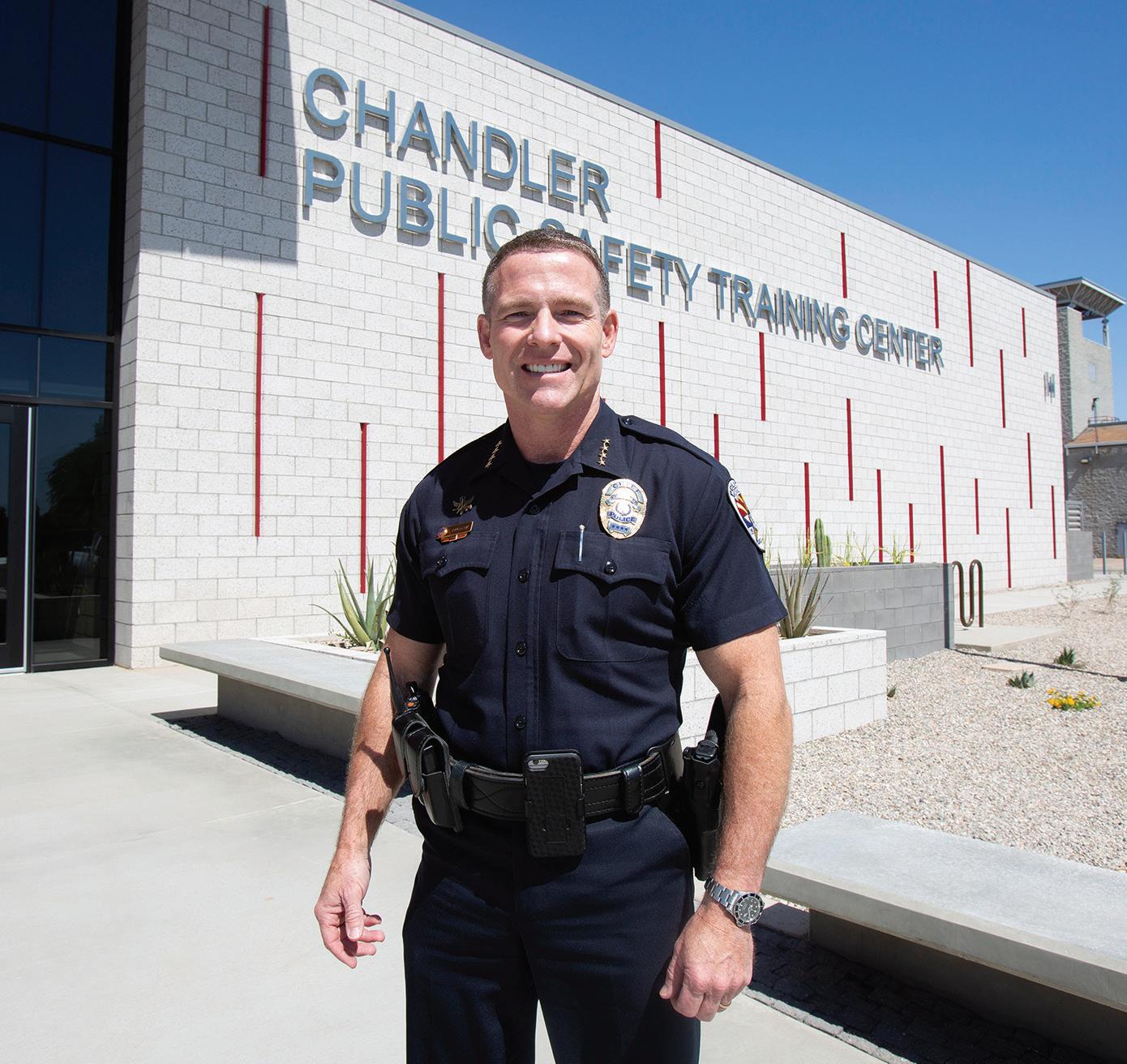
While Gilbert is seeking voter approval for funding, Chandler is opening the first phase of its new Public Safety Training Center this week.
The importance of such training cannot be overstated, Soelberg and Duggan said. Police and firefighters must perform under stress in the proper manner because mistakes can have catastrophic results. Police are under greater scrutiny than ever before, with expectations high as their actions recorded by body cameras are examined and critiqued by the public.
BY WAYNE SCHUTSKY GSN Managing Editor
By all accounts, 2018 has been a banner year for Max Reynolds.
The Gilbert High student walked with his graduating class, competed as a member of the school’s swim team and won two gold medals on national television in the Special Olympics. Max has autistic spectrum disorder but has not let the diagnosis stop him from achieving impressive accomplishments. Rather, the young Gilbert resident has excelled at both athletics and school during his time at Gilbert High.
“I want to show that anyone can be great and accomplish anything,” he said.

The Gilbert swimmer made good on that goal at the Special Olympics USA Games in Seattle, where he medaled in all three competitions he swam in – taking gold in his division in both the 100 meter and 50-meter freestyle events.
Gilbert High student Max Reynolds waves to spectators after winning a gold medal at the Special Olympics Games USA recently. He won the gold in both the 100-meter and 50-meter freestyle swimming events.
to be in the Mr. Wonderful Pageant at Gilbert High School.
“He’s come a long way,” his mother, Pam, said, noting that Max was nonverbal until he was 6 and had many behavioral issues early in his life.
Max also recently became an Eagle Scout see PUBLIC SAFETY page 4 see OLYMPIAN page 4
Max mirrored that success in the classroom despite receiving a prognosis early in life that he would not move past a third-grade level. He recently passed geometry with a 102 percent. Max was also nominated twice by his peers

Gilbert Sun News is published every Sunday and distributed free of charge to homes and in single-copy locations throughout Gilbert. To fi nd out where you can pick up a free copy of Gilbert Sun News, please visit www.EastValleyTribune.com.
Main number:
480-898-6500 | Advertising: 480-898-5624
Circulation service: 480-898-5641
Publisher: Steve T. Strickbine
Vice President: Michael Hiatt
ADVERTISING DEPARTMENT
Display Advertising: 480-898-6309
Classifieds/Inside Sales: Elaine Cota | 480-898-7926 | ecota@evtrib.com TJ Higgins | 480-898-5902 | tjhiggins@evtrib.com
Advertising Office Manager: Lori Dionisio | 480-898-6309 | ldionisio@evtrib.com
Director of National Advertising: Zac Reynolds | 480-898-5603 | zac@evtrib.com
Executive Editor: Paul Maryniak | 480-898-5647 | pmaryniak@timespublications.com
Managing Editor: Wayne Schutsky| 480-898-6533 | wschutsky@timespublications.com
Reporters: Jim Walsh | 480-898-5639 | jwalsh@timespublications.com Colleen Sparks | 480-898-5638 | csparks@timespublications.com
Get Out Editor: Christina Fuoco-Karasinski | 480-641-4518 | christina@timespublications.com
Photographer: Kimberly Carrillo | kcarillo@timespublications.com
Design: Veronica Thurman | vthurman@timespublications.com
Production Coordinator: Courtney Oldham | 480-898-5617 | production@timespublications.com
Circulation Director: Aaron Kolodny | 480-898-5641 | customercare@evtrib.com




































PUBLIC SAFETY from page 1

Duggan said.

“If you fail to train properly, you will pay millions of dollars in a lawsuit,’’ Soelberg said.
Three of the biggest fires in the East Valley during the past five years have been in Gilbert, involving a lumberyard and two apartment complexes.








Chandler Police Chief Sean Duggan said it makes sense for police and fire departments to train together because they end up working side-by-side at a major incident anyway. Sharing resources when possible always makes sense, saving the taxpayer money by avoiding duplicative facilities.
In October, Chandler is planning to train every police officer and firefighter in active-shooter drills at the new Chandler joint academy.
“At any point, any one of us could be a first responder. We need to be in synch with fire,’’ Duggan said.
“Our job is changing at an exponential rate, from new crimes to community expectations to technology,’’ he said. “The need for quality training has never been more important than it is today.’’
Gilbert’s Rob Duggan, who is not related to Chandler's Duggan, said that for firefighters, mistakes must be avoided because “typically, we pay our toll in deaths or significant injuries.’’
Although Gilbert is usually ranked as among the safest communities, it is ludicrous to assume that nothing will ever happen, Gilbert’s Soelberg and
“It’s big-city denial. We grew up so quickly,’’ Gilbert’s Duggan said.
White supremacist J.T. Ready also shot four people to death, including a 15-month-old girl, before turning the gun on himself in a normally quiet Gilbert neighborhood on May 2, 2012.
“We can re-create any threat or future threat our town could face’’ through the facilities planned at Gilbert’s new training center, Soelberg said.
The most pressing need for the training center, they argue, is an anticipated surge in retirements in the near future – a situation all public safety agencies typically face because of benefits and rules set by the Arizona state pension system.
“These people hired in the 1990s and early 2000s are coming up on their retirement eligibility,’’ although employees usually retire on a staggered basis because of different circumstances and not all at once, Duggan said.
Duggan and Soelberg said 42 percent of Gilbert police officers and firefighters will be eligible for retirement
in 2020 and 85 percent will be eligible in 2025.
“We have to be prepared to replace these officers, both police and fire,’’ Soelberg said. “We have to prepare for attrition as our own people retire.’’
“We are not replacing like for like. We are replacing individuals with decades of experience and certifications with newer, less-experienced officers and fire fighters,” Soelberg told the Town Council at a recent meeting.
In the next five years, the police department will have to hire and train a minimum of 180 officers to accommodate town growth and attrition. Fire will have to hire and train a minimum of 60 in same time period.
Although the Gilbert public safety agencies traditionally have sent recruits to regional training academies or academies offered by other departments, not enough spots are available to accommodate their needs, Duggan said.
enth with 242,000 residents.
The opening of Chandler’s training facility puts it about four years ahead of Gilbert, which started planning its training facility in 2005. The Gilbert training facility was put on hold during the Great Recession, when funds were scarce.
While the Chandler and Gilbert training centers are both joint facilities for police and firefighters, there are some notable differences as well.
Among the most important differences is that Chandler added on to a facility that opened in 1998 on land donated by Intel, while Gilbert is building an entirely new structure.
In both municipalities, police and fire officials are avoiding needless duplication of similar facilities by sharing auditoriums and classrooms. The joint facilities have sections, however, that are devoted to each agency.

“We can’t replace the bodies that are leaving,’’ Duggan said. Academies in other cities are filling up, he said, “because they are replacing people too.’’
Duggan said Gilbert has 197 firefighters, with the last academy class trained in Mesa.
“We’re begging for space in Mesa, Tempe or Chandler’’ training academies,” Duggan said.
He explained that ongoing training is held in a classroom in a rented industrial building where true-to-life scenarios cannot be accommodated.
Gilbert police have 13 recruits in training at the Mesa Police Academy, and three more in training at the Phoenix Police Training Academy, Soelberg said. Another eight Gilbert recruits recently graduated from the Mesa academy. In all, the Gilbert police have 276 officers and 10 vacant positions.
Gilbert and Chandler, two of the East Valley’s fastest-growing communities during the last two decades, both reached a juncture where they had to address their long-term training needs.
Because of growth, Chandler and Gilbert are now similar in size, based upon U.S. Census data. Chandler is Arizona’s fourth largest city with 253,000 residents, while Gilbert is ranked sev-
Examples include new firing ranges planned for police in both municipalities and burn buildings used by firefighters to simulate different types of fires.
Gilbert police and fire are both planning independent training academies when the center eventually opens.
The Gilbert Town Council voted 5-2 last month to place a $65.3 million bond issue on the Nov. 6 election ballot, but the overall cost is projected at $84.6 million.
Construction on Gilbert’s facility, near Pecos and Power roads, would start in April 2019 and the project would take about two years to complete if voters approved the bond issue in November.
The Chandler Fire Department has operated its own training academy for years at the site on Dobson Road south of Queen Creek Road, but Chandler police will continue to send recruits to the Phoenix police regional training facility.
Gilbert’s training center also will have a driving track, which is not available at the Chandler facility. Gilbert and Mesa still share jail facilities, with Chandler police booking suspects into the Gilbert jail to avoid needless long trips to Phoenix jails.
Chandler’s Sean Duggan said he has had informal, preliminary discussions with Gilbert police about sharing the use of Gilbert’s track someday, but that would be in the distant future.



BY GSN NEWS STAFF
Gilbert will ask voters to approve over $60 million in funding for the town’s future public safety training facility in a bond election on Nov. 6.
In a 5-2 vote, the Town Council approved a motion to call for the election last month. The town will ask voters to approve $65.35 million in bonds to cover the bulk of construction costs for the facility, which has a total projected cost of $84.6 million.
The town will find additional funding for the project using cash from the general fund, internal loans and the proceeds from the sale of a 37-acre plot of town-owned land that originally was slated to house a public safety training facility.
The town first looked at the possibility of building a public safety training facility in 2005, though progress on those plans was delayed a few years later due to the effects of the recession.
In recent years, the town has explored other options to meet its public safety training needs.

At the June 21 meeting, Councilmen Eddie Cook said he was part of a group that approached other cities that currently provide training to services to Gilbert – Mesa, Chandler and Glendale – and offered them up to $6 million in an investment in their facilities in exchange for perpetual using them.
According to Cook, those other cities declined the offer due to limited availability of space and resources, making the construction of a dedicated facility in Gilbert the most viable option.
Voters also will have to approve the sale of that land, which was purchased by Gilbert for $14 million in 2008, under an Arizona law because it is valued at over $1.5 million.
To pay back the bonds, Gilbert would raise its secondary property tax from $0.99 to $1 per $100 of assessed value. That increase would result in a homeowner with a $250,000 home paying an additional $3 per year, Town Manager Patrick Banger said.
In a presentation to the Council, Gilbert Police Chief Michael Soelberg pointed out that the town’s secondary property tax rate has decreased over the past decade, from $1.15 in 2010 to


its current rate.
The council recently approved the $0.99 rate, which is a decrease from last year’s $1.07 rate.
Twenty-eight members of the public attended the meeting in support of the proposal, including Benjamin Lovein, who moved to Gilbert with his wife about a year ago from a neighboring community.
“The main we reason we came is my wife mentioned what a safe place she believed Gilbert to be,” he told the Council. “When we heard about the proposed initiative to create this facility, (we) were both thrilled to know that the public safety officials would have the training they need here close to them.”
Councilmen Victor Petersen and Jared Taylor both voted against the bond election, arguing that a need exists but the costs of the current proposal are too high for Gilbert.
They both cited recent reports from outlets like Law Street Media proclaiming Gilbert as one of the safest cities in the country, based on FBI crime statistics.
In an exchange of automobile meta-






phors, Taylor referred to the facility as a luxury vehicle while Soelberg called it a reasonably priced car that includes only necessities.
Taylor expressed a desire to decrease the estimated costs so that the town could pay for the facility’s construction without a bond election.
“Do we need one? Yes, absolutely. There’s no question about it,” Taylor said. “Do we need one straight away? Yes, I believe we need one straight away.”
“I don’t think we need one at this cost, because if this goes to the ballot it will lose,” he added. “I believe it will be sticker shock to the community and it will go down and it will only delay things further.”
Councilman Scott Anderson disagreed with Taylor, stating he believed the bond would pass in November.
Petersen argued that some of the facility’s classroom components duplicated existing classroom space already built in Gilbert and made a motion to revise the bond amount down to $47 million. That motion failed with only Petersen and Taylor’s support.

BY GSN NEWS STAFF
The Town of Gilbert is considering new plans to increase parking at the popular Southeast Regional Library and replace the property’s nonfunctioning water feature.
Councilman Scott Anderson led a task force charged with coming up with alternatives to a plan that would repair the oft-broken water feature.
Officially known as the Spirit of Partnership Fountain, the feature was built to commemorate the partnership between Gilbert and Salt River Project that brought irrigation to the town.
Issues with the fountain's pumps and pipes that have rendered it unusable.
Anderson said the group first looked at the possibility of fixing the fountain’s infrastructure, but found that alternative plans were the better choice.
“In my mind, that is the definition of insanity because (the fountain) just doesn’t work,” Anderson said at a Town Council meeting in June.
At that meeting, Town Engineer David Fabiano presented the task force’s findings and a new plan for the project.


The new plan calls for the water feature to be replaced by landscaping. It will still include some drainage pipes to deal with flooding during storms but not an active fountain.
The plan includes aspects of a design created by architecture and landscape students from Arizona State University who were commissioned by the town several years ago to come up with alternative designs for the site.
At the time, student teams presented concepts to the Parks and Recreation Board and one was selected by the board. However, the project was shelved soon after that.
Anderson requested that the task force use aspects of that selected ASU project and the staff ultimately incorporated the palette of plants, linear connectivity and a raised pedestrian table from the student pitch.
That raised pedestrian table will provide improved sidewalk access to the library for pedestrians, people in wheelchairs and others traveling to the bus pullout.

“That is one thing that was talked about – the ability to make the mobility more appropriate,” Fabiano said. The proposed plan also includes improvements to the library’s parking situation, which currently is a source of frustration for many residents, Anderson said.

The plan would add 58 additional parking spots to the library, a 25 percent increase, Fabiano said.
Fabiano said the Southeast Regional Li-


























and participated in a basketball skills competition with the Special Olympics to bring awareness to intellectual disabilities for his Eagle Scout project.
Of all his achievements, Max’s feats in the swimming pool may be his most impressive – evidenced by the array of gold, silver and bronze medals hanging from the wall in his living room.
Max first started swimming competitively about six years ago and has won gold and silver Special Olympics medals in freestyle and butterfly every year since then.
“Special Olympics has helped Max know that he can shine,” his mother said. Max, the youngest of 29 grandkids, shares that positivity with his young nephew, who also has autistic spectrum disorder.
“Max is a good uncle,” Pam Reynolds said.
She added, “His greatest accomplishment is that he is an amazing human being.”
Max joined Gilbert High School’s swim team during his junior year and has competed in exhibitions during the team’s events, winning two school awards during his senior year.
This summer, he traveled with the Arizona delegation to the Special Olympics USA Games. The games, televised on ESPN, highlighted the top Special Olympic athletes from across the country in sports ranging from swimming to basketball to power lifting.
Max was the youngest member of the men’s swimming delegation.
While Max admitted that competitions can be nerve racking, he said he enjoys them and finds swimming relaxing.
Just getting to the event was no easy feat. Max swims six days a week with Evo Swim School and other local organizations.
Max also had to raise $1,000 and did so by collecting used plastic water bottles and recycling them for 40 cents per pound. With the help of friends and bottles given to him by Prince of Peace Preschool, Max was able to raise the bulk of the money he needed.
“I am proud of Max,” his mother said. “Every week we’ve had to smash bottles.”
Max has also received considerable support from his community at Gilbert High School.
When news broke that he would be competing in Seattle, Gilbert High School special education teacher Zoey Raff put together a video congratulating Max on


his achievement.
The video included words of encouragement and congratulations from dozens of his classmates and several teachers, coaches and administrators.
Raff also traveled to Seattle to cheer Max on.
“She has been remarkable,” Pam Reynolds said of Raff. “She has been a great influence.”
Both Max and his mother also credit Coach Brendan Keyes and the entire Gilbert High swim team for welcoming him with open arms.
“He has been amazing and so wonderful for Max,” Pam Reynolds said. “They all have – the whole swim team.”
Every year, each member of the staff gives an award to an athlete who worked hard to overcome an obstacle. This year, Keyes’ award went to Max.
“To be honest, Max brought just joy,” Keyes said. “That is the best way I could describe Max.”
Keyes, who has coached for nearly two decades at Gilbert High School, added, “I told him he reminded me of my first year coaching, when I first got to look at athletes who just love to swim.”
Max, in turn, left a lasting impression on the swim program at Gilbert High.
“We would always say ‘bring it in Tigers’ and he would say ‘tight as a family,’” Keyes said. “We will keep saying this for years to come.”
“He was just kind of that person you look forward to being there everyday. When he wasn’t swimming, he was cheering people on.”
Keyes said Max’s combination of ability and infectious personality made him known to everyone in the high school swimming community in the Valley.
With his high school swimming career in the books, Max wants to continue swimming in Special Olympics events, though he has already accomplished a significant goal.
“I wanted to prove the fact that autistic people are capable of anything,” he said. Beyond swimming, he is going to continue taking some classes at Gilbert High School and will also attend East Valley Institute of Technology in the fall to study information technology and engineering.
He has not yet decided what he wants to do in the future and plans to try different courses at EVIT to find out what interests him.
“He is one of those people that will be able to find fun in whatever he is doing,” Keyes said. “He is going to be able translate his love of swim into whatever he ends doing in his life.”

BY CECILIA CHAN Tribune Staff Writer
Meet Mesa Police’s newest officer in training, a 16-week-old English Labrador retriever named Macy. She’s learning basic commands such as “sit,” “come here,” “stay” and “leave it,” said handler Chelsie Furman, a department detective who uses treats as a motivator.
But in two years after completing her certifications, Macy will be the department’s first therapy and emotional support dog, ready to lend a paw to child abuse and adult sex victims.
“In certain circumstances, she’ll sit in on interviews and we’ll have them pet her while they talk about the incident that happened to them,” Furman said at a news conference last Tuesday.
The department has 18 detectives working sex abuse and child crime cases, and they all carry a fair load, she noted.
In the meantime, Macy is providing comfort to department staff and officers who may need it and she will continue to do so after she is certified.
For instance, two staffers who had lost loved ones were at work but perked up and were smiling and laughing within 10 minutes of meeting Macy, said Furman, who is accompanied by Macy every work day.
The Officer Assistance Fund covered the cost of purchasing the yellow Lab from a breeder.
A Labrador was chosen because the breed is seen as non-threatening, more cuddly and approachable by children, Furman said.
For the past 27 consecutive years, the family-friendly Lab has held the No. 1 spot for most popular breed in the United States, according to the American Kennel Club.
Macy was selected at 5 weeks old and three weeks later went home with Furman, living and socializing with the de-

tective’s other pets – two dogs, a cat and a tortoise, all rescues.
Exposure to other animals is an important part of the training process.
Furman explained that an English Labrador is generally calmer, sweeter and more docile than an American Labrador.
And, a girl was chosen because females are smaller and tend not to mark like male dogs, she added.
A number of law enforcement agencies are using therapy dogs, including Greens-
DOG page 12






EDITOR’S NOTE: The Gilbert Sun News early last month sent questionnaires to all six primary election candidates for Town Council. Their responses have been broken into three parts. The first part ran last week. The second runs today and the final installment runs next Sunday. The candidates will subsequently be publishing columns at the invitation of the Gilbert Sun
News prior to the Aug. 28 election. Some responses to the questionnaires were edited for reason of space. The entire questionnaire and answers for all candidates can be found at under the Gilbert Sun News tab at eastvalleytribune.com. James Candland did not respond to the entire questionnaire. What he did respond to is published today.
July 30 - Last day to register to vote
Aug. 1 - Early voting begins
Aug. 22 - Last day to mail ballots
Aug. 28 - Election day
Information: servicearizona.com, reporter.maricopa.gov
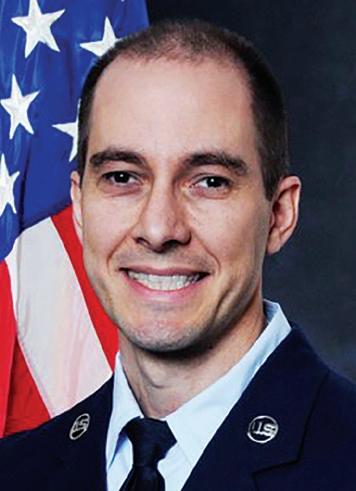
Age: Did not reply
Education: Bachelor of science in business management and a master’s in business administration.
Current employer: Self-employed.
Immediate family: Wife Sheri and five boys ages 22 to 12 Year moved to Gilbert: 1996
Last book read: “Abraham Lincoln, A Presidential Life.”
Why are you running for Town Council? I want to serve to serve the residents of a Gilbert, and make long lasting changes in our community.
How can the Town Council promote commercial-residential balance in Gilbert?
To better promote commercial-residential balance in Gilbert, the Town first needs to do a better job of effectively reaching out and listening to the residents of Gilbert prior to even considering the rezoning of certain sections of property.
There have already been several disputes involving zoning issues in our community which I feel could have been avoided had the town done a more effective job at providing information to those living in the immediate area.
How can the Town Council promote commercial-residential balance in Gilbert?
The Town of Gilbert’s General Plan is the community’s vision and guide for future physical, economic, residential, commercial and social development. It is a long-range policy document covering a period of 10-20 years. … The General Plan seeks to assure that decisions are consistent with the Community’s vision. The Town Council uses the General Plan as a guideline in helping make important policy decisions. The Town of Gilbert will be engaging the public soon to update the General Plan.
Gilbert has several large public projects in the works, including Gilbert Regional Park and the public safety training facility. How should the town approach paying for these types of projects?
The Town of Gilbert has a process called Capital Improvement Projects, known as the CIP. This process provides program
In reference the park, the question needs to be focused on why government needs to be involved in multi-million dollar projects such as this in the first place.
I would rather see smaller less expensive parks connected with bike paths to encourage fitness.
Two, thoroughly vetting any rezoning of property to ensure it is what’s best for our community.
Gilbert has several large public projects in the works, including Gilbert Regional Park and the public safety training facility. How should the town approach paying for these types of projects?
For the public safety training facility, I don’t support it due to the upfront and long-term costs. If there was a legitimate need, I would support it but I believe the training facilities we currently use seem sufficient.
I would rather see funds given to public safety for recruiting/ retention so we can hire/retain the best.
What role should public funds play in the redevelopment of the Heritage District moving forward?
As someone who believes government’s role in our community should be minimal, I would not support the use of public funds in the redevelopment of the Heritage District.
and project management of future public infrastructure and prioritizes projects based on importance, risk and need. The Town Council, Town Leadership, public and business stakeholders meet regularly to collaborate on the many public infrastructure projects for the next five years. The CIP blends multiple sources of funds to construct public improvements. It also requires that the sources for maintaining and operating additional facilities be clearly identified prior to placement in the CIP. Gilbert has planned and followed a course of making sure that growth pays its own way.

What role should public funds play in the redevelopment of the Heritage District moving forward?
I’ve served as the Council Liaison to the Redevelopment Commission for the Heritage District for several years. I have
How can the Town Council promote commercial-residential balance in Gilbert?
Growing sustainable businesses with high-wage employment will allow Gilbert to diversify its tax base as our construction sales tax will dwindle in years to come. Investment in infrastructure, public safety, parks and recreation and funding for the arts will attract the high-wage employment base we need and will allow Gilbert to be the place we continue to want to make our home.
Gilbert has several large public projects in the works, including Gilbert Regional Park and the public safety training facility. How should the town approach be paying for these types of projects?
been involved with many of the projects that have found a home in our Downtown. When I first was elected in 2011, downtown then did not look like it does today. In working with the Town Council, Town Leadership and Economic team, we put together a strategy and executed on that plan to kick start the success we experience today. Using public funds to build the first parking garage in the Downtown was the spark that initiated the development the Heritage Market Place that includes Zinburger, Lo-Lo’s, Pomo and Barrio Queen. The Town looked at this as a partnership and joint investment that would create a destination to attract families to visit the Downtown. Another important business decision was not to charge for public parking. We have received a lot of feedback from the public of their appreciation not to charge for public parking.
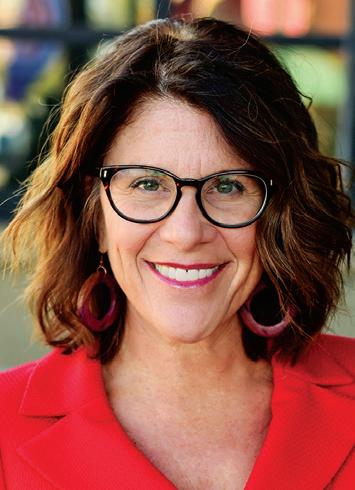
As member of the Parks and Recreation Board, it has been a privilege serving to promote quality of life throughout Gilbert. The SE Regional Park has been a collaborative effort with Maricopa County, the Town of Gilbert and our neighborhoods. Through
community input, the park is a true vision of what the residents of Southeast Gilbert desire. The park has been made possible through a number of cost-saving strategies. An intergovernmental agreement between the Flood Control District of Maricopa County and the Town of Gilbert that provided 225 acres to the Town at a cost of approximately $10. Funding will be allocated from a mixture of proceeds from the potential sale of surplus Town-owned parcels, Park System Development Fee (SDF) funds and future bonds. … There is, no doubt, a need for a training facility to accommodate our safety professionals in the Town of Gilbert. By allowing use of their facilities, neighboring communities have supported the Town for over 25 years; continuing to utilize these sites becomes a burden to our sister cities and an increase cost to the town. What role should public funds play in the redevelopment of the Heritage District moving forward?
The town has been able to acquire property over the last 30 years and now owns 59 percent of non-residential land in the Heritage District, affording Gilbert the opportunity to strategically guide the redevelopment and growth. Going forward, it is imperative to seek
How can the Town Council promote commercial-residential balance in Gilbert?
The Town is just beginning our next General Plan update for the next 10-20 years and this will be a very important process for the community. Good planning is the best way to balance the future needs of Gilbert. A strong commercial base is important to the future of Gilbert and I know will be a main topic with stakeholders in the process.
Gilbert has several large public projects in the works, including Gilbert Regional Park and the public safety training facility. How should the town approach paying for these types of projects?
public input and provide guidance based on community need/support. Downtown has become the vibrant epicenter of our community, we have an opportunity to engage with small business owners in providing a unique mix of entrepreneurial endeavors in the Historic District with a focus on arts and culture.
ing Facility (PSTF), when the bond passes in November, this will allow us the opportunity to borrow money at the lowest possible rate.
We’ve negotiated land deals paying $10 for Chandler Heights Basin, identified a better piece of property for the PSTF with a much lower economic value. Doing so allows us to sell the excess property with a higher economic value to use funds for PSTF.

Responsible financial management is key, aggressively paying down debt and saving money has improved credit bond ratings. Responsible financing for the projects we can’t pay cash for such as the Public Safety Train-
How can the Town Council promote commercial-residential balance in Gilbert?
Gilbert has been one of the fastest growing residential communities in Arizona for many years. Over the last few years Gilbert has also seen an increase in high-wage jobs as businesses are attracted to our Town. These businesses help increase our tax base and thus help to ensure the sustainability we need in Gilbert.
It is imperative that we as the Town Council retain as much commercial zoning as possible in order to continue to attract and retain businesses that will provide long-term sustainability in our community.
Gilbert has several large public projects in the works, including Gilbert Regional Park and the public safety training facility. How should the town approach paying for these types of projects?
How can the Town Council promote commercial-residential balance in Gilbert?
The Town’s General Plan provides a template and guideline for a balance and mix of residential and commercial uses. Soliciting as much feedback in this once-every-decade process is important, but so is being flexible enough to stay attuned to interim changes and making requisite adjustments.
the Town should very critically prioritize their spending, especially on capital projects, based upon the very greatest need with significant consideration of ongoing costs to maintain and operate.
With restraint on spending, the Town should be able to pay for many of these by savings, which they do in many cases. That should be the first option rather than taking out bonds and incurring more debt.

What role should public funds play in the redevelopment of the Heritage District moving forward?
Redevelopment requires investment in infrastructure. An initial investment in infrastructure created the development we are seeing in the Heritage District. We should continue with the formula we’ve used to achieve the success that we are enjoying today. As presented at our recent spring financial retreat, because of the early vision, the town is seeing a return on investment of $3 for every $1.
in PSPRS liability. Additionally, in FY 2018, the Town is funding:
• $20 million of water system repair and replacement.
• $54 million of wastewater system repair and replacement.
• $26 million of roadway/streetlight/sidewalk repair and maintenance.
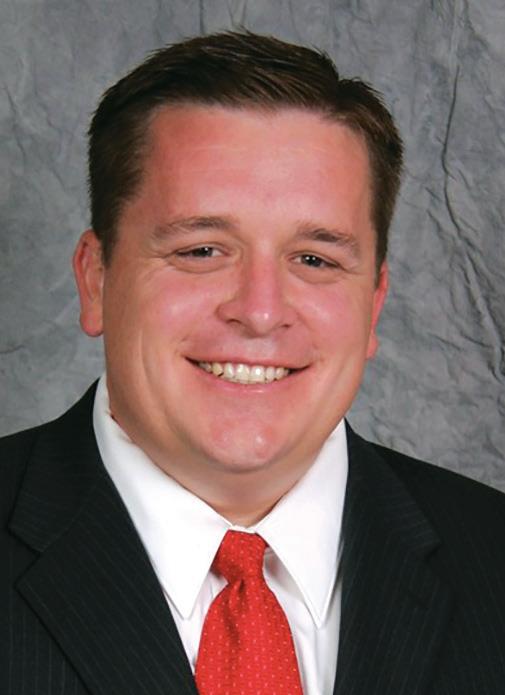
Our financial successes as a Town have come as a result of prudent and deliberate planning and action. Gilbert must continue to be fiscally responsible to be sustainable long-term.
What role should public funds play in the redevelopment of the Heritage District moving forward?
Additionally, adhering to predictable zoning standards is also important in achieving that balance. Lastly, aside from these two basic and general approaches, leaving as much of the specifics to the free market to determine will achieve a better equilibrium than what centralized planning can achieve. Development, when devoid of centralized incentives that tend to create distortions in market behavior, is better in touch and naturally responds to what people want and need.
Gilbert has several large public projects in the works, including Gilbert Regional Park and the public safety training facility. How should the town approach paying for these types of projects?
Voters will have the opportunity to vote on paying for these projects through General Obligation Bonds, i.e. through debt-financing. If the voters reject these projects, I believe the town should reevaluate how they move forward with the community’s input.
Often government spends money planning wonderful projects they believe the citizens want – because they “asked” them. However, the initial plan did not include what the project would cost, and increased taxes or debt citizens would incur as a result. I believe
from page 7
brary currently serves nearly 750,000 visitors a year, making it the busiest library in the Maricopa County Library System.
Add in the neighboring Riparian Preserve at Water Ranch and the site sees approximately one million visitors every year.
What role should public funds play in the redevelopment of the Heritage District moving forward?
The Heritage District has been enjoyed a great deal of growth and success in the past decade. With that success has come some challenges. Public funds are needed and should be used going forward to improve the infrastructure in the downtown. This includes alleviating traffic congestion by building out feeder streets and thoroughfares and ensuring there are safe walkways and crossings for pedestrians and bicyclists especially in harmony with the railroads. Additionally, the Town needs to continue to invest in public safety that involves the input and contributions of the residents and businesses in the downtown. They are our partners; they have the pulse day-today in the Heritage District and should be empowered.
My family and I owned a gift store in Gilbert and for several years we operated in a struggling plaza without an anchor store. As a result, crime shot up as did transient traffic. We were public safety’s greatest asset in making sure our pocket of the town was safe by being proactive and working hand in hand with law enforcement.
out requiring drivers to exit onto the road to visit the other side of the facility.
The plan also calls for the town to remove two driveways, one from each parking lot, that are no longer designed to the town’s safety guidelines to limit unsafe turns out of the library.
Gilbert has seen many financial successes over the last few years, including:
• saving taxpayers over $32 million since 2012 by refinancing debt.
• reducing debt by $66 million since 2012 through making early payments.
• cash funding to reduce over $19 million
The redevelopment of the Heritage District has been wildly successful and has brought new businesses and tax dollars into our Town. Because the Town of Gilbert still owns more than 50% of the vacant land in the Heritage District, public funds will play a substantial role in further developing the District. Over the next couple of years, there will be a significant investment of public funds to update infrastructure within the Heritage District. The investment in infrastructure will be another boost to the booming downtown.
“That’s a lot of people using that parking lot, and I cannot tell you how many times people complained to me during events that they couldn’t find parking,” Anderson said.
In addition to increasing the amount of parking, the plan would also provide connectivity between the two parking lots that library visitors use.
Currently, the library has two separate parking lots – one off of Greenfield Road and one off of Guadalupe Road – divided by an inaccessible median. The new plan would connect the two lots to increase circulation within the parking lots with-
The plan would also add designated right-turn lanes into the facility off of Greenfield and Guadalupe Roads.
“They do not (currently) have those turn pockets,” Fabiano said. “They should have those turn pockets because of the amount of traffic that goes into them, and it’s an unsafe condition.”
Fabiano estimated that the current plan would cost $3 million.
The project will not be funded until next year at the earliest as initial funding for Southeast Regional Library water feature project set aside in this year’s budget was part of the $1 million cut from the capital improvement budget in order to make an early payment on 2008 GO bonds.




DOG from page 9
boro Police in North Carolina, Boynton Beach Police in Florida and Pima County Sheriff’s Department in southern Arizona. Types of dogs include goldendoodle, border collie mix and a treeing walker coonhound.
Studies show therapy animals can benefit individuals who have suffered physical or emotional trauma.
According to the National Center of Prosecution of Child Abuse, a therapy animal can help a child open up and promote the healing process.
Mesa Police’s new Therapy Canine Program came at the behest of Chief Ramon Batista, who was hired last year.
“This is a cumulation of a lot of planning and a lot of work,” he said at the news conference. “We are all very, very excited about our program and our canine Macy.”

Furman said there is a chance the program can expand down the road with more dogs and possibly help crime victims with autism.
For now, Macy is learning to walk with
a leash, ride in a car and socialize with people.
“She is a little sponge,” Furman said. “She’s doing fantastic.”






































BY HOWARD FISCHER Capitol Media Services
Arizonans may get a chance in November to weigh in on a proposal to tax the rich to provide more money for public education and another that would require full disclosure of any groups or individuals trying to influence their elections.
Supporters in separate drives filed petitions to put both referendum questions on the General Election ballot. Now they must now be checked to determine if each effort secured the required number of signatures.
Supporters of more money for K-12 education said there’s a reason they are taxing only the top 1 percent of Arizona wage earners to pick up the entire cost: It’s politically expedient.
“We wanted to know what the voters were going to tell us,’’ Arizona Education Association President Joe Thomas said as organizers of the Invest in Ed movement submitted about 270,000 signatures to put a surcharge on state income taxes.
Only individuals earning more than $250,000 and couples who file jointly with income of more than $500,000 will pay a surcharge of 8 percent on anything they earn over that amount.
The current maximum state tax rate is 4.54 percent. Those in the $500,000-plus range or couples with $1 million income will pay 9 percent of what they earn above those numbers.
Figures from the state Department of Revenue estimate that the bulk of the estimated $690 million that would be raised would come from about 20,000 taxpayers out of nearly 2.8 million who file tax returns.
Thomas bristled at questions of whether such a system to fund education on the backs of a small minority of Arizonans
is fair. “How is it fair that students are in overcrowded, underfunded classrooms right now?’’ he responded.
“What’s not fair is we have the lowestpaid teachers in the nation,’’ Thomas added. “What’s not fair is we have underfunded and understaffed schools.’’
Backers need for at least 150,642 of the signatures to be found valid to qualify for the November ballot.
There already has been opposition of a sort. And it has political overtones for Gov. Doug Ducey who is trying to get re-elected, at least in part by touting what has been done for K-12 education.
The Arizona Education Project already has spent more than $1 million on TV ads praising Gov. Doug Ducey for the money that was put into education this session, saying that progress is being made in improving teacher salaries.
And on Thursday, the chamber unveiled yet another committee, Arizonans for Great Schools and a Strong Economy, which chamber spokesman Garrick Taylor said will spend whatever is necessary to defeat the measure.
Arguments about effects on the economy aside, Taylor said the initiative, if it passes, “actually is putting teacher pay at risk’’ because the income of those at the very top of the tax scale is highly volatile.
“The proponents are looking for a stable funding source,’’ he said. “This isn’t it.’’
In launching the drive, David Lujan, director of that group, pointed out that lawmakers agreed two decades ago to assume responsibility for new school construction and repairs.
But lawmakers reneged on that commitment when tax revenues dipped during the recession.
In the interim, the #RedForEd movement took hold, forcing Ducey to agree to a 19 percent increase in teacher salaries by 2020 and a commitment to restore all the

money he and his predecessor, Jan Brewer, took from an account that pays for things like books, computers, buses and some capital needs.
Supporters of that movement, however, pointed out that Ducey’s promise is based on projections of an improving economy, with no new dedicated revenues to finance either the raises or the restoration of the special account.
Meanwhile, backers of a constitutional amendment to mandate disclosure of donors submitted more than 285,000 signatures to put the issue to voters.
That’s about 65,000 more than needed to be found valid to have the constitutional amendment on the Nov. 6 ballot.
But campaign organizer and former Attorney General Terry Goddard said he’s convinced that the error rate will be low enough to meet the goal.
If he succeeds, the campaign is likely to have stiff opposition from business groups and others who now put money into political races knowing that Arizona law allows them to shield the names of their donors from public scrutiny.
At the heart of the fight are state laws that say that any group recognized by the Internal Revenue Services as a “social welfare’’ organization need not spell out who is financing the effort.
The result has been a series of campaigns for statewide and legislative offices where funds flow into mailers and commercials on behalf of candidates, with no disclosure of who is spending the money.
In 2014, for example, American Encore spent more than $1.4 million on Arizona races.
And while the group originated with an organization founded by the Koch brothers, there is nothing on the record of who put up those dollars.
Earlier this year, the Republican-controlled Legislature voted to extend that
same protection against disclosure to local elections.
That overrode the 91-9 percent vote by Tempe residents to prohibit anonymous donations to city races.
The initiative would require any group seeking to influence a political race or ballot measure to reveal the identity of anyone who contributed more than $10,000. As a constitutional amendment, it could not be overridden by lawmakers without asking for voter approval.
Goddard said it is structured to also guard against “chain donations,’’ in which one group gives to a second and that one funnels money to a third and so on. He said the law requires the organization that ultimately spends the money in Arizona to trace those dollars back and disclose the original source.
Goddard dubbed the campaign “Outlaw Dirty Money.’’
“That’s the sums and the millions of dollars that are being spent in Arizona elections,’’ he said. “And we have no idea where they come from because our laws don’t require disclosure of those contributors.’’
Goddard said this is not a partisan issue, saying the campaign also is being led by Republicans like Grant Woods, another former attorney general, who is a Republican.
But it has been the Republicans in the Legislature who have allowed for anonymous donations.
During 2016 debate on the legislation, Rep. J.D. Mesnard, R-Chandler, said voters don’t need to know the source of the funds paying for those TV ads, mailers, billboards, phone calls and literature left at the door.
“A message is a message,’’ said Mesnard, now the House speaker. “If it’s important to you to know who’s behind the message and you don’t know who’s behind the message, then disregard it.’’
Read candidate statements, learn important dates and vote informed August 28 with the Voter Education Guide. Citizens Clean Elections Commission mails the nonpartisan resource to every household with a registered voter, but you can also find it online at azcleanelections.gov/votereducationguide.
BY JIM WALSH GSN Staff Writer
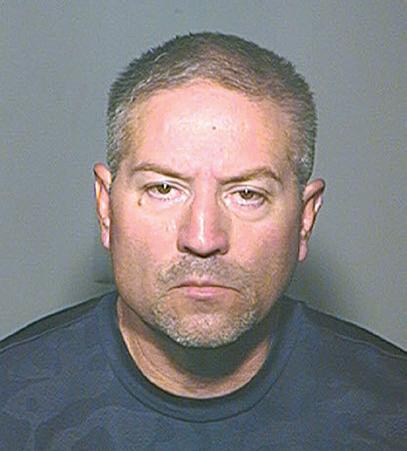
Asex abuse case that was closed years ago for a lack of evidence led last week to the arrest of a former Seton Catholic Prep volunteer coach accused of molesting two boys on an East Valley club baseball team, Chandler police said.
No crimes involving that school have been alleged in connection with the arrest of Richard Allen Gallegos, 53, of the 1700 block West Wildwood Drive in Ahwatukee, on suspicion of a long list of sex charges stemming from incidents involving two victims, according to Sgt. Dan Mejia, a police spokesman.
Chandler and Tempe.
Club baseball teams, often referred to as travel teams, generally attract serious players who are hoping to advance into college or even professional baseball after they graduate from high school. The teams typically travel to tournaments played in Arizona and other states.
(Special to GSN)
The court document said the case against Gallegos crystallized when a male victim, who is now 21, told police that Gallegos had molested him when he played on the team when he was 11 to 14 years old.
The young man told police that a second player on the team had revealed to him that he also had been abused in a similar manner by Gallegos.
While Gilbert broke ground on two massive park projects in June, the Town Council has yet to decide on official names for them.
Now, the town is turning to its residents for help. Gilbert recently launched a website where residents can vote on the names of the parks, unofficially designated Gilbert Regional Park and Rittenhouse District Park. Visit gilbertdigital.typeform.com/to/dEIRxW to vote.
For Gilbert Regional Park, a 272-acre project at Queen Creek and Higley roads, the choices are the current regional park name or Gilbert Centennial Park. The facility is to open months before Gilbert celebrates its centennial in 2020.

Rittenhouse District Park is a sports-oriented project at Power and Pecos roads. For that park, voters can choose between Power Sports Park and Desert Sky Park.
The charges include five counts of sexual conduct with a minor and three counts of children, according to court documents. Detectives wrote that the abuse occurred while Gallegos was a coach for a club baseball team that practiced in Ahwatukee,
The second victim, who also was 11-14 years old at the time, was interviewed by detectives and recounted sexually abusive incidents to police, Mejia said.
Mejia said police had dropped the previous investigation in 2009 because the boys declined to reveal the abuse.

Tours of Leading Edge Academy Gilbert, an “A” rated charter school, are 10 a.m. Wednesday, July 18, and 10 a.m. Wednesday, July 25, at the campus, 717 E. Ray Road in Gilbert.
New Principal Heidi Simms will lead tours and informational meetings. It is not too late to enroll for the 2018-19 school year that begins Aug. 6.
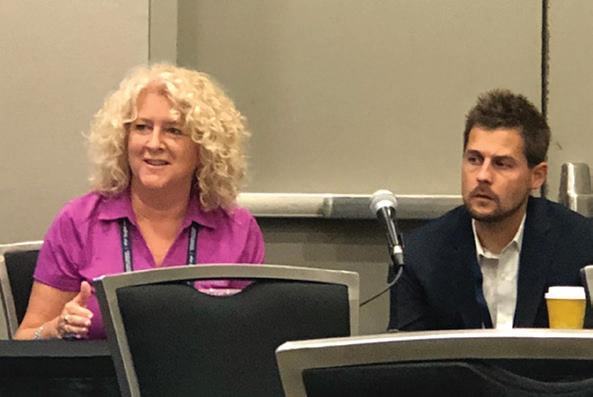
Recently, Leading Edge Operations Director Rebekah Krueger was a featured presenter at the National Charter Schools Conference in Austin, Texas. This is the second year in a row that Krueger was invited to present at the annual conference.
The National Alliance for Public Charter Schools invited Krueger to participate in the breakout session “Pensions Under Pressure: Charter Innovation in Teacher Retirement Benefits.” She addressed “The Arizona Landscape” as the state was among those included in a recent research study on the topic.
Krueger, in her 13th year at Leading Edge, was promoted to operations director in 2016. In 2014, she received the Business Manager of the Year Award from the Arizona Charter Schools Associations. She regularly is requested to sit on boards of directors and committees, and to present at local and national education conferences.
For more information, visit leadingedgeacademy.com.
In celebration of Park and Recreation Month, Chandler officials are conducting a scavenger hunt, from 8 a.m. to noon Saturday, July 21, starting downtown at 175 S. Arizona Ave. It is designed to enlighten the entire family about the city.
Noteworthy sights and hidden recreation gems will be on the list.
With a smartphone as the tour guide, participants can locate hotspots, unlock challenges and climb the scoreboard.

One super-team will win the ultimate parks and recreation treasure, valued at $2,500.
Register at chandleraz.gov.
Allegiant Air pilots last week voted to strike “if necessary,” posing the possibility of future hassles for flyers who use Phoenix Mesa Gateway Airport, where the company is the dominant airline.
Reporting 93.5 percent of its members voted to authorize a strike, Teamsters Local 1224 of the Airline Pilots Association said the action “comes in response to Allegiant’s years-long refusal to live up to its commitments and fix a sham scheduling system that has negatively impacted the lives of many pilots and their families.”
Voting took place over a one-week period from June 29 to July 6 and was conducted online via a third-party election management provider, the union reported.
Pilots pointed out in a news release that a strike “strike could result in cancellations out of major hubs including Las Vegas, Phoenix, and Fort Lauderdale and impact thousands of passengers.”
Calling it “one of the nation’s most profitable airlines,” the pilots in a news release said Allegiant takes a “bare min-
imum approach to business.”
They said Allegiant “made the unilateral decision to force its pilots to use a homemade scheduling system that goes against industry standards and disregards pilots’ seniority and preferences – often upending pilots’ planned time away with their families.”
They also claimed a number have left Allegiant “for other airlines that respect the basic needs and interests of their pilots.”
Allegiant spokeswoman Hillarie Grey said in a statement, “We want to assure customers there are no legal grounds for a strike and we are not anticipating any disruptions.
“As for status of the scheduling system at issue, we are waiting for a timeframe from the vendor regarding programming time needed to complete requested changes, with a testing period to follow - but hope to have the system implemented by the end of the year.
“Also, please note that the vendor for the new system was selected by the union,” Grey continued. “Allegiant has supported development and testing throughout the process and any allegation otherwise is incorrect.
"We remain committed to, and are actively working towards, the completion of implementing the scheduling system, working with the vendor selected by IBT. Under the Railway Labor Act, as well as the terms of the current collective bargaining agreement, this issue would not constitute grounds for a legal work stoppage.”
Captain Andrew Robles, an Allegiant Air pilot and executive council chairman at the pilots’ union, said, “We are people with spouses and children, not cells on a spreadsheet that Allegiant executives can move around with no rhyme or reason. Striking is a last resort, but we’ll do whatever it takes to hold Allegiant to its promises and to make our airline the best it can be for our pilots, our families and our passengers.”
He said Allegiant pilots have been raising concerns about the scheduling system for years.
In 2016, the pilots and Allegiant reached an agreement requiring that they negotiate and implement a new system within 180 days.
“Allegiant has again stonewalled that negotiation process and recently backed out of its prior agreements with the pi-
lots over terms for the new scheduling system,” the pilots said in the release.
Pilots noted that the airlines in June “canceled dozens of flights in and out of major airports across the country after Allegiant failed to deliver Airbus planes on time – affecting thousands of passengers’ travel plans.”
“Allegiant has a long track record of breaking its commitments to its pilots and we’ve had enough,” Robles said. “Allegiant executives are acting in complete and utter bad faith in failing to negotiate a fair, industry-standard scheduling system.”
The union noted that Allegiant has posted 60 consecutive profitable quarters.
“Its executives are among the highest compensated in the industry, with the company CEO – and largest shareholder – taking home tens of millions in shareholder returns in recent years,” they said, citing a $74 million “windfall” the company received as a result of the recent tax bill.
“This has all been achieved with little consideration for the lives of the pilots who have continued to make Allegiant successful,” they said.




BY SRIANTHI PERERA GSN Contributor
Dianne White was with a class of kindergartners on a field trip to Schnepf Farms in Queen Creek when one little girl pulled out an orange and asked: “Who eats orange?”
White thought it was an unusual way to phrase the question.
“As soon as I heard it, I knew it would make a great title for a picture book,” said the teacher-turned-children’s author in Gilbert. “I filed the idea away and, every now and then, pulled out the title and tried to figure out what the story might be.
“It would take two years to settle on a structure, but once I had that in place, the words came quickly,” she recalled.
“Who Eats Orange?,” her picture book for children from preschool through grade 3, will be published Aug. 14 by Beach Lane, Simon & Schuster.
It features large illustrations of animals grouped by the color of their food. The last page contains information about the animals in their habitats, their food habits and general details that adults can read aloud and explain to children.
Another book, “Goodbye Brings Hello,” aimed at the same audience, was published June 26 by Houghton Mifflin Harcourt. Her first book, 2014’s “Blue on Blue,” was also published by Beach Lane.
“Goodbye Brings Hello” was inspired by a display for the movie “Frozen” and a sign for the song “Let It Go.” Its cartoonish graphics depict children in the process of letting go, such as getting long hair cut short, clinging to teddy when it’s time to leave for school and making a new friend there.
“Kids ‘let go’ of so many things – the edge of the pool when they learn to swim, the training wheels on their bike, big chunky crayons and so on,”
White said. “I knew the idea was a good one, though it would take months to come up with the right set of words for the story.”
White taught for 25 years in South ern California and subbed at Val Vista Academy after she and her family – husband Robin and three sons – moved to Arizona about five years ago. Now, she writes full time.

Although she developed her skills in writing for children later in life, she recalls that she was nearly famous during her school days for her poem “Skunk in a Bunk” with its memorable opening couplet, “Skunk, skunk, in a bunk, sprayed me with some kind of junk!”

She has read and shared “probably thousands” of books with her class and her own children. She also created a library in her classroom and constantly added to the collection.
“Somewhere in the middle of those years, I began to wonder if I might learn
to write and touch readers in the way that so many wonderful authors had touched me,” she said. “That question set me off on a journey toward learning the craft of writing for kids.”
Following membership in the Society of Children’s Book Writers and Illustrators, attending conferences and earning an MFA in writing for children and young adults from Vermont College of Fine Arts, White began creating her books.
“One of the best parts about writing is belonging to the wonderfully supportive community of children’s book writers and illustrators I’ve admired for years,” she said.
Does she prefer writing to teaching?
“I loved the challenge of teaching, but, after 25 years working in public schools, I began to feel more was expected of teachers and students than was realistic,” she said. “In my district, there was a shift toward increased testing, even down to the youngest aged-students, and I watched as the pedagogy shifted in a direction that put numbers, charts, and paperwork ahead of what I felt was in the best interest of the children and their learning.”
As an author, White said she still gets to use her teaching experience to promote some of her favorite things: books, writing and literacy.
BY SRIANTHI PERERA GSN Contributor
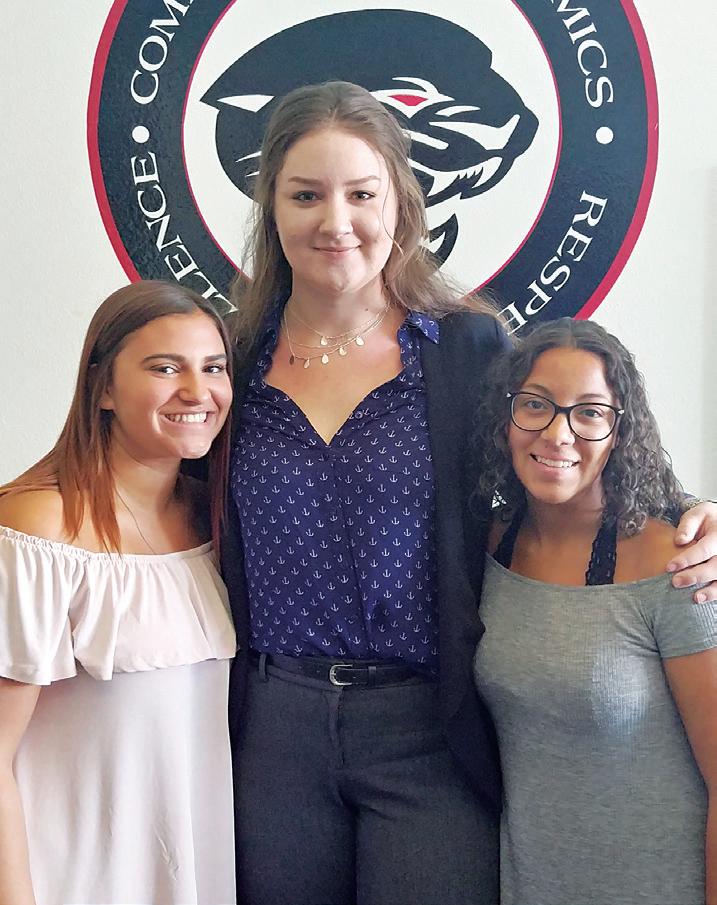
Agroup of Desert Ridge High School students recently analyzed the environmental impact of several restaurant chains for a class project. They went into the project with a variety of questions:
Should they use paper or plastic? Should they use trash, recycle or compost? Are brown napkins better than white, bleached ones? How about using Styrofoam containers, plastic straws and individually-packaged sugar and condiments? How much do these practices contribute to its carbon footprint?
Among their findings: each Dunkin Donuts store throws away about 100 bakery products every day; Olive Garden restaurants use plastic straws that are discarded after one use; and Lo-Lo’s Chicken & Waffles doesn’t recycle waste products.
The students were directed by ecology teacher Tara Dale to develop four changes in their practices that the restaurants could adopt that could decrease their carbon footprint without negatively affecting their bottom line.
A total of 49 restaurants were contacted, and 37 agreed to attend a business meeting in the school.
“All but two of those committed to taking at least one of the kids’ suggested changes
to the next step for possible implementation,” Dale said.
Ashley Downing, who researched her neighborhood Dunkin Donuts in Mesa together with fellow student Andrea Heath, spotted many beneficial changes that could be made.
“You don’t really notice it at first, but once you dig deeper into it and take a bigger look at it, just the impact and the changes that one restaurant could make can have a big impact on the environment,” she said.
“There are more than 11,300 Dunkin’ Donuts locations, and if each store throws away 100 items each day, it equates to 1,130,000 bakery items,” the students wrote in their report, adding:
“Assuming these are all yeast-raised donuts weighing 1.3 ounces each, that would equal 91,812 pounds, or 46 tons, of food thrown away daily.”
“For each ton of food that is thrown away, 65 kg of methane is emitted into our atmosphere. This creates 2,990 kg, or 6,591 pounds of methane produced by Dunkin’ Donuts every single day,” they calculated.
The teens suggested the donut shop establish a partnership with a hunger relief charity to donate its unsold food.
“When throwing away unsold items each day, the store is also throwing away all of the resources that were used to produce
BY GSN NEWS STAFF
Authors in Chandler, Mesa and Gilbert are on their way up to the cool mountain town of Payson on July 21 for the fourth annual Payson Book Festival at the Mazatzal Hotel and Casino.

Among them is Gilbert author Ken Blaisdell, who began his writing career in 2001 with the political thriller “The Weaver Conspiracy” and has since completed eight others.
To enhance his intricately crafted plots, Blaisdell uses dialogue to develop both his characters and the story in what he calls a “show me; don’t tell me style” that allows his readers to feel themselves right in the middle of the scenes.
Blaisdell said a close group of Gilbert neighbors inspired one of his novels, “The Wives of Lagan’s Point,” about neighborhood women killing each other’s husbands one by one. He assures his readers – and his Gilbert neighbors – that there are no murderous plans in their community.
“Accuracy and detail are important to me,” said Blaisdell, “as I believe they are to readers. I will spend hours digging for a single detail so that I never have to ‘fictionalize facts.’ I believe that one untrue fact, stumbled upon by a reader, will forever break the spell being asked by the author.”

One of a group of Chandler authors, Sharon Day is a paranormal researcher and popular blogger who writes Ghost Hunting Theories.
Born and raised in a Civil War hospital estate, she was exposed to the unexplained on a daily basis. In the past decade, Sharon has secured peer respect for her research and publications, as well as ignited passion for the subjects with her public speaking.
“Being able to glean from real-life unexplained situations, her work possesses a level of authenticity to produce the proper amount of chills and thrills,” said Mary Fasano, one of the book festival organizers.
Day’s latest novel, “Ghost of a Chance! (A Seek Team Investigation,” is a paranormal romance that Day said “allowed me to uti-
lize my knowledge of ghost research, reallife incidents with fictional characters” as she wrote it.

Ed Loughlin, who worked at ChandlerGilbert Community as a counselor, advisement coordinator and health instructor before he retired, has worked as a psychiatric nurse and taught both elementary and junior high school. He was also a radio announcer and loves to chat about music from the 1960 through the 1980s.
His book, “Selfish Service,” is America’s fist pop culture self-help book.
“All real achievement insists that we be selfish,” Loughlin said. “It’s a prerequisite to serving others. No matter how gifted, talented or well intentioned you are, if you do not take care of yourself first, you will have a difficult time.”
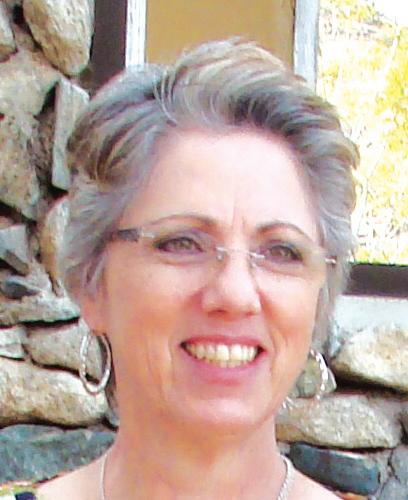
Tina Petersen Scott of Mesa, an Arizona native, writes about ordinary people in extraordinary situations. She writes stories the whole family can enjoy, explaining, “The adventure of a lifetime awaits between the pages of a book.”
“Menopausal Fairy Mischief,” is her lighthearted contemporary fantasy that combines menopause, fairies and family. As the clock ticks for Angela Anderson, she must master the art of flying, hear and complete a telepathically sent fairy mission, battle pixies, deal with a diabolical neighbor, and turn her family into believers – all while keeping the house clean and having dinner ready on time each night.
The fourth annual Payson Book festival is a showcase by the Arizona Professional Writers, Rim Country Chapter and Majestic Rim Retirement for more than 80 Arizona authors.
It will run 9 a.m.-3:30 p.m. at the Mazatzal Hotel and Casino Hwy 87. This is a free community-wide celebration that encourages book lovers of all ages to enjoy presentations highlighting your favorite authors with entertainment, door prizes and a silent auction. Parents and their kids can take advantage of the appearance of the Story Monster and Cat in the Hat with all-day story times. Information: paysonbookfestival.org.




z1 Offer ends 7/31/2018. *For





She teaches adults working on honing the craft of writing for children through an online class called Write. Submit. Support. offered by The Writing Barn in Austin, Texas.
She also presents workshops and assemblies at schools; among them a “behind the scenes” look at how a book is made, a poetry workshop called “The Extraordinary Ordinary” and a nonfiction workshop called “Start with Wonder.”
“As both a parent and a teacher, I loved when the school brought in authors,” she said. “It was a wonderful opportunity for kids to see and talk with the creators of some of their favorite books and allowed the children to peek at the creative process and make connections to the writing they did in school.
“Now, as a full-time writer, it’s a pleasure to be able to inspire young readers and writers in this way.”
White will launch “Who Eats Orange?” and “Goodbye Brings Hello” at 10 a.m. Aug. 18 at Changing Hands Bookstore, 6428 S. McClintock Drive, Tempe (changinghands.com).
She will also present story times at noon Aug. 25 the Barnes & Noble store at Dana Park Village Square, northwest corner of Val Vista Drive and Baseline Road, Mesa. Details: diannewrites.com.
those items, such as gasoline, pesticides, fertilizers and water. By donating the unused items, Dunkin’ Donuts can help reduce their carbon footprint,” they wrote.
They also suggested the store begin recycling, eliminate liners and minimize paper use by emailing receipts to customers.
Ashley said that the store was “interested in all the changes that we had to offer for them…And they were understanding of the impact they could have in the future if they were to change some of their ways.”
Jacen Hagen, Christian Danazio and Max Elenes analyzed the day-to-day practices of Jersey Mike’s and had several suggestions.
“I was very surprised at my findings,” Jacen said. “I thought we weren’t going to find much, because I figured they already have it all mapped out, and that a giant corporation knows all these things and we were not going to tell them things that they had not heard before.”
“I was surprised that we actually found some ground-breaking things to give them,” he added.
The team suggested that the restaurant composts its leftover food to enable it to convert into fertilizer for the next batch of crops, and use brown napkins instead of white bleached ones, which don’t break down as well in landfills.
“They really didn’t have a problem with any of the suggestions that we suggested; most of them were very simple…because of the ecological improvements, they were kind and accepting of everything,” he said.
Triston King and Prince Young contacted Red Robin, which, Triston said, is already doing many things to decrease its carbon footprint.
“I was kind of surprised that they were already doing so much. And those are just some little things that they could add to what they’ve already been doing,” Triston said.
“This chain was definitely doing a lot more than what other restaurants were doing,” Triston added.
The students suggested that Red Robin use unbleached brown napkins and paper straws and install hand dryers in the restrooms.
He, too, felt that the restaurant was receptive to the suggestions. “I feel like they will try to do it and if they work it out, they will definitely do it,” he said.
For the analysis, the students used the Materials Economy Model, a production system that dominates the manufacturing world.
They surveyed the entire process involved in getting food to a restaurant, preparing and serving it and disposing of waste.
They considered the beginning from the point of growing the food and raising the animals through the production and trans-
portation processes, ending at whether food waste ends in a landfill or compost pile.
The students did nearly five months of research focused on many aspects of the business.
Transportation, for example, was calculated using specific data at a local location.
They researched the distribution and transportation companies that supply the food and paper/plastic/Styrofoam products to that local location.







Spirited International Speaker and Wellness Expert, Dr. Brent Cameron, ND TUESDAY JULY 24th AT 6:30 PM
Dr. Cameron will tell you about the latest scientific breakthroughs and methods that help you permanently and safely remove unwanted belly fat while quickly reclaiming your health, your youth, and your life!
BY GSN NEWS STAFF
Gilbert-based Above and Beyond Pool Remodeling has experienced significant growth since it opened its doors nearly a decade ago, and owner Michael Sandoval has long sought a way to share some of that success by paying it forward to the East Valley community.
“One of the things I wanted to do was give back. We are blessed to be in the position to be doing the volume of the work we do,” Sandoval said. He estimated the company now works on approximately 350 to 400 pool projects a year.
When he began looking for ways to give back, Sandoval, a 15-year Marine combat veteran, knew he wanted to find projects that served the veteran community.
“So many companies are talking about supporting veterans, but I wanted to put my money where my mouth is,” he said. “Whatever it might be, we wanted to give back to a veteran, someone that has given so much for this country.”
He finally got his chance recently when Sandoval donated a complete pool remodel to Mesaresident Linda Webb. Phoenixbased companies Xcel Surfaces and Noble Tile Supply and New Jersey-based Hayward Pool Products also donated to the project.
“She called me and it was so funny. Something just struck me when I talked to her,” he said. “I heard it in her voice, and I had to get out there and look at this pool.”
As Sandoval inspected the pool, the two talked about Webb’s father, who was a retired brigadier general, and he eventually found out she was herself a veteran.

Webb, who served as a stateside Air Force medic during the Vietnam War and spent 10 years in active and reserve service, worked for 39 years as a registered nurse. She suffered a spinal cord injury unrelated to her military service and wanted to use her pool and spa for therapy, but they were not in working condition.
Sandoval said he spent over two years looking for a candidate before he met Webb by chance when a neighborhood pool repairman referred her to Sandoval after she inquired about what it would take to get her pool up and running. At the time, Sandoval had no idea Webb was a veteran.
He determined the pool and spa were going to need extensive work, including all new equipment. The existing equipment was outdated and mostly nonfunctional.
“She asked me, ‘Mike, what is it going to cost me?’” Sandoval said. “I told her, ‘The good news is I put numbers together, and the bad news is I am not going to give them to you. If you will let me, I want to give you a pool remodel.’”
Sandoval said Webb was grateful but initially hesitant to accept the offer. However, after a few days she called him back and scheduled the remodel.
“I am very appreciative of this dream come true to be able to have easy access to the pool in my backyard to enjoy, but provide therapy for pain relief, strength and mobility,” Webb said.
The remodel took about two weeks
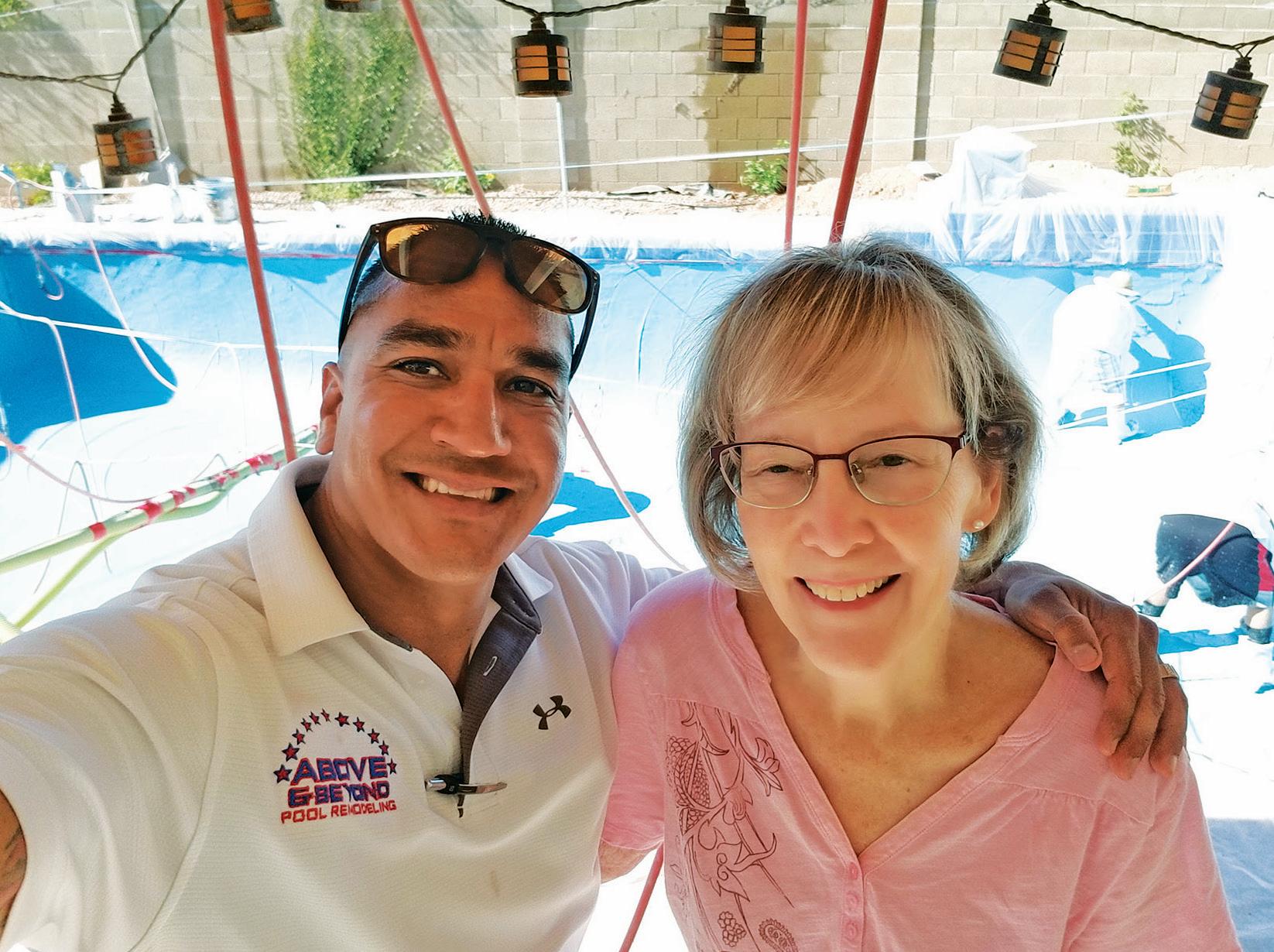
to complete and cost approximately $18,000, Sandoval said.
The company completely demolished the interior finish and tile and replaced it with new tile around the waterline and a pebble interior finish, both donated by Noble Tile Supply.
The company also redid the landscaping around the pool and installed new equipment donated by Hayward, including a new heater, blower for the spa, therapy jets and new pumps, filters and lights in the pool and spa.
Xcel Surfaces reached out to Sandoval about how it could participate in the project and redid Webb’s entire deck.
“We really enjoyed it,” Sandoval said. “I had more fun with this project than anything I’ve ever done in my line of work.”
Sandoval hopes that Webb’s pool is the first of many remodels that he can donate to fellow veterans.
“We actually want to start a campaign to do a veteran giveaway on an annual basis,” he said.
ANSWERS TO PUZZLES AND SUDOKU from Page 22
BY DAVID LEIBOWITZ GSN Columnist
When the talk turns to immigration, my mind drifts to the days before the First World War, to my ancestors making the long journey by ship from Europe.
These were my great grandparents, immigrants who came from Russia and Poland through Ellis Island at the turn of the 20th century.
What few afternoons I shared with them as a boy have long been lost to time. It’s unfortunate, because I have so many questions.
Like: What drew them across the Atlantic Ocean? What about this America sparked a dream in them? What were they fleeing? What did they hope to find?
Such questions feel vital to me today because a dozen decades later, the news teems with tales of immigrants risking ev-
erything to come to this nation – only to be met with vitriol and handcuffs, a confused asylum process that is no process at all and who knows how many months separated from their children.
To talk about immigration circa 2018 is to hear some of your neighbors burn with hatred for “these people,” immigrants they believe threaten not only law and order, but the American way of life.
Here’s a question, one I ask without a clear answer and with no agenda beyond curiosity: What does America owe to those who come to this country in search of a better life?
I mean every immigrant, with papers and without, those who come to populate our medical schools and research facilities and those who trudge across the desert to join construction crews and clean houses. It’s a basic question. And one we seem unable to answer in this age of no agreement.
My own answer traces back to that ship at sea. My forebears made their voyage at
a time when European immigration was a free-for-all, when the American border was open to anyone who could afford transatlantic passage. So, yes, they came legally. And, yes, they assimilated.
But here’s the thing: Their arrival was afforded the basic human dignity clearly lacking in today’s immigration shouting match.
They were not viewed as animals. They were not treated as enemies of the state.
If it sounds like I am arguing for completely porous borders, let me say that is not the case. Today’s America faces a different set of threats than we did 120 years ago. We also face different cultural and economic challenges. In a nation of nearly 350 million people, unfettered immigration may not be possible or desirable – and it is certainly not politically achievable.
Regardless, must we treat people like animals for the simple crime of acting on their dreams?
To say that America is a beacon of free-
dom for all the world does not, to me, require this nation to admit every single soul who desires to call the United States home. We should not do that. We cannot do that. But for those we cannot admit, we must find a way to make their lives better – and we especially must not continue to make their lives worse.
The answer, it would seem, lies in finding the right balance between immigration without limit and our President’s hulking, penal wall and increasingly ugly verbiage. There should be room in a nation our size for more dreamers like the dreamers who started this country 400 years ago. The question is how many more? And who?
Whatever our answers, our treatment of immigrants should be accompanied by the grace so much of today’s caging and screeching lacks.
Just because some of our immigrant ancestors got here first – and legally –should not excuse subsequent generations’ willingness to treat human beings like so much human trash.
BY JENNIFER SIOZOS Tribune Guest Writer
Afrightening trend has emerged in the East Valley, where 25 middle- and highschool students – 23 boys and two girls –have died by suicide since May 2017. Most of these children were high-performing students who came from upper-middleclass families.
This crisis mirrors alarming new national statistics showing our youth are increasingly at risk of suicidal thoughts, attempts and deaths. A study led by Vanderbilt University reports a more than doubling from 2008 to 2015 of school-age children and adolescents hospitalized for suicidal thoughts or attempts.
This is a crisis in which parents, family members, medical professionals, school officials, clergy and others must intervene bravely and immediately.
A 2017 study published in Clinical Psychological Science notes that increased use
of social media, the internet and computer and video games contribute to the jump in teen suicide rates. The Vanderbilt study found suicidal thoughts and attempts peak in the fall and spring along with performance pressures such as college-entrance exams, AP tests and competitions.
Tell your child you love them every day. Reinforce it with frequent hugs and words that build up. Spend more time with them – on walks and errands, 30 minutes three times a week.
Give your children tasks around the home and tell them how valuable their help is. Know that they do not want to end their life, but instead the pain they are feeling. Limit screen time and communicate those expectations in advance. Monitor their social media daily.
Designate a central charging station in your home and insist your children surrender and plug-in their devices at least one hour before bedtime to give their brains time to wind down.
Understand that your child’s mental and physical health are inextricably linked. Ter-
ros Health believes an integrated approach is critical when evaluating symptoms of depression.
Children don’t decide overnight to attempt suicide, rather, their thoughts and plans build. Look for:
• Noticeable changes in attitudes and behavior. Does your normally emotional child seem lethargic or increasingly agitated? Is your child giving away his possessions?
• Isolation. Does your child spend more time alone and away from family and friends?
• Physical complaints. Does your child have increased headaches, stomachaches or other pains?
• Change in daily routine. Is your child missing school, have slipping grades or is disinterested in extracurricular activities? How’s her appetite?
• Overt verbal clues, or a preoccupation with death and dying. Is your child making threats or frequent mentions of death in person or on social media? Does he say he wishes he didn’t exist or that the world would be a better place without him?
If your child is in crisis, face the situation head-on, talk about suicide. Ask directly “Do you want to kill yourself?” Ask what makes them want to die and to think about what they have to live for (a special pet, friends, relatives).
Remove access to guns, knives, ropes and belts and prescription drugs and overthe-counter medication.
Seek professional help. If you have private insurance, make an appointment with a credentialed counselor. If you have AHCCCS or no health insurance, call Mercy Maricopa Integrated Care at 800-5645465.
Other help: Crisis Response Network, 602-222-9444; Teen Lifeline, 602-2488336; National Suicide Prevention Lifeline, 800-273-8255; Mercy Maricopa Integrated Care (AHCCCS and Medicaid recipients), 800-564-5465; terroshealth.org.
-Jennifer Siozos is a licensed professional counselor, and the chief transformation officer at Terros Health, a nonprofit, integrated whole health company.


BY CHRISTINA FUOCO-KARASINSKI GETOUT Editor
Akshat Sethi had an itch. The successful �inancier/entrepreneur wanted to try his hand at being a restaurateur.
Eight years ago, he created Thai Chili, a sit-down restaurant in Chandler that boasts nearly 70 menu choices. It became a neighborhood favorite.
“My family approached me about doing something in the restaurant (industry),” said Sethi, who moved here from New Delhi, India, at age 23. “My background is in �inancial services. I concurred, and I love it.”
The real boom came with Thai Chili 2 Go, a chain of fast-casual restaurants that simpli�ies the Asian country’s cuisine. Sethi has Thai Chili 2 Go eateries in Queen Creek, southeast Mesa and Gilbert.
“We’re always looking for ways to provide our customers with an excellent experience, fast.”
An additional Gilbert location, a takeout-only restaurant, is slated to open Tuesday, July 17 at 1887 E. Williams Field Road, Suite 101.
This location was important to him for several reasons.
“I did some research and there is a lot of residential around there,” Sethi said. “The positioning of that store is outstanding. It’s surrounded by businesses and big anchor stores, and there’s a big employer base there. We’re looking forward to taking care of the residents and employers there.
“Trader Joe’s is coming in front of the storefront. That could be a good draw for people to check us out and try our food.”
It will be only one of four restaurants in Arizona to use self-order kiosks, Zive-


“We’re always looking for ways to provide our customers with an excellent experience, fast,” Sethi said. “We are excited to be on the forefront of bringing this technology to our stores, which ultimately bene�its the customer by providing an even more ef�icient ordering process.”
curries are the best sellers. We’ve taken off a few items, like sweet and sour chicken and pad siew, just from this store.”
lo, instead of numerous front-of-house employees. That day, the �irst 100 customers will receive a free entrée.
Afterward, free dumplings will be given to other customers once the 100 entrees have been given.
Thai Chili 2 Go offers myriad dish choices, but this one will have a limited menu. Menu choices include starters, such as dumplings, and two varieties of Thai hot and sour soup. There are a variety of familiar and traditional main entrée dishes including pad prig pao, spicy eggplant, red curry, panang curry and drunken noodles.
“The majority of our menu is geared toward rice and noodles,” he said. “Thai
The foundation of Thai Chili 2 Go’s success, he says, is authentic ingredients. Sethi doesn’t short-change when it comes to recipes. Everything is 100 percent Thai. Non-GMO tofu and non-GMO rice bran is used, instead of canola or soybean oil.
“Everything is fresh to order,” he says. “The only way to give you good food is to cook it fresh. You want pad Thai with chicken, spicy hot? We cook it for you in front of you. The kitchen is open.”
Thai Chili 2 Go
1887 E. Williams Field Road, Suite 101, Gilbert
11 a.m. to 9 p.m. daily 480-566-8061, tc2go.com

BY JAN D’ATRI GSN Contributor
Pepperidge Farms and Danzeisen Dairy are making summertime absolutely delicious: Banana pudding never tasted so good or looked so unique.
Let’s start with the cookies. Throughout most of the year, Pepperidge Farms’ Chessman Cookies are embossed with, as you might imagine, chessmen. But during the springtime, these delicious butter cookies take on a whimsical twist with tulip, watering can, sun and greenhouse designs.

They make this classic banana pudding seasonal and fun.
Now for the milk. “We take care of the cows; the cows take care of us” is the philosophy of Danzeisen Dairy, the 50-year-old family farm 10 miles from downtown Phoenix. Danzeisen is the first local dairy to offer milk in glass bottles to grocery stores in the Arizona market, to preserve freshness and better taste. The company has expanded its line of milk products
Ingredients:
2 containers Pepperidge Farms Chessman Cookies
2 cups whole milk
1 (3.4-oz) package Vanilla Pudding or Hershey’s White
Chocolate Pudding, instant
1 package cream cheese, softened
1 (14-oz) Carnation or Borden Eagle Brand Sweetened
Condensed Milk
1 (14-oz) container Cool Whip *(see substitution)
6 to 8 sliced bananas, slightly ripened
Optional, whipped topping in a can
Directions
Line the bottom of a 13x9x2-inch casserole or baking dish with 1 bag of Chessman Cookies.
In a bowl, combine the milk and pudding mix and blend with an electric hand mixer until thickened. Set aside. In another bowl, combine the softened cream
ACROSS
1 Departed
“Gosh!”
Capri or Wight
Punishing, in a way
Erstwhile acorns
Fares, at times
British P.M., 1945-51
“— the season ...”
22 Crucifix
23 Lived
26 AAA job
28 Grand tales
31 Rose fruit
33 Unruly bunch
35 Within (Pref.)
36 Give a speech
38 Kids’ card game
40 Understand
41 Hear the alarm
43 Decay
45 Film festival city
47 Rock concert staffer
51 Low-pH
52 Sending unwanted emails
54 Hindu royal
55 Work unit
56 Taro root
57 Indication
58 Born
to include cold brew, root beer, Arizona Orange, chocolate and strawberry as well as a range of additional dairy products, including milk, butter and cream. You can take a farm tour, and this month, you can even take a butter making class where you’ll make butter the old-fashioned way (danzeisendairy.com).
So, together with rich, buttery cookies, farm fresh local milk and sweet ripe bananas, you can whip up this Banana Chessman Cookie Pudding that is so simple to make yet tastes decadent and delicious!
cheese and condensed milk. Mix with electric hand mixer until smooth and creamy. Fold the Cool Whip into the cream cheese mixture. Add the cream cheese mixture to the pudding mixture and stir until well blended. Slice bananas into ½ inch discs. Cover layer of cookies with banana slices. Spoon the pudding and cream cheese mixture evenly over the cookies. Cover with second container of Chessman Cookies. Refrigerate for several hours or until ready to serve. (The longer the pudding is refrigerated, the softer the cookies become.) Serve 1-2 cookies per serving. Optional: Top with whipped topping and 2 slices of banana.
Substitution Note: 16 oz. of whipping cream plus 2 heaping tablespoons of powdered sugar can be substituted for Cool Whip. Whip heavy cream together with powdered sugar until thickened.
Watch my how-to video: jandatri.com/recipe/ banana-chessman-cookie-pudding/
59 Tofu beans DOWN 1 Final
2 World’s fair
3 Antiaircraft fire
4 Doctrine
5 Astronaut Gus
6 A billion years
7 — Allan Poe
8 U-235, e.g.
9 Big name in sporting goods
10 Victoria, for one
11 Gaelic
16 Make bootees
20 Sock part
23 Personal question?
24 Atmosphere
25 Generating
27 “Holy mackerel!”
29 B-F link
30 Drunkard
32 Stunt double, e.g.
34 Rapid outpouring
37 — out a living
39 Space
42 German city
44 Domesticates
45 Lot wares
46 Antioxidant berry
48 “Thank You” singer
49 Race place
50 Hollywood clashers
53 Opposite of “post-”

Need help writing an obituary? We have articles that will help guide you through the process.
Deadline for obituaries is Wednesday at 5pm for Sunday. All obituaries will be approved by our staff prior to being activated. Be aware there may be early deadlines around holidays.
Call 480-898-6465 Mon-Fri 8:30-5 if you have questions. Visit: obituaries.EastValleyTribune.com



Seeking a part time marketing/PR student at ASU to assist me with marketing my vocal studio in Tempe and the surrounding area 20% commission on initial registration and 10% residuals Other perks include vacation certificates Email resume to thespiritedheart2@msn com
Workday HCM Business Analyst
Analyst in Scottsdale, AZ to dvlp & document biz reqs & functional specifications, dvlping test conditions, conduct acceptance testing & imple-
equiv )+3 yrs exp OR BS(or equiv )+5 yrs exp Must be legally authorized to work in the U S without sponsorship Submit resume w/ ref (17-
Inc HQ, 2211 North First Street, San Jose, CA 95131 EOE
Cirrus Logic Inc is recruiting for the following position in Mesa AZ: DSP Test and Development Engineer (Req#4069) Test and implement SoundClear software solutions on real-time DSP platforms and target architectures; conduct simulation environment testing and realtime laboratory testing of SoundClear software and evaluate performance Submit resumes referencing the appropriate job title and Req# to careers@cirrus com
Cirrus Logic is an EOE
Cirrus Logic is an Equal Opportunity/Affirmative Action Employer We strive to select the best qualified applicant for any opening and to reward employees based on their skills, experience and performance. We do not discriminate on the basis of race, national origin, pregnancy status, marital status, gender, age religion, physical or mental disability, medical condition, veteran status, sexual orientation, genetic information or any other characteristic protected by law
LEISURE LIVING FOR THE ELDERLY, INC F/T ADMIN ASST 1 F/T TRAINING ASST
All applicants must have H/S Diploma or GED Cert Mail resume to: 1843 E Southern Ave Tempe, AZ 85282
QA Analyst sought by nQueue Billback LLC in Tempe, AZ to recommend methodologies & software for automated testing Req MS in Manufctrng Sys Engg or rltd + 1yr exp Req 1yr exp w/: Source code in C, C++, C#, Java, Javascript, & JSP Apply @ www.jobpostingtoday com #19641
UMPIRES WANTED SOFTBALL SLOW PITCH PLUS FAST PITCH ASA/USA EXPERIENCE PREFERRED WILL TRAIN RIGHT PERSON CALL 480-529-1513 EMAIL SKYBLUES@COX NET
Sr Lead Model Validation Analyst: Master’s in Economics or rltd & 1 yr of rltd exp Bank of the West Job in Tempe, AZ CV to careers@banko fthewest com


I - Roadways (Cvl Engrs): BS+knwldg of hydrlics, trnsprt sys/trnsprtatn engg, structural sys anlysis/structural anlysis 1 Wkst: Chandler, AZ Mail res only to Granite Construction, Inc , Attn HR/ER, 585 West Beach Street, Watsonville, CA 95076

HUMAC, Inc has openings for the following positions in Phoenix, AZ and/or client sites throughout the US
Must be willing to travel/relocate IT Engineer reqs US Masters/equiv or bachelors + 5 yrs exp to design/dev/test systems/apps using Java/J2EE/HTML/CSS/Unix Operations Research Analyst (ORA) reqs US Masters/equiv or bachelors + 5 yrs exp to analyze/formulate/design systems using ETL/Informatica/Cognos/Oracle/Java/Unix IT Analyst reqs Bachelors/equiv to test/maintain/monitor systems/programs using SQL/Oracle/Java/Hadoop/Unix
Send resume to jobs@humacinc com with ref # 201819 for IT Eng; 2018-20 for ORA 2018-21 for IT Analyst & ref this ad


Workers will perform various dutie s associated with planting, cultivating & hand harvesting crops according to supervisor’s instructions Workers will have extensive periods of sitting, standing, walking, pushing, pulling, repetitive movement, frequent stopping and lifting up to 50 lbs Must have 3 months verifiable experience harvesting crops on a commercial farm & affirmative, verifiable job references May random drug test at employer’s expense Guaranteed at least 3/4 of contract hours but hours will vary according to weather and crop conditions
Work tools, supplies, equipment provided at
ence reimbursed to worker upon completion of

report/send
resume to
nearest
Buckeye, AZ