At $46.01bn, Nigeria’s Foreign
Peak Since 2018, Strengthen
Kayode Tokede Nigeria’s
At $46.01bn, Nigeria’s Foreign
Peak Since 2018, Strengthen
Kayode Tokede Nigeria’s
Says prolonged disunity heightens nation’s exposure to economic, security risks
Ex-lawmakers endorse Tinubu for 2027, demand constitutional backing for power rotation
Sunday Aborisade and Juliet Akoje in Abuja The Chief of Staff (CoS) to the President, Hon. Femi Gbajabiamila, has warned
survival and relevance in an increasingly unstable global environment depends heavily on national unity, describing national cohesion as a strategic
rather than merely a moral choice.
comes as President
Okocha in Abuja and Ahmad Sorondinki in Kano
The National Leader of the New Nigeria People’s Party (NNPP), Senator Rabiu Musa Kwankwaso, and the party's National Working Committee (NWC) have described Governor Abba Yusuf's resignation from the party as “a cold betrayal of a sacred trust.”
This is just as the state chapter of the All Progressives Congress (APC) expressed optimism that the governor would formally join the ruling party in the coming days.
Addressing his loyalists at his Miller Road residence in

















Ejiofor Alike
A United States Congressman, Riley Moore, has commended the Federal Government of Nigeria and the United States for establishing a US–Nigeria Working Group aimed at strengthening security cooperation and protecting religious freedom.
Moore stated this in a statement posted yesterday on his official X handle.
He described the initiative as
“an encouraging and necessary step” towards addressing Nigeria’s security challenges.
“Establishing the US–Nigeria Working Group to increase coordination and cooperation between our two countries is an encouraging and necessary step to jointly combating the security challenges facing Nigeria, promoting our nations’ shared values of religious freedom, and ending the brutal persecution of our brothers and sisters in Christ
by radical Islamic terrorists,” he said.
The lawmaker said Nigeria has a “once -in- a- lifetime chance” to deepen its relationship with the United States through cooperation against violent terrorism, particularly in the northern states and the Middle Belt.
“Nigeria has a once-in-alifetime chance to strengthen its relationship with the US as we work cooperatively to counter violent terrorism throughout
the northern states and middle belt, end the persecution of Christians, and address the broader economic and security challenges the nation faces,” Moore stated.
He added that the partnership could also enhance Nigeria’s role as a stabilising force in the region.
“This agreement shows the Nigerians are continuing to take the situation seriously and are working to address the security conditions in good
faith,” he said.
Moore further noted that both countries had pledged to ensure freedom of worship for all citizens.
“Our nations have pledged to work together to ensure all Nigerians can live and practice their faith without fear of persecution and death,” he said.
While acknowledging that challenges remained, he said there have been positive developments.
Kano, Kwankwaso declared January 23 as “World Betrayal Day”.
He said the idea of adopting the day as such was inspired by social media commentators who described the governor’s NNPP exit as a betrayal.
The NNPP leader said, “None caught my attention more than one who posted, suggesting that we declare January 23 annually as World Betrayal Day.
“Therefore, as the leader and grand patron of this movement, I hereby declare that I fully support the declaration,” he said.
Kwankwaso added that the day would henceforth be marked with special events to remind members of what transpired.
Similarly, the NNPP, in a statement signed yesterday by its National Publicity Secretary, Ladipo Johnson, described Governor Yusuf’s claim of an irredeemable crisis
in the party as baseless and an afterthought.
The governor’s spokesperson, Sanusi Bature, had announced Governor Yusuf’s resignation from the NNPP in a statement issued on Friday.
Reacting, the NNPP’s spokesman said that the party received the news of the governor’s resignation with profound anguish and deep disappointment.
“We deeply regret that Governor Abba, a man entrusted by the people of Kano State on the strength of his decades of unwavering loyalty and dedicated service to the Kwankwasiyya Movement, has now chosen to betray that sacred trust. By this action, he risks returning the state to the very forces that have long opposed its progress and the aspirations of its people.
“It is noteworthy that our party, the NNPP, had recently conducted congresses for its leadership from the ward
GBAJABIAMILA: NIGERIA’S SURVIVAL
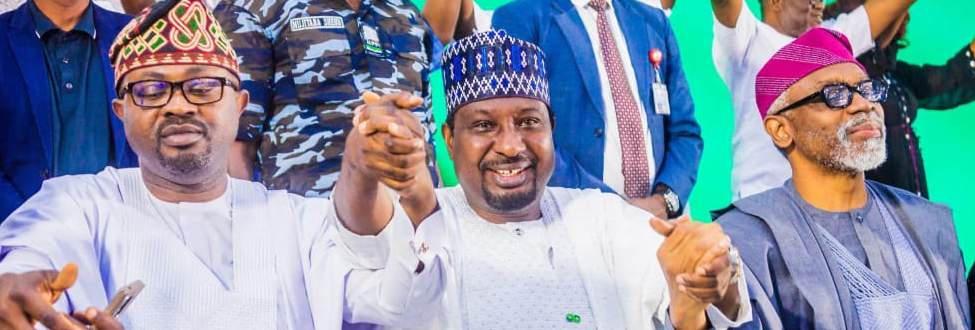
received more endorsements yesterday, with former members of the National Assembly, operating under the umbrella of the National Forum of Former Legislators (NFFL), formally adopting him as their preferred candidate for the 2027 presidential election. The group also called for a rotational presidency to be entrenched in the Constitution as a permanent mechanism to promote national cohesion beyond 2031.
Speaking yesterday at the NFFL’s 2026 National Summit, themed “National Unity and Nation Building Beyond 2031,”
Latest data published in the CBN’s Movement in Reserves report showed that the foreign reserves stood at $46.01 billion as of January 22, 2026, crossing the $46 billion threshold for the first time in nearly eight years.
The increase represents a $406.25 million or 1.12 per cent gain in 2026, from $45.5 billion at the close of 2025.
As gathered by THISDAY, Nigeria’s foreign reserves had already recorded a strong rebound in 2025, rising by $4.62 billion or 11.3 per cent
which he convened in Abuja, Gbajabiamila noted that global instability had made internal solidarity and experienced leadership more important than ever.
Quoting the opening lines of Nigeria’s Constitution, Gbajabiamila noted that the country was founded as a united entity, not as competing factions.
“Those words affirm that Nigeria was never meant to be a collection of rival camps, but one people bound together by a shared hope and a common future,” he said.
Gbajabiamila added that
from $40.88 billion in 2024 to $45.5 billion at year-end, despite volatility in the global crude oil market.
According to data from the Organisation of Petroleum Exporting Countries (OPEC), crude oil prices stood at $63.21 per barrel as of January 22, 2026, up from $61.01 at the close of 2025. The current price is marginally below the 2026 budget benchmark of $64–$64.85 per barrel.
Crude oil remains Nigeria’s dominant source of foreign
to the national convention, held on December 20, 2025, at which the governor himself was present, and INEC had supervised.
“The party had also participated and won in two supplementary elections for Bagwai/Shanono and Ghari/Tsanyawa constituency, respectively held in August 2025, about three months ago. The assertion he made of an irredeemable crisis in the party is therefore baseless and an afterthought,” NNPP explained.
NNPP added that Yusuf’s resignation was not the first time such a betrayal occurred in the political history of Kano, adding that in the early 1980s, Alhaji Abubakar Rimi defected from the People’s Redemption Party (PRP) to the Nigerian People’s Party (NPP).
According to the statement, Rimi took with him the vast majority of elected officials, including nearly all local government chairpersons
unity was a solemn duty Nigerians owed to one another and cautioned that internal divisions would significantly weaken Nigeria’s ability to operate effectively in a rapidly evolving global system.
“In a world that increasingly rewards scale and strategic clarity, internal disunity weakens national capacity, a divided nation struggles to project strength, negotiate effectively, or protect its interests,” Gbajabiamila added.
Gbajabiamila, who warned that prolonged disunity would heighten Nigeria’s exposure to economic and security risks,
exchange, accounting for about 90 per cent of forex earnings.
Analysts have attributed the steady rise in external reserves to a combination of improved crude oil output, enhanced macroeconomic stability, and rising foreign-exchange inflows from autonomous sources.
Other contributing factors include external borrowings by the federal government, received in foreign currency, and a sharp decline in fuel imports following domestic refining improvements, which have eased pressure on
and councillors, 120 out of 126 members of the Kano State House of Assembly, and most Kano representatives in the National Assembly.
“Yet, the electorate delivered a resounding verdict: In the 1983 gubernatorial election, Rimi was humiliatingly defeated by Mallam Aliyu Sabo Bakin Zuwo of the PRP, finishing second. Even more telling, of the 120 state assembly members who joined Rimi’s defection, only one was reelected, an outcome that should serve as a sobering lesson to any politician contemplating the path of disloyalty.
“While this development is deeply disturbing and painful for all who have invested in the Kwankwasiyya vision, we urge the 1,019,602 people who cast their votes for his election, as well as the good people of Kano State and Nigeria, to remain calm, patient, and restrained. Let us not descend into acrimony or division.
also insisted that “disunity at this moment does not merely delay progress; it multiplies risk, magnifies vulnerability and transmits insecurity across generations.”
Referring to recent remarks by Canada’s Prime Minister at the World Economic Forum in Davos, he said the decline of the global rules-based order presented both risks and opportunities for Nigeria.
“For Nigeria to participate effectively in shaping the new world order, we must first secure unity of purpose at home. Such clarity cannot be achieved in disunity.”
the foreign exchange market and the nation’s reserves.
Vice Chairman of Highcap Securities Limited, Mr. David Adnori, said the recent build-up in reserves reflected structural improvements in Nigeria’s economic management, particularly in the oil and gas sector.
“Several factors have been responsible for this development,” Adnori said.
“First is the fact that our oil output has improved significantly from what it used
“History has consistently shown that those who trade loyalty for expediency, and honour for deceit, rarely escape the judgment of the people. The truth endures, and the loyalty of Kano’s masses to principled leadership will ultimately prevail,” NNPP added.
Kano APC Reserves Membership Card No.001 for Yusuf
Meanwhile, the APC state chapter has expressed optimism that Governor Yusuf will formally join the ruling party in the coming days.
The APC State Secretary, Ibrahim Zakari Sarina, disclosed this while responding to questions on the governor’s next move.
“He is welcome. That is all we are going to say for now,” Sarina said.
Although Governor Yusuf has yet to declare for the APC
Commending President Tinubu’s leadership, Gbajabiamila said the administration had consistently prioritised equity, inclusion, and balanced national development.
“We are fortunate that at this pivotal moment, Nigeria is led by a president who understands both the fragility and the strength of our diversity. National unity must never be sacrificed on the altar of narrow ambition or short-term political gain.”
He described the rotational presidency between the North and South as a stabilising political arrangement grounded
to be, and crude oil and gas continue to dominate our foreign exchange earnings.”
He also pointed to improved governance at the Nigerian National Petroleum Company Limited (NNPCL).
“Secondly, we now have a much better-managed NNPCL. There is greater sanity and transparency in the system, and that has played a role,” he said.
“While there is much still to be done, we continue to see positive developments. I’m grateful to the government of Nigeria for coming to the table and partnering with the US to address these challenges,” he added.
The federal government had earlier announced that it was strengthening security cooperation with the United States to protect lives, safeguard religious freedom and restore security across the country.
officially, Sarina said the party was hopeful that he would soon align with it, stressing that its doors were fully open to him and his supporters.
“Even though he didn’t specifically declare for APC, hopefully, he will soon come to APC. Our doors are open, and we welcome him,” he said.
The APC scribe described the development as a welcome boost for the party, noting that the governor was reportedly moving with a large number of elected officials and political appointees.
He added that the party had already taken practical steps in anticipation of the governor’s defection by reserving a special electronic registration number for him.
“We have started e-registration and have reserved the 001-registration number for the governor. Yes, it is true. We reserved that number for him at his Chiranci-Diso ward,” he confirmed.
in collective wisdom.
“The principle of a rotational presidency stands as one of the clearest expressions of principled compromise in the service of our national interest. No personal aspiration should be allowed to endanger the hard-won balance that sustains our country,” he added.
According to him, “we meet at a moment when the world appears unsettled and uncertain of its direction. Yet it is precisely in moments such as these that leadership is most needed. Your willingness to
Adnori added that rising investor confidence, driven by broader macroeconomic reforms, has boosted foreign exchange inflows from autonomous sources.
Banks’ Credit to Private Sector
The International Energy Agency (IEA) has said that Nigeria currently has a sustainable crude oil production capacity of 1.42 million barrels per day and zero spare capacity, despite the recent announcements that the country could significantly raise output in the coming months.
The organisation stated this in its latest Oil Market Report (OMR), painting a sobering picture for Nigeria, one that sharply contrasts with the country’s formal Organisation of Petroleum Exporting Countries (OPEC) production target of 1.5 million bpd.
According to the agency, which provides authoritative data, analysis and policy advice on global energy markets, technologies and transitions, Nigeria's output cannot be
immediately ramped up in response to market tightness or geopolitical disruptions.
The IEA figures showed Nigeria’s OPEC crude oil production in recent months hovering well below the headline quota, after averaging about 1.44 million bpd in November and slipping to roughly 1.43 million bpd in December.
Although in absolute terms, the gap between quota and actual output appears small at roughly 70,000 bpd, in market terms it is significant, as it reflects structural constraints rather than voluntary restraint by Africa's largest oil producer.
Nigeria’s crude oil production has for about six years struggled to match official pledges.
While the Nigerian National Petroleum Company Limited (NNPC Ltd) and the Nigerian Upstream Petroleum Regulatory Commission (NUPRC) have set
ambitious targets of around 2 to 2.4 million bpd, actual output has consistently fallen short. Despite occasional spikes in production, the shortfalls have been largely driven by underinvestment, security challenges, aging infrastructure, and operational inefficiencies, including non-functional evacuation routes.
However, apart from the 1.42 bpd reported by the IEA as Nigeria's sustainable oil production in the short term, the absence of spare capacity was the most consequential element of the organisation’s assessment.
Spare capacity refers to volumes that can be brought online within a short period, typically between 30 to 90 days, and sustained for some time.
In oil markets, this buffer is crucial, acting as insurance against shocks such as outages, conflicts, or sudden demand
surges.
But according to the IEA, Nigeria currently lacks this buffer entirely, meaning that the barrels Nigeria is producing today are effectively its maximum sustainable output under present conditions.
A THISDAY analysis of the IEA data showed a clear contrast between Nigeria and core producers that continue to dominate global spare capacity.
Saudi Arabia remained the single largest holder of readily available supply, with a spare capacity of over 2.4 million bpd.
The UAE also retained meaningful flexibility of 60,000 bpd, while Iraq and Kuwait held a more modest but still material buffer of 53,000 bpd and 34,000 bpd respectively. This means that unlike Nigeria, these countries are not only producing below their technical limits but are
Deji Elumoye
Vice President Kashim Shettima yesterday returned to Abuja after a week-long diplomatic and economic mission to Guinea-Conakry and Switzerland, declaring that Nigeria has reclaimed a frontline seat in global and regional policy discussions.
Shettima arrived at the Nnamdi Azikiwe International Airport in Abuja after representing President Bola Tinubu at the inauguration of Guinea’s President, Mamadi Doumbouya, and leading Nigeria’s delegation to the 56th World Economic Forum (WEF) Annual Meeting in Davos.
According to the vice president, the trip was part of Nigeria’s renewed commitment to regional solidarity in West Africa and its determination to reposition the economy under President Tinubu’s Renewed Hope agenda.
Shettima had departed Abuja for Conakry, where he attended President Doumbouya’s inauguration, reaffirming Nigeria’s leadership role within ECOWAS, while opening new pathways for bilateral cooperation in agriculture and manufacturing.
From Guinea-Conakry, the vice president proceeded to Davos, Switzerland, where he
led the Nigerian delegation at the WEF 2026.
Highpoints of his engagement in that country were the inauguration of Nigeria House Davos, Nigeria's first-ever sovereign pavilion on the Davos Promenade, designed as a permanent investment hub showcasing opportunities in solid minerals, agriculture, and the digital economy.
At a high-level WEF session titled “When Food Becomes Security,” Shettima outlined Nigeria’s new national food security framework, describing agriculture as a strategic pillar of national security and macroeconomic stability.
He also joined former President Olusegun Obasanjo, former Vice President Yemi Osinbajo, and Minister of Finance and Coordinating Minister of the Economy, Mr. Wale Edun, to advance the Accra Reset Initiative, a forum advocating African industrialisation driven by domestic capital and value chains rather than foreign aid.
On the economic front, the vice president told investors that Nigeria’s macroeconomic indicators were stabilising, citing a projected 4.4 per cent GDP growth in 2026 and a decline in inflation to 12.94 per cent.
doing so deliberately as part of OPEC+ supply management.
Outside this group, spare capacity was either extremely limited or non-existent, with several African producers mirroring Nigeria’s situation, albeit at much smaller absolute volumes.
Angola, for example, continued to struggle with structural decline driven by underinvestment and ageing fields, leaving it well below historical production levels and with no meaningful capacity to surge output.
Besides, Libya’s production still remains volatile with frequent outages, while among
non-OPEC producers, the IEA data underscored a similar theme of tightness.
In all, the IEA put global oil demand growth at an average of 930 kb/d in 2026, up from 850 kb/d in 2025, reflecting a normalisation of economic conditions after last year’s tariff turmoil and lower oil prices than a year ago.
This year, it said that world oil supply is projected to rise by 2.5 million bpd to 108.7 million bpd, following an increase of 3 million bpd in 2025. Non-OPEC+ accounts for 1.8 million bpd of the gains in 2025 and 1.3 million bpd in 2026, it added.
Linus Aleke in Abuja
The Nigerian military has denied claims that its response to the attack in the Kurmin Wali community in Kaduna State, where over 100 worshippers were abducted last Sunday, was slow.
Some members of the community, located in Kajuru Local Government Area (LGA) of the state, had reportedly accused the military of a sluggish response, alleging that security forces failed to prevent or swiftly rescue the abducted worshippers.
They claimed that the troops retreated after a weak attempt to enter the forest where the criminals were hiding.
However, the Defence Headquarters (DHQ) said efforts were ongoing to ensure the victims were rescued unharmed.
In a statement released
yesterday, the Director of Media Operations of the Nigerian Armed Forces, Major General Michael Onoja, while acknowledging the frustrations of community members, assured them of the safe rescue of the abducted victims.
“The Armed Forces of Nigeria (AFN) has duly acknowledged the apprehensions expressed by displaced residents of Kurmin Wali regarding the ongoing efforts to secure the release of their abducted family members.
“The AFN seeks to reassure the affected communities and the general public that the safe rescue and reintegration of all kidnapped victims remains a paramount undertaking,” Onoja said.
Disputing claims of a slow response, the military said it was collaborating with other security agencies in efforts to rescue the victims.
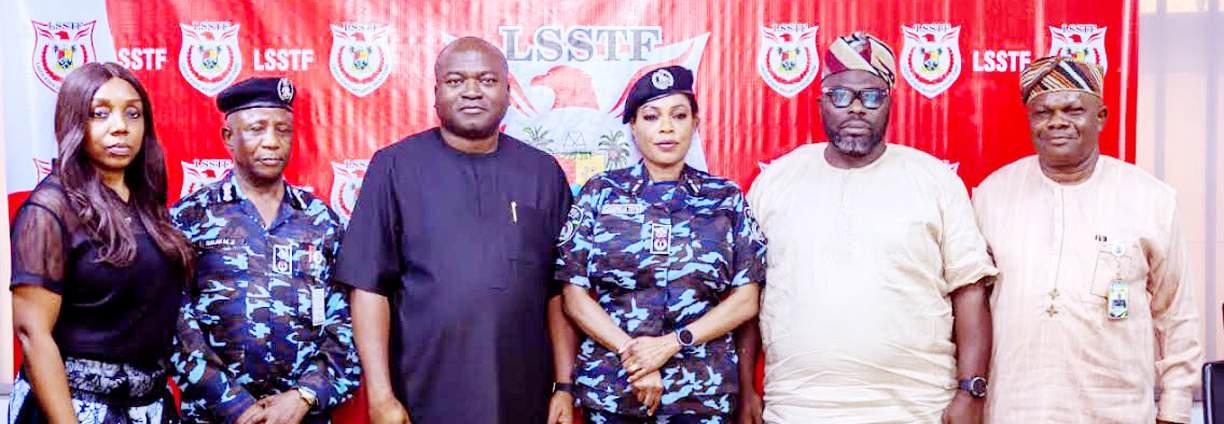
The Minister of State for Industry, Senator John Owan, has said that Nigeria must urgently reduce its dependence on imports and deliberately channel its large population into productive industrial activity, warning that demography alone would not guarantee economic growth.
Speaking yesterday at the Redeemed Christian Church of God (RCCG) Lagos Province 35 Economic Summit, Owan stressed that the success of the federal government’s Nigeria-First policy would depend largely on policy predictability, coordinated
execution, and the strategic use of public procurement to stimulate local manufacturing.
Recall that President Bola Tinubu had announced the Nigeria-First policy in 2025 to give priority to Nigerian industries in all procurement activities.
According to Owan, “Nigeria does not need to import what we can produce. We can clothe ourselves.
Yesterday, before leaving Abuja, I was in a meeting with the BPP DG. What was that meeting about? Mr President announced a Nigeria-First policy. Now, the challenge is to get it to work. What’s the best way to implement
Alex Enumah in Abuja
The detained former Attorney General of the Federation and Minister of Justice, Abubakar Malami (SAN), has raised the alarm over what he described as unlawful detention by the Department of State Services (DSS) and their blatant refusal to meet his legal team to open a defence.
In a statement by his media aide, Bello Muhammed Doka, Malami stated that the DSS rearrested him after he met the bail conditions set by the court, on allegations of interim asset forfeiture.
According to him, it is worrisome and an abuse of his constitutional rights that his arrest precedes investigations, which negates constitutional provisions.
“We have raised the alarm over his detention by DSS for over five days without allowing him to meet his
legal team and the release of his international passport, which is part of the bail conditions.”
Doka further said that his detention by the DSS without access to his legal team, which occurred only on Friday, clearly indicated that they used the same pattern the Economic and Financial Crimes Commission (EFCC) used to deny him speedy justice and the bail already granted by a competent court.
He urged DSS to discontinue their blockage of Malami’s access to his legal team and release the required documents to enable him to open his defence.
“We know they are a responsible organisation that believes in the rule of law and also believes in the just administration of justice; therefore, we expect them to apply that in the case of Malami.”
and execute such a policy?
The Ministry of Industry and Development is key.
“So, an engagement has begun between the Ministry, between our office and the Bureau of Public Procurement, which is concerned with about five or six sectors, including textile and apparel, including the automotive sector, including medical equipment, including furniture, and all of that. What the Bureau wants
to do is determine how to implement this through the public procurement framework that is put in place. And I think that the opportunities are coming,” he said.
The minister stated that public procurement represented a powerful but underutilised tool for industrial development, noting that predictable government demand could unlock private investment and
accelerate domestic value-chain development.
He cited the examples of other countries: “Bangladesh became a global market, organic leader, not because of that perfect infrastructure, but because it built predictability, level competitiveness, and focused value chains.
“I mean, Vietnam followed a similar model and now exports electronics, garments, and machinery to the world. I
often give the example that a huge population as a country will only make sense if we can become a bit more inclusive.
“Imagine what it would be like to be self-sufficient in terms of our clothing. Imagine that we didn’t have to import everything related to our clothing. I mean, I mentioned the automotive sector, and I say that every day we have a very important council meeting.
The Joint Admissions and Matriculation Board (JAMB) has directed that candidates must declare their previous registration and admission history with the board, stressing that some students were involved in examination malpractice during the conduct of last year’s Unified Tertiary Matriculation Examination (UTME).
Speaking in Lagos yesterday at a meeting with
Commissioners for Education in Preparation for the 2025 UTME & Direct Entry Exercises, the Registrar of JAMB, Prof. Ishaq Oloyede, noted that it was a crime for a student to run more than one undergraduate programme concurrently.
Oloyede added that the failure to disclose such prior admission was an offence, which would be sanctioned.
Oloyede said only candidates who would not be less than 16 years by September 30, 2026
were eligible to apply for the UTME and be considered for admission.
The registrar noted that underage candidates who would be less than 16 years old by September 30, 2026, would undergo an intensive evaluation to determine their eligibility for a waiver.
According to him, such candidates must have scored not less than 80 per cent in each of UTME/A’LEVEL, PUTME, SSCE and in the exceptional candidate assessment.
Oloyede said: “The sale of UTME application document, which is the ePIN, will start earlier than commencement of actual registration which is January 19 to February 26.
“Actual UTME registration period is between January 26th to February 28th at all approved CBT Centres.
“The close of mock selection is February 16 while the sale of DE application documents and E-PIN vending will commence on March 2, and close by April 25,” he said.
Chuks Okocha in Abuja
The African Democratic Congress (ADC) has formally written to the Independent National Electoral Commission (INEC) to request the postponement of the Federal Capital Territory Area Council elections currently scheduled for February 21, 2026, on account of the Ramadan fast.
In the letter dated January 22, 2026 and signed by the National Chairman of the party, Senator David Mark, and the National Secretary,
Rauf Aregbesola, the party drew the attention of the commission to the fact that “the scheduled election date falls within the period of the Ramadan fast, which is likely to be observed by a significant portion of the electorate in the Federal Capital Territory.”
A statement by the National Publicity Secretary of APC, Mallam Bolaji Abdullahi, noted that the letter stated that, “given the profound cultural and religious significance of this period, and in the interest of robust
and active participation in the democratic process by all eligible voters,” it was necessary to request a reconsideration of the election date.
''The party therefore respectfully asked that INEC “postpones the election to a date after the Ramadan period.”
The letter further emphasized that the request was guided by the need to protect inclusivity in the electoral process, stating that it was made “in pursuit of an inclusive electoral process that
enables all eligible citizens, irrespective of faith, to fully exercise their constitutional rights without constraint or disadvantage.”
The ADC said its engagement with the commission was institutional and procedural, noting its willingness to comply fully with due process, and requesting “guidance on the procedural requirements for submitting a formal application in accordance with the Electoral Act, the Constitution, and the commission’s guidelines.”
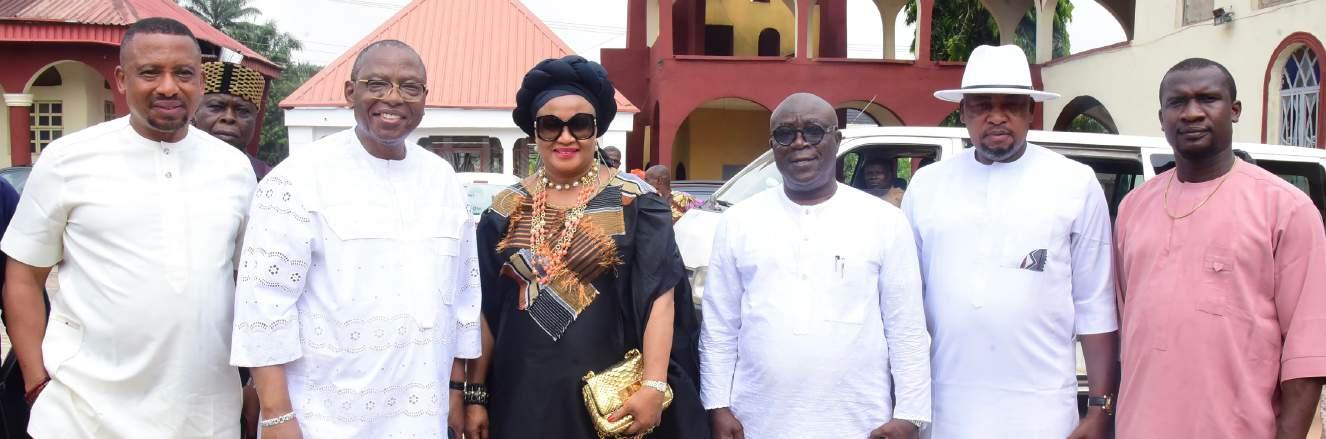
L-R: Executive Chairman, Transtel Group, Chief Ifeanyi Ojimba; Chief Executive Officer, Orange Group, Sir Tony Ezenna; his wife and Executive Director, Orange Group, Lady Lizzy Ezenna; Senior
Law Chambers, Abuja, Mr. Chijioke Nzekwe; Executive Assistant to the Governor of Delta State on Non-Indigenes Affairs, Mr. Felix Ebiliekwe; and Partner, Asika Ilobi & Co., Orlu, Mr.
service ceremony for the late Mrs. Mary Comfort Ezenna, at the St. David’s Catholic Church, Owerri Akokwa, Ideato North LGA, Imo State…recently
Emechebe,
the
Former Labour Party (LP) presidential candidate, Peter Obi, has criticised the latest collapse of the national power grid, describing it as a continuation of a deepening national crisis.
The national electricity grid collapsed on Friday, with generation plunging sharply from above 4,500 megawatts to as low as 24 MW by about 1:30 pm. This left households and
businesses across the country in darkness and disrupted supply to millions of consumers.
All 23 power plants connected to the grid reportedly lost output during the incident, resulting in zero allocation to the nation’s 11 distribution companies.
In a statement posted on X yesterday titled “2026: The Collapse Continues”, Obi said the grid failure recorded in January 2026 mirrored events of the previous year, when the first collapse of 2025 also
occurred in January and was followed by several others.
“In January 2025, we witnessed the first grid collapse of that year, which was followed by several other collapses. Now in January 2026, the national shame has commenced with yesterday’s collapse,” he said.
Obi lamented Nigeria’s poor access to electricity, noting that the country had remained at the bottom of global rankings for three consecutive years.
“It is utterly disappointing
that for three consecutive years, from 2023 to 2025, our nation has been ranked as having the least access to electricity globally, with nearly 100 million citizens left without power,” he said.
The former Anambra State governor compared Nigeria’s power generation capacity with that of other African countries, describing the gap as alarming.
“When we compare our situation to other African nations, the disparity is stark. When we compare our
The forthcoming election for the Chairman of the Broadcasters’ Organisation of Nigeria (BON) has sparked controversy, as M4S Communications Limited has formally called on IBAN Chairman Alhaji Tijani Ramalan to step aside, citing a potential conflict of interest.
The demand follows reports that Ramalan acted as a guarantor for one of the
aspirants, raising questions about impartiality in the electoral process.
In a letter addressed to Alhaji Ramalan and signed by Tony Uyah, Managing Director and COO of M4S Communications, the company urged the IBAN Chairman to recuse himself from all matters relating to the BON election.
“This already indicates some
vested interest in the outcome of the election. As members of the fourth estate of the realm, who are expected to hold political office holders to account in electoral matters, it behoves us to show a good example when we are involved in such issues ourselves,” the letter read.
The election, which would determine the BON Chairman
for the next two years, is reserved for financial members of BON from the private sector. Two candidates have officially declared their interest: Senior High Chief Tony Akiotu, Chairman/ CEO of M4S Communications Limited, and Chief Raymond Paul Dokpesi Jnr, Chairman of DAAR Communications PLC.
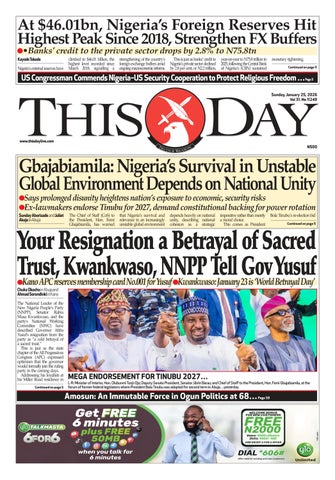
AT $46.01BN, NIGERIA’S FOREIGN RESERVES HIT HIGHEST PEAK SINCE 2018, STRENGTHEN FX BUFFERS
The figure represents a drop from N78.02 trillion recorded in December 2024, reflecting the impact of high interest rates and restricted liquidity in the financial system.
Credit to the private sector, comprising loans, trade credits, and other receivables, remains a key indicator of banking sector resilience and its contribution to national economic growth.
In 2025, the CBN deliberately tightened liquidity conditions to curb inflation and stabilise the naira in the foreign exchange market. As part of the strategy, the apex bank maintained a hawkish monetary stance for most of the year.
Between February and July
2025, the Monetary Policy Committee (MPC) retained the Monetary Policy Rate (MPR) at 27.50 per cent, citing persistent inflationary pressures and fragile macroeconomic conditions.
In September 2025, the MPC reduced the policy rate by 50 basis points to 27.00 per cent, marking the first rate cut since 2020. The committee, however, maintained the rate at 27.00 per cent at its November 2025 meeting, keeping borrowing costs elevated through the year-end.
According to the CBN’s Money and Credit Statistics, private sector credit reached a high of N78.07 trillion in April 2025. It fell to N74.4 trillion in October 2025, as the apex bank
introduced measures to guide banks’ lending toward the real sector.
Analysts attributed the 2025 decline largely to the CBN’s tight monetary stance, elevated interest rates, high inflation, and global economic uncertainty.
Despite the contraction, analysts expressed optimism that private sector lending could recover in 2026, supported by clearer monetary policy direction and improving macroeconomic conditions.
CBN data showed that bank credit to the private sector rose sharply to N78.02 trillion in 2024, a 124.8 per cent increase of N15.48 trillion from N62.54 trillion in 2023.
Analysts at Cordros Capital said the trend in private sector credit could improve in the period ahead.
“We believe the reinforcement of the CBN’s limit on Deposit Money Banks’ loans-to-deposits macro-prudential ratio will continue to drive the willingness of commercial banks to create risky assets over the short to medium term,” Cordros Capital said.
A study published by the CBN also concluded that credit was growth-enhancing, even in environments characterised by weak trade openness, tight monetary policy, poor investment climate, and infrastructure deficits.
situation with that of other African nations, the disparity is stark. South Africa, with its population of about 64 million, generates and distributes over 40,000 megawatts. Egypt, with a population of about 115 million, also generates over 40,000 megawatts. Algeria, with a population of around 48 million, generates and distributes over 50,000 megawatts of electricity.
“Meanwhile, Nigeria, the giant of Africa and its most populous nation with over 240 million people, produces a mere 5,000 megawatts, an absurdly low figure that severely hampers our productivity,” Obi said.
According to Obi, the persistent power crisis was rooted in governance failures,
stressing that the sector required capable leadership to function effectively.
“This power crisis is a direct result of continuous leadership failures. The power sector is critical and requires competent and committed leadership to thrive,” he said.
Looking ahead to the 2027 general elections, Obi called on Nigerians to make leadership choices based on competence and compassion.
“As we look towards 2027, Nigeria must prioritise competence and empathy in its leadership. It is time to elect individuals with the capacity and dedication necessary to initiate a significant turnaround for our nation. Anything less is unacceptable,” he said.
The wife of former Nigerian Deputy Senate President, Ike Ekweremadu, Beatrice, has returned to Nigeria after being released from a prison in the United Kingdom.
Her arrival in the country on Tuesday, January 21, 2026, followed the completion of the custodial portion of her sentence for her role in a high-profile organ-harvesting conspiracy.
Mrs Ekweremadu was received by family members and close associates at the Nnamdi Azikiwe International Airport in Abuja, marking her first time on Nigerian soil since the legal saga began in mid-2022.
While her return has sparked celebrations in her hometown of Mpu, in the Aninri Local Government Area (LGA) of Enugu State, it came amid the continued incarceration of her husband in London.
The return of the former Deputy Senate President’s wife followed her May 2023 conviction by the Old Bailey in London.
She was sentenced to four years and six months in prison for conspiring to facilitate the travel of a 21-year-old Lagos Street trader to the UK for the purpose of harvesting his kidney.
The organ was intended for the couple’s daughter, Sonia, who suffered from a chronic kidney condition.
The case, which was prosecuted under the UK’s Modern Slavery Act 2015, marked the first time the legislation was used in a human organ-harvesting prosecution.
Under UK law, non-violent offenders are typically eligible for release on license after serving half of their custodial term.
The Chairman of the Christian Association of Nigeria (CAN) in the 19 Northern states and the Federal Capital Territory, Rev. John Hayab, has cautioned against celebrating recent security gains, saying the continued
abduction of citizens shows that Nigeria is yet to attain real peace. Hayab stated this yesterday in an exclusive interview with our correspondent at his official residence in Kaduna, shortly after receiving an Award of
Excellence from the Northern Christian Youth Professionals.
According to him, any recognition or award given to any Nigerian or government official should serve as a reminder to intensify efforts to
end kidnapping and insecurity, rather than a basis for celebration.
“There is nothing to dance about while innocent citizens are still in captivity and criminal elements continue to operate freely from the bush,” he said.
Pope Leo XIV yesterday stressed the risks of generative artificial intelligence, how it could usurp human identities and relationships, influence public opinion and deepen social polarisation
In a message marking the World Day of Social Communications, the Pope said AI systems reflect the worldview of their creators and can shape patterns of
thought by reproducing biases embedded in the data they process.
“The challenge… is a matter of protecting human identity and authentic relationships,” the pontiff said.
Pope Leo XIV’s warning comes as generative AI makes leaps and bounds towards replicating, altering and manufacturing images, music and text to levels
sometimes indistinguishable from human-made works.
In 2023, Leo’s predecessor, pope Francis, was the subject of a viral fake AI image of him wearing a white puffer jacket.
Since then, generative AI has been a go-to tool by some high-profile figures, including US President Donald Trump, who has posted or reposted computer-generated images to his online accounts.
Pope Leo XIV warned that just a small number of companies hold significant power over AI development, and that AI tools increase “the difficulty of distinguishing between reality and simulation”.
Since his election pope last May as the first pope from the United States, Leo XIV has consistently warned about the growing influence of AI technologies.
GBAJABIAMILA: NIGERIA’S SURVIVAL IN UNSTABLE GLOBAL ENVIRONMENT DEPENDS ON NATIONAL UNITY
convene and contribute once more to national discourse speaks volumes about your enduring commitment to the idea of Nigeria.”
Gbajabiamila also warned against identity-driven politics, stating that ethnic and religious mobilisation for political advantage undermined national stability.
“When political competition amplifies ethnic suspicion or religious fear, it corrodes trust and weakens the foundations of the state,” he said.
Highlighting government initiatives, he pointed to the creation of development commissions in all six geopolitical zones, nationwide infrastructure projects, and social intervention programmes as evidence of inclusive governance.
He conveyed President Tinubu’s goodwill to the forum and described the NFFL as a valuable pool of experience that continues to influence
government policy.
In his closing remarks, Gbajabiamila urged leaders and citizens alike to reject division and embrace responsible leadership, stressing that the work of national unity was not glamorous.
“It requires listening when it is easier to shout, compromising when it is tempting to dominate, and trusting when suspicion seems safer.
“May history record that when Nigeria stood at a crossroads, we chose the harder path of unity, the longer road of cooperation, and the higher calling of nationhood.”
Ex-lawmakers Endorse Tinubu for 2027, Demand Constitutional Backing of Power Rotation
On their part, the former members of the National Assembly, operating under the umbrella of NFFL, formally adopted President Tinubu as their sole preferred candidate for the 2027 presidential election
and called for the rotational presidency to be entrenched in the Constitution as a permanent mechanism to promote national cohesion.
The decisions were contained in a communiqué released after the NFFL’s 2026 National Summit.
Earlier in his remarks, the NFFL National Coordinator, Hon. Raphael Nnanna Igbokwe, explained that extensive nationwide consultations informed the forum’s stance on power rotation.
“Following our Northern and Southern dialogue sessions, we collectively agreed that in the interest of unity, peace, and national progress, the South should complete its eight-year term,” Igbokwe said.
While presenting the communiqué, the forum explained that its discussions were driven by the need to strengthen democratic practices, build confidence among
Nigeria’s diverse regions, and guarantee lasting political stability.
The communiqué emphasised that dialogue and peaceful engagement remained essential to resolving the country’s challenges.
“We reaffirm that dialogue, consultation and peaceful engagement must always remain Nigeria’s primary tool for resolving political, social and regional challenges,” the forum stated.
It further stressed that Nigeria’s problems should be addressed internally by Nigerians through dialogue and constitutional and democratic means.
On power rotation, the former lawmakers agreed that the presidency should return to the North in 2031, in keeping with the principles of fairness, inclusiveness, and balanced representation.
Reiterating this position, the communiqué stated:
The cleric urged Nigerians to pray that such awards would translate into the release of abducted persons and encourage criminal elements to surrender.
While acknowledging that some areas have recorded relative peace, Hayab warned that recent security challenges indicate that the gains remain fragile.
He stressed that the government must understand that partial success is not enough, noting that renewed attacks should serve as a wake-up call to translate security claims into lasting reality.
“We have started showing that these challenges can be overcome. What we are seeing now is a test of our commitment. We must prove to the world that we are serious about peace,” he said.
Hayab further assured that
Christian communities would not compromise their commitment to peace, even in the face of threats and intimidation.
Speaking on safety concerns amid rising insecurity, the Northern CAN chairman urged believers to combine faith with wisdom, stressing that spiritual confidence must not replace personal responsibility.
He noted that insecurity is a global challenge, adding that no society is completely immune, including developed countries.
“Wisdom is profitable to direct. We must apply wisdom to protect ourselves, our families and our communities,” he said. He cautioned against what he described as blind faith, insisting that acting carelessly in the name of divine protection amounts to irresponsibility.
Emmanuel Addeh in Abuja
The Minister of Works, David Umahi, has sought the World Bank’s financing for major federal road projects, disclosing that completed infrastructure would be tolled to ensure sustainability and repayment of funds.
Umahi made the request at the weekend when he received a high-level World Bank delegation led by Mr. Matthew Verghis at the Federal Ministry of Works in Abuja. The meeting focused on strengthening Nigeria’s road infrastructure amid mounting funding constraints.
A statement from the ministry quoted Umahi as saying that infrastructure development remains critical to Nigeria’s global competitiveness, stressing
that efficient road networks were essential for economic growth, trade expansion and social development.
He told the delegation that limited fiscal space following the removal of fuel subsidy and the floating of the naira had significantly increased the cost of road construction and constrained government financing capacity.
Umahi briefed the delegation on the federal government’s development management initiative and its “Build, Update and Maintain” strategy, under which the government constructs roads while the private sector is engaged for maintenance.
He said the model was designed to improve efficiency, sustainability and value for money in infrastructure delivery.
Onyebuchi Ezigbo in Abuja
The federal government has expressed its commitment to ending the ongoing strike by health workers under the auspices of the Joint Health Sector Unions (JOHESU).
It assured the aggrieved workers that it would review of CONHESS as they demanded JOHESU had embarked on an indefinite strike after government failed to meet their demand for an adjustment of the Consolidated Health Salary Structure (CONHESS) in the same manner as was implemented for the Consolidated Medical Salary Structure (CONMESS),
In its recent statement, Nigeria Labour Congress (NLC) and Trade Union Congress (TUC) declared support for the striking health workers, alleging that the Federal Ministry of Health and Social Welfare deliberately refused to implement the report of the Technical Committee on the adjustment of Consolidated Health Salary Structure (CONHESS) submitted in 2021.
They further alleged that the delay amounts to institutional disrespect to health workers and organised labour and consequently issued a 14-day ultimatum to the federal government through the ministry. However, a statement signed by the Director, Information and Public Relations of the Federal Ministry of Health and Social Welfare, Alaba Balogun, denied
any delay in responding to the workers demand.
It said contrary to such claims, the federal government has, since the commencement of the industrial action, held several conciliatory meetings with JOHESU,
“The Federal Ministry of Health & Social Welfare reiterates and reaffirms its unwavering commitment to sustaining industrial harmony within Nigeria’s health sector. There is absolutely no truth in the allegations of deliberate refusal to implement the Technical Committee’s report, nor is there any discrimination against any category of health workers.
“Contrary to these claims, the federal government has, since the commencement of the industrial action, held several conciliatory meetings with JOHESU, both at the Federal Ministry of Health & Social Welfare and the Federal Ministry of Labour and Employment, aimed at resolving the dispute amicably. These meetings are being held despite the action of JOHESU in approaching the National Industrial Court of Nigeria to intervene in the dispute”..
According to the ministry, a high-level conciliatory meeting was convened on Thursday, January 15, 2026 by the Federal Ministry of Health and Social Welfare, as part of sustained efforts by the federal government to de-escalate tensions and
arrive at a mutually acceptable resolution.
The ministry said that it has reached a tentative understanding with JOHESU on a framework for resolving the lingering trade dispute during the conciliatory talks last week.
Giving further details, the ministry said that JOHESU presented demands which included the implementation of the 2021 report of the Technical Sub-Committee of the High-Level Body (HLB) chaired by the National
Salaries, Incomes and Wages Commission (NSIWC), which recommended an adjustment of CONHESS.
It said the union also demanded for the immediate withdrawal of the “No Work, No Pay” circular, insisting that it should not apply to their members, in line with the position earlier canvassed by the Trade Union Congress of Nigeria (TUC), among other demands.
The ministry said that biased on the demands presented by
JOHESU, it appealed to them to maintain the status quo to enable the NSIWC conclude an ongoing job evaluation exercise aimed at determining the appropriate placement of all health professionals in line with the collective bargaining principle and evidence based decision.
The ministry further said that it took into cognisance the conflicting positions of union/association in the sector based on MOUs/ agreement signed with
the federal government in the past. It said that job evaluation exercise, which commenced in November 2025, is expected to last six months and will pave the way for discussions on salary adjustments as well as the reconvening of the Collective Bargaining Agreement (CBA). On the issue of of “No Work, No Pay”; the ministry’s position is that if JOHESU calls off the strike in good faith, the matter would be handled administratively in its entirety.
David-Chyddy Eleke in Awka
The Anambra State Government has announced the termination of the Monday sit-at-home in the state “with immediate effect”.
This was contained in a statement signed by the Board Secretary, Mgbemena Loveline E., on behalf of the State Universal Basic Education Board.
It also warned that errant civil servants who flout the directive would either receive 20 per cent of their salary or forfeit it entirely.
“Sequel to the state exco retreat held on January 21, 2026, presided by the Executive Governor, Charles Chukwuma Soludo, I am directed to inform you that the state government has directed, and also as a decision, that the protracted Monday sit-at-
home in Anambra State has been abolished with immediate effect.
“By this directive, any staff, both tutorial and non-tutorial, who fail to attend to school or the office on Monday will either receive 20 per cent of his/her salary or forfeit it entirely,” the statement partly read.
“You are to bring the content of this letter to the notice of all staff under you and ensure adequate compliance.
“Please be properly guided, as the above is the executive decision of the state government,” it added.
For years, large parts of Anambra State have observed the weekly sit-at-home on Mondays — a shutdown that has grounded commercial and social activities across the state.
Originally imposed by nonstate actors in the South-east,
the practice led to fear and reluctance among residents to go about normal business, with markets, schools, and workplaces often deserted at the start of the week.
The sit-at-home order has been widely seen as harmful to the state’s economic life.
Traders, transport workers, and students have been forced to remain indoors on Mondays, disrupting livelihoods and slowing economic momentum in key commercial hubs such as Onitsha.
Lawmakers and stakeholders in the state have described the paralysis of business activities as damaging to the local economy, with repeated calls for residents to open shops and return to work.
Governor Soludo has been at the forefront of official efforts
to end the weekly closures.
In April 2022, Soludo formally declared an end to the sit-at-home in Anambra, announcing that the directive would no longer be observed and offering amnesty to youths still in hideouts as part of measures to restore peace and normal economic life.
He also said a peace and reconciliation committee would be set up to address challenges and engage with federal authorities on behalf of detained persons. In more recent statements, Soludo has noted that the sit-at-home phenomenon has largely diminished and that those still observing Mondays at home do so by personal choice rather than because of insecurity. He emphasised that the state is now secure, urging residents to take advantage of the improved environment to resume normal business activities.



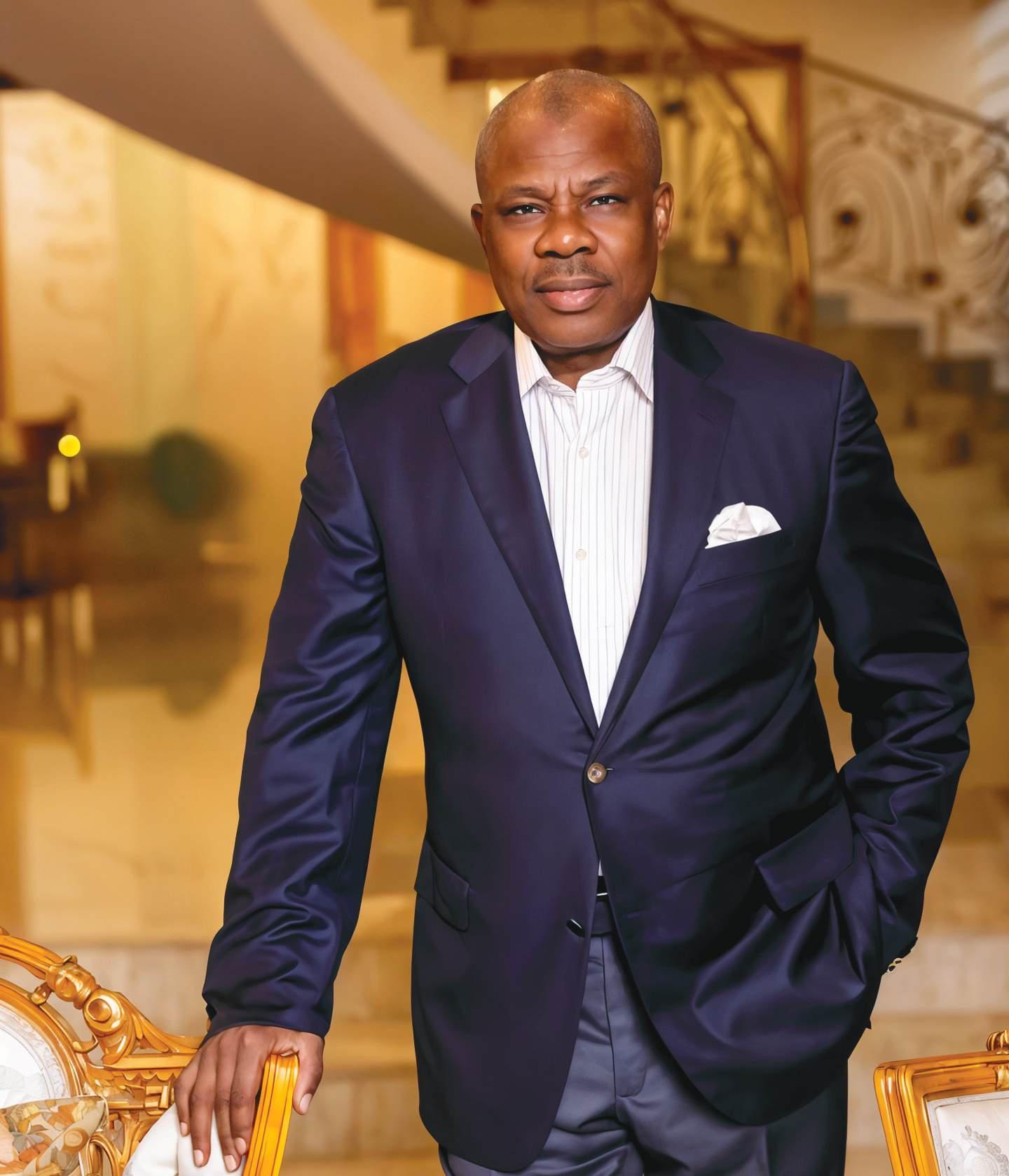


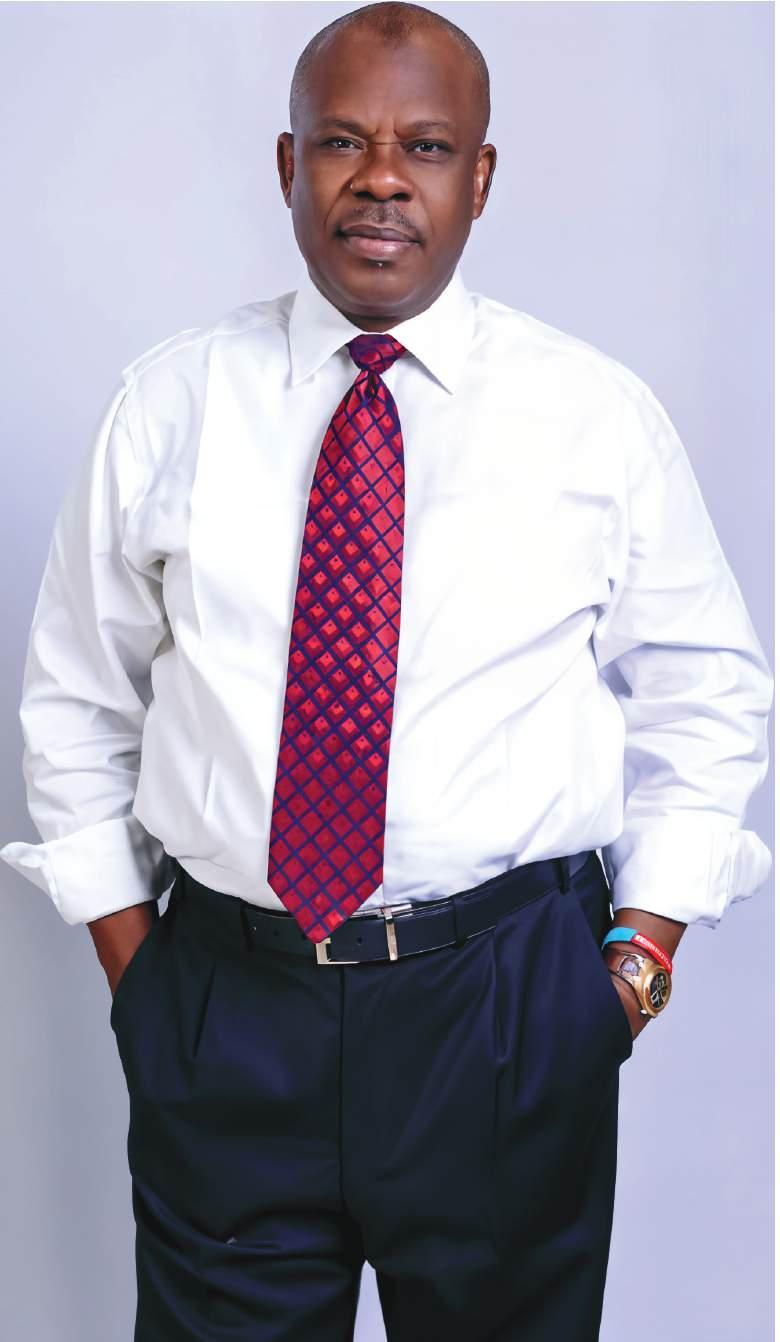




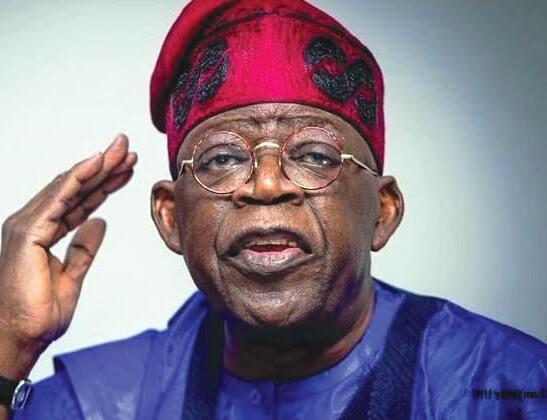
In the volatile theatre of international relations, where a single tweet or a misplaced word can trigger a diplomatic meltdown, the hallmark of authentic leadership is the ability to maintain composure under fire. Recently, Nigeria found itself at the centre of such a storm.
Following intense pressure, United States President Donald Trump designated Nigeria as a Country of Particular Concern (CPC) in November 2025. This designation, rooted in allegations of “Christian persecution,” was accompanied by a characteristically blunt threat: to enter Nigeria “guns-a-blazing” to resolve the security crisis.
For many, this was a moment for panic. And for President Bola Ahmed Tinubu, however, it was an opportunity for a diplomatic masterclass—a strategic pivot that transformed a threat of violation into a triumph of partnership.
The timing of the US designation was particularly “bleep,” coming on the heels of the tragic Kwara church attack in mid-November 2025. During a live-streamed worship session at a Christ Apostolic Church branch in Eruku, terrorists abducted dozens of worshippers, providing fuel for a narrative that Nigeria was undergoing religious cleansing.
While critics clamoured for a combative response to Washington’s accusations, President Tinubu chose the path of intellectual honesty and fact-based engagement. He recognised that while attacks in Christiandominated areas like Yelwata and Jos are devastating, they are often the result of complex factors like resource competition, ethnic friction, and farmer-herder clashes rather than state-sanctioned religious cleansing. Crucially, the administration pointed to the equal, if not greater, suffering in Muslim-dominated enclaves in Zamfara, Borno, and Katsina, where terrorism knows no faith.
Instead of engaging in a public war of words, Tinubu deployed his National Security Adviser, Mallam Nuhu Ribadu, to Washington. This
move was a calculated “chess move” in diplomacy.
Ribadu’s mandate was clear: dismantle the misconceptions brick by brick. By meeting with the US Secretary of War and members of Congress, the Nigerian delegation presented the reality of the government’s efforts, including: Record-Breaking Security Spending: N3.85 trillion in 2024 and an unprecedented N4.9 trillion in the 2025 budget; improved coordination: The centralisation of intelligence under the Office of the National Security Adviser (ONSA).
Sovereign Transparency: Inviting US delegations for fact-finding missions to see the ground reality beyond the headlines.
The results of this “cool-headed” approach were swift and significant.
The “guns-blazing” rhetoric was replaced by the first-ever joint intelligence-led operation between the US and Nigeria. In late December 2025, US-led intelligence and air support resulted in the successful bombing of terrorist enclaves in Sokoto State, neutralising hundreds of Lakurawa terrorists, a group that had been terrorising the North West.
This collaboration did not stop at kinetic operations. By Tuesday, January 13, 2026, the United States Africa Command (AFRICOM) confirmed the delivery of critical military supplies to Abuja.
Furthermore, the US has moved to fast-track the sale of advanced military aircraft to Nigeria, a move that would have been unthinkable just months prior during the height of the CPC tensions.
President Tinubu has demonstrated that he is a leader who knows when to be firm and when to be flexible. By refusing to be baited into a defensive crouch, he forced the “almighty” USA to move from a position of judgment to one of active participation.
The transition from being a target of US threats to being a “critical security partner” is no accident.
The contract may momentarily shape perceptions, but it will not substitute for demonstrable progress on security and economic stability, contends FELIX OLADEJI
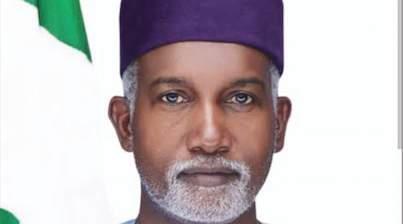
In early January 2026, the Federal Government reportedly signed a $9 million contract with DCI Group, a Washington-based lobbying firm, to help communicate its efforts at protecting religious communities and sustaining U.S. support in the fight against violent extremism. The move, facilitated through a Nigerian intermediary on behalf of the Office of the National Security Adviser, reflects Abuja’s enduring concern with perception and diplomatic positioning in an era of intensifying global scrutiny.
At first glance, the decision to engage foreign lobbyists might be interpreted as an ordinary exercise in public diplomacy. Across the world, states routinely hire strategic communications firms to shape narratives in capitals of geopolitical significance. Yet, as Nigeria continues to grapple with profound internal challenges; from insecurity and economic hardship to political fragmentation and social distrust — this particular expenditure invites deeper reflection on strategic priorities, public governance, and the mechanisms through which the Nigerian state seeks legitimacy on the world stage.
For decades, Nigeria’s relations with the United States have been shaped by a mix of cooperation and contention. Security partnerships, trade engagements, and diaspora politics have been central pillars of this bilateral relationship. However, events of the past few years, including sustained attacks by insurgent groups, inter-communal violence, and allegations of targeted persecution of religious minorities; have complicated Nigeria’s diplomatic narrative.
In this context, the Federal Government’s decision to spend millions on a lobbying contract can be understood as an attempt to manage external perceptions and reassure key global partners that its policies are robust, inclusive, and aligned with international norms. The logic is straightforward: negative portrayals in influential foreign media and policy circles have the potential to jeopardise security assistance, foreign investment, and international goodwill. If left unchecked, such narratives could translate into tangible diplomatic consequences.
Yet the question that naturally arises is this: should securing international image be so resource-intensive when the nation’s own citizens continue to bear the brunt of insecurity and economic dislocation?
Critics argue that the contract amount is not merely a matter of fiscal imprudence but a reflection of deeper disconnects between the state and its citizenry. When millions of Nigerians contend daily with inadequate infrastructure, inflationary pressures, and persistent insecurity, the optics of allocating significant public funds to foreign image management appear out of step with citizen expectations and democratic accountability.
Civil society groups have been particularly vocal. Some describe the effort as a form of misplaced priority; an attempt to outsource credibility instead of strengthening internal communication structures and security institutions. Others point to the irony of denying targeted religious persecution while simultaneously paying to convey the government’s protective efforts abroad.
This outcry is not simply rhetorical. It raises serious
questions about governance, resource allocation, and transparency. In a federal democratic system, the social contract hinges on accountability to citizens first, before audiences abroad. A government that cannot reconcile this hierarchy risks eroding its legitimacy both at home and on the international stage.
It is important to acknowledge that lobbying in foreign capitals is not inherently illegitimate. States engage in such practices as part of broader diplomatic strategies. However, in the Nigerian case, the reliance on third-party narrative management exposes vulnerabilities in official capacity and raises questions about strategic coherence.
If Nigeria’s security apparatus, diplomatic missions, and information ministries possess the necessary insights and policy articulation, why is it that these roles must be outsourced at great expense? Why not invest in strengthening institutional communication channels within existing diplomatic frameworks? Such investments, arguably, would yield not just better messaging but stronger institutional capacity. Moreover, public diplomacy divorced from substantive action often rings hollow. The international community, particularly democratic partners such as the United States, does not simply respond to polished narratives; it responds to results, accountability metrics, and demonstrable policy outcomes. In this light, lobbying becomes less about persuasion and more about damage control, a reactionary measure that risks obscuring the structural reforms urgently needed within Nigeria’s domestic governance.
What Nigeria needs, therefore, is not merely a strategic communications contract, but a balanced approach to both internal reform and external engagement. This includes prioritising effective security policies, ensuring transparent governance, and engaging international partners through substantive intergovernmental channels. Harnessing public diplomacy is one thing; outsourcing it at the expense of addressing fundamental governance challenges is another. True diplomatic influence is rooted in credibility, not simply in crafted narratives, but in lived realities that reflect a government’s commitments to its people. As Nigeria navigates the complexities of global politics and domestic expectations, it would do well to remember that credibility cannot be purchased; it must be earned. The $9 million lobbying contract may momentarily shape perceptions, but it will not substitute for demonstrable progress on security, economic stability, and social cohesion. For a nation striving for both global respect and internal stability, the path to vindication lies not in expensive image management, but in results that resonate with citizens and command respect abroad. It is time for public policy to match public rhetoric.
There is no war of a regional or global scale that has not been originated by the Europeans, or that has not engendered disorder. The 100-year old war between the kingdoms of England and France and civil war in France in the late Middle Ages; the most destructive 30-year old war in Central Europe from 1618 to 1648 and which dovetailed into the signing of the 1648 Treaty of Westphalia; the 1870 Franco-German or Franco-Prussian war; the 28 July, 1914 to 11 November 1918 World War I, predicated by the killing of the Austrian Archduke Franz Ferdinand on 28 June 1914 and described as ‘the Great War’; as well as the 1 September, 1939 to 2 September, 1945 World War II, clearly illustrate this observation.
The establishment of the United Nations Organisation (UNO) to replace the League of Nations was aimed at preventing a new war and maintain international peace and security. San Francisco, where the UN Charter was done, is in the United States. The world headquarters of the same UNO is in New York, United States. More interestingly, the agent provocateur of the emerging World War III is again the United States of President Donald Trump who has no regard for international rule of law. He does not only underscores an ‘America First’ policy attitude and ‘Making America Great Again’ in international relations, but has also opted for the unilateral use of force to recklessly promote nationalism and global disorder.
The deepening situation of disorderliness and violations of international law has prompted China to plead with the international community to prevent Japan from returning to the path of militarism.As told by the Xinhua NewsAgency, Sun Lei, the Chargé d’Affaires of China’s Permanent Mission to the United Nations, in his appeal at the first session of the Preparatory Committee for the UN Conference of Plenipotentiaries on Prevention and Punishment of Crimes Against Humanity, ‘the international community should jointly safeguard the victorious outcomes of World War II, including the Tokyo trials, uphold the international order based on international law, prevent Japan from reverting to the old and pernicious path of militarism.’ Most unfortunately, however, it is not only Japan that is about to thread the path of militarism, the current trend in international relations is that the big powers, especially Russia and the United States, with the complicit silence of their allies, are also threading the same path. The complicit silence is a major dynamic of the recklessness that has come to characterise the exercise of US sovereignty in international relations.
Recklessness in the Exercise of US Sovereignty
Grosso modo, the exercise of sovereignty in international relations is increasingly defined by policies of manu militari at both the levels of the big and small powers. For example, while the small and the medium powers, the former colonial countries, are struggling to free themselves completely from the scourge of hegemonic and colonial taint, the big powers, led by the United States, are recklessly using force to recolonise the world. The United States of Donald Trump first began with the idea of seeking to annex Canada as another constitutive State of the United States. The origin of the idea is traceable to the end of the American Civil War, when some American politicians asked Britain to cede the province of Canada as reparations for British-built goods and ships sold to the Confederate citizens. Attempts were also unsuccessfully made to invade Canada during the Invasion of Quebec of 1775 and War of 1812. Consequently, the recent attempt by Donald Trump to annex Canada is nothing more than a revisiting of the old quest. Canada has considered the revisiting of the idea as very insulting and has, therefore, set it aside. Secondly, Donald Trump came up with the idea of a Board of Peace in his 20-point Gaza ceasefire plan and extended
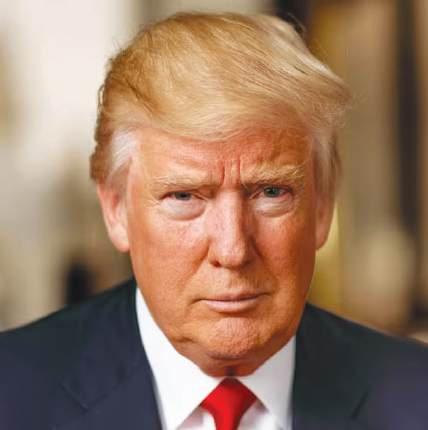
invitation to Canada to join the proposed Board. Donald Trump described the Board in his message of withdrawal of the invitation extended to Prime Minister Mark Carney as ‘the most prestigious Board of Leaders ever assembled, at any time.’ Ab initio, the Board was limited in scope of membership and objective – overseeing the next phase of the peace plan for the Gaza Strip. In November 2025, the UN Security Council approved the idea of the Board of Peace as part of a broader plan for peace, particularly in terms of establishment of a security force in Gaza. The Charter of the Board of Peace wants a new international organisation that ‘seeks to promote stability, restore dependable and lawful governance, and secure enduring peace in areas affected or threatened by conflict.’
Today, the Board’s scope has been redefined to include other global conflicts and membership of the Board has also been thrown open. On the side lines of the World Economic Forum (WEF), on Thursday, January 22nd, 2026 during which the Charter of the Board was to be signed, countries like Argentina, Turkey, Hungary, Bulgaria, Bahrain, Kazakhstan, Kosovo, Qatar, Armenia, Azerbaijan, Morocco, Paraguay and Pakistan were at the signing ceremony. US major traditional allies were reportedly not there probably for reasons of uninteresting and controversial conditionality.
For example, Donald Trump will be the only Chairman of the Board and can only be replaced through his ‘volun-
Most unfortunately, the Chinese that are seen and considered by the United States as their arch enemies or rivals do not see themselves as competitors for now. They think that they are superior to the Americans culturally, historically, and demographically. As argued by a Chinese at the Margalla Dialogue 2025 on the “Future of Global Order, Coop- eration or Confrontation,” China does not want to be a superpower, because of the nega- tive connotation of superpower in Chinese language and culture, but wants to be a super- population. Superpower is a negative term, a derogatory term in the Chinese language. To be a superpower means ‘to be abrasive, very sharp elbows, and for example, pushes you around, and sometimes hold a gun at your head, this is something China will never do. Only China and India can talk rightly about super-population. The Chinese want to be the leader in the context of super-population, not in the area of superpower politics. Apart from this, historically, China has been existing for over 5000 years, ‘and for most of the times, there was no United States,’ which will only be celebrating next year as its 250th founding anniversary. But over the thousands of years of Chinese existence, there have been various existential challenges which were overcome. Chinese civilisation ‘has never been interrupted, that means, when we look at the United States, we have a histori- cal perspective.’ The 5000+ years of existence have enabled the Chinese to predict the next 5000 years. More significantly, the Chinese governance philosophy is that leaders should not do unto others what they do not want others to do unto them. If the Americans want to do unto Chinese what they do not want others to do to America, the Chinese will respond by ‘shocking’ the Americans
tary resignation or as a result of incapacity, as determined by a unanimous vote of the Executive Board,’ of which the pioneering members are ‘Secretary of State, Marco Rubio; Trump’s special envoy Steve Witkoff, Trump’s son-in-law, Jared Kushner; former British Prime Minister, Tony Blair; and World Bank President, Ajay Banga.’
Thirdly, the tenure of membership of the Board is defined by the principle of weighted voting, according to which a member’s financial contributions determine the number of its votes in an organisation. In the same vein, no member can serve more than a term of three years unless such member accepts to contribute more than the preliminary $1 billion required for membership. Basic membership qualification is payment of $1billion which ‘simply offers permanent membership to partner countries who demonstrate deep commitment to peace, security, and prosperity.’
It is useful to note here the rejection of the Board and concerns of the Canadian Prime Minister, Mark Carney, at the 2026 World Economic Forum (WEF) held in Davos, Switzerland. Mark Carney talked about ‘the rupture in world order, the end of a nice story, and the beginning of a brutal reality where geopolitics among the great powers is not subject to any constraints.’ More importantly, he submitted that ‘other countries, particularly middle powers like Canada, are not powerless. They have the capacity to build a new order that embodies our values like respect for human rights, sustainable development, solidarity, sovereignty, and territorial integrity of States. The power of the less powerful begins with honesty.’ And perhaps most importantly, he recalled that ‘every day we are reminded that we live in an era of great power rivalry. That the rules-based order is fading. That the strong do what they can, and the weak suffer what they must. This aphorism of Thucydides is presented as inevitable – the natural logic of international relations reasserting itself. And faced with this logic, there is a strong tendency for countries to go along to get along. To accommodate. To avoid trouble. To hope that compliance will buy safety. It won’t.’
This statement is loaded with many implications not only for Canada, but, grosso modo, for the international community. For Canada, the statement is simply saying that Canada is no longer prepared to acquiesce to the status quo. Additionally, Canada is also calling on the international community to do the same: rejection of the status quo. As the Canadian Prime Minister put it, the multilateral institutions on which middle powers relied, that is, WTO, the UN, COP, which are the architecture of collective problem-solving, ‘are greatly diminished. As a result, many countries are drawing the same conclusions. They must develop greater strategic autonomy in energy, food, critical minerals, in finance, and supply chains.’
Two points are noteworthy in this Canadian postulation at the level of Nigeria. Canada is simply asking for the restoration of Professor Akinwande Bolaji Akinyemi’s call for the Concert of Medium Powers (CMP) which began with some meetings and was renamed Lagos Forum to avoid being seen as an anti-West movement. While Professor Akinyemi talked about ‘medium powers,’ Prime Minister Carney is talking about ‘middle powers.’ ‘Medium’ and ‘middle’ are synonymous. Put differently, what was not considered reasonable, objectivist, and self-promoting under the military regime of General Ibrahim Badamasi Babangida about forty years ago, is what Canada is now calling for at the 2026 Davos World Economic Forum.
Most importantly, Canada has also called for ‘greater strategic autonomy’ in order to be able to respond to the increasing sovereignty recklessness being exercised by President Trump. In the words of Carney, ‘our new approach rests on what Alexander Stubb has termed “rules-based realism” – or to put it another way, we aim to be principled and pragmatic.’ In this regard, ‘principled in our commitment to fundamental values: sovereignty and territorial integrity, the prohibition of the use of force except when consistent with the UN Charter, respect for human rights, pragmatic in recognising that progress is often incremental, that interests diverge, that not every partner shares our values. We are engaging broadly, strategically, with open eyes. We actively take on the world as it is, not wait for a world we wish to be.’
Again, this Canadian position and ambition is not different from Nigeria’s own strategic calculation. Canada is talking about ‘greater strategic autonomy’ while Nigeria under President Bola Ahmed Tinubu is talking about ‘foreign policy grand strategy,’ which his Foreign Minister, Ambassador Yusuf Maitama, has subjected to intellection. By implication, it simply means that Canada is pushing for the restoration of Nigeria’s Concert of Medium Power (CMP) in another form. Canada can always count on Nigeria’s support as Professor Akinyemi is not only currently the Chairman of the Governing Council of the Nigerian Institute of International Affairs (NIIA), the chief implementer and apostle of the strategic autonomy policy is also Ambassador Tuggar, the Foreign Minister. Thus, there is a good basis for a Nigeriano-Canadian partnership in helping to stop the recklessness in the US exercise of its political sovereignty which is currently generating a global disorder.


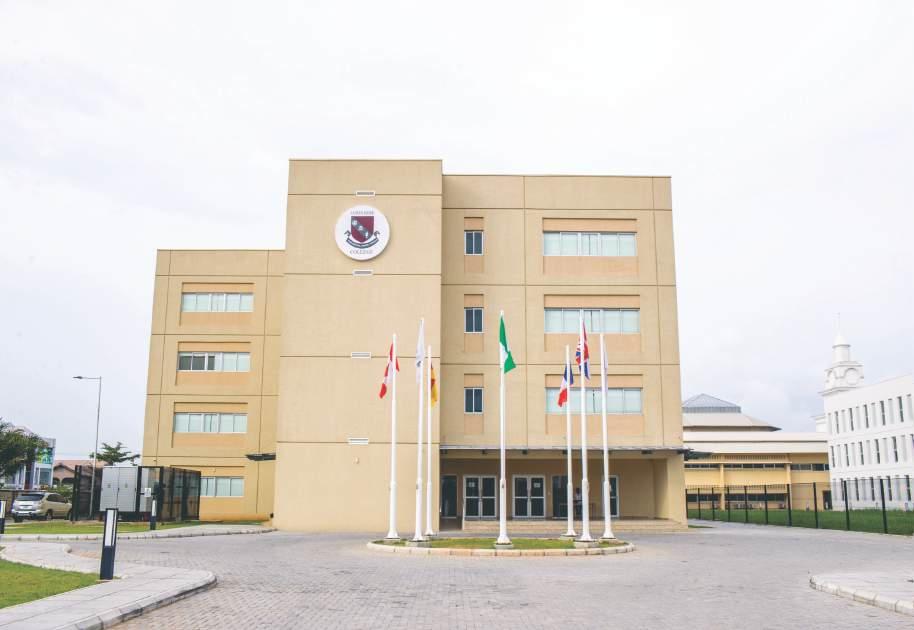
Celebrating Excellence at James Hope College, Lekki, Lagos
Subjects
Accounting
Religious Studies
Mathematics
Additional Mathematics
English Language
Chemistry
Biology
Geography
Literature in English
Design & Technology
Physics
Computer Science
Economics
CELEBRATING OUR OUTSTANDING SCHOLARS OF 2025 (A* & A)
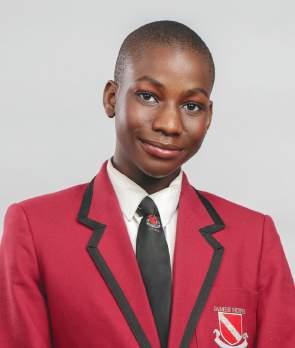
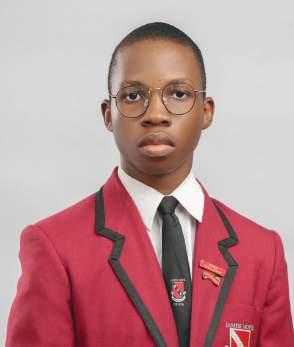
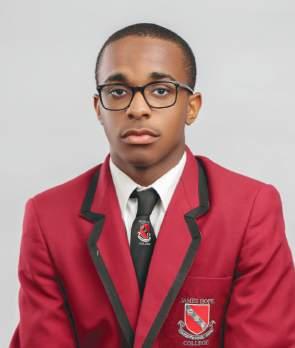
* Jim Ovia Foundation Scholarship Beneficiar y

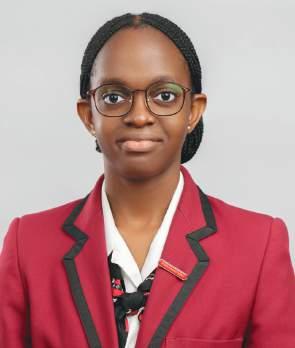
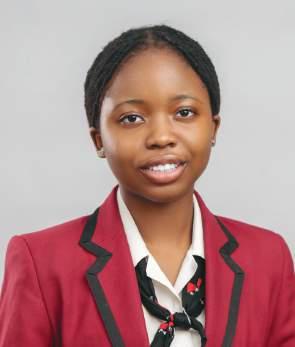
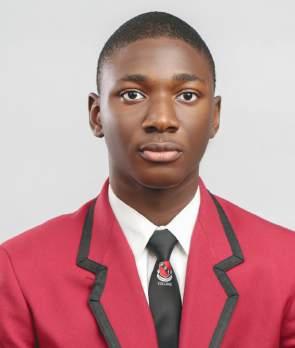

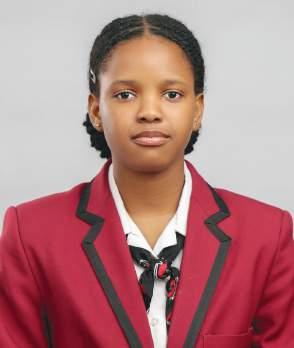




Vanessa Obioha
iREP International Documentary Film Festival recently announced its new partnership with Ecobank Nigeria for its 15th anniversary edition themed “Transformation.”
The partnership will see the festival, one of the continent’s most revered documentary platforms, hold at the Ecobank Pan African Centre, Victoria Island, Lagos, from March 18–22, 2026. It will also host a three-day mobile phone filmmaking workshop from March 16–18, 2026.
To be facilitated by renowned and tested filmmakers, the workshop will provide participants with hands-on training in producing compelling documentary films using mobile devices. Outstanding films produced during the workshop will attract prize rewards, encouraging innovation and excellence among participants.
Co-Founder and Executive Director of iREP,
Femi Odugbemi, unveiling the anniversary edition recently in Lagos, described the partnership as “a landmark collaboration that reflects a shared commitment to youth empowerment, creativity, and capacity building, particularly for young and emerging documentary filmmakers.”
“As a Pan-African bank, we have a collective vision of promoting African culture to reinforce and celebrate our shared heritage,” added Head of Marketing and Corporate Communications at Ecobank Nigeria, Austen Osokpor. “This partnership aligns with the broader resurgence of African creativity, enabling talents to thrive while preserving the stories that define who we are as a people.”
Convened by the Foundation for the Promotion of Documentary Films in Africa (FPDFA), organisers say that this year’s edition will examine the transformative power of documentary filmmaking in Africa over the past 15 years. The various events in the programme – conversations, screenings, workshops, training etc – will spotlight the role of documentary films in shaping public
Last Thursday, Brazilian actor Wagner Moura made history with a nomination from the Academy of Motion Picture Arts and Sciences (AMPAS) for the 98th edition of the Oscars, scheduled for March 15. Moura became the frst Brazilian to be nominated in the Best Actor category.
He is up against (‘Marty Supreme’), Leonardo DiCaprio (‘One Battle After Another’), Ethan Hawke (‘Blue Moon’) and Michael B. Jordan (‘Sinners’).

Moura earned the nomination for his portrayal of Armando, a civil servant drawn into a web of conspiracy and state surveillance, in ‘The Secret Agent.’ The flm which premiered at Cannes in May
2025 is also nominated for International Feature and Best Picture.
Fluent in Portuguese, Spanish and English, Moura is best known for his role in Netflix’s ‘Narcos,’ where he played the notorious Colombian drug lord Pablo Escobar. He has also appeared in films and TV series such as ‘Sergio,’ ‘Dope Thief’ and ‘Civil War.’
‘The Secret Agent’ has fetched Moura a string of historic wins since its Cannes premiere, where he took the jury prize for actor, becoming the first South American to win the award. His performance also earned him a New York Film Critics Circle Award, making him the first Latino to receive the prize, and a Golden Globe for Best Actor (Drama) — the first Brazilian to be nominated for and win in that category.
An exclusively online beauty pageant, ‘Cutest Face in Nigeria’, has been introduced, marking a shift from the stage-based formats that have long defned beauty contests in the country.
Created by Alex Onyekaozuru in partnership with Grandatlantic Services, the pageant is designed to run entirely on digital platforms, removing the need for in-person screenings or live events. Organisers say the format was intended to eliminate the logistical barriers often associated with conventional pageantry. Unlike traditional competitions, the contest limits assessment strictly to facial appearance. No full-body presentation will be required at any stage.
Registration is open from January 16 to January 31 and is available to Nigerian women aged 18 to 35. Applications are to be completed and submitted online through the pageant’s offcial website.
Explaining the concept, Onyekaozuru
said the pageant was created to “search, discover and celebrate” a Nigerian woman based solely on facial features, noting that the face is the central criterion of the competition. The structure of the contest, he added, refects this focus.
The prize includes N10 million for the winner, while the frst and second runnersup will receive N5 million and N3 million respectively.
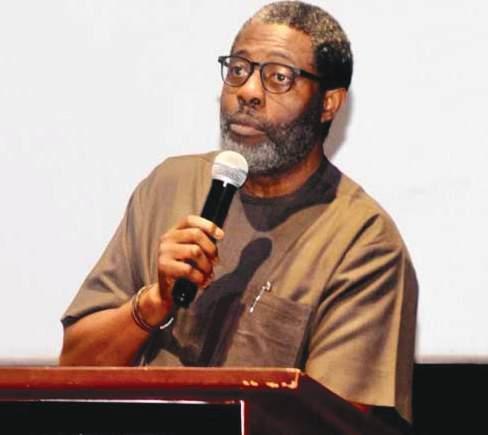
discourse, influencing policy, preserving cultural memory, and amplifying African voices on global platforms. This aligns with iREP’s tradition of advancing documentary storytelling, critical discourse, and capacity development across the continent.
The 2026 iREP programme will feature over 30 documentary films, including award-winning titles addressing key themes such as governance and democracy, advocacy, technology, and culture.
Withthe recent appointment of Amanda David as its Business and Partnership Manager, Blackdrum 360 is signalling a new phase of expansion aimed at deepening global alliances, scaling original content, and broadening its digital and live-event footprint.
David, who assumed the role on January 1, 2026, is leading efforts to reposition the media, creative and cultural platform for accelerated growth across television, digital channels, live experiences and international content partnerships.
Dr. Emmanuel Odole, CEO of Blackdrum 360, described her appointment as a strategic move to align the company’s business development ambitions with its evolving multiplatform identity.
“Amanda brings a rare combination of strategic thinking, industry insight, and relationship-building expertise that is critical to where Blackdrum 360 is headed,” Odole said. “Her appointment reflects our commitment to strengthening partnerships, expanding our content ecosystem, and unlocking new opportunities for collaboration across Africa and the global market.”
With a track record in business development, media partnerships, and brand collaborations across the creative and entertainment industries, David’s mandate includes driving strategic alliances, sponsorship development, and content collaborations across Blackdrum 360’s television properties and expanding its digital platforms. She is also tasked with scaling partnerships for live events, original programming, branded content and emerging digital channels.
Her background spans working with content creators, broadcasters, agencies and corporate brands, where she has structured innovative deals and built partnerships that drive long-term value.
“As Blackdrum 360 continues to evolve into a multiplatform media powerhouse, Amanda’s leadership will be instrumental in shaping the next phase of our journey -particularly as we deepen our relationships with broadcasters, brands, governments, creators, and global distribution partners,” Odole added.
Speaking on her new role, David said she is focused on building partnerships that reflect both cultural relevance and commercial sustainability.
“Blackdrum 360 represents the energy, originality and cultural relevance of modern Africa,” she said.
“I’m excited to work with the team to build meaningful partnerships, create impactful content collaborations and help position the brand as a global reference point for African stories and experiences.”


Editor, Editorial Page PETER ISHAKA
Email peter.ishaka@thisdaylive.com
Barely three months out of emergency rule, Rivers State is once again enmeshed in political tension. Some members of the House of Assembly, led by Speaker Martins Amaewhule, are pushing to impeach Governor Siminalayi Fubara and his deputy, Ngozi Odu over alleged misconduct. It is the third time Fubara and Odu would be threatened with impeachment since they assumed office in May 2023. After the controversial emergency rule that derailed democratic governance for six months, the impeachment gambit bodes ill for stability and good governance in the state.
Now that the Chief Judge of Rivers State, Justice Simeon Amadi, has declined to constitute a sevenman panel to investigate allegations of gross misconduct against the governor and his deputy and the Oyigbo High Court has adjourned indefinitely the suit that prompted the action, we hope the lawmakers will not resort to self-help. “Constitutionalism and the Rule of Law are the bedrock of democracy and all persons and authorities are expected to obey subsisting orders of court of competent jurisdiction, irrespective of perception of its regularity or otherwise,” the Chief Judge had stated in a letter dated 20th January 2026, personally signed by him and addressed to Speaker Amaewhule.
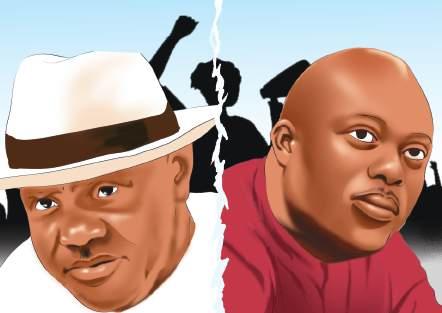
the Supreme Court rulings on legislative autonomy. Ordinarily, these are weighty charges, and we are on the side of accountability. But given its timing, insinuations abound that the impeachment move is being fuelled largely by the politics of the 2027 general election and the unabashed squabble over control of public resources and ‘political structure’. Indeed, the renewed crisis is again attributed to the fallout between Fubara and his predecessor in office, Nyesom Wike, currently the Federal Capital Territory (FCT) Minister.
Nigeria is increasingly being marked down as a country where a constitutional instrument like impeachment which is meant to enthrone accountability and enhance good governance has become a weapon of mischief and blackmail
It is unfortunate that the judiciary has been dragged into a crisis that seems simulated by vested interests and has nothing to do with the welfare of the people of Rivers State - a cosmopolitan home base of the nation’s oil and gas industry. It is also home to the nation’s second most important sea access and marine economy. As we stated in an earlier editorial, the move to impeach the governor reeks of political mischief. It showcases the assembly members as more interested in yet unstated matters than the good governance and peaceful progress of a state that remains one of the most strategic in the country.
Allegations against the governor include extrabudgetary spending to the tune of N800 billion without legislative approval, witholding funds allocated to the Assembly Service Commission, demolition of the Assembly complex and defiance of
SUNDAY NEWSPAPER
editor DAviDSoN iriekpeN
deputy editors FeSTUS AkANBi ejioFor ALike
Managing director eNioLA BeLLo
deputy Managing director iSrAeL iwegBU
chairMan editorial Board oLUSegUN ADeNiYi
editor nation s capital iYoBoSA UwUgiAreN the oMBudsMan kAYoDe koMoLAFe
THISDAY NEWSPAPERS LIMITED
editor-in-chief/chairMan NDUkA oBAigBeNA
group executive directors eNioLA BeLLo, kAYoDe koMoLAFe, iSrAeL iwegBU
divisional directors SHAkA MoMoDU, peTer iwegBU ANTHoNY ogeDeNgBe deputy divisional director ojogUN viCTor DANBoYi snr. associate director eriC ojeH associate director pATriCk eiMiUHi controllers ABiMBoLA TAiwo UCHeNNA DiBiAgwU, NDUkA MoSeri director, printing production CHUkS oNwUDiNjo to send eMail: first name.surname@thisdaylive.com
In a presidential intervention that has not resolved the logjam, Fubara was on 18th March last year suspended for a period of six months along with his deputy and all members of the state House of Assembly. In place of the elected officials, President Bola Tinubu appointed a retired naval officer, Ibok-Ette Ibas as the sole administrator. With the expiration of the six-month emergency rule last September and the return of elected officials, including the governor, deputy and House of Assembly members, a semblance of normalcy returned to Rivers State. But the relative peace in the state is again being threatened by the clashing interests and inordinate ambitions of politicians.
In Rivers State today, governance is now practically in abeyance as politicians fight over turf. Port Harcourt, the state’s capital, is said to be currently experiencing a severe waste management crisis, with uncollected garbage piling up on major roads, in markets, and along residential streets, posing serious health risks. Yet, the state boasts of enormous resources in its coffers as attested to by the governor and other stakeholders. What the House members must understand is that Nigeria is increasingly being marked down as a country where a constitutional instrument like impeachment which is meant to enthrone accountability and enhance good governance has become a weapon of mischief and blackmail. But the ultimate victims of this unfortunate state of affairs are the ordinary people who are denied good governance. We hope it is not too late for the recalcitrant lawmakers in Rivers State to give a peace a chance.
Letters in response to specific publications in THiSDAY should be brief(150-200 words) and straight to the point. interested readers may send such letters along with their contact details to opinion@thisdaylive.com. we also welcome comments and opinions on topical local, national and international issues provided they are well-written and should also not be longer than (950- 1000 words). They should be sent to opinion@thisdaylive. com along with the email address and phone numbers of the writer
The lingering delay in the passage of the Electoral Act Amendment Bill by the Nigerian Senate is not just worrisome; it constitutes a clear and present danger to the successful conduct of the 2027 general elections. Electoral reforms are time-sensitive, and any hesitation at this critical stage threatens to undermine public confidence in the democratic process. With memories of the controversies that trailed the 2023 elections still fresh, Nigeria can ill afford another cycle of uncertainty caused by legislative inertia.
It is important to note that the House of Representatives has already done its part by passing the amendment bill. The burden now rests squarely on the Senate, whose inaction raises serious concerns about institutional commitment to electoral credibility. When one arm of the legislature moves ahead while the other stalls, the entire reform process is weakened, and the country pays the price.
More troubling is the fact that the timeline
for political party primaries, as stipulated by law, is fast approaching. With only a few months left before these primaries are expected to commence, the absence of a clear and updated legal framework creates confusion for political parties, aspirants, and electoral managers alike. This uncertainty opens the door to legal disputes, inconsistent interpretations of the law, and avoidable conflicts.
The delays also place the Independent National Electoral Commission (INEC) in an extremely difficult position. Electoral management is not an event but a long process that requires early planning, legal clarity, and timely execution. INEC ought to have begun resolving key operational and technical issues by now, especially those that depend on the amended provisions of the law.
Of particular concern is procurement. Election materials, technology, logistics, and training all require substantial lead time. Delays
in passing the amendment bill restrict INEC’s ability to plan effectively, initiate procurement processes, and align its operations with the anticipated legal framework. This not only strains the commission administratively but also increases the risk of last-minute arrangements that could compromise efficiency and transparency.
The passage of the Electoral Act Amendment Bill is, therefore, not a routine legislative task but a critical national assignment. The Senate must recognise that its actions—or inactions—have direct consequences for democratic stability. A failure to act promptly sends the wrong signal to citizens who expect lessons to have been learned from past electoral shortcomings.
There is little doubt that if the amendment bill is passed in good time and subsequently assented to by President Bola Tinubu, the 2027 general elections stand a real chance of being an improvement on what Nigerians
witnessed in 2023. Electoral reforms, when properly implemented, strengthen institutions, reduce disputes, and enhance voter confidence.
The Senate must therefore rise above partisan interests and procedural delays. National interest demands urgency, focus, and responsibility. Electoral credibility is a shared obligation, and history will judge harshly any institution that fails to act when the stakes are this high.
In the interest of Nigeria’s democracy, the Senate should, as a matter of urgency, take up and pass the pending Electoral Act Amendment Bill. Doing so will empower INEC to prepare adequately and conduct free, fair, and credible elections in 2027. An outcome that is not just desirable, but essential for the country’s democratic future.
Tochukwu Jimo Obi, Obosi, Anambra
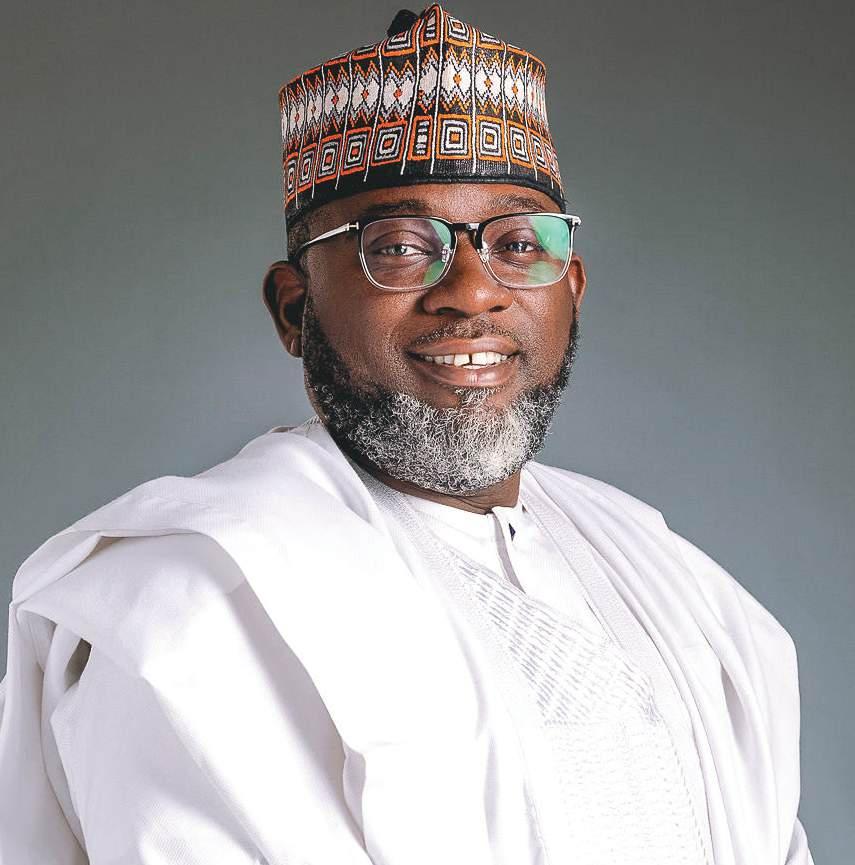
Representation is the hardest labour in politics. No one understands this better than Hon. Adewale Adedeji, a reluctant politician who understands that power is borrowed, governance demands discipline, and politics, long after the campaigns are over, never truly ends. Adedayo Adejobi writes
edited by: VAN e SSA o BI o HA/vanessa.obioha@thisdaylive.com.
On a bright Tuesday afternoon, just after 1pm, the gates of a newly inaugurated constituency office in Ifako Ijaiye swing open, admitting a modest procession of aides and security personnel. The moment Hon. Adewale Adedeji steps in, the space settles. He has just emerged from what he describes as his first serious constituency and Community Development Association meeting of the year, one of those sessions that fray nerves, stretch tempers, and remind any elected official why representation remains the most demanding assignment in public life.
Dressed entirely in white, his signature kaftan flowing effortlessly, a matching cap firmly in place, and a now-familiar white beard framing a composed face, Adedeji looks calm rather than drained. It is an image Lagosians have come to associate with him: part statesman, part community man, part political student who never quite left the classroom. He exchanges warm, almost casual pleasantries with the reporter before gesturing towards the staircase. “We should go upstairs,” he says. “It’s quieter there.”
The first-floor office is expansive without ostentation. A solid wooden executive desk anchors the room. Behind it stand the Nigerian flag and another official banner, reinforcing the unmistakable authority of the space. Framed portraits and institutional emblems line the walls, while neatly arranged documents and a few decorative accents soften the formality. Everything suggests order, intention, and a man instinctively inclined towards structure rather than noise.
He settles into his chair and waits patiently as the recorder is switched on.
“Politics,” he begins, “is divided into three.” There are those actively involved in decision-making — holders of power who may never benefit from it personally. There are beneficiaries, often technocrats, convinced they can govern better than those elected.
Then there are what he calls political compensations: grassroots actors, not always formally political, but powerful enough to mobilise communities. “To understand politics,” he insists, “you must first understand where you stand within these three.”
It is an explanation that frames not only his worldview, but his journey. Having just emerged from the constituency meeting, this reporter was curious to find out if this relentless engagement defines his daily routine and whether it ever becomes exhausting.
He answers without hesitation. “Exhausting. Not everybody does what I do.”
To understand why he does it, one must return to the beginning, long before white kaftans and legislative chambers.
“I was born and raised in Ifako Ijaiye,” he says. “I attended Ifako International School and Government College, Ketu Epe, at a time when much of this area was still forest. The Ifako Ijaiye of my childhood bears little resemblance to what exists today. Where bush once stood, land now sells for hundreds of millions of naira. Development arrived aggressively and I insist it did not happen by accident.”
Politics, however, arrived in his life long before development did. “My late father was a formidable grassroots politician,” he says, pausing slightly. “Deeply embedded in local government politics. Widely respected.”
He sighs. “Our relationship was not romantic. We argued constantly about politics. I never wanted to follow this path.”
At some point, he admits quietly, he believed politics contributed to his father’s early death at 66, while serving as a member of the House of Representatives.
For a long time, politics repelled him. Instead, he trained as an Estate Manager, specialising in Facility Management and Urban Logistics. He became an entrepreneur in construction and entertainment, worked at the Lagos Internal Revenue Service, and lived what he describes as a full professional life.
Alongside this, he ran a youth-focused NGO, the Young Achievers Campaign Organisation of Nigeria. “It was there,” he recalls, “while supporting underprivileged youths, that my resistance to politics began to soften.”
“We needed government backing, recognition, and legitimacy. Politics, I realised reluctantly, was not just about power. It was a tool.”
That realisation drew him into mobilisation and campaigning for then-Governor Babatunde Fashola. Through that work, he caught the
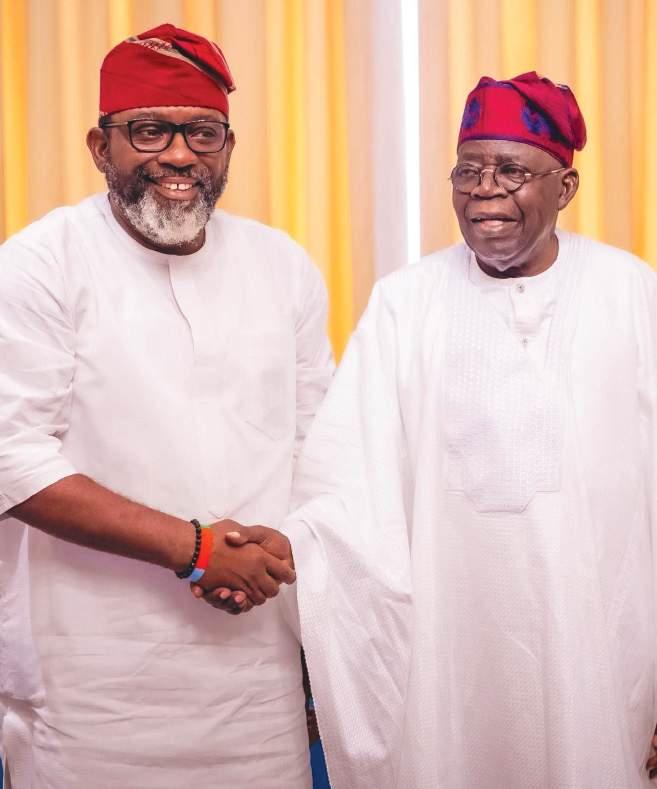
Hon. Adedeji with president Tinubu
attention of Asiwaju Bola Tinubu, now the President. He remembers it vividly: a moment in a crowd, a pointed finger, a brief meeting, followed by another later that night in the company of governors. A relationship began, one that would profoundly shape his life.
“I was in London when I received a call inviting me for an interview with Governor Fashola,” he says. “I returned immediately, interviewed, and was appointed Senior Special Assistant on Lands, and subsequently Works and Infrastructure. At the time, my father was also in government.”
Yet neither Asiwaju nor Fashola knew they were father and son. He never traded on lineage. He was never introduced as anyone’s son. Asiwaju never asked. For nearly a decade, he served without that knowledge. It was only after his father’s death that Fashola informed Asiwaju of the truth. The reaction, he recalls, was shock. Asiwaju told him his father was a bosom friend. “I replied simply that I knew.”
“From that day,” he says, “I took Asiwaju as a father.”
He travelled across the country with him through multiple campaign seasons, observing closely, learning without notebooks. “Asiwaju does not teach theory,” he says. “Learning under him is practical, experiential, relentless.”
He describes it as an education vast enough to fill a compendium.
His formal political journey began only after his father’s passing. “I contested for the House of Representatives,” he says. “I stepped down when asked. I waited for another cycle that proved even tougher. Twenty-one aspirants contested for a single House of Assembly seat. Campaigning was brutal. Lobbying was exhausting. Convincing people who neither understood nor cared about legislative work was humbling.”
“People do not vote for competence,” he says pointedly. “They vote for access.”
That lesson reshaped his understanding of representation. In the legislature, unlike the executive, there is no direct control of funds, no contracts to award—only lobbying, persuasion, and appeal. He refuses to call it begging. “Representation,” he insists, “is the hardest part of governance.”
Every morning, he wakes to tens of thousands of messages, mostly requests. At some point, he questioned whether this was the life he wanted. A people-person with executive experience, he initially approached representation like an administrator. The result was the constituency office itself: a sprawling
This is his fourth Master’s degree. “My final examinations begin next week.” He laughs when asked how he balances his schoolwork with his legislative duties. At 42, he jokes, “the white beard tells the story.” He drives himself to school, wears jeans and T-shirts, and runs errands for classmates who have no idea who he is. “I don’t need an escort. The people are my security.”
School, he says, keeps him grounded. It reminds him of real pain points. Power, he warns, can deceive. Office can make a man forget himself.
Loyalty has anchored him through Nigeria’s shifting political platforms—AD, AC, ACN, APC. “I never left Asiwaju,” he says.
“I helped draft the APC youth wing constitution, participated in the merger processes, and watched him evolve without defecting. That consistency taught me loyalty as a political virtue.”
On youth empowerment, he is unequivocal. “Politics is not a fluke. It must be learned. Power and fame attract attention, but responsibility overwhelms intentions. Asiwaju has always created space for youths. Many who served under him are now ministers, commissioners, even traditional rulers.”
“From Asiwaju,” he adds, “I learned that power is not served à la carte. Resilience. Patience. Strategy. Anger is not a strategy. He watched quietly during years of attacks, learned when to speak and when silence is strength.”
He continues. “If you can prove your point, he takes it. Leadership, to him, is humility backed by conviction.”
As a member of the Lagos State House of Assembly, he says, “I learned that power is borrowed, not owned. Ninety per cent of leadership is for the people.”
His relationship with Speaker Mudashiru Obasa, he explains, is rooted in respect, mentorship, and shared history. “I entered the House determined to learn, not dominate. That decision shaped my legislative maturity.”
complex with halls, offices, and recreational facilities, open to the public at no cost.
“Still,” he says, “the demands kept coming. Roads. Drainage. Infrastructure.” Like Oliver Twist, he adds with a faint smile, “They keep asking for more.”
He lobbies the Governor, the Deputy Governor, and the Speaker. “I credit God for what has worked,” he says. “Ifako Ijaiye is now ranked among the top ten local governments in Nigeria.”
His technical background informs every aspect of his work. “I learned governance as a civil servant,” he explains, “rotating through nine ministries in rapid succession. Exhausting, yes, but invaluable. At one point, I held two Senior Special Adviser roles simultaneously.”
Upon assuming office as a legislator, his first task was to overhaul transport sector reform laws. He completed the process in two years.
Retained as Chairman of the House Committee on Transport for a second term, he returned to school. “What was the point,” he asked himself, “of chairing the committee without formal training in transport policy?”
Beyond politics, his constituency work reveals the man behind the office: health insurance for widows, quarterly food and cash support for the elderly, thousands of free JAMB and GCE forms, scholarships for top-performing youths, and adult education programmes that have returned hundreds to classrooms and employment. He speaks of these not with pride, but with a sense of obligation.
“I have seen old people cry with joy,” he says softly. “I have seen youths light up at opportunity. I believe hope is tangible. Construction brings jobs. Development restores dignity.”
At home, the story is more delicate. “My wife never wanted to marry a politician,” he admits. “I once pretended to be a banker.”
She endured late nights, betrayals, health scares, and tears she found him shedding alone in his study. “We survived.”
“My children barely saw me for years,” he continues. “Today, I try to reclaim time. Grace makes balance possible.”
The criticism that wounds him most, he says, is forgiveness. “I forgive too easily. I learned it from Asiwaju. It is my weakness and my shield. I heal by seeing others happy, even those who hurt me.”
Beyond titles, beyond office, he wants to be remembered simply. “People-driven. Playful. Human.”
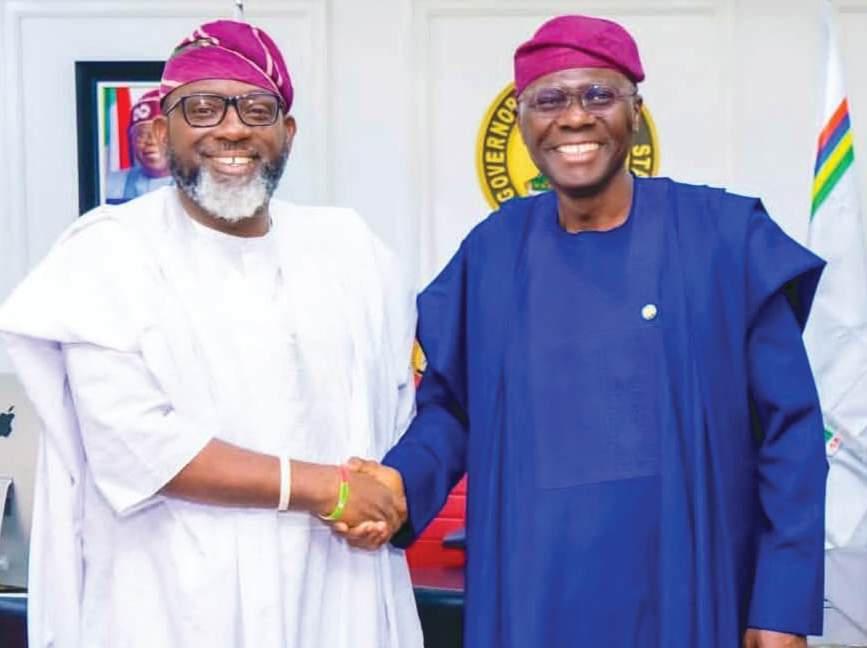
A government can wait years for a company to drill. Eventually, it may decide the wait itself is the answer.
In January 2026, Senegal revoked the offshore exploration license of Atlas Oranto Petroleum, the Nigerian firm owned by billionaire Arthur Eze. The affected block, Cayar Offshore Shallow, had been held since 2008. Moreover, the move did not seem to have any malicious intent; everything was within justifiable reason.
According to Senegal’s Ministry of Energy, there were specific breaches. For one, the company failed to provide mandatory bank guarantees. Also, it conducted minimal exploration work, drilling no wells over 18 years despite extensions. This inaction triggered the decision.
The move signals a new rigour under President Bassirou Diomaye Faye, with a policy shift that is becoming a regional benchmark. His administration is cracking down on speculative license holders, prioritising active development over idle acreage.
For Atlas Oranto, the setback compounds scrutiny elsewhere. In Liberia, lawmakers recently questioned proposed deals with the company, calling them “corrupt and dangerous” over transparency concerns. The firm’s history of limited follow-through is a growing liability.
Eze founded Atlas Oranto in 1991, growing into one of Nigeria’s largest private oil groups, with assets across 22 African countries. Yet this scale now faces questions about execution capacity versus accumulation.
The Senegalese decision is more than a contract cancellation. It represents a maturing regulatory stance in African oil politics. Governments are increasingly willing to reclaim assets from seemingly passive holders.
For decades, Eze’s wealth was built on securing rights. Senegal’s action suggests a new chapter where holding those rights, without proving you can use them, is no longer a viable business strategy. The uninformed might think that the real loss is the block—it isn’t. Rather, it is the presumption that time is always on the holder’s side.
In Nigeria’s downstream oil sector, one name stands out for remarkable innovation and impact: Abdulkabir Adisa Aliu, Founder and Group CEO of Matrix Energy. He launched the company in 2004, transforming it from a small startup into an integrated energy conglomerate in two decades.
Aliu’s leadership is defined by a specific trifecta. Colleagues cite his precision in operations, the rapid pace of the company’s expansion, and a clear philanthropic purpose. This approach earned him a 2024 seat on the Presidential Economic Coordination Council.
The background of this legendary figure is in engineering, not showmanship. A metallurgical engineer by training, he spent years in banking and international oil firms before starting Matrix. This pedigree informs his technical, detail-oriented management style.
The company’s growth is
The blueprint for a community’s future can sometimes be found in the cement of a new road or the glow of a solar-powered streetlight. In Ikorodu, these are the signatures of its representative.
Babajimi Benson has represented the Ikorodu Federal Constituency in the House of Representatives since 2015. A lawyer and former UN legal officer, his approach blends legislative work with hyper-local intervention, all dressed in his strategy to faithfully address both policy and potholes.
The man’s local imprint is substantial. He has facilitated the construction of over 65 roads. He also launched the “Light Up Ikorodu” project, installing thousands of solar streetlights and providing solar home systems to 8,000 households. This focus on energy access is a key part of his development calculus, becoming a defining characteristic of his service to the people.
Beyond infrastructure, Benson’s iCare Foundation runs a monthly food
tangible, obvious even to a blind person. After all, Matrix now operates across oil trading, shipping, LPG distribution, and fertiliser blending. In 2014, it was ranked among Nigeria’s top 100 businesses, a marker of its ascendant trajectory.
Beyond the balance sheet, Aliu’s influence is felt in philanthropy. His foundation has awarded over 4,000 university scholarships and funded the construction of specialised kidney treatment centres in Maiduguri and Ile-Ife.
This duality of being a sharp businessman and also a systematic giver creates a compelling narrative about Aliu. It is one about him building profit in the energy market while strategically investing in human capital, viewing both as essential to national development.
Clearly, for Aliu, precision is more a philosophy applied from the refinery gate to the scholarship committee than just a business
tactic. In a volatile industry, his most valuable asset may be the predictability he has engineered, proving that in Nigerian business, a steadfast reputation can be the ultimate competitive edge.
In Nigerian business, few titles carry the weight of both a beaded crown and a fuel pump. Oba Obateru Akinruntan, the Olugbo of Ugbo Kingdom, wears both.
He founded Obat Oil in 1981. Now led by his son, Akinfemiwa Akinruntan, the company is pursuing the most ambitious national expansion. The goal is 200 new retail stations, accelerated through a novel franchising model to ensure scalable growth.
This retail push is backed by serious infrastructure. At present, the company operates a 65-million-litre tank farm and a private 160-meter jetty in Apapa. This backbone provides a strategic advantage in a post-subsidy market defined by logistics.
Technology is another plank. The firm has implemented enterprise digital systems for real-time visibility from depot to pump. The point of this is to enhance the efficiency and integrity of the supply chain.
Simultaneously, Obat is making a pivot toward cleaner energy. It is investing
in LPG and Compressed Natural Gas infrastructure, with pilot projects in Ondo and Ogun States. Commercial operations are targeted before the end of 2026.
The strategy acknowledges a shifting landscape. The rise of the Dangote refinery and the removal of subsidies have reshaped competition. Obat’s response is to double down on physical assets and forwardlooking energy solutions.
For a company founded by a monarch, this expansion is more than a business plan; it is an extension of the legacy. It blends the traditional authority of a king with the modern imperatives of a competitive energy market.
The journey from a single outlet to a nationwide network mirrors a classic Nigerian story: ambition built on tangible assets, familial succession, and an eye on the next horizon—where the pump of tomorrow might dispense gas, not just gasoline. This is Obat Energy’s storyline,
bank. For over eight years, it has been serving thousands of vulnerable families. Not to mention, the man donated an 80bed Mother and Child Hospital in Imota not too long ago. In other words, his heart is with the people, even in health-related matters.
Nationally, Benson’s legislative pedigree is notable. He chairs the powerful House Committee on Defence and has sponsored bills like the Defence Industries Corporation of Nigeria (DICON) Act. He works on both macrolevel security and micro-level welfare.
This dual-track method—high-level lawmaking and granular constituency projects defines the man’s ethos, even earning him accolades like “Representative of the Year” and the local moniker “Mr. Constituency Projects.”
For Benson, service is a verb with two objects: the nation and the neighbourhood. His tenure suggests a political theory where a lawmaker’s legacy is written not just in the statute books, but in the concrete and solar panels transforming his community’s daily life.
In Nigeria, carrying a famous name can be a burden or a blueprint. For Aisha Babangida, it became a directive to serve, a reason to commit, and a foundation to inspire.
The daughter of former President Ibrahim Babangida, Aisha, is a prominent philanthropist. Her work is a conscious extension of her late mother’s mission through the Better Life Program for the African Rural Woman. She chairs the initiative, focusing on adult literacy and skills for women.
The good lady’s approach is multifaceted. She founded Egwafin Microfinance Bank in 2016 to provide capital to women locked out of traditional banking. Her goal with this move is to target economic exclusion at its root. By every equation of measure, she has been doing just this.
Simultaneously, her Tasnim Foundation provides scholarships for girls in rural areas and rehabilitates orphanages. She does not view educating a girl child as charity; instead, in her eyes, it is generational investment. And it shows in how effectively young ladies are marching to this sound of selfdevelopment.
Further scaffolding comes from the
Women Enterprise Alliance (WenA), launched in 2018. It connects female entrepreneurs with mentors and capital, fostering self-reliance beyond mere grants.
Colleagues describe Aisha with a quiet dignity, noting her focus on grassroots impact over public recognition. Yet, to her, the mission at hand is a spiritual responsibility, a calling to support the vulnerable.
No wonder her philanthropy is less about spectacle and more about architecture—building systems of access for education, finance, and mentorship. She works to alter the underlying conditions of poverty.
Aisha’s story suggests that the most powerful inheritance isn’t wealth or fame, but a mandate to uplift. She has spent decades converting a legacy of privilege into one of purposeful compassion, proving that a famous name can be most powerful when used to amplify the voices of the unseen.
In a sector dominated by global giants, the most ambitious gas project off Nigeria’s coast is being led by a homegrown company. The captain of this majestic company is none other than Julius Rone.
Rone is the Group Managing Director of UTM Offshore Limited. He is pioneering Nigeria’s first indigenous Floating Liquefied Natural Gas (FLNG) facility. The project aims to convert “strand gas” from the Yoho field into export-ready fuel and domestic cooking gas.
The scale is significant. The facility is designed to produce 2.8 million tons per annum. Crucially, it is projected to supply 25% of Nigeria’s domestic LPG demand, a direct intervention in the local energy market.
Rone’s accolades in 2025 tell their own story. He was named New Telegraph Personality of the Year and The Sun Newspaper Investor of the Year. Together and on their own, these honours frame him as a visionary reshaping the national energy narrative.
The project’s backing is substantial. UTM Offshore secured a $350 million loan from Afreximbank. It also brought on the NNPC and the Delta State Government as equity partners, blending national and local stakeholdership.
Technically, it relies on global expertise through partnerships with firms like JGC of Japan and Technip Energies of France.
This synergy of indigenous leadership and international engineering is central to its credibility.
The facility is expected to create thousands of jobs. Its location, 60 kilometres off Akwa Ibom State, positions it as a major industrial undertaking in the Niger Delta.
For decades, Nigeria’s gas story was one of flared potential. Rone’s project represents a tangible bid to capture that resource, proving that the standard for a Nigerian energy revolution can be set by a determined insider, not just an invited multinational. And if things go as expected, the footnote to the
What happens when the most potential political defection is not that of a rival but a son? Would the move send a message that no press statement can counter? Would it fuel speculations about potential jiggery-pokery or just resignation at the plight of the father?
Abba Atiku, son of former Vice President Atiku Abubakar, recently joined the ruling All Progressives
Congress (APC). In response, observers concluded that it is not a routine party switch. After all, the symbolism is profound, placing him directly opposite his father, a longtime APC antagonist. Father Atiku’s public response was measured. He affirmed a democrat’s belief in personal choice, even within the family. This posture, while constitutionally sound, carried a political
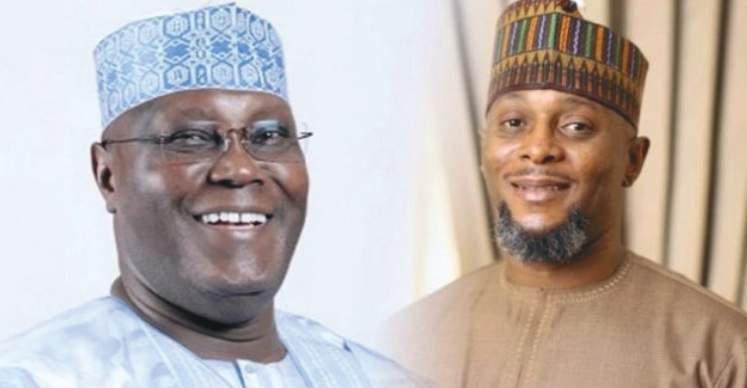
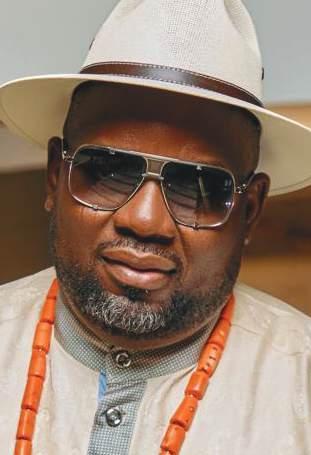
story would be that Rone almost singlehandedly held up the sector.
cost, creating a narrative of internal dissent that opponents can weaponise.
The move raises an inevitable, if unfair, question about authority. If a leader’s vision cannot persuade his own household, critics ask, how can it persuade a nation? Politics often favours perception over principle.
Observers note that Abba is no political novice. He is an educated, deliberate figure. His choice suggests calculation, not impulse. This amplifies the intrigue: is it a genuine ideological shift, or a strategic gambit?
Some speculate about infiltration, a daring inside manoeuvre to weaken the APC from within. But this is not a Nollywood production. Moreover, such tactics typically rely on stealth, not the very public fanfare this move generated.
Electorally, the immediate impact is more optics than structure. Atiku remains a formidable opposition figure with a deep network. However, elections are won by compelling narratives as much as by machinery.
For now, the story is one of bloodlines and political lines intersecting. The defection of Abba may not change the ballot count, but it has already altered the political conversation, introducing a personal fracture into a very public contest.
In Ondo State, the most talkedabout political future is currently anchored in a federal ministry in Abuja. Its architect is Olubunmi TunjiOjo.
Popularly called BTO, Tunji-Ojo is Nigeria’s Minister of Interior. He is also the political force who delivered his Akoko North West constituency with an 81.2% vote for the APC in the 2024 governorship election, the highest in the state.
The man’s local imprint is broad. Recently, he approved the creation of Technology Hubs across all 18 Local Government Areas, all aiming to equip youths with digital skills, a clear pivot toward a tech-driven future.
His philanthropy is equally systematic. In January 2026, TunjiOjo launched an initiative providing learning materials to over 120,000 pupils. He also funds medical outreaches and has distributed aid across all 203 wards in the state.
As a former federal legislator, he facilitated road projects and donated infrastructure like transformers. Now, as a minister, his reforms— clearing a massive passport backlog, automating systems—have built a national reputation for efficiency.
This federal success fuels local speculation. Despite his focus on his ministerial role, many see him as a frontrunner for the state’s top job in the future. APC elders have already endorsed him to lead President Bola Tinubu’s 2027 re-election campaign in Ondo. After all, he was reportedly very instrumental to Governor Lucky Aiyedatiwa’s emergence in 2024.
Tunji-Ojo’s strategy appears dualtrack: delivering visible development at home while building a record of transformative governance at the centre. This positions him as both a benefactor and a benchmark.
For now, the Interiors man holds a unique vantage point: shaping Nigeria’s present from Abuja while meticulously laying the groundwork for Ondo’s tomorrow. From this point, Tunji-Ojo is proving that the most potent political torch is one that illuminates both a local path and a national stage.
These ones are just disturbing our peace. The wahala started when some people started calling Wizkid, the megastar, the next Fela. That was how Seun, the son of the late Afrobeat founder, went on a rampage ooo. He hurled abuses at Wizkid and his fans. For four days, he raved and ranted. He abused them to the point that even me I tire. When Wizkid could not take it anymore, he responded in a profanityladen outburst that saw Seun reeling in anger.
It was like petrol poured into an already raging fire, and before you knew it, Nigerians were divided. Instead of us looking for what to eat, we all joined the matter. Even me, I pulled my shirt and jumped in with a scathing article that got veteran journalist, Abiola Aloba calling me a “prophet.” However, a veteran Editor
and wordsmith, did not have any of it o, as he engaged me in the longest ever response to anything I have ever
written.
As I read his words, I could sense his anger as he laid it out to me for
daring to take sides with Wizkid. The controversy is still raging like that fire at Idumota as I write, and now my big sister, Ruth Osime has invited me to her programme, Perspective, on ARISE NEWS, to talk about the matter with Dede Mabiaku.
Well, me I will carry a first aid box because by the time I finish, e be like say Dede go want knock me. You know me, I don’t have time for emotional talk – na activist, he fight for freedom, he marry 27 wives, Buhari lock am, he wear pant… For me, na show me the money, show me the Grammy, show me the huge venues filled up to the brim every time.
Meet me at Ruth Osime programme, after the show, you will all learn. Thank you.
Let me first wave the white flag and say very clearly that I come in peace o before they release another Right of Reply on my head. My egbon, the brilliant governor of our neighbouring state, Ogun, a state that I love so much that I went to marry Duchess, is a man under pressure. His wahala with the beautiful Adetoun, the activist is getting messier. We have seen reports that the stylish activist has been declared wanted by the police. They even said that they have remanded the doctor who procured a “medical report” for her. That one just go waka enter trouble by himself. Immediately I saw the report that she was declared wanted, I reached out to her. Mbok nobody should come and ask me where I saw her o. Her WhatsApp is still working and she is still posting beautiful images on her IG. So, anybody who wants to catch her knows what to do.
“Sister mi, they have declared you wanted o. Let’s go and beg o,” that was my opening. “Duke, you never see anything yet. This na round one,” she replied defiantly.
My own is that all these are needless. Detoun crossed the lines in her umbrage and rightly, His Excellency is upset but if I were him, I will tow the high lane and ignore or use the opportunity to even look very seriously at the underlying issues that may have triggered her umbrage. And to Detoun, aburo you self-go and watch Martin Luther King and even VDM at the other extreme and see how they do activism. It’s not about how many people you give belle or to pull innocent mama into the matter. It is issue-based and constructive engagement.
Just as I was going to press with this page, I stumbled on Detoun again on IG. Me, I have decided to mind my business and no longer get myself involved. It is Ogun people that should put mouth. For me, I keep my mouth shut. Thank you.
MATTHew ASHIMolowo: THe
pArAbleS oF THe loST Sower
I have heard this story before tied to this pastor that used to have afro. Pastor Ashimolowo has been quoted to have said that sometime in the 90s, two men - Jim Ovia and Shina
Peters had N20million each. One built a huge mansion and the other built Zenith Bank. According to the pastor, one is repairing roof now and the other is one of the richest men in the country with the bank growing stronger and stronger. To add pepper to the injury, he was quoted as saying that he has travelled to over 10 African countries last year and that everywhere he went, he saw a Zenith Bank. Well, his message was on delayed gratification. But Shina Peters’ fans are not finding it funny. Veteran musician, Daddy Showkey, did a video trying to slam the good pastor and did not make sense to me as he was just rambling all over the place. Sir Shina Peters also came out to say something along the lines of not arguing with men of God. But you could see that he was pained. My people, the message of delayed gratification is a message that needs to be forced down our throats. We go about spending money without thinking about investing. Our young ones carry the latest gadgets, spend money like water and then run dry and start doing some funny things. Without delayed
gratification, you cannot live a fulfilled life. Sorry Sir Shina Peters for being made the poster boy for a lack of understanding of the principle of delayed gratification. No vex my star the example the pastor used is the very best and most graphic example of our delayed gratification works and no worry. You are not the only one that the thing has bitten. At least you still have roof to patch, what about the millions of Nigerians who live under the bridge after squandering all of their wealth on the good things of life? Pastor Ashimolowo, if you truly used that analogy, you do well. When you are less busy, contact me, I have many examples you can use so that we can allow Sir Shina Peters to rest small. Na wa.
DIkko rADDA’S STrATegIc Move
When America says “we don’t negotiate with terrorists,” it’s not just with mouth. Even the terrorists used to know what would hit them when they push America. The Katsina State Government is not in that boat o. When they have lost over 1,000 people and all they are getting are press statements and instructions
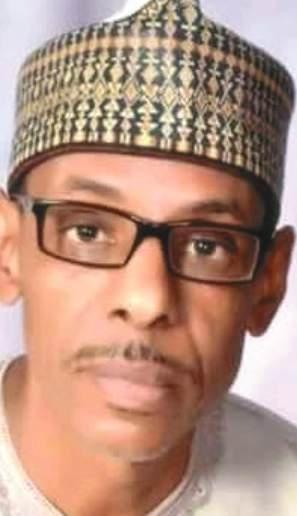
from the C-in C to Musa, to fish out the culprits and Musa will respond by saying, “We will leave no stone unturned in our search for the culprits,” and the people of his state continue to be kidnapped, raped and mauled, what would a responsible governor do?
Mbok, Baba has gone to cut deals with bandits as he has seen that he is literally on his own. If na you, what will you do? Not that the military and authorities are not trying, but when the thing is looking like water has passed garri, what do you do? Do you keep waiting for a rescue that comes too late, or when it is not even effective enough to push back, or do you do the next reasonable thing – go and beg and cut a deal? Well, I know what I would have done as Governor of Katsina, and it would certainly not be listening to people who are sitting down in air-conditioned offices in Abuja and telling me not to negotiate with bandits when there is fire in my backyard. I will do what a responsible governor is supposed to do and damn the consequences. Read that anyhow, it’s your business. Thank you.
BABATUNDe FASHolA: How Are YoU, MY FrIeND?
My favourite politician and lawyer. I thought we were close o and was expecting to be invited this new year for some Amala and Ewedu, but nothing came. Anyways, I forgive him. The way oga has been able to thread the minefield that is Nigerian politics, served some very hated leaders and remained loyal to the current most-hated leader and still maintain a very high public rating has to be discussed.
Babatunde Fashola, despite serving in what many Nigerians see as two bad governments, remains very popular and loved by the public. It is either he is an expert in the art of dancing ballet on a minefield, or God has really done overtime on his case. The other day, sitting down with him in his office nestled in his very beautiful home in Ikoyi, his brilliance shone through. We discussed so many issues, and he exhibited the kind of brilliance that a lot of our politicians, especially the ones from this our Centre of Excellence, find it very difficult to exhibit. Well done, sir. I just say I should reach out and say “how are you, my friend” and to wish you a happy new year. Thank you, sir.
a position to scatter or throw up a weakened platform to go into a contest with an ogre with a medusa head?
This ADC is not a serious contraption, and unless a miracle happens, it is just a waste of time. Thank you.
SUper eAgleS: AccepT MY ApologY
You know me, I am not a proud fellow, and I know how to apologise. When we lost the other match, I railed and abused these boys. In fact, my brother Fidelis Anosike had to tell me to hold down my emotions,
brilliant outing. I have at this point no other choice than to send my heartfelt apology, and congratulations to what I have been told is the most technical Super Eagles team in a bit. Well done, guys, as our president says, this Bronze feels like Gold, and truly, we remain very happy and grateful to you guys for this. God bless you all.
DejI ADeleke: TroUBleS oF A lovINg pATrIArcH
Watching the well-respected patriarch of the Adeleke Family speak on the raging DNA scandal
not know whether to laugh or pity him. The man who is reclusive had to come out for the first time ever to speak to the press to address this matter once and for all.
He told us how they did five DNA tests – three for David and two for B-Red, all coming 0000.01% negative. He talked about the support they have given this girl, including giving her a scholarship to their university, and all of that has come with this. He didn’t speak in anger or frustration but spoke like a loving elder who was just out to settle the squabble amongst his children – by this I mean all involved, including the young lady. The way he spoke, you could see that he was seeing all the participants – David, B-Red, Anu and the mother all as his children. My own is that he should be happy that in these times when boys are now dating boys and wearing lipstick and wanting to be women, that he still has sons and nephews who have this DNA problem, he should go and ask Bobrisky’s father what he went through before he passed. Chief Adeleke just thank your God.
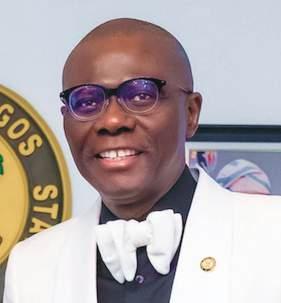
The clip that I just watched showing my egbon, Babajide Sanwo-Olu speaking on the Makoko matter was one kind o.
HAkeeM BABA-AHMeD: MoveMeNT oF THe people
This Baba has said that once Abubakar Atiku wins nomination as the presidential flagbearer for the coalition ADC, everything will scatter. He does not need to be a prophet like that one who wanted to use N150m to buy trumpets for our power minister to know this one. Even I, who is sitting down here in Shomolu, know this one. The coalition has very ambitious but lightweight politicians who all come with an overdose of ambition. Obi, Amaechi, and even one former Education Minister are all inside there, jostling for this one ticket. This is why I remain very confident in my assertion that all of them, except bald Amaechi, may be working for Tinubu.
This is because if we are really serious about building a strong opposition coalition, why then should we now put ourselves in
In the clip, His Excellency was looking so handsome, I come dey wonder if it is AI at work. No pimples, smooth skin, white teeth. Aghhhhhhh, this man is fine in these pictures o and I began to wonder because he no fine like this in real life o.
Anyways, that is not why I am writing today. The demolition of Makoko is the matter here. Now, how can anyone in their right senses be angry at the clearing of that place? Kai, if you stand on the Third Mainland Bridge and look down or drive near the place, you will cry. That place is poverty defined with all that comes with it. So, if the government now decides to do something about it after centuries of squalor, why would anybody be upset?
As the governor has said, some NGOs have fed off that squalor for years. They go there to shoot the penury, send the clips to international donors, get grants and go back and do some pittance and “chop” the rest of the money. For years, the people of Makoko have been used as props by these vultures to make money, and now, the government has woken up to its responsibility, and we must support it.
I pray that a very robust resettlement and compensation scheme has been put in place, and not just to drive them away like it was done in Maroko some decades ago. But how do you settle on land, people who have lived on a canoe and water all their lives? Well, that is talk for another day. I will go and see the place this weekend just to be part of history. Well done, Governor mi.
This actress has gone gaga since her former lover went ahead to marry someone else. Immediately she saw the footage, she lost her mind and went on record to swear that the man will not know peace for leaving her and marrying someone else and truly, not only the pastor but the rest of Nigeria have not known peace. Mbok, I don’t think a man has suffered the way this pastor has suffered and would be regretting the day she first opened her legs for him. Kai, all sorts of accusations and selfpity. Doris has made victimisation such a fine art. A willing participant, a married woman who did things with another man very voluntarily, and now screaming and threatening suicide?
In all these, her ex-husband, who bore the brunt of her shenanigans, is quiet o. He watched his wife indulge in sexcapades while on his matrimonial bed, is not screaming victim ooo. It is the one who sent her nudes, canoodled with a Pastor under the altar that is shouting victim and threatening suicide. Kai, this life is not fair.
You see what is in my head as I write on this case is like those movies where the actor would have gone through so much to catch a serial killer and when he finally meets the deranged serial killer, that one will now point a gun to his own head threatening to kill himself, saying “I am not going to surrender because I have nothing to live for again.”
The actor will look at him, spit on the floor and turn his head and walk very slowly away, and as he is walking, the serial killer will shoot himself, and the actor will stop for a second and, without looking back, will continue his walk.
The music will start, and the film will end.
That is what I will do with this Doris. I will just look at her, and turn my back and walk away. Anything she wants to do to herself, make she do.
But if na this Doris I have read about, instead of pulling a gun na phone she go pull out and shoot another skit. “Duke just walked away oooooooo, I will kill myself ooooo. Duke come back here oooo.” Drama everywhere.

Power is indeed transient. Between 2015 and 2023, Abubakar Malami held the reins of power as the Attorney-General of the Federation and Minister of Justice.
Less than three years later, no one, even in their wildest imagination, would have suggested that a time would come when the ever-powerful former minister, the chief hunter and a major player in the Muhammadu Buhari administration would become the hunted.
On Wednesday, January 7, 2026, Justice Emeka Nwite of the Federal High Court in Abuja granted bail in the sum of N500 million to Malami, his wife, and son, who were standing trial for an alleged money laundering charge. Malami and his family were remanded at the Kuje Correctional Centre.
As if all these were not enough trouble for the once untouchable Malami and his family, news also broke that the court had issued an order for the interim forfeiture of 57 choice properties linked to the family, worth a whopping N213.2 billion.
The listed assets include university buildings, hotels, schools, filling stations, warehouses, residential buildings, plazas, shops, factories and large parcels of land
across the four states and the Federal Capital Territory.
The former AGF was reputed to be among the elite and A-list members of the cabal in the administration of former President Muhammadu Buhari. He was reportedly influential and a power broker whose words were law. Many respected him, while others dreaded him because of his connection to the Buhari family. He was one of those who could see the former president any time. He even got married to one of the president’s daughters, Nana, in 2022.
Although he was granted bail alongside his family, it seems it is not yet Uhuru for him as he was again rearrested last Monday by the operatives of the Department of State Services (DSS). The move follows a fresh DSS investigation into arms and ammunition allegedly found at his Birnin Kebbi residence.
Before his arrest, Malami had dumped the All Progressives Congress (APC) for the African Democratic Congress (ADC) and formally declared his intention to contest the 2027 Kebbi governorship election, promising to “restore hope” to the state.
It was gathered that shortly after his arrest, his residence at Gesse Phase II, Birnin Kebbi, which was once a Mecca of
Last Thursday, January 22, Aisha Achimugu, Group Chief Executive Officer of Felak Group, once again had cause to celebrate and counted her blessings as she marked her 52nd birthday in grand style.
If anything, she appears more focused, more intentional, and more driven than ever, continuing to inspire with her passion, purpose, and unwavering commitment to excellence.
Achimugu, a graduate of Accounting from the University of Jos, Plateau State, has remained remarkably restless. She just doesn’t find any appeal in remaining in comfort zones.
As a result, she is still looking ahead, seeking new frontiers, refining her strategies, and aiming higher.
It is a fact that Nigeria’s business landscape is filled with several individuals who exemplify the virtue of diligence, which is the most reliable predictor of enduring success. Yet, even within this elite circle, she stands out.
Since she ventured into business, she has sustained her relevance, while expanding her influence, redefining leadership, and blazing forward with the quiet confidence of someone who understands both the power of vision and the discipline required to sustain it.
Those who have followed her trajectory with unalloyed interest would readily acknowledge that it reflects deliberate evolution. Although she is frequently characterised as a business mogul possessing poise, power, and purpose, her distinction lies not in privilege or acclaim but in a sustained commitment to growth, innovation, and meaningful contributions to Nigeria’s economic and social development.
Industry watchers often note her uncommon ability to read the business climate and position her ventures ahead of the curve.
That foresight has earned her global recognition and cemented her status as one of the most influential female entrepreneurs in Africa today.
Achimugu’s influence extends well beyond boardrooms and balance sheets. She is equally recognised for her humanitarian work, which has become a defining pillar of her public life.
To her, philanthropy is not an afterthought or a public relations exercise; it is a moral responsibility and a strategic tool for social stability.
Her philosophy aligns closely with the words of Mother Teresa: “Let no one come to you without leaving better and happier.”
sorts,
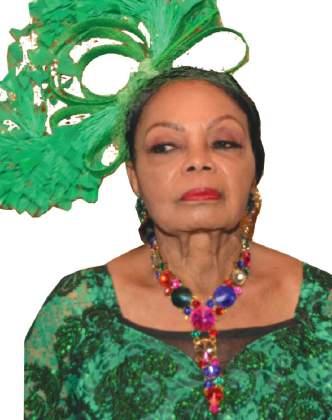
At 90, Chief (Mrs.) Opral Benson, famously known as Iya Oge of Lagos, still possesses all the trappings of fame and the gait of a celebrity. Top-of-theclass, elegant and ageing gracefully, Benson is one woman who has defined herself over the years through sheer dint of hard work and a tenacity of purpose. In all of these, her antecedents speak loudly for her.
The chieftaincy title of Iya Oge was bestowed on her by the late 0ba Oyekan of Lagos in 1973. Ever since, she has remained the epitome of African beauty and engaging intellect. This, no doubt, always gave her the greatest joy.
For her uncommon flair for beauty, the woman of substance, who was married to the late politician, TOS Benson, opened the prestigious Opral Benson Beauty Training Institute (OBTI) in Lagos, with the sole purpose of training hairdressers, beauty therapists and cosmetologists, as well as sharing
her beauty knowledge with the youths.
This respectable nonagenarian has lived her life in absolute dedication to her first love: fashion, style and beauty therapy. Her immense contribution to the industry has been phenomenal and is well-documented. Little wonder many were scared stiff when the story of her disappearance from home hit the street last Sunday. Her family stated that she went missing on January 11, 2026. It was further stated that she left home unannounced and her whereabout was unknown.
The news sent a cold chill down the spines of many Nigerians, her fans and the global fashion industry because of her contribution to the fashion world.
Surprisingly, a twist was introduced into the story when another news broke that she was in Monrovia, Liberia, her country of birth.
With this good news, her numerous fans have heaved a huge sigh of relief and given a new reason to rejoice.
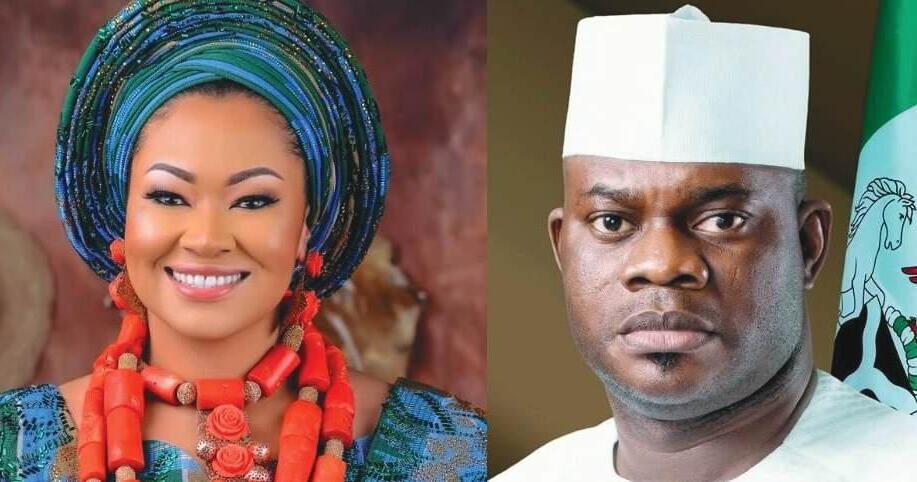
Former Governor Yahaya Bello and Senator Natasha Akpoti-Uduaghan are not mere competitors; they are entrenched adversaries whose prolonged feud has not only shaped political narratives in Kogi State but also the entire North Central region. For this, they have become one of the most discussed arch-rivals in the country’s political landscape.
Many would recall the fierce battle fought in 2023 between the two gladiators when Senator Akpoti-Uduaghan of the People’s Democratic Party (PDP) defeated Bello’s anointed candidate, Abubakar Sadiku-Ohere of the All Progressives Congress (APC), to emerge senator representing Kogi Central Senatorial District.
The Independent National Electoral Commission (INEC) had earlier declared the APC candidate as the winner of the election. But dissatisfied, Natasha approached the tribunal with a petition seeking to nullify the victory of Sadiku-Ohere.
The election petition tribunal sitting in Lokoja subsequently nullified Ohere’s election and declared Akpoti-Uduaghan as the winner.
As the nation approaches another election cycle in 2027, the two may be in for another round of battle. The latest encounter, which began with quiet manoeuvring behind party curtains, has eventually exploded into a fierce ideological and power confrontation.
Senator Akpoti-Uduaghan and the former governor are now locked in a high-stakes,
no-holds-barred contest for the soul and future of Kogi Central Senatorial District ahead of 2027.
On one side stands Senator AkpotiUduaghan—an insurgent force riding on popular legitimacy, grassroots mobilisation, and a growing narrative of resistance against entrenched political overlords. Her camp projects a politics of defiance, reform, and people-driven mandate, challenging the old order and confronting political godfatherism head-on.
On the other side is Bello, the former governor and political war general, commanding a hardened structure forged through years of executive control, party dominance, and strategic patronage. Bello’s political machinery remains formidable—deep-rooted, wellfunded, and battle-tested—ready to reclaim influence and reassert supremacy in Kogi Central.
Bello is no stranger to political combat. He emerged in 2016 as Nigeria’s youngest governor at the time, riding on the platform of the APC to govern Kogi state for eight turbulent years.
His tenure was characterised by firm control of party structures, aggressive political manoeuvring, and a leadership style that earned him both a devoted following and fierce criticism.
Now out of office, Bello’s decision to seek the Kogi Central Senate seat is widely interpreted as a strategic move to retain political relevance, consolidate influence in Ebira land, and reposition himself within national power calculations.
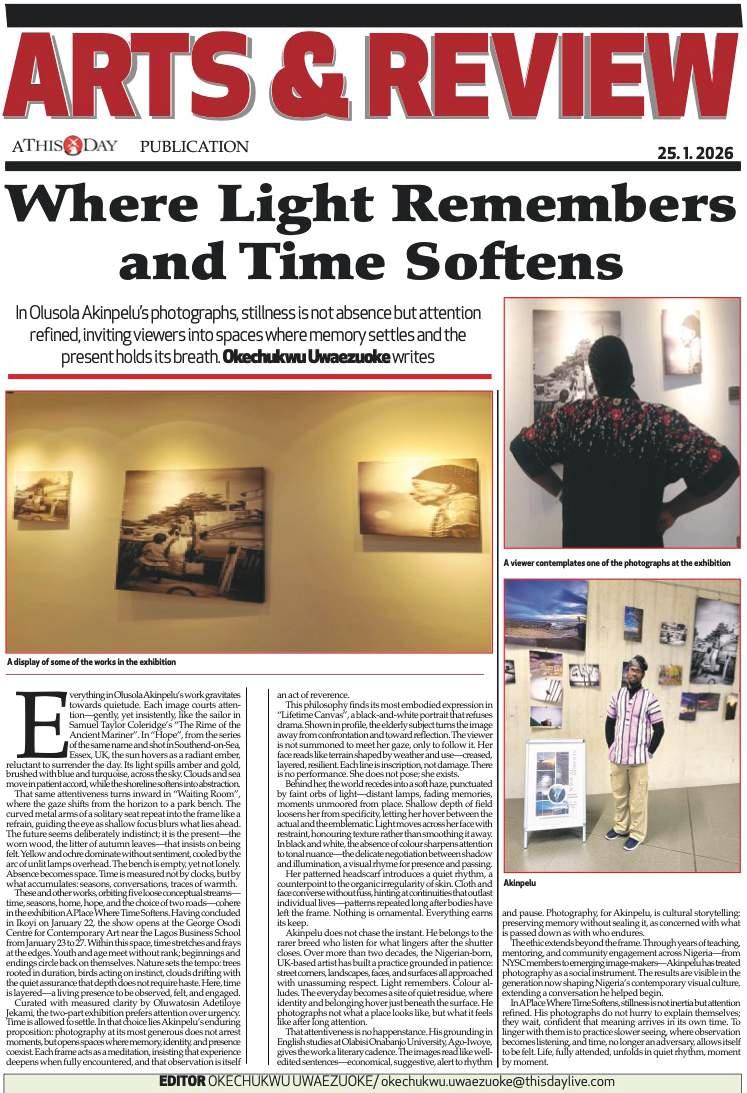
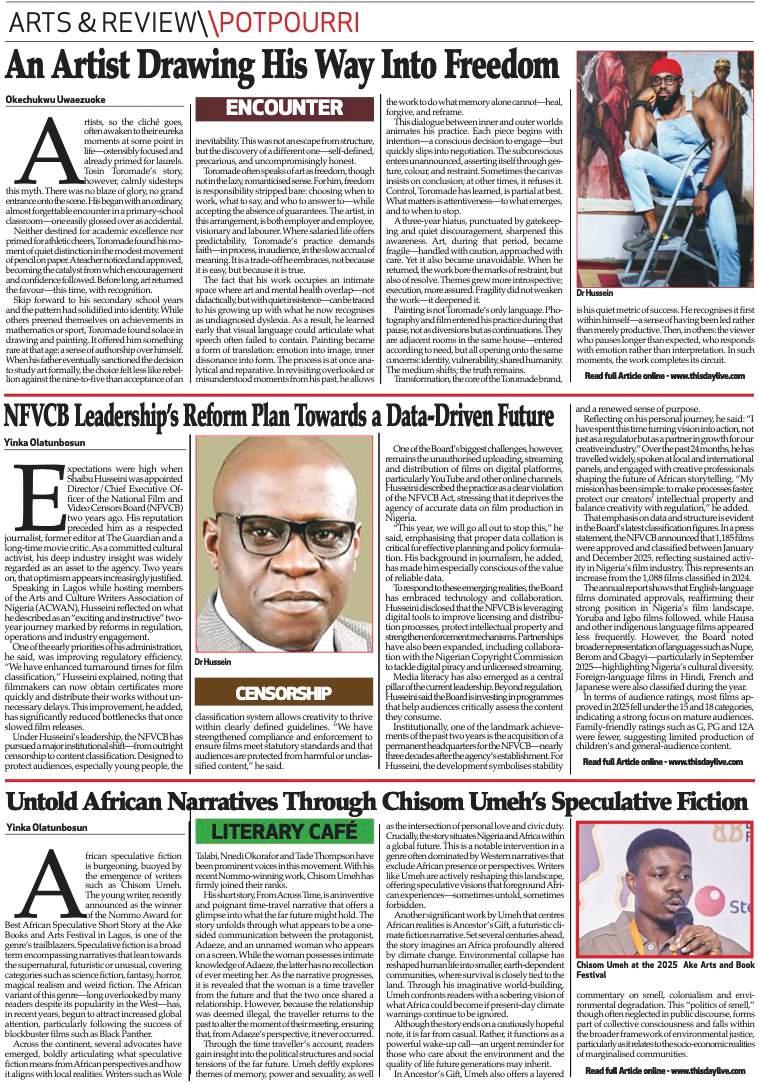
With the 2027 general election fast approaching, there are fears that if the amendment to the Electoral Act 2022 is not expedited, it will not only compromise the reforms needed to strengthen the polls but also undermine public trust in the electoral process, Davidson Iriekpen writes
The delay in the passage of the new electoral Act to guide and regulate the conduct of the 2027 elections has raised concerns among a crosssection of Nigerians, including civil society organisations and pro-democracy advocates.
On May 12, 2025, the then Chairman of the Independent National electoral Commission (INeC), Professor Mahmood Yakubu, disclosed that the commission had forwarded 142 post-election recommendations to the National Assembly, with eight of them requiring amendments to the 1999 Constitution or the electoral Act 2022. Unfortunately, nothing has been heard from the lawmakers on the matter.
Under the current electoral Act, INeC is mandated to issue the Notice of election one year before the scheduled date. This deadline is February 2026.
However, if the amendment bill is not passed before the notice is released, INeC will be legally compelled to conduct Nigeria’s next general election under the outdated and flawed 2022 framework. This would compromise urgently needed reforms and undermine public trust in the electoral process.
The 2025 electoral bill contains some of the most transformative electoral provisions Nigeria has seen in recent years, including the early release of INeC funding for timely preparation, mandatory audited accounts by INeC, the NIN requirement for voter registration to ensure a cleaner voter register, clear election timelines, the introduction of early voting and expanded voting rights for inmates, among others.
Despite the bill’s national importance, the Senate proceeded on recess until January 27, leaving only a narrow window to debate, harmonise, pass, and transmit the bill for presidential assent.
This lack of urgency stands in sharp contrast to the speed with which the Senate passed other bills, including the National Anthem Bill and several tax-related bills, demonstrating that swift legislative action is possible when the political class prioritises it.
Analysts have argued that if the lawmakers were truly sincere and determined, the process should have been completed within the second year of their tenure to allow for proper test-run through a series of by-elections and the gubernatorial polls in Anambra, Osun and ekiti states. They fear that the delay in ensuring the speedy passage of the Act is a plot to manipulate the 2027 elections. while the current electoral Act 2022 was adjudged as the most progressive electoral legislation in Nigeria’s recent history, several loopholes such as widespread vote manipulation, voter suppression, compromised technology,
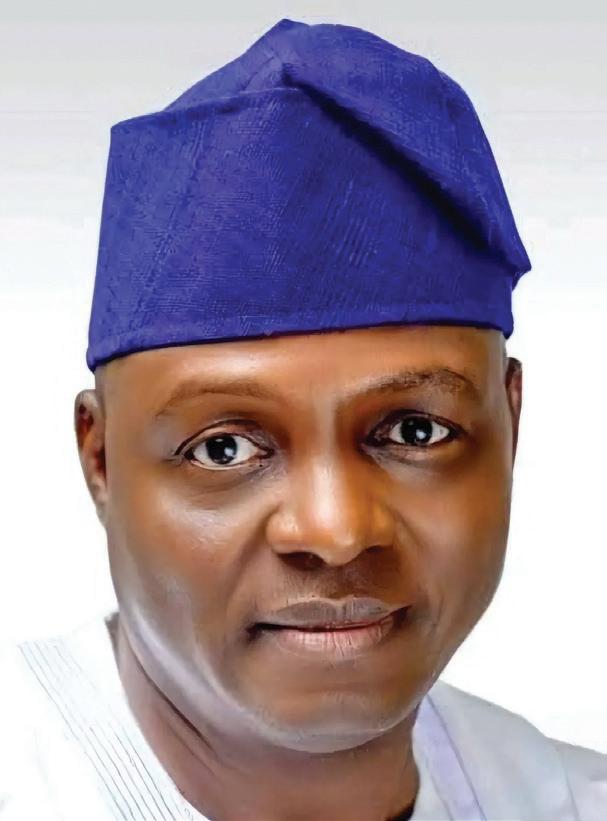
legal ambiguities, and post-election injustice, were identified as some of its weaknesses. These weaknesses were the grounds for extensive legal fireworks after the elections.
even when INeC was vested with the power to review declarations/returns made involuntarily or contrary to law, regulations and guidelines, the modalities and procedures for exercising this power were not prescribed in the Act or INeC guidelines, leaving room for abuse, compromise, controversies and uncertainty.
A cumulative reading of Section 65(1) of the electoral Act 2022 and regulation 90 of INeC regulations does not indicate who can file a report, and the procedure for filing a report against a declaration/return made under duress or contrary to law, regulations and guidelines.
Though to some extent, the IreVand BVAS helped in improving the 2023 and 2024 elections, analysts have posited that the fact that the judiciary did not deem them as compulsory requirements is a red flag for future elections, which the National Assembly needs to fix quickly. This should have been done long before the series of state elections and by-elections that usually precede the general election.
Because the BVAS and IreV were not made compulsory by the 2022 Act, the new amendment needs to include such a mandatory clause. The
contents of BVAS must be made compulsory for the determination of election results.
The failure to grant legal teeth to both BVAS and IreV led to the protracted battle among the trio of President Bola Tinubu, Atiku Abubakar, and Mr. Peter Obi over the 2023 presidential election, a battle that dragged up to the Supreme Court.
The apex court held that the non-availability of election results on the IreV portal was not a legal ground for the nullification of the February 2023 presidential election as canvassed by opposition parties.
Since 2015, the courts have maintained that innovations like Smart Card reader, BVAS and IreV require statutory enactment to enjoy the force of law. This position of the Supreme Court creates contradictions in the electoral system.
Many have argued that when a principal legislation confers powers on an institution to issue guidelines for its operations, such guidelines should have a binding effect because they derive from the principal Act, especially where the institution exercises the power within its scope.
It is illogical, they argue, for the courts to maintain that electronic transmission into the IreV portal is not a legal requirement simply because it was introduced in the guidelines rather than in the electoral Act.
However, the courts, in several cases such
as Jegede v. INeC and wike v. Peterside, have established that INeC regulations and guidelines have no binding effect.
It is these judicial positions that INeC seeks to address with its proposal to amend the electoral Act, explicitly providing for the electronic transmission of results to enhance the credibility of future elections.
The new year provides an opportunity for reflection, renewal and recommitment to strengthening democratic institutions. These reforms are crucial for improving transparency, reducing logistical failures, and strengthening the integrity of the election process. Its timely consideration is critical to the success and stability of democracy in the country.
with the statutory timeline for issuing notices of election approaching in the coming weeks, further delays could constrain implementation. experience has shown that amendments concluded too close to election periods risk being excluded from implementation due to constitutional and international obligations.
This is why formerVice President, Atiku Abubakar, last week alleged that loopholes in the electoral Act 2022 undermined the 2023 general elections’ credibility. According to him,, the law’s gaps enabled widespread rigging, making it tough for petitioners to win cases in court.
Atiku said Nigeria must urgently review its electoral laws, starting with amendments to the electoral Act, to address flaws that marred the 2023 general election. He stated that the failure to address the shortcomings of the 2022 Act would jeopardise the credibility of the 2027 general elections and future polls.
The former vice president expressed concern that the Senate appears unwilling to expedite the passage of the proposed amendments to the Act, warning that such delays could undermine public confidence in the electoral process.
Also, some youth groups under the Youth-led electoral reform Project (YerP_Naija) have urged the National Assembly to prioritise the passage of constitutional amendment bills that seek to introduce major changes to Nigeria’s electoral space.
Speaking with journalists in Abuja, the Head of research and Strategy at Kimpact Development Initiative, Oluwafemi Adebayo, said past experience had shown that amendments concluded too close to election periods risk being excluded from implementation due to constitutional and international obligations.
Adebayo called on lawmakers to demonstrate leadership, foresight and patriotism by prioritising electoral reforms that reflect the aspirations of young Nigerians and the broader electorate.
The All Progressives Congress (APC) has become the subject of criticisms on social media for its silence on the impeachment notice against Governor Siminalayi Fubara of Rivers State.
The question on the lips of many is: Will the national leadership of the party allow the APCdominated state House of Assembly to impeach APC governor in loyalty to a non-APC member?
When the news of the impeachment notice broke, many had thought that in no time, the party’s leadership would intervene. But surprisingly, the leadership of the party has remained curiously silent on the issue.
On January 3, 2026, the National Chairman of APC, Prof. Nentawe Yilwatda, had declared Governor Fubara as the leader of the party
in Rivers State. He also pledged to support Fubara’s second-term bid if he wins the party’s primaries.
Speaking during a television interview, Yilwatda explained that it is the APC’s practice to recognise serving governors as party leaders in their respective states.
In December, after defecting to the APC, Fubara had declared himself the party’s leader in the state after being presented with a party card bearing 001. This sparked controversy between him and the Minister of the Federal Capital Territory (FCT), Nyesom Wike, who dismissed the governor’s stance, saying the governor’s 001 status applied to only his ward and not the state.
But Yilwatda later confirmed the governor
as the ruling party’s leader in the state.
The confirmation and many other issues sparked anger and unsettled the Wike’s camp, culminating in a notice of impeachment being served on the governor.
While many were instantly expecting the leadership of the APC to swing into action and halt the impeachment, nothing has been heard from them, thereby leaving the lawmakers bent on carrying out their action.
The questions of the lips of everyone are: Will the APC leadership standby and watch for one of the governors on the platform to be removed from office? At what stage will they intervene and resolve the issue as a family?
Many are hoping that the party has not thrown the governor under the bus.
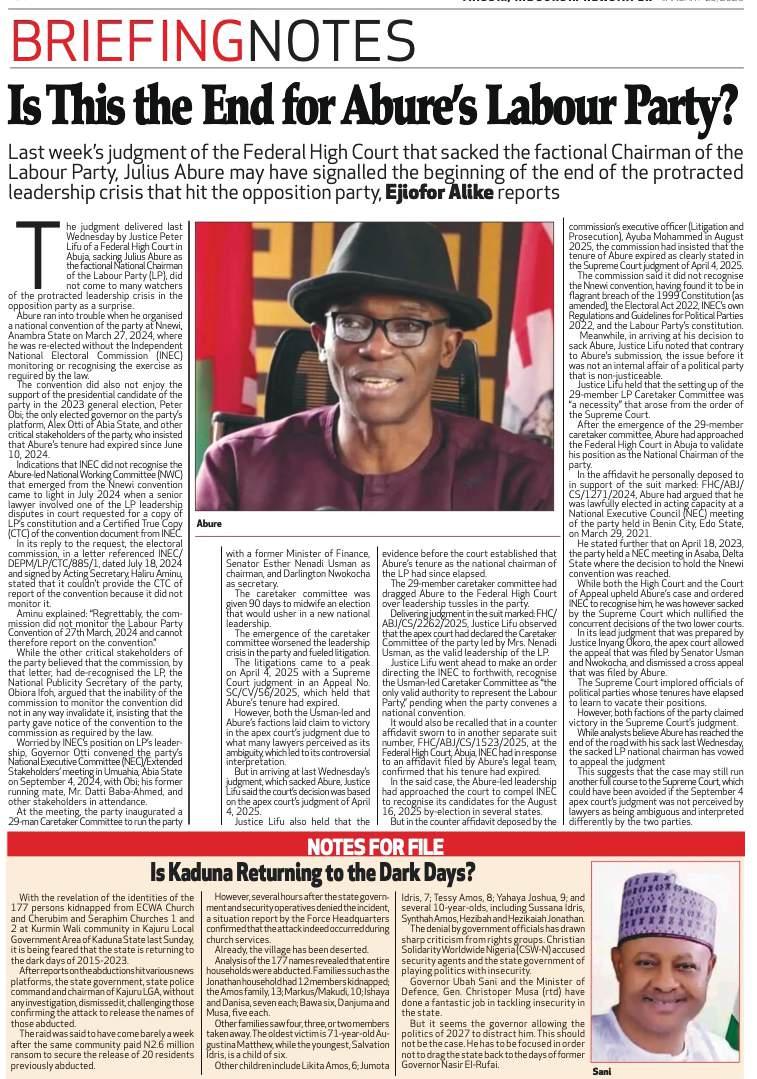
Aconstant force in the politics of his state, Ogun, the place of former Governor Ibikunle Oyelaja Amosun, is most fittingly irreducible.
Beyond his name recognition and huge influence, which have kept him going, is his unforced relevance, which has continued to confound his critics and rivals alike.
Sixty-eight years old today, Amosun, a two-term governor and senator for Ogun Central at two different times, is one politician in the state, who has fought quite a lot of interesting battles.
While some of such battles ended up endearing him to the majority of the people – especially the discerning and the objective, quite an insignificant few have also taken an unyielding position, no matter what the facts say.
Amosun fought very hard to become the Senator for Ogun Central the first time. The seat was not yielded to him on a platter. The fact that power is never served a-la-carte was the driving force behind his passion.
That only turned out a child’s play. His desire to become governor challenged everything around him – material and human resources. But a determined Amosun enjoys it when it is tough.
In spite of the threat that his aspiration constituted to his life at some point, he trudged on – fought hard, conquered everything in his way – and ultimately emerged the governor of Ogun State, fulfilling one of his many ambitions in life.
His eight years tenure as governor wit-
Amosun
nessed huge infrastructural and industrial development of the state which was acknowledged by partisan and non partisan observers.
His succession battle soon turned out the fiercest. With an array of forces lined up against him, realising his leadership capacity beyond the Gateway State, the outcome of the 2019 election was only a verdict on a system in need of identity, and ultimately, rescue.
Put side-by-side, the result of that election left everyone with a message: Amosun is the issue in Ogun politics. Those who were spoon-fed to office can only desire what he
has. They clearly lack the gravitas to function even if put on a similar pedestal.
The outcome of that infamous election, nonetheless, the continuously failing attempt to either discredit or underwrite his legacy, on the contrary, further lent credence to his importance in the annals of the state’s body politic.
Seven years after leaving office, his critics and rivals have not savoured any peace of mind as they have continued to chase shadows. It’s been difficult to analyse his successes against the failures of the others. They’ve not been able to reconcile his
unique personality with theirs. They’re still struggling to comprehend his unusual leadership style in comparison to many, who are still battling identity crisis.
With less than a year to the next bout of national elections, it is certain that there would be a lot of buzzes around his home and offices. For a man, who has kept his base and maintained his followership for as long as he has been in politics, these indicators are significant.
Amosun values relationship - age and status regardless. He respects institutions. He reveres leadership and authority. He adores family as one who keeps a decent home. He has empathy and is generous with his resources.
The former Ogun Governor is a trusting leader, who offers room for people to express and unfurl themselves. Although he takes no prisoners, particularly if it is a matter of principle, his ability to weigh options and consult relevant quarters stands him out.
This is why the 2027 elections in Ogun State cannot stoke any serious and meaningful conversation without the Amosun factor as a centrepiece.
This is especially so with the likely alignment and realignment of interests that may eventually shape the outcome of the elections, starting with the choice of candidates.
To that extent, while Amosun celebrates his 68th birthday with family and friends as he does each year, the occasion is yet a timely reminder of the fact that in the midst of his loved ones is a man who wields uncommon influence and bears on his shoulders, humongous political weight, constantly deployed for the good of all.
Happy 68th birthday, sir!
Dr. Morafa wrote from Ijebu Ode
There comes a moment in public life when rhetoric collides with record, when posture meets proof, and when the architecture of a carefully curated reputation begins to fracture under the weight of its own contradictions. For Mallam Nasir Ahmad El-Rufai, that moment has arrived: quietly, inexorably, and far from the stages on which he once lectured the nation on virtue.
For years, El-Rufai fashioned himself as a moral sentinel in Nigeria’s turbulent political landscape. He spoke with unyielding certainty, governed with severity, and condemned with relish. Corruption, he suggested, was the vice of lesser men; accountability, the standard he alone seemed prepared to enforce. He was the puritan in a fallen city, forever ready to indict others for ethical failure. Yet the record now confronting his legacy tells a far more unsettling story.
The comprehensive probe conducted by the Kaduna State House of Assembly into his eight-year administration has profoundly unsettled the mythology of spotless stewardship. The legislative findings; painstaking, expansive, and damning in implication, revealed a pattern of governance marked by extraordinary financial opacity. Massive loans contracted with limited safeguards, contracts whose execution bore little resemblance to their cost, withdrawals that strained the boundaries of due process, and an administrative culture dismissive of institutional restraint all featured prominently. What emerged was not the portrait of disciplined reform, but of power exercised with alarming latitude.
This reckoning matters because as governor, he built his public identity on moral
superiority. He was never content merely to govern; he appointed himself judge in the public square; swift to ascribe bad faith, eager to assign blame, unapologetic in his harsh verdicts against colleagues and critics alike. For daring to point out a seemingly innocuous error of the El-Rufai administration, I was once exiled from my beloved Kaduna State for close to five years! El-Rufai was then the Emperor of Kaduna and the all-knowing. That same man now finds his administration referred, through formal legislative process, to anti-corruption agencies for further action. The irony is stark. The standards he weaponised against others have returned, sharpened by record and process.
As investigations advanced and prosecutions involving former aides commenced, El-Rufai’s conspicuous absence from Nigeria became impossible to ignore. Though no formal declaration of exile was made, his prolonged stay abroad, coinciding with mounting institutional scrutiny, has fuelled
widespread speculation. In Kaduna, most discerning persons are well aware that Mallam Nasir El Rufai has gone on self-exile; obviously running from prosecution for a plethora of fraud-related cases. A figure once omnipresent in national discourse now communicates largely by proxy, his physical distance mirroring a growing distance from the accountability he once demanded of others.
That absence was briefly punctured at the 23rd Daily Trust Dialogue, where a speech attributed to him was read in his stead. The address was remarkable not for its insight, but for its selective memory. It railed against governance without accountability, selective law enforcement, decayed infrastructure, unpaid salaries, and ethical collapse. To attentive listeners, the language sounded uncannily familiar; echoing, almost verbatim, the conclusions of the very legislative probe into his own administration. Only this time, the mirror was turned outward. It was a moment of unintentional self-indictment.
More troubling are persistent reports, unproven yet widely discussed, that while abroad, the former governor remains politically active, holding private consultations supposedly secret locations abroad, with political actors bent on upending at all costs, the current administration both at the federal level and Kaduna State. In a democracy, dissent is legitimate. But dissent that appears driven by grievance rather than principle, conducted from afar while questions of accountability remain unresolved, invites skepticism. Power exercised without responsibility is precisely the condition El-Rufai once warned the nation against. Meanwhile, Kaduna State has moved on; and the contrast is instructive. Under the inclusive leadership of Senator Uba Sani, the state has begun a deliberate departure from the politics of discord that defined much of the previous era. Where confrontation once
prevailed, dialogue is now emphasised. Where ethno-religious tension was inflamed, reconciliation is pursued. Governance has shifted from severity to stability, from spectacle to substance. Kaduna is calmer, more cohesive, and increasingly forward-looking. Perhaps the most telling verdict on El-Rufai’s absence is this: Kaduna is not diminished by it. The state is embracing larger dreams and broader aspirations, unburdened by the polarisation that once characterised its public life. The politics of constant antagonism has given way to an ethos of rebuilding: socially, economically, and morally.
History judges more than legality; it judges temperament, consistency, and integrity. El-Rufai’s defenders may argue that courts, not commentaries, will determine culpability. That investigations are not convictions. All of that is true. But reputations are not undone by enemies alone; they are eroded by contradiction.
The tragedy of El-Rufai’s unraveling lies not only in the allegations that trail his administration, but in the collapse of the moral shelter he constructed for himself. By elevating himself as a standard others could not meet, he ensured that any fall would be measured against the height of his own proclamations. By governing with contempt for dissent, he narrowed the space for credibility when scrutiny turned inward. In the end, the self-styled puritan stands confronted by the very questions he once posed to others. Whether he returns to face them openly or continues to address the nation from afar will shape the final chapter of his public life. But one truth has already settled beyond dispute: Kaduna has turned the page. The future is being written without him.
Jubril, a developmental economist lives in Zaria and can be reached at ibroj63@gmail.com
determine the conviction? I have done my work. I have fulfilled my mandate. Nigerians must know that, and they must also encourage us in doing more. This man has been investigated, and we have filed charges against him, and the matter is gaining traction.”
An interesting example is that of Alhaji Sule Lamido, the former governor of Jigawa state. He and his two sons were charged to court by the EFCC for alleged corruption nearly 10 years ago. The case dragged on forever and forever without the substance being tried. Lamido had filed a no-case submission and fought it all the way to the Supreme Court. The apex court finally ruled some days ago that Lamido should stand trial. Imagine the time and resources already wasted over the years. Now, we start all over again. We have evolved a corruption trial system that places more emphasis on technicalities than substance. That is why we hardly make serious progress with prosecution.
After watching the Olukoyede interview, I became more convinced that we need extraordinary measures to improve the outcomes of the anti-graft war. One of such measures would be the creation of specialised anti-corruption courts to save time and resources. Some corruption cases have been on since 2007 without recording any headway. By the
WEAKENING WIKE
The move to impeach Governor Siminalayi Fubara of Rivers state is not going well, is it? The state lawmakers, who had defected to the APC to join Fubara in his new party, kickstarted the process to impeach him — apparently under the instruction of Chief Nyesom Wike, the FCT minister, who, theoretically, is a member of the PDP. The lawmakers wrote to Justice Simeon Amadi, the chief judge of Rivers state, to set up a judicial panel — as required by the constitution — to probe Fubara over allegations of gross misconduct. Now, the judge has declined to do so, citing court injunctions. Wike himself has toned down his public rhetoric. Has he finally entered a fight he cannot win? Overreach.
The case which basically arose from a mortgage transaction that went sour, was brought by a Receiver Manager. In matters of this nature, the process is usually to grant an ex parte order to protect the asset, in this case, Udeme Essiet’s companies, petrol stations and other businesses, from being plundered and dissipated, pending the final determination of the matter.
Since the order was interim, it is usually served on the Respondent, who on receipt files his own case and objections on the adjourned date. On the adjourned date, the court can decide to revoke or vary the interim order. This, Justice Inyang had no opportunity of doing because she had moved on.
But, for the avoidance of doubt, after Justice Inyang made the order, handed over the case file and moved on to assume duty at the Court of Appeal, the Federal High Court system, either by omission or commission, failed to serve the order on the Respondent, while the applicants, the bailiffs and all we went on to sell the said property, using this same temporary order – all these, without the knowledge of Justice Inyang who had since moved on.
Curiously, the buyer of the property in dispute, Justice S. Essien, then a judge of the National Industrial Court, who is not known to Inyang, and who claimed to have bought it for an uncle,
time a case drags on for four years, the public would have lost interest. The cases can be quietly thrown out without media attention or public outrage. Many of the cases involving former service chiefs and senior military officers that were instituted in 2016 have faded out without any further public interest. That is Nigeria for you.
I do not pretend to have a magic solution to the problem, but I have allowed myself to speculate that a possible solution is creating courts that will devote 100 percent attention to corruption cases. We need to, at least, reduce the workload on regular courts and shorten trial times. The judges usually say their dockets are full. We need to appoint and train more judges with special focus on corruption, since we seem to agree that it is a major stumbling block to good governance and development. The Administration of Criminal Justice Act (ACJA) does not permit endless adjournments once trial starts, but this has been observed mostly in breach. You can’t blame the judges: they are overworked.
I am not unaware that there are many factors contributing to delayed trials. It is not just about the courts. For one, the EFCC used to be quite notorious for filing cases before conducting proper investigation. In some cases, the
agency would first file a charge before interrogating suspects and preparing the body of evidence for prosecution. That is, the agency itself is not even ready! You would also find the EFCC being the one asking for adjournment in a case it is prosecuting because one witness is in Greenland or Gaza. One of the things Olukoyede promised to do when he became EFCC chairman was to prepare water-tight cases before going to court. That is a major step forward.
Investigations can take years in a country like the UK but by the time you are charged to court, prosecution will be strict business. Once trial commences, you would hardly hear of endless adjournments. Most adjournments are for the purpose of delivering judgement, as both prosecution and defence will have closed the case. So far, Olukoyede has promised to address this sloppiness and this is already evident in the number of convictions the agency has secured in internet fraud cases. Some of the suspects in this category of fraud hardly put up a strong defence because of the weight of electronic evidence against them in court and this has produced a record number of convictions.
But, without a doubt, some factors are not within the control of the EFCC, especially the cases that have to do with
WIZKID VS FELA
I never thought I would witness a day when the legendary Fela would be compared with Wizkid on greatness. But here we are. Wizkid and his fans have been all over the social media staking a claim. Greatness, we must accept, means different things to different people across different generations. Beauty, after all, is in the eye of the beholder. One thing I know for sure is that Fela created a unique sound and a culture. Most importantly, Fela used his art to advance social justice and black consciousness. His songs, such as Water No Get Enemy, Sorrow Tears and Blood, Beast of No Nation, Authority Stealing, and Teacher Don’t Teach Me Nonsense, will remain relevant for ages. Immortal.
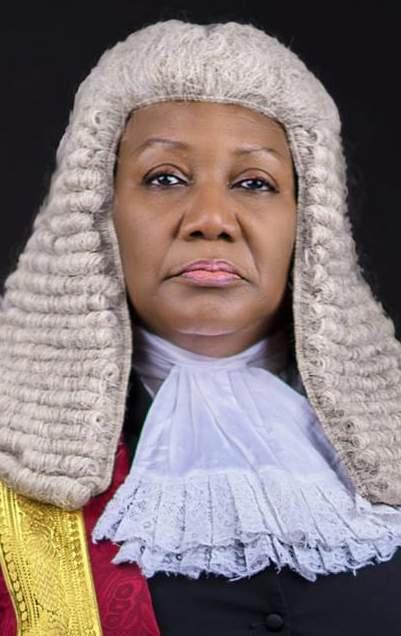
was let off the hook, while Inyang was put on trial, using the same facts and evidence. Similarly, the court officials, bailiffs, security operatives and all who facilitated this back-door sale were not disciplined.
Furthermore, the petitioner in the matter was said to have apologised to
ST. SADIO
Sadio Mané, the Senegalese player, was the hero of the final of the 2025 Africa Cup of Nations. He was celebrated for refusing to join his Senegal mates in walking off the field to protest a penalty awarded to Morocco, the hosts, in the dying minutes. The emotions of the moment saw the coach, Pape Thiaw, walk his team off the pitch in protest. Nobody wants to see such scenes in football. It was easy ammunition for those who look down on Africa. For his role, people jokingly suggested Mané should get the Nobel Prize for Peace. What really amazes me is that he is not even the team captain. Leadership is not about titles. It is about stepping up when the chips are down. Initiative.
Justice Inyang, before the Justice Mary Odili-chaired NJC panel, and withdrawn his allegation of bribery against Inyang, saying that he was now convinced that the order was not induced by any bribe to Justice Inyang. In fact, this exchange was actually said to have been recorded by the NJC panel, which still went ahead to indict Inyang.
Justice Inyang is the grand-daughter of the late Barrister Asuquo Etim Inyang of Ito-Ikoneto in the present day Odukpani Local Government Area in Cross River State. He was the first lawyer from the old Eastern Region which comprises the present day South-East and South-South Nigeria, to be called to bar in both the England and Nigeria. He was earlier admitted to the Inner Temple, London in 1921 and called to the English bar in July 1924. He was admitted to the Supreme Court of Nigeria in 1924.
Justice Inyang is well known for her independent and uncompromising stance on several cases where extraneous pressures have allegedly been mounted on judges.
It was she who gave a dissenting judgment in the Ogun State election petition that upheld Governor Dapo Abiodun’s election. She had insisted that the Electoral laws were not substantially complied with in the governorship election and had called for a fresh election.
the big politicians. Those ones have the capacity to undermine the judicial system. They have all the resources to engage senior lawyers, and some of the senior lawyers have all the mischievous knowledge on how to delay and derail trials through technical arguments that will be pursued from the high court to the Supreme Court while the substance of the case remains untouched. Technical arguments can go on for years, by which time the system is compromised and the case watered down. This has been a major hinderance to the successful prosecution of cases.
I tried to pick the brain of a senior lawyer on the proposal for special anti-corruption courts. He said the law establishing the Code of Conduct Tribunal can be amended to tackle the challenges of capacity and numbers. We have to improve our system, especially when it is not delivering optimal results. The idea of specialised anti-corruption courts is not mine — it is something campaigners have been suggesting for years. We already have a specialised court for labour matters: the National Industrial Court (NIC). To tackle the challenges facing the anti-corruption war, special courts must be considered as one stepping stone. The system needs to deliver justice fairly, squarely and swiftly.
On Thursday, President Bola Tinubu posted ambassadors-designate to four countries: Ayo Oke to France, Amin Dalhatu (UK), Kayode Are (France) and… erm… Usman Dakingari (Turkey). It took Tinubu ages to appoint ambassadors. But barely an hour after the announcement of Dakingari, former governor of Kebbi state, as ambassador-designate to Turkey, the posting was withdrawn without any official explanation. We are used to that under Tinubu — but we must still wonder what really happened. Dakingari was neither screened nor confirmed as an ambassador by the senate. How did his name get on the list? Is it a case of an unidentified flying object (UFO)? Hahahaha.
Justice Inyang also delivered the lead judgement which upheld the death sentence passed on Chief Rahman Adedoyin, the Ile-Ife hotelier convicted for the murder, in his hotel, of a post graduate student of the Obafemi Awolowo University who had lodged in the hotel. Few months ago, THISDAY Awards had honoured Justice Inyang for her courage, integrity and uncompromising stance in the defence of the law in all her years of service.
She has made her name as a Justice neither intimidated nor influenced by money or power. She is always standing by her conviction.
Most importantly, however, the vindication of Justice Inyang is a huge confirmation of the firmness and fairness of Justice Kudirat Kekere-Ekun, the Chief Justice of Nigeria.
It points to the CJN’s willingness to stand by, and defend, judicial officers.
Much as she is willing to punish and discipline erring judge brought before the NJC for misconduct and other infractions, Justice Kekere-Ekun does not lose sight of the fact that judges, as humans, can err on the facts or the law, which can be corrected by the appellate court. She has shown a willingness, courage, humility and fairness to reverse herself and the NJC whenever they too are wrong.
•Morgan lives in Port Harcourt
Under Donald Trump, the United States is fast approaching the dead end of a curious transactional presidency. Even the most treasured items of American nationhood and heritage are up for sale to the highest bidder in a bazaar as governance. This is an era where everything America does is reduced to one word: DEAL Indeed, if Trump has his way beyond this point, he may offer an unusual merchandise for auction. A scramble among his fellow billionaires is likely to ensue in a bid to cannibalize America’s heritage and historic landmarks into items of merchandise for the highest bidder. Will Trump auction Lady Liberty, the Statue of Liberty on Ellis Island? Under Trump 2, the governance of America has degenerated into a giant bazaar, a huge transactional festival. The business of the state has been devalued and reduced to a series of deals, stripped of the ideals and creeds that inspired the very foundations of Americas. Buying loyalties and alliances, reducing international trade into tariff arm twisting and carting away treasures from pliant states or just shooting at nations as targets of a new Monroe Doctrine of the triumph of might. International relations is now a series of ‘deals’. Allies have become customers reduced to negotiating their way through complex tariff deals in which the US holds the ace. The American public is repeatedly fed figures and statistics of huge piles of trillions of dollars to be realized from ‘deals’ with foreign countries. Nations without commercial transactional value have no place in Trump’s calculus. If you have no rare earth minerals, oil and gas to be forcefully stolen or huge trade figures, Trump’s America has no time for you.
Easily the most invaluable import of America as a dominant civilizational power is a combination of order through strength and an all inclusive promise of freedom for all, Liberty for all and an open arm for immigrants to build a nation of the free. Democracy is the signpost of the American creed. America has until Trump been the gathering point and the final resort of citizens of different nations, people of diverse creeds, colours and backgrounds who seek freedom, liberty, democracy and opportunity. The unstated precondition of this open invitation is a certain subscription to the Puritan ethic of working hard to access the goodness of the American dream.
One physical symbol of what America means to the world is perhaps the Statue of liberty on Ellis Island, overlooking the New York Habour. It is a gigantic symbol of hope and promise for immigrants from all corners of the world. Freedom, democracy and infinite compassion for humanity in distress are the promises symbolized by this giant lady of steel. A towering robed woman literally rising from the sea over New York Habour, the Statue of Liberty is a gigantic figure, designed by Gustav Eiffel, famed architect of Paris’ Eiffel Tower and gifted to the United States by France to commemorate the end of and triumph in the American Revolution in 1886. Just as the Eiffel Tower celebrates man’s conquest of over the limitations of height and space, the Statue of Liberty is a tribute to man’s revolutionary spirit to conquer the arrogance of class and kingship as marked by the outcome of the American Revolution.
For the world, the Statue of Liberty has remained since its inauguration and gifting in 1886 the global emblem of universal fraternity, freedom, democracy, an open but conditional invitation to prosperity, freedom and diversity. The clarion call of Lady Liberty as inscribed on the pedestal of the statue has remained the embodiment of the American spirit: “Give me your tired, your poor, your huddled masses yearning to breathe free ….’ had since then been the anthem of all peoples who saw America as a place of ultimate hope for democracy and freedom.
Tragically, the major targets ofTrump’s conservative lash out both in the US and around the world have ironically been the “tired, poor and hurdled masses” of the world. He has withdrawn the US from the World Health Organization (WHO). He has killed USAID and all its programs world wide. As a consequence, the sick and hungry around the world have either starved to death or been left to die avoidable deaths. In America itself, programs designed to sustain life among the poor and underprivileged have been spiked or defunded. For most Americans, a trip to the grocery store has become a journey into hades, a handshake with the unaffordability of the bare essentials of life.
To Trump, then, the values expressed on and symbolized by the Statue of Liberty ring hollow.
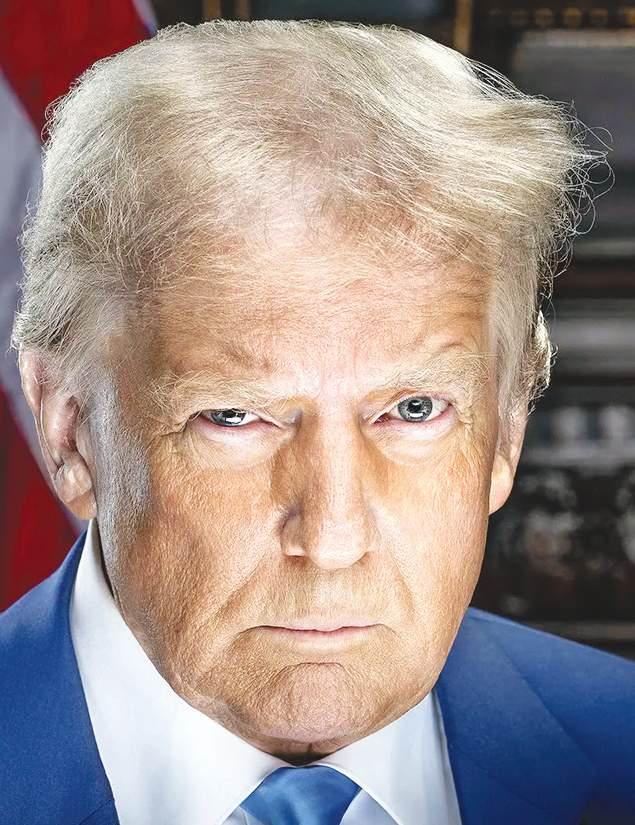
For him, America’s belief in freedom is buried under the rubble of his authoritarian obsessions and actions. His appetite for autocracy is as unquenchable as his ego is gigantic. He has mistaken his pitiful weakness for strength and in a bid to display personal strength has weakened America in its traditional areas of strength- soft power as a global force for good.
A man who has an eternal appetite for monarchy has staged huge egodriven ceremonial parades as they do in France, China and North Korea. Trump is blatantly ignorant of the historical origins of America’s democratic foundations in the rejection of kingship and a decisive choice of the Republican supremacy of the people. Americans have recently staged many ‘No Kings’ protests just to remind their despotic president of the origins of American exceptionalism and the democratic origins of his own ascendancy.
In defiance, Trump has drafted soldiers and national guard squads to all major American cities in the name of national security. Under the guise of immigration crackdown, ICE enforcers are invading homes, malls, schools, churches and dragging kids and women on the streets , dehumanizing them. Idi Amin would have been ashamed of such open displays of inhumanity against immigrants who trooped to the US in the belief that the truths embodied by the Statue of Liberty are eternal and inviolable. Immigrants are being backloaded in plane loads to countries they hardly know just as many others are detained in inhospitable places infested with dangerous reptiles.
of the poetic accompaniment of the Statue of LibertyenvisagedwouldflocktoAmericaforsuccor and a better life. Trump’s sweeping immigration deportations and travel bans represent a tragic reversal of the aspirations of America’s founding fathers. It is a debasement of the enlightenment that informed the declaration of Independence and the integrity of the constitution of the United States.
While it remains the prerogative of every nation to regulate and control who enters their borders, immigration policy measures need to be guided by the founding ideals of the state in question and elementary considerations of compassion, law and human rights, including the rights of perceived villains. No pretension to sovereign power can justify a state’s regression to barbarism and the dehumanization of people just because they are considered ‘others’
Ironically, the tragedy of the Trump regression is to mistake his inherent weakness for strength. There is something inherently weak about seeking to show strength by lashing out at vulnerable adversaries all guns drawn. Trump invadedVenezuela with over 22 war ships (including America’s largest aircraft carrier) plus over 150 of its most sophisticated war planes just to kidnap Nicolas Maduro and his wife from their bedroom in the dead of night. Fear, cowardice and inherent weakness are better descriptions of this operation than strength and military sophistication!
mandate and mission hardly need the symbolism of the Statue of Liberty as a defining symbol. Everything it symbolizes has been eroded and shredded by the rapacious greed and reckless adventurism this mercantilist president.
There is no aspect of American life or foreign policy that has not come under the hammer of Trump’s street bazaar presidency. Even American citizenship by interested immigrants is now up for auction for a princely casino price of $5,000! An avowed pro- Christian president once sold gold embossedbiblesforhugesumsforcampaignmoney. Trump once offered to evict the war traumatized residents of Gaza and buy up the strip for redevelopment as a real estate haven of luxury resorts and privileged residences.
For Trump, the most consequential people in the world are his fellow billionaires. He has converted the most powerful office in the world into a money spinning toll gate for himself, his family and business associates. His negotiating teams to the nation’s of the world often consist of his family, business errand boys and a few state officials.
He might therefore want to buy the Statue of Liberty for his insatiable collection of legacy treasure items and places. The list is already elongating: These include Kennedy Centre, the Centre for Peace, many streets, Gulf Courses, etc. are all being named after Trump in the first year of his second iteration.
In all this , Trump’s desperate mercantilist presidency has raised too many questions about the future of American democracy and its future as a credible global guarantor of democratic values and symbols for the world . He had ended his turbulent first term by violating the sanctity of the US Capitol with a rowdy invasion by his MAGA and associated thugs. He had attempted to stage a coup d’etat by ordering troops into Washington DC and trying to blackmail former Vice President Mike Pence to abuse his office by declaring him the winner of an election that Joe Biden clearly won. He had even tried to order the former Chairman, US Joint Chiefs of Staff to use the military to stop Biden’s inauguration and instead install him as the elected president.
In his current iteration, Trump has habitually ignored or arrogantly slighted the powers of Congress on a number of issues from funding the government to waging war against Iran, Venezuela, Yemen, etc. Trump’s major achievement so far can be contemplated. A return to the primitive Monroe Doctrine phase of international relations. The strong will devour the weak. Greenland, Columbia and Cuba may be in Trump’s gunsights. In this process of mistaking might for strength, Trump may set off a bloody domino effect that could alter the world as we have come to know it. China may gobble up Taiwan while Russia could insist on taking over the whole of Ukraine. A wave of national and regional military build ups may ensue as we are beginning to see in Europe.
In what could be an interesting historic twist and befitting tragic anticlimax, the Chinese could offer to buy Lady Liberty at whatever price tag and insist it remains on Ellis Island since its symbolism has no place in their own authoritarian ethos. They could just pay for it, drape it in their national flag so that the message can be better appreciated: the road to authoritarianism leads from a betrayal of freedom and its emblems. Trump
Under the pretense of anti immigration, immigrants from the world’s most afflicted nations are being expelled and blocked from entering the United States. These are precisely the people who the authors
At the international level, the actions of the Trump administration are isolationist, exclusionist and even racist, with an undisguised distaste for African and Third World nations with mostly black populations. Alleged victims of racist genocide in South Africa were granted automatic special refugee status with homes and jobs by Mr. Trump. But victims of alleged anti Christian genocide were rewarded with a blanket travel ban against all Nigerians in spite of the massive Nigerian contribution to the American economy.
Therefore, as things stand today, Trump’s perception of the essence of America’s civilizational
In America itself, a white supremacist culture may spark off rival movements as we saw with Black Lives Matter under Trump 1. The number of billionaires will increase just as their grip on the economy will degrade standards of living among the middle class and the poor. The attraction of the United States as a tourist and travel destination is likely to dim further. Politically, there is bound to be a sharper division between moderate and conservative Republicans on the one hand and betweentheRepublicansandDemocrats.Theobject of political struggles in the US in the post Trump years will be a battle to either deepen the erosions of America’s defining creed under Trump and the restoration of the American ideal as it once was. Since Lady Liberty is now more of a landscape decorative piece devoid of its original symbolism, Trump might as well open a billionaires’ bid for the piece as unique art. Maybe Elon Musk could make an opening bid, followed by the various tech billionaires who are humouring Trump to stay in business. Or, better still, the Saudis could outbid Musk. Even better, the Qatar royals could buy the piece to send a signal to the Saudis. After all, they gifted Trump a clone version of Air Force One for his personal pleasure.
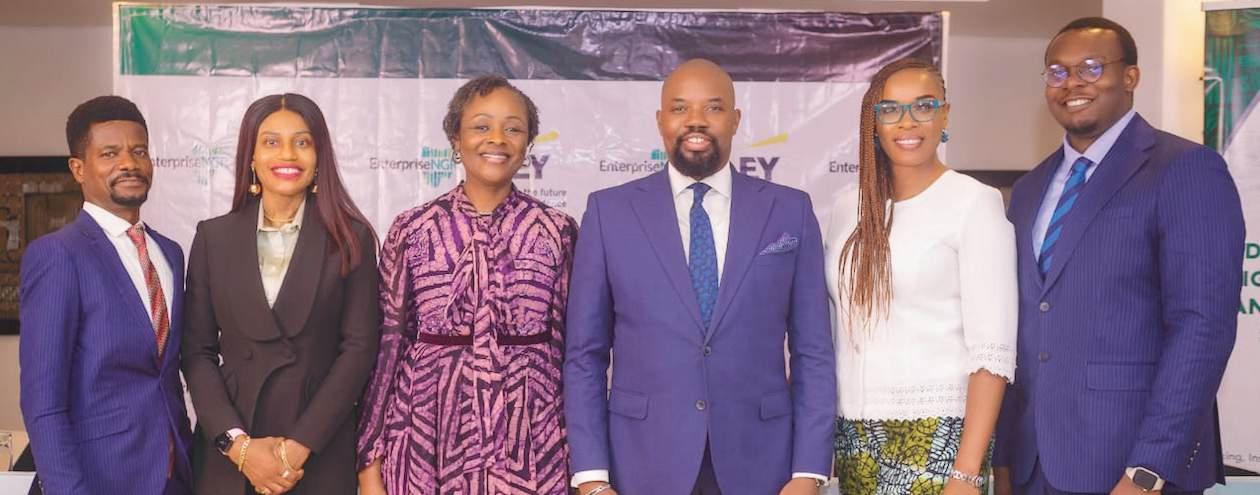
L-R: Head, Research, EnterpriseNGR, Omotayo Muritala; Associate partner at EY Parthenon, Olayinka Oyetunji; Chief Executive Officer, EnterpriseNGR, Obi Ibekwe; Director, Policy and Public Affairs, EnterpriseNGR, Lami Adekola; Company Secretary/Head, Corporate Services, EnterpriseNGR, Oluwole-Akinwale; and Head, Corporate Communications and Branding, EnterpriseNGR, Anthony Bidokwu, at the launch of their 2026 Macroeconomic Outlook in Lagos…recently
Barring any last-minute changes, the federal government is set to arraign a constitutional lawyer, Chief Mike Ozekhome (SAN), before the Federal Capital Territory (FCT) High Court in Maitama, Abuja, on Monday, January 26, over alleged fraud involving a property in London, United Kingdom, linked to the late former Minister of the Federal Capital Territory (FCT), Lt. Gen. Jeremiah Useni.
There were indications over the weekend that the arraignment would take place at Courtroom 4 by 9:00 a.m.
In the case, Ozekhome was listed as the sole defendant, with the Federal Republic of Nigeria as the plaintiff.
The prosecution would be led by the Head of the High Profile Prosecution Department of the Independent Corrupt Practices and Other Related Offences Commission (ICPC),
Nigeria will host the Hajj–Umrah Nigeria Expo 2026 next week, an international event designed to improve the planning and delivery of Hajj and Umrah in Nigeria, while also positioning the country as a regional centre for faith-based tourism and pilgrimage management.
The expo is scheduled for 28–30 January 2026 at the National Mosque Conference Hall, Abuja, with a Gala and Awards Night billed to hold at the Nicon Luxury Hotel. It is being organised by the Global Business and Investment Partnerships Forum, Nigeria.
Stakeholders are expected to engage around the theme:
“Enhancing the Pilgrimage Experience through Knowledge, Access, Community” in a gathering that will bring together government agencies, private operators, international partners, investors, scholars, and intending pilgrims to discuss issues such as governance, service delivery,
Osuobeni Akponimisingha.
The property, located at 79 Randall Avenue, London NW2 7SX, has been the subject of a protracted ownership dispute involving Ozekhome and Useni.
The dispute had earlier been heard by the First-tier Tribunal (Property Chamber) Land Registration in the United Kingdom under case number REF/2023/0155.
Competing claims were made by Ozekhome and a person identified as “Ms Tali Shani”.
The senior lawyer told the tribunal that he received the property as a gift in 2021 from “Mr Tali Shani”, whom he said had authority over the house. Consequently, the federal government filed criminal charges against Ozekhome in Nigeria over alleged forgery and use of false documents in connection with the disputed London property. The threecount charge, marked FCT/
investment, and innovation across the Hajj and Umrah value chain.
Chairperson and Team Lead, Dr. Aisha Ahmed-Shitu, said the forum is the first comprehensive Hajj–Umrah-focused expo in Nigeria and West Africa, designed to strengthen pilgrim welfare, deepen coordination among institutions, attract investment, and boost public–private collaboration in the sector.
Organisers say the expo’s broader vision is to help Nigeria emerge as West Africa’s leading hub for Hajj, Umrah and faith-based tourism, supported by stronger institutions, efficient systems and wider private-sector participation.
Key goals for the programme include improving pilgrims’ safety and welfare, supporting policy and regulatory discussions, promoting Shariah-compliant finance, and opening up business opportunities in aviation, hospitality, healthcare, ICT, logistics, and tourism.
HC/CR/010/2026, was filed by the ICPC before the FCT High Court on behalf of the Attorney-General of the Federation.
The case follows a petition to the ICPC by the Head of the Human and Environmental Development Agenda, Mr. Olanrewaju Suraj.
The petition referenced a British court judgment that accused Ozekhome and others of conspiring with corrupt Nigerian officials to procure fake national identity documents to “fraudulently claim ownership” of a property in
North London.
The ICPC stated that it launched an investigation after a London property tribunal issued a judgment implicating Ozekhome and others in a web of fraud and forged documents.
The anti-corruption agency alleged that Ozekhome, sometime in August 2021, unlawfully received the London property from a fictitious person, knowing the act constituted a felony. He was also accused of making a false Nigerian passport in the name of “Mr Tali Shani” and using the document to sup-
port his claim of ownership of the property, despite allegedly knowing it was forged.
The first count alleges that in August 2021, in London, Ozekhome directly received House 79, Randall Avenue, London NW2 7SX, purportedly given to him by Mr. Shani Tali, knowing the act constituted a felony, contrary to Section 13 and punishable under Section 24 of the Corrupt Practices and Other Related Offences Act, 2000.
The second count alleges that while acting as a legal practitioner and SAN, Ozek-
home created a false Nigerian passport (No. A07535463) bearing Mr. Shani Tali’s name in August 2021 to support a fraudulent claim of ownership of the property at 79 Randall Avenue, contrary to Section 363 and punishable under Section 364 of the Penal Code, Laws of the FCT, Abuja.
The third count alleges that Ozekhome dishonestly used the same false passport to substantiate the ownership claim, knowing the document was false, contrary to Section 366 and punishable under Section 364 of the Penal Code.
The Secretary of the Ijebu Council of Chiefs and Vice Chairman of the Fusengbuwa Ruling House, Chief Adetokunbo Fassy Yusuf, has urged the Ogun State Government to thoroughly investigate alleged corruption and take punitive action against individuals accused of attempting to derail the process of selecting a new Awujale of Ijebuland.
Chief Yusuf made the call at the weekend in Ijebu-Ode, where he condemned what he described as deliberate attempts by some individuals to disrupt the selection process by promoting the interests of certain candidates over others.
According to him, it is fraudulent for anyone to single out or highlight preferred candidates, stressing that the 2022 Obas and Chiefs Law does not create any dichotomy among princes, as all eligible princes are regarded as equal under the law.
“As far as the Fusengbuwa Ruling House is concerned, we have done our part. But if there is any malpractice from our side, they should point it out. If anyone has soiled their hands, such persons should be made scapegoats. Equity demands clean hands,” he said.
Chief Yusuf insisted that
anyone found mismanaging or undermining the process must be held accountable.
Speaking on the suspension of the selection process, he urged the state government to clearly state the reasons for the action, noting that transparency would help ensure a smooth and credible process.
“For the governor to suspend the process, there must be reasons. Government has all the apparatus to investigate both the immediate and remote causes. If anyone is found culpable, such a person should pay for destabilising the process,” he added.
The high chief, who is also the Bagbimo of Ijebuland, explained that the process initially commenced with 95 nominations, which were later reduced to 86 in line with the provisions of the 2022 Obas and Chiefs Law, in order to avoid litigation.
The former Ogun State Commissioner for Information expressed surprise that after adopting the template set by the kingmakers, certain names were allegedly highlighted while some Otunbas were disqualified—an action he described as “porous and reckless.”
Ogun State is set to witness a significant economic boost following President Bola Ahmed Tinubu’s approval for the commencement of commercial oil drilling at Eba in Ogun Waterside Local Government Area, alongside renewed momentum for the Olokola Deep Seaport project.
Governor Dapo Abiodun disclosed this at the weekend while receiving the Flag Officer Commanding, Western Naval Command of the Nigerian Navy, Rear Admiral Abubakar Abdullahi Mustapha, during a courtesy
visit to his office at Oke-Mosan, Abeokuta.
According to the governor, President Tinubu’s approval marks a major breakthrough after years of anticipation surrounding both projects, describing the development as a turning point in Ogun State’s economic history.
“Mr President has approved the commencement of commercial oil drilling operations at Eba, Ogun Waterside. Going forward, we will begin to see increased activities in that area,”
Abiodun said.
“Our proposed Olokola Port, which has been on the drawing board for several years, is now back on the table. In the last two weeks alone, we have held several meetings on Olokola, and Mr. President has clearly expressed his desire to see the port become a reality.”
The Olokola Deep Seaport, to be developed as the Blue Marine Economic Zone, is expected to become operational next year. The port is designed to decongest the Lagos ports,
improve logistics efficiency, and position Ogun State as a major maritime and trade hub in West Africa.
Governor Abiodun said the project would also enhance national security, noting that the Nigerian Navy’s Forward Operations Base at Tongeji Island, approved earlier, would oversee the coastline up to Edo State. He added that the state government provided land to facilitate the naval base in order to strengthen coastal security and prevent cross-border infiltration.
ONE Y E A R
R E M E M B R A N C E
Forever in our hearts
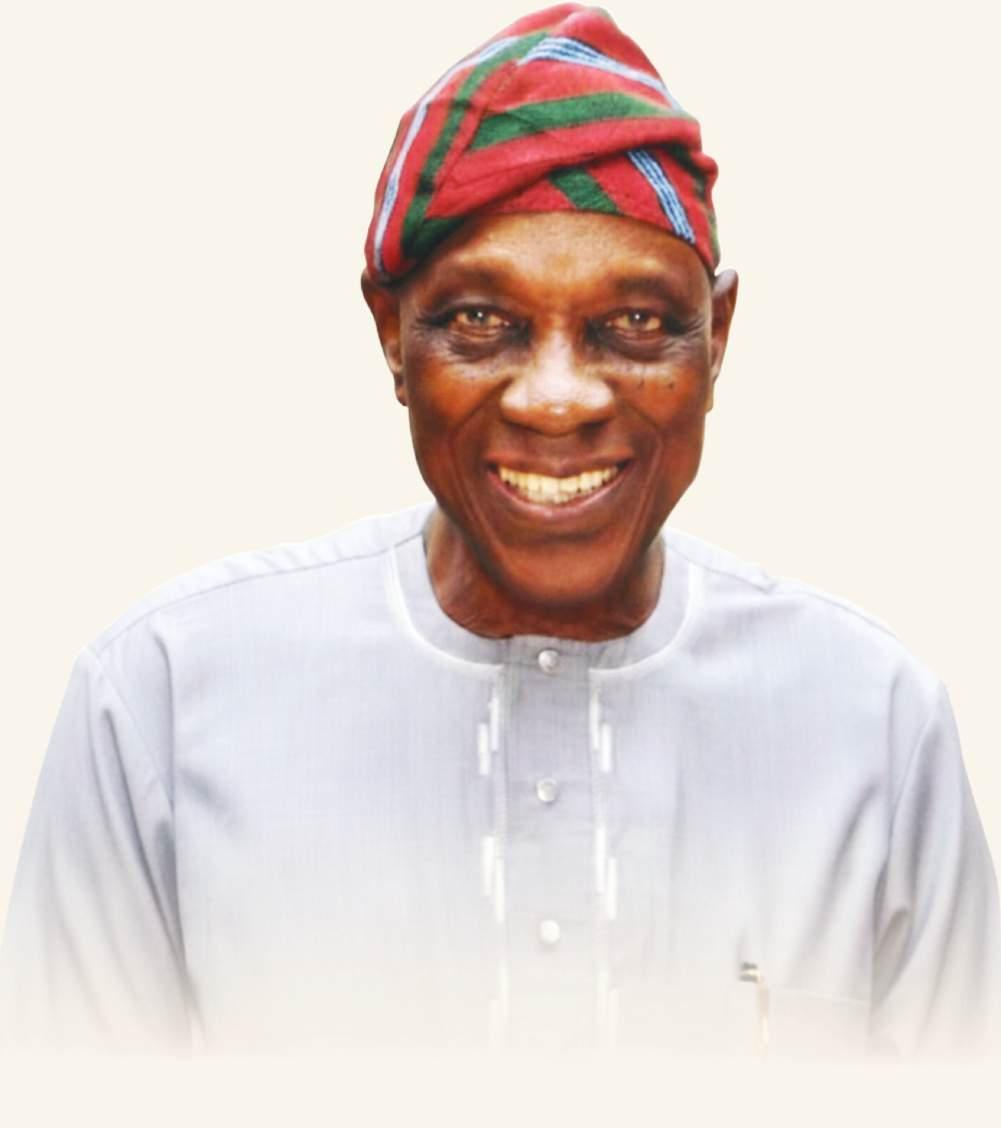
DEC 26, 1943 - JAN 26, 2025
In memory of our beloved Father, who passed on a year ago. We miss you so much. We remain grateful to God for the life you lived. The sweet memories remain indelible in our hearts.
Fondly remembered by; Aimie & Kunle, Mohimi & Onyinye, Udu & Marian, Olo & Wale, Roy & Onome, and Gina & Omo.
A Memorial Service will be held on Monday, January 26th, 2026 at Ikoyi Baptist Church, 5-7, Lateef Jakande Avenue, Ikoyi, Lagos at 11:00 am.
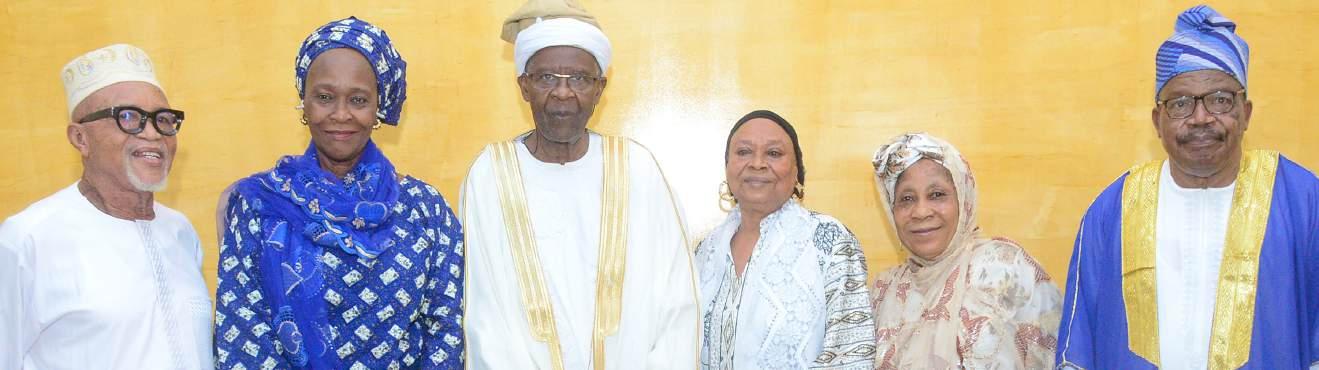
simon.kolawole@thisdaylive.com, sms: 0805 500 1961
When President Bola Tinubu sent an extravagant message to Mr Yahaya Bello, former governor of Kogi state, on his 50th birthday last year, I shook my head in disbelief and despair. My mind went straight to the Economic and Financial Crimes Commission (EFCC), which had spent enormous time and energy investigating Bello. It is also not a message of assurance to Nigerians, who already do not rate their president on matters of accountability and transparency. The agency decided that Bello had a case to answer and invited him for questioning. But for a long time, Bello refused to report to the EFCC. He carried on as if he owned the world. He was declared wanted by the anti-graft agency.
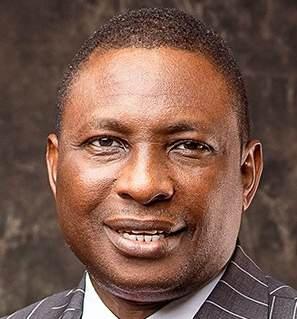
party, the All Progressives Congress (APC) — which unseated the Peoples Democratic Party (PDP) in 2015 using fighting corruption as one of its tenets —appointed Bello as a member of a high-powered committee. Bello himself is all over town talking like a super star, even threatening to run for the senate. If I were him, I would even desire to be national chairman of APC. Was Dr Abdullahi Ganduje, former governor of Kano state, not made chairman while facing a charge of alleged corruption? Why shouldn’t Bello even aspire again to be president?
Get me right: I am not saying because Bello was charged to court, then he was automatically guilty. My limited knowledge of the law is that until a defendant is declared guilty by a court of competent jurisdiction, he is presumed to be innocent. I want to be very clear on that. However, there is something
called optics, and there is something called signalling — especially in an underdeveloped democracy like ours. If I am EFCC chairman or police IG and a suspect I am prosecuting in court is openly dancing with the president — who appointed me in the first place — I will definitely not find it funny. You cannot tell politicians not to politick, but there is something called body language. I watched the recent interview of Mr Ola Olukoyede, the EFCC chairman, on Channels TV where he spoke on the Bello situation. He had previously vowed that he would resign rather than abandon the investigation of the former Kogi governor. “Have I not made good that promise of commitment? Is Yahaya Bello not being prosecuted? The case is still in court,” he said. “I have three cases against Bello. Am I the judge who would
Continued on page 60
The National Judiciary Council (NJC), has in a landmark decision, reversed itself on the suspension of Justice Jane E. Inyang of the Court of Appeal, Uyo Division.
Rising from its 110th meeting in Abuja on Tuesday, the NJC faulted its own earlier decision to suspend Justice Inyang for one year without pay, insisting that the petition on the strength of which the NJC based its suspension order on the Hon. Justice was filed outside the stipulated sixmonth period.
Moreover the 110th NJC meeting also pointed out that, apart from the petition being status barred, the matter in question was already the subject of an appeal as at the time the 108th
NJC meeting gave its suspension order, meaning the matter was still sub judice.
In reversing itself, the NJC also ordered that all outstanding salaries and emoluments due Justice Inyang for the period of her faulty suspension be calculated and paid to her in full.
Trouble started for Justice Inyang when she was accused of granting an ex parte order to a receiver manager to sell a property in dispute, even when the matter was still at the interlocutory stage, a clear misrepresentation of the facts of the matter.
Justice Inyang did not grant an ordinary ex parte order for the sale of the said property. Her order was made alongside other orders in aid of the receivership in line with the provisions of Sections 555 to 563 of the Companies and Allied Matters Act,
2020. It was s not an illegal order, going by available court precedents.
To make matters worse, the 108th NJC meeting failed to take cognizance of the fact that, two days after Justice Inyang made the order (on June 14, 2023, in a matter, Suit No. FHC/UY/ CS/46/2023, at the Federal High Court Uyo Judiciary Division), she was elevated to the Court of Appeal. And she effectively stopped sitting and returned all files to the Administrative Judge for re-assignment, taking her hands off the case.
She was not, therefore, in a position to know that her order, which, by the way, was not in finality, was not even served on the Respondent, as she directed.
It must be noted that every diligent judge handling a receiver manager
matter, usually grants this type of order granted by Justice Inyang, in order to protect the properties at issue from being destroyed by the debtor. Such judge then directs that the order be served by publication in a national daily to put everyone on notice. That service, in fact, is the responsibility of the court bailiff and other court officials, supported by security personnel, not the Judge. To ensure fairness, Inyang further adjourned the matter for report of compliance, where all parties, if served would appear before the court to make their respective cases.
However, two days later, she was promoted to the Appeal Court, and off the case.