CBN Set to Unveil Revised FX Manual to Boost Market Confidence, Strengthen Naira
Kayode Tokede The Central Bank of Nigeria (CBN) is set to roll out a revised foreign exchange (FX) manual this quarter, a move it said
Kayode Tokede The Central Bank of Nigeria (CBN) is set to roll out a revised foreign exchange (FX) manual this quarter, a move it said
Ahmad Sorondinki in Kano
Amid mounting political realignments in Kano State, which culminated yesterday in Governor Abba Kabir Yusuf’s resignation from the New Nigeria Peoples Party (NNPP), the party’s national leader and 2023 presidential candidate, Dr. Rabiu Kwankwaso, has insisted that he is “not for sale,” urging his supporters to begin preparing for the 2027 elections.
The Governor resigned from the NNPP, taking with him all the party’s political structure in the State, including all members of the State Assembly, members
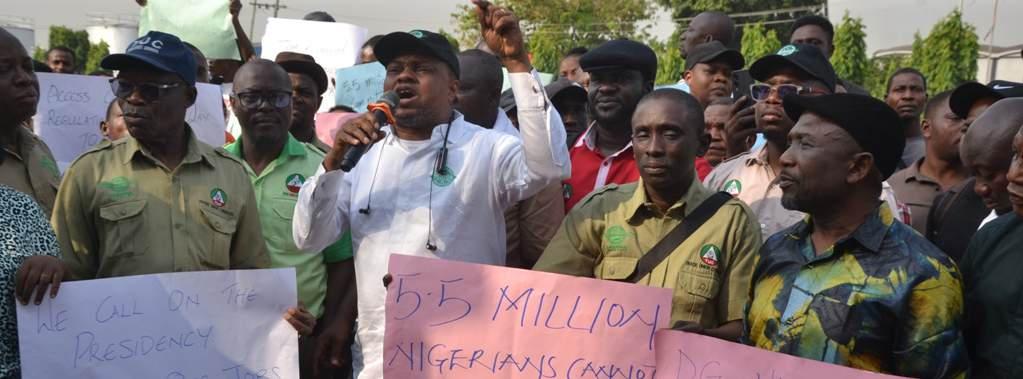
Members of Food Beverage and Tobacco Senior Staff Association(FOBTOB) and the National Union of Food Beverage & Tobacco Employees(NUFBTE) during a protest over the ban of alcohol in sachets and below 200ml glass bottles at NAFDAC's office in Lagos...yesterday






Deji Elumoye in Abuja
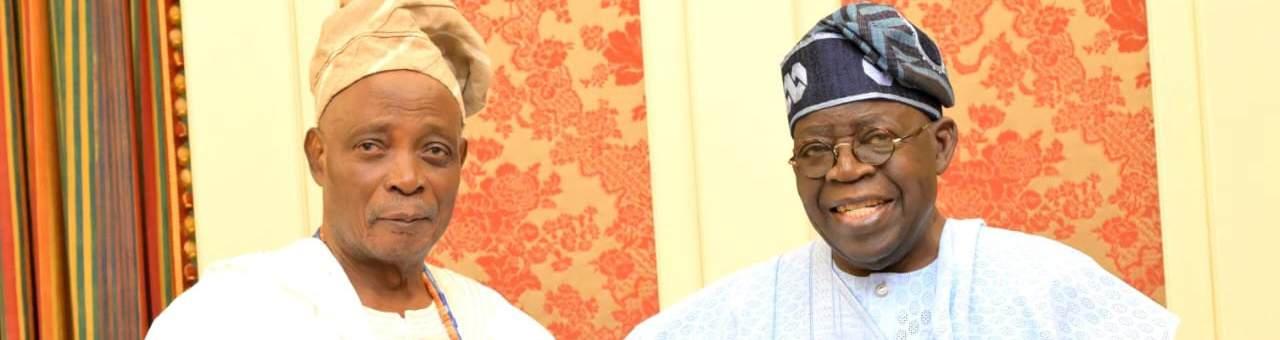
The Olubadan of Ibadanland, Oba Rasidi Adewolu Ladoja, yesterday, declared that the nation's security challenges are not insurmountable, expressing confidence that President Bola Tinubu was adopting the right strategies to address the situation.
Speaking with newsmen after paying a thank you visit to the President at the State House, Abuja, following Tinubu’s attendance of his coronation ceremony on September 27, 2025, the monarch noted that while insecurity remains the country’s most pressing challenge, current efforts by President indicated a commitment to restoring safety
and stability nationwide.
He said: "I don't think it is insurmountable, but by and large we believe that the president is tackling it correctly now.”
Oba Ladoja urged the President to further strengthen interventions in food security and healthcare, stressing that access to farmlands was crucial
to further strengthen food security.
The Olubadan also called for improved healthcare infrastructure, emphasising the need for standard hospitals capable of providing quality medical care to Nigerians, while encouraging the federal government to sustain and deepen its efforts across critical
sectors affecting citizens’ welfare. According to him,"Well, we expect the president to work more on the situation of the food. We expect them to look at the situation of health. We should have standard hospitals where we can treat our people. But the major problem we really now have is the problem of insecurity. Farmers find it
of the National Assembly, and all local government legislators.
But reacting to the development at his Kano residence shortly after Governor Yusuf’s resignation, Kwankwaso, leader of the Kwankwasiyya Movement—the platform on which the Governor rode to victory in 2023—said his struggle has always been about the emancipation of ordinary Nigerians from the difficult conditions they currently face.
"I'm not for sale. Our political convictions keep me grounded. If I were in it for personal gain, I would have taken the easy route and you would be looking for me elsewhere not in this place.
"Our shared vision is what keeps me going. If I were motivated by greed, I would
have taken the money and run. And you would not be here, showing your support." Kwankwaso maintained.
He urged party supporters to mobilise and prepare ahead of 2027, saying, "We need people like you who have sacrificed and stood by the truth. You should not relent, as we will one day achieve our objectives."
“Going by what is happening in Kano today, we need to start preparing because there are people who are hell-bent in destroying what we built over time. My mission is to always fight for the ordinary people. I would not compromise with those who exploit the masses," Kwankwaso assured his supporters.
Meanwhile, while the Governor and his supporters are yet to officially announce
the political party he would be joining, it is obvious that they are moving to the ruling All Progressives Party (APC) as he has been discussing with the leadership of the party in the past few weeks, which culminated in him visiting President Bola Ahmed Tinubu in Aso Rock a few days ago where the duo met behind closed doors and kept their discussion under wraps.
Governor Yusuf cited ongoing internal conflicts and a desire to prioritise the welfare of the State's citizens as reasons for the decision.
The resignation was disclosed in a statement issued yesterday by the Director General, Media and Publicity, Government House, Kano, Sanusi Bature Dawakin Tofa. It revealed that the
Governor resigned from NNPP alongside 21 members of the Kano State House of Assembly, eight members of the House of Representatives and all the 44 local government Chairmen across the State.
It noted that the Governor conveyed his decision in a letter addressed to the Chairman of NNPP, DisoChiranchi Ward, Gwale local government area of the State with effect from January 23, 2026.
In the letter, Governor Yusuf expressed appreciation to the party for the platform and support extended to him since joining the NNPP in 2022, noting that he remained grateful for the goodwill and cooperation he enjoyed throughout his engagement with the party.
The Governor observed that unresolved crises had
deepened divisions within the NNPP, weakened internal cohesion, and created uncertainty among members, describing the situation as increasingly irreconcilable.
Governor Yusuf said the decision followed careful reflection and was guided strictly by public interest considerations.
“After careful reflection, and without prejudice to the party’s capacity to resolve its internal challenges, I have come to the conclusion that my re0signation is in the best interest of the people of Kano State,” he stated.
He emphasised that the decision was taken in good faith, without bitterness, and reaffirmed his commitment to peace, unity and the continued progress of the state.
This latest development
Fubara and his Deputy, Prof. Ngozi Odu, appears to have been paused momentarily as an Oyigbo High Court in Port Harcourt, yesterday, indefinitely adjourned their suit challenging the impeachment processes as directed by members of Rivers State House of Assembly.
This comes as the Special Adviser to President Bola Tinubu on Policy Communication, Daniel Bwala, yesterday, reaffirmed that Fubara, is the recognised leader of the All Progressives Congress (APC) in the State, stressing that the FCT Minister, Nyesom Wike, was yet to register as a member of the ruling party.
On the suit, the trial judge, Justice Florence Fiberesima, had, on January 16, 2026, in two
separate suits by Fubara and Odu, restrained the Speaker and other lawmakers from sending any request, resolution, articles of impeachment, or other document or communication to the Chief Judge.
The court had also restrained the Chief Judge from receiving, forwarding, considering, and or acting on any request, resolution, articles of impeachment or other document or communication from the lawmakers for purposes of constituting a panel to investigate allegations of misconduct against the governor and his deputy.
The court had adjourned the case to yesterday for motion. When the matter resumed in court, lead counsel to Amaewhule and 26 other
members, S.I. Ameh, a Senior Advocate of Nigeria (SAN), informed the court about the appeal which had been entered and orally applied the court to stop further hearing pending the determination of the appeal.
The oral applications were not opposed by the lead claimants counsel, Paul Erokoro (SAN), and Lawrence Oko-Jaja, counsel to 28th to 30th defendants in the court who are Victor Oko-Jumbo, Sokari Goodboy and Orubienimigha Timothy, lawmakers loyal to Governor Fubara.
Ruling on the application, Justice Fiberesima adjourned sine die following the proof of two separate appeals which have been entered, a decision which she said would enable the appeal court determine the
suit before it.
Bwala: Fubara is APC Leader in Rivers, Wike Not Party Member
Meanwhile, Daniel Bwala, has reaffirmed that Fubara, is the recognised leader of the APC in the State, stressing that Wike was not yet a member of the ruling party.
Bwala made the clarification while speaking on a national television, amid the political crisis in the coastal state which has morphed into the initiation of impeachment proceedings, by State lawmakers.
“I agree with the point highlighted by the National Chairman (Nentawe Yilwatda) that in Rivers State, Governor Fubara is the leader of the APC
in Rivers State. Wike is not a member of APC, so he cannot speak for the APC,” Bwala said.
He added that while Wike may retain influence within the Peoples Democratic Party (PDP) in Rivers State, he has no authority within the APC.
“He may be the leader of the PDP in Rivers State because he was a former governor and they do not have a governor at the moment, but in APC, the leader of the party in Rivers State is Governor Fubara,” he stated.
Bwala noted that President Bola Tinubu was committed to the rule of law and respects internal party processes, stressing that the President fully supports the position
CBN SET TO UNVEIL REVISED FX MANUAL TO BOOST MARKET CONFIDENCE, STRENGTHEN NAIRA
Exchange Limited (NGX), yesterday, disclosed that domestic and foreign investors' total transactions increased significantly to N11.9 trillion in 2025, making it the highest growth figures since 2007.
Speaking on the reforms of the FX manual at a forum, the Deputy Governor, Economic Policy, CBN, Dr. Muhammad Sani Abdullahi, disclosed that the bank was undertaking a comprehensive revamp of the forex manual, a key regulatory document used by banks for export proceeds and other foreign trade-related transactions.
According to him, the document was already undergoing significant reforms aimed at aligning market operations with current economic realities.
Abdullahi explained that the revised manual would introduce clearer rules, stronger oversight and improved processes to support transparency and efficiency in the FX market.
He said the reforms are expected to close loopholes, reduce uncertainty for market participants, and support a more orderly functioning of
the foreign exchange system.
“One of the things we are working on for this year is a complete revamp of the framework that governs forex transactions in Nigeria. The forex manual is the document that banks hold for exports and other things that are related to foreign trade.
“It is already undergoing a significant amount of reforms, and we should be done in the next one or two months, which will change and improve the value of the naira, and we shall continue to see less volatility,” Abdullahi said.
Meanwhile, the NGX, yesterday, disclosed that domestic and foreign investors' total transactions increased significantly to N11.9 trillion in 2025, making it the highest growth figures since 2007.
This was about a 113.4 per cent increase over N5.59 trillion declared by the bourse in its “Domestic & Foreign Portfolio Investment Report of Nigerian Exchange Limited.”
The N11.9 trillion milestone growth was on the backdrop of CBN’s reforms in the FX market that has led to massive Foreign Portfolio Investment
difficult to go to their farms. And it is already coming to the south also."
Commenting on ongoing economic reforms in the country, Oba Ladoja lauded the economic policies of the Tinubu-led administration, adding that economic stability remains central to national progress.
has led to division among members of the Kwankwasiyya Movement with some going with Governor Yusuf and others keeping their loyalty to the leader of the movement, Kwankwaso.
The supporters of the State Governor are now referred to as "Yan Aci Dadi Lafiya" (those enjoying themselves), while supporters of Kwankwaso are referred to as "Yan Wuya Ba Ta Kisa" (Hardship will not kill them).
The resignation letter was acknowledged by the NNPP Secretary of Diso-Chiranchi Ward, Hon. Kabiru Zubairu, who commended the governor for his achievements in infrastructure development, urban renewal, health, education, and economic empowerment.
taken by the APC leadership on the Rivers situation.
“The President believes in the rule of law and rule-based practice. With respect to party affairs, what the national chairman said is the position the President sticks to because he respects party procedure,” he said.
Addressing the impeachment attempts against Fubara and his deputy, Bwala said the party’s stance was clear and that the governor must be “allowed to govern without interference.”
“There have been orders of court that stopped impeachment. The party is clear. Nobody should stop Fubara from governing the state,” he said.
inflow into the stock market last year.
The reforms were part of the CBN’s broader strategy to create a fairer, more stable FX market and support economic growth through better monetary policies.
The N11.9 trillion transactions contributed to the N36.6 trillion market capitalisation investors average returns in 2025, while the NGX All-Share Index appreciated by 51.2 per cent.
Analysts attributed the upbeat in the stock market last year to the increasing attractiveness of the Nigerian market to foreign
investors, ongoing economic reforms, resilient earnings by Nigerian companies, exchange rate differential, ongoing banking recapitalisation and the reform in the oil sector. According to the report, the foreign investors' transactions closed 2025 at N2.65 trillion, a growth of 210.7 per cent from N852 billion in 2024, while domestic investors' transactions moved from N4.73 trillion in 2024 to N9.27 trillion in 2025, representing an increase of nearly 96 per cent.
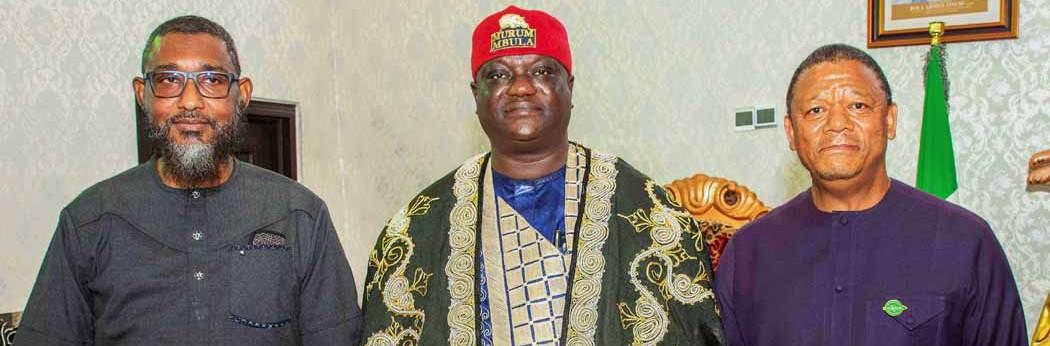
L-R: Executive Director, Backward Integration Projects (BIP), Dangote Sugar Refinery Plc, Mr. Mulhim Eltayeb; His Royal Majesty, Murum Mbula, Murum
Group Managing Director/CEO, Dangote Sugar Refinery Plc, Thabo Mabe, during Mabe’s familiarisation tour with the five royal fathers of the
Nigeria was again plunged into nationwide darkness yesterday following the collapse of the national electricity grid, the first such incident recorded in 2026, and the second in about the last three weeks.
The system failure, which occurred at about 12.40p.m., resulted in a complete shutdown of electricity supply as power generation dropped to zero, cutting off homes, businesses and critical infrastructure from the grid.
Besides, all electricity Distribution Companies (Discos) were affected, leaving major cities without public power supply, as the utilities scrambled to assure their customers of efforts to restore supply in collaboration with the Transmission Company of Nigeria (TCN) and the grid managers, the Nigerian Independent System Operator (NISO).
Industry data showed that load allocation to the 11 electricity distribution companies fell to nil shortly after the collapse, underscoring the severity of the disturbance. Prior to the incident, the grid had been transmitting over 4,000 megawatts of electricity, reflecting relatively stable operations before the sudden failure.
But in a statement in Abuja, NISO blamed the incident on the simultaneous ‘tripping’ of multiple 330kV transmission lines as well as the disconnection of some grid-connected generating units for the challenge.
Before the response by NISO, a number of the Discos characterised the development in various terms, with some describing it as ‘system disturbance’, ‘system outage’ and ‘system collapse’.
“We regret to inform you that a system disturbance occurred on the national grid at 12:40p.m. today (yesterday) causing power outage across our franchise areas.
The lingering strike action by health workers in the country under the umbrella of the Joint Health Sector Unions (JOHESU) may assume a wider dimension as the Trade Union of Nigeria (TUC) and the Nigeria Labour Congress (NLC) have jointly threatened to mobilise Nigerian workers on nationwide industrial action if the Federal Ministry of Health fails to meet the demand of the aggrieved workers.
In a joint statement by the Secretary of TUC, Comrade General, Dr. NA Toro and Comrade Benson Upah, Acting General Secretary of NLC respectively, the trade unions said that they reject what they termed the persistent and deliberate provocative refusal of the federal government to implement the report of the Technical Committee on the adjustment of the Consolidated
Health Salary Structure (CONHESS) submitted since 2021.
The unions insisted that the continued delay in the implementation of the reports “is no longer an administrative lapse; but a conscious act of injustice, bad faith, and institutional disrespect to health workers and organised labour.
“It is therefore unacceptable, and a blatant provocation, while the difficulty implementing the adjustment of Consolidated Medical Salary Structure (CONMESS) with effect from 2nd January 2014, the same government has wilfully refused to implement the same for CONHESS. This selective justice and discriminatory application of policy within the same sector expose the insincerity of the government’s commitment to fairness, equity, and industrial harmony,’’ they said.
While gradual restoration of power supply has commenced, please be assured that we are working closely with relevant stakeholders to fully restore electricity as soon as the grid is stabilised,” Abuja Disco wrote on its social media handles.
For its part, Ikeja Disco said: “Be informed that we experienced a system outage today, 23/01/2026, at around 12:40 hours, affecting all our feeders. Efforts are currently being coordinated by the National Control Centre to effect restoration of supply to all locations affected by the development. Please bear with us.”
In the same vein, Benin Disco simply wrote: “There has been a collapse,” while Yola Disco said, “Be informed that there was loss of supply from the Gombe Transmission Company of Nigeria (TCN) station at about 12:40p.m. today due to a system disturbance. This has affected the entire YEDC franchise namely Adamawa, Borno, Taraba and Yobe states.
“We are in contact with the Transmission Company of Nigeria (TCN) and will provide updates as restoration efforts continue. We appreciate your patience and understanding.”
But in what it termed a ‘preliminary statement on
national grid disturbance’ NISO explained that after the outage, restoration had begun, noting that a detailed investigation will be carried out to find out the contributory causes of the disturbance.
“The Nigerian Independent System Operator (NISO) wishes to inform the public that at approximately 12:40 hours on Friday, 23 January, 2026, the national grid experienced a system-wide disturbance, which resulted in a total outage across the interconnected network.
“Preliminary operational reports indicate that the disturbance was associated with the simultaneous tripping of
multiple 330kV transmission lines, alongside the disconnection of some grid-connected generating units. These events collectively contributed to the system collapse at the time indicated.
“Following the outage, system restoration activities commenced at about 13:15 hours, in accordance with established grid restoration and recovery procedures. As of the time of this update, electricity supply has been successfully restored to Abuja, Osogbo, Benin, Onitsha, Sakete, Jebba, Kainji, Shiroro, and parts of Lagos, while restoration efforts are continuing progressively in other parts of the country.
Turaki explains why party withdrew case before Justice Abdulmalik Ex-PDP legal adviser dumps party for APC
Chuks Okocha, Alex Enumah and Sunday Aborisade in Abuja
Justice Joyce Abdulmalik of a Federal High Court in Abuja, yesterday halted hearing in the suit challenging the Kabiru Turaki-led national executive of the Peoples Democratic Party (PDP).
But National Chairman of PDP, Turaki, yesterday offered reasons why the party withdrew its case
before Justice Abdulmalik of the Federal High Court in Abuja. This was as a major political realignment unfolded in Akwa Ibom State yesterday as the immediate past National Legal Adviser of the PDP, Barrister Emmanuel Enoidem, formally defected to the All Progressives Congress (APC), a move widely seen as cementing an emerging unity pact between Governor Umo Eno and Senate President
Godswill Akpabio.
Justice Abdulmalik, halted further hearing in the suit filed by a faction of the PDP loyal to the Minister of the Federal Capital Territory (FCT), Nyesom Wike, pending the determination of the case at the Court of Appeal, Abuja.
The Wike faction led by its acting National Chairman, Mohammed Abdulrahman and acting National Secretary,
Samuel Anyanwu, had dragged the Turaki-led national executive to court; seeking an order of injunction, restraining them from parading themselves as representatives of the PDP in any capacity whatsoever. At the resumed hearing of the case yesterday, Chief Chris Uche, SAN, who represented the respondents applied to withdraw their earlier application for stay of proceedings.
Ukrainian and Russian negotiators met in Abu Dhabi yesterday, to tackle the vital issue of territory, with no sign of a compromise, as Russian airstrikes plunged Ukraine into its worst energy crisis of the four-year war.
Kyiv is under mounting U.S. pressure to reach a peace deal in the war triggered by Russia's full-scale invasion in February 2022, with Moscow demanding Kyiv cede its entire eastern
industrial area of Donbas before it stops fighting.
Reuters quoted Ukrainian President, Volodymyr Zelenskiy, to have said the territorial dispute would be a central issue at the talks in the United Arab Emirates, which were scheduled to conclude on Saturday.
"The most important thing is that Russia should be ready to end this war, which it started," Zelenskiy said in a statement on the Telegram app, adding he
was in regular contact with the Ukrainian delegation but it was too early to draw conclusions from yesterday’s talks.
"e'll see how the conversation goes tomorrow and what the outcome will be."
The negotiations come a day after Zelenskiy held talks with U.S. President Donald Trump at the World Economic Forum in Davos, which yielded no immediate results.
The tripartite talks unfold
against a backdrop of intensified Russian strikes on Ukraine's energy system that have cut power and heating to major cities like Kyiv, as temperatures hover well below freezing.
The head of Ukraine's top private power producer, Maxim Timchenko, told Reuters yesterday, that the situation was nearing a "humanitarian catastrophe" and that Ukraine needs a ceasefire that halts attacks on energy.

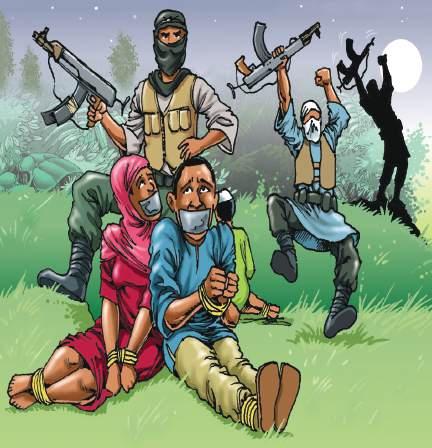
The recent abduction of Christian worshippers in Kaduna State is a heartbreaking reminder that insecurity, though largely curtailed, has not been completely extinguished from our national life. The anguish of families, the fear that ripples through communities, and the collective grief of a people confronted once again by violence cannot be trivialised. Every life matters, and every act that threatens the sanctity of worship, regardless of faith, strikes at the moral core of society.
Yet, even in moments of pain, truth and context must not be sacrificed on the altar of political opportunism.
For nearly two years, Kaduna State has enjoyed a level of peace and tranquility that once seemed unattainable. Communities that were previously theatres of fear have experienced relative calm. Markets reopened, highways became safer, farmers returned to their fields, and inter-communal engagements slowly replaced mutual suspicion. This did not happen by accident. It was the product of deliberate leadership, firm security coordination, and a conscious policy of inclusion under Governor Uba Sani.
That is why it is important to state clearly: the kidnapping of worshippers represents a breach, not the norm. It is an unfortunate incident in a state that has, by all objective measures, made significant progress in restoring security and public confidence. To portray it otherwise is to deliberately distort reality for narrow political ends.
What distinguishes leadership in moments like this is not the denial of pain, but the willingness to confront it with empathy and action. Governor Uba Sani’s prompt visit to the affected community speaks volumes. It was not a symbolic photo opportunity; it was an expression of responsibility and concern. By standing with the people, listening to their fears, and reassuring them of the government’s resolve, the governor demonstrated what responsive leadership looks like in times of crisis.
Contrast this with the behaviour of fifth columnists and disgruntled political actors who see tragedy as an opening for relevance. Even before facts were fully established, they rushed to social media and public platforms, spinning conspiracy theories, inflaming religious sentiments, and framing the incident as proof of systemic failure. Their objective was not justice for victims or solutions to insecurity, but political capital. This kind of opportunism is not only condemnable; it is dangerous.
The politicisation of human suffering is one of the most distasteful features of Nigeria’s public discourse. When grief becomes a campaign tool and fear, a mobilising strategy, society pays a heavy price. It deepens mistrust, widens fault lines, and undermines the very peace we all claim to desire. Kaduna State, with its complex ethno-religious composition, cannot afford such reckless rhetoric.
Governor Sani understands this reality better than most. From the outset of his administration, he made
it clear that Kaduna would no longer be governed through the politics of division. He consciously reset the tone of leadership, reaching across religious and ethnic boundaries, engaging traditional rulers, faith leaders, youth groups, and community stakeholders. His consistent presence at Christian and Muslim events alike sent a powerful message: every faith belongs, every citizen matters.
This inclusive approach has yielded tangible dividends. Communal tensions that once escalated rapidly have been defused through dialogue. Security agencies now operate with improved intelligence cooperation from communities who feel a renewed sense of ownership of the peace process. Interfaith platforms have been strengthened, replacing suspicion with structured engagement. These are not cosmetic achievements; they represent a fundamental shift in the state’s social architecture.
On the security front, the narrative has equally changed. Coordinated operations with federal security agencies, deploying both kinetics and non-kinetics strategies, intelligence-led policing, and strategic engagement with local vigilante structures have significantly degraded the capacity of criminal elements. The reopening of previously abandoned communities and the return of displaced persons stand as quiet testimonies to this progress. To deny these gains because of a single, albeit painful, incident is intellectually dishonest.
It is precisely because Kaduna has moved forward that enemies of progress are uncomfortable. Peace does not serve their agenda. Unity denies them relevance. A governor enjoying growing acceptance across religious and communal lines threatens the old politics of fear and mobilisation by hatred. It is therefore unsurprising that some are eager to weaponise this incident, hoping to roll back the goodwill Governor Sani has painstakingly built.
But the people of Kaduna are not naïve. They can discern sincerity from cynicism, leadership from noise. They know who has consistently worked to secure their lives and livelihoods, and who only appears when tragedy offers an opportunity for headlines. They understand that no government, anywhere in the world, can guarantee absolute security, but they can judge commitment, responsiveness, and trajectory. What is required now is unity, not hysteria; support for security agencies, not demoralisation; prayers for the victims, not propaganda. The abducted worshippers must remain at the centre of concern, not as symbols in a political argument but as human beings whose safe return must be the collective priority of government and society.
IT IS AN UNFORTUNATE INCIDENT IN A STATE THAT HAS, BY ALL OBJECTIVE MEASURES, MADE SIGNIFICANT PROGRESS IN RESTORING SECURITY AND PUBLIC CONFIDENCE
Uba Sani has shown that he will not be deterred by manufactured outrage or political blackmail. His focus remains steady: consolidating peace, strengthening security, and deepening the bonds that hold Kaduna together. History will be kinder to leaders who choose the hard path of inclusion over the easy path of division. Adebambo Adewale writes from Kaduna State
UDEME NANA reviews ‘Architect of a New Democratic Dawn,’ the biography of Victor Attah,former Governor of Akwa Ibom State
The first full biography of the Akwa Ibom born Democrat, respected Patriot, former President of the Nigerian Institute of Architects , former Governor of Akwa Ibom State, a man widely acknowledged as the Senior Advocate of Resource Control, by former President Goodluck Jonathan as the South South Governor was launched in Abuja on 20th November last year as part of the events to mark the outspoken titan's 87th birthday.
The planning of the successful ceremony was under the able Chairmanship of the bureaucrat and diplomat, the current President of Pan Niger Delta Forum, PANDEF, Ambassador Godknows Igali who was assisted by men like Labaran Maku, former Deputy Governor of Nasarawa State and former Minister of Information, Professor Tunde Esan, Otunba Supo Shonibare, Dr Jerry Nwohu and two women, Dr Stella Dorgu and
Ms Ekaette Robson.
Many book reviews focus on the title, pagination, number of Chapters, Publisher, Author, themes, structure and technical faults but it is equally important to draw out lessons in books to attract readers, inspire and empower them especially if the subject of the Book, like in this case, is exemplary. Biographies are often written to reveal the life of the subject in raw form apart from serving as a family chronicle. In Attah : Architect of a New Democratic Dawn', written by Dr Dele Sobowale, readers would discover that a young Victor Attah, although born into a family that was one of the 'Joneses' in Akwa Ibom State took his destiny into his own hands by hawking 'nwo nwo' - small pieces of cooked meataround the circus of Uyo, a location which he adopted as the center of his urban renewal project as Governor of Akwa Ibom State. He actually redesigned
the Ibom plaza as a flea market with hundreds of stalls to stop street trading by minors. His resort to hawking 'nwo nwo' was typical of one with an activist DNA who would not throw up his arms in defeat when faced with an obstacle. The challenge that time, reared it's head when their house - keeper left him and his junior brother without a "penny" to feed. Attah had to find a way out just as he worked out a solution, when as Governor, President Olusegun Obasanjo denied his State allocations from the Federation Allocation Accounts Committee ( FAAC ) because of Obasanjo's designation of Akwa Ibom as a non littoral State underserving of the full payment of derivation funds as prescribed by the 1999 Constitution. During that time, the government of Akwa Ibom State was paid a miserly monthly hand - out of N600m only by Chief Obasanjo's federal government.
The seriousness with which Lagosians and perhaps the Yoruba race attach to their culture is captured in the Book by the story of a High Court judge who participated actively in an annual cultural show as a Masquerade. One imagines how dignified such a Masquerade would have gone about his outing along the streets. A lesson here is that our traditional Masquerades should be refined to present themselves majestically and honourably. The episode teaches that cultural plays are not exclusive to the dregs of society as professionals and respected high net worth individuals could also wear masks. On page 39, an Eyo Masquerade, after lifting his veil said to Attah's eldest brother 'go and report to the Police that I beat you. I am a Judge. They will bring your case to me' !
Dr NANA, fnipr who served as Attah's Media Adviser is the Founder of Uyo Book Club
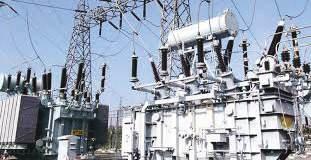
Yet another collapse...
What a waste!
WTrade unions are basically an integral part of liberal democratic society. They are an important part of the fabric of the Nigerian society, providing social, economic, political and psychological benefits for their members as well as the platform for participation in managerial functions in government and work industry.
hen President Muhammadu Buhari took over the reins of power on May 29, 2015, Nigeria was sadly a broken state in many respects. As a result of many other factors including bad governance and untold level of corruption, government could not live up to its financial obligations to citizens and service providers at both the federal and state levels.
sought for perpetual injunction against AUPCTRE, and this has compounded rather than solved the problem.
by the EFCC, President Buhari by his action has successfully brought back to the public consciousness the need to treat public funds with the highest level of transparency and accountability.
It is worrisome therefore that in recent times, trade unions in Nigeria are witnessing serious challenges that tend to militate against their performance.
Indeed one of the first official assignments that President Buhari carried out was the approval of billions of Naira in bailout funds to enable state governors pay something as basic as workers’ salaries. Granting those bailout funds was a huge boost to national security because the pressure of arrears of unpaid monthly salaries building dangerously all over the country was a ticking bomb.
ITF’s actions are in deference to AUPCTRE’s commitment to welfare of its ITF members, and in spite of Trade Union (Amendment) Act (2005).
After keeping treasury looters on their toes and at bay through the EFCC, particularly, President Buhari moved to curb unnecessary spending habits of the nation on what economists call articles of ostentation. Part of the disclosures of the President’s stock taking was how the country frittered away billions in foreign currency by importing goods, which can be produced at home. One of such items was rice, a major staple among Nigerians. By banning rice importation into the country, the President on one hand had saved the nation billions in foreign currency annually.
TOne of such is the Amalgamated Union of Public Corporations, Civil Service Technical and Recreational Services Employees (AUPCTRE). It has been having crisis with the Industrial Training Fund (ITF) whose management it said is refusing to cooperate by stopping deductions of staff check-off dues since January 2023.
Ask the naysayers and they would readily remind you of how long it took President Buhari to appoint his ministers and how that contributed to collapse of the economy as if, without ministers, governance was frozen. But buying that narrative would amount to what a famous Nigerian writer, Chimamanda Adichie, termed “the danger of a single story”. Yet the whole story was that many of our citizens did not know how decrepit a state President Buhari inherited in 2015.
Freedom to join trade unions is reinforced by the provisions of S.40 of the 1999 Nigerian Constitution which states the right of citizens to form or belong to any political party, trade union or other associations. Also, the provisions of the International Labour Organization Convention No. 87 of 1948 supports same.
And, on the other hand, the President has boosted domestic production of rice and in the process had nudged the country into self sufficiency in food production. He also created millions of jobs for young people in the rice value chain.
What is most admirable about President Buhari and his government is its frugal management of scarce national resources to attain optimum goals. Recall that since President Buhari stepped in the saddle, oil revenue dropped abysmally as if to sabotage him knowing all the big promises he made to citizens during his campaigns. But with the little resources that trickle in, the President is achieving what governments that received oil windfalls could not dream of.
AUPCTRE is accusing ITF of backing another labour group, the Senior Staff Association of Statutory Companies (SSASCGOC) which has a judgment against it which ITF was not a party.
It was therefore necessary for him to take stock against the background of the fact that the departing government did not, reportedly, cooperate full well with the incoming government in terms of leaving workable handover notes. Although President Goodluck Jonathan was gracious in defeat, many of his appointees were still sulking over what they saw as their personal losses and therefore pulled all the stops to make things difficult for the Buhari government.
Efforts of workers to seek improvement on existing working conditions through collective actions is a right not a privilege. Therefore labour unions are demanding urgent action that ITF should uphold worker's rights and maintain status quo by resuming deductions of check-off dues of its members.
Comr. Luka Daniyan, Abuja
Even with the obvious and unpatriotic obscurantist behaviour of the PDP appointees and their supporters still in government hell-bent on making things difficult for Buhari, the President moved on with his methodical repair of a broken country. The first thing he did was to identify all possible sources of income to the nation and directed that all inflows be paid into one single account in line with the policy of Single Treasury Account (TSA).
For months AUPCTRE has been demanding the re-instatement of check - off dues deductions yet ITF remains adamant and continued to ignore all correspondence sent to them.
The TSA policy, interestingly, was mooted by the PDP government but its penchant for imprudence and lack of accountability denied it the courage of implementing the policy. What the President literally did was to gather all the nation’s money into one box and locked it up with a big padlock and watched for any thief to come close.
AUPCTRE then wrote to the Nigerian Labour Congress (NLC) to intervene, they did by asking ITF to hands off on union membership. ITF ignored this, thus in October 2025 NLC threatened to picket ITF office.
The Federal Ministry of Trade and Industry, the parent ministry of ITF, came in to mediate, and they brokered a meeting where it was resolved to seek advice from their legal department.
Who can blame the President for almost developing paranoia over the safeguard of the national treasury with revelations and reports of mind-boggling looting that took place in the 16 years of the PDP? With such disclosures of how billions meant for fighting insurgency in the Northeast ended up in the pockets of a few individuals while our gallant soldiers fought with bare hands and on empty stomach, President Buhari was duty bound to bring sanity and accountability back in national spending.
Suddenly, ITF, which is siding with SSASCGOC, went to court and
Thus, under President Buhari, the Economic and Financial Crimes Commission (EFCC), which had remained comatose for years, was woken up to resume its duties. Apart from the trillions of Naira of looted funds and property recovered from corrupt politicians
Today, the trains are up and running daily from Abuja to Kaduna. And from Lagos to Ibadan a brand new rail track was started and completed; citizens are already commuting daily to and fro these two major cities in the country seamlessly as they reap from the dividends of democracy. And with the way this government is going, before 2023 when the President would leave, the entire country would be linked by rail with all of its economic advantages.
Ainofenokhai Ojeifo, Abuja
THE SATURDAY NEWSPAPER
EDITOR OBINNA CHIMA
DEPUTY EDITOR AHAMEFULA OGBU
MANAGING DIRECTOR ENIOLA BELLO
THE SATURDAY NEWSPAPER
DEPUTY MANAGING DIRECTOR ISRAEL IWEGBU
EDITOR YEMI ADEBOWALE
CHAIRMAN EDITORIAL BOARD OLUSEGUN ADENIYI
DEPUTY EDITOR AHAMEFULA OGBU
EDITOR NATION’S CAPITAL IYOBOSA UWUGIAREN
MANAGING DIRECTOR ENIOLA BELLO
THE OMBUDSMAN KAYODE KOMOLAFE
DEPUTY MANAGING DIRECTOR ISRAEL IWEGBU
CHAIRMAN EDITORIAL BOARD OLUSEGUN ADENIYI
lh. Misiliu Akinsanya is the president of NURTW, and he is responsible for providing overall leadership for transport workers in Nigeria. He also oversees the day to day operations of the Union. He is committed to protecting and defending the union’s constitution and guiding the union in accordance with its established rules and regulations. He implements reforms to streamline operations, modernize the transport sector and enhance the efficiency of motor parks, and in enforcing laws. He advocates for worker’s welfare, but warned members against violence. He also interfaces with government, at all levels. He uses his union’s large membership to support political parties and candidates during electrons in exchange for political patronage and protection.
Anjorin Adeolu, Nasarawa State
TEDITOR NATION’S CAPITAL IYOBOSA UWUGIAREN
MANAGING EDITOR BOLAJI ADEBIYI

THE OMBUDSMAN KAYODE KOMOLAFE
THISDAY NEWSPAPERS LIMITED
EDITOR-IN-CHIEF/CHAIRMAN NDUKA OBAIGBENA
GROUP EXECUTIVE DIRECTORS ENIOLA BELLO, KAYODE KOMOLAFE, ISRAEL IWEGBU
THISDAY NEWSPAPERS LIMITED
DIVISIONAL DIRECTORS SHAKA MOMODU, PETER IWEGBU, ANTHONY OGEDENGBE
EDITOR-IN-CHIEF/CHAIRMAN NDUKA OBAIGBENA
DEPUTY DIVISIONAL DIRECTOR OJOGUN VICTOR DANBOYI
he Advocacy for Alleged Witches (AfAW) urges the Nigerian public to stop ritual attacks and killings because the notion of ritual money and wealth is completely baseless. AfAW is making this call following the reported arrest of suspected ritualists in Oyo State in southern Nigeria. The local media reported that members of the Western Nigeria Security Network, Amotekun, arrested suspected ritualists with the body parts of a 73-year-old man. The suspects, who were apprehended in the Boluwaji area in Ibadan, said that a Muslim cleric asked them to procure some human body parts for rituals. Ritual attacks are widespread in Nigeria. Irrational conceptions of how to make money or become wealthy and successful undergird these atrocities. Many Nigerians strongly believe in blood money, known in some local languages as Ogun Owo (Yoruba) or Ogwu ego (Igbo). They think that they could become rich, or successful through ritual sacrifice. Unfortunately, this is not the case. Ritual wealth has no basis in reason, science, or reality. Home movies known as Africa magic or Nollywood films have not helped matters. These movies continue to reinforce these mistaken notions and other superstitions. Families, churches, mosques, and other public institutions do not encourage the interrogation of these traditional occult beliefs. There are no robust efforts to criticize or dispel these irrational and paranormal claims in schools, colleges, and universities. So millions of Nigerians grow up blindly believing that they could make money through ritual sacrifice of human body parts. The belief has led many Nigerians to commit crimes and perpetrate atrocities. Many Nigerians have been jailed or are undergoing court trials due to ritualrelated attacks and murder.
he Board of Peace is an interesting group of countries and individuals. Countries that have accepted so far are Albania, Argentina, Armenia, Azerbaijan, Bahrain, Belarus, Bulgaria, Egypt, Hungary (Thanks Wikipedia). Maybe they are processing applications basically in alphabetical order. Canada was invited but then its invitation was withdrawn and most of Europe has said no thanks as they have NATO. Russia and China were invited, but why?
GROUP EXECUTIVE DIRECTORS ENIOLA BELLO, KAYODE KOMOLAFE, ISRAEL IWEGBU, IJEOMA NWOGWUGWU, EMMANUEL EFENI
SNR. ASSOCIATE DIRECTOR ERIC OJEH
ASSOCIATE DIRECTOR PATRICK EIMIUHI
DIVISIONAL DIRECTORS SHAKA MOMODU, PETER IWEGBU, ANTHONY OGEDENGBE
DEPUTY DIVISIONAL DIRECTOR OJOGUN VICTOR DANBOYI
CONTROLLERS ABIMBOLA TAIWO, UCHENNA DIBIAGWU, NDUKA MOSERI
SNR. ASSOCIATE DIRECTOR ERIC OJEH
DIRECTOR, PRINTING PRODUCTION CHUKS ONWUDINJO
ASSOCIATE DIRECTOR PATRICK EIMIUHI
TO SEND EMAIL: first name.surname@thisdaylive.com
CONTROLLERS ABIMBOLA TAIWO, UCHENNA DIBIAGWU, NDUKA MOSERI
DIRECTOR, PRINTING PRODUCTION CHUKS ONWUDINJO TO SEND EMAIL: first name.surname@thisdaylive.com
The executive is even more concerning with mainly Trump sycophants and his son in law. Both Trump family members have spent their time as real estate people and have only come to politics recently. Dennis Fitzgerald, Melbourne, Australia
Not too long ago, the police arrested some young Nigerians for stealing female pants, which they intended to use for ritual sacrifice. AfAW is asking all Nigerians to desist from ritual-related abuses because ritual money beliefs are baseless superstitions. Nigerian media, schools, and colleges should help educate and reorient the public. They should assist in reasoning Nigerians out of this killer-superstitious absurdity and nonsense. Leo Igwe directs the Advocacy for Alleged Witches (AfAW)
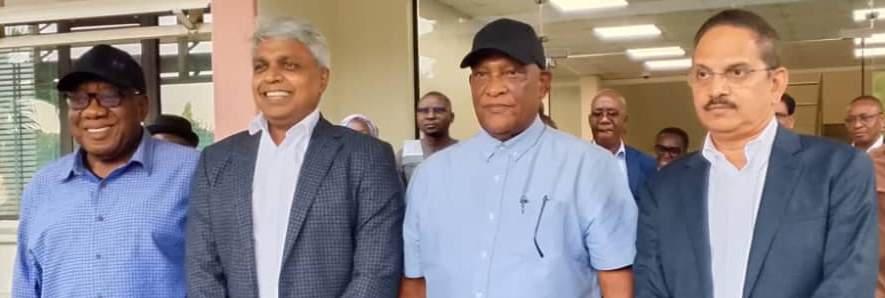
L-R: Executive Director, Hydrocarbon Processing Plants, Installations and Transportation Infrastructure, Nigerian Midstream and Downstream Petroleum Regulatory Authority (NMDPRA),
Limited, Mr. Munish Jindal; Chief Executive, NMDPRA, Saidu Mohammed, and Chief Technical Officer, Indorama-Nigeria, Mr. Deepu Sivadas, during
Wants continent to shift from import dependency to local production, from aid to investment Says with Dangote Refinery, Nigeria is on verge of becoming net fuel exporter
Vice President Kashim Shettima has canvassed for homegrown solutions to Africa's economic problems, emphasising innovative approaches for growth, development and prosperity on the continent.
According to him, it is only by building domestic productive capacity that African nations can convert their population and natural talents into real, resilient wealth adding that instead of expecting prosperity to be parachuted in, "it must be homegrown and earned."
The Vice President, who stated this during the highlevel Accra Reset Initiative meeting held on the margins of the 2026 World Economic Forum (WEF) Annual Meeting
in Davos, Switzerland, observed that Africa was no longer the periphery but the pulse of the world’s demographic and economic future.
Citing Nigeria where the Dangote Refinery is gradually turning the nation into a major exporter of fuel as an instance, Shettima pointed out that Africa can only rise when countries on the continent build.
His words, "Africa cannot rise on applause alone. We rise when we build. After decades as a net importer of value, Nigeria is on the verge of becoming a net exporter of refined fuel, powered by Africa’s largest refinery in Lagos, Nigeria: the Dangote Refinery.
"This is what happens when African capital meets
The Nigeria National Petroleum Corporation Limited (NNPCL) has commended the collaboration between host communities of the Trans Niger Pipeline (TNP) and Pipeline Infrastructure Nigeria Limited (PINL) in the successful increase in oil production in the country.
Head Field Operations, Eastern Corridor, Project Monitoring Office (PMO NNPCL), Akponime Omojevwhe, made the assertion during the January stakeholders meeting of host communities organised by PINL in Port Harcourt, Rivers State.
In his remarks, Omojevwhe
noted that the community's support has also contributed to the sterling performance of the company in securing the TNP.
He urged the communities to sustain the effort in ensuring that the company's projected 2.5m barrels per day production for the year 2026 is achieved.
"The message I was sent is to appreciate the stakeholders for your collaboration with PINL which has shown significant upshoot in the oil production and it has yielded revenue generation.
"I want to emphasise that this year 2026, we must be able to ensure that it is better than 2025 so that our projection can be met as far as oil production is concerned," Omojevwhe said.
industrial ambition. This implies that nations move from price takers to value makers when production is matched with infrastructure and policy clarity. Even as manufacturing’s share of Africa’s GDP fell from 16 per cent in 1980 to under 10 per cent by 2016, we chose not to retreat but to leapfrog."
Underscoring the benefits of modular factories, artificial intelligence, and robotics, the Vice President noted that "Africa can industrialise
faster in the 21st century than ever before," just as he said the era when the continent is "known only for what it digs or grows" is now giving way for the era when Africa is known for what it builds.
Shettima stated that while Africa’s future "depends on letting skills travel, return, and multiply," prosperity will move at the speed of people.
He recalled that "in 2024 alone, Africans abroad sent home about 95 billion dollars, more than five per cent of our
GDP and roughly equal to total foreign direct investment.
"That is not charity. This is why we are also championing free movement across Africa because mobility is a competitive advantage in a world where human capital is the most precious resource. Let skills and ideas flow as freely as goods and capital, and prosperity will follow."
Relying further on the Nigerian situation, the Vice President maintained that the experience had
been shaped by a simple lesson, that "prosperity is not imported; it is built," adding that the nation has "seen the prosperity paradox up close."
"Markets and talent exist, yet resilience remains thin until demand is translated into domestic capability. This means firms that produce, meet standards, and compete globally. Wealth given from outside is fragile. Wealth created from within is enduring.
Kasim Sumaina in Abuja
The Minister of Aviation and Aerospace Development, Festus Keyamo, yesterday formally signed the concession agreement for the Akanu Ibiam International Airport, Enugu, marking a major milestone in the federal government’s drive to modernise Nigeria’s aviation infrastructure through strategic public-private partnerships.
The signing ceremony took place at the Ministry of Aviation and Aerospace Development, Abuja, where the minister received a combined delegation of Enugu State Government officials and representatives of Aero Alliance, the concessionaire.
Keyamo in his remarks said, “Today is the end of a very long and tedious process regarding the concession of the Enugu Airport. The process culminated
on the 31st of July, 2025, when the Federal Executive Council approved the proposal to concession the Enugu Airport, subject of course to contract."
He explained that following the Federal Executive Council’s approval, the Ministry, FAAN and Aero Alliance engaged in extensive negotiations, including consultations with aviation unions, to ensure that workers’ welfare remained a top priority.
“We did these agreements with the rights and privileges of workers uppermost in our minds. Let me say today that we have fully respected and preserved the rights of aviation workers. They have not been retrenched, their terms and conditions of employment have not changed in any way, and they remain workers of the Federal Government and FAAN,” he stressed.
Maina: I was persecuted for refusing to share 5 per cent whistleblower fees
Alex
Enumah
in Abuja
The Chairman of the Garki Branch of the Nigerian Bar Association (NBA), Anthony Bamidele Ojo, has come under fire for conferring an award on former pension reform chairman, Abdulrasheed Maina, convicted for money laundering in 2019. Ojo, had on Thursday handed an award to Maina "in
recognition of his “dedication to public service, courage and perseverance in the face of adversity,” as well as his commitment to the rule of law, due process and justice institutions.
The Garki NBA boss said, Maina was honoured for exemplifying service guided by law and courage anchored in justice, adding that he “went
through a lot in the hands of those bent on destroying the work he was called to do.
“We are honouring him for his efforts concerning pension reforms and all he has done and continues to do in the development of the country,” the NBA chairman said.
However, the action of Ojo has come under severe knocks by some members of the branch
and the national body of the NBA.
In a statement issued yesterday, the NBA said it viewed with disdain the purported appointment of Maina, "who was convicted for stealing over N2 billion in pension funds, as ‘Grand Patron of NBA Garki Branch’ by the Chairman of NBA Garki Branch, Anthony Bamidele Ojo."
Linus Aleke in Abuja
Troops of the Joint Task Force, North West, Operation Fansan Yamma (OPFY), have uncovered and dismantled a terrorists’ makeshift hospital where injured fighters were reportedly receiving treatment, while also destroying other insurgents’ support systems across the region.
The operation, conducted between 21 and 22 January 2026, demonstrates the Nigerian Army’s ongoing commitment to restoring security in the Northwest and supporting humanitarian efforts for refugees, migrants, and internally displaced persons (IDPs).
In a statement, Media Information Officer of OPFY, Captain David Adewusi, said “Troops from 1 Brigade, alongside the Headquarters JTF OPFY Mobile Strike Team, acted on credible intelligence that injured terrorists were being treated in Bingi Forest. They discovered and destroyed a makeshift medical facility, delivering a significant blow to the terrorists’ support network and highlighting the troops’ operational effectiveness.”
Captain Adewusi added that the operation involved coordinated offensives across the Joint Operations Area, maintaining continuous pressure on
John Shiklam in Kaduna and Laleye Dipo in Minna
At least seven youths among them some staff of Kainji National Park have been killed in Wawa town of Borgu Local Government Area of Niger State.
This was as the Pentecostal Fellowship of Nigeria (PFN) has appealed to President Bola Tinubu to urgently deploy every available resources and intelligence to ensure the immediate and safe
release of over 100 Christian worshippers abducted during a church service in Kajuru Local Government Area of Kaduna State.
The youths were said to have been ambushed in the Kainji park by the gunmen who stormed the area on several motorcycles.
It was learnt that the figure of those that died may be higher because some staff of the park have not been accounted for.
The remains of those killed
have been deposited at the General Hospital Morgue in Wawa.
Chairman of the local government, Alhaji Abdullahi Mohammed Nasir, confirmed the killings, describing the incident as "very sad".
Meanwhile, bandits in their numbers during the week in a midnight attack on Maccita community in KotonKoro district of Mariga Local Government Area of the state killed one villager and abducted nine others.
The bandits were said to have stormed the community riding on motorcycles and wielding AK 47 rifles at about 10.30p.m.
It was gathered that the gunmen shot sporadically into the air during which one of the bullets hit a villager who was later confirmed dead.
The bandits were also said to have rustled several heads of cattle and sacked the food barns of the villagers escaping with several food items.
Flutterwave, Africa’s leading payments technology company, is launching stablecoin balances for its merchants and users across all its offerings.
This is being achieved through Flutterwave's collaboration with Nuvion and Turnkey to provide a secure, flexible, and verifiable stablecoin balance infrastructure.
“It is a major step in Flutterwave’s vision to make stablecoins a key pillar of Africa’s financial ecosystem, forming a core backbone for
the next wave of financial transformation and global connectivity.
"To accelerate business growth in Africa, we must make it safe, easy, and affordable for businesses to accept all forms of regulated payment methods, including stablecoin, from a global customer base," a statement quoted Lead, GEPP ROW, Remittances & Stablecoin Partnerships, Flutterwave, Nkem Abuah, to have said.
“By enabling stablecoin balances powered by
Turnkey, we are ensuring that multinationals, African enterprises, and individuals using Flutterwave will have access to low-cost, faster, and always-on cross-border payments with stablecoins," Nkem added.
Through this integration, Flutterwave provides a comprehensive embedded wallet experience that facilitates seamless transactions using stablecoin payments. This is supported by Turnkey, a blockchain infrastructure provider, along
with Nuvion's AI-powered global banking and payment platform, which is built on both fiat and stablecoin infrastructure.
The solution is currently being tested with a select group of merchants to ensure optimal performance.
Following this phase, USDC and USDT balances will be made available alongside existing USD, NGN, and other currency balances to all Flutterwave customers who have completed the necessary KYC and onboarding processes.
Fidelis David in Akure
The palace of the ArujaleOjime of Okeluse Kingdom in Ondo State has issued a stern warning to the general public against what it described as disrespectful and casual modes of address directed at the monarch, Oba Oloyede Adekoya Akinghare II.
The warning, contained in a statement issued , was signed by the Chief of Staff to the monarch, Prince Adefemi Michael Olorunfemi, who stressed that the 22-year-old traditional ruler must be addressed strictly as His Royal Majesty at all times.
terrorist elements and recording notable gains.
He further noted that troops from the 8 Division Garrison Strike Force and DSS assets engaged terrorists in Gundumi Village, Isa Local Government Area.
During the encounter, one terrorist was neutralised, while others fled with gunshot wounds into the forest. Six AK-47 rifles and three motorcycles were recovered.
According to the palace, some individuals have been addressing the monarch with terms such as “bro” and “blood,” a development it described as unacceptable and disrespectful to the throne.
“I write in my capacity as Chief of Staff to the ArujaleOjime of Okeluse Kingdom to address an important matter that requires the attention of the general public.
“Kindly note that Alayeluwa Oba Oloyede Adekoya Akinghare II is to be addressed strictly as His Royal Majesty at all times. Any other form of address is unacceptable".
Fred Ojeh
The Learning Craft Foundation has hosted the Pan-African Convening on Social and Emotional Learning (PACSEL), bringing together educators, policymakers, development partners, and creative leaders to examine how African education systems can deliver outcomes for life, academics, and wellbeing.
The convening focused on policy alignment, system reform, cultural relevance, measurement, and classroom practice.
Speakers emphasised that social and emotional learning (SEL) must move beyond pilot projects into national education frameworks if it is to achieve scale, sustainability, and lasting impact across the continent.
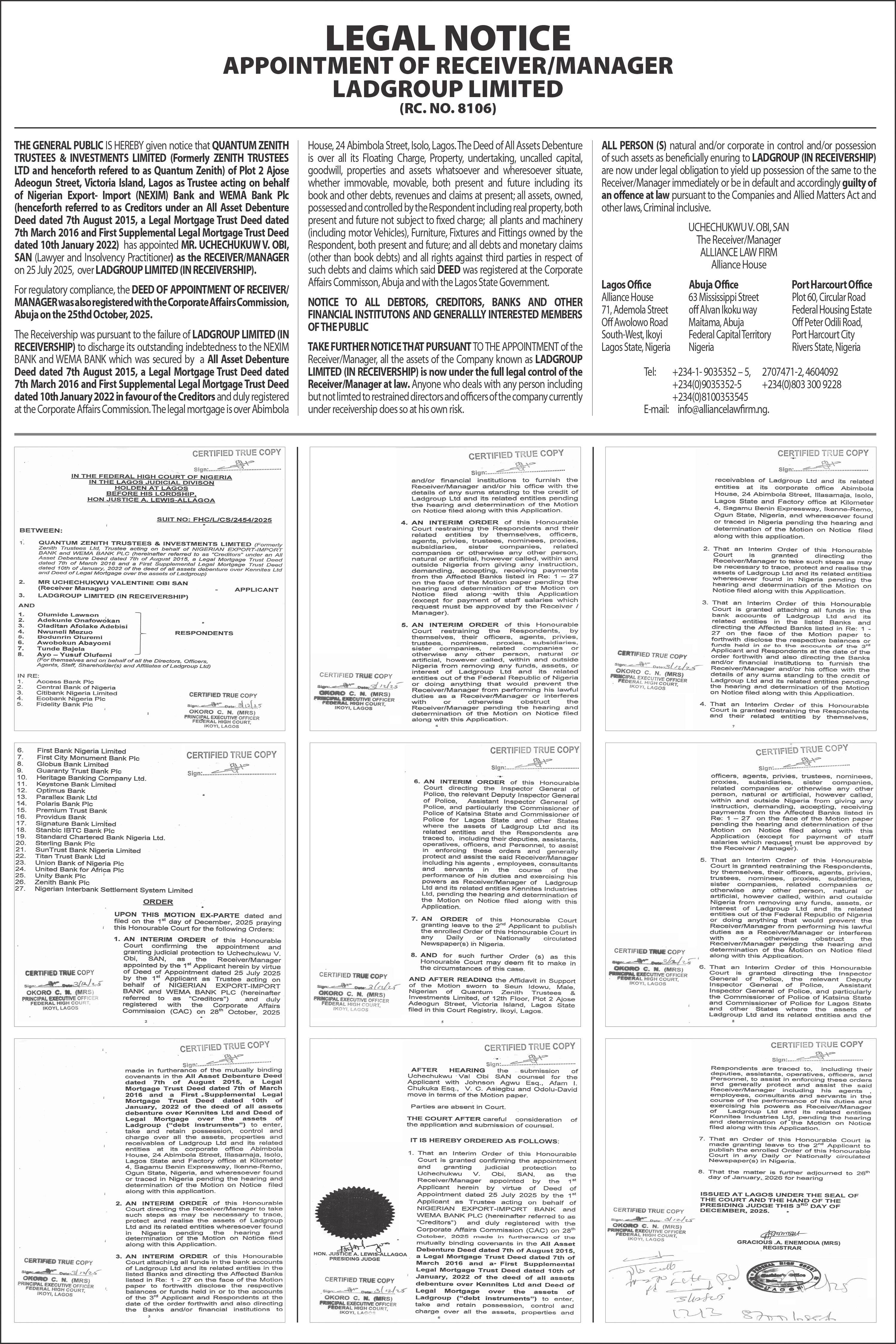
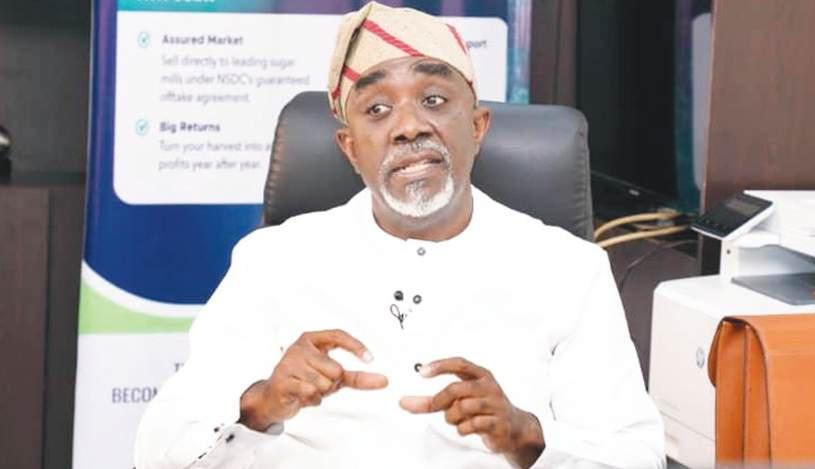
Executive Secretary/CEO of the National Sugar Development Council, Mr. Kamar Bakrin, has spent the past two years deliberately reshaping the Council by developing people, systems and other factors that drive institutions. In this conversation, he reflects on leadership, governance and the discipline of building organisations that last, while also offering a glimpse into the personal habits that keep him grounded. Bakrin also talks about the progress being made in the execution of the recently launched Sugarcane Outgrower Development Programme, among others. Sunday Ehigiator brings the excerpts:
Since you were appointed Executive Secretary of the National Sugar Development Council (NSDC) two years ago, what key developments and reforms have taken place at the Nigeria Sugar Institute under your leadership?
A great deal has changed at the Nigeria Sugar Institute (NSI) over the past two years, and it has been by design rather than by chance. From the outset, our goal was clear: to reposition NSI from a largely dormant facility into a fully functional, industry-facing centre for research, training, and technical support. We began with the fundamentals: institutional structure and operating model. Today, NSI operates within a clearly defined governance and management framework aligned with global best practices. With the support of KPMG, we strengthened governance systems, clarified roles, and ensured a proper balance between strategic oversight, policy direction, and day-to-day execution. This reform provided the Institute with much-needed stability, clarity, and operational discipline. With governance in place, our next priority was people. Infrastructure alone does not deliver impact, human capacity does. Over the last two years, more than 60 NSI staff have undergone targeted capacity-building programmes spanning both managerial and technical competencies. On the managerial side, staff were trained in project management, stakeholder engagement, negotiation, conflict resolution, strategic communication, and professional reporting; skills
that are essential for coordinating complex, multi-stakeholder industry programmes. On the technical front, staff received advanced, hands-on training in laboratory instrumentation, solution preparation, soil analysis, and equipment maintenance. These are efficient skills that directly enhance NSI’s ability to run its biofactory operations, support sugar estates, and deliver credible research, diagnostics, and advisory services to industry operators. In parallel, we deliberately repositioned NSI as a national hub for training and knowledge transfer. Through the NSDC/NSI Boot Camp initiative, the Institute began delivering structured, hands-on training programmes covering sugar processing, refining, quality control, industrial safety, and environmental compliance. These programmes are intentionally practical, blending classroom instruction with real-world demonstrations so participants leave with skills they can immediately apply in their operations. Significant investments were also made in curriculum development and standard operating procedures. The Factory Operations Department developed a comprehensive, end-to-end curriculum that covers the entire sugar production cycle, from cane preparation and juice extraction to crystallisation, refining, and by-product utilisation, with a strong emphasis on safety and sustainability. At the same time, the Biofactory upgraded its SOPs for sugarcane and other crops, introducing detailed
protocols for explant sterilisation, culture media formulation, and acclimatisation technologies. Crucially, these reforms were not kept in-house. NSI translated its strengthened capacity into direct industry support. The Institute jointly facilitated technical training for the staff of Sunti Golden Sugar Estate, focusing on soil science, laboratory safety, sampling techniques, and the use of equipment.
It also designed and delivered a comprehensive field-to-factory training programme for 20 new hires at BUA Foods’ LASUCO operations, ensuring they understood sugar production as a fully integrated system rather than a set of isolated activities. So, when we speak about progress at the Nigeria Sugar Institute, we are talking about a systematic rebuilding of institutional capacity; strengthening governance, upgrading skills, formalising training, and reconnecting the Institute directly with industry needs. These reforms are already laying a strong foundation for NSI to fulfil its mandate as a credible national centre of excellence, supporting Nigeria’s long-term drive towards self-sufficiency and competitiveness in sugar production.
How do you unwind or recharge after a demanding workday? I enjoy quality reading materials, movies and TV shows. I particularly like hosting my small circle of friends. This keeps me grounded and also gives me an excellent perspective on things.
I go for long walks in the morning as often as I can, which helps me
clear my head.
What type of books, music, or films do you enjoy most, and do they influence the way you think or lead?
I have typically enjoyed history books, especially those that help me understand the current state of Nigeria and africa and provide pointers to how things may evolve. But increasingly, I now read quite a number of autobiographies, because the lessons are priceless. again, you realise a lot of your struggles and challenges are not that unique or even that deep compared to what others have dealt with, successfully or otherwise. My taste in music is very odd, so let’s leave that for another time. I enjoy well-made movies with strong acting, characters that one can invest in, and plot lines that make you think ‘ah, I never would have seen that coming’. I don’t do horror movies, though, I just don’t see the point. In the same way, I don’t enjoy roller coasters when I visit amusement parks. I would definitely say I gleaned valuable lessons from both books and movies/tV shows.
If you were not working in public service or agro-industrial development, what career path do you think you might have pursued? remember, I spent 30 years in the private sector before coming into public service. this includes roles as Chief executive in about three organisations and other C-level roles in Oil and Gas, consumer goods, infrastructure and principal investing. My enduring passion is to build world-class institutions in africa. What personal values or life lessons guide your leadership, both professionally and in your private life?
My innate goal everywhere I am is to make it much better than I met it. I consider every role I have held a great privilege and a show of trust, because I know for a fact that there are other people just as qualified, if not more qualified than me.
the same applies in my interaction with people. I deem it a failure if their interaction with me doesn’t make either of us better than when we first met.
Recently, the National Sugar Development Council launched the Sugarcane Outgrower Development
Programme (SODP) to attract and integrate more sugarcane farmers into the industry. How has stakeholder response been so far, and what progress can you report on the programme to date? the response has been overwhelmingly positive and, more importantly, highly practical. What we are seeing is not just casual interest, but a clear willingness by potential participants to engage meaningfully with the programme. that, for us, is a strong signal that the sugarcaneOutgrowerdevelopmentprogramme(sOdp) is addressing real needs within the industry. What makes the sOdp truly different is that it introduces, for the first time, a clear and structured national framework that deliberately integrates farmers, whether large
The federal government has declared that mass housing, food security, inclusive growth, and poverty alleviation, among others remain national priorities, noting that the newly-introduced Sustainable Integrated Productive Communities (SIPC) programme aligns with President Bola Tinubu’s 8-point agenda.
The SIPC, which was formally launched on January 9, 2026, with niger State as the pilot phase, and spearheaded by the Ministry of Finance Incorporated (MOFI) in partnership with the rural Electrification agency (rEa) and Family Homes Fund, aims to tackle food insecurity, unemployment, rural-urban migration, and housing deficit by transforming abandoned rural lands into productive, self-sustaining communities.
The Minister of State for Finance, Dr. Doris
uzoka-anite who spoke in abuja while receiving the Certificate of Occupancy (C of O) for 100,000 hectares of land donated by the niger State Government to jump-start the pilot phase of the SIPC programme, applauded its conception by the federal government, and niger State for brazing the trail.
The minister stated that the presentation of the C of O was more than a formal exchange of documents, adding that it was the demonstration of a resolve to give practical solutions to national challenges.
according to her, SIPC touches on so many fabrics of the eight priority areas, and the renewed Hope agenda of the Tinubu administration, ranging from food security, mass housing, inclusive economic growth, poverty alleviation, youth empowerment, renewable energy, energy sustainability, and security, among others.
She said the programme would address several social and economic challenges confronting the country.
The national Orientation agency (nOa) in partnership with LIFanIMa – the nigerian animation Festival, has opened entries for the nOa animation award, with nigerian animators set to compete for a total cash prize of n22.5 million.
a statement yesterday, explained that the initiative was aimed at stimulating creativity and innovation while strengthening nigeria’s fast-growing animation industry.
The nOa animation award is a national creative platform exclusively open to nigerians and designed to promote authentic storytelling through animation. Organisers said the award seeks to encourage the
production of original local content that reflects nigerian values, culture, identity and lived experiences, positioning animation as a powerful medium for national orientation and global storytelling.
Entries for the award must be developed around the theme, ‘What Makes a real nigerian?’ and submitted works must be produced solely by nigerians.
Eligible entries are required to have a maximum runtime of three minutes and can be created in 2D, 3D or stop-motion animation formats. a total prize pool of n22.5 million would be shared among the top three entries in the nOa animation award category.
according to nOa and LIFanIMa, the initiative is part of broader efforts to support homegrown talent, deepen youth engagement in the creative economy and use animation as a tool for cultural preservation and social values promotion.
that the programme is already gaining real traction. through our engagement and expression-of-interest processes, we have recorded strong uptake, especially in communities located close to existing sugar estates where integration can be achieved quickly and efficiently. While this is not a programme that delivers results overnight, we have moved decisively beyond the policy and planning stage. the sOdp is now firmly in its implementation phase, laying down the critical building blocks for a sustainable, scalable increase in domestic sugarcane supply. this is exactly the kind of structural intervention the industry needs, and the early signals are very promising.
Last year, the NSDC signed a landmark $1 billion investment agreement with the Chinese conglomerate SINOMACH. Could you outline how Nigeria’s sugar industry is expected to benefit from this partnership, and what tangible outcomes have been recorded so far?
agribusinesses, cooperatives, or individual smallholders, into Nigeria’s sugar value chain in a coordinated and sustainable manner. the underlying philosophy is simple but powerful: farmers should not be left to produce sugarcane in isolation, without market certainty or support. under the sOdp, participating farmers are directly linked to licensed sugar processors through guaranteed offtake arrangements. they also receive access to quality seedcane, essential inputs, and handson technical support through training and extension services. this integrated approach significantly reduces risk for farmers, boosts productivity, and builds confidence across the value chain for both producers and processors. What is particularly encouraging is
the partnership with sINOMaCH represents a real inflexion point for Nigeria’s sugar industry. In both scale and ambition, it stands out as one of the most significant agro-industrial investments Nigeria has recorded in recent years. What makes this agreement particularly potent is not just the headline usd 1 billion investment, but the structure underpinning it. the partnership combines engineering, procurement, construction, and development financing within a single, coordinated framework. For a capital-intensive and technically complex industry like sugar, this level of integration is a game-changer. It enables projects to move more swiftly from concept to execution while significantly reducing delivery and financing risks. From a practical standpoint, the outcomes are substantial. the partnership will unlock the capacity to produce up to 500,000 metric tonnes of sugar annually, bring approximately 75,000 hectares under sugarcane cultivation, and add about 50,000 tonnes-per-day in factory processing capacity. these are not abstract projections; they represent tangible, productive assets being built directly into Nigeria’s sugar ecosystem. Beyond the numbers, the broader impact is truly transformative.
Read full Interview online - www.thisdaylive.com
The african Export-Import Bank (afreximbank) yesterday officially terminated its credit rating relationship with Fitch ratings.
a statement from the multilateral financial institution explained that the decision followed a review of the relationship, and its firm belief that the credit rating exercise no longer reflects a good understanding of the bank’s Establishment agreement, its mission and its mandate.
It added, “afreximbank’s business profile remains robust, underpinned by strong shareholder relationships and the legal protections embedded in its Establishment agreement, signed and ratified by its member states.”
Fitch had last year downgraded the bank’s Long-Term Issuer Default rating (IDr) to ‘BBB-’ from ‘BBB’ with a negative outlook. It had cited
concerns that sovereign debt restructuring by some countries such as Ghana, South Sudan and Zambia, may include afreximbank exposures, undermining its policy role and increasing strategic risk. But the bank had faulted the premise of the rating.
afreximbank is a Pan-african multilateral financial institution mandated to finance and promote intra- and extra-african trade. For over 30 years, the bank has been deploying innovative structures to deliver financing solutions that support the transformation of the structure of africa’s trade, accelerating industrialisation and intra-regional trade, thereby boosting economic expansion in africa.
a stalwart supporter of the african Continental Free Trade agreement (afCFTa), afreximbank has launched a Pan-african Payment and Settlement System (PaPSS) that was adopted by the african union (au) as the payment and settlement platform to underpin the implementation of the afCFTa
Bishop of the Sokoto Catholic Diocese, Most rev. Dr. Matthew Hassan Kukah, will discuss the ‘role of Faith’ in the care of the Environment at the 24th S.L Edu Memorial Lecture.
The Chief S.L. Edu Memorial Lecture is an annual event, organised by the nigerian Conservation Foundation (nCF), in collaboration with the family of the late Edu.
This year’s is scheduled to hold on January 30th, 2026, in Lagos. The lecture is themed, “To Have and to Hold: Faith and Care of the Environment.”
Bishop Kukah is a respected moral voice, scholar, and advocate whose work spans faith, governance,
and social justice. The Chief S.L. Edu Memorial Lecture is the advocacy tool of the nigerian Conservation Foundation aimed at bringing pertinent environmental issues to the fore while advocating solutions through renowned speakers. For over two decades, the lecture has provided a platform to address pressing environmental and sustainability issues in nigeria and beyond. Through renowned speakers, the event has consistently articulated solutions to environmental challenges while promoting sustainable development. This year’s theme is a profound reflection on humanity’s moral relationship with nature. It invites a critical examination of whether our beliefs inspire responsible stewardship of the environment or unintentionally contribute to its degradation.
Former Seychelles Minister of Tourism, Civil Aviation, Ports and Marine, Alain St. Ange, says Tourism Ministers in Africa must unite for the continent to benefit from the tourism sector. He also spoke on other salient issues. Charles Ajunwa brings the excerpts:
Africa’s tourism sector is still struggling to get the buy in of Western nations. How can African continent change this narrative?
Africa has everything needed for a successful tourism industry but continues to struggle with Western nations that remain key tourism source markets. This can change and this should change. Africa needs to put emphasis in rewriting its own narrative and this will give the continent its needed visibility. Today, every little challenge faced by a village is blown out of proportion and the fragile tourism industry suffers as insecurity or unsafe surroundings in Africa overtakes holiday pre-booking times.
Africa needs to wake up and take its future into its own hands.
As founding President of the African Tourism Board, how has the Board impacted on tourism in Africa?
The African Tourism Board (ATB) served its purpose as it attempted to unite Africa tourism to make the continent’s respective states more ready for tourism as an industry. ATB is visible as a tourism body of Africa and as ATB is seen, Africa’s presence is felt. The organisation has a lot more to do, but realistically the expectations from every tourism player of the continent makes the work just massive, though needed. ATB was a body that was needed and its presence on the continent has been felt positively.
You served on the Executive Council of the UN World Tourism Organisation. How is Africa maximising such organisations to its tourism?
I did sit on the Executive Council of UN Tourism in the Taleb Rifai days as Secretary General. Africa
was always on the table. The Director for Africa at UN Tourism is a great person with her heart in Africa. UN Tourism remains an organisation that can deliver when the Secretary General is on the side of its membership. The world waits for the new Secretary General now taking office and hoping for a better run and more understanding of tourism. Africa can and should benefit much more and needs its Tourism Ministers to be united to make the difference.
With your background in hotel and tourism management from Germany and France, Seychelles, Channel Islands, and Australia, what are we not getting right in hotel growth in Africa?
I believe in the word ‘trust in ourselves’ and secondly for our leaders to stand behind our own before others. Financing, guiding policies and offering quality training need to be reviewed. The whole world knows that Africa is the giant waiting to be set free, but talk is talk and we often see a lot of that. African hotel and resort chains must be encouraged because they will come with local flair and know how. Successful ones exist but we need more and we need them to spread over the continent. Africa must stand behind our own and must be seen to be doing that.
What are the major challenges?
Firstly, the continent needs its tourism industry to work with a reduction of seasonal months. This will be achieved when Africa takes its narrative in its own hands because then visibility will be increased. Africa should never forget that ‘out of sight, is out of mind’ and when Africa in not on the table as a viable holiday option it will not be a favoured destination for the travelling holiday makers.
Then the leaders on the continent must believe in their tourism industry and have the desire to make it work. Finally, tourism must stop being the cow being milked nonstop instead of being adequately fed.
Your tenure as Minister of Tourism and Culture has continued to be a reference point as you transformed Seychelles into a leading global travel destination, driving sustainable tourism, empowering businesses, and attracting significant investments in resorts and hotels. How did you achieve this feat?
I moved into the office as minister after a couple of years as the islands Director of Marketing of its Tourism Board and as its CEO. This over and above my complete working life in the tourism private sector trade. My driving principle as minister was to listen and to work with the industry’s front line team - its private sector. It was a united mission set to make tourism work. Some key points we tackled visibility and made this a priority. Secondly, we made the decision for the Seychellois to claim back their tourism industry. More of out islanders entered the trade as leaders and operating side by side with the islands foreign investors. We worked as true and sincere facilitators for the industry. That was key to success.
What is your projection for tourism sector in 2026?
Tourism is vulnerable to outside forces. This is why it is said that when in the key tourism source markets people get a small sniffle, we in the tourism destinations immediately suffer from a bad flu or even asthma. But that said the industry is in the move. Travellers are on the lookout for innovative holiday options. Sustainable tourism options are being more sought and these Africa happily boast
they have. I really believe the industry will do well in 2026.
You’re expected to speak at the Parliament House and Oxford University. What’s it all about?
My name appears on what is known as ‘speakers circuit’ list, and this continues to get me invited for speaking assignments or opportunities. Two coming back to back opportunities will see me, a small mid-ocean island boy, speak at the UK Parliament House on AI and at Oxford University on tourism in its broader sense looking at ethics and others.
I am honoured to be speaking at such prestigious venues. It is humbling always to receive speaking engagements and I can confirm I have done many all over Africa, in the ASEAN Block, on Cruise Ships, on TV breakfast-talk shows etc. I always enjoy it and know that I am flying the Seychelles and Africa flags high.
International tourist arrivals (overnight visitors) grew by four percent in 2025, as most destinations worldwide posted solid results.
According to the first World Tourism Barometer of the year, an estimated 1.52 billion international tourists were recorded globally in 2025, almost 60 million more than in 2024.
The numbers reflect a return to pre-pandemic growth trends, closer to the five percent average increase per year between 2009 and 2019. Results were driven by strong demand, robust performance from large source markets, and the ongoing recovery of destinations in Asia and the Pacific. Increased air connectivity and enhanced visa facilitation also supported international
travel in 2025.
UN Tourism Secretary-General Shaikha Alnuwais said:“Demand for travel remained high throughout 2025, despite high inflation in tourism services and uncertainty from geopolitical tensions. We expect this positive trend to continue into 2026 as global economy is expected to remain steady and destinations still lagging behind pre pandemic levels fully recover.”
“We expect this positive trend to continue into 2026 as global economy is expected to remain steady and destinations still lagging behind pre pandemic levels fully recover.”
The World Tourism Barometer by UN Tourism provides comprehensive data for the sector by region, sub-region and destination.
Africa (81 million) saw an eight percent increase in arrivals in 2025, with particularly strong results in
North Africa (+11%). The Middle East recorded 3% growth in 2025, equivalent to 39% above pre-pandemic levels, the strongest results relative to 2019. The region virtually reached the mark of 100 million international visitors in 2025.
For 2026, international tourism is expected to grow three to four percent, compared to 2025, assuming that Asia and the Pacific continue to recover, global economic conditions remain favorable and geopolitical conflicts do not escalate. Uncertainty from current geopolitical tensions and conflicts pose an increasing risk for tourism in 2026.
“UN Tourism’s prospects for 2026 reflect a normalisation of growth rates after a strong rebound in international arrivals in 2023 (+34%) and 2024 (+11%) and a 4% increase in 2025. This positive outlook is confirmed by the latest UN Tourism Confidence
and 11% worse.
“Survey respondents pointed to economic factors, high travel costs, and geopolitical risks as the main challenges international tourism could face in 2026. These factors were viewed as the most relevant by about half of all experts.
“While headline inflation has receded globally in 2025, inflation in tourism-related services remains elevated by historical standards. Against this backdrop, tourists are expected to continue to seek value for money according to the Panel of Experts.
“While positive prospects for the global economy and lower oil prices could favour tourism performance in 2026, uncertainty derived from geopolitical risks and ongoing conflicts, trade tensions and extreme weather events could weigh on traveller confidence,” the report added.
The Niger State Government has proposed a new partnership with the Federal Ministry of Art, Culture, Tourism, and Creative Economy to upgrade the historic Bida Bariki Festival to a national cultural event with international recognition.
The Bida Bariki Festival, rooted in preindependence traditions, is a celebration of Nupe cultural heritage. It features horse-riding displays, acrobatic performances, traditional music and dance, and showcases local crafts such as glass beads and grasswork. The festival attracts thousands of visitors annually, providing a significant boost to the local economy through hospitality, employment, and cultural exchange.
The initiative was presented by Hon. Saidu Musa Abdullahi, Member of the House of Representatives
for Bida/Katcha/Gbako Federal Constituency and a member of the House Committee on Culture and Tourism, during a meeting with the Minister of Art, Culture, Tourism and Creative Economy, Hannatu Musa Musawa, in Abuja.
Hon. Abdullahi described Bida as the cultural heart of the Nupe people, with a rich heritage that deserves global exposure.
“We are proposing a collaboration to showcase the Nupe culture through the Bariki Festival, aiming to make it an international event. The festival dates back to the colonial era and has continued to this day. We want to modernise it, boost economic benefits, create jobs, and attract tourism to our region.”
He added that the state also seeks to work with the ministry to develop tourism infrastructure around Gurara Falls, including hotels, a water park, and a creative hub, with active involvement from local communities.
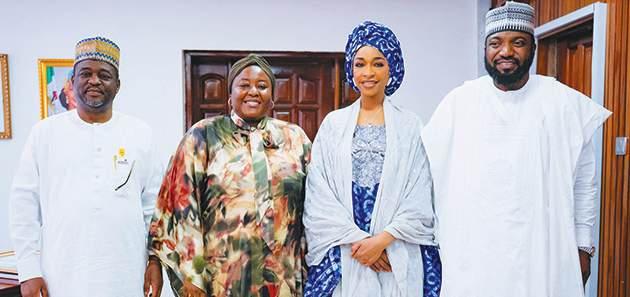
Chery automobile has once again retained its position as China’s number one exporter of passenger cars, marking an unprecedented 23 consecutive years at the top.
Carloha nigeria, the assembler and franchise holder of Chery in nigeria, is celebrating this global achievement locally while reinforcing its reputation as nigeria’s best after-sales car company.
In 2025, the Chery Group sold a total of 2,806,393 vehicles worldwide, with 1,344,020 units exported to overseas markets—representing a 17.4% year-on-year increase in exports. This performance solidified Chery’s position as the Chinese automaker with the highest passenger vehicle exports for 23 consecutive years. On average, one Chery vehicle was exported every 23 seconds throughout the year, underscoring the brand’s growing global appeal.
Cumulatively, the Chery Group has now exported 5.85 million vehicles, with monthly exports surpassing 140,000 units for the first time. Within that performance, the Chery brand alone sold 1,700,940 vehicles in 2025, driven by strong demand for its award-winning SuV and sedan line-up.
among Chery’s best-selling models, the Tiggo 8 has achieved nine consecutive years as the best-selling Chinese gasoline-powered mid-size SuV, highlighting Chery’s strength in the SuV

segments.
“Exporting one Chery vehicle every 23 seconds and leading China’s passenger car exports for 23 straight years is a remarkable global milestone,” said Mr. Sola adigun, the Managing Director of Carloha nigeria. “In nigeria, we are proud to bring
this world-class brand closer to our customers and match Chery’s product excellence with the best aftersales experience in the country.”
Carloha nigeria has invested heavily in building a robust sales and service ecosystem for Chery owners nationwide. This includes
modern showrooms, fully equipped service centres, manufacturer-approved diagnostic tools, a strong supply of genuine parts to ensure quick turnaround times for maintenance and repairs, all manned by OEM-trained professionals.
“Our goal is not just to sell vehicles, but to support our customers throughout the entire ownership journey,” Mr. Felix Mahan, General Manager, Marketing at Carloha nigeria, added. “Our award-winning after-sales package, CarlohaCare 6-6-7, is a testament to this.”
The CarlohaCare 6-6-7 is a premium after-sales promise designed to give Chery owners complete peace of mind. It offers 6 years warranty, 6 years free scheduled service, and 7 days repair promise, reinforcing Carloha’s commitment to reliability, convenience, and world-class customer experience across nigeria.
Chery’s leadership also underscores the importance of the nigerian market in the brand’s global strategy.
“nigeria is a key market in Chery’s international growth story,” said Kim Lou, the national Director, Chery International. “We value our partnership with Carloha nigeria, whose strong focus on customer satisfaction and after-sales excellence ensures that nigerian customers enjoy the same world-class Chery experience seen in other leading global markets.”
as Chery strengthens its export leadership—holding the title of China’s number one passenger car exporter for 23 consecutive years—Carloha nigeria is marking the milestone with local customer engagement activities, special showroom events, and enhanced after-sales offerings designed to reward existing and prospective Chery owners.
The all-new Toyota Hilux is making its European debut at the 2026 Brussels Motor Show, taking place from January 9-18 at the Brussels Expo.
Visitors will have the first opportunity to take a close-up look at the ninth generation of Toyota’s legendary pick-up, a model that will break new ground with a range that includes its first battery electric powertrain.
The all-new Hilux’s introduction builds on a heritage established over more than half a century and more than 27 million global sales. Throughout its history, Hilux’s success has been founded on its core Quality, Durability and reliability, qualities that remain central to its latest evolution.
True to its customer-centred approach, Toyota is not offering a one-size-fits-all solution. Instead, the all-new Hilux aligns with the company’s multipath philosophy to provide a choice of powertrains suited to different customer requirements and preferences, and operation in different driving conditions. Thus, the new model will be offered with two electrified powertrains: a 2.8-litre diesel engine supported by a 48V hybrid system – the option that will be the volume seller in Europe – and a battery electric version,
both of which will be on display in Brussels. In selected markets, diesel and petrol combustion engines will also be available.
In line with customer preference, the all-new Hilux will be offered exclusively in double-cab format, providing a convenient combination of practical load-carrying and performance capabilities for business and a comfortable, well-equipped cabin, together with an extensive Toyota T-Mate active safety and driving assistance provisions.
The sharp new exterior design, developed

on a “Tough and agile” theme, projects fundamental strength and a powerful, contemporary look. under the skin, the pick-up retains the body-on-frame construction concept that has underpinned its exceptional off-road performance across successive generations.
The all-new Hilux will be introduced in Europe from next april with the BEV model, followed by the Hybrid 48V version from July 2026. Further details of performance, equipment features, and local pricing will be announced in due course.
All-new Hilux with Hybrid 48V powertrain
The all-new Hilux adopts the Hybrid 48V system which was introduced in the current model earlier this year. The 2.8-litre diesel engine is supported by a 48V lithium-ion battery, giving quieter, smoother and more refined performance – qualities that are particularly noticeable when starting off and under acceleration. There are further benefits in fuel efficiency and lower CO2 emissions compared to the non-hybrid diesel powertrain.
The Hilux’s load-carrying capabilities are maintained: maximum payload is one tonne, and towing capacity is 3.5 tonnes. Likewise, the design and positioning of the hybrid components do not compromise the model’s “go-anywhere” ruggedness; Hilux can wade through water up
to 700 mm deep.
The driver is further supported in off-road conditions by the availability of a Multi-Terrain Select system that optimises vehicle performance when driving over different terrains, as well as a Multi-Terrain Monitor and Panoramic View Monitor for precise manoeuvring on challenging surfaces.
All-new Hilux BEV
The introduction of the first battery electric Hilux creates a new proposition: a version of the “unbreakable” pick-up with zero tailpipe emissions. In introducing full electric power, Toyota has ensured the qualities that define Hilux and underpin its enduring success are retained, equipping it to meet the demands of business customers who require Quality, Durability and reliability, together with serious off-road capability, but need to operate with zero CO2.
The Hilux BEV uses a 59.2 kWh lithium-ion battery and front and rear eaxles to secure permanent all-wheel drive. The system develops 205 nm of torque at the front axle and 268 at the rear. Final WLTP homologation data show up to 257 km of driving range in the combined cycle, and up to 380 km in the city cycle. The Hilux BEV offers 715 kg payload and 1.6-tonne towing capacity.
Hyundai Motor Group (the Group) concluded Consumer Electronics Show (CES) 2026 with major announcements and industry recognition that underscore its leadership in human-centered, artificial intelligence-driven robotics and Physical aI.
The Group’s CES 2026 activities focused on strategy, real-world deployment, product validation, and global partnerships with aI leaders under the theme ‘Partnering Human Progress’.
unveiling Human-Centered aI robotics Strategy at Media Day at Hyundai Media Day, Hyundai Motor Group unveiled its aI robotics Strategy to lead the emerging Physical aI industry. The
Group also unveiled the product version of Boston Dynamics’ new atlas robot during the presentation, which featured a live demonstration of the atlas prototype version.
The Group’s aI robotics Strategy is built on three pillars:
Partnering humans with co-working robots: robots designed to assist and work with people starting in manufacturing environments, performing higher risk and repetitive tasks
Partnering the Group Value network with Boston Dynamics: Combining Boston Dynamics’ expertise in aI robotics with the Group’s global scale and manufacturing capabilities to create safe training grounds and an End-to-End (E2E) aI robotics value chain
Partnering with aI leaders: Collaborating
with global aI pioneers to open new chapters in aI robotics innovation and drive the vision of ‘Progress for Humanity’
Key highlights of Hyundai Motor Group’s CES 2025 aI robotics announcement include: Hyundai Motor Group plans to mass-produce atlas, deploying the robot across its global plants through phased, process-by-process validation starting in 2028
The Group is building a Group Value network with an E2E aI robotics Value Chain to commercialize aI robotics by integrating robotics, components, logistics, software, and manufacturing at global scale
The robot Metaplant application Center (rMaC) will function as the Group’s aI robotics training and validation hub, using real manufacturing data to prepare robots for safe, large-scale deployment.

Ferdinand Ekechukwu - 08035011394
Email: ferdi_adthisday@yahoo.com
Ferdinand ekechukwu and Tosin Clegg
Without Fela, there wouldn’t be afrobeat. Without afrobeat, there wouldn’t be afrobeats. and without afrobeats, there wouldn’t be a Wizkid, Burna Boy or Davido. It is not unusual terse comments like these have, repeatedly ignited conversations that deepen pop culture. It is not also new that claims such as it seems, are induced by a raving fan culture.
Like the recent encounter between afrobeat musician, Seun Kuti and fans of afrobeats artist, Wizkid. Following an argument over what he described as repeated attempts to drag his late father, Fela anikulapo-Kuti, into online music debates, Seun who inherited and leads Fela’s Egypt 80 band, accused members of the fan base known as Wizkid FC of being disrespectful to his father’s legacy.
The fans have been drawing parallels between the late Fela and the Grammy winning artist, positioning Wizkid as a modern equivalent or superior to the afrobeat originator. But the youngest son of the afrobeat pioneer wasn’t having any of it. Being his father’s leading fan, Seun called the comparison an outright insult. The crux of his argument boils down to legacy versus modern fame.
He clarified his criticism was not directed at Wizkid personally but at a fan culture that equates noise with relevance and disrespects historical figures under the guise of praise. Seun further argues that comparing modern pop success to Fela’s revolutionary struggle and legacy stems from a place of ignorance. He later at some point boasts of having received $120,000 off his late father’s catalogue.
When Wizkid eventually reacted via posts on his Instagram story on Tuesday, the feud between his fans and Seun Kuti escalated. Wizkid first shared
Idowu Oyefusi
Salami Onaopemipo and Salami Oluwalana, popularly known as S2VIBEZ, are fast-rising nigerian music artists from Iperu remo, Ogun State. Born into the family of Peince and Mrs. Olugbenga Salami, the twin brothers have steadily carved a niche for themselves in the nigerian music scene with their consistency, versatility, and passion for sound.
S2VIBEZ began their music journey at a very tender age, starting as early as age seven, a foundation that has greatly shaped their artistry and creative growth. Over the years, they have developed a distinct musical style that blends relatable storytelling, street vibes, and contemporary afrobeats, allowing them to connect deeply with a wide audience.
The duo has released numerous singles, EPs, deluxe projects, and music videos, showcasing their evolution and dedication to their craft. Their growing influence is further highlighted by notable collaborations and cosigns from respected artists in the industry, including Otega, Bhadboi OML, TML Vibez, Damo K, Oladips, and others solidifying their presence as promising talents to watch.
Some of their standout tracks include “Miracle (remix)” featuring Otega, “national Cake,” “Feelings,” “Wacko,” and “Based on Grace” featuring Bhadboi OML. These songs reflect their musical depth, creativity, and ability to deliver both inspirational and street-inspired anthems. With an ever-growing catalog and a strong fan base, S2VIBEZ continue to push boundaries and elevate their sound. Their music is available for streaming on all major digital music platforms, and the duo remains focused on expanding their reach while representing their roots and culture with pride.
a video of a lady addressing Seun in yoruba. In the video, the woman rebuked Seun, arguing that Wizkid’s global success is a primary reason younger audience remains engaged with Fela’s legacy.
The exchange got so heated and personal between the two artists that Wizkid then posted ‘I’m bigger than your father’. Wizkid’s outburst then stirred massive reactions and drew comments from influential voices, many condemning his remarks while others defended him, arguing that Seun poked Wizkid with earlier comments about him not cautioning or defending his fans.
Of note, Fela pioneered afrobeat in the late 1960s, blending traditional african rhythms with jazz, funk, and highlife. He used music as a tool to speak against oppression, social injustice. associated with major role in the creation of the genre was Tony allen, a drummer. While Wizkid rose in the early 2010, blending Fela’s rhythmic influence with global pop and r&B to achieve commercial dominance long after Fela departed the stage.
Born ayodeji Balogun, Wizkid has continued to make strides, often citing Fela as a significant inspiration. He even etched the image of Fela on his arm as a lasting reverence. He once admitted in a PulseTv interview posted online that it’s a disrespect to compare. “no you can’t compare, let’s not use that word that’s like disrespect when you are mentioning Wizkid and Fela in same sentence.”
revealing a bold tattoo on his arm, he added. “That’s someone that inspires me. Fela’s face is on my body. So you can’t compare. He just inspires me in everything he’s done with his music and his legacy to be great and to want to do more.” In some contexts, Wizkid and Fela represent distinct eras and from different backgrounds.
The latest comparison comes on the heels of Wizkid’s historic feat as the first african artist to surpass 10 billion streams on Spotify weeks ago. Cementing his global dominance, and enduring influence, the Spotify figures show Wizkid leading africa’s most-streamed artists on the platform, ahead of Burna Boy, rema, Davido, and other
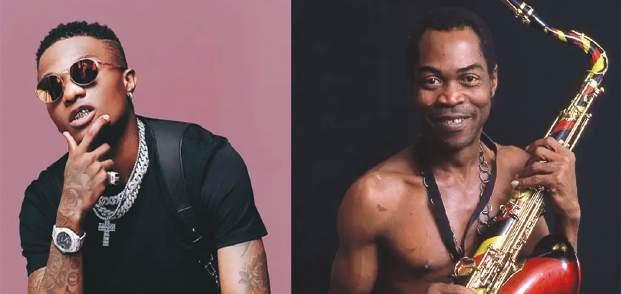
The milestone further cements Wizkid’s position as one of africa’s most successful and globally renowned music artists. although Fela did not receive any gramophone during his lifetime, upcoming 2026 edition of the prestigious award will honour his second recognition with a Lifetime achievement award by the recording academy within six months.
In June 2025, Fela’s 1976 socio-political album, ‘Zombie’, was inducted into the 2025 Grammy Hall of Fame. Over the decades following his death, numerous awards have been bestowed in his name. In announcing the recognition, the recording academy stressed that Fela is being honoured posthumously for his lifetime influence in shaping modern music styles as well as inspiring many global singers.
While the arguments have ensued, many considered it baseless comparing Wizkid to Fela. In their views, it’s uncalled for because Fela was more than a musician. He was noted for activism, for social crusading, and as an authority and much more.
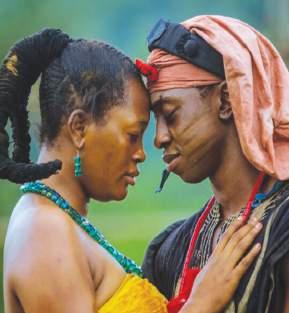
Some observers blamed the younger generation for the comparisons, mostly the Gen Zs who are the bulk of Wizkid FC due to lack of knowledge of what Fela is.
Interestingly, the comparisons overtime has been met with consistent pushback from Seun Kuti, who acknowledged that while Wizkid has achieved greatness, Fela’s role as the inventor of a genre and a political icon remains an unparalleled historical fact. ultimately, afrobeats owes its foundational roots to Fela’s afrobeat, Wizkid’s success represents the genre’s modern commercial peak. The truth is that the name Fela represents far more than an individual; it symbolises a movement and a pacesetter whose influence helped shape the foundation of afrobeats as it is known today. His legacy has transcended generations, paving the way for numerous nigerian artists to gain global recognition and secure major international awards, including the Grammys, MOBOs, and BET awards. The impact of his artistry and activism remains deeply woven into the fabric of african music and culture.
When “aníkúlápó” premiered in 2022, Kunle afolayan introduced viewers to the story of Saro, a young cloth weaver whose affair with the alaafin’s wife led to his death, and an unexpected return to life through a mystical bird. What followed was a story about power, consequence, and the danger of trying to outrun fate. It was widely received with acclaim.
That story expanded in 2024 with “aníkúlápó: rise of the Spectre,” which picked up with Saro’s return from death and his uneasy encounter with the guardians of the afterlife. Tasked with completing what seemed like an impossible mission, Saro’s second chance at life came with
heavier consequences and more questions than answers.
now, the story continues with “aníkúlápó: The Ghoul awakens.” In this new season, the journey moves beyond the Oyo Kingdom into foreign lands, as the cost of awakening power becomes even clearer. Love is tested, loyalties shift, and survival becomes the central struggle. afolayan dropped the trailer for Season 2, on Tuesday, giving fans their first look at what’s coming in the new season.
Several familiar faces return, including Kunle remi, Bimbo ademoye, alongside other cast members from the earlier instalments. The new season also introduces fresh characters played by Okusaga adeoluwa, Bukunmi ‘KieKie’ adeaga-Ilori, antar Laniyan, Saidi Balogun, Teniola aladese, and Fella Makafui. “aníkúlápó: The Ghoul awakens” premieres exclusively on netflix January 30.
Tosin Clegg
about two weeks ago, controversial and street music artiste, Portable was arraigned before a Federal High Court sitting in Ota, Ogun State, over multiple criminal allegations which centered on assault, theft, and obstruction of police duties on a nine-count charge filed against him by the Ogun State Police Command. His arraignment followed a viral video that surfaced showing him crying profusely and in utter embarrassment in police custody. His arrest was linked to a complaint reportedly filed by his estranged partner, popular actress and content creator, ashabi Simple. aside from this report, other incidents were cited as reasons for his arrests as well. as much as he tried to get bail after he was arrested and arraigned, he was refused till earlier this week. as usual, social media got a quiet like no other after this incident, but on a twist of event as soon as he was released, his usual
self-awakened. Fans, friends and associates celebrated his bail as he dropped smiles and laughter while stating that he was Innocent.
Portable further appeared in a video where he insisted on his innocence and dismissed the allegations against him as false. In a lighthearted moment, the singer joked in the clip, saying, “They lied against me, my name is now Innocentee.”
This encounter has further birthed a new single he titled, “Innocentee”. as shared on his social media account, Portable said, “Call me Innocentee am just coming back from the state CEO Dr ZEH nation many many inspirations.”
From all indications we can say the time in Police custody gave room for the birth of this new song, which he has since taken to the studio to record less than 48 hours of his release. Since his return, the song “Innocentee” has been aggressively promoted by his team, fans, and close associates, serving as a central piece of his comeback narrative.
The track is positioned as a bold declaration of innocence, aimed at reinforcing his claim that
all allegations against him are false and that he bears no wrongdoing. However, as public conversations continue to unfold, questions remain about the full story behind the controversy.
Democracy does not fail overnight; it erodes quietly when impunity replaces accountability, and power carries no consequence. In this wide-ranging conversation, Prof. Ibrahim Gambari, former UN Under-Secretary-General and former Chief of Staff to the President, offers a sobering diagnosis of the country’s democratic condition. Drawing from history, global experience and Nigeria’s own political journey, Gambari argues that the absence of consequences for bad behaviour has weakened institutions, hollowed out political parties and distorted governance. For democracy to thrive, he insists, Nigeria must move beyond elections to discipline, fairness, citizen participation and strong, principled political parties. Chuks Okocha brings the excerpts:
What are the chances of a one party system in Nigeria?
So now, going back specifically to the first question: the political parties and the fear of a one-party state. And you know, I’m not at all worried about this country becoming a one-party state. You know what? You can quote me. It will not happen, if history is any guide. You know, we don’t even know our own history. This administration is not the first to try to have a dominant party in Nigeria. Right from the beginning, the NPC was a dominant party in the First Republic. They were not the ones who caused the crisis in the main opposition, but they didn’t discourage it. In fact, they took sides. Where has that led us? It didn’t lead us to peace or development; it led to chaos. The NPN was the successor. They became so confident that they felt that they would be there forever. What happened to that? In the end, it didn’t work. The third one, PDP, not long ago they were boasting that they would rule for 60 years. Where are they today? So any effort to make this country a one-party state will not work. And sometimes it will not work for the wrong reasons, because the political elites are too ambitious for the ambition to be contained within one political party. It will break. But let’s not wait till it breaks with all the negative consequences to draw lessons from history. As somebody said, if you don’t learn from history, you continue to repeat history’s mistakes. So it will not happen. But let’s not wait for disaster to happen. Let’s build political parties. That’s what has been missing. We have not paid enough attention as a people to political parties. We are, in a sense, super elite. We gather in this room. How many of us actually belong to any political party? How many of us here present have a party membership card? How many attend political party meetings? That is where the problem is. If we are not even showing an example—whereas in the First Republic, they had party cards, they paid dues, they consulted on who the candidates for election contests would be—there was a bond between the leader and the party at various levels.
So, what is the way out?
strong also undermine institutions. Leadership must be respected. You must have followers. People believe in what leaders stand for. They stood for something. They had a vision of the future. They had organising principles. In those days, organising secretaries of parties were powerful. They went to villages, towns, and ethnic unions because they stood for something distinct. So yes, laws and practices that work, but also leadership and commitment to building parties that stand distinct from each other. Leadership by example is what is lacking. Not “do as we say,” but “do as we do.”
What is it about Nigeria that keeps you awake at night?
So we must pay attention to how political parties are organised in this country, because if we have strong political parties, nobody will even try to make a one-party state. It will not be possible. But because we have no organized political parties, our political parties have become just vehicles to gain political power. That’s all. Because our constitution doesn’t allow for independent candidates, you have to belong, so it’s a party of convenience. Political parties are flags of convenience. When you look at ships, you can have an American ship flying a Panama flag. So political parties are just carrying flags of convenience to gain power, not organised based on ideology or perspectives that make one distinct from the other. In the First Republic, if you crossed from NPC to NCNC or Action Group, it was a big deal. There were clear differences. But today, because there is no real distinction, you can move—as I jokingly say—you can be APC in the morning, PDP in the afternoon, and APC again the next day, no questions asked, because there are no consequences. In some other systems, if you move after being elected under one platform, your seat is declared vacant, and you have to contest again, because otherwise you are living under false pretenses. We elected you under one pretense, and now you have decided to junk it. So I appeal once again to you, and I also appeal to myself: let us pay attention to political parties. Because what we have is what we get, and we cannot complain. How long are we going to keep complaining about the people who rule us when the parties represent nobody in particular and no ideology in particular? So when they get there, what is the organizing principle of governance, and what are the consequences of deviation? That’s why citizen participation is critical. History is not on the side of a one-party state in Nigeria or anywhere else. But it will not happen by itself. Multiparty democracy requires commitment and organization, and we all have roles to play.
How come Nigerians are mostly concerned about elections and fixated on the election calendar?
Even those who talk about dividends of democracy don’t talk about it anymore. When was the last time you heard that phrase? The pocket is supposed to have dividends. It’s a social contract. We put you there, and in return you do something for us. But when was the last time any politician talked about the dividends of democracy? And we must be able to measure and quantify them.
So, is democracy working in Nigeria?
It depends on how we define democracy. What we need is not
constitutional change but constitutionalism—a commitment to fair play. Many players don’t want fair play; they want advantage. That’s why it’s not working. Representation is not representative. Inclusivity is missing—youths and women are excluded. That’s not democracy. This is what Savannah Centre is about, and this is why we see you as partners. We want a better Nigeria—free of fear, free of want, inclusive—but it will not happen by itself. There are deterrents by law and deterrents by convention and practice. I wish we should take a second look at those countries. I mentioned elsewhere that as Undersecretary-General for Political Affairs at the UN, I was in charge of election matters for about 18 countries. So I have seen how other people manage. One of the most powerful instruments for checking the vote is simply that you are elected under the platform of one party. If you change, you are free to change, but your seat will be declared vacant.Now imagine if we have that in this country. Imagine if these governors knew that the moment they change, there would have to be fresh elections for governor. How many of them do you think will cross the way they are crossing? The absence of consequence is what creates a permissive atmosphere. But there is also the element of greed that I mentioned, because a governor in this country is a very privileged person. What are you looking for? By the time you spend eight years, if you are a God-fearing and moderate person, all your needs will be taken care of. In fact, they have also put enormous pensions for themselves. I do not know whether that is still valid. Yes, it is. They have doubled it. Now, it will shock you, and you can quote me. Do you know what my pension is with all the years some of you have been hearing that Gambari has been serving? Seventy thousand naira a month. Minimum wage, and even that they have to fight for. If there is no reward for good behaviour and no punishment for bad behaviour, then the guardrails are off. As human beings, the guardrails are off. So let us study and look at the consequences for this kind of behaviour. To me, the best deterrent is to organise political parties better than we are doing now. You will be proud to belong to a political party that stands for something distinct. No NPC person will easily join NCNC in that period. It was clear: one wanted to maintain things as they were, the other wanted change. But when there is no distinction, who will give us that distinction? The citizens, and of course the leadership. Leaders who believe strongly in something. For example, Awolowo believed in a welfare state. Sardauna believed in preserving tradition and managing change through continuity. He stood for local government reform and education. His party believed in that. That is what I am looking for: parties that have identity and strong leadership. It was Obama who addressed Parliament in Accra and said Africa does not need strong leaders but strong institutions. You need both. Weak leaders undermine institutions, and leaders who are too
What keeps me awake at night is that, according to statistics, Nigeria will be the third most populous country in the world by 2050. Our leaders should be worrying about food security, housing, education, health, power, transportation, and water resources. In Singapore, when the population was going to rise by 200,000, the whole parliament was alarmed. Here, we add millions, and nobody plans. Yet the opportunities are there: food security, transportation, power, education, health. Nigerians excel everywhere except in Nigeria. Nigerians want to win, but we do not do what makes us win consistently. There is no planning and no consistency. We must build sustainability for this great country with huge potential but poor leadership due to lack of checks and balances. Governors collect allocations monthly and people clap for boreholes. That is another problem. If leaders know we put them there and can remove them, they will act right. If they believe they got there despite us, they will not be accountable. The EFCC and ICPC will have a limited impact until there is a national consensus on what is acceptable. This is a collective responsibility. Transformation does not happen by accident. There must be consequences. As pension, I receive N70,000 a month. One bag of rice costs almost that. Meanwhile, governors determine their own pensions. I served as minister, ambassador, chief of staff, and lecturer. That service was dismissed as “political” and therefore non-pensionable. I fought not for the money, but for the principle that service deserves recognition. On being Chief of Staff, there was no magic. The pressure on the President is enormous. The Chief of Staff is not a constitutional position. The role is to give loyalty, support, and competence in organising work. I had no political ambition. I was not indebted to anyone. That helped. A Chief of Staff is a reflection of the President’s character. You remain only if you are helpful.
What is the Savannah Centre all about?
What the Savannah Centre is trying to add is to promote conversation so that we can build and move our country forward. Luckily, and I must say with due respect, we have a lot of a role to play as the media to promote national conversation. There is elite consensus in Singapore. That’s why their society is working. Forget Asia. Senegal. Senegal, you know what? There is a national consensus, elite consensus, in Senegal that any president who tries to elongate their time in office against the constitution, they rise as a people and say no. They said no to Diouf when he tried it and threw him out. They said no to Wade and threw him out. They said no to Macky and threw him out, because also, if they cannot change the constitution, they will try to have a stooge continue. You know, the rule is up, and you know the second consensus is that they want a democratic process. So much so that they agreed to allow the Ministry of the Interior to conduct elections, because they all agreed that this is the way to go. And if you know this, if you go to Francophone countries, the police are very strong, very strong, intimidating. In my experience, but at election time, they just melt into the way they are uniformed. They vote like everybody else, and they register to vote in a particular foreign book. And if you fail to register because you are posted there, you show your ID and then you are allowed to vote. And the votes are counted at the polling station with all the agents of the political parties present and announced. So within 30 minutes, you can have the result, the national result, with no question of manipulation or changing the figures from what the voters cast. That’s Senegal. So are we in Nigeria bigger or they are smaller than us? They are also non-homogeneous. But the absence of a common understanding, common commitment, consensus—that’s what Nigeria at the abstract is about. And that’s what we really, sincerely hope you, as opinion molders, will help to move—not talking at each other, but talking to each other. Promote self-reflection. Don’t wait for another 20 years before we have a national conference or a constitutional conference, so that all these things build up.
In the last few days, there has been a coordinated social media onslaught directed at my humble self and other senior legal practitioners currently representing NestOil Limited, Neconde Energy Limited and other defendants in the suit instituted by FBNQuest Merchant Bank Limited and First Trustees Limited hereinafter referred to as the Plaintiffs.
The various chambers handling the defence have been singled out for ridicule and crucifixion, not because of any proven misconduct or procedural wrongdoing, but simply by reason of the professional profiles, records, and reputations of the counsel involved.
Under ordinary circumstances, I would not have deemed it worthwhile to dignify such a publication with any response, particularly given the antecedent of its author and the nature of the medium through which the material was circulated, both of which have, over time, earned significant public disrepute. This reluctance is further reinforced by the fact that the case in question is sub judice, meaning that it is still pending before various levels of our courts and therefore deserving of restraint. However, there comes a point when prolonged silence may mislead the unsuspecting public, distort the truth, and allow fiction to settle as fact.
At such a stage, clarification becomes necessary and even morally justified. Furthermore, in our clan, if one does not narrate one’s own story and allows others to do so on his behalf, one may eventually cease to recognize his own identity in the narrative forced upon him. It therefore becomes necessary to reclaim one’s voice before mischief-makers reconfigure it beyond recognition. The author of the offending publication remains, till date, a fugitive from the law on account of similar nefarious activities carried out on behalf of third parties. Nevertheless, because the matter before the courts remains sub judice as earlier remarked, I will refrain completely from engaging with the merits of the ongoing case or revealing issues touching on substantive arguments. My modest intervention here is restricted solely to setting the public record straight on basic procedural facts and correcting the deliberate misinformation currently being pushed into the digital space for cheap sensational gain.
publication is the manner in which it demeans and impugns the Supreme Court before the watching world. It is characteristic of those who operate through inducement to assume that every institution is susceptible to compromise. I suspect that the failure of the court to succumb to such tendencies is precisely what triggered the present digital mudslinging.
Our Justices have been cheapened and reduced to merchandise in the narrative of these charlatans.
For the avoidance of doubt, no substantive hearing has taken place in the matter at any level. All that has transpired thus far are ex parte orders obtained exclusively at the instance of the plaintiffs. Indeed, the only attempt to progress the substantive suit was truncated, ironically, by the same plaintiffs who initiated the action. It is evidently within the nature, strategy, and litigation culture of the plaintiffs to conduct proceedings behind the back of the opposing party, thereby denying them the opportunity to participate or even be heard.
Ordinarily, one would expect that a party who approaches a court of law to ventilate a grievance would be eager, even anxious, to prosecute the claim to conclusion. To situate the issue clearly in context, the plaintiffs filed and obtained several court orders behind NestOil, Neconde, and the other defendants. These orders, once they became known, were immediately challenged, leading to their being set aside and the case adjourned for hearing on the merit. Rather than allow the case to proceed to a proper adversarial hearing, the plaintiffs chose instead to obtain another set of ex parte orders at the Court of Appeal, again behind the defendants, and again without giving them audience.
This fresh set of orders also became the subject of a challenge at the Court of Appeal. Still intimidated by the profiles and experiences of the defence legal team, the plaintiffs escalated matters by disputing the legal representation of the defendants through its purportedly appointed receiver, thereby attempting to destabilize and truncate the adversarial balance essential for a fair hearing. Again, all in a bid to remove the Counsel appointed by Nestoil and Neconde, represented respectively by my humble self for Nestoil and Chief Wole Olanipekun for Neconde.
Before the Supreme Court, the plaintiffs once again challenged the legal representation of NestOil and Neconde, and it was this controversy that the Supreme Court referred back to the Court of Appeal for resolution, while adjourning all pending applications till the 26th of January, 2026. In all of these procedural events, one must ask a simple factual question: at what point was the case ever heard by the Supreme Court or judgment rendered
as the publication claims? The answer is straightforward, at no point. That, however, is not the primary focus of my intervention here; the matter remains live before the courts, and shall be so treated without further comment on the merits. What is deeply saddening and irritating is that those who engage in judicial ambush tactics now accuse innocent others of compromising the judicial process. I make bold to assert that no judge in this country can credibly claim that I have ever approached him on any matter. It is simply not within my character or professional disposition. Some of us are, in the truest sense of the expression, ministers in the temple of justice, and we parade untainted reputational credentials spanning decades.
Those who lack integrity, and whose stock-in-trade is blackmail, digital harassment, and reputational vandalism against adversaries, are the ones orchestrating this entire charade. Their pedigree is known, their modus operandi is known, and their desperation is evident to those familiar with their antecedents. They do anything to achieve their objectives, including assassinating the character and personhood of others. God willing, nemesis will eventually catch up with them. To the gullible and unwary, a simple question suffices: if the anonymous author claims to be fighting corruption, why did he not, like Aliko Dangote once did, submit the so-called evidence to any of the anti-corruption agencies for proper investigation and prosecution? One further wonders how a purported sum of forty-two million dollars could allegedly move through Nigeria’s highly regulated banking system, whether in cash, electronic transfer, or otherwise, without any regulatory trace. To whom was the sum paid, when and where? Who are the witnesses? Except that Nigerians have been conditioned to believe the absurd, such tales would ordinarily provoke laughter.
I say boldly that I have not collected any such sum, not even a million dollars, from NestOil or from anyone for any purpose. I await any individual with evidence to the contrary to come forward. Even more troubling is the reckless circulation of such defamatory material by lawyers who ought to know better. Some appear to have forgotten that forwarding unverified defamatory content constitutes an offence under the Cybercrime Act.
A responsible lawyer ought to demand the ruling, judgment, or documentary evidence before commenting. To demonstrate transparency, I have circulated the Supreme Court ruling which adjourned all applications to 26 January 2026 to enable the Court of Appeal resolve the legal representation issue. That is the record, nothing more and nothing less. Perhaps, the most damaging aspect of the
For the umpteenth time, I state clearly that I do not, and will never, belong to the category of those who seek to pervert justice. My reputation speaks for itself. Those who seek to damage that reputation through smear campaign of calumny, both they and their generations unborn, will reap dishonour. They shall not end well. I have always been in the forefront of the anti-corruption fight. Those who assume that this campaign of malicious defamation will dissuade me are gravely mistaken; it has only strengthened my resolve. What we are witnessing is nothing more than another episode in the growing abuse of social media, a subject I recently interrogated in my leadership discourse on X. In the last several years, the misuse of social media platforms in Nigeria has evolved into a major national debacle. In an uncharted and largely unregulated environment, social media has, in many cases, become a weapon of mass destruction.
As in the present instance, misinformation fuels avoidable conflicts, destroys personal and institutional reputations, such as in this instance, fosters public cynicism, and contributes to psychological trauma, depression, and even suicidality. This is no longer a matter to be casually waved aside under the seductive banner of free-speech absolutism. Since the administration of President Muhammadu Buhari, attempts were made to introduce a regulatory framework for social media.
The executive went as far as sponsoring a bill before the National Assembly. Criticism, emotionalism, and political distractions ensured its failure. I admit that I was among those who opposed the bill at the time, believing regulation would lead to authoritarian excess. But as time went on, many of us became serial victims of the abuses we once thought theoretical. Recall the recent harassment involving Mr. Femi Falana, SAN. As reality dawned, positions shifted. Today, some of the fiercest initial critics are strongest advocates for reasonable controls. There is hardly any civilized jurisdiction where social media operates without a regulatory interface.
The notion that a nation can abandon millions of its citizens to a digital jungle without rules, controls, or accountability and still expect stability is dangerously naïve. Nigeria must build a functional regulatory architecture for the 21st century. Yes, the Cybercrimes Act provides some guardrails, but they are neither comprehensive nor contemporary. What is required is a coherent, enforceable framework that balances liberty with responsibility. Free speech, yes; but not the freedom to defame, blackmail, fabricate, intimidate, or psychologically damage fellow citizens. Enough is enough.
Regulation is not censorship; it is the precondition for preserving civil discourse, protecting reputations, and maintaining national cohesion. Social media carries enormous benefits, but in its current state of reckless abuse, it is costing the country far more than we admit. The casualties are multiplying, reputations are destroyed, and the psychological toll is widening. It is time to tame this monster before it further erodes our civic, legal, and institutional sanity. I hail the various security agencies that have taken up the challenge, particularly the Nigerian Police Force and swiftly investigating and prosecuting these abusers and irritants.
They are nothing but tools in the hands of the unscrupulous wealthy who purchase their services for meager wages. We cannot allow them destroy the brilliant efforts of the patriots who have been at the forefront of a balanced society.
Kayode Akinmade
As Ogun State marks fifty years since its creation on February 3, 1976, the milestone presents an opportunity for reflection on a journey shaped by history, resilience, strategic relevance, and steady transformation. From its origins in Nigeria’s post-independence state-creation era to its present role as an industrial, educational, and cultural powerhouse, Ogun State has emerged as one of the most consequential states in the Nigerian federation.
For five decades, the Gateway State has stood at the intersection of heritage and modernity— drawing strength from its past while adapting to the pressures of growth, migration, and economic change. At fifty, Ogun is no longer merely recounting its story; it is evaluating what that story must sustain in the decades ahead.
History, Origins, and Identity
Ogun State was created on February 3, 1976, during Nigeria’s landmark state-creation exercise under the military administration of General Murtala Mohammed. Abeokuta was designated the capital from inception, and the state took its name from the Ogun River, a defining natural feature that cuts across its landscape.
Historically, the territory that now constitutes Ogun State has occupied a central place in Yoruba civilisation, home to the Egba, Ijebu, Remo, Yewa, Awori, and Egbado peoples. Abeokuta itself developed around Olumo Rock, a natural fortress that offered refuge during periods of inter-tribal conflict. Today, Olumo Rock endures as a symbol of resilience, protection, and unity.
Ogun’s enduring identity as the “Gateway State” is rooted in geography. Bordering Lagos State—Nigeria’s commercial nerve centre—to the south and sharing an international boundary with the Republic of Benin to the west, Ogun has for five decades functioned as a strategic corridor for trade, migration, logistics, and regional integration within the West African sub-region.
Culture, Tradition, and Heritage
Ogun State is predominantly Yoruba, with
Felix Ifijeh
Nigeria’s digital banking success story is often told through the lens of apps, fintech innovation, and transaction volumes. But beneath the technology lies a less glamorous, yet far more important achievement - the rebuilding of trust.
Without trust, digital banking cannot scale, inclusion cannot deepen, and innovation cannot endure. At the centre of that trust architecture is the Premier Oiwoh led Nigeria Inter-Bank Settlement System (NIBSS), whose work has quietly but profoundly reshaped how Nigerians perceive and use digital banking.
Though commenced operation in June 1994, the NIBSS is owned by all licensed commercial banks in Nigeria including the Central Bank of Nigeria (CBN). It has put in place modern world-class infrastructures for handling inter-bank payments in order to remove potential bottlenecks associated with inter-bank funds transfer and settlement.
For years, confidence in Nigeria’s banking system was undermined by
a cultural life deeply anchored in tradition, royalty, communal values, and artistic expression. Its festivals, music, fashion, and oral traditions reflect a worldview that prizes continuity, respect for elders, and social harmony. Among Ogun’s most celebrated cultural exports is the Ojude Oba Festival in Ijebu-Ode. Over time, the festival has evolved into a globally recognised cultural spectacle, featuring colourful agegrade parades, equestrian displays, drumming, music, and elaborate fashion. It attracts visitors from across Nigeria and the diaspora, strengthening cultural tourism and projecting Ogun’s heritage onto the global stage.
Symbolically, the state also carries deep spiritual significance in Yoruba cosmology. Sharing its name with Ogun—the orisha of iron, creativity, and industry—the state’s cultural identity aligns naturally with its modern role as a centre of manufacturing and enterprise.
Ogun State is often described as Nigeria’s religious capital, hosting major Christian and Islamic organisations, seminaries, camps, and national headquarters. Churches, mosques, and traditional belief systems coexist peacefully across its communities. This long-standing tradition of religious tolerance has become a defining social asset. Inter-faith harmony has reinforced political stability, social cohesion, and an environment conducive to investment and development, strengthening Ogun’s reputation as a peaceful and accommodating state.
Since its creation, Ogun State has maintained a strong reputation for educational excellence. The state has produced many
of Nigeria’s most influential intellectuals, writers, scientists, jurists, and public servants.
From having only one university at inception, Ogun now hosts dozens of tertiary institutions—federal, state, and private universities, polytechnics, and colleges of education. Institutions such as Olabisi Onabanjo University have expanded in size and scope, reinforcing the state’s position as a major centre of learning.
In recent years, education reform has been prioritised as a cornerstone of long-term development. Investments in classroom construction and rehabilitation, teacher recruitment, provision of learning materials, and the removal of levies in public schools reflect a deliberate strategy to strengthen foundational education while aligning
human capital development with future workforce needs.
Over five decades, Ogun State has enjoyed relative political stability, supported by institutional continuity and a tradition of inclusive governance. This stability has enabled successive administrations to pursue long-term development objectives.
The current phase of governance has emphasised structural reforms across infrastructure, education, healthcare, social welfare, and the business environment. Policy direction is anchored on the ISEYA development framework—Infrastructure, Social Welfare and Well-being, Education, Youth Empowerment, and Agriculture—providing coherence and measurable direction across government programmes.
As Ogun State enters its golden jubilee, the administration of Governor Prince Dapo Abiodun represents a distinct phase in the state’s fifty-year journey. His tenure coincides with a period when accumulated growth began to place new demands on infrastructure, institutional efficiency, and social cohesion.
The administration has focused on consolidating gains, improving policy coherence, and preparing the state to function sustainably at scale. Key interventions during this period include:
•Aligning government priorities under the ISEYA framework
•Expanding and rehabilitating road networks to strengthen connectivity between industrial hubs, agricultural zones, and urban centres
•Improving foundational education through classroom construction, teacher recruitment, provision of learning materials, and abolition of school levies
•Supporting industrial consolidation to enhance internally generated revenue and employment
weak identity verification, widespread fraud, and inconsistent customer records across banks. Many Nigerians avoided electronic banking not because they lacked access, but because they lacked confidence. That reality posed a systemic threat to financial stability and inclusion. Recognising that technology without trust could not deliver sustainable progress, NIBSS, working with the CBN and deposit money banks, introduced the Bank Verification Number (BVN) as a single biometric identity for bank customers.
BVN changed the equation. By introducing a single biometric identity across the banking system, NIBSS helped eliminate anonymity and inject accountability into digital finance. For the first time, customer identity became portable, verifiable, and consistent across institutions. This was not merely a technical fix; it was a governance intervention. Trust began to replace suspicion, and confidence slowly returned to digital banking channels.
The numbers tell a compelling story.
As of December 2025, more than 67.8
million Nigerians are enrolled on the BVN platform, up from 63.5 million a year earlier. This steady growth is not accidental, it reflects public acceptance of BVN as a protective mechanism—one that reassures users that digital banking is anchored on identity, traceability, and security.
Yet identity alone does not build confidence. Trust is reinforced daily through experience. This is where NIBSS’ payment infrastructure has proven decisive. Systems such as the NIBSS Instant Payment (NIP) platform have made real-time interbank transfers routine and reliable. Reduced transaction failures, faster settlements, and system interoperability have reshaped public behaviour. While physical banking system continues, Nigerians now move money digitally with a level of ease and assurance that would have seemed improbable a decade ago.
Importantly, NIBSS has also strengthened confidence at the institutional level. Regulators rely on BVN’s audit trail to combat fraud, money laundering, and other financial crimes. International
partners view the system as evidence of Nigeria’s seriousness about financial integrity. In an era when global capital is sensitive to governance risk, this credibility matters as evidence is widely accountable in the recent delisting of Nigeria from that Highrisk Financial List of the European Union (EU).
Financial inclusion, often discussed in abstract terms, has found practical expression through this trust framework. Agency banking, digital wallets, and mobile financial services have expanded largely because people believe the systems behind them will work and protect them. Nigerians now routinely use mobile banking apps, USSD services, internet banking, and instant transfers for everyday transactions. What was once approached with caution has become mainstream, largely because customers trust the systems working behind the scenes.
For policymakers, the implications are clear. NIBSS should be seen not merely as a technical service provider, but a strategic national asset. Its role sits
Arole Olawale
Iwrite to express my support for your thoughtful and well-reasoned commentary on the future of the Super Eagles under Eric Chelle. As rightly articulated in your analysis in THISDAY newspaper, Chelle’s tenure reflects the kind of longterm thinking and structural rebuilding Nigerian football has often lacked.
Despite the narrow defeat to Morocco—decided only by penalties—Chelle’s impact on the team is evident. The Super Eagles displayed renewed tactical discipline, cohesion, and confidence, hallmarks of a side undergoing genuine reform rather than short-term improvisation. These improvements did not happen by chance; they are the product of deliberate coaching philosophy and player management.
Nigeria has historically struggled with patience when results do not come immediately. Coaches are often judged harshly on isolated outcomes rather than overall progress. This tendency has cost the national team stability and continuity over the years. Chelle’s work so far suggests that he deserves time, trust, and institutional backing to consolidate the gains already visible.
Your call for the Nigeria Football Federation to extend Chelle’s contract is, therefore, both timely and pragmatic. There are clear lessons to be learned from clubs and nations that have benefited from managerial stability. Let’s take a cue from Arsenal’s decision to stand firmly by Mikel Arteta through difficult periods. We have all seen how the club has been transformed into
at the intersection of financial stability, data governance, cybersecurity, and economic inclusion.
As Nigeria pushes toward a cashlite economy and a more digitised public finance system, the lesson is unmistakable: trust must be designed, protected, and governed. NIBSS has shown that when identity is credible and infrastructure is reliable, confidence follows. The challenge for government and regulators is to recognise this success, strengthen it, and ensure that Nigeria’s digital banking future remains anchored on accountability rather than convenience alone.
Nigeria’s digital banking backbone is not built only on code and cables. It is built on trust—and NIBSS has been central to its construction. Today, NIBSS under Oiwoh and his executive management team stands not just as a technology provider, but as a central trust institution in Nigeria’s digital economy.
Ifijeh writes from Port Harcourt, River State.
one of Europe’s most respected and feared sides to play against. Similarly, Morocco’s sustained support for Walid Regragui has yielded historic results on the continental and global stage. The outcomes of such patience are neither accidental nor speculative; they are well documented. Nigeria now faces a similar crossroads. Backing Eric Chelle could mark a turning point for the Super Eagles—one defined not by reactionary decisions, but by vision, consistency, and long-term success.
Olawale, an ex-staff of THISDAY wrote in from Lagos
Sunny Hemebrim Amadi
Education is undoubtedly the fulcrum of any developing country and not a portfolio to be easily assigned. It is said that for any country to have a better life, they had to have better education. However, before the arrival of Tunji Alausa as Education Minister, the sector was in deep crises with work to rule actions declared in quick rapidity. At the same time, it was difficult for a student to determine his or her year of graduation, even after knowing the course duration, as lecturers were more on strike than they were in classrooms.
The curriculum from crèche to tertiary levels was not only obsolete but behind in all developmental paradigms that would enable a generation to progress. That was worsened by the fact that schools in Nigeria were not preparing their students from its curricula to be competitive or fit into modern jobs. Teaching aids and research grants existed only on papers thereby making the institutions in the country to produce unemployable graduates.
Those who had occupied the position before the arrival of Alausa appeared not to have had an idea what modern education is, and arrived at the position with a staccato of irrelevant and sometimes mundane policies which made the country the boot of a joke among other nations. Primordial sentiments soon transmuted to state policy, and the rot festered.
The situation was so bad that the country continuously failed to scratch the United Nations minimum benchmark of budgets for education, which is 20 percent of the national budget, as it hovered between seven and 10 percent, which is grossly inadequate for educational development. People began questioning the rationale for going to school and even manufactured the false narrative that education is a scam. Like happens to a society with wrong values, Nigeria, whose population consists mainly of youth, started losing all sense of wellness and intellectual advancement. That birthed the get-rich-quick syndrome and tore at the social fabric of the country.
People who needed artisans to work for them had to go to neighbouring African countries to outsource them because technical and vocational education were dead in Nigeria. Sexual harassment and sorting became sobriquets in Nigeria’s education system, which vended certificates to those who had the money.
It was at this sad juncture that Alausa was saddled with the duty to recover the sunken education ship, a mission that appeared impossible. However, this Nephrologist who has traversed several educational systems of continents, had to rework everything with the care he was trained to give to human organs for preservation and aligned the curriculum to the advancing needs of humanity so that progress could be felt in development within the educational system. Since he took the reins, he has never looked back and has not left any detail in his plans. Issues as minute as bullying in Nigeria’s educational system was well taken care of and banned.
One of the biggest problems of Nigerian educational system is the number of out of school children which he has come up with different schemes to tackle including incentives and sanctions for those who allow the denial of early childhood education to their children. States with endemic problems in school dropout like Kano and Katsina have already been made to sit up.
Alausa weeded out courses that were excess to need from all institutions and made those specialised ones to return to their core mandates. The agriculture --based ones were made to face their real mandates and those, with adequate funding while those established with technological bent were also redirected to enable the realisation of the intended objectives for their being set up. A never seen allocation of N30 billion to 30 Agric institutions at N1 billion each to establish mechanised farming were disbursed to assist the nation towards achieving food security through research and practicalisation of their professional courses through hands on system of studies.
It was simply the retrieval of lost opportunities through what he called STEM integrated agribusiness curriculum. That checked heads of institutions running courses, sometimes unaccredited just for monetary gains from students’ population.
At the secondary level, Alausa has reintroduced skill acquisition and vocational programmes with some of them so specialised that they are being set up to train artisans and that with full sponsorship and free tuition full with bursary. That is to fill the skill gap and produce a generation of employers rather than job seekers, a broader form of empowerment. Under this scheme a National Education and Skills Revitalisation
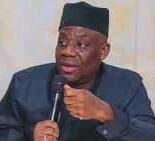
initiative was launched where technical school were shifted from theory-based studies to practical and realistic skills transfer.
It was common for students to be saddled with course works that have little or no relevance to life like students concentrating on drawing parts of flowers and insects but now have to do courses that will make them globally competitive like Artificial Intelligence. Also, subjects like History which will enable Nigerians to study and know their heritage was banned but Alausa restored the subject to promote national identity, unity and civic responsibility in a world where those who do not know their roots are looked down upon wrongly.
Given the poor state of infrastructure in the sector where counterpart funding by state governments was treated with levity, Alausa revitalised the Universal Basic Education Commission to oversee and ensure improvement by providing basic necessities like water and conveniences that would make a learning environment conducive for learning. Added to that was the reintroduction of the inspectorate system in school as monitor for both teachers and students. Security and encroachment on school premises was an issue leading Alausa to work on school fencing and activate other safe school initiatives.
One other area where he put his feet down to ensure standards is the proliferation of private universities where glorified secondary schools were passed off as universities and lacking in basic provisions for learning. To stem that, he put owners of such universities on tenterhooks for them to upgrade both physical infrastructure and academic standards before finally spearheading a moratorium in the establishment of private universities through placing a hold on granting of licences.
To ensure that poor people were not shunted out of tertiary education, he pursued the and got the approval for the National Education Loan Funds which advanced loans to students so that people that lack the financial capacity to pay fees and buy books can access them and still have equal opportunities in life to enjoy university education.
He ensured that the number of students seeking admission yearly which is in excess of 2 million but with as low as 650,000 placements have a better deal and opening the way for more students to be admitted by increasing the number of placements to one million.
The reformer followed up with the recertification of teachers through the National Teachers Institute so that only those trained in knowledge impartation would handle the teach our children. Before him, teaching which is a profession had become an all comers job where those unable to secure jobs would settle for teaching. The standard also rubbed off on lecturers who must attain certain educational qualifications to be considered. He further has sorted out the welfare issues in universities which use to be the main plank for strikes while also implementing agreements, even those reached before him with university unions which previous occupants of his seat kept to in breach. He implements what is agreed.
His efforts has led to countries that use to reject certificates from Nigerian institutions to begin to recognise them while he is honing reformatory strategies on how every Nigerian child will have at least 12 years uninterrupted basic education as well as phasing out Junior Waec which is neither useful to secure a job nor recognised as a qualification but in other words, encourages school dropout since it appears like a level of educational attainment.
Adding a humane angle to his reforms, he has outlawed the practice of attaching workbook to textbooks so that it is only used by one person. Every textbook going by Alausa’s new rule must be usable for at least six years; that would enable siblings to pass same to their younger ones reading same class and level. That will ease the burden of parents buying same book for their wards yearly. Again, he has streamlined graduation ceremonies so that only on completion of primary school, Junior Secondary 3 and Senior School Certificate would one do graduation. That is also to lighten financial burden on parents.
The clincher has come now with the scrapping of dichotomy between Higher National Diploma and first degrees from Universities. He has not only enthroned the policy of Polytechnic being a degree awarding institution but has ensured that technical bent and the objective of polytechnic education is realised while works of research and prototypes are to be funded and commercialised so that industrial revolution of the country can start in earnest.
Alausa aims to be irreversible in his quest to position Nigeria on an educational track that will enable an average Nigerian child to be globally competitive educationally.
Orji Uzor Kalu (Abia North) and Chief Theodore Ahamefule Orji, in collaboration with some other former political leaders, about a political alliance designed to get rid of Alex Otti with a candidate of the All Progressives Congress (APC) in the 2027 is the issue on the table here.
Their group is called The Team. Further to their desire to unseat the governor, and further the interests of APC in Abia, they are thinking of taking legal action against the governor for running Abia from his Nvosi country home instead of the Government House.
This is a particularly good move. All they need to do is sue the governor, show the court a direct connection between living Government House and truly serving the people and use their tenures in office to prove it. And Otti will be gone for good. Utterbunkum!
They are planning to expand the group and include all former political office holders during the time the arrowheads of The Team were in office. Some of the resolutions of this new group came in the form of a communique issued in Umuahia at the end of The Team's second meeting.
My initial concern after reading the communiqué was to wonder about the likely effect of a communiqué signed by former Senator Orji Uzor Kalu as chairman, Senator Theodore Orji as First Vice Chairman, and former Governor Okezie Ikpeazu as Second Vice Chairman would have on the people of Abia State. Especially a communiqué announcing a Technical Committee that needs legs on the ground, with Otti as governor.
Governor, Alex Otti, has reacted by warning that no individual or group should try to distract his administration with shenanigans about 2027 elections. "I am focused on delivering development and good governance to my people. I am not bothered about 2027. The same God who settled 2023 will also settle 2027. So, when they make noise, like I said last week, we should not be bothered. We should just remain focused and do what we have to do,” he said.
He once said to a group: “As you can see, we are at the final stages of dualisng this road. It is a Federal road, but we got approval from the Federal government
encompasses our values, such as respect for human rights, sustainable development, solidarity, sovereignty, and territorial integrity of the various states,” he added.
Clearly, Trump has continued to show antipathy toward international collaboration and has been largely accused of moves to dismantle cooperation in the international system. His administration has in the past one year, followed a pattern of abandoning opportunities for international engagements.
In fact, he recently ordered the US to withdraw from 66 international organisations, a move that marked one of the most sweeping rollbacks of US participation in multilateral institutions in modern history, as the administration moves aggressively to realign foreign engagement with what it calls core American interests.
According to a White House Fact Sheet, the directive ordered all Executive Departments and Agencies to cease participating in and funding 35 non-UN organisations and 31 United Nations entities, which the
to reconstruct and dualise it. And as we are doing this, we are also working from Onuimo to Tower. The idea is that any time you get into Abia State, you know you’ve gotten into Abia State.”
On the substantive issue of removing this man from office in 2027, and the possibility of it, the question for me is that three former governors who did not apologize to the people for poor leadership, abandoned roads and sundry signs of neglect, are planning to remove a busy governor who is apologizing to the same people where development projects are going on: "...for dust caused by ongoing road works".
The question for many others is: “Are some people not seeing that Governor Otti’s achievements across the state are enough to guarantee him a second term in office, especially given his statesmanlike and informed leadership? Apparently, they are hoping to reverse the growing impression that Otti has outperformed all of them put together.
A man who has not, at any point in time made public statements, or urged his aides to make statements, disparaging his predecessors? A man whose performance in office is his own megaphone and propagandist is being accused of being responsible for profiles people created for themselves?
I know Umuahia and I know Abia State. I was born at Queen Elizabeth Specialist Hospital in Umuahia, sixty something years ago. The then St Michael's primary school knew me. So did Ohuhu Secondary School. We went by foot, all the way from Umuagu, past Umudiawa, Amaogwugwu, Nkatalike, etc. to visit Dr. M. I. Okpara when he returned from Exile. He shook our hands, one after the other, and took time to tell us how the name “Umuahia” came into being after the arrival of the white man.
I served Mass in St Finbarr's Catholic Church, was part of the Boys Scout Movement and the Block Rosary Crusade. Umuahia has always been one of the best planned cities, in terms of overall layout and roads, I have seen anywhere. The exceptionally good quality roads in the state capital were built during the tenure of Chief Sam Mbakwe. Orji kalu did not need to fill a single pothole in Umuahia
throughout his tenure. Ditto for his two immediate successors.
In fact, let us dwell a little on the construction of roads in Umuahia back then. The original contractors were Benton Construction Company. They ground the town to a halt. Damaged pipes were not replaced in many places, especially the New Lay out and "over rail" parts of town. For more than two months we could only access the house via a makeshift wooden platform, while my father's car was parked at a school not too far from the house.
My father had to write the Urban Council and the State Government about the condition of the roads and environment, asking that the road be fixed or the residents be provided with water transportation services in the middle of the town.
The contract was eventually revoked and Fougeroulle, a German company, took over. First they cleaned up the soggy, waterlogged topsoil created by Benton. Then they dropped tons of laterite. Next came some kind of stone dust. Then granite chippings, before a nylon tar bit bitumen of not less than four inches. Mbakwe built "Trunk A" roads.
The evidence is still there in places like Azikiwe Road, Macaulay Street, School Road and several places. Largely the same roads built by Mbakwe during the tenures of those who are now lamenting. And that is why I find the lamentations of men who lived with the insanely unmototorable Arochukwu Road, and the ostensible reasons for their desire to remove Otti, totally incomprehensible.
Alex Otti was already a fully accomplished professional in the finance sector, with undeniable evidence of value addition wherever he stepped foot. He made Diamond Bank something out of the ordinary. Those who simply couldn't match his level of competence saw to the death of the bank after he left.
Question: Would Diamond Bank be Access Bank today if Alex Otti was there when the undertakers came calling? I think not.
The man built a strong reputation as a seasoned economist, banker, and reformminded administrator. He advocated transparency, efficiency, and professionalism in both private and public sectors. Since assuming office as Governor of Abia State in 2023, Otti has focused on restoring
administration stated operate “contrary to US national interests, security, economic prosperity, or sovereignty.” The White House had said the withdrawals were intended to end American taxpayer funding for institutions that, it argues, prioritise global agendas over US needs.
“Many of these bodies promote radical climate policies, global governance, and ideological programs that conflict with US sovereignty and economic strength,” it had stated.
From the foregoing, it is clear that without fixing or reforming the global order, both international and national economic security will remain vulnerable to instability, conflict and even war, a danger Prince Turki AlFaisal, Chairman of the Board of the King Faisal Center for Research and Islamic Studies, captures succinctly in his argument that a peaceful and secure world depends on embracing multipolarity, respecting the interests of all nations and recommitting to an inclusive, rules-based multilateral system
confidence in government; with greater financial transparency and accountability in state finances.
Not only has he reduced waste and emphasized prudent management of public resources, he has promoted a results-driven approach to governance, initiated and rehabilitated key roads, especially in Aba and other urban centers, to boost economic activity. The improved environmental sanitation and urban renewal efforts under his watch is a far cry from the indignity Abia people had to suffer before he took over.
His Civil Service and Institutional Reforms seek to create a more "service aware" Workforce, such efficiency and professionalism would be the hallmark of service delivery in the state. making the civil service more efficient and professional. Merit, discipline, and cost efficiency are being deployed to rebuild trust between government and public servants in Otti's Abia State.
The deliberate focus on reviving Aba as a commercial and industrial hub, the support for small and medium enterprises, traders, and artisans, as well as the encouragement being given to private sector participation and investment in the state economy are things no one would have easily imagined possible. But look at "my state" today! Otti's approach is one that could not have done anything but build Public Trust. He is known for a calm, technocratic, and issue-based approach to issues. He has always gained recognition for accessibility and commitment to whatever he believes to be right. A man who, in Abia today, represents a shift toward competence-driven leadership in nation that has more than it's fair share of ne'r-do-wells in public office. Just look at what Otti is doing in education alone!
Those trying to undermine him are trying to bring down an Iroko tree by scratching it with their fingernails. His achievements, reflect a leadership that is based on competence, personal dignity, transparency, and unpretentious service to the people. His career before going into politics shows that when experience, integrity, and vision come together, governance can truly make a difference.
Hapu nu Ndi Apari!
capable of fostering dialogue, cooperation and the preservation of humanity’s hard-won achievements.
Ultimately, the choice confronting the world is not between multilateralism and some abstract notion of sovereign strength, but between cooperation and chaos. History offers no comfort to those who believe that unilateral power, unchecked by rules and institutions, can deliver lasting peace or prosperity.
From global trade to climate change and security, the most pressing challenges of our time do not recognise borders, and no nation, however powerful, can manage them alone without imposing unacceptable costs on others and itself.
Trump’s scepticism toward multilateral institutions may resonate with domestic political audiences, but it collides with the hard realities of an interdependent world. A retreat by the US from collective leadership does not eliminate the need for global coordination; it merely creates
a vacuum that others will fill, often with less transparent norms and weaker commitments to shared values. In such a setting, rules give way to raw power, and uncertainty becomes the defining feature of international relations.
Rules-based systems, however imperfect, offer smaller and intermediate states protection, voice and predictability in a competitive global arena. Reforming multilateral institutions to reflect today’s multipolar realities is therefore a strategic necessity for global stability and shared prosperity.
Multilateralism, at its core, acknowledges that dialogue is cheaper than conflict and cooperation more sustainable than coercion. Abandoning it in favour of narrow nationalism risks dismantling decades of progress in peace, development and human dignity. In a changing world order, the task is not to weaken multilateralism, but to renew it and make it more inclusive, credible and effective because the alternative is a world governed not by rules, but by force.
Olusegun Fafore
Baami, OmoOwa,OmoEkun. OmoKurumu,OmoGbadamu OmoIlumetaaafin BaamiIshola,OmoAkeran. Odigbaose. Otundiarinnako,Odiojuala. Awontolayeafi’kuroyinl’orun. Asedaateyinsiafeferere. Odaro.Esunreo.
Even in their finality, these words did not bid my father, late Apostle (Prince) Joshua Adediran Fafore, who joined the saints in the early hours of January 1, 2026, an absolute goodbye.
Memories flooded by mind, and imageries flashed before me. I saw him ironing my school uniform and taking me to early school - St. Christopher Nursery and Primary School, Isolo in Lagos. His shoulders were my resting place. He would lift me up and caused me to laugh hysterically. I recalled several moments and experiences that made the demise of my parents an irrecoverable loss to me.
In its inevitability, death seems like cruelty to mankind. It robs us of our joy. The grief that comes with the loss of a loved one is indescribable. I experienced that agony and understood the meaning of loss when I could not write my own father’s obituary.
Words deserted me. I became blank. I never thought that I would author my father’s funerary someday. When my mother died in 2014, I felt the pain. I grieved intensely. I came out of it and lied to myself that I had grown into a complete man, and consequently become
insulated to pain.
Twelve years later, when my father died barely two weeks after his 80th birthday, I realised that I had only buried the grief, not even deep enough, to prevent my disintegration at the sight of his corpse.
I had gone ahead to await its arrival in our hometown. Our family compound - Odofin Iloro, Igbajo in Boluwaduro Local Government Area of Osun State, wore a glum look as it expected the lifeless body of one its children.
A prince of Igbajo had died. Local hunters alerted the town with the thunderous sound of guns. The body arrived and had a quick stop at the Palace of the Owa of Igbajo, the throne of Akeran, our progenitor, to alert him about the demise and return of his son.
The corpse was subsequently accompanied by women – our mothers, sisters, and wives - comprising predominantly Oloris (wives of late kings from our coterie), to our family compound.
For Baami, it was a glorious end, but the call to our quintessence by the enchanting voices of the women struck a chord in me.The requiem, which swung between our ancestral eulogy and deep messages about the certainty of death, symbolically forced me into a moment of deep reflection.
The contemplation was unconscious because my father’s lifeless body, housed in a white coffin with gold plates, was directly before me. The sight was a trigger I could not manage because emotions overwhelmed me, and I broke down completely. I realized that no matter how bright the day is, night will certainly come. It looked like my father was going to live forever. The youngest of five siblings, my father, Apostle (Prince) Joshua Adediran Fafore, departed this world as the last of his brethren. The first child of the family, Maami Agba, Alhaja Modupeola Bilikisu Irawo (nee Fafore) passed first.
The family was further reduced with the demise of Baami Engr. (Prince) Olabode Adekunle Fafore, a very
talented mind and Maami Kekere, Olaide Lawrence (nee Fafore). These two deaths brought so much sorrow to the family because they came early and did not follow the order of their birth.
Maami Kekere was the immediate younger sister of Baami Engr. (Prince) Olabode Fafore, who died years ahead of his immediate older brother, Snr. Apostle (Prince) Joseph Oladipupo Fafore, the mascot of the Fafore family.
With the demise of my father, the generation created by my late grandfather, Omooba Olagunju Fafore, and grandmother, Yeye Oba Jolade Fafore, has completely ended, and a new one is now in the frontline. It’s a new era shaped by the wisdom of the old and sharpened by the suppleness of modernity.
It felt like reshuffling in a game of cards. Like how the beautiful designs on poker cards mask the intense thinking players engage in during the game, so did the panoply at my father’s burial on January 14 and 15, 2026, temporarily veil our loss.
Since the fading of the cloud, the two days provided began, anxiety about the weakening of our spiritual fortress and depletion of our cultural compendium engulfed me. “With the ascension to glory of the entire generation that birthed ours, we need to grow very rapidly to close the chasm”, I soliloquized.
To God Almighty, I turned, for strength and easing of our pain. The funeral service held for my father at the First Baptist Church, Igabjo, was more than a worship. The depth of the preaching and peerless delivery of the choir united heaven and earth, as angels accompanied the soul of my father on its flight to heaven.
Reassuringly, the head of our family compound – the Odofin Iloro Compound, Baami High Chief E.A. Oladejo, who also holds the traditional title of Odofin Iloro of Igbajo land, nodded his head throughout the funeral service. He seemed to be saying, “God will be with you and make life easy for you. The demise of your
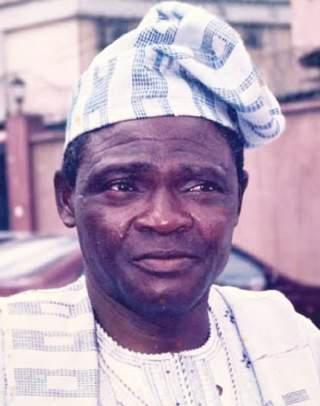
Fafore
father will not result in termination of goodness from your lives”.
By the grace of God, all the prayers and best wishes will be with the entire Fafore family, my siblings and I, eternally. I pray for the soul of my father, Apostle (Prince) Joshua Adediran Fafore, to find repose in the bosom of his creator. It is hard to say goodnight, but night still crept in on us. Sleep, we must, at night fall. Omo idan oni yi olaa. Baami, orun e re o!
Olusegun Fafore is Special Adviser, Public Relations, Repository and Documentation to the Lagos State Governor
As the present administration of President Bola Tinubu intensifies efforts to drive economic diversification and wean the country off crude oil, Regional Coordinator, South-South, Nigerian Export Promotion Council (NEPC), Mr. Benedict Itegbe, said recent reforms supported by the commission have enhanced the capacity of exporters at states level to connect to the international markets to boost foreign exchange earnings for the country. He spoke to James Emejo, on some of the reform interventions he spearheaded, and their impacts through the State Committee on Export Promotion as well as the role of the AIG Public Leaders Programme in the equation.
What have been the challenges of exporters that required reforms?
Thank you. You see, three major hurdles stood out here -we had fragmented stakeholder coordination: We addressed this by formalising the SCEP structure, instituting clear roles and KPIs, as well as introducing formal quarterly performance reporting by member regulators and trade facilitators. There was also low awareness of global compliance requirements, such as the EUDR: We responded by pushing for a national conversation, which led to the establishment of the National EUDR Task Force and the National Traceability System White Paper, which I initiated and coordinated. We also created tailored capacity-building instruments to strengthen digital skills for market research and market penetration.
And another challenge was the limited state-level institutional export capacity: We tackled this through deliberate incorporation of capacity building and institutional strengthening for policymakers within the state export strategy roadmaps.
You have been credited with specific reforms in the public sector especially as it affects products exports. What exactly does it entail?
My work focuses on strengthening non-oil export development, especially through state-level export strategies enabled by the State Committees on Export Promotion (SCEP). We support manufacturers, processors,
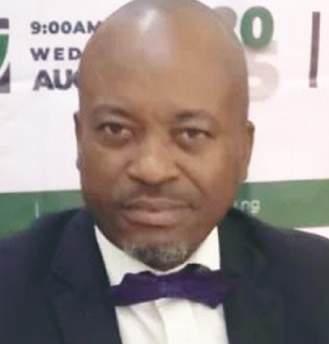
SMEs, export clusters, policymakers, and trade associations with business intelligence, sustainable traceability systems, capacity building, export incentives, product development, and market development. In addition to my role at NEPC, my work on Ondo State’s Cocoa Strategy has opened doors from the sub-national to the national level. I have recently been appointed a member of the National Cocoa Management Committee (NCMC)—the apex policy organ for the cocoa sector in Nigeria—as well as the National Task Force on EUDR Readiness, where
I serve as the technical lead on digital infrastructure. I also recently initiated the White Paper on Nigeria’s National Traceability System, unlocking competitiveness opportunities beyond the EUDR compliance threat.
Furthermore, as regional coordinator, I am now extending professional guidance towards the ongoing development of export strategies in other Niger Delta states, especially Bayelsa and Delta States.
Your reform project has been highlighted for its impact through SCEP, particularly in driving the 10-year Ondo State Export Strategy. What does it seek to address?
Well, the project is titled, “Strengthening State-Level Export Governance Through the State Committee on Export Promotion (SCEP) Model.”
The core problem it addressed was fragmented export development—where federal agencies, state ministries, private sector actors, and financial institutions operated in silos. This resulted in missed opportunities, low export capacity, and inefficient coordination. Our goal was to institutionalise export governance at the state level, ensuring that export planning is long-term and data-driven, stakeholders are accountable, MSMEs receive structured support, and states move from ad-hoc export activities to a clear strategic framework and roadmap.
This work began in Ondo State, which became Nigeria’s first state to develop a 10-year export strategy. The SCEP platform became the engine for operationalising that export strategy.
What are some of the most compelling statistics or tangible outcomes that demonstrate the success of the project?
A few highlights stand out here; the first-ever documented sub-national export strategy in Nigeria (Ondo State, 2025–2035). Moreover, we have over 500 MSMEs trained through SCEP-led programmes. Outcomes also include the creation of sector-specific value-chain plans for cocoa, oil palm, rubber, and fisheries. Following my upgrade to South-South Regional Coordinator three months after completing the capstone, Bayelsa and Delta States adopted similar structured export strategy development approaches, signaling regional replication. The Rivers State Annual Model helped unlock partnerships that led to the Finance & Export Readiness Accelerator (FERA) and the Port Harcourt Air-Freight Export Hub Roadmap. Essentially, my work on the Ondo State project also directly shaped the concept note I developed on the state’s pioneering Task Force on EUDR. As the largest cocoa-producing state in Nigeria—recently accounting for up to 40 per cent of the country’s non-oil exports—Ondo is also the most exposed to EUDR requirements. The insights from this project informed the design of the Task Force and contributed to the thinking that led to the establishment of the National Task Force on EUDR by the Ministry of Agriculture and Food Security. This work is now driving national conversations on traceability, compliance, and readiness across the wider ecosystem.
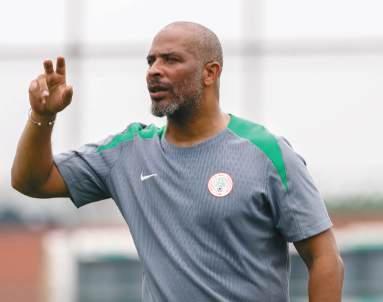
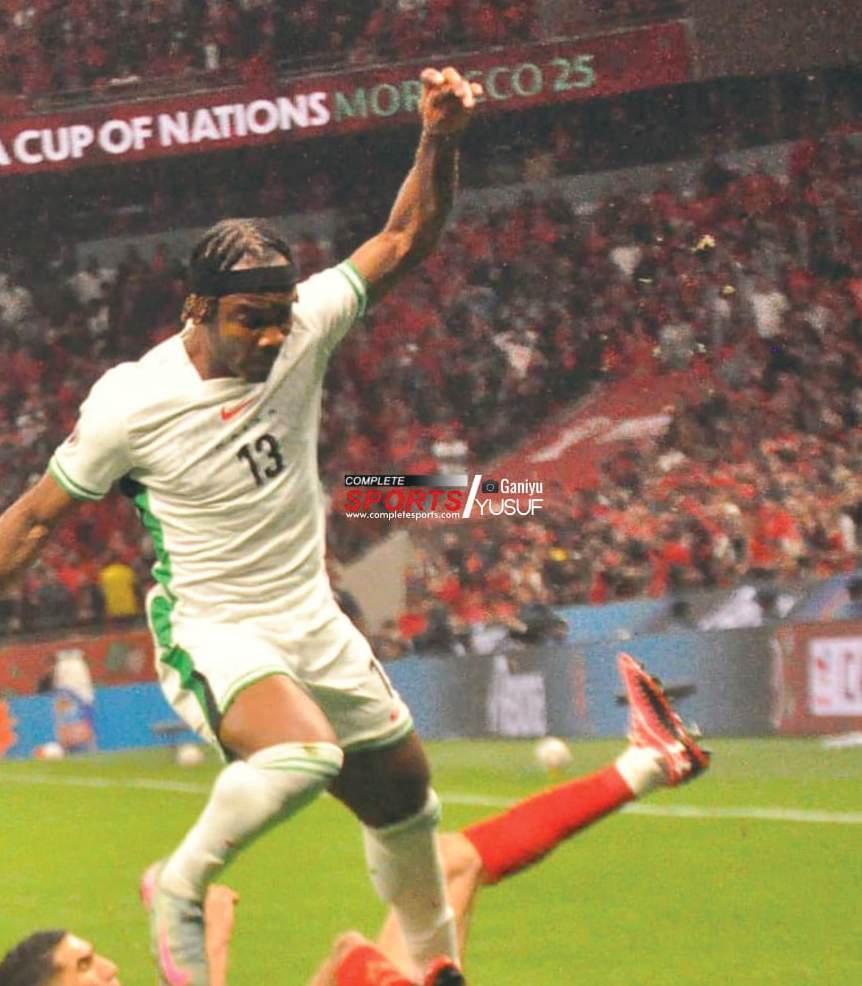
Though he was part of the Super Eagles that won silver at the 2023 edition of the Africa Cup of Nations hosted by Cote d’Ivoire, but he never enjoyed a minute action, as all efforts to impress erstwhile national team coach, Jose Peseiro proved futile With a new ‘Sheriff in Town’ in the person of Eric Chelle at the 35th edition of Africa’s biggest football fiesta, Bruno Onyemaechi would not be part of Nigeria’s party to Morocco as a ‘spectator’.Aside being one of Super Eagles best performers at the biennial competition, his performance was not missed by the organisers of the tournament, CAF, as he was included in the 2025 AFCON XI.
With the conclusion of the 35th edition of the Africa Cup of Nations on Sunday with Senegal emerging as champions after defeating host, Morocco by a lone goal, the Confederation of African Football (CAF) has unveiled its official Team of the Tournament for the 2025 Africa Cup of Nations, in recognition of the standout performers from a competition.
Unsurprisingly, tournament champions Senegal dominated the selection, contributing the highest number of players to the Best XI after an impressive campaign that culminated in their second AFCON title. Nigeria was also represented, with three Super Eagles players earning places following strong individual performances.
Forwards, Victor Osimhen and Ademola Lookman were included, after playing key roles in Nigeria’s third-place finish. Osimhen registered four goals and two assists during the tournament, while Lookman contributed three goals and four assists, underlining their attacking influence throughout the competition.
Defender Bruno Onyemaechi, who was snubbed at the 2023 edition of the tournament by Portuguese coach, Peseiro, completed Nigeria’s representation in the team, earning selection at left-back.
The Super Eagles left-back, Onyeamachi, will forever be grateful to Super Eagles Coach, Eric Chelle for giving him the opportunity to express himself, which he grabbed with both hands.
According to the Olympiacos defender, he was denied the opportunity to showcase his talent by former Super Eagles Coach, Peseiro at the 2023 edition of the Africa Cup of Nations in Ivory Coast despite begging the Portuguese.
The 26-year-old was part of the Super Eagles’ squad that reached the AFCON final, but the Olympiacos defender failed to play a minute throughout the duration of the competition.
“You know, when a coach gives you the opportunity, you need to take it. I remember the last AFCON.
“I was begging for the opportunity, but Peseiro did not give me. So right now, I’ve learned from experience to be ready whenever they call you.
“That is the most important thing and I give God all the glory for this moment.”
Indeed, Onyemaechi was hailed by former national team captain and coach, Sunday Oliseh, who is not known to be generous with praises.
The former Nigeria head coach lauded Super Onyemaechi for his exceptional performance during the AFCON semifinal against Morocco, inspite of Nigeria losing 4-2 in the shootout, thereby failing to advance to the final after a goalless draw in regular time.
Interestingly, Onyemaechi unfortunately missed his penalty kick, but his performance has been hailed by Oliseh after keeping Morocco star man Brahim Diaz quiet for the entire match, culminating in the Real Madrid player being substituted in extra time.
Onyemaechi was tasked with marking Morocco’s star player, and he delivered a masterful defensive display that effectively neutralised the tournament’s highest goal scorer.
Diaz, who entered the match with five goals, was on the verge of making history as the first player to score in six consecutive Africa Cup of Nations games, as he came against Nigeria in the semifinal.
During his commentary for SuperSport, Oliseh highlighted Onyemaechi’s crucial role in containing the Moroccan forward.
“Bruno seems to be doing a job on Brahim Diaz,” Oliseh remarked. “Seems like this is the first time someone has matched Diaz.”
Despite Onyemaechi’s standout defensive
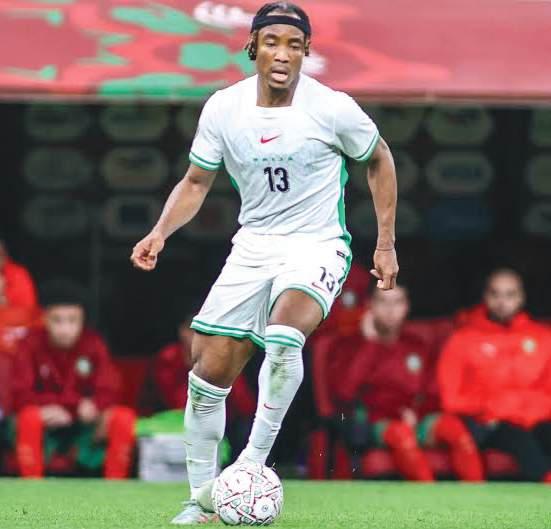
effort, Nigeria’s journey to the final was cut short. The match ended in a goalless draw after extra time, leading to a penalty shootout.
With Onyemaechi’s recent AFCON performance, it would not be surprising if Turkish side, Trabzonspor intensify their effort at moving for the Nigerian.
According to Turkish transfer expert Ekrem Konur, Trabzonspor are prepared to open discussions with Greek giants Olympiacos to evaluate the conditions surrounding a possible move for the 26-year-old defender.
With the conclusion of the 2025 AFCON, negotiations are expected to intensify most especially with Onyemaechi’s performance at the tournament.
Onyemaechi has endured a challenging spell at Olympiacos, struggling for consistent playing time since completing a €2.5 million transfer from Portuguese side Boavista during the January 2025 window. A switch to Trabzonspor could offer a fresh start and increased minutes at club level.
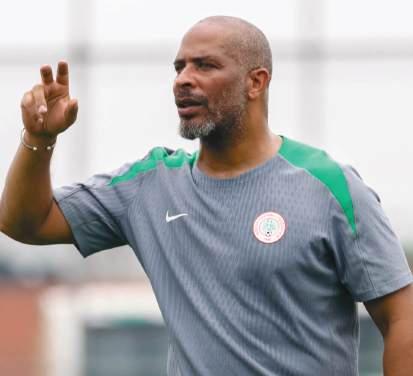
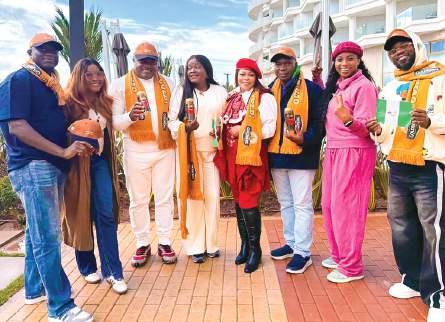
Nigeria Football Federation (NFF) technical director, Austin Eguavoen has publicly ques- tioned Super Eagles head coach, Eric Chelle’s squad selection for the 2025 Africa Cup of Nations in Morocco.
Eguavoen is disappointed at the complete absence of play- ers from the Nigeria Premier Football League (NPFL) despite the team’s strong showing at the tournament.
Speaking in an interview with Footy Africa, Eguavoen said he was troubled by the decision to overlook the domestic league entirely when naming a such a largeThesquad.former Super Eagles coach argued that several home- based players were capable of contributing at the highest level.
“I felt disappointed that we did not include some NPFL players in the AFCON squad,” Eguavoen said.
“Some players in the team may not even get a minute of
action, so why couldn’t we include a few players from the local league? At least three or four would have been better.”
Chelle’s trust in NPFL stars possibly waned after the home- based Eagles failed to impress at the African Nations Champion- ship (CHAN) back in August.
But Eguavoen has cautioned against using Nigeria’s mixed fortunes at the CHAN as a yardstick for judging the qual- ity of the NPFL, insisting the domestic league still produces players good enough for major tournaments.
“The players are not bad, and just because we didn’t do well at CHAN doesn’t mean we should throw the baby out with the bathwater,” the AFCON 199R winner added.
“This is something we need to look into because it speaks volumes when players come directly from the local league into a major tournament like AFCON.”
Despite his reservations, Eguavoen was keen to stress that the NFF would not interfere with Chelle’s choices.
“We can only advise him; we cannot force players on him. I must also say that he has a lot of respect for the players and wants to see how he can gradually bring them through. We have discussed this a few times, but the timing has to be right,” Eguavoen explained.
He also suggested that Chelle’s limited time in Nigeria may have made it harder to properly assess NPFL talent.
“If he stays in the country more often, he will have better opportunities to visit venues and watch players. If he doesn’t, it becomes more difficult,” he added.
The Super Eagles won bronze at the recently con- cluded AFCON in Morocco after defeating Egypt 4-2 via penalty shootouts in the third- place match.
Impressed by the quality of organisation and the impact of Nigeria’s foremost private inter-school swimming competition, the Dolphin Swimming League, the Lagos State Sports Commission (LSSC) has agreed to partner with the organisers to stage its first long course events on February 21 at the Mobolaji Johnson Sports Centre, Rowe Park, Lagos.
It will be recalled that Lagos dominated the 2025 National Youth Games, with swimming contributing the majority of the state’s gold medals. Most of the medallists were products of the Dolphin Swimming
League—a fact acknowledged by the Director General of LSSC, Lekan Fatodu, who pledged continued support for the initiative. Speaking at the weekend during the third leg of Season 7 of the Dolphin Swimming League, Fatodu commended the organisers:
“I want to say a big thank you to the organisers of the Dolphin Swimming League for this remarkable initiative and for their consistency in ensuring the event runs smoothly. The kind of improvement we see here is absolutely remarkable. There’s no doubt that many talents are constantly
discovered through this event. The Lagos State Government is committed to providing the necessary support to ensure young people have the opportunity to showcase their talents and launch into greatness.”
He further noted: “When you talk about swimming, the best place to see Nigeria’s finest swimmers is the Dolphin Swimming League, and we are proud of our partnership with them. This aligns with the commitment of Governor Babajide Sanwo-Olu to empower young people and provide opportunities for talents to be identified in schools and nurtured to international glory.
The National Basketball Association (NBA) and the Department of Culture and Tourism – Abu Dhabi (DCT Abu Dhabi) yesterday announced an extension of their existing collaboration that will feature preseason NBA Global Games, expanded marketing activities, and the launch of an NBA Global Academy in the UAE capital. The long-term extension will also bring additional youth development and fan programming to Abu Dhabi
and surrounding communities for years to come.
NBA Global Academy, which will be based in Abu Dhabi and serve as the global hub for the league’s NBA Academy program, will be a year-round elite basketball development and academic program for top high-school-age student-athletes from the UAE, the Middle East and around the world. The academy will include elite development programming for up to 20 local boys, basketball
development activities for local girls and residential programming for up to 24 male prospects from the rest of the world.
“Extending our partnership with the NBA further strengthens Abu Dhabi’s position as the new home of basketball in the Middle East and reinforces our commitment to our youth, inspiring our community, diversifying the economy, and elevating the emirate’s standing as a global destination,” said HE Mohamed Khalifa Al Mubarak, Chairman of DCT Abu Dhabi.
The Premier League enters the weekend at a critical juncture, with both ends of the table beginning to shift. Arsenal retain a seven-point lead, but a winless run among the top four has tightened the race beneath them. Today’s action begins at 4:00 pm as Man City host Wolves.
At the same time, Burnley
face Spurs, with the match airing live on SS Action (GOtv Ch. 66, DStv Ch. 206).
The late fixture today sees Bournemouth host Liverpool at 6:30 pm.
Tomorrow begins with Crystal Palace hosting Chelsea at 3:00 pm.
Also at 3:00 pm, Newcastle host Aston Villa in a key contest in the race for the top four.
The weekend concludes at 5:30 pm with the headline fixture as Arsenal welcome Man United. Arsenal remain clear at the summit despite backto-back draws, while United arrive revitalised under Michael Carrick following a statement derby win over City. All matches will be broadcast live on SuperSport on DStv and GOtv.
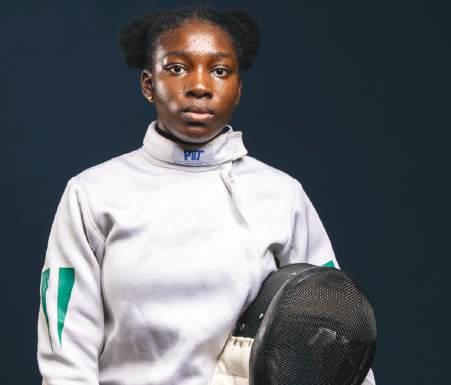
Adebodunrin Thomas was part of the Nigerian team at the 2025 African Fencing Champi- onships held in Lagos. For the teenager, making the national team was a dream come true.
Just a few years after embrac- ing fencing, Thomas has already reaped remarkable rewards. Through the sport, she secured a scholarship to continue her education at one of the UK’s prestigious institutions—Wel- lington College.
At just 17, Thomas stands as a shining example of how dedication, passion, and the right support can open doors to life-changing opportunities. She admits that fencing has given her not only discipline and confidence, but also invaluable exposure that continues to
shape her future in powerful ways.
A proud member of the Lagos Fencing Club (LFC), Thomas reflected on her journey: “It was an amazing experience representing Nigeria at the continental tournament last year, being my first time in national meet. I felt a mix of pressure and empowerment. I am really grateful to everyone who has helped me, especially the Lagos Fencing Club. They pushed me and helped me secure this scholarship. I am proud to be working with such experienced coaches and tal- ented students. I hope that my new experience at Wellington will make me a better fencer and also push me academically. My goal is to balance both so I can go further.”
Her father, Adebola, expressed immense pride in her achieve- ments, describing her journey as one that has showcased her talent, strengthened her confidence, and positioned her for global opportunities:
“We are very fortunate to secure a significant scholarship, which made funding much easier and allowed us to enroll her at Wellington. She has gained publicity through fencing, and we are proud of her accomplishments. Any opportu- nity to expose our children to other parts of the world helps them become well-rounded individuals. We have noticed that fencing has instilled more discipline in her and improved her sportsmanship. It’s a technical sport, and it has helped her mature.”
elusive. Yet, for Goldberg, the story ofAFCON 2025 was never defined by silverware alone. It was about character, resilience and the enduring bond between the national team and its supporters.
Nigeria’s Super Eagles signed off their campaign with a bronze medal, edging Egypt on penalties in the third-place match. It was Nigeria’s ninth third-place finish at theAFCON finals, a record that further cements the country’s status as the most consistent team in the history of the competition, boasting more podium appearances than any other African nation.
The ultimate prize—a fourth continental title—proved
Football,CultureandaShared Beat
Under its “Our Beat, Our Gold” campaign, Goldberg Lager Beer followed the Super Eagleseverystepoftheway,transforming the tournament into a sharednationalexperience.Across Nigeria,largeviewingcentresand cultural activations turned match daysintocommunalcelebrations. Beyond the borders, in Moroccan host cities where Nigeria played, fan-engagement moments ensured that the green-and-white
spirit travelled with the team.
On the pitch, the Super Eagles delivered a bold and expressive brand of football. Nigeria emerged as the tournament’s most prolific attacking side, scoring 14 goals—more than any other team. They created the highest number of clear chances (27), dominated possession with an average of 66 per cent, and produced the longest winning streak of the competition with five consecutive victories.
ToGoldberg,thestatisticstolda deeper story—of belief, progress and intent.
More Than Results
Reflecting on the campaign, Laolu Babalola, Portfolio Manager, Mainstream Lager Brands at Nigerian Breweries Plc, said AFCON 2025 transcended match outcomes.
Edo State Deputy Governor, Idahosa Commissions Benin Club 1931 Leisure and Indoor Games Section Lounge
Edo State Deputy Governor, Idahosa Commissions Benin Club 1931 Leisure and Indoor Games Section Lounge
The Leisure and Indoor Games Section of Benin Club 1931 has officially opened its new lounge to boost member amenities, and hereby marked a significant milestone in the history of the club.
The lounge with a state-ofthe-art space for relaxation, socialization, and indoor games was officially commissioned by the Deputy Governor of Edo State, Dennis Idahosa on January 18.
The section Captain, Felix Osaze Igbinovia led the executive team that delivered the lounge, supported by Efe Okpobor, Albert Ngbanwa, Val Eze, Jerry Orobor, Bright Guobadia, Ambassador Nelson Nwabuoku, JeffreyAtaga, and Cyril Oriafoh. President of the Benin Club 1931, Dr. Isibor Evbaziegbere, led the hosting of dignitaries, includ-
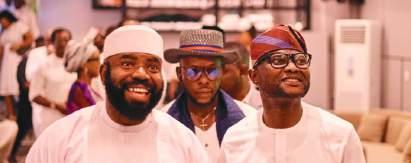
ing club officials and members to the new edifice nicknamed ‘Aso Rock’.
In his address, Idahosa praised the section’s executive and the Benin Club Management Committee for promoting sports and recreation in the South-South Region.
Similarly, Igbinovia, whose tenure has driven significant progress for the club thanked his team for their support, while Dr. Evbaziegbere commended the executive team for their cooperation.
Others
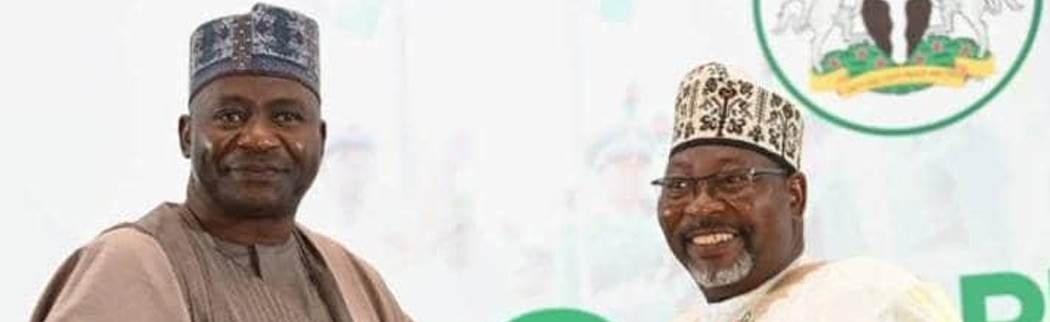
The word of advice to those who are “Threatening” to unseat Alex Otti, the Governor of Abia State today: “Please, show Abia people all the great wonders you performed during your tenure in public office. While at it, also explain to them how and why you, or your proxies, should be allowed to re-enact this wonder, or these several wonders” when they replace Alex Otti. That is all.
If you can show how you completely outshone Otti’s efforts so far, you can rest assured that the man will be chased out of office and be replaced by one of you, or your chosen candidate, for 2027.
Our people say that the difference between a leopard and domestic cat is not just in
the length and size of their whiskers, but in their essence. One is a leopard. The other
is a cat. It is as simple as that.
A cat, often designated domestic cat in cities and human settlements, is also a hunter like a leopard. But it hunts for rodents and sundry creatures that are very far down the line even in the cadre of prey, including insects. A leopard ignores certain types of prey, because they are not on its menu.
Our people also say that a toad which, mistaking itself for a bird, ventures into the air will come down with a resounding thud; looking silly and ridiculous. Let me not say anything here about what would happen to a local hunting dog which, having been named “lion” by strangers outside, suffers an identity crisis and struts into the forest to challenge a real lion to a showdown.
First, it will become the lion’s lunch.
Second, the lion will be wondering, but it will leave the lion wondering, after a meal that served itself to him, why the poor creature decided to join its ancestors before its time.
I deliver these proverbs against the background of the earlier-mentioned political melodrama that is threatening to play itself out in Abia State. In that regard I add this: A green snake in the garden may think that it is a dangerous Anaconda, just because it crawls, slithers around on its belly and eats by swallowing; like the phenomenal Anaconda. But an Anaconda is an Anaconda.
The recent public statements by Senator
Continued on page 27
President Donald Trump’s return to the centre of global politics has revived old questions about the United States’ commitment to multilateralism in a world already strained by conflict, rivalry and institutional fatigue.
As power shifts and alliances are tested, Trump’s worldview once again puts the future of collective global action and the rules-based international order under sharp scrutiny.
That was why the challenge facing multilateralism was one of the major issues discussed at the 2026 World Economic Forum (WEF) annual meetings in Davos, Switzerland.
The conference, with the theme “A Spirit of Dialogue,” saw global leaders express
concern over the retreat of multilateralism as fragmentation, rising protectionism, and disdain for rules-based systems continue to weaken international relations. Today, the rules and norms are not respected by the same powers and institutions that created them.
Declining trust, diminishing transparency and respect for the rule of law, along with heightened protectionism, are threatening longstanding international relations, trade and investment and increasing the propensity for conflict. A contested multipolar landscape is emerging where confrontation is replacing collaboration, and trust – the currency of cooperation – is losing its value.
Indeed, these are all the ingredients promoting extreme nationalism and isolationism, which is ironic since countries
such as the US, at the forefront of this ugly development, benefited from multilateral initiatives.
In his speech delivered at the WEF, Emmanuel Macron, President of France, stressed that a shift towards autocracy, against democracy, was hurting the international system. Macron, who pointed out that there were more than 60 wars in 2024 –an absolute record, noted that conflict has become normalised, hybrid, expanding into new demands, space, digital information, cyber, trade, and so on.
“It's as well a shift towards a world without rules. Where international law is trampled underfoot and where the only law that seems to matter is that of the strongest. And imperial ambitions are resurfacing. This is as well as a shift towards a world without
effective collective governance and where multilateralism is weakened by powers that obstruct it or turn away from it, and rules are undermined,” he added.
Equally, in his intervention, Mark Carney, the Prime Minister Canada, also emphasised the end of the rules-based international order, noting that “It seems that every day we're reminded that we live in an era of great power rivalry, that the rules-based order is fading, that the strong can do what they can, and the weak must suffer what they must.
“I would like to tell you that the other countries, especially intermediate powers like Canada, are not powerless. They have the capacity to build a new order that