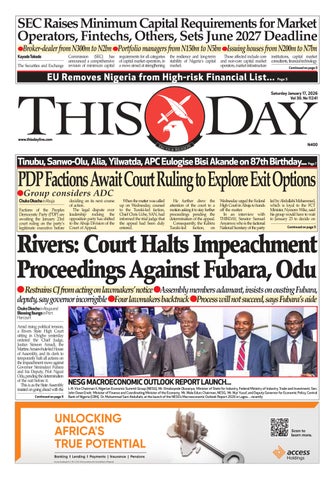
PDP Factions Await Court Ruling to Explore Exit Options
Group considers ADC
Chuks Okocha in Abuja
Factions of the Peoples Democratic Party (PDP) are awaiting the January 23rd court ruling on the party’s legitimate executive before deciding on its next course of action. The legal dispute over leadership rocking the opposition party has shifted to the Abuja Division of the Court of Appeal.
When the matter was called up on Wednesday, counsel to the Turaki-led faction, Chief Chris Uche, SAN, had informed the trial judge that the appeal had been duly entered.
He further drew the attention of the court to a motion asking it to stay further proceedings pending the determination of the appeal. Consequently, the Kabiru Turaki-led faction, on
Wednesday urged the Federal High Court in Abuja to hands off the matter.
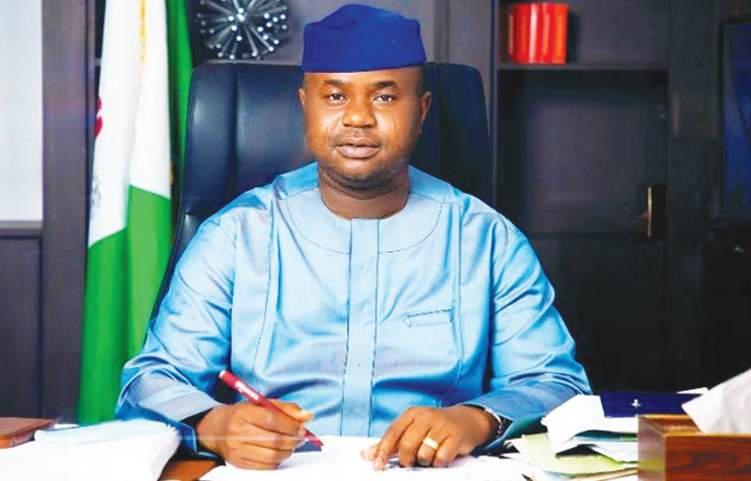
In an interview with THISDAY, Senator Samuel Anyanwu who is the factional National Secretary of the party
led by Abdullahi Mohammed, which is loyal to the FCT Minister, Nyesom Wike, said his group would have to wait to January 23 to decide on
on page 5
Rivers: Court Halts Impeachment Proceedings Against Fubara,
and
Amid rising political tension, a Rivers State High Court sitting in Oyigbo yesterday ordered the Chief Judge, Justice Simeon Amadi, the Martins Amaewhule-led House of Assembly, and its clerk to temporarily halt all actions on the impeachment move against Governor Siminalayi Fubara and his Deputy, Prof. Ngozi Odu, pending the determination of the suit before it. This is as the State Assembly insisted on going ahead with the
Kayode Tokede
Chuks Okocha in Abuja
Blessing Ibunge in Port Harcourt
EU Removes Nigeria from High-risk Financial List
NFIU attributes feat to collective reforms
Alex Enumah in Abuja
The European Union (EU) has officially removed Nigeria from its list of high-risk third countries under the EU Anti-Money Laundering and Countering the Financing of Terrorism (AML/CFT) framework.
The removal was contained
in the European Commission Delegated Regulation (EU) C (2025) 8460, adopted on December 4, 2025, in line with updates by the Financial Action Task Force (FATF) from its October 2025 Plenary.
According to a statement by the Nigeria Financial Intelligence Unit (NFIU), the regulation, which takes
effect from January 29, 2026, also confirmed the removal of Burkina Faso, Mali, Mozambique, South Africa and Tanzania from the EU high-risk list, following their successful exit from the FATF list of Jurisdictions under Increased Monitoring after addressing identified strategic AML/CFT deficiencies.
"The European Commission acknowledged that Nigeria and the other delisted countries have strengthened the effectiveness of their AML/ CFT regimes, closed key technical and operational gaps and fulfilled the commitments set out in their FATF Action Plans, leading to their removal from the FATF grey list in June
and October 2025.
"Nigeria’s removal from the EU list reflects the strong political will and leadership of President Bola Ahmed Tinubu, GCFR, whose administration prioritised financial system integrity, inter-agency coordination and compliance with international standards.
RIVERS: COURT HALTS IMPEACHMENT PROCEEDINGS AGAINST FUBARA, ODU
impeachment and had written to Justice Amadi to empanel a seven-member body to oversee the allegations preparatory to impeaching Fubara.
Also in a new twist, the four Lawmakers that had opted out of the impeachment and rather pleaded with their colleagues for an amicable settlement of the issues have made a U-turn and rejoined their colleagues in the move to remove the governor and his deputy.
But the Special Adviser on Political Affairs to the Rivers State Governor, Darlington Orji, yesterday, dismissed the impeachment moves, insisting the process lacks merit and would not succeed.
Members of the State House of Assembly had accused Fubara and Odu of gross misconduct, including misappropriation of public funds, obstructing the Rivers State House Assembly from performing her duties, among others. The Speaker in adopting the motion sponsored by the Deputy Speaker, Dumle Maol, and Silvanus Nwankwo, had mandated an investigation into the governor’s financial and administrative actions. He had further directed the transmission of the notice of the allegations to Fubara and Odu.
the continued implications of the crisis.
Anyanwu' said, "please let us wait on what the court of appeal will say on the motion over the crisis. After the January 23 date, I will speak on the next line of action.
'' We are aware that election is around the corner and our supporters are waiting on where to go and how to go about it"
firms, virtual asset service providers, and commodity market intermediaries.
The capital market regulating body, in a circular dated January 16, 2026, obtained yesterday, fixed June 2027 as the compliance deadline for the new capital regime.
It stressed that the new framework, issued pursuant to the Investments and Securities Act, 2025, applies to entities regulated by the Commission and was designed to ensure that operators are better positioned to withstand market shocks while protecting investors’ interests.
However, the court order yesterday, restrained Justice Amadi from “receiving, forwarding, considering and or however acting on any request, resolution, articles of impeachment or other document or communication from one to 27 defendants for the purposes of constituting a panel to investigate the purported allegations of misconduct against the governor and his deputy for seven days.”
Justice Fiberesima, in a ruling on a motion ex parte in two separate suits by Fubara and Odu also granted leave to claimants applicants for substituted service of the interim order, the originating processes in the suits and all other subsequent processes meant for first to thirty one defendants at the gate of the Rivers State Assembly quarter.
The court also directed that the interim order, the originating processes in the suits be served on the number 32 dependent, who is the Chief Judge of the State through any staff of Judiciary at the Chief Judge's Chambers within the High Court premises.
Justice Fiberesima however, adjourned the case to January 23, 2026 for hearing of motions
In the same manner, Sani Umar, former media aide to the former vice President, Namadi Sambo who double as media aide to the national chairman of PDP said that the party's suit will be heard on January 23.
He said, ''the Kabiru Tanimu Turaki led PDP will wait till the matter is decided at the appellate court to decide on the next line of action.''
A breakdown of the new capital requirements showed that the Commission raised capital requirements for Broker-Dealers to N2 billion from the long-standing 2015 capital requirements of N300 million. THISDAY gathered that there are currently 100 active stockbroker firms, and 60 percent are Broker-Dealer on the Exchange. Also, the circular showed that brokers’ minimum capital requirement tripled from N200 million to N600 million, while dealers now require N1 billion, up from N100 million.
on the case.
Lawmakers write Chief Judge to Set Up Panel
Meanwhile, members of the Rivers State House of Assembly have asked the Chief Judge of the State, Justice Amadi, to set up a 7-man panel to investigate the allegations of grass misconduct against Fubara and Odu.
They insisted that there is no going back in the impeachment process. In a letter addressed to the Chief Judge and signed by Amaewhule, which was read during a plenary yesterday, the lawmakers noted that the action was in compliance with section 188(4) of the Constitution that the allegations be investigated.
“I write to request that you (CJ) appoint a panel of seven persons to investigate the allegations of gross misconduct against His Excellency, Sir Siminalaye Fubara, the Governor of Rivers State pursuant to section 188(5) of the Constitution of the Federal Republic of Nigeria, 1999 (as amended).
“At the 60th Legislative day of the Third Session of the 10th Assembly, the House resolved in compliance with section 188(4) of the Constitution that
Umar Sani exuded confidence that court will favour the Turaki led party.
THISDAY gathered that as the 2027 general election get nearer, many members of the party with political ambitions are worried about where to pitch their hope.
This becomes necessary with the statement from the Independent National Commission (INEC) that it was
In addition, fund and portfolio managers are now subject to a tiered structure. Managers overseeing assets above N20 billion would need N5 billion as minimum capital from the 2015 capital regime of N150 million, while mid-tier managers must hold N2 billion as against previously held N150 million.
Also, for portfolio managers, the circular stated that, “Any Fund and Portfolio Manager with NAV (Net Asset Value)/AuM (Assets Under Management) of more than N100 billion should
these allegations be investigated.
“In this regard, the acknowledged copy of the forwarding letter of the Notice of Allegations of Gross Misconduct; the acknowledged copy of the Notice of Allegations of Gross Misconduct; copies of the Rivers State Impeachment Panel (Conduct of Investigations) Procedure, 2025; photocopies of newspaper publications of Guardian, Saturday Sun, Nation and other relevant documents are hereby attached for the use of the Panel”, Amaewule added.
Earlier, during a press briefing, members of the Assembly reaffirmed their resolve to continue with the impeachment process, stressing that it remains the most viable constitutional option to resolve the lingering political impasse in the state.
Four Lawmakers Who Opted Out Backtrack
A few days ago, four members of the House rescinded their positions on the impeachment process against Fubara and Odu, and had appealed to their colleagues to withdraw the process.
The Minority Leader, Sylvanus Nwankwo,
yet to recognise the Turaki led party because of contending court orders.
Both factions of the party currently operate from different national offices.
The Turaki led PDP operates from an office in Area 10, Garki Abuja, while the faction loyal to Wike operates from an office in Wuye, Abuja.
This is the Nigeria Police Force still locks up the national
have a minimum of 10 per cent of the NAV/AuM as capital.”
The commission disclosed that private equity and venture capital firms are now expected to hold minimum capital requirements of N500 million and N200 million, respectively. Non-core regulated functions, such as the Issuing House that perform non-Interest Finance services, advisory & Arrangement services, and no underwriting, are required to hold N2 billion capital requirement as against the N200 million.
Issuing Houses with
"The achievement is also the result of sustained collaboration among key stakeholders, including the National Assembly, law enforcement agencies, regulators, supervisors, the judiciary, the private sector and development partners", the statement read in part.
representing Omuma State Constituency, and Peter Abbey of Degema State Constituency, had kicked against the process, while Barile Nwakoh, who represents Khana Constituency I, and Emilia Amadi of Obio/Akpor Constituency II (Wike's LGA), on Wednesday publicly called for caution and dialogue, insisting that pursuing impeachment could further heighten political tension in the state and distract from governance and legislative responsibilities.
But during yesterday’s press briefing, the four lawmakers announced their support for the continuation of the impeachment process, aligning themselves with the broader position of the other 23 lawmakers of the Assembly.
Addressing the press, the Deputy Speaker of the House, Dumle Maol, who read from a written statement, noted the collective agreement among them to pursue the impeachment process.
Describing the governor as “incorrigible”, Maol maintained that the impeachment of both the governor and his deputy was unavoidable.
They appealed to leaders at all levels and the people of Rivers State to critically assess
office of the party located at the Michael Okpara Street in Wuse, FCT.
THISDAY gathered that the anxiety of prospective aspirants is whether to join enmasse to the Accord party or the African Democratic Congress (ADC), where majority members of the party defected with Atiku Abubukar and David Mark.
Political activities are expected to commence by
Underwriting that perform offers a ‘one-stop-shop’ for issuers, provide underwriting services, lender advisory and product development services are required by the Commission to have N7 billion minimum capital, as against the 2015 capital requirements of N200 million.
The digital asset segment saw a clear shift from informal activity to formal oversight. With N2 billion required for digital exchanges and custodians, the SEC is sending a clear message: innovation will be encouraged only when backed by robust
the situation and understand that impeachment was the appropriate constitutional step.
“The impeachment of the incorrigible governor and his deputy. We therefore strongly appeal to all leaders at all levels and the good people of Rivers State to carefully consider the problem at hand and understand that the impeachment process is the best way to go at this point,” he stated.
The legislators further called on the Speaker of the House to allow the constitutional process to proceed without obstruction, urging him to reconvene the House to enable members to carry out their constitutional responsibilities.
The lawmakers also expressed gratitude to President Bola Tinubu, commending him for what they described as his efforts and concern for Rivers State in seeking a resolution to the political crisis.
They further thanked leaders, stakeholders and residents of the state for their prayers and support, assuring them of their commitment to defending both the people and the Constitution of the Federal Republic of Nigeria.
early April 2026 and the primary elections to follow immediately,. National Publicity Secretary of ADC, Bolaji Abdullahi, said that the doors of the coalition party is open to any Nigerian, including those from the party. Abdullahi said, '' we are open to all Nigerians. We cannot close our doors to anybody, including those from the PDP.”
capital. According to the Commission, the review was informed by evolving market dynamics, growing complexity of financial products, and the need to align capital adequacy with the risk profile of regulated activities. SEC said the revised thresholds would enhance investor confidence by ensuring that market participants maintain sufficient financial buffers to meet their obligations sustainably, even during periods of volatility.
PAYING FINAL RESPECTS...
Tinubu, Sanwo-Olu, Alia, Yilwatda, APC
Eulogise Bisi Akande on 87th Birthday
Deji Elumoye, Adedayo Akinwale in Abuja and Segun James in Lagos
Prominent Nigerians yesterday paid glowing tributes to the pioneer National Chairman of the All Progressives Congress (APC), Chief Bisi Akande, as he clocked 87 on January 16, 2026.
President Bola Tinubu in a statement issued yesterday appreciated the former governor of Osun State for his leadership, industry, hard work, wisdom and labour of love for APC and the nation at large.
Tinubu, in the birthday goodwill stated, inter alia: "Today, I celebrate Chief Bisi Akande, elder statesman, former governor of Osun State and the first Chairman of our governing All Progressives Congress, on his 87th birthday on January 16, 2026.
"Baba Akande has contributed a lot to the growth and development of this
country and to the emergence and institutionalisation of democracy in the land.
"Fired by Awolowo's political vision and ideology, Baba Akande began life as an accountant, working for British Petroleum. He soon took a leave of absence and delved into public service, from which he never looked back.
"Because he distinguished himself, it was no surprise that, after serving as the Secretary to the State Government in the old Oyo State in 1979, he later became the Deputy Governor in the same state in the Second Republic, and much later, the Osun Governor from 1999 to 2003.
"As Interim Chairman of APC, Baba laid the building blocks for a political edifice that, for the first time in Nigeria's political history, unseated an incumbent in the centre in 2015.
"We must thank Baba for his leadership, industry, hard work, wisdom and labour of love for our party and country.
No Law Prohibits Lab Facilities as Part Of Pharmacy, Says ACPN
Pharmacists under the aegis of Association of Community Pharmacists of Nigeria (ACPN) have said that there is no law in the country that prohibits laboratory facilities as part of in-house pharmacy.
Reacting to a recent statement credited to President of the Association of Medical Laboratory Scientists of Nigeria (AMLSN), Mr. Casmir Ifeanyi, where he alleged that pharmacies were conducting medical tests in their facilities, and equated them to provision shops; ACPN National Chairman, Ambrose Ezeh, and National Secretary, Omokhafe Ashore, described the comments as sheer blackmail, misleading and uncalled for.
ACPN expressed disappointment at the statement from a professional body it described as a traditional ally in the Nigerian health sector, and did not expect such a disparaging outburst capable of straining professional relationships from leadership of the AMLSN.
ACPN said that although “there is no law in Nigeria that prohibits interested stakeholders from registering laboratory facilities as part of in-house pharmacy, hospital facilities, or stand-alone medical laboratories; registered Community Pharmacies that do not register Laboratories are certainly not encouraged by the association to engage in
"We must thank him for his contributions to his state and nation. We must thank him for his contributions to the progressive movement.
"Baba remains a mentor and leader for his integrity, honesty, uprightness and consistent belief in the values that ennoble the nation.
"I must again express my gratitude to Baba Akande for his inspiration, advice and encouragement, which greatly helped me in my political career and my journey to the presidency.
"His support for our administration and for the continued implementation of
the Renewed Hope Agenda is also worthy of note.
"Having Baba Akande in my corner as a partner and ally has proved tremendously helpful.
"Even at 87, Baba Akande has shown no signs of weakness or relentlessness. He remains a strident advocate, supporter, and fighter for the ideals of democracy, social justice, and good governance.
"As he marks his 87th birthday, I pray for good health and renewed strength for Chief Akande."
Similarly, Lagos State Governor, Babajide Sanwo-Olu and his Benue State counterpart,
Rev. Fr. Hyacinth Alia, have also congratulated elder statesman, Chief Akande, on his 87th birthday.
Sanwo-Olu described Akande as an advocate of good governance, an epitome of true federalism, a true democrat and a respected political icon who has impacted many lives positively in Nigeria through politics and governance.
The governor in a statement issued by his Special Adviser on Media and Publicity, Mr. Gboyega Akosile, said Chief Akande, popularly known as ‘Baba Omo kekeke’, is a role model to many people for his courage and dedication to the
public interest. He also commended Chief Akande for his commitment to public service, especially during his tenure as the first Governor of Osun State in the current Fourth Republic, adding that he remains a beacon of hope for younger generations in a country where many believe that politics is a means for personal acquisition.
He said, “On behalf of my family, the government and the people of Lagos State, as well as the leaders and members of the All Progressives Congress, I congratulate our father, Chief Bisi Akande, on his 87th birthday.
The Chief Executive Officer of The Economic Associates Limited, Dr. Ayo Teriba, has advised the federal government to jettison the illusions of oil and tax revenues and embrace asset monitisation and equity financing in order to sustain the macroeconomic stability that was achieved in 2025. Teriba gave this advice while speaking on ‘Policy
Options for Government and Emerging Business Opportunities’, at the 2026 Economic Review and Outlook Conference that was hosted by the Lagos Chamber of Commerce and Industry (LCCI).
President of LCCI, Mr. Leye Kupoluyi, said that the conference remained "one of the most respected platforms in Nigeria for rigorous economic dialogue, evidencebased policy engagement, and
forward-looking conversations about our nation’s economic future."
The conference also featured the Chairman of Presidential Committee on Fiscal Policy and Tax Reforms, Mr. Taiwo Oyedele, and Special Adviser to President Tinubu on Economic Affairs, Dr. Tope Fasua.
They debunked the misinformation that the government has pulsed the implementation of the new
tax reform laws.
In his presentation, Teriba said it is "time for government to do away with all the illusions they have about oil revenue.
"Second, we have tax illusion in Nigeria. I am an economist and I understand that our economy has been in recession for a full decade," and has declined from at least $700 billion that it was in 2019 to about$250 billion presently.
School Building Collapse: No Casualty Recorded, Says Lagos Govt
Segun James
Lagos State government has expressed shock at the collapse of a classroom block at the Odokekere High School in Ikorodu, Lagos, saying no casualty was reported.
The government in an unsigned press statement by the Special Committee on Rehabilitation of Public Schools (SCRPS), distributed by the Office of the Special Adviser
on Media to the Governor, Mr. Gboyega Akosile, said it "received with shock, the sad news of the bungalow classroom block which collapsed yesterday."
The state government which expressed regrets over the unfortunate incident, stated that “a classified information from the SCRPS office, reveals that the classroom block had already been marked for demolition in order
to construct a befitting classroom edifice that will accommodate the huge population of students in the school.
" We also wish to state that no casualty was recorded at the building collapse. All of our students are in perfect condition.
"The Lagos State Governor, Mr. Babajide Sanwo-Olu, has also ordered immediate relocation of the pupils to nearby schools, so
as not to disrupt their academic activities.
"A team of the officials of SCRPS will be visiting the school today, to have an on the spot assessment of the incident, in order to enable government work out modalities, to begin immediate construction of an ultra-modern classroom block, that will accommodate the huge population in the school," the statement added.
unlawful practice.”
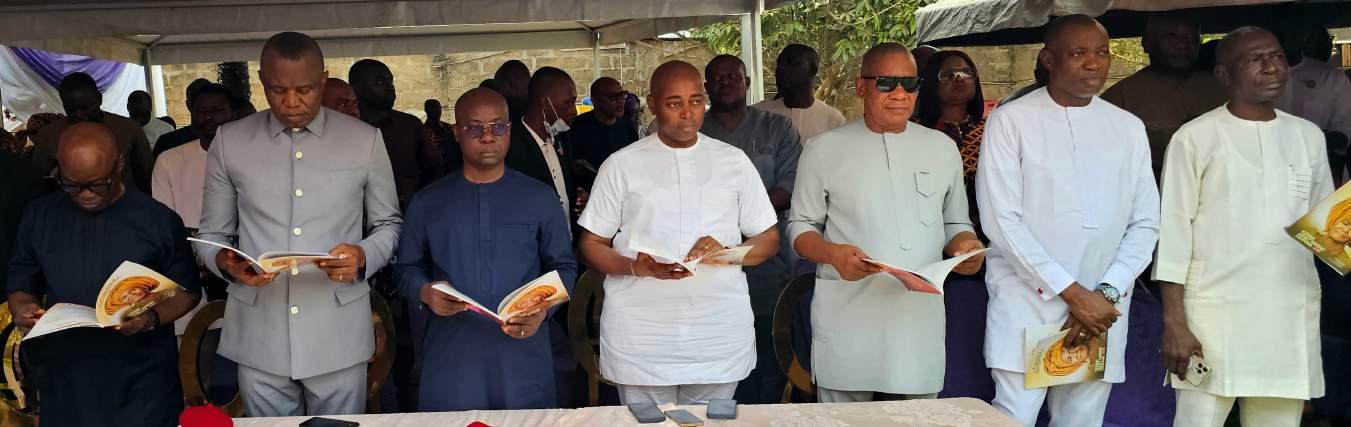
L-R: Chief Judge of Enugu State, Justice Ozoemena Afojulu; President, Enugu State Customary Court of Appeal, Justice George Nnamani; Speaker, Enugu State House of Assembly, Hon. Ucnenna Ugwu; Deputy Governor, Enugu State, Ifeanyi Ossai; Council Chairman, Nkanu West LGA, Hon. John Ogbodo; Commissioner for Information and Communication, Dr. Malachy Agbo, and Accountant-General, Enugu State, Mr. Tony Okenwa, during a funeral service in honour of Ezinne Janet Okenwa, mother of the Accountant-General, at Ndiagu Akpugo, Enugu State…yesterday
ANNUAL PERFORMANCE APPRAISAL...
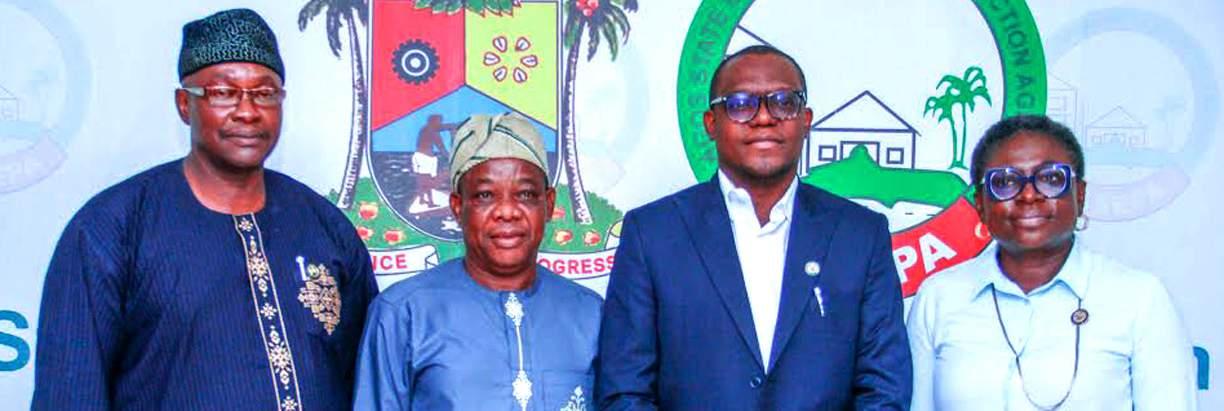
L-R: Director, Alimosho Zonal Office, Lagos State Environmental Protection Agency(LASEPA), Mr. Kayode Bello; Director, Zonal Directorates ,Mr. Abiodun Ogunleye; General Manager, Dr. Tunde Ajayi; and Director, Partnership , Grants Management and Innovations, Olabisi Shonibare, at LASEPA's annual performance appraisal and media parley, in Lagos... recently
NEC Moves to Boost Non-oil Revenue, Deepen Engagement With Stakeholders
The National Economic Council (NEC) rose from its maiden meeting in 2026 and resolved to deepen engagement with stakeholders to boost non-oil revenues in line with the economic blueprint of the administration of President Bola Tinubu.
This was just as Chairman of the Council, Vice President Kashim Shettima called for accelerated transition from oil to non-oil economy through competitive manufacturing, export diversification, and private sector investment.
The Council's decision during its 156th monthly meeting held virtually followed a presentation on the economic priorities for 2026 by the Minister of Finance and Coordinating Minister of the Economy, Mr. Wale Edun.
The presentation highlighted key reforms implemented by the Tinubu administration, including targeted programmes that have removed distortions
in the system, stabilised the economy and put Nigeria on the path of sustained recovery and prosperity.
The presentation also reflected the country’s current global recognition, which is reinforcing investor confidence in the economy projected to grow at 4.68 per cent in 2026.
The key priorities, according to the minister, include maintaining Nigeria's economic competitiveness through sound governance, improved availability and affordability of food, ensuring human capital development with improved social protection and timely payment of debt service, salaries and pensions.
In its resolution, NEC noted and commended the federal government’s plans to unlock rapid and sustained job-rich growth, high-quality jobs, and entrepreneurship opportunities.
The Council resolved to dedicate a special session to address salient issues raised in the country’s food security
Wassiu Ayinde Petitions Ogun Govt over Exclusion from Awujale Selection Process
Sunday Ehigiator
Popular Fuji musician, Alhaji Wassiu Ayinde Adesanya, has petitioned Ogun State Governor, Prince Dapo Abiodun, and the State Executive Council over his alleged wrongful exclusion from the nomination exercise for the vacant stool of the Awujale of Ijebuland.
In the petition written by his solicitors, W.K. Shittu (SAN) & Co, Adesanya alleged that the nomination meeting held on January 12, 2026, at Bisrod Hotel, IjebuOde, was marred by grave procedural irregularities, including the exclusion of
eligible members of the ruling house.
According to the petition, Adesanya remains an acknowledged member of the Fusengbuwa Ruling House and was duly qualified to participate in the process to nominate candidates for the Awujale stool following the demise of Oba Sikiru Kayode Adetona. However, he and several other eligible members were allegedly denied entry into the venue by security operatives, including police officers, based on a “delegate” system which, the petitioner claimed, was unilaterally introduced and unknown to customary law.
efforts, particularly issues bothering on agricultural productivity.
NEC also approved the constitution of a Committee on the implementation of the President’s directive on the actualisation of the legacy projects.
The committee is chaired by the Governor of Cross River State, Senator Bassey Otu, while one governor from each subregion will serve as member of the committee as follows: North-west (Sokoto), North-east (Gombe), North-central (Niger), South-east (Abia), and Southwest (Lagos).
The Permanent Secretary of
the Ministry of Budget and Economic Planning, Deborah Odoh, shall serve as Secretary, while the Ministers of Works and Transportation will also serve on the committee.
In his opening remarks, Vice President Shettima observed that while "global powers assert their interests with renewed confidence, commodity markets will remain volatile," with oil prices, exchange rates, and capital flows frustrating the nation's policies.
He noted that the current economic reality has reinforced the urgency of fiscal risk management and the need to reduce the nation's economic
and revenue exposure to oil.
According to him, the non-oil economy has emerged as the backbone of Nigeria's growth story, accounting for about 96 per cent of the country's GDP and is expanding at about 4 per cent.
His words: "Services, agriculture, and other non-oil sectors are increasingly carrying the weight of the economy. More importantly, non-oil revenues now contribute nearly threequarters of total government collections.
"This marks a significant, if gradual, departure from our historic dependence on volatile oil receipts. The task before us is
to deepen this transition through competitive manufacturing, export diversification, and private sector investment.
Shettima acknowledged that while it was the first meeting of the Council for the year 2026, the consequences of the choices made last year demand coherence, courage, and consistency in the New Year.
“This moment in our journey calls for neither triumphalism nor despair. What it calls for is perspective. The Nigerian economy has travelled a difficult road over the past year, but it has not travelled it without progress,” the Vice President pointed out.
Defence, Interior Ministries Deepen Partnership on National Security
Michael Olugbode in Abuja
The federal government has moved to strengthen coordination between the ministries of Defence and Interior as part of efforts to build a more unified and effective national security framework capable of responding to Nigeria’s evolving security threats. This followed a high-level
meeting in Abuja yesterday when the Minister of Defence, Gen. Christopher Musa (rtd) paid a courtesy visit to the Minister of Interior, Hon. Olubunmi Tunji-Ojo, at his office.
Receiving the Defence Minister, Tunji-Ojo reaffirmed the government’s commitment to a stronger, intelligencedriven security structure anchored on collaboration
between internal and external security agencies.
He described national security as resting on three key pillars—intelligence, internal security, and defence—adding that weakness in any of these areas threatens the entire system.
“If one leg of this tripod is weak, the whole structure is endangered,” Tunji-Ojo said.
The Interior Minister
appreciated President Bola Tinubu for his confidence in Gen. Musa and commended the Defence Minister for bringing his experience to bear on national security coordination. He cautioned against rivalry and territorialism among security institutions, stressing that Nigerians care more about performance and safety than ministerial boundaries.
New Research Reveals Aid Dependence Undermining Nigeria’s Power Sector
Sunday Ehigiator
To optimise Nigeria’s electricity potential, the country needs to critically examine the terms and conditions attached to foreign incentives coming to the power sector, according to a new study published in Energy Research and Social Science, a peer-reviewed Elsevier journal, focusing on the interdisciplinary links between energy systems, markets, business, and society,
spanning topics like energy transitions, policy, climate, and social acceptance.
The study titled, ‘Energy Transition in the Global South: Donor Bargains and the Future of the Aid Machine’, which was authored by Monica Maduekwe, Founder of PUTTRU, examined several West African countries to show how financial stress shapes aid negotiations and how those negotiations, in turn, affect
institutional performance in the power sector.
According to the research, countries under heavy financial pressure are more likely to accept aid conditions that reduce their ability to plan effectively, coordinate agencies, and build long-term technical capacity, and over time, this traps power sectors in cycles of reform that look good on paper but deliver little improvement in practice.
“Aid becomes costly because of the bargaining process. The terms under which aid is negotiated shape institutional outcomes long after projects end,” she explains.
Maduekwe’s research reveals that not all aid-recipient countries are treated the same and that negotiation tactics, leverage and processes vary, and one of the most decisive factors shaping these differences is financial stress.
Deji Elumoye in Abuja
Nigerian Passport Climbs to 89th Place in 2026 Henley Global Ranking
The Nigerian passport has been ranked 89th out of 199 globally in the 2026 Henley
Passport Index, according to the latest report released in January.
The annual index, based on data from the International
Air Transport Authority (IATA) and expert analyses, measures passport strength by the number of destinations holders can access without
a visa or with a visa on arrival, a visitor’s permit, or electronic travel authority (ETA).
Nigeria shared the 89th
Sule Lamido’s Son Loses Supreme Court Appeal Challenging Forfeiture
Alex Enumah in Abuja
The Supreme Court yesterday, dismissed the appeal by Aminu Sule Lamido, son of a former Jigawa State Governor, Sule Lamido, yesterday lost his appeal at the Supreme Court, seeking to set aside the concurrent judgements which ordered his forfeiture of the sum of $40,000 to the federal government.
A five-member panel of the apex court led by Justice Inyang Okoro, dismissed the appeal for lacking merit.
The appeal was in respect of a judgement convicting Aminu for failing to declare the said funds at the Kano Airport while travelling to Egypt in 2024.
The Economic and Financial
of Undeclared $40, 000 Cash
Crimes Commission (EFCC) had arraigned Aminu on a one-count charge bordering on failure and false declaration of foreign currency charge brought against him by the EFCC.
He was arrested on December 11, 2012, by the EFCC at Mallam Aminu Kano International Airport, on his way to Egypt over alleged failure to declare the sum of $40,000 cash in the Customs Currency Declaration Form after initially declaring the statutory $10,000 cash to the Nigeria Custom Service (NCS).
He was subsequently arraigned before the Federal High Court in Kano while the court convicted him on July 12, 2015 and ordered him to forfeit 25 per cent of the undeclared
foreign currency to the federal government.
Dissatisfied, Aminu approached the Court of Appeal, in Kaduna, praying for an order setting aside the judgement of the lower court.
But the appellate court in its judgement delivered on Monday, December 7, 2015 and read by a Justice Habeeb Abiru, dismissed the appeal by Aminu and upheld the decision of the lower court while resolving all the issues raised against Aminu (the appellant).
Further dissatisfied, Aminu approached the Supreme Court, for an order setting aside his conviction and nullifying the judgements of the Federal High Court and that of the Court of Appeal.
However, the apex court in a unanimous judgement delivered by Justice Adamu Jauro as read by Justice Abubakar Umar held that "the appeal was doomed to fail" and subsequently dismissed it.
The apex court subsequently affirmed the concurrent judgements of the two lower courts.
It is instructive to note that the lead prosecuting EFCC lawyer, DCE Sa’ad Hanafi, now Acting Zonal Director of Benin Directorate of the Commission, handled the case all through from the Federal High Court, Court of Appeal and the Supreme Court while Chief O E B Offiong (SAN) represented Aminu during the proceedings.
Lagos DPP Clears Akingboye Family of Wrongdoing in Ex-SDP Governorship Candidate’s Death
Wale Igbintade
Mrs. Christiana Akingboye, widow of the late Chief Bamidele Akingboye, former governorship candidate of the Social Democratic Party (SDP) in Ondo State, has confirmed that the Lagos State Government has formally cleared her and her family of any wrongdoing in connection with her husband’s death, following months of speculation and public scrutiny.
Speaking at a press
conference in Lagos in Lagos, Akingboye disclosed that the Lagos State Directorate of Public Prosecutions issued its final legal advice on January 5, 2026, concluding that there was no case to answer.
“After a thorough and independent review of all materials placed before it, the state concluded that no prima facie case exists, that no foul play was established, and that no prosecution should proceed against me, my children, or any member of our household,” she said.
She described the DPP’s advice as “the final prosecutorial position of Lagos State on this matter.”
Introducing herself as “a wife, a mother, who has experienced profound loss,” Akingboye said her husband died on September 3, 2025, noting that the period following his death was deeply traumatic for the family.
“In the period after his passing, my children and I found ourselves under intense public attention at a time when we should have been allowed
to grieve privately,” she said.
“The weeks that followed were emotionally overwhelming, marked by speculation and commentary that compounded our pain.”
Despite the trauma, she said the family cooperated fully with investigators.
“Throughout this period, my family and I cooperated with all lawful processes and made ourselves available whenever required, even while navigating the shock and grief of our loss,” she stated.
position with Myanmar, both with a visa-free score of 44 destinations. This followed a fluctuating year for the Nigerian passport, which reached its highest ranking in five years at 88th place last July, before slipping to 94th by the end of the year.
Within Africa, Nigeria remains the seventh least powerful passport, ranking above only Democratic Republic of Congo, Ethiopia, South Sudan, Sudan, Libya, and Eritrea.
Seychelles retained its position as Africa’s most
favoured passport, followed by Mauritius and South Africa.
Globally, Singapore continues to hold the title of the most powerful passport, providing access to 192 countries, while Afghanistan remains at the bottom with entry to just 24 nations.
The Henley Passport Index, compiled by Henley & Partners, remains a key benchmark for assessing the global mobility of citizens and reflects ongoing shifts in international travel access.
Tinubu Mourns Renowned Cleric, Imam Abubakar
Deji Elumoye in Conakry, Guinea
President Bola Tinubu has expressed sorrow at the passing of the Chief Imam of Nghar village in the Barkin Ladi Local Government Area of Plateau State, Abdullahi Abubakar, aged 92.
The late Imam Abubakar shot into national and international prominence for hiding over 200 Christians in 2018, during the communal strife which ravaged Plateau State.
The President, in a statement issued yesterday by his Adviser on Information and Strategy, Bayo Onanuga, described the late Imam as an extraordinary religious leader, whose lifetime represented a striking testament to faith, courage and a staunch belief in the sacredness of human life.
"At such a time when tribal and religious tendencies seemed to overwhelm reason, Imam Abubakar stood firmly on the side of peace, benevolence and conscience.
Firm Organises Event in Lagos
I-Train Africa, an Africa-based organisation that focuses on employability, workplace readiness, and career advancement, will host a major impact gathering event in Lagos today.
The event which promises to bring experts from different walks of life across the continent, is part of its Workplace Fundamental Skills (WFS) framework and talent initiatives, which help to equip youths and professionals with
the clarity, skills, and confidence required to thrive in the modern workplace.
The event titled: ‘I-Train Africa Impact Gathering 2026’ will bring together alumni, employers, government representatives, ecosystem partners, funders, and young professionals to celebrate impact, strengthen community, and advance conversations around employability, workplace readiness, and talent visibility across Africa.
Melissa Enoch
UGHELLI FLYOVER PROJECT FLAG OFF...
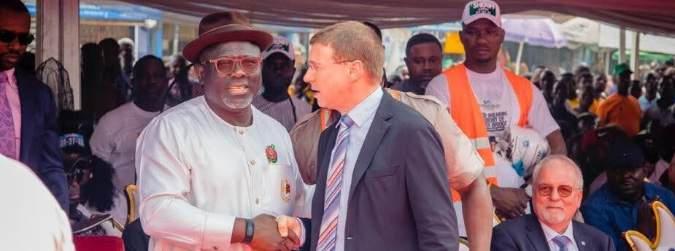
Delta State Governor, Sheriff Oborevwori in a handshake with Managing Director, Julius Berger Nigeria Plc, Engr. Dr. Peer Lubasch, during the Otovwodo flyover flag off event in Ughelli North area of Delta State…recently
COURTESY VISIT....
Group Demands Transparent Management of Recovered Stolen Assets
In pursuit of social justice in Nigeria, the Centre for SocioLegal Studies (CSLS) has called for the proper, transparent, and accountable management of recovered stolen resources.
The centre made the call during a Right Walk in commemoration of the 2026 Martin Luther King Jr. Day, in Abuja.
Speaking at the occasion, President of the CSLS, Prof. Yemi Akinseye-George, SAN, observed that Nigerian can leverage on the legacy and enduring moral force of Martin Luther King Jr., in confronting the grave challenges of corruption, insecurity, weak institutions, delayed justice, and deepening inequality.
According to the Law Professor, rather than resorting to violence, despair, or cynicism, Nigerians should pursue the strengthening of the rule of law, reform broken systems, and hold power accountable through peaceful means.
While stating that asset recovery must not end at seizure, the senior lawyer urged that, "recovered assets must be professionally managed
and transparently deployed for public benefit, because the true owners of those assets are the Nigerian people.
"Allowing confiscated assets to decay or disappear is itself a betrayal of justice.
"This is not optional. It is the clear mandate of the Proceeds of Crime Act (POCA)," he said.
Besides, the CSLS called for stiffer sanctions against states of the federation defying the judgement of the Supreme Court which ruled in favour of local government autonomy.
To this end, he said the CSLS is demanding for the "full and faithful implementation of the Supreme Court’s decision on local government autonomy, so that the presence of government can be felt in every nook and cranny of our country."
Akinseye-George, who noted that the majority of Nigerians live in rural communities, stressed that they are entitled to peace, security, development, and dignity.
"States that continue to defy the authority of the Supreme Court must face appropriate sanctions. A constitutional democracy cannot survive selective obedience to the law," he said.
The 2025 joint annual conference of the Association of Nigerian Authors (ANA) and the Literary Society of Nigeria (LSN), held from November 3rd to 6th, 2025, in Awka, the Anambra State capital, convened scholars, writers and literary practitioners from Nigeria and the diaspora to examine the evolving relationship between literature and society amid contemporary global challenges.
Hosted at the Faculty of
Arts Auditorium, Nnamdi Azikiwe University, Awka, the conference received commendation from the Anambra State Government, with Governor Professor Chukwuma Charles Soludo thanking the organisers for sustaining a literary platform that promotes intellectual engagement, cultural dialogue and national development. He noted that the calibre of discussions and diversity of speakers reaffirmed Anambra’s position as a hub for scholarship and creative thought.
The centre in addition called for the speedy and credible trial of high-profile corruption cases, because corruption, according to them, robs citizens of healthcare, education, infrastructure, and opportunity.
Besides, Akinseye-George pointed out that justice delayed in corruption cases is not a mere procedural failure but an assault on public confidence,
adding that, "When cases drag on endlessly, stolen wealth is deployed to corrupt elections, capture institutions, and purchase political power.
"The dangerous message is sent that corruption pays."
Other demands made on relevant authorities included; the sustenance of the ongoing reform of the judicial appointments process; sustained international
collaboration in the fight against terrorism and violent extremism; and urgent action to address the growing crisis of street children, now visibly spreading into the Federal Capital Territory (FCT).
"We urge the Minister of the FCT to extend his commendable dynamism in infrastructure development to social reform and human development, because true security begins
with human dignity," he said.
"At the Centre for SocioLegal Studies, we reaffirm our unwavering commitment to justice-sector reform; capacity building and strengthening justice administration; advocacy for non-violent social transformation; and promotion of transparency and accountability in governance.
The Association of Local Governments of Nigeria (ALGON), Abia State chapter, has advised past governors of the state to allow Abians to decide the fate of Governor Alex Otti in 2027, rather than ganging up or making divisive statements.
Abia State ALGON gave the advice during a press briefing in Umuahia yesterday. It maintained that "Abia State is on a path of renewal and progress, and the future of the state remains firmly in the hands of its people, whose collective judgement will always be respected.
"In a democratic system, leadership is determined by performance and the freely expressed will of the electorate through credible elections, and not by declarations, pronouncements, or political gang ups," the group added.
Abia ALGON was reacting to the recent meeting in
Otovwodo Flyover: Contract Confirms Julius Berger’s Engineering Leadership, Says MD
The Managing Director of Julius Berger Nigeria Plc, Engr. Dr. Peer Lubasch, has described the Otovwodo Flyover project in Ughelli, Delta State, as a clear validation of the company’s technical expertise, delivery capacity and long-standing partnership with the state government.
Speaking at the official flag-off
ceremony of the project by Delta State Governor, Sheriff Oborevwori, Lubasch expressed profound appreciation for the confidence reposed in Julius Berger, stressing that the contract represents more than a construction mandate.
“We sincerely thank the Delta State Government for the confidence shown in Julius Berger
by awarding us this significant contract. We do not take this trust for granted. To us, this award is not just a contract; it is a validation of our technical competence and a testament to the strong partnership between our company and this great state,” a statement from the construction company quoted him to have said.
Killings: Extend Military Intervention to Benue Communities, Idoma Lawyers Tell US, Israel
Alex Enumah in Abuja
The Association of Idoma Lawyers (Owa Ka'Okepo Ki'Idoma), has called on the United States of America and the State of Israel to extend their military intervention in Nigeria to communities in Benue South Senatorial District, owing to the incessant killings by terrorists.
The lawyers made the call yesterday in Abuja in a statement jointly signed by their Leader, Chief Godwin Obla, SAN, and President, Dr. Joshua Musa, SAN.
They condemned in strongest terms, the barbaric attacks on the peaceful people of Akpa-Otobi Community in Otukpo Local Government Area of Benue State by persons suspected to be Fulani herders.
Umuahia of three former governors of the state: Senator Orji Uzor Kalu, Senator Theodore Ahamefule Orji and Dr. Okezie Ikpeazu and their associates, wherein they stated that their goal was to wrestle power from Otti in 2027.
Chairman of Abia ALGON, Hon. Chinedu Ekeke, told journalists that the group "has taken note of recent public statements and political meetings convened by architects of a failed past who are unsettled by the present progress in Abia State, including some former governors and their associates, wherein declarations were made concerning the tenure and political future of the Governor of Abia State, Dr. Alex Chioma Otti."
ALGON said while it recognises and respects the constitutional rights of all citizens to freedom of expression and political association, it "considers it inappropriate for any individual or group to attempt to pre-empt the democratic process or undermine the visible progress being recorded in the state through speculative political rhetoric."
Alex Enumah in Abuja
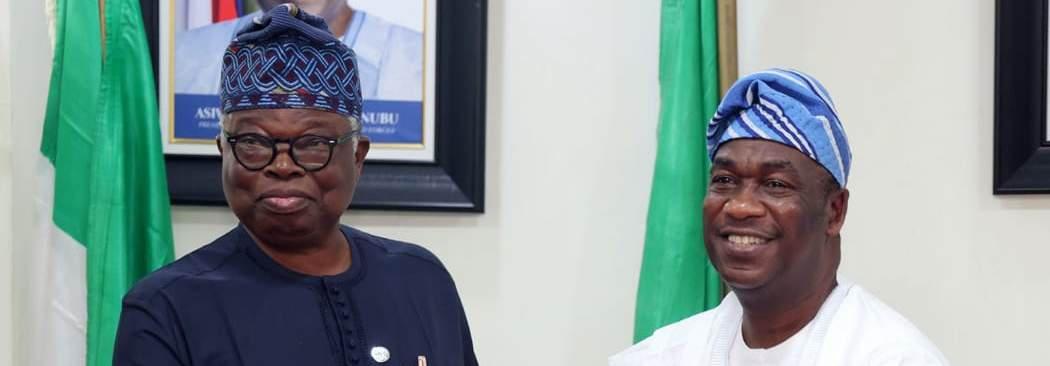
Lagos State Deputy Governor, Dr. Kadri Obafemi Hamzat (right), presenting the State Souvenir to the President, Lagos Chamber of Commerce and Industry (LCCI), Engr. Leye Kupoluyi, during a courtesy visit by the Leadership of the LCCI, to the Deputy Governor’s Office, Alausa, Ikeja...yesterday
Obi Donates N15m to ADON College of Health, Vocational Academy
David-Chyddy Eleke in Awka
Chieftain of the African Democratic Congress (ADC), Mr. Peter Obi has donated N15million to two institutions owned by the Anglican Diocese of Nnewi (ADON), to support them improve their facilities.
Obi said each time he visits any faith-based facility and sees what they are doing to improve lives, he remembers that the church is only coming in because of the failure of government in providing for the people.
Obi who donated N10 million to ADON College of Health Technology, Nnewi, N5 million to ADON Vocational and Technical Academy, Ozubulu,
Ekwusigo Local Government Area said the money was to help them improve their facilities in what ever way they can.
He stated also that his interest in continuously donating was to help institutions who are filling the void because of failure of government.
He said: "I was here last year, but I remember that the cheque you got was to fulfill my pledge for the previous year, so I'm here to present you a check of N10million for this year.
"Students are part of our youths, and they form the foundation of which we hope for a better country tomorrow, so we must support the institutions that are moulding them into who
we want them to become.
"Ours is to continue to show a token for the great work the diocese is doing. We need to pray for them so they will keep doing well. They are doing what we politicians and our government should be doing and that is why we need to pray for them.
"Your training is important and the people training you today is this institution, and we know that they training they are giving you is very impactful. That is why we are here to support them."
At ADON Vocational and Technical Academy, Ozubulu, Obi also inspected their facility before presenting a check of N5 million to the rector of the institution, Rev. Engr. Prince Igwe.
Climate Experts Support Vulnerable Communities to Cope With Weather Extremes in Lagos
The collaborative research project titled: 'A Pan-African and Transdisciplinary Lens on the Margins – Tackling the Risks of Extreme Events' (PALM-TREEs) in Nigeria is jointly conducted by Researchers from the Lead City University, Ibadan, the University of Lagos, and the Nigerian Institute of Social and Economic Research (NISER).
A statement said that the project is designed to understand the drivers, the multidimensional impacts and to co-create knowledge that could be translated into adaptation actions in vulnerable communities in Lagos State using both physical and social science methodologies. Based on evidence from their study, the PALM-TREEs project is supporting the margins- women, persons with disabilities, life on the street, elderly, children, others in Lagos State to cope better with extreme climate events - flooding and heatwaves.
“The PALM-TREEs research project, funded under the Climate
Adaptation and Resilience (CLARE) Programme of the UK’s Foreign, Commonwealth and Development Office (FCDO) and Canadian International Development Research Centre (IDRC), is implementing transformational interventions to improve the resilience of the urban vegetable farmers who are vulnerable to water stress and fishing communities who face the challenge of extreme flooding and heat stress. Benefitting communities for the intervention projects are selected across eight (08) Local Government Areas (LGAs) in Lagos State - Ifako-Ijaye, Kosofe, Somolu, Ikorodu, Alimosho, Surulere, Lagos Mainland and Epe.
“The intervention projects are outcomes of a study which started in February, 2024 with the Inception Meeting, the Policy Consultation Hour in January 2025 and full quantitative and qualitative social survey in over 100 communities spreading over the 20 LGAs in Lagos State.
“Based on preliminary results from the study and as part of the project’s intervention efforts to build the capacities of communities to cope with the extreme climate events such as flooding and heatwaves in particular, PALM-TREEs is intervening in 10 communities across the eight LGAs in Lagos State. The project provided a solar-powered borehole in Ogudu Police Barracks (Women), Kosofe LGA to support dry season irrigation of small-plot vegetables by women groups, and also provide the community with water for domestic uses.
“The project also supported women in fishing communities with Smoke less smoking Klin in Ogudu, Inverter deep Freezer in Ogudu and Agboyi-Ketu, irrigation equipment like pumping machine, watering cans, hose (Suction and Flat), water Tanks, assorted farming tools and vegetable seedlings, for male and female farmer groups in Iju, Unilag, and Surulere; nets for male fishers in Ogudu.
Nigerians, Ugandans, Kenyans Allege Trafficking, Forced Recruitment into Russia–Ukraine War
Serious allegations of deception, human trafficking and forced military recruitment have emerged as several African nationals claimed they were tricked into fighting for Russia in its ongoing war with Ukraine.
Victims from Nigeria, Uganda, Kenya and other countries say they were promised well-paid civilian
jobs in Russia but were instead detained, trained as soldiers and deployed to the frontline against their will.
One of the alleged victims, 36-year-old Nigerian mechanic Bankole Manchi, recounted his ordeal in a widely circulated video. Manchi said he left Lagos after being offered what appeared to be a legitimate overseas job that promised him about N500,000 per month.
He said a middleman handled his travel arrangements and provided documents that required minimal personal information.
Believing the process to be genuine, he travelled through
Addis Ababa to Moscow, with his family fully aware of his trip.
However, upon arrival in Russia, Manchi said he was handed over to unidentified men who assured him everything was fine. Instead of taking him to a workplace, they transported him to a military-style camp where he met other recruits from Nigeria, Ghana, France, Brazil and China.
According to him, many recruits struggled to communicate due to language barriers and depended on translation apps. He claimed they were told there was “no way out” once inside the facility.
BUREAU OF PUBLIC PROCUREMENT (BPP)
Mandator y Continuous Public Procurement Capacit y Development Training Programme (MCPPCDTP) for all three Tiers of the Federal Government of Nigeria for Year 2025.
RELEASE OF SHORTLISTED CANDIDATESFOR BATCH B (UPDATED)
As designed by the Federal Government of Nigeria to build Institutional
Capacity in the Procurement Cadre in the Federal Civil Service as enshrined in Part 11, Section 5(k & s) of the Public Procurement Act (PPA), 2007. The Bureau wishes to inform all prospective Officers who forwarded their credentials for the Mandatory Continuous Public Procurement Capacity Development Training Programme (MCPPCDTP) for Parastatals, Institutions, Commissions and Agencies of the Federal Government of Nigeria and States Procurement Entities for the Batch B for Year 2025, to visit the BPP's website on www.bpp.gov.ng to check for names of Shortlisted Candidates.
Venue: PTDF Centre for Skills Development and Training (CSDT), Omagwa-Igwuruta Road, Port Harcourt, Rivers State Date: Sunday 25 January 2026–Saturday 14 February 2026
All shortlisted candidates are to note the following:
i. Complete the Registration Form, visit ,https://bit.ly/mcppcdtp2025b print out the completed form, and submit it at the registration venue.
ii. The Registration must be completed on or before Wednesday, 21 January 2026;
iii. Upon successful online registration, candidates are advised to check their email for pre-training assignment The assignment must be completed and submitted to mcppcdtp@bpp gov ngon or before Friday, 23 January 2026, while the hard copy MUST be submitted at the registration desk on Sunday 25 January 2026;
iv The registration commences on Sunday, 25 January 2026, while the t r a i n i n g p r o g r a m m e c o m
2026–Saturday, 14 February 2026;
v All Lecture Notes shall be transmitted via electronic media to all candidates' (No hard copies);
vi. All participants are to come to the training with their Personal Computers (PC) with good Internet Accessibility and writing materials;
vii. Candidates are required to present a current Medical Fitness Certificate from a recognized Government Health Institution;
viii. All shortlisted candidates are advised to register with the Nigerian P r o c u r e m e n t C e
https://npcp.ngand completing the required training module The successful completion of this NCPC module shall be a pre-requisite for the issuance of the Conversion/Induction Certificate.
ix. All participants are expected to reside at PTDF Centre for Skills Development and Training (CSDT), Omagwa-Igwuruta Road, Port Harcourt, Rivers State or any other close facilities;
x. Agencies whose Officers appear on this list shall be responsible for their upkeep for the duration of the training and the Bureau shall be absorbed from any liability;
xi. All participants are to report with evidence of release from office duly signed by their Head of Department or Accounting Officer, which must include provision of subsistence allowance.
xii. Participants attending this training are to be exempted from other official assignments for the duration of the training;
xiii. All shortlisted participants shall at the point of registration, submit Sworn Affidavit affirming that all information and documents provided by the candidate for the purpose of this training programme are true and genuine;
xiv Payment of a non-refundable Course Fees of N100,000.00. Detailed payment information will be sent to your email after completing early registration and evidence of payment shall be submitted during physical registration at the training venue;
xv Request for further information/clarification shall be made via emails, onm c p p c d t p @ b p p g o v n g / i n f o @ b p p g o v n g o r c
Only candidates whose names appear on the list on the BPP's website on www.bpp.gov.ng will be allowed to attend the training.
Signed:
Dr Adebowale A. Adedokun, FCIPS, FCILT, ACFE Director-General/CEO Bureau of Public Procurement
Michael Olugbode in Abuja
We must take care of those they left behind...
What a waste!
The Aged and Crime in Society
In Praise of President Buhari
WIhen President Muhammadu Buhari took over the reins of power on May 29, 2015, Nigeria was sadly a broken state in many respects. As a result of many other factors including bad governance and untold level of corruption, government could not live up to its financial obligations to citizens and service providers at both the federal and state levels.
Indeed one of the first official assignments that President Buhari carried out was the approval of billions of Naira in bailout funds to enable state governors pay something as basic as workers’ salaries. Granting those bailout funds was a huge boost to national security because the pressure of arrears of unpaid monthly salaries building dangerously all over the country was a ticking bomb.
n many African societies, elders are traditionally regarded as custodians of culture, ethics, and good conduct. A woman aged 60 and above is often seen as a mother, grandmother, adviser, and moral compass to younger ones. When someone at that age is linked to criminal activity, it sends a deeply unsettling message: that age and experience no longer guarantee moral uprightness. This represents a troubling breakdown of long-held societal expectations and responsibilities.
value of hard work, believing that success can be achieved through any means.
by the EFCC, President Buhari by his action has successfully brought back to the public consciousness the need to treat public funds with the highest level of transparency and accountability.
Reports of arrests carried out by the National Drug Law Enforcement Agency in recent times further underscore this concern, with accounts of men and women in their 70s and even 80s apprehended for drug-related offences across different states. These cases confirm that old age neither excludes individuals from involvement in crime nor shields them from the consequences of the law.
After keeping treasury looters on their toes and at bay through the EFCC, particularly, President Buhari moved to curb unnecessary spending habits of the nation on what economists call articles of ostentation. Part of the disclosures of the President’s stock taking was how the country frittered away billions in foreign currency by importing goods, which can be produced at home. One of such items was rice, a major staple among Nigerians. By banning rice importation into the country, the President on one hand had saved the nation billions in foreign currency annually.
BEDC And Ogwashi-Ukwu
WStop Ritual Attacks and Killings
TAsk the naysayers and they would readily remind you of how long it took President Buhari to appoint his ministers and how that contributed to collapse of the economy as if, without ministers, governance was frozen. But buying that narrative would amount to what a famous Nigerian writer, Chimamanda Adichie, termed “the danger of a single story”. Yet the whole story was that many of our citizens did not know how decrepit a state President Buhari inherited in 2015.
It is particularly disheartening to witness the involvement of elderly persons—both men and women—in the distribution of illicit substances. The situation becomes even more alarming when those who should be warning the young against crime are instead being arrested for the very acts they ought to condemn. Such developments suggest that greed and moral compromise are increasingly overtaking conscience.
It was therefore necessary for him to take stock against the background of the fact that the departing government did not, reportedly, cooperate full well with the incoming government in terms of leaving workable handover notes. Although President Goodluck Jonathan was gracious in defeat, many of his appointees were still sulking over what they saw as their personal losses and therefore pulled all the stops to make things difficult for the Buhari government.
While economic hardship and social pressure are often cited as reasons for criminal behaviour, such explanations cannot justify actions that endanger lives. Many Nigerians face similar challenges yet choose lawful paths of survival. When elders abandon morality under the excuse of hardship, they rob younger generations of the moral courage to endure difficulties with integrity.
And, on the other hand, the President has boosted domestic production of rice and in the process had nudged the country into self sufficiency in food production. He also created millions of jobs for young people in the rice value chain.
e the residents of Ogwashi-Ukwu town in Aniocha South Local Govt Area of Delta State are fed up with the Benin Electricity Distribution Company and are appealing to the Minister Of Power, Nigerian Electricity Regulatory Commission, Federal Competition and Consumer Protection Commission as we can no longer continue paying for epileptic power supply and electricity not consumed with the huge estimated bills they keep giving us.
What is most admirable about President Buhari and his government is its frugal management of scarce national resources to attain optimum goals. Recall that since President Buhari stepped in the saddle, oil revenue dropped abysmally as if to sabotage him knowing all the big promises he made to citizens during his campaigns. But with the little resources that trickle in, the President is achieving what governments that received oil windfalls could not dream of.
Throughout December till date, there is no power supply in Ogwashi-Ukwu town. Businesses are folding up daily because they can't sustain their businesses on fuel. We are tired of this corporate extortion called estimated bills.
Tosin Damola, Lokoja, Kogi State
Even with the obvious and unpatriotic obscurantist behaviour of the PDP appointees and their supporters still in government hell-bent on making things difficult for Buhari, the President moved on with his methodical repair of a broken country. The first thing he did was to identify all possible sources of income to the nation and directed that all inflows be paid into one single account in line with the policy of Single Treasury Account (TSA).
The TSA policy, interestingly, was mooted by the PDP government but its penchant for imprudence and lack of accountability denied it the courage of implementing the policy. What the President literally did was to gather all the nation’s money into one box and locked it up with a big padlock and watched for any thief to come close.
The recent arrest of a 65-year-old woman popularly known as “Mama Kerosine” by NDLEA in Ibadan, Oyo State, for alleged involvement in large-scale drug trafficking is a disturbing example. Beyond the crime itself, the incident raises serious questions about the erosion of values that once guided individuals, families, and communities. At an age when wisdom, restraint, and moral leadership are expected, she is instead accused of contributing to a menace that destroys lives and futures.
Who can blame the President for almost developing paranoia over the safeguard of the national treasury with revelations and reports of mind-boggling looting that took place in the 16 years of the PDP? With such disclosures of how billions meant for fighting insurgency in the Northeast ended up in the pockets of a few individuals while our gallant soldiers fought with bare hands and on empty stomach, President Buhari was duty bound to bring sanity and accountability back in national spending.
This reality reinforces a painful truth: criminality cuts across all age brackets. When elders are implicated in crime, it weakens the moral foundation upon which society is built. Young people who observe such behaviour may begin to lose faith in honesty, dignity, and the
Thus, under President Buhari, the Economic and Financial Crimes Commission (EFCC), which had remained comatose for years, was woken up to resume its duties. Apart from the trillions of Naira of looted funds and property recovered from corrupt politicians
Today, the trains are up and running daily from Abuja to Kaduna. And from Lagos to Ibadan a brand new rail track was started and completed; citizens are already commuting daily to and fro these two major cities in the country seamlessly as they reap from the dividends of democracy. And with the way this government is going, before 2023 when the President would leave, the entire country would be linked by rail with all of its economic advantages.
Ainofenokhai Ojeifo, Abuja
THE SATURDAY NEWSPAPER
EDITOR OBINNA CHIMA
DEPUTY EDITOR AHAMEFULA OGBU
MANAGING DIRECTOR ENIOLA BELLO
THE SATURDAY NEWSPAPER
DEPUTY MANAGING DIRECTOR ISRAEL IWEGBU
EDITOR YEMI ADEBOWALE
CHAIRMAN EDITORIAL BOARD OLUSEGUN ADENIYI
DEPUTY EDITOR AHAMEFULA OGBU
EDITOR NATION’S CAPITAL IYOBOSA UWUGIAREN
MANAGING DIRECTOR ENIOLA BELLO
THE OMBUDSMAN KAYODE KOMOLAFE
DEPUTY MANAGING DIRECTOR ISRAEL IWEGBU
CHAIRMAN EDITORIAL BOARD OLUSEGUN ADENIYI
Feyisetan Akeeb Kareem, Ogwashi-Ukwu
A Symbol is Just a Symbol
You can give away your dignity or a symbol of your achievements but the recipient doesn't then get these qualities inferred upon them.
EDITOR NATION’S CAPITAL IYOBOSA UWUGIAREN
MANAGING EDITOR BOLAJI ADEBIYI THE OMBUDSMAN KAYODE KOMOLAFE
THISDAY NEWSPAPERS LIMITED
EDITOR-IN-CHIEF/CHAIRMAN NDUKA OBAIGBENA
GROUP EXECUTIVE DIRECTORS ENIOLA BELLO, KAYODE KOMOLAFE, ISRAEL IWEGBU
THISDAY NEWSPAPERS LIMITED
DIVISIONAL DIRECTORS SHAKA MOMODU, PETER IWEGBU, ANTHONY OGEDENGBE
EDITOR-IN-CHIEF/CHAIRMAN NDUKA OBAIGBENA
DEPUTY DIVISIONAL DIRECTOR OJOGUN VICTOR DANBOYI
GROUP EXECUTIVE DIRECTORS ENIOLA BELLO, KAYODE KOMOLAFE, ISRAEL IWEGBU, IJEOMA NWOGWUGWU, EMMANUEL EFENI
SNR. ASSOCIATE DIRECTOR ERIC OJEH
ASSOCIATE DIRECTOR PATRICK EIMIUHI
DIVISIONAL DIRECTORS SHAKA MOMODU, PETER IWEGBU, ANTHONY OGEDENGBE
DIRECTOR, PRINTING PRODUCTION CHUKS ONWUDINJO TO SEND EMAIL: first name.surname@thisdaylive.com
he Advocacy for Alleged Witches (AfAW) urges the Nigerian public to stop ritual attacks and killings because the notion of ritual money and wealth is completely baseless. AfAW is making this call following the reported arrest of suspected ritualists in Oyo State in southern Nigeria. The local media reported that members of the Western Nigeria Security Network, Amotekun, arrested suspected ritualists with the body parts of a 73-year-old man. The suspects, who were apprehended in the Boluwaji area in Ibadan, said that a Muslim cleric asked them to procure some human body parts for rituals. Ritual attacks are widespread in Nigeria. Irrational conceptions of how to make money or become wealthy and successful undergird these atrocities. Many Nigerians strongly believe in blood money, known in some local languages as Ogun Owo (Yoruba) or Ogwu ego (Igbo). They think that they could become rich, or successful through ritual sacrifice. Unfortunately, this is not the case. Ritual wealth has no basis in reason, science, or reality. Home movies known as Africa magic or Nollywood films have not helped matters. These movies continue to reinforce these mistaken notions and other superstitions. Families, churches, mosques, and other public institutions do not encourage the interrogation of these traditional occult beliefs. There are no robust efforts to criticize or dispel these irrational and paranormal claims in schools, colleges, and universities. So millions of Nigerians grow up blindly believing that they could make money through ritual sacrifice of human body parts. The belief has led many Nigerians to commit crimes and perpetrate atrocities. Many Nigerians have been jailed or are undergoing court trials due to ritualrelated attacks and murder.
The Venezuelan opposition leader María Corina Machado has passed on her Nobel Peace medal to Donald Trump, a person not deserving it based on this recent actions. It is an unworthy political stunt by a desperate leader.
If Usain Bolt gave his 100m Olympic gold medal to Trump he won't he able to run it in 9.58s given he probably can't run at all. If he tried the subsequent heart attack might actually lead to more peace and goodwill around the world and certainly at home.
Dennis Fitzgerald, Melbourne, Australia
Not too long ago, the police arrested some young Nigerians for stealing female pants, which they intended to use for ritual sacrifice. AfAW is asking all Nigerians to desist from ritual-related abuses because ritual money beliefs are baseless superstitions. Nigerian media, schools, and colleges should help educate and reorient the public. They should assist in reasoning Nigerians out of this killer-superstitious absurdity and nonsense. Leo Igwe directs the Advocacy for Alleged Witches (AfAW)
Dealing With Nigeria’s Tax Fears
Omolabake Fasogbon
although the federal government has repeatedly reiterated the relief embedded in the nigerian Tax reform acts of 2025 for Small and Medium Enterprises, many operators remain unconvinced, opting instead for defensive measures to shield themselves from perceived effects.
Findings across a cross-section of small business owners show that, despite official assurances, some operators now insist on cash payments, wary that bank inflows could expose them to taxes.
addressing SME exemptions, Chairman of the Presidential Committee on Fiscal Policy and Tax reforms, Mr Taiwo Oyedele, said the framework was designed to ease the burden on small businesses while introducing structure as they grow.
according to him, small businesses and informal operators would face significantly lower tax pressure with the provision.
He said, “The reforms raise the smallcompany exemption threshold to n100 million in annual turnover, exempt qualifying firms from VaT collection, capital gains tax and withholding tax, and introduce safeguards against harassment through tax harmonization.
“under the new framework, companies with annual turnover of n100 million or less and fixed assets not exceeding n250 million will be classified as small companies, effectively removing over 90 per cent of nigeria’s micro and small businesses from the major tax net, including Companies Income Tax, VaT and development levies, and significantly easing compliance obligations”.
The new law, as recently gazetted, positions banks and fintechs as not only as tax-recovery channels but as data custodians and payment facilitators, a move which unsettled the public, especially SMEs who are now
Adedeji
more cautious about inflows and outflows through their accounts.
In Osogbo, Osun State, THISDay reporter sampled the opinion of some small business owners, including a frozen food retailer (name undisclosed) whom she approached for patronage, their mindsets were similar.
The frozen food retailer had asked upfront whether payment would be in cash or by transfer before releasing the product.
Told transfer, she declined, saying, ‘We’ve been asked not to accept transfer again.’
Her stance was obviously connected to rumors and beliefs that taxes would be automatically deducted from inflows into bank accounts, despite the government’s having debunked this narrative. asked what she would do with the day’s cash, she replied, ‘I won’t take it to the bank.
OTH er Bu SIN e SS STO r I e S
I will keep it and use it to pay wholesalers to restock. That is my way out to escape their tax wahala.’
In the end, she still accepted cash despite efforts to disabuse her of the notion.
She is not alone. Several operators now shun electronic payments in a bid to evade tax, a trend analysts say could stifle SME growth, while reversing gains in cashless policy and financial inclusion.
Speaking on the implications, President of the association of Small Business Owners of nigeria, Dr Femi Egbesola, warned that rejecting electronic payments exposes SMEs to loss of records, weak credibility and limited access to loans.
He said reliance on cash undermines financial planning and shuts businesses out of growth opportunities that require formal
documentation.
“Cash transactions increase the risk of theft and poor accountability, while limiting access to banking services and government support programmes”, he warned.
From the consumer side, resistance is also growing, especially where merchants add charges between n50 to n 100 to accept transfers, a move seen as shifting tax burden to buyers.
One consumer, Mr. yemi Kolawole, said he now prefers cash for petty transactions to avoid repeated charges, reserving transfers for bulk purchases.
a POS operator in Lagos, Mrs. Ify confirmed the surge in cash withdrawal in recent times, a trend which may not be unconnected to merchants and consumers’ preference fo cash transactions, amid tax concern.
Egbesola said much of the panic was driven by poor understanding of the law, stressing that most SMEs remain exempt from key taxes.
He said the onus lies on government and tax administrators to clearly explain that bank transfers are not automatically taxed and that exemptions are real and enforceable to dispel the panic.
noting that operators’ fears are understandable, he said more state efforts should be deployed to simplify communication.
“These include engaging SMEs directly in markets and clusters, publishing clear exemption guidelines, and curb harassment by illegal tax agents. Trust grows when rules are simple and enforcement is fair”, he remarked.
The SME advocate also advised operators to adopt lawful ways of minimising tax exposure through proper registration, basic record keeping and staying within exemption thresholds.
“rather than trying to evade the system, individuals and SMEs should seek straightforward tax advice. Sound tax planning, not tax avoidance, remains the safest and cheapest way to stay compliant and financially secure,” he advised.
Nigeria-China Ties Deepen on Shared Interests, Respect, Says Tegbe
nigeria has reaffirmed its commitment to strengthening relations with China, reflecting positively on the progress made in 2025.
This followed the elevation of bilateral ties to a Comprehensive Strategic Partnership during President Bola ahmed Tinubu’s state visit to Beijing in 2024.
The upgraded partnership has provided a stronger framework for cooperation, reinforcing nigeria’s foreign policy posture of mutual respect, sovereignty, and adherence to international principles.
Director-General and Global Liaison of
the nigeria-China Strategic Partnership, Mr. Joseph Tegbe said the relationship is now more structured and results-oriented, with clear benefits for both nations.
He stressed that the cooperation expanded significantly last year across priority sectors, including infrastructure development, trade and investment, industrial capacity building, technology exchange, and people-to-people relations.
according to Tegbe, these engagements have strengthened institutional linkages and created opportunities for advancing
mutually beneficial outcomes.
He expressed confidence that the partnership will continue to mature, delivering enduring results and deepening nigeria-China ties in the years ahead.
“The relationship is anchored on mutual respect, shared interests, and nigeria’s longstanding foreign policy posture of respecting sovereignty and territorial integrity”, he said.
He stated that nigeria has consistently upheld the One-China principle as the basis of its relations with the country, noting that
this underscores the country’s adherence to established international principles.
Looking ahead, Tegbe stressed that nigeria remains committed to consolidating and deepening the partnership in practical, results-oriented ways.
“Priority will continue to be placed on cooperation that directly supports nigeria’s development objectives such as: economic diversification, infrastructure delivery, human capital development, technology transfer, and long-term sustainability,” he said.
Youth Urged to Adapt as Job Market Evolves
Managing Director of remita Payment Services Limited, Mr. ‘Deremi atanda, has urged young nigerians to embrace adaptability, purpose, and ethical discipline as essential drivers of success.
He emphasised that these qualities are critical in navigating today’s rapidly evolving job market, where resilience and integrity can determine both individual growth and long-term professional relevance.
atanda while speaking at the 24th Matriculation Ceremony of Bowen university in Iwo, Osun State, highlighted importance of preparing for
careers in a business landscape that is increasingly dynamic and skills-driven.
“Jobs that exist today may not exist tomorrow. your mindset must be open to learning new skills and adapting to new realities, but never at the expense of your core values”, he said.
Drawing from his experience in the fintech sector, he described how remita evolved from a modest payroll-processing platform into a national financial infrastructure, now handling over n60 trillion in annual transactions for government and private entities.
He attributed the company’s growth to consistent execution, discipline, and purposedriven ideas.
“Progress is often cumulative. Do not despise your days of small beginnings. When ideas are developed with discipline and purpose, they can scale far beyond their original scope and create lasting impact across communities and nations.”
atanda stressed integrity as a critical business value in a competitive economy, noting that trust remains the ultimate currency in financial systems
“Cheating, dishonesty, and shortcuts may
appear attractive, but they destroy the future. Build a reputation that can withstand scrutiny,” he advised.
The remita chief executive encouraged the students to take personal responsibility for their careers, urging them to be proactive and engaged in their pursuits.
“admission marks a beginning; transformation is a process. Let today be the moment you commit to dreaming boldly, acting deliberately, starting with what you have, and taking responsibility for the outcomes you seek to achieve,” he counselled.
Turkish Airlines Reaffirms Commitment to Global Tourism, Sports
Turkish airlines has renewed its title sponsorship of the Turkish airlines Open under a new three-year agreement as part of efforts to drive tourism growth and strengthen Türkiye’s global brand positioning.
The flag carrier said the decision aligns with its broader business objectives, particularly the use of high-visibility international partnerships to promote destination awareness and support inbound travel.
Commenting on the agreement, Turkish airlines Chief Executive Officer Bilal Ekşi said
the sponsorship reflects a deliberate focus on international branding. “We are pleased to once again become the title sponsor of an international event with the prestige of the Turkish airlines Open.
He described the partnership as consistent with Türkiye’s ambition to position itself as a global hub for tourism and major international events, adding that the airline’s involvement goes beyond visibility.
“We remain firmly committed to supporting international platforms that contribute to our
country’s brand value. We see such partnerships as part of our long-term corporate and destination marketing strategy. according to the airline, the tournament is scheduled to take place in antalya in 2026 as part of the DP World Tour calendar, bringing international attention to one of Türkiye’s key tourism destinations. The event is expected to attract global audiences and visitors, supporting local hospitality and travel-related sectors.
The Turkish Golf Federation described
the renewed sponsorship as beneficial to Türkiye’s international profile.
Its president, yıldırım Demirören added that the agreement strengthens the country’s presence on the global sporting calendar while supporting broader tourism objectives.
“This event further reinforces Türkiye’s position internationally and provides opportunities for development within the sport. Hosting this event further contributes to institutional capacity-building”, he stated.
MARKS THE
N N I V E R SA RY OF AN OUTSTANDING MAN
LATE OTUNBA VICTOR OJE VANNI
Ferdinand Ekechukwu - 08035011394
Email: ferdi_adthisday@yahoo.com
Tolu Obanro: My Aligning Soundtrack to Millieu, Environment Sets my Jobs Apart
Born in Kwara State, Tolu Obanro spent his formative years between Lokoja, Kogi State where he had his secondary education, and Minna, Niger State where he studied Geology at the Federal University of Technology, Minna. Setting out as a gospel music producer, Obanro worked with a couple of artists in the industry. He then evolved into sound design, focusing on advertisements, and soon got into handling sounds for Nollywood films. Obanro opens up on his journey, his works, winning an AMVCA, and more. Ferdinand Ekechukwu brings the excerpts
I started out producing gospel songs. Some of them became quite popular, like you are God, you are not Just Big o… after a while, I began experimenting with sound design for adverts, just short 45-second clips. Later, I got projects from FIrS, cleaning dialogues week after week for about three years. That process of dialogue cleaning, editing, and mixing really shaped my foundation. From there, I met and got film opportunities through (one) Dr. Bayo. He would send me projects like King of Boys, your Excellency, Man of God and later Prophetess. That was how I started. By the time King of Thieves came along, people began associating me with the music and sound. Eventually, I handled projects like House of Secrets completely on my own, from dialogue to foley, SFX, sound design, and final mix. That was when people began to really recognize my sound.
I worked on both Seven Doors and Lisabi around the same time. Seven Doors was different. at first, I was not sure how to approach it because I was already working on something else entirely. I had to take a break from the work I was doing at the time and give serious attention to Seven Doors. Working on Seven Doors was stressful to us because we had a couple of ups and downs and sudden changes that affected the sounds. But that was just it. There were no challenges for me in working on the sounds themselves.
yes, I worked briefly in oil and gas, but my passion was always in sound and music. I studied Geology at the university of Minna. The discipline from Geology may have helped me in some way, but I knew where my heart truly was.
It begins with the script. If I know early enough that I will handle the sound and music, I study the script and suggest things that will make the work easier and stronger. I also like being on set. On Jagun Jagun, for example, I insisted on being present. I picked up sounds directly and created the trailer soundtrack while the film was still being shot. That was the first of its kind and it worked beautifully. Being on set allows me to talk with directors, suggest ways to leave space for sound, or rethink scenes to heighten the experience. Many nigerian directors are open to such ideas, and it makes the work better. My goal is always to give my sound intensity and identity so that when people hear it, they know it is me. I build every one of
my sounds from scratch. On Seven Doors, people thought those big sounds came from abroad, but I played everything live, starting with the piano and layering track after track. Sometimes I sample instruments like violins, but I still play them myself. It takes time, but it keeps the work original.
In the beginning, I had the opportunity to help define the sound for (some) nigerian epics, starting with King of Thieves. That experience showed me how much genre shapes sound design. To do something different, you first have to understand what makes a genre distinct. Sometimes films look modern but sound epic or classical, which feels intrusive because the sound does not belong. It is important to consider both genre and period. Scoring a film set in 1901 with 2025 music, for example, does not work. In Ginger, though set in 2025, the opening voiceover recalls the 1990s, so the music reflected the rhythms of that era. Seven Doors spans two timelines, so the score alternated between blending and distinguishing them. That is why, whenever I approach a film, I first ask myself the questions: What is this film? Where and when is it set? What is it saying? Once I understand that, I can experiment within context. For Ginger, the futuristic setting allowed me to mix amapiano, rap, and traditional epic sounds because the story supported it. above all, the sound must elevate each scene while staying true to the world and genre of the film.
I had been talking about Makemation for almost two years before production started. This may not show directly in the intensity of the sound, but it definitely shaped the sound of the film. In Makemation, you will notice that every sound design choice and every piece of music was carefully thought out, from the Hausa songs to the Igbo songs, everything was intentional. I also insisted that everyone who contributed songs used aI as an assist in their
writing, since it was an aI film. That way, when someone asks how we worked on an aI-themed project, we can confidently say that aI also assisted in the creation of the music. Because of my work on this film, I have received international offers and jobs from outside nigeria. red Circle is made by nora awolowo, who is an incredible executive producer and a close friend of mine. While working on this film, nora and I had a lot of late night talks, sometimes around 11pm, and there were even times she showed up at my place.
Over the years, people have asked me to host a masterclass, but I had never really put one together myself. In the meantime, I have witnessed my works being studied in academic spaces, which is surprising and humbling. For example, a music student from unILaG contacted me for a project based on Lisabi, a film I scored, while another student from Oau worked on Seven Doors. So when I finally held the masterclass at the film school in Jos the response was overwhelming. One of the lecturers told me it was an honour to meet me, and the students were so excited. I was almost in tears when the lecturer made me realize my works have now become part of academia, that people study why I compose the way I do and why I approach sounds the way I do. That kind of recognition makes all the sacrifices worthwhile because the way I work has affected a significant part of my life. I work constantly. I am always on the road, always creating, often with little time left for family and friends. But moments like this remind me why I do it. I have also received more invitations for masterclasses and I am doing my best to mentor young talents. I now try to respond to social media messages, answer questions, and help where I can. as for my own personal masterclass, it is definitely coming soon. The only reason it hasn’t happened yet is because I want it to be on the right level. I am looking for strong sponsors and partners, because I don’t want it to be just another regular class. My journey and the body of work I have built deserve something of real substance, and I want the event to reflect that.
Regina Daniels, Senator Nwoko Renew Strains in Troubled Marriage
Ferdinand ekechukwu
It appears the fallout between star actress regina Daniels and her husband, Senator ned nwoko, is far from over, following a fresh dimension to the ongoing marital feud rocking their once-admired relationship. In a recent development, an alleged $40,000 theft has been brought against regina’s family, leading to the reported arrest of her brother, Sammy West, and her close friend, ann.
Though she has strongly denied the theft allegation at the home of Senator nwoko, regina, during a recent Instagram live broadcast reacted, claiming that the lawmaker representing Delta north Senatorial District was responsible for an arrest warrant issued against her, her mother rita Daniels, her brother and her friend antoinette, known as ann.
The video, which captured the events unfolding in real time, raises serious questions about how the arrests were carried out and why. It trended on social media amid escalating disputes between the couple, including a custody battle over their two young sons. In the live video stream, regina refuted the claim, stressing that Senator nwoko does not keep such an amount of money in cash at home.
The visibly worried regina also captured the moment showing her brothers, ann, and a
couple of family members in the background, arguing with some supposed police men. a voice was overheard saying that CCTV footage be provided as proof at the residence on the day of the alleged theft. The live session became tense when Sammy was reportedly detained during the broadcast.
regina, who married Senator nwoko in 2019 as his sixth wife, has often been in the public eye alongside the politician and businessman. This was a union supposedly consummated on “love” as both parties had claimed. The marriage, marked by a 40-year age gap, has long drawn public attention, debate, and made several headlines both online and offline.
The conflict between regina Daniels, 25, and ned nwoko, 65, which began in mid-2025, represents a significant breakdown in their once-glossy relationship that has evolved from a private marital rift into a scathing legal and criminal matter. The ongoing dispute has expanded with the theft allegations leading to the arrests of regina’s brother and her close friend, ann.
Senator nwoko had earlier dubbed ann an ally of regina. There had been an arrest initially in the wake of the crisis last year, except for the intervention of some influential figures. Signs of trouble emerged earlier in their relationship when rumours of infidelity and domestic violence began to filter in. Initially, regina deleted her
social media pages, fuelling speculation that things were not well at home.
When regina returned to social media, most photos of Senator nwoko had disappeared from her Instagram page. She introduced herself only as “regina Daniels,” without mentioning nwoko’s name, raising fresh talks of trouble. although both parties initially denied these allegations in separate posts, the situation intensified in October 2025 with regina moving out of the house.
While regina accused him of repeatedly assaulting her and claimed she could no longer endure the alleged abuse. Senator nwoko, a proud polygamist, countered, alleging that regina was addicted to drugs and had destroyed his property under the influence, thus prompting diverse public opinions. In an effort to clear her name, regina showed a negative drug test from the uK on January 7, 2026.
In an emotional video shared on her social media platforms, regina denied being a drug addict and threatened legal action against those spreading the allegations. She added that undergoing the test was a personal decision, a gift to her children, so they would know the truth. This gesture did little to de-escalate the tension, as Senator nwoko issued a statement and openly challenged the validity of the results.
Read full story online - www.thisdaylive.com
regina Daniels
Tolu Obanro
Adewale Omitiran: United World Congress of Diplomats
Prioritising Resettlement, Reintegration of IDPs
Adewale Emmanuel Omitiran is the Founder and CEO of Surge Plus Consulting, a firm dedicated to empowering businesses and individuals through disruptive, innovative strategies. He is also the visionary behind The 1% Club, a network of forward-thinking leaders dedicated to transforming mindsets and scaling societal impact through collaboration. A Canadian technology consultant and investor, Omitiran holds degrees in Mechanical Engineering, Business Administration, and Christian Ministry and Leadership. A certified Project Management Institute member, he has over a decade of experience delivering infrastructure and technology solutions for Canada’s Big Five banks and global clients. He speaks to Azuka Ogujiuba on his plans as Ambassador and Head of Mission to Canada for the United World Congress of Diplomats
What is the main goal or mission of the United World Congress of Diplomats?
The primary mission of the United World Congress of Diplomats is to foster a unified global diplomatic front capable of transcending national borders to tackle humanity’s most pressing challenges. These include climate change, war, inequality, technological disruption, migration crises, and global health. The Congress envisions a world where dialogue replaces destruction, where collaborative governance replaces unilateralism, and where human dignity is the shared foundation for progress. Through coordinated diplomacy, the UN-WCD seeks to create a new paradigm of global cooperation based on justice, sustainability, peace, and shared prosperity. The Congress functions as both a think tank and action body, coordinating international frameworks, peace treaties, development projects, and climate strategies. In 2024, for instance, it launched the Global Human Resilience Accord, a pact endorsed by 84 countries aimed at climate resilience and conflict prevention through diplomacy and grassroots engagement.
Who are the key participants or member countries represented in the Congress?
The United World Congress of Diplomats is composed of delegations from over 100 countries, representing a diverse spectrum of political systems, economic strengths, and cultural identities. Its membership includes: Permanent representatives from G20 nations such as the United States, China, India, Brazil, South Africa, and Germany; nations from the Global South, including Nigeria, Kenya, Bangladesh, Bolivia, and Indonesia; conflict-affected or recovering nations such as Syria, Ukraine, and Sudan, and observer states and representatives from indigenous nations, stateless peoples, and civil society organisations. The Congress ensures gender and generational inclusion, with onethird of its panels and committees requiring youth or women diplomats, particularly from underrepresented regions. In 2023, the Congress welcomed a special delegation from the Pacific Island Coalition, emphasising their existential concerns over rising sea levels and sovereignty loss due to climate change.
How often does the Congress meet, and where are the meetings held?
The Congress holds annual General Assemblies, with rotational host nations to promote global inclusivity and respect for geopolitical balance. These summits are monumental gatherings involving heads of state, climate scientists, civil society leaders, peace negotiators, and diplomats. Key meetings have taken place in: Geneva, Switzerland (2021) – Focus on post-COVID recovery diplomacy; Addis Ababa, Ethiopia (2022) – Emphasis on African development diplomacy; Osaka, Japan (2023) – Dedicated to AI and emerging technologies in diplomacy, and Rio de Janeiro, Brazil (2024) – Climate diplomacy and Indigenous rights. In addition to the annual summit, regional sessions and emergency dialogues are held quarterly or as needed. For instance, in 2024, an emergency session in Nairobi was convened to mediate the escalating conflict in the Horn of Africa.
What kind of issues or global challenges does the Congress focus on addressing?
The UN-WCD addresses a broad spectrum of interlinked global crises, notably: Climate collapse: Implementing transnational climate adaptation strategies, with projects in Bangladesh, the Sahel, and Pacific islands; armed conflict and peacebuilding: Deploying peace envoys, supporting ceasefires, and advising transitional justice processes (e.g., in Sudan, Myanmar, and Ukraine); global inequality and poverty: Advocating for equitable trade agreements, debt relief, and sustainable development investments; digital governance and AI ethics: Facilitating global AI treaties that protect privacy, prevent algorithmic bias, and promote tech equity, and migration and displacement: Coordinating cross-border refugee frameworks, especially in regions like the Mediterranean and Central America. In 2023, the Congress launched the Diplomatic Green Infrastructure Pact, a $10 billion multilateral initiative to fund green public works in climate-vulnerable countries. Are there any notable achievements or impacts the Congress has made in global diplomacy?
Yes, the Congress has several landmark achievements, including: The Kigali Climate Mediation Treaty (2022): Mediated successful collaboration between several East African nations to equitably share water resources amid drought. Peace Restoration in Yemen (2023): Contributed to brokering a ceasefire between warring parties in Yemen, alongside UN efforts. Global Youth Diplomacy Initiative (2024): Created platforms for youth delegates to co-write policy recommendations adopted
by 40+ member states. Digital Inclusion Charter (2023): Ensured affordable internet access in over 30 developing nations through tech partnerships. The Congress has also been instrumental in shaping UN policy, often submitting white papers and briefings to the Security Council and Human Rights Council.
How can young people or non-diplomats engage with or benefit from the Congress?
The UN-WCD actively champions inclusive diplomacy, offering numerous engagement pathways: Youth Diplomatic Fellowships: Programs like the Emerging Peacemakers Fellowship enable youth leaders to intern and codevelop policy at summits. People’s Diplomatic Forums: Civil society-led parallel events during each summit where NGOs, artists, indigenous groups, and activists present proposals. Global CivicAmbassadors Program:An initiative where non-diplomats advocate for Congress objectives at the community level. Educational Grants: Scholarships and mentorship for students in international relations, climate studies, or peace-building. In Nigeria, for example, over 400 youth leaders participated in the 2024 Lagos Diplomatic Exchange, fostering partnerships between young changemakers and senior diplomats.
How will this Congress ensure that international cooperation transcends political self-interest to prioritise the survival of humanity in the face of climate collapse, war, and inequality?
The UN-WCD has adopted a “Humanity-
First Mandate”, a principle enshrined in its charter in 2022, that places planetary survival, peace, and justice above political expediency. To actualise this: It maintains cross-sectoral panels of diplomats, scientists, and civil society actors to insulate decisions from solely national interests; implements a Transparency and Accountability Framework that requires nations to report on actions taken towards Congress commitments; establishes binding moral agreements (like the Humanity Accord 2024) where states pledge to uphold core human and environmental rights irrespective of geopolitical rivalry, and engages faith leaders, indigenous elders, and humanitarian institutions in its decision-making architecture to anchor diplomacy in ethical responsibility, not just national gain. The Congress sees itself not as an extension of government agendas, but as a moral compass and conscience of the international community.
How does the United World Congress of Diplomats ensure that its diplomatic initiatives lead to tangible policy changes at the national and international levels, especially in regions affected by conflict, climate injustice, or human rights crises?
The Congress employs a multi-tiered implementation strategy: Diplomatic Liaisons Offices: Embedded in national capitals to support domestic adoption of Congress policies and align them with local needs. Monitoring and Verification Teams (MVTs): Deployed to conflict or climate-vulnerable zones to track compliance, support NGOs, and advise governments. PublicPrivate Implementation Coalitions: Engaging tech firms, local businesses, and philanthropies to fund and execute Congress-aligned initiatives. Legislative Support: Providing policy drafts, legal frameworks, and technical expertise to lawmakers in adopting Congress resolutions domestically. In Nigeria, the Congress has worked with the National Assembly and ECOWAS to embed Congress-backed climate adaptation measures into national law through the Niger River Basin Resilience Act, passed in 2024.
How do you evaluate these plans in Nigeria?
In Nigeria, the Congress has set up a Permanent Evaluation Taskforce, coordinated with the Ministry of Foreign Affairs and ECOWAS, to ensure regular review of initiatives. The plan includes: Bi-annual progress audits conducted with Nigerian civil society and academic institutions. Community feedback loops via town halls in affected regions (e.g., the North-East, Niger Delta).ADigital Transparency Dashboard, publicly tracking progress on goals such as: Flood prevention infrastructure, internally displaced persons (IDP) resettlement, education and inclusion of youth in peace dialogues, and partnerships with Nigerian universities like Ahmadu Bello University and University of Ibadan to conduct impact assessments and publish independent reports
When you are not busy how do you relax? When I’m not busy, I like to relax by watching movies—everything from classics to new releases. It’s a great way to unwind and escape into different worlds. I also really enjoy spending quality time with my family, whether it’s sharing a meal, going for a walk, or just catching up. Reading is another big part of how I relax. Whether it’s fiction or non-fiction, I love getting lost in a good book—it helps me recharge and gain new perspectives.
Omitiran
INTERVIEW
Kemi Omotosho: Leading MultiChoice Nigeria into New Chapter
As the first female CEO of MultiChoice Nigeria, Omotosho inherits both a milestone and a demanding brief, writes Dike Onwuamaeze
Earlier this week, MultiChoice Nigeria announced the retirement of its Chief Executive Officer, John Ugbe, and the appointment of Kemi Omotosho as his successor. It is a baton handover that closes one long chapter and opens another at a time when the operating environment has become more complex. Omotosho steps into the role as the first female CEO of MultiChoice Nigeria, bringing with her over two decades of experience across Sub-Saharan Africa. Her career has been shaped less by headline moments than by long exposure to scale, pressure, and challenging markets. She takes charge of one of the Group’s second largest, dynamic and volatile market at a moment when the local business climate has tightened. Economic data arrives in gloomy bursts. Consumers are cautious. Costs are high. Competition is louder and global. This is not a season for comfort. Until her appointment, Omotosho was Regional Director for Southern Africa at MultiChoice Group, with full profit and loss responsibility for a portfolio across seven high-value markets, English and Portuguese-speaking. It was work carried out in the thick of currency volatility, inflationary pressure and changing viewing habits. Exactly the sort of conditions that tend to uncouple weak assumptions very quickly. That experience sits on a solid training base. Omotosho began with a Bachelor’s degree in Biochemistry from the University of Ilorin, later adding an Executive MBA from Lagos Business School. Over the years, she has passed through executive and leadership programmes at INSEAD, IESE Business School, Duke Corporate Education and Harvard Business School, alongside MultiChoice and Napers’ leadership tracks designed for senior decision makers. More recently, she completed the MultiChoice Top Leaders Programme at the Gordon Institute of Business Science and served as an executive member of The Boardroom Africa, while also mentoring within the MultiChoice Africa
Advancing Women Programme. The through line is clear. A steady investment in judgement, governance and performance rather than flash credentials.
Professionally, she has moved comfortably across depth-wise from a professional perspective and breadth-wise from a general management and countries’ perspective. Known for achieving synergy across functional units, people who have worked with her often describe a style that values clarity, speed and judgement. Keep what works. Fix what bends. Drop what breaks.
She will be building on the foundation laid by her predecessor, John Ugbe, whose relationship with MultiChoice Nigeria began in 1998 and took him through almost every layer of the organisation. When he returned in 2011 as Managing Director, Nigeria’s pay television market was opening up. That year saw the launch of GOtv, a move that widened access and reshaped the company’s mass market reach.
Under his leadership, the business expanded steadily in size and presence. In 2013, the Africa Magic Viewers’ Choice Awards were created, giving African film and television a formal platform for recognition. That same year, the Abuja office was commissioned, and DStv Explora was launched in Nigeria. By 2014, initiatives such as GOtv Boxing Night, BoxOffice on DStv and Africa Magic Showcase reflected deeper local engagement and a broader content mix.
Ugbe also oversaw a push into empowerment and digital transition. He launched a variety of economic empowerment initiatives, including the Canvassers and GOtv Sabimen schemes which launched in 2016, and these have since created work opportunities for over 15,000 Nigerians. In 2017, DStv Now, now DStv Stream, entered the Nigerian market alongside the return of Big Brother Naija after an eleven-year break. His appointment as CEO in 2018 aligned with the launch of the MultiChoice Talent Factory, a fully funded skills programme for young professionals in film and television.
momentum continued. Showmax launched in Nigeria in 2019. A purpose-built Big Brother Naija house and studio rose in Lagos. In 2020, the company committed N1.2 billion to COVID 19 response efforts through sensitisation campaigns, cash support and PPE donations. Ugbe later became Chairman of the Broadcasting Organisations of Nigeria and, in 2023, launched The Nigerian Broadcasting Awards.
By the time he retired, MultiChoice Nigeria had grown to 11 branches nationwide, expanded GOtv coverage to 52 cities, won over 50 local and international awards, and intensified initiatives in local creative development. Productions linked to Big Brother Naija, AMVCA and Nigerian Idol were credited with creating more than 25,000 jobs in five years.
Demonstrating MultiChoice’s structured succession
planning, Omotosho’s task now is to carry that legacy into a more dynamic phase of the market cycle. Her brief covers strategy, profit and loss, cash management, governance and regulatory relationships, with responsibility across DStv, GOtv and digital platforms. The emphasis will be affordability, simplicity, value for money, and keeping customers at the heart of everything MultiChoice does.
It is a change in tone as much as timing. Ugbe leaves behind a business defined by reach, visibility, and institutional weight. Omotosho steps in shaped by markets where resilience mattered as much as growth. The footing is firm, but the road is narrower. How she balances that inheritance with the realities of today’s Nigerian media economy will shape the next chapter.
NCC’s Competition Lens, Globacom and Nigeria’s Digital Economy
In Nigeria’s fast-evolving digital economy, reputation is shaped less by rhetoric than by consistency of action. As the telecommunications sector stands firmly recognised as a cornerstone of national development, the Nigerian Communications Commission’s (NCC) newly launched competition and market assessment marks a moment of reflection for the industry.
This exercise, designed to strengthen innovation, fairness and sustainable growth, inevitably draws attention to operators whose practices already embody the regulatory future being envisioned.
Chief among these is Globacom, whose confidence rests not on spectacle, but on substance.
The NCC’s assessment represents more than routine oversight. It is a deliberate recalibration of trust within a sector that contributes over nine per cent to Nigeria’s Gross Domestic Product. The Commission has been clear in its philosophy: competition is the engine of innovation, affordability and consumer choice, but only when it is fair, investment-led and durable. In this context, connectivity alone is insufficient; credibility has become the true currency of the digital economy.
Globacom’s role within this framework is revealing. Long before competition became a dominant regulatory theme, Glo had embedded its principles into its market conduct. Its pioneering introduction of per-second billing fundamentally reshaped Nigeria’s telecoms
Adenuga
landscape, shifting power back to consumers and redefining affordability as a right rather than a privilege. That intervention permanently altered usage patterns and expectations,
leaving an enduring imprint on the industry. However, affordability without robust infrastructure is ultimately hollow. What sets Globacom apart in today’s competition discourse is the depth and seriousness of its long-term investments. Beneath urban centres and along major transport corridors lies an extensive fibre-optic network—largely unseen yet indispensable—supporting millions of daily interactions. This is reinforced by a wide base station footprint and ongoing network upgrades, forming a system where market strength is anchored in capacity, resilience and foresight rather than short-term advantage.
Such an approach aligns squarely with the NCC’s stated position that market dominance is not inherently problematic when it arises from efficiency and innovation rather than exclusionary practices. In this light, Globacom’s scale functions not as a barrier, but as an enabler—expanding access, widening consumer choice and offering pricing structures attuned to Nigeria’s varied economic realities.
Consumers themselves provide the most compelling validation of this model. Across regions and professions, subscribers speak of reliability, value and trust. For students, affordable and predictable data enables learning and connection; for small business owners, network stability translates directly into productivity and income.
These everyday experiences give human texture to regulatory metrics and reinforce the NCC’s emphasis that competition must ultimately improve service quality and consumer welfare.
Within Globacom, senior executives
articulate this alignment with deliberate clarity. They frame digital infrastructure as national infrastructure—something to be built patiently and governed responsibly.
Fair pricing and consistent service, they argue, are not marketing tactics but governance choices, central to sustaining trust in an increasingly scrutinised industry.
As PwC conducts its independent review on behalf of the NCC—examining pricing behaviour, market concentration, infrastructure access and consumer usage—Globacom’s journey offers a living reference point. It demonstrates how competition, when embraced rather than resisted, can amplify reputation instead of undermining it.
From a public relations and reputation management perspective, this coherence is Globacom’s defining advantage. Its narrative aligns with regulatory intent; its market behaviour reflects policy objectives; and its consumer experience reinforces both. In a sector often criticised for excessive promises, Glo’s restraint—allowing performance to speak louder than proclamation—has become its most persuasive statement.
As Nigeria’s digital economy accelerates under the NCC’s renewed competition framework, one conclusion stands firm: networks matter, but how they are built, priced and governed matters more. In balancing scale with sensitivity, Globacom continues to show that enduring reputation is not claimed—it is earned, patiently and consistently, signal by signal.
That
Kabiru, a public affairs analyst, wrote in from Kano.
Hamza Kabiru
Omotosho
Democracy Under Pressure: Threats to Nigeria’s 2027 Elections
Samson Itodo
As Nigeria transitions into full election mode for the 2027 general elections, the political temperature is heating up at a scale that puts the country’s democracy under intense pressure. Democratic institutions are struggling to respond to pressures emanating from the actions of political actors. The political landscape has been marked by heightened elite bargaining, strategic political realignments, and premature campaigns. These developments reflect a troubling pathology of Nigeria’s electoral politics, which relegates governance for the advancement of electoral ambition.
Consistent with historical precedent in previous election seasons, political actors are spending less time on governance and paying more attention to getting elected. Policy actions and government programs are structured to advance political aspirations ahead of the elections. Even though the ban on political campaigns has not been lifted by the Independent National Electoral Commission (INEC), overt campaign activities began immediately after the 2023 elections. This early campaign reveals weak accountability mechanisms that perpetuate a culture of impunity, threatening the credibility of the forthcoming elections.
INEC is scheduled to conduct three strategically important elections in 2026. They include the Federal Capital Territory Area Council elections and the governorship elections in Ekiti and Osun States. Early signs indicate that the FCT Area Council and Osun elections will be highly competitive and politically contentious, given their strategic importance for the 2027 elections and the disposition of political actors determined to consolidate control of states. These elections will test INEC’s resilience and commitment to protecting its independence, especially the transparency of the results management process. The manner in which these elections are conducted will shape public confidence ahead of 2027. It may increase citizens’ enthusiasm or deepen voter disengagement. While the National Assembly is yet to conclude amendments to the Electoral Act, there are indications that the proposed Electoral Act 2026 will mandate compulsory electronic transmission of results, amongst other transformative reforms.
Recent elections have increasingly failed to serve as instruments of public choice. Instead, they have become tools exploited by captured institutions for regime protection or consolidation of incumbent power. Since assuming office, the new Chairman of INEC has expressed commitment and readiness to rewrite Nigeria’s electoral history by ensuring the integrity of the 2027 elections surpasses previous elections. The chairman has emphasized that “the 2027 General Election must be free and fair and be a watershed moment in Nigeria’s history.”
This rhetoric, though customary of previous INEC leadership, presents a critical opportunity to restore the lost confidence in the electoral process. However, the ambitious goal remains severely constrained by a constellation of systemic, political, and securityrelated threats, including the following:
Possible elimination of electoral competition
The legitimacy of elections is derived from competition and contestation. Where competition is eliminated, election lose their democratic ingredient. One of the most profound threats to the 2027 elections is the systematic erosion of political competition through induced defections from political parties and the incremental decimation of opposition parties. This distortion of the political landscape could disincentivize public participation in the 2027 elections, as voters will have limited political choices. Constricting the political space and the gradual descent towards a one-party state threaten Nigeria’s democratic trajectory ahead of the 2027 elections. When political pluralism is overtly or covertly removed from electoral politics, authoritarianism creeps in, and it diminishes the legitimacy of electoral outcomes.
Deepening electoral cynicism
While the majority of Nigerians are interested in voting in 2027, a substantial number of Nigerians believe their vote makes no difference and that electoral outcomes are predetermined. This is largely driven by what I regard as a triangle of compromise involving three major institutions: security agencies, INEC, and the judiciary. This crisis of confidence is not unfounded. Instances of conflicting results from the same polling units, bypass of the Bimodal Voter Authentication System (BVAS), and tampering with election results drive distrust in election outcomes. Political elites continue to affirm the narrative that voters don’t matter with the manner in which the defections to the ruling party have been framed. The party defections seem to be driven by the belief that joining the ruling party guarantees electoral victory in 2027, regardless of voter choices.
Insecurity and escalating tensions
The current multi-dimensional security crisis poses a serious threat to the 2027 elections. As the National Voting Intentions Round 1 Survey shows, insecurity may drive low voter turnout in 2027 despite high voting interest. Insurgency, banditry, communal conflicts, separatist agitations, and organized criminal violence continue to overstretch Nigeria’s security architecture. This expanded geography of insecurity undermines the likelihood of a safe and peaceful environment for elections. INEC may be constrained to organize elections in volatile and ungoverned spaces, while voters in conflict zones may be disenfranchised. Where insecurity impedes the deployment of election personnel, materials, and security assets, the credibility and inclusiveness of the electoral process are fundamentally compromised.
Addressing the Threats to the 2027 Elections
Although these factors pose a threat to the 2027 elections, practical actions can be taken to address them. Whether Nigeria slides into full-blown electoral authoritarianism or advances toward democratic legitimacy depends on the constellation of
Decade of Payments Evolution: How MultiPay Strengthened DRC’s Digital Economy
When the Democratic Republic of Congo (DRC) began taking early steps toward modernising its financial ecosystem in the early 2010s, the path ahead was anything but certain. The country’s economy was overwhelmingly cash-driven, access to formal financial services was low, and electronic payment infrastructure was either absent or highly fragmented. It was a landscape defined by gaps but rich with untapped potential for the right innovators, bold enough to step forward.
MultiPay DRC emerged as one of such pioneers and recently marked a decade of the company’s remarkable journey, one that has transformed the contours of digital payments in the DRC and contributed meaningfully to the nation’s shift towards a more inclusive and modern financial system.
Before MultiPay’s entry into the ecosystem, the DRC’s payments environment was characterised by low financial inclusion and a heavy reliance
on cash. Even with the introduction of mobile banking regulations in 2012 which opened the door for e-money services and mobile financial platforms, the infrastructure needed to support electronic payments remained minimal.
Interoperability between banks was limited, ATM and POS networks were isolated, and consumers had few options for conducting secure non-cash transactions. For a country of more than 90 million people, this represented both a significant challenge and an extraordinary opportunity.
In 2015, MultiPay DRC emerged as a transformational force with the introduction of the Multipay interbank service. Backed by four leading banks, BCDC (now EquityBCDC), Equity Bank Congo, FirstBank DRC, and Rawbank, MultiPay launched the country’s first local interbank electronic payment service, enabling customers to use their cards seamlessly across ATMs, POS terminals, and branch networks of participating banks. For the first time, the DRC had a unified electronic payment backbone capable of linking banks and enabling customers to interact across previously
three interdependent forces, namely;
An Activist and Principled INEC
Encouragingly, the Chairman of the Independent National Electoral Commission (INEC), Prof. Joash Amupitan, SAN, has outlined five non-negotiable pillars to guide the Commission’s work: institutional independence and freedom from interference; fairness and equal treatment of all political parties and candidates; credibility in the eyes of Nigerians and the international community; transparency across every stage of the electoral process; and inclusivity to ensure that no eligible voter is disenfranchised. If implemented, these standards will radically transform the electoral process, restore public confidence, and place Nigeria back on the path of democratic progress.
However, achieving these milestones will require intentional and courageous leadership from INEC. The Commission must exercise its regulatory powers cautiously, especially in matters of party registration, recognition of party leadership, and the monitoring and validation of the list of candidates. These issues have been a major driver of distrust amongst stakeholders. Equally important is the urgent need to fix the election results management value chain, which currently suffers from systemic vulnerabilities. The recurrence of multiple results emanating from the same polling units and the conflicting results on the INEC Result Viewing Portal (IReV) must become relics of the past.
A determined citizenry committed to defending its franchise
The most potent antidote to election manipulation is citizens’ vigilance. When democracy is under pressure, citizens must rise to defend it. This onerous responsibility begins with turning up to vote and ensuring vigilance to prevent elections from being stolen. Unpopular and insecure political actors are deeply threatened by high voter turnout because it limits opportunities for election manipulation. Political elites benefit most when citizens disengage from elections. They exploit two most potent tools: fear and distrust, to discourage participation. They amplify insecurity and accounts of election manipulation to convince the public that votes don’t count, even in the face of impactful electoral reforms. Therefore, the credibility of the 2027 elections will depend on the collective resolve of Nigerians to defend their votes. Every voter must approach the polling unit on election day not only with the intention to vote but with the resolve to remain present, observe the process, and ensure that accreditation, voting, counting, and results transmission are conducted strictly in accordance with the electoral legal framework.
A patriotic and non-aligned security architecture
The credibility of elections is threatened when security agencies fail to uphold neutrality, professionalism, and fidelity to the constitution. It doesn’t matter whether all the other elements of electoral integrity are in place. As long as security agencies maintain a partisan posture, then the next election may be considered compromised. The Interagency Consultative Committee on Election Security (ICCES) must now retool and adopt the principle of patriotic non-alignment, which promotes an election security framework that is hinged on the respect for the rule of law and commitment to constitutional fidelity and Nigerian citizens rather than loyalty to the ruling political elite, political party, or incumbent authority in any strata of society. Without a patriotic and non-aligned security framework, even the most well-planned elections will remain vulnerable to manipulation and coercion.
Itodo, an election, democracy, and public policy enthusiast, serves as the Executive Director of Yiaga Africa, Principal Partner of the Election Law Center and Chairperson of the African Union Advisory Group on AI in Peace, Security and Governance. Comments and feedback to sitodo@yiaga.org.
segregated channels. This marked a turning point: the formalisation of a modern payment ecosystem had begun.
Over the past decade, MultiPay has evolved from a connectivity enabler into a critical payments infrastructure partner powering commerce, empowering consumers, and supporting banks in delivering more efficient, real-time financial services.
By enabling interoperable ATM and POS access, MultiPay has helped reduce the barriers that historically kept large segments of the population financially excluded. Citizens who once relied solely on cash could now perform transactions electronically, securely, reliably, and across multiple banking points.
As more merchants embraced MultiPay-enabled POS terminals, businesses gained the ability to accept digital payments, reduce cash-handling risks, and participate more actively in the formal economy. The ripple effect has been significant: greater economic transparency, increased transaction efficiency, and improved customer experience.
The DRC government’s recent push to digitise microfinance institutions and
cooperative structures including the deployment of thousands of digital payment terminals nationwide, aligns with MultiPay’s decadelong mission of expanding digital payments access and capability. In many ways, MultiPay’s early work laid the foundations upon which broader national financial inclusion programmes continue to build.
A major accelerator of MultiPay’s progress in recent years has been its strategic partnership with Interswitch, one of Africa’s leading integrated payments and digital commerce companies. Through this collaboration, MultiPay has gained access to world-class processing technology, robust and industry-leading security frameworks, interoperable payment switching capabilities, and proven infrastructure deployed across Africa.
With Interswitch powering key parts of MultiPay’s backend and enabling stronger payment rails, MultiPay has been able to deliver faster, more secure, and more reliable services, meeting the rising expectations of banks, merchants, and customers. The collaboration has also positioned MultiPay to adopt new service enhancements, from digital payment innovations to extended acceptance capabilities, in line with global payment trends.
Together, both organisations share a unified vision: a digitally empowered DRC where payments are seamless, inclusive, and enable economic prosperity.
On the heels of Multipay’s 10th anniversary, the achievements of the past decade stand as a testament to what deliberate innovation and strong partnership can accomplish. Today, MultiPay is more than a payment processor. It is a national infrastructure enabler, a catalyst for financial inclusion, a partner to banks and merchants, and a key contributor to the rise of the DRC’s digital economy.
With Interswitch as a technology and innovation partner, the next decade promises even greater transformation. Opportunities ahead include expanded digital commerce capabilities, wider merchant acceptance, deeper mobile payment integration, crossborder payment enablement, and further support for underserved communities.
In a country poised for economic acceleration, MultiPay stands ready, equipped with the experience, partnerships, and vision required to lead the next phase of DRC’s payment revolution.
Oluchi Chibuzor
Amupitan
Nigeria’s Gender Equity Challenge
Ekemini Akpakpan
Thirty years after the Beijing Declaration on women’s rights, Nigeria has developed some of the most forward-thinking gender policies on the continent. The country has a National Gender Policy, a 35 per cent affirmative action target, and clear frameworks that support women’s economic empowerment and political participation.
Yet, reality shows that there is still significant room to translate these commitments into measurable progress. Women currently hold 4.4 per cent of parliamentary seats, and among Nigeria’s 270+ universities, only about 4.7 per cent have female vice chancellors.
In the financial sector, women lead strongly across various management levels, though they represent roughly a third of CEO positions.
These figures highlight not a lack of potential, but the opportunity and responsibility to better align our national ambitions with outcomes that fully reflect the talent and leadership Nigerian women continue to demonstrate. This reality shaped discussions at the recent WISCAR Annual Leadership and Mentoring Conference in Lagos, where leaders, policymakers, and advocates gathered under the theme ‘Claiming Our Future: Women in Leadership and Policy Transformation’. The central question was urgent: How do we move beyond policy conversation to measurable change?
The Implementation Gap in Practice Vice Chancellor of the University of Lagos and keynote speaker at the conference, Prof. Folasade Ogunsola said, “Policy is power. It determines whose voices are heard, whose work is valued, and whose rights are protected. When women are absent from policymaking spaces, policies themselves become gender-blind, and what is genderblind in theory often becomes gender-biased in practice.”
Without women in the rooms where budgets are allocated and priorities are set, even well-intentioned policies fail to address real barriers. A transportation policy that ignores women’s safety concerns on public transit is gender-blind in theory but exposes women to harassment in practice. An agricultural policy that doesn’t account for women’s limited land ownership sounds neutral but entrenches inequality.
The implementation gap also shows up in laws that exist without enforcement. The Violence Against Persons Prohibition Act is one of Nigeria’s strongest legal tools for addressing gender-based violence. Women’s groups fought hard for this legislation,
For many years, Africa featured in global public relations strategy in a careful, sometimes cautious way. It was recognised as important, yet often approached indirectly. Included in plans, but frequently interpreted through external lenses. That positioning is gradually evolving.
Nigeria and the wider continent, the communications environment has become more visible, more interconnected, and more consequential. African businesses are expanding their reach. Global organisations are increasing their engagement with African markets. At the same time, public expectations around transparency, accountability, and social impact are rising.
In this context, communication is no longer just about delivering messages. It is about understanding environment, history, and perception. Nigeria illustrates this clearly. Its media landscape is diverse and influential. Public opinion is shaped not only by formal institutions, but also by civil society, community leaders
yet many states have not domesticated it. In states that have it, enforcement remains weak; though women know the law exists, they are also aware that reporting abuse often leads nowhere because the systems to investigate, prosecute, and punish offenders are underfunded and understaffed.
What Proper Implementation Looks Like
Implementation done right looks radically different. It means government ministries publish annual gender audit reports showing exactly how many women hold senior positions, how budgets were allocated across gender lines, and what specific actions were taken to close gaps identified the previous year. These reports become mandatory accountability documents reviewed by oversight bodies with power to recommend sanctions.
It means universities and corporations set transparent timelines for achieving gender balance in leadership, then report progress regularly. When the University of Lagos appointed Prof. Ogunsola as vice chancellor in 2022, making her the first woman to lead the institution, it demonstrated that the barriers keeping women from university leadership are institutional, not biological. Since 1960, only 38 women have been vice chancellors out of more than 720 appointments. If one of Nigeria’s oldest and most prestigious universities can be led effectively by a woman, why can’t the others?
Proper implementation also means investing in the infrastructure that makes women’s leadership sustainable. Governor Babajide Sanwo-Olu captured this in his address to the conference: “When women lead, societies thrive. When women’s voices shape policy, our institutions become stronger.” But for women to lead effectively, they need accessible childcare, protection from harassment, and workplace policies that don’t force them to choose between career advancement and family responsibilities.
From Conversation to Accountability
The WISCAR conference marked the graduation of 105 women from the Women in Law Mentoring Programme. Over 17 years, WISCAR has refined a mentoring model that doesn’t just build individual capacity, it creates pathways for systemic change. The WISCAR
Mentoring book, which documents these insights and frameworks, has become a resource for organisations seeking to embed mentorship as a strategic tool for leadership development. The book shows that mentoring works when it’s structured, measured, and sustained, not left to chance encounters or informal networks that often exclude women. These graduates now have the skills, networks, and confidence to pursue leadership in legal practice and governance. But their success depends entirely on whether the institutions they enter have been reformed to support rather than obstruct their advancement. This is where mentoring meets policy, individual readiness requires institutional accountability.
A central focus of this work is ensuring that mentoring outcomes are reinforced by institutional reform. In collaboration with partners in the Women in Leadership Coalition (WILC), including Women in Law and Advocacy Network (WILAN), Women in Management, Business and Public Service (WIMBIZ), and the Nigeria Governors’ Forum, WISCAR is championing three specific policy priorities. These include 35 per cent representation of women in government and appointive positions by 2027; 35 per cent representation of women in corporate leadership and boardrooms; and the adoption of progressive labour policies, including extended maternity and paternity leave. For the first time in Africa, civil society organisations, the private sector, and government have aligned behind a unified agenda for women’s leadership.
Sustaining momentum requires converting commitments into consequences. This means state governments must publish progress reports on National Gender Policy implementation. It means corporate boards face regulatory scrutiny when gender composition remains stagnant. It means institutions that consistently fail to meet inclusion targets lose legitimacy.
Over the next year, WISCAR will continue producing policy briefs that inform legislative advocacy and strengthening coalition partnerships that hold institutions accountable. But our primary vehicle for change remains mentorship. We are expanding our mentoring programmes across sectors because we have seen, over nearly two decades, that when women are equipped with knowledge, networks, and strategic guidance, they don’t just navigate existing systems, they begin to reshape them.
The WISCAR Mentoring book offers a blueprint for this work. It provides frameworks that organisations across Nigeria can adopt to institutionalise mentorship, not as an occasional initiative, but as a core strategy for building inclusive leadership pipelines. Mentoring creates prepared leaders. Policy creates the space for them to lead. Both are necessary, and neither works optimally without the other.
Thirty years after Beijing, Nigeria knows exactly what needs to happen. The policies and frameworks exist, but their impact depends on how intentionally they are carried out.
The women graduating from leadership programmes across Nigeria are not waiting for that answer. They are building careers, influencing policy, and driving change with or without institutional support. The question is whether Nigeria’s institutions will rise to meet them or continue wondering why so few women lead while maintaining the exact systems designed to exclude them.
What this moment offers is a chance to bridge the gap between intention and reality. Strengthening implementation and accountability would not only honour the commitments already made, it would create conditions where women’s leadership can thrive, not despite the system, but because of it. Implementation and accountability are choices need to be made; the future we hope to see will be shaped by the choices made now. This is how we claim our future: by ensuring that policy becomes practice, and that every commitment translates into genuine opportunity.
—Akpakpan is the Executive Secretary, WISCAR
Rethinking Africa’s Place in Global PR Strategy
and online conversations. Corporate actions are often evaluated through questions of trust and credibility, not simply performance. These dynamics require ongoing interpretation and local sensitivity.
Historically, many global PR strategies involving Africa were developed outside the continent, with execution managed locally. While this model offered efficiency, it sometimes struggled to reflect the nuances of African markets. Context was filtered, and assumptions occasionally travelled faster than understanding.
As Africa’s economic and political relevance grows, these limitations are becoming more apparent.
In response, global PR networks are beginning to reconsider how African expertise is integrated into their structures. Increasingly, independent African consultancies are being included not only to extend geographic reach, but to contribute insight at the strategic level.
Boucles Africa’s recent admission into the
Public Relations Network (IPRN) reflects this broader
rethinking. For global networks, the value lies in closer proximity to local realities. For African firms, it represents an opportunity to help shape how global strategies are informed. African agencies operate within the environments that define reputation on the continent. They observe how narratives emerge, how trust is built, and how social and cultural context influences perception. These insights are becoming more relevant as global conversations around governance, sustainability and geopolitical risk intersect more closely with African markets.
For network leadership and board-level decision makers, this moment calls for measured reflection. As organisations become more interconnected, the effectiveness of communication strategy increasingly depends on where insight is sourced and how authority is distributed. Strategies that are informed by lived context tend to be more resilient, more credible and better aligned with long-term risk management.
For Nigeria in particular, this shift
carries strategic significance. As the country continues to play a leading role in Africa’s economic and cultural story, the way its narratives are understood, tested and communicated globally has implications for investor confidence, public trust and institutional reputation. Africa may once have been treated as a peripheral consideration in global PR strategy. Today, it offers
an opportunity for more grounded thinking about how trust is built, how risk is anticipated and how credibility is sustained across borders. In an era of heightened scrutiny, the question for leadership is no longer whether Africa should shape global communication strategy, but whether global strategy can remain credible without it.
Mojisola Saka
—Saka is the CEEO, Boucles Africa
Saka
International
When Kings Clash: Etiquette, Authority in Oyo’s Traditional Council
Adedayo Adejobi
Since his installation on April 16, 2025, Oba Akeem Abimbola Owoade, the Alaafin of Oyo, has found himself at the centre of what appears to be a brewing crisis within the Oyo State Traditional Council and beyond, raising questions about royal protocol, respect for institutional hierarchies, and the modern performance of traditional authority in Yoruba land. What began with a seemingly harmless greeting at a state interfaith event has metastasised into a broader dispute over customary respect, sovereignty of institutions, and historical interpretation of royal standing.
At the heart of the current controversy is an incident at the Agodi Government House in Ibadan a few days ago, where the Alaafin, already seated at a ceremony, extended his hand to greet Oba Rashidi Adewolu Ladoja, the Olubadan of Ibadanland.
The Olubadan did not respond and instead proceeded to greet other dignitaries before calmly taking his seat.
For many present and for observers across the state, the moment spoke volumes about mutual respect and the expectations of protocol.
To Ibadan traditional stakeholders, the gesture was more than awkward; it was disrespectful to a monarch whose age, experience, political service and traditional standing they emphasised far exceed that of the Alaafin in that setting.
Following the episode, Ibadan traditional leaders, including monarchs, Mogajis and Baales, issued a stern warning to the Alaafin of Oyo, describing his conduct as “an embarrassment of the highest order” and insisting that any further affront would be met with strong resistance from Ibadan’s institutions.
In their own words, they stressed that stretching out a hand to greet the Olubadan while seated was inappropriate and insulting to the Olubadan stool and the dignity of the Ibadan traditional establishment. They noted that Olubadan’s seniority and contributions as a former governor, former senator and respected elder warrant the highest respect at public functions.
This episode cannot be understood in isolation. It occurs against a backdrop of ongoing debates about leadership and hierarchy within the Oyo State Council of Obas and Chiefs. In 2025, there was controversy over a proposed amendment to make Alaafin the permanent chairman of the Council, a move strongly opposed by the Olubadan and the Soun of Ogbomoso on the grounds that leadership of the Council should remain rotational, reflecting fairness and historical practice. Many traditional stakeholders argued that the rotational chairmanship which alternates among the Alaafin, the Olubadan and the Soun, better reflects the complex historical and cultural realities within Yoruba society and avoids privileging one stool over others.
Public and institutional resistance eventually saw the Oyo State House of Assembly retain the rotational leadership structure, reinforcing that no one monarch should permanently preside over his peers. This decision affirmed an understanding that traditional authority is shared and negotiated, not unilaterally imposed.
The deeper issue signalled by the Olubadan’s snub, then, is not merely a personal rebuff but a symbolic rejection of any perceived attempt to elevate the Alaafin above the collective dignity of other royal institutions in Oyo State. Olubadan’s action, according to his supporters, is an assertion that no one throne, even one as historic as the Alaafin’s, should automatically arrogate precedence over others in contemporary ceremonial contexts. It also reflects a sense of gravity and self-worth inherent in Ibadan’s storied history as a
major Yoruba metropolis with its own independent traditions of leadership and civic pride.
To fully appreciate why this matters, one must distinguish between specific incidents and the broader historical debate about royal seniority. An incident like a handshake snub is a discrete moment of public conduct; it speaks to etiquette and perception in a particular space and time. The history of the Oyo Empire, in contrast, informs long-standing narratives about the historic political prominence of the Alaafin. The Oyo Empire dominated large swathes of Yorubaland and wielded considerable military and political influence in the 18th and 19th centuries. Its leaders were central to regional alliances, trade networks and diplomatic relations. It is this imperial memory that underpins many assertions about the Alaafin’s historical significance among Yoruba monarchs.
Yet, history is more nuanced than simply who ruled longest or whose army was larger. The Ooni of Ife, for instance, holds cultural and spiritual primacy in Yoruba cosmology as custodian of the origin traditions of the Yoruba people. His authority is rooted less in arms and territory and more in religion, myth and symbolism. Neither the Oyo Empire nor the Ile-Ife cosmology can be neatly ranked without losing sight of the different kinds of authority each represents within Yoruba consciousness.
Likewise, the Olubadan is the foremost monarch of Ibadanland, a city that grew into one of the most populous and politically influential centres in Yorubaland. Its own independent history of military organisation and civic self-governance imbues the Olubadan stool with unique prestige. This is why, for many Ibadan stakeholders, the idea of the Alaafin claiming dominance over his peers through gestures or political initiatives such as attempting to become perennial chairman of the Council, is unacceptable. Such moves are seen as disrupting an established balance that honours both tradition and modern sensibilities of equity and respect.
From the standpoint of royal etiquette, the current frictions highlight important cultural expectations that extend beyond mere protocol. In Yoruba tradition, respect for elders and peers
is not a superficial courtesy; it is a vital expression of social harmony and mutual recognition. Traditional etiquette dictates that greetings, seating order, and interactions among monarchs be conducted with sensitivity to age, experience, historical roles and institutional reputation. A seated monarch offering a greeting to another stool without appropriate contextual deference can be interpreted as a breach of dignity, even if no disrespect was intended. The Olubadan’s choice not to reciprocate the handshake may thus be read as an assertion of contextual etiquette rather than outright animosity.
Critics of Alaafin’s public conduct argue that his actions and statements suggest a misreading of this etiquette, one coloured perhaps by a strong sense of historical entitlement. If the Alaafin sees the imperial legacy of Oyo as granting him unchallenged precedence, this may inadvertently diminish the standing of other respected traditional rulers in the eyes of their communities. Such a posture can strain relations within the traditional council and undermine the collaborative spirit that under-girds Yoruba traditional systems. It raises probing questions about leadership: should royal authority be wielded with assertion and dominance, or with humility and shared respect?
Yet it is also fair to explore alternative interpretations. Some supporters of Alaafin’s approach might argue that his gestures were misinterpreted, exaggerated by social media and political rivals. They may assert that Alaafin has deep respect for his peers but perhaps lacks sufficient guidance on the contemporary reading of ceremonial etiquette in high-profile settings. Others might argue that his actions reflect a generational difference in understanding tradition, or a strong desire to reassert the identity and historical pride of Oyo town after years of relative marginalisation in public cultural debates. These interpretations invite empathy and a more charitable reading of his conduct.
Still, for the traditional institution as a whole, the controversy has surfaced a critical governance question: are there adequate structures in place within the Oyo Traditional Council to manage disputes, guide new monarchs on etiquette norms, and mitigate tensions before they erupt publicly? The outcry from Ibadan and the refusal to accept permanent chairmanship of the Council reflect anxieties that go beyond individual personalities. They suggest a deep desire among Yoruba traditional stakeholders for equity, mutual respect, and collective dignity at both ceremonial and institutional levels.
The drama unfolding in Oyo State’s traditional circles is more than a viral video moment. It is a cultural inflection point that invites reflection on how Yoruba monarchs should embody their roles in a modern, interconnected society. The authority of kingship rests not merely on the splendour of titles or the weight of history but on how custodians of tradition conduct themselves in ways that uphold dignity, foster unity, and respect the multiplicity of Yoruba cultural heritage. The moment calls for measured leadership rooted in humility and an appreciation of the shared tapestry of history that links every throne in Yoruba land. For leadership without humility risks eroding not only respect for tradition, but also the very institutions that have sustained communities for generations.
Unpacking Anambra’s Masquerade Violence
David-Chyddy Eleke writes about the recent reign of violence unleashed by a masquerade on innocent fun seekers in Anambra, insisting that masquerades exist for entertainment rather than violence.
In the entire Igboland, masquerades are believed to be spirits. Even when it is clear that the person behind the mask is a mortal man, the assumption is that once he enters the costume, he transits to a spirit. There are diverse kinds of masquerades, and as many as there are communities across Igbo land, there exist diverse masquerades, and the aim is to entertain, and they do so in diverse ways. Many masquerades across Igbo land are famed and usually associated with communities that founded them or have the very best of such masquerades.
The Ijele is regarded as the king of masquerades, but as famed as it is, its role is only to entertain. Big, colourful, with slow and dignified steps, the Ijele is never in a hurry or ever caught prancing around any event field, but it’s slow and calculated steps and its retinue of attendants are where its entertainment lies.
Several communities have their variants of Ijele and deify them in their own ways, but some masquerades are also peculiar to some communities, just like the Ajofia masquerade is peculiar to Nnewi people. There are far more other masquerades, including Agbomma, Agbogho, Cinema, Ulaga, Agaba and many more.
Last Monday, Agaba masquerade came under the radar after a display it had in Awgbu, Orumba North Local Government Area of Anambra State, during the last ofala festival of the traditional ruler of
the community. The event was the last traditional rite of the demised monarch, and the community had prepared well for it, with musical performances and masquerade displays, but the Agaba masquerade unleashed the level of violence that drowned the success of the event, leaving a sad tale behind.
In footage already circulating on Social media, the masquerade attacked everyone in sight, defying even the attendants. In one, the masquerade jumped on the podium at the event and started destroying public address systems, attacked the master of the ceremony, who owned the instruments, who was identified as Onowu; a musician and an indigene of the community who was contracted to perform, who also stood up to it. In another, the masquerade chased other smaller masquerades in the community who seemed to know its strength, and ran as far as their legs could carry them. But in two others, the masquerade pushed down two men who were riding peacefully on their motorcycles. One of them an old man, and the other was a young man who hit his head on a parked car, and many suspect that he sustained a fatal injury.
These actions have sparked outrage, with many calling for a ban on the masquerade and possible arrest, while some others, mostly indigenes of the community, have defended the masquerade, describing it as famed, prized and the community’s
identity, whose actions are known to all and should be avoided once it comes out to perform.
Charles Ogbu and Obi Trice, both Facebook users, described the activities of the masquerade as barbaric. While Trice wondered why supposedly educated persons can support the actions of the masquerade in the 21st century, Ogbu called for its arrest. Ogbu beckoned on Anambra State Governor, Prof. Chukwuma Soludo to ban the masquerade, arrest the man behind it, and also its attendants, who joined the masquerade in beating up the man who resisted it on the stage.
But an indigene of the community, who simply gave his name as Jay told THISDAY that the community is not unaware of the destructive behaviors of the masquerade. He said: “This is one of Awgbu’s most famed masquerades. It is very well known. Awgbu people know how it performs, and that is the reason it’s appearances are always announced beforehand. For example, Agaba Awgbu does not appear at certain times during a function. When a big man is going to be buried, the masquerade attendants come to notify the hosts that Agaba Awgbu masquerade will be performing. It doesn’t also come out like that, it only does after ceremonies have been completed, and before it comes out, it is announced, so that if you don’t want to watch it, you can leave.”
Jay said it’s an age-long tradition that
Masquerade
was inherited, insisting that the Agaba masquerade only appears after 6:30pm, and it’s appearance is always announced, so that those who don’t like it can leave, and that it only performs for just five to 10 minutes and leaves the state. Even though the time is short, it makes all the impact and catches attention just like other masquerades who performed for several hours before it. He also explained that: “The way we respect the Agaba, if you are coming its way, you are expected to stop and let it pass.” This may
be a justification for the men pushed down by the masquerades from their motorcycles. Speaking on the man who was attacked on the stage, Jay said: “The man who was attacked is from Awgbu, we expect that he should have known the tradition. He is a musician and was playing when Agaba entered, and he knows that once Agaba enters, he doesn’t share the stage with any other performer. Even smaller masquerades who try to perform are attacked. So we expected him to respect the tradition, but he continued to play. I think that was what infuriated the masquerade.” Meanwhile, police authorities in Anambra who insist that they have the mandate to save life have acted swiftly by arresting the masquerade. The spokesperson of the Anambra State Police command SP Tochukwu Ikenga in a press release said the masquerade was currently under custody. He said: “The command has taken into custody the masquerade involved in the unprovoked and violent attacks on innocent citizens, which led to a breach of public peace in Awgbu, Orumba North Local Government Area. The Command notes that the behaviour of the masquerade, as seen in the viral video currently in circulation, is totally unacceptable, unlawful, and will not be tolerated under any guise. The suspect is currently in Police custody, and investigations are ongoing to ensure that all those involved are brought to justice.”
Olubadan
Alaafin of Oyo
BACKPAGE CONTINUATION
OKEKE: A LEGACY OF SERVICE, WISDOM, AND GRACE
age, we can speak of longevity. We can also speak of influence, especially considering the cross-generational effects of his life, as representing continuity between generations.
His distinguished professional career, within and outside the country, has made him a bridge between the local and the international in his chosen profession. His standing in his community, his various traditional titles and the many roles he has played in connecting Igbo values and Igbo leadership, Igbo tradition and modernity, testify to the enduring power of a man of character.
In celebrating him, all those who came out for the aforementioned events were also celebrating a representative of most of the values our society desperately needs now in order to be on the right track again in order to return to sustainability.
And Legacy Has a Life of Its Own.
It is easy to assume, looking around us today, that a man’s legacy can be found in what he believes about himself; or in what sycophancy has woven around him. But legacy does not lie in buildings or commissioned books; but on impacted lives, lifestyles and values. That is why legacy is more of what trails us, and what we drop everywhere as our essence, rather than something we acquire and advertise noisily.
That is also why the legacy of the type I mean here cannot be measured by material wealth. It revolves around impact on people, on institutions, and on values. And Chief S. N. Okeke’s legacy is nurtured, and firmly rooted, in service. His years of selflessness is enriched by hard-won wisdom. And he carries it with exemplary grace and candour.
It should be said here, for the record, that genuine self-less service, wisdom, and grace are not accidental, or easily-acquired virtues. They are cultivated over time. Knowledge and discipline are the soil from which they grow, while sacrifice and conscious choice are the manure nourishing its verities.
That is why a life of service, such as Ochendo’s, embodies selflessness and humility-induced wisdom. It is from these that grace reflecting moral strength, faith, and insight is born.
It is a matter of record that Ochendo belongs to a generation that understood service as duty rather than opportunity. His early adulthood saw him embracing responsibility, first to family, then to community, and ultimately to the wider society. He has never been known for being loud, or self-promoting in service. He has also always been dependable, steady, consistent, and sincere at all times.
Leadership roles have often been entrusted to him, and he has always handled such roles with sincerity of purpose, fairness and a deep sense of responsibility. It is not that he does not understand authority. It is just that he does not see or use it as domination; but as stewardship. He would argue this, as he is mediating disputes. He will speak of the common good, as he is supporting communal development, or offering counsel in moments of uncertainty. Patience and a sense of balance were often his constant companions.
His life should remind many that true service is not seasonal and should not be measured by cheap applause, rewards or awards. It is, instead, driven by commitment to a course, to the common good or to some other ideals. At a time that leadership is often equated with personal gain, Chief Okeke’s life challenges us to return to leadership as service and sacrifice.
In speaking of wisdom in this article, especially of the type associated with Ochendo’s life and trajectory, I mean the type of wisdom that is born of experience. Such wisdom is not the same thing as the accumulation of information, or merely the application of professional knowledge shaped by experience.
As Chief S. N. Okeke has encountered triumphs and trials, calm seasons and turbulent ones, over the decades and added depth to his understanding of life and humanity, his wisdom has also become evident in his calm demeanor, measured speech, and ability to listen.
He understands that every issue has multiple sides and that patience often resolved what force could not. Many who have sought his counsel over the years often left either with answers to their queries or with greater clarity and
some measure of peace.
At 90, he is a custodian of history and carries within him stories of cultural evolution, social transformation, and communal resilience. He has witnessed changes in governance, economy, and values, and national priorities. Yet he has remained committed to the spirit of fairness and a sense of social responsibility.
The younger generation should see him as proof that wisdom is not the same thing as learnedness. They should know that speed must never replace depth, and that innovation without ethics is the sure road to damnation. They also need to know that progress, whatever that means, without wisdom, is the highway to ultimate disaster.
As for grace, we use it in two senses here; to refer to the providential guidance that has watched over his life and how he has always shown grace in his personal conduct, in leadership and in adversity. This has been the quiet source of strength that helped him to remain dignified in success and composed in difficulty.
For years, Chief Okeke has demonstrated this same grace in his interactions with others; treating people with respect regardless of status, background, or opinion. He understands that dignity is not conferred by position, but by character. At 90, he comes across as a man full of thanks—for life, for family, for community, and for the Grace of God.
His influence extends beyond blood relations to the wider community, where he is regarded as a father figure, mentor, and moral exemplar. Some of his core beliefs as a leader include the following: (1) Service is the highest expression of leadership; (2) Wisdom grows through patience, insight, reflection and humility; and (3) Grace preserves dignity in all circumstances.
Chief S. N. Okeke’s life calls many to re-examine their priorities. It challenges leaders to lead with integrity. It urges youths to pursue purposeful lives and not passing fancies. It urges excellence with humility and servant-leadership.
“Chief S. N. Okeke @ 90” is more than a birthday celebration. It is a statement that service still matters, that wisdom still counts, and that grace still inspires.
ERIC CHELLE AND THE FUTURE OF SUPER EAGLES
compelling evidence of Chelle’s growing influence on the team. Despite the country’s semifinal defeat, his ability to mold a disciplined, tactically sound, and formidable side was clearly evident in all the matches they played, suggesting that the foundations for a stronger Super Eagles team has been firmly laid. A lot of Nigerians appreciated the improvement in the team as they treated their fans to the entertainment and attacking football the Eagles are known for.
The fact remains that not many managers can come in and have the same impact Chelle has had with the Super Eagles, considering the manner in which he was employed.
Before the AFCON, the Super Eagles head coach had expressed concern about his fate with the team, saying, “Since I took this job, every time my life with this team is maybe after this game, it is finished."
But after Wednesday’s match, the 48-year-old tactician expressed willingness to continue in his role, saying he remains committed to the project of rebuilding and strengthening the Super Eagles.
Reacting to questions about his position after the loss to Morocco, Chelle explained that his fate is not in his own hands and would be determined by the NFF. According to him, he is prepared to carry on with the job if given the opportunity.
“My future, I don’t know for now. I am the coach of Nigeria at this moment, but it depends on whether the NFF wants me to continue or not,” he had said after the game with Morocco.
“The tournament is not over yet. After the AFCON, I will meet with the NFF, and we will decide the next step.”
The above remarks underscore the need for the NFF to give Chelle the institutional backing required to consolidate the progress made and ensure the Super
It is a reminder that a life lived well continues to speak through milestones and to many generations at the same time.
Ochendo's steadfast leadership, cultural pride, and commitment to community have worked together over the years to shape lives and careers, as well as the trajectory of some aspects of national events.
I recall going to see Chief Okeke at home shortly after my 60th birthday. I walked in, greeted him and, after exchanging some jokes, asked him whether it was true that anyone who turned 60 was automatically an elder in every known community. He answered in the affirmative. I said “good, sir”, as I walked to his big chair, sat down beside him and informed him that sitting beside him was a “fellow elder”.
He roared with laughter and then asked “did you say FELLOW elder? I said "of course, sir".The next thing was: “Wait, Okey have you been drinking? I answered in the negative and reminded him that I was a 60 year old man and that we were both elders. He shook his head in surprise and subdued amusement. Then he straightened himself and asked: “So with your 60 years, you are now an elder LIKE ME?”
I then told him that there was no need to split hairs about an obvious fact; and that he was only twenty something years my senior. “Chekwalu o, I am ONLY twenty something years older than you?” I answered in the affirmative.
“ONLY?”, he asked again, assuring him that it was two elders discussing in this room right at that moment.
With the two of us laughing and almost choking, he stood up, shook my hand and said “Okenye ibe m (My fellow old man), please sit down so that these two elders can continue the discussion. Since then, our greeting whenever we meet is Okenye Ibe m (with me adding sir, while pretending to be discussing with a “fellow elder”)
At 90, we Ochendo's life embodies a widely acknowledged Legacy of Service, Wisdom, and Grace.
Okenye ibe m, ekeneekwaa m gi oooo! More years, and more wisdom, going forward.
Eagles’ continuous growth and stability, rather than resetting the team yet again.
It is unfortunate that the same Nigerians who are so impatient with national team coaches when they don’t meet their expectations, when it comes to politicians and elected officers who perform woefully, we are patient and have been re-electing some of them, especially lawmakers since 1999. Rather than interrogate structural issues, which include player development, perennial issues of unpaid bonuses and allowances, domestic league collapse, football administration, and long-term technical planning, we reduce everything to the coach.
Nigeria must borrow a leaf from Morocco, whose head coach, Walid Regragui has been on the job since August 2022. Among several other achievements, Regragui took the team to the 2022 World Cup semi-final in Qatar same year he was appointed. Because of the number
of years he has been in charge, he has made remarkable impact on the team, brought discipline, stability, continuity and has introduced a winning mentality in the team. He has implemented an effective tactical system which allows the players to fully understand and execute his game plan.
Therefore, I am urging the NFF not to entertain any advice to sack the Super Eagles coach as retaining him on the job offers the team a rare opportunity to build on visible improvements, instill sustained discipline, and deepen tactical identity without another disruption. He should also be tasked with rebuilding another national team purely made up of players from the local league.
In a football system long plagued by instability, continuity under Chelle clearly may prove the most responsible path to long-term progress and restored national pride.
ANALYSIS
How CBN Reforms Are Boosting Nigeria’s
FX Inflows, Balance of Payments
The ongoing reforms in the financial sector have contributed to the growth of the Balance of Payments (BOP) surplus and the ongoing surge in diaspora remittances and inflows into external reserves. The $4.60 billion BOP surplus in the third quarter of 2025 marks a turnaround from the deficit position in the preceding quarter.
The performance underscores strengthening external sector fundamentals, firmer investor confidence, and the continued impact of reforms in the foreign exchange market, monetary policy implementation, and the domestic energy sector. The monetary and fiscal authorities have made significant progress in restoring macroeconomic stability, reducing inflation, improving data analytics, ending monetary financing of deficits, and narrowing the FX market gap to under two per cent.
The reforms instituted by the Central Bank of Nigeria (CBN) have helped in organically rebuilding FX reserves through stronger non-oil exports and better market functioning.
The reforms have led to significant growth in key sectors of the economy, including a surge in foreign capital inflows.
Already, Nigeria recorded an overall Balance of Payments (BOP) surplus of $4.60 billion in the third quarter of 2025, marking a turnaround from the deficit position in the preceding quarter, according to data released by the apex bank.
The improvement was supported by a sustained current account surplus of $3.42 billion, supported by stronger trade performance, resilient remittance inflows, increased financial flows, and continued accretion to external reserves. The CBN reported that the goods account remained in surplus at $4.94 billion, reflecting higher export earnings during the period.
“Exports increased to US$15.24 billion in Q3 2025, from US$14.90 billion in Q2 2025, on account of increases in crude oil and refined petroleum products exports. The country is gradually switching from a net importer of refined petroleum products to a net exporter. Import of petroleum products decreased by 12.7 per cent to US$1.65 billion,” the CBN said.
Also, net out payments in the services account increased to US$4.07 billion in Q3 2025, from US$3.74 billion in Q2 2025.
“The increase in net out- payments for services was due to increases in net import of transport, travel, insurance, computer & information, other business, and Government services not included elsewhere. The debit balance in the primary income account increased significantly to US$2.95 billion in Q3 2025, from US$1.25 billion in Q2 2025,” the report added.
“This was largely attributable to repatriation of reinvested earnings by domestic banks on their foreign investments abroad especially on direct investments. The secondary income account balance decreased slightly to US$5.50 billion in Q3 2025, from US$5.51 billion in the preceding quarter. Personal transfers (workers’ remittance) from Nigerians in diaspora slightly decreased in Q3 2025 to US$5.24 billion, from US$5.30 billion in Q2 2025,” it noted.
Crude oil exports rose to $8.45 billion, while exports of refined petroleum products increased by 44 per cent to $2.29 billion, indicating further progress in domestic refining capacity and Nigeria’s gradual transition from a net importer to a net exporter of refined petroleum products. Total goods exports stood at $15.24 billion, while imports of refined petroleum products declined by 12.7 per cent, resulting in an improved trade balance.
Workers’ remittances also remained strong, with the secondary income account recording a surplus of $5.50 billion, including $5.24 billion in remittance inflows from Nigerians in the diaspora. Developments in the financial account further supported the overall BOP outcome, with Nigeria posting a net lending position of $0.32 billion.
Foreign direct investment inflows rose to $0.72 billion, while portfolio investment inflows remained robust at $2.51 billion, reflecting improved investor sentiment and continued non-resident participation in domestic financial instruments. The country’s external reserves increased to $42.77 billion at end-September 2025, up from $37.81 billion at end-June, thereby strengthening Nigeria’s external buffers.
According to the CBN, the Q3 2025 BOP outcome underscores strengthening external sector fundamentals, firmer investor confidence, and the continued impact of reforms in the foreign exchange market, monetary policy implementation, and the domestic energy sector.
CBN Governor, Olayemi Cardoso, had earlier reaffirmed that the banking system remains resilient, with continued vigilance on emerging risks.
At the 60th Annual Bankers’ Dinner, he outlined the Bank’s 2026 priorities, which include strengthening the banking system, ensuring price stability, modernising payments, deepening financial inclusion, and supporting responsible fintech innovation.
He also noted growth in digital payments, expansion of contactless cards, improved agent-banking controls, and Nigeria’s exit from the FATF grey list as major confidence boosters.
He concluded by restating the bank’s commitment to disciplined, transparent, and forward-looking policies to keep Nigeria’s economy stable and positioned for sustainable growth.
How the economic reforms started
The CBN had embarked on a series of bold reforms to attract more foreign capital to the economy, achieve price and exchange rate stability.
In 2023, the new administration and the CBN-led by its Governor, Olayemi Cardoso liberalised the foreign exchange market, stopped central bank financing of the fiscal deficit, and reformed fuel subsidies. The government also strengthened revenue collection and took strategic steps to reduce surging inflation rate.
Since these reforms were implemented, international reserves have increased, and people can now access foreign exchange in the official
market. Besides, Nigeria successfully returned to international capital markets last December and was recently upgraded by rating agencies. A new domestic, private refinery is positioning Nigeria up the value chain in a fully deregulated market. CBN’s policies, including the currency reforms, led to investment inflows from abroad, and reduced interventions in the domestic forex market.
The unification of exchange rates and the clearing of over $7 billion FX backlog raised the country’s investment outlook, with multilateral organizations, like the World Bank describing it as bold intervention to improve the economy’s sustainability in the long run.
Also, Nigeria’s sovereign risk spread has fallen to the lowest level since January 2020, erasing the premium accumulated during the pandemic and subsequent strain on its economy. All these are deliberate efforts to woo investors and sustain capital inflows to the economy.
In its efforts to tame inflation, the CBN recently hosted the Monetary Policy Forum 2025, featuring fiscal authorities, legislative, private sector, development partners, subject-matter experts, and scholars with the theme: “Managing the Disinflation Process.” The forum is a major push to improve monetary policy communication, foster dialogue, and collaborate on critical issues shaping monetary policy.
During the event, Cardoso explained that the apex bank’s focus is to sustain price stability, the planned transition to an inflation-targeting framework, and strategies to restore purchasing power and ease economic hardship. He said the apex bank is continuing its disciplined approach to monetary policy, aimed at curbing inflation and stabilising the economy. Cardoso reiterated that the goal of the CBN is to ensure that monetary policy remains forward-looking, adaptive, and resilient.
In addressing our economic challenges, collaboration is key: “Managing disinflation amidst persistent shocks requires not only robust policies but also coordination between fiscal and monetary authorities to anchor expectations and maintain investor confidence. Our focus must remain on price stability, the planned transition to an inflation-targeting framework, and strategies to restore purchasing power and ease economic hardship,” Cardoso said.
The CBN also focused on strengthening the banking sector, introducing new minimum capital requirements for banks (effective March 2026) to ensure resilience and position Nigeria’s banking industry for a $1 trillion economy. These reforms and developments reflect the Bank’s commitment to creating an enabling environment for inclusive economic development.
However, achieving macroeconomic stability requires sustained vigilance and a proactive monetary policy stance. “As we shift from unorthodox to orthodox monetary policy, the CBN remains committed to restoring confidence, strengthening policy credibility,
and staying focused on its core mandate of price stability,” Cardoso stated.
Continuing, he said monetary policy easing became necessary following a review of macroeconomic developments.
According to him, the decision by the MPC to ease the policy stance was made in light of improving inflation trends. “The committee’s decision to lower the monetary policy rate was predicated on the sustained disinflation recorded in the past five months, projections of declining inflation for the rest of 2025, and the need to support economic recovery efforts,” Cardoso said.
Multiple FX sources activatedThe CBN under Cardoso is cultivating multiple FX sources to increase dollar inflows, boost dollar access to manufacturers and retail end users.
From moves to improve diaspora remittances through new product development, the granting licenses to new International Money Transfer Operators (IMTOs), implementing a willing buyer-willing seller FX model, and enabling timely access to naira liquidity for IMTOs, the apex bank has simplified dollar-inflow channels for authorised dealers and other players in the value chain. The move has led to substantial accretion to the gross FX reserves and supported the stability of the naira. Given that FX inflows to the economy are strategic in achieving monetary and fiscal policy stability, the CBN under Cardoso puts in a lot of efforts in attracting more inflows into the economy.
Diaspora remittances to Nigeria, estimated at $23 billion annually remain a reliable source of forex to the domestic economy. There are also other sources and policies that are being explored by the apex bank to keep dollar inflows coming.
The CBN’s initiatives have supported continued growth in these inflows, aligning with the institution’s objective of doubling formal remittance receipts within a year.
The remittances in the economy is expected to increase based on CBN’s ongoing efforts to bolster public confidence in the foreign exchange market, strengthen a robust and inclusive banking system, and promote price stability, which is essential for sustained economic growth.
Director of Trading at Verto, Charlie Bird, said dollar liquidity dynamic is now more balanced, with foreign investors and airlines able to repatriate funds.
Speaking during Cordros Asset Management seminar titled: “The Naira Playbook”, he said Nigeria is now darling of foreign investors because of improved dollar liquidity in the economy due to positive CBN’s reforms.
Achieving Economic Turnaround
According to Cardoso, over the past 12 months, Nigeria’s economy has transitioned from crisis management to laying the groundwork for a sustainable recovery.
“After nearly a decade in which real GDP growth averaged about 2%, reforms have restored momentum and confidence in our broad macroeconomic environment. Our economy grew by 4.23 per cent in the second quarter of 2025, the strongest pace in four years, driven by improvements in telecommunications, financial services, and oil production,” he said.
“More importantly in terms of long-term stability, inflation, while still high, has moderated consistently. From a peak of 34.6 per cent in November 2024, it has more than halved to 16.05 per cent in October 2025. This marks seven consecutive months of disinflation. Food inflation, the largest single component of the basket, fell to 13.12 per cent in October, down from 16.87 per cent in September and 21.87 per cent in August,” he said. This significant, steady decline in inflation is restoring real purchasing power for households and businesses. It also demonstrates disciplined execution and Nigeria’s return to orthodox monetary policy.
“We continue with determination to bring inflation down further. The current double-digit rate cannot be acceptable. Price stability is the foundation of sustainable growth. Our transition to an inflation-targeting framework is gaining traction. We have improved data analytics, strengthened communication, and ended monetary financing of fiscal deficits. These actions have strengthened monetary policy transmission and anchored expectations”.
Cardoso
GLOBAL SOCCER GLOBAL SOCCER
GLOBAL SOCCER
Super eAgle S
ANoTHer ‘golDeN BroNze’ IN THe offINg
Soccer loving Nigerians will not forget in a hurry, Wednesday, January 14, as the Super Eagles battle with all their wits at the Prince Moulay Abdellah Stadium in Rabat, for a final ticket of the 2025 Africa Cup of Nations against host country, Morocco, but eventually lost to the lottery of a penalty shootout and the dream of a fourth AFCON went up in flames.Today however, attention would be turned to another epic battle for a bronze medal against the Pharaohs of Egypt propelled by Liverpool legend, Mohammed Salah, Kunle Adewale writes
After failing to qualify for the 2026 World Cup to be hosted by the United States of America, Canada and Mexico, the Super Eagles of Nigeria were hoping to compensate Nigerians with a fourth Africa Cup of Nations title, but it was not to be as the three-time African champions were painfully exited in the semifinal of the 35th edition of the biennial competition on Wednesday by host nation, Morocco in a penalty shootout after the two sides failed to find the back of the net after 120 minutes of play.
The Super Eagles are therefore set for another epic battle today against the most successful team in the competition’s history, Egypt, for a bronze medal at the Muhammed V Stadium, Casablanca.
The Pharaohs who came to the competition as one of the favourites were humbled by a Sadio Mane-inspired Senegal side 1-0, and would want to compensate with third place medal as they come against Nigeria today.
In spite of giving their all against Morocco in the semifinal and failed to progress to the final, the Super Eagles will need a good psychologist to inspire them against the seven-time African champions when they take to the field today.
Reflecting on his side’s penalty shoot-out defeat by tournament hosts, Morocco in the semi-finals, which he described as a painful loss, but praised his players’ mentality and effort, Super Eagles Coach said: “We missed a lot of things, the intensity, technicality, the movement.”
The Malian was also quick to acknowledge Morocco’s achievement in progressing to the final, while maintaining that his players approached the contest with the right mindset.
“Morocco deserved this victory, but our state of mind was good. We fought for every ball. I know my group, and for sure it was not easy for us in this game, but the players gave us a good response with their state of mind,” he stated.
The Super Eagles had an early advantage in the shoot-out before seeing their hopes dashed, marking another penalty setback at the tournament.
Chelle admitted the disappointment was difficult to process, given the work done in preparation.
“They fight on every ball and it’s difficult because we lose again in the penalty session and it’s crazy because we work a lot during all of the training sessions, but this is football, we have to accept that and continue to work,” he added.
Meanwhile, Nigeria would welcome back their captain, Wilfred Ndidi, who’s absence against the Moroccans due to accumulated yellow cards, was attributed as one of the reasons the Super Eagles lost the control of the midfield to their opponent on Wednesday for inspiration.
The midfield dynamo has proven to be a useful tool to the Eric Chelle side over the years, serving as the link between the defence and the attack, therefore, much would be expected of him today for the Super Eagles to cart away the consolatory broze medal. Meanwhile, reactions have continued to trail Nigeria’s penalty shootout defeat to Morocco on Wednesday.
The Federal Government led the praises with the Minister of Information and National Orientation, Alhaji Mohammed Idris, describing the team’s performance as a source of inspiration, in a statement.
The statement read: “Even in defeat, you showed character, teamwork, and resilience, and those qualities matter deeply to the nation you represent. “Football has its highs and lows, but your efforts, commitment, and fighting spirit throughout this tournament have earned the respect and gratitude of Nigerians at home and abroad.
“You reminded us that wearing the green and white is about courage, unity, and never giving up.
“Nigeria remains proud of you and grateful for the joy and hope you gave us during this competition.”
Former Super Eagles striker, Odion Ighalo also urged the team to redeem themselves with victory over Egypt in the third place match.
He said: “So I want Nigeria to go all out with that game, to try to win, to get something back home too. I believe Nigeria will do well in that game and try to win, because they don’t have anything to appease the fans back home.
“Now they’re not going to the World Cup. They are not playing the final, so they only have this chance now to redeem themselves. They’ll win that third place.”
On his part, President of the Nigeria Football Federation, NFF, Ibrahim Musa Gusau, has called on the squad to put behind Wednesday’s narrow defeat and go all out for the bronze when they encounter the Pharaohs of Egypt in Casablanca today.
“It is important to retain focus by not continuing to dwell on what happened in the semi final match. As far as we are concerned, the team coped well in the circumstances, navigating a number of challenges and playing their game. Penalty shootouts remain lotteries in the game and it could have gone either way. Two years ago, they won their semi-final match of the AFCON after a penalty shootout. This time, it was not meant to be.
“The NFF is proud of the output of the team at this championship. They gave their
best and still remain the team to have scored the most goals here. We will talk to them to pick up their morale and go for the bronze so that they will have something from a tournament in which they have done so well.”
The Super Eagles has since left Rabat for Casablanca (venue of their bronze-medal match with Egypt) today in the afternoon.
The team had a training session in Casablanca on Thursday evening, yesterday’s training session was the official training.
Incidentally, Egypt and Nigeria have the highest tally of AFCON bronze medals, with the Super Eagles having won eight times and Egypt six times.
Remarkably, Nigeria, which has never lost an AFCON bronze-medal match, won its first bronze in 1976 at the expense of Egypt. A brace by Haruna Ilerika and an excellent strike by Mudashiru Lawal (both of blessed memory) handed Nigeria a 3-2 win in Addis Ababa
Nigeria’s last AFCON bronze-medal accomplishment was realized in Egypt, when Odion Ighalo’s 2nd minute strike was enough to pip Tunisia in Cairo.
Today’s encounter will be the 25th clash between both countries at senior level.
For context, it will be their 10th confrontation at the Africa Cup of Nations, with Nigeria having won five of the previous nine, with two matches drawn (scoreless draws in Rabat in 1988 and in Tunis six years later)
Today however, the Pharaohs and Super Eagles will want to end their tournament on a high, so this should be a decent encounter.
Nigeria already boast of eight AFCON
THIRD PLACE
fixtures Today Nigeria v Egypt
MATCH
Super eagles midfielder, Alex Iwobi and Atlas lions Captain Hakimi jostling for possession during wednesday’s AfCoN 2025 semifinal encouner
Egypt Coach Plays Mind Game, Says Nigeria Should Be
Egypt Coach, Hossam Hassan has revealed that the Super Eagles came just a step away from reaching the 2025 Africa Cup of Nations final. Eric Chelle’s side will now face Egypt in today’s third-place playoff, following a dramatic 4-2 defeat to Morocco in a penalty shootout onAtlasWednesday. Lions goalkeeper Yass- ine Bounou emerged as the hero, saving attempts from Samuel Chukwueze and Bruno Ony- emaechi. Earlier, Nigeria had met Egypt in a friendly ahead of the tournament in Morocco, losing 2-1. However, Chelle opted against fielding his preferred starting lineup, giving Stanley
Nwabali, Bright Osayi-Samuel and Frank Onyeka starting roles, while Semi Ajayi, Bruno Onyemaechi, and Ademola Lookman came on as second half substitutes.
Ahead of their bronze medal showdown, Egypt manager Hossam Hassan warned of Nigeria’s strength, noting that the West African side were on the verge of progressing to the final, only to suffer a heartbreaking loss to Morocco.
Speaking at the pre-match press conference, Hossam Has- san told reporters: “We’ll be facing a formidable opponent Nigera. We played a friendly
with Nigeria before leaving Cairo, it was also a good preparatory game. “We are training for the game against Nigeria. We are going to close against Nigeria and started against them. They are a great squad that made it to the semifinals, the last four. “They could have made it to the final but things happened otherwise. We are satisfied; we are going to put up a good fight tomorrow. Hopefully, we will win this bronze medal.”
The Super Eagles have a perfect record in Africa Cup of Nations third-place matches, having won all seven they have contested for.
Super Eagles Coach, Eric Chelle has outlined his plans for the national team if the Nigeria Football Federation (NFF) decides to retain him after the conclusion of the AFCON tournament in Morocco.
The former Malian tactician, who was appointed in January 2025, was tasked with guiding Nigeria to World Cup qualification and leading the team to the Africa Cup of Nations final.
Although the team showed improvement in performance and results under his guidance, Chelle missed both objectives, raising questions about his
future with the Super Eagles after AFCON.
During yesterday’s prematch press conference, he emphasized his vision of building a competitive squad capable of challenging at major tournaments. He also expressed his intention to bring in new players to complement the current roster and foster healthy competition within the team. “I know the player but we have to continue to improve,” he said.
“If God give me the chance to be the coach after this tournament, I have to bring some players.” “My dream is to have
Super Eagles head coach, Eric Chelle has played down concerns over the absence of Calvin Bassey ahead of Nigeria’s Africa Cup of Nations (AFCON) third-place playoff against Egypt today, insisting the squad has enough depth to cope without the suspended defender.
Morocco will look to end a 50-year wait for their second continental title when they face Senegal in the final of the 2025 Africa Cup of Nations tomorrow.
But the Atlas Lions will also be looking to garner the ultimate return for their country’s huge investment in footballing infrastructure. The game in Rabat pits the continent’s top two teams against one another, with the North Africans ranked 11th in
In its effort for soccer loving Nigerians to enjoy a stadium atmosphere of the 2025 Africa Cup of Nations going on in Morocco, Telecommunication giants, MTN have created a watch party where fans get together to enjoy a wonderful and exciting experience.
Soccer fans in Abuja would not forget in a hurry the fantastic atmosphere under which the Super Eagles mauled the Desert Foxes of
Bassey, one of Nigeria’s standout performers at the tournament, will miss the clash after picking up a yellow card during Wednesday night’s semi final defeat to hosts Morocco. The Fulham defender has been a key figure at the back, helping
the world and the Teranga Lions eight places below them. “We are waiting for this trophy for 50 years now,” Morocco defender Romain Saiss told the BBC World Service. “It’s been a long time for everyone in the country. It’s the dream of all Moroccans.”
Morocco boast the best defence at the finals, with five clean sheets and the only goal conceded by Yassine Bounou coming from the penalty spot, but will face a
Algeria 2-0 courtesy of the MTN watch party.
On Wednesday it was the turn of Lagos fans to enjoy a night of premium football, networking, and true borderless spirit of African unity as fans gathered together at the Cubana, GRA, Ikeja, to watch Morocco battle Nigeria for a place in the AFCON final.
Though a huge number of the fans left the Cubana sad after the Atlas Lions edged
22 players and all of them can be the one at the opposition. There is a lot of work to achieve that.” While outlining his future plans, the 48-year-old stressed that the immediate focus remains today’s clash against Egypt “I just want to think about the game against Egypt and after that I will have a lot of time to think about the future, maybe the next team. Now the most important thing is the game and the players,” he added. Chelle is expected to hold discussions with the NFF after the tournament to determine whether he will continue as Super Eagles head coach.
the Super Eagles concede just four goals and keep three clean sheets since the start of the competition. Despite his importance, Chelle remained confident in his options and stressed the collective strength of the team. “Yes Calvin will not play this game,” Chelle said during his press conference. “Against Morocco, the captain did not play the game.
stern examination from a Senegal side which has scored 12 times en route to booking their place at the Prince Moulay Abdellah Stadium. The West Africans are also bidding fortheirsecondAfconcrown,having claimed their maiden trophy at the 2021 edition in Cameroon. As well as the glory and the chance to call themselves the best team on the continent, the champions will pick up$10minprizemoney-anincrease of $3m from the last tournament.
the Super Eagles via penalty shootouts. They however took consolation in the fact that the Eric Chelle side put up a good fight.
“Kudos to MTN for giving us this kind of atmosphere. It was as if I was inside the stadium. I wish for more of this. It would be the turn of soccer fans in the ancient city of Ibadan to enjoy the watch party as Nigeria battle Egypt for the bronze medal today.
NIS Boss Commends Eagles, Charged Team to Go for the Bronze
Duro Ikhazuagbe in Casablanca
Ahead of Third-placetoday’s Match of the 2025 Africa Cup of Nations in Casablanca, Morocco, the Director General and Chief Executive Officer of the National Sports Commis- sion (NIS), Comrade Philip Shaibu, has charged the players and officials of the Super Eagles to put the semifinal 4-2 penalty shootout loss against the Atlas Lions behind and focus on the
bronze medal match against Egypt
Comradetoday.Philip Shaibu who praised Eagles performance since the beginning of the tournament, said the players gave their best against Morocco but that the match officials, the crowd and the hosts worked against Nigeria. He advised that preparation for the next Africa Cup of Na- tions and 2030.World Cup must start immediately .
The former deputy governor of Edo State advised that the Super Eagles’ Head Coach, Eric Chelle, should be retained for continuity. He opined that this is not the time for Nigeria to change coach, stressing that he believes Coach Eric Chelle will lead the Super Eagles to the 2027 edition of the AFCON to be co-hosted by Kenya, Tanzania and Uganda. Three-time champions, Nigeria will face record seven-time winners, Egypt in the third-place match of the 2025 Africa Cup of Nations in Casablanca by 5pm Nigerian time.
Ighalo Charges Super Eagles to Redeem Self Against Egypt
Africa Cup of Nations 2019 edition Golden Boot winner, Odion Ighalo has urged the Super Eagles to redeem themselves this evening when they take on record champions Egypt in the third place playoff of the 2025 Africa Cup of Nations.
The Super Eagles will not be contesting the Afcon 2025 final after a heartbreaking 4-2 shootout loss to hosts Morocco in Wednesday night’s semifinal in Rabat.
It was a disappointing loss as the Super Eagles were hailed as the best team at the 2025 Afcon after five consecutive wins in the
group stage and knockout rounds. Ighalo featured in the third-place playoff at the 2019 Africa Cup of Nations, netting the game-winning goal in a 1-0 victory over Tunisia.
Speaking after the loss to Morocco, the former Manchester United striker said the Super Eagles have a chance to make amends after the shootout defeat and should give the fans something to celebrate.
“This team has a chance to fight for bronze. I was there in 2019, I was sad againstAlgeria in the semifinal, but it is what it is,” Ighalo said on SuperSport.
“Egypt will want to redeem themselves to get something back
home, so I want Nigeria to go all out in that game to try to win and get something back home.
“I believe Nigeria will do well in that game and try to win because they don’t have anything to appease the fans back home. They are not going to the World Cup, now they are not playing the final, so they only have this chance now to redeem themselves.”
Eric Chelle will welcome back his influential captain, Wilfred Ndidi, who missed the semifinal against Morocco due to suspension, while key central defender Calvin Bassey has been ruled out of the third-place playoff with Egypt.
Goldberg Reinforces Support for S’Eagles ahead of Third-place Match
As the Super Eagles prepare to face Egypt in the Africa Cup of Nations third-place match, Goldberg Lager Beer is once again calling fans together with another edition of its Festival of Drums and Light.
The event reinforces Goldberg’s message that support for Nigerian football goes beyond wins and losses.
Building on the strong turnout recorded during the quarter-final and semi-final matches, Goldberg is set to deliver another match-day experience on Saturday at the Lion Wonder Arena in Egbeda, Lagos. Activities will begin at 4:00 p.m. prompt, giving fans enough time to settle in before kick-off.
The Festival of Drums and Light is a key part of Goldberg’s Our Beat, Our Gold campaign. The campaign has followed the Super Eagles throughoutAFCON 2025 with viewing centres, cultural experiences and fan celebrations across Lagos and beyond.
It draws from the rhythm, passion and togetherness that define how Nigerians experience football.
This edition will combine football, music and culture. According to the brand, the Egbeda venue will host live performances from Small Doctor, Shoday, Hard-
vantage and DJ Neptune, adding colour and energy ahead of the Nigeria versus Egypt match.
Fans at the event will enjoy Goldberg’s signature match-day atmosphere. There will be branded spaces, music, light entertainment and ice-cold Goldberg Lager Beer available throughout the evening.
Speaking ahead of the event, Portfolio Manager, Mainstream Lager Brands at Nigerian Breweries Plc, Laolu Babalola Kunle, said the focus remains on the fans and the team.
“Our Beat, Our Gold is about how Nigerians show up for football,” he said. “Whether it’s a final, a semi-final or a third-place match, the passion stays the same.
The Festival of Drums and Light gives fans a place to come together, enjoy the game and celebrate the Super Eagles.”
He said the third-place match offers the team another chance to end the tournament on a positive note.
“The Super Eagles have given a good account of themselves at thisAFCON,” he said. “This match against Egypt is another chance to show character, and the fans will be right behind them.”
Also speaking, the Senior Brand Manager, Goldberg, KunleAroye-
hun, described the festival as part of the company’s wider support for Nigerian football culture.
“Goldberg has a long history with Nigerian football,” he said. “Our role goes beyond sponsorship. These fan experiences are about culture, connection and shared pride. Even after missing the final, it is important to keep the energy positive and support the team to the end.”
Nigeria and Egypt share a long AFCON rivalry. Saturday’s match offers another chapter in that history. For many fans, it is also a chance to celebrate the Super Eagles’ journey and look ahead with optimism.
From drums and lights to live music and football, Goldberg says the Festival of Drums and Light is its way of keeping fans connected to the game and to one another.
“As long as Nigerians are watching football together, Goldberg will be there,” MrAroyehun said. “That rhythm and togetherness — it is gold.”
With anticipation building for the clash against Egypt, Goldberg’s Festival of Drums and Light is set to once again turn match day into a shared celebration of football, culture and national pride.
egypt coach, Hassan and Mo Salah
rallying support for Super eagles ahead of egypt showdown
Taranga Lions Stand Between Morocco and First ContinentalTitle in 50 Years
Fans Hail MTN AFCON 2025 watch party
AFCON 2025
AFCON 2025
OKEY IKECHUKWU
Okeke: A Legacy of Service, Wisdom, and Grace
The two largely national events organized to mark the 90th birthday of Chief Simon Nsobundu Okeke, a true Igbo Leader, took place in his hometown of Nnewi and Abuja, respectively. These were events I was sure that I would attend, but I missed them due to circumstances completely beyond my control.
I speak here of Ochendo Amichi as an Igbo Leader in the real sense, as distinct from the many self-proclaimed, fly by night, would-be leaders who lack almost everything that would make them leaders in the true sense of the word. He has always been sought out, at every turn in his long and illustrious life, and called
upon to lead some of the most significant engagements for group survival in Igboland.
Go and find out his role in the final hours of Biafra. President Obasanjo, with age and fatigue not on his side, was at Nnewi to celebrate a man with whom he has been friends since the end of the Nigerian civil war. But that is a matter for another day.
I have captioned my comments here today “A Legacy of Service, Wisdom, and Grace" because nothing better captures the profile, essence, overall ambience and personal dignity of Chief Okeke. With characteristic modesty, he captioned his autobiography “Just as I Am”. Yes, it is just as he is. But, if only he knows how much people see in him; beyond his idea of “just” as he sees himself.
This piece goes beyond the mere
CHIMA
celebration of a man whose age is as intimidating as his genuineness, to a deep reflection on a life that has impacted many individuals and the nation in decisive and unobtrusive ways. Okeke is not, and has never been, obtrusive. No, He has not! His influence is real. That influence has also always been for the good. That is why the meaning and impact of his life at any point in time always transcended the banal standards that so many people rush after these days.
His years and his influence extends far beyond personal achievements into spheres where he does not try to stand forth and claim credit. At 90 years of
Continued on page 27
Eric Chelle and the Future of Super Eagles
Following the Super Eagles’ loss to Morocco in the semi-final of the ongoing 2025 Africa Cup of Nations (AFCON), decided by penalties after a tense 120 minutes that ended goalless in Rabat, questions have begun to emerge about the team’s direction, leadership, and prospects under its head coach, Eric Sekou Chelle.
Morocco, seeking their first continental title in 50 years, will face 2021 winners Senegal in tomorrow’s decider in Rabat, while the Super Eagles take on Egypt in the third-place playoff today.
Chelle, a Franco-Malian, was appointed head coach of Nigeria’s senior soccer team in January 2025, on a two-year contract. Born in 1977, the decision by the Nigeria
Football Federation (NFF), the country’s football governing body, to appoint him divided opinion as it was greeted with outrage in some quarters, while others embraced it with cautious optimism.
Chelle boasts a unique blend of footballing influences, with ties to France, the Ivory Coast, and Mali. His playing days set the foundation for a coaching career that began in the competitive environment of French football. The tactician cut his teeth at French clubs, US Boulogne and FC Martigues, before stepping onto the international stage.
In 2023, he guided Mali during the AFCON held in Côte d'Ivoire, leading them to a commendable quarter-final finish. His ability to elevate teams quickly earned him recognition, culminating in a
stint with Algerian club MC Oran before his current role with Nigeria.
Known for his adaptability and attacking mindset, Chelle’s mission when he was appointed was to harness Nigeria’s star-studded roster and guide them to AFCON glory.
Before his appointment, the Super Eagles were without a substantive head coach for seven months. This was as a result of the resignation of Finidi George in July 2024, after a tragic four-game stint that produced one win, two defeats, and a draw. Jose Peseiro, whom George took over from, also didn’t do better as he failed to meet the expectations of soccer-loving Nigerians and football administrators. Although Austin Eguavoen came in as acting coach, the country continued to
search for a long-term solution capable of restoring stability, consistency, and confidence in the Super Eagles.
That was why disbelief ensued when Chelle's name appeared as the head coach of Super Eagles last January, because he was not well-known. Unfortunately, even though there was a visible improvement in their performance after his appointment, the country’s senior men’s football team was unable to secure a place in the 2026 FIFA World Cup. As expected, there were calls for Chelle’s sack.
Yet, beyond the anguish of not defeating Morocco in the ongoing AFCON, the tournament has offered