Local vs foreign
Public pool and spa standards
SPLASH! Trade Expo
Review of the big show
National Pool & Spa Awards of Excellence
All the winners and runners up

Local vs foreign
Public pool and spa standards
SPLASH! Trade Expo
Review of the big show
National Pool & Spa Awards of Excellence
All the winners and runners up



































































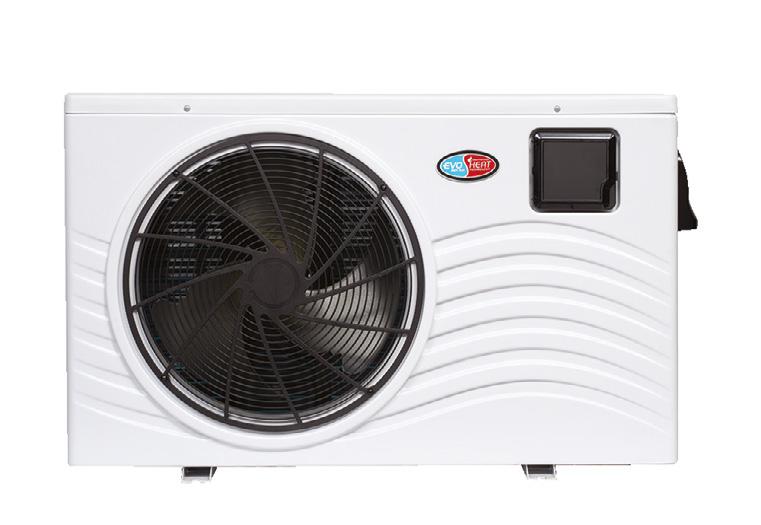

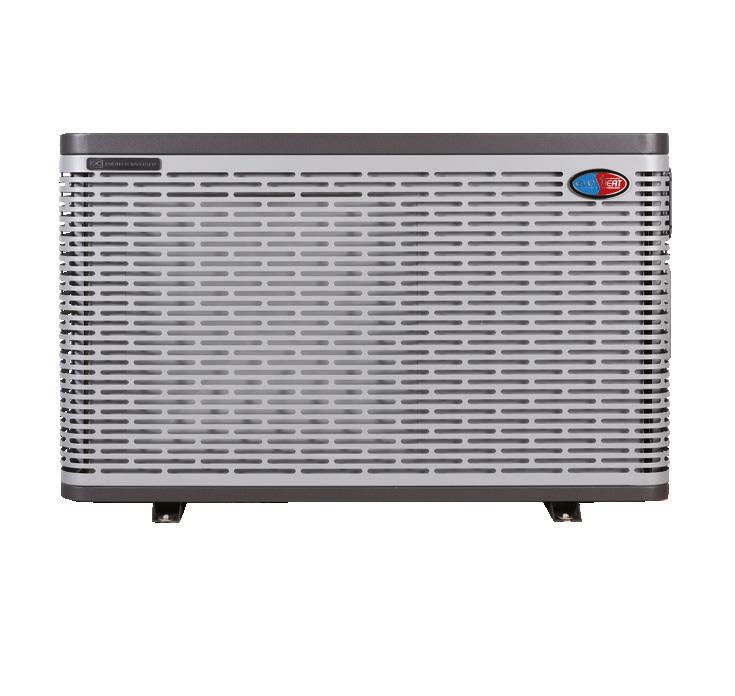
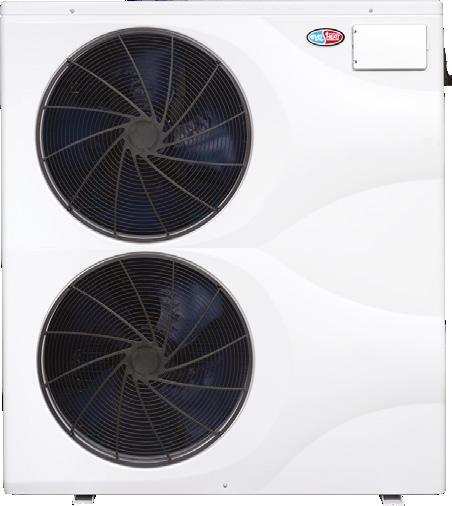
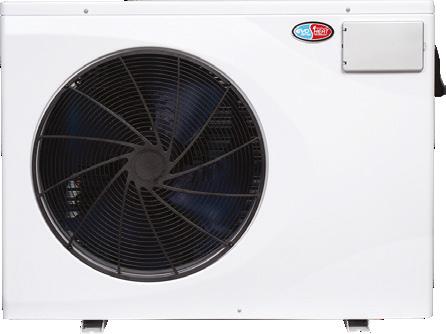

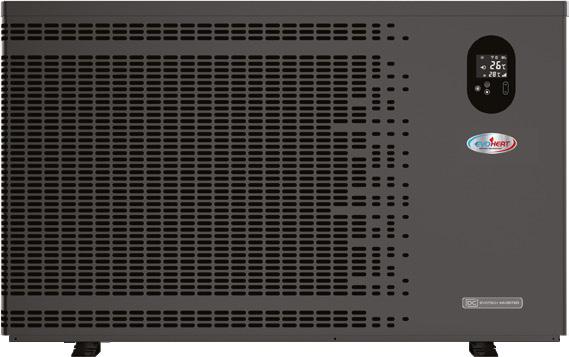
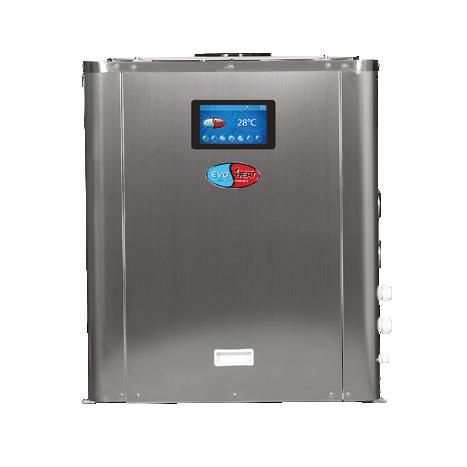

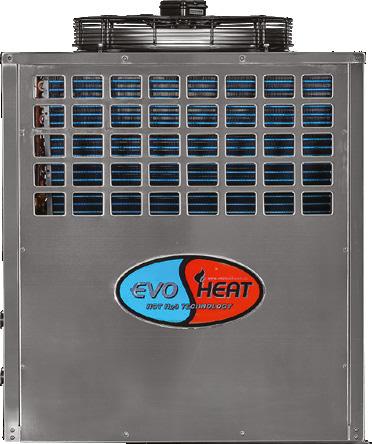
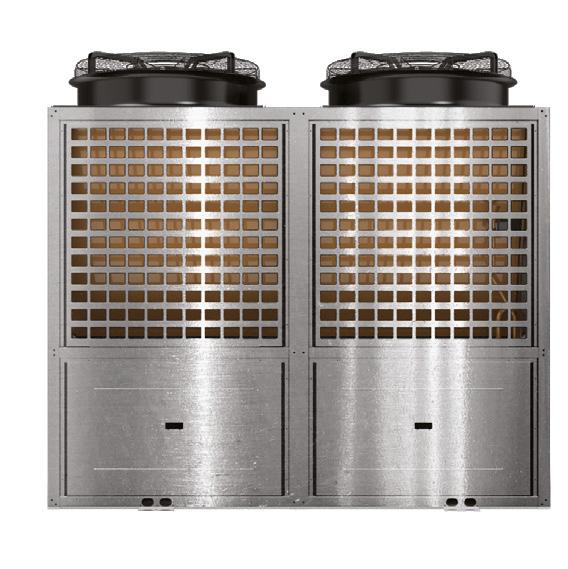

PERFECT SOLUTION FOR A TIGHT SPACE - WORKS LIKE A DREAM
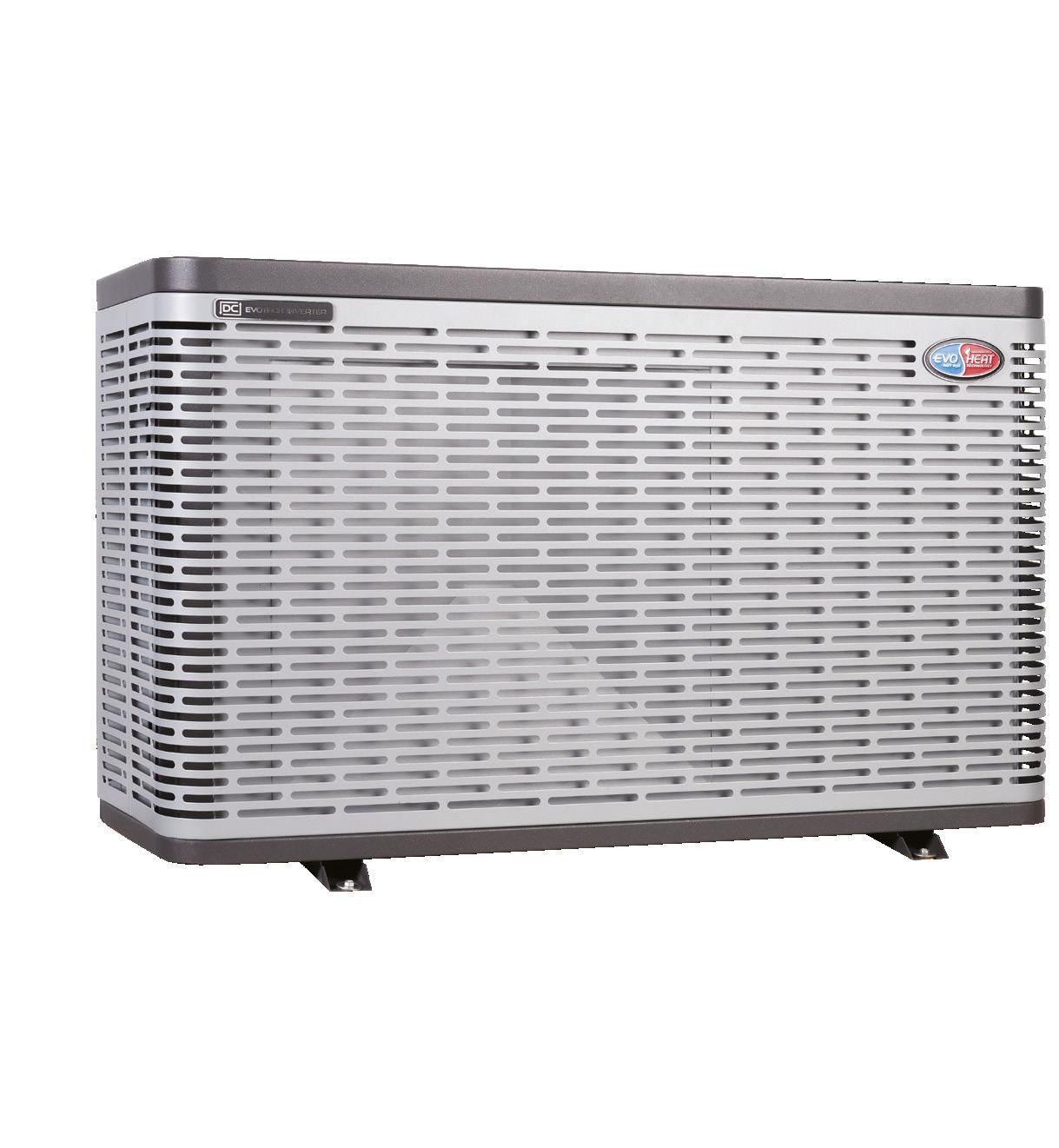

We had a very tight space for a heater - 4m long by 1m wide, behind a screen wall. All the other units on the market required cutting a hole in the screen for ventilation. The Edge-i series worked in the space we had without any modification, and has been functioning perfectly.









Published by
The Intermedia Group Pty Ltd
ABN 940 025 83 682
41 Bridge Road, Glebe, NSW, 2037 Australia
Ph: (02) 9660 2113
Fax: (02) 9660 4419
On behalf of The Swimming Pool & Spa Association of Australia Ltd (SPASA Australia)
Managing Editor: Chris Maher
Phone: 0412 048 639
Email: chrismaher@intermedia.com.au
Contributors: Veda Dante, Paul Stevenson
Brand Manager: Declan Gillard-Martin
Phone: 0404 725 554
Email: declan@spasa.com.au
Graphic Designer: Leanne Hogbin
Production Manager: Jacqui Cooper
Subscriptions: 1800 651 422
Email: subscriptions@intermedia.com.au
Copyright All material in this publication is copyright to the publisher and/or its contributors. No material may be reproduced without the express permission of the publishers.

Disclaimer: This publication is published by The Intermedia Group Pty Ltd (the “Publisher”) on behalf of SPASA Australia. Materials in this publication have been created by a variety of different entities and, to the extent permitted by law, the Publisher accepts no liability for materials created by others. All materials should be considered protected by Australian and international intellectual property laws. Unless you are authorised by law or the copyright owner to do so, you may not copy any of the materials. The mention of a product or service, person or company in this publication does not indicate the Publisher’s endorsement. The views expressed in this publication do not necessarily represent the opinion of the Publisher, its agents, company officers or employees. Any use of the information contained in this publication is at the sole risk of the person using that information. The user should make independent enquiries as to the accuracy of the information before relying on that information. All express or implied terms, conditions, warranties, statements, assurances and representations in relation to the Publisher, its publications and its services are expressly excluded save for those conditions and warranties which must be implied under the laws of any State of Australia or the provisions of Division 2 of Part V of the Trade Practices Act 1974 and any statutory modification or re-enactment thereof. To the extent permitted by law, the Publisher will not be liable for any damages including special, exemplary, punitive or consequential damages (including but not limited to economic loss or loss of profit or revenue or loss of opportunity) or indirect loss or damage of any kind arising in contract, tort or otherwise, even if advised of the possibility of such loss of profits or damages. While we use our best endeavours to ensure accuracy of the materials we create, to the extent permitted by law, the Publisher excludes all liability for loss resulting from any inaccuracies or false or misleading statements that may appear in this publication.
This issue of SPLASH! magazine published by The Intermedia Group Pty Ltd (Intermedia) may contain magazine or subscription; offers, competitions, forms and surveys (Reader Offers) which require you to provide information about yourself, if you choose to enter or take part in them. If you provide information about yourself to Intermedia, Intermedia will use this information to provide you with the products of services you have requested and may supply your information to contractors that help Intermedia to do this. Intermedia will also use your information to inform you of other Intermedia publications, products, services and events. Intermedia may give your information to organisations that are providing special prizes or offers that are clearly associated with the Reader Offer. Unless you tell us not to, we may give your information to other organisations that may use it to inform you about other products, services or events or to give it to other organisations that may use it for this purpose. If you would like to gain access to the information Intermedia holds about you, please contact Intermedia’s Privacy Officer at The Intermedia Group Pty Ltd, PO Box 55, Glebe, NSW 2037. Copyright © 2024 - SPASA Australia.
Proudly supported by



The views expressed in this magazine do not necessarily represent those of the above supporters, nor should any product advertised in SPLASH! magazine be seen to be endorsed by the above.
Enthusiasm is infectious.
And after spending two jam-packed days at the SPLASH! Trade Expo, I came away feeling very enthusiastic about the industry. Back when I covered my first SPLASH! Expo – the first one held at Jupiters, before the marquee had been added – it was a relatively relaxed affair. Certainly that’s the way it seems by comparison.
Back then, I had the chance to speak to every single exhibitor at length, attend most of the seminars, engage in long chats with visitors and industry leaders – and still had time for a site visit and a game of golf!
The Intermedia Group takes its Corporate and Social Responsibilities seriously and is committed to reducing its impact on the environment. We continuously strive to improve our environmental performance and to initiate additional CSR based projects and activities. As part of our company policy we ensure that the products and services used in the manufacture of this magazine are sourced from environmentally responsible suppliers. This magazine has been printed on paper produced from sustainably sourced wood and pulp fibre and is accredited under PEFC chain of custody. PEFC certified wood and paper products come from environmentally appropriate, socially beneficial and economically viable management of forests.
Chris Maher Managing Editor chrismaher@ intermedia.com.au
This time, like many of the exhibitors, I barely had time to grab a sandwich, such was the activity and the general busyness of the event. But despite being run off my feet, I felt invigorated. I guess I caught it from the trade floor; from the unbridled enthusiasm of exhibitors keen to impart their deep knowledge about products and services that many of them had toiled for years to perfect.
And watching them engage face-to-face with builders and retailers, learning from their customers exactly what was needed to improve their projects and services, so to better the pool and spa owner’s experience.
The most visible difference in this show was the size and openness of the stands. Most were large and welcoming, reminiscent of the overseas shows like Las Vegas or Orlando, Lyon or Barcelona, encouraging people to engage and converse.
And everyone seemed proud of their stands, reflecting a general pride in the industry. And pride is a good thing. It doesn’t mean you rest on your laurels – quite the opposite. It makes you strive to be the best you can. You’ve set a benchmark now, and you’d better live up to it, and work hard to exceed it!
And there is no better example of pride than the National Awards Gala on the second night. The best pools, spas, businesses and professionals from each state came together to see who was the very best. It was a wonderful showcase of our industry.
And there was plenty of pride on show. Justified pride. Pride that makes everyone try just that little bit harder to emulate the best, or if they are judged to be the best, to raise that bar a little higher.
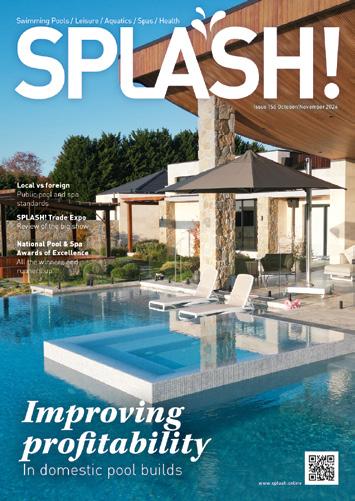
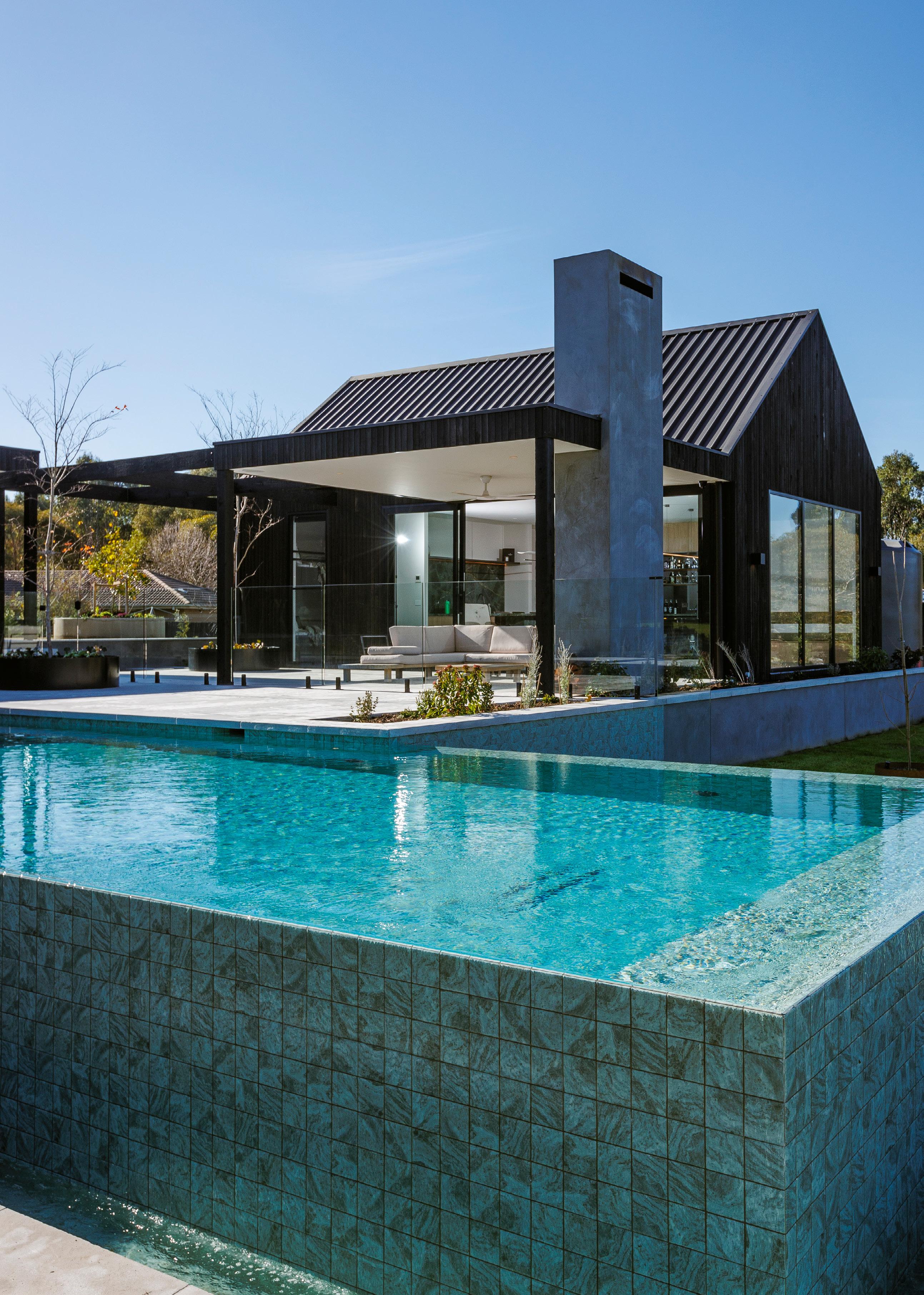
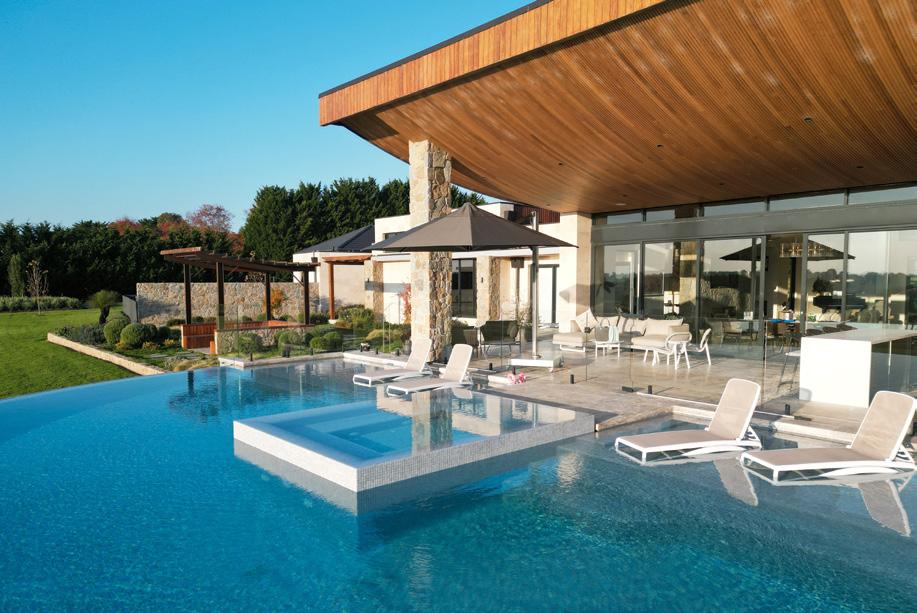
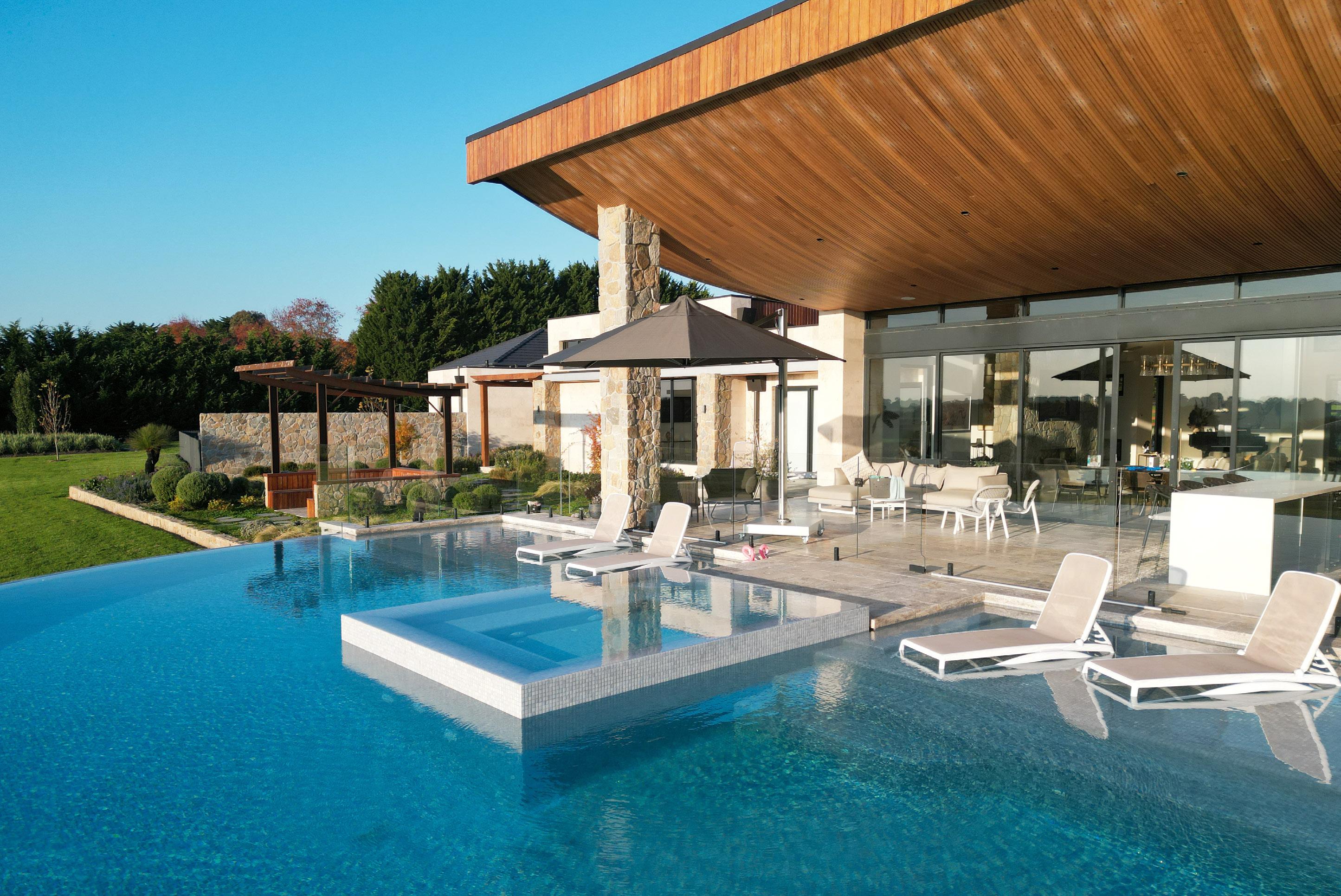
The cover shows a swimming pool and spa that blends beautifully with the home, including a few ideas that can help builders improve the ratio of profit to expense. There is more on this topic on page 26. Image: Shadowspec

18 John O’Brien celebrates four decades in franchising
Even after 40 years in franchising, Poolwerx founder John O’Brien is still brimming with energy and searching for new challenges.
23 At 50, Sunbather’s bright future rolls on Anthony Lestani explains the benefits and obstacles of local manufacturing, and what the future looks like as part of the Fluidra stable.
26 Ideas to increase pool build profitability
Profit is undeniably the aim of any business, serving as the driving force behind both new ventures and established enterprises. Veda Dante looks at some ways pool builders can make more profit from each project.
36 2024 SPLASH! Trade Expo review
59 New Zealand Pool & Spa Awards of Excellence
The very best from the pool and spa industry in New Zealand, including the top residential and commercial projects, retailers, trainers and professionals.
Are foreign public pool standards better than the Australian ones?
One of Australia’s most experienced aquatic engineering consultants, Paul Stevenson, bravely delves into this question, looking at commercial spa and swimming pool plant capacity sizing, and the related health standards both here and overseas.
The biggest pool and spa trade show in the Southern Hemisphere has once again raised the bar. We look at all the activity that went on over SPLASH! week; speak to visitors, exhibitors and experts; and get a few scoops as well.
52 National Pool & Spa Awards of Excellence
All the winners and runners up from the night of nights, celebrating the best pools, spas, businesses and professionals for 2024.
Clark Rubber Franchising has made the strategic decision to invest in establishing a dedicated Pool & Spa division. The newly formed division will be responsible for all aspects of buying, onsite service, marketing and operations across the Pool & Spa business moving forward.
The division will have a dedicated focus on driving pool and spa performance across the 62 franchise and company-owned locations, and will be headed by Paul Rice as Pool & Spa general manager, reporting to CEO Anthony Grice. Rice will lead a team comprising of the Pool & Spa category manager, recreation category manager (summer water program), and national pools service sales manager.
Rice has more than five years’ experience in the role of Pool & Spa category manager, and prior to joining Clark Rubber, he held senior marketing management roles with Mercedes Benz dealerships, EnergyAustralia, Chromagen Solar & Energy Solutions and Davey Water Products. He holds a BA in Applied Science (RMIT) and a Master of Marketing (Monash University). Eddie Assemani, national pool services sales manager, has moved over to report through to Rice. There is more on this development in the interview on page 43.
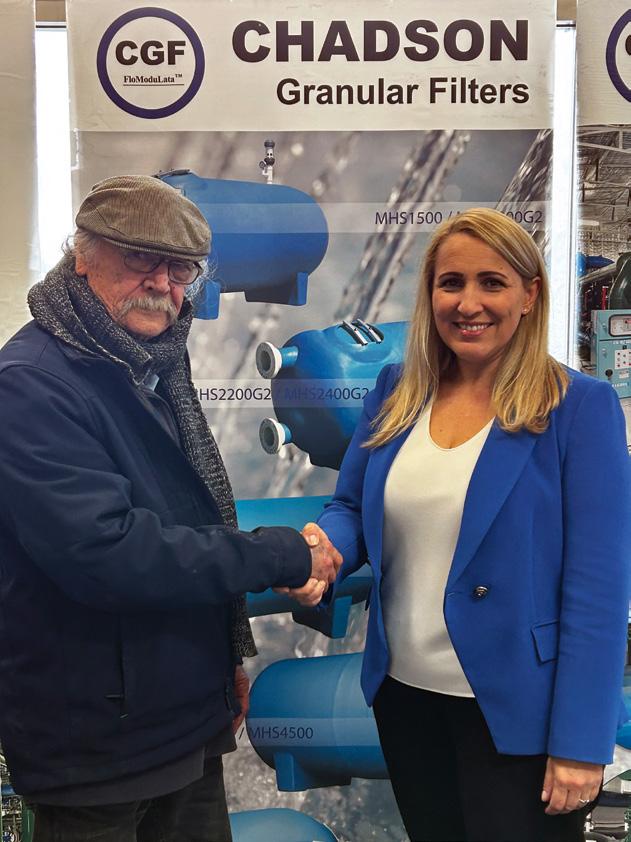
design and manufacture of granular and regenerative filtration systems.
This acquisition complements Fluidra’s commercial pool and wellness business and enhances its ability to offer a wide range of solutions to customers across the Asia Pacific region.
Based out of Perth and with more than 50 years’ experience, Chadson is a leading Australian manufacturer of commercial
filtration systems for swimming pools, water theme parks, marine parks, aquaculture and other sectors.
Valentina Tripp, managing director of Fluidra APAC, says she is thrilled to welcome Chadson to the Fluidra team.
“Their impressive range of products and their track record of innovation and excellence will significantly enhance our ability to serve our customers throughout the Asia Pacific region,” she says.
Peter Hobson, founder and CEO of Chadson Engineering, says that joining forces with Fluidra represents a new chapter of growth and opportunity for Chadson.
“We look forward to leveraging our combined strengths to achieve greater success in the APAC region,” he says.
Both Fluidra and Chadson are committed to ensuring a smooth transition while upholding the high standards of service and quality that their customers have come to expect.
The acquisition is subject to customary closing conditions and is expected to complete in the fourth quarter of 2024.
For more on the story see the interview with Jeremy Smith on page 40.
Dontek Electronics Pty Ltd was established in October 1989, manufacturing solar controllers. Over the ensuing 35 years, the company has grown and transformed into a respected innovator, manufacturing more than 120 models of controller for more than 30 companies in Australia and around the world.
In 2003 Paul Were joined the team and empowered Dontek to explore automatic pool control. Recognising the unique needs of the pool industry, he spearheaded the company’s development of innovative solutions.
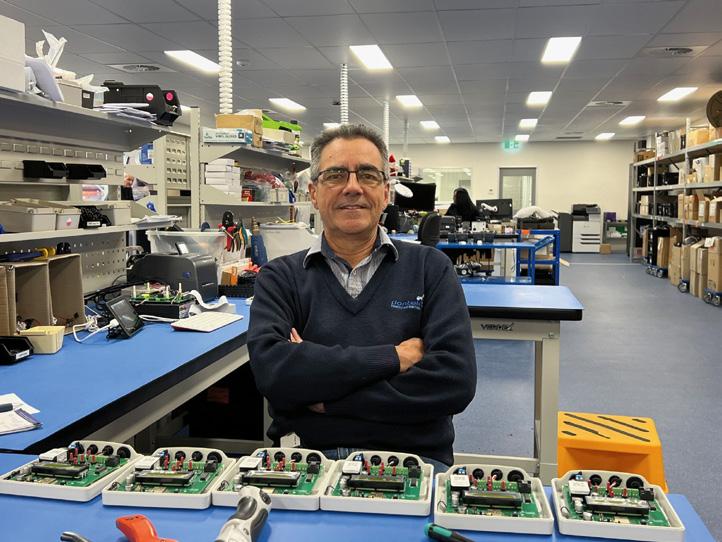
“We wouldn’t be where we are today if it wasn’t for our people,” Were says. “They are the driving force behind our success over the years. Our customer-centric approach to product development, commitment to quality, and strong customer relationships have allowed Dontek to grow and evolve over the years.”
The expansion to a larger facility in 2012 was a pivotal moment for Dontek. The new premises allowed Dontek to integrate advanced manufacturing processes, enhancing its ability to innovate and maintain high standards.
This was evident when Dontek introduced Aquatek to the market in 2021, simplifying pool management and embodying the company’s commitment to continuous improvement.
In 2022, the Reece Group acquired Dontek, marking a new chapter in its journey.
“This partnership has allowed Dontek to continue building on our legacy while expanding reach and capabilities,” says Were. “Joining Reece has been an exciting opportunity for us. It continues to strengthen our ability to scale, push boundaries in product development and serve our customers even better."
As they celebrate their 35th anniversary, Dontek moves into new larger headquarters in Bayswater.
“The new facility will provide us with enhanced resources and space to support our evolving needs of our people and customers and support our growth into the future. Thank you to our people and customers who have supported us over these years. We’re excited for what’s to come.”
The rate of decrease has eased slightly, as the available pool DA figures for the 12 months to September show that annual applications are down by 11 percent nationally, a four per cent easing on the previous reported decline. South Australia is up by 20 per cent and Western Australia by 13 per cent, while all other states are down: Queensland, New South Wales and Victoria are all down by 16 per cent.
The DA numbers over the most recent three months were down by 10 per cent nationally when compared to the same period last year. The July-September numbers from Cordell show Western Australia up by 24 per cent, with all other states down: Queensland by one per cent, New South Wales by six per cent, Victoria by 21 per cent and South Australia by 46 per cent.


In August, US industry icon Vance Gillette passed away age 75, following a long bout of cancer.
He was a highly influential and respected member of the US and global swimming pool industry, committed to positioning swimming pools as prestige and entertainment purchases, not merely a vessel for getting wet. He also pushed back against a consumer fear of pools following a series of child drownings.

Gillette’s career spanned 47 years before retiring in 2013 from his final industry position, VP of business development for Zodiac Pool Systems.
He was known for pushing the message to sell the sizzle not the steak, bemoaning the tendency in the industry to focus on features rather than lifestyle, and promoted the joy of owning a swimming pool.
Starting as a telemarketer selling pool cleaners, he progressed through selling Geni-Chlor sanitisers to join Jandy Pool Products as executive VP, eventually moving with them to Zodiac, which is now merged with Fluidra.
He also had his own consultancy and was an honorary founder of Genesis.
SPLASH! offers condolences to his family, friends and colleagues.
Keep informed by subscribing to the free online newsletter.
Fluidra acquires Chadson Fluidra announced the acquisition of Chadson Engineering, a leader in the design and manufacture of granular and regenerative filtration systems.
Sadly, former co-owner and managing director of Austral Pool & Spa Products, Jon Poole, known as JP, passed away after battling cancer this year. He was surrounded by his family.
Mike Rippon, managing director of Austral, says they will all miss JP more than words can express.
“JP was not just a work colleague or supplier, but a personal friend of many in the pool industry. We remember a man extremely dedicated to the industry for more than 40 years and known for his positivity, honesty and good natured demeanour.”
He says that JP was a true gentleman, and that his experience, professionalism and reputation were unrivalled.
“JP has been an integral part of the success of Austral over the 21 years he spent as a coowner and director. His loyalty and fairness were unparalleled. We already miss his kind spirit and send our utmost condolences to JP’s wife Jane and his family. Our deepest condolences to everyone who knew JP and enjoyed his bright presence in their lives.”
Craig Nimmo, managing director of CSN Global, knew JP for more than 35 years and considered him not only a close business associate, but also a personal friend who was well liked and respected by everyone who knew him.
“I never heard JP say a bad word about anyone, nor did I ever hear anyone say a bad word about JP. He treated everyone – friends, work colleagues, customers and suppliers – all with the same strong sense of respect, loyalty and friendship. He bent over backwards for his customers to provide the best service possible and never took his suppliers for granted. Everyone was treated honestly and fairly in JP’s typical, good natured way.”
JP started working in the pool industry more than 40 years ago. Over that time
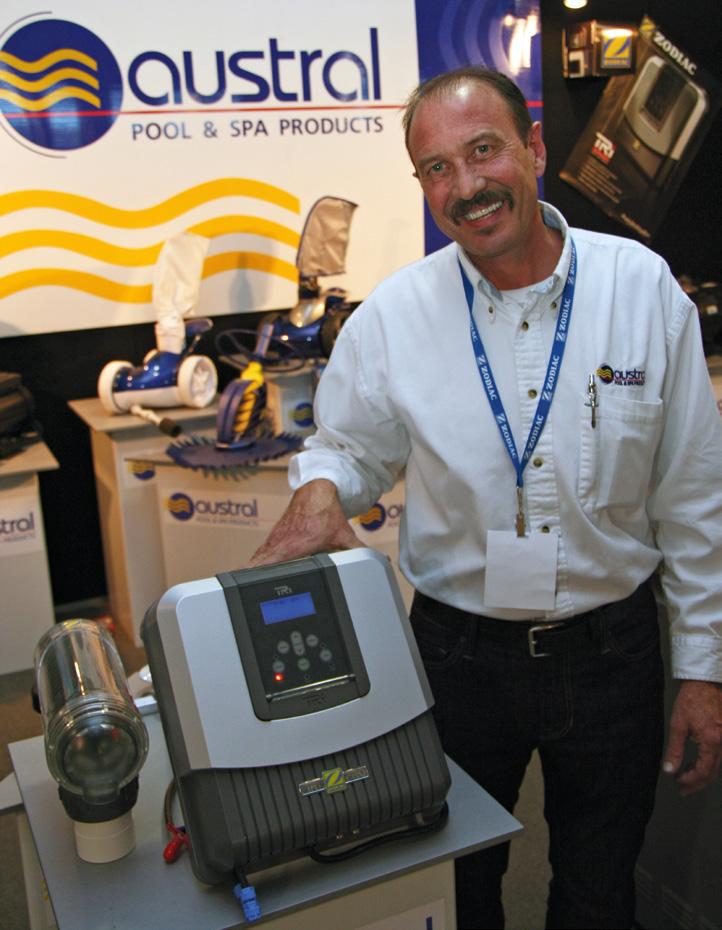
he was involved with and held committee positions with various industry associations, and he held many positions within the industry which gave him an incredibly sound knowledge base.
In the early stages of his career, he worked for a pool building business helping to organise the delivery of pool building products to job sites, and later held the position of national sales manager for many years for Filtration and Pumping Industries (FPI), one of the industry’s founding equipment manufacturers. He was pool shop general manger and ran his own pool valet and service business for several years. He was a major shareholder and director for one of New Zealand’s leading trade suppliers, Austral Pool & Spa Products.
The number of pool builders and shop owners he has helped to get on their feet is immeasurable.
SPLASH! offers sincere condolences to family, friends and colleagues.
The online stories that made the news over the past two months.
TLC Pools wins 2024 National Pool of Year
Victorian builder TLC Pools won the SPASA Australia National Pool of the Year for their contemporary pool and spa project.
Acacia wins New Zealand 2024 Pool of the Year
The 2024 New Zealand Pool of the Year went to Acacia Landscapes & Pool Construction for an innovative design overcoming space limitations.
Alexa Leary smashes world records and wins Para Golds
Alexa Leary became Australia’s newest golden girl by smashing world records and winning multiple Golds for Australia at the Paris Paralympics.
Theron Vassiliou wins Jim’s Franchisee of the Year
Theron Vassiliou of Jim’s Pool Care Balwyn won their Franchisee of the Year Award for the second time despite only being a franchisee for four years.
2024
Oct 22
Oct 22
Oct 24
Oct 29
Master Pool Builders Meeting, Melbourne
1926.1 Roadshow, Unley Park Club Sports Club, SA
1926.1 Roadshow, Maylands Sports & Recreation Club, Maylands WA
1926.1 Roadshow, Qld, NT and Tas, Online
Nov 19-22 Piscine Global, Lyon France
2025
Jan30-Feb1 Aquafun-Atrax, Istanbul, Türkiye
Jan31-Feb2 Melbourne Pool Spa Life Expo, Melbourne Convention & Exhibition Centre
Feb15-16
Perth Pool Spa Life Expo, Claremont Showgrounds
Mar 1-2 Sydney Pool Spa Life Expo, Rosehill Gardens Racecourse
Mar 29-30 Adelaide Pool Spa Life Expo, Wayville Pavilion, Royal Adelaide Showgrounds
May 17-18 Brisbane Pool Spa Life Expo, Exhibition Building, Brisbane Showgrounds
Jun 20 Perth Home Show, Perth Convention & Exhibition Centre

More details at www.splash.online Dates are subject to change and should be checked with the relevant organisation. Send calendar submissions to info@splashmagazine.com.au.
The full range of Hayward Pool Products are now available at Pool Ranger in Western Australia, including Hayward’s energy-efficient pumps, automated pool cleaners, advanced filtration systems, salt chlorinators and lighting solutions through Pool Ranger’s extensive distribution network.
Global franchising expert Steven Greenbaum has been appointed to the Poolwerx board, with the aim of elevating the brand’s growth and strategic direction. He founded PostNet International; a company which he grew to over 700 locations worldwide before selling in 2017; has successfully founded and managed several other large-scale organisations; and has served as chairman of the International Franchise Association.
D&D Technologies has reached a milestone with the installation of its eight millionth MagnaLatch pool safety gate latch globally, as the company celebrates its 35th anniversary. Sales and marketing director Justin Francis says the company was proud that the product is not only Australian-made and designed but that it is regarded the safest in pool safety standards.
A family in Indiana, USA, was using a sump pump on their swimming pool when a loose wire was pinched by the pool’s ladder, exposing the wire to the water, according to officials. Five people were electrocuted in the incident, and were only saved by a teen relative turning off the pump and removing the injured people from the water, two of whom were unresponsive. All were expected to survive,
Maytronics Australia recently hosted its annual Elite Conference in Greece, bringing together more than 160 independent pool professionals for a week of industry updates, networking and cultural experiences.
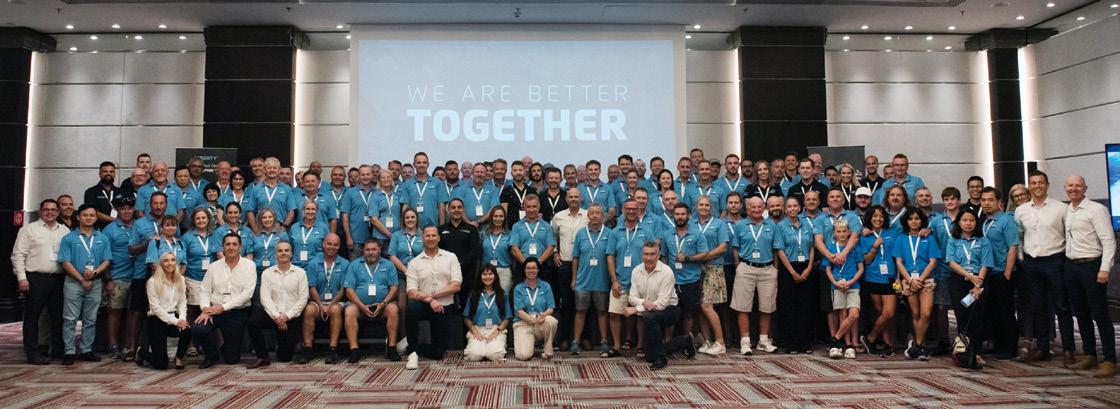
The conference featured updates from global CEO Sharon Goldenberg and global CRO Franck Sogaard.
Insights on the Australian business and market were offered by Maytronics Australia managing director Dan Kwaczynski and business director Chris Papa.
This included a key highlight of the conference, the official global launch of Mineral Swim V2, an Australian-manufactured system that Kwaczynski says is set to revolutionise the pool industry.
In addition to the business sessions, attendees enjoyed exploring the historic and cultural sites of Greece, including the Acropolis, the Athens Olympic Stadium, and a cultural tour of Athens.
The group also embarked on island-hopping adventures, providing ample opportunities for
networking and building stronger relationships within the Maytronics community. Participants of the conference expressed their enthusiasm and appreciation for the event.
The conference also saw the announcement of some prestigious awards, with Tropical Pool Maintenance taking home the National Elite Retailer of the Year award and Pool Ezy being honoured with the National Elite Pool Builder of the Year award.
These awards highlight the exceptional dedication and performance of these partners within the Maytronics network.
The conference not only served as a platform for sharing Maytronics’ strategic plans for the upcoming season but also reinforced the company’s commitment to fostering a collaborative and supportive community among its partners.
SPASA has extended its gratitude to Chris Samartzis for his service and leadership. Since taking on the role of chief executive officer for SPASA Victoria in July 2018, and later for the Master Pool Builders Association, Samartzis has been part of driving advancements within the industry.
From July 2018 to 2024, Samartzis steered SPASA Victoria through a period of significant transformation. In 2021, the rebranding of SPASA Victoria to the Master Pool Builders Association Australia (MPBAA) positioned the Victorian pool builders as best practice companies dedicated to enhancing outdoor living spaces. In 2023, Samartzis oversaw the seamless transition of MPBAA staff and members into SPASA, supporting the creation of a unified peak body for the industry. Following this consolidation, Samartzis spearheaded the relaunch of the Master Pool Builders brand, focusing on delivering enhanced value to builder members and promoting best practices nationwide.
Samartzis’s influence extended beyond the association’s internal operations. His active participation in policy development and Standards Australia committees secured favourable outcomes for the industry.
His strategic focus on membership growth and retention, coupled with enhanced networking events, also fostered a more vibrant and interconnected industry community.
Reflecting on his journey, Samartzis expressed his gratitude, stating, “I am deeply thankful to the industry, the board members, and the dedicated staff who have supported our mission. Together, we have achieved remarkable milestones and set a strong foundation for future growth.”
The Master Pool Builders Association program, now completing its first year, stands on a solid foundation ready for continued expansion.
SPASA CEO Lindsay McGrath acknowledges Samartzis’s contributions, stating, “Chris has influenced the industry and the evolution of the Master Pool Builders brand. The program continues to receive strong support, adapting and evolving based on continuous feedback from member forums.”
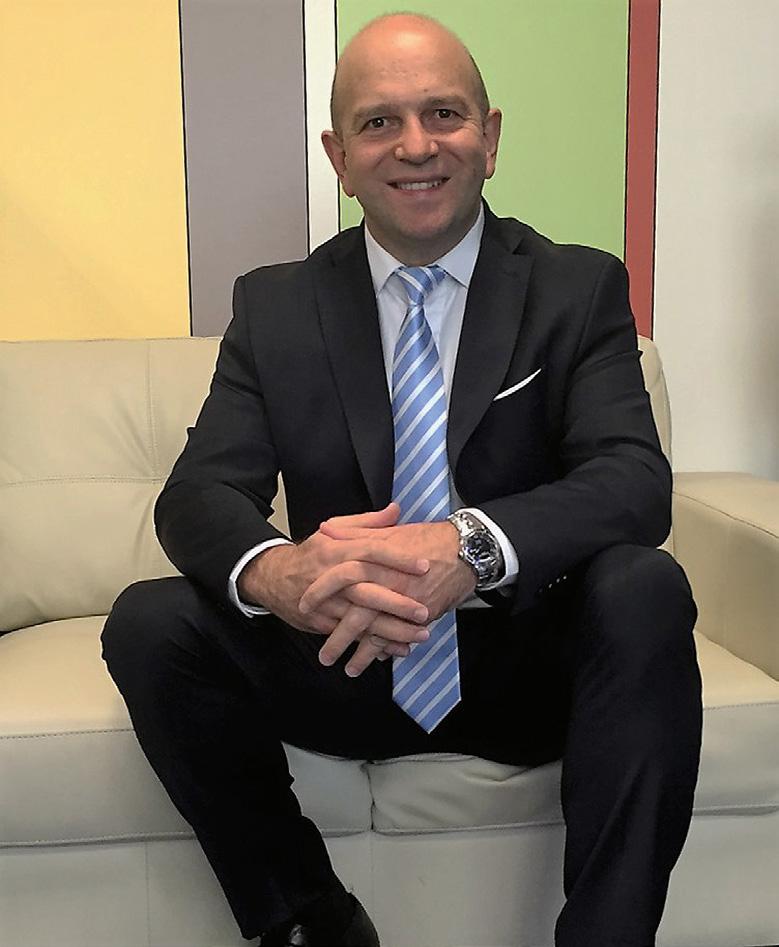
McGrath adds, “On behalf of the team, I extend our sincere appreciation for Chris’s dedication and service. We wish him every success in his future endeavours.”
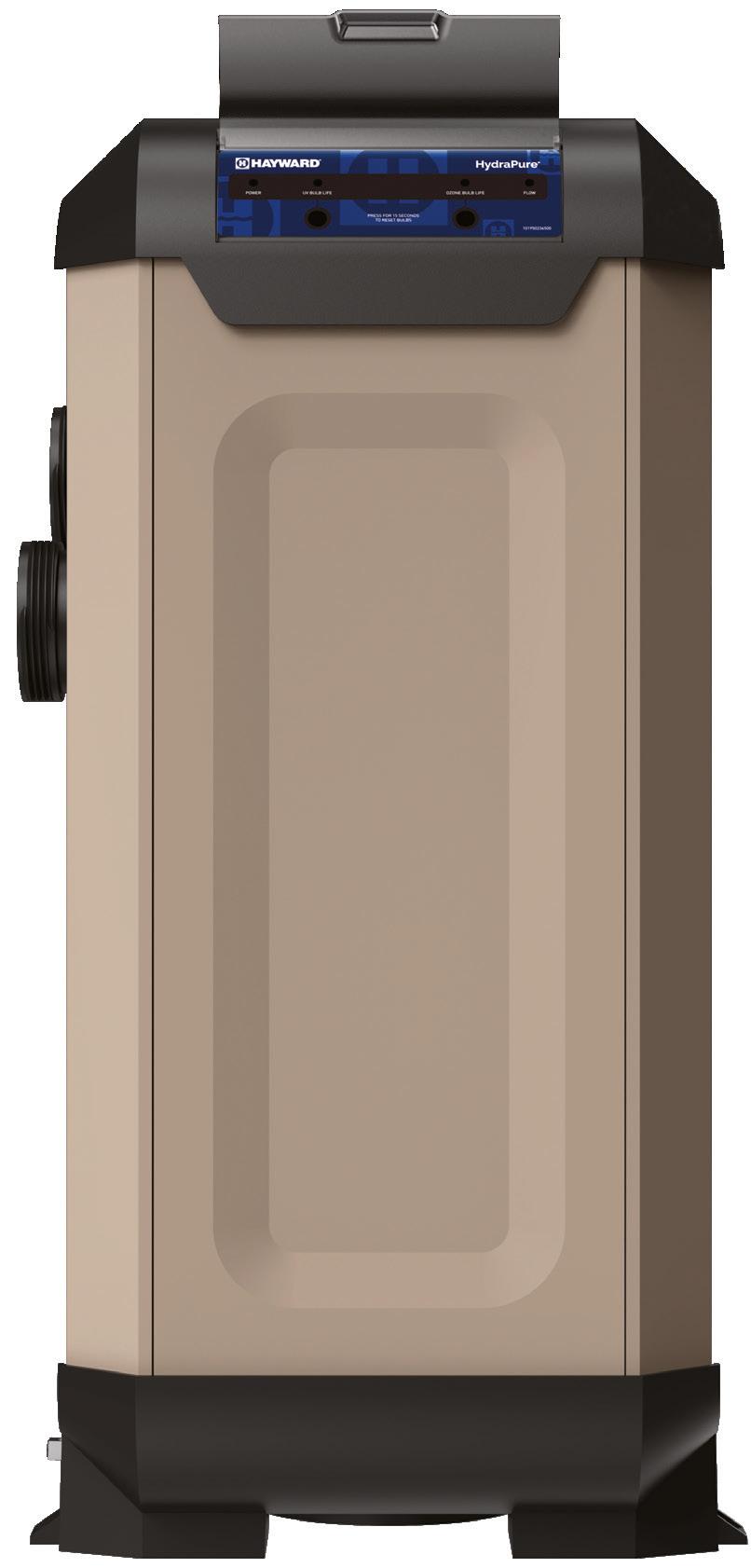
AIS Water CEO Elena Gosse has published her take on leadership: Leadership Sh!t Show.
Her book takes readers on a compelling journey of resilience, transformation, and personal and professional empowerment, offering a fresh perspective on leadership.
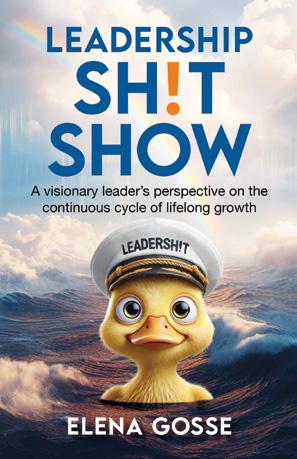
Entertain yourself with Gosse’s meditations on leadership
She uses a sailing analogy to help illustrate the continuous cycle of leadership growth – moving from what she humorously refers to as leadersh!t to initiating transformative shifts, and ultimately “leading your own ship”. The cycle, as Elena describes
Retail
it, is ongoing, reflecting the perpetual evolution of true leadership.
The book takes us though Gosse’s hard-won lessons and personal insights to help empower readers to laugh in the face of adversity and turn every stumble into a step towards authentic leadership. It serves as a blueprint for anyone ready to embark on a journey of lifelong growth, whether an established leader, an emerging entrepreneur, or someone overcoming personal challenges.
Available now on Amazon and in leading book retailers worldwide.
Prue and Malcolm Price, franchise partners of Poolwerx Upper North Shore, NSW, have been recognised for their outstanding business success, receiving the prestigious 2024 Poolwerx Franchise Partner of the Year
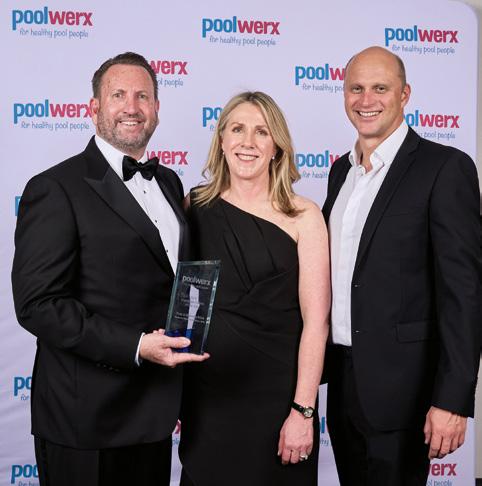
Malcolm and Prue Price receiving their award from Nic Brill
Award at the annual gala.
The annual Poolwerx convention gathered 320 franchise partners from across Australia and New Zealand along with suppliers to celebrate the commitment and accomplishments within the world’s largest franchise pool servicing brand.
Poolwerx 2024 award winners
Retail Store of the Year – Poolwerx Jimboomba, Qld
New Retail Store of the Year –
Poolwerx Dural, NSW
Brand Excellence – Poolwerx
Castle Hill, NSW
The Shane Doyle Rising Star –
Poolwerx Caloundra, Qld
Heights, Qld
Most Improved –
Poolwerx Gladstone, Qld
Commercial Business of the Year – Poolwerx Surfers Paradise, Qld
Top Sales Under $3M – Poolwerx Coffs Harbour, NSW
Top Mobile Sales (Single Territory)
– Poolwerx Wavell
Top Retail Sales (Single Territory)
– Poolwerx Dubbo, NSW
Woman of the Year – Michelle Benett, Poolwerx Christchurch, NZ
The Garth Parker NZ FP of the Year – Poolwerx Christchurch
Brisbane South, FNQ, Northern
NSW, NT FP of the Year – Poolwerx
Mt Gravatt
Brisbane North, Central
Queensland FP of the Year –
Poolwerx Albany Creek
Victoria & Tasmania FP of the Year
– Poolwerx Mill Park
Western Australian FP of the Year
– Poolwerx Applecross
South Australian FP of the Year –
Poolwerx Tea Tree Gully
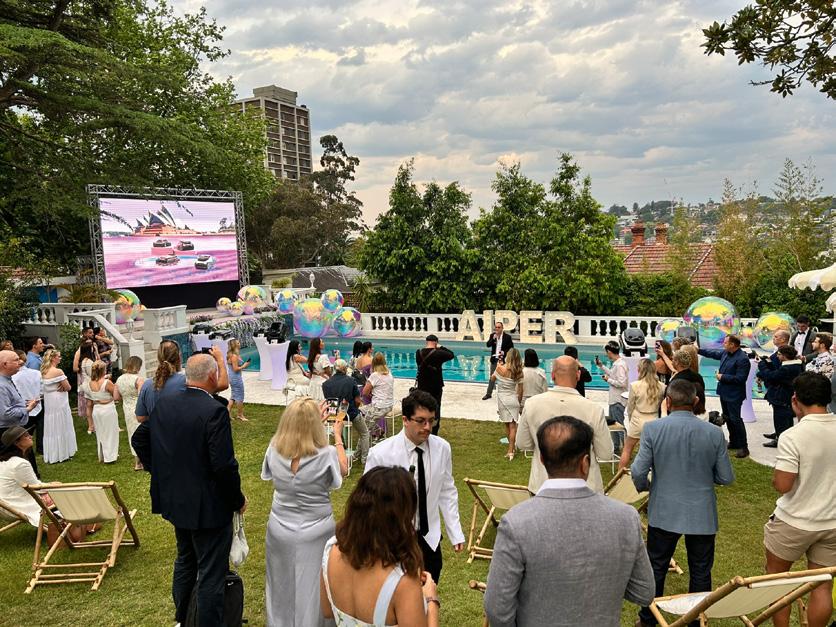
Aiper launched its Scuba Series this September at a glitzy event in Sydney’s Eastern Suburbs.
The economically priced collection features robotic pool cleaners catering for a variety of budgets and pool sizes, from entry level Scuba SE up to the Scuba N1 Ultra which can handle commercial applications.
Based in Atlanta, USA, Aiper began life as a battery producer in 2012, specialising in outdoor battery applications including lawn mowers, speaker systems and outdoor power stations. The need for them to be weather resistant led to the development of waterproof batteries, and five years ago, pool cleaner technologies where the batteries are totally submerged.
Aiper’s general manager for Europe, Australia and Asia Pacific, Andreas Gomez, is based in Barcelona, Spain. He spoke to SPLASH! at the launch, saying that everything is about the battery.
“We started with the battery, and then built the robot around it. Which is different to a lot of the other robot brands. They take a corded robot, and put a battery in it,” he says.
“But you need to redesign the waterflow, and you don’t have an unlimited power source, so you have to redesign the motor. And that’s where we started, a long time ago.
We have an advantage of a few years of R&D.”
He says they are treating the robots more like an appliance than a tool, and have focussed on a stylish look to appeal to consumers. North America was their first market and is their biggest market, with Europe following, and Australia just beginning, but already showing positive indications.
In other markets they cater considerably to aboveground pools, whereas Australia has a stronger in-ground market.
“We have 70 per cent of the global market in the cordless category,” he says, adding they believe they can aim for more than 40 per cent of the Australian market.
“We have very good partners like Clark Rubber, Pool & Spa Warehouse and consumer electronics retailers like JB Hi Fi,” he says.
“We are consumer professionals; we know what the consumer wants at what price point they want it. So we try to close the gap between the expectation and what there is in the market.”
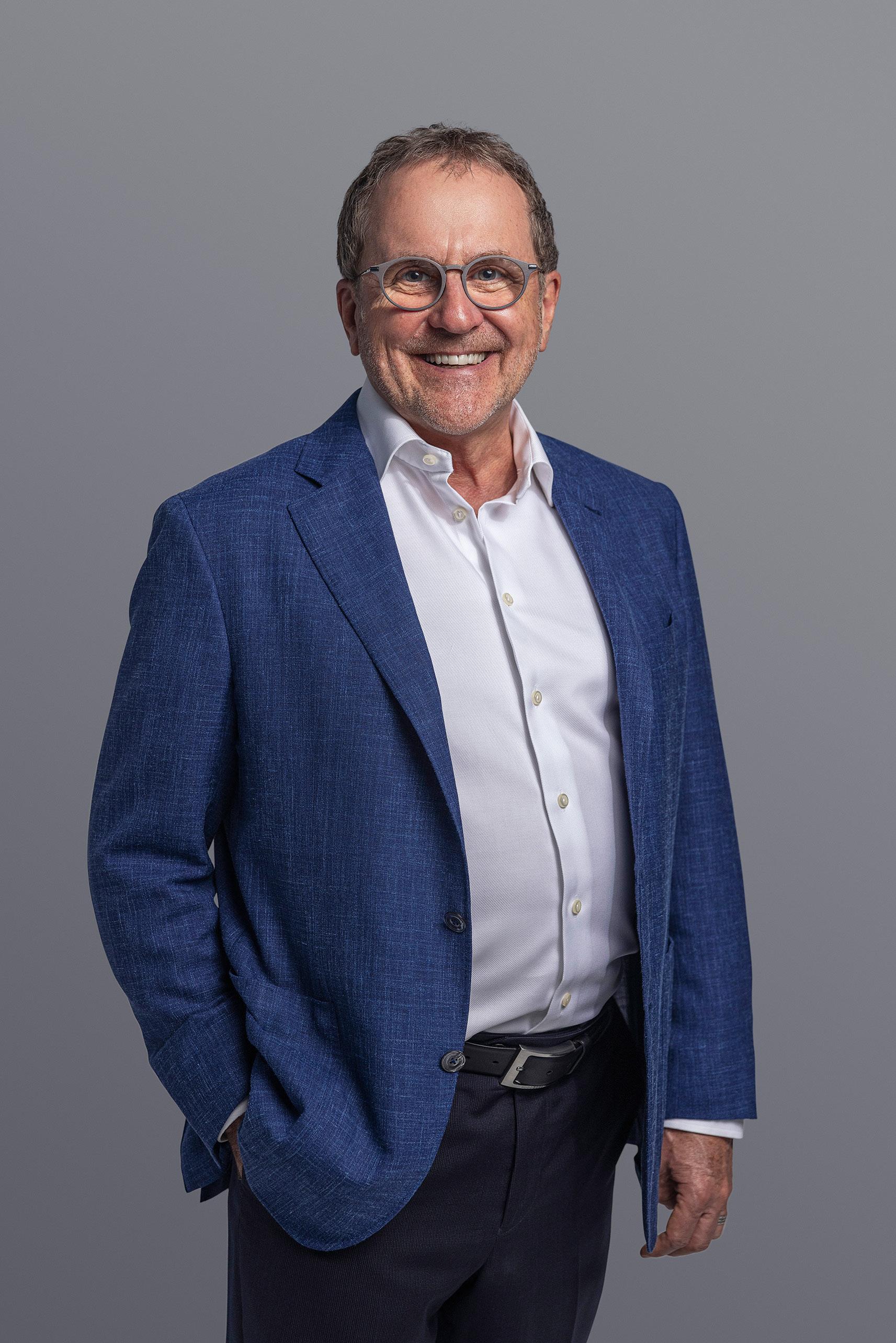
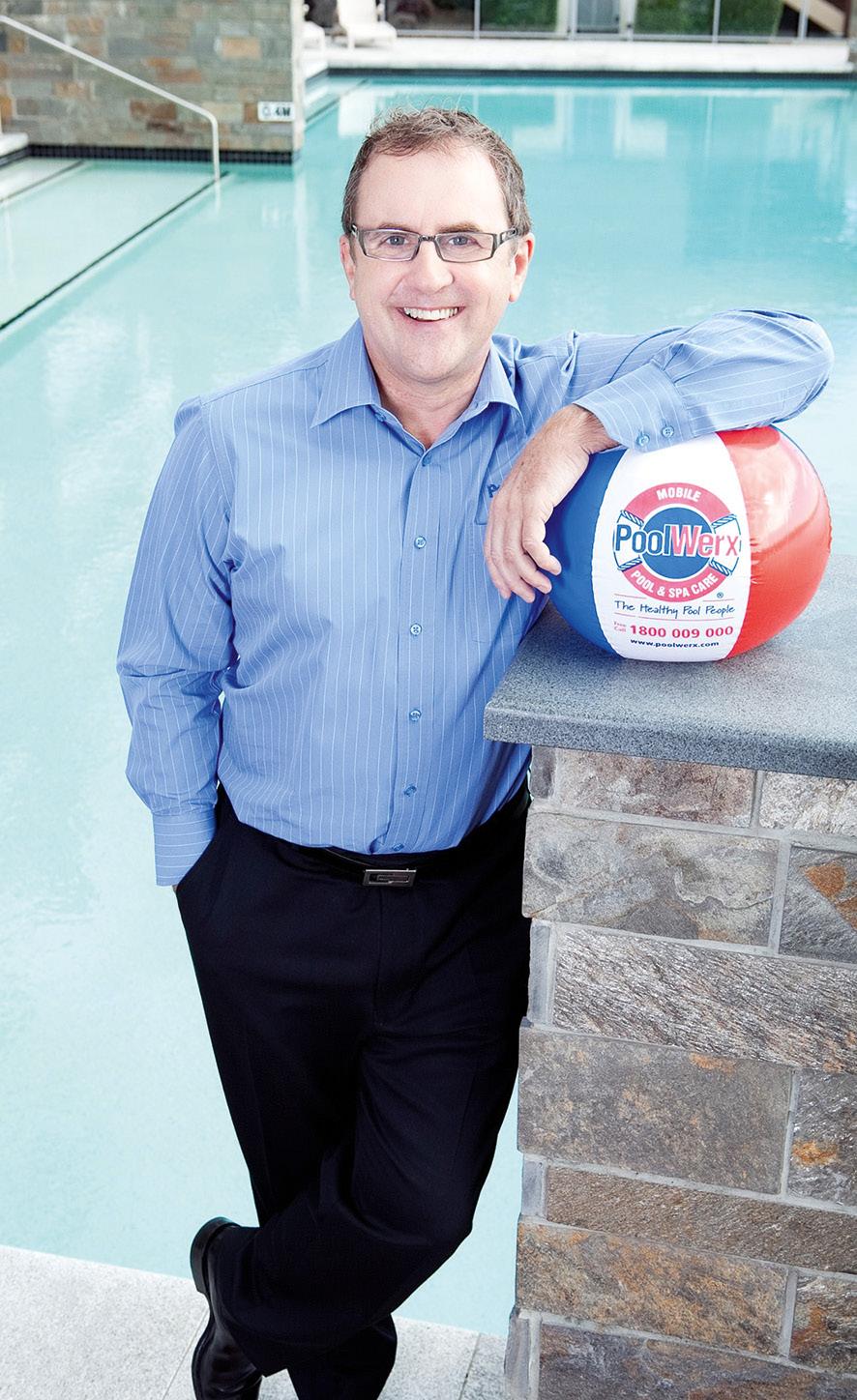
Even after 40 years in franchising, Poolwerx founder John O’Brien is still brimming with energy and searching for new challenges, including the business’s ongoing expansion around the globe.
His story starts way back, with a small business lineage including great uncle Bill O’Brien who co-founded Breville, and a continuing family history of hotel ownership and management dating back to 1842 in Portland, Victoria.
“There was a whole DNA in our family of small business and learning about small business around the kitchen table – in hindsight, I was always going to end up in my own business. I went on all the way through college and university and in my 20s I worked in global corporate with Cadbury Schweppes head office in Melbourne, and was lucky enough to have about four significant gigs as a young fellow in sales and marketing and HR.”
By the age of 25, O’Brien had been promoted to general manager of the enormous Schweppes home delivered business, a considerable logistic effort with 400 trucks moving popular soft drink brands around Australia.
Schweppes employed the door-to-door truck drivers, and the business wasn’t going too well. Things changed in about 1984 when O’Brien’s boss returned from a franchising event in the US.
“He said, John, we’re going to turn those 400 truck drivers into franchisees via company loans.”
At the time, O’Brien knew nothing about franchising, so he was sent to the US to study it. When he returned, they implemented the franchising model, and within a few months, the business turned around. What had changed was that the person who owned the truck, ran their own business, delivering the drinks and providing customer service.
“It was magic,” he says.
“I was one of the first guys into franchising in Australia. The year I started was the year McDonalds started in Australia. I then started master franchising the business, and put in 12 master franchisees across Australia, including Canberra.”
At age 28, O’Brien and his brother took on the Canberra franchise, and when that was a success, they added the master franchise for WA and then also for Queensland, with a total of about 100 trucks.
O’Brien saw another opportunity in a US trend: water coolers. He brough the concept to Australia, built it up and sold it twice –once to Berri Fruit Juice and again to Coca-Cola. Following that he imported master franchises in bath resurfacing from South Africa, and in confectionery distribution from New Zealand.
Sadly in the early 90s, his brother, who was also his business partner, died in a car accident. This led O’Brien to sell the businesses and take a pause.
When he was ready to return to the business world, he searched for a franchise opportunity that had global potential and met strict criteria. First criterion was a large service focus, because he identified that as a growth area. Second was high gross profit margins to act as a safety buffer. Third was annuity flowing through repeat clients.
Most important of all, he was looking for an industry that was both global and disorganised.
company called Pinch A Penny in Florida, and that was it globally. Franchising had not found the pool industry.”
Once he’d done some more research and confirmed his assumptions, O’Brien bought a small pool shop in Brisbane’s Sumner Park with a couple of vans.
It took him two years to make the business profitable. He identified good business practices, systematised them and put them into manuals, enabling him to train people in the processes and commence franchising. The initial franchising business was the man-and-a-van model, based on O’Brien’s experience with the soft drink delivery business. But by 2000, O’Brien realised that his business was catering to the “do it for me” market, leaving the “do it yourself” market relatively untapped.
“We were leaving that on the table for other people, like Swimart. So we opened our first retail concept store in Middle Park in western Brisbane, and did the same thing again."
Initially they planned to have shops and vans as separate businesses, but then they saw that the retail store was acting as a marketing arm for the service business.
“Mum would come in to get water tested, and dad was off traveling as a corporate executive or a pilot or something, or was frustrated with a pool but was too busy. So we saw that we could very quickly transfer people from retail clients to service clients – and service clients are much stickier than retail clients who can leave you when they walk out the door – but service clients tend to stay forever.”
The business morphed into what they call the hub-andspoke model, with a retail store in the centre and three or four service vans operating out of the store. The model also enables successful franchisees who want to expand to add another store with more service vans.
O’Brien says the typical recruit to the Poolwerx system is a husband and wife team, about 43 years of age, from middle Australia, with middle management experience.
“They’ve saved up their money, but they want something more. They’ve decided around the kitchen table that they don’t want to work for the man anymore – they want to work for themselves. They want to have control of their own future and destiny and create a bigger future for their family, and often to work together as a husband and wife team, to possibly have their teenage children work in the business and teach them their family values. And I get to coach them along the way and see them, in most cases, fulfill that dream, which is a pretty cool job.”
He says that some of their franchisees have grown at the upper end to have five stores and 20 vans are bringing in more than $5 million in revenue.
Globally, O’Brien says Poolwerx is the number one pool service company in the world.
“Which is pretty cool for a little business out of Brisbane. We’re number two in pool franchise, behind Pinch A Penny in Florida, and we’re number three in pool retail, behind Pinch A Penny and Leslie’s. In Australia, we’re number one in all three of those categories now. We’ve got over 150 stores and close to 500 vans in Australia and New Zealand.”
O’Brien says that, in terms of retail store market share, there’s probably about 1000 pool stores in Australia, and Poolwerx has about 20 per cent of the Australian aftermarket retail and service market, with the other franchises making up about another 10 percent of the market, and the independents, including those who are in buying groups but not actual franchises, making up the other 70 per cent.
“We have about 400 franchise territories in Australia, of which we’ve sold 300 of those territories to franchisees. And of those 300, 150 have stores in them. But the intention is to have a store in every one of those 400 territories.”
To achieve this they have a two-pronged strategy. One is to recruit new franchisees to the pool industry, opening new stores. The other strategy is acquiring the businesses of retiring
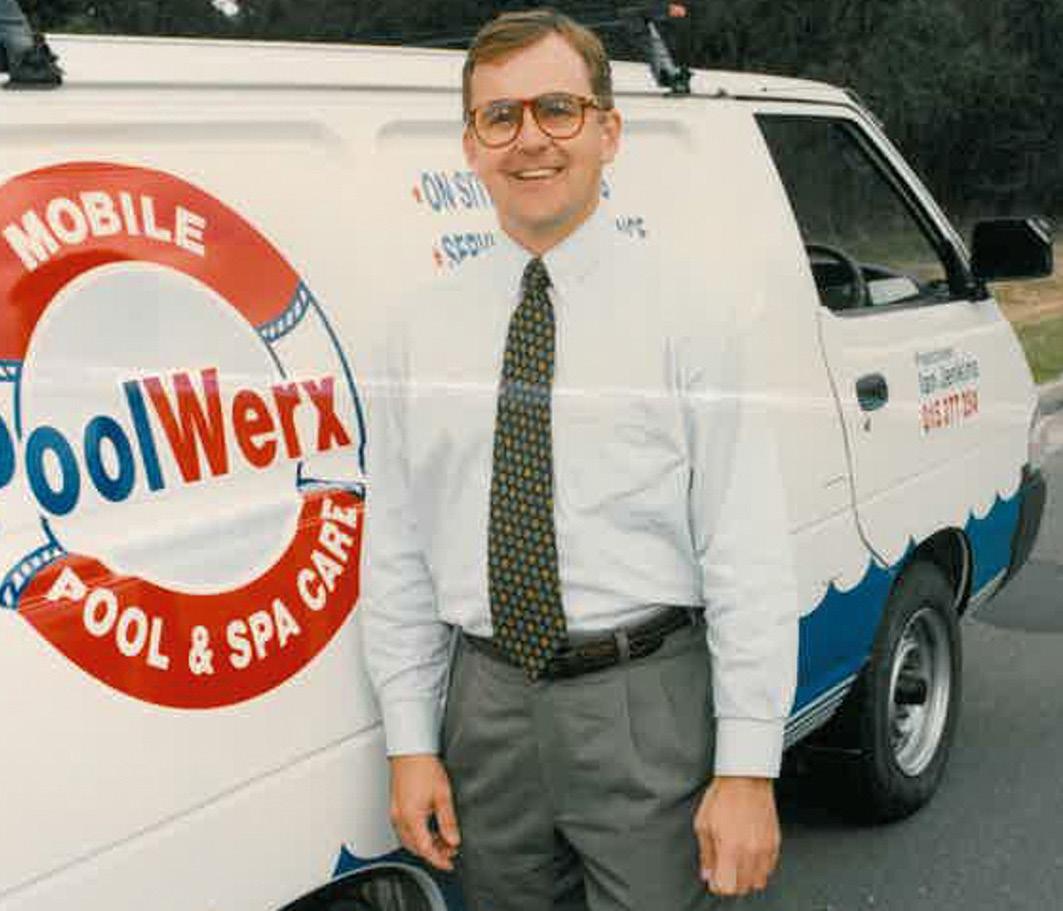
pool shop owners and rebranding them to Poolwerx – an increasing part of the business.
Poolwerx has taken on other markets around the world, starting with their successful presence in New Zealand, but have also identified 20 countries they want to target, protecting their domain name and trademark in those countries.
First cab off the rank was the US – a market that’s 10 times the size of Australia. After seven years, they are in 16 states with about 55 stores, with expectations that one day it will be bigger than their Australian footprint.
“We also identified Mediterranean Europe as a strong market. France and Spain have similar number of pools to Australia. There’s franchise groups in those countries, so we’ve been in discussions with groups over there, so Poolwerx will be in Europe at some time in the not too distant future.”
But to fulfill those ambitions they needed more access to capital, and greater skill set on the board, particularly at funding, accountability and control at board level. So they bought in Norwest, a US-based global venture and growth equity investment firm who invests in some of the world’s largest brands including Uber, Spotify and Calm, and a range of franchise businesses.
“They’ve been fantastic at fulfilling all of those things for us,” he says.
O’Brien says there are obvious challenges for the retail sector in the current economic situation.
“People are nervous, retailers are nervous, and they’re either dropping prices or they’re not putting their prices up and they’re squeezing their gross profit margin. But you miss one price increase, you never get it back, and you take a pay cut as a business owner as a result of that, and you devalue the sale price of your business.
“We’ve never missed a year at taking our due price rise. We provide good service, and we put in appropriate prices and always maintain our gross profit margin. So I really encourage independents to do that, to value the service they provide.”
Another serious challenge is environmental consciousness.
“Environmental challenges and awareness in our industry is coming at 100 miles an hour. I think it’s a bit of a sleeping threat in our business. As an industry we need to get on board with that faster, not just multispeed pumps and energy consciousness, but the chemicals we put into water and how we
Founder
• Poolwerx Corporation
• Executive director, 2022 to present
• CEO 1992 to 2022, 32 years
• Brisbane, Queensland, Australia
Deputy chair and director
• SPASA, 2013 to 2017
Co-founder, chair and director
• Swimming Pool Retail Association, 2010 to 2012
Chair and director
• World Franchise Council, 2007 to 2009
• Asai/Pacific Franchise Council, 2004 to 2006
• Australian Franchise Council, 1996 to 2003
CEO and founder
• Eureka and Clear Mountain Springwater
• 1990 to 1999, nine years
• Brisbane, Queensland, Australia
CEO and master franchisee
• Schweppes Home Delivery
• 1985 to 1998, 13 years
• Queensland, Western Australia, ACT
CEO and national master franchisee
• Have A Snack
• 1992 to 1997, five years
• Brisbane, Queensland, Australia
National franchise manager
• Cadbury Schweppes
• 1983 to 1985, two years
• Sydney, New South Wales, Australia
National sales manager
• Cadbury Schweppes
• 1981 to 1983, two years
• Sydney, New South Wales, Australia
National Human Resources Manager
• Cadbury Schweppes
• 1978 to 1980, two years
• Melbourne, Victoria, Australia
dispense that. I think we need to be more proactive in that, or governments will do it for us, and that’s not a good thing."
Technology, and in particular AI, is a third serious challenge.
“Technology and AI is coming at us. We’ve got a team of 18 that work on that, and we’re way ahead of the curve on that. But that’s got to be pretty scary for most people. Luckily, there’s some really good products coming on the market.”
Comparing the disorganised industry 32 years ago with the pool industry of today, O’Brien says things have improved dramatically.
“It used to be the case that the people who made money in our industry were the suppliers. But I think there’s a much more even share of the pie these days between suppliers and retailers – and there had to be.
“Even so, I think it’s really difficult for independent businesses today. I mean, it’s quite amazing. I can’t think of another industry anywhere in the world that has so many independent people. Most industries have been organised – whether it’s hardware or fast food, you name it. Because you can’t compete in digital marketing, in technology, in supply chain, negotiations, human resource practices, keeping yourself out of IR issues. You come home from work as an independent at seven o’clock at night, you have a bite to eat and a beer, and then you’ve got to chase up your debtors and do wages. It’s too hard, so franchising, I think, is the way. But having said that, 70 per cent of Australia is still independents.”
O’Brien says there is absolutely still a long term future for independents in Australia.
“A lot of organised industries today are about 50 per cent franchised small businesses, 25 per cent buying groups, and 25 per cent strong, healthy, family independents. And I think that’s where we’ll end up. In Australia, we’ll end up 50 per cent franchised. There’ll be multiple groups – there will probably be more than the three now – and 25 per cent will be part of buying groups suppliers, with Fluidra’s group or Focus’s group or Bioguard’s group, and 25 per cent will just be those really great, strong, independent businesses that are second and third generation.”
SPLASH! asked O’Brien about the scandals that had plagued some elements of the franchising sector over recent years, and if he thought that had affected attitudes toward franchising by the public, smalls business owners and regulators.
“In fact, I was in Parliament House discussing this recently,” he says. “We
worked out there’s been 18 federal parliamentary inquiries into franchising over the past 40 years. Australian franchising is arguably the most government-regulated sector in the world. As a result, we have one of the lowest rates of disputation in the world. I think there’s something like 92 countries in the world that have franchise associations. I think we’re in the bottom five per cent of disputations. So Australia worldwide is very regulated and held out as best practice in franchising.
“Look, are there ratbags in franchising? Yes. Are there ever going to be problems? Yes, there will be. But really, in the course of things, it’s such a low percentage, I think it’s something like two per cent of the 65,000 franchisees in Australia are ever in dispute at any one time. So it makes good media; it will always pop up. But having said that, we’ve just come out of yet another franchise code review, and as we speak, there’s yet further regulation coming through.
“So potential franchisees are extremely well informed and extremely well looked after in Australia. And in terms of franchise inquiries, we’ve never had so many,” he says. “We sold 18 new franchises over the past 12 months. So that’s one of our better years.” n
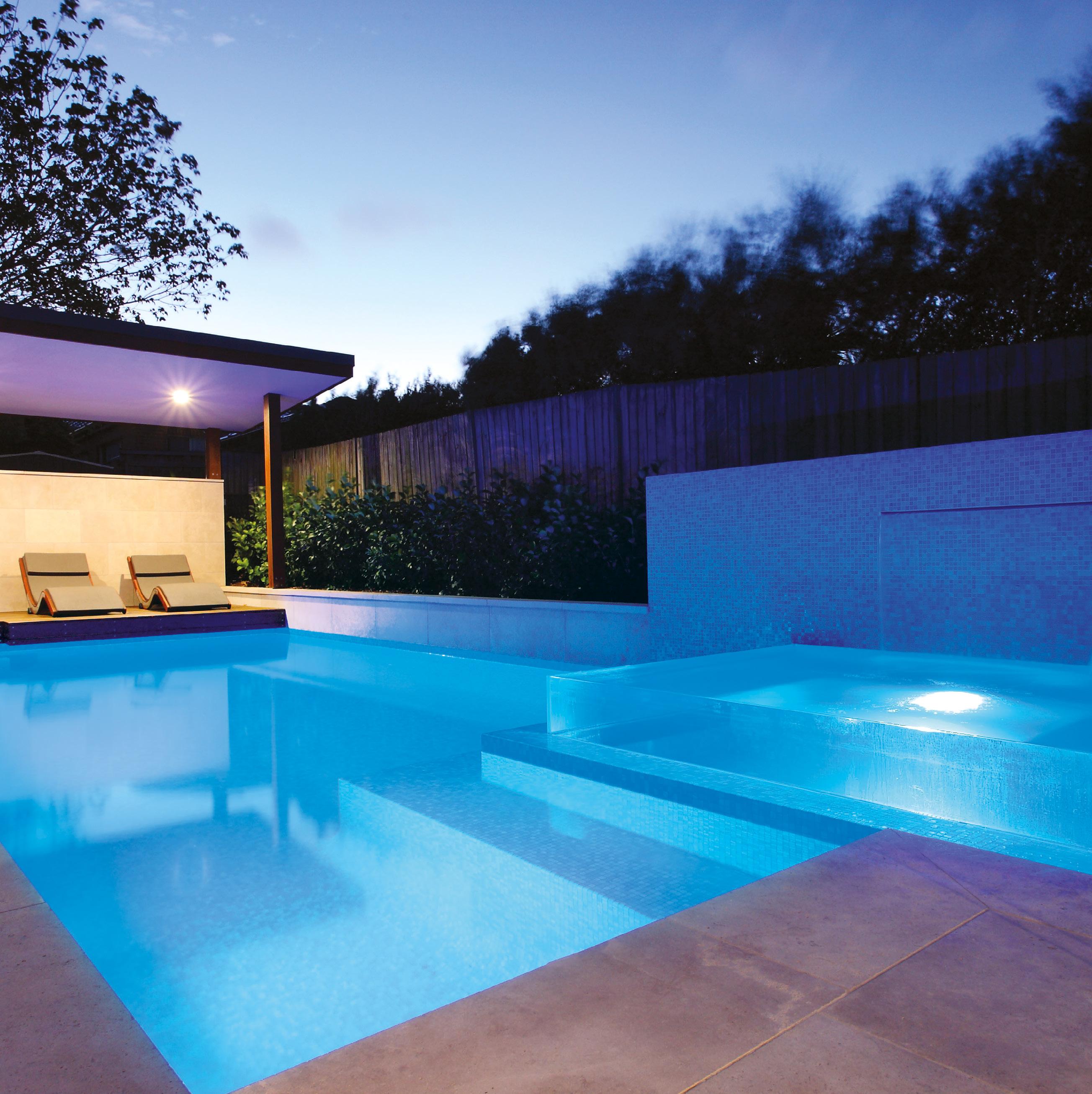
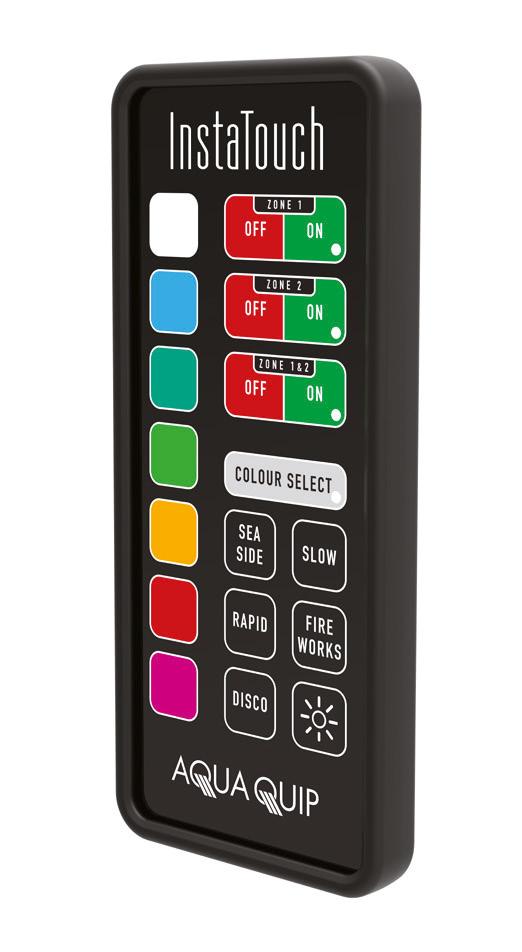
Aqua-Quip designs and manufactures in Australia, innovative underwater LED lighting systems for use in concrete and fibreglass swimming pools, spas, water features and catch tanks for the Australian and international pool markets.
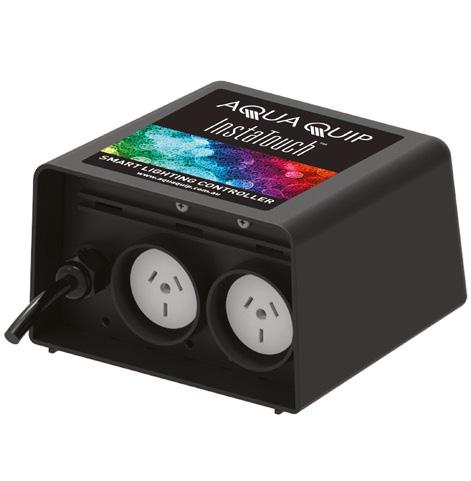
Lights are compatible with all popular pool controllers and home automation systems. The innovative InstaTouch™ Smart Lighting Controller provides instantaneous control via a water-resistant handset to enhance the evening atmosphere in your pool and spa.
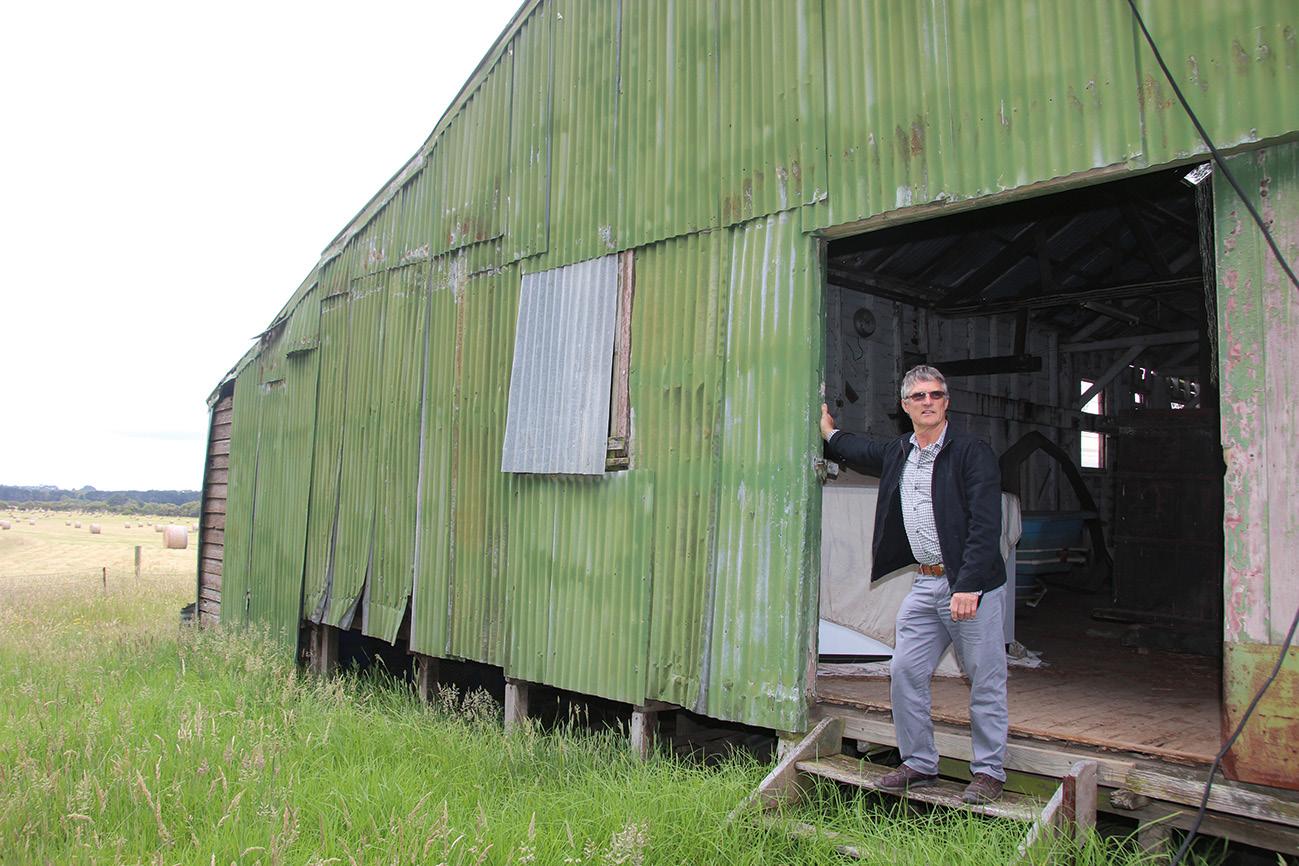
Sunbather began its life back in 1974 in very humble beginnings: manufacturing solar pool heating panels in a woolshed, on the Victorian farm of the father of founder, Simon Boadle.
The company was ahead of its time, identifying what would become an increasingly important trend in consumer behaviour: energy consciousness and environmental awareness. They introduced solar pool heating to Australia, and were also innovators, being the first to use extruded rubber tubing for pool heating, and later adapting it to a more resilient material.
The company expanded into pool covers to retain the heat in pool water, developing further innovations at the factory in Hastings, Victoria, not far from the original woolshed.
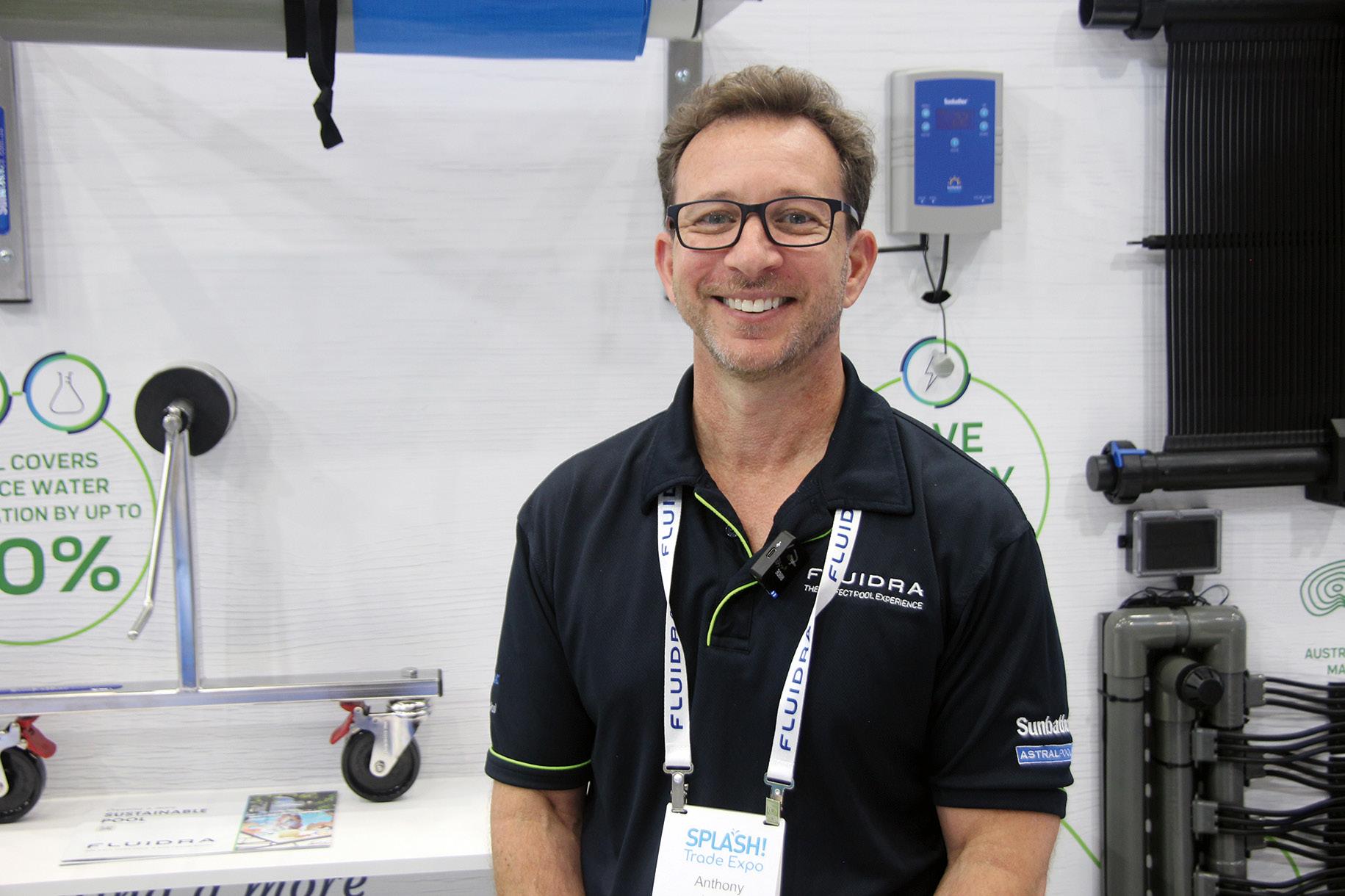
National sales manager Anthony Lestani spoke with SPLASH! about Sunbather’s journey, including joining the Fluidra team and what the future holds for the business.
Lestani has seen a good portion of that Sunbather journey himself, being with the company for 14 years, and in the industry for 35 years.
“I’ve been a long time in the industry – and obviously I enjoy it. I think being at the SPLASH! Expo helps you understand that too – you see all those relationships and all the people. It’s a nice reminder of why I love the industry so much.”
He started with Sunbather as Queensland sales manager before moving to the head office seven years ago.
“It’s been a really enjoyable ride. I’ve loved every minute of it, and we’ve seen a lot of change over that time.”
The privately run family business of nearly 46 years had two fairly recent changes of ownership. In 2019, SR Smith purchased Sunbather; and then in 2021, Fluidra purchased SR Smith – and the byproduct of that ownership change was that Sunbather became part of Fluidra.
Lestani says the strategic decision was made in the US for the purchase of SR Smith, and it was largely about focusing on the commercial platform SR Smith had to offer.
“So for us over here, there was a little bit more uncertainty about where Sunbather fitted within the umbrella of the Fluidra brands. More recently, through Val’s leadership, there’s been more of a one team philosophy, and I think Val’s really seen the value of our ESG portfolio that we offer through the greater business, with covers and rollers, being the amount of energy and the amount of water that covers save,” he says.
“Fluidra is a publicly listed global business, and as with any public listed company, it attracts investors. There’s a big market out there who are ethical
ABOVE: Anthony Lestani at the SPLASH! Trade Expo
“There’s a big market out there who are ethical investors, and if you can elevate your ESG platform, then that’s a really good value-add.”
investors, and if you can elevate your ESG platform, then that’s a really good value-add.”
There is now an acceleration for Sunbather becoming a brand within the Fluidra model, alongside other brands such as AstralPool and Zodiac.
“It gives us now the opportunity to be more innovative, to look at market segments where we haven’t necessarily been much of a player before.
“Our focus has been historically on solar, and historically we’ve invested a lot of time and money innovating solar pool heating. Now our focus is more and more on the covers and rollers, and we’re really having a lot of fun innovating those things now and trying to grow that market,” he says.
Lestani considers the legacy of Sunbather as an Australian manufacturer of 50 years standing, and says there are more advantages than disadvantages in being able to manufacture for your own country, in particular due to understanding the market and the customer base.
“Local manufacturing gives you so much more control over innovation, and so much more control over the quality of product you want to deliver to the marketplace. Those advantages outweigh the disadvantages, in my opinion. And there are disadvantages in manufacturing.
It can be a little bit more difficult from a scalability perspective. Sometimes, even though you can be more innovative, it can be harder to turn if there’s a shift in the market. But you can also create those shifts – and be part of bigger shifts.
“And from a price competitive point, there’s always international products coming into the marketplace where the quality is not there. And they can drive the price down. It’s really important for people to see that value proposition of what you make, more than the price of what it costs.”
Lestani says that being part of the Fluidra stable has helped with Sunbather’s manufacturing processes.
“Something they do very, very well is manufacturing – as well as all the other good things they do. We’ve had a lot of value from their insight in the manufacturing process. They’ve been able to come in and see what we do, and give us a lot of advice as far as improving efficiencies – we’ve become a lot more efficient in manufacturing, and that’s given us a greater ability to compete more aggressively. If you can get your manufacturing costs down, but keep the quality of your product up, you’re naturally going to be more competitive,” he says.
Lestani has seen a number of changes in the pool heating market over his time with Sunbather.
“There’s been three ways to heat a pool for a long time now: gas, heat pumps and solar have been around for a while. More recently, heat pumps have made the biggest impact.
“When we started to see Chinese made heat pumps hit the Australian market, that drove the price down considerably, and that made the heat pump more of an option for consumers. I remember selling heat pumps maybe 25 years ago, and a heat pump for domestic was around $15,000. It was a higher priced product and there wasn’t many in the market compared to now, where you can have a similar sized unit for a much lower price.
“That’s enabled heat pumps to compete for solar a lot more aggressively, and we’ve certainly seen a shift there, coupled with the fact that photovoltaic cells have competed for real estate on the roof. The running cost proposition has come down too, because heat pumps require a lot more electricity, but if you can offset it with the photovoltaic, that’s changed the landscape a little bit.
“There’s still a good place for solar in the market. And as the heat pump wave sort of flattens out, we’re starting to see people look at their options with solar a little bit more and realise that, even though solar can be perceived as an old technology, it should be embraced as a future option for sustainable pools,” he says.
“A lot more people are heating their pools today – and more people are covering their pool as well. So that energy conservation, that water conservation, is certainly becoming a requirement.”
He adds that it is to the industry’s advantage if people cover and heat their pools all the time.
“The more people heat their pools, the more time they swim, and the more time they spend in the water.
“We also want it to be as sustainable as possible. As the future

“Local manufacturing gives you so much more control over innovation, and so much more control over the quality of product you want to deliver to the marketplace.”
generations of consumers come through, their focus on climate is certainly different to what our focus was. So if we can continue to ensure that people are using the pool as much as possible, are doing it in a sustainable way, by using pool covers, particularly to conserve that energy, I think the future is fantastic.”
Lestani says the future for Sunbather will continue to be what they do now: solar pool heating, covers and rollers. It will also be integrating more into Fluidra.
But there are also fun times ahead, with great opportunities on the horizon.
“We’re really just starting,” he says.
“Even though we’ve been doing covers and rollers for decades, we’ve got so much more to do. We’re doing more and more development; we’re investing back into innovation. We’re working with a much broader team, with Fluidra’s engineering and R&D and electronics teams. The opportunity for us is so much broader. They’ve got a branch in every state, which means a bigger footprint and a better ability to be in the marketplace. Which is a lot more than Sunbather had.
“That will make Sunbather a lot more accessible, and will help drive innovation even further. And then that’s just local. When we look at Fluidra global, and they own companies all over the world that do similar things to us, and different things to what we do in the pool cover and roller market. So there’s not only opportunities here in Australia, there’s opportunities overseas as well, where we can look at maybe bringing in complementary products from the Fluidra global market into Australia that maybe we haven’t seen.
“So I’m pretty excited about all that.” n
By Veda Dante
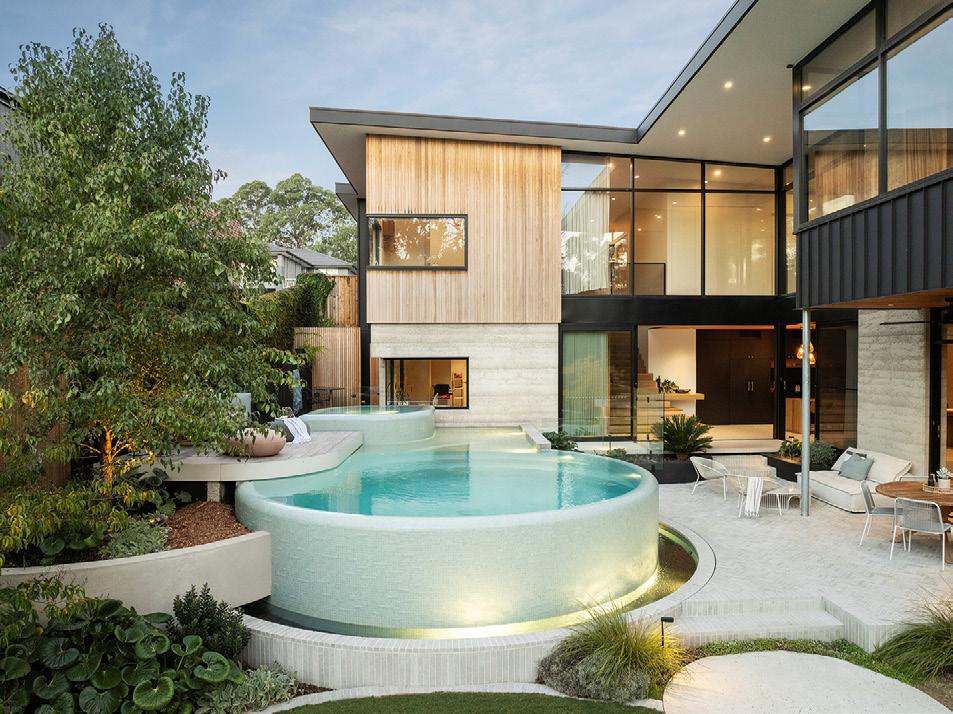
ABOVE: Adding elements to both the pool and surrounds can help profitability by elevating pool projects, especially with features that are not labour intensive. Image: Shadowspec BELOW: Proper contract management can lead to higher profitability overall for the pool builder
Profit is undeniably the aim of any business, serving as the driving force behind both new ventures and established enterprises.
However, achieving sustained profitability requires more than just ambition – it demands strategic planning, innovation and adaptability.
Whether you’re a seasoned pool builder or just starting in the industry, the key to ensuring success lies in building a solid foundation for profitability and long-term success.
Pool builders can increase their profit margins by improving operational efficiency, enhancing the value of their services, and strategically managing costs. Increasing profit margins is crucial for sustaining growth, staying competitive and ensuring long-term
SPASA chief policy officer Spiros Dassakis emphasises that efficiently managing contracts throughout the entire construction process is key for pool builders to boost profit margins.
He believes optimising the contract process –beyond just signing on the dotted line – helps prevent cost overruns, minimise delays, mitigate risks, improve cash flow, enhance client satisfaction and increase the builder’s profitability.
“The management of the contract is not only the biggest risk but also the greatest asset for any pool builder,” says Dassakis.

“From my experience, I’ve seen pool builders improve their margins by 15 per cent to 20 per cent simply by managing their contracts properly. This includes monitoring interest fees for late payments, issuing extensions of time, properly filling out variation forms and serving notices to the customer.”
SPASA’s contracts have been legally refined over four years, shaped by feedback from members and industry experts during a national roadshow. Dassakis proudly asserts there is no better contract.
He explains that multiple iterations were developed based on feedback, alongside advice from a top-tier
“The management of the contract is not only the biggest risk but also the greatest asset for any pool builder.”
legal firm, and the contracts were road-tested before being made available to members. The result is a significant investment in water-tight contracts, offering better protection than ever before for pool builders.
Although any contract can be challenged, Dassakis believes that builders who effectively manage SPASA contracts throughout the project lifecycle will see a direct impact on their bottom line.
“Too often, pool and spa builders delegate contract management to administrative staff, which is fine if they’ve received adequate training,” he notes. “However, managing contracts often involves complexities beyond what is suitable for a general admin role.”
Dassakis insists that training is key.
“Having a dedicated, proficient person or team to handle the intricacies of contract management ensures smoother operations and avoids costly mistakes. Contracts often contain legal, financial and technical terms that require a deep understanding of project scope, regulatory requirements, and risk management. Effective contract oversight also involves negotiations with clients, subcontractors, and suppliers, demanding both decision-making authority and real-time project knowledge.”
Contracts are dynamic and may require updates or amendments as the project evolves. Managing changes in scope, cost and timelines is not just an administrative task; it requires an in-depth understanding of the construction process.
“A poorly managed contract can expose a pool builder to significant legal and financial risks,” says Dassakis. “Understanding how to mitigate these risks is critical to ensuring project profitability.”
Recurring feedback on SPASA contracts highlights two critical areas: better payment protection and improved contract clarity. These factors are essential for achieving successful outcomes in pool construction.
“When you strip it down, pool builders want to build, and they want to be paid,” he says. “If contract management was prioritised more consistently, we’d see fewer builders chasing outstanding payments and embroiled in disputes.”
Dassakis also highlights the importance of the pool handover process, often treated as an afterthought, yet crucial to a builder’s profit margins and risk exposure.
He says that SPASA’s pool handover process adds another layer of protection for builders. Not only does it allow them to pass on maintenance requirements for the new or renovated pool, it also provides an opportunity to supply technical documents for equipment like pumps and chlorinators, which also require their own maintenance.
“The handover is not just about completing the project,” Dassakis explains. “It’s about ensuring the client acknowledges that the pool has been handed over, transferring responsibility to them.”
This crucial step provides multiple layers of protection, going beyond the construction phase to ensure the builder is shielded from liability once the project is complete.
“Ultimately, the handover is a vital closing phase that not only helps clients understand how to
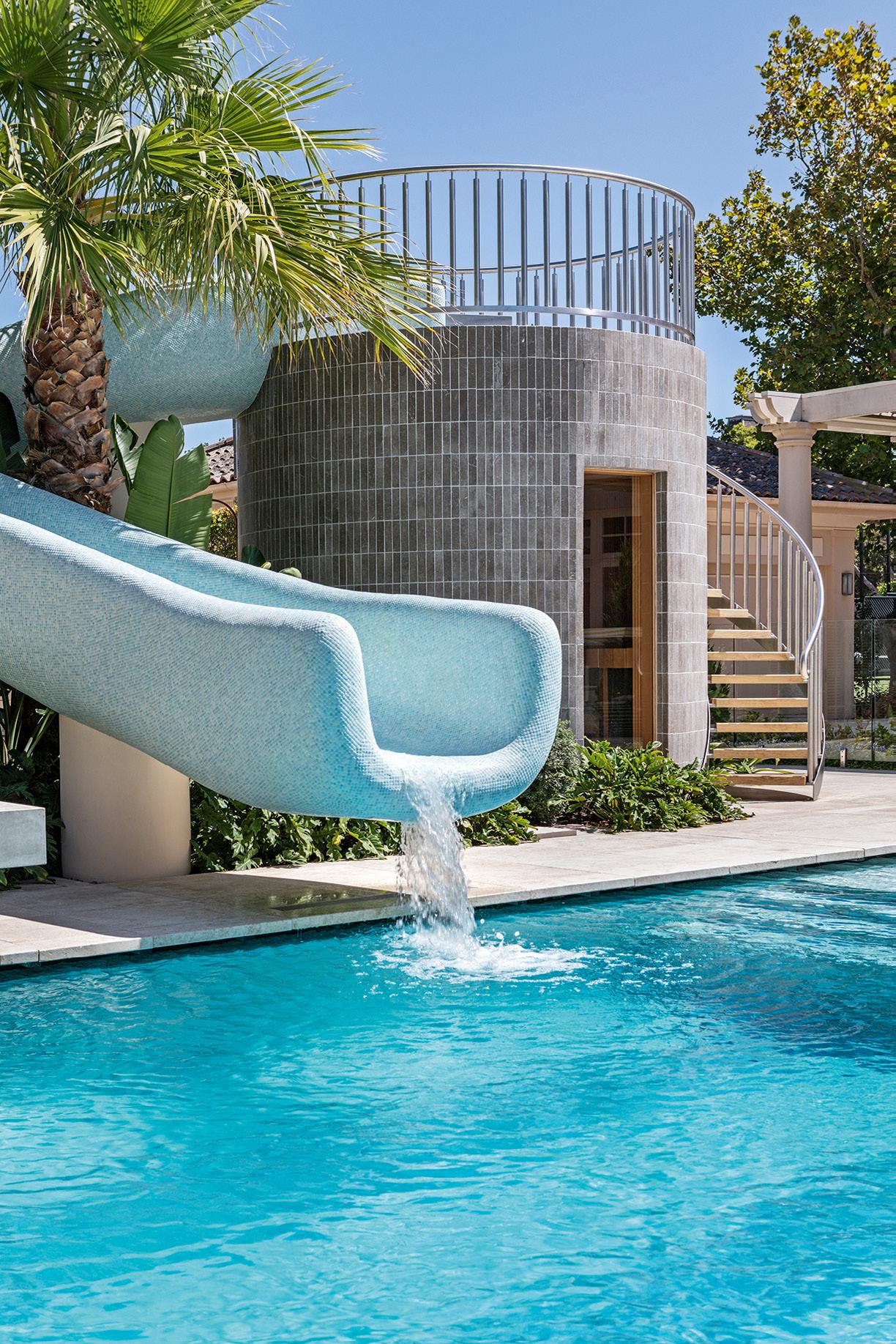
“If contract management was prioritised more consistently, we’d see fewer builders chasing outstanding payments and embroiled in disputes.”
maintain their investment but also protects the builder once the project is finished.”
Cheryl Ellis, who established Perth-based Aurora Pools in 1994 with husband Darren, agrees that contract management – along with maximising skill sets – is an integral element of running a profitable business.
“Having everything in writing is crucial so that we as a builder know what we are supplying, and the client knows what to expect,” she says. “I’m a combination of old- and new-school.
“We not only have hard copies of contracts, but I write out all the inclusions for every new job on a big whiteboard so that our team is on top of equipment, schedules, inventory and payments. You must keep on top of things every step of the way.”
By expanding skill sets, Ellis says the business can offer a wider range of services, such as custom features (fire pits, spas, water features) or additional landscaping. These add-ons not only enhance the appeal of the project but also increase the overall project value and profit.
“My husband is also a bricklayer by trade, so the vinyl-liner pools we build are bespoke,” she says. “He can build the shell of the pool into the shape that is required. He can build pools on the side of hills and
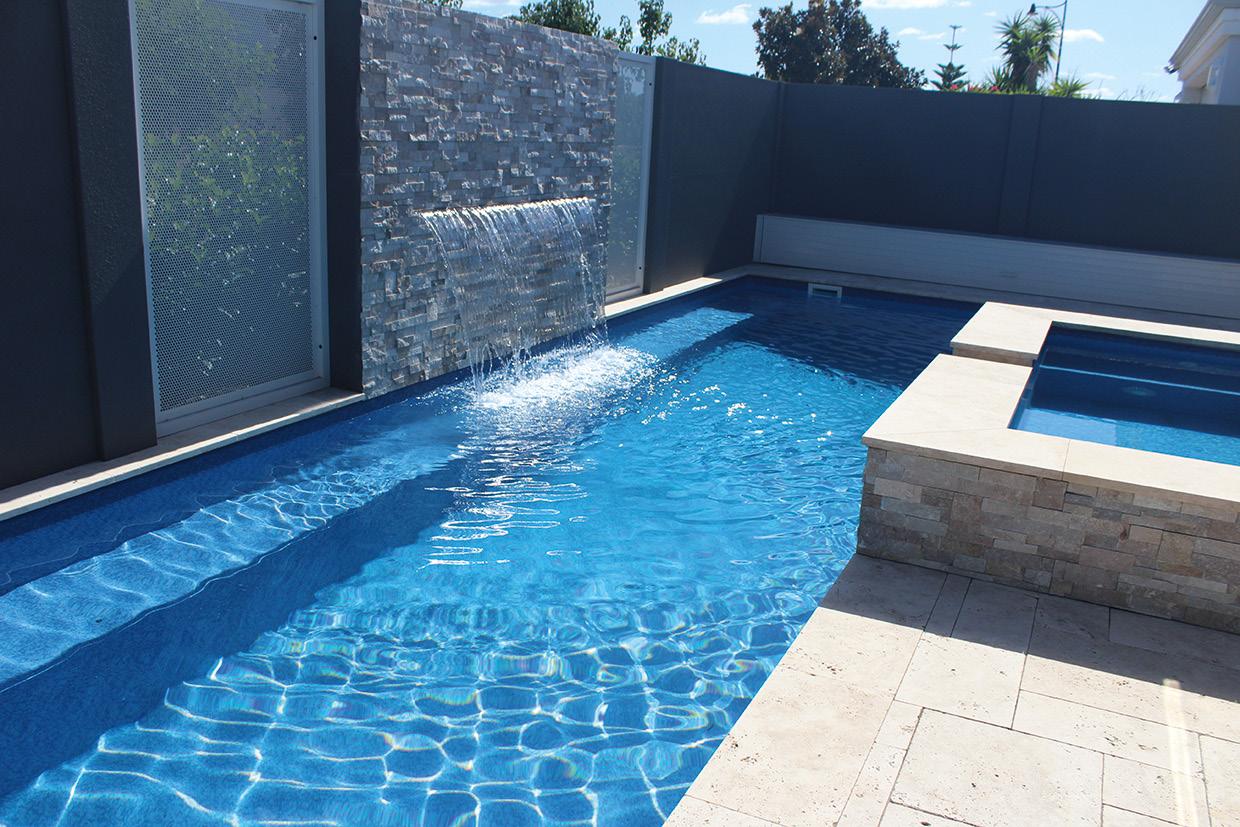
ABOVE: Waterfalls and planter boxes are other features that transform a pool and bring in extra revenue.
Image: Aurora Pools/Patrick Redmond.
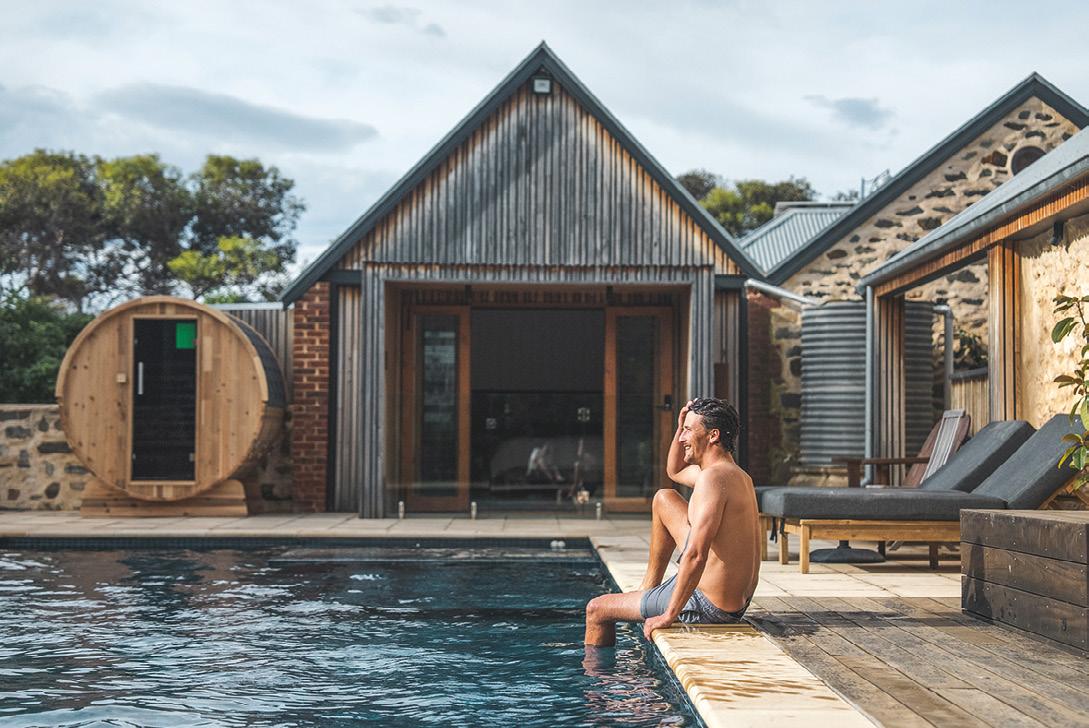
TOP RIGHT: Saunas are a growing trend, and represent an a low-labour profit boost.
Image: FoundSpace Saunas
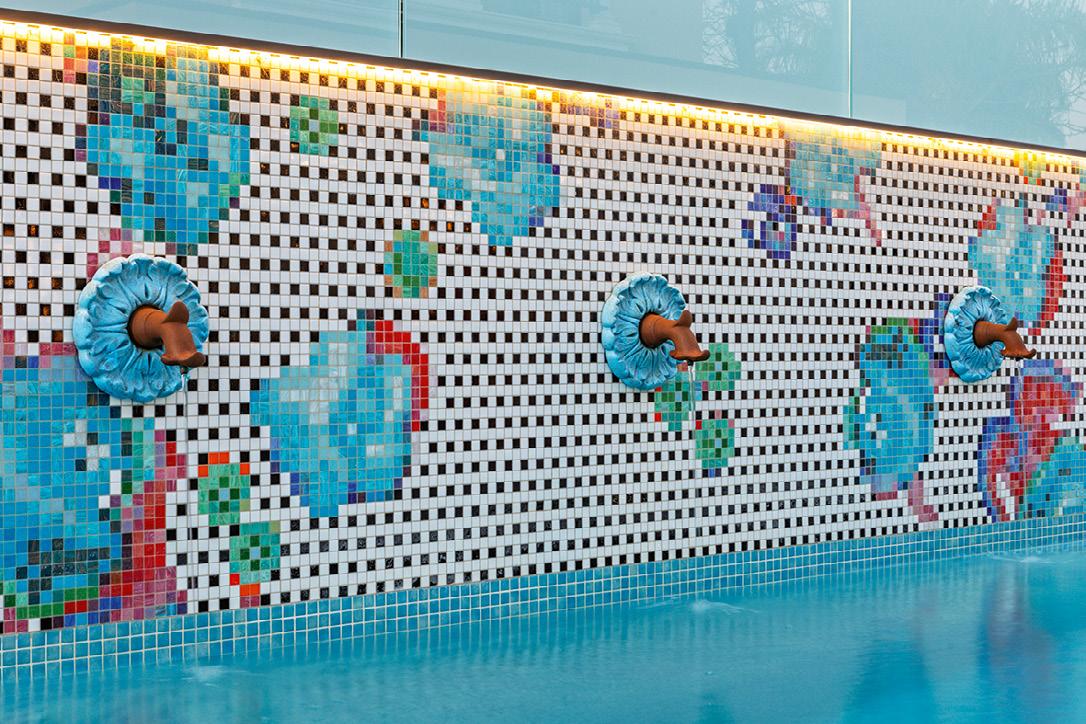
BOTTOM RIGHT: Adding a colourful wall as well as water spouts is another way to elevate the project and the profit. Image Enki Pools/Patrick Redmond
recently incorporated a planter box with a Silkflow waterfall that flows in to the pool.”
Having Darren’s versatile skill set not only allows Aurora Pools to control the entire project and deliver a cohesive swimming pool package, but it also directly contributes to increasing profit margins.
“By eliminating the need for a project manager and relying less on external contractors for additional features like fire pits and outdoor showers, you’re reducing costs, minimising delays, and enhancing the overall client experience.
“This streamlined approach not only ensures a unified vision but also boosts financial efficiency, making your service more competitive.”
Inclusions such as outdoor umbrellas, infrared saunas and cold plunge pools offer pool builders the opportunity to increase their bottom line along with enhancing the overall pool project.
“Excessive heat and sun exposure is going to limit the amount of time customers can enjoy their new outdoor pool. This means that homeowners will require shade as soon as the pool build has been completed,” says Shadowspec partner development manager Chris Cashmore.
“For landscape designers and architects there is an opportunity to provide their clients with a better shade solution from the outset, and for pool builders and pool service companies there is an immediate opportunity to add extra revenue to their businesses by offering shade for their clients.”
Cashmore says the disadvantages of pergola or louvre systems is they’re often outside the typical homeowners’ budget and require council approval.
“They’re also a fixed, permanent solution,” he says. “Umbrellas, on the other hand, are an excellent choice as they don’t require building permits and are
"I’ve seen pool builders improve their margins by 15 per cent to 20 per cent simply by managing their contracts properly."
needed. The Shadowspec Unity and Shadowspec Serenity have some fantastic, patented technology and clients are stoked with how easy they are to use. We’ve found that it’s been a game-changer in both residential and commercial projects."
Pool builders interested in becoming an approved Shadowspec partner will benefit from wholesale pricing that starts at 30 per cent off recommended retail prices, he says.
“We are also offering landscape designers and architects a 10 per cent commission when a customer they refer to Shadowspec purchases one of our products,” Cashmore adds.
Remco managing director Carl Voshege believes that as pool builders get older, they often realise they can do less simply by making higher quality pools and garnering more profit out of them.
This perspective highlights a key evolution in the approach of experienced pool builders – as they mature in their careers, they often shift their focus from handling a high volume of projects to prioritising quality over quantity.
“Our philosophy is to extract as much value out of every pool build; rather than putting as many pools in as you can, you jam pack them with features,” he explains.
“For us, that means integrating the Remco SwimJet system and installing an automated cover.
“Together, this can easily add $20,000 of profit to the project.”
The growing focus on holistic health, where individuals look to balance physical, mental and emotional wellbeing, has contributed to the popularity of wellness tools like infrared saunas and cold plunges. Many see them as natural, noninvasive methods to promote better health without pharmaceuticals or invasive treatments.
So, if you’ve noticed them pop up more on your social feeds, you’re not alone. The increasing presence of these products is being further amplified by influencers, making them more visible online.
Found-Space CEO Alex Tyson says there are a few


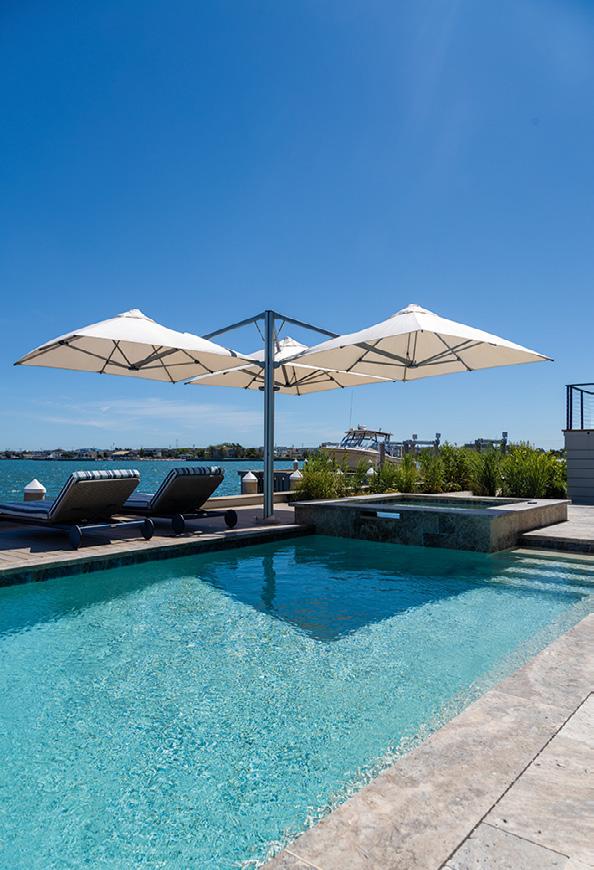
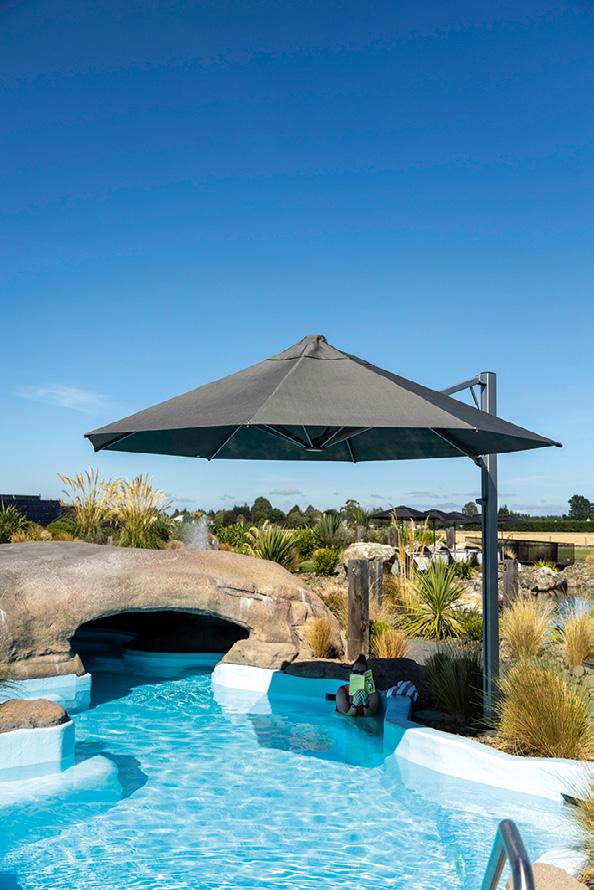
ABOVE: The Shadowspec Unity Trio umbrella creates excellent cover by linking three shades in one RIGHT: This pool has many additional features, including submerged seating, shade and a stylish water cave. Image: Shadowspec
drivers behind this trend and explains how pool builders can use them to enhance their projects.
“There are a few key elements that have led to the rise of at-home hormetic technology use over the last few years, first of which was covid,” he explains.
“Hormetic therapy harnesses a certain type of bodily stress to trigger a beneficial effect on our cells and health. It utilises controlled exposure to good bodily stressors to activate an adaptive response that ultimately makes us stronger, healthier and happier.”
Tyson says the industry saw a huge uptick in popularity due to consumer awareness around the
importance of health, mental health and products they can use at home to achieve better wellbeing.
“At a similar time – and especially over the past 24 months – global podcast figures such as Andrew Huberman and Joe Rogan, and people such as Whim Hoff, have talked to the benefits of these products, greatly increasing the awareness of the health benefits associated with sauna and cold plunge,” he explains.
So, how can these inclusions enhance a new pool build’s bottom line?
“An outdoor barrel infrared sauna or a cold plunge with a new pool build provides a win-win for the builder and their customer. A sauna enhances a new pool for the customer by providing them an additional use of the pool,” says Tyson.
“Contrast therapy has been shown to greatly enhance our overall wellbeing and mental clarity, and there is no better way to do this than from jumping straight into the pool after a hot sauna. It provides an extra layer of use for the area as well as adding to the overall aesthetic of the poolscape and the valuation of the house.
“For the builder, adding a sauna to their build can increase the value they add to their customer through creating an even better experience, as well as increasing their revenue and gross profit on the job.”
Jieen Huang from Nesta Saunas, who exhibited recently at the SPLASH! Trade Expo, says there is


considerable money to be made by recommending these inclusions.
“With a trade price of $US1400 each, pool builders can triple or even quadruple the retail price by including a Nesta sauna,” he says.
“Installation is relatively easy – builders just need to assemble the product and connect it to the services.”
Several builder visitors at the recent SPLASH! Trade Expo were looking for saunas as a profitable add-on to their pool builds, including Clint French from Pools by Design on the Sunshine Coast, who believes being first on site, the pool builder has a great opportunity to interest clients in these types of additional features.
“In the world we’re in at the moment, a lot of people are interested in their health – so, saunas, spas, cold plunges, all those kind of things. You’re not going to sell thousands, but you’ve got to have it in front of them. And they’re not that hard to install,” he says.
Another builder, Wayne Dorgan from Gold Coast company Coastal Sauna and Steam, says that with saunas, profitability increases the larger the sauna you build or install, as costs are proportionally less.
Dane Wiseman from CyberFunnels and Brett Lloyd Abbott from Pool Builder Marketing both believe that better use of marketing tactics and strategies can increase a business’ profit margins.
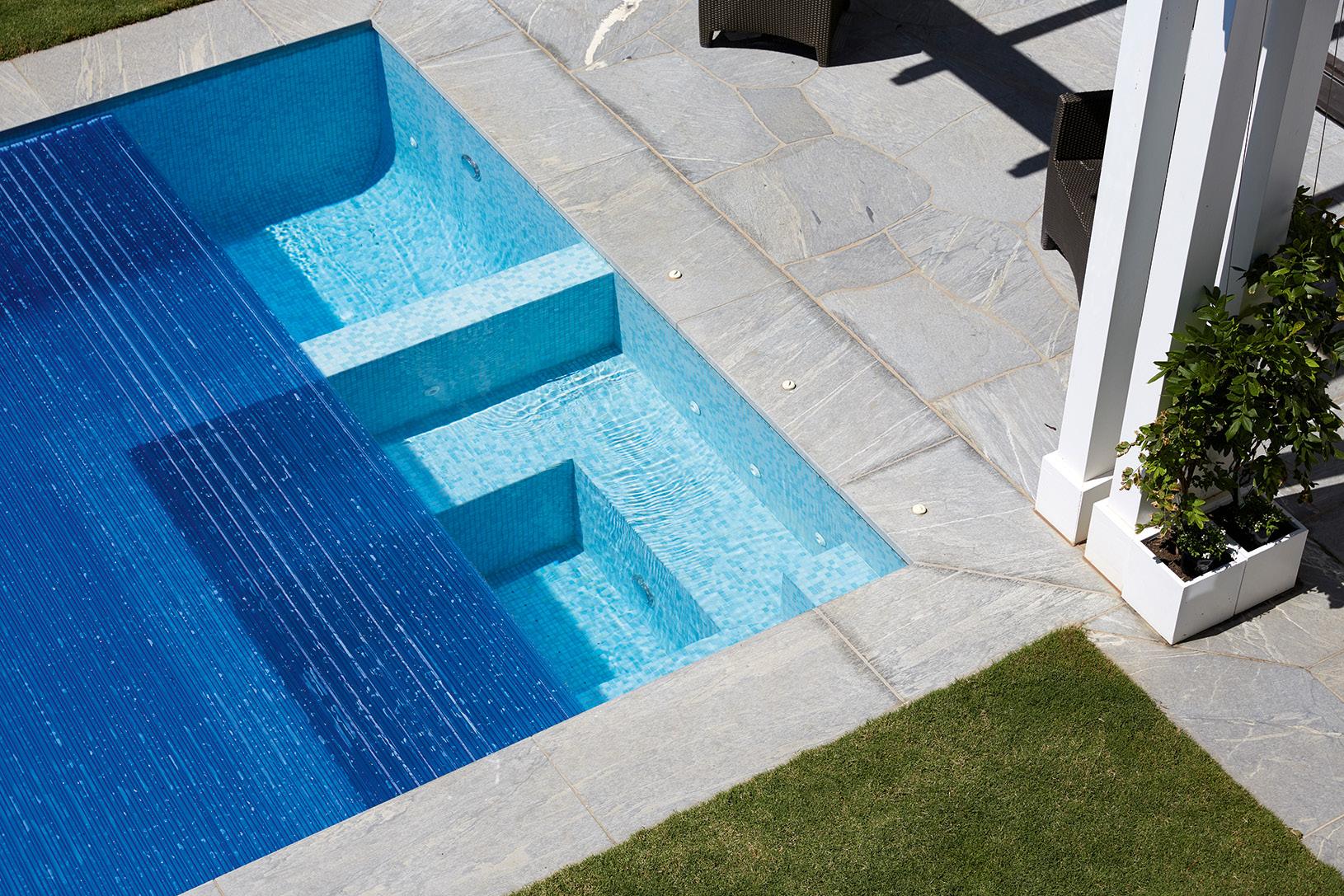
Extracting as much as value as possible out of each pool build means you can build less pools for the same profit. Inbuilt pool covers are one avenue to help achieve this. Image: Remco
There is a huge opportunity for upselling and increasing the total value of projects a pool builder is selling. The first is additional custom or advanced features and options on the swimming pool itself, such as:
• Water features
• Raised walls
• Spillover spas
• Tanning ledges
• Slides
• Grottos
• In-water tables and chairs
• Beach entries
• Vanishing edges
• Perimeter overflows
• In-floor cleaning systems
• Automatic pool covers
• Movable floors
Also consider the following added features and amenities around the pool:
• Expanded decks
• Fireplace/firepits
• Shade systems including outdoor umbrellas
• Pizza ovens
• Outdoor kitchens and bars
• Artificial turfs
• Putting greens
• Shower or freestanding tubs
• Bathhouses
• Guesthouses
• Man-cave or she-shed
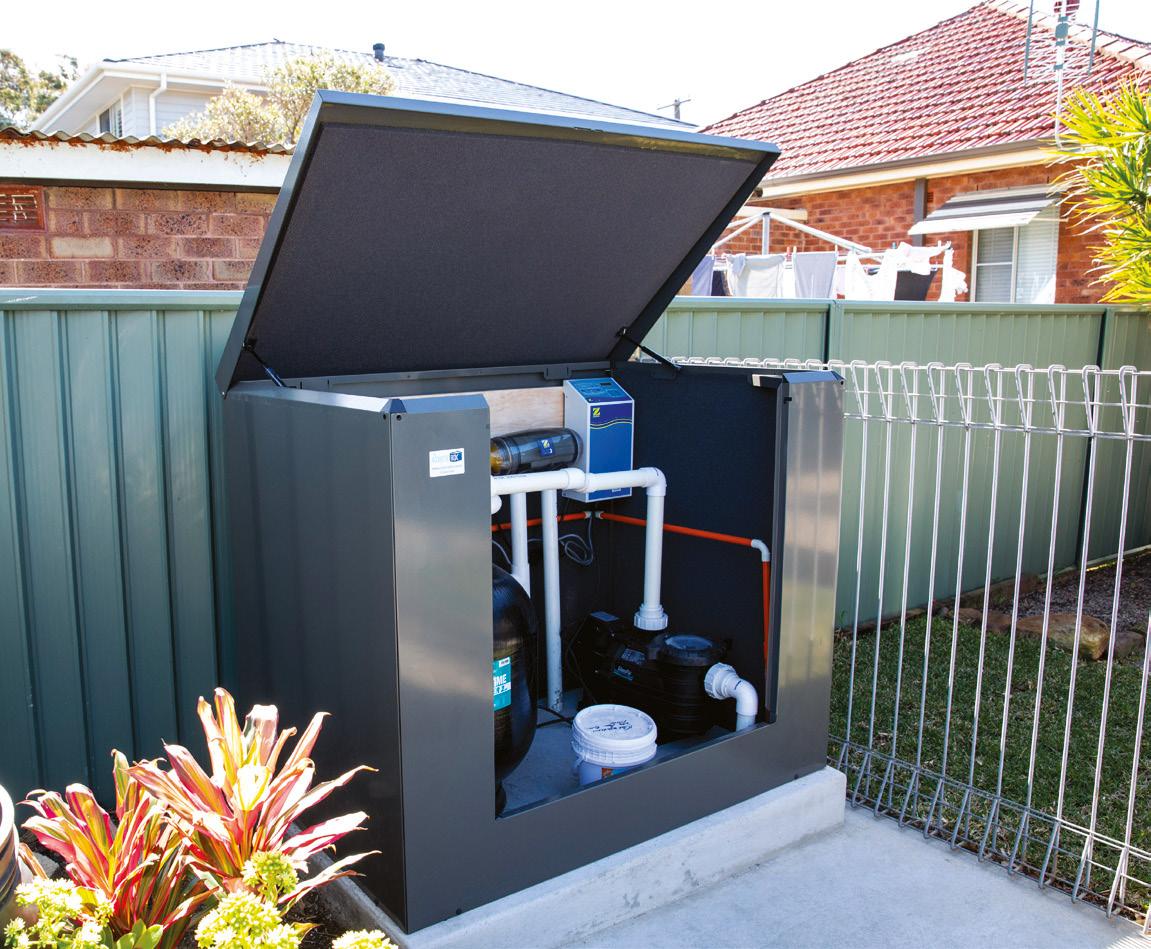
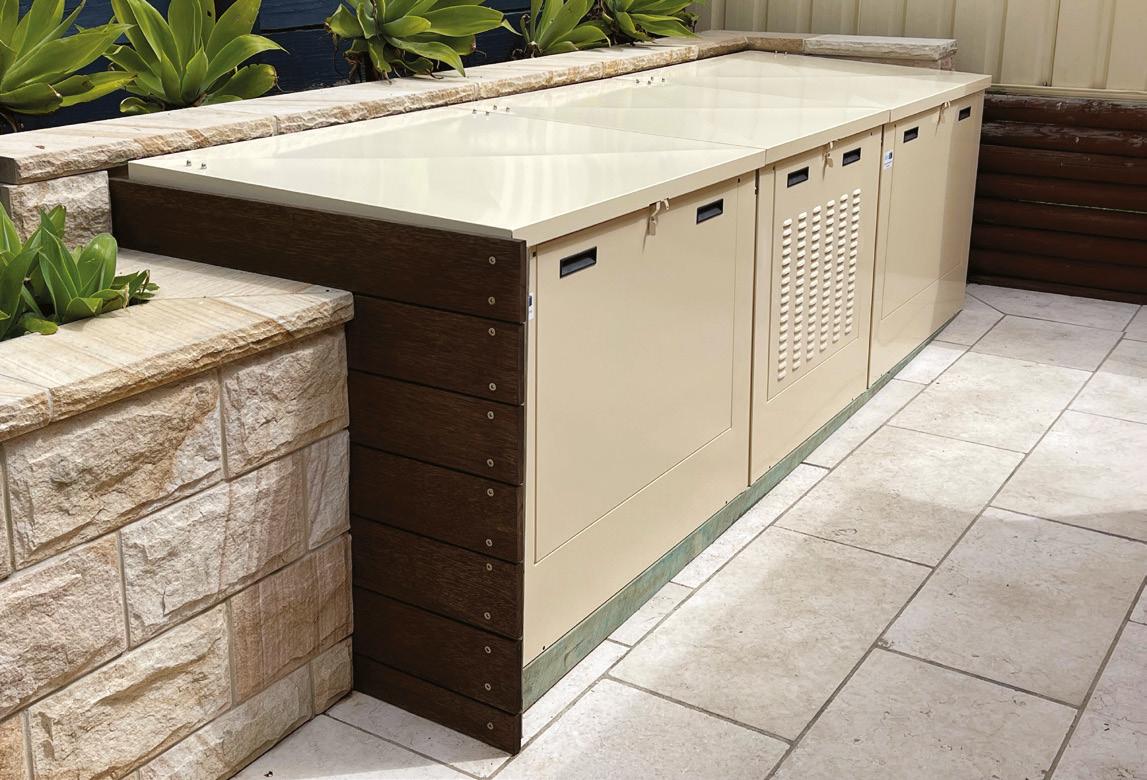
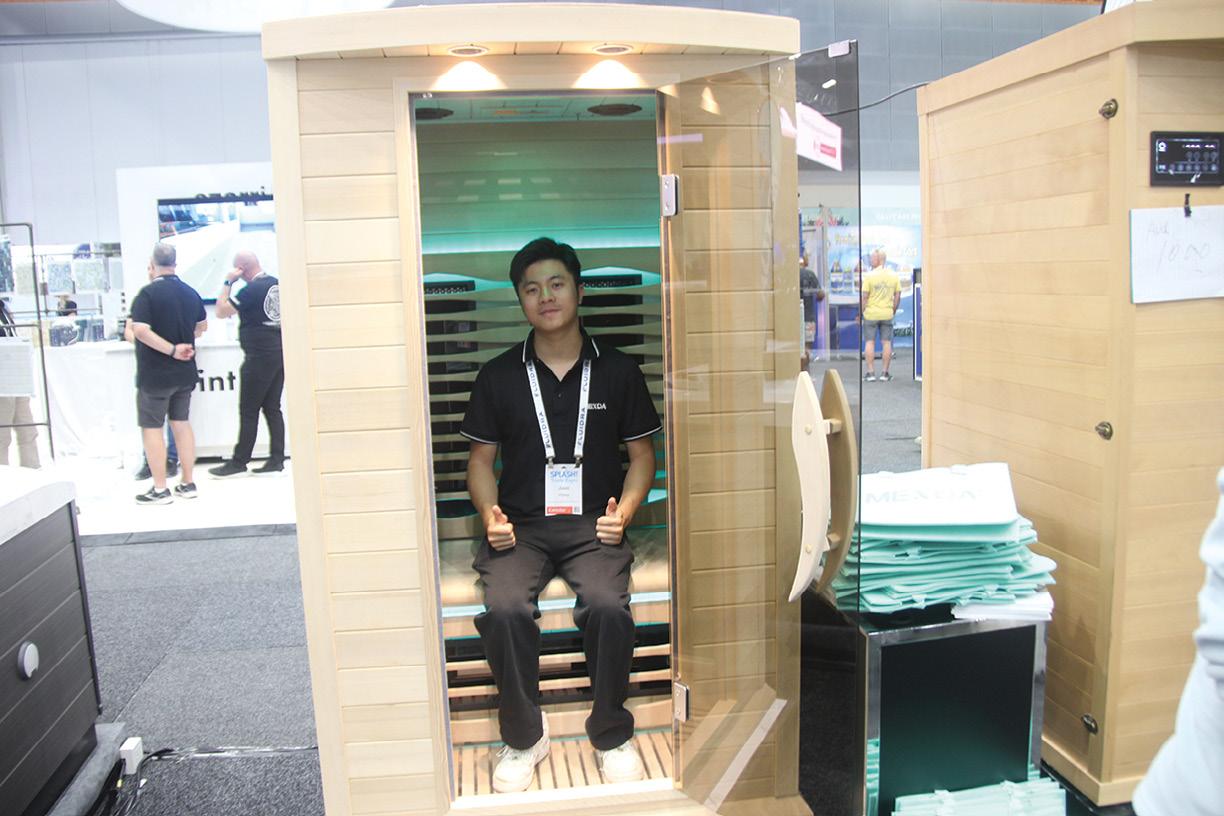
ABOVE: Small one-to-two person infrared saunas from Neeta on display at the SPLASH! Trade Show
“For the builder, adding a sauna can increase the value they add to their customer as well as increasing their revenue and gross profit on the job.”
The popularity of infrared saunas and cold plunge pools can be attributed to their health benefits, the rise of wellness culture, and the influence of social media. They tap into current trends of fitness, mental health, recovery, and holistic wellbeing, which are highly shareable and visually appealing on platforms like Instagram and TikTok.
Alex Tyson from Found-Space, one of Australia’s longest-running infrared sauna companies, explains why more homeowners are investing in saunas and ice baths.
Benefits of hormetic stress through sauna:
• Activation of heat shock proteins.
• Improved cardiovascular fitness.
• More supple skin. Increased heart rate which improves heart health.
• Dilated blood vessels which improve circulation.
• Improved inflammatory markers.
• Improved brain function.
Benefits of hormetic stress through ice baths:
• Improved cardiovascular fitness, circulation and cellular health.
• Improved cognitive function (the building of new brain synapses), resilience, focus, clarity and concentration.
• Better tolerance to stressful situations.
• Quicker recovery time after exercise (reduced inflammation, pain and swelling).
• Slowing down the aging process/increasing longevity (including more youthful-looking skin).
If you use hot/cold therapy (alternating between the hot temps of a sauna and the cold temps of an ice bath) this can enhance the benefits of each while also adding some extras such as triggering lymphatic circulation, which helps to flush out toxins and stimulate your body to release endorphins and adrenaline.
“Marketing plays a pivotal role in boosting a pool builder’s bottom line by establishing expertise, authority and trust – factors that are critical for attracting and converting new pool owners,” Wiseman says.
“An effective marketing system and process can help a pool builder establish these key factors with homeowners, thus allowing them to up-sell, cross-sell, and sell more efficiently.”
For example, investing in high-quality visual assets –such as professional photography, 3D renderings, and video walkthroughs – directly influence a pool builder’s ability to attract clients, upsell services and differentiate their offerings.
“Good quality photography and video adds to the bottom line by improving the homeowner’s buying experience, leading to higher margin projects and faster sales cycles,” Wiseman explains.
“Visual storytelling strategies should be used by pool companies to demonstrate their expertise and authority to build trust with their brand, company and products.”
Premium visual assets create an immediate positive impression. When potential clients visit a website or see marketing materials, professional images of welldesigned pools elevate the perception of the builder’s craftsmanship, attracting clients willing to invest in premium services.
“I have been preaching to pool builders for nearly 20 years to invest in high quality photographs,” says Abbott. “I can think of no other single marketing effort that can produce a greater return on investment than getting high quality photos that show off the calibre of your work.”
Marketing assets that showcase intricate designs, luxurious finishes, and customised features position the builder as a high-end service provider. This enables them to justify higher prices for projects, improving profit margins.
“Visuals like 3D renderings or virtual tours also allow pool builders to communicate design ideas more effectively to homeowners,” he explains. “When clients can visualise the result, they are more likely to be convinced of the value and scope of the project, leading to higher-value contracts.”
Abbott says the data overwhelmingly demonstrates that 80 per cent of the pool buyers’ decisions are based on the photographs provided by the pool builder.
“Great photos? Must be a great builder. Unimpressive photos? Well, you get the picture.”
Increasing profit margins is not just about making more money – it’s about ensuring the long-term success and competitiveness of your business. By optimising operations, maximising skill sets and focusing on value-added services, pool builders can protect their profitability while growing their brand and customer base. n
www.aurorapools.com.au
www.cyberfunnels.com www.foundspace.com
www.poolbuildermarketing.com
www.remco.com.au
www.shadowspec.com
www.spasa.com.au
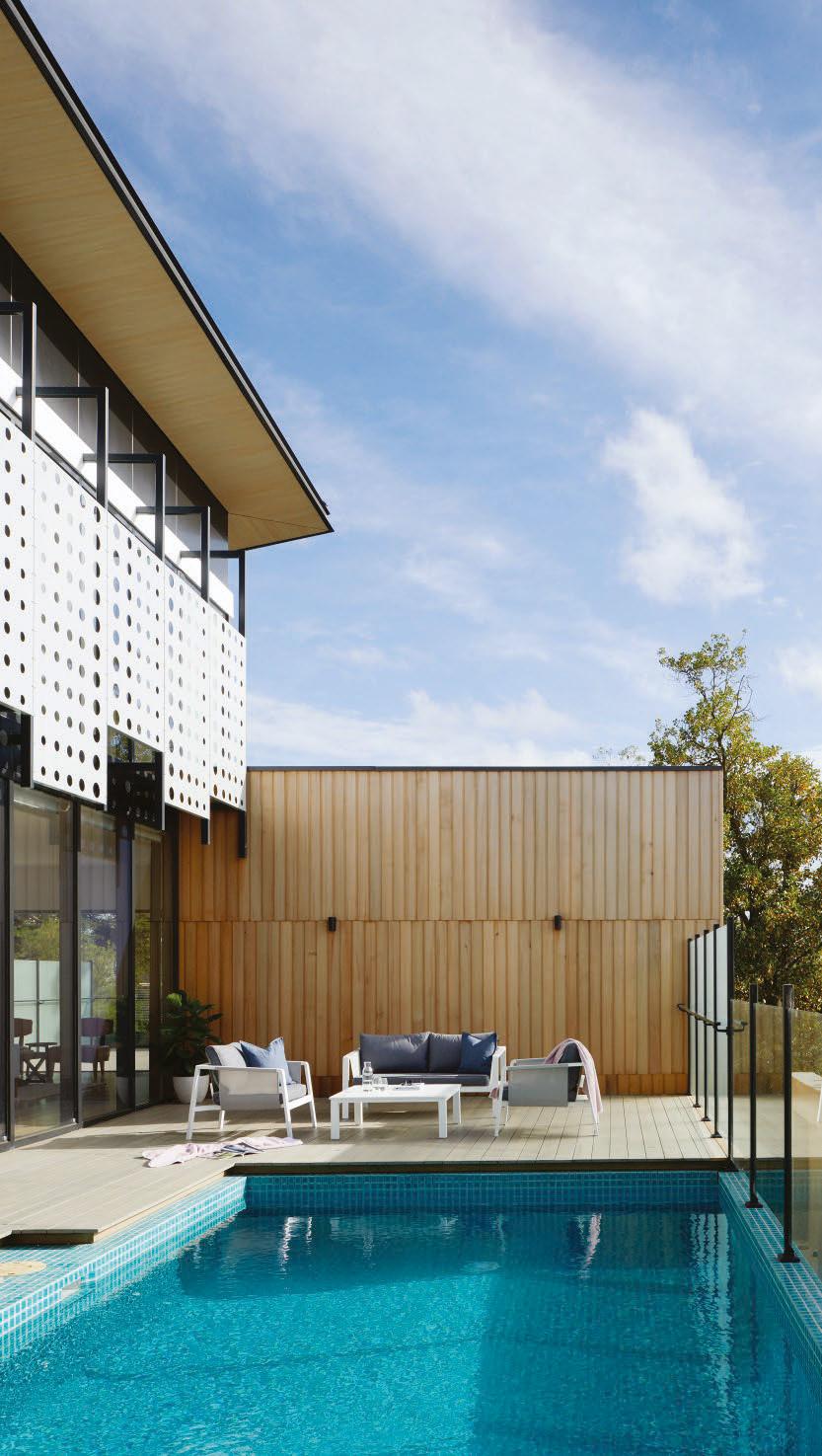
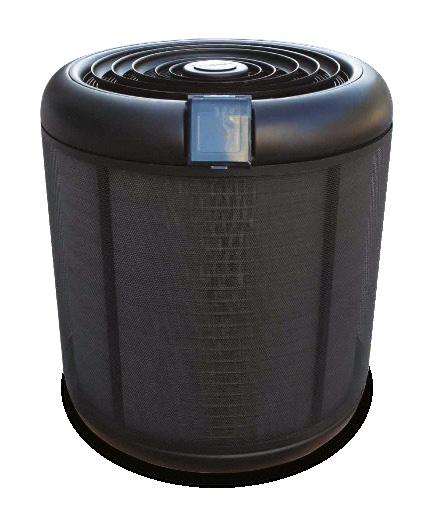


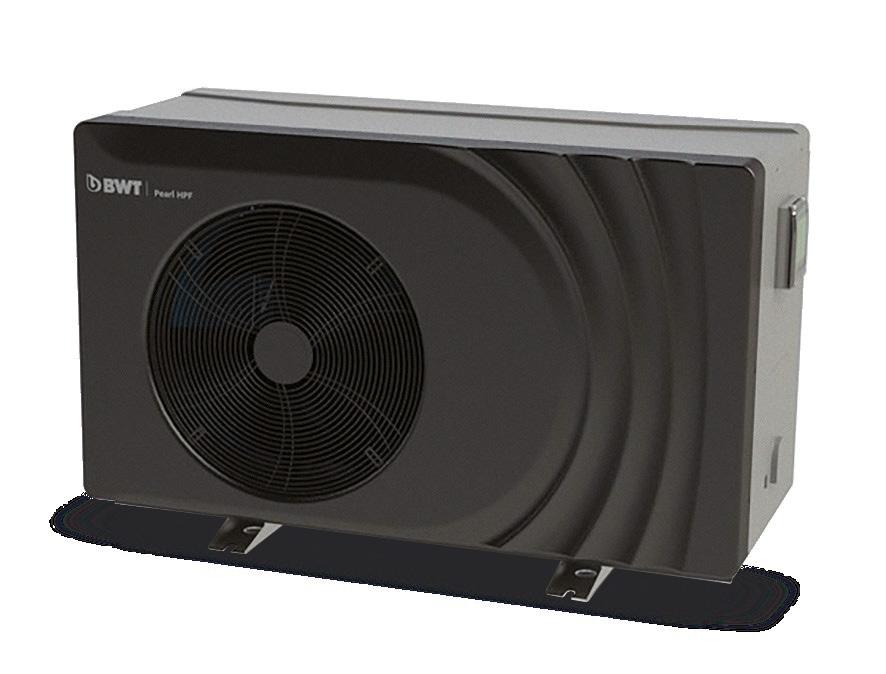

Our customer service team is with you every step of the way, from system design and product selection to after-sales support.

SPASA 2024 Multi Award Winners

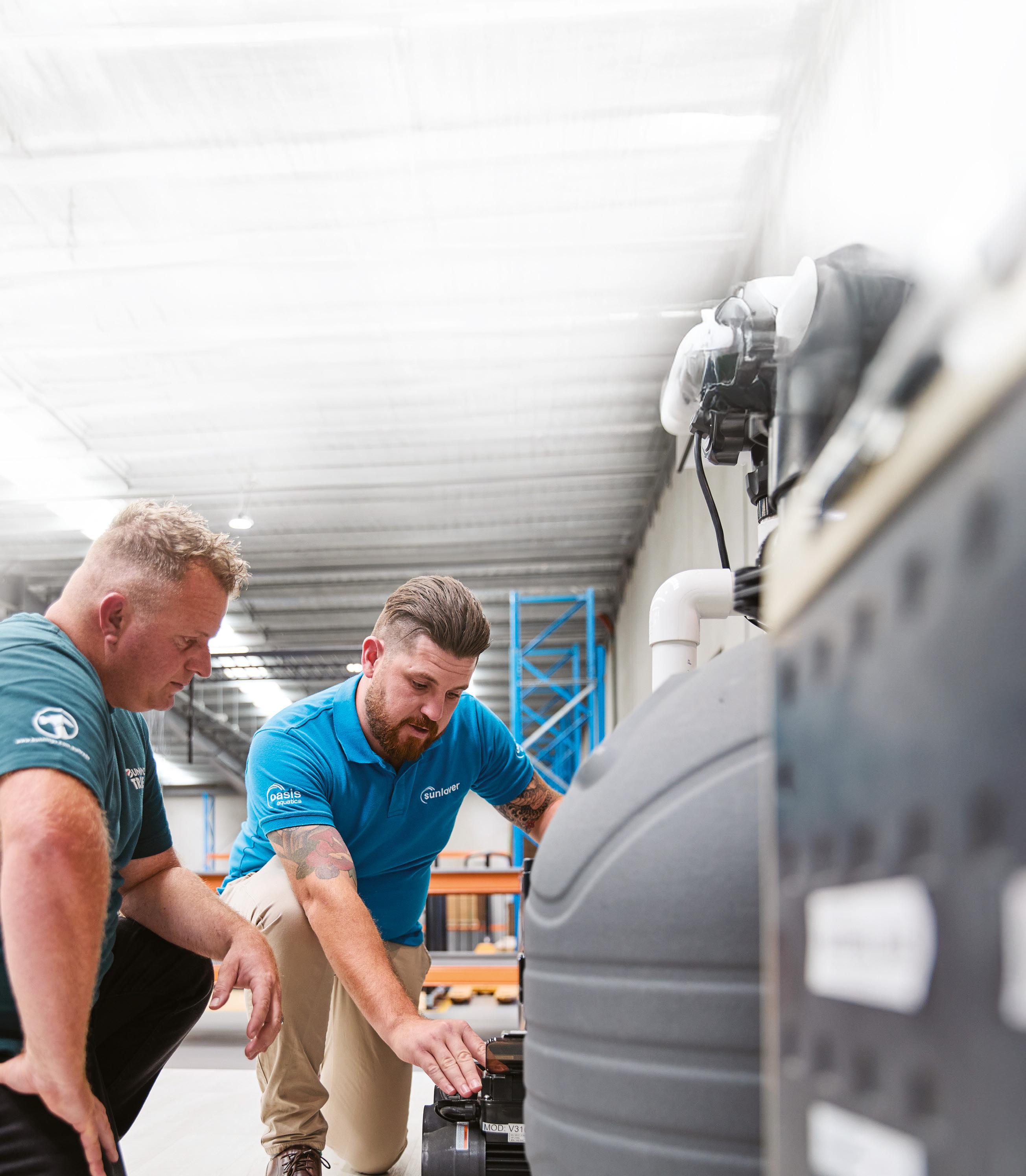
Over 35 years of experience in the industry makes us the expert choice for advice, quality products and after sales support. Sunlover Group, the home of leading pool equipment and heat pump brands.


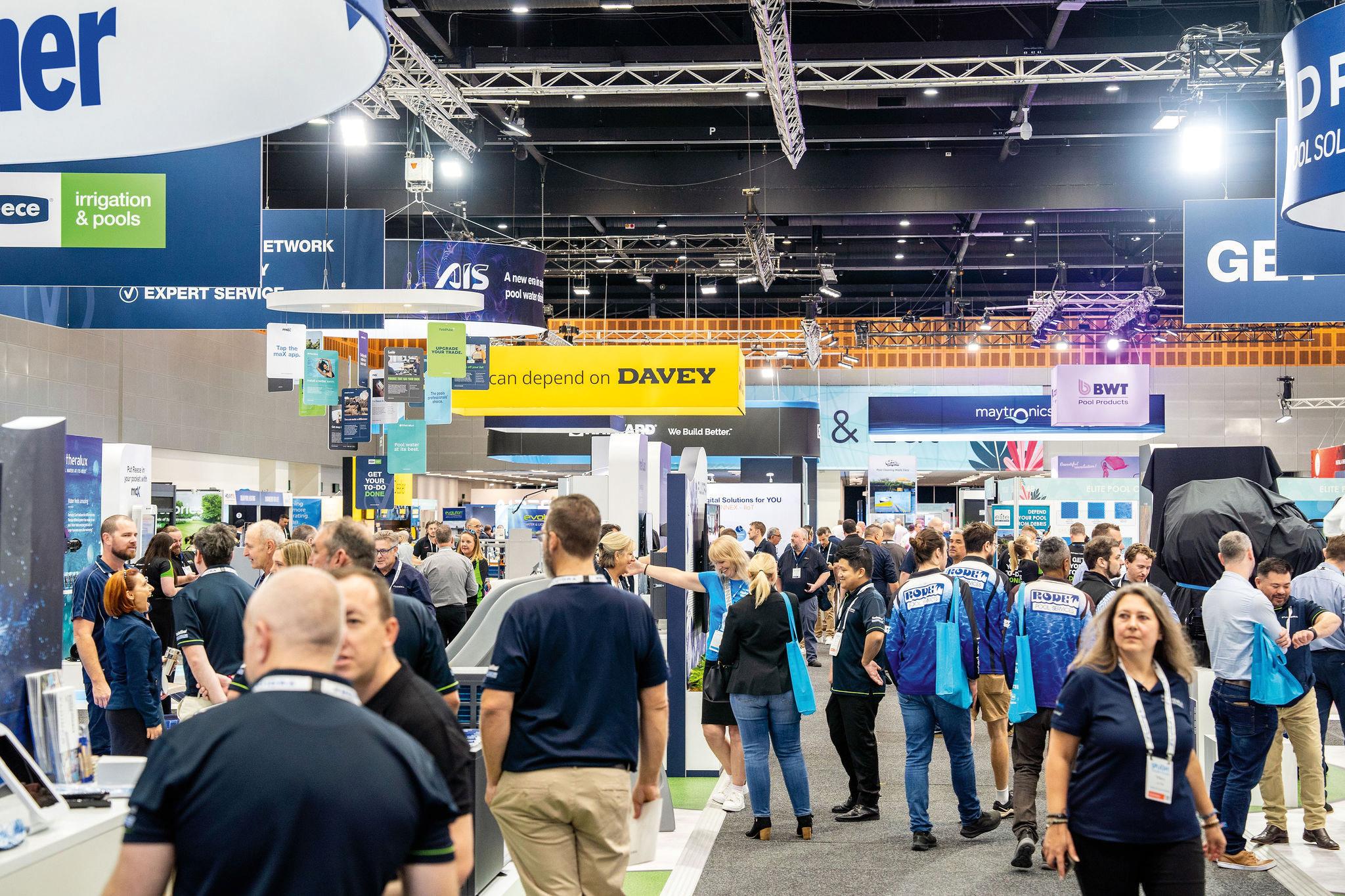
The SPLASH! Trade Expo, held on August 21 and 22 at the Gold Coast Convention and Exhibition Centre, was hailed a resounding success by visitors, exhibitors and organisers.
Filling all four halls, the show opened at 10am on the Wednesday to a constant stream of visitors from all parts of the industry. Exhibitors were very impressed by the number and quality of attendees, while the visitors commented on the quality of stands, the diversity of products on show, and the benefits of meeting suppliers face to face.
SPLASH! brand manager Declan Gillard-Martin says this year’s trade expo not only met but exceeded expectations.
“The overwhelming participation from 130 exhibitors and thousands of attendees underscores the vital role this event plays in driving the industry forward,” he says.
“The energy on the floor of the Gold Coast Convention and Exhibition Centre was palpable, and the quality of connections will undoubtedly have a lasting impact. The enthusiasm and engagement from the industry reinforce our commitment to delivering a world-class event that will continue to grow and evolve into 2026.”
Gillard-Martin says the seminar program was also a
01 The first morning was the busiest, with the second day still attracting a lot of engaged visitors
success, providing attendees with cutting-edge knowledge and actionable strategies to apply in their businesses. Sessions were well-attended, and the feedback has been overwhelmingly positive.
Additionally, he says the Awards of Excellence Gala offered inspiration while recognising outstanding achievements within the industry, reflecting the innovation and dedication of the community.
“Finally, the After Party was a fantastic way to bring everyone together in a more relaxed setting, fostering connections that will continue to provide benefits long after the event.”
Clinton Alley, director of platinum sponsor Fluidra Commercial, says this year’s show has been amazing.
“The quality of the stands is high level – this expo is the pinnacle of the industry with such a high level of participation. We are really proud to be here as the platinum sponsor,” he says.
On the following pages is a sample of some of the action and people at the biggest ever Australian pool and spa trade show. n
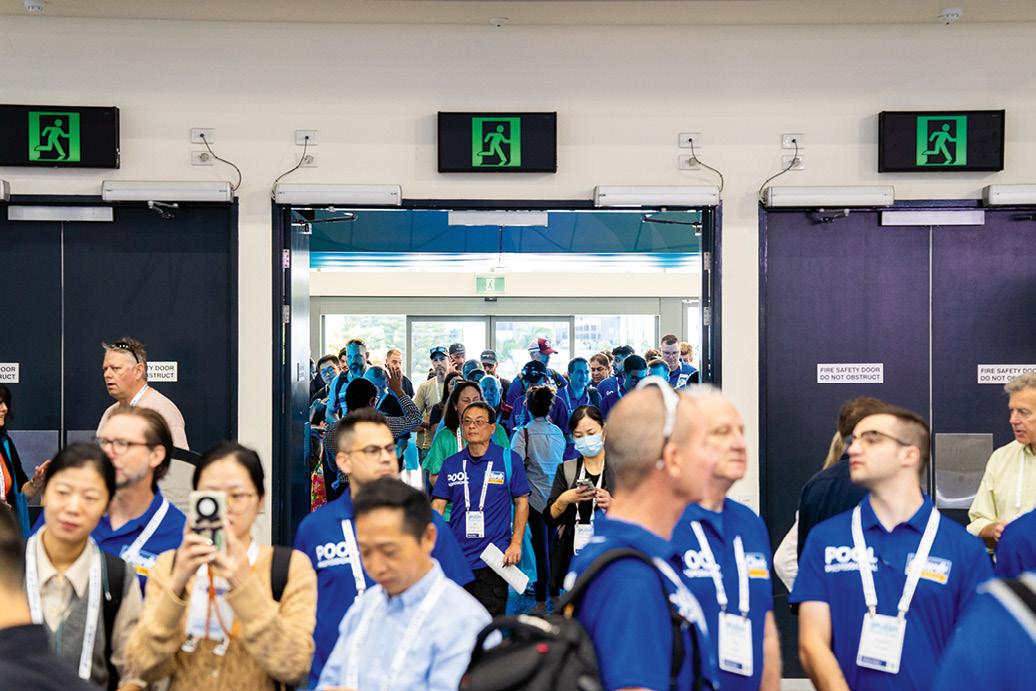
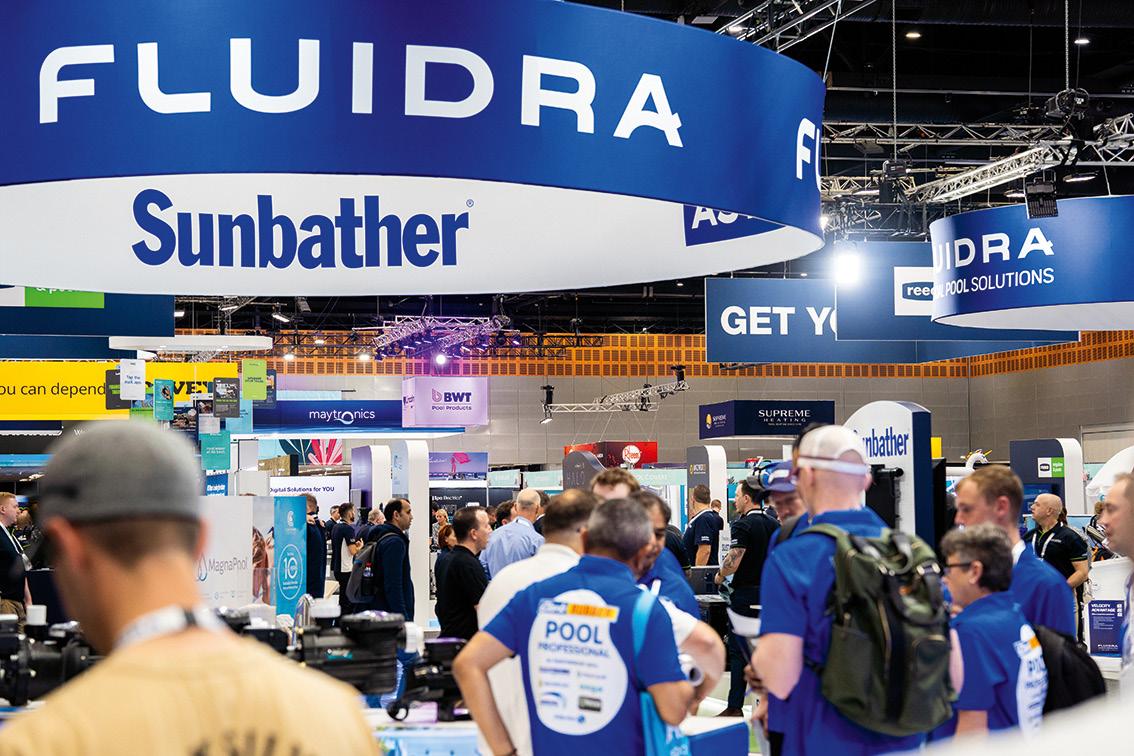
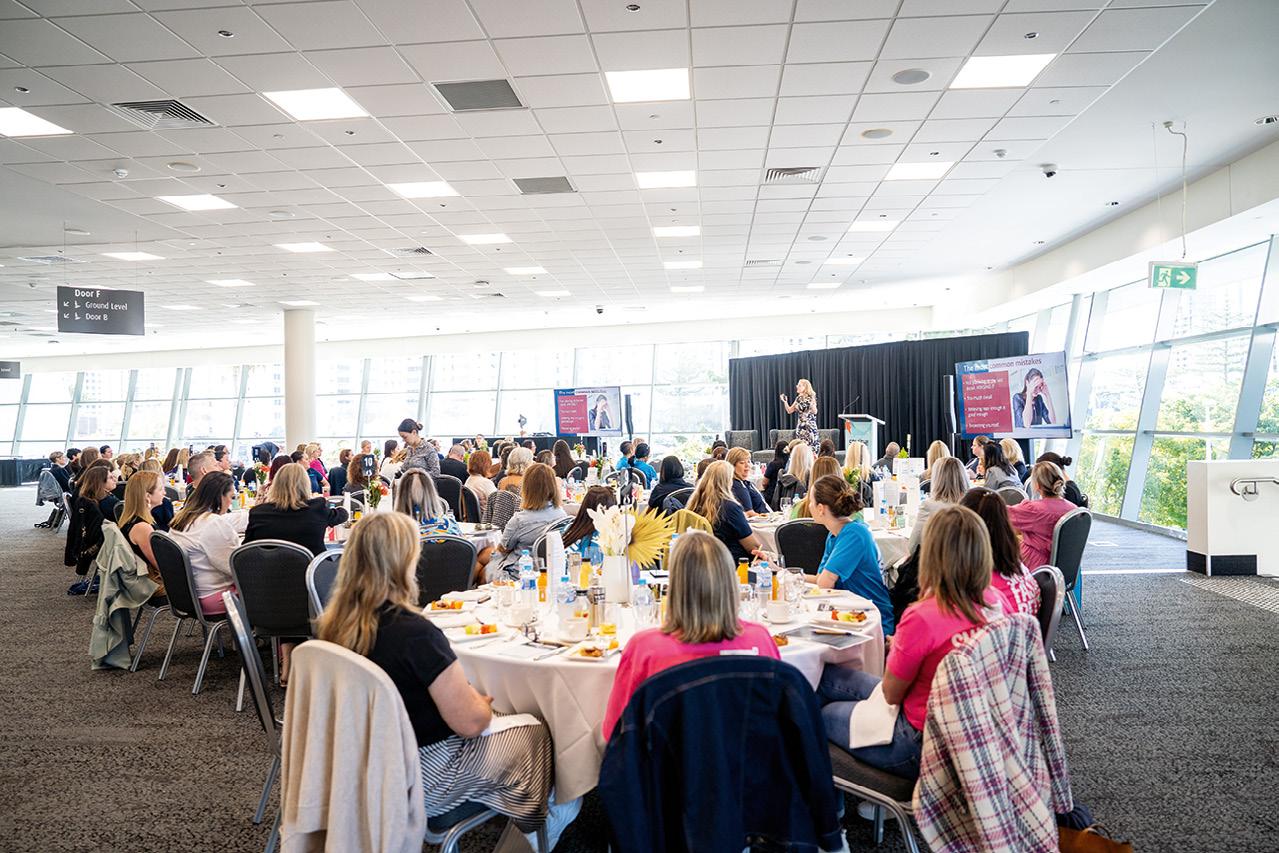
02 Crowd rushing in on the hectic first morning of the expo
03 The WAVES Women in Industry breakfast started off proceedings before the opening of the trade floor
04 . The stands were more open and inviting than ever before, meaning that even with the larger number of visitors, the show floor did not appear crowded
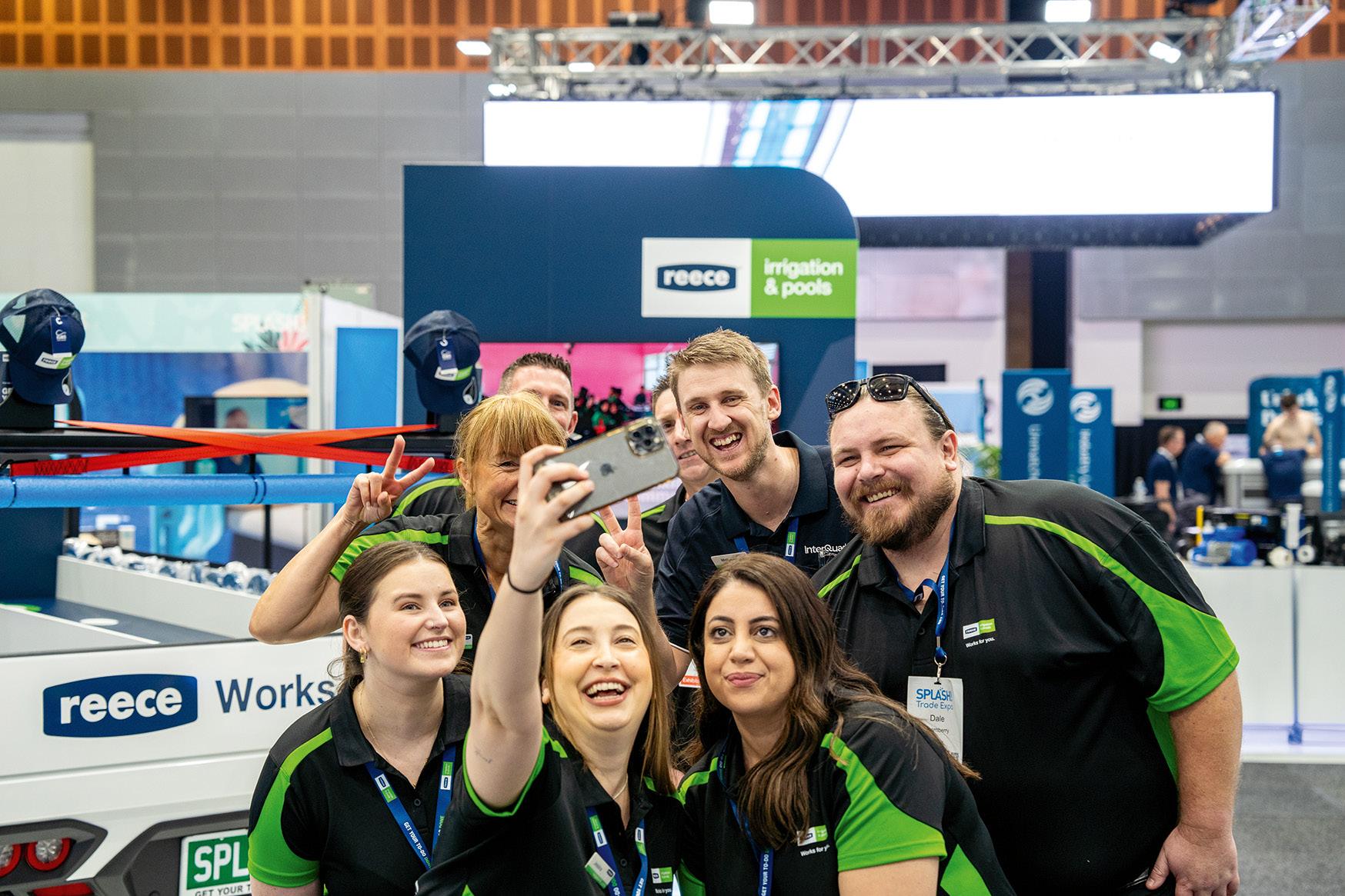
05 All smiles at the Reece stand
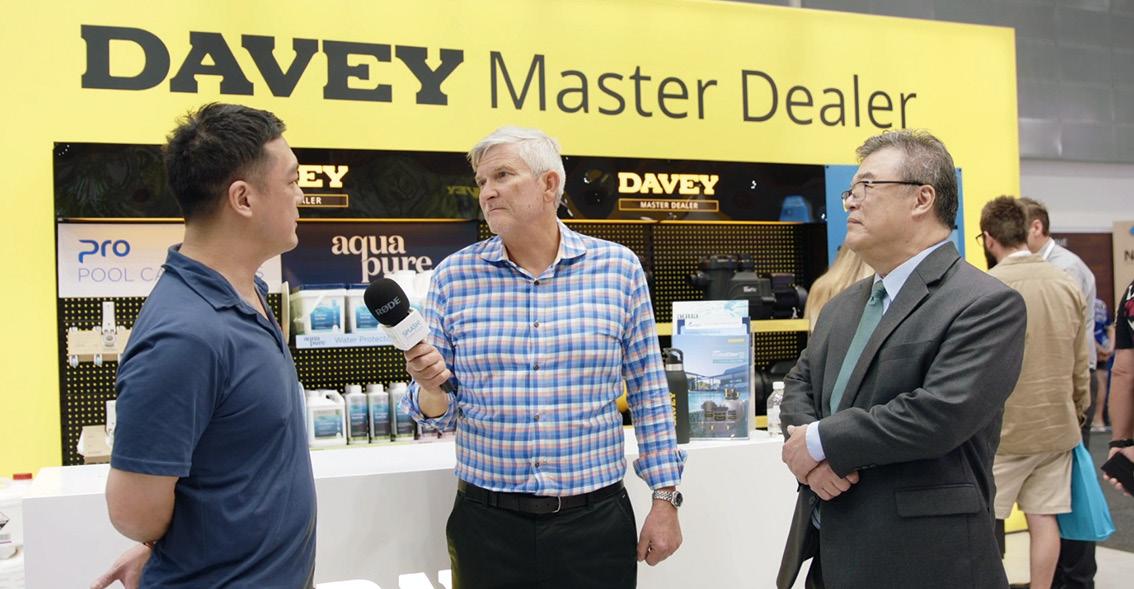
06 . Waterco COO Bryan Goh (left) and Waterco founder and CEO Soon Sinn Goh (right), with SPLASH! editor Chris Maher, discussing consolidation in the industry in general, and in particular how their recent acquisition of Davey Water was progressing
Soon Sinn Goh: “Davey is now with the Waterco business some 11 months so far, and we have integrated to some extent, but there’s still a fair bit of work to do. We intend to keep Waterco and Davey as brands distinctly different from one another. There are things that Davey is good in, and there are things that Waterco is good in.”
Bryan Goh says the Australian pool and spa market is quite fragmented: “There are a mix of big players and smaller players, and so for us to grow, it’s an opportunity to make the right acquisition so we can diversify into different segments of the market. And also to strengthen other geographic zones where we may not be as strong. That’s not just Australia, but globally as well.”
The full interview will be published on the SPLASH! website and in the SPLASH! magazine in the near future.
07 . Discussions at the EvoHeat stand .
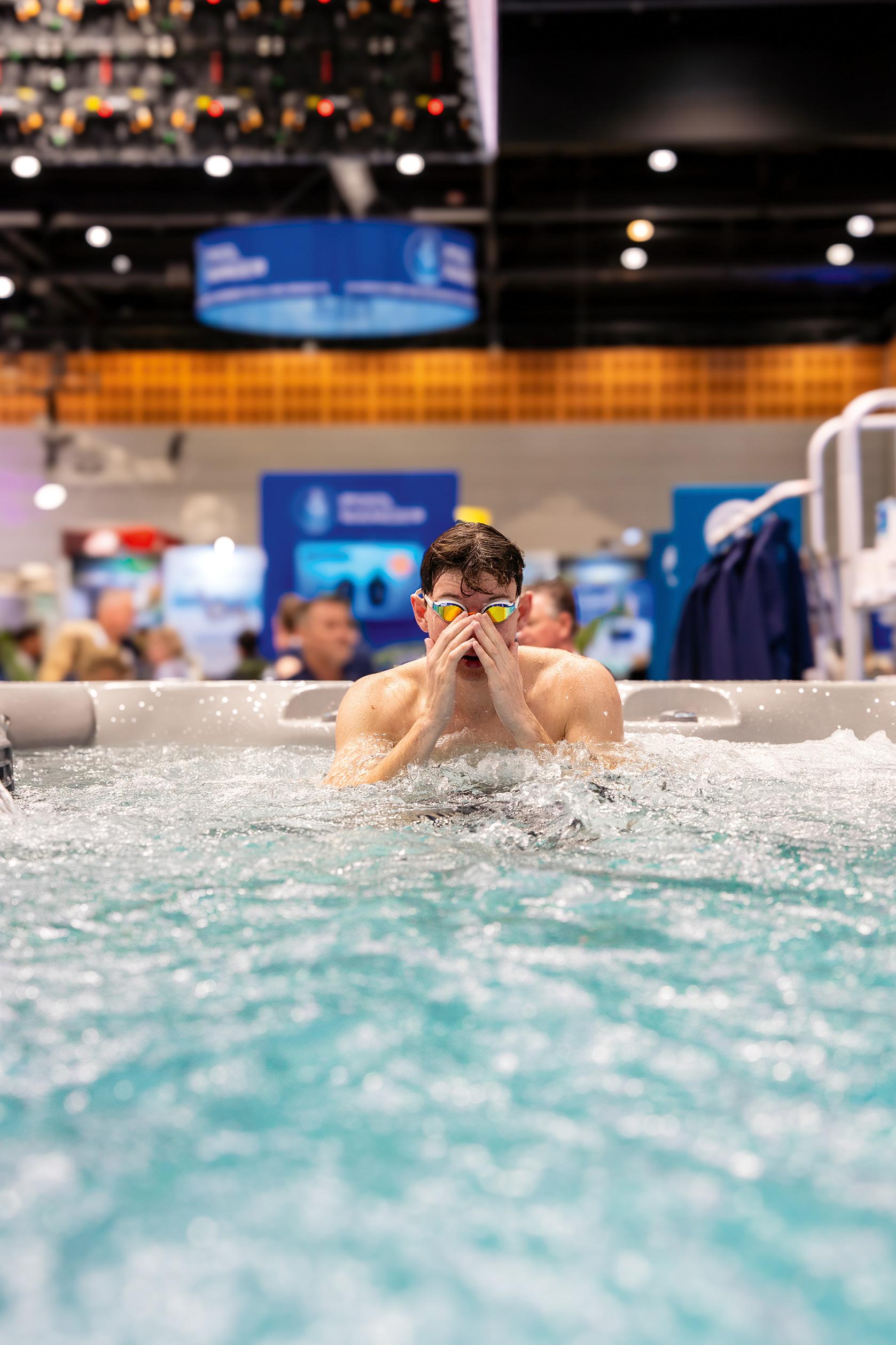
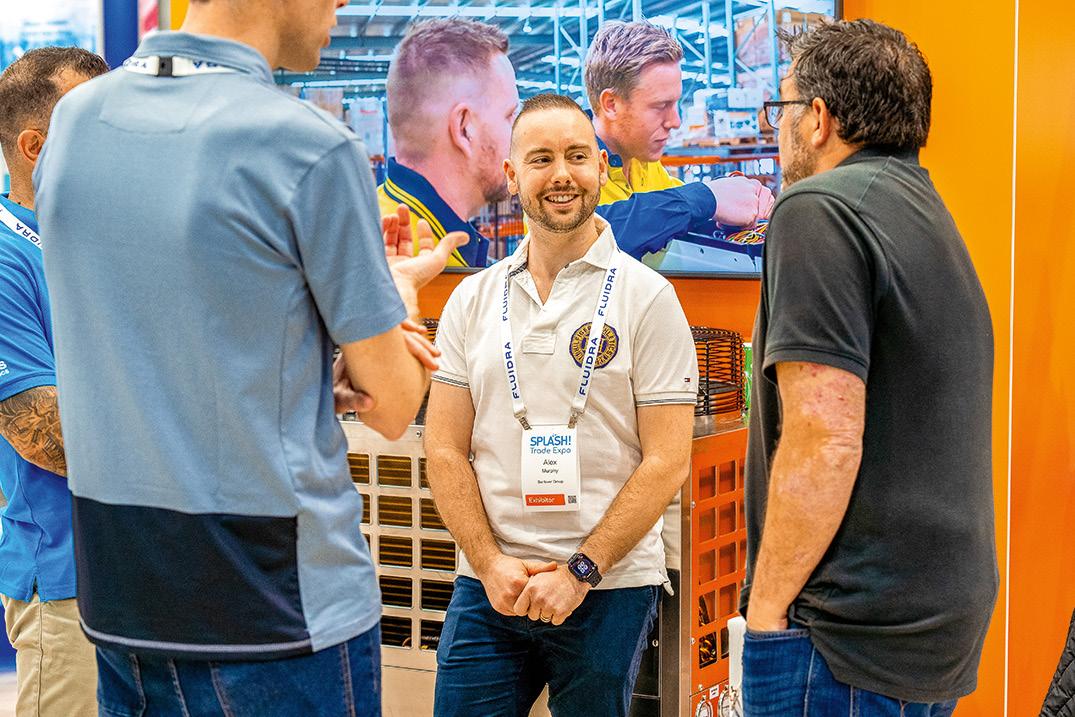
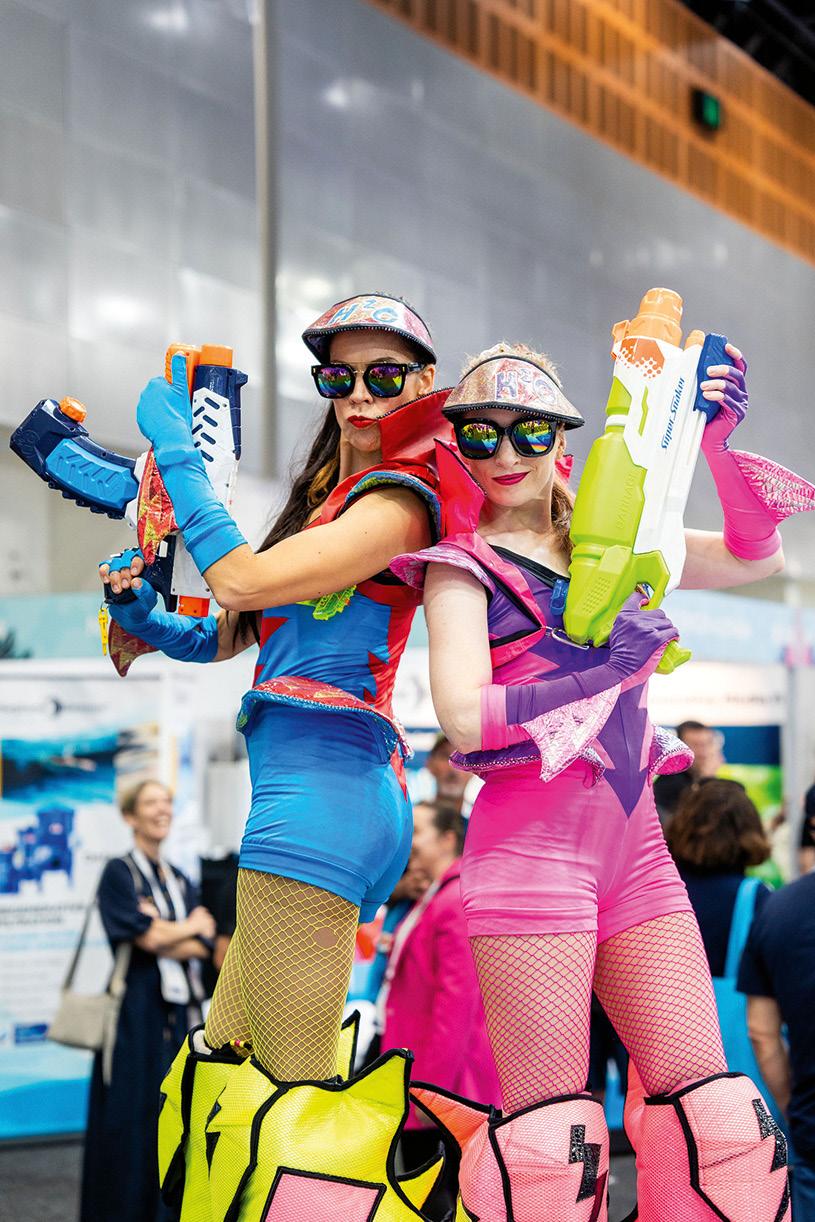
12 SPLASH! talked with Colin Mauger from Supreme Heating about heating pools in Melbourne winters, optimum operating times for heat pumps, and COP .
“For us here at Supreme, we specialise 100 per cent on heating solutions, and our key objective is to educate and get people sizing correctly and ultimately protect the endorsement from the pool owner: so when they’ve experienced the pool one or two years down the track, we’ve met their expectations. The heating is an important part of the pool package, and it will determine how often they use the pool and how well they endorse and refer the builder.”
There will be an article on coefficient of performance (COP) in the next edition of SPLASH!, including the full interview with Mauger. He is pictured here with Mehndi Malek.
13 Elite sales staff explaining the benefits of their hidden pool covers
14 The atmosphere was buzzing on the show floor .
15 Craig Buchanon, managing director of Lincoln, with Lindsay Hartshorne, chairman of BWT Australia – who oversees the five separately operated companies that make up BWT in Australia
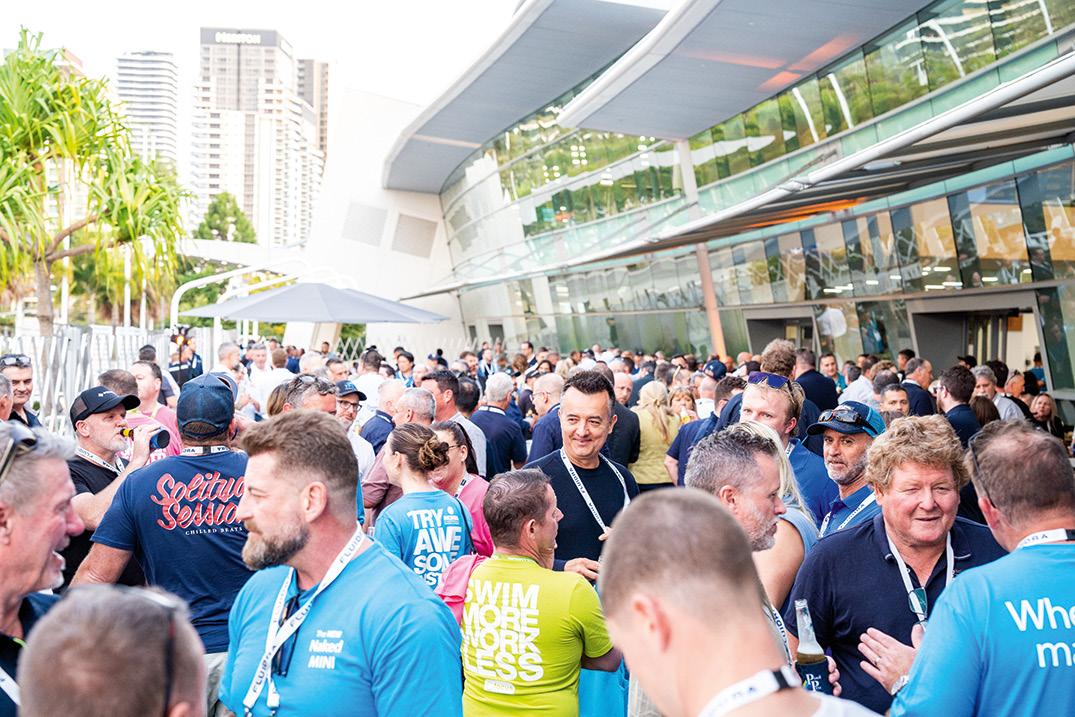
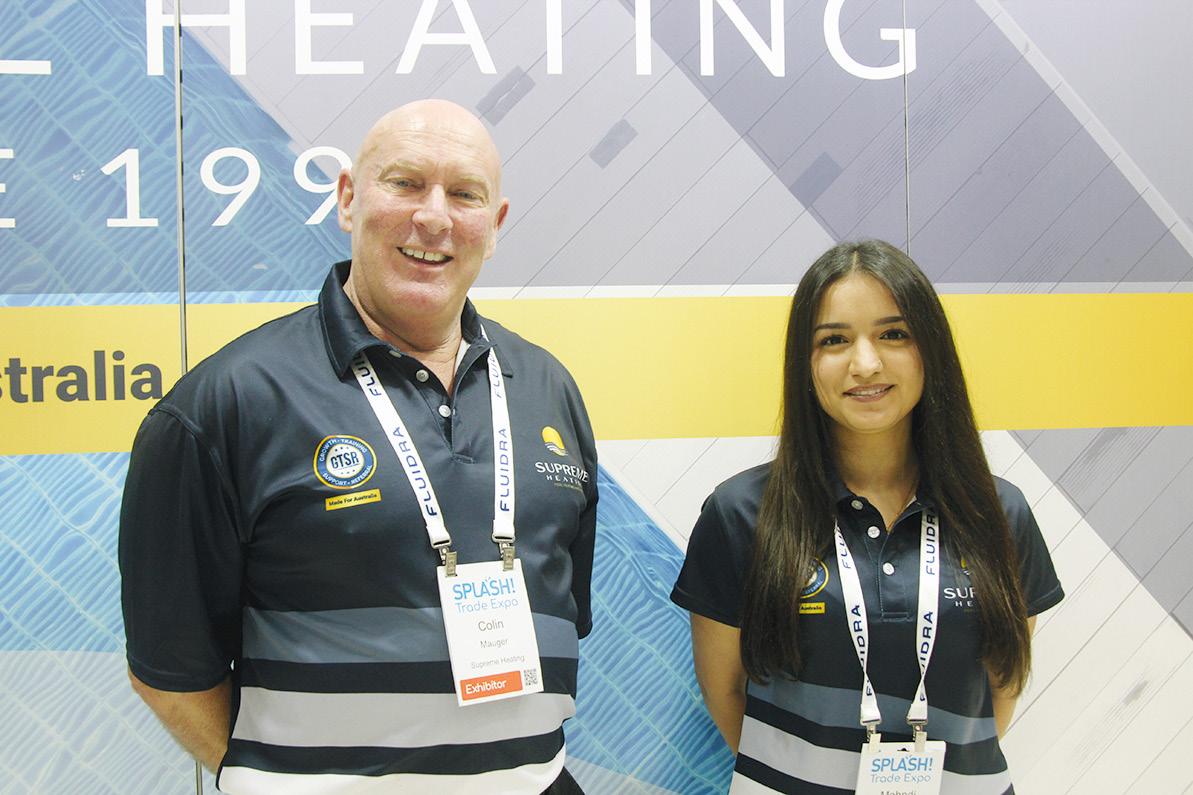
They are pictured with their new mineraliser chlorinator which is coming out through Aussie Chlorinators . It is a complete system with its own minerals; designed, engineered and manufactured in Australia .
“We go into production towards the end of this year, and it will be available for sale around about February or March next year.” They also have the colourful Cosmy robotic pool cleaners, the Kokido handheld vacs, and heat pumps, which Buchanon believes are the quietest units on the market. Regarding the downturn in the market, he says consumers have to some extent modified their expectations. “If we look at the robots, instead of buying a $3000 robot, they’ve coming down to, say, a $2000 robot. And there has been a little bit of information that’s come back to us that people are actually fixing their products, as opposed to buying a new one. From our perspective, because we cover everything from spares and
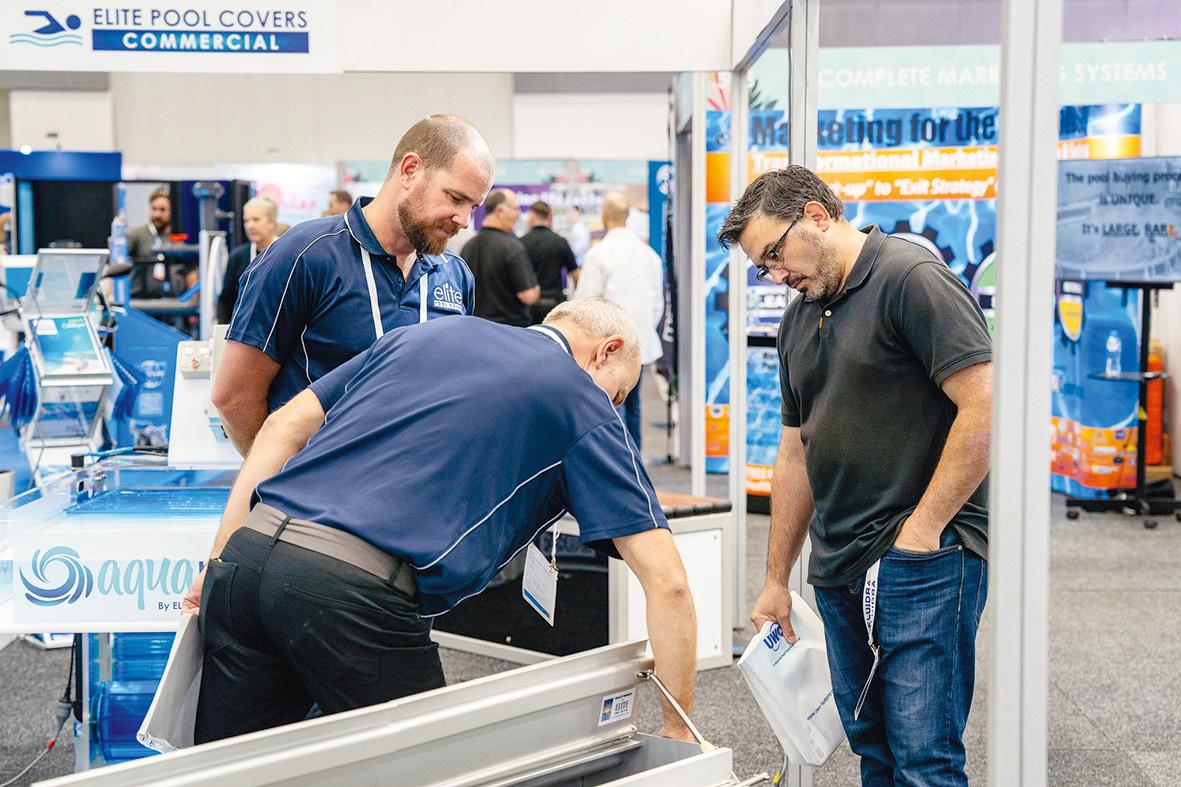
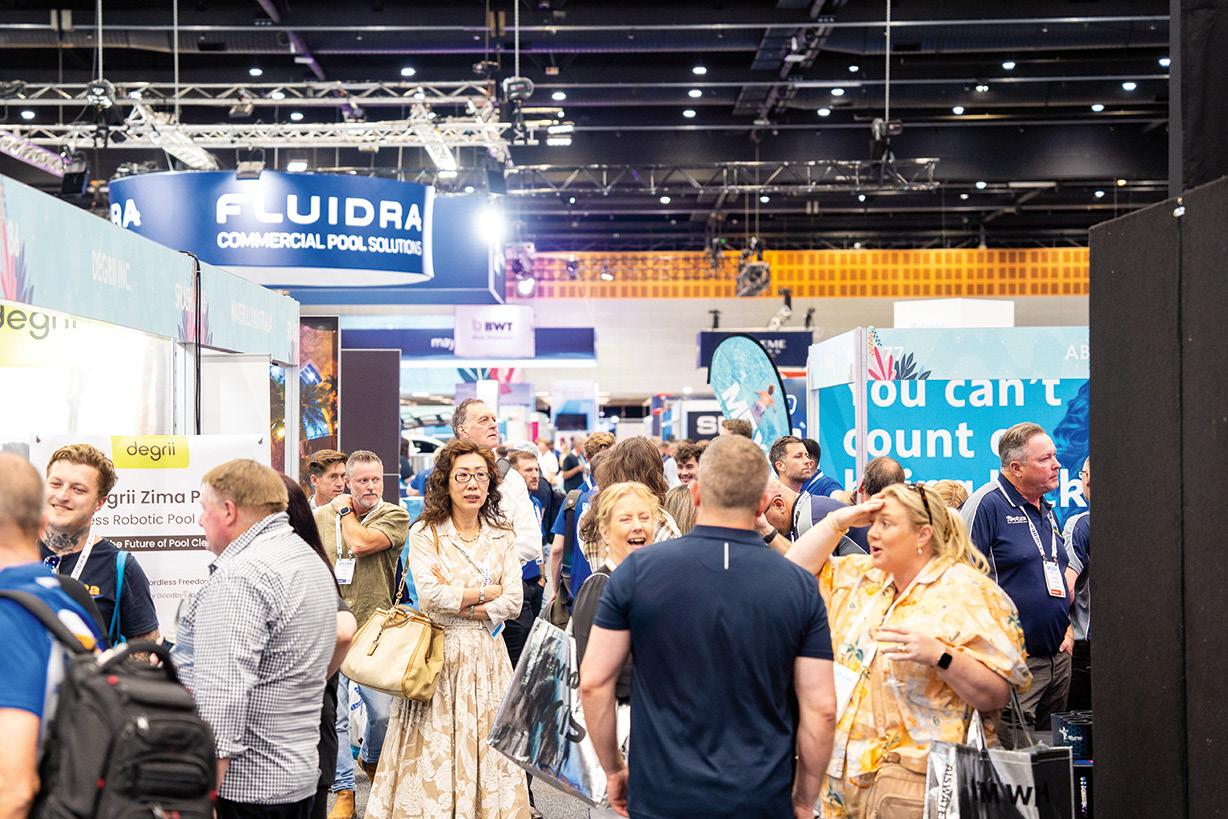
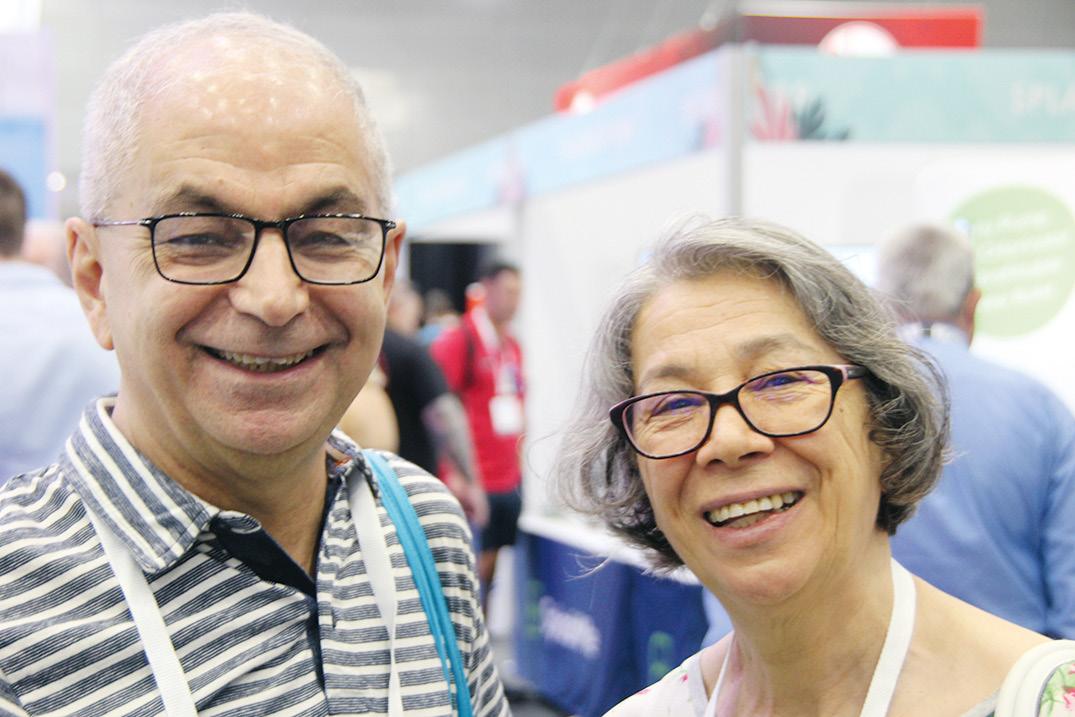
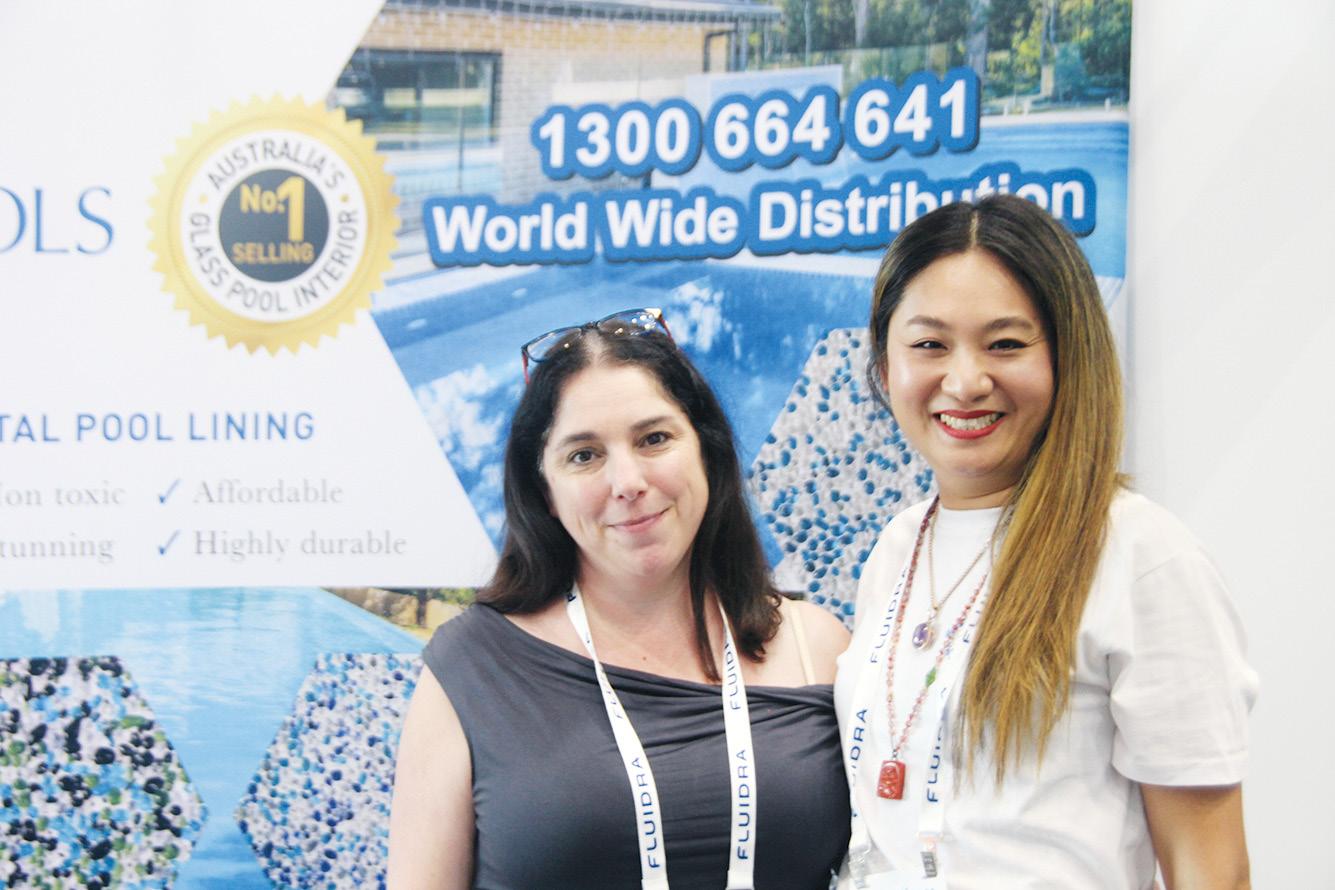
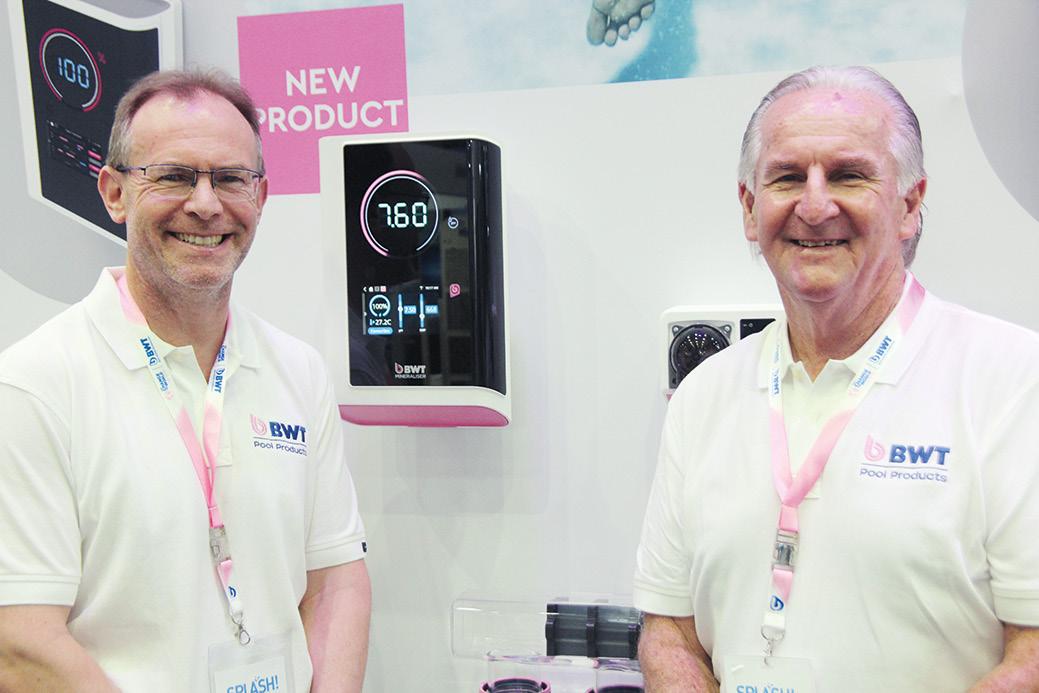
accessories with the distribution side of the business, we’ve got most bases covered from that side.”
16 Bahman Al Nadaf from Hot Water Heat Pumps (with Azar) says the 2024 expo is more crowded than the previous one
“I see a lot of newcomers. So that’s good. Coming here every two years, you can meet a lot of people and get some new ideas. We are also going to go to Mayfair conference, a yearly conference for Mayfair group. This year they decided to do it on the Gold Coast, to enable the pool builders to see some of the new offerings here as well.” Al Nadaf is now also doing a one-stop shop designing and building the heating, ventilation and air distribution for commercial and council indoor pools in New Zealand.
17 Crystal Yu (right) of Jewels 4 Pools says this industry is all about who you know and what you know
“And I suggest to a lot of new builders in the industry to stick with products and brands who have been in the industry for a long time. Jewels 4 Pools has been around for 20 years; we do commercial, we do residential. I always recommend builders stick with Australian made and Australian companies and distributors that will cover all the warranties as well. Buy and deal in Australia, I think that’s important.”
She says they have done a lot of commercial jobs this year – one of the big ones being a communal pool renovation for a well-known TV show, that is yet to be aired. There is also a very big and exciting overseas commercial job that Yu cannot talk publicly about at the moment, but SPLASH! will bring more information when it is available.
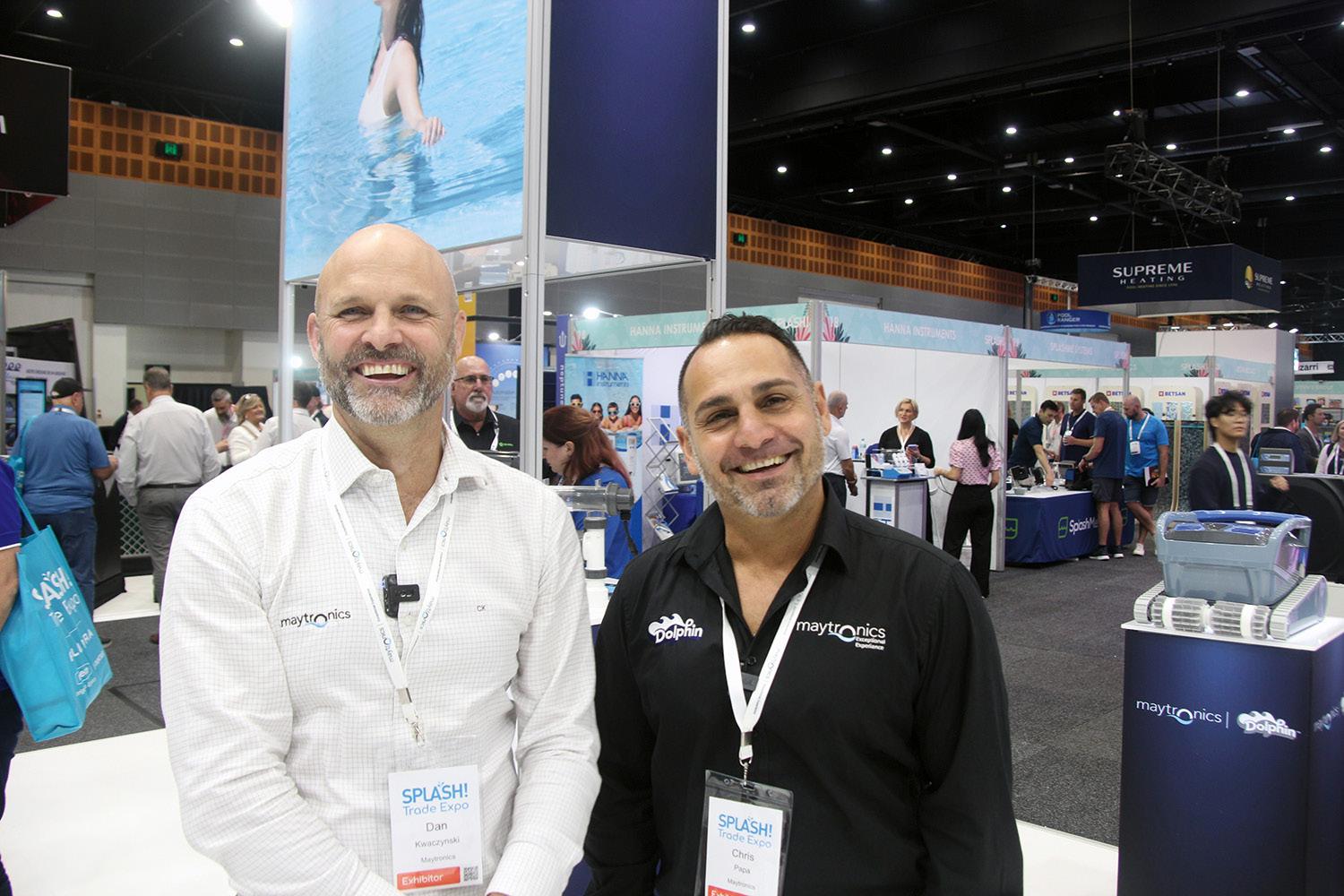
Maytronics Australia manager director Dan Kwaczynski and sales director Chris Papa were excited about the launch of Mineral Swim V2, which is being manufactured in Brisbane .
Kwaczynski: “It’s a local development. We purchased the company a couple of years ago, and we’ve been manufacturing there now for about four years, and have spent a lot of money on redevelopment. Now we’re really proud to launch a new product today that’s a world beater, and our goal is to take it to Australia and then around the
Papa says their recent warehouse expansion has been on the back
“We’ve made a couple of acquisitions in commercial, so that’s expanded our footprint there. We’re also growing our product range, and that includes a full line of equipment – sand filters and pumps – so that needs a lot more warehouse space. And we have had some growth as well within our branches.”
The full interview, including more information on the Poseidon AI safety system, will be published on the SPLASH! website and in the SPLASH! magazine in the near future.
19 Tim Vallance with Peter Rogers of Spa King spa blowers who bought the business from Peter King in 2019 . They were promoting their residential market Peacemaker Blower and their larger resort-style Burial Blower, which is the only type of blower in the world where you can bury it in a garden or even a pot, considerably lowering the noise that comes from it .
“We’re going international now, with blowers going into Spain, Greece, Saudi Arabia, New Zealand, and we have interest coming out of the States,” says Rogers.
20 Peter Kellerman from Mermaid Pools learning about Fluidra’s offerings from commercial business development manager Yvette Audet
21 Playing Focus’s Spin and Win game
22 . Valentina Tripp talked to SPLASH! about her new role as managing director of Fluidra APAC, consolidation in the industry, how the industry is meeting the challenges related to cost of living pressures, and the good fundamentals underlining the industry’s potential
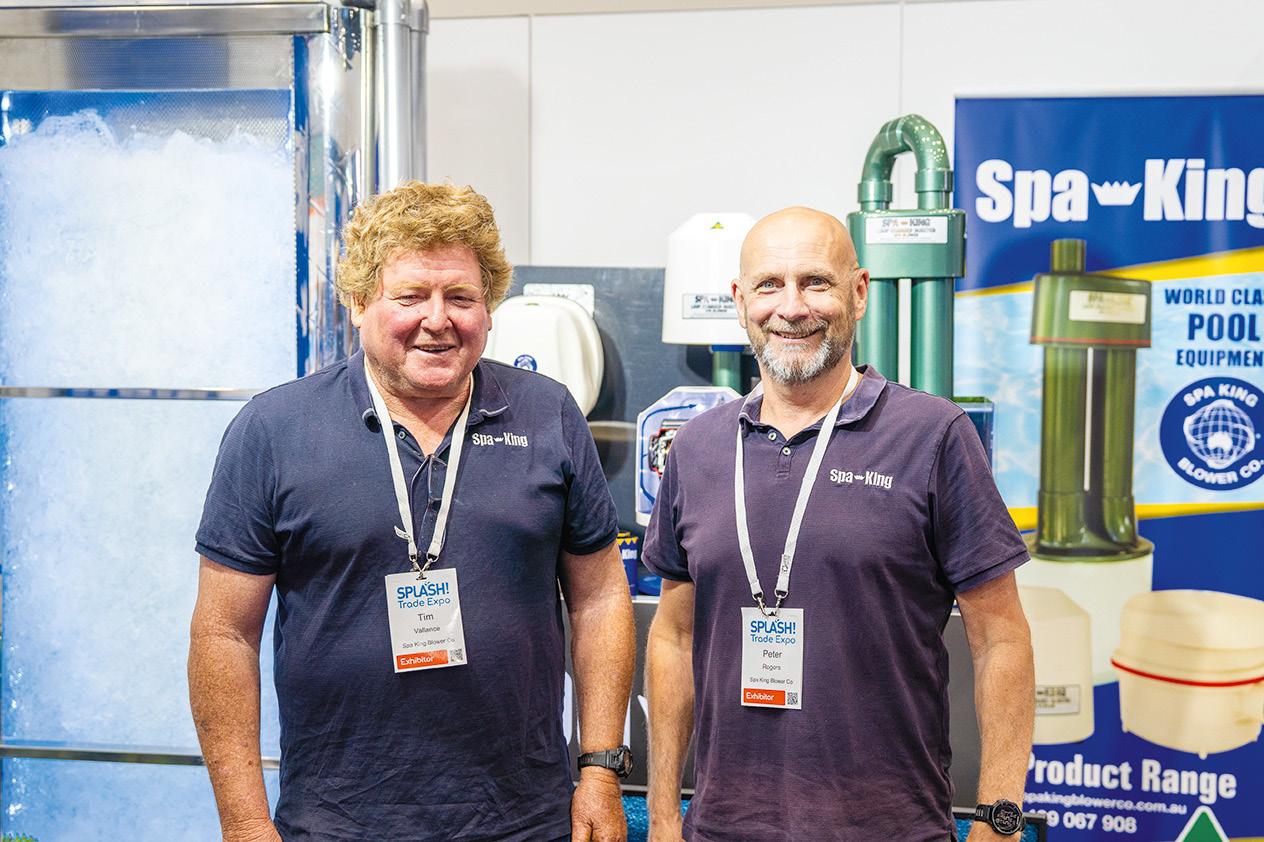
“We’ve had some really challenging times as an industry, particularly over the past five years as we all traded through the highs of covid with huge impacts to supply chain. And we’ve seen those highs normalise over the last couple of years. I think we’re on the back end of that and really looking forward to that next phase of growth. There’s been some challenges for many of our end users and our customers, and we’re really mindful of that, but what we’re also really excited about is there’s some great fundamentals that are still there for our industry,” she says, adding that a lot of pools were created during covid, a time of high demand, and that means there are now strong aftermarket opportunities. The full interview will be published on the SPLASH! website and in the SPLASH! magazine in the near future.
23 . Davey chief operating officer Peter Wolf (left) and chief marketing officer Tom Fisher (right) discussing the relaunch of Master Dealer Program and manufacturing in Australia
Fisher: “The top end of the dealer program is the Master Dealer, and it’s a very strong brand in a lot of channels. We’ve had great success in the Water channel with the brand, and we’re bringing that now to Pool. We really focus on dealer independence, and give them a beautifully merchandised value proposition. We look for dealers who will value a strong brand and treat it as their own. We give them all the tools that they need, including training and a really broad portfolio well positioned for them to make a reasonable return on the investment in the space.”
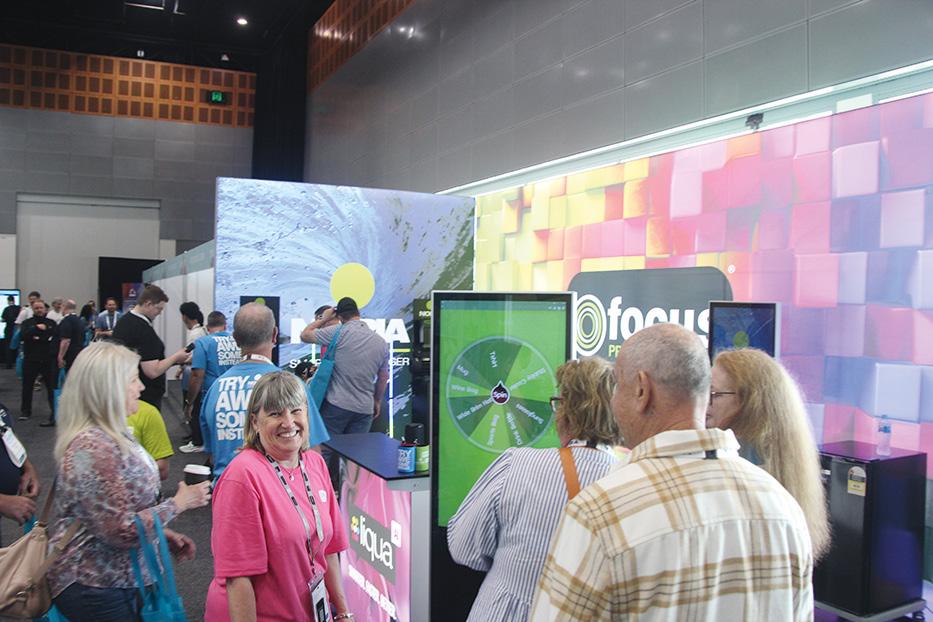
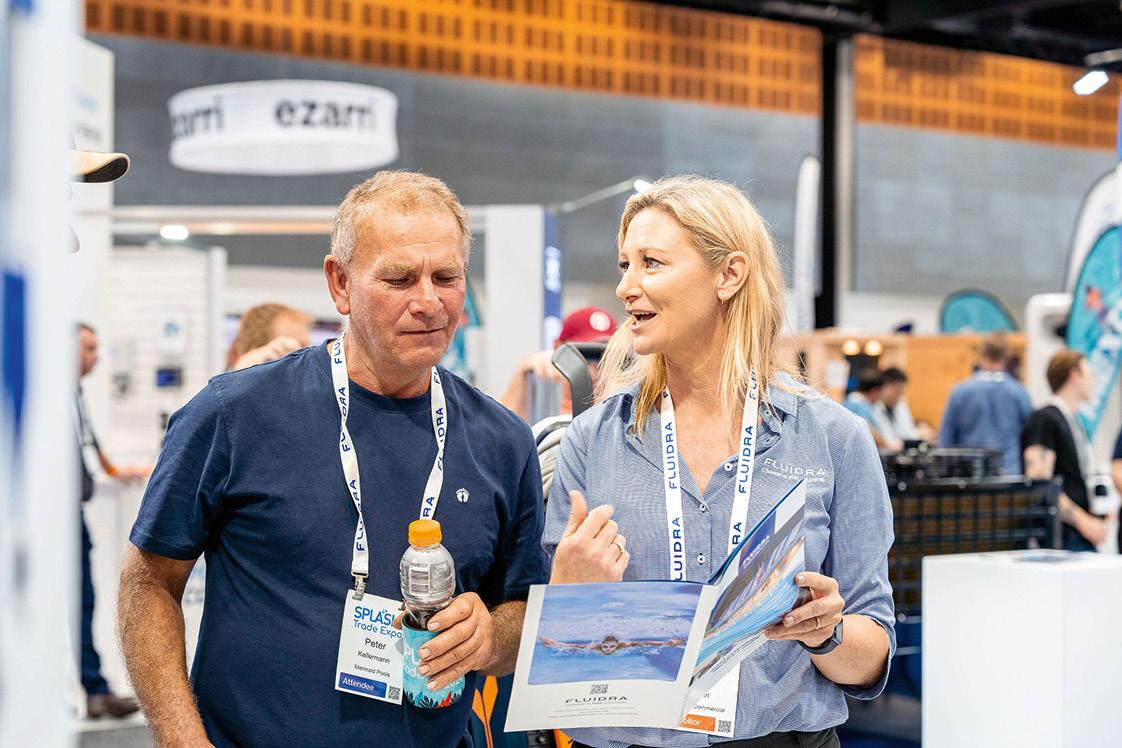
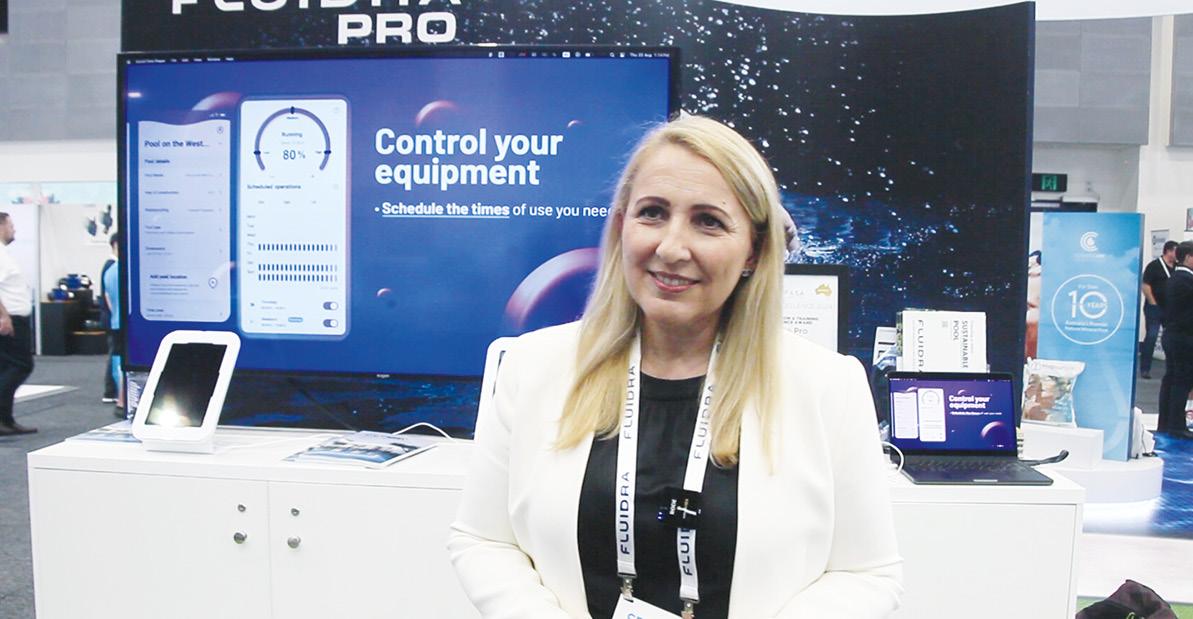
Wolff: “We have our Australian manufacturing base down in Scoresby. Now there is quite extensive capability as well in the Waterco group. They are different capabilities – they’re complementary. So what we do [in Scoresby] is primarily manufacture pumps and chlorinators. In Malaysia, there is enormous capability to do plastic injection moulding, product design and assembly as well. Our engineering teams are collaborating very well.”
The full interview will be published on the SPLASH! website and in the SPLASH! magazine in the near future.
24 . Edward Sedgley explaining Viewa to an expo attendee .
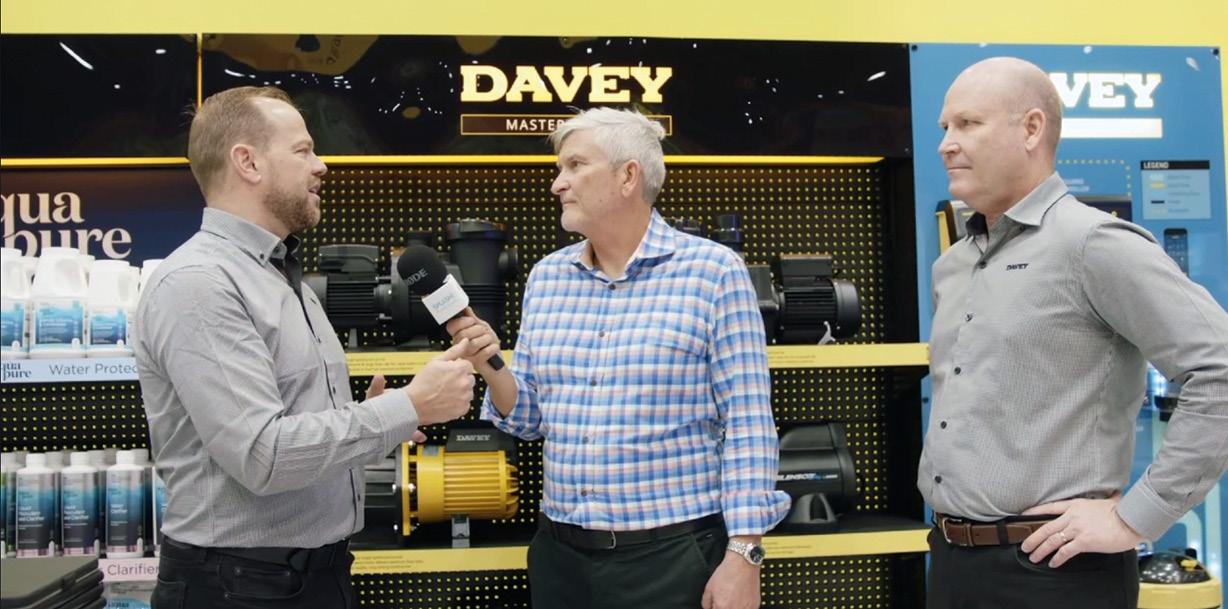
25 Get in the box! Some of the Clark crew getting inside Daisy’s new acquisition, the Acoustic Box . Daisy’s Derek Prince says they are opening up a really good product, made in Silverwater, to the whole of Australia .
“A bit of metal comes in, we laser-cut it, bend it, powder-coat it and foam pack it. We do everything in Sydney. Everyone needs to protect their pool equipment, and now there’s a solution that they can just buy off the shelf, and it stops up to 80 per cent of the noise.”
26 . Jeremy Smith, general manager of Fluidra Commercial, with Brad Hampton and Ryan Young from Chadson Engineering, talked to SPLASH! about the recent acquisition of Chadson
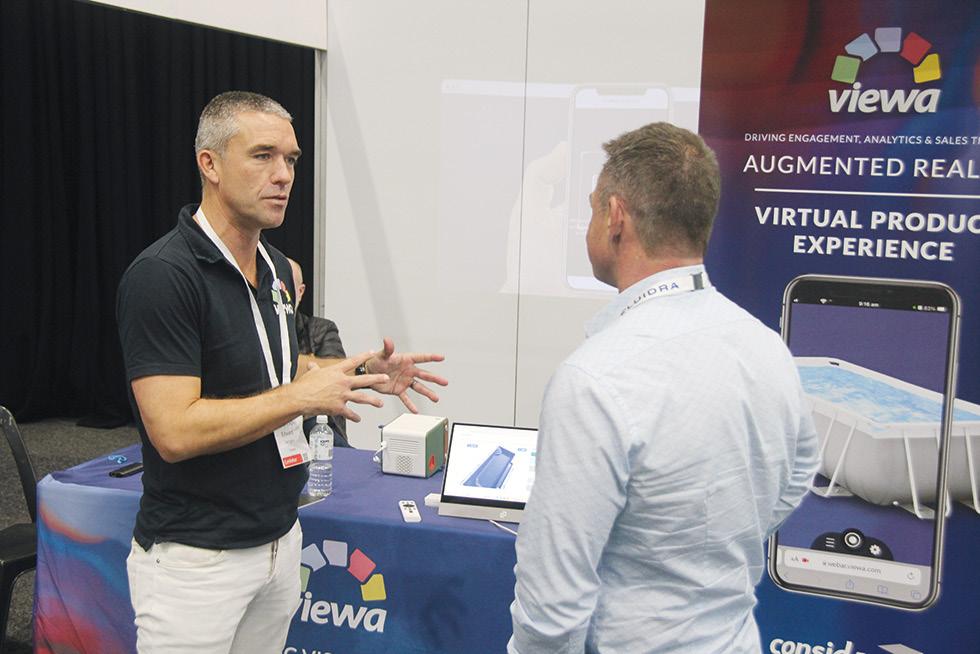
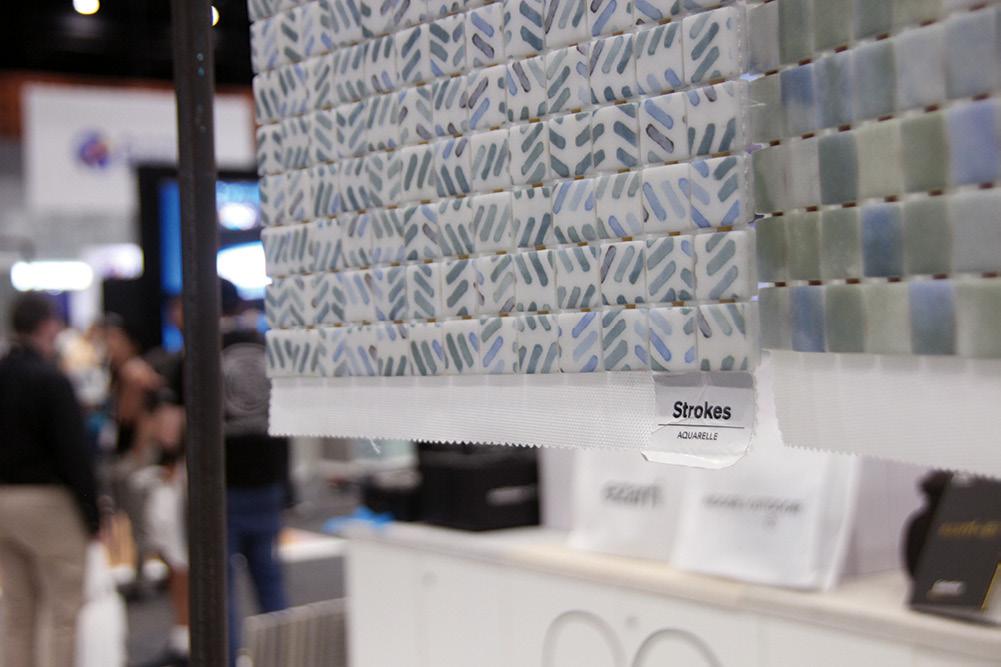
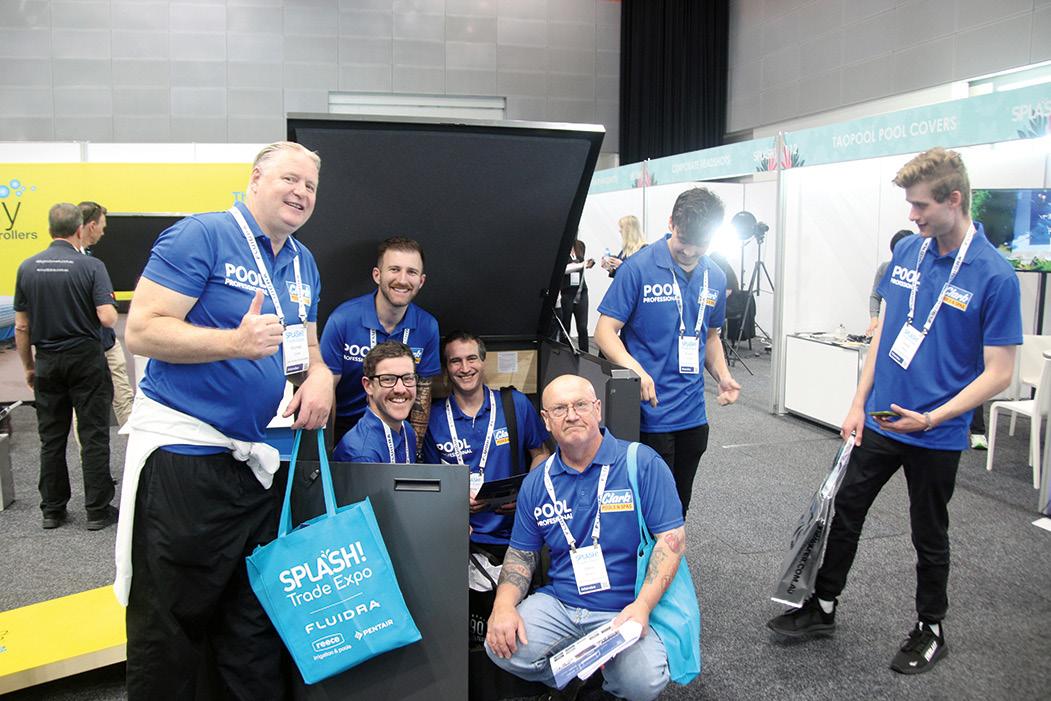
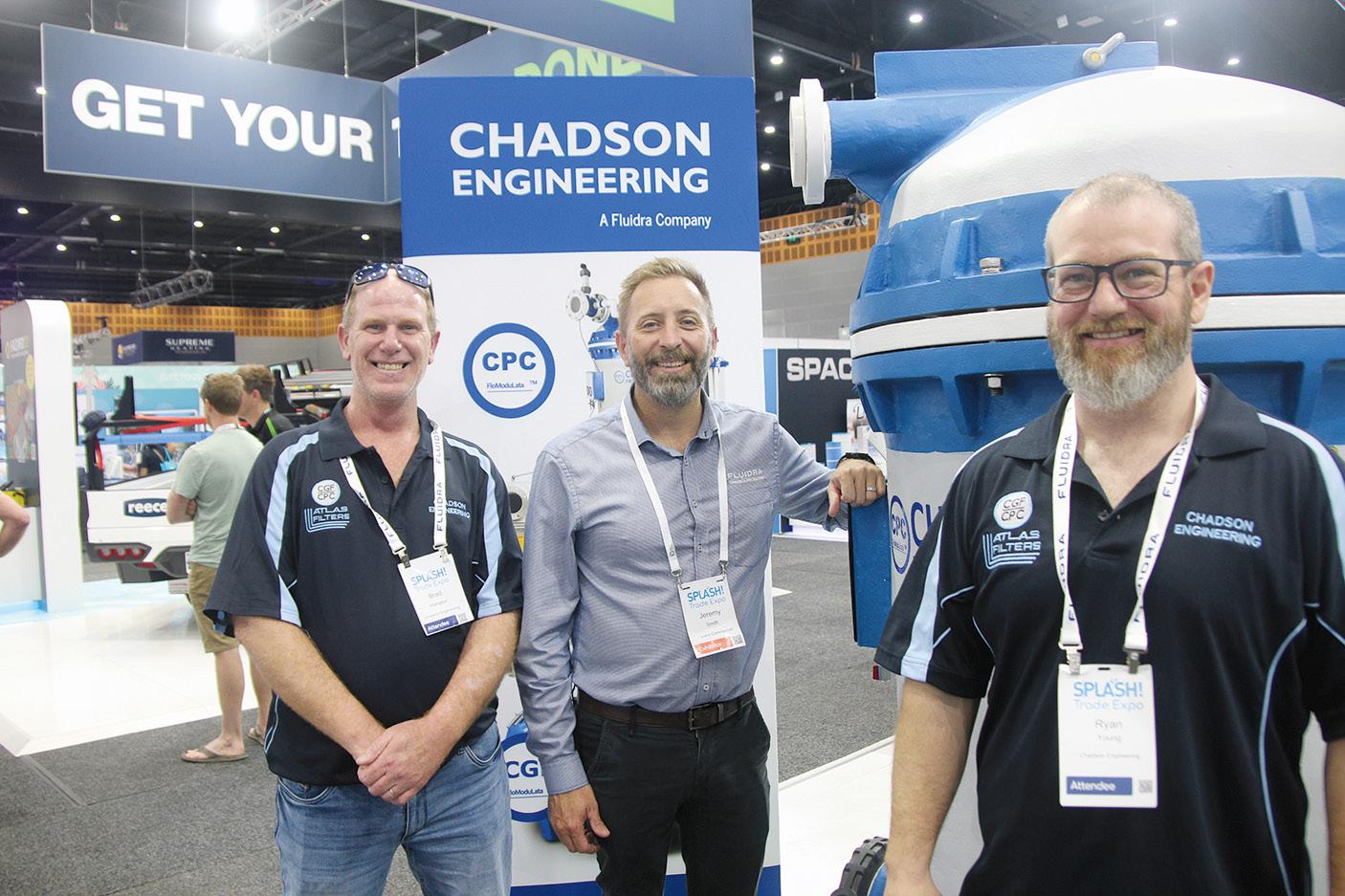
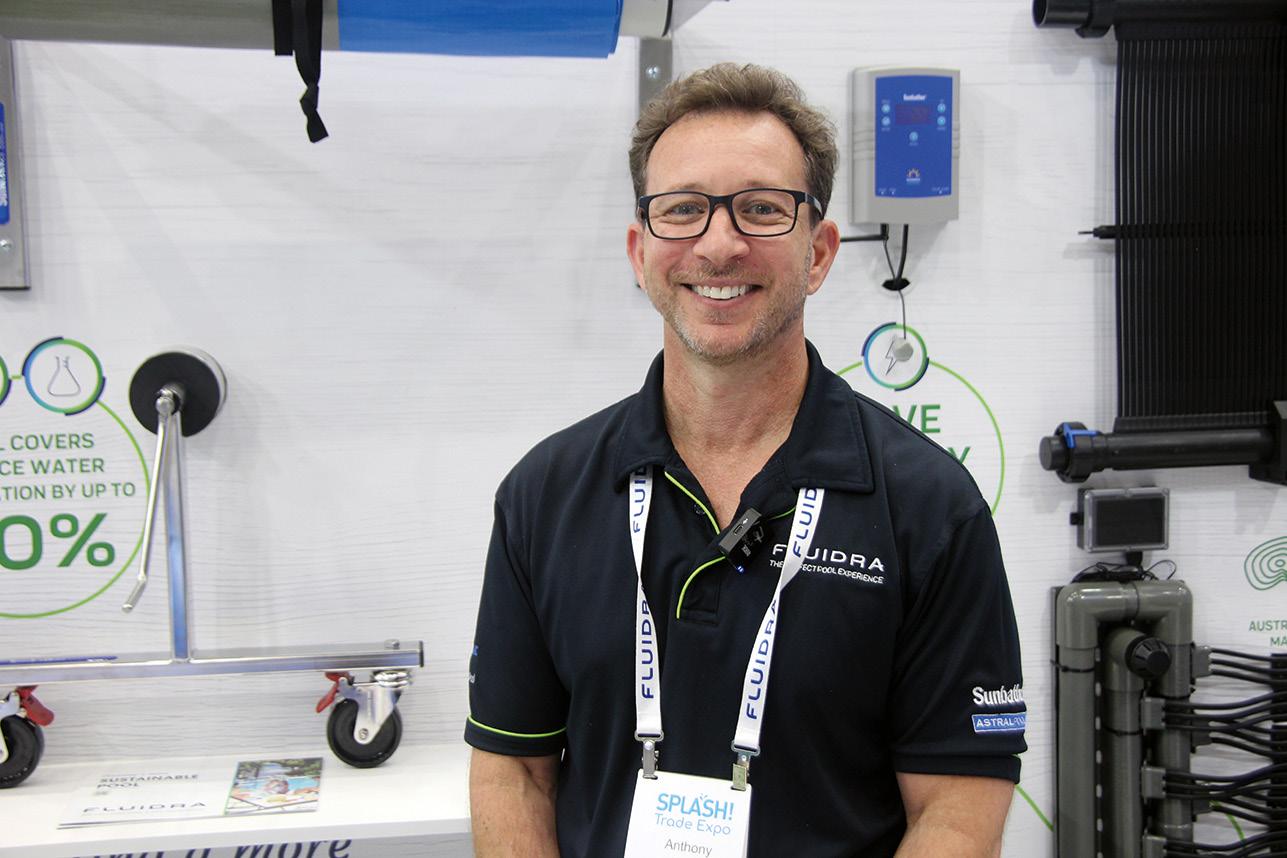
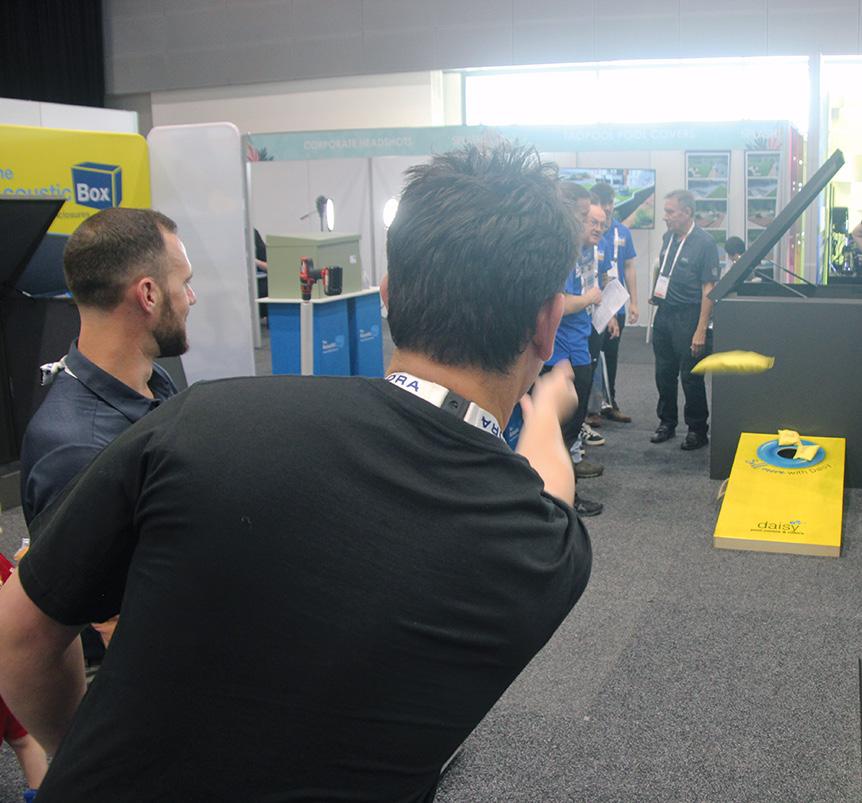
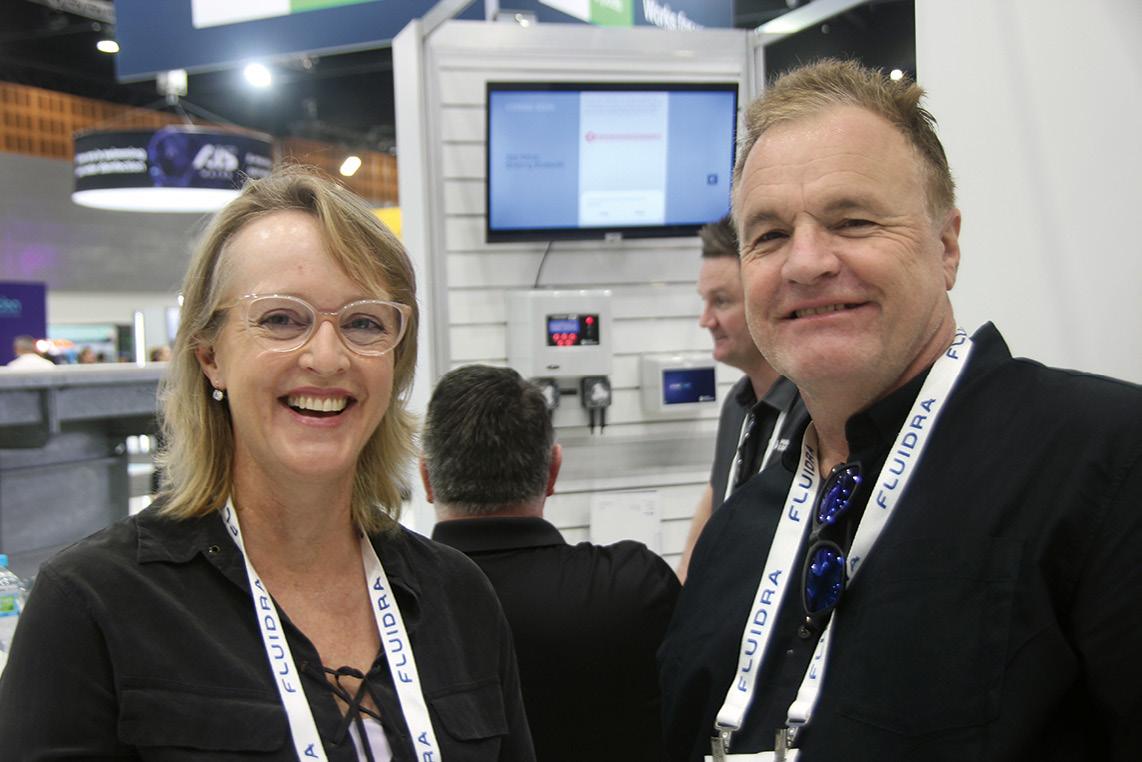
Smith: “Two years ago I was standing on an SR Smith booth as national sales manager. The SR Smith business was acquired by Fluidra, and a big percentage of that business was commercial, around 75 per cent. Then obviously Sunbather was part of the SR Smith group, and Fluidra had their own commercial division as well. So what was really exciting over the past couple of years, we’ve created this dedicated business unit, which is Fluidra Commercial – so all the commercial products come in under that banner now: Sunbather’s commercial products, Anti-Wave, SR Smith, and Astral Pool’s commercial products, and the recent acquisition of Chadson Engineering, a terrific local company. Their main facilities, based in WA, produce really high quality filtration equipment. They are the only Australian producer of filtration equipment to this level, with granular filtration, commercial and ultrafine. Great family business, really good employees that are committed to the product and the brand and the quality. So we’re really excited to have them as part of the Fluidra family, and with ultrafine, they actually complete part of our plant room package that we’ve been after for some time. And it fits in really well with our focus on sustainable products into the future.
The full interview will be published on the SPLASH! website and in the SPLASH! magazine in the near future.
27 Anthony Lestani, national sales manager for Sunbather, was excited to discuss Sunbather’s 50 year anniversary, and the business’s journey in the pool industry to now come under the Fluidra banner This interview is featured on page 21
28 Throw three bags in Daisy’s cornhole board game and win discounts: one bag goes in, get five per cent off; two bags, 10 per cent; three bags, 20 per cent
29 . Liz Hollingdale (left) announced at the SPLASH! Trade Expo that she is selling her majority share of Pool Controls to Eddie Melle (right) who says he plans to grow the business .
“I’ve been into production for the past nearly 40 years, so I know a fair bit about being able to design and produce things fairly rapidly. I do a lot of R&D for quite a few customers around town, and already supply componentry to Pool Controls from my press shop,” he says. Melle also did production for Monarch in the past.
“We’re having this extended handover,” says Hollingdale, “and SPLASH! is a really good opportunity for Eddie to dive into the industry and find out a bit more about where we are positioned in the industry.”
Amongst the new products in the pipeline is an app, which will be able to fully control their products including Chemigem and the salt chlorinators, utilising Bluetooth which they believe is more robust than wifi. One of the benefits of the app is ease of programming and the ability to even use the app from your couch, without having to get into the sometimes cramped pool equipment spaces.
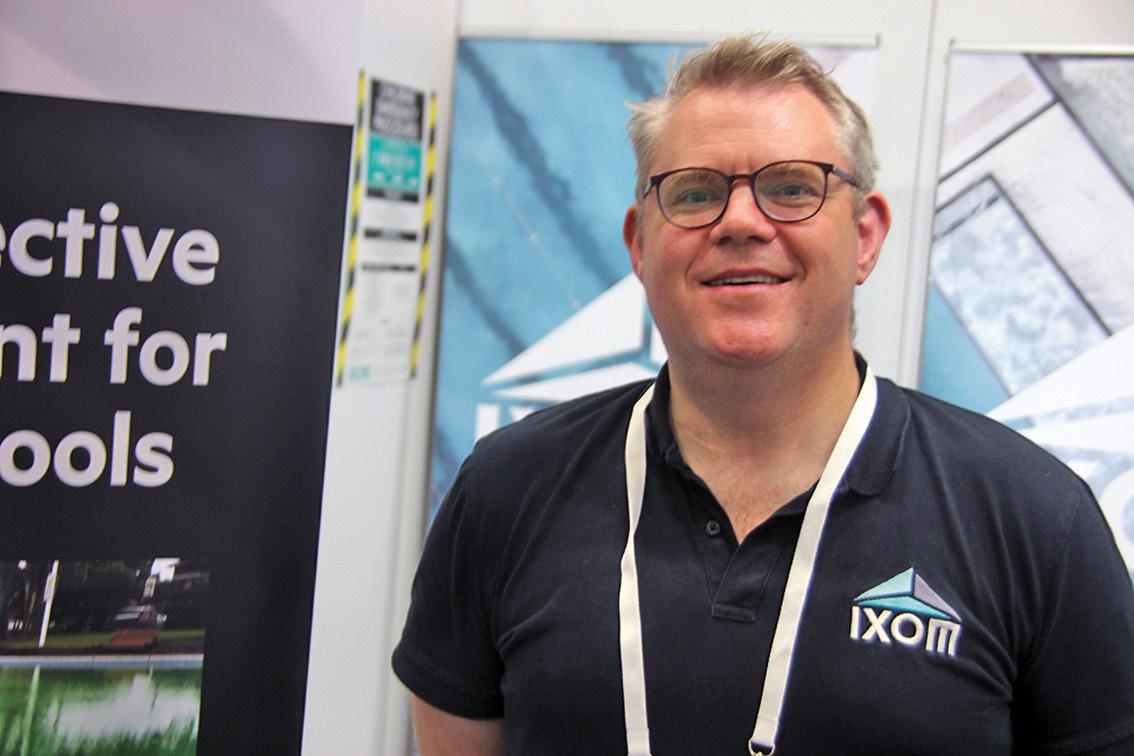
Hollingdale says she hasn’t decided what to move onto, and will take a few months to mull over options, which will almost certainly include her home state of WA, but may not include the pool and spa industry.
Melle will also continue with his other tooling and production ventures, including the design and manufacture of bespoke products, and doing factory setups for food production, including at Murdoch University.
30 Pool Tile Company had a wide range of tiles on display
31 . Brendan Murray is from Ixom, a large chemical supplier who supplies chlorine for drinking water and wastewater treatment in Australia
“We’re here promoting a new product called Algae Shield. Very simple, very effective for controlling blue green algae, or algae in pools. Pour it in, walk away. Job done. It’s a copper based algaecide, but it’s got a unique base chemistry that allows it to self-disperse. So instead of taking two or three weeks to clean the pool, it takes anywhere between two and ten days it will go from green to blue. No labour required."
Introducing the MINI, our all-new NKD-M freshwater system for small pools and swim spas.
Enjoy all the benefits of Australia’s favourite and most awarded freshwater pool system, tailored for pools and swim spas up to 30,000 litres.
The MINI is fully compatible with the Naked pH Controller and heater interlock and comes with our full 3 Year Warranty and Complete Customer Care Plan.
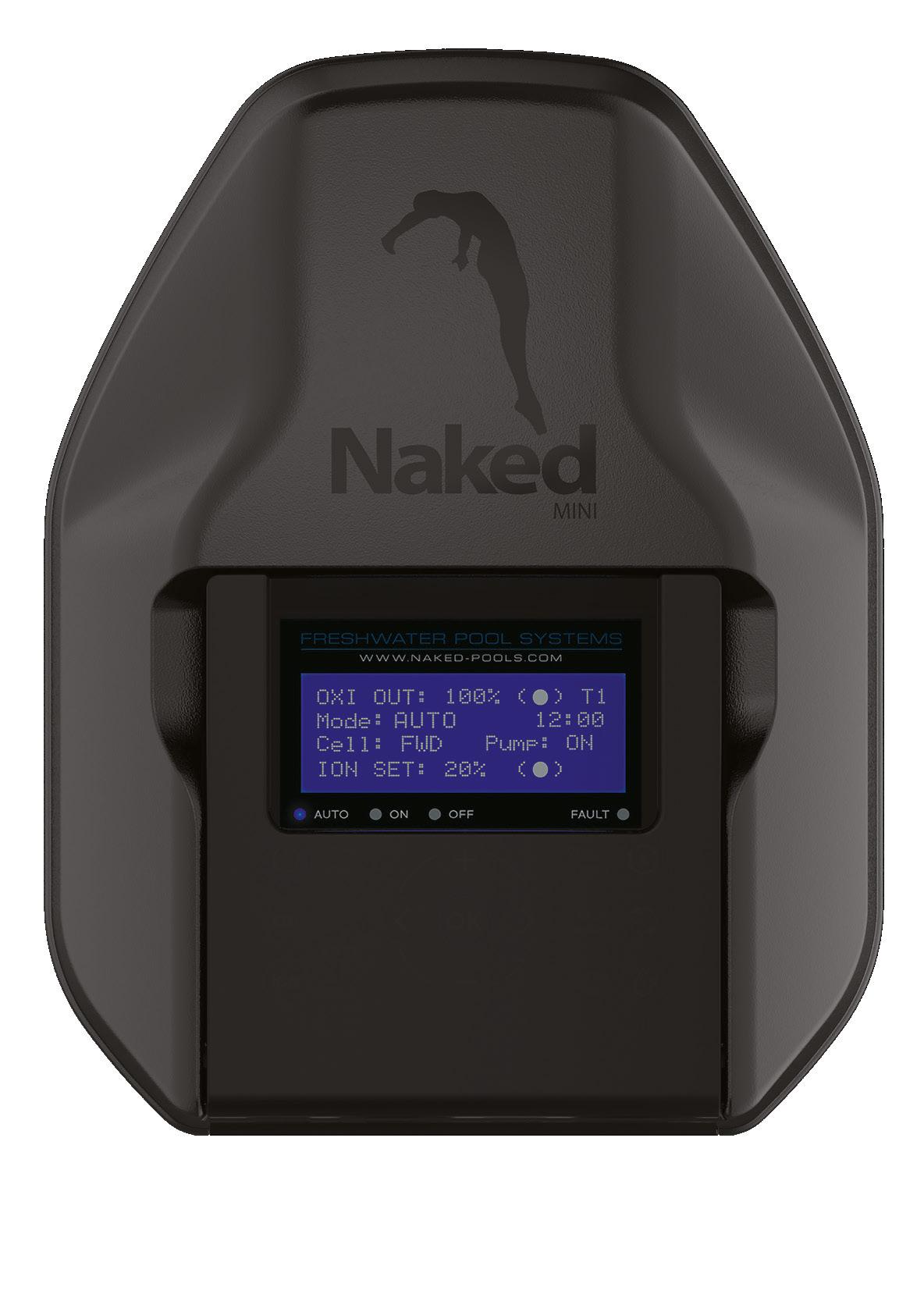
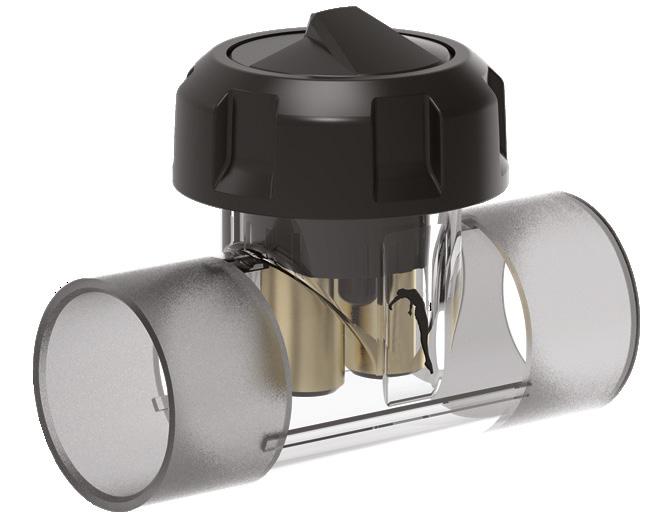
from November 2024

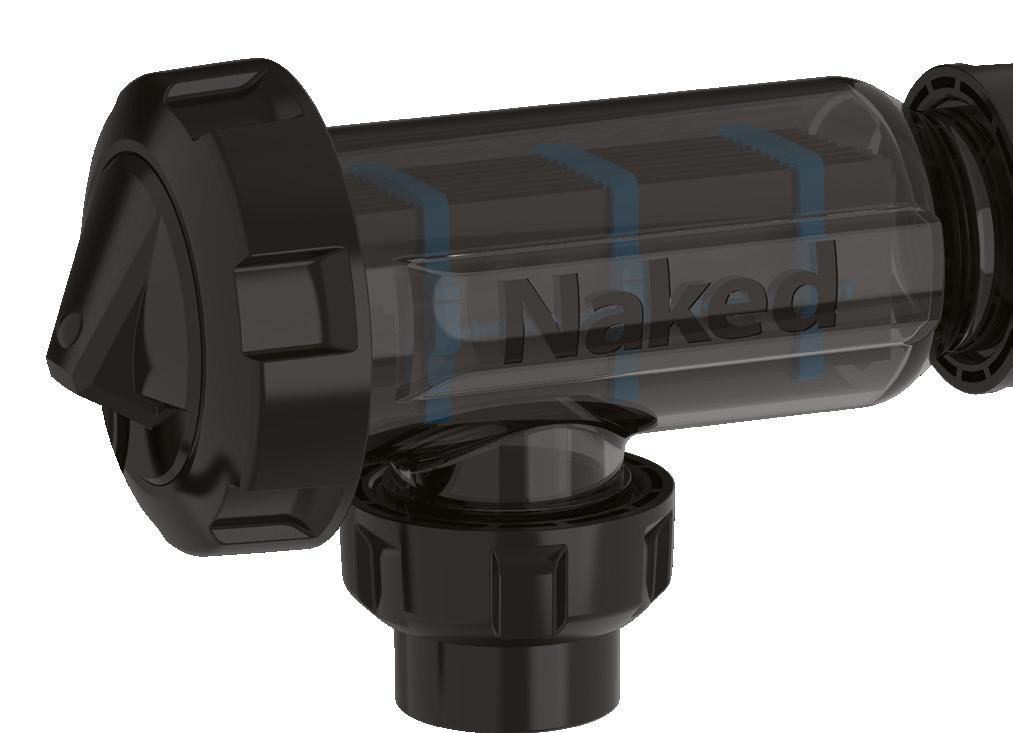


32 Aussie UnderCover saw a lot of new business, but also many existing trade customers came through to discuss their product with them
“They say that they’re coming back because we’re the only one that does this, where the underground cover storage unit blends completely seamlessly into your into your pool area, finished with exactly the same material you’re putting around the pool: decking boards, pavers or even fake grass.”
33 Regan Boon from Shadowspec, a New Zealand outdoor umbrella manufacturer who has been in the Australian market for eight years, selling through pool and spa shops . Their unique points of difference are they have no internal cables or cogs, and multiple umbrellas can be combined on one main post to create a waterproof awning, complete with inbuilt gutters
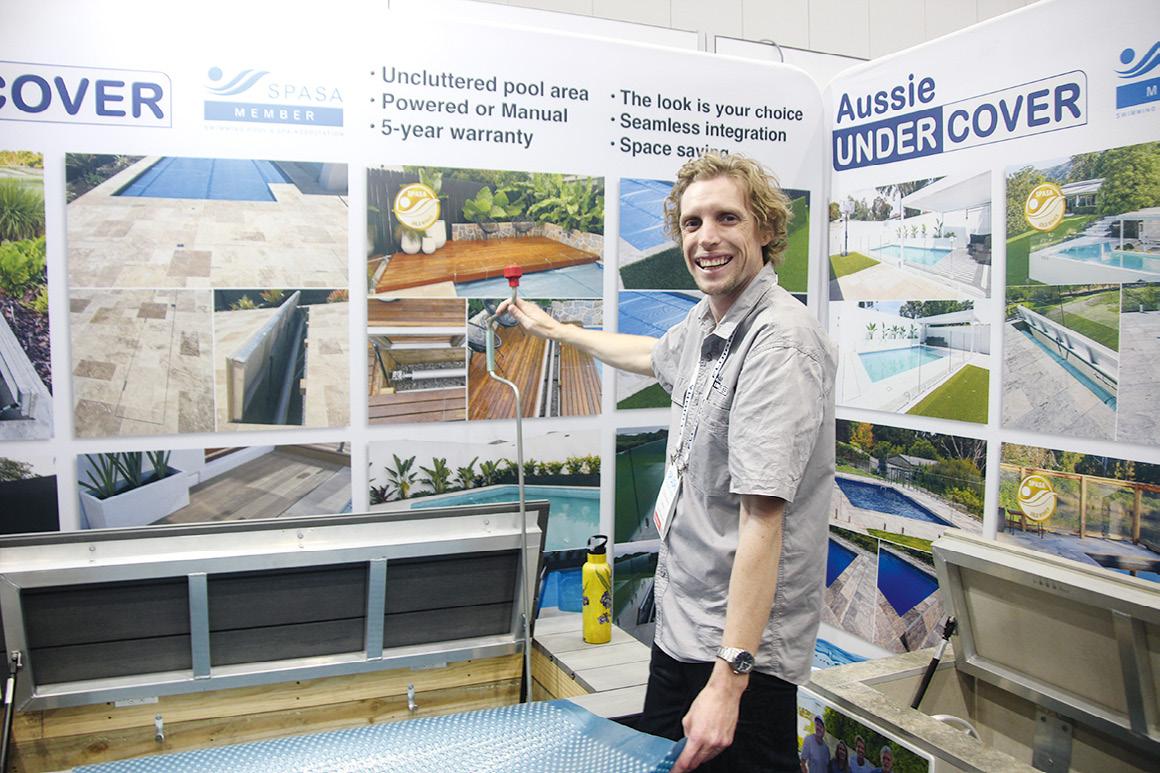
also now honed and finished stone. We’ve had a really rewarding day and had some really good conversations.”
36 AIS Water CEO Elana Gosse has many things to say about the industry, manufacturing and leadership . The first thing she discussed with SPLASH! was their New Product Award for the AutoChlor Neo in the National Awards .
“How could it not impress judges?” she asks.
“We spent more than three years of research and development interviewing all our worldwide customers and finally, we are launching this product at the SPLASH! trade show. For the past 10 years, our biggest disappointment was that while everyone loves our product and the longevity of the product, in the replacement cell market, we couldn’t compete with the generic cell manufacturers.”
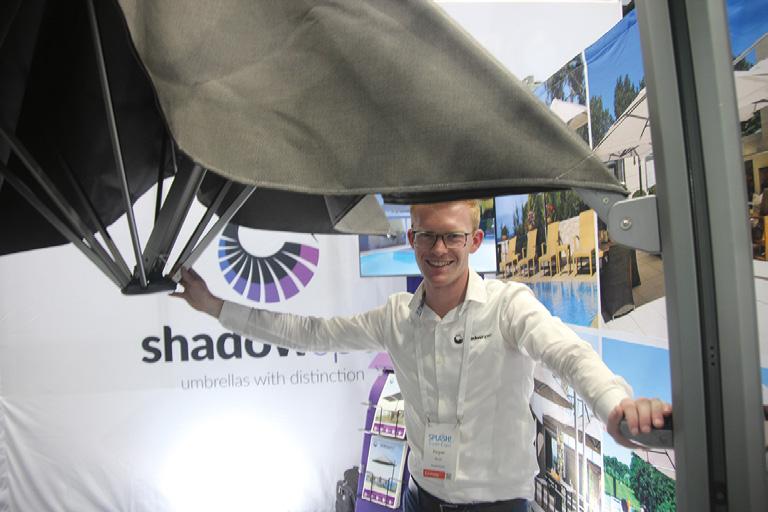
34 Ben Israel, Anthony Grice and Paul Rice from Clark Rubber
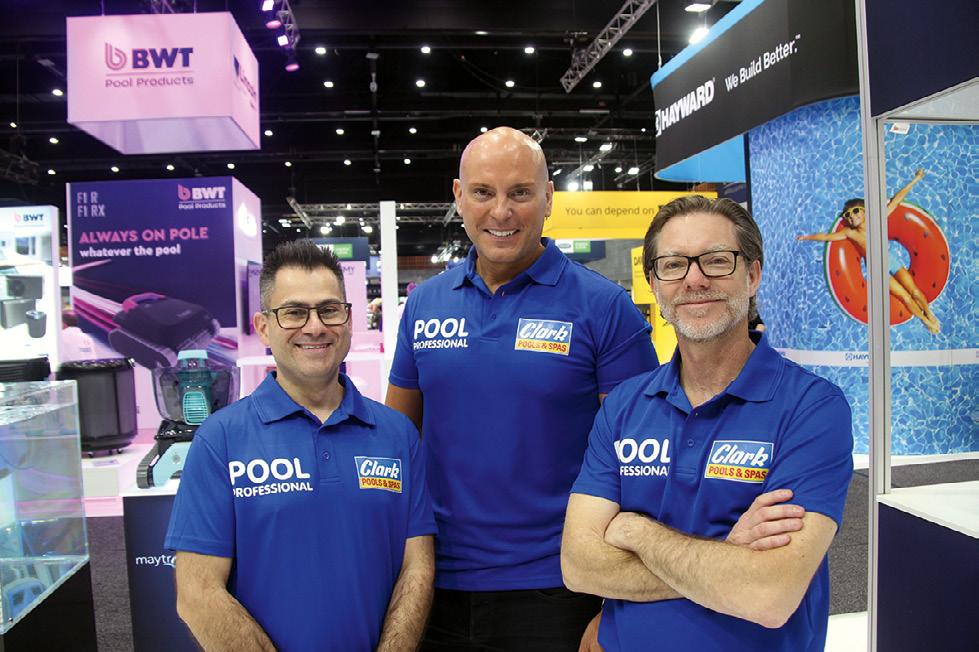
“We are serious about Pool,” says CEO Grice. “We’ve been on a journey for the past six years in up-weighting the Pool and Spa offer in our Clark Rubber business. At the beginning of this year, we made the decision as a business that we would move to the next stage, and develop a standalone division for Pool and Spa, with a single vertical headed up by Paul Rice, who was previously our category manager for Pool. He’s been with us for five years, knows the industry, knows the product, knows our business, so Paul was the natural selection to elevate to general manager reporting to me, so we can continue to grow our fastest-growing division. Even in the current environment – economic headwinds, cost of living pressures – we’re still getting double digit growth from Pool, and we’re not going to take the foot off the pedal in terms of growth. Thinking about SPLASH!, thinking about all of the Clark team walking around here, it’s by design because we’re investing heavily into our people, into our technicians, into growing our business.”
Rice says the service division is growing at a rapid rate. “Nearly all of our stores have got techs, and it’s growing. We’ve got more MSVs that are sole operators, mobile service vans, and that’s a real focus for us to grow that network nationally.”
Grice says that while Clark has always had two brands, Clark Rubber and Clark Pool and Spa, Clark Pool and Spa will become more visible in the pool and spa space ongoing. He also says that training will continue to be an important and integral component of the brand, with all techs going through Cert III amongst other initiatives.
35 Simon Andreson from Aquea showcasing a couple of new products, the newest of which is the double-key lid kit, which makes the lid easier to remove
“We’ve seen a shift to more concrete and aggregate surrounds, coping and decks, and
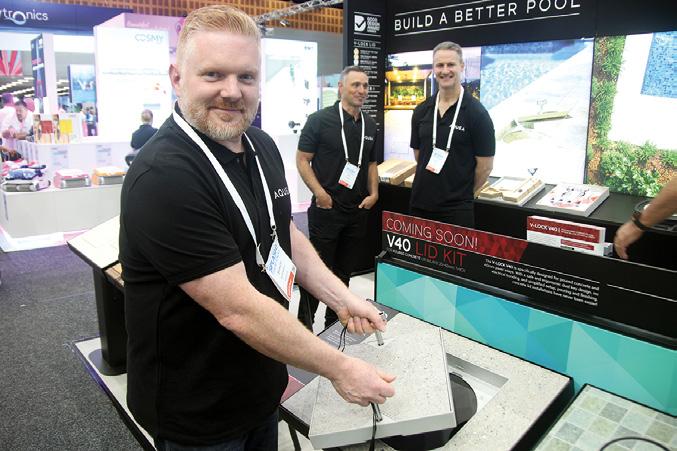
Their response was to develop technology that would ensure only AIS cells were used as replacements. “That was done with our customers in mind,” she says. “Firstly, we need to get the credit for what we designed, but also we want our loyal customers to not just to sell our product, but also to have return on investment and benefit for many years to come, and stay loyal to the brand.”
She says the Neo basically takes the simplicity and reliability and longevity that AIS Water is known for, and have taken it to the next level.
“Neo has all the smarts like wifi connection, but also it has a rotor knob that is very easy to use. It’s very simple, you can see on the screen what your water temperature is, how many hours your cell will work if you use the boost button. And for example, if your water temperature is going down, the unit will automatically dial down your chlorine production without you being involved. So it’s very simple, very robust, very smart. It will have our famous four-year unconditional warranty, not pro rata, and a life expectancy from seven to 10 years. The first 100 units are coming in September, and we already have more orders than we can fill. But mass production will happen in October, so we can serve all our customers for the season. So we’re very excited.”
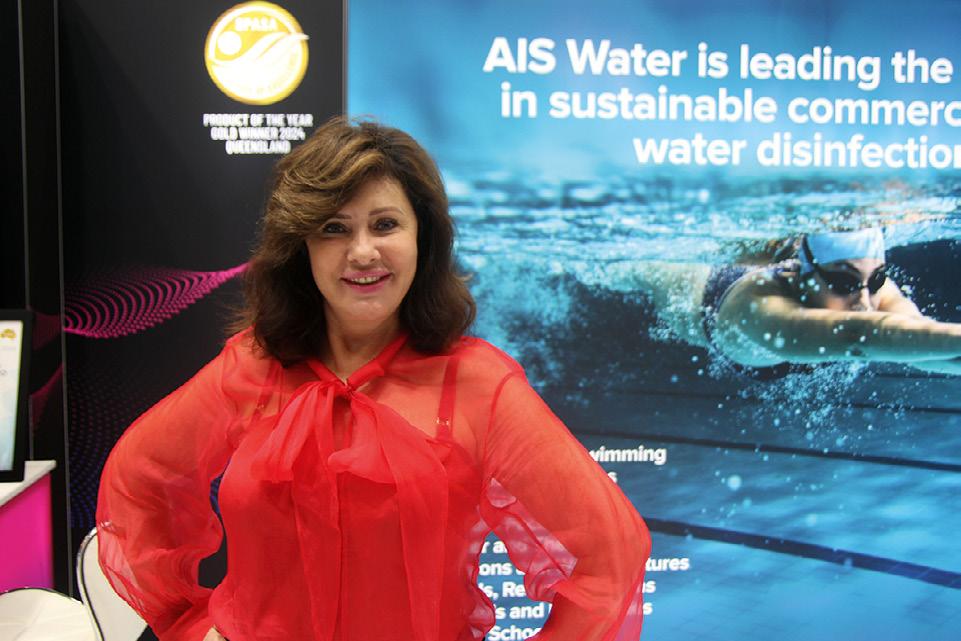
The full, far-ranging interview will be published on the SPLASH! website and in the SPLASH! magazine in the near future.
37 . Consultant engineer Neil Davey (right) with Lesley Rudd of Blue Dolphin . He was at SPLASH! to catch up with industry and check out the latest and greatest technologies
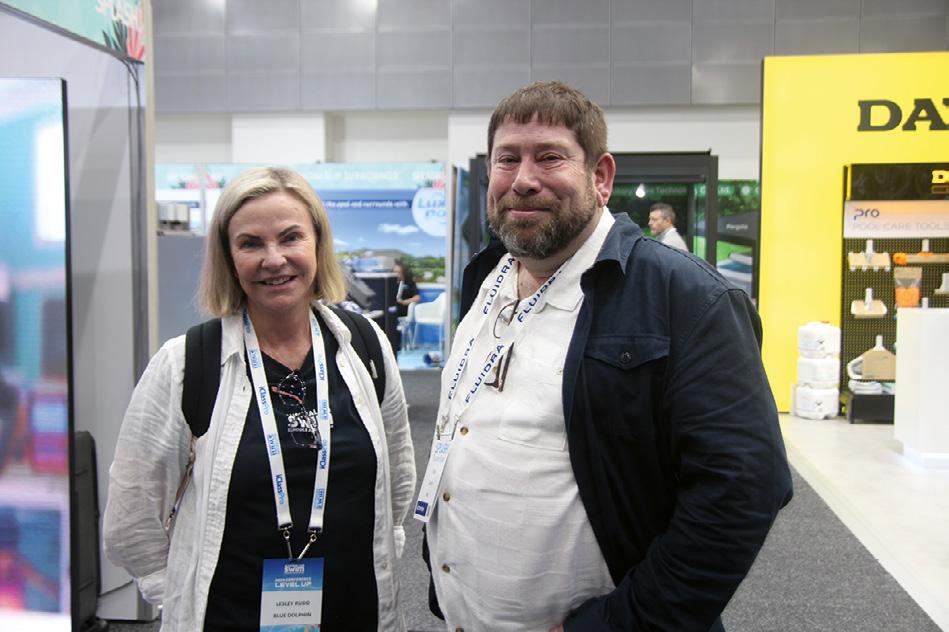
“We have found a few things today that are quite interesting; the Fluidra by-in of Chadson. Some market changing bits and pieces going on. We’ve been working on the new $135 million Adelaide Aquatic Centre. It’s keeping us busy, which is good. The show is bigger and better than ever. It’s such a fantastic show. You can catch up with industry, and everyone is here. It’s great.”
38 Remco Australia general manager Carl Voshege (centre) discussing with some interested visitors the benefits of the retrofit Swim Jet, which won the National Innovative Product Award 2024 .
“It’s a solution for existing swimming pools – mums and dads who’ve had pools for 20 years can now have a swimming machine installed, rather than having to punch a hole in the wall and have a cavity. We sell direct to the trade, and our philosophy is for the builders to extract as much value out of every pool they build: rather than simply putting as many pools in as you can, jam pack them with features. So integrate a swim jet, put a swimming machine in, put an automated cover in. As pool builders get older they often realise they can make higher quality pools and make more profit out of them – then they can do less pools.”
39 . Ron Lausman and David Bogdanov from Whitewater in Vancouver, and Jim Corbett (centre) from Whitewater Australia, were at SPLASH! to connect with customers and various people in the industry who are always visiting the expo
Corbett says they’d seen a very varied group of visitors – more varied even that last year. “We had everyone from council aquatic centres through to pool builders. We’ve got a couple of large waterpark projects coming up in Australia, but we can’t say where yet, because they haven’t released their media yet. Two big water parks. And the renovation at Wet and Wild as well. They’re taking down an old complex and replacing it. It might be roughly a $2 million spend. And since the previous SPLASH! Whitewater has installed the first Aqua Course in Australia, in Palmerston.”
In North America they are working on new rides, a family raft ride and inner tube slides and various new products. Lausman also spoke at a SPLASH! seminar on the trend of hotels and resorts adding water parks and water park amenities, and seeing what that can do for their occupancy and average daily rates.
“The trend is that it significantly ups their revenue by having these types of facilities at their properties. We’ve worked historically with over 300 hotels and resorts, but recently at some big indoor water parks, hotels are being built along with the parks, and it really drives the leisure component of hotel occupancy, whereas hotels are often focused on the business occupancy midweek, and this drives weekend attendance.”
40 . Clint French from Pools by Design on the Sunshine Coast:
“It’s nice to come here and see the new products, or how the current products have changed. It’s pretty exciting for the pool industry. Being in Queensland, it’s a pretty big game. I wanted to try and branch out into saunas, and I just found them here, so that was pretty interesting.”
He says that being first on site, builders have the initial opportunity to sell these add-ons like saunas to the customer.
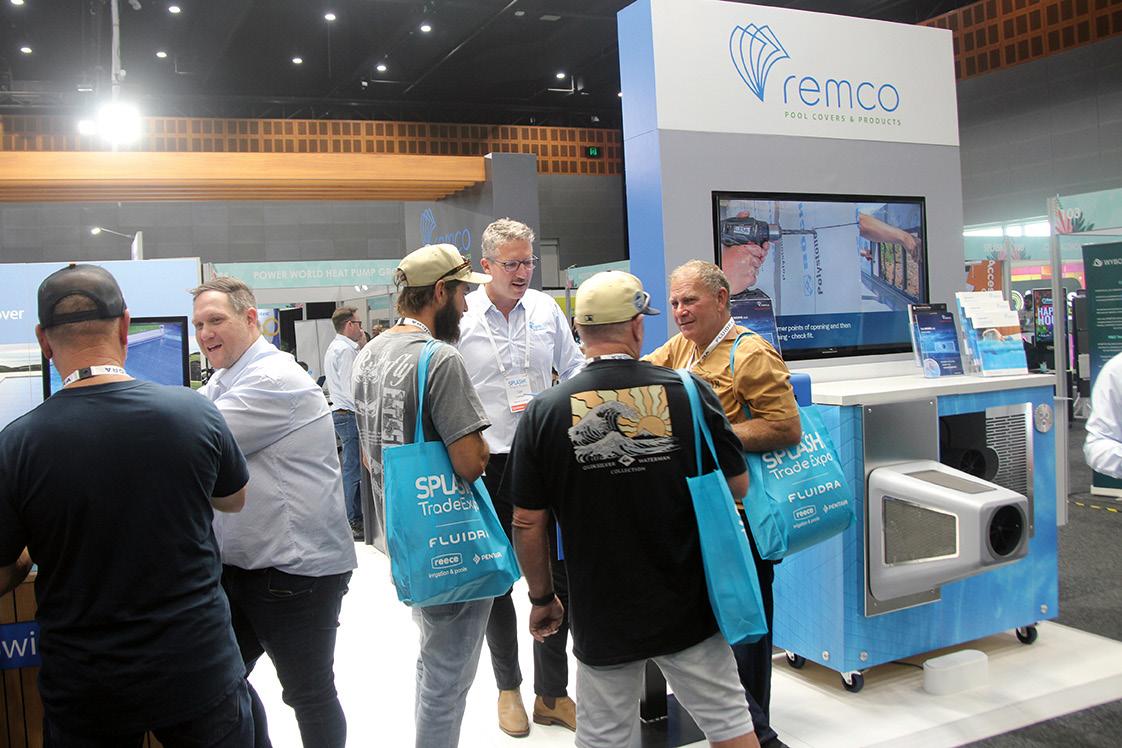
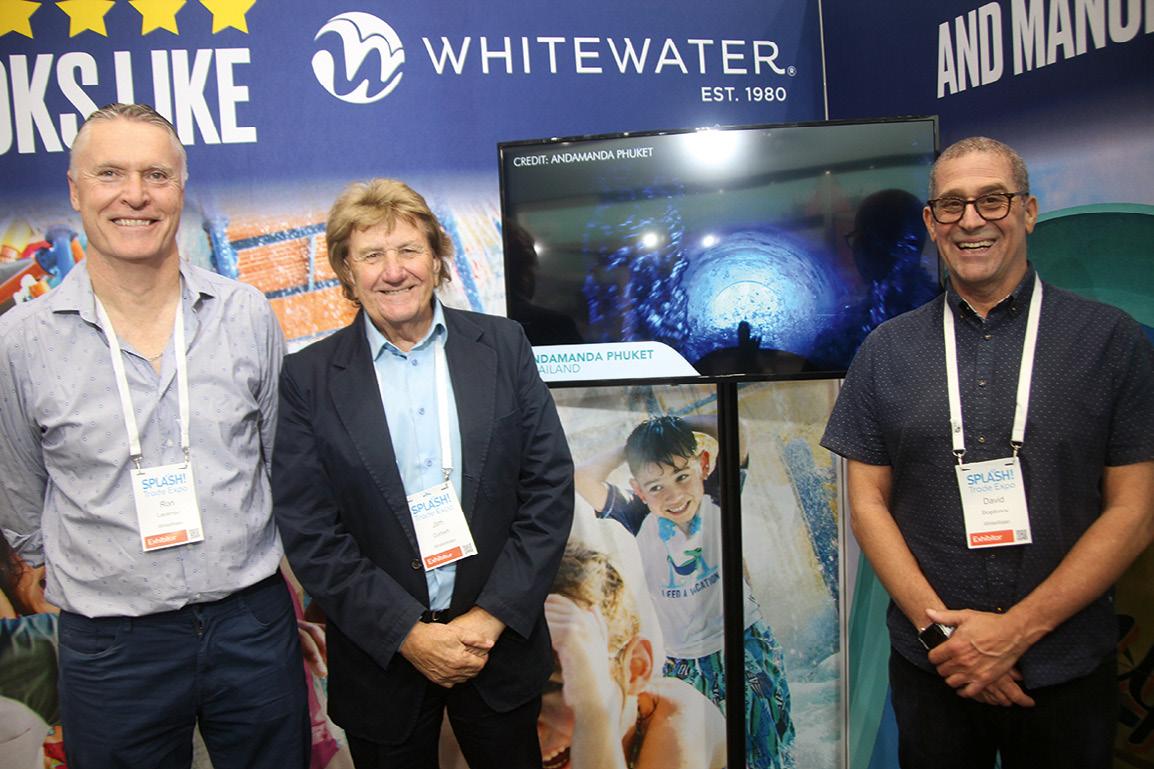
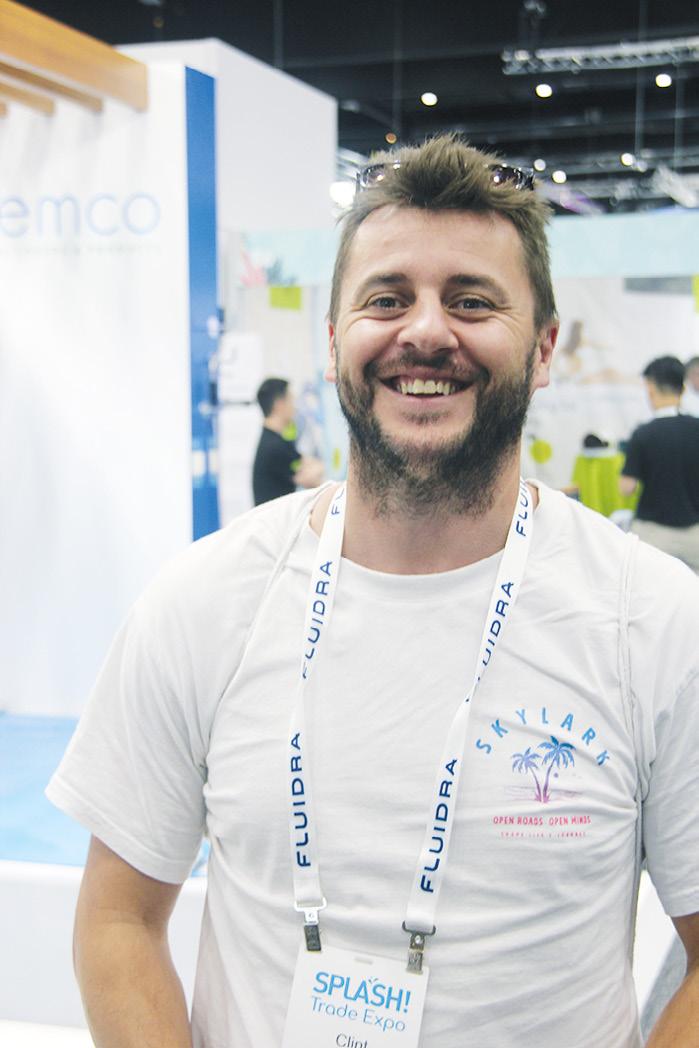
“In the world we’re in at the moment, a lot of people are interested in their health – so, saunas, spas, cold plunges, all those kind of things. You’re not going to sell thousands, but you’ve got to have it in front of them. And they’re not that hard to install.”
41 Wayne Dorgan from Gold Coast company Coastal Sauna and Steam, came to have a look at his specialty, pool heat pump repair and sales As his name implies, he also builds sauna and steam rooms
“Saunas are a bit of a strange area, really. They become an expensive item to build a small one, whereas the bigger you get, the cheaper it gets to build. For a small one, most people balk at cost – whereas you can buy a flat pack one, like an Ikea kit out of China, that you can slap together and plug into a power point, for domestic use.” Commercial is the bulk of his work, including running the recovery pools for many Queensland professional football teams, including the Titans, the Suns, the Reds and the Dolphins.
42 Brendan Davis from Transform Pools and Spas enjoyed his first time at SPLASH!, and was particularly impressed by the range of different coloured tiles and stone on offer . “We just came here to have a look at the new products, and see what’s up and coming . ”
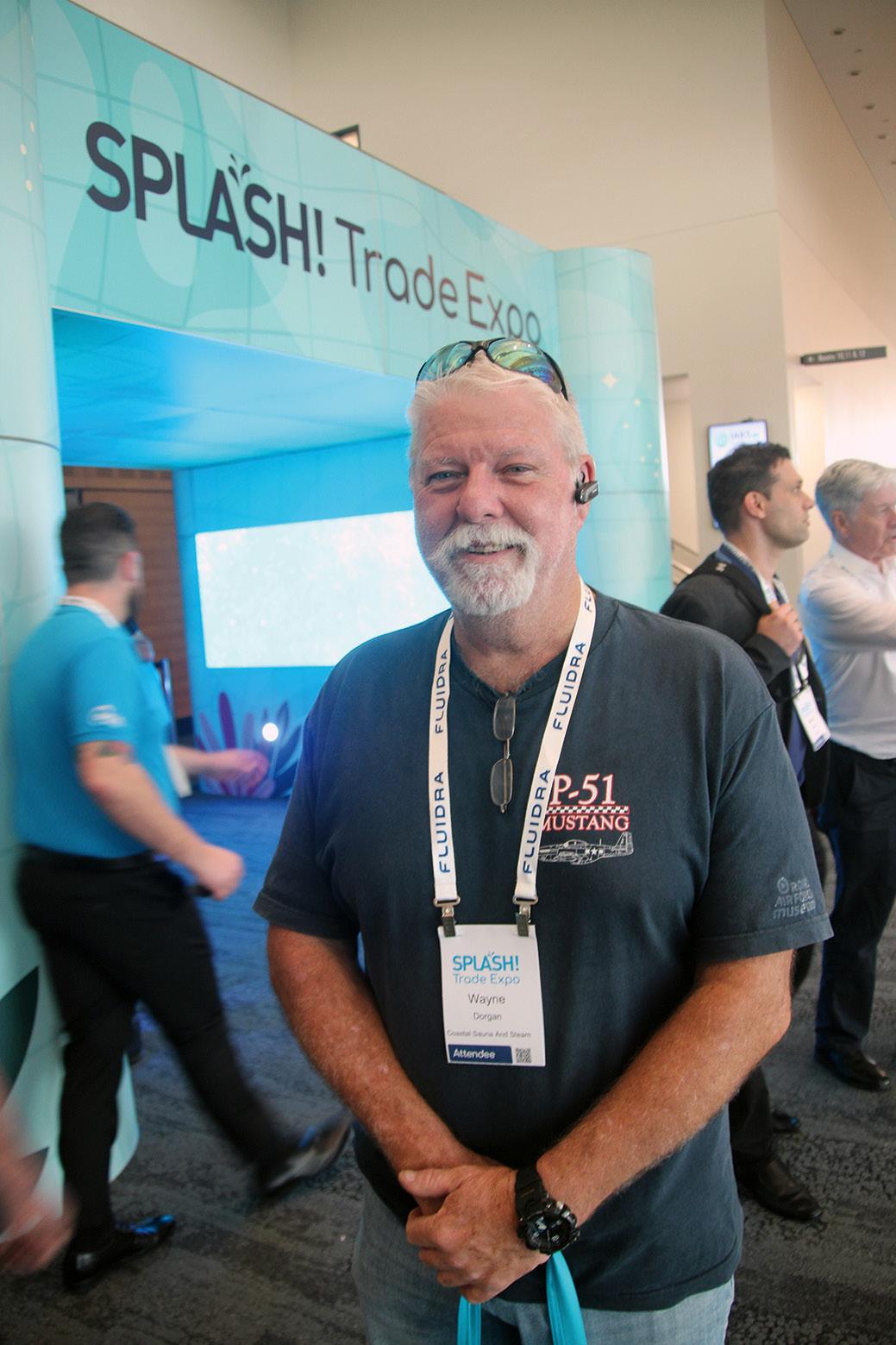
we’ve also got a cover guard for the keypad and the LCD screen, so we don’t have any sun damage either. That was something Reece was able to partner with Dontek (who Reece also acquired) to better the product line. We’ve had a great reception. A lot of people who have used the SMC chlorinators are loving the changes – they’re just a better quality unit now. We’ve also had the Quantum Spa that we’ve got launching as well, which allows our Quantum AOP technology to be used in those hotter temperatures of up to 40 degrees, and then even colder temperatures below four degrees. So we’ve now got that complete coverage.
“The Quantum AOP uses a UV lamp, reflecting that light off titanium dioxide, which creates photocatalytic oxidation and hydroxyl radicals that actively seek out all of those viruses, bacteria, pathogens, fats, sweats, oils, suntan lotions – all of those nasties – and breaks them down into their base elements of water and carbon dioxide. It is a secondary sanitation system. The whole idea is we’re able to then reduce all the chlorine that’s going into the water, get savings for the customer, and provide a more comfortable and a safer swim. You use that in conjunction with a chlorinator or Theralux as well.”
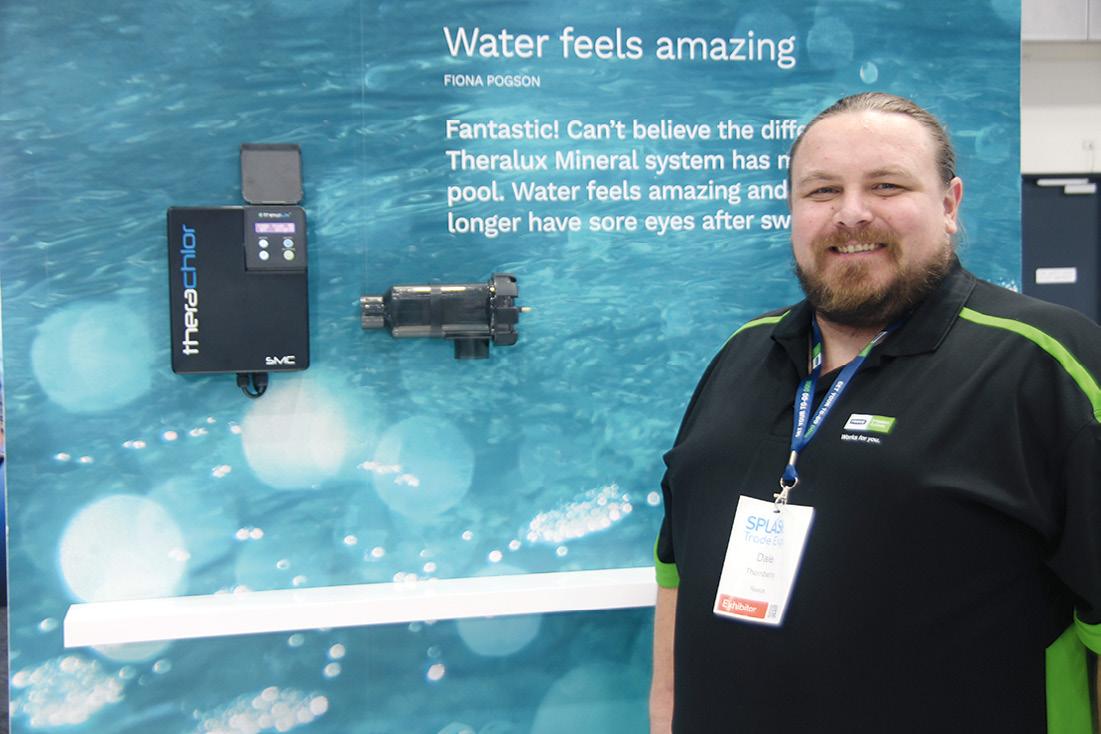
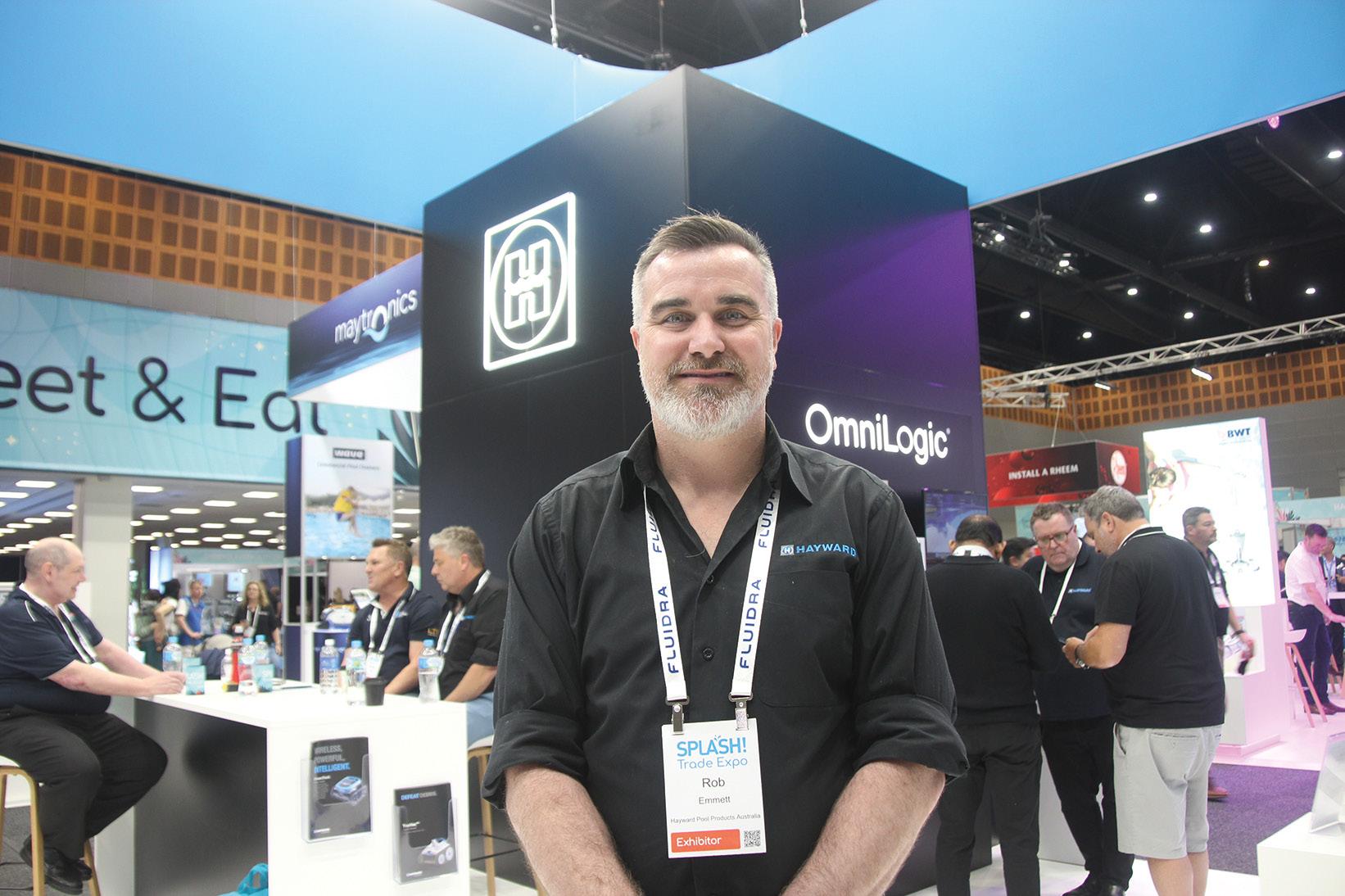
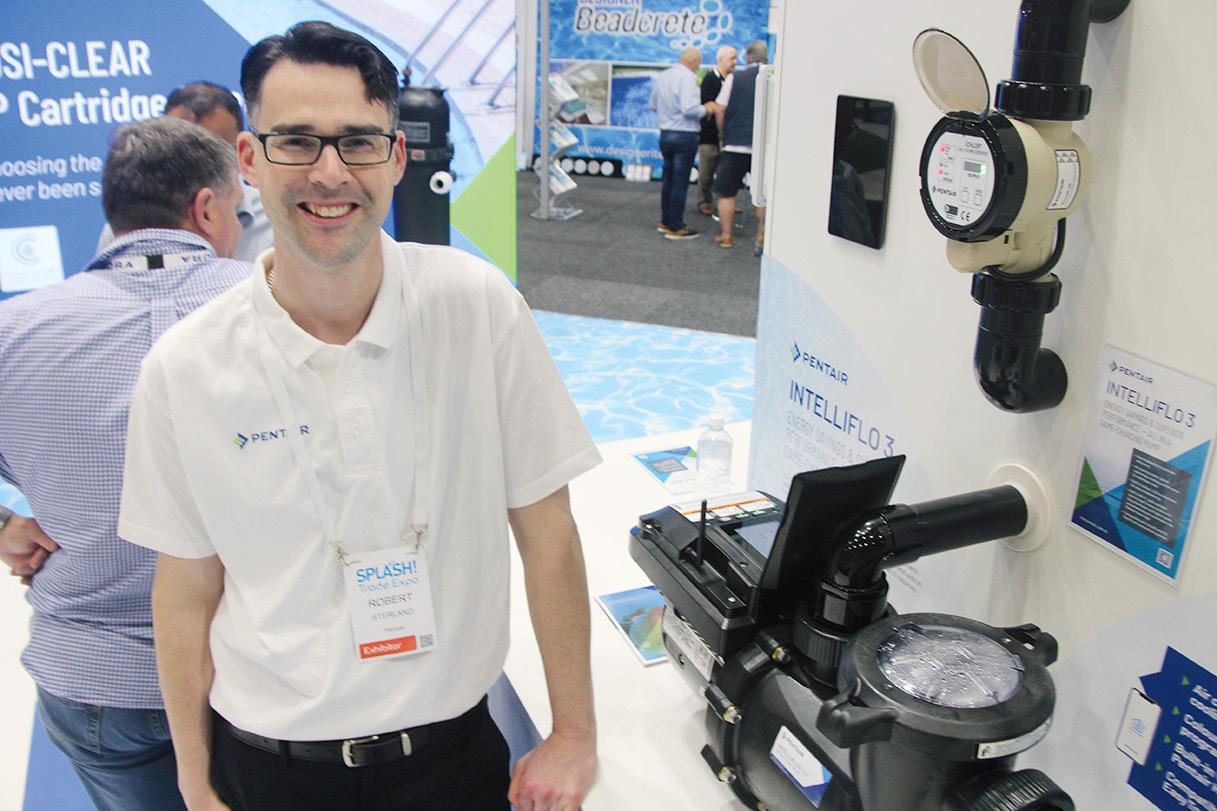
“Both groups, are persevering, so we’re very optimistic about the future
Brett Abbott says global cost of living difficulties are splitting the market
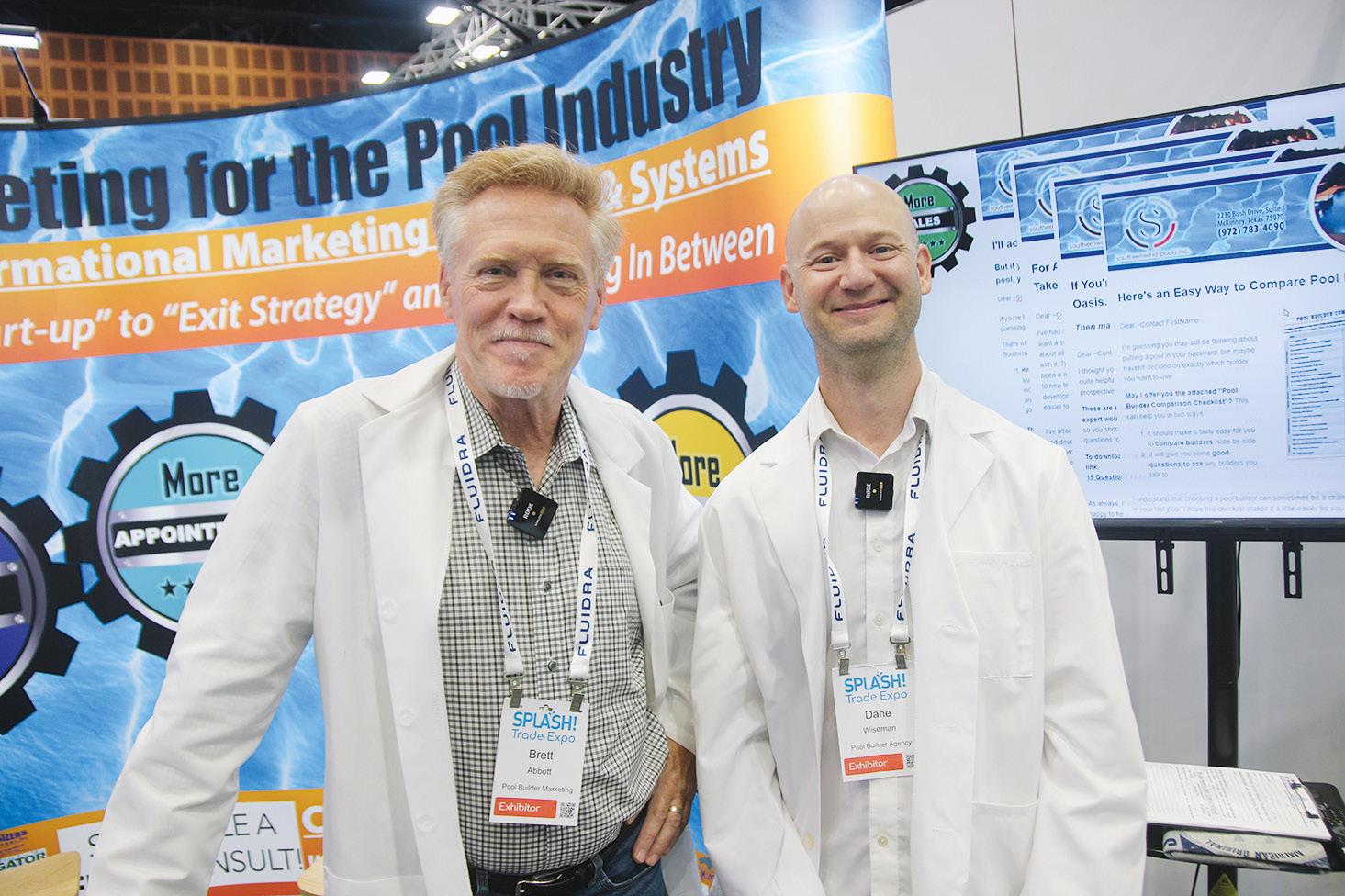
“What we’re seeing in the US, and I’m guessing you’re probably seeing it other in places, is that the middle class is kind of splitting. People who were good, comfortable middle class are struggling a little bit more. But then on the upper half, there’s still a lot of rich people. And generally speaking, it’s rich people who buy really nice backyard projects for their second or third home. We can’t fix that, but I can coach pool builders. If you’re trying to sell pools, don’t try to be that budget guy. If you’re trying to sell inground pools, focus on the high end, because they’ve got the money, they’re not affected by what’s going on in the economy. That’s a subtle marketing challenge, because you have to make sure that your website makes you look like you’re the kind of company that works with rich people. Kind of an architectural feel, as opposed to, you know, Johnny six pack with a shovel. This is going to be an ongoing struggle. So I say target the guys with the money. It’s just easier. It’s more fun too.”
The full interview will be published on the SPLASH! website and in the SPLASH! magazine in the near future.
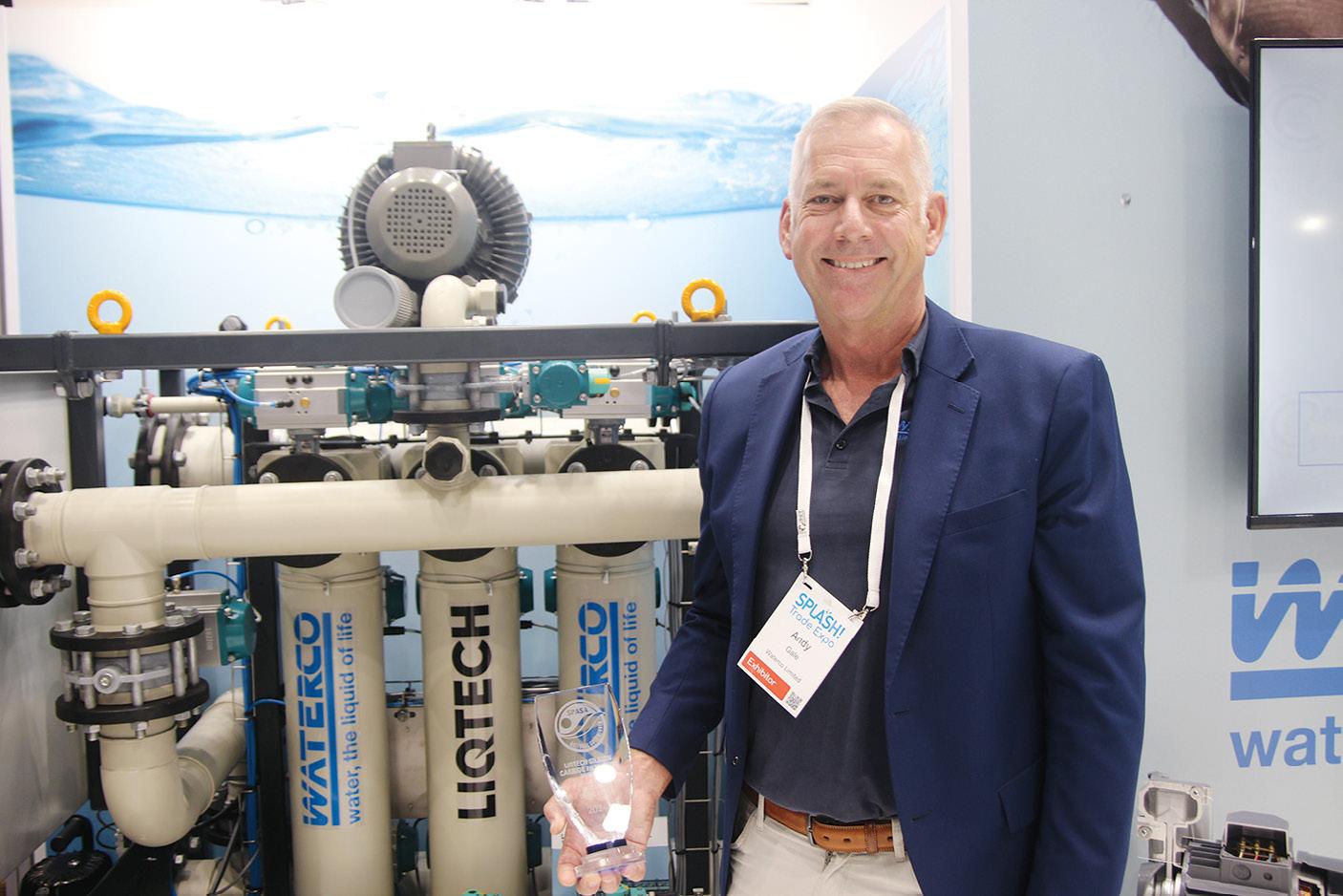
was a good show for Pentair
“I’ve been on my feet for almost two days straight now, haven’t had a chance to stop talking, so yeah, it’s been busy. Yesterday was absolutely packed. We had a lot of interest in our new products, the IntelliFlo3 in particular. It’s our third generation of IntelliFlo, taken a step further this time, with a completely new hydraulic design, new motor, new drive. We’ve got a colour touchscreen on the pump where you can easily control and program everything, and essential automation built into the pump, so you can control two external devices, such as the chlorinator and lights. Plus you have the ability to control it through our Pentair Home app as well. We’ve done a lot of work on the design – it’s a really, really nice looking product with clean design features, and the process of pairing to your phone is really seamless, as well as taking advantage of QR codes to make the whole process easy for the consumer. It will be released in the next six months.”
45 . Two US pool builder marketing experts came to SPLASH! to conduct seminars and offer ideas to Australian pool builders Brett Abbott is from Pool Builder Marketing while Dane Wiseman from Pool Builder Agency is an actual professor of digital marketing from NYU Wiseman says his initial impression of the Australian pool industry is of a range of pool companies looking to maintain the lifestyle they currently enjoy, while others are facing economic challenges where they need to acquire more customers to grow their business, and that this situation is very similar to the US.
Rob Emmett, managing director of Hayward Pool Products Australia says the show was really good for them
“We’ve invested in a new stand, and we’re really happy with it, and we’ve had a lot of people through, which is great. We’ve got some great new products and also prototypes, and it’s been really positive. It’s been a tough year for a lot of people, us included. And it’s great to have so much positivity within the industry when they come through and see what everyone’s doing.”
Emmett says there had been pressure on sales and prices over the past
“One caused by the other, and increased competition. We’re seeing at the moment, the economic environment continuing to be tough, which obviously has an impact on almost every industry, but the pool industry as well. We’re also seeing more competition enter the market, particularly from China and Asia generally, and seeing strong direct online competition entering the market which really challenges those bricks-and-mortar channels that are more traditional here in Australia.
“I think strategies to help alleviate that come down to the quality of service that we can provide, but also our dealers can provide, and ensuring that that is brought to the front of mind of the consumer. So there is obviously a space for online, and it’s really our job to try and channel that online activity through our dealers, rather than actually having a purchase made online.”
The visitors were looking at heating, cleaning and connectivity products, but were mostly interested in secondary sanitisation.
“Secondary sanitisation reduces the usage of chlorine in pools. We’ve got a very nice UV and ozone system called the Haywood Hydropure, which we’ve had in the market in the States for about 18 months, and it’s gone really well there. And now we’ve done the work to get it through compliance here, and it’s going really well for us here. Very excited about that.”
47 Andy Gale from Waterco was celebrating the Liqtech Silicon Carbide Filtration System winning the 2024 Product of the Year Award at the SPASA Australia National Pool and Spa Awards of Excellence on the evening before There are currently about 100 Liqtech membranes in service in Australia and New Zealand, with each installation having between three and 12 membranes
“We have them in anything from the Essendon footy club to apartment buildings in Melbourne for common property type pools, and also in council sites in New Zealand, in 25-metre lap pools, leisure pools, teaching pools, spas and soon to be a splash pad and an indoor water park in New Zealand as well.”
48 Justin Nicholas says business has been really strong for Cooke Industries
“We’ve been fortunate; we’ve got a great network of builders and partners that we work with, and we we’ve maintained what we did at the peak of covid. That’s really pleasing for the business, and we’ve done a lot of work to reorganise ourselves in our product offering for the next step forward and continued growth into the future. We’ve done everything around the SPLASH! Expo for the relaunch of Cooke Industries, if you like. We got a new logo this year and a new stand. We’ve doubled the size of our stand. SPLASH! was always going to be the focus of relaunching ourselves not just to our customers, but to the wider market. And it’s been very successful and we’re really impressed with the numbers through. We’ve had some great conversations with a lot of new people and opened up a lot of new doors that weren’t there without SPLASH!”
49 Trevor Llewellyn from Rheem Thermal says they had a lot of had a lot of interest at their stand, especially on the Wednesday “This was like a re-emergence for Rheem, as we haven’t exhibited at the SPLASH! show for a couple of years, as we’d decided to have a bit of a hiatus. We’ve come back with a bang because we’ve got some serious products to launch to market. Mainly the large capacity inverter with R32 gas. There’s a 250kW unit and the point of difference with that is it has inverter technology with EC fans with the R32 gas. We think it’s the only large capacity heater here today with that gas type.”
Llewellyn also discussed with SPLASH! about the need to tighten up coefficient of performance benchmarks, which we will go into in more detail in the next issue of the magazine.
50 Gary Clark from Aqua Quip, with Candy Gold, says that SPLASH! has been really good, once again, and they were very happy with the people who came through to see their new very colourful display with a striped colour board with rotating light colours
“The Evo LV pipe light, which won an award in America for the Top 50 Products, was very popular. It’s ideal for shallow water applications. The beauty is, you’ve got your own niche, or you’ve got your pipe as well.”
51 Graham Bateman from Neptune Benson, with Brad Weir (left), says he has been worried about some misinformation going around relating to perlite and diatomaceous earth, unfairly tarnishing the reputation of all types of ultra fine filtration, much of it born out of the problems that were identified in the manufactured stone benchtop industry and the types of crystalline silica identified in those investigations, and the way that material is handled . He also says that while calcinated diatomaceous earth contains crystalline silica, perlite is an amorphous solid, so it is geologically impossible to be crystallite
“The show was absolutely fantastic – we had a lot of inquiries. We’ve already had some exceptionally solid opportunities, and have been verbally told by some people they will be proceeding. We always get a similar outcome when we’re here and we’ve got a really good position being at the front door. We’ve got three or four hundred installations

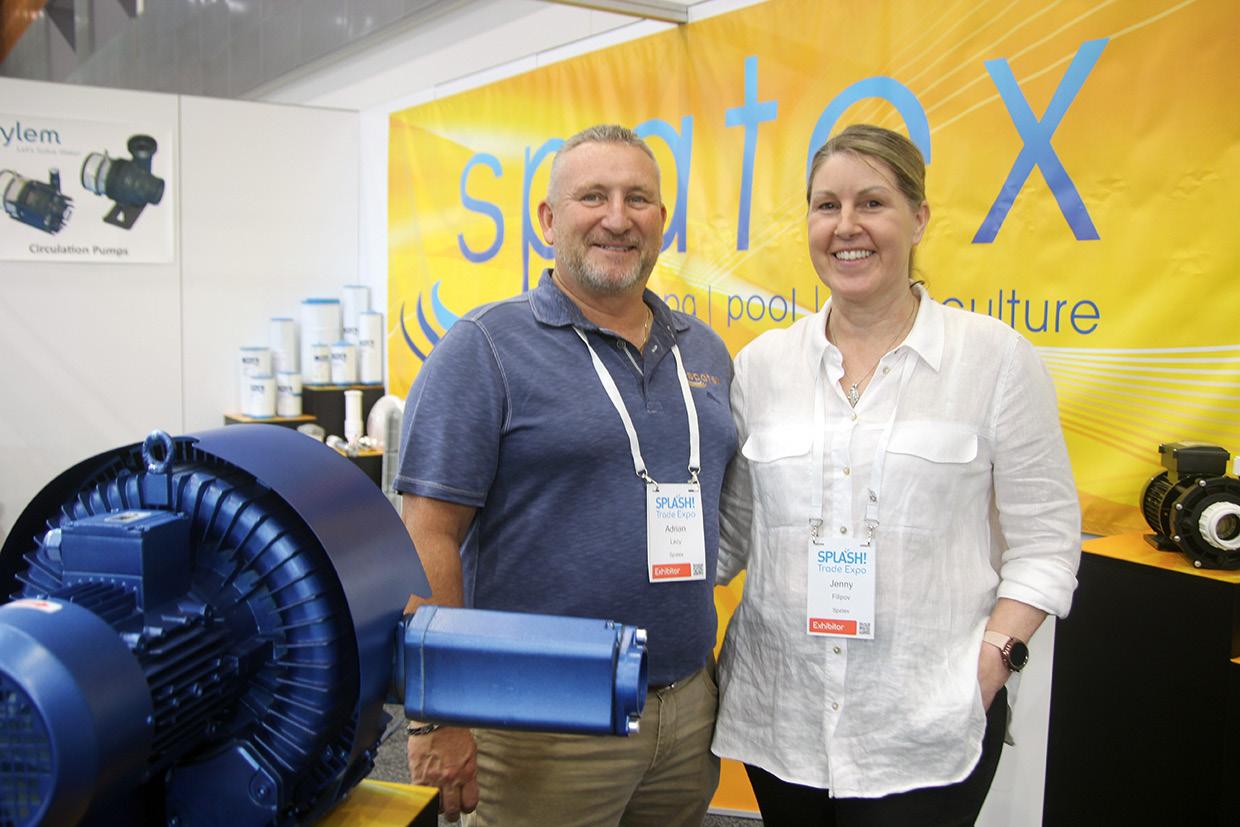
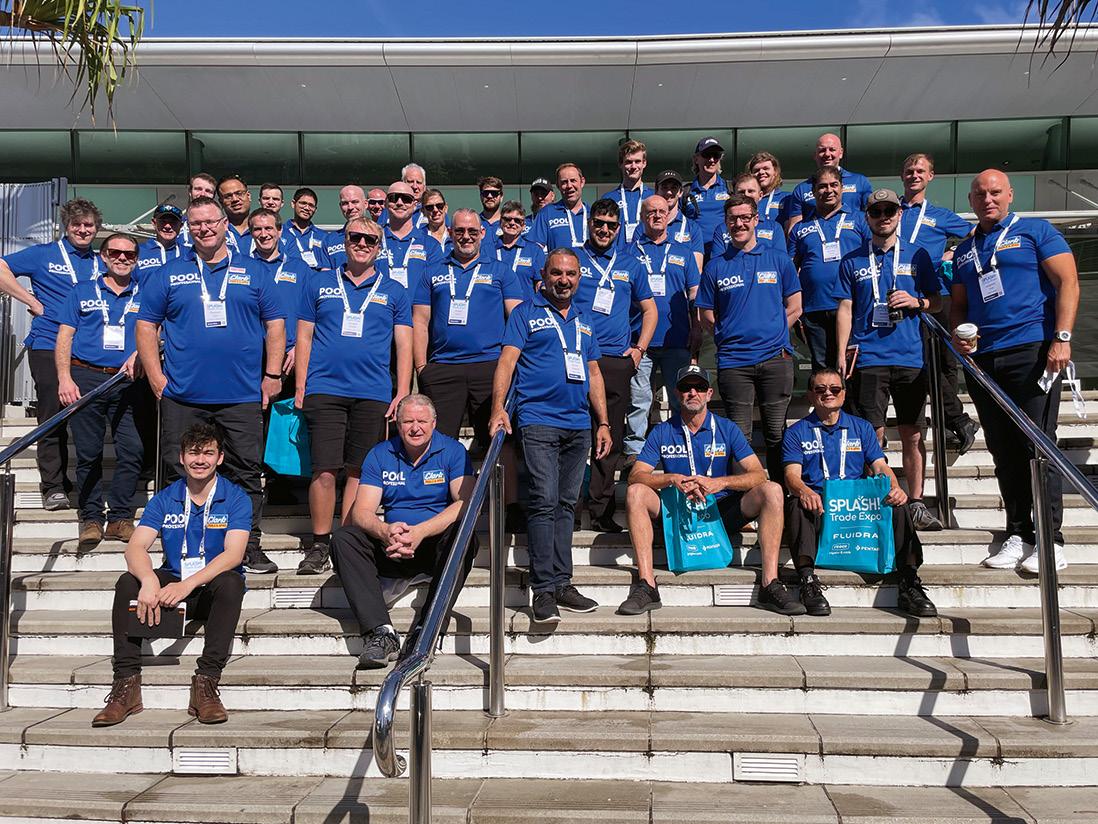
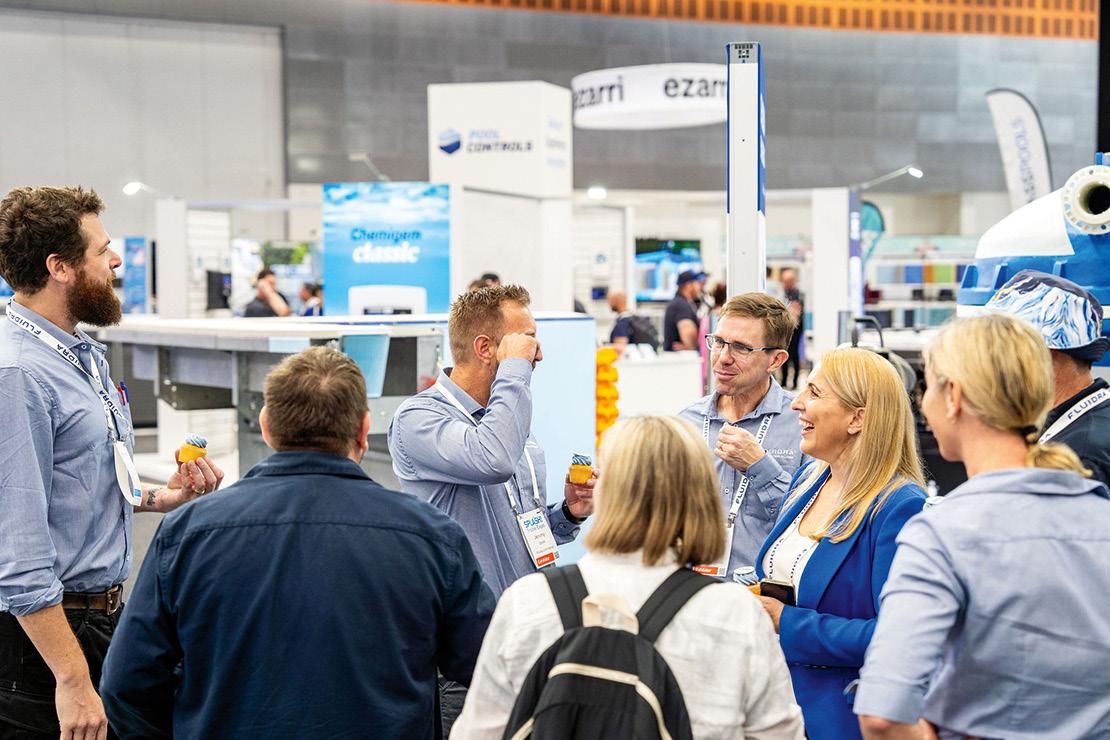
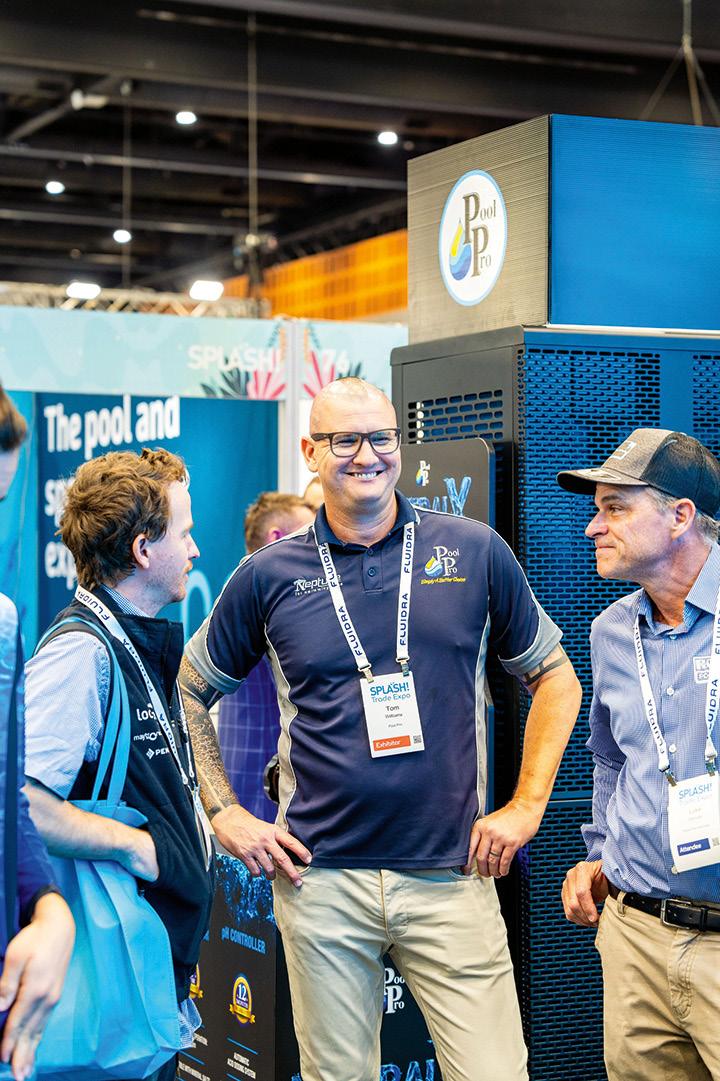
across Australia now, and everyone who’s got one tends to come up and have a bit of a chat. We sell the filters to the contractors, but we still maintain contact with the contractors through to the end customer.”
52 Waterlink Equipment’s Craig O’Neill, with Matthew Harrison and Jacob Mansfield, says they had a great response at the show, especially on the first day
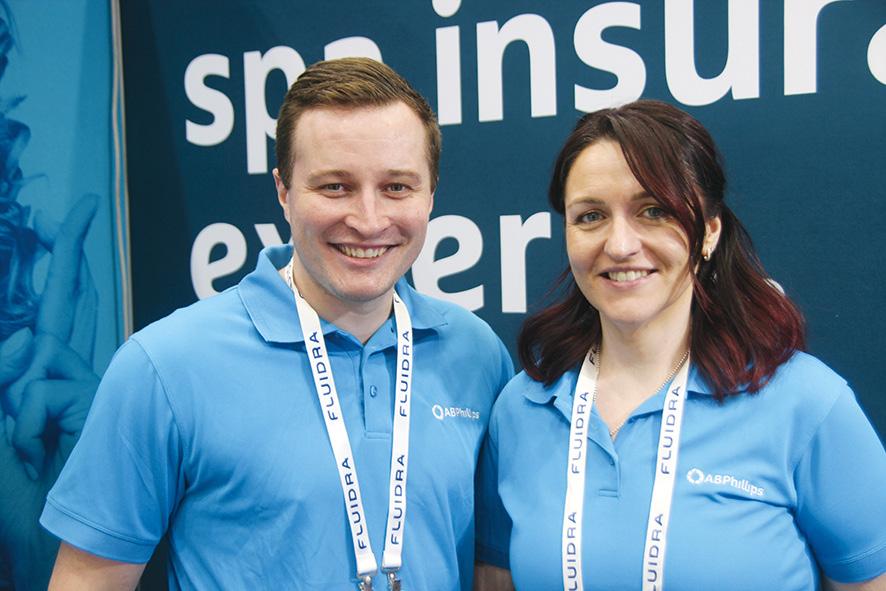
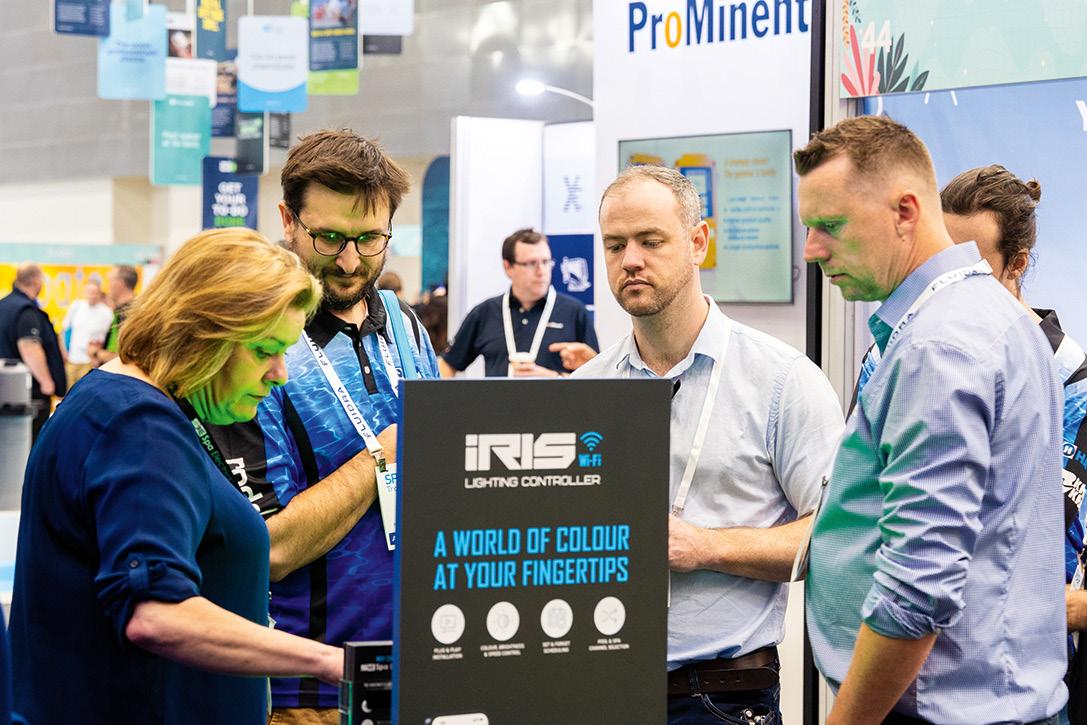
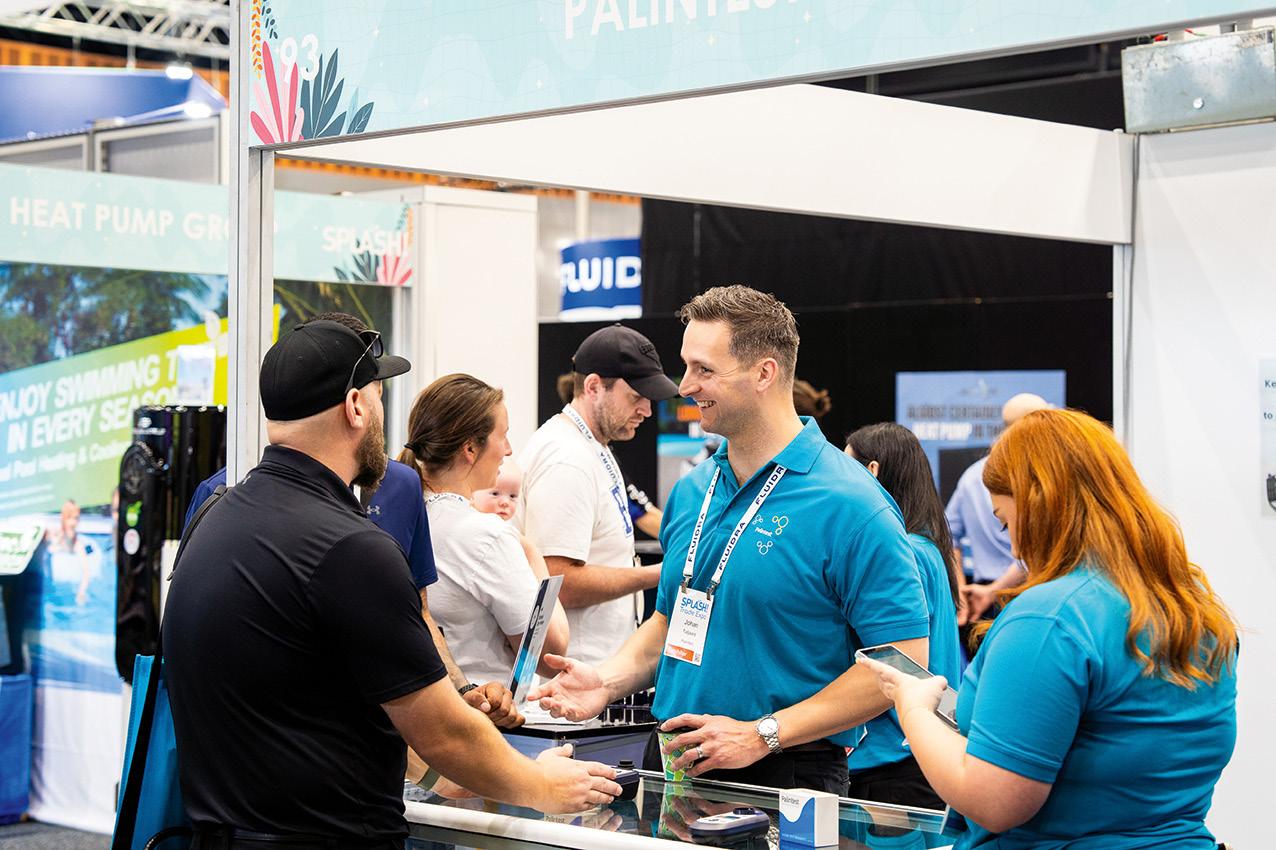
“Certainly the best show we’ve ever done. We had a really good cross section of trade, dealers, customers, swim schools and distributors. So it’s been across the board. All of our gear is cloud-connected, and I think that’s more accepted now, two years on from the last SPLASH! There’s been a lot of interest with remote monitoring and connected plantrooms. And as the state regulations change in terms of pools in buildings and hotels and swim schools, there has been greater acceptance of more technical water treatment equipment, and that’s played a big part in the response we’ve had this SPLASH!”
53 The Naked stand continued to attract interest .
54 Adrian Lacy, with Jenny Filipov, behind a Spatex side channel blower, says it has been a good show for them
“Probably a lot more customers yesterday, but a lot more qualifying customers today. Mixed between pool builders, spa technicians and pool shops.”
55 The quality and openness of the stands at the 2024 expo encouraged people to come together and have discussions
56 The Pool Pro stand was always busy and had plenty of giveaways to encourage visitation
57 An amazing 50 pool professionals from Clark Rubber attended SPLASH 2024 . They came from all around Australia and learnt about all things pool and spa, and in a terrific upskilling opportunity attended a specialised one-day training program
58 Pool Site Quote’s Julian Brady says they had a tremendous two days
“The pool builders are loving the products. We’ve had a lot of referral from builders who’ve been using it for a while since the last SPLASH! And we’ve now white labelled it to Maytronics Australia, and they’re taking it to their elite builder network, which is fantastic. We can still sell the software directly to our builders, but we’re also in partnership now with Maytronics, which is a very unique partnership. It’s a first in Australia, and with the results here, we can take it globally.”
59 AB Phillips was up for national award after winning the Victorian Best Professional Service Business in the Victorian awards Tom, pictured with Joanne, says they came to the expo to advertise AB Phillips as the preferred insurance supplier for the pool and spa industry
“We’ve got a long standing history partnering SPASA, and it’s one of our core areas of expertise.”
60 Shining light on Spa Electric’s Iris lighting controller .
61 Johan Taljaard explaining the benefits of Palintest’s water analysis technologies
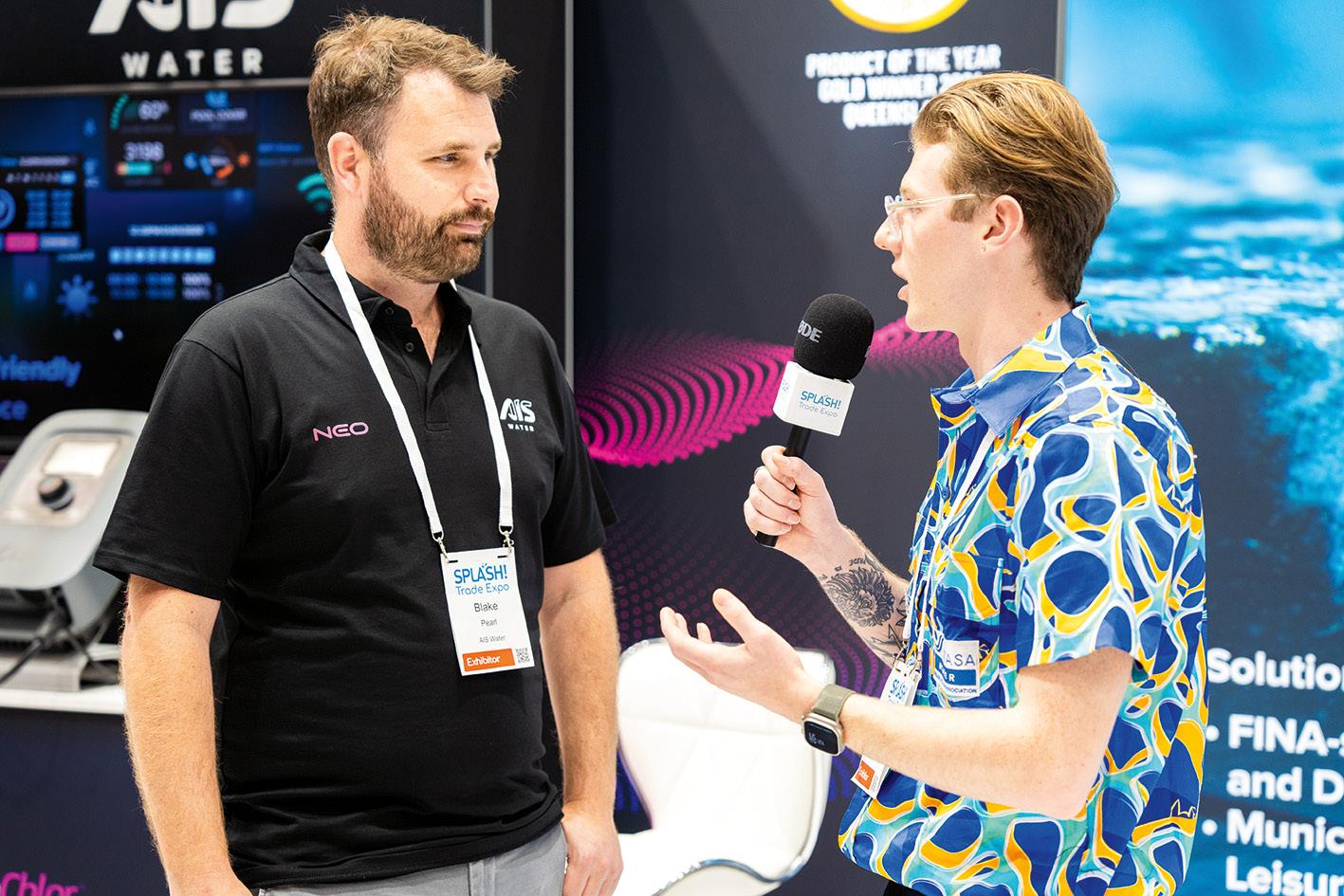
62 SPLASH! brand manager Declan Gillard-Martin talking with AIS’s Blake Pearl .
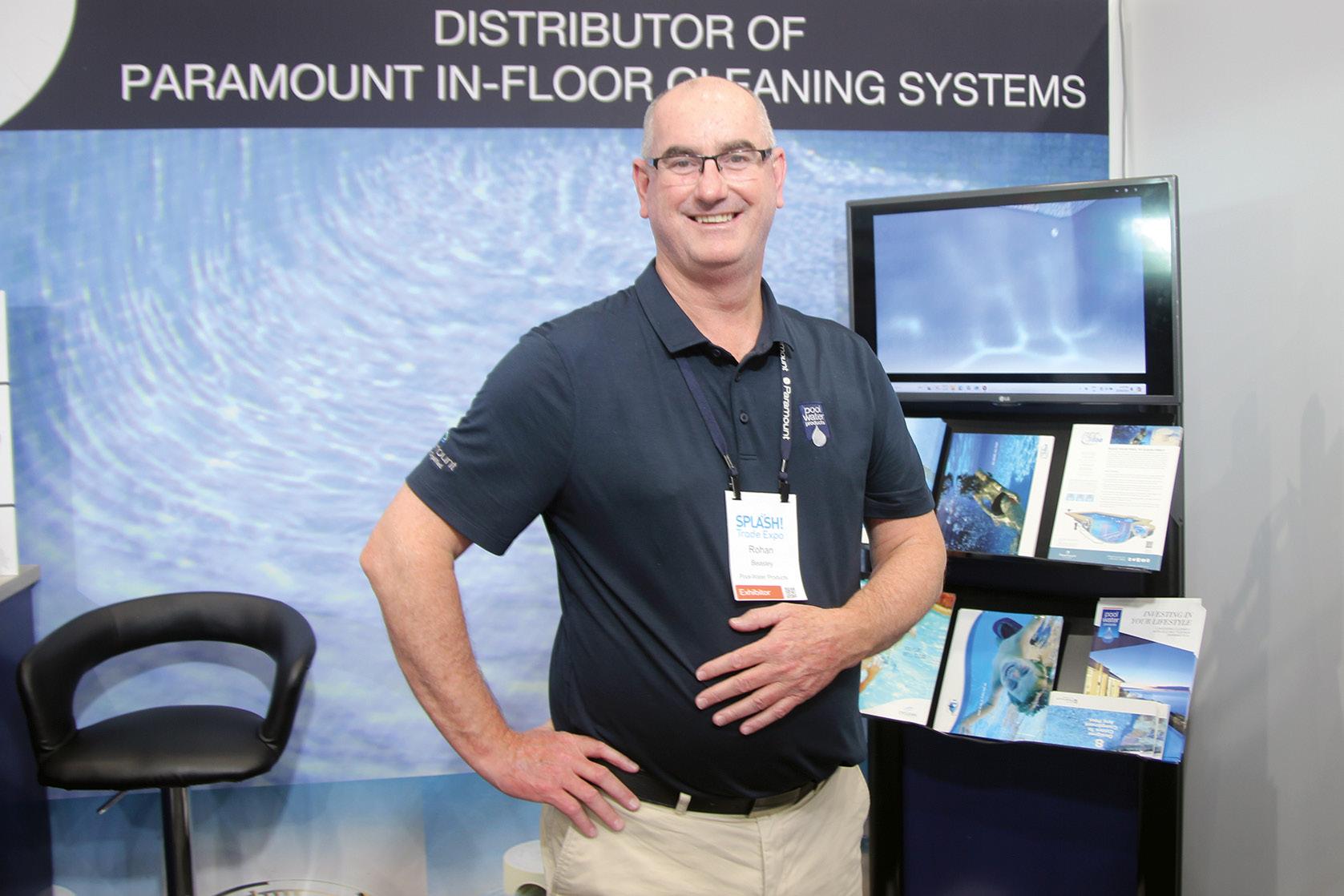
63 . Rohan Beasley from Pool Water Products says it was certainly worthwhile coming to the expo and the first day in particular was excellent As well as their Paramount infloor cleaning system, they also had the Hayward Hydropure on their stand this year .
64 . The Sunrise Pools crew: Paul and Janine Bellifemine and Peter Moore, had two good busy days
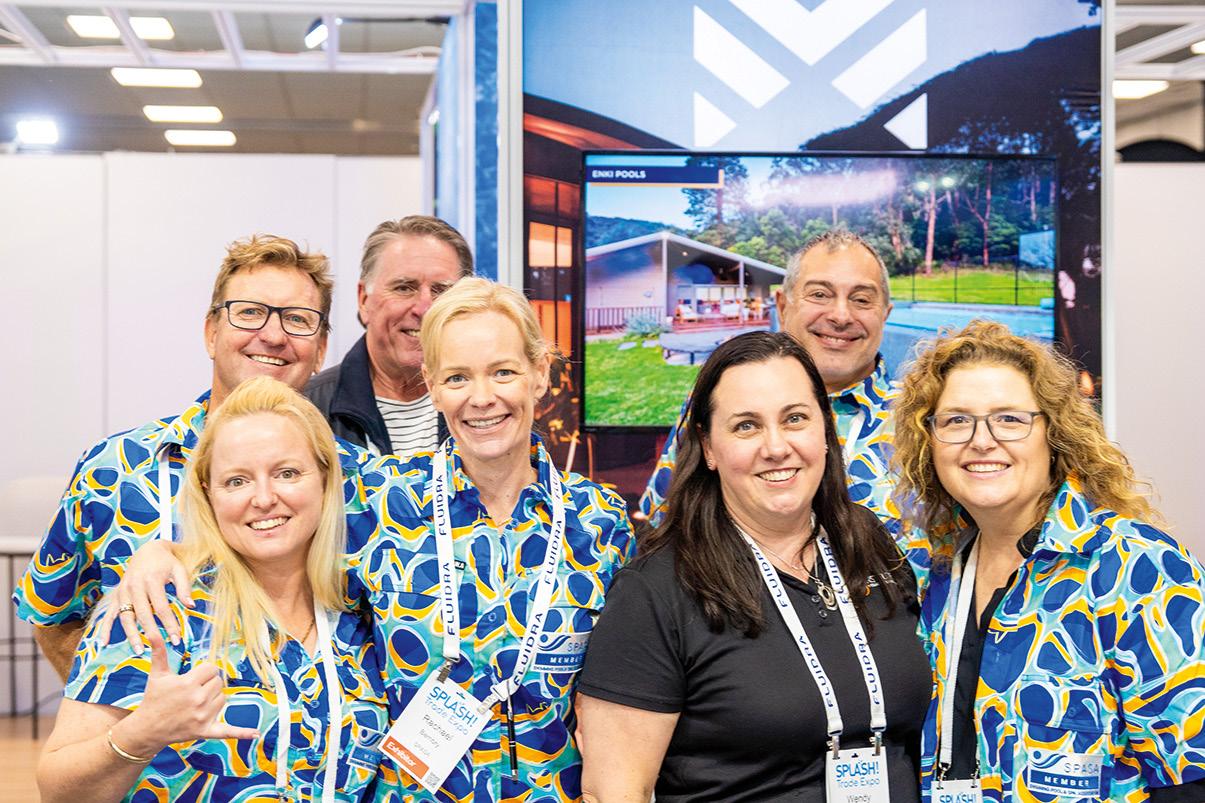
Janine: “We made it around the whole show, lots of catching up and lots of talking, and we got a few crash courses on new products that are coming out. There’s a few lighting options, strip lighting, lots of different underwater LED lighting, you know with multi-coloured light shows.”
Peter: “Automation was a good thing I saw. I hadn’t been for a few years but some people want automation and have it on your phone so it’s good to have the option – and it’s a good upsell.”
65 . Some of the hardworking SPASA team helping keep the show on the road
66 . Nigel Benton, editor of one of SPLASH!’s sister publications, Australasian Leisure Management
67 Bipin Menon and Tony Ford on the open, welcoming Pentair stand
68 . William Koronis and Peter McColl from Mermaid Pools in Adelaide arrived at the end of the Wednesday with a plan for a big day of checking out everything new on the Thursday
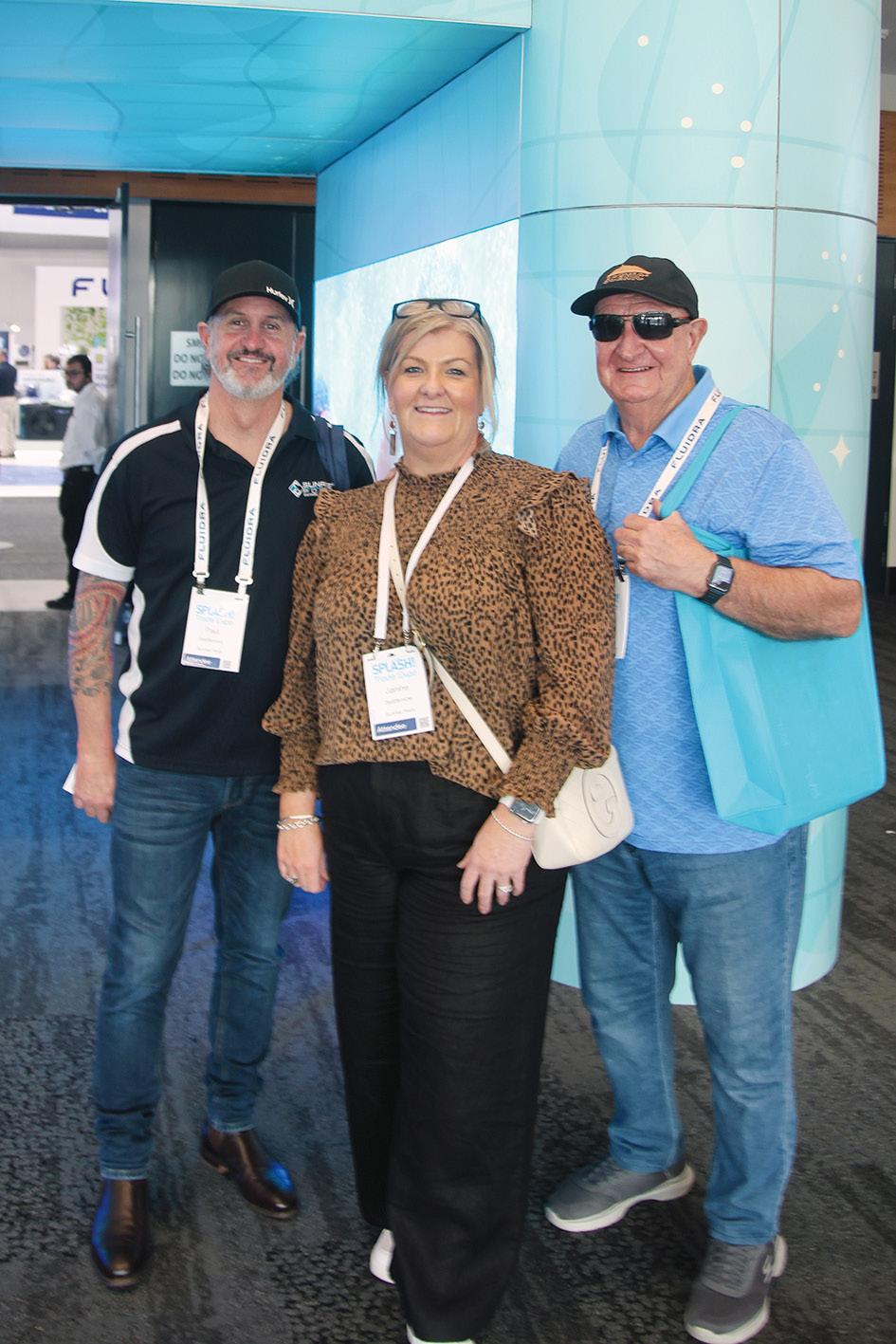
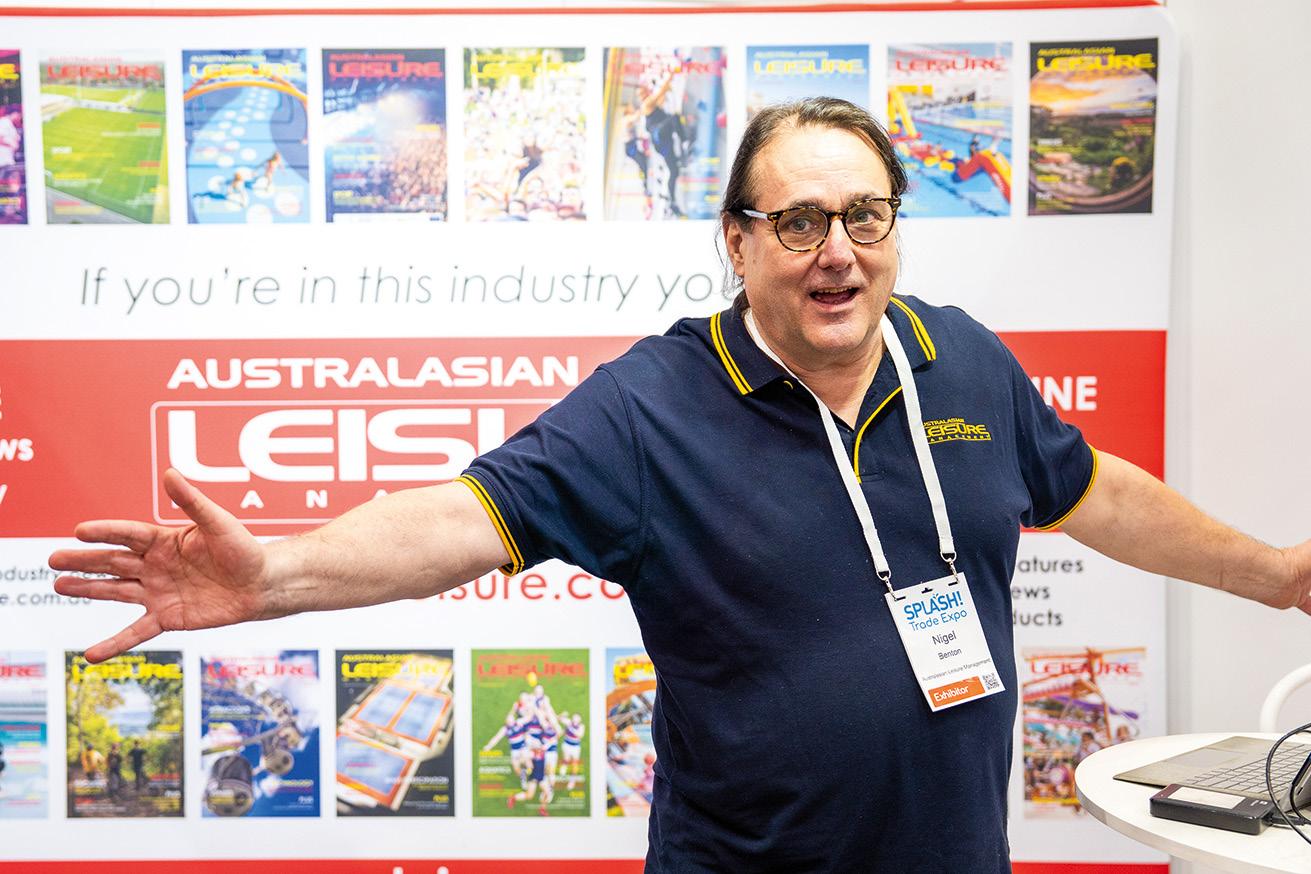
William: “You always learn something. New products, new technology. You got to come to come to these events.”
69 . Andrew Castelli from Captain Nemo’s Pool and Spa .
“We’ve got five stores up here through Brisbane, Gold Coast, Helensvale, Sanctuary Cove, Eight Mile Plains. It’s been pretty tough. I think after Christmas, everybody copped a lot of rain. But I think we’re looking forward to a cracking season coming up! I’m interested in the innovations, and looked at some of the newer heat pumps coming out that really work up here with the ambient air temperature and things like that. Automation to me is the key. Queensland is finally catching up to being automated, with everything run off your phone, and you can monitor your pool chemistry over your phone. That gives the end user peace of mind that the bloke who is looking after their pool is doing the right thing.
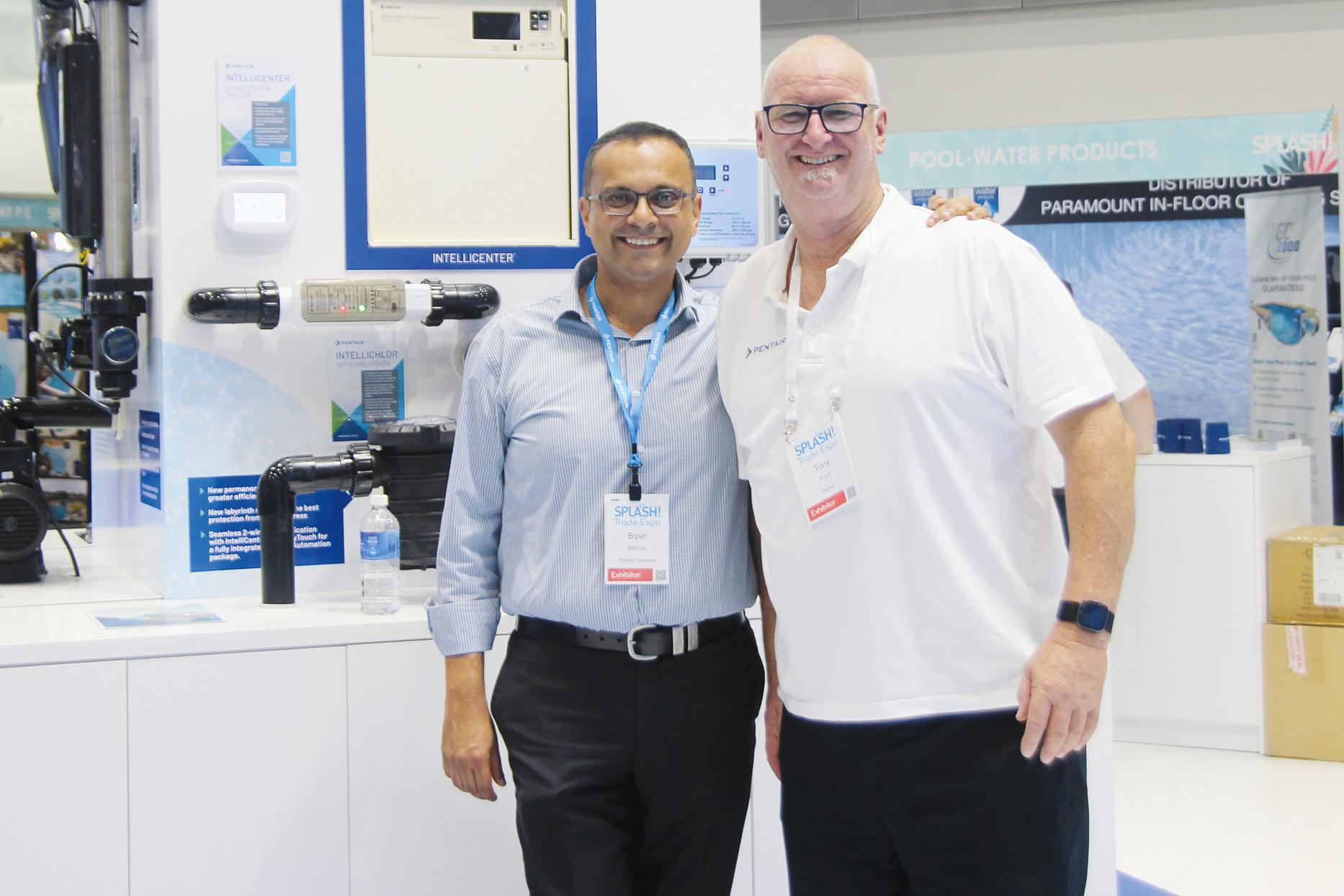
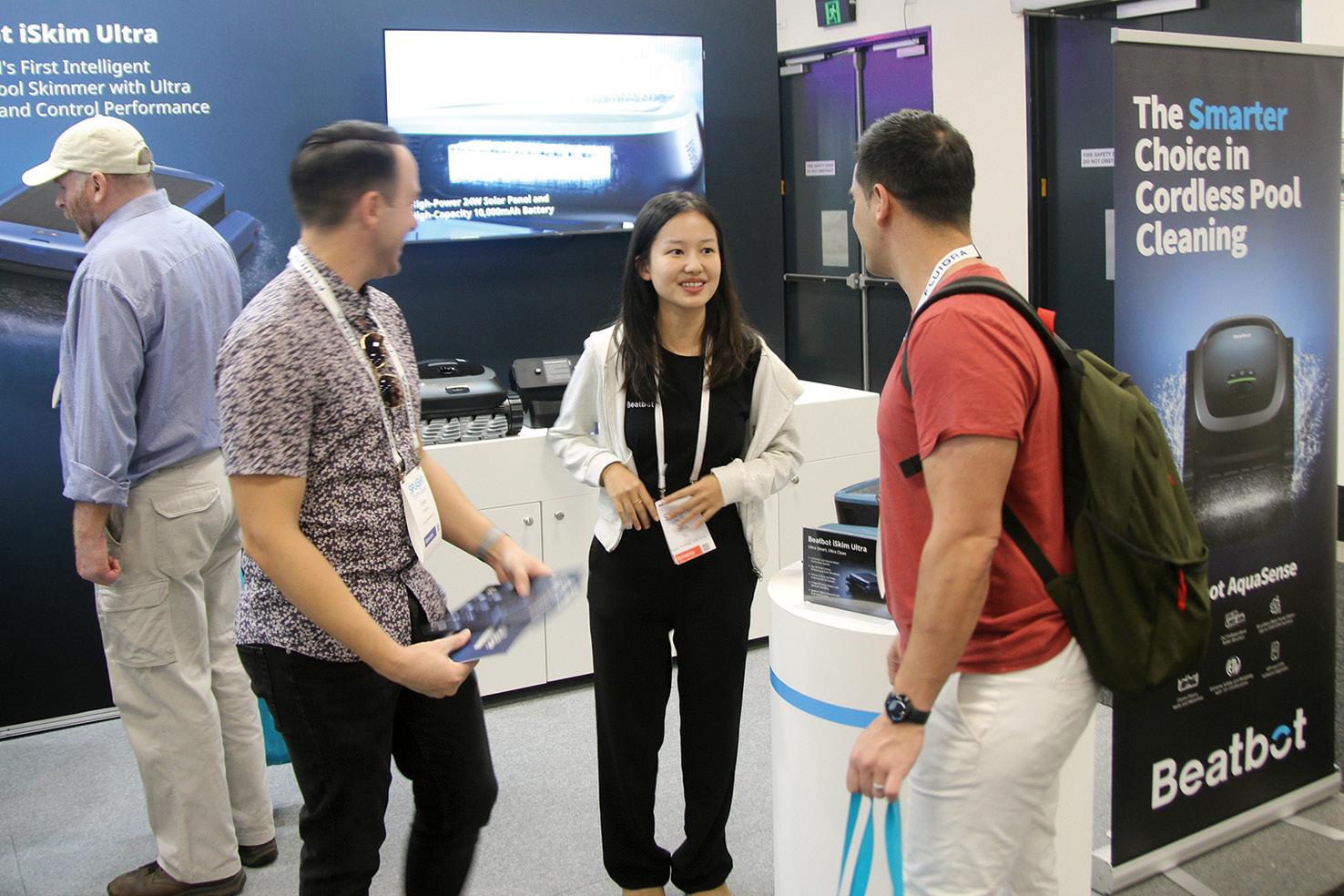
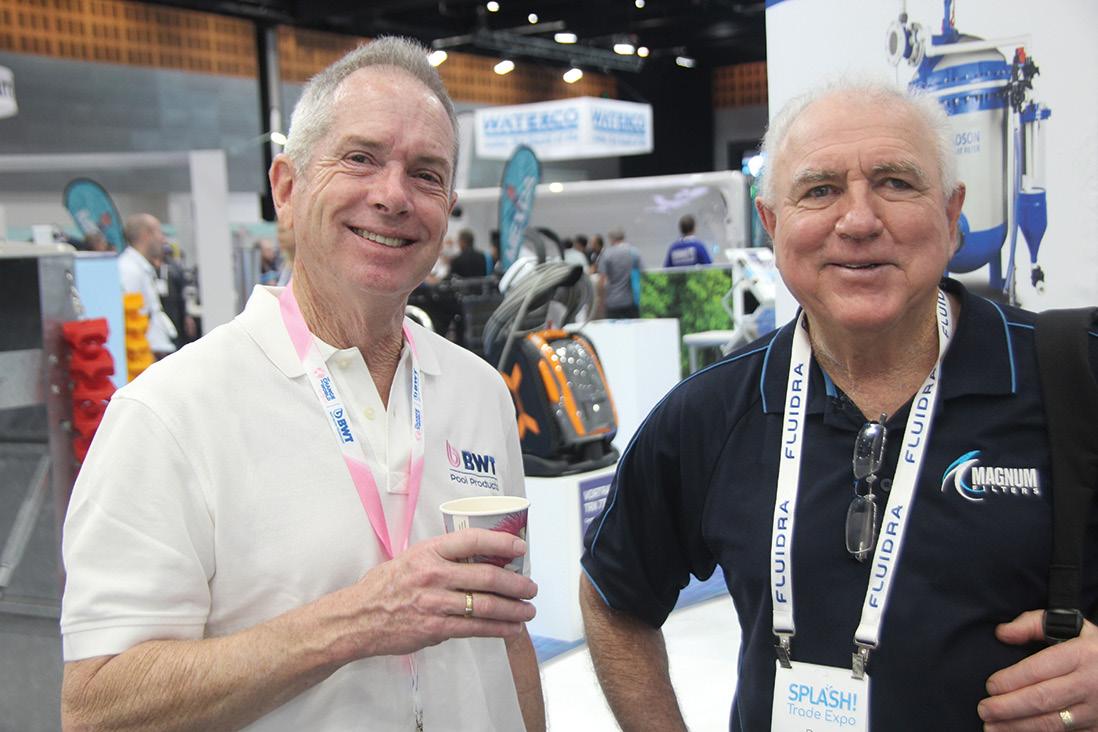
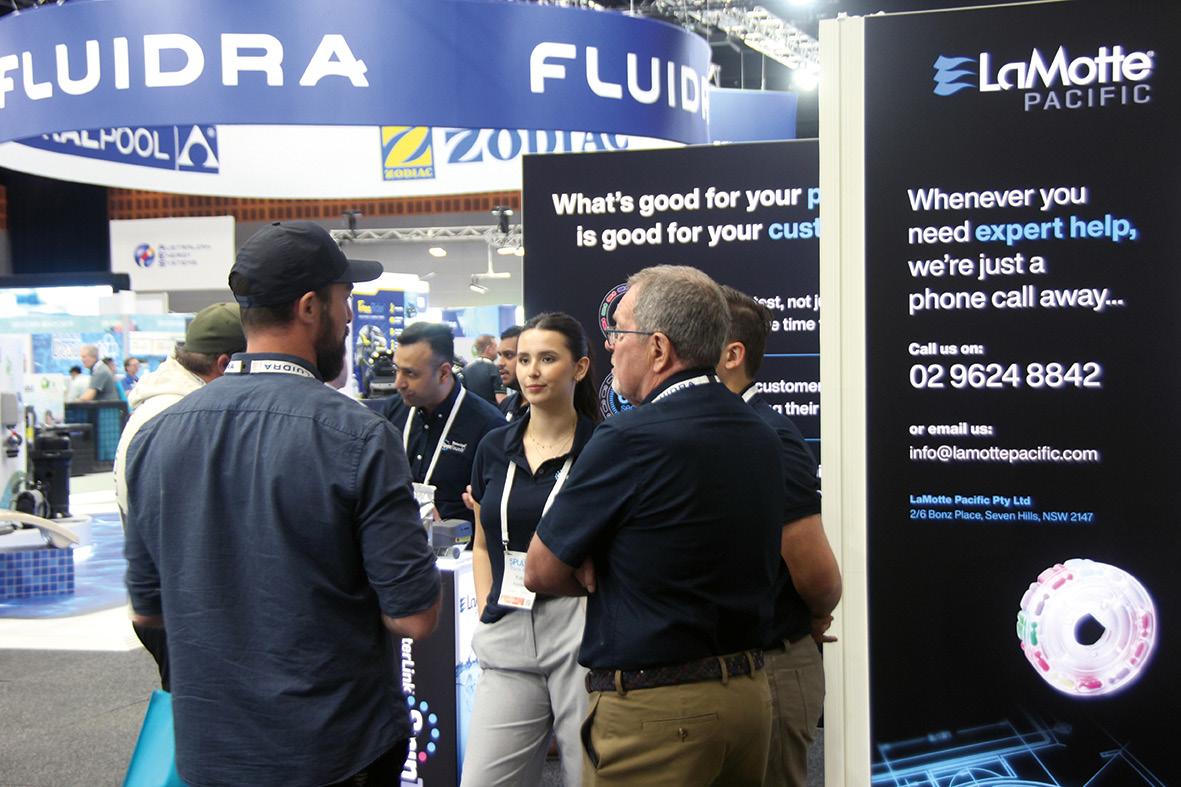
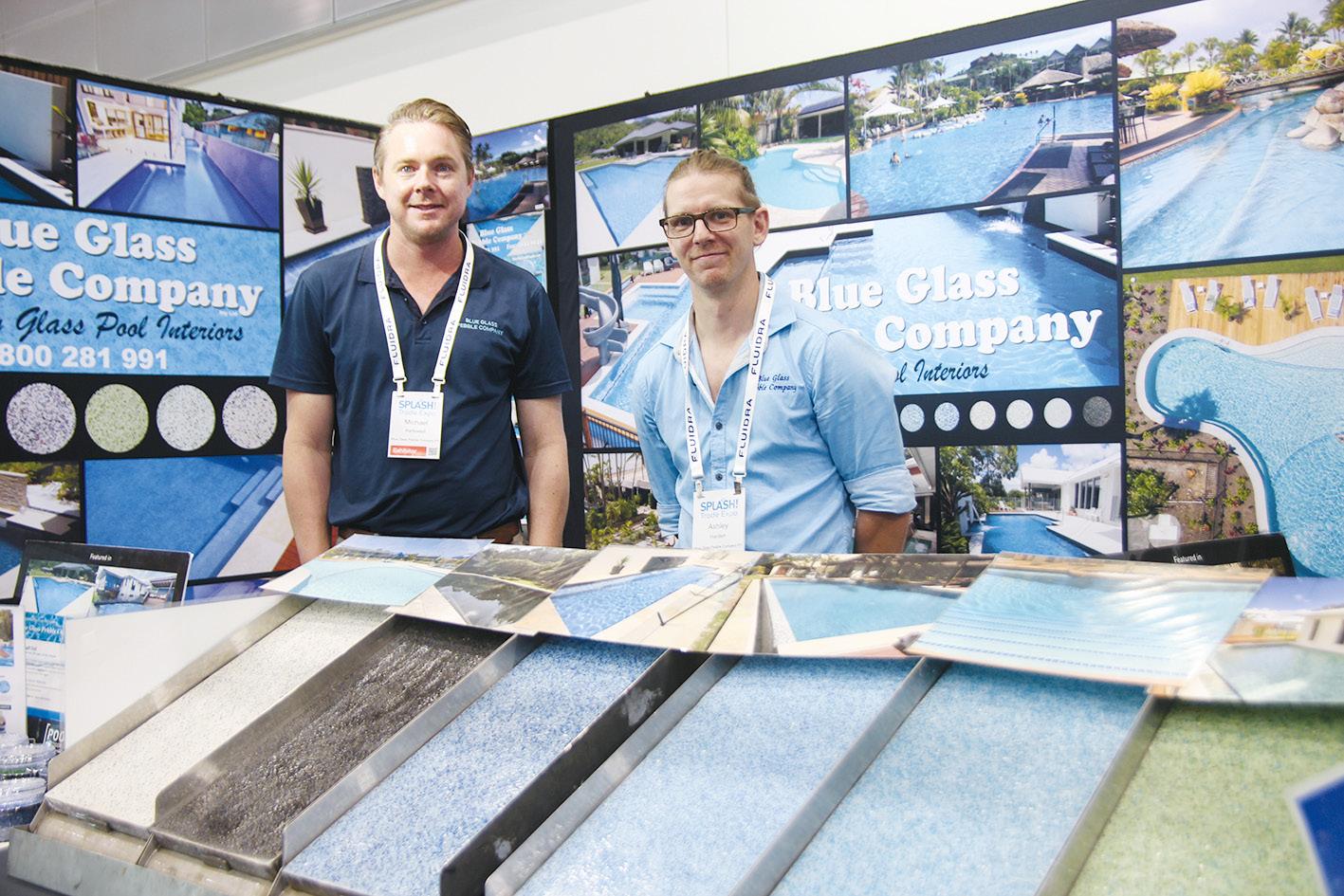
“I’ve actually relocated to Queensland from Melbourne. I love it. The lifestyle is cool, and there’s lots of pools up here. But at the end of the day, water chemistry is the same, and it’s got to be right.”
70 . Olive Ou (centre) from Beatbot, was at the show to learn about the Australian distribution models They launched into the US in January this year, already selling 20,000 robots direct to American consumers
“Our flagship product is the world’s first five-in-one intelligent robotic pool cleaner. Besides the normal floors, walls and waterline cleaning, it also can float up to the surface and do the surface cleaning. And it has a clarifying agent here so that it can clarify your water system.
“We are going directly to the consumers but we’re looking for potential partners. We are here to try to understand the landscape here, how the industry works.”
71 . Michael Kettewell, with Ashley Harden, of Blue Glass Pebble Company, says the show was great, and the ability to catch up with a lot of people you already know saves a lot of travel .
“We met a lot of potential new customers, so we’re really happy about that, including many from Auckland. It was good to see so many of the New Zealand industry coming over and embracing SPLASH!”
72 . John Richardson from Austral Pool Solutions and Peter Hogg from Magnum Filters .
Richardson: “In November 2022 I was made an offer by BWT Austria, and with ourselves and Lincoln and Austral New Zealand, we’ve created something that’s become a really good force. I’m enjoying it. It’s a great team to work with, and the management from BWT are very, very helpful to all of us. This show was chocka. Well worth coming.”
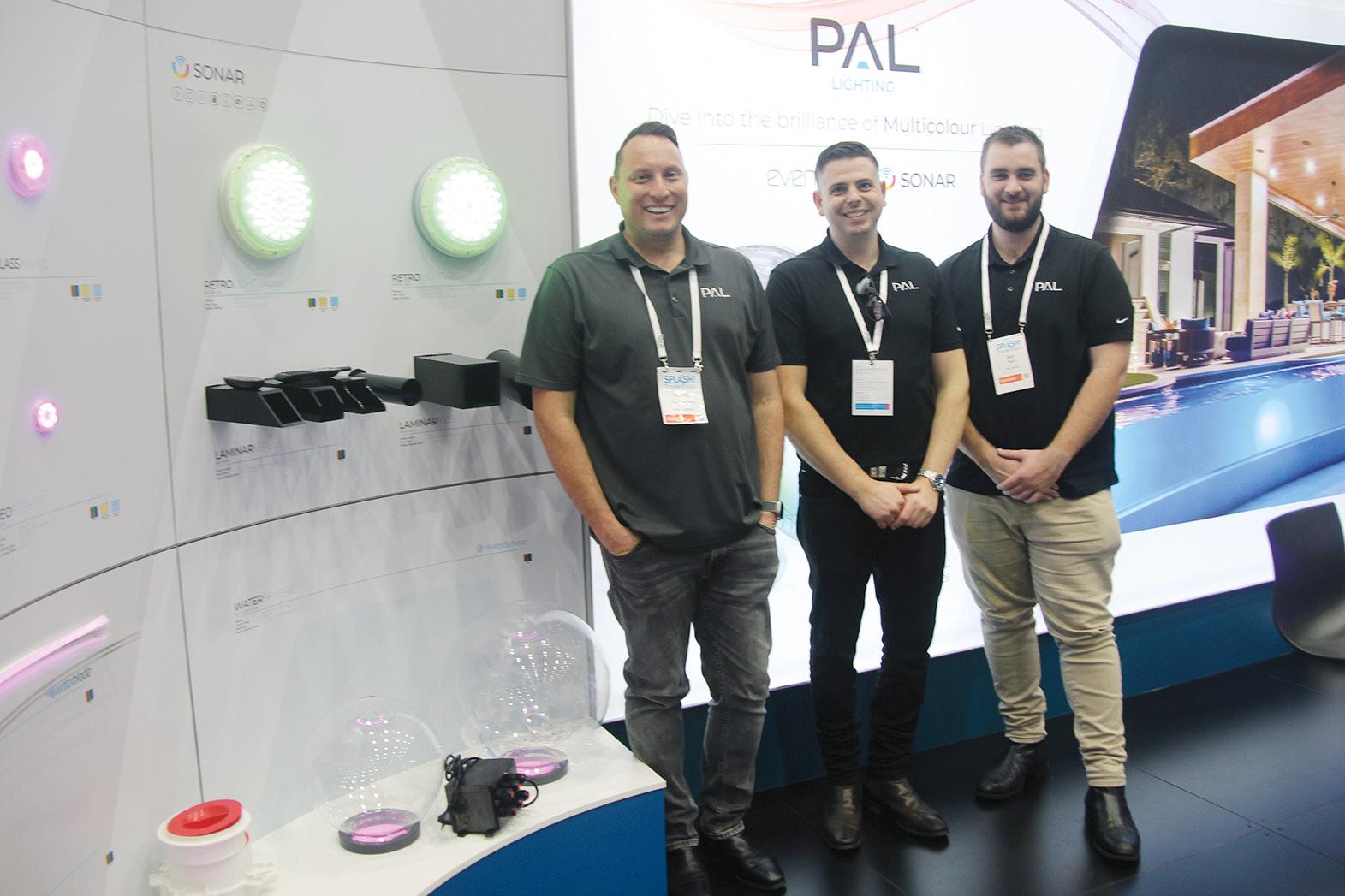
Hogg: “We’re expanding our market, and we’re moving into the Canadian market. And we have production up by 40 per cent this year. Just showing our face here – all our customers are here like Austral, Lincoln, Davey, Waterco, Fluidra – so it gives us a chance to go and see them.
Mike and Ryan Lodge from family business, Mayfair Pools in New Zealand, found it well worth the trip across the ditch . They also came over for the Mayfair conference, but found the expo in itself
The Remco automated pool cover was one thing in particular that attracted their attention
The Lamotte stand had a large number of visitors during the expo
The PAL lighting crew
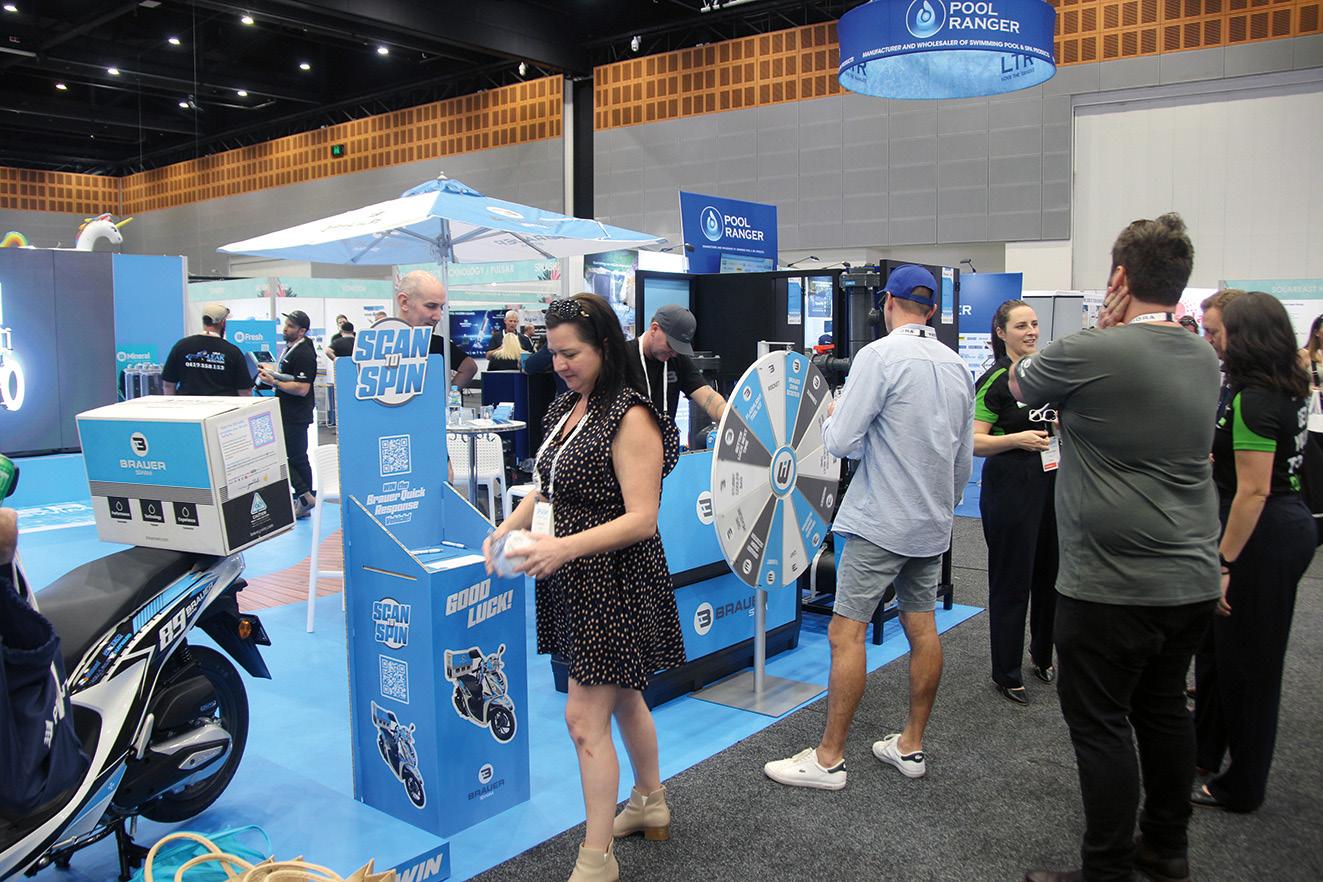
76 . Mike Brunt, who’s been with Aqua Clear Products for 31 years, came over with Mayfair for their conference, and to enjoy the SPLASH! expo as well He says New Zealand at the moment has a “survive until 2025” mentality
“Building’s down. I reckon the industry as a whole is probably down 30 odd percent, and building construction consents are down 40 something per cent. It’s been just too long, too late with high interest rates. Interest rates are coming down now, and a lot of guys have work sitting on the books but not starting yet, as people want to hold off until they get a rate cut. But I think by mid next year, we should see things returning to kind of normal. There’s certainly light at the end of the tunnel. Most of the mortgages are on fixed rates for one or two years, so it takes a while for that to trickle down. And the big end of the market has still been good.”
77 . Brauer was giving away a Quick Response Vehicle at their stand as a scan-to-spin prize
78 Matt Adlam was snapped at the Welcome Drinks For 15 years he was associated with Hurlcon and AstralPool, now Adlam is managing director of Melbourne concrete and fibreglass pool builder, Enchanted Pools
79 The Crystal Pools team of Jonathon and Peter Stewart, and Justin Brubaker, also enjoyed the networking and social opportunities at the Welcome Drinks
80 . Even though he’s getting superfit and enjoying his retirement to the full, Tony Sharpe (left) still found time to pop into the SPLASH! Trade Expo and catch up with the pool and spa industry
81 Brendan Lemay and Robert Woods of Gold Coast business RW Pools
82 . The second incarnation of the SPLASH! After Party was even better than the first, with fun, games and dancing high on the agenda
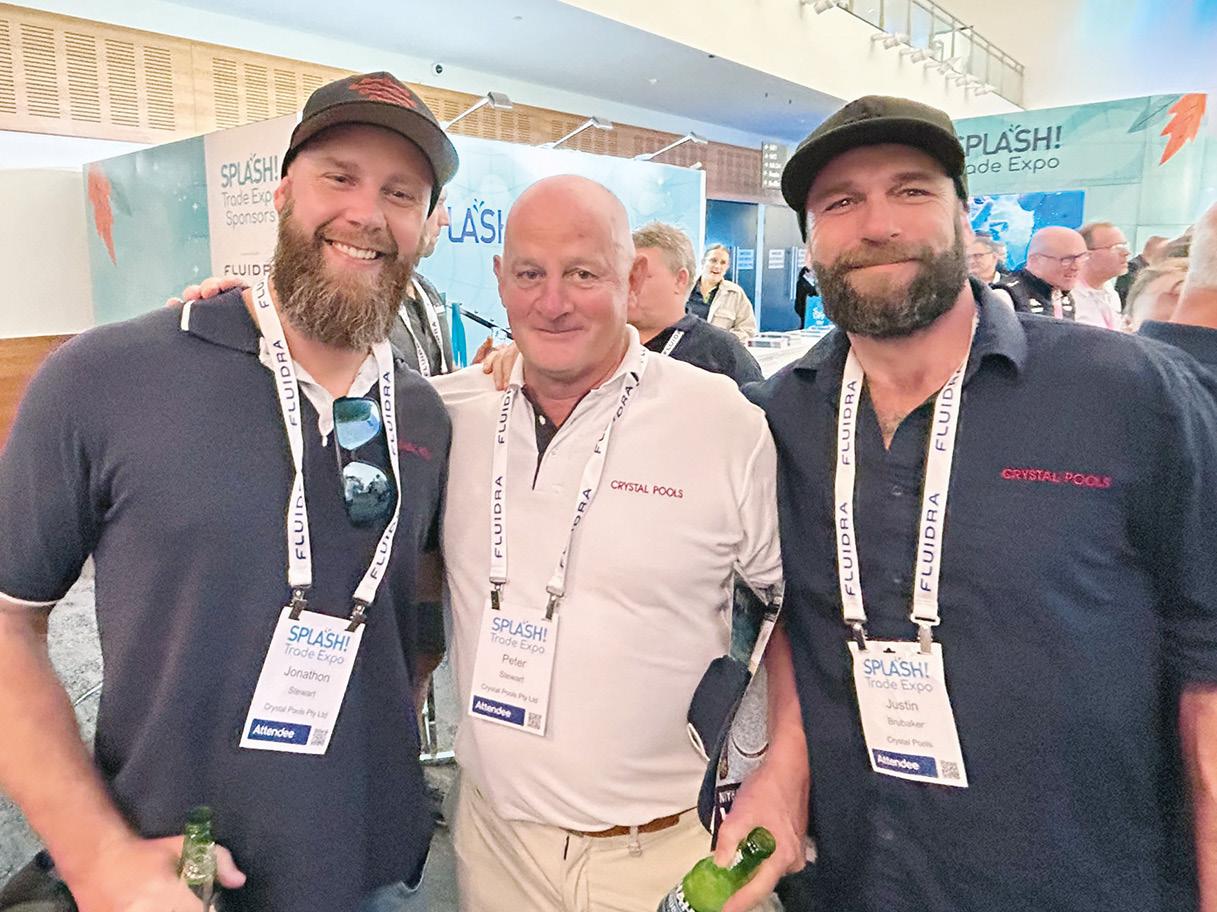
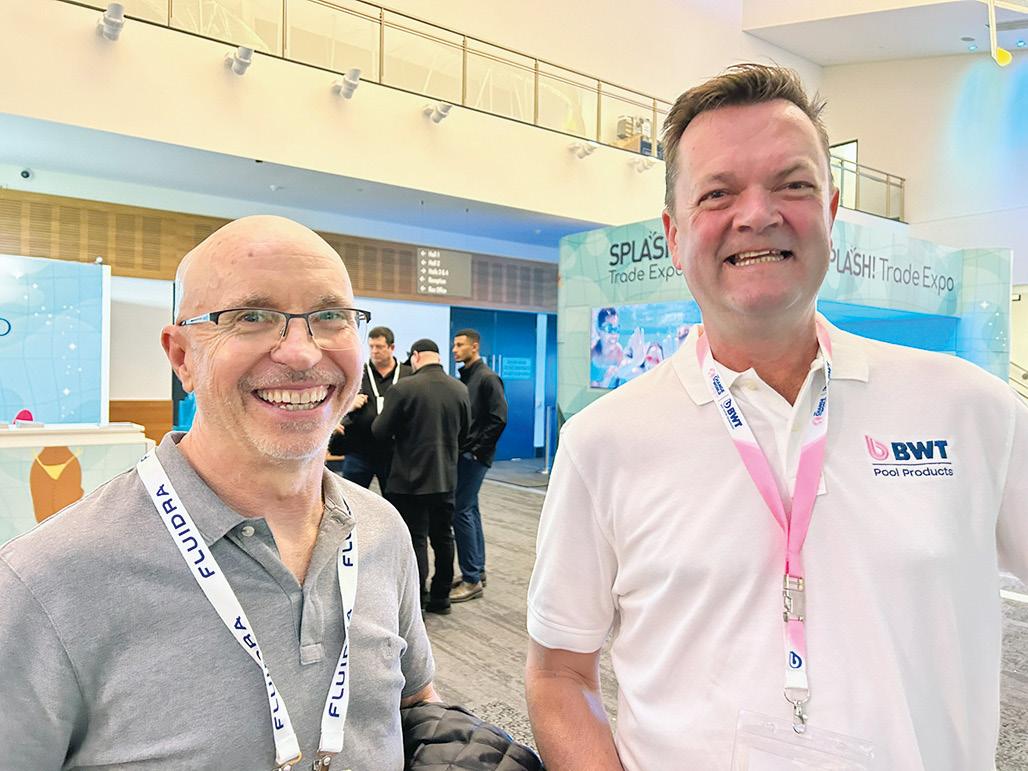
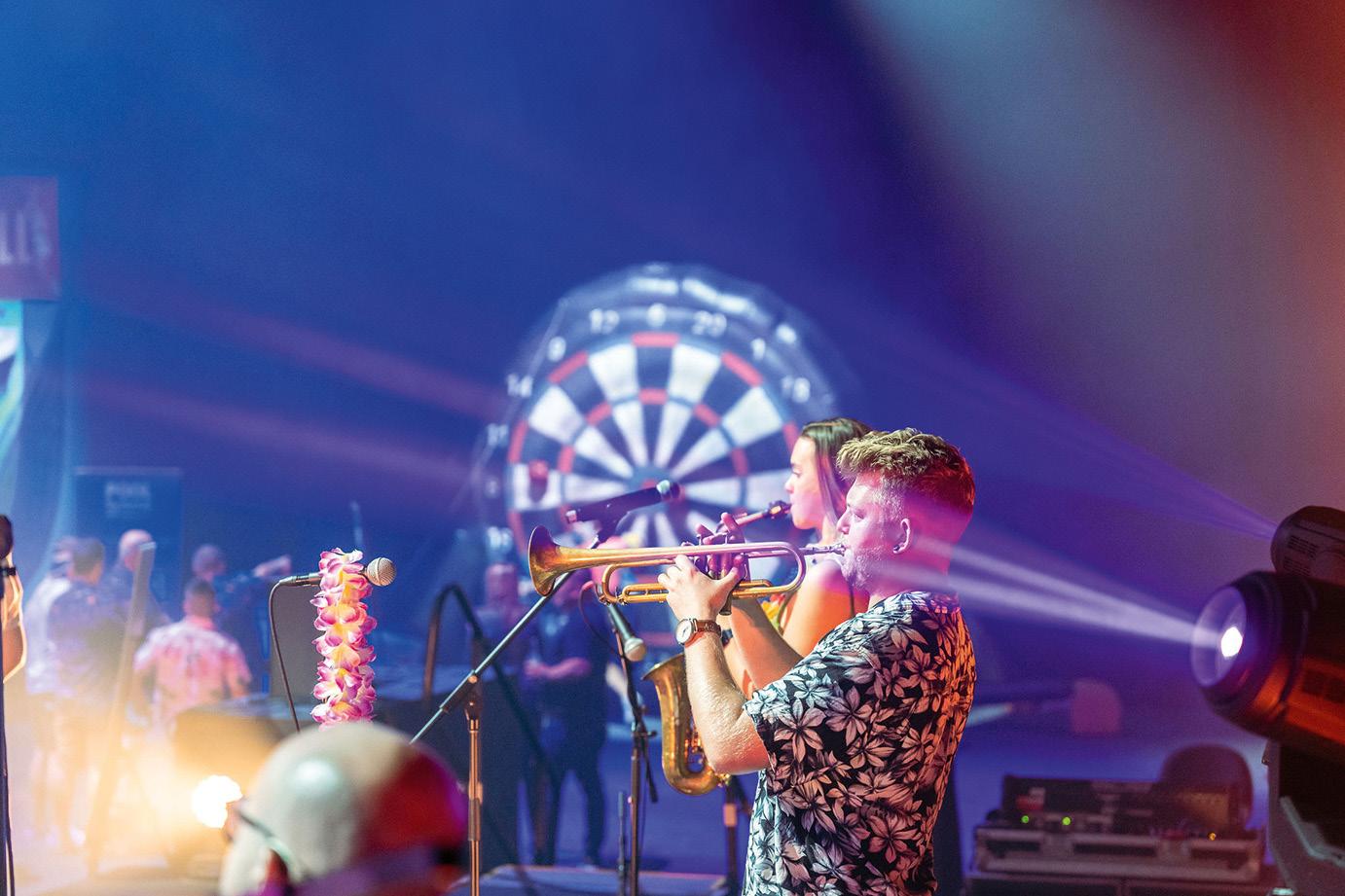
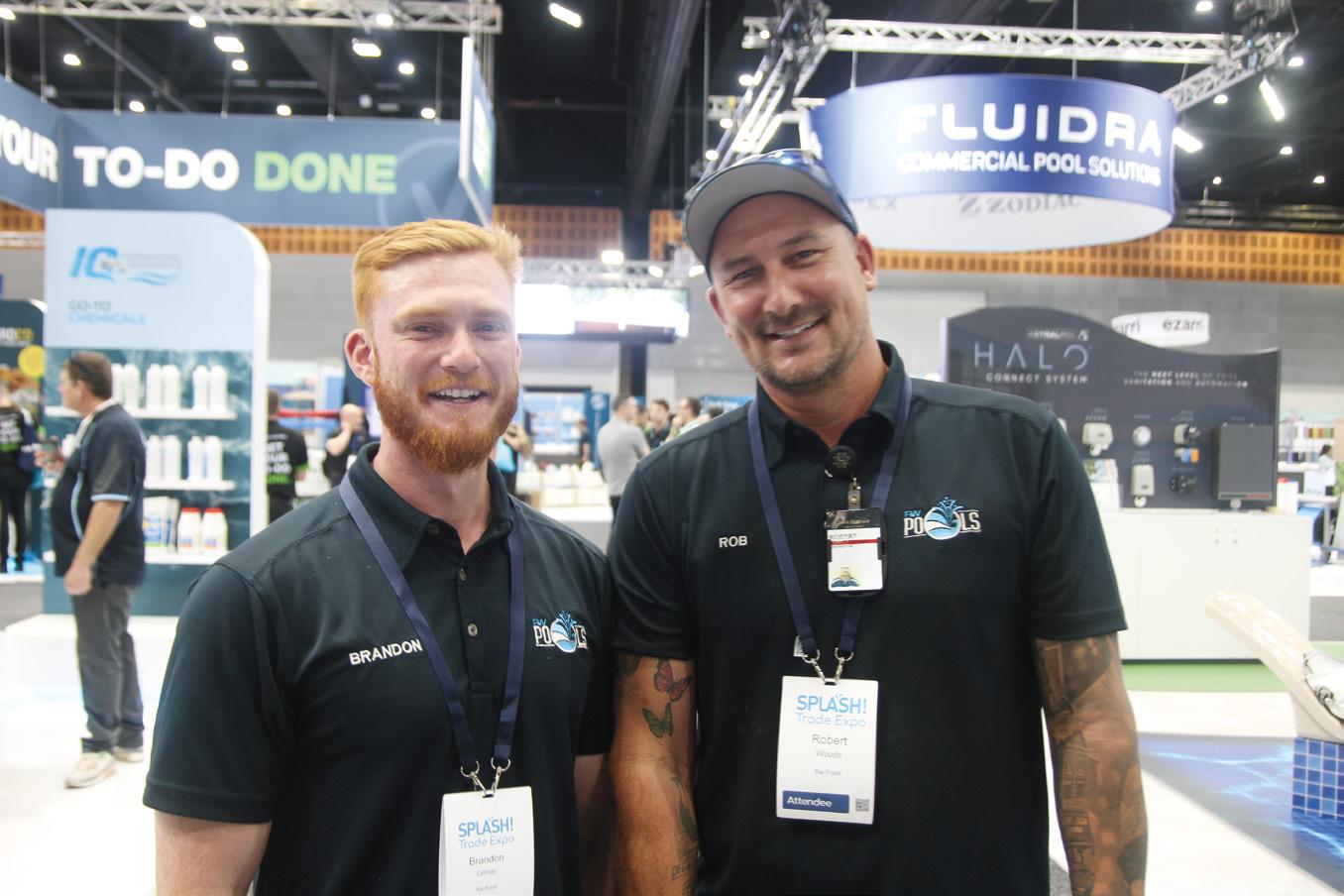



For 35 years, we’ve put the power of possible in Australian hands through intuitive technologies and innovations. Our passion to truly connect people with tech has only grown stronger. Here’s to 35 years of empowering Australians to live out the great Australian dream.
CONNECTING YEARS


The 2024 National SPASA Awards of Excellence were held at the Gold Coast Convention and Exhibition Centre on the second evening of the SPLASH! Trade Expo, celebrated in style with a full house and a record number of entries.
The event shone a spotlight on the high level of talent in the Australian industry, showcasing the best projects, businesses and professionals for 2024.
Victorian builder TLC Pools won the National Pool of the Year for their contemporary pool and spa project built to complement a new modern home. It features unique details and creative construction elements designed to draw the eye from every room, placing the pool and spa firmly at the heart of the property. It offers a strong connective space, and provides a relaxing sanctuary by taking advantage of views to the surrounding bushland.
The National Business of the Year went to fibreglass pool builder Everclear Pools SA, a team that focuses on honesty, integrity and exceptional customer service to ensure every family enjoys a beautiful backyard oasis where long-lasting memories are created.
Pool of the Year: Treescape Oasis, TLC Pools. Finalists: Resort Style Living, Queensland Family Pools and Spas; Glenelg, Adelaide Classic Pools; Dazzling Emerald, Transform Pools and Spas; Aranda, Leader Pools; The Esplanade, Boardwalk Pools Private Oasis, Acacia Landscapes & Pool Construction Ltd; Humpty Doo, Pooltech NT; Contemporary Grey Haven, Greenview Pools and Landscapes.
Product of the Year: Liqtech silicon carbide (SiC) filtration, Waterco Limited. Finalists: Autochlor NEO, AIS Water; Oasis PV Ready Heat Pump (iX Series), Sunlover Group; Remco Retrofit Swimjet, Remco.
Business of the Year: Everclear Pools SA. Finalists: Queensland Family Pools and Spas; Local Pools & Spas; Leader Pools; Pool Assist; Rainwise Pools Melbourne; Fluidra New Zealand; Calipso Pools & Spas; Spa World Tasmania. Best Pool Store: Allans Pool Shop. Finalists: Everclear Pools SA; Swimart Frenchs Forest; Pool Assist; Rainwise Pools Melbourne; Aquanort Pools; Friendly Pool and Spa Care NT. Commercial Project of the Year: Kangaroo Island, Elite Pools and Landscapes.
Finalists: Canvas, Ezy Living Pools; Symbio Wildlife Park Penguin Pool, Cronulla Pools; Bayswater Waves Aquatic Centre, Paragon Construction Solutions; The Home of the Matildas, Aloha Pools; The Heart of the Holiday Park, Mayfair Pools; Swell Palmerston, Hydrilla.
Professional of the Year: Ricki-lee Rogers, Rogers Pools. Finalists: Chris Bray, Waterco; Luke Bruni, Transform Pools and Spas; James Cain, EvoHeat; Peter Garratt, Conquest Pools Albury Wodonga; Hamish Methvan, Spa World; Marcus Jeffery, Fluidra Group Australia.
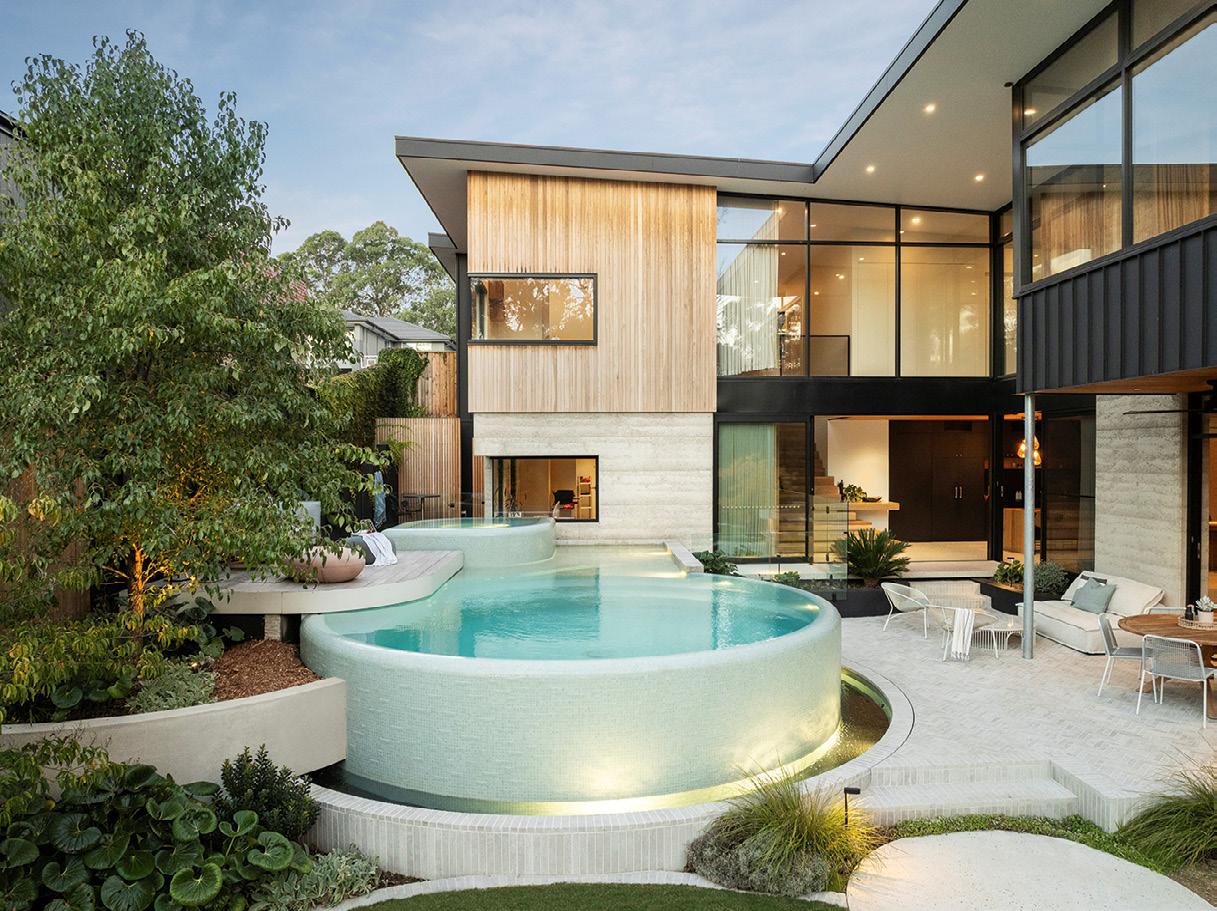
Spa of the Year: Penthouse paradise, Queensland Family Pools and Spas. Finalists: Glenelg, Adelaide Classic Pools; All Glass, Transform Pools and Spas; Obsidian Reflections, Precision Custom Pools; Beach St, Imperial Pools; Mills Beach Spa, TJ Pool Plumbing; Wairere Hot Spring, Morgan Pools; Familyfriendly Vortex, Spa World.
Best Concrete Pool Builder: Pinnacle Pools. Finalists: Elite Pool Constructions (SA); Laguna; Boardwalk Pools; Leader Pools; Queensland Family Pools and Spas; Greenview Pools and Landscapes.
Best Fibreglass Pool Builder: Barrier Reef Group WA. Finalists: Everclear Pools SA; Local Pools & Spas; Summertime Pools; MFP Easy; Darwin Fibreglass Pools and Spas; Capital Fibreglass Pools.
Best Mobile Service Business: Plus Pool Maintenance. Finalists: Calipso Pools & Spas; Halogen Pools; Jim’s Pool Care Glenelg; Bluewater Pool Solutions; Total Pool Service.
Best Prefabricated Composite Pool Builder: Eco Plunge Pools. Finalists: Prestige Plunge Pools.
Best Professional Service Business: FMG Engineering. Finalists: tristanpeirce Landscape Architecture; Pool Site Quote (PSQ); Building Approvals and Advice (BA&A); AB Phillips Pty Ltd.
Best Spa Retailer: Spa World Tasmania. Finalists: Spa World Underwood; Spa World Adelaide; Halo Spas; Mega Spa Australia; Spa World Canberra; Alpine Spas Sydney.
Best Supplier: Fluidra Australia. Finalists: The Pool Tile Company; Sunlover Group; Waterco.
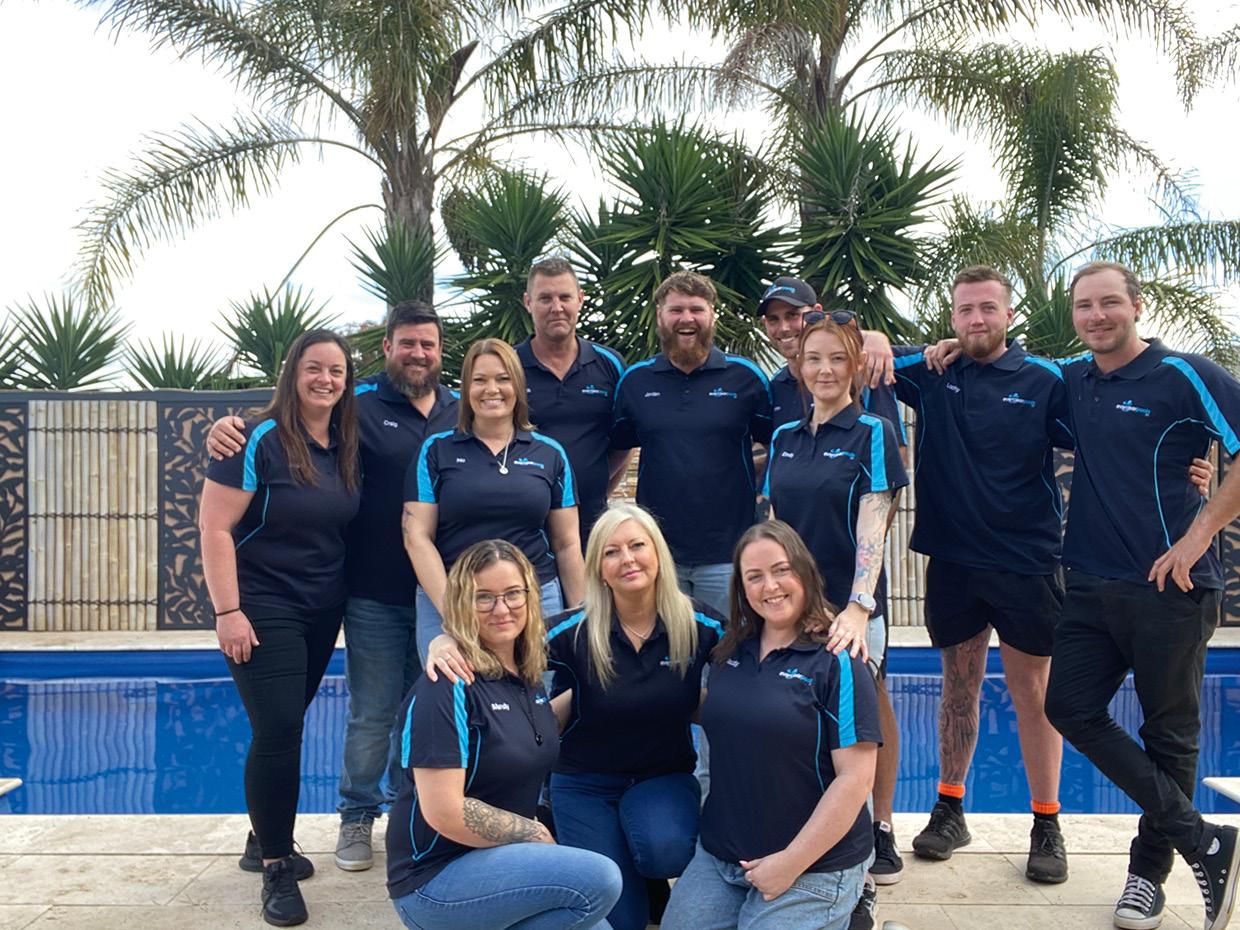
Best Vinyl-Lined Pool Builder: Add A Splash Pools. Finalists: Paul Sciberras, Vinyl Lined Pools Service; Pleasure Pools.
Display Pool/Centre: Brisbane, Queensland Showroom, The Pool Tile Company. Finalists: Summertime Pools, Dandenong South; Freedom Pools Display Showroom; Freedom Pools
Relocation Sensation; Buccaneer Pools.
Multi-Location Pool Store: Allans Pool Shop. Finalists: Poolwerx Kalamunda (Kalamunda & Mundaring); Friendly Pool and Spa Care NT; Poolwerx Castle Hill, Baulkham Hills, Beaumont Hills & Emu Plains; Spa World Victoria.
New Pool Store: Pool Envy. Finalists: Poolside Yarrawonga; Barrier Reef Pools Bunbury & Factory Pools Bunbury. Online Pool Store: Swimming Pool Kits Direct. Finalists: Poolside Cobram.
Single Location Pool Store: Swimart Frenchs Forest. Finalists: Everclear Pools SA; Rainwise Pools Melbourne; Pool Assist; Calipso Pools & Spas; Poolwerx Wavell Heights.
Person
Construction Tradesperson Award: Michael Farnham, Laguna Pools & Spas. Finalists: David MacDonald, Local Pools & Spas; Ray Locke, Barrier Reef Pools Perth; Harrison Hawkins, Rainwise Pools Adelaide; Brandon Webb, Queensland Family Pools and Spas.
In-Field Service Technician Award: Brendan Moelands, Jim’s Pool Care Victoria Point. Finalists: Wes Hilliard, Pool Satisfaction; Nick Panagopoulos, Wanneroo Pool Services; Tim McDougall, Poolwerx Dubbo; Corey Gray, Freedom Pools; Ryan Carroll, Total Pool Service; Reynan Patay, Figleaf Pool Products. Operational Excellence Award: Nick Hubble, Countrywide Pools. Finalists: Tam Dean, Everclear Pools SA; Ahmad Gefe, Aloha Pools; Waranya (Rani) Wattana, Sunlover Group; Michelle Gatt, Calipso Pools & Spas; Gaynor Heaven –Hopwood, Building Approvals and Advice (BA&A).
Pool & Spa Barrier Inspector Award: Neil Sharp, Brisbane Pool Safety. Finalists: Rob Davidson, Pool Barrier Certification/Pool Boys Co; Granville Harris, Certified Pool.
Pool Designer Award: Matthew Scrase, Laguna Pools & Spas. Finalists: Tristan Peirce, tristanpeirce Landscape Architecture; Luke Bruni, Transform Pools and Spas; Danica Vansleve, Norfolk Pools.
Pool Sales Representative Award: Emily Donegan, Everclear Pools SA. Finalists: Peter Garratt, Conquest Pools Albury Wodonga; Julian Bittar, Wisdom Pools and Landscapes; Natalie Horak, Countrywide Pools; Ricki-lee Rogers, Rogers Pools. Retail Service Technician Award: Maddy Bell, Everclear Pools SA. Finalists: Raeleigh Karakashian, Pristine Pool and Spa
Service; Rhiannon Morgan, PoolCare Plus; Steve Menkins, Clark Rubber Toowoomba; Kellie Deeble, Clark Rubber Bunbury. Rising Star Award: Phil Hickman, Sunlover Group. Finalists: Jasanna O’Connor, Calipso Pools & Spas; Maddison Moustafa, Local Pools & Spas; Denise McLeod, Barrier Reef Pools Bunbury & Factory Pools Bunbury; Billie Rezek, Halogen Pools; Aise Dillon, Outside Developments.
Spa Sales Representative Award: Charlie Xuereb, Spa World. Finalists: Trent Williams, Spa World; Michelle Pratt, Spa World; Narelle Bartolone, Mega Spa Australia. Supplier Salesperson Award: Sherwyn King, Sunlover Group. Finalists: Tylan Walters, Fluidra; Andrew Divan, International Quadratics; James Cain, EvoHeat; Chris Bray, Waterco; Marcus Jeffery, Fluidra Group Australia; Amanda Hehir, Fluidra Australia.
Commercial System: 25m Learn To Swim Plant, Commercial Pool Systems. Finalists: Evo CS-i commercial pool heat pump, EvoHeat; Mareeba Splash Park, Kirratech Lifestyle Pools. Education & Training Excellence Award: Fluidra Pro Academy, Fluidra Pro Academy. Finalists: Halogen Pools.
Innovative Product Award: Remco Retrofit Swimjet, Remco. Finalists: TDI Ultra Inverter Heat Pump, Australian Energy Systems; Oasis PV Ready Heat Pump (iX Series), Sunlover Group; Liqtech silicon carbide (SiC) filtration, Waterco Limited.
Marketing Campaign Award: Hydrotherapy Pools, Aloha Pools. Finalists: Mobile Showrooms – Bringing the range to you!, The Pool Tile Company; The Revolutionary ClearLift Cover System, Spa World; Summer Starts Here, Clark Rubber; Davey Pool & Spa Lifestyle Expo campaign, Davey Water Products.
New Product Award: Autochlor NEO, AIS Water. Finalists: Hydrotherapy Mobility Pool, Freedom Pools & Spas; Powered Under Deck System, Aussie UnderCover; Oasis PV Ready Heat Pump (iX Series), Sunlover Group; Ezarri 24ct: Glass mosaics collection, Europe Imports; SunVolt ACDC Heat Pump, Supreme Heating; FreeRider FR1000 iQ Cordless Robotic Pool Cleaner, Fluidra Group Australia.
Portable Spa: The Great Escape, Splash Batavia Coast Pools and Spa. Finalists: Vortex Titanium Spa, Perfect entertainer spa for McLaren Vale retreat, Spa World; Tropical oasis with the perfect Vortex Titanium spa for entertaining, Spa World; Familyfriendly Vortex, Spa World; Geelong – Malibu, Leisurescape Pools & Spas; Kingston Spa Pool, Alpine Spas.
Sustainable Product Award: EnviroPro Dual Filtration System, Waterco Limited. Finalists: EcoStar VS 1 HP Pool Pump, Hayward Pool Products; Ezarri glass mosaico, Europe Imports. Swim Spa: Vortex Hydrozone ticks all the boxes for a spa pool combo, Spa World. Finalists: Vortex Hydrozone Swim Spa, Spa World; Portside Retreat, Hydro Max Spas & Swim Spas; Columbus Swim Spa, Alpine Spas; Swim Serenity, Halo Spas. Vinyl Lined Modular Pool: Hi-tech decks paired with sizzling sunsets, Affordable Aboveground Pools. Finalists: Tranquil Bushland Billabong, Affordable Aboveground Pools; Small Space Sanctuary, Affordable Aboveground Pools; Vote family, Classic Pools; Allchin Family, Classic Pools.
Project
Commercial Pool (Aquatics) over $1,000,000: Swell
Palmerston, Hydrilla. Finalists: Bayswater Waves Aquatic Centre, Paragon Construction Solutions; The Home of the Matildas, Aloha Pools; Northern Beaches Leisure Centre 50m FINA pool, Kirratech Lifestyle Pools Pty Ltd.
Commercial Pool (Aquatics) up to $1,000,000: Allura, Aquatic Designs. Finalists: Bendalong, Endeavour Pools and Spas; Beatty Park Leisure Centre, Paragon Construction Solutions.
Commercial Pool (Aquatics) up to $500,000: Symbio Wildlife Park Penguin Pool, Cronulla Pools. Finalists: South Hedland Aquatics Centre, Paragon Construction Solutions.
Commercial Renovation: Bayswater Waves Aquatic Centre, Paragon Construction Solutions. Finalists: Gawler Aquatic Centre, Hydrilla.
Commercial Spa: Walmer Apartments, Aloha Pools. Finalists: Canvas, Ezy Living Pools.
Commercial Water Display: Forecourt Entry Waterwall, Waterforms International. Finalists: Nicola Margaret May, Kirratech Lifestyle Pools.
Community Project: Cowell Foreshore Redevelopment, Hydrilla. Finalists: Very Special Kids, Aloha Pools; One Tree Hill, Satori Pools.
Composite Pool over $60,000: Wonga Park Hamptons Plunge Pool, Plunge Pools Plus. Finalists: Project Cedardell, Prestige Plunge Pools; Magill, Plunge by Elite; East Vic Park, Villa Plunge Pools.
Concrete In-ground Spa: Penthouse paradise, Queensland Family Pools and Spas. Finalists: Beach St, Imperial Pools; Obsidian Reflections, Precision Custom Pools; Mills Beach Spa, TJ Pool Plumbing; All Glass, Transform Pools and Spas; Glenelg, Adelaide Classic Pools.
Concrete Lap Pool: Aranda, Leader Pools. Finalists: Hyde Park, Elite Pools and Landscapes; WCD 2 windows, Imperial Pools; Rural Luxury, Queensland Family Pools and Spas; Skyscraper, Rogers Pools; A lap of luxury in Hampton, Laguna.
Concrete Pool & Spa Combination: Treescape Oasis, TLC Pools.
Finalists: The Esplanade, Boardwalk Pools; Negative Edge Pool & Spa Combination, Mermaid Pools; Weetangera, Leader Pools; Dazzling Emerald, Transform Pools and Spas; Kamares Sto Appia, Satori Pools.
Concrete Pool over $240,000: Aranda, Leader Pools. Finalists: Foster, Apex Pools and Spas; Roberts, Ezy Living Pools; The Esplanade, Boardwalk Pools; Turquoise Dreams, Mullum Pools.
Concrete Pool up to $120,000: Highvale, Aesthetic Pools & Landscapes. Finalists: Kensington Park JP, Adelaide Classic Pools; Talus Infinity, Imperial Pools; Killarney Hts, Urban Escape Landscaping + Pools; Sens de l’espace at Mornington, Exquisite Pools & Gardens; Utopian Hideaway, Precision Custom Pools. Concrete Pool up to $180,000: Portsea, Apex Pools and Spas. Finalists: Padman, H2O Custom Pools; Hotham, Leader Pools; Elegance, Rogers Pools; Toorak Gardens, Elite Pools and Landscapes; Contemporary Grey Haven, Greenview Pools and Landscapes.
Concrete Pool up to $240,000: Resort Style Living, Queensland Family Pools and Spas. Finalists: Weetangera, Leader Pools; Tropical Nirvana, Mullum Pools; Camberwell curves, Laguna; Oakbank Bio Top Pool, Elite Building and Design Group.
Concrete Pool up to $60,000: Overlooking the Ocean, Endeavour Pools and Spas Pty Ltd. Finalists: Grange, Adelaide Classic Pools; Europa Place, Boardwalk Pools; Paradise Cove, Rogers Pools; Denman, Ace Pools; Mitcham – Pocket Rocket, PJ Pools and Spas.
Courtyard/Small Pool over $80,000: Project Loftus, Cronulla Pools. Finalists: Sparkling Suburban Jewel, Precision Custom
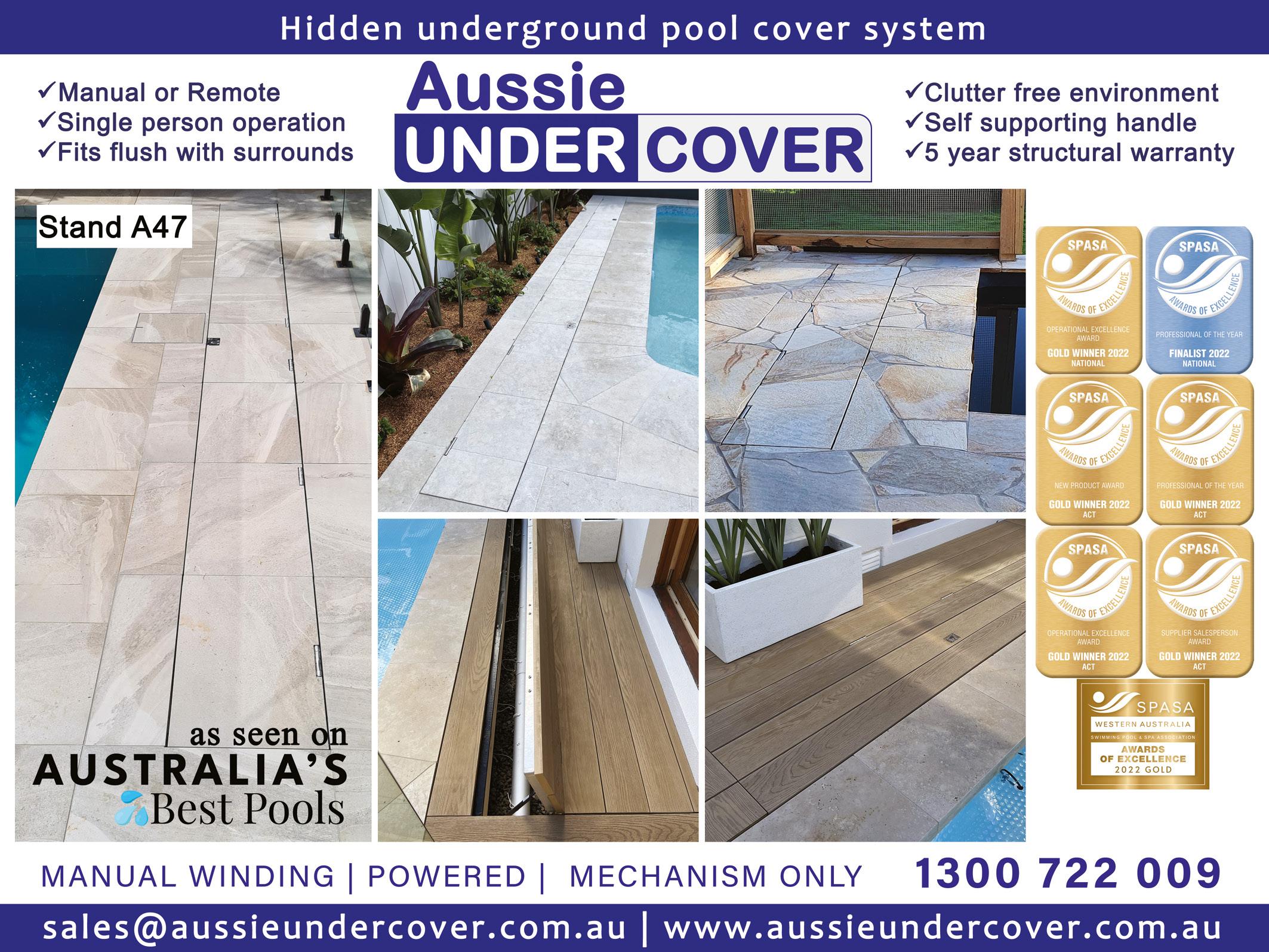

Pools; Round Relaxation, Sapphire Pools; Ultimate Invitation @ Mentone, Exquisite Pols & Gardens Australia; Serene Paradise, Rogers Pools.
Courtyard/Small Pool up to $40,000: Optimism Street, Sydney Poolscapes. Finalists: Project Eighteenth!, Prestige Plunge Pools; Dudley Park, Perth Concrete Pools; Seacliff Park, Outside Developments.
Courtyard/Small Pool up to $80,000: Beagle Street, Leader Pools. Finalists: Penthouse paradise, Queensland Family Pools and Spas; Dual-purpose Mills Beach Spa, TJ Pool Plumbing; Home Resort, Panas Pool Services; Chester Le House, Coastline Pools & Spa; Unley, Elite Pools and Landscapes.
Enclosed/Indoor Pool: Middle Park, Neptune Swimming Pools. Finalists: Indoor Oasis, Narellan Pools SA; Casa Espri, Ezy Living Pools; Denmark, Freedom Pools & Spas.
Fibreglass Commercial Pool up to $250,000: Residential apartments pool, Aqua Technics Commercial. Finalists: Freedom Pools Commercial.
Fibreglass In-ground Spa: Spa Sanctuary, Narellan Pools Hills District. Finalists: Stirling Spa Wader, Factory Pools Perth; Southern Spa, Pool Envy; George, Horizon Pools; Conroy’s Silver Grey Capri Spa, Leisure Pools North Brisbane.
Fibreglass Lap Pool: Lap It Up Webber, Everclear Pools SA. Finalists: Project Folewood – The “Ultimo”, Countrywide Pools; Manyana, Nowra Local pools and Spas; Sunbury – Panama, Narellan Pools South East and West Melbourne.
Fibreglass Pool & Spa Combination: Compass Pool spa wader, Achievable pools and spas. Finalists: Heritage Oasis:
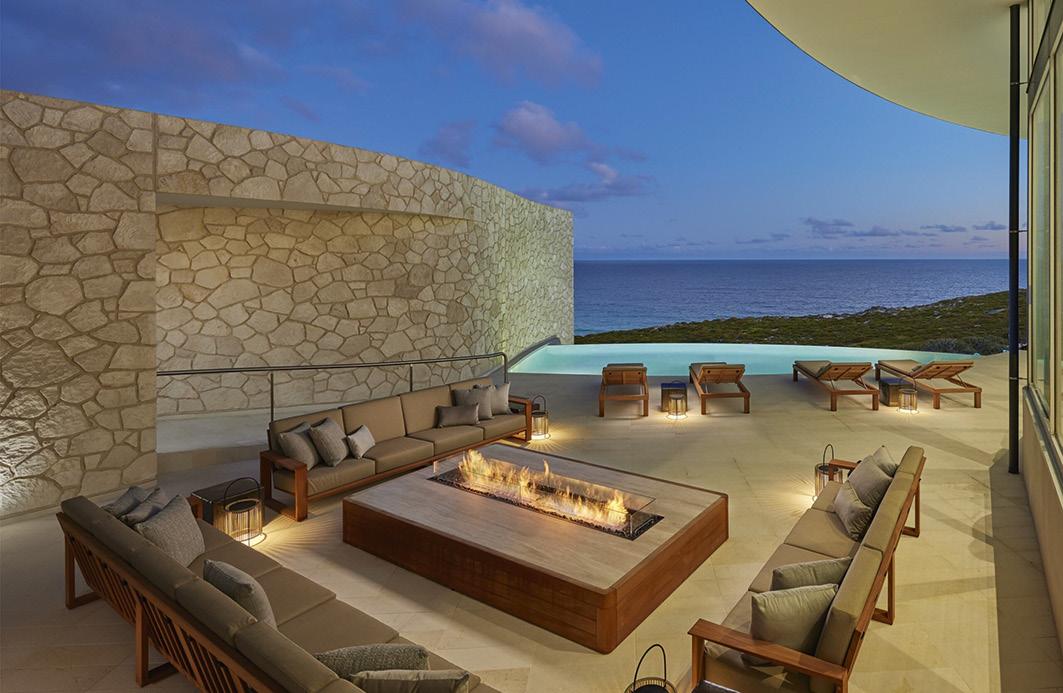
Restoring Elegance, Blending Tradition with Modernity, MFP easy; Humpty Doo, Pooltech NT; Poolside Paradise, Barrier Reef Pools Perth; The Main Attraction, Blue Marlin Pools
Mornington Peninsula; Luxury Living, Riverina Pools; Curtin CJC, Capital Fibreglass Pools.
Fibreglass Pool over $120,000: Heritage Oasis: Restoring Elegance, Blending Tradition with Modernity, MFP easy. Finalists: The Main Attraction, Blue Marlin Pools; Hahndorf, Outside Developments; Compass Pool spa wader, Achievable pools and spas.
Fibreglass Pool up to $120,000: When More is More, Rainwise Pools Melbourne. Finalists: Bees Creek Maxi-Rib, Pooltech NT; Definitely Schmick!, MFP easy; Luxury Barn House Brooklyn
Proven method of resurfacing, successfully installed into thousands of Australian pools for over 40 years.
Osmosis, cracks & blistering are all easily resolved, with no need for grinding - no mess - no fuss!
Most projects are completed with less than 2 days on site. Minimal pool down-time means less risk of popping.





Scan the Q R code above to watch a video of this project or go to www.shop.abgal.com.au/aqualuxrenovation
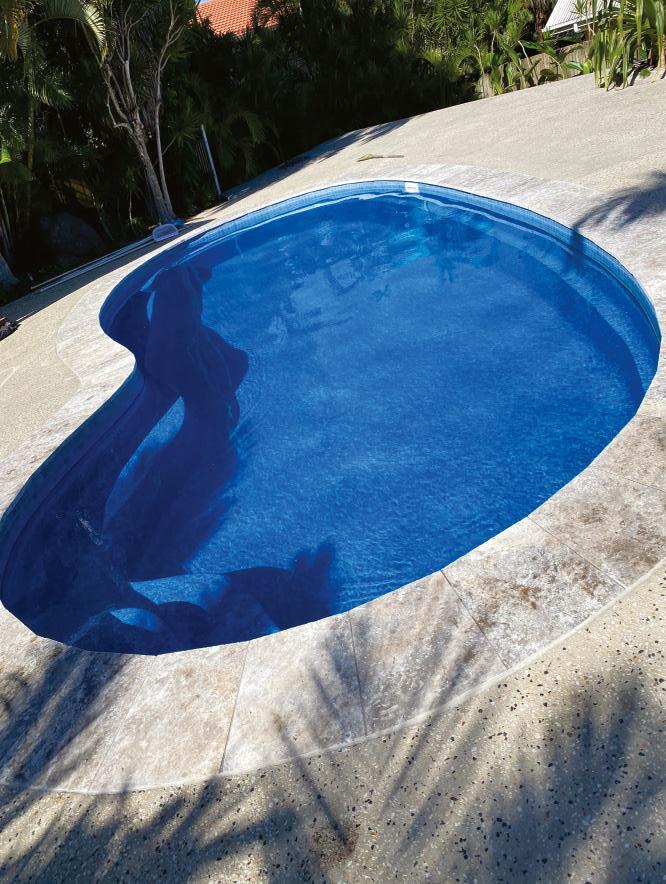
We can find someone to do the job for you - or alternatively, you can become an installer yourself - Explore the S PA S A course here Phone Richard on 0408 764 258 or email richards@abgal.com.au

Pool and Spa, Barrier Reef Pools; Sydney South White-haven!, Barrier Reef Pools Perth; Crystal Clear Retreat, Capital Fibreglass Pools; Prospect, Outside Developments.
Fibreglass Pool up to $40,000: Bali Sanctuary, Sapphire Pools. Finalists: Mottram’s Oasis, Everclear Pools SA; Optimism Street, Sydney Poolscapes; The Gardens Oasis, Darwin Fibreglass Pools and Spas; Drouin – Nirvana, Narellan Pools, Gippsland.
Fibreglass Pool up to $80,000: Project Folewood – The Ultimo, Countrywide Pools. Finalists: Modern Parap, Pooltech NT; Scambary, Local pools & Spas; George, Horizon Pools; A Beautiful Front Yard Transformation, Rainwise Pools Adelaide; Acreage Retreat, Leisure Pools North Brisbane.
Freeform Pool over $120,000: South Yarra’s pool of fluidity and form, Laguna. Finalists: Freeform Oasis, Queen Pools.
Freeform Pool up to $120,000: Back to Nature, Queensland Family Pools and Spas. Finalists: Leafy Leabrook, Mermaid Pools; All curves, no corners, Striking Pools; Oasis at the Ranch, Mullum Pools.
Freeform Pool up to $60,000: Acreage Retreat, Leisure Pools North Brisbane. Finalists: Modern Freeform, Reflections Pool and Spa Care.
Hotel/Resort Pool over $1,000,000: Kangaroo Island, Elite Pools and Landscapes.
Hotel/Resort Pool up to $1,000,000: Walmer Apartments, Aloha Pools.
Hotel/Resort Pool up to $500,000: Serenity amidst Melbourne’s city skyline, Laguna. Finalists: Riverside Oasis – Caravan Park
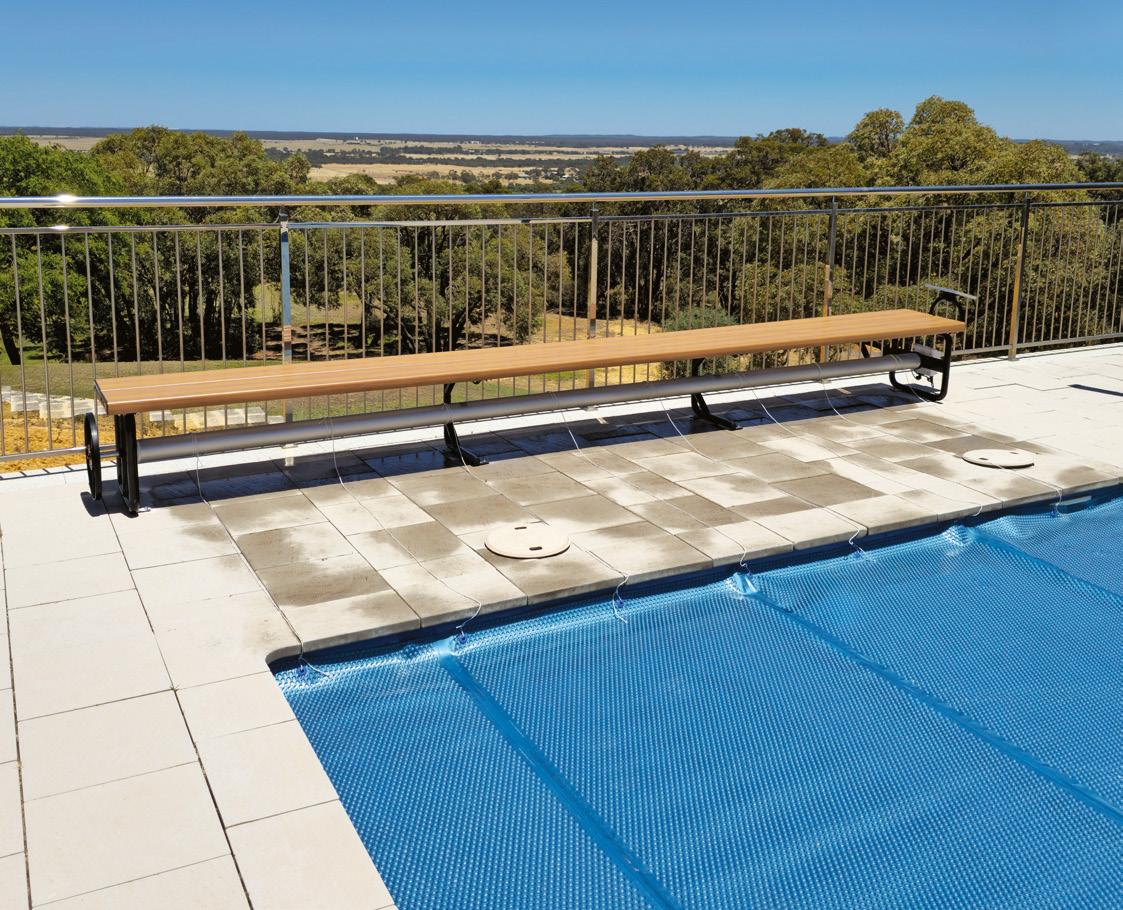

The original & best
Revamp, Countrywide Pools; Project Bangalow, Prestige Plunge Pools; Canvas, Ezy Living Pools.
Innovative Project: Luxury and Tranquillity Amidst the Rural Landscape, Coastal Builders. Finalists: Natural Retreat, tristanpeirce Landscape Architecture; Inner City Sanctuary, Rogers Pools; Aranda, Leader Pools; Bayview Automated Pool Enclosure, TPEC Pool Enclosures.
Pool Landscape Design: Swanbourne, tristanpeirce Landscape Architecture. Finalists: Back to Nature, Queensland Family Pools and Spas; Contemporary Elegance, Precision Custom Pools; Unley, Elite Pools and Landscapes; Killarney Hts, Urban Escape Landscaping + Pools; Woodlands Projects, Kings Gardens & Pools.
Prefabricated Composite Pool up to $30,000: Paddington Pool, Queensland Plunge Pools. Finalists: Project Bangalow, Prestige Plunge Pools; Harmony Haven, Capital Fibreglass Pools.
Prefabricated Composite Pool up to $60,000: Project Collingwood, Prestige Plunge Pools. Finalists: Witchcliffe, Villa Plunge Pools; Clapham, Plunge by Elite; Croydon Hills, Compass Pools Melbourne; Courtyard Pool & Bar Oasis, Capital Fibreglass Pools.
Renovation over $80,000: Griffith, Leader Pools. Finalists: Glenelg, Adelaide Classic Pools; Feeling Fresh, Queensland Family Pools and Spas; South Yarra House, Aquarius Pools; River Deluxe, Panas Pool Services; Re-imagined Newport Oasis, Focus Pools.
Renovation up to $40,000: Pindari Renovation, Imperial Pools. Finalists: Glenalta, Adelaide Classic Pools; Rouse Hill
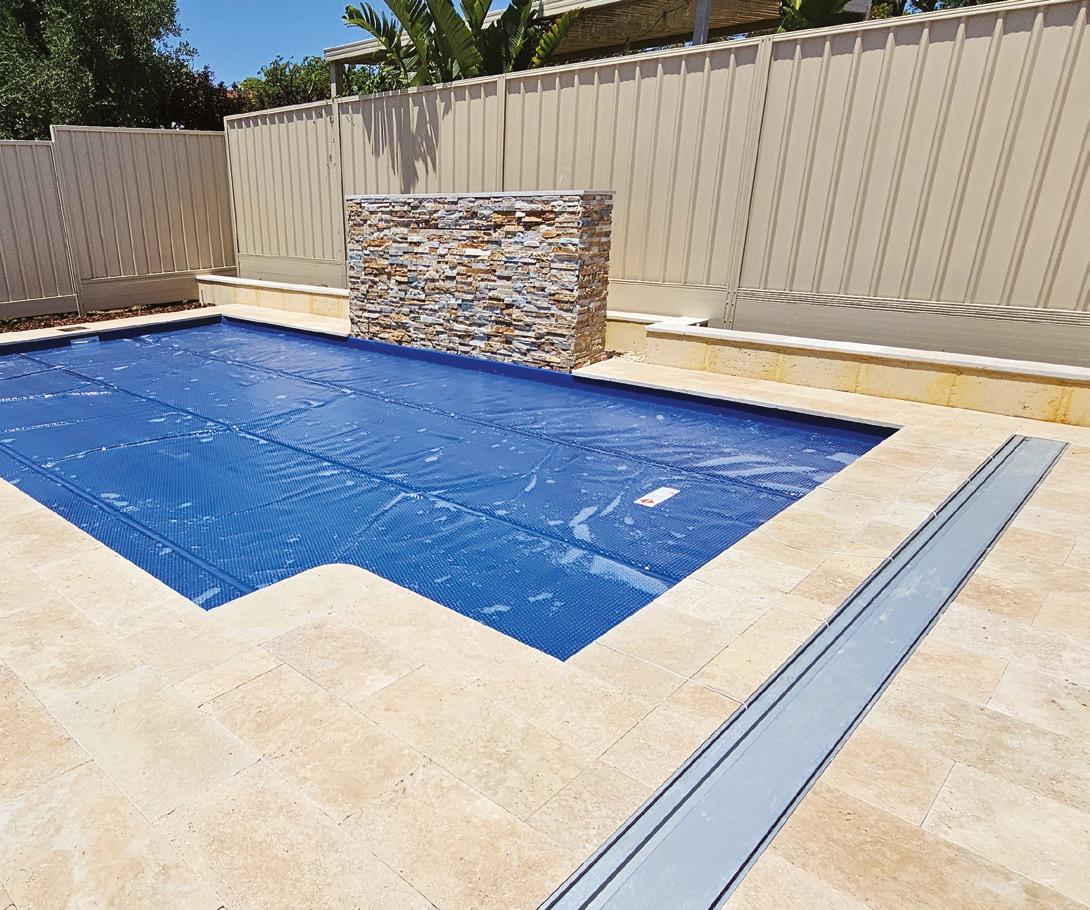
Here at Daisy, we’re doing our best to help grow your business!
From product training to installation, Daisy is your full service pool cover partner. With the most extensive range of pool covers and rollers in Australia, finding the right solution for your customers is easier than ever.
Find out more today at daisypoolcovers.com.au AUSTRALIA’S FAV URITE. 1300 55 18 11 hello@daisypoolcovers.com.au daisypoolcovers.com.au
Committed to helping you sell more Australian made Daisy has a solution for everything
Renovation, Aquastone Pools and Landscapes; Renovation Finesse, Sunsetter Pools and Spas; Clayfield Colours, Blue Phoenix Pool Renovations.
Renovation up to $80,000: It’s not just a renovation, it’s a total face lift!, Queensland Family Pools and Spas. Finalists: Wheelers Hill, Personal Pools; North Balgowlah, Urban Escape Landscaping + Pools; Home Resort, Panas Pool Services; West Hindmarsh, Adelaide Classic Pools.
Residential Lighting Feature: Inner City Sanctuary, Rogers Pools. Finalists: Night Glow, Barrier Reef Pools Perth; Emerald lights, Transform Pools and Spas; Drysdale, Apex Pools and Spas; Aranda, Leader Pools.
Residential Water Feature: Foster, Apex Pools and Spas. Finalists: Bees Creek Loveloch, Pooltech NT; Jerrabomberra, Leader Pools; Inner City Sanctuary, Rogers Pools; Stone waterwall, Transform Pools and Spas; Water Feature, Panas Pool Services; Marion Water Feature, Outside Developments.
Safety Barrier: Mount Eliza, Out From The Blue. Finalists: It’s all about the curves, Queensland Family Pools and Spas; Hotham, Leader Pools; Curves in all the right places, TKL Contractors; Clontarf Residence, Glazed Co.; Uleybury Safety Barrier, Fidus Pool Fencing.
Sustainable Project: Project Bonnie Rock, Countrywide Pools. Finalists: Walmer Apartments, Aloha Pools; Picton Climate Care Certified Pool, Kinetic Pools; Project Lindon, Prestige Plunge Pools; Aranda, Leader Pools; Launceston Heritage Project, TPEC Pool Enclosures; Sellicks Beach Project, TPEC Pool Enclosures.
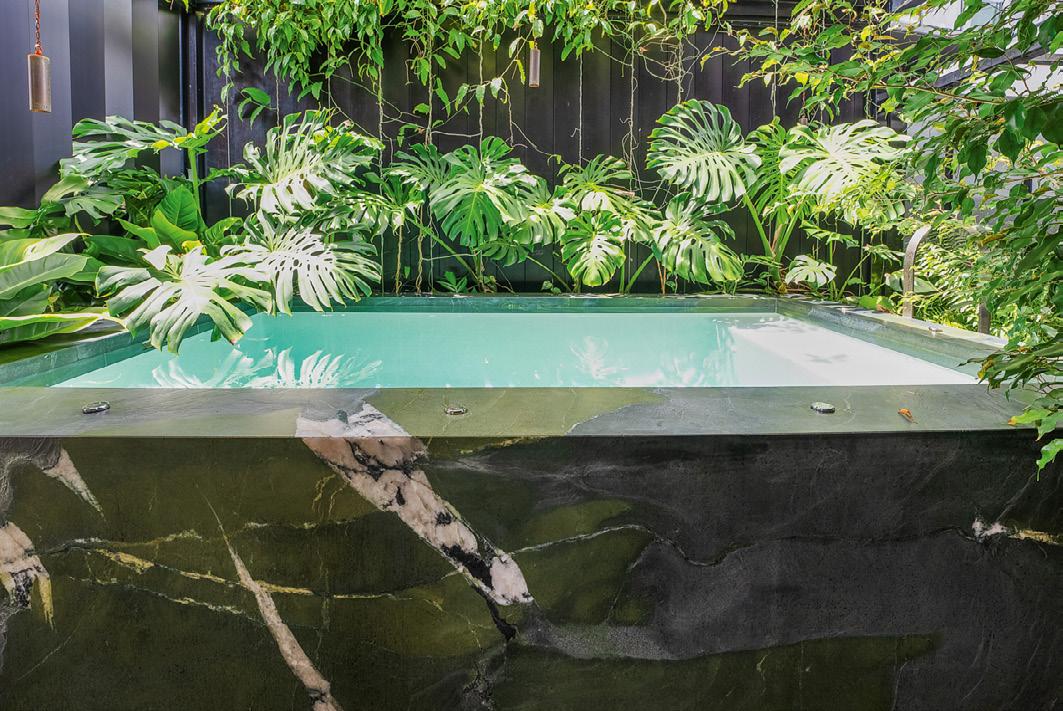
Vinyl Lined In-ground Pool over $120,000: Olive farms, Unique Freeform Pools.
Vinyl Lined In-ground Pool up to $120,000: Timeless Trapezoid, Add A Splash Pools. Finalists: Bismark, Pleasure Pools.
Vinyl Lined In-ground Pool up to $60,000: Therapeutic tranquility, Add A Splash Pools. Finalists: Just in time for Christmas!, Vinyl Lined Pools Service; Tim at Seacombe Gardens, Pleasure Pools; Coburg, Albatross Pools; Tanah Merah, Aqualon.
Vinyl-Lined Lap Pool: Kilsyth, Albatross Pools. Finalists: Sunset laps, Unique Freeform Pools. n

The 2024 New Zealand SPASA Awards of Excellence were held in August, with the industry coming together in Auckland.
The 2024 New Zealand Pool of the Year went to Acacia Landscapes & Pool Construction, an innovative design overcoming space limitations. Elevated above ground level, the contemporary pool and spa design with its elegant, curved water feature commands attention as the property’s focal point.
The 2024 New Zealand Business of the Year went to Fluidra New Zealand for its premier range of swimming pool and spa equipment for both residential and commercial markets. The company’s network across the North and South islands ensures trade customers nationally have access to a complete range of AstralPool and Zodiac products and parts.
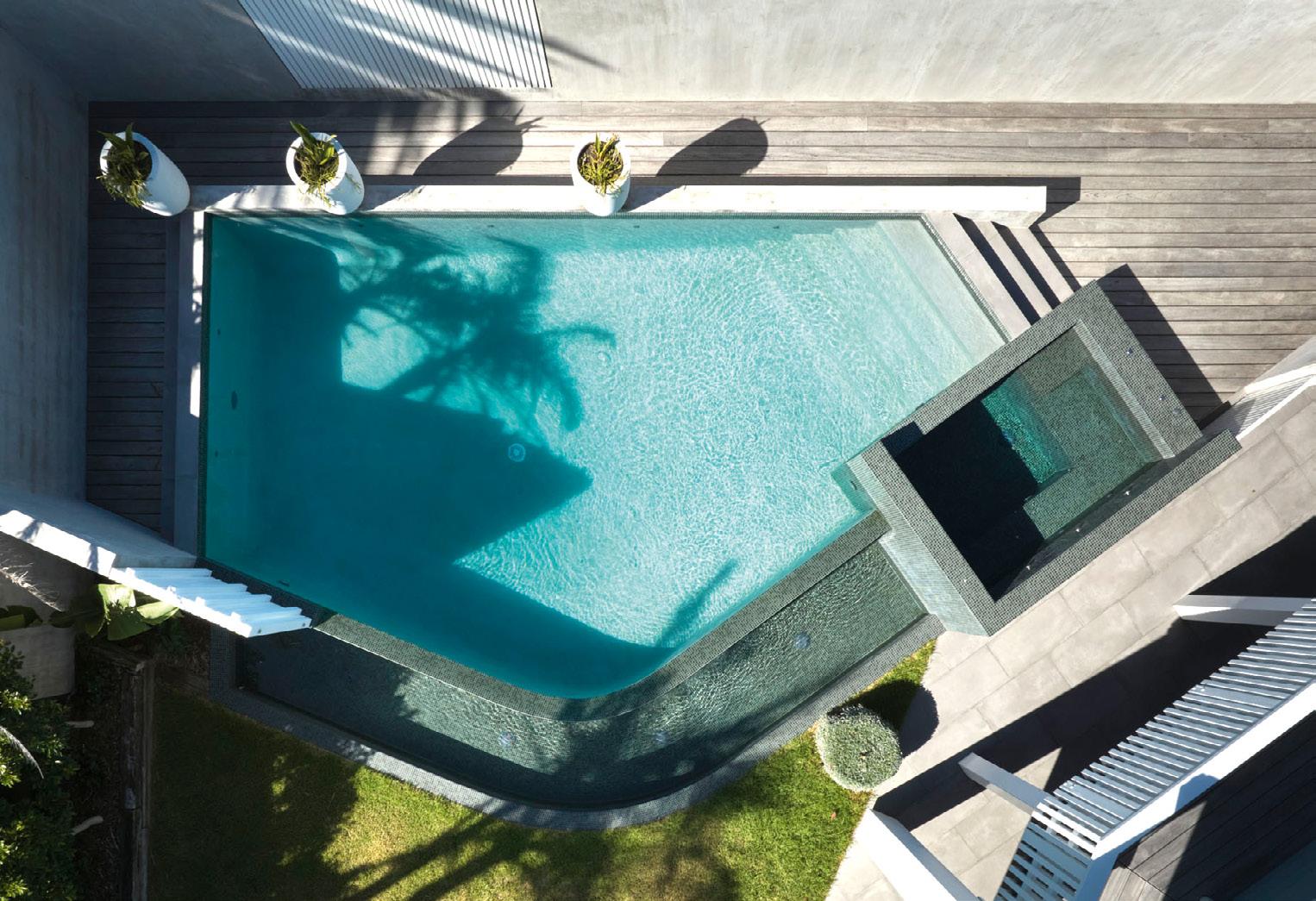
Pool of the Year: Private Oasis, Acacia Landscapes & Pool Construction Ltd.
Spa of the Year: Wairere Hot Spring, Morgan Pools. Commercial Project of the Year: The Heart of the Holiday Park, Mayfair Pools.
Best Pool Store: Aquanort Pools. Business of the Year: Fluidra New Zealand. Product of the Year: Liqtech silicon carbide (SiC) filtration, Waterco Limited.
Professional of the Year: Hamish Methvan, Spa World.
Best Concrete Pool Builder: Acacia Landscapes & Pool Construction. Highly Commended: Auckland Inground Pools. Best Fibreglass Pool Builder: Ultimate Pools. Highly Commended: Plateau Pools; Mayfair Pools Taupo & Rotorua.
Best Mobile Service Business: Poolwerx Christchurch. Highly Commended: Poolside North Shore; Waikato Spa & Pool Services.
Best Prefabricated Composite Pool Builder: Ultimate Pools.
Best Spa Retailer: Spa World Auckland. Highly Commended: Alpine Spas.
Best Supplier: Fluidra New Zealand. Multi-Location Pool Store: Poolwerx Waikato (Hamilton & Cambridge). Highly Commended: Spa World New Zealand.
Online Pool Store: Aquanort Pools. Highly Commended: Poolside Christchurch; NZ’s Best Spa Supplies Website; Spa Supplies.
Single Location Pool Store: Poolside Christchurch. Highly Commended: Poolside North Shore; Aquanort Pools.
Construction Tradesperson Award: Levi Shelling, Ultimate Pools. In-Field Service Technician Award: Mark Bennett, Poolwerx Christchurch. Highly Commended: Adam Blissett, Poolside Christchurch; Jackson Elliot, Alpine Spas.
Operational Excellence Award: Michelle Bennett, Poolwerx Christchurch. Highly Commended: Mikayla Paki-Williams, Taylors Pools and Spas; Chelsea Perkins-Begg, Ultimate Pools. Pool & Spa Barrier Inspector Award: Rainbow Morris, Ultimate Pools.
Pool Sales Representative Award: Steve Westlake, Ultimate Pools.
Rising Star Award: Josh Hanna, Alpine Spas. Highly Commended: Janina Douglas, Spa World; Katrina Wilson, Spa World.
Spa Sales Representative Award: Hamish Methvan, Spa World. Highly Commended: Michael O’Loan, Spa World; Taylor Coleman, Alpine Spas.
Supplier Salesperson Award: Nicole Stone, Fluidra New Zealand. Highly Commended: Viviane Walker, Space Industries Ltd.
Education & Training Excellence Award: Fluidra Pro Academy.
Innovative Product Award: Liqtech silicon carbide (SiC) filtration, Waterco Limited. Highly Commended: The Revolutionary ClearLift Automatic Cover System, Spa World; Freerider FR1000 iQ, Fluidra New Zealand. Marketing Campaign Award: The Revolutionary ClearLift Automatic Cover System, Spa World. Highly Commended: Alpine Spa Moments, Alpine Spas.
New Product Award: Freerider FR1000 iQ, Fluidra New Zealand. Highly Commended: Ultimate Pools; Jewels 4 Pools Ultra, Auckland Inground Pools.
Portable Spa: Highlife Collection – Sovereign, Hot Spring Spas New Zealand. Highly Commended: Vortex Nitro, Family spa in the great outdoors, Spa World; Kingston Spa Pool, Alpine Spas. Sustainable Product Award: EnviroPro Dual Filtration System, Waterco Limited.
Swim Spa: Spectacular setting for Vortex Hydrozone Swim Spa, Spa World. Highly Commended: Endless Pools, Hot Spring Spas New Zealand; Columbus Swim Spa, Alpine Spas.
Commercial Renovation: Hilton Commercial Refurbishment, Mayfair Pools.
Composite Pool over $60,000: Taking it to the Next Level –Composite Creativity, Ultimate Pools.
Concrete In-ground Spa: Wairere Hot Spring, Morgan Pools.
Concrete Lap Pool: Dorset Street Lap Pool, Auckland Inground Pools. Highly Commended: Clarks Beach Haven, Morgan Pools.
Concrete Pool & Spa Combination: Private Oasis, Acacia Landscapes & Pool Construction Ltd. Highly Commended: Reflections on Argyle, Morgan Pools; Te Hihi Pool & Spa, Auckland Inground Pools.
Concrete Pool over $240,000: Herne Bay Elegance, Morgan Pools. Highly Commended: Puna Wai e Titiro atu ana ki te Ngahere, Pool overlooking the Forest, Auckland Inground Pools.
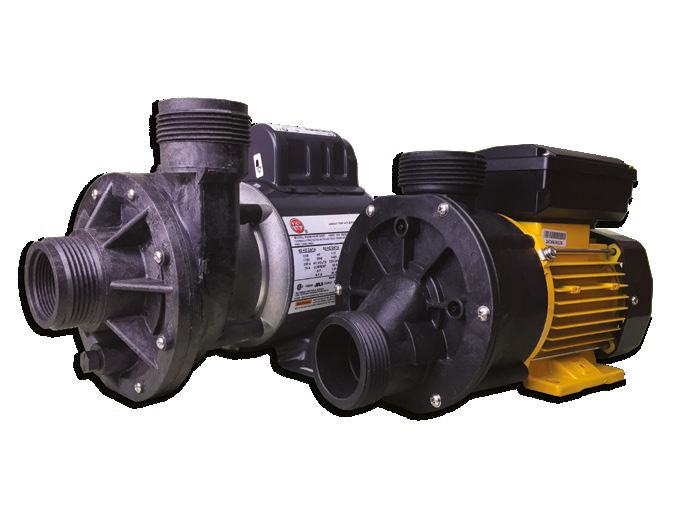
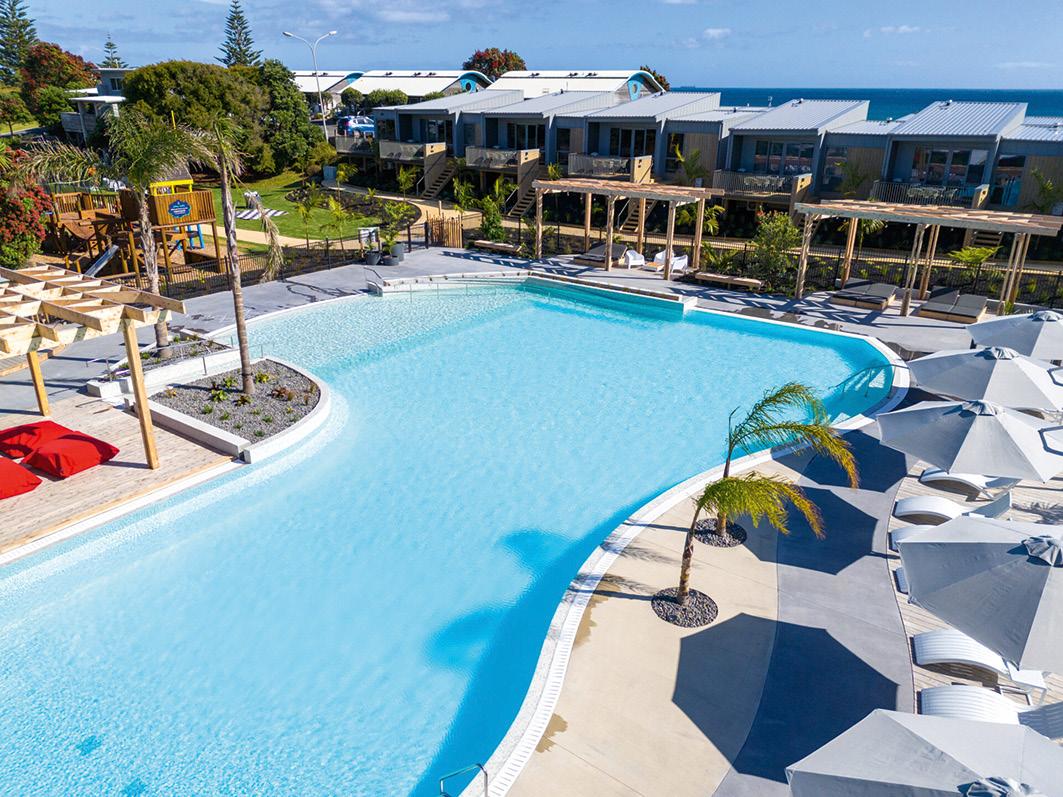
Concrete Pool up to $120,000: Iona Oasis, Del Tutto Ltd. Highly Commended: Warnock Street Retreat, Auckland Inground Pools.
Concrete Pool up to $180,000: Orakei Views, Morgan Pools.
Concrete Pool up to $240,000: Wairere Oasis, Morgan Pools.
Concrete Pool up to $60,000: Strathdullan, Aquanort Pools
Courtyard/Small Pool up to $40,000: Hiltop Honey, Plateau Pools – Mayfair Pools Taupo/Rotorua.
Courtyard/Small Pool up to $80,000: Poolside Par-Tee, Plateau Pools – Mayfair Pools Taupo/Rotorua. Highly Commended: Wai Pakupaku – The Little Water, Ultimate Pools; Urban Oasis Lower Hutt, NZ Pools.

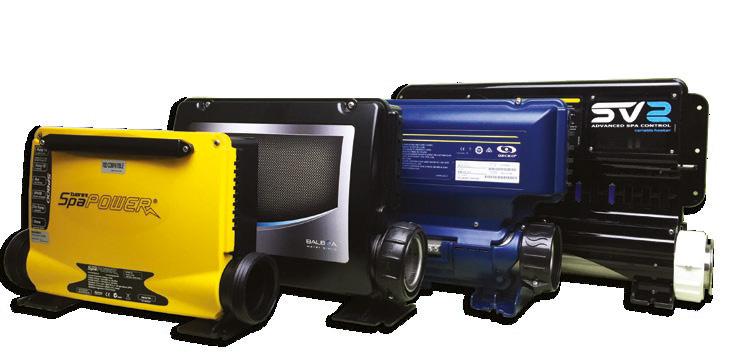


Enclosed/Indoor Pool: One-of-a-kind: Pacific Enclosure, Ultimate Pools.
Fibreglass Commercial Pool up to $250,000: Pool views for days, Mayfair Pools
Fibreglass Lap Pool: Full Lifestyle Immersion, Mayfair Pools. Highly Commended: In the Lap of Legends, Ultimate Pools.
Fibreglass Pool & Spa Combination: Resort Dreams in Tauranga, Mayfair Pools. Highly Commended: The Captivating Combination, Ultimate Pools; Kapiti Coast Beach Haven, NZ Pools.
Fibreglass Pool over $120,000: The Lake House – A Full Sensory Experience, Mayfair Pools.
Fibreglass Pool up to $120,000: Toka Ridge, Plateau Pools – Mayfair Pools Taupo & Rotorua. Highly Commended: Ngararatunua Project, OCD Pools & Landscapes; Rural Entertainment Haven, NZ Pools.
Fibreglass Pool up to $80,000: Rural sanctuary on the hill, NZ Pools. Highly Commended: Tropical Oasis Pearl, Ultimate Pools; Surpassing Expectations, Mayfair Pools.
Freeform Pool over $120,000: An Elegant Waterfront Edge, Mayfair Pools.
Freeform Pool up to $120,000: Swan Song, Acacia Landscapes & Pool Construction Ltd. Highly Commended: Resort Dreams in Tauranga, Mayfair Pools.
Hotel/Resort Pool up to $500,000: The Heart of the Holiday Park, Mayfair Pools.
Pool Landscape Design: Poolside Par-Tee, Plateau Pools –Mayfair Pools Taupo/Rotorua. Highly Commended: Toka Ridge, Plateau Pools – Mayfair Pools Taupo & Rotorua.
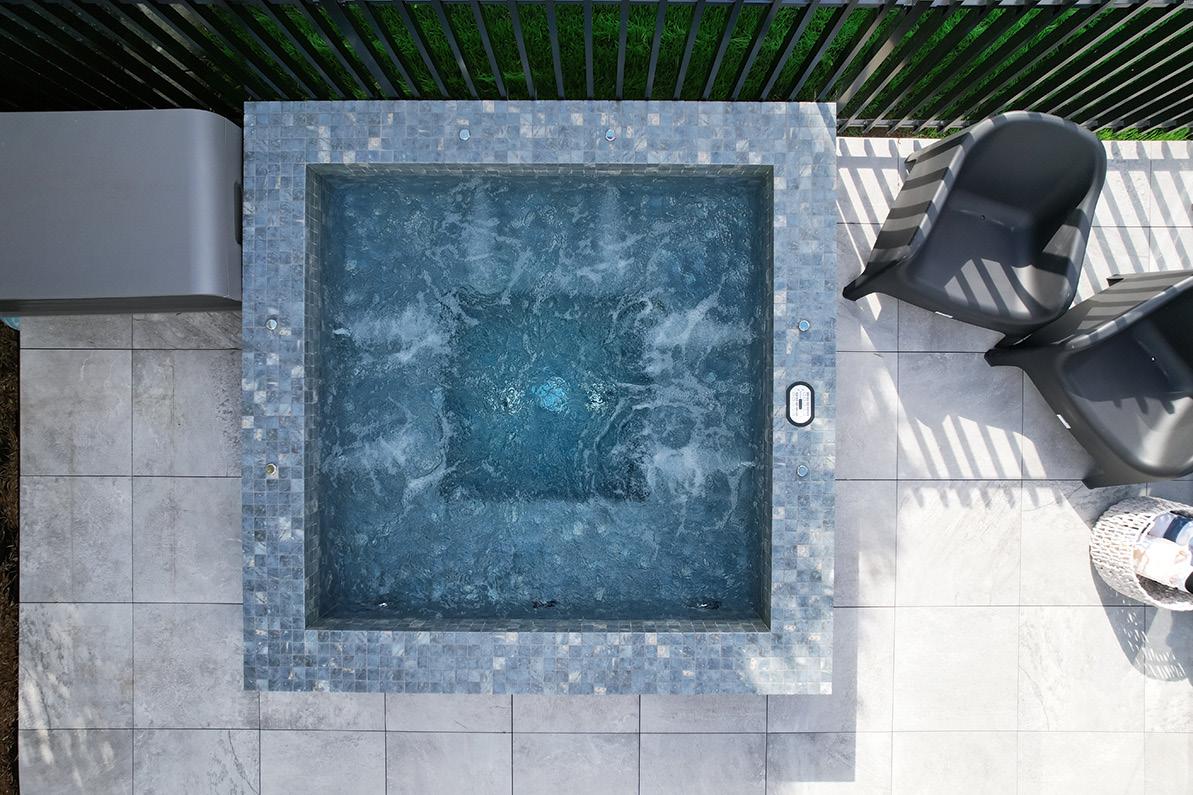
Prefabricated Composite Pool up to $60,000: The Pool of Infinite Possibilities!, Ultimate Pools: The Makeover of Makeovers – a Northland Renovation, Mayfair Pools. Highly Commended: Greene Pool, Taylors Pools and Spas.
Renovation up to $80,000: A Visual Feast, Mayfair Pools. Residential Water Feature: Flowing Waters on Wairere, Morgan Pools.
Sustainable Project: Rural EcoParadise, Ultimate Pools. Vinyl Lined Commercial Pool up to $250,000: Putorino School, Taylors Pools and Spas n












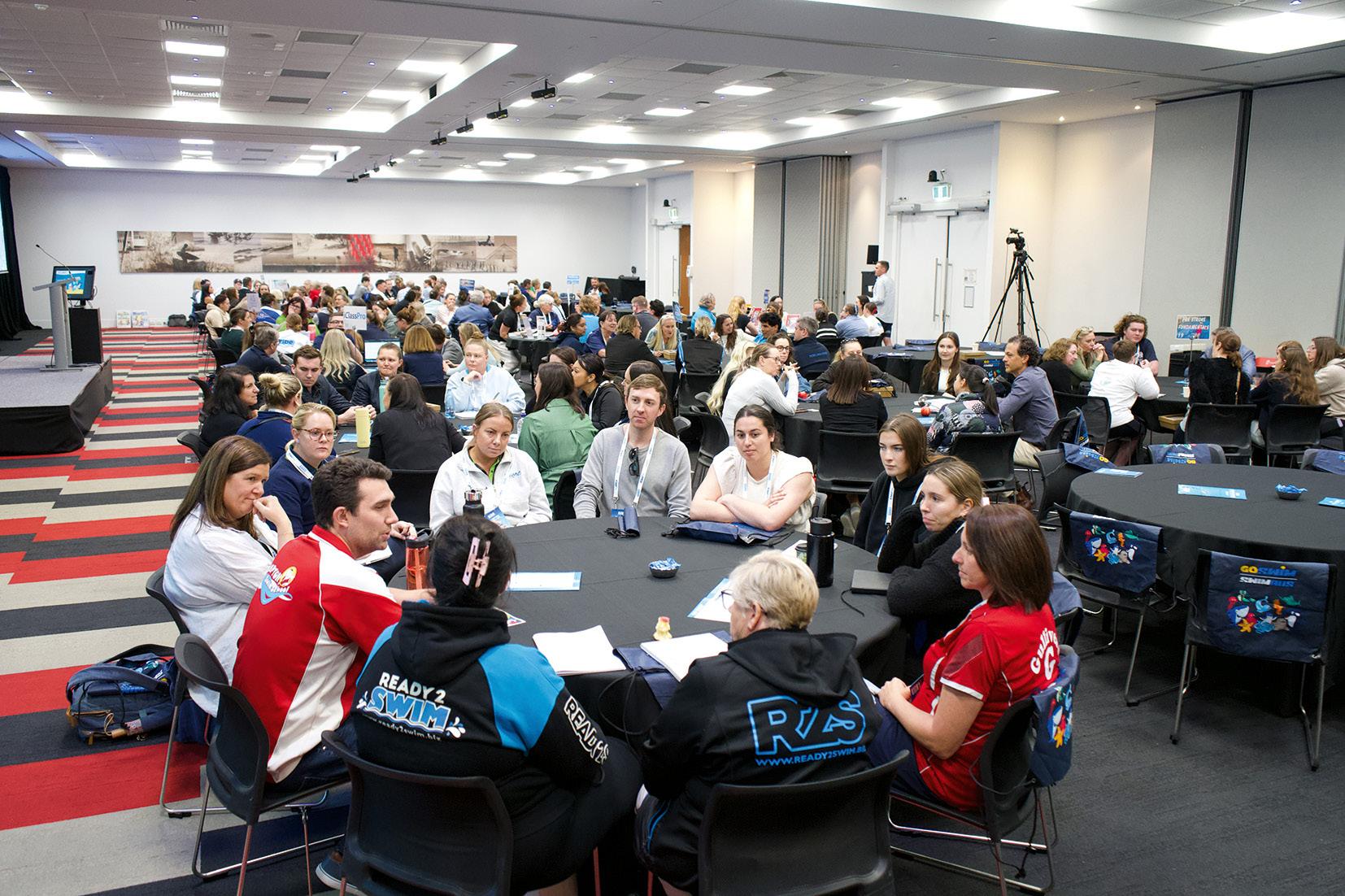
The 2024 National ASSA Conference was held in conjunction with the SPLASH! Trade Expo in August, at the Gold Coast Convention and Exhibition Centre.
Nearly 500 delegates attended across the four days, seeing the conference exceed ASSA’s expectations.
The conference began with a dedicated Educators Day, followed by three days on the Business of Swim Schools, including delving into strategies for enhancing the skills and leadership within teams; exploring innovative ways to elevate the quality and offerings of swim schools; and broadening horizons by
embracing new perspectives and ideas to drive the industry forward.
The conference also looked at the role of swim schools in the learn-to-swim movement, emphasising that every swim school, regardless of size, plays an essential role.

Six world-class keynote speakers engaged with industry expert panellists and participated in hands-on workshops.
The conference also included a sunset boat cruise, with the delegates enjoying a magical evening on the water, a swim school tour and even an ocean swim which included swimming with the sound of whales.
On the final evening ASSA held its 2024 Awards of Excellence co-hosted by Olympian Duncan Armstrong and former SPLASH! brand manager David Stennett, celebrating the achievements of ASSA swim schools across 16 categories, recognising the outstanding contributions of both regional and national winners. See page 64 for the winners
Australian developer and builder Coronation Property has won the Urban Developer Award for Industry Excellence in Construction
Innovation for 8 Phillip Street, a high rise tower that features a stunning swimming pool that overlooks Parramatta and Western Sydney.
The Phillip Street tower will be a dramatic presence on the Parramatta skyline, and the site also has a historical significance with the preservation of the heritage-listed St Andrew’s Church Hall integrated into the completed project. With its twisting rhomboid design and meshembedded glass cladding, the Woods Bagot-
designed tower will be a first for Western Sydney, ensuring the building’s status as an instant Parramatta icon.
Incorporating striking contemporary design elements, including high-quality joinery and innovative windbreak balconies, 8 Phillip Street will offer residents configurable outdoor living spaces as well as a pool on the 18th floor. Additionally, the boutique QT hotel accommodation will provide Parramatta with its first five-star hotel.
Construction of 8 Phillip Street is slated to be complete by 2026.
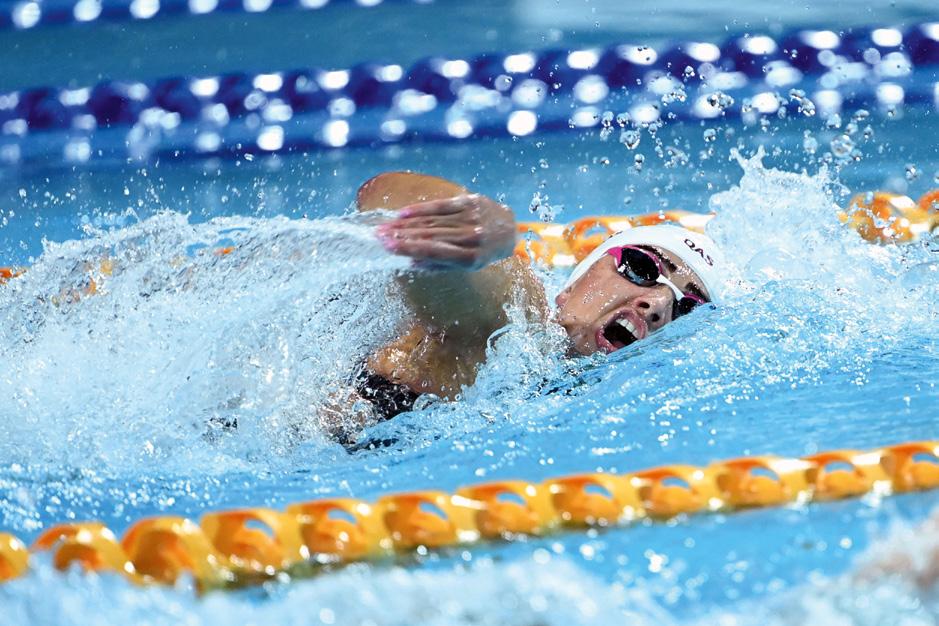
Alexa Leary was one of the standout champions of the Paris Paralympics, winning two gold and a silver and breaking the world record for the 100m S9 free. Her most exciting moment was charging through the water as anchor to win the Mixed 4x100 Freestyle Relay. Image shows her at a lead-up event.
Delly Carr/Swimming Australia
The Australian Institute of Sport (AIS) has revealed a plan to ensure the nation’s Para athletes have access to the world’s best coaches in the lead up to Brisbane 2032 and beyond.
While there was much success for Australian athletes at the Paris Paralympics, especially for the swim team that took home 27 medals (six gold, eight silver and 13 bronze), the overall result was not as successful as some previous games, leading some pundits to claim other nations have started to catch up to Australia’s level of commitment and training.
Project Para is one of several new initiatives identified in the recently released AIS HP Coach Development Strategy, a roadmap to ensure Australian athletes have access to world’s best coaching on the road to Brisbane 2032 and beyond.
Project Para has two aims – support and elevate the coaches currently supporting Paralympic athletes, as well as doubling the number of Para coaches in Australian sport.
Matti Clements, Australian Sports Commission executive general manager of AIS Performance, says we need to start now to ensure our Para athletes reach their full potential in eight years’ time.
“We all want the Brisbane 2032 Paralympic Games to be a success and to achieve that we need more coaches,” Clements says.
“While we have incredible coaches supporting our Paralympians in Paris, success in Brisbane will require twice the number of coaches currently working in Para sport in Australia.
“Through collaboration with Paralympics Australia, the state and territory sport institutes, and the national sporting organisations, we believe this target is achievable and will lay a foundation for Australia’s most successful era in Para sport history.”
Project Para has been made possible through the support of the Australian Government, which will invest a record $54.9m in Para sport over the next two years, doubling existing funding. Contact: www.ais.gov.au/coach-development
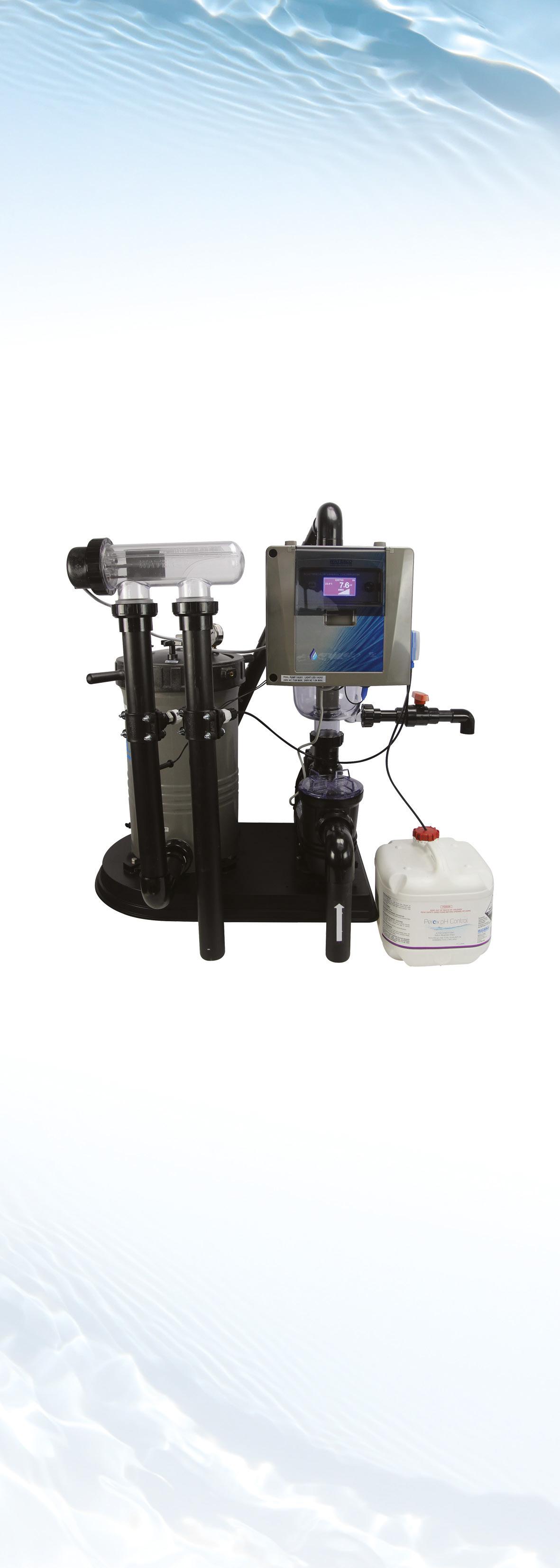



ASSA held its 2024 Awards of Excellence Award on the final evening of their conference, which was held in conjunction with the SPLASH! Trade Expo at the Gold Coast Convention and Exhibition Centre.
There is more on the conference on page 62.
ASSA national award winners
Swim Teacher of the Year: Ryan Lee, Beatty Park Swim School
Swim School Turnaround: Rackley Swimming Smithfield
Swim School of the Year Award (up to 1,000 lessons per week): Prouse Swim School
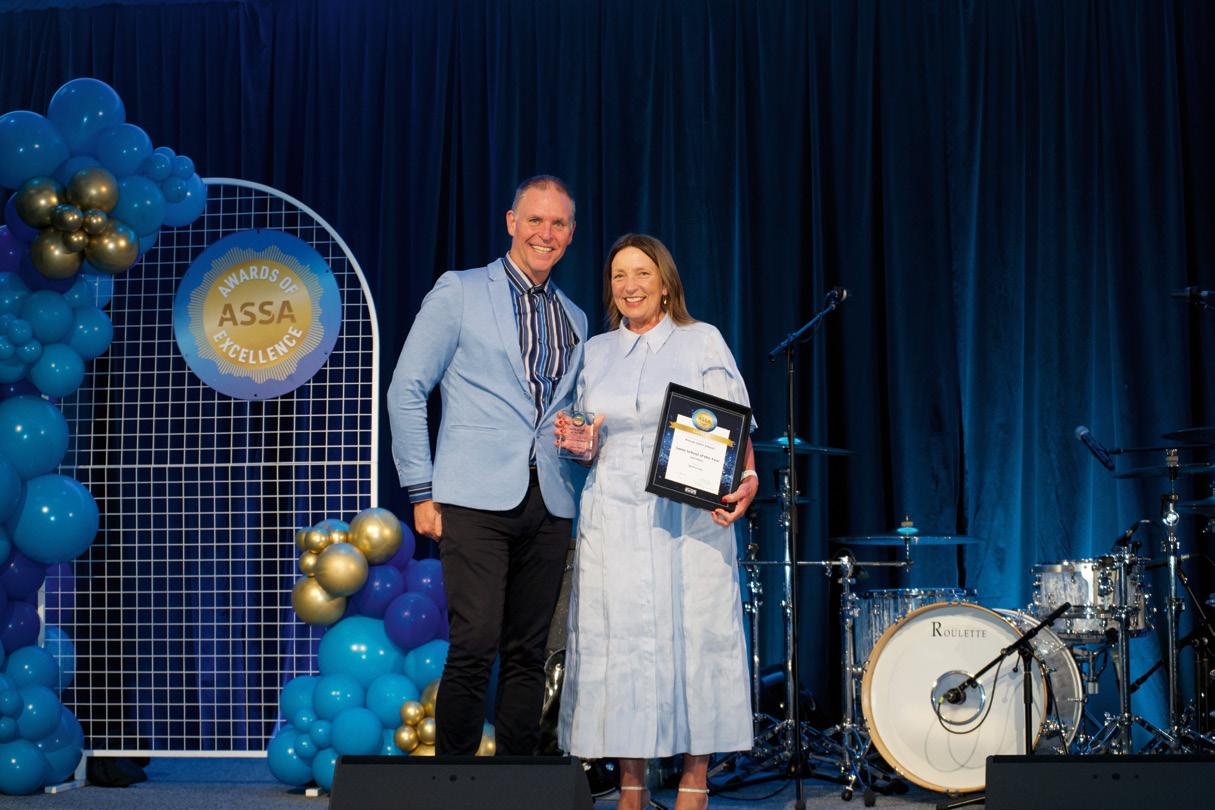
Swim School of the Year Award (over 1,000 lessons per week): Shawn’s Swim School
Water Safety Award: Aqua Harmony Enriched Learning Partnerships
Innovation Award: Rackley Swimming
Swim School Growth Award: The Swim Factory Australia
New Swim School Award: Pete’s Swim School
Inclusive Swim School Award: School
Emerging Talent Award: Brooke Reed, LSA Swimming
Sustainability Award: Berrydale Swim School
Community Service Award:
Employer of Choice Award:
Marketing and Communication Award: Shawn’s Swim School, Victoria
New Swim School Award: Pete’s Swim School,
New Swim School Award: Fish N Flips Swim School Upper Kedron, Queensland
Sustainability Award: Berrydale Swim School,
Swim School Coordinator/Manager of the Year: Karen James, TJ’s Swim School, ACT
Swim School Coordinator/Manager of the Kerri Lee, Rackley Swimming Parkwood,
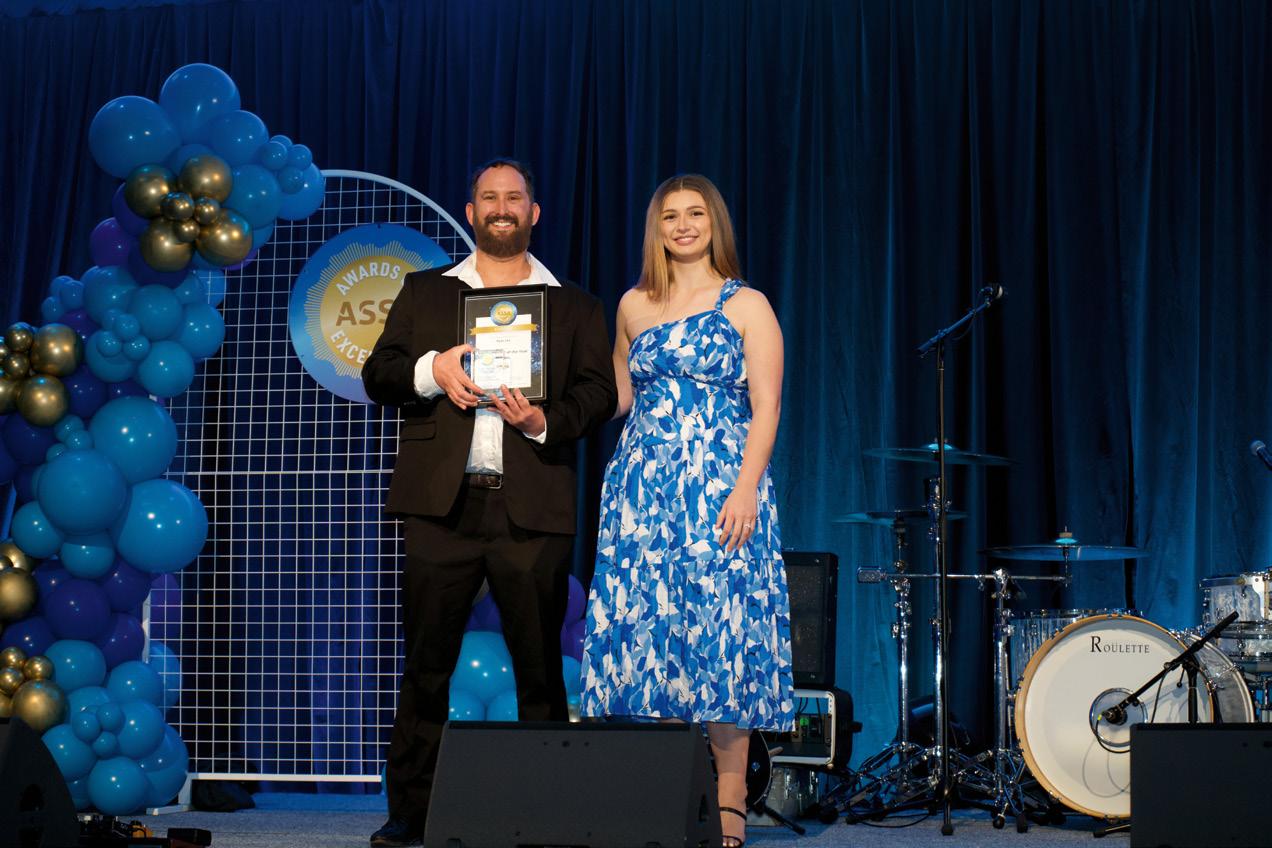
Marketing and Communication Award: Swimming
Swim School Coordinator/Manager of the Year: Karen James, TJ’s Swim School
International Swim School Award: Academy
ASSA regional winners
Community Service Award:
Emerging Talent Award: Swimming, Queensland
Employer of Choice Award: Queensland
Employer of Choice Award:
Inclusive Swim School Award:
Awards night
Swim School Growth Award: Pete’s Swim
Swim School Growth Award: The Swim Factory
Swim School Growth Award: Berrydale Swim
Swim School of the Year Award (over 1,000 The Y, Hawkesbury Oasis,
Swim School of the Year Award (over 1,000 Rackley Swimming Hibiscus,
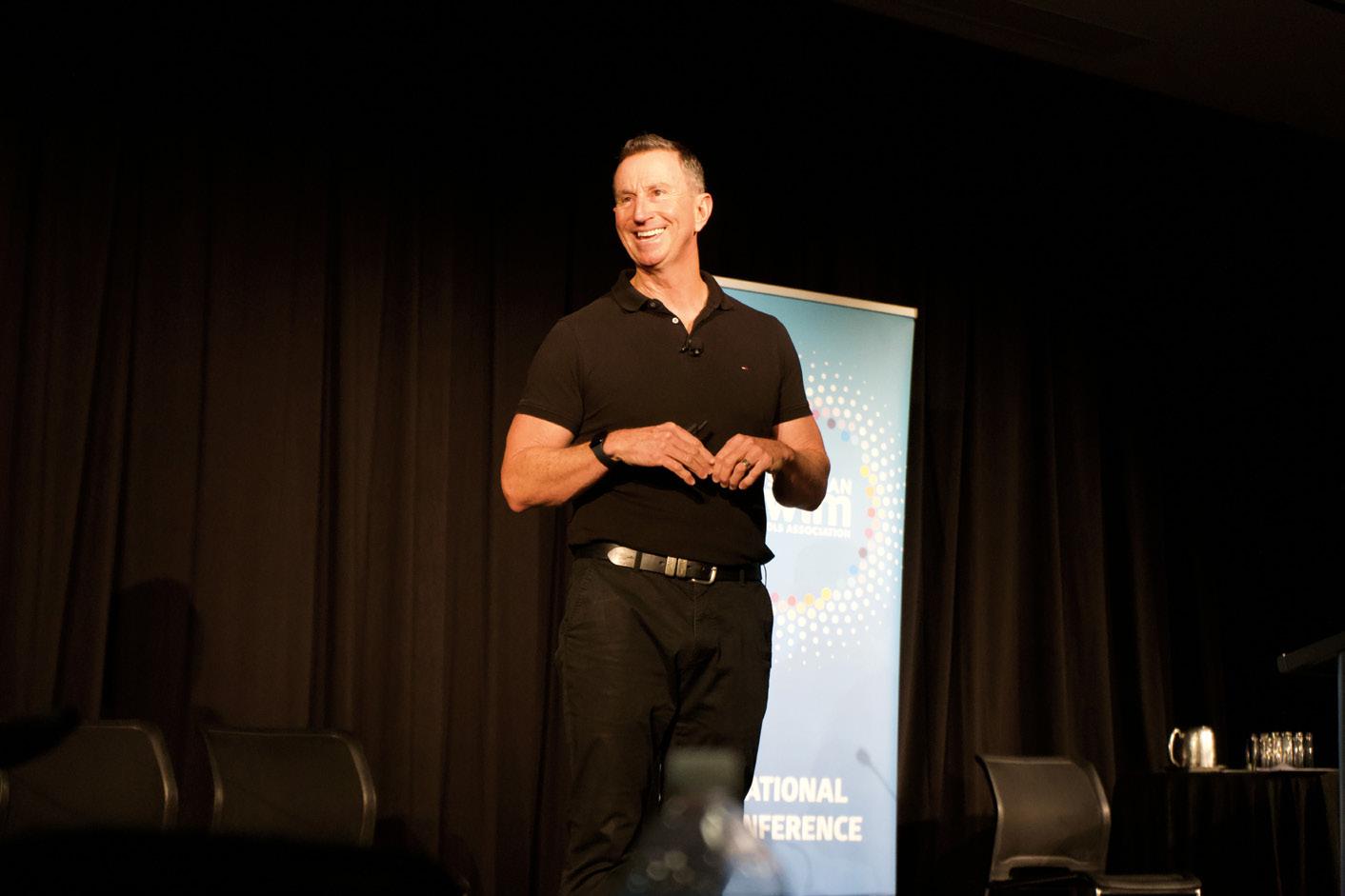
Inclusive Swim School Award: Swimtikes, Queensland
Inclusive Swim School Award: Beatty Park Swim School, Western Australia
Innovation Award: Rackley Swimming, Queensland
Marketing and Communication Award: Sydney Gymnastic & Aquatic Centre, NSW
Marketing and Communication Award: Rackley Swimming, Queensland
Swim School of the Year Award (over 1,000 Shawn’s Swim School,
Swim School of the Year Award (over 1,000 Kirby Swim Karrinyup,
Swim School of the Year Award (up to 1,000 Swim Experts, NSW
Swim School of the Year Award (up to 1,000 Swimtikes, Queensland
Swim School of the Year Award (up to 1,000 Goldfishbowl Swim School,
Swim School of the Year Award (up to 1,000 Prouse Swim School,
Swim School of the Year Award (up to 1,000
Swim Mechanix Lesmurdie, Western Australia Rackley Swimming Smithfield, NSW
Swim Teacher of the Year: Pete Coleborne, Pete’s Swim School, ACT
Swim Teacher of the Year: Liz Corr, Swimtikes, Queensland
Swim Teacher of the Year: Nikiesha Pilgrim, Prouse Swim School, Victoria
Swim Teacher of the Year: Ryan Lee, Beatty Park Swim School, Western Australia
Water Safety Award: Aqua Harmony Enriched Learning Partnerships, ACT
Former co-hosts of the Ready. Set. SPLASH! podcast, David Stennett and Luke Daly, have started a new podcast focussing on trends, news and views on the aquatics sector. Stennett and Daly have moved from SPASA into new roles this year –Stennett to Maytronics Commercial and Daly to ASSA – but they are longtime friends who remain in close contact. The Aquatics Only podcast is available at https://aquaticsonly. buzzsprout.com/
Stirling Leisure in Inglewood Western Australia is laying claim to the title of largest public outdoor lap pool in the Southern Hemisphere. It features ten 50m lap lanes and four 25m lap lanes, heated to 27.5 degrees and holding 2.5 million litres of water. It is surrounded by a new concourse, landscaping and LED lighting, and features the AI-powered anti-drowning CCTV technology, Lynxight. It also has a submersible swim wall which can be raised in minutes to split each 50m lane into two 25m lanes, allowing lap swimming and water polo to take place simultaneously.
The popular Lismore Memorial Baths is open for the 2024 summer season following the installation of the final piece of flood-restoration work. When the pool reopened ahead of summer last year, following its closure after the devastating floods of 2022, the council was still waiting on the delivery of a moveable dividing block to bring the pool back to 50 metres, which has now been delivered.
Former champion swimming coach and convicted paedophile and rapist Richard “Dick” Caine has died in hospital weeks after being found guilty of raping and sexually assaulting young girls. Caine was charged with 39 offences committed against six teenagers in the 1970s and 1980s at his Carss Park swimming pool in Sydney’s south and in his home and car. A court previously heard Caine had terminal cancer and was expected to have only months to live. He previously trained a number of champion swimmers and had been inducted into the Australian Marathon Swimming Hall of Fame. His sentencing was due to take place in December.
Authorities responded to an emergency at BioLab’s chemical plant in Rockdale County, Georgia, USA, leading to road closures, precautionary evacuations and the cancellation of church services. The Sheriff’s Office urged residents in the area to stay indoors and keep windows closed to avoid exposure to potentially hazardous materials. A malfunctioning sprinkler system inside the plant made contact with a reactive chemical, starting a small fire on the roof that was contained. However, the chemical reaction caused a significant plume of smoke and off-gassing, creating concerns about chemical exposure in the surrounding area.

By Paul Stevenson

There has been discussion from time to time about the potential for including overseas health standards into Australian public pool guidelines and the state-based health codes. But first we must define the health standards across the country, before ascertaining if it is it feasible to adopt foreign standards. Paul Stevenson, one of Australia’s most experienced aquatic engineering consultants, bravely delves into this mammoth topic covering commercial spa and swimming pool plant capacity sizing, and the related health standards both here and overseas.
Introduction
There is much debate and controversy over the sizing of water treatment plants for public spas and swimming pools across Australia. This has been going on for many years and it seems that few aquatic engineers actually want to agree with each other. Often, because some want to follow local health standards and others don’t. (Some seem to not want to follow any standard at all.)
In an ideal world, Australia would have a single method of plant sizing which is adhered to across the whole country. Sadly, we don’t live in an ideal world.
This article explores the differences between plant sizing across Australia and some prominent international health standards.
The basics
The size of a water treatment plant is critical to:
• Ensuring there is enough water flow to achieve good water distribution across the whole body of water, especially in the corners;
• Ensuring that there is enough filtration area to remove turbidity to achieve acceptable standards of clarity, this being directly proportional to the plant flow rate.
Pool turnover time is a common term in the industry. It is the time it takes for the whole volume of the spa water or pool water to pass through the water treatment plant.
“While DIN standards indeed emphasise public control resulting in smaller pool plant sizes, implementing similar measures in Australia might face challenges due to cultural perceptions and expectations.”
ABOVE: Turnover time is how long it takes for the whole volume of the pool or spa water to pass through the water treatment plant
The shallower the pool, the higher the bathing load, and therefore a quicker turnover is time required. This is reflected in all health standards. A less often reflected aspect is that there is clear evidence that outdoor pools are less problematic than indoor pools due to solar/wind exposure and lower bathing loads. Some health standards recognise this, and others don’t.
The other important aspect to plant sizing is the control of bathers and what is the excepted norm. A perfect example of this is what happens in Germany under the DIN standard and what happens here in Australia. Under the DIN standard, bathers are required to shower before using the spa/pool, no outdoor footwear is allowed on the concourses and bathing numbers are strictly controlled. In addition, 30 litres of spa/pool water is dumped as each bather enters the spa/pool area. Spas are required by the DIN standard to be emptied and cleaned every week but that is not the case here in Australia.
It’s interesting to consider the balance between stringent health standards and public acceptance. While DIN standards indeed emphasise public control resulting in smaller pool plant sizes, implementing similar measures in Australia might face challenges due to cultural perceptions and expectations. Some Australians might view such rigorous control as incompatible with their national identity and just “not Australian”.
There are hundreds of health standards for public spas/pools around the world so impossible to compare them all against our own Australian standards. The following has been included in the review:
• New South Wales Health Authority
• Queensland Health Authority
• Victoria Health Authority
• South Australian Health Authority
• Western Australian Health Authority
• German DIN standards
• UK Pool Water Treatment Advisory Group (PWTAG)
• US Model Aquatic Health Code (MAHC)
All of the above standards quote turnover times for spas with the exception of the DIN standard.
The DIN standard uses the following formula:
Q = (m x V)/k where:
Q = plant flow in m3/hr
m = treatment frequency (10 for an open Spa)
V = spa volume in m3
k = load capacity factor (0.5 for sand, 0.6 for ozone and 1.0 for UFF)
Tables One and Two list the recommended turnover times, with those for DIN being obtained from applying the DIN formula. Table Three shows the spa plant capacity.
In the standards I have compared, there are four distinct methods to establish an appropriate plant size.
• Application of a turnover time based on the type of pool. Queensland, Victoria, South Australia and US MAHC use this method.
• Application of a turnover time based on the depth of a pool. New South Wales uses this method.
• Application of a turnover time based on the type of pool as well as its depth. Western Australia and UK PWTAG use this method.
• Application of a turnover time based on depth, filter type, perimeter length and loading factors. DIN uses this method.
Table Four provides an overview of the various Australian health standards.
NSW Health advises the following formula:
Qi = (1.3 x d) + 0.2
Qo = (1.8 x d) + 0.2 where:
Qi = indoor pool plant flow in m3/hr
Qo = outdoor pool plant flow in m3/hr
d = pool depth in metres
This results in the turnover times that are shown on Table Five.
In addition, NSW Health suggests a reduction in plant size when ultra fine filtration (UFF) is employed: 15 per cent reduction for indoor pools and 10 per cent reduction for outdoor pools.
Table Six provides an overview of the overseas health standards.
The average turnover time stated in these standards is about 17 minutes. A 20 to 30 minute turnover is typical in Australia, and it’s proven that this rate of turnover along with effective filtration achieves more than acceptable water quality, even with heavy bathing loads.
On the other hand, the German DIN and UK PWTAG turnover
Table One: recommended spa turnover times
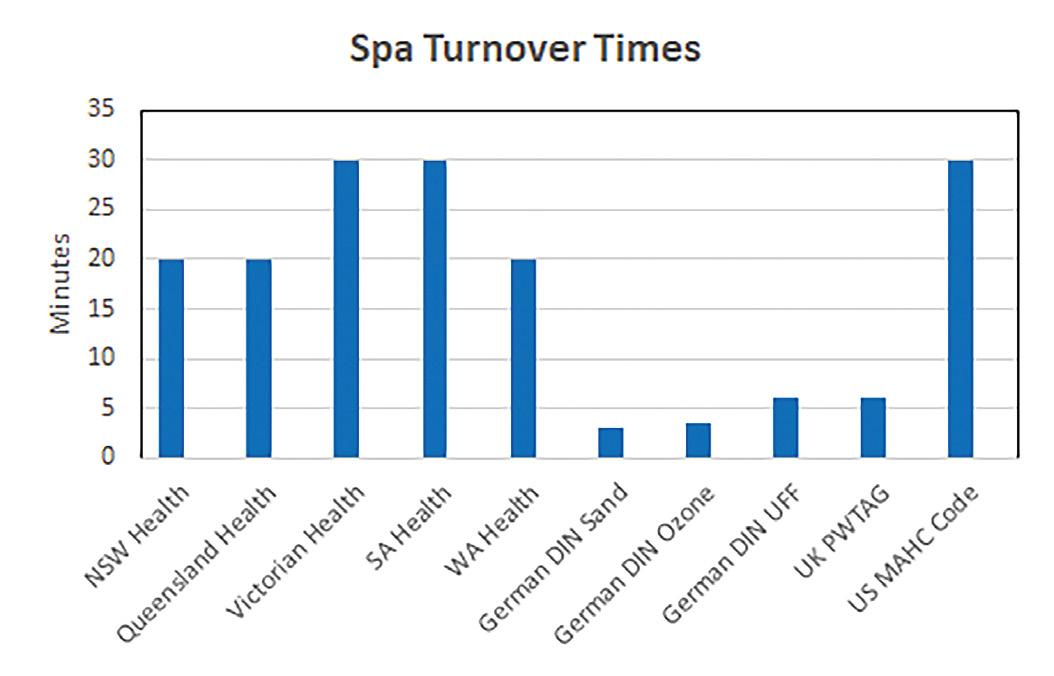
Table Two: graph of recommended spa turnover times
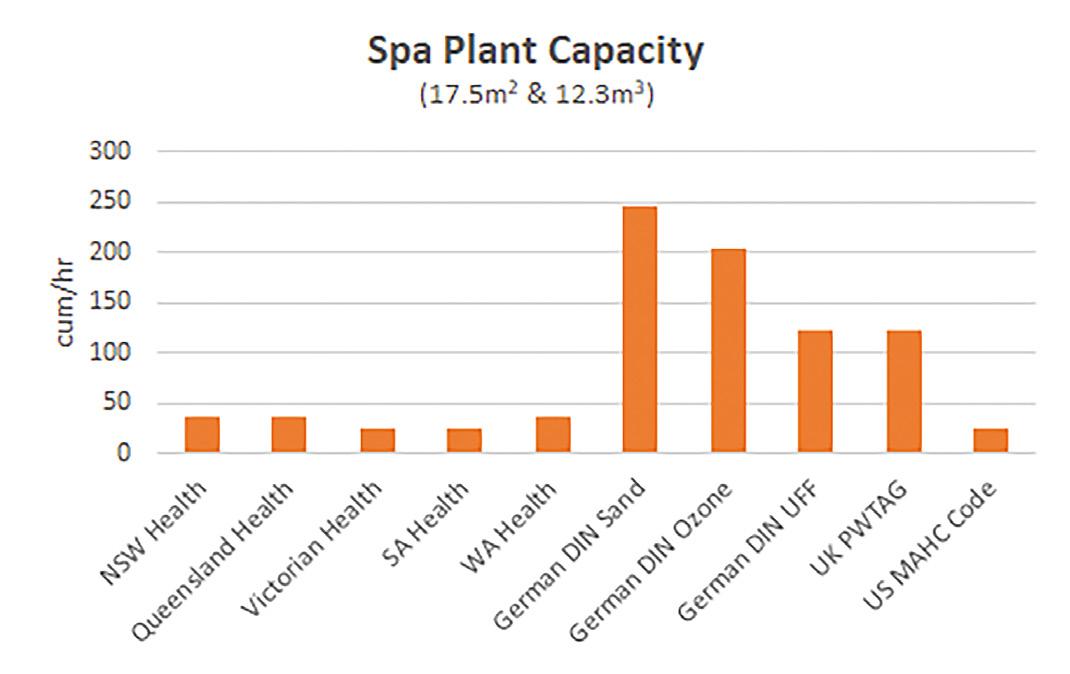
Table Three: spa plant capacity
times are very short at six minutes or less, resulting in very large plant sizes.
Take for example the DIN sand system size of 245m3/hr for a spa measuring just 7.5m x 2.5m x 0.7m (average) depth. This is caused by a turnover of just three mins and a plant of that size would normally be suitable for a public pool of 25m x 14m here in Australia.
There is no justification for this level of oversizing in my opinion and I find it hard to believe that such systems are actually being installed.
The situation with public pool is far more complicated. Turnover times vary dramatically across the standards and the method of establishing these turnover times ranges from simple to complex.
“Pool water distribution also plays a part in the final selection of plant size, especially for deep pools.”
NSW Health recommends the use of formulabased turnover times. All that is needed is the depth of the pool, and the formulas provide the turnover time. There are two formulas, one for indoor pools and one for outdoor pools, and a reduction in plant size can be applied if UFF plant is installed.
The logic is simple: the depth of the pool directly reflects the maximum bather load, and indoor pools require greater plant capacity. The reduction in plant size should UFF be used is because UFF provides significantly better filtration than sand which the formulas are based on.
The most complex method is by far the German DIN standard. DIN tabulates figures for several influencing factors including:
• Bather frequency;
• Overflow edge length;
• Nominal load;
• System k.
Pool water distribution also plays a part in the final selection of plant size, especially for deep pools.
Understanding how to use the DIN standard is not easy and certainly not intuitive. Advice had to be sought from a German pool engineer on how to apply the standard, and even he commented
that the standard is complex and difficult to use, even for experienced German engineers.
There are some odd outcomes in applying the DIN standard for very deep pools where turnovers of 18 hours are advised when UFF is installed. This does come with a warning about water distribution and dye testing to demonstrate the effectiveness of such long turnover times.
The South Australian standard provides little advice on pool turnovers for different types of pools. It quotes a specific turnover for hydrotherapy and wading pools of two hours or less, and then all other pools are six hours or less. To me, this is hardly helpful.
The Western Australian standard turnovers are based on bather load and depths as well as being indoor or outdoor. This is a similar approach to NSW Health, but pool bather load has to be selected based on typical types of pools which might not be so easy. Unlike other Australian states, this has to be approved by the Health Authority. When a pool is being designed, no one really knows what the bather load will be, and for this reason, NSW Health assumes the worst-case bathing load based on depth and whether it is indoor or outdoor.
* Queensland & Victorian Health both Refer to the NSW Health & UK PWTAG as having acceptable T/O rates
+ NSW Health allows an indoor pool plant size reduction of 15% should UFF be used
# NSW Health allows an outdoor pool plant size reduction of 10% should UFF be used
Table Four: an overview of the various Australian health standards
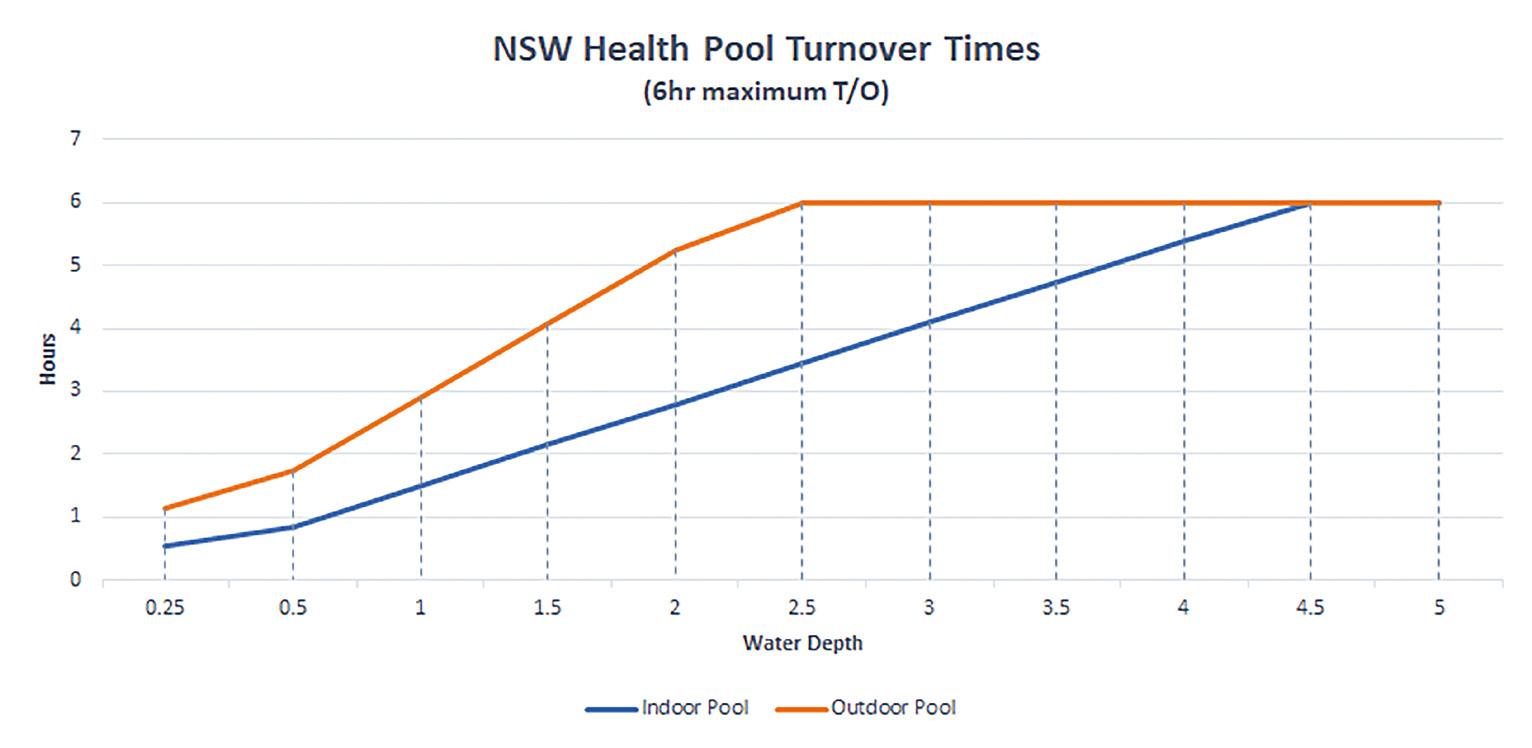
Queensland and Victoria provide almost identical advice and quote turnover times based on the description of the pool and whether it is indoor or outdoor. The problem is that the name of a pool does not necessarily define the bather load of a pool. It seems to me that pool names in these recommendations are just examples and not specific recommendations.
US MAHC quotes turnover times in a similar way to Queensland and Victoria although without mention of indoor or outdoor. The same problem of naming a pool applies although it is understood
they do see this as being a problem, and are investigating a more formulabased approach to plant sizing using depth and bather loads.
Finally, UK PWTAG. This quotes both pool names and depths to capture the bathing load. This has the same “depth step” issue, along with a large turnover range for each category so selection of a turnover time will be very subjective.
A note about pool turnover rates based on stepped depths. NSW Health used to do this prior to the current edition of their standard. NSW Health used to quote a pool turnover of 0.5 hours for pools less than 0.5m deep. Pools 0.5m deep to less than one metre deep were quoted at one hour turnover. That is a huge difference and a pool of say 0.49m deep would have a plant size almost twice that of a 0.5m pool which was identified as a major problem. This issue occurred through all of their seven depth ranges, and this led to their current formulabased approach which provides for a progressive change of turnover based on depth and without large step changes. Where depths are quoted in the various standards above, changing the depth of a pool, even slightly, can create a significant difference in the turnover time.
“Where depths are quoted in the various standards, changing the depth of a pool, even slightly, can create a significant difference in the turnover time.
Just a note on the direct relationship between pool turnover rate and filtration size/rate.
More than 30 years ago, many gravity sand filters with filtration rates of about 15m/hr were constructed. These plants often provided a pool turnover of six hours and excellent water quality was achieved even with high bather loads. This was due to the large filter size because of the very slow filtration rate. In fact, many of these filters with long turnover rates still exist although I expect will all but disappear in the near to medium term. Of course, these plants do not provide the benefits of modern pressure filters, so they have all but disappeared from new builds.
In the past 30 years or so, most filtration plants will have been designed using modular pressure filters (sand, cartridge and UFF) with medium filtration rates. Typically, a pressure sand filter would currently be sized at 25m/hr to 30m/hr, which is significantly faster than that used many years ago, resulting in less filter area. Installing medium rate filters on pools with a six hour turnover time would not provide good water quality with high bather loads, and hence is why the turnover times now used are significantly higher than in the past.
So, which standard provides the best advice for the turnover time of a spa or pool and hence it’s plant size?
That’s a complex question and difficult to answer. What would be the difference between a pool that has a turnover of say two hours and an identical pool that has a turnover of three hours? If the distribution is effective and commercial filtration rates are used, the difference will be the
quality of water at the end of a busy bathing day and the frequency that the filters must be cleaned. A spa turnover of 20 minutes with good filtration is well proven here in Australia, and in my opinion, it can be as simple as that.
Pool turnovers are not so easy, and a wide range of turnovers will work for the same pool. There is no exact answer as there are too many factors involved which the designer has no control over. It’s all very subjective.
I have over the years been heavily involved in the NSW Health recommendations which adopted the KISS (keep it simple stupid) principle, recommending two simple formulas where guessing and subjective factors are removed. I would recommend this approach to anyone designing a pool plant anywhere in Australia or indeed the world.
I can see no benefit or justification for using overseas standards as our Australian standards are more relevant, based on local experience and the Australian way of life.
As mentioned at the start of this review, it really makes no sense for there to be different plant sizing standards for spas and pools across Australia.
Maybe one day, the various Health Authorities will agree and do something about it.
Disclaimer: The information in this article is based upon decades of local and international knowledge and experience with the design and specification of Pool Water Treatment (PWT) plants. This generic information should not be construed as being “advice”. The Reader is encouraged to conduct their own investigations and to form their own opinions on what plant size best suits their client’s needs. Being a critical but complex topic, the services of an independent and accredited aquatic consultant is essential. n
As businesses continue to struggle with high operational costs, there are calls to make at least one running cost free – to help make construction sites and other workplaces safer. Standards are the guidelines, procedures and specifications which help businesses stay safe, consistent and reliable. Many are referred to in legislation and therefore must be followed and are not optional.
According to Safe Work Australia: “Where the Workplace Health and Safety (WHS) laws say you must conform to specific Standards, a failure to do so may result in a breach of the WHS laws.”
Australian Institute of Health and Safety (AIHS) chair, Cameron Montgomery, says the issue is that businesses are forced to pay to access the Standards relevant to them.
“Businesses must pay hundreds of dollars a year to access a selection of Standards,
and as businesses grapple with inflation and other financial pressures, we are concerned this is a cost some will forgo, potentially compromising safety,” says Montgomery.
AIHS is calling for key Standards to be made available for free. Currently, there are 17 Australian Standards referenced in the Model WHS Regulations which must be purchased, but there may be dozens more in State-based legislation.
“These documents are crucial to ensuring workplaces are safe and productive.
Any Standards referred to in legislation should not sit behind a paywall, and should be freely available to those tasked with adhering to them in order to keep workplaces safe,” Montgomery says.
“These Standards cover an array of areas, such as respiratory protective devices, identifying asbestos, electrical installations at construction
and demolition sites, and occupational health and safety management systems.
“Free access to Standards is something our members ask for, and would help to reduce the regulatory burden faced by business owners and safety professionals. Much of the original pricing was set based on the number of physical pages printed, but nowadays, Standards are distributed digitally via PDF or to mobile devices. At a minimum, costs should be reduced to reflect that.”
He says a precedent for cutting costs was set last year when several Standards were made free of charge – but they did not relate to commercial use so were irrelevant to businesses.
“It’s time these costs were removed to help businesses meet their obligations to operate safely and productively without having to be further out of pocket.” n
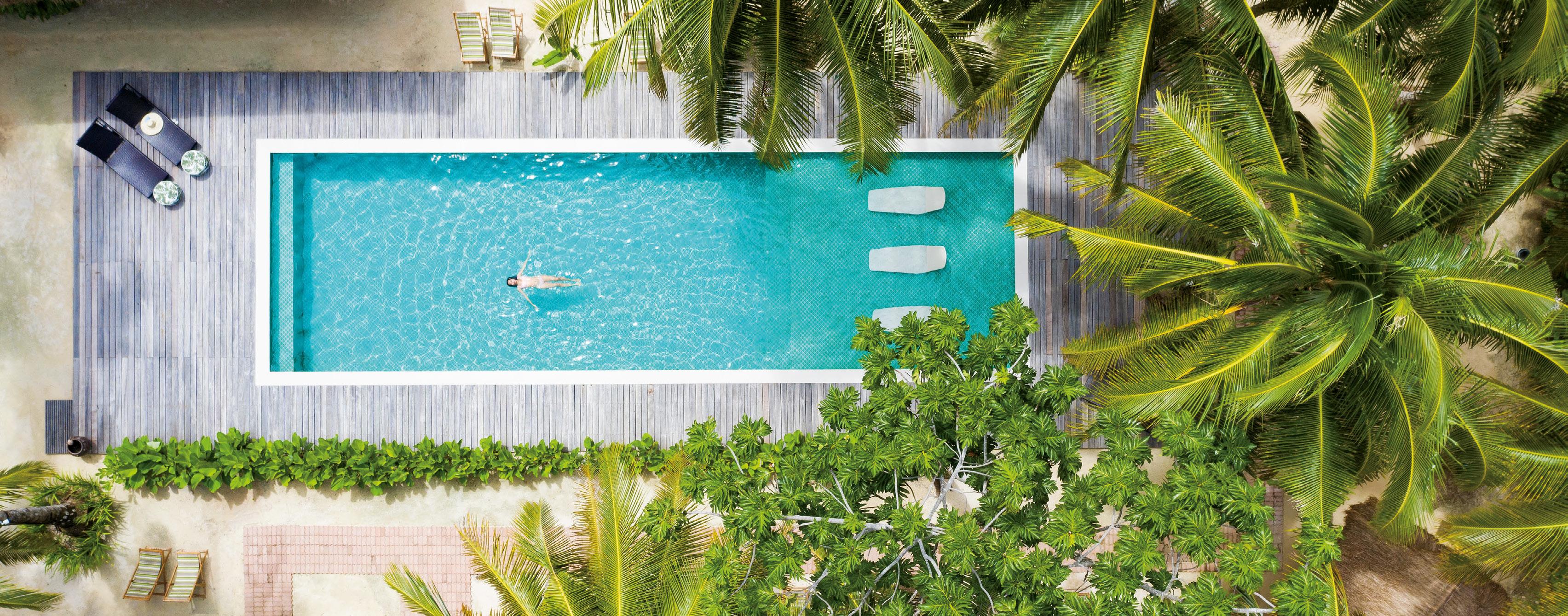
allnex, the global leader in sustainable and innovative resins for industrial coatings, is excited to announce the latest launch in the extensive Composites product line, Polyplex 200E.
allnex Composites in Australia is a leading producer of Unsaturated Polyesters, Gelcoats and Vinyl Esters for a wide range of Composite applications
rPET (Recycled PET) flake is sourced from a local recycled plastics supplier in Australia aligning this project with the allnex sustainability objectives.
There is potential for a significant increase in the volume of PET conversion in the manufacture o f these resins in Australia Polyplex® 200E resin will contain the equivalent of 750 recycled plastic bottles per drum, or 3.3 bottles per kg of resin, reducing waste and promoting environmental sustainability.
Polyplex® 200E is a white pigmented structural laminating resin produced by using recycled PET as a starting raw material and is a more suitable alternative to Polyplex® 200 Ortho-polyester Laminating Resin for Composite Swimming Pool constructions
In addition, Polyplex® 200E shows higher mechanical properties and improved water resistance over standard Orthophthalic polyester resins for better reverse-osmosis resistance of real structural pool laminate potentially in contact with ground water
For more product information, please contact your allnex Sales Representative, call our Customer Service Team on 1800 789 607 or visit www.allnex.com

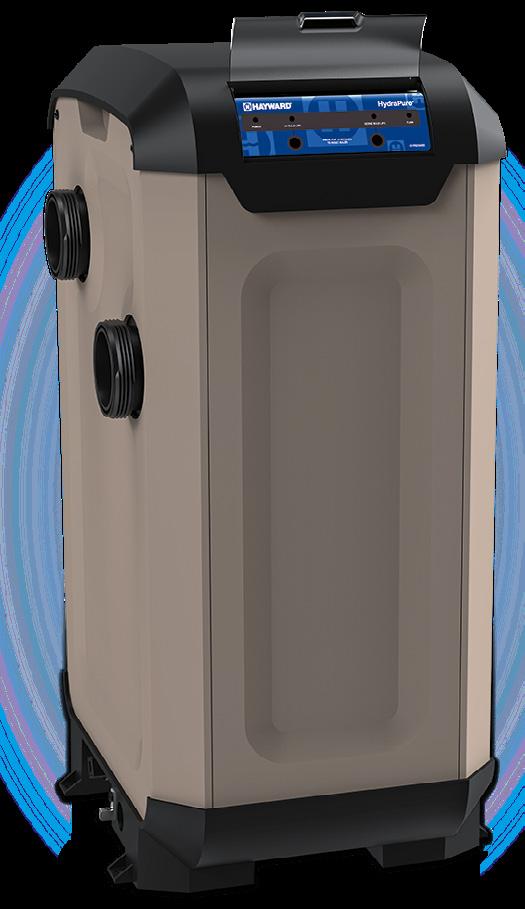
Offering a sophisticated blend of ozone and UV treatment technologies, the Hayward HydraPure provides an innovative solution for consumers looking for environmentally friendly and efficient water purification methods.
Ozone is a powerful oxidizer, capable of breaking down contaminants and organic matter more effectively than traditional chlorine, while minimising the production of harmful and smelly chloramines. This leads to a more pleasant swimming experience, with clearer and cleaner water that is gentle on the skin and eyes.
The UV treatment adds another layer of protection, inactivating microorganisms including bacteria and viruses that the ozone may have missed, ensuring comprehensive disinfection, making pool water safer for swimmers, all without leaving chemical residues.
Contact: https://au.hayward.com
The Sentinel is an Australian-made innovation, providing an alternative solution for equipotential bonding for pool builders and fencing contractors. Traditional equipotential bonding can be a complex, time-consuming and costly exercise, involving the installation of extensive wiring and connection to the earthing grid. However, the Sentinel provides a modern, efficient and cost-effective alternative with its double insulating properties.
The Sentinel designers say you can achieve a safer, superior, economical, time-saving and inclusive alternative to equipotential bonding (grounding or earthing) of extraneous conductive elements such as: swimming pool fence spigots, fence posts, ladders, stair handrails, deck handrails, grab rails, sockets, bar stools and more.
Contact: https://thesentinel.au
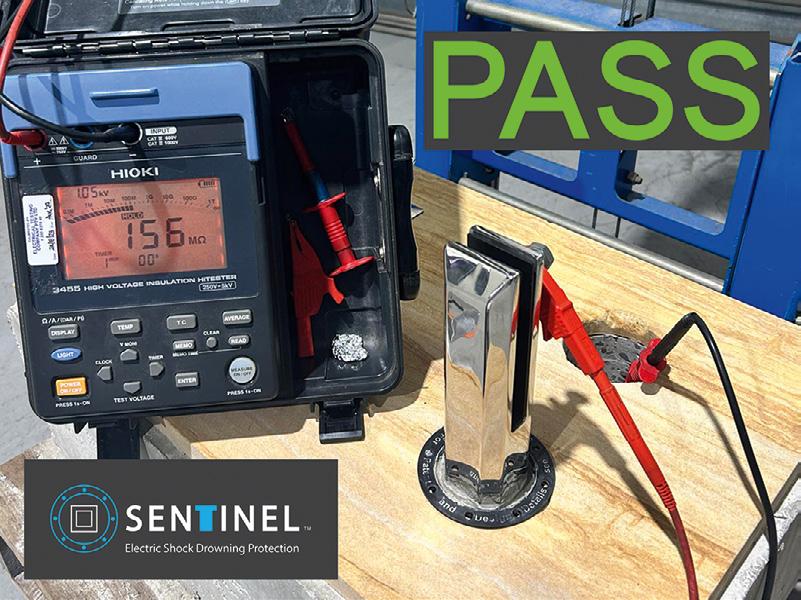


Reece, in partnership with HazardCo, has launched HazardCo Pool Projects, a product designed to simplify safety management for pool builders. Pool projects often involve multiple subcontractors, and safety can be a grey area. HazardCo Pool Projects streamlines compliance by helping builders easily manage SWMS (Safe Work Method Statements) and other safety documents, reducing risks and avoiding liabilities.
Available exclusively to shared Reece and HazardCo customers, Pool Projects is perfect for short-term projects lasting up to eight weeks. HazardCo operates on a subscription basis, with multiple tiers available.
Once your ideal subscription tier is identified, Pool Projects are priced in addition at just $129 per project (ex GST). The package includes onboarding support, live training and access to HazardCo’s advisory team, making safety management effortless.
Contact: 1800 161 319; business.services@reece.com.au
Float around your pool on an Acquaboss water hammock, made from a lightweight, mould-resistant, UV-protected mesh material.
Two inflatable inserts provide the buoyancy at each end so you can just lie back and be partially submerged. A waterproof phone pouch and floating drink holder are also included.
The water hammock doubles as a comfortable beach towel with head support, and the inflatable inserts are replaceable, should they break.
The water hammocks come in eight vibrant colours and there are double water hammocks for those that prefer to float around with a loved one.
Contact: www.acquaboss.com

Tax invoice
Please find enclosed my cheque/money order for $_________ payable to The Intermedia Group Pty. Ltd. OR please charge my:
Mastercard Visa Amex
Cardholder Name:
Expiry Date: __ __ / __ __ Signature:
Name:
Job Title:
Company:
Address:
Suburb/Town: Postcode:
Ph: Fax:
Email:
Yes! I wish to receive SPLASH! magazine
Within Australia *
$AUD65.00 – 1 year, 6 issues
$AUD104.00 – 2 years, 12 issues – Save 20%
$AUD136.50 – 3 years, 18 issues – Save 30%
* Prices quoted include GST
Overseas Rates
New Zealand
$AUD75.00 – 1 year, 6 issues
Asia Pacific
$AUD80.00 – 1 year, 6 issues
All Other Countries
$AUD90.00 – 1 year, 6 issues

We are committed to handling your personal information in accordance with the privacy act.
Please Select one of the following: Yes No - Please send me information about special offers and or events from SPLASH!
The Intermedia Group Pty Ltd ABN 94002583682 PO Box 161 Hornsby NSW 2163. www.shop.splashmagazine.com.au or call +61 8227 6486
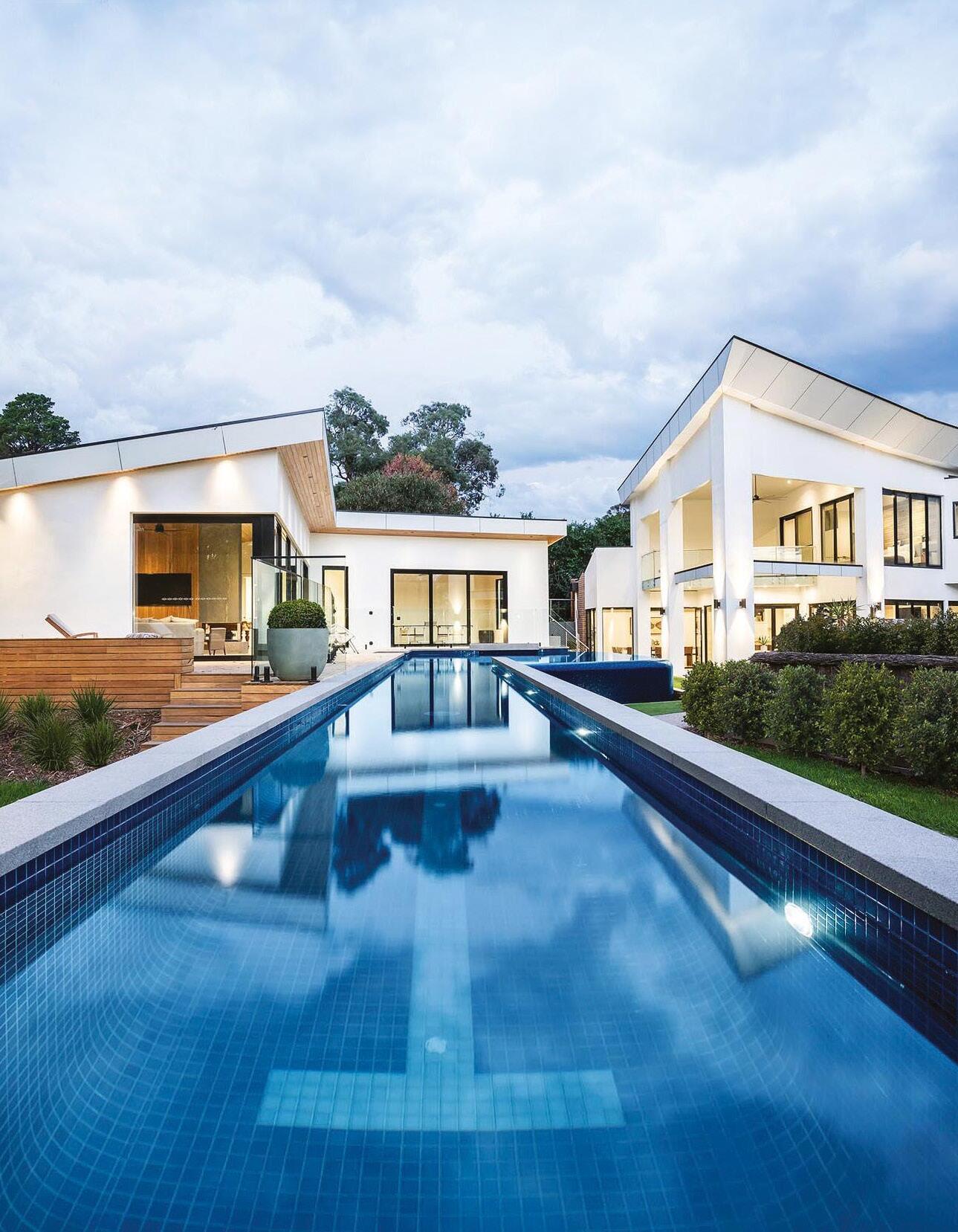

• In-floor cleaning systems
• Control Systems
• Lighting
• Pumps
• Filters
• Spa Equipment
• Water features • Water treatments
The PuraShield UV® Sanitiser + Ozone from Pentair, takes pool protection to the next level. Harnessing the power of ultraviolet (UV) light and ozone’s proven oxidation and sanitation capabilities, the new PuraShield® UV + Ozone sanitiser is the best complementary solution to your swimming pool's chlorination system.
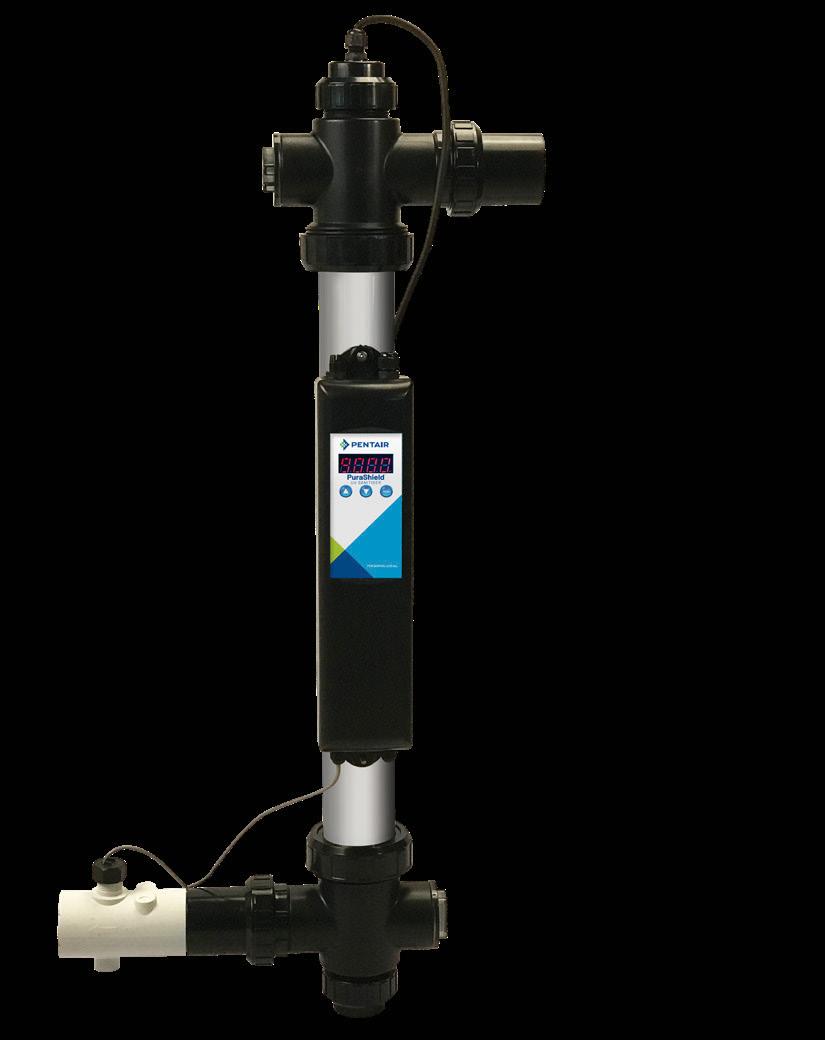
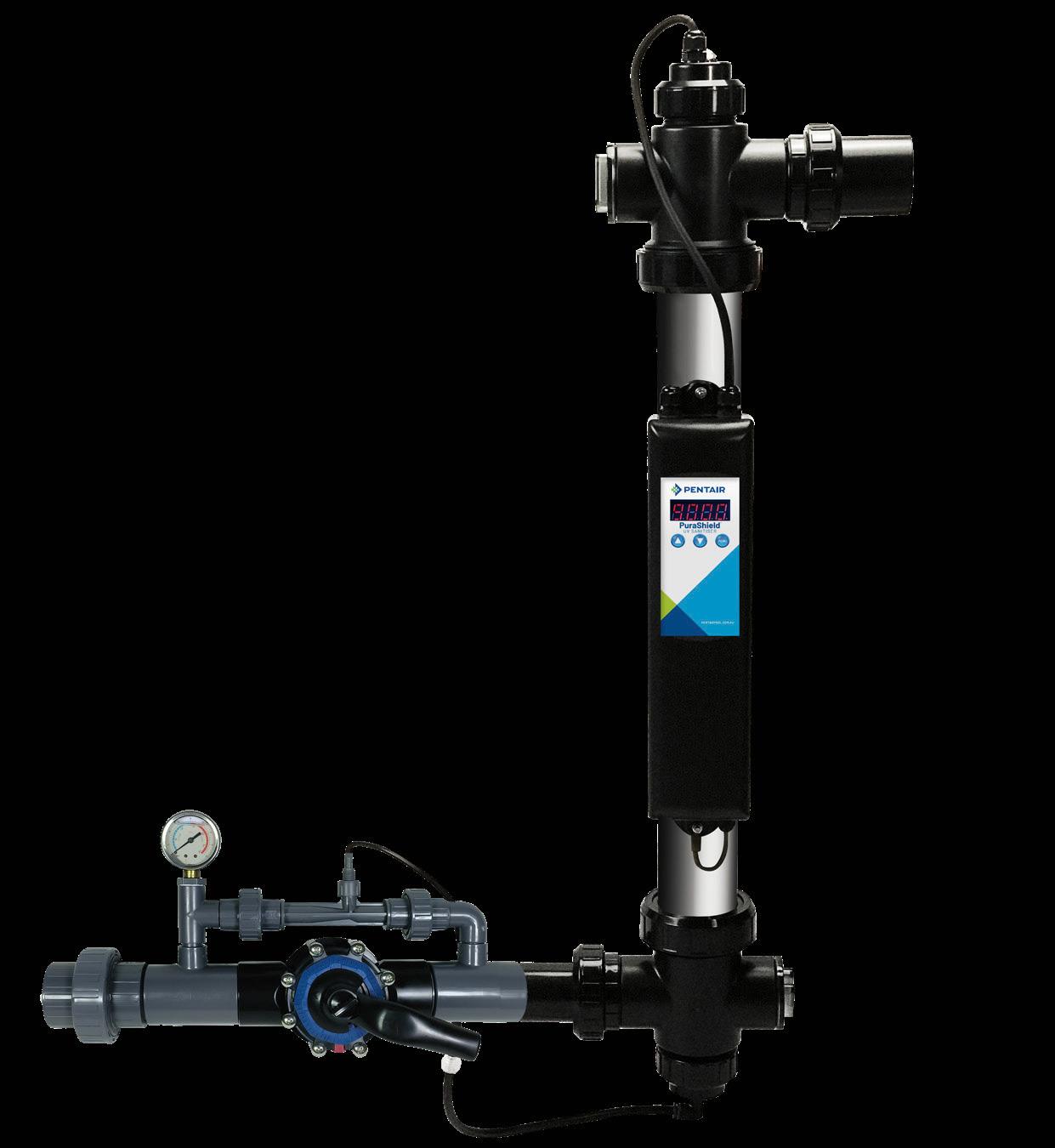

The ulraviolet light in the new Purashield® system from Pentair works to render harmful organic matter like bacteria and viruses inactive. This helps reduce the amount of chlorine required for your swimming pool. The UV light also breaks down the monochloramines in your pool to help reduce itchy skin, burning eyes and chemical odours. The ozone component of the Purashield® system works fast to effectively deactivate harmful bacteria and reverts back to oxygen without creating any toxic by-products.
All rolled into an easy-to-use system, the Purashield® UV + Ozone Sanitiser easily fits to most existing pool systems offering you the best pool protection with minimum fuss.
See the full range at pentairpool.com.au