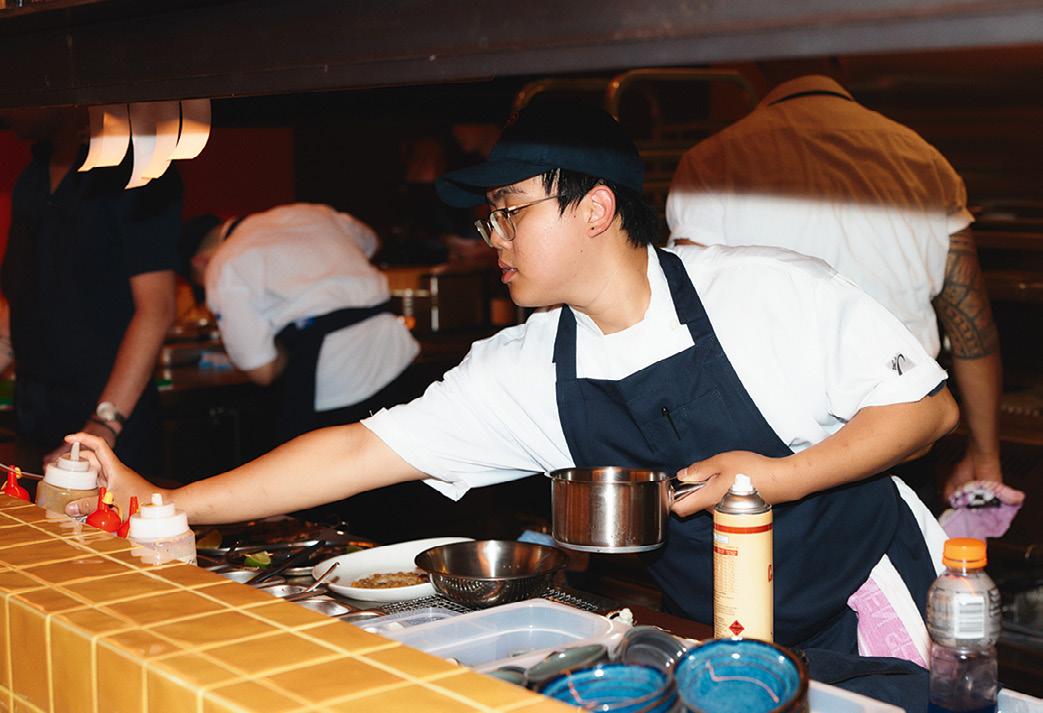
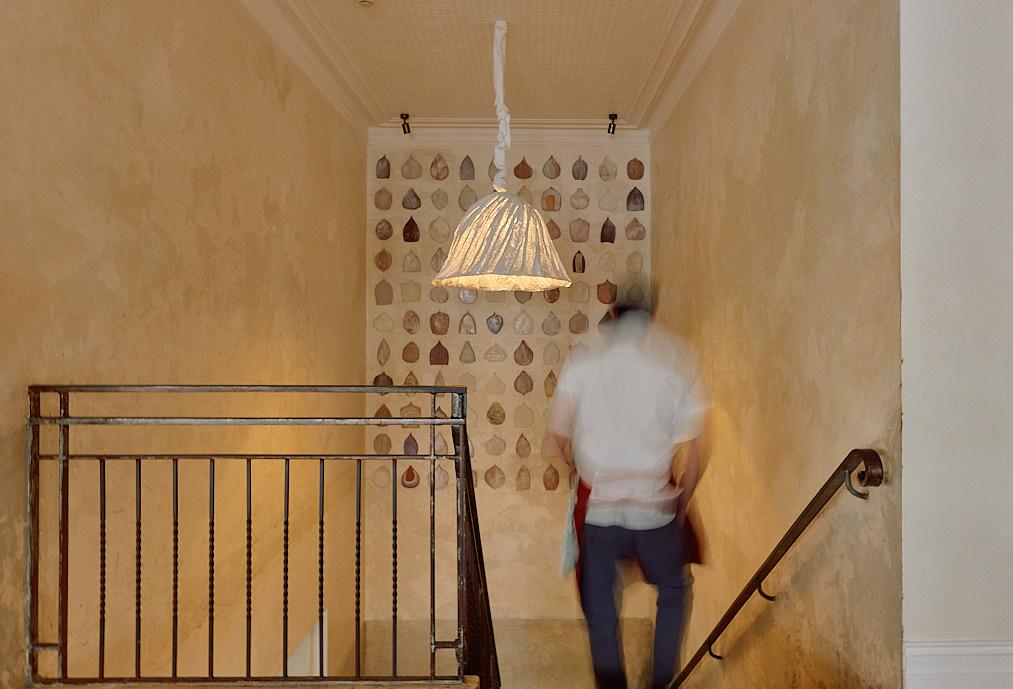
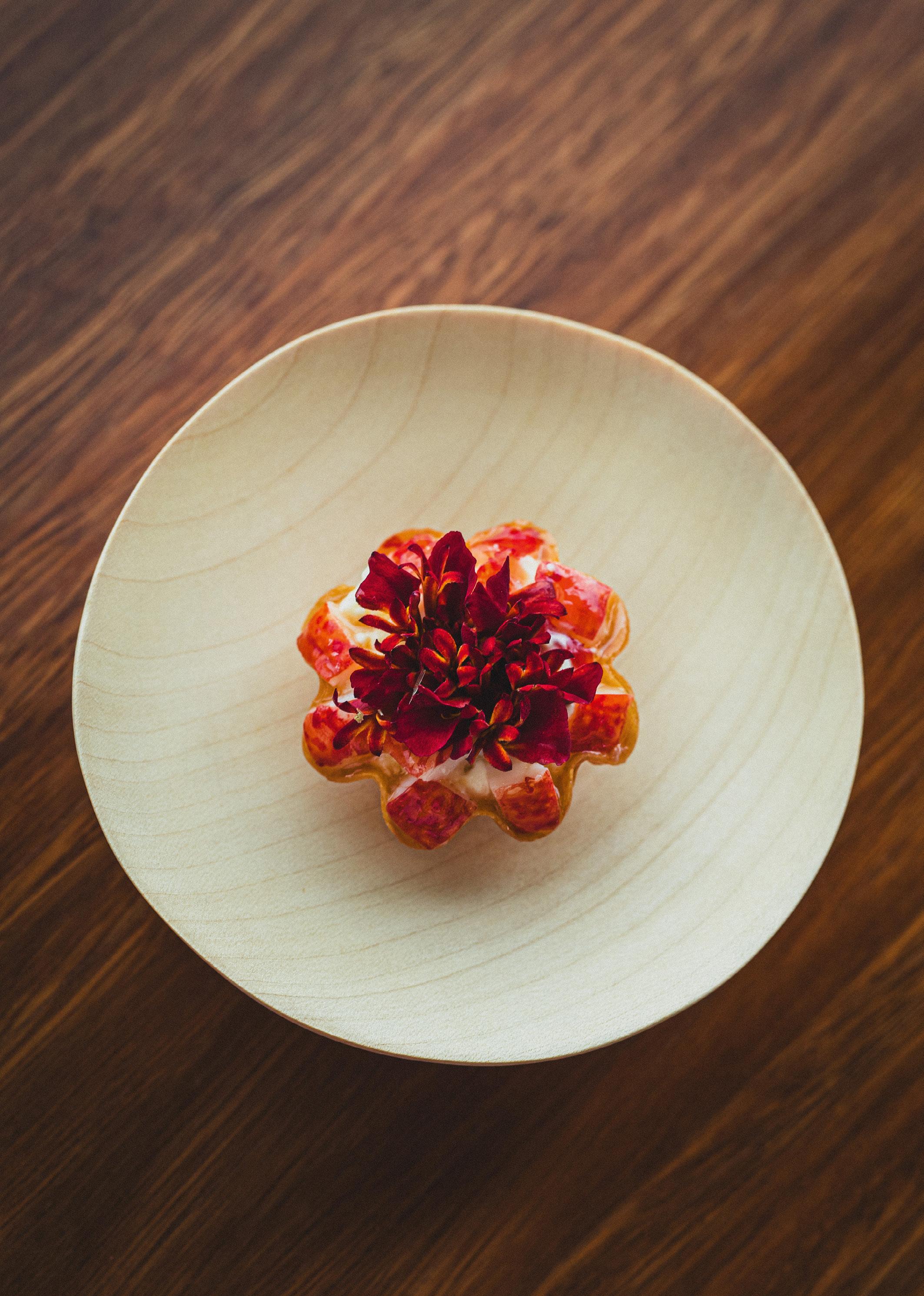
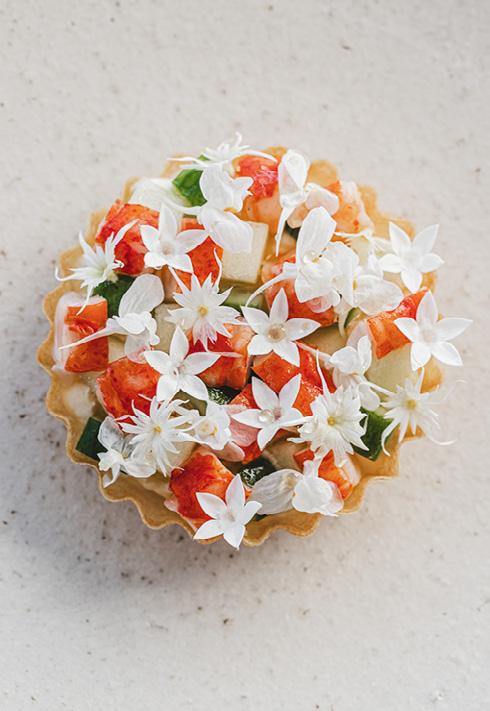
VICTOR LIONG | TRAINING | PETER GILMORE’S SEAFOOD | CRÈME BRÛLÉE
Regulars
8 // IN FOCUS
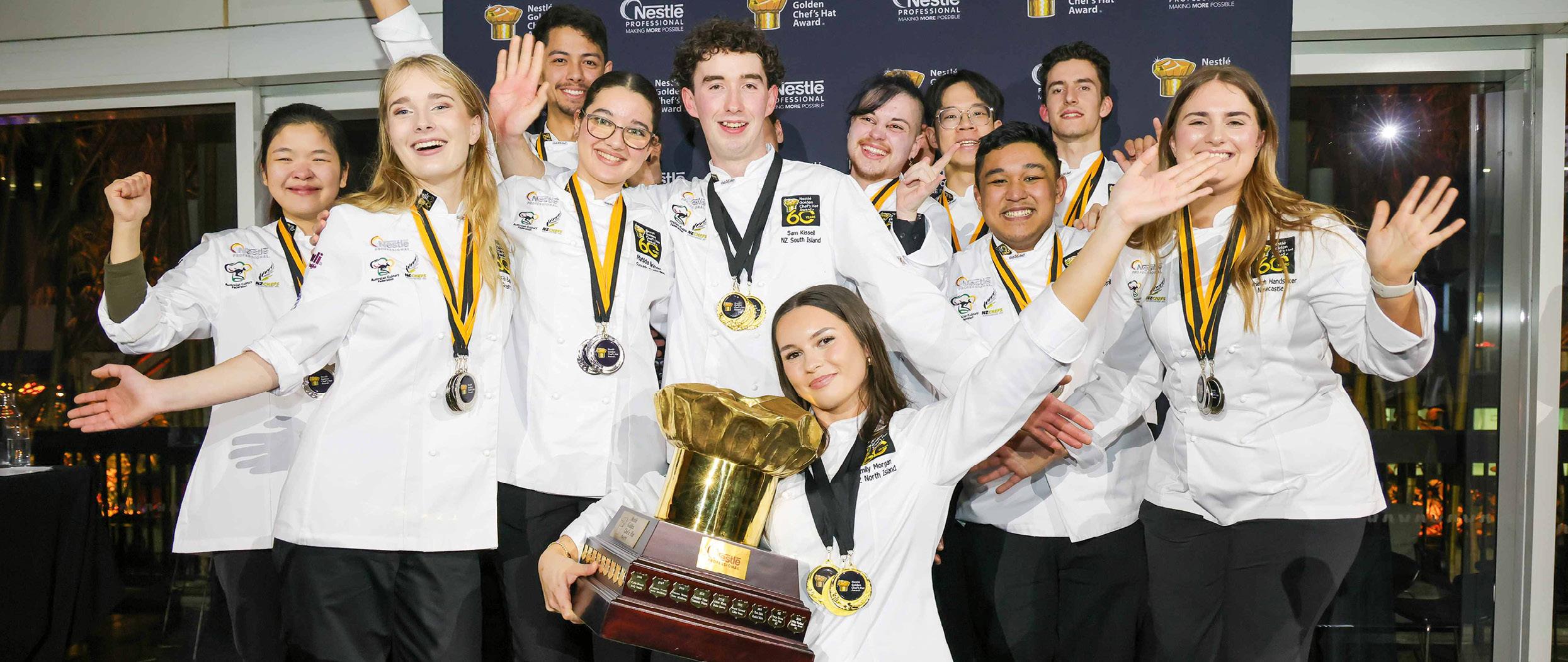
Emily Morgan, the up-and-coming chef with “the industry at her fingertips”.
12 // NEWS
The latest openings, books, events, and more.
14 // PRODUCE
The tangy, fragrant, and slightly sweet citrus yuzu.
18 // BEST PRACTICE
How to make your restaurant’s website great.
26 // PROFILE
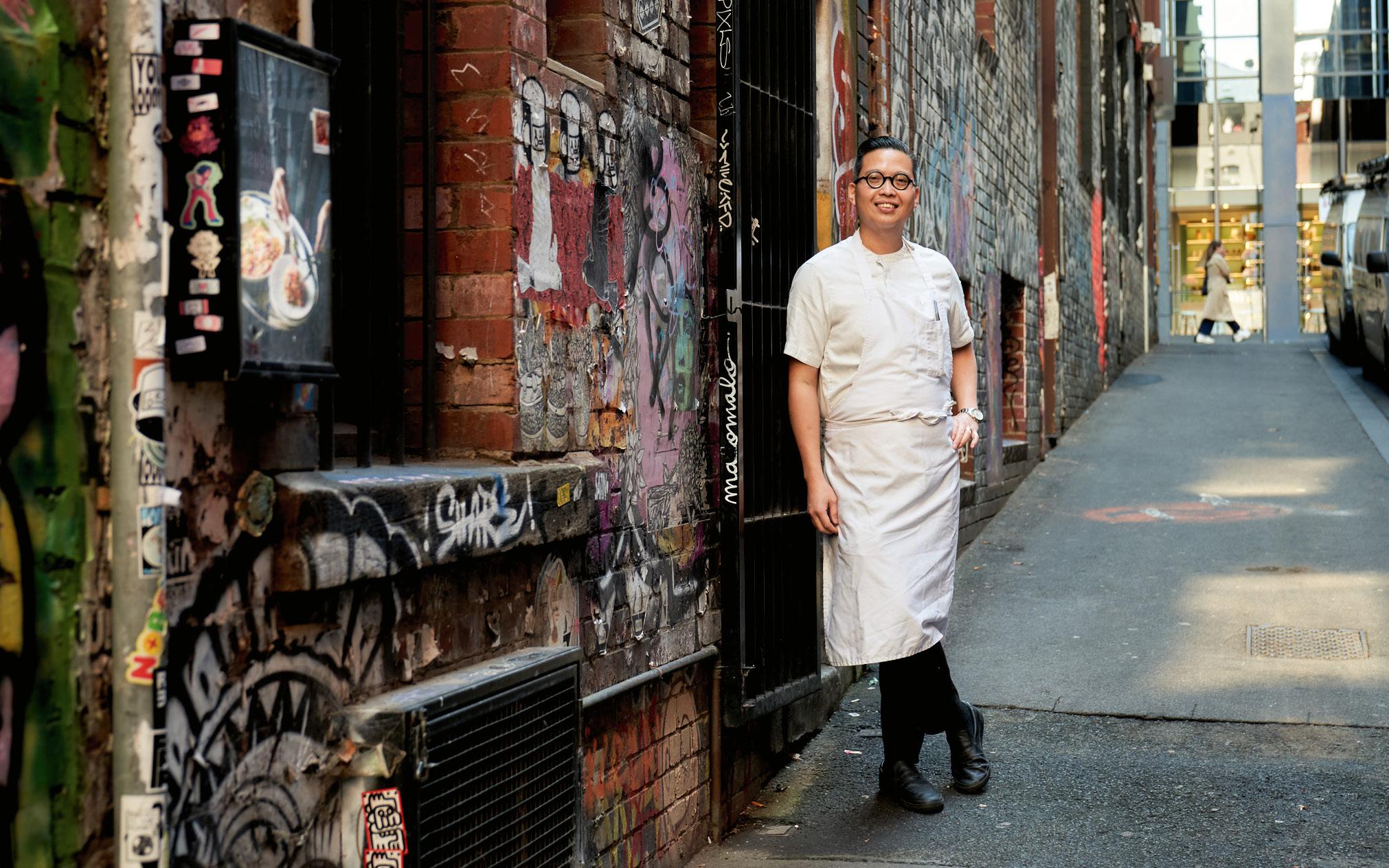
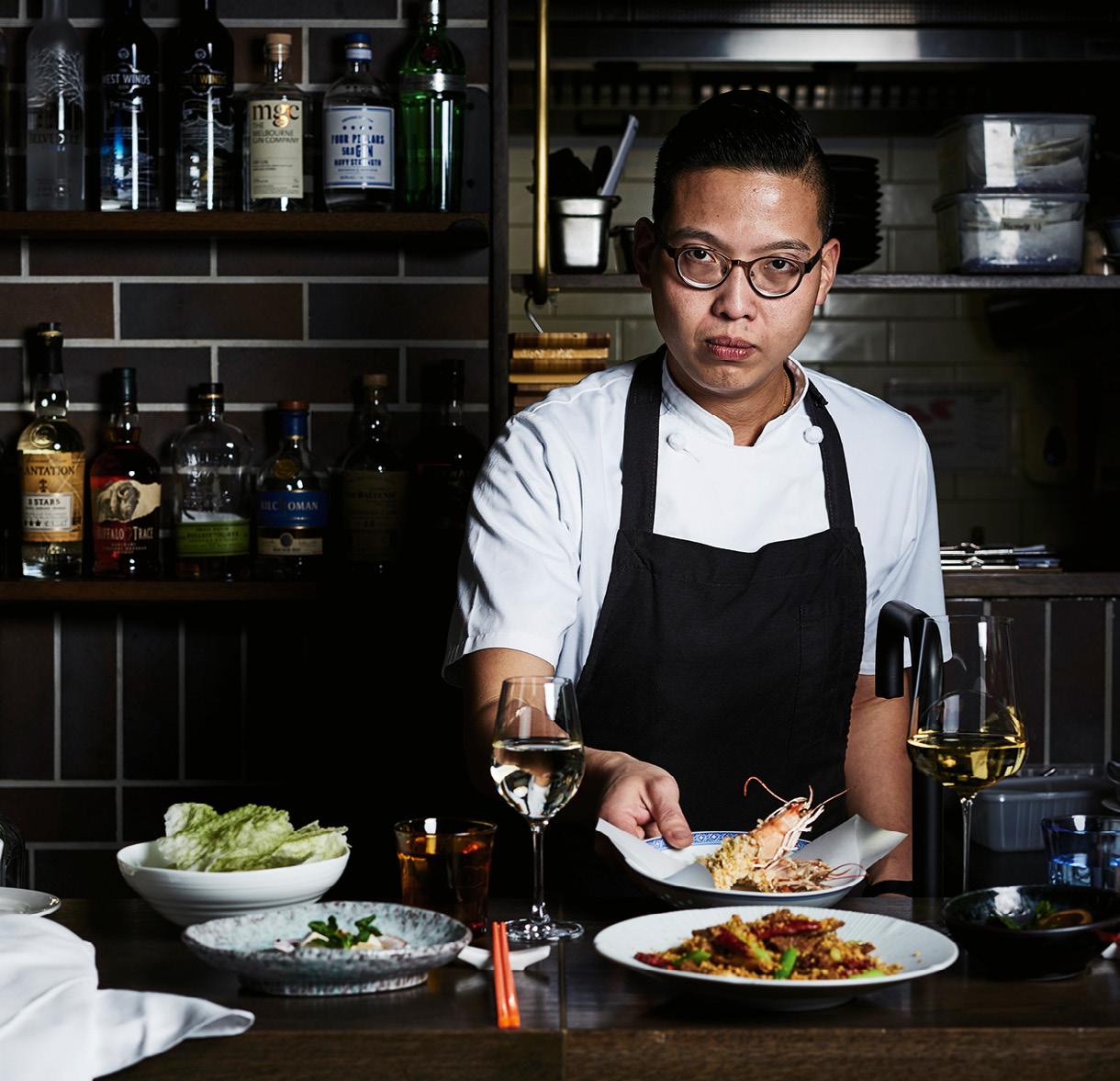
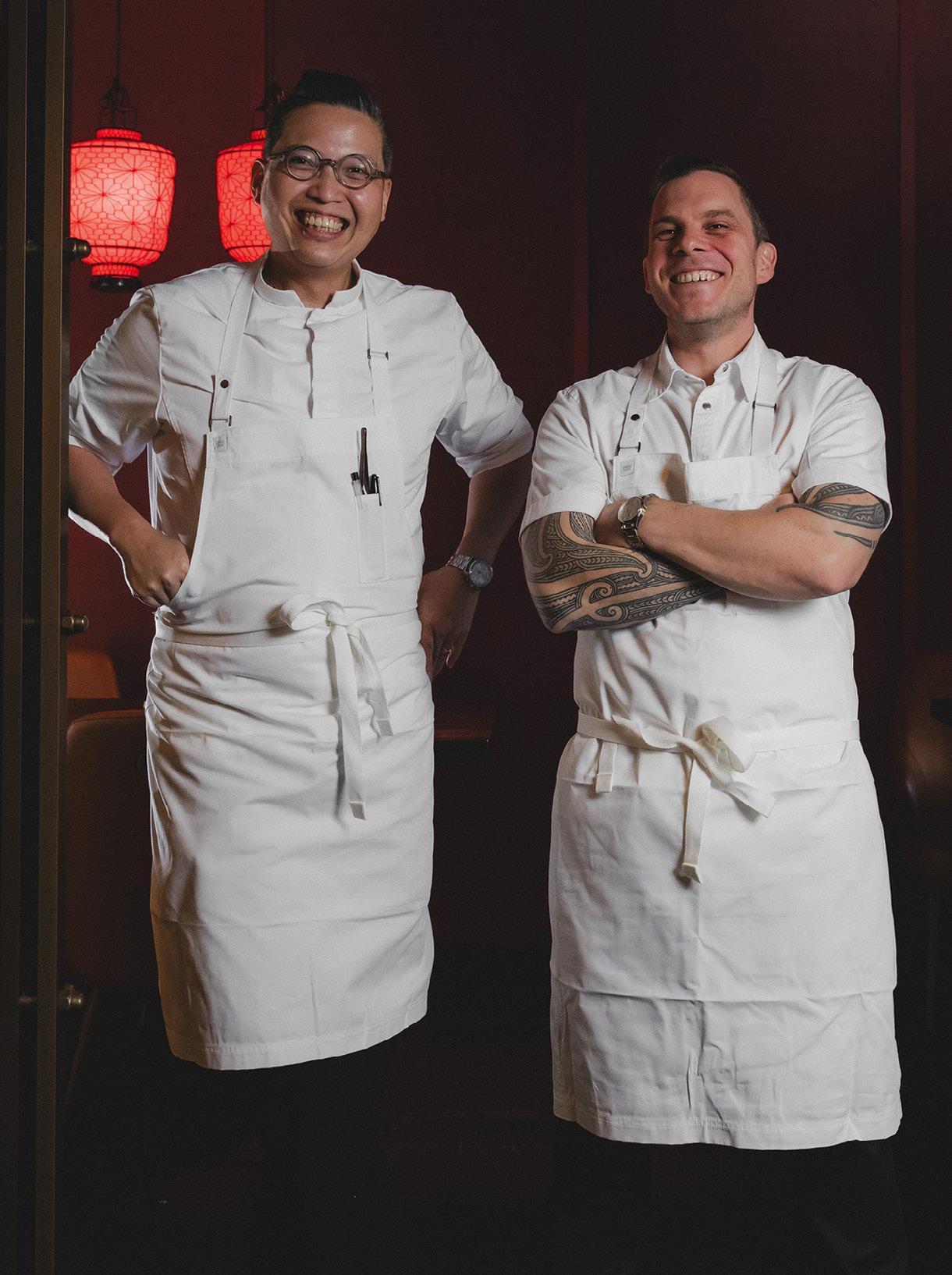
Lee Ho Fook’s Victor Liong.
50 // DRINKS
The innovative and refreshing spritz is quickly rising in popularity.
54 // BAR CART
Thirst quenchers, slow sippers, and all things beverage related.
56 // EQUIPMENT
Why is the garlic press so divisive?
58 // 5 MINUTES WITH… Fanda Group Director David Flynn.
Features
20 // 2026 TRENDS
We predict what’s hot (and what’s not) for the year ahead.
30 // TRAINING
Training is crucial for the summer months.
38 // SEAFOOD
Peter Gilmore shares the story behind his latest produce.
42 // DESSERT
Crème Brûlée is back, baby!
Cover image: Victor Liong by Nikki To
NEW
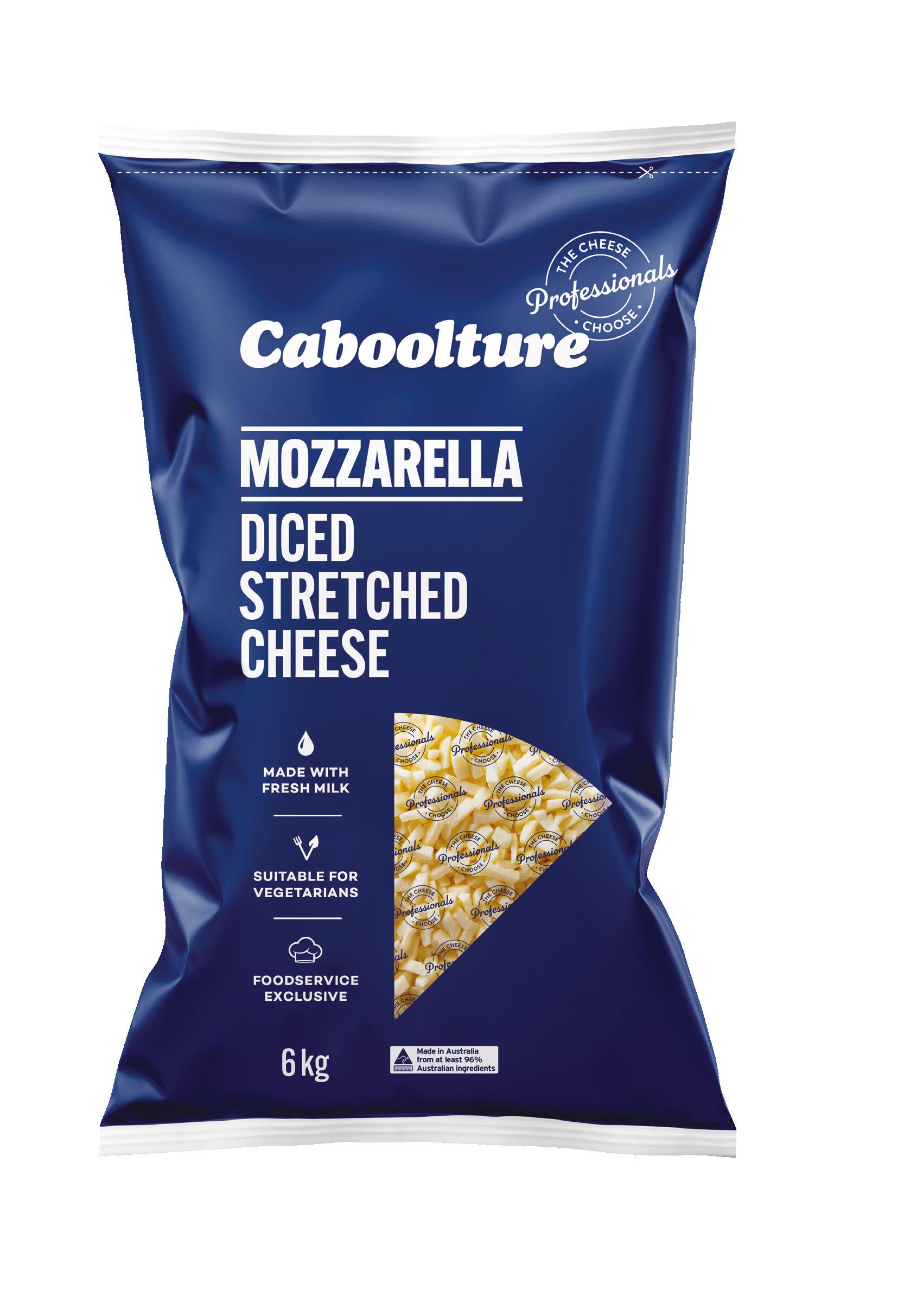
QUICK FROZEN MOZZARELLA
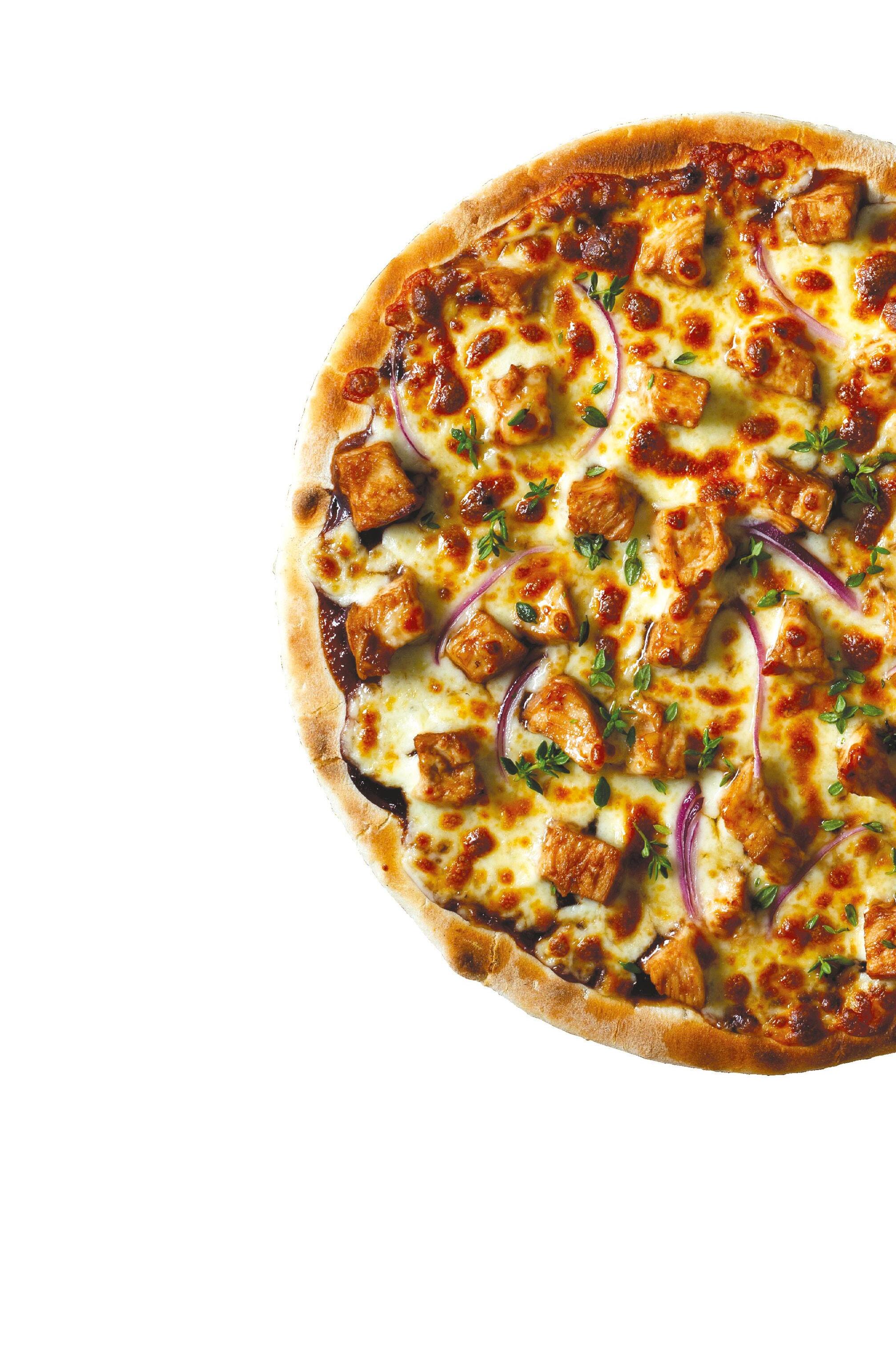
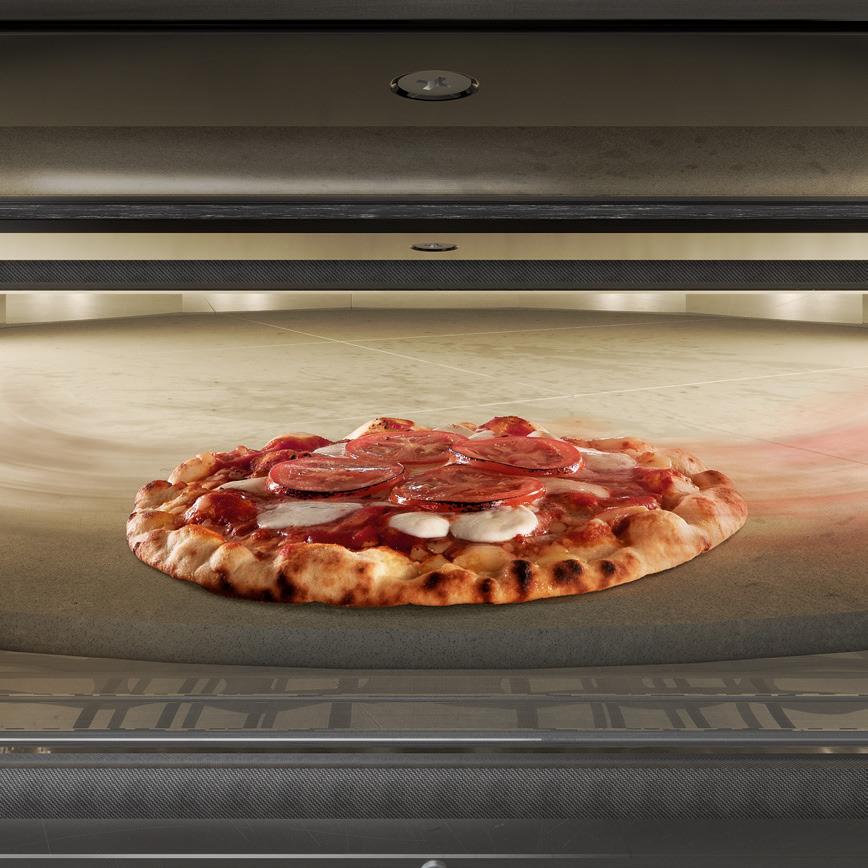
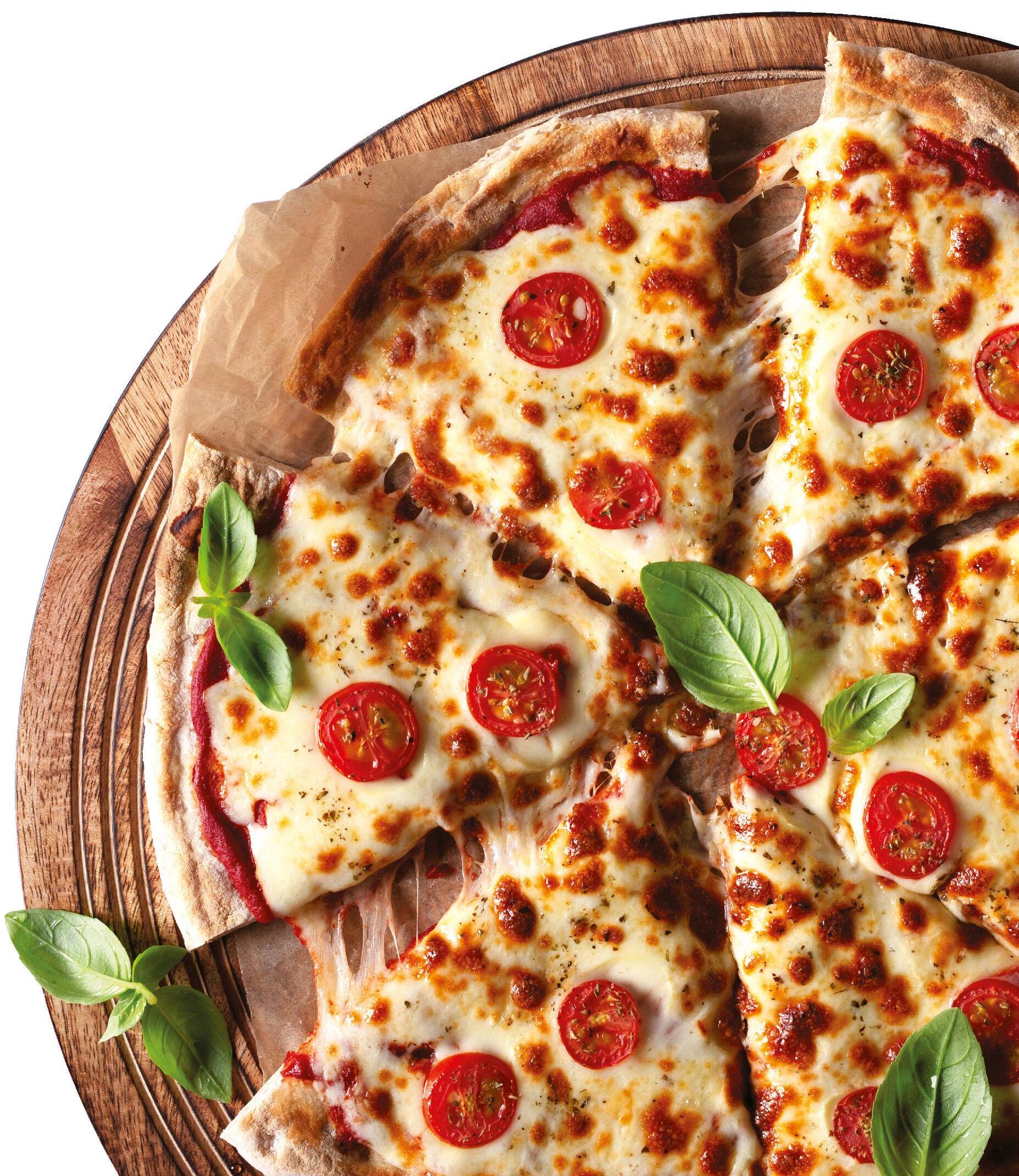
NEW Fred Walker Individually Quick Frozen Mozzarella is a quality, convenient, diced shred mozzarella that delivers the great TASTE , melt , STRETCH , and blister properties, with the added benefit of 365 days shelf life. Using a process of snap freezing mozzarella at its perfect age, it delivers the ultimate pizza solution all year round.
A note from the editor
Here in Sydney, beachside bars are busy, menus are full of fresh crustaceans and colourful salads, and the fragrance of ripe mango is filling the air.
With the silly season upon us, different businesses are feeling different pressures. As House Made Hospitality’s Justin Newton tells journalist Maia Hart, CBD restaurants can feel the strain as city workers stop visiting their offices, while many other locations often receive a thrilling jolt of energy.
This edition, we cover how training can help staff feel capable and keen as venues heat up. Peter Gilmore shares some of his favourite, lesser-known molluscs — and why Australians are so drawn to seafood in the festive season. We also check in on the experimental world of crème brûlée, why the spritz is taking Australia by storm, and share our trend predictions for the year ahead. Happy reading, and happy holidays.
Laura Box Editor
PUBLISHER
Paul Wootton pwootton@intermedia.com.au
EDITOR Laura Box lbox@intermedia.com.au
JOURNALIST
Maia Hart mhart@intermedia.com.au
COMMERCIAL DIRECTORHOSPITALITY GROUP
Simon York T: 02 8586 6163 syork@intermedia.com.au
SUBSCRIPTION RATES Australia: 1 year (10 issues) = $99.00 (inc GST) 2 years (20 issues) = $158.40 (inc GST) – Save 20% 3 years (30 issues) = $207.90 (inc GST) – Save 30%
SUBSCRIPTION RATES
New Zealand: 1 year (10 issues) = $109.00 Asia/Pacific 1 year (10 issues) = $119.00
Rest of World: 1 year (10 issues) = $129.00
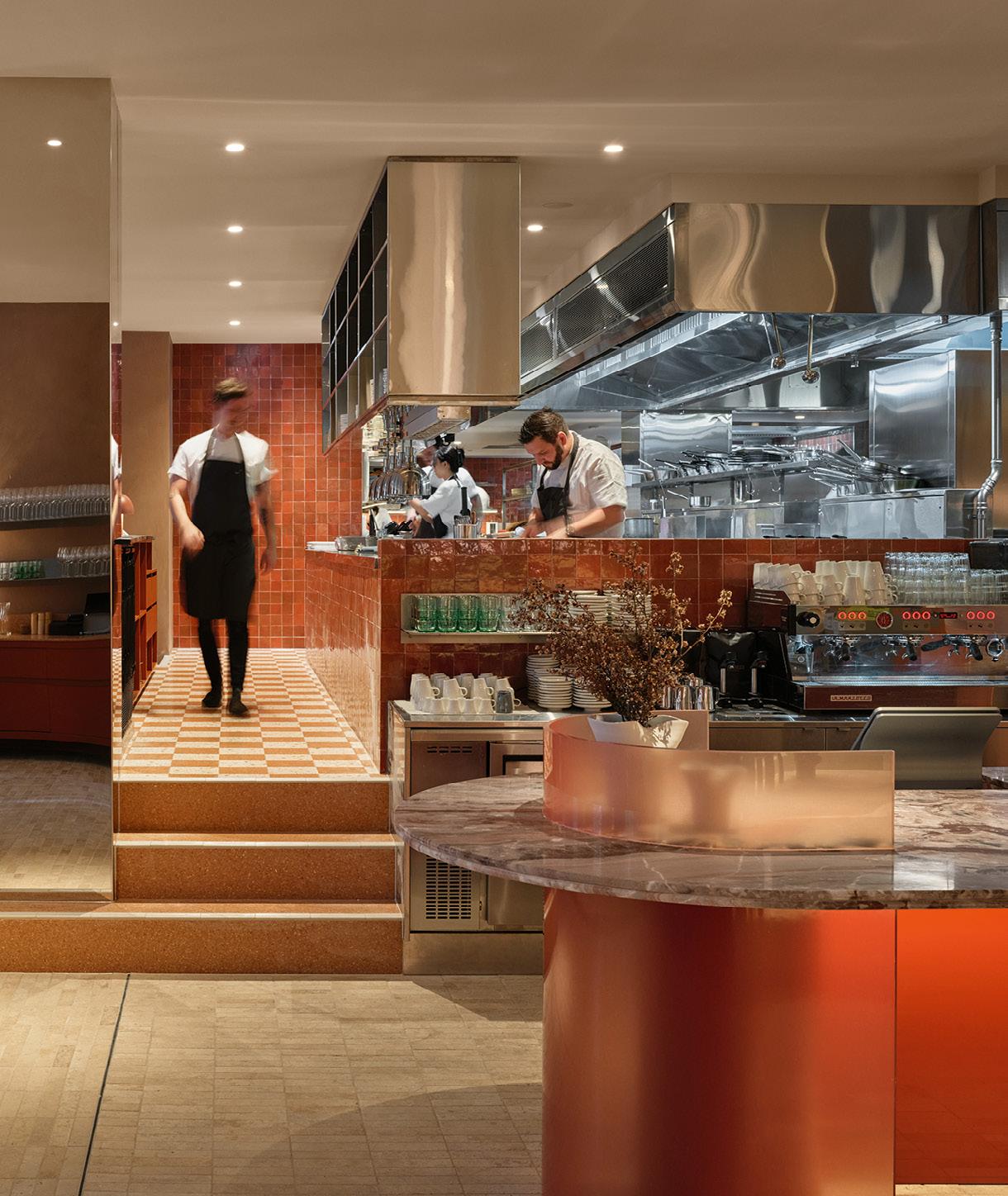
Victor Liong’s Lee Ho Fook Sydney.
Celebrating S.Pellegrino Young Chef Academy finalist KyongHo Choi at Saint Peter.
Golden chef
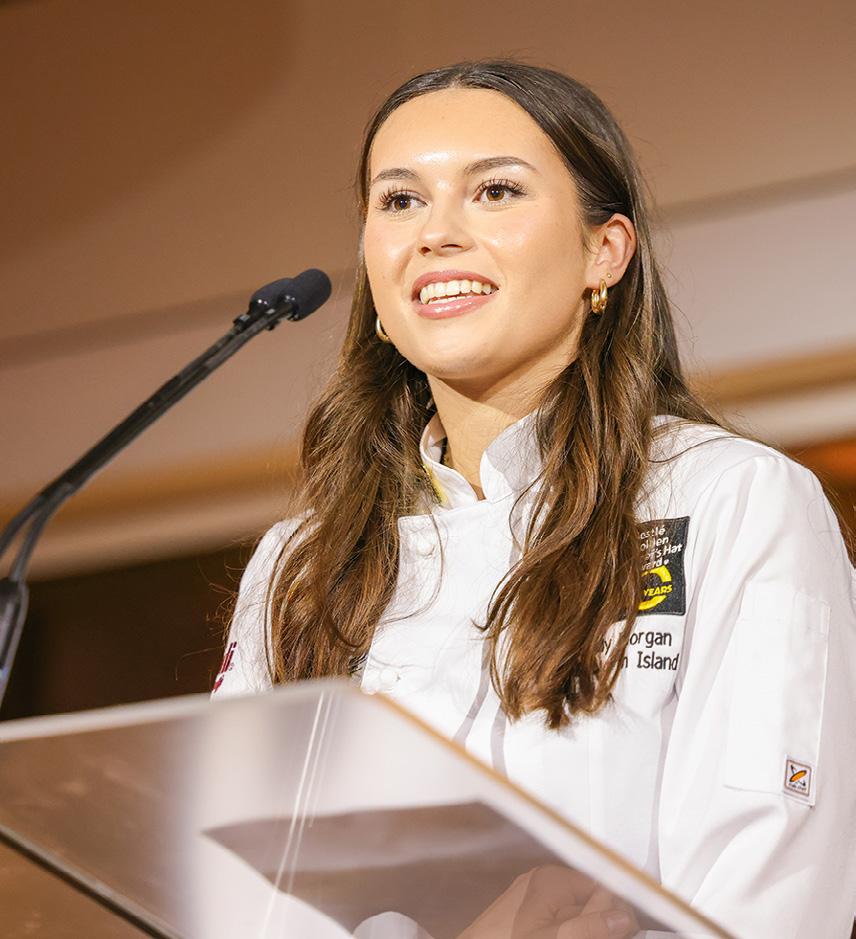
Emily Morgan, the up-and-coming chef with “the industry at her fingertips”.
Words Laura Box
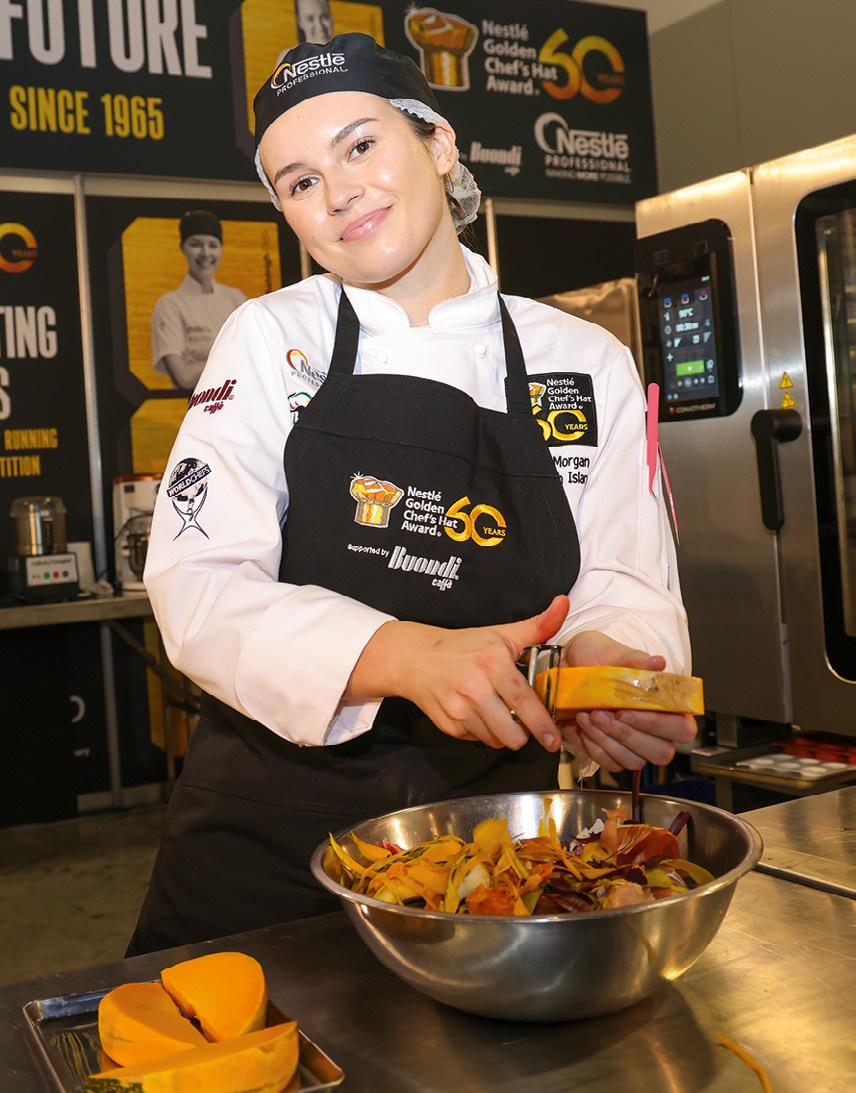
When Emily Morgan began cooking at the 60th anniversary of the Nestlé Golden Chef’s Hat competition, not everything went to plan. But according to Nestlé Professional Commercial Development Chef and competition judge and mentor Elke Travers, it was the young chef’s ability to quickly modify on the day that made her a “stand-out” in the competition and saw her come out on top.
After winning the North Island heat in June, Morgan advanced to the grand final at Fine Food Australia in Sydney, where she outcooked 11 opponents to take out the top prize, valued at $12,000.
“Her kitchen pace, her execution, and the way she could pivot and adapt on the day ... Emily certainly worked hard and deserved a win,” says Travers.
The young chef first competed in 2024,
during which she quickly developed an understanding of the judges’ stringent requirements. “The judges are really fussy about small things on the day, like you can’t leave a knife on your chopping board,” says Morgan, who recently turned 20. “It’s those real nitty gritty things that the individual judges have. Competing in that first year gave me a bit of feedback, and I started to know what they were looking for.”
For 2025, she came even more prepared, incorporating feedback from judges and taking notes from other finalists who had competed multiple times to optimise her workflow. The result, according to Travers, was “next level execution”.
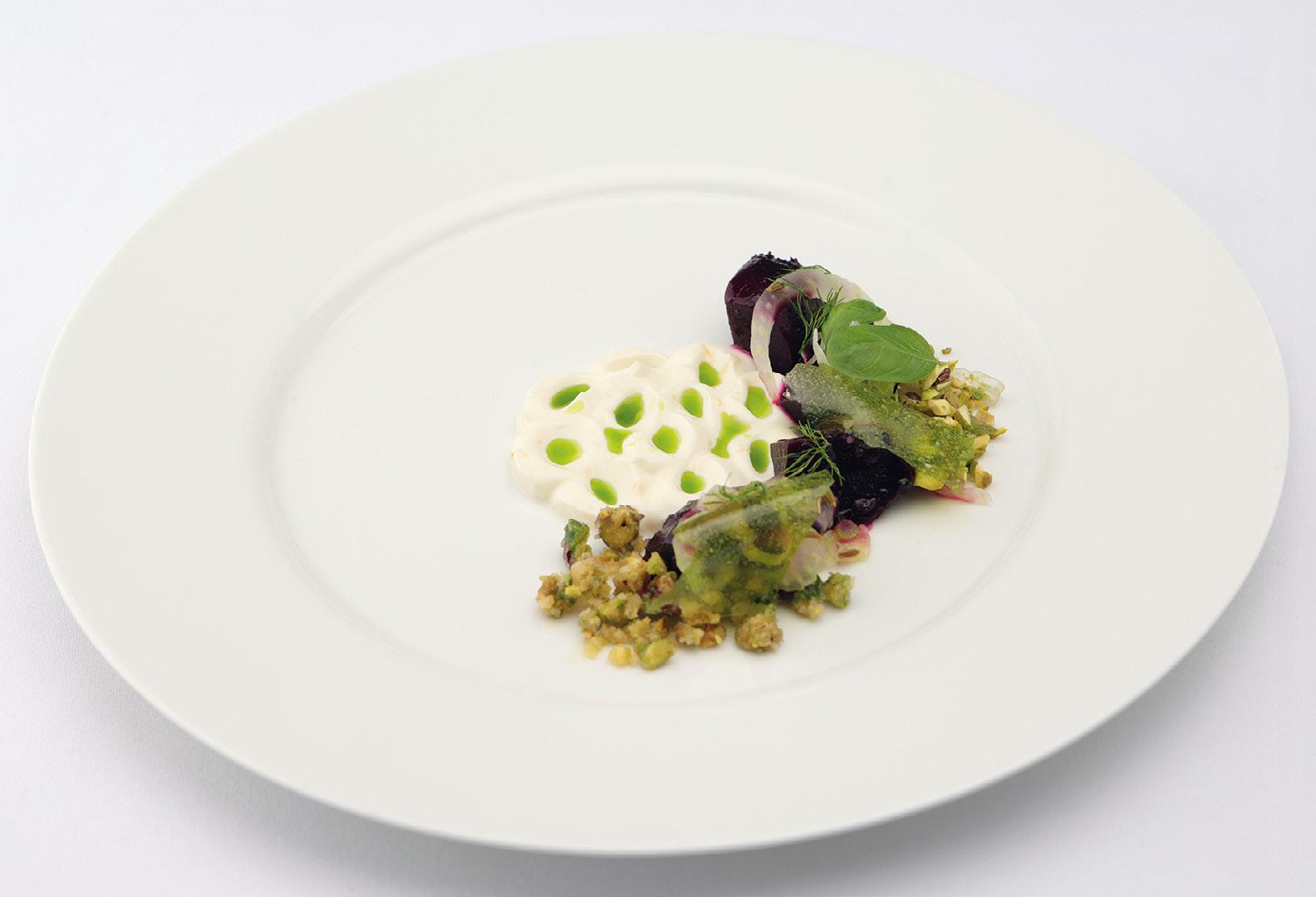
Morgan crafted a vegetarian entrée of BUONDI coffee smoked baby beets, whipped ricotta, fennel, basil wafer, and
pistachio, which she spent about six weeks planning.
“She can go a really long way if she chooses to –it’s up to her now. I honestly believe she’s got the industry at her fingertips.”
– Elke Travers
“It wasn’t even there by the time I had to leave to compete, but I think on the day I was able to execute it to the best it had been, which is what you want. The entrée was really something I was proud of,” says Morgan.
The dish had particularly technical elements, including a basil glass wafer. The method traditionally uses potato starch, which is then thickened, spread out, dehydrated, and flash fried, making it transparent. There was no potato starch on the ingredient list, so Morgan experimented with potatoes as a substitute.
“That basil wafer was very hard to get right without using potato starch and using potato as a whole,” says Morgan. “But it brought an element of surprise because
visually you’re not sure what it’s going to taste like, but it gives a nice salty, herby crunch to the fish.”
For main, Morgan plated up a horopito spiced lamb rump with Japanese squash, shallot crème, asparagus, sugar snap peas, and lamb floss. The meal was meant to be paired with a savoury fig compote, but the chef ran out of time.
“Having a dish with those elements that took time, it’s not the easy way in a comp,” says Travers. “She really pushed. Putting those things that took time on her menu was the brave option and I think that’s a quality in itself: Some people tend to take the easy road, whereas she tends to take the harder road. And it paid off.”
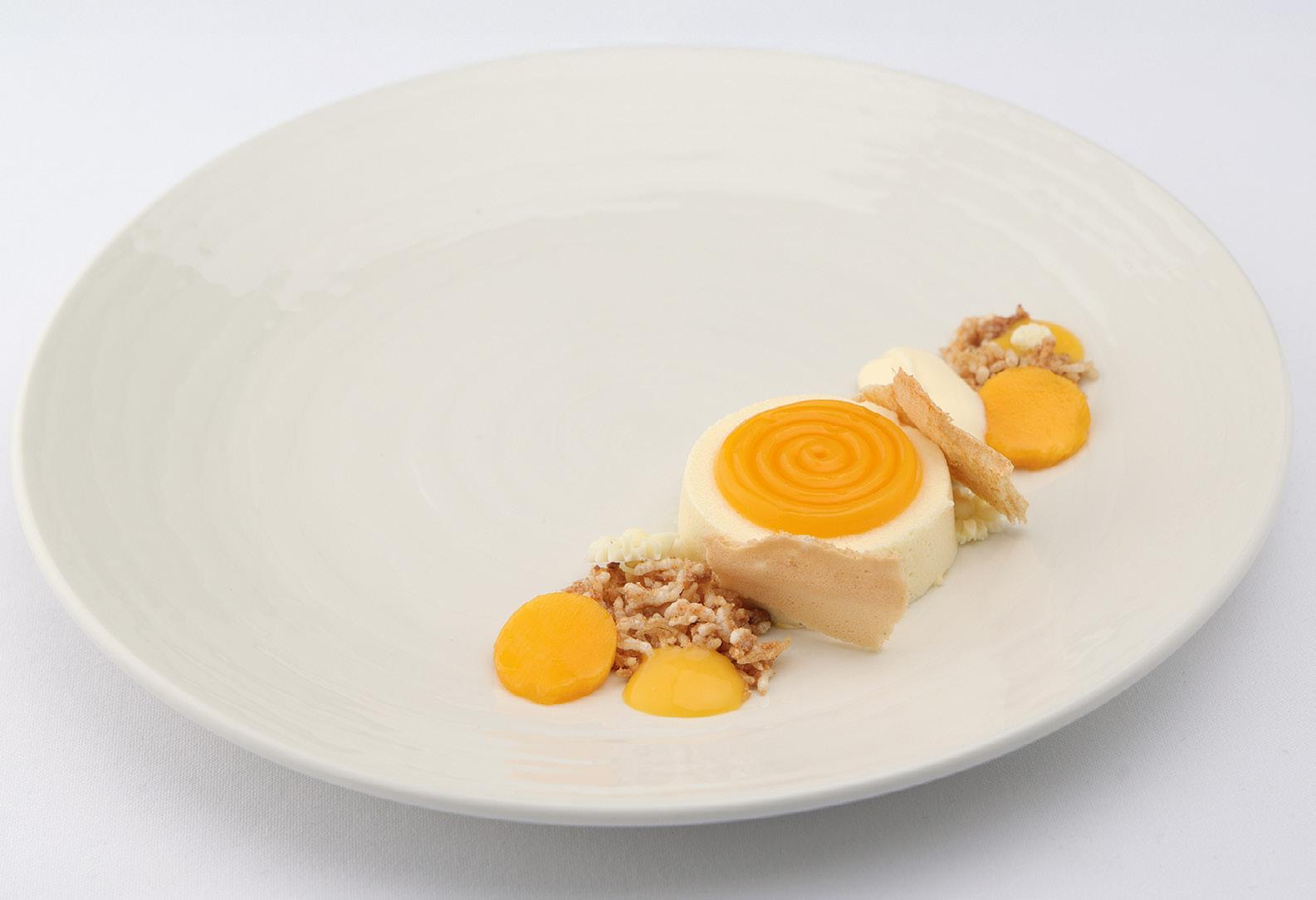
Taking inspiration from a personal trip to Thailand, Morgan compiled a white chocolate mousse with mango
“On the day I was able to execute it to the best it had been, which is what you want. The entrée was really something I was proud of.” – Emily Morgan
jelly, passionfruit curd, coconut milk powder-coated puffed rice, and lemongrass meringue for her dessert.
Travers described Morgan’s coconut rice crunch and lamb floss as “two knockout elements”. “It took time in the kitchen to do those, so that was very impressive to watch,” says Travers.
Morgan says the win was an unexpected but satisfying surprise after weeks of training.
“You never prepare to win. It’s more about preparing to lose. So it was quite a shock on the day and it’s still something to process. But I’m super proud and I know other people who supported me are too,” she says.
Morgan’s prize is an all-expensespaid culinary journey to Singapore and Thailand, including $1,000 spending money and work experience at a renowned restaurant. She also won the Most Creative use of a Nestlé Product, for which she was awarded a $1,200 Solidteknics Aus-Ion package, and the Nestlé DOCELLO Best Dessert Dish worth $2,500, making her total prize package worth $15,700.
Four-time finalist Ashleigh Handsaker (22, Maitland) won the Best Signature Dish award for her entrée, receiving a
$1,500 Robot Coupe voucher. Brooke Moore (22, Whitton) received the Most Sustainable Practice award, receiving a Koi Knives pack worth $1,990. Nicholas Rudeforth (23, Hobart) received the MAGGI Best Savoury dish award, winning $2,500. Finally, Baxter Sanderson (21, Sunshine Coast) won the BUONDI Crafting Moments award worth $1,000.
Celebrating its 60th anniversary in 2025, the Nestlé Golden Chef’s Hat Award is Australia’s longest-running culinary program launching the careers of more than 8,000 young chefs. This landmark year saw a record-breaking 357 entries.
Looking ahead, Travers says Morgan’s potential will allow her to move in any direction.
“Past winners have worked at some of the most elite restaurants around the world and come back and start up their own teams and work for leading establishments,” says Travers. “She can go a really long way if she chooses to – it’s up to her now. I honestly believe she’s got the industry at her fingertips.” ■
For more information, visit goldenchefs.com.au.
This article was produced in partnership with Nestlé Professional.
Gold Leaf Deep Frying Oleo has a higher smoke point, meaning food seals faster, guaranteeing the best taste and crispness fry after fry!
Longer
Fry Life & Better Value
Taste & Crispness With antifoam, the Gold Leaf range has an even longer, quality frying life meaning you’ll purchase and change your oil less frequently. So not only do you save on oil costs, you’ll save on labour too. WITH
To order call your local distributor. For more information, advice or technical support contact Peerless Foodservice on: 1800 986 499 or visit: peerlessfoodservice.com.au /peerlessfoodservice
Entrée
The latest openings, books, events and more.
Edited by Maia Hart
London calling
Hospitality siblings Layo and Zoe Paskin of Paskin Studio have brought their London favourite The Palomar to Sydney. The venue sits within Australia’s first 25hours Hotel, The Olympia, in the former Grand Pacific Blue Room. Located on the heritagelisted site of Paddington's former Olympia Theatre, the precinct brings together design, dining, and culture in one destination. The Palomar joins cinematic bar The Mulwray; London-inspired café Jacob The Angel; and Monica, a rooftop bar by Carte Blanched. Culinary Director Mitch Orr, who spent time working at The Palomar London alongside the Paskins, says he hopes the restaurant will be "dynamic, welcoming, and authentically part of the city". Luke Davenport will work alongside Orr as head chef.
Lifelong dream
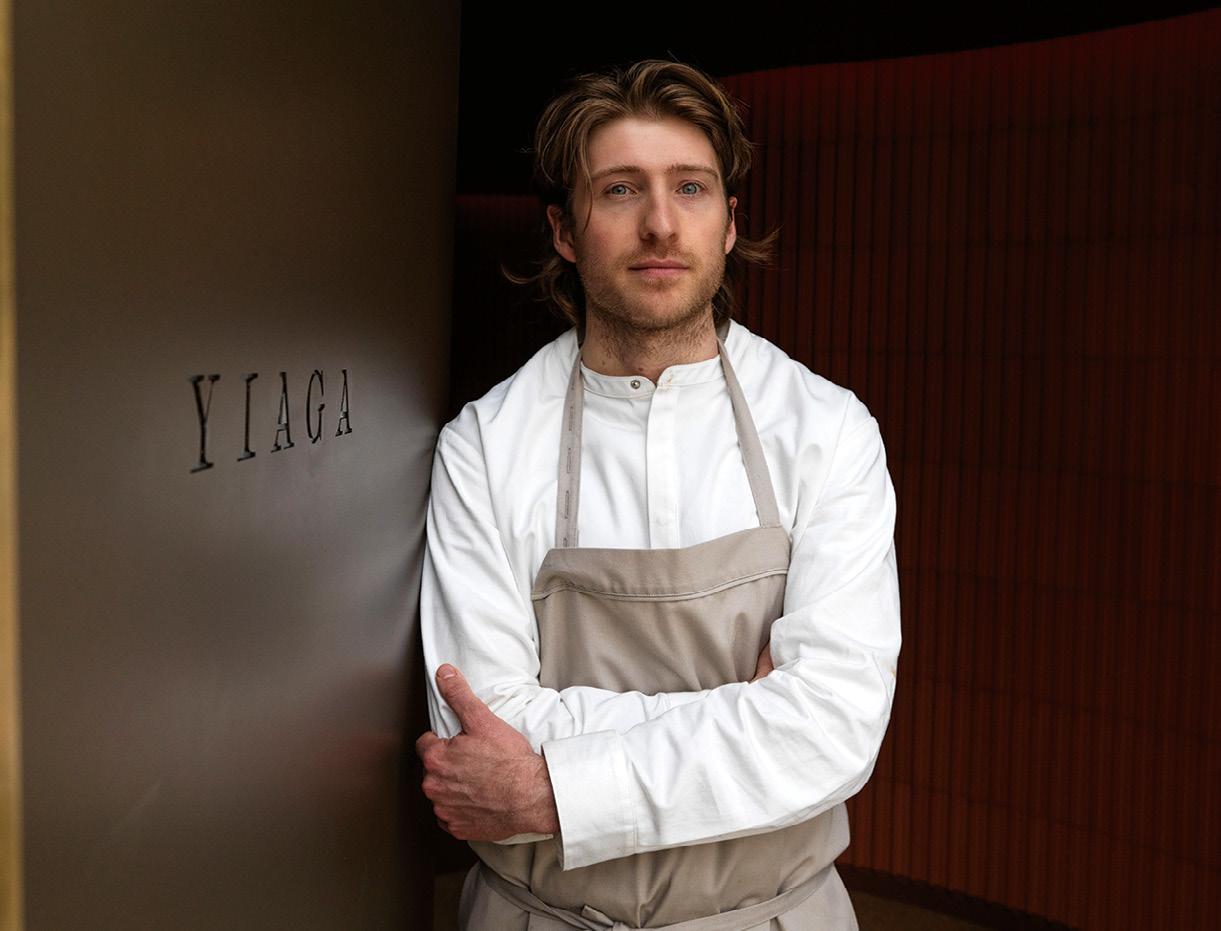
Hugh Allen has launched his first restaurant, Yiaga, in Melbourne’s Fitzroy Gardens. Yiaga, which Allen co-owns, is a wholeheartedly Australian affair, prioritising local produce, makers, growers, artists, and creators. Michael McAulay joins Allen as the restaurant’s head chef, alongside Hugo Simões Santos leading the service team, and Master Sommelier Dorian Guillon on the beverage program. Allen says it has been a lifelong dream of his to open a restaurant from scratch. “A place that truly reflects me, my team, and our journeys. There’s no better feeling than being able to do it right here in my hometown, surrounded by one of Melbourne’s greatest landscapes,” says Allen.
Fish Market opening date makes waves
The new Sydney Fish Market will open on 19 January. Retailers are currently in the throes of finalising their fit outs and familiarising themselves with operations at the new Blackwattle Bay site. Sydney Fish Market Chief Executive Officer Daniel Jarosch says they have waited decades for this new market, and taking this time means they can “open with a bang”. The revitalised market will feature more than 40 retailers and offer a mix of retail and dining, from much-loved favourites to bold new names, including Luke Nguyen’s flagship Southeast Asian restaurant Lua and more.
Fish Market Aerial View
Hugh Allen
The Palomar
Grill Americano
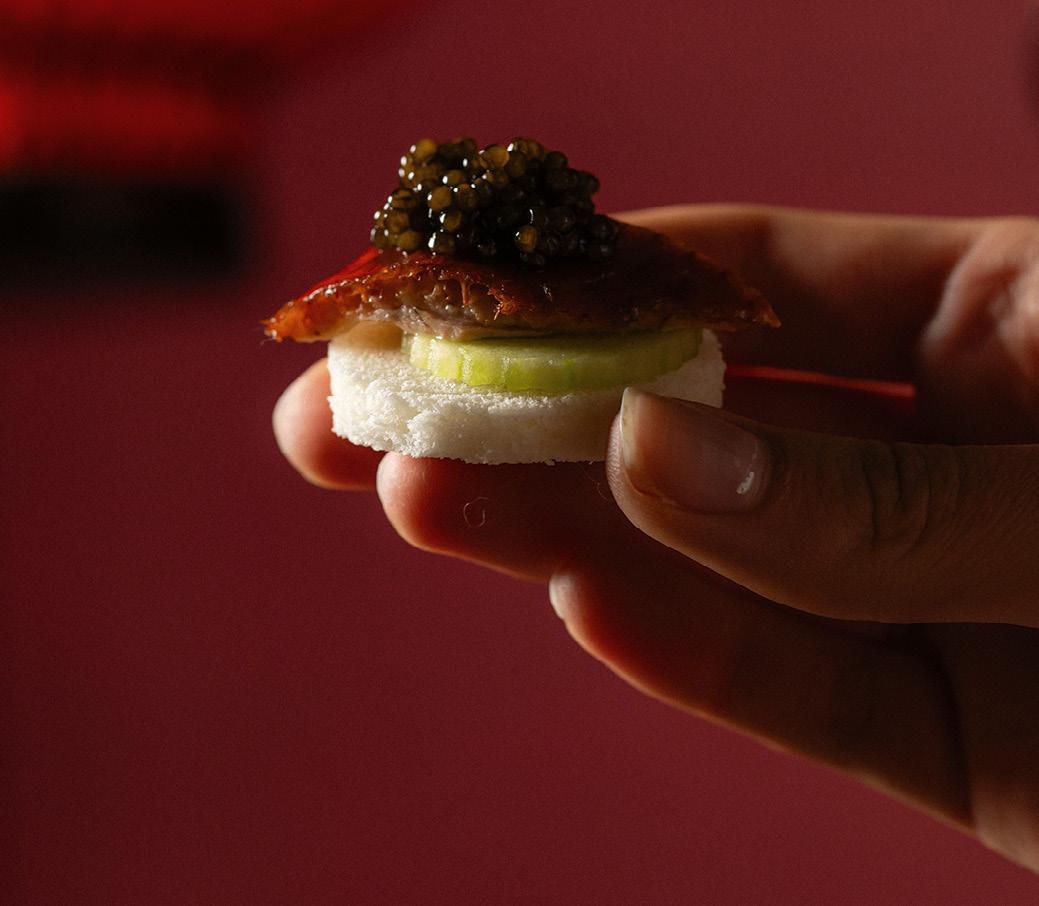
Restaurateur Chris Lucas will open the doors to the second iteration of Grill Americano on Wednesday 19 November in Sydney. It marks Lucas' second venue in the harbour city. The restaurant is making its home in the heritage-listed Qantas House building, now known as No. 1 Chifley Square. The beloved Venetian-inspired steakhouse pays homage to classic Italian hospitality and fine Australian produce and the product of a close collaboration between Lucas, Executive Chef Vincenzo Ursini, and Lucas Restaurants Head of Culinary Damian Snell. Dishes developed exclusively for this menu include prawn panzerotto with oscietra caviar; tuna ‘nduja and anchovy crostini; handmade bufala ricotta ravioli; and a Sicilian-style seafood risotto with saffron and chilli.
Tipple tome
The Madrusan Cocktail Companion Murdoch Books, $69.99
Michael and Zara Madrusan's The Madrusan Cocktail Companion draws on contributions from over 100 world-leading bartenders. The book is expanded from an in-house manual which Michael curated as a resource for teams at his acclaimed bars over the past 15 years. It includes more than 2800 drinks tried, tested, and updated. The Madrusans have also drawn on their own library of books that date back to 1862. The book is categorised by origin and by ingredient, and with an emphasis on readily available products and minimal prep.
New edition for Grossi
Edition Hospitality, the group behind Nomad Sydney, Nomad Melbourne, and Reine and La Rue, has taken over The Grossi Group's portfolio. Grossi Florentino (which will return to its original name, Florentino), Grossi Grill, Cellar Bar, Ombra, and Arlechin will be handed over by the end of the year. Grossi Group has served as a training ground for a number of significant chefs, sommeliers, and restaurateurs. "We know the next chapter of Florentino will be just as meaningful in Edition's hands," says Chef and Co-Owner Guy Grossi. "It's their turn to carry the story forward, and we can't wait to see it continue."
Sri Lankan love
Lankan Filling. Sri Lankan Soul, Australian Accent Hardie Grant Books, $55
Fans of O Tama Carey’s now-shuttered Darlinghurst restaurant Lankan Filling Station can continue to enjoy the chef’s work with her latest book. Lankan Filling is a playful, innovative take on Sri Lankan cuisine with more than 80 recipes that blend traditional flavours with modern twists, celebrating the joy of cooking and eating. The recipes, whether by flavour or idea, are connected to Sri Lanka but still distinctly Australian. Carey has a great appreciation for cooking traditionally, studying the flavours and techniques of a country, and exploring their origins. However, as one begins to delve deeper and master different techniques, it becomes easier to experiement without losing integrity. It is at this intersection of tradition and innovation where O Tama Carey’s version of Sri Lankan food comes alive.
Grossi family. Credit Michael Pham
Chris Lucas and Vincenzo Ursini
take years to produce fruit
Has a particularly high vitamin C content at about three times more than lemon
Yuzu
The East Asian citrus is known for its versatility and unique taste.
Words Maia Hart
Origins
Yuzu is genus of citrus believed to have originated in the upper basin of China's Yangtze River. Over time, it was introduced into South Korea and Japan. The seed was used as a natural medicine to treat skin irritations and itchiness in ancient times. The fruit itself was formed by hybridisation between two different citrus fruits, namely a subspecies of mandarin and the hardy yellow-green citrus ichang papeda.
Growth and harvest
The yuzu plant has a preference for cooler climates and soil that drains easily. Ideally, the plant will get full sun and be sheltered from wind. It can take years for the bush to fruit. Once it does, first harvest of the
season happens in the summer, when the fruit is still slightly green and more acidic. Typical harvest is usually in late autumn to early winter when the fruit has had longer to develop. Harvest is primarily undertaken by hand, although the tree's thorns can make it a delicate process. The fruit does not continue to ripen after it is harvested.
Appearance and flavour profile
The small, round citrus fruit has a similar shape and size to a mandarin, and transitions from green to yellow depending on how ripe it is. They typically range from about 5.5cm to 7.5cm in diameter. The flavour profile is tart and fragrant and it tastes like a cross between an orange, a grapefruit, and a lemon, with herbal undertones.
Best harvested in Autumn
Generally small in size
Contains less juice compared to other citrus
Culinary uses
Given its bitter flavour, yuzu is rarely eaten in its full fruit form. Although its origins can be traced back to China, it is a more common ingredient in Japanese cuisine. The rind and juice are used in a similar way to cooking with lemons. Its flavour makes it diverse enough to use in several ways including to make yuzu vinegar, syrups, alcoholic drinks, sauces, and sweets like marmalades and cakes. It’s also found in ponzu dipping sauces or added to white miso for aemono (dressing).
Yuzu kosho, a condiment made from chilli, salt, and the fermented peel of the fruit, can be used to enhance meat, soups, fish dishes, and in dipping sauces for hot pots and sashimi.
Bush can
Fruit turns yellow when it is ripe
Blades of glory
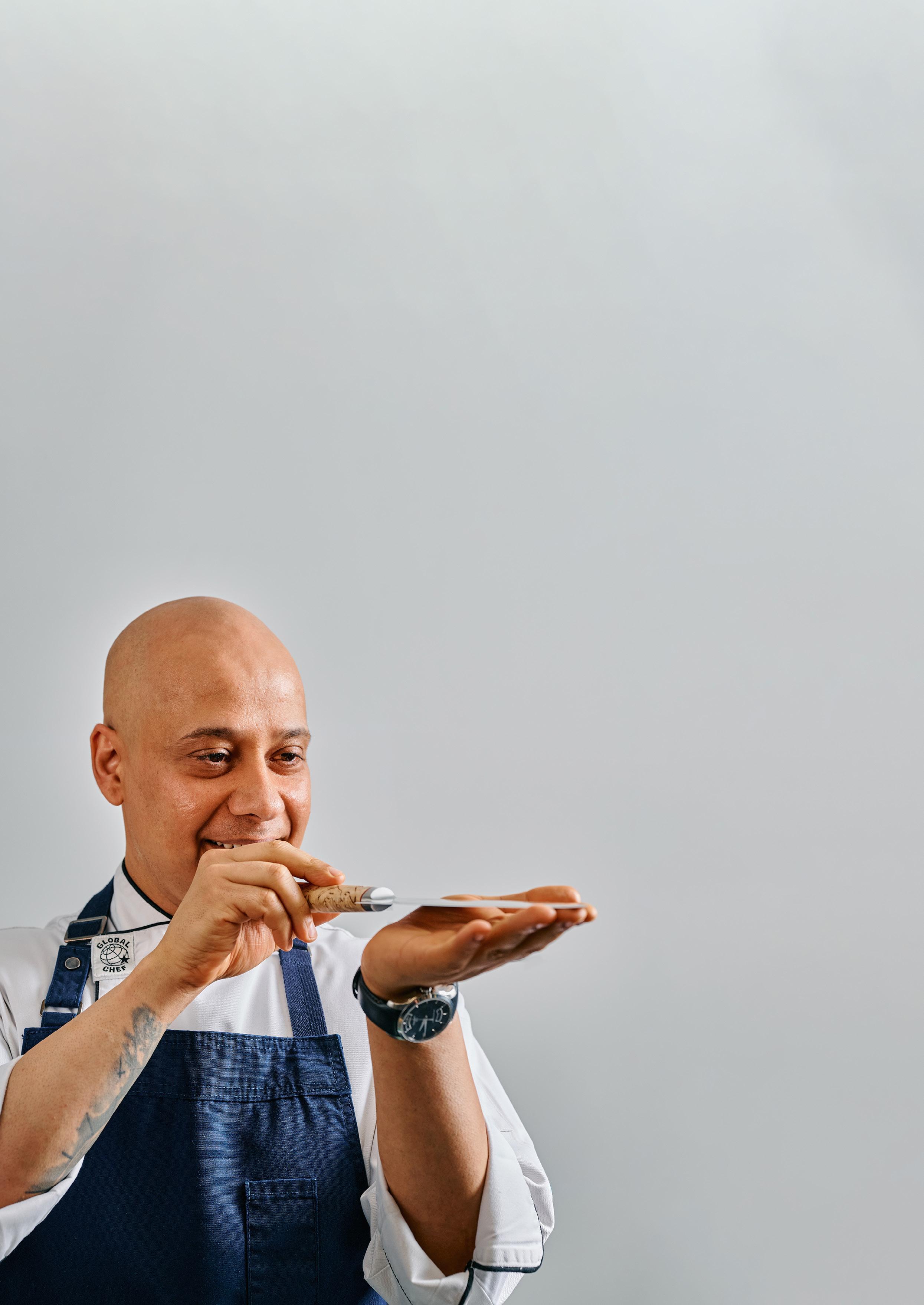
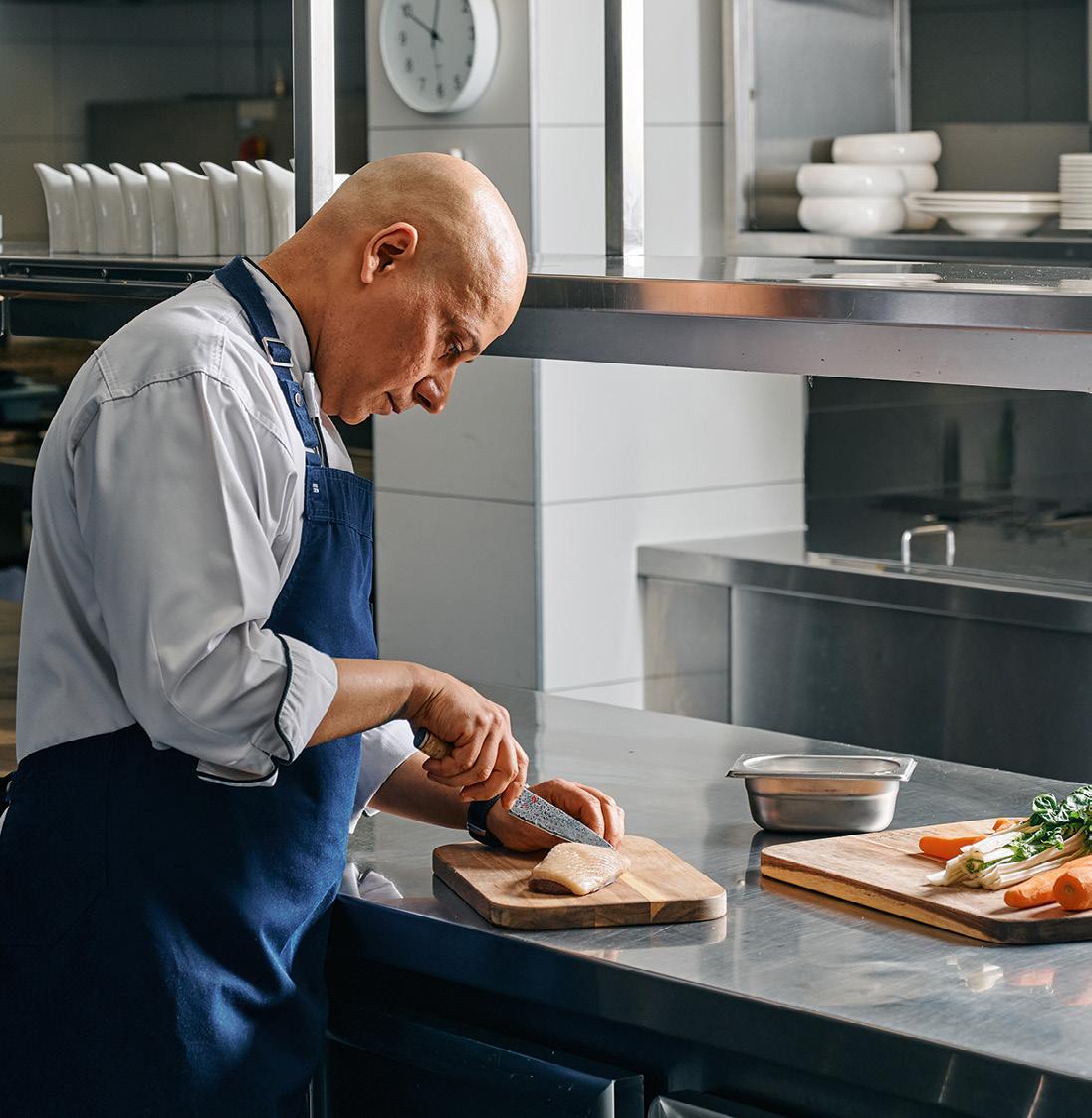
“I often say, the one major attribute that differentiates good chefs from great ones is consistency,” Pawan Dutta, executive chef at The Royce Melbourne, tells Hospitality This consistency, stresses Dutta, comes down to having the right tools. “These tools empower me to focus on what really matters: The finesse, the flavour, and the creativity.”
Dutta is no stranger to delivering high quality food on a world-class stage. He’s
How Victorian Chef of the Year 2025 Pawan Dutta keeps creativity and consistency in the kitchen with premium Japanese knives.
Photography Pete Dillon
worked in exclusive hotels across India, Dubai, Qatar, and Japan, and his job has taken him to every continent on the globe. Now, the chef calls Australia home, and the Victorian Accommodation Awards recently named him Victorian Chef of the Year 2025, recognising his contribution to the local culinary landscape.
Dutta says the win brought him a mixture of pride, validation, and deep gratitude. “As time goes by, I’m seeing the
ripple effect of how important [the win] was,” he says. “It’s not just about the title. It’s everything that it represents: the hard work, the creativity, the discipline. All these years are paying off. It’s not just about me, but it’s also about my sous-chefs, my chef de parties, my pastry chef, breakfast chef, and even my kitchen hands.”
Dutta has worked in luxury environments including Madinat Jumeirah in Dubai, Sharq Village and Spa in Qatar, mega luxury residential yacht The World, and Conrad in Maldives and Tokyo. It was during his time in Japan that the chef first began using Miyabi knives. The tools are meticulously handcrafted in Seki, Japan’s “city of knives”, which has a tradition of blade-making reaching back to the 13th century.
“The knife is an extension of a chef’s hands, so when you hold it, how you feel is very important,” says Dutta. “There are certain attributes you look for, and Miyabi hits all of them.”
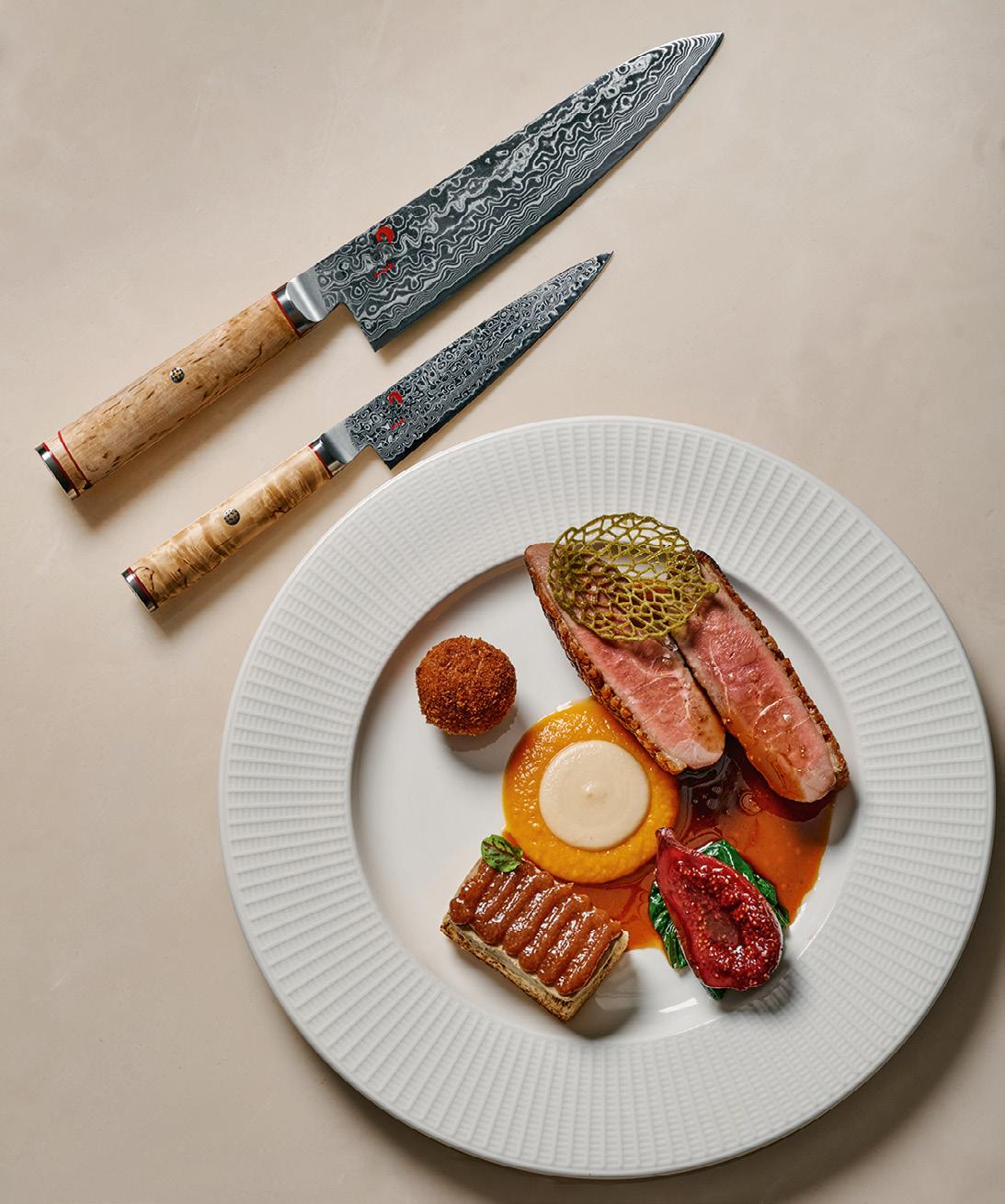
Every Miyabi Knife is hand crafted and finished with approximately 130 intricate production steps over 42 days. Each knife in the company’s premium Birchwood 5000MCD Series is constructed with a micro-carbide powder steel core and embedded in 100-layers of steel, creating an intricate Damascus pattern. Their handles are made from rare masur birch which provides both an aesthetic and tactile benefit. The result is a beautiful series of knives that is both tough and resilient, and sharp enough to cut with surgical precision. The 5000FCD Series features fine carbide steel blade cores, which are embedded in 48 layers of steel, again creating the iconic Damascus design. The black pakka wood handle has a steel cap end with decorative pin and ring.
Both series of blades are ice hardened to ensure extreme hardness, corrosion-resistance, and material elasticity.
Miyabi Development Manager Masayuki Yamada says that rather than being a factory product, making the knives is “closer to a work of art. Something that evokes emotion”.
For Dutta, much of his consistency he credits to his toolkit. Apart from his knives, he recognises the impact of a good digital thermometer, which takes the guesswork out of cooking proteins and during baking; the sous vide immersion circulator; and the Microplane, “which helps balance and layer flavours”.
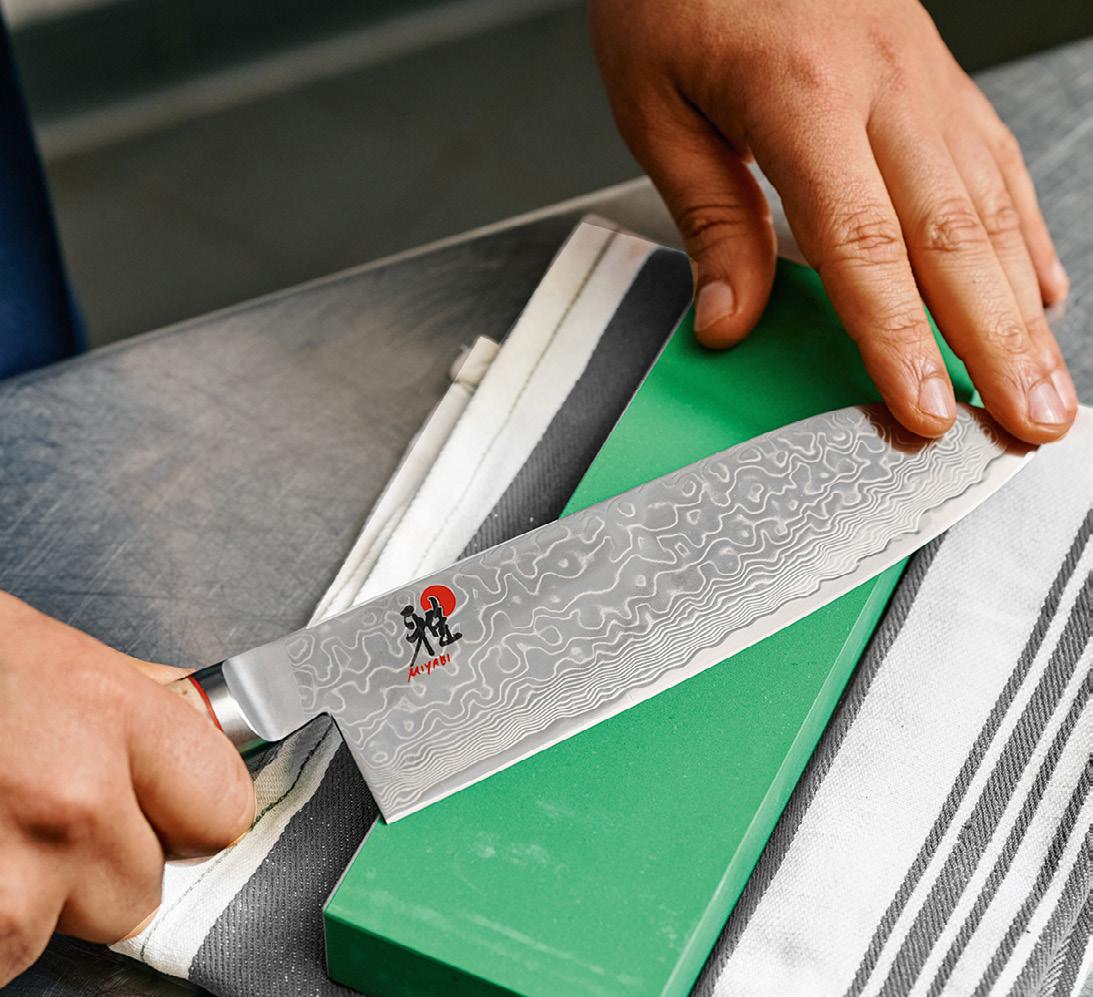
He also notes that a sharpening stone is crucial to ensure his knives remain honed. “A dull knife is more dangerous than a sharp one,” says Dutta. “Chefs using dull knives have to exert more force and more pressure, meaning they’re more likely to slip. We all know Miyabi’s knives are so, so sharp.” Japanese knives tend to be thinner than their German counterparts, allowing for a sharper edge. They’re also reasonably light, which Dutta notes is a benefit during long hours on his feet.
Newcomers are always finding their way into his toolkit; he only recently became fond of using plating tweezers –something he picked up since moving to Australia. “I used to give other chefs a hard time and say, ‘we have fingers, why can’t we use them to pick up the flower and put it on the plate?’,” says Dutta. But after watching his sous chef, his breakfast chef, and his pastry chef religiously using them, he decided to try them out. “It actually really increases the accuracy. So I’m on the same page as them now,” laughs the chef.
This attitude of humble, continuous learning is one the chef has taken with him throughout his career, and something he wishes to impart on up and comers in the industry.
“For young chefs, I will say to keep your head down and learn your craft,” says Dutta. “The chef’s job is one which doesn’t have instant gratification. It builds over time, and you’ll see the results much later in life. So, learn as much as possible, work with different chefs, try different techniques, travel, meet new people, and learn about their cultures. Don’t run after success; there will be a time when success will run after you.”
The chef believes that everything in the kitchen requires proper attention and care, and knives are no exception. “Take care of your knives, and they’ll take care of you,” says Dutta. This article was created in partnership with Miyabi.
To know more, contact DKSH Australia kerwin.beresford@dksh.com sales.consumergoods@dksh.com Phone: (02) 9425 5000 zwilling.com.au
Site hustle
What operators need for a great restaurant or café website has changed.
Words Ken Burgin
Your website is still your digital front door — the first place many people meet your business, and the main way Google and other platforms “see” you. It doesn’t need to be flashy, but it does need to be clear and useful: fast loading, mobile-friendly, with accurate details and simple navigation. Include your address, hours, a booking link, and contact details where they’re easy to find, ideally with a click-to-call phone number and map.
Clear, well-structured content wins
Search engines and AI tools read your website like a person does. That means they care about structure: clear headings, short paragraphs, and properly named pages. Every key section deserves its own space: menu, catering, bookings, events, employment, and FAQs.
Avoid uploading only a PDF menu. It might look neat, but often search engines can’t read it, and customers struggle to view it on their mobile phones. Instead, put your dishes, prices, and dietary details directly on a web page. If your site uses a third-party ordering or booking system, embed it so it updates automatically.
From keywords to good answers
In the past, SEO meant sprinkling in as many keywords as possible. That’s no longer the main game. Modern AI-powered search tools (and that includes Google) focus on whether your website provides useful answers
So instead of repeating “Italian restaurant Brisbane” across your site, focus on the information people actually ask for:
• Is there parking nearby?
• Can I bring my own wine?
• Do you have vegan or gluten-free options?
• How do I book a table for ten?
Adding a solid FAQ section helps both
customers and search engines. Generative AI tools like ChatGPT, Gemini, and Perplexity are already pulling these kinds of details directly from business websites when people ask, “Where’s a good vegan cafe near me?”, so have the answers ready.
Keep it fresh and local
Think of your website as a garden — it needs regular care to stay healthy. Fresh content shows Google and other search engines that your business is active and relevant. A small update once a month can make a difference: add a new dish, feature a staff member, or post about a local event. Make sure your Google Business Profile, website, and social pages all use the same format for address, hours, and phone number. AI systems use that consistency to confirm you’re real and reliable, which improves your visibility in “near me” searches.
Visual storytelling and trust
Strong photography is one of your best sales tools. Show your food, drinks, and people enjoying themselves. Match the style of your images and colours to the feeling of your venue, whether it’s a neighbourhood cafe or a lively bar.
Technical features that matter more than ever
Behind the scenes, a few simple upgrades make a big difference.
• Make sure your site is secure (HTTPS) and loads fast.
• Use a mobile-first layout — most visitors will view your site on a phone.
• Add accessibility tools like readable text and alt tags for images.
• Use schema markup (structured data) so search engines can easily find your opening hours, menu, and reviews. Most website builders now have easy plugins for this.
A modern restaurant or cafe website still needs great photos, easy navigation, and clear contact details, but it also needs to provide good answers. AI search is already shaping how people find places to eat. When your site provides accurate, helpful information in plain language, those answers will carry your restaurant straight to the top of the new digital menu. ■
Search engines use image alt text and captions to understand your business, so be descriptive. Use phrases like “family-friendly pizza restaurant in Fremantle” or “Bondi cafe serving all-day breakfast” as image titles — this helps search engines and customers know what to expect.
18% fat.
Heats quickly to high temperatures, without burning or splitting.
Ideal viscosity for sautéing, reducing and pan-frying.
Gelatine Free- suitable for vegetarians. Halal.
THICKENED CREAM
35% fat.
Rich cream flavour.
Holds its shape well after whipping.
Suitable for halal, kosher, and vegetarian customers. Gelatine free.
COOKING CREAM
HOT LIST The
Food and beverage trends for the year ahead.
Words Laura Box
As deeply niche sub-sections of society form online, so too do we see the social media segmentation food culture. In one sphere, a high-protein, carnivorous, raw meat, and raw milk diet appeals to some; in another, a vegan, oat milk matcha, and chia-rich diet engages others. Meanwhile, TikTok scrollers look towards experimental snack trends and Dubai chocolate. Despite this hyper-segmentation, observations and research from across the country are uncovering the trends that are gaining overall momentum in the food and beverage industry — and the ones which are fading into obscurity.
Protein fiends
The importance of protein consumption has crept into public consciousness over the course of 2025, a result of fitness and health culture. You may have noticed the word becoming prolific on supermarket shelves, making its way in large letters onto the packaging of cereal, muesli bars, drinks, and of course, cottage cheese. Research from food and agriculture multinational Cargill noted that 61 per cent of US consumers report increasing their protein intake in 2024, up from 48 per cent from 2019.
The data also tracks closer to home. Among younger Australians, red meat consumption is increasing, according to Meat and Livestock Australia (MLA). The company says more people are reporting they’re increasing red meat intake, rather than less, for the first time since the organisation began its tracking. 87 per cent of those increasing their meat intake cited healthrelated reasons like its value as a source of protein (58 per cent).
“Australian beef, sheep meat, and goat meat is packed with essential nutrients like iron and protein, and it’s a staple in our diet for good reason,” says MLA Managing Director Michael Crowley.
Marlowe's coral trout wellington. Photo Jessie Prince
On the up
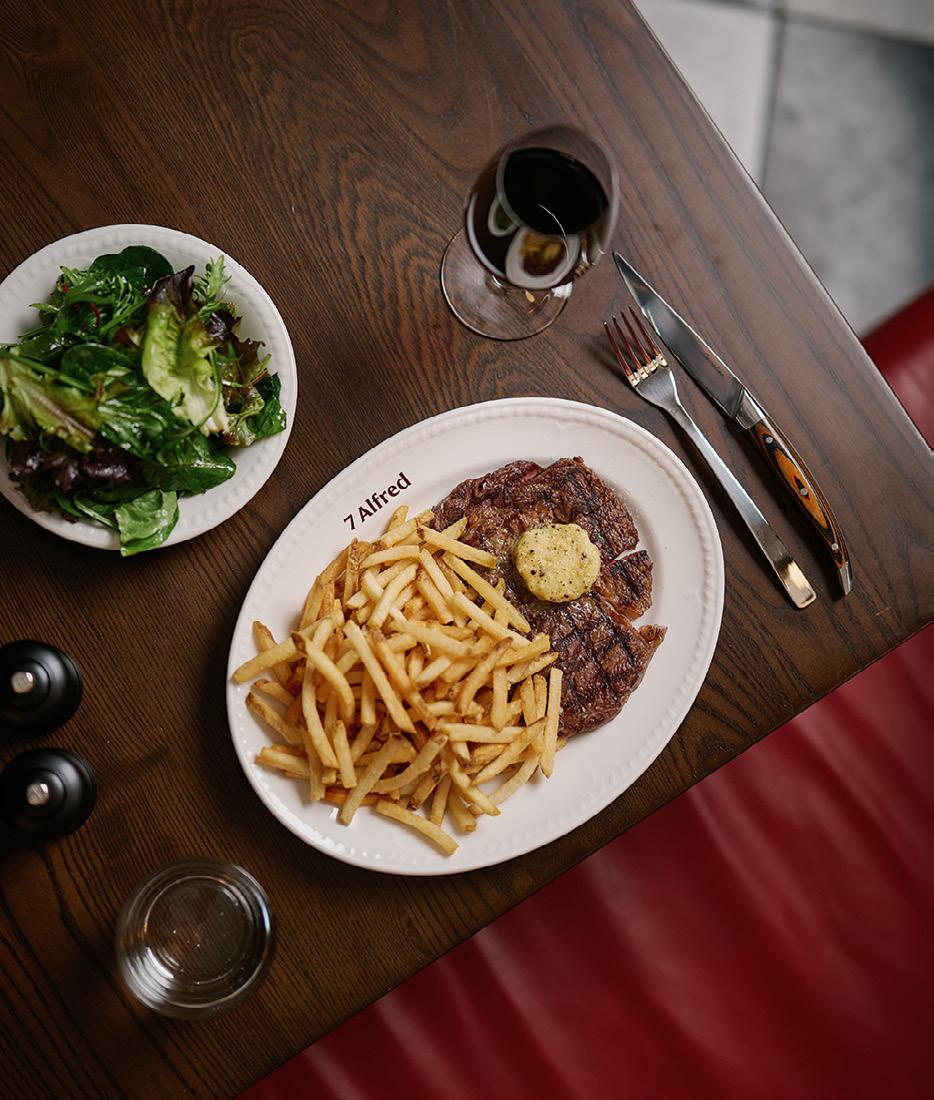
7 Alfred, the recently launched counterpart to popular Sydney restaurant 24 York.
Photo Kristoffer Paulsen
Artificial Intelligence
2025 has seen AI take off across a number of fields. But in the hospitality industry, many are still struggling to understand how to unlock its potential.
Ordermentum
Founder and CEO Adam Theobald predicts that by 2026, AI will be integrated into every part of hospitality, from smarter inventory management, to pricing that updates dynamically, and predictive insights that help venues plan ahead.
“There’s growing interest in predictive tools: forecasting demand, optimising pricing, and managing cash flow,” says Theobald. “Another big shift we’re seeing is education; people want to understand AI, not just use it.” To address this, Ordermentum — a software company providing wholesale online order management for the food and beverage industry — recently launched F&B Leaders After Hours, a program bringing industry together to share what’s working and to demystify AI.
Businesses like Ordermentum are investing heavily in AI because of how transformative it can be for their customers.
“We’ve built tools that directly remove friction from the day-today running of hospitality businesses, saving up to 80 per cent of the cost, time and errors of traditional manual data entry,” says Theobald.
“Our AI generates product descriptions automatically, helps suppliers understand credit risk, provides pricing insights, and with our Omni feature, it even captures offplatform orders automatically,” he says. “Every one of those tools is about giving time back to our customers.”
For businesses looking to begin implementing AI, Theobald says to start small and practical. “Don’t think of AI as a silver bullet — think of it as a tool that becomes really powerful when you’ve got your foundations right.”
Healthy eating
Whether its keffir, kombucha, or a collagen-infused café latte, the Australian consumer is looking towards health-conscious options.
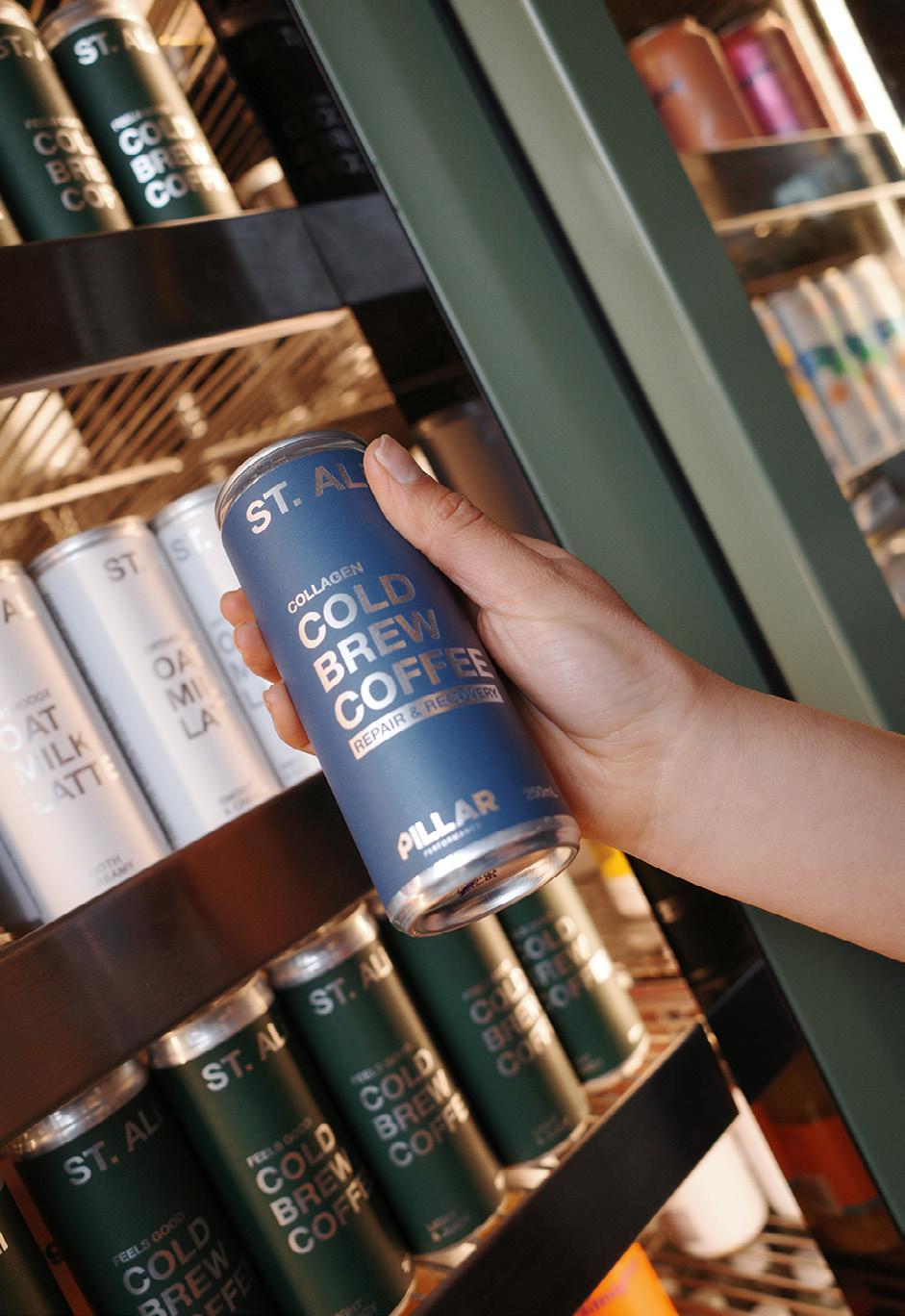
Melbourne specialty coffee pioneer St. Ali recently paired up with Australian sports nutrition brand Pillar to launch a collagen cold brew with vitamin c to enhance absorption. Collagen (apart from its protein-rich appeal) is said to support tendon and ligament health, speed up recovery, and reduce injury risk.
Businesses like Esca Group’s Middle Eastern style charcoal chicken restaurant Henrietta are adapting for more health-conscious audiences. For the brand’s Bondi outpost, Executive Chef Ibrahim Kasif has devised a lighter, share-style menu of healthy, coastal-inspired dishes, with a list of salads he says “might even steal the show”.
Basic is beautiful
More chefs are leaning into the idea of simple, beautiful food. As Rosheen Kaul noted in Hospitality’s September-October 2025 edition, “There are some very skilled chefs doing very simple food. Chefs who have worked exclusively in fine dining and then they’ve gone off and started growing food. They’ll sometimes just have two things on the plate — like radicchio they grew with incredible olive oil — and the flavour is absolutely sensational.”
Marriot International’s recent Future of Food report also noted that guests were looking towards “fine-casual” dining. “Comfort food is a new luxury. In a fast-moving unpredictable world, guests crave familiarity and comfort food done exceptionally well. We’re seeing chefs applying fine-dining techniques and premium ingredients to everyday favourites,” says Marriott International Asia Pacific excluding China Director of Restaurants and Bars Daniel Ayres. In Australia, Marriott’s top three most popular in-room dishes were burgers, club sandwiches, and chicken.
Collagen cold brew.
Photo St. Ali
Future of Food.
Photo Marriot International
Here to stay
iStock/fermate
Social battery
For many in the biz, social media can be a blessing some days and a curse on others. Seen by many as a “necessary evil”, one thing is certain: the bittersweet world of Instagram and TikTok is here to stay for the foreseeable future, and it continues to strongly impact consumer decisions. According to Marriot International’s survey, 75 per cent of its Asia Pacific venues report that social media influences guest decisions around restaurant and bar bookings.
Nostalgia persists
Restaurateurs and café owners around the country are saying “out with the new and in with the old” — and diners are lapping it up. The trend isn’t groundbreaking: doily-laden tables at Baba’s Place, chip butties at Splash in Petersham’s Fanny Durack Aquatic Centre, and the retro-futuristic aesthetic of Trippas White Group’s sky-high Bar 83 are among the nostalgic nods that have sprung up in recent years.
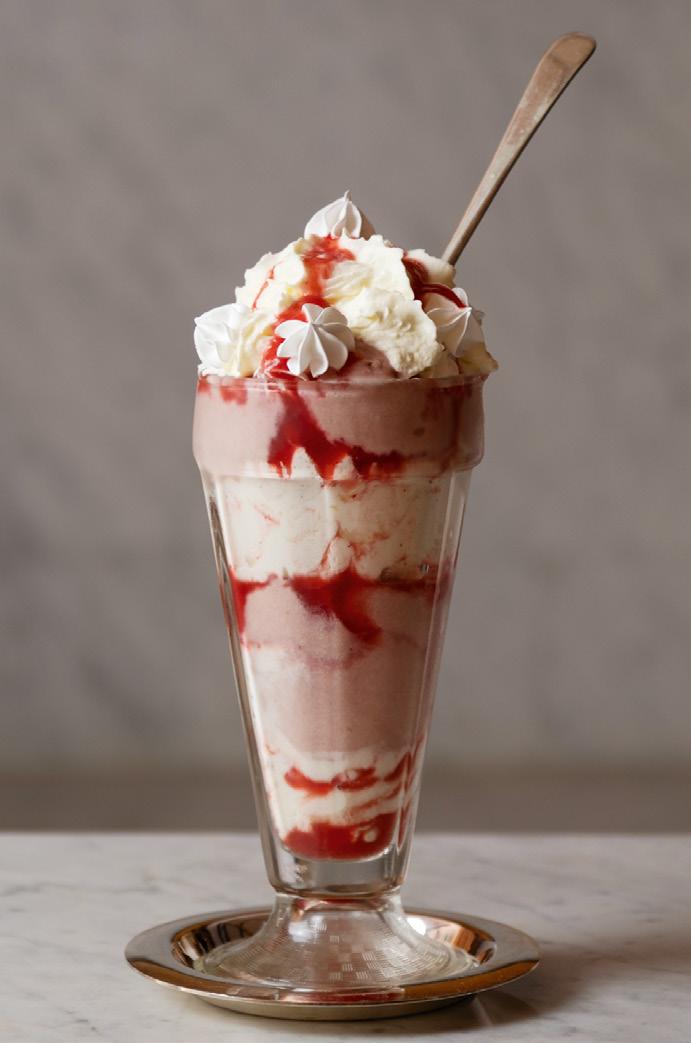
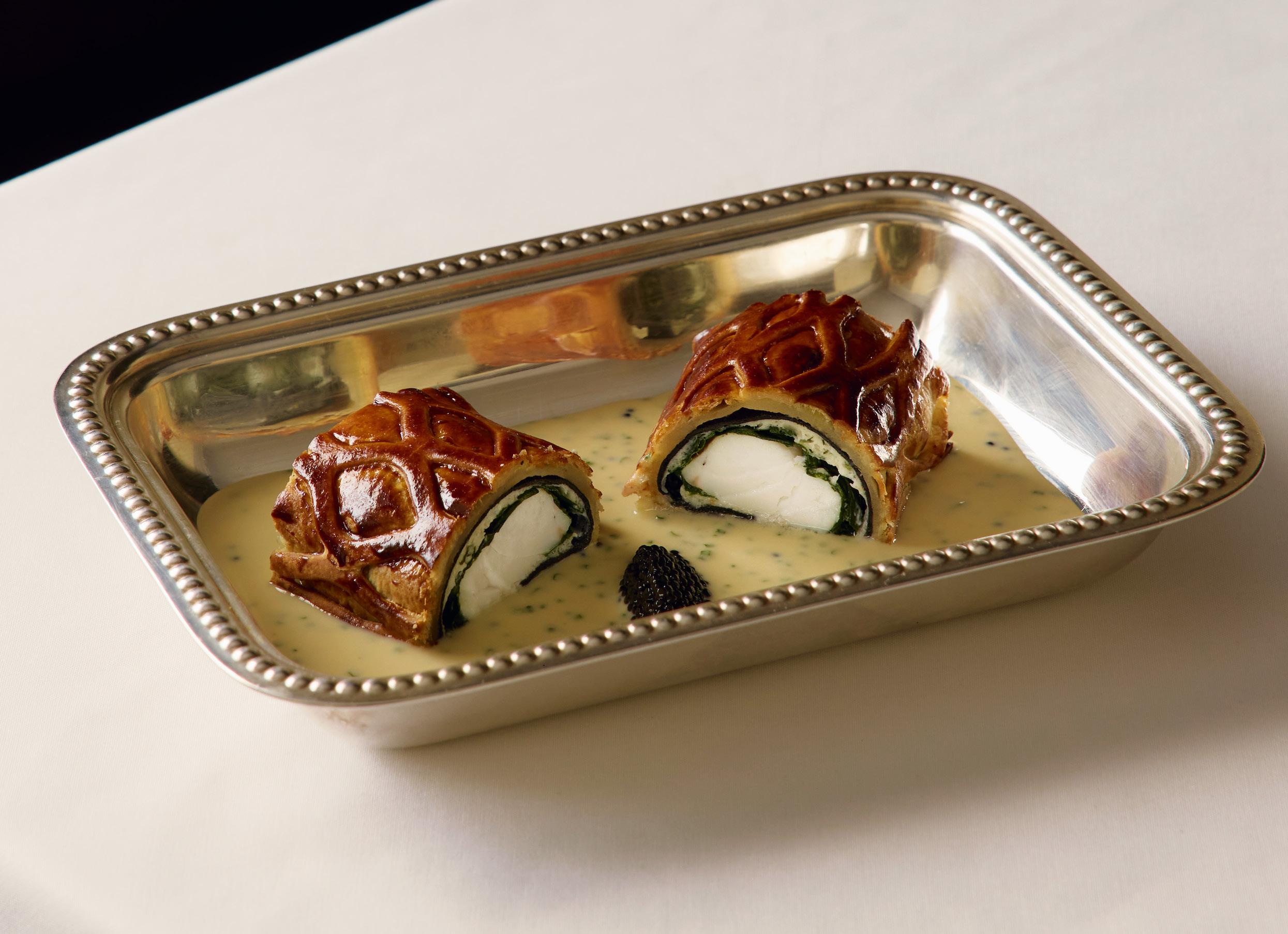
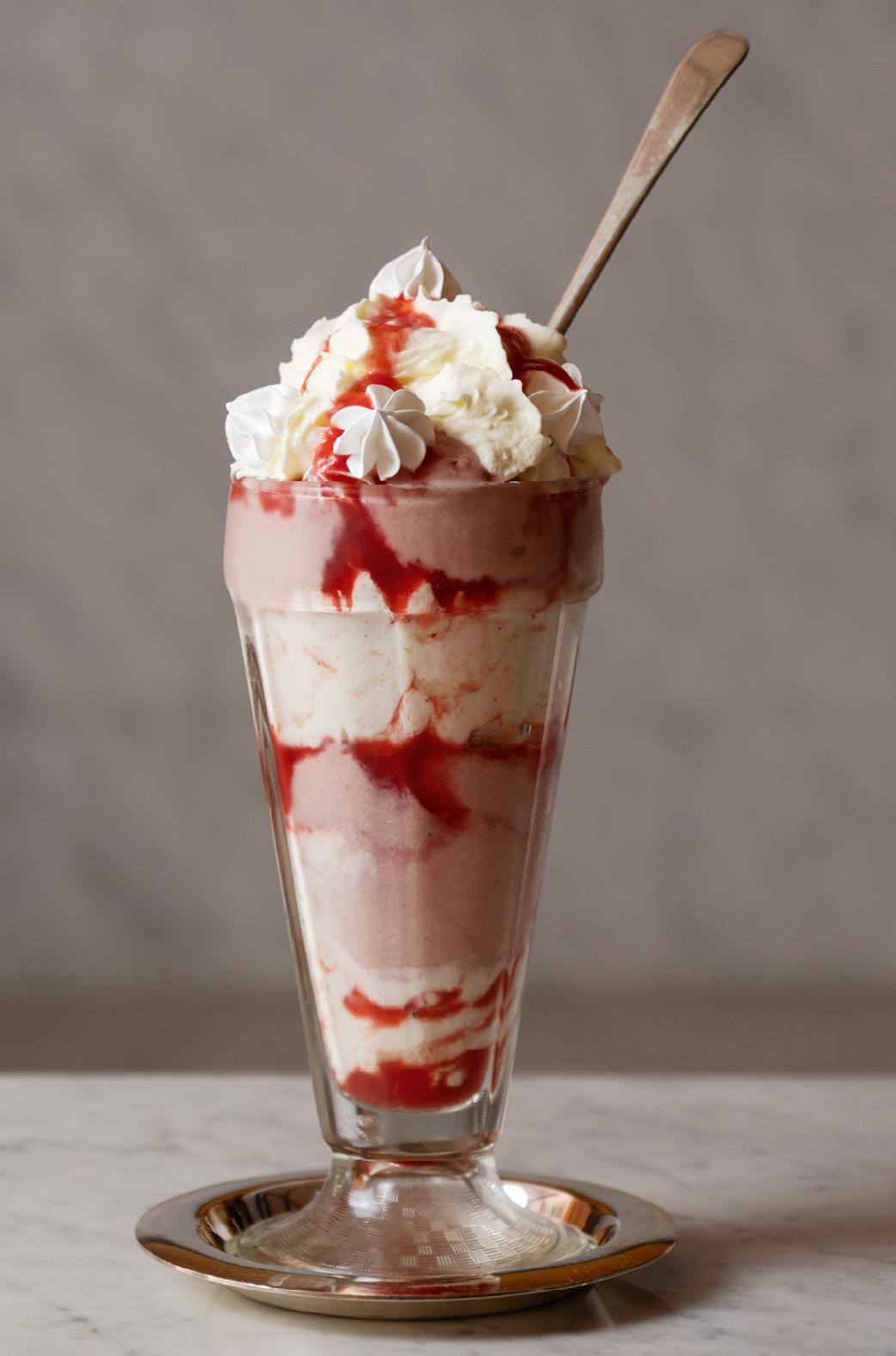
But with newcomers like Sydney’s Joe’s Tavern, which is serving up vintage milk bar-style knickerbocker glories, Brisbane’s Marlowe with its 1960s-worthy coral trout wellington, and Melbourne’s latest “it” café Queensberry St Co-op returning to perfectly simple fried breakfasts and omelettes worthy of an early 2000s cafe, it’s evident the trend is persisting.
Alt milks
While plant-based foods seem to be going out of fashion, plant-based milks are holding strong. Riccardo Martin, the co-owner of Forest Lodge specialty coffee shop Ichigo Ichie, says that milk varieties like oat have now overtaken demand for once-popular skim milk. “At one stage Australia was only ordering skim milk, whole cream, and soy. But now oat is slowly taking over soy and definitely taking over skim — we’re hardly using skim at all,” says Martin. Meanwhile, the liquor industry is catching on. Baileys recently released a plant-based coffee toffee liqueur with an oat milk base. The drink reflects changing tastes, with 36 per cent of Australians drinking plantbased milks monthly, and 16 per cent weekly.
Hospitality’s favourite ordering and payments platform
Built for both venues and suppliers, Ordermentum is the #1 hospitality platform for efficiency and growth. We power the best operators with AI built features that streamline operations and optimise profit so everybody wins.
$6 Billion traded
On the out
Vegging out
When New York’s ritzy Eleven Madison Park emerged from covid in 2021, it decided to do things a little differently. The restaurant took a leap, driven by climate change, and relaunched as vegan. Think mille-feuille without butter, meringue without eggs, almondmilk ricotta, sunflower butter, and “land caviar” (also known as tonburi, a Japanese food made from the dried seeds of the summer cypress plant). But in mid-October 2025, the restaurant announced its veg days were over, and meat was making a comeback on the menu (although a plant-based version is still available).
Eleven Madison Park represents a broader trend: In Australia, Sydney’s Newtown has long been a hub for the vegetarian and vegan community, boasting thriving restaurants like King St's vegan pizzeria Gigi’s. But Paisano and Daughters’ replaced its vegetarian newcomer Flora about seven months after it arrived, despite positive reviews. What do closures like this suggest for the vegetarian community? Simply from anecdotal evidence (and stats from MLA showing an increase of meat eaters), we think the number of strict vegans and vegetarians is decreasing.
Boozy burnout
It’s a problem the drinks industry has been grappling with for some time now: Australians, especially younger ones, are drinking less than ever. As leading drinks market analyst IWSR recently recorded, the proportion of 18to 24-year-olds who consumed wine monthly halved between 2010 and 2023. Now, they’re looking towards non alcoholic options, or opting to drink one or two glasses of wine rather than a whole bottle.
Dubai chocolate
A couple of years ago it would have been difficult to predict that a block of chocolate costing between $20-$39 would gain as much momentum as Dubai chocolate did between 2024 and 2025, despite cocoa prices beginning to rise in 2022. The chocolate-coated kataifi pastry and pistachio treat kicked off thanks to TikTok virality in late 2023. With supermarket versions of the chocolate now sitting around $20, the cost-of-living crisis still inherently impacting consumers, and the fleeting nature of online trends, it’s difficult to see this one sticking around for much longer.
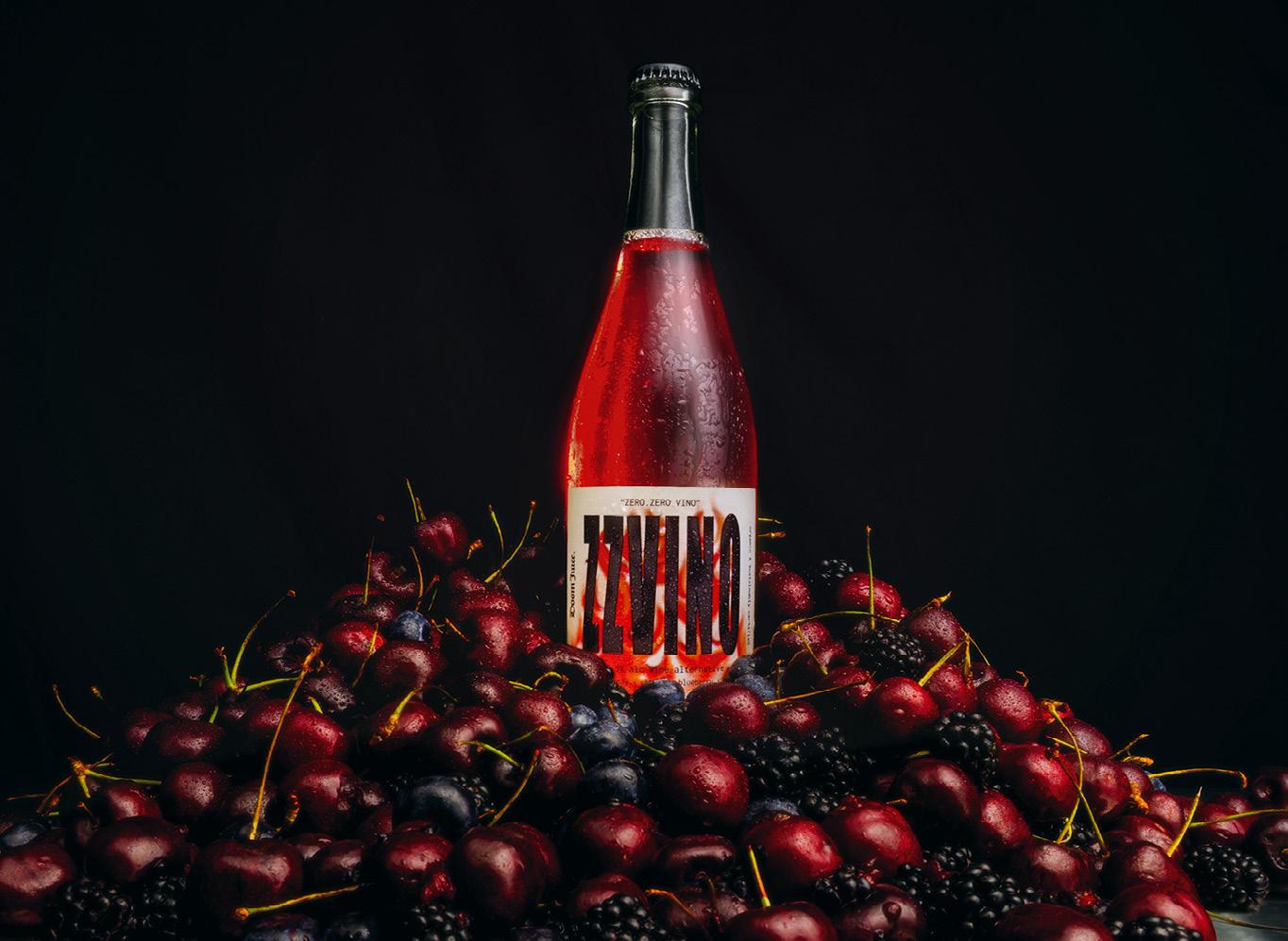
Non-alcoholic options like Zero Hour Prosecco are gaining popularity.
Photo Zero Hour
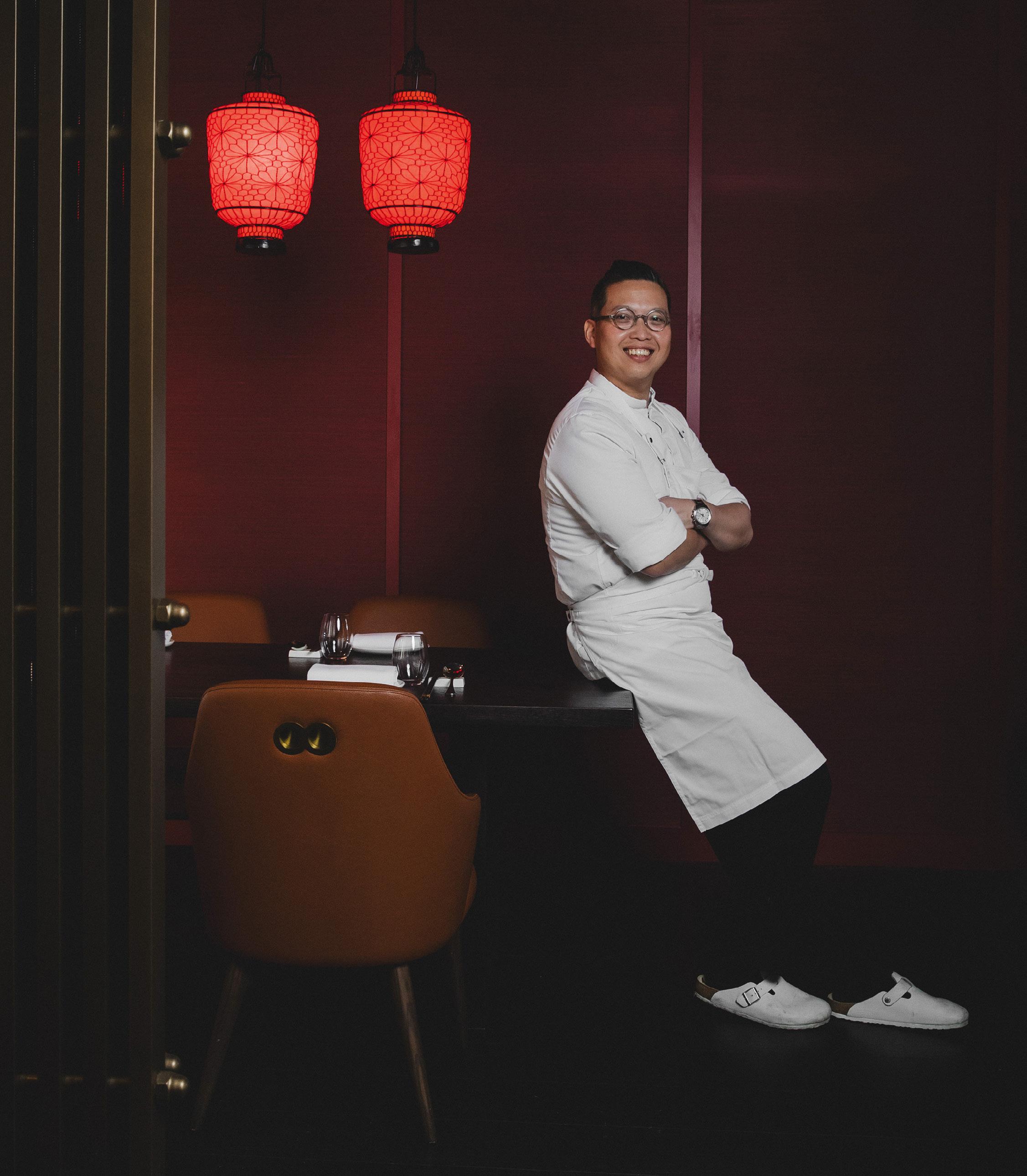
Victor Liong
Beautiful dining rooms, quality tableware, and the best produce in the country: Victor Liong asks whether Aussie consumers are ready to pay what fine dining is worth.
Words Laura Box
Photography Nikki To and Parker Blain
“The price of food in a restaurant setting is undervalued in Australia,” says Victor Liong. The chef and restaurateur behind Silk Spoon Melbourne, Quenino, Lee Ho Fook Melbourne, and most recently Lee Ho Fook Sydney, says the situation is hurting businesses – and there’s only one solution.
“For operators, margins are getting slimmer and slimmer, insurance is up, utilities are up, staff wages are up. And we want to run sustainable businesses to support our staff and support our communities. I think the cost has got to be passed on to someone – and that’s the customer.”
The chef believes Australian customers are particularly sophisticated because of the world-class standard of hospitality set in Sydney and Melbourne. But, he says, “a certain level of service, of cooking, of produce – which we’re blessed with because of the high-quality operators – comes with a price tag”.
Liong says that Australian customers demand a high level of service even in “base level” experiences, but they’re not prepared to accept that this style of service costs. He points to coffee as an example of
“We adjust our prices so that we can operate a sustainable and high-integrity operation in all our venues. And if that means that we’re expensive, we are.”
– Victor Liong
this high expectation for low cost. Australian customers often expect a seat, table service, and water while drinking coffee at a cafe. “That’s a very high level of service, right?” says Liong. “And yet everyone is still fighting the price of a cup of coffee in that setting.” He points to other global cities like London and Hong Kong, where similar service would see a coffee cost $10 or $12 AUD.
“So, yeah, we adjust our prices so that we can operate a sustainable and high-integrity operation in all our venues. And if that means that we’re expensive, we are,” says Liong. The chef argues that hospitality needs to be more than just the price of covering of costs. “It’s about the value of the experience: What is it worth to sit in a beautifully designed dining room, eat off nice plates, drink from nice wine glasses, have the best produce in the country?”
Liong says consumers need to change their lens on pricing, or risk seeing the homogenisation of restaurant culture due to large (and safe) hospitality groups with tried-and-tested business models.
“There are reasons why certain cities only have steak houses, or why Melbourne only has wine bars. It’s because that’s a business model that works, right? I think there’s got to be space made for other creative avenues. Otherwise it all just becomes same-same.”
Now running restaurants across three cities, Liong is uniquely adept at analysing the shifting and evolving consumer and operational dynamics in various regions.
“Each hospitality landscape has challenges for its operators,” says Liong. He notes that Australia has lower volume in its major cities compared to other parts of the world, making operating in hospitality tougher. “With high costs you have to either have high volume, or high head spend and low volume. In Australia, it’s the middle market that is slowly diminishing because you have to pick one side, right? You can’t be in the middle anymore.”
Singapore isn’t immune to the issues either, says Liong, as high market rents become unsustainable even for robust businesses.
“A lot of them have either shut or relocated,” says the chef. He adds that Singapore’s hawker markets are also slowly shutting as operators age out with no one to carry on their legacy, in what he calls “the end of an era”. The pressure impacting smaller food operators stems internationally. You only need to look to Hong Kong and Malaysia to see similar pressures on street food vendors – the result of rising costs, increased fast food competitiors, and changing preferences.
To manage operations across three cities, the chef has high expectations for his tight team – although he isn’t one to oversupervise. “I don’t like micromanaging,” he says. “I like watching talented, young, driven professionals build teams and achieve goals. Nothing makes me happier. And I’ve been lucky that all my leaders have been fantastic – they build great culture, and they maintain high standards.”
He takes a very high autonomy and high accountability philosophy towards his staff.
“You can basically do whatever you want. But if it goes wrong, you have to own up to it,” says Liong. “That high level of transparency creates very high integrity teams, which is exactly what we want. It also means that you can create and reinterpret stuff quickly and everyone communicates pretty clearly. It’s very
“You can basically do whatever you want. But if it goes wrong, you have to own up to it.”
– Victor Liong
“I like watching talented, young, driven professionals build teams and achieve goals. Nothing makes me happier.” – Victor Liong
respectful and we’re clear on what we want to achieve.”
Alongside this refined team, Liong puts the success of Lee Ho Fook down to its niche style. The chef says the restaurant is his most “creatively rewarding” project, which he attributes to his love of the cuisine. He opened Lee Ho Fook Melbourne in 2013, and the restaurant quickly earnt a reputation for its unique mixture of fresh Australian ingredients cooked with a Chinese cultural lens. The result? “Food that’s delicious, engaging, and a little unexpected,” says the chef. “The food at Lee Ho Fook is not for everyone. But we’ve found a niche audience that likes my version of Chinese food.”
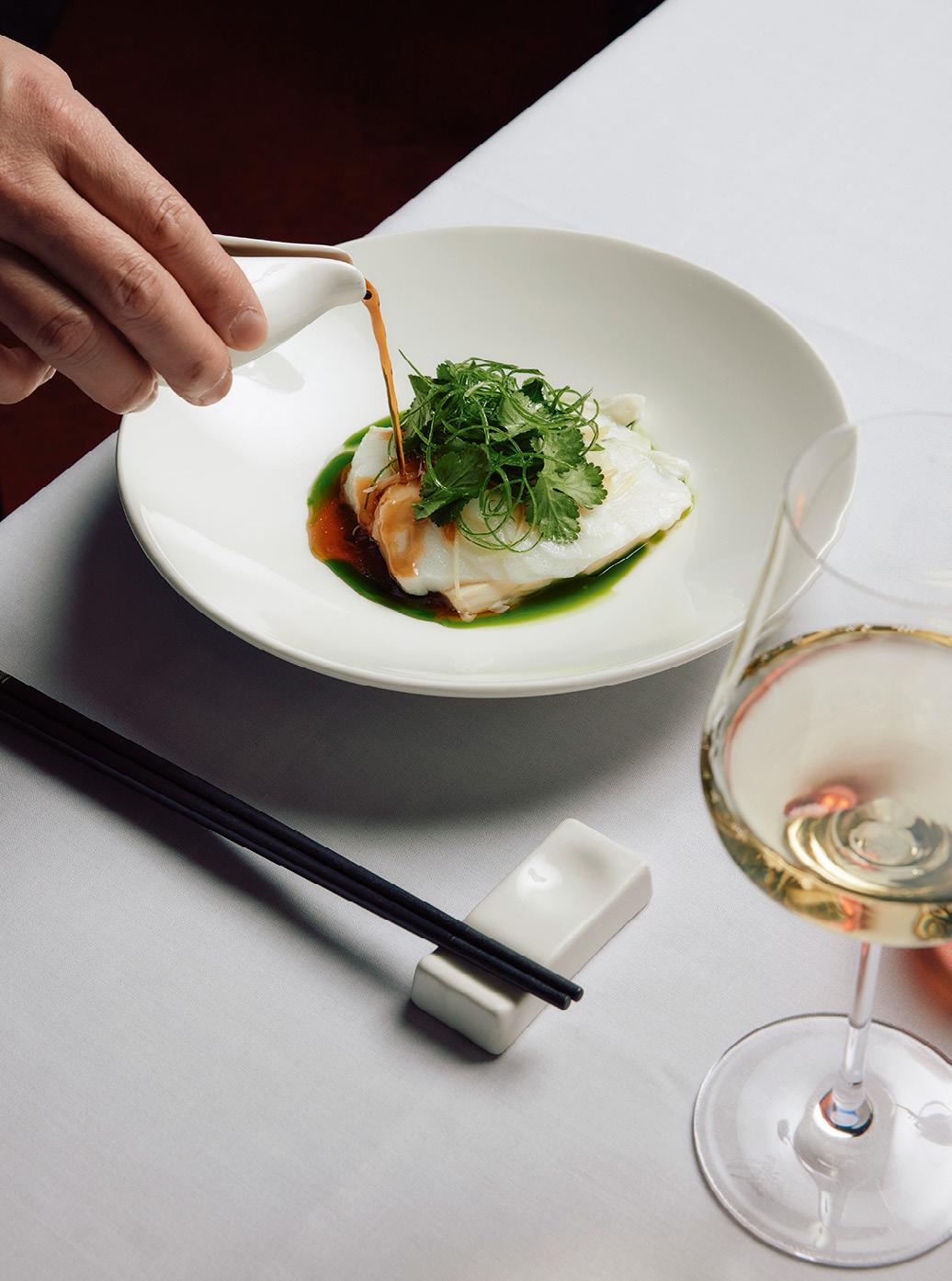
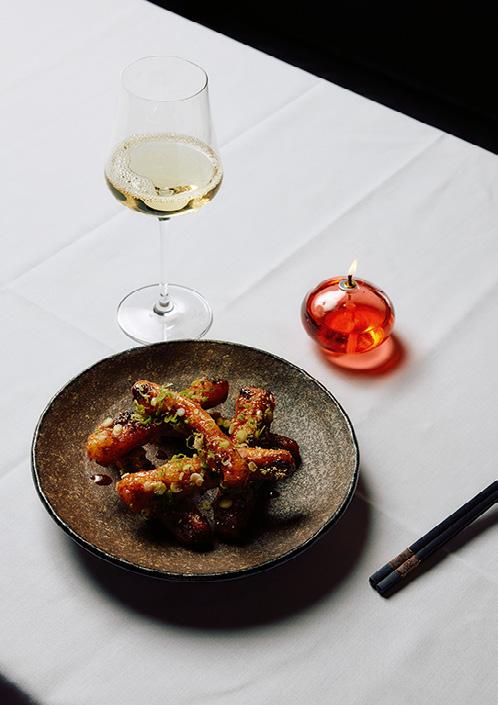
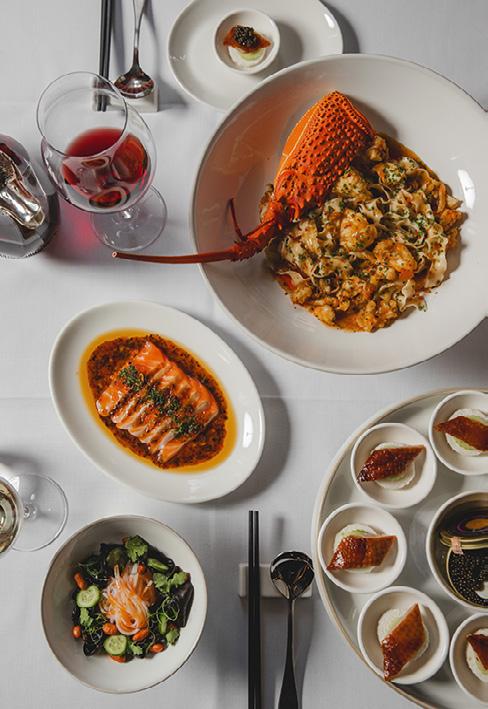
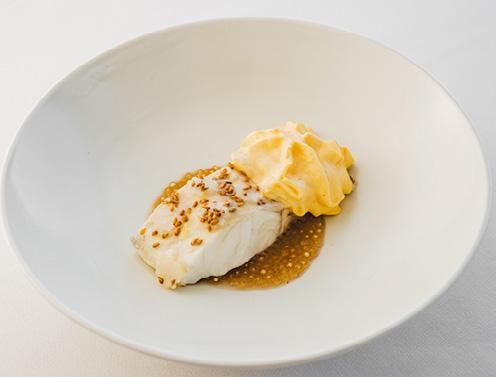
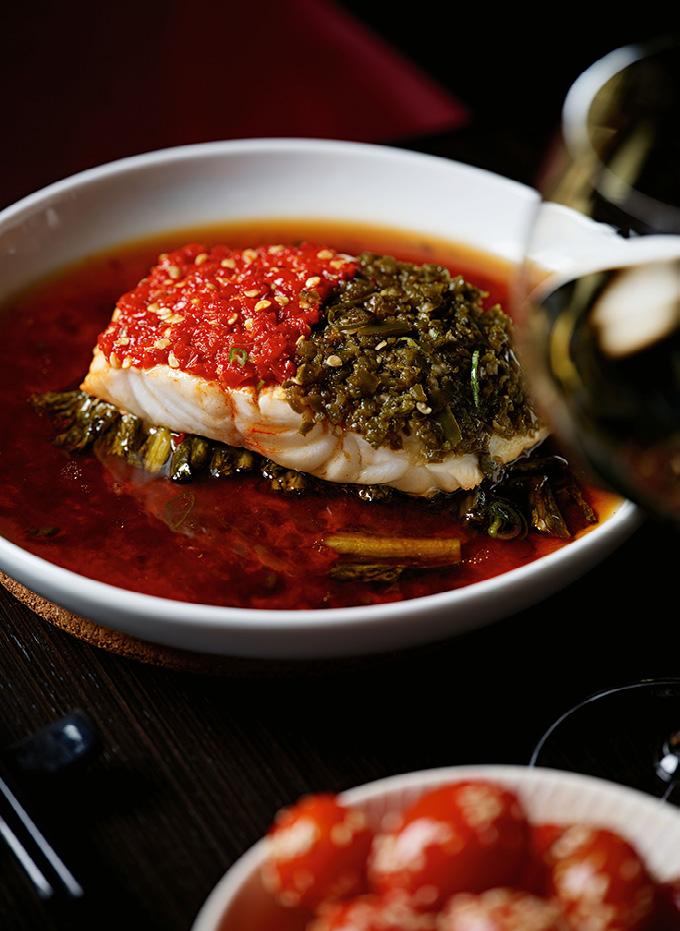
The Sydney kitchen, under the guidance of Head Chef Brad Guest, provides a similar offering to its Melbourne counterpart. Signature dishes like prawn toast with Tasmanian sea urchin; crispy eggplant with spiced red vinegar; and mains like Kung Pao Skull Island prawns and steamed Glacier 51 Toothfish with silken tofu made the menu. Liong says they’re monitoring Sydney’s response in order to tailor the restaurant to the local market and make it “distinctively Sydney”, although it’s too early to say exactly what those changes might be.
Liong’s parents raised him in Sydney after moving to the city from Brunei, and in 2013 he moved to Melbourne. Now, he’s quick to appreciate the cities differences: Sydney is warm and loves the outdoors; meanwhile Melbourne trades a bit later and prefers indoor, intimate spaces. “I think the eating style is a little bit lighter in Sydney because the weather’s warmer. We’re slowly sifting through all these little nuances and hopefully we’re creating something that’s pretty slick for our Sydney audiences,” says Liong.
As for Melbourne? The restaurateur says he’s committed to staying for at least another decade. ■
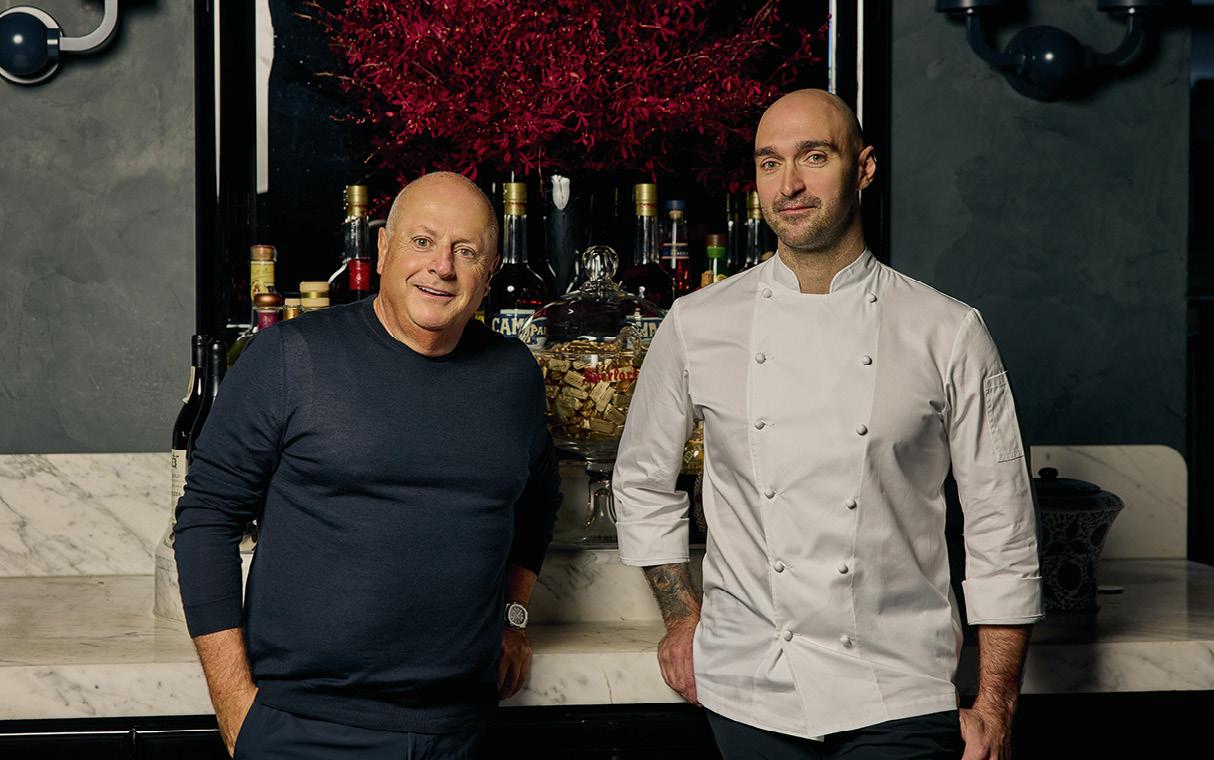
Victor Liong and Brad Guest. Credit Nikki To
Alpha Sleek, sharp, and built for precision, the Alpha series is the first electric oven to feature a rotating stone baking surface, making it as innovative as it is eye catching.
Cuppone supports pizza professionals, chefs, and business owners at every stage.
Training for retaining
Staff retention is key to helping a venue thrive. It starts with the training.
Words Maia Hart
Tilda
Credit Steven Woodburn
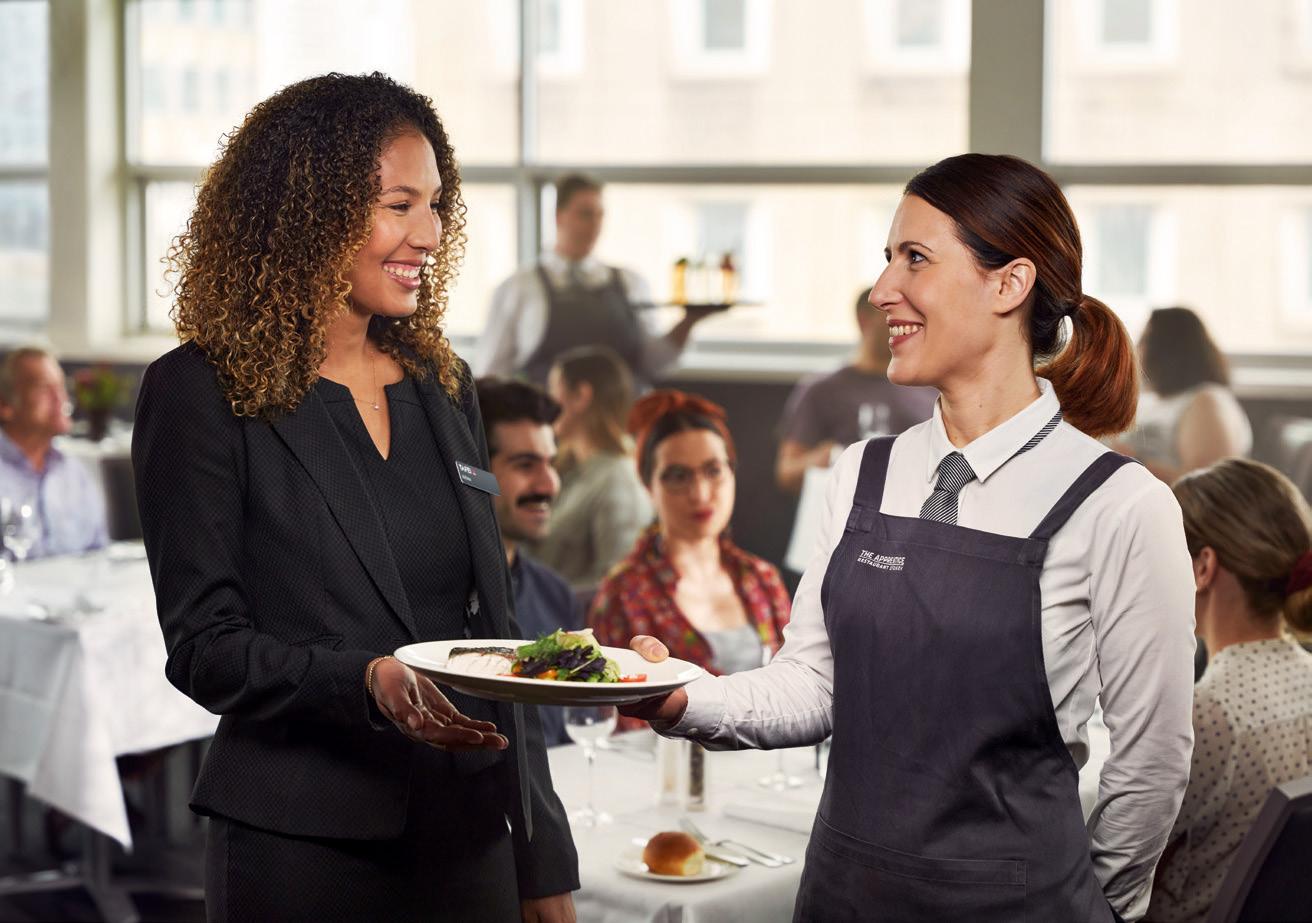
With lengthening days and more heat comes an uptick in long-lunches and after work drinks. This demand means staff need to be hired, trained, and prepared for the extra people who are likely to walk through the door.
House Made Hospitality Director Justin Newton says that pre-Covid, Melbourne Cup in November would signify the start of the busy season. But in 2025, demand was already increasing in October. “We felt it come a little earlier this year,” Newton tells Hospitality. “I think it’s the result of a very miserable winter. The sun’s come out now, people have got a bit more cash to spend, [and] we’re really finding that things are starting to ramp up a bit earlier than expected.”
Of course, with that comes the need for extra staff. “We are definitely on the hunt for more team members,” says Newton. While House Made Hospitality is “always recruiting”, in summer there’s no time to waste. Newton says it’s a competitive market because everyone is trying to do the same thing, at the same time.
“We start to hold what we call ‘cattle call’ days. We invite a whole bunch of people who have applied to come and do a mass interview, with the aim of offering the job to them that day.” It’s different to how they usually recruit, which is perhaps the standard process of having an interview and a trial shift that potentially results in a job offer. But Newton says that whole process can take a week, or even longer, which right now they “just don’t have the time” for.
With a growing portfolio across Sydney, including the likes of Hinchcliff House, Tilda, This Way Canteen, Martinez, Etheus, and more, they have the luxury of using scale to move staff where needed. Newton says their CBD venues are quieter over the
Christmas period as workers leave the city, while they expect their suburban venues in the likes of Surry Hills and Bondi to be busier.
“We started House Made Hospitality about four and a half years ago. The reason we started it wasn’t to make money, because it’s a very tough industry. But my partners and I all loved hospitality, we’re hospitality lifers,” says Newton. “Training, development, and nurturing is a core part of any decent hospitality group’s MO, as these days the industry is quite transient.”
He points to Covid as an example of how quickly things can crash overnight. And now, the Government has taken away the ability to sponsor front-of-house staff. “We could have the best sommelier or frontof-house leader in the world, but there’s a time limit to when they need to leave,” he says, stressing the importance of investing and training local staff.
Beyond that, people want to learn, says Newton. “People want to feel like they’re being developed, particularly this younger generation coming through,” he adds. “It’s my firm belief no one comes to work wanting to do a bad job. No one goes, ‘I’m going to really suck at work today’.”
“If they’re not doing a great job, it’s probably something to do with the way that you’ve onboarded them, or inducted them, or even trained them, so training is a core part of what we need to do.”
During the warmer, busier period, House Made Hospitality holds mass training sessions to make this work. “This is a period where we really need to invest in order to get the outcomes that we need,” he explains. On top of that, retention is important, he says.
“There’s a cost to having to rehire. It is crazy to lose somebody, to have your team down one person for several weeks while
The Promenade Credit Jiwon Kim Tilda Credit Steven Woodburn
Tilda Credit Steven Woodburn
you’re rehiring. It means the rest of the team have to pick up the slack, many have to do more shifts, or maybe there’s one less person per service. Everyone’s accountability increases, which causes undue stress on the team, which means service standards drop,” he says.
He adds that advertising the job and having someone in HR trawl through CVs and undertake phone screenings all takes more time. “Having a consistent team that is retained, you save all that, but there’s also the plus of having a team that’s worked together for a while. They’ve built that rapport,” he says.
“Getting a team to stick around through development and through training is probably the most important thing about business.”
Alzado Restaurant Manager Wietse Bruin says retention for them is key. Given their Bondi location, they have “no issue” with finding staff, as they receive multiple CVs a day, particularly in summer.
But generally, those CVs are from backpackers and without consistent, regular staff to train newcomers, it wouldn’t work.
Bruin says they’re lucky, because they can start staff in the more “casual space” downstairs at Hotel Ravesis, and then move them into Alzado when they are ready.
“It’s a big menu, a different menu. You don’t learn that in a day. And then the wine list comes with that as well, and the cocktail knowledge,” says Bruin. At Alzado’s predecessor Ravesis, and now at Alzado, Bruin says they push staff to get used to the business and its procedures, before letting them “grow in the right direction”. Currently, the venue has two managers who grew into their roles over a couple of years.
He says they try to keep things as fun as possible to ensure staff retention. “It’s a family business. It’s a small business. We’re not part of a group,” he says.
The business constantly trains its staff, including those who have been onboard longterm. They also get the team
“Training, development, and nurturing is a core part of any decent hospitality group’s MO, as these days the industry is quite transient.” – Justin Newton
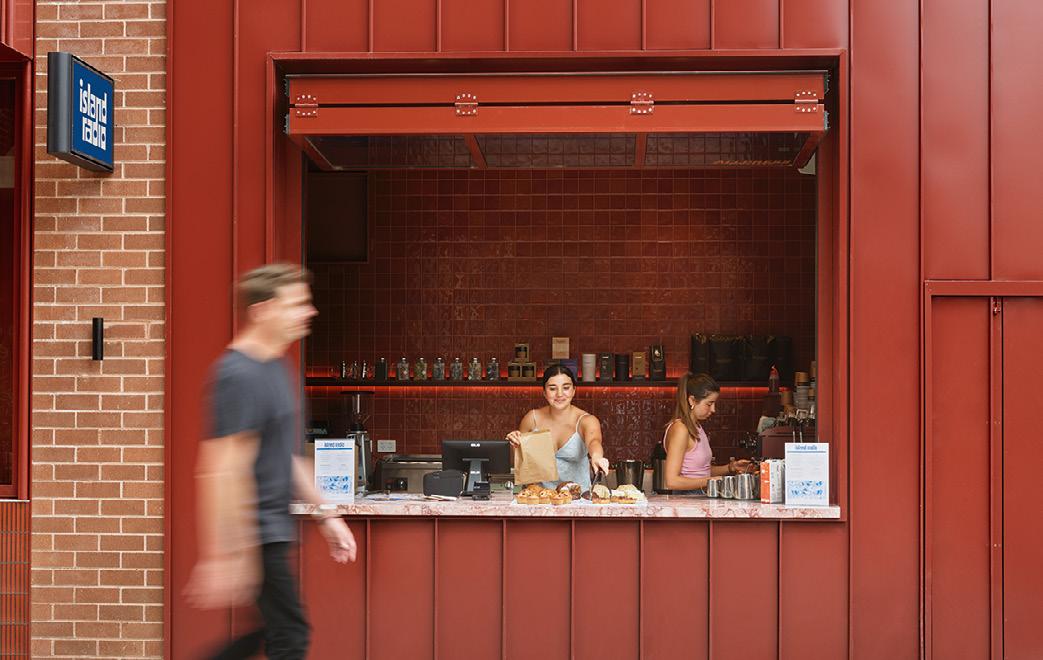
Kiosk – Island Radio Credit Steven Woodburn
Tilda
Credit Steven Woodburn
Alzado
Case study
The National Wine Centre of Australia (NWCA) used to prepare each of its employees’ contracts in house, one by one. “We’d align the diaries of 10 different people just to get everyone to sign their tax file declarations and super forms. It made onboarding new staff really difficult,” says Corporate Services Manager Josh Fitzpatrick.
This method just wasn’t working; because Fitzpatrick and his team were manually preparing so many documents, there would often be errors or inconsistencies. To remedy this, the NWCA began looking for a solution that could help them digitise and automate payroll and HR – eventually landing on Employment Hero.
“There were lots of HR platforms and plenty of payroll software out there, but very few that did both well,” says Fitzpatrick.
Employment Hero’s Employment Operating System (EOS) brings every aspect of managing a team into one connected platform — from hiring and onboarding to rostering, payroll, performance, and compliance.
For the NWCA, the system has proved to be a significant time saver in onboarding and compliance. “We’re no longer chasing missing documents — staff have to complete each step before moving on,” says Fitzpatrick. “The system flags when something’s outdated — we never miss anyone.”
It has also optimised payroll; the task used to take one of Fitzpatrick’s team members a day and a half each week to process. Now, it’s done in two hours or less. “That’s an entire salary, and a little bit more,” says Fitzpatrick. “It’s enabled us to focus on other priorities, and even open new outlets without worrying about extra admin load.”
Employment Hero’s EOS gives hospitality businesses access to intelligent candidate matching; HR and onboarding; rostering and scheduling; payroll and compliance; and performance engagement — meaning less time juggling systems and spreadsheets, and more time for the important things, like training and guest experience.
involved in creating cocktails for the menu or getting feedback from them on ways they could improve. “I think there are always ways you can learn,” he says. “We’ll try and motivate our stuff in that way and then we try and run quite a few incentives for staff as well, which stimulates them and helps them and the business.”
Allara Global Chief Executive Andrew Lewis agrees. Lewis says building your workforce is a simple, core principle, and caring for your employees means they will care for your customers. “If you treat casual staff merely as temporary help, that’s all
Island Radio Credit Steven Woodburn
Tilda Credit Steven Woodburn
WE’LL TAKE EMPLOYMENT ADMIN OFF YOUR PLATE
Don’t get slammed over summer. Meet the future of work.
Short-staffed just before lunch-rush? Punters piling in while you’re trying to onboard a new starter? Buried in HR admin and still pouring beers? Running a hospo business is anything but relaxing if you’re an employer.
That’s where Employment Hero comes in. It’s one system that takes employment off your plate.
EFFORTLESS ONBOARDING
Onboard staff in minutes and get them up to speed instantly
EASY ROSTERS
Build and share rosters without the hassle
PAIN-FREE PAYROLL
Keep payroll simple and dodge compliance curveballs
“People want to feel like they’re being developed, particularly this younger generation coming through.”
– Justin Newton
they are likely to be. However, if you treat them as potential members of your core team, providing them with skills and making them feel valued, you give them a reason to stay,” says Lewis. “This approach builds a powerful pipeline for future talent, turning seasonal hires into loyal, permanent employees when opportunities arise.”
Lewis says every employee, whether they are with you for two weeks or two years, is an ambassador for your brand. “During a busy period like Christmas, a few weeks of poor or inconsistent service from untrained staff can create a trail of negative reviews that lasts long after the holiday period is over. Proper training is essential for brand protection.”
He adds that investing in training has a positive impact beyond a single business; it affects the health and longevity of the entire hospitality sector. “By investing in all our people, we collectively raise industry standards and improve the culture, making it a more attractive career path. This ultimately contributes to the strength of the national hospitality and tourism economy,” Lewis says.
Allara, for example, is currently working with a client who is putting 75 of their team members, both casual and permanent, through training on guest experience, sales, and handling customer complaints. “This shows a clear commitment to valuing every employee, whatever their status, and investing in the industry’s future,” he says.
“This is about a duty of care. Casual team members face the same workplace risks as everyone else. Providing them with proper training isn’t just good business sense; it’s a legal and ethical responsibility.” ■
Alzado
Alzado
Alzado
Island Radio
Credit Steven Woodburn
Masterclasses for every part of your venue
Leadership and management
Conflict resolution
Leading workplace safety
Managing operational finances
Maybe masterclasses by Maybe Group
Bar 101
Guest experience and upselling techniques
Cocktail 101
Mental fitness
Mental fitness 101
Navigating the pressure cooker
Preventing harm
Scan for full course list and pricing.
Download the masterclass guide
Season of the sea
What’s on the menu this summer for a nation of seafood lovers?
Words Laura Box
Photography Quay by Nikki To; Spice Temple by Steven Woodburn
As Sydney approaches the depths of summer, the city is looking towards the opening of the new and gargantuan Sydney Fish Market on 19 January 2026. It’s a physical representation of the nation’s proliferating, constant, and top-dollar love of seafood. The state government development has blown out by upwards of $580 million, from the proposed $250 million in 2016, to $836 million tallied in February this year.
For everyday Australians, seafood has become a mainstay of day-to-day meals — it’s not just reserved for special occasions anymore, according to Australian seafood producer Tassal. It’s easy to see why; not only is seafood delicious — it’s nutrient dense, and often a good source of protein and omega 3. So what are chefs doing differently this season?
Razor clams
When Quay and Bennelong Executive Chef Peter Gilmore was judging the Delicious Produce Awards earlier this year, South Australian producer James Boylan quickly caught his eye.
“Every year we see some different producers come across the table, and this year what really stood out was James’ razorfish,” says Gilmore. “It’s a really unique product.”
Boylan, a Smoky Bay oyster grower by trade, began
petitioning for a license to produce the clams around 2007. When he finally received permission to cultivate the clams (which are endemic to South Australia) — about 15 years later — it launched a new era for his business. The cultivation process is like that of an oyster and the project is long-term, with the clams taking years to develop.
“The government has allowed him to harvest enough from the wild to test out its commerciality and how it would go as a new seafood product,” says Gilmore. The flavour, says the chef, is somewhere between a scallop and a regular clam, but meatier.
In Australia, different families of razor clams appear across the country — including as a fanshaped, foot-slicing strain found in NSW’s Lake Macquarie, and a bicolour type found in WA’s Busselton and other parts of South West Australia — but they’re a long way from hitting mainstream menus.
“I believe down in South Australia, the local people have been collecting them from the bays for years. It’s a well-kept secret how good they are –sort of like South Australian abalone,” says Gilmore.
These varieties, along with Boylan’s razorfish, are in the family Pinnidae. And while not
“It’s a well-kept secret how good they are – sort of like South Australian abalone.”
– Peter Gilmore
directly related, the bivalve molluscs are comparable in flavour profile to the Solenidae family prevalent on European menus. In Barcelona, for example, nofrills neighbourhood restaurant Lluritu serves some of the most beautiful, simple, and fresh seafood in the city — cooked humbly with few additional ingredients. There, at the marble bar (and preferably with an icy bottle of Penedés cava) you can eat Solenidae razor clams (also known as navajas in Spanish, or navalles in Catalan). The bivalve molluscs are named for their long, narrow shells, which — when closed — resemble an old-fashioned cut-throat razor. They’re also known as ensis, or in Scotland as spoots (some say for the spurt of water that shoots out as they burrow into sand).
The Lluritu chefs grill the clams and serve them, shell on, on a plain white plate with only a splash of oil. Perfectly tender, they are reminiscent of something between a scallop and other members of the saltwater mollusc family, like the Australian pippi – albeit with slightly more substance.
While Boylan is testing the clam’s viability, he’s only got a limited amount — some of which Gilmore has been lucky enough to score for his menu at Quay.
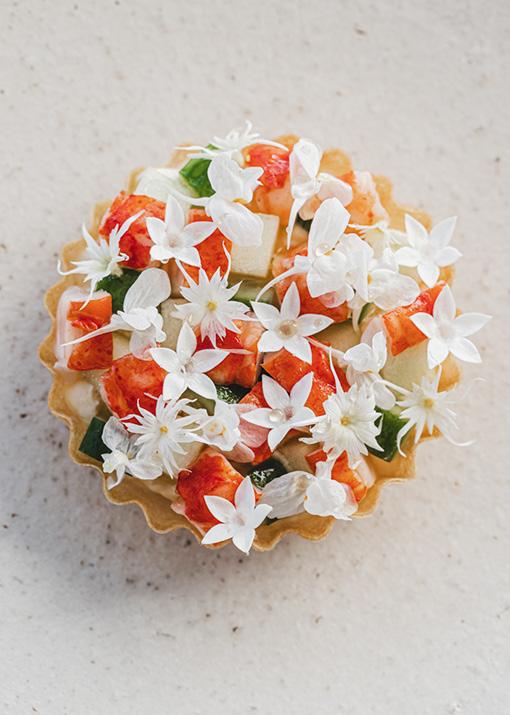
The chef is now serving the clams as sashimi alongside pearl meat from the Northern
“Summer
is all about fresh, light flavours and easy entertaining. People want seafood that fits that mood, think barbecued prawns, salmon skewers or a simple barramundi fillet with citrus and herbs.”
–
Guy Turland
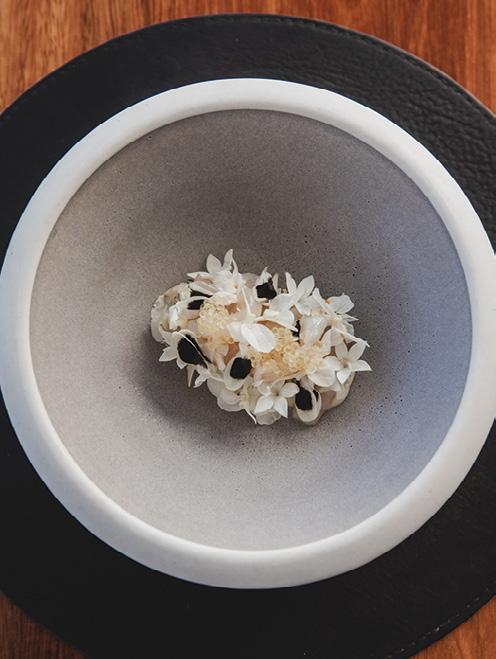
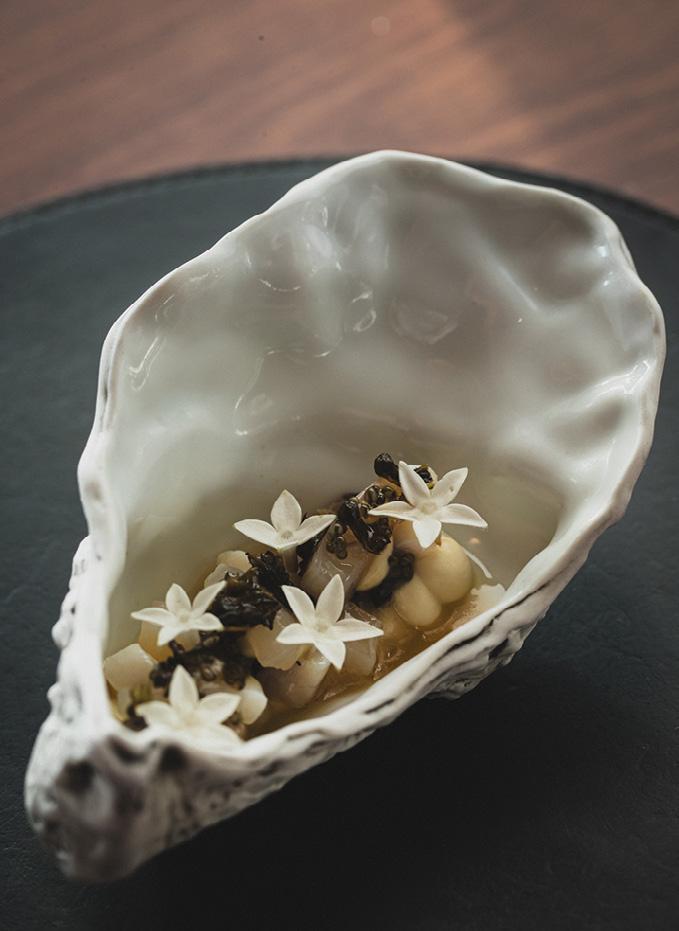
Territory. “We slice them very thinly, then we dress them with a little aged brown rice vinegar, a little bit of virgin soy, and some grape seed oil. Just a tiny amount to take the rawness edge off them,” says Gilmore.
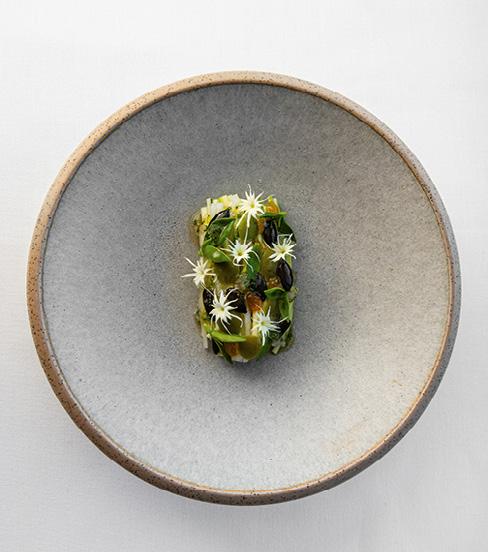
After dressing them, he sets them on top of an oyster cream made from Sydney rock oysters and a small amount of crème fraiche, which is garnished with a liquorice kombu, preserved shiso buds, and some dried oyster. “So there’s this more intense, lovely, dry textural thing going through the cream,” says Gilmore.
The dish is garnished with five different types of edible flowers and Murray cod roe.
Gilmore says his customers at Quay are often looking to try something they haven’t tried before, which drives his desire to find new suppliers and producers. The reception to the clams, he says, has been fantastic.
Prawns
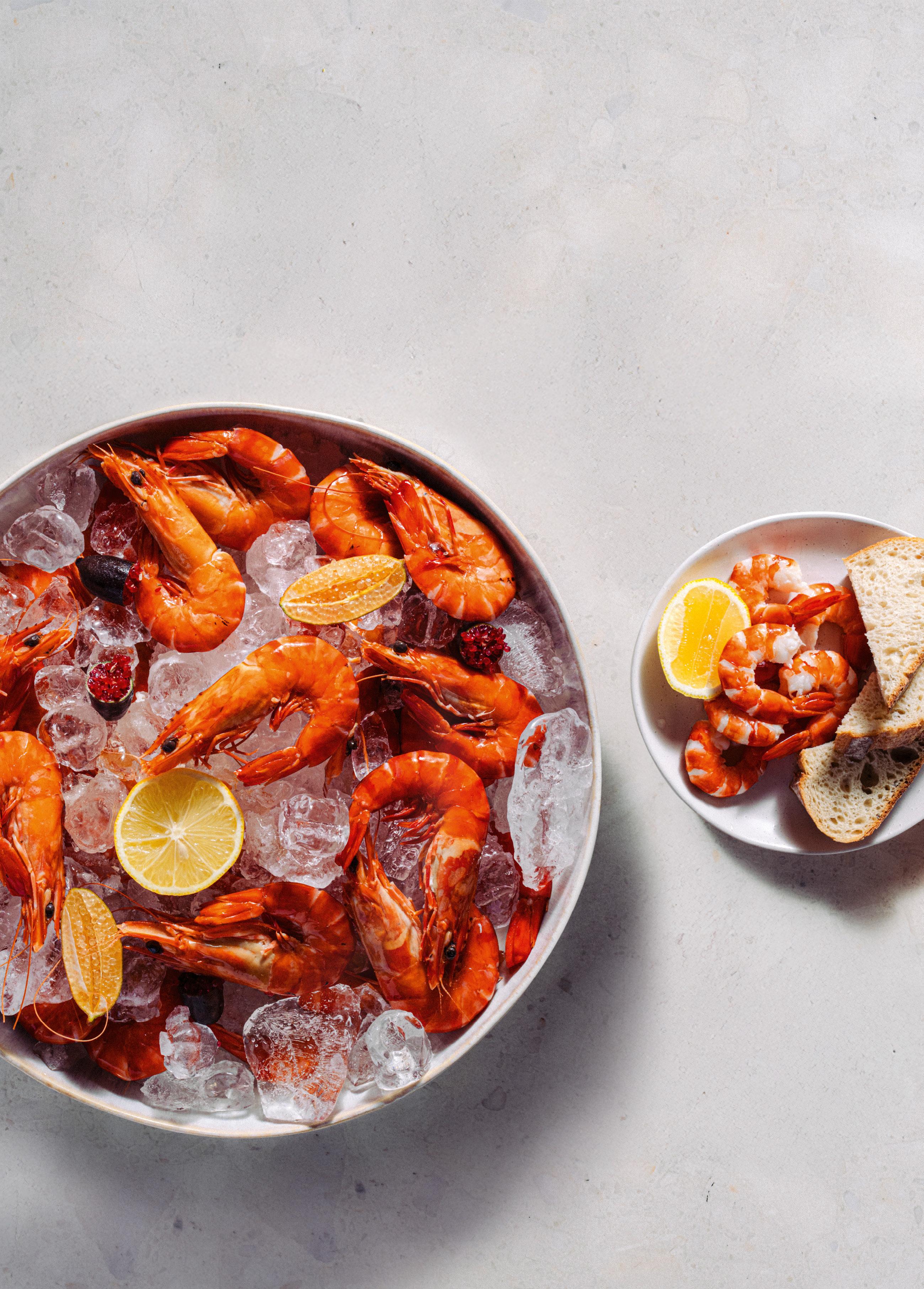
While chefs like Gilmore are introducing new seafood to Australian diners, steadfast produce like prawns remain the hero of the summer table, according to Australian seafood producer Tassal.
Tassal ambassador and Chef Guy Turland says that Australian consumer preferences tend to evolve over the course of the summer months. “Summer is all about fresh, light flavours and easy entertaining. People want seafood that fits that mood. Think barbecued prawns, salmon skewers, or a simple barramundi fillet with citrus and herbs,” says Turland.
“It’s also a time when chefs experiment more with cross-cultural flavours, drawing inspiration from coastal cuisines around the world.”
Bringing this element of cross-cultural flavour to the foreground is Hunter St. Hospitality Culinary Director Andy Evans.
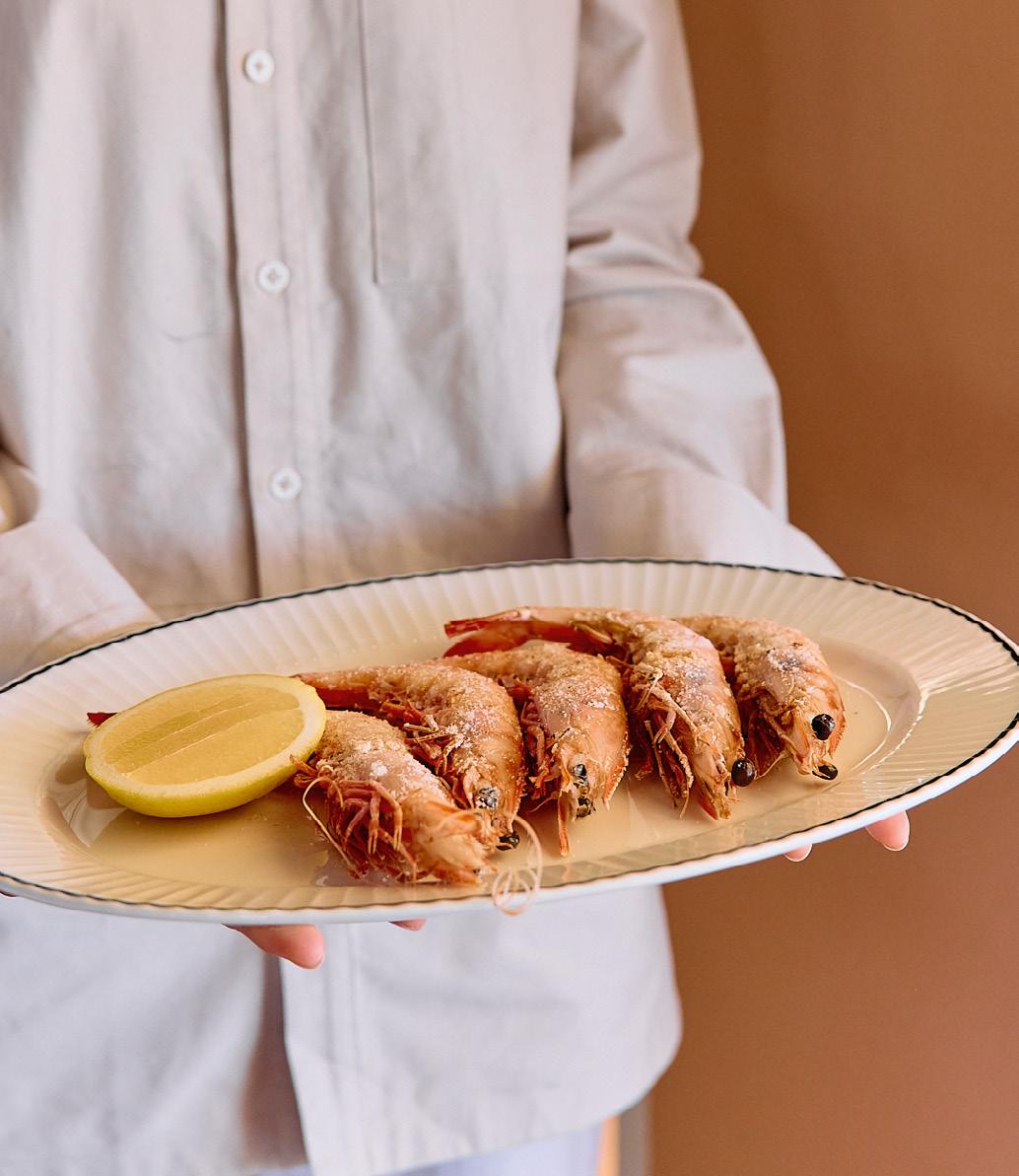
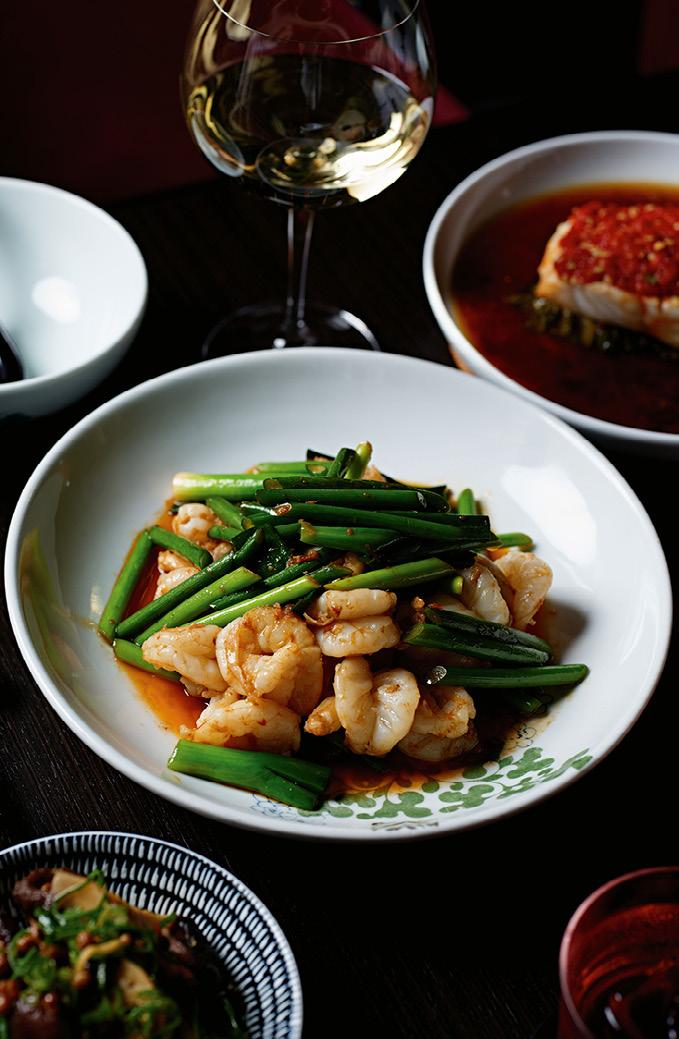
Fresh from his tenth research trip to China, the executive chef has taken inspiration from Yunnan, Sichuan, and Hunan provinces and combined them with local produce to deliver a uniquely ChineseAustralian menu for Sydney institution Spice Temple. In homage to central China’s Hunan region, the chef’s stir-fried river prawns with house-made chilli paste uses local Australian river prawns in a nod to China’s inland river systems.
“Every visit to China reminds me how much there is still to learn,” says Evans. “In Kunming in Yunnan, I was struck by the calm precision of the cooking – nothing rushed or showy, just a real focus on balance and intent. That approach shaped the new dishes at Spice Temple; lighter, more measured, a counterpoint to the bold flavours already on the menu.”
The chef’s latest ‘Peony Banquet’ menu also features an updated return of a much-loved dish: Hunan-style steamed coral trout. The tender fish sits atop a bed of pickled mustard greens and is topped half and half with salted red chillies and pickled green chillies, leading regulars to affectionally call it the ‘stop light fish’.
Australia easily rivals the world’s best when it comes to abundance and quality of seafood, but selecting the right produce is crucial. To make sure your produce is as fresh as possible, “always look for seafood that’s firm to the touch and has a vibrant colour,” Turland recommends. “With prawns, it’s about that firm snap and translucent shell.”
For Australian diners, the appeal of summer seafood is clear: the produce is nutrient dense without feeling heavy and can easily be cooked with bright fresh flavours to complement the nation’s balmy weather. ■
Brûlée boom
There’s an art to putting a twist on a classic dessert. When done well, it can quickly become a crowd favourite.
Words Maia Hart
Photography Lexy, Iki Dining, and Kitti Gould for Bistro Red Lion
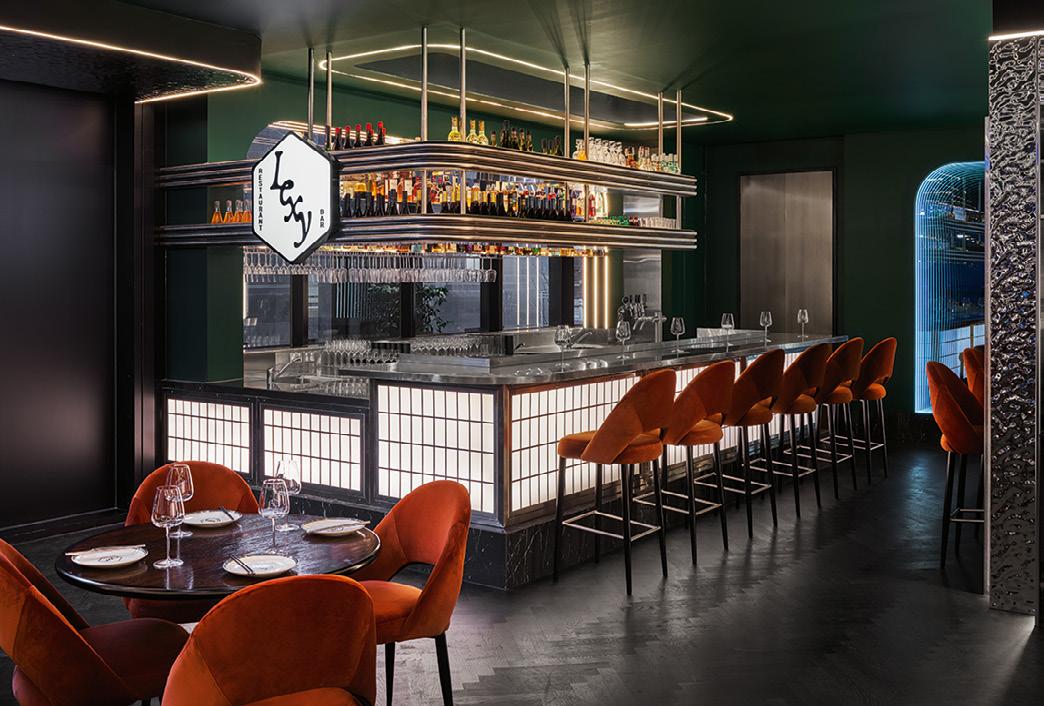
Lexy
Given its origins date back to the 1600s, the classic French crème brûlée is certainly not a new concept. Despite this depth of heritage, the dish is widely loved and persists on modern menus. Traditionally it has a rich vanilla custard base, torched to form a layer of brittle, but today, the dessert serves as inspiration for restaurants looking for a classic dish to make their own.
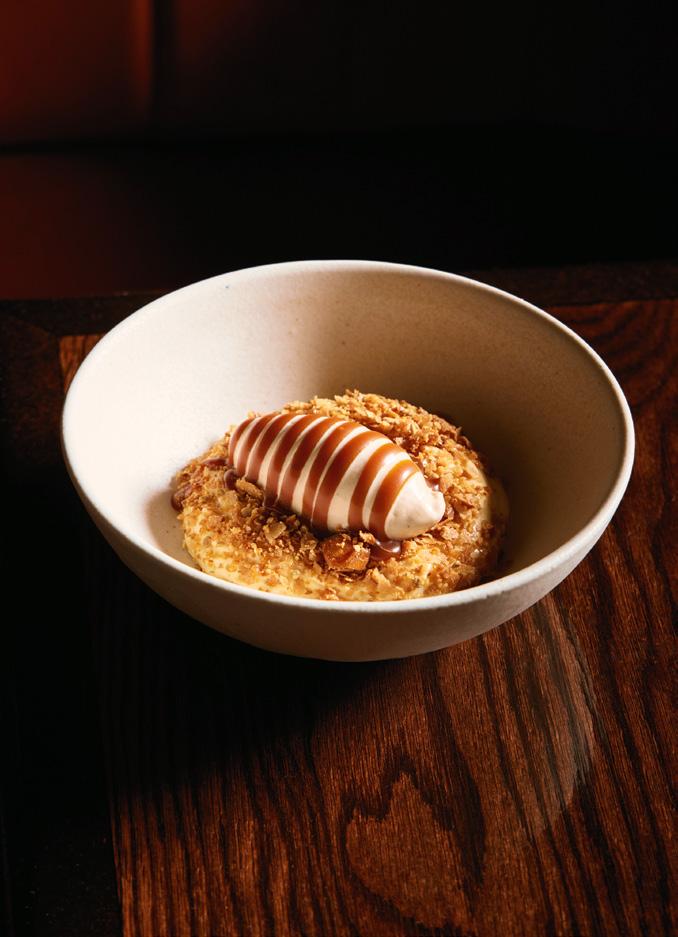
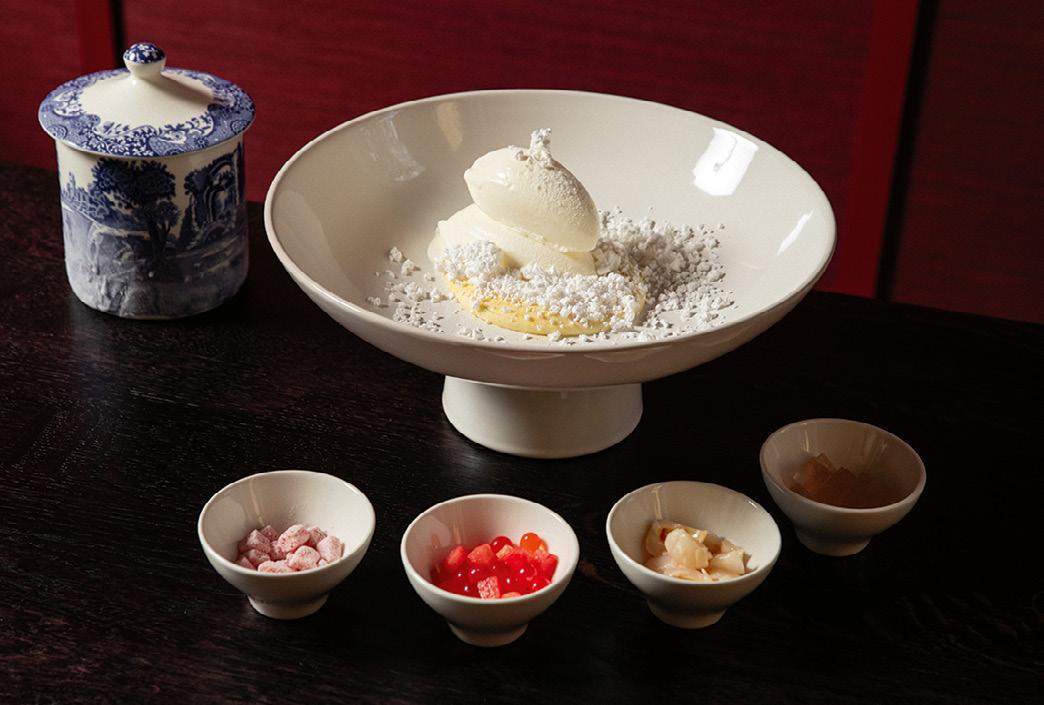
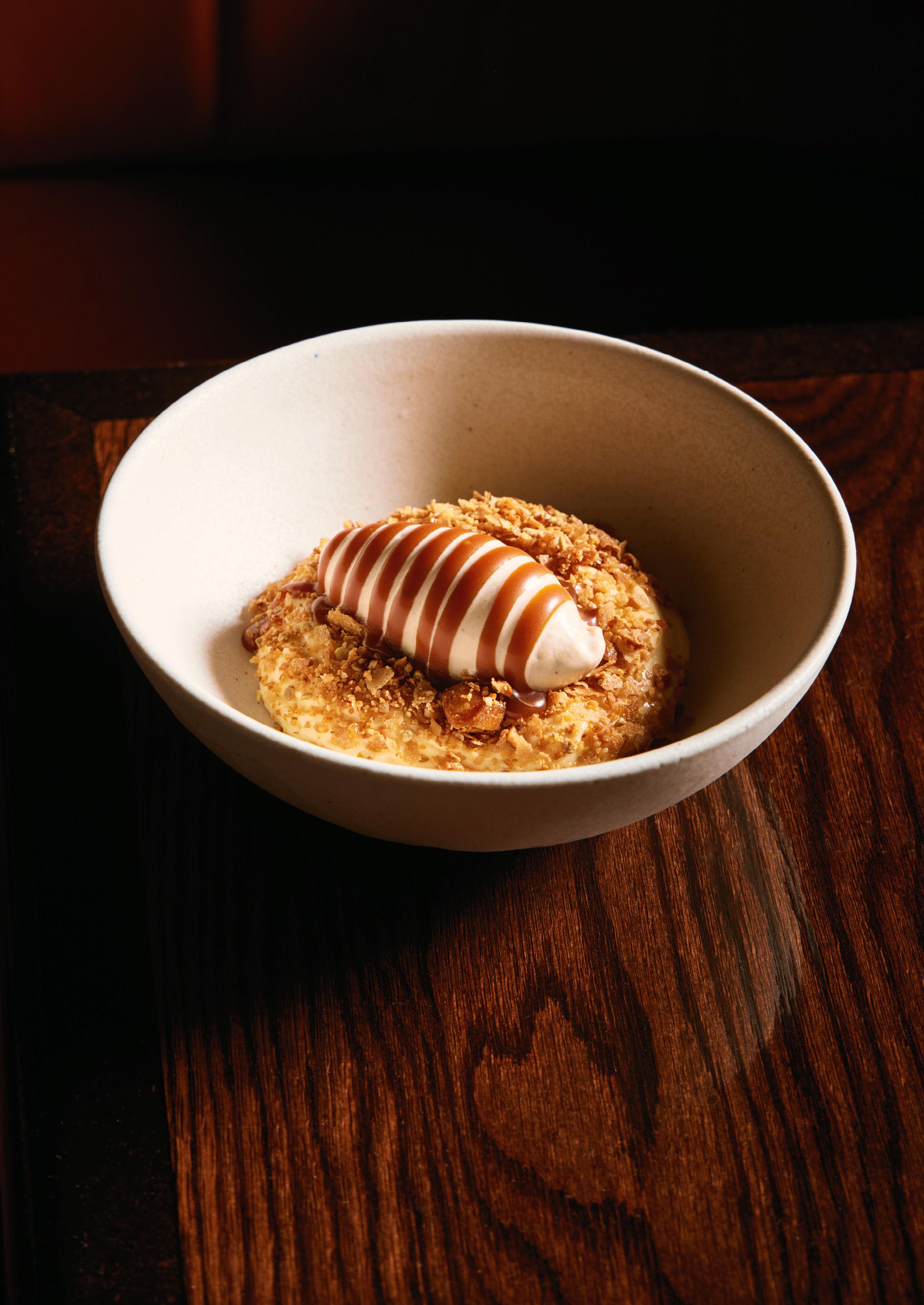
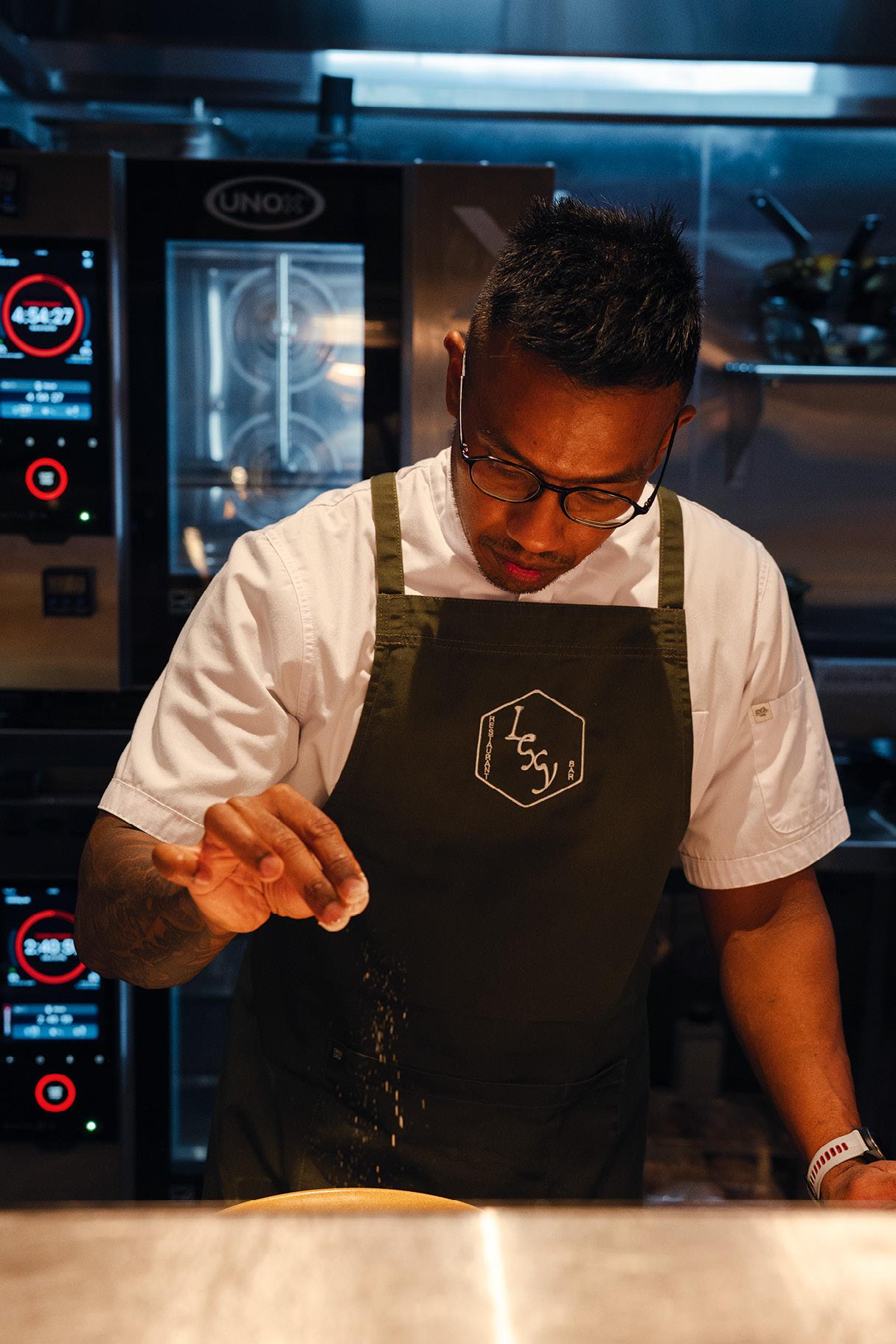
For Lexy Melbourne Head Chef Oak Kunnalok, landing on a crème brûlée-style dish didn’t happen overnight. He admits a version of the dessert wasn’t even among his first thoughts for the restaurant, which opened its Flinders Lane doors earlier this year with a menu leaning heavily on Asian flavours. Yet, through trial and error, Kunnalok and his team eventually developed a crème brûlée espuma with charred banana house-made ice cream, macadamia, and dark rum caramel.
Kunnalok, who says he regularly dines out at Asian restaurants, points to the banana fritters often sold at traditional Chinese venues. “It’s just a deep-fried banana with some batter and then you just puff it up and eat it with vanilla ice cream or something like that,” says Kunnalok.
He set out to elevate the deep-fried banana to match Lexy’s approach. Together with the team, he began recipe testing. The first trial started with a deep-fried ice cream, but Kunnalok admits the team “didn’t like it that much”. So, they went back to the drawing board.
As it turned out, the blend of crème brûlée and banana ice cream was a hit. “It’s a weird combination, but together it worked so well. I’d never seen this combination before,” he says.
“It’s a weird combination, but together it worked so well. I’d never seen this combination before.”
– Oak Kunnalok
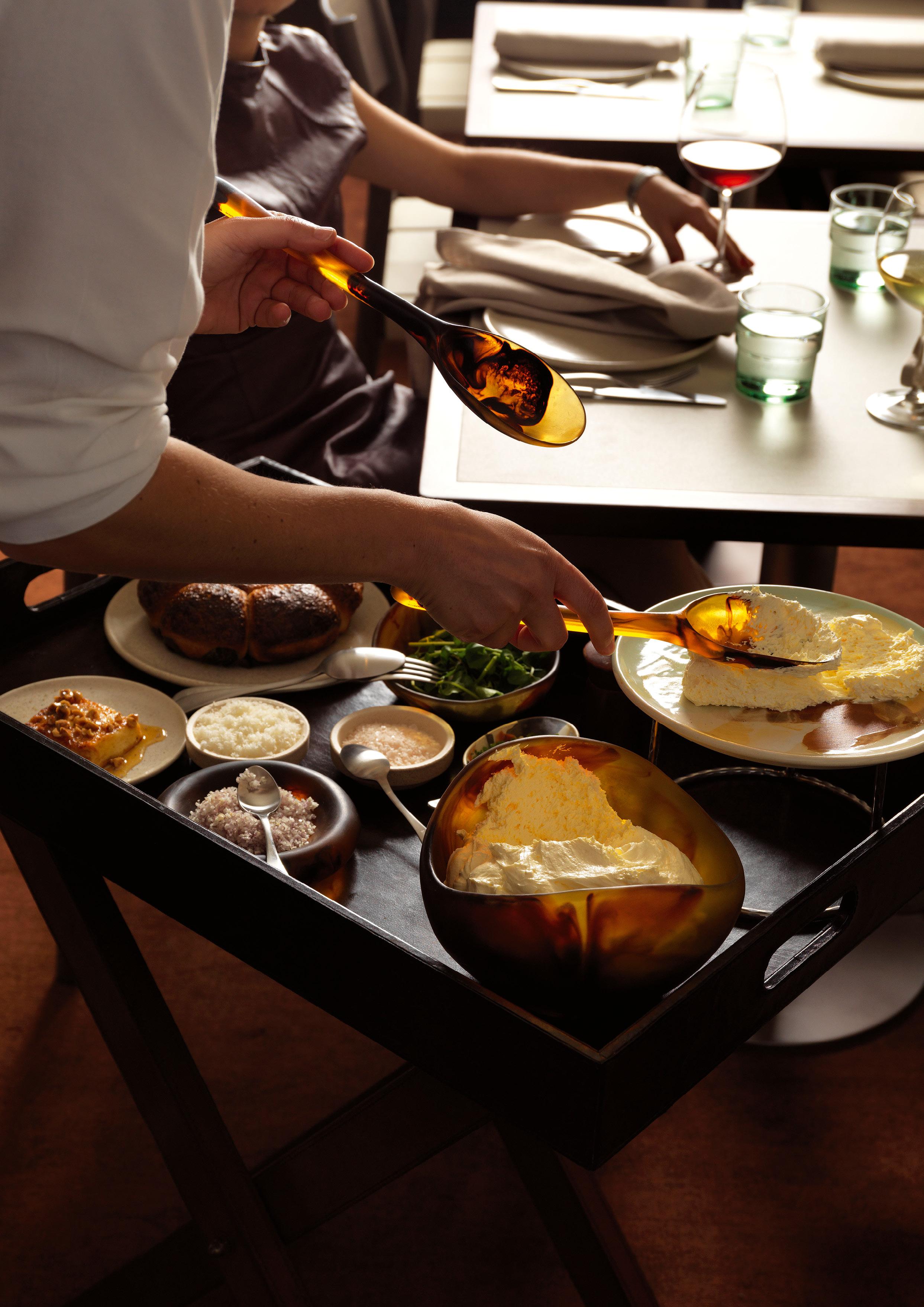
Keen to do something different to the “normal crème brûlée”, the chef looked towards the bar’s whipped cream dispenser. The idea? To put the crème brûlée into the can. The resulting espuma (or foam) was “perfect”, says Kunnalok. But the team, who he says were instrumental in helping bring the menu to life, were also looking to spruce up the ice cream. He tells Hospitality he wanted to incorporate the Josper grill — a commercial grill and oven in one unit that uses charcoal, which means any food cooked in the appliance is done so at high temperatures.
Kunnalok says they roast the whole banana inside the Josper. Then they take the flesh out and use it to make a roasted banana ice cream which pairs flawlessly with the whipped cream dispenser crème brûlée espuma. The crowning element?
A macadamia crumb and dark rum caramel.
Kunnalok, who says he eats out a lot, finds that many good restaurants have a strong entrée and main menu, but when it comes to desserts, he often feels let down. “I don’t like that,” he says. He understands the cost of labour means that hiring a proper pastry chef can be overlooked. “But I like dessert, I like sweets, so we’re very focused on the sweet section here.”
He says when he first put the crème brûlée espuma on the menu at Lexy people questioned him. “They were like, ‘Are you sure you’re going to do this? It does not belong here.’ but I kept telling them to trust me.”
Oak Kunnalok
Lexy
That trust seems to have paid off, because the dessert has become a crowd favourite. “I like to change the dessert menu every couple of months. This one, personally, I didn’t think it was going to [last] long, but it’s become the most popular right now. I think we need to keep it all year round. All the ingredients that we use we can find all year round,” he says.
It surprised him, especially because crème brûlée wasn’t the first flavour combination they tried. “We tried two or three flavours of espuma. One was more like a yoghurt and mascarpone. But because I really like roasted banana ice cream, I just tried to find the best [flavour] to eat together with [it].”
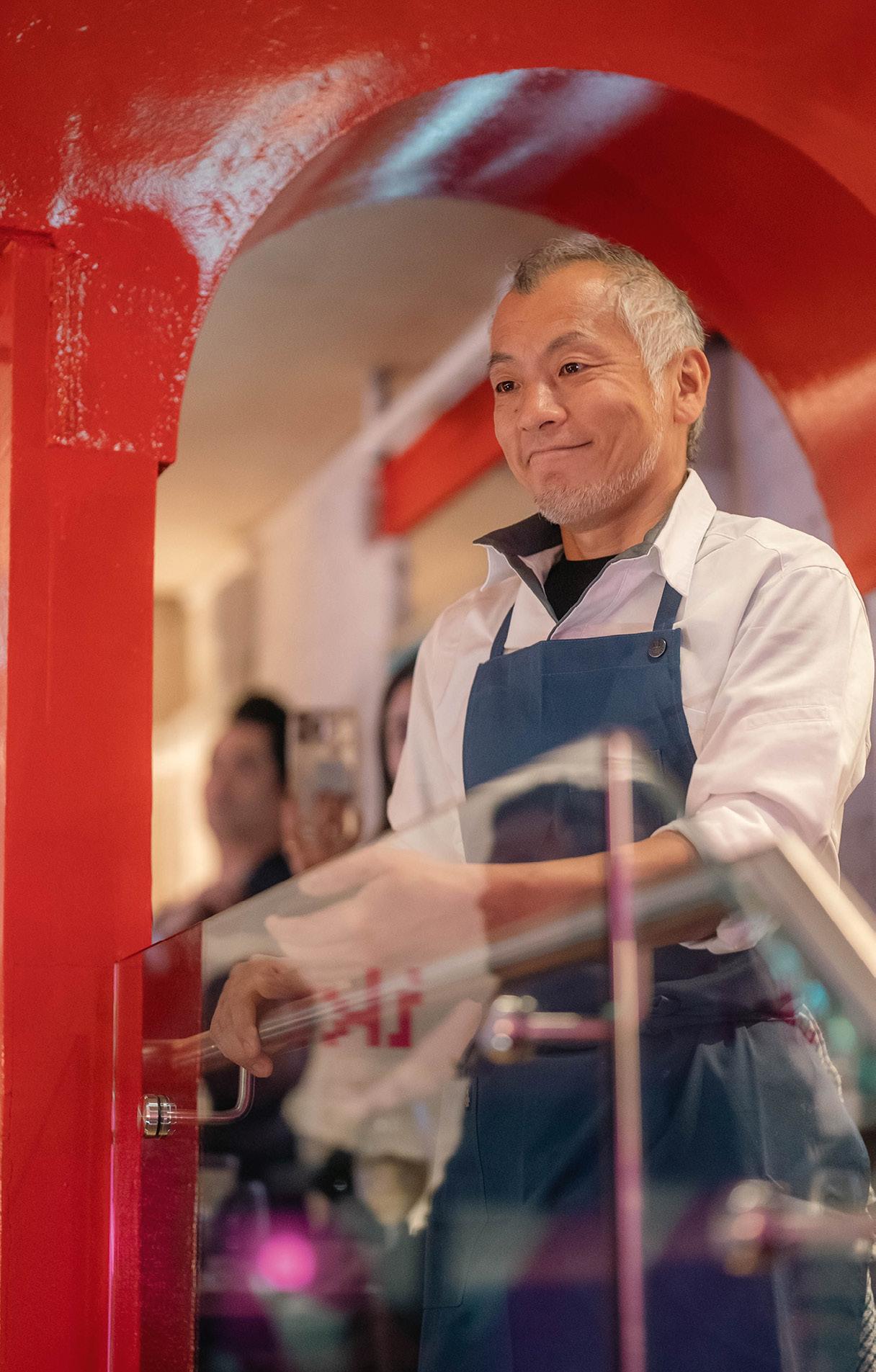
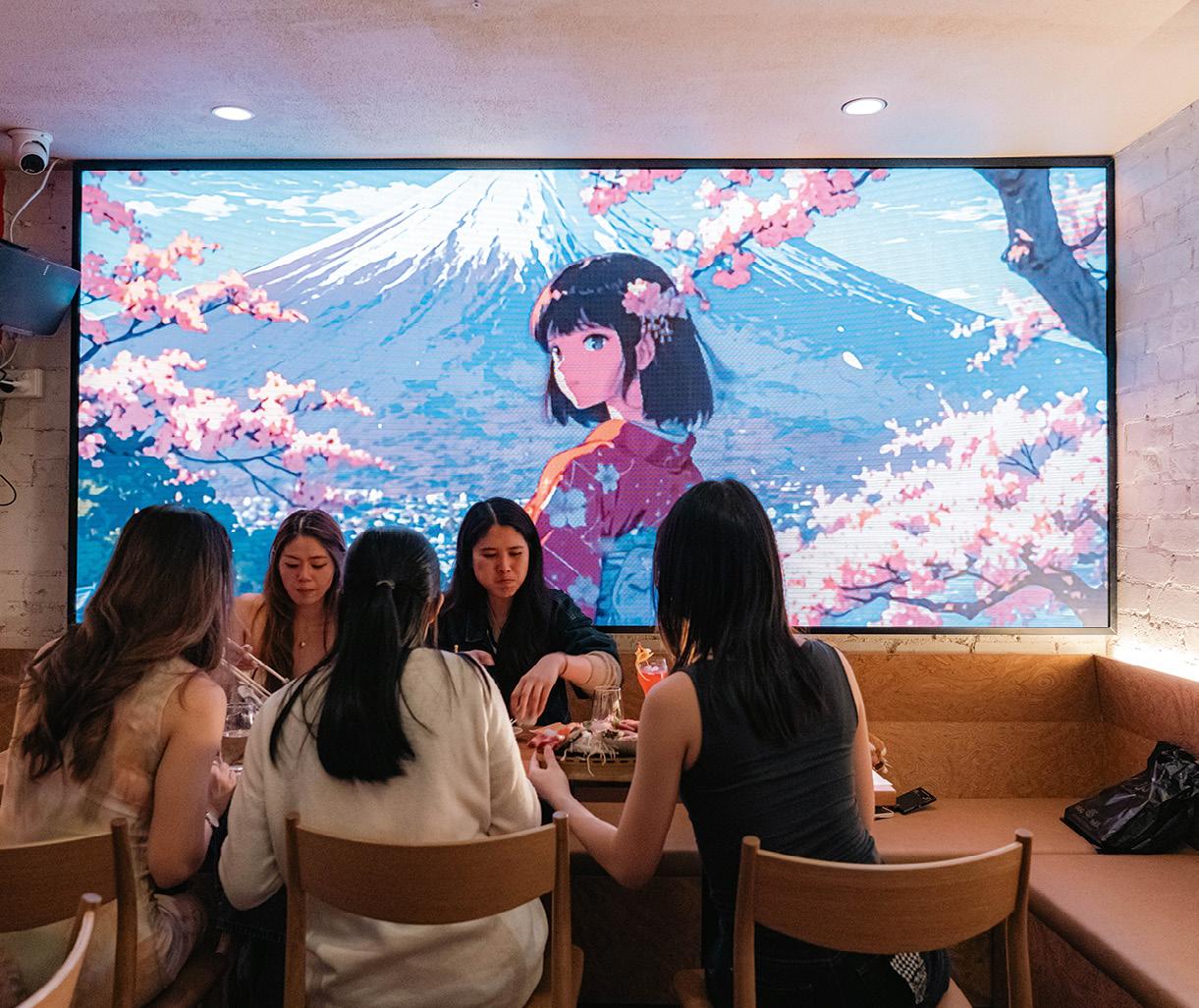
At newly opened Iki Dining in Potts Point is another unexpected brûlée, this time with sweet potato. For Michelin-starred Chef Masahiko Yomoda, the inspiration for this dessert came from his childhood. It slots in well with Iki’s concept, which allows diners to pick between two experiences; Ramen by Iki, which includes broths simmered for 48 hours, and Iki Izakaya, a cozy space designed for sharing premium small plates and sake.
“I wanted a dessert that felt warm and comforting, but also a little unexpected,” Yomoda tells Hospitality. “Sweet potato has always been part of Japanese food culture; you eat it roasted on the street in winter. Turning that memory into a brûlée felt like the right balance of tradition and surprise for Iki.”
The Japanese chef says sweet potato is simple, but a “taste of home”. During his training in France, Yomoda learnt the craft and precision behind the classic dessert. The chef says his sweet potato brûlée felt like he was fusing his two worlds.
Yomoda’s French training really helped when it came to perfecting the recipe. “Brûlée is all about balance: smooth custard, clean flavour, [and] a perfect caramelised top. We tested many potatoes until we found one with the right sweetness and texture that we can get all year round,” he explains. “Then I used classic French technique to refine it — adjusting cream ratios, sugar levels, and the torching process — until it tasted exactly as I imagined.”
“A classic brûlée is delicious, but everyone knows it. Sweet potato makes it ours, Japanese at the core, French in technique, and familiar enough that guests still feel connected to it.”
– Masahiko Yomoda
Chef Masahiko Yomoda
Iki Dining
“Who doesn’t like it? It’s about the texture of the crème and the crack of the caramelised sugar on top. Just a perfect dessert,”
– Manu Feildel
Yomoda says he went with a sweet potato base because he wanted to make sure that he was doing something that had not been done already. “A classic brûlée is delicious, but everyone knows it. Sweet potato makes it ours, Japanese at the core, French in technique, and familiar enough that guests still feel connected to it,” says Yomada. “For me, this brûlée is a small story on a plate — simple Japanese ingredients, perfected with French craft, and shaped by years of training.”
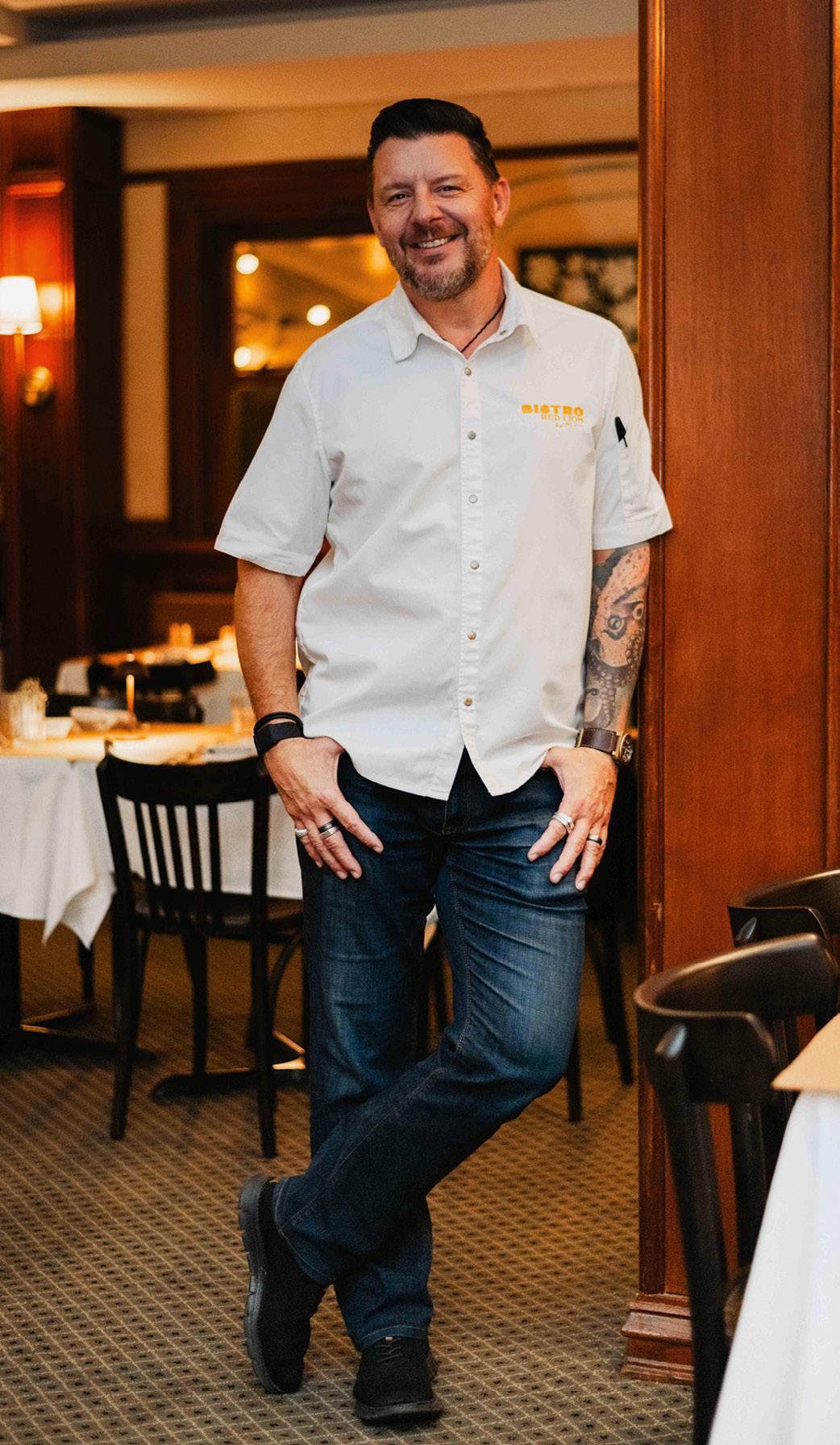
As Bistro Red Lion Head Chef Manu Feildel puts it, crème brûlée is “such a classic French dish”. “Who doesn’t like it? It’s about the texture of the crème and the crack of the caramelised sugar on top. Just a perfect dessert,” Feildel tells Hospitality
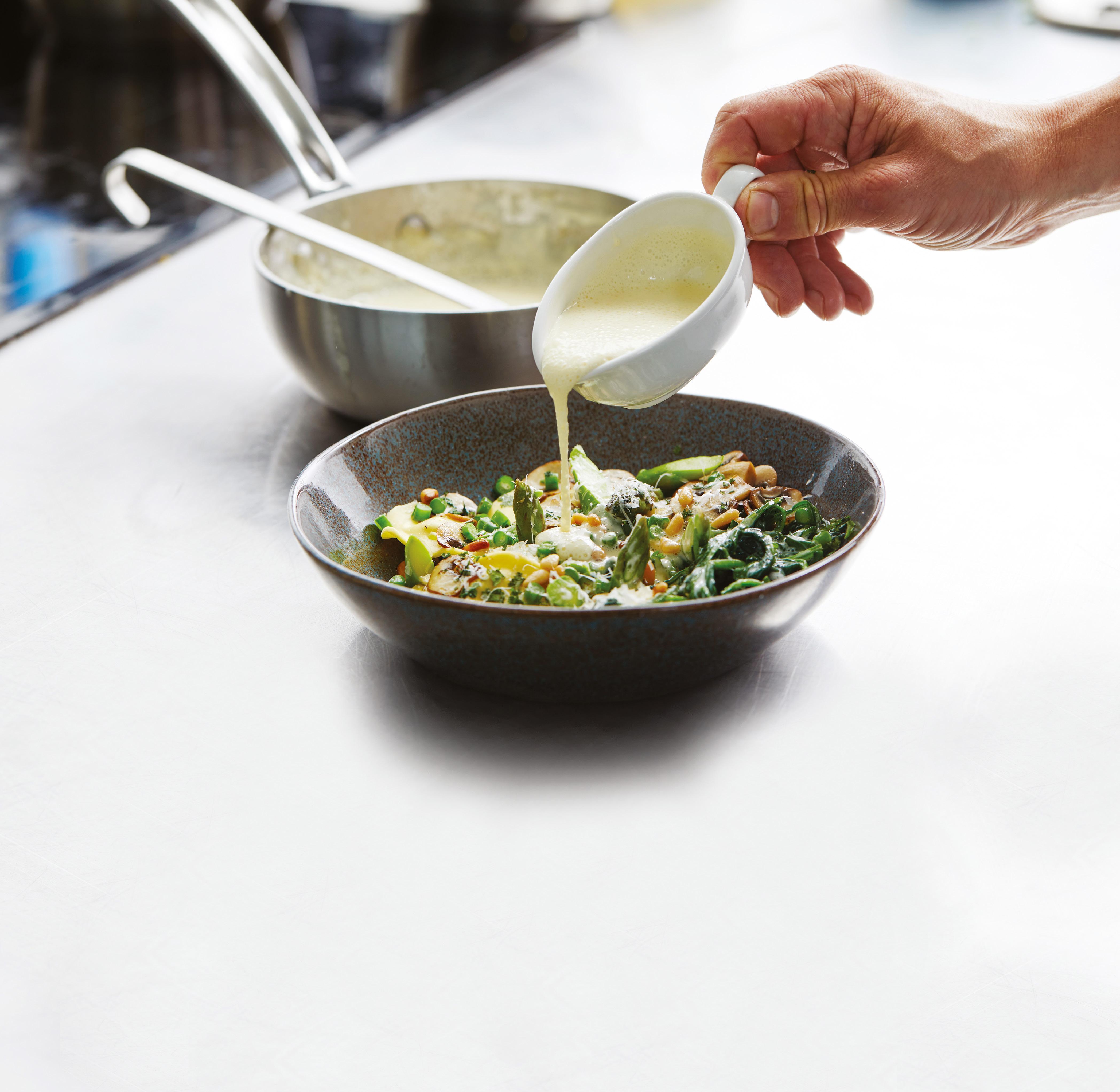
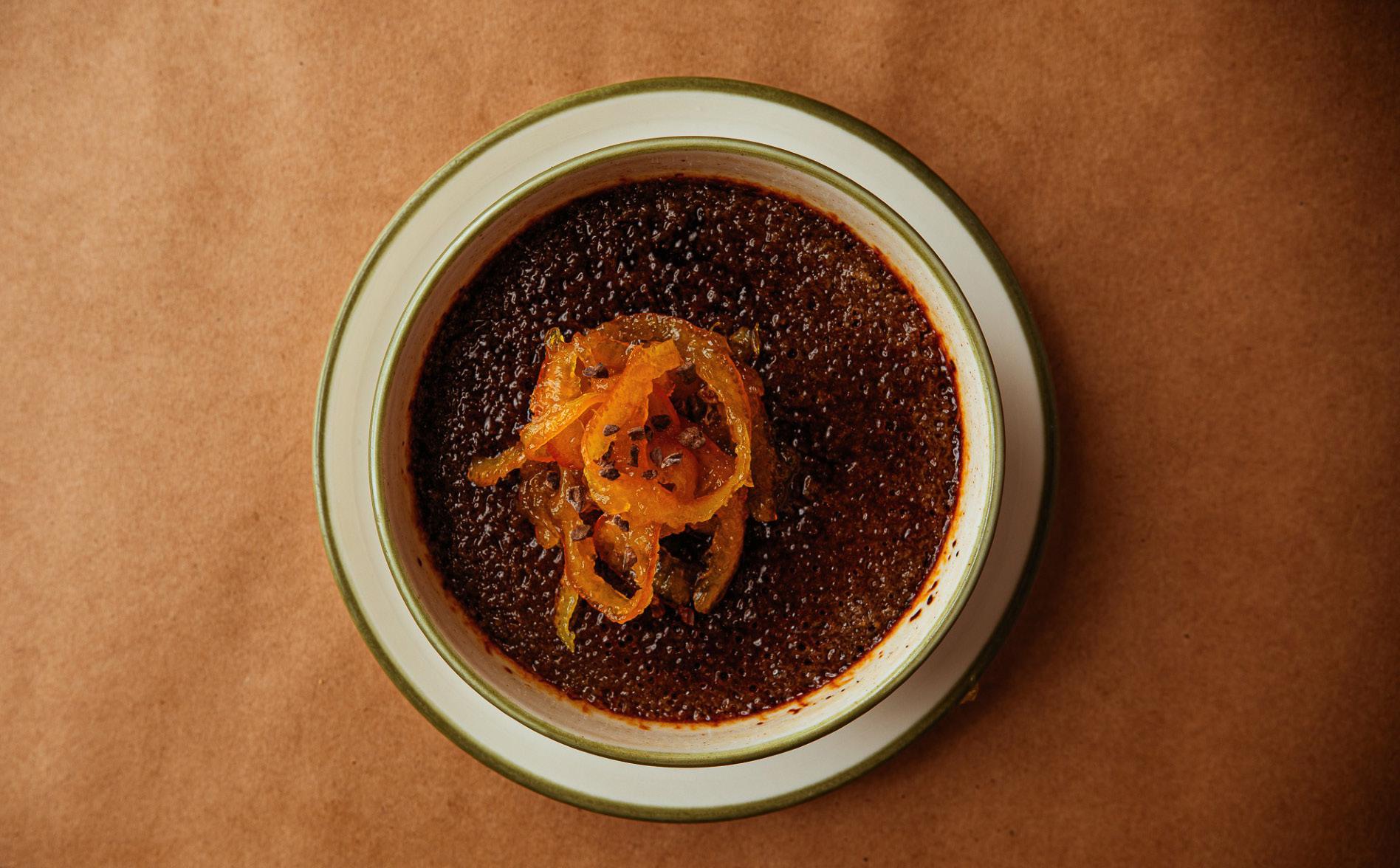
Bistro Red Lion has also put a spin on the classic, opting for a chocolate brûlée with orange and whiskey marmalade. Feildel says they previously had the original vanilla crème brûlée topped with Armagnac prunes which he described as a “winner”, but at a certain point he felt like a change and found the chocolate crème brûlée to be “pretty great” too.
He doesn’t think the brûlée will ever go out of fashion. “A crème brûlée is so delicious and light that even if you don’t feel like a dessert, you’ll be easily convinced to have one anyway.” ■
Manu Feildel
Bistro Red Lion
Measured with 48.001g artisan flour.
Balanced by 0.101g salt.
With 50.001ml filtered water.
... but with german precision
HOSTPLUS SUPER PROVIDER OF THE YEAR
At Hostplus, we put our members at the centre of everything we do. That’s why Finder has named us Super Provider of the Year 2025.
Awarded for strong performance, low fees and great investment options, a win for us means a win for our members.
An award-winning super fund. That’s a plus.
Spritz appeal
The innovative and refreshing wine category is quickly rising in popularity. What’s the appeal?
Words Maia Hart
Photography Zonzo by Andersen Studios; Harper Rooftop Bar; Ripples Chowder Bay by Trent van der Jagt
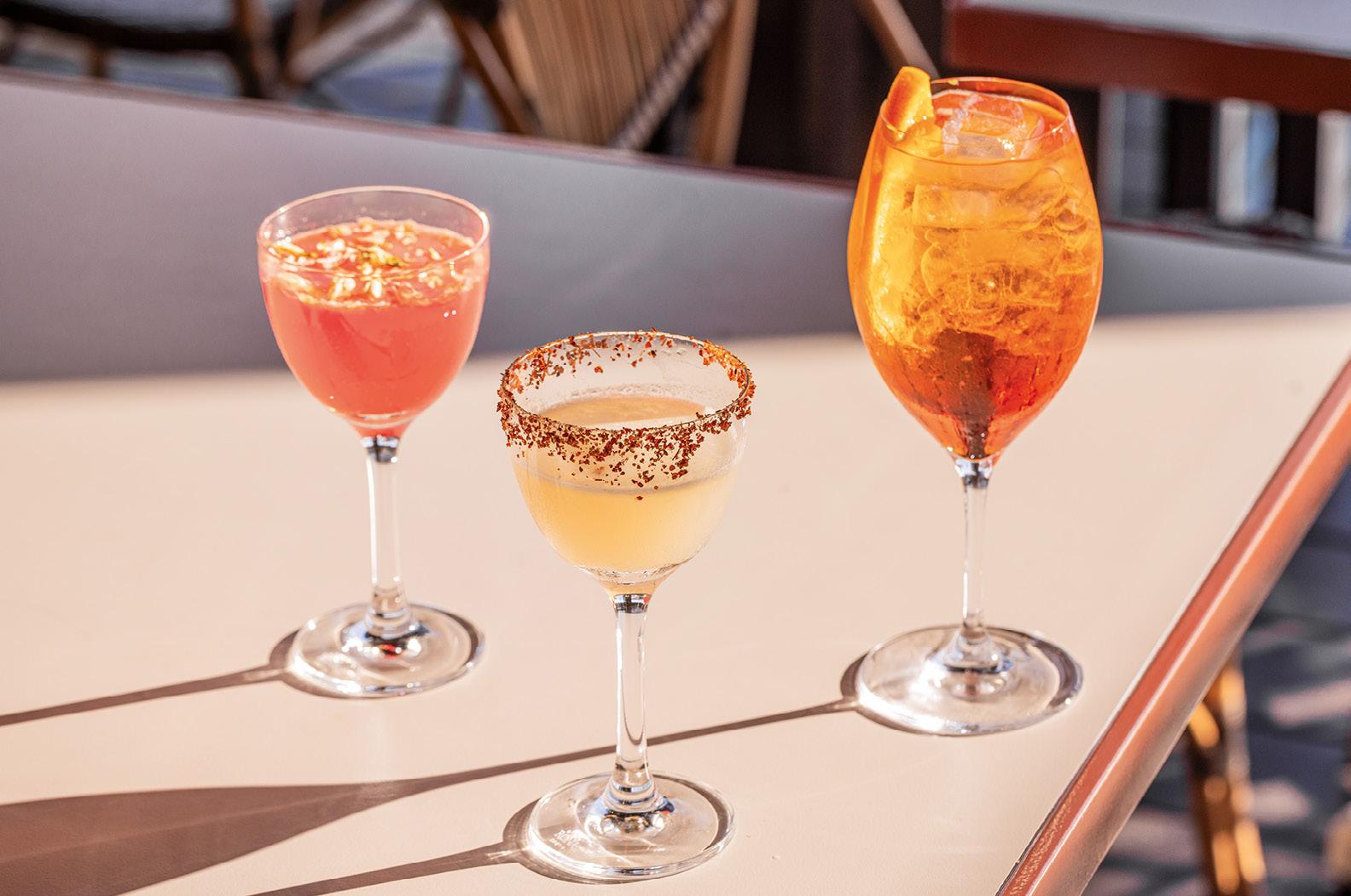
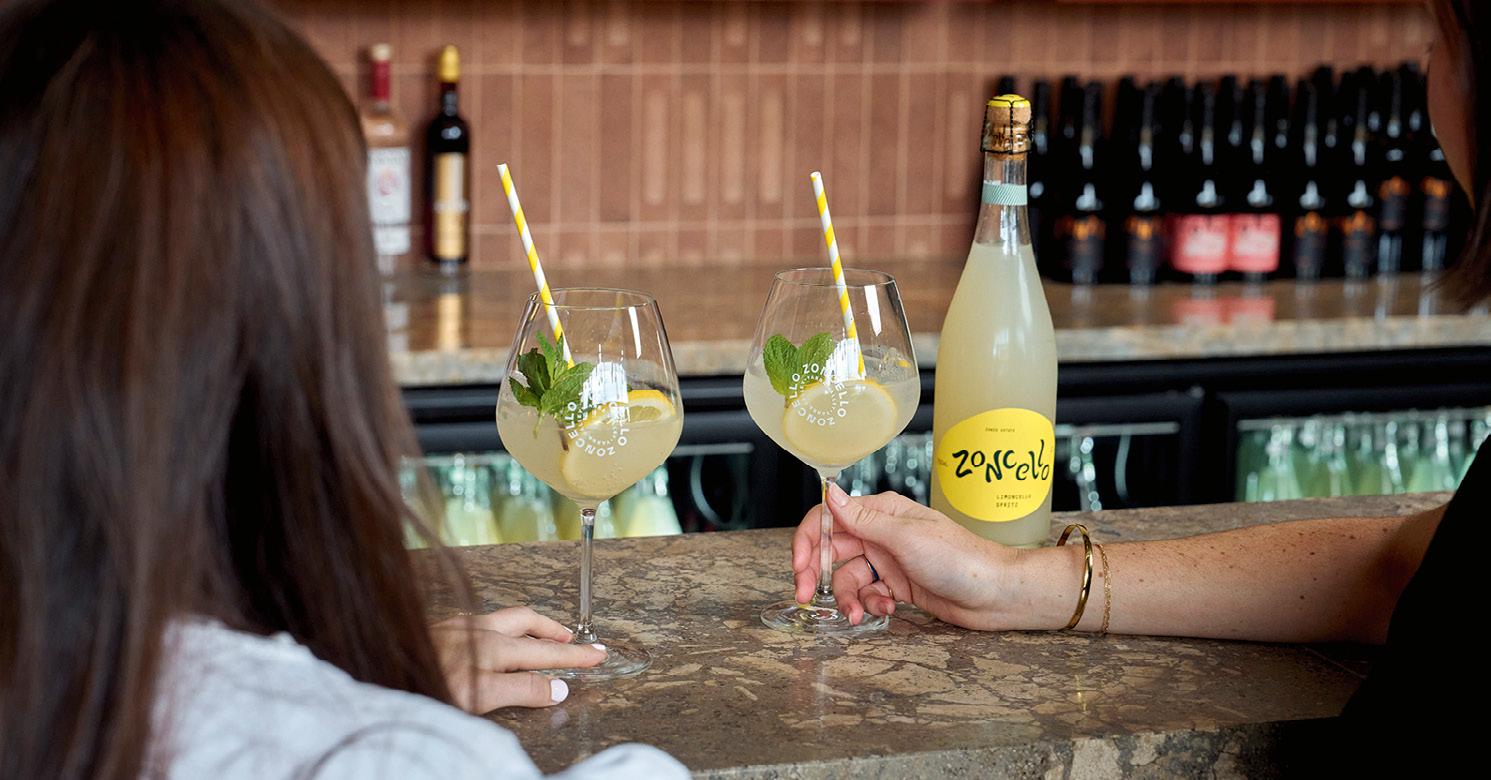
“We’re going on a spritzaria,” says Rod Micallef, Director at Zonzo Estate in Yarra Valley. At least, that’s what some of their team is saying. Micallef is speaking to Hospitality about the “serious category” of spritz wines. From canned and bottled limoncello drops, to a pistachio spritz, and their newly launched aperitivo spritz dubbed RoRo — Zonzo Estate has cemented its place in a wine category that’s starting to gain traction.
“I really want to drive home that this is a serious category. This isn’t a side gig, and nor should it be,” says Micallef.
The spritz category has become so popular, in a recent report Endeavour Group General Manager of Premium and Luxury Andrew Shedden says “spritz culture” is invigorating the market, and consumers are sending a clear message — they want lighter, more versatile, and often more affordable options.
The collaborative report between Wine Australia and Endeavour Group, Future of the Bottle, analyses sales data from BWS and Dan Murphy’s. It says sparkling-winebased cocktails are a key feature among younger drinkers as people seek out refreshing and “instagrammable options”.
The report singled out Zonzo Estate for setting the benchmark for the spritz trend, with its Zoncello limoncello spritz “dominating” in sales. During the Christmas and New Year period alone, more customers purchased Zoncello than any other wine within Endeavour Groups channels, which is an “impressive feat” for a small player in the industry.
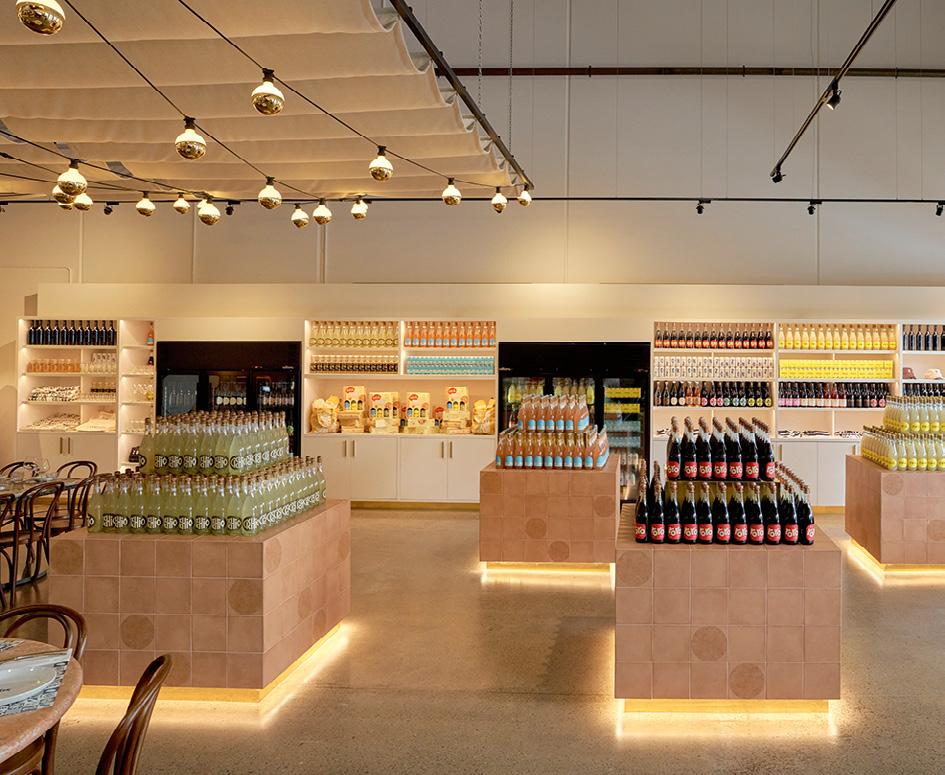
Zonzo Estate recently opened Zoncello Yarra Valley, a “larger-than-life” dining and drinking destination. While Micallef says they make “seriously good” red and white wines, this venue is a permanent home for his spritz range, with the food philosophy designed to be enjoyed with a spritz in hand. After all, it has become one of the most popular drinking categories in Australia, Micallef says.
He believes part of the spritz appeal is that it’s fun, youthful, and the drinks are exciting. “And they’re approachable,” says Micallef. “We did a lot of research into how to become a successful winery and winery brand. That’s the only reason we have delved into the spritz category.”
He says it’s near impossible to “gain” an established wine drinker and pull them into your brand, because generally people are already loyal to a particular wine. He added it used to take time for wine brands to gain prestige, become well-established, and successful. “Zonzo Estate is only in its 10th vintage. I think in a relatively short period of time we’ve accelerated quite nicely, creating a new category for ourselves to excel in.”
They did this by targeting the “new-age drinker”. While that might mean younger consumers, they’re finding their Zoncello Limoncello Spritz in particular is a “winner through all age groups”.
“It’s just been quite incredible. We’ve got customers that we deliver to that are quite elderly and everyone in between,” he says. “I think part of the charm of Zoncello is the limoncello, because it seems it
evokes memories. They might have had a limoncello for free at some Italian restaurant, or even better, in Italy.”
He says their new venue is a home for their spritz drinks. “The drinks are fun, the menu’s fun, and we’re calling it Zonzo Estate’s cheeky sibling. We’re aiming for it to be a home of innovation for us, so if we’re playing around with a new spritz, [we will] give tastings out to customers and get some feedback before we go into production and things like that.
“I’m very passionate about these products. I love what we do. I think that we’ve got a great team behind us that really are curating beautiful beverages for all occasions.”
The rise of spritz isn’t just being seen in the bottle store or steeped in the Yarra Valley. Beyond the at-home consumers, spritz is seemingly gaining popularity in bars as well. While the product is slightly different, with drinks mixed at the bar rather than ready to drink, the appeal is much the same.
Kimpton Margot Sydney Assistant Bars Manager Vincent Huynh says he used to notice spritz consumption peaking in spring and summer. “But it’s not just spring and summer anymore,” Huynh says. “I’m finding that, actually, people have been ordering it during winter and throughout the year.”
He has some theories on why this might be the case. One reason he puts it down to is that spritz culture is huge in Europe.
“A lot of Europeans love to drink
“People are even moving away from your classic Aperol spritz and are open to trying some more modern variations of it. You can go yuzu or native citrus, sparkling teas, or clarified fruit bases.”
— Nicola Drakopoulos
“I really want to drive home that this is a serious category,”
— Rod Micallef
spritzes. Italians specifically drink a lot of Aperol for obvious reasons. I think when Australians go overseas to Europe and they see that everyone is drinking a spritz, they come back and they want to relive it,” he says.
He also thinks the lower alcohol level in most spritz cocktails is appealing to some consumers. “For example, some cocktails are two standard drinks, whereas Aperol spritz is roughly one and a half, so you can actually maintain drinking that throughout the entire night and not feel as drunk,” says Huynh.
Lastly, it’s a “lighter” drink, which can appeal to consumers, he says. “In terms of calories it’s quite low. Obviously, the spirit itself might have some sugar, but then half of it would be soda water as well. It’s not really much comparison to a margarita or something.”
Stereotypically he thinks people assume a spritz is catered to female consumers, but he’s noticing women aren’t the only people enjoying the drops. “Everyone has their own reasons for drinking it. Last weekend I had a group of young males ordering limoncello spritzes throughout the entire night. That group of guys, they all look like they went to the gym.”
The most popular is the Aperol spritz. But people are experimenting. “Part of my job requires me to know what is trending. We try and do things that would attract more people in, happy hours and stuff like that obviously works very well.
“In terms of spritz themselves, people are starting to experiment a lot more. For example, people are starting to do a Pimm’s spritz as well. Pretty much anything you classify as a spirit and then a bit of bubbles and a soda, people class that as a spritz. A lot of bars, not even just throughout Australia but throughout the world, they’re starting to experiment with different spritzes.”
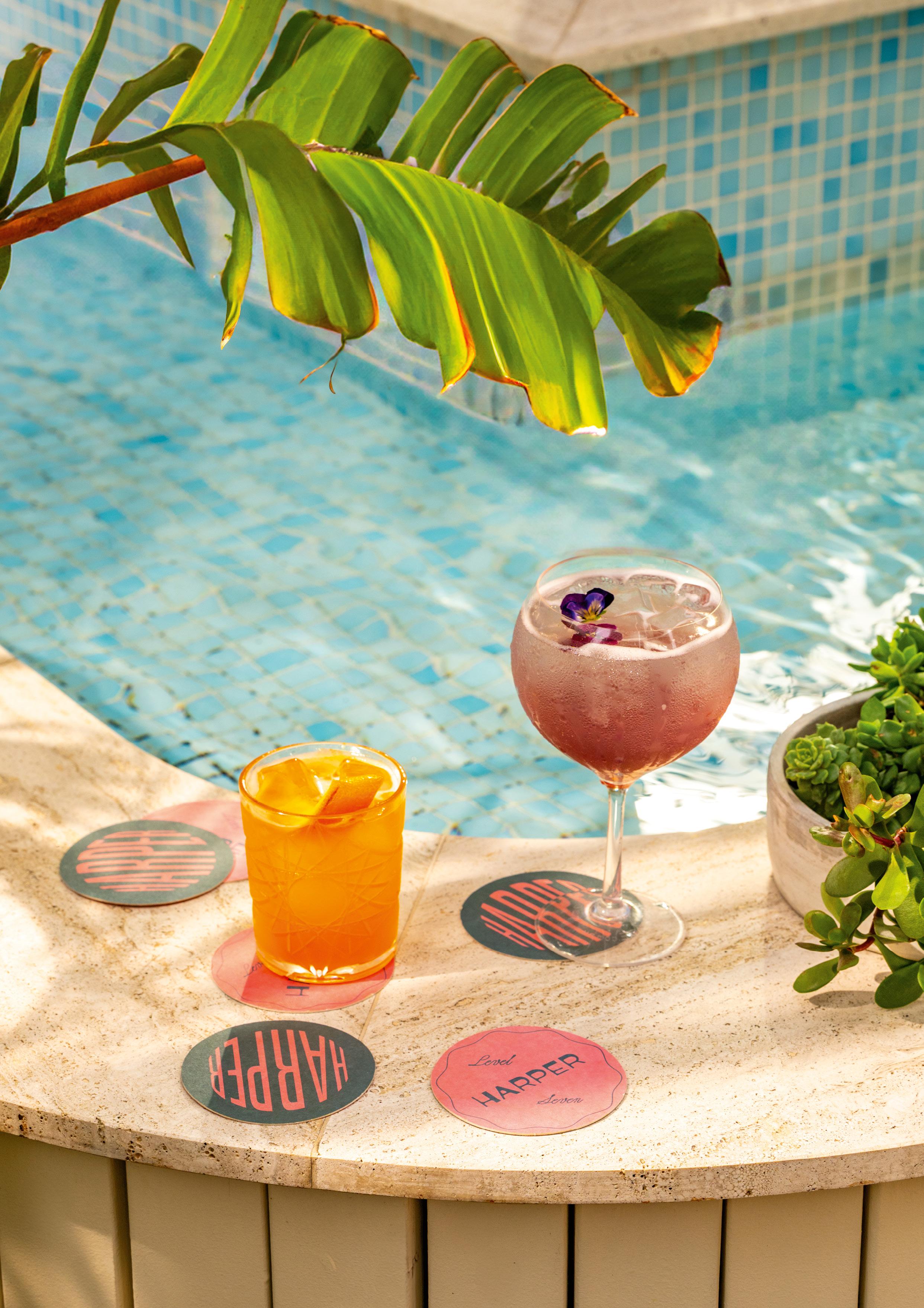
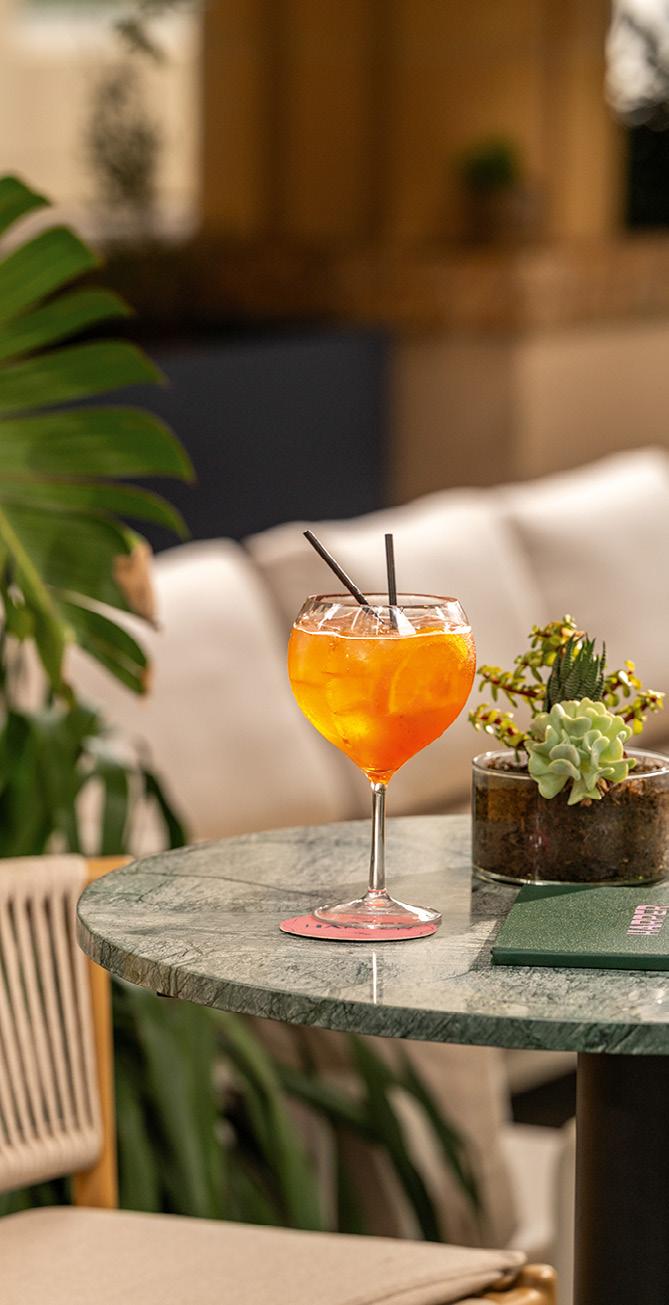
At Harper Rooftop Bar in Sydney, Huynh says they offer a limoncello spritz and an elderflower spritz, of which the popularity of is starting to
catch up with Aperol. “A lot of people are getting a bit more creative with different things that you can use. For example, I recently had someone ask for sparkling rosé in a spritz rather than just a normal sparkling water with prosecco.”
Sydney Restaurant Group Bars Manager Nicola Drakopoulos has also noticed spritzes are evolving. “Some of our venues are doing a cocktail where the whole drink has been carbonated and it’s a low ABV,” Drakopoulos says. “It’s probably something that I would drink, in the sun. Now that we’re talking about it, I’m sitting in sun, and I feel like a spritz.”
Drakopoulos says consumption of spritz has increased across the board for their venues, which include the likes of Ripples Chowder Bay, The Fenwick, Ripples Little Manly, and Summer Salt in Cronulla. She thinks given their waterfront locations, it makes sense people gravitate to the drink. “They’re super refreshing. It feels premium but not too boozy,” she says. “People are even moving away from your classic Aperol spritz and are open to trying some more modern variations of it. You can go yuzu or native citrus, sparkling teas, or clarified fruit bases.”
It’s often the first cocktail people order at lunchtime, she says. “Even early evening, when the sun’s dipping down. After that, I feel like people transition into something more spirit-forward.”
Drakopoulos says the spritzes are one of the easier cocktails to make, so it’s helpful from an operation point of view. With your classic Aperol or Campari and stuff like that, it’s literally a three-part thing,” she says. “You pour it, add some ice and it’s essentially done. There’s no shaking involved.”
It’s also hard for consumers to be disappointed. “Don’t get me wrong, you can actually go wrong. But for the most of it, it’s very simple, and it’s enjoyable.” ■
Bar cart
Thirst quenchers, slow sippers, and all things beverage related.
Words Laura Box
Smooth as silk
Enriched with distilled olive, coconut, and avocado oils, Never Never’s signature vodka prioritises texture with a long, silky finish. “We built a textural vodka using the techniques learned over eight years of making some of Australia’s best gins,” says co-founder Sean Baxter. “This isn’t a departure - it’s an extension of what we already do well, and it gives us the chance to bring something genuinely new to a category that has long been defined by sameness.” RRP $70; neverneverdistilling.com.au
Lychee love affair
Just in time for spritz girl summer, independent Melbourne distiller White Possum has launched a limited-edition lychee liqueur. “It took us eight months, countless failures, and turning our normal production process on its head, but we’ve finally landed on the right recipe. It has a real tropical oomph to it,” says Founder and Head Distiller Paul Peng. The distillers opted to avoid fake lychee flavour, instead packing 20 whole fruit into every 500ml. The result? Nectar-like sweetness, a hint of florals, and a dash of acidity. RRP $59; whitepossum.com.au
Guilt free grapes
Doom Juice is back with its latest launch, this time in the form of wine alternative banger ZZVINO. Made by winemakers, for wine lovers, the >0.5% drop uses organic shiraz and chardonnay skins and blends them with cherry, blackberry, and blueberry. The result? A complex, vibrant, and smashable no/low alcohol wine alternative. The product uses grape pomace which is generally discarded, adding a sustainable element to the drink. RRP $21.99; doomjuicewine.com
Waste not want not
Coravin — a world leader in wine by-the-glass systems — has proliferated the Australian market. So much so, that the local market is larger than the French or British, and second only to the US — an impressive feat, according to founder Greg Lambrecht. The brand has just released the latest in its range for the 2025 festive season: the Coravin Timeless Six +, in a limited-edition Hermitage Red colourway. Using a precision-engineered needle, the tool pierces the bottle’s cork to extract wine and replaces what is used with argon gas, ensuring the bottle can still be enjoyed even years later. RRP $699; coravin.com.au
Gin-stalgia
Four Pillars’ Creative Director of Gin Drinks Nick Tesar has fond memories of drinking passionfruit and orange sodas on hot summer days growing up in Brisbane. Drawing on this nostalgia, he devised two new gin RTDs in time for summer: passionfruit and orange gin crush, and yuzu, pineapple, and lime gin smash. The new flavours join the original Bloody Shiraz gin with raspberry, lemon, and fiery ginger beer, launched back in March. “Each tin not only shows off the gin but also taps into those classic summer flavours we all know and love. That little hit of nostalgia makes them truly feel like summer in a tin,” says Tesar. RRP $28 for 6pk. fourpillarsgin.com.au
Packing a punch
Natural small batch drink crafter Mischief Brew has teamed up with single origin black pepper producer Pep to launch The Doc pepper soda. The soft drink is led by a healthy dose of peppercorns, alongside a blend of thirteen fruits, roots, herbs, and spices. Mischief Brew was on board as soon as Pep pitched the idea. “Their knack for flavour and creativity is as sharp as their peppercorns, and working with such a passionate crew made The Doc an absolute blast to bring to life,” say the founders. Available from Mischief Brew, Pep, and select retailers; RRP $70 for 6 x 4pk; mischiefbrew.com.au
First of four
Archie Rose has launched the first whisky in its Smoked Cask series: Wattleseed Smoked Cask Single Malt Whisky. The limited-edition whiskies are matured in casks gently smoked with native Australian botanicals — this one, of course, with native wattleseed. The result is a complex liquor imbued with notes of campfire bacon, roasted macadamia, caramel fudge, and a subtle smokiness. “This series is all about reimagining what a smoked whisky can be; questioning why the flavour of smoke can only come from the treatment of grains,” says Archie Rose Master Distiller Dave Withers. RRP $219; archierose.com.au
Garlic press
The difficult-to-clean uni-tasker is a divisive tool.
Swiss inventor Karl Zysset first patented the tool in 1948
Dawn Perry’s popular Bon Appetite article 'In defence of the garlic press' argues single purpose tools are beneficial if they’re frequently used
“I don’t know what that junk is that squeezes out the end of those things, but it ain’t garlic,” wrote Anthony Bourdain in his 2000 book Kitchen Confidential
Omnipresent in Australian home kitchens but controversial among chefs for being a difficult-to-clean uni-tasker
New versions boast no need to peel, and small spokes remove detritus from its holes, making cleaning easier
British food writer Elizabeth David dubbed it “utterly useless”
David Flynn
Can you please introduce yourself and tell us a bit more about yourself?
I would describe myself as a bit of a jack of all trades and often a problem solver. But my main purpose within the group is working with the heads of the department in our Brisbane venues, and our head office, to try and create memorable hospitality experiences in the venues. I also work alongside our office team to help create communications, marketing, and branding, and help define the personality and the character of our venues.
What excites you about your job?
Having the opportunity to create experiences that I would really enjoy as a diner or as a customer. That’s something that myself and my partner’s all share. The reason that we got into this is because we genuinely love the whole bandwidth of hospitality experiences, whether it’s a pub, or a bar, or a fine dining restaurant, or a taco stand — we just love new, wonderful, surprising, authentic experiences.
I mentioned the brand and marketing, but of course, there’s sort of soft product within the venue as well, like music, for example. I think it’s such a wonderful combination of things that make a great hospitality experience and I think that’s what I really love being involved in.
What
do you find
difficult?
Prioritising the things that I need to be doing, versus that I might want to do. There are always so many opportunities or things that could be opportunities, there are so many things to tweak, there are so many moving parts.
The co-founder of Fanda Group helps oversee a portfolio of Queensland venues including Rick Shores, Southside, Central Norte, Sueño, and their newest venue, Marlowe.
We need to be smart and structured about what is going to have the biggest impact for the team and have the biggest impact on our business. We can all get a bit carried away with the fun part, but it’s important to focus on the things that are going to be more impactful.
What
are you looking forward to?
Now that we’ve opened Marlowe, I’m really looking forward to just getting back into a routine by working with all the wonderful, talented people we have across all the venues, and across our office. Working with them to continue to refine the venue offerings we have and to create really distinct, memorable experiences in the venues.
What have you taken from the past that you’ve channelled into Marlowe?
Hopefully all our venues are very distinct, but I think what we’ve learnt is the importance of a great story and how that adds to a great venue and dining experience.
When I visit venues, the core experience that is always most important is food and service, and obviously the beverage component. But venues or people within the venues that have a great story, that’s something that the staff are genuinely interested in, that’s the intangible thing that gets me excited and helps me connect with the venue and the team and what they are doing there.
In the case of Marlowe, you have this beautiful, old, heritage-listed art deco apartment block. That space and the history of the building was what steered the style of food and the feeling that we are trying to create with the style of service: to honour the history and create a sense of warm nostalgia in the venue. ■
COOK SMARTER WITH THE TUROCHEF
DOUBLEBATCH
Cooks up to 40 16” pizzas per hour
Separate temperatures and fan speed settings across both cavities
Patented impingement airflow with oscillating rack ensures even top and bottom bake
Smart menu system capable of storing unlimited recipes
Simple and intuitive one-touch controls with icons
Stackable design up to two units high (requires stacking kit)
VENTLESS HIGH SPEED COOKING
Turbochef ventless ovens have internal systems for eliminating grease vapour. Air remains clean and allows the units to be used without external extraction.
Scan to learn more about the double batch and TurboChef range.