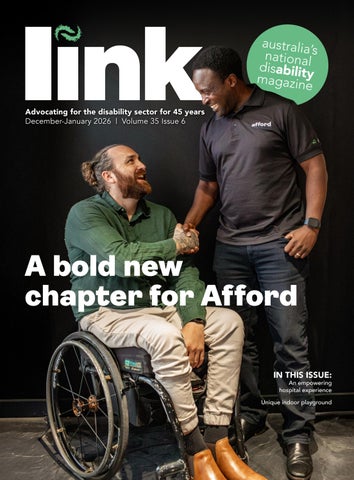
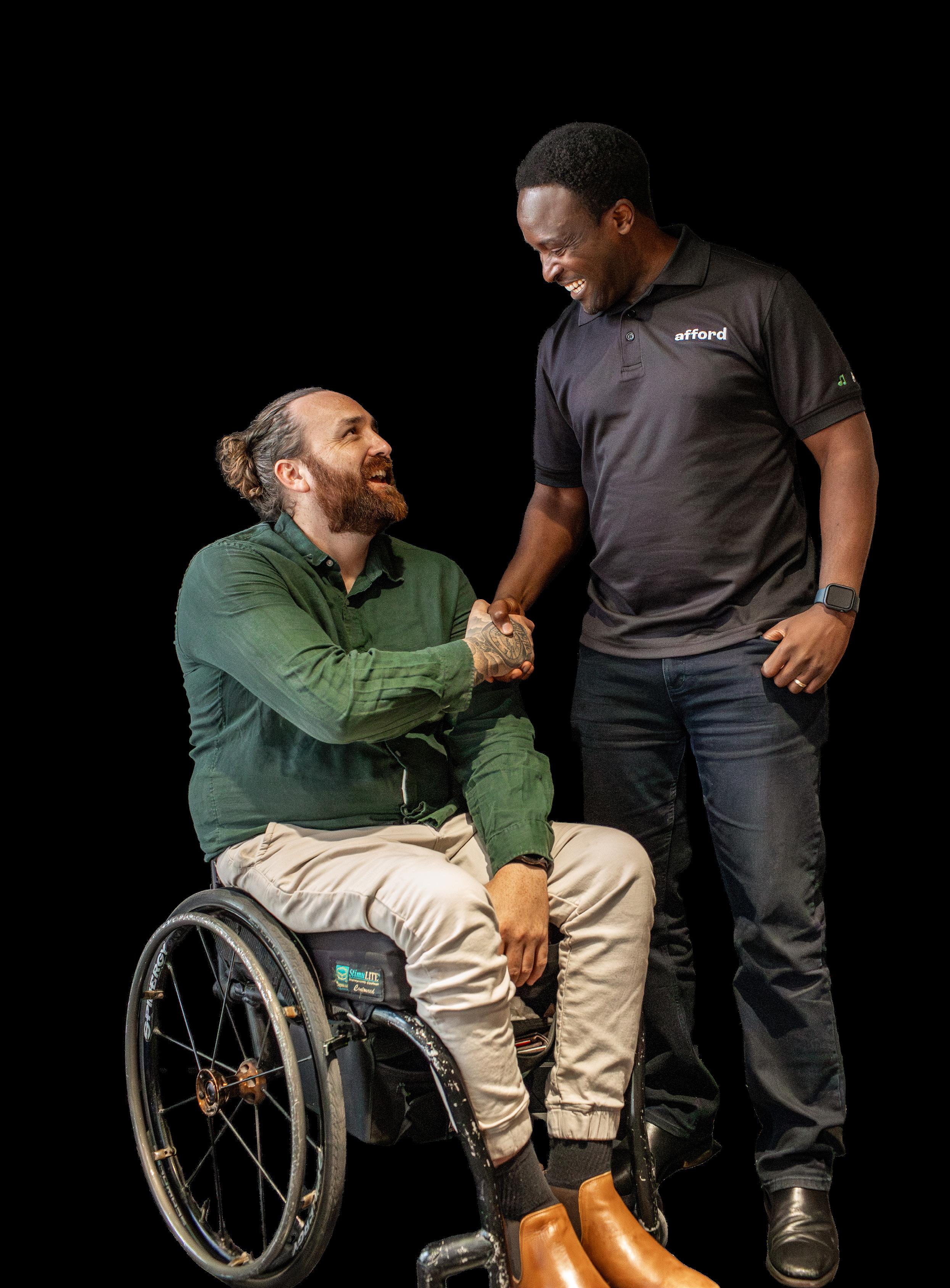
A bold new chapter for Afford


Publisher
Simon Cooper
Editor
Kymberly Martin
kymberly@intermedia.com.au
Advertising
Michelle Stevens
mstevens@intermedia.com.au 0419 822 717
Design
Sarah Vella
Prepress
Tony Willson
Production Manager
Jacqui Cooper
Subscribe
To subscribe visit www.intermedia.com.au
P: 1800 651 422 or E: subscriptions@intermedia.com.au www.linkonline.com.au
Link is published six times a year by Interpoint Events Pty Ltd.
ABN: 9810 451 2469
A: 41 Bridge Road, Glebe NSW 2037
P: +61 2 9660 2113
F: +61 2 9660 4419
Reprints from Link are permitted only with the permission of the publisher. In all cases, reprints must be acknowledged as follows: ‘Reprinted with permission from Link Magazine’, and must include the author’s byline.
The opinions expressed in this publication are those of the authors and do not necessarily represent those of the publisher.
The Intermedia Group takes its Corporate and Social Responsibilities seriously and is committed to reducing its impact on the environment. We continuously strive to improve our environmental performance and to initiate additional CSR based projects and activities.
As part of our company policy we ensure that the products and services used in the manufacture of this magazine are sourced from environmentally responsible suppliers.
This magazine has been printed on paper produced from sustainably sourced wood and pulp fibre and is accredited under PEFC chain of custody.
PEFC certified wood and paper products come from environmentally appropriate, socially beneficial and economically viable management of forests.
From the Editor
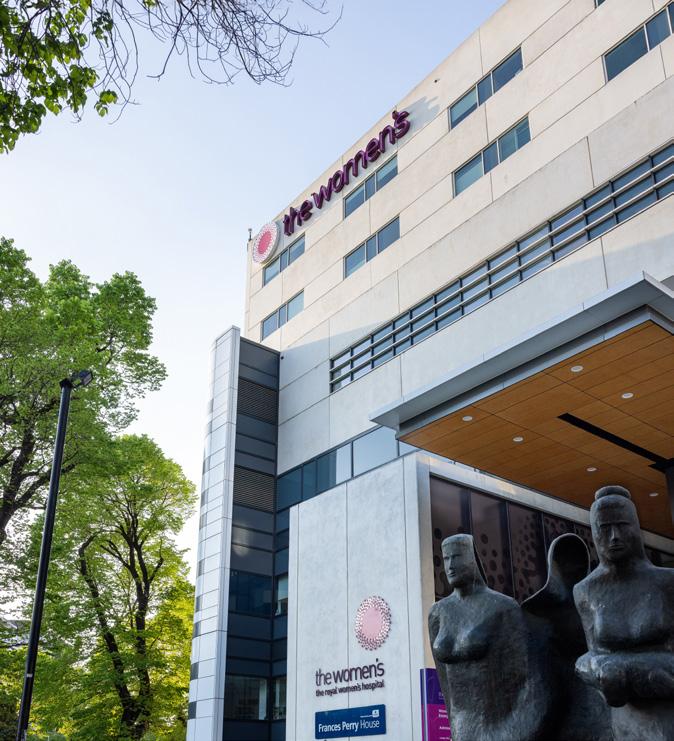
Our lead story on Pages 12-13 from Danielle Kutchel is on Melbourne’s Royal Women’s Hospital and its Women with Individual Needs Service. This unique service provides midwifery care to pregnant women with physical, intellectual or sensory disability, a learning difficulty or acquired brain injury. It is just one initiative the hospital is taking to make the experience for women with various disabilities more accessible.
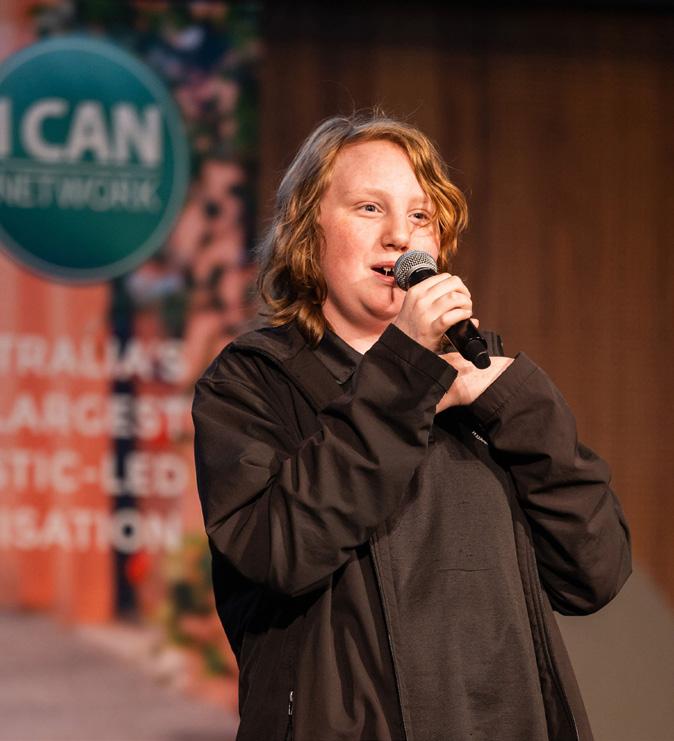
Link also has a report on Page 16 on the first autism event for educators held at NSW Parliament House and how the partnership between schools, families and the community is critical to achieving a more inclusive and accessible society. Another autism event was the I CAN expo school mentoring program happening across Victoria. Read more about one of the biggest organisations of its kind in the world on Page 50.
If you are an AFL fan with vision impairment, live, or are visiting Melbourne, there is a new Touch & Track device available at Marvel Stadium that takes following the game to a new level. Get excited about this on Pages 18-19.
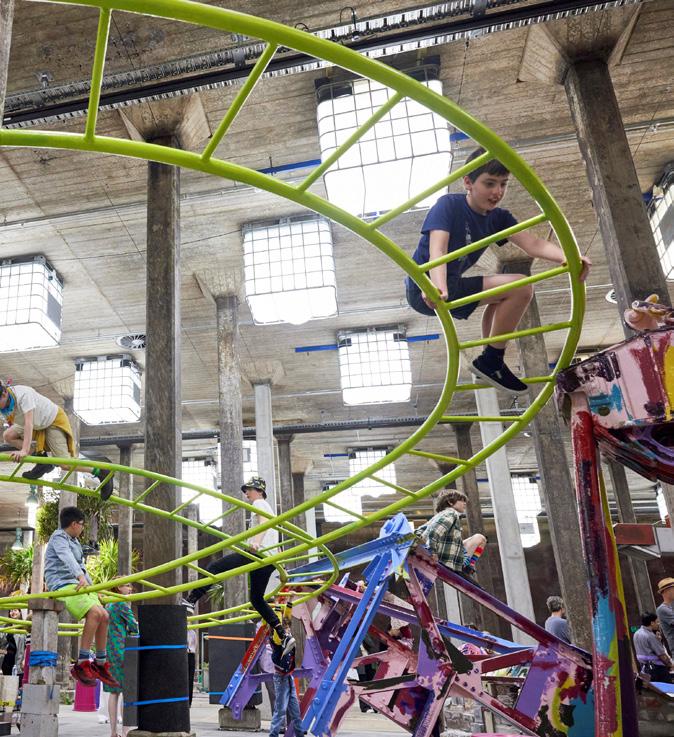
Sydney is open for some fun and games too during the holidays with an indoor play park at Art Gallery NSW. This multi-sensory and wheelchair accessible fun park is designed to encourage immersive play and exploration. Read more on Pages 46-47.
The Good Design Awards are an annual event where disability products are recognised and you will find this year’s winners on Page 51.
And to all our readers, Link wishes you a Happy Christmas and a peaceful New Year.
February/March 2026
• Assistive Technology
• Personal Care – Equipment & Daily Living
Advertising booking date: December 12, 2025
Advertising material deadline: December 19, 2025
Publication date: February 2, 2026
For article proposals, contact the Editor: kymberly@intermedia.com.au
For advertising, contact the Advertising Manager: Michelle Stevens 0419 822 717 mstevens@intermedia.com.au
December/January 2026




Disability provider Afford
Steps into the future with a bold new brand image
Afford has a fresh new look and it’s unlike anything you’ve seen before. The leading national provider of disability services announced the bold new brand identity in November, marking a new chapter for the heritage organisation.
Established in 1951 by Dr Ross Williams, Afford was originally known as The Poliomyelitis Society of Australia. The not-for-profit opened its doors at the height of the polio epidemic in Australia. The first site of the organisation was Cherrywood Hospital in the Sydney suburb of Turramurra in New South Wales.
Today, Afford provides accommodation, in-home support, community and lifestyle, employment and support coordination throughout Australia. While its core ethos remains the same, the organisation has changed considerably throughout its history, especially in recent years.
Chief Executive Officer Jo Toohey said Afford’s striking new look reflected this.
“Afford has evolved considerably in recent years and it was important that our brand evolve too,” Toohey told Link
“Our new identity represents who we are today - a modern, inclusive and purpose-
driven organisation with a strong focus on people, growth and impact.”
The new look is part of the organisation’s Strategic Plan 2024-2027. It includes a commitment to creating exceptional outcomes and improving the lives of the people Afford supports while also being ‘bastions of positive change’.
A RENEWED IDENTITY WITH ENDURING VALUES
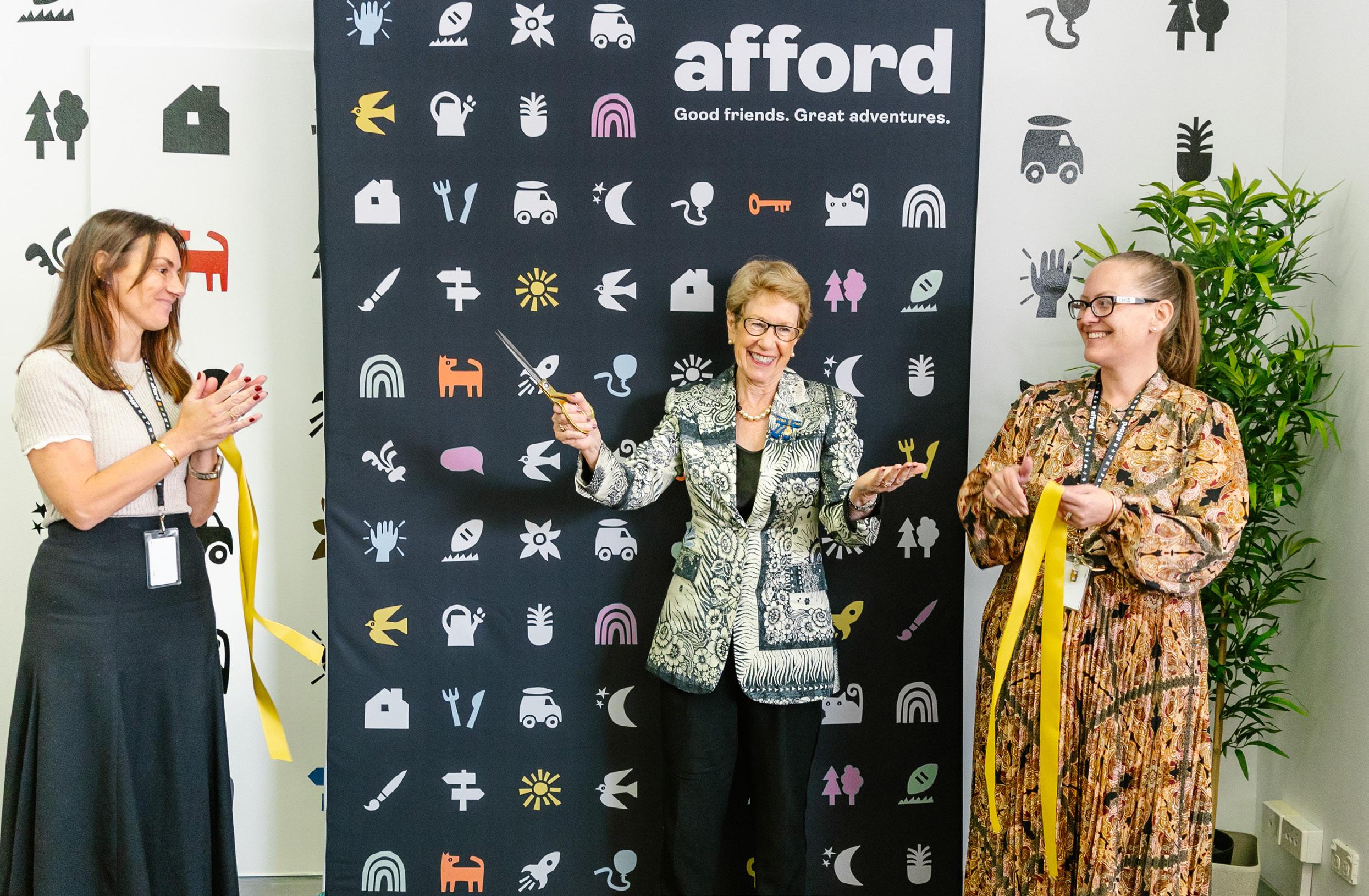
In honour of that mission, the refreshed brand introduces a new tagline – Good friends. Great adventures. There’s also a modernised logo, updated visual identity, and clear, authentic messaging
Afford acting chief operating officer Jessica Scanlan, NSW Governor Margaret Beazley and Afford general manager homes & living Kym Mafi at the launch event.

designed to better reflect both the organisation’s community and values.
It comes with a cutting-edge colour palette, based on a black and white theme, complemented with bright colours. There’s a range of fun icons to go with the clean, chic look too. These represent Afford clients, staff, carers and family passions, showing a stylised dog, a cool cat, rainbow and pineapple. Afford staff members wear black polo shirts that carry the new logo and tagline.
Clients are also sporting bucket hats decorated with the icons and the logo with one commenting: “I love my bucket hat. It’s fun and I think it’s a lucky hat”.
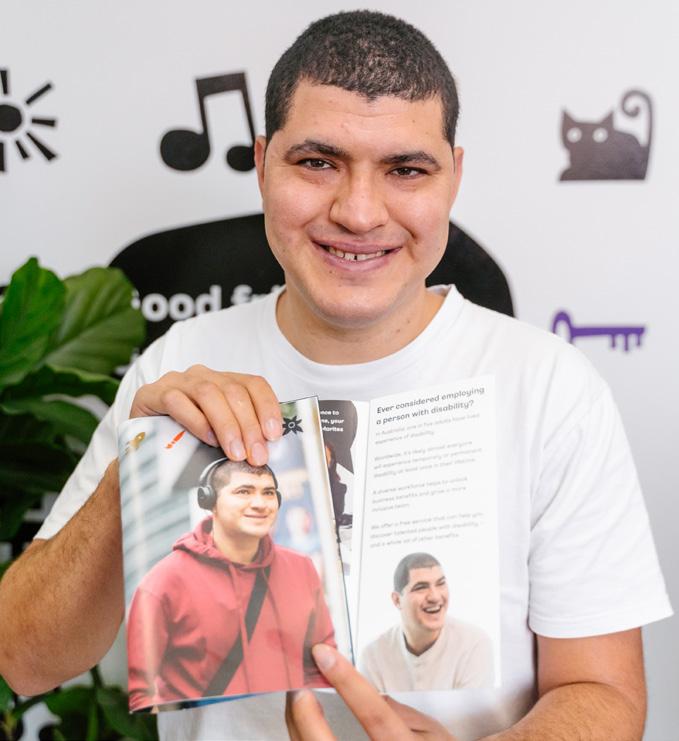
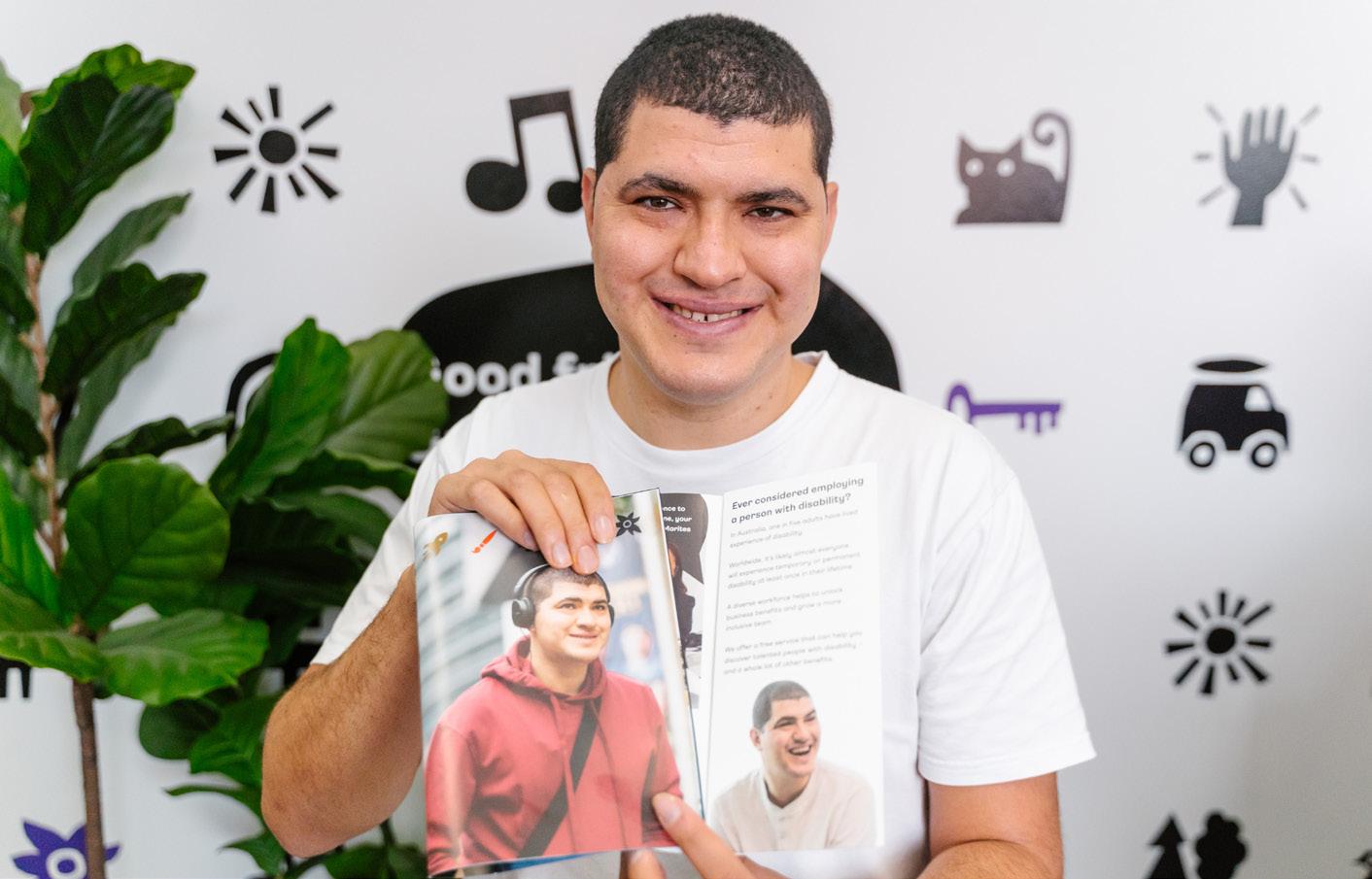
Afford has also released a brand video and a suite of images to coincide with its cool look, all featuring people with disability.
“We believe representation matters,” said Toohey. “Real stories and authentic voices are at the heart of who we are. By hiring people with disability to appear in these photos and videos we’re celebrating individuality, achievements and everyday experiences.”
The campaigns are about visibility and pride, ensuring that disability community members see themselves reflected with respect, warmth and joy. Images and stories remind everyone that people with disability belong at the centre of the conversation, not on the sidelines.
While the visual identity has changed, the Afford name, people and its values remain unchanged, Toohey said. The organisation’s purpose, to empower people with disability to live meaningful and connected lives, continues to guide every aspect of its work.
“This is not just a new look; it’s an expression of our ongoing commitment to quality, inclusion and respect. Our refreshed brand provides a stronger platform to engage with communities, attract talented staff and reach more Australians who can benefit from our services,” she said.
DESIGNED THROUGH COLLABORATION
The new brand was co-designed with input from clients, staff, and
stakeholders across the organisation, ensuring that it authentically represents the community it serves.
“We are proud that this process has been genuinely collaborative. Every element of the new design, from the tagline to the imagery, has been shaped by the voices and experiences of the people who make Afford what it is.”
The brand refresh marks a significant milestone in Afford’s continued evolution as a trusted and progressive disability service provider. It also supports the organisation’s broader goal of increasing visibility and connection within the disability sector and the communities it serves.
According to Toohey this refreshed identity positions the organisation strongly for the future. “It symbolises growth, unity and the shared ambition to continue delivering exceptional support for people with disability, all part of the Afford Strategy 2024-2027.”
Throughout its almost 75-year history (Afford will celebrate this milestone in 2026) the organisation has undergone several makeovers. It has had a handful of different names and brand identities, but there’s no doubt its most recent iteration is its most bold.
“Our new brand identity is bold, bright and unapologetically real. It reflects our purpose, our staff and the people we support.
“Every colour, image and word reflects strength, joy, and inclusion. Disability representation deserves authenticity, not sentimentality and we think our new look and feel captures that perfectly.”
And the tagline was a particular source of pride.
“When we talked to our clients, carers and family we heard time and again that they wanted to connect with us on a more personal level and be more than just a disability services provider. They wanted an organisation that would be with them through both ups and downs, and we believe our new tagline reflects this.”
The black and white logo and its coloured icons appear on the organisation’s website, brochures, staff uniforms and lanyards. It’s also decorating Afford’s Inclusive Employment Australia offices, which were opened the same week the brand was revealed.
Afford has successfully tendered to the Department of Social Services to deliver Inclusive Employment Australia, the specialist disability employment program that replace the existing Disability Employment Services (DES).
“Inclusive Employment Australia is designed to improve job outcomes for people with disability, and being selected as one of just 84 providers to deliver this initiative shows that our strategic direction is the right one,” Toohey said.
Richard from Model Mates showing a new brand identity.
Go into 2026 with confidence
Three tips for participants and carers navigating the NDIS
The NDIS continues to evolve, and keeping up with changes can feel overwhelming, especially when you are trying to understand what they mean for you, or someone you care for. To help cut through the confusion, we spoke with Charmaine Fraser, a NDIS subject matter specialist, support coordination trainer, and parent of a participant. Charmaine has worked alongside participants and their support networks since the very beginning of the NDIS. Drawing on professional experience and personal insights, Charmaine shares her top tips to help you build confidence and clarity as we head into a new year of navigating the NDIS.
HOW CAN PARTICIPANTS AND CARERS FEEL MORE IN CONTROL OF THEIR NDIS BUDGETS?
The start of the year is a great time to review your NDIS funding and how it is tracking against your goals. When budgeting for the year ahead, take note of key dates such as plan reassessments and funding periods. Then calculate the cost of regular supports using the nib Thrive Pocket Price Guide. Don’t forget to factor in the impact of public holidays and time away on your projected budget.
WHAT’S A SIMPLE WAY TO MAKE THE MOST OF AN NDIS PLAN IN 2026?
The words ‘simple’ and ‘NDIS’ don’t always go together. It can help to remember that the core principle of the NDIS is choice and control. That means people have the right to make decisions about their lives and the supports they receive.
Plan managers expand participant choice by enabling access to both registered and unregistered providers. They also support control by managing your NDIS funding and handling the financial administration, so you can focus on achieving your goals. Before making decisions, whether that’s trying a new provider, purchasing equipment, or changing supports, speak with your plan manager or support coordinator. You might discover you have more options than you expected.
WHAT CAN PARTICIPANTS AND CARERS FOCUS ON AS THE NEW YEAR BEGINS?
The new year will bring changes to the way that some children are supported by the NDIS and significant changes to the planning process. Keep up to date with NDIS news and events at www.ndis.gov.au/news.
The best thing participants and carers can do to prepare for the changes ahead is to ensure that assessments, diagnoses and therapy reports are up to date.
Document the positive outcomes of interventions and have a clear understanding of the supports, services, equipment and technologies that benefit you or those you care for.
WANT
TO LEARN MORE?
Nib Thrive regularly runs free webinars for NDIS participants, parents and carers, covering everything from budgeting basics to building confidence in using your plan. Hosted by Charmaine Fraser and informed by her wealth of experience, the webinars are designed to provide general guidance and assist participants in gaining a clearer understanding of their NDIS plans and the range of available supports.
Check out our upcoming sessions and reserve your spot at: nibthrive.eventbrite.com
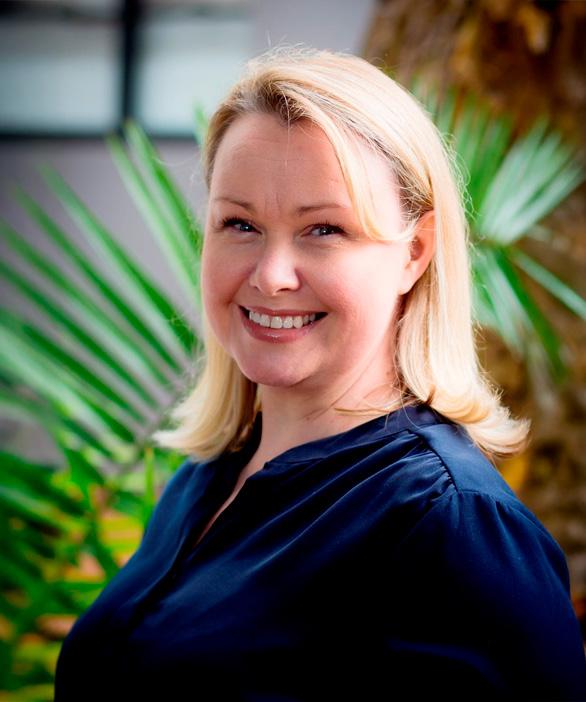
Charmaine Fraser, Senior Manager Compliance and Capability Development at nib Thrive.

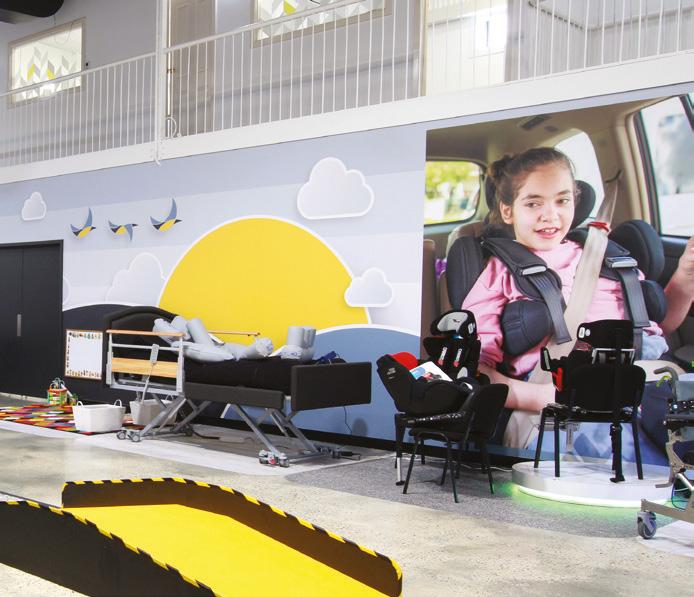
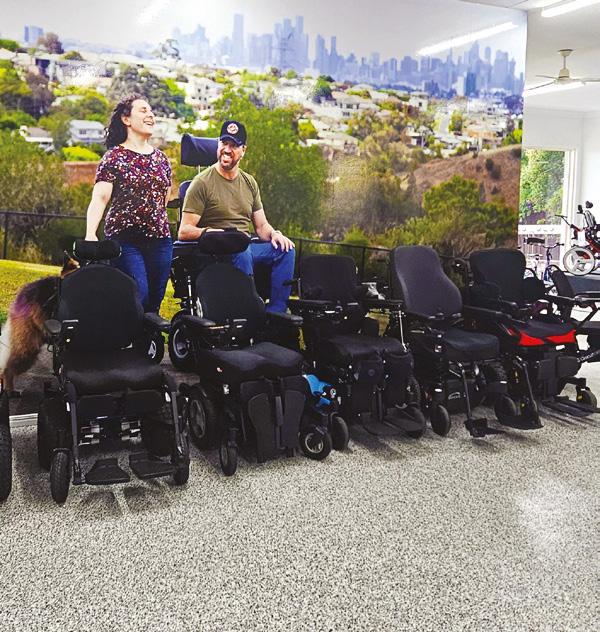
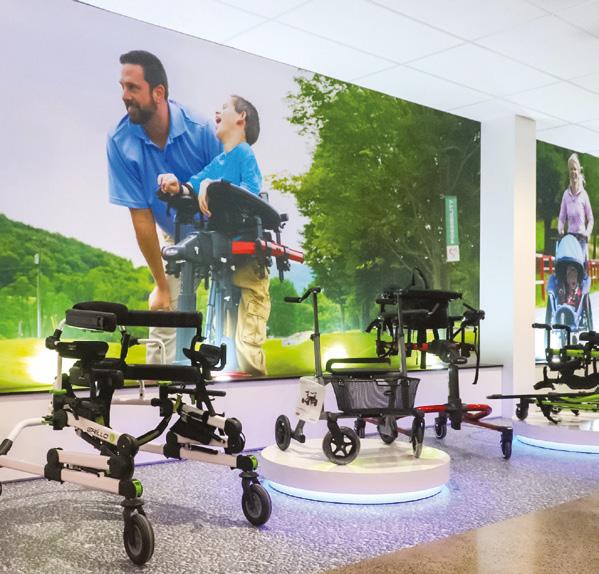
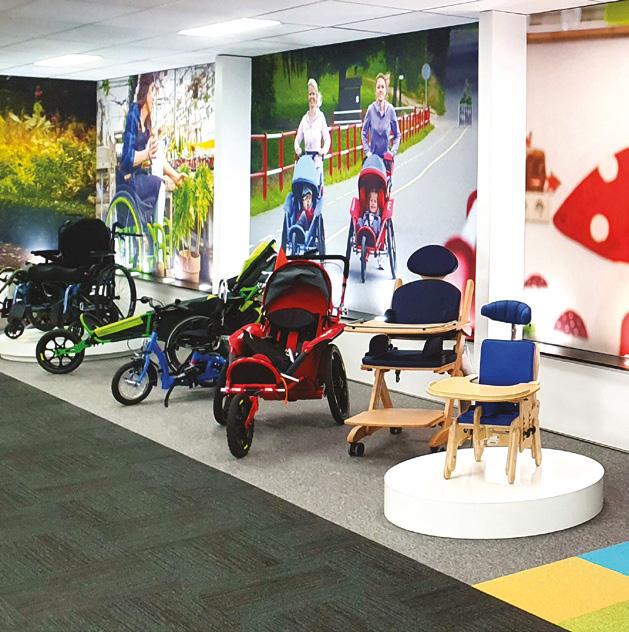
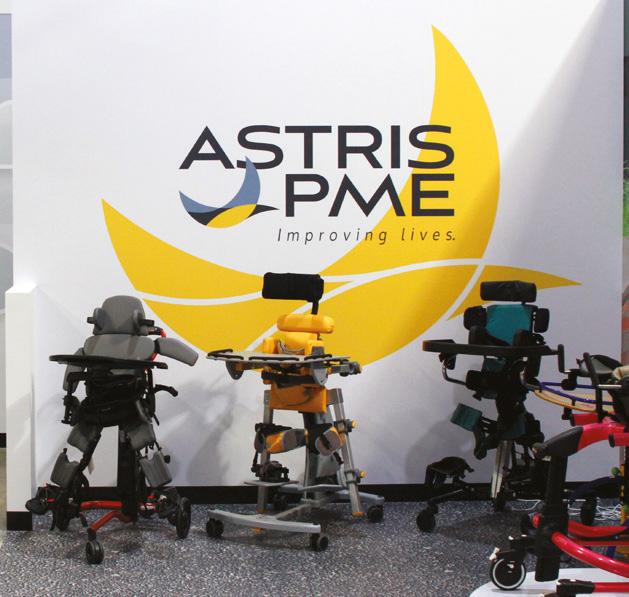
Free Assistive Technology Trials –At
Your Place or Ours!
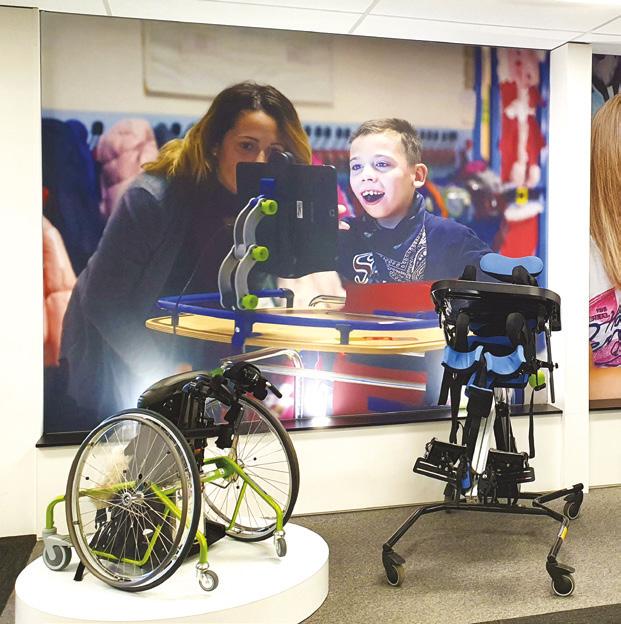
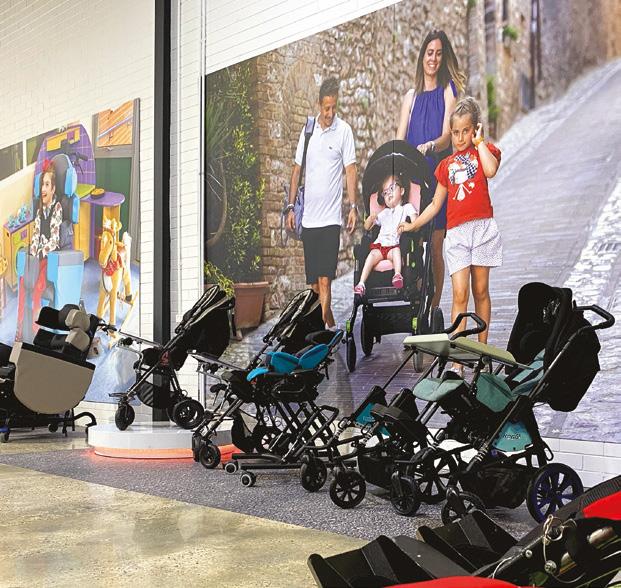
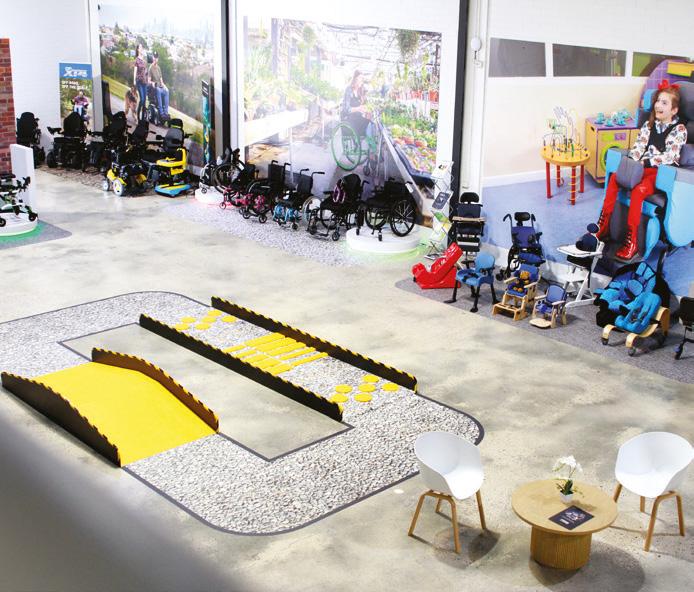
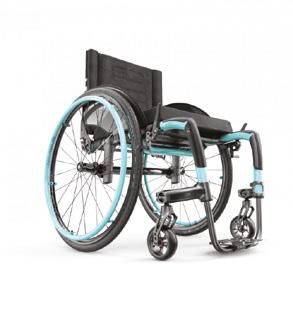
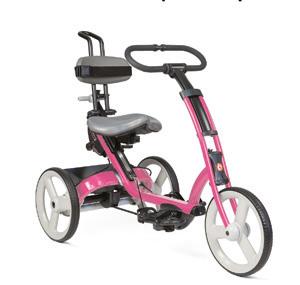
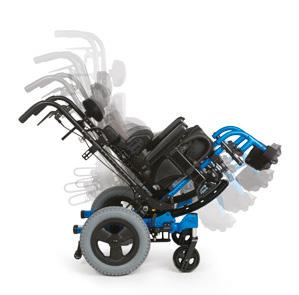
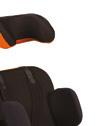
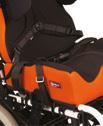
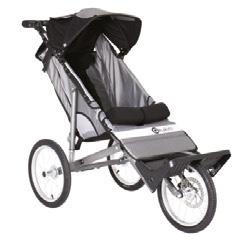
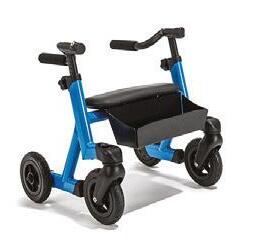
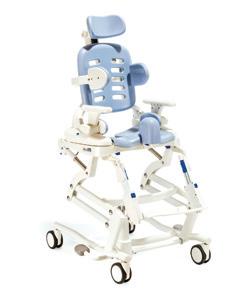
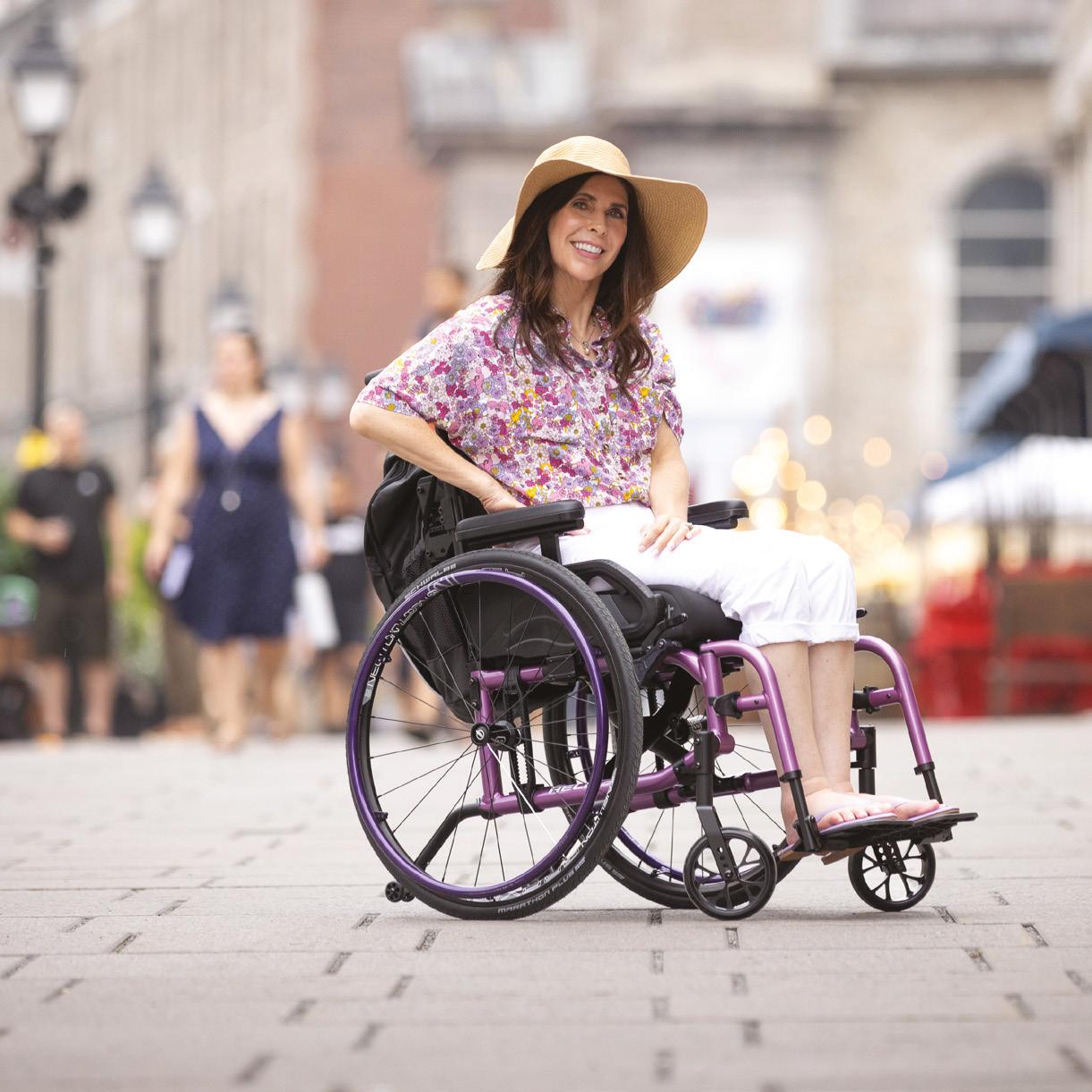
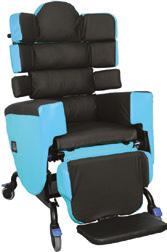
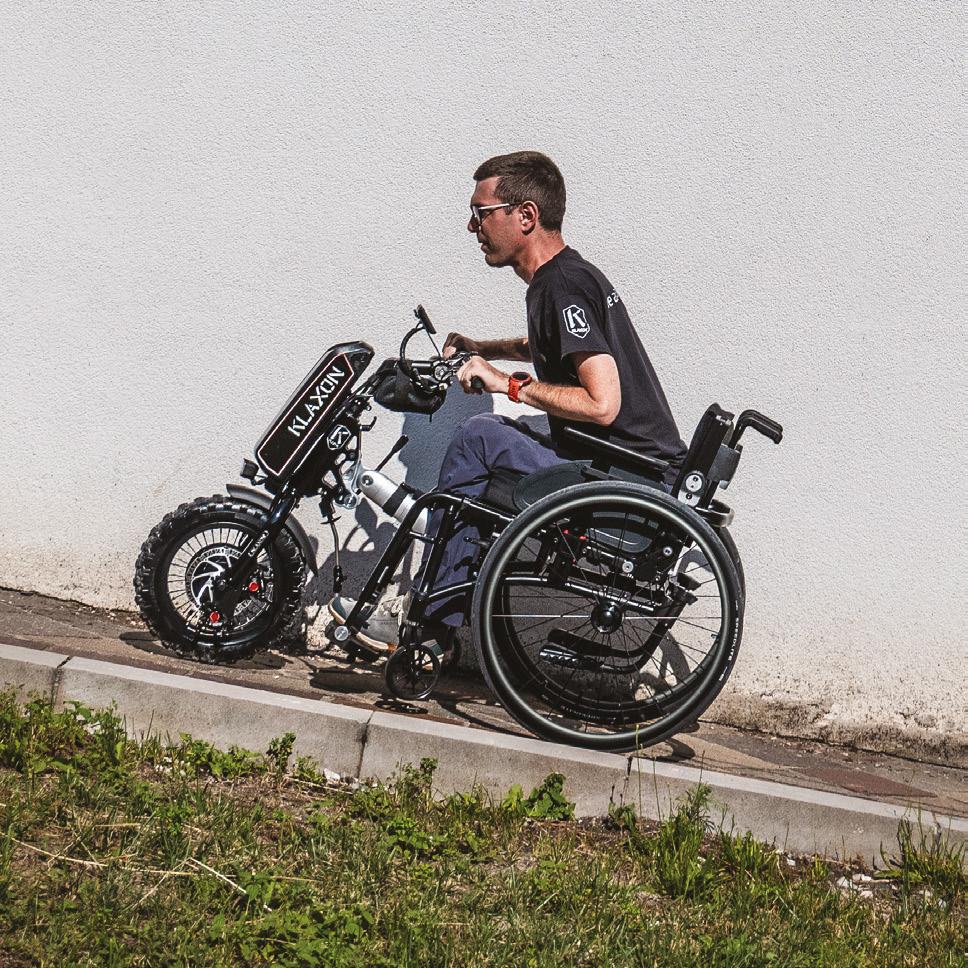
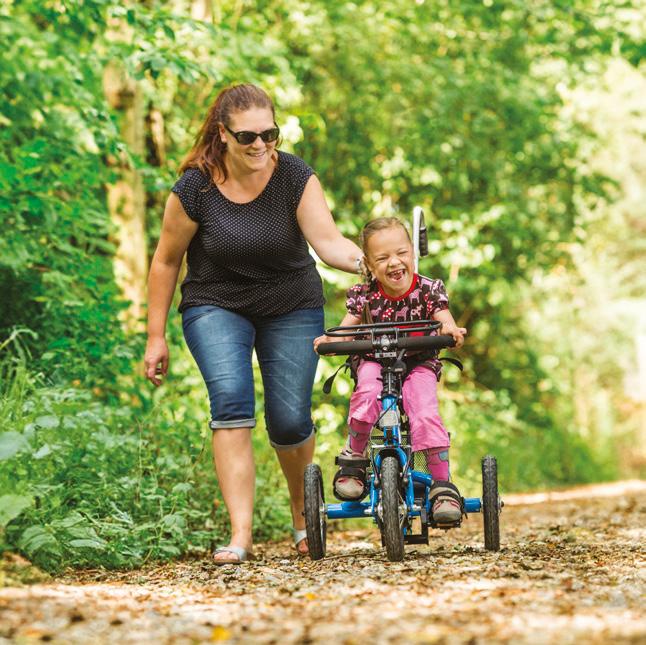
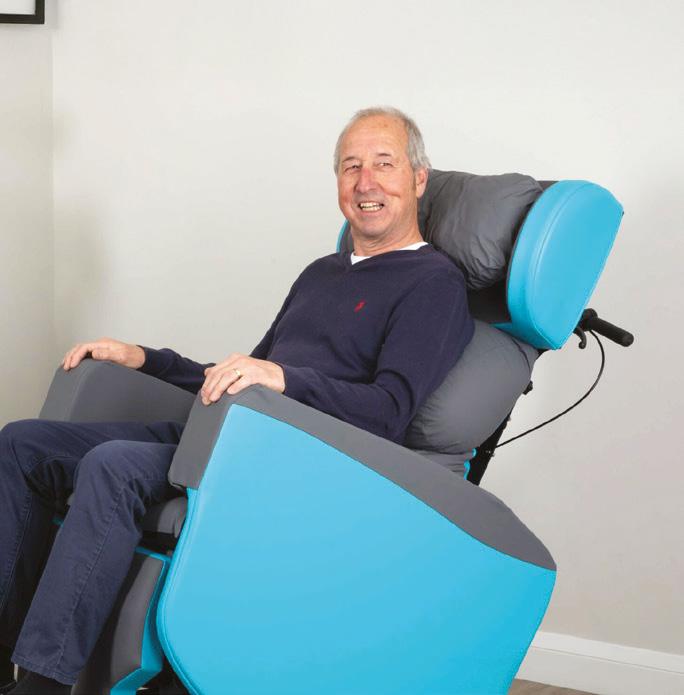
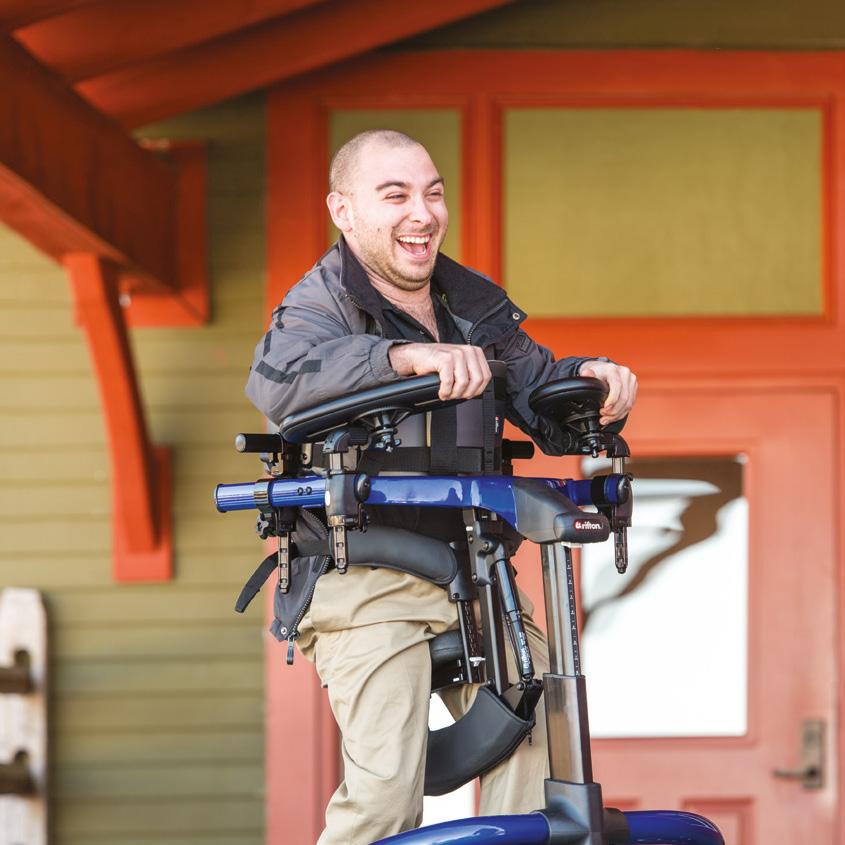
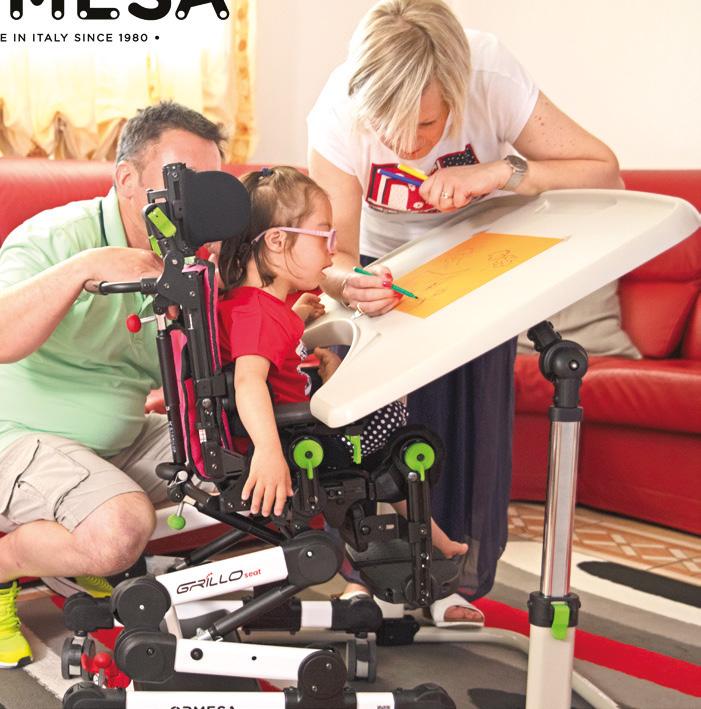
Discover the freedom to live life your way with Astris PME – Australia’s leading provider of customised Assistive Technology. From power and manual wheelchairs to hygiene supports, activity chairs, standers, and sleep systems, our solutions are designed to empower independence 24 hours a day.
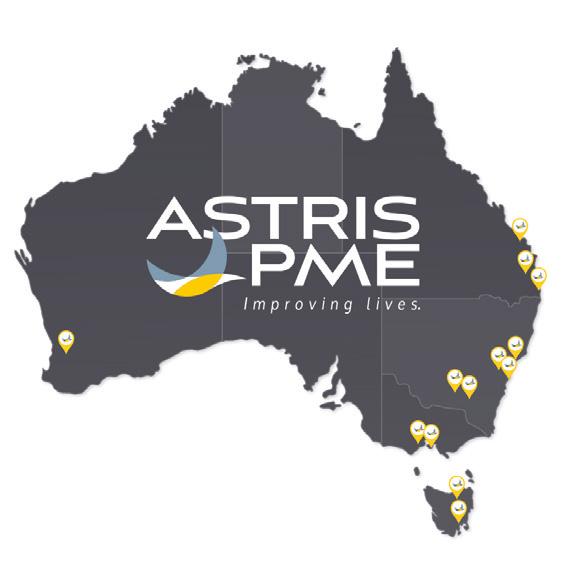
Visit one of our welcoming, family-friendly showrooms across NSW, ACT, VIC, QLD, WA, and TAS to explore our extensive range. Each location features clinic rooms for scripted trials and ample space for wheelchair testing. Prefer us to come to you? Our specialist consultants can visit your home, school, or clinic for a free trial, offering expert advice and personalised support.
Experience mobility made easy – at your place or ours.






Scan




















An empowering hospital experience
By Danielle Kutchel
Going to hospital can be stressful and upsetting. Besides feeling ill or being injured, it’s also an overwhelming environment.
Bright lights, noises, crowds, and unexpected occurrences, and even physically inaccessible buildings can all make the experience even more unpleasant for people with various disabilities.
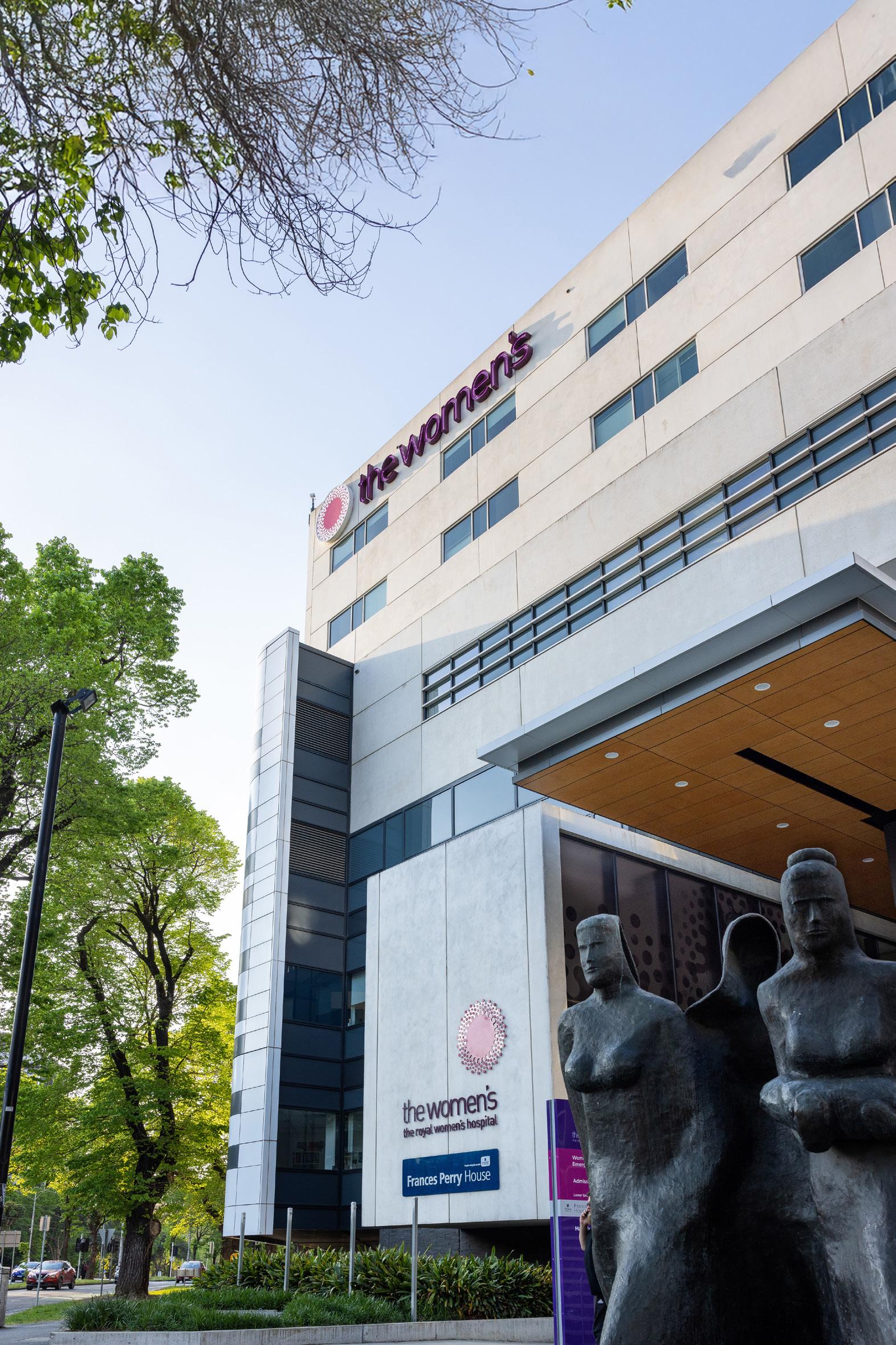
At the Royal Women’s Hospital Melbourne, staff are taking action to change this and make the hospital experience more accessible for its
patients by becoming a disabilityconfident organisation.
Vera Ciavarella is the Disability Liaison Officer at the Women’s, a role that is integral to this goal and sees her working with patients with disability right across the hospital.
“My role is about supporting the patient – making sure we’re able to manage any accommodations that they need, working with their healthcare team to make sure that when they come in, their care feels equitable, safe and is delivered with a trauma-informed lens,”
Ciavarella said. “We’re really trying to be more disability aware.”
EQUITABLE CARE
For patients entering the hospital, their journey begins with a disability identifier via an online portal called the Health Hub. Patients are asked to share what kind of accommodations and supports they might need during their stay.
“This makes the care person-centred. It goes on the patient’s record, so staff can look at it and tailor their care to make sure the patient is getting information in a way they can understand or that the sensory environment is more supportive,” she said.
Self-identification is valid and valued and patients can refer themselves directly to her to work with them on their supports.
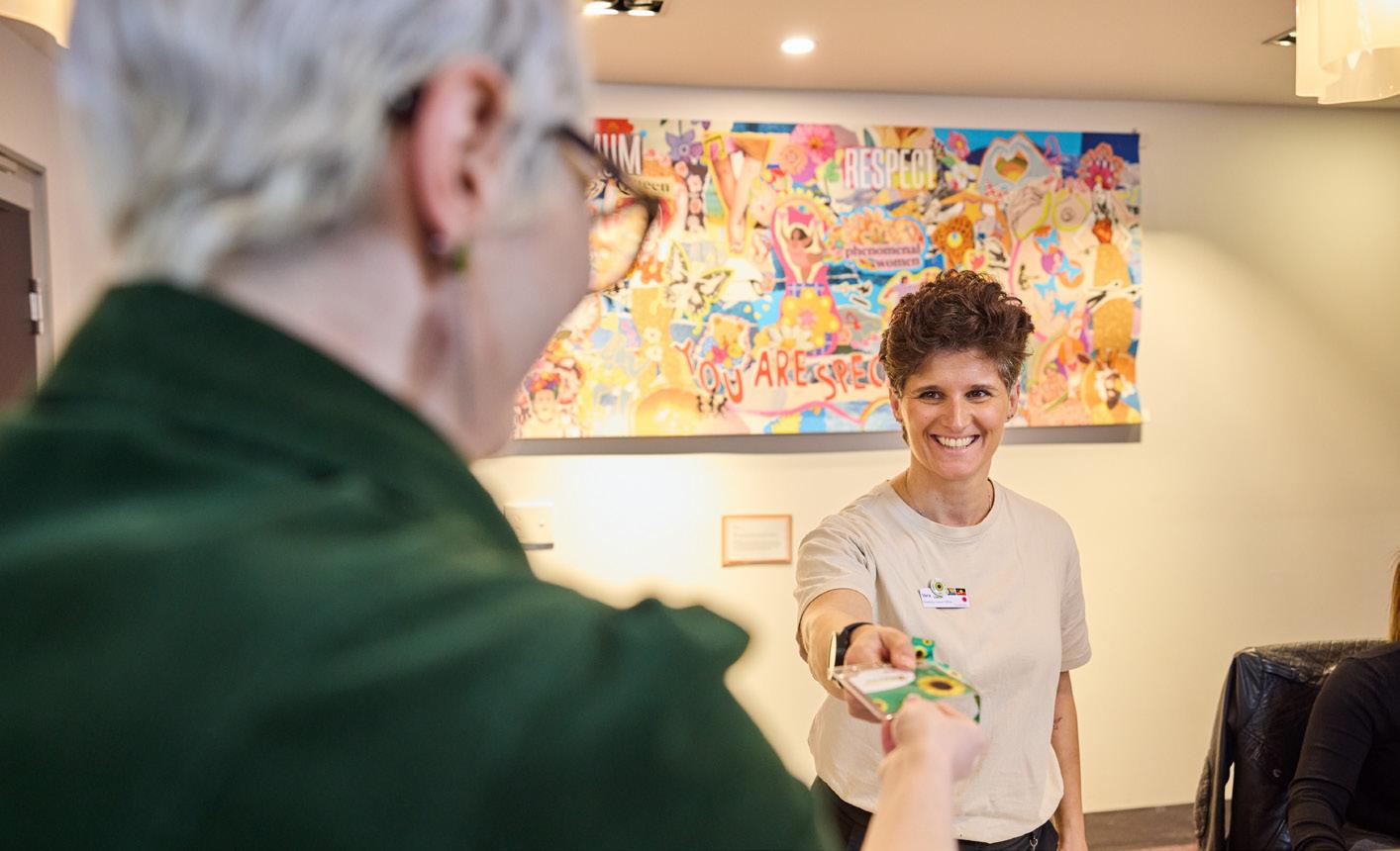
The Women’s is a Hidden Disabilities Sunflower organisation too; around 500 of its staff have been trained to recognise and respect what the sunflower represents and what patients who wear it might need.
Ciavarella has made other adjustments to make the hospital a more welcoming environment for people with disability. For example, she’s designed a social story for the emergency department so people can gain an understanding of what to expect when they arrive.
The initiatives are part of an effort by the hospital to ensure people with disability have equitable access to care throughout their stay, and that staff feel able to provide that level of supportive care.
“I feel very passionate about making sure that a patient’s care is equitable because… hospital is a very stressful environment. If we can control things or provide you with information in a way that you can understand, it allows you to feel empowered, making that informed decision and having control of your care,” Ciavarella said.
THE ROLE OF DISABILITY LIAISON OFFICERS
She’s not the only disability liaison officer. In Victoria, they can be found at both regional and metropolitan health services and help people with all
kinds of disabilities, removing barriers to accessing healthcare. Ciavarella said they can share information about patients with each other if a patient moves to a different hospital. The officers have a community of practice to also share resources and information related to their work.
“Part of my role is embedding disability awareness. We’re led by the consumer voice. We promote innovation, and we like to build the capability to challenge systemic barriers. It’s about building what our consumers are needing,” she said.
Patient feedback has indicated that spreading awareness of disability care in hospital is working to make people feel safer during their hospital stay.
EMPOWERING BIRTH EXPERIENCES
A major innovation at the Women’s is in how it provides care to women going through pregnancy, birth and the early days of parenting.
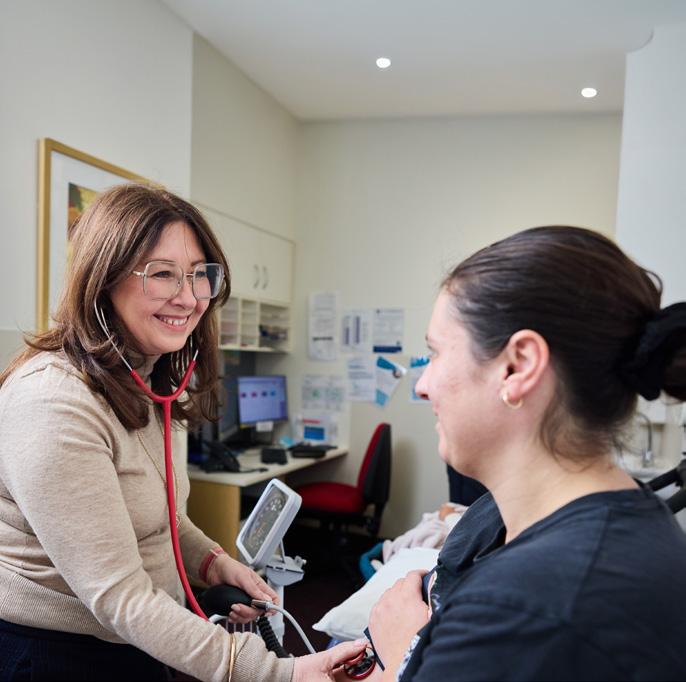
It does this through the Women with Individual Needs Service, or WIN – the only service of its kind in Australia. This provides specialised midwifery care for pregnant women with physical, intellectual or sensory disability, learning difficulty, or acquired brain injury that impacts their daily living.
The service was established in 2002, a spokesperson told Link , “To address significant barriers faced by women with disability during their pregnancy, birth and early parenting journey”. Staff are experienced in treating patients with disability, in pregnancy and parenting with a disability.
It approaches perinatal care through a social model lens, rather than the medical model. Women who use the service receive pregnancy care specially tailored to their individual needs with longer appointments and are given help to connect to other supports if needed. Women are also
offered information sessions about what to expect, as well as extended stays after birth to gain confidence in parenting and learn what adjustments they might need. Auslan interpreters are also available. Patients are listened to about what they need, and staff will do their best to make it work.
If they live within 40 kilometres of the hospital, patients also receive outreach support with a WIN Service midwife visiting them at home for six weeks after their baby is born.
“The service supports around sixty women per year, with the multidisciplinary team providing coordinated, respectful care tailored to the individual needs of women. Cultural responsiveness is central as a significant number of patients come from culturally and linguistically diverse backgrounds or identify as Aboriginal and/or Torres Strait Islander,” the spokesperson said.
Unfortunately, many women with disability still face stigma or taboos around pregnancy and parenting.
At a presentation at September’s National Disability Summit in Melbourne, attendees heard from staff from the Women’s, who said through the WIN service the hospital wants to provide them with the best care to help tackle this stigma and uphold their human rights.
By bringing together multidisciplinary teams and specialised staff with knowledge of disability and pregnancy care, patients retain their choice and control at one of the biggest moments of their lives.
“The Women’s is focused on embedding disability-informed practices across all maternity services, ensuring inclusive care is not siloed but standard throughout the hospital. When provided with the right supports, women with disabilities can thrive in their pregnancy and parenting journey. It’s not the disability alone, but intersecting factors such as mental health, social stressors, and systemic gaps that influence outcomes,” the spokesperson said.
“The Women’s is helping to shift perceptions and improve experiences for women with disability during pregnancy and beyond.”
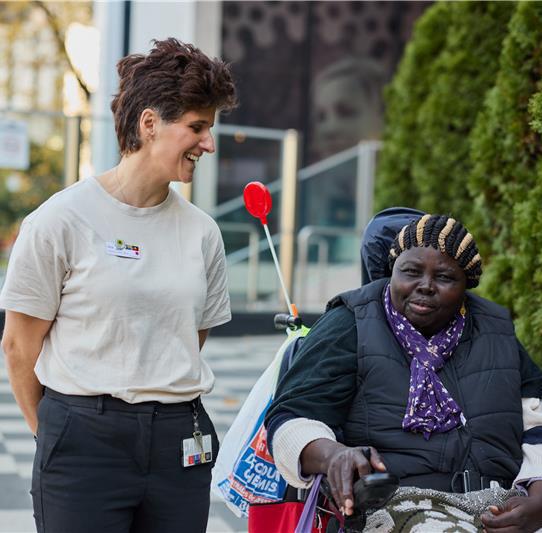
Vera and Sunflower
Cherise from WIN
Vera Ciavarella with a patient
Landmark autism event
A study in collaboration
The first Community of Practice for educators was held recently at NSW Parliament House.
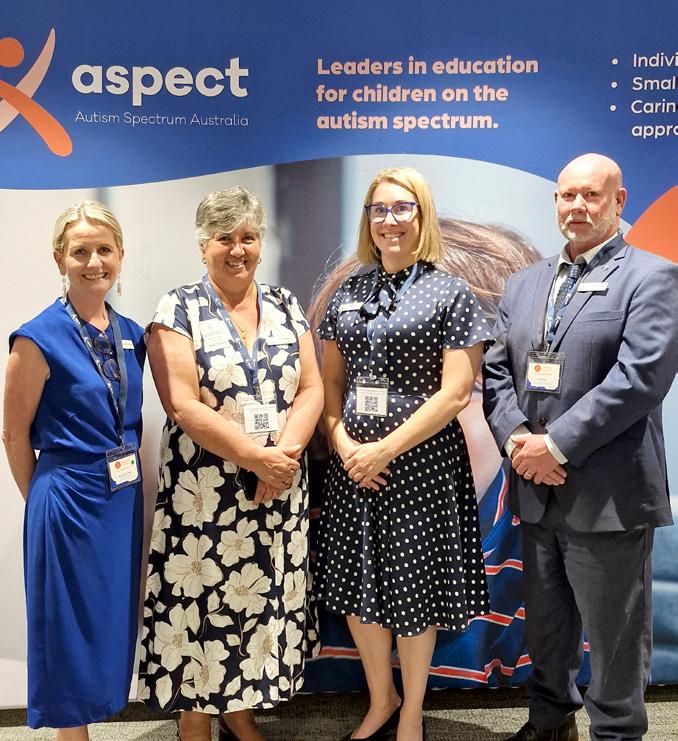
Hosted by Autism Spectrum Australia it brought educators from Public, Catholic and Independent Schools, researchers, parents and students together to listen and learn about ‘inclusion through collaboration’.
In her opening address, NSW Minister for Disability Inclusion Kate Washington said: “The conversation today is around how we can all do better where mainstream services become more inclusive and accessible to neurodiverse people, those on the spectrum and people with disability, which is a priority for the NSW Government. The voice of children and young people is key to the work we are doing as parliamentarians,” the minister said.
Another speaker was past deputy premier of NSW Youth Parliament and student advocate Eliza Tait who is leading debate around systemic values in education. Tait has completed her thesis, ‘Reimagining Inclusion: Education Reform for Twice-Exceptional Students in a PostRoyal Commission Australia and is spearheading a national campaign on what reform will look like.
Tait identified several key areas for change that included enhanced teacher training as the right tools and knowledge were essential to early student intervention and recognising that disability and high ability can co-exist, along with retaining and resourcing special schools. “In our current education system exceptional students face major structural challenges and too often fall through the cracks,” she said.
For Aspect Central Coast principal Mark Rudd, the event highlighted that collaboration was key for children and families. “The better the partnership between the school, families and
community, the better the outcome for children. It can have a big impact and that is magnified the greater the collaboration,” he told Link
“We are a K to Y12 school, and the last years are about preparing students for life after school, with employment and social skills and how to maintain social contact once they leave school. All this is geared around a very engaging curriculum.”
According to Rudd the challenges are the rewards. “While no two days are the same for us, the bigger the challenge, the greater the rewards.” He said enrolments are a big issue, with 160 on the wait list, “so access to more education facilities would be a help.”
General comments to Link from other principals and teachers was how inspiring presentations and conversations were but it was no surprise to hear that time remains a scarce commodity within the teaching profession. What also emerged was that: “one size does not fit all and there was no right or wrong but just figuring out what was best”.
The parent of an ex-Aspect student whose son had a severe speech delay said his life turned around when Aspect told her – “We would like to help your son ‘learn-to-learn’”. He had arrived in an education space where he was socially safe. “This was the world we needed where our son was seen and understood without judgement.”
One educator noted that inclusion starts before kids go to school because that is where the foundations for life are built and if the supports are not in place the gap gets wider.
“Parents get overwhelmed, and teachers are put under a lot of pressure.”
And delays to funding access was mentioned too, taking six to 12 months that leave parents and teachers waiting, along with delays in getting a diagnosis.
There was a panel discussion on best practice in collaborating with parents. A panellist said one common denominator is how the behaviour of the parent, and their response to a child’s behaviour, can have the biggest impact on the child. “No verbal gymnastics or being disingenuous as they pick up on everything.” He recalled reading that the parents of an autistic child needed to have the psychological profile of a frontline combat soldier. Another comment was: “You have two ears and one mouth –double the listening and half the talking - and try putting that into practice!”
Sport was addressed too with parents saying sport should be more inclusive, and after-school care designed to accommodate these interests.
While education took centre stage as an essential building block to lay the foundations for life there were many other qualities it can bring, such as confidence and a belief in oneself, reaffirming the best outcomes are achieved by working together.
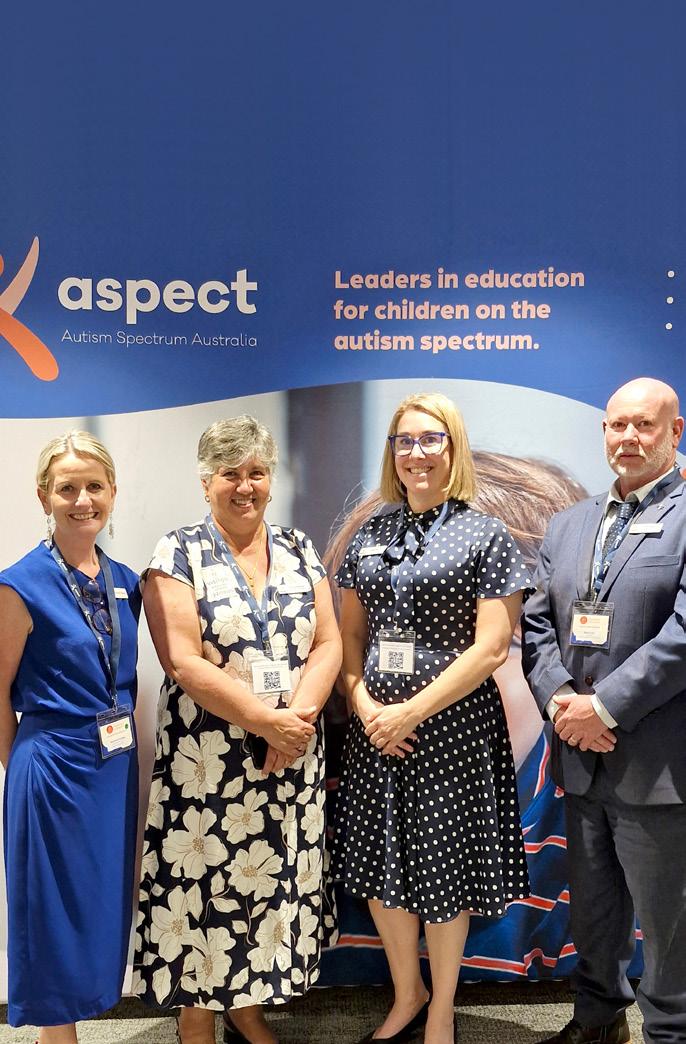
Maryanne Gosling, national director, Aspect Education; Jacqui Borland, CEO Aspect; Katie Fleet, education programs evaluation manager, Aspect Education and Mark Rudd, principal, Aspect Central Coast School.
Making eye care more autism friendly
Autistic people experience higher rates of vision conditions, such as needing glasses and ‘lazy eye’, yet often face a range of barriers when seeking the care they need. Bright lights, unfamiliar procedures, hurried appointments and noisy waiting rooms can turn a routine eye exam into an overwhelming ordeal.
New research led by the Aspect Research Centre for Autism Practice (ARCAP), in partnership with international experts in optometry and ophthalmology, sheds light on these challenges from both sides of the clinic room. The project included two companion studies: one involving more than 190 autistic adults and parents in Australia and Aotearoa New Zealand, and another surveying nearly 200 eye care professionals worldwide.
“Autistic participants and parents described numerous challenges that made eye appointments stressful, from
sensory overload and anxiety to financial barriers and communication breakdowns,” research fellow Dr Chris Edwards said. “Many spoke of feeling rushed to make quick decisions or struggling to understand unclear instructions during tests or when choosing glasses.”
Autistic adult participants shared: “I really struggle when they’re rushing me. To choose a frame, or to get tested. It’s pretty awful.” And another: “Most eye care places are a sensory nightmare.”
Eye care professionals were deeply motivated to provide inclusive care, yet few had received autismspecific training. They reported rigid appointment schedules, limited resources and competing demands that made it difficult to offer adjustments, even when they wanted to.
As one professional noted: “We don’t get any training, so anything would be helpful!”
Both groups pointed to the same solutions: clear, plain communication; extra time for appointments; calmer, less stimulating environments; and staff who genuinely understand autism.
Based on this research, a freely available eye care guide has been developed for vision professionals that provides practical, respectful recommendations for making eye care more accessible. Autistic people and parents may like to print the guide and take it to their next eye care appointment: aspect.org.au/eye-care-guide.pdf.
Aspect’s autism friendly team is turning research into action by codesigning training, clinic reviews, and environmental adaptations with autistic people to create eye care services that are accessible, respectful, and welcoming for all. To learn more, visit: aspect.org.au/our-services/autismfriendly
Autistic people often face sensory and communication barriers during eye exams.
Aspect has created a free eye care guide to help vision professionals make appointments more accessible. It includes:
• practical tips for your practice and for you as a clinician
• insights from Autistic adults, parents and professionals.
Download the guide
Find out how your service can become autism friendly: aspect.org.au/our-services/autism-friendly

A tech revolution in touch football
Putting AFL into the hands of vision-impaired fans
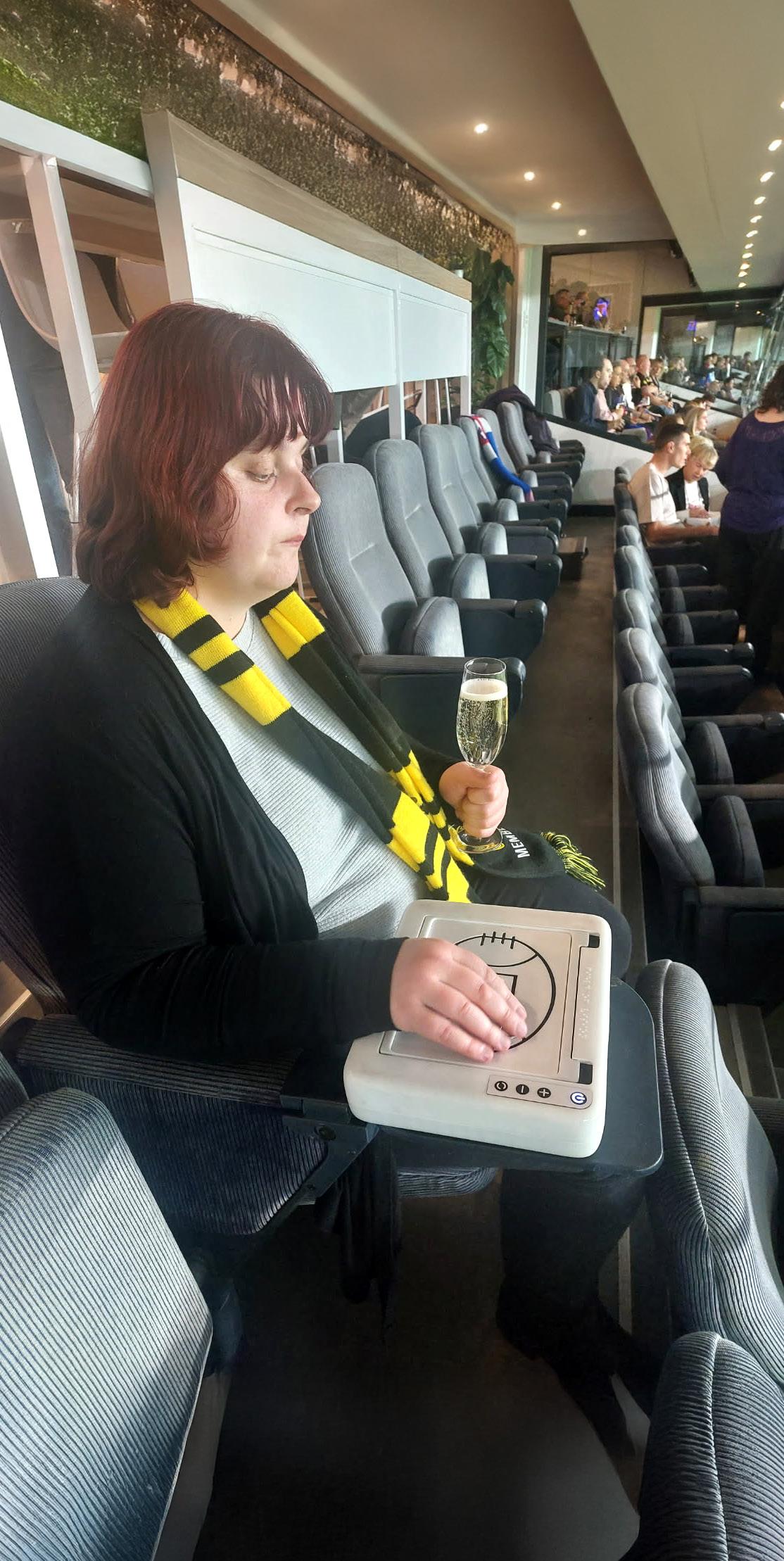
Like many blind people, going to the footy used to be a regular challenge for Kim Black. The 32-year-old administrative assistant remembers her mother and father taking turns to “trace the game” on her hand, helping her follow a passage of play, locate a turnover, or get excited when her beloved Richmond were about to kick a goal.
As she grew up, Kim’s love of AFL (and the Tigers) intensified, her knowledge honed through hundreds of hours listening to Triple M and ESPN commentators. But despite her passion, match days were often an isolated experience. If Kim wanted to follow the game, she couldn’t have a drink with her friends – and vice versa.
But footy may finally be coming home for Kim Black and thousands of other vision-impaired fans. The rollout of a novel haptic technology at Marvel Stadium is providing a tactile way of following the game that’s making waves around the world that could revolutionise the way ball-sports are consumed by the 450,000 Australians who are blind or have low vision.
FROM SOCCER TO FOOTY
Telstra Touch and Track is the result of a unique partnership between the AFL, Telstra Labs, the blind community, Champion Data, and a group of ingenious Irish college students who have taken visually impaired sports viewing to a new level with their Field of Vision technology.
Field of Vision began life supporting soccer fans in Ireland and England during Covid, including prototype testing at Manchester City’s Etihad Stadium. In 2023, it landed a partnership with Telstra Labs, as part of Marvel Stadium’s mission to become “the most technologically advanced stadium in the southern hemisphere” through various initiatives – including the boundless potential of its 5G network.
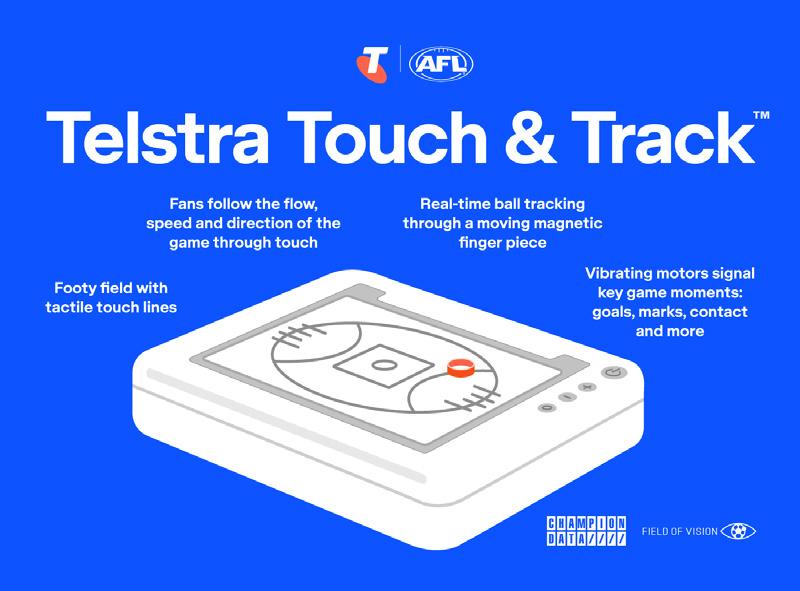
As its name implies, Touch and Track involve a tablet embossed with the playing lines of an AFL oval, and a magnetic ring that drags your finger across the surface – following the ball in near-real time. Vibrations on the bottom or top of the device (for the home or away team, respectively)
signal the main plays: a quick pulse for marks, a buzz for turnovers, a 2-second vibration for behinds, and a lap-shaking 4-second vibration for goals.
The ingenious heart of Touch and Track is its autonomous tracking through Champion Data, which follows the path of the ball through 14 custombuilt cameras on the stadium’s roof.
An AI model processes the ball’s x and y coordinates – to centimetre-level accuracy – and transmits them to the device, in about half a second, through Telstra’s low-latency network.
For someone like Kim, the effect is revolutionary.
“Being able to follow the game this way is absolutely huge,” she said. “Because I can’t see anything, I think of everything in straight lines, so it’s fascinating seeing the different ways that teams move the ball around and watching them move it up the corridor or pass backwards to shift it out to the flanks.
“If the balls inside the 50 and someone’s got a shot on goal, I can put one finger on the ball, and another on the goal, and it gives me an indication of the angle they’re shooting from. It really brings the game to life. When I add in the radio commentary and explanations from my friends, I have a much more comprehensive idea of what’s going on.”
Just as importantly, Kim now gets to spend more time with her family and friends at the footy. “If I can follow the ball, I don’t have to follow the radio so closely,” she said, “so I can relax and enjoy the social side of the game more.”
NOTHING ABOUT US, WITHOUT US
Close collaboration was always the name of this game. Over more than two years, 30 volunteers from Vision Australia, AFL Blind, Blind Citizens Australia and Guide Dogs Victoria helped Field of Vision and Champion Data refine the tech through a long process of interviews, user testing and prototyping.
“The mantra was simple: ‘nothing about us, without us’,” said Ricky Cahn, product principal at Telstra Sport,
who was engaged in tagging on-field events on a prototype pad while the developers “grew” the tech from soccer to AFL – which required more cameras and distinctive algorithms. “But it was clear from the start that we were onto something special.”
Cahn reserves a special word of thanks for Champion Data, the AFL’s ratings provider, which delivered the final link in the chain with a machine-learning model that connected ball-tracking data to Field of Vision’s device through Marvel’s Wi-Fi network. “They were unbelievable, as were Field of Vision, who were so dedicated to making the system a success they sent one of their founders to Australia to complete it,” he said.
Scott Fitzgerald, general manager at Marvel Stadium, gets quite emotional when he describes the “incredible journey” that Touch and Track has led himself and his staff on.
“Going from working through technical issues with Field of Vision in our boardroom to hearing fans talk about the quantum shift in how they’re enjoying the game has been utterly inspirational,” he said. While Marvel Stadium has already scored many firsts – with Australia’s first autonomous retail stores, The Runner powered by Amazon JWO, and its famously familyfriendly facilities – Fitzgerald said Touch and Track has been a standout for him.
“It’s a really proud thing for our staff,” he added. “We’re here to bring enjoyment to people and seeing the joy that this device brings to visionimpaired fans and the way other fans react to it – this is what sport’s all about. And how this enriches fans’ experience, their confidence and capabilities. Being able to work with a company like Telstra, there’s a great synergy in our missions to offer the best experience we possibly can to everybody.”
MULTIPLE BOOKINGS
Since Touch and Track’s launch in June, the last 10 games of the season saw more than 100 devices booked through the stadium’s Guest Services office. “Even more significant are the number of patrons who came to multiple games and signed it out multiple times, which
definitely shows we’re doing something right,” Fitzgerald said.
The Marvel Stadium and Telstra Sport teams are now working on various Touch and Track updates for 2026, including connecting a built-in headphone jack for radio commentary (and eventually a planned audiodescriptive commentary service), improvements in the online booking experience, and audio instructions for fans signing out devices on their own. More devices are also being built to cater for increased demand.
Meanwhile, Telstra has launched discussions with several other Tier 1 stadiums that want to introduce Touch and Track at their venues. Other ball-sports and events are also on the horizon. And according to Fitzgerald Marvel Stadium stands ready to help: “We’d love to help other stadiums adopt this technology. Everyone’s better if everyone’s better. We get to do a lot of things in this work, but sometimes something comes along which is that bit more meaningful and worthwhile and this is absolutely one of those.”
“We haven’t got the tech perfect yet, but we’re continuing to test and reiterate it and to make it faster as we get the latency down,” added Ricky Cahn. “My hope is that, in the next couple of years, every stadium in Australia will have this technology, and every footy fan will be able to experience footy to its fullest extent. We want to connect fans as closely as possible to the game they love – that’s what I want to see.”
TRYING OUT TOUCH AND TRACK:
Vision-impaired fans attending AFL matches at Marvel Stadium can prebook a free Touch and Track device through the stadium’s website – or hire one on the day, pending availability, from Gate 1 Guest Services. All you need is a valid ID (proof of age, Medicare or pension card), which will be held until the device is returned. At the end of the game, users can remain in their seat and Guest Services will collect the device and return their ID.
Impact Institute introduces My Future, My Choice Disability Expos
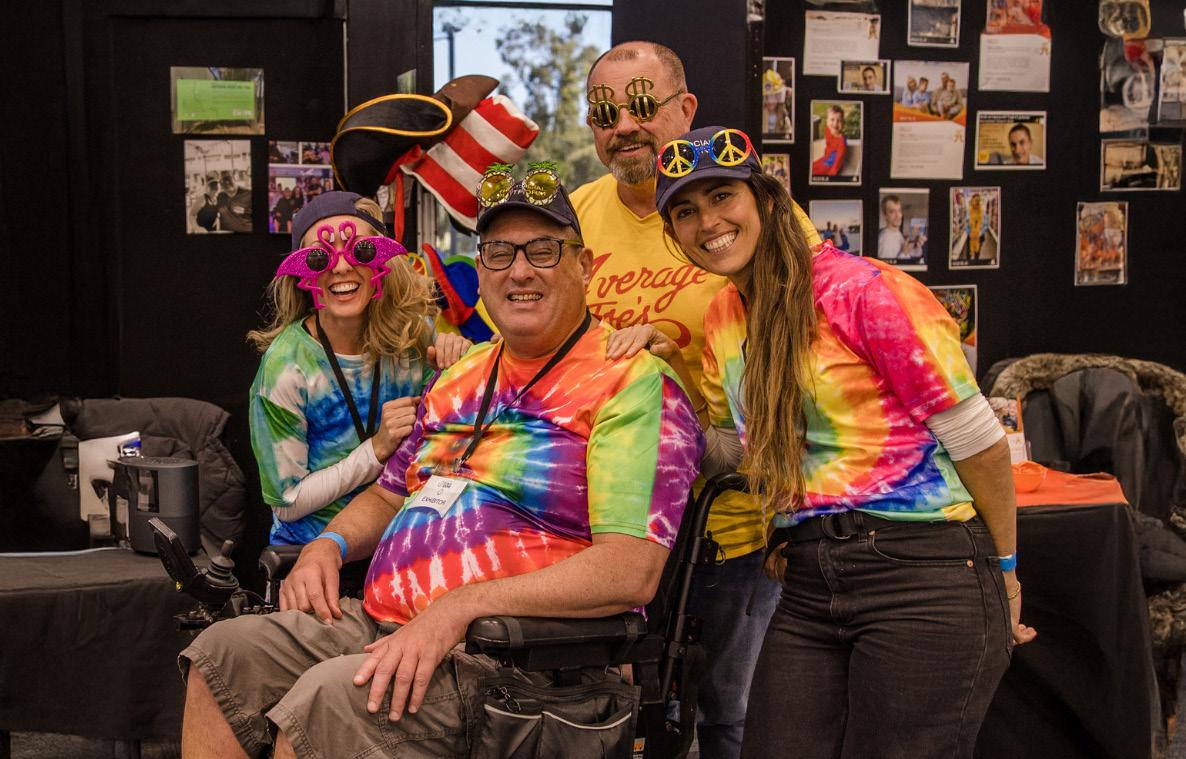
Impact Institute is taking its Disability Expo program to additional regional and city locations around Australia, building on a decade of success and community engagement.
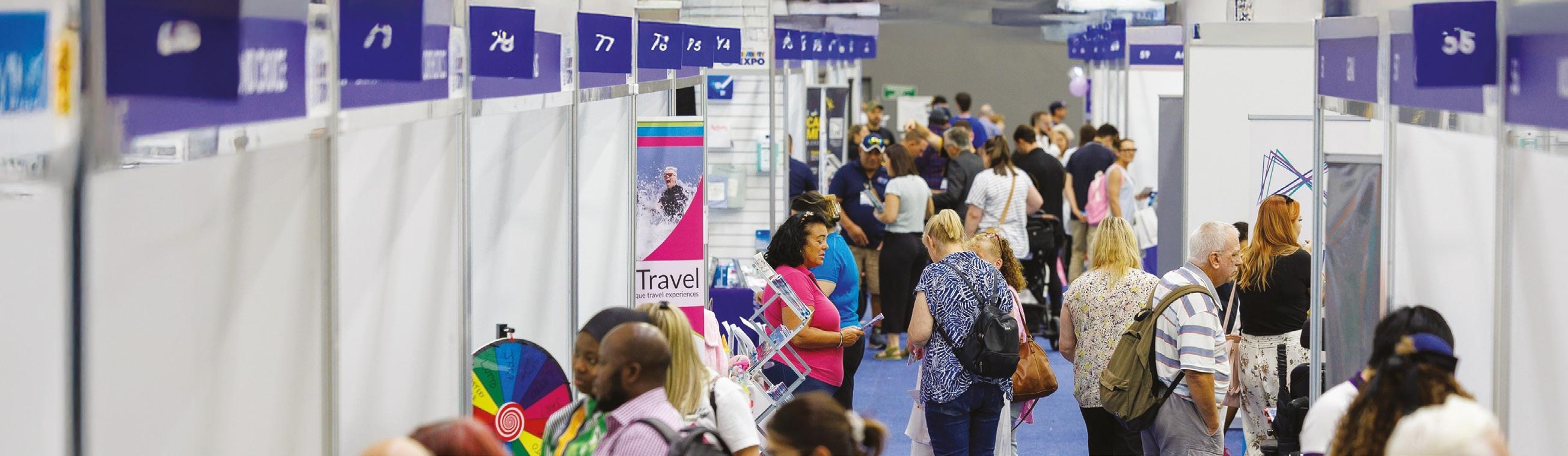
With over 50,000 attendees and 1,200 plus exhibitors annually, the “My Future, My Choice” expos have become a cornerstone of Australia’s disability support landscape and next year’s expansion promises even more impact, connection and opportunity.
WITH THE 2026 PROGRAM, THE IMPACT INSTITUTE CONTINUES TO CHAMPION CHOICE, CONNECTION, AND COMMUNITY
The 2026 program will feature nine major expos across the country, including South-East Melbourne and Adelaide.
These events bring together people with disability, their families, carers, and support networks with service providers, government agencies, and employers who are committed to accessibility and inclusion.
The expos are designed to be more than just information hubs — they are vibrant community events. Attendees can explore everything from mobility aids and modified housing to leisure programs, travel services, and employment pathways. There’s also a range of entertainment and practical presentations on offer.
Feedback from past expos has been overwhelmingly positive. “We had a carer burst into tears because she was so happy we could provide support,” said a representative from Tender Loving Care at the Sydney Disability Expo.
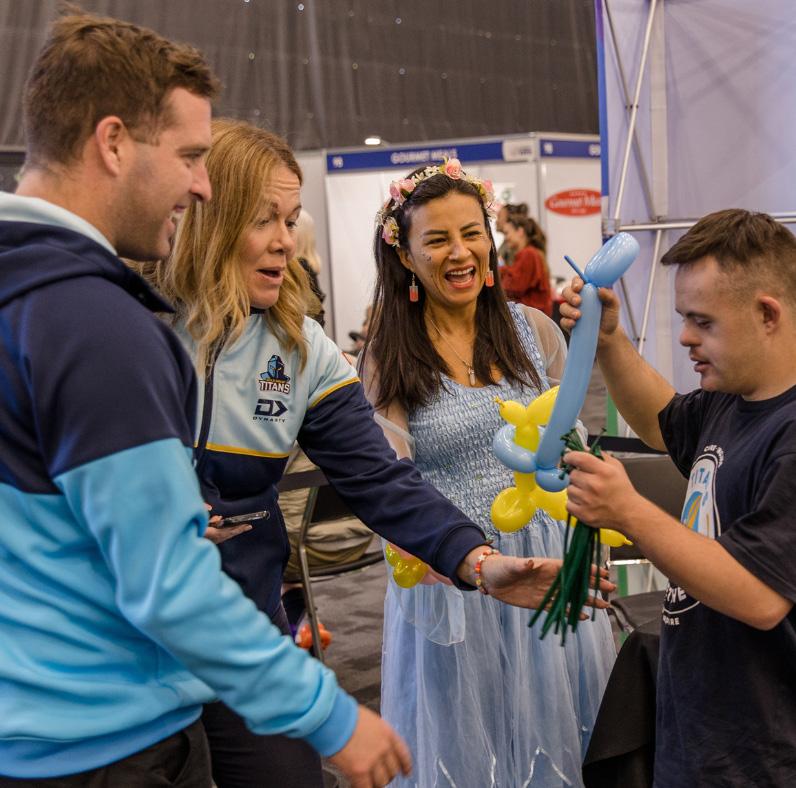
Speaking about the program, Impact Institute head of events, Kathryn Carey said: “People are hungry for information that they may not have so that they can enact choice and control. It’s not a set-and-forget model. You don’t get your funding and then you’re set for years, it’s a daily contest of adjusting services to meet changing needs.”
The face-to-face format of these events is critical to their success
“Being able to get people in the same room, to understand what they do and need, and to ask questions and get answers in real time is vital,” according to Sarah, a training advisor at the Gold Coast Expo.
With the 2026 program, Impact Institute continues to champion choice, connection, and community.
Whether you’re seeking services, employment, or simply inspiration, these expos offer a welcoming space where possibilities are explored, and lives are changed.
Celebrating Ability on screen
With a vibrant tour across Australia
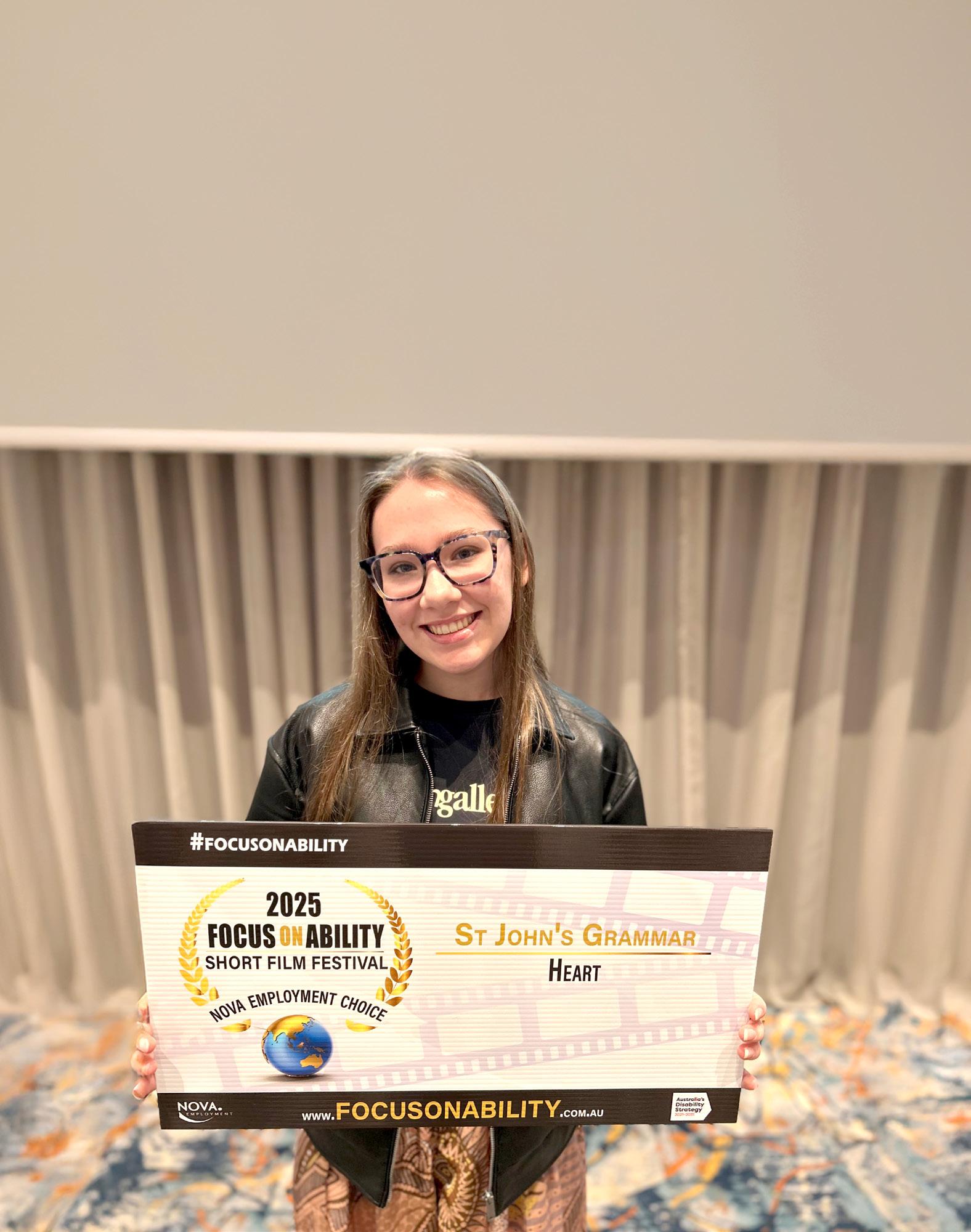
This year, Australia rolled out the red carpet for stories that shine brightly, stories of resilience, creativity, and unrivalled talent. The Focus on Ability Short Film Festival 2025 campaign swept through cities from Brisbane to Fremantle, giving audiences the chance to engage with 283 finalist films from 26 countries, all spotlighting the extraordinary abilities of people with disabilities.
A NATIONWIDE CELEBRATION
The 17th edition of the festival, presented by NOVA Employment, brought its tour to life with a series of free public screenings across Australia, in Queensland, New South Wales, the ACT, South Australia, Western Australia and Victoria. Each event offered more than just the chance to watch short films: they were a celebration of community.
From Brisbane’s dual midday and evening screenings at the PIP Theatre, Milton (September 2) to Sydney’s morning session at Liverpool Catholic Club (September 10), to Fremantle’s event at the WA Maritime Museum (September 18), the tour opened door after door.
POWERFUL STORIES, REAL IMPACT
These screenings gave viewers frontrow seats to a powerful array of films from dramas, documentaries and animations, each under five minutes, hand-picked to highlight ability over disability. What’s more: entries were accepted from filmmakers of all experience levels, making the festival both accessible and ambitious.
Festival founder Martin Wren emphasised that the films “don’t just entertain, they start conversations, open hearts, and change minds.” This message was reflected in the audience
feedback: multiple venues noted the emotional power of the films shown, and how conversations stirred long after the credits rolled.
A PLATFORM WITH REACH AND RECOGNITION
For filmmakers, this festival is more than a one-off screening. Prizes in 2025 include substantial mentorships, cash awards and professional career sessions across categories such as Best Director, Best Actor, Best Screenwriter, and international, Australian and school sections.
For audiences and communities, this is a movement. Through film, viewers from all walks of life are being invited to rethink their perceptions, celebrate the talent of people with disability, and feel part of true inclusion. The festival’s broader goal is clear: using the universal language of film to foster a world where ability takes centre stage.
THE VIBE — INCLUSIVE, UPLIFTING, UNMISSABLE
If you attended one of the events, you would have felt it immediately: the buzz of an inclusive community, the hum of expectation in the auditorium, and the glow of connection as people shared their reactions afterwards. These weren’t just film screenings, they were experiences. Families, students, filmmakers, disability advocates and general film-lovers came together to watch, reflect, laugh and sometimes shed a tear.
LOOKING FORWARD
With screenings concluded and the final awards night on November 16 at The Concourse in Chatswood, NSW, the momentum is building. But even after the red-carpet event, the ripple effect continues. The films will be available to wider audiences online, and the themes raised will continue to be discussed across schools, workplaces and film communities.
In short: the 2025 Focus on Ability season has done something more than show films. It has heralded inclusion, elevated voices, and sparked conversation, all while ensuring the spotlight stays firmly on what people can do.
For anyone who loves film, believes in representation, or simply enjoys being inspired this year’s tour was a reminder that the big screen can be a place for all screens of life.
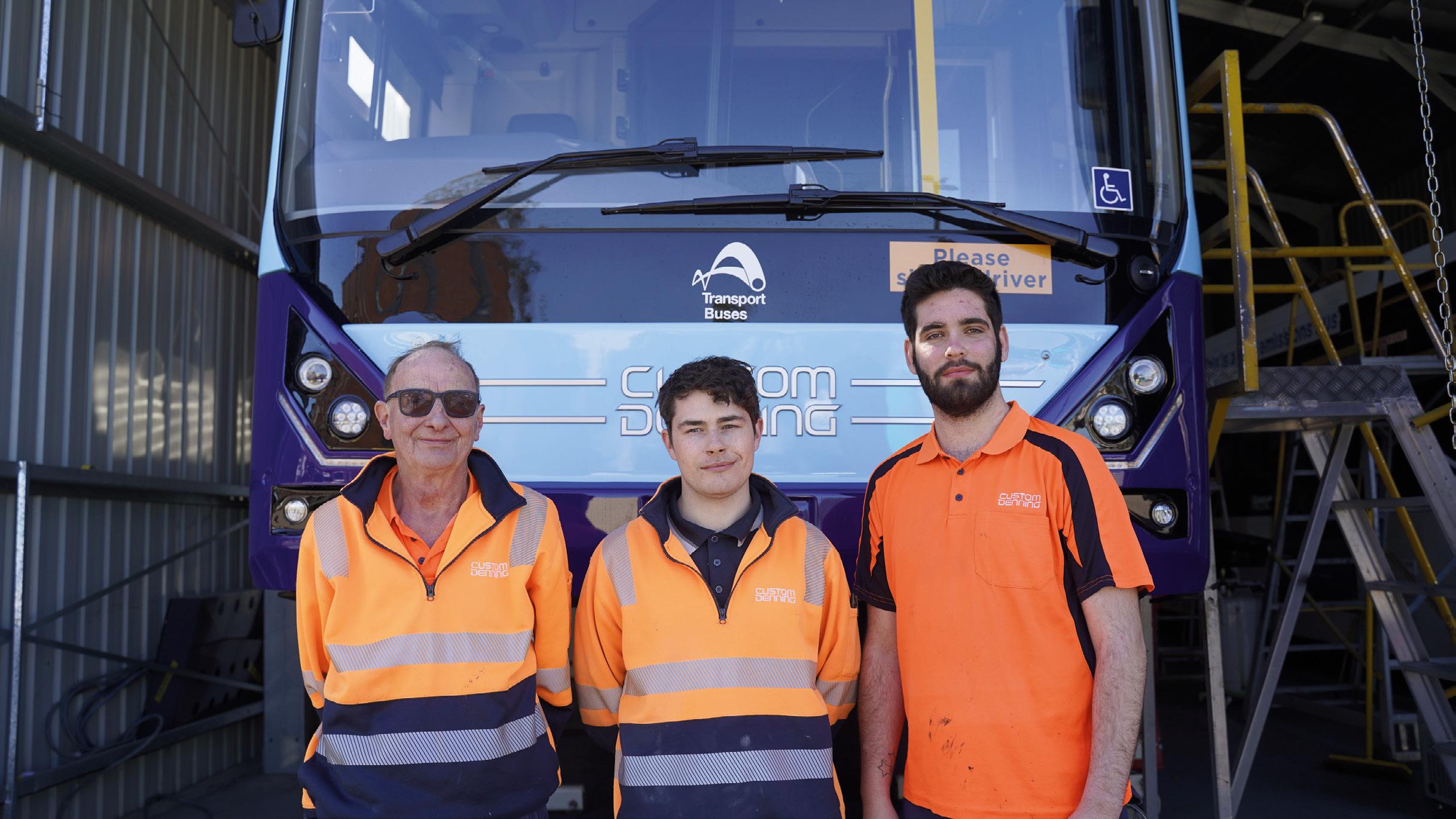
Having a diverse workforce really creates an opportunity for everyone to collaborate their unique set of skills and experience that they bring into the team. NOVA have been fantastic.
Sarah - Head of People & Culture –Custom Denning



Inclusive Employment Australia
A new name - the same Barkuma support you trust
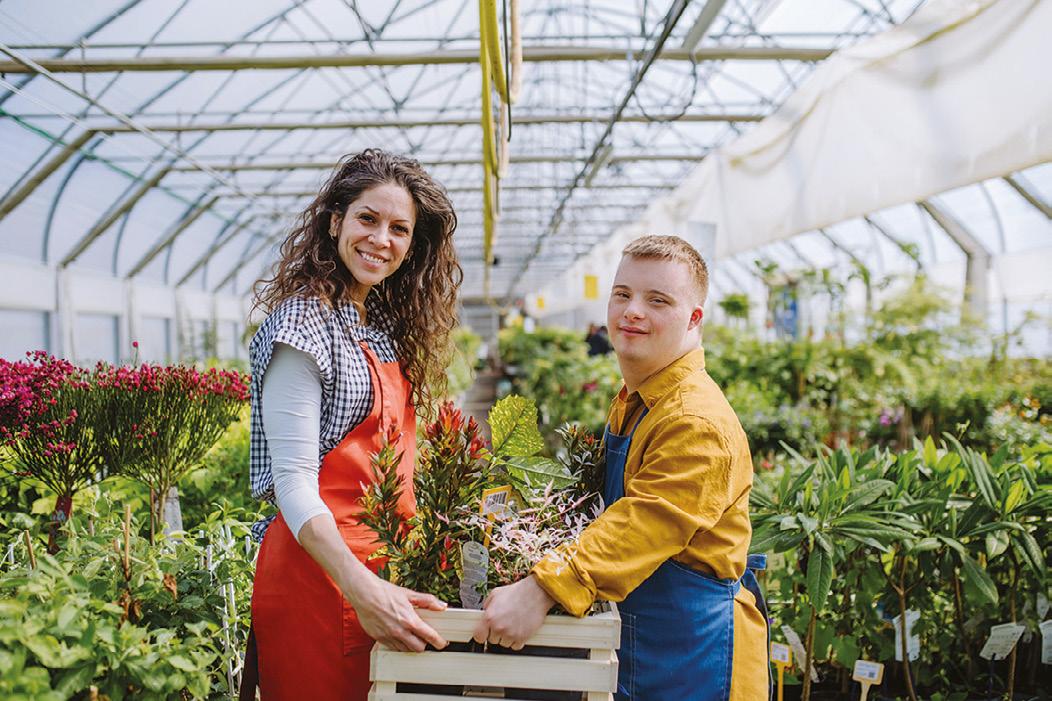
On November 1, 2025, Australia entered a new era of disability employment with the launch of Inclusive Employment Australia replacing Disability Employment Services (DES). This reform is the most significant change in more than a decade, placing participants at the centre of servicing and focusing on finding and maintaining employment.
At Barkuma, our message to South Australians is simple: if you’re with Barkuma, you can stay with Barkuma. Our contract has been retained under Inclusive Employment Australia, which means your support continues seamlessly. You’ll keep working with the same team who know you, understand your goals, and support your progress.
LOCAL. EXPERIENCED. TRUSTED. For over 50 years, Barkuma has supported thousands of South
Australians with intellectual disability, learning disability and autism spectrum disorder to build confidence, independence and meaningful careers. We’re proudly local - our teams, our employer partners, and our community connections are all here in South Australia. This deep understanding of local industries and opportunities means the pathways we create are real, relevant, and built to last.
Barkuma works with more than 250 long-term employer partners dedicated to creating and sustaining diverse and inclusive, workplaces. We value our employer partners and are committed to working alongside them to ensure success.
WHAT INCLUSIVE EMPLOYMENT
AUSTRALIA MEANS WITH BARKUMA
“Barkuma is excited to be a part of Inclusive Employment Australia as
a specialist provider. We don’t see this as a change; it’s a continuation of the person-centred high-quality support we’ve delivered since 1986. Now under a new national framework that recognises our proven approach,” Barkuma Employment Pathways operations manager, Danielle Broadway said.
“It is refreshing that the new contract focuses on quality of service, putting the participant at the centre of service delivery, where they should be. We are also thrilled that eligibility criteria have been relaxed, providing access to more people that require support to find and maintain employment.”
SUPPORTING EMPLOYERS
Inclusive Employment Australia is not only about participants. It is about empowering employers to build inclusive, high-performing teams. Barkuma works with businesses to connect them with the right people, provide on-the-job coaching, and offer practical advice to create workplaces where everyone can thrive.
Employers who partner with Barkuma gain more than just great team members; they become leaders in inclusion.
PARTNER
WITH BARKUMA
Inclusive Employment Australia marks a new chapter in disability employment, and Barkuma will continue doing what we do best: walking alongside South Australians with intellectual disability, learning disability and autism spectrum disorder to find, secure, and grow in meaningful work.
Learn more about Inclusive Employment Australia and what it means with Barkuma at barkuma.com.au or call us on (08) 8414 7100.
What Inclusive Employment Australia means with Barkuma
What this means for you
Stay with Barkuma
You don't have to change providers, you can choose to stay with your trusted Barkuma team.
Broader access
More people who need support to �ind and maintain employment can now access services.
What it means for employers
Since 1 November 2025, the Australian Government’s Inclusive Employment Australia program has replaced Disability Employment Services. This reform brings more �lexibility, support, and greater opportunities for people with disability to access meaningful, long-term work.
At Barkuma, we’re proud to continue delivering services as an Inclusive Employment Australia provider, meaning the support you’ve trusted for years remains, only stronger and more aligned with your needs.
Tailored support
Flexible support designed around your strengths, goals and career aspirations.
Work opportunities
More pathways for long-term employment and connects you with businesses that value inclusion.
Inclusive Employment Australia also bene�its businesses, helping employers create stronger, more inclusive teams.
Access diverse talent
Connect with job-ready candidates who bring unique strengths and perspectives.
Tailored support
On-the-job coaching, training and advice to ensure employees and employers thrive.
Partner with Barkuma
For over 50 years, Barkuma has supported South Australians with intellectual disability, learning disabilities and autism spectrum disorder to �ind and keep meaningful work. Whether you’re new to the workforce or looking to progress in your role, Barkuma continues to deliver person-centred support to help you thrive in an inclusive environment.
Learn more about Inclusive Employment Australia and what it means at barkuma.com.au or call us on (08) 8414 7100.
Inclusive workplaces
We help you build disability con�idence and ensure your workplace remains inclusive.
Incentives
Wage supports and additional practical assistance to encourage inclusive hiring.
Q&A with Bamara CEO Lesley Zarb
Bamara, an Indigenous-owned business, has been appointed by the Department of Services to deliver Inclusive Employment Australia in 11 areas across NSW, the NT, and QLD, representing a shift towards a more tailored, community-focused model.
HOW LONG HAS BAMARA BEEN DELIVERING NDIS INCLUSIVE EMPLOYMENT SERVICES TO THE INDIGENOUS COMMUNITIES?
From July 2021, across communities in Dubbo, Wellington, Coonamble and Moree.
WHAT ARE THE SPECIFIC CHALLENGES UNIQUE TO THE INDIGENOUS COMMUNITY?
Indigenous people with a disability can face multiple layers of disadvantage when it comes to accessing employment. Some include facing cultural barriers and lack of culturally safe services, with mainstream employment programs often lacking cultural awareness, leading to disengagement. Systemic discrimination and stigma can mean Indigenous people with disability may face bias both for their cultural identity and their disability, which reduces opportunities. There are geographic barriers – many Indigenous communities are in rural or remote areas with fewer employment options and limited disability support services. Lower access to education and training pathways, due to structural inequities, means Indigenous people have fewer chances to develop skills and qualifications required. Trust and engagement with services can suffer from past negative experiences
with institutions, which can make navigating systems like the NDIS or job agencies difficult.
WHAT PERCENTAGE OF YOUR OVERALL BUSINESS IS IT?
Bamara’s success is deeply tied to NDIS. Nearly half of the company’s workforce (47 per cent) is dedicated to NDIS services. At the same time, 42 per cent of Bamara staff overall identify as First Nations, contributing more than onethird of all hours worked. These elements combined demonstrate that NDIS is both central to Bamara’s business model and a vital mechanism for sustaining meaningful First Nations employment.
HOW HAS HAVING AN AUTISTIC SON DRAWN YOU TO HELPING PEOPLE WITH DISABILITY?
Having a child with autism has given me a deep understanding of the complexities that individuals and families face when living with a disability. My personal experience navigating supports and accessing NDIS services has shaped my commitment to delivering a high level of service. I believe that quality disability support should be built on genuine care, strong capacity building, strict compliance, and above all, customer choice. These values come directly from my own journey, and
they drive me to ensure that people with a disability receive the standard of service and respect that I would want for my own family.
WHAT DOES THIS BUSINESS INVOLVE?
Bamara is a joint venture agreement between the David Liddiard Group and Asuria. They bring together the vast experience of Asuria in the employment services field and the wealth of education and transition to employment experiences Liddiard and his team have developed with Aboriginal and Torres Strait Islander peoples and communities.
HOW MUCH INCLUDES WORKING WITH NON-INDIGENOUS COMMUNITIES AND EMPLOYMENT SERVICES?
Bamara has built its service model around principles that honour and engage First Nations people, while also ensuring strong outcomes across all participant groups. As a generalist provider in Inclusive Employment Australia, Bamara’s diverse caseload reflects its ability to deliver highquality, personalised support that meets participants where they are. This approach – attentive to cultural, personal and situational needs – is the hallmark of a service ethos that is both inclusive and consistently effective.
HOW SUCCESSFUL IS BAMARA IN FINDING EMPLOYMENT IN ISOLATED AREAS?
We have been actively working with participants through our NDIS services to build their skills to enter the workplace, helping to engage with disability providers, attending workplaces with them, assisting with career guidance and putting together resumes.
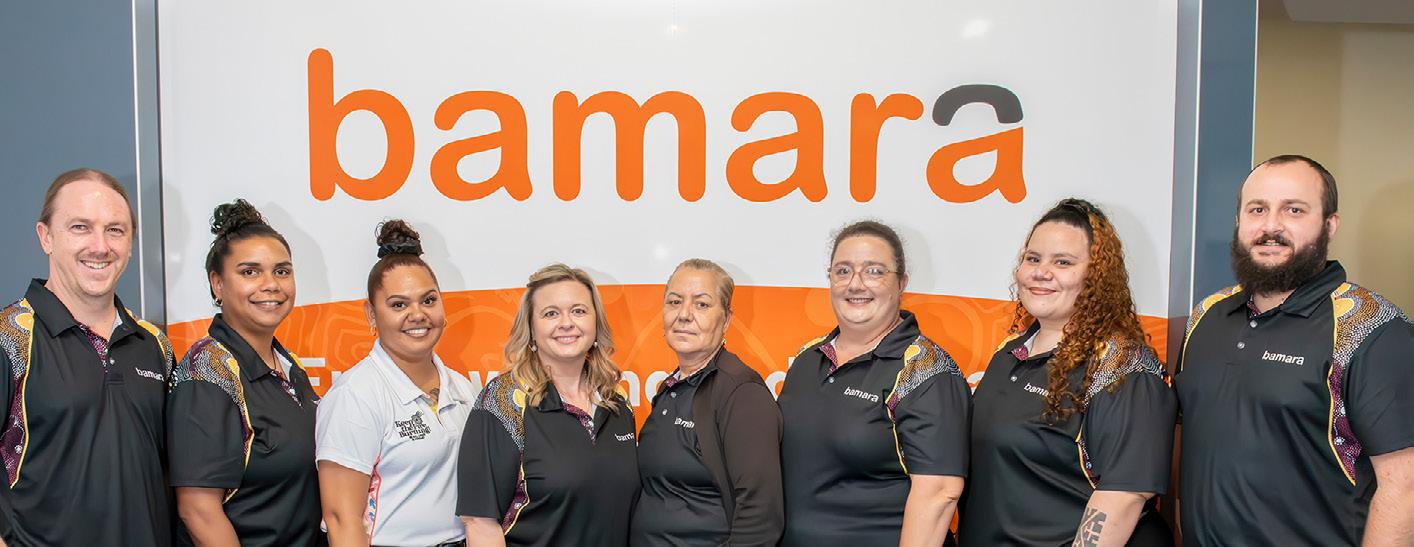
The Bamara team in Cairns with Lesley Zarb fourth from left.
Inclusive workplaces. Endless possibilities.
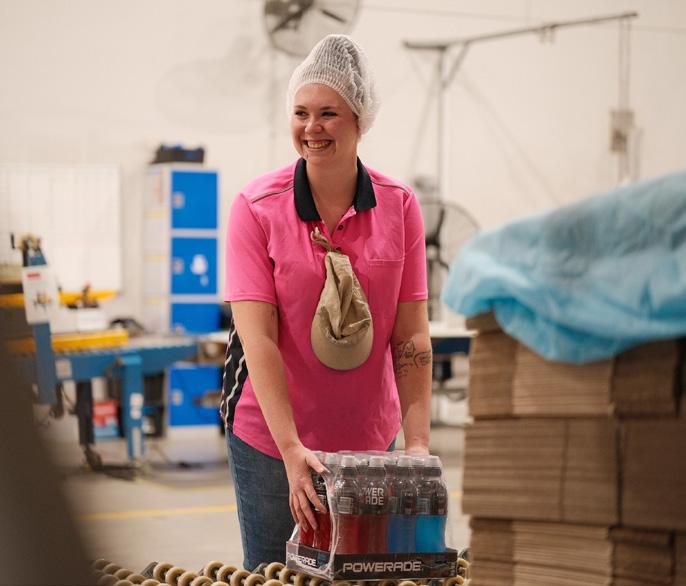
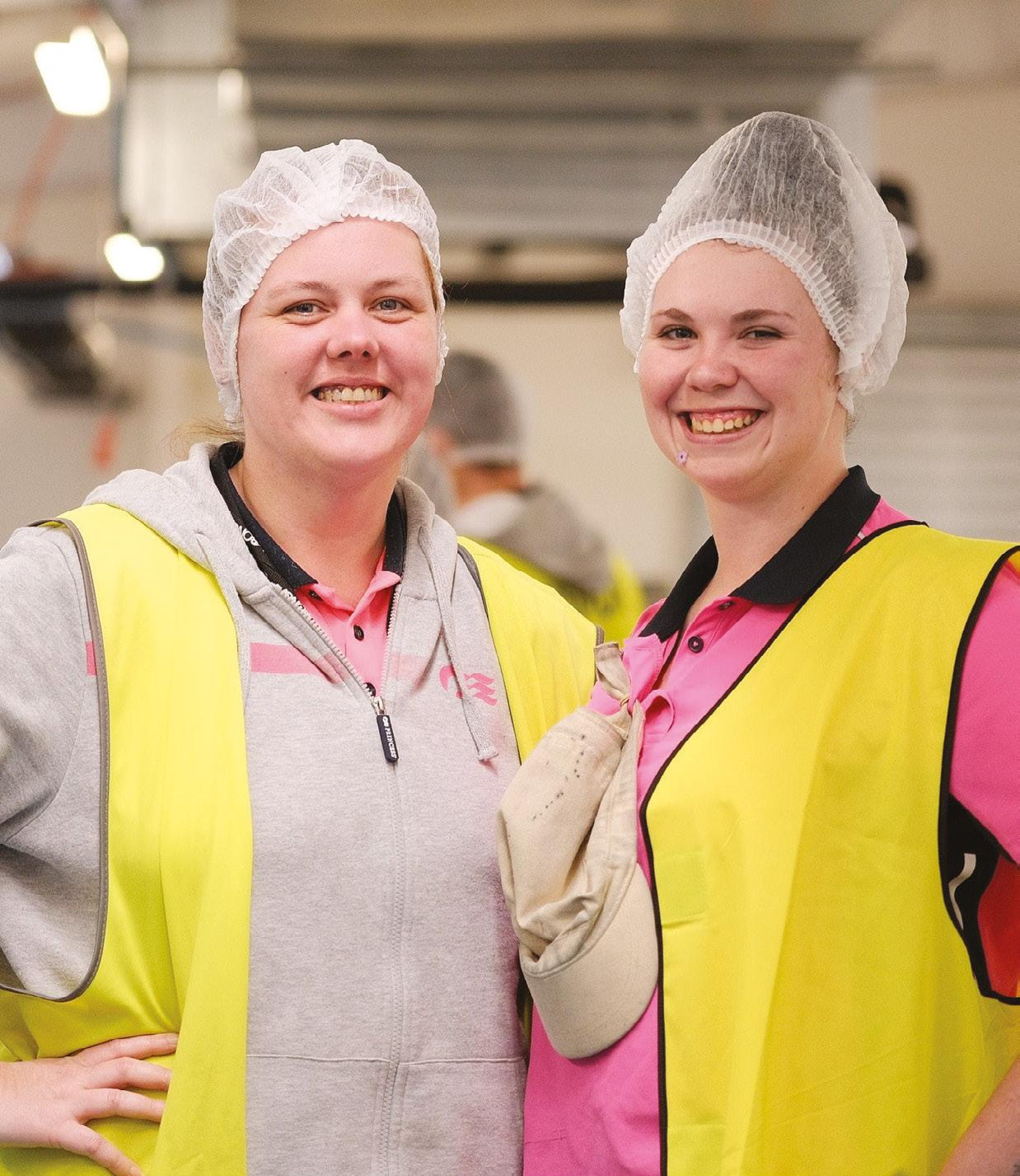
What does your dream job look like? For Janaya, it is a workplace where she feels valued, supported and proud of her achievements.
At Endeavour Foundation, we believe every person with disability deserves that same opportunity.
BUILDING SKILLS AND INDEPENDENCE
Janaya started with work experience at our Wacol Business Solutions site. With the support of her Employment Coach, she has grown in confidence, learnt new skills and taken bold steps forward. From packaging and labelling to guiding her peers as a Line Assistant-in-training, Janaya is proving that Supported Employment opens doors to greater independence.
“I like having my own money and being independent,” Janaya said. “I don’t have to rely on anyone.”
WHERE SUPPORT MEETS SUCCESS
Step into an inclusive workplace where you can thrive.
Whether it is on-the-job training, leadership pathways, or even using Virtual Reality (VR) to learn new skills like forklift driving, we are here to support every step of the journey.
Some people choose Supported Employment, while others move into Hosted or Mainstream Employment.
Whatever your goal, we help you reach it. Because work is more than a job – it is confidence, pride and a pathway to the future you want.
FIND YOUR PERFECT JOB TODAY Ready to explore inclusive employment opportunities?
Scan the QR code today and take the first step towards your future.
Scan the QR code and find your perfect job today.

ATSA: A Year in Review
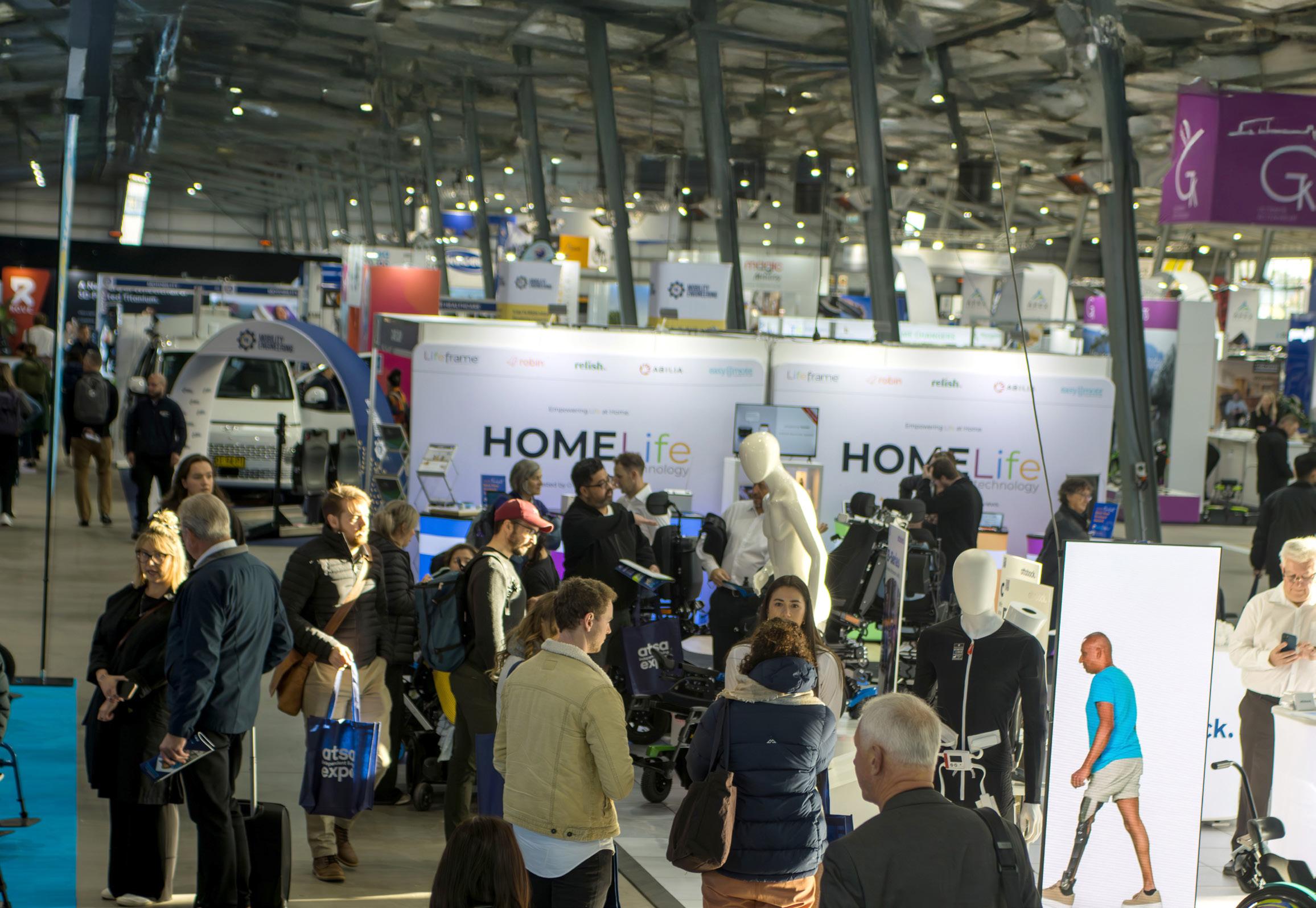
For 25 years, ATSA has stood at the heart of an industry built on independence - supporting people with disability, older Australians, families and carers. In May, ATSA celebrated this milestone at its second gala dinner, reflecting on the incredible progress of the assistive technology sector and the dedicated individuals and organisations who make it possible. The past year has been one of growth, innovation, and renewed purpose for ATSA.
Over the year, ATSA nearly doubled its team from four to seven staff, expanding capacity across events and policy. Bringing full delivery of the ATSA Independent Living Expos inhouse has strengthened ATSA’s ability to deliver high-quality experiences for exhibitors and attendees, while the expansion of the policy and advocacy team has allowed a far more proactive response to the significant reforms underway across the disability and aged care sectors.
ADVOCACY AND REFORM
ATSA continued to represent the interests of members and assistive technology (AT) users across multiple national forums. During the year, ATSA made 11 formal submissions,
contributed to nine advisory committees and participated in 37 meetings across government and industry.
A key area of focus was the Support at Home Aged Care reform. Working alongside sector colleagues, ATSA strongly advocated against a staterun loan pool model for AT provision and the need for further consultationefforts that contributed to the government delaying the rollout of the new scheme until November 2025. This delay allows for further collaboration to ensure the new model delivers sustainable, effective outcomes for both AT users and providers.
EDUCATION AND WORKFORCE DEVELOPMENT
ATSA’s first year in formal training delivery saw the launch of a major new initiative in partnership with ATLAS FIOS USA and MySkill NZ, creating an internationally recognised certification pathway for AT technicians. Three courses were delivered across Australia, training 33 technicians in practical assessment and establishing three qualified assessors to continue the program.
Looking ahead, ATSA will conduct a feasibility study to identify further
opportunities to add value to training and professional development across the sector.
GROWTH AND ENGAGEMENT
Membership continued to expand, reaching 180 members and affiliate members. ATSA delivered 114 education sessions, 16 one-off consultations and welcomed 6,300 attendees to expos nationwide.
Online engagement also grew strongly, with over 118,000 LinkedIn impressions and 103,000 website views.
LOOKING FORWARD
With increased capacity, ATSA is ready to deepen its advocacy, strengthen member engagement and continue leading the growth and professionalism of Australia’s AT sector.
If you haven’t attended an ATSA Independent Living Expo, read our newsletter or joined as a member, now is the perfect time. Be part of the national voice for AT - connect, collaborate and help shape a stronger, more inclusive future.
Learn more at www.atsa.org.au or call (02) 8006 7357.
Discover Assistive Technology
And how it can help you live your life, your way
Assistive technology (AT) can open up possibilities, making everyday tasks easier, supporting independence, or helping you enjoy activities. But finding the right information and knowing where to start isn’t always simple.
That’s where AT Chat comes in. It is a peer-led community and information service designed to help you make informed decisions.
Instead of wading through technical jargon or sales driven advice, you will find honest insights, trusted resources, and practical guidance from people with lived experience.
This new website makes learning about AT easier than ever. You’ll find accessible guides, personal stories, and welcoming spaces that encourage you to explore at your own pace.
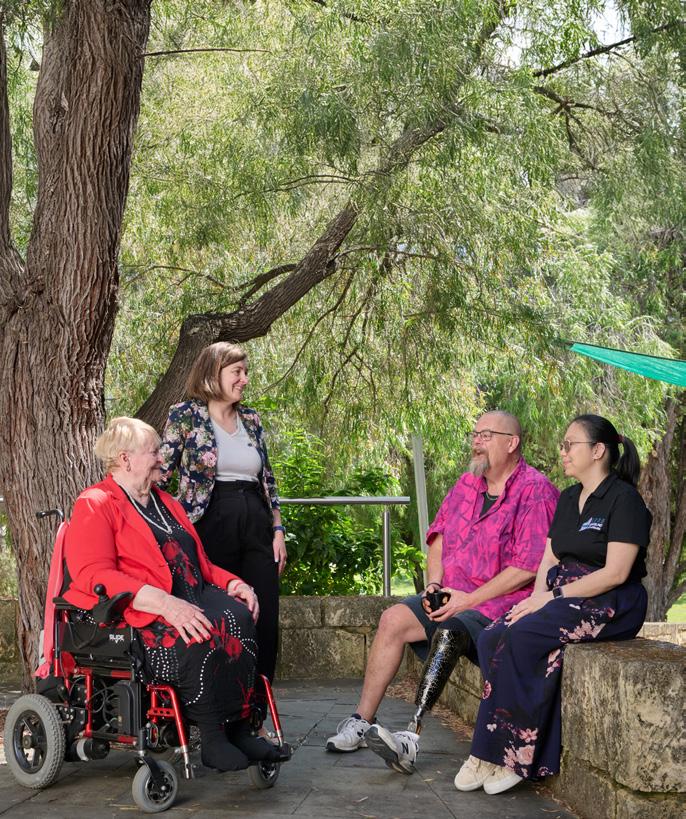
There are resources to help you identify AT for everyday life, work, and leisure. You can join the friendly AT Chatterbox community to ask questions, exchange stories and swap tips.
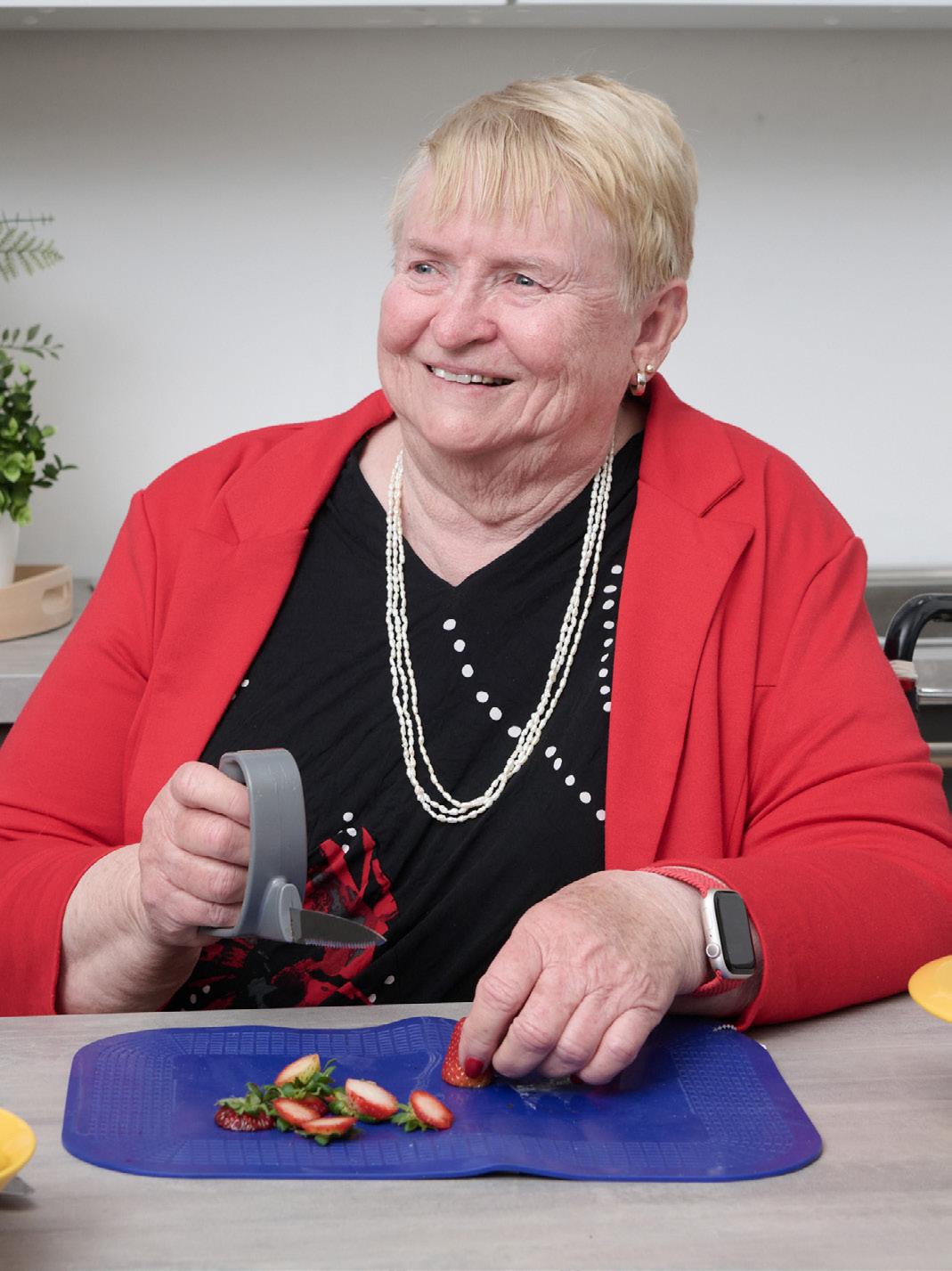
For more personalised help, the AT for Me service links you with trained peers for one-on-one support to help you reach your goals.
For over eight years, AT Chat has grown alongside a vibrant community of over 5,000 people across Australia.
This network of voices and experiences has shaped AT Chat into a unique space where people with disability can contribute, learn, and grow together.
Whether you’re new to AT or looking for fresh ideas, AT Chat is here to support your journey.
Explore the website, join the community, and access practical information to help you live, play, and work.
Find out more by visiting: atchat.com.au
Little bodies on the move
Walking into the future of Assistive Gait Technology
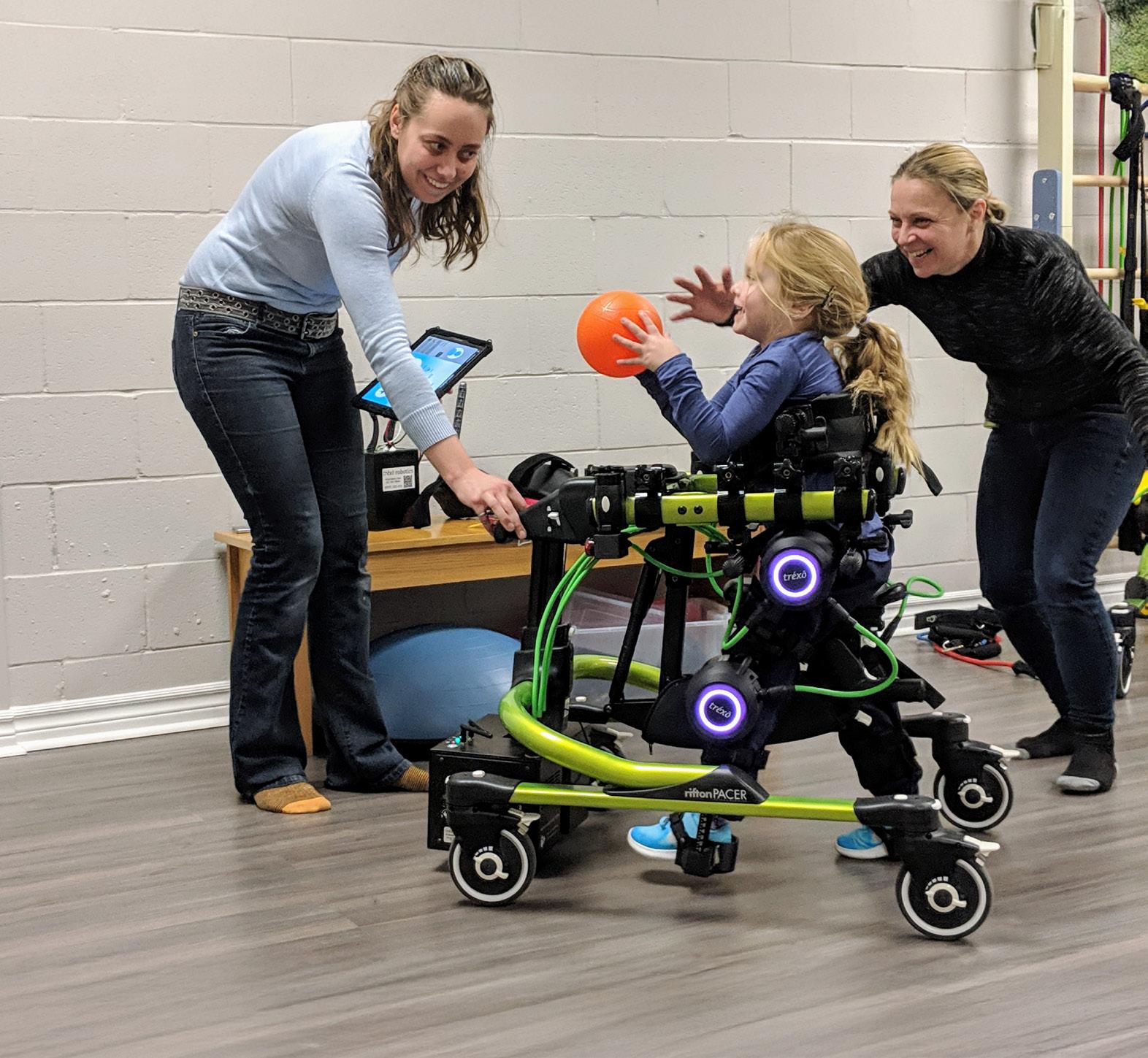
Our bodies are designed to move — to stand tall, bear weight, and explore the world. For children with complex mobility challenges such as cerebral palsy, the ability to walk isn’t just about movement; it’s about growth, participation, and independence. Assisted weight bearing and walking have long been recognised as powerful therapeutic interventions, supporting hip development, bone density, muscle strength, and gross motor function. But helping children achieve the number of steps needed to make meaningful gains in strength and neural plasticity can be incredibly difficult.
This is where technology meets therapy and where hope takes its first steps.
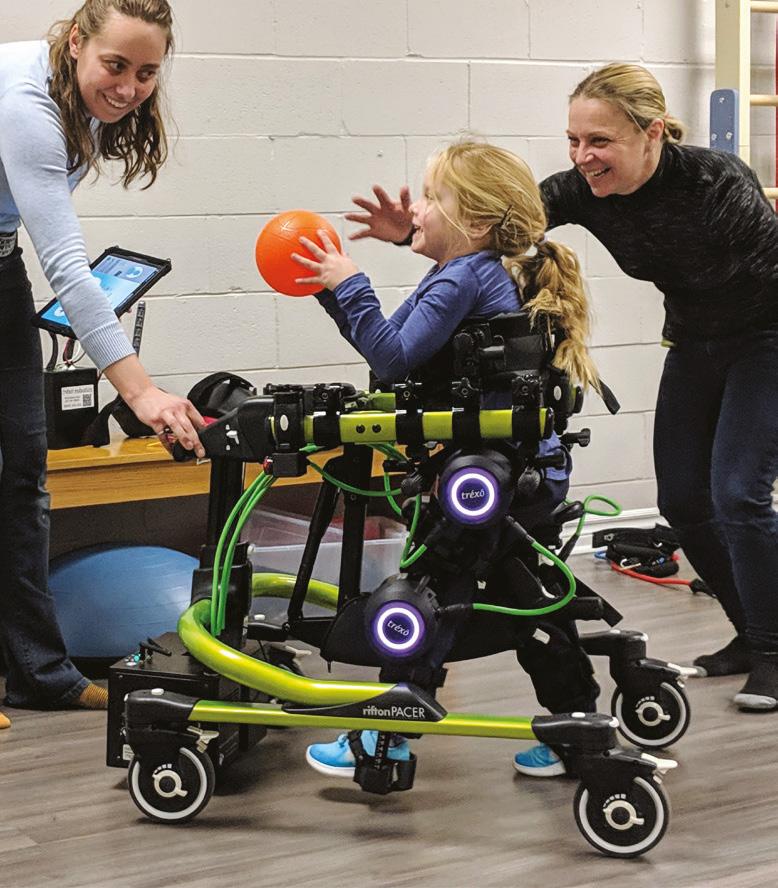
Introducing Trexo Robotics — a breakthrough in paediatric mobility that combines robotics, science, and human innovation to redefine what’s possible. Developed in Canada, Trexo is the world’s first robotic gait trainer designed specifically for children. Its mission is simple but profound: to make walking possible for every child, regardless of diagnosis.
The story behind Trexo is as inspiring as the technology itself. When co-founder Manmeet Maggu’s nephew, Praneit, was diagnosed with cerebral palsy, Manmeet discovered there were no suitable devices to help children like his nephew walk independently. Determined to change that, he and co-founder Rahul Udasi created Trexo, a robotic
exoskeleton that gives children the gift of movement. What began as a personal project of love and necessity has evolved into a global innovation transforming mobility and rehabilitation outcomes.
TAILORED FOR UNIQUE NEEDS
Trexo’s robotic legs attach to the Rifton Dynamic Pacer, a trusted mobility base that provides postural alignment and dynamic support. Together, they form a powerful partnership: Rifton ensures stability and positioning, while Trexo’s robotic legs guide the user through a natural, repetitive gait pattern.
As the child grows stronger, they gradually take more control, transitioning from robotic-assisted steps to initiating their own. Each session becomes an opportunity to build strength, confidence, and independence, one step at a time.
What makes Trexo truly remarkable is its personalisation. Every setting from hip and knee angles to speed, weight bearing, and step length can be tailored to the child’s unique needs. Its intuitive tablet interface allows therapists and parents to monitor progress, track steps, and adjust settings in real time, turning every walk into measurable, meaningful progress.
Available now through APEX Mobility in Australia and New Zealand, the Trexo Robotic Gait Trainer opens new possibilities for children with cerebral palsy, spinal injuries, acquired brain injuries, neuromuscular conditions, and muscular dystrophies. With Trexo, children are not just walking – they’re exploring, engaging, and embracing life in motion.
The future of mobility is here. Feel the movement. Hear the steps. See the change. From impossible… to possible.
To learn more about Trexo or to request a trial, contact APEX Mobility at sales@apexmobility.com.au or call 1300 212 192.
Stronger business starts with inclusive hiring
New online resource empowers employers to harness the benefits of a neurodiverse workforce
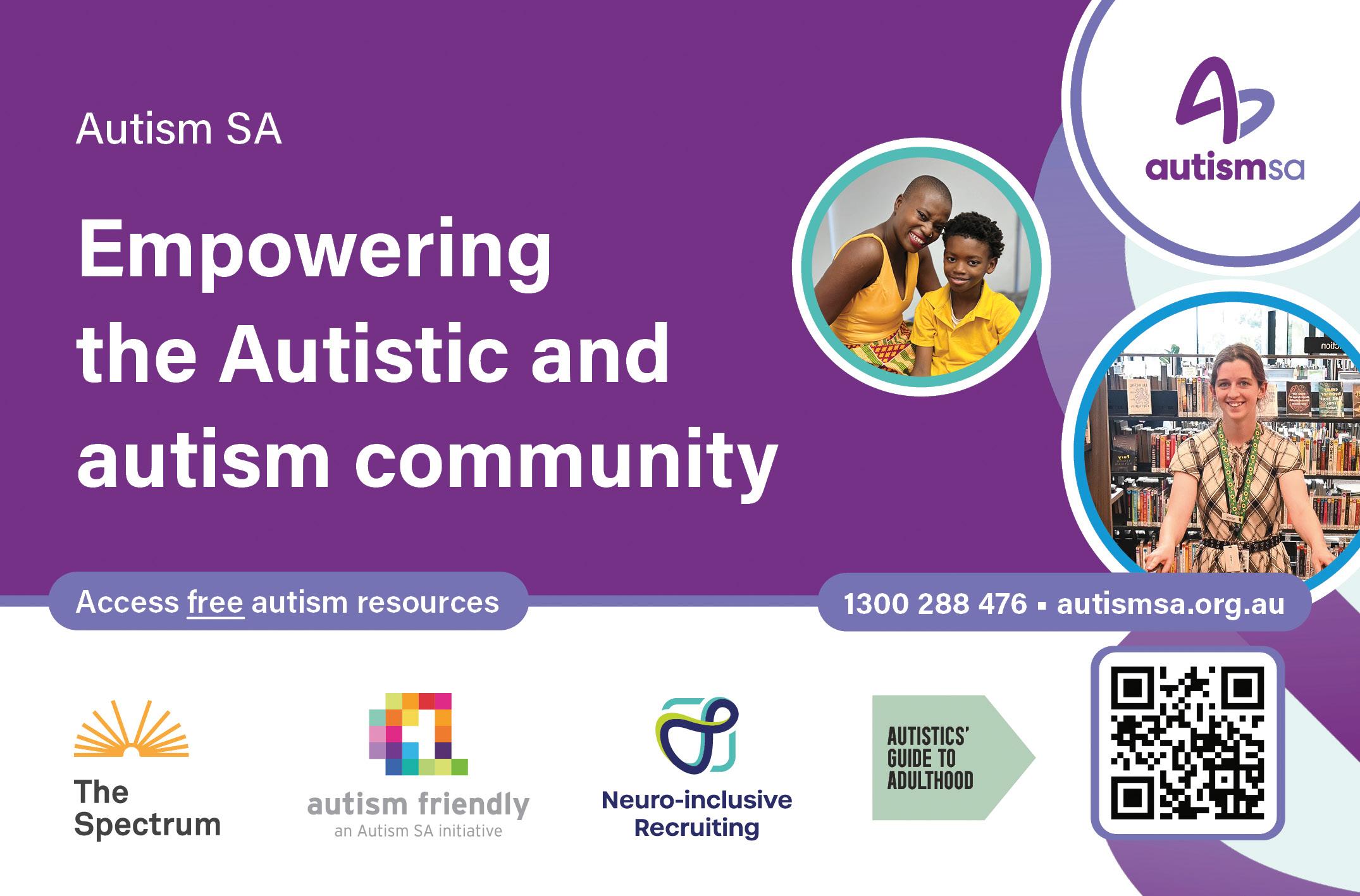
Autism SA’s Neuro-inclusive Recruiting is a free online resource designed to help employers adopt inclusive hiring practices and tap into the strengths of neurodivergent candidates – particularly autistic individuals, who face an unemployment rate of 18.2 per cent, six times higher than the general population.
The platform supports businesses in identifying and addressing barriers in traditional recruitment processes. It offers practical, downloadable tools and real-world insights to build more inclusive, supportive workplaces. Since launch, the resource has been accessed by over 36,000 people across Australia, with employers reporting tangible benefits.
Jeremy Nagel, founder of Focus Bear, said: “As an employer, I’ve started incorporating these principles
into my own hiring process, sending questions in advance, making onboarding more structured, and the impact has been undeniable. Its reduced stress for candidates, improved retention and ultimately led to better hires.”
The co-designed resource has been developed by a neurodivergent team at Autism SA, with support from three National Advisory Groups comprising employers and neurodivergent individuals. It has been created in collaboration with national stakeholders and is informed by a comprehensive literature review from Adelaide University.
Visit: neuro-inclusiverecruiting.org.au
Reach further – Live freer
Discover
the power of movement
Everyday life is made up of small but meaningful moments — reaching for your favourite mug in the cupboard, preparing a meal, greeting someone eye-to-eye, or joining a conversation at the counter. For many wheelchair users, these moments of independence can feel just out of reach.
At Linds Rehabilitation Equipment, we believe accessibility is more than just getting through the door. It’s about living fully once you’re inside. With today’s innovative powered wheelchair technologies, the world becomes more accessible, bringing new freedom, function and confidence to daily life.
GO BEYOND BOUNDARIES
Modern power wheelchairs do far more than transport you from one place to another, they enhance your ability to engage with your environment. Advanced features like anterior tilt, seat elevation, and lateral tilt work together to expand your functional reach and create opportunities to do more, comfortably and safely.
engineering and ergonomics that brings the world closer to you.
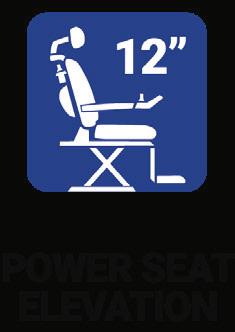
• Seat elevation: Sometimes, a simple lift can open up an entirely new level of independence. A powered seat elevator allows you to
reach, turning difficult movements into smooth, functional ones.
TECHNOLOGY THAT ADAPTS TO YOU
What makes these features truly lifechanging is how they work together through personalised memory programming. With the touch of a single button, your chair can move seamlessly from rest to your ideal “reach” position by automatically adjusting tilt, height, and posture for comfort and balance. This intuitive technology adapts to your body and your lifestyle, creating independence that feels natural and effortless.
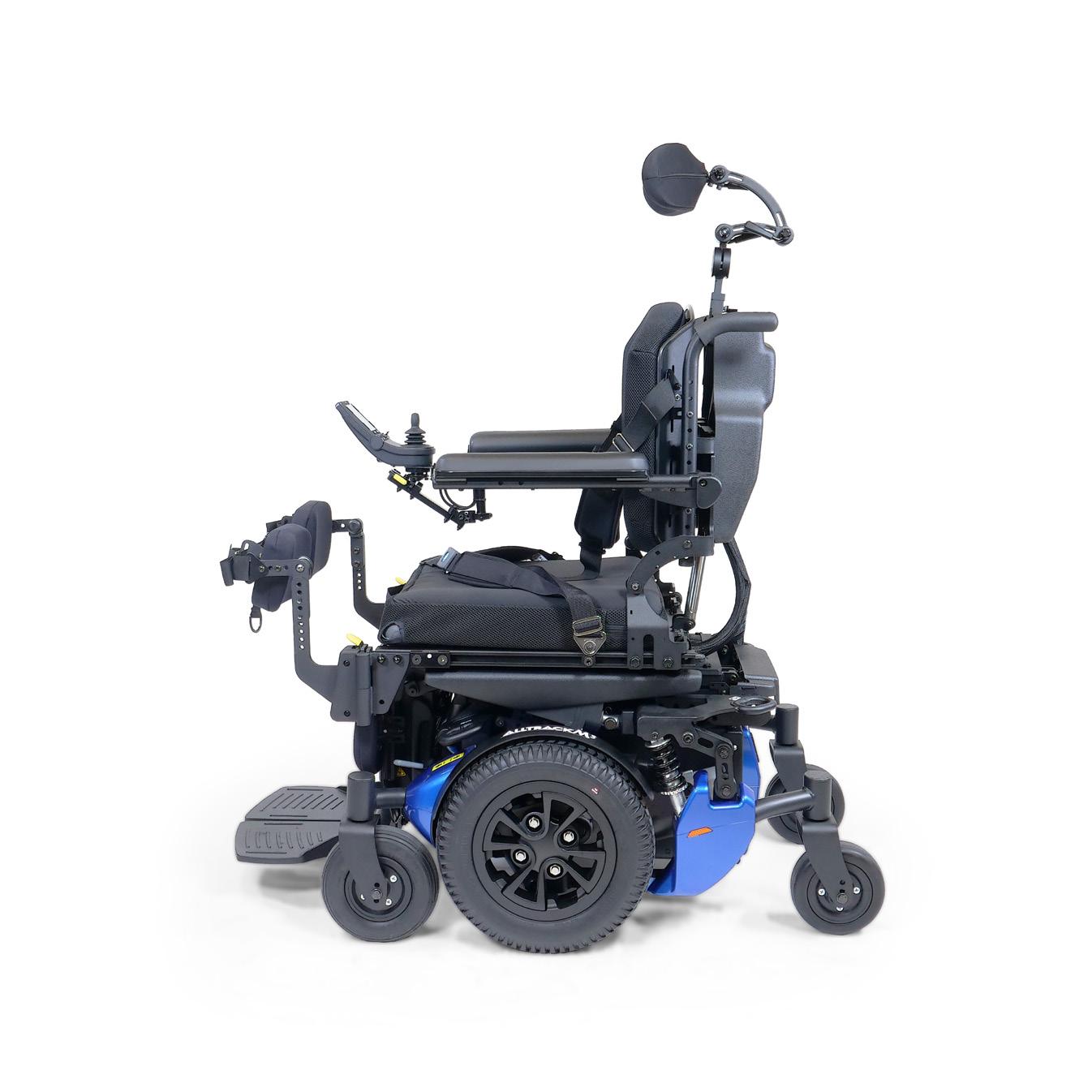
• Anterior reach: This dynamic movement allows the back of the seat pan to lift higher than the front, bringing your hips and torso forward over your knees. The result? Greater access to everyday surfaces like benchtops, cupboards, and sinks. Some wheelchairs lower the front of the seat for knee clearance under tables, while others combine lift and reach, giving both forward movement and elevation for higher shelves. It’s a clever blend of
reach higher objects safely, maintain natural eye contact, and perform tasks without strain. Whether you’re cooking, shopping, or chatting, elevation ensures you stay in control — comfortably and confidently.
• Lateral tilt: For users with limited shoulder movement, powered lateral tilt provides gentle sideto-side assistance. By allowing gravity to help rather than hinder, it improves access to objects within
YOUR ENVIRONMENT MAY NOT CHANGE — BUT YOUR ACCESS CAN. Not every environment can be modified to suit your needs, but that doesn’t mean you should have to compromise. With the right power wheelchair features, you can overcome those barriers by turning challenges into possibilities. From kitchen counters to community spaces, power mobility helps you stay active, capable, and connected wherever you go.
At Linds Rehabilitation Equipment, our goal is to match you with the perfect combination of power functions to enhance your everyday life. Reach higher, move easier, and live freer with our extensive range of powered wheelchairs.
Discover what’s possible. Contact Linds today to explore the power of movement and take your independence to new heights.

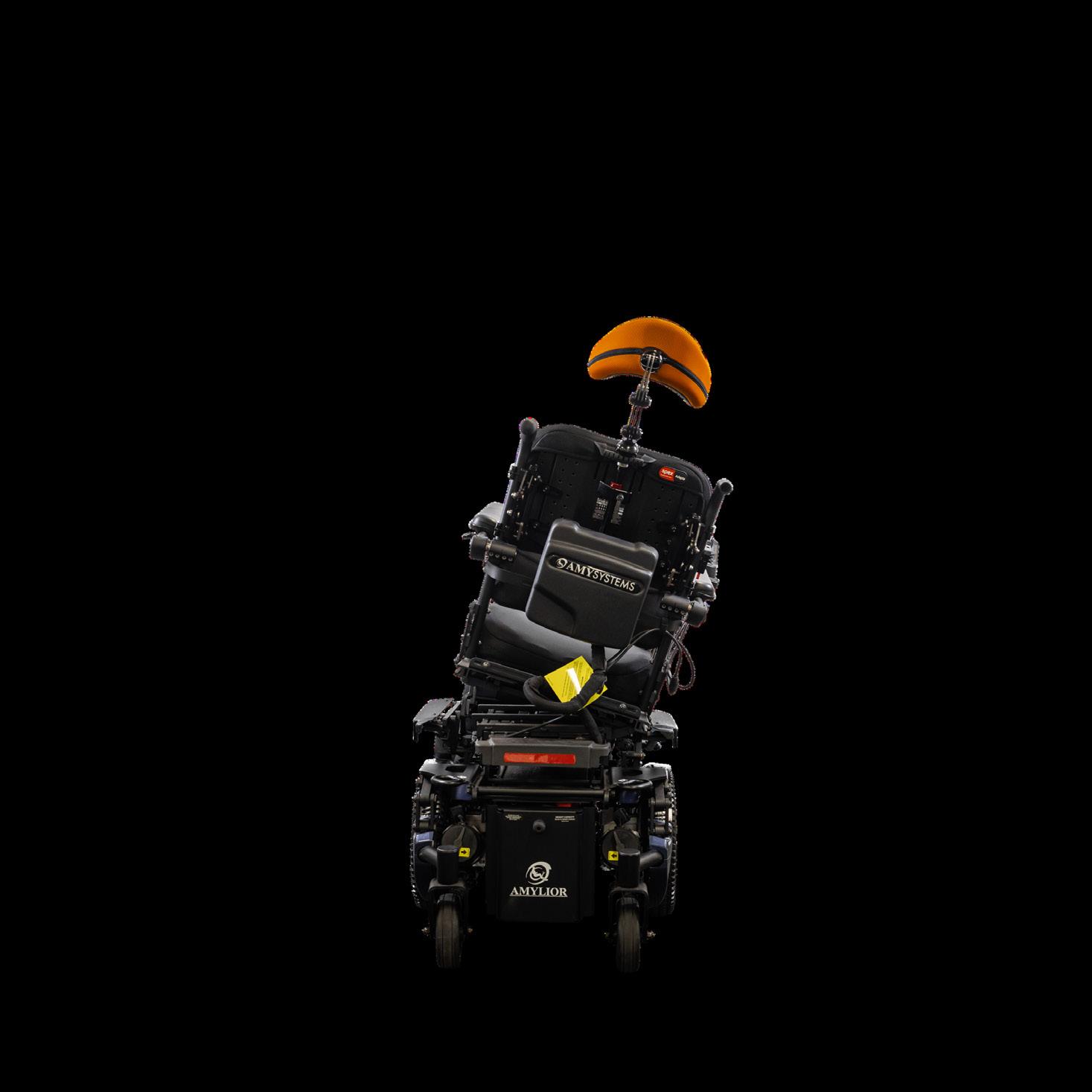

Perfectly balancing tight indoor maneuverability with confident outdoor performance
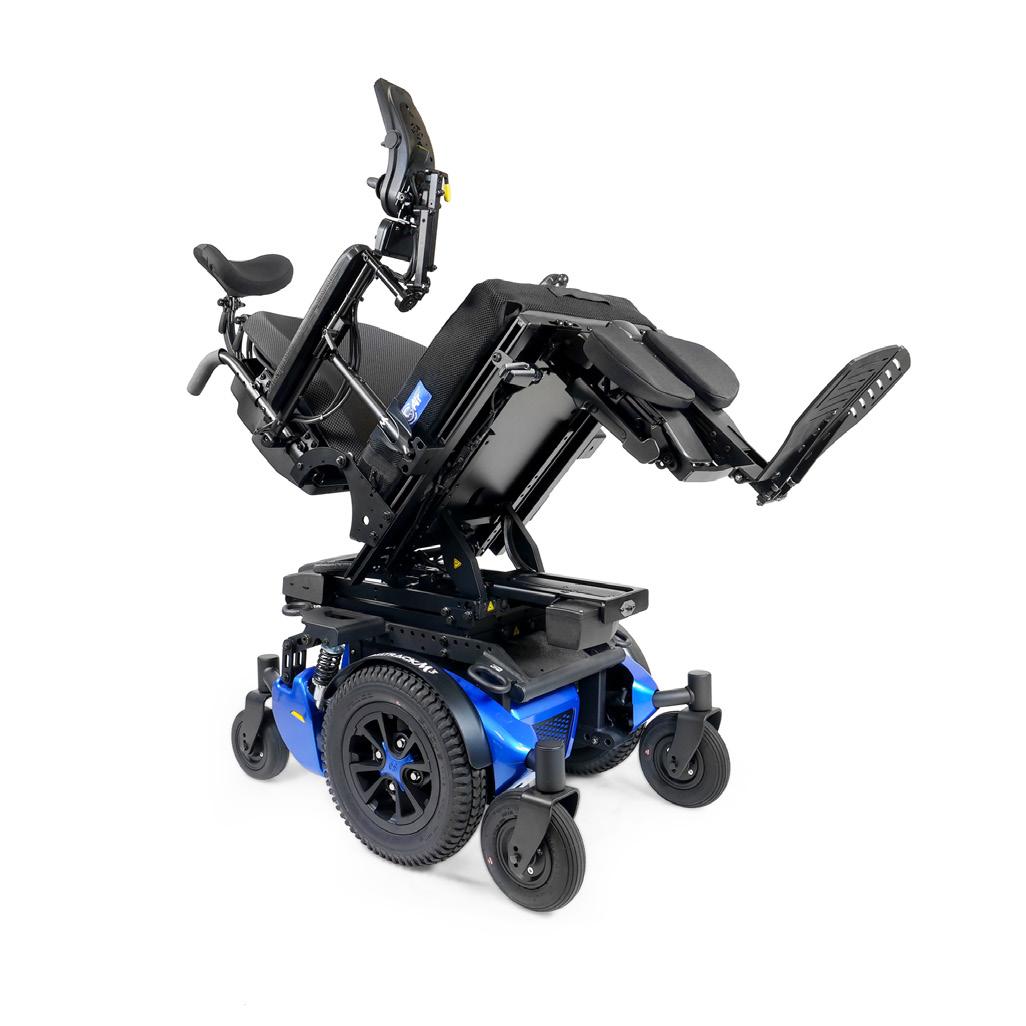

Full selection of power positioning options
Dual-action suspension for smooth travel in and outdoors


Go anywhere, hands-free
The Omeo has arrived at Freedom Motors
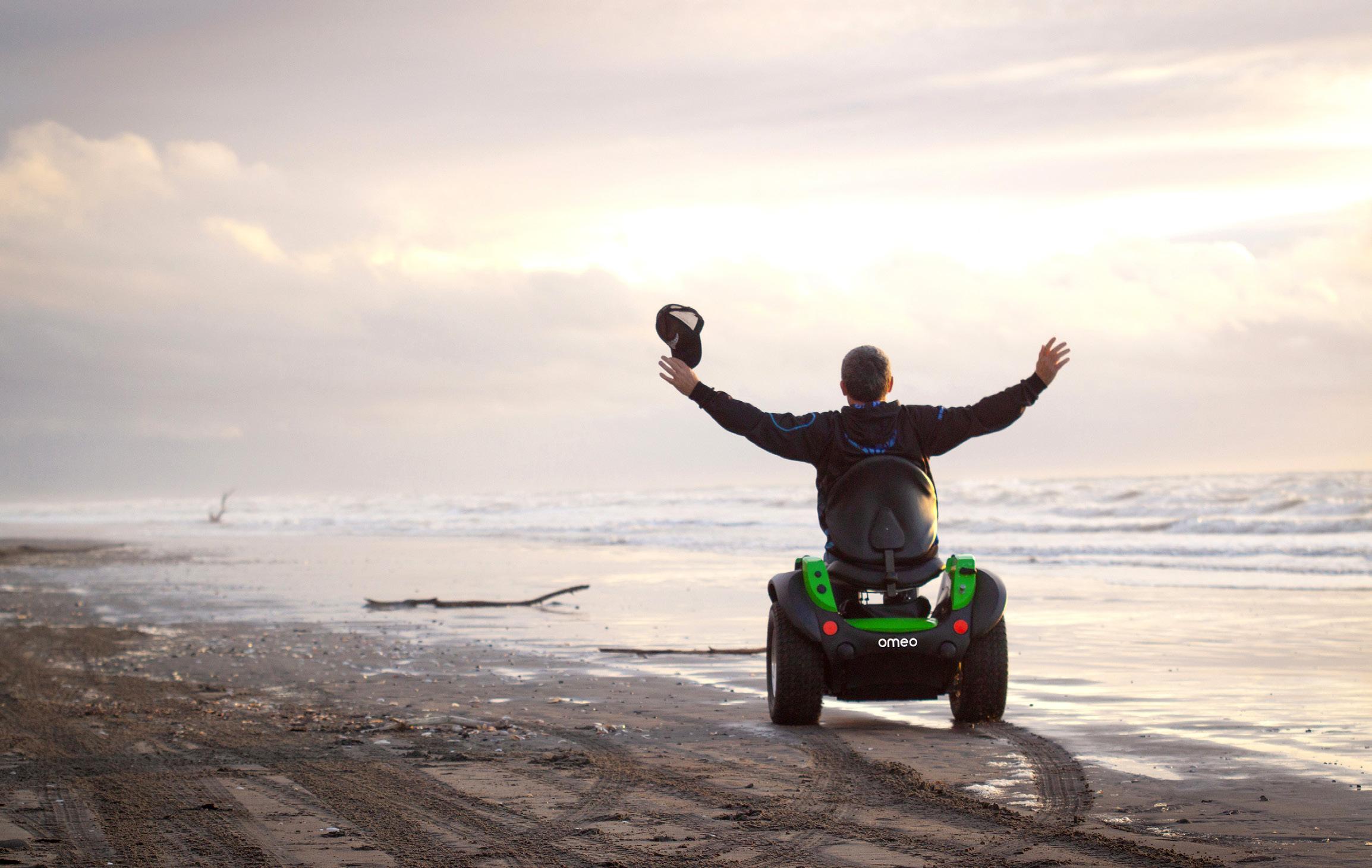
What if a mobility device could take you across sandy beaches, rugged forest trails, and bustling city streets, all without using your hands? That “what if” is now a reality. Meet the Omeo: a revolutionary, self-balancing, handsfree mobility device that brings a whole new level of independence and adventure to its users.
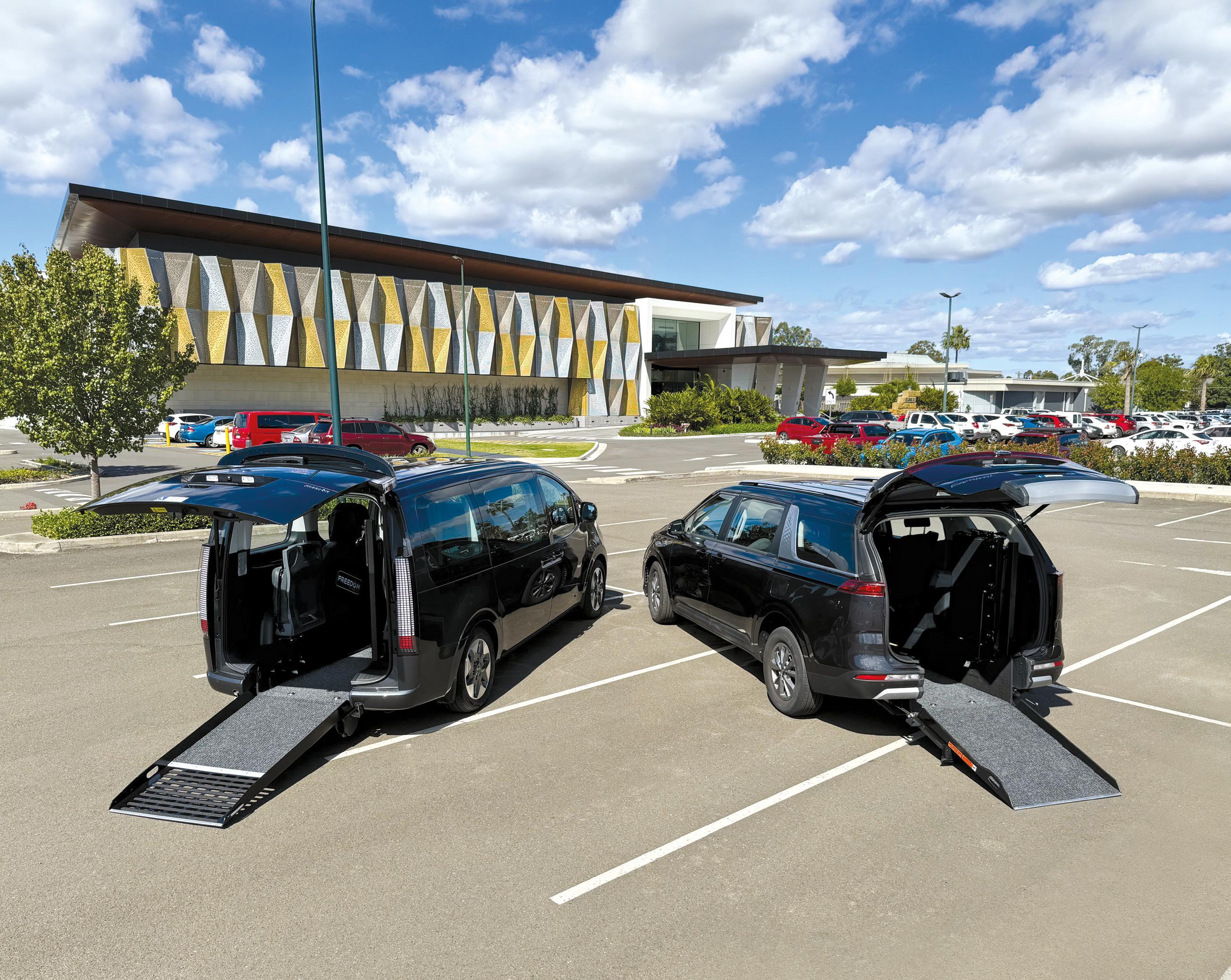
Freedom Motors has spent decades transforming standard vehicles into wheelchair-accessible ones. From lowered floor modifications, installing driving controls and various mobility solutions, we’ve always had one mission: empowering independence and choice. Whether it’s helping people access their vehicles, load equipment, or drive with confidence, we’ve stood by our motto: ‘We deliver freedom. You choose the destination’. That’s exactly why the Omeo fits perfectly with our vision.
So, what is the Omeo? The Omeo is a powerful, two-wheeled, self-balancing device that gives you the freedom to explore places that were once offlimits. Indoors, its compact design allows you to glide through standard doorways and turn on the spot, all without using your hands. That means you can carry bags, open doors, or move items while staying in control.
When it’s time to head off-road, the Omeo adapts seamlessly. Just switch to the larger wheels and off-road kit, and you’re ready to tackle uneven terrain while staying balanced and comfortable. Beaches, bush tracks, unsealed paths, farms, and forests all become accessible, and enjoyable.
Two modes, total control. The Omeo offers two intuitive driving modes:
• Joystick mode: Use the joystick to move left and right, for precise control in tight spaces. Ideal for new users or indoor environments.
• Active Seat Control (ASC): Once you’re comfortable, unlock the true magic. By shifting your body weight forward, back, and side to side, you control direction, speed, and braking, all completely handsfree or with use of the side handles. The ASC system uses responsive sensors and a carefully engineered seat pan, cushion setup, and adjustable backrest for exceptional comfort and stability.
In time, many users prefer to ride entirely hands-free, using only body movement to navigate. It’s not just mobility it’s a new way to move through the world.
Designed with safety and adventure in mind. The Omeo doesn’t
compromise on safety. It boasts one of the most advanced safety systems of any self-balancing device on the market. But as with any new mobility solution, comprehensive training, from the first trial to final handover, is key to ensuring confidence and safety. It’s also packed with smart features for real-world use:
• USB charging port for devices
• Front and rear lights for night travel
• Self-levelling legs for stable parking on uneven ground
• Tie-down points for safe transport in vehicles or public transport
• Rear storage compartment
• Modular accessory holder for add-ons like phone & cup holders.
“For the first time in years, I rode along the beach with my family, and I wasn’t left behind.”
That’s how one Omeo user described the experience. For those who’ve been limited by terrain, mobility challenges, or traditional wheelchair constraints, the Omeo opens an entire new chapter.
With Freedom Motors now offering this game-changing device in NSW, ACT, and WA, that chapter could start today for you or someone you care about. If you’re interested in trialling this product in your own environment, contact us on: 1800 672 437
Creativity knows no limits
Enabling expression through the arts
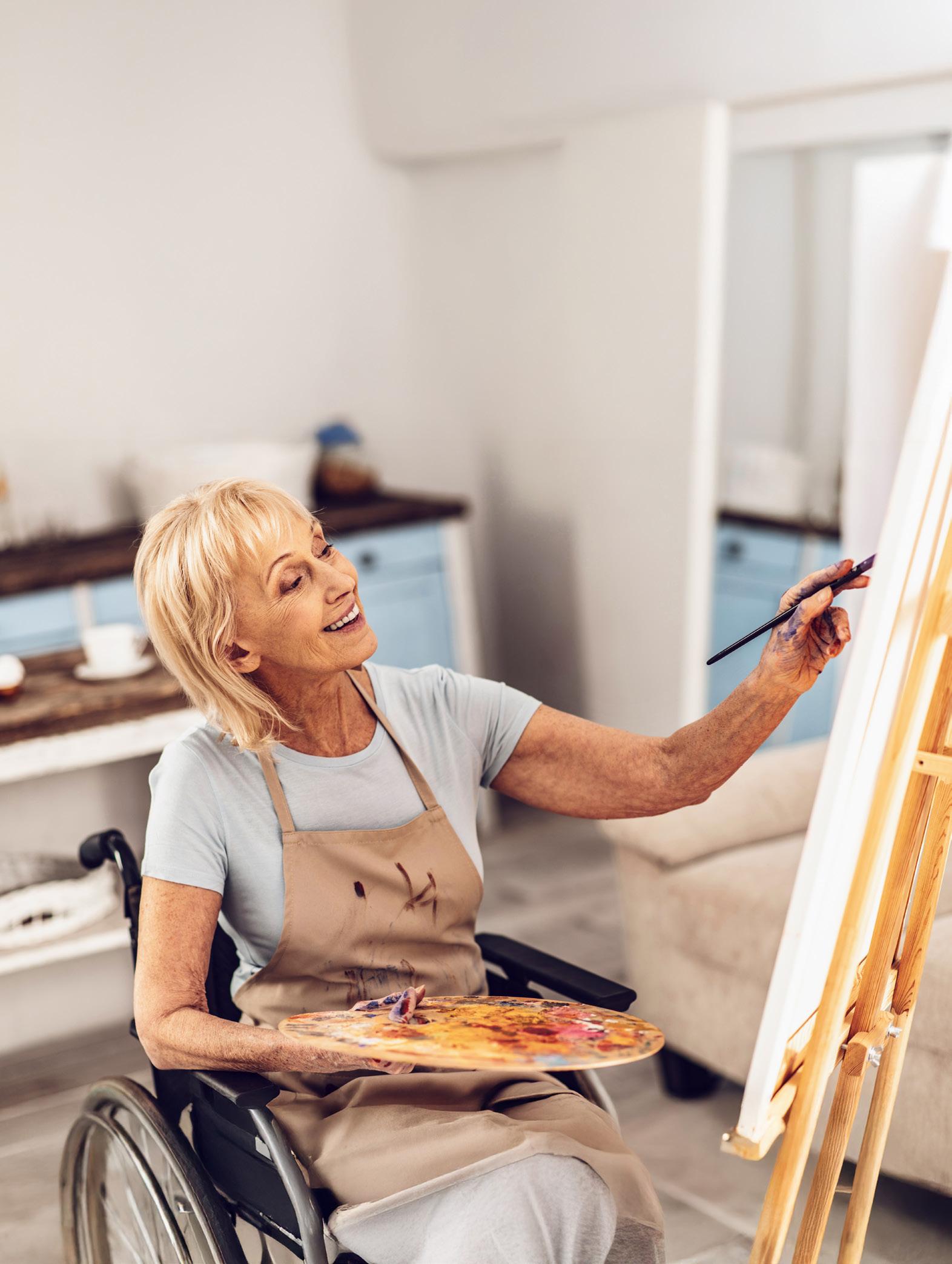
Art has the power to connect, communicate and inspire — it’s where ideas become tangible and individuality takes centre stage. For many artists with disability, that connection begins with access: the ability to move freely, use tools comfortably, and take part fully in creative spaces.
Across Australia, artists are redefining what creativity looks like. They’re not bound by convention, they are led by curiosity, courage and perspective. From tactile installations and audiobased performances to adaptive painting and sculpture, their work reminds us that art isn’t about what you can’t do, it’s about what you can express. Each creation tells a story that challenges perception, sparks empathy, and expands how we understand ability.
Behind every act of creation lies an environment that either enables or restricts expression. True artistic freedom comes from access — access to space, materials and opportunity. When artists can reach their canvas, sculpt their material, or perform their movement without barriers, creativity naturally follows. That’s why practical accessibility matters just as much as inspiration.
In creative studios, a few thoughtful adjustments can make an enormous difference. Adjustable-height workstations, adaptive tools and supportive seating allow artists to focus on expression rather than limitation. For someone using a walker or wheelchair, a clear pathway, steady flooring and reliable equipment are not luxuries — they are essential parts
of artistic flow. Accessibility doesn’t diminish art’s authenticity; it deepens it, allowing more people to contribute their voices and perspectives to our shared cultural story.
Creativity doesn’t ask for permission; it simply finds a way. Whether it’s a painter using an adjustable easel, a ceramicist shaping clay from a seated position, or a dancer interpreting rhythm through vibration, each act of creation expands our understanding of possibility. When access meets opportunity, creativity thrives and communities grow stronger because of it.
Artistic expression also has a remarkable ripple effect. It enhances wellbeing, builds confidence, and fosters social connection. Many artists describe their creative practice as a form of freedom and a space where they are seen for their ideas, not their limitations. By ensuring that art spaces, tools and programs are accessible, we’re not just enabling creativity; we’re supporting dignity, independence and joy.
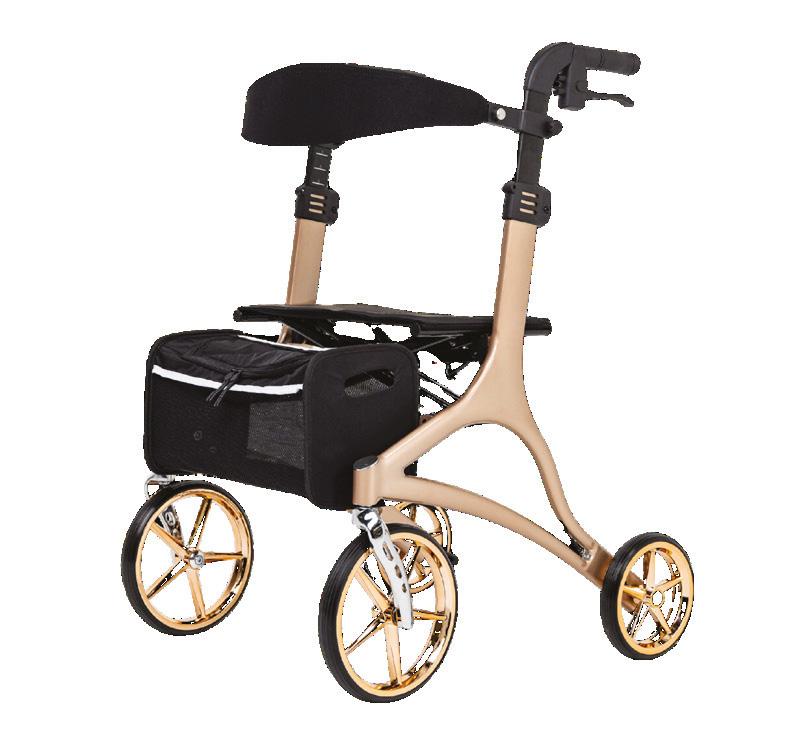
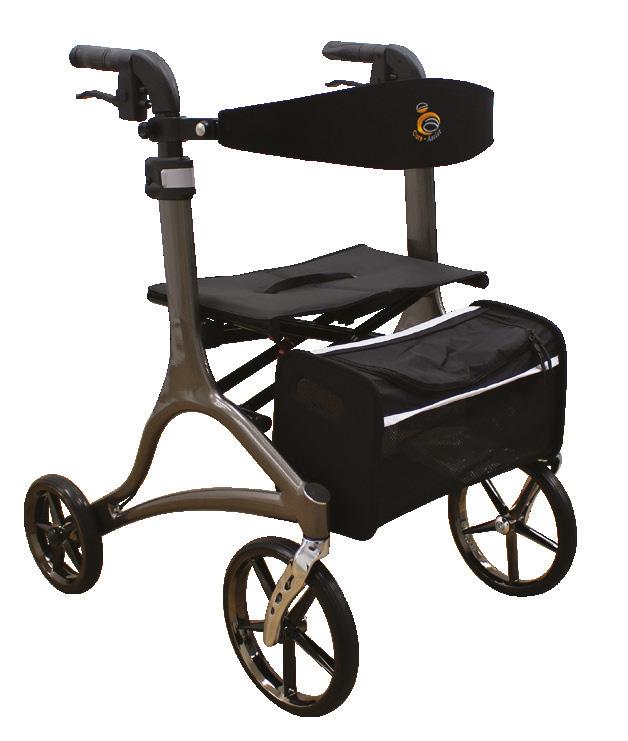
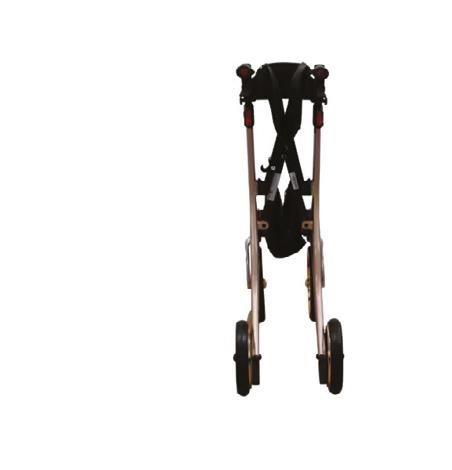
In the context of creative practice, accessibility is not only about ramps or space but about freedom of movement and confidence to engage. Mobility aids such as walkers can quietly transform this experience, supporting safe and comfortable participation in workshops or studios. Whether navigating between art tables, carrying materials, or standing securely at an easel, the right mobility support allows individuals to focus on the creative process rather than the physical challenge of getting there.
By addressing mobility and access together, we help remove one of the most practical barriers to participation. When a walker supports someone to take part safely in an art workshop, attend a class, or share their work, it becomes part of a much larger movement toward inclusion, visibility and equality in the arts.
At Crescent Healthcare, equipment is not just about function. It is about enabling life, creativity and connection by helping individuals move confidently and live fully. Discover our healthcare equipment solutions at crescenthealthcare.com.au or call 03 8365 9990.






Introducing the Quantum Edge4

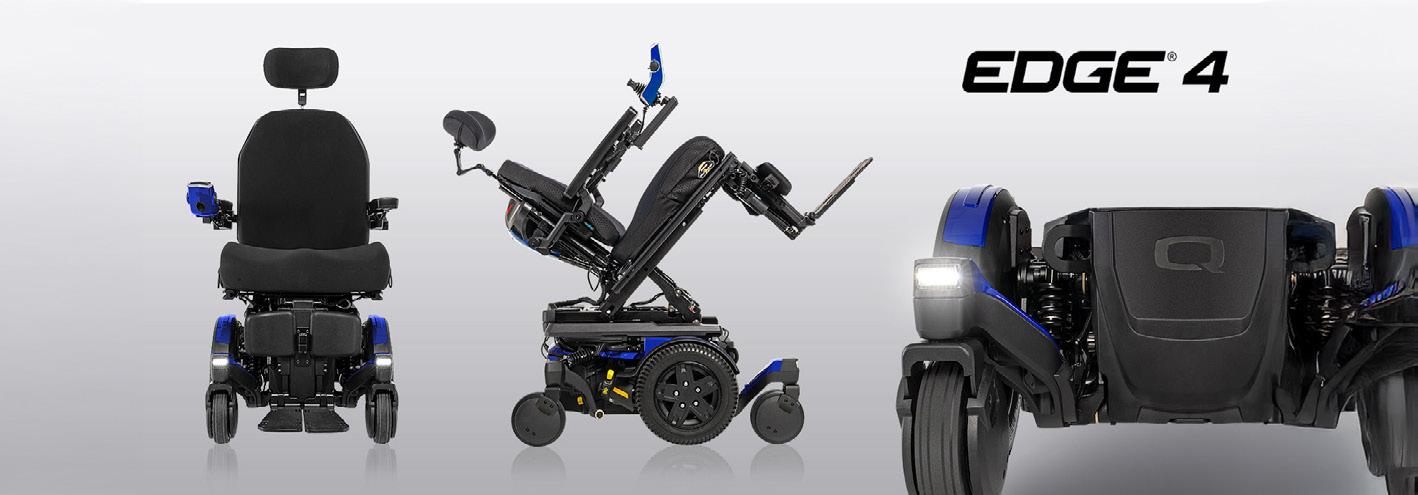
The wait is over. Introducing the Quantum Edge 4, the new benchmark in mid-wheel drive power chairs. Built for performance, style, and advanced clinical capability, the Edge 4 sets a new standard in complex rehab.
From its high-performance drive technology to its versatile configuration options, the Edge 4 has been engineered with therapists, clinicians, and end users in mind.
With standard 4-pole motors, a larger battery, and a redesigned suspension, Edge 4 brings more torque, more range, and a calmer ride, indoors and out. It turns cleanly in tight spaces and stays composed on uneven ground, without giving up stability or comfort.
WHY THE EDGE 4 STANDS OUT
• Enhanced stability: Independent suspension delivers a smooth ride across a variety of terrains.
• Compact power: A tight turning radius makes the Edge 4 ideal for both clinical and everyday environments.
• Customisable configurations: Designed to integrate with Quantum’s full suite of power positioning and seating options, ensuring tailored solutions for every individual.
• Future-Ready technology: Compatible with the latest electronics and accessories to keep users connected and supported.
PERSPECTIVES: WHAT DOES OUR TEAM HAVE TO SAY?
“Building on the success of the Edge 3, the Edge 4 raises the bar with improved suspension, outdoor capabilities and overall performance. We’ve beefed it up to deliver a stronger, more confident ride for our users.” - Andrew Lopez, Quantum clinical educator.
“I think the redesigned rear access battery box is a great improvement from the previous designs. Serviceability is easier, more efficient and user friendly.”
- Daniel Torrison, Quantum product specialist and technical support.
“...a ride so refined and responsive, you’ll forget the bumps ever existed.
Comfort that moves with you, and power that meets poise in every turn”. - Daniel Tripp, Quantum customer service.
“The Edge 4 has been years in the making - a true collaboration between Quantum’s global R&D team and our Australian specialists who understand our demanding Australian conditions, and the expectations of our customers to meet our unique Australian environment. Every feature and function has been purpose-built to meet the complex needs of users who rely on exceptional performance and reliability every single day.
“As we prepare to launch the Edge 4, it’s an exciting and proud milestone for Quantum Australia, our dealer partners, and most importantly, for the people whose independence and quality of life will be enhanced by this remarkable new power base.” - Andrew Gannan, national business development manager, Quantum Rehab Australia.
DESIGNED FOR INDEPENDENCE
At Quantum Rehab, our mission is to deliver technology that empowers independence and transforms lives. The Edge 4 represents not just an evolution of our power chair line, but a leap forward in providing smarter, more responsive mobility solutions for Australians who rely on them every day.
The Quantum Edge 4 is now available to script via our online configurator. If you have any questions or want to learn more about the Edge 4, go to the website quantumrehab.com.au




Custom Commode wheelchairs
Tailored solutions for people with spinal injuries, neurological conditions and unique care requirements
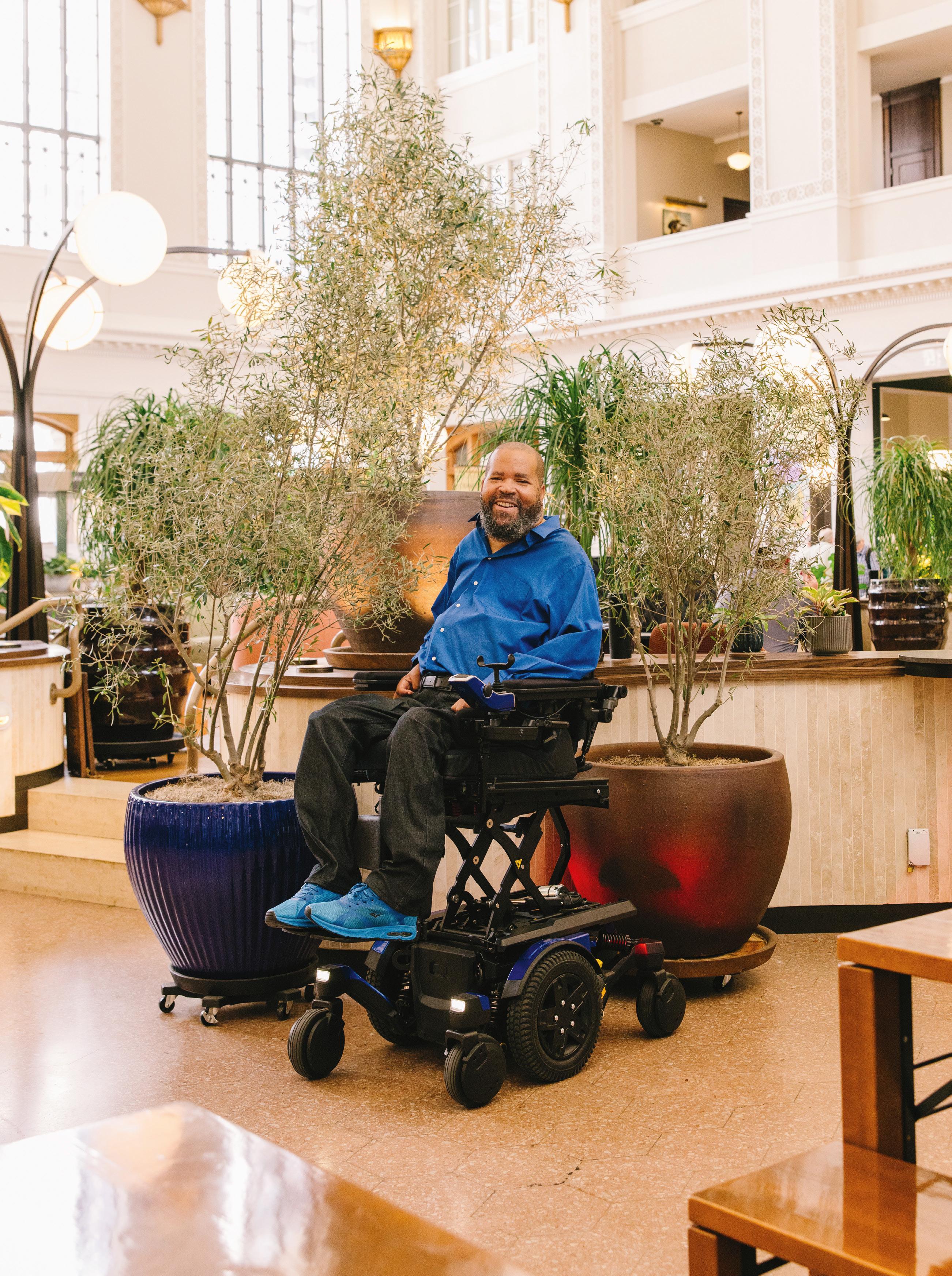
When it comes to complex rehabilitation and high-needs mobility, Wheelchair Sales Indesign has built its reputation on doing the jobs others won’t. With over 35 years of experience servicing New South Wales and Queensland, this Sydney-based company specialises in tailored solutions for people with spinal injuries, neurological conditions and unique care requirements, including the supply and customisation of commode wheelchairs.
For many clients, off-the-shelf bathroom mobility products simply don’t meet their needs. That’s where Wheelchair Sales steps in. Their range of commode wheelchairs combines comfort, hygiene and mobility, offering fully adjustable, high-quality solutions that support daily
independence and carer ease. From tiltin-space designs to height-adjustable frames and custom-moulded seating, each commode is carefully configured to the client’s clinical and environmental requirements.
Brands carried are Lagooni, Roarke, Raz and Tuki and Traveller. Lagooni Traveller, Roarke Traveller and Tuki are for people that like to take their commodes on holidays. The Shower commode is another high-performance model in the lineup.
Each chair is selected or designed with pressure relief, postural support and user dignity at the forefront.
The company understands that bathroom and hygiene routines
Whether you need tilt-in-space, height-adjustable, or fully custom-moulded seating, we deliver bathroom mobility solutions with precision and compassion.
For over 35 years, we’ve specialised in complex rehab and high care needs across NSW & QLD. Spinal injury and neuro care focused, pressure relief and postural support, NDIS and therapist preferred. Tailored commode wheelchair fittings. We take on the
are deeply personal and often challenging for clients with complex disabilities. Its goal is to ensure comfort, safety, and respect through carefully considered equipment.
Wheelchair Sales Indesign works closely with occupational therapists, hospitals and NDIS participants to ensure every product fits seamlessly into the user’s daily life.
With a hands-on, consultative approach and a commitment to long-term outcomes, their team leads the way in specialised mobility care.
Explore the full range of commode wheelchairs at: wheelchairsales.com.au
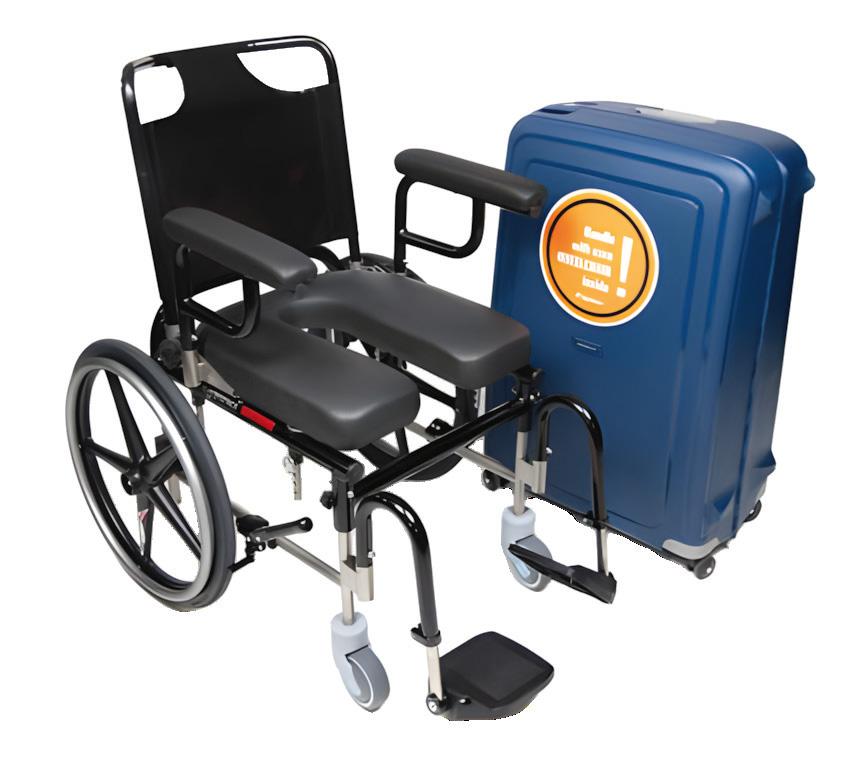
Improving Assistive Technology for everyone
By Carl Thompson*
The Australian Rehabilitation and Assistive Technology Association (ARATA) exists to advance assistive technology (AT) and rehabilitation in Australia. As the national peak body, our mission is to actively build and sustain the sector by supporting and promoting best practice in AT provision. This commitment goes to the very core of our operations, shaping an ecosystem where innovation, knowledge, and user-centered outcomes can thrive.
The bedrock of a strong sector is connection. Too often, valuable insights remain in silos. This is why ARATA’s fundamental role is to provide a national forum for information sharing. We connect the people at the heart of AT - including users, clinicians, suppliers, researchers, and policymakers.
This connection is formalised through our development of a national rehabilitation and AT community of practice. This community is an engine for change, creating a space where professionals and users can share challenges, solutions, and practice wisdom - ensuring no one must reinvent the wheel.
ARATA actively fosters a culture of research, innovation, collaboration, and continuing professional development in the community. We believe that ”best practice” is not a static goal but an evolving target. By supporting ongoing learning and new ideas, we equip our community with the skills to tackle the ever-changing future.
This knowledge is useful for policymakers shaping new legislation, service providers on the front lines, and consumers making informed choices about AT. In short, ARATA strives to make evidence-based knowledge accessible to everyone.
A COMMITMENT TO DEVELOPING STRATEGIC PARTNERSHIPS
Our vision does not stop at Australia’s borders. We actively represent Australia on the global stage, collaborating with international peak bodies as a signatory to the Alliance of Assistive Professional Organisations and the CREATe Asia Agreement.
This global engagement ensures Australian AT practice is informed by international breakthroughs, and in turn, allows us to share Australia’s own innovations with the world. Domestically, we leverage this expertise by engaging in strategic partnerships across systems and sectors.
This high-level collaboration is crucial for informing government and non-
government policy, driving systemic change, and ensuring that AT is properly resourced and integrated.
Perhaps most critically, all this work is underpinned by an unwavering commitment to objectivity, free from commercial influence and bias. In the complex and often expensive field of AT, it is vital to have a trusted and impartial voice.
ARATA’s non-commercial stance ensures that our policy work, educational offerings, and community discussions are centred on finding the best possible outcomes for the person using AT. It allows ARATA members to be objective, where best practice is determined by evidence and user need, not by marketing budgets or sales targets.
This independence is what builds trust. It gives policymakers confidence that our advice is impartial. It assures clinicians that our professional development is unbiased. Most importantly, it empowers people with disability by fostering a community where ”choice and control” is not just a slogan, but a reality, supported by a peak body whose only agenda is to advance the field of AT for all.
By becoming an ARATA member, you are not just accessing a network of practitioners and resources; you are investing in the integrity and future of Australia’s AT sector by joining a community dedicated to innovation, collaboration, and person-centred outcomes.
*Carl Thompson, Education and Communication Support Officer, ARATA.
For information PH: 03 9586 6075 or email: office@arata.org.au or visit the website: arata.org.au
There is some joy in early childhood education
By Olivia Karaolis
Over the past three years, we have explored the presence and perception, of joy in early childhood education, but in a profession that should be defined by joy, has it been lost?
We listened to early childhood educators, who shared stories of a sector in crisis and the deep joy that working with young children can still bring, but what we didn’t expect to find was an antidote.
Our research coincided with a Four Corners investigation into the early childhood sector, that revealed alarming issues: allegations of abuse, unsafe practices, inadequate supervision, and underqualified educators who lacked awareness or understanding of essential policies and standards.
These concerns were raised by educators more than two years ago, who were horrified by the allegations.
One educator said, “What if the parents think they are writing about us. I want to tell them we are not like that here”. Others speak of feeling uncomfortable around families and uncertain about how to address the reports in the media.
The majority of early childhood programs are not like that, but places that take excellent care of young children and, as we found, places with many wonderful educators.
We found that attending to joy was of great benefit to educators and a way to be an antidote the “bad news” about a profession that continues to face many challenges, including low salaries, poor working conditions, a lack of professional recognition and high levels of attrition.
Despite this time of intense negativity, through our research activities educators were able to find joy. They described it as “Laughter, energy, and happiness all around” and found in the “children’s faces”. One educator told me that “Joy is everywhere, people just don’t see it”.
Educators must be given an opportunity to focus on joy, and their wellbeing and self-care should be a priority during this time of intense national scrutiny.
One centre director spoke of the “absolute joy” she felt when she could recognise that children viewed her as someone that was “important to their family”, while another said, “What sustains us is the fact we make children happy”.
We found that when joy was given careful attention and a special place
in the life of the centre, the educator’s attitude to their role improved.
One director noted, “Joy isn’t something that comes naturally, it’s built within your walls and becomes the core of your philosophy”.
Educators in our study found that intentionally focusing on joy had a positive impact, not only on their personal sense of worth, but also on the atmosphere of the centre.
As part of this practice, educators were invited to write down joyful moments on sticky notes that were either ones they had experienced or observed in others.
These notes were placed like leaves on a large illustration called the Tree of Joy, positioned near the program’s entryway and families began contributing their own notes, sharing stories their children expressed after attending preschool.
This practice fostered gratitude, generosity, kindness and joy, that became a meaningful step toward rebuilding trust between educators and families, a trust that had been shaken by the Four Corners report.
When educators intentionally incorporate joy into their daily routines, when they make joy a habit, it begins to shift their outlook and become an integral part of their teaching identity.
It is contagious, with the potential to transform how we relate, connect, and rebuild the profession.
• Dr Olivia Karaolis is a senior lecturer in Special and Inclusive Education at the University of Notre Dame. This article first appeared in EduResearch Matters
VIP Access for tailored solutions
Your partner in home accessibility
At VIP Access, we specialise in creating safe, functional, and accessible homes that support independence for people with disabilities, the elderly, and those with evolving care needs. From entryways and bathrooms to kitchens and outdoor spaces, our tailored solutions help people live confidently in their own homes.
We provide tailored home modifications, working closely with occupational therapists to ensure every solution is practical, safe, and meets individual goals.
Our expertise covers:
• Bathroom upgrades – level-access showers, wheelchair-accessible vanities, grab rails.
• Kitchen modifications – accessible cabinetry, pull-out pantry systems, adjustable workspaces.
• Access solutions – lifts, ramps, widened doorways, step-free entrances.
Operating under the Specialist Disability Design Standards, and Universal Design Principles, we ensure every project meets industry compliance while maximising functionality and comfort.
Our streamlined process makes it simple:
1. Consultation – site assessment and personalised planning.
2. Assessment & design – collaborative planning with OTs and families.
3. Project delivery – seamless construction and installation, keeping you informed at every step.
As a NDIS registered provider and Master Builders Queensland member,
Accessible Home Modifications Specialists
Creating Independence at Home – with Experience You Can Trust
For over 15 years, VIP Access has been helping people live more freely and safely in their own homes. From major renovations to small changes, we specialise in home modifications that make a real difference.
We also offer flexible rental options for essential equipment, including accessible bathrooms, ramps & more – delivered and set up with care.
Led by Scott, who brings personal insight into every project, we focus on practical, tailored solutions that remove barriers and empower independence.

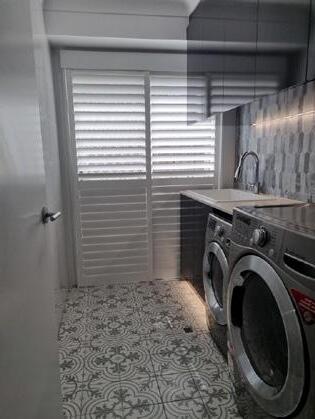
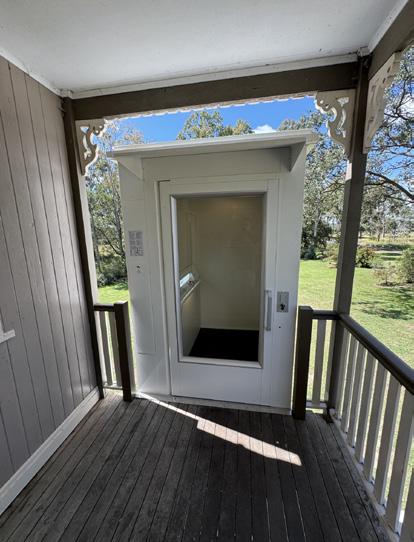
VIP Access has been delivering high-quality, end-to-end home modification services since 2008.
If you are considering home modifications, contact us for a site consultation. We’ll discuss your needs, set priorities, and provide guidance on the best modifications for your specific needs.
Operating in South-East Queensland, from the Gold Coast to South Brisbane River.
To start making your home safer and more accessible, or to enhance your home and your independence, call 07 3807 4309 or visit vipaccess.net.au for a site consultation.
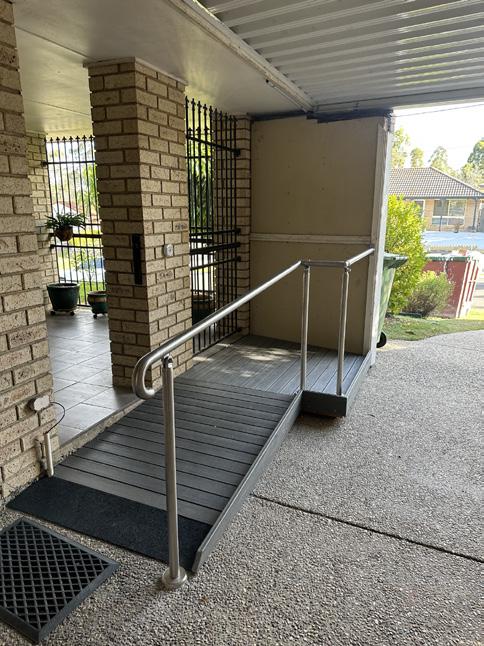
VIP Access - making independence possible.
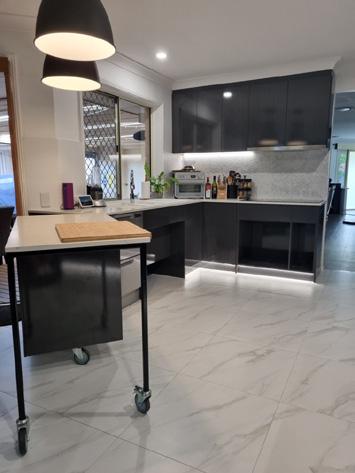
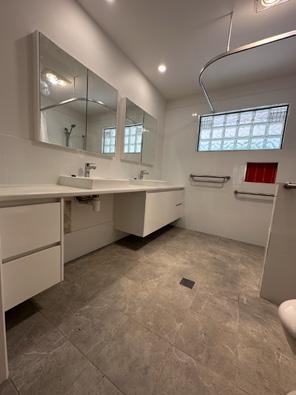
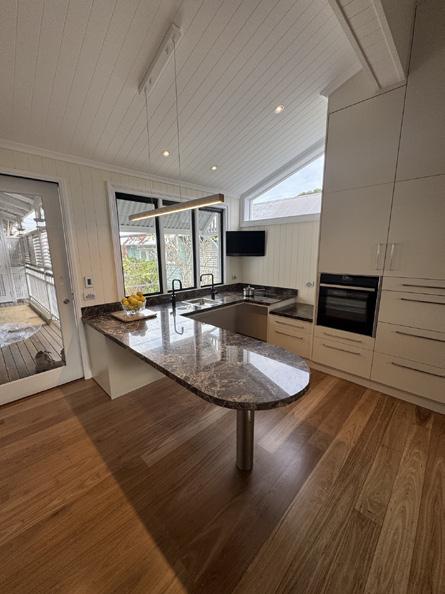
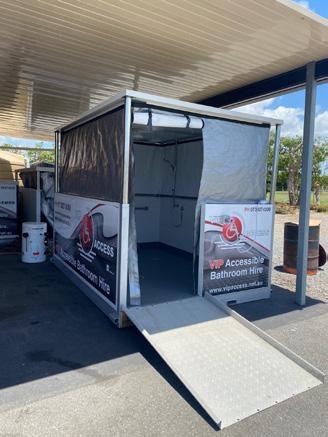
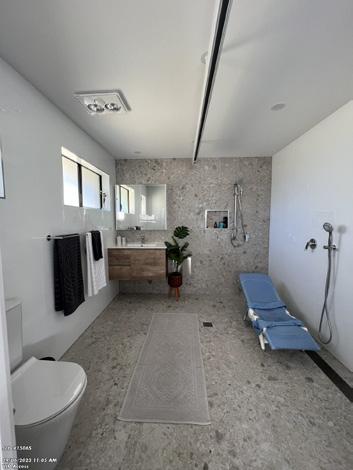
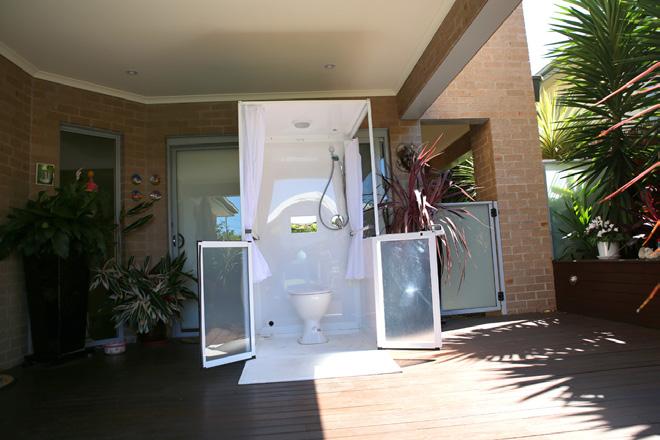

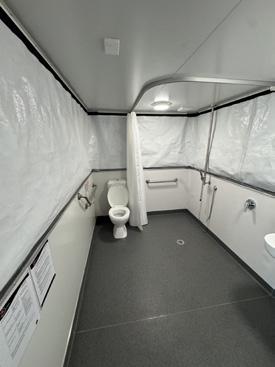
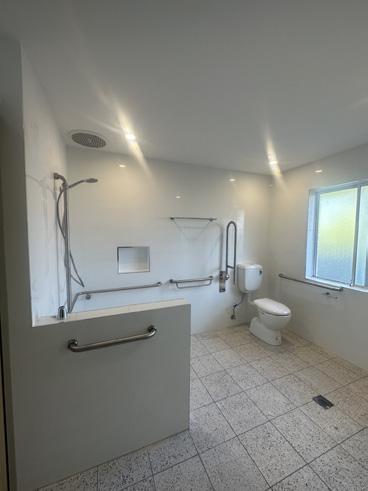
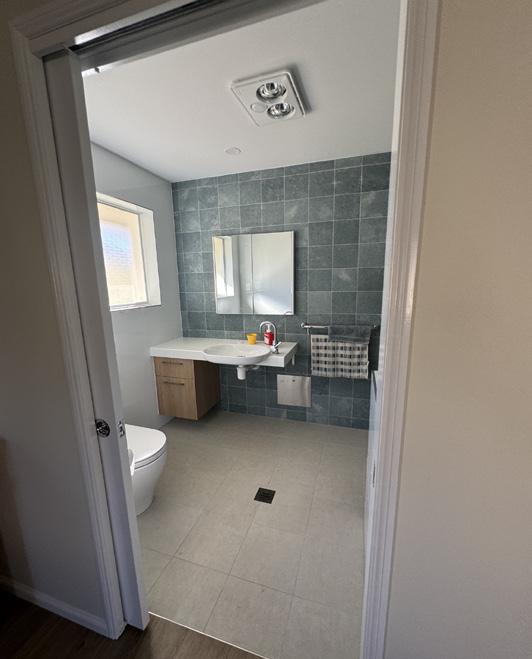
A journey beyond expectations
By Malcolm Turnbull
After sustaining a spinal cord injury in a motor vehicle accident in 1980, I have relied on a wheelchair for mobility ever since. Travel has always been a passion of mine and over the years I’ve experienced accessible accommodation in many parts of the world. Yet, nothing compares to what my wife and I discovered at Ximuwu Safari Lodge in the Klaserie Private Nature Reserve, South Africa.
In June 2025, we spent a week at this remarkable lodge, located within the Greater Kruger ecosystem. From the moment we arrived, it was clear that accessibility wasn’t an afterthought — it was part of Ximuwu’s DNA. Our spacious suite featured an adjustable bed, roll-in shower, bath lift, and mobile commode chair, all with stunning views over the African bush.
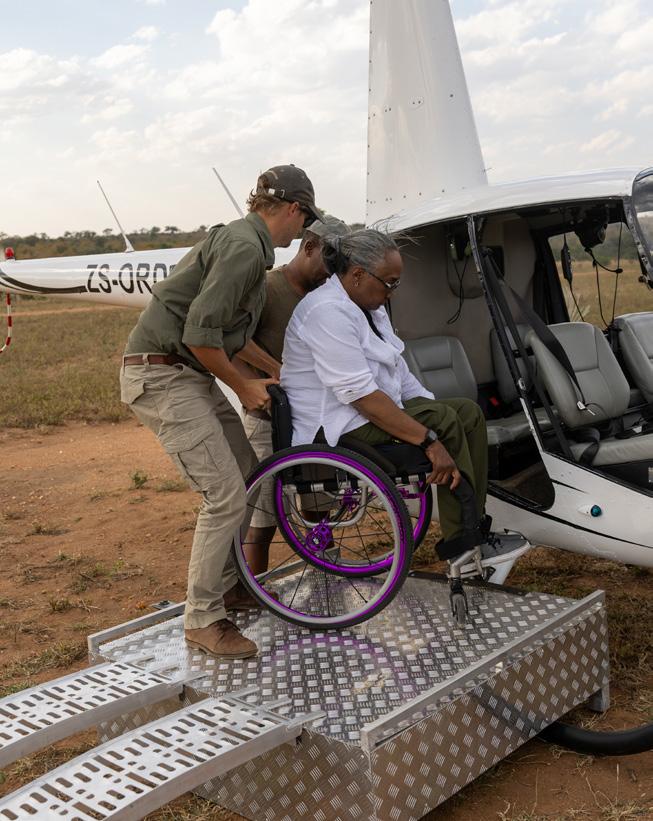
INCLUSIVE ADVENTURE AT EVERY TURN
Each day began and ended with exhilarating safari drives led by expert guides. What truly sets Ximuwu apart is its custom-built 4x4 vehicle, designed
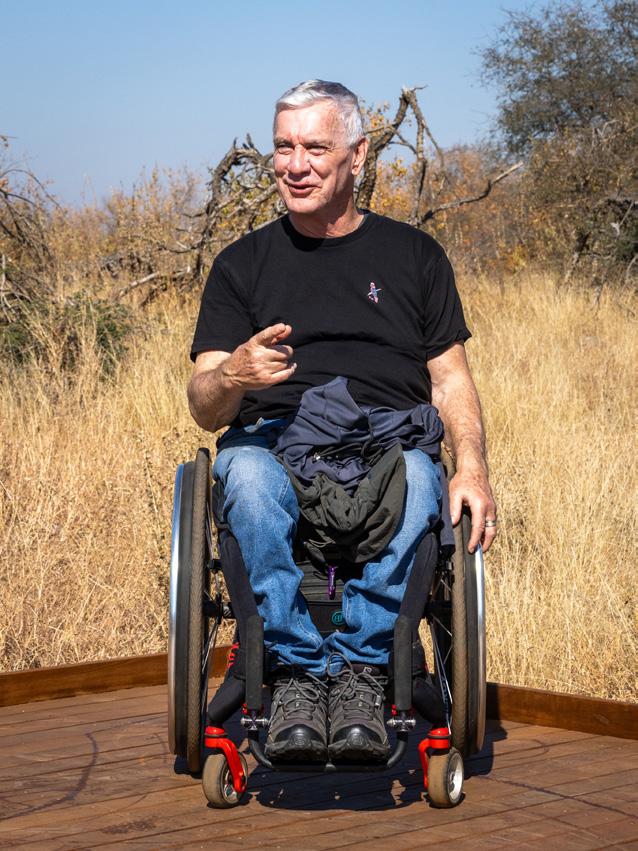
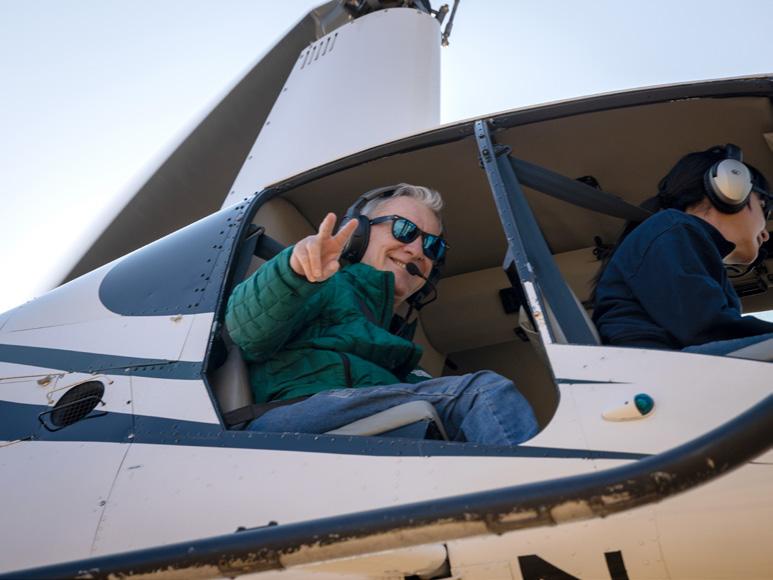
COMFORT IN THE WILD
specifically for wheelchair users. The vehicle’s clever sliding seat system allows an easy transfer from an elevated ramped platform into the car. Once in place, the seat glides back inside so simple, safe, and empowering.
This thoughtful design meant I could share every drive with my wife and fellow guests. We witnessed lions, elephants, rhinos, buffalo, giraffes, wild dogs, and even a leopard, along with countless antelope species and an incredible array of birds.
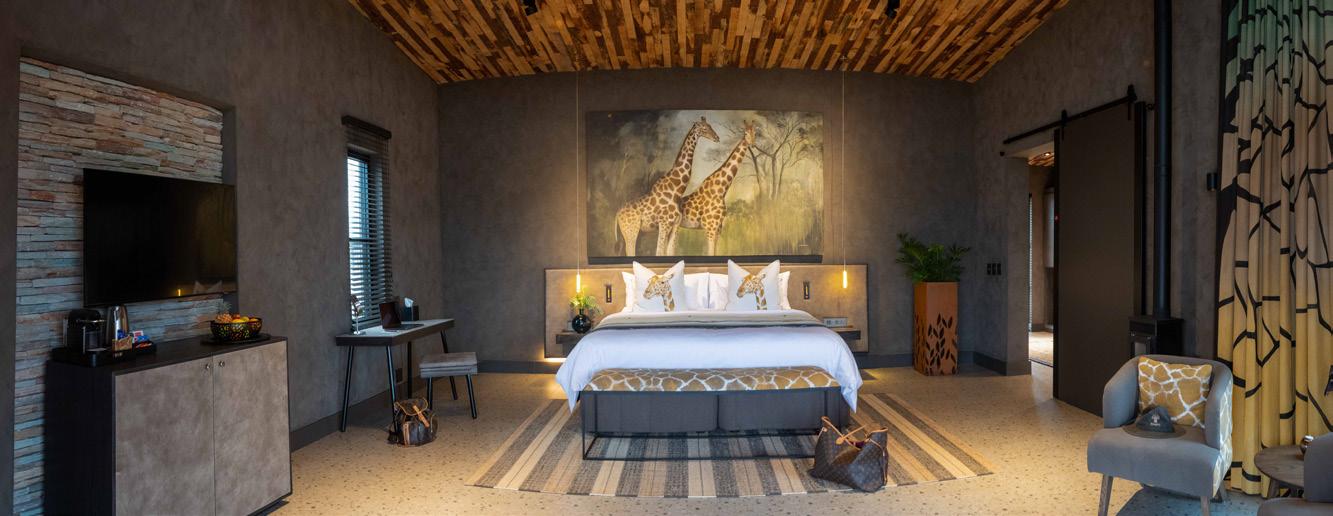
Back at the lodge, accessibility continued seamlessly. The restaurant, bar, and swimming pool are fully accessible, and the cuisine was superb — fresh, abundant, and beautifully presented. From the wide veranda overlooking a waterhole, we watched elephants, giraffes, and antelopes come to drink. For an even closer connection, Ximuwu offers a wheelchair-accessible photographic hide right at the water’s edge to a peaceful spot where we could hear every ripple and rustle of wildlife just metres away.
The staff’s warmth and attention to detail were exceptional, making our stay both effortless and deeply personal.
A HELICOPTER AND A REALISATION
Our stay also included a helicopter flight, made possible by Ximuwu’s specially designed elevated platform with ramp access, just another example of how far they go to ensure every guest can experience everything the lodge offers.
Having travelled widely as a wheelchair user, I can confidently say that Ximuwu Safari Lodge sets a new global benchmark for inclusive luxury travel. It is living proof that accessibility and elegance can coexist in perfect harmony.
For my wife Charisse and me, our week at Ximuwu was more than a holiday. It was an empowering, life-affirming experience that redefined what true inclusion feels like.
Malcolm Turnbull
New Year - New adventures
How to plan your 2026 supported holiday
Anew year is the perfect time to start planning your next supported holiday. Whether you’re dreaming of a tropical cruise, an overseas adventure, or a relaxing getaway closer to home, a little preparation now will help you have the best trip possible.
Book early for popular trips. Cruises and international holidays are among our most sought-after experiences. To secure your preferred destination, activities, and travel dates. It’s best to book 8-12 months in advance as early planning gives you more choice, better prices, and peace of mind knowing everything is locked in.
Pick a holiday you’ll love. Think about what makes you happiest on holiday. Do you enjoy sightseeing, adventure, or simply relaxing by the water? Choosing destinations and activities that match
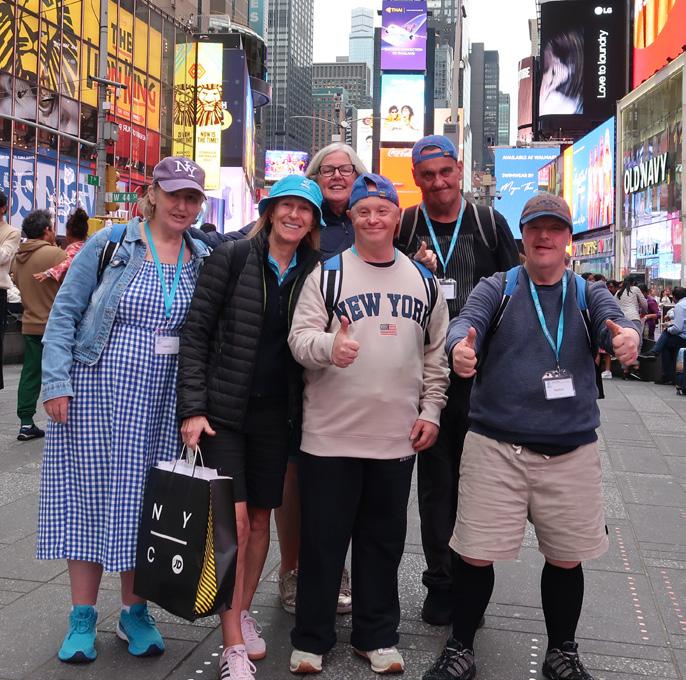
your interests will make your trip even more rewarding. Our team can help you find the perfect holiday to suit your support needs and travel goals.
Plan around your comfort needs. When choosing where and where to travel, consider how the destination or
season might affect your comfort and wellbeing. For example, some people may need to avoid extreme heat if it impacts their health. Our team takes these factors into account to ensure your holiday is safe and enjoyable. You won’t need to worry about what to pack - we’ll send you an easy-to-follow packing list before your trip so you can relax and look forward to your adventure.
Sort out your funding supports. Before your book, check your NDIS funding or confirm if you’ll be self-funding. Speak to your service coordinator or plan manager, and if you live in SIL, remember to notify your provider at least seven days before you go.
Ready to travel? Call Leisure Options on 1300 363 713, browse our latest holiday brochure or use our online holiday planner to create your perfect 2026 getaway.
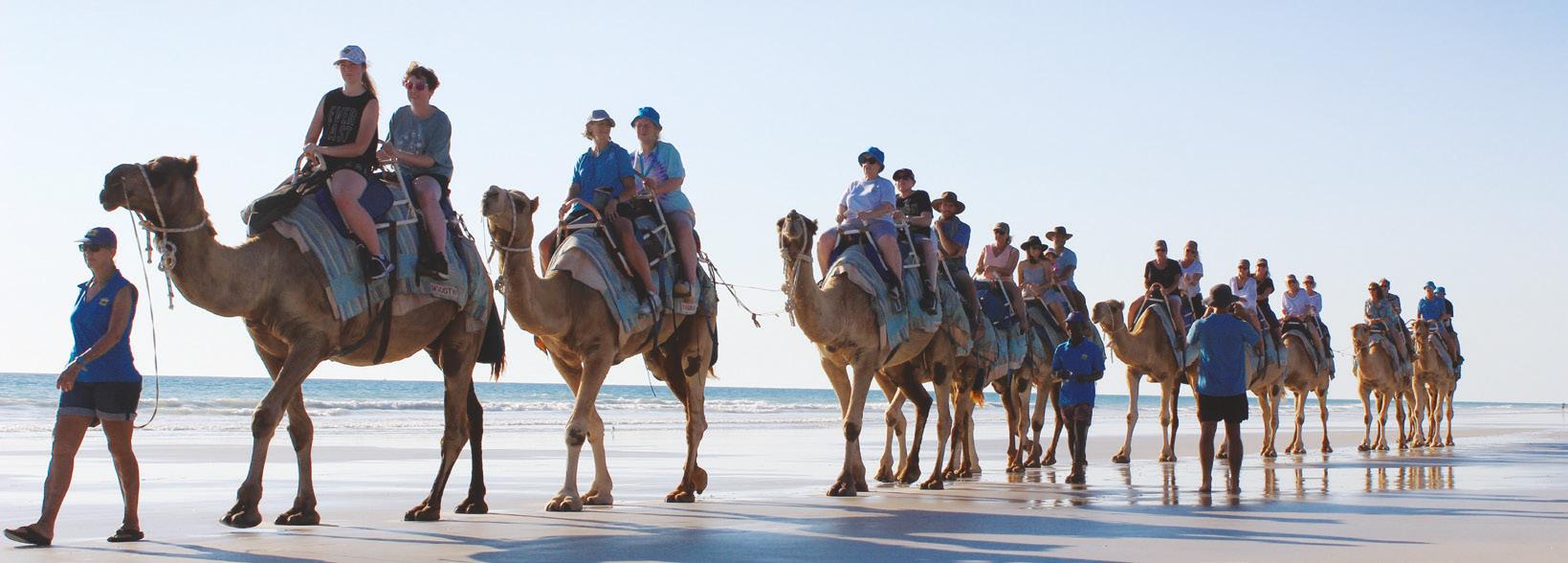
Great holidays and travel for people with disabilities
With more than 30 years’ experience in both the travel and disability industries, Leisure Options is Australia’s only national award-winning, accredited travel agent specialising in supported travel for the disability sector.
• Focus on providing holidays that allow maximum choice, loads of fun, high staffing ratios, commitment to individual needs, and a supportive holiday environment
Choice of either group or individualised touring
Respite care offered in a stimulating and fun-filled environment
Over 80 departures annually to local, national and international destinations
• Passionate, energetic, and professional tour leaders with extensive qualifications and a world of experience
Registered service provider with the NDIS


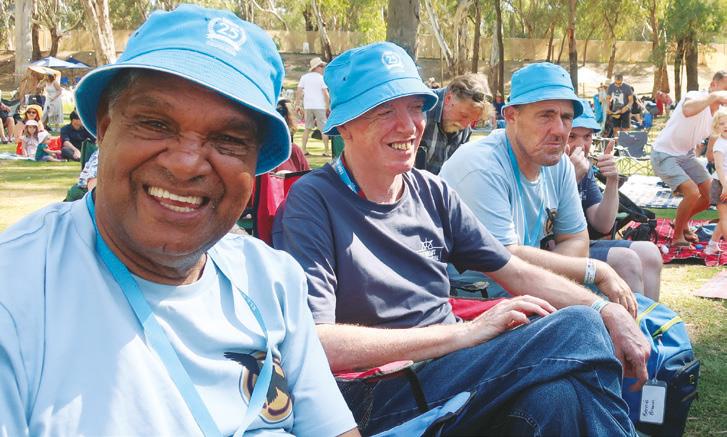
For more information call
or visit our website
Leisure Option travellers with disabilities at Times Square, New York.
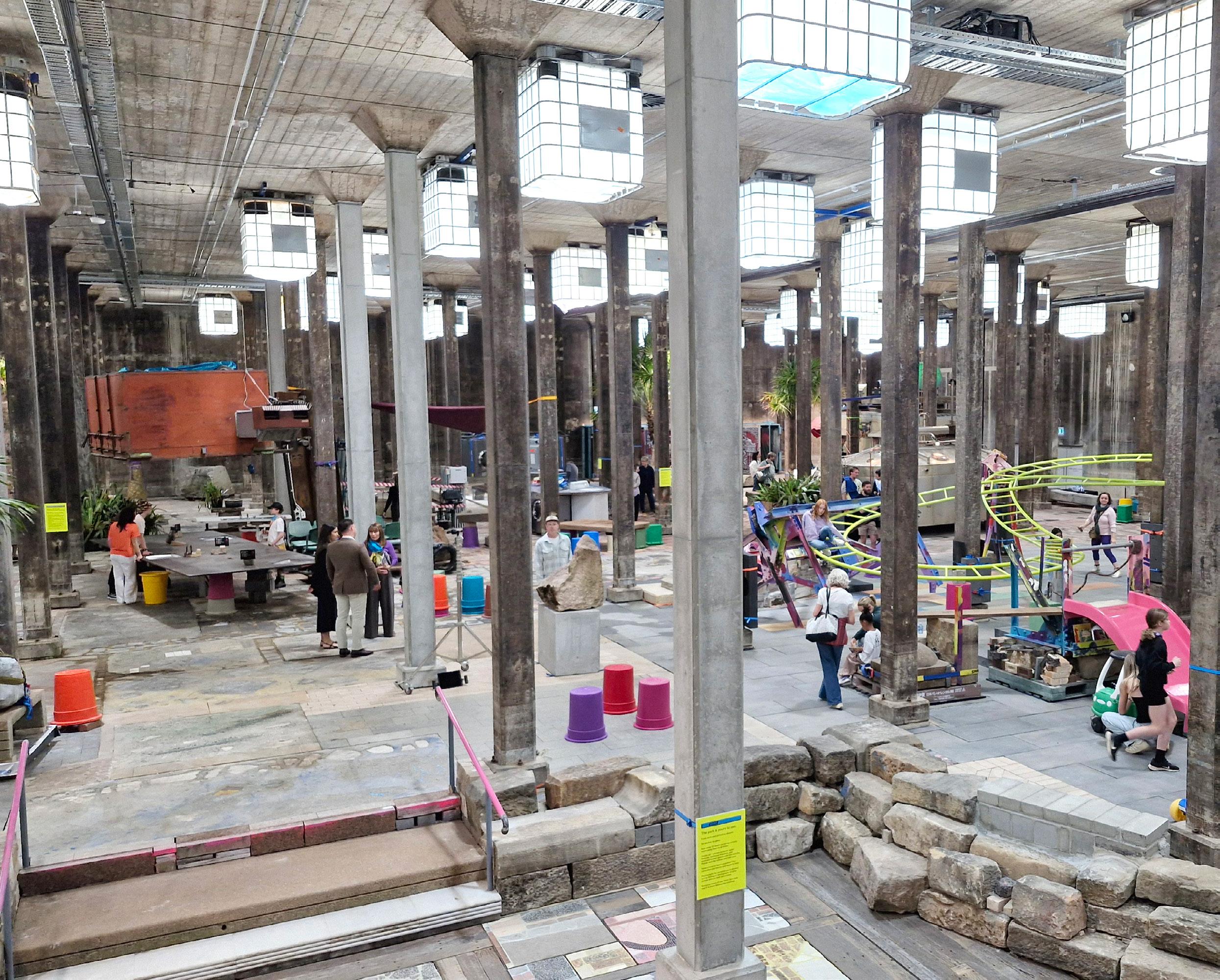
Play in wall-to-wall fun
Aunique and multi-sensory play park is open in the Nelson Park Tank at the Art Gallery of New South Wales. The exhibition, Mike Hewson: The Keys Under the Mat, took over a year to convert into a play space that was constructed from thousands of objects and materials. Visitors of all ages can have a BBQ, enjoy a shower in the water play area, while those over 16 can visit the site-shed sauna and milk-vat steam room. There are free areas for music, art making and community use, including a fully equipped recording studio. And no playground would be complete without monkey bars that loop in a figure -8 with soft-fall pavers to protect the more adventurous.
The wheelchair accessible exhibition has lift access, with various levels of sensory input that lets visitors choose when, how and how long they want to participate in the interactive elements,
such as the sauna and steam room. (See box for details).
This unique installation was created by artist, sculptor and playground-maker, Mike Hewson who told Link he wanted the play space to be an “accessible show” all on one level, but there were challenges aside from the usual fire and mobility requirements. For the first time special curtains were installed around the Tank, designed by an acoustic engineer, “so sound was not overloaded”.
“This was a huge step for the gallery,” he said. Keeping in mind the accessibility of play and the best ways to engage with the world, Hewson believes people with a disability need to have the opportunity to experience the physical challenges of play “outside a controlled environment”.
The exhibition is free and runs until 2026.
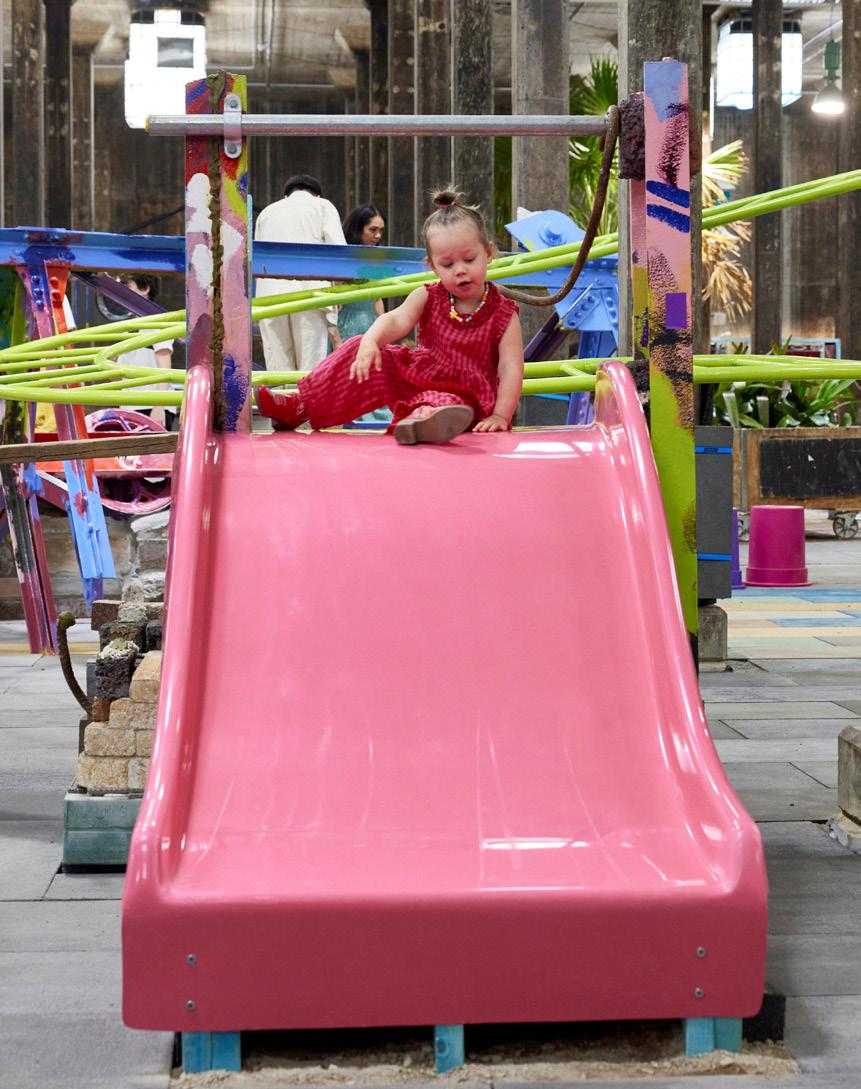
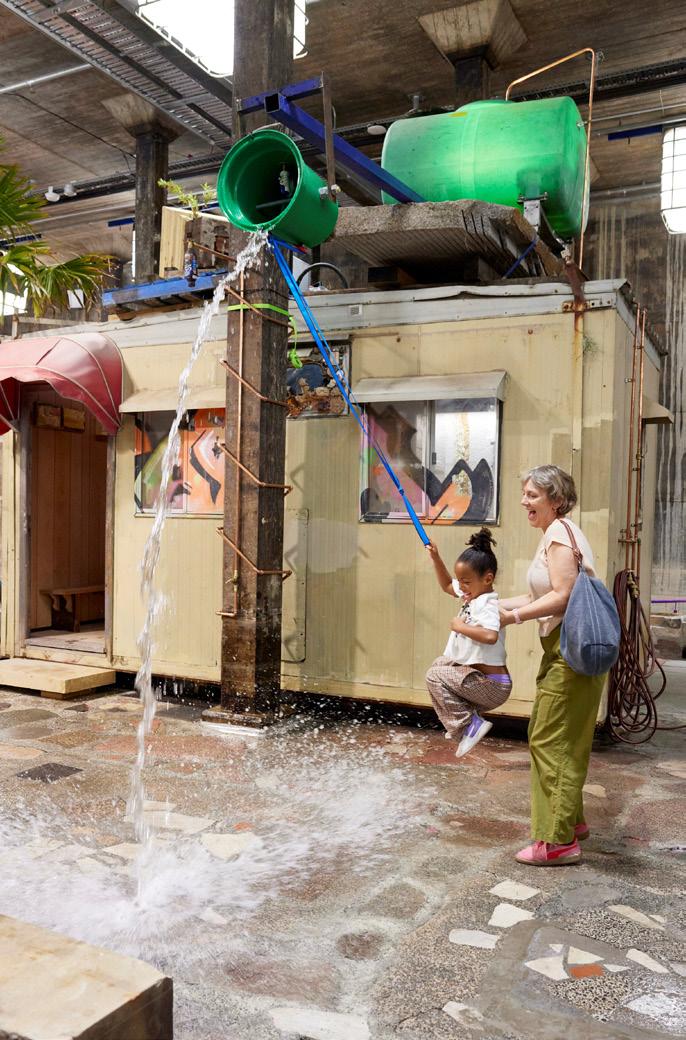

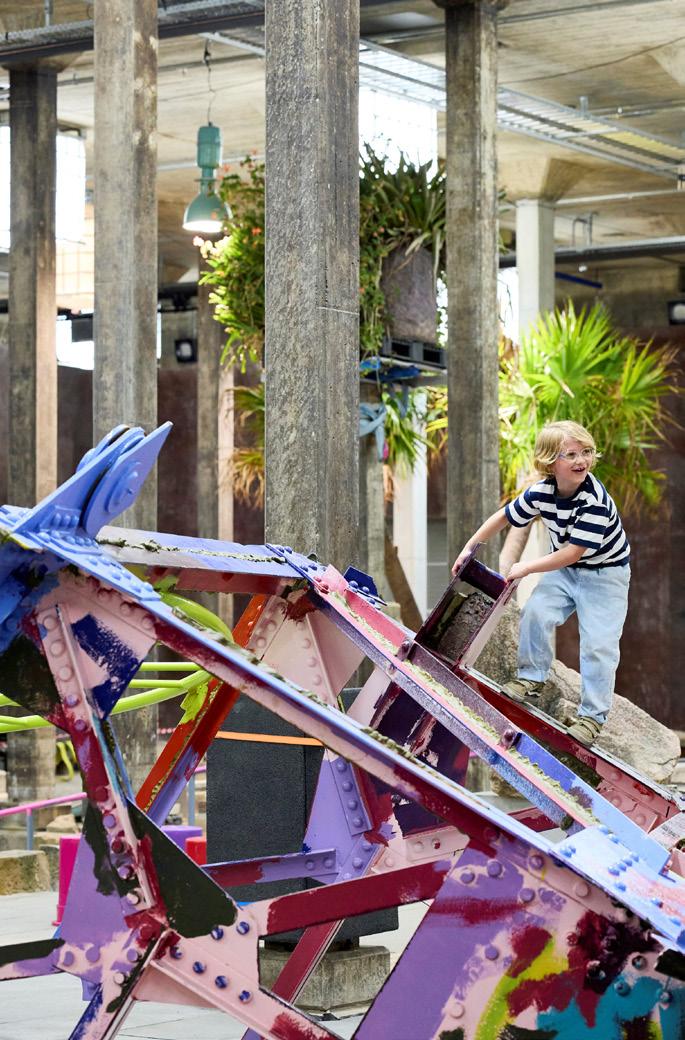
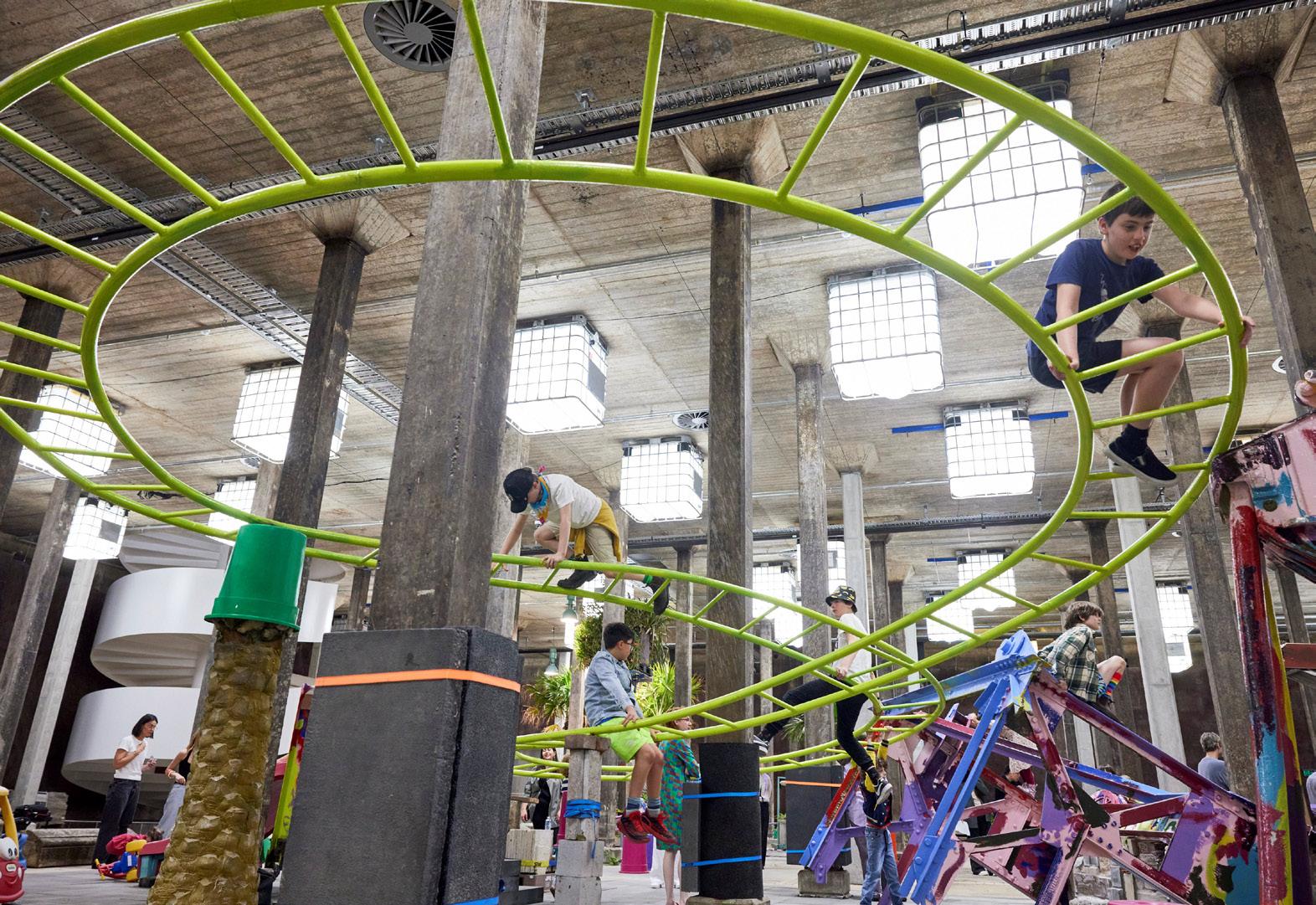
Accessibility details
Visitors may encounter varying levels of sound, light, movement, smells and physical activity. The intensity of these experiences can change throughout the day depending on the number of visitors and activations. This information is for anyone sensitive to sensory stimulation or have specific access requirements.
• The Art Gallery recognises the Hidden Disabilities Sunflower Lanyard, which provides a discreet way for visitors to indicate that they may require additional support, time, or understanding from staff.
• If you have sensory sensitivities, consider bringing along items that help you feel comfortable and relaxed, such as noisecancelling headphones or earplugs, sunglasses or a hat to reduce bright light, a fidget toy, a weighted item, or a comfort object like a scarf or small soft item, to support your experience.
• Expect rough and uneven surfaces, water features, some hot surfaces, and enclosed spaces with high temperatures and low visibility. Explore at your own pace, read the notices and take care.
• Some activities may get busy. Visitors might need to wait for share activities with others. Weekday afternoons may be a calmer time to visit.
• Most areas of the art park are accessible to visitors using wheelchairs and motorised scooters, with some exceptions. Caretakers are available to provide guidance or support as needed.
• The steam room and sauna are not accessible for wheelchairs and motorised scooters however the water play area is accessible.
• An accessible changeroom is available within the park and a Changing Places facility is available in the adjacent corridor.
• Children under 12 must be actively supervised by a parent or guardian at all times.
• Seating and tables are available, and food and drink are permitted in designated areas of the park but should follow any signage and be mindful of shared spaces.
• There are quieter spaces nearby where if visitors need to pause and relax with caretakers to help guide you to these areas.
• For more information go to – www.artgallery.nsw.gov.au
Link to... Travel & Leisure
Emirates makes flying more inclusive
From mattress hoods to fidget toys and more
Emirates has unveiled a broad suite of products and services for people with disability, for passengers on board and on the ground.
Heading the list is a new Accessible & Inclusive Travel Hub with user- friendly navigation options and assistive technology such as screen readers, voice control and keyboard navigation. There are sensory products and fidget toys including a tactile stress reliever in the style of an aircraft, a fidget cube and aircraft rubber popper for neurodiverse passengers. For business class passengers is a new and improved mattress hood that is more firmly attached to the seat. Inflight entertainment has over 600 movies with closed captions, 200 with audio description and hearing aid compatible headphones.
The airline is exploring a collaboration with Airbus to make the cabin more
accessible for passengers who are vision impaired with QR codes that can link to the passenger’s phone, providing an audio description of the cabin and haptics to locate seat rows, lavatories, emergency exits and digital menus.
Emirates is the world’s first autism certified airline and has trained 35,00 staff to support customers with autism and also introduced a ‘travel initiative’ across 17 countries that allows customers to practice the nuances of the airport experience before travelling.
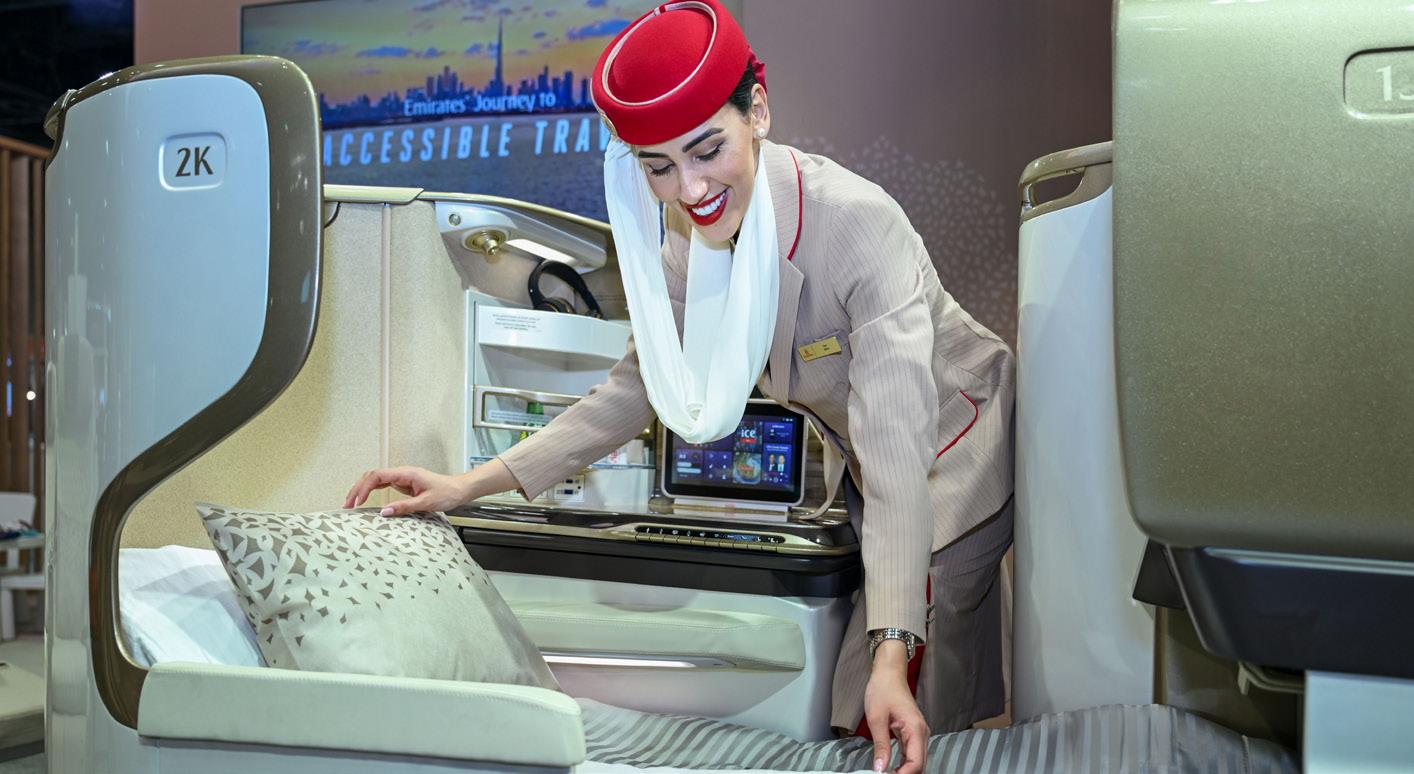
Easier entry to nature reserve
In a WA-first, people with disability can now register with the City of Cockburn to receive a remotecontrol fob that controls two gates at Little Rush Lake in Yangebup.
The remote control opens and closes the electric gates, wide enough to accommodate wheelchairs, on the western and eastern sides of Samuel Caporn Reserve. The fobs are kept by each registered holder until no longer required and returned to the city.
The gates also provide access to a shopping centre in South Lake, east of Little Rush Lake on North Lake Road. Access via nearby Osprey Drive was not possible due to the lack of a shared path.
The bushland reserve is fenced with entry points restricted by chicane safety barriers designed to keep motorbikes out of the fragile environment and protect the safety of pedestrians. It also prevented people using wheelchairs and
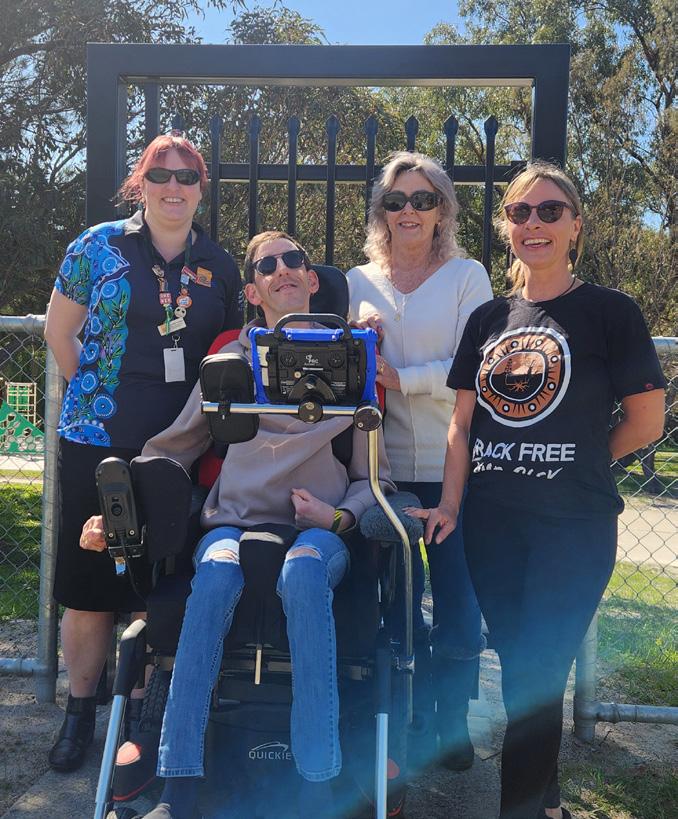
other mobility devices from entering the public reserve.
City of Cockburn disability access and inclusion officer Jennifer Crowther said the city had acted on feedback from people with disability who were unable
to access the reserve, or the adjacent shopping centre.
“The project took more than two years to develop, and we hope it can be a model easily adapted by other local government areas. The city will explore potential future gate locations to support this important initiative.”
Hamilton Hill resident and keen bushwalker Joel Raykos and his support worker Kathrin Ploetz said Little Rush Lake was now on their ‘must visit’ list. Joel, who communicates with an augmentative and alternative communication device, said he loved regular walks, with Manning Park in Hamilton Hill among his favourites.
His mother Gina Raykos said her son and Kathrin enjoyed regular walks in parks and along coastal paths and had previously experienced bollards that stopped Joel and his wheelchair accessing public recreation areas.
Jennifer Crowther, Joel Raykos, Gina Raykos and Kathrin Ploetz
Airport ramps up accessibility
Inclusive travel takes off
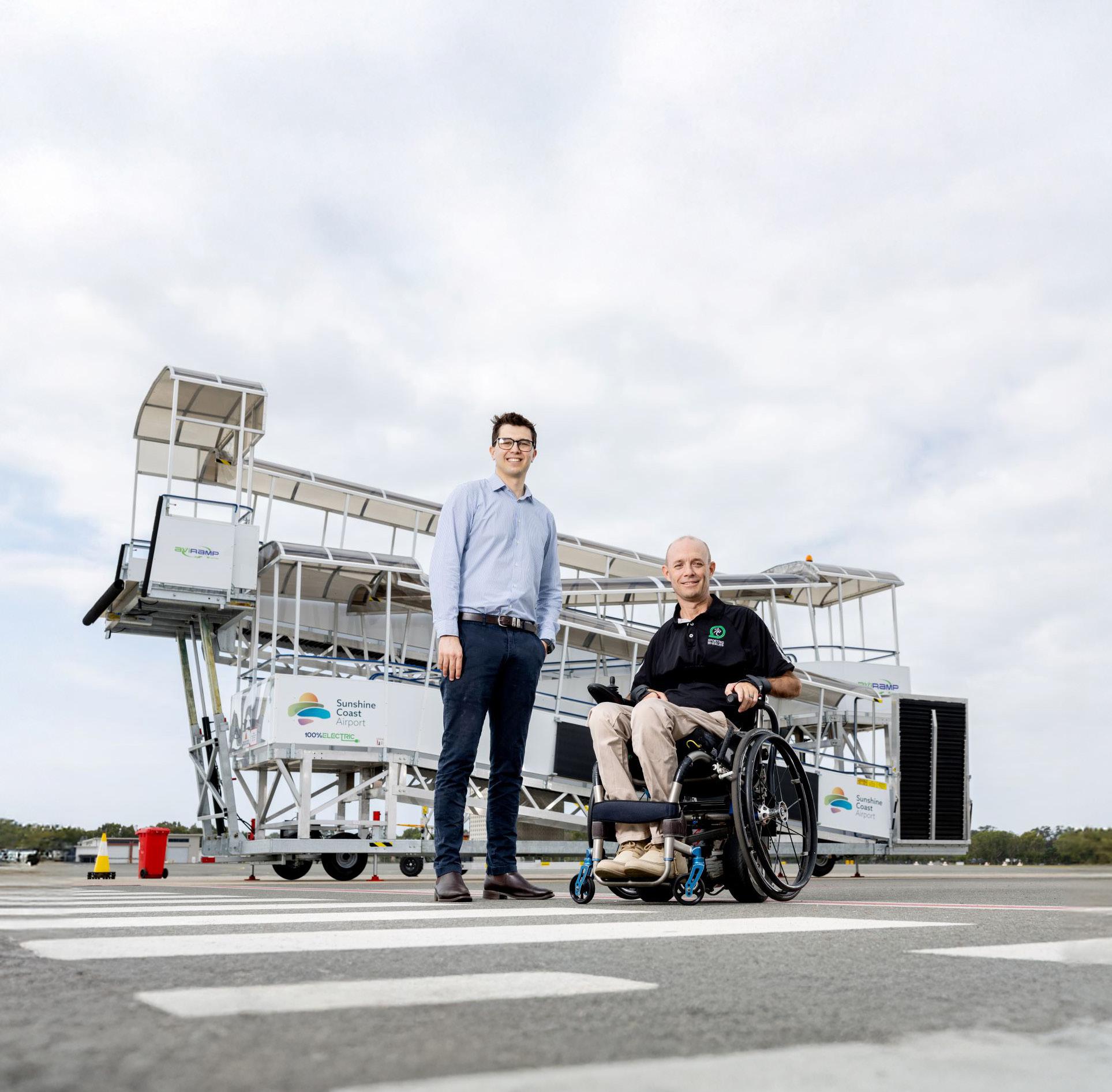
The Sunshine Coast Airport has introduced new solar-powered Aviramps with step-free, all-weather access for passengers boarding and disembarking aircraft.
Sunshine Coast Airport Terminal and Security operations manager, Toby Flatley, said the new ramp technology reflects the airport’s focus on putting passengers first. “Whether you’re a parent with young children, an older traveller or someone with mobility needs, this step-free access provides a more
positive boarding and disembarking experience,” he said.
Accessibility advocate Dane Cross worked closely with Sunshine Coast Airport on its disability, access and inclusion plan, and said it was exciting to see one of their key recommendations come to life.
“…STEP-FREE ACCESS REMOVES A MAJOR BARRIER TO FLYING”
“For people living with a disability or challenged with mobility, stepfree access removes a major barrier to flying. It improves safety, restores dignity and gives people greater independence when they travel. Sunshine
Coast Airport should be commended for making accessibility a priority,” Cross said.
This commitment to inclusion is supported by the Queensland Government, which has highlighted accessibility as central to the state’s growing tourism economy.
Queensland Tourism Minister Andrew Powell said the initiative was aligned with the Crisafulli Government’s 20-year Destination2045 plan to make the state a global leader in tourism.
Other airport changes include expansion to the domestic departure lounge, new self-check-in technology and automated bag drops.
Toby Flatley and Dane Cross
I CAN - proving IT CAN

The I CAN Expo is a day in for autistic/neurodivergent students to share what lights them up and occurs off the back of I CAN’s 8-session school programs and 6-week online group mentoring programs. This is where mentors from I CAN, the majority who are autistic, build up belonging, optimism, confidence and pride in autistic kids and teenagers.
“We run this day to create an uplifting moment for autistic young people,” I CAN founder, Chris Varney told Link
“I CAN is one of the biggest autisticled organisations in the world. Over 84 of its 106 staff are neurodivergent with mentoring now benefiting over 3,000 young people annually across 279 schools nationally via I CAN Online,” he said. “We know firsthand that autistic young people are more vulnerable to mental ill-health and slip through the cracks of educational transitions. I CAN Expo immerses young people in a celebration of positive autistic identity and culture, so they become more confident to self-advocate.”
Aquinas College Ringwood student and I CAN participant Owen Poot, was one of 30 student presenters at the October 2025 expo, where he spoke to 500 plus people at the Melbourne Convention and Exhibition Centre about his love for musicals and the steps you would take to write one.
A professional development track was added to the expo so teachers and support staff from schools could join the event and take away practical tips imbued with lived experience on how they can make their classrooms and schoolyards more inclusive. On top of its far-reaching group mentoring programs, I CAN also delivers over 70 professional development/networking engagements a year.
The expo connects parents and carers of I CAN participants with peer support programs on exposing autistic/ neurodivergent young people to senior secondary and post-school pathways. Expo 2025 sponsors/exhibitors include the Victorian Department of Education, Amaze, ANZ, La Trobe University, Positive Partnerships, 4GR, ACD, MyCareSpace, AbilityWorks, Kaboose, Aspergers Victoria, Autism Spectrum Australia, Light Occupational Therapy, Whereto, the Victorian Student Representative Council, Youth Disability Advocacy Service and Focus Bear with support from the Newsboys Foundation and the Australian Government.
Autistic young people (aged 5-20 years) experience significant challenges in school which is why the I CAN program is a key aspect of Victoria’s Autism Education Strategy. According to an ABS survey, 77.7 per cent of autistic young people experienced difficulties in school, particularly in fitting in socially and in communicating with others. There is also a heightened risk of mental ill-health among autistic people, with 38 per cent of autistic people, aged 14-80 years, experiencing depression or anxiety. School refusal is most prevalent among students with disability, especially neurodivergent students and of those with mental health challenges, while school refusal accounts for 43 per cent of absences..
The Victorian Department of Education is partnering with I CAN, to deliver its mentoring program to 254 Victorian government schools by 2027. I CAN ambassadors are MPs Tim Richardson and Roma Britnell.
Owen Poot
Disability in Design
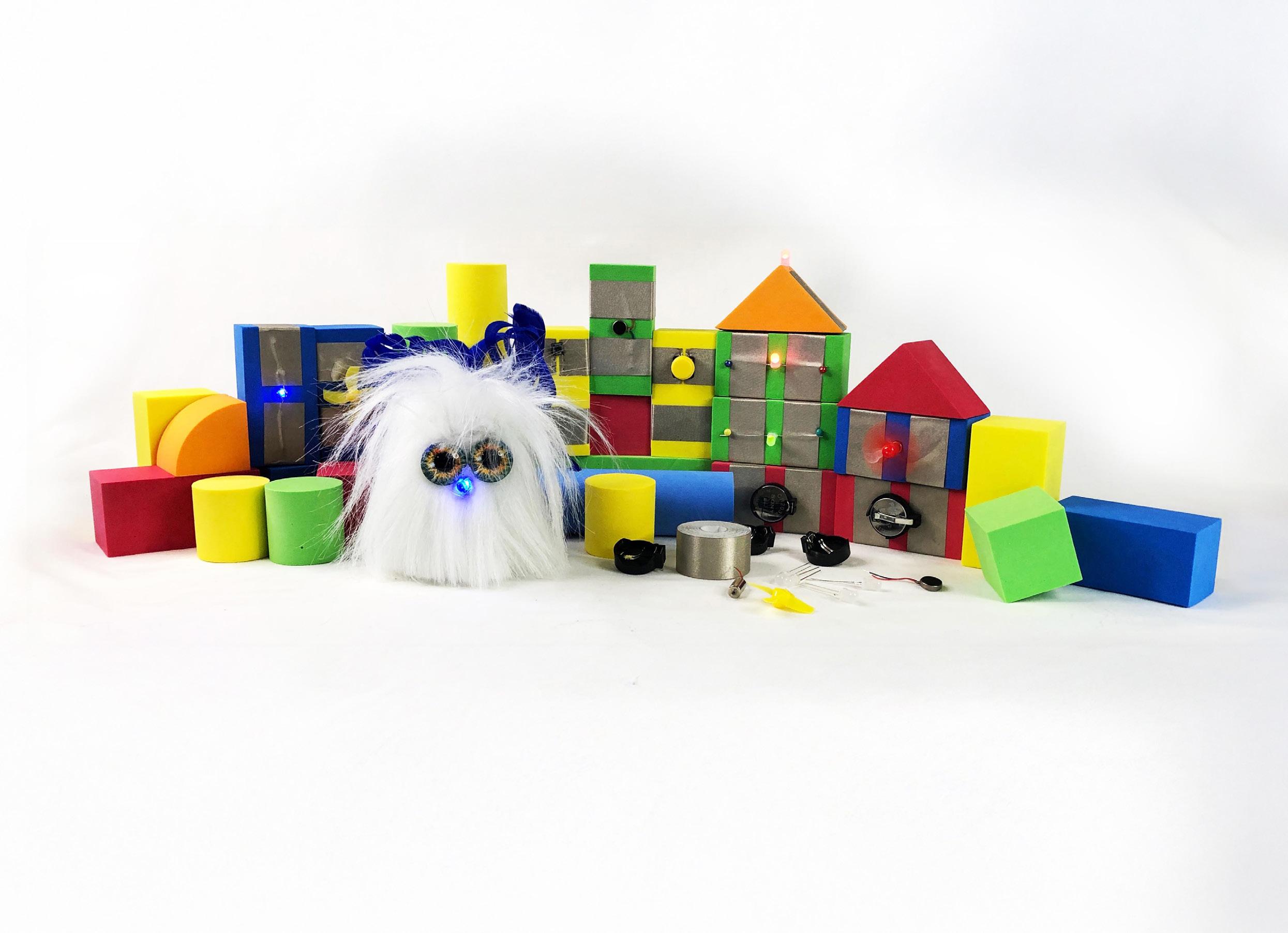
Products and education materials for people with disability, autism and hearing impairment were recognised at the 2025 Good Design Awards.
Among them was TapeBlocks – a creative circuit-making activity using large colourful foam blocks wrapped in conductive tape to connect electronic components so people with physical and cognitive disabilities can make circuits for the first time. The conductive tape acts as the wire to make the connection between the components and the battery. tapeblock.com
The One-Handed Walker Conversion Kit is for those with impaired mobility who require a wheeled walker/ rollator for independence and have use of only one hand. The kit easily converts standard walkers for one handed use and effective control. freedomsolutions.org.au
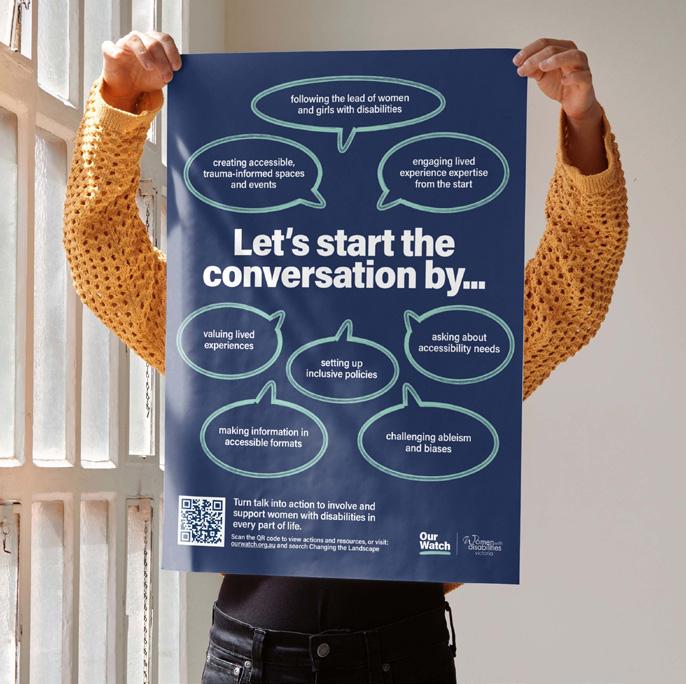
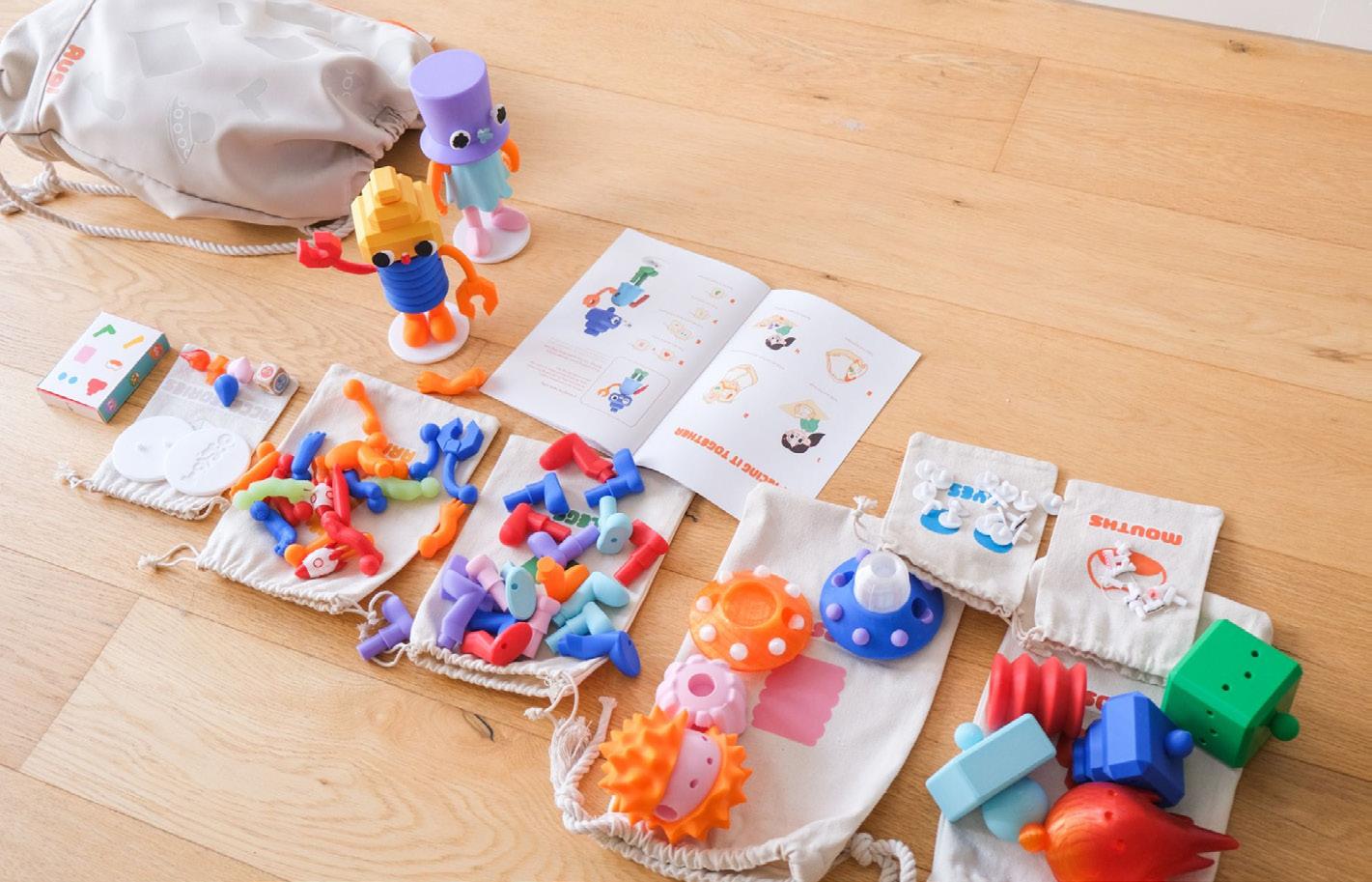
For people with hearing challenges the Audeara Buds combine intuitive controls and next-generation connectivity, including Auracast to deliver immersive, accessible audio experiences across entertainment and conversation. https://audeara.com
Augi is a playset designed to create accessible and inclusive play experiences for children, especially those with autism, through interactive character-building play during early childhood development. They were created in collaboration with parents, educators, therapists and neurodiversity specialists. lenchiworkshop.com
‘Changing the Landscape’ campaign content was designed to transform a
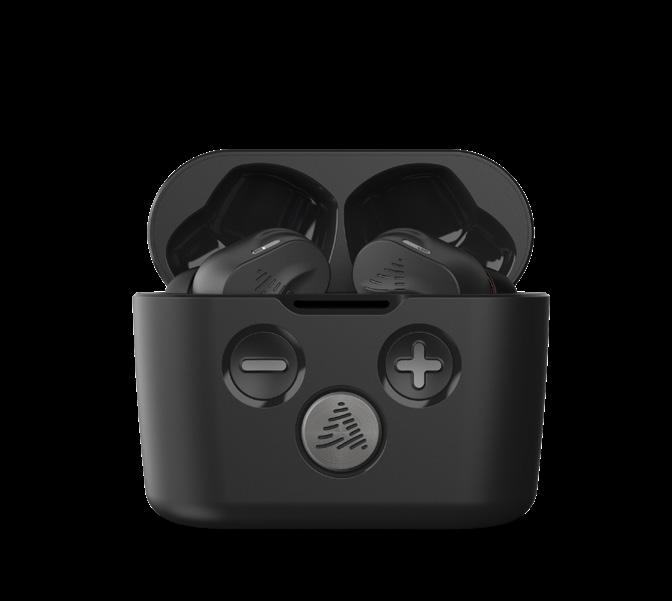
complex framework of violence against women with disability into accessible, multi-format resources and educational materials to address the social and systemic challenges they face. https://today.design
The First Responder, a portable neurodiagnostic device designed for use in ground and air ambulances that rapidly identifies traumatic brain injuries (TBI) and stroke at the point of care, enabling timely clinical decisions for the right treatment. Its telehealth integration and cost-effectiveness also offer a breakthrough solution for emergency and remote healthcare.
All collected a Good Design Award for their specific category.
Changing the Landscape campaign
Augi Playset
TapeBlocks
Audeara Buds
Honour for community broadcaster
Vision Australia Radio’s longserving presenter and volunteer Peter Greco has been recognised at the 2025 Community Broadcasting Association of Australia (CBAA) Conference in Hobart, inducted into the Community Broadcasting Honour Roll, a tribute to those who have dedicated over 15 years to a single community radio station.
Greco’s journey began in 1991, when he first stepped behind the microphone at 5RPH Adelaide, now part of the Vision Australia Radio network. Over the past 34 years, he has become a cornerstone of the station, producing and presenting three weekly programs: Focal Point, Leisure Link, and Vision Extra. These shows have provided a vital platform for people who are blind or have low vision to share their stories, discuss issues that matter, and celebrate achievements within the blindness and low vision community.
As someone with lived experience of blindness, his voice resonates deeply
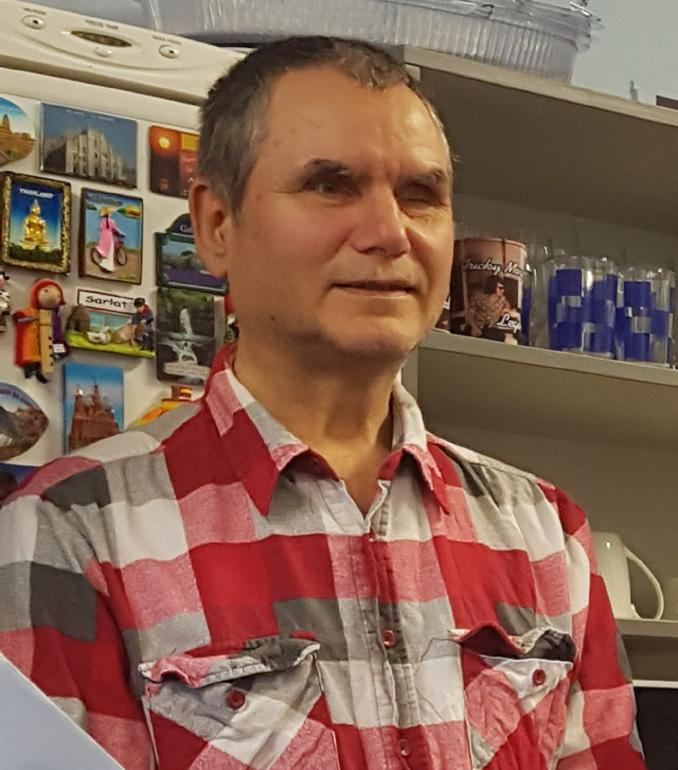
Community Broadcasting Awards, which span over 25 categories and celebrate excellence across the sector. The Honour Roll is announced live at the awards gala annually, alongside the Michael Law Award and the Tony Staley Award, making it one of the most meaningful recognitions of service in Australian community broadcasting.
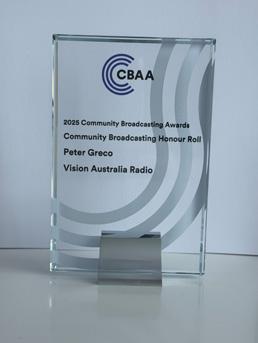
with listeners. His work has championed accessibility, inclusion, and greater access to news and information, ensuring that his loyal listeners are both informed and entertained.
The Community Broadcasting Honour Roll, introduced in 2024, is one of the newest categories in the CBAA’s
Vision Australia Radio
Conrad Browne, Vision Australia radio and audio services manager, said: “Peter exemplifies what Vision Australia Radio is all about. His lived experience, coupled with his passion for radio, makes him the ideal host. Listeners hear someone who understands their challenges and represents their voice”.
Pam Green, programming coordinator at Vision Australia Radio, who has worked alongside Greco for over 10 years said: “Peter has that special knack of making all his guests feel special, he is a gifted interviewer. I’ve always been in awe working with him and consider him more than a colleague – he’s a friend”.
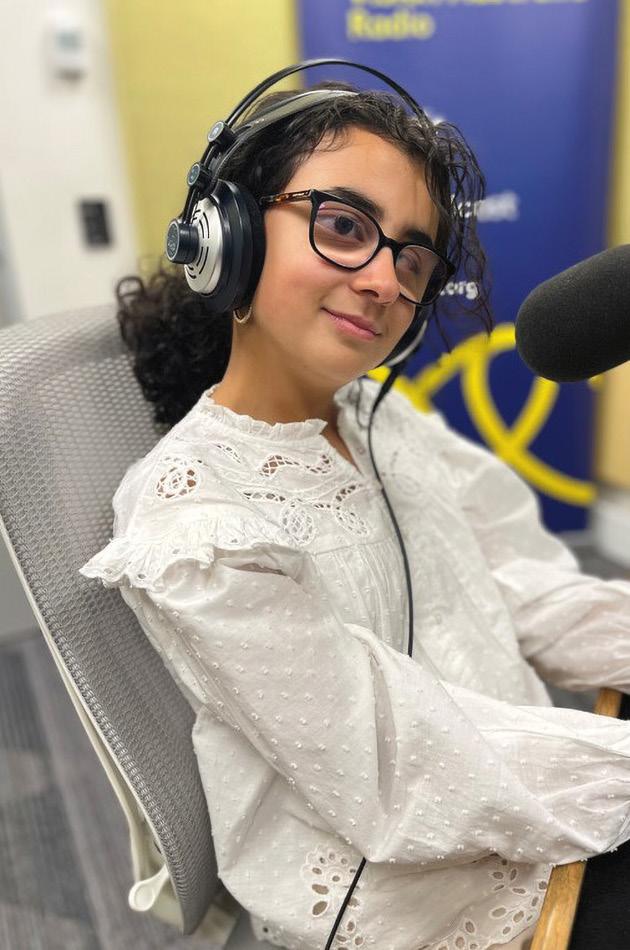
Peter Greco
Disability Arts archive launched
Celebrating 50 years of artistic innovation
For the first time, Australia has a dedicated national archive celebrating the history and impact of Disability Arts. The Disability Arts History Australia is a landmark digital resource documenting five decades of creativity, advocacy and cultural change led by d/Deaf, disabled and neurodivergent artists, organisations and allies.
Users can browse five decades of Disability Arts, learn about leaders and innovations, search more than 10,800 people, organisations and works, and create tailored reports, training resources and events to support inclusion across the sector. There are more than 1,600 records and 49 artist interviews on the site that provides a rich resource for artists, arts organisations, policymakers, researchers and the wider community.
Queensland University of Technology Professor Bree Hadley, chief investigator of the project, said the archive “highlights the power of arts and cultural representation to create change, and the work still to be done to achieve full inclusion in the Australian arts sector”.
Artist and advocate Caroline
who was a partner researcher on the project in her former role as CEO at Arts Access Victoria, said the archive both recognises the achievements of
What’s On Calendar
DECEMBER
December 3: International Day of People with Disability
FEBRUARY
13-14: South-West Disability Expo
Sydney southwestdisabilityexpo.com.au
28-March1: Source Disability Expo Adelaide www.sourcedisabilityexpo.com.au
MARCH
18-19: ATSA Independent Living Expo Adelaide www.expo.atsa.org.au
27-28: South-East Melbourne Disability Expo southeastdisabilityexpo.com.au
at: disabilityartshistoryaustralia.net
Bowditch,
Canehead Power Stance by Emiko Artemis
Changing Track – riding into cinemas
A new Australian documentary about facing disability and trauma while discovering new purpose through cycling and chasing a Paralympic dream is showing nationally, with a special screening on December 3 for International Day of People Living with Disability.
The film follows three athletes, Emily Petricola, Korey Boddington and Kane Perris who have conquered life-changing challenges through sport and gone on to win gold medals for Australia.

On the Kokoda Track
Jospeh Allen from Swan View, is hard of hearing, but that did not stop him from stepping up for the 2024 Kokoda Leadership and Development Program by the Y WA, and the chance to take on the rugged Kokoda Track.
When the trek finally took place in March 2025, the 15-year-old rose to the occasion. Trekking through the Papua New Guinea jungle, spending time in nature, and reflecting at the Kokoda memorial sites – all while pushing beyond his own limits – proved to be a life-changing experience.
“Changing Track is not about politics, controversy or technical sport details and results. It is a non-fiction drama,” director, writer and producer Tristan Kenyon said.
“Some of us will or have suffered an unexpected event that has significantly changed their life, or simply be stuck in a rut or feeling lost or directionless. Emily, Korey and Kane show us that anyone has the power to change track, find the right people and focus on what they love no matter what that may be or what life has yet to throw their way,” he said.
As Korey Boddington said: “If this story lights even the smallest fire in some to fight, to try, to believe again, then we have done something that matters.”
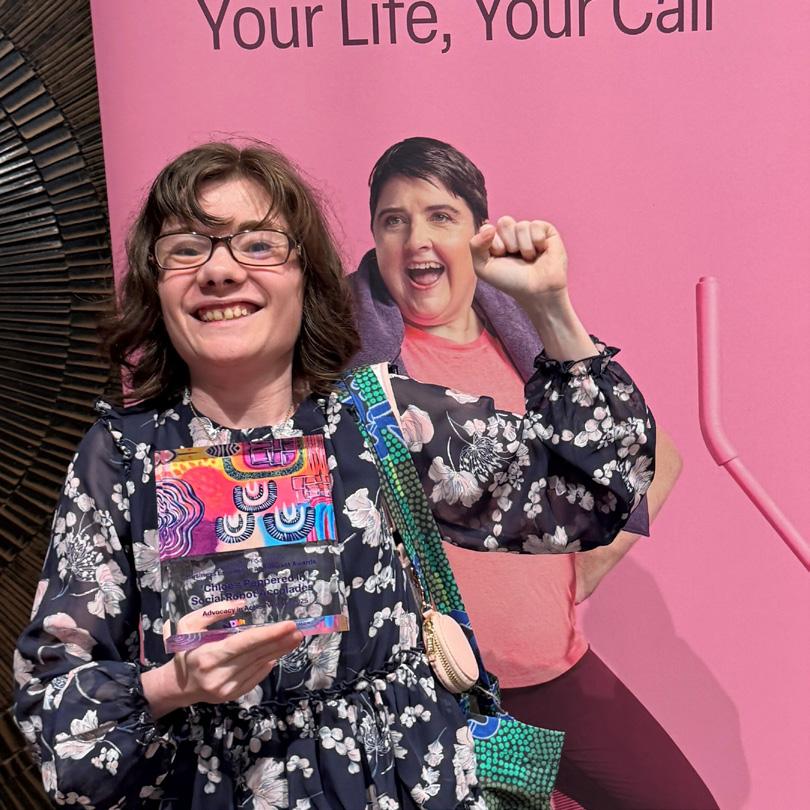
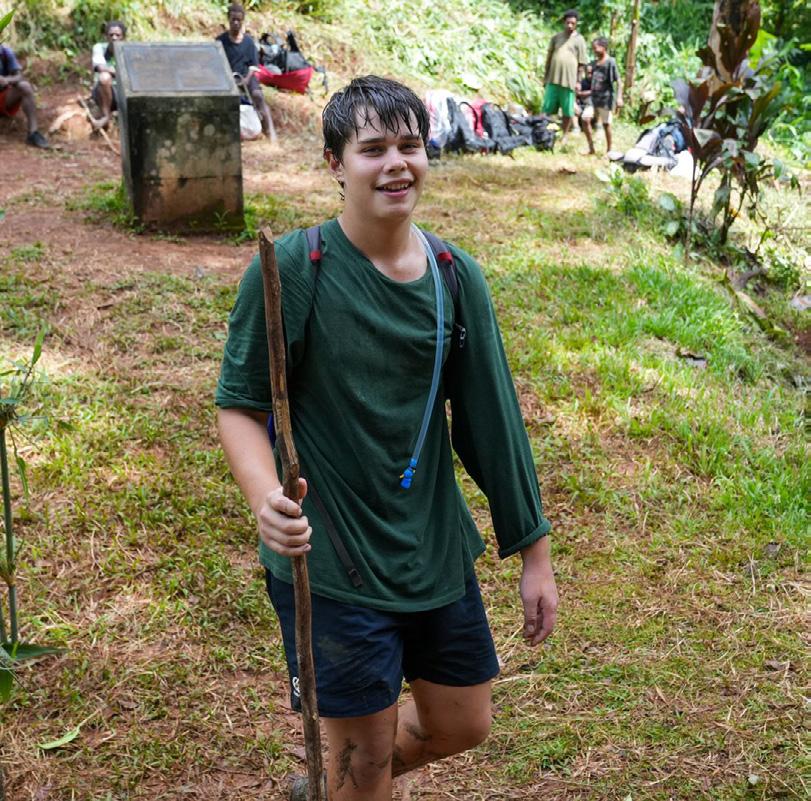
Since returning home, Joseph has shared his story, most recently, he gave a speech at Deaf Express 2025, hosted by the West Australian Foundation for Deaf Children.
Speaking to a room full of community members was no small feat, with the confidence and clarity he’s developed through Kokoda, it felt like the natural next step. He now hopes to inspire other young people to believe in themselves and take on challenges they never thought possible.
“When I think about something hard that I want to do, I think to myself: I have done Kokoda. I can do this”.
Disability shines at Inaugural Business Awards
Disability advocates, visionaries and entrepreneurs gathered in Brisbane to celebrate Endeavour Foundation’s inaugural Business Excellence and Impact Awards.
“These Business Excellence and Impact Awards are an exciting opportunity for those within our community, to shine brightly and be awarded for their impressive contributions on an industry stage,” Endeavour Foundation head of philanthropy, Sharon Wood said.
The Advocacy in Action Award’ was given to Chloe Haidenhofer who made history as one of the first individuals with intellectual disabilities to lead a published university research paper on social robotics, partnering with QUT and Endeavour Foundation. Her study explored how humanoid robot Pepper can enhance confidence, communication, and independence, using first-person experiences and interviews to record findings.
“Hopefully I get to do more with Pepper and QUT, in another project, helping Pepper to go out to different places like hospitals and to homes and learning and lifestyle centres to help people no matter how they’re feeling,” she said.
Chloe Haidenhofer
Vision Australia
Carols by Candlelight
This special event returns on Christmas Eve, December 24, live from Melbourne’s Sidney Myer Music Bowl. If you are not gathering under the stars, tune in to Vision Australia Radio for the national simulcast and audio described broadcast, with 17 radio services broadcasting on AM, FM, DAB+ and streaming online.

To register for this year’s event, visit carolsbycandlelight.com.au or call 1300 84 74 66 Also, tune into your local Vision Australia Radio station or online at varadio.org from 8pm local time on Christmas Eve for the audio described broadcast.
Minda Christmas Carols & Markets

It’s all happening at Minda’s annual Christmas festival of fun, entertainment, food and more, with live music and entertainment from the SA Regiment Band and Australian Girls and Pocco Tutti Choirs. There are market stalls,14 food vendors, a licensed bar area, plus rides and a Christmas raffle with over $5,000 worth of prizes. And the most important visitor of all…Santa Claus. On December 6, from 2-7pm at King George Avenue, North Brighton, Adelaide with free entry and parking.
Inclusion Festival returns
A Highpoint for Santa
Melbourne’s Highpoint Shopping Centre launched Wondermas, a new Christmas activation that coincided with the Santa Arrival Festival.

Visitors to the centre will find: the Wondermas Tree – an 8.6-metre glowing centrepiece at the Hoyts entrance; the Wondermas Star – a 7-metre creation radiating golden light and mirrored brilliance; the Valley of Stars –an illuminated walkway of four 3.5-metre star rings; a Snowglobe of Wonder – a life-size, 3-metre immersive globe; Whisked Away – floating bauble balloons; the Archway of Wonder – a 4-metre-tall entry point and Santa’s World of Wondermas – a whimsical village blending play, connection and tradition.
The Inner West Council in Sydney’s Inclusion Festival 2025, a two-week celebration of disability pride, creativity and community connection is running from November 29 to December 14.
The festival showcases disability-led arts, culture and accessible experiences across the Inner West with live music, films, workshops, exhibitions and inclusive community events.
The festival launches with a Disability Pride flag-raising ceremony at Marrickville Town Hall on December 3.
Accessibility is at the heart of the festival, with Auslan interpretation, audio description, sensory supports, quiet spaces and assistance animal access provided at all venues. All events are free, disability-led and fully accessible. For event information and to book free tickets: www.innerwest.nsw.gov.au/inclusionfestival
Hydro Disco artist Amy Claire Mills
NOVA EMPLOYMENT PRESENTS
FOCUS ABILITY ON