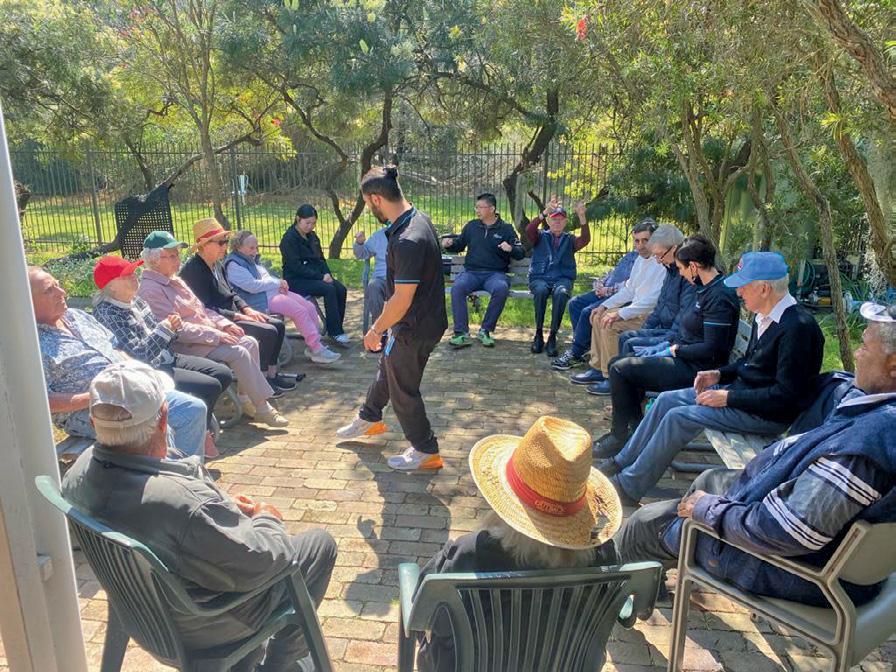
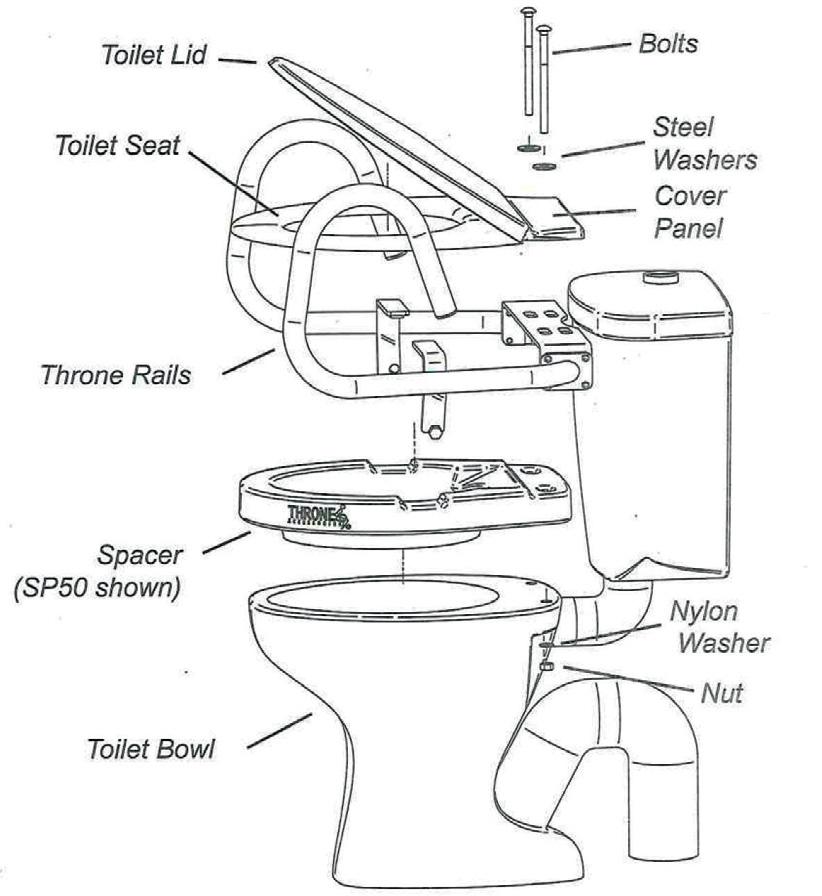
Dealing with compliance issues or gaps in your clinical leadership is overwhelming, especially when your team is already stretched thin. At Provider Assist, our highly experienced Registered Nurses swiftly tackle these challenges, ensuring compliance and stability for your facility. We bring sharp insights, real outcomes and lasting results.
What We Can Do for You
Place a Care or Quality Manager
We will send an experienced Clinical RN Leader to identify and address improvements or compliance issues, develop or project manage your CIP, and lead the cultural transformation needed to build long-term stability.
Mentorship for Your Team
If you prefer to leverage your internal resources, we can mentor your team and provide frameworks, equipping them to lead the improvement efforts themselves.
Just like we did recently at Sapphire Coast Community Aged Care
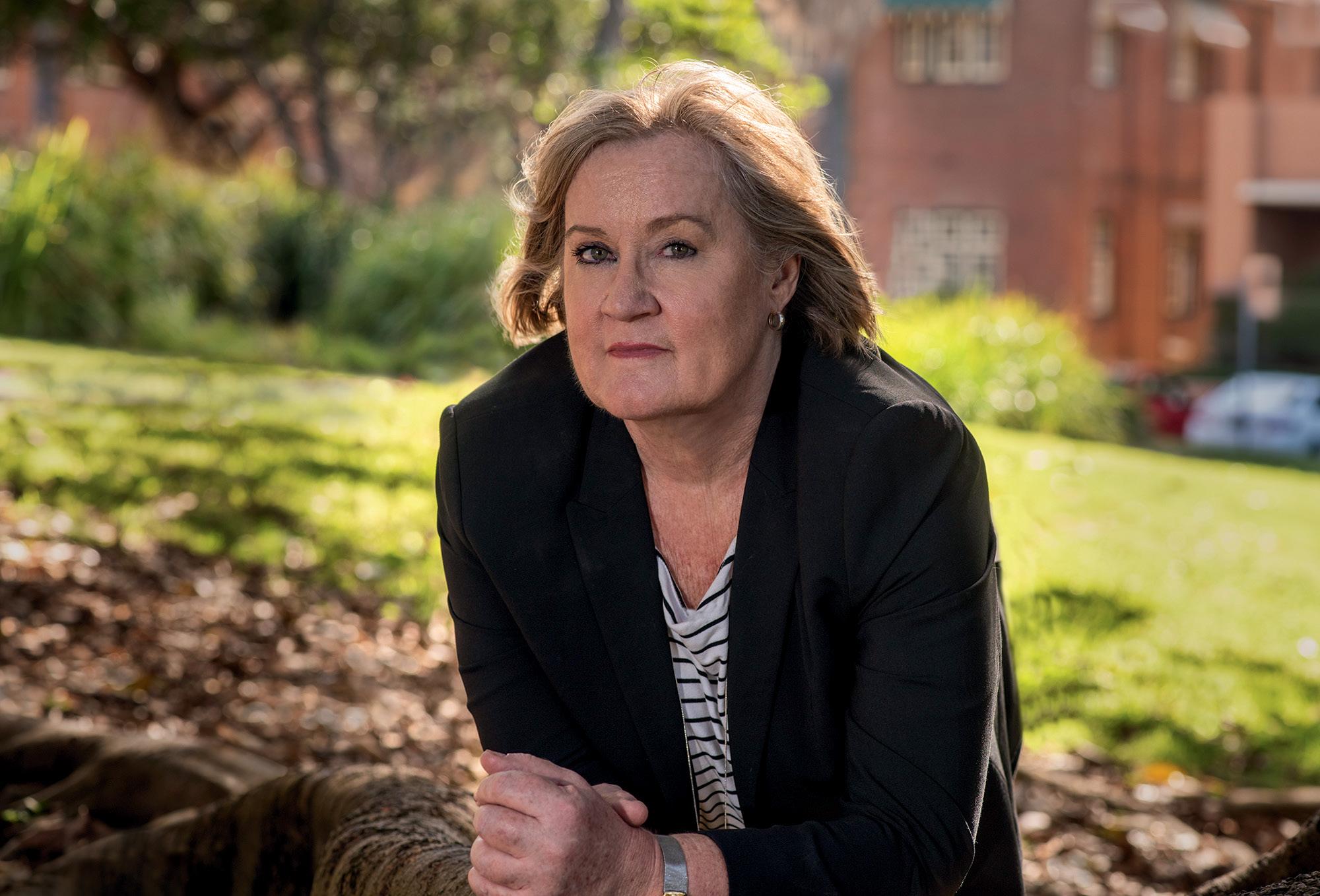
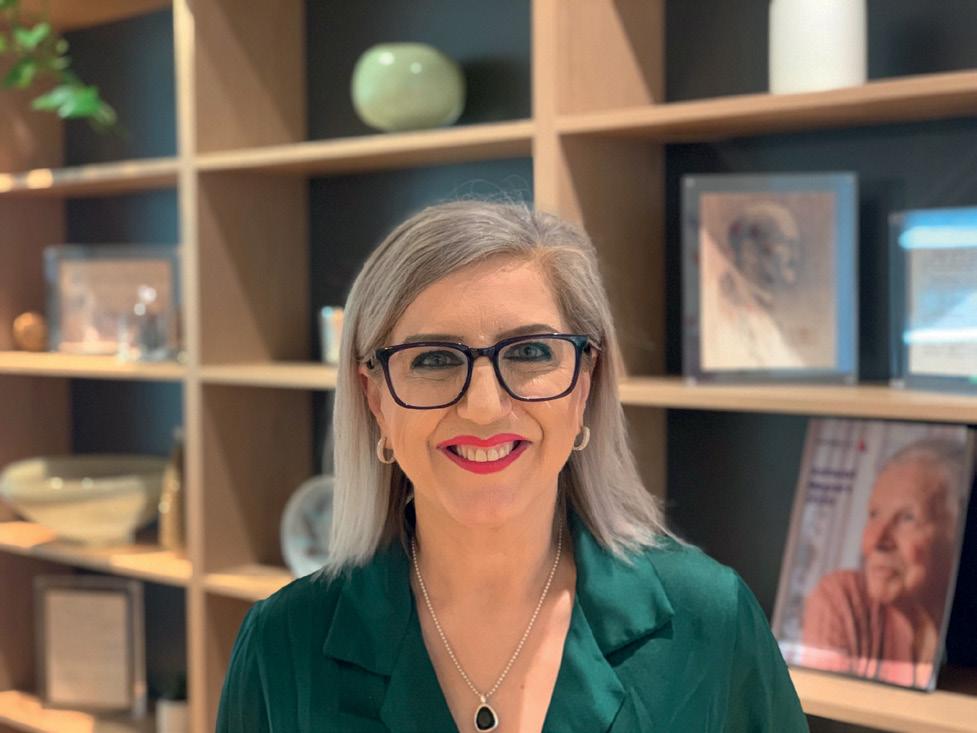
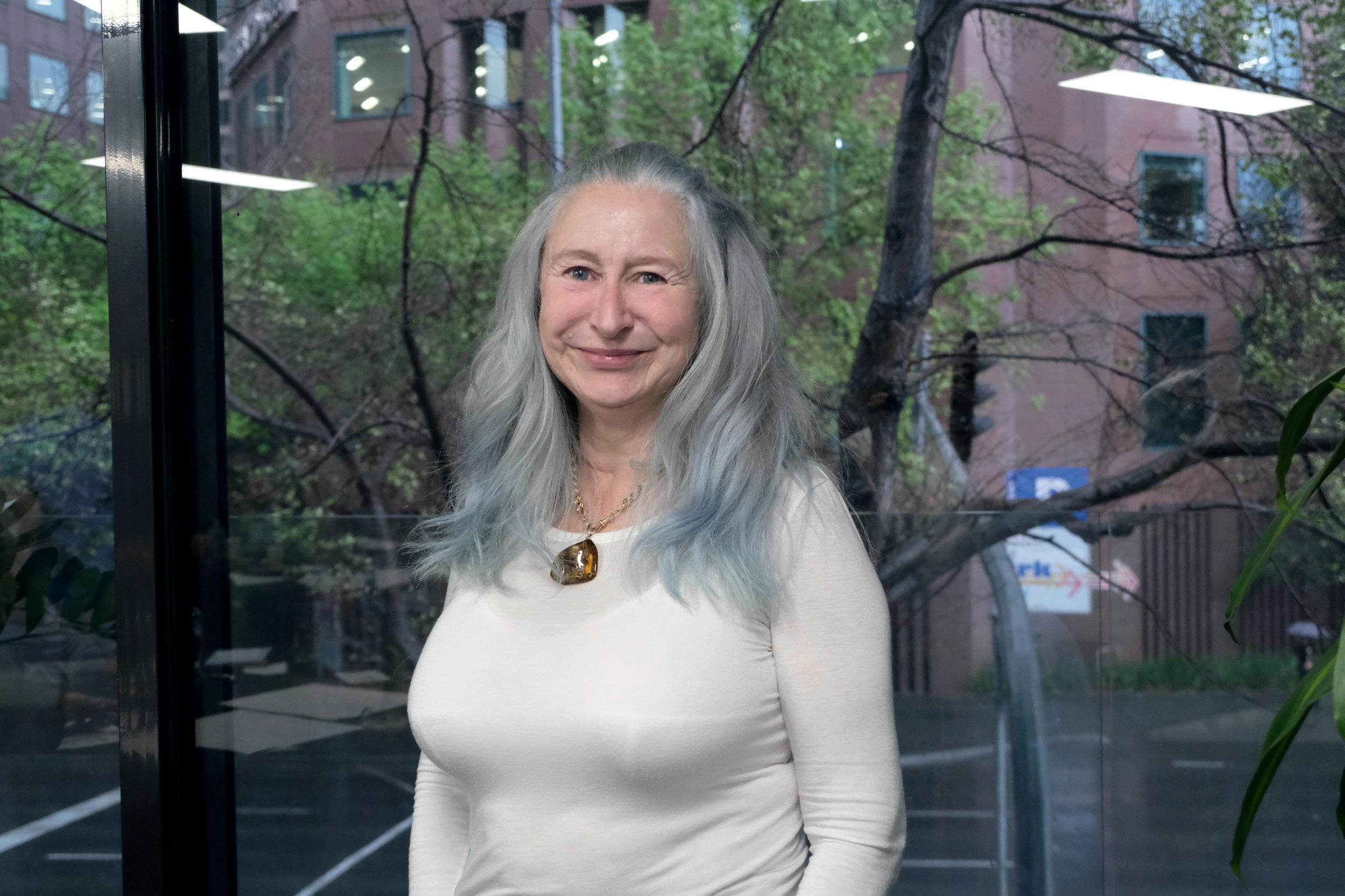
At Sapphire Coast Community Aged Care, following an unannounced visit after a consumer complaint, several improvement areas were flagged. Their CEO, Julie Evans, turned to us for immediate support:
Why Provider Assist?
Standards Gaps Analysis
Unsure where to start?
We’ll conduct a comprehensive audit against both current and strengthened standards, ensuring your CIP is aligned with regulatory requirements.
We were able to address immediate gaps and build stability within our team. PA helped us map out a plan, and with two weeks of focused education, our leadership could concentrate on governance issues while the rest of the team was empowered to improve.
Book a Meeting
We’re more than a temporary solution – we’re an extension of your management team. We’re here to provide the support you need, exactly when you need it.
Advancing a social directive
IN TRUE aged care fashion, it’s been another year of non-stop action for the sector until the end.
And we know it will continue into the new year and beyond as the aged care reforms, their tweaks and supporting information roll out.
Inside these pages you can catch up on recent announcements (pages 8 and 10) as well as the views of stakeholders about these and other areas of the changes underway (pages 18 and 20).
Also, this edition we hear about an idea for change from Theresa flavin – an activist and advocate for the human rights and dignity of people living with dementia.
Flavin says she wants to feel safe when she thinks about her future, and to guide and support the people and systems that will have carriage of her final years in relation to her living wishes.
To do that she is hoping to elevate the discussion on supported decision-making and explore the potential use of an advance social directive for people living with disability including dementia. And she wants you to join her (page 20).
“I’m asking for help to build a lane for my unknown future and permission to travel in it safely.”
Since our last edition, Ageing Agenda has been proud to announce the launch of Positive Ageing Summit, a two-day conference we are co-hosting in Adelaide starting 28 May 2025.
The event focuses on reablement, mental health and nutrition and aims to help aged care leaders and changemakers translate the evidence on allied health and therapy into practice.
Head to positiveageingsummit. com.au to find out more.
From the team at AAA you a merry Christmas and a happy and healthy 2025.
Until next year,
Natasha Egan
Australian Ageing Agenda Editor
Tel: 02 8586 6132
Email: negan@intermedia.com.au
28 Perspective with Sheonagh Fleming: Nursing on the inside
30 Nourished by nature
32
34 VAD: what you need to know
36 Leadership talk with Sue Cooke: Adapting to change Operations
38 Walking on air filters
40 Take the time Frontline
42 Building social connections
44 Helping children navigate emotions and dementia
46 Ask the expert with Dr Stephanie Harrison: Learnings on star ratings
SUBSCRIPTIONS: subscriptions@intermedia.com.au ph 1800 651 422 Average Net Distribution per issue 4,188 AMAA/CAB Yearly
Copyright
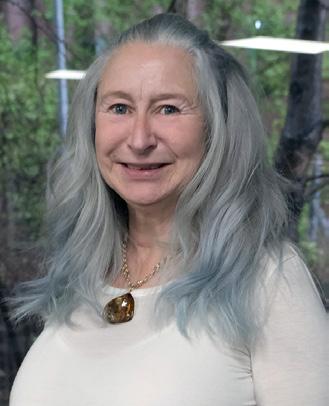
1 Dementia advocate and activist Theresa Flavin discusses her ideas for taking the conversation around supported decision making to the next level (page 20)
2 Consultant Mark Sheldon-Stemm proposes an alternative approach to regulating aged care (page 22).
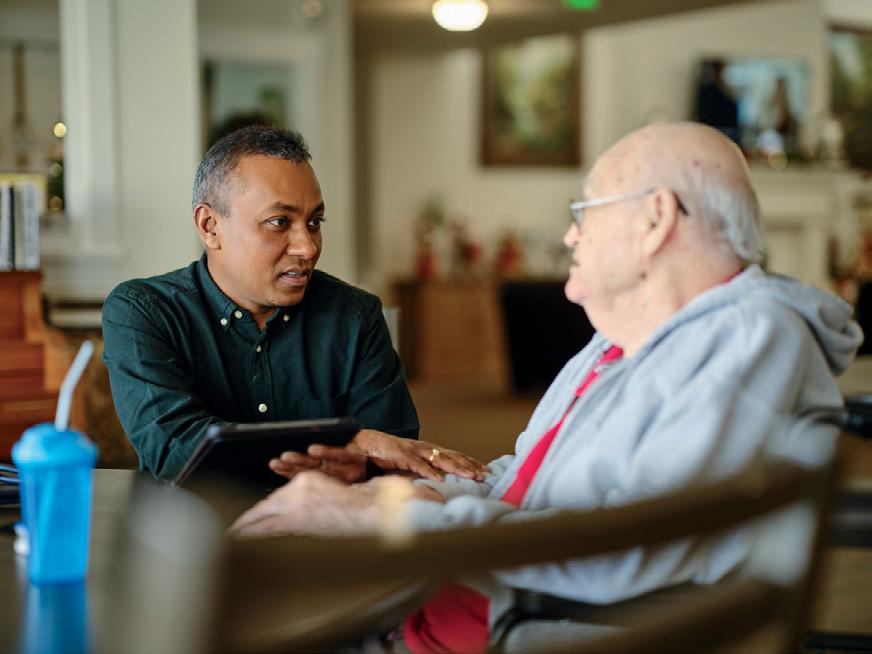
3 Cleaning expert John Taylor explains the link between carpet cleanliness and air quality (page 38).
4 Epidemiologist Dr Stephanie Harrison talks about the findings from her research on the aged care Star Ratings system (page 46).
Jodie
Talkback
“You mean watered down home care packages with co-contributions for services that many older Australians will forgo? The ones that won’t be able to be catered for because many providers will be exiting the sector on July 1st?”
Janson Hatton comments on AAA online on the announcement of 80,000 additional home care packages from July
“We certainly engage with our consumers on a regular basis, but we also find that there are a high percentage of complaints from consumers or consumers’ families that are unjustified. These unjustified complaints are registered as a complaint and therefore are added to the stats.”
Sue Longthorn responds on AAA online about complaints of a lack of staff communication with consumers
“The passing of this bill is a shameful episode in the abandonment of older people to the corporatised aged care industry.”
Vern Hughes comments on LinkedIn on the passing of Aged Care Bill 2024
“We are making progress but we need to bring the workforce along the journey including education, enablement of the team to strive for more, ask their clients how they can help them do more rather than doing things for them.”
Joanna-Lee Tan responding on LinkedIn to the call for care staff to help increase the take up of exercise among older people
AAA
reader poll
Online readers have their say at australianageingagenda.com.au
Would you like the Support at Home commencement date to change from 1 July 2025?
• No, let’s push on with it (39 per cent, 39 votes)
• Yes, delay it one year (34 per cent, 34 votes)
• Yes, bring it forward (14 per cent, 14 votes)
• Yes, delay it two years or more (14 per cent, 14 votes)
Total voters: 101
“It’s an important step forward for achieving a sustainable, high-quality aged care future for all Australians.”
Jane Floyd comments on LinkedIn on the passing of Aged Care Bill 2024
“Quality indicators are most valuable when used to understand the factors driving the results, rather than as implied measures of quality.”
Lahn Straney comments on LinkedIn on the latest QI falls data
“Grandfathering Home Care Package clients into the new program and asking new participants to pay a fee will create so many problems for the provider as new participants will see this as discrimination and negatively respond to the provider and not necessarily understand it’s a government decision. Expecting the elderly to pay more for services under independence, such as domestic help and social is unrealistic [and] will deter them from accepting services. Also, what sort of system does the provider need to implement that will easily manage such payment complexities. It is really a recipe for failure.”
Dina Ranieri responds on AAA online about changes coming with Support at Home program
TOP 5 MOST RATED STORIES ON AAA ONLINE
1Caps on cleaning, gardening go
The government has removed caps on gardening and cleaning services under Support at Home to better support older people’s independence.
2Aged care bill is through
The government has addressed the number one recommendation of the aged care royal commission along with 57 additional recommendations with this week’s passing of Aged Care Bill 2024.
3New Aged Care Act imminent
Stakeholders welcome Aged Care Bill 2024 passing through the Senate with bipartisan support, as it returns to the lower house for final approval.
4 BaptistCare unites with more counterparts
The primary focus in the first year is to ensure a smooth transition that maintains high standards of service, says CEOelect of the new entity Charles Moore.
5ACCPA requests small delay in nurse pay rise
Aged care providers need at least four months to implement any increase to nurses’ wages from the final determination, the provider peak body has told the Fair Work Commission.
They it said
“Woo hoo! The government has removed caps on gardening and cleaning services under the Support at Home program.”
Lorraine Poulos, managing director LPA
“Australia desperately needed a new Aged Care Act – one which puts the basic rights of older people at the centre – and we’ve finally got it.”
COTA Australia chief executive Patricia Sparrow
“Today marks the passage of the most impactful aged care reform in 30 years.”
Minister for Aged Care Anika Wells
“There’s a lot of anxiety about the looming changes that CHSP is going to go through when Support at Home actually commences on the first of July.”
Aged care consultant Paul Sadler
Call for submissions
The next issue of Australian Ageing Agenda (January-February 2025) includes a special focus on technology throughout the edition.
You can expect technology-themed stories for aged care stakeholders across executive, operations and frontline roles.
From discussions about AI governance and policy to best-in-breed solutions or the latest tools to recruit, thrive financially and improve quality or wellbeing, the options are endless. Topics on the agenda include:
• ITAC Conference 2025 preview
• IT security
• artificial intelligence
• clinical software
• workforce skills.
As always, we encourage input from our readers on these or other tech-related topics. Get in touch if you have something to share: editorial@australianageingagenda.com.au
The Brief
Sector celebrates passing of bill
Aged Care Act 2024 becomes a reality
By Natasha Egan
THE GOVERNMENT addressed the number one recommendation of the aged care royal commission plus 57 other recommendations when it passed Aged Care Bill 2024 on 25 November.
A new Act will start from 1 July 2025, bringing with it a new regulatory model, strengthened Aged Care Quality Standards and a Statement of Rights for older people.
A new rights-based Aged Care Act was the first recommendation of the Royal Commission into Aged Care Safety and Quality.
“Today marks the passage of the most impactful aged care reform in 30 years. Today, our rights based aged care bill passed the parliament putting older people and not providers at the centre of aged care,” Minister for Aged Care Anika Wells told Parliament.
The bill was introduced into parliament on 12 September and referred to a senate inquiry. After a national tour the committee recommended it be passed on 4 November. After some debate, the Senate passed it a couple of weeks later with amendments.
Ms Wells committed amendments from the Opposition and Senator Pocock made during the Senate debate, as well as those from the government.
They include the much-publicised removal of caps on cleaning and gardening and an additional 83,000 home care packages under the Support at Home.
“I thank members and senators, and especially Senator Anne Ruston, who worked with the government on this reform,” said Ms Wells.
The monumental occasion was welcomed by providers.
“This truly is an historic moment in Australia’s aged care reform journey,” said Aged and Community Care Providers Association chief executive officer Tom Symondson.
“We welcome this seminal reform which will help deliver quality and sustainable aged care for all Australians, whether they live in a city, regional town or rural area,” said Laura Haylen, director of aged care policy at Catholic Health Australia.
Celebrations aside, these peaks along with COTA Australia raised concerns about transition challenges.
Acting chief executive Corey Irlam said the country finally had a new Act that put the needs of older people ahead of those of providers.
“This isn’t the finish line – it’s the start of the next crucial phase in the push to protect the rights of older people.” n
Framework for dementia support
Govt launches a 10-year dementia action plan
By Jodie Wolf
THE NATIONAL Dementia Action Plan 2024-2034 has an eight-point implementation plan for increasing dementia awareness, reducing the population’s risk of dementia, and driving better coordinated dementia services.
The plan was developed in partnership with state and territory governments and informed by people living with dementia and their carers and families, aged care providers, health professionals and workers, plus advocates, researchers and peak industry bodies and organisations.
The 10-year framework to assist government provide a better coordinated and integrated approach to dementia support comes in response to recommendation 15 of the aged care royal commission. An online dashboard will track and report progress against the plan annually.
Dementia Australia chief executive officer Professor Tanya Buchanan said the plan was critical to guarantee that people living with dementia, their families and carers have the best care and support available.
“The National Dementia Action Plan provides a clear vision for the future, where all Australians understand dementia and all people living with all forms of dementia and their carers have quality of life,” she said.
Minister for Aged Care Anika Wells said that without intervention, the number of Australians living with dementia would more than double from the estimated 411,000-plus today by 2058.
“We can make a difference and reduce these numbers, slow the progression of dementia and improve quality of life by working together to deliver the National Dementia Action Plan,” Ms Wells said. n
Reform support Taskforce smooths transition
By Jodie Wolf and Natasha Egan
PROVIDERS ARE receiving support to implement Aged Care Act 2024 reforms through the Aged Care Transition Taskforce.
The taskforce, which was announced in mid-November, provides oversight and stewardship of the reforms and government’s response to the Aged Care Taskforce.
Council of Elders chair and National Aged Care Advisory Committee member Anne Burgess is chairing the 20-member group.
She said the taskforce would work collaboratively to bring the sector through this transition journey, to troubleshoot implementation issues and provide expert advice to the aged care minister and the Department of Health and Aged Care.
“I feel privileged to have this opportunity to work towards the best outcome possible for older people, their families and the workforce now and into the future,” Mr Burgess told Australian Ageing Agenda following her appointment.
Taskforce members include aged care providers, consumer advocates, ICT specialists, primary and clinical care experts, and representatives from the department and Aged Care Quality and Safety Commission.
The taskforce will prioritise:
• drafting subordinate legislation to the Act with a focus on implementing the rules from 1 July 2025
• education and training
• communication and change management support
• funding and fee structure
• data and digital.
They met for the first time on 28 November, where the minutes show members took a deep dive on the data and digital roadmap and considered timeline and consultation of the forthcoming aged care rules.
A grant opportunity will also allow eligible providers to apply for $10,000 to help with IT changes required for 1 July 2025.
Minister for Aged Care Anika Wells said the government was determined to assist the industry to meet the challenges of moving forward.
“I know the sector can meet this challenge with the transition taskforce troubleshooting concerns raised by providers.” n
Worried about the changes to the home care model due to commence in July 2025 and the possible impact on your team?
LPA HOME CARE STRATEGY DAY
An LPA Home Care Strategy Day helps providers and their teams evaluate operations, address key challenges, and explore growth solutions. Led by experienced LPA consultants, the session fosters forward-thinking discussions, assesses trends, and aligns strategies with evolving regulations to future-proof your organisation. A stepby-step process map will guide you throughout.
DESIGNATED LPA PROJECT OFFICER
With over 15 years of expertise, LPA's consultants help providers navigate regulatory complexities, implement best practices, and plan strategically for future success.
As a viable future competitive home care provider, you will need to:
Redesign your current model
Decide on your clinical care model
Equip your workforce with required knowledge and skills
Have clear workflow procedures
Decide on critical KPIs
Understand the importance of the proposed Home Care Quality Indicators
Remain financially viable
By working with LPA, you’ll gain access to a range of services tailored to enhance your organisation’s performance and ensure you are wellprepared for the challenges and opportunities ahead.
Speak to the team at reception@lpaconsulting.com.au
$35 billion Total aged care funding
1,500,000
Number of aged care recipients
60%
Proportion spent on residential aged care
736
Approved providers of residential aged care
189,888
Permanent residents at 30 June
34
Average stay in residential care in months
909
Approved providers of home care package
275,486
Recipients of a Home Care Package at 30 June
834,981
Number of CHSP clients in 2023-24
10,226
People who received short term restorative care
3,785
Number of Multi-Purpose Services places across 183 services.
Source: 2023-24 Report on the Operation of the Aged Care Act
1 year delay on Support at Home price caps
As CHRISTOPHER KELLY reports, the announcement has been largely welcomed by providers.
Providers will continue to set their own prices for the first year of the incoming home care program as they do under the current system, the government announced.
The pricing cap delay was to support service continuity for providers and participants and will be backed by extra consumer protections, said a statement.
From 1 July 2026, government-set price caps will apply for the Support at Home program – 12 months after it replaces the Home Care Package and other programs in the new year from 1 July.
The news has been largely welcomed by providers. Chief executive officer of peak body the Aged & Community Care Providers Association Tom Symondson said the staged approach allowed providers flexibility, plus the time needed to transition.
“The initial flexibility allows providers to establish realistic prices that account for overheads, administrative costs, and quality care management.”
Mr Symondson added: “It also takes away two of the major transition concerns our members have been raising – that prices may be announced so late as to be impossible to implement, and that they may be unrealistic, causing providers to fall over when older people need them most.”
Also from January 2025, the government will publicly consult on the development of additional consumer protections to ensure pricing is fair during the transition year. This will be in addition to existing Consumer Confidence Protections.
Also welcoming the government’s announcement, CEO of aged care provider Bolton Clarke, Stephen Muggleton, who called the staged approach a positive step for both consumers and providers.
“This is a sensible move that will protect consumers from the risk of service disruption and abrupt changes in pricing,” Mr Muggleton said.
“Consultation in the new year on additional consumer protections during the transition will help guard against any risk of price gouging,” he added.
Benetas also reacted favourably to the news.
“Support at Home provides us with a once-ina-generation opportunity to redesign the system and enable a better experience for Australians who choose to remain in their homes as they age,” said CEO Sandra Hills. “Allowing providers the flexibility to set their own prices for the first 12 months places the sector in a more sustainable position to appropriately implement changes of this magnitude.”
But, while a phased approach gives providers time to adjust, it also comes with administrative and other burdens, said Lorraine Poulos and Associates general manager Marisa Galiazzo.
“The impending government-set price caps from July 2026 may challenge providers to absorb or reduce administrative costs to remain sustainable, particularly given the additional burden of renegotiating service agreements and aligning with new consumer protections,” Ms Galiazzo told Australian Ageing Agenda
The government will share further information on pricing with stakeholders in March.
In the meantime, providers should begin discussions with home care recipients around service agreements for Support at Home including pricing from April 2025, with recipients needing to agree to any pricing changes ahead of the program’s 1 July 2025 start. n
1 January 2025
Award wage increases for many aged care workers while the maximum accommodation rate goes up to $750,000
20 January
Consultation on the Residential Care Service List closes
Noticeboard
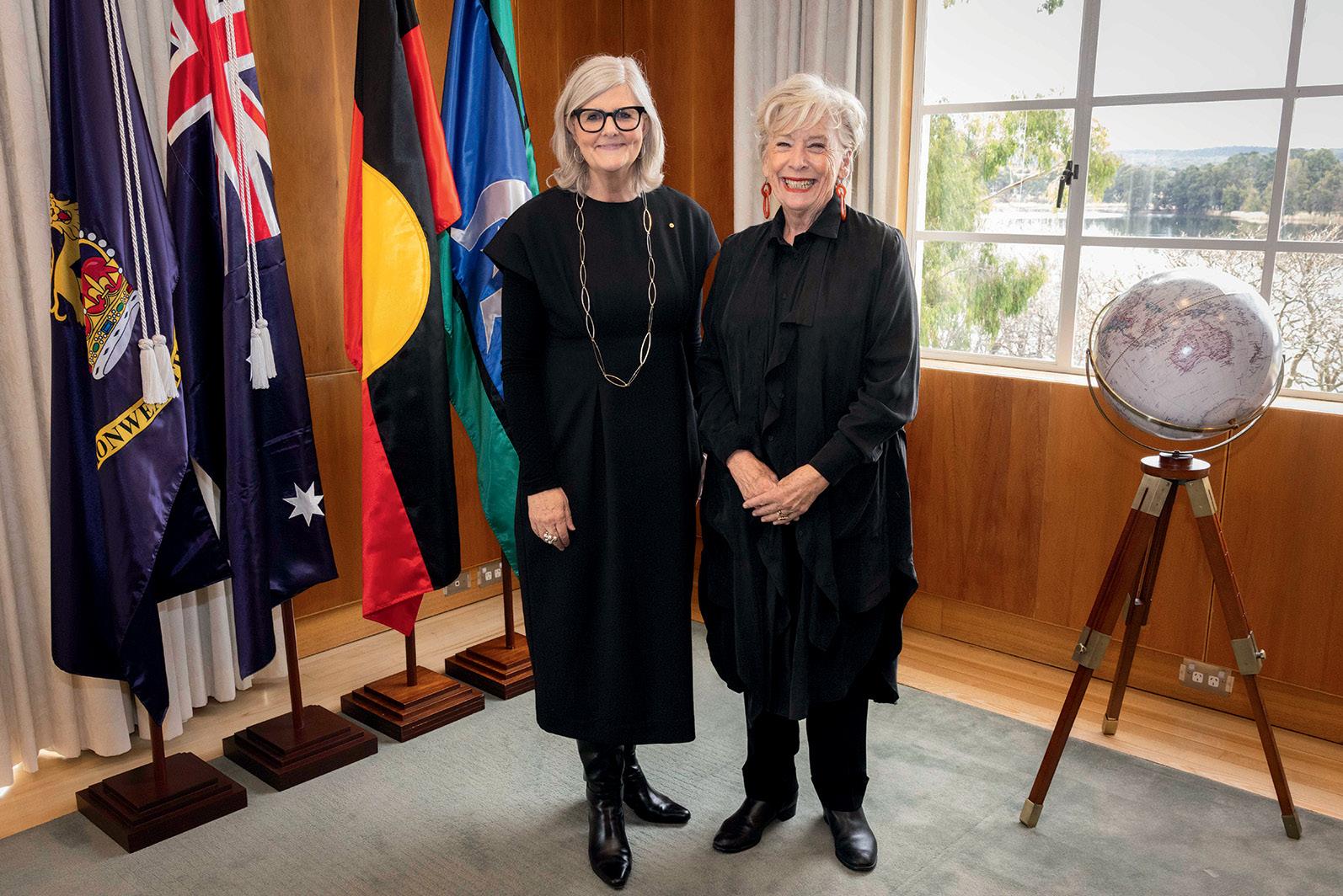
Maggie Beer Foundation appoints GG patron has announced businesswoman and advocate,
the aged care sector to elevate the food and dining experience as its new chair. Ms transformation, investment management, and large-scale corporate restructuring and turnarounds. Ms Venkatesan – who had been interim chair after former RSL LifeCare chair Ewen Crouch resigned in September – has strengthened the organisation’s governance framework and implemented strategic purpose within the organisation’s framework during her three years on RSL LifeCare’s board to date.
Reid replaces Blackman at ACCPA
Aged and Community Care Providers Association announced experienced health administrator Michael Reid as the peak body’s new chair. Mr Reid’s wealth of experience includes five years as director general of New South Wales Health and three years in a similar role at Queensland Health among other state government appointments. Mr Reid commenced as ACCPA’s independent chair on 19 November, following the organisation’s 2024 Annual General Meeting.
He replaced Dr Graeme Blackman, who had held the role since the peak launched in May 2022. A strong advocate for a single peak body, Dr Blackman was chair of former peak Leading Age Services Australia from 2014 until its transition to ACCPA.
Govt appoints Inspector-General of Aged Care
The government has announced bureaucrat Natalie Siegel-Brown as the incoming Inspector-General of Aged Care. In her new role, Ms SiegelBrown will provide independent and impartial supervision of the government’s administration, governance and regulation of aged care. Ms Siegel-Brown has been a commissioner for social policy with the Productivity Commission since 2022 and a director on the board of Aged and Disability Advocacy Australia for over three years. She brings a wealth of experience in public policy and
service delivery from her previous leadership roles in domestic and family violence, statutory child protection, ageing and disability, in the New South Wales, Queensland, Western Australian and Victorian governments.
Anglicare SQ appoints COO
Aged care provider Anglicare Southern Queensland has introduced chief operating officer of aged and community services Kane Singh, a registered nurse who holds postgraduate qualifications in management and business administration. Mr Singh has over 15 years’ experience within the aged care sector, including in senior leadership roles managing services across Queensland at Carinity, Lutheran Services Australia and Churches of Christ in Queensland. Mr Singh will be responsible for implementing the strategy set by the Anglicare SQ board and for guiding the provider through the impending reforms.
New ADSSI CEO named ADSSI Limited board member John Baillie has been appointed the next chief executive officer of the in-home and community care provider in regional New South Wales. Mr Baillie comes to the role with many years of experience in the health, aged care and disability services sector, with skills in strategic leadership and a commitment to quality care. Mr Baillie –who joined the ADSSI board on 30 August 2022 – previously worked in leadership roles at Hunter Primary Care, NovaCare, and the New South Wales Department of Ageing, Disability, and Home Care. He commences as CEO in the new year.
Benetas announces new chair
Former lawyer Julia Pryor, has been appointed chair at Victorian not-for-profit provider Benetas
Ms Pryor is chief risk officer of wealth at AMP and has 20 years’ experience in risk compliance management and corporate governance within the financial services sector. Ms Pryor, who joined Benetas’ board in 2019, said she was honoured to take on the new role and continuing the good work of those who came before her.
She succeeds headmaster Michael Urwin after six years in the role. Mr Urwin will continue to serve on the board for another year.
Burgess leads transition taskforce
The government has appointed Council of Elders chair and National Aged Care Advisory Committee member Anne Burgess chair of the Aged Care Transition Taskforce. The taskforce will provide advice to the government to help ensure the aged care reforms meet the challenges and opportunities of the future.
The taskforce will work collaboratively to bring the sector through the transition journey. n
Kane Singh
Natalie Siegel-Brown
Michael Reid Dr Graeme Blackman
Sam Mostyn and Maggie Beer
Julia Pryor Michael Urwin
Anne Burgess
John Baillie
Featuring a new dynamic layout and enhanced user-friendly experience, Business iQ allows you to easily customise the interface to reflect your Village/Community’s unique personality and offerings. Business iQ is your all-in-one resident engagement platform and will soon receive it’s next complimentary upgrade, adding convenient new features and a vibrant, easy-to-use layout.
We’re thrilled to unveil the new user interface and information sharing features designed to always keep your residents in the picture. Provide Australia’s most premium and well-known TV content for Seniors, delivered on the world’s most user-friendly information sharing platform.
Comment
We need time to get it right
THE YEAR 2025 will herald a new beginning in Australian aged care with the introduction of the new Act, colossal reforms that will require strong leadership, and above all, time to implement.
Aged care providers demonstrated true leadership over the years – leading bravely through massive financial challenges, natural disasters like bushfires and floods, and even the ravages of Covid – all the while caring for our most valued loved ones.
Few other sectors have had to deal with such wide-ranging and ongoing adversities, throughout which aged care leaders have displayed incredible resilience, while every day striving to improve the lives of older Australians.
We fully support the introduction of a new rightsbased Aged Care Act, but implementing reforms of such
magnitude will take time.
We only get one chance to get this right. Failure would be a disaster for Australia’s aged care sector, affecting older Australians now and in the future. We need confidence moving forward and above all, we need time.
We all want these historic reforms to succeed, and that means a staged approach to implementation should be adopted. We also need to ensure that funding supports the scale of change required.
Preparing for reforms that are still in the design phase is incredibly complex. We expect that every aspect of aged care will be impacted, including service delivery, staff responsibilities and finance.
Not all the information needed to finalise strategic plans will be available by the start of next year, or beyond.
Depending on the reform, new requirements for providers should commence six-to-12
be achieved because of a lack of lead time.. Time to transition is especially important for reforms related to system
changes, information technologies, pricing frameworks, and changes to support at home.
Entire computer systems will need to be upgraded or even replaced to respond to the reforms, but we can’t do that until all the information
IT contractors are telling us they need the final details of the legislation and rules before they can even begin updating systems. That could take six months or more after
Substantial, organisationwide changes to management and processes will also be needed to implement the reforms, and our valued workers will need training in new requirements and changed practices.
We have the leaders to face these challenges. We have the motivation to improve the lives of older Australians. We just need time to get it right. n
Rights of older people the bedrock of aged care law
FROM 1 JULY 2025, the long-awaited Aged Care Act will finally become law, marking a significant milestone in the journey to ensure the care, dignity, and respect that older people in aged care deserve. This Act lays the essential foundations envisioned by the royal commission to put an end to the neglect and mistreatment of older people in aged care it identified.
The new Statement of Aged Care Rights aligns with better aged care practice and the new Aged Care Quality Standards. Training aged care workers about these rights, as part of understanding the aged care standards, creates an opportunity to translate current understanding under quality standards framework into rights-based practices that support aged care participants.
Consumer contributions are new for both frontline workers
and participants. Participants are still not aware of what they will be asked to pay for their individual circumstances, highlighting the urgent need for clear, tailored information and calculators.
The announcement that Support at Home price caps will be delayed by one year until July 2026 has raised
concerns among participants about potential high prices and what they will be asked to pay. Feedback and complaints about pricing and monthly statements continue to be high.
The HCP Program Assurance Review No 4 Report, identified several issues with providers’ billing practices, including not itemising services (43 per cent of providers), inconsistent advertised prices (8 per cent), charging package management in months when no care or services were provided (18 per cent) and overcharging the maximum care management allowed (7 per cent).
Pricing and billing are complex, of that we have no doubt, but as older people are asked to contribute towards their care and services, ensuring it is right and fair becomes critical.
The government has committed to introducing additional consumer protections during the transition year without price caps. We at COTA Australia will actively engage in the government’s consultations to ensure robust protections and fair pricing.
We acknowledge the challenges ahead as the sector works through the implementation steps involved in the reforms. As a member of the Aged Care Transition Taskforce, we stand ready to engage with these issues.
We are grateful for the countless hours of dedication that will be invested in bringing these reforms to fruition. We firmly believe these significant changes will enhance the safety and quality of aged care services, ensuring that older people receive the care, dignity and respect they deserve. n
Corey Irlam, acting chief executive of COTA Australia
Tom Symondson, chief executive officer of Aged & Community Care Providers Association
Access the FREE End of Life Law Toolkit for aged care health professionals.
Topics:
Advance Care Directives
Voluntary Assisted Dying
Capacity and Consent to Medical Treatment
Substitute Decision-Making
Withholding and Withdrawing LifeSustaining Medical Treatment
Futile or Non-Beneficial Treatment
Urgent Medical Treatment
Managing Disputes about Medical Treatment Decision-Making
Legal Protection for Administering Pain and Symptom Relief
Scan to download free printable fact sheets, case studies, and mythbusters.
What aged care health professionals need to know about End of Life Law
The role of end of life law in aged care Key end of life laws relevant to aged care
The Australian legal system
Where to go for information about State and Territory end of life laws
ELDAC is funded by the Australian Government Department of Health and Aged Care.
Now to implement a human rights approach for all
THE NEW AGED Care Act looks to deliver on the royal commission’s recommendation for a human rights-based approach to aged care.
From 1 July 2025, there will also be a positive duty for all providers to uphold the Statement of Rights, strengthened Aged Care Quality Standards and within the Act itself, a focus on the right to make decisions with whatever supports may be necessary.
What does this mean for people who may have difficulty communicating their preferences or decisions? How will their wishes be known if their voice is too soft or difficult for others to understand or they have trouble finding the words? How will they read relevant information if they have difficulty comprehending complex written information?
Many older people experience such changes to their communication skills – often due to neurological conditions such as stroke,
Parkinson’s disease, multiple sclerosis, acquired brain injury and dementia.
It can become more difficult to know how to best support interaction, particularly when different aids or strategies are needed than speech alone.
Speech pathologists are the allied health professionals with expertise in assessing communication skills to identify how to best support communication to help both the person and their communication partner –such as care staff – have more successful interactions.
Despite being an integral part of the aged care sector supporting people with swallowing difficulties, speech pathologists are rarely engaged to full scope of practice to support people experiencing such changes in communication.
As we move towards implementation of an Act expecting supported decisionmaking (not immediately defaulting to substitute decision-making for those
We are warriors for change
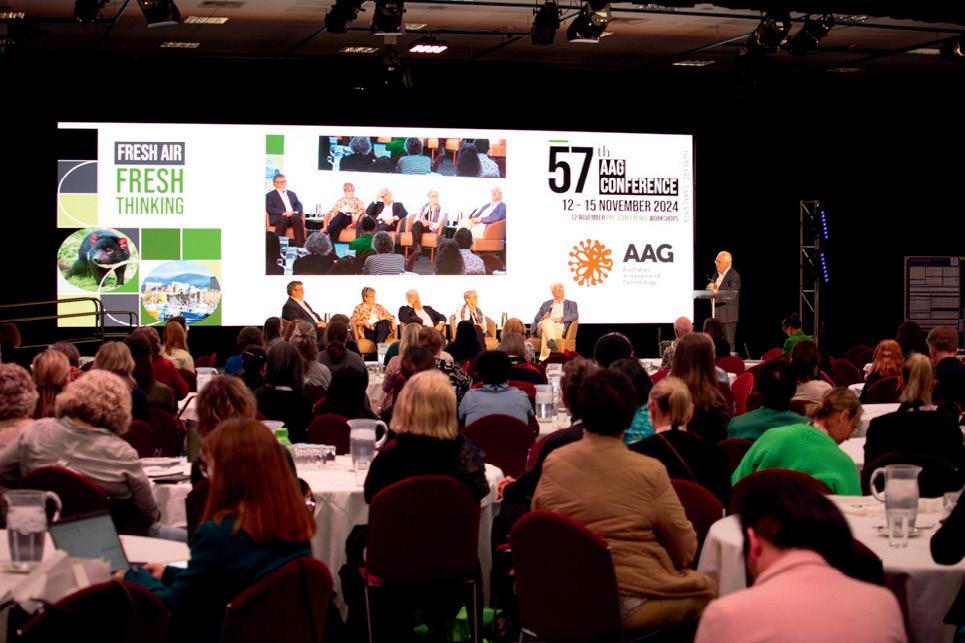
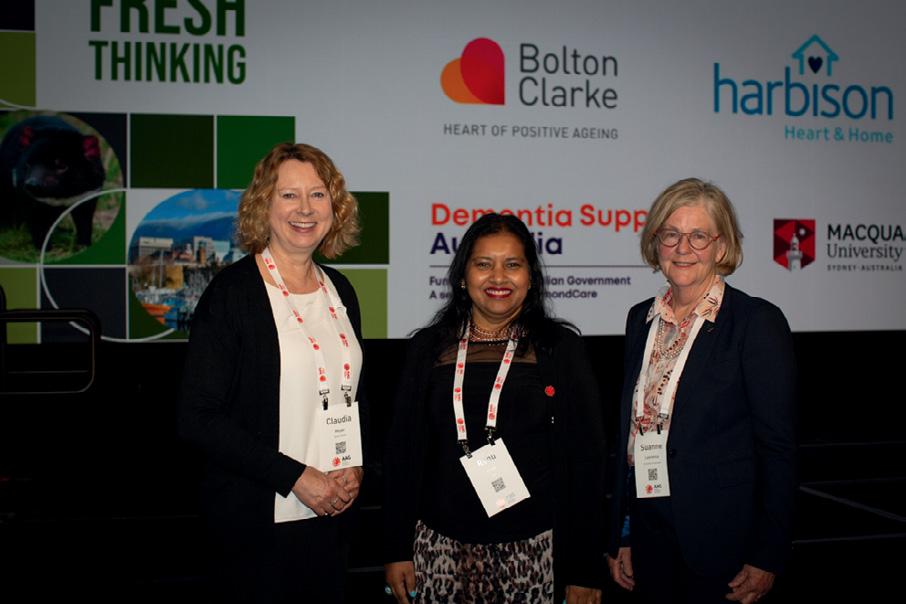
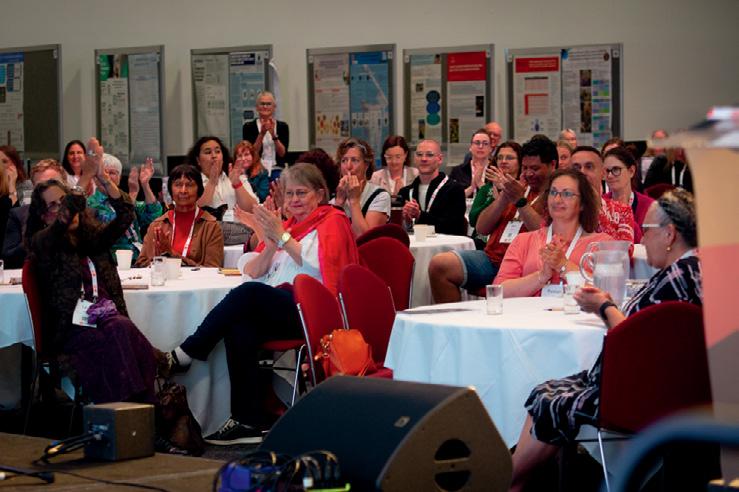
BACK FROM THE 57th AAG Conference in Hobart in November, I am buoyed by this year’s theme: Fresh air, fresh thinking. The number and variety of high-quality presentations at the event is testament to our broad membership and connections across every state and territory in Australia and internationally.
We are a melting pot of researchers, educators, policy makers, health professionals, service providers, advocates for older adults and members of the community.
This year marks an important milestone for AAG as we celebrate 60 years as Australia’s thought leaders on ageing.
Not only did this momentous achievement give us all a good reason to boogie on the dance floor at this year’s ‘60s’ themed Dementia Support Australia AAG Conference Dinner, it
Dr Claudia Meyer, president of the AAG
also gives us the opportunity to pause and reflect.
“We must do more to ensure the rights of older people with communication support needs.”
Whether we work in a lab or on the frontline of service provision, achieving such an incredible milestone brings renewed energy to be curious, to learn and collaborate.
Through our connections within the AAG family, we share our goal to improve the experience of ageing, we see
where verbal communication is more difficult), quality standards including expectations to “identify and understand individual communication needs and preferences” (Standard 1, 1.1.2(b)) and a Statement of Rights including the right to “access communication aids as required” (8), there are clear expectations that we must do more to ensure the rights of older people with communication support needs.
Communication is a basic human right and vital for quality of life, identity and social connection.
We all communicate –and communication can be supported with the right knowledge and tools.
See the person – know the person, including how they best communicate.
We all need to know about a person’s communication support plan and embed this into the daily support and care of the person.
A human rights-based approach requires no less. n
where our skills and experience fit in the bigger picture, and we recognise ourselves and those we love in that picture. Any change we can make to evidence, policy and practice in ageing and aged care will ultimately benefit us all.
Mae West is often credited with saying, “getting old isn’t for the faint of heart”. These words most certainly can also apply to working and researching within the sector. Whatever our role, if we are engaging in the ageing and aged care space, we are warriors for change.
Every day, we fight for change in policy and practice, for respect and fairness, for equity and sustainability. Now, more than ever, it is vital that we are not defeated by the many obstacles encountered along the way.
As 2024 draws to a close, my time as AAG president also comes to an end.
As president, I have
witnessed significant changes in the ageing and aged care sector, in my own work and across AAG’s diverse membership.
As we continue to respond to the recommendations of the royal commission, new legislation, different models of care and funding, and changing expectations in the community, the importance of AAG and the tireless and dedicated work of our board, team, volunteers and especially our members, cannot be emphasised enough.
The next 60 years hold many possibilities and will be ripe for more fresh air and fresh thinking. I look forward to my ongoing membership and connections with all the incredible people who will take AAG’s purpose and mission into the future. n
Kym Torresi, senior advisor aged care at Speech Pathology Australia
Theresa Flavin
Let’s create a social directive
THERESA FLAVIN wants to take the conversation around supported decision making to the next level.
I’m Theresa Flavin. I’m an activist and advocate for the human rights and dignity of people living with dementia. I was diagnosed with younger onset dementia around 2012.
While I’m working hard behind the scenes to live well and maintain function, the symptoms of dementia are slowly and inexorably progressing. I have the privilege of retaining my ability to speak and write. I also have the extraordinary gift of a supportive family, safe home and fantastic support.
That being said, I live with the knowledge that any decision I make – big or small – can be questioned or even overturned by more or less any interested party at almost any time.
I feel like a ghost in this world. I exist physically. My internal world is rich and vibrant with sensation, perception, awareness and emotion, but I also live in an external world where there is now no room for me.
I can’t walk in your lane no matter how much you try to make me. I’m asking for help to build a lane for my unknown future and permission to travel in it safely.
I would like to take the conversation around supported decision making to the next level.
To explore the ethical, moral, systemic and practical implications of a deeper understanding of will and preference, discuss the concept of self-identification of material decisions and the potential utility of an advance social directive for people living with disability, including dementia.
I want to feel safe when I think about my future, and I want to guide and support the people and systems that will have carriage of my final years in relation to my living wishes.
I desperately need to project my own voice in supporting future decisions in matters that are material to my internal wellbeing. I would like to be a stakeholder too.
Prior to the implementation of the Convention for the Rights of People with a Disability, any humans who didn’t communicate to the satisfaction of society were deemed incompetent to make any meaningful choices about their lives and their bodies. This concept was embedded into our legal, care and social services systems, and termed capacity.
“I’m asking for help to build a lane for my unknown future and permission to travel in it safely.”
Well-meaning folk rushed in to save people living with disability from abuse, however in the tradition of the road to hell being lined with good intentions, they went too far.
We were institutionalised for our own good. We were unheard and abused anyway – and unable to protest. Post CRPD, routine
institutionalisation is broadly gone from Australia – except for our older people. Substitute decision making is increasingly understood as being a last resort.
Supported decision making is becoming embedded into our laws and gradually percolating through our communities as we learn from the past and seek ways to support autonomy and self-determination of people living with disability.
However, the conversation about the practical application of supported decision making has stalled at the level of being a quality of care measure. It has not been embedded as a human or legal right, with decisions made using supported decision making processes still subject to challenge on the basis of capacity.
The process of considering an advance care directive broke my spirit, and led me to consider my future life, potentially in residential aged care. I know I will be supported to make decisions about mundane matters, but what about the decisions completely fundamental to my identity?
I concluded three major matters I need to control into my future:
• care in the context of dementia
• sexual activity
• restrictive practice.
Current thinking on supported decision making falls short when we get to the matter of who I am exactly in the moment I make a decision. Human rights advocates stress I am who I am at the moment of choice, and this choice must be respected and supported.
Conversely, I have seen at close quarters the changes dementia brings; the loss of ability to use past experience, anticipate future consequences and appreciate the impact a decision has on the human rights of others.
I’ve lived the pain and shame of making choices inconsistent with my core being, and I don’t like it.
This dichotomy showed me clearly, that despite supported decision making principles, the pre-dementia me – who has lived a life based on specific principles and morals – will be superseded by a constantly changing version of post-dementia me, who is meeting more momentary needs.
In other words, the version of Theresa, who has spent a lifetime learning and refining her relationship with the world, including the skill of self-restraint and discernment, will be superseded by a future version of Theresa who may only have access to the superficial needs and desires of the human body in that moment in time.
This is unacceptable to me because it contradicts the values that give and gave meaning to my entire human existence.
The journey of dementia is not a linear transition. Symptoms begin subtly, often reaching a peak when the mind body communication becomes impaired, and the internal feelings of grief, fear and despair are expressed by the body in ways that can be considered by society as unsociable or often dangerous.
This is what I call my transition period. When I project my mind forward, I can feel the pain of this transition for myself and those around me. However this phase of the disease is organically self-limiting, and ultimately, I will find myself in what I choose to call a state of grace.
Throughout this transition, my ability to prioritise my will over my preference fluctuates, and while my will remains intact internally, it becomes increasingly unavailable to me in its present form.
Human thoughts are usually expressed and understood through actions and words, and these are sometimes limited, so while I discuss pre- and post-dementia me, I am not implying a fixed position in space or time. It is my clumsy attempt to describe my transition, where the everyday activity of balancing the tension between my will and preference becomes impaired.
Inside of me, this feels as though I am moving from a life of words and actions, to an internal world of feelings, awareness and perception – rich in depth and meaning.
I sense a barrier growing between these states. It is becoming increasingly difficult to navigate between my internal and external worlds. When I inhabit my internal state of grace I am not less than; I am worthy and I feel safe. I believe this is often interpreted as apathy.
This tension between considered intellectual thought processes and the more impulsive satisfaction seeking state (survival) is currently described in the literature as “will and preference”.
“I’ve lived the pain and shame of making choices inconsistent with my core being.”
These terms are often conflated and used interchangeably, however for me, they represent perfectly the difference I experience in the transition between pre-dementia me and postdementia me.
Both are valid. Both are important. And both should be respected. But in matters of dementia care, sexuality and restrictive practice, I can only face my future without fear if I know that predementia me (will) supersedes post-dementia me (preference).
I want to back my supporters and providers, and give them an evidential backstop to support and enact material decisions without fear of challenge from dissenting parties.
Humans are complex. I can list the three matters material to me in my future. Other people will list different issues material to them, and I believe this is where the supported decision making conversation can be elevated.
When we give an individual the power and pathway to identify what is material to them, suddenly the arguments and what-ifs begin to drop off. For example, some people worry the concept of an advance social directive may open up too many possibilities, and how could a single process or document encompass the vast range of matters we may wish to influence in our future.
In my experience, when individuals are given the power and pathway to identify what is most important to them, they focus on these things. To align an advance social directive with a person’s will, they are illustrating why these matters are particularly important or material to them in the context of their life story. When taking this approach, the different what-ifs tend to have less emphasis.
Imagine an Australia, where anyone can hop onto My Aged Care or My Health Record and register the matters material to them, and their corresponding wishes.
For example, I have spoken with many older men, whose deepest fear is they become violent
In pursuit of quality
MARK SHELDON-STEMM offers an alternative approach to regulating aged care.
CARE MODEL SYSTEM
Regulatory System
Philosophy is reviewed and considered to be suitable for the service
Model of Care is verified it meets the philosophy in action against the standards
The policies and procedures are aligned to the Model of Care and cover all aspects of the service
These are reviewed for suitability with the scheduled audits rated against each part of the Model of Care and Care Practices
The result from audits, feedback and initiatives are logged and followed through
The introduction of new legislation, standards and quality indicators are part of a new era of regulation that attempts to ensure the safety of older people receiving aged care services in their own homes or a care facility.
The question that must be asked is: Will this regulation ensure their safety and meet their choices or merely increase the amount of information that providers are required to collect and report?
Before answering, let’s examine the current actions of the Aged Care Quality and Safety Commission – where the emphasis on recording and reporting appears to outweigh what is meant to be person centred – and where it is likely to lead.
The commission requires data on the following to monitor the performance of each provider:
• serious incidents
• quality indicators
• registered nursing hours each day for residential care
• minutes of care provided by RNs and other care staff for residential care
time accounted for 163 minutes per resident per day. The indirect care activities captured during the study (page 36 of the report) include: documentation family liaising training risk management handover and team collaboration medication management staffing and leadership.
This means staff spend more time on the activities above than care to comply with the regulatory model. While the study did not break down the amount of time spent in each area, documentation likely takes up the bulk of it.
The introduction of documentation including over 1,000 pieces of evidence in the aged care reforms is likely to further reduce interaction time with care recipients.
• quarterly costs and care minutes per care recipient
• external random surveys of care recipients
• onsite audits every three years or spot audits if risks identified via above reporting or complaints
• care notes and information, such as rosters and qualifications, if the above reporting mechanisms make the commission nervous about a service.
The above relies heavily on documentation and recording at a service level primarily by nurses and care staff. In residential care, the 2023 Scyne Advisory study showed direct care time was only 52 minutes per resident per day while indirect
“The future system will continue to fail under the proposed regulations.”
Following this pathway of reporting the eventual requirement may be for data mining in every aged care service. In this hypothetical future, the commission would have access to a provider’s clinical care and other systems with the ability to download nursing, care and other information daily to analyse what is being provided and where services may not be meeting the level the commission thinks satisfactory.
The analysis would use artificial intelligence – AI – to identify areas of concern. It would allow the regulator to target problem services and quickly address concerns. This is expected to make better use of their resources.
On the surface this may seem suitable and positive.
However, like shown in the Scyne Advisory study, the approach relies heavily on
Mark Sheldon-Stemm
The Care Model System has interlinked components that drive how a person receives care and services.
documentation completed by care staff. Providers could – using their own AI systems – ensure preferred data is transmitted to the regulator, as they might do now with their reporting.
Relying on a data information system gives the commission a false sense of security that all is delivered as it should be. It could also leave the regulator feeling embarrassed if data supplied to the commission lacked integrity, and unreported abuses suddenly turned up in the media.
The other consideration is the reporting of care minutes, quality indicators and registered nursing hours. Quantity does not always relate to quality as the bell curve effect often applies.
More resources can result in less care and fewer services. The optimum mix in aged care has not yet been determined by longterm empirical evidence. There is also probably little doubt that game theory is being applied in reporting and likely to increase as providers are required to supply more and more data.
Taking all this into account, I argue the current regulatory system is a failure and the future system will continue to fail under the proposed regulations.
One of the major flaws with the current regulatory system is that onsite quality audits deal with the minutia of ensuring policies and procedures are in place but ignore care and operational practices. If the regulatory system took more account of the actual practices, outcomes for older people would be more likely to improve.
An alternative regulation method
In considering the flaws in the current system, let’s look at what could replace this approach to provide the regulator the guarantee it needs to ensure the aged care system is delivering quality aged care services.
The alternative requires dealing with human interactions and ensuring providers have systems and processes that focus on client outcomes instead of reporting events. While event reporting is important, documentation should not be the primary source of outcome measurement.
The Care Model system, depicted in the pyramid, aims to be a true partnership between the regulator and service provider. The system supports quality care provision, where compliance is regularly monitored and measured on care recipient outcomes.
It is a complete system with interlinked components where outcomes are measurable in a practical way. Each component drives how a person receives care and services and allows the provider to demonstrate practices that meet the required quality.
Philosophy: The philosophy is the provider’s purpose. Rather than a set of meaningless words that don’t represent any real commitment to care quality, it is the driving force behind care and services. The philosophy should be a meaningful statement of intent.
Model of Care: The model of care is a set of instructions detailing how to carry out the service’s philosophy. It places people at the centre and provides a common understanding on how to achieve this for all involved. The model of care is linked to the aged care standards to demonstrate how it meets the requirements.
Care Practices: Care practices are undertaken in accordance with the model of care and are supported by detailed policies and procedures about how to carry out each area of care and services. This includes identifying areas of risk in providing services to individuals and ensuring risk mitigation strategies are used.
Reportable Outcomes: Reporting is still required but it is based on the service following the model of care’s processes rather than just for reporting purposes. It is aligned to the model of care and best practice in clinical and non-clinical care. A series of audits would confirm this alignment.
Ongoing Improvements: The reportable outcomes would identify areas of improvements and strategies to further improve services for individuals.
The regulatory system
For this type of regulatory system, service providers require a
Philosophy
Model of Care
Care Practices
Reportable Outcomes
Ongoing Improvements
The Care Model system pyramid
set of audit tools aligned to the philosophy, model of care and care practices. These audit tools would:
• become reportable data required for regulatory oversight
• rate compliance to the model of care
• identify areas of improvement to act on
• keep an improvement log to report to the regulator.
For its part, the regulator examines and assesses the suitability of the philosophy and model of care. This includes the policies, procedures and audit tools and how each part of the care model ties back to the standards.
The service provider should report quarterly on:
• audits against the philosophy, model of care and care practices
• improvements.
The regulator should:
• conduct spot checks to assess compliance against the philosophy, model of care, care practices, audits and improvements
• provide and publish a rating for each service against how well they meet components of the Care Model system.
Providers would still be required to report serious incidents and their responses.
Regulatory system in action
In the model illustrated the regulator would undertake spot checks of service providers to ensure the information supplied is accurate and the service is following its philosophy and model of care. The regulator may carry out other checks following reports of serious incidents, for example.
Adopting the Care Model system could achieve personcentred documentation. This means documentation is for the purpose of care and services rather than for compliance. It directs staff on what is required and keeps track of the services delivered. It becomes an open disclosure tool for care recipients and their families about the care and services provided.
Other likely outcomes:
• the philosophy is seen in action and practical measures demonstrated with positive outcomes for older people
• the regulator will better understand how each service provider sets out to achieve their philosophy and model of care and how they demonstrate this in practice
• reduced reporting, which lowers the burden for service provider and regulator.
Knowing a system is in place for each service provider that links to the standards should give the regulator confidence. It should also allow them to address actual issues rather than trying to assess quality of care based on a set of indicators, minutes and other unreliable measures of person-centred care.
It is my opinion that improving the quality of care cannot be achieved with a system of disconnected indicators unrelated directly to a system of person-centred care.
The current process of collecting data and reporting overtakes the quality of actual care and reflects a system that is more like a tick-a-box exercise than one based on positive outcomes for care recipients. n
Mark Sheldon-Stemm is principal at Research Analytics
Got an idea to shake up aged care reform even further?
Send an email to editorial@australianageingagenda.com.au
Aged care is changing
With expertise and innovative technology, FicusBridge wants to help the sector transform the business side of aged care.
Over the past few years, government funding for residential aged care has increased, especially in response to the royal commission. But as highlighted in industry and government reports, providers continue to face significant financial pressures.
The gap between government funding and care costs, particularly regarding staffing, compliance and specialised care needs, remains a persistent challenge.
It means providers now need to focus on alternative revenue streams to support sustainability, says James Price – partner at aged care advisory and technology firm FicusBridge.
“The changes in legislation and an incoming Aged Care Act due mid-2025, only add to the complexity of a revised funding tool following the recommendations of the royal commission,” Price tells Australian Ageing Agenda
The challenges are many – including revenue management, care minute compliance, board reporting, and growth – but ones the three partners at FicusBridge are keen to tackle through technology and operational know-how, says Dr Tanvi Dalal, who founded the company as an aged care funding and care minute management advisory firm in late 2023.
In December 2024, the company merged with Insights42 – a governance and reporting business Price co-founded with Bret Duckers in the second half of 2024 – to form a new look FicusBridge to support aged care providers through the reforms.
“We’re uniquely positioned to help providers navigate these challenges. By combining deep industry expertise with innovative technology solutions, we’re making professional, experienced resources accessible to aged care businesses of all sizes,” Dalal tells AAA.
Funding operations and care delivery is Dalal’s
“We will formally launch our insights tool at the ITAC Conference in March 2025.”
James Price
area of expertise gained from her time working at aged care providers Signature Care and Estia Health and consultancy Mirus Australia. She leads clinical-business integration at FicusBridge to ensure solutions effectively align clinical excellence with operational efficiency.
Price – who heads operational transformation initiatives – draws on his experience creating PwC’s national aged care practice and co-founding Mirus Australia. His focus is on process optimisation and business operating models.
The team is keen to tackle the sector’s challenges, says FicusBridge founder Dr Tanvi Dalal
“We are all about helping people with the business side of aged care,” he says.
The third partner – Duckers –combines his financial expertise and operational knowledge from previous roles as an investment banker and chief executive officer and chief financial officer of Encore Care.
There are plenty of statistics showing providers lose money, but also many examples of those who are financially sustainable and growing, says Duckers – who leads the team’s financial and capital management strategies.
“We believe that if most providers have access to high quality resources, fit-for-purpose tools and an efficient operating model, they have a strong chance of being successful,” Duckers tells AAA
These are the elements FicusBridge is offering.
“Our analysis of data covering the whole sector shows that, unsurprisingly, smaller groups and standalone facilities have higher unit costs for admin and operations.
“Whilst all providers will benefit from our technology and a consistent operating model, this cohort will benefit most from our co-sourcing and advisory services,” he says.
That said, the national practice has a vision to innovate a more sustainable future for the whole sector through comprehensive and codesigned solutions that address both the business and care aspects of aged care delivery.
One where aged care homes may be considered hotels with nurses.
“Aged care is a highly regulated industry and operates in just about the same way everywhere you look,” says Price. “It has the characteristics of a franchise business, such as a hotel chain overlaid with care delivery. We bring that common operating model, or the franchise angle, to providers.”
Why? Because it’s not realistic to expect every provider to design a response to the legislation and standards, says Price.
The solution? Standardisation, which offers an opportunity to develop and share best practices across the sector.
“In time, the industry may adopt similar models to hotel groups, but now we have an opportunity to shape this ourselves rather than be directed by anybody else,” he says. “With innovators like us, the industry will evolve to be like hotels that deliver care.”
And while focusing on aged care as a business may be an unpopular notion for some, Price argues that as an essential part of society, and a difficult one to staff, means it must be considered so.
“Surely we need to find a way that makes it sustainable outside of government funding alone.”
And the future must suit the incoming cohort of residents, adds Duckers, many of whom will have the means and obligation to pay for non-care costs under the new Act.
“We know we have a new generation of people entering aged care, they are discerning, they are demanding and helpfully, somewhat motivated to pay,” he says.
“Yes, the baby boomers will demonstrate how the market will change the industry. How providers respond to these changes will dictate how well they prosper.”
FicusBridge is responding with a new generation of technology and solutions through three pillars.
Firstly, the revenue management practice is focusing on the transition to the AN-ACC funding tool and the upcoming changes to accommodation revenue.
“We have been growing quickly through 2024 and will formally launch our insights tool at the ITAC Conference in March 2025,” says Dalal.
“The tool is designed to support the revenue management teams with processes and workflows to report, remain compliant and ensure accurate funding is achieved for the care delivered.”
Through the end of 2024 and into the new year, the prototype revenue management tool BridgeInsights is being codesigned and trialled with clients. Other providers are invited to express their interest to join the pilot.
Building on the revenue management processes, the team is also delivering performance improvement initiatives across key business processes including marketing, admissions, staffing and board governance and reporting.
“The performance improvement initiatives are based on methodologies built and refined over many years and supported by a comprehensive benchmarking dataset, which covers the whole industry with high levels of confidence,” says Duckers.
“The dataset, coupled with internal data and process information, provide a solid foundation for optimising the business operations for providers.”
The third pillar is financial effectiveness and the optimisation of assets and the capital profile.
“As resident contribution models quickly evolve, the impact on capital profile and asset utilisation is evolving at a similar pace,” says Duckers.
Key here is transition from the refundable accommodation deposit – RAD – to daily accommodation payment – DAP.
“A DAP may become a more favourable option financially for wealthier seniors. This is not good news for providers who have a potential run of RADs post 1 July 2025 if they have deployed their RAD war chest in illiquid funds.
“The shape of the future aged care business is changing and providers should review their capital structure and strategy to address elements arising from the new Act.”
It’s a future the team is adamant should be arrived at collaboratively, in what Price refers to as crowd-solving.
“The view of the many is more powerful than the view of the one,” he says borrowing a sentiment from Dr Spock of cult television show Star Trek
“In the same way we embrace codesign to help build solutions, from 1 July 2025, significant changes require service providers to be adequately prepared.”
To support this preparation and their vision, FicusBridge is seeking interest from proactive providers for workshops throughout January, February and March to:
• identify the specific changes relevant to their operations
• assess the impact of these changes on their business
• develop a comprehensive plan to manage the identified impact
• monitor the execution of the plan to ensure alignment with the established objectives.
More broadly, the team is on hand to help providers on a project basis or as part of the team longer term, says Dalal.
“Consistent in all the solutions we deliver is the recognition that providers have a choice when looking at how to manage their business which means our solutions adopt a co-sourcing approach that offer access to robust processes, the right tools and a network that supports or coaches teams to be successful.” n
Bret Duckers
On the front foot
With 2025 set to be a transformative year, BRENDAN MOORE tells CHRISTOPHER KELLY providers will need to be well-prepared for the changes to come.
“It’s been a busy nine weeks in the job.” When Australian Ageing Agenda spoke with Brendan Moore – chief executive officer at Evergreen Life Care – in early November he was the newbie in the building.
“I’ve been given a very warm welcome by the board, the management, all the staff – but particularly the residents,” says Moore, adding: “I’ve enjoyed meeting the residents. They’ve made me feel very welcome and I feel somewhat blessed to be CEO of this organisation.”
Evergreen Life Care is a community-based, not-for-profit provider offering aged care and retirement living to older Australians on the New South Wales Central Coast.
Located in West Gosford, Evergreen’s aged care facility – Evergreen Lodge – has 93 rooms; its retirement village – Evergreen Village – has 149 independent living apartments.
“I enjoy working for smaller providers and being close to our customers,” Moore tells AAA “As a CEO it keeps you grounded; it keeps it real for you seeing every day the people you’re in the service of.”
Speaking to Moore, it’s apparent that being of service is important to him. It was the same when Moore was teaching history and geography back in the day.
“In teaching, you’re trying to help young people improve themselves. There’s an aspect of a service to others and a feeling that you’re contributing to something more than yourself,” he says.
While enjoying that aspect of the job, before too long Moore realised that teaching wasn’t for him. “It wasn’t what I wanted to do in life.”
So he studied for an Honours degree in health and – after a brief government role – moved into the care sector working for Baptist Community Services under the mentorship of Mike Furner. “That set the fire under me to pursue a wonderful career in aged care,” says Moore.
That was in 2008. Although much has changed in the sector since then, Moore says some issues remain the same. “Some of the constants that haven’t changed are the workforce, funding and compliance challenges. They’ve been a constant for 15, 20 years within the aged care industry,” he says.
Moore tells AAA that, back then, the sector was provider orientated. Today, it’s more consumer focused. “We’re seeing a real shift to person-led care.
“I feel somewhat blessed to be CEO of this organisation.”
introduction of the new Aged Care Act – along with the strengthened quality standards.
Providers will need to be “on the front foot around those things and ensure there are no surprises and we’re not caught out,” says Moore.
Another priority is improving the technology at Evergreen, which he admits is currently “a mixed bag”.
Having once sat on the board of the Aged Care Industry Information Technology Council – which has since merged into provider peak Aged & Community Care Providers Association –Moore is something of a tech-head.
“Technology is a big area of interest for me,” he says. “We’re having a good look at our IT strategy and what we can do to configure and procure systems that support us, not only now, but also into the future with all the changes coming.”
Moore says IT can be a challenge for smaller providers. “You have to find a way to work with outsourced companies and building a true partner approach with them so they can support you like an internal IT resource would.”
It’s important for providers to embrace technology, says Moore – “not be scared of it, not run away from it”. Instead, “being open-minded of the possibilities and potential of what technology can do for us, and our residents”.
Another area of interest for Moore is governance. And he has a lot to say on the matter.
When asked what constitutes good governance, he tells AAA “directors that are interested in aged care and are willing to engage with the consumers, that is an increased requirement and expectation – being interested helps you fulfil that responsibility and obligation”.
Composition is also important. “Who is on that board, the skills mix. The personal qualities of the directors. That certainly shapes the performance of the board,” says Moore. “Good governance is when the board is adding value to the organisation.”
And these days, boards need to be forward-thinking, he adds. “Increasingly – and particularly with where we’re at with the aged care reforms and the transformation agenda – boards need to be having strategic conversations and talking about the future.”
Boards need clarity as to why the organisation exists, says Moore. “What it’s trying to achieve, who it is seeking to serve – and how it might do that best, not only now, but also over the long-term horizon.”
As for Evergreen, Moore can see a modernisation over the horizon.
“The buildings are getting older. We’re sitting on building stock that perhaps the baby boomers may not find too acceptable. Like for a lot of not-for-profits, the challenge will be to adapt our building stock to future expectations and they will be quite different to expectations of the past,” he says.
There are going to be some difficult strategic choices for boards, adds Moore. “And Evergreen is no different in that regard, in having to focus on who our customers are and going to be in the future and what best meets their needs.”
Moore was able to discuss the future of aged care with
the aged care minister himself recently, Mark Butler, who visited Evergreen to tour the facilities and meet with staff and residents.
“He was keen to stress the government’s commitment to solving the workforce challenges,” says Moore. “I bent the minister’s ear a bit that his workforce focus could incorporate more acknowledgement and recognition that allied health can make to the quality of life of older Australians.”
Evergreen puts a particular focus on allied health, Moore explains. Evergreen Lodge offers an extensive leisure and lifestyle program for its residents. There are regular day trips and various on-site feel-good activities including BBQs, theme days, concerts, movies, and music and dancing.
With the holiday season approaching, you’d expect – much like most aged care CEOs – Moore would be taking a wellearned break. But no. He intends to stay on the Central Coast for some “thinking time” to “put plans in place for 2025”.
Ruminating on the new year and the changes to come – and noting that an aged care provider in Singleton had just closed its doors – Moore’s big hope is that the industry can ride “through the waves of reform”.
“2025 will be a peak of activity in that transformation,” he says. “So I do hope we can make it together and that the industry can support each other through this – I’m sure we won’t all survive, but I do hope that people are in a better state by this time next year.” n
Fact file: Brendan Moore
n is a former school teacher
n spent over five years working at former industry peak body Leading Age Services Australia
n worked as a general manager for Alzheimer’s Australia
n is an outdoor enthusiast
Sheonagh
Nursing on the inside
Fleming
Aged care prison nurse SHEONAGH FLEMING tells JODIE WOLF she loves the satisfaction her work brings.
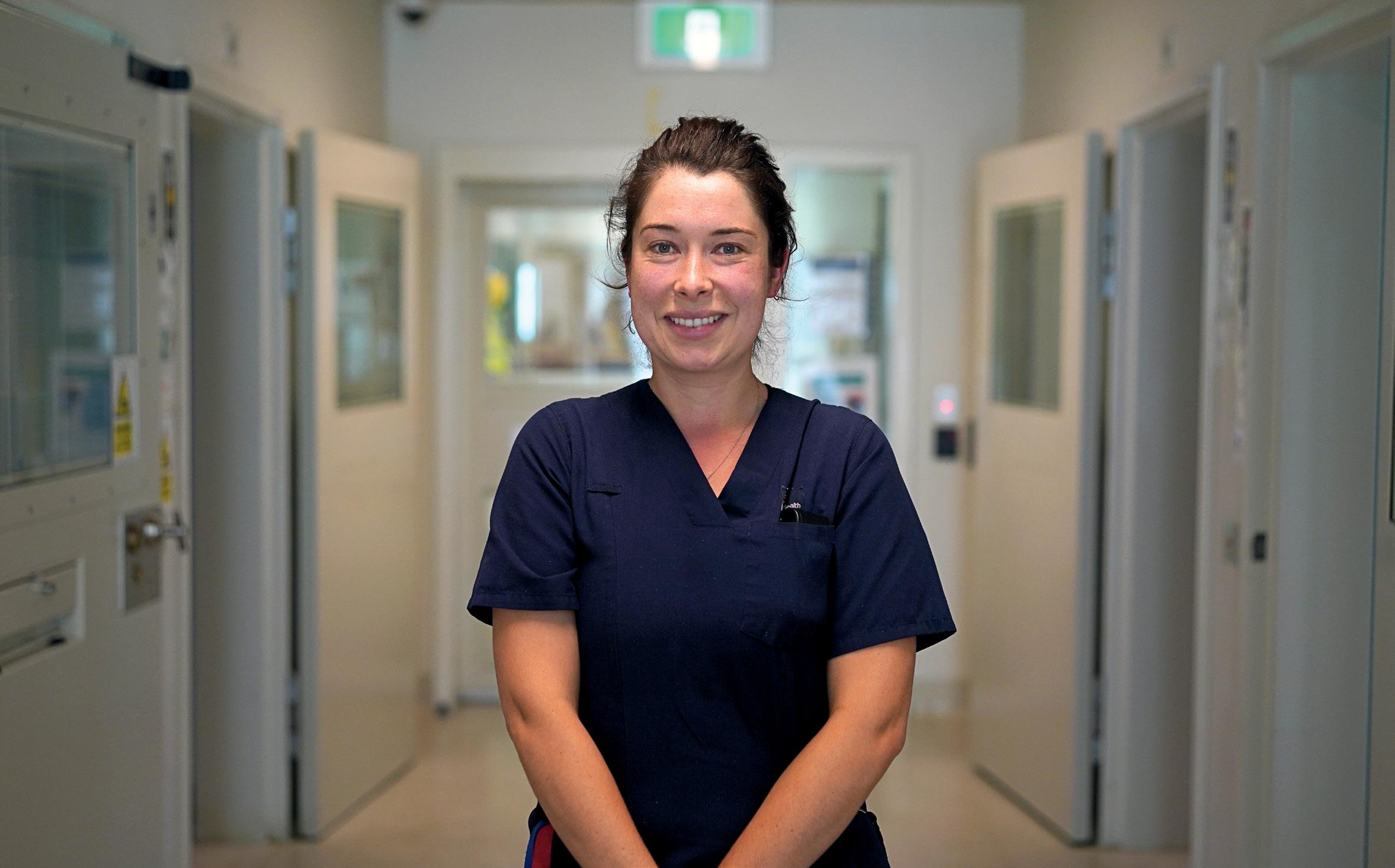
For just over six months, registered nurse Sheonagh Fleming, 29, has manned the aged care ward of Long Bay Correctional Complex in Malabar, 14 kilometres south-east of Sydney’s central business district.
Without a moment’s consideration, she declares it’s a position she very much enjoys. And despite her work being mentally and physically taxing, Fleming looks in high spirits too.
“It’s very busy,” says Fleming, who sat down with Australian Ageing Agenda on the ward during a break in her 12-hour shift. “But everyone is lovely. I love working with this team. Everyone works hard and just gets the job done.”
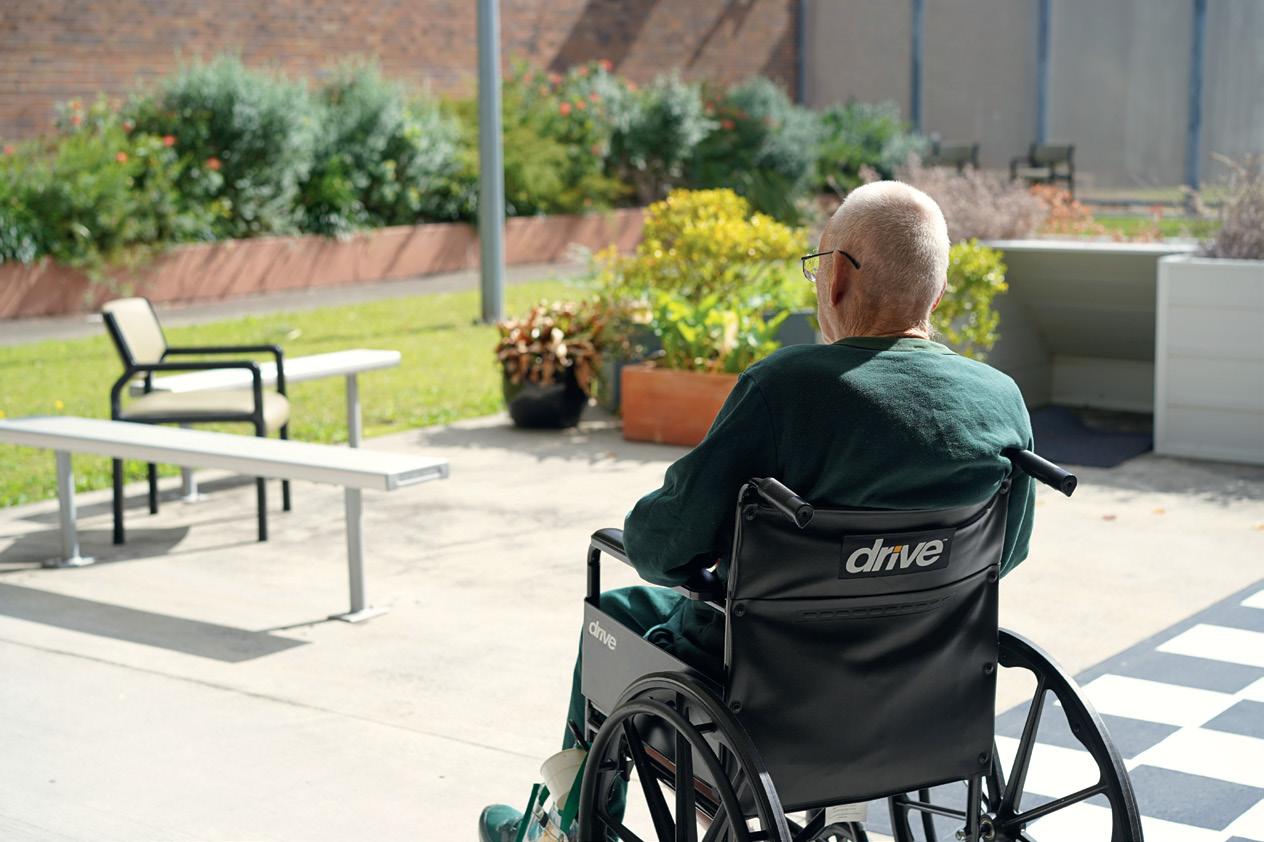
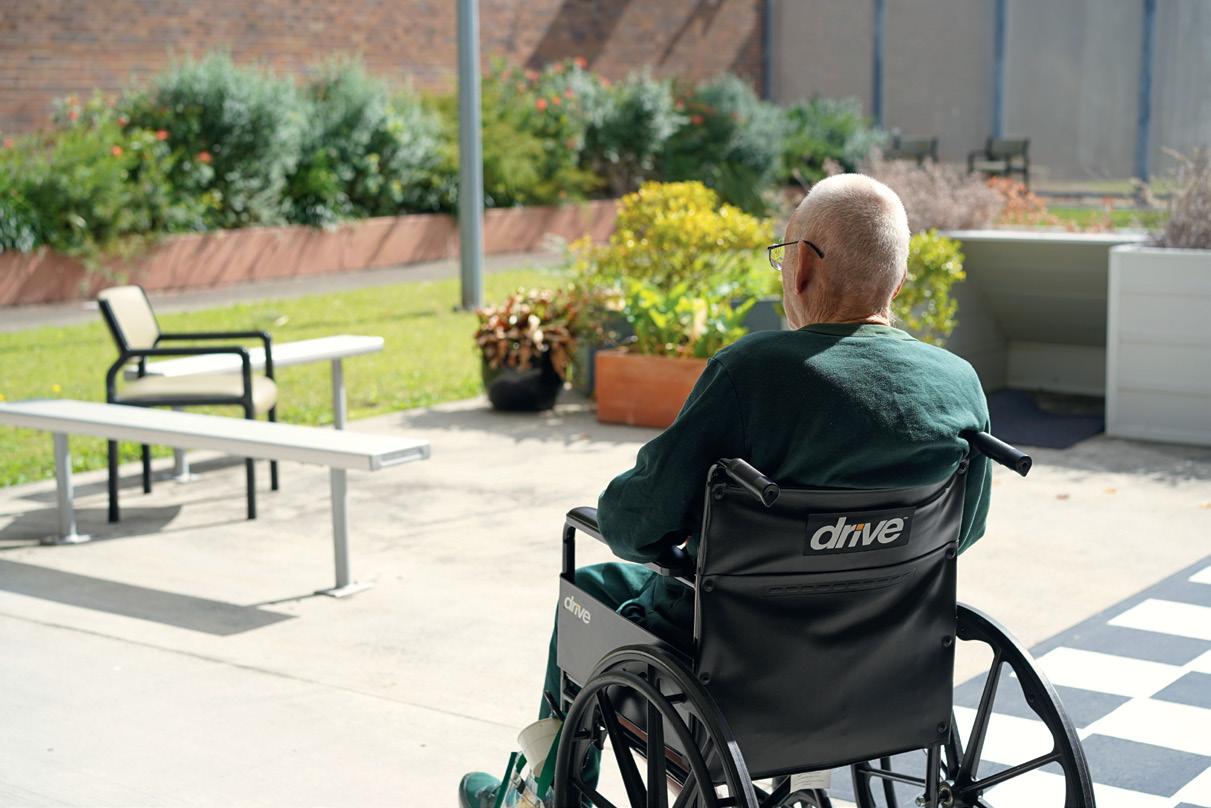
There are 15 male residents living in the ward at the time of the visit. All are aged over 60, including two aged 60-69, seven aged 70-79 and six aged 80 or over. There haven’t been any females on this ward for around a decade.
Each man has his own room with a television and personal items they are permitted to keep. There’s also a common area with a large television, an outdoor area surrounded by plants and a resources room where older people in custody can book time on the computer and do projects.
Her current role is extremely satisfying, says Fleming.
“Just brushing their teeth, giving them a shave, making them look presentable; I do enjoy that,” she says of the personal care that takes place inside their rooms.
While working in a maximum-security facility might sound intimidating, Fleming says the ward is “well organised” and correctional officers are around to ensure their safety. “I’ve never felt fearful being at work.”
Plus, this isn’t her first rodeo. Fleming previously spent almost two years as a prison nurse at Silverwater Correctional Complex, in Sydney’s west.
In her current role, care is usually provided after rooms have been unlocked and the prisoners are free to move about the ward.
“I’ve never felt fearful being at work.”
It’s a colourful setting with art on the walls and light pouring in. On the day AAA visits the complex, the atmosphere is calm with some of the older men conversing over cups of coffee in front of the TV and others sitting silently in the garden.
It’s just like being on any other aged care ward, says Fleming. “I’ve never felt nervous. [The patients] have a lot of respect for us, especially when we’re giving them their medication,” Fleming tells AAA
Fleming began her career while a student at UCLA college in Dublin, Ireland, at 17 years-old. She qualified as a nurse when she turned 21 and migrated to Australia six years ago.
A typical workday starts with giving out medication and providing personal care, says Fleming. Next is attending to the diabetic patients and anyone requiring antibiotics administered intravenously. While Fleming is administering insulin, a colleague is preparing the breakfasts.
“Then we have a list of things to attend to after that such as re-dressing wounds, and bloods that need to be done. I try and get all those kinds of jobs done before we lock them back into their rooms at 10.30am,” she says.
By midday she and two team members – an assistant in nursing and another registered nurse – administer a second round of medications, give out the lunches prepared earlier, and check patients’ vital signs. At 2 o’clock, the team repeats everything in a third round before the prisoner patients are locked into their rooms again.
The process becomes “automatic,” says Fleming, who adds the work doesn’t stop there. Administrative duties also have to be completed such as daily checklists.
“I have never wanted to know their crimes.”
Dinner is early, at 4:30pm, and another medication round follows. Notes also need to be completed before she gets them prepared for bed and hands over to the night nurse at 6:30pm.
Fleming admits the daily conveyor belt is “hectic” but says sometimes it’s easy to forget you’re in a prison at all.
“You’re looking at a patient as a whole with a holistic approach,” she says. “I have never wanted to know their crimes. You see them as any other patient you would have in a hospital. You make sure they’re comfortable and keep them company. Listen to their stories because they have lots of them.”
Fleming says she aims to try and build rapport with the people she is looking after and maintain their quality of life.
“They put bingo on in here. They have cooking classes. But they don’t have access to their families like in a normal nursing home,” she says. “If they’re complaining of pain, we have to take them seriously and get pain relief, because we don’t want them suffering.”
Fleming tells AAA the most challenging part of the job comes when prisoners are on a “full lock down” due to a lack of correctional officers. It means the entirety of her tasks must happen room-to-room, with only one of the 15 cells open at a time and limited access for her as a result.
“Sometimes here they’re 30 officers short for one shift,” she says.
On her wish list for improvements within her work environment, Fleming says an extra pair of hands in the form of another nurse every day “would be lovely” because the workload and number of tasks comes with a little pressure.
“There’s a fair bit going on in my head all the time, so it would be nice to have that load lightened,” Fleming says.
“More equipment would also be good. We have a hoist, but it’s been around a while. There are definitely better ones available. We’ve cut back 6 per cent or something in our spending already. More money for us would be good too.”
Despite what the public might think about working in a prison, Fleming says she believes they are delivering a good service, and the inmates have a good life.
“They all get along well in here as well,” she says. “There’s a social aspect to my role too. We always make sure we take them out into the garden, some of them in wheelchairs, some can make it alone.”
The garden Fleming is talking about is filled with greenery and birdsong, plus a large chess board painted on the ground. She says the prisoners like to feed the birds most days.
This aged care nurse has no plans to leave and says she can imagine herself remaining in the field for a long time to come.
“I would definitely recommend this job,” she says cheerily. “I enjoy it. It’s just like working in any other nursing home.” n
The outdoot area of the aged care ward at Long Bay Correctional Complex
Nourished by nature Executive
When contemplating the design of aged care facilities, the benefits of building a communal garden could prove too valuable to exclude, writes JODIE WOLF.
According to English poet Alfred Austin, ‘to nurture a garden is to feed not just the body, but the soul’. And when it comes to health and ageing, there is growing evidence to suggest that gardening and being immersed in greenery, is beneficial to older adults in more ways than one.
A 2022 literature review by Edwin Cedamon entitled The role gardens and gardening can play on the health and wellbeing of older people, identifies: “Gardening is an important recreational activity of older Australians due to various health benefits.”
The selected literature reviewed the key benefits of gardens and gardening on health and wellbeing of older people and concludes gardening and gardens provide psychosocial, physical, physiological and cognitive benefits necessary for healthy ageing.
“Studies reviewed showed that gardening can create a relaxing mood resulting in lower blood pressure, pulse rate and salivary amylase activity and significant reduction in cortisol levels,” writes Cedamon.
“Such results are corroborated by qualitative
Associate Professor Andrea Loftus
“Gardening has a lovely way of bringing people together.”
studies where residents in nursing homes involved in horticulture therapy and garden visit programs reported feeling happy and improvement in quality of life after engaging in [these] programs.”
The review states that “physical functionality was also reported to improve”.
Cedamon points out that at the time the literature was reviewed, it appears that use of gardens and garden spaces in Australian aged care facilities and homes of older adults are “less valued” and “not optimised” in delivering an “integrative health and wellbeing program”.
One person who does appreciate the value of gardens for older adults is gardener and television personality Jamie Durie.
Speaking at Aged & Community Care Providers Association’s National Conference in October, 2024, Durie explored his insights on the therapeutic and community building benefits of gardens, particularly in aged care. He shared with delegates how gardens can reduce stress, improve mental health and foster social connections.
“We know that gardening has the ability to improve our physical health but also our emotional and mental wellbeing through sensory
experience, smell, sight, taste, touch and sound,” Durie explains.
“Gardening has a lovely way of bringing people together. It helps build community and provides purpose and pride through constant care and tangible rewards. A 2015 study concluded that walking barefoot in the garden, and just taking your shoes off and walking on the grass, can help reduce common health conditions, including pain, inflammation and stress.”
Another activity that Durie spoke passionately about was forest bathing, an activity in Japan where people are encouraged to walk through lush greenery in order to gain reported health benefits.
“If you walk through the forest for a minimum of four hours a day, benefits have included improved levels of NK cells in your immune system, which are natural killer cells and fight things like cancer, infections, inflammations,” Durie says.
Associate Professor Andrea Loftus from Curtin University says scientific evidence has proven that gardening is associated with several psychological and physical health benefits for older people.
“Gardening can include cultivating food, for example, vegetables, fruit and herbs, looking after the plants in your garden, and tending to indoor potted plants,” Loftus tells Australian Ageing Agenda
“Engaging in some form of gardening has been linked to reduced stress and anxiety in older people and has been shown to increase feelings of happiness and serenity. Gardening can also be a social activity that involves some degree of teamwork, thus promoting social interaction and building community.”
Over the course of her two decades researching older people and those with cognitive impairment, especially dementia, Loftus has witnessed numerous ways that gardening has impacted positively upon the physical and mental health of older adults.
“Anecdotally, older participants have reported to me that gardening is mentally restorative for them. The garden can give people a place to escape to and can have a very calmative effect,” she tells AAA
“Being in the fresh air, engaging in a routine pastime, and taking responsibility for the nurturing of a live being [a plant] is rewarding for many people. Research studies reveal that older adults who garden live longer, are less stressed, can attend better [to tasks and conversations], are socially engaged, and are more physically active.”
She adds: “The ‘Biophilia’ hypothesis suggests that humans have an innate tendency to seek connections with nature, and gardening is one way we can all connect with nature. Those who feel more connected to nature report higher psychological wellbeing, feel socially integrated, and experience more positive emotions.”
Loftus is currently applying for ethics approval with Curtin University with the aim of starting a research project that would enable her to take gardening into care homes and explore its link to wellbeing specifically.
In a study recently published in the journal Preventative Medicine by Masashi and colleagues all the studies that have explored gardening and wellbeing to date were examined, she says.
iStock.com/Vladimir
“The garden can give people a place to escape to and can have a very calmative effect.”
“The meta-analysis concluded that gardening improves physical, psychological, and social health, and is beneficial for the management of many health conditions for example; diabetes, heart disease, and dementia,” says Lotus.
Although many residential facilities have gardens, she says they are typically purely aesthetic and do not offer the chance for residents and their visitors to engage in the “nurturing and physical act” of gardening.
“My main advice is for care facilities to be modified to include small pockets of ‘working gardens’ that residents can engage with. As opposed to just sitting amongst the gardens, residents should be empowered to engage with nature and ‘get their hands dirty’,” Loftus tells AAA
She adds: “I would hope, also, that care facilities would involve the families and friends of residents and encourage them to use gardening as a way to communicate with their loved one. Much like reminiscence therapy and doll-therapy for the management of dementia, gardening may prove to be a useful therapeutic tool that encourages communication and calmness.”
Durie also considered ways that aged care facilities can create an accessible space for residents at the conference. There he spoke about the importance of low maintenance, manageable gardens within an aged care setting and how initiatives such as raised garden beds and community garden projects have been successful in elevating social engagement and wellbeing among residents.
“Gardening has shown to have significant positive effects on psychological indicators amongst the elderly, including lowering pulse rate and blood pressure,” Durie says.
“Reports have included a reduction in agitation, an improvement in mood and engagement – particularly in adults with dementia, plus social relations increased, and loneliness decreased. I just can’t bang on enough about the importance of creating a deep connection with the landscape.” n
The D word
When designing aged care homes for a new era, it’s important to exorcise the ghosts of facilities past. CHRISTOPHER KELLY reports.
De-institutionalisation is not an easy word to say. Which is unfortunate, because –when discussing the future of aged care design – it’s the word du jour.
“De-institutionalisation is really important,”
Adrian Ciano – head of property development at Uniting NSW.ACT tells Australian Ageing Agenda.
By adopting a small household model of care, Uniting fully embraces de-institutionalisation as a design concept.
And the concept is, in a nutshell, replacing hospital-like vibes with homelike feels. Gone are the long corridors and rows of beds. Instead, more intimate settings with familiar surrounds.
“We have single ensuite rooms for residents in our brand-new services,” says Ciano. And when upgrading older facilities – such as Uniting Taralga in the Goulburn region of New South Wales – de-institutionalisation also sits at the forefront of the re-design.
“We’re transitioning from having multi-bedded rooms into single ensuite rooms,” says Ciano. “We try to use modern interiors. We try to make sure it feels like a home.”
Architect Andrew Walter of Melbourne-based firm Walter&Walter adopts the same concept in his aged care designs. “Using some of those familiar references to people’s usual homes like a numbering or different door colour or material that’s familiar deinstitutionalises the environment for the residents,” he says.
“We try to make sure it feels like a home.”
Earlier this year, Walter&Walter were announced as runners-up in the urban-metro category of the aged care design competition.
Launched by the Department of Health and Aged Care, the national competition invited architects and interior designers to come up with innovative ideas while applying the National Aged Care Design Principles and Guidelines.
“It was a good opportunity to put forward some new ideas,” says Walters. “It was a good opportunity as well to test some of the existing assumptions that are made around aged care and explore the new guidelines which offer a lot of opportunity for new ideas to be explored.”
Walter&Walter’s winning design incorporated architectural references to remind people of the home they might have moved out of. “There was some familiarity from an architectural perspective in the design of the new building,” says Walter.
As he points out, making the transition from living in your own home to an aged care facility can be difficult. Designing a space that looks comfortable and inviting, makes the move less of a dramatic shift. “That transition is not so jarring and intense,” says Walter.
In terms of the functioning of the building, Walter tells AAA the core idea was to invert the traditional floor plan.
“Changing the way people move through the building was a key thing we thought about,” he says.
“So moving the central
Adrian Ciano
Kitchen and dining at Uniting Westmead
A shared living room at Uniting Edinglassie Emu Plains
corridor, or a spine, with rooms off the side to the outside, or the parameter of the building. And having the rooms inwards so you had almost a street that wrapped the building that people could walk out onto and interact with the outside environment rather than being contained within what is normally a long and pretty grim corridor.”
But, as Ciano explains, as a design concept, deinstitutionalisation goes way beyond an architect’s drawing board.
“You can build brand new services that look as household as you like but you can still run it like an institution if you want to,” he says.
“It’s a philosophy that needs to be carried from built-form design all the way through to operations and the day-to-day interactions with residents.”
Uniting’s aged care services cater for three types of residents – high-care residents living with co-morbidities, residents living with dementia, and residents receiving palliative and end-of-life care.
Ciano tells AAA, when designing new sites, Uniting adopts in-house design principles developed by its operational teams. “They’re based on best practice and research,” he says.
Uniting’s design principles take into consideration the wants and needs of its residents, says Ciano.
“Why are they coming out of the bedroom and what are they looking for? They may want to be with people or they’re hungry. So we have visual access to the kitchen, living and dining areas. Or if they want to go somewhere quiet, they can follow the sun to find the sunroom at the other end of the corridor.”
Taking into account the needs of its memory support residents, Uniting designs its sites to minimise any signs of a working environment.
“I organise my rooms in a way that reduces unwanted stimuli that might cause behavioural issues in some residents by having services such as laundry in back-of-house-areas rather than in resident-facing areas,” says Ciano.
“When behaviours are reduced, residents have a better day, staff have a better day. Residents’ families are happier because they see their loved ones having had a better day. It’s a one-plusone equals three-type of outcome that you
Walter&Walter’s ‘Connection, community and movement’ design flipped the inward looking institutional model to an outward focused community approach to win second prize in the urban metro category of the government’s national aged care design competition
can get from doing things well from a design perspective.”
Wherever possible, Uniting operates colocated sites that house both residential aged care and retirement living. And rather than hide the residential care component, Uniting ensures the facility is at the heart of the design of the site.
“We don’t put residential aged care in a back corner somewhere. We put it right in the middle with the cafes and multipurpose rooms and other spaces,” says Ciano. “We feel that brings the whole community together as one. It’s the site’s heart.”
The communal design also ensures the facility isn’t isolated from the outside world.
“By deinstitutionalising the building, we tried to make it as easy for workers to work and be connected to outside as well.”
“We don’t tend to put a whopping big fence around the outside,” says Ciano. “Rather, we try to meaningfully invite the wider community into the site to try and liven the site with real life as opposed to a sterile environment.”
Indeed, Uniting sites include spaces where the public is welcome and encouraged to come in and visit.
“You don’t need to be invited.”
By introducing a smaller floorplate, Walter&Walter’s winning design also incorporated a sense of community.
“We had a few key ideas, one of them was to reduce the size of the building therefore reducing the size of the community so you could potentially get to know your neighbours in this setting,” Walter explains.
Such a design also benefits staff, says Walter.
“By de-institutionalising the building, we tried to make it as easy for workers to work and be connected to outside as well.”
Walter says the setting also has the potential to improve interactions between staff and residents.
“They might get to know their residents more closely and be able to tailor their services as well to the residents they work with.”
Walter says he’s hopeful that designs centred around the concept of de-institutionalisation –ones that promote independence, improve quality of life, and foster social inclusion – will become the norm for the sector.
“I think there will be elements that will definitely become the future of aged care – it would be fantastic if they did.” n
What you need to know
Elder law expert CATHERINE HENRY takes you through the ethics of dementia and voluntary assisted dying.
In recent years, voluntary assisted dying, or VAD, has become a legal option across the country. Each of the six states plus – most recently – the Australian Capital Territory, offers terminally ill people the potential to access VAD.
The process can be accessed only in very specific circumstances and following careful review.
As public debate around access to VAD continues, one of the most complex and ethically charged issues is whether dementia should be included as a qualifying condition.
Dementia is known to be the second leading cause of death among Australians over 65 and so many question whether individuals with advanced dementia should have access to VAD.
Understanding VAD in Australia
The introduction of VAD legislation across Australia marked a significant shift in end-of-life care. As I write this in October 2024, VAD only remains illegal in the Northern Territory.
Should dementia qualify for VAD?
Dementia slowly robs individuals of their memories, personalities, and ability to make decisions.
While it is currently excluded as a qualifying condition for VAD in Australia, many argue that individuals with dementia should have the right to choose VAD in the earlier stages of the disease, while they still have the capacity to make these kinds of decisions.
Advocates, including notable public figures such as former Australian chief scientist Ian Chubb, Dr Rodney Syme, writer Michael Bachelard and many within the Dying with Dignity community, suggest that allowing individuals with dementia to make requests for VAD could help them avoid prolonged suffering in the final stages of the illness.
“Individuals with dementia are often left without the legal means to ensure that their endof-life wishes are respected.”
This issue is particularly relevant in the Northern Territory, where draft legislation is under review.
VAD laws vary from state to state particularly as to eligibility requirements but there are commonalities – the person must be over 18, be diagnosed with a terminal illness, and have competency to make the decision.
One of the key eligibility requirements for VAD in Australia is the competency of the individual at every stage of the process.
This means that the individual must be able to give proper consent not only when they make the initial request but also during the administration of the VAD substance.
This requirement poses a significant challenge for individuals with dementia, as the progressive nature of the disease ultimately leads to a loss of decision-making capacity.
As public discourse on dementia and VAD continues to evolve, policymakers are being urged to consider whether dementia should be included as a qualifying condition, with appropriate safeguards in place.
As specialist lawyers in medical and aged care law, we have encountered numerous cases that highlight the ethical and legal complexities surrounding dementia and VAD.
One example involved a client in the early stages of dementia who sought advice on making an advance care directive to express her wish for VAD, should the option become available.
Although current laws prevent the use of advance care directives for VAD in Australia, this case reflects the deep desire of individuals with dementia to maintain autonomy over their
As a medical and aged care law specialist,
Catherine Henry has encountered numerous cases highlighting the ethical and legal complexities surrounding dementia and voluntary-assisted dying
end-of-life choices, and to end their life with respect and dignity.
As these cases become more common, it is crucial to address the ethical and legal implications of allowing individuals with dementia to make advance requests for VAD.
Legal and ethical considerations
One of the key challenges for individuals with dementia seeking VAD is the loss of decision-making capacity.
In the later stages of dementia, people often lack the cognitive ability to give proper consent, making them ineligible for VAD under current Australian law. This raises important ethical questions:
• Should individuals with dementia be allowed to make advance requests for VAD?
• And if so, how can we ensure these requests align with their best interests?
International models, such as laws in the Netherlands and Canada, offer some insight into how this issue could be addressed locally.
In the Netherlands, individuals can make advance requests for VAD, which allow them to outline their end-of-life preferences before they lose capacity.
However, this system also presents challenges, particularly in cases where the individual seems content in their current state but had previously requested VAD.
These situations place a heavy burden on family members and healthcare professionals, who must navigate the complexities of interpreting the individual’s wishes whilst also acting in their best interests.
In Australia, advance care directives cannot be used for VAD, and family-initiated directives are not permitted. As a result, individuals with dementia are often left without the legal means to ensure that their end-of-life wishes are respected.
The responsibility of institutions
Another important consideration is the role of institutions in providing or denying access to VAD.
Under Australian law, institutions such as hospitals and aged care facilities have the right to opt out of participating in VAD. However, they are required to provide patients with information about their rights and options under the law.
For permanent residents in aged care facilities who are eligible for VAD, institutions must facilitate access to VAD services, even if the institution itself chooses not to participate.
This requirement ensures that individuals have the option to pursue VAD if they meet the eligibility criteria, while also respecting the rights of institutions to maintain their own ethical standards.
Broader ethical and practical implementations
At the heart of the debate over dementia and VAD lies the tension between autonomy and vulnerability.
On the one hand, individuals with dementia should have the right to make decisions about their own lives, including their end-of-life care. On the other hand, there is a need to protect vulnerable individuals from coercion or abuse, particularly in cases where family members may seek to influence their decisions.
Community debate and ongoing reviews of VAD legislation across Australia will be crucial to this evolving ethical landscape, especially as public opinion shifts and new research emerges.
Policymakers will need to carefully balance the rights of individuals with dementia with the need for robust safeguards.
By considering the perspectives of healthcare professionals, patients, and families, we can work towards a system that respects the autonomy of individuals with dementia while safeguarding their wellbeing.
Because we all deserve the right to make choices about our own lives on our own terms. n
Catherine Henry is the founder and principal of Catherine Henry Lawyers and a specialist in elder law
Adapting to change
The pace is challenging at both a personal and organisational level, says Anglicare Southern Queensland executive officer SUE COOKE, who answers our questions on leadership and the sector.
Can you tell us your professional background?
I’m an experienced aged, health and education executive with a current responsibility for the leadership and stewardship of the delivery of aged, community, and social services to more than 45,000 Queenslanders annually.
I have held the position of chief executive officer at Anglicare Southern Queensland since November 2021. Prior to that I was director of services since 2012, accountable for the overall operational management of our diverse services and programs including eight aged care facilities, 35,000 in-home care clients, 1,200 young people in out-ofhome care, homelessness services and multiple human service programs.
As a registered nurse, I carry a deep understanding of the client journey that informs my leadership and advocacy roles and influences positive outcomes for those I serve.
I’m a graduate of the Australian Institute of Company Directors, and among my other qualifications, I hold an MBA, a Master of Education (Honours) and a Bachelor of Nursing.
As the CEO, what would you most like to achieve in the year ahead?
We enter a new strategic planning cycle early next year and our focus will continue to be on our seniors and enabling a seamless transition into both the Support at Home program and the changes for residents living in our homes.
We also place priority focus on our people and will continue the implementation of our workforce strategy, which is underpinned by our values and strengths and ensuring it is easy for our staff to deal with us. This has required a significant investment in our digital strategy.
Which reforms do you consider the most important?
Given we provide services to approximately 30,000 seniors living in their own homes, we are focused on getting the changes brought under the aged care reforms and the Support at Home program right.
I’m pleased the Australian Government’s Aged Care Bill 2024 has passed through parliament, meaning the new Aged Care Act will start from 1 July 2025. This will give older people a greater say and a more independent voice about the care and services they receive.
There have been more than 20 reviews of aged care in the past 20 years and none of them have led to real change. Now, that has finally changed with a new Act that delivers on dozens of recommendations from the Royal Commission into Aged Care Quality and Safety.
These new reforms are all about improving the lives of older Australians and to ensure greater funding is given to providers to remain viable so they can continue supporting those most vulnerable now and into the future.
How are you dealing with the pace of the reforms?
The pace is challenging at both a personal and organisational level. I adopt the following strategies and include a level of self-care and reflection throughout: clarify the need for reforms to key stakeholders and manage expectations; plan for the changes to be introduced and implement in stages wherever possible; foster flexibility and adaptability; provide resources and training and leverage technology wherever possible; celebrate achievements along the way; learn from any mistakes and listen to feedback.
Most importantly – I aim to foster an environment where individuals feel supported and encouraged to adapt to changes.
What’s needed to improve the rollout and success of the reforms?
The rollout of the reforms will require good planning, appropriate pace and resourcing for success, daily quality care and service provision still needs to be delivered.
What strategies are you using to enhance the skills of your workplace?
A robust training and capability development strategy and a change management strategy that prioritises communication, consistency in messaging, care and compassion and constant checking in.
What do you do to ensure the wellbeing of yourself and the leadership team?
We have regular sessions throughout the year where we focus on and evaluate the energy and effectiveness of us as a leadership team. We also schedule time to share a meal together wherever possible. Both of these activities help us to check in with each other and to reset.
What advice do you have for new and emerging leaders?
My advice for new and emerging leaders is to be authentic. It’s important to embrace your unique strengths and leadership style. Authenticity is a key asset in leadership. As a woman, I believe I bring natural empathy and emotional intelligence, however, I have learned to balance this with assertiveness and decisiveness to establish trust. Make sure you own your voice and speak up.
In leadership there will be setbacks, handle these with grace, assess what went wrong and learn from experience. Listen deeply to feedback from others to inform continuous improvement and growth. Importantly, we are leaders for only a moment in time, so it is important to educate, empower and elevate others. n
Sue Cooke
AMH continues to offer responsible business rewards in our quest to enhance your knowledge and the quality use of medicines in Australia.
Pre order* the 2025 AMH book or any current resource between November 11 and December 31, 2024 to be in the running to win a professional conference package# and other great rewards.
#Incl. conference fees, travel expenses and accommodation for up to two people valued at $7,000.
Operations
Walking on air filters
Cleaning expert JOHN TAYLOR explains the link between carpet cleanliness and air quality.
People’s resistance to return to the office after experiencing the Covid-enforced work from home phenomena, is well documented.
Several enticements have been forthcoming, with terms of employment in many instances being compulsory time spent in the office.
But the resistance has highlighted a relatively new requirement – a clean working environment. This includes bathrooms being spot-cleaned regularly, frequent sanitising of workplace surfaces and indoor air quality.
The introduction of cleaning concierges in larger premises takes care of the bathrooms and sanitising but indoor air quality is a bit more involved and affects a range of indoor environments, not just offices.
Think of all the areas where carpets are used in aged care facilities. For ambience and quietness carpets are often used in corridors and lounges and other large open areas. Carpets in residents’ rooms are becoming rarer due to practical issues such as incontinence.
Whereas carpet fibres tend to hold the pollutants therefore act as an air filter.
The Carpet Institute of Australia’s Indoor Air Quality consumer health information sheet explains the following about carpets and airborne particles:
“Carpet also has a beneficial effect by trapping small particles in the fibre mass and removing them from the air we breathe. A recent scientific study found [shown in table opposite] that carpet reduces dust in the air to half of that found with hard flooring systems (German Allergie and Asthma Bund, Media Release 18 June 2005).
Several studies have concluded that carpets act as a passive air filter. The studies have shown the carpet fibres trap dust plus airborne pollutants. On hard floors, such as those made of vinyl and ceramics, these pollutants can be propelled into the air by the people simply walking on them.
any filter, carpets must be cleaned regularly to work properly.”
“Carpet made in Australia and New Zealand generally meets Australian requirements for indoor air quality including the National Occupational Health and Safety Commission occupational limits and the National Health & Medical Research Council Interim National Indoor Air Quality Goals.”
But like any filter, carpets must be cleaned regularly to work properly. Otherwise, they themselves become a source of contamination. Therefore maintaining and cleaning carpets becomes essential.
Vacuuming is the first stage. Straight suction is good but machines with a beater or brush action are better. The beater/brush is very efficient in releasing dust and dirt from the fibres. This added
John Taylor
with the suction to get it into a disposable bag with an efficient air filtering system is ideal.
Many manufacturers fit their machines with high efficiency microfilters. These are placed where the air is being exhausted from the vacuum cleaner. Consider how a vacuum cleaner works – a motor blowing air to create a void that is filled by other air filling that void, and a catcher or dust bag is placed in the way to capture the air and anything it has picked up.
The catcher has to let air pass through it, by so doing it can miss collecting micro-organisms and pollutants so there’s need for additional fine filters.
HEPA – high efficiency particle air – filters are widely used. In Australia we tend to use the HEPA terminology but it is a USA standard. Europe has its own standards. There are grades of HEPA but any grade is better than none. Operating theatres and intensive care units in hospitals have certified HEPA filters to remove pollutants from incoming and exhausted air.
How often should carpets be vacuumed? Considering the amount of foot and trolley traffic in a facility and that the carpet is filtering the air, it should occur daily. The Australian standard AS/NZ3733-1995 is almost 30 years old and is currently being updated but Carpet Institute of Australia’s publication Commercial Carpet Cleaning fact sheet is an excellent guide.
Dry vacuuming is daily maintenance but shampooing on a regular basis is also essential. There are many methods of shampooing carpets. Hot water extraction – also known as steam cleaning though steam is rarely used – dry foam, bonnet cleaning, and many variations of the above.
Aged care facilities have unique problems. Washing carpets
can be noisy so must be carried out when residents aren’t sleeping, but wet carpets have their own slip hazards.
The period between shampooing has many variables. Some facilities have a germicidal tip clean each quarter, or even more frequently if required in high spillage areas, and a full deep clean by hot water extraction annually. Spot cleaning any spills as soon as possible is best practice.
There are methods such as Dry Fusion, where the carpets are pre-sprayed with a germicidal cleaning agent and then a rotary polishing style machine with a heated base plate is used with a premoistened cleaning pad. The chemical reaction between the pre-spray and the moistened heated cleaning pad, means good cleaning with exceptionally quick drying time.
There are combination self-contained hot water extraction machines that have a clean water tank dispersing the shampoo, scrubbing the carpets with a cylindrical brush and vacuuming the residue in the one process. Due to the scrubbing action the carpets are left reasonably dry. With training, in-house staff can carry out this operation as and when required.
Hot water extraction units can be truck mounted so that the only thing entering the facility is the hoses and operating wand. This means that all the noise is outside and the recovered water is filtered and dumped into a drain. Large areas can be cleaned quickly. The only negative is that an access point must be available for the hoses which can jeopardise security.
Carpets don’t last forever and should have a replacement program, seven to 10 years is not unrealistic, but in heavy traffic areas that require very frequent shampooing, it can be considerably less.
Qualified carpet cleaners can assist with a maintenance program that will ensure the full life of this important commodity – which must be appreciated for its additional benefits to the workplace environment. n
John Taylor is an expert advisor to the cleaning industry with international acknowledgements in training and techniques and a primary focus on consultancy to the health and aged care sectors
Take the time
When activities are meaningful, they bring joy and connection to aged care recipients, write DR CLAIRE
As we get older, staying involved in the activities we enjoy can be harder, especially as our social circles start to shrink. Keeping active, whether through social or physical activities, can make a big difference. Older people who stay engaged often enjoy a better quality of life and face a lower risk of losing their independence.
Yet, despite the benefits, many people, whether living at home or in aged care facilities, spend much of their time alone and inactive.
GOUGH and PROFESSOR JENNIFER TIEMAN.
Meaningful activities are those that give us a sense of purpose and bring joy as well as keep us engaged. They have the potential to boost our emotional wellbeing, mental sharpness and physical health.
However, what entails a meaningful activity is different for everyone, it often depends on personality, preference and life experience.
In residential aged care activities such as gardening, bingo and music are common. However, not every activity will appeal to everyone and not every activity can be offered.
Understanding what is meaningful for each person takes time.
Given the high demands on their time, aged care workers may prioritise essential tasks such as helping with personal hygiene and dressing, leaving little or no time to find those truly meaningful activities for each resident. This is also true in the home care setting.
While the existing evidence does not exactly explain how to identify what makes an activity meaningful, a few key elements do seem to stand out. Meaningful activities tend to be those that are person-centred, as well as diverse, enjoyable and engaging. They are most effective when delivered by a skilled workforce and supported by the surrounding environment.
Person-centred care
Person-centred care is all about connecting the individual to what matters to them by weaving meaningful activities into daily routines. Personalised activity plans can help by articulating a person’s personality, interests, life story, and what they enjoyed doing in the past as well as the present and the future.
Taking the time to get to know someone can be part of the assessment process and not only builds staff understanding of the person but encourages older people to consider and engage in activities that truly interest them.
Diverse, enjoyable, engaging
Offering a variety of activities, that connect with different cultures, bring together generations, involve animals, music, art, or even innovative technology, can make a big difference in helping older people find meaning.
These activities should be fun, engaging and support a persons’ sense of identity and values. Taking the time to learn about someone’s interests before they needed aged care services can help adapt activities as mobility and memory change.
Sometimes, it takes a bit of trial-and-error, with caregivers needing to try different activities to see which ones bring joy and meaning.
Delivered by a skilled workforce
A skilled workforce is essential for helping older people find meaningful activities when receiving aged care. Skilled care workers can support engagement and have a repertoire of resources and activities that can prompt social interactions.
Service providers need to focus on training, developing, and
Dr Claire Gough
Professor Jennifer Tieman
retaining qualified staff who can deliver care effectively and safely support a variety of different activities.
One recommendation is to upskill workers for activity and lifestyle coordinator roles, ensuring there’s always someone to help support engagement in meaningful activities. This approach could both boost quality of life for older people and also provide staff with opportunities to grow in their roles and improve job satisfaction and retention.
Supported by the environment
Creating a welcoming, homelike environment that’s accessible for older people with different cognitive and physical abilities is key, especially when it comes to offering access to the outdoors.
Nature-based activities can boost life satisfaction and social connection, but many older people face barriers to enjoying garden spaces due to safety concerns.
To embed meaningful activities in aged care, it is important to have the right resources, such as activity rooms, outdoor areas, and supplies for art, music, technology, games and gardening.
While resources may be available within the home care setting, time constraints and limited options for mixing with people may limit the range and nature of suitable activities.
Community resources and partnerships can help support activities outside of a care facility or a person’s home, but funding is essential.
Care workers also need backing from regulations and support from management to prioritise meaningful activities. Investing in these activities could enhance aged care services, though it may take time and is highly dependent on the organisational culture of the aged care service.
Putting it into practice
While the evidence to support the importance of meaningful activities in aged care continues to grow, it reminds us just how complex it can be to put these ideals into practice.
The time, familiarity and deep understanding of each person required to identify meaningful activities that truly resonates needs to be factored into staff daily work practices.
In residential care, lifestyle coordinators often design group programs to encourage activity and socialisation. But for some residents, meaningful activities need to be customised.
In home care, it’s important to consider activities that bring a sense of purpose and satisfaction within the home, while also encouraging connections with others and the broader community. Much of this planning and encouraging may rest with a care worker.
We still need more research to fully understand how to identify and integrate meaningful activities into aged care. However, providers and care workers can start by focusing on the key elements that support older adults in doing activities they enjoy.
Building ways for older people to continue to find meaning as they age depends on a compassionate workforce and culture that places the individual at the centre of care.
Invest in training that appreciates each person’s unique history, balances risk with autonomy and fosters a positive workplace culture.
Altogether, these steps can make a real difference in the lives of older adults. n
Dr Claire Gough is a research fellow at Aged Care Research & Industry Innovation Australia
Professor Jennifer Tieman is director of the Research Centre in Palliative Care, Death and Dying at Flinders University
Building social connections
Social groups can enhance wellbeing and quality of life among older people, write DR BEATRIZ CARDONA, AMAL MADANI and RHONDA BROWN.
Measuring the impact of social group programs in enhancing clients’ social connections and social engagement is important including for monitoring the quality of social programs and identifying areas for improvement.
At 3Bridges we have adopted an intentional focus on the social group program, which has a strong focus on supporting clients to adapt to cognitive decline and maintain positive relationships and networks of social support.
Our evaluation findings show we are on the right track.
Experiences of loneliness among older people in Australia has significantly increased in the last 10 years from 12 per cent to 16 per cent. And 11 per cent of this cohort is socially isolated, according to 2024 Australian Institute of Health and Welfare data.
Data on Commonwealth Home Support Program from 2022-2023 shows social support has the second highest expenditure (11 per cent; $322 million) coming well after domestic assistance and closely followed by nursing (10 per cent; $302 million).
This is significant investment for an important issue yet there is limited independent research on the impact of social programs in enhancing social connections and reducing feelings of loneliness among older people.
A 2021 study led by Siette found that social groups overall deliver important services that promote social connectivity and improve outcomes for older adults. The research identified activities such as outings and excursions as very
“I love coming here.”
effective in creating social connections and social networks. Evidence from wellness and reablement reports and government data also indicate social engagement and social connections are a priority service need for CHSP clients.
3Bridges delivers CHSP-funded social programs to hundreds of seniors across NSW.
Defining social isolation and loneliness
The literature offers various interpretations of loneliness and social isolation. Social isolation can be defined as “a state in which an individual lacks a sense of belonging socially, lacks engagement with others, and has a minimal number of social contacts which are deficient in fulfilling quality
On the other hand, loneliness can be defined as a “subjective state based on a person’s emotional perception of the number and/or quality of social connections needed compared to what is being experienced at the time.”
There is evidence to suggest both concepts are distinct as an individual can have many social connections and still experience the subjective feeling of loneliness, or alternatively be objectively isolated but not experience loneliness.
For some individuals, social isolation is a risk factor for loneliness, and hence interventions designed to target social isolation may also alleviate loneliness. For other individuals, where the pathway to loneliness is unrelated to social isolation, such interventions are likely to have limited impact.
Social isolation and experiences of loneliness are not natural consequences of ageing, ill health or disability, but rather a social phenomenon. Ageing
Amal Madani
Social group activities at 3Bridges
is still socially constructed as decline and carries an emphasis on deterioration and detachment plus frailty and loss of function.
Alternative constructs such as “successful” and “healthy” ageing, often fail to recognise the sociocultural determinants and social forces that shape people’s capacity to be socially connected, including self-segregated living, ageism, transport issues, neighbourhood environment, community leisure services, and poverty. When framed as a socio-ecological issue rather than a personal condition, many opportunities emerge to address it.
We have focused on issues of accessibility, resources, connections and linkages to create opportunities for older people to engage in social activities and develop or strengthen social connections. We have implemented this social-ecological framework within a wider operational strategy that includes life-course perspectives and collecting and analysing data to support program design and implementation. This allows us to focus on delivering care that addresses the changing needs of clients at different points in their lifetime.
Social group programs at 3Bridges
Staff deliver our social group program in six locations to approximately 400 clients with activities informed by the concepts of intentional Mindful Dementia Care. The range includes physical exercise, arts and music, cognitive activities, outings, and individual support.
Each category features a variety of activities. The program prioritises activities that require communicating with others, being listened to by others, offering and receiving advice, planning together and exchanging personal information and personal life experiences.
To measure impact on social connections and experiences of loneliness, we collect feedback from five sources:
Here we focus on data collected from the Greater Cincinnati Chapter Well-Being Observation Tool and the UCLA loneliness scale.
Impact on social connections and loneliness
The wellbeing observation tool rates wellbeing during social group sessions through seven domains. The three covering social and meaningful connections are:
• interest in others
• pleasure – measured as behaviours that show a sense of achievement, joy, reciprocity in joint activities and communications with others
• self-esteem – behaviours denoting a sense of pride, connection and self-appraisal.
Staff members directly observed 66 clients over three months, with an average of seven observations per client, using a scale from strongly disagree to strongly agree.
Most clients were female (36) and the minority lived alone (12). The majority were aged 76-85 (27) or older (28) with comparatively fewer in the youngest 65-75 range (7). Many had health challenges including cognitive decline or dementia (23), hearing loss (7) or another condition (33).
All clients scored above 3 (sometimes) in all domains suggesting that social groups provide a suitable environment to develop and engage in social connections and social interactions with others. This may mitigate the adverse effect of limited social interactions at home or in the community.
The loneliness scale is a 20-item, self-administered questionnaire that has become a standard measurement of subjective loneliness.
Given we administered after they started the program it was not possible to have a baseline to compare changes. To address this, we added two questions at the end asking clients to indicate the extent the social groups impacted on their feelings of loneliness and social isolation.
We piloted the tool with a small sample of 25 participants from two sites. Some clients had cognitive decline (7) and 14 were female.
Participants scored above 3 (sometimes) in domains such as feeling friendly, having things in common with others, finding companionship, and feeling part of a group. They also scored high (3.8 out of 4) regarding the social connections impact of participating in the 3Bridges social groups.
This is an important finding that supports the data collected through the wellbeing observation tool.
Some of the comments clients submitted in the open question at the end of the survey included:
• “Coming here makes my day, everybody is nice and we get to enjoy ourselves.”
• “Without this program I will be lonely. I live alone and 3Bridges helps me keep my social life alive.”
• “I can’t thank the staff enough for helping me. They have given me hearing aids so I can participate in the activities. It has changed my life.”
• “I love coming here. The activities are always good, and I love the excursions.”
The positive findings including the feedback from clients reinforce key principles that guide our approach to social group programs.
This includes the principle of positioning social isolation and loneliness within a social-ecological model framework that considers the barriers to social participation at three levels:
• societal
• community
• individual.
By doing so the program seeks to compensate for lack of appropriate social and housing environments, opportunities for social and civic participation, transport issues, neighbourhood safety, open green spaces and suitable places to meet.
Ageism is still evident in collective social beliefs of fragility or dependence in ageing and disinvestment in the role of seniors as active agents in society.
Social group participation can help older people to build resilience to prevent ageism from having a direct impact on their mental health and feelings of loneliness by challenging self-concepts and sense of usefulness and purpose through intentional activities and programs. n
At the time of writing, the authors all worked at 3Bridges with Dr Beatriz Cardona a senior research fellow, Amal Madani the general manager of home and health care services, and Rhonda Brown the manager of social and dementia support programs
Helping children navigate emotions and dementia
Author SALLY YULE speaks with MARIE ALFORD about her new book Dancing with Emotions.
MA: You’ve recently published your new book Dancing with Emotions help children understand more about dementia. Can you share what the story is about and what inspired it?
SY: Dancing with Emotions explores the emotional world of people living with dementia brought to life through the story of Lucy, a woman navigating the complexities of dementia whilst cherishing the support of family and friends.
“My emotions are tricky but my spirit sparkles on,” says Lucy.
Through Lucy’s eyes, readers experience the unpredictable waves of emotions and the profound impact of understanding, patience, and love. The story sheds light on the challenges faced by people living with dementia, as well as celebrating their resilience and spirit.
Marie Alford
The inspiration for the book is both professional and personal. I worked for 30 years in aged and dementia care with organisations committed to improving the lives of people living with dementia.
And then it became personal with my own parents, who with my siblings, I support to live as well as they can with dementia. I watched as the different generations in our family worked out how to engage with and support Mum and Dad as their world changed.
Much has been written for adults. However, little has been written to help children understand dementia.
When my personal journey with dementia began, Lucy was born.
This is your second book about dementia aimed at children, following Dancing with Memories published in 2021. What made you want to focus this time on emotions?
Dancing with Memories focuses on memory loss in people living with dementia, but dementia also impacts emotions and behaviour. For children, watching a person they love change in this way can be confusing and frightening. In Dancing with Memories I focused on emotions with the aim of helping children empathise and understand what is happening to the person they love, as well as providing ideas about how they might support them.
Why is it important to write books that help children understand the emotional and behaviour changes in someone living with dementia?
If children understand something of dementia, at whatever level their age allows, they are more likely to be able to stay involved in the life of the person they love in a meaningful way.
Author Sally Yule shares the story behind the children’s book Dancing with Emotions
DEMENTIA
This has potential to positively impact both the child and the person living with dementia.
Without this counter narrative, dementia often has a deficit focus and can result in the isolation and disempowerment of children.
Dementia is the second largest cause of death in Australia with 2,000 people diagnosed daily and a growing number of children will encounter dementia in someone close to them.
Using stories to educate children about this significant social and health issue is enabling for children, and preventative as it raises awareness about brain health from an early age.
The power of this book comes from the combination of the narrative and Cheryl Orsini’s beautiful illustrations, which together engage readers’ emotions and draw them into that world, giving them insight into the impact dementia can have on behaviour and how they can help their loved one reduce distress and improve wellbeing.
The book also touches on the emotions of family and friends, not just the person with dementia. How can children and carers recognise and process their own changing emotions during this journey?
This happens one conversation at a time and in my experience is different for everyone. Reflecting with family and friends on your response to the changes and talking through the issues as they arise, will help name and work through your own changing emotions.
For example, Professor Ralph’s Q&A asks, “Why does my grandmother call me by my Mum’s name?” and goes on to provide an explanation that may generate discussion.
Discussions like this provide opportunities for children and carers to express where they are emotionally and help them recognise and process their own changing emotions during the journey.
The story describes a specific scenario about emotional change. Can you share more about this and the practical advice the book offers for these situations?
In Dancing with Emotions, Lucy has to deal with anger that creeps up on her, like a rogue wave at the beach. Every time it surprises her – “I feel things more strongly than I used to; I respond in ways I don’t mean to.”
Dancing with Emotions shows in a gentle way that we all have choices in how we interact with people we love who live with dementia, children included.
In the story, Lucy can’t find her purse at the shops and accuses the checkout person of stealing it. The checkout person, whose name we don’t know, responds kindly – she isn’t offended – “is there someone I can call?” she asks.
And when Lucy’s granddaughter Anastasia responds about the lost purse towards the end of the story – “isn’t it funny, we might never know what happened”.
She doesn’t say – “of course you didn’t take your purse to the shops. No-one stole your purse Nanna, you left it at home”. She doesn’t confront Lucy or make her feel diminished – she responds with understanding, patience and love. It seems a small thing but makes a big difference to Lucy.
What do you hope readers will take away from the strategies or examples in the book?
Firstly, that families and school groups will have a special time reading and reflecting together on dementia – some with lived experience of dementia, others encountering dementia for the first time.
I hope the shared reading will help all readers better understand dementia and for those who know someone living with dementia, that they realise the important role they have to play in the quality of life of the person they love.
Secondly, through the story of Lucy, I hope readers will experience the unpredictable waves of emotions alongside the profound impact of understanding, patience and love
and be able to reflect on what that might look like in their unique context.
Thirdly, I would like readers to have a growing awareness of the link between lifestyle and brain health.
Professor Ralph Martins is credited in the book. What was his role, and how did his expertise influence the content?
Professor Ralph Martins is a leading Alzheimer’s researcher and has spent his working life investigating dementia prevention and cure. His unswerving commitment to an informed approach to brain health from a young age is inspiring.
In this context, we shared a vision to create a resource for children and families that would bring the conversation back from the margins to the centre, by increasing understanding of dementia and kickstarting a conversation about it.
Ralph brings a big picture view and scientific expertise.
You included a Q&A section at the end of the book. Why was it important to have this, and how do you hope it will help readers?
Lucy’s story and Cheryl’s illustrations speak into the hearts and minds of readers.
The Q&A builds on the interest generated by Lucy’s story with supporting evidence and information, seeking to answer some of the questions children ask when they encounter dementia.
It also provides an opportunity to expand with more practical advice than is possible in the story. For example, Professor Ralph can pose and answer the question – What can I do to help if they get angry?
The Q&A also creates the opportunity to remind children about the importance of keeping their own brain healthy by eating healthily, socialising, exercising and getting plenty of sleep. The story weaves in a birthday cake, with Maggie Beer providing a recipe at the end. How did Maggie become involved in the project, and what role do food and nutrition play in the lives of people living with dementia?
Maggie says she has two great passions – sharing her love of cooking delicious, simple food and improving the health and nutrition of older people. She believes an important part of this is helping children understand the link between nutrition and brain health. And that is how Maggie joined the team.
Maggie and Ralph have worked together for many years on projects about nutrition and dementia. In the recently updated Maggie’s Recipes for Life (July 2024), the pair collaborated with over 200 recipes – including recipes from Maggie Beer’s Big Mission – and the latest scientific research to show how to eat and live healthily, promoting optimum brain health to help fight dementia.
Maggie has generously created a delicious recipe for a Moist Buttermilk Cake with Fresh Blueberries, which is perfect for creating special moments with loved ones. n
Dancing with Emotions is available at dancingwithemotions.com.au or HammondCare Bookshop. RRP$19.95; educational resources for use in the classroom are available free of charge to download at dancingwithemotions.com.au
Marie Alford is head of Dementia Support Australia, HammondCare
Australian Ageing Agenda’s regular dementia section is guest edited by The Dementia Centre, HammondCare. For further information contact hello@dementiacentre.com
Learnings on star ratings
ASSOCIATE PROFESSOR
STEPHANIE HARRISON – an epidemiologist at the Registry of Senior Australians Research Centre – answers our questions on her star ratings research.
What did your star ratings research investigate and why?
Introduced in December 2022, the Star Ratings system is Australia’s first national resource for the public to compare the quality and safety of aged care homes, marking substantial progress in making the aged care sector more transparent and accountable. The system is based on four categories: residents’ experience, compliance, staffing, and quality measures. These categories are used to calculate an overall rating, from one to five stars, for aged care homes nationally. We conducted our study because we wanted to explore changes over time in overall star ratings and in each of the individual categories. Also, we chose to examine which characteristics of aged care homes are associated with higher ratings.
What information did you use to conduct the research?
Dr Stephanie Harrison
For our study, we used publicly available data from the Department of Health and Aged Care about the Star Ratings system, which is updated every financial quarter. We looked at data from two reporting periods: the first one, covering October to December 2022, and the most recent one at the time of our study, which was from April to June 2023. We also wanted to explore the characteristics of aged care homes, so we used information published through the Aged Care Service List. The information used for the study is available at: https://www.gen-agedcaredata.gov.au/resources/access-data.
“The quality measures category ratings had the biggest fluctuations over time.”
What characteristics have you found are associated with higher star ratings?
We found that smaller aged care homes – with fewer than 60 residents – were 3.2 times more likely to receive a 4- or 5-star rating compared to larger homes, while medium-sized homes – with 61 to 100 residents – were 1.7 times more likely to receive a 4- or 5-star rating. We also found that government-owned aged care homes, as well as those located in more socioeconomically advantaged areas, were more likely to receive a higher rating. Interestingly, we also found that aged care homes in Queensland were more than twice as likely to receive a 4- or 5-star rating compared to those in New South Wales.
We had anticipated that smaller, government-operated aged care homes would have higher star ratings, and our findings lined up with this. International research has suggested that smaller homes tend to deliver better quality care, which may lead to better outcomes for residents, such as improved quality of life and fewer hospital visits. Previous research in Australia
has also suggested that governmentoperated aged care homes had better results for 31 quality and safety indicators, compared to for-profit and not-for-profit homes.
How did the star ratings change over the period?
As we saw in previous reports, the percentage of aged care homes receiving a 4- or 5-star rating increased over time, from 41 per cent in the October and December 2022 period to 54 per cent in the April to June 2023 period. However, while 25 per cent of homes improved their star rating, 10 per cent declined in their ratings over the same period.
The overall increase in star ratings was mainly driven by improvements in the residents’ experience, compliance, and staffing categories, which makes sense as together these account for 85 per cent of the total rating. Whereas, the quality measures category, which is based on quality indicators for pressure injuries, restrictive practices, falls, unplanned weight loss, and medication management under the National Aged Care Mandatory Quality Indicator Program, only makes up 15 per cent of the overall rating.
Interestingly, the quality measures category ratings had the biggest fluctuations over time. Nearly one-third of aged care homes improved their quality measures rating, while almost another third declined. This suggests there may be some inconsistencies in how homes are performing in these areas over time.
Do you have any recommendations for policy makers?
Our research, along with previous studies, highlights that smaller, government-run aged care homes tend to perform better, which raises concerns about how the growing size and privatisation of aged care homes might impact care quality. We also think that planned initiatives to build, train, and support the aged care workforce, should specifically target disadvantaged areas where resources for delivering high-quality care might be limited in multiple ways.
Also, we believe that we, and policy makers, can learn a lot from high-performing aged care providers. These providers likely have valuable insights and models of care that could be shared across the sector nationally to help others improve. Finally, just as with any quality monitoring program, we recommend that the Star Ratings system be continuously improved and refined. This will help ensure it remains relevant, useful, and meaningful to help people accessing aged care. n Read the full research at: doi.org/10.1016/j.jamda.2024.105272
Contact: www.throne.com.au or 02 6280 6851
3-in-1 Rail
Fold-Down
The functions of the ‘Standard’, ‘Splayed’ and ‘Fold Down’ rails have been incorporated into the ‘3-in-1’, making it the most convenient toilet support system on the market.
The benefits of the Throne Accessories ‘3-in-1’ Rail System include:
This rail replaces the previous three models
Simplified ordering... etc
The new Throne Accessories ‘3-in-1’ Rail System will be of great advantage for:
Equipment loan departments in hospitals, schools, respite care and hospice facilities
Nursing homes and retirement villages
Hotels, motels, hostels, residential and other accommodation outlets
DIGNITY, INDEPENDENCE AND CONFIDENCE FOR EVERYONE
THRONE SPACER
THE ULTIMATE AND MOST VERSATILE TOILET SEAT RAISER
The Throne Spacer has been developed to add height without changing the appearance of a standard toilet and toilet seat, and offers comfort and safety.
Two sizes! 50mm & 80mm heights
The best option OT’s could hope for!
Use with or without Throne Rails
The Throne Spacer fits under the toilet seat
Unobtrusively integrates with the bathroom decor
Raises the height of toilet seats and electronic bidets Easily installed and conveniently transportable
Spacers and rails are available from reputable healthcare suppliers
BARIATRIC TOILET SUPPORT RAIL
This particular Bariatric Rail model meets the needs of the larger built person. The handgrips are supported by adjustable legs that are firmly positioned to the side of the toilet by rubber-capped feet to prevent tripping. The Bariatric model comes in polished stainless steel.
Ideas & inspiration
Improving ageing
Over 500 people came together in Hobart in November for three days of conversation on the latest research, policy, practice and ideas about ageing and aged care. NATASHA EGAN reports.
There were more than 250 presentations, 17 keynote speakers, and 545 delegates at this year’s main event for the nation’s gerontologists, all eager to learn and explore the challenges and opportunities for ageing and aged care in Australia.
Also, at the Australian Association of Gerontology 57th conference – held over three days in Hobart in mid-November with the theme ‘Fresh air, fresh thinking’ – were 25 exhibitors exchanging the latest information from their research centres, peak bodies, government entities and programs.
AAG is an independent membership organisation aiming to improve the experience of ageing by connecting gerontological research, policy and practice.
This year one of three lively panels discussed “fresh thinking on aged care” that saw Robert Fitgerald chair a discussion with Professor James Vickers, Alison Standen, Professor Leon Flicker, Professor Kathy Eagar and Saul Eslake debating reforms and shortcomings – including the direction of the Commonwealth Home Support Program.
On the sidelines of the event, Australian Ageing Agenda caught up with several speakers to video them about the research they were showcasing at the conference.
Among them, Associate Professor Jenny Waycott from the University of Melbourne shared findings of the Dossy
Community Connect project. This involved a trial connecting isolated older adults with volunteers via a simplified video calling app. Benefits found included a sense of connection and older people being able to talk to someone when they wanted to, said Waycott.
Conversely there were some challenges maintaining conversations and establishing deeper connections, she said.
“In future work, we think it would be really valuable to build in algorithms that connect people by common interests, and not just availability, and to create more opportunities for people to build those ongoing connections,” Waycott told AAA
Natasha Reid from the University of Queensland and the Australian Frailty Network introduced a study that aims to improve older people’s quality of life and wellbeing and reduce their frailty.
“Half of them will receive a self-management approach where we’ve distilled all of the guidelines into a single online platform, and the other half will receive a supervisor approach,” Reid told AAA
She invited older people and health and aged care professionals to get involved in the ongoing project.
University of Queensland lecturer in nutrition and dietetics Dr Karly Bartrim shared the key findings of her PhD research.
All images: AAA/Dr Tricia King
The fresh thinking on aged care panel
AAG’s outgoing president Dr Claudia Meyer, CEO Renu Borst and board member Dr Suanne Lawrence
The study analysed the perceptions of 31 dietitians working in residential aged care to understand the impact employment status and engagement models have on work activities and resident care.
“An ad hoc contractor model is something we don’t recommend purely because it’s not consistent and not conducive to good resident care,” Bartrim told AAA
During the conference, Dr Katrina Long from the National Centre for Healthy Ageing at Monash University presented the results of a first-of-itskind study that aimed to guide researchers and government where best to put their efforts.
“We were the first survey in the world that has tried to get information from everyone involved in residential aged care to see what the research prior priorities are for them,” Long told AAA after her presentation.
“The residents themselves really cared about workforce. For our staff, it was all about quality care.”
Bolton Clarke Research Institute senior research fellow Dr Rajna Ogrin provided an update on Connect Local, which is social connection pilot that aims to fill gaps in people’s knowledge about how to connect to things that would make their lives better.
“We’re supporting them to connect into their community by having a trained community connector that finds out what matters to them and works out what’s available in the community,” Ogrin told AAA
“Then they come together with a plan that supports them to link to those activities and then follows up to make sure that it’s meeting their needs and supporting them to be better connected for holistic wellbeing.”
Post-doctoral researcher from the Institute for Musculoskeletal Health at the University of Sydney and Australian Physiotherapy Association president-elect Dr Rik Dawson delivered the findings of his aged care telephysiotherapy research on the conference’s first day.
The study involved residential and home aged care recipients receiving physiotherapy sessions over Zoom and access to online resources to support a progressive standing strength and balance program prescribed by physiotherapists.
“Number one, we showed that telephysiotherapy in aged care is safe, and importantly, that participants actually liked using telehealth,” Dawson told AAA.
Scan the QR codes to read more about these projects and watch the video interviews with the researchers. n
Continued from page 21
or a sexual assault perpetrator in their later years should they develop dementia. They fear not having any way to ensure appropriate support to access chemical restraint, as providers are of course breaching their human rights if this is offered or prescribed.
When the matter becomes a problem, it is often too late for the older person to collect enough thoughts to ask for such medication or even remember the option exists, and unlikely such a request would be respected due to capacity concerns. The consent required for this type of restraint can only be expressed by the individual concerned.
On the other hand, many older people want the freedom to express their sexuality in their older years, and would welcome consensual respectful and safe sexual activity, and for this activity to be supported.
In listening to the testimonies at aged care and disability royal commissions, I considered practical ways to give voice to my future wishes unrelated to my health care and death. I felt I need an accessible pathway to advise and support the people looking after me to do the best they can for and with me.
I landed on the concept of an advance social directive where I could identify matters material to my internal wellbeing, and that would provide solid information for those around me to inform support pathways and care delivery.
App helps build sense of connection
Engagement models impact nutrition care
Engagement program adds promoter role
Telephysiotherapy trial proves a success
Survey identifies resi care research priorities
matters of supreme importance to the individual.
Facilitation of a pathway, education and support to create an advance social directive could be an effective way to empower older people, and provide important guidance for supporters and care providers, promoting person centred care and support, and recognising that both the will and the preferences of the older person are recognised and respected.
The advance social directive could take many accessible forms, however the idea at this time is to provide for social freedom and internal safety for our future selves. A plea for dignity while we can still give voice.
While such a directive may not have legal standing without significant legislative and procedural change, it is important it has credibility and veracity.
This needed to be extraordinarily inclusive, where material matters were self-identified, making space for cultural, spiritual, trauma and lifestyle
“I invite all readers to become thought leaders in this space.”
There will be readers more competent than me who might make practical implementation suggestions. Any template, however, should be freely accessible, and completed directives could be available to care providers or kept private at the discretion of individuals.
These are just ideas, but they feel so empowering to me – I invite all readers to become thought leaders in this space.
Reach out, comment, critique and provide more creative ways to help me and all people living with dementia and other neurodegenerative conditions bring our considered voices to support our future care. n
Theresa Flavin is a human rights advisor with Dementia Alliance International
Theresa Flavin
SUBSCRIBE
POSITIVE AGEING SUMMIT
HILTON ADELAIDE 28 & 29 MAY
Exploring a holistic approach to better ageing
Join us on 28 & 29 May 2025 at the Hilton Adelaide for the inaugural Positive Ageing Summit 2025, Australia’s premier event dedicated to advancing excellence in aged care.
This two-day summit will bring together experts, healthcare professionals, aged care providers, and policymakers to explore the critical role of allied health in transforming care for older Australians. Whether you’re on the board or the frontline, this is your opportunity to stay ahead in a rapidly evolving sector.