
DESIGN IN SYSTEMS
An Emergent Paradigm Shift in Research and Practice
Emergent Paradigm Shift In Design
Method
How To Read This Report
Designing within
Case Study I: The World Hakka Expo Case Study II: 1640 Riverside Road
05
MAKING AS KNOWING
Material Engagement as Epistemic Practice
Tools for Making Sense of Systems
Reclaiming Creativity and Depth in
Design Ideation
Examining Assumptions
Case Study I: Design Movement on Campus
Case Study II: Rebuild by Design
References
06
ALIGNED INTELLIGENCE
Human-Machine Synergy
Immersive Interfaces
Decentralized Digital Communities
Case Study I: Human–AI Collaboration through Tools and Experiences
Case Study II: MIT Tangible Media Group
References & Cases
07
LEARNING TO NAVIGATE
Competency in Complex Systems
From Silos to Synergies
Design Leadership
Case Study I: Young Designers’ Exhibition (YODEX)
Case Study II: Carnegie Mellon’s “Environments” track
References & Cases 08 CONCLUSION
PREFACE I
Design today stands at a crucial juncture. The complexity of our world, driven by technological acceleration, ecological disruption, and shifting social values, demands that design evolve beyond creating objects to shaping systems, beyond solving isolated problems to reimagining entire possibilities. This transformation calls for new methods and a fundamental rethinking of the paradigms that guide design itself.
Design in Systems: An Emergent Paradigm Shift in Research and Practice emerges from this recognition. Over the past decades, design has steadily outgrown its traditional boundaries, shifting its attention from the production of objects to the orchestration of systems, and broadening its perspective to embrace the interconnected relationships and actors that sustain our planet. These shifts have not occurred in isolation; they are part of a broader movement toward relational, ethical, and ecological forms of thinking that connect creativity with responsibility. In this light, design becomes a vital social and cultural force that shapes how we live together on this planet.
At TDRI, our mission is deeply aligned with this vision. As a national institute, we leverage design as a strategic force for systemic change in policy, industry, and public innovation,
driving competitiveness while advancing sustainability, inclusion, and well-being. This publication reflects the Taiwan Design Research Institute’s ongoing commitment to advancing design as a field of knowledge, inquiry, and public value. It discusses key directions reshaping the field, including emerging areas such as systemic and regenerative design, decolonial practices, the ethics of AI, and the infrastructures of care that support collective well-being. Together, these insights invite us to see design as a living inquiry, a continuous process of learning and transformation.
In this context, Design in Systems is both a reflection and a projection: it reflects how far the field has come, and it projects the possibilities that lie ahead. As we look toward the future, I hope this book encourages designers, scholars, and policymakers alike to embrace the uncertainty of transition with openness and imagination. The paradigms we construct today will shape how we design and how we think about design itself, its purpose, its ethics, and its power to create meaningful change.
I invite you to engage with these ideas, to question and expand them, and to join us in exploring what design can become in this time of profound transformation.
Chi-Yi Chang President of Taiwan Design Research Institute
PREFACE II
At the 2023 IASDR Congress in Milan, I had the honor of representing the Taiwan Design Research Institute (TDRI) in accepting the role of host for the next congress. From that moment, I began reflecting deeply on the theme that would shape our upcoming gathering.
Hosting IASDR 2025 in Taipei holds dual significance. Geographically, it marks the congress’s return to Taiwan—its inaugural venue—after twenty years. Temporally, these two decades have witnessed a profound evolution in design research, a trajectory highlighted in Milan, where the call for “life-changing design” resonated widely. In response, our organizing team reviewed the thematic developments of the past twenty years and proposed “Design Next” as the congress theme. This title not only reflects the transformations in design research and practice but also points to the emerging directions and actionable challenges these changes present.
Later that year, during TDRI’s International Design Week, we invited three successive presidents of the World Design Organization (WDO). After their keynote lectures, I posed a question: “Have you noticed that all your talks touch on design’s new mission? Could this risk expanding design’s scope to the point of becoming limitless?” A TSMC executive once joked that he, too, was a designer—of microchips. These exchanges capture both the promise and the tension within design’s ever-expanding domain.
In preparing for the congress, we consulted senior colleagues in the United States and Japan. Despite differing contexts, they shared a common concern: while design fields are rapidly evolving, what’s missing is a coherent, systematic framework to guide this transformation.
This raises two central questions: What major changes have emerged in the research issues and methods of design as a discipline? And how can this congress catalyze discussions that shape its future trajectory? This book was conceived to address precisely these questions. It serves both as an intellectual prologue to the IASDR 2025 theme, Design Next, and as a foundation for further collective exploration.
As the proverb says, “Virtue is never solitary; it always has companions.” On this journey, my own companions include the WDO, with whom we collaborated on the City Design Power Index. During a visit to San Diego—the 2024 World Design Capital—I had the pleasure of meeting Don Norman. In his recent book, Design for a Better World, he presents a pivotal argument: the need to shift from human-centered to humanity-centered design.
At the time of writing this preface, I had just returned from WDO 2025 in London and was en route to Detroit for the 60th anniversary of the IDC. The theme in London was “Design for the Planet,” while
Detroit focused on “Honor the Past, Design in the Present, and Shape the Future.” Together, these events signal an emerging paradigm shift, converging toward a shared vision for the future.
History also offers valuable perspective. In 1956, Herbert Simon—widely regarded as both the father of design science and artificial intelligence—joined leading scholars in challenging behaviorism and opening the “black box” of the human mind. Through the development of information-processing theory, they laid the foundation for cognitive science. Following in that spirit, this book adopts Thomas Kuhn’s framework of paradigm shifts to examine the future trajectory of design. We aim to explore design’s evolving teleology (its purposes) and ontology (its essence), and to consider how such shifts may redefine its epistemology (forms of knowledge) and methodology (practices). Beyond this analytical lens, the book surveys and synthesizes the work of leading contemporary scholars to identify several critical themes shaping the future of design.
This publication draws on insights from numerous TDRI projects and is the product of a deep and dynamic collaboration—shaped by the dedicated efforts of Ingrid P. Hernández Sibo at TDRI, Eric Charles Singleton at Stanford d.school, and me. Above all, it is offered with humility. It is an invitation to collective reflection and debate about design’s future—about how we might recognize and navigate paradigm shifts in values and methods. It is not a final statement, but a scaffold for dialogue: an extension of IASDR 2025’s mission to surface controversies, inspire deeper inquiry, and provoke new directions.
I am confident the congress itself will generate many more inspiring and thought-provoking contributions. Already, the 1,120 submissions across its twelve subthemes reflect a remarkable diversity of perspectives and interpretations. Beyond the proceedings and this volume, we are curating the Design Next Exhibition, which will further foster exchange and imagination—offering diverse modes of presentation to expand our collective vision for the future of design.

Shyhnan Liou Vice President of R&D at Taiwan Design Research Institute
“As it reckons with past choices and considers future implications, the field of design is in the midst of a paradigm shift.”
INTRODUCTION
Across diverse fields of design, both the issues addressed and the methods employed are undergoing profound transformation. For instance, the World Design Organization’s (WDO) 2025 Congress adopts the theme “Design for the Planet,” signaling a paradigm shift from human-centered products and services toward systemic and planetary-scale transitions. Similarly, the IDC 2025 60th Anniversary Conference embraces the triadic vision “Honor the Past, Design in the Present, and Shape the Future,” inviting the design community to reimagine future trajectories of the discipline.
The IASDR 2023 Conference in Milan advanced this momentum under the theme “life-changing design,” where each subfield called for transformation within its own domain. Yet amidst this proliferation of reformist discourse, a critical question arises: Can these fragmented movements be understood through a coherent, systemic framework that explains the logic of design’s ongoing transformation? Why—and in what ways—is design evolving as a professional and academic field?
This book seeks to address these questions by tracing the intellectual and methodological trajectories that underpin the current paradigm shift in design research and practice. In doing so, it aligns with the central inquiry of the upcoming IASDR 2025 Conference: What is “Design Next”?
EMERGENT PARADIGM SHIFT IN DESIGN
In The Structure of Scientific Revolutions (1962)1. Thomas Kuhn introduced the concept of paradigm shift to explain how scientific progress occurs through periodic transformations in foundational theories and methodologies. According to Kuhn, paradigms serve as established frameworks that guide research, problem solving, and knowledge production within a field. He posits that progress occurs through cycles of transformation. These cycles comprise three key phases:
1) The ‘pre-paradigm’ phase, marked by competition and a lack of unified theory
2) The ‘normal science’ phase, defined by a dominant paradigm structure; and
3) A ‘revolutionary’ phase, marked by anomalies (problems) in the current paradigm, which culminate into crises that trigger a brand new paradigm.
Problems like warming oceans. Like rapidly developing digital landscapes. Like the growing reckoning that many of the systems we designed over the past five centuries do not work for the modern day. Kuhn’s paradigm shift framework offers a structure for understanding the turbulence and transformations currently occurring in the design field, pointing toward a new direction:
PRE-PARADIGM: THE 20TH-CENTURY ERA OF ARTIFACT-CENTERED DESIGN
This era was predicated on industrialization and maintained by capitalism. With the Industrial Revolution came inventions like the steam engine and the power loom. Consumption skyrocketed, and mass production was possible at a scale never seen before. Given the rise of the consumer economy, many products were designed to solve problems of productivity and efficiency. As time progressed, industrial production intensified, devaluing traditional craftsmanship and artistic intuition, as they could not meet global demand. There was also no singular ‘design method’a in the 20th century. Many designers attempted to merge fields and disciplines through gatherings such as the Conference on Design Methods in London in 19622. A systematic design practice firmly rooted in efficient product development was beginning to coalesce. This is why many people associate industrial manufacturing with design.
NORMAL SCIENCE: THE DOMINANCE OF HUMAN-CENTERED DESIGN
In the second half of the 20th century, breakthroughs in microelectronics, software, and networked communication ushered in a digital experience economy. Design was no longer just
about building beautiful artifacts–it was about personalization. Digital and physical worlds were shaped according to individual user needs. Design thinking became a widespread practice3. Insights were “unlocked” through design ethnography and abductive analysis, further establishing design as a structured discipline rather than an art form. Companies such as Apple and Microsoft (now two of the biggest companies in the world) incorporated brand perception and storytelling into their digital interfaces. Human-centered design became the dominant paradigm in both practice and scholarship, and has defined the field for decades4 This is why many people associate design with UI/UX and the tech industry.
REVOLUTIONARY: CRISES LEAD TO ASSEMBLAGE-CENTERED DESIGN
From the beginnings of industrialization to the current day, Western hegemony and consumerism have heavily influenced the field of design. Behind these systems are core values of control, power, and wealth accumulation. They have incentivized short-term gains, neglecting time-honored knowledge and the delicate balance of the Earth and its resources5 The dominant strategy has been to exercise power and control across systems without fully acknowledging or understanding them. Systems scholar Donella Meadows described this as the “omniscient conqueror” mentality in her book Thinking in Systems6. In 2025, systems forged through this mentality are failing. The illusion of control is eroding, and persistent problems–wealth inequality, war, climate change–are escalating into global crises. What’s more, the pace of technological systems development over the past several centuries has been astounding, and the curve continues to steepen. No example is more salient in today’s society than the rise of artificial intelligence, which has led to questions of how to be a designer in an increasingly posthuman world7. Design is no longer just about the products we develop or the experiences we create. It is about how these actions map onto complex, inseparable systems .
We are out of balance in a globalized world. A decision made in one corner of the planet could spark instability in another. Commercial products have far-reaching environmental and ethical consequences. Our systems perpetuate the choices of our past. Yet as designers, we exist within an opportunity space. By deconstructing the impacts of earlier phases of design and contextualizing them within dominant global paradigms, we deepen our understanding of what got us here. This opens up opportunities for radical creativity and for coordinating skill sets across disciplines to dismantle these systems and move forward. Designers around the world are forming the conditions for a paradigm shift in the field, one that centers the systems we exist within.
Artifact-Centered
Design as a fragmented practice primarily focused on creating tangible products.
Human-Centered
Positioned the user at the core of design processes and became the dominant paradigm.
Assemblage-Centered
A fundamental restructuring of design’s role in shaping long-term planetary and societal well-being.
Crisis
An emphasis on individual ‘userism’ proves inadequate for addressing systemic, large-scale challenges.
EMERGENT
PARADIGM SHIFT IN DESIGN
Anomalies
Climate change, social inequality, and the systemic risks posed by unregulated AI development.
METHODS
This publication explores the revolutionary period in design we are currently in as we move toward assemblage-centered design. Given the depth and diversity of the field, we conducted a multi-source analysis of changes occurring within design research and practice between 2023 and 2025. This report is grounded in two main approaches: top-down and bottom-up approach. The top-down approach draws on the theoretical framework of paradigm shifts and scientific revolutions. This helps us understand the progression of human knowledge and the influence of the spirit of the times. The bottom-up approach is rooted in a multi-source analysis of changes occurring within design research and practice between 2023 and 2025. This provides field-specific insights into what is being discussed across the design field. Given the depth and diversity of the field, the analysis included a wide range of sources,
Entangled in Emergence Connectivity and Creativity in Times of Conflict Life-Changing Design
This Space Intentionally Left [Blank] Narratives of Love Research and Education Forum Rivers of Conversations Preferences of Design Design Across Borders: United in Creativity Resistance, Recovery, Reflection, Reimagination Beyond Boundaries: Design Policy Conference Ethical Leadership – A New Frontier for Design Relational Design Arcs of Impact Designing for Planet
● Organizations: Systemic Design Association (RSDX), Cumulus, IASDR, Nordes, WDO, Design Research Society (DRS)
● Data Extracted: 15 Conference Proceedings 59 Conference Tracks 1651 Conference Papers


Delft The Royal College of Art (RCA) Department of Design – Politecnico di Milano PolyU Design SNU – Department of Design
Design
Schools Curriculums
● Universities: Stanford, TU Delft, RCA, Aalto, Politecnico di Milano, PolyU, SNU (Seoul National University), MIT, Linnaeus, University of Applied Sciences and Arts Northwestern Switzerland.
● Data Extracted: 10 Curriculums 894 Courses
● Organizations: Gensler, Frog Design, iF ● Data Extracted: 6 Reports 46 Key Design Trends
We made sense of these data using a step-by-step guide for thematic analysis. After collecting all these data, we developed an initial coding framework covering ideas, methods, theories, and critiques. Through iterative coding, we identified patterns and synthesized related codes into 19 emerging topics grouped under six major themes. These themes are broad–the truth is, each one could be its own publication. Nevertheless, they provide insight into what designers are thinking. Industrialization, health, colonial legacies, virtual reality, and futurism are some of the many themes being discussed, and designers are contemplating how they may use the tools of design to reimagine systems.
INPUTS
Data sources: journals, conferences, debates, curricula, and reports
PROCESSES
- Get familiar with the data
- Generate initial codes
- Search for emergent topics themes
- Iterative coding
- Define + name major themes
OUTCOME
A report outlining major themes for paradigm shift in design
Academic Design Journals
● Journals: CoDesign, Design and Culture, Design Studies, She Ji, The Journal of Design, Economics, and Innovation
● Data Extracted:
12 Journal Issues
242 Journal Articles
56 Special Journal Issues
31 Articles Selected for Special Issues
Special Issues
Expanding the Frontiers of Design
The Future of Design Education
Designing Against Infrastructures of Harm
Future Making
Towards Pluriversality: Decolonising Design and Capital
Reports Core Themes
Design Strategies for the Human Experience: Collide, Connect, Care.
Transformations in Our Society, Exploring Impact. Future Scope
Creating Design Impact with Optimism and Innovation
Scholars Debates
● JISCMail: PhD-Design mailing list led by thought leaders in the design field, including distinguished scholars, PhD students, and practitioners.
●
Data Extracted:
20 Debate Topics
159 Email Threads
Debated Topics
Reframing Artifacts: Systems Thinking in Design Practice and Theory
Design and Social Science
Rethinking Design Education, Research, and Industry Readiness
Rethinking Design in ID Education
Educating Design Students for Professional Life
Reflections on Design, Technology, and Globalization
Human, AI, and Design
Rethinking Measurement, Innovation, and Meaningful Change in Design
Measuring the Impact of Design for Sustainability
Pausing AI Experiments
Is the Era of Design Thinking Over? Reflecting on IDEO and the Future of Design
User-Centered Design and the Limits of Transferability
Designing for Activism
Designing with History: Practice-Based Uses of the Past in Design
Designing Ways of Knowing in the Age of AI
Ethnomethodological Approaches to XR Design
Affordance Revisited
The Role of AI in Design
Decolonizing Design: Theories, Strands, and Practices Toward Pluriversal Futures
Predicting User Behavior with Multiple Affordances
HOW TO READ THIS REPORT
Everything in this report–from text, to graphics, to images–has meaning. We invite you to read, ponder, and allow the information to sink in. Remember, this is a broad publication that includes some (but not all) examples of how designers are approaching this work. Explore new ideas beyond these pages.
This report contains six chapters, each corresponding to a central discussion about paradigm shift within the design community. There is no need to read sequentially–feel free to find a title that piques your interest and dive right in.
Jump around and build connections. You will see several “related work” boxes throughout the text, linking a concept in one chapter to another.
There are many concepts, definitions, and frameworks covered in this report. To keep this report concise, we included 1) a glossary for key definitions, with links to advanced readings, and 2) a list of key references and case studies that illustrate real-world applications, placed at the end of each chapter. All of these give you a chance to explore concepts further.
MAKING AS KNOWING










Across its phases, design has emphasized intuition, creativity, and disciplinary depth. A focus on systems emerged in the 20th century, when several design scholars and practitioners began integrated cybernetics and wicked problems (two systems-oriented frameworks) into design thinking. Now the time has come to integrate these practices more widely across the field. As designers shift toward becoming systems practitioners, these skills can address complex issues through assemblage-centered design. To release ourselves from the grip of the past, we must evolve as a field to create with kindness, broaden our perspectives, and return to long-term thinking.
“Living successfully in a world of systems requires more of us than our ability to calculate. It requires our full humanity–our rationality, our ability to sort out truth from falsehood, our intuition, our compassion, our vision, and our morality.”
— Donella Meadows
REFERENCES
Kuhn, T. S. (1997). The structure of scientific revolutions (Third ed., Vol. 962). University of Chicago press Chicago.
Jones, J. C. (1977). How my thoughts about design methods have changed during the years. Design methods and Theories, 11(1), 48-62.
Brown, T. (2008). Design thinking. Harvard business review, 86(6), 84.
Norman, D. (2009). The design of future things. Basic books.
Norman, D. A. (2023). Design for a better world: Meaningful, sustainable, humanity centered. MIT Press. Meadows, D. (2008). Thinking in systems: International bestseller. chelsea green publishing.
Niewöhner, N., Asmar, L., Röltgen, D., Kühn, A., & Dumitrescu, R. (2020). The impact of the 4th industrial revolution on the design fields of innovation management. Procedia CIRP, 91, 43-48. (https://doi.org/10.1016/j.procir.2020.02.149)

At the heart of any paradigm shift is a fundamental change in mindset. Increasingly, designers are moving away from strictly human-centered approaches, recognizing people as just one of many actors within broader systems. Design operates within and influences both natural ecological systems and human-made cultural systems. The natural system encompasses the organic conditions necessary for our survival, while the cultural system reflects the accumulated knowledge and intelligence through which humanity has evolved. A system is both spatially holistic and temporally dynamic; it is shaped by categories and history. In this context, the purpose of design is to support the sustainable and resilient co-evolution of ecological and cultural systems, promoting environmental continuity alongside cultural vitality through a systems-oriented approach. As our understanding of these systems deepens, design holds the potential to imagine and shape new frameworks that are inclusive, adaptive, and transformative.
FORCES OF TRANSITION
DECENTERING THE HUMAN
Regarding the natural system, who—or what—should we consider vital actors in the design process? Artifact-centered design has traditionally focused almost exclusively on the creation of products and services for humans. This phase led to increased productivity but also resulted in the exploitation of both people and natural resources. Human-centered design brought empathy and broader participation into the design process. However, it remains just that: centered on humans. Both artifact- and human-centered approaches operate within the same anthropocentric paradigm, one that places humans at the center of all considerations. This paradigm obscures the Earth’s vast and ancient history, a history shaped by countless nonhuman entities that have, over billions of years, designed artifacts, formed relationships, and shaped global systems. In design, our practices have largely prioritized human problems and solutions. We rarely consider plants, animals, rivers, molecules, and other nonhuman forces as vital agents in the design process. To fully engage with the complexity of today’s systems, our frameworks must evolve to grant rights and agency to nonhuman actors1. They are a crucial part of the puzzle for understanding complex systems.
Actor-Network Theory (ANT) reinforces this by asserting that it is the relationships among human and nonhuman actors that make systems function. Agency arises through connections, and shifts in these relationships can ripple across entire networks. Take, for instance, an urban public transit system. The actors include both human elements (passengers, conductors, engineers) and nonhuman ones (buses, trains, payment systems, weather patterns, even music, viruses, and the AI managing autopilot systems). The system’s functionality relies on the coordination of these diverse actors. If a turnstile breaks, commuters
RELATED WORK:
‘Decentering the Human’ ties directly into incorporating pluriversal and decolonial perspectives in design. Flip to page 26 in the next chapter to learn more.
may be blocked from entering. Rain may reduce ridership and delay buses. This is one example of how a post-anthropocentric lens can be applied to design.
This mindset underpins the emerging paradigm of assemblage-centered design. In this model, a "user" might be a pollinator or an algorithm. A “stakeholder” could be future generations not yet born. The "environment" refers not only to nature but to an interwoven ecosystem of digital, cultural, and ecological systems. This approach reveals the many often invisible systems that sustain our world.
In the cultural and social sphere, designers must now account for the well-being of multiple worlds in their ideation processes. This represents a significant departure from Western-centric paradigms. Fortunately, numerous theories and knowledge traditions can guide this shift. Feminist new materialism proposes that matter is not passive but an active agent that shapes bodies and behaviors. Assemblage thinking emphasizes that wholes are more than the sum of their parts, and that new behaviors emerge from interactions within systems2 Multispecies ethnography provides a rigorous foundation for design research that explores the cultures and experiences of nonhuman beings. These frameworks echo the teachings of many Indigenous cultures, which have long understood how to live in reciprocity with nonhuman life. Despite being marginalized by capitalist and colonial systems, these traditions endure as some of humanity’s most ancient sources of wisdom. They offer vital insight, developed over centuries, and across millennia, into how we might design more harmoniously with the entire web of life3.
SPECULATIVE REFLECTION
The temporal dimension of system design highlights that systems are inherently ecological and organic. The central task of design, therefore, involves navigating the dynamic mechanisms of temporal flow: integrating forces over time, discerning patterns from the past, and envisioning the continuous evolution of the future. Design draws on both insight from experience and foresight, an ongoing process of making sense of the present while shaping meaning for what lies ahead. It is a continuous act of creation, rooted in both sense-making and sense-giving. The world around us is constantly in motion, yet we often remain unaware, not because we’re incapable of noticing change, but because our attention is directed elsewhere. Just as we seldom notice the Wi-Fi until it stops working, we tend to overlook nonhuman systems until they break down. Speculative design serves as a powerful disruptive tool, allowing us to interrogate what is often invisible. It sheds light on the structures that shape everyday life and invites reflection on possible futures. Unburdened by the constraints of efficiency or monetization, speculative design exists to provoke questions and explore alternatives.
Design fiction and discursive design are two prominent speculative practices. These approaches involve creating artifacts that bring abstract or distant issues, such as climate change, into the realm of present-day experience. By offering tangible forms of complex systems through visualization and interaction, they make the intangible more graspable. A simple radio with unusual broadcasts,4 for example, can raise questions about the sustainability of current systems. Hauntology offers another powerful lens for speculative work, revealing how unresolved historical traumas—such as colonial legacies—continue to shape our present. Futures once imagined but never realized linger as ghostly traces, subtly influencing today’s perceptions, choices, and systems.5
Speculative methods use design tools to pull participants out of the status quo and create space for imagining new systems. By embracing ambiguity, discomfort, and debate, these approaches encourage users to confront difficult questions, challenge assumptions, and consider the long-term implications of technologies and policies. This space fosters greater representation and creativity than traditional strategic tools like scenario planning or forecasting. Rather than simply preparing for the future, speculative design offers a medium for exploring how the future could be different—an intervention that invites audiences to see the world with fresh eyes.
TRANSITIONING SYSTEMS
Many speculative design projects reveal systemic failures already evident in today’s world. The so-called “dystopian” futures imagined in the Global North, such as water scarcity, energy shortages, or climate-driven displacement, are the lived realities of many communities in the Global South. These conditions are not inevitable; they are the direct outcomes of industrialism, capitalism, and anthropocentrism. Together, these systems have created what some describe as “structured unsustainability,” where the pursuit of infinite growth clashes with the planet’s finite limits. Addressing these challenges requires design practices that can reimagine how societies live, work, consume, and relate to nature, particularly in the face of complex problems with no clear solutions and deeply contested values.
To do so, we must learn to recognize and transform the systems that shape our relationship with the environment. This situates design as a catalyst for long-term systemic transitions toward sustainability and resilience6. Responsible design today demands a nuanced understanding of the interactions between natural, social, and technical systems. It must guide interventions that are both ethically grounded and ecologically sound. This shift calls for moving beyond isolated problemsolving to addressing the root causes embedded in dominant socioeconomic and ecological structures: how we power cities, grow food, and manage waste—all while emphasizing a vision of coexistence between human and ecological systems7. At the heart of this perspective is the recognition that today’s systems; human, planetary, technological, and otherwise, are deeply interconnected. Meaningful design must consider how individual components impact the broader whole. It requires extensive coordination across disciplines, institutions, and stakeholders, along with a commitment to long-term thinking that ensures these systems continue to function together sustainably.
Transition design is central to assemblage-centered approaches. It maps the societal shifts in values, behaviors, and infrastructures needed to address the failures of existing systems. True to foundational design principles, transition design treats ambiguous problems not as puzzles to be solved once, but as ongoing challenges that require continuous engagement. It does not simplify complexity but instead embraces it, acknowledging that large-scale systemic change cannot rely on one-size-fits-all solutions8 Regenerative design goes a step further by aiming to restore ecosystems and uphold the dignity of both human and nonhuman life. This includes models like circular economies, which create closed-loop systems that foster more reciprocal relationships between people and the environment, moving away from the linear models of industrial extraction. Regenerative practices are often led by local communities. For example, the rice terraces of the Ifugao people9 embody a resilient, socially embedded system of circular agriculture. Sustained for nearly 2,000 years, this system is now under threat from urbanization and climate change. To move beyond the increasingly precarious task of merely sustaining life, and toward actively regenerating it, we must embrace these kinds of integrated, place-based practices.
CASE STUDY I:
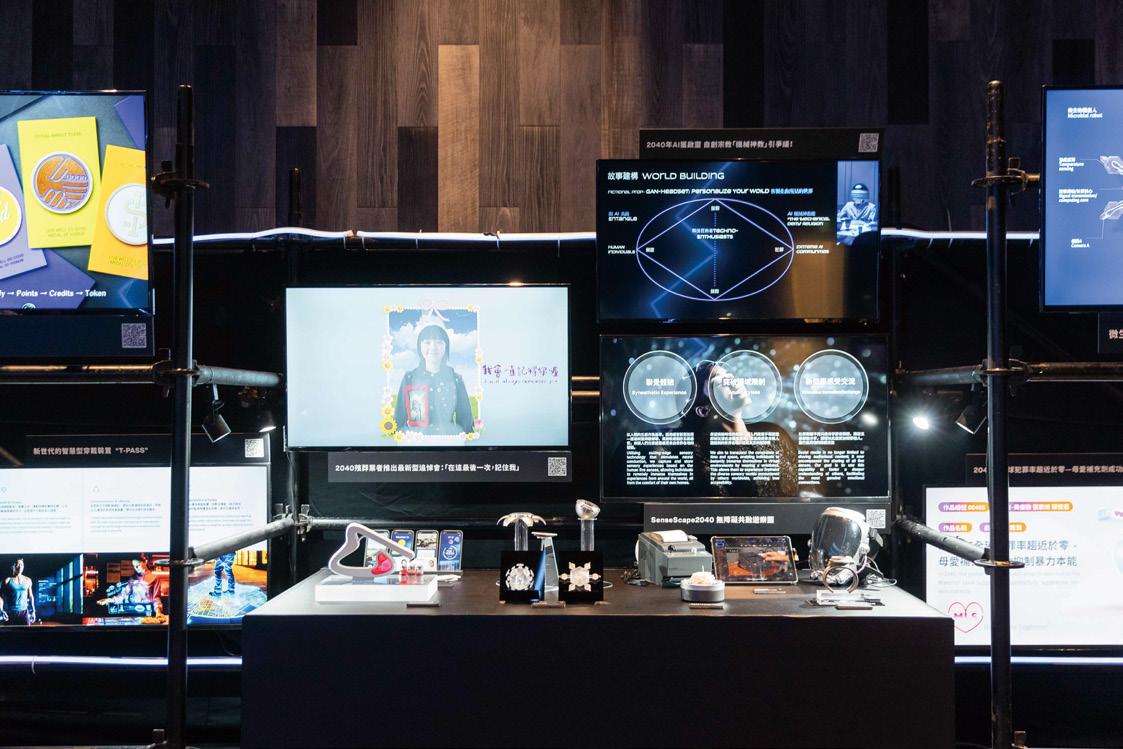
WeWe Futures
In collaboration with the Ministry of Digital Affairs, TDRI posed a forward-looking question: Can emerging 6G communication technologies enhance citizen participation in public affairs? This inquiry forms the basis of a quintessential digital democracy project.
Through the “WeWe Futures” initiative, citizens of all generations were encouraged and empowered to envision the future. The project gathered over 3,000 proposals, each reflecting diverse visions of what lies ahead. These ideas were synthesized through an alignment assembly, a participatory process designed to transform individual insights into collective intelligence, ultimately informing policy recommendations for national development.
Both the WeWe Futures: Tap to Your Future ideathon and its subsequent exhibition at the Taiwan Design Museum demonstrated how speculative design can create space for imagination, dissect the present, and explore potential futures. The project addressed themes such as decentralized collaboration, regenerative urbanism, and hybrid governance. During the workshops, participants examined current realities and shared forward-thinking ideas, which were later transformed into immersive installations that made abstract concepts tangible and participatory.
WeWe Futures exemplifies how speculative design can reveal hidden assumptions and foster collaborative reflection on the systems that shape our world. It invited visitors to engage with uncertainty, explore ethical futures, and examine the complex interplay between technology, ecology, and society. In doing so, the project modeled a design practice rooted in care, imagination, and interdependence.
View an overview of the exhibition at (https://reurl.cc/898XKM).
CASE STUDY II: Indigenous Fire Management in Australia
Aboriginal Australians have used cultural burning to regenerate ecosystems and prevent catastrophic wildfires for millennia but were suppressed under colonial rule. These practices are now being revitalized through Firesticks, an Indigenous-led nonprofit. Firesticks facilitates Indigenous knowledge-sharing
across communities, scientists, and policymakers by combining traditional fire knowledge with design tools such as visual mapping and participatory workshops.
Firesticks positions fire, soil, plants, animals, and the climate as active agents. This practice decenters human actors and advances more expansive ideas of regenerative systems of land care. Its co-designed maps, training frameworks, and storytelling practices transform cultural burning into a collaborative platform, showing how design can align human and nonhuman actors to build more reciprocal futures. Visit (https://reurl.cc/ekAyeM) to learn more.
The field of design is undergoing a radical shift in perspective; from a human-centered approach to a systems-centered one that considers a diverse range of actors. By decentering the human perspective and using speculative design to uncover hidden dynamics and possibilities, we can create conditions that support the emergence of transitional systems.
REFERENCES & CASES
Case: Charman, K. (2008). Ecuador first to grant nature constitutional rights. Capitalism Nature Socialism, 19(4), 131-133. (https://doi.org/10.1016/j.procir.2020.02.149)
Youn, H., & Baek, J. S. (2024). Assemblage-based stakeholder analysis in design: a conceptual framework through the lenses of post–anthropocentrism. CoDesign, 20(4), 585-606. (https://doi.org/10.1080/15710882.2024.2358966)
Nicenboim, I., Oogjes, D., Biggs, H., & Nam, S. (2025). Decentering through design: Bridging posthuman theory with more-than-human design practices. Human–Computer Interaction, 40(1-4), 195-220. (https://doi.org/10.1080/07370024.2023.2283535)
Case: Energy Babble Project.(http://doi.org/10.28938/9780995527720)
Patil, M., Cila, N., Redström, J., & Giaccardi, E. (2024). In conversation with ghosts: towards a hauntological approach to decolonial design for/with AI practices. CoDesign, 20(1), 55-76. (https://doi.org/10.1080/15710882.2024.2320269)
Attaianese, E., & Rigillo, M. (2021). Ecological-thinking and collaborative design as agents of our evolving future. TECHNE-Journal of Technology for Architecture and Environment, 97-101. (https://doi.org/10.13128/techne-10690)
Case: Design capability when visioning for transitions: A case study of a new food system. Design Studies, 91, 101246. (https://doi.org/10.1016/j.destud.2024.101246)
Saha, T., & Nusem, E. (2024). Ecologies Otherwise: Mapping Ontological, Speculative, and Transition Design Discourses. Design and Culture, 16(2), 191-210. (https://doi.org/10.1080/17547075.2024.2335429)
Case: Rice Terraces of the Philippine Cordilleras. (https://reurl.cc/3M940L)

Ethics, justice, and community participation are foundational principles that should be present at every stage of the design process. Designers are increasingly called upon to reckon with the ripple effects of their work, reflecting the interconnected nature of global systems. Integrating the ongoing work of decolonization transforms the field of design from narrow definitions to diverse possibilities.
DESIGN UNLIMITED
TOWARD HUMANITY: ETHICS AND JUSTICE
Beyond advanced functionality and efficiency, the core insight of humanity-centered innovation concerns ethics and justice. New perspectives refer to the products of design as ‘materialized morality.’ They are physical, tangible reflections of the values of a design team, and have the power to shape the worlds we live in. An electric car is a product loaded with ethical considerations. What role does the car play in offsetting carbon emissions? Where and how are cobalt, lithium, and other minerals sourced for the car’s battery? Is the car marketed as a complement or a competitor to other modes of sustainable transportation, such as trains or buses? What sense of agency does the driver have? These questions highlight important ethical considerations at every stage of the design process. In response, there is a growing critique of the use of ethical language without real accountability or substance. Many conventional design practices claim to uphold values such as sustainability and inclusion. The pervasiveness of this trend is clear from its many names: greenwashing, virtue signaling, performative allyship. Superficial ethics not only obscures the consequences of design choices but also perpetuates global systems of inequality rooted in extractivism. To counter this, robust accountability mechanisms for community oversight1 are needed to ensure that outcomes are truly meaningful.
Design justice directly asks who gets to design, which perspectives are present in the design process, and how people will benefit (or suffer) from design decisions. These questions aim to redistribute decision-making power to those voices who have been marginalized by today’s systems2. Relational ethics focuses on accountability and care within specific contexts, rather than as abstract principles. It emphasizes the capacity to respond ethically within complex networks of human and nonhuman interactions. Together, design justice frames the intention: It centers structural inequalities and those who have been marginalized by these structures. Relational ethics establishes the process: It frames the design process as a network of relationships rooted in balance and respect for multiple knowledge sources. Strengthening design ethics empowers practitioners to ask better questions, navigate ethical ambiguity, and imagine how design decisions could shape multiple futures3. It effaces the idea of neutrality within design, reminding us that “materialized morality” is a political and value-laden practice.
PLURIVERSALISM AND DECOLONIALISM
The central task of design within systems lies in recognizing and ensuring diversity and resilience. Biological and cultural diversity represent not only the ethical and democratic defense of justice but also the very conditions that enable human civilization to evolve through variation and adaptive selection. Creativity in design often arises from such pluralistic variation, the capacity to flexibly respond to changing environmental demands and to generate alternative possibilities. For instance, Bhutan’s cultural tradition embodies a mature belief system and wisdom that guides harmonious coexistence between people and their ecological environment. This cultural intelligence exemplifies the kind of civilizational wisdom essential
for sustaining resilient and enduring systems.
Western colonialism, capitalism, and anthropocentrism have restricted the field of design. They have upheld the myth that there is a singular model for progress, aesthetics, and problem solving. How can this be true, considering that these systems obfuscate the diverse array of human and nonhuman actors in our world?
Pluriversal and decolonial design realign the field toward a more sustainable and just future. They call for respecting multiple worldviews, particularly those rooted in Indigenous, Afro-diasporic, and local traditions.
Pluriversal design reframes design as an inherently relational practice. It foregrounds interconnectedness, reciprocity, and context-specific meaning-making. The sacredness of land, ancestral wisdom, and the rights of more-than-human entities (e.g., rivers, forests, and animals) are all considered throughout the design process4 Decolonial design critiques and dismantles colonial structures of knowledge, power, and aesthetics. It addresses coloniality directly: the global harm that it has caused and its persistence today through neocolonial systems of corporatization, environmental injustice, and data extraction5. Both pluriversal and decolonial design reject extractive logics that strip value from communities without reciprocity. They also reassess central design concepts such as ‘user,’ ‘efficiency,’ and ‘innovation,’ especially when these neglect spiritual, ecological, and relational dimensions of life.
Crucially, pluriversal and decolonial design do not aim to reform existing systems from within. They seek to fundamentally reimagine design itself as a space of reclamation, resistance, and possibility. Designers and community members alike begin this process through learning (and often relearning) the histories that have shaped their communities. Oral histories and counter-archives are ways to reclaim and uplift silenced perspectives in design. Oral histories expand knowledge by broadening how we learn about the past. History doesn’t have to be written to be valid–it can be sung, spoken, and even performed. They have the power to articulate values and perspectives within groups with a rich tradition of storytelling, conveying insights that could not be understood otherwise6. Counter-archives directly oppose colonial histories, offering new recollections through artifacts such as zines or community-based archives. Collaborative storytelling is yet another practice that centers co-creation. It fosters shared understanding between designers and community members through story-building that incorporates a range of perspectives. It is a powerful speculative practice, enabling collective participation in building a shared vision for a just future.
Disenfranchised communities have long endured conditions that neglect their spiritual, ecological, and relational dimensions of life. Today, design is deeply entangled with these histories, making it imperative for designers to commit to the ongoing work of decolonization. Through this commitment, the field moves toward an era of assemblage-centered design.
“The truth is one, the wise call it by many names.”
— Rig Veda
RELATED WORK:
Depending on how they are structured, creative brainstorming sessions could reinforce colonial, capitalist frameworks. Jump to page 47 to learn more about reclaiming pluriversal perspectives in design ideation.
Interpret and re-interpret
DESIGNING WITHIN REAL-WORLD CONTEXTS
In contemporary design research, understanding and addressing problems situated in real-world contexts increasingly draw on theoretical and methodological frameworks from the social sciences. Field research, for example, emphasizes the contextual and contingent dynamics that shape human and institutional behavior. Meanwhile, action research promotes a form of knowledge generation rooted in participatory experimentation and reflexive understanding within lived environments. Together, these traditions form the epistemological foundation for a systemic design research methodology that views views both the researcher and the researched as co-participants in the construction of knowledge.
Community-based participatory design exemplifies this paradigm. It challenges the designer’s traditional role as an external problem-solver and reframes design as a collaborative, diagnostic process that unfolds within complex social systems. In these “clinical” modes of inquiry, knowledge emerges through iterative cycles of observation, reflection, and intervention conducted in close partnership with stakeholders. This approach aligns with Peter Senge’s (1990) concept of community-based action learning, as well as the European Union’s Living Lab model, both of which promote co-design and co-evolution as key mechanisms for social and systemic innovation.
Under such conditions, design research and design practice become interdependent and mutually generative. Designers, together with collaborators from industry, academia, and the public sector, engage in collective sensemaking and knowledge development through the act of design itself. This collaborative epistemology repositions design as a systemic and reflective practice, one that not only produces solutions but also fosters the conditions for shared learning, adaptation, and transformation within evolving sociotechnical environments.
Community participation in design is not new; however, it has too often been treated as a box-checking
exercise in consultative practice. True participatory design, by contrast, is grounded in authentic dialogue, flattened power structures, and sustained relationships. Designers must involve community members as equal partners from the outset, shaping not only the initial idea but also the project’s structure and trajectory as it evolves7. Microethics brings attention to the everyday ethical choices that influence participatory work, highlighting how seemingly small actions; like building trust, managing conflict, and making decisions, directly affect the quality of participation and relationships. When done well, design becomes an ‘infrastructuring’ practice: the design process itself becomes a vehicle for fostering authentic, enduring relationships. These relationships are crucial in a world where complex challenges demand ongoing collaboration.
From testing small prototypes to envisioning the future of a city8, participatory design is scalable and adaptable. It values collective intelligence, a core principle of pluriversal design, where diverse knowledge systems and expertise converge toward shared goals. Organizations such as Nesta, in collaboration with UNDP, have developed toolkits (https://reurl.cc/4NKqpR) that apply collective intelligence design to address complex global challenges. In the public sphere, civic hackathons and policy labs encourage collaborative problem solving and rapid prototyping of new public service models. Ultimately, participatory design offers a flexible set of tools and methods applicable across a wide range of domains.
TOOLS FOR PARTICIPATORY DESIGN
Designers and communities move away from conventional, extractive models by using participatory practices. In this transformative approach, participation becomes a shared journey characterized by humility, mutual care, and openness to meaningful change.
Relational Facilitation
Intentionally shapes the social and emotional conditions necessary for effective collaboration.
Looks like: Deep listening practices · Attentive responsiveness · Careful facilitation of spaces to allow equitable participation and genuine dialogue.
Affective Mapping
Acknowledges and incorporates emotions, tacit experiences, and subtle relationship dynamics into participatory processes.
Looks like: Color-coding and mapping emotional reactions to a place · Cognitive Affect Maps (CAMs) to link emotions and values.
Slow Design
Rejects rapid, superficial fixes and favors prolonged, adaptive, and reflective community engagements.
Looks like: Community-led product development with designers act as facilitators · Observing users through contextual interviews with users · interactive models.
CASE STUDY I: The World Hakka Expo
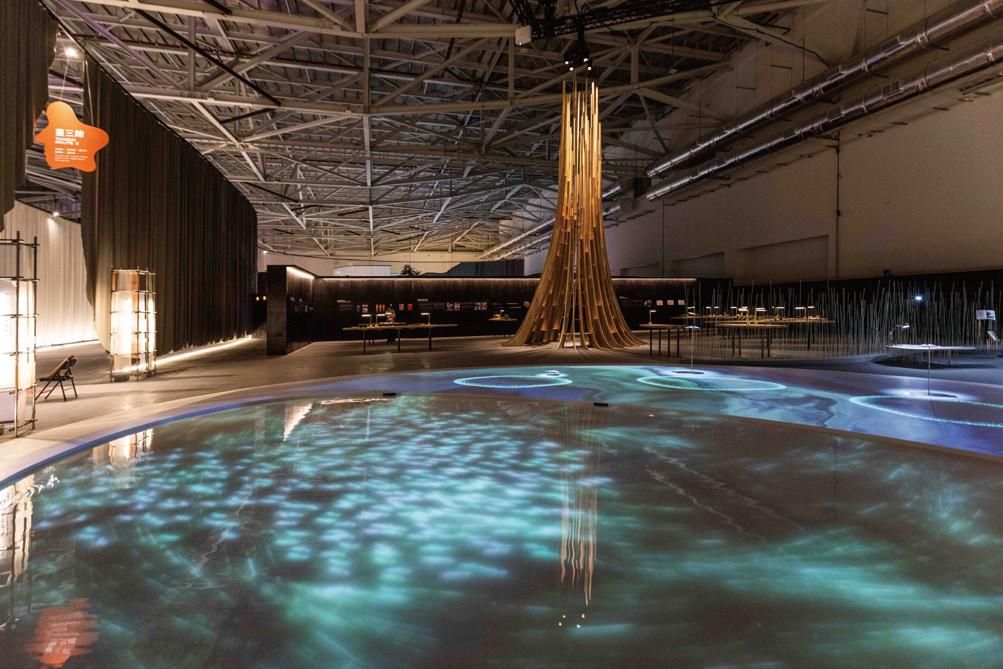
As cultural evolution progresses and diversifies, design plays a pivotal role in connecting cultural research with policy, facilitating both transdisciplinary understanding and practical application. The 2023 World Hakka Expo: Travel to Tomorrow spanned 66 days and reached audiences in 20 countries, embodying decolonial design methodologies by centering the voices of the Hakka, an ethnic subgroup of the Han people. In each pavilion, Hakka leaders and designers shared their visions for a prosperous and harmonious future alongside diverse ethnic communities. The Taiwan Pavilion, titled “Roots and Prosperity Better with Hakka,” brought together 14 key Hakka counties and cities from across Taiwan. Each group shared stories that celebrated Hakka culture and illustrated how they have thrived and coexisted harmoniously with other ethnic groups in Taiwan.
The physical elements of the Expo seamlessly blended contemporary creative practices with deep-rooted Hakka traditions. Through immersive design and layered spatial storytelling, the Expo honored ancestral wisdom while engaging modern audiences. By employing participatory design and compelling narrative techniques, the Hakka Expo demonstrated the power of pluriversalism and the value of elevating non-Western approaches in the field of design—ultimately inspiring all visitors to imagine a better future.
Visit (https://reurl.cc/axAdOX) for more information.
CASE STUDY II: 1640
Riverside Road
In Abbotsford, British Columbia, architects cultural coordinators worked in partnership with BC Housing and members of the Matsqui and Sumas First Nations. Their ultimate aim was to explore how to decolonize the design process for supportive housing by embedding Indigenous knowledge, relationships, and cultural inclusion into both the project’s process and outcome. Some of the key approaches included:
From a process perspective, the team built relationships and trust within the design team by fostering open sharing allowing designers the freedom to be creative and nonconforming. They co-created long-term management plans, aligning with Indigenous placekeeping frameworks. The building itself incorporated Host Nation values and ethnobotanical elements like plant-processing shelters and the integration of culturally significant plant species. It also created intentional placeholders on façades within the building for future design by individual Host Nation artists, integrating their perspectives of a 100-year future. This case study provides powerful, concrete examples of decolonial and participatory practices within architectural design. Read more about the project at (https://reurl.cc/4NndKR).
Design is far from neutral. Products, systems, and digital interfaces can reinforce existing power dynamics just as can create new ones. A strong ethical lens and a commitment to participatory practices will aid designers in achieving true, radical systems change rooted in decoloniality and diverse lived experiences. It frees us from constraints and unlocks the unlimited potential of design.
REFERENCES & CASES
Reeb, R. N. (2006). Community action research: Benefits to community members and service providers (p. 97). Binghamton: Haworth Press. (https://doi.org/10.4324/9780203051443)
Costanza-Chock, S. (2020). Design justice: Community-led practices to build the worlds we need. The MIT Press.
Case: The McCoy Family Center for Ethics in Society. (https://reurl.cc/7Vmdal)
Smith, R. C., Winschiers-Theophilus, H., De Paula, R. A., Zaman, T., & Loi, D. (2024). Towards pluriversality: decolonising design research and practices. 20(1), 1-13. (https://doi.org/10.1080/15710882.2024.2379704)
Torretta, N. B., Clark, B., & Redström, J. (2024). Reorienting design towards a decolonial ethos: exploring directions for decolonial design. Design and Culture, 16(3), 309-332. (https://doi.org/10.1080/17547075.2024.2356764)
Carlton-Parada, A., & Prendeville, S. (2024). Radical design praxis and the problematics of intent. CoDesign, 20(3), 387-404. (https://doi.org/10.1080/15710882.2023.2269913)
Case: Design Movement in Commercial Districts. (https://reurl.cc/WO7Nnk)
Case: (https://reurl.cc/EQe69A)

A system grounded in design ethics and justice is essential to the healthy functioning of society. Its ultimate goal is to foster collective well-being and human flourishing. Care is not limited to medical facilities; it can be embedded in the very structures and systems that promote connection and belonging. Thoughtful urban planning and an expanded understanding of care can enhance well-being in the everyday spaces where people live and interact.
FORMS OF CARE
CARE BEYOND CLINICS
Health and well-being are highly contingent on systems and relationships. They emerge from social, emotional, and environmental conditions, supported by networks of care, trust, participation, and belonging that enable individuals and communities to heal, connect, and thrive. Designers who acknowledge these interdependencies broaden the definition of public health beyond clinics and hospitals, embedding care into the spaces and structures that shape daily life.
More designers are now working across sectors to build integrated, community-based systems of care. These approaches often lead to improved health outcomes and greater engagement. For instance, Project RISE in Bihar, India, illustrates the impact of incorporating local rituals into perinatal health care1. By honoring traditions like Chhathi, designers create culturally attuned services that nourish both body and spirit. At the systemic level, care infrastructures function as relational networks, requiring sustained participation and trust. Designers contribute to these systems by cultivating long-term, holistic practices and enabling change from within institutions. This shift redefines the designer’s role: from producer to caregiver, expert to facilitator, and problem solver to coalition builder2
Healing-centered design offers a framework that integrates participatory design principles into care practices. In clinical contexts, it goes beyond managing symptoms3 and includes approaches like narrative medicine, which invites patients to share personal stories about their conditions. This practice allows the body to express its needs—a tradition found in many Indigenous cultures but often overlooked in Western medicine. Trauma-informed care empowers individuals to feel heard, respected, and involved in their own healing. This is especially valuable in designing for mental health, disability, and aging populations, where care must be central to the design of environments. This perspective aligns with the mission of Orange Technology, which champions a compassionate, human-centered approach to innovation. While Green Technology emphasizes ecological sustainability, Orange Technology symbolizes warmth and the advancement of health, care, and well-being. It underscores the responsibility of designers to embed empathy and humanistic values into the systems that shape everyday life—ensuring that technological progress fosters not just efficiency but also meaningful and humane living environments



Medical care is just the tip of the iceberg.
sharing lived experiences
sense of belonging
access to nature
freedom of mobility
visits to the doctor
RESONANT DESIGN
Broadening the aperture of care shifts design toward cultivating emotional depth and connection across domains. It requires shifting mentalities about the components of care and designing emotionally resonant digital and physical environments for daily life. Departing from the artifact-centered era, designers now treat well-being and belonging as central objectives. This expands design’s mandate beyond use and efficiency to incorporate meaning.
Resonant design in the digital world means creating emotionally attuned experiences that provide sensory feedback to promote calm, empathy, or reflection. Wearable technologies such as watches and medical devices, can monitor fluctuations in our emotional and physiological states. If they sense that we are stressed, they can support regulation through haptic feedback or audio cues. Advances in virtual and extended realities extend this idea even further, as they can provide immersive experiences, such as forest bathing in dense urban areas. These products assist with developing awareness and emotional resilience, but they also demonstrate possibilities for systems of care in an increasingly urban and digital world.
In physical and civic environments, emotional design shapes how spaces evoke belonging, memory, and emotional repair. This reimagines design’s purpose as a form of meaning-making, where products and environments embody cultural values and invite reflection. Known as emotion-driven design, this practice prioritizes narrative-building within aesthetics, aiming to resonate with users in deeply emotional ways. A well-designed product in this field is not judged based solely on its efficiency or optimization5. It’s judged by its beauty, sensitivity, and ability to tell a story. Those who engage with this type of design walk away feeling moved. Therefore, emotion-driven design is a powerful way to support healing, identity formation, and mutual recognition. Designers are developing more nuanced tools that incorporate storytelling and art-making to guide empathetic engagement and connect with users whose needs are complex. These practices feed into the expansion of design’s purpose: from solving functional problems to sustaining emotional well-being and affirming diverse human experiences6.
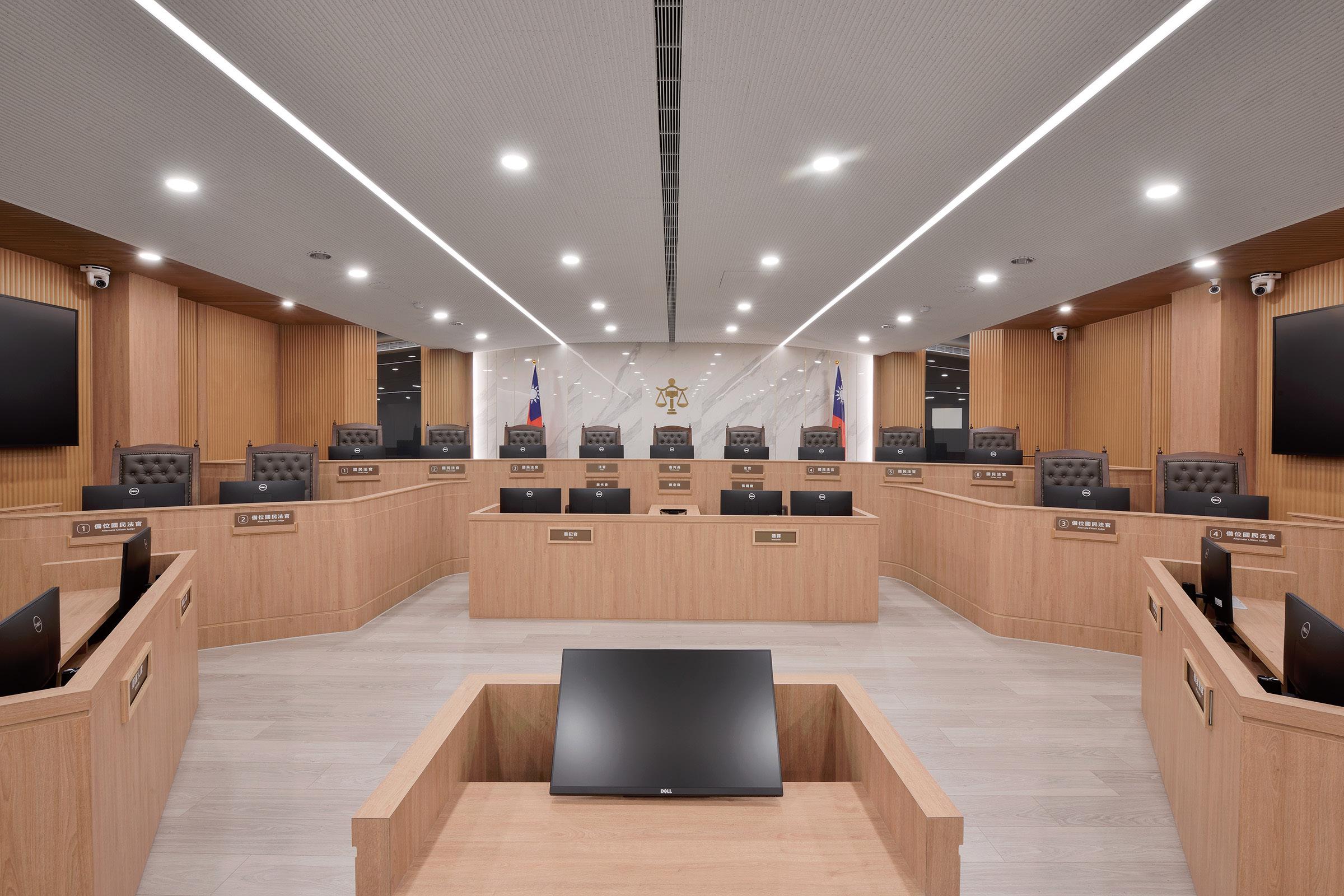
In 2023, the Judicial Yuan partnered with TDRI to redesign courtrooms in 22 district courts across Taiwan, aiming to transform the intimidating atmosphere often associated with courtrooms. Redesigned courtrooms now include a modular, warm, and light-filled design that brightens the space and promotes a sense of calm. The new spaces also feature soft wood tones, curved ceiling panels guiding sightlines to the judicial bench, ADA-compliant facilities, and curved double-tiered benches to improve visibility and interaction between prosecutors and the defense. This redesign promotes dignity, relaxation, and connection—hallmarks of emotionally resonant design.
INFRASTRUCTURES OF CARE
Care doesn’t stop at the interpersonal or environmental level. It is also embedded in the systems and policies that shape public life. Designers working at the intersection of governance and policy cultivate civic infrastructures of care by redefining how institutions prioritize well-being and inclusion. This work demands strategic agenda-setting, institutional transformation, and participatory policymaking.
Through collaboration with policymakers, advocacy groups, and civic organizations, designers can help make public systems more attuned to the lived realities of communities. Building infrastructures of care requires continuous feedback and iteration through participatory practices7. These practices not only integrate diverse perspectives but also strengthen civic legitimacy, and foster collective responsibility as communities co-create caring systems. This could look like citizens’ assemblies which engage community members in structured debates about key issues affecting their community. The outcomes of the assembly can feed into participatory budgeting, fostering a sense of ownership and collective responsibility. Design can shape these processes, and in turn, contribute to the structures that govern daily life and create conditions for care.
Extending care to issues like housing and mobility requires participatory practices that center those most affected by design decisions. In community-led housing, co-design projects involve both architectural design (the physical result) and social design (the way residents shape their social practices as a group living together). Product and process are equally important and inseparable. How can we reimagine cities to be more adaptive and inclusive amid the growing pressures of housing shortages, climate disruption, and shifting patterns of work and care? Initiatives like Urban Living Labs provide platforms for this kind of place-based experimentation. They are unique in that they are not prescriptive; rather, they encourage open-ended participatory innovation based on specific community needs.
DESIGN POLICY LADDER
Design plays multiple roles across the public sector. According to the Observatory of Public Sector Innovation (OPSI) (https://reurl.cc/7Vmd1k) the following three levels illustrate how design maturity evolves within government, from operational problem solving to strategic policymaking and institutional change.
Design For Policy
‧Design is used in policymaking, often with prototyping Encourages cross-sector collaboration and experimentation
Design
As Capability
‧Public servants apply design tools in daily operations
‧Promotes citizen-centric thinking and team autonomy
Design For Discrete Problems
‧One-off projects to address specific service or tech issues
Examples: elderly malnutrition, violence in hospitals
RELATED WORK:
How do we design caring digital infrastructure in the 21st-century? Jump to page 57 to learn more about how decentralized digital communities can be built and maintained to foster more creative and diverse digital landscapes.
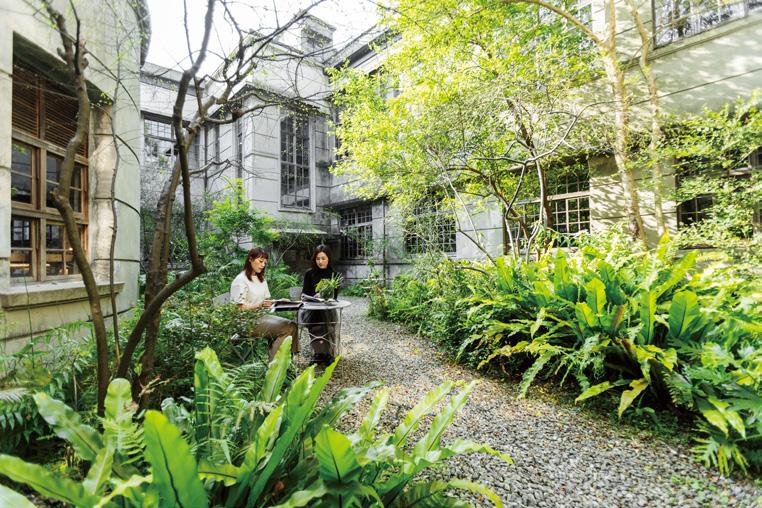
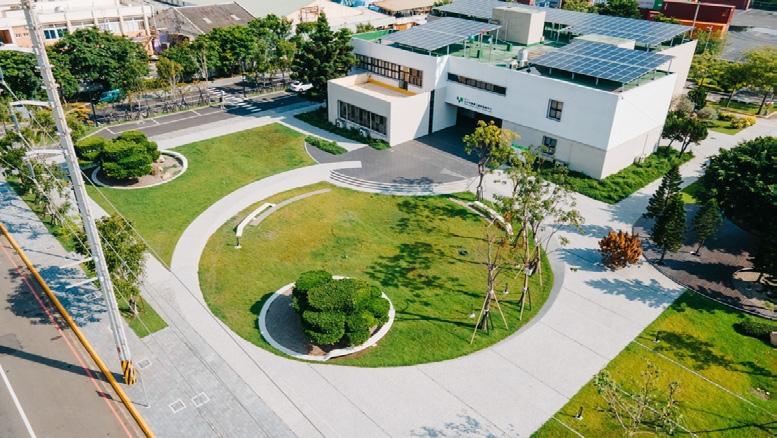
1. Hybrid work and living environments8
a. Housing accommodates work life and household life, responding to the rhythms of work, rest, and care.
b. Growing in response to affordability pressures and the rise of remote work.
2. Mixed-use urbanism
9, 10
a. Blends residential, commercial, and civic functions within walkable neighborhoods (e.g., the “15-minute city”). Enhances environmental sustainability and social connections.
b. Enhances environmental sustainability and social connections.
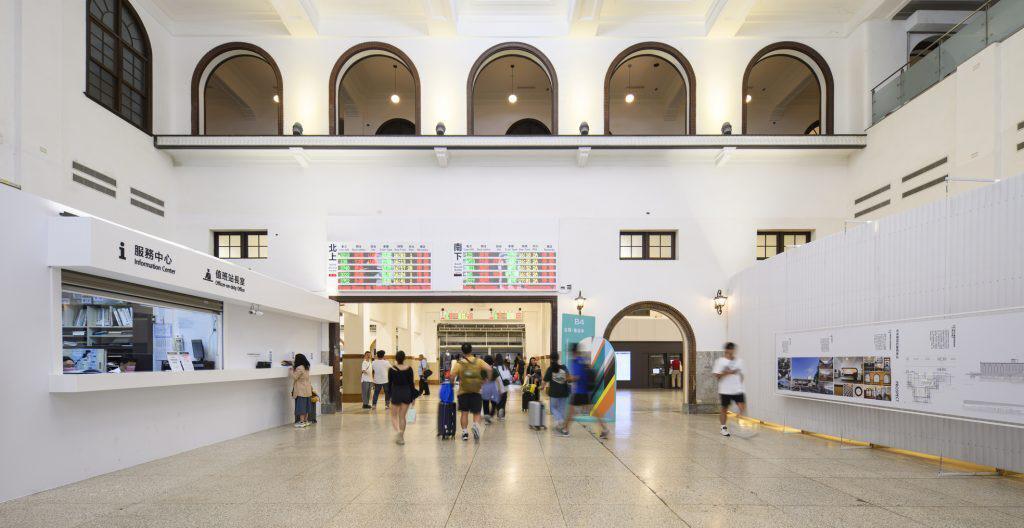
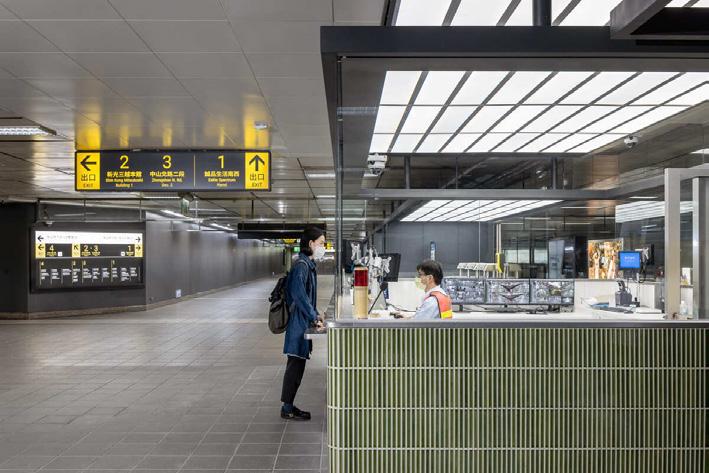
3. Adaptive reuse (creative conversions)
11
a. Transforms underutilized structures (e.g., malls) into housing, cultural venues, or community hubs.
b. Increasingly recognized for promoting sustainability while preserving architectural and cultural heritage.
4. Equity-centered urban infrastructure
a. Focuses on democratizing access to public spaces and services, allowing communities to shape their environments.
b. Includes modular housing and inclusive transit systems.
As shown above, TDRI has successfully implemented many urban adaptability projects through its Service Innovation Division12. Urban design is a powerful tool for cultivating resilience, affirming that adaptability and equity are inseparable in creating city ecosystems that everyone can enjoy.
CASE STUDY I: Citizen Participation Court
In 2023, Taiwan’s judicial system launched the Citizen Participation Court initiative. To embody the spirit of this reform movement, the Judicial Yuan collaborated with TDRI to redesign and renovate 22 courtrooms nationwide. The resulting spatial transformations fostered transparency, equality, and interaction—making this project a quintessential example of design for care.
Similarly, TDRI’s partnership with the Ministry of Education on the School Rebuilding Movement originated from a commitment to community care. The initiative reimagined not only physical learning environments but also the provision of psychological counseling services for students. These redesigned spaces promote dignity, relaxation, and connection—core attributes of emotionally resonant design.
Visit TDRI’s (https://reurl.cc/EQxDr1) for more information.
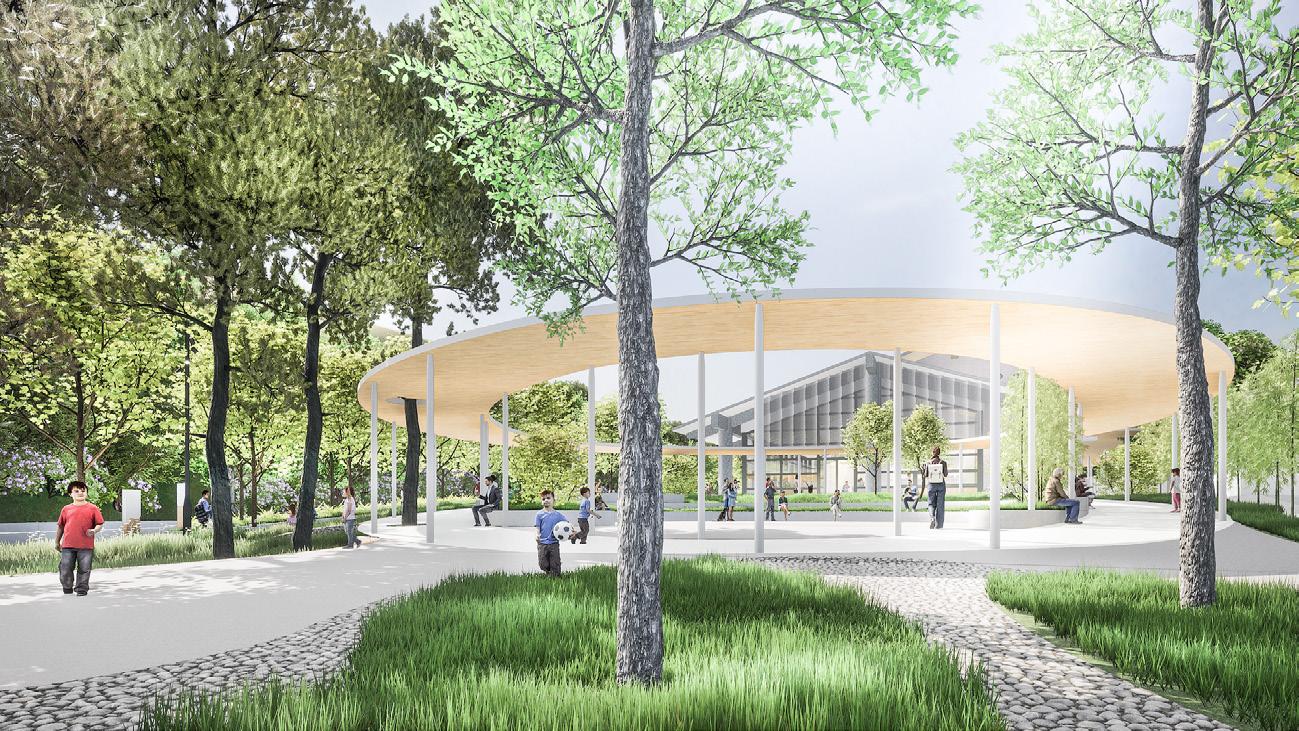
CASE STUDY II:
The National Museum of African American History and Culture
The National Museum of African American History and Culture (NMAAHC) provides a powerful model of emotionally resonant architecture. The exterior of the museum is emblematic of three-tiered crowns used in Yoruba art from West Africa, with a bronze-colored lattice façade that pays homage to the ironwork crafted by enslaved African Americans. Visitors enter the museum by descending into underground galleries that recount painful histories of Africans being transported in abysmal conditions across the Atlantic and their subsequent enslavement in the Americas. As visitors ascend, the upper floors tell stories about emancipation, civil rights, and the many contributions that African Americans have made to the culture of the United States, including the election of Barack Obama as the nation’s first Black president in 2008. The journey through this space reflects remembrance, pain, contribution, and the continued struggle for racial justice, providing a sensitive and caring space for visitors to experience it.
NMAAHC points to the crucial role of physical spaces in cultivating collective memory and healing. The building itself functions as a form of care, offering an environment for Black Americans that affirms and foregrounds generational trauma and injustice, while opening space to reflect on the contributions of
Black culture and the ongoing fight for equality. Learn more about the architecture of NMAAHC at (https://reurl.cc/898Xmo).
Designing for care signals a shift in how we build resonant, meaningful spaces. From healing-centered tools to equity-focused urban strategies, designers are reshaping cities and systems to support care, connection, and dignity across diverse communities and everyday spaces.
REFERENCES & CASES
Case: Hashmi, F. A., Burger, O., Goldwater, M. B., Johnson, T., Mondal, S., Singh, P., & Legare, C. H. (2023). Integrating human-centered design and social science research to improve service-delivery and empower community health workers: lessons from project rise. She Ji: The Journal of Design, Economics, and Innovation, 9(4), 489-517. (https://doi.org/10.1016/j.sheji.2024.02.001)
Senge, P. M., & Scharmer, C. O. (2008). Community action research: Learning as a community of practitioners, consultants and researchers. Handbook of action research: The concise paperback edition, 195-206.
Case: TDRI public Health center. (https://reurl.cc/Rkmeor)
Liou, Shyhnan. (2012) Orange Technology: From Green Technology to Orange Technology. (https://reurl.cc/MzVj6K)
Hakim, L. (2023). Moving Objects: A Cultural History of Emotive Design. In: Oxford University Press UK.
Xue, H., Desmet, P. M., & Yoon, J. (2024). On the Cultivation of Designers’ Emotional Connoisseurship (Part 2): A Pedagogical Initiative. She Ji: THe Journal of Design, Economics, and Innovation, 10(2), 143-168. (https://doi.org/10.1016/j.sheji.2024.06.002)
Gaete Cruz, M., Ersoy, A., Czischke, D., & Van Bueren, E. (2023). Towards a framework for urban landscape co-design: Linking the participation ladder and the design cycle. CoDesign, 19(3), 233-252. (https://doi.org/10.1080/15710882.2022.2123928)
Case: Hadjri, K., Durosaiye, I., Samra, S., Niennattrakul, Y., Sinuraibhan, S., Sattayakorn, S., Wungpatcharapon, S., & Ramasoot, S. (2024). Co-designing a housing and livelihood toolkit with low-income older people for future housing in Klong Toey, Bangkok, Thailand. CoDesign, 20(2), 266-282. (https://doi.org/10.1080/15710882.2023.2268596)
Yuan, P. F., & Yan, C. (2023). Community Meta-Box: A Deployable Micro Space for New Publicness in High-Density City. She Ji: THe Journal of Design, Economics, and Innovation, 9(1), 58-75. (https://doi.org/10.1016/j.sheji.2023.06.002)
Case: TDRI micro-transportation project. (https://reurl.cc/2QVj3r)
Case: TDRI Design Movement for Public (https://reurl.cc/vLYyDa)
Case: TDRI implementation of innovation in public services. (https://reurl.cc/oYAy3j )

Making has always been a cornerstone of design. Experimenting with materials, creating maps, and exploring making processes across cultures open up new ways of understanding the complexities of our world. These practices also encourage us to examine our assumptions and creative methods as we design within larger systems. They advocate a more active and reciprocal relationship between design research and design practice, positioning this integration as essential to developing systemic design knowledge.
MAKING AS KNOWING
MATERIAL ENGAGEMENT AS EPISTEMIC PRACTICE
Design has long played a central role in shaping the products and services that define our physical world. These creations guide behavior, generate knowledge, and build connections—consider libraries, eyeglasses, or high-speed rail systems. While we often recognize the importance of designed products, we must also ask: What about the designer behind them? What happens during their engagement with materials and processes? How do perspectives shift throughout the act of making? What is made—and how it is made—can reveal what matters in a given context. Making also offers a lens into the design thinking that shapes how we define both problems and solutions.
Thinking through doing is fundamental to design. It supports the development of key skills through practices like sketching and prototyping, which in turn lead to embodied cognition. The act of making reveals insights that theory alone cannot provide. Design is not merely the application of knowledge; it is also a discipline that produces knowledge through action1,2. What’s critical about material engagement, especially in assemblage-centered design, is the interaction between human and nonhuman actors. Designers work with materials that have their own agency: sometimes they behave predictably; other times, they resist, surprise, or shape the designer in return. Designers learn from the affordances and feedback of the material world. In Donald Schön’s influential concept of reflection-in-action, this is described as a dynamic dialogue between designer and material3. Through iterative engagement, designers arrive at new understandings of how parts of the material world operate.
Of course, the significance of making extends beyond form and function. Ontological design highlights that artifacts are not only functional; they are world-shaping. What we design, in turn, designs us, influencing our perceptions, behaviors, and values. This perspective situates humans within a broader, more-than-human system, filled with artifacts that function as rules, feedback loops, and flow mechanisms affecting human behavior4. A clock, for example, doesn’t just tell time; it teaches us to think of time as linear—divided into past, present, and future. It also reflects cultural norms; the
Western clock, for instance, reinforces ideals of productivity and punctuality. There are clear ethical and existential implications in what we choose to design. Merging an ontological design perspective with a rigorous making practice opens new epistemic pathways. It solidifies design as a deeply material, inherently reflective, and knowledge-generating discipline. This can be understood as an innovation of meaning5, where making and meaning co-evolve. Together, they shape what we produce, how we interpret it, and how we live with it, ultimately transforming our understanding of both artifacts and systems.
Ontological design
Embodied cognition
System sense making
ACTIONS
Reflection in action
CONTEXT
Nonhuman, knowledge ecology system
OUTPUTS
TOOLS FOR MAKING SENSE OF SYSTEMS
Wicked problems are defined by competing priorities, unclear goals, and often invisible characteristics that lead to unintended consequences. These are the defining challenges of our time: climate change, homelessness, income inequality. Designers like Richard Buchanan have emphasized the value of applying a design lens to such problems partly because you have to make in order to understand6. Design provides a range of visual and conceptual tools for sensemaking that are particularly well suited to wicked problems. These tools help make complex issues visible, highlight interdependencies, and reveal how problems layer upon one another. They also influence how problems are perceived, interpreted, and ultimately acted upon.7
Visual artifacts are central to knowledge creation in design, especially within Research-through-Design (RtD) contexts, where practice informs theory. RtD bridges the gap between design research and design practice, and it is in the interplay between these two domains that true design knowledge emerges8 Visualization becomes a form of inquiry, an active engagement with complexity that surfaces patterns, contradictions, and latent structures often missed when relying solely on academic literature. The process of making, rooted in iteration, produces emergent, abductive insights, and design research captures and communicates these insights effectively. Given the limitations of human cognitive capacity, the multimodal nature and operational dynamics of systems must be represented in ways that illuminate their emergent, holistic properties. This approach enables designers and decision makers to develop a more intuitive understanding of complex systems. Such representations also support interdisciplinary communication, collective learning, and collaborative decision making—ultimately strengthening a system’s capacity for both sensemaking and sensegiving.
In the context of paradigm shifts, such as assemblage-centered design, the field must explore ways to capture knowledge beyond anecdotal reflection. This is where visualization tools are especially powerful for tackling ill-defined, wicked problems. Multiple perspectives can generate different visual representations of the same system, revealing deeper insights into how various actors interact within it. This pluriversal approach to sensemaking allows for more nuanced and context-sensitive solutions to complex challenges.
“Visualization is not just seeing; it is imagining, and it is drawing, and it is gesturing, and it is modeling.”
— Robert McKim, Experiences in Visual Thinking
RELATED WORK:
Strengthening skills as a systems practitioner is essential for the 21st-century designer. Jump to page 62 to see how design education is making this shift, or page 21 to connect these tools to regenerative systems design.
Beyond their function as information visualizers, these tools also perform crucial relational roles. They act as “boundary objects” that facilitate negotiation and compromise across knowledge domains. They also help surface values and perspectives that might otherwise remain implicit. For example, participatory diagramming invites all participants to collaboratively build visual representations. This levels the playing field, and produces visuals that are not just representational but deeply meaningful. In the context of wicked problems, where no single “truth” prevails, a map is not merely a visualization of an issue—it becomes a tool for imagining new possibilities and actions.
Causal loop diagrams
Invite Multiple Interpretations
Visual
Artifacts
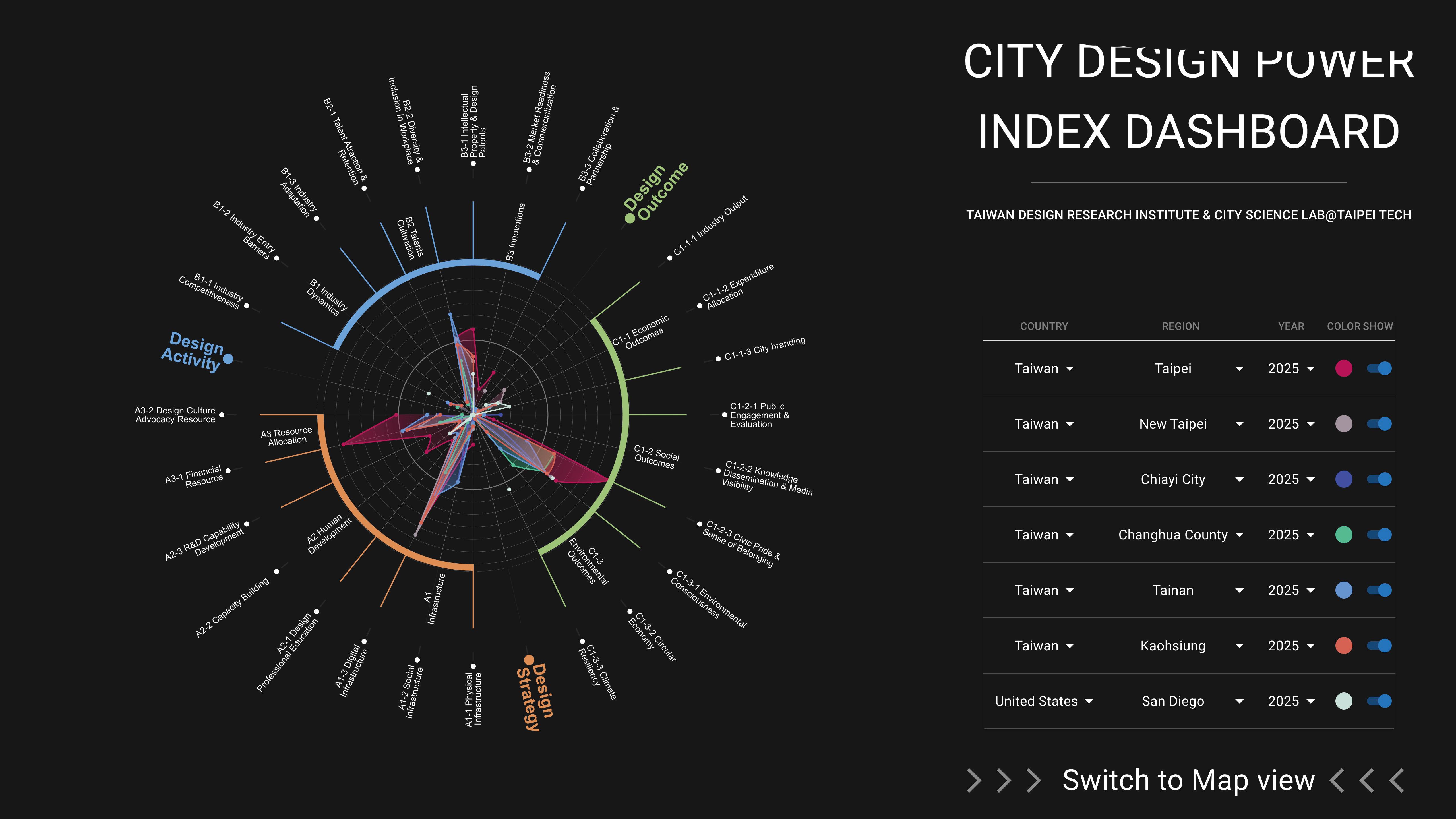
In collaboration with the World Design Organization (WDO), TDRI co-developed a design capability assessment system for World Design Capital cities. The system proposed a strategic process model for diagnosing and formulating policy interventions. By visualizing various factors related to design capacity and their dynamic interrelations, the tool supports the expression of design as a form of soft power and serves as an experimental framework for public strategy formulation. Explore the interactive dashboard at (https://reurl.cc/NxvE7p).
RECLAIMING CREATIVITY AND DEPTH IN IDEATION
Making generates knowledge, and visualization brings visibility and meaning to complex systems. These practices help surface historical problems and their lingering effects today—and they are anything but trivial. Yet, there is a growing tendency to reduce creativity to mechanized, superficial routines. This is especially true in corporate innovation settings that rely heavily on fast-paced design sprints and diluted versions of design thinking. Design thinking, in particular, has been a central topic in the design field since the mid-20th century. In recent years, it has played a key role in popularizing design as a discipline, especially its focus on empathy and creative problem solving. However, design thinking is difficult to replicate meaningfully—especially for those without a design background. It often loses the craft and critical epistemic practice of making. Additionally, it tends to prioritize user-centered approaches over
In corporate environments, where rapid design tools are commonly used, stakeholders often prioritize efficiency, consensus, and appeasement over experimentation and deep critical reflection. These spaces attempt to harness creativity as a tool for capital generation and productivity, what we might call an “artifact-era” mentality. The result is often a lack of depth, producing products or services that are disconnected from the complexity of the systems they aim to engage. To reclaim creativity is to reclaim a rigorous, nonlinear process of sensemaking—one that resists the lure of financial gain and instead centers on learning through making. Practices such as speculative design embrace ambiguity, open-ended exploration, and deliberate slowness in decision-making. Designers must resist the pressure to evaluate or narrow ideas too quickly and instead make room for deeper insights to emerge.
Here, creativity is sustained through an ongoing dialogue between sensemaking and thing-making11, where ideas unfold through cycles of evocation, transcendence, and action. In sensemaking, designers build shared understanding through empathy and contextual analysis, moving beyond surface impressions to identify deeper, systemic challenges. In thing-making, creativity thrives through interdisciplinary collaboration and prototyping—transcending disciplinary silos and intellectual centrism,
Reclaiming creativity also means cultivating the conditions that allow for depth: embracing paradox and complexity to balance systems thinking; adopting a growth mindset to support adaptive intelligence; and committing to co-creation across diverse knowledge domains using multi-agent intelligence. Designers who create out of curiosity rather than control are assemblage-centered. Empowered by AI as a form of intellectual agency, they are increasingly able to automate tasks such as analyzing large datasets or generating creative prototypes. This technological augmentation frees designers to focus on what transcends precision and efficiency: engaging in reflective inquiry, fostering empathetic understanding, and nurturing human care within the design process.
EXAMINING ASSUMPTIONS
Design is ultimately defined by a designer’s ability to locate themselves within a context and to interpret and respond to phenomena through that lens. Designers are thus responsible not only for what they create but also for how their worldviews shape the making process. Since making is an epistemological practice, it requires more than technical skill—it demands the development of emotional and reflective capacities that complement engineering and materials literacy12. A designer must be self-aware, capable of examining how their identity, values, and lived experiences influence the questions they ask, the processes they use, and the solutions they pursue in complex or ambiguous projects.
Designers engage directly with users and communities through ethnographic methods, interviews, and participant observation. These approaches prioritize emic perspectives–i.e., insider viewpoints that emerge from meaningful, intentional connections with community members. In this context, seeking universally applicable conclusions is neither useful nor appropriate. Instead, these practices value the specificity and nuance of knowledge produced within particular social and cultural settings, often revealed through extended dialogue and engagement. A fundamental assumption here is that insights generated through design research are always shaped by the cultural, social, and political conditions in which they are produced. In other words, such knowledge is inherently situated13. For example, a metro transit system in Tokyo will differ significantly from one in Medellín, as each is shaped by its own distinct cultural and societal forces. This emphasis on locality challenges the conventional notion that research must always strive for generalizability, instead prioritizing contextual relevance.
At the heart of a situated design approach is a commitment to reflexivity. Designers must critically examine how their own values, assumptions, and social positions shape the knowledge they generate. The “learning dialogue” of reflection-in-action must expand to include broader social and contextual dimensions of design. A designer working today must consider not only what they create14. but also how and why they create it, and the ethical and political implications of these choices. At the 2024 World Design Organization Congress, the Taiwan Design Research Institute (TDRI) presented the Contextualized City Design Power Assessment System, highlighting a critical insight: every city exists within its own unique economic and cultural context. As such, it is neither effective nor appropriate to compare cities based on absolute or standardized metrics. This recognition reflects a critical design mindset—one grounded in democratized design and shaped by reflexive awareness of diversity, locality, and the situated nature of meaning in urban systems.
This shift is essential as we move into 21st-century design practice, one that understands design not merely as a tool for problem solving, but as a practice for cultivating understanding and generating insights through deep, sustained social engagement.
“One should not imagine the world of discourse as being shared between accepted and excluded discourse, or between the dominant discourse and the dominated discourse; but as a multiplicity of discursive elements, that can work in diverse strategies.”
— Michel Foucault
CASE STUDY I: Design Movement on Campus
The Design Movement on Campus is a large-scale initiative by Taiwan's Ministry of Education and TDRI that has transformed learning environments in 91 schools across the country. Through collaboration among teachers, students, and administrators, specific campus spaces, such as classrooms, libraries, and laboratories, were selected for redesign. With designers facilitated by TDRI, these groups co-designed and transformed the selected spaces. This hands-on process allowed students and teachers to experience firsthand their ability to improve their own learning environments, an approach that puts aesthetic education into real-world practice.
The project emphasizes context-specific, participatory redesign of educational spaces, helping everyone in the education system rethink what these environments can look and feel like. Each redesign begins with context mapping, identifying curricular needs such as project-based learning, mental health support, and Indigenous cultural representation. Designers, educators, and students then co-create prototypes and build the spaces together, ensuring diverse perspectives are included throughout the process.
From Indigenous science labs shaped by the surrounding mountain forms near Chiayi, to counseling spaces focused on mental health in Yilan, to tea factory heritage labs in Hsinchu, the Design Movement on Campus integrates not only aesthetics but also layout, materials, and functionality tailored to each community’s teaching model. This approach positions design as a flexible, inclusive practice that brings beauty, resonance, and practicality to educational spaces. In each case, participants uncover new insights about how environments shape learning behaviors. Learn more at (https://reurl.cc/7Vmd51).
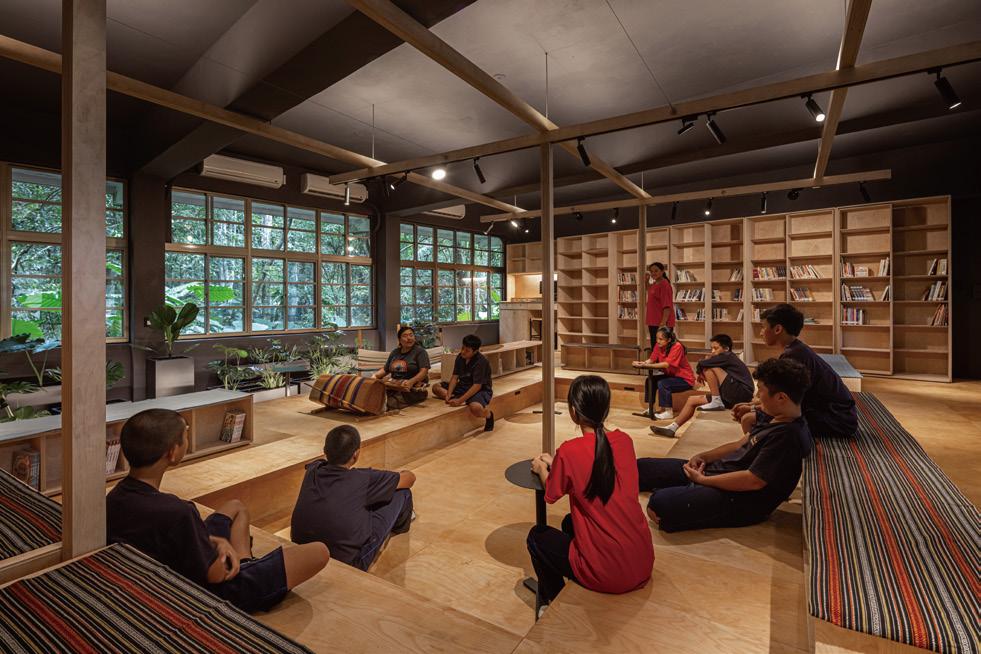
CASE STUDY II: Rebuild by Design
Rebuild by Design (RBD) was launched in New York in 2013 after Hurricane Sandy exposed the vulnerabilities of coastal cities to climate change. Spearheaded by HUD with support from the Rockefeller Foundation, the initiative invited interdisciplinary teams to work with communities to map risks and design adaptive strategies, securing nearly $1 billion in federal funding for flagship projects like Manhattan’s BIG U and Staten Island’s Living Breakwaters.
The impact of RBD has been profound. It shifted the paradigm from “defending against water” to “living with water,” blending flood protection with public space, ecological restoration, and social equity. While born from Sandy’s devastation in New York, RBD has since expanded to other regions across the country, serving as a model for resilience planning. It demonstrates how design can mediate complexity, surface
community knowledge, and create long-term value in the face of wicked problems. Visit their (https://reurl.cc/gY169z) to learn more.
Making is not merely a method or means to an end, but a generative process through which knowledge is produced and transformed. As designers engage with materials and tools, they must also stop and understand cultures and contexts. This creates an integrated practice of inquiry, leading to a deeper understanding of how the world is perceived, questioned, and ultimately built.
REFERENCES
Fincher-Kiefer, R. (2019). An introduction to the theory of embodied cognition. In R. Fincher-Kiefer, How the body shapes knowledge: Empirical support for embodied cognition (pp. 3–12). American Psychological Association. (https://psycnet.apa.org/doi/10.1037/0000136-001)
Cash, P., Gonçalves, M., & Dorst, K. (2023). Method in their madness: Explaining how designers think and act through the cognitive co-evolution model. Design Studies, 88, 101219. (https://doi.org/10.1016/j.destud.2023.101219)
Schon, D.A. (1983) The Reflective Practitioner: How Professionals Think in Action. Basic Books, New York.
Escobar, A. (2017). Designs for the Pluriverse: Radical Interdependence, Autonomy, and the Making of Worlds. Duke University Press.
Verganti, R. (2009). Design driven innovation: changing the rules of competition by radically innovating what things mean. Harvard Business Press.
Buchanan, R. (2019). Systems thinking and design thinking: The search for principles in the world we are making. She Ji: THe Journal of Design, Economics, and Innovation, 5(2), 85-104. (https://doi.org/10.1016/j.sheji.2019.04.001)
Crilly, N. (2025). Wicked Problems: Flexible Characterizations and Visual Representations. She Ji: THe Journal of Design, Economics, and Innovation, 11(1), 31-60. (https://doi.org/10.1016/j.sheji.2025.01.002)
Kaszynska, P., & Kimbell, L. (2025). Design Practice Research: Conditions and Outcomes. Design and Culture, 17(1), 49-70. (https://doi.org/10.1080/17547075.2024.2401240)
Iskander, N. (2018). Design thinking is fundamentally conservative and preserves the status quo. Harvard Business Review, 5(09), 2018.
Lee, K. (2021). Critique of design thinking in organizations: Strongholds and shortcomings of the making paradigm. She Ji: THe Journal of Design, Economics, and Innovation, 7(4), 497-515. (https://doi.org/10.1016/j.sheji.2021.10.003)
Liou, S., & Yang, C. H. (2021). Creativity in Design Thinking: Inspiring Sense-making and Thing-making. Chinese Journal of Psychology, 63(2), 121-142. (http://doi.org/10.6129/CJP.202106_63(2).0002)
Vega, L., Mäkelä, M., & Seitamaa-Hakkarainen, P. (2023). Listening to the sociomaterial: When thinking through making extends beyond the individual. Design Studies, 88, 101203. (https://doi.org/10.1016/j.destud.2023.101203)
Gottlieb, L. (2024). Relational sensitivity in participatory design. CoDesign, 20(3), 440-460. (https://doi.org/10.1080/15710882.2024.2317943)
Duan, Z. (2023). Attending to how practices come together: Situating design among relational practices. She Ji: THe Journal of Design, Economics, and Innovation, 9(1), 33-57. (https://doi.org/10.1016/j.sheji.2023.05.002)

In an era where AI informs decisions, immersive systems shape perception, and platforms have the power to either consolidate or redistribute influence, human–machine collaboration has become a fascinating frontier of creation, governance, and experience. It is also an ethically complex and challenging landscape. Given the rapid and unprecedented growth of technology, how can we ensure that progress remains aligned with our core human values and shared aspirations?
ALIGNED INTELLIGENCE
HUMAN-MACHINE SYNERGY
The rapid evolution of AI has moved beyond merely enhancing machine performance. Increasingly, AI is understood as comprising intelligent agents—entities capable of perception, learning, and autonomous action within complex, dynamic environments. Advances in machine learning and computational modeling have blurred the boundaries between traditional human–machine interaction and emerging forms of human–agent collaboration. This shift raises a critical question: How can designers shape these technologies in ways that reflect and reinforce human values?
A central issue is how AI might augment human design capabilities. Robert Sternberg defines Adaptive Intelligence as the ability not only to solve immediate problems but also to anticipate and address future challenges in real-world settings. This concept emphasizes the importance of survival and flourishing—not just of individuals, but also of communities and future generations. Adaptive intelligence is therefore both personal and collective, as human advancement has always been rooted in collaboration1
The emergence of AI technologies brings both opportunities and challenges to the field of design. Historically, technological innovation has often mirrored developments in human cognition. Understanding and strategically deploying AI as a design tool could significantly influence the future of human–AI collaboration. For example, the TDRI Research and Development team is building on the foundation of design-oriented adaptive intelligence to explore how AI tools can complement human creativity and ethics. By defining and coordinating these complementary strengths, they propose new frameworks for co-development and co-creation between humans and artificial agents. This approach reflects a humanity-centered commitment to ensuring that technological progress serves the public good.
Another key concern is how to foster optimal synergy in human–machine co-creation. Specifically, how does AI affect the Sense of Agency (SoA), the subjective experience of initiating and controlling one’s actions, in interactive digital environments? Intelligent agents are reshaping how people perceive and exercise agency. Users often attribute agency to AI systems based on their transparency, adaptability, and communicative abilities2. These characteristics influence user trust, engagement, and acceptance, underscoring the importance of ethical design and clear interaction in building effective human–AI partnerships. This synergy also raises questions around creativity and ownership. In what some have dubbed a post-plagiarism era, traditional intellectual property frameworks—designed to recognize individual contributions under capitalist models—may no longer be adequate. New approaches may be required to support collaborative creation and shared authorship, in line with the values of the sharing economy and a need for updated norms around intellectual property3.
More fundamentally, the rise of AI invites us to examine what new design capabilities it actually enables. Beyond ethical and social considerations, this inquiry is essential for achieving systemic integration and
long-term development. Emerging forms of human–AI collaboration suggest a shift from isolated human–AI interactions to multi-agent intelligent systems capable of generating domain-specific knowledge—for instance, in areas such as public discourse or urban resilience. These systems offer designers new ways to construct, organize, and apply knowledge4. Tools like AutoGen, for example, illustrate how multi-agent AI architectures can enable autonomous collaboration to solve complex problems. While many celebrate generative AI’s contributions to creativity, others warn against over-automation, which risks diminishing critical thinking and originality. A new paradigm suggests that the goal is not to outsource creativity to machines but to foster shared agency in shaping outcomes.
Despite AI’s vast potential, only a handful of major stakeholders; tech corporations, global political actors, academia, and civil society, are currently shaping the global discourse on its development. These actors are defining the values, priorities, and risks embedded in the technology. AI governance will ultimately determine whether these systems perpetuate extractive dynamics or help build more inclusive and equitable alternatives. To be trustworthy, outcomes must be explainable, auditable, and open to challenge, with humans retaining the authority to review and override AI decisions. There is also a growing movement toward more participatory governance, calling for the inclusion of communities most affected by AI. While these communities may not directly shape the technical development of AI models, they can and should have a voice in how AI is applied in society. Such participatory frameworks are essential for preventing AI from reinforcing or deepening existing social inequalities.
Today’s designers must go beyond simply building intelligent systems. They must ensure these systems behave in ways that people can understand, question, and trust. The goal is not to make machines seem human, but to recognize their autonomous capabilities while ensuring their development remains grounded in human needs, values, and well-being.

AI can be the wind in our sails. Where we go depends on how we navigate.
IMMERSIVE INTERFACES
Virtual environments are systems in their own right. As immersive technologies continue to evolve—such as augmented, virtual, and extended realities—we keep expanding the boundaries of what we can experience and imagine within these digital worlds. A multisensory approach recognizes that our physical sensations and spatial awareness deeply influence our emotions. Incorporating this understanding into digital environments allows us to explore how to design, speculate, and create meaning5. Simulating speculative futures within a metaverse framework provides deeper insights into systemic dynamics. These simulations can validate design interventions and support scenario modeling for emerging technologies. Designers can experiment with complex interdependencies, test hypothetical conditions, and explore the implications of innovation across diverse sociotechnical ecosystems, ultimately enhancing the foresight and adaptability of systemic design practices.
However, this power comes with significant risks. When technology shapes what we see, hear, and feel, it can embed hidden biases into our experiences, manipulate our emotions without our awareness6, exclude people with different sensory or physical abilities, and confine users within proprietary systems that limit autonomy. This challenges the authenticity of our experiences. Many users are unaware of how these systems operate or what data is being collected, which restricts their ability to make informed choices. This is particularly true of many virtual reality platforms, often owned and governed by single corporations. These platforms expand possibilities for exploration but also expose users to potential exploitation or harassment.
In response, forward-thinking designers are developing new approaches. Embodied interaction design focuses on how people actually move and sense within hybrid digital-physical spaces, emphasizing full-body experiences rather than just visual interaction. Multisensory design purposefully combines sound, touch, and spatial elements to create emotionally resonant, realistic, and accessible experiences, particularly for individuals with diverse sensory needs7. Speculative design also holds tremendous potential in immersive technology. It enables dynamic worldbuilding that brings wicked problems, like climate change, into tangible focus. Users can immerse themselves in projections of future cities and explore these scenarios firsthand. Even research practices are evolving. Multisensory ethnography, for example, uses multiple sensory modalities to capture the richness of lived experience, revealing cultural meanings that extend beyond verbal or visual representation. Collectively, these approaches help deconstruct perspectives and foster deeper understanding through immersive technology.
Immersive technologies reveal how digitally constructed virtual environments fundamentally reshape human experience. Design, in this context, serves to create more meaningful and inclusive experiences—an evolution of the traditional experience economy into both digital and physical systems. Brain-Computer Interfaces represent another emerging frontier, enabling new modes of interaction and environment creation8. Both immersive media and BCIs are significant both in how they influence human behavior and how designers can use them to preserve and express human values. These developments introduce further complexity.
Immersive environments are increasingly co-created by artificial intelligence and robotics, raising critical questions around agency, accountability, and authorship. As AI plays a growing role in cultural evolution9, it could either reinforce dominant narratives—resulting in a kind of linguistic colonization—or offer opportunities to promote cultural diversity by embedding multiple ways of knowing and sensing into digital environments. In this light, immersive design is not merely a technical challenge but a cultural one, crucial to protecting human creativity, cultural plurality, and collective values as we shape the systems of the future.
DECENTRALIZED DIGITAL COMMUNITIES
As we consider the rise of AI as an active agent and the growth of immersive digital interfaces, we must also examine the underlying infrastructure of digital life. While technology has expanded, it has simultaneously become more centralized. The most commonly used corners of the internet; search engines, messaging platforms, social media, and e-commerce—are dominated by a handful of corporations. These entities shape algorithms and user experiences that, whether intentionally or not, reinforce their own interests and subtly steer user behavior.
The rapid advancement of AI and immersive technologies calls for a fundamentally different digital operating system, one that prioritizes privacy and personal sovereignty across a wide range of applications. At the heart of this shift is a redistribution of power away from today’s Web2“ authorities.” It challenges extractive data models and attention-driven interfaces, and instead asks: What if digital platforms served people, not profit?
A new generation of digital communities is beginning to flip the script10. Platforms like Mastodon redistribute power by enabling users to choose or run their own servers, governed locally and free from ad-driven algorithms. Lens Protocol allows individuals to own their profiles and content directly through blockchain-based identities that move seamlessly across apps. Similarly, Matrix decentralizes messaging by allowing anyone to host encrypted servers, ensuring communication remains outside the control of any single corporation. Together, these platforms represent a decisive shift toward user-driven ecosystems, where design empowers individuals to shape their own rules, control their data, and co-create communities—rather than passively scroll through algorithm-curated content designed to maximize ad revenue.
In this light, designing digital platforms is not merely about building new apps within the existing paradigm but about enabling equitable participation in the digital world to come. These infrastructures offer communities the ability to collectively shape governance and establish shared norms.
“Technology is a system. It entails far more than its individual material components. Technology involves organization, procedures, symbols, new words, equations, and, most of all, a mindset.”
— Ursula Franklin, The Real World of Technology
RELATED WORK:
Embodiment is a
powerful exercise
for generating
knowledge and new ideas. Jump to page 42 to learn more about material making as epistemic practice.
A NEW INTERNET ARCHITECTURE
Web3 is the next evolution of the internet, focusing on decentralization, blockchain, AI, and user-owned data to create secure, transparent, and personalized experiences. Designers can use these principles in crafting Web3 interfaces and user experiences. (https://reurl.cc/Nx9bQ5)
Usability: Help users navigate unfamiliar decentralized systems.
Active Guidance: Make navigation clear and persistent.
Newbie Mode: Lower barriers for nontechnical users.
Consistency:
Ensure visual and functional coherence across experiences.
Community:
Design for collective use and governance.
Transparency: Ensure users understand what’s happening and why it matters.
Data Provenance:
Visibly show where data lives on the blockchain.
Transactions: Clarify what actions are on-chain.
Record Keeping and Code: Make backend logic open and readable.
Trust: Build perceived reliability, especially for sensitive interactions.
CASE STUDY I: Human–AI Collaboration through Tools and Experiences
TDRI, in collaboration with the Ministry of Economic Affairs, is spearheading a national initiative to drive the digital transformation of the design industry. The program focuses on developing AI-assisted methods and tools tailored to the unique needs of the design field. It also aims to establish co-creation models for human–AI collaboration and to advance a forward-looking talent cultivation program that strengthens the core competencies of next-generation designers.
At TDRI, AI is viewed as a creative partner that supports designers in navigating complex systems. Tools such as the Vision Design Generator and the Product and User Data Explorers facilitate human–machine co-creation, helping designers translate data into scenarios and surface insights, while ensuring that creative authorship remains human-led.
To engage the broader public in this dialogue, TDRI launched the “Design × AI” exhibition, which showcased generative technologies across spatial, interactive, and lifestyle design. By exploring themes of authorship, governance, and identity, the exhibition framed design not merely as the creation of artifacts but as a means of shaping human–machine synergy, emphasizing transparency, participation, and equity.
Visit TDRI’s (https://reurl.cc/1OqXyG) for more information.
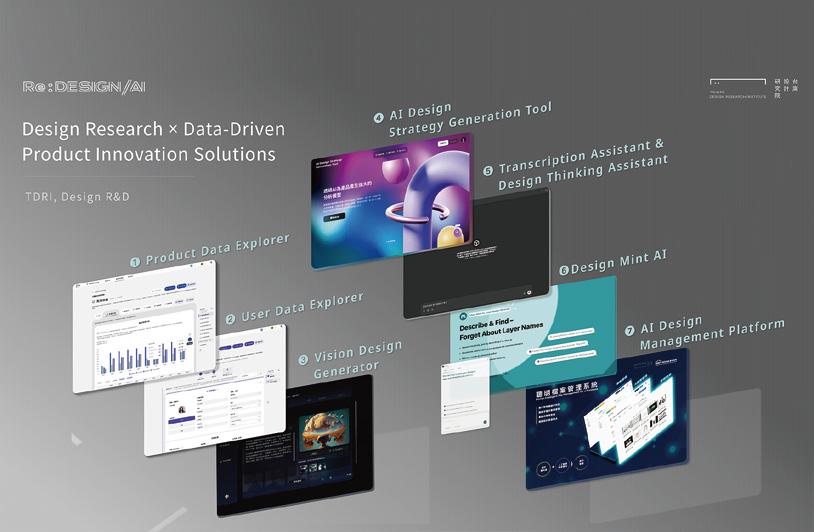
CASE STUDY II: MIT Tangible Media Group
At MIT’s Media Lab, the Tangible Media Group explores how digital information can be experienced through the body, not just the eyes. Projects like inFORM, a table that transforms data into moving 3D shapes, and Materiable, which simulates textures like clay or water, show how touch, movement, and spatial awareness can deepen our engagement with technology. Their vision of “Radical Atoms”–digital information that behaves like physical matter–pushes interaction design beyond screens into multisensory, embodied experience.
This research highlights both opportunity and risk. By shaping how we see, touch, and feel, immersive interfaces expand how we can design, speculate, and create meaning. But they can also embed bias, exclude different bodies, or centralize control in proprietary systems. The Tangible Media Group’s work
demonstrates how designers can use new forms of embodiment to build richer worlds of interaction while grappling with the ethical stakes of technologies that blur the line between humans and machines.
Visit their (https://reurl.cc/2QV6K9) to learn more.
As AI emerges as a co-creative agent and immersive technologies blur digital and physical worlds, design is no longer about centering the human. Instead, it situates us within broader sociotechnical systems, where creativity and technological potential can be directed toward addressing inequality and extractivism.
REFERENCES & CASES
Sternberg, R. J. (2019). A theory of adaptive intelligence and its relation to general intelligence. Journal of Intelligence. (https://doi.org/10.3390/jintelligence7040023)
Salatino, A., Prével, A., Caspar, E., & Bue, S. L. (2025). Influence of AI behavior on human moral decisions, agency, and responsibility. Scientific Reports, 15(1), 12329. (https://doi.org/10.1038/s41598-025-95587-6)
Eaton, S. E. (2023). Postplagiarism: Transdisciplinary ethics and integrity in the age of artificial intelligence and neurotechnology. International Journal for Educational Integrity, 19(1), 23. (https://doi.org/10.1007/s40979-023-00144-1)
The World Economic Forum (2025). Rethinking the user experience in the age of multi-agent AI. (https://reurl.cc/mY8AoY )
Kuhlmann, N., Thomas, A., Barnstaple, R., & Blain-Moraes, S. (2025). “We are all just humans participating”: the role of an embodied approach, virtual space and artistic media in shaping participants’ experience in a co–design process. CoDesign, 21(1), 34-51. (https://doi.org/10.1080/15710882.2024.2361286)
Peng, Z., Desmet, P. M., & Xue, H. (2023). Mood in Experience Design: A Scoping Review. She Ji: THe Journal of Design, Economics, and Innovation, 9(3), 330-378. (https://doi.org/10.1016/j.sheji.2023.09.001)
Case: Veliz Reyes, A., Varga, M. N., Bradwell, H., Baxter, R., Jones, R. B., Maudlin, D., GOALD, & projects, I. (2024). Codesign principles for the effective development of digital heritage extended reality systems for health interventions in rural communities. CoDesign, 20(2), 295-312. (https://doi.org/10.1080/15710882.2024.2349588)
Case: (https://reurl.cc/K9Rdq9)
Case: (https://reurl.cc/yAGDXE)
Chen, H., Zhou, C., El Saddik, A., & Cai, W. (2025). Decentralized Web3 Non-Fungible Token Community for Societal Prosperity? A Social Capital Perspective. Proceedings of the ACM on Human-Computer Interaction, 9(2), 1-36. (https://doi.org/10.1145/3710956)
As demonstrated in the previous five chapters, designers are entering a world marked by increasing complexity and rapid change. In response, the landscape of design education is evolving—embracing systems thinking, cross-sector collaboration, and entrepreneurial leadership. Design schools are fostering the mindsets and skills necessary to navigate uncertainty, empowering designers not only to respond to challenges but also to lead through them.
LEARNING TO NAVIGATE
COMPETENCY IN COMPLEX SYSTEMS
As an independent discipline, design is uniquely characterized by its ability to integrate knowledge from diverse fields to support issue-oriented problem solving. What distinguishes design research is its capacity to orchestrate interdisciplinary and cross-domain integration, generating synergistic effects in both identifying and addressing complex challenges, particularly those grounded in real-world contexts. This approach inherently deals with authentic, context-dependent problems, often situated within intricate systemic conditions. For example, the European Union’s early promotion of Living Labs exemplifies this orientation toward real-life experimentation and co-creation within complex environments. Some scholars have argued that design thinking should be recognized as a form of liberal education, highlighting its role as a holistic, value-driven practice that fosters the pursuit of human meaning and societal well-being. What further sets design apart is its ability to incorporate multiple ways of knowing and to think creatively, enabling practitioners to imagine possibilities beyond the status quo.
This unifying thread runs through design schools and educational programs worldwide. Many emphasize the importance of applying a systems-thinking lens to complexity, positioning systems design not as a specialized or advanced skill, but as foundational to design education1. The themes discussed earlier—whether related to care, governance, or transition—already underscore design’s entanglement with complex interdependencies. Building on this trajectory, two mid-20th-century frameworks—General Systems Theory (GST) and Cybernetics—offer the theoretical foundation for understanding systems as open, adaptive, and shaped by feedback. GST demonstrated that phenomena across biology, engineering, and the social sciences can be understood as interconnected systems governed by shared principles. Developed in parallel, Cybernetics provides a complementary framework focused on communication and control within systems. Together, these perspectives enrich systems thinking within design education, particularly in understanding open systems and feedback loops. Open systems, a central concept in GST, are characterized by their continuous exchange of energy, information, or other resources with their environment. Feedback loops, essential mechanisms within open systems, occur when outputs of a system are reintroduced as inputs, creating circular rather than linear relationships.
A healthy democratic system provides a clear example of an open system. Election cycles function as feedback loops: if a leader makes popular decisions (system outputs), citizens may choose to re-elect them (positive feedback). Conversely, if a leader makes unpopular decisions, voters may elect a new candidate (negative feedback), thereby seeking to stabilize the system in line with public interest.
This systems perspective underpins assemblage-centered design education. A wide array of tools, such as causal loop diagrams, service blueprinting, and multi-stakeholder network analysis is now regularly used in design curricula2. These tools are not just analytical instruments; they serve as platforms for collaborative dialogue. As outlined in Making as Knowing, they help foster shared understanding among stakeholders and reveal previously unrecognized interconnections and feedback loops. They also highlight the intersection of systems thinking and relational sensitivity. A designer, therefore, must be more than a technical systems thinker—they must be an adaptive one. This adaptability is cultivated by recognizing how relationships form and evolve across cultural, technological, and geographical boundaries. Only when this intuitive understanding is refined can designers identify leverage points for strategic interventions capable of influencing broader systemic outcomes.
Considering that open systems are generally regarded as more resilient than isolated, closed ones, how can we
RELATED WORK:
Navigating futures requires a deep knowledge of both the past and present. Go to page 20 to learn more about hauntology and how the “ghosts” of unrealized futures impact the present day.
integrate future-oriented practices into our design work? In this context, design extends beyond systems analysis—it becomes a practical tool for navigating uncertainty and shaping possible futures. Design fosters the ability to envision multiple scenarios, assess risks, and translate insights into present-day actions, a competency known as futures literacy. This empowers individuals, organizations, and communities to build resilience and drive sustainable transformation. A range of tools supports this futures-focused design approach. Temporal mapping, a conceptual cousin of hauntology, situates current design decisions within longer historical arcs, revealing how past injustices and future uncertainties shape today’s systemic choices3,4 Scenario planning and ethnographic futures research combine scenario exploration with ethnographic methods to understand how people across different cultural contexts imagine and anticipate the future5 Driver mapping helps designers identify the key forces shaping a system and locate leverage points that could influence future outcomes. Together, these anticipatory practices bridge speculation and action, positioning design as a critical discipline for building more ethical and resilient futures.
This shift toward future-oriented systems is also transforming design education. Across leading institutions, foresight and futures methods are being integrated into core curricula. Students are challenged to imagine, prototype, and amplify alternative realities, developing futures literacy as a lever for transformation. These programs encourage learners to rethink the relationships between humans, technology, and ecosystems within the context of global transitions6. The outcome is a new generation of designers trained to anticipate multiple scenarios, navigate uncertainty, and drive innovative systems change. Crucially, this work isn’t about utopian dreaming or dystopian warnings; it’s about developing the agility, accountability, and vision needed to act effectively in a rapidly changing world

The foundation of the present
Current advancements and technologies
Future possibilities and diverse pathways
Shaping Tomorrow, Rooted In Today.
DESIGN-RELEVANT SCHOOLS OF SYSTEMS THEORY
According to the Future of Design Education Initiative (https://reurl.cc/XQyZ90), 21st-century designers must understand key schools of systems thinking to navigate complexity and tackle ill-defined challenges across domains.
Cybernetics Communication, control, and feedback in systems.
System Dynamics Models of stocks, flows, and feedback loops to simulate system behavior.
Clinical Feedback Loops: Daily monitoring systems for care7
Sensor-enabled ecosystem intervention integrating AI-driven feedback loops8
Project Cybersyn: Chile’s real-time economic planning model9
The LIKE program: participatory system dynamics modeling for a healthier environment10
Network Science Analyzes relationships, topology, and systemic behavior in connected entities (social, digital, biological).
Health & Well-being
Modeling the Dynamics of Climate Change11
Visualize the outcomes of various policy scenarios12
Environment
Social & Organizational
FROM SILOS TO SYNERGIES
It’s no longer possible for designers to work in isolation in the 21st-century. As societal challenges grow more complex and interconnected, design practice is shifting toward deep, cross-disciplinary collaboration. Today, designers partner with engineers, policymakers, social scientists, and community
Using network insights to prioritize vaccinating highly connected individuals13.
Visible Network Labs: Mapping collaborations for systems change15.
Global Forest Watch: Using networked data to monitor deforestation in real-time14.
advocates to navigate complex systems and bridge diverse ways of knowing—because no single discipline can address today’s urgent issues alone. Collaborative approaches are reshaping how knowledge is shared and applied, fostering richer, more responsive engagement with real-world problems. This includes interdisciplinary methods, which bring together diverse areas of expertise, as well as transdisciplinary approaches, which go further, by co-creating entirely new frameworks that transcend individual fields. These approaches highlight a core strength of design: the capacity to envision beyond the present. The ability to see new suns
To support this evolution, new learning models are emerging that cultivate a cross-boundary mindset among design practitioners. Educational institutions are reimagining curricula to embed collaboration not just as a method but as an ethos. Design education now fosters interdisciplinary hubs, connecting science, engineering, architecture, planning, the humanities, and business, in which design acts as a catalyst for positive change16. At the same time, academic institutions are increasingly partnering with industry to ground design learning in real-world contexts. These collaborations expose students to live challenges and data systems17, emphasizing practical experience over siloed expertise. Such models prepare designers to coordinate actions across sectors and build shared visions for change. To lead in a complex world, designers must learn to think together (making sense of complexity), act together (coordinating across differences), and build together (co-creating systems, tools, and structures for lasting impact).
DESIGN LEADERSHIP
Traditionally, a designer’s identity was rooted in specific skills such as sketching, prototyping, aesthetic judgment, and credentials from prestigious institutions. Today, that model is being redefined. Designers are now increasingly expected to lead change, often without formal authority as traditionally understood in Western contexts, across systems, organizations, and industries. This expanded role blends strategic thinking, entrepreneurial initiative, and civic responsibility. To meet these evolving demands, designers must be able to build teams, drive innovation, and deliver measurable impact. As a result, strategic competencies like systems leadership and entrepreneurial action are becoming integral to design education.
This shift toward a broader identity—as systems leaders and value creators—encourages a mindset of continuous learning, adaptability, and proactive leadership. It also underscores the need to recognize diverse pathways for developing design skills, from traditional degree programs to flexible, practice-based alternatives. In response, micro-credential learning models are gaining momentum18. Programs from Designlab Academy, IDEO U, and platforms like Coursera and Domestika are helping to expand access and support lifelong development. While these emerging formats reflect a broader move toward more inclusive and adaptive education, they must be implemented with care. Just as design thinking lost much of its theoretical foundation through inconsistent application in the corporate world, micro-credential learning risks the same fate if not thoughtfully integrated into the design education ecosystem.
CASE STUDY I: Young Designers’ Exhibition (YODEX)
Held for over two decades, YODEX, Asia’s largest platform for emerging design talent, has evolved into a vibrant hub for cross-sector collaboration, systems leadership, and strategic skill development. Organized annually by the Taiwan Design Research Institute, the exhibition brings together more than 10,000 student designers and industry leaders from across the region. At the core of YODEX is the Industry-Academia Cooperation Program, which connects students with businesses, NGOs, and public agencies to co-create real-world design solutions.
More than just a talent showcase, YODEX serves as an innovation incubator, embedding entrepreneurial thinking, venture creation, and systems foresight into design education. Students engage in six-month mentorships, business modeling, and prototype testing, with many projects even progressing to mass production or commercial launch. Recent editions have introduced matchmaking platforms, circular design awards, and interdisciplinary co-creation labs, supporting graduates as they transition from learners to leaders.
With international participation from institutions like Harvard and Chulalongkorn University, along with more than 1.7 million online exhibition views, YODEX exemplifies how design education can cultivate adaptive, impact-driven identities. Visit (https://reurl.cc/Omn599) for more information.
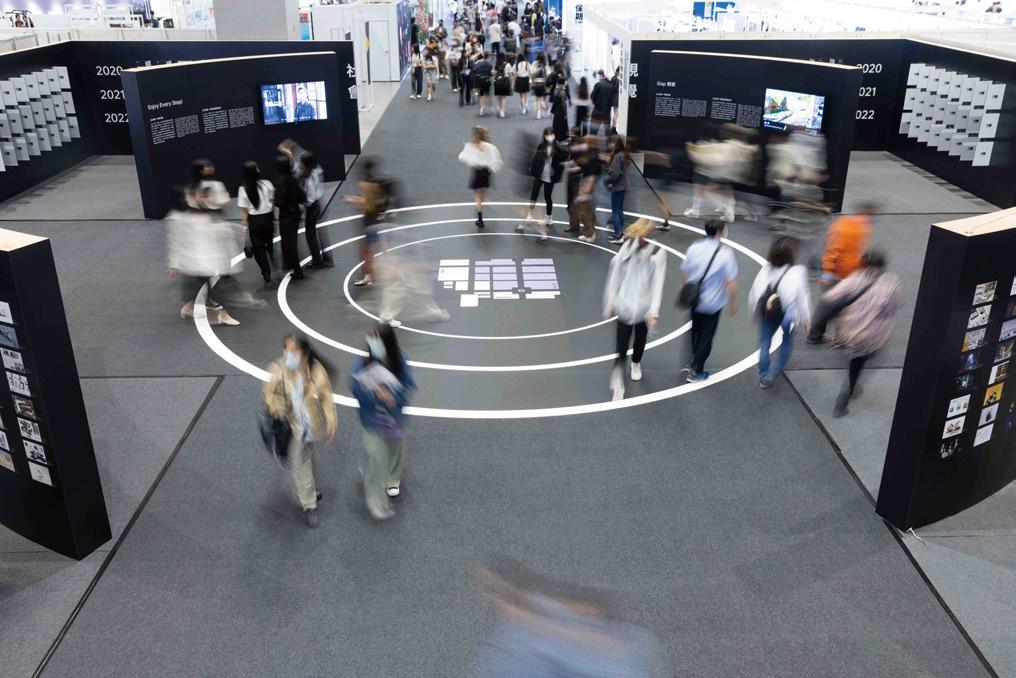
CASE STUDY II: Carnegie Mellon’s “Environments” track
At Carnegie Mellon University, the “Environments” track in the Bachelor of Design program exemplifies how design education is shifting toward systems and futures literacy. Rather than focusing solely on physical form, students learn to design hybrid spatial systems where digital and physical (i.e., “phygital”) layers interact through sensors, projection mapping, AI, and immersive technologies. This approach requires students to think in terms of interdependencies and flows of information, echoing the systems theory foundations of open systems and cybernetics.
The track also emphasizes anticipatory practices, asking students to prototype not only for today but for emerging and speculative futures. Projects often integrate temporal and cultural dimensions, encouraging students to see how histories, social patterns, and technologies shape the environments of tomorrow. By blending disciplines such as architecture, interaction design, and computing, the program cultivates
cross-boundary collaboration and positions graduates as leaders prepared to navigate complexity and guide systemic change. Visit (https://reurl.cc/WO7A7D) to learn more.
As complexity becomes the norm, a new generation of designers must lead with agility, think across systems, and act with purpose. Design education doesn’t stop at graduation. It prepares leaders for a lifelong learning journey that involves navigating uncertainty and shaping what’s next.
REFERENCES & CASES
Davis, M. (2023). Preface to the Special Issue on the Future of Design Education. 9(2), 91-96. (https://doi.org/10.1016/j.sheji.2023.07.001)
Dubberly, H., & Pangaro, P. (2023). How Might We Help Designers Understand Systems? She Ji: THe Journal of Design, Economics, and Innovation, 9(2), 135-156. (https://doi.org/10.1016/j.sheji.2023.05.003)
Kambunga, A. P., Smith, R. C., & Winschiers-Theophilus, H. (2024). Extending temporalities in design: designing pluriversal futures. CoDesign, 20(1), 36-54. (https://doi.org/10.1080/15710882.2024.2363914)
Case: Zuljevic, M., Roosen, B., & Huybrechts, L. (2023). Thinging with the past: co-designing a slow road network by mediating between the historical landscape and the design space. CoDesign, 19(3), 194-213. (https://doi.org/10.1080/15710882.2022.2038633)
Noel, L.-A., Ruiz, A., van Amstel, F. M., Udoewa, V., Verma, N., Botchway, N. K., Lodaya, A., & Agrawal, S. (2023). Pluriversal futures for design education. She Ji: THe Journal of Design, Economics, and Innovation, 9(2), 179-196. (https://doi.org/10.1016/j.sheji.2023.04.002)
Case: TU Delft Programme, Design for Emerging Sustainable Futures.(https://reurl.cc/9na6qn)
Case: (https://reurl.cc/Y3p4ba)
Case: (https://reurl.cc/Nx9boQ)
Case: (https://reurl.cc/5RzDLq)
Case: (https://reurl.cc/ekAGbQ)
Case: Olabisi, L. S., Azhar, G. S., Abbott, M., & Lempert, R. J. (2018). Participatory Modeling of Climate Change Impacts on Public Health in Long Beach, California: Discussion from a Workshop Hosted by the RAND Frederick S. Pardee Center for Longer Range Global Policy and the Future Human Condition. Rand Health Quarterly, 8(1), 4. (https://reurl.cc/6qxj3Z)
Case: (https://reurl.cc/Nx9bm9)
Case: (https://reurl.cc/z5EpRy)
Case: (https://reurl.cc/XQyZMg)
Case: (https://reurl.cc/mYARO9)
Case: MIT-Morningside Academy for Design. (https://reurl.cc/Lnq5OL)
Case: North Carolina State University and SaS Product Design Collaboration. (https://reurl.cc/qY6nWN) Davis, M., De Bari, J., & Maschi, S. (2023). Credentialling: Educational Pathways in Design. She Ji: THe Journal of Design, Economics, and Innovation, 9(2), 117-134. (https://doi.org/10.1016/j.sheji.2023.03.001)

CONCLUSION
The idea of a paradigm shift can be daunting. It carries profound implications for existing structures of power, knowledge, and approaches to problem solving. At its core, it requires the difficult task of shifting mindsets, both individually and collectively. Before assemblage-centered design can take root, people must believe in its validity, recognize its potential, and understand how it benefits us all. Fortunately, history offers many examples of successful paradigm shifts. Imagine first accepting that the Earth is spherical rather than flat. Consider the collective effort required to move from the concept of divine rights to human rights. We have undergone fundamental transformations before—and we can do so again.
The goal of assemblage-centered design is to foster a practice grounded in care, justice, and systems thinking. This shift has become necessary because design—deeply entangled with human history, has contributed to many of the crises and failures we now face. These issues stem from a legacy of colonialism and a capitalist hegemony of engulfment: systems that dominate and consume rather than nurture and sustain. While these problems are widely acknowledged as urgent, many current practices continue to reinforce outdated paradigms. They perpetuate power imbalances, disrespect the natural world, and push our systems toward a critical tipping point.
We must now reckon with the legacy of our past choices and understand how they constructed the products and systems we see today. This reckoning involves several key steps. First, we must question dominant assumptions and explore how they connect to the anomalies occurring within our systems. Second, we need to imagine what different systems could look like through speculative design, decolonial practices, and systems mapping. Finally, we must act with intention and humanity within the realms we care about; education, health, transition planning, to name a few–and become active agents of assemblage-centered design.
Periods of deconstruction and disorder that precede transformation are inevitably marked by uncertainty and disorientation. Yet these moments are also generative, opening space for rethinking and renewal. This book invites readers to move beyond these unsettled conditions and envision the contours of a more constructive, hopeful future. In doing so, it explores the major concepts currently shaping global design discourse at this pivotal moment in history. Above all, we hope this work sparks new thought and inquiry within the field. The tools and frameworks presented here are not definitive solutions, but rather instruments for examining power structures and imagining how design practices might evolve to address today’s complexities. As with any attempt to tackle wicked problems, this report is shaped, and limited by our own experiences and biases. We found that Kuhn's scientific paradigm shift framework provides an intuitive lens for analyzing current design discourse, as it provides space for examining the history of the field and the contemporary issues calling for its expansion. The reality is that there are many ways to dissect and analyze these conversations.
In addition to Kuhn’s framework, this research uses several philosophical frameworks for understanding the paradigm shift in design. These include ontology (being), epistemology (knowing), methodology (practice), and teleology (purpose). Each has shifted as design has moved from an artifact-centered to a human-centered and now an assemblage-centered era. Together, they guide us in questioning how schemas within design have adapted over time.
ONTOLOGY (WHAT we design)
Understanding design’s reality. What does design recognize as its domain of influence?
Systems, Ecosystems, AI, and NonHuman Entities
Cognition, Behavior, and Emotions
Human-Centered Assemblage-Centered
Artifact-Centered
Physical Artifacts
Production -Oriented
Human Experience -Oriented
Planetary well-being, Ethical Responsibility, and Resilience
TELEOLOGY (WHY we design)
What is the purpose of design?
EPISTEMOLOGY (HOW we know)
Understanding design. What is the predominant way of thinking in design?
Relational and Systemic
Positivism and Functionalism Constructivism
Linear and Deterministic
Iterative, and user-driven
Participatory, Anticipatory, and Transdisciplinary Approaches
METHODOLOGY (HOW we do)
Applying design. How is design conducted?
We also wante to highlight the interconnected nature of design concepts. This research illustrates how domains such as emotional resonance, ethical AI, and expanded notions of care are deeply intertwined. A shift in one area inevitably influences another, and solutions can often be shared and adapted across domains.
The paradigm shift in design is far from complete—it continues to evolve, opening new horizons and raising fresh questions. Beyond the six themes we have outlined, what other directions and issues are emerging? More importantly, how might we imagine and initiate new forms of innovative action that push the boundaries of design research and practice even further?
While we’ve included cues throughout the book to emphasize these connections, the relationships between concepts are not meant to be prescriptive. Much like the complex systems of our world, these interconnections resist simple, one-to-one mappings. Instead, they form dynamic networks that look something like this:
Design in Systems Map
This interactive map charts the relationships between six major themes and 19 emerging topics outlined in this publication. It allows you to trace evidence and explore the contemporary design discourse that underpins our research. This visualization also presents a unique opportunity for analysis. We invite you to use it to identify strong connections and explore potential gaps across topics. In doing so, you may discover new opportunities for research and practice within this emerging era of assemblage-centered design.
Explore this network by scanning the QR code.

Achieving such a paradigm shift calls for courageous leaders and practitioners who are willing to step beyond established conventions and embrace new modes of thought. They must guide a rising generation through transformative change—reshaping both the discipline of design and the broader systems it informs. As you cultivate your own ideas and partnerships, continue to broaden your perspective, stay responsive to emerging contexts, and seek opportunities to build systems grounded in meaningful relationships, mutual respect, and enduring harmony.
“There is nothing new under the sun, but there are new suns.”
— Octavia Butler
GLOSSARY
Actor-Network Theory (ANT)
A framework that views the social world as a network of both human and non human actors. It emphasizes that all these elements have agency and influence.
Learn more at:
https://reurl.cc/A3Y6Ze
Assemblage Thinking
A way to view systems, like a team or a city, as dynamic, temporary collections of diverse parts—people, objects, and ideas. It focuses on how these parts connect and disconnect, constantly reshaping the whole. Learn more at: https://reurl.cc/0WR4Lk
AutoGen
An open-source framework developed by Microsoft that enables the creation and coordination of multi-agent AI systems. AutoGen demonstrates how autonomous agents can collaborate to complete complex, domain-specific tasks, offering a glimpse into new forms of systemic knowledge construction. Learn more at: https://reurl.cc/axAZ6G.
Brain-Computer Interface (BCIs)
A system that establishes a direct communication pathway between the human brain and external devices, bypassing traditional output mechanisms like speech or gestures.
Causal Loop Diagrams
Visual tools that map feedback loops within systems, showing how variables influence one another over time.
Circular Economy
An economic model that aims to eliminate waste and extend the life cycle of materials by designing for reuse, repair, remanufacturing, and recycling. Learn more at: https://reurl.cc/6qxjAk
Civic Hackathons
Time-bound, collaborative events where diverse participants co-create digital or service-based solutions to public challenges.
Collaborative Storytelling
A participatory process where multiple people co-create narratives, fostering shared meaning and collective understanding.
Collective Intelligence
The distributed knowledge of people, data, and technology to co-create more informed and inclusive solutions. Learn more at: https://reurl.cc/Nx9bz5
Counter-archives
Alternative collections of memory and knowledge that challenge dominant historical narratives and include marginalized voices or perspectives.
Cybernetics
The study of systems of communication and control in machines, living organisms, and organizations, focusing on feedback and regulation.
Decolonial Design
A design framework that confronts the colonial roots of modern design, seeking to dismantle oppressive power structures and center Indigenous, local, and historically excluded knowledge systems in design processes and outcomes.
Design Fiction
A method that uses plausible, fictional artifacts or prototypes to explore potential futures. Its purpose is to provoke critical discussion about the social, cultural, and ethical implications of emerging technologies and societal trends. Learn more at: https://reurl.cc/nYAm6v
Design Justice
A framework that seeks to challenge structural inequalities by prioritizing the voices, needs, and leadership of marginalized communities in the design process. Learn more at: https://reurl.cc/rYAEdb
Discursive Design
A design practice where the primary goal is to generate critical discussion and reflection, not just create functional objects. Designs act as prompts to challenge assumptions, explore new ideas, and provoke debate on social or ethical issues. See a case at: https://reurl.cc/MzV37X
Driver Mapping
A foresight evaluation technique that identifies and analyzes key factors, or 'drivers', which are likely to influence future outcomes. See a toolkit at: https://reurl.cc/pYAaDl
Embodied Cognition
A theory that views thinking as grounded in physical experience. In design, it refers to how interaction with materials, tools, and spaces shapes cognitive processes.
Embodied interaction Design
An approach to design that emphasizes the body’s role in interacting with technologies, focusing on movement, perception, and physical experience.
GLOSSARY
Emic Perspective
An insider’s point of view grounded in the values, beliefs, and meanings of a specific cultural or social group.
Emotion-Driven Design
A strategic approach that places emotions at the core of the creative process. It aims to elicit specific feelings, responses, or actions from the audience by carefully crafting visual elements, storytelling, and user experiences. Learn more at: https://reurl.cc/ekAMxM
Ethnographic Futures Research
A foresight method that combines ethnographic inquiry with scenario exploration to understand how people in different cultural contexts imagine and anticipate the future. See a case at: https://reurl.cc/9naDEa
Feminist New Materialism
An interdisciplinary framework that challenges dualisms like mind/body and human/non human by emphasizing the agency of matter. Learn more at: http://dx.doi.org/10.4135/9781526421036
Futures Literacy
The ability to imagine, explore, and assess multiple possible futures to better inform present-day decisions. It helps individuals and organizations navigate uncertainty, anticipate change, and question assumptions about what is possible, probable, and preferable. Discover more about the global futures literacy community at: https://reurl.cc/EQeVnk
General Systems Theory (GST)
A framework for understanding complex systems by examining how parts interrelate and function as wholes across disciplines.
Hauntology
A concept referring to the persistent presence of the past and the ghosts of futures that were promised but never materialized. It explores how cultural and technological remnants of a past era continue to influence and haunt the present. See a case at: https://reurl.cc/gY1Rzb
Healing-Centered Design
A holistic approach to care and community engagement that emphasizes collective well-being, cultural identity, and resilience. Learn more at: https://reurl.cc/RkmYj6
Interdisciplinary
An approach that integrates knowledge and methods from distinct disciplines, encouraging collaboration while maintaining each field’s core perspective.
Micro-credential
A short, focused learning program that certifies the acquisition of specific skills or knowledge in a given area.
Multi-agent intelligent systems
Systems composed of multiple AI agents that interact, cooperate, or compete to accomplish complex goals. Unlike single-agent models, they can collectively generate domain-specific knowledge and simulate systemic processes, such as urban planning or public opinion modeling.
Multisensory Ethnography
Research method that engages multiple senses to capture the richness of lived experience, revealing cultural meanings that go beyond verbal or visual representation. See a case at: https://reurl.cc/Y3pY9D
Multispecies Ethnography
A research approach that includes non human species as active participants in cultural and ecological systems. See a case at: https://reurl.cc/XQyA40
Multi-stakeholder Network Analysis
A method to map and assess relationships among diverse actors in a system, highlighting power, influence, and collaboration dynamics.
Oral Histories
Recorded personal narratives that capture lived experiences, memories, and perspectives, often used to preserve knowledge excluded from official records.
Orange Technology
A human-centered approach to innovation that frames technology as a means to enhance well-being, care, happiness, and social connection, extending sustainable development to include the quality of human life.
Ontological Design
A discipline focused on how designed objects, spaces, and systems shape human experience and ultimately the human being itself. Learn more at: https://reurl.cc/daAQ2M
Pluriversal Design
A design approach that embraces multiple coexisting worldviews, traditions, and ways of knowing, challenging universalist assumptions. Learn more at: https://doi.org/10.21606/drs.2024.295
Policy Labs
Experimental spaces that apply design thinking, systems approaches, and stakeholder collaboration to prototype, test, and evaluate public policies. Learn more at:
https://reurl.cc/Y3pYXa
Post-plagiarism
The idea that in human–AI co-creation, originality and authorship can no longer be attributed to a single individual. It calls for new frameworks of shared authorship and collective creativity beyond traditional intellectual property systems.Learn more at:
https://reurl.cc/DOEqX6
Reflection-in-Action
A concept describing how professionals think and adapt their actions while they are engaged in a task or situation.
Regenerative Design
A design philosophy focused on restoring and revitalizing natural and social systems. See a case at: https://reurl.cc/7VmKj5
Relational Ethics
An ethical approach grounded in relationships, emphasizing care, mutual respect, responsibility, and situated understanding in contexts involving power asymmetries, co-creation, or long-term engagement. Learn more at: https://doi.org/10.4135/9781412963909.n378
Research-through-Design (RtD)
A research approach that utilizes the methods, processes, and artifacts of design practice to generate new knowledge and understanding. Learn more at: https://reurl.cc/XQyAER
Scenario Planning
A method for strategically anticipating change by constructing distinct future scenarios and analyzing their potential implications to inform present-day decisions and planning. See a toolkit at: https://reurl.cc/x3AN6Z
Service Blueprinting
A method for visualizing the components of a service—customer actions, frontstage interactions, backstage processes, and support systems.
Temporal Mapping
A technique for visualizing events, processes, or patterns across time to identify sequences, trends, and temporal relationships.
Transdisciplinary
A mode of collaboration that transcends disciplinary boundaries, co-creating new knowledge by integrating academic insights with lived experience, community knowledge, and practice-based expertise.
Transition Design
A design framework that addresses long-term societal transitions by aligning design interventions with desirable futures. Learn more at: https://reurl.cc/3M9Kel
Trauma-Informed Care
An approach to service and system design that recognizes the widespread impact of trauma, prioritizes safety and trust, and seeks to avoid re-traumatization. Learn more at:
https://reurl.cc/nYAmr6
Urban Living Labs
A real-world testing environment where stakeholders collaboratively develop, test, and evaluate innovative solutions to urban challenges. Learn more at: https://reurl.cc/rYAErr
Web2
The second generation of the internet, marked by interactive, user-generated content, social media, and participatory platforms.
Wicked Problems
Complex, interconnected challenges that are difficult to define and have no clear or definitive solution, often involving conflicting values and shifting requirements.
Worldbuilding
A creative and strategic design practice that constructs imagined or alternative worlds through narratives, visuals, and prototypes to explore possible futures, question assumptions, and inspire new ways of thinking or acting. See a case at: https://reurl.cc/K9R84q
DESIGN IN SYSTEMS
An Emergent Paradigm Shift in Research and Practice
Chi-Yi Chang
President, TDRI
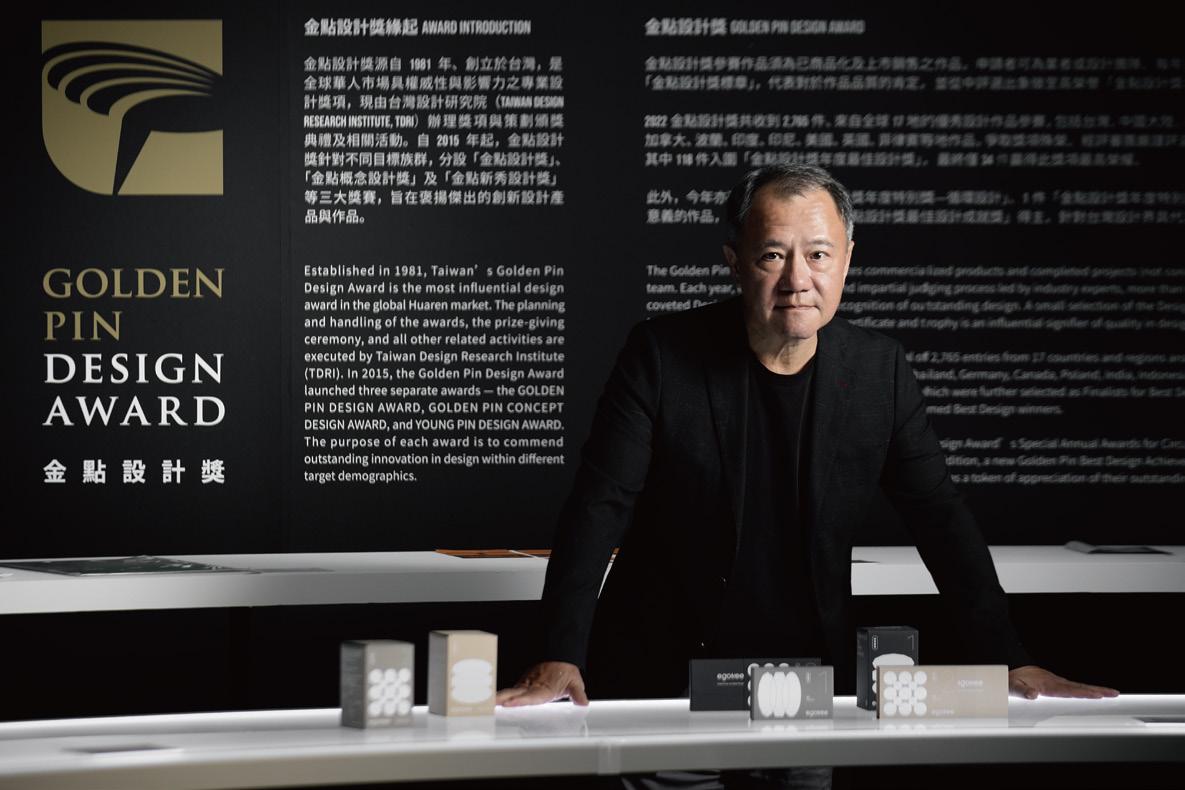
Shyhnan Liou
Vice President of Research and Development, TDRI
Ingrid P. Hernandez Sibo
Senior Researcher of Research and Development, TDRI
Eric Charles Singleton
Graduate Design Researcher Stanford d.school
Issuer Chi-Yi Chang
Chief Editor
Shyhnan Liou
Authors
Ingrid P. Hernandez Sibo
Shyhnan Liou Eric Charles Singleton
Graphic Design
WHITEr Design Studio Eric Charles Singleton
Publisher Taiwan Design Research Institute
Taiwan Design Research Institute
No. 133, Guangfu South Road, Xinyi District, Taipei City (Songshan Cultural and Creative Park)
Tel: +886 2 2745 8199
Fax: +886 2 3322 9028
Website: www.tdri.org.tw
ISBN 978-626-99781-0-6
Published in November, 2025
© 2025 Taiwan Design Research Institute. All rights reserved.