

The Education Action Group acknowledges that this publication, alongside all the activist work we do, is conducted on stolen Gadigal land. Sovereignty was never ceded.
We acknowledge and pay our respects to the generations of First Nations activists, community leaders, and communities who have been at the forefront of fights for social justice. We echo demands for selfdetermination, with First Nations lands, skies, and waters back in First Nations hands.
The SRC and the Education Action
Group is based on the University of Sydney, an institution which is complicit in the gentrification of Redfern, a landmark site of First Nations struggle, activism, and advocacy. Redfern was the birthplace of Black Theatre, struggles by Aboriginal communities in Redfern that spearheaded systems that lead to healthcare for all people residing in Sydney as a result of their activism and advocacy, the Redfern Aboriginal Tent Embassy, and overall, a staunch legacy of resistance and community that affects all our lives today.
Always was, and always will be, Aboriginal land. Solidarity forever!
Hello everyone! You are currently reading the 2026 edition of Countercourse — the Education Action Group’s annual publication. In it, you will come across a variety of topics important to us, from the fight for a free Palestine, worker’s rights and unionism, and international solidarity with workers.
The Education Action Group is the largest of the collectives at USyd. Over the years, we have run many campaigns. You may remember the strikes in 2023, for example! We supported staff in their strikes and helped build student power and support during an Enterprise Bargaining year. Other campaigns we push forward include the Stop the Cuts campaign, Scrap the CAP, and many more, all reflective of our collective’s strong activist orientation and most of all, proof of the power of student unionism and what we can do together.
If you are interested in joining the Education Action Group (and we hope sincerely this publication convinces you to!), please follow us at @usyd.education.action on Instagram! Over there, you’ll find information on upcoming meetings, actions, rallies, and opportunities to get involved with us throughout the year.
In solidarity, Jasmine and Dana Ta
Jasmine Al-Rawi
Dana Kafina
Dana Kafina
Jasmine Al-Rawi
James Fitzgerald Sice
Luke Mesterovic
Tobias Hansson
Ananya Thirumalai
Jasmine Al-Rawi
Tobias Hansson
Luke Mesterovic
Tobias Hansson
Ananya Thirumalai
Max Dao
Dana Kafina
Vince
Tara Marocchi
Jasmine Al-Rawi has had enough.
Getting accepted into a university course begins a perceived exciting journey of education, curiosity and freedom. You get to enrol into a degree of your choosing, explore interesting electives and leave the stifling environment of high school.
However, the real experience of higher education today is nothing other than disappointing. Lecture theatres are overflowing, HECS debts are rising and course choices are shrinking. Education has become nothing but a high-paying revenue stream for University executives and their business partners. The lengths our universities have been going to, to increase their bottom lines has been astounding.
2025 saw some of the most significant course cuts and restructures in recent history. The University of Technology Sydney cut 167 courses which meant axing over 1000 subjects in order to make $100 million in savings. This meant 121 academics are losing their jobs. The University of Wollongong sacked 276 staff members and abolished languages, cultural studies, science and technology studies. At Western Sydney University, 400 staff jobs are on the chopping block, while management spent $3k every day for 5 weeks on one consultant.
The University of Sydney ranked among the worst in the country for student experience and placed last for student support services. Rather than addressing the problem by spending more money on staff, the university has suggested that it is a problem of over-staffing and is floating cutting student services staff. Clearly USYD management are looking for any reason to follow the trend of huge cost cutting measures that several universities have already done in the past year.
To add to the already catastrophic situation facing staff, over the past decade at least 28 universities have been caught systematically underpaying staff. As of October 2025, Australian universities owed roughly $400 million in unpaid wages to staff.
These are not minor payroll mistakes. And the cuts and restructures are not some unavoidable consequence of economic conditions. They are deliberate cost cutting measures used to fulfill a for-profit business model that treats education as
a commodity and universities as degree factories.
So while hundreds of staff have been sacked and thousands more going without wages that they are legally owed, our university executives have been raking in million dollar salaries and pouring billions into lucrative assets such as property developments and stocks in weapons companies. Not to mention the millions of dollars spent on consultancies like KPMG and Deloitte who recommend the restructures to management and get paid again to audit their own work.
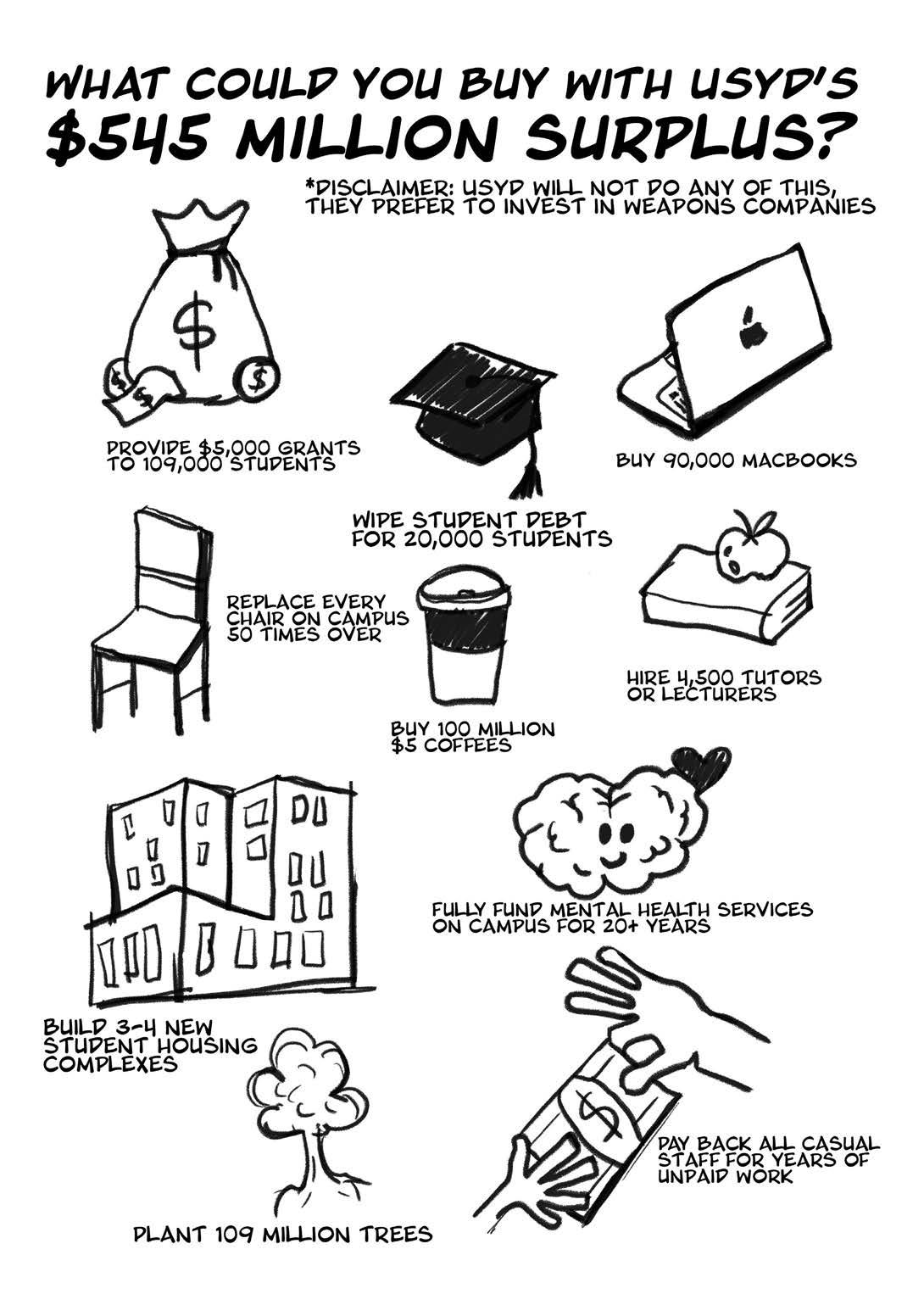
The University of Sydney has had several years of uninterrupted profits, with the uni recording a budget surplus of $550 million dollars in the 2024–2025 business year. Our Vice Chancellor Mark Scott just gave himself a $150,000 pay rise, fattening his annual salary to over $1.3 million. And as of 2023, Australian universities had roughly $110.8 billion in total assets. There are no excuses for sky-high student accommodation costs, course cuts or staff cuts when universities are sitting on a pool of cash and assets.
University executives have not acted alone to degrade our education. Long term decline in government funding, and industry directed funding have incentivised universities to raise course fees and funnel students into fields such as defence research. In order to gear industry around Australian imperialism and support the A$368 billion AUKUS deal, the Western Australian state Labor government has announced $2.5 million for its public universities to develop short courses “to meet the defence industry’s workforce needs.” This demonstrates one of the roles universities play under capitalism: they develop research for corporations and governments to develop new technology to make greater profits or carry out the business of war more effectively.
All of this leads to the importance of organising a fight-back. Staff are not robots, students are not cash-cows. Unpaid overtime, faculty-wide generic courses and eternal debt should not be the standard of the university experience. If we are going to challenge the neoliberal university, we have to have no illusions in the benevolent vice-chancellor and unite as students as staff.
We’re the ones who make the universities run, so we should run the university.
Biggest Opp University 2024–2025
For Course Cuts, Staff Cuts, Suppression of Free Speech, and Weapons Ties
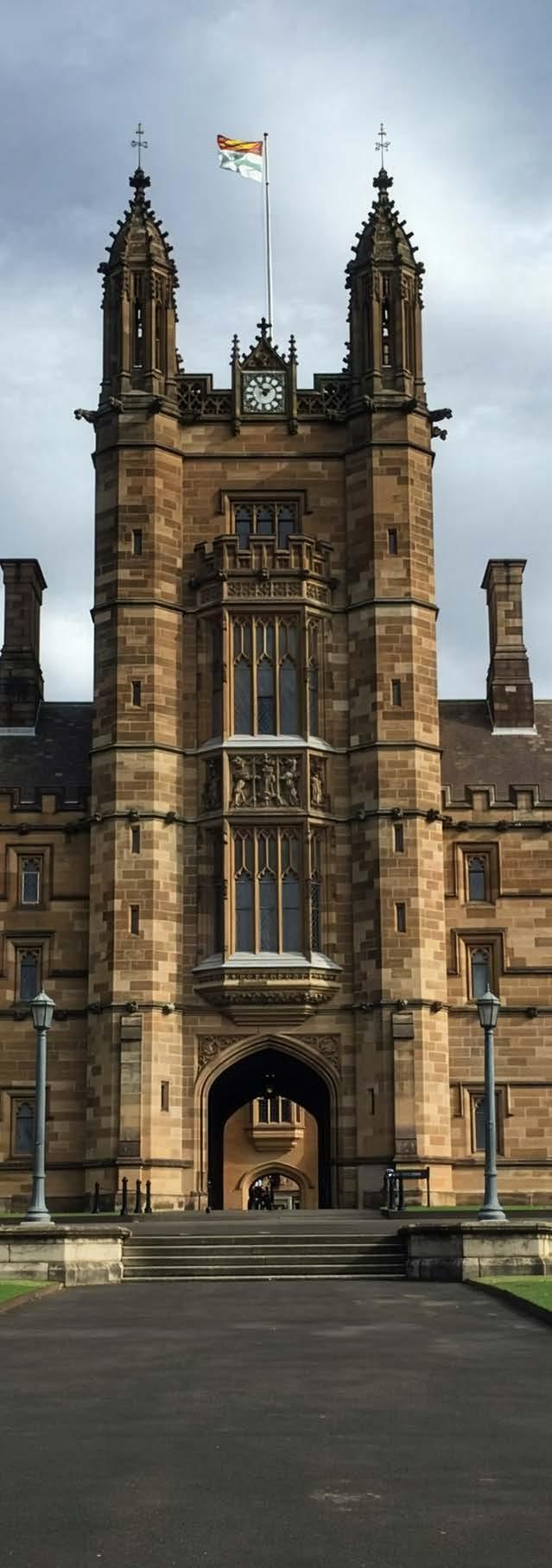
Staff at Sydney Uni are in crisis—but if you look at the uni’s earnings report you wouldn’t know it. The last few years have seen business booming for the uni bosses, yet wage theft, overwork and unit cuts have staff skirting the brink of disaster—something which directly affects the quality of education for students. It should come as no surprise that in 2026, USYD staff are preparing to strike for better wages and conditions. Here’s everything you need to know about the upcoming industrial enterprise bargaining period at the uni.
An EBA (enterprise bargaining agreement) is an agreement negotiated between an employer and a union, which sets the wages, rights and conditions of workers in a workplace. In Australia, every employer has their own separate EBA, set to last for a fixed number of years, negotiated during special bargaining periods. USYD’s EBA was last negotiated in 2022-2023 and it’s up for renewal later this year.
EBA negotiation periods usually bring with them heated debates about what workers want to demand: better pay, better conditions, etc. This is democratically discussed in the unions, where a log of claims is drawn up, to be sent off to the bosses. Some within the union, typically the union officials, will try to moderate the claims, to put forward demands that don’t upset management. Others will fight to make the most radical demands, to argue for real gains irrespective of what the bosses think. This is a struggle, and the outcome sets the terrain for negotiations going forward.
When a log of claims is decided, it’ll be sent to management for them to consider. If the demands are conservative, the bosses might just ask to negotiate a few tweaks here and there, and the whole agreement can be drawn up behind closed doors between union officials and management. However, if radicals in the union succeed in pushing for real demands, the bosses tend to be more hostile.
Now, the question becomes: what do we do if they refuse our demands? Do we tone them down? Or do we take industrial action and hit the bosses where it hurts — in their wallets?
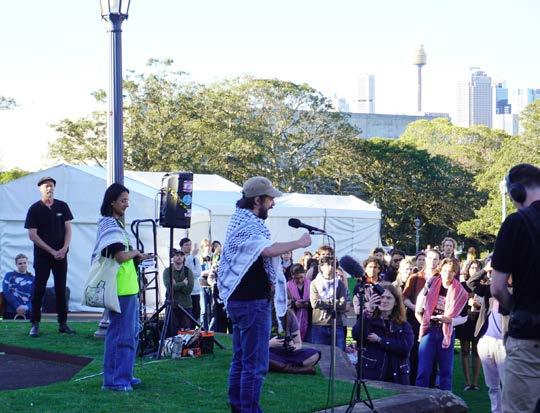
What does this industrial action look like?
Typically, it looks like a strike of some form.
A strike is the single most powerful weapon in the workers’ arsenal. It means cutting off our employers from the source of all their profits: our labour. If workers come together and refuse to work nothing can function. This is a nightmare for the bosses. It causes their accounts to haemorrhage lost earnings. Because the overriding logic behind the corporate university is profit, strikes can force them to make concessions they’d never give up voluntarily
Unsurprisingly, the previous EBA negotiations at USYD in 2022-2023, 2017 and 2013 saw workers going on strike.
But the bosses don’t just roll over and give in when strikes begin. They fight them with everything they have. One way in which they do this is by attempting to convince workers to break ranks and go to work. Striking workers don’t get paid, so the bosses will
leverage their poverty, desperation, or career aspirations to get them back to work. This is very dangerous.
The effectiveness of a strike depends on its scale and depth. It’s a collective effort. If some workers break strike lines, “scabbing” on the strike, management can outlast the strikers, forcing them back to the negotiating table. Scabbing is, at the end of the day, an act of selfish betrayal, selling out your fellow workers for your own self interest.
To stop workers from scabbing, strikers may adopt the tactic of the picket line, a literal line of workers (and supportive students) who physically stop anyone from undermining the collective struggle by scabbing. This happened at USYD in 2022-2023, 2017 and 2013, and it may well happen in 2026. Strikes are a battle of wills. With confidence, stamina and the right leadership, workers can force management to give in, to accept their demands, and cede real gains. This is the logic behind pushing for radical demands and for strikes. There is no other route to a better university for staff and students alike.
The officials at the top of the national NTEU have placed a cap on wage claims for university workers, limiting our demands to a 20% pay rise over the life of our EBA. Due to inflation, this means accepting our lost pay. To improve our real wages, we need to make higher demands, incorporating these demands into our log of claims, which will go to management in a few months. For now, rank and file NTEU staff are organising an open letter to the national executive, which has so far been signed by over 200 staff members nationwide. If we can pressure the union leadership into overturning the cap, we can make radical pay demands, opening up the possibility for a proper strike when the EBA negotiating period begins after June 1, 2026.
Mark Scott and the uni bosses have shown zero willingness to improve the situation of staff, and
any radical demands will likely meet with resistance. So, in the meantime, staff and students need to prepare for a real fight. For students, this means getting involved with the Education Action Group and standing in solidarity with staff.
Collective struggle is the only antidote to the gutting of our education, our wages and our conditions.
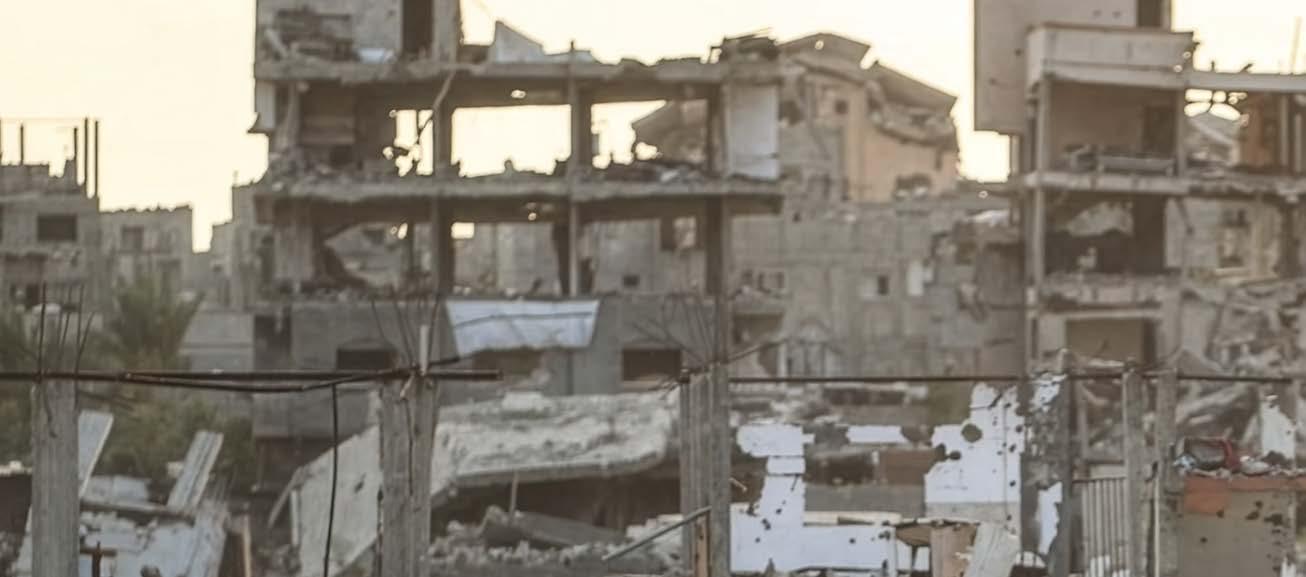
Palestine is not yet free
By Devansh Julka
If the past two years of livestreamed genocide in Gaza have taught us anything, it’s that the institutions that posture as brokers of peace and order have blood on their hands. Our governments, media, and universities, under the guise of neutrality, are deeply complicit in the killing, dispossession and dehumanization of the Palestinian people, part of a rotten system that necessitates war and genocide.
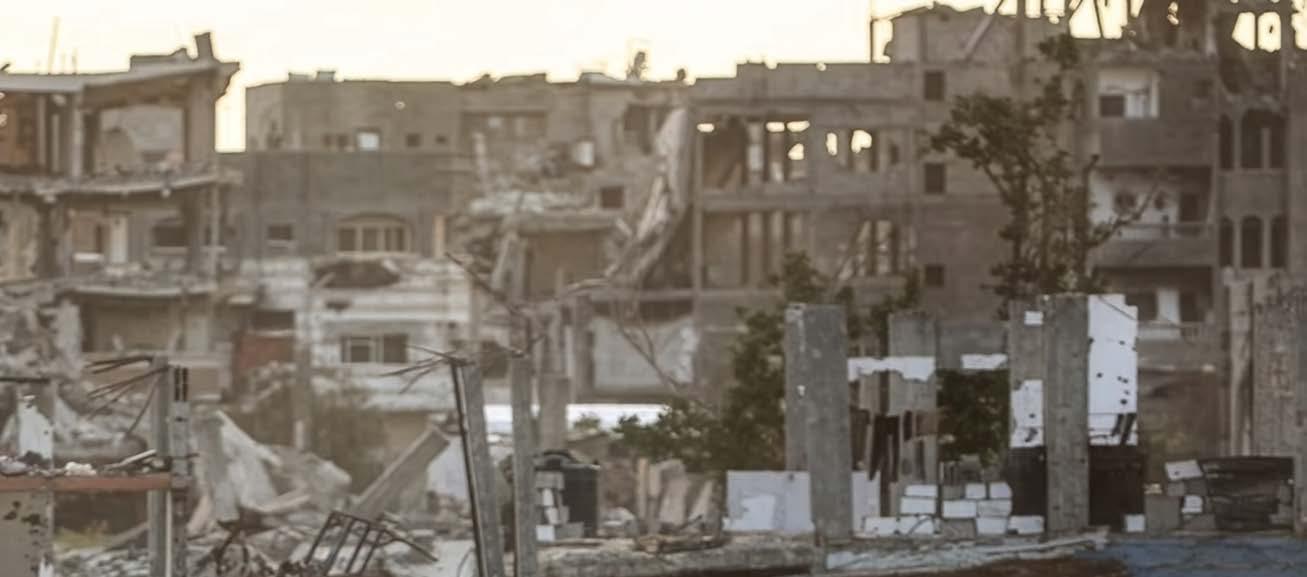
Since the implementation of Donald Trump’s so-called “peace plan” in October 2025, at least 463 Palestinians have been killed by Israeli attacks. Thousands more have been injured or displaced, forced to endure harsh weather conditions in leaky tents. The blockade on humanitarian aid and essential goods still stands. Israel has barred 37 aid groups from operating in Gaza and the West Bank. The conditions outlined by Trump’s plan do nothing to dismantle the siege that has corralled millions of Gazans into an open-air prison, to end the illegal occupation of the West Bank, or to return the millions of Palestinians displaced by Israel to their ancestral lands. Meanwhile, at the World Economic Forum in Davos, Trump announced the official appointment of a “Board of Peace”--a board made up of billionaires and war criminals like Tony Blair, the butcher of Baghdad, ex-prime minister of the UK and one of the chief culprits behind the invasions of Iraq and
Afghanistan. The architects of war and destruction in the Middle East are now positioning themselves as neutral stewards of the region, supposedly striving for peace.
We should be under no illusions about the nature of this plan. It in no way provides reconciliation or justice for the last two years of genocide, let alone the last 78 years of brutal Israeli oppression. Instead, it functions as a distraction, a means of pushing any discussion of Palestinian liberation back into the fringes of society. The hope of our ruling class is that the world considers this genocide over, another bloody chapter ended, a sad story to gather dust in the history books.
“The task ahead of us is clear. We need to continue the fight for Palestine, to build a mass movement that can dismantle the institutions that have facilitated and gladly backed a genocide.”
However, so far, the attempts of our governments to push Palestine off the agenda have failed. Since October 2023, we’ve seen millions across the world take to the streets to protest Israel’s atrocities in Gaza. They’ve taken a stand against a system that treats human life as disposable in the pursuit of profits and imperialist domination. And for many of those protesting, Palestine has become a lightning rod for deeper resentment towards the system.
In Australia, we’ve seen historic demonstrations in solidarity with the Palestinian people and in opposition to the Labor government’s rhetorical and material support for the genocide. 300,000 people
marched across the Sydney Harbor Bridge in August, despite the NSW government’s attempts to block the protest. Weekly rallies have been consistently held all over the country.
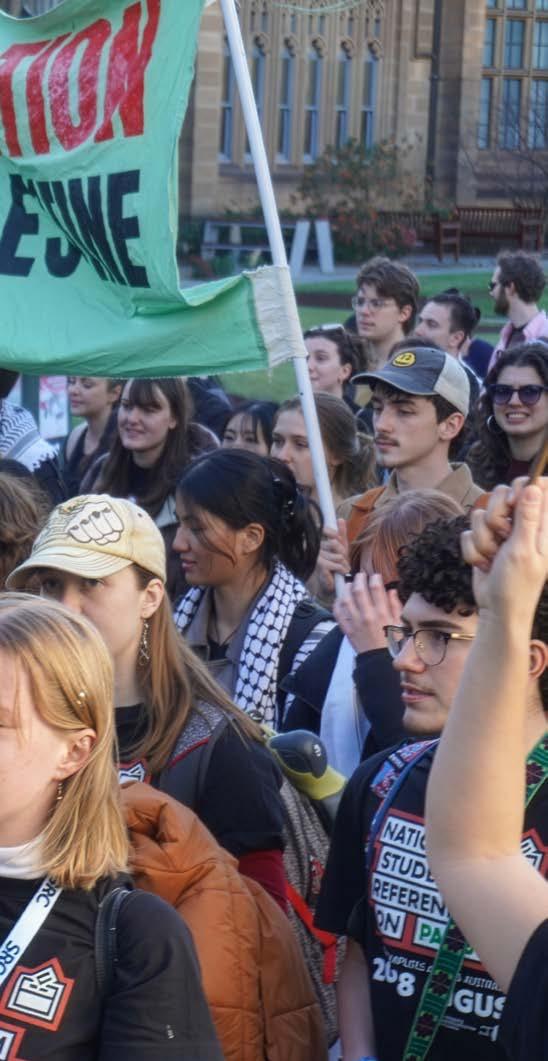
Encampments were set up at universities in 2024, with students exposing their ties to weapons companies, demanding that our institutions divest and take a stance against the genocide. These demonstrations, rallies, and encampments have been indispensable in shifting public opinion and radicalising a new generation of young people.
In the face of these mass demonstrations, the Australian government has stuck to its guns. It has refused to end its participation in the supply chain of F35 fighter jets to Israel, and still provides political cover for the genocide. It slanders the millions of ordinary people who oppose Israel’s crimes, and has moved to restrict our rights to protest and speak against the atrocities in Gaza. Far from simply being pushed by the far right and the racist Murdoch press, this offensive has been spearheaded by the Labor Party. It is part of a unified ruling class effort to suppress opposition to a genocide that it materially benefits from.
This resistance shows that protests alone are not enough. In Italy, general strikes were called in solidarity with the Sumud flotilla delivering aid to Gaza, demanding a blockade on weapons shipments to Israel. These industrial actions saw hundreds of thousands of workers stop work and take to the streets, with thousands more mobilizing in support. To hit the ruling class where it hurts, this is the path that must be taken: only by directly refusing to produce profits for the bosses and to participate in the production and proliferation of weapons, can our governments be forced to end their complicity in genocide.
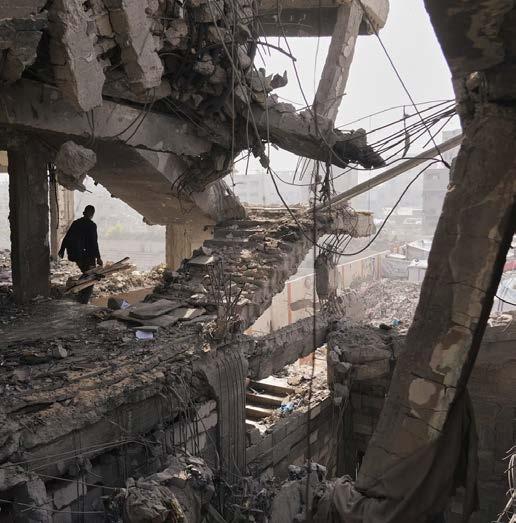
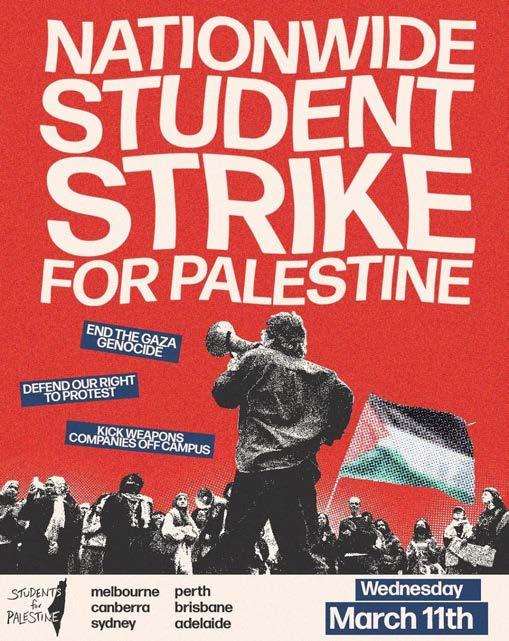
The task ahead of us is clear. We need to continue the fight for Palestine, to build a mass movement that can dismantle the institutions that have facilitated and gladly backed a genocide. Anything short of this would be allowing the criminals who run our system to keep their blood-soaked hands on the levers of power scot-free.
Max Dao
Two years into a genocide in Gaza, USYD’s commitment to profiting off mass murder has become painfully obvious to all those on the left. Despite the momentous National Student Referendum organised by Students for Palestine last year, in which 5000 students came out across Australia to demand an end to our universities’ ties to weapons companies backing the genocide, USYD’s complicity has not ended. This article aims to unveil the specifics of their weapons ties and how they contribute to not just the genocide in Gaza, but also a more bloodthirsty capitalism across the world.
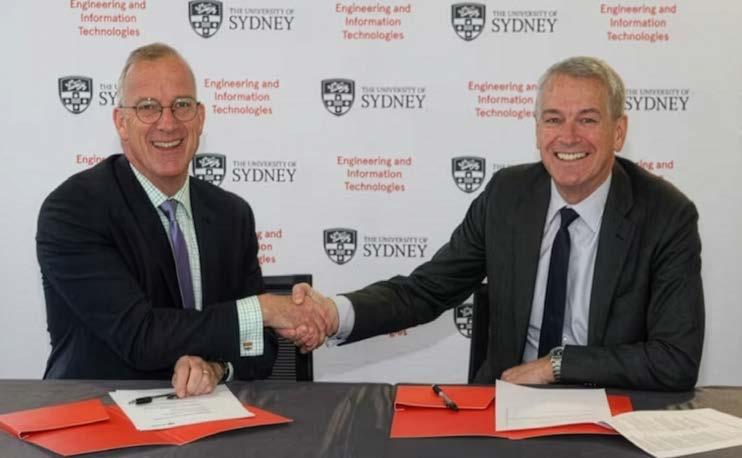
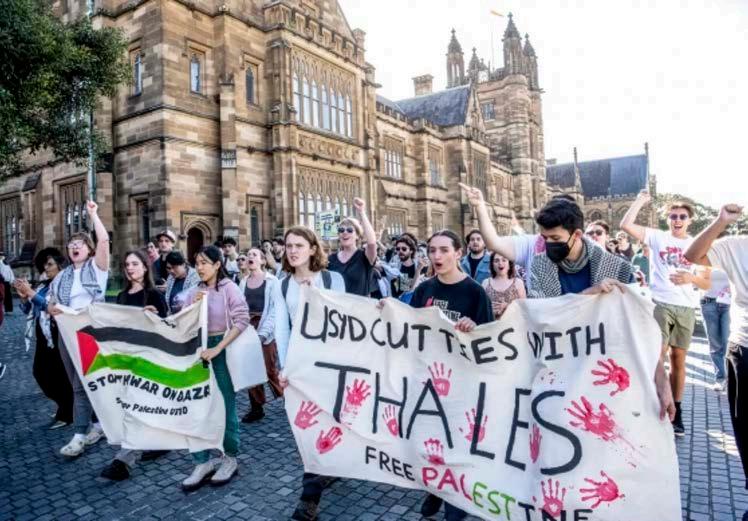
USYD maintains a long-standing partnership with Thales, the sixth largest weapons company in the world. In partnership with Israeli arms manufacturer, Elbit Systems, Thales produces the Watchkeeper Drone, used to target aid workers in Gaza, including Zomi Frankcom, a Palestinian-Australian killed by Israel in the World Central Kitchen massacre. Our university conducts heat-mapping research with Thales, research that is incorporated into the weapons systems of the IDF, allowing them to find and target Palestinians in densely populated areas of Gaza. Elbit System on the other hand, is notorious for using the killing of Palestinians as early as the 2000s to market their weapons as battle-tested.
Unfortunately, USYD’s not alone in keeping ties with weapons companies; almost all Australian
universities have proven totally morally bankrupt with their support for arming a genocide over the last two years. However, USYD’s brazenness makes it one of the most egregious culprits. The most obvious example is that of our previous Chancellor, Belinda Hutchinson. Whilst Hutchinson was in office, she also happened to be chair of the board of Thales. As a “total coincidence”, USYD signed a memorandum of understanding between her two businesses in 2017, during her tenure, strengthening their collaboration and in the process netting huge profits for the university and weapons bosses. It was during Hutchinson’s term as Chancellor that University management tried relentlessly to shut down the Gaza solidarity encampment in 2024. After she stepped down from her position that year, one might ask if USYD did anything to rectify her egregious open support for weapons profiteering and genocide. The answer to that is: yes! They named the
nicest building on campus, the commerce building, after her: the cherry on top of a genocidal cake.
However, the complicity does not end there. USYD’s financial records reveal that it has shortterm investments in multiple weapons companies, including Boeing, Lockheed Martin, Raytheon, Raphael (another Israeli weapons manufacturer) and more. These are companies heavily implicated in the Gaza genocide, and they were all present at the Indo-Pacific weapons conference held at the ICC in Darling Harbour from November 4th to 6th. This was a convention sponsored and co-organised by the NSW government for weapons companies to shamelessly network, count their profits, and showcase the very latest in murder machinery. To make this connection even more egregious, USYD ran a seminar at this conference, showing off their own research to prospective investors.

This is a horrifying development when fit into the trend of violent militarisation and resurgent far right politics around the world. The live-streamed genocide in Gaza has been completely normalised by the media and politicians, and the risk of a major regional or even global war breaking out is growing rapidly. Military budgets are on the rise worldwide. Weapons company stock values are ballooning. Only days into 2026, Donald Trump had already unleashed a violent attack on Venezuela, kidnapping their president and killing 100 people. The violence of capitalism will not contain itself to just Palestine, and if left unopposed, Israel’s genocide in Gaza will not be the last we witness in our lifetimes. Gaza is a testing ground for technologies that may one day be turned on all of us. This is a harrowing reality, the stakes of which the left must rise to meet.
However, amid all this horror, there has been mounting resistance. In 2024 at USYD, we kickstarted the solidarity encampment movement in Australia, helping to make Palestine a mainstream issue
in society. We followed it up with a massive Student General Meeting of around 700 students, voting against USYD’s complicity, replicated again with the 2025 National Student Referendum. Off-campus, Sydney saw the largest march for Palestine in Australian history, as 300,000 people took to the Harbour Bridge in protest.
Gaza is revealing in grotesque detail the cruelty and depravity of the capitalist system. It is inspiring a new generation of
activists to throw themselves into the fight for a better world.
Now is the time for all those serious about Palestinian liberation to get organised and join Students for Palestine in the struggle against our university’s complicity in genocide and the weapons industry.
1965
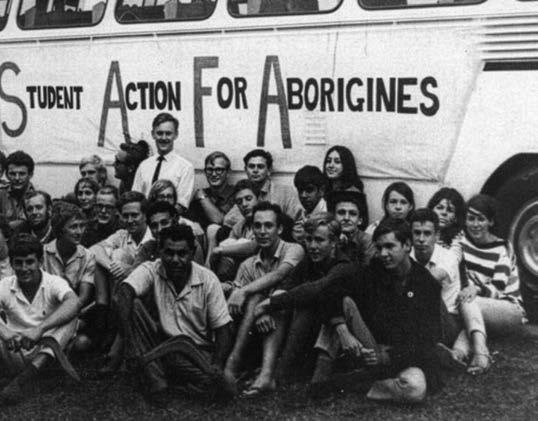
What began as a group of 29 University of Sydney students embarking on the “Student Action for Aborigines (SAFA) Bus Trip” to rural New South Wales towns with no route or expectations has, over time, become a famous campaign known and celebrated as the — “melodramatically” named, according to Freedom Rider Aidan Foy — “Freedom Ride.”
The SAFA group, led by Charles Perkins, embarked on a Freedom Ride through regional NSW to highlight and protest against discrimination and apartheid against First Nations people.
1969
Students protest conscription and the Vietnam war.
The first SGM held by the SRC in 1971 was called in response to the Springbok rugby tour, the national team of then-apartheid South Africa. While South African apartheid and the Springbok tour is now widely condemned and socially unacceptable, it was once less clear cut. The tour was heavily protested across Sydney, Adelaide, Brisbane and Melbourne — led largely by university activists. Anti-apartheid rallies were often met with violence from Nazi counter-protestors.
1983
A group of students, including now-PM Anthony Albanese, climbed the Quadrangle clock tower to protest cuts to the Political Economy Department.
Professor Frank Stilwell and Professor Ted Wheelwright had been fighting for years to establish a unique department of political economy, which became successful in 2008.
2001
Protest on Parramatta Road by the National Union of Students calling for an end to government funding cuts and corporate control of universities.
The 2007 SGM led by the Education Action Group to condemn conservative attacks on student unionism from the Howard government.
The Sydney College of the Arts (SCA) was turned from its own faculty into a FASS department in 2016. To protest the plan to close the school and relocate to the main campus, protestors occupied the SCA Dean’s Office for 65 days.
Protestors against education cuts and fee hikes were chased down Eastern Avenue by riot cops. The 21 students were each fined $1,000 for breaching public health orders which prohibit gatherings of more than 20 people.
22 months of NTEU bargaining between staff and the University, with 9 days of strike action. Students and staff shut down the University with pickets at all major University entrances, 2022–23
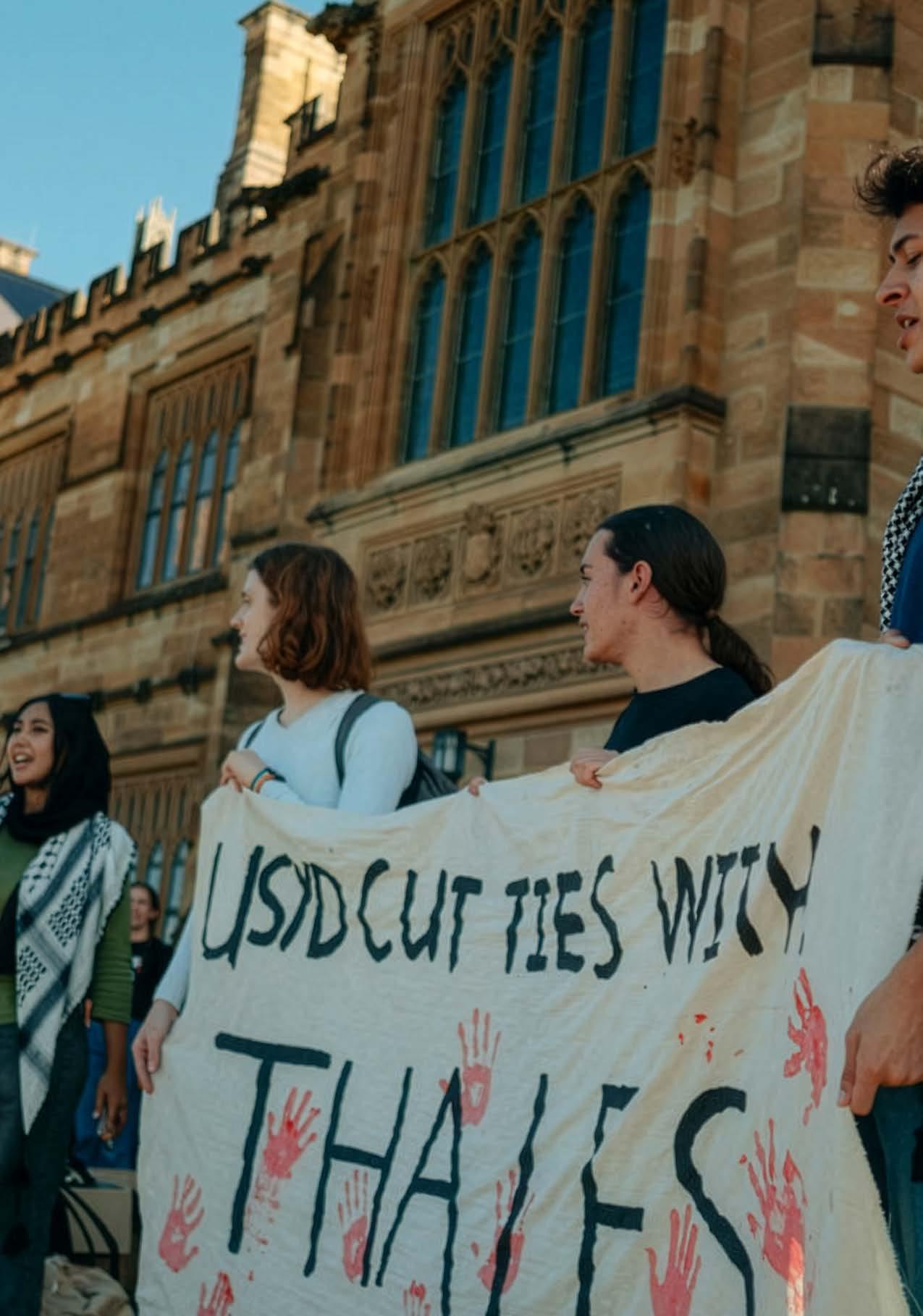
Students set up the USyd Gaza Solidarity Encampment on 23 April 2024, the first one in the Southern Hemisphere. We demanded divestment from institutions and weapons companies complicit in genocide. Camping has since been banned by the University, and other policies in response – like the infamous Campus Access Policy (2024) – have been introduced. That same year, the SRC ran a historic Student General Meeting where 500+ undergraduate students voted in favour of cutting ties with Israel, protecting free speech on campus, and supporting a singular democratic Palestinian state!
On 28th August 2025, USyd took part in the National Student Referendum on Palestine led by the National Union of Students and Students for Palestine, which took place across 13 Australian campuses and with 5,295 students registering to vote. Prior to the referendum at USyd’s Camperdown campus, over 850 students had registered to vote. On the afternoon of the Referendum, over 500 students showed up and voted, making it one of the largest referendum sites in the country on the day. Students voted unanimously in favour of one motion to “censure the Australian government for its complicity in the genocide in Gaza” and a second voted to “call on all Australian universities to end their complicity in Israel’s genocide”.
Since 2023, university management and the NSW government have launched a coordinated crackdown on the right to protest and political speech. Pro-Palestine organising has been at the centre of this repression. Dissent has been met with legal restrictions, racist slanders and expanding police powers. What is being sold as “safety,” “order,” and “social cohesion” is, in reality, a narrowing of democratic space.
Since 2023, university management and the NSW government have launched a coordinated crackdown on the right to protest and political speech. Pro-Palestine organising has been at the centre of this repression. Dissent has been met with legal restrictions, racist slanders and expanding police powers. What is being sold as “safety,” “order,” and “social cohesion” is, in reality, a narrowing of democratic space.
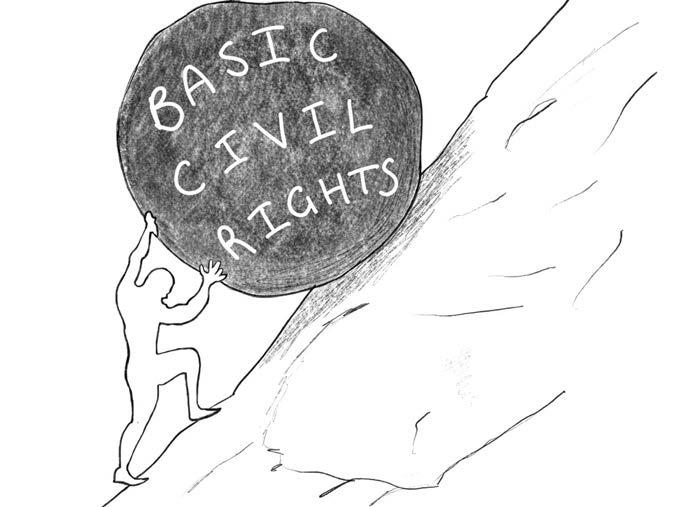
Over the past three years, protest has been steadily transformed from a collective right into a “privilege” to be granted and withdrawn by the state. Universities have imposed administrative controls that discipline political organising, while state governments have passed laws granting police sweeping discretion to shut demonstrations down. Going into 2026, the political establishment is escalating this offensive, pushing through laws designed to crush solidarity with Palestine.
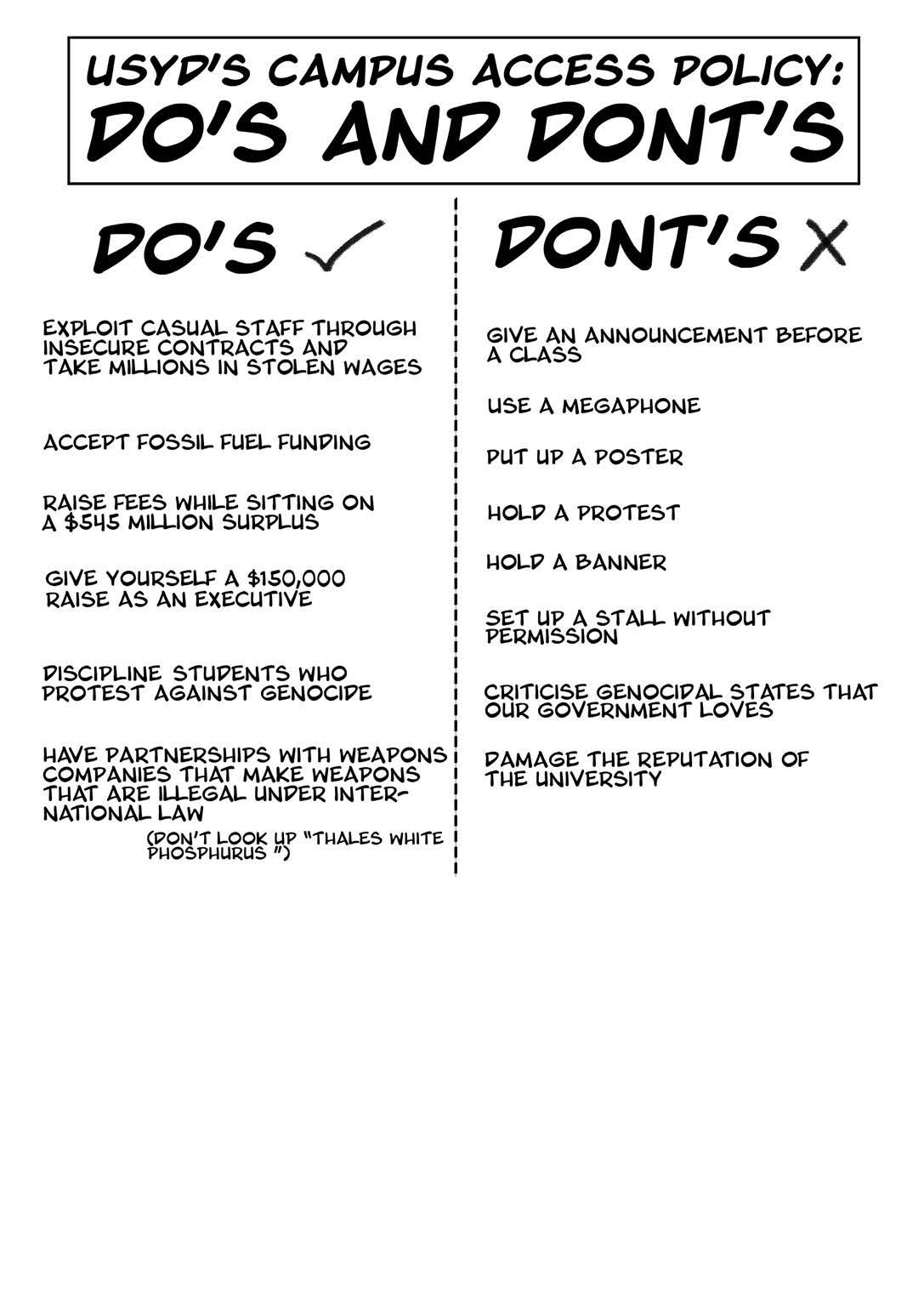
Universities have played a leading role in the ruling class’ offensive. At the University of Sydney, this is clearest in the Campus Access Policy (CAP) and the push for so-called “enforced civility.” Introduced during the 2024 Gaza solidarity encampment and divestment campaign, the CAP forces students to seek approval for basic protest activities, like using megaphones, displaying banners and setting up stalls. Non-compliance risks disciplinary action and removal from campus by security or police.
Framed as a neutral “order,” this can only undermine the right to protest, stripping away the visibility and disruptiveness that give protests force and draw more students in, while preserving the illusion of free speech. “Enforced civility” reframes political dissent as behavioural misconduct and disciplines speech solely because it is confronting. Civil liberties groups warn this invites selective enforcement. In practice, Palestine advocacy has been the clear target. This is no accident: the harshest restrictions arrived when student organising threatened university investments and its unapologetic support for Israel. Institutions that claim to defend free speech and “discourse” are instead silencing their own students.
Outside the campuses, the NSW government has played its own terrible role in repressing the Palestine movement. Between 2024 and 2025, protest laws tightened, penalties increased, and the threshold for police intervention were lowered. These laws already seriously undermined the right to freely assemble. The Minns government’s attempt to ban protests near “places of worship,” effectively covering much of Sydney’s CBD, made the agenda explicit. Framed as a response to Palestine protests, the law collapsed after a challenge by the Palestine Action Group (PAG). The Supreme Court struck it down for unlawfully restricting political speech. Its failure confirmed what activists had argued from the outset: this was never about safety, but suppressing dissent.
Now, the NSW government has rushed through more restrictions, using new powers to ban public assemblies for up to 90 days, all under
Max Dao investigates.
the banner of “public safety”. These emergency-style measures threaten all movements—from the Palestine solidarity movement, to the movements against Black deaths in custody and climate action. As catastrophic bushfires again tear through Australia, opponents of fossil fuel expansion now face repression precisely when mass mobilisation is most urgently needed.
Alongside this, ministers have openly discussed policing political language itself. Chants such as “globalise the intifada” have been singled out for potential banning, redefining political slogans calling for justice and liberation as inherently violent or hateful. This marks a dangerous escalation: criminalising speech for its political meaning, not incitement.
This repression is also being carried out federally. The Albanese government’s proposed royal commission into the Bondi attack is being used to recast all Palestine solidarity as extremism and dissent as hate speech. At the same time, Labor’s Hate and Extremism Bill marks the most serious assault on freedom of speech, expression, and association in decades. It lowers the threshold for banning organisations, strips procedural safeguards, and grants the Police Minister sweeping powers to outlaw groups and jail individuals—even where no hate crime has occurred.
Under the bill, organisations can be banned for “praising” others accused of hateful conduct, regardless of harm, and individuals jailed for supporting banned groups without formal membership. Paired with expansive and vague definitions of antisemitism, this framework could be used to ban pro-Palestine and left-wing organisations, criminalise opposition to Israel, and target racially oppressed communities. Cosmetic amendments offering broader protections do nothing to alter its fundamentally authoritarian design.
History shows that moments of fear are routinely exploited to justify the most far-reaching attacks on civil liberties. What is being constructed in Australia is not a narrow response to tragedy, but a permanent infrastructure for silencing protest—one that will be used against any movement that challenges power.
The pattern is unmistakable. When protest becomes effective—when it exposes Australia’s support for genocide or institutional complicity—it is met with repression. This is suppression of dissent, not concern for public safety. Public opinion has shifted decisively, with hundreds of thousands marching for Palestine in 2025. The political establishment knows it. What we are witnessing now is a counterattack. We have faced these assaults before.
This moment is another test — and we must rise to it.
Maxine McGrath
Misogynistic rhetoric and violence has had an undeniable rise, and we are currently lacking effective organising spaces to combat this systemic injustice. Despite being less of a priority within activist spaces, gender based violence has become unignorable. In 2025, 77 women were murdered in so-called Australia; First Nations women continue to be incarcerated en masse; and trans and sex worker rights are continuously being stripped away. Internationally, the genocides in Palestine and Sudan have subjected hundreds of thousands of women to rampant abuse, sexual violence and murder by states which our governments fund. However, instead of being emboldened to strengthen the fight against patriarchal systems, an undeniable rift currently exists between socialist activism and feminist rhetoric.
Attending an all-girls school was the first time that I felt a disconnect between feminism and broader activism. I remember the irony of being encouraged to stand up for women’s rights — a matter I have been passionate about since age ten — but socially ostracised for expressing leftist and socialist views. This frustrates me to no avail. Activism should not be engaged simply as a means to make life better for yourself and people similar to you. As I’ve come to experience during my two years of university, it should be built on love, support, and community. To me, feminism must be intersectional and centred on justice for all. Many feminist organising spaces are simply lacking this. They focus instead on maintaining capitalism and patriarchy but making it easier to fit themselves into these systems of oppression. In order for a truly successful feminist movement, activists must work on dismantling systemic injustices.
However, I believe that the widespread nature of problematic liberal feminism has caused many activists to completely abandon gender based struggles. Feminist organising has largely fallen to the wayside, with Sydney organising spaces lacking a proper socialist feminist movement. The broader activist movement has deemed feminist activism as of secondary importance.
Despite the issues with mainstream schools of feminist thought, this does not mean that we should completely abandon the movement. Whilst liberal feminism seeks to protect the status quo and benefit selective groups of women, socialist feminism recognises that patriarchy as a social system works symbiotically with capitalism, and all systems of oppression must be abolished. We need to work to bridge that gap. We need to work on introducing socialist feminist politics into our feminism, and no longer ignore systemic gendered violence.
Crucial aspects of many prominent socialist movements were built on the shoulders of feminist activists. In a letter to Feuerbach, Karl Marx states, “Social progress can be measured by the position of the female sex”. Furthermore, Friedrich Engels explored the connection between capitalism and the subjugation of women in his text “The Origins of the Family, Private Property and the State”. While feminist thought has progressed beyond Marx’s and Engels’ commentary, it is notable that such key thinkers in socialist thought advocated for gender equality. This makes it plain that ideas of the patriarchy as an agent of capitalism have existed for as long as socialism itself.
Furthermore, women have always been central to revolutionary working-class movements, from Rosa Luxemburg and Alexandra Kollontai of the Russian Revolution to Angela Davis and Assata Shakur of the Black Panther movement. Foundational feminist roots within socialism’s history demonstrate that activists must not continue ignoring gender based justice, and fight for liberation for all.
The disconnect between these two movements I care so deeply about requires drastic amendment. Feminist organising spaces need to embrace radical inclusivity and implement a more active and integrated struggle against the rise of the far right. However, the activist spaces which I’ve grown to love must work to centre feminist ideals. From Gadigal to Gaza, we must continue the fight for all — and fight to destroy oppressive systems of capitalism, patriarchy and imperialism.
role in mass movements across the global south.
“Palestina Libera!”
On the morning of 3 October 2025, these words rang out through the towns and major cities of Italy, as high school and university students poured out into the streets to join the masses gathering in solidarity with Palestine. For the second time in weeks, the day-to-day humdrum of Italian society had screeched to a halt, as the Italian working class led the masses in a huge general strike, shutting down the economy for Palestinian liberation.
The general strike had been called in immediate response to Israel’s kidnapping of activists taking part in the Global Sumud Flotilla. These activists had come as close as 50 nautical miles to the shores of Gaza, attempting to break the total blockade that has starved Palestinians in the strip since the most recent bout of siege and genocide began. They were violently intercepted and taken prisoner by Israeli soldiers, thrown into prison for trying to deliver aid to Gaza. The Italian working class was enraged by this, and spurred to action.
Millions of workers took part in the general strike, which crippled the Italian economy in an enormous industrial blockade. The sheer size of the strike was a culmination of the efforts of not only smaller, militant “base unions”, who put pressure on the main trade union federations like the CGIL, but also student activists, who’d built a serious pro-Palestine movement on the campuses through rowdy rallies and occupations. This radical spirit was sustained throughout the strike itself, as student activists called on their classmates and teachers to walk out of their classrooms and join the blockade, swelling the ranks of the striking workers. They even succeeded in breaking through police lines, enduring tear gas, rubber bullets, fire hoses and batons to block everything from highways and railways to airports and warehouses.
The students and workers championed the slogan “Blocciamo Tutto”’ meaning “Block Everything!” They stood to take action not only in solidarity with the Palestinian people, but also against the austerity policies destroying their living standards, and against the far right Italian government, which does everything it can to repress and divide workers to keep a lofty layer of billionaires satisfied. Italian workers first and foremost struck for Palestine, but
over time they’ve begun to recognise the connection between the genocide and the whole rotten system that oppresses them. The class dimension of the strike and the immense power it demonstrated, a power rooted in the fact workers produce all the profits in society, is what makes the general strikes so remarkable. They’re an example of what we should work towards in the fight for Palestinian liberation: the power to shut down the entire system that arms and enables genocide and apartheid.
The general strikes demonstrated the importance of the working class, but the buildup to the strikes showed that student activism plays a role no less important in the mass movement for Palestine. Students have historically played a major role in political agitation, not merely in the campuses and schools, but also in wider society. They’ve consistently and proactively taken to the streets to protest the insidious crimes of our governments, inspiring others to speak up and take action.
Internationally, the student activist movement remains defiant in the face of repressive, authoritarian governments. The latter half of 2025 saw major protests sparked by students and young workers in Indonesia, the Philippines, Madagascar and Nepal. The Nepalese government was toppled by the Gen-Z uprising, and students have played a key
We’ve gotten a glimpse of this potential in Australia too. In August alone, the National Student Referendum saw upwards of 5,000 university students nationwide vote near-unanimously in favour of motions condemning the government and our universities for their complicity in genocide.
Earlier in the month, student activists helped to build the massive March for Humanity across the harbour bridge, in which 300,000 people marched against genocide. This put significant pressure on the Labor government, although it continues to maintain warm relations with Israel. More importantly, it contributed to the momentum of a huge Palestine movement, the spirit of which remains strong in Australia.
The student movement remains vital to the struggle for Palestinian liberation, just as it was to the fights against South African apartheid and the Vietnam War. Students have a duty to learn from the example provided by our Italian comrades. We must keep up the fight for Palestine. However, like the Italians, we must not remain singleissue activists: for a free, liberated world, we need to fight furiously against the genocide in Gaza and all the horrors of the system that enables it.
Words by Calvin Yu.
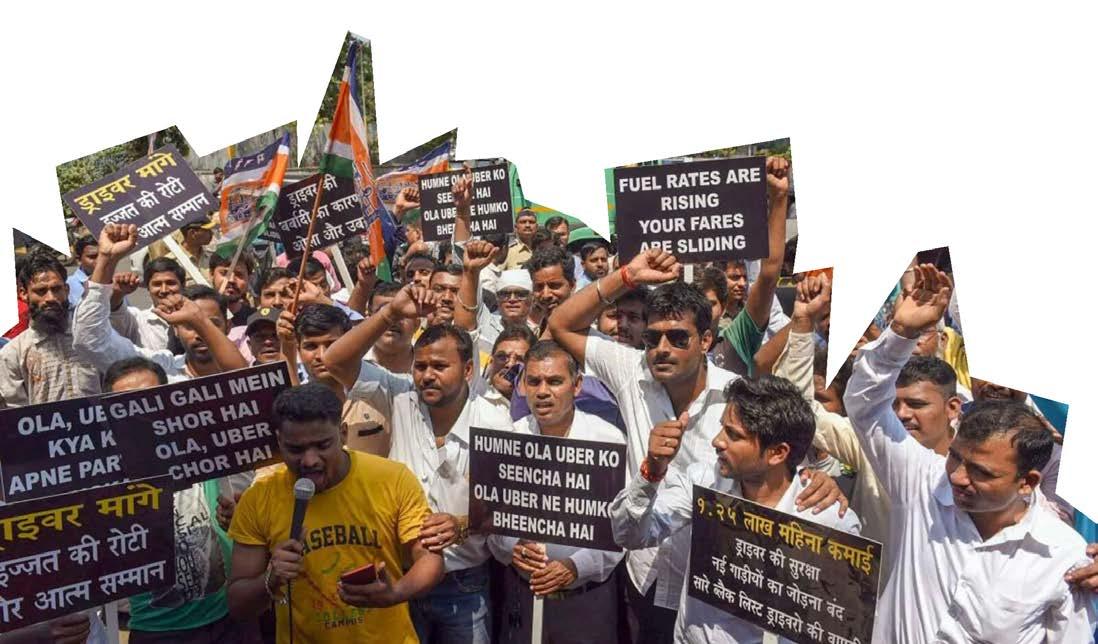
On New Year’s Eve 2025, as millions of Indians prepared to welcome a new year, a different kind of countdown was underway. Across Delhi, Mumbai, Bengaluru and other major cities, delivery workers for platforms such as Swiggy, Zomato, Blinkit and Zepto logged off their apps and stayed off. Unions, including the Indian Federation of App-Based Transport Workers, the Telangana Gig and Platform Workers Union, and the Gig and Platform Service Workers Union, called for a nationwide strike against falling pay, unsafe work expectations and the absence of meaningful protections for gig workers. Organisers estimated that between one and three lakh workers participated in the coordinated log-off protest across the country.
For many of these workers, the everyday reality of gig work is profoundly precarious. Pay-per-order has stagnated or declined even as platforms lean into quick commerce models that promise deliveries within minutes. Workers argue that these timelines push them into unsafe conditions, forcing them to speed through traffic to meet algorithmic targets that remain largely opaque. While platforms highlight incentives and bonuses during peak demand periods, striking workers say these short-term measures fail to address long-term insecurity. Fuel costs, vehicle maintenance, and the risk of injury are borne almost entirely by workers who are still classified as independent contractors rather than employees.
ANANYA THIRUMALAI
Despite the scale of the strike, its immediate impact on deliveries was mixed. Companies responded by offering higher incentives to riders who remained logged in, and many orders continued to be fulfilled throughout the evening. Observers noted that this uneven disruption revealed both the reach of worker mobilisation and the resilience of platform business models designed to absorb labour unrest. The strike succeeded in drawing attention, even if it did not completely stop operations.
The political context surrounding this mobilisation is significant. India’s ruling Bharatiya Janata Party government has consistently emphasised economic growth, digital entrepreneurship and market flexibility as cornerstones of its development agenda. Within this framework, gig work is often portrayed as an opportunity rather than a site of exploitation. Labour reforms introduced in recent years, including the Industrial Relations Code, have modernised parts of India’s labour law but stopped short of clearly recognising platform workers’ rights to collective bargaining. Procedural barriers to industrial action remain high, particularly for workers who fall outside traditional employer–employee relationships.
The demands raised during the New Year’s Eve strike went beyond immediate pay concerns. Workers called for social security coverage, transparent wage systems and legal recognition as workers rather than “partners.” These demands sit
uneasily alongside a political economy that prioritises investment friendliness and flexibility. While the state has responded to safety concerns, including urging platforms to step back from ten-minute delivery promises, these moves have been framed as regulatory adjustments rather than structural shifts in labour power.
“The New Year’s Eve strike showed that collective action is still possible.”
India has a long history of mass labour movements, yet the gig economy challenges the foundations on which traditional unions were built. Workers are geographically dispersed and managed by algorithms rather than shared workplaces. The New Year’s Eve strike showed that collective action is still possible under these conditions, even under a populist government that tends to favour platforms over organised labour. At the same time, the limited operational impact of the strike highlighted the difficulty of converting episodic protests into sustained leverage.
The question facing India’s gig workers is no longer whether they can organise. They already have. The harder question is whether unionisation can move beyond moments of disruption and force lasting legal recognition within a political system that continues to frame flexibility as progress and collective labour as expendable.
Around the world, millions have mobilised to fight for a Free Palestine. Weapons manufacturing companies have been vandalised.
Students have also mobilised in their thousands to make clear their opposition to their academic institutions’ complicity in genocide. At the University of Sydney (USyd), students set up the Gaza Solidarity Encampment on the Quad Lawns. The 24/7 protest remained for two months, demanding a cut to research and financial ties with weapons manufacturers including Thales and Lockheed Martin, and cutting ties with Israeli universities and institutions.
What has followed is a severe crackdown on political expression. At USyd, Palestine flags have been ordered removed from people’s offices. A transgender student was almost suspended and thus risked deportation for writing pro-Palestine slogans on a whiteboard. Students have received emails threatening disciplinary action for organising protests, speaking at rallies, and even running bakesales fundraising for Palestinian families in Gaza. The content and placement of posters and signs must now be authorised by the University under a new policy.
Similarly, student protestors in the US have been arrested, suspended, expelled, and doxxed. Mask bans have been introduced at fifteen college campuses, including Columbia University who surrendered to the Trump government after losing $400 million USD in federal funding.
This political repression extends well beyond the campus — Mahmoud Khalil, a spokesperson and negotiator for the Columbia Gaza Solidarity Encampment, was arrested by ICE and detained in immigration detention for over three months. In New South Wales, anti-protest laws were rushed in to expand police powers to ban protests for up to three months and effectively ban protestors from wearing masks.
As a commitment to revealing the harrowing realities of the violence being perpetrated, and a commitment to the just world on the horizon, we must be unwavering in our struggle. So much has been won through collective struggle, in which many sacrifices have had to be made.
We cannot stop halfway in the fight for justice. Amid the heaviness and fear of institutions’ force, struggle continues.
Keep your masks and kufiyas on. See you on the streets.






SRC Caseworkers provide free, confidential, professional advice, that is independent of the University.
• Academic Appeals • Special Consideration • Plagiarism / Misconduct Allegations • Centrelink, Debt & Finance Advice • HECS Refunds • Tenancy & Accomodation Advice • Harrassment & Discrimination Support and more