The publication of Growing Strong, and all of WoCo’s organising and activism, takes place on unceded Gadigal Land. This land was stolen through violent settler-colonial genocide and settlers continue to benefit from the dispossession and ongoing violence inflicted upon First Nations peoples.
Colonialism is not a historical event but an ongoing structure. Its impacts shape the institutions we organise within, the knowledge systems we are taught and the conditions under which our activism takes place. Our work is incomplete if it does not actively centre and prioritise First Nations voices, struggles and leadership.
This requires a sustained commitment to decolonisation; an ongoing process of listening, unlearning, refusing colonial hierarchies and challenging systems that uphold dispossession, patriarchy and racial violence. We honour the resistance, strength and knowledge of First Nations peoples and recognise that sovereignty has never been ceded.
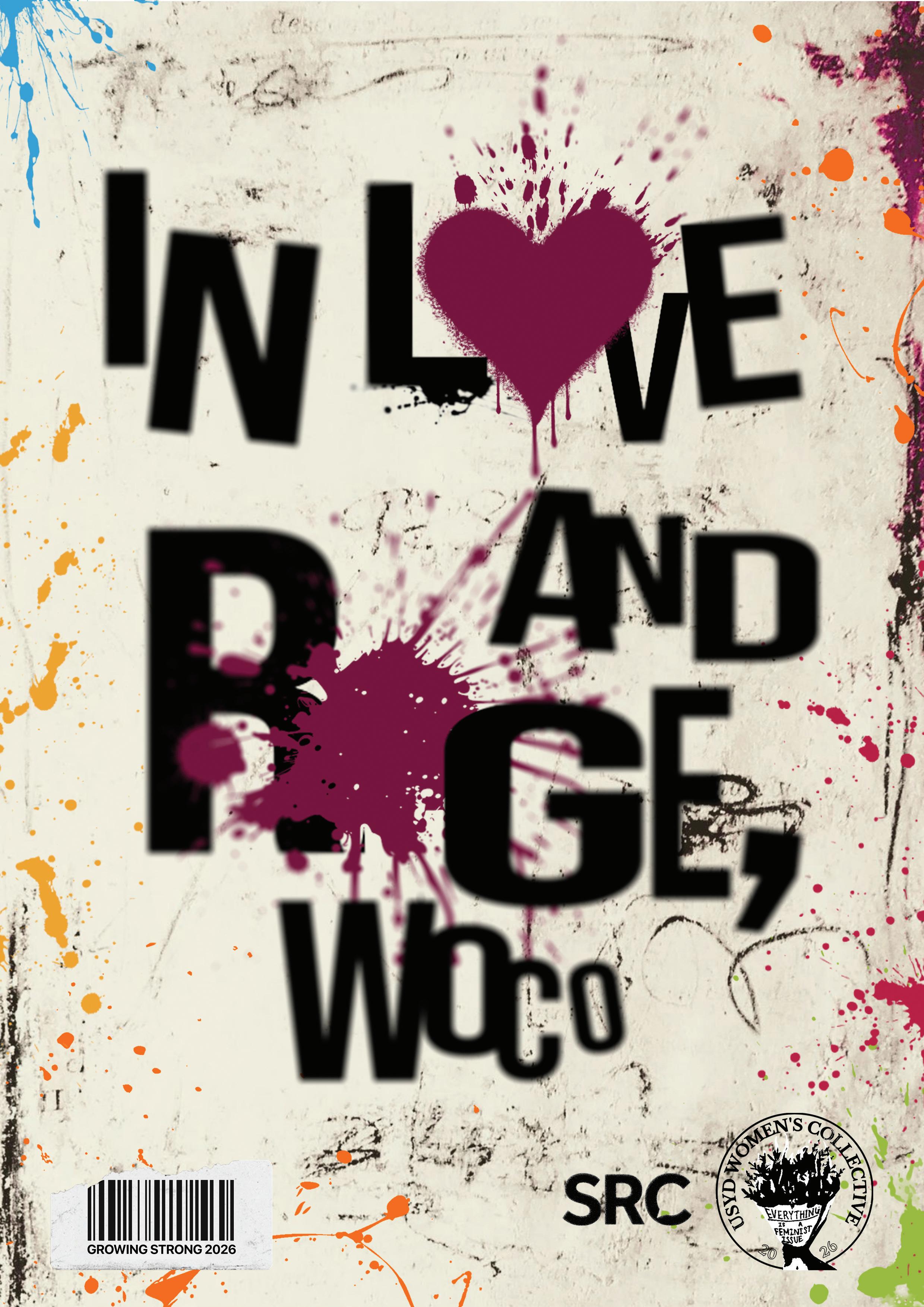
Hi!! Thank you for picking up and taking the time to read the 2026 edition of Growing Strong.
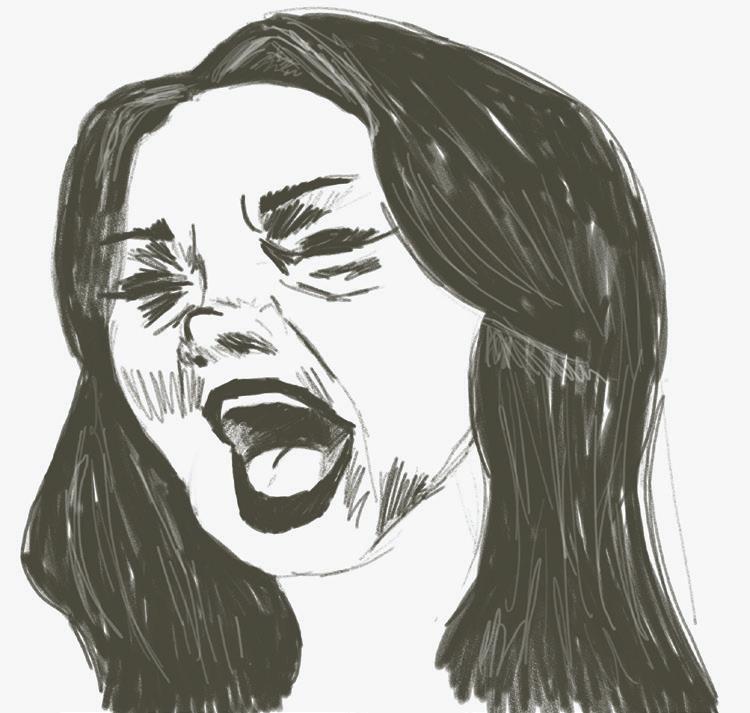
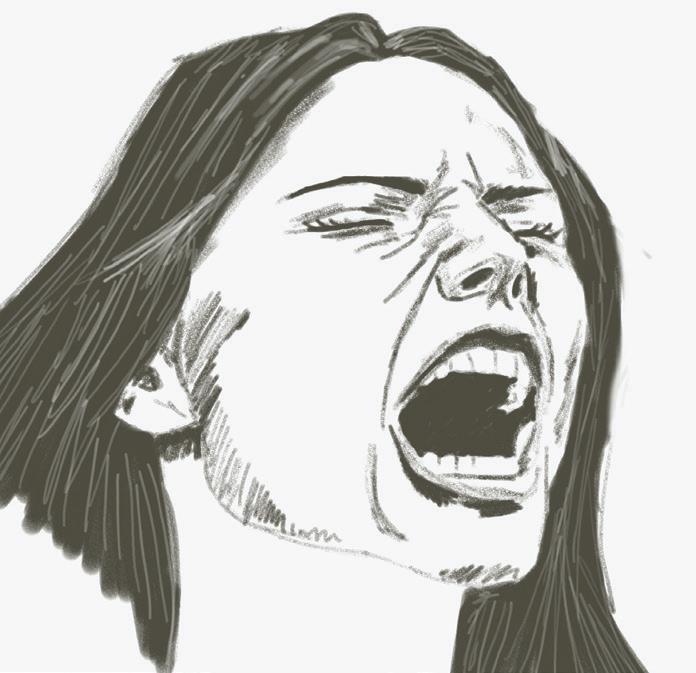
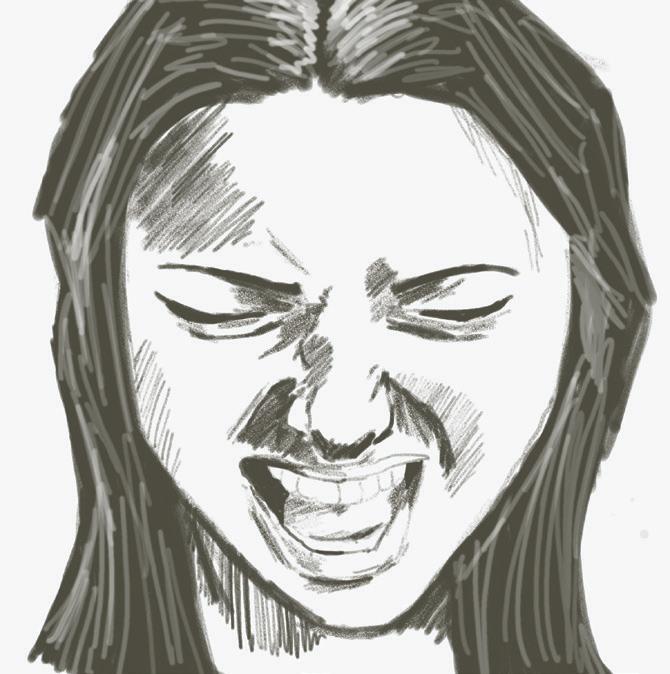
This year’s edition is guided by our anger at continued systemic injustices of patriarchy. We are currently living during a time where it is impossible to not be furious, due to continued suppression of our voices with protest laws, the beginning of the third year of genocide in Palestine, and growing rates of femicide, particularly against First Nations women and the LBGTQ+ community. We hope that in recognising how injustice pervades every aspect of our lives, we can motivate you to join the fight for intersectionality and liberation.
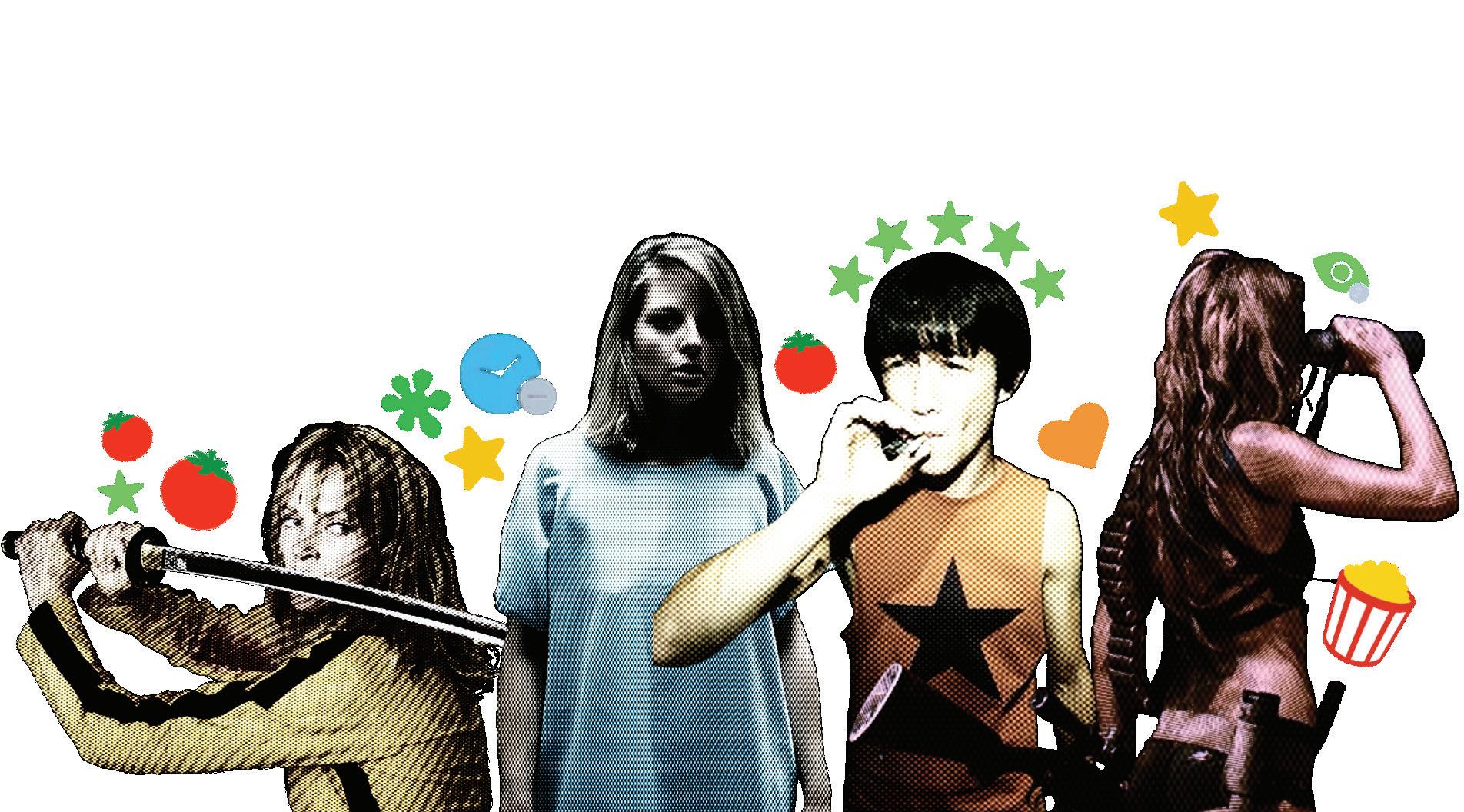
In this magazine you will find analysis of our campaigns and university related issues, reflections of the liberation of women around the world, deconstruction of our justice system, discussions of global care chains and medical misogyny, in addition to a range of cultural pieces in regards to voice, music, cinema as well as poetry. We are so beyond proud of all of the individuals who contributed this year and the variety of voices and perspectives we were able to reflect.
A special thank you to our editorial team, our Publications Managers - Amanda and Mickie - and to the 2026 Sexual Violence Officers Ananya Thirumalai, Saskia Morgan, Leyla Bensan and Zetao Zhao.
In love and rage, Your 2026 Women’s Officers and Editors in Chief, Avin Dabiri and Maxine McGrath.
The University of Sydney Women’s Collective, WoCo, is an autonomous feminist collective on campus for women and gender minorities. Grounded in intersectional, anti-capitalist politics, we understand feminism as inseparable from struggles against colonialism, racism and queerphobia. Our work centres on collective resistance and transformative justice through education and creativity, organising campaigns, learning groups and rallies. We organise around issues including sexual violence on campus, Abolishing the Colleges, reproductive autonomy, femicide and global liberation movements - such as First Nations justice and the continuing fight for Palestinian liberation.
Front cover: Purny Ahmed Back cover: Saskia Morgan Editors: Avin Dabiri, Maxine McGrath, Ananya Thirumalai, Anastasia Dale, Felicity Errington, Lauren Bentley, Saskia Morgan Writers: Ananya Thirumalai, Anastasia Dale, Avin Dabiri, Bibi O’Loghlin, Calista Burrowes, Felicity Errington, Grace Street, Maxine McGrath, Meijie Ureta, Saskia Morgan, Zoe Morris Artists: Ananya Thirumalai, Astrid Armiger, Dana Kafina, Ellie Robertson, Isidora Vasiljevic, Tara Marocchi, Vieve Carnsew, Zoe Chung
4. Residential Colleges
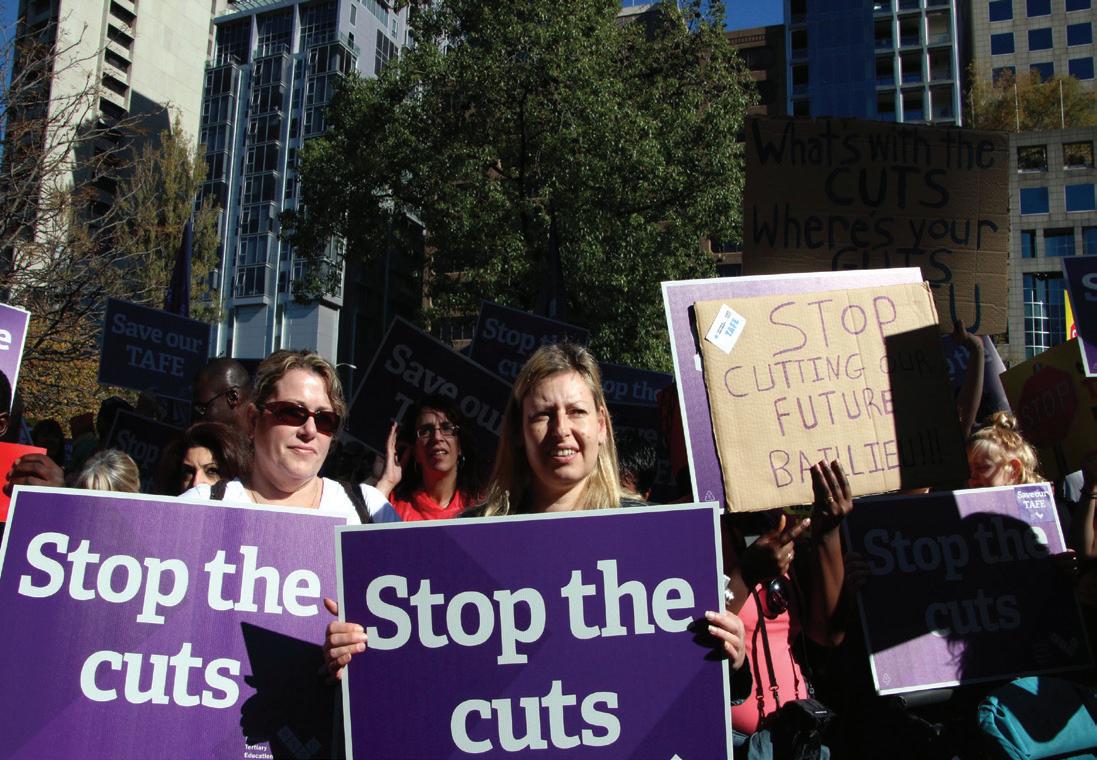
5. Protest Laws
6. The Fight for Freedom
8. The Price of Coming Forward
10. Feminism and Unionism on Campus
12. (Daayan) / Witch
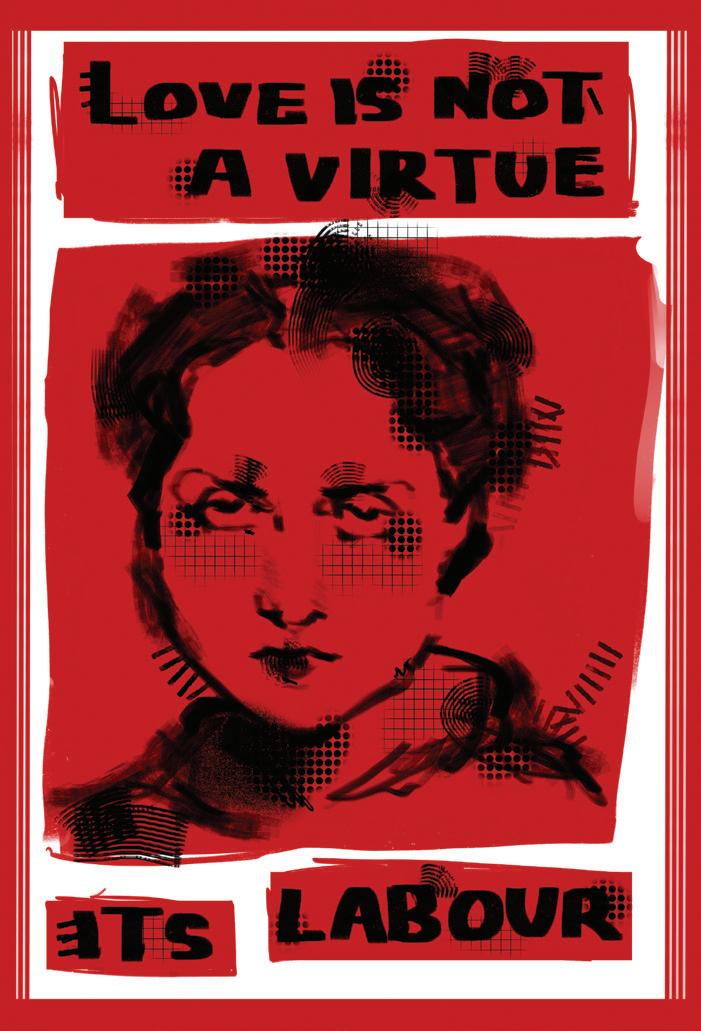
13. The Labour of Love
14. The Woman Problem
15. Endometriosis
16. Period Poverty on Campus
18. The Politics of Sound
19. Playlists and Power: on Digital Marketing
20. The Ethics of Rape in our Cinema
21. Investigating Internalised Musical Misogyny
22. On Living Like an Arrow
24. ‘Which Misogynist are you?’ Quiz
25. Feminist Films and Feminist Sounds
26. Resources
PROTEST LAWS & THE FACILITATION OF GENDERED VIOLENCE
By Maxine McGrath
New South Wales Premier Chris Minns made his dedication to the status quo evident, ever since he lit up the Sydney Opera House with the colours of the Israeli Flag. Following October 2023 and the escalation of the genocide against Palestinians, Minns has taken as many actions as he can to silence protestors and smear their motivations. The most recent stage of this has involved restricting organisers from applying for a Form 1, which protects protestors from police and legal charges. This is particularly ironic, considering the Labor government’s lack of action regarding the ‘March for Australia’ rallies, which were publicly organised by known neo-Nazis such as Thomas Sewell. Minns has demonstrated that he does not care for the safety of his constituents; rather, seeks to use any force necessary to silence protestors.
This has become particularly prevalent following the mass shooting of Jewish Australians during Chanukah Festivities at Bondi Beach, which saw the NSW government subsequently place heavy restrictions on mass demonstrations and protestors. With the stated aim of reducing anti-semitism, the Labor government has done little to combat the rise of the far right, making it evident that this is about silencing protestors. As well as restricting basic principles of free speech, restrictions lead to an increased police presence, disproportionately harming racial minorities. Sending large forces of law enforcement acts as an intimidation tactic, making protests shift from peaceful demonstrations to violent confrontations. It’s these escalations into violence that condone disproportionate violence upon female and gender diverse protestors.
Law enforcement inherently has a foundation of misogyny and gendered violence. American sociologist Peter K Manning described the police force as “essentially a masculine culture with an emphasis on virility, toughness, masculinity, and masculine interests such as sexual triumphs, sports, outdoor life, and so forth”. The chauvinistic culture of the police permeates their public lives and infiltrates the private sphere. As of 2024, it was reported in The Guardian that 120 police officers have been charged with domestic violence in Australia since 2017. Likely a quantitative misrepresentation due to the systematic barriers benefitting perpetrators and silencing victims, it’s undeniable that gender based violence symbiotically exists amongst the personal lives and work culture of police, seeping outside the domestic sphere and upon our broader communities.
The epidemic of gendered violence exhibited by the police force was epitomised on the 7th of January, 2026, in Minnesota. Renee Nicole Good, while acting as a legal observer of ICE’s activities, was killed by an ICE operator while in her own car with her wife and dog. Her final words were “It’s fine, dude, I’m not mad at you”. The first words of the officer after killing Good were “fucking bitch”. This has acted as a wake-up call for the community about the law enforcement’s lethal brutality to people taking action to resist. In addition to ICE’s devastation of Latinx and racially marginalised communities, the murder of a woman in broad daylight, whilst using a gendered slur, demonstrates an escalation in their aims to silence dissent. Good’s murder has made the link between the state and gendered violence unignorable, leading to mass protests in Minnesota and across all of America. This recent wave of activism calls for an end to state-condoned violence and the abolition of ICE.
As people living in Australia, we need to centre a movement around the defunding and abolition of the punitive authority of law enforcement. Ultimately, activists internationally need to continue protesting en masse to avoid harm against individuals and to demand justice for those who have been murdered by the state.
The need for legislation that prevents the entrenched punitive authority of police at protests is a sentiment echoed by Former Greens Candidate for Grayndler, Hannah Thomas. Thomas kindly agreed for WoCo to share her story within this publication. During a peaceful pro-Palestine demonstration in Belmore, Thomas was punched in the face by a male police officer. Following this, Thomas suffered serious damage to her eye, requiring three major operations to prevent her from permanently losing vision. While charged with grievous bodily harm, the assault is emblematic of the systematic violence within the police force, exemplified by Thomas’ statement that “justice is nowhere near done”. Rather than being an incident solely attributed
to a single officer, Thomas’ assault is emblematic of systemic violence within the police force. The implementation of the NSW protest laws leads to an increased implementation of police presence. As a systemically misogynistic organisation, this often results in the grievous harm of women and gender minorities.
From the NSW government’s attempts to take away the rights of protestors, to ICE’s brutality and bloodshed, it is evident that law enforcement is used as state-sanctioned gendered violence. Due to the excessive power granted to them by governments internationally, law enforcement acts as if they are above authority and are justified in inciting violence against activists of marginalised backgrounds.
Activists have been organising our own protests with community organisers and marshals; police simply have no purpose and can never be allies of our movements. While it is incredible to see activist communities rise to fight an increasingly evident societal issue, the fact that women have been brutalised and murdered as a result is truly abhorrent. WoCo and the broader activist community need to fight Minns’ punitive measures more than ever, making mass protests across the country essential.
WoCo demands that restrictions upon protestors are lifted, police have no presence at our protests and that activists should have the freedom to protest pressing issues of our time; The genocide in Palestine, the climate crisis, human rights violations of refugees in our offshore detention centres, globally, and Blak deaths in custody.
Since their inception in the 19th century, the residential colleges at the University of Sydney have represented the worst of USyd’s elitist culture. They demonstrate how gendered violence and misogyny are facilitated by power structures designed to benefit the privileged. Critics, from journalists to feminist activists, have long called for the colleges to be abolished due to their history of discrimination, exclusion, humiliation and sexual violence. This disproportionately impacts female students; however, queer, genderdiverse, international, and scholarship students often face the worst institutional violence. The colleges demonstrate that patriarchy and capitalism operate in symbiosis as sexual violence is continuously facilitated by the inherent foundations of these structures. When WoCo says ‘abolish the colleges’, we call for private ownership of the colleges to be ended and replaced with safe, accessible and affordable public housing.
The release of ‘The Broderick Report’ marked a beginning of widespread public recognition of the institutional violence within the colleges. Published in 2017, the report found that women who attend a college were six times more likely to experience sexual violence or attempted sexual violence, one in four women had experienced sexual harrassment at a college and fewer than one in ten victim-survivors made a formal report.
While the report displayed the raw data demonstrating that colleges facilitated gendered violence, it was criticised for neglecting to capture the personal testimonies of victimsurvivors. In 2018, the Red Zone Report was published by non-profit ‘End Rape on Campus’, with the aim of incorporating as many voices and perspectives of victim-survivors. Kendra Murphy speaks about her sexual assault at St Andrews: “[I felt like I was treated as] a student with the ability to ruin the college’s reputation and not like a 19-year-old victim who wanted support and wanted to be believed.”
Residential Colleges: There is no reform, only abolition
By Maxine McGrath
In a motion raised by Greens Councillor Matthew Thompson, it was stated that there is “a culture of misogyny and sexism that is rife within residential colleges.” Elitism and misogyny in college environments are not separate issues, while patriarchy and gendered violence existed before modern capitalism, systems designed to protect those in power facilitate the subjugation of women and gender diverse individuals.
This private ownership is a major reason why activists oppose the colleges. These critiques stem from the way private ownership allows these institutions to be much less accessible to the average working-class university student, with Siobhan Patton from Action for Public Housing stating “The entire structure [of residential colleges] is irredeemable.”
Since their inception, too many students have reported discrimination, mistreatment and violence. However, private ownership ensures that the university’s precautions against sexual violence cannot be enforced. Furthermore, victim-survivors are systemically prevented from seeking peace and justice, due to the system of ‘gag clauses’, which prevents victims from naming their abusers or pressing charges. Due to financial incentives and the need to protect institutional reputations, higher management is often motivated to ignore complaints. This creates a culture of elitism and entrenches class division across campus. This additionally fosters an extremely toxic environment of misogyny and sexual violence which is not held accountable to the University of Sydney reporting systems due to their private ownership.
The entire structure of the University of Sydney Residential Colleges is unfixable. When activists say to ‘burn down the colleges,’ this refers to dismantling the institutions that are built upon elitist ground, where the perpetration of
Woman, Life and The Fight
for Freedom
Avin Dabiri speaks across borders
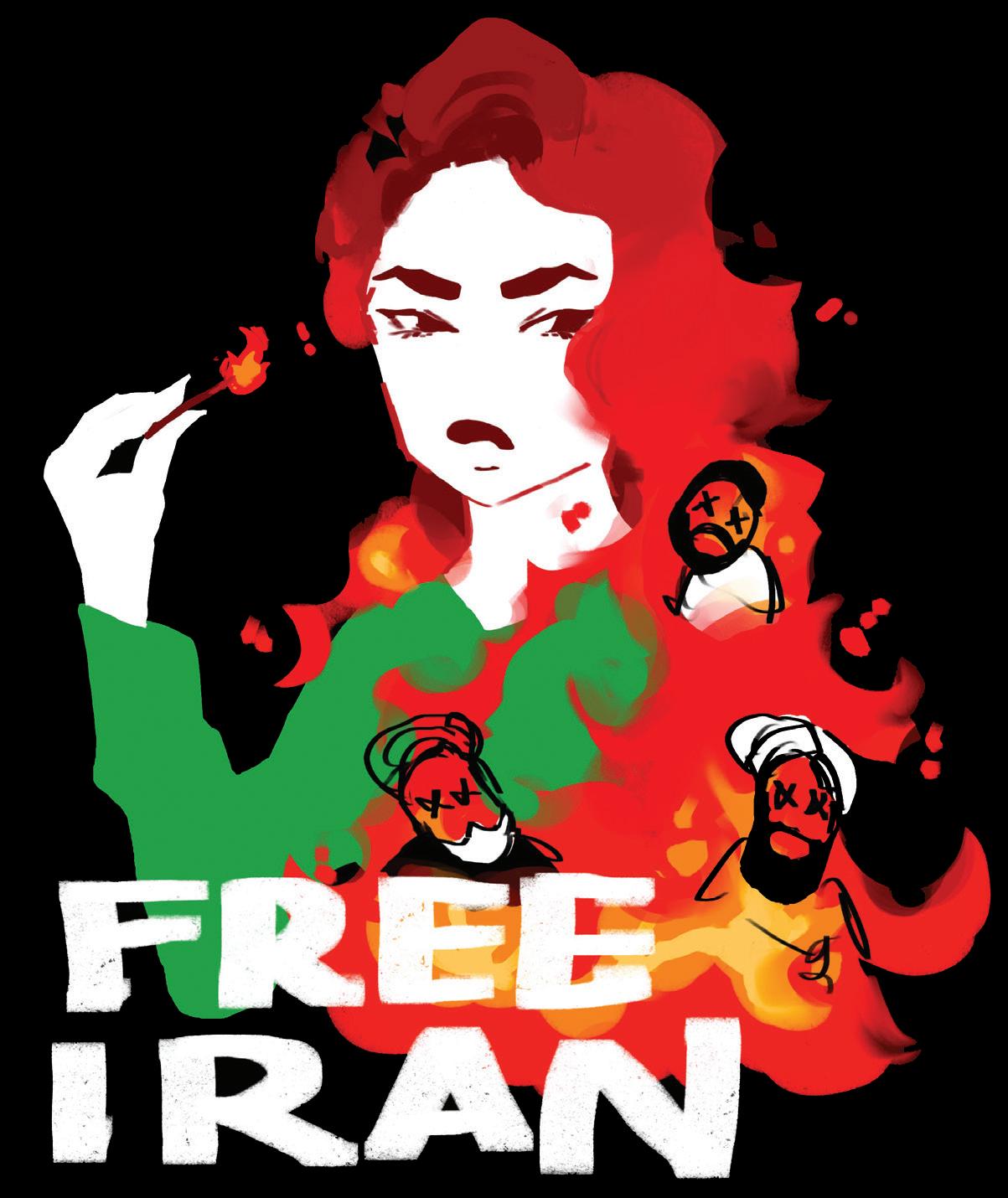
As I start this article, it is 1:10am on Monday, January 12. Exactly three days, three hours, and four minutes from the last time I was able to speak to my family before every line in and out of Iran went dead. Since Iranians beyond the country’s borders were severed from the people they love. We exist now suspended between terror and guilt, waiting for a phone call that will either echo a familiar voice or bear news that will split our lives in two.
I’d always considered silence to be a symbol of peace, now it acts as a weapon. The Iranian government shutting down the internet doesn’t just block information, it forms an iron wall that allows the Islamic Republic to flood the streets with the blood of hundreds of protestors and turn families into hostages. For the women in Iran, this enforced isolation is an extension of a much older system of control. A system that has wrapped itself around their bodies, woven itself into their hair, and now cuts the last remaining thread that connects them to the outside world.
Three days, seventeen hours, and forty-eight minutes.
Since the murder of Mahsa Amini in 2022, Iranian women have been at the centre of a movement — Woman, Life, Freedom — a feminist rebellion against a regime built on the idea that women’s autonomy must be controlled or destroyed. The slogan, rooted in Kurdish feminist resistance, emerged as a declaration of defiance - uniting women, men and marginalised communities across Iran and the diaspora. At its core, the movement rejects a system that treats women’s bodies as moral battlegrounds, insisting instead that freedom is not a privilege to be granted - but a condition of life itself. What began as a protest has become a collective reimagining of life beyond the Islamic Republic’s rule.
Under the Islamic Republic, control over women is not abstract but intimate. The state polices each strand of hair on a woman’s head, decides how much of her skin she can show, and where her feet are permitted to go. It dictates the words that leave her mouth — whether she can sing and the volume at which she can laugh — and claims the authority to strip her children from her arms. Through morality police, family law, and convoluted religious decree, a woman’s body is turned into contested territory: regulated, inspected, and beaten as if it were state property.
The revolution we are witnessing now, against the Iranian government, is fuelled by many forces: a collapsing economy, the effects of decades of sanctions, a brutal theocratic regime and decades of corruption. At its core, it is driven by the accumulated fight of women across generations. Every protest, every chant, every act of defiance is also a fight for women who have faced a history of criminalisation, imprisonment, and execution aimed at forcing them into obedience.
Five days, eighteen hours, and twenty-three minutes.
When a government severs a country from the rest of the world, it is betting that silence will outlast outrage. That women, men, and children can be beaten, blinded, and buried behind closed networks with no witnesses. The women of Iran have spent their days clawing at boundaries carved into their skin and walking into fires that have been burning for 47 years. And you and I are not powerless, it is up to us to continue their fight. Every story we share, every name we repeat, every image we refuse to let fade is a way of breaking the wall the state has built to contain its bloodshed.
Now I sit, suspended, waiting for a call that will either make me an orphan or fill me with the sweetness of my Mother’s voice.
Eleven days, ten hours, and thirty minutes.
The Price of Coming Forward
by Anastasia Dale
It came as a surprise to many Australian women when Brittany Higgins was declared bankrupt, not due to the costs associated with prosecuting the man who raped her, but due to a bankruptcy suit launched by her ex-boss, former Liberal senator Linda Reynolds.
Reynolds sued Higgins for defamation over social media posts, and won, with the court finding some of the posts defamatory. Higgins was ordered to pay just over $341,000 in damages, and Reynolds’ legal fees, estimated at over $1 million. This was in August 2025. Two months later, Reynolds launched the bankruptcy suit to get the money Higgins owed her.
Reynolds feared the destruction of her reputation if she was wrongly implicated in the coverup of a sex crime that occurred in her office after hours without her knowledge. Bankrupting the survivor of said sex crime has probably also done some reputational damage, as well as admitting to calling Higgins a “lying cow” with regard to the level of support received by her superiors, and being publicly rebuked by thenPM Scott Morrison for not bringing the incident to his attention when Higgins told her. In my opinion, Reynolds’ own actions have damaged her reputation more than anything Higgins has done.
In a December 2025 ABC interview, Reynolds spoke out against “lies” about her involvement in a coverup propagated by then-Opposition senators Penny Wong and Katy Gallagher in 2021, stating it ruined her career. These are now two senior ministers in the incumbent Labor government, possessing much more power and influence than Higgins, likely speaking about the coverup to more career-relevant audiences than the tweets or Instagram stories Higgins was sued for. However, no legal action has been pursued against them, perhaps because there is no proof of these lies — in which case Wong and Gallagher would be wellplaced to launch a Reynolds-style defamation case against Reynolds herself.
The bankruptcy of Brittany Higgins, and the fact she has had to experience her assault being discussed in courts for four years, are shameful passages in this nation’s recent history. While the specifics of this case have elicited outrage, and with good reason, I’d like to discuss an aspect often lost in the analysis of the case.
This case must be viewed in the context of modern Australian society.
I can’t imagine women of any age feeling as though this is a country where it is safe, or even possible, to speak out about sexual assault. The mistrial of Higgins’ initial criminal proceedings against the man who raped her saw the case being abandoned due to concerns around Higgins’ mental wellbeing, so she would not have to relive her assault in court again.
While public opinion and civil courts are on Higgins’ side, that the assault did occur, this does not mean her rapist was criminally convicted, and this does not mean she has not been subjected to reliving her assault in court.
It is estimated that 1 in 5, or 22% of women in Australia have experienced sexual violence. This statistic includes girls over 15. The most recent data shows that 81% of victim-survivors of sexual assault were female: 32,372 women and girls last year. 39% of all sexual assault victims were aged between 10 and 17 years. 41% of sexual assaults were related to family and domestic violence.
Rates of sexual assault reported to police have increased by 10% every year since 2015. We know that police report numbers only represent a fraction of the sexual assaults occurring in this country. A 2022 survey of victim-survivors who had experienced sexual violence between 2012-2022 showed that police were contacted for only 8.3% of sexual assaults.
A large proportion of the Australian female population has experienced sexual violence. For many, this first occurs when they are under 18, or in their early twenties. Each media story about cases like Brittany Higgins is a story that girls and young women learn from.
In that same 2022 survey, women were asked why they did not report their sexual assault. 33% said they felt they could deal with it themselves. 32% did not regard it as a serious offence. 31% said they felt ashamed or embarrassed. 28% did not believe the police could do anything. 25% felt they would not be believed.
The most common response — dealing with it yourself — is a layered one. For many victim-survivors, this is much easier than having to go through the courts. For Australian women, when media circuses like the Brittany Higgins case are going on around us, a natural response is to just deal with it yourself. To internalise, to not point the finger at anyone, not the assaulter, nor anyone you viewed as enabling the assault, nor anyone you felt didn’t offer support.
The results also show there is enough shame, embarrassment, and lack of faith in both police efficacy and support to compound the instinct not to speak out.
Everything in our culture points us towards remaining silent.
It is in this context that Brittany Higgins has been declared bankrupt by another woman, in part for stating that this woman did not offer support. The judge stated that he believed this was Higgins’ genuine feeling, and that Higgins had suffered a major trauma, but what she posted was not true. It was defamatory.
Readers may agree or disagree with the findings of the court. What is undoubtedly true, though, is that this verdict and the high-profile trials Higgins has faced will make even more girls and women decide to deal with their sexual assault alone.
Sexual assault is increasing at rates constituting a national emergency. The assaults of thousands of girls and women in Australia remain unreported.
Today, the top news stories detail Jeffrey Epstein’s decades-long trafficking, intimidation, and grooming of girls for powerful men, and the bankrupting of an Australian rape victim-survivor. Many question how high-profile abusers are able to ‘get away with it’ for so long, question why girls and women don’t speak out or take years to do so. Do not blame survivors of the culture that surrounds them. Look to change the culture.
The government, and all those living in Australian society, must do more to end the culture of silence and shame around sexual violence. Our society is already one in which the number of reported sexual assaults has increased by 100% in the past ten years, with the true number of sexual assaults being much higher.
In 2020, Tasmanian law was changed to allow victims of sexual assault to speak about their experiences publicly. This was in large part due to the tireless activism and advocacy of Grace Tame, who had been legally prevented from speaking out as a result of
going to the police and having her abuser convicted. Her abuser was allowed to speak about the abuse he perpetrated. He framed it positively, knowing she was silenced.
We live in a country where, in some states, it was illegal for victim-survivors to speak out about sexual assault until six years ago. In the eyes of nationwide Australian law, rape occurring within a marriage was not a crime until 1994. In 2022, NSW reformed consent laws, clarifying that consent cannot be presumed, and consent can be withdrawn — realities that countless victim-survivors had already lived through with no legal recourse or societal acknowledgment. For centuries, Australian girls and women have been conditioned into silence, through law and through culture.
The beginning of Australia’s rape culture was the beginning of the idea of an ‘Australian’ culture: colonisation. This country was colonised by backwards, misogynistic 16th century British ideas and laws surrounding sex, sexual violence, and abuse. Indigenous women are still much more likely to experience abuse and sexual violence, and to be treated with brutality and disrespect when interacting with police.
Australia’s legal system was borne of colonisation and capitalism, and will serve those things first and foremost. 28% of victim-survivors did not have faith that the police would do anything; 25% didn’t have faith the police would even believe them. Our legal system often offers nothing more than further trauma and hardship to victim-survivors. Reform is important for those seeking legal recourse, but it is important to acknowledge that legal avenues are genuinely inaccessible to many groups of women.
Community accountability, cultural change, societal understanding will be the most important tools for victim-survivors, and all women, to lead lives where they feel safe and respected. A legal system and culture that disrespects and mistreats victim-survivors impacts the behaviour and psyches of all women, and all men. We must not wait on legal reform, which takes decades or hundreds of years to catch up with reality, to change our culture. We must not wait to fight for different avenues for recourse, for societal respect for victim-survivors, and community accountability for perpetrators and enablers.
The bankruptcy of Brittany Higgins will impact, not just her, but countless other victim-survivors. We must do what we can to counteract this: to decolonise our views of sexual violence and abuse. To fight for the right of women to live free of fear, shame, and silence.
Working Together: Feminism and Unionism on Campus
By Grace Street
In the Women’s Collective, we are feminists for the 99%. We reject corporate, liberal feminism and instead focus on fighting systemic issues facing workingclass and marginalised women and gender-diverse people. Capitalism and patriarchy go hand-in-hand, which is why feminism is union business, and vice versa.
This year, the 2023-2026 Enterprise Agreement (EA) – the mutually agreed upon minimum pay, entitlements, and employment conditions between staff and management – at the University of Sydney will expire. That means that staff will soon enter a round of bargaining and negotiate with the University for a new EA, and likely will take up industrial action to support their case.
There are a number of reasons why students have historically stood with staff in their enterprise bargaining, usually out of solidarity, or even just for their own benefit in the classroom. We know that university staff being better paid, protected, and supported increases the value and experience of education.
However, let’s face it, most students aren’t totally on board or get bogged down by narratives that staff and unionists are greedy and money-hungry pests.
So, if you aren’t already convinced as a student that you should support staffenterprise bargaining, let’s try to bring in an explicitly feminist angle to the issue, and see how we go in convincing you.
Feminism and Higher Education
Higher education is a highly-feminised industry, with women making up 58% of all staff in Australia in 2021. However, women and gender-diverse people continue to be underrepresented in senior academic and leadership roles, which leaves them in more precarious and underpaid roles.
This exacerbates a persistent gender-pay gap and also makes supporting enterprise bargaining in higher education an ever more feminist issue.
Further, the National Tertiary Education Union’s (NTEU) State of the Uni Sector surveys (2019 and 2020) highlighted that the main reported issues for women in higher education include job security, workloads, access
to flexible work, work health and safety, and career progression.
These issues are all ones that have been previously improved and are still under consideration in every enterprise bargaining period. However, certain rights can be won by workers in Enterprise Agreements that specifically improve the working and living conditions of women and gender-diverse people.
Gender-related claims and wins
Through the 2022-23 University of Sydney bargaining round, staff were able to attain claims that directly increased gender equity in the workplace:
• Staff can use their full entitlement of personal leave, 50 days per year, for: menstruation and menopause reasons; gender affirmation; and assisted reproduction purposes
• A new 30-day pool of leave for staff to use for gender affirmation
• An entitlement to 22 weeks of parental leave after 12 months of service (on top of the existing 14week standard period for everyone), instead of 24 months of service
• A removal of the requirement for staff to return to work following extended parental leave or otherwise to pay back their entitlement
• Casual staff are entitled to 10 days paid domestic and family violence leave per year
However, in spite of those wins, the new agreement desperately needs to be filled in the new agreement. Though staff are still working on their log of claims, persistent issues and unfulfilled demands from 2022 loom across the university:
• No forced redundancies through indefinite redeployment
• Automatic conversion to permanent work after two contracts
• 17% superannuation for casuals
• Improved trade union leave of 10 days per year
• Climate emergency clause
But enterprise bargaining is not a one-way street. The University of Sydney’s management had a list of its own. This included demanding a removal of the right to 40:40:20 (one’s workload consisting of 40% teaching, 40% research, and 20% administration). Additionally, the University sought to introduce more casual teachingonly roles, remove Academic Workload Committees, and weaken the dispute resolution clause.
Furthermore, superannuation is a key feminist issue in the enterprise agreement. Our country’s superannuation gender gap means that women retire on average with 25% less superannuation than men. This is often due to women stopping work at an earlier age, reducing their hours, or taking smaller and lower-paying jobs due to caregiving responsibilities, and also the existing genderpay gap. By increasing superannuation in the higher education sector, particularly for casual, it helps to offset this gap as women predominantly fulfil these roles. However, to achieve this, the aforementioned demands must be met, particularly paid parental leave, conversion of casual and permanent contracts, and flexible working arrangements. Thus, industrial action, with the support of students, will encourage positive change for staff.
Advocating for staff rights additionally means advocating for gender equity in the workplace.
Do strikes even work?
Strike action has a long history in union movements and at USyd, and you should be a part of it! There are various strategies and forms of industrial action taken by workers, with strikes being a more extreme measure that staff have often had to take to actually make University management listen to them.
There’s also a long-standing feminist tradition of strikes and protests at USyd, most notably with the month-long student and staff strike in 1973 that ultimately won a feminist philosophy department and paved the way for the Gender Studies department today. Feminist courses and gender studies, as well as the rights and protections of staff, don’t just appear out of goodwill. They have been fought for and must be won.
In 1973, the proposal for a “Women and Philosophy” course was initially rejected by the head of the Department of Philosophy, leading to students and staff having a mass meeting to vote for a “Philosophy of Feminist Thought” course. When their petition and their interruption of a meeting of the Professorial Board were unsuccessful, this group voted to go on strike.
After a month of striking with the support of the Italian, Government, Fine Arts, and History departments, as well as other unions like the Builders Labourers Federation and the Clothing Trades Union, these activists won the first women’s studies course at USyd, and also a new, separate Department of General Philosophy that was autonomous and democratically run by students and staff. This is a notorious example of student and staff working together, taking strike action, and fighting for progressive, feminist change in higher education. That’s exactly what we need in 2026 for the new Enterprise Bargaining round.
So what can we do to support staff and enterprise bargaining?
Traditionally, students get involved through organising in and around the SRC, particularly through groups like the Women’s Collective (WoCo) and the Education Action Group (EAG), and also through course and department contingents to strikes.
We work with the two staff unions on campus. In particular, we work closely with the National Tertiary Education Union (NTEU), to help spread the word about campaigns, inform others on how to join the union, and combat counter-productive lines from the University about union bargaining being disruptive or unhelpful for students.
When it comes to striking, we stand in solidarity with staff on the picket lines at the University to shut down operations for the day.
As feminists, it is essential to stand with our staff and to recognise the unique role that students can play in supporting staff and helping to shut down business-asusual during strike periods.
Get involved with the Women’s Collective and Education Action Group now!
And follow @usydwoco for more !!
In villages scattered across India’s forests, fields, and mining belts, a woman can still be chased from her home, stripped of her name, her kinship, her safety, and reborn in the mouths of others as a Daayan, a carrier of misfortune, a body onto which grief and scarcity are poured until they become permission for violence. More than 2,500 people were killed between 2000 and 2016 following witchcraft accusations, with hundreds more deaths recorded nationally in the years since, despite state laws in Jharkhand and Assam criminalising such practices. Witch hunts in India are not relics of a medieval past but living systems of gendered and caste control.
Beliefs in spirits, possession, curses, and supernatural harm have long circulated across South Asian folk cosmologies and village ritual, long before contact with Europeans and their witch panics. Precolonial references to women believed to wield dangerous spiritual power appear in early Sanskrit literature and regional folklore, yet these figures were not uniformly understood as inherently evil. When misfortune struck — illness, fertility, death, or crop failure — it was often interpreted as a sign of spiritual or social imbalance, addressed through communal rituals. In some cases, suspicion was attached to a particular woman, but responses typically involved coercive purification or exorcism rituals aimed at neutralising harmful forces rather than permanently expelling or eliminating the individual.
What persists across time is the impulse to locate human causes for suffering beyond a community’s control. What shifts under colonial rule, however, is the nature of that suffering and the moral weight attached to blame. British land dispossession, forest criminalisation (the criminalisation of livelihoods of indigenous and forest communities, adivasis, under the guise of conservation), and famine — particularly in regions such as the Chotanagpur Plateau during the nineteenth century — produced chronic poverty and instability. In this context, women increasingly became fixed as witches held responsible for conditions generated by extractive governance and state neglect, transforming witchcraft accusations into a mechanism through which structural violence was displaced onto women’s bodies.
In contemporary India, the figure of the Daayan has hardened into a socially recognisable accusation across North and Central India — particularly in Jharkhand, Bihar, Odisha, Assam, Chhattisgarh, and Madhya Pradesh — together accounting for a substantial proportion of documented witchcraft accusations
and killings. Colonial administration benefited from this reframing — codifying fluid belief systems — by allowing witchcraft accusations to operate as a form of indirect social control: they divert unrest away from the colonial state, fracture collective resistance to extractive policies, and reinforce caste and gender hierarchy. The treatment of witchcraft as a social pathology rooted in “backward” communities rather than as a response to material deprivation allows the depoliticisation of famine and poverty while positioning itself — colonial administration — as a rational authority over irrational subjects. This legacy persists in postcolonial legal frameworks such as Jharkhand’s Prevention of Witch (Daain) Practices Act (2001) and Assam’s Witch Hunting Act (2015), which criminalise accusations without fully addressing the structural conditions that sustain them.
The violence cannot be disentangled from caste. Regional studies from Jharkhand, Odisha, and Assam indicate that 60-80 per cent of documented victims belong to Scheduled Castes, Scheduled Tribes, or landless rural households, communities already positioned at the margins of legal visibility and economic security. Police data and civil society audits further show that around 70-80 per cent of victims are women, disproportionately older women, widows, single women, and those who own land, earn wages, or exercise authority beyond domestic roles.
In districts shaped by mining displacement, forest evictions, agrarian debt, and persistent healthcare shortages, investigations repeatedly find that accusations cluster around land conflict and forced removals, converting witch branding into a mechanism for clearing territory and consolidating power within dominant caste and gender networks. Activist field surveys in states such as Bihar estimate that as many as 70,000 women may currently be living under threat of witchcraft-related
डायन
Daayan
Ananya Thirumalai
/ Witch reframes superstitions
persecution, a scale far exceeding official records. This violence is sustained by weak legal accountability, with conviction rates remaining in the low single digits in several states despite dedicated legislation, producing a double burden of exposure to violence and juridical abandonment.
Against this architecture of fear, women have organised relentlessly, building forms of collective care that operate where the state is sporadic and absent. Across districts affected by land dispossession, extractive development, and fragile healthcare systems, rural women’s collectives, Dalit Rights organisations, and local unions provide legal literacy, survivor accompaniment, emergency shelter, and slow, trustbased community education. These networks document cases and pressure governments into passing legislation, but their work extends beyond courtrooms. Witch-hunt violence persists because inequality endures. In regions where illness, death, or crop failure are more readily interpreted through the language of curse than as failures of governance, the figure of the Daayan becomes a culturally legitimised scapegoat. What rural organisers demonstrate instead is that justice is a collective practice: one built through political education, shared protection, and mutual care, asserting dignity and survival in the face of systems that repeatedly reframes structural abuses of power into the imagined curse of marginalised women.
We are here for all the witches. This solidarity is rooted in the work of collective organisations including but not limited to: North East Network, Partners for Law in Development, All India Dalit Mahila Adhikar Manch, Nari Mukti Sangh, Sambhali Trust, Ekal Nari Shakti Sangathan, Krantikari Adivasi Mahila Sangathan, National Federation of Dalit Women, Dalit Women Fight, Mahila Samakhya, Saheli Women’s Resource Centre, Majlis Legal Centre, and many others.
The OF
It’s 6am. A woman wakes up someone else’s child. She gently brushes their hair, packs their lunch and kisses their forehead before school. She knows the rhythm of their mornings better than she remembers her own daughter’s voice. A daughter she’s had to watch grow up thousands of kilometres away, through a glitchy phone screen. Her job here is to not only keep this child fed and safe, but to make them feel loved; acting as a stand-in mother who absorbs their tears and offers warmth on demand. She is paid for her time, but not for her tenderness, even though it’s the tenderness that exhausts her most.
This is the global economy at a human scale, not just factories or trading floors, but women’s bodies that are stretched across borders, their compassion extracted to hold together families that are not their own. Her labour is what makes others possible. By caring for this child, she enables full-time working families to remain in the labour market; by leaving her own family, she sends remittances that stabilise economies back home. The sacrifice of one woman is part of a long history: a network built on the systematic undervaluation of migrant women’s feminised labour. At the centre of this labour sits an unspoken demand: love. The world we inhabit runs on women’s compassion, extracted and underpaid, treated as something that women owe.
This care is rarely treated as work, instead being framed as a natural feminine instinct, as a virtue of womanhood. It is something that is innate, not conjured. In feminised jobs such as nursing, childcare, disability support or elder care, emotional availability is silently expected but never properly paid or acknowledged. This is how hegemonic gender expectations not only reflect, but actively organise and legitimise the hierarchies that sustain global capitalism. By
naturalising care as women’s work, entire economies are subsided: households, employers and states rely on this labour to reproduce the workforce at minimal cost. When women provide love and work at an unfair wage, others are able to work longer hours, migrate for higher wages and remain productive, while the true cost of this exhaustive love is quietly displaced into feminised bodies. Some kinds of labour are recognised and rewarded, but feminised labour is characterised differently, overlooked behind the guise of love.
The clearest demonstration of this is global care chains, a system where women from the Global South cross borders and leave their own families to look after children who are not theirs. This “globalisation of mothering” illustrates the extraction of compassion and love from individuals as they engage in underpaid subsistence work to sustain the desired lifestyles and economies of the Global North.
What holds this system in place is not just money, but sexist expectations framed as morality. Welfare states, healthcare systems and migration regimes all depend on the assumption that because of their gender, women will keep caring no matter the cost. When hospitals are understaffed, nurses are expected to stay late as a show of dedication. When aged care is underfunded, it is female workers who are encouraged to step in. When families fracture across borders, migrant women endure. In feminised vocations which are already underpaid, the labour of love is not even considered work. Compassion becomes a leash.
Care is not only undervalued but actively governed. Society, government, and economy rely on women’s unpaid and underpaid labour to absorb the failures of welfare systems while migration policies necessitate that some women’s emotional lives are more expendable than others. Compassion begins as an expectation of femininity
then contorts to an extractive resource drawn from women’s bodies to stabilise economies, cushion inequality, and keep the world running.
Within these societies it is rarely the women who benefit from their own compassion. States save money, employers profit, and wealthy households prosper. Labour and life is ripped constantly from those with the least power. This system is not held together by gratitude, it is held together by the expectation that women will continue to endure. They will keep caring when they are exhausted, overlooked, and separated from the people they love. That they will absorb the emotional fallout without a complaint. And yet, across the world, women are beginning to refuse.
Nurses are striking out against impossible conditions, their care systematically stretched beyond endurance. In hospitals across the Global North, nursing work is defined by chronic understaffing, stagnant wages and a moral pressure to overextend oneself in the name of dedication. A reflection of governments and healthcare providers relying on feminist labour to absorb the failures of underfunded systems.
Early childhood educators and aged care workers are walking out of facilities that treat staff as disposable while demanding constant emotional presence. Migrant domestic workers, whose visas and livelihoods are often tied to the households they serve, are organising for contracts that recognise not only their time but their emotional labour, the intimacy, patience and love that has long been extracted for free. The burnout that occurs for is a reckoning: the body’s debt collector arriving, demanding resistance when compassion has been overdrawn for too long. Refusing emotional exploitation does not mean
rejecting care itself. It means demanding that care be recognised for what it is:
WORLD-MAKING LABOUR. Care work does not merely sustain individuals; it sustains labour markets, stabilises households, enables migration and absorbs the shocks of inequality. Without it, productivity falters, economies stall and the costs of social reproduction can no longer be hidden.
Women do not perform this work because they are endlessly self-sacrificing, but because this is the labour they rely on to live. For many migrant women, care work in the Global North is shaped by capitalist and imperial extraction from the Global South, the way of life of those in the North requiring other economies be hollowed out through colonialism, debt and structural adjustment. The lifestyle of the North needs the survival of those in the South to depend on leaving home to sell care elsewhere.
The labour of love is not secondary to the economy, it is the economy. It deserves pay, protection and dignity rather than moral coercion dressed up as virtue. Our world runs on women’s compassion, it’s time the debt be paid.
Avin Dabiri explores the feminist politics of compassion
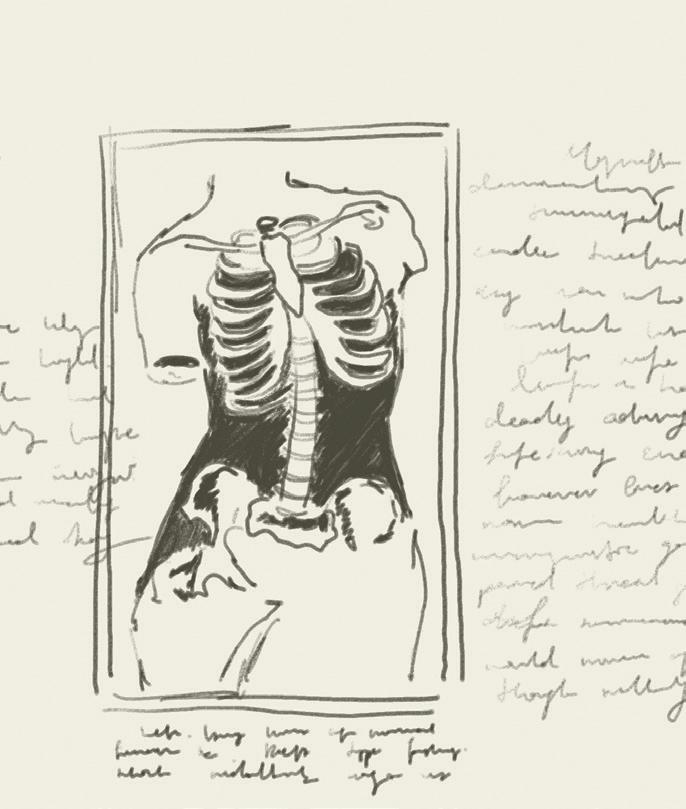
The Woman Problem
How Medical Misogyny Impacts the World
Calista
Burrowes challenges the medical patriarchy
Advocating for the health and recognition of women cannot end in our own backyards. To advocate for women is to advocate for the world. Medical misogyny, the world’s disregard and ignorance of our pain and suffering, runs through every society. It is the institutionalised abuse of women’s bodies embedded within healthcare and medical systems that is taught and learnt. And when combined with the world’s unbearable tragedies, medical misogyny becomes deadly and strips already downtrodden people of the little dignity afforded to them.
Australia has a dismal record in the acknowledgement of women’s health struggles. Women’s concerns are sidelined as ‘hysteria’ or stress, rather than symptoms of increasingly common reproductive issues such as endometriosis and PCOS, diseases which have been overlooked by medical education and treatment institutions. Moreover, we are facing legislative attacks on women’s healthcare such as the right to access abortion, which has been challenged in Queensland specifically. This is not to mention that despite its decriminalisation, the barriers to abortion access have created a life saving treatment into a privilege rather than a right. We must push for a greater institutional reformation of education around women’s health and publicly challenge outdated ideas around healthcare – but we also must understand that this is not only about silencing women, it is about controlling them. However, this is not the end of our work in women’s liberation, especially for women whose lives and health are consistently overlooked by the West. Medical misogyny coupled with conflict and tragedy becomes even more deadly, with the already neglected needs of women being buried in overwhelmed and collapsing healthcare systems. For women in Gaza, pre-
existing misogynistic systems paired with the threat of genocide creates a dangerously sexist environment that is to be navigated through rubble and destruction. Women are forced to create their own menstrual products out of tent scraps which not only leads to infection and injury but is often left unspoken due to the stigma around menstruation that is institutionalised and normalised. This is not even to mention the unimaginable acts of sexual violence against women that have long-term physical, emotional and mental repercussions which are unable to be addressed within crippled medical systems that have long neglected trauma care. Alongside this are pre-existing systems designed to silence women under a guise of care. Female Genital Mutilation is still practiced in 30 countries and is presented as a passage to ‘purity’. In reality, it can lead to haemorrhaging, toxic shock, or death. Even in Australia, First Nations women, living in the shadow of colonialism, are five times more likely to die in childbirth, with these risks intensified by the inadequate healthcare for those living in rural or low socioeconomic areas. In advocating for the health of women, we cannot ignore women who do not share our same postcode. And when fighting for the wellbeing and liberation of the world, women cannot be an afterthought.
There is no simple solution to this issue of medical misogyny, considering it has embedded itself within every facet of healthcare. But to live in a world where our doctors take us seriously, where they can know and understand our concerns, where all women can have access to lifesaving medications, menstrual products, and procedures, we must push beyond thoughts and prayers. This presents itself as showing up loudly in politics to defend the hard-won rights of women’s healthcare and push for greater education on the nuances of our struggles. It looks like widespread education, not only for women and doctors, but everyone to push back against the stigmas that surround our bodies bred by institutionalised sexism. For women in places of conflict there must be a dedicated response to their health struggles that are heightened by resource scarcity and collapsing medical systems, including free and accessible reproductive resources and hygiene education.
Our struggles are interconnected in overlapping systems of oppression, and dismantling medical misogyny begins with reclaiming power over our bodies.
“This is just something that women have to go through,” someone with endometriosis, a largely misunderstood illness, was likely advised.
Rising cases of endometriosis, a disease where tissue similar to the uterine lining spreads outside of the uterus, are one of many pressing issues in women’s health.
Academic literature saw a 32% increase in diagnoses per 10,000 patients from 2017 to 2024, and the World Health Organisation estimates that 10 per cent of women of reproductive age globally are affected by the disease as of 2025.
Despite this, endometriosis research continues to lag, reflecting broader gender gaps in healthcare.
Further than period cramps
The symptoms of endometriosis include severe and chronic abdominal-pelvic pain as well as heavy menstrual bleeding. There is also infertility, bleeding between periods, bloating, and nausea. Endometriosis causes affected areas to become inflamed, which can lead to cysts, scarring, and adhesions. This can also spread to other organs, causing disturbances in digestion and the bladder.
Kadi Paton, a Sydney-based drag queen who was diagnosed with endometriosis in 2025, has experienced the majority of the above symptoms. “Most of it is just a lot of pelvic pain,” they said, while listing bladder issues and frequent urination, thigh pain, heavy bleeding with large blood clots, and bleeding outside of menstruation.
“The pain sits around five to seven on a good day, and then on my really bad
ENDOMETRIOSIS
Meijie Ureta uncovers societal and medical apathy
days, I would consider it to be a 10,” Paton explains.
The Journal of Endometriosis and Uterine Disorders recorded that around 67% of women miss work or school due to endometriosis. Paton, more so, had to quit full-time work as symptoms worsened. “I can’t stand or walk for very long periods of time, which also affects my drag work because of the physical movements and being in heels.”
Their social life was also affected. “Endometriosis hinders my confidence a lot because when I’m in so much pain and when I’m having these bladder problems, I’m just very brought down by it and I don’t feel great,” they shared.
Treatments that don’t heal
Treatment of endometriosis involves symptom management and surgical interventions such as laparoscopy, and, more rarely, hysterectomy, alongside medications like painkillers and hormone therapies, including birth control and hormone suppressants.
Paton listed their treatment as purely surgical, including laparoscopy, cystectomy, dilation, and curettage to remove tissue from their stomach, left ovary, and vagina. They explained that cysts on their left ovary led to tissue spreading to the bladder, where growths later connected to the pelvic wall and the
uterus adhered to the spine.
All of this tissue had to be surgically removed, and Paton said their symptoms fluctuated after surgery. “One month I would be completely fine and my period would feel super normal, and then the next month I would be bedbound for days.”
They were recommended an intrauterine device (IUD). “I haven’t taken that step yet because birth control is a bit of a nightmare and it scares me,” they expressed.
Paton’s concern over birth control and other hormone therapies stems from the intense side effects many women endure, including headaches, mood swings, nausea and vomiting, fatigue, depression, body pain, and much more.
Are pain and drama really part of womanhood?
Women frequently experience gaslighting, misogyny, and neglect in both societal and medical settings. Paton, like many others, has been told that pain is “a part of womanhood.” Doctors have dismissed their pain as “[her] body adjusting to getting a period.”
Paton reflected on how society responds to endometriosis, from their former workplace to their family,“I find that even women I have been around don’t understand it either. I feel like it’s only people with endometriosis who understand.”
They add that “people just don’t understand endometriosis, and it makes them cold towards you when you try to talk about your experiences or how you’re feeling, because a lot of the time we’re seen as just really, really dramatic.”
To address gaps in endometriosis research and women’s healthcare, open conversations must be shared from bigger institutions up to the citizens. Paton says that more research and conversation can bring an uproar, getting more improvements to treatment, education, and overall care.
“It is one of the best things that can happen for the study of endometriosis,” they said.
USyd Students Deserve to be Free of Period Poverty On Campus
by Grace Street
Period poverty refers to a state of struggling to afford period products due to their cost. It has emerged as a crisis in Australia and recently worsened with cost of living pressures. Despite new research and solutions constantly emerging, higher education is plagued by decentralised, underfunded, and sporadic initiatives taken on by certain faculties and student organisations. Meanwhile, our university – the one with the required funds and oversight – refuses to pull its weight on this issue.
Share the Dignity’s 2024 “Big Bloody Report” collected data from 153,620 responses over a three month period in 2024, and found that 64% of menstruators in ‘Australia’ had struggled to afford period products. Those figures dramatically went up for those who were Aboriginal and/ or Torres Strait Islander, disabled, and gender-diverse.
They found that more students at TAFEs and universities were improvising period products than three years prior, reflecting the worsening cost of living crisis. Over 77% of university and TAFE students have found it difficult to buy period products, and 36% have worn a tampon or pad for more than four hours due to the cost of them. Students have had to change to less suitable products, improvise with materials like toilet paper, or wear products for longer than is comfortable or medically recommended. A 2021 study by University of Sydney alumnus and PhD candidate Alana Munro featured a survey of over 300 students that showed around 25% of students had left campus to purchase period products instead of attending class, interrupting their studies and co-curricular activities. Students deserve comfort, dignity, and not to have their health or education suffer because the university does not provide period products.
the Carslaw women’s bathroom that was instigated by Munro in 2021. The machine dispenses a pack of 6 tampons and 2 pads, but only once every ten minutes.
Last year, the February University of Sydney Union (USU) Board Meeting revealed that the University Executive had rejected a recommendation from Campus Operation Services to expand period product distribution to the University’s more than 1500 non-USU bathrooms. The initial expansion plan, estimated to cost around $1.5 million annually, was said to be not financially viable and logistically difficult.
Students would never accept their fees going towards other basic essentials that should be paid for by the university, like toilet paper, so why are they expected to do so for period products?
The University ended 2024 with a $545 million surplus. Can they really not afford it? The budget and the infrastructure are there – the University already maintains and supplies hundreds of bathrooms with toilet paper and paper towels, so is it really a logistical issue to add another basic hygiene product to that list?
This leaves period product provision on campus to be taken up by select faculties and student organisations funded by the Student Services and Amenities Fee (SSAF) paid semesterly by all students (in addition to their tuition fees) for non-academic student support, wellbeing, and campus life services. For reference, the total SSAF money available in 2024 was $21.9 million – that makes the University’s 2024 surplus more than twenty times the amount of SSAF in that same year.
To my knowledge, there is one only source of period products provided directly by the University of Sydney – a singular Share the Dignity machine in
Period products being funded by SSAF is a welcome development for trial runs and interim models, but it cannot be a long-term solution. SSAF is shared between multiple student-run organisations based on lengthy annual applications and should be put towards the things the University can’t do – such as running the USU’s clubs and societies, or the SRC and SUPRA’s casework services.
Students would never accept their fees going towards other basic essentials that should be paid for by the university, like toilet paper, so why are they expected to do so for period products?
This SSAF-funded model also forces studentrun organisations to take on the logistical task of providing these products each year – creating issues with administrative barriers, the high turnover and short terms of leaders of student organisations, and a lack of centralisation. The current model makes students pay for and organise access to period products on campus.
Since 2022, the USU has increasingly applied for and used SSAF to provide period products for the few services and areas of campus that they run. This primarily is done with Pixii wall dispensers in all of the 52 bathrooms in the Wentworth, Holme, and Manning buildings. Many students have reported often finding the dispensers empty.
Other period products – including reusable period underwear – can be found in USU-run spaces such as the Queerspace, Wom*n’s Room and Ethnocultural Room, and the FoodHub pantry. Additionally, since 2025 the USU has been providing period products to the SciTech Aboriginal and Torres Strait Islander Study Space, the Gadigal Centre, and the Dubbo Campus. There were plans to expand this to the Conservatorium of Music and Camden campus, but there are still more campuses to consider, such as the new Westmead campus that does not have any period products available on campus according to students, nor any USU-owned buildings that could even potentially house them.
These new offerings from the USU seemed to have reduced the pressure on a few women’s USU Clubs & Societies to provide their own period products in certain faculty buildings, such as Abercrombie and PNR. While reducing the extra labour of unpaid student Club and Society executives, this does now leave significant gaps across all campuses and uncertainty for students trying to find products with outdated and decentralised information.*
The USU is undoubtedly taking an important lead in the fight against period poverty on campus, but we cannot ignore the University’s insistence on forcing students to find their own solutions and pay for it with their SSAF money. We need to hold the University to account on this basic, urgent issue and make them step up to provide free and readilyavailable period products on all of their campuses.
*Use this QR code and link to find a regularly updated list of where to find various period products around USyd campuses for 2026!
The Politics of Sound
Avin Dabiri writes against silence
“Every time a guy writes a song, he’s a sailor, a cowboy. Holding out the world in his palm like he made it himself. Every time I open my mouth, I think, ‘Wow, what a loud noise” - Annabelle Dinda
I used to hate the sound of my own voice. Hearing it back in videos or recordings made my skin crawl, not because of the sound itself, but because of everything I’d learned to associate with it. A trip over words. A slight lisp. A deep tone that never sounded quite right.
Somewhere along the way, I absorbed the idea that the sounds leaving my mouth didn’t make a contribution, but rather acted as an interruption. This encapsulates what we are taught early and often in life: men are taught that their voices build not only words but empires, while women are taught that ours interrupt them. Masculinity is encouraged to sound expansive and heroic, whereas femininity is trained to sound careful and soft. If you thought about it for a second, how would you describe a so-called ‘feminine voice’? Lighter, softer, sweeter. It isn’t one that takes up space. This is not a personality difference. It’s a political one. We tend to think of silence as something natural: a personality trait, a temperament, or simply a lack of confidence. Silence, however, is not born; it’s built. For women, it is produced through small interactions that teach us the limits of where our audibility lies. Colleagues who overpower your sentences in meetings, teachers with a prejudice for masculine voices, boyfriends who turn their backs on honest words, families who deem you emotional when you’re simply being
clear, it’s all the same! We learn the silence and choke it down until it sits exactly where our octaves should be.
These moments form an undeniable pattern, a societal linguistic structure that teaches women to shrink themselves. Speak more softly, don’t be emotional, fix your tone, don’t be too much, don’t swear, don’t yell, don’t scream. Over time, this becomes internalised. We start to hear our own voices as excessive before anyone else can, a sort of self-censorship that crawls into our minds. In a way, we become our own gatekeepers, even looking down on or judging other women for their flourishing voices. Meanwhile, male loudness is coded as leadership; their volume becomes authority. They are confident and certain, visionaries rewarded for filling silence.
This uneven policing of sound is even more brutal for women who are already marginalised. For example, migrant women are often expected to act as translators of language, culture or bureaucracy, yet are rarely treated as epistemic authorities in their own right. Their labour is audible, but their knowledge is not. Furthermore, in courtrooms, hospitals, welfare offices, or immigration systems, legitimacy is attached to a certain kind of voice, one that is fluent, calm, educated, and emotionally restrained. Women who speak with
accents, grief, anger, or urgency are overlooked as unreliable. Their stories are reframed, mistranslated, or filtered. In this sense, silence becomes a form of governance, and the voices of women who do not fit this narrative of authority are simply erased.
The design of the audible world we exist in has become so contorted that the first thing women can do is to refuse to be quiet. Not because loudness itself is virtuous, but because the rhythm and volume of a feminine voice is a form of autonomy. Even if that voice shakes, mispeaks, or is second-guessed by the unconscious social training that we carry in our minds. Your voice is your authority, your volume, the sentences you weave together, the pitch, the tone - this is where your power lies. It is designed to be used and fill silence, not choked in fear of judgement.
Swear like a sailor, yell like a cowboy. Be disruptive, stay interrupting, and keep speaking your mind. There is nothing more powerful than a woman who refuses to be quiet.
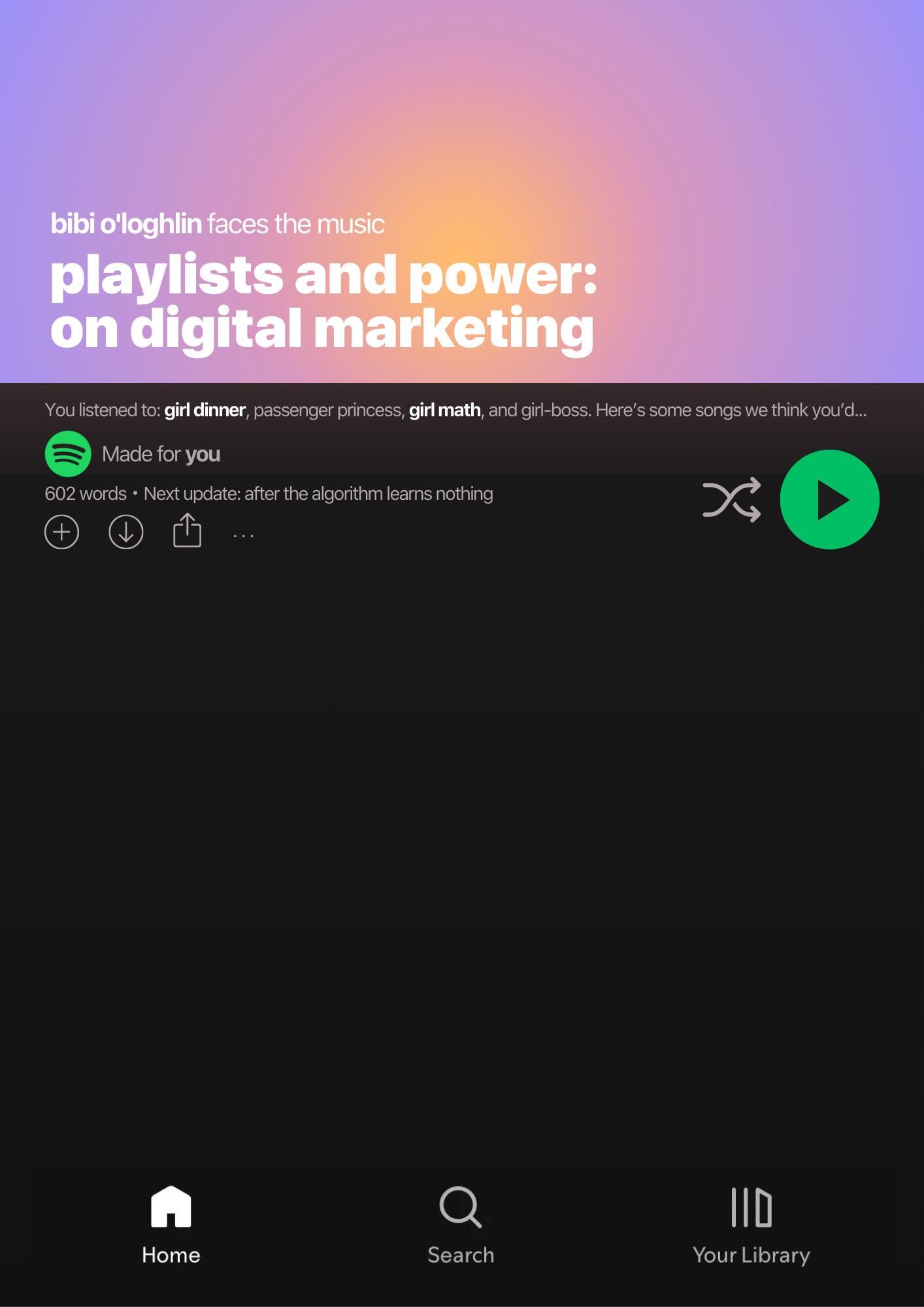
Recently, I opened Spotify to find that it had created a playlist for me: the ‘daylist’ feature, a collection of songs that supposedly reflect my typical listening activity based on the time of day. The playlist was called ‘girl dinner power ballad Tuesday afternoon,’ subtitled, ‘girl dinner, power ballad, passenger princess music inspired by your listening.’
The first question that came to mind: how on earth can ‘girl dinner’ qualify as a music genre? The second: what is Spotify trying to tell me about myself by feeding me that content?
The sociocultural infantilisation of women is as insidious as it is because of how subtly it occurs. In 2023, it was easy enough to believe that the barrage of posts on our social media platforms about ‘girl dinner’ and ‘girl math’ were somehow empowering, creating a shared, relatable ‘girlypop’ identity. After all, if we women are the ones creating content that conflates eating scraps for meals with femininity, it’s not problematic, right? If we’re the ones defining poor logic as a feature of girlhood, calling ourselves stupid, it can’t be harmful. Social media algorithms identify
female users and feed them corresponding content, repackaging misogyny as seemingly harmless meme culture. Passenger princess, girl math and girl measuring are identity labels that paint us as childish, stupid and vain - ultimately, robbing us of agency. AI algorithms are smart; they learn from our activity and our perception of what defines womanhood, and they reflect it back to us, creating a dangerous feedback loop. Just as young male consumers are pushed down right-wing misogynistic pipelines by algorithmically-determined content, the minds of young women are at risk of being shaped by the belittling, infantilising messages that they internalise through content consumption. Algorithms are designed to make popular themes even more popular by pushing users down rabbitholes of content, and what is misogyny if not eternally popular? That vicious digital cycle is not coincidental: it is a reflection of the human beings behind the coding.
With this being said, big tech is a maledominated industry, meaning men are at the core of creating the coding that structures our content consumption and our lives. As a result, algorithms prioritise a male perception of female identity. Women are fed content that encourages self-infantilisation, they engage with it, and are fed more of it. The ‘girl dinner’ trend may seem innocuous. My playlist of ‘passenger princess’ music might
seem harmless, but it encourages women to see themselves as small, quiet and weak. The digital landscape is rife with such examples of subtly sexist content hiding behind the guise of benign memes.
Of course, you could argue that Spotify was only doing its job –providing me with a playlist based on the listening activity that I should enjoy. Perhaps companies like Meta are only harmlessly providing us with content we enjoy. But it’s about packaging. It’s about an algorithm perceiving my interests, in this case, pop music made by women, and regurgitating them back to me as an identity built on misogyny Content consumption is a passive process, and so it’s easy to believe that because it doesn’t feel like active sexism, we aren’t internalising sexist principles. But even something as simple as a playlist plays a role in forming one’s cultural perception of femininity. And as more and more young women grow up in the digital age and develop identities shaped by algorithmically selected content, they will come to perceive themselves through the male gaze — as small, quiet and powerless.
The ethics of rape in our cinema
Saskia Morgan is checking the classification
Cinema is saturated with the imagery and stories of sexual violence. Framed as narrative inevitabilities, violation is stylised, aestheticised, and repackaged until it becomes omnipresent: atmosphere, motivation, plot. Rape is repeatedly mobilised to clarify villainy, justify revenge, or gesture toward socio-political critique, yet cinema rarely asks us to sit with what follows. ‘Living with it’ is too unresolved, too resistant to the catharsis both audiences and industry crave. Instead, trauma is translated into something more legible: revenge, rampage, or silence. This abstraction is not accidental, but reflective of the systems producing these stories. Representations of sexual and domestic violence on screen have always been reflective of their contexts and makers; exposing the biases, systemic inequalities, and patriarchal structures that inform whose pain is seen, how it is shown, and what meaning it is given. Historically, rape was understood not as a crime against women, but as a property dispute between men, a violation of ownership, lineage, or honour. While our legal frameworks have evolved, the male gaze continues to haunt cinematic representation. Contemporary rape culture, defined by victim-blaming, disbelief, and institutional failures, remains embedded in both our law and storytelling. As a result, sexual violence on screen is frequently framed through male consequence rather than
This is most evident in films that use rape as a plot motivator. In works such as Kill Bill (2003-2011) and The Accused (1988), violence functions as narrative ignition, providing moral clarity, authorising bloody revenge, and activating courtroom drama. The assault itself is not explored as an ongoing experience, but as a singular event that justifies everything that follows. Closure arrives through retaliation or verdict, not survival. Trauma is resolved cathartically in these narratives, even as its lived realities remain unresolved. These films condemn violence explicitly, yet it still functions as a justification for their runtimes.
This raises a central question: why does cinema feel compelled to show rape at all? The most common defence is realism. The insistence that to confront violence honestly, it must be seen. Yet visibility does not inherently produce understanding. In many cases, it produces endurance. Films such as The Girl with the Dragon Tattoo (2011), Showgirls (1995), and Last Tango in Paris (1972) argue for intensity as confrontation, staging sexual violence through prolonged, graphic scenes that refuse to look away. The camera does not look away, immersing the audience in suffering, but the survivor’s interiority is eclipsed by spectacle, and the aftermath is minimal or absent. At the same time, the pursuit of authenticity can override consent, demonstrating that cinema’s
By contrast, some films resist spectacle by shifting attention away from the act itself and toward its reverberations. In Revenge (2017), the assault occurs offscreen, denying voyeurism and refusing to aestheticise suffering. Twin Peaks: Fire Walk With Me (1992), Mysterious Skin (2004), The Perks of Being a Wallflower (2012), and Nowhere (1997) similarly prioritise impact over incident. Trauma manifests through fragmentation, dissociation, memory, and silence. These films understand that repetition is not required for truth. Absence becomes ethical. By refusing graphic depiction, they create space for subjectivity and acknowledge that trauma does not follow a single, narratively convenient path.
Across these approaches, a pattern emerges when sexual violence is repeatedly shown, intensified, and instrumentalised; it becomes familiar. Familiarity dulls outrage. Cinema trains audiences to accept violation as shorthand for: evil, seriousness, motivation. What matters, ultimately, is not whether rape is depicted, but how, and to what end.
We cannot erase sexual violence from cinema, nor should we. But we can refuse to let it function as a decoration, spectacle, or narrative convenience. Ethical cinema does not ask us to endure trauma for proof of its existence; it asks us to sit with its consequences and resist the urge to transform suffering into entertainment. And the ethical task of cinema is not to reproduce violence faithfully, but to refuse the ease with which it is made consumable.
Investigating Internalised Musical Misogyny
A running high school joke within my friendship group was that I was a misogynist. The reasoning? Only five out of the 100 songs on my Spotify Wrapped in 2022 were performed by women, an otherwise unremarkable statistic that somehow carried weight. The joke went so far that one of the girls made a playlist strictly of women to treat the latent infection of my apparent musical misogyny. Though mostly made in jest, the idea that I was part of the problem took root in my subconscious, less a wound than a quiet pressure on how I understood myself. This pressure manifested as a worry about permanently existing on an ethical tightrope, torn between feeling empowered by my fangirl nature and ashamed of my internalised misogynistic tropes. The tension between the two slowly became a quiet audit of my values, and the feminism I assumed I practised.
This dysphoria of musical misogyny is a symptom of the chronic gender inequity embedded in the skeleton of the music industry. It functions to decanter artists into two pools: rock and pop, the former coded as “masculine” and the latter dismissed as inherently “feminine.” Within this hierarchy, hegemonic masculinity operating through the quiet subordination of women in sociocultural practice, elevates rock as serious and cerebral while reducing pop to something juvenile and disposable. This sorting does more than rank genres; it regulates legitimacy, narrowing who is permitted to belong and ensuring that women who enter rock do so under scrutiny framed as novelty rather than norm.
This form of cultural control systematically excludes and ostracises women from entering and engaging in rock.
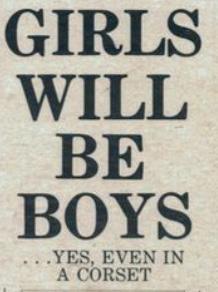
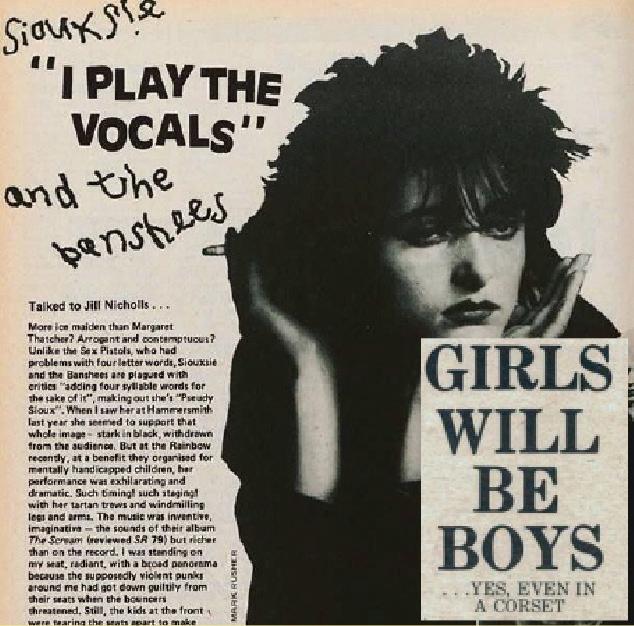
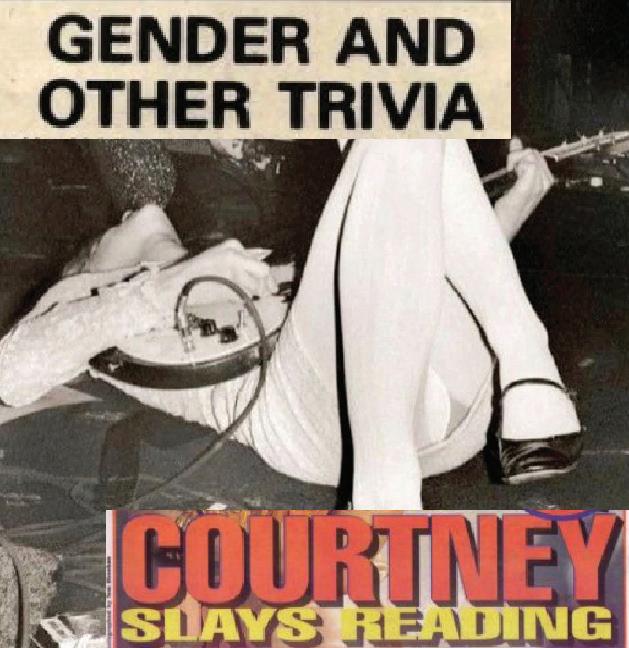
When a woman does succeed in rock, her success is rarely treated as ordinary. Instead, it is sensationalised as a novelty, especially within the music press, a tendency that is most clearly exemplified in 1996, when Melody Maker declared that “for years Women in Rock was not really an idea taken seriously… 1996 saw it finally happen.” The statement quietly erases a lineage that stretches from Blondie to Bikini Kill, folding decades of influence into a single, belated moment that conflates and confines a woman’s talent to her gender alone. By treating women as a homogeneous sub-genre of rock, this concretes their womanhood and artistry as a fluke of the music industry, fostering the patriarchal canon of objectification and sexualisation with ease.
However, the patriarchy is so kind as to allow women one viable route to ensure enduring rock relevance: negative press, through which a woman will be remembered for her scandal, a man will be remembered for his art. John Lennon’s abuse is subsumed into myth because he wrote Tomorrow Never Knows, while Yoko Ono is flattened into shorthand for “breaking up” The Beatles. It is a cruel paradox of gender binaries. I mean, I stopped listening to Hole for a while because of how controversial Courtney Love is, yet religiously listen to the Smiths led by evercontentious lead Morrissey. This uneven moral accounting reveals how infamy operates differently across genders. For women, controversy overwhelms the work, narrowing the chance for their music to be returned to, inherited, or passed on. For men, it is absorbed, compartmentalised, and ultimately forgiven, even praised. If we applied the same standard universally, the
industry would collapse under the weight of its own canon.
As a woman who predominantly listens to rock, I am not exempt from the conditions it creates. Whether intentional or not, this is an uneasy position to occupy. The discomfort does not come from fearing that I have failed some private moral test, but from recognising how easily one can move within a system without ever escaping its shape. My Wrapped lingers as a quiet artefact of that reality, less an indictment of taste than a reminder of how ingrained, and difficult to sidestep, these patterns remain.
Awareness, then does not correct the imbalance, but it makes ignoring it harder because god forbid a woman excels in rock without scrutiny.
Felicity Errington takes the aux cord
on living like an arrow
zoe morris
1. I am no longer content to be a basket. I wish to live like an arrow and pierce my love: an archer shooting a royal declaration into the town square.
2. I am no longer expecting goods; my worth is not in what I receive. no wonder I felt so empty, treating my body like a jar when it is a shooting star and all that water just slid right off me like a bass line
3. I am a rainbow fish my head pressing through the stream like an anchor chasing after whatever I fancy. If you catch me name me you lose me my meaning is in my movement you can only see all my colours when I swim.
4. Some people will want to keep you on the mantlepiece like a prized perch not caring if your colours fade because now you only exist inside of their head.
5. Too much self reflection is bad for the soul. An arrow is sleek and thin, unencumbered by memory. The fish that stops to think sinks slowly like how Narcissus fell in
It just follows its head and makes change like a flying seed.
WHICH MISOGYNIST ARE YOU?
How do you spend your time?
What do you drink?
A. Jamming with my sick band
B. Reading ‘All About Love’
C. Watching Tarantino films
A. Beer
B. Matcha
C. Black coffee
What do you listen to?
What’s your ex like?
If you got mostly A’s...
You’re a MALE MANIPULATOR
Unapologetically, you only listen to male artists, and aspire to be just like the most toxic men on your playlist. Your exes are all crazy, and it’s nothing to do with you. You’re looking forward to moaning into a mic this Friday
Who’s your idol?
A. Jimmy Page
B. My mum
C. Christopher Nolan
A. Radiohead, The Smiths
B. Female artists... lots...
C. Scorsese soundtracks
A. She’s totally crazy
B. Troubled. But I have love for her!
C. A bit like Pearl from Pearl (2022)
If you got mostly B’s...
You’re a PERFORMATIVE MAN
Perhaps the most dangerous misogynist on this list, you hide your true nature to all except yourself. You claim overwhelming love for all the women of the world, but you never seem to listen when they speak. You say “girlie”.
If you got mostly C’s...
You’re a FILM BRO
A classical misogynist, you worship the male auteur and don’t care about anything else. You’re a regular at the Dendy, where you think all the female workers are dumb and don’t get film like you do. You’re not a vibe bro.
FEMI IST FILMS
to cleanse one’s soul of male auteurs
FEMINIST SOUNDS
Resources
Responding to disclosures of sexual assault:
Prepared by 2026 Usyd Sexual Assult / Sexual HarassmentOfficers,ZetaoZhao,AnanyaThirumalai, LeylaBensan,SaskiaMorgan
When responding to a disclosure of sexual assault, the most important thing is to centre and support the victim-survivor. Any responses should be validating, non-blaming, and compassionate as they disclose something so distressing and vulnerable.
Additional considerations
Consider options for preserving forensic evidence, if sexual assault was recent. Ask if you have their permission to confidentially document what they have said, if appropriate. Do not try to “take charge” of the situation, eg. by reporting without their consent. Do not pressure them to report if they do not wish to.
Key things to say:
“I believe you”
“This is not your fault”
“What do you want to do?”
“I can help you find some resources to get help”
A How to report a disclosure or complaint of sexual misconduct with the University and National Student Ombudsman.
Dear survivors. We believe you, we care about you, and we want justice for you.
The University has a reporting system that allows you to make either a disclosure or complaint of sexual misconduct if it has occurred at or in connection with the University, including at an event or residential college. The Sexual Misconduct & Inappropriate Behavior Online Reporting Form will connect you with the Safer Communities Office who will work to provide support, such as counselling, health services, and emergency accommodation. Reporting on an incident will not affect your enrolment, academic status, or visa status.
Since February 1 2025, students have been able to escalate complaints about the actions of their higher education provider, including complaints about sexual harassment, assault, and violence, via an online form, over the phone, in writing, or in-person, through the National Student Ombudsman.
There are also multiple other
communitybased services and resources you can use:
On-Campus resources
• Safer Communities Office | Offers Trauma-informed support for those who have experienced sexual misconduct, domestic/family violence, bullying/harassment and issues relating to modern slavery | 8627 6808 | safer-communities.officer@sydney.edu.au | +61 2 8627 6808
• SRC | The SRC’s Caseworkers can help guide and direct you to support resources and through any reporting processes you wish to undergo. The SRC office also has free condoms you are welcome to take, judgement free. | Help@ src.usyd.edu.au | (02) 9660 5222
• 1800 SYD HLP | The confidential helpline for The University of Sydney, connecting students and sometimes staff to crucial support for emergencies, safety threats, sexual assault/harassment reporting, misconduct complaints, and general student concerns, offering 24/7 emergency contact and business-hour support for various issues, including linking to external crisis services like the NSW Rape Crisis Centre. | 1800 793 457
• Counselling and Psychological Services | The university offers free counselling and psychological services that can help you come to terms with an assault, and help you with your mental health throughout the reporting process. | 8627 8433 | 1300 474 065 or by texting 0488 884 429 | Jane Foss Russell Building
• Protective services | If you’re feeling unsafe on campus or you’re concerned for the safety of others, call Protective Services. Security patrol officers can assist by escorting you from a building to your vehicle, to the local bus stop or to the local railway station. | 02 9351 3333
External resources
• Royal Prince Alfred Hospital Community Health and Sexual Assault Service | Provides free and unlimited counselling and responds to the needs of individuals aged 14+ who have experienced sexual assault. | 02 9515 9040 | Camperdown NSW 2050
• 1800 Respect | 24/7 free counselling to support people impacted by domestic, family or sexual violence. | 1800 737 732
• NSW Sexual Violence Helpline | 24/7 telephone and online crisis counselling service for anyone in NSW who has experienced or is at risk of sexual assault, and loved ones of victims of sexual violence. They provide professional trauma specialist counsellors, telephone and online support, and information and referral to other services. | 1800 424 017
• Rainbow Sexual, Domestic and Family Violence Helpline | For Australians from the LGBTQIA+ community who have recently or in the past experienced sexual, domestic or family violence, and the loved ones of these individuals. They provide professional trauma counselling provided by counsellors who have completed LGBTQIA+ specialist training, and information and referral to other services. | 1800 497 212
• LifeLine | If you are experiencing extreme distress, Lifeline operates 24/7 to provide urgent support and care to anyone in need. | 13 11 14 or text 0477131114
• Qlife | A telephone and online counselling and referral service for people who are LGBTQIA+. | 1800 184 527
• Wirringa Baiya Aboriginal Women’s Legal Service | Provides legal advice and support for a range of issues, including domestic, sexual, and family violence, to Aboriginal and Torres Strait Islander women, children, and youth. | 1800 686 587