11-12 December 2025

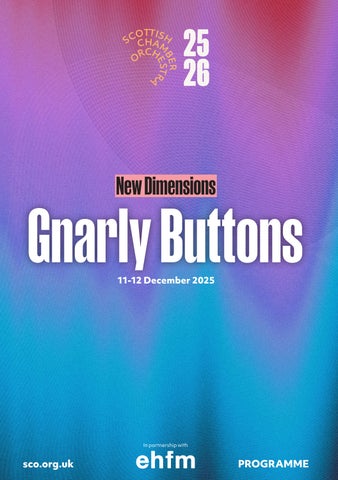
11-12 December 2025
Thursday 11 December, 7.30pm The Queen's Hall, Edinburgh
Friday 12 December, 7.30pm City Halls, Glasgow
JOHN ADAMS Shaker Loops
JOHN ADAMS Gnarly Buttons
Interval of 20 minutes
JOHN ADAMS Fearful Symmetries
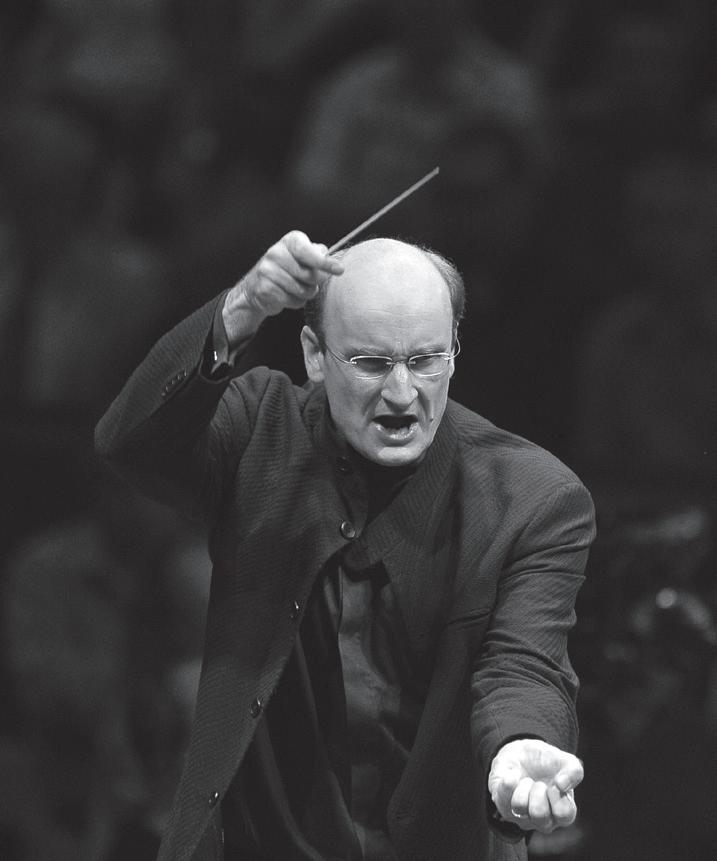
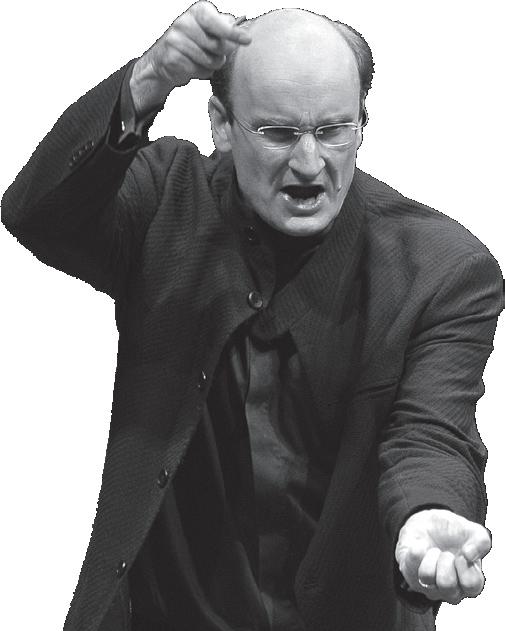
Andrew Manze conductor
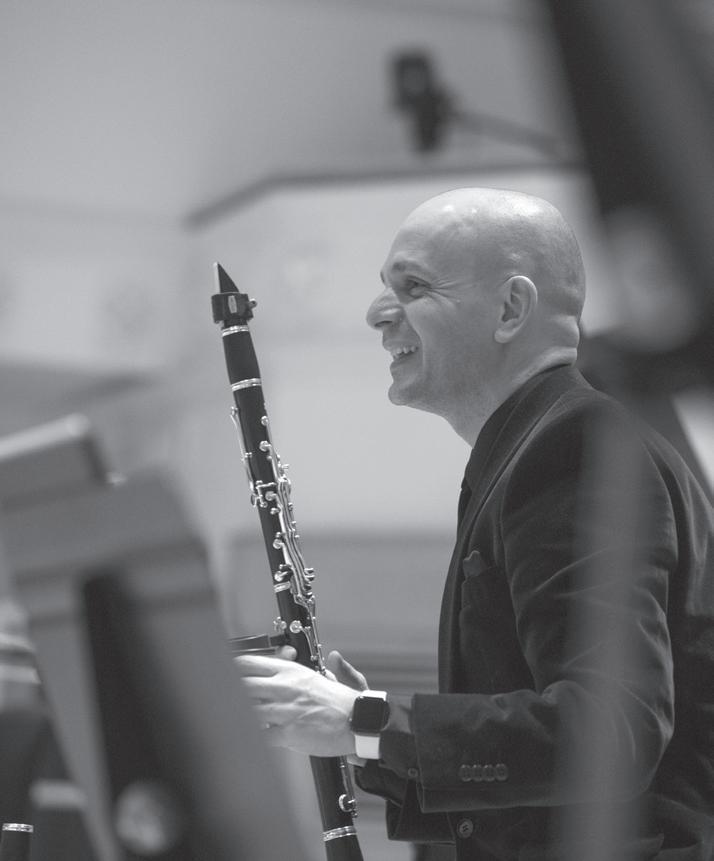
Maximiliano Martín clarinet
THANK YOU
Our Principal Conductor’s Circle are a special part of our musical family. Their commitment and generosity benefit us all – musicians, audiences and creative learning participants alike.
Annual Fund
James and Patricia Cook
Visiting Artists Fund
Harry and Carol Nimmo
Anne and Matthew Richards
International Touring Fund
Gavin and Kate Gemmell
Creative Learning Fund
Sabine and Brian Thomson
Conductor Emeritus Joseph Swensen
Donald and Louise MacDonald
Chorus Director Gregory Batsleer
Anne McFarlane
Principal Second Violin
Marcus Barcham Stevens
Jo and Alison Elliot
Second Violin Rachel Smith
J Douglas Home
Principal Viola Max Mandel
Ken Barker and Martha Vail Barker
Viola Brian Schiele
Christine Lessels
Viola Steve King
Sir Ewan and Lady Brown
Principal Cello Philip Higham
The Thomas Family
Sub-Principal Cello Su-a Lee
Ronald and Stella Bowie
Cello Donald Gillan
Professor Sue Lightman
American Development Fund
Erik Lars Hansen and Vanessa C L Chang
Productions Fund
Anne, Tom and Natalie Usher
Bill and Celia Carman
Scottish Touring Fund
Eriadne and George Mackintosh
Claire and Anthony Tait
Cello Eric de Wit
Jasmine Macquaker Charitable Fund
Principal Flute André Cebrián
Claire and Mark Urquhart
Principal Oboe
The Hedley Gordon Wright Charitable Trust
Sub-Principal Oboe Katherine Bryer
Ulrike and Mark Wilson
Principal Clarinet Maximiliano Martín
Stuart and Alison Paul
Principal Bassoon Cerys Ambrose-Evans
Claire and Anthony Tait
Sub-Principal Bassoon Alison Green
George Rubienski
Principal Horn Kenneth Henderson
Caroline Hahn and Richard Neville-Towle
Principal Timpani Louise Lewis Goodwin
Geoff and Mary Ball


Diamond
The Cockaigne Fund
Malcolm and Avril Gourlay
John and Jane Griffiths
James and Felicity Ivory
George Ritchie
Tom and Natalie Usher
Platinum
E.C. Benton
Michael and Simone Bird
Silvia and Andrew Brown
David Caldwell in memory of Ann
Dr Peter Williamson and Ms Margaret Duffy
Judith and David Halkerston
David and Elizabeth Hudson
Helen B Jackson
Dr and Mrs Peter Jackson
Dr Daniel Lamont
Graham and Elma Leisk
Professor and Mrs Ludlam
Chris and Gill Masters
Duncan and Una McGhie
Anne-Marie McQueen
James F Muirhead
Robin and Catherine Parbrook
Patrick and Susan Prenter
Mr and Mrs J Reid
Martin and Mairi Ritchie
Hilary E Ross
Elaine Ross
Sir Muir and Lady Russell
Jill and Brian Sandford
Michael and Elizabeth Sudlow
Robert and Elizabeth Turcan
Alan and Sue Warner
Anny and Bobby White
Robert Mackay and Philip Whitley
Finlay and Lynn Williamson
Ruth Woodburn
Gold
Peter Armit
Adam Gaines and Joanna Baker
John and Maggie Bolton
Elizabeth Brittin
Kate Calder
James Wastle and Glenn Craig
Jo and Christine Danbolt
James and Caroline Denison-Pender
Andrew and Kirsty Desson
David and Sheila Ferrier
Chris and Claire Fletcher
James Friend
Iain Gow
Margaret Green
Christopher and Kathleen Haddow
Catherine Johnstone
Julie and Julian Keanie
Gordon Kirk
Janey and Barrie Lambie
Mike and Karen Mair
Roy and Svend McEwan-Brown
John and Liz Murphy
Tom Pate
Maggie Peatfield
Sarah and Spiro Phanos
Charles Platt and Jennifer Bidwell
Alison and Stephen Rawles
Andrew Robinson
Olivia Robinson
Anne McAlister and Philip Sawyer
Irene Smith
Dr Jonathan Smithers
Ian S Swanson
Ian and Janet Szymanski
John-Paul and Joanna Temperley
Douglas and Sandra Tweddl
Bill Welsh
Catherine Wilson
Neil and Philippa Woodcock
Silver
Roy Alexander
Fiona and Neil Ballantyne
The Batsleer Family
Jack Bogle
Jane Borland
Alan Borthwick
Dinah Bourne
Michael and Jane Boyle
Mary Brady
John Brownlie
Laura Buist
Robert Burns
Sheila Colvin
Lorn and Camilla Cowie
Adam and Lesley Cumming
Dr Wilma Dickson
Seona Reid and Cordelia Ditton
Sylvia Dow
Colin Duncan in memory of Norma Moore
Raymond Ellis
Dr and Mrs Alan Falconer
Sheila Ferguson
Dr William Irvine Fortescue
Dr David Grant
Anne Grindley
Andrew Hadden
J Martin Haldane
Ronnie and Ann Hanna
Roderick Hart
Norman Hazelton
Ron and Evelynne Hill
Philip Holman
Clephane Hume
Tim and Anna Ingold
David and Pamela Jenkins
Margaret Mortimer and Ken Jobling
Ross D. Johnstone
Professor Christopher and Mrs Alison Kelnar
Dr Ian Laing
Geoff Lewis
Dorothy A Lunt
Vincent Macaulay
James McClure in memory of Robert Duncan
Ben McCorkell
Lucy McCorkell
Gavin McCrone
Michael McGarvie
Brian Miller
Alistair Montgomerie
Andrew Murchison
Pamela Andrews and Alan Norton
Gilly Ogilvy-Wedderburn
John Peutherer in memory of Audrey Peutherer
James S Potter
Timothy Barnes and Janet Sidaway
Catherine Steel
John and Angela Swales
Takashi and Mikako Taji
C S Weir
Susannah Johnston and Jamie Weir
David and Lucy Wren
We are indebted to everyone acknowledged here who gives philanthropic gifts to the SCO of £300 or greater each year, as well as those who prefer to remain anonymous.
We are also incredibly thankful to the many individuals not listed who are kind enough to support the Orchestra financially on a regular or ad hoc basis. Every single donation makes a difference.
Become a regular donor, from as little as £5 a month, by contacting Hannah Wilkinson on 0131 478 8364 or hannah.wilkinson@sco.org.uk.
“…an orchestral sound that seemed to gleam from within.”
HM The King Patron
Donald MacDonald CBE
Life President
Joanna Baker CBE Chair
Gavin Reid LVO
Chief Executive
Maxim Emelyanychev
Principal Conductor
Andrew Manze
Principal Guest Conductor
Joseph Swensen
Conductor Emeritus
Gregory Batsleer
Chorus Director
Jay Capperauld
Associate Composer
Information correct at the time of going to print
First Violin
Charlotte Saluste-Bridoux
Marie Schreer
Amira Bedrush-McDonald
Aisling O’Dea
Fiona Alexander
Amelia Harding
Second Violin
Sophia Prodanova
Gordon Bragg
Rachel Spencer
Sarah Bevan Baker
Kristin Deeken
Serena Whitmarsh
Viola
Hélène Clement
Jessica Beeston
Ana Dunne Sequi
Steve King
Cello
Philip Higham
Su-a Lee
Donald Gillan
Eric de Wit
Bass
Josie Elllis
Jamie Kenny
Guitar/Mandolin/Banjo
Robert Carillo-Garcia
Keyboard
Simon Smith
John Cameron
Piano
Stephen Doughty
Flute/Piccolo
Marta Gómez
Caglayan Barbaros
Oboe
Maria Victoria Muñoz
Zaragoza
Katherine Bryer
Cor Anglais
Katherine Bryer
Clarinet
Cristina Mateo Saez
Calum Robertson
Bass Clarinet
William Stafford
Saxophone
Lewis Banks
Carl Raven
Josef Pacewiz
Gareth Brady
Bassoon
Cerys Ambrose-Evans
Horn
George Strivens
Andy Saunders
Trumpet
Peter Franks
Shaun Harrold
Simon Bird
Trombone
Duncan Wilson
Symone Hutchison
Alan Adams
Timpani
Louise Lewis Goodwin
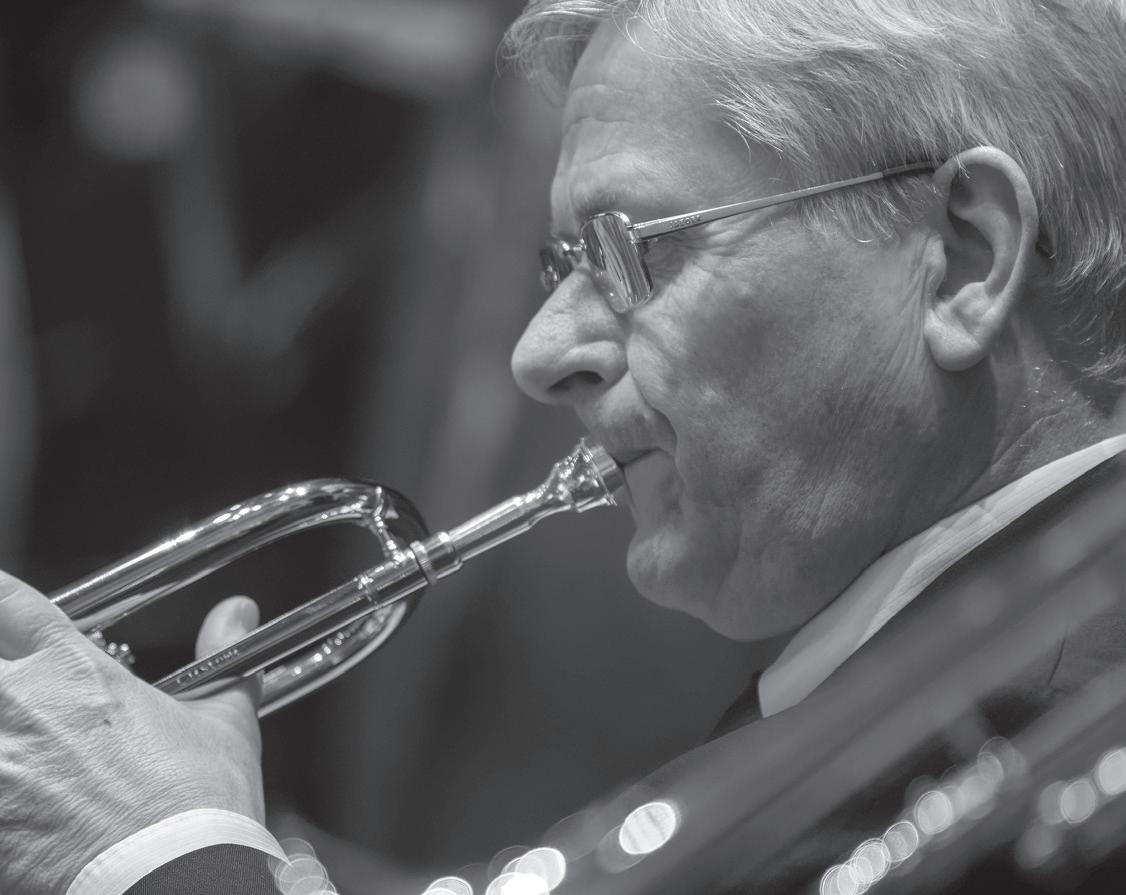
JOHN ADAMS (b. 1947)
Shaker Loops (1978)
I Shaking and Trembling
II Hymning Slews
III Loops and Verses
IV A Final Shaking
JOHN ADAMS (b. 1947)
Gnarly Buttons (1996)
I The Perilous Shore
II Hoedown (Mad Cow)
III Put Your Loving Arms Around Me
JOHN ADAMS (b. 1947)
Fearful Symmetries (1988)
"To me, it felt like the pleasure principle had been invited back into the listening experience." That’s tonight’s composer, John Adams, writing in his 2008 autobiography Hallelujah Junction about his early encounters with minimalism. Many would agree with his assessment: the all-American musical movement – or perhaps philosophy is a better word – has spread its hypnotic repetitions, its radiant, consonant harmonies and its rhythmic verve worldwide since its beginnings in the experimentalism of the 1960s and 1970s, being reborn again and again in the music of countless classical composers as well as in jazz, rock, pop, hip hop and more. You could even argue that minimalism has itself helped us discover connections and parallels between those apparently different musical worlds.
For Adams – born in New England, educated at Harvard, but finding his first proper employment at the San Francisco Conservatory of Music in 1972 – minimalism represented a turn away from the complexities and strictures of the far more difficult, dissonant music that had dominated European and at least East Coast musical cultures since the Second World War. And in the hands of early minimalists La Monte Young and Terry Riley, as well as more familiar later figures Philip Glass and Steve Reich, it represented a turn back towards simplicity, comprehensibility, not to say emotion and even a certain sense of transcendence. "When I first heard [Reich’s] Music for 18 Musicians," Adams continues in his autobiography, "I felt that the experience of pure aural pleasure, so long absent in contemporary classical music, had reemerged from a long, dark night of the soul."
Adams seemed to have found his musical and spiritual home in San Francisco (he’s lived in and around the city ever since), whose free thinkers and merry experimentalists proved a fertile audience for his own early musical
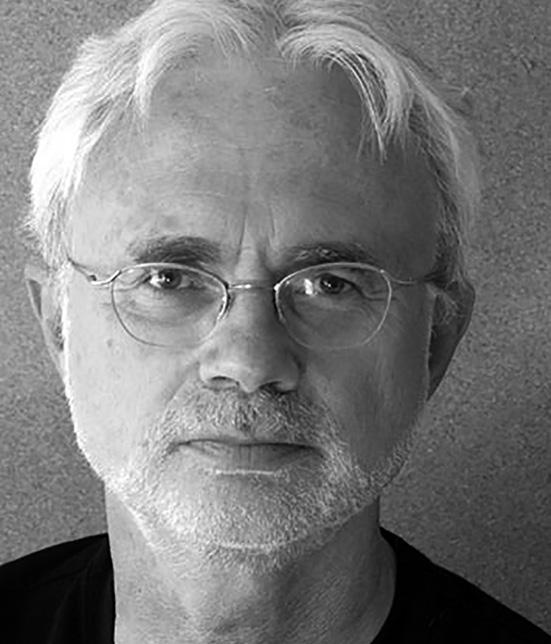
Adams seemed to have found his musical and spiritual home in San Francisco (he’s lived in and around the city ever since), whose free thinkers and merry experimentalists proved a fertile audience for his own early musical minimalist experiments...
minimalist experiments – including tonight’s opening piece, Shaker Loops. But all the same, something wasn’t right. Even if the emotional, not to say visceral directness of minimalism offered many opportunities to connect with and engage listeners, the very rigour that made it such a distinctive musical style also represented something of a straitjacket, one that made it hard for Adams to connect with the harmonic richness, the humour, the quirky Americana and the unreliable autobiography that would appear in many of his later works – tonight’s Gnarly Buttons among them. He learnt the lessons of minimalism, but quickly moved on – into far richer, less immediately definable music (he calls his musical style "post-style") that nonetheless retains much of his earlier energy, richness and captivating engagement.
Tonight’s concert might begin in Adams’ minimalist heyday, but it quickly moves away into music that’s far harder to label in Gnarly
Buttons, before returning – partway, at least – to Fearful Symmetries, a work that probably pushes minimalist style about as far as it can go before it shatters completely.
Shaker Loops, from 1978, was the first piece to bring Adams’ name to a wide international audience. But while other minimalist composers were pursuing ideas about process becoming the whole point of the music, Adams harnesses the unmistakable elements of minimalism to create music that focuses on energy, power and emotional drive.
Adams wrote the piece while teaching at the San Francisco Conservatory of Music, and tried it out on willing student players as he was developing it out of his earlier conceptual piece Wavemaker Its quirky title makes several references. First, ‘loops’ is a term still used for short repeating sections in pop and rock tracks. For Adams in the 1970s, it meant a literal loop: a section of pre-
recorded tape attached to itself in an unending circle, and played over and over, as many times as needed. ‘Shaker’ refers to the United Society of Believers in Christ’s Second Appearing, the Christian sect that had a defunct community near where Adams grew up in New Hampshire, and whose ecstatic praise is said to have lead to bodily convulsions. The word also sums up the movements that Adams’ string players carry out to achieve the rapid tremolos his music demands.
Those lightning-quick movements are most evident in the propulsive energy of Shaker Loops’ first movement, Shaking and Trembling. After that frenetic activity, it feels as though time has stopped in the second movement, Hymning Slews, with just a few raindrop-like pizzicatos, sighing slides (the ‘slews’ of the movement’s title) and icy harmonics left. A solo cello launches the third movement, Loops and Verses, in which Adams pulls off a remarkable aural illusion of the music seeming constantly to accelerate. In the last movement, A Final Shaking, he looks back over material from earlier in the piece before ending with the gentle euphoria of apparently endless waves of sound.
It was almost two decades later, in 1996, that Adams’ clarinet concerto Gnarly Buttons received its premiere, and it’s a very different piece –humorous, sometimes sentimental, and shot through with a strong dose of autobiography too. Adams himself writes about the piece:
"The clarinet was my first instrument. I learned it from my father, who played it in small swing bands in New England during the Depression era. He was my first and most important teacher, sitting in the front room with me, patiently counting out rhythms and checking my embouchure and fingering. Benny Goodman was a role model, and several of his recordings – in particular the 1938 Carnegie Hall jazz concert and a Mozart album with the Boston Symphony
Orchestra – were played so often in the house that they almost became part of the furniture.
"Later, as a teenager, I played in a local marching band with my father, and I also began to perform the other clarinet classics by Brahms, von Weber, Bartók, Stravinsky and Copland. During my high school years I played the instrument alongside him in a small community orchestra that gave concerts before an audience of mental patients at the New Hampshire State Hospital.
"But strangely enough, I never composed for the instrument until I was almost 50. By that time my father had died, and the set of instruments I had played as a boy, a Selmer A and B-flat pair, had travelled back and forth across the country from me to my father (who played them until he fell victim to Alzheimer’s disease) and ultimately back to me. During the latter stages of my father’s illness, the clarinets became an obsession for him, and this gentle, infinitely patient man grew more and more convinced that someone was intent upon breaking into his New Hampshire house and stealing them. Finally, one day, my mother found the disassembled instruments hidden in a hamper of laundry. It was the end of my father’s life with the instrument. The horns were sent to me in California where they grew dusty and stiff, sitting in a closet. But I brought them out again when I began to compose Gnarly Buttons, and the intimate history they embodied, stretching from Benny Goodman through Mozart, the marching band, the State Hospital to my father’s final illness, became deeply embedded in the piece.
"The scoring underlines the folk and vernacular roots of the music: a banjo player (who also plays mandolin and guitar); a trombone; two low double reeds (English horn and bassoon); piano; two samplers playing a variety of sounds including sampled accordion, clarinet and cow; and strings (either solo or multiple). The third
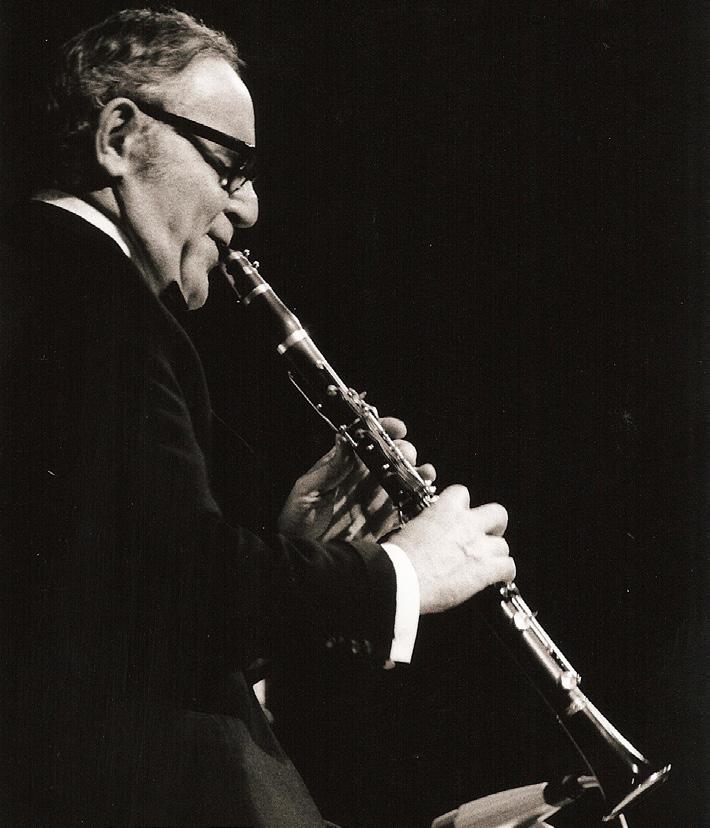
Benny Goodman was a role model, and several of his recordings – in particular the 1938 Carnegie Hall jazz concert and a Mozart album with the Boston Symphony Orchestra – were played so often in the house that they almost became part of the furniture.
movement, Put Your Loving Arms Around Me, harkens back to the Chorus of Exiled Palestinians in its extreme simplicity: a diatonic melody set against a strummed continuum of chords. This idea became the basis for a much larger exploration in the 1998 work for large orchestra, Naïve and Sentimental Music. The ‘naïve’ affect that Schiller identified in his famous essay, On the Naïve and Sentimental in Poetry, is an element so beautifully employed in Mahler… and so decidedly missing in most contemporary music.
‘Gnarly’ means knotty, twisted or covered with gnarls... your basic village elder’s walking stick. In American school kid parlance it takes on additional connotations of something to be admired: ‘awesome’, ‘neat’, ‘fresh’, etc. etc. The ‘buttons’ are probably lingering in my mind from Gertrude Stein’s Tender Buttons, but my evoking them here also acknowledges our lives at the end of the 20th century as being largely
given over to pressing buttons of one sort or another. NB: clarinets have rings and keys, not buttons.
"The three movements are eached based on a ‘forgery’ or imagined musical model. The idea for this goes back to the imagined ‘foxtrot’ of my 1986 piece, The Chairman Dances, music to which Madame and Chairman Mao dance and make love, believing my foxtrot to be the genuine article. In this spirit we may believe the genuine articles of Gnarly Buttons to be:
I. The Perilous Shore: a trope on a Protestant shape-note hymn found in a 19th-century volume, The Footsteps of Jesus, the first lines of which are:
O Lord steer me from that Perilous Shore Ease my soul through tempest’s roar.
Satan’s leering help me firmly turn away Hurl me singing into that tremulous day!
The melodic line is twisted and embellished from the start, appearing first in monody and eventually providing both micro and macro material for the ensuing musical structures.
II. Hoedown (Mad Cow): normally associated with horses, this version of the traditional Western hoedown addresses the fault lines of international commerce from a distinctly American perspective.
III. Put Your Loving Arms Around Me: a simple song, quiet and tender up front, gnarled and crabbed at the end."
The work that really put Adams’ name on the musical map internationally was his 1987 opera Nixon in China, as much for its eloquent, engaging music as for its storyline based on real-life political events (a plot interest that Adams has continued in later works, too). Tonight’s final work comes from just a few years after Nixon in China, providing a fascinating insight into the composer grappling with the minimalist elements that he both loved and maybe resented. He writes about the piece:
"In the spring of 1988, shortly after the first series of Nixon in China performances in the US and Europe, I began thinking about a new work for orchestra. Working in the almost too beautiful confines of the American Academy in Rome, I found that ideas were slow to arrive. When they did make an appearance I was surprised to see that they were in much the same vein as the Nixon music. Apparently I had more to say in that particular style, although this time it would be purely instrumental music, and the sound would be largely dictated by the Nixon orchestra, a kind of mutated big band, heavy on brass, winds, synthesizer and saxophones. To this ensemble I added for Fearful Symmetries a keyboard sampler playing sampled percussion sounds, two horns and a bassoon. Otherwise
the ensemble is identical to that called for in the opera.
"The music is, as its title suggests, almost maddeningly symmetrical. Four- and eight-bar phrases line up end to end, each articulated by blazingly obvious harmonic changes and an insistent chugging pulse. The familial resemblance to the opening minutes of The Chairman Dances is unmistakable, but in Fearful Symmetries the gestures are more emphatic and the music is more closely allied to pop and minimalist rock. It’s clearly an example of what I call my ‘travelling music’, music that gives the impression of continuous movement over a shifting landscape. In this piece, however, a cityscape is doubtless the more appropriate analogy as the sound has a distinctly urban feel.
"It is for sure a seriously aerobic piece, a Pantagruel boogie with a thrusting, grinding beat that governs at least two-thirds of its length. Perhaps partly for this reason, it’s become my most choreographed work, with over a dozen different versions, including those by the Royal Ballet and the New York City Ballet, in current use. What appeals to me most about the piece is the timbre: it mixes the weight and bravura of a big band with the glittering, synthetic sheen of techno pop (samples and synthesizer) and the facility and finesse of a symphony orchestra.
"The part for synthesizer is very prominent. It was originally written for the big double-manual Yamaha Electone, a hybrid between a synth and an organ complete with chromatic pedals. The revised version, however, calls only for a sampler with two keyboards (in addition to the percussion sampler, played by another performer). The saxophone quartet, so critical to the Nixon in China sound, is treated here usually as a single homophonic unit."
© David Kettle
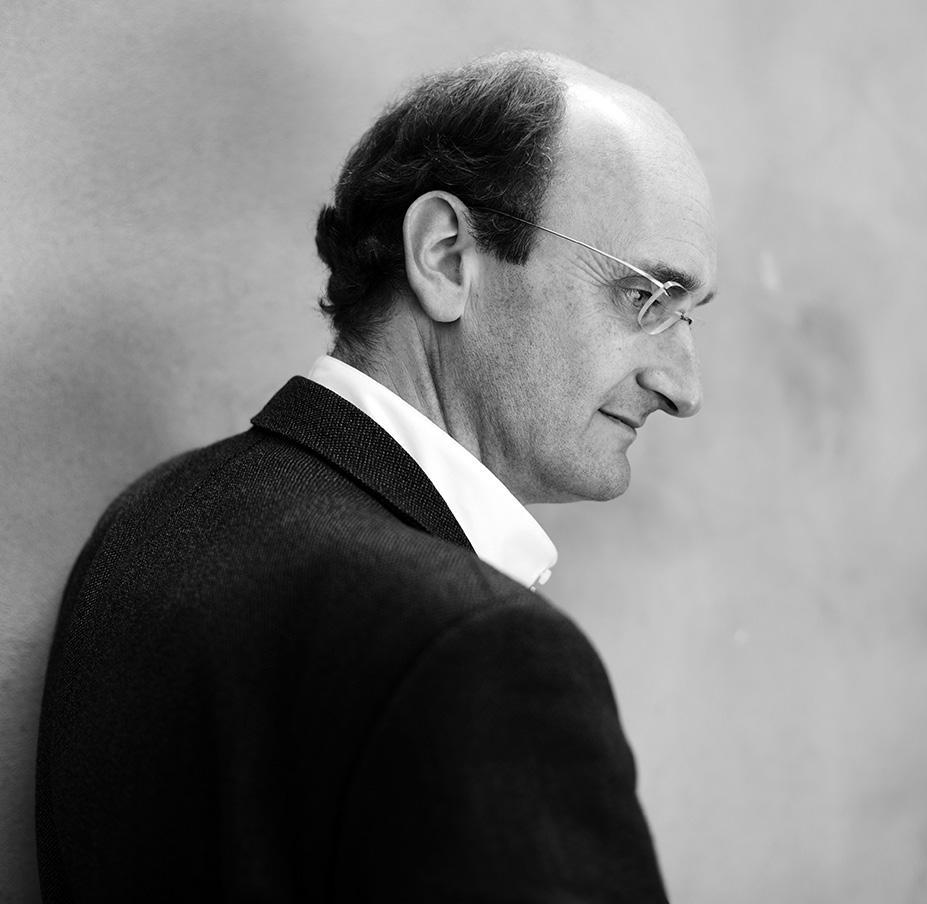
Andrew Manze is widely celebrated as one of the most stimulating and inspirational conductors of his generation. His extensive and scholarly knowledge of the repertoire, together with his boundless energy and warmth, mark him out. He held the position of Chief Conductor of the NDR Radiophilharmonie in Hannover from 2014 until 2023. Since 2018, he has been Principal Guest Conductor of the Royal Liverpool Philharmonic Orchestra. Last September he was appointed Principal Guest Conductor of the Scottish Chamber Orchestra.
In great demand as a guest conductor across the globe, Manze has long-standing relationships with many leading orchestras, including the Royal Concertgebouworkest, the Munich Philharmonic, Rotterdam Philharmonic, Royal Stockholm Philharmonic, Bamberg Symphoniker, Oslo Philharmonic, Finnish Radio, Mozarteum Orchester Salzburg, Chamber Orchestra of Europe, RSB Berlin, and the Dresden Philharmonic among others. In the 24/25 season, Manze will also make debuts with the Toronto Symphony Orchestra and the Orchestre Symphonique de Montréal, and return to the Hallé Orchestra, the Atlanta Symphony Orchestra, and the Salzburg Festival.
From 2006 to 2014, Manze was Principal Conductor and Artistic Director of the Helsingborg Symphony Orchestra. He was also Principal Guest Conductor of the Norwegian Radio Symphony Orchestra from 2008 to 2011, and held the title of Associate Guest Conductor of the BBC Scottish Symphony Orchestra for four seasons.
After reading Classics at Cambridge University, Manze studied the violin and rapidly became a leading specialist in the world of historical performance practice. He became Associate Director of the Academy of Ancient Music in 1996, and then Artistic Director of The English Concert from 2003 to 2007. As a violinist, Manze released an astonishing variety of recordings, many of them award-winning.
Manze is a Fellow of the Royal Academy of Music, Visiting Professor at the Oslo Academy, and has contributed to new editions of sonatas and concerti by Bach and Mozart, published by Bärenreiter and Breitkopf & Härtel. He also teaches, writes about, and edits music, as well as broadcasting regularly on radio and television. In November 2011 Andrew Manze received the prestigious ‘Rolf Schock Prize’ in Stockholm.
1,3,4 & 5 January 2026, 3pm (7.30pm in Ayr)
Edinburgh | Aberdeen | Perth | Ayr Sponsored by
Andrew Manze conductor
Rachel Redmond soprano
LEARN MORE
Timeless waltzes and more by the Strauss family and Lehár.
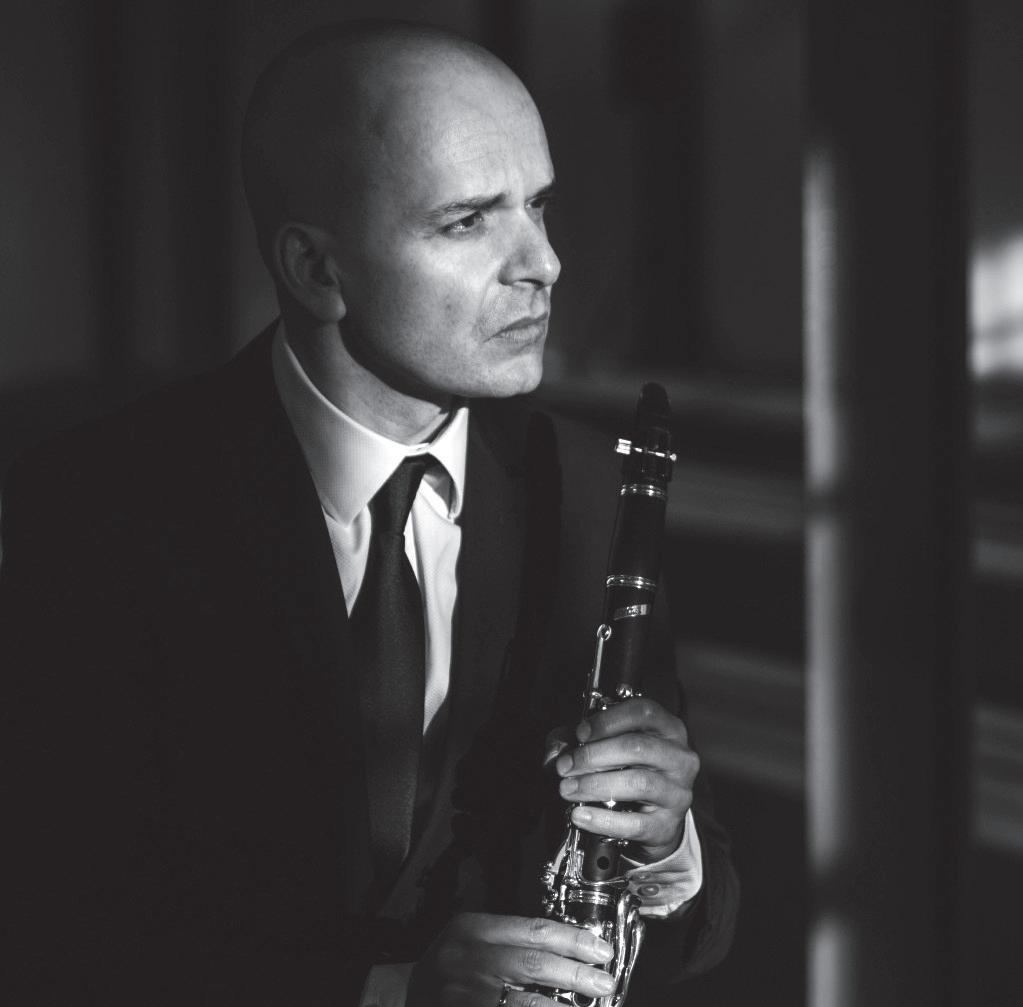
Tenerife-born clarinettist Maximiliano Martín combines his position as SCO Principal Clarinet with engagements and masterclasses internationally, appearing in many of the world’s most prestigious venues and series.
Highlights have included solo concertos with the SCO, European Union Chamber Orchestra, Orquesta Real Filarmonía de Galicia, Orquesta Filarmónica de Las Palmas de Gran Canaria, Orquesta Sinfónica del Principado de Asturias, Macedonian Philharmonic Orchestra and Estonian National Symphony Orchestra, with conductors including Brüggen, Emelyanychev, Ticciati, Manze, Antonini, Swensen, Zacharias and González.
As a chamber musician, Martín performs regularly with London Conchord and Hebrides Ensembles, Maxwell and Casals String Quartets, François Leleux, Pekka Kuusisto, Alexander Janiczek, Llŷr Williams, Kris Bezuidenhout and, until his recent death, in close partnership with Scott Mitchell. He is also in demand as Principal guest clarinet with leading orchestras including Chamber Orchestra of Europe, LSO, Hallé, CBSO and Bergen Philharmonic.
His extensive discography includes, with SCO, Mozart and Weber Concertos (Janiczek), Strauss DuetConcertino (Ticciati/Whelan), Mozart and Beethoven wind music (all on Linn); Nielsen, Copland and MacMillan Concertos with Orquesta Sinfónica de Tenerife/Macias (Delphian); recital discs, Fantasia and Vibraciones del Alma (Linn) and Origines et départs (Delphian); Messiaen Quatuor pour la fin du temps with Hebrides Ensemble (Linn), Brahms Clarinet Sonatas with Julian Milford and Mozart & Brahms Clarinet Quintets with the Badke Quartet (CHR); Stephen Dodgson chamber music with Karolos Ensemble (Naxos) and, with London Conchord Ensemble, From Vienna (CHR) and St Petersburg (Orchard Classics).
Martín gives masterclasses internationally, including the RCM and RNCM, UC Davis (San Francisco) and Malmö Academy of Music, Sweden. He is Honorary Professor of Woodwind at St Andrews University and was formerly visiting Clarinet professor at the University of Kangnam, Seoul.
Martín is one of the artistic directors of the Chamber Music Festival of La Villa de la Orotava, held annually in his home town. He is a Buffet Crampon Artist and plays with Tosca Clarinets.
Maximiliano's Chair is kindly supported by Stuart and Alison Paul
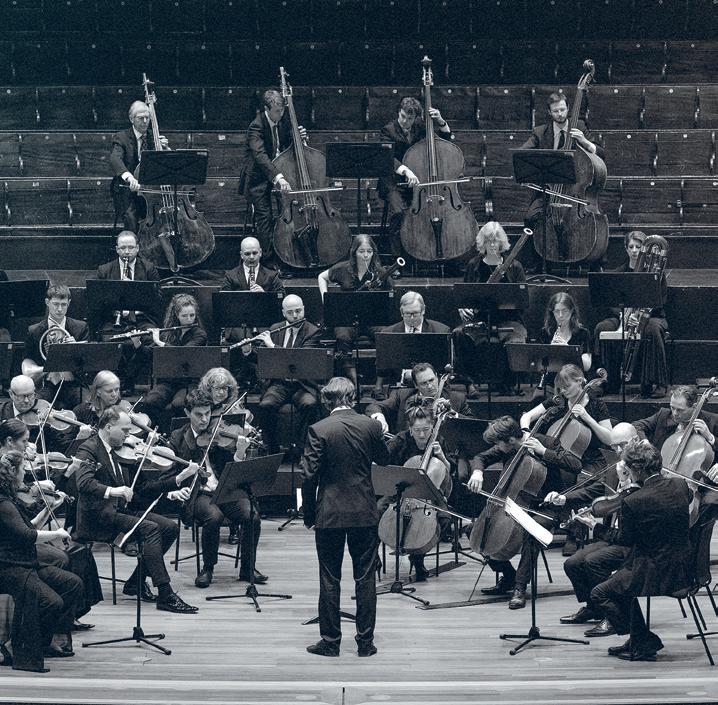
The Scottish Chamber Orchestra (SCO) is one of Scotland’s five National Performing Companies and has been a galvanizing force in Scotland’s music scene since its inception in 1974. The SCO believes that access to world-class music is not a luxury but something that everyone should have the opportunity to participate in, helping individuals and communities everywhere to thrive. Funded by the Scottish Government, City of Edinburgh Council and a community of philanthropic supporters, the SCO has an international reputation for exceptional, idiomatic performances: from mainstream classical music to newly commissioned works, each year its wide-ranging programme of work is presented across the length and breadth of Scotland, overseas and increasingly online.
Equally at home on and off the concert stage, each one of the SCO’s highly talented and creative musicians and staff is passionate about transforming and enhancing lives through the power of music. The SCO’s Creative Learning programme engages people of all ages and backgrounds with a diverse range of projects, concerts, participatory workshops and resources. The SCO’s current five-year Residency in Edinburgh’s Craigmillar builds on the area’s extraordinary history of Community Arts, connecting the local community with a national cultural resource.
An exciting new chapter for the SCO began in September 2019 with the arrival of dynamic young conductor Maxim Emelyanychev as the Orchestra’s Principal Conductor. His tenure has recently been extended until 2028. The SCO and Emelyanychev released their first album together (Linn Records) in 2019 to widespread critical acclaim. Their second recording together, of Mendelssohn symphonies, was released in 2023, with Schubert Symphonies Nos 5 and 8 following in 2024.
The SCO also has long-standing associations with many eminent guest conductors and directors including Principal Guest Conductor Andrew Manze, Pekka Kuusisto, François Leleux, Nicola Benedetti, Isabelle van Keulen, Anthony Marwood, Richard Egarr, Mark Wigglesworth, Lorenza Borrani and Conductor Emeritus Joseph Swensen.
The Orchestra’s current Associate Composer is Jay Capperauld. The SCO enjoys close relationships with numerous leading composers and has commissioned around 200 new works, including pieces by Sir James MacMillan, Anna Clyne, Sally Beamish, Martin Suckling, Einojuhani Rautavaara, Karin Rehnqvist, Mark-Anthony Turnage, Nico Muhly and the late Peter Maxwell Davies.
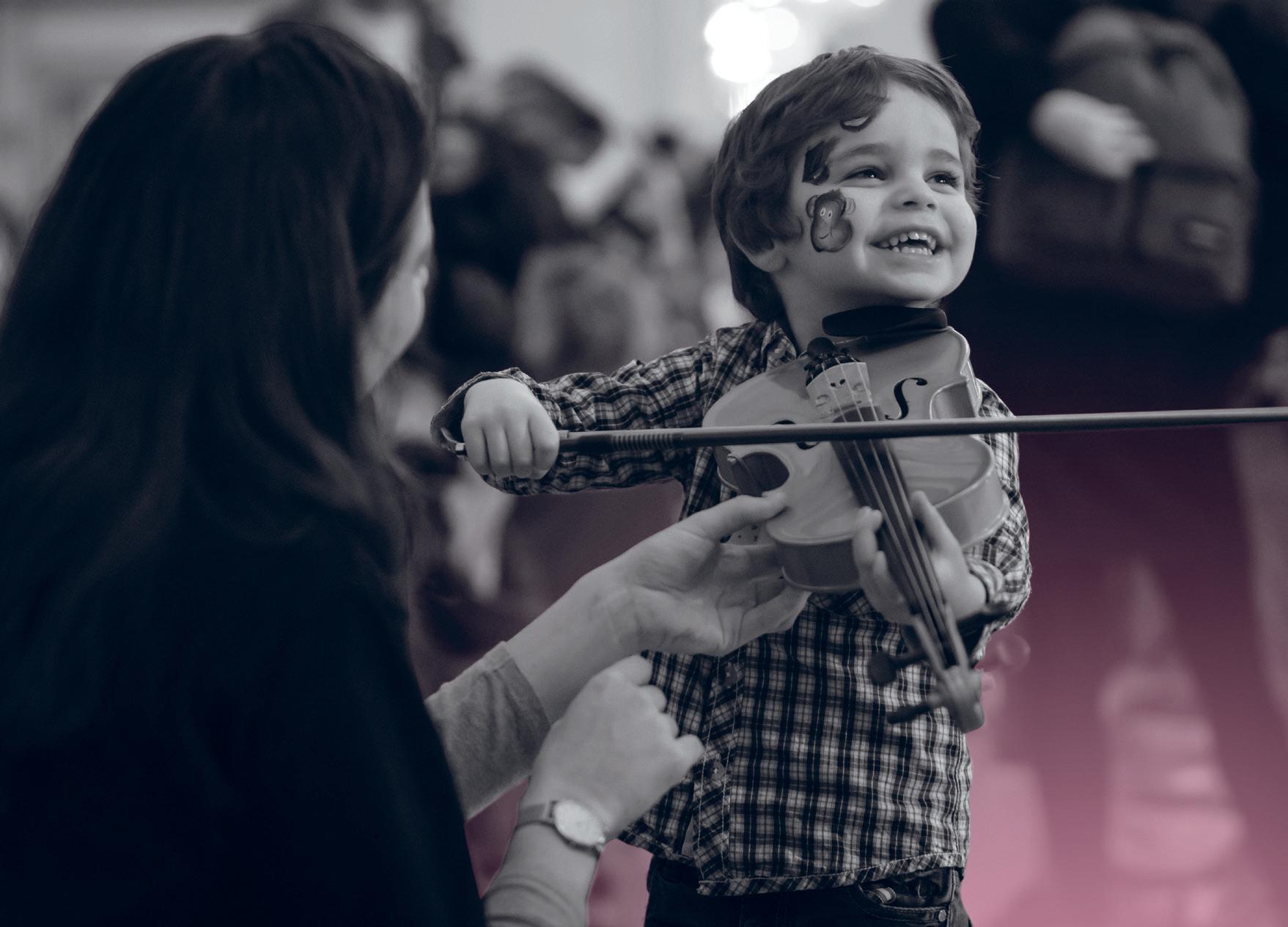
Each year, the SCO must fundraise around £1.2 million to bring extraordinary musical performances to the stage and support groundbreaking education and community initiatives beyond it.
If you share our passion for transforming lives through the power of music and want to be part of our ongoing success, we invite you to join our community of regular donors. Your support, no matter the size, has a profound impact on our work – and as a donor, you’ll enjoy an even closer connection to the Orchestra.
To learn more and support the SCO from as little as £5 per month, please contact Hannah at hannah.wilkinson@sco.org.uk or call 0131 478 8364.
SCO is a charity registered in Scotland No SC015039.