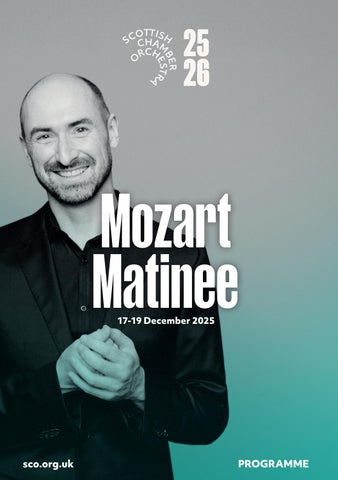
Mozart Matinee
17-19 December 2025

Mozart Matinee
With Peter Whelan
Wednesday 17 December, 2pm Holy Trinity Church St Andrews
Thursday 18 December, 2pm The Queen's Hall, Edinburgh
Friday 19 December, 2pm City Halls, Glasgow
MOZART Serenade KV 320 ‘Posthorn’, interspersed with arias from Mitridate, La clemenza di Tito, Così fan tutte and The Marriage of Figaro.
MOZART Overture, Der Schauspieldirektor
Interval of 20 minutes after Parto, parto from La clemenza di Tito
Peter Whelan conductor/fortepiano
Tara Erraught mezzo soprano
Maximiliano Martín clarinet
Peter Franks posthorn
4 Royal Terrace, Edinburgh EH7 5AB
+44 (0)131 557 6800 | info@sco.org.uk | sco.org.uk The Scottish Chamber Orchestra is a charity
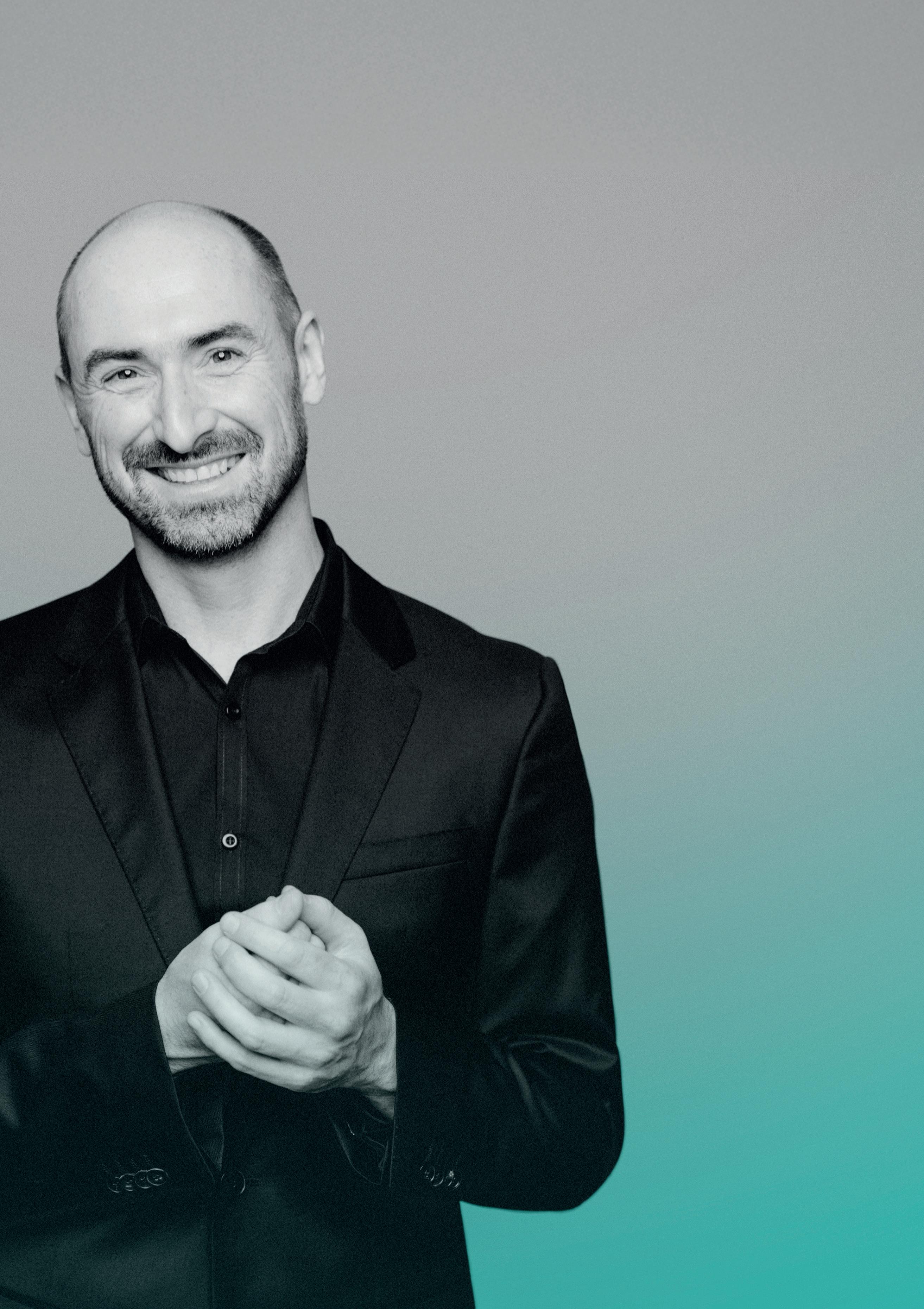
Peter Whelan
© Marco Borggreve
Cover image © Marco Borggreve
THANK YOU
Principal Conductor's Circle
Our Principal Conductor’s Circle are a special part of our musical family. Their commitment and generosity benefit us all – musicians, audiences and creative learning participants alike.
Annual Fund
James and Patricia Cook
Visiting Artists Fund
Harry and Carol Nimmo
Anne and Matthew Richards
International Touring Fund
Gavin and Kate Gemmell
Creative Learning Fund
Sabine and Brian Thomson
CHAIR SPONSORS
Conductor Emeritus Joseph Swensen
Donald and Louise MacDonald
Chorus Director Gregory Batsleer
Anne McFarlane
Principal Second Violin
Marcus Barcham Stevens
Jo and Alison Elliot
Second Violin Rachel Smith
J Douglas Home
Principal Viola Max Mandel
Ken Barker and Martha Vail Barker
Viola Brian Schiele
Christine Lessels
Viola Steve King
Sir Ewan and Lady Brown
Principal Cello Philip Higham
The Thomas Family
Sub-Principal Cello Su-a Lee
Ronald and Stella Bowie
Cello Donald Gillan
Professor Sue Lightman
American Development Fund
Erik Lars Hansen and Vanessa C L Chang
Productions Fund
Anne, Tom and Natalie Usher
Bill and Celia Carman
Scottish Touring Fund
Eriadne and George Mackintosh
Claire and Anthony Tait
Cello Eric de Wit
Jasmine Macquaker Charitable Fund
Principal Flute André Cebrián
Claire and Mark Urquhart
Principal Oboe
The Hedley Gordon Wright Charitable Trust
Sub-Principal Oboe Katherine Bryer
Ulrike and Mark Wilson
Principal Clarinet Maximiliano Martín
Stuart and Alison Paul
Principal Bassoon Cerys Ambrose-Evans
Claire and Anthony Tait
Sub-Principal Bassoon Alison Green
George Rubienski
Principal Horn Kenneth Henderson
Caroline Hahn and Richard Neville-Towle
Principal Timpani Louise Lewis Goodwin
Geoff and Mary Ball
Funding Partners




SCO Donors
Diamond
The Cockaigne Fund
Malcolm and Avril Gourlay
John and Jane Griffiths
James and Felicity Ivory
George Ritchie
Tom and Natalie Usher
Platinum
E.C. Benton
Michael and Simone Bird
Silvia and Andrew Brown
David Caldwell in memory of Ann
Dr Peter Williamson and Ms Margaret Duffy
Judith and David Halkerston
David and Elizabeth Hudson
Helen B Jackson
Dr and Mrs Peter Jackson
Dr Daniel Lamont
Graham and Elma Leisk
Professor and Mrs Ludlam
Chris and Gill Masters
Duncan and Una McGhie
Anne-Marie McQueen
James F Muirhead
Robin and Catherine Parbrook
Patrick and Susan Prenter
Mr and Mrs J Reid
Martin and Mairi Ritchie
Hilary E Ross
Elaine Ross
Sir Muir and Lady Russell
Jill and Brian Sandford
Michael and Elizabeth Sudlow
Robert and Elizabeth Turcan
Alan and Sue Warner
Anny and Bobby White
Robert Mackay and Philip Whitley
Finlay and Lynn Williamson
Ruth Woodburn
Gold
Peter Armit
Adam Gaines and Joanna Baker
John and Maggie Bolton
Elizabeth Brittin
Kate Calder
James Wastle and Glenn Craig
Jo and Christine Danbolt
James and Caroline Denison-Pender
Andrew and Kirsty Desson
David and Sheila Ferrier
Chris and Claire Fletcher
James Friend
Iain Gow
Margaret Green
Christopher and Kathleen Haddow
Catherine Johnstone
Julie and Julian Keanie
Gordon Kirk
Janey and Barrie Lambie
Mike and Karen Mair
Roy and Svend McEwan-Brown
John and Liz Murphy
Tom Pate
Maggie Peatfield
Sarah and Spiro Phanos
Charles Platt and Jennifer Bidwell
Alison and Stephen Rawles
Andrew Robinson
Olivia Robinson
Anne McAlister and Philip Sawyer
Irene Smith
Dr Jonathan Smithers
Ian S Swanson
Ian and Janet Szymanski
John-Paul and Joanna Temperley
Douglas and Sandra Tweddl
Bill Welsh
Catherine Wilson
Neil and Philippa Woodcock
Silver
Roy Alexander
Fiona and Neil Ballantyne
The Batsleer Family
Jack Bogle
Jane Borland
Alan Borthwick
Dinah Bourne
Michael and Jane Boyle
Mary Brady
John Brownlie
Laura Buist
Robert Burns
Sheila Colvin
Lorn and Camilla Cowie
Adam and Lesley Cumming
Dr Wilma Dickson
Seona Reid and Cordelia Ditton
Sylvia Dow
Colin Duncan in memory of Norma Moore
Raymond Ellis
Dr and Mrs Alan Falconer
Sheila Ferguson
Dr William Irvine Fortescue
Dr David Grant
Anne Grindley
Andrew Hadden
J Martin Haldane
Ronnie and Ann Hanna
Roderick Hart
Norman Hazelton
Ron and Evelynne Hill
Philip Holman
Clephane Hume
Tim and Anna Ingold
David and Pamela Jenkins
Margaret Mortimer and Ken Jobling
Ross D. Johnstone
Professor Christopher and Mrs Alison Kelnar
Dr Ian Laing
Geoff Lewis
Dorothy A Lunt
Vincent Macaulay
James McClure in memory of Robert Duncan
Ben McCorkell
Lucy McCorkell
Gavin McCrone
Michael McGarvie
Brian Miller
Alistair Montgomerie
Andrew Murchison
Pamela Andrews and Alan Norton
Gilly Ogilvy-Wedderburn
John Peutherer in memory of Audrey Peutherer
James S Potter
Timothy Barnes and Janet Sidaway
Catherine Steel
John and Angela Swales
Takashi and Mikako Taji
C S Weir
Susannah Johnston and Jamie Weir
David and Lucy Wren
We are indebted to everyone acknowledged here who gives philanthropic gifts to the SCO of £300 or greater each year, as well as those who prefer to remain anonymous.
We are also incredibly thankful to the many individuals not listed who are kind enough to support the Orchestra financially on a regular or ad hoc basis. Every single donation makes a difference.
Become a regular donor, from as little as £5 a month, by contacting Hannah Wilkinson on 0131 478 8364 or hannah.wilkinson@sco.org.uk.
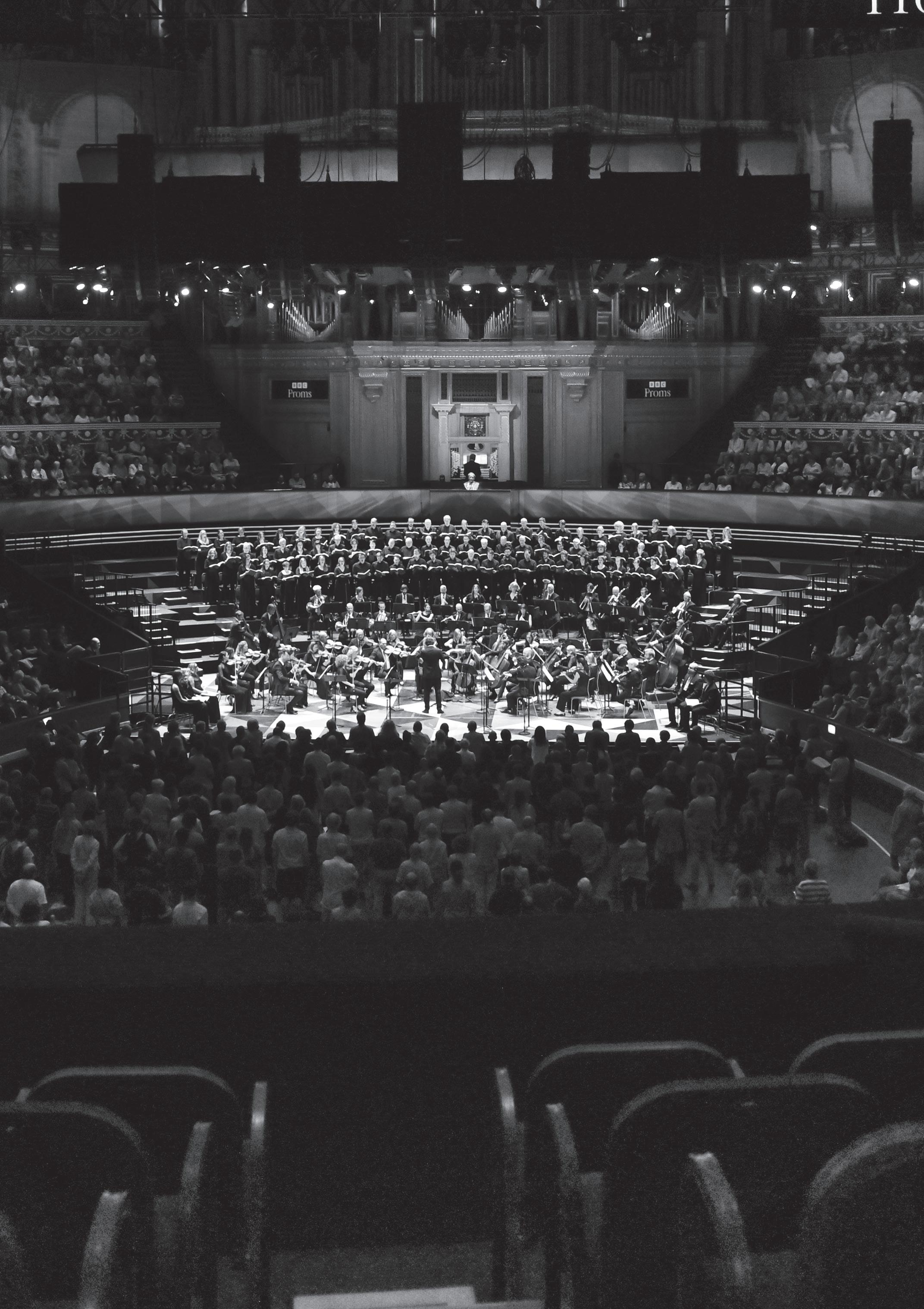
“…an orchestral sound that seemed to gleam from within.”
THE SCOTSMAN
HM The King Patron
Donald MacDonald CBE
Life President
Joanna Baker CBE Chair
Gavin Reid LVO
Chief Executive
Maxim Emelyanychev
Principal Conductor
Andrew Manze
Principal Guest Conductor
Joseph Swensen
Conductor Emeritus
Gregory Batsleer
Chorus Director
Jay Capperauld
Associate Composer
© Chris Christodoulou
Our Musicians
Your Orchestra Tonight
Information correct at the time of going to print
First Violin
Stephanie Gonley
Afonso Fesch
Agata Daraškaitė
Fiona Alexander
Aisling O’Dea
Wen Wang
Elvira van Groningen
Ilhem Ben Khalfa
Second Violin
Marcus Barcham Stevens
Hatty Haynes
Michelle Dierx
Rachel Smith
Tom Hankey
Amy Cardigan
Viola
Max Mandel
Francesca Gilbert
Brian Schiele
Steve King
Cello
Philip Higham
Su-a Lee
Donald Gillan
Eric de Wit
Bass
Luis Cabrera
Jamie Kenny
Flute
André Cebrián
Marta Gómez
Oboe
Yann-Joseph Thenet
Katherine Bryer
Clarinet
Maximiliano Martín
Matthew Jansen
Bassoon
Cerys Ambrose-Evans
Alison Green
Horn
Kenneth Henderson
Daniel Lőffler
Trumpet
Peter Franks
Shaun Harrold
Trumpet
Peter Franks
Timpani
Louise Lewis Goodwin
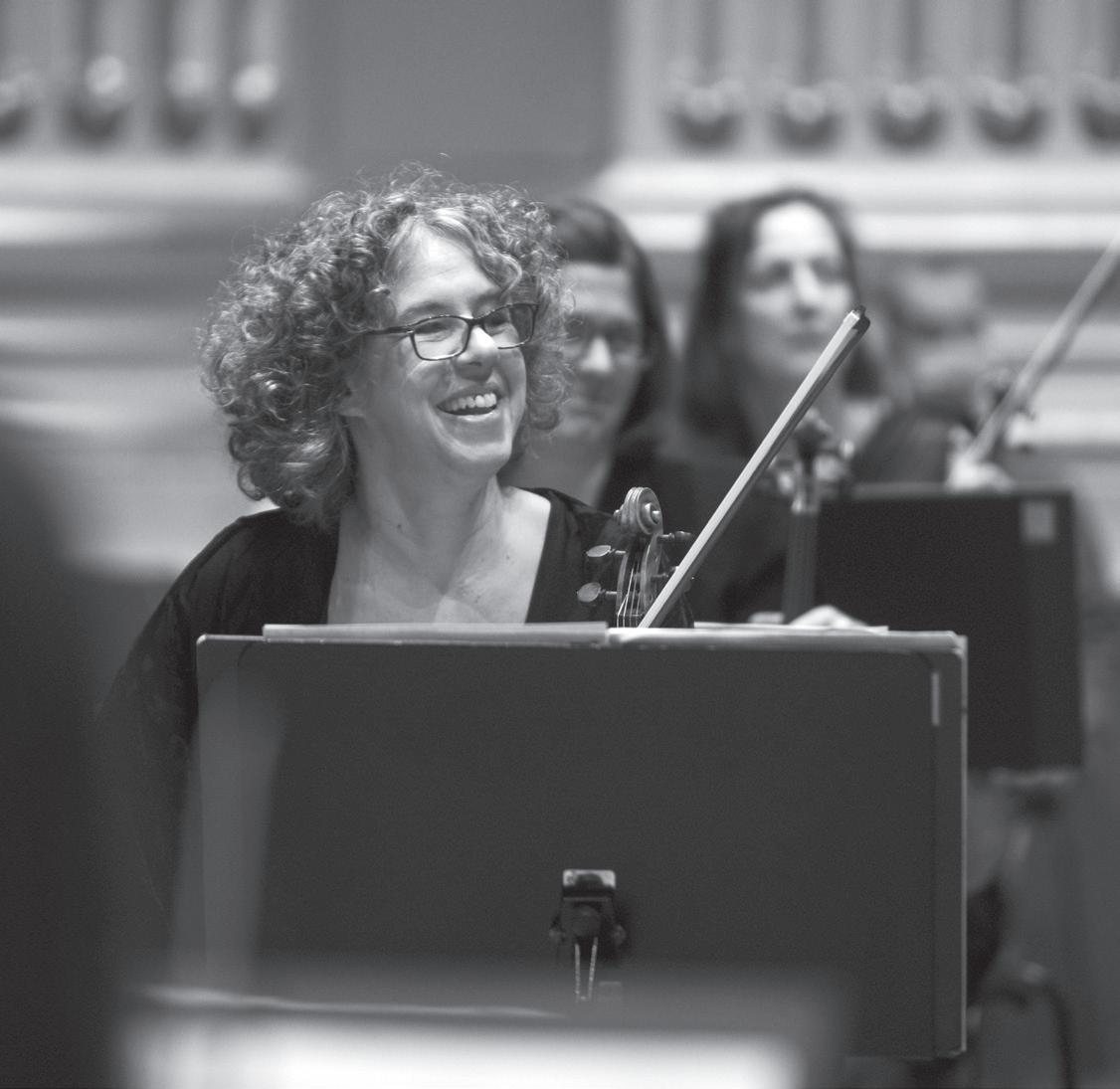
Stephanie Gonley Leader
What You Are
About To Hear
MOZART (1756-1791)
Serenade in D major ' Posthorn', K.320 (1779)
Adagio-Allegro
Minuetto
Mitridate, rè di Ponto, K.87 (1770)
Soffre il mio cor
Serenade in D major ' Posthorn'
Concertante
Rondo
La clemenza di Tito, K.621 (1791)
Parto, parto
Der Schauspieldirektor, KV.486 (1786)
Overture
Così fan Tutte, K.588 (1790)
Temerari, sortite ... Come scoglio
Serenade in D major 'Posthorn'
Andantino
The Marriage of Figaro, K.492 (1786)
E Susanna non vien! ... Dove sono Giunse alfin il momento ... Deh vieni, non tardar
Serenade in D major ' Posthorn'
Minuetto
Finale
Interval of 20 minutes
Christmas is just a few days away now, and there’s a definite festive feel to today’s allMozart programme – maybe not one that inspires images of decorated trees and mince pies, particularly, but one that’s more to do with a broader sense of celebration and joy. Our main piece today is one of Mozart’s most uplifting, exuberant serenades, originally written for an occasion celebrating hardwon achievements and new beginnings. Interspersed between its movements are a selection of arias – both much loved and little known – from right across Mozart’s operatic output, some written by the teenage composer, others from almost the very end of his all-toobrief career.
But let’s begin with the work that provides the framework for today’s concert. Mozart was 23 when he wrote his Serenade No.9 in 1779, living and working in his birth city of Salzburg. His pushy father Leopold had secured him a job at the court of the city’s Prince-Archbishop Hieronymus Colloredo in 1773, when the young composer was just 17 (though he was already a seasoned musician by then). Truth be told, Mozart quickly grew resentful of Colloredo’s finicky demands, his conservative tastes and his apparent reluctance to pay him a decent wage, and set his sights on the bright lights and hopefully richer career opportunities of Vienna – where he’d eventually move in 1781. But it’s Christmas: let’s not dwell on Mozart’s unhappiness and frustrations in Salzburg, especially when he was able to produce music as bold, bracing and bright as today’s Serenade.
The piece’s very name, however, tells us something about its function. Mozart’s serenades – as well as his divertimentos and cassations – were essentially written as occasional pieces, not exactly as background music, but more to add festive feeling to a
Mozart being Mozart, he could hardly hold himself back from injecting enormous charm, craftsmanship, wit and insight into even these supposedly lighter pieces
banquet, a social gathering, or another kind of special event. You might not have been expected to sit down and pay attention to the music in the same way as you would with one of the composer’s symphonies or concertos, say, but Mozart being Mozart, he could hardly hold himself back from injecting enormous charm, craftsmanship, wit and insight into even these supposedly lighter pieces.
The event in question for today’s Serenade was the University of Salzburg’s Finalmusik ceremony, a grand musical celebration that traditionally marked the end of the institution’s academic year, and which was intended to honour the students who were graduating as well as – of course – the all-powerful PrinceArchbishop for his generosity in encouraging the education of his city’s young people. It was (mainly) the students themselves who formed a makeshift orchestra for the occasion, performing first at the Prince-Archbishop’s
summer residence in Schloss Mirabell, before marching across town for a second performance in front of the University’s professors and fellow students.
It was a spectacular occasion, and for the 1779 ceremony, Mozart employed a particularly lavish orchestra of flutes and piccolo, oboes, bassoons, horns, trumpets, timpani and strings – plus one more unusual addition. In his penultimate movement, Mozart calls specifically for a mail-coach posthorn (hence the Serenade’s nickname), which he places firmly in the spotlight as soloist. The instrument’s characteristic parping would have been well known to students, both marking the arrival of mail from friends and family, and warning of the coach’s imminent departure for students who wanted to write back home. Mozart stuck to the instrument’s simple, fanfare-like sounds when embedding it in his Serenade. A modern-day equivalent might involve incorporating the gentle bells of WhatsApp notifications into an orchestral setting, but it's possible Mozart’s posthorn has a little more charm. In any case, the posthorn fanfares probably brought a doubleedged meaning to the Serenade too, not only reflecting the students’ own inevitable departures and dispersal after their university years, but also reminding them to keep in touch with each other.
The Serenade opens dramatically with a slow, ceremonial introduction that hints at the lavish music to come, its outspoken outbursts interrupting far quieter moments. The contrasts between loud and soft continue in the first movement’s faster main music, which bounds in with an atmosphere of outright celebration. A quieter second main theme from the violins is interrupted by gruff comments in the lower strings, and the central development section is rather more introspective, but it’s not
long before the pomp and ceremony of the movement’s opening return.
Mozart’s second movement – the first of the Serenade’s two minuets – is in many ways just as outspoken as his first. It’s full of confident, bouncing rhythms that would surely have encouraged the gathered university members to dance, though its central trio section –showcasing solo flute and bassoon – has a simpler, more rustic feel to it.
We swerve away from the ‘Posthorn’ Serenade for the first of today’s opera arias. Mozart wrote his opera Mitridate, rè di Ponto when he was all of 14, while touring Italy with his father. It represents the composer’s first important opera, running for no fewer than 21 performances in Milan following its premiere on 26 December 1770 – though audience members are reported as being somewhat nonplussed by its composer’s extreme youth. Mitridate is the absent King of Pontus, an ancient kingdom on the southern coast of the Black Sea (in what’s now northern Turkey), thought to have been killed at war with Rome. He left his country in the joint stewardship of his two sons, Farnace and Sifare, who are now both in love with Mitridate’s bride-to-be, Aspasia. After Farnace attempts to seize both the throne and Aspasia, she flees for help to the kindly Sifare, unaware that he secretly loves her too. In ‘Soffre il mio cor con pace’, Sifare sings of his frustration at Aspasia’s lack of interest in him, but also acknowledges that his brother is now his rival.
We return to Mozart’s ‘Posthorn’ Serenade for its longest movement. The Concertante is indeed virtually a miniature concerto for the orchestra’s wind players – flutes, oboes and bassoons – who quickly make their presence felt after an elaborate, heavily decorated melody from the violins. Mozart even creates a
A modern-day equivalent might involve incorporating the gentle bells of WhatsApp notifications into an orchestral setting, but it's possible Mozart’s posthorn has a little more charm
specially written-out five-part cadenza for his wind ensemble towards the movement’s close.
Flute and oboe continue their prominent roles in the Serenade’s fourth movement Rondeau, introducing a gentle melody that will return again and again, with the orchestra’s wider wind section again in the spotlight in the movement’s contrasting episodes. It builds to a joyfully boisterous ending.
If today’s first opera aria came from near the beginning of Mozart’s career, then our next one comes from almost the end of it. Mozart was working on his final stage work, The Magic Flute, when he received a commission to write a new opera to celebrate Holy Roman Emperor Leopold II becoming King of Bohemia. He could hardly refuse the request, though the libretto by Pietro Metastasio that he was given – based on the life of Roman Emperor Titus (Tito in the opera) – had already been
set to music by nearly 40 other composers. La clemenza di Tito served its purpose, however, in highlighting Leopold II’s munificence through carefully implied parallels with Tito.
The Roman Emperor is betrayed by his close friend Sesto, who joins forces with Vitellia (daughter of the deposed Emperor Vitellio) in a plot to murder Tito. The conspiracy is discovered, and both Sesto and Vitellia confess – but Tito nonetheless forgives and frees them both. ‘Parto, parto, ma tu ben mio’ marks Sesto’s agreement to join Vitellia in her murderous plot, and in it, he almost admits his love for her too. Alongside the voice, Mozart wrote the aria with an additional musical layer: an obbligato basset clarinet line for his friend Anton Stadler. He’s already composed his Clarinet Quintet for Stadler, and would shortly write his Clarinet Concerto for him too. Clarinet and vocal melodies interweave closely, and Mozart later remembered that
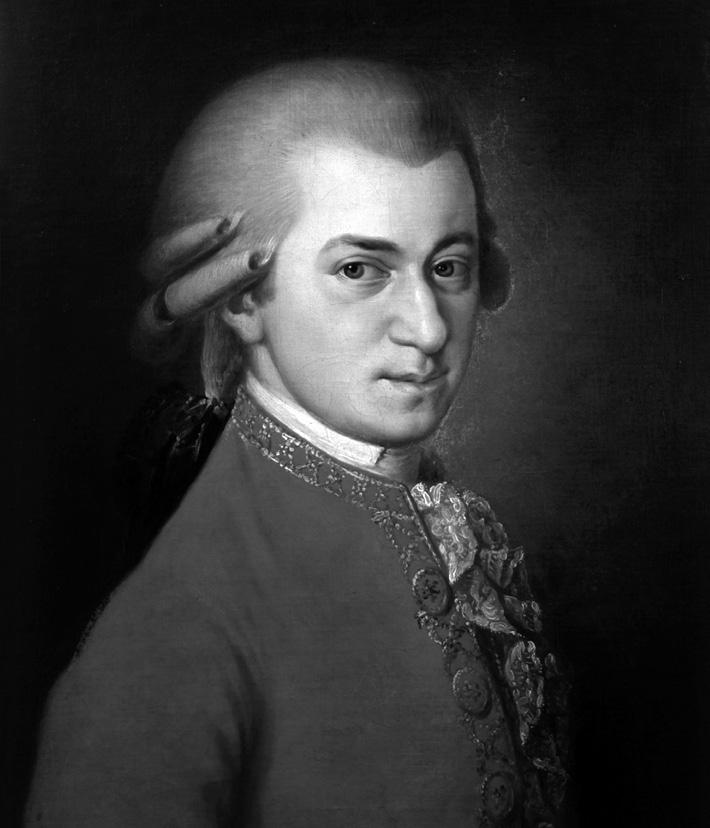
Wolfgang Amadeus Mozart
Emperor Joseph II... was keen to promote homegrown Germanlanguage entertainments above the more elaborate, longwinded, Italian-style operas that Viennese audiences seemed to love so much. And he hatched a plan to
play
the two styles off against each other, and to see which emerged the victor.
Stadler received cries of "bravo!" at the opera’s premiere, even from fellow orchestral players.
Before returning to the ‘Posthorn’ Serenade and another collection of opera arias, the concert’s second half kicks off – appropriately enough –with an Overture, the witty, dashing opener that Mozart concocted for his brief, comic Singspiel Der Schauspieldirektor ('The Impresario') in 1786. The piece had an unusual premiere, and one that reveals much about Viennese tastes at the time. Emperor Joseph II (the elder brother and predecessor of Leopold II) was keen to promote homegrown German-language entertainments above the more elaborate, long-winded, Italian-style operas that Viennese audiences seemed to love so much. And he hatched a plan to play the two styles off against each other, and to see which emerged the victor.
At a private party – held on 7 February 1786 – dinner guests would experience two
entertainments, performed at opposite ends of the long Orangery in Vienna’s Schönbrunn Palace. Both were comic, one-act works, and both were satires on the demands of operatic divas and the backstage shenanigans of opera companies. First came Mozart’s comic Singspiel Der Schauspieldirektor ('The Impresario'), sung in German and with spoken dialogue separating its musical numbers. Then came an Italian opera – Prima la musica e poi le parole (‘First the music and then the words’) – by Mozart’s rival Antonio Salieri, sung in Italian from start to finish. The audience would then decide which of the two new offerings they preferred.
In the end, it was Salieri who came out on top – perhaps not surprisingly, since he was far more highly regarded than Mozart at the time. But there was no denying the wit and insight of Mozart’s comedy, which he put together hastily while simultaneously working on The Marriage of Figaro (which we’ll return to shortly).
Der Schauspieldirektor’s Overture erupts on a surprisingly large, lavish scale, as though the composer is setting out to impress right from the start of the work, grabbing the attention with scampering wit, refined elegance, and more than a hint of the comedy of pomposity and bruised egos that’s to come.
From one Mozart stage work to another, and for today’s next piece we turn to one of the composer’s most famous and best-loved operas. Though to be critical, 21st-century audiences might have a few questions to ask about Così fan tutte, premiered in January 1790 – starting with its title, which essentially translates as ‘All women are like that’. Like what is answered by the opera’s storyline, in which two young men (egged on by an older accomplice) test their lovers’ faithfulness by pretending to leave to join the army, only to return in disguise and attempt to seduce each other’s fiancées. It wouldn’t be giving too much away to say that, while the amorous complexities are ultimately teased apart and order restored, the whole experience leaves the foursome somewhat shaken.
‘Come scoglio’ (literally ‘Like a rock’) is an aria from Act I for one of the ‘abandoned’ women, Fiordiligi, who reiterates her resolve to remain faithful to her distant lover Guglielmo. It’s a fortitude and determination that she expresses in a striking display of vocal power and agility, with rapid changes in volume, long phrases requiring faultless breath control, and a melody that swoops and soars across the entirety of the singer’s range.
Back with the university celebrations and the students graduating to the ‘Posthorn’ Serenade, we’ve reached the piece’s slow movement, a brooding, tragic creation with a heartrending melody from the first violins and even a few unrestrained cries of anguish. The music reaches a calmer state of quiet acceptance in the middle
of the movement, only to return to its earlier trauma as it approaches its close.
As we saw earlier, Mozart interrupted work on The Marriage of Figaro to put together his comic one-acter Der Schauspieldirektor in 1786. We now turn, however, to two arias from that longer, more ambitious opera, a comedy of manners that, below its surface sheen of elegance and propriety, is also a barbed satire on class and privilege. ‘Dove sono i bei momenti’ is a poignant aria for the long-suffering Countess Almaviva, who laments the fact that her husband, the Count, has become a shameless philanderer in his lust for her maid, Susanna (who’ll ultimately marry Figaro, the Count’s valet). In ‘Deh vieni, non tardar’ we change perspective to that of Susanna herself, who’s exchanged outfits with the Countess in an attempt to entrap the lecherous Count. Figaro, however, is onto their ruse and hides in the bushes to see how things will unfold. For her part, Susanna knows full well that he’s there, so her tender, yearning aria –apparently a love song addressed to the Count – is actually intended for her husband.
We close today’s concert with the final two movements of Mozart’s ‘Posthorn’ Serenade. The Serenade’s second minuet is another striding, confident dance, and its prominent trumpets and timpani give it a particularly ceremonial air. But it’s the movement’s contrasting trio sections that really pique the interest. The first of them puts the orchestra’s piping piccolo in the spotlight, while in the second, the mail-coach posthorn makes its contributions very clear. Mozart closes his Serenade with an effervescent finale that also takes us back to the grandeur and celebration of the opening movement – even if those qualities now seem injected with a fresh sense of propulsive energy.
© David Kettle
Libretto
MOZART (1756-1791)
Mitridate, rè di Ponto: Soffre il mio cor (1770)
SIFARE
Soffre il mio cor con pace
Una beltà tiranna, L’orgoglio d’un audace, No, tollerar non sa.
M’affanna, e non m’offende
Chi può negarmi amore
Ma di furor m’accende
Chi mio rival si fa.
Vittorio Amedeo Cigna-Santi
SIFARE
My heart calmly endures, A tyrannical beauty,
But it cannot bear The pride of an audacious man. I suffer, but am not offended By one who can deny me love, But he who inflames my fury Becomes my rival.
La clemenza di Tito: Parto, ma tu ben moi (1791)
SESTO
Parto, ma tu ben mio, Meco ritorna in pace; Sarò qual più ti piace, Quel che vorrai farò.
Guardami, e tutto oblio, E a vendicarti io volo; A questo sguardo solo
Da me sì pensera.
Ah, qual poter, oh Dei!
Donaste alla beltà.
Caterino Tommaso Mazzolà, after Pietro Metastasio
SESTO
I go but, my dearest, Make peace with me first; I will be whatever you desire, I will do whatever you wish.
Look at me, and I will forget everything, And fly to avenge you; Your gaze alone
Will be in my thoughts.
Ah, ye Gods, how much power
You have granted to beauty!
Così fan tutte: Temerari, sortite … Come scoglio (1790)
FIORDILIGI
Temerari, sortite
Fuori di questo loco, e non profani
L'alito infausto degli infami detti
Nostro cor, nostro orecchio e nostri affetti!
Invan per voi, per gli altri invan si cerca
Le nostr'alme sedur: I'intatta fede
Che per noi già si diede ai cari amanti, Saprem loro serbar infino a morte,
A dispetto del mondo e della sorte.
Come scoglio immoto resta
Contro i venti e la tempesta,
Così ognor quest'alma è forte
Nella fede e nell'amor.
Con noi nacque quella face
Che ci piace, e ci consola,
E potrà la morte sola
Far che cangi affetto il cor.
Rispettate, anime ingrate, Quest'esempio di costanza;
E una barbara speranza
Non vi renda audaci ancor!
Lorenzo da Ponte
FIORDILIGI
Impudent men, be gone!
Leave this place, and do not insult
Our hearts, our ears and our affections, Wasting your breath with such vulgar words!
It is in vain that you, and others, may seek
To seduce our souls: we shall preserve
To our dying day the pure faith
Our dear lovers have placed in us,
In spite of the world and fate.
As a rock stands immovable
Against the winds and the tempest,
So my soul remains steadfast
In faith and love.
A flame burns within us,
One which pleases and consoles us, And death alone
Could change my heart’s affections.
Have respect, ungrateful souls,
For our constancy;
And do not allow wild hopes
To make you so audacious again!
LA CONTESSA
E Susanna non vien!
Sono ansiosa di saper come il Conte accolse la proposta.
Alquanto ardito ilprogetto mi par, e ad uno sposo sì vivace e geloso!
Ma che mal c'è?
Cangiando i miei vestiti con quelli di Susanna, e i suoi coi miei al favor della notte. Oh cielo!
A qual umil stato fatale io son ridotta da un consorte crudel!
Che dopo avermi con un misto inaudito d'infedeltà, di gelosia, di sdegni - prima amata, indi offesa, ed alfin traditafammi or cercar da una mia serva aita!
Dove sono i bei momenti di dolcezza e di piacer, dove andaron i giuramenti di quel labbro menzogner!
Perché mai, se in pianti e in pene per me tutto si cangiò, la memoria di quel bene dal mio sen non trapassò?
Ah! Se almen la mia costanza nel languire amando ognor mi portasse una speranza di cangiar l'ingrato cor!
Lorenzo da Ponte, after Beaumarchais
THE COUNTESS
No sign of Susanna!
I am anxious to know what the Count made of our proposal.
The plan seems to me somewhat rash, and with such an impulsive and jealous husband!
But what harm can there be in it?
Susanna and I exchange clothes under the cover of darkness.
Oh heavens!
How humiliating to be reduced to this by a cruel husband!
With an unprecedented blend of infidelity, jealousy and disdain, first he loved me, then offended and finally betrayed me –
Leaving me with no choice but to seek help from my maid!
What happened to those happy moments
Of sweetness and pleasure?
Where are they now, those promises
From a deceitful tongue?
How is it that, with everything
Turning to tears and pain, Those pleasant memories
Have not faded from my breast?
Ah, if only my constancy
And yearning love for him
Could bring me a hope
Of changing his ungrateful heart!
The Marriage of Figaro: E Susanna non vien! … Dove sono (1786)
The Marriage of Figaro: Giunse alfin il momento… Deh vieni, non tardar (1786)
SUSANNA
Giunse alfin il momento, che godrò senza affanno in braccio all'idol mio!
Timide cure! Uscite dal moi petto, a turbar non venite il mio diletto!
Oh come par che all'amoroso foco l'amenità del loco, la terra e il ciel risponda,
come la notte i furti miei seconda!
Deh, vieni, non tardar, o gioia bella, vieni ove amore per goder t'appella, finché non splende in ciel notturna face; finché l'aria è ancor bruna, e il mondo tace. Qui mormora il ruscel, qui scherza l'aura, che col dolce sussurro il cor ristaura, qui ridono i fioretti e l'erba è fresca, ai piaceri d'amor qui tutto adesca. Vieni, ben mio, tra queste piante ascose. Vieni! vieni! Ti vo' la fronte incoronar di rose!
Lorenzo da Ponte, after Beaumarchais
All translations © SCO
SUSANNA
Finally the time is here, I can bask in my beloved’s embrace free of any worry! Timidity, leave my breast, disturb my pleasure no longer!
Oh, how the fire of love is spreading throughout this place, the whole earth and the heavens, and how the night furthers my desires!
Come, don’t delay, wonderful joy, Join me where love calls you to bliss, While the moon is not shining in the heavens, While the air is still dark and the world is quiet. Here where the stream murmurs and the breezes play,
Refreshing the heart with soft whispers, Here where flowers smile and the grass is cool, an invitation to the pleasures of love. Come, my love, into the shelter of the trees. Come, come! Let me crown your brow with roses.
1,3,4 & 5 January 2026, 3pm (7.30pm in Ayr)
Edinburgh | Aberdeen | Perth | Ayr
New Year
Andrew Manze conductor
Rachel Redmond soprano
LEARN MORE
Timeless waltzes and more by the Strauss family and Lehár.
Peter Whelan
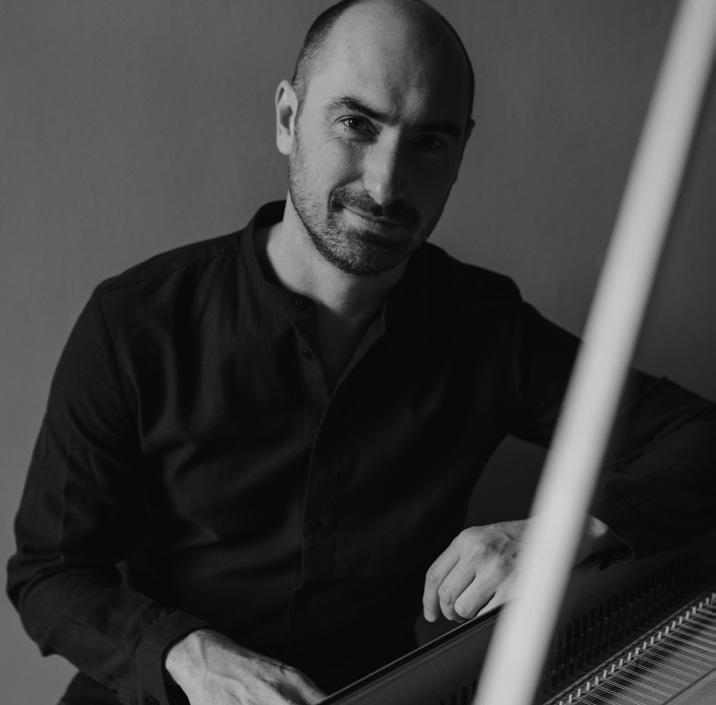
Olivier Award winner, Peter Whelan, is among the most dynamic and versatile exponents of historical performance of his generation. He is Artistic Director of Irish Baroque Orchestra and Curator for Early Music of Norwegian Wind Ensemble. In addition to taking up the role of Artistic Partner with National Symphony Orchestra Ireland in January 2026, he becomes Music Director of Philharmonia Baroque Orchestra from the 2026/2027 season and is Music Director Designate in 2025/2026.
As a conductor, Whelan has a particular passion for exploring and championing neglected music from the Baroque and Classical eras. Recent engagements have included appearances with the Beethoven Orchester Bonn, Netherlands Chamber Orchestra, Royal Northern Sinfonia, Orchestra della Svizzera Italiana, Kristiansand Symphony Orchestra, Lahti Symphony Orchestra, Orchestra of the Age of Enlightenment, The English Concert, Dunedin Consort, Monteverdi Choir and English Baroque Soloists, Gluck Orfeo with San Francisco Opera, Vivaldi l’Olimpiade with Irish National Opera (across Ireland and the Royal Opera House, London) and Rodelinda at Garsington Opera.
Highlights of the 2025/26 season include an appearance at the BBC Proms with the Irish Baroque Orchestra and return visits to Philharmonia Baroque Orchestra, Scottish Chamber Orchestra, Meininger Hofkapelle, National Symphony Orchestra of Ireland, Tapiola Sinfonietta and Monteverdi Choir and English Baroque Soloists.
Whelan's artistic direction in live performance and the recording studio has been widely praised for its “rich insight, style and charisma” (The Guardian), its “stylish verve” (BBC Music Magazine), and “energetic yet unfailingly sensitive direction” (Gramophone). As a champion of early music and opera, he represents “the very best of contemporary trends in bringing this music to life: flex and zest with tempi, lithe and vigorous… an incredible alertness to colors and moods summoned by the cut-and-thrust harmonic footwork of this music” (Operawire).
For full biography please visit sco.org.uk
© Jen Owens
16-17 January, 2pm
Edinburgh | Glasgow
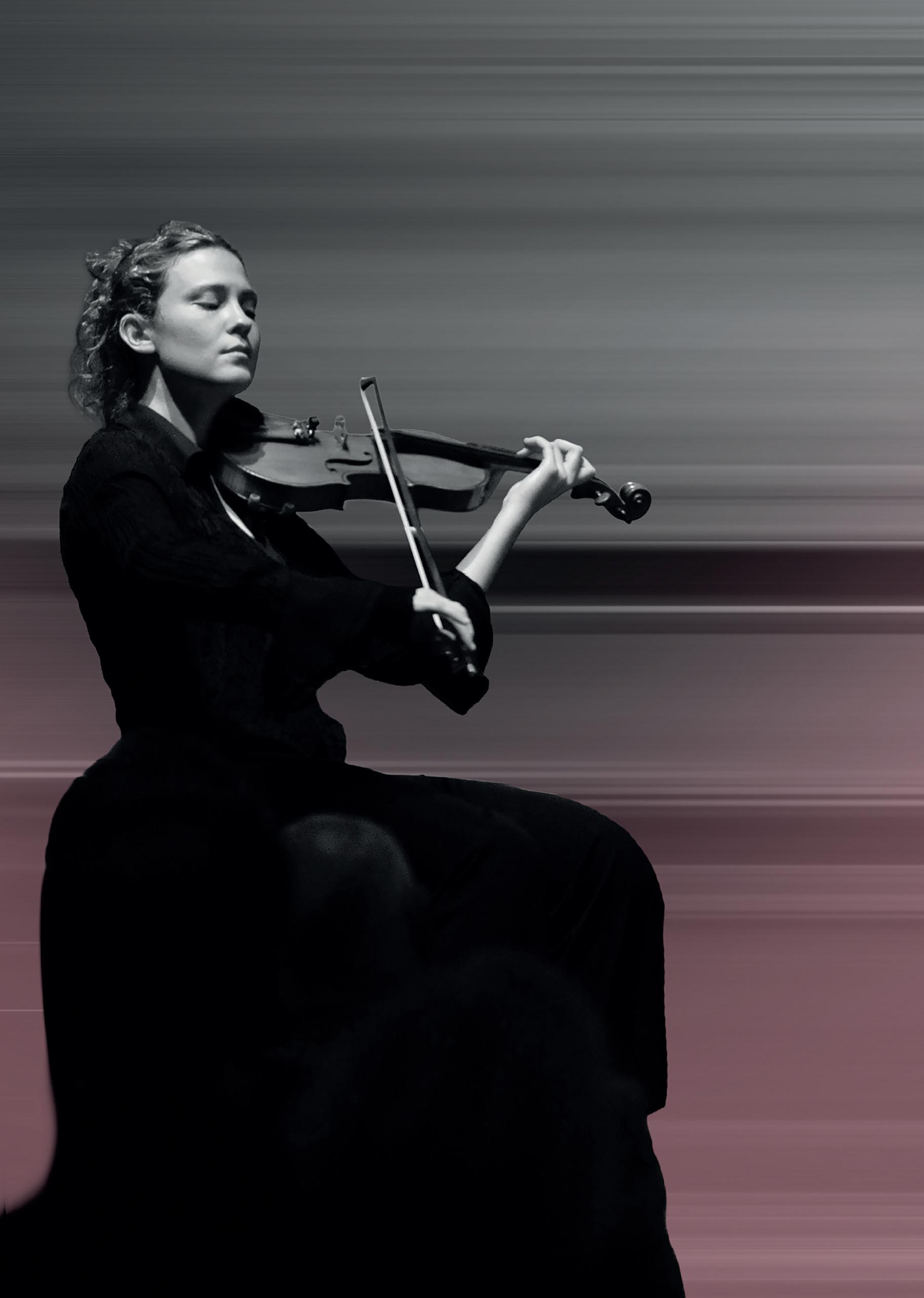
Matinee with Lorenza Borrani
Haydn & Schubert
Tara Erraught
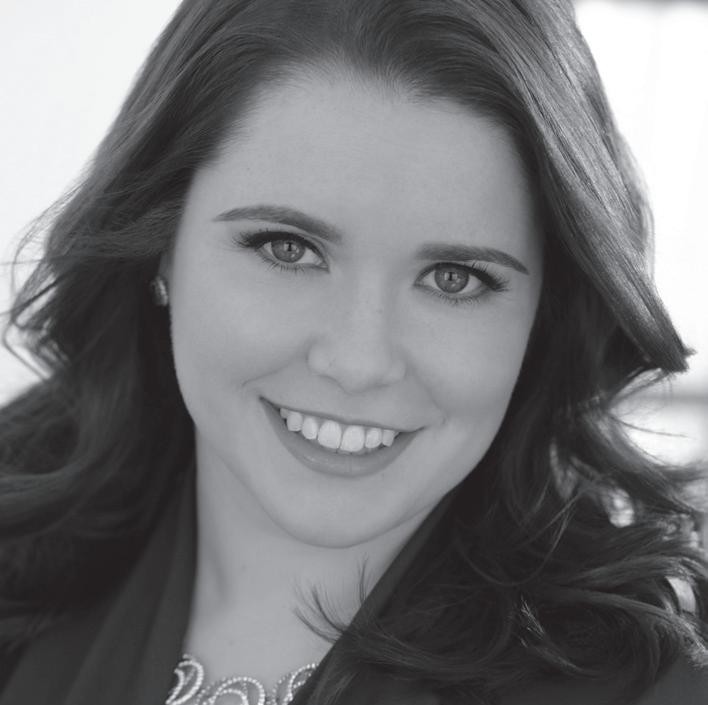
Born in Dundalk, Ireland and a graduate of the Royal Irish Academy of Music, Tara Erraught is one of the leading international singers, whose versatile repertoire spans from Baroque through Mozart, the bel canto repertoire and Romantic works to contemporary music.
In the 2025/26 season, Erraught will appear in her signature role of Donna Elvira in Mozart’s Don Giovanni at the Vienna State Opera and Semperoper Dresden; and returns to the Berlin State Opera as Rosina in Il Barbiere di Siviglia. Her debut at the Salzburg Whitsun Festival and the Salzburg Festival as Madame Cortese in Rossini’s Il Viaggio a Reims is eagerly anticipated. Concert engagements will take her to the Dresden Philharmonic under Emmanuel Tjeknavorian with songs by Alma Mahler, and to the Welsh National Orchestra, where she will perform Ralph Vaughan Williams’ Songs of Travel
Highlights of recent seasons include her role debut as Vitellia in La Clemenza di Tito at the Hamburg State Opera, her debut in the title role of Iphigénie en Tauride, as well as Cendrillon and Donna Elvira at the Opéra de Paris, her role debut as Maria Stuarda at Irish National Opera, and Donna Elvira on tour with the Vienna State Opera in Monte Carlo. At the Metropolitan Opera New York she was celebrated as Nicklausse in Les Contes d’Hoffmann and Hänsel, and at the Vienna State Opera she has appeared as Donna Elvira, the Composer, and Rosina. As Angelina in the new production of La Cenerentola, she was hailed by the Frankfurter Allgemeine Zeitung as the “new Queen of Bel Canto.”
Erraught has also given song recitals at London’s Wigmore Hall, the Schubertiade, Munich, Barcelona, Oxford and Eppan. A particular honour was the invitation to the anniversary recital celebrating the 100th birthday of Victoria de los Angeles in Barcelona, which she also presented at the Wigmore Hall.
Concert engagements have taken her to the Bavarian Radio Symphony Orchestra under Herbert Blomstedt, the SWR, Minnesota Orchestra under Simone Young, and with a Mozart Gala to the Munich Radio Orchestra under Alexander Soddy. A close and regular collaboration connects her with the National Symphony Orchestra in Dublin. Her international concert career has also taken her to New York’s Carnegie Hall, the Kennedy Center in Washington, the Pittsburgh Symphony Orchestra, Vancouver, Savannah, Indianapolis, Milwaukee, Dublin, Lyon, and Tokyo. With the Philadelphia Orchestra she sang Mozart’s Requiem under Yannick Nézet-Séguin.
For full biography please visit sco.org.uk
© Kristin Hoebermann
Maximiliano Martín
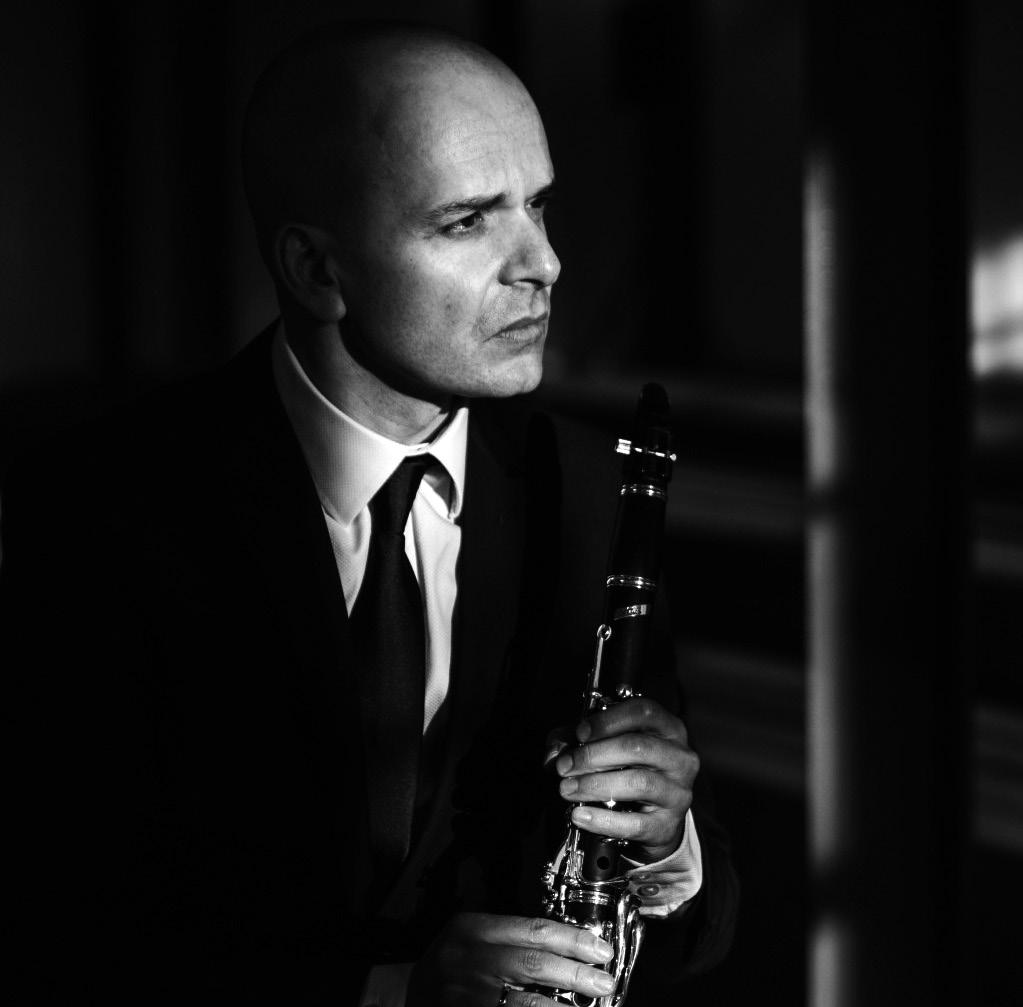
Tenerife-born clarinettist Maximiliano Martín combines his position as SCO Principal Clarinet with engagements and masterclasses internationally, appearing in many of the world’s most prestigious venues and series.
Highlights have included solo concertos with the SCO, European Union Chamber Orchestra, Orquesta Real Filarmonía de Galicia, Orquesta Filarmónica de Las Palmas de Gran Canaria, Orquesta Sinfónica del Principado de Asturias, Macedonian Philharmonic Orchestra and Estonian National Symphony Orchestra, with conductors including Brüggen, Emelyanychev, Ticciati, Manze, Antonini, Swensen, Zacharias and González.
As a chamber musician, Martín performs regularly with London Conchord and Hebrides Ensembles, Maxwell and Casals String Quartets, François Leleux, Pekka Kuusisto, Alexander Janiczek, Llŷr Williams, Kris Bezuidenhout and, until his recent death, in close partnership with Scott Mitchell. He is also in demand as Principal guest clarinet with leading orchestras including Chamber Orchestra of Europe, LSO, Hallé, CBSO and Bergen Philharmonic.
His extensive discography includes, with SCO, Mozart and Weber Concertos (Janiczek), Strauss DuetConcertino (Ticciati/Whelan), Mozart and Beethoven wind music (all on Linn); Nielsen, Copland and MacMillan Concertos with Orquesta Sinfónica de Tenerife/Macias (Delphian); recital discs, Fantasia and Vibraciones del Alma (Linn) and Origines et départs (Delphian); Messiaen Quatuor pour la fin du temps with Hebrides Ensemble (Linn), Brahms Clarinet Sonatas with Julian Milford and Mozart & Brahms Clarinet Quintets with the Badke Quartet (CHR); Stephen Dodgson chamber music with Karolos Ensemble (Naxos) and, with London Conchord Ensemble, From Vienna (CHR) and St Petersburg (Orchard Classics).
Martín gives masterclasses internationally, including the RCM and RNCM, UC Davis (San Francisco) and Malmö Academy of Music, Sweden. He is Honorary Professor of Woodwind at St Andrews University and was formerly visiting Clarinet professor at the University of Kangnam, Seoul.
Martín is one of the artistic directors of the Chamber Music Festival of La Villa de la Orotava, held annually in his home town. He is a Buffet Crampon Artist and plays with Tosca Clarinets.
Maximiliano's Chair is kindly supported by Stuart and Alison Paul
Peter Franks
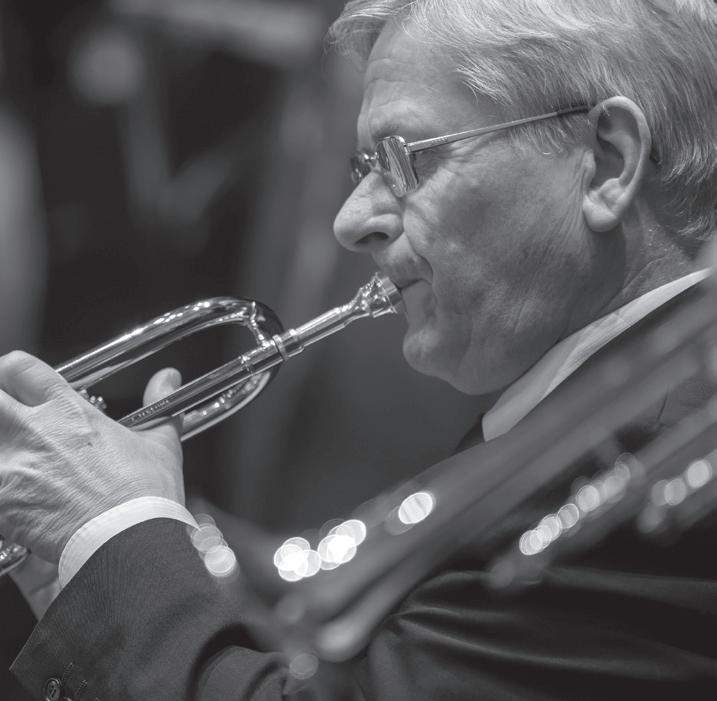
Peter Franks studied at the Guildhall School of Music and Drama, where he was taught by Bernard Brown and Raymond Simmons. He was a national finalist and London area winner in the 1979 Shell-LSO Scholarship Competition and in the following year was awarded a bursary to join the National Centre for Orchestral Studies.
At the age of 22, Peter joined the Scottish Chamber Orchestra and was soon appointed Principal Trumpet. As a soloist, he has performed the Hummel and Haydn concertos, both with the SCO and elsewhere, Edinburgh International Festival and Paris Châtelet performances of the Vivaldi Double Concerto, and gave the Scottish, London and USA premieres of Strathclyde Concerto No.3 by Sir Peter Maxwell-Davies.
Peter has had the honour to perform and record with many distinguished conductors and colleagues both with the SCO and as a guest with many other orchestras, including the RSNO and BBC SSO. Peter holds teaching positions at the Royal Conservatoire of Scotland and St. Mary’s Music School, is a visiting teacher at Edinburgh University, and has arrangements published for brass and woodwind ensembles.
The post-horn used in tonight's performance has been kindly lent by the Royal Conservatoire of Scotland, with the help of Professor Arnold Myers.
For full biography please visit sco.org.uk
© Christopher Bowen
Scottish Chamber Orchestra
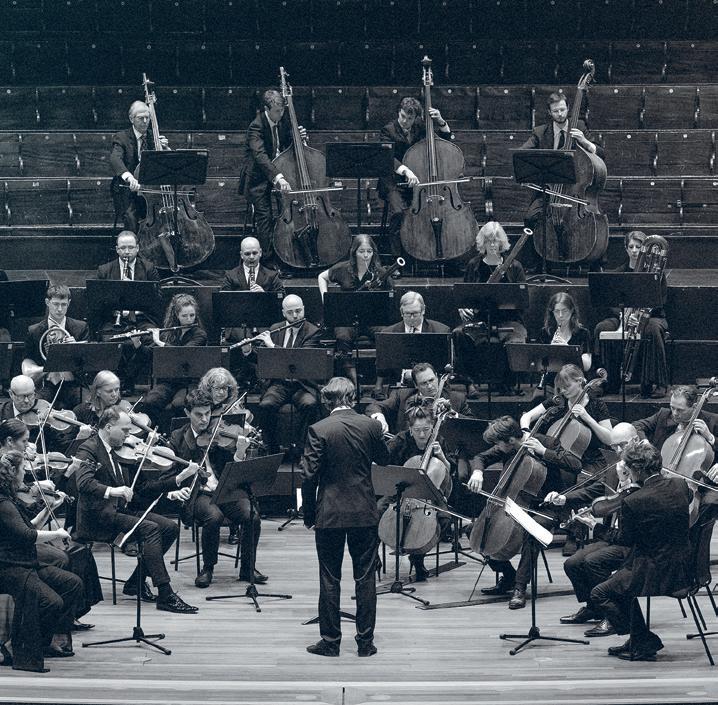
The Scottish Chamber Orchestra (SCO) is one of Scotland’s five National Performing Companies and has been a galvanizing force in Scotland’s music scene since its inception in 1974. The SCO believes that access to world-class music is not a luxury but something that everyone should have the opportunity to participate in, helping individuals and communities everywhere to thrive. Funded by the Scottish Government, City of Edinburgh Council and a community of philanthropic supporters, the SCO has an international reputation for exceptional, idiomatic performances: from mainstream classical music to newly commissioned works, each year its wide-ranging programme of work is presented across the length and breadth of Scotland, overseas and increasingly online.
Equally at home on and off the concert stage, each one of the SCO’s highly talented and creative musicians and staff is passionate about transforming and enhancing lives through the power of music. The SCO’s Creative Learning programme engages people of all ages and backgrounds with a diverse range of projects, concerts, participatory workshops and resources. The SCO’s current five-year Residency in Edinburgh’s Craigmillar builds on the area’s extraordinary history of Community Arts, connecting the local community with a national cultural resource.
An exciting new chapter for the SCO began in September 2019 with the arrival of dynamic young conductor Maxim Emelyanychev as the Orchestra’s Principal Conductor. His tenure has recently been extended until 2028. The SCO and Emelyanychev released their first album together (Linn Records) in 2019 to widespread critical acclaim. Their second recording together, of Mendelssohn symphonies, was released in 2023, with Schubert Symphonies Nos 5 and 8 following in 2024.
The SCO also has long-standing associations with many eminent guest conductors and directors including Principal Guest Conductor Andrew Manze, Pekka Kuusisto, François Leleux, Nicola Benedetti, Isabelle van Keulen, Anthony Marwood, Richard Egarr, Mark Wigglesworth, Lorenza Borrani and Conductor Emeritus Joseph Swensen.
The Orchestra’s current Associate Composer is Jay Capperauld. The SCO enjoys close relationships with numerous leading composers and has commissioned around 200 new works, including pieces by Sir James MacMillan, Anna Clyne, Sally Beamish, Martin Suckling, Einojuhani Rautavaara, Karin Rehnqvist, Mark-Anthony Turnage, Nico Muhly and the late Peter Maxwell Davies.
© Christopher Bowen
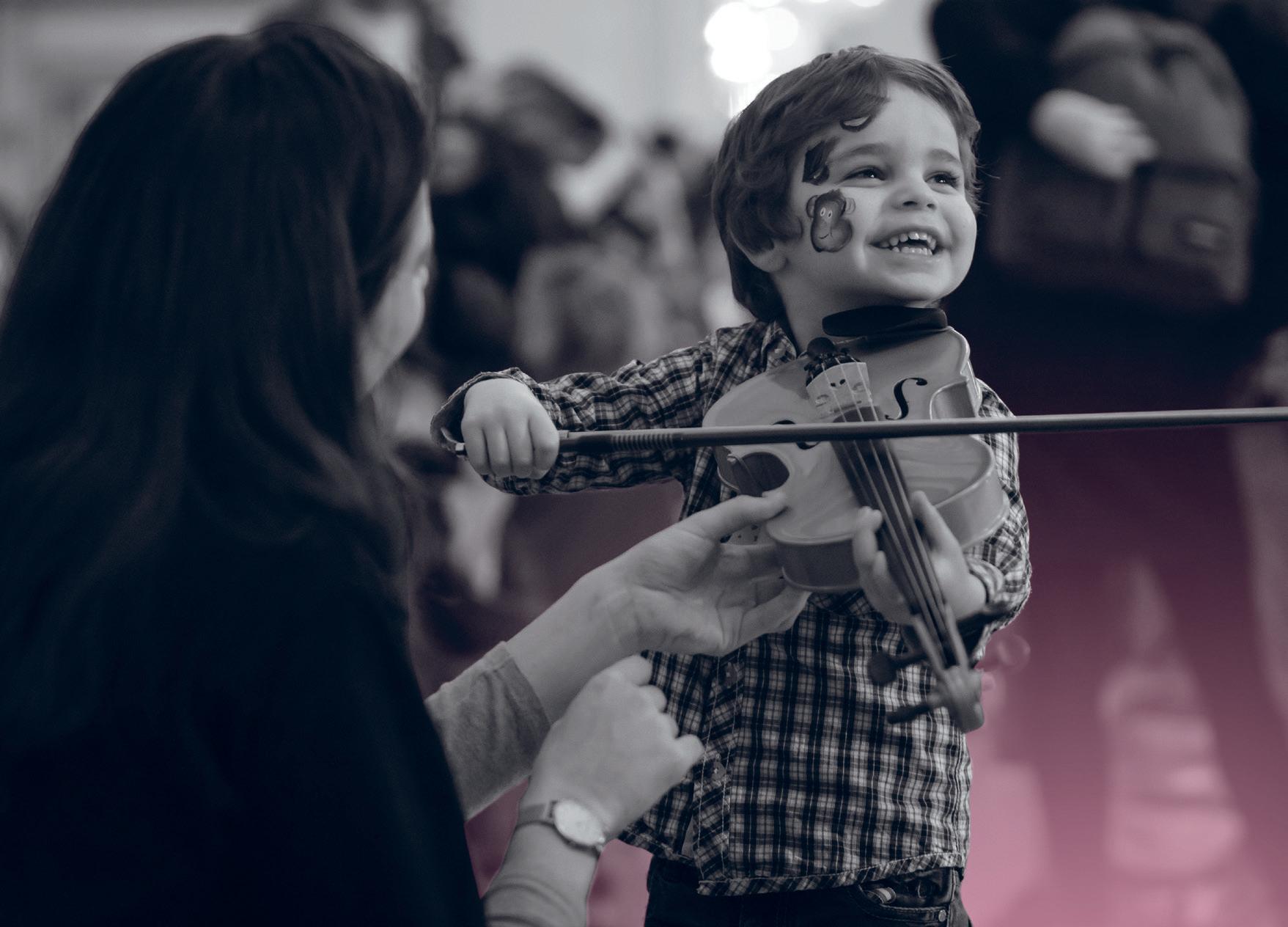

Support Us
Each year, the SCO must fundraise around £1.2 million to bring extraordinary musical performances to the stage and support groundbreaking education and community initiatives beyond it.
If you share our passion for transforming lives through the power of music and want to be part of our ongoing success, we invite you to join our community of regular donors. Your support, no matter the size, has a profound impact on our work – and as a donor, you’ll enjoy an even closer connection to the Orchestra.
To learn more and support the SCO from as little as £5 per month, please contact Hannah at hannah.wilkinson@sco.org.uk or call 0131 478 8364.
SCO is a charity registered in Scotland No SC015039.
Photo: Stuart Armitt
The