
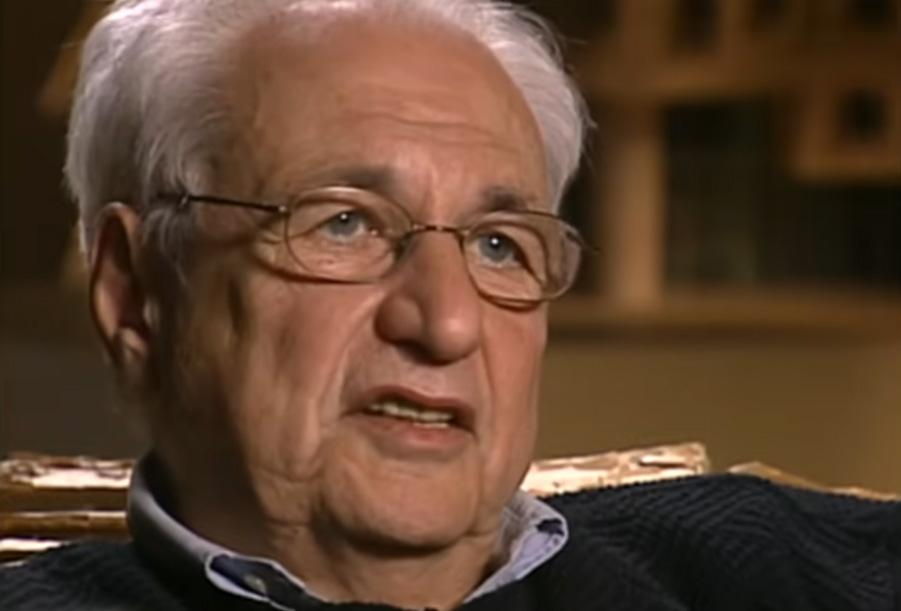

In Malibu, Thursday night, a fiery headon collision on Pacific Coast Highway left two men dead and another person seriously injured, according to the California Highway Patrol.
The crash occurred around 6:55 p.m. December 4 on State Route 1 just south of Deer Creek Road. CHP investigators said a 25-year-old man driving a Dodge Charger northbound crossed over the double yellow lines into the southbound lane for reasons still under investigation.
The Charger slammed into a Chevrolet
Tahoe driven by a 53-year-old man, CHP said.
When first responders arrived, both drivers were unresponsive and were later pronounced dead at the scene. A passenger in the Charger was taken to a local hospital with major injuries.
Alcohol is believed to be a factor in the collision, according to CHP. All occupants were wearing seat belts, and no arrests have been made as the investigation continues.
The roadway was closed for about three hours while officers and Caltrans crews processed the scene and cleared debris. All lanes reopened around 10:10 p.m., CHP Ventura said in a post on Twitter.
The Ventura County Medical Examiner’s Office will release the names of the victims after notifying their families.
Anyone who witnessed the crash or has dashcam footage from the area at the time is urged to contact the CHP Ventura Area office at 805-662-2640.

Charging Tens of Thousands of Dollars for
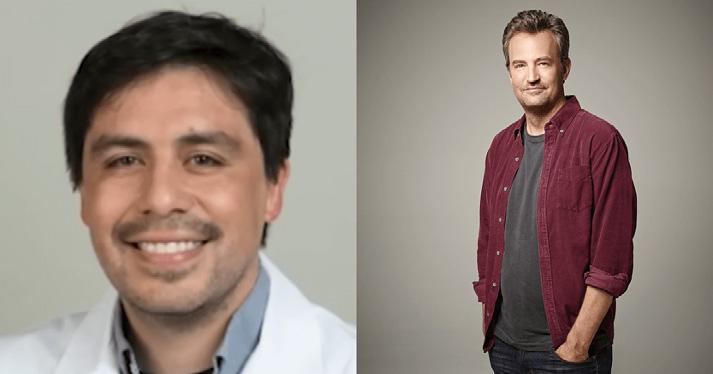
Federal prosecutors on Tuesday secured a 30-month prison sentence for a former Santa Monica physician who repeatedly supplied ketamine to actor Matthew Perry, even as he acknowledged the risks of giving the drug to a patient with a long history of addiction.
Salvador Plasencia, 44, known to some patients as “Dr. P,” received the sentence from U.S. District Judge Sherilyn Peace Garnett, who also imposed a $5,600 fine and ordered him taken into custody immediately. Plasencia pleaded guilty in July to four counts of distributing ketamine and later surrendered his California medical
license.
According to court documents, Plasencia operated Malibu Canyon Urgent Care, an urgent-care clinic in Calabasas. Prosecutors said he was well aware that ketamine is a controlled substance and that its off-label use to treat mental health conditions carries significant medical risks, including sedation, psychological reactions, and potential abuse. His own treatment notes emphasized that patients should be monitored by a physician during administration.
Plasencia first met Perry on Sept. 30, 2023, after being introduced by a patient who described the actor as a “high-profile person” seeking ketamine and willing to pay thousands of dollars in cash, prosecutors wrote. Hours later, Plasencia contacted San Diego physician Mark Chavez, 55, and drove to Costa Mesa, where he purchased nearly $800 worth of ketamine vials and tablets, as well as syringes and gloves.
“Rather than do what was best for Mr. Perry – someone who had struggled with addiction for most of his life – [Plasencia] sought to exploit Perry’s medical vulnerability for profit,” prosecutors argued in a sentencing memorandum. “Indeed, the day [Plasencia] met Perry he made his profit motive known, telling a co-conspirator: ‘I wonder how much this moron will pay’ and ‘let’s find out.’”
That same day, Plasencia went to Perry’s Los Angeles home, administered a ketamine
injection, and left at least one vial with Perry’s personal assistant, Kenneth Iwamasa, 60, who paid him $4,500. Investigators said Plasencia continued supplying ketamine in the days that followed, administering doses to Perry both at his home and once in a Long Beach parking lot while Perry sat in the back seat of a car.
During one session, Perry’s blood pressure spiked and he became unresponsive, prosecutors said. Despite the medical complication, Plasencia left more ketamine with Iwamasa, knowing the assistant— who had no medical training—would be injecting the drug.
Between Sept. 30 and Oct. 12, 2023, Plasencia distributed roughly 20 vials and several tablets of ketamine to Perry and Iwamasa, charging about $57,000 for the transactions. Prosecutors noted that ketamine typically sells for about $15 per vial.
Later in October, Plasencia used his DEA registration to order an additional 10 vials from a licensed pharmaceutical supplier. On Oct. 27, he texted Iwamasa to say he had “stocked up” and left supplies with a nurse in case they wanted to resume treatments while he was out of town.
Perry fatally overdosed on ketamine one day later. Federal authorities emphasized that the drug responsible for his death did not come from Plasencia.
After the overdose, Plasencia submitted
falsified treatment notes and an altered invoice to federal agents responding to a subpoena, prosecutors said. The records were designed to conceal his cash-based sales to Iwamasa. One fabricated note claimed Perry missed an appointment on Oct. 7, even though Plasencia had scheduled a midnight meeting that evening—at a Santa Monica street corner—with Iwamasa to sell additional vials of ketamine.
Several others charged in connection with the broader case have also admitted guilt. Chavez and Iwamasa are scheduled to be sentenced on Dec. 17, 2025, and Jan. 14, 2026. Two additional defendants, Erik Fleming, 56, of Hawthorne, and Jasveen “Ketamine Queen” Sangha, 42, of North Hollywood, await sentencing in early 2026.
The investigation was conducted by the Los Angeles Police Department, the Drug Enforcement Administration, and the U.S. Postal Inspection Service. Assistant U.S. Attorneys Ian V. Yanniello and Haoxiaohan H. Cai prosecuted the case.
Santa Monica Architects for a Responsible Tomorrow
Every Tuesday, our city council convenes in chambers that embody civic memory— mid-century architecture from when cities believed in public purpose. There, dedicated public servants wrestle with impossible choices between state mandates and community character.
Citizens who have attended these meetings for years see genuine anguish on council members' faces. They are not villains, they’re people navigating a system that often prevents the outcomes we all want: a thriving, sustainable Santa Monica honoring its past while meeting real needs.
So how did we arrive here? More importantly, how do we move forward together?
The Architecture of Difficult Choices
Cities are living archives, their streets and buildings carrying "collective memory." Yet our councilmembers—many who genuinely care about Santa Monica—find themselves approving projects that erase this memory. Understanding their constraints helps find better paths. Campaign finance structures create dependencies even reform-minded
officials struggle to escape. When elections require substantial funding and traditional sources align with development interests, even preservation advocates find options limited.
Campaign finance records 2018-2024 would quantify these pressures, though the pattern is already evident. This isn't about vilifying individuals but recognizing systemic pressures pushing good people toward difficult decisions.
Sacramento's Blunt Instrument
The state employs what it considers necessary tools for California's housing affordability crisis. The "Builder's Remedy" allows developers to bypass local zoning when cities lack compliant housing elements—meant to ensure housing production, but feeling like a sledgehammer where a precision scalpel might work better. If a California city lacks a "substantially compliant" housing element, the Housing Accountability Act indicates jurisdictions cannot use zoning or general plan standards to disapprove qualifying projects.¹
Our city attorneys warn of any resistance that might trigger this provision. Yet numbers suggest room for thoughtful response. As of March 2024, 215 jurisdictions were noncompliant among 539 total.² YIMBY Law identified only 93 Builder's Remedy projects totaling 17,000 units across 40 mostly
affluent cities.³
Some cities seek middle ground. Huntington Beach argued charter city status provides exemption⁴, though courts disagreed.⁵ Beverly Hills, previously allocated just 3 units (2013-2021), received 3,104 units (2021-2029).⁶ They fought through litigation, ultimately losing.7
Santa Monica? We exceeded requirements voluntarily. Our 6th Cycle RHNA allocation: 8,874 units, of which 70% are affordable.8
Yet City staff proposed capacity for 13,549 units—which is 52% above requirement.9
This “belief system” puzzles me. Perhaps leaders believe over-compliance demonstrates good faith, though this begs the question whether such enthusiasm for state mandates serves our residents' interests.
The Unexplored Alternative: Community Land Trusts
While council pursues developer-driven solutions, a proven alternative exists: Community Land Trusts. California's 40+ CLTs steward 1,600 permanently affordable homes for over 3,500 Californians, keeping over $250 million worth of properties as community assets immune from market dependency.¹⁰ CLTs work differently than traditional development. The CLT renewable 99-year ground lease includes restrictions on rent levels and resale prices that ensure housing costs remain regulated by the CLT.¹¹

Rather than token affordability expiring after 30 years, CLT properties remain permanently affordable, recycling public investment across generations.
The number of community land trusts has tripled in California since 2014.¹² In San Francisco, tenants facing displacement crowdfunded $300,000 and gave it to the San Francisco Community Land Trust, which combined it with loans to purchase their building for over $3 million.¹³ The trust now rents units back at permanently affordable rates.
Irvine offers another model. The partnership between the City of Irvine and Irvine CLT exemplifies what local government can accomplish when invested in the community land trust model.¹⁴ Facing similar pressures as Santa Monica—high
Continue on page 4

























Continue from page 2
property values, jobs-housing imbalance, expiring affordability restrictions—Irvine chose community ownership over developer giveaways.
Why hasn't Santa Monica explored this option? CLTs preserve existing buildings and residents—maintaining community memory while ensuring permanent affordability. They don't generate massive profits for developers or campaign contributions for politicians. But they actually solve the problem we claim to address.
The Revolving Door Effect
Confirming Employment histories would document suspected patterns of planners who move between competing municipal positions and development consulting.
Career incentives appear to favor collaboration over confrontation. Those who fight mandates risk being branded "difficult," potentially limiting future opportunities. It's an ecosystem where each player appear to understand unspoken rules.
The Affordability Mirage "Affordable housing" provides moral justification for projects that may not serve those most in need. Builder's Remedy, active since Santa Monica fell from compliance, requires only 20% affordable units at 60% area median income.15

Recent approvals average 90% marketrate, 10% affordable—predominantly studios unsuitable for families who create intergenerational memory. While state law allows negotiating higher percentages, Santa Monica consistently accepts minimums. Meanwhile, genuine strategies remain unexplored. Beyond CLTs, we could pursue acquisition/rehabilitation of existing apartments, conversion of vacant offices, or partnerships with nonprofits. These preserve community fabric while adding real affordability.
Council's Own Words
The clearest insight comes from officials themselves. Councilmember Phil Brock asked: "What I'm concerned with… is that we are just acquiescing and not simultaneously saying this is unfair, and I think we have to stand up for the residents of the city and our city."16
When Housing Element faced rejection, Mayor Himmelrich stated: "I am appalled by the state's approach... there probably ought to be a lawsuit, but I also am going to move that we ask staff to submit the draft redline revisions to HCD." 16
Planning Director White revealed constraints: "We don't really have any other avenues... We have tried very, very hard to express our strong position... but we're running out of ammunition." 16
Yet despite these claims about helplessness, the city proposed 52% excess capacity while ignoring proven alternatives like CLTs.
Infrastructure Realities
Santa Monica's Public Works Department integrates infrastructure constraints into project approvals by requiring specific capacity studies for water, sewer, and other systems before projects are deemed complete or approved. Yet despite the City’s online descriptions footnoted below, there is a Council pattern suggesting that infrastructure constraint documents are protected against liability rather than being used to influence decisions.16, 17, 18, 19, 20, 21 22. When infrastructure fails, crisis justifies emergency measures—streamlined approvals, suspended input, eliminated standards. The problems are compounded rather than resolved.
Finding Common Ground
Other cities demonstrate creative paths honoring both requirements and character. Some join legal challenges ensuring reasonable requirements. Others maximize existing tools. Many now embrace CLTs as genuine solutions.
The difference involves community consensus. When residents, officials, and responsible nonprofits collaborate—rather than defaulting to developer interests— better outcomes emerge.
Perhaps we need new dialogue: How can CLTs help Santa Monica? Could we follow San Francisco's model of tenant ownership? Irvine's municipal partnership? The tools exist—we just need courage to use them. The machine erasing Santa Monica's memory isn't inevitable. Systems can be reformed when communities unite with shared purpose. Can we move beyond developer-driven solutions to communityowned alternatives?
[Next: Part Three - The Reckoning] See SMa.r.t.'s article saluting Frank O. Gehry in this week's online edition of the SM Mirror.
Jack Hillbrand, Architect, AIA Santa Monica Architects for a Responsible Tomorrow
SMa.r.t. Leadership: Dan Jansenson (Former Building & Fire-Life Safety Commissioner), Robert H. Taylor, Architect AIA, Thane Roberts, Mario Fonda-Bonardi AIA (Former Planning Commissioner), Sam Tolkin (Former Planning Commissioner), Michael Jolly ARE-CRE, Jack Hillbrand AIA, Landmarks Commission Architect; Phil Brock (Mayor, ret.), Matt Hoefler NCARB, Heather Thomason, Community Organizer
For previous articles, see www. santamonicaarch.wordpress.com/writing
¿Qué va en el bote verde? What goes in the green bin?







Unlined paper foodware can be composted along with your food scraps!
¡Los contenedores de pa pel pa ra alimentos sin forro de plástico se pueden composta r ju nto con los restos de comida!











The Santa Monica–Based Designer, Celebrated for Decades of Groundbreaking Work, Leaves a Lasting Legacy Across Architecture, Art, and Design
Frank Gehry, the Canadian and American considered a titan in architecture and design, has died at the age of 96 at his home in Santa Monica. Known for his distinctive style, his world-famous designs are considered some of the most important in architecture.
He is best known for his designs for the Guggenheim Museum Bilbao in Spain, the Walt Disney Concert Hall in Los Angeles, and the Louis Vuitton Foundation in France.
His humble beginnings started when he attended Los Angeles City College and drove a truck, but he found his way to

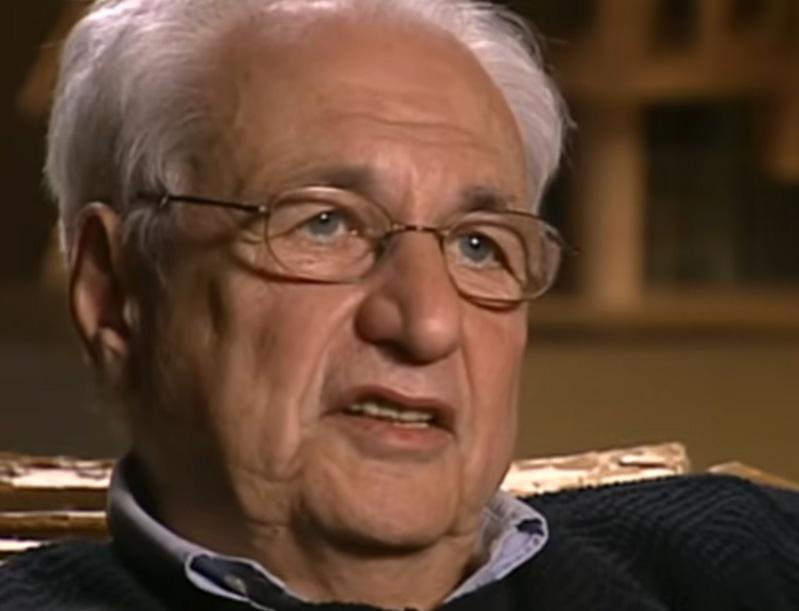
design and architecture by asking himself what he loved and what he wanted to do.
Gehry was not just interested in design in architecture, but also designed opera sets, furniture, jewelry, lamps, a yacht, a limited edition bottle of Hennessy cognac,
and the official trophy for the World Cup of Hockey as he was a big hockey fan. He was active in philanthropy and would take on projects on a pro bono basis. He was also a member of the California Yacht Club in Marina Del Rey.

way high school should be.
Students achieve remarkable outcomes with

Immerse yourself in a sanctuary where nature’s tranquility meets the vibrancy of city life. Urban Jungle is more than a plant store it’s a communitycentered oasis bringing a lush slice of paradise to your urban lifestyle. Here, we passionately believe in the power of plants to transform spaces and elevate well-being.








The program includes harp, marimba, guitar and vocal solos accompanying the combined choirs
Santa Monica College’s Concert Chorale and Chamber Choir will perform a holiday program titled “Home for the Holidays” on
Friday, Dec. 12, at the Eli & Edythe Broad Stage, the college announced.
The concert, led by SMC music faculty member Jeremiah Selvey Convento, will feature guest harpist Cristina Montes Mateo, SMC guitar faculty Ken Rosser and SMC music alumnus Adam McCrory, a baritone.
The program includes harp, marimba, guitar and vocal solos accompanying the combined choirs. Selections explore a range of holiday traditions through European and Hispanic carols, including works from Benjamin Britten’s *A

To all heirs, beneficiaries, creditors, contingent creditors, and persons who may otherwise be interested in the will or estate, or both, of: JOHN MICHAEL MURPHY
A Petition for Probate has been filed by CHRISTOPHER MURPHY in the Superior Court of California, County of Los Angeles, Los Angeles County Superior Court Case No. 25STPB13513
The Petition for Probate requests that CHRISTOPHER MURPHY be appointed as personal representative to administer the estate of the decedent.
The petition requests the decedent’s will and codicils, if any, be admitted to probate. The will and any codicils are available for examination in the file kept by the court. The petition requests authority to administer the estate under the Independent Administration of Estates Act. The independent administration authority will be granted unless an interested person files an objection to the petition and shows good cause why the court should not grant the authority.
A hearing on the petition will be held in Los Angeles County Superior Court as follows: Date: JANUARY 12, 2026, Time: 8:30 am. Dept.: 62 The address of the court: 4 Main St. – Ste. 20, Los Altos CA 94022
If you object to the granting of the petition, you should appear at the hearing and state your objections or file written objections with the court before the hearing. Your appearance may be in person or by your attorney.
If you are a creditor or a contingent creditor of the deceased, you must file your claim with the court and mail a copy to the personal representative appointed by the court within the later of either (1) four months from the date of first issuance of letters to a general personal representative, as defined in section 58(b) of the California Probate Code, or (2) 60 days from the date of mailing or personal delivery to you of a notice under section 9052 of the California Probate Code.
Other California statues and legal authority may affect your rights as a creditor. You may want to consult with an attorney knowledgeable in California law. You may examine the file kept by the court. If you are a person interested in the estate, you may file with the court a Request for Special Notice (form DE-154) of the filing of an inventory and appraisal of estate assets or of any petition or account as provided in Probate Code section 1250. A Request for Special Notice form is available from the court clerk.
Petitioner Attorney for Petition: Janet L. Brewer, 4 Main St. Ste. 20, Los Altos, Ca. 94022
Published in the Santa Monica Mirror, 12/05/25, 12/12/2025, and 12/19/2025.
Ceremony of Carols* and Conrad Susa’s *Carols & Lullabies*, as well as firstperson immigrant narratives from Melissa Dunphy’s *American DREAMers*. Tickets cost $12, with free admission for students with ID. They are available at smc.edu/tickets or by phone at 310-4343005. Tickets can also be purchased at the venue box office starting 45 minutes before the 7:30 p.m. performance. Parking is free and seating is first-come, first-served. Additional information is available at 310-434-4323.
Le Lycée Français de Los Angeles Campus 55
Bilingual - French/English
MUST BE 2 YEARS BY DEC 31ST TO ENROLL
POTTY-TRAINED NOT REQUIRED 8:00AM - 2:30PM
Extended care available until 4:45pm
OPTION A: 5 DAYS/WEEK
OPTION B: 3 DAYS/WEEK (M/W/F)
LUNCH & SNACK INCLUDED
3055 Overland Ave, Los Angeles 90034
admissions@lyceela.org License #197404606