The Liverpool Diagnostic Infrared Wand (LDIR wand): Imaging and Cancer Prognosis from the Same Technology
Why I upload my microscopy videos to YouTube
2025 RMS Awards
Spotlight on…Alfonso
New Zealand
Schmidt, President of Microscopy
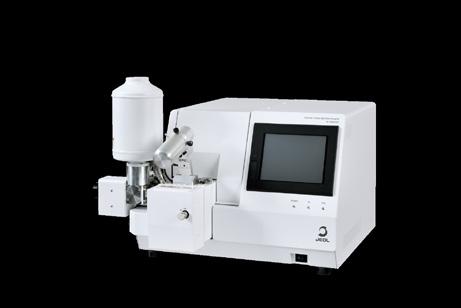
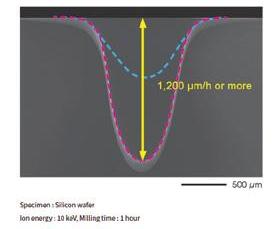
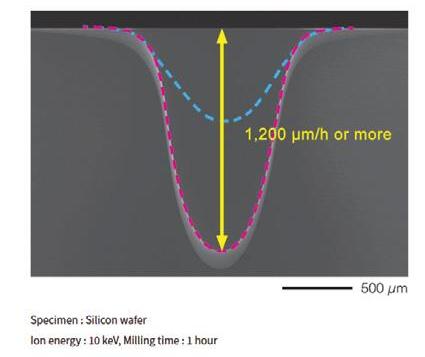
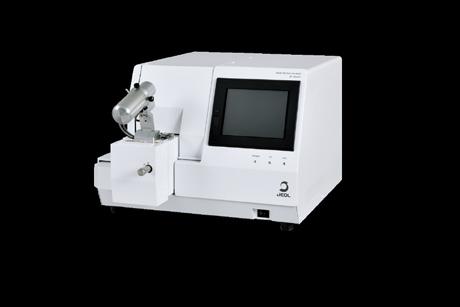
•High-Speed Milling Source: Ultra-fast milling rates up to 1.2 mm/h
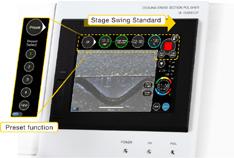
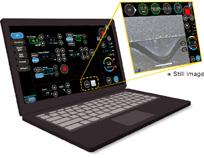
•User-Friendly Interface with Remote Access Enabled: New flowchart-style control panel to guide the setup process
•Multi-purpose Stage: Fits variety of sample holder options
• Auto Cooling and Auto Return to Room Temperature: Continuous milling for up to 8 hours at -120°C with the Cooling Cross Section Polisher™
MAGAZINE
infocus is the Magazine of the Royal Microscopical Society (RMS) –the only truly international microscopical society. The RMS is dedicated to advancing science, developing careers and supporting wider understanding of science and microscopy.
infocus is published four times per year by the RMS. Designed and produced by Creative Design. Reproduction in whole or in part without permission from the RMS is forbidden. Views expressed in the Magazine are those of the individual contributors and do not necessarily reflect those of the RMS.
RoyalMicroscopicalSociety
@RoyalMicroSoc
@RoyalMicroSoc
FROM THE SCIENTIFIC EDITOR
Dear Readers,
It is my pleasure to present our fourth and final issue of infocus for 2025, as we come to the end of what has been another action-packed year!
Just as time itself often seems to fly, the world of microscopy, imaging and data analysis rarely gives the impression of dragging its heels. Amid the excitement and noise generated by each new innovation, piece of technology or application, I sometimes wonder if we always keep sight of the bigger picture – namely the essential role of microscopy in answering the biggest questions, improving people’s lives and tackling disease.
Perhaps a helpful reminder comes in the form of a fascinating piece by Vijay Sharma and colleagues at University of Liverpool, on The Liverpool Diagnostic Infrared Wand (LDIR Wand). This is a really exciting development in ongoing efforts to understand cancer behaviour, and to accurately predict the progression of the disease. As the authors playfully note, their ‘wand’ may not be magical, but could yet have great “power and impact”.
On the subject of science communication, we have a lovely contribution from Alexis Gkantiragas, about his use of social media – in this case,YouTube – to share his work on bumblebee parasites with the wider public. As he points out, grant applications increasingly require applicants to explain how research results will be communicated to a wider audience, and Alexis’s effective and low-cost approach is a great way to gain some exposure.
As an international society, the RMS has always sought to strengthen links with other organisations dedicated to furthering the science of microscopy around the world. Earlier this year, the Society was proud to sign a ‘Memorandum of Understanding’ with Microscopy New Zealand (MNZ). In this issue, we are delighted to feature an interview with MNZ’s new President, Alfonso Schmidt.
Finally – since this is our last issue of 2025, we include a quickfire round-up of some of the best highlights from an action-packed year at the RMS.
As always, I hope you enjoy reading these articles and all the other content in our December issue.
Merry Christmas and a Happy New Year!
Slàinte!
Leandro Lemgruber
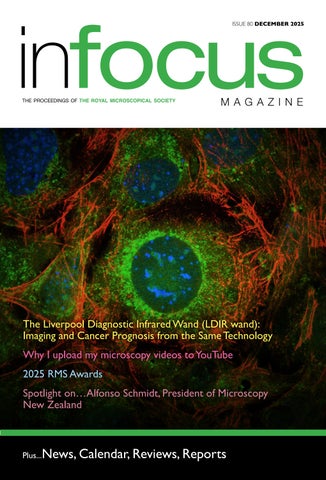
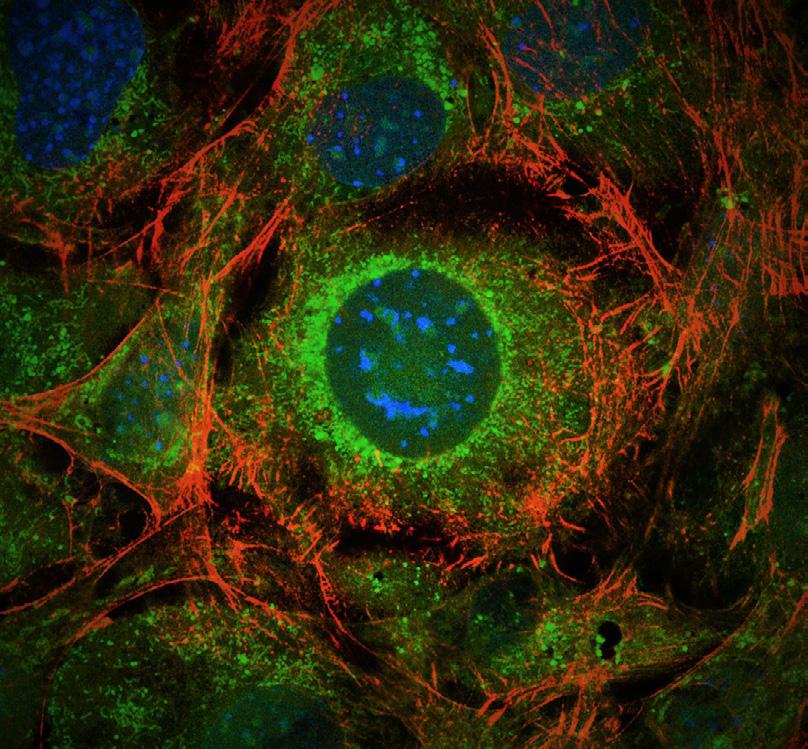
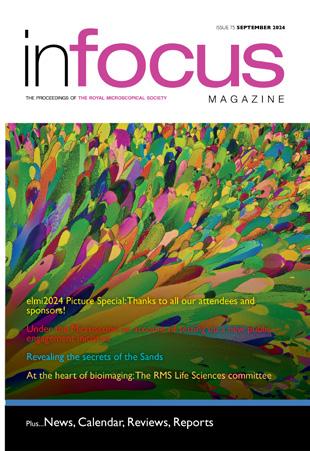
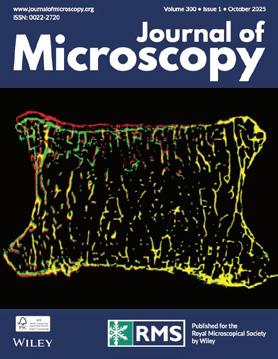
COVER IMAGE: Fusing PHOSPHO1-MnG: cellular or solar flares?
By Charlotte Clews, University of Edinburgh. Osteoblasts stably expressing PHOSPHO1-MNeonGreen (488) and costained with Phalloidin (594) and Hoescht (405) to allow insights into the molecular basis of bone formation. Slides were imaged using a Zeiss 880 confocal microscope with airyscan detection. Spherical PHOSPHO1 objects appear to radiate from the perinuclear region resembling, in this cell, solar flares… if the sun was blue, green and 20 microns in diameter!
The Liverpool Diagnostic Infrared Wand (LDIR wand): Imaging and Cancer Prognosis from the Same Technology
Vijay Sharma1-2, James Ingham3, Steve Barrett3, Caroline Smith3, Janet Risk2, Richard Shaw2 and Peter Weightman3
1 Cellular Pathology, Liverpool Clinical Laboratories, Liverpool University Hospitals NHS Foundation Trust
2 Department of Molecular and Clinical Cancer Medicine, Institute of Systems, Molecular and Integrative Biology, University of Liverpool. 3 Department of Physics, University of Liverpool.
We are moving into a new era in microscopy technology development in which the microscopy technologies, in addition to the imaging function they have always provided, increasingly provide us with additional predictive and prognostic information which would be impossible to derive by any other method.
Oral cancer is one of the fastest developing cancers in the UK, with over 12,000 new cases a year. It is often preceded by oral lesions with approximately 1 in 8 progressing to cancer. In order to optimise therapy, it is crucial to identify those lesions that will progress to cancer. The current best practice is to take tissue biopsies which are then examined by an histopathologist. However, histopathological assessments are labour-intensive, complex, have poor inter-observer reliability, do not completely reflect the risk of long-term malignant transformation and correctly predict cancer progression in only ~40% of cases. Many patients require repeated biopsies which are painful and delay surgery. There is a need to be able to predict with accuracy which patients are going to progress and which are not.
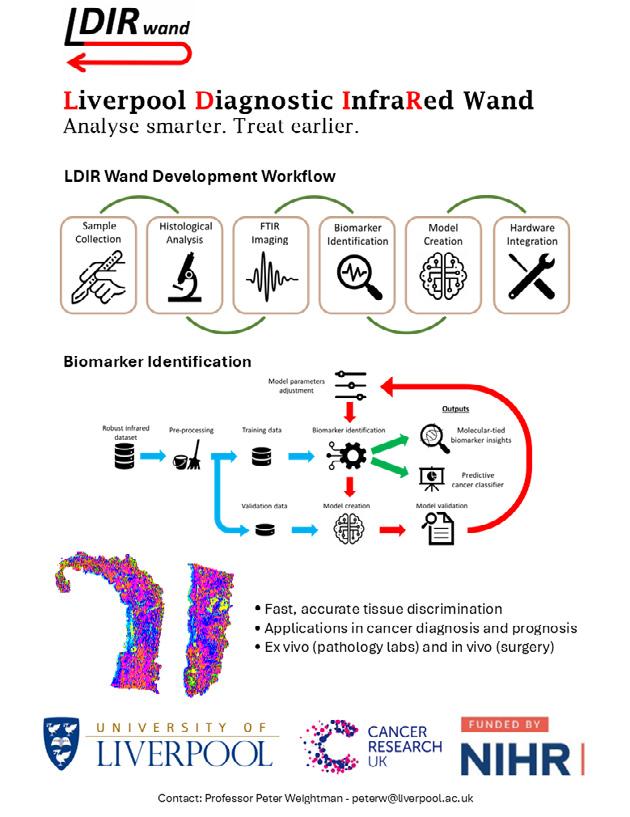
The Liverpool Diagnostic Infrared Wand (LDIR Wand) is based on a patented machine learning algorithm that makes it possible to identify key infrared biomarkers that discriminate between different tissue types (Ingham et al, 2019a). The power of the algorithm was demonstrated by the
early work on oral cancer where it identified two IR biomarkers, 1252 cm-1 and 1285 cm-1, which yielded intensity ratios that discriminated between metastatic oral cancer and lymphoid tissue with sensitivities and specificities of 98.8 ± 0.1% and 99.89 ± 0.01% respectively (Ellis et al, 2021). This research has recently been confirmed by a larger study on 46 tissue cores (Al Jedani et al, 2023) that also provided insight into the chemical composition of this cancer (Al Jedani et al, 2024). When applied to the prognosis of oral cancer lesions, accuracies of ~80% can be achieved – a significant advance on current histopathological techniques (Ellis et al, 2022; Ingham et al, 2022).
In addition to oral cancer, similar problems are present across a range of other cancer types. For example, it is difficult to predict which cases of ductal carcinoma in situ of the breast are going to progress. If these patients can be identified with confidence, treatment can be stratified on the basis of the prediction of progression and many patients could be spared surgery.
Ductal carcinoma-in-situ (DCIS) is the in-situ precursor lesion of invasive breast carcinoma. Preliminary research on a small cohort of specimens supports the hypothesis that the methodology outlined above will identify IR biomarkers which will predict which cases of DCIS will progress or recur. In a study of six DCIS biopsies we have identified eight biomarkers that predict the prognosis with
sensitivities of ~80% and specificities of ~75%, a considerable improvement on current approaches.
A Receiver Operating Characteristic curve (ROC curve) is a graph of the True Positive Rate (Sensitivity) plotted against the False Positive Rate (1 - Specificity) at various decision thresholds. It is one of the most commonly used and accepted methods for assessing the performance of a classification model. In preliminary research on invasive breast
cancer, a study on a cohort of biopsies from 10 patients achieved sensitivities and specificities of 83% and 81% respectively, and an area under the ROC curve of 0.9, in identifying those patients who do not benefit from neoadjuvant therapy. It may also be possible to use this technology to measure the receptor status of breast tumours rapidly.
The LDIR Wand was born out of pioneering technology developed on the ALICE accelerator
facility, the UK’s only 4th generation light source, at to tissue, meaning that once the tissue has been Daresbury Laboratory well over a decade ago. The tested it can then be used for other purposes. This University of Liverpool physics group developed a means that the tissue section could be scanned by scanning near-field optical microscope (SNOM) on LUCID prior to being stained with H&E, creating the ALICE infrared (IR) free electron laser and led a a seamless integration into pathology laboratory collaboration with colleagues from four universities workflows. and three hospitals in applying a range of techniques It is difficult to be certain precisely which chemical in studies of oesophageal, cervical and prostate moieties in the cell are responsible for the cancers (Ellis et al 2021Smith et al, 2013; Haliwell discriminating IR biomarkers that are identified. It et al, 2016; Inghan et al, 2019b; Al-Jedani et al, 2024). is likely that the signals are a composite of signals
It was recognised that while IR spectral images are from DNA (both mutational and epigenetic), RNA, able to distinguish between tissue types, and have proteins and even potentially the metabolome. been studied for decades, scientific instruments did It is therefore likely that they are detecting shifts not represent this information in a way that could in entire cellular networks at multiple levels of be translated into clinic. Furthermore, analytical organisation, making them practical, easily elicited methods could not summarise the information that and rapid multiomic biomarkers. was undoubtably present in the spectral images in a Any technology with the power to accurately way that captured the essential differences between predict the progression of cancer has the potential types of tissue. If the information content of the to revolutionise cancer care. The LDIR Wand has spectra could be captured in a small number of shown an unparalleled ability to predict cancer the several thousand wavelengths measured in an behaviour in every cancer type to which it has so IR spectrum, then it would be possible to radically far been applied. Our vision is that, like its fictional simplify the instrumentation. This observation namesake in the tale of Harry Potter, it will have led to a focus on the development of algorithms power and impact. The power to predict smarter, that discriminated between spectral images. The the impact of saving lives. identification of a few key IR wavelengths led to the development of the LDIR Wand and a related device for use in histopathology, the Liverpool
REFERENCES
University Cancer Imaging Device (LUCID). S. Al Jedani, C. Lima, C.I. Smith, P.J. Gunning, R.J. Shaw, S.D. Barrett, A. Triantafyllou, J.M. Risk, R. Goodacre The algorithm is able to extract a small number of and P. Weightman. An optical photothermal infrared key IR biomarkers that discriminate between tissue investigation of lymph nodal metastases of oral types. Intriguingly, these lie not within the spectral squamous cell carcinoma. Sci Rep 14, 16050 (2024). peaks where most researchers have been looking, doi 10.1038/s41598-024-66977-z but often between the peaks. Having a small number of IR biomarkers makes it possible to use a small S. Al Jedani, C.I. Smith, J. Ingham, C.A. Whitley, B.G. number of IR lasers in the construction of LUCID Ellis, A. Triantafyllou, P.J. Gunning, P. Gardner, J.M. and the hand-held LDIR Wand probe. These are Risk, R.J. Shaw, P. Weightman and S.D. Barrett. Tissue compact devices that are simple to use and do not discrimination in head and neck cancer using image require any training in spectroscopic techniques. fusion of IR and optical microscopy. Analyst 148, 4189-4194 (2023). doi 10.1039/D3AN00692A
The LDIR Wand technology has a number of distinct advantages. It can be automated and is simpler, B.G. Ellis, C.A. Whitley, S. Al Jedani, C.I. Smith, P.J. cheaper and more accurate than other methods Gunning, P. Harrison, P. Unsworth, P. Gardner, R.J. of addressing these clinical problems. Also, unlike Shaw, S.D. Barrett, A. Triantafyllou, J.M. Risk and P. other approaches, this approach is non-destructive Weightman. Insight into metastatic oral cancer tissue
from novel analyses using FTIR spectroscopy and aperture IR-SNOM. Analyst 146, 4895 (2021). doi 10.1039/d1an00922b
B.J. Ellis, C.A. Whitley, A. Triantafyllou, P.J. Gunning, C.I. Smith, S.D. Barrett, P. Gardner, R.J. Shaw, P.Weightman and J.M. Risk. Prediction of malignant transformation in oral epithelial dysplasia using infrared absorbance spectra. PLOS ONE 17, e0266043 (2022). doi 10.1371/journal.pone.0266043
D.E. Halliwell, C.L.M. Morais, K.M.G. Lima, J. Trevisan, M.R.F. Siggel-King, T. Craig, J. Ingham, D.S. Martin, K.A. Heys, M. Kyrgiou, A. Mitra, E. Paraskevaidis, G. Theophilou, P.L. Martin-Hirsch, A. Cricenti, M. Luce, P. Weightman and F.L. Martin. Imaging cervical cytology with scanning near-field optical microscopy (SNOM) coupled with an IR-FEL. Sci Rep 6, 29494 (2016). doi 10.1038/srep29494
J. Inghama, S.D. Barrett and P.Weightman.A method of selecting discriminating wavelengths of radiation for use in absorption spectroscopy. WIPO International Publication Number: WO 2019/197806 A1 Filed 5/4/19. Granted (EU, US, Japan).
J. Inghamb, M.J. Pilling, D.S. Martin, C.I. Smith, B.G. Ellis, C.A. Whitley, M.R.F. Siggel-King, P. Harrison, T. Craig, A. Varro, D.M. Pritchard, A. Varga, P. Gardner, P. Weightman and S.D. Barrett. A novel FTIR analysis method for rapid high-confidence discrimination of esophageal cancer. Infrared Physics & Technology 102, 103007 (2019). doi 10.1016/j.infrared.2019.103007
J. Inghamc, C.I. Smith, B.G. Ellis, C.A. Whitley, A. Triantafyllou, P.J. Gunning, S.D. Barrett, P. Gardener, R.J. Shaw, J.M. Risk and P. Weightman. Prediction of malignant transformation in oral epithelial dysplasia using machine learning. IOP SciNotes 3, 034001 (2022). doi 10.1088/2633-1357/ac95e2
A.D. Smith, M.R.F. Siggel-King, G.M. Holder,A. Cricenti, M. Luce, P. Harrison, D.S. Martin, M. Surman, T. Craig, S.D. Barrett, A. Wolski, D.J. Dunning, N.R. Thompson, Y. Saveliev, D.M. Pritchard, A. Varro, S. Chattopadhyay and P.Weightman. Near-field optical microscopy with an infra-red free electron laser applied to cancer diagnosis. App Phys Lett 102, 053701 (2013). doi 10.1063/1.4790436
Professor Vijay Sharma
Professor Sharma is currently the Clinical Director of Cellular Pathology and a Consultant Histopathologist with a specialist interest in Breast Pathology in Liverpool, and is also a member of the Department of Molecular and Clinical Medicine
and the School of Medicine in the University of Liverpool. His research interests are in the role of energy metabolism in disease, including cancer, heart disease and diabetes, in the development of new biotechnologies for predicting tumour progression and therapy responses, and also in the implementation and development of Artificial Intelligence in Digital Pathology. He is a recognised expert in Biobanking and one of the UK’s leading authorities on the use of Artificial Intelligence in Histopathology.
Dr James Ingham
James Ingham is interested in the application of advanced imaging technologies, particularly infrared spectroscopy, and their integration with analytical methods and novel AI approaches to
address major challenges in biology and medicine.
Dr Steve Barrett
As a Senior Research Fellow in the Department of Physics, Dr. Barrett’s research interests span all aspects of imaging, image processing and image analysis. This includes medical imaging (biophysics), scanning probe microscopy of atoms and molecules (nanophysics), microscopy of earth materials (geophysics) and astrophotography.
Dr Caroline Smith
Dr Caroline Smith is a physical chemist with an interest in spectroscopy of molecules at interfaces and in developing instrumentation. She has many years’ experience of research studying cancer with infrared spectroscopy.
Dr Janet Risk
Dr. Janet Risk is an Honorary Senior Lecturer in the Department of Molecular and Clinical Medicine and is a member of the Liverpool Head and Neck Centre. Dr. Risk investigates the molecular biology of aerodigestive tract cancer and has previously
published on the role of tumour suppressor gene methylation in head and neck squamous cell carcinoma and the role of tumour associated fibroblasts in the aggressiveness of HPV negative oral squamous cell carcinomas. She is a key member of the team investigating the utility of infrared imaging for the early diagnosis of oral cancer.
Professor Richard Shaw
Richard Shaw is an academic head and neck cancer surgeon with translational interests in premalignancy, early diagnosis and prevention. He is chief investigator on several clinical trials and has held senior roles in the NIHR clinical research network and the International Academy of Oral Oncology.
Professor Peter Weightman
Peter Weightman has a history of developing scientific instruments and has been fortunate in collaborating with colleagues in a variety of fields. These collaborative activities have resulted in a number of awards including the Mott Medal of the UK Institute of Physics (2006) and a co-recipient of the UK Institute of Physics Rosalind Franklin Medal (2020) through his membership of the Steering Committee of the UKRI “The Physics of Life Network”
Calendar
We are very pleased to continue offering a range of ‘in-person’ and virtual events this year, in order to maximise accessibility and provide opportunities to those who might not otherwise be able to attend.
The following information was correct at the of publication but could potentially be subject to change in the coming weeks. Please visit our event calendar at www.rms.org.uk for the latest updates.
If you have any questions about a booking you have already made for an event, or need any help or advice, please contact us at info@rms.org.uk
16 -18 All Things Cryo Course 2026, Nottingham, UK
April
21-24 Dynamic Cell VI (RMS sponsored event), Reading, UK
May
18 -20 Microscopy of Oxidation 12, Loughborough, UK
June
7-12 Signaling by Adhesion Receptors GRC 2026, (RMS sponsored event), New Hampshire, USA
23 -25 AFM & SPM 2026, Leeds, UK
August / September
31 August - 3 September IMC21, Liverpool, UK
For further information on all these events, please visit our Event Calendar at www.rms.org.uk
Featured RMS events
Flow Cytometry Facilities Meeting
2026
6 – 7 January, Liverpool, UK
Scientific organiser: Christopher Law, University of Liverpool
This year’s annual Flow Cytometry Facilities meeting is being held in-person on Tuesday 6 and Wednesday 7 January 2026 in Liverpool, starting at lunchtime on 6 January, and finishing at lunchtime on 7 January. The meeting is aimed at
UKLMF 2026 (Light Microscopy Facilities Meeting)
8 – 9 January, Newcastle, UK
Scientific organisers: Alex Laude & Glyn Nelson, University of Newcastle
The RMS would like to announce that the upcoming UK Light Microscopy Facility Meeting 2026 will be taking place in Newcastle Upon Tyne, starting at lunch time on Thursday, 8 January and finishing at lunch time on Friday, 9 January. The event is being hosted by scientific organisers Glyn Nelson & Alex Laude.
This event provides an excellent opportunity to network with fellow facility staff as well as representatives from major commercial suppliers of microscopy hardware, software and reagents. The focus of this year’s meeting
all those that run or work in a Flow cytometry core facility and seeks to highlight and address common issues within the community. This year we will focus on label-free cytometry, scientific apprenticeship, core management and funding updates. Sessions will be a panel format to present views, followed by an interactive discussion around the points raised at the end of each session. We will also include presentations from current core facilities (Crib talks) and from our industry colleagues (Techno Bites).
will be ‘quality and data management within imaging facilities’. We’ll hear from newly established facilities as well as those that want to share recent developments and operational best practice. There’ll be a spotlight on career pathways for imaging scientists at all stages, including mentoring schemes and opportunities across sectors. And, as always, expect updates from funders and UK Bioimaging on initiatives shaping the future of light microscopy.
Registration to this event includes full access to the meeting as well as lunches and the conference dinner. Please note: the dinner venue can accommodate a maximum of 140 attendees. Places will be allocated on a first-come, firstserved basis.
Registration closes on Friday, 12 December.
Featured RMS events
EM-UKI 2026
12 – 13 February, Dublin, Ireland
Scientific organisers: Kerry Thompson, University of Galway; Lewys Jones, Trinity College Dublin
The EM-UKI community meetings are an open forum for discussion of the latest developments and challenges in the field, suitable for both academic and commercial microscopists. The meeting will include techno bites, talks, and discussions, and also hosts the annual RMS EM lecture.
This year’s programme will include the following sessions:
• RMS EM Lecture
• Updates from the EM Community
• Funding
• Careers & Outreach
• Interactive Methodology
For further information on all these events, please visit our Event Calendar at www.rms.org.uk
Annual Meeting of the Chilean Society for Biochemistry and Molecular Biology
6 - 9 October 2025
La Serena, Chile
This conference represented a very exciting opportunity for me to learn more about the science happening in Chile, which does not reach the UK very frequently. It was fascinating and unique to hear about research aiming to translate the traditional medicine used by the Mapuche people into modern medicine. I also enjoyed speaking to the BeBug startup, which genetically modifies black flies to produce therapeutic nanobodies. These black flies consume organic waste and their larvae are used to feed livestock, thereby reducing livestock deaths from common infectious diseases without needing additional medications. I also enjoyed the talk from Christian Wilson about important considerations that are often overlooked to ensure experiments are performed in (quasi-)equilibrium. I learned about elegant tricks to examine your protein of interest in different oligomeric states by taking advantages of the thermodynamics.
There were over 100 posters covering the breadth of biochemistry and molecular biology and during the poster sessions, I was frequently intrigued by the supposed selective advantage of complex enzymes. Why would an enzyme that is functional as a monomer assemble into a homo-24-mer, and why would there exist a bifunctional enzyme that catalyzes two non-consecutive steps in a metabolic pathway? For me, it is this sort of questioning that make science an exciting pursuit.
On the final day, I gave my talk “Direct observation of alpha-synuclein oligomerisation on lipid membranes” during the session “The importance of Protein Quality Control (PQC) in vitro and in
vivo”. I discussed how I use Mass Photometry to quantify protein aggregation in Parkinson’s. There was lots of interest in the methodology, which as of a few months ago has become available in Chile. The questions from the audience gave me a new perspective about how my work fits in the broader literature and I will incorporate this in the writing up of this project. Specifically, the relationship between changes in lipid localisation and abundance, protein aggregation, and disease onset is something that I will investigate further. Besides the science, the conference was a fantastic opportunity to reconnect with collaborators and hear about the experiences from Chilean scientists, which has taught me that sometimes scarcity can fuel ingenuity.
After the conference, I presented another project revolving around molecular mechanisms for DNA damage repair at a symposium at the University of Chile in Santiago. I enjoyed sharing my research with an audience of mostly students.
I am grateful to the RMS for their financial support to attend this conference and workshop.
Raman van Wee
PhD student in the Departments of Chemistry and Physiology, Anatomy and Genetics, University of Oxford.
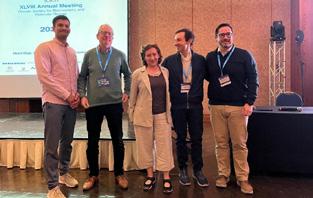
The speakers and organiser of the session on “The importance of Protein Quality Control (PQC) in vitro and in vivo”. From left to right, myself, Andre Matagne (University of Liege), Cecillia d’Alessio (University of Buenos Aires), Christian Wilson (University of Chile), Maximiliano Figueroa (University of Concepción).
RMS guidance included in new biology booklet for secondary schools
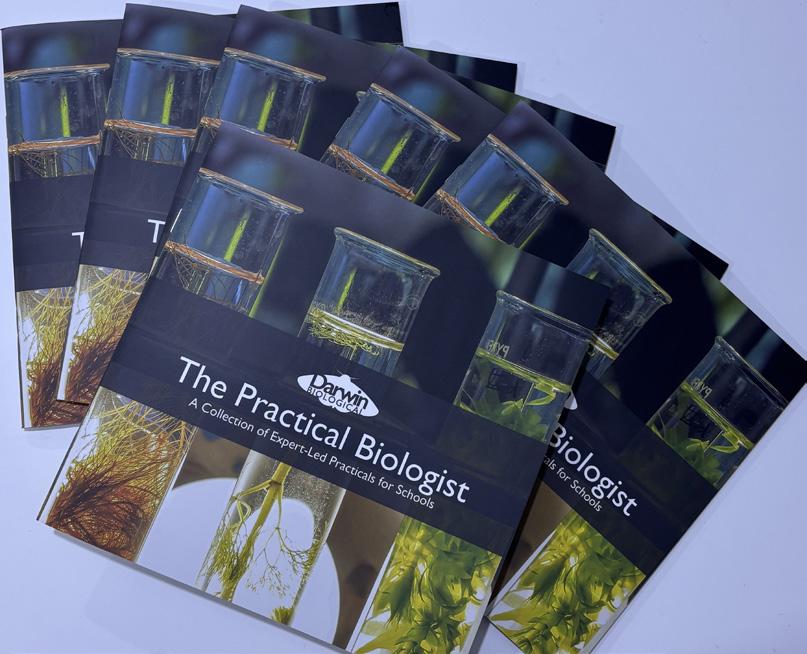
The RMS is delighted to have contributed to a practical biology booklet which has been distributed to 4,500 secondary schools across the UK.
The Practical Biologist booklet, produced by Darwin Biological, includes a section on ‘understanding magnification’, with guidance on how to measure objects viewed under the microscope. It also includes details of RMS Outreach and Education activities and resources.
The booklet, which is also freely available to view
online, features a host of contributions from other leading institutions shaping the future of biology – including the Linnean Society of London and Royal Entomological Society. The text for the ‘microscopy’ section was provided by RMS Outreach and Education Committee member
James Perkins, who is head of science at Queen Elizabeth’s Grammar School, Faversham. James coordinates the award-winning Hitachi STEM project, which enables secondary school students to carry out science projects using table-top scanning
for teaching and learning, which is now available on the RMS website.
James said: “The Practical Biologist is a fantastic booklet which is going to be another great resource for schools. We were delighted to be approached by Darwin Biological to make a contribution, and I would urge my fellow science teachers to take a look! There are some great practical ideas and experiments in there for all stages of secondary school – with clear and simple advice for teaching staff.”
Darwin Biological is a British firm based just outside
of Shrewsbury, the birth place of its namesake, supplying quality products to secondary schools, colleges and universities across the UK.
“We believe that biology should be exciting, accessible, and sustainable,” said the firm’s founder Meg Bilson. “By working with great British partners, we can utilise their expertise and showcase the amazing free resources they have to offer schools.”
To explore the booklet online, visit www. darwinbiological.co.uk or email hello@ darwinbiological.co.uk to request a printed copy.
Submit to infocus
infocus welcomes submissions of articles of general interest to microscopists.
You provide the text and images and we take care of the rest. It’s the ideal way to share your work with the microscopical community.
Full submission information and guidelines are available at www.infocus.org.uk.
To submit an idea or if you have any questions about the process please email the Editor (editor@infocus.org.uk)
Why I upload my microscopy videos to YouTube
Alexis Gkantiragas
Personally, I like recording videos of interesting or unusual things under the microscope to send to friends and family, or to include in publications. The tools to do this are inexpensive. I use smartphone scope adapters that typically cost around £15 and attach to the microscope eyepiece. They also have the added benefit of saving the strain on your eyes.
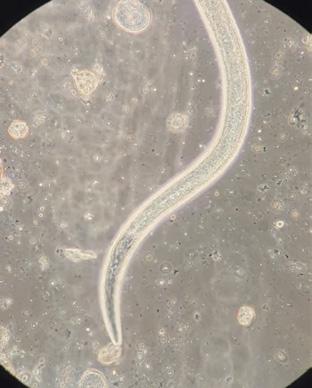
Recently, I have been using this method while screening bumblebees for parasites, and I got several videos of bumblebee parasites in motion I detected many samples infected with Crithidia bombi (a eukaryotic parasite with a complex life cycle and a flagellated stage). I also found a single bumblebee queen whose faeces were crawling with Sphaerularia bombi, a parasitic nematode worm that alters the queen’s behaviour, causing them to go and infect mating sites with the worm’s young that pass through the faeces.
For those of us who may spend hours a day staring down a microscope, it might not occur to us that the images we share are interesting or even beautiful. Indeed, initially, I only put my parasite videos on YouTube as a backup for talks. This way, if the video failed to play, I could simply follow the
Figure 1. Sphaerularia bombi in the faeces of a bumblebee queen.
Image courtesy of Firmbee and Pixabay
link and have a backup version of the video to show. While I could have chosen to make it unlisted or private, I figured that it wouldn’t hurt to make the results public. There are relatively few examples of what bumblebee parasites actually look like in video form, so I thought it might be a helpful resource for somebody at some point. I was surprised to find these videos received over 1000 views.
While these aren’t by any means big numbers for YouTube, and they will not produce any money, they represent a great amount of engagement and exposure for a piece of science communication that I would have produced anyway, and that took me maybe 2 minutes per video to upload. It is also not wildly dissimilar to the kind of engagement established organisations like the British Ecological Society (or indeed the RMS!) get on the platform. Since then, I have uploaded all the interesting microscopy and videos of pollinators, and I am currently on over 20,000 views.
While this might not be reproducible for all microscopists, I think that there is a lot of potential for short-form, very low-effort video content for a wide range of microscopists. Even static videos, such as screening pollen under the microscope, were highly viewed, meaning that you don’t necessarily need to be studying moving samples. Time lapses of cancer cell migration, videos of dissections, timelines of embryonic development, organelle imaging, all of these could be great short-form videos.
But what’s in it for you? Well, firstly, it is obviously good exposure both for yourself and, if your videos are connected to your recent research, it will help boost metrics like reads and the paper’s altimetric score. Moreover, grant applications increasingly ask how you will communicate your results to the wider public. I recently successfully submitted a small research grant, and this provided a solid, quantifiable example of my science communication track record, which required minimal effort.
As microscopists, we are immersed in a world that few get to really see, but that can be beautiful.
Opening that up to a wider audience may not convey as much information as an article or talk, but it might get people curious about the natural world, and it’s a form of science communication you might actually have time to do!
Discover more at Alexis' YouTube Channel
About the Author
Alexis is a PhD student at Royal Holloway University of London studying how bumblebee parasites spread and are distributed across landscapes. Over the last decade, Alexis has worked in an eclectic mix of research settings, from studying bumblebees, to ageing in fruit flies to varicose veins.
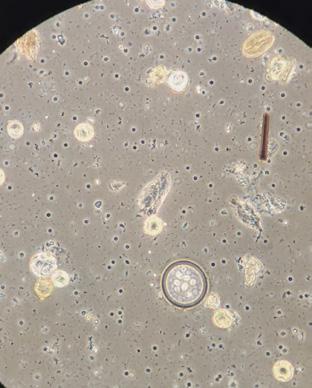
Figure 2. Heavy Crithidia bombi infection in bee gut contents. Black balls are the early life stages while elongated lighter ones are flagellated and can be seen moving under the microscope.
2025 RMS Annual Highlights
With the year 2025 drawing to a close, here’s a quick look back at some of the RMS highlights over the last 12 months…
Events
This year the Society hosted more than 30 events in total, including 14 virtual meetings which have helped us reach a diverse, global audience. Our events this year attracted more than 3,150 registrations in total, including 85 for in-person courses and workshops, 39 for virtual training events, and 760 for other virtual events.
We hosted or assisted with a number of new events, including Navigating Strategies for Core Facilities 2025: A Town Hall Webinar (a highly successful online event with nearly 400 registrations) and Workshop on the Applications of 4D-STEM.
The Society supported a number of external events as an exhibitor, sponsor, or invited speaker. These included South West Electron Microscopy 2025 (SW-EM); GW4 Networking Day; MidsEM 2025; Cryo Microscopy Group Meeting 2025 and the Scottish Microscopy Society Symposium 2025
mmc2025
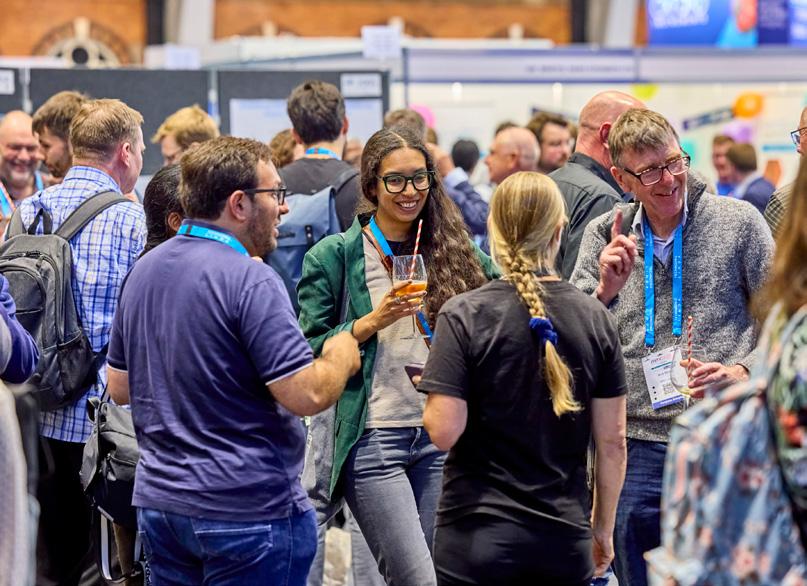
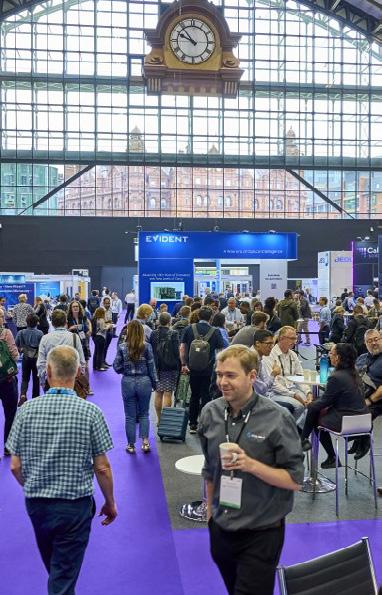
This year’s stand-out event was, of course, Microscience Microscopy Congress 2025 (mmc2025), which took place at Manchester Central, UK, in early July. More than 1,100 attendees took part this year, from 36 countries across six continents.
It meant this was the second biggest mmc the Society has staged, following the record attendance achieved in 2023 when we returned ‘in-person’, post-covid.
The Congress featured a superb range of scientific content with 417 abstract submissions, 236 posters and 67 invited speakers.
It also boasted a world-class trade exhibition with more than 90 exhibitors and 67 commercial workshops.
Journal of Microscopy
Another great year for the Journal of Microscopy is coming to a close, with 99 papers (including 56 Open Access papers) already published online during 2025 (as at 1/11/2025) – a 5% increase on the same period last year (94). The number of new submissions to the Journal has also increased with 353 so far in 2025 compared with 315 by 1 November 2024.
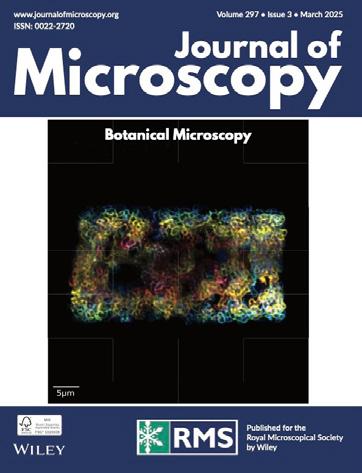
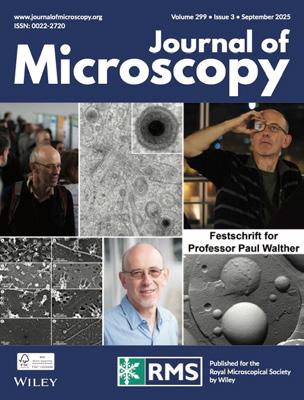
We were very pleased to publish four special issues: Botanical Microscopy,
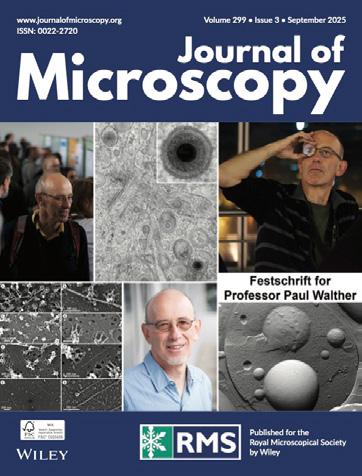
Microscopy Techniques, a Festschrift to honour the career of Professor Paul Walther and Ptychography. More are in the pipeline for 2026!
There were some notable departures on the Editorial Board, with Professor Carolyn Larabell (University of California, San Francisco, USA) and Professor Mark Rainforth (University of Sheffield, UK) retiring as Scientific Editors during the summer. We thank them both for their many years of service!
Meanwhile we welcomed four new Scientific Editors in 2025: Professor Rik Drummond-Brydson (University of Leeds), Professor Dylan Owen (University of Birmingham, UK), Dr Thomas Walther (University of Sheffield), and Professor Venera Weinhardt (Karlsruhe Institute of Technology, Germany).
Microscope Activity Kits
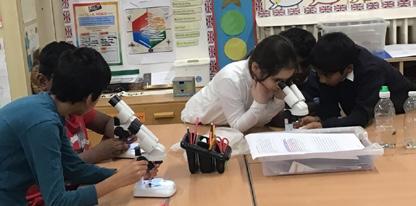
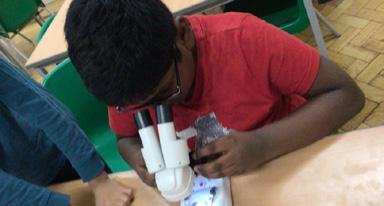
2025 was another great year for the RMS Microscopy Activity Kits (MAKs) which are loaned out (free) to primary schools, providing children with their first experience of microscopy.
Exactly 100 schools benefitted from the scheme this year, reaching a total of 18,775 students.
At any one time, the RMS has 35 kits in circulation and a further five for STEM/Learning Hubs and non-formal education (NFE) programmes (e.g Scouts, Guides etc). A number of spare kits are also made available for other Outreach projects (e.g. science fairs).
Summer Studentships, job shadowing, mentoring and RMS Diploma
This year we were delighted to award the maximum six Summer Studentship Awards to undergraduates who applied to undertake microscopy-themed projects over the summer. Each student received £2,000 to help subsidise accommodation and laboratory costs, and their reports are due to be published in our March issue of infocus
Meanwhile, for RMS members already in employment, we continue to offer the RMS Diploma - a unique, portfolio-based qualification to hold.We currently have 10 candidates undertaking the diploma, from countries including Croatia and New Zealand.
Our Application Coaching and Personal Mentoring Scheme has been a great success with 13 mentoring matches for 2025. This initiative is designed to support career development and the unique roles specific to microscopy, imaging and flow cytometry.
A further 13 job shadowing placements were arranged this year, as part of our Technical Specialist Job Shadowing Program giving scientists on an academic or technical career track the chance to visit a UK imaging or flow core facility for up to a week.
Technician Commitment
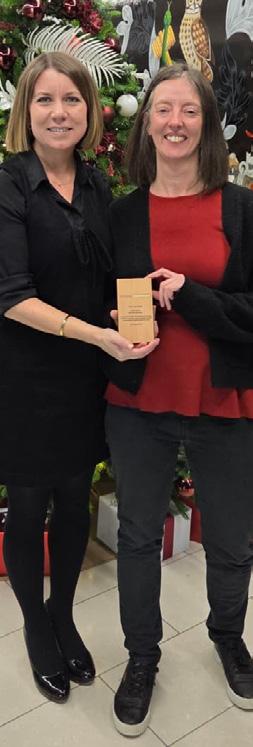
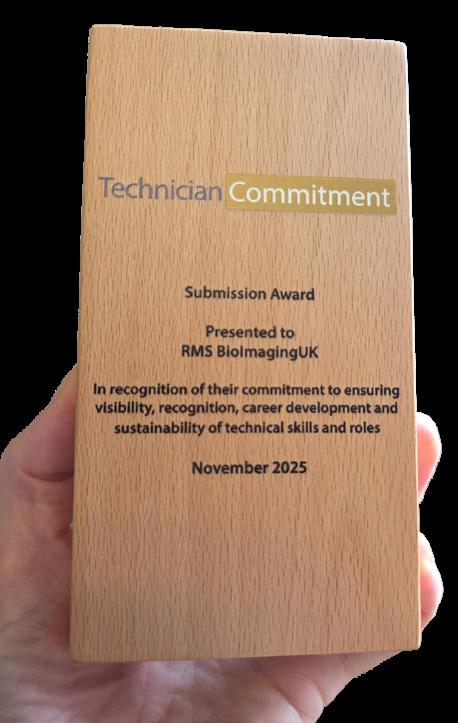
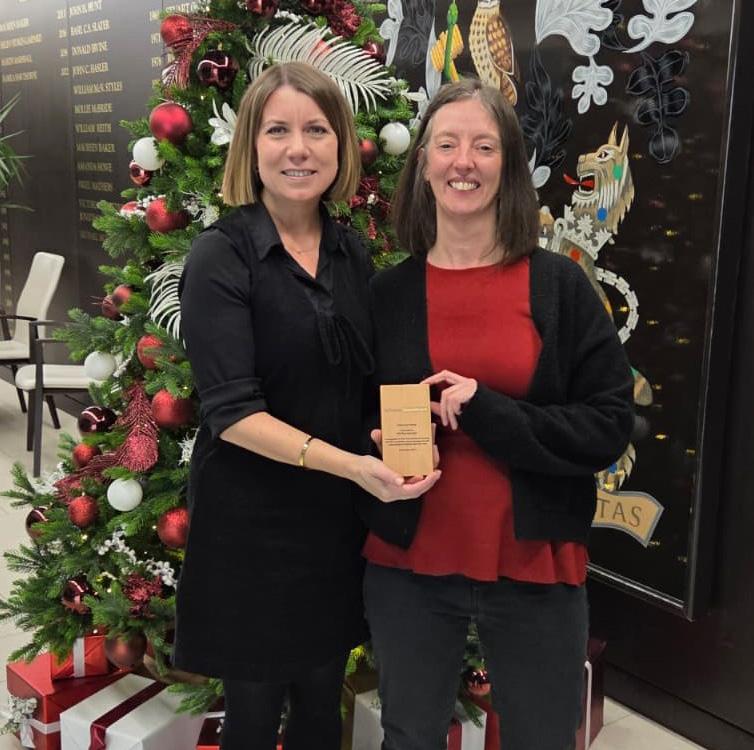
It was an award-winning end to 2025, with the RMS and BioImagingUK receiving the Technician Commitment ‘Award of Impact’.
The award recognises the organisations’ joint efforts to support technical roles in microscopy and imaging through the delivery of an Action Plan.
Project Officer Georgina Fletcher collected the award from Helen Pain MBE, and met with Dr Kelly Vere MBE, Director of the Technician Commitment (image above right), at a special event in London on Tuesday, 18 November.
Push the boundaries of fluorescence imaging with a complete portfolio of laser-based microscopy systems.
From nanoscale precision to deep-tissue exploration, our platforms empower you to visualise biology in stunning detail. Complete imaging systems or microscope upgrades fully supported by our UK team of advanced imaging specialists.
Point Scanning Confocal Microscopy Solutions from Photon Lines
ABBERIOR MIRAVA STED
• Point scanning confocal with STED nanoscopy
• MATRIX detection
• RAYSHAPE Adaptive optics
PROSPECTIVE INSTRUMENTS MULTIPHOTON
Explore deeper with tunable femtosecond lasers and rapid volumetric imaging.
Fully Integrated Spinning Disk Confocal Solutions available as full systems or upgrades to existing microscopes
CREST V3 SPINNING DISK CONFOCAL
Capture high-speed, live-cell dynamics with minimal phototoxicity.
AUROX CLARITY & UNITY CONFOCAL SYSTEMS
Compact, versatile, and cost-effective confocal imagingperfect for flexible lab integration.
From TIRF, FRAP and FLIM to optogenetics and photoactivation, our laser-based technologies deliver clarity, speed, and reproducibility across every experiment.
Want to book a demo or find out more?
Microscopy Journal of
The Journal of Microscopy publishes top quality research articles, review articles and Hot Topic papers covering all aspects of microscopy and analysis. This includes cutting-edge technology and innovative applications in physics, chemistry, material and biological sciences.
You can read the latest Early View papers online at www.journalofmicroscopy.org
They include:
ORIGINAL ARTICLE
Cassini ovals for robust mitosis detection in cellular imaging
Reza Yazdi, Hassan Khotanlou
Accurate detection of mitosis is crucial in automated cell analysis, yet many existing methods depend heavily on deep learning models or complex detection techniques, which can be computationally intensive and error-prone, particularly when segmentation is incomplete. This study presents a novel unsupervised method for mitosis detection, leveraging the geometric properties of the Cassini oval to reduce computational costs and enhance robustness. Our approach integrates a newly developed deep learning model, MaxSigNet, for initial cell segmentation. We subsequently employ the Cassini oval in its single-ring mode to detect mother cells in the initial frame and switch to double-ring mode in subsequent frames to identify daughter cells and confirm mitosis events. The success of this method hinges on the presence of equal non-zero foci values in the mother cell and distinct non-zero foci values in the daughter cells, which indicate accurate mitosis detection. The method was evaluated across six datasets from four different cell lines, achieving perfect F1, Recall and Precision scores on four datasets, with scores of 96% and 85% on the remaining two. Comparative analysis demonstrated that our method outperformed similar approaches in F1 and Recall metrics. Additionally, the method showed substantial robustness to incomplete
segmentation, with only a 20% average drop in F1 scores when tested with older segmentation methods like K-means, Felzenszwalb and Watershed. The proposed method offers a significant advancement in mitosis detection by leveraging the Cassini oval’s properties, providing a reliable and efficient solution for automated cell analysis systems. This approach promises to enhance the accuracy and efficiency of cellular behaviour studies, with potential applications in various biomedical research fields.
ORIGINAL ARTICLE - Open access
Depth of field of multi-slice electron ptychography: Investigating energy and convergence angle
Frederick Allars, Andrew Maiden, Darren J. Batey, Christopher S. Allen
Multi-slice electron ptychography has attracted significant interest in recent years, thanks to notable experimental successes in ultra-high resolution, depth-resolved imaging of atomic structure. However, the theoretical dependence of depth of field on experimental parameters is not well understood.In this paper we use simulated data to compare the depth of field of through focal annular-dark field and multi-slice electron ptychography over a range of acceleration voltages and convergence angles. We show that at both low convergence angle and at low electron
energy, multi-slice ptychography has significantly improved depth of field over through focal ADF imaging.
METHODS AND PROTOCOLSOpen access
Surface visualisation of bacterial biofilms using neutral atom microscopy
Nick A. von Jeinsen, David J. Ward, Matthew Bergin, Sam M. Lambrick, David M. Williamson, Richard M Langford, Lisa F. Dawson, Vibhuti Rana, Sushma Shivaswamy, Xuening Zhou, Michelle Mikesh, Vernita D. Gordon, Brendan W. Wren, Katherine A. Brown, Paul C. Dastoor
Neutral atom microscopy (NAM) is a new field that uses beams of neutral atoms to image surfaces. The first NAM instrument, the Scanning Helium Microscope (SHeM), uses a particle beam of neutral helium atoms to form the image, rather than photons (light) or electrons. By exploiting the large scattering cross-section of helium to atomic scale surface features, coupled with its neutral/inert nature and extremely low energy (∼60 meV), the SHeM is a uniquely sensitive imaging technology capable of visualising surfaces entirely non-destructively. The SHeM enables the study of materials (and their applications) whose visualisation is constrained, whether by intrinsic insensitivity, the requirement for surface treatments/coatings, or by surface damage altering the material under investigation. Here we present the SHeM imaging of bacterial biofilms, highlighting its sensitivity to the surface
of extracellular polymeric substance matrix in the absence of contrast agents and dyes and without inducing radiative damage.
ORIGINAL ARTICLE - Open Access
A fluorescence lifetime separation approach for FLIM live-cell imaging
Cornelia Wetzker, Marcelo Leomil Zoccoler, Svetlana Iarovenko, Chukwuebuka William Okafornta, Anja Nobst, Hella Hartmann, Thomas MüllerReichert, Robert Haase, Gunar Fabig
Fluorescence lifetime imaging microscopy (FLIM) translates the duration of excited states of fluorophores into lifetime information as an additional source of contrast in images of biological samples. This offers the possibility to separate fluorophores particularly beneficial in case of similar excitation spectra. Here, we demonstrate the distinction of fluorescent molecules based on FLIM phasor analysis, called lifetime separation, in live-cell imaging using open-source software for analysis. We showcase two applications using Caenorhabditis elegans as a model system. First, we separated the highly spectrally overlapping fluorophores mCherry and mKate2 to distinctively track tagged proteins in six-dimensional datasets to investigate cell division in the developing early embryo. Second, we separated fluorescence of tagged proteins of interest from masking natural autofluorescence in adult hermaphrodites. For FLIM data handling and workflow implementation, we developed the open-source plugin napari-flimphasor-plotter to implement conversion, visualisation, analysis and reuse of FLIM data of different formats. Our work thus advances technical applications and bioimage data management and analysis in FLIM microscopy for life science research.
ARTICLE - Open Access
Correlation of near-field optical microscopy and tipassisted photoluminescence
W. Pfeiffer, N. S. Mueller, R. Hillenbrand, I. Niehues, P. Kusch
Nanoscale optical imaging has unlocked unprecedented opportunities for exploring the structural, electronic, and optical properties of low-dimensional materials with spatial resolutions far beyond the diffraction limit. Techniques such as tip-enhanced, and tip-assisted photoluminescence (TEPL and TAPL), as well as scattering-type scanning near-field optical microscopy (s-SNOM) offer unique insights into local strain distributions, exciton dynamics, and dielectric heterogeneities that are inaccessible through conventional far-field approaches, however their combination within the same setup remains challenging. Here we present the realisation of correlative TEPL/TAPL and s-SNOM measurements within a single side-illuminated near-field optical microscope. We address the key experimental challenges inherent to the sideillumination geometry, including precise laser focus alignment, suppression of far-field background signals, and the mitigation of competing scattering pathways. Utilising monolayer WSe2 as a model system, we demonstrate correlative imaging of material topography, strain-induced photoluminescence shifts, and dielectric function variations. We visualise nanoscale heterogeneities on a bubble-like structure, highlighting the complementary information from TAPL and s-SNOM.This correlative approach bridges the gap between nanoscale optical spectroscopy and near-field imaging, offering a powerful tool for probing
local strain, doping, exciton behaviour, and dielectric inhomogeneities in low-dimensional materials.
ORIGINAL ARTICLE
Microstructural characterisation of polycrystalline ice with an etch-pitting replication method
Hatsuki Yamauchi, Lucy Davidson, Christine McCarthy, David J. Prior, Jacob A. Tielke, Benjamin K. Holtzman
Etch-pitting replication is a classical method to characterise the microstructure of ice crystals. In this method, a solution of polyvinyl formal (Formvar) is applied to a polished surface of ice. A plastic film, created after the solvent is dried, ‘replicates’ microstructural features of the ice. By examining the replica film, we can identify the orientation of crystals and existence of dislocations in ice. However, with the recent rise of advanced techniques such as cryoEBSD (electron backscatter diffraction) analyses, this classical method has been left in the shadows, especially from the perspective of quantification of microstructural features in polycrystalline ice. In this study we revive and thoroughly re-examine the utility of the replication method to quantify crystal orientations and dislocation density of ice.We applied our optimised protocols of the replication method to several laboratory-fabricated and natural-glacier polycrystalline ice samples with various types of crystal preferred orientation (CPO) and various levels of strain. Using high-resolution scanning electron microscope (SEM) images of the obtained replica films, we quantified the extent of CPO and dislocation density of these ice samples. Our results of CPO patterns and dislocation density show good agreement with cryo-EBSD results from the same ice samples or samples at a similar strain level. Although further improvements are needed to make the present method more efficient, our results show promise for using this method to easily, quickly, and affordably quantify microstructural features in
polycrystalline ice and to help interpret deformation mechanism of ice.
ORIGINAL ARTICLE
Substrate-related optical activity in monolayer and : A tip-enhanced Raman spectroscopy study
Rafael Nadas, Lucas Liberal, Gabriel Bargas, Kenji Watanabe, Takashi Taniguchi, Leonardo C. Campos, Ado Jorio
Transition metal dichalcogenides (TMDs) are promising two-dimensional materials whose properties are strongly influenced by substrate interactions.While conventional Raman spectroscopy probes these effects, its diffraction-limited resolution often averages out local variations such as strain, masking intrinsic behaviours. Here, we employ tipenhanced Raman spectroscopy (TERS) to investigate the vibrational properties of monolayer and on top of glass and glass/hBN substrates. TERS offers nanometric spatial resolution, allowing direct correlation between Raman features and topographical inhomogeneities. Our results reveal that local variations in strain, doping, and dielectric screening that vary across the substrate interface are often accompanied by nanoscale structural features such as wrinkles, which locally modulate the vibrational response.
1. No submissions fees
2. No page or colour charges
3. No page limit
4. Simple online submission
5. Helpful, friendly editorial team
6. Average time from submission to first decision is less than 50 days
7. High readership figures
8. Online tracking system – authors can easily check the status of an article in production and receive emails at key stages
9. Rapid publication with Early View papers published online in advance of print, significantly shortening time from acceptance to publication
10. Free electronic offprints
Journal of Microscopy App
Available
for iPhone and Android
Search for Journal of Microscopy on the App Store or Google play and access your personal or institutional subscription wherever you are, whenever you want. Submit online at https://mc.manuscriptcentral.com/jmi View the Guidelines for Authors and full submission details online at:
Journal of Microscopy News
RMS Data Analysis in Imaging (DAIM) Section launches new Special Issue
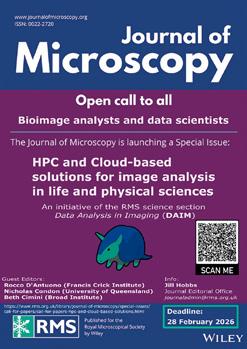
The Data Analysis in Imaging (DAIM) RMS science section and international collaborators are launching a special issue of the Journal of Microscopy, with the topic: “High-Performance Computing and Cloudbased solutions for image analysis in life and physical sciences”.
The DAIM special issue can include invited manuscripts, original research articles, reviews, and methods & protocols.
The deadline for manuscript submission will be 28 February 2026.
Guest Editors:
Rocco D’Antuono (The Francis Crick InstituteDAIM RMS, UK)
Nicholas Condon (University of Queensland, Australia)
Beth Cimini (Broad Institute, US)
Papers should be submitted through the Research Exchange platform. Please choose the paper type ‘Themed Issue’ and indicate in the cover letter that the paper is part of the “Data Analysis in Imaging” special issue 2026.
Author guidelines can be
found on the Journal website.
If you have any questions, then please contact the Journal Editorial Office Manager, Jill Hobbs (journaladmin@rms.org.uk).
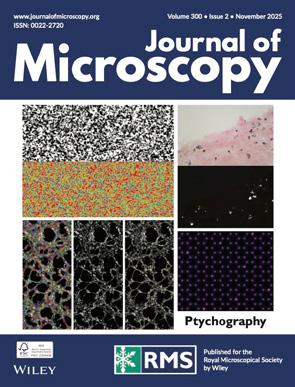
New Journal of Microscopy special issue: Ptychography
The Journal of Microscopy is pleased to announce the publication of a special issue featuring papers which focus on Ptychography.
The issue was guest edited by Andrew Maiden (University of Sheffield), Laura Clark (University of York), and Peter O’Toole (University of York).
In the introduction to the special issue, the guest editors said: “Ptychography is a tremendously versatile imaging technique, having been implemented at radiation wavelengths from the picometre to the micron, and the rest of this Special Issue highlights its versatility with articles from both extremes of the spectrum.
“The introductory article – by one of the forefathers of this diffractive imaging technique, Prof. John Rodenburg FRS –provides both an excellent historical context and a primer to the field.
“We hope the articles in this Special Issue provide a sense of the progress being made across the spectrum and of the still-toexplore potential of ptychography over all wavelengths.”
The issue features the following papers:
Introduction to the Special Issue on ptychography
Andrew Maiden, Laura Clark, Peter O’Toole
Ptychography: A brief introduction
John Rodenburg
Detecting charge transfer at defects in 2D materials with electron ptychography
Christoph Hofer, Jacob Madsen, Toma Susi, Timothy J. Pennycook
Defocus correction and noise reduction using a hybrid ptychography and Centre-ofMass algorithm
Zhiyuan Ding, Chen Huang, Adrián Pedrazo-Tardajos, Angus I Kirkland, Peter D Nellist
Accelerating iterative ptychography with an integrated neural network
Arthur R. C. McCray, Stephanie M. Ribet, Georgios Varnavides, Colin Ophus
Depth of field of multi-slice electron ptychography: Investigating energy and convergence angle
Frederick Allars, Andrew Maiden, Darren J. Batey, Christopher S. Allen
Quantifying phase magnitudes of open-source focused-probe 4D-STEM ptychography reconstructions
Toma Susi
Stability of electron ptychography at low electron dose
M. Dearg, N. Michaelides, J. Gilbert, Z. Ding, Z. Aslam, D. G. Hopkinson, C. S. Allen, L. Clark
Ptychographic analysis of human bone marrow-derived mesenchymal stem cell morphology: The impact of cell senescence
Lorenzo Anconelli, Giovanna Farruggia, Isabella Zafferri, Francesca Borsetti, Stefano Iotti, Francesca Rossi, Jeanette A. Maier
Quantitative analysis of human umbilical vein endothelial cell morphology and tubulogenesis
Viviane Mignone, Maria Augusta Arruda, Laura Kilpatrick, Benjamin Moore, Jeanette Woolard, Stephen Hill, Joëlle Goulding
CellPhePy: A python implementation of the CellPhe toolkit for automated cell phenotyping from microscopy time-lapse videos
Laura Wiggins, Stuart Lacy, Graeme Park, Joanne Marrison, Ben Powell, Beth Cimini, Peter O’Toole, Julie Wilson, William J. Brackenbury
Fourier ptychography microscopy for digital pathology
Fraser Eadie, Laura Copeland, Giuseppe Di Caprio, Gail McConnell, Akhil Kallepalli
New Journal of Microscopy Editors
We are pleased to welcome two new Scientific Editors to the Journal of Microscopy!
Professor Rik Drummond-Brydson (University of Leeds, UK) and Dr Thomas Walther (University of Sheffield, UK) have recently joined the Journal as Scientific Editors. They both bring expertise in materials science and they have been active members of the Journal of Microscopy Editorial Board.
Professor Rik Drummond-Brydson is Chair in Nanostructural Materials Characterisation in the School of Chemical and Process Engineering and the Bragg Centre for Materials Research at the University of Leeds with over 35 years’ research experience in the analytical science of materials. He is Vice President of the Royal Microscopical Society and a former member of the European Microscopy Management Board (2004-2016). His research interests have focused on applying high spatial resolution characterisation methods (particularly TEM and EELS) to the nanochemical analysis of softer, more radiation sensitive materials.
Dr Thomas Walther is a Reader in Advanced Electron Microscopy at the University of Sheffield. He received an undergraduate degree in physics from RWTH Aachen in 1993 and PhD in materials science from the University of Cambridge in 1996/97.
Dr Walther was a postdoc at CEA Grenoble, Université d’Aix-Marseille (both in France) and University of Bonn (Germany) where he later became assistant professor in the chemistry department. After a short spell at a new research centre where he set up an electron microscopy lab in the same city, he joined the University of Sheffield as Senior Lecturer in 2006 and was promoted to a readership in 2010. His research focuses on electron microscopy as a fundamental tool to measure chemical changes at the interfaces between different materials with atomic resolution.
The 21st International Microscopy Congress (IMC21) 2026
31 August - 4 September 2026, ACC Liverpool, UK Pre-Congress Events 30 August 2026
Abstract submission is open
Submit your abstracts for talks and posters at the 21st International Microscopy Congress (IMC21) 2026. Join our impressive line-up of speakers covering all the latest techniques and applications in microscopy.
Scan the QR code to find out more!
2025 RMS Awardwinners revealed!
The RMS is very pleased to announce the winners of its latest awards, recognising scientific achievement, contributions to education and outreach, technical support and services to the Society.
The Society offers a wide range of award opportunities each year, inviting applications from across the globe to ensure those making a real difference within the microscopy community receive the recognition they deserve.
RMS President Peter O’Toole said: “It is a great pleasure to announce our latest award-winners and give formal recognition to the work of some of our leaders in microscopy. Our 2025 winners have all made superb contributions in their fields, and their achievements will be well known to many within the microscopy community. My warmest congratulations go to them all.”
This year’s winners are as follows:
Chris Hawes Award for Outreach and Education
Celebrating a substantial contribution to the field of education, or to outreach and public engagement, over the course of someone’s career.
Professor Kang Nee Ting
School of Pharmacy and Division of Biomedical Sciences, University of Nottingham campus in Malaysia (UNM)
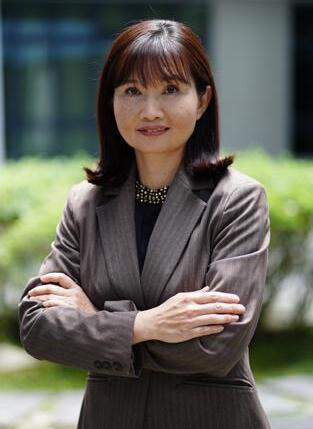
Kang Nee is the Head of School at UNM for the School of Pharmacy and Division of Biomedical Sciences. In 2017 she applied for some funding from the University of Nottingham to undertake outreach work from the University of Nottingham campus in Malaysia (UNM). The RMS donated a microscope activity kit in support of this ambition. Initially Professor Ting hosted successful school visits to UNM and following this, expanded the reach to local schools and education centres (for refugee students) in Greater Kuala Lumpur and Selangor.
Spurred on by this success, she continued to reach out using microscopy as a means of providing
Kang Nee Ting.
education and opportunities to underserved communities in Malaysia far from the University campus, local to the indigenous people and to refugees. During one project, participants had the opportunity to have eye tests and glasses provided before undertaking the science activities, thus helping their educational prospects. Examples of her work include science workshops in rural towns in Sarawak and Sabah (located in Borneo) andreceiving attention and funding from the Malaysian Ministry of Science, Technology and Innovation (MOSTI) and, Ministry of Education, Innovation and Talent Development, Sarawak . The work centres around reducing inequality in STEM education in Malaysia, and education on protecting the planet on land and in the oceans via microplastic work with microscopes.
In the last two years alone, she and her small team have brought science education via microscopy to more than 18 venues across Malaysia and reached almost 2,000 children who would not usually have access to this kind of quality and compassionate education. Professor Ting’s dynamism and compassion in bringing science education through microscopy embodies the spirit of the RMS and the scope and magnitude of her success and impact with the kit is remarkable.
RMS Vice President’s Award
In recognition of the ‘unsung heroes’ of microscopy - the engineers, technicians or laboratory research support scientists, in any area of microscopy or flow cytometry.
Dr Constadina Arvanitis
Center for Advanced Microscopy and Nikon Imaging Center, Feinberg School of Medicine, Northwestern University, USA
Dina is the Director of the Center for Advanced Microscopy (CAM) and the Nikon Imaging Center (NIC) at the Feinberg School of Medicine. Dina exemplifies the invaluable service that Core
Directors provide to the research community and serves as a role model for young scientists with inclusive leadership philosophies and a global vision.
Dina’s leadership has made CAM one of the most versatile imaging centers in the USA, and NIC one of only nine Nikon Centers worldwide. Under her leadership, CAM has received multiple institutional accolades as an Outstanding Facility. She has expanded the infrastructure of CAM with cutting-edge instrumentation which in recent years includes Nikon’s SoRa and N-SPARC technologies, and Abberior’s MINFLUX/STED MIRAVA. Dina has organised yearly training and career-shadowing programmes for trainees and faculty to foster collaboration and expertise.
On the international stage, Dina has been a strong advocate for the establishment and recognition of career paths for imaging scientists. She has co-led a ‘Leaders leading leaders’ programme through the Training and Education WG of Bioimaging North America. Dina has also secured international funding to lead teaching and education programmes worldwide. For her dedication to mentorship and teaching, she has received the Dean’s Teaching Award for the Driskill Graduate Program.
Constadina Arvanitis.
RMS President’s Award
In recognition of an exceptional voluntary contribution to the work of the Society, in any area of microscopy or flow cytometry.
Professor Mark Rainforth
Emeritus Professor,
School of Chemical, Materials and Biological Engineering, University of Sheffield, UK
Mark has a long and distinguished association with the RMS, dedicating many years of service to the organisation and its activities.
Mark is himself a former RMS President, serving from 2006-2009 during a time of significant change and staff movements within the Society.Throughout his tenure he demonstrated great dedication and leadership – often travelling from his home base of Sheffield to Oxford to attend the office in person.
Mark has also served as a Scientific Editor on the Journal of Microscopy since 2012, taking the lead on materials-oriented papers. He stepped down from this role earlier this year, having made many substantial and enthusiastic contributions to the publication which have helped ensure its long-term success.
Mark completed his PhD in 1990, being appointed
immediately to a lectureship at the Department of Materials, University of Sheffield. He was appointed Professor in 2000 and was Head of Department from 2011-2015.
Scientifically, Mark is a renowned metallurgist and microscopist. He is an international expert in the design of new resource efficient high strength metal alloys for applications in transport, energy, biomedical engineering and tribology. He focuses on the relationship between composition, processing, microstructure and properties of materials with direct engineering applications.
Mark has published more than 400 papers in high impact journals. He is the winner of the 2024 Bessemer Gold Medal and winner of the IOM3 Rosenhain and Verulam Medals. He was elected Fellow Royal Academy of Engineering (FREng) in 2016.
RMS Scientific Achievement Awards
Celebrating outstanding scientific achievements in any area of microscopy or flow cytometry for established, midcareer researchers.
Dr Periklis (Laki) Pantazis
Department of Bioengineering at Imperial College London and Director of the Imperial College London and LEICA Microsystems Imaging Hub
Dr Periklis (Laki) Pantazis is a pioneering microscopist at Imperial College London whose work has fundamentally reshaped how we visualise and interpret dynamic biological processes. His innovations, spanning photophysics, molecular biology and translational imaging, have enabled unprecedented insights into development, disease progression and mechanobiology.
Laki’s signature inventions GenEPi (a genetically encoded fluorescent reporter of mechanical stimulation), primed conversion (a photon-efficient method for precise cell and lineage tracking), and bioharmonophores (biodegradable nanoparticles
Mark Rainforth.
for deep-tissue harmonic imaging) represent major advances in live-cell and deep-tissue imaging. As founding Director of the Imperial–Leica Imaging Hub, Laki established a multidisciplinary centre of excellence that facilitates collaborative research across biology, engineering and medicine. Under his leadership, the Hub has become a beacon of translational imaging science, supporting both earlycareer investigators and large-scale institutional initiatives.
He has secured over £7.1 million in research funding from prestigious agencies of various countries. He holds 13 patents, including co-developments with leading microscopy companies, demonstrating his ability to move ideas from concept to industrial application.
Laki’s trainees have gone on to receive significant honours, reflecting his dedication to mentorship and academic citizenship. He regularly serves on editorial boards, grant panels and international symposia, amplifying his influence on the field’s future direction.
As a scientist, mentor and collaborator, he represents the very best of the international imaging community.
Professor Steven Lee
Yusuf Hamied Department of Chemistry, University of Cambridge
Steven is a Professor of Biophysical Chemistry at the University of Cambridge, is a world leading figure
in the development and application of cutting-edge single-molecule microscopy for biological discovery. His work exemplifies the power of modern microscopy to illuminate fundamental processes in human health and disease, blending technical excellence with interdisciplinary innovation and translational impact.
Steven has consistently advanced the field of microscopy through the development of novel imaging platforms which have catalysed key biological insights. His co-first-authored work in Nature Immunology provided the first direct visualisation of ‘close contact’ zones in T cell signalling — evidence that resolved a 20-year-old immunological hypothesis and has since informed our understanding of autoimmunity and cancer immunotherapy.
A defining feature of Steven’s work is his collaborative ethos. In a landmark study in Nature, he co-validated single-cell Hi-C datasets through optical microscopy, enabling the first 3D structural maps of individual mammalian genomes. More recently, he has played a key leadership role in an $8M multi-institutional programme mapping Parkinson’s pathology with single-cell precision.
Steven is co-founder and former Chief Executive Officer of ZOMP, a microscopy-based biotechnology spinout developing the world’s first high-throughput 3D imaging flow cytometer.
He has published over 70 peer-reviewed papers, delivered more than 60 invited research seminars, and presented nine keynote and plenary talks at national and international symposia. His research, cited more than 4,500 times, has been recognised not only by peers but also by professional societies, funders, and commercial stakeholders.
Laki Pantazis.
Steven Lee.
New Member Welcome
The Royal Microscopical Society would like to welcome our new members who have joined us in the last three months. We hope they enjoy a long and rewarding membership with the RMS.
Mrs Aneta Luczak-Stecura
Mr Diego Marquez Rumi
Dr Wenzhi Hong
Mr Tian Olivier
If you know of anyone who might be interested in becoming a member of the Royal Microscopical Society and if you would like us to contact them, please send their details to our Membership Administrator, Debbie Hunt – debbie@rms.org.uk
Application forms are available to download at www.rms.org.uk/membership
Don't forget you can now log into the RMS website and check your membership status, renew and download receipts. If you have never logged into the RMS website, please enter the email address that is linked to your membership and then click 'forgotten password'.
If you have any queries or questions about your membership please contact Debbie Hunt debbie@rms.org.uk
Member Profiles
Name Diego Marquez Rumi
Tell Us About You?
I successfully graduated as Advanced Expert in clinical diagnostics laboratory after 2 years degree in Spain, back in 2014. I did my internship at University of Valencia Microscopy core where I got the chance to get a strong foundation in light microscopy techniques including fluorescence and confocal microscopy. Now microscopy is part of my daily routine in cytogenetics working for NHS Genomics. I enjoy learning about microscopy clinical applications.
Name Tian Olivier
Tell Us About You?
I am a retired accountant with a long time interest in photography and nature. During Covid I built an extreme macro photography rig that evolved into a cross polarized light microscope with 4x,10x,20x, and 40x objectives. The home made microscope is used to take quality photomicrographs of crystals and other subjects that meet the standards of the Photographic Society of South Africa. I was honoured to have one of the photos selected as a finalist of the RMS MMC2025 competition.
Why did you become a member of the RMS?
After attending the Manchester Congress in July 2025. It always been in my mind but my first time in such an amazing event finally got me in.
How do you feel being an RMS member benefits you?
Keeping updated about microscopy applications and relevant events and learning sources. Creating a community of professionals that have a true passion for microscopy.
Fuels my determination and commitment as a professional.
Why did you become a member of the RMS?
I am a member of the Microscopy Society of Southern Africa and decided to join the RMS after the results of the RMS MMC2025 competition were announced. I want to learn more about microscopy and the preparation of subjects/ specimens to photograph.
How do you feel being an RMS member benefits you?
Being a member will allow me access to publications and help me to build a network of service providers and knowledgeable people in the sector.
Name Sohan Jheeta
Tell Us About You?
I’m Founder and Chairman of the NoRCEL Institute and Editor-in-Chief of The 3E Magazine. Since 2013, I’ve championed astrobiology and astroscience globally, with a focus on the Global South. Through initiatives like the Blue Earth Project and Astroscience Exploration Network, I connect scientists, educators, and students to advance understanding of life, ethics, and planetary sustainability—empowering the next generation to lead with responsibility and ethical stewardship of our planet.
Why did you become a member of the RMS?
I became a member of the RMS because of my background in microbiology and my longstanding commitment to astroscience and origin-
of-life research. RMS membership allows me to engage with cutting-edge imaging techniques, advance interdisciplinary science, and support global education and outreach through NoRCEL and The 3E Magazine. I will be seeking to engage in RMS outreach programme soon.
How do you feel being an RMS member benefits you?
Being an RMS member benefits me by keeping me connected to cutting-edge microscopy and imaging sciences, which support my work in astroscience and origin-of-life research. Regular engagement with the RMS magazine inspires ideas and broadens my perspective. I take pride in being a Fellow (FRMS) and though I want to contribute (but don't get the time), I learn from the global microscopical scientific community. Hip, Hip Hooray!
Name Salli Boyeh
Tell Us About You?
My name is Salli and I am a Politics and International relations student in London with a strong interest in how science and technology influence global society. I enjoy exploring ideas beyond my field, and in my free time I like crocheting, listening to music, and going on walks.
Why did you become a member of the RMS?
I joined the RMS because I am fascinated by how science—especially tools like microscopy— expans our understanding of the world. Even though my academic path is in Politics and International Relations, I value opportunities to engage with scientific communities, learn from different perspectives, and see how discoveries connect to broader societal change.
How do you feel being an RMS member benefits you?
Being part of the RMS allows me to broaden my perspective beyond the social sciences, giving me insight into how scientific methods and discoveries shape the world we live in. It also helps me develop
a more interdisciplinary outlook, which enriches my academic studies and personal interests.
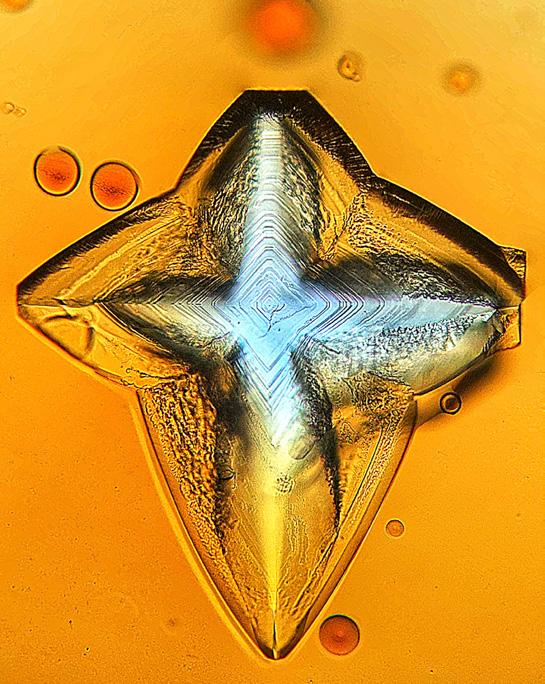
Cross-Shaped Salt Crystal in Soy Sauce
By Cora Harris, Independent Researcher.
A beautifully shaped salt crystal in soy sauce solution. Home Science Tools Ultimate Home Microscope. CrossPolarised Filters. iPhone XR camera.
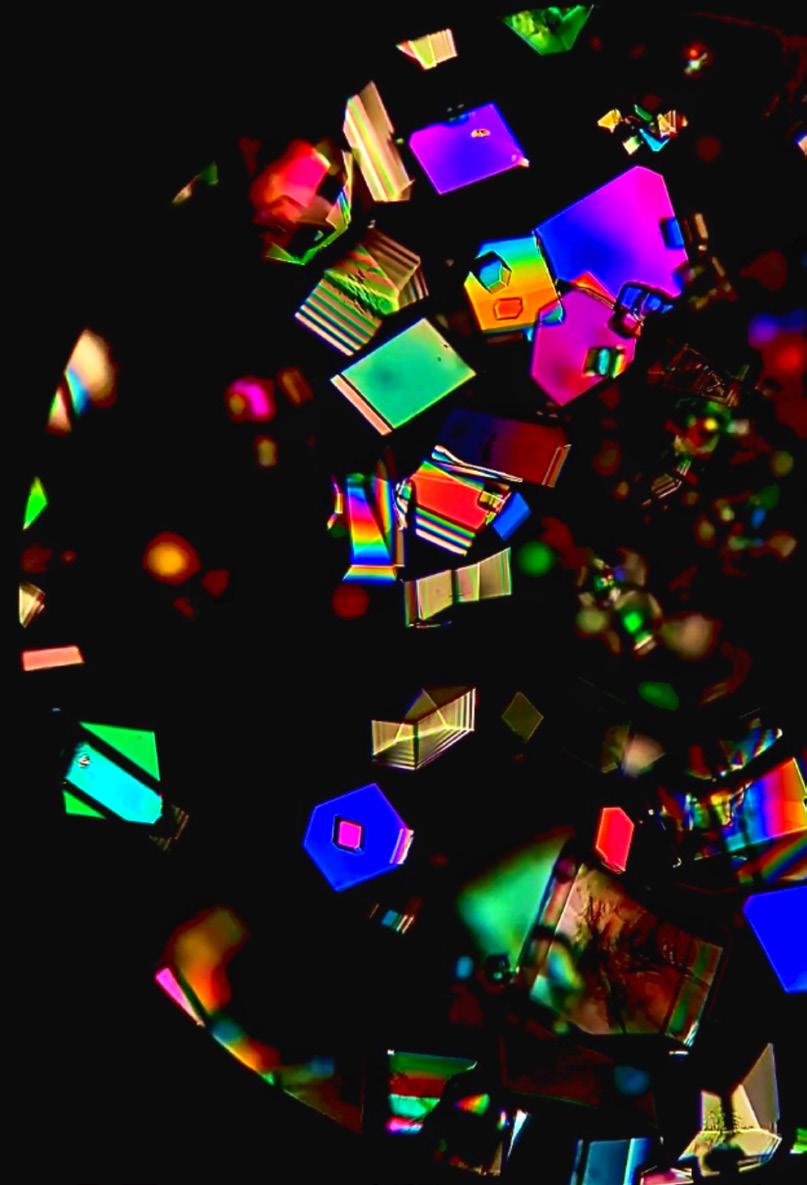
Kaleidoscope
of Sugar Crystals Suspended in Solution
By Cora Harris, Independent Researcher.
Sucrose sugar crystals forming in solution. Home Science Tools Ultimate Home Microscope. Cross-Polarised Filters. iPhone XR camera.
NEWS From the RMS President
Dear readers,
Nothing ever seems to move slowly in the world of microscopy, and here we are approaching the end of another action-packed year.
In addition to reflecting on some of our recent activities and upcoming events in December, I’d like to take this opportunity to revisit the last 12 months as a whole at the RMS, and highlight a few of the Society’s achievements in 2025.
It was my great pleasure to be directly involved as a tutor on our recent Facility Management Training Course over a thoroughly enjoyable couple of days here in York. This is a really impactful course which brings together people at different career stages –from those experienced in running a core facility to those who are simply keen to learn more about the field. It’s a genuinely collaborative event and there is always something to learn for everyone – including the organisers. Our attendees were a privilege to work with and I look forward to seeing all their careers blossom.
I’ll also be helping to oversee our third annual Virtual European Flow Cytometry Facilities Meeting on 4-5 December – for which we already have more than 250 registrations.This is a great, free event for colleagues from across the continent – and further afield – to discuss best practices and get to grips with all the latest issues. I personally feel the establishment of this meeting as a regular fixture is a really significant achievement for the RMS, underlining its position as a truly international Society with a global reach.
Rewinding slightly, it was good to see the RMS taking part as an exhibitor, in support of two recent UK meetings in November. Firstly we joined our friends at the Scottish Microscopy Society for their annual Symposium in Aberdeen, and this was swiftly followed by a trip to Nottingham to take part in the Cryo Microscopy Group Meeting 2025. Throughout the year, our staff have been stepping up their presence at external events, seeking in-person conversations about the benefits of RMS membership and the work that we do. Like any member-based organisation, our future depends on maintaining a strong presence within our community, and communicating our offer effectively. In the end, nothing beats that face-to-face interaction!
Dr Peter O'Toole.
Throughout 2025,
we’ve seen some fantastic and well attended events covering the whole spectrum of microscopy.
Throughout 2025, we’ve seen some fantastic and well attended events covering the whole spectrum of microscopy, imaging and flow cytometry across the sciences. As a whole, the RMS delivered more than 30 events with a total of more than 3,150 registered attendees. This included a host of courses and workshops that delivered training to 124 participants. It was also a year in which our flagship event, the Microscience Microscopy Congress (mmc2025), further enhanced its reputation as an essential fixture in the microscopy calendar, with a great turn-out, a superb scientific programme, and a world-class trade exhibition.
Our Outreach and Education activities have continued apace, with our Microscope Activity Kits fully booked out to primary schools and other youth settings until Spring 2026. This scheme has been running since 2011 and is a real jewel in the RMS crown. Many of our members have also been busy undertaking outreach projects of their own, with RMS funding support. These projects are enabling children and adults of all ages and backgrounds to experience microscopy – often for the first timewhich is absolutely fantastic.
Our Summer Studentship scheme provided financial support for six undergraduate students to complete microscopy-based projects over the summer, and I look forward to reading their reports in our next issue of infocus! Meanwhile, for those already working in microscopy, we continue to offer the opportunity to study for an RMS Diploma - a great qualification to hold. As I write, we currently have 10 candidates in the process of completing their course.
Our flagship publication, the Journal of Microscopy, continues to make great strides with the number of articles published online increasing by five per cent on the previous year, overseen by a dynamic editorial board with some new additions too! (see p30). This year the Journal published four special issues – on Botanical Microscopy, Microscopy Techniques, a Festschrift for Professor Paul Walther, and most recently, an issue dedicated to Ptychography. I was honoured to feature as one of the guest editors for this latest issue, alongside Andy Maiden and Laura Clark – both of whom I have to credit with having done the bulk of the work in putting this together (many thanks!).
There is so much more I could highlight in terms of our activities, but too little space here, sadly. As such, I’d like to say a few words about the people at the heart of everything we do. Firstly, I’d like to pay tribute to our brilliant volunteers, who are so generous with their time and energy in serving the RMS. It’s a real privilege to sit on several of our Committees, and to see first-hand how the members are moving the Society forward with a raft of new ideas and initiatives for the benefit of the microscopy, imaging and flow cytometry communities in this swiftly evolving world. Many others also give up their time as helpers at events, as Ambassadors, or by supporting our outreach activities, and they are a huge asset to the Society.
I must also pay tribute to the RMS staff, who are always there behind the scenes – doing the heavy lifting and ensuring that the Society’s aims and ideas are smoothly translated into action and impact. The RMS is special in that we have dedicated staff to support all our activities, which is unusual in the world of microscopy. It makes everything we do so much easier and shouldn’t be overlooked or underappreciated. My sincere thanks go to Sali Davis and her team at our Oxford offices.
And finally, I would like to give special thanks to all our members – wherever you are in the world. Ultimately, this is your society, and your kind contributions, membership fees and volunteering makes all of this possible.
Here’s to 2026!
Merry Christmas and a Happy New Year to you all.
Peter O’Toole, RMS President
UK Bioimaging User Access Fund launched for UK Researchers
Five-year initiative provides up to £5,000 per application for access to cutting-edge bioimaging facilities
UK researchers now have unprecedented access to state-of-the-art bioimaging technologies through a new fund announced by the UK Node of EuroBioImaging.
The UK Bioimaging User Access Fund, supported by £1.8 million in strategic funding from UKRIBBSRC and UKRI-MRC over five years, aims to democratise access to advanced imaging facilities across the country and beyond.
The fund offers up to £5,000 at 100% Full Economic Cost (FEC) for bioimaging hardware access, or up to £2,000 for image analysis services only. This investment covers all aspects of facility access, including consumables, travel and accommodation expenses, and comprehensive technical support and training.
“This funding represents a significant opportunity for UK researchers across all biological disciplines,” explains Georgina Fletcher, UK Node Manager. “We’re removing financial barriers that might prevent researchers from accessing the cuttingedge imaging technologies they need to advance their science.”
The UK Node comprises 14 facilities across seven sites, offering access to an impressive range of advanced biological imaging techniques. Researchers can access correlative, multi-modal, high-content, and super-resolution microscopy, along with expert image analysis services. Six of these sites are eligible for this funding opportunity: ESRIC (Edinburgh Super-resolution Imaging Consortium), the University of York’s Imaging and Cytometry Facility, multiple centres at the University of Liverpool,
Oxford Brookes University’s Centre for Bioimaging, several imaging centres at King’s College London, and The Francis Crick Institute’s CALM facility.
If the required technology is not available within the UK, the fund also supports access to more than 200 Euro-BioImaging facilities across Europe, ensuring UK researchers can access exactly the expertise and equipment their projects demand.
Beyond equipment access, successful applicants receive comprehensive support throughout their projects, including initial consultation and experimental planning, hands-on training, sample preparation assistance, and high-quality data acquisition services.
Applications are reviewed on a rolling basis every four months, with evaluation dates on 31 March, 31 July, and 30 November. For the inaugural round, the deadline has been extended to 9 December 2025, with decisions expected within four weeks of each review cycle. Projects will be assessed based on technical feasibility and scientific merit.
There is one mandatory requirement: researchers must discuss and agree their experimental plan— including feasibility, cost, and timeframes—with their chosen host facility before submitting an application. This ensures projects are well-planned and technically viable from the outset.
“We encourage researchers to reach out early to discuss their imaging needs,” adds Fletcher. “Our facilities are ready to help develop robust experimental plans that will make the strongest applications.”
For informal enquiries or guidance on which facility might be most suitable for specific research needs, researchers can contact info@eurobioimaging. eu or georgina@rms.org.uk
Full details about the funding opportunity, eligibility criteria, and the application process are available at www.rms.org.uk/user-access-fund.
The CLF OCTOPUS facility at Harwell is excluded from this scheme as it already benefits from dedicated UKRI-funded user access arrangements through the Central Laser Facility.
Contact: georgina@rms.org.uk
RMS welcomes Bami Osidele as lay trustee
Experienced fundraiser, partnerships and systems change leader joins RMS Council
The RMS is delighted to welcome Bami Osidele as its newest lay trustee.
As part of the RMS Council, Bami will bring his expertise in fundraising and partnership-building, including a wealth of experience with cross-sector collaborations spanning health, sustainability and technology. Lay trustees are also afforded the same voting rights as an ordinary member and hold the same fiduciary duties.
Bami currently serves as National Partnerships Manager at Macmillan Cancer Support, where he leads multisectoral national partnerships to tackle inequities for people living with cancer. He has extensive experience in fundraising and programme design, having structured blended finance partnerships and secured funding with UNICEF, the IOM-UN, private foundations, corporations, and trusts. Bami’s work has included launching carbonfinanced health campaigns, creating sustainabilitythemed programmes, and developing digital inclusion initiatives.
Previously, he has led government engagement and ecosystem development for a $50M group of companies, contributed to UK Government innovation diplomacy efforts through the Go Global Africa Programme, and supported longterm systems change through partnerships with multilateral agencies.
Recognised by Tech Nation for his work blending fundraising, partnerships, and technology to create systemic impact, Bami is passionate about embedding equity, diversity, and co-creation into governance and fundraising strategy.
Find out more about the RMS Council
Volunteer at IMC21: last chance to apply!
The RMS is seeking enthusiastic volunteers to help with the running of the 21st International Microscopy Congress (IMC21) taking place in Liverpool next year.
In return for volunteering your time for at least three consecutive days of the Congress, we are able to offer free registration, uniform t-shirts, and a free lunch on your volunteering days.
Volunteers are required to support RMS staff in ensuring the smoothest possible running of the Congress, performing duties such as guiding visitors around the venue, counting attendees into sessions and staffing information points.
Applications will close on Friday 12 December 2025, and selected applicants will be notified by Wednesday 17 December 2025. Those selected applicants will then be asked to attend a short virtual interview in the week commencing January 19 2026.
Find out more about volunteering for IMC21 and apply now
IMC21 takes place in Liverpool from 31 August - 4 September 2026, ACC Liverpool, UK (PreCongress Events 30 August 2026).
Professor Helen Hansma receives RMS Honorary Fellowship
Pioneer of Atomic Force Microscopy (AFM) in biology receives Society’s highest accolade
The RMS is delighted to award an Honorary Fellowship to Professor Helen Hansma – widely regarded as ‘the mother of biological AFM’.
Helen is Emeritus Biophysics Research Professor at the University of California Santa Barbara, UCSB, where she has worked since 1972. From her early career onwards, she became renowned for her ability to work across different fields and boundaries. Helen investigated diverse topics, from the chemistry of zinc-azine coordination compounds to the ionic mechanisms for membrane excitation in Paramecium.
She became a pioneer of the application of AFM to biology in topics ranging from Teflon films to biomaterials, including lipid films and synaptic vesicles, DNA, RNA and DNAprotein interactions, laminin and other macromolecules of the basement membrane, and bacterial biofilms.
Her work in the early 1990s, showing that DNA molecules could be imaged by an AFM in liquid, transformed biological microscopy. Due to her early application of AFM to biology, Helen is considered as “the mother of biological AFM”.
Helen also led some of the first efforts to produce
high-throughput AFM and 'force spectroscopy'. Her work with AFM revealed the astonishing mechanical mechanisms of spider-silk molecules, which are nature's 'bio-steel.' Many people followed the path she opened with her successful work on the molecular mechanics that underlie the behaviour of natural fibres, biological adhesives and biology’s mechanical structures. For this reason she is also considered one the founders of the field of bionanomechanics.
In recent years, Helen has put forward an exciting and provocative hypothesis for the origin of life on Earth. She believes that mechanical energy could have driven the processes that gave rise to early life in the absence of chemical energy. Helen pioneered the origins model postulating that the motion of mica sheets (the most popular substrate of AFM studies of biomolecules in solution) could have driven chemical reactions energetically uphill, resulting in higher-energy molecules that are characteristic of life on Earth.
Niamh Burke receives 2025 RMS Early Career Award
Award presented at RMS offices
The RMS was delighted to present the 2025 Early Career Award to Niamh Burke at the Society's offices in Oxford.
Niamh, a PhD student at University College Dublin, won the award during the Early Career Symposium at mmc2025 in early July, where she gave a talk about her work on the enderscope community projectco-developing accessible imaging tools with the public. She was one of three short-listed candidates who gave talks at the event, emerging as the winner after some tricky deliberations by the judges.
Niamh, who is a member of the RMS Early Career Committee (ECC), joined fellow members at the RMS offices in Oxford for the group’s recent meeting on Tuesday 16 September. It presented the perfect opportunity for ECC Chair Katherine Paine to present her with the award amid the distinguished surroundings of the RMS library.
The Eary Career Award Competition takes place annually to recognise the achievements of an outstanding early career imaging scientist in their contribution to microscopy, image analysis or cytometry
Niamh Burke (left) is presented with a glass award from Katherine Paine.
PhD student Callum Perrett completes internship at RMS Offices
The RMS recently bade a fond farewell to Callum Perrett, who has completed a Professional Internship Placement (PiP) at the Society’s Oxford offices.
Callum, who is currently studying for his PhD at the University of Birmingham, spent three months with the Society, beginning with a week in Manchester supporting the team at mmc2025. Following this he worked on finalising the recently refreshed RMS Ambassador programme – encouraging the Society’s pool of ambassadors to take a more active role in helping to promote the Society. He also took part in editing a Wiley Book Series publication; the Dictionary of Light Microscopy.
On his final day, Callum joined RMS staff for a special farewell lunch, where he was presented with a gift voucher and an official RMS tie.
Reflecting on his time at the RMS, he said: “Helping out at mmc was definitely a ‘trial by fire’ at the start of the placement, but I absolutely loved it. Everyone was really welcoming and it has just been really helpful to see what goes on behind the curtain at the RMS, and how much work goes on, as well as the breadth of science and microscopy that’s being supported. That was a real eye-opener.”
Callum is now in the second year of his PhD programme at the University of Birmingham’s School of Biosciences. His research examines how experiences throughout life shape the brain through plasticity and degeneration, and how those structural changes ultimately lead to changes in behaviour. He regularly uses “every day” light microscopy and fluorescent microscopy for imaging. He said: “I just want to do as well as I can and gain as much experience out of my PhD as possiblewhether that’s in actual lab skills and techniques, or general learning and knowledge. I’d also love to do some collaborative projects with people from other
universities. In the longer term, I think I definitely want to stay in research of some description.”
RMS Chief Executive Sali Davis said: “It’s been a real pleasure working with Callum these past few months. He has brought his own skills and energy to all the tasks he’s been given, and become a really popular member of the team. It’s sad to see him go, but I’m sure we’ll catch up with him again in the near future.”
Professional Internship Placements are part of the RMS’s commitment to supporting career development within the microscopy, imaging and cytometry community. The placements provide an opportunity for students to develop their skills in a new environment, and for the Society to gain fresh perspectives and ideas.
Find out more about Professional Internship Placements at the RMS
RMS sponsors imaging prize at ‘Humans and Microbes’ meetingHamburg, Germany
Congratulations to Yvonne
Sokolowski-Adams
The RMS was proud to sponsor the imaging prize at the ‘International Symposium Cell and Structural Biology of Host Pathogen Interaction’ - a scientific meeting organised by the DFG-funded Research Training Group 2771 (RTG2771) – Humans and Microbes.
The meeting, which took place from September 10 – 12, 2025, in Hamburg, Germany, enabled scientists to share cutting-edge research on how pathogens interact with host cells at a molecular level, focusing on methods such as structural biology and advanced imaging to understand infection processes and potentially develop new treatments.
The image award went to Yvonne SokolowskiAdams, a PhD student at the University of Heidelberg, Germany. Her image (below) utilised serial section electron tomography (ssET) to show a Plasmodium gametocyte.
Yvonne’s talk was titled ‘Host cell membrane lysis
mediates signaling for efficient genome uptake during Plasmodium gamete formation.’
Get connected with new RMS Member Directory!
The RMS has launched an exciting new ‘Member Directory’ - enabling members to browse through each other’s public profiles and connect directly online.
You can use the Directory to search for names or keywords in members’ biographies as well as filtering results by ‘topics of interest’. Members can also choose to be contactable via a new private messaging facility, or share their email addresses and social media accounts.
If you have not yet updated your member profile on the RMS website, now is the time to do so and get connected! Members have to be logged into their RMS account in order to view the directory. The features are entirely optional and members can opt out at any time.
RMS Chief Executive Sali Davis said:“We really hope our members enjoy using this facility and making new connections within the Society. One of the great things about the RMS is the diverse nature of our membership, and the breadth of microscopical interests our members represent. We hope the new Directory will make things easier for members with similar interests – or not so similar, perhaps - to reach out to each other and get networking. At the end of the day, we are all part of the RMS family!”
How to update your public profile
Log into the RMS website with your account details
If you have never logged into the RMS website before, your details will already be in the system so you should click ‘Forgotten password’.
Once logged in, select ‘Public Profile’ from the ‘My RMS Account’ dropdown menu. Here you can select which information options you would like to add to your profile. These include a photograph, contact details, topics of interest, social media handles, and whether you would like to allow messaging within your account.
Some of the information will be pre-populated if you have already submitted it as part of your membership application. Any changes made to the public profile will appear in the member directory but are separate to your actual membership account information. If you wish to change that please select ‘My Details’ from the dropdown menu.
Once you are happy with the information contained in your profile and have chosen what you would like to show, press ‘Publish’. As an RMS Member you have been automatically added to the RMS Member Directory. If you don’t want to be in the directory, you can opt out at any time by unchecking the box on the ‘My Directories’ webpage. Once you have opted out you can also disable your public profile if you wish.
Log into your RMS Member account to view the directory and update your profile
Cell Motility Club Meeting 2025 – Best talk prize-winner, Lakshmi Balasubramaniam
13 June 2025
Sainsbury Laboratory, Cambridge
We thank the organisers of the Cell Motility Club Meeting 2025 for the opportunity to present our work on early-stage chick embryo development, and we are grateful to the RMS for supporting this award.
Avian embryos, including those of the chicken, begin as a single cell that rapidly divides to form a continuous, flat epithelial sheet. This epithelium expands through coordinated processes such as cell migration, proliferation, and out-of-plane delamination, ultimately giving rise to a 3D organism within 21 days.
Our research group at the Gurdon Institute investigates how cell behaviours, particularly movements and shape changes, contribute to this crucial transition from a two-dimensional epithelial sheet to a three-dimensional embryonic structure. We focus on epithelial-to-mesenchymal transitions (EMT), aiming to understand how cells dynamically alter their morphology and motility in response to changes in their local environment.
To study these processes in vivo, we utilise transgenic membrane-GFP chicken lines generated by the Roslin Institute (Edinburgh), combined with high-resolution time-lapse imaging using a Nikon
SORA spinning disk confocal system. The image shown here is a maximum intensity projection from one such time-lapse dataset, capturing the global cellular movements across the developing embryo.
Future work will explore how extracellular signals and tissue-tissue interactions orchestrate these directed cellular movements, ultimately shaping embryonic architecture during early development.
Embryos in action and expanding.
Lakshmi Balasubramaniam.
Experience effortless, high-performance imaging with
Spotlight on… Alfonso Schmidt, President of Microscopy New Zealand
As an international society, the RMS has always sought to strengthen links with other organisations dedicated to furthering the science of microscopy around the world.
Earlier this year, the Society was proud to sign a ‘Memorandum of Understanding’ with Microscopy New Zealand (MNZ), which is the collective voice of microscopists in Aotearoa, fostering collaboration, advancing education, and ensuring that the country remains at the forefront of global imaging science.
The agreement encourages both parties to seek new opportunities for collaborative working – such as helping to promote each other’s events, and opportunities for joint working on outreach and education initiatives.
Microscopy New Zealand (MNZ) emerged in 1978 as a periodic newsletter, enabling electron microscopists to share advice and news around New Zealand. In July 1980, the New Zealand Society of Electron Microscopy Incorporated was officially registered, and in 1996, its scope was broadened to include all microscopy techniques as it became Microscopy New Zealand Incorporated.
Today it aims to drive scientific discovery and innovation by promoting the study and application of microscopy, along with associated techniques. Its core objectives include the provision of professional expertise, encouragement of education and collaboration, and the strengthening of international and regional connections.
infocus was delighted to catch up with the organisation’s recently elected president, Alfonso Alfonso Schmidt.
Schmidt, to find out more about his journey in professional connections. Currently I am part of the microscopy, and the work of Microscopy New RMS mentorship program, and I have applied to be a Zealand. RMS ambassador in New Zealand.
Can you provide a brief
How did you get into overview of your career in microscopy and what inspires microscopy and your current you most about it? role?
Microscopy has the power to transport you and
I am currently the Head of Bioimaging at the Hugh reveal the unseen. It is a powerful experience Green Technology Centre, part of the Malaghan glimpsing never-before-seen worlds, and has an Institute of Medical Research. Earlier this year I intrinsic “wow” factor for everyone working with was elected president of Microscopy New Zealand this technology. (MNZ) Society.
I feel very passionate about the importance of Since childhood I have been fascinated with experimental design and the implementation of photography – the ability to capture light and time, robust methods to develop quantitative microscopy. combined with technological expertise. Microscopy Nowadays, it is mind blowing just how much is a fascinating field combining all these elements. I technology is behind each piece of equipment, and have a background in biological sciences, specifically the huge advances made around image analysis with marine biology. the incorporation of artificial intelligence.
In my continuous learning philosophy over the past eight years, I have been very privileged to build
How did you first become my expertise in microscopy and image analysis by involved with Microscopy New attending several courses in Europe and Australia. Zealand?
I had previously been part of the society for a decade Furthermore, just before the Covid-19 pandemic, or so with only a little involvement – specifically I enrolled in the RMS diploma program with the during our biennial national conference. However, aim to receive a formal qualification in microscopy, in 2024 with local collaborators, we decided to complementing my working conditions. The RMS implement a regional symposium to complement diploma program surpassed my expectations; not the MNZ conference. only did it endorse my knowledge in the field, but it has also boosted my career by facilitating The first symposium was a great success and
Attendees of the 31st New Zealand Conference on Microscopy in front of Ivey Hall, Lincoln University, Lincoln, New Zealand.
revealed the need to engage more often and more deeply with the microscopy community (including academics, technicians, students and vendors) and organise additional activities to build a stronger community.
During last year’s annual general meeting, members saw an opportunity for me to bring fresh ideas and connectivity, and so I was elected president of the society.
What are the top priorities for MNZ at the moment?
“The society has three main objectives: providing professional expertise in microscopy and microanalysis, fostering education and collaboration, and strengthening international partnerships and regional connections. Our mission is to advance scientific discovery and innovation by promoting the study and application of light and electron microscopy, as well as related techniques.”
We are committed to enhancing communication with our members through several initiatives, including a brand-new, regularly updated website, our Microscopy in Focus newsletter (published twice a year), and monthly email updates with news and opportunities at the national, regional, and international levels.
In addition, we continue to support the AU–NZ
Knowledge Exchange Scheme and are actively seeking further professional development opportunities for society members.
Complementing these efforts, we also organise a fully-sponsored image competition to encourage creativity and celebrate the art of imaging and visual storytelling.
How do you hope to build on the progress the Society has made during your time as President?
During my time as President, I would like to see a more cohesive community with well-established communication channels and an up-to-date database of technology platforms and techniques available across the country. It would be thrilling to see the society more interconnected with organisations at both regional and international levels. Finally, I would like to ensure that any progress made is done with a long-term vision of the future.
Do you feel there are any challenges or issues that are unique to the microscopy community in New Zealand?
Challenges in the microscopy community are primarily associated with the limited support and funding available for specialised imaging scientists.
Alfonso in action at the lab
Universities and research institutions often have little to no funding for specialisation, professional development, or conference attendance. ‘Brain drain’ is also a significant issue in New Zealand, as many of the brightest minds are leaving the country in search of better opportunities.
On a more anecdotal note, the geographic isolation of New Zealand remains a challenge in engaging with the wider global community. However, thanks to global connectivity, this has become more manageable through links with major microscopy centres.
I would also like to highlight that MNZ maintains a strong connection with Australia and its microscopy infrastructure, providing access to cutting-edge technology and training through the AU–NZ Knowledge Exchange Scheme.
Where would you like to see the Society in 10 years’ time?
I envision the society in 10 years’ time to be a stronger, more robust professional body with a collaborative spirit to advance the scientific environment of New Zealand through microscopy. I would like to see the biennial conference as a celebration of professional collaboration, and a space to network and share knowledge and expertise within the community.
I would like to see a vibrant microscopy society with training activities across the country, seminars highlighting the applications, techniques and impact of microscopy in science as well as consistent outreach activities, such as image competitions and newsletter publications.
Ultimately, I would like to see an engaged and diverse microscopy society that celebrates and showcases the amazing and magical world under the microscope!
What is the one thing the global microscopy community could be doing better?
The Global Bioimaging network is a good example of international collaborations working together
to identify challenges in microscopy and pursue long-term solutions. The number of bioimaging communities worldwide has been steadily increasing, showing promising signs of the growing development and influence in the field.
Looking ahead, I see further development focusing on training standardisation and curriculum certification, which would allow core facilities to deliver standardised courses. Additionally, it would be innovative to establish a facility recognition program, where facilities could be certified for their training, operations, and management.
What do you think is the single biggest issue in microscopy at the present time?
Imaging scientists play a cornerstone role in our scientific community—training new generations and developing innovative approaches that drive new discoveries.
However, the scientific field is advancing at a rapid pace, where the integration of multiple techniques is a critical approach to building robust knowledge. In microscopy, technical expertise must be further developed and promoted to stay relevant and keep pace with these technological advancements.
Technical knowledge and capability are essential to providing well-informed training, accelerating discovery, and standardising scientific procedures. We must also work to ensure the dissemination of long-term knowledge held by veterans in the field, so we don’t risk losing any crucial hard-won gains.
It is encouraging to see the global efforts in establishing and promoting technician engagement in microscopy, particularly in the United Kingdom leaded by Kelly Vere. However, technical staff often lack professional development opportunities and clear career paths to keep them in this exciting field. I would like to see the microscopy community more engaged and committed to strengthening this key role within the scientific ecosystem.
Pyramidal nerve cell
Scale cube = 20 µm per side.
Golgi silver
method.
By Josef Spacek, emeritus professor of pathology, Charles University Hospital, Hradec Kralove, Czechia Pyramidal nerve cell of the cerebral cortex under a light microscope.
impregnation
Nfpk Carl Zeiss light microscope, Nikon digital camera, the image digitally edited with a solarisation filter.
MultiScope Discovery at scale
Your samples stay still. Your science moves faster. MultiScope delivers high throughput, motion free imaging with optional fluorescence and incubation control for organoids, live cells, and developmental biology. Stable focus. Long term clarity. Cairn performance.
Developed in collaboration with Dr Alex Corbett (University of Exeter) and builds upon the novel random-access parallel imaging methodology first described by Dr Gil Bub (McGill University) and collaborators.
In Memoriam
Sir Peter Hirsch, FRS, Hon FRMS. 1925 – 2025
After a brief illness, Sir Peter Hirsch passed away on 12th September, having reached his 100th birthday earlier this year. His achievements in metallurgy, electron microscopy and leadership are an astounding legacy of a very full life. Peter was born in Berlin in 1925, but as the storm clouds began to darken over Europe, his life would change forever. In 1938 he witnessed the horrors of Kristallnacht and the following year was able to escape on a Kindertransport train to England. Arriving in London Peter then attended Sloane School in Chelsea: a 14-year-old refugee with very little understanding of English.
One of his teachers went by the nickname “Boozer Brown”, for obvious reasons.
Now, Peter didn’t fully grasp the meaning of the nickname but his fellow pupils saw a good trick to be had and sent him with a message, to address the teacher as Boozer Brown. The ensuing punishment of having to write several thousand lines ensured Peter’s handwriting improved immensely, as did his grasp of colloquial English – qualities he maintained throughout his life.
Peter’s time at school was in the end put to good effect and he was awarded an exhibition scholarship to St. Catharine’s College in Cambridge, where he studied physics. At that time crystallography was taught as part of mineralogy, which he also studied in his first two years. This kindled a keen, lifelong appreciation of crystals and symmetry. One thing Peter recalled from this course was the use of a rudimentary overhead projector – years before they became widely used. It was called “Belshazzar”. If you wonder why it was so-called, look up the book of Daniel, chapter 5 verses 1 - 6 and you will see the connection.
Moving on to his doctorate in the mid-1940s, Peter chose a project on X-ray diffraction from coldworked metals, rather than his preferred option, low-temperature physics (more fashionable) because the former came with a research support
grant (£180 a year) from the British Iron and Steel Association. Electron microscopy owes a lot to that decision.
During the early part of this project Peter worked closely with Noel Kellar in developing high-intensity X-ray tubes and a microbeam camera. Cold-worked aluminium provided an ideal specimen, and the first successful results from their new systems, spotty ring patterns, were published in Nature in 1950. Noel Kellar had sadly lost his life in a boating accident in 1948, leaving a widow and two young sons.
In the current climate of Literature Reviews and exhaustive literature searches, Peter had an enlightened approach to scientific research. He recalled: “I tended not to read prior literature until I got a result.That way, you do something, following your ideas, and then you find out what the background knowledge is”.
Peter developed his research group in the 1950s, and began using electron microscopy in the search for dislocations - which had, until then, been theoretical ideas to explain the behaviour of metals, but had never been seen conclusively. It took a serendipitous combination of several factors to make that discovery: one which would transform our understanding of crystalline solids.
In 1955, Peter’s research student Mike Whelan,
having spent many tedious months devising ways of thinning specimens, was recording electron diffraction patterns from beaten gold and aluminium foils with an early Metro Vick electron microscope. One advantage of electron microscopy was the relatively short (~ 10 seconds) exposures compared with the X-ray exposures of up to 100 hours or more. This microscope was also being used by a research student in another group – Jim Menter, who suggested taking images as well as diffraction patterns. I quote Peter’s reaction to this suggestion: “We started off as crystallographers. We thought in terms of diffraction and when we saw the micrographs we couldn’t understand them”.
When in 1955, Ellis Cosslett acquired a new microscope in the Cavendish Laboratory, ironically from Berlin, this was to prove a very timely event. This was an early version of the legendary Siemens Elmiskop 1 with a resolution probably better than 1 nm. The breakthrough for Peter came when his group was given access to examine Mike Whelan’s “thin” (actually about 100 nm thick) foils. At subgrain boundaries they noticed groups of parallel,
dark lines. The question was – were these moire fringes arising from overlapping grains, or could they be dislocations? All became literally clear when the condenser aperture was withdrawn to increase the brightness and to everyone’s amazement the lines started moving around…! Mike was thus the first to observe moving dislocations. Peter was of course called in to see this new discovery, and was allowed – for the first and only time – to actually move and tilt the specimen!
Following this crucial experimental work, the theories underpinning it were developed by Peter’s group which by then included Archie Howie. These well-known kinematical and dynamical diffraction contrast theories would be the lasting foundation of electron microscopy in the physical sciences.
The 1960s saw several seminal papers on diffraction theory alongside which a book was published by Peter and his group – the famous “Yellow Bible” – Electron Microscopy of Thin Crystals. This would remain the standard reference work for several decades, with a second edition and also a Russian translation.
In 2021, the RMS was honoured to feature an interview with Sir Peter as part of the Society’s International Microscopy Lecture Series.
This decade also saw the first of a long list of awards and distinctions bestowed on Peter during his career: these included Fellowship of the Royal Society, Honorary Fellowships of numerous microscopy Societies, including the French, Spanish, Japanese, Chinese and, of course, our own Royal Microscopical Society. He was also a Foreign Member of the Belgian Academy of Science, the US National Academy of Science and the Russian Academy of Sciences. Two other awards were also made to Peter: his Knighthood in 1975 and his Wolf Prize in Physics in 1984 “for his development of the utilisation of the Transmission Electron Microscope to study the structure of crystalline materials” –which summed up his life’s work nicely.
Peter’s involvement with gold didn’t stop with his early research on thin foils. He was awarded three gold medals, from the Japanese Institute of Metals, Acta Metallurgica and the Russian Academy of Sciences.
In 1966 Peter and several of his research group moved to Oxford where he took up the Wolfson Chair in Metallurgy, a small department which he developed into one of the world’s leading centres for electron microscopy. His work did not, however, confine him to an ivory tower overlooking Oxford’s dreaming spires; his understanding of crystalline materials and their properties made him much in demand in industrial settings, including nuclear technology. In 1982 he became Chairman of the United Kingdom Atomic Energy Authority, a post he held for two years, while continuing to run a thriving department, then remaining on the UK Board for a further ten years. As far as I could see, Peter’s stint as Chairman carried only one important perk – a car and driver, sparing him the stress of trying to find a parking space in the University’s science area!
When Peter retired in 1992, it came with a sense of relief in that his administrative burden was removed, leaving him free to concentrate on his research. The relief was also felt in the university’s top committees on which he had served with
characteristic energy and insight. At a reception recognising Peter’s retirement, I recall a comment from the Vice-Chancellor. He told me: “Peter was a formidable person on a committee: he always got his way, because he was always at least two steps ahead of everyone else in the room”.
One such committee was a Science Research Council Working Party, chaired by Sir Peter which was set up to consider the future funding for the Cambridge 600 kV HREM. This unique instrument was the brainchild of Ellis Cosslett and was built in the 1970s. Funding to keep it running in the face of a new generation of Japanese mediumvoltage instruments was by no means secure and I anticipated several fraught meetings of this group before a final decision would eventually be made. There were inputs from chemists, physicists, engineers, geologists and mineralogists, as well as life scientists, and it was soon very clear that our chairman had completely mastered his brief and done his homework well. There was only one meeting and the incisive leadership of the chairman meant that the Cambridge HREM project would continue for several years to keep the UK at the forefront of high-resolution EM. Perhaps Cosslett’s generous provision of that Siemens Elmiskop back in 1956 was amply repaid in kind almost exactly 25 years later!
His early studies in Cambridge gave Peter a life-long appreciation of diffraction physics, crystallography and crystal defects, which continued long into his “retirement”. At the age of 90, peter was co-author of another Nature paper – 65 years after his first one. Possibly a unique record?
When he reached his 100th birthday earlier this year, his former department and colleagues and students arranged a special symposium “The Characterisation of Radiation Damage in Materials”, where it was very evident that Sir Peter’s contributions still live on in many fields of materials science.
Dr John Hutchison, Hon FRMS
RMS deeply saddened to learn of death of Xiaohui (Helen) Chen
Senior Lecturer led wide-ranging research activities in dentistry
The RMS is deeply saddened to learn of the death of Xiaohui (Helen) Chen, a serving member of the Society's Engineering, Physical and Material Sciences (EPMS) Committee. Helen was a popular and enthusiastic member of the RMS who will be greatly missed by her colleagues and friends at the Society. She joined the EPMS Section in 2023 and played an active role on the committee, including at mmc2025 in July, when she attended the group's Annual General Meeting.
Helen was a Senior Lecturer at the Division of Dentistry at the University of Manchester's School of Medical Sciences, where she focused on Dental Biomaterials Research and Innovation to improve Oral Health. She obtained her BEng (Hons) in Metallurgy at Northeastern University in China, and an MEng (Hons) in Materials Science and a PhD in Dental Materials at Queen Mary University of London.
Helen led wide-ranging research activities in Biomaterials for Dentistry including investigating structure and mechanical properties of enamel and dentine, dental erosion, bioactive glasses for oral health, dental resin composites design and optimisation, glass-ceramics synthesis and characterisation, 3D printing replica teeth and implant surface modifications. Her research not only led to journal publications but also to patents and products.
The RMS would like to offer its sincere condolences
to Helen's family, friends and colleagues at this difficult time.
An interview with a Q-Phase founder
From holography to biology: how one idea reshaped live-cell imaging.We are pleased to share a new video with Prof. Radim Chmelík from Brno University of Technology, the inventor of the Q-Phase microscope he reflects on the journey at Brno University of Technology that led to the creation of a completely new optical system for gentle, label-free live-cell imaging. By combining holography with wide-field microscopy and using incoherent light instead of lasers, Q-Phase allows researchers to observe living cells without damage
or staining. Listen to an interesting story, that led to the creation of Q-Phase.
Link to video
LiveCodim in Glasgow university
There are several ways a research facility can acquire a super-resolution microscope, but most involve purchasing a completely new system. For
laboratories that already have a confocal or widefield microscope, Telight offers an efficient solution to upgrade their existing setup to a superresolution platform using the LiveCodim imaging
Photon Lines Ltd Strengthens Advanced Microscopy Capabilities with Appointment of Dr Andrew Allan as Business Development Manager
Photon Lines Ltd is delighted to announce the appointment of Dr Andrew Allan as Business Development Manager, further consolidating the company’s growing expertise in advanced microscopy and laser-based imaging solutions.
Since Martyn Reynolds took over as Managing Director in 2023, Photon Lines has pursued a strategic vision to expand its technical team and establish a dedicated microscopy division alongside its long-standing strengths in photonics, including Omicron lasers, AA acousto-optics, and PCO scientific cameras. This approach enables Photon Lines to deliver fully integrated optical and imaging solutions, supporting customers from the light source through to the final image.
“Our aim has been to build a specialist microscopy team that complements our deep expertise in photonics,” said Martyn Reynolds, Managing Director of Photon Lines Ltd. “Dr Allan’s experience in light sheet microscopy in particular will be instrumental in helping us deliver complete imaging workflows - from sample preparation to high-resolution visualisation.”
Photon Lines represents a range of cutting-edge technologies, including the Abberior MIRAVA STED, Crest V3 Spinning Disk Confocal, Aurox Clarity Confocal, and Prospective Instruments Multiphoton microscopes - covering super-resolution, confocal, and deep-tissue imaging. Dr Allan will support these activities and lead in delivering and supporting
advanced Light Sheet imaging systems from Life Canvas, complementing the company’s expanding microscopy portfolio.
“I’m excited to join a company that combines technical depth with a forward-looking vision,” said Dr Andrew Allan. “Photon Lines is uniquely positioned to bridge photonics and microscopy, providing researchers with the tools they need to push the boundaries of imaging science.”
This appointment marks a significant step in Photon Lines’ continued growth and commitment to serving the life sciences, materials science, and optical research communities with world-class instrumentation, expert support, and system-level innovation.
Photon Lines Ltd is a leading supplier of advanced imaging and photonics solutions, offering a comprehensive range of confocal, multiphoton, and super-resolution microscopy systems. With deep expertise in lasers, acousto-optics, and scientific cameras, Photon Lines partners with world-class manufacturers - including Abberior Instruments, CrestOptics, Aurox, Prospective Instruments, Life Canvas, Omicron Laserage, PCO, and AA Optoelectronics - to deliver high-performance, integrated imaging platforms and expert technical support to research and industry clients across the UK and Europe.
www.photonlines.co.uk
If you would like your Company News to appear on these pages, please contact infocus Magazine at advertising@infocus.org.uk
The announcements in this Section are compiled by the manufacturers. They in no way represent a recommendation by the Royal Microscopical Society for any particular instrument or equipment. The Royal Microscopical Society does not endorse, support, recommend or verify the information provided on these pages.
RMS and BioImagingUK receive Technician Commitment 'Impact Award'
Organisations recognised for joint efforts to support technicians across imaging community
We are thrilled to announce that the RMS and BioImagingUK have been awarded the Technician Commitment ‹Award of Impact›.
The award recognises the organisations’ joint efforts to support technical roles in microscopy and imaging through the delivery of an Action Plan.
Project Officer Georgina Fletcher collected the award from Helen Pain MBE, CChem FRSC, and met with Dr Kelly Vere MBE, Director of the Technician Commitment, at a special event in London on Tuesday (18 November).
Georgina said: “We’re really delighted to receive this award and very grateful to the Technician Commitment for the recognition. This achievement belongs to the entire imaging community - our dedicated technicians, the facilities who participate in our programmes, and everyone who has contributed to embedding these principles into the work of RMS and BioImagingUK.”
The award celebrates the work of the RMS and BioImagingUK in advancing the four core themes of the Technician Commitment - visibility, recognition, career development and sustainability for technicians working in higher education and research, across all disciplines.
Highlights have included:
• Awarding around 85 travel grants to support technicians attending conferences and professional events
• Approximately 60 technical training subsidies for continuing professional development
• Publishing a Core Facilities Publication Policy and a Poster with Guidelines to
promote fair authorship and acknowledgement of technicians
• Engaging over 84,000 school-age pupils through outreach programmes
• 94 secondary schools participating in our tabletop scanning electron microscope project
The RMS and BioImagingUK became jointsignatories of the Technician Commitment in 2022, and submitted evidence of their efforts to a review panel earlier this year.
Commenting on the submission, the panel highlighted the organisations’ sector-leading work in recognition and sustainability. The feedback also praised the “phenomenal outreach work” and “exceptional support to technicians” provided through joint programmes.
The report concluded that “very strong progress” had been demonstrated across all four pillars of the Technician Commitment, with “multiple examples of sector-leading activity”.
BioImagingUK Project Officer Georgina Fletcher (right) receives the award from Technician Commitment Director Kelly Vere MBE.
NEW PRODUCTS
The Cairn MultiScope - a novel highthroughput microscope for parallel imaging
For many high-throughput imaging systems, the bottleneck to temporal resolution comes from moving the sample to the focal plane of the imaging objective. This is a particular problem within drug discovery because of the need to test drug efficacy and toxicity across a wide range of cell lines, animal models and developmental stages, requiring a vast number of assays.
A prototype MultiScope, developed at the University of Exeter, is a novel optical imaging technology designed around standard multi-well plates. Rather than using motors to accelerate the sample within each well to the microscope objective (or vice versa), the MultiScope constructs a separate optical path around each well. Illumination of each well is provided by a custom LED array. Wells are illuminated sequentially, and images are relayed to a single camera via a large parabolic mirror. The LEDs can be modulated very quickly, such that images from each well plate can be captured at a rate limited only by the frame rate of the camera.
The proof-of-concept system was first published in collaboration with Gil Bub (https://doi.org/10.7554/ eLife.56426, 2021) and has been applied to a range of applications (Figure 1). The first of these was described in an article for infocus Magazine (Issue 65, 2022). This project demonstrated that switching between wells was fast enough to continuously track sea worm larvae across nine wells of a 96well plate in parallel. More recent prototypes have captured cardiac dynamics across scales from heart muscle cell cultures (ihPSC-derived cardiomyocytes, https://doi.org/10.1101/2024.09.09.611998) to whole-well imaging of free-swimming zebrafish
(Figure 1(c)). As the sample remains stationary throughout the automated imaging process, it is well suited to the imaging of delicate samples such as organoids (Figure 1(d)). The addition of excitation/emission filters and a sCMOS camera enables fluorescence imaging of live samples from the individual cell (Figure 1(e)) to the whole animal (Figure 1(f)).
In 2025, Exeter University licensed the MultiScope technology to Cairn Research Limited. Cairn Research have since applied their expertise to the development of a commercial system with custom-designed optics and an improved light path that enables the use of a large field of view, high-sensitivity camera. The redesign of the relay optics has improved spatial resolution, whilst environmental control and optional robot plate loading provide automated long time-lapse imaging of delicate samples.
https://cairn-research.co.uk
A glucose-powered nanorobots
Researchers at CEITEC, led by Professor Martin Pumera, have developed glucose-powered nanorobots capable of modulating cell behaviour through biochemical reactions. Using the Q-Phase microscope from Telight, scientists visualised in real time how these nanoscale machines influence cell growth and morphology. The quantitative phase imaging (QPI) technique enabled precise, labelfree observation of living cells, revealing subtle
biophysical changes induced by the nanorobots. This study demonstrates the potential of combining nanotechnology with advanced microscopy to deepen our understanding of cell dynamics and to open new avenues for targeted biomedical applications.
https://telight.eu/glucose-powerednanorobots/
Thermo Fisher launches Scios 3 and Talos 12 electron microscopes to advance materials and life science research
This year, Thermo Fisher Scientific launched two groundbreaking electron microscopes. The new instruments-Scios 3 FIB-SEM and Talos 12 TEM-are engineered to make high-performance microscopy more accessible to researchers across both academic and industrial sectors.
Scios 3 FIB-SEM: Driving Performance and Usability in Materials Analysis
The newly introduced Thermo Scientific™ Scios™ 3 is a focused ion beam scanning electron microscope (FIB-SEM) designed for advanced materials characterization. With cutting-edge automation capabilities, Scios 3 enhances sitespecific quality control and delivers superior lamella preparation thanks to improved FIB column performance. Its intuitive user interface ensures that microscopists of all skill levels can operate the system with confidence and precision.
“Researchers across the globe seek new and better materials for various applications – from clean energy and aerospace to productivity of digital devices,” said David Wall, vice president and general manager of materials science for Thermo Fisher “The current pace of the development of new materials and their increasing complexity poses significant challenges, and Scios 3 addresses those challenges head-on with world-class advancements designed to serve both academia and industry.”
Designed for high-throughput environments, Scios
3 streamlines workflows and increases operational efficiency, empowering scientists to push the boundaries of innovation.
Talos 12 TEM: Expanding Access to High-Resolution Biological Imaging
Thermo Fisher also introduced the Thermo Scientific™ Talos™ 12 TEM, an evolution of its widely adopted Talos transmission electron microscope platform. Designed to meet the growing demand for flexible, high-resolution imaging, Talos 12 delivers accessible and reliable performance for applications in biological research, pathology, and pharmaceutical development. The Talos 12 is an adaptable 120kV instrument, designed to benefit a wide array of laboratories. Not only does the reduced footprint and next-generation enclosure fit into more lab spaces, but the streamlined workflows – from routine imaging of cells and tissues to AI-assisted sample characterisation to cryo-EM – enable the user-friendly Talos 12 to support remote operation for collaboration regardless of location.
Together, the Scios 3 and Talos 12 reflect Thermo Fisher’s commitment to enabling broader use of advanced microscopy technologies, helping scientists accelerate discovery across disciplines. www.thermofisher.com
NEW PRODUCTS
Miltenyi Biotec’s 3D IF antibodies are the key to high-resolution 3D images
3D-IF antibodies are validated for a wide range of tissue clearing methods, tested for functionality and optimised for deep tissue penetration of small and large samples. Direct immunostaining with 3D-IF antibodies can significantly accelerate 3D imaging experiments due to 50% shorter staining duration.
Conjugated to Vio® Dyes which are highly photostable and generate excellent signal-to-noise ratios; 3D-IF antibodies are comparable in many characteristics to commonly used Alexa Flour® dyes but with increased photostability allowing them to withstand the laser/filter combinations widely used in 3D imaging.
Finally Miltenyi Biotec’s recombinantly engineered REAfinity® Antibodies offer superior lot-to-lot consistency, are highly specific and do not bind to Fc receptors on immune cells in your tissue samples. Additionally, their consistent human IgG1 isotype ensures consistent fluorochrome conjugation.
Miltenyi Biotec’s 3D-IF Antibodies are the perfect choice for high-resolution 3D imaging.
Semiconductor research and production go hand in hand with silicon wafers, and one of their most critical properties is surface roughness. Even tiny irregularities can have a major impact on device performance. Excessive roughness, for instance, can degrade key electrical characteristics by reducing the mobility of electrons and holes, ultimately compromising the efficiency and reliability of the final device. This effect extends far beyond electrical performance, influencing every stage of semiconductor manufacturing, from adhesion and photolithography to overall device reliability.A rough wafer scatters charge carriers, driving up resistance and cutting efficiency, which might impair highperformance CPUs, GPUs, and memory chips. It also downgrades thin-film adhesion, photolithography precision, and even optical properties in LEDs and solar cells. Worse, roughness can trigger cracks and defects in the material, reducing yield and reliability.
Therefore, manufacturers of semiconductors must constantly monitor the roughness of silicon wafers, a parameter defined as the root mean square of height deviations from the mean at each point, which is typically in the subnanometer (angstrom) range. Atomic force microscopy is the natural choice for this task, but traditional dynamic mode
has long frustrated the community with its slow speed. This challenge is now solved with Nanosurf’s WaveMode, available on the DriveAFM and the industrial Alphacen 300 Drive systems. WaveMode is up to 15 times faster than conventional dynamic mode, setting a new benchmark for subnanometer roughness measurements and making DriveAFM the future standard in semiconductor metrology.
WaveMode is possible thanks to the CleanDrive technology, consisting of a second laser which excites the cantilever off-resonance phototermically; unlike other implementations of off-resonance modes, WaveMode has the advantage that it does neither need nor rely on subtraction of any parasitic background. The photothermal excitation allows to overcome the f/Q limit typical of the dynamic mode. “Adding the Fast Scanning option, an additional piezo able to rapidly track the surface, enables faster response times and significantly higher scanning speeds.”, adds Carolina Paba, Application Scientist at Nanosurf. In the production line of a semiconductor factory, this means higher throughput.
A Digital Stereo Microscope Set to Redefine Inspection and Design Workflows
Vision Engineering, global leader in ergonomic microscopy, stereo imaging and metrology solutions, announces the launch of ProteQ VISO, a digital stereo microscope with a fully integrated ‘autostereo’ display, enabling true flat screen 3D image viewing without traditional eyepieces.
Engineered for advanced inspection labs and design, new product development, manufacturing applications and prototyping functions, ProteQ VISO offers a leap forward in user comfort, collaborative efficiency and digital versatility, compared with 2D systems — ideal for precision workflows including electronics, manufacturing, prototyping, and medical device development.
Autostereo display
ProteQ VISO’s autostereo is an IPS LCD Display technology that does not require additional glasses or any other tools to provide vivid 3D images. Viewers enjoy the immersive experience of 3D images with less visual fatigue. Twin cameras located in the monitor track the position of the user’s head and direct separate images to each eye, ensuring the user receives perfectly clear 3D images, whilst enabling freedom of head movement.
Designed for Ergonomics, Built for Efficiency
ProteQ VISO’s upright viewing position, adjustable screen, and eye-point comfort redefine ergonomic microscopy — minimising fatigue and maximising productivity over extended sessions. Combined with live magnification indication and seamless 10:1 optical zoom, users can work with precision and ease.
The microscope’s stereo image capabilities
enhance depth perception, allowing intuitive 3D interaction during inspection and prototyping.When collaboration is key, users can choose to switch to mono viewing, enabling real-time discussion and shared analysis — whether in person or remotely.
A Leap Forward in Microscopy Innovation
“ProteQ VISO marks the next generation of ergonomic desktop digital microscopy,” said Paul Newbatt, Group Sales and Marketing Director at Vision Engineering. “It empowers teams to work faster, collaborate smarter, and stay comfortable –all while experiencing true stereo clarity on-screen.”
ProteQ VISO is available to order now direct from Vision Engineering direct, or via its global distribution network. Prices start from £12,000. https://www.visioneng.com/proteqviso
Semplor and Digital Surf announce the launch of Semplor Explore Apps for advanced material characterization on NANOS tabletop SEMs
Semplor, a leading provider of innovative tabletop SEM solutions, and Digital Surf, renowned for its advanced surface imaging and analysis software, are excited to introduce the Semplor Explore Apps. This suite of advanced analysis tools seamlessly integrates with the NANOS tabletop Scanning Electron Microscope (SEM), transforming standard imaging into comprehensive material characterization capabilities.
Unlocking advanced analysis capabilities
The Semplor Explore Apps expand the analytical potential of the NANOS tabletop SEM with three specialized modules.
Explore Particles: detect, quantify and measure particles, pores, or grains with precision. The module offers multiple segmentation methods, including thresholding and watershed, to overcome challenges in particle dispersion or sample preparation.
Even touching particles can be separated and analysed individually. Results include size,
area, perimeter, shape descriptors and count distributions, with visual overlays that clearly display particle boundaries.
Explore Fibers: specifically designed for fiber analysis, this module measures diameter, orientation and coverage and can accurately trace overlapping or touching fibers. Orientation distributions and pore characteristics are automatically generated, providing valuable statistics for textiles, nonwovens, electrospun materials and more.
Explore 3D: generate realistic 3D reconstructions and quantitative height maps directly from SEM images. The NANOS tabletop SEM features a unique eucentric stage tilt, enabling stereoscopy for both SE and BSE images, capabilities not typically available on other SEMs.
Additionally, the four-quadrant BSE detector produces calibrated topography and height maps, while single-image rendering offers fast, visually compelling 3D visualisations.
www.semplor.com
NEW PRODUCTS
New Imaging Possibilities Using the First Multi-Immersion Silicone Gel Objective and Silicon Gel Pad
The objective lens is the key component that determines the optical performance of a microscope. Traditionally, two types of objectives have been available: dry lenses and immersion lenses. Immersion objectives are widely used in life science research due to their ability to capture high-resolution and bright images.
However, users often report several challenges associated with immersion objectives:
Using an immersion objective with a multi-well plate is cumbersome and complicated.
Applying immersion liquid is difficult when using a stage-top incubator for long-term time-lapse experiments.
Switching from high-magnification immersion lenses for detailed observation to low-magnification dry lenses for macro-observation contaminates the dry one with immersion liquid.
Cleaning the microscope and specimens after using immersion oil is a hassle.
To address these challenges, Evident developed the first multi-immersion silicone gel objective. Featuring the LUPLAPO25XS objective lens and Evident’s patented silicone gel pad, this breakthrough technology aims to combine the ease of dry objectives with the optical performance of immersion lenses and satisfies both optical and mechanical properties for microscopy.
These are the advantages of Evident’s Silicone Gel Pads for Microscopic Imaging:
Refractive index, Abbe number, transmittance, and autofluorescence do not change before and after compression, enabling acquisition of high SNR images during fluorescence observation.
Combined with LUPLAPO25XS, observation down to 1 mm depth is possible
The material can be used continuously for about one month, reproducing its original shape even after several thousand adhesions and removal operations.
Low adhesion of the material to the container enables lens switching without shifting the observation position or cleaning the container.
No birefringence, and DIC observation is supported.
The material is resistant to moisture and heat. Its properties remain unchanged over a long period of time with no expiration date.
The gel shape and physical properties do not change, so imaging experiments can be performed more stably and over a longer period without being affected by the external environment.
Safe and reliable materials that are gentle to the human body and the environment.
https://evidentscientific.com/en/
Photon Lines Ltd introduces the LifeCanvas SmartBatch+ for high-throughput tissue clearing and labelling
Photon Lines is pleased to announce the availability of the LifeCanvas SmartBatch+, a next-generation electrophoretic clearing system for rapid, reproducible, and high-throughput tissue clearing and labelling - now available to researchers across the UK and Europe.
Developed by LifeCanvas Technologies, the SmartBatch+ is an all-in-one solution that automates and standardises the tissue clearing and labelling process for large-volume samples. Designed to process up to 12 samples simultaneously, it ensures uniform and consistent results across batches while dramatically reducing manual handling time and variability.
An advance on the CLARITY tissue clearing method, Clear+ provides maximum optical transparency with no tissue expansion or contraction. In immunolabeling mode, eFLASH and patented SE technologies uniformly label whole organs. Unlike other methods like iDISCO and CUBIC, SmartBatch+ actively preserves fluorescent protein signal.
Compatible with LifeCanvas’ proprietary Clear+ reagents as well as a range of other clearing chemistries, the SmartBatch+ integrates temperature, fluid flow, and electrical control to optimise tissue transparency and preservation of fluorescent signal. The result is superior clearing
uniformity, faster turnaround, and cleaner imaging outcomes for whole-brain, organ, and large tissue samples.
When combined with LifeCanvas’ SmartSPIM light sheet imaging systems, the SmartBatch+ completes a powerful workflow for 3D visualisation of complex biological structures - from intact organs to entire model organisms.
“The SmartBatch+ brings industrial-level reliability and reproducibility to tissue clearing,” says Andrew Allan, Photon Lines Ltd. “It’s an ideal platform for facilities looking to scale up high-content 3D imaging while maintaining exceptional data quality.”
Photon Lines Ltd is a leading supplier of advanced imaging and photonics solutions, offering a comprehensive range of confocal, multiphoton, and super-resolution microscopy systems. With deep expertise in lasers, acousto-optics, and scientific cameras, Photon Lines partners with world-class manufacturers - including Abberior Instruments, CrestOptics, Aurox, Prospective Instruments, Life Canvas, Omicron Laserage, PCO, and AA Optoelectronics - to deliver high-performance, integrated imaging platforms and expert technical support to research and industry clients across the UK and Europe.
www.photonlines.co.uk
If you would like your new product information to appear on these pages, contact infocus Magazine at advertising@infocus.org.uk
The announcements in this Section are compiled by the manufacturers. They in no way represent a recommendation by the Royal Microscopical Society for any particular instrument or equipment. The Royal Microscopical Society does not endorse, support, recommend or verify the information provided on these pages.
18th European Congress and Exhibition on Advanced Materials and Processes – FEMS EUROMAT 2025
Granada, Spain, September 14-18, 2025
Dr Andreas Delimitis
In September 2025, I was awarded a Royal Microscopical Society (RMS) Travel Grant to support my participation in FEMS EUROMAT 2025, the 18th European Congress and Exhibition on Advanced Materials and Processes. This year, the Congress was held in Granada, Spain, at the city’s impressive Exhibition and Conference Centre, offering stunning views of the historic city centre and the breathtaking Alhambra complex, a UNESCO World Heritage Site.
EUROMAT Congresses, held biennially under the auspices of FEMS (the Federation of European Materials Societies), are among the most significant events in the materials science community.
EUROMAT 2025 featured eight thematic areas and 61 symposia, covering the full spectrum of materials science - from materials growth, characterisation and applications, to sustainability, circular economy, technology transfer, education, and policy trends.
With over 2,000 oral and poster submissions, the Congress provided a rich scientific programme and countless networking opportunities.
The plenary lectures addressed key developments in materials science. Rosa Menéndez delivered a compelling talk on graphene materials and their role in sustainability, while Laura del Río discussed innovations in steel manufacturing through 3D printing. Sarah Haigh’s enlightening lecture
The rooftop garden of the Congress Centre provided a spectacular setting for informal networking during the opening ceremony.
explored in-situ HRSTEM, low-voltage imaging, and tomography techniques to tackle dynamical process challenges in electron microscopy. Another highlight was Franz Faupel’s thought-provoking plenary on the sustainability crisis in materials R&D, and the vital roles universities, public institutions, and individuals play in shaping a sustainable future.
My contribution was within Thematic Area A: Functional Materials, specifically in Symposium A2: Nanomaterials, nanoparticles and nano-structuring Reflecting its broad title, the A2 symposium encompassed a wide array of topics: from polymers, catalysts and thermoelectrics to biomaterials, magnetics and beyond, integrating experimental, numerical and theoretical research. The symposium received over 85 abstracts and spanned ten oral and two poster sessions from Monday morning (September 15th) through Wednesday afternoon.
Keynote presentations in Symposium A2 included Hiroshi Jinnai (Tohoku University, Japan), who explored deformation mechanisms in polyethylene using electron nanodiffraction and Stavros Nicolopoulos (CEO, NanoMEGAS), who presented the latest advances in precession electron diffraction and its diverse applications. As someone deeply involved in electron crystallography, I was particularly interested in the emerging approaches in serial electron diffraction and the innovative instrumentation being developed by NanoMEGAS in collaboration with academic partners across Europe and the US.
I presented an oral talk on electron channeling and ALCHEMI studies of thermoelectric nanomaterials, focusing on correlating thermoelectric properties with nanoscale structural features. Notably, Symposium A2 featured exclusive awards for the best oral and best poster presentations, fostering strong engagement from early-career researchers and encouraging high-quality contributions.
The Congress also offered a vibrant social programme. The Opening Ceremony on Sunday, September 14th, was held at the rooftop garden
of the Congress Centre, providing a spectacular setting for informal networking under the night sky overlooking Granada and the Alhambra. Monday evening featured a guided tour of the city, while the Congress dinner on Tuesday was a social highlight.
I am sincerely grateful to the Royal Microscopical Society for making my participation in EUROMAT 2025 possible through the generous support of the RMS Travel Grant.
Dr Andreas Delimitis
Assistant Professor
Condensed Matter & Materials Physics Department of Physics
Aristotle University of Thessaloniki
Submission Guidelines
• Spelling should conform with The Concise Oxford Dictionary and SI units must be used. infocus is the Royal Microscopical Society’s
• Abbreviations should be used sparingly and (RMS) vibrant and striking quarterly magazine for only if a lengthy name/expression is repeated members. It provides a common forum for scientists throughout the article. When used, the & technologists who use any form of microscope, abbreviated name or expression should be cited including all branches of microscopy. Published four in full at first usage, followed by the abbreviation times a year, infocus is free to members of the RMS. in parentheses. infocus features articles on microscopy related
• Authors should provide a photograph, brief topics, techniques and developments, an events biography as well as contact information that will calendar, news, event reports, book reviews, new be published. product information, and much more.
infocus welcomes submissions of:
References
References in the text should be in the form Joy
Articles - Full articles or reviews of general (2000) or Joy & Williams (2000). For three or more authors, use the form Echlin et al. (2000). The interest to microscopists, of approximately 3000reference list should: 4000 words (excluding references), with images/ figures (as many as appropriate, 4-8 as a guide).
• be listed in alphabetical order of first authors’ Longer articles can also be considered. surnames.
Short Articles
• (where a journal is cited) - include authors’ - Short topical articles, review surnames and initials, date of publication, title of articles or articles providing hands-on help for paper, name of journal, volume number, and first microscopy methods. and last page numbers.
Primer Articles - Short general articles that are
• (where a book is cited) - include authors’ focussed on specific techniques. surnames and initials, title of book, year of Debuts publication, edition, followed by publisher and - Student articles publishing emerging town, county/state (and country if necessary) of results from a project. Results may still be publication. incomplete, but areas of progress/problems should be highlighted, with the aim of provoking feedback.
• (where a URL is cited) – include authors’ surnames and initials, year of publication, title of Book Reviews – if you are a member of the page, URL and date accessed. RMS and are interested in writing book reviews for infocus, please contact Owen Morton
owen@rms.org.uk
Images / Figures
• Figures can be one column/half page width, 65.5
Please see recent issues of infocus mm or two column/full page width, 135 mm. for examples of articles and reviews.
• Larger images may fill the page/spread. A full page of the magazine is 170 x 250 mm, a double If you are interested in submitting to infocus, page is 340 x 250 mm. contact: editor@infocus.org.uk
• Text in figures (labels, axis labels, legends, etc) Article Text should be Helvetica or Arial, 8pt size.
• Text should be in a standard font (e.g. Times
• Figure and table captions should be listed New Roman or Arial) at a size of 12 pt. numerically at the end of the article text
• Articles should begin with a brief summary,
• Line weights and line strokes should have a which accurately summarises the content and is maximum value of 1 and a minimum of 0.25. intelligible without reference to the text.
• For graphs and plots, whenever possible, please
• Footnotes and appendices should not be used submit vectorized images. unless absolutely necessary.
• The hierarchy of headings within the text should
• As much as possible, please avoid white spaces.
• All images must be high resolution – 300dpi or be clear. more.
Double page of magazine, 340 x 250mm (Trim size)
• Submission files should be in CMYK format and can be supplied as tiff, jpeg or eps files.
• Images MUST include scale bars or field widths where relevant.
• Total number of images/figures/tables should not exceed 15 including tables.
Proofs
Prior to publication, authors will be sent a PDF of the article by email for approval.
Authors should ensure articles are thoroughly checked before submission – proof amendments should be limited to minor corrections only.
Copyright
Authors are requested to assign copyright to the RMS. However, authors may make copies of their own articles without seeking permission from the RMS, provided that such copies are for free distribution only (they must not be sold) and provided that infocus is properly acknowledged (issue number, month and page number should be given). Permission to reproduce material from infocus in other publications will not be given to third parties except with the consent of the authors concerned.
Authors are responsible for obtaining permission to reproduce copyright material from other sources. Approval for reproduction/modification of any material (including figures and tables) published elsewhere should be obtained by the authors before submission of the manuscript and the source of the material should be properly acknowledged. Authors are responsible for any copyright fee involved.
One column/half page width, 65.5mm
Authors are requested to complete and submit a signed copy of our copyright sign-off form. This is available on the RMS website (www.infocus.org.uk).
Two column/full page width, 135mm
Figure 1. Width of figure or table confined to one column.
Figure 2. Width of figure or table spanning full width of page.