FINANCE REVIEW THE NETWORK

“Profit is a payment for leadership”
BRIAN WHITE, CHAIRMAN, RAY WHITE GROUP

“Profit is a payment for leadership”
BRIAN WHITE, CHAIRMAN, RAY WHITE GROUP
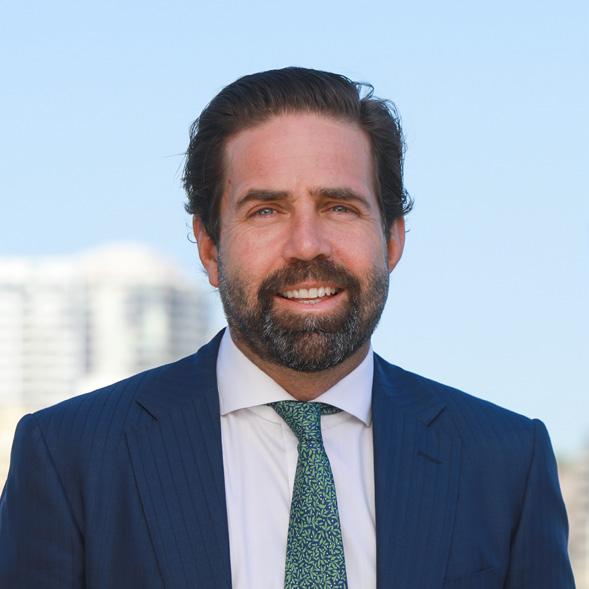
MANAGING DIRECTOR, RAY WHITE GROUP
Introducing the inaugural Network Finance Reviewanother fantastic step forward by a team that has continued to evolve and have an enormous impact on the success of our business owners.
The Network Finance team was formed 12 years ago to fill an important gap we could see not only in our corporate team, but across the accounting and finance industry - quality financial support that specialises and deeply understands the uniqueness, nuances and peculiarity of the real estate industry. They fulfil our duty of ensuring that our business owners are making the best financial decisions for their business, themselves and their families, and all the people that depend on them in some way.
The impact this team has had on the profitability of our businesses are well documented in this Review. And it's not just short term profit - it's enduring profit, built on disciplined re-investment, a focus on the key metrics that drive sustained momentum, and patiently developing diversified income streams.
Our industry is dynamic, driving new financial opportunities and challenges for our business owners. We are seeing more investment in our high performing and high potential selling agents, taking advantage of new technology to give them more time and capacity. By aligning the insights from NurtureCloud on our key activities of calls and appraisals with our financial results,
our business owners have been more confident to invest in their support structures and are now seeing the financial results.
Strong market conditions don't make their work any less important. They bring their own challenges and important questions to consider: how do I not lose sight of growing my market position? Where and how much should I be investing to ensure I don't become complacent, whilst not wasting resources and closely managing costs? How do I make sure I have access to timely information in case the market changes?
There are new forces inside our industry impacting our cost base. There is significantly more regulation and compliance coming; we need to get into position early so we can manage the resultant additional costs whilst finding savings elsewhere. While technology is helping us drive top-line revenue, managing our overall technology costs is a vital new skill for our business owners to develop. Avoiding duplication, staying disciplined, and exploring sensible ways to recover costs will be an ongoing area of curiosity.
On behalf of my family and our corporate team, a huge thank you to the Network Finance team for their work that is illustrated in these pages and this excellent inaugural edition of the Network Finance Review.

For 12 years, the Network Finance team has sat inside the engine room of Ray White businesses, analysing the numbers, challenging assumptions, and helping leaders turn ambition into performance.
Across every office, state and market cycle, one truth is constant: Profit isn’t found. Profit is built.
And the businesses that build it consistently are doing things differently.
This report captures the learnings from thousands of data points, hundreds of conversations, and dozens of deep-dive financial reviews. But more importantly, it reveals the patterns shared by the network’s most profitable businesses, the ones growing faster, scaling smarter, and leading the next era of Ray White.
Here are five insights we will explore through real numbers, real stories and real change.
1. Productivity - not price - has been the biggest driver of profit
Across Australia and New Zealand, the highest-performing offices have widened their productivity gap from the wider network. They’re not just doing more deals, they’re structuring their teams to unlock capacity.
2. Support teams are the hidden engine of scale
Five years ago, a productive team was a producer with a PA.
Today, the biggest profit gains are coming from businesses with systemised support structures, where administrative talent multiplies agent output.
3. PM profit is back - and the winners fixed their structure, not their fees
For years, PM profitability sat under pressure. But 2025 showed a clear trend: the
businesses that improved their PM margins didn’t cut costs, they realigned portfolios, empowered leaders, and disciplined their processes. The gains were fast, and in some cases dramatic.
4. Desk costs don’t kill profit — a lack of scale does
A decade of data shows a simple pattern: When revenue grows, desk cost percentage falls. Every time. The businesses with the strongest margins aren’t spending less, they’re spending better and building the revenue to support it.
5. Succession is now a profit strategy, not a retirement plan
The data and the case studies are clear: businesses with planned succession outperform those without it. Mature leadership structure, clear pathways and internal successors drive stability, protect culture, and preserve margin, long before an exit.
When considering how profitable your business is, you need to ask yourself what are the main profit drivers? Being able to control these levers, dictates how profitable your business will be.
Over the past decade, while key benchmark numbers for sales have remained remarkably consistent, there have been some fluctuations. People and VPA costs have ranged between 69% and 76% of revenue, mostly settling between 70% and 72%. Sales profit margins across Australia generally fell within a 13% to 18% range. Notable exceptions include 2019, which saw a drop to 8% due to the lowest revenue year and high people costs, and 2022, the last of the COVID years, which reached a high of 21% as revenue almost doubled from the previous year.
Over time, there has been a notable shift in the structure of sales teams, with "teams within a team" becoming the standard. While the average number of agents in Australia has remained consistent, support teams have expanded to an average of 3.7 people in 2025. This growth and an increase in capacity has significantly
boosted agent productivity, rising from the low $200,000s to over $400,000 by 2025. This increased productivity is primarily driven by two key performance indicators: average price and the number of transactions.
When reviewing the Australian sales data by state, Western Australia has seen the largest agent productivity growth of 202% over the last five years with transactions up 115% and price up 62%. They saw an increase of 109% to the average overall sales team size.
Commercial productivity increased 161% but transactions were only up 22%. Average price played a major part, up 78% (largest growth) combined with a 82% increase in average team size.
Despite agent headcount only rising by 36% in SA, market activity grew productivity by 129% with transactions up 117% (largest growth) and
average price up 76%. Average productivity in QLD is up 117% with team sizes increasing 89%. Average price is up 65% and transactions are up 49% over 5 years but only 8% up over the recent 4 years.
NSW had a headcount increase of 129% (largest growth) but a productivity increase of 58%. There was a 43% increase in price and 50% in transaction numbers.
Victoria saw the lowest increase in productivity, of 26% with a 46% increase in team size. Sales transactions grew by 54%, however Victoria had the lowest average price increase of 26%.
Principal sales over the past five years has seen team sizes increase from 1.9 to three. Their productivity has increased from $400,000 to $992,353 which represents a 148% increase.
In 2025, property management (PM) teams across Australia have grown to an average of 6.2 full-time employees, managing $1,089,821 in revenue. We have seen a trend of steady growth over the years, however 2024 and 2025 have presented significant growth in PM revenue due to substantial rent increases across Australia. Despite these changes, profit margins have remained consistent, currently performing at their peak between 21-23%.

NSW has seen the largest growth in average PM revenue across the past five years of 151% and unsurprisingly has therefore also seen the largest growth in team size of 115%. Average profitability has consistently run around 20-21% however we have seen this rise of late (26%).
After two challenging years (2023 and 2024) with single-digit profitability for PM in Victoria, 2025 saw a rebound to 14%. Despite 57% revenue growth over the past five years, high people and VPA costs, averaging 68%, are constraining profit margins compared to other states.
Queensland secured the second spot for average revenue growth over the last five years, at 145%. Higher average productivity and the relatively fixed nature of PM costs have led to a 6.8% reduction in the people and VPA percentage, resulting in average profit margins in the high 20s.
In 2025, Western Australia recorded the highest average productivity at $191,258, demonstrating the largest growth in this metric over five years at 13%. People and VPA percentage has remained consistent, revenue growth has outpaced costs, and profit margins are now consistently in the mid-20s.
South Australian network has seen modest average revenue growth of 9% over the past five years. Associated with this, we have seen a growth in the team size of 38% over the same period. The increased team size has therefore resulted in a larger desk cost allocation to PM, pushing the desk cost/revenue % to the mid twenties. Average profit margins have come back a couple of % as result, now sitting at 20% for 2025.

Desk costs, as a total average expenditure across Australia, were at their lowest in 2019 and 2020, coinciding with a period of similarly low revenue. Since 2020, costs have grown by 87% with total revenue increasing by 120%.
$4,000,000.00
$3,000,000.00
$2,000,000.00
$1,000,000.00
Growing costs have not had an impact on the profit percentage of our businesses. As can be seen in the graph, desk cost as a % of revenue has an inverse relationship with the total revenue of our businesses. Over time we have set a benchmarking target of 15% of revenue as a “good” measurement. The average currently sits at 14.3% with over 50% of our offices below the 15% target.
oversight on are performing extremely well. They are well positioned within markets for acquisitions of weaker competitors. 70% of our offices have increased their profitability over the last two financial years by more than 10%. $0.00
Overall our Ray White offices that we have
“ ”
In 2025, the New Zealand market has seen house prices remain flat, but sales volumes, after bottoming out in April 2023, have continued their consistent rise to now sit just above the 10-year average of 78,000 sales per annum. This indicates that the market has slowly swung back to an equilibrium, which is also reflected in our network Profit Pulse benchmarks, albeit with regional nuances.
The size of our Ray White sales teams has remained flat throughout 2025, but with continued market recovery, we would expect that metric to start to increase. The dominant trend this year has been the increase in average productivity, which has pushed up to $232k, remarkably close to the levels achieved during the COVID boom.

The correction in the New Zealand property market has been protracted, but our businesses have recalibrated over the last three years, with cost bases holding steady over that period. Improving revenues have resulted in profit margins bouncing back to above pre-COVID levels.
Average productivity rising comparatively faster than sales volume numbers is showing that higher performing salespeople are benefiting from the recovering market, whilst natural attrition is still influencing overall headcount at the lower end of our sales teams. The average GCI increase from our top 20 salespeople this year was 26% compared to a network increase of 15%.
We have started to see cost bases rise in 2025, with direct expenses, largely discretionary spending, the first to bounce back. The challenge that lies ahead for our business owners will be continuing to improve scale whilst balancing the investment required for growth, particularly after three years of a cost-focused mindset.

ANDY EBBETT HEAD OF NETWORK FINANCE NEW ZEALAND
Remarkably when looking at the differences between recognition categories, most benchmarking numbers remain very consistent. The main difference eventuates due to the size and scale of the actual agents and teams, which results in higher dollar profit figures for Elite from Premier and then Chairmans from Elite.Chairman's Elite agents operate with higher commission structures and actual desk costs. However, their desk costs are a lower percentage of revenue, which allows them to consistently maintain this average 20% return.
Team Productivity and Agent Tiers: A key metric for managing sales agents and their teams is average productivity per team member.
Premier Agents: 40% of these agents employ sales assistants, achieving an average of $317k GCI written per team member.
Elite Agents: With an average team size of 2.1 people, their greater experience in managing sales assistants results in higher productivity at $422k GCI per person.
Chairman's Elite Agents: With an average team size approaching 3, they write $1.6m in total revenue, averaging $565k per person.
It is crucial to guide agents with teams on the optimal timing for hiring additional support to maximise their investment and returns.
Profitability: While all agent tiers maintain a surprising average profit margin of approximately 20%, Chairman's Elite agents operate with higher commission structures and actual desk costs. However, their desk costs are a lower percentage of revenue, which allows them to consistently maintain this average 20% return.


Succession is one of the most defining moments in a business’s life cycle — and one of the most complex. For Bill Knaggs, a respected name in Nelson Bay real estate for more than two decades, it wasn’t just about stepping away. It was about ensuring that what he had built would continue to grow long after his name came off the door.
SUCCESSION ISN’T ABOUT STEPPING AWAY — IT’S ABOUT SETTING YOUR BUSINESS UP TO THRIVE WITHOUT YOU.
That journey began in 2021, when Bill made the strategic decision to align his independent agency with Ray White. The motivation was clear: to strengthen his business with the backing of the brand’s systems, structure, and reputation and to set up a clear, sustainable succession plan. What followed became a model example of how Ray White’s support and planning tools can turn one of the hardest transitions in business into one of the most successful.
In 2024, Bill became one of the early participants in The Nova Project, Ray White’s structured succession program designed to help business owners plan and execute transitions on their own terms. With the guidance of Network Finance, Bill began to see succession not as an abrupt exit, but as a gradual handover — one that could protect his legacy, his people, and the value he’d built.
As with most family businesses, the path wasn’t straightforward. Bill’s daughter Rowena was central to operations but didn’t seek ownership. His son-inlaw Aramis, a talented sales agent with leadership aspirations, faced financial constraints that made an immediate buy-in difficult. Then came Tim and Rebekka Jurisic, former military professionals whose leadership skills, discipline, and drive stood out immediately.
Even with Tim only two years in the business as an agent in his own right, their potential for ownership became impossible to ignore.
What started as a conversation about a staged buy-in soon evolved. With the help of finance broker Steve Marincucci, the group discovered that Tim and Rebekka were in a position to acquire 100% of the business, with provisions for Aramis to buy in later. Though initially hesitant, Bill agreed, maintaining a role as advisor and landlord, and securing both his financial and emotional investment in the business’s future.
The acquisition was finalised on 10 September 2024, marking a new chapter for the now Ray White The Knaggs Group. Tim and Rebekka became Principals, Aramis was appointed Director and Licensee in Charge, and Rowena transitioned into a supporting role. The transition was managed carefully, balancing respect for Bill’s legacy with the fresh energy and innovation of new leadership.
“Defining roles early and revisiting them often was critical,” Rebekka later reflected. “Succession isn’t just a handover, it’s a continual process of clarity, communication and trust.”
By the end of 2024, Rowena had stepped away, Bill had eased further into retirement, and Tim and Rebekka had already begun expanding by acquiring another Ray White office while raising three young children and preparing for their fourth. Their story embodies the ambition, structure and resilience that define so many of the network’s strongest leaders.
As of late 2025, the business has now been renamed Ray White The Zenith Group to reflect their energy for growth and expanding into adjacent marketplaces.
The Zenith Group story is more than a successful succession, it’s a reminder of what’s possible when vision meets structure, and when a business owner chooses partnership over isolation. With the right support and a clear plan, stepping forward can be just as rewarding as stepping back.
For every principal planning the next phase of their career, or the next cha pter of their business, this is proof that with Ray White, you never have to do it alone.
In business, as in mountaineering, the climb is only half the journey. Reaching the summit of Everest is a remarkable achievement, yet history shows that 80 per cent of fatalities occur on the way down. The same is true in business: the ambition to grow is rarely the problem; what brings many undone is the lack of a plan for what comes next.
Within the Ray White Nova Project, this reality has inspired what’s known as the Bookend Strategy: a framework designed to help business owners and future leaders think about their careers not just as a rise to the peak, but as a complete journey, from first steps to successful succession.
“It’s important that we can get the message across to young agents and emerging leaders that within the entire lifecycle of leadership, every stage is as important as the other”, said Tony Warland, one of the key figures behind Ray White’s Nova Project.
Tony Warland, a Director of Ray White Queensland and the former state CEO, works with Ray White New Zealand Executive Director Carey Smith, and former successful Ray White business owner Brett Graham, on developing and conducting the Nova Project for emerging, existing, and transitioning leaders.
The Bookend Strategy views leadership through three essential stages:
• The Short Game – stepping confidently into ownership and embracing the “go-go” phase of business growth
• The Long Game – developing a clear roadmap for the next 10 to 25 years, focusing on building an enduring, market-leading business
• The End Game – preparing for transition, succession, and the preservation of legacy
Each stage matters. Just as no climber would attempt Everest without a plan to return safely, no leader should build a business without considering its long-term sustainability and eventual handover.
Without a structured succession plan, real estate businesses face a significant risk: the number of exiting owners can outpace the supply of new, ready leaders. When leadership changes hands, this imbalance can cause valuable businesses to falter.
The Nova Project tackles this directly by building a pipeline of Nova Leaders. Through graduate programs, structured mentoring, and multi-year roadmaps, it develops individuals who are not just ambitious but also equipped to sustain and grow businesses for decades to come.
“The most delicate part of the work we do is understanding the process at each end. The one coming in, and the one going out. Succession is more than an exit strategy. It’s about ensuring continuity, preserving culture, and creating enduring businesses that thrive beyond any single leader.” said Tony Warland.
The Bookend Strategy challenges leaders to think differently. Once someone steps into ownership, the
questions shift from short-term growth to enduring impact: “How do I climb this mountain over the next 10–25 years? How do I future-proof my business so it thrives beyond me? How do I prepare the next generation to carry the torch?”
This balance of ambition and foresight is what transforms good businesses into great, enduring institutions.
Looking to the future, Ray White is rolling out the Nova Project across every state of Australia and New Zealand in 2026, introducing the next generation of leaders to the program. The goal is clear: to ensure that every ambitious business owner not only reaches their peak but also has a safe, successful, and sustainable descent.
As Tony remarked, “we know leaders have great ambitions to reach the summit. But without a plan for the descent, they risk not realising a premium outcome, and taking on unnecessary losses.”
The climb is important. But the legacy is built on how well you prepare for the journey back down.
Developing a clear roadmap for the next 10 to 25 years
A premium outcome with a lasting legacy
The journey begins, ensuring new leaders step into leadership confidently

BUILDING THE FOUNDATIONS OF PROFITABILITY
PROFIT ISN’T FOUND — IT’S BUILT.
Every business owner wants to see strong returns from their hard work, but real profitability doesn’t happen by chance. It’s built on structure, discipline, and a clear plan.
At the 2025 triennial Connect conference on the Gold Coast, the Network Finance team took the stage to host Show Me the Money, a session not about numbers, but about the foundations that make those numbers possible.
The team has worked alongside business owners across the network, helping them understand what drives profit and how to build businesses that last. Their message is consistent: when you focus on the right structures, people, and systems, profitability follows naturally.
Craig Heath highlighted that profitability is rarely achieved without a clear framework, a point echoed by David Simpson, who stressed the importance of strong foundational systems when he interviewed Charles Caravousanos and Ashley Van Deyk from our Upper North Shore group.
Charles and Ashley shared how their business transformed from $5 million GCI in 2019 to $35 million in 2025, a sevenfold increase built on the back of their Sales Associate Development Program (SADP).
The program wasn’t designed just to recruit more people - it was built to grow better people. Associates progress through a structured pathway of skills and performance milestones, moving from database management to buyer management, stock management and vendor care, with each stage measured by clear KPIs and competency standards. The result is a pipeline of capable, confident salespeople ready to step into leadership roles.
This focus on structured development has created both cultural stability and exponential growth, and the consistency of systems and expectations means every agent knows exactly what success looks like.
YOU CAN’T BUILD A BUSINESS ON WEAK FOUNDATIONS: INVEST IN THE BASE BEFORE CHASING THE ROOFLINE.
It’s a philosophy that has turned structure into momentum and momentum into profit.
From regional Whangārei, Vanessa and Rod demonstrated that profitability doesn’t depend on geography - it depends on design.
Their business, one of New Zealand’s top five, runs on a simple framework they call the Three Cs: Collaboration, Capacity, and Capability.
• Collaboration comes to life through an open database, allowing agents to share listings and buyers seamlessly. Vendors gain access to the full market, buyers find homes faster, and agents work as one team rather than in silos. The result? Faster stock turnover and a culture of shared success.
• Capacity is powered by their Value Team, a group of highly systemised administrative professionals who handle all back-end processes. Their standardised templates and workflows mean four administrators can support more than thirty agents without compromising quality. This structure gives agents more time to focus on what they do best, listing, negotiating, and selling.
• Capability grows through monthly, questionbased coaching sessions tailored to each agent’s needs. Rather than telling, they ask helping agents uncover their own insights, strengths, and blind spots.
The result is extraordinary: over 50 per cent market share and the highest average productivity per agent in New Zealand, achieved without a single Chairman’s Elite salesperson.
Their story proves that scale isn’t about size - it’s about systems, alignment, and shared purpose. Profitability grows where structure meets culture.
In Canberra, Ben and Lisa took the conversation to another level, showing how disciplined financial strategy and leadership structure can turn complexity into control. Over five years, their business expanded its rent roll from 900 to 3,500 properties, largely through a series of smart, well-planned acquisitions. Drawing on Ben’s background in banking, each acquisition was treated on the merits of cash flow impact, margin potential, and integration requirements.
The key to their success lies in their people and structure. Lisa leads a deeply connected property management division where team leaders still manage properties, ensuring they stay close to clients and legislation. Recruits enter through a Pathways Program — designed to develop industry newcomers into confident, capable property managers.

To protect long-term growth, they’ve structured their business by grouping properties under management by location and placing them in separate entities. This approach simplifies management, enables strategic partnerships or partial sales, and reduces risk while increasing overall value.
It’s a textbook example of scaling without slipping, growing fast while keeping margins strong and culture intact.
Three very different businesses. Three unique paths to profitability. But one shared truth: sustainable success comes from clarity, consistency, and deliberate investment in the right foundations.
For the Network Finance team, these aren’t just stories, they’re proof that the right frameworks create not just profit, but possibility.
As trusted advisors, the team continues to help business owners shape their structures, measure what matters, and turn insight into performance. Because in the end, profitability isn’t just about money - it’s about building a business that lasts.

The Ray White Upper North Shore Group exemplifies the impact of strategic financial management. Over six years, their business grew from $5 million GCI in FY19 to $35 million in FY25. Initially, profitability was sacrificed to build a world-class sales team and recruit the right talent.
KEY QUESTION: DOES THEIR TOP LINE (INCOME) ALIGN WITH THEIR BOTTOM LINE (PROFIT)?
During a half-year financial health check with Charles Caravousanos, Director of Ray White Upper North Shore, the business's overheads were compared against the Chairman's Elite benchmark data. While their desk cost spend as a percentage of revenue was below their peers, the category of “professional fees” were notably high. When drilling down on the numbers, the accounting costs were 1.1% of revenue higher than the benchmark. This was the result of outsourcing all of their accounting
functionality. This 1.1% may seem insignificant, but put it into dollar terms and it represented a $200,000 difference to their bottom line funds that could be better utilised elsewhere.
PROPOSED SOLUTIONS
1. BRING ACCOUNTING IN-HOUSE
Hire a finance manager/finance controller/CFO, two trust accountants, and a finance assistant.
2. HYBRID SETUP
Maintain a smaller in-house finance team and outsource to Ray White Accounting Solutions. Hire a finance assistant and two trust accountants.
3. RENEGOTIATE OUTSOURCING CONTRACTS
Continue outsourcing but reduce fees to increase profit margins.
The preference was to maximise office space for revenue-generating employees and continue outsourcing. By renegotiating their fees, they successfully added a 1% profit margin to their bottom line. Seems simple enough in hindsight, however this truly highlights the value of data across the group and how our leaders engage with it. Without collective data and story sharing, we may have never analysed this 1% opportunity. The Ray White Upper North Shore Group's experience underscores the importance of strategic financial management and the value of continuous performance evaluation.
KEY TAKEAWAYS
• Set profitability targets: Establish clear goals for profitability alongside revenue targets
• Challenge growth and invest appropriately: Balance investments in growth with profitability considerations
• Use Profit Pulse: Benchmark financial performance against peers to identify areas for improvement
• Utilise Network Finance services: Leverage services to identify opportunities for savings and restructuring
For more than a decade, Ray White Ferntree Gully (FTG) has been Victoria’s number one office for sales volume with a powerhouse property management (PM) department with over 1,500 properties under management.
Between 2014 and 2020, during the initial period of financial benchmarking, most of Victoria's top ten offices pursued growth in PM, often at the expense of profit. This group was known for expanding their rent rolls faster and larger than any other state, yet they frequently operated on margins below 5%.
Despite FTG's excellent reputation and large scale, its sheer size obscured where profits were being lost. Managing Director Patrick McConnachie recognized the PM department was facing difficulties but struggled to pinpoint the core issues.
From 2020 to 2021, Victorian margins peaked at 14% and 13% respectively, with an 11% average profit margin overall from 2020 to 2025. However, FTG's results diverged from this trend. Profitability was being quietly eroded by factors including rising salaries, excessive management layers, and a failure to regularly review fees. For too long, the success of the sales department had compensated for the PM division's growth, making it a critical area for business improvement.
Although participating in benchmarking since it began in Ray White, FTG with a large finance team already overseeing several offices, did not understand the true value of Profit Pulse and the Network Finance team when Profit Pulse was released. Network Finance challenged the team at FTG and a full scale financial review began on the PM business.
A profit-by-portfolio review showed that several property managers were handling too few properties, fee increases had stagnated, and staff incentives weren’t aligned with performance outcomes. Armed with clear data, the business made bold moves, restructuring the team, adjusting remuneration, and realigning responsibilities.
Within just two months, the PM department moved from loss-making to profitable — a turnaround both immediate and sustainable.

Perhaps the most inspiring transformation came from within. The FTG team, once sceptical, became one of Profit Pulse’s strongest advocates. What began as hesitation evolved into trust, and trust into leadership.
In the end, FTG’s success story isn’t defined by its return to profit, it’s defined by its willingness to confront the unknown and turn insight into impact.
THE FTG TEAM, ONCE SKEPTICAL, BECAME ONE OF PROFIT PULSE'S STRONGEST ADVOCATES.
Despite being a strong sales and PM business, when the leadership team at Ray White Fort William faced mounting financial pressure, the situation demanded more than simple bookkeeping, it required a complete cultural reset around how the business managed its money.
Under the guidance of Ray White Accounting Solutions (RWAS) and Network Finance, Fort WIlliam embarked on a transformation that reshaped its financial habits and restored profitability.
Originally a four partner business who had separated from their two business partners, Fort William found itself struggling with inconsistent financial practices and limited visibility over its true performance. While sales were strong, profits remained low, with personal and business spending often blurred. When the business began to face cash flow strain and difficulty meeting payroll obligations, the urgency for change became clear.
The Network Finance team member introduced the Fort William team to RWAS, with Ashleigh Perkins engaged was engaged to help stabilise the business and implement
stronger financial controls. At first, the relationship required patience, the partners were hesitant to allow external oversight and needed to see tangible value before fully engaging. Through regular meetings, transparent communication, and practical recommendations, RWAS gradually built credibility and trust.
Over time, the Fort William team began to see the difference. By restructuring their bonus systems, cutting unnecessary expenses, meticulous cashflow management and separating personal from business spending, the partners gained control of their finances. More importantly, they began to view their accountant not just as a service provider, but as a trusted advisor.
The Fort William story is a reminder that success in real estate isn’t just about listing and selling, it’s about discipline behind the scenes. Strong financial management, reliable administration, and a willingness to seek advice can mean the difference between shortterm pressure and sustainable growth.
Today, Ray White Fort William operates with a renewed sense of stability and foresight, standing as an example of how the right support, and a bit of persistence, can turn financial challenges into long-term success.
• Bill Management - creditor bill processing and payment scheduling
• Bank Reconciliation - bank, credit card and loan processing, review and reconciliations
• Payroll - payroll processing, superannuation and payroll tax

• BAS Agent ATO Lodgements: Preparation and lodgement of BAS, IAS, and Single Touch Payroll with the ATO
• Control Framework: Preparation of balance sheet reconciliations and regular manager reviews
• Payroll: Superannuation and payroll tax compliance
• Month End Reporting: Actual vs. budget, divisional P&Ls, cost allocations, and business performance commentary
• Profit Pulse: Agent and PM profitability, real-time benchmarks, and business insights
• Budgeting: Yearly budget review and goal setting
• Regular Meetings: Monthly or quarterly meetings to discuss business performance, strengths, weaknesses, and action points
• Compliance Control - Daily receipting and reconciliation, EOM completion
• Service Offerings - We offer two service offerings: settlement only and full contract management which includes reconciliation of VPA

Understanding a business’s financial health as a business leader is more critical than ever in today’s competitive landscape. Our custom built application will equip business leaders with tools to identify areas of improvement, optimise costs, and ultimately drive growth in the business. Whether a small team or larger enterprise, Profit Pulse will provide the insights necessary to stay ahead.
Profit Pulse offers a comprehensive suite of features designed to simplify financial analysis enabling leaders to identify trends to understand the key drives of their profitability and sharpen business decision making. Leveraging end-to-end integration eliminating the need for hours of spreadsheet creation and analysis.
• Easy to read and understand the profit and loss to stay well informed, improve performance management and ultimately make smarter financial decisions.
• Intuitive and flexible budget management to help you better plan ahead and gain insight into actual v budgeted performance.
• Real -time benchmarking to evaluate your performance against peers to ensure your as profitable as possible
• Visualise insights and analysis trends to help identify gaps or opportunities for growth.
PROFIT PULSE IS A POWERFUL TOOL TO REALLY ASSIST AND PROPEL YOU FORWARD WHEN IT COMES TO WORKING ON THE BUSINESS.
UNLOCK YOUR BUSINESS INSIGHTS NOW AND CONTACT YOUR LOCAL NETWORK FINANCE MANAGER FOR MORE DETAILS.

LETS EXPLORE THE TRENDS, STRENGTHS AND STANDOUT RESULTS ACROSS EACH MARKET

TWO YEAR TREND
Four of the past five years has held a strong 34% profit margin other than the 2023 outlier. Is this the network's margin cap?

LEVERS IN FULL SWING
Since the sharp decline in revenue in 2023 which resulted in margin compression and profits down 41% post covid, growth has steadily come back. In 2025 average revenue ($3.5m) and profit ($1.2m) was the highest ever recorded wtih all four profit levers in action:
1. People: Sales producer and sales support staff increased by 0.2 and one headcount respectively in 2025 as a result of increased transaction volume across the state (up 12% year on year).
2. Productivity: Property management recorded it's highest revenue per head ($191k) and sales averaged $448k per producer building momentum with a larger support team.
3. People and VPA: Improved efficiencies and revenue up 19% in property management supported a drop in people costs by 4% to 54% of revenue, leading to a 26% profit margin.
4. Desk costs: As you can see on the graph, all costs (except profiessional) continue to rise. Positively, revenue outpaced those increases and as a result the desk cost as a percentage of revenue has dropped to our 15% target in 2025.



Strong price growth of 12% between FY24 - FY25 has fuelled QLD offices, with transaction volumes up only 1% over same period.
Operating profit margins have increased from 22% to 27% over the past two years, indicating that revenue growth has strongly outpaced expense growth.
This growth has been predominantly driven by bigger sales and principal teams, with productivity up 38% and 55% respectively since FY23.
In the past year alone, whilst the average number of sales and principal producers has remained flat, the average size of support teams has increased 14% in sales and 35% for principals.
In property management revenue grew 23% in FY25, but team size has also grown by more than one headcount (15%), leading profit margins to remain flat at 28%.
Meanwhile, desk costs as a percentage of revenue has dropped from 14.2% in FY23 to 12.8% in FY25.



LEADING A CONFIDENT RECOVERY PATH
The VIC/TAS network delivered strong financial performance in 2025, with total revenue rising 15% to $3.33M and profit increasing 27% to $866K.
The Sales division contributed signifcantly to overall growth, achieving an 18% revenue uplift and a 59% increase in profit, supported by higher productivity and reduced desk costs. This was underpinned by strong transactional growth in FY25.
Property Management led the growth with profits up 80% and revenue up 18% from FY24, driven by better cost efficiency, as desk costs decreased by 3% and improved alignment between
by 5%.
and
Overall, the network continues to scale effectively, with modest headcount growth supporting higher revenue while maintaining a disciplined cost base. Continued focus on productivity and maintaining people and VPA ratios will be key to sustaining future profit growth.


TWO YEAR TREND

PRODUCTIVITY GAINS
We have seen a 39% gain in average sales agent productivity over the last two years, which now sits just above $423k. This has been brought about by strong market conditions over the past two years through both volume and price growth (volume 22% and 6% increases and price growth of 9% and 16%).
Property mangement has continued to be consistent with average operting profit margins in the 20-23% range. We have seen a slight upward shift (2%) in the people and VPA margin of recent. Desk cost expenditure rose by 18% in 2025 compared with the prior year with the main increases coming through in premise costs, direct expenses and promotion and marketing. Revenue however grew at the same rate meaning costs as a percentage of revenue remained constant.



FUELS RECENT GROWTH
Strong price growth between FY24 - FY25 of 17% has fuelled WA offices, as transaction volume dipped slightly during the same period, down 1%. It was a different story in the previous year with high volume growth from FY23 - FY24 of 28% driving most of the profit gains, with average prices also rising by 9% YoY.
Average property management revenue has grown by 38% between FY23 - FY25, which has seen an almost full headcount increase over the same period and as a result has increasd the cost margins slightly but still producing strong profit margins of 25%.
Offices have been very consistent in their operating profit margins looking across the previous three years. Indicating that revenue and expense growth has occurred at a similar pace. Dollar value profit however has increased between 13-15%.


The Commercial network has provided the strongest profit margin across the group in 2025 at 38%.
This is a result of the highest sales agent productivity to date with the average agent generating $460k (up 28%) in revenue. This has delivered a 15% profit margin for the sales team.
Principals are by far the most productive with a smaller support team, generating 2.3x more revenue than the sales team based on total headcount, generating a profit pre drawings of $1m.
Rent roll profitability dropped significantly in 2023 to an all-time low of 18% (previous ranges 27%-40%). Productivity has improved in 2025 to $216k, but the ideal target is $240k on the same headcount. This will bring the People and VPA margin down from 60% to under 55% of revenue and improve profit margins.


Total revenue and profit have been on an upward trend since June 2023 with revenue now eclipsing the previous highest 12 month period ending at December 2022. Profit is yet to get to the
a great result.All margins remain consistent year on
of $300k led to a 33% increase in sales team profits in 2025. 74% of the offices have selling principals with a large portion of these offices profit coming from their own sales. RECORD REVENUE FOR REGIONAL OFFICES