
Elevate your asset integrity with unmatched data accuracy and unparalleled expertise
Our unique synergy of advanced inspection systems, cutting-edge analytics and human expertise allows us to transform data into knowledge. Knowledge enables smarter decision-making and delivers a comprehensive understanding of asset safety, lifetime, and performance.


03. Editor's comment
05. Pipeline news
News from Equinor, PHMSA, TotalEnergies, EPIC, Vallourec, and more.
10. Building pipelines: the key to achieving CCS success in Asia
Kevin Pang, Gourab Mondal, and Pushan Pal, FutureScaleX.

HYDROGEN PIPELINES
17. An energy balancing act
Boryana Nedyalkova, Researcher, EMIS.
ILI CASE STUDIES
24. Precision under pressure
Jijo George, STATS Group.

29. Cracking the code
Brian Kerrigan, Frontline Integrity, UK.
35. Pipeline repair that delivers under pressure Robert J. Smyth, P. Eng., and Harold Lee, C.E.T., Technical Support Manager, T.D. Williamson.
INTEGRITY STRATEGY
43. Repurposing pipelines for a carbon-conscious future Kerry Cole of the Association for Materials Protection and Performance (AMPP).
MIDSTREAM ANALYSIS
47. Bridging boarders Dynamic Risk.
OFFSHORE AND SUBSEA
53. From lagging to leading Nassima Brown, Strategy Director at Fennex.
DIGITALISATION AND AUTOMATION
57. Three priorities for achieving midstream excellence Andrew Weatherhead, Chief Technology Officer, Sensia.
SYSTEMS AND SOFTWARE
61. From desktop to cloud Natalia Plewniok, Meirik, Poland.
65. Beyond obscurity: building cybersecurity resilience Emerson.
FUTURE OF PIPELINES
67. Realising sustainable autonomous operations Toshiyasu Shiono and Takuya Yokosuka, Yokogawa Electric Corp.

MANAGING EDITOR
James Little james.little@worldpipelines.com
ASSISTANT EDITOR
Emilie Grant emilie.grant@worldpipelines.com
SALES DIRECTOR
Rod Hardy rod.hardy@worldpipelines.com
SALES MANAGER
Chris Lethbridge chris.lethbridge@worldpipelines.com
SALES EXECUTIVE
Daniel Farr daniel.farr@worldpipelines.com
PRODUCTION DESIGNER
Siroun Dokmejian siroun.dokmejian@worldpipelines.com
HEAD OF EVENTS
Louise Cameron louise.cameron@worldpipelines.com
EVENTS COORDINATOR
Chloe Lelliott chloe.lelliott@worldpipelines.com
DIGITAL EVENTS COORDINATOR
Merili Jurivete merili.jurivete@palladianpublications.com
DIGITAL CONTENT COORDINATOR
Kristian Ilasko kristian.ilasko@worldpipelines.com
JUNIOR VIDEO ASSISTANT
Amélie Meury-Cashman amelie.meury-cashman@worldpipelines.com
SENIOR WEB DEVELOPER
Ahmed Syed Jafri ahmed.jafri@worldpipelines.com
DIGITAL ADMINISTRATOR
Nicole Harman-Smith nicole.harman-smith@worldpipelines.com
ADMINISTRATION MANAGER
Laura White laura.white@worldpipelines.com
Palladian Publications Ltd, 15 South Street, Farnham, Surrey, GU9 7QU, UK
Tel: +44 (0) 1252 718 999 Website: www.worldpipelines.com Email: enquiries@worldpipelines.com
Annual subscription £60 UK including postage/£75 overseas (postage airmail). Special two year discounted rate: £96 UK including postage/£120 overseas (postage airmail). Claims for non receipt of issues must be made within three months of publication of the issue or they will not be honoured without charge.
Applicable only to USA & Canada: World Pipelines (ISSN No: 1472-7390, USPS No: 020-988) is published monthly by Palladian Publications Ltd, GBR and distributed in the USA by Asendia USA, 701C Ashland Avenue, Folcroft, PA 19032. Periodicals postage paid at Philadelphia, PA & additional mailing offices. POSTMASTER: send address changes to World Pipelines, 701C Ashland Avenue, Folcroft, PA 19032.

SENIOR EDITOR Elizabeth Corner elizabeth.corner@worldpipelines.com
Anew report from GlobalData highlights how oil and gas contractors are increasingly becoming the force pushing the sector towards decarbonisation. “Contractors”, says the report, “have become central to the industry’s decarbonisation push, with their engineering decisions and technology portfolios now determining the speed and feasibility of low-carbon developments.”1 The report outlines how Technip Energies, Wood, McDermott, Saipem, SLB, and others, are developing and offering technologies for emissions reduction, and acting as intermediaries, translating corporate decarbonisation strategies into practical outcomes. GlobalData notes a trend in which contractors are expanding their portfolio offerings to include CCUS, energy recovery, flaring reduction, and methane monitoring.
This is happening against a backdrop of the fastest clean-energy take-up in history. Rystad Energy’s ‘Global Energy Scenarios (GES) 2025’ provides modelling that suggests we are now firmly in a “hybrid energy era”, where clean electricity is a structural force reshaping investment decisions.2 The report states that renewables are expanding faster than any previous energy technology, with total global wind and solar capacity additions for 2024 - 2025 set to exceed 700 GW. Rystad’s analysts therefore believe that a 1.9˚C global warming trajectory by 2040 is becoming the more probable outcome, driven by the cumulative acceleration of renewables, electrification, and systems gradually bending toward lower-carbon configurations.
If this is the next energy era, then oil and gas contractors are certainly helping to build it, and their expanded portfolios are proof of the work already underway. The Rystad report outlines three tasks that the transformation of the global energy system requires: clean up and grow the power sector; electrify almost everything; and address residual emissions. Contractors pursuing CO2 pipeline transport and storage, repurposing pipeline assets, hydrogen blending, methane monitoring, and integrity upgrades, are an important part of the picture here.
Beyond technology and project delivery, contractors are also overhauling workforce systems in an effort to better enable their businesses for the future. CRC Evans is investing in skills that it hopes will service global future energy and infrastructure markets. Its recent decision to welcome 13 new apprentices across the UK and Brazil is a good example of how the sector is futureproofing its talent base. The company is training a new generation of welders and technicians to work across a far broader portfolio: from conventional oil and gas to renewables, nuclear and emerging CO2 transport infrastructure. Four-year apprenticeship frameworks, specialist academies, and hands-on learning at CRCE highlight something important: as the energy system hybridises, the contractors delivering the physical work are making sure their people have the skills and versatility to operate at the cutting edge.
Similarly, the Connected Competence programme – an industry-led initiative supported by the Engineering Construction Industry Training Board (ECITB) – provides a common, standardised way to check and maintain technical competence across the workforce.3 By using the same baseline tests and assessments across companies such as Worley, nexos, Wood, and Aker, contractors can move people between sites, and between sectors, far more easily. The programme makes workforce transitions smoother as the industry shifts between conventional and low-carbon projects.
These contractor developments echo the conversations we are hearing across the sector, especially as operators, consultancies, and EPCs prepare for a faster build-out of CO2 transport and storage infrastructure in 2026. They also align with the broader themes underpinning next year’s World Pipelines CCS Forum in London, where the interplay between operators, technology providers and contractors will be front and centre.4
1. https://www.globaldata.com/store/report/oil-and-gas-contractors-in-energy-transition-theme-analysis
2. https://www.rystadenergy.com/flagship-report-energy-scenarios-2025
3. https://connectedcompetence.co.uk/
4. https://www.worldpipelines.com/ccsforum2026
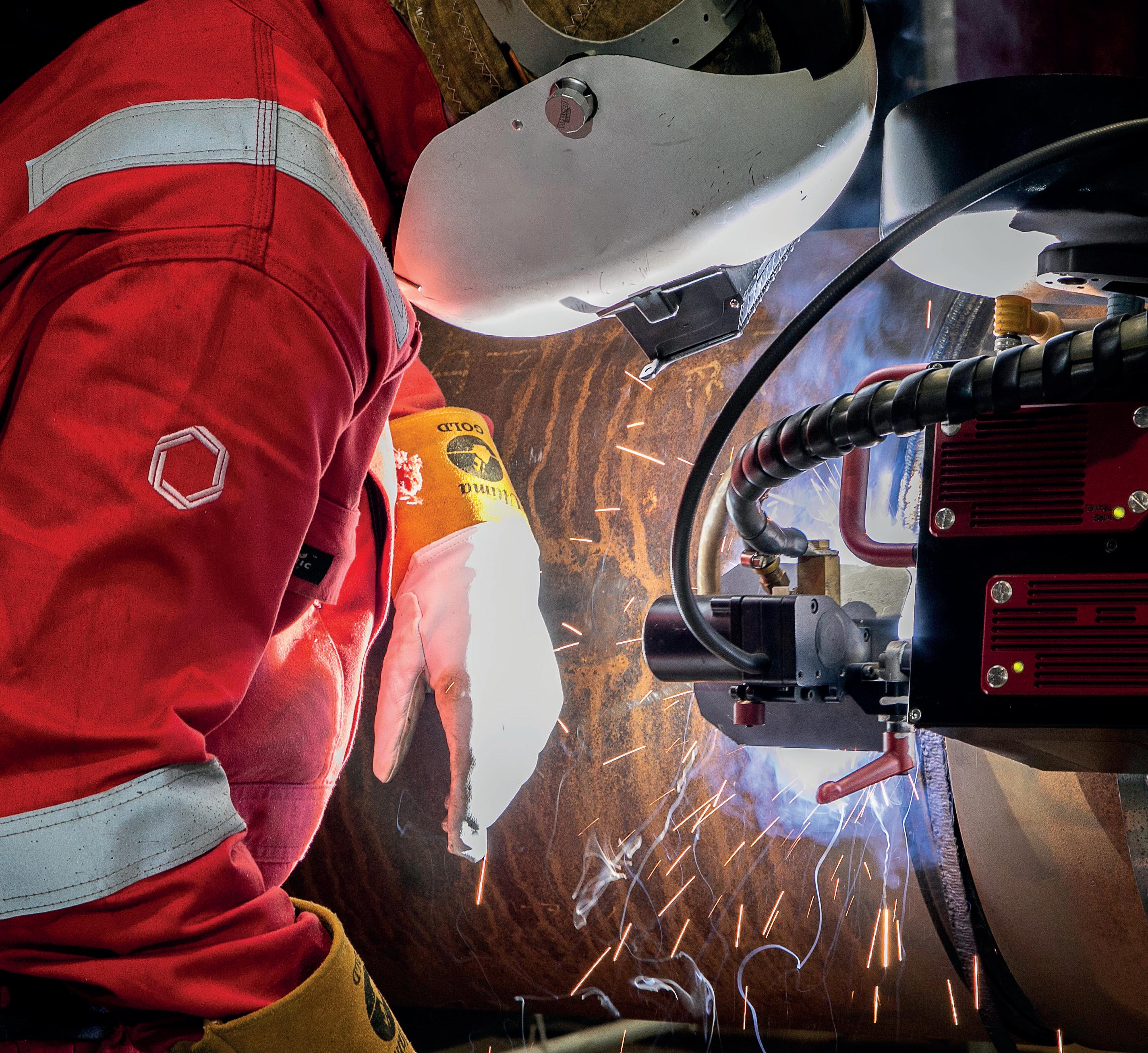
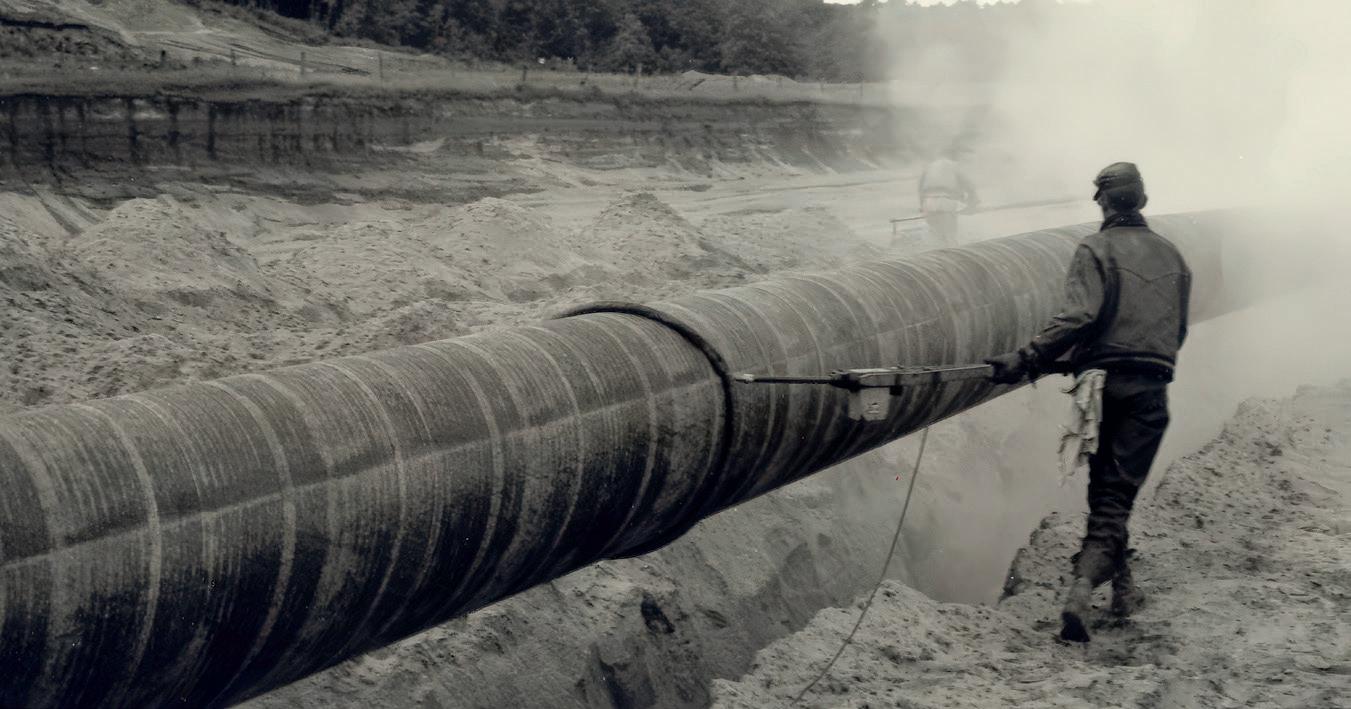
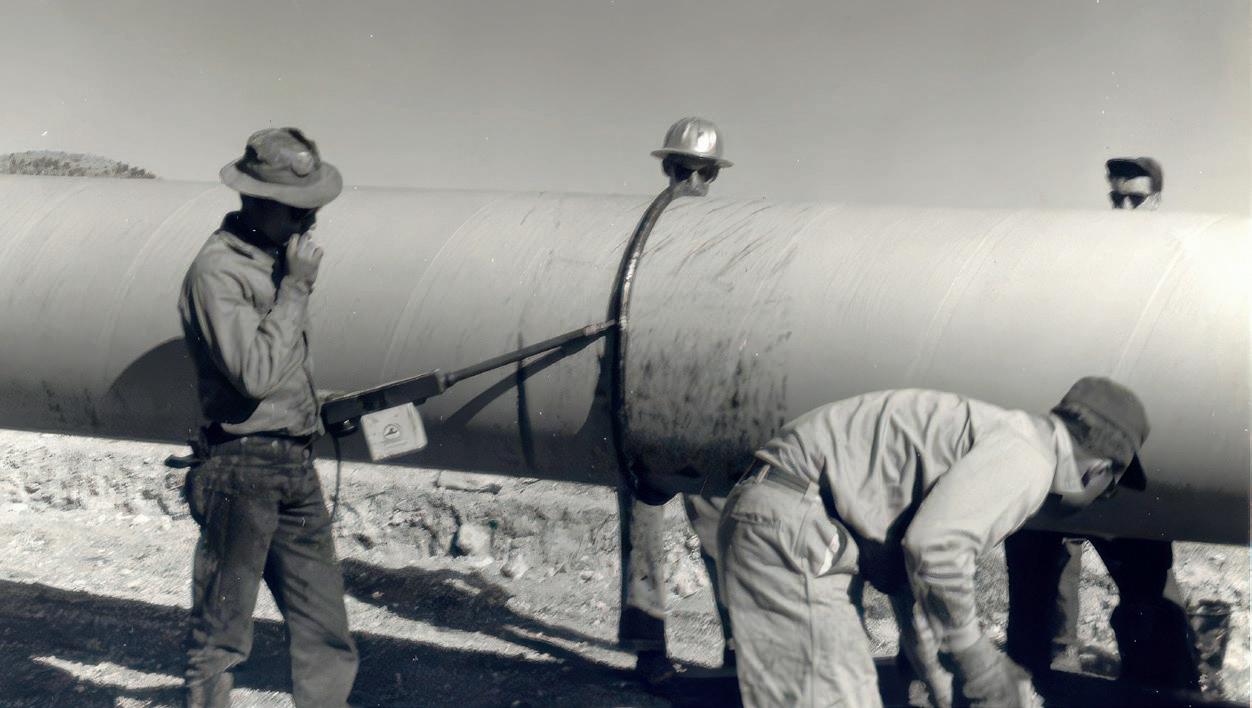
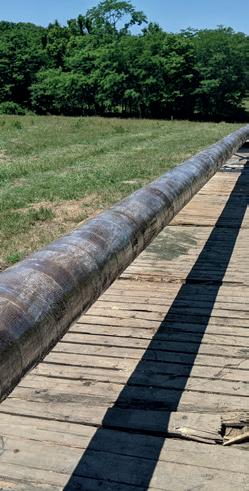
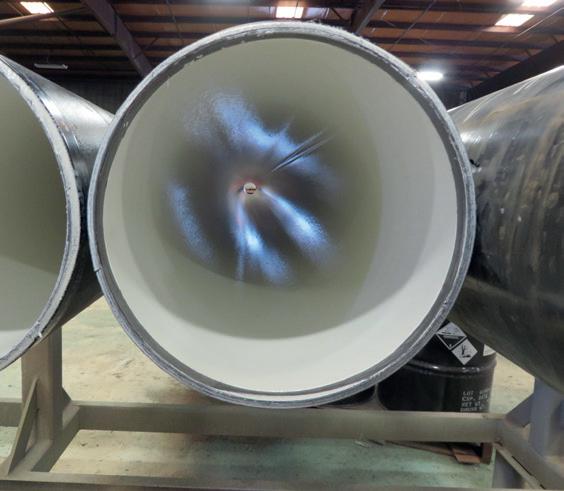
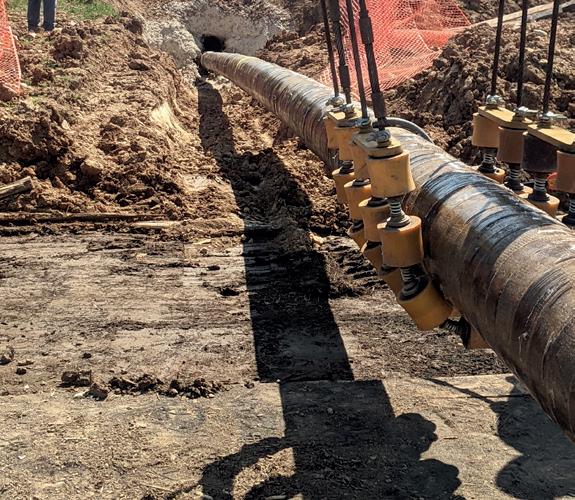
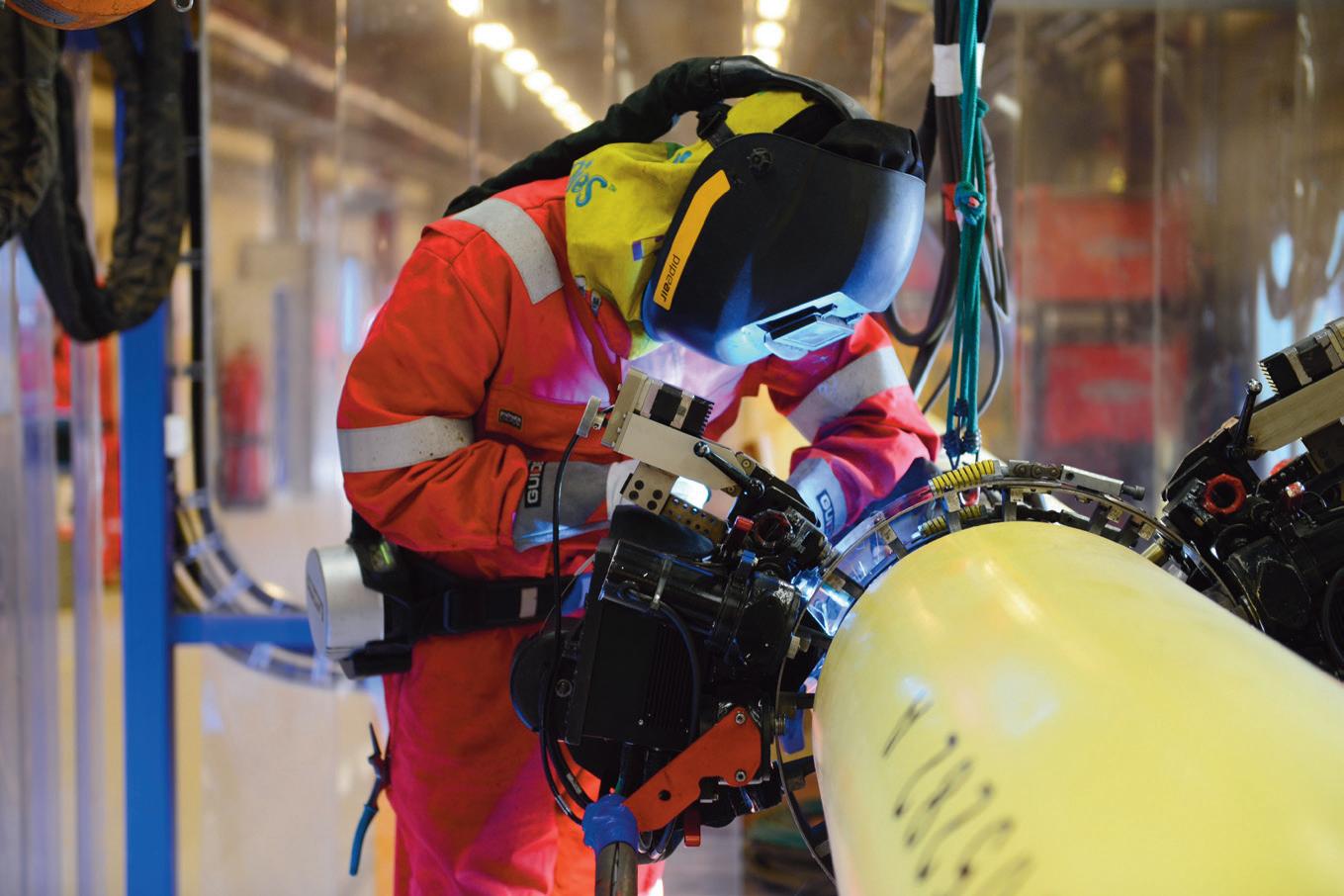
Across energy and critical infrastructure, we bring expertise where complexity is highest, partnering with globally local teams and leveraging unrivalled proprietary technologies. Like the M-500 Single Torch External Welding System, seamlessly integrated with Data 360 our cloud-based digital platform that analyses, and visualises your project performance data in real time. We move projects forward, no matter the challenge.
We’re here to partner on how our specialist welding and coating solutions can help you power tomorrow.

ExxonMobil announces investment to increase the capacity of the Enterprise Products Bahia natural gas liquids pipeline
ExxonMobil is investing in the expansion of the Enterprise Products Bahia natural gas liquids (NGL) pipeline, increasing its throughput by 400 000 bpd to bring total capacity to 1 million bpd.
The investment also includes an extension to connect NGL production from ExxonMobil’s Cowboy Central Delivery Point in Eddy County, New Mexico.
Operating under the name ‘Cowboy Connector Pipeline’, the project connects ExxonMobil’s growing production in the Permian Basin to US Gulf Coast refining and chemical facilities and enables access to export logistics to serve markets around
the world. The strategic investment is expected to deliver longterm value for shareholders, strengthening ExxonMobil’s value chain and improving logistics flexibility associated with our growing Permian production in the Delaware and Midland basins. Furthermore, it helps ensure reliable access to the raw NGL mix that will be distilled into component products needed predominantly to support chemical manufacturing and produce essential materials like plastics that benefit everyday life.
The transaction is subject to regulatory approvals and is targeted to close by early 2026, with our expanded capacity scheduled to come online by late 2027.
UK oil sits at the heart of Europe’s integrated energy system as second-largest producer, Wood Mackenzie analysis reveals
The UK operates as a critical component of Europe’s integrated oil system. It exports 86% of its crude production to European refineries while importing 288 000 bpd of refined products back from northwest Europe. This reveals a symbiotic relationship between UK crude production and European refining capacity, according to new independent analysis from Wood Mackenzie.
The study, commissioned by Ithaca Energy and endorsed by Offshore Energies UK (OEUK), positions the UK as Europe’s second-largest oil producer after Norway. The UK exports 370 000 bpd to northwest Europe alone. This represents nearly three-quarters of total UK crude exports.
“The UK’s importance in the European energy system is too often overlooked,” said Malcolm Forbes-Cable, Vice President of Energy Consulting at Wood Mackenzie. “Europe depends on imports for 80% of its crude oil supply. The UK is the second biggest producer of oil in Europe with almost 90% of production consumed domestically or in Europe.”
He added: “The UK and Europe operate as an integrated energy system, not as independent markets. As UK refining capacity declines, it increasingly depends on European refined oil product imports. The UK sits at the heart of the continent’s energy security.”
Europe’s energy reality drives integration
The research demonstrates that 89% of UK crude oil production is refined somewhere in Europe. Crucially, 65% of volumes produced in the UK ultimately serve the UK market. This occurs either directly through domestic refineries or indirectly via the northwest European refining and trading network.
Europe faces significant energy security challenges with 80% of its crude oil supply coming from imports. The region consumes 12.6 million bpd against domestic production of just 2.5 million bpd. This creates an 80% supply deficit that persists even under net zero scenarios through to 2050.
The North Sea accounts for 90% of indigenous oil supply across the EU, Norway and UK. Norway commands 67% of regional production while the UK contributes 20%. This
concentration underscores the strategic importance of North Sea resources to European energy security.
Refined products flow demonstrates market interdependence
The analysis reveals sophisticated UK-European oil trade relationships. While the UK exports significant crude volumes, it maintains a refined product deficit of approximately 275 000 bpd. This stems from declining domestic refinery capacity.
Northwest Europe operates as a global trading and refining hub with significant capacity reliant on oil imports. UK crude export destinations show 86% flowing to European refineries and returns 288 000 bpd of refined oil products to British shores. This two-way flow demonstrates the integrated nature of the regional energy system.
Wood Mackenzie’s analysis highlights how the UK’s position creates strategic interdependencies extending beyond simple trade relationships. The integrated system ensures efficient utilisation of regional refining capacity. It provides the UK with access to refined products that domestic facilities cannot supply.
“The UK is not merely a participant but a critical node in Europe’s energy infrastructure,” adds Yaniv Friedman,” Executive Chairman, Ithaca Energy. “The Wood Mackenzie report underlines the vital importance of the North Sea, not only to the UK but to wider Europe, for regional energy security. As Europe’s second largest crude supplier, not only does UK production support a major energy market, 65% of it ultimately returns to serve us here in the UK. We have a more secure and robust UK and European economy with a healthy and thriving oil industry in the UK.”
The study utilised Wood Mackenzie’s proprietary market analysis and data from multiple tools. These included the Upstream Service, Energy Transition Service, Global Oil Supply Tool, and Refinery Evaluation Model. They provide comprehensive insights into UK oil flows and European market dynamics.
Equinor and the Capital City of Prague’s gas and electricity company Pražská plynárenská have signed a long-term agreement for 10 years of gas supplies into the Czech Republic. Deliveries have started and will last until 2035.
PHMSA implements new datadriven framework for hazmat transportation inspection and enforcement standards. These new priorities support the Department’s core mission of upholding the highest of safety standards.
TotalEnergies commits US$100 million to Climate Investment in support of the OGDC community. The announcement was made at the United Nations Climate Change Conference (COP30) in Belém, Brazil.
Enbridge approves US$1.4 billion expansion across its Mainline and Flanagan South systems. Enbridge is adding Canadian egress to key US refining markets.
Representatives of the German and European CCUS community, convened in Berlin for the CCSA Country Spotlight Series, to explore the challenges and opportunities of CCUS technologies in driving industrial decarbonisation in Germany and Europe.
Kongsberg Discovery welcomes the Joint Declaration of Baltic Sea Security for protecting critical infrastructure.
GlobalData: contractors emerge as strategic catalysts advancing lowcarbon transition in oil and gas Contractors, that traditionally focused on oil and gas project installations and allied works, have become central to the industry’s decarbonisation push, with their engineering decisions and technology portfolios now determining the speed and feasibility of lowcarbon developments. By advancing carbon capture, utilisation, and storage (CCUS), lowcarbon hydrogen, bioenergy, and efficiencyfocused design, they are reshaping project economics and guiding operators’ transition pathways across the energy value chain, says GlobalData.
GlobalData’s Strategic Intelligence report, “Energy Transition Strategies in Oil and Gas Contractors,” notes that several oil and gas contractors, such as Technip Energies, Wood, McDermott, Saipem, and SLB are developing and offering technologies for emission reduction. They act as intermediaries, which translate corporate decarbonisation strategies into practical operational and technological outcomes.
The role of contractors spans from advisory to technical execution and regulatory compliance, acting across upstream, midstream, and downstream operations. They also foster innovation, set up resilient supply chains, and drive efficiency to streamline project costs while ensuring optimum quality levels from the
end product.
Ravindra Puranik, Oil and Gas Analyst at GlobalData, comments: “Contractors are expanding their portfolio offerings to include core technologies, such as CCUS, energy recovery, flaring reduction, and methane monitoring to detect leaks, measure emissions, mitigate and utilise them for productive purposes. Several of these have also ventured into the power generation and utilities sector to diversify their offerings in line with their traditional oil and gas clientele. Nevertheless, this market is still dominated by power contractors, including Vestas and Siemens.”
According to GlobalData, many contractors are specialising in specialised engineering and construction across diverse low-carbon initiatives to support oil and gas operators in mitigating emissions. Their engineering choices and cost curves materially affect the project viability and speed to market.
Of late, low-carbon energy developments have faced some setbacks due to technical, regulatory and financing challenges. Inflation has compounded cost volatility, forcing companies to reconsider projects even when binding offtake agreements exist. Developers essentially relying on government subsidies and grants have had to rethink their project plans, causing delays and even cancellations.
Greece advances US$4.2 billion carbon capture and pipeline project
Greece is moving forward with a series of large-scale carbon capture and storage (CCS) investments valued at up to €3.6 billion (approximately US$4.2 billion), as the country positions itself to build a national CO2 management network connecting heavy industry with offshore storage under the Aegean Sea.
Energean subsidiary EnEarth has launched a tender for drilling two wells at the Prinos site near Kavala, marking a key step toward establishing Greece’s first offshore CO2 storage facility.
The €1.2 billion (approximately US$1.4 billion) project, supported by €270 million (US$313 million) from the EU Innovation Fund, is expected to begin drilling in early 2026 pending environmental and permitting approvals from the Ministry of Environment and Energy.
Meanwhile, DESFA, Greece’s gas network
operator, is advancing its ApolloCO2 project, which will capture, liquefy and transport CO2 from industrial sites to Prinos for permanent storage.
The project secured €169 million in EU Innovation Fund grants, with an initial €700 million (US$810 million) investment and future expansion planned. DESFA is developing the system alongside Ecolog, a subsidiary of GasLog.
DESFA is additionally seeking €30 million (US$35 million) from the Connecting Europe Facility to build a 35 km (22 mile) CO2 pipeline connecting refineries and industrial hubs in Elefsina, Boeotia, and Aspra Spitia. Together, these efforts signal Greece’s emergence as a regional CCS hub, with infrastructure designed to serve both domestic emitters and potentially overseas customers.

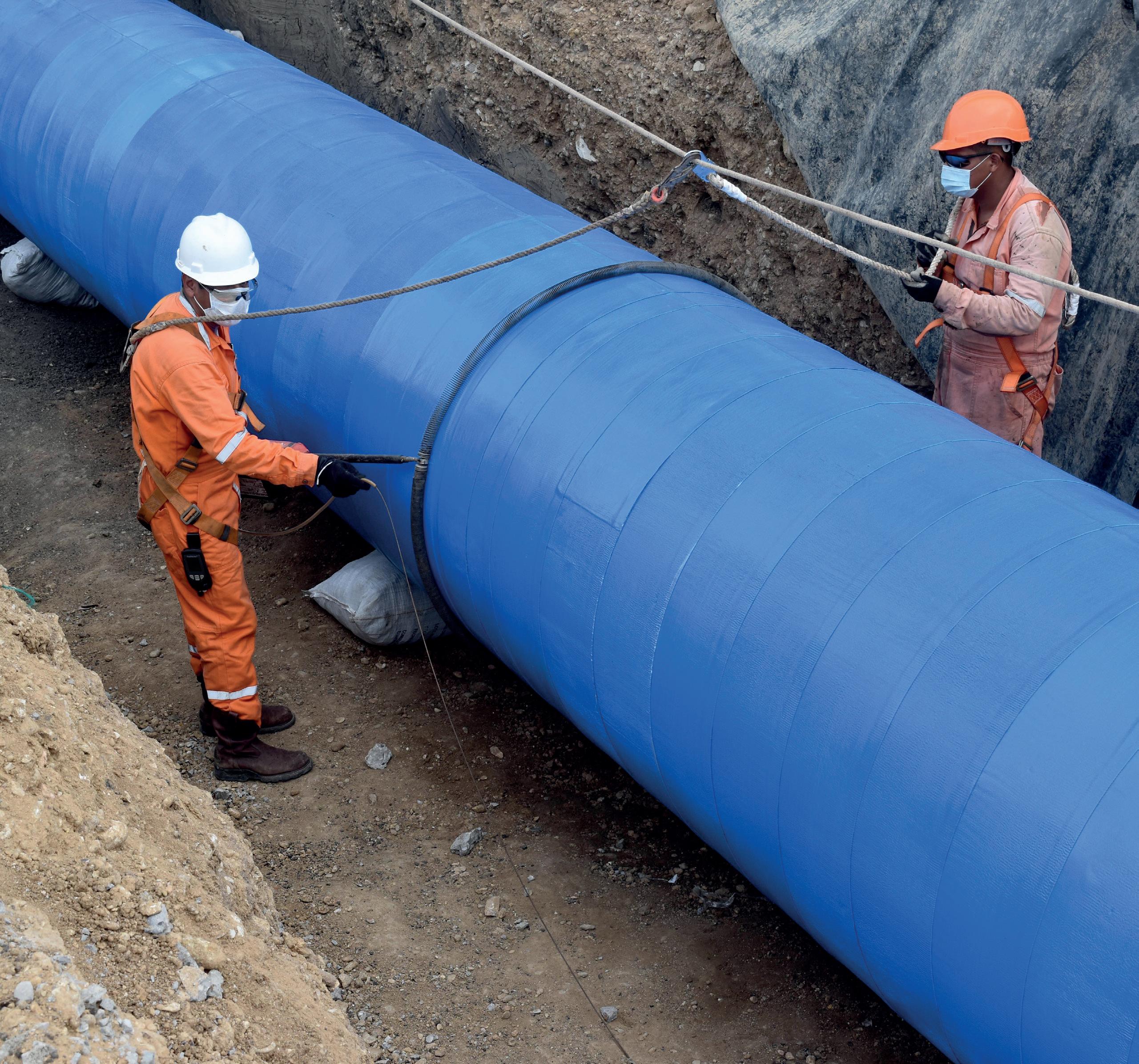
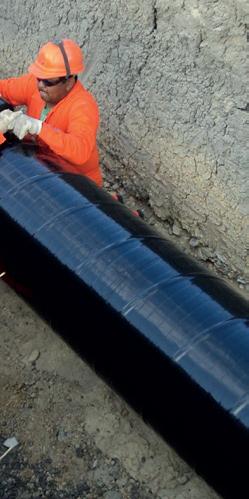
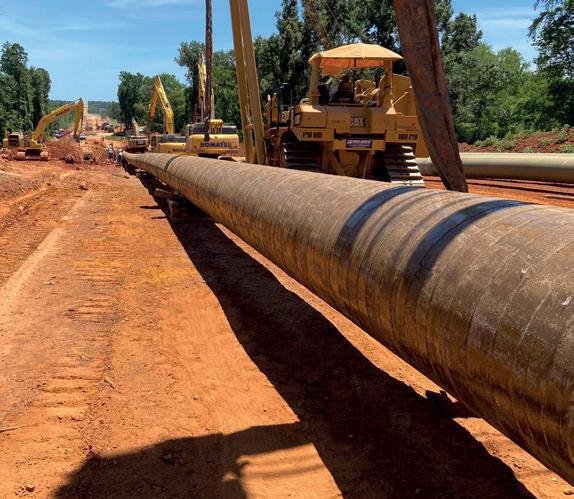
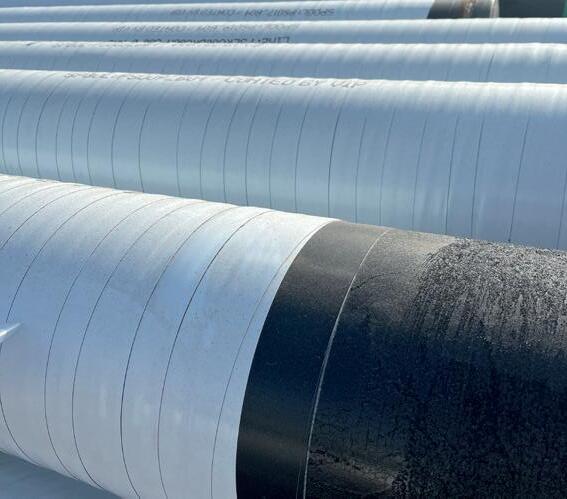
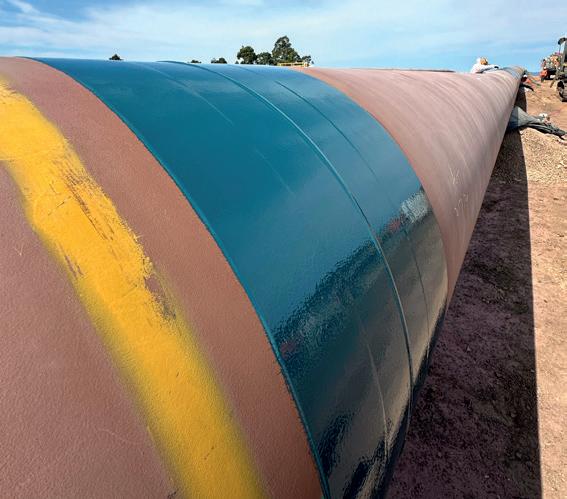
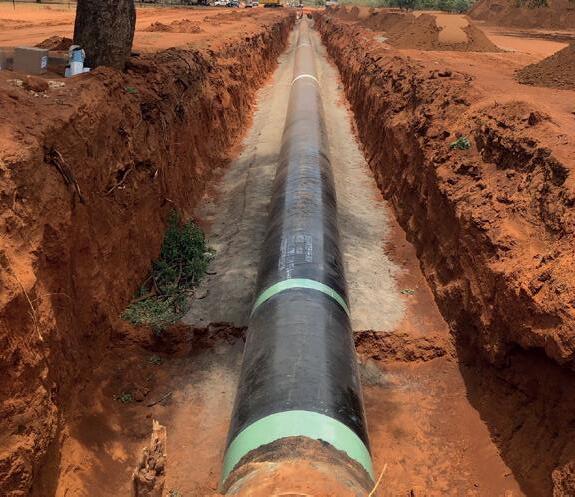
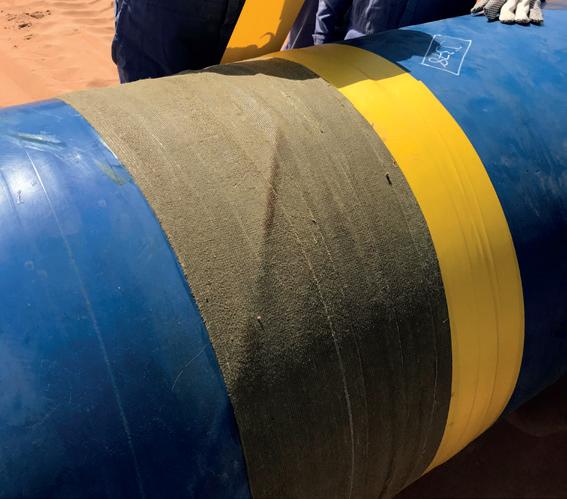
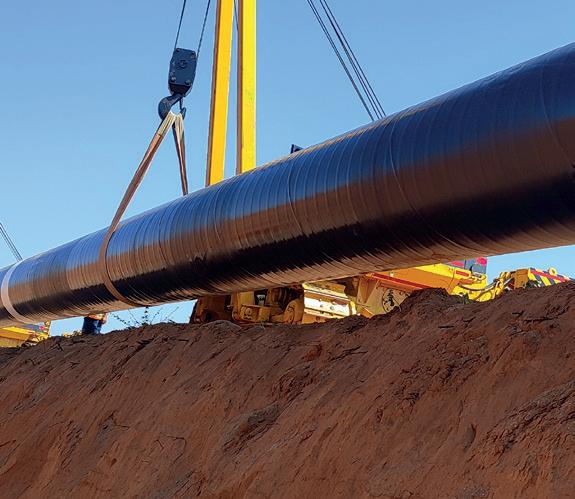
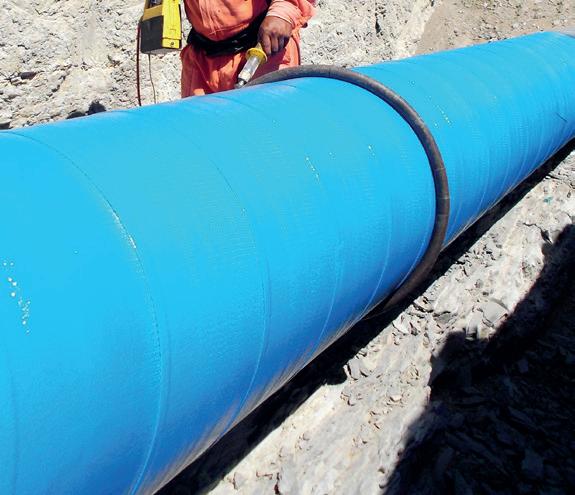
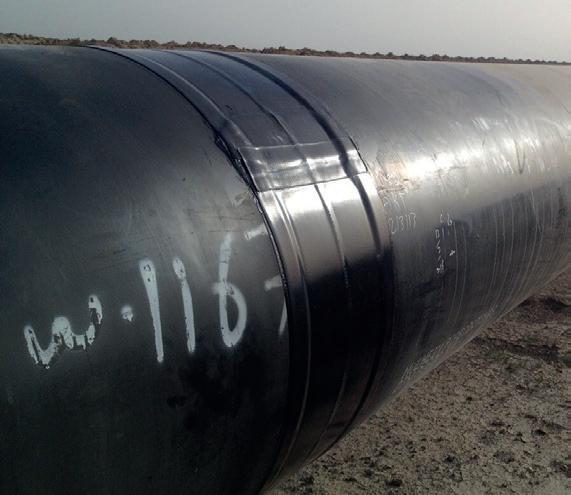
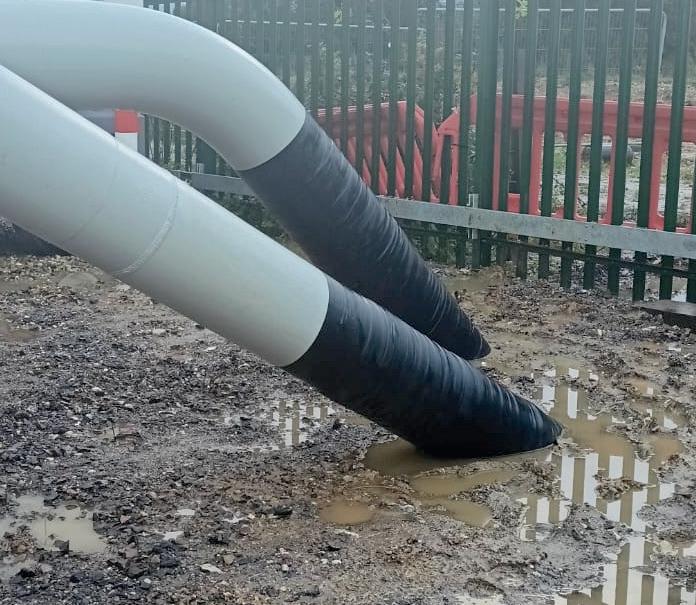
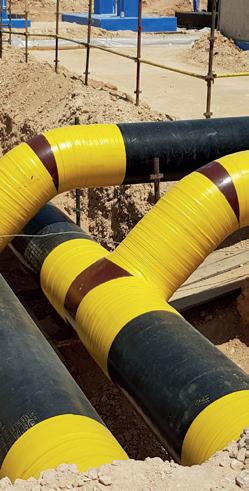
PROTECTIVE OUTERWRAPS
19 - 23 January 2026
PPIM 2026
Houston, USA
https://ppimconference.com/
10 - 11 February 2026
EPIC Midstream Holdings (EPIC) has announced that it has completed the sale of its 45% operated interest in EPIC Crude Holdings, LP (EPIC Crude) to Plains All American Pipeline (Plains).
Plains had already completed the purchase of 55% of EPIC Crude’s non-operated interest from Diamondback Energy and Kinetik Holdings, Inc.
AMI Pipeline Coating 2026
Vienna, Austria
https://www.ami-events.com/event/d7ee7978d036-4457-a67b-78d5343495b9/home
11 - 15 February 2026
78th Annual PLCA Convention Phoenix, Arizona
https://www.plca.org/annual-convention-events
03 March - 07 March 2026
CONEXPO-CO/AGG 2026
Las Vegas, USA
https://www.conexpoconagg.com/conexpo-conagg-construction-trade-show
10 March - 11 March 2026
StocExpo 2026
Rotterdam, The Netherlands
https://www.stocexpo.com/en/
15 - 19 March 2026
AMPP Annual Conference + Expo Houston, USA
https://ace.ampp.org/home
18 March 2026
World Pipelines CCS Forum - London London, UK
https://www.worldpipelines.com/ccsforum2026
27 - 30 April 2026
Pipeline Technology Conference (PTC) Berlin, Germany
https://www.pipeline-conference.com/
04 - 07 May 2026
Offhore Technology Conference (OTC) Houston, USA
https://2026.otcnet.org
EPIC Crude owns long haul crude oil pipelines and associated oil terminal/logistics facilities that serve both the Permian and Eagle Ford basins.
The completion of the sale of EPIC Crude marks the third divestiture by EPIC in the last 10 months. The three transactions have collectively driven gross transaction value of approximately US$5.25 billion.
“Over the last several years, EPIC has transformed its Crude business, and this transaction underscores the strength of our team, strategy, and execution,” said Brian Freed, Chief Executive Officer of EPIC. “We developed a
strategic footprint in Corpus Christi with downstream interconnectivity to our export facility and third-party terminals and refineries, as well as multiple interconnections in the top US oil basin, the Permian. We believe Plains will be a great owner to steward these assets into their next phase.”
“Ares is pleased to have supported Brian and the EPIC team through its evolution and recent achievements,” said Robert Kimmel, Partner in the Ares Private Equity Group. “We believe as the EPIC businesses move forward in their respective next chapters, they are well-positioned to meet the needs of customers.”
Freed continued, “I am incredibly proud of the entire EPIC team’s leadership and dedication in helping us reach these milestones. I also want to thank Ares for their partnership and support in positioning the EPIC businesses for the long-term,” said Brian Freed.
Vallourec announces multi-million dollar investment in a new premium threading line in Youngstown, Ohio
Vallourec, a world leader in premium tubular solutions, announced today a US$48 million investment to expand its operations in Youngstown, Ohio.
This strategic initiative is part of a broader commitment to US manufacturing, with over US$1.5 billion invested in the US over the past 15 years.
The investment will support the creation of a new Premium Threading Line within Vallourec’s existing steel making, rolling and finishing operations. This addition will offer a competitive, fully integrated domestic manufacturing route and strengthen Vallourec’s position in the Oil Country Tubular Goods (OCTG) market in the US. This new line will increase capacity to thread VAM® hightorque connections, which are increasingly used in onshore wells with long laterals. This development marks a major milestone in Vallourec’s ongoing commitment to US manufacturing excellence and energy innovation.
Construction began in July 2025 and is expected to be completed by early 2027, with no disruption to current operations. Once operational, this new line will create 40 full-time-equivalent positions, expand the local supply chain, and support the regional energy industry, further reinforcing Ohio’s industrial ecosystem.
Vallourec North America is a fully integrated supplier of 100% Made in America seamless tubes. The company delivers best-in-class tubular
solutions capable of withstanding the most extreme environments across the energy and industrial sectors. At the core of Vallourec’s US operations lies a strong circular economy approach: its seamless tubes are manufactured entirely from recycled scrap metal.
Vallourec’s North American headquarters are located in Houston, Texas, and its main production facility is based in Youngstown, Ohio. With nearly 2000 employees in North America, the United States represents Vallourec’s largest market globally.
• COP30: Oil & Gas Decarbonisation Charter sustains momentum
• Williams secures key permits for Northeast Supply Enhancement project
• Pembina and PETRONAS enter long-term agreement for Cedar LNG capacity
Follow us on LinkedIn to read more about the articles linkedin.com/showcase/worldpipelines


integrated bypass maintains production during isolation











Dual Leak-Tight Seals
Double Block & Bleed Isolation













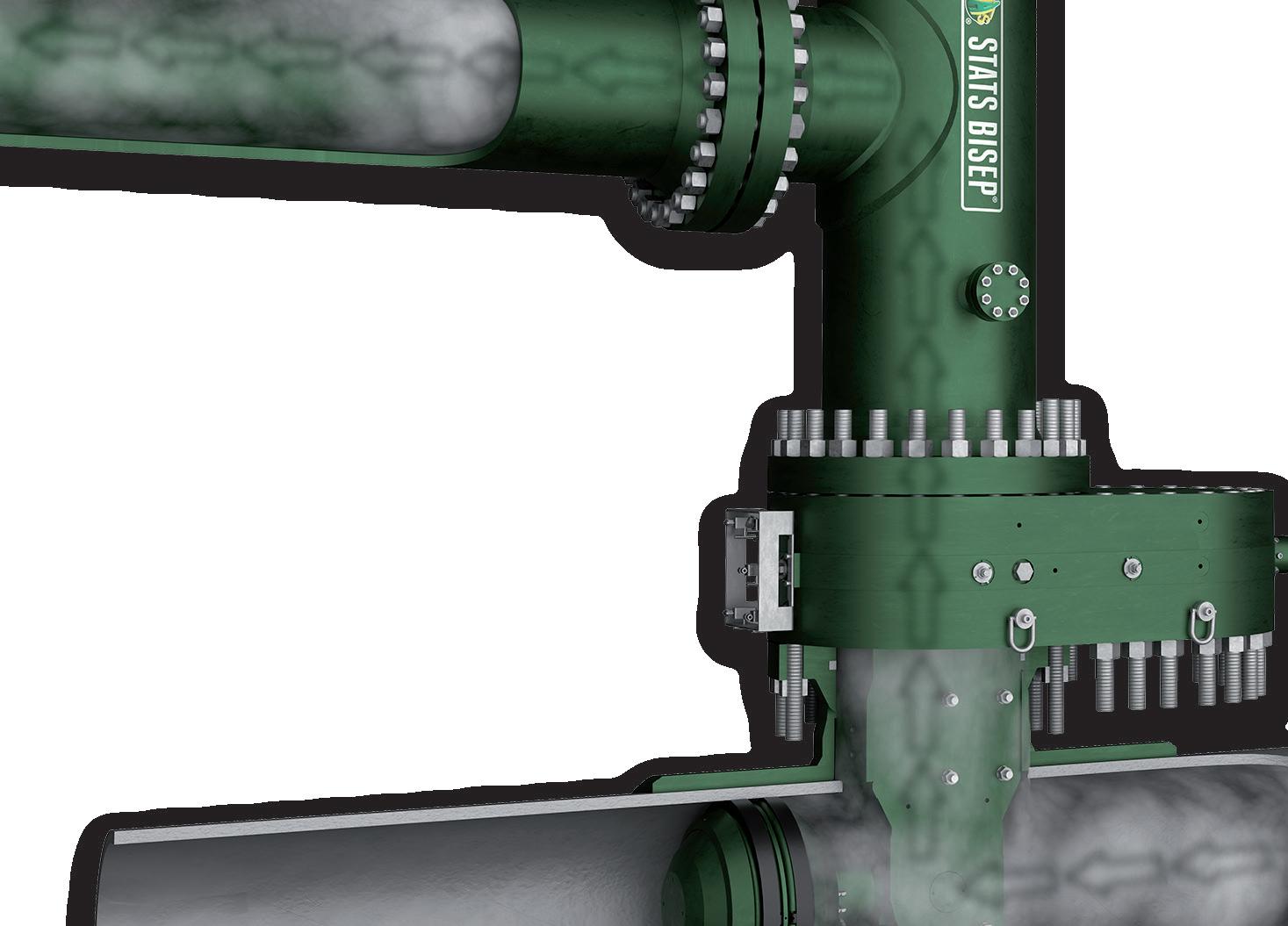






Isolated Pipeline







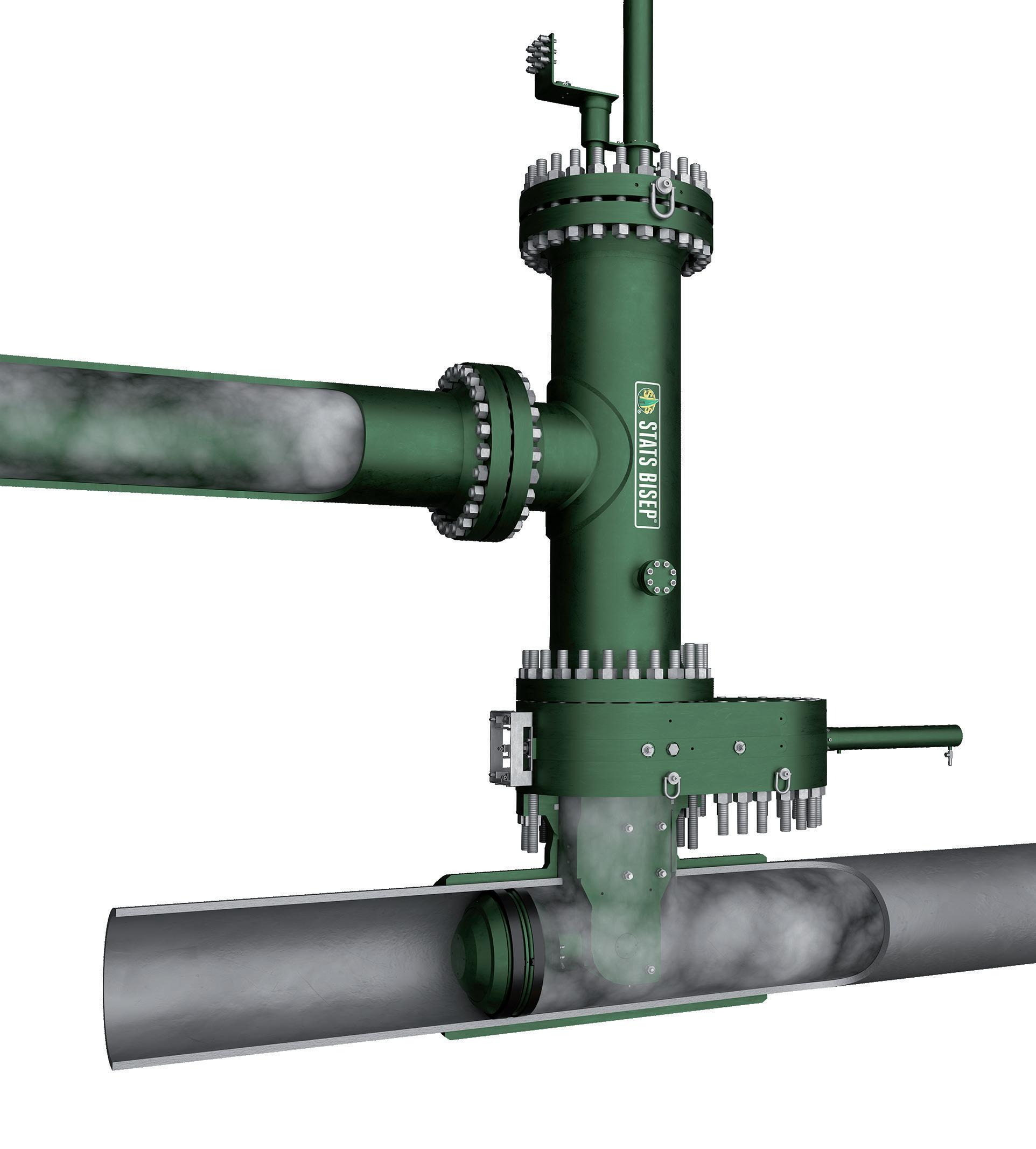


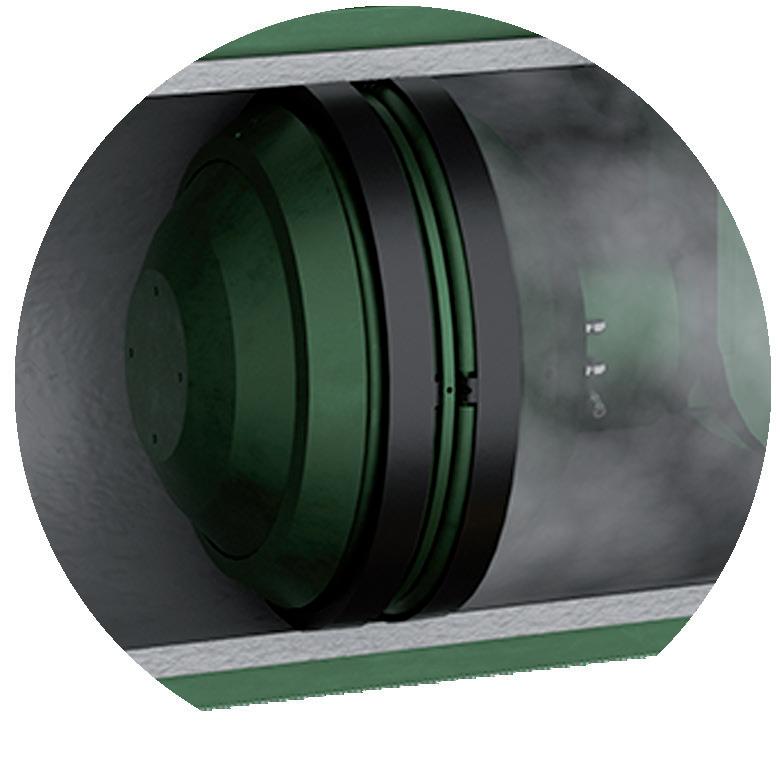

Monitored Zero-Energy Zone
The BISEP® has an ex tensive track record and provides pioneering double block and bleed isolation while
dual seals provide tested, proven and fully monitored leak-tight isolation, ever y time, any pressure.












Kevin Pang, Gourab Mondal, and Pushan Pal, FutureScaleX, examine the role of CO2 transport infrastructure as the critical missing link for effective, largescale carbon capture and storage (CCS) deployment in Southeast Asia (SEA) and the wider Asia-Pacific (APAC) region.
Carbon capture and storage (CCS) requires three connected components for success: capture, transport, and storage. While capture and storage receive the most media attention, transport infrastructure is the critical bottleneck to making large-scale CCS deployment truly work. Without robust CO2 pipeline networks that connect industrial carbon emissions to long term storage sinks, capturing carbon at scale becomes untenable. Southeast Asia (SEA) as a region is rapidly growing along with its energy demands. With a population estimated to top 720 million by 2030,1 with rapidly rising living standards, the IEA is forecasting the region to contribute to more than 25% of the expected growth in global energy demand by 2035 based on stated policies by countries in the region.2 Today, more than 80% of supplied energy in SEA is accomplished through use of fossil fuels. So in addition to needing to manage its manufacturing carbon footprint, SEA’s larger per capita energy carbon footprint than many other regions in the world also needs aggressive management.
Hence, a robust, coordinated CCS policy throughout the region is needed to build the necessary partnership ecosystem to make CCS a reality. This partnership system needs to focus on robust buildout of CO2 transport systems throughout the region that connect energy and manufacturing sites to viable long term storage sites to await the time when viable utilisation pathways are developed and the stored CO2 monetised.
Today CCS pipelines exist and are being built, the majority in the US and EU, with nascent buildouts in Brazil and China. The US leads the globe in total pipeline with approximately 5345 miles of pipeline,3 but these are used to link natural sources of CO2 for use in enhanced oil recovery (EOR) predominantly in the southwestern oil fields of the US, so the carbon storage is intentionally indirect. A 2020 Princeton University study estimates that up to 66 000 miles of new CO2 pipeline purpose built for CO2 transport to storage would be needed as part of a US net zero 2050 scenario.4
However, much needed policy guidelines on CO2 pipeline safety were withdrawn in February of 2025, leaving doubt on future progress. Further, in May of 2025, more than US$3.7 billion in Department of Energy awards for CCS projects were cancelled as part of a larger US$11.3 billion cut in energy projects. Momentum and progress are difficult to see at the time of writing.
The EU however, is moving ahead with multiple transnational cooperation and projects. In November 2023 the European Commission included 14 CO2 network projects as part of its list of 166 infrastructure projects of common interest, “to create a market for carbon capture and storage.”5 The EU Joint Research Commission estimates that up to 19 000 km (12 000 miles) of pipeline will be needed at a cost between €9 - 23 billion to transport for storage a minimum injection of 50 megatons (Mt)/year.6
Two of the ongoing projects are worth examining to create a benchmark of what a CCUS pipeline might look like in APAC. This is because it has similar nearest neighbour advantages, as well as short to long geographical challenges to construct coherent transport strategies, both short and long term, to accomplish their individual and shared cross country CCS strategies.
The Port of Rotterdam’s Porthos project is the template for CCS hub formation. Designed to carry up to 2.5 Mt of CO2 annually, the recently completed 20 km offshore pipeline enables Rotterdam operators such as Shell, ExxonMobil, Air Liquide, Air Products, and others in industrial hubs to transport their CO2 for injection 3 km under the North Sea into the 37 Mt storage capacity P18 depleted gas field.7 Constructed at an estimated cost of approximately €1.3 billion, this backbone infrastructure allows for future expansion and ties into other hubs, to address 17% of targeted industrial CO2 emissions reduction by 2030.8
Coming on the initial success of Porthos, the government of Norway driven Northern Lights project with operators Shell, TotalEnergies, and Equinor, is a 110 km pipeline from Øygarden terminal into the North Sea for subsea bed injection. Phase 1 cost of US$700 million designed to transport 1.5 Mt CO2/year was completed this year. First injection was accomplished in August with liquified CO2 from Heidelberg Materials’ Brevik, Norway factory first transported via ship to Øygarden. Phase 2 expansion has now commenced to increase pipeline capacity to 5 Mt/year at an expected cost of another US$700 million. This is to accommodate anticipated future growth and expected maritime shipping of CO2 from other industrial centres from the UK, northern Netherlands, Germany, and Eastern Europe.9
Key to system scaling is the total cost and capacity of the hybrid ship to pipeline system. The current hybrid approach of combining maritime to pipeline transport is limited as each designed ship today has only a CO2 carrying capacity of 8000 t at an estimated CAPEX of US$150 million/ship.10 Thus, lower cost pipelines are clearly needed to achieve scale and cost targets. FSX analysis using carbon credits estimates that a suitable breakeven point occurs at US$100/t of CO2. According to cited IEA and Wood Mackenzie analyses, current cost/t might be in the realm of US$175/t of CO2 11
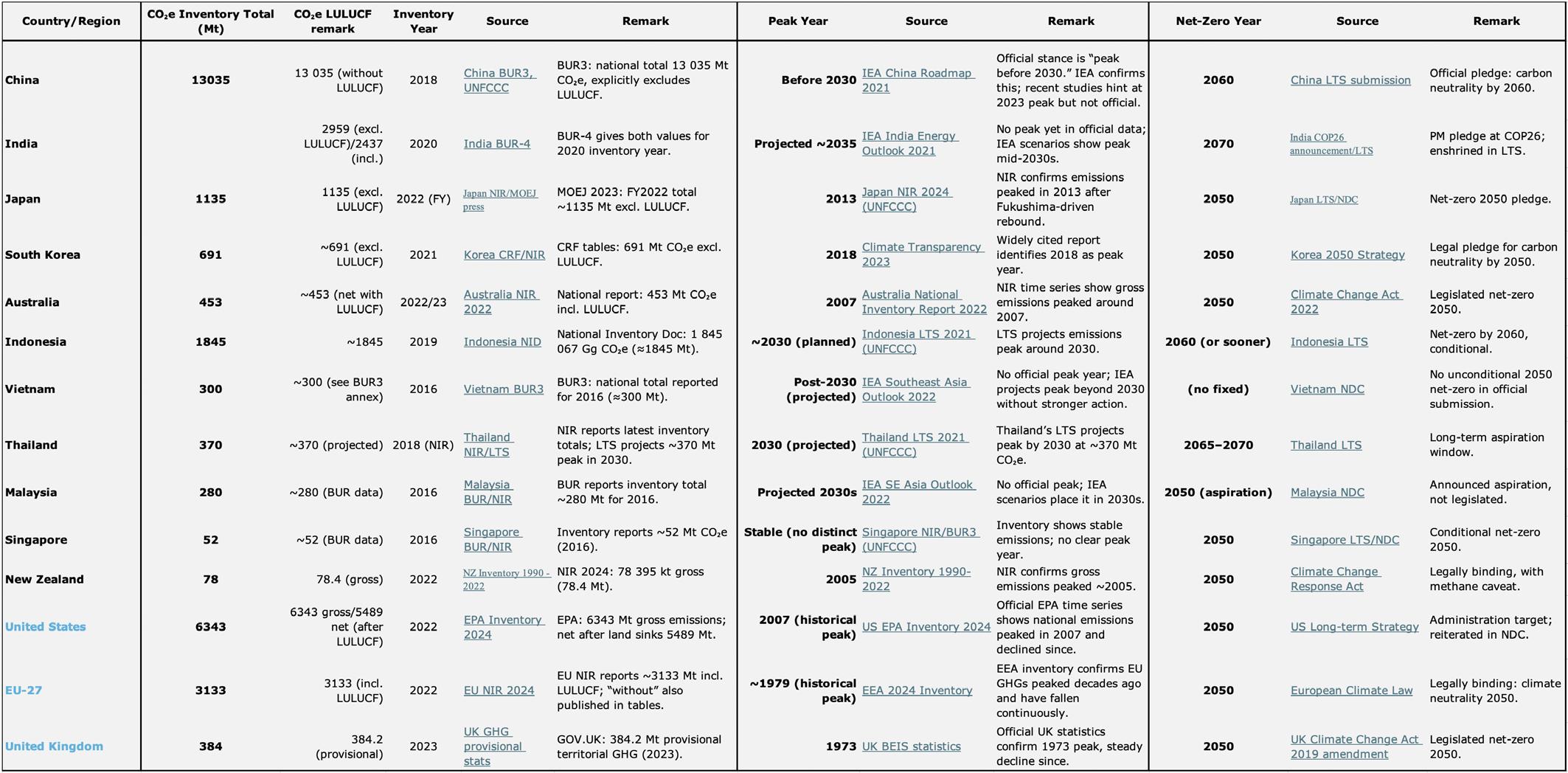
In contrast to the EU and the US, APAC lags significantly behind North America and Europe in CO2 transport infrastructure. Yet its needs and opportunities are no less significant. Home to 4.3 billion people and 60% of the world’s population, the calculated t of CO2e load exceeds as a region (including China) that of the US, EU, and UK combined (Table 1).
The APAC and the EU regions share similarities in having diverse coastline geographics for connecting ports, robust offshore oil and gas exploration along with depleted wells for potential CO2 storage, and strong maritime commerce dependencies. An advantage for APAC is that the top nine busiest seaports in the world are in APAC, number 10 being Rotterdam. Another unique advantage that APAC countries have is that many of their manufacturing bases are built for export, and hence are newer and closer to seaports, making hub and spoke infrastructure potentially more feasible and interconnectable at lower cost.
A key challenge and a stumbling block to APAC progress however is the lack of tight policy integration between nations like that of the EU, which through its European Commission and PCI programme which creates and funds large cross border energy infrastructure projects. A closer look at APAC policy making activity reveals increasing efforts to create cross
border interactions (Table 2). These public-private partnerships are laying the groundwork for storage siting, and hence transportation and eventual pipeline routes.
Figure 1 compares the APAC region and subregions against the leaders; the US, UK, and EU, along five critical dimensions for CCS ecosystem maturity and action. While the ASEAN region clearly lags in these dimensions, we see emerging strength in creating new financial and economic incentives for cross border CCUS cooperation via increasing private-public partnerships.
These cross border interactions, while still relatively early in formation, have the potential to create US$220 billion in annual GDP and 300 000 jobs across the region by 2035 according to the Asia Natural Gas & Energy Association (ANGEA).12 The foundation for creating CO2 hubs rests on a combination of geologic mapping, interoperability guidelines to connect pipelines, technology harmonisation, and mechanisms to ensure auditing, tracking, and carbon credit generation and sharing.
Analysis of the geographic distribution profile of CO2 generation across Southeast Asia and Oceania makes evident the opportunity for synergy, as well as competition, between countries like Australia, Indonesia, and Malaysia that have tremendous geological and spent well assets to become
Table 2. A closer look at APAC policy making activity revealing increasing efforts to create cross border interactions Entities When What Significance
Singapore, Indonesia Jun-25
Singapore, Japan Aug-24
Singapore, Malaysia Jan-25
Australia, Japan, Korea, others Dec-23
Japan, Malayasia, Indonesia Jun-23
Japan, Australia, ASEAN Aug-24
ExxonMobil, Shell, Singapore Mar-24
ExxonMobil, Petronas, Malyasia Jul-23
ExxonMobil, Pertamina, Indonesia Jul-23
Woodside Energy, Australia
BHP, Arcelor Mittal Nippon
Steel India, JSW Steel, Hyunday Steel, Chevron, Mitsui & Co.
Aug-25
Importation of up to 2 megatons (Mt)/y CO2 for storage from Singapore to Indonesia
CCS collaboration for adoption
MOU on cross border CCS transport
Multiple bilateral treaties for cross border CO2 transport
CO2 export for sub seabed storage
Formation of Asia Zero Emission Centre
Cross border value chain set up for CCS
Map and assess CO2 storage fields and create commercial frameworks
Study of Java Sea for CCS hub feasibility
CCS offshore basin storage, northwest Australia
Pre-feasibility study for CCUS hub formation across Asia
Indonesia has cleared up to 30% of 600 gigatons (Gt) of CO2 storage capacity for cross border use.1
Creation of standards for interoperable CCS markets, technology and innovation sharing.2
Carbon credit generating project cooperation. Note in March 2025 Malaysia passed their Carbon Capture, Utilisaiton, and Storage Bill to catalyse formation of a new growth industry.3
Australia seeking to capitalise on estimated 20 Gt onshore and 400 Gt offshore storage capacity to become storage hub. Japan creates a carbon storage permitting system to enable 120 - 240 Mt annual storage by 2050.4, 5
Japan seeks to secure up to 13 Mt/y storage by 2030 offshore Malaysia. Tentative budget of ¥4 trillion (US$27 billion) over 10 years for value chain build.6, 7, 8
Innovation hub for 11 partner countries hosted by the Economic Research Institute for ASEAN and East Asia (ERIA).9
Codeveloping a 2.5 Mt/y onshore/offshore storage capacity in Singapore by 2030. 10, 11
MOU in 2021, in 2023 partnership agreement signed to storage and local transport infrastructure.11, 12
Potential US$2.6 billion CCS project to explore up to 3 Gt of storage capacity across Asia Pacific.13, 14
Onshore pipeline gathering system and international CO2 ship based transport for injection; 5 Mt/y; targeting SEA customers.15
Define enablers for cross border transport and hub formation.16
Example public and private cross border interactions regarding CCS. With the exception of China who appears to be charting its own course, North Asia and South East Asia countries are increasingly working on cross border collaborations.
Key activities is regulations and policies setting up interoperability, accounting, and value chain formation and support to drive down CCS costs.
Transport will likely be first phase through specialised shipping followed by pipeline formation. Both Indonesia and Malaysia with significant geographic and depleted reserve space, are angling along with Australia, to become carbon storage hubs, taking CO2 from neighbouring countries.
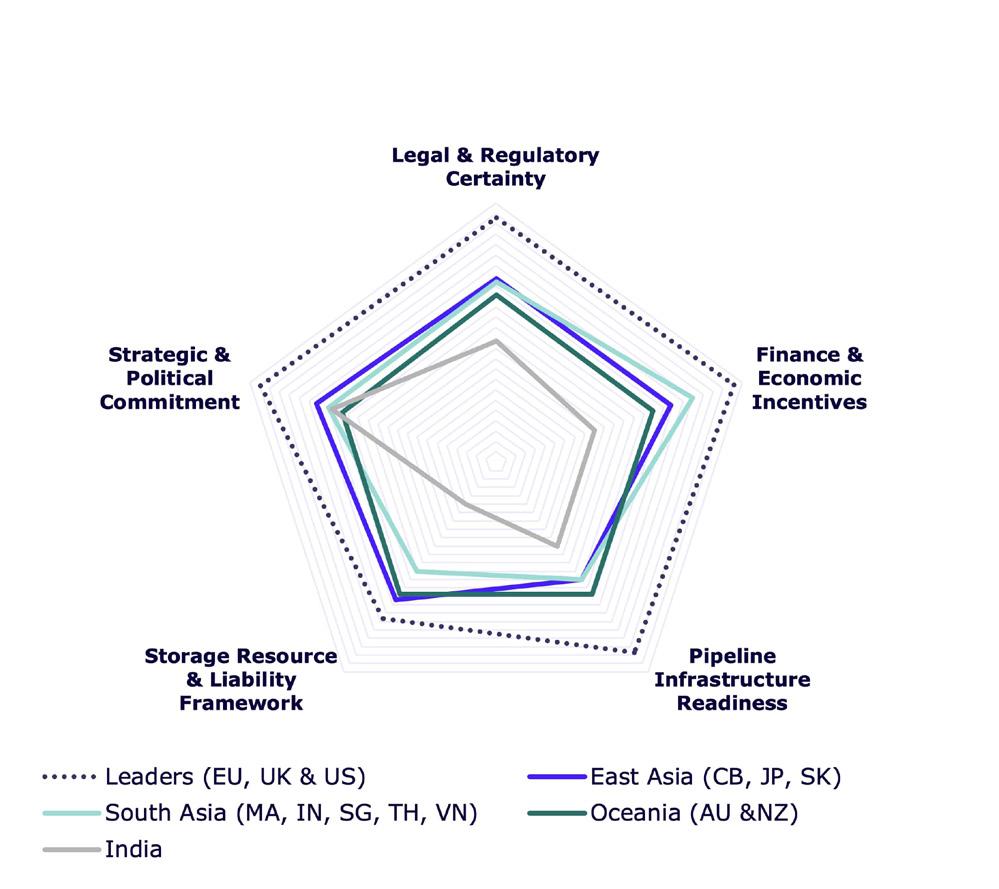
Figure 1. Comparison of the APAC region and subregions against the leaders; the US, UK, and EU, along five critical dimensions for CCS ecosystem maturity and action.
storage hubs. These in turn create the opportunity to become innovation hubs as the world seeks to find ways to not just store but utilise CO2. These massive stores then become feedstock assets for future chemical and biotechnology industrial usage. Hence the cross-border agreements must contain not just technology interoperability agreements but also future carbon credit and access rights.
The outlook for CO2 pipelines in APAC
APAC’s reliance on fuel combustion for energy means that CO2 emissions grew by 8% in 2024 to 19 gigatons (Gt),13 up from 17.5 Gt in 2022,14 which demands a robust and coordinated cross border capture, transport, and storage response to abate. Given the terrain, large distances, and fixed asset locations, a combination of shipping and pipeline transport will be needed. A recent study by Xodus Group envisions a possible scenario of up to 90 storage hubs across Asia connected by 8000 km of pipeline utilising 80 specialised CO2 carriers.15 Others are calling for up to 150 such vessels to ply the 6800 km of various expanses of ocean between Japan to Australia.16 But clearly pipelines are needed from shore to subsea storage and for high volume continuous cross border CO2 transport if APAC is to hit its ambitious >100 Mt/y capture and storage targets by 2050.
From the European Northern Lights initiative, we see that the upfront CAPEX for pipelines is high but the learning curve is steep. The initial 1.5 Mt/y pipeline cost US$700 million to deliver, but the follow-on Phase 2 pipeline is slated to cost the same US$700 million for 5 Mt/y, or US$1.3 million/km/Mt/y of CO2. This learning curve estimate is complicated by recent changes in trade and tariffs which have lifted material and labour costs for pipelines by more than two times in some regions.17 However, given APAC regional cooperation this may be less of a consideration, and the technological and engineering aspects of pipeline delivery costs should continue to decrease. Given the current 8000 t CO2 carrying capacity limitation per US$150 million
specialty ship; clearly a biphasic ship to pipeline, hybrid operating solution connecting Northern Asia to Southeast Asia is needed.
Given a recent policy and patent analysis showing that the APAC region is now out innovating the US and even the EU in CCS technology development, we see this as strong commitment to the industry and anticipate increasing market acceleration and opportunity throughout APAC as the region races to catch up and surpass the rest of world in CCUS deployment.18
For table references, please visit https://www.worldpipelines. com/special-reports/01112025/futurescalex--buildingpipelines-the-key-to-achieving-ccs-success-in-asia/
1. World Population Review, https://worldpopulationreview.com/continents/ southeast-asia
2. IEA, Southeast Aisa Energy Outlook 2024, https://www.iea.org/reports/ southeast-asia-energy-outlook-2024/executive-summary
3. US Department of Transport, Pipeline and Hazardous Materials Safety Administration, Annual Report Mileage for Hazardous Liquid or Carbon Dioxide Systems, October 1, 2025. https://www.phmsa.dot.gov/data-andstatistics/pipeline/annual-report-mileage-hazardous-liquid-or-carbon-dioxidesystems
4. Princeton University, ‘Net-Zero America: Potential Pathways, Infrastructure, and Impact’, October 29, 2021. https://netzeroamerica.princeton.edu/img/ Princeton%20NZA%20FINAL%20REPORT%20SUMMARY%20(29Oct2021).pdf
5. European Commission, ‘Commission proposes 166 cross-border energy projects for EU support to help deliver the European Green Deal’, November 28, 2023. https://ec.europa.eu/commission/presscorner/detail/en/ip_23_6047
6. Tumara, D., Uihlein, A. and Hidalgo Gonzalez, I., Shaping the future CO2 transport network for Europe, Publications Office of the European Union, Luxembourg, 2024, doi:10.2760/582433, JRC136709. https://publications.jrc. ec.europa.eu/repository/handle/JRC136709
7. Port of Rotterdam, Porthos CO2 pipeline laid on seabed and entrenched, August 14, 2025. https://www.portofrotterdam.com/en/news-and-pressreleases/porthos-co2-pipeline-laid-seabed-and-entrenched
8. Porthos and Beyond: The Critical Importance of Carbon Capture and Storage Projects for Dutch Climate Goals. https://cdn.catf.us/wp-content/ uploads/2023/02/20091740/CATF_PorthosFactsheet_English_02.27.23.pdf
9. Mr. Sustainability, ‘Equinor Moves Ahead with CCS’, https://www. mr-sustainability.com/stories/2021/equinor-moves-ahead-with-ccs
10. Thunder Said Energy, ‘Liquefied CO2 carriers: CO2 shipping costs?’, https:// thundersaidenergy.com/downloads/liquefied-co2-carriers-co2-shipping-costs/
11. Euro News, ‘Can CCS meet Europe’s climate targets? Three projects beset with problems suggest not’, By Sam Edwards, May 26, 2025. https://www.euronews. com/green/2025/05/26/can-ccs-meet-europes-climate-targets-threeprojects-beset-with-problems-suggest-not#:~:text=Today%2C%20there%20 are%20only%20five%20operational%20CCS,which%20is%20outside%20of%20 the%20EU.%20Related.
12. Asia Natural Gas & Energy Association, Cross-Border CCS for Asia Pacific, https://angeassociation.com/policy-areas/cross-border-ccs-for-asiapacific/#:~:text=Malaysia%20and%20Indonesia%20have%20both%20signed%20 MOUs,Summit%20in%20South%20Korea%20in%20late%202025.
13. Statsia, Energy & Environment, Emissions, ‘Carbon dioxide emissions from energy worldwide from 1965 to 2024, by region’, https://www.statista.com/ statistics/205966/world-carbon-dioxide-emissions-by-region/
14. IEA, Asia Pacific, Total CO2 emissions, https://www.iea.org/regions/asiapacific/emissions
15. XODUS, ‘Forecasting the APAC CCUS Infrastructure’, https://www.xodusgroup. com/media/z3opky0q/forecasting-the-apac-ccus-infrastructure.pdf
16. Asian Power, Sailing the Future of Asean Carbon Shipping, By Suwanto and Lintang Ambar Pramesti, https://asian-power.com/environment/commentary/ sailing-future-asean-carbon-shipping
17. Oil & Gas Journal, ‘Pipeline construction costs reach record $12.1 million/mile’, https://www.ogj.com/pipelines-transportation/pipelines/article/55322093/ pipeline-construction-costs-reach-record-121-million-mile
18. Energy Sudies Institute, ‘What the Trump Presidency Means for CCS: Policy Shifts and Opportunities for Asia’, Pardeep Pal, Sita Rahmani, Chew Shee Jia, and Kevin Pang, July 29, 2025. https://esi.nus.edu.sg/docs/default-source/ esi-policy-briefs/esi-pb-82_what-the-trump-presidency-means-for-ccs. pdf?sfvrsn=16a49808_1
Boryana Nedyalkova, Researcher, EMIS, highlights the crossroads that Central and Eastern Europe (CEE) is at regarding its energy landscape and the careful balancing act between hydrogen vs methane.
The Central and Eastern Europe (CEE) region is at crossroads as it reshapes its energy landscape in the aftermath of severed ties with Russian gas. Recent infrastructure investments have diversified gas flows and boosted access to LNG, but the EU’s long-term decarbonisation agenda also demands a parallel shift toward hydrogen. This has stretched the CEE countries between managing the immediate challenges of energy security and preparing for a hydrogen-driven future.1
Natural gas supply diversification is triggered by the EU announcing plans to phase out Russian fossil fuel imports by 2027, pushing a ban on new pipeline contracts starting 1 January 2026, and ending imports under existing short-term contracts by 17 June 2026.2

Working towards a gradual shift to green hydrogen is, in turn, mandated by the EU Hydrogen Strategy that has set binding targets for 10 million t of domestic electrolyser capacity, used for green hydrogen production, and 10 million t of renewable hydrogen imports by 2030.3
As a result, hydrogen projects have slowly been gaining momentum across the 27-nation bloc. While more than 90% of low-emissions hydrogen projects in Northwestern Europe remain in early phases of development,4 on 1 August 2025, the European Commission (EC) launched its third auction in support of renewable and low-carbon hydrogen projects that demonstrate technical and financial readiness.5
CEE countries successful in aligning their technical, regulatory, and financial planning with the Brussels-driven pace of development, will be in position to achieve a strategic place within this new ecosystem, while laggards will risk losing funding,
alongside remaining locked into carbon-intensive infrastructure while EU incentives and focus shift to alternative sources of energy.
Yet, the EU’s visionary hydrogen policy is complicated to say the least. On one hand, it strictly defines green hydrogen as one obtained from renewable energy and not fossil fuels, and prioritises the financing of such projects, also planning the construction of an EU-wide hydrogen transportation infrastructure. On the other, it envisages a transition period where hydrogen is to be obtained from fossil fuels and mixed with natural gas; and transported on the current gas pipeline network, following costly upgrades to technically accommodate the hydrogen-methane mix.
This makes EU’s hydrogen plans a challenge to implement in the CEE context of legacy energy systems and other structural, economic, and institutional constraints. Issues range from regulatory complexity and lack of infrastructure readiness against tight deadlines, to lack of national industrial hydrogen targets, and alleged disconnect from market reality against high implementation costs.
Uneven midstream hydrogen readiness
Technical compatibility
One aspect of hydrogen readiness is the technical compatibility of the gas networks of CEE countries (Poland, Czechia, Slovakia, Hungary, Croatia, and Romania) for handling hydrogen blends
(allowed until the end of 2029)6 or pure hydrogen safely and efficiently. This is because the countries have been mapped along the future routes of the five EU hydrogen corridors, made up of both repurposed and newly built pipelines, and defined by the European Hydrogen Backbone (EHB) in May 2022.7 However, as of mid-2025, the CEE countries’ plans related to corridor implementation remain vague, risking stalling project progress if other EU member states advance on schedule. Slovakia’s Transmission System Operator (TSO) Eustream,8 Hungary’s FGSZ,9 and Romania’s Transgaz10 have reported testing hydrogen blending against a lack of set EU standards on the proportion between natural gas and hydrogen in the required blend.11 In March 2024, Poland’s Polska Spółka Gazownictwa (PSG) obtained the country’s first technical certificate for up to 20% blended hydrogen transportation, on the Jelenia Góra-Piechowice pipeline.12 Czechia and Croatia have not publicly disclosed blending trials yet. Not all existing infrastructure (pipelines, valves, and compressors, amongst others) can handle any blend proportion, which adds a further level of uncertainty to the technical compatibility required.13
The Clean Hydrogen Joint Undertaking has helped draft projects for hydrogen valleys across the EU, including in Poland, Croatia, and Slovakia.14 Hydrogen valleys are key nodes in the future corridors because they integrate hydrogen production, storage, transportation, and end-use applications within a defined geographic area, fostering a sustainable hydrogen
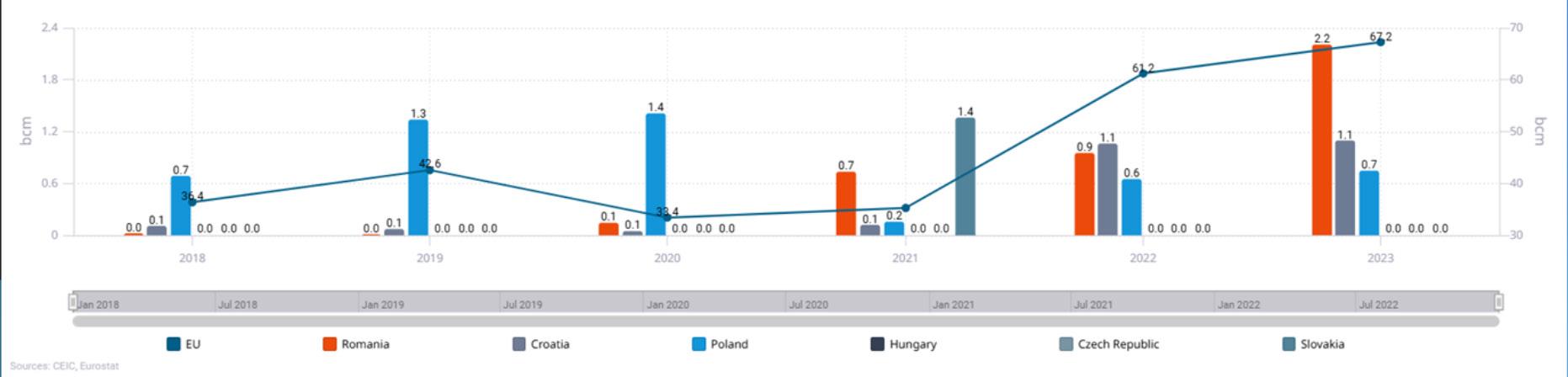

economy. Construction of the EastGate H2V in Slovakia’s Košice region, for example, started only in April 2025.15
According to an October 2024 Bankwatch Network report called ‘Looking Beyond the Hype, Public Funding of Hydrogen in Central and Eastern Europe’, the EU’s cross-border hydrogen infrastructure assumes very high levels of production, consumption, and trade, which may be based on speculative demand scenarios.16 Furthermore, green hydrogen is associated with substantial production and efficiency losses, an IRENA publication stated in 2020.17
Against this backdrop, the July 16, 2025 publication of Joule magazine makes the case for a more robust European green hydrogen strategy, suggesting raising the 10 million t production target to 25 million t by 2040, given that the EU has not officially committed to a 2040 target yet.18 In February 2025, Daniel Fraile, Chief Policy Officer at Hydrogen Europe highlighted that the EC should not give preference to electrification-only scenarios and should be working towards parallel developing of electricity and hydrogen infrastructure, alluding to a considered scenario of only 3 million t hydrogen production by 2030, instead of the 10 million t target announced in 2020.19
In a July 2025 interview with CEE Energy News, Veronika Vohlídková, executive director of the Czech Hydrogen Technology Platform (HYTEP), said Czechia will not be ready for hydrogen import via pipelines by 2030, so the country’s goal is to develop local production sites. Specifically, the country
was considering transforming coal regions into hydrogen hubs, reducing energy dependence on other countries.20
According to Vohlídková, the EU rules on green hydrogen production are too strict and are suitable for countries with large renewable energy generation capacities, not Czechia. She also noted that production costs under the current rules make green hydrogen uncompetitive without subsidies.21
A similar appeal was launched by German Chancellor Olaf Scholz who, at the beginning of 2025, called on EC President Ursula von der Leyen to modify the excessively strict green hydrogen definition, HydrogenInsight.com reported.22
The EU prioritises the production of certified renewable (green) hydrogen, as it has the highest potential to reduce greenhouse gas (GHG) emissions. This is allegedly so only if EU member state authorities can make sure the pipelines carrying hydrogen – the smallest molecule – will not leak through microfractures in repurposed pipelines for example. Released into the atmosphere, hydrogen has up to 37 times greater global warming potential compared to carbon dioxide, as it slows down the decomposition of methane.23
Nevertheless, green hydrogen – produced via electrolysis using renewable energy such as wind, solar, or hydropower – is considered a good solution for the decarbonisation of carbonintensive sectors that cannot be feasibly electrified (e.g. steel, cement, chemicals, shipping, transportation, aviation).24
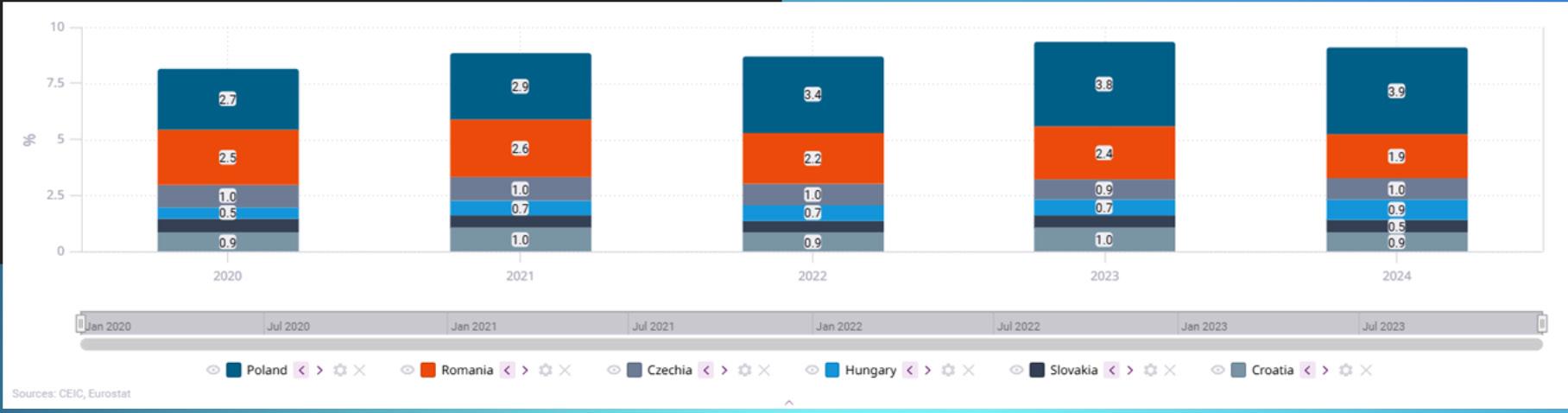
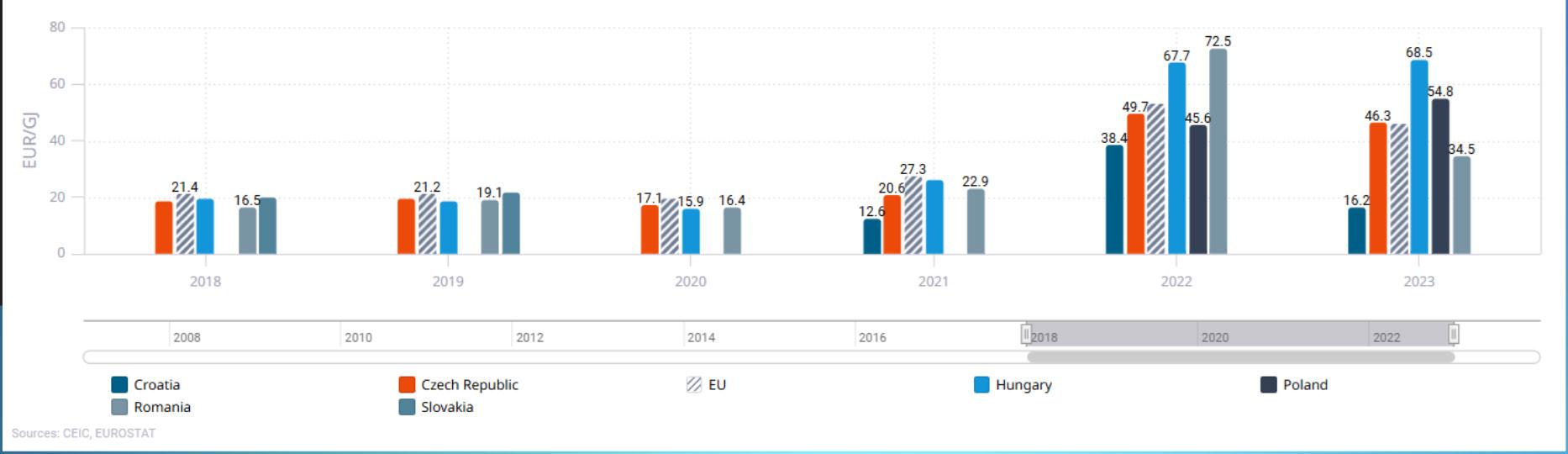
3. Renewable energy generation in CEE countries (share of total renewable EU generation). Diverging renewables bases across the CEE region are a key constraint for green hydrogen readiness. Poland and Romania dominate CEE’s renewables generation share, while lower output countries like Croatia, Slovakia, and Czechia, will face greater challenges in meeting EU-certified green hydrogen production targets without rapid renewable capacity growth.
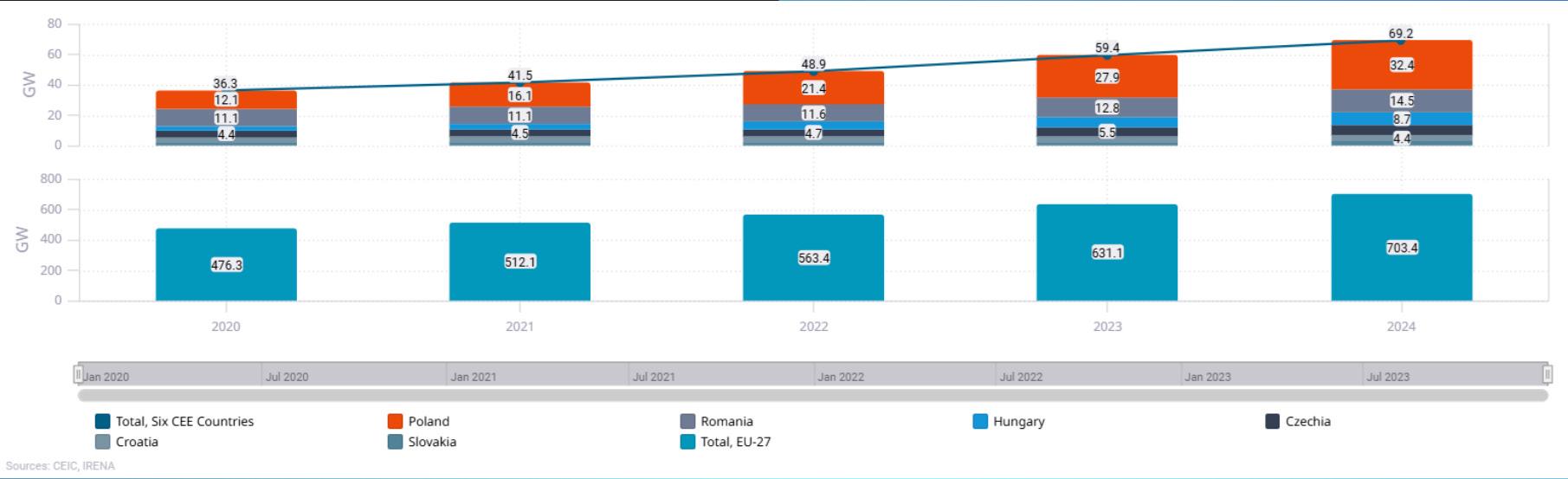
4. Renewable energy capacity in CEE countries. Poland boasts the highest renewable energy generation capacity of all CEE countries. This puts the country, in theory, in a good place for renewable hydrogen production, provided it can afford CAPEX costs of €3.28/kg (€3.81/kg in 2023), alongside electricity costs of €2.93/kg (€3.22/kg in 2023), according to 2024 data by the European Hydrogen Observatory.

As much as 96% of hydrogen currently produced in the EU is fossil-based, a February 2025 European Parliament briefing stated.25 The EU hydrogen funding framework such as IPCEI and the Hydrogen Bank, allows support for low-carbon hydrogen, which may include blue hydrogen (made from natural gas with carbon capture), and other transitional ‘low-carbon’ forms.26
This creates space for ambiguity and greenwashing at the national level, essentially meaning that EU public funds might be used to build fossil hydrogen infrastructure. Another risk is that in the early stages of their functioning, the hydrogen pipelines might carry hydrogen produced with grid electricity that includes fossil fuel inputs.27
These concerns are especially valid for the CEE countries where green hydrogen production is immature, national strategies allow grey or blue hydrogen (e.g. Hungary,28 Poland,29 Czechia30), and certification or enforcement is weak.
As proof of this, not a single EU member state, including none of the CEE countries, has fully transposed the EU’s Renewable Energy Directive III (RED III) by the deadline of 21 May 2025, the EC said on its website in September 2025.31 RED III creates a legally backed market demand from sectors like aviation steel or chemicals, mandating that member states use at least 42% renewable hydrogen in industry by 2030, and at least 5.5% of green hydrogen or e-fuels in transportation by 2030. The directive, passed in October 2023, also stipulates that only hydrogen certified under its mechanisms counts towards national targets. However, the document does not fix national targets, creating uncertainty and reluctance from industry to engage in long-term hydrogen contracts, S&P Global said in a June 2025 article.32
Without improvements in policy, funding, and demand-side requirements to address high costs and weak demand, less than 20% of the EU’s hydrogen production projects may become operational by 2030, said an April 2025 report by the Westwood Global Energy consultancy titled ‘Europe’s Hydrogen Future: How Much is Realistically Achievable?’33
Storage for flow flexibility
CEE countries have substantial gas storage,34 but most of it is not certified or technically fit for (pure) hydrogen storage, which has stricter technical requirements.35 CEE countries have been conducting studies estimating the feasibility and safety of converting natural gas storage into hydrogen storage as well as developing new hydrogen storage capacity. For example, in July 2024, Poland announced plans to set up a large-scale hydrogen storage facility in Kosakowo to utilise energy surpluses in Pomerania, CEE Energy News reported.36
Poland is EU’s third-largest hydrogen producer by capacity after the Netherlands (second-largest) and Germany (the largest),37 so the low level of maturity of its hydrogen storage infrastructure can be used to gauge the general lack of preparedness of the CEE region. Yet CEE should have operational hydrogen storage infrastructure well ahead of the 2030 deadline, if storage specifications are to be consistent with a gradual transition from blended to pure hydrogen. To help address this, the Annual Work Programme 2025 of the Clean Hydrogen Joint Undertaking has stated it will invest in development of lined rock caverns for hydrogen storage alongside other infrastructure vital for enabling cross-border hydrogen flows and storage trials.38
Varying progress towards green hydrogen Poland has been making substantial green electrolyser investments backed by EU funds.39 Croatia has also reported that important green hydrogen infrastructure is scheduled to become operational in 202640 and 2027.41 Romania has pilot projects for green hydrogen in progress, but its midstream network is not hydrogen-ready yet.42
The November 2024 Learnbook for hydrogen infrastructure by the European Clean Hydrogen Alliance, describes Czechia, Slovakia, and Hungary as still being in early planning stages, with few production projects launched, dedicated infrastructure funding, or engineering and retrofitting timelines.43
To avoid the risk of being sidelined from the emerging hydrogen economy, CEE should prioritise pipeline retrofits, clarify regulatory frameworks, and invest in regional transit and storage hubs. The EU, in turn, could provide clearer national guidelines, more flexible funding, and certification, as well as targeted technical support, ensuring that CEE becomes an integral part of the EU’s decarbonised future.
Parallel to its hydrogen concerns, the CEE region must navigate the overlapping but often conflicting priority of reshaping and sustaining its energy landscape in the aftermath of severed ties with Russian gas.44
Shifting from long-term supply contracts with Russia to spot LNG and pipeline imports from western European countries has made CEE a participant in a highly competitive global market with fluctuating prices and little to no political accountability to the local governments.45
Under EU regulations, CEE countries must fill their natural gas underground storage to at least 90% by 1 November each year.46 For the region, import timing is vital for preventing potential disruption caused by cold spells earlier in autumn coupled with delayed storage fill. On 1 October 2025, the EU system was at about 83% full, which is considered a healthy level for the coming winter, the EC said on its website.47
Backhaul deliveries from Germany, Austria, and Italy are associated with transit and/or storage costs that make gas more expensive than when deliveries came from Russia.48 The bidirectional flow of gas on already available infrastructure was achieved through costly equipment upgrades, which contributed to an increase in domestic gas prices in CEE countries.49 However, not all gas can be injected into storage smoothly because of pipeline congestion along the SlovakiaAustria and the Czechia-Germany routes and pipeline bottlenecks and regasification limits at plants crucial for CEE, such as Krk FSRU in Croatia and Świnoujście in Poland.50 Debottlenecking of pipeline infrastructure in the South-North and West-East directions will be crucial for CEE countries to succeed in the quest for energy security from 2025 onwards.
LNG imports, heavily dependent on enough interconnection capacity, are a mainstay of supply diversification and energy security in CEE. Countries operating regasification facilities (LNG terminals) like Poland and Croatia, are key in supplying gas to landlocked countries in the region. Croatia is adding new export capacity to neighbouring countries in late 202551 and beyond,52 boosting the country’s support of the region’s energy needs.
According to global trade analytics company Kpler, Poland’s potential for exports into other CEE countries limited, especially in the event of a colder winter. This is because most of the capacity available at Świnoujście is booked by the national heavyweight Orlen and its subsidiaries. Another factor is its poor connectivity with Czechia, limiting the opportunity to send gas there in the short term.53
In addition, the CEE countries are not a single natural gas market but are home to different capacity reservation rules, tariff regimes, and storage access frameworks, complicating regional cooperation.
Overall, CEE countries possess sufficient flexibility to manage the loss of Russian gas and LNG will be central to maintaining supply security. Its effectiveness, though, will depend on how rapidly additional pipeline interconnection capacity comes online.
With multiple alternatives to Russian supplies now operational or coming up, CEE’s midstream networks have successfully
a marginal transit route, but a key node in a resilient European gas architecture, combining LNG, pipeline, storage, and hydrogen-ready infrastructure. For this, however, the region needs to show political will, regulatory discipline, and strategic consistency. Without a clear course to rigorously green hydrogen, however, the transition to this new energy source risks recasting CEE’s natural gas dependency under a new name. The success of this transition, though, can reshape CEE’s energy sovereignty and redefine its strategic role in Europe’s energy future.
EMIS is a leading curator of multi-sector, multi-country research for the world’s fastest-growing markets. We provide a unique combination of research from globally renowned information providers, local and niche specialist sources, our own proprietary analysis, and powerful monitoring and productivity tools. EMIS delivers trustworthy intelligence covering more than 370 industry sectors and 16 million companies across 197 markets. EMIS is part of ISI Markets.
Note
Graphs courtesy of the CEE Natural Gas Sector Report 2025 - 2026, an EMIS Insights Industry Report, and the CEE Renewable Energy Sector Report 2025 - 2026, an EMIS Insights Industry Report. For references, please visit https://www. worldpipelines.com/special-reports/01112025/emis--an-energy-



Jijo George, STATS Group, examines how to safely execute critical valve replacement without halting production.
Pipeline isolation during maintenance or modification activities remains among the most critical operations in the oil and gas sector. Conventional methods such as full depressurisation and venting, while reliable, have drawbacks including significant downtime, environmental emissions from flaring or venting hydrocarbons, and the potential formation of hydrates in subsea systems. In addition, operators often encounter difficulties isolating sections of their pipeline to facilitate essential maintenance activities when appropriate valves are absent from the line or not functioning adequately.
As an alternative, inline isolation plugs that provide double block and bleed (DBB) capabilities offer a safe and efficient approach by providing two independent sealing barriers separated by a zero-energy zone. This approach ensures the safe breaking of containment on pressurised systems in compliance with the highest industry standards. Achieving DBB in operational high-pressure pipelines without depressurising the system or section of pipeline requires specialised isolation tools.
The Tecno Plug® inline isolation tool, developed by STATS Group, addresses this challenge by providing DNV

Type Approved double block and bleed isolation through a combination of mechanical fail-safes, hydraulic actuation, and energised seal technology.
A recent isolation project completed on a 56 in. crude oil pipeline in Saudi Arabia highlights the advantages that inline isolation tools can provide, enabling the safe replacement of a 56 in. scraper trap valve while production was maintained throughout the entire operation.
STATS was approached by a major client in Saudi Arabia requiring the replacement of a 56 in. scraper trap valve, with the critical condition that the work be completed without shutting down, draining, purging, and flushing the entire pipeline.
Following a detailed site survey and comprehensive engineering study, STATS proposed a custom-designed 56 in. Tethered Tecno Plug, tailored specifically for this application and designed to overcome challenges associated with nonstandard scraper trap features.
Mark Gault, Vice President, Middle East at STATS Group, said: “This is the largest Tecno Plug in the history of STATS,
highlighting a remarkable milestone in our capability to deliver safe, innovative, and large-scale isolation solutions for critical pipeline infrastructure. This successful project provided a safe and cost-effective double block isolation, resulting in no
interruption to production and preventing a costly shutdown. The safe and efficient workscope was the result of advanced planning, dedication, and teamwork between STATS and client personnel.”
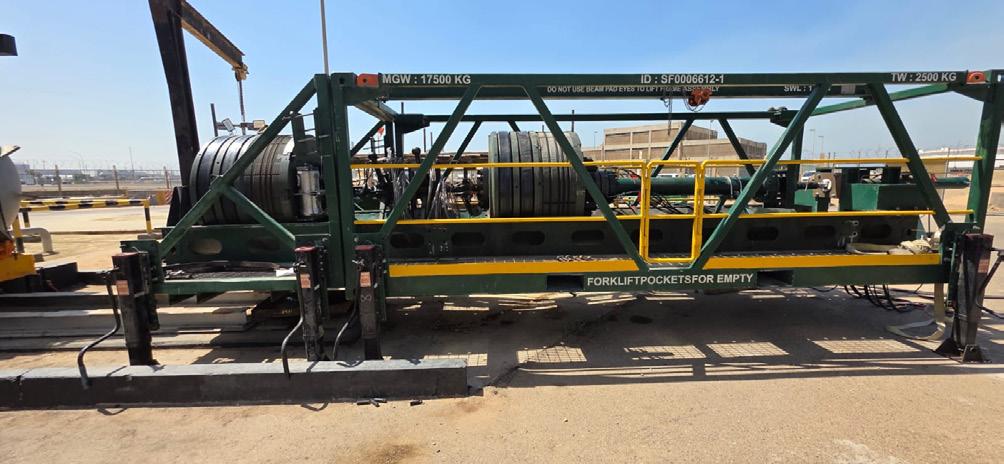
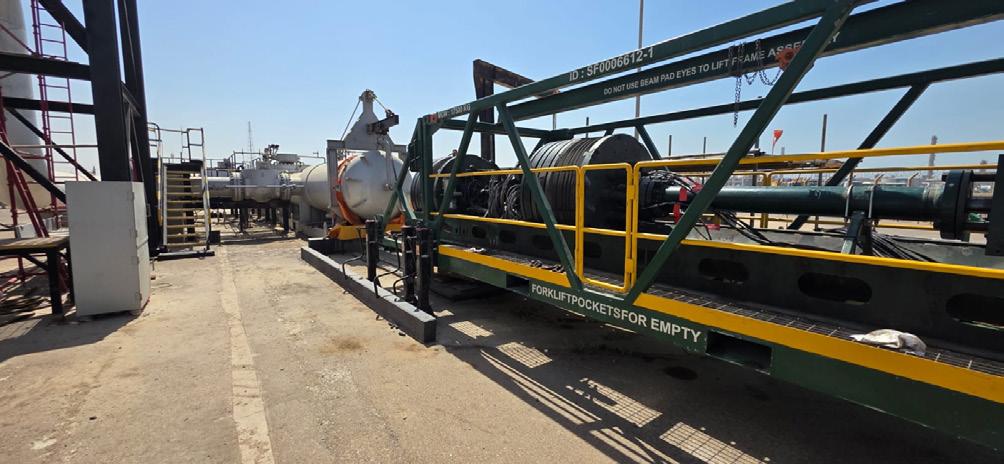
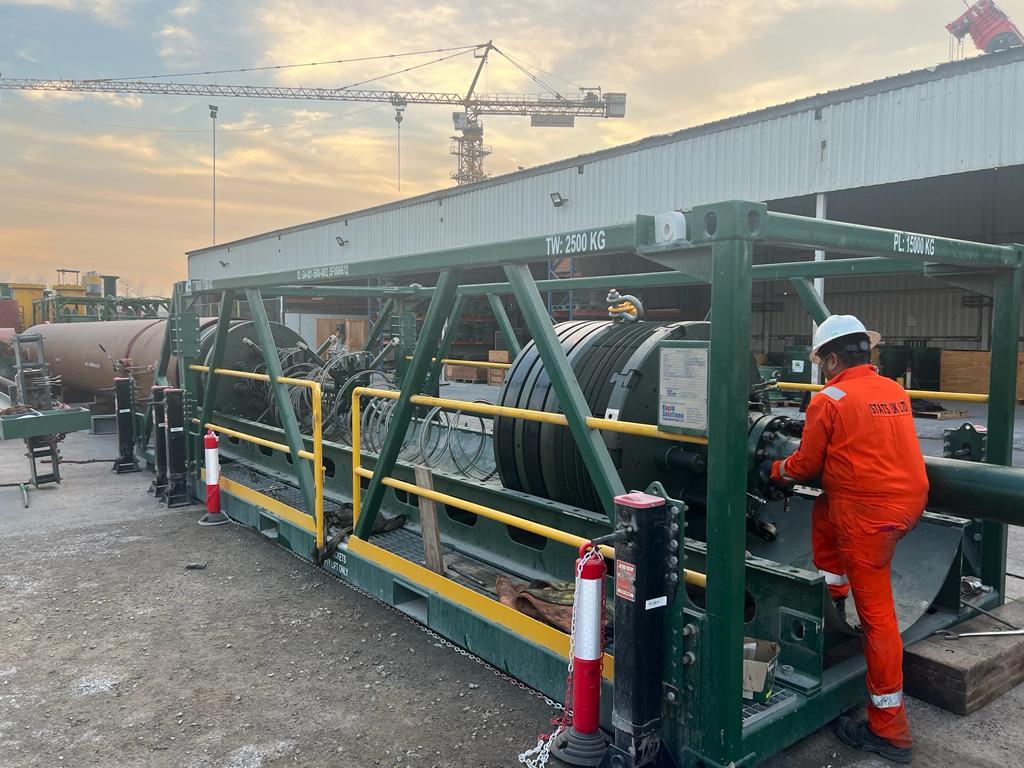
STATS Tethered Tecno Plug isolation system features two integrated isolation modules, both designed to deliver a failsafe double block and bleed isolation. The first module is the Tecno Plug isolation tool, which features dual seals and taper locks. This plug is pushed with stem bars to the exact isolation location, in this case, the short pipe spool between the scraper trap valve to be replaced and the production tee.
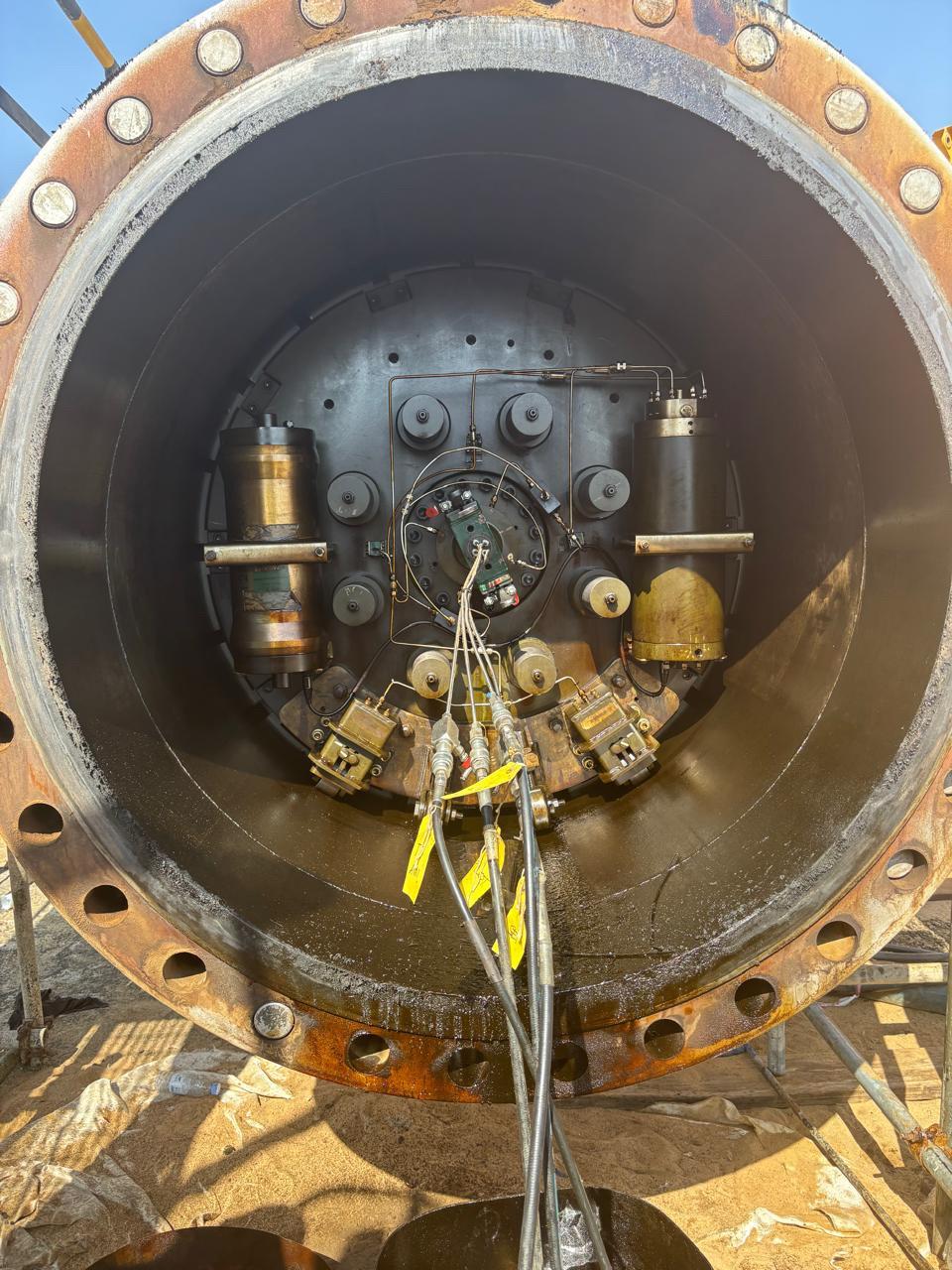
The second module, known as the Door Plug, also features dual seals and taper locks. However, this plug replaces the scraper trap door and includes a bore through the centre of the plug that allows the stem bar to travel. Dual seals in the centre of the Door Plug maintain leak-tight isolation of the scraper trap while allowing the stem bar to travel forward and backward, moving the isolation Tecno Plug through the pipeline.
Each isolation plug (Tecno Plug and Door Plug) features dual elastomer seals separated by an annulus ring and a set of taper locks. The annulus void between the seals is used to independently test the seals with full pipeline pressure to verify that both are leak-tight before STATS issues an Isolation Certificate allowing safe breaking of containment. The annulus is also used to monitor the isolation and ensure the seals remain leak-tight throughout the duration of the work. The locks, which embed into the inner pipe wall, provide the grip required to secure the tool in place.
The fail-safe design of the Tecno Plug uses differential pressure acting on the plug to energise the locks and seals – a process referred to as self-energisation. When the isolation plug is self-energised, the isolation is maintained independently of the hydraulic control system. It is, however, backed up by the hydraulic control system, which maintains pipeline isolation if the differential pressure falls below the self-energisation threshold.
Once the isolation plug is activated, the hydraulic pressure circuits are locked in by pilot-operated check valves. In the unlikely event that the control system is compromised, the tool actuation mechanism will unset only when differential pressure is equalised. This feature ensures pipeline integrity is maintained and that the isolation plug is always recoverable upon job completion. The Tecno Plug is DNV Type Approved and fully certified, ensuring compliance with industry standards.
Prior to mobilisation, a comprehensive Factory Acceptance Test (FAT) was carried out on all 56 in. equipment at STATS’ Abu Dhabi facility. The test replicated site conditions and validated equipment performance under maximum isolation pressure. To further ensure integrity, an additional leak test was conducted at STATS’ operational facility in Dammam, Saudi Arabia, before final deployment to site. Both test phases were witnessed by


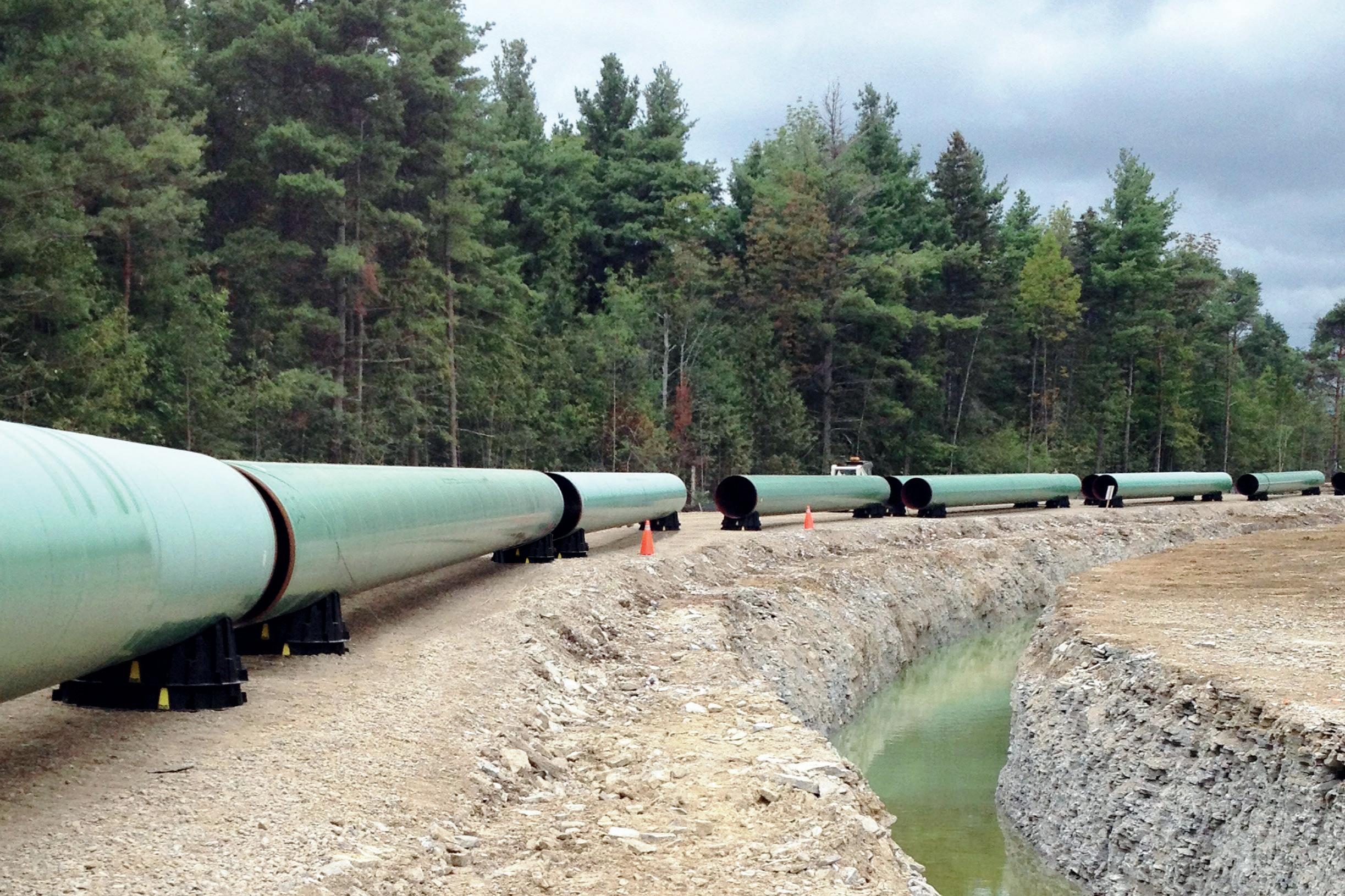



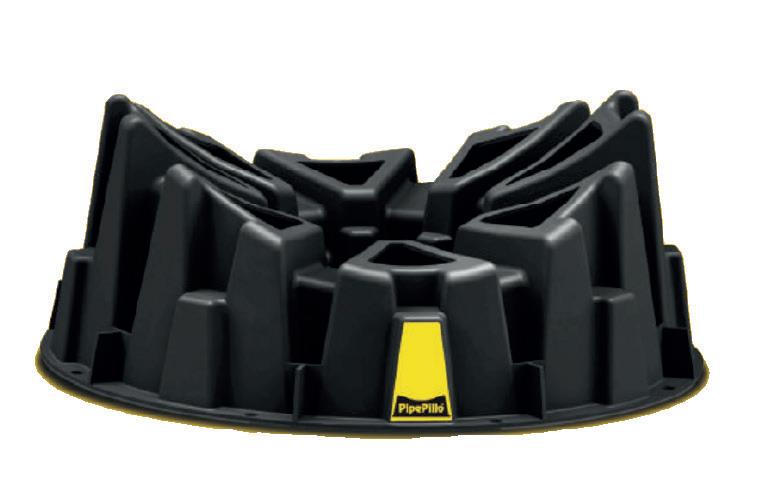
when you switch to PipePillo® engineered pipeline supports, the trusted quick and easy replacement for cribbing, foam, sandbags, and pad dirt to keep crews working faster and safer away from the trench.
Whether in or out-of-trench, PipePillos® support your team and your pipe, so your team can stay focused on the job, and not worry about their safety. Contact PipeSak Inc. for engineered pipeline supports, impact protection, saddle bag weights, and all around protection



Fast, safe & easily stacked
Reliable, versatile, permanent
Won’t float & supports fully loaded pipelines
Proven long-term ovality prevention
Eliminates the need for cribbing, foam, sandbags, and pad dirt
Reduces labor & speeds up your project Call


client representatives, ensuring full alignment with stringent operational and safety standards.
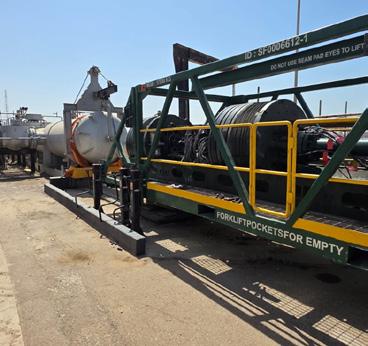
Once on site and following thorough pre-deployment inspections, the deployment tray holding the isolation plugs was positioned in front of the pipeline scraper trap door. The client then depressurised the scraper trap and opened the door, enabling the safe loading of the 56 in. Tethered Tecno Plug and Door Plug.
Using stem bars, both isolation plugs were pushed on wheels into the scraper trap and advanced into the pipeline until the front isolation plug was in the minor barrel. Once in position, the rear Door Plug was hydraulically activated, causing the taper locks and dual seals to radially expand against the pipe wall. Seal testing was performed to verify the integrity of the primary and secondary seals, with both independently tested and monitored.
The Door Plug replaces the scraper trap door and allows access for the tether (hydraulic control and monitoring lines) to pass through, enabling the pipeline to remain pressurised and operational without replacing or modifying the original scraper trap door.
After confirming the double block isolation, a leak test of the scraper trap was performed, and the 56 in. scraper trap valve was opened, allowing the Tethered Tecno Plug to be pushed downstream of the valve location. The compact design allowed the isolation plug to be set in the short section of pipework upstream of the production tee, maintaining uninterrupted production during valve replacement activities. With primary and secondary seal tests completed and double block isolation verified, the Isolation Certificate was issued and the client unbolted the existing scraper trap valve. The stem bar was hydraulically disconnected and retracted back into the scraper trap, allowing the old valve to be removed.
During valve replacement operations, a remote monitoring module attached to the rear of the Tecno Plug maintained continuous surveillance of the dual seals, relaying pressure
readings in real time to a laptop monitored by a STATS isolation technician. The Tecno Plug and Door Plug remained leak-tight and stable throughout the valve replacement activities, safely isolating 55-bar pipeline pressure without halting production.
Following installation of the new 56 in. scraper trap valve, the stem bar was repositioned and reconnected hydraulically to the back of the Tecno Plug while the valve bolts were fully torqued. Upon reconnection, communication systems were verified, and the scraper trap pressure was increased to perform a flange joint leak test of the new valve. The Tecno Plug remained fully isolating the pipeline while the leak test was conducted. Upon successful testing, the Tecno Plug Isolation Certificate was withdrawn.
Pipeline product was then reintroduced into the section between the Tecno Plug and the Door Plug to equalise pressure and prepare for the isolation plug removal sequence. The Tecno Plug was then hydraulically unset and retracted to its initial deployment position.
After closing the new scraper trap valve, a pressure build-up test confirmed valve integrity.
Finally, the scraper trap was depressurised, the Door Plug was unset, and both the Tecno Plug and Door Plug were recovered into the deployment tray, marking the successful and safe completion of the valve replacement operation.
The 56 in. scraper trap valve replacement project in Saudi Arabia represents a benchmark achievement in the application of STATS’ tethered Tecno Plug technology for large-diameter, high-pressure pipeline systems. This operation successfully demonstrated that essential remedial and replacement works can be executed safely and efficiently without the need for full system shutdowns or depressurisation.
By maintaining continuous production throughout the valve replacement, the project safeguarded both revenue streams and supply security while avoiding costly production outages. The use of the Tethered Tecno Plug provided a verified double block and bleed isolation, ensuring personnel safety and complete containment integrity throughout the workscope. The operation also eliminated the need for draining, purging, or extensive fluid-handling activities, significantly reducing project complexity and overall timescales.
Inline isolation tools such as the Tecno Plug offer operators a proven, non-intrusive method of achieving double block and bleed isolation in pressurised pipelines. These tools are pigged or pushed to location and are adaptable for a wide range of maintenance applications, from launcher and receiver valve replacements to the isolation of pipeline sections for integrity repairs or facility modifications.
Through precise engineering, rigorous testing, and close collaboration with the client, STATS 56 in. Tethered Tecno Plug isolation delivered a safe and efficient solution. The successful completion of this project sets a new benchmark for largescale, live pipeline intervention and reinforces the value of advanced isolation technologies in maintaining production continuity and operational excellence.
Brian Kerrigan, Frontline Integrity, UK, explores how stress corrosion cracking (SCC) is being managed more effectively, specifically through the use of data-driven technology to transform crack management.
In the world of pipeline integrity management, few threats are as persistent and costly as stress corrosion cracking (SCC) along buried transmission pipelines. In the past two years, Frontline Integrity have been involved in SCC related pipeline incidents in North America, South America, Europe and Australasia.
Many regions document, report and share key information associated with pipeline incidents related to

materials, operation, mechanism, and consequence. Pipeline and Hazardous Materials Safety Administration’s (PHMSA’s) open-source database has been documenting USA incidents since 1970 and provides an extensive overview. Our recent analysis concluded that since 2005, there have been 81 incidents attributed to cracking in the USA and 57 of these were specifically attributed to SCC.1
These 81 incidents are reported to be split evenly between gas (51%) and liquid pipelines (49%). Notably, 16% of the incidents resulted in an ignition.
SCC is a time-dependent threat and can present itself as axial, circumferential, or ‘off-axis’ external cracking. The uncertainty of whether it is present on a system is a widespread concern and, once identified, the cost associated with managing it has long plagued pipeline operators.
Typical options for managing a system with SCC consist of recoating sections, reducing pressure, targeted direct assessment, or
in-line inspection (ILI) using crack detection technology. These ILI tools offer broad coverage and convenience, but this comes with a significant caveat: not every reported planar reflector is likely to be the target threat you are chasing, in this instance SCC.
After running a crack detection ILI tool, operators frequently find themselves with a significant list of planar reflectors located in challenging locations. In order to perform field verification and possible repair, some sites may require road closures, the removal of protective slabs, or the diversion of waterways to enable direct pipeline access. All of which carry significant costs for the pipeline operator.
Given that crack detection technologies report planar reflectors, many of the calls verified in a standard population will be anomalies with planar characteristics such as sharpedged corrosion which may not pose a significant integrity threat. Many operators would consider these sites ‘dry holes’ when chasing the real cracking threat and, considering the excavation cost, may get frustrated that resources are being diverted away from the primary threat.
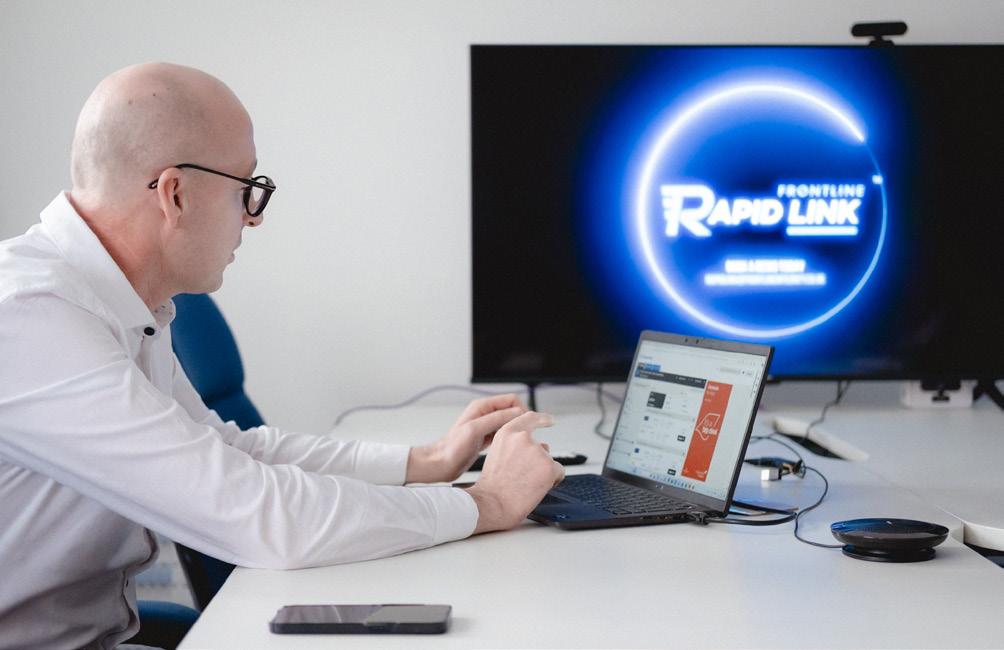
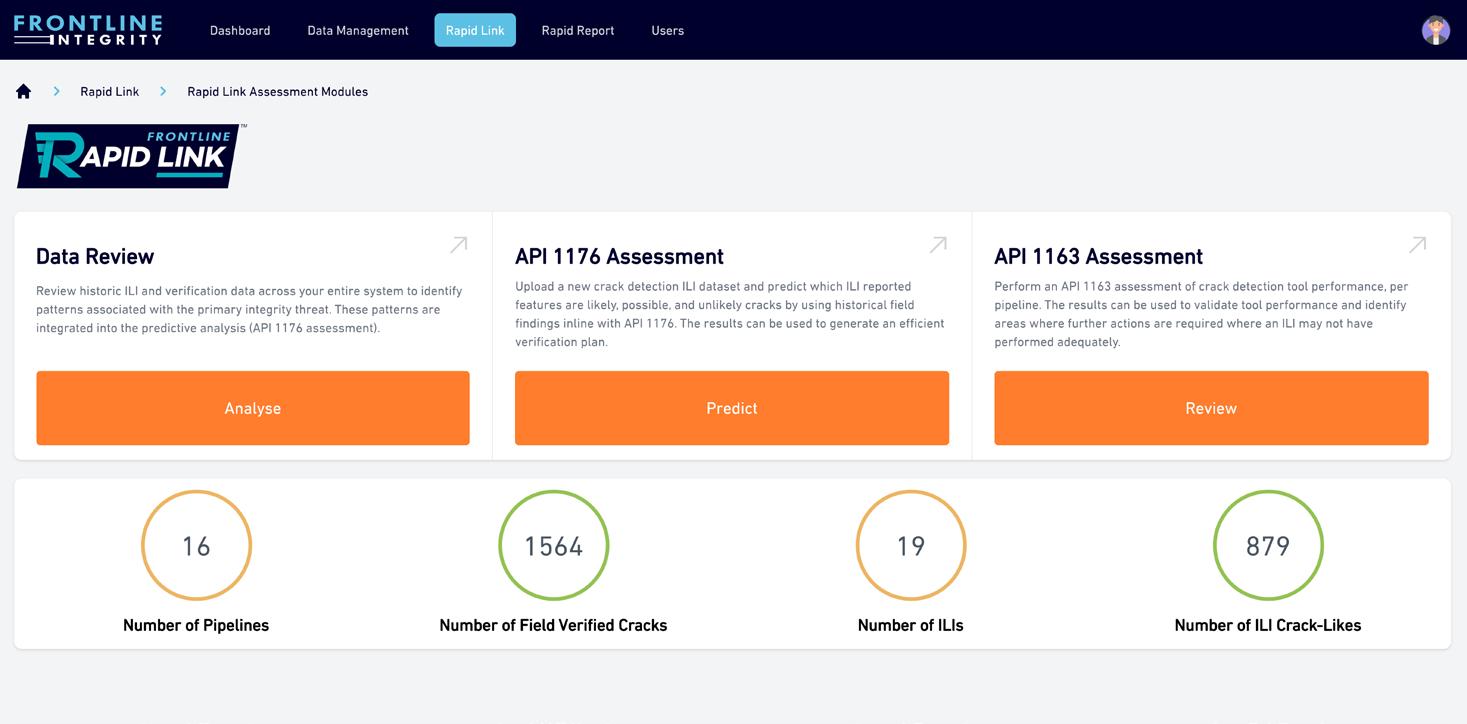
Considering feedback from pipeline operators, Frontline Integrity (an independent pipeline integrity consultancy based in the UK) have developed RapidLink™, a cloud-based software platform designed to help pipeline operators target the actual threat and minimise unnecessary excavations.
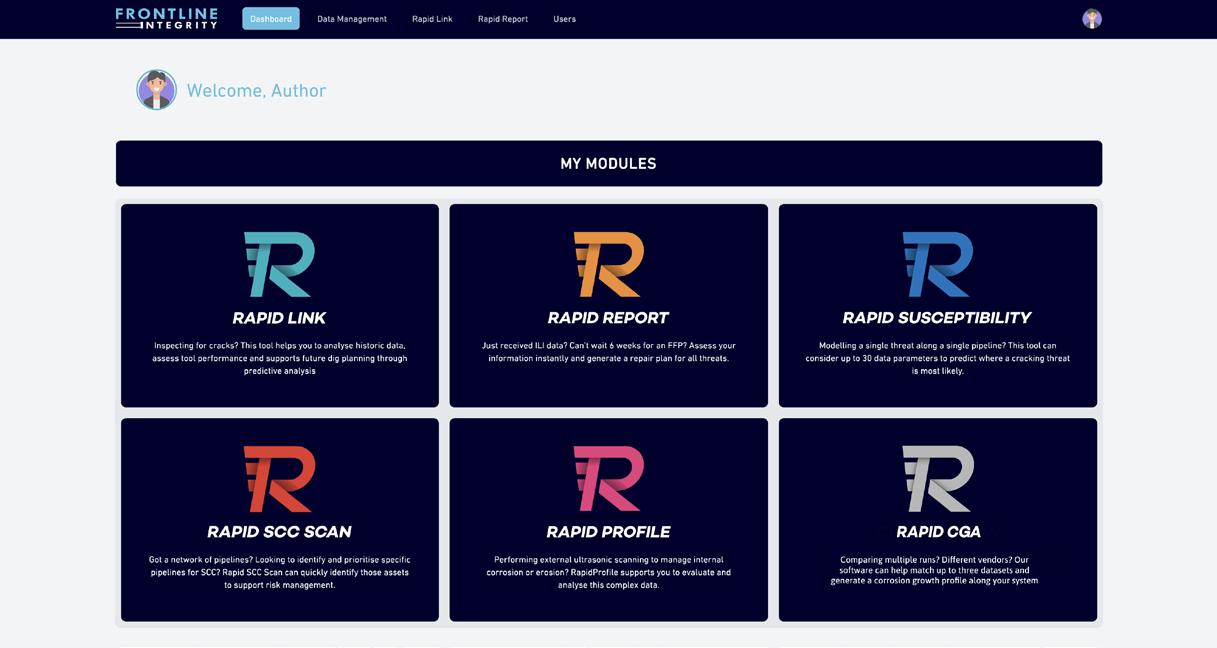
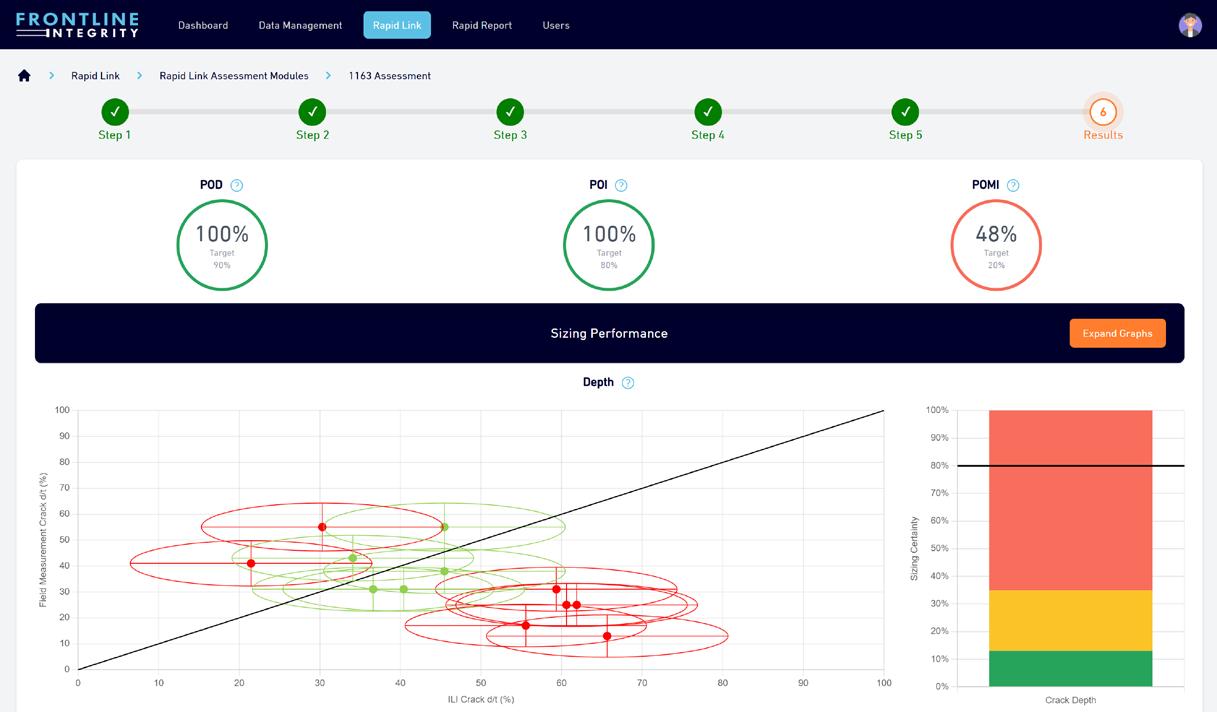
The software gathers and aligns a number of key datasets for an entire network in its secure DataHub. This typically consists of crack detection ILI datasets (reported anomalies and pipe tallies), historic field verification data and SCC susceptibility profiles, where available.
Rapid Link is built on three core assessment pillars: ) Data analysis.
) Predictive analysis (API 1176 Assessment).
) Tool performance review (API 1163 Assessment).
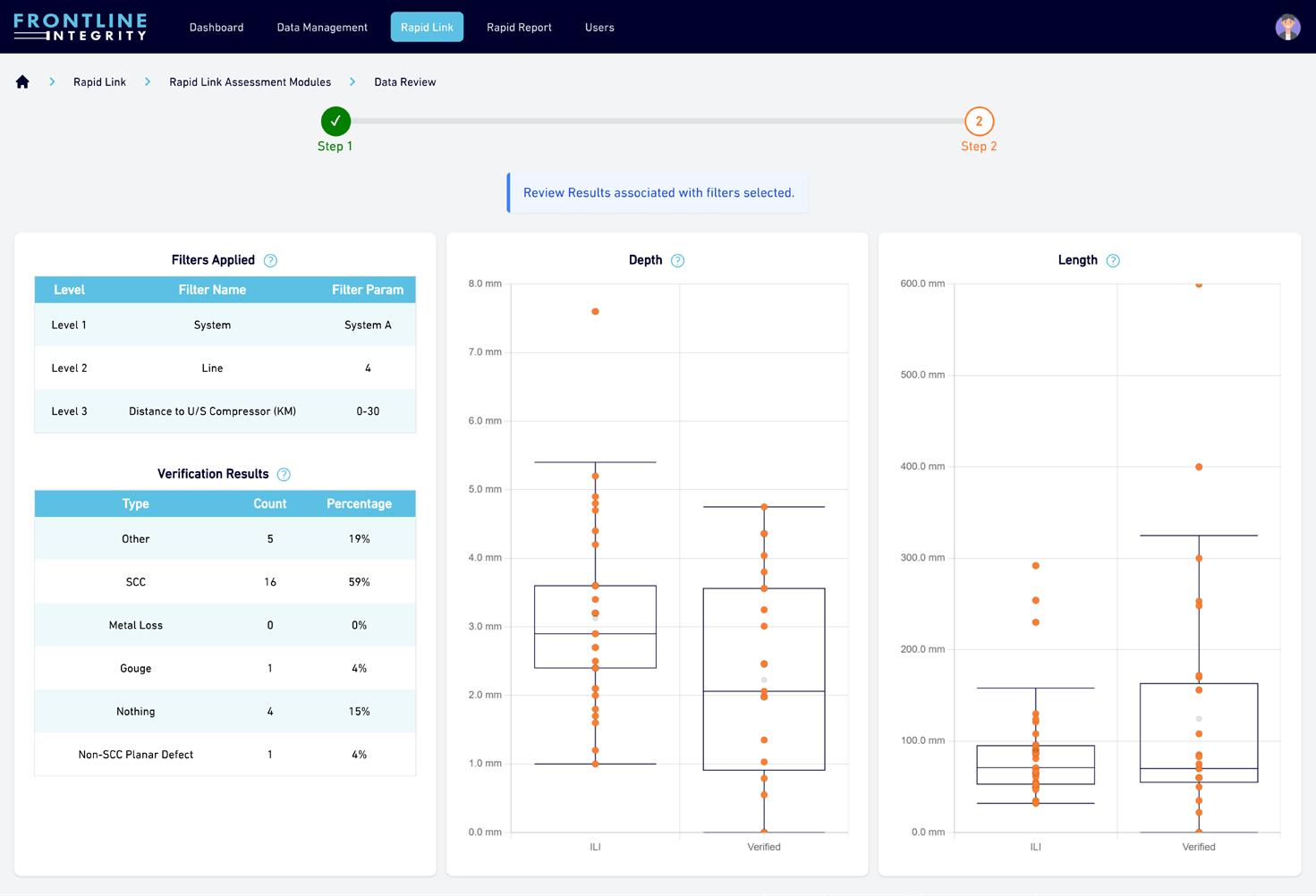
The data analysis pillar allows the operator to perform forensic analysis on their network, system or individual pipeline section. The key features include the ability to:
) Interrogate crack detection ILI signal characteristics and SCC hit rates.
) Assess and calibrate current SCC susceptibility parameters.
) Identify new or existing parameter combinations which result in the highest SCC hit rate across the system.
The data analysis pillar enables the identification of recurring characteristics linked to verified SCC, forming the basis for predictive modelling.
By utilising advanced analytics and machine learning, the predictive analysis pillar allows the user to assess














































































March 15–19, 2026 | Houston, Texas

































600+ Hours of Technical Content | Breakthrough Corrosion Research | Global Connections











AMPP Annual Conference + Expo 2026 brings together the leaders shaping the future of materials protection and performance. Discover real-world innovations and solutions that drive safer, stronger, sustainable, and more resilient infrastructure. Join thousands of professionals for the industry’s largest global event, filled with technical insights, hands-on solutions, and opportunities to collaborate with experts from around the world.











Act now to secure early registration savings. Don’t miss our best rate!


















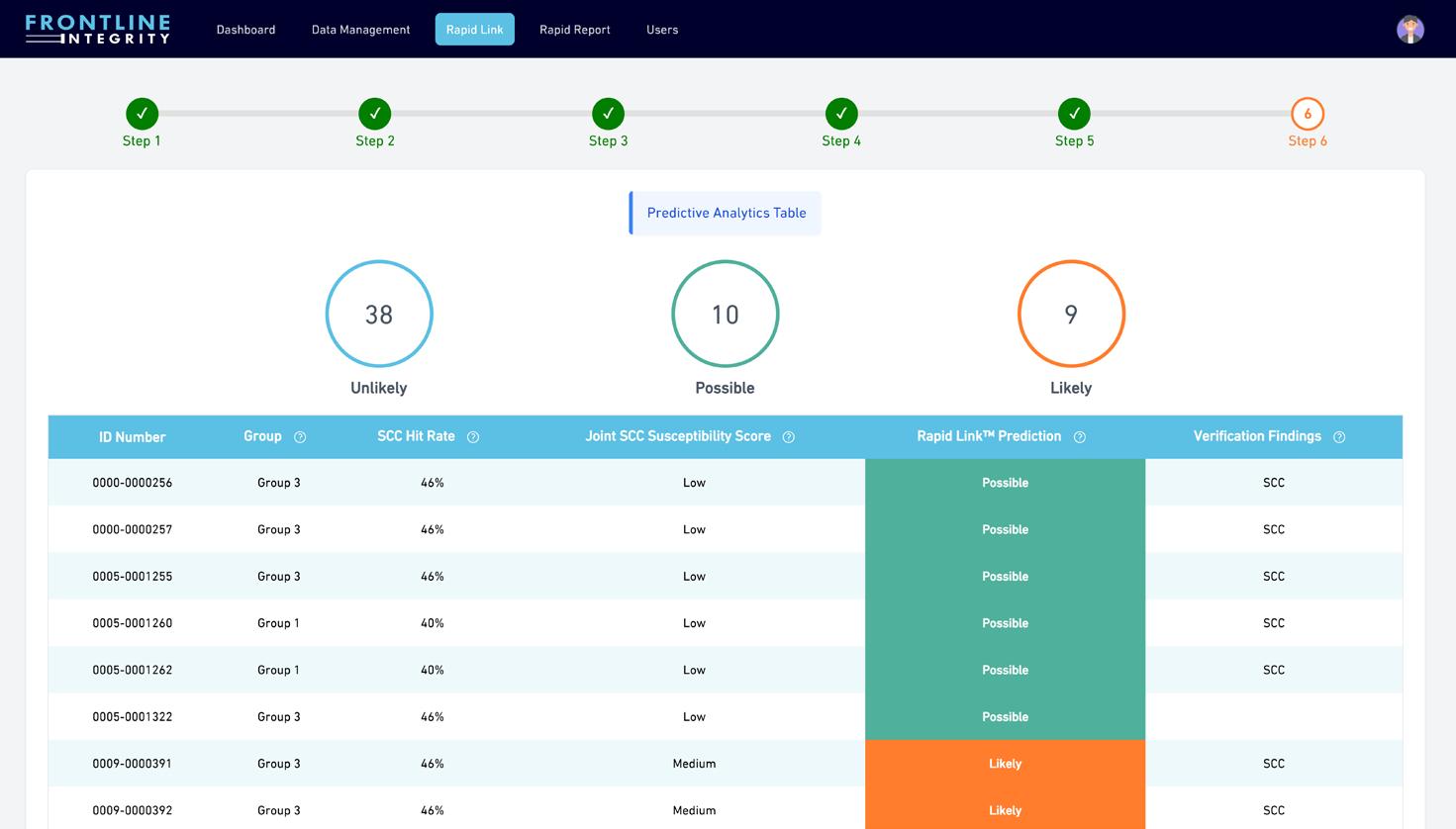
a new crack detection ILI dataset and predict which of the planar reflectors are ‘likely’, ‘possible’, or ‘unlikely’ to be a real cracking threat in line with API RP 1176, supporting operators to develop an optimised verification plan and minimise unnecessary excavations.
1163)
Using verified ILI data, Rapid Link allows the user to quickly formally assess the tool performance for any pipeline or ILI dataset in line with API 1163. This considers Probability of Detection (POD), Probability of Identification (POI), Probability of Misidentification (POMI), and sizing accuracy.
study: a data-driven transformation in crack management2
A natural gas transmission operator managing a vast multi-diameter pipeline network faced a familiar challenge: despite deploying EMAT-based crack detection ILI tools across 17 inspections, only 23% of the 426 verified anomalies were confirmed as SCC. With over 400 anomalies still unverified, the operator sought a more effective way to prioritise digs and minimise unnecessary excavations.
The operator began by uploading five EMAT datasets and their corresponding field verification results into Rapid Link. The platform analysed common characteristics among verified SCC and non-SCC anomalies, utilising advanced analytics to group calls based on common susceptibility parameters and signal characteristics.
Rapid Link was then used to predict the likelihood of SCC in a sixth EMAT dataset. Field verifications were then overlayed to understand the accuracy of the Rapid Link predictions. At 11 crack-like anomaly locations where RapidLink predicted cracks as likely or ‘possible’, 10 were confirmed to be SCC in the field.
Conversely, for 13 crack-like anomalies predicted as ‘unlikely’,


all 13 (100%) were confirmed not to be SCC. This early success demonstrated the platform’s predictive accuracy.
Encouraged by the results, the gas operator expanded the test. All 859 reported crack detection calls from 18 EMAT inspections were uploaded, with field data added for 16 of the inspections. The 17th inspection served as a second blind test similar to the data set used during Phase 2.
This second blind test resulted in 146 of 148 Likely calls were confirmed to be SCC in field.
Following the successful trial, the operator has now formally integrated Rapid Link into their crack management framework and commenced a broader validation across 11 pipelines. Rapid Link achieved an 89% success rate in predicting real cracks as ‘likely’ or ‘possible,’ and a 70% success rate in identifying non-cracks as ‘unlikely.’
The operator stated that “had the platform been available prior to excavating reported anomalies along this pipe section (blind test), it is likely that over 30 digs would have been saved when considering the model prediction alongside feature severity. This equates to a significant resource and budget saving or approximately US$1.5 million in a 10 year period which could be spent in other areas ensuring the gas operator network remains to operate efficiently and safely.”
Rapid Link does not offer definitive answers on which planar reflections to excavate. Instead, it equips operators with a powerful decision-support tool – one that leverages historical data, industry standards, and predictive analytics to focus resources where they matter most.
In an industry where safety, reliability, and cost-efficiency are paramount, Rapid Link represents a meaningful step forward. By improving POI and reducing false positives, it gives operators a cost-effective solution to managing cracking threats with greater confidence and clarity.
In October 2024, the Transportation Safety Board of Canada (TSB) released its report – Pipeline transportation safety investigation report P24H0018, into a 2024 ignited rupture on a gas pipeline.3 The report confirmed that the crack that led to the rupture was detected by an ILI tool but was classified as nonreportable following manual review by an analysis team.
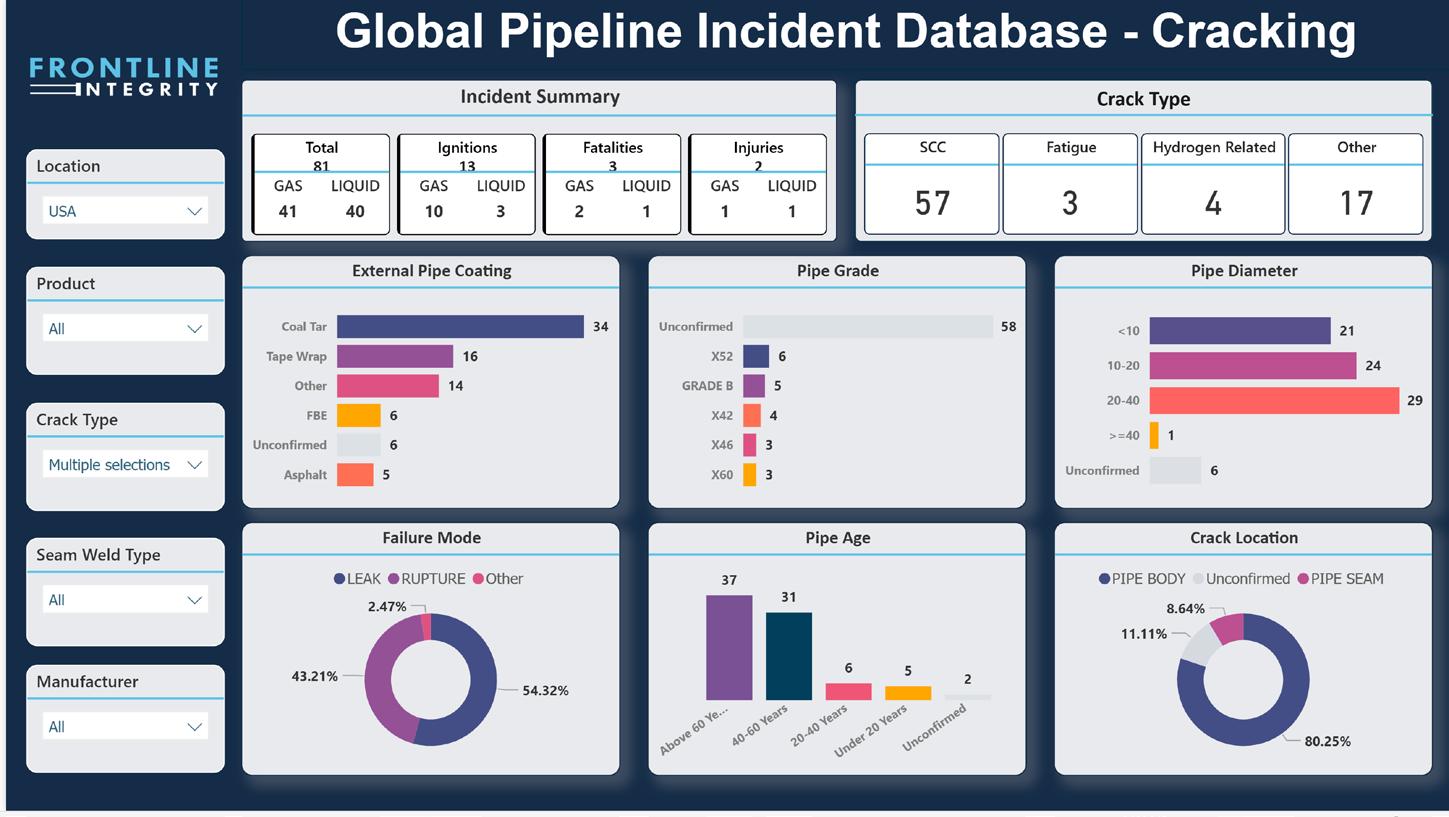
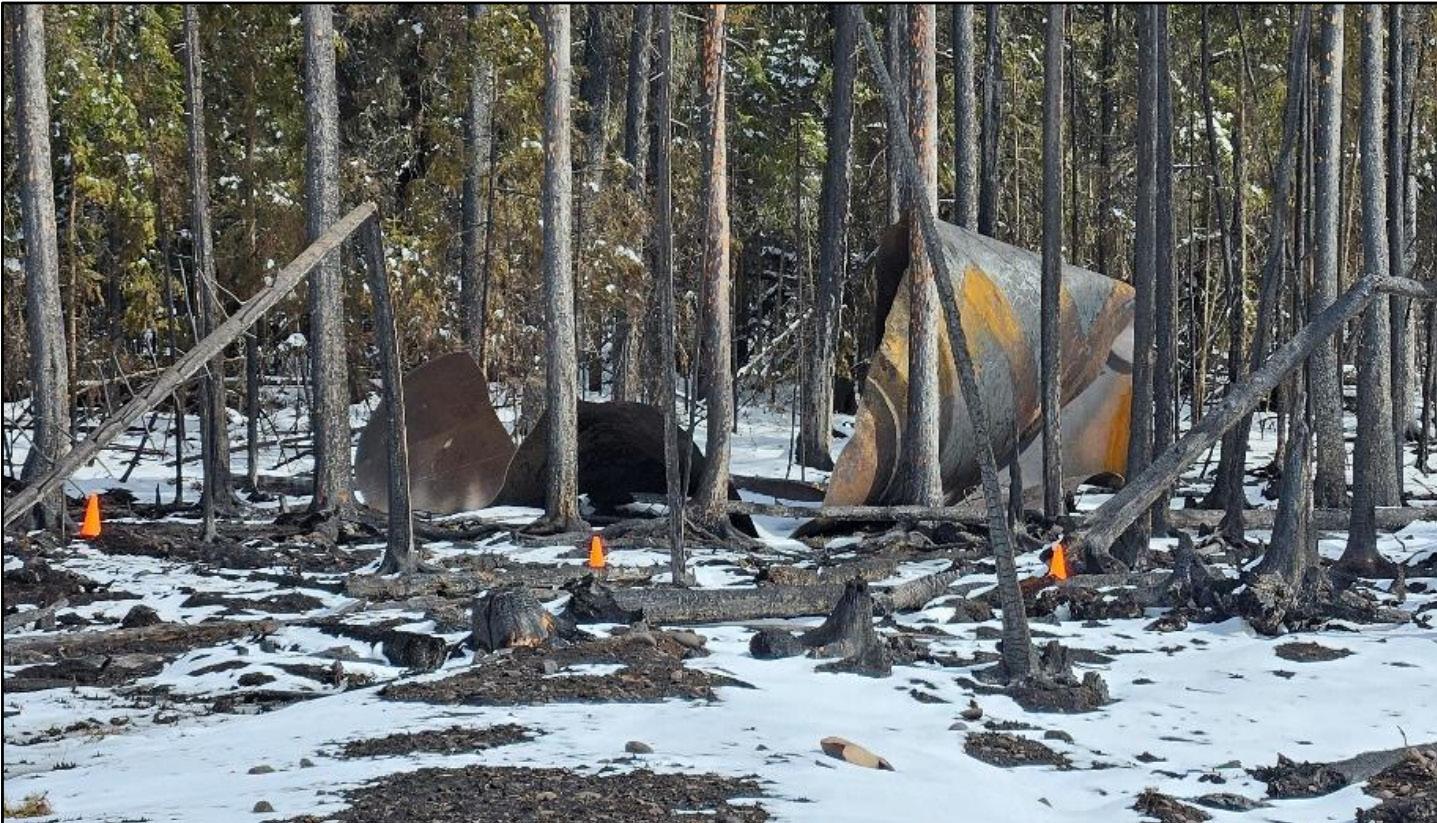
We feel that it is now considered plausible that following this event, ILI vendors may take a slightly more conservative approach, and operators may be provided with an increased number of possible ‘cracklike’ indications, potentially placing increased pressure on the pipeline operator to ‘manage the situation’.
As pipeline networks age and integrity threats evolve, tools like Rapid Link will be essential in ensuring that operators stay ahead of the curve –making informed decisions which are backed by data, thus allowing them to focus on the real threat and minimise unnecessary excavations.
1. 2025 Analysis of the PHMSA Open Source Incident Database (Source Data | PHMSA). https://www.phmsa.dot.gov/data-andstatistics/pipeline/source-data
2. CORNEJO, MURRAY et al, ‘ An operator case study of using a predictive data driven process to improve POI of crack detection ILI calls” - Paper 4812, Rio Pipeline, August 2025. https://biblioteca.ibp.org.br/scripts/bnmapi. exe?router=upload/38683
3. Pipeline transportation safety investigation report P24H0018 - Transportation Safety Board of Canada. https://www.tsb.gc.ca/eng/ rapports-reports/pipeline/2024/p24h0018/ p24h0018.html

Robert J. Smyth, P. Eng., and Harold Lee, C.E.T., Technical Support Manager, T.D. Williamson, discuss a pipeline repair solution that offers quick deployment, safe installation, and reliable performance.
Circumferential cracking (commonly referred to as CSCC) is a significant threat to pipeline integrity, often caused by external forces, natural soil settlement, bedding support loss, or corrosive environments. Historically, inline inspection tools have focused on more common failure mechanisms but are now being designed to detect cracking in the circumferential direction. Any crack left unaddressed poses a risk to the environment and public safety and can lead to substantial financial losses
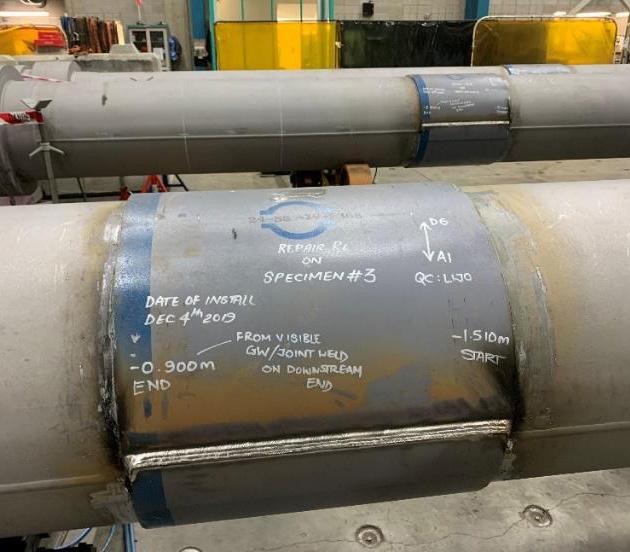
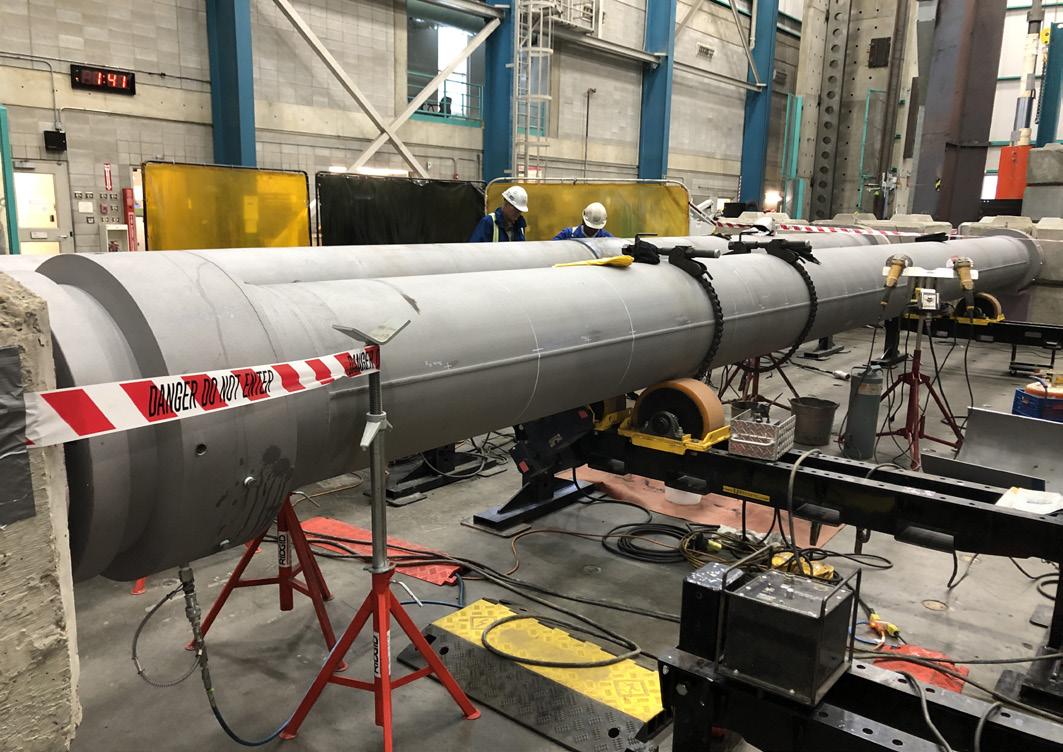
for operators. The unique nature of CSCC requires a close examination of the effectiveness of pipeline repairs.
Standard repair methods for CSCC involve either the complete removal and replacement of the cracked section or the installation of a Type B sleeve. However, both approaches come with significant costs of their own and can introduce additional risks.
Removing and replacing a pipeline segment requires depressurisation of the line and extensive excavation, resulting in operational shutdowns and an increased potential for environmental impact. Type B sleeves are a less expensive workaround, and although effective when installed flawlessly, welding-related failures – such as hydrogen-induced cracking or accidental burn-through – remain a major concern.
Modern pipeline inspection technologies have improved CSCC detection across the industry, but this also means operators will likely need to address these traditionally elusive defects more frequently in the future.
To explore alternatives to Type B sleeves, C-FER Technologies organised a Joint Industry Project (JIP) with four pipeline operators to test six different non-intrusive repair technologies, focusing on their ability to arrest CSCC growth. Among the products tested, the PETROSLEEVE®, T.D. Williamson’s steel Type C (compression) sleeve, demonstrated its effectiveness across multiple testing phases.
The PETROSLEEVE repair system is designed to permanently restore pipeline integrity. While it is steel-based, technicians do not have to apply welds directly to the carrier pipe during installation. Instead, two half sleeves encircle the defective area after applying a layer of epoxy onto the pipe. Welded sidebars then secure the device in place. The system’s proprietary Engineering Installation Parameters (EIP) software assists technicians by calculating installation settings, taking into account factors such as the pipeline’s internal pressure, grade, thickness, temperature, and the installation operating and design pressures of the pipeline – to achieve the correct compression.
Typically, the installation process takes less than an hour to complete. Technicians begin by grit-blasting the defective area to remove debris and prepare a clean bonding surface. The high-strength epoxy used in this process is formulated to cure at the pipeline’s normal operating temperature, ensuring optimal adhesion. Once the epoxy is applied, the two half sleeves are set into position around the pipe and mechanically compressed, forming a tight interference fit. To secure the final assembly, only the sidebars are welded to the top shell –eliminating the risks associated with in-service welding. Finally, the EIP software analyses post-installation stress conditions and generates a detailed report confirming the repair’s integrity.
Although the PETROSLEEVE was originally designed to reinforce pipelines compromised by axial cracks, corrosion, gouges, dents, and manufacturing defects, the compression it provides also resists the tensile stresses that drive circumferential crack growth. The C-FER JIP offered an opportunity to evaluate its limitations in this application.









The JIP testing framework
Structured in four phases, the JIP compared the non-intrusive repair solutions to one another under conditions mimicking real-world pipeline operations.
In Phase 1, to evaluate different non-intrusive pipeline repair solutions to resist pipeline tension, the six repair technologies were tested on three 24 in. X52 test vessels with a 0.374 in. wall thickness, pressurised to 785 psi (5400 kPa, 48% Specified Minimum Yield Strength [SMYS]). Each vendor installed their repair independently and at different locations on the
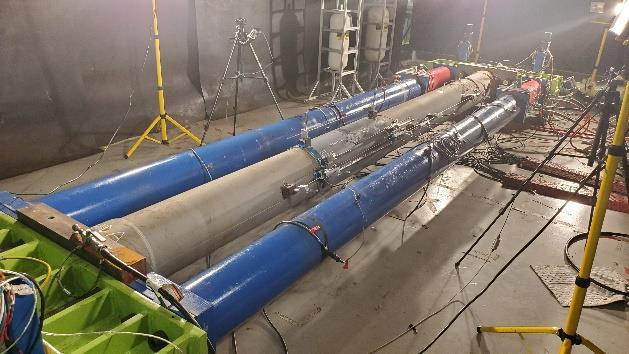
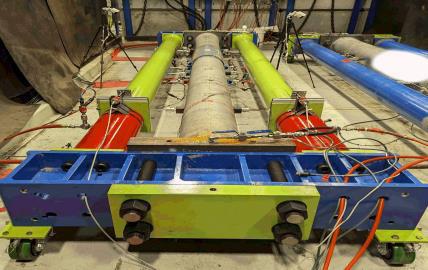
vessels to ensure unbiased results. Technicians installed the PETROSLEEVE according to the standard procedure.
The test factors for this phase included pressure cycling, nine cycles from 0 to 1170 psi (8060 kPa, 72% SMYS) to simulate operational pressure variations, and axial tension, the application of 915 kips of tension, followed by tension to failure at 1170 psi, averaging 1263 kips until the control pipe reached plastic collapse.
Instrumentation measured the relative stretching of the pipe under the sleeve against the stretch of the base pipe.
The PETROSLEEVE exhibited high axial stiffness, with the steel under the repair stretching significantly less than the surrounding base pipe, indicating effective stress transfer to the sleeve. These results demonstrated its ability to reinforce the pipeline under substantial tensile loads, positioning it as a top contender, and earning advancement to the next test phase.
The second testing phase examined how pipeline pressure during installation affects the overall repair performance. Using seven 12 in. X52 vessels, each with a 0.25 in. wall thickness, and pressurised at 30%, 50%, and 70% SMYS, three repair types were tested, with one condition mirroring Phase 1’s 24 in. setup.
During this phase, the PETROSLEEVE (Repair F) delivered the best results for any of the repair technologies in increasing elastic stiffness and resisting plastic loading.
The data points confirm its strength and reliability under diverse conditions. Its top ranking in both stiffness and deformation resistance is a testament to its effectiveness when compared to other non-intrusive repairs.
To examine the effect of defect severity for the repair, the third testing phase introduced 40%, 60%, and 80% simulated circumferential cracks placed at the 12:00 position on three 12 in. X52 vessels with a 0.25 in. wall thickness.
Three pipeline repairs were tested comparatively, the PETROSLEEVE, an alternate repair solution, and a baseline Type B sleeve, with repairs installed at 50% SMYS (1029 psi). The vessels were initially pressurised to 1286 psi (62.5% SMYS) to confirm crack stability during installation.
Table 1: Relative performance of repairs during elastic loading (higher ratio = more stiffness)
Table 2: Relative performance of repairs into plastic loading (lower ratio = more stiffness)
Testing for this phase involved initial pressurisation (vessels were pressurised to 25% SMYS [514 psi, 3541 kPa]) and increased pressure and tension (pressure was raised to 72% SMYS [1482 psi, 10210 kPa], and axial tension was applied until failure, defined as the crack opening and pressure dropping to zero).
During testing, the PETROSLEEVE withstood 560 kips (560 000 lbs) of tension before the crack opened. The 18 ft test vessel stretched 5.44 in. (a 2.8% longitudinal stretch), while the 3 ft section beneath the sleeve stretched only 0.375 in. (a 1.6% stretch, with a stretch ratio of 0.57). The crack remained stable until the pipe entered the plastic range – an unlikely condition for most pipelines,
as such forces typically occur only during extreme events such as landslides or earthquakes. Even at 408 kips, or 80% SMYS, the crack had not opened, demonstrating its ability to maintain compression under significant stress.
The extreme tension required to reach the point of plastic crack deformation indicates that the PETROSLEEVE provides ample protection under normal operating conditions, where such forces are exceedingly rare.
The fourth testing phase began in October 2024, with a goal of evaluating each subject’s long-term performance under simulated field conditions. At the close of the phase, testing will be completed on three 12 in. X52 vessels with 80% circumferential cracks reinforced by the PETROSLEEVE. The first specimen (4-1A) completed 1000 h of testing by 4 December 2024, with no leakage, indicating excellent durability under tension and a long-term hold. Testing of the remaining two specimens (4-2A and 4-3A) is expected to conclude in 2025, but these early results suggest the PETROSLEEVE maintains its integrity over extended periods, reinforcing its suitability as long-term pipeline repair solution.
The JIP’s completed phases and the initial results from Phase 4 provide compelling evidence of the PETROSLEEVE’s effectiveness in repairing circumferential cracks. In Phase 1, its high axial stiffness demonstrated its ability to transfer stress from the pipe to the sleeve, reducing strain on the defective area. Phase 2 confirmed its durability, with top rankings in elastic stiffness and minimal deformation, outperforming both the competing non-intrusive repair solutions.
Phase 3 was particularly significant, as it tested the PETROSLEEVE with simulated circumferential cracks under destructive conditions. The sleeve maintained compression until the pipe reached the plastic range – under conditions simulating the most extreme stresses pipelines might be subject to in the field, proving the PETROSLEEVE can effectively prevent crack growth.
Phase 4’s initial success, with no leakage after 1000 h, further validates its long-term performance. The system’s non-intrusive design eliminates welding risks, making it ideal for high-strength or thin-walled pipes. With over 60 000 field installations and no recorded failures, the PETROSLEEVE’s developing track record was only fortified by the thorough testing conducted as part of the JIP.
The PETROSLEEVE’s performance in the C-FER JIP effectively summarises its advantages. By avoiding depressurisation, it minimises excavation and downtime, and reduces the likelihood of any environmental impact. The non-intrusive design eliminates in-service welding risks, ensuring worker safety and compatibility with challenging pipeline materials. A one hour installation time minimises repair time, allowing more repairs to be completed. It is effective across a wide range of pipeline sizes and defects. As well as this, extensive lab testing

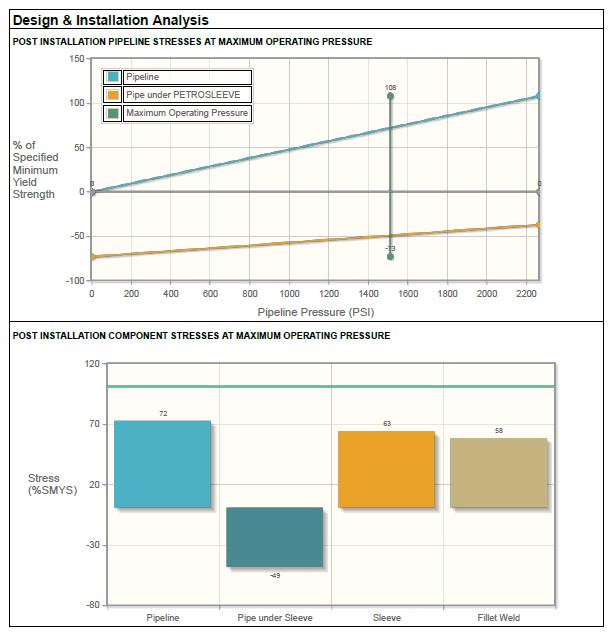
and proven field service confirm its capabilities as a permanent repair solution.
The EIP software also adds to the system’s reliability and versatility, as it enables on-the-spot validation. By modeling stress conditions and providing detailed documentation, it ensures installed sleeves meet their design objectives and comply with applicable regulations.
The PETROSLEEVE’s performance in Phases 1 - 3, coupled with its Phase 4 results to date, demonstrates it abilities as a solution for circumferential crack repairs capable of enduring the harshest pipeline conditions, offering a safe, efficient, and sustainable solution to pipeline integrity management.
Note
This article is adapted from a white paper originally presented at PPIM 2025 in Houston.
WITH SUPPORTING ASSOCIATION

A full day event dedicated to the UK’s CO2 pipeline build-out: uniting pipeline operators, engineers, contractors, and decision-makers.
The programme will cover the UK’s rapidly evolving CCS infrastructure plans, proposed and confirmed projects, safety codes, technical challenges, international case studies, and the technologies enabling safe, efficient CO2 transport.

Delegate takeaways from this exclusive one day conference:
Hear from industry leaders on planning, safety, design, construction, and environmental considerations for CO2 pipelines.
Be informed
Updates on key UK CCS projects, with sessions on buildout and delivery, integrity, and international insight.
Understand
Understand government support, regulatory frameworks, and permitting processes.
Network
Meet the companies driving the UK’s CCS pipeline future.
Rod Hardy - Sales Director

















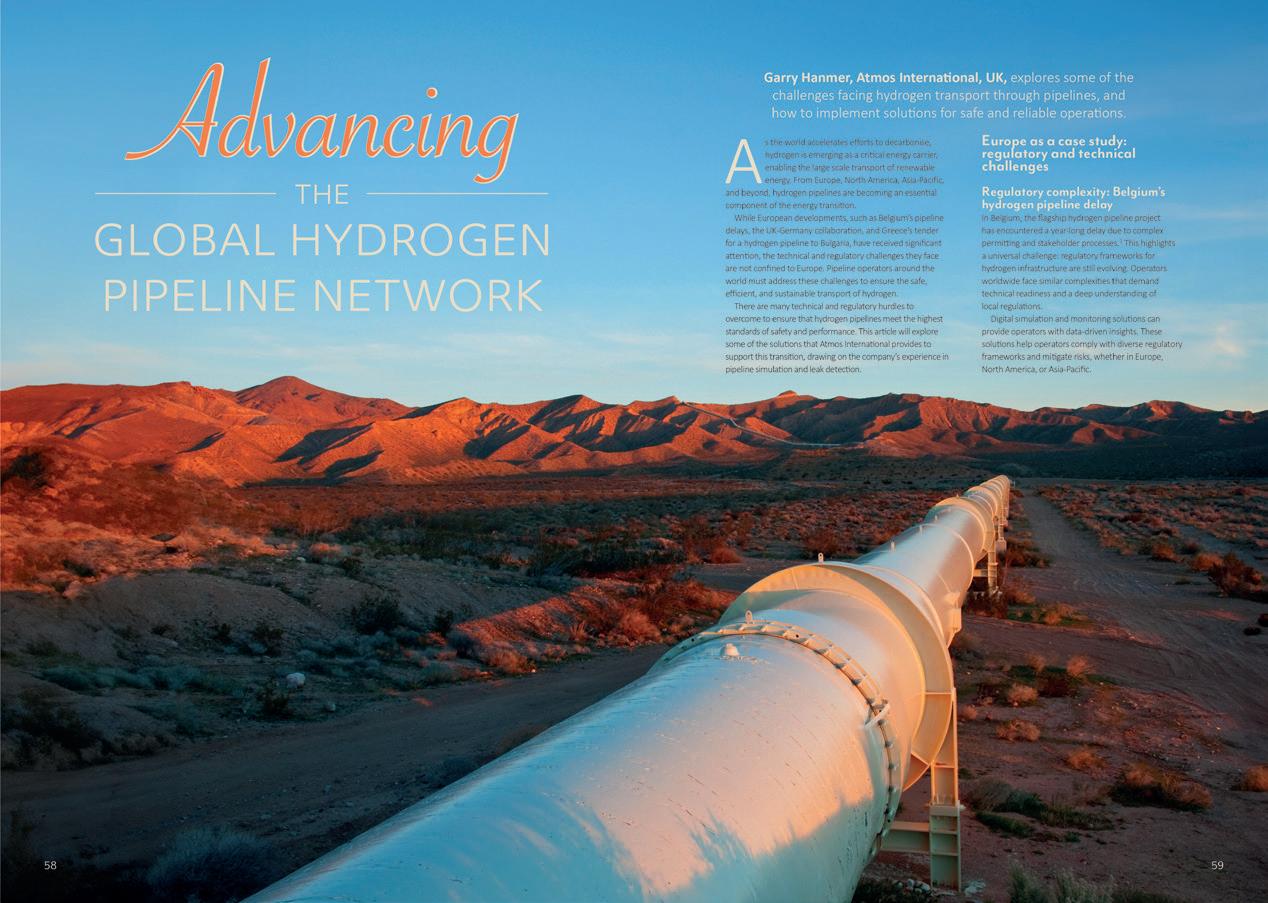

Kerry Cole of the Association for Materials Protection and Performance (AMPP), discusses the emerging role of CO2 pipelines in the global transition toward net-zero emissions, as well as the engineering, safety, and integrity challenges involved in developing largescale CCUS infrastructure.
As the energy sector pivots toward net-zero goals, pipeline engineers and operators are turning their attention to the infrastructure that will make carbon capture, utilisation, and storage (CCUS) operate at scale.
Pipelines once built solely for oil and gas are emerging as the critical link in a new low-carbon energy system. But repurposing this network is not as simple as flipping a switch.
“Carbon dioxide (CO2) pipelines today face challenges that differ significantly from those of older pipelines,” explained David Bastidas of ROSEN. “Anthropogenic, or human-caused, CO2 introduces impurities and conditions that demand far greater attention to corrosion and integrity management.”
Through rigorous engineering and safety standards, these efforts aim to make large-scale carbon removal both practical and sustainable – protecting people, infrastructure, and the planet, Bastidas wrote in his paper “R&D Innovations and Advanced Technologies for CCUS – CO2 Pipelines ILI Inspection.”
“At the heart of this effort lies the design and operation of CO2 pipelines – an engineering challenge that demands precision, foresight, and deep technical expertise,” Bastidas noted. “Transporting CO2 safely isn’t just a technical challenge – it’s a commitment to a cleaner, more sustainable future.”
Transporting CO2 in its supercritical state – where it behaves like both a gas and a liquid – is an emerging frontier for pipeline engineers and crucial to large-scale carbon capture and storage (CCS). This state allows for efficient longdistance CO2 transport but introduces significant operational challenges.
Designing pipelines for dense-phase CO2 requires precise control of pressure and temperature, corrosion-resistant materials, and advanced monitoring systems to ensure safety and stability under extreme conditions.
“Newer pipeline grades have improved steel compositions and controlled heat treatments that reduce inclusions and segregations,” Bastidas said. “These advances greatly enhance pipeline integrity. At the same time, ongoing research into coatings is critical, because CO2 can interact with polymers, causing absorption and swelling that must be carefully managed.”
Companies such as ROSEN are developing inline inspection (ILI) and predictive modelling technologies that help operators manage risk and optimise performance in supercritical CO2 pipelines.
“One of the most transformational tools for CO2 pipelines has been electromagnetic acoustic transducers (EMAT),” Bastidas said. “EMAT enables inspection in dense-phase and supercritical CO2, helping operators manage and control cracking and integrity with far greater precision.”
EMAT inspection technology represents a major advance in detecting axial cracks in pipelines – particularly those linked to stress corrosion or fatigue. Unlike traditional ultrasonic methods that require a liquid couplant, EMAT generates ultrasonic waves electromagnetically, enabling inspection in challenging media such as dense-phase or supercritical CO2
According to Bastidas’ paper, modern EMAT systems employ high-density sensor arrays that provide overlapping coverage of the pipe wall and longitudinal welds. This configuration enhances detection reliability and spatial resolution, improving the probability of identifying even small or shallow cracks – sometimes down to a few millimetres. By scanning around the pipe circumference in both directions, EMAT can detect internal and external flaws, including radial and longitudinal cracks that may terminate in weld beads.
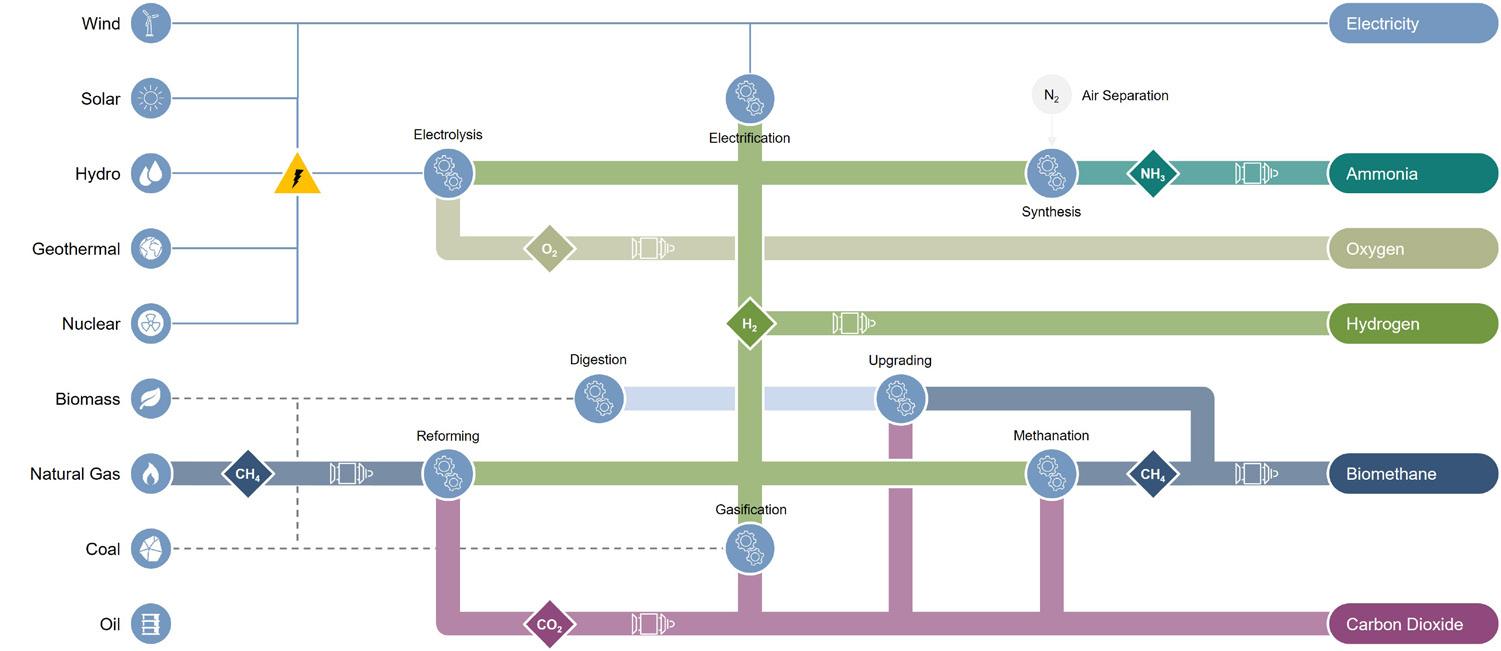
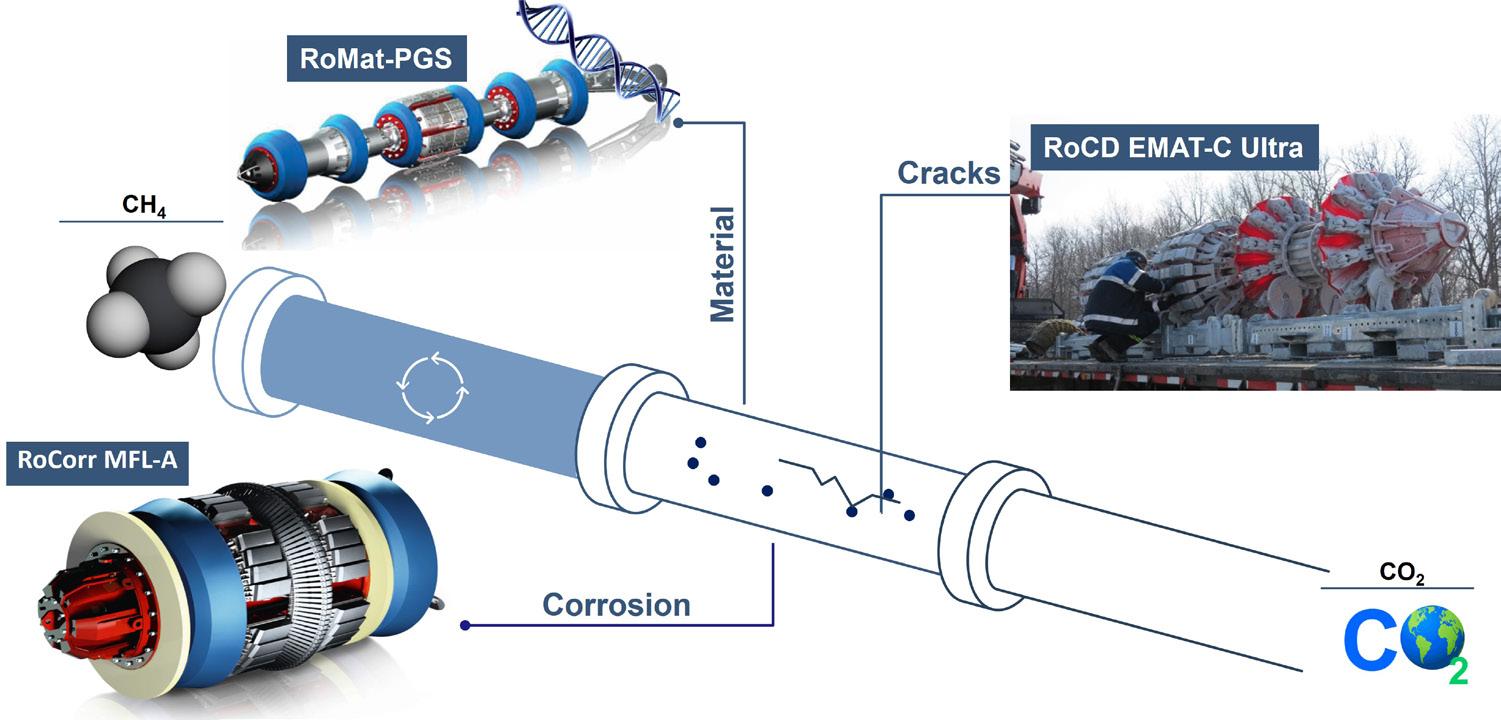
The method is particularly valuable for materials with lower fracture toughness, where early detection of minor anomalies is essential to prevent failure. Because EMAT generates highly detailed data on crack morphology and location, it supports more efficient integrity assessments and can reduce the number of field verifications or excavations required.
In addition to its role in CO2 pipelines, EMAT technology is compatible with emerging hydrogen transport systems, offering a flexible inspection platform suited to the evolving needs of energy infrastructure.
ROSEN and the engineer behind the research ROSEN, based in Lingen, Germany, develops advanced ILI tools and data-driven technologies that help operators ensure the safety and reliability of energy infrastructure. The company is now applying
its expertise to the emerging challenges of CO2 transport, adapting its inspection and monitoring solutions to support safe, large-scale CCS networks.
Bastidas, a native of Spain with a PhD from the University of Barcelona, comes from a strong academic background. He taught corrosion engineering at the University of Akron in Ohio, US, before joining ROSEN. As a principal engineer based in Houston, Texas, US, he bridges research and field application, combining scientific insight with practical integrity management.
“It’s rewarding to contribute to solutions that protect the environment and critical infrastructure,” he said.
As the global community intensifies efforts toward carbon neutrality, CO2 pipelines are emerging as critical infrastructure in the decarbonisation landscape. These pipelines transport captured CO2 from industrial emitters to long-term storage sites, often spanning hundreds of miles and operating under high pressure. While the technology holds promise for enabling large-scale carbon management, it also presents complex engineering challenges. Chief among these are ensuring pipeline integrity and effectively managing corrosion risks throughout the system’s lifespan.
The unique nature of CO2
CO2 behaves quite differently from traditional pipeline gases such as natural gas, especially when transported in its dense or supercritical phase. In this state – where CO2 exhibits both gas-like and liquid-like properties – it achieves high density, making long-distance transport more efficient. However, these same properties introduce significant risks, as the fluid’s chemical reactivity increases, particularly when trace amounts of water or impurities are present. This reactivity can accelerate corrosion and other degradation processes, complicating pipeline operation and safety.
Internal corrosion is one of the most insidious threats to CO2 pipelines, often triggered by the presence of water, oxygen, or other contaminants within the CO2 stream. Even small quantities of moisture can react with CO2 to form carbonic acid, a highly corrosive substance that attacks the pipeline’s interior walls. Over time, this can cause wall thinning, pitting, and crack initiation – especially in
older or repurposed pipelines not originally designed for CO2 service. The unpredictable, time-dependent nature of corrosion means it can develop rapidly during operational upsets or phase changes, demanding vigilant monitoring and advanced inspection techniques.
Integrity management: beyond the basics
Ensuring the ongoing integrity of CO2 pipelines requires a comprehensive, multi-layered approach that extends beyond traditional pipeline management practices. Operators must understand the material properties of pipeline components, including fracture toughness and weld quality, especially when converting pipelines from natural gas to CO2 service.




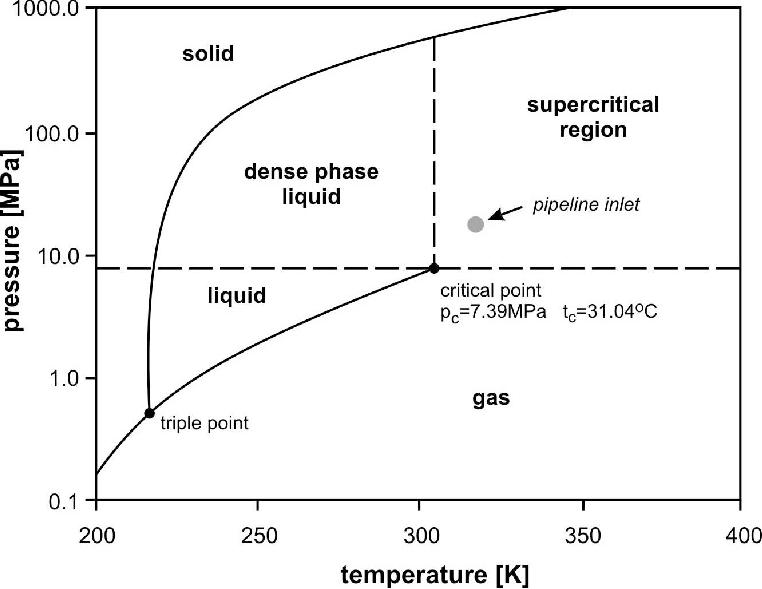
Modern ILI technologies now incorporate advanced sensors such as EMAT, eddy current, and magnetic flux leakage to detect even shallow corrosion, cracks, and geometric anomalies. These inspections are increasingly enhanced with machine learning and finite-element modelling to analyse large datasets and deliver precise assessments that inform maintenance and risk mitigation.
“Machine learning and data fusion are changing how we interpret inspection data,” Bastidas says. “By merging multiple datasets, we can build digital twins that provide a threedimensional view of pipeline anomalies and help operators make informed, predictive decisions about integrity.”
The safe operation of CO2 pipelines hinges on maintaining tight control over temperature and pressure to stay within the dense-phase envelope, preventing phase transitions that could destabilise flow or damage equipment. Deviations in operating conditions may lead to issues such as slugging, hydrate formation, rapid depressurisation – CO2 expands rapidly, cooling dramatically due to the Joule-Thomson effect – where repeated pressure cycles can exert fatigue and eventually develop running ductile fracture, all of which pose serious threats to pipeline integrity.
Inspection tools must also navigate the physical challenges unique to CO2 systems, which often feature heavy walls, tight bends, and varying diameters. These tools need to be flexible, collapsible, and capable of traversing complex geometries without compromising data quality or resolution.
As CO2 transport infrastructure expands, the industry faces a pressing need to invest in research, innovation, and the
development of robust standards to address integrity challenges head-on.
“Industry standards are keeping pace with technology,” Bastidas said. “Through the addition of gaseous CO2 pipelines to the scope of ASME B31.8, the new API RP 1192 guidance, and the work developed by AMPP SC26 – Carbon Capture, Alternative Fuels, and Energy Storage – including SP 21632, Guide 21532, and Guide 21577, we’re developing frameworks for corrosion control and integrity management in CO2 pipelines.”
Effective collaboration between pipeline operators, technology providers, regulators, and organisations such as the Association for Materials Protection and Performance (AMPP) will be critical in establishing frameworks for corrosion control, inspection frequency, and emergency response.
Ultimately, the success of CCS depends not only on capturing CO2 but also on transporting it safely and reliably through pipelines. Meeting this challenge requires precision engineering, continuous innovation, and an unwavering commitment to pipeline integrity to support a sustainable, low-carbon future.
“The next big step will come from predictive tools that integrate large integrity data warehouses with AI,” Bastidas adds. “These will deliver more accurate forecasting, reduce intrusive inspections, and continuously improve asset integrity.”
Organisations such as AMPP play an essential role in advancing corrosion control, training, and certification programmes that help ensure the safe operation of CO2 pipelines. By connecting engineers, researchers, and operators across the energy industry, AMPP supports the development and application of materials protection standards that underpin pipeline integrity and long-term reliability.
“Mastering supercritical CO2 transport is key to building a safe, scalable carbon management network – one that emphasises global decarbonisation goals and the transition to a sustainable energy future”, Bastidas said.
The effort comes amid a worldwide drive toward net zero by 2050, which calls for balancing greenhouse gas (GHG) emissions with removal through natural or engineered means by mid-century – a goal tied to limiting global temperature rise to 1.5°C (34.7°F). More than 140 nations, including the US, members of the EU, Japan, and the UK, have adopted or proposed net-zero targets, each charting its own path toward decarbonisation.
Meeting these commitments will demand sweeping changes in energy systems, industrial processes, and infrastructure. For many sectors, CCUS offers a viable pathway to cut emissions at scale – placing CO2 transport networks at the centre of the world’s transition to a low-carbon future.
As technologies evolve and standards mature, repurposed pipelines may yet become not just relics of the oil and gas era, but the backbone of a carbon-conscious energy future.
Dynamic Risk discusses building effective pipeline safety programmes for US-Canada cross-border systems.
Operating pipelines across international borders presents a unique challenge for energy companies. As infrastructure expands across jurisdictions, operators must ensure not only safe and reliable operations but also full compliance with two distinct regulatory frameworks: the prescriptive, rule-based system of the US under PHMSA, and the systems-oriented approach of Canada under the CER and CSA standards. Developing and maintaining effective integrity management programmes (IMPs), operations

and maintenance (O&M) programmes, and damage prevention programmes that satisfy both sets of requirements is essential, but far from straightforward.
Two regulatory worlds, one operational reality
With more than 70 hazardous liquid and natural gas pipelines operating across the US-Canada border, the complexities of duel regulatory compliance are real for many operators. Operators of these cross-border pipelines must maintain the same level
of safety, integrity, and operational performance as domestic systems, but with the added challenge of dual regulatory compliance and oversight.
In the US, pipeline safety is governed by PHMSA, which enforces detailed safety requirements under 49 CFR Part 192 (natural gas) and Part 195 (hazardous liquids). These regulations follow a prescriptive approach, directing Operators to take specific actions given a certain scenario. In contrast, Canadian regulations governed by CER SOR/99-294 and guided by CSA Z662, emphasises a performance-based approach allowing for engineering discretion and data driven decision making. Additionally, CSA Z662 mandates implementation of a safety loss management system (SLMS), which promotes governance, continual improvement, and organisational learning.
This divergence in regulatory philosophy means that operators must carefully assess their assets, organisational structure, and available resources to determine how best to structure their programmes. The challenge is not only technical but strategic: how do you design programmes that satisfy both jurisdictions without duplicating effort or creating confusion?
Assessing organisational fit and asset jurisdiction
Before developing or revising cross-border programmes, operators must take a critical look at their organisational structure and asset

distribution. It’s essential to identify which assets fall under PHMSA versus CER oversight, determine whether personnel are shared across jurisdictions or dedicated regionally, and assess whether internal expertise is sufficient to manage dual compliance or if external support is needed.
This foundational assessment helps determine whether programmes should be maintained separately by jurisdiction or integrated into a hybrid structure that accommodates both regulatory environments. The size and maturity of the organisation, the complexity of its assets, and the nature of its stakeholder relationships all influence the optimal approach.
Operators typically adopt one of two strategies. Some choose to maintain entirely separate programmes for US and Canadian assets. This approach ensures clarity and direct compliance with each regulator’s expectations and is particularly effective for programmes with highly prescriptive requirements or unique stakeholder groups. Public awareness initiatives, damage prevention efforts, and emergency response plans often fall into this category, as local engagement protocols and notification systems, such as Alberta One-Call and Texas 811, can vary significantly.
Others opt for a hybrid approach, consolidating content into unified programmes while including jurisdictional annotations where requirements diverge. This method works well for programmes like IMPs and O&M. In these cases, the programme may default to the most conservative or restrictive requirements or include jurisdiction-specific content where necessary. For example, a hybrid IMP might apply the shortest inline inspection (ILI) reinspection interval across all assets or note where Canadian engineering assessments allow for extended intervals under CSA Z662.
in designing cross-border programmes
Designing safety-related management programmes – such as IMPs and O&M programmes – that span both US and Canadian jurisdictions requires thoughtful planning and a deep understanding of regulatory nuances. Operators commonly face the following questions:
How do you reconcile the regulatory approach differences between PHMSA and CSA Z662?
CSA Z662 is performance-based, allowing for engineering discretion and data-driven decision making. PHMSA regulations are more prescriptive, directing operators to take specific actions under defined scenarios. Programmes must strike a balance between these approaches while remaining compliant with both.
How do you standardise terminology across jurisdictions?
Terms like ‘Engineering Assessment’ and ‘Engineering Critical Assessment’ may appear interchangeable but carry distinct regulatory implications. Threat categories also differ between PHMSA and CSA. Standardising language within programmes is essential to ensure clarity and consistency.
We are running out of space...
Our inventory in sales & rental in pipeline equipment is out of this world. We have a huge amount of machines from all the big brands that are ready for worldwide delivery, or even further if you want...
You can build on BAUMA!
Should procedures be duplicated by jurisdiction or integrated into a single document?
This decision depends on system complexity, resource distribution, and organisational structure. While integration can streamline operations, it may introduce ambiguity if jurisdictional requirements are not clearly delineated.
How will personnel be trained to manage crossborder systems effectively?
Operators must ensure that staff understand their roles and responsibilities and how these are impacted by jurisdictional boundaries. Effective training and change management are critical to maintaining consistency and compliance.
How should programmes be structured to support audits by both PHMSA and CER?
Compliance teams must be familiar with how each programme maps to its respective regulatory code and be prepared to demonstrate alignment during independent audits. Dual-regulatory readiness is essential for maintaining credibility and avoiding enforcement actions.
The role of safety loss management systems (SLMS)
An SLMS provides the structural foundation for managing pipeline safety across jurisdictions. For operators managing cross-border systems, SLMS acts as the critical bridge between jurisdictional requirements and organisational departments, enabling operators to unify safety governance across their entire asset base, regardless of location. It defines how safety responsibilities are distributed, how risk is managed, and how data is collected and reported, ensuring that both US and Canadian regulatory obligations are met without duplicating effort or creating confusion. By interconnecting operational departments, jurisdictional requirements, and recordkeeping systems, SLMS supports consistent implementation of safety programmes; while also defining when activities or responsibilities must remain independent to maintain clarity of reporting, strict prescriptive processes, or stakeholder engagement – such is as seen in public awareness and damage prevention programmes. The SLMS also facilitates management of change processes and audit readiness across both regulatory environments.
Best practice approaches for cross-border programme and
Developing programmes and procedures that apply across both US and Canadian jurisdictions requires more than regulatory awareness, it demands a structured, intentional approach to content design. The following best practice approaches help ensure clarity, compliance, and operational efficiency:
) Use a common framework: anchor all programmes within a well-designed SLMS that clearly defines how jurisdictional assets are managed. This includes identifying responsible personnel and departments, specifying how requirements from PHMSA and CER/CSA will be applied, and outlining how reporting and audits will be handled across asset areas.
) Design around the most restrictive requirements: build core procedures using the most conservative or prescriptive
requirements from either jurisdiction. Where unique regional mandates exist, include jurisdictional callouts within the text or use annexes to separate content that must remain independent.
) Clarify terminology: include a glossary to clarify terminology that may differ between PHMSA and CSA Z662, such as ‘Engineering Assessment’ vs ‘Engineering Critical Assessment’.
) Cross-reference regulatory sources: cite both PHMSA and CER/CSA requirements throughout the document to enhance traceability. Maintain a concordance table mapping regulatory references to programme content for audit readiness.
) Collaborate across teams: engage compliance, operations, safety, and legal teams from both jurisdictions during programme development. This ensures alignment and avoids gaps in interpretation or implementation.
) Review and update regularly: regulations evolve, and procedures must keep pace. Establish a review cycle to ensure programmes remain current and effective, and to proactively address areas of friction or inefficiency.
) Highlight jurisdictional differences where necessary: for activities like ILI feature response or emergency management, where regulatory expectations differ significantly, clearly separate procedures or reporting pathways to avoid confusion and ensure compliance.
These practices help operators create programmes that are both unified and flexible, capable of supporting cross-border operations while respecting the distinct requirements of each regulatory environment.
Final thoughts: turning complexity into clarity with the right partner
Designing and maintaining effective pipeline safety programmes for cross-border systems can be a complex undertaking, one that requires not only a strong regulatory knowledge of code but also experience on strategic programme design that is practical for implementation. As operators balance the prescriptive mandates of PHMSA with the performance-based flexibility of CER and CSA Z662, the need for a structured, intentional approach becomes essential.
At Dynamic Risk, we specialise in helping clients navigate this complexity. Our expertise in both US and Canadian regulatory frameworks and our pragmatic approach to programme design enables us to support the development of client programmes that are not only compliant but also tailored to the unique needs of each organisation. Whether your operations span multiple regions, involve shared personnel, or require hybrid programme structures, we bring the insight and experience needed to build systems that work for you.
We’ve supported clients in successfully preparing for and responding to regulatory audits, aligning their SLMS with dualjurisdictional requirements, and implementing best practices that promote clarity, consistency, and operational efficiency. Our approach is grounded in collaboration, a thorough understanding of regulatory frameworks and their nuances, and a commitment to delivering right-sized solutions. This ensures that your pipeline safety management system is aligned with your organisational structure, available resources, and operational complexity.
Dairyland’s PCRX is the most sophisticated decoupler on the market; offering the functions of standard decouplers while also eliminating capacitance delays during interrupted surveys. Unlike traditional decouplers, PCRX remains connected during testing, overcoming capacitive effects while maintaining protection for personnel and critical assets for the duration of the survey. This ensures accurate and timely potential measurements while still providing the rugged over-voltage protection, AC interference mitigation, CP isolation, and safety grounding expected from Dairyland decoupling products.
Nassima Brown, Strategy Director at Fennex, details how applied AI is transforming safety in high-risk energy operations.
In the unforgiving environments of energy infrastructure where high pressure, hazardous materials, and remote locations are the norm, safety is paramount. Yet while engineering and operational systems have evolved, safety management has often lagged behind, relying on reactive models and outdated tools. That is now changing. Artificial intelligence (AI) is no longer a futuristic concept as it is already reshaping how risk is predicted, prevented, and managed.
Running and managing operations in the energy sector always carries a safety risk, but the evidence is that operators and supply chain companies have not been the quickest to adopt AI tools for their safe systems.
As the energy sector becomes more electrified, digitalised, and decentralised, managing its complexity is increasingly difficult due to cost and reliability pressures. According to the International Energy Agency’s (IEA’s) 2025 Energy and AI report, these challenges are driving energy companies to adopt AI to optimise operations.
In the oil and gas industry, AI is being applied to enhance pipeline safety by improving system monitoring, predicting

failures, and automating responses. More broadly, the IEA highlights that the technology is helping the sector reduce costs, increase efficiency, lower emissions, improve uptime, and strengthen safety across critical infrastructure.
The use of AI can improve safety performance, reduce incidents and predict emerging risks – preventing harm, saving costs, replacing legacy systems, and shifting from lagging to leading indicators. This represents a significant breakthrough for the future of safe operations in high-hazard environments.
Fennex is pushing hard to overcome barriers to AI. Founded in 2016 by former oil and gas professionals with decades of global operational and engineering experience, the company recognised the need for a platform to transform how safety is monitored across the industry.
Fennex has developed AI-powered safety and assurance solutions for the high-hazard energy sector. The technology is deployed across offshore oil and gas, decommissioning, and onshore facilities, and is now expanding into offshore wind.
The solutions are currently being used across terminals, drilling operations, vessel management, pipeline systems, pipelay
activities, maintenance, and installation projects around the world.
Nassima Brown, explains, “AI allows us to move beyond historical analysis and reactive responses. Instead, we can now process real-time safety data, uncover patterns, and predict risks before incidents occur. This is a game-changer.
“AI adoption is a journey. We see it as a ‘crawl, walk, run’ approach starting with digitisation, then moving into machine learning, and eventually deploying full-scale predictive analytics. It’s not about replacing human judgment. It’s about enhancing it with better data, sharper insight, and the ability to act before things go wrong.”
The intelligent systems enhance safety and performance in some of the most demanding environments. Its flagship solution, Behaviour-Based Safety Solution (BBSS™), is a multilingual, mobileenabled AI platform that digitises real-time safety observations. Designed for deployment in tough field conditions, the system transforms routine safety data into powerful predictive insights.
The system supports over 30 languages, translating observations into English in real time to enable central analysis. Since launch, it has processed over 2.8 million observations across 30+ offshore assets, increasing reporting activity by 30% and saving more than 25 000 administrative hours annually. Beyond operational efficiency, the programme has contributed to a 43% reduction in the recordable incident rate, demonstrating its effectiveness in driving meaningful safety outcomes.
Noble Corp., one of the world’s leading offshore drilling contractors, sought a solution to streamline a paper-heavy safety reporting process without sacrificing inclusivity.
Noble and Fennex developed BBSS, a fully digital safety observation solution that captures data via mobile apps and web portals, and uses AI to digitalise observations submitted via paper cards.
This multi-channel input ensured full participation across Noble’s diverse workforce, regardless of digital readiness or location.
BBSS was deployed across 42 offshore assets across 20 regions. Within the first two years the solution had achieved the following:
) 43% reduction in recordable incidents.
) 25 000 man-hours saved annually.
) 30% increase in safety reporting engagement.
In an industry where the cost of failure is high, this long-term partnership is a clear demonstration of what is possible when cutting-edge technology is grounded in operational reality. By combining AI with a deeply human-centred safety culture, Noble and Fennex developed a scalable model for proactive safety.
Dustin Stringer, Global HSE Director at Noble Corp., said “Systematically analysing leading safety data, observations, reported risks, and near misses, identifies patterns that were previously undetectable and allows us to drive actions that identify high-risk areas and mitigate hazards before they escalate. The ability to anticipate potential safety issues through AI-driven
insights is a game-changer for operational safety. This isn’t just about technology – it’s about saving lives, reducing incidents, and building a safety culture that is predictive, not reactive.
“Instead of reacting to incidents, we now anticipate them. AI gives us the visibility and confidence to act earlier and more effectively.”
Predictive safety: from reactive to proactive
Traditional safety models rely heavily on lagging indicators such as data captured after incidents occur. However, Fennex utilises a different method and focuses on leading indicators in realtime data that forecast potential problems.
BBSS uses supervised and unsupervised AI models to analyse millions of safety observations. With over 3.5 million entries captured, it provides one of the richest behaviour-based safety datasets in the sector. These insights empower managers to:
) Anticipate incidents before they happen.
) Understand why certain behaviours lead to specific outcomes.
) Take timely, informed actions to mitigate risks.
A dynamic dashboard delivers a 30 day incident forecast, fleet-wide risk rankings, and real-time insight into behavioural trends. The platform was developed to track performance as well as predict the future.
The predictive engine uses more than 24 AI models to analyse factors like crew composition, observation quality, and intervention balance. A live dashboard ranks risk by rig and
highlights critical variables, giving safety leaders the tools to act before incidents occur. The system continuously adapts in real time, refining its recommendations as it collects and processes more data.
Empowering the workforce with data
BBSS was designed to empower frontline teams. Crews input observations through a user-friendly app. In return, safety leaders receive live KPIs, trend reports and automated briefings to guide daily operations.
This digital transformation of a once paper-heavy process has led to:
) Improved engagement.
) Higher reporting rates.
) Better-quality data.
) Streamlined compliance.
Sustainability through digital efficiency
Fennex’s AI-powered digital solutions are reshaping how energy companies approach sustainability. While traditionally focused on improving safety and operational performance, these technologies are increasingly recognised for their environmental impact. By digitising core processes such as safety reporting, risk assessments, and operational verifications, Fennex’s platforms eliminate the need for paper-based systems, reduce administrative overheads, and significantly cut the requirement for physical travel, particularly to offshore and remote sites.
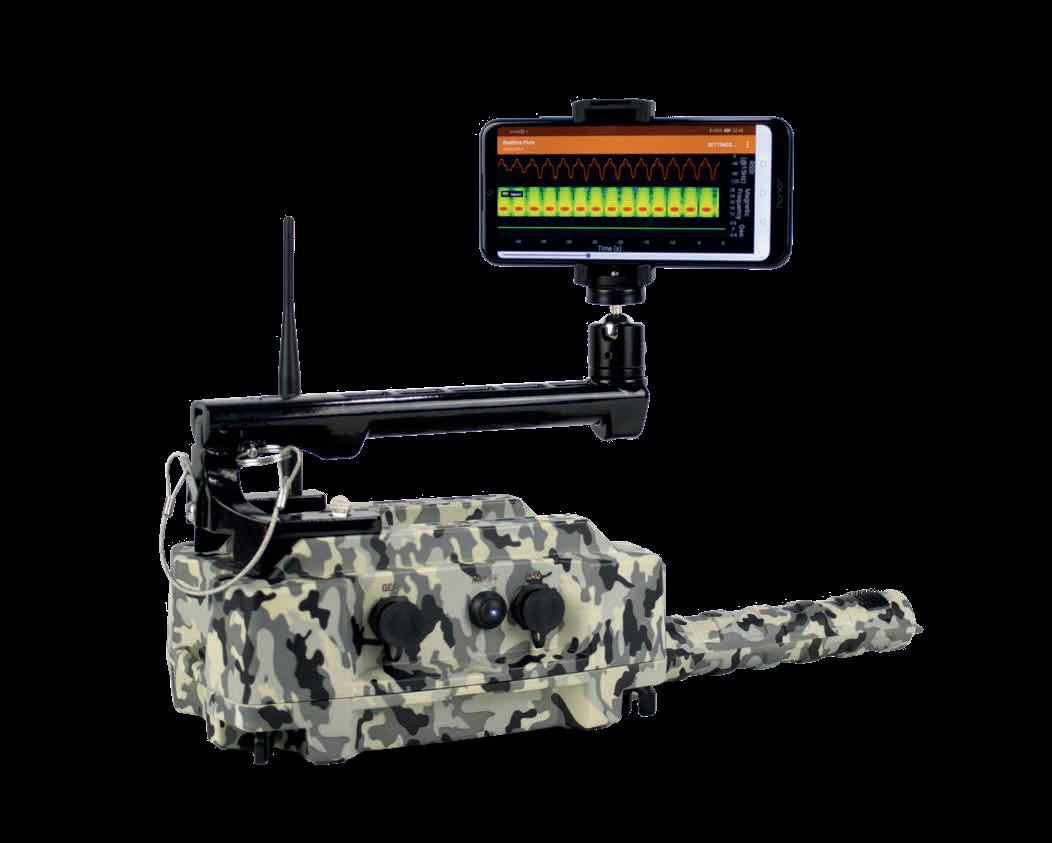

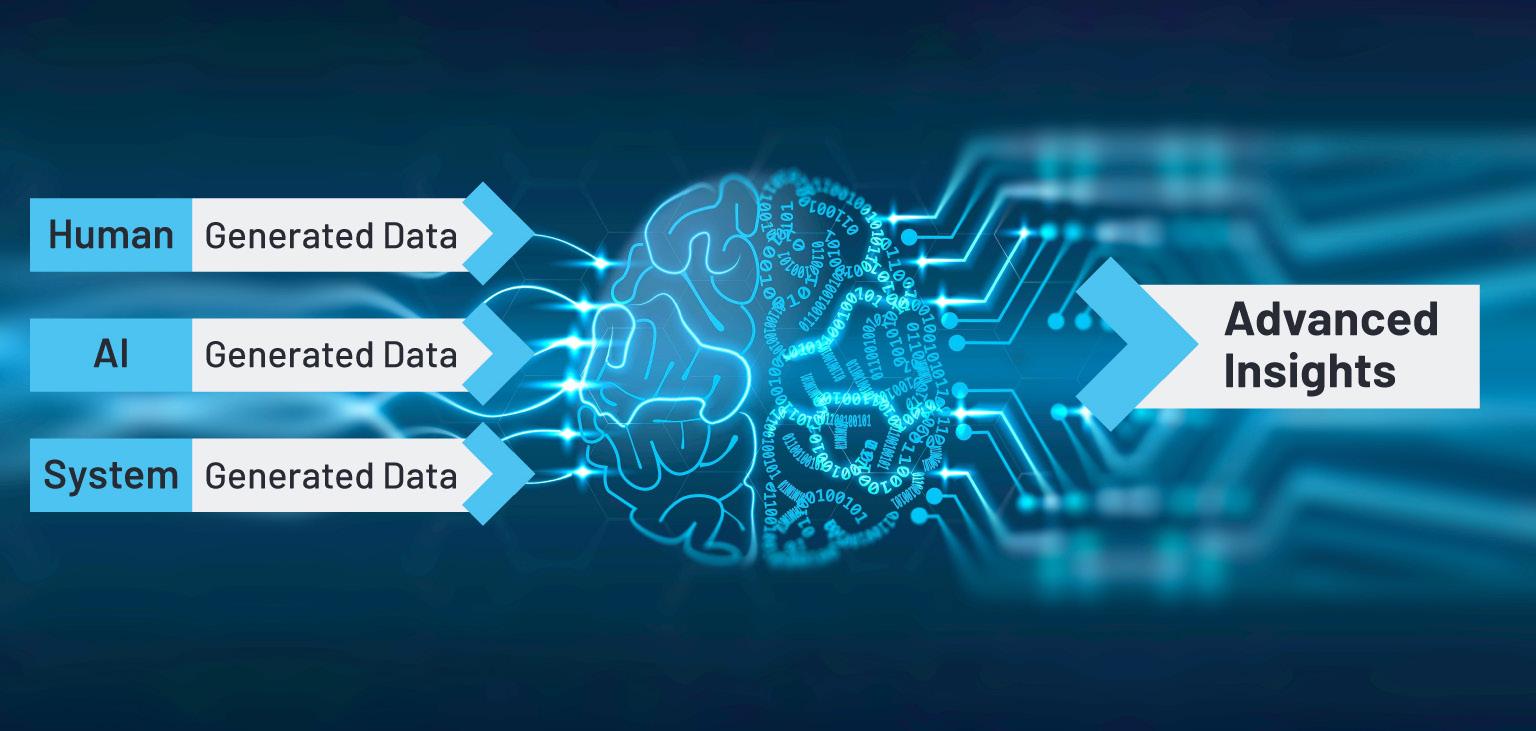
This reduction in travel – whether by helicopter, vessel, or vehicle – translates directly into lower carbon emissions. Digital verifications and remote assurance capabilities mean that tasks once requiring on-site presence can now be completed efficiently from onshore locations, without compromising safety or compliance. Furthermore, the automation of reporting and analytics ensures faster, more accurate decision-making with fewer resource-intensive activities.
For operators managing complex assets like pipelines, offshore platforms, and onshore terminals, these improvements offer a dual benefit: safer operations with a lighter environmental footprint.
Fennex’s approach demonstrates that digital innovation and sustainability are not mutually exclusive; they are, in fact, deeply interconnected. As the industry faces increasing pressure to decarbonise, solutions that enhance both safety and environmental performance will play a critical role in building a more sustainable energy future.
The IEA’s Energy and AI report found that artificial intelligence can deliver up to US$110 billion/y in cost savings across energy infrastructure by 2035, largely through predictive maintenance, improved asset utilisation, and reduced unplanned downtime.
By utilising the abundance of data that we already have accumulated and combining it with innovative solutions, the industry can optimise operations, increase cost and time efficiencies, and – more critically – improve safety across all aspects of the energy process.
For companies like Fennex, the mission is to challenge traditional thinking, accelerate digital transformation, and lead the way in AI-driven safety across all high-risk energy sectors.
In May 2025, Fennex received the King’s Award for Enterprise in International Trade, the UK’s most prestigious business honour. The company operates in over 20 countries, with 50 000+ end-users and solutions deployed on more than 70 offshore assets, and a multi-user onshore plant complex.

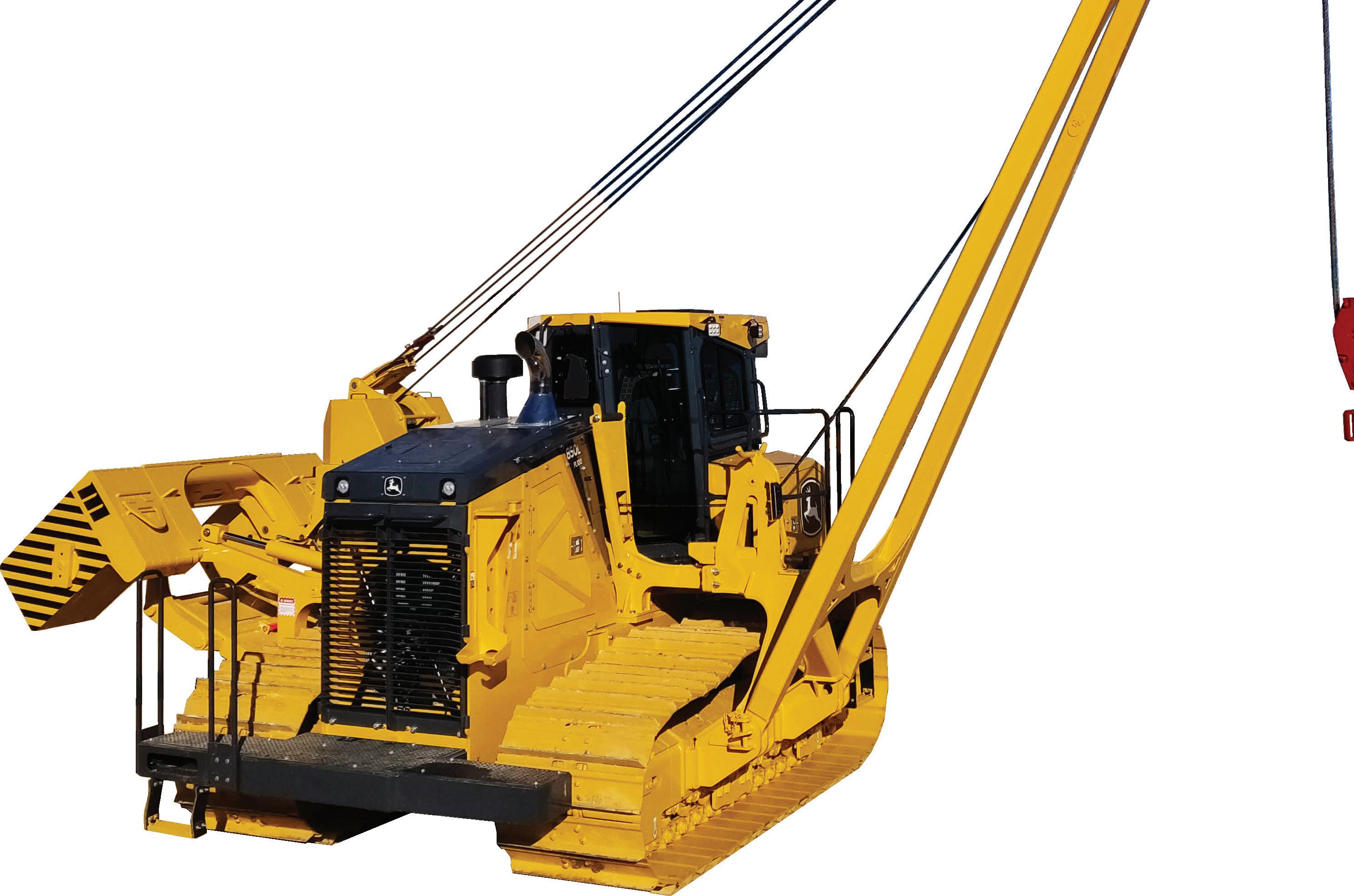
Andrew Weatherhead, Chief Technology Officer, Sensia, highlights how modern controls, intelligent tools, and efficient systems can optimise efficiency, sustainability, and more in pipeline operations.
Keeping product flowing safely and reliably around the clock is complicated today by challenges such as skills shortages, ageing equipment, siloed data, and remote and
distributed assets. The good news is pipeline operators can overcome these obstacles and optimise performance across their pipelines using targeted control, automation, and digitalisation investments.
Smarter process control technologies, for instance, can empower operators to better understand what’s happening across pipelines and run them at peak efficiency. Intelligent tools custom built for oil and gas operations can address lingering issues that until now have been tolerated as a cost of doing business. And modern alternatives to traditional technologies can improve efficiency, sustainability and maintenance.
Let’s unwrap these opportunities and explore how each can help put pipeline operators on the path to operational excellence.
The shortcomings of aging control and information systems become more apparent the longer they operate. These systems may only offer limited access to timely and actionable data. They can lack the flexibility needed for quickly responding to market needs. And too often they aren’t optimised for maintenance and reliability.
One challenge is that pipeline operators can end up with disparate control systems deployed across their pipeline network. These systems make it difficult to bring together data and make sense of it. They can also be difficult to maintain, as spare parts from different systems can become more difficult to find over time. And knowledge about how to maintain each system can be limited to a small number of people.
Shifting to a single, standardised, and modern control technology can address these challenges and help pipeline operators optimise their performance.
For instance, a modern and scalable distributed control system (DCS) allows information to be shared across operations, including up to the executive level, while also enabling remote access. This can give staff better insights into what’s happening across pipeline operations and reveal maintenance needs before they evolve into downtime.
In one case, a company that operates thousands of miles of pipelines across several states sought to modernise its operational environment to gain better insights, ease maintenance and improve reliability. The company implemented a modern DCS that shared information across facilities and enabled remote access. High-availability virtualised servers also reduced the likelihood of downtime due to hardware errors.
With the new system in place, the company was able to achieve 99.5% availability in its compression fleet. It also saved about US$2.3 million in one year alone from reduced maintenance costs and downtime.
Smart measurement devices provide another opportunity to drive operational excellence in pipelines by enhancing situational awareness. Advanced ultrasonic flow meters, for example, can provide accurate measurement of custody transfer, fiscal, check metering, and leak detection.
Staff can use real-time and historical data from the meters to monitor and maintain pipeline operations. They can monitor process parameters and be alerted of process condition changes. Improved tracking of diagnostic information for each meter and ultrasonic path allows
them to see if conditions like wax buildup are impacting performance. And they can compare flow profile signatures over time to identify potential variations.
Intelligent connected solutions that have been designed specifically for the unique demands of oil and gas operations can solve persistent pipeline pain points.
For example, one barrier to maintaining reliable operations in gas pipelines is the formation of hydrates. Injecting chemicals or using process heaters can help mitigate hydrate formation. However, operators too often don’t have the visibility they need to optimise these processes. As a result, they apply chemicals or heat for worst-case conditions even though such conditions rarely materialise. This generates unnecessary costs and emissions.
Intelligent tools that are designed specifically for oil and gas applications can make sure only the required amount of chemicals or heat are applied based on pipeline conditions. This can optimise process efficiency, cost, and sustainability.
The data-driven tools provide real-time visibility into the process, including the fluid’s phase envelope and hydrate formation temperature based on current composition. Now, operators can manually adjust the process to prevent hydrate formation based on realtime recommendations from the intelligent tool. These adjustments can also be made autonomously using closed-loop control.
In one case, a North American pipeline operator was using 500 000 btu heaters to avoid hydrate formation. The operator ran the heaters year-round, even though the actual risk of hydrate formation was zero for most of the year.
Using an intelligent throughput optimisation tool, the operator reduced its use of the heaters by 90%. This helped the operator save US$1.5 million and eliminate 500 tpy of CO 2 emissions. Having a real-time understanding of the phase envelope of the gas also helped the operator increase propane shipments by approximately 20%.
Better connectivity to distributed and remote pipelines is also helping pipeline operators run more sustainably and reduce safety risks.
One pipeline operator in Texas (USA) recently deployed a solar-powered air compressor skid as a new way to actuate emergency shut-off pipeline valves. The skid reduced the company’s carbon footprint and the amount of travel its operators needed to do – often on treacherous roads – for maintenance.
Prior to this skid, shut-off valves were actuated by either fuel gas or hydraulic systems. Using fuel gas required venting the gas directly from the pipeline into the atmosphere, which resulted in hydrocarbon emissions. And the hydraulic systems required operator intervention each time they were tested, requiring operators to drive several hours, often at night.
The solar-powered skid eliminated the use of fuel gas and allowed operators to remotely open and close the valves from a command centre hundreds of miles away. It also delivered granular information about system health and battery life.
Modernisation projects are a prime opportunity to advance operational excellence by replacing aging assets with new technologies that offer enhanced performance. A key example of this is in pipeline compressor stations, where variable frequency drives (VFDs) offer efficiency and sustainability improvements over gas engines.
While a gas engine has limited speed variation, an electric motor with a VFD offers a precise and wide speed range. This enables the VFD to dynamically adapt to variations –like pressure and flow-demand changes, temperature shifts, and blockages – that require speed adjustments, resulting in improved efficiency. VFDs that can regulate speed and control to counter pressure changes can also help prevent potentially damaging surges.
Another challenge with gas turbines is high maintenance costs from their frequent overhauls. Some VFDs support synchronous transfer, which allows operations to start with less impact on the power system. This can help prolong the equipment’s life and reduce maintenance costs.
Additionally, because synchronous transfer allows one drive to start and control several pump motors, a VFD with this capability can help pipeline operators realise significant savings through reduced capital, installation and energy costs.
A VFD that enables remote monitoring can further optimise its performance, maintenance and cost savings.
An operator monitoring compressor stations from a central control room could, for instance, notice an issue like a pump running with a lower load torque and then dispatch a maintenance technician to investigate the issue. They also could identify when operations are generating higher energy costs and act, such as by adjusting operations to run during off-peak hours when rates are lower.

Achieving operational excellence in the midstream sector doesn’t happen overnight or with technology alone. It requires an ability to see how people, processes, and technologies can work together toward common goals, an understanding that the future must be more automated and digital, and a willingness to rethink what’s possible in pipeline operations.
Andy is an experienced global leader bringing over 30 years of industry-leading oil and gas solution delivery and technology development experience. Joining Rockwell Automation in 2005, Andy held senior positions in Sales and Marketing, Operations, and Product Development. Combining his domain expertise in process automation and IoT, Andy is focused on value creation by enabling digital transformation for Sensia customers across the energy value chain.

OUR BALL VALVES GO BEYOND THIS DISPLAY AND YOUR EXPECTATIONS!
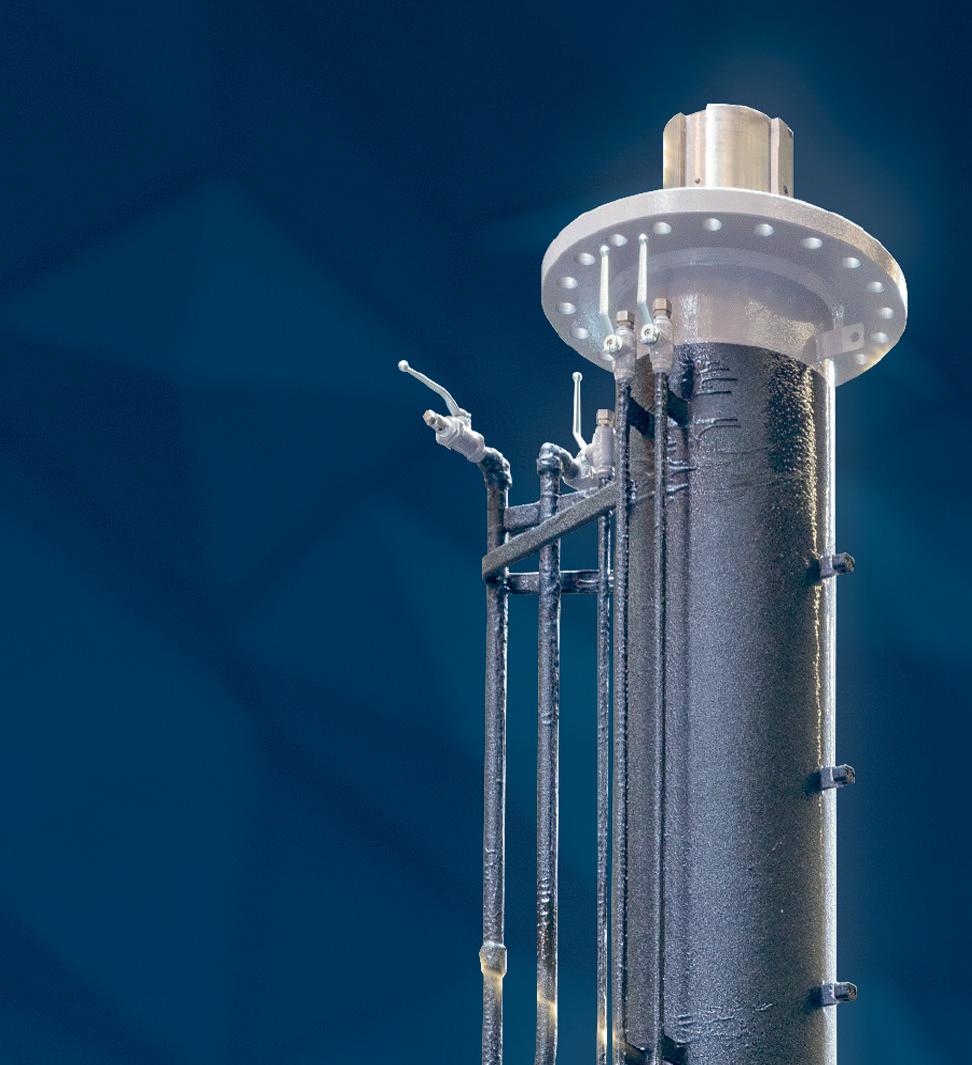
1/8’’ - 56 ‘‘ CLASS 2500 AND HIGHER
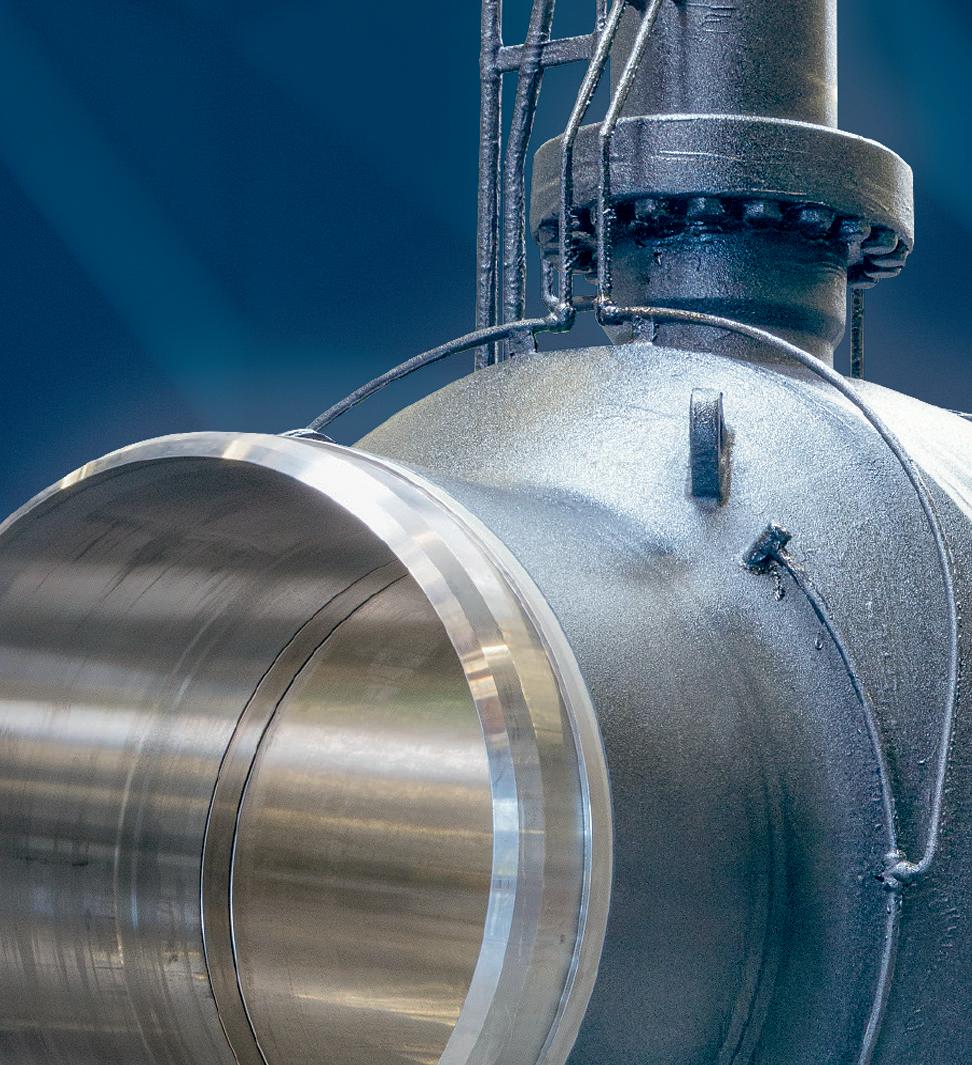
OIL, GAS, HYDROGEN, DISTRICT ENERGY & VARIOUS APPLICATIONS

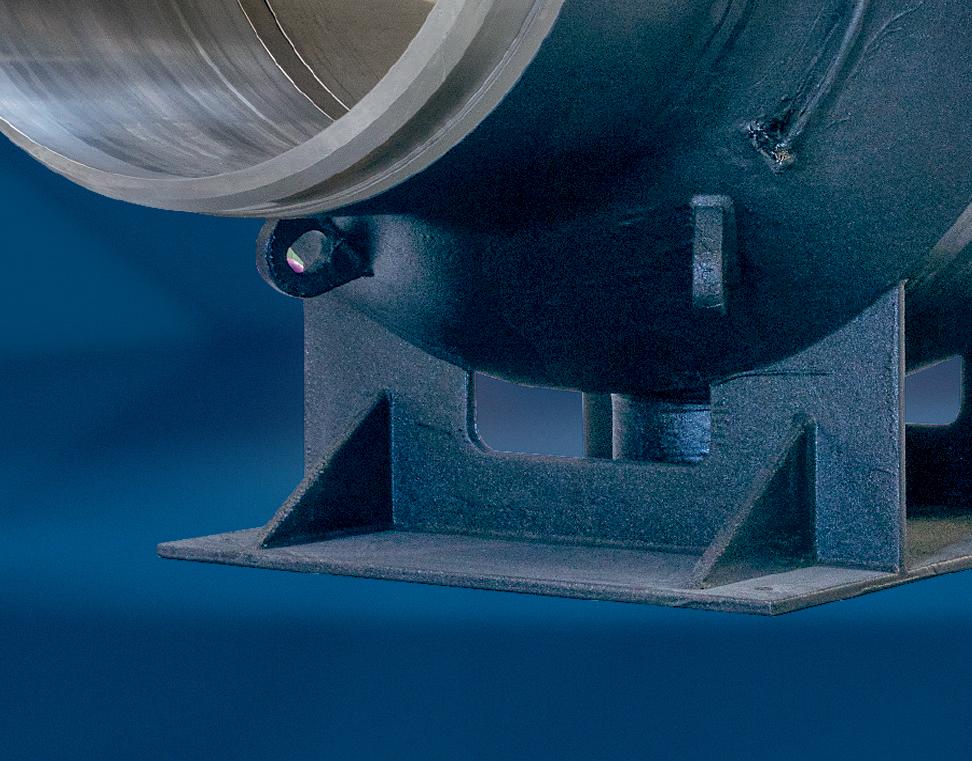




Natalia Plewniok, Meirik, Poland, details how rhi redeveloped its unit rate contracting software to provide the advantages of cloud-based automation, using a Scrum approach.

To develop largescale energy infrastructure including the construction of oil and gas drilling plants and pipeline networks, software that can accurately plan budgets and work schedules is crucial. Not only do these systems help to keep plans on track throughout a project’s lifecycle, but they also play an important role in selecting contractors.
rhi provides this type of service to clients including oil majors and upstream operators. rhiCOMS is rhi’s unit rate contracting system that determines the cost of each measurable unit of work, whether that’s a metre of pipeline or a man-hour of labour. This data can then be scaled to project requirements.
An important role of the software is the management of tenders, enabling rhi’s customers to evaluate project bids. With benchmarking against its large historical database, the system can also provide progress measurement throughout a project’s lifecycle.
Developed over 20 years ago as a desktop system, rhiCOMS gave customers the information they needed. But to evaluate detailed project requirements, the development team supporting the software were frequently involved in manual data collection with colleagues located around the world in order to provide the right information to rhi’s client-facing team.
The core objective behind these enquiries was to facilitate a thorough evaluation of project costs and trends. For pipeline projects, which typically form part of a larger project, determining the cost of supplying the pipe and its rate involves a comparison between up to four different vendors. This analysis also assesses which vendor could supply the items most effectively, as well as identifying any additional fees that might be involved
Beyond initial costs, to help forecast over the long term and for future projects, the team also needed to identify cost trends for specific items, which also included spotting pricing anomalies. Although crucial to the outcome of an accurate unit rate contracting system, acquiring this data could take several weeks. But, in today’s business landscape, planners of energy projects can no longer wait that long.
“We wanted to transition to a cloud-based system, integrating a centralised database that could provide instant, automated data retrieval for customers,” says Chris Baughurst, rhi’s Systems Manager, who leads a six-person team responsible for the redevelopment.
“For customers, data analysis is crucial. With the desktop version of the system, we could provide the information they needed, but it took several steps to get to that point, requiring our manipulation of the software and data to provide the answer,” adds Chris.
For example, the raw data generated by the desktop tool or received from global colleagues was not always provided in a standardised format. This presented particular challenges when multiple material types and quantities had to be combined. When aggregating costs was necessary, time was required to reformat and check the data to ensure its consistency throughout.
Considering rhi’s scale, the redevelopment of the rhiCOMS customer-facing tool, which would involve the input of multiple internal stakeholders, faced numerous competing requirements.
“We wanted business objectives to drive what the tool would do,” says Chris. “We didn’t want to bring across
functionality that wasn’t required, but crucially, we needed to make sure that the software gave customers what they needed.”
To efficiently manage the project’s volume of redevelopment requirements, rapid feedback from stakeholders within the business would be vital.
Failing quickly
“We wanted to fail quickly,” says Chris. “We wanted to implement functions and have a stakeholder say ‘no’, very early on. That was one of the reasons we wanted an Agile approach.”
Honing-in on the early identification of issues, Agile software development aims to achieve incremental product delivery, quickly providing value, with rapid feedback from the user or customer.
Although the redevelopment had a fixed investment period, it didn’t have a hard and fast timeline. Instead of aiming for a go-live by a specific date, the team sought continual progress, delivering value along the way. This Agile method contrasts sharply with a traditional, deadline-driven approach to project management. Instead, it allows a responsiveness that enabled the team to resolve real challenges as they arose, rather than sticking to a fixed plan, even if elements of it had become redundant.
Chris, along with Software Manager Mark Pettifer, who leads rhiCOMS systems development, had recently advanced their knowledge of these techniques through Scrum Master training.
The Scrum framework,1 which aims to solve complex problems in an empirical way, is an approach to product development focusing on delivering iterative value by promoting transparency and collaboration using Agile values and principles.2
“The team was small, they needed to be cross functional, and they needed constant feedback from the business, so Scrum was the best fit for them,” explains Pawel Rola, Business Transformation Consultant at Meirik, which was engaged by rhi to guide the team through the redevelopment process.
“In theory, the Scrum framework is simple, but it can be hard to implement,” explains Pawel. “My role was to support the team and present the bigger ‘why?’, asking fundamental questions to keep focus on the business objectives, as well as guiding efficient Scrum implementation to support them in rapid and effective value delivery.”
One of the primary challenges was balancing business needs alongside the technical requirements of the software.
“The Product Owner, ultimately accountable for maximising the value of the product resulting from the work of the Scrum team, had a lot of operational experience but wasn’t from a software development background,” explains Mark. “We needed to consider functionality
alongside architectural development. Previously, ongoing development of the desktop version was, to an extent, ad hoc, and new features could be isolated and inflexible to update. The new version needed to be scalable to future requirements.”
To achieve consensus and efficient development, it was key to involve business stakeholders from outset.
“Iterative development with continual feedback keeps stakeholders engaged, and when the first version of the software is released, they know what to expect,” says Pawel.
Meirik held a technology and business alignment workshop at rhi’s Aberdeen base, grouping architectural and business requirements, and identifying the dependencies between them. Ensuring that a focus on overarching business objectives is maintained, the alignment of requirements isn’t about compromise but instead forms a vital aspect of priority identification.
“This approach helped to determine new functionality not included in the original tool, such as an integrated estimating capability,” says Chris.
Business stakeholder feedback also led to the introduction of significant developments including Microsoft Power BI integration, that would ultimately give customers interactive reporting on live data.
The process was also vital to evaluate original functionality and assess its value. The 80/20 rule generally applied, showing that 80% of the system output was achieved by 20% of its
functionality, enabling more streamlined development as a result.
Unit rate core functionality would be crucial, including the schedule of rates as well as initiation of bills of quantities. But beyond these foundational aspects, the cloud-based system introduced notable enhancements and new functionalities, making the tool considerably more flexible and user-friendly. Currency management, for example, is crucial to the standardisation of international projects. Previously, the desktop
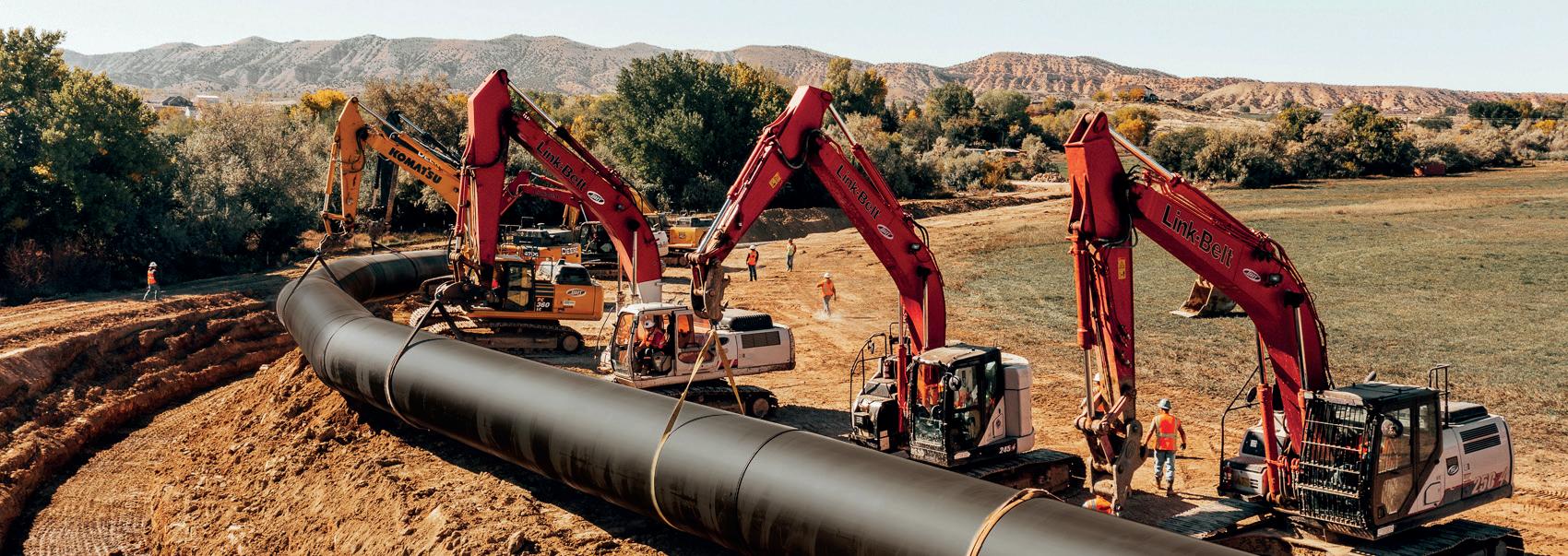
• FAST AND EASY INSTALLATION
• FOR HIGH-VOLUME FLOWS
• HIGH-QUALITY MATERIALS
• EXPERTISE IN PLASTICS PROCESSING
version restricted projects to defining a maximum of five currencies. Now, the updated, cloud-based version of the software supports an unlimited list of currencies, enabling users to add as many as required.
Another key improvement was expanding the number of possible area references, critical for defining how a quantity or its location is identified, such as a metre of pipe installed in a particular zone. Formerly, these were limited to just three categories, but they are now unlimited, providing vastly greater flexibility. This expanded capability allows users to identify costs according to various organisational structures, whether they’re classified as a sub-system, a particular building, or relating to a specific allocation of resources or teams.
Meirik guided the Scrum team in a roadmap, enabling developers to create functionality with constant feedback provided by key stakeholders. Pawel also provided one-onone mentoring, empowering team members to develop according to Agile principles. Following two, week-long workshops, the team was ready to operate independently.
“With Pawel’s help, we built the process,” says Chris. “It was crucial to break down the boundaries: we are all equals,

we all take turns managing Scrum events within the team, and this has built engagement and trust.”
After a little over a year of iterative development, the cloud-based software was set live and to date the software has been in use for around six months. The positive results are already clear for customers.
“The latest version of rhiCOMS, combined with Power BI integration, means that customers can access the information they want, straight away,” says Chris. “This applies throughout the lifecycle of a project, enabling customers to make evaluation and analysis whenever they need it.”
In many respects, customers were more easily satisfied than rhi’s internal stakeholders. Closely connected to rhiCOMS and its functionality, users across the business still need time to adapt.
“Since the new cloud-based system was built from the ground up and involved changes to certain elements, it has required a process of convincing rhi’s internal users that it would reliably perform what they needed it to do,” says Chris. “The strategy to overcome this challenge has been to demonstrate the new system’s capabilities on a project-by-project basis as specific requests emerge. This involves showing that the new system not only handles the basic functionalities they are accustomed to but also provides additional value through the software’s new capabilities.”
To encourage confidence in the transition and minimise the uncertainty, the offline version of the system is still in use for projects that were initiated with it, rather than an immediate closure of service.
“Internally, we’re starting to achieve trust,” confirms Chris. “Stakeholders outside our team are seeing the benefits, not only based on customer reaction, but also through efficiency gains.”
The new, cloud-based version is more responsive to business requests, and this flexibility is also thanks to the standardisation of data format, which allows a much greater level of analysis by the user. But most importantly, as well as new, automated features and enhanced data accuracy, the updated version of the software has significantly increased the speed of the bid evaluation initial review, reducing it to two to three days, instead of three to four weeks – or more.
The Agile mindset taken by the team, guided by the Scrum framework, not only empowered them to quickly redevelop the software and deliver business value in the short term, but it also created a secure and stable platform on which they can base future needs.
Chris concludes: “The Scrum framework helped us to build the trust and confidence to redevelop a system that could deliver the necessary functionality, and that is also secure and scalable.”
References
1. https://scrumguide.org
2. https://agilemanifesto.org
Emerson outlines how operators can strengthen cybersecurity from SCADA to field devices.
The safe transport of liquids and gases through pipeline networks is essential. Whether supplying gas or liquids, pipeline operators must maintain continuous, incidentfree service. In recent years, however, the methods used to keep these systems running have faced growing scrutiny. A series of attacks on grids, pipelines, and terminals since 2012 has shown that ‘security through obscurity’ – the belief that pipelines are unlikely hacker targets – is no longer sustainable. Today, operators must take a proactive, robust approach to cybersecurity to safeguard their infrastructure. Strengthening cybersecurity across pipeline operations requires a deliberate shift toward layered protection, from the SCADA system

to field devices. Because each company’s infrastructure and operational demands differ, no single solution applies universally. Still, a few foundational principles can guide any organisation toward a more resilient, cybersecure approach.
Historically, remote terminal units (RTUs) and flow computers offered minimal security. Many legacy devices supported only short, lower-case credentials, and default usernames and passwords were often left unchanged –creating clear vulnerabilities as cyber threats grew more sophisticated.
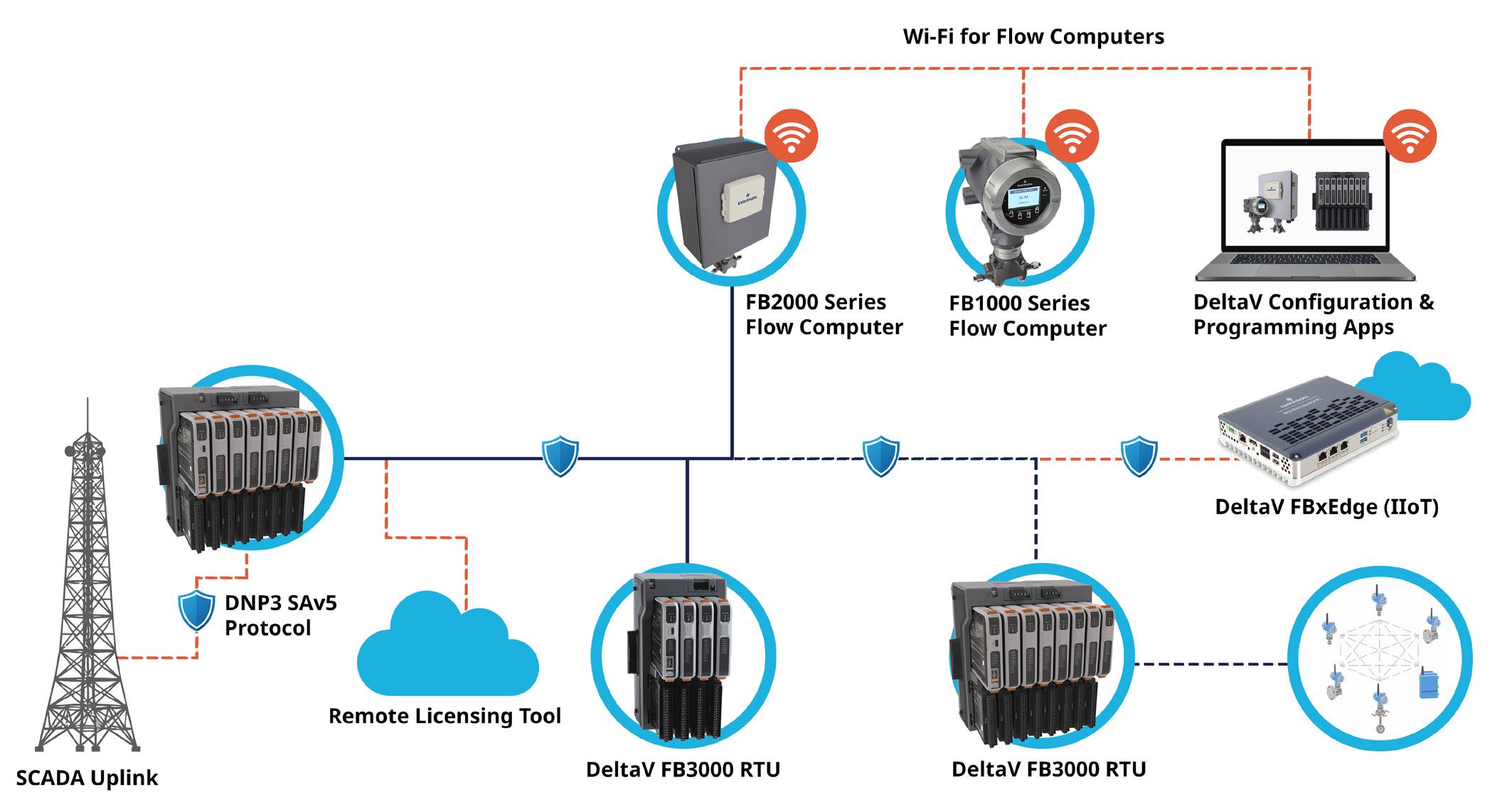
Modern cybersecurity expectations begin with stronger credential management. Most newer devices (and older units with updated firmware) support advanced authentication. Organisations should require passwords of at least eight characters with mixed cases, numbers, and symbols to deter brute-force attacks. RTUs and flow computers should also offer lockout features that disable logins after repeated attempts fail.
Shared user names may seem efficient but pose significant risks. They obscure accountability, increase human error, and eliminate meaningful audit trails. When employees leave, organisations must update every device or continue using credentials known to former staff. Cyber-aware operators now assign unique user credentials and implement rolebased access controls to ensure permissions align with responsibilities.
Because threats evolve constantly, timely updates are essential. Operators should ensure technicians promptly apply firmware and software patches to close emerging vulnerabilities. Many companies also enforce strict controls on external devices, as USB-borne malware remains a common intrusion method. Blocking unapproved devices significantly reduces exposure.
Another essential cybersecurity step is updating communication protocols. Many legacy SCADA protocols were designed for reliability, not security. Modbus offers no
protection against unauthorised control, and even proprietary protocols with basic safeguards remain vulnerable.
To strengthen security, a SCADA protocol should authenticate every device to block unauthorised access and protect all credentials during login and updates. Using open, widely adopted protocols – subject to third-party scrutiny – helps operators avoid hidden vulnerabilities and maintain broad device compatibility. Still, any chosen protocol must meet industry expectations for efficiency, reliability, and usability, even in complex or bandwidth-constrained network environments.
To enhance security without compromising speed, many operators are adopting DNP3 with Secure Authentication 5 (SAv5). It delivers strong authentication while validating sensitive actions only when needed, reducing network traffic and supporting low-performance field devices. During critical operations – such as opening valves or shutting down equipment – the RTU and SCADA authenticate one another. If authentication fails, the action is blocked. DNP3 strengthens cybersecurity without the delays associated with heavier communication overhead.
Recent cyber incidents demonstrate operators can no longer rely on obscurity or outdated protections. Fortunately, today’s IT and OT teams have proven tools and strategies to strengthen security across infrastructure and device lifecycles. Establishing this foundation protects current operations while helping organisations adapt to emerging threats and regulatory requirements.
Toshiyasu Shiono and Takuya Yokosuka, Yokogawa Electric Corp., reflect on the 50 year history of integrated production control systems and future prospects.
CENTUM VP is a cutting-edge solution developed to enhance reliability, safety, and operational efficiency in the midstream oil and gas pipeline sector.
By integrating state-of-the-art technologies alongside comprehensive cybersecurity measures, it enables operators to confidently monitor and precisely control complex pipeline networks. CENTUM, the world’s first distributed control system (DCS), was unveiled by Yokogawa Electric Corp. on 19 June 1975. This year
marks the 50th anniversary of its launch. Since its release, it has been installed in over 30 000 systems across more than 100 countries, supporting a wide range of industries including oil and gas, chemical, iron and steel, pharmaceutical, food and beverage, textiles, water, and power.
As the core system for plant control and operation, the DCS has continually evolved to meet the diverse needs of industries and technological breakthroughs, while fostering the production of high-quality products and energy efficiency for users.
Over the past 50 years, it has evolved and laid the groundwork for its envisioned future – referred to as ‘CENTUM Future’ – with the launch of CENTUM VP R7 in July 2025, a product designed to embody this vision.
Emergence of distributed control systems (1960s - 1970s)
During the 1960s and 1970s, plants in industries such as oil and gas, chemicals, and power generation increasingly grew in scale and complexity. The centralised control systems dominant at the time faced challenges such as the concentration of control signals and processing limitations, which heightened risks of system-wide failures and constrained future scalability. These issues raised concerns about stable plant operations. Recognising the advent of the digital age, Yokogawa Electric pioneered the adoption of microprocessor technology – a promising innovation at the time – and established a distributed architecture where systems are decentralised and interconnected via control buses. This breakthrough led to the development of distributed control systems (DCS) which significantly enhanced operational safety and stability.
Networking and information system advancements (1980s)
The penetration of personal computers (PCs) during the 1980s and 1990s revolutionised information management in offices and factories. CENTUM broadened its application scope and expanded its product lineup to meet diverse process requirements.
The CENTUM-B, released in 1981, built upon CENTUM’s robust and reliable technology to establish a highly distributed DCS architecture, enabling fully panel-less computer display operations for large-scale petroleum refining plants. The 1984 release of CENTUM V enhanced alarm handling capabilities and introduced event-driven one-touch operations and operator guidance features, contributing to improved operational efficiency and safety through CRTbased operation. The CENTUM-XL, launched in 1988, pursued high performance, user-friendliness, and system integration, introducing an ‘engineering station’ that separated and enhanced engineering functions from operator stations, thereby significantly improving engineering efficiency.
Digital integration, globalisation, and ERP adoption (1990s)
The widespread adoption of the internet facilitated inter-company communication and data sharing, which improved supply chain efficiency. Enterprise Resource Planning (ERP) systems began to be implemented, enabling integrated resource management and accelerated process optimisation.
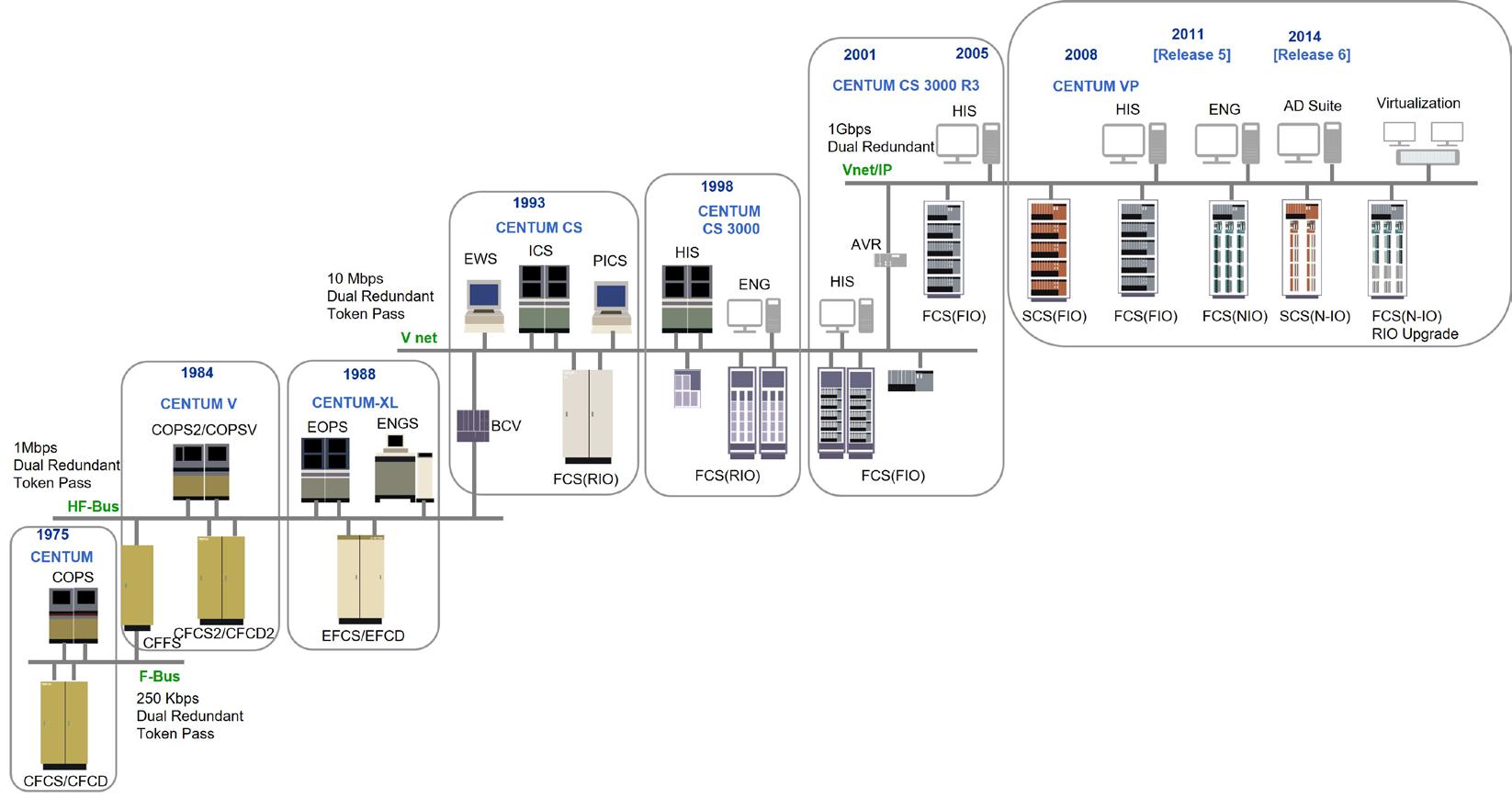
CENTUM CS, introduced in 1993, embodied the concept of ‘Concentral Solutions’, aimed at delivering optimal solutions by leveraging accumulated expertise in collaboration with users. This integrated production-related functions and information – including operation management, equipment management, and safety/environmental management – into a core system capable of supporting diverse industry needs and driving system openness. In response to the growing demand for general-purpose technologies and the Windows operating system advances, CENTUM CS 1000 was launched in 1997 as a DCS for small- to medium-scale plants adopting Windows NT for Human Interface Station (HIS). Following this, CENTUM CS 3000 debuted in 1998, catering to large-scale plants
19-22

The industry ’s only forum devoted exclusively to pipeline pigging for maintenance and inspection
This event will draw engineering management and field operating personnel from both transmission and distribution companies concerned with improved operations and integrity management.
Technical papers will cover ILI data assessment, prioritization of repairs, new tools, improving tool per formance, external coating inspection with ILI tools, pig launch and receiving systems, new regulations and much more.
Visit one- on- one with the world’s top providers of pigging, ILI, and integrity management ser vices – over 170 companies will be represented.
12 in-depth, technical pipeline training courses will be held prior to the conference and exhibition. Upskill your workforce for 2026.




with open interfaces enabling data exchange with ERP and Manufacturing Execution Systems (MES), facilitating seamless integration with other systems.
Advances in data collection and analytics technologies led to the integration of industrial sensors and devices into networks, enabling real-time monitoring and automated control through cloud-based data management.
Released in 2008, CENTUM VP R4 marked the first new series in a decade, with the concept of ‘Vigilant Plant’ aiming to realise ideal plants through system integration and the inheritance of high reliability and compatibility. This was a significant update to the HIS. While maintaining the operability of CENTUM series, the system incorporates universal design principles based on human ergonomics to enhance visibility and intuitiveness, ensuring seamless operation.
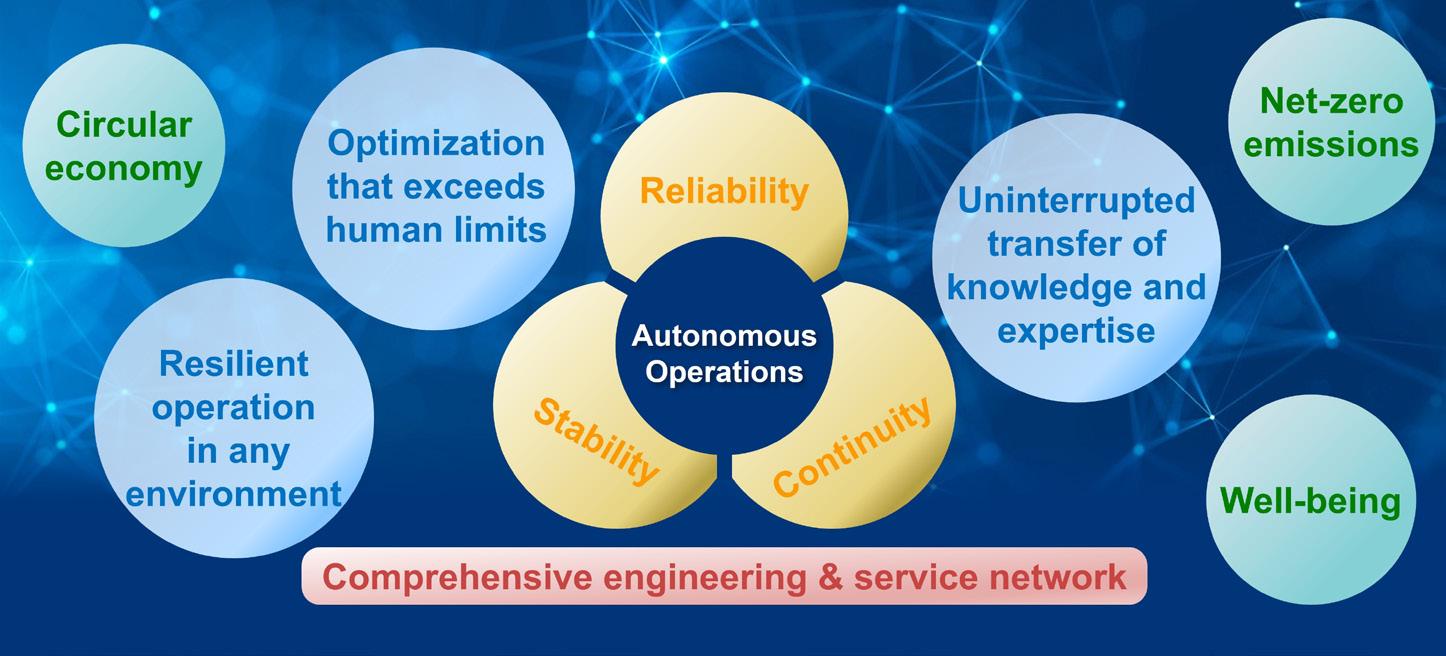
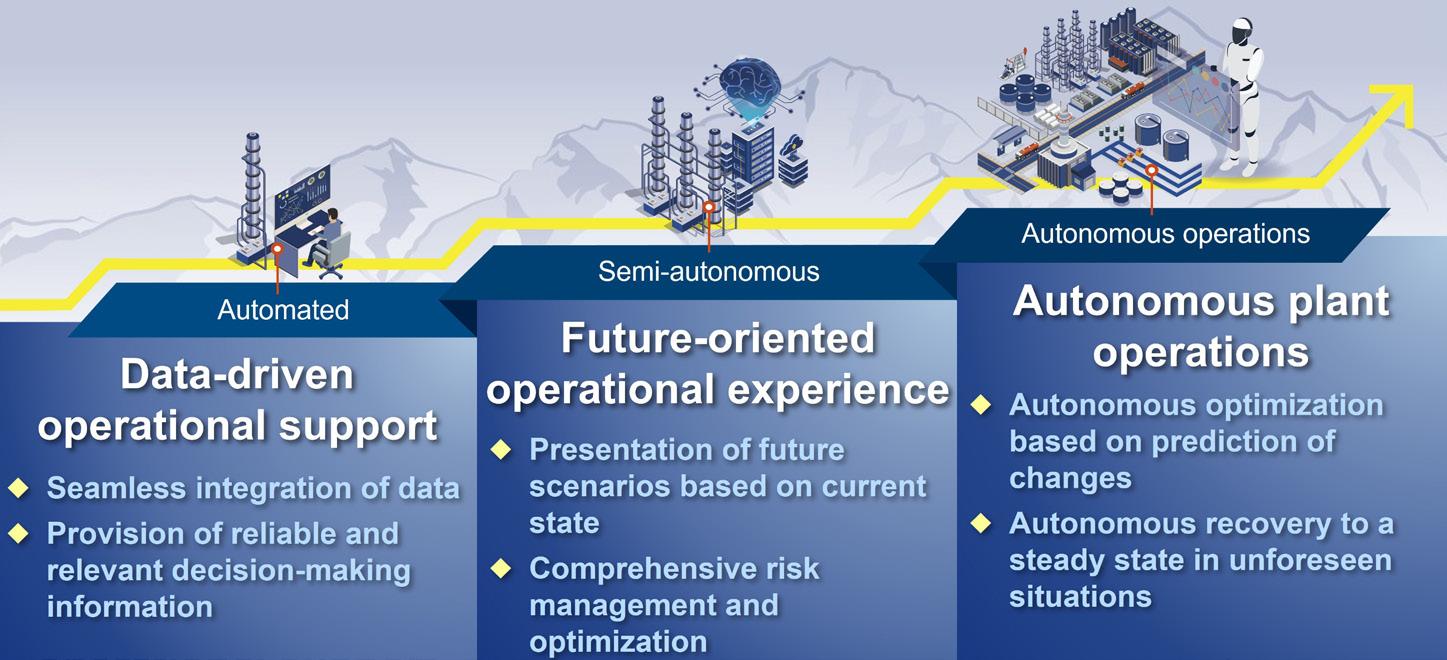
CENTUM VP R5, introduced in 2011, leveraged advancements in ‘Field Digital’ technology, enabling digital communication between control systems and field devices such as flowmeters and differential pressure/pressure transmitters. Leveraging this Field Digital technology, the system was designed to achieve overall optimisation of plant operations. To support this, the basic performance of the Field Control Station (FCS) was enhanced, and the control bus was strengthened to enable highspeed communication between stations. This allowed the system to smoothly process the dramatically increasing volume of information, establishing itself as a cuttingedge control system. Furthermore, its gateway functionality, with interfaces to various control systems, enabled the integration of disparate systems for unified operation and monitoring.
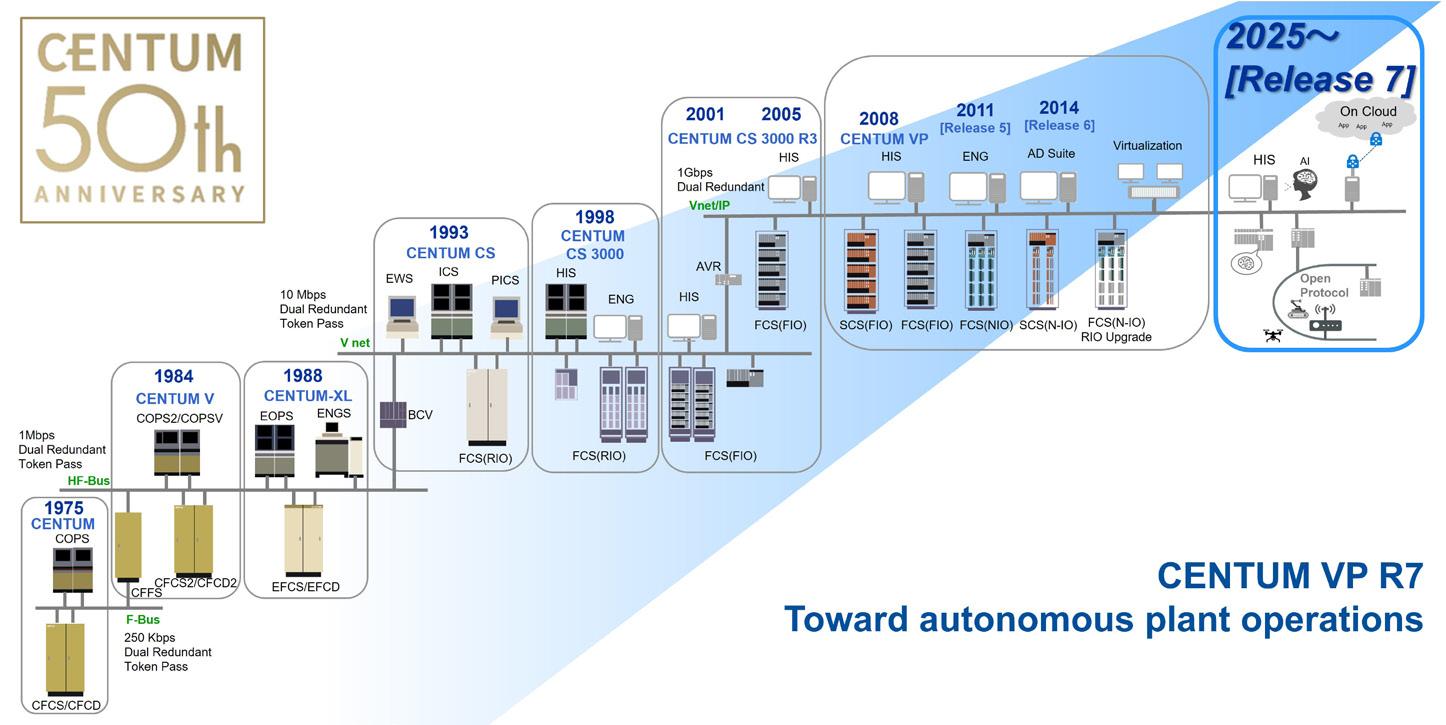
CENTUM VP R6, launched in 2014, was developed in response to intensifying global competition and the evolving market environment. There was a growing need for agile and flexible responses to production changes by providing optimal environments for design, engineering, installation, production startup, and operational modifications throughout the ‘plant lifecycle’.
Customers have seen significant changes in their macro and micro environments. On a macro scale, they are facing challenges such as stricter regulations, reshaping supply chains, workforce shortages due to aging populations, the need for knowledge transfer, and climate change coupled with advancements
in technologies like AI. On a micro level, they are encountering increased demand for decarbonisation, the accelerated adoption of renewable energy, and the rising importance of digital transformation (DX).
In this rapidly evolving and interconnected global landscape, the challenges faced by plant operations fall into four main categories:
) Enhancing profitability and product quality: customers are under pressure to deliver higher-quality products at lower costs and shorter lead times.
) Preserving and transferring tangible and intangible assets: ageing production facilities and workforce reductions pose risks to maintaining operational know-how.
) Addressing rising security risks: cyber security threats are increasing, particularly in critical infrastructure industries.
) Adapting to regulatory and supply chain changes: stricter environmental and legal regulations are reshaping supply chains, impacting plant operations.
CENTUM envisions a future centred on transitioning from automation to autonomy. While automation has been the cornerstone of its contributions to safe and productive plant operations, the next phase focuses on autonomous operations – where it learns from changes, adapts, and ensures optimal and safe plant operations without human intervention.
CENTUM aims to transition from automation to autonomy, ensuring optimal and secure operations without human intervention.
This evolution focuses on:
) Operational optimisation that exceeds human limits: advanced operational optimisation that exceeds human judgment.
) Resilient operation in any environment: ensuring consistency even amid complex and dynamic influences.
) Uninterrupted transfer of knowledge and expertise: facilitating the preservation and inheritance of both tangible and intangible assets.
By advancing these domains, it aims to contribute to sustainable development, addressing challenges such as resource circulation, climate change, and enriching human lives globally.
While aspiring to achieve autonomous operations, it acknowledges that this goal cannot be realised in a single leap. Instead, it envisions this future through a phased evolution.
) Automated phase: establishing a data-driven operational support foundation by integrating and analysing dispersed plant data.
) Semi-autonomous phase: providing ‘future-oriented operation experience’, enabling operators to anticipate and mitigate risks, thereby optimising operations.
) Autonomous phase: it independently predicts and responds to unforeseen changes, autonomously restoring to the normal operation state without human involvement.




“Fight while wounded”: how pipelines can stay resilient amid cyber threats
Featuring Ross Brewer, Vice President and Managing Director of EMEA at Graylog. A conversation about how the energy and pipeline sectors can build cyber resilience in an era of growing complexity and connection.
We cover:
• The unique cyber risk for pipelines.
• The risk multipliers: modernisation and connectivity.
• Regulation and responsibility.
• Cloud resilience and sovereignty
• The power of preparation.
• The evolving threat landscape
As a conclusion to introducing the future vision of CENTUM, we make three commitments. Firstly, to uphold its core strengths – reliability, stability, and continuity. Secondly, achieving sustained operational optimisation through autonomous solutions. Thirdly, contributing to customer sustainability by enhancing energy efficiency, accelerating decarbonisation, and advancing CENTUM as a green product.
As the first step toward realising CENTUM Future, Yokogawa released the 10th generation CENTUM VP R7, commemorating the system’s 50th anniversary.
All generations, from the original CENTUM (in the bottom left of Figure 4) to the latest CENTUM VP R7 (in the top right of Figure 4), are technologically connected with one line. This continuity and inheritance represent one of our company’s greatest strengths.
The concept of CENTUM VP R7 ‘Unchanging Value and Innovation’ reflects its dual commitment to enhancing reliability, stability, and continuity while delivering innovations aimed at autonomous plant operations.
Key innovations include:
) Expanded scope of control and monitoring: incorporating communication standards like OPC UA, PROFINET, and Ethernet APL as well as leveraging data from sensors and cameras, VP R7 broadens operational scope while enhancing safety and efficiency.
) Predictive detection through process condition monitoring: by normalising and analysing data collected from plants, the state of processes and equipment can be monitored, enabling the early detection of deviations from expected values. Combining this with human expertise and operational know-how allows for proactive operations that anticipate and address changes in advance. This approach minimises opportunity losses, ensures stable operations, and enhances energy efficiency.
) AI-driven plant operations that leverage domain knowledge and know-how: by integrating operator expertise with AI-driven scenario predictions, with advancing predictive detection ‘future scenarios’, CENTUM assists operators in making appropriate decisions and choosing the best paths forward.
AI-driven plant operation ensures operators’ timely and accurate decision-making while significantly reducing day-today workload and efforts.
Yokogawa integrates human domain knowledge with cutting-edge technologies to fully leverage decades of operational expertise and best practices. Moving forward, CENTUM will optimise plant operations and contribute to a
in an era of rapid change.
Amid ongoing industry advancements, CENTUM VP is a trusted partner that supports sustainable and optimised pipeline management and contributes to the secure and efficient transportation of critical energy assets.
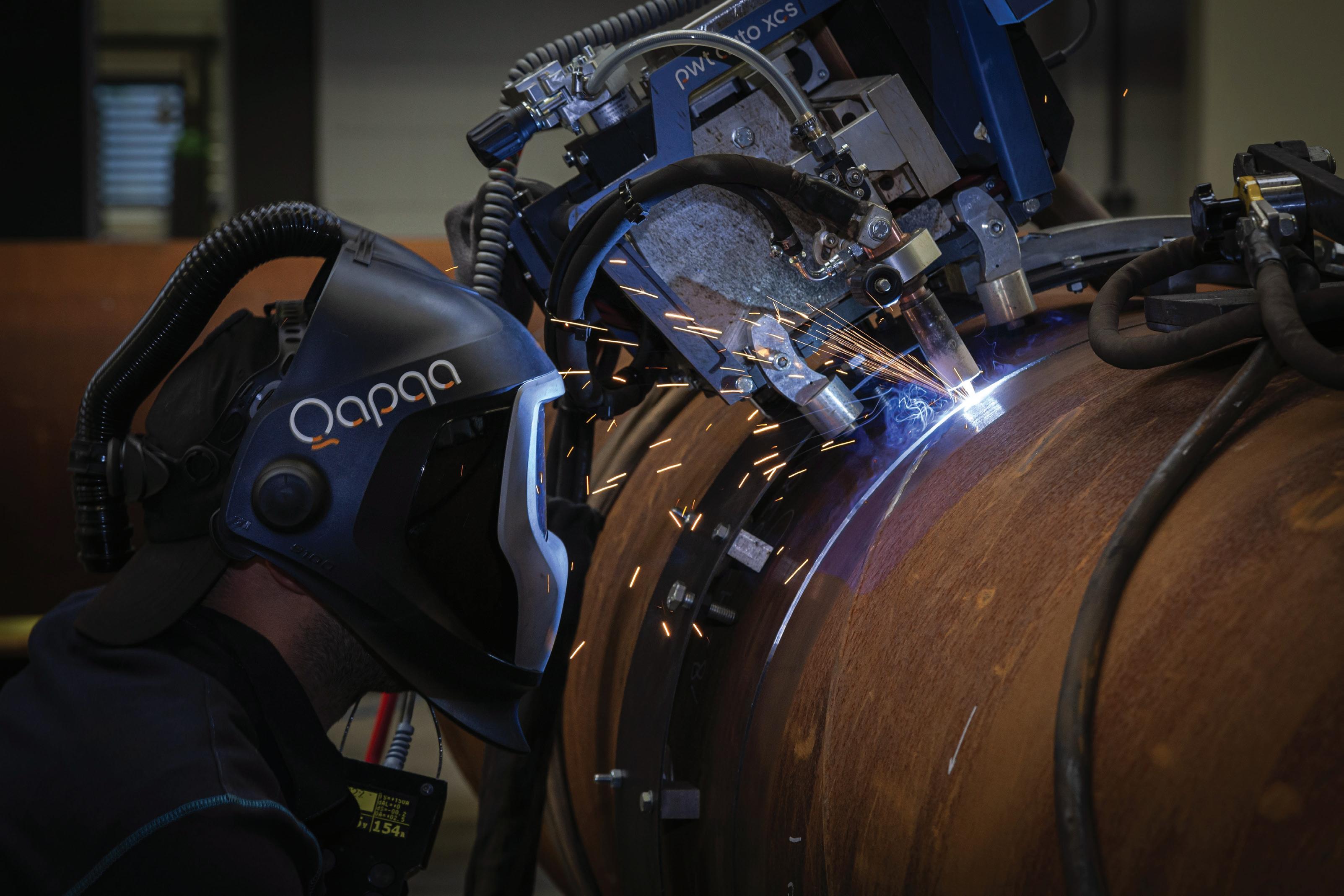
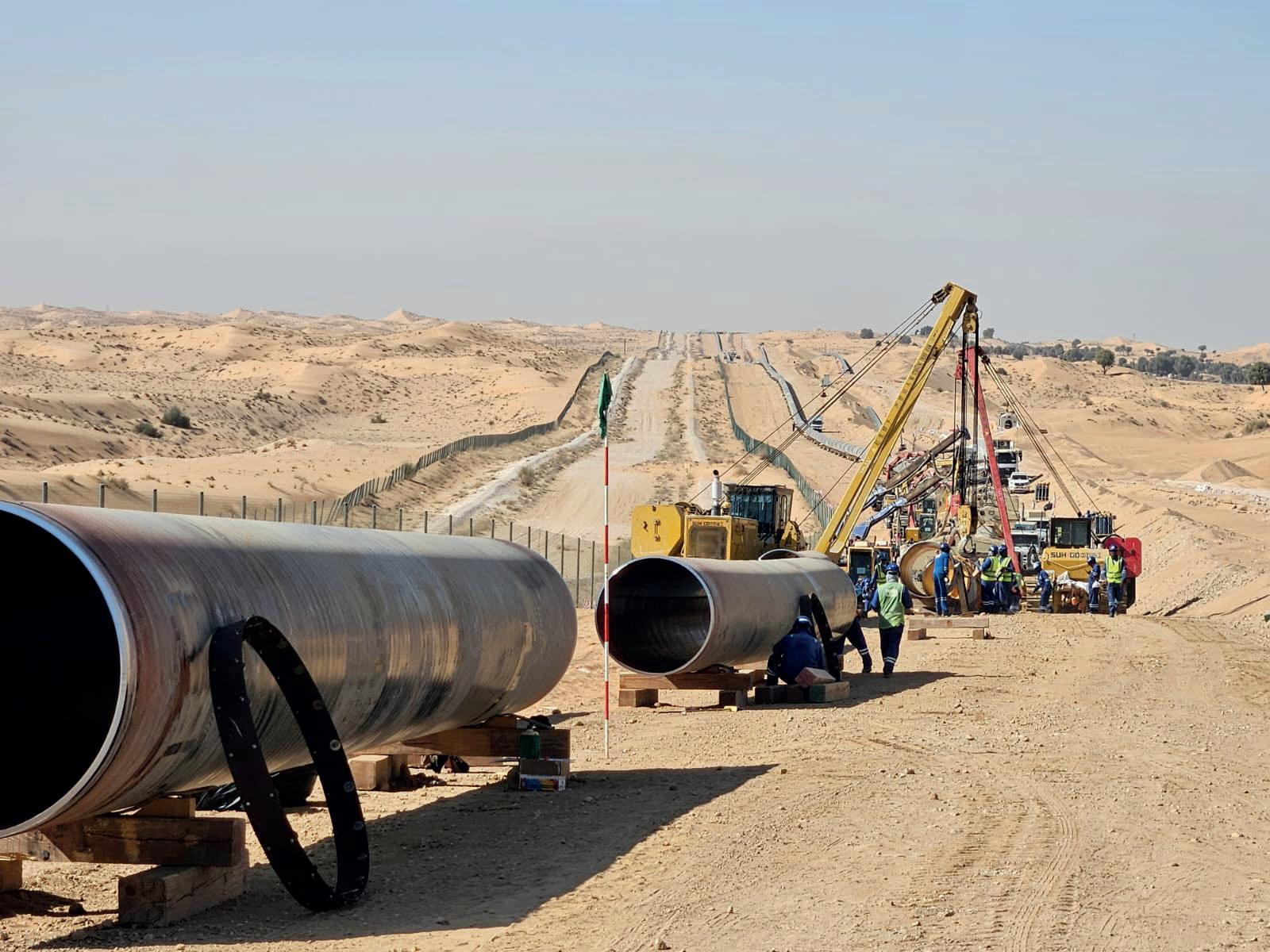
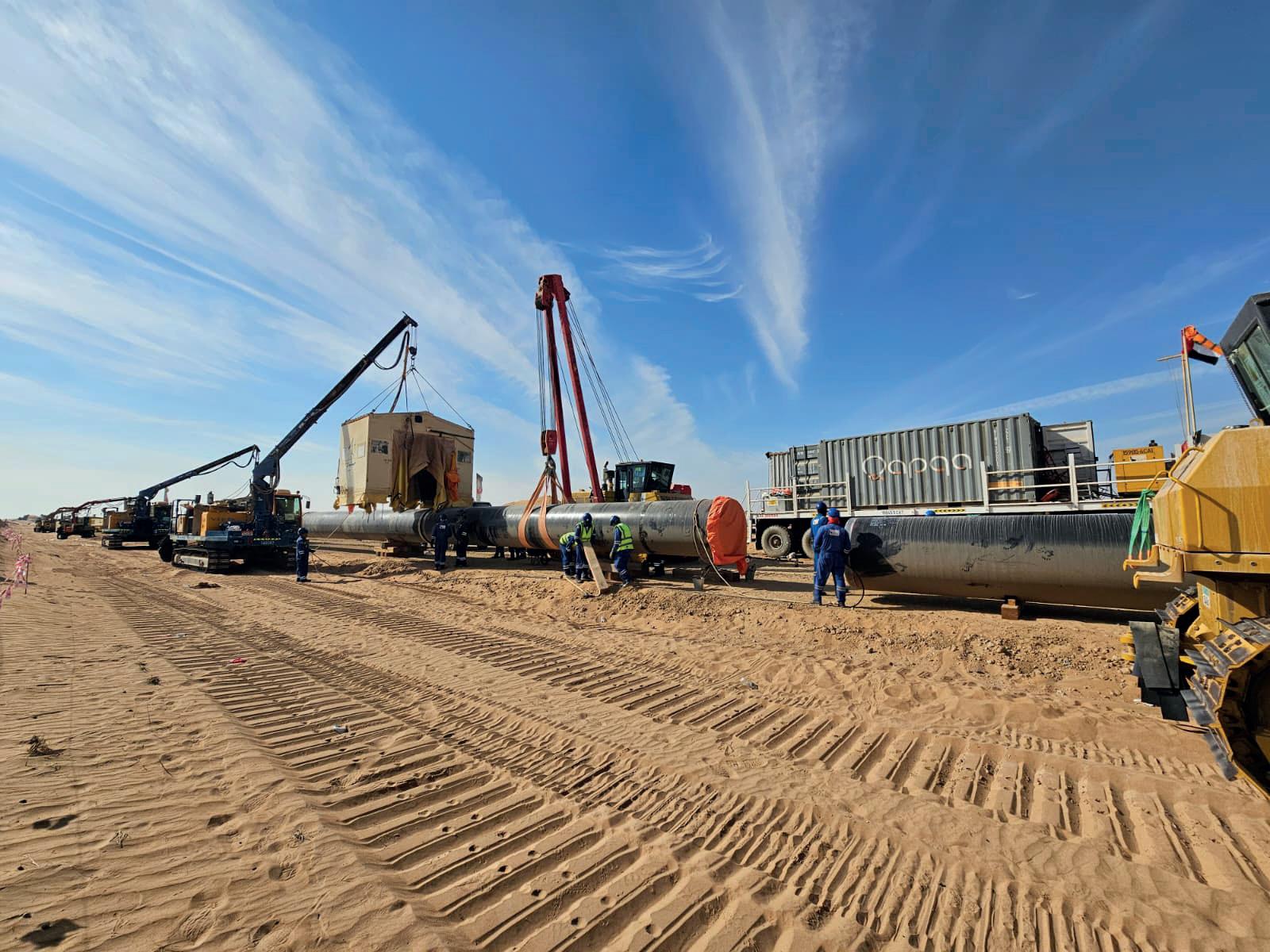
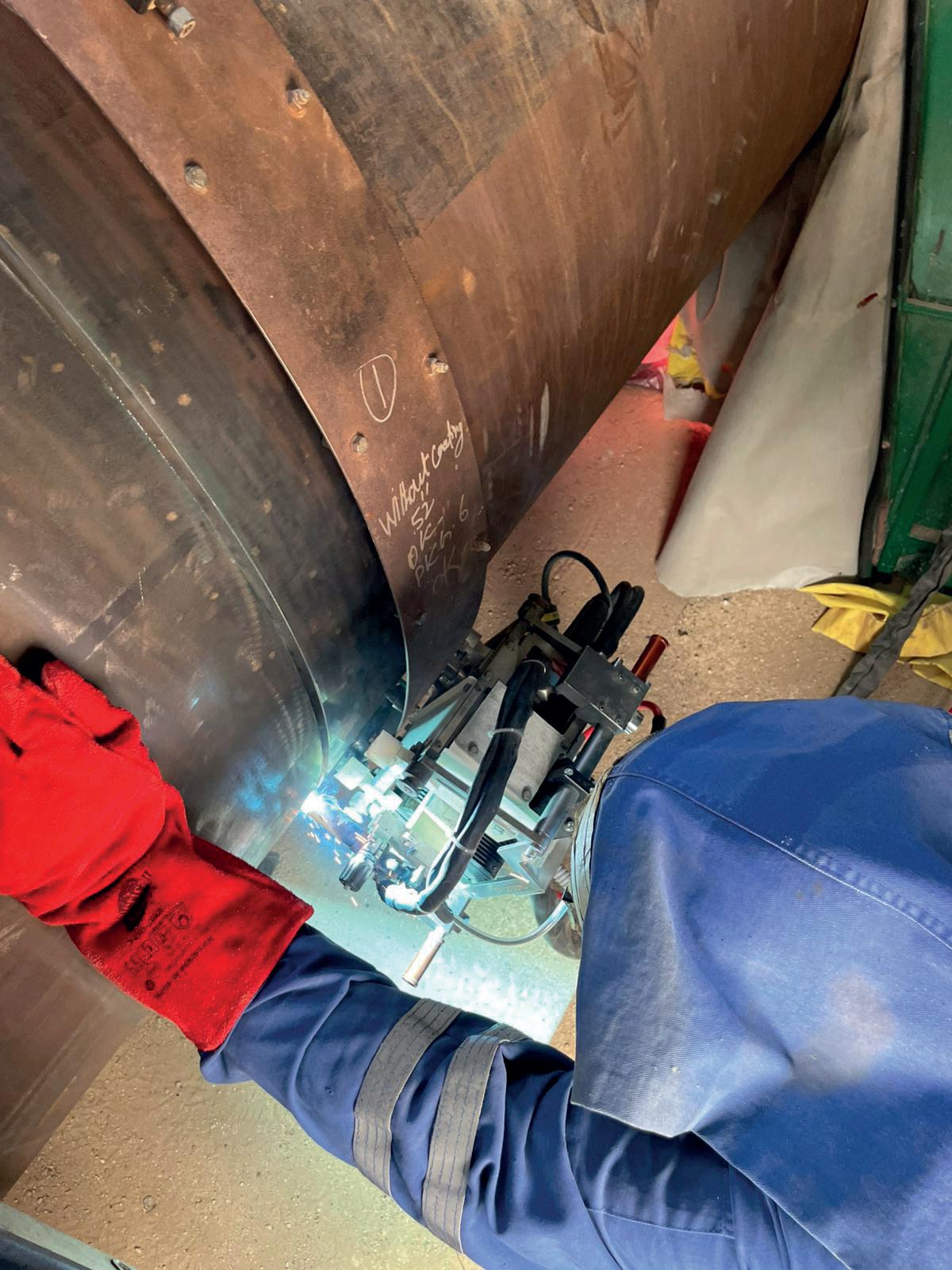
Since 1948, Tinker & Rasor has been a trusted name in holiday detection, relied upon by pipeline professionals worldwide. For over 76 years, our holiday detectors have set the benchmark for performance and reliability, ensuring the integrity of protective coatings by detecting coating flaws with precision. With a legacy of innovation and toughness, Tinker & Rasor continues to lead the industry, delivering cutting-edge solutions to safeguard pipeline coatings and maintain quality standards across the globe.