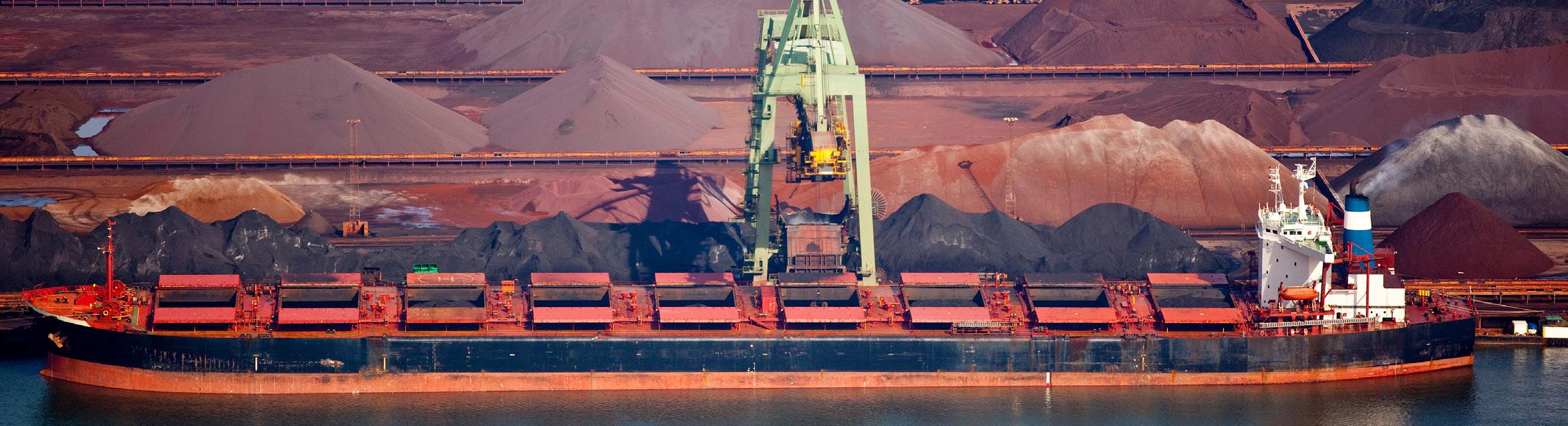
Adam Dennett, SpecTec, explores how digital asset management and proactive maintenance can reduce operational risk in ageing dry bulk fleets.
Sudip
Martin Olsen, ION Commodities, examines why integrated risk management systems are essential for
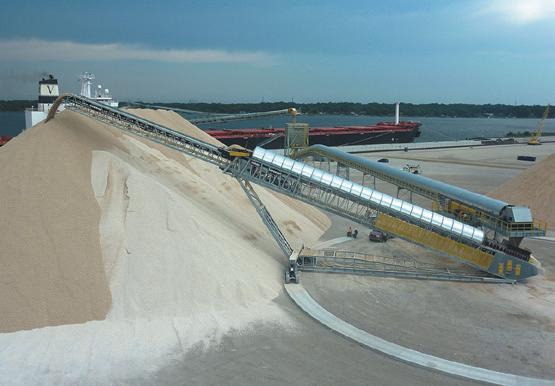
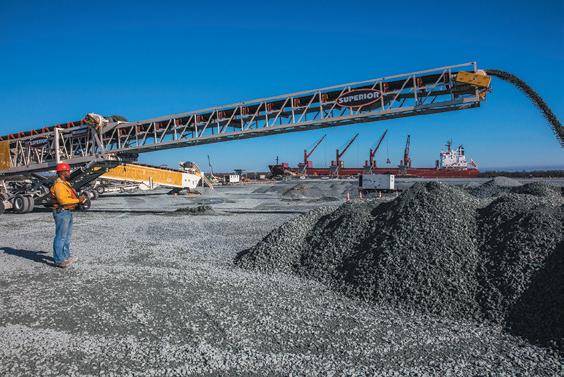
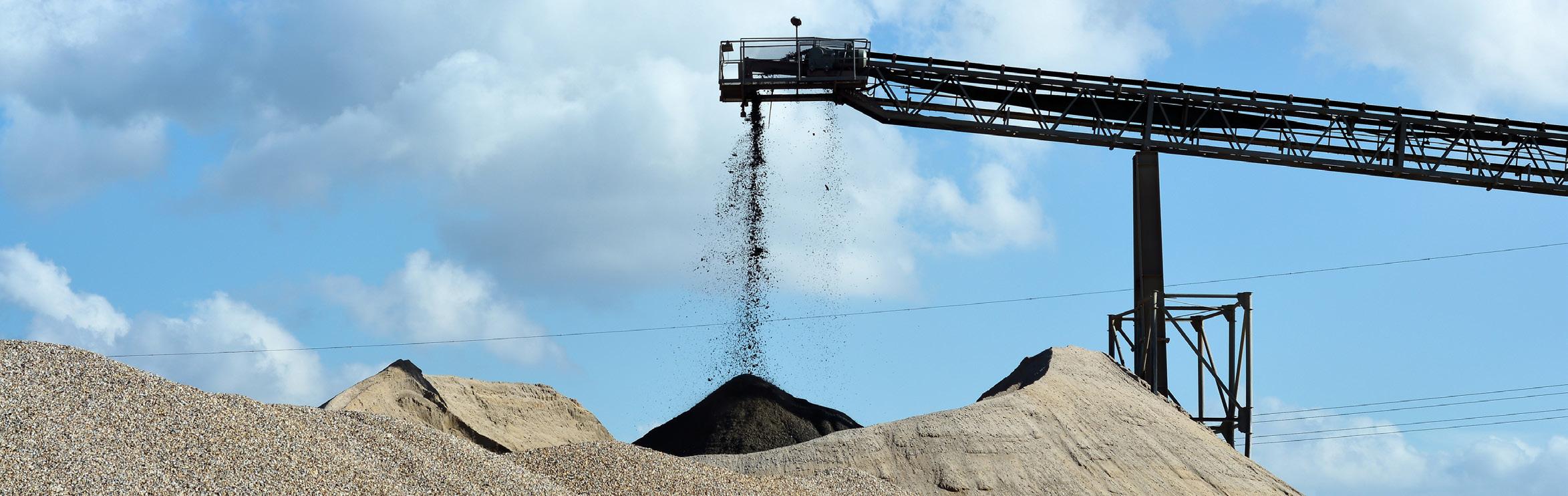
Daniel Marshall, Martin Engineering, explains how innovative external wearliner design enhances conveyor safety, simplifies maintenance, and cuts operational downtime.
40
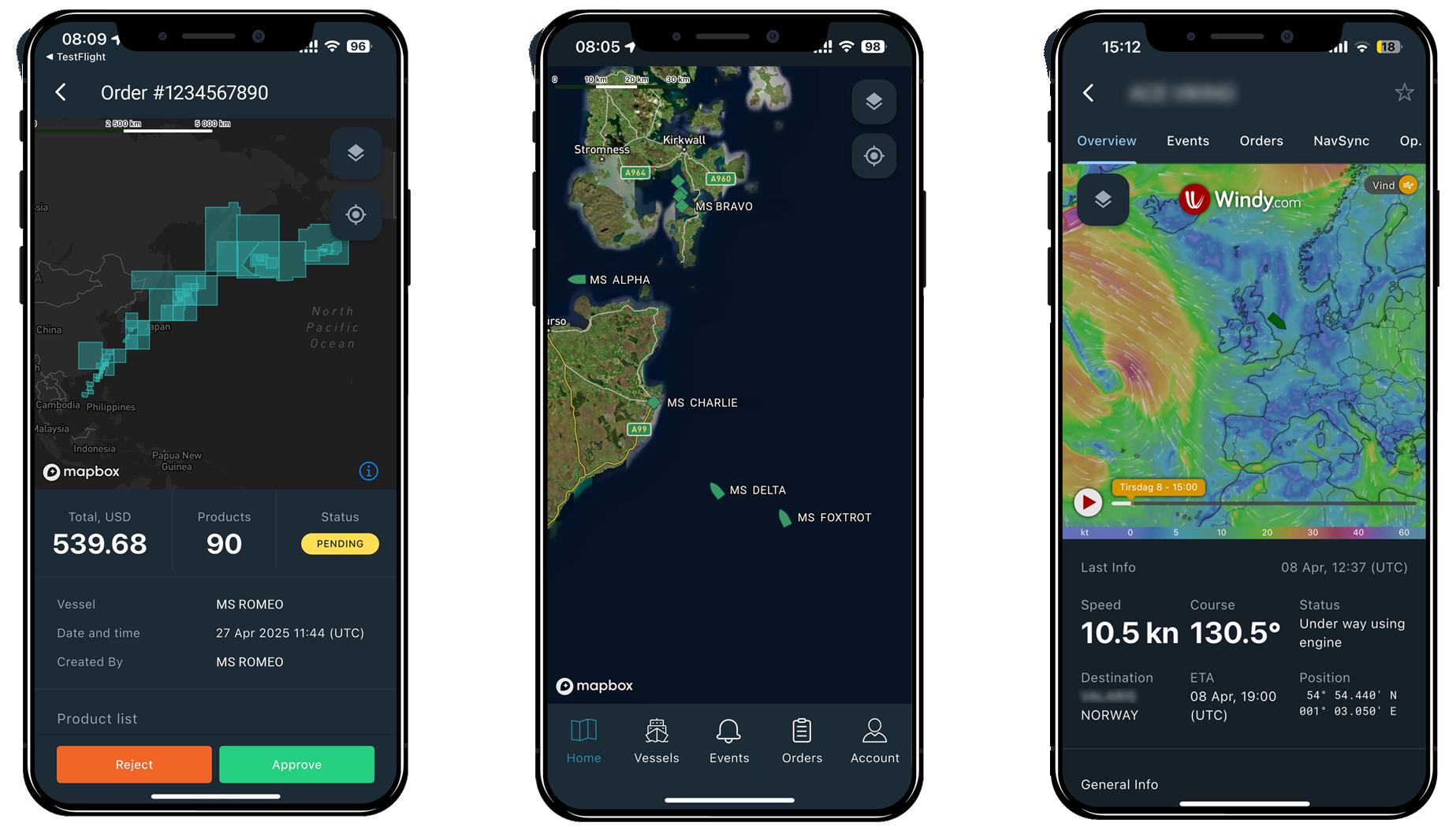
Tor Håkon Svanes, NAVTOR, explores how mobile technology is redefining fleet management and empowering a new era of smart shipping.
Hrishikesh Chatterjee, Everllence, outlines how advanced dual-fuel engine technologies are propelling the decarbonisation of the global bulk carrier fleet.
Progress Through Pneumatic Pumps
Brian Warmkessel, Fuller Technologies, explains how upgrading an ageing self-discharging barge with a high-performance pneumatic pump brought new flexibility, capacity, and simplicity to cement logistics in Boston.
Winds Of Wealth
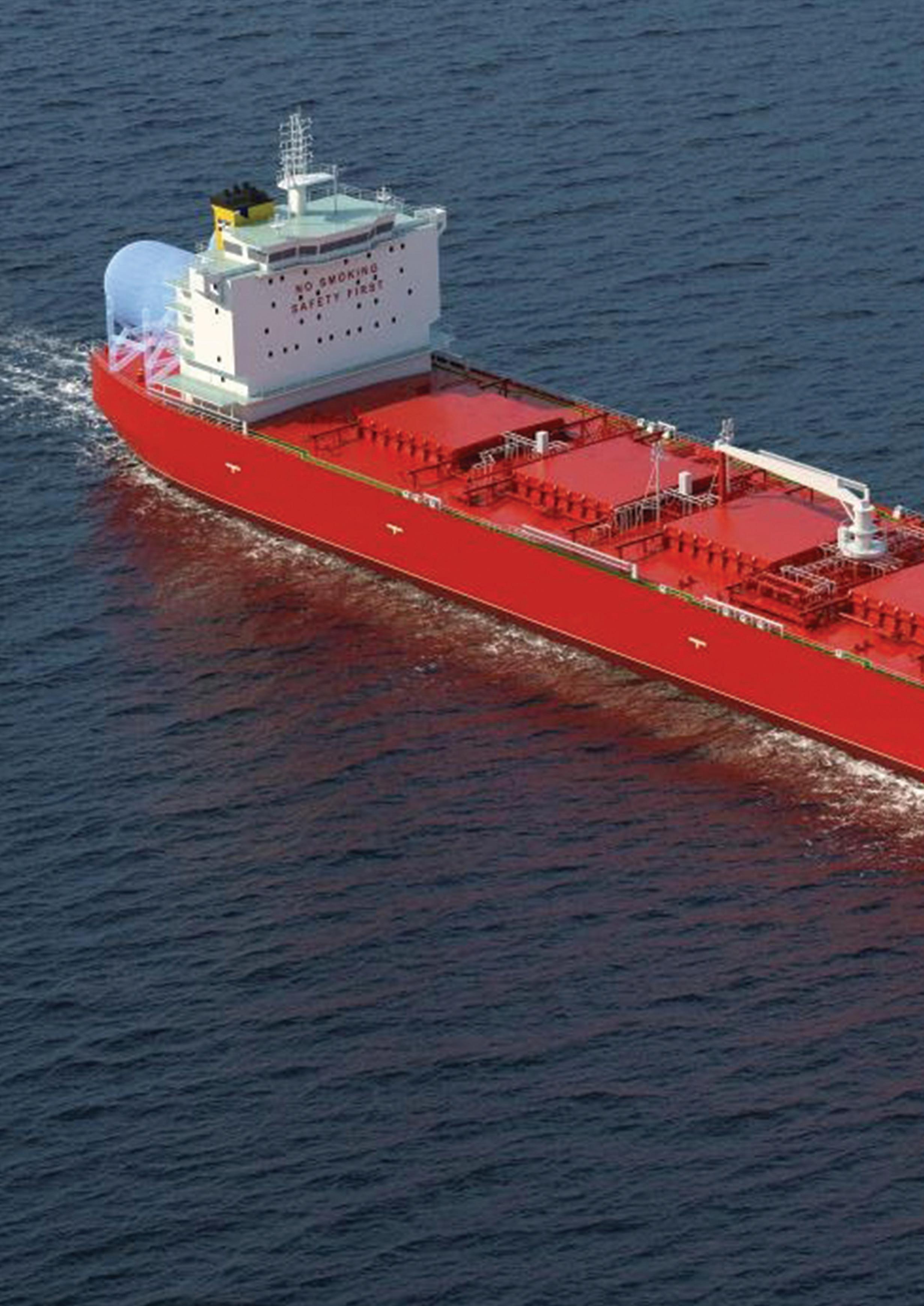
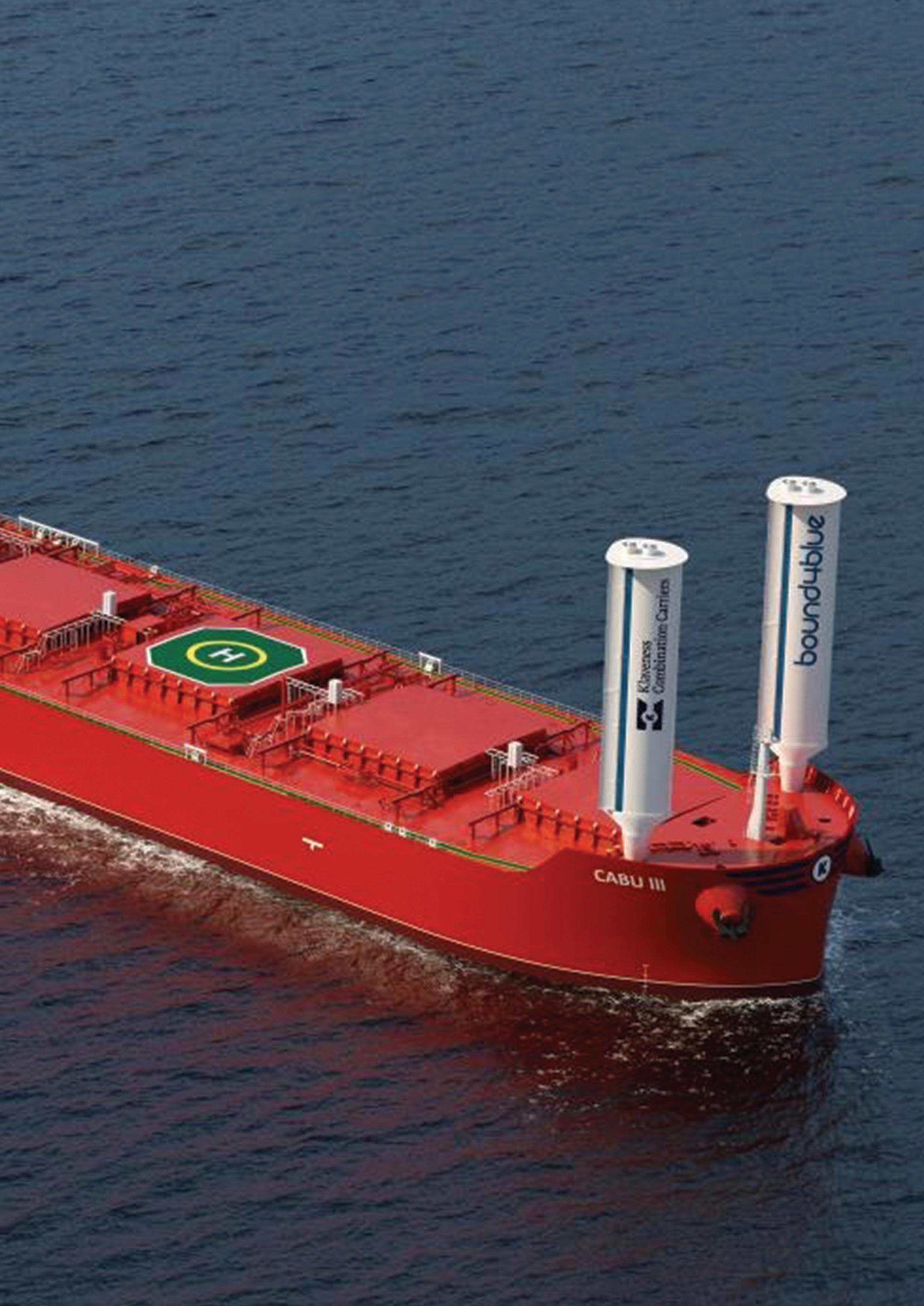
Cristina Aleixendri, bound4blue, explains how wind-assisted propulsion can drive decarbonisation and deliver commercial advantage in bulk shipping.
44 Silo Safety Shift
Dennis Blauser, Marietta Silos, explores how proactive inspection and digital innovation are shaping the new standard in silo safety.
Everllence is a leading provider of propulsion, decarbonisation and efficiency solutions for shipping, the energy economy and industry. True to our motto – ‘Moving big things to zero’ – we help key industries in the global economy to reduce hard-to-abate emissions. Our technologies have a measurable impact on the success of the global energy transition.
Martin's Foundations™Learning Center can help your terminal operation prevent unscheduled downtime, shipment delays, and lost revenue. Our online, around-the-clock training options address conveyor operations, material flow issues, equipment maintenance, safety protocols, and more.
Webinars, virtual sessions, and on-site classes conducted by factory-trained, industry-certified professionals provide your staff with the education they need to prevent equipment failure, reduce material loss, and maximize operational efficiency.
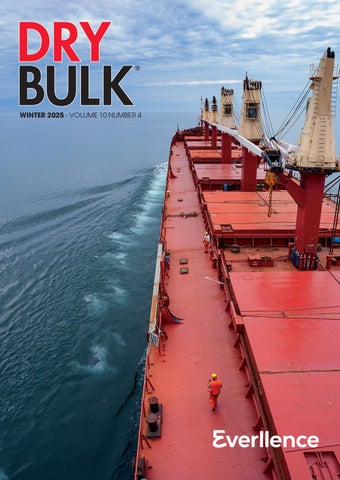
Welcome to the Winter edition of Dry Bulk. I hope the festive spirit is starting to reach you – because I must admit, it hasn’t quite reached me yet. When deciding what to write in the comment for this edition, if I’m honest, I’ve struggled to know where to begin.
Perhaps it’s because the backdrop for the industry feels so uncertain. As UNCTAD notes, global shipping is “under immense pressure”, with trade growth stalling and freight rates defining a “new normal” of volatility. For dry bulk, the story is similar, with weak demand and earnings down around 25% in the first half of the year. What’s interesting, however, is where the counter-strategy is emerging.
Against this backdrop, it’s tempting to look for grand, global solutions. Yet the most meaningful action is happening much closer to home, with major infrastructure projects reshaping the ports and regions that keep the dry bulk sector on its two feet.
As a Brit, why not begin with Wales. This month brings a major boost for Wales’ maritime economy, as Associated British Ports confirms a £42 million investment that forms the first stage of its £137 million capital programme for South Wales. The announcement marks one of the most significant commitments to Welsh port infrastructure in decades, securing the long-term future of ABP’s five South Wales ports and positioning the region to handle larger vessels.
And Wales, of course, isn’t the only part of the UK making waves. Across the border, Liverpool is also pushing ahead with major expansion, reinforcing its ambition to become a global steel hub. Peel Ports’ record-breaking 702 000 t of bulk steel handled in 2024 (sourced from South Korea to Turkey) is a major milestone. But it’s the owned infrastructure behind that success that tells the real story: a new £2 million deepwater bulk berth and 200 000 ft² of storage space positioning Liverpool as a serious player for steel and wider bulk commodities.
What’s more, the UK isn’t alone in this trend. Around the world, ports are scaling up, deepening berths, and racing to accommodate larger vessels and heavier cargo demand. AD Ports’ new dredging agreement in Karachi, Pakistan, which will double bulk vessel capability to 120 000 t, mirrors the same global momentum we’re seeing in Newport and Liverpool.
Whether it’s Pakistan, Wales, or Merseyside, the pattern is unmistakable. In a year where the dry bulk market faces undeniable headwinds, the strategic response is a wave of investment in the assets companies own and operate directly. This shift towards stronger and more resilient port operations is fast becoming one of the defining themes of 2025.
To hear more about how the global dry bulk industry is responding to the current climate, dive into this fantastic issue, packed with brilliant editorial content. This edition explores a wide range of topics, including freight market updates, conveying, digitalisation, automation, emissions control and decarbonisation, silos, and more.
\ THE POWER OF GREAT BULK HANDLING
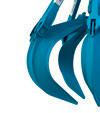
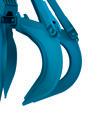
Reduced handling costs, shorter turnaround times, reliability and flexibility: Nemag grabs give dry bulk terminals throughout the world that competitive edge they need in today’s demanding market.
Driven to achieve the best performance, we closely listen to our clients’ needs. For almost a hundred years, Nemag’s innovative grabs make it possible to realize the highest productivity at the lowest costs.
Explore our comprehensive range of high-quality grabs and discover the power of great bulk handling.
From coal and iron ore to wheat, scrap metals, minerals and clinker: Nemag has the optimal solution for every dry bulk flow!
Contact us find out how we can take your bulk handling to the next level.
WORLD NEWS
UNITED KINGDOM Anemoi completes Rotor Sail installation on NS United bulk carrier
Anemoi Marine Technologies has completed the retrofit on another of the largest vessels in the world after installing five 35 metre-tall units on the 400 000 DWT ore carrier NSU TUBARAO.
The vessel, owned by bulk owner/operator NS United Kaiun Kaisha, Ltd. (NSU) and chartered by mining giant Vale International, is expected to reduce fuel consumption by 6 – 12% annually using the wind-assisted propulsion system. This marks the fourth VLOC installation of Anemoi Rotor Sails on vessels chartered by Vale.
The completion of this installation means Anemoi has surpassed 1.6 million DWT of vessel tonnage installed with Anemoi Rotor Sails.
The Rotor Sail installation on the five-year-old vessel, currently operating under a long-term charter to transport iron ore for Vale, was completed during scheduled drydocking in October in Zhoushan Xinya Shipyard Co., Ltd, China. The Rotor Sails are deployed using a folding (tilting) mechanism for flexibility during cargo handling.
NSU has taken an industry-leading approach by combining Rotor Sails with advanced digital solutions that optimise power usage and vessel routing, enhancing fuel efficiency on NSU TUBARAO and maximising the use of wind energy. Manta’s FuelOpt offers flexibility to the owner for power management of the main engine, including optimisation of fuel saved by the Rotor Sails. Coupled with NAPA’s Voyage Optimisation toolbox for voyage planning to maximise the benefits of favourable winds without compromising departure or arrival times.
During the scheduled special survey, NSU TUBARAO was also equipped with a new shaft generator designed to enhance the efficiency of the vessel. This upgrade not only improves the vessel’s own energy performance but also optimises fuel consumption when operating Anemoi’s Rotor Sails. Anemoi successfully integrated its Rotor Sail technology with the vessel’s shaft generator through advanced control system integration, ensuring seamless coordination between wind propulsion and onboard power supply. NSU’s forward-thinking approach to sustainable
innovation means this installation stands among the most efficient wind propulsion retrofit projects to date.
“The scale of this project shows the market’s growing confidence in wind power as a crucial enabler of lower emission shipping. Working with progressive partners like NSU, Vale, and Class NK, we are able to advance Rotor Sail technology and show how optimising propulsion integration and navigation for wind assistance can deliver even greater benefits.” – Clare Urmston, CEO of Anemoi.
“At NSU we aim to support our stakeholders with the world’s most efficient ships. The Rotor Sails on NSU TUBARAO, and the advanced systems that will help maximise its fuel-saving potential, are a perfect example of those efforts. We are pleased to have completed this successful installation, within the scheduled drydock, by strong collaboration of both Anemoi and the NSU team.” – Toru Fujita, Director, Managing Executive Officer of NSU.
NSU TUBARAO is a 361 metres length overall, 65 metres beam very large ore carrier delivered in September 2020. With a deadweight tonnage of 399 717, it is amongst the largest bulk carriers in the world. The five Rotor Sails onboard measure 35 m tall and 5 m in diameter, designed to maximise the magnus effect that provides lift and thrust to significantly reduce engine propulsion demand in order to sail at a given speed.
Concordia Damen announce the signing of a newbuild contract with Amer Shipping for a CDS 110 Dry Cargo vessel. The agreement was formalised during the Europort exhibition in Rotterdam, where Concordia Damen joined several other Damen divisions to welcome clients and partners.
This latest order continues the successful partnership between the two companies, following the deliveries of the AM Voyager, AM Explorer, and Johannes Senior. Each vessel in this series is based on Concordia Damen’s in-house developed CDS
WORLD NEWS
DIARY DATES
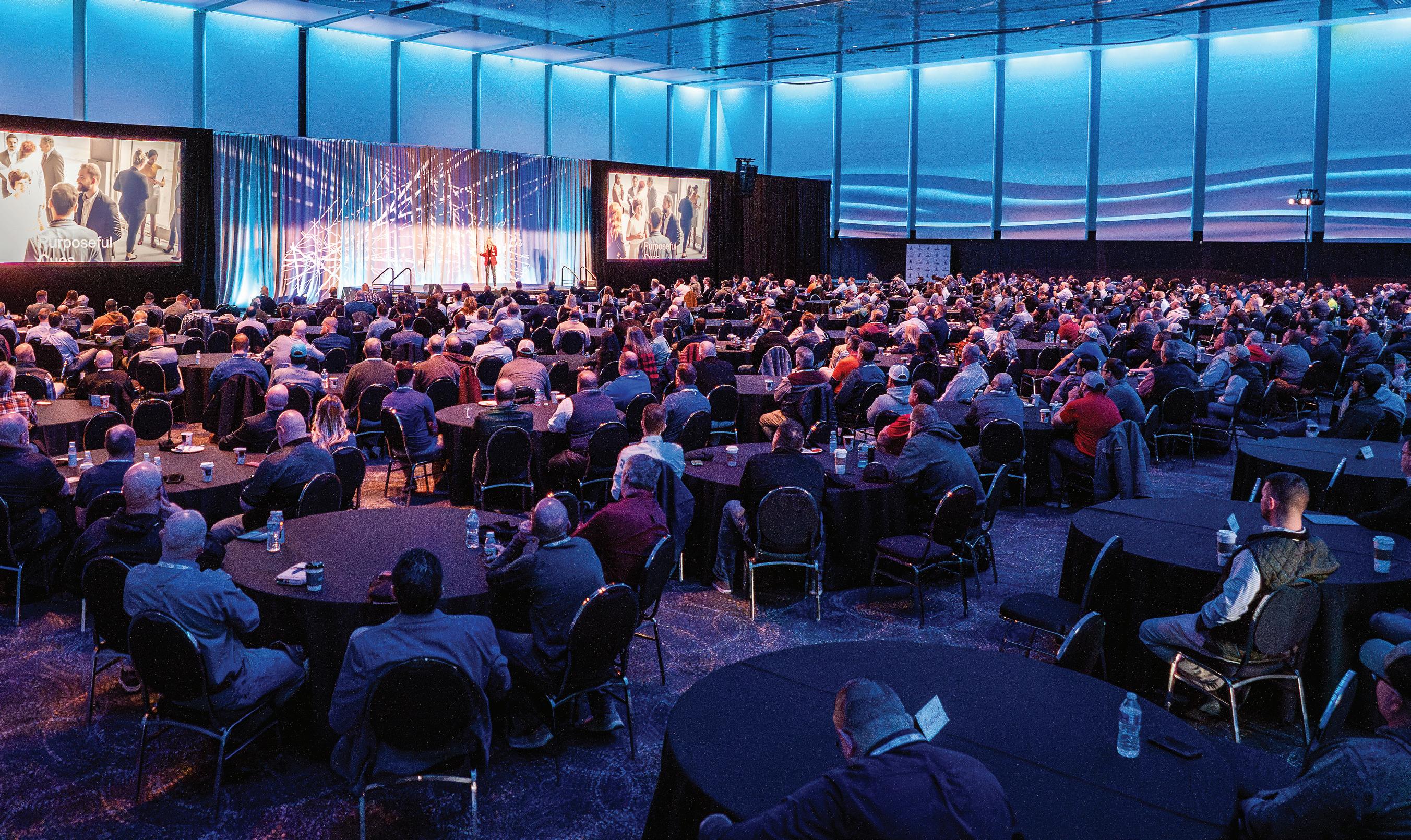
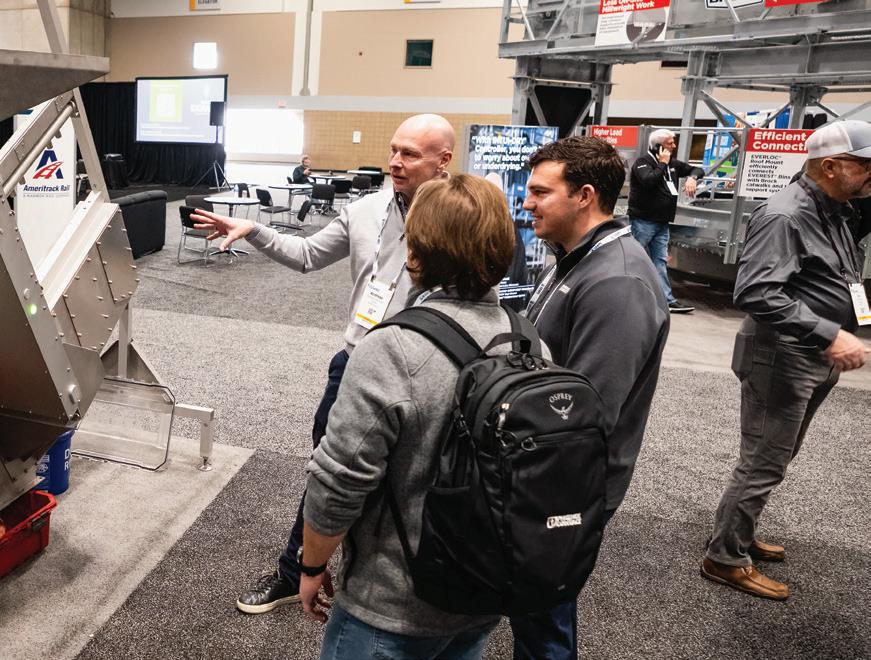
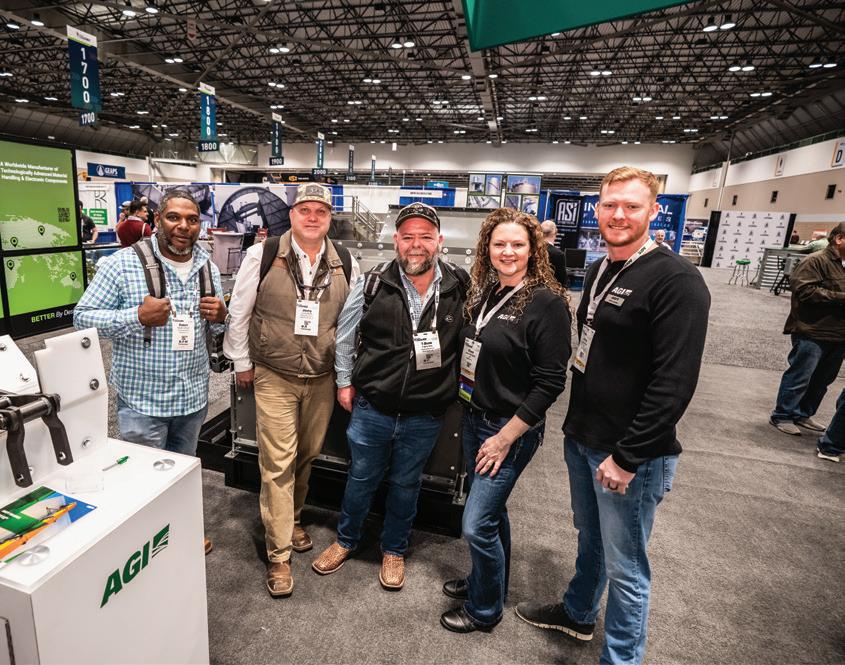
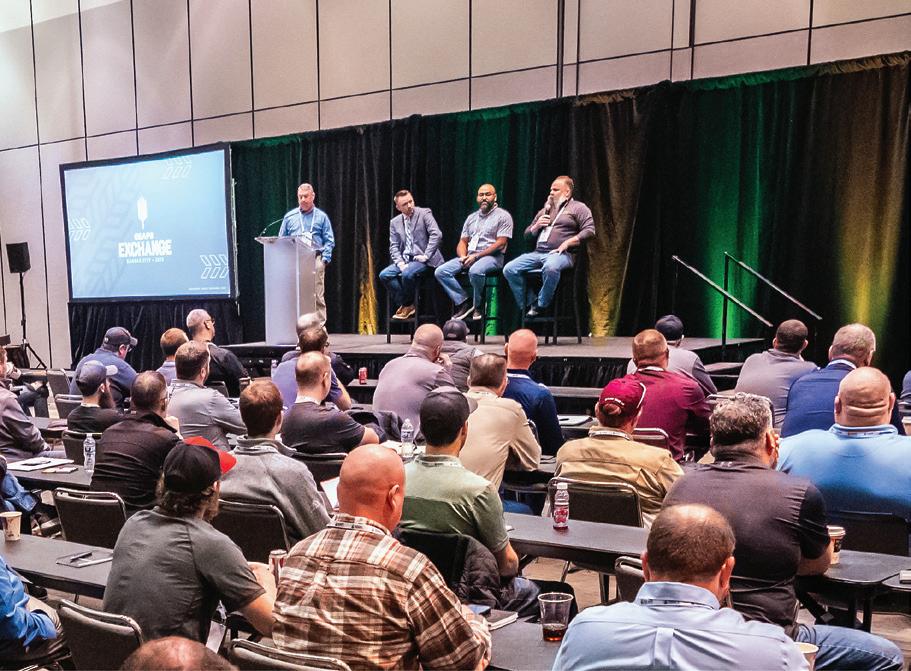
GEAPS Exchange
21 - 24 February 2026 Kansas City, USA www.geaps.com/exchange/
CONEXPO-CON/AGG 2026
03 - 07 March 2026 Las Vegas, USA www.conexpoconagg.com
EnviroTech - The Gateway To Green Cement
15 - 18 March 2026 London, UK worldcement.com/envirotech
SOLIDS Dortmund
18 - 19 March 2026 Dortmund, Germany www.solids-recycling-technik.de
TOC Europe
19 - 21 May 2026 Hamburg, Germany www.tocevents-europe.com
TOC Americas
20 - 22 October 2026 Cartagena, Colombia www.tocevents-americas.com
To stay informed about industry events, visit Dry Bulk Magazine’s events page: www.drybulkmagazine.com/events
110 design – a proven concept optimised for efficiency, sustainability, and reliable performance on the European waterways.
The 110 m by 11.45 m vessel features a shallow draught and high cargo capacity, ensuring reliable operations even during periods of low water levels. Its advanced hull form delivers low resistance, reduced fuel consumption, and lower emissions, contributing to a significantly smaller environmental footprint.
As one of the Netherlands’ leading inland shipping companies, operating a fleet of almost 60 vessels, Amer Shipping continues to invest in sustainable fleet renewal and in building sustainable partnerships across the supply chain with shippers, carriers, and cargo owners. “We believe all stakeholders should play an active role in their own supply chain and that of its customers and partners,” says Peter Buijks, co-owner of Amer Shipping.
“In transport, being able to provide a reliable service is key. That’s why we manage maintenance, planning and technical support ourselves. But we can only do that if our fleet consists of high- quality vessels, and that’s where Concordia Damen comes in. With the CDS Dry Cargo 110 we can actually transport 200 t more cargo compared to other 110 m vessels. Hence, this new CDS 110 supports our company’s long-term vision to provide efficient, low-emission logistics solutions across Europe’s inland transport network.”
Concordia Damen looks forward to delivering this vessel and to continuing its collaboration with Amer Shipping in shaping the future of inland shipping.
DENMARK NORDEN signs two-year contract with US wood pellet producer
NORDEN has signed a two-year Contract of Affreightment (COA) with Enviva to transport a significant volume of wood pellets from the US to Europe over a two-year period, commencing in 2026.
Enviva is the world’s largest producer of wood pellets, helping to reduce reliance on fossil fuels around the globe with production across the Southeastern US The contract builds on NORDEN’s long-term partnership with Enviva and expands the co-operation between our two companies. The agreement is an extension to the COA that NORDEN has been executing since 2012.
“Enviva is a valued customer to NORDEN. We are pleased that our relationship and performance with Enviva has ultimately led to their decision to extend the contract with us. Our collaboration with Enviva allows us to once again deliver wood pellet products, thereby contributing to delivering sustainable energy products to customers across the Atlantic,” says NORDEN CEO, Jan Rindbo.
During the two-year contract period, Norden will transport multiple handysize shipments with loading on the east and gulf coasts of the US to Enviva’s customers in the UK and Europe.
telestacker® Conveyor
WORLD NEWS
UNITED KINGDOM Major capital investment programme for ABP’s South Wales ports
Associated British Ports (ABP) has announced the first tranche of a major capital investment programme, which secures the long-term future of its five south Wales ports.
The new investment of £42 million includes the delivery of a new deep-water berth at Middle Quay, Newport, the UK’s largest steel-handling port, and will also facilitate upgrades at Swansea and Cardiff. It forms part of a total capital investment programme of £137 million for ABP in South Wales, which is designed to strengthen the resilience and competitiveness of South Wales’ port infrastructure.
The announcement coincides with the Welsh Government’s Investment Summit, where the First Minister highlighted announced several major investments in Wales – an event ABP is proud to attend as part of its commitment to driving growth and opportunity across the region.
The landmark development at the Port of Newport, with the introduction of a new quayside represents a significant opportunity to increase the port’s handling capacity. It will enable the port to handle some of the world’s largest vessels and strengthen its role in global supply chains. It will also unlock significant opportunities for businesses seeking access to international trade routes.
Alongside the Newport upgrade, ABP’s investment will deliver significant infrastructure improvements at its ports of Swansea and Cardiff – two locations that play a vital role in supporting diverse cargoes and regional industries. Cardiff is a key hub for construction materials, agribulk and project cargo, while Swansea provides strategic access for renewable energy projects and bulk commodities. These upgrades will improve operational efficiency and ensure customers benefit from modern, sustainable infrastructure.
First Minister of Wales, Eluned Morgan, said:
“I’m delighted that ABP has announced this significant investment in Welsh ports at our Wales Investment Summit today. Long term investment in our port infrastructure is vital to economic growth and international trade and investment,
especially to key strategic industries such as offshore wind. This investment is a real boost for our coastal economies and the people and businesses who rely on them.”
Ashley Curnow, Divisional Port Manager, Wales and Southwest at ABP, said: “Introducing a new deep-sea berth to the market is a cornerstone of our strategy for Newport and for our South Wales ports more widely. It is rare to see a new quayside of this scale come to market, and it will unlock new opportunities for trade and investment across the region.
We’re proud that Newport is the UK’s leading steel-handling port and its strategic location means it plays a vital role in connecting Welsh industry to international markets and supporting the UK’s wider supply chain.
“We warmly welcome the First Minister’s support for this investment, which demonstrates ABP’s commitment to supporting regional growth and the industries that rely on our ports.”
The new berth will be capable of accommodating vessels up to 220 m LOA (Length Over All). With multi-modal connectivity, including direct access to the M4 and links to the national rail network, the Port of Newport provides unrivalled logistics advantages for bulk cargo, project cargo and steel products. Businesses will also benefit from open storage opportunities of up to 8 acres and build-to-suit industrial and warehouse units of up to 133 000 ft2, creating flexible solutions close to the quay.
This programme forms part of ABP’s wider strategy to invest in its UK port network, supporting sustainable growth and enabling customers to meet evolving market demands.
UNITED STATES Genco Shipping & Trading to acquire two highspecification Newcastlemax vessels
Genco Shipping & Trading Limited has agreed to acquire two 2020-built 208 000 dwt scrubber fitted Newcastlemax vessels for a total purchase price of US$145.5 million.
Genco expects to take delivery of the vessels during the first quarter of 2026 and intends to fund the acquisition with cash on hand and a drawdown from its revolving credit facility.
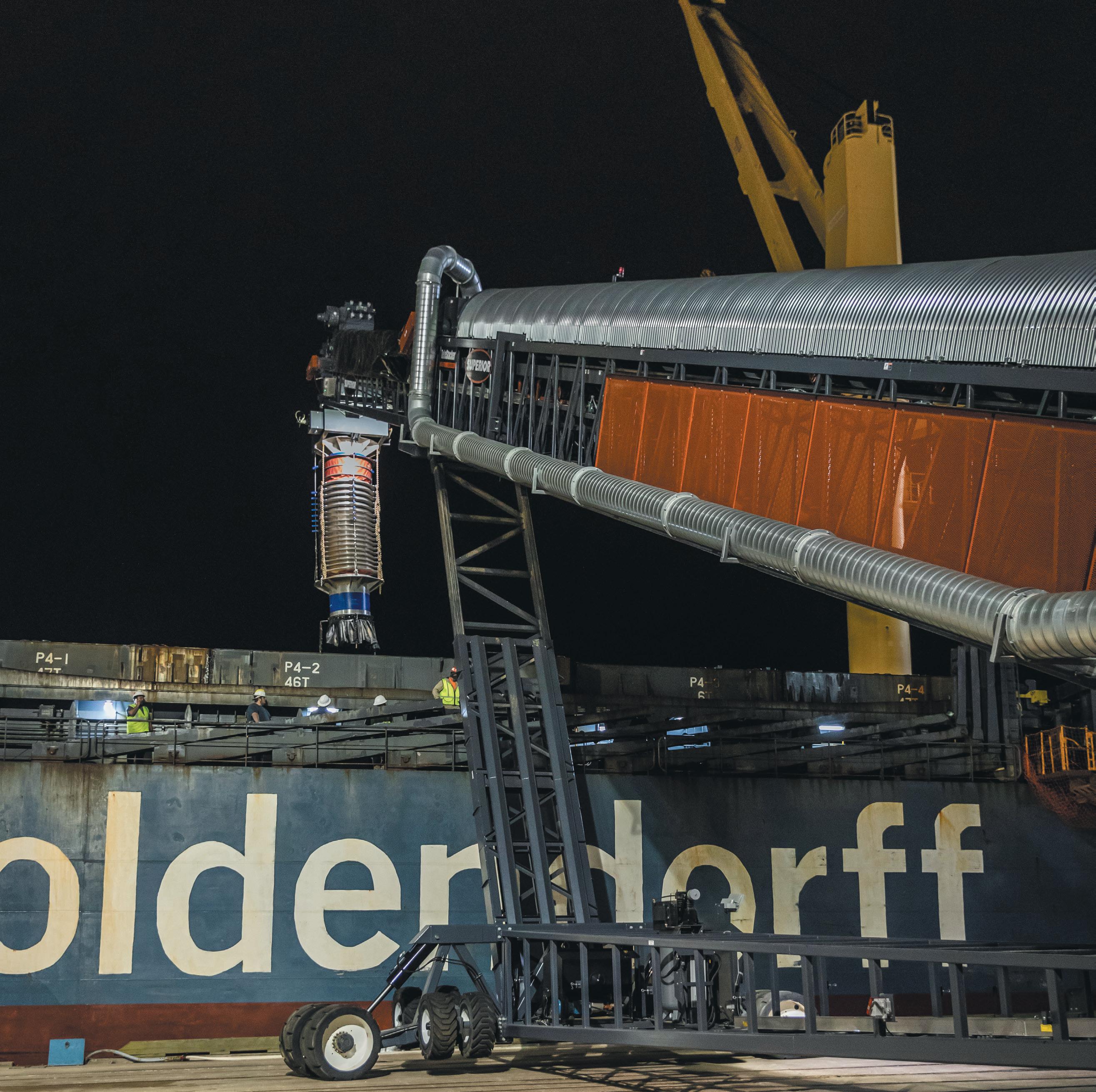
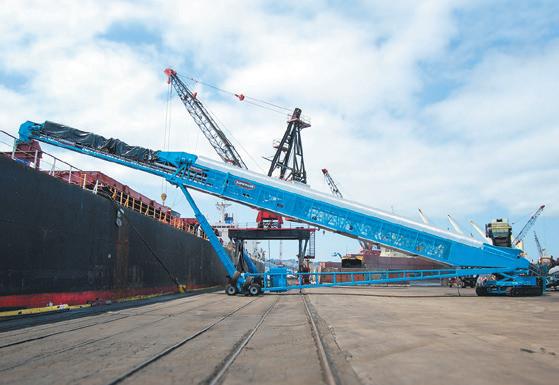
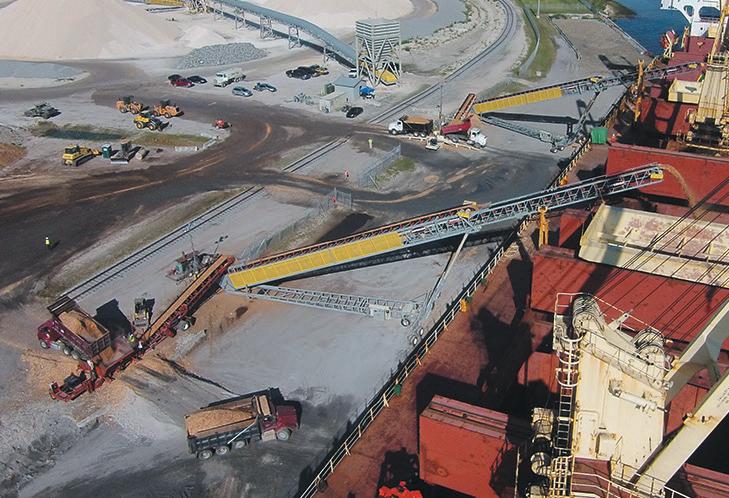
Since 1981, our team has assisted industries worldwide to achieve cleaner, greener, and more efficient loading operations. Our advanced dust control and bulk loading systems—spanning loading spouts, valves, conveyors, dust collectors, and full automation—are engineered to increase throughput while supporting your sustainability goals. Call 231.547.5600 to partner with us and optimize your loadout solutions.
Sudip Saha, Future Market Insights, analyses key trends, risks, and opportunities driving dry bulk trade growth in the Middle East.
he Middle East has emerged as a pivotal region in the global dry bulk market, leveraging strategic geography and a once-in-a-generation wave of economic diversification. This article offers an overview of the market’s current state and outlook, focusing on cargo flows, infrastructure, operating risks, and opportunity lanes most relevant to shippers, charterers, and port owners.
Scope
For the purpose of this article, dry bulk maritime trade involving the Middle East, defined throughout as: GCC (Bahrain, Kuwait, Oman, Qatar, Saudi Arabia, United Arab Emirates) plus Iraq, Jordan, and Egypt via the Suez corridor. All statistics and examples align to this scope unless explicitly labelled ‘MENA’ for broader context. Dry bulk excludes crude oil and LNG; vessel classes are referenced in industry-standard terms (Capesize, Panamax, Handy/Ultramax).
The region’s role in global dry bulk trade
Sitting at the hinge of Europe, Asia, and Africa, the region concentrates traffic across the Suez Canal, Red Sea, and the Arabian Gulf. A significant share of East to West maritime trade passes near or through this corridor, with Gulf and Red Sea gateways acting as intake points for food and industrial inputs and as outlets for construction minerals and fertilisers.
Within dry bulk specifically, the region is both a major importer of grains and industrial raw materials and an exporter of construction aggregates and fertiliser products. World-class ports and logistics platforms have underwritten this role. Jebel Ali (UAE) remains the busiest cargo port in the Middle East; Abu Dhabi’s Khalifa Port, Fujairah on the Gulf of Oman, and Saudi Arabia’s Jeddah Islamic Port and King Abdulaziz Port in Dammam anchor Red Sea and Gulf flows. Saqr Port (Ras Al Khaimah) has become one of the world’s most important
limestone aggregate export hubs, with high-frequency sailings feeding India and other South Asian markets. In Oman, Sohar and Salalah handle large-volume bulks; Sohar’s dedicated terminals and draft enable calls by larger vessels, while Duqm’s expansions are improving redundancy and reach along the Arabian Sea.
Grain dependency is the most durable pull on inbound bulk tonnage. The region’s limited arable land and water stress mean food and feed grains are structurally imported. For broader context beyond the scope of this article, MENA grain imports are commonly reported in the tens of millions of tpy, covering a sizable share of food- and feed-grain needs. Within the article’s defined scope, Gulf and Red Sea ports maintain sizeable silo capacity and dedicated grain terminals to handle steady inflows of wheat, corn, barley, and soy.
Ports, rail, and logistics: capacity as competitive advantage
Sustained investment has upgraded handling capacity and vessel size accommodation across the network. Key developments include: high-capacity ship loaders and automated conveyor systems for aggregates, grain terminals with modern silos and fumigation, and deeper berths and turning basins to reduce draft constraints. In the UAE, AD Ports Group’s Maqta Gateway has digitised port community processes, cutting friction in documentation and hinterland moves. Etihad Rail’s new corridors connect quarrying areas and industrial zones to east-coast ports, supporting heavier bulk flows and taking pressure off road movements. In Saudi Arabia, continued investments at Red Sea gateways improve access for the Kingdom’s west-side megaprojects and mining exports. Oman’s Sohar and Salalah continue to position as bulk gateways on the Indian Ocean side, useful when operators want to avoid Hormuz exposure.
Mechanisation, digitisation, and berth productivity are now central to the competitiveness narrative. The practical result is faster vessel turnaround, better schedule adherence, and lower handling cost per tonne – advantages that attract both importers and transshipment business.
Operating headwinds and risk factors
Security incidents in and around the Red Sea in late-2024 and into 2025 led some carriers to re-route via the Cape of Good Hope, lengthening voyages and increasing insurance and bunker costs. Suez-linked re-routing affects both inbound grains and outbound minerals. In the Gulf, the Strait of Hormuz is critical for GCC importers east of the strait; for western Saudi Arabia and Egypt, Red Sea gateways provide alternatives. These chokepoints create volatility premia that can widen or shrink within weeks, which complicates contracting strategies.
Dry bulk is cyclical; rates reflect not only cargo demand but also the net supply of tonnage. A modest global orderbook can tighten markets; a delivery wave of eco-tonnage can soften them. In 2025, tonne-miles were supported at times by longer routes around Africa even when underlying commodity demand was mixed. Stakeholders should avoid conflating route-length effects with structural demand growth.
The post-IMO-2020 sulfur regime is now standard, while CII/EEXI requirements and, on EU-linked voyages, exposure to the EU ETS add cost and operational constraints. Older vessels trading to regional ports may rely on slow steaming or retrofits to remain compliant. Port operators are investing in on-site renewables and efficiency initiatives, but the near-term effect is increased complexity in both ship and terminal operations.
Peak-season congestion can flare when weather, harvest timing, or construction schedules coincide. Smaller ports may still have legacy equipment or yard layouts that limit bulk throughput; inland logistics remain road-heavy in parts of the region. Rail build-out and inland dry ports are the medium-term answer, but the sequencing of those projects matters for near-term reliability.
Running high-throughput bulk terminals safely requires skilled technicians and supervisors, and the summer climate adds heat-management constraints for people and equipment.
Opportunities for growth
Across the scope, governments are channelling oil revenues and foreign investment into infrastructure, housing, tourism, metals, and downstream chemicals. In Saudi Arabia, the pipeline of projects (including NEOM’s Oxagon on the Red Sea) implies sustained demand for aggregates, cement/clinker, steel inputs, and fertilizer raw materials. The UAE, Qatar, and Oman continue to develop industrial and logistics zones that both consume and move bulk commodities. This translates into durable inward lanes for grains and ores and outward lanes for construction minerals and fertilisers.
Trade lanes connecting South America, the Gulf, East Africa, and South Asia are maturing. A practical model is large-parcel grain discharges into Gulf silos, followed by redistribution to smaller receivers across East Africa and South Asia on Handysize/Ultramax vessels. As storage and blending capacity expands, the Gulf can function as a buffer and mixer, improving supply resilience for downstream markets.
Regional players have expanded direct participation in bulk shipping to secure food and raw material supply lines and to capture freight economics. National or state-backed operators in Saudi Arabia and Oman, for example, provide dedicated lift for grains, iron ore, and bauxite tied to domestic industries. Over time, a stronger regional carrier presence can stabilise service levels and reduce
counterparty risk for importers and exporters in the scope.
Port community systems, appointment scheduling, and gate automation are trimming time in port. On the ocean side, digital freight platforms and better cargo-ship matching improve utilisation. Data-driven demand forecasting helps terminals plan gang assignments and yard use around harvest and construction cycles. The region’s relatively young infrastructure allows digital design to be embedded from the start rather than retrofitted.
Three reality checks merit attention. First, megaproject execution risk: announced pipelines do not guarantee realised tonnage on a fixed timeline, so it is prudent to avoid baking full project quantities into near-term volume forecasts. Second, chokepoint fragility: Suez and Hormuz risk premia can swing quickly; shippers should keep flexible clauses and optionality in contracts. Third, fleet gravity: even with firm demand, a delivery wave of fuel-efficient bulkers can cap rate upside.
Conversely, three upside levers matter. If security risks along the Red Sea subside, voyage times and costs normalise. If inland rail ramps up on schedule, terminal yard pressure eases and bulk flows diversify
Rethinking Risk at Sea
Martin Olsen, ION Commodities, examines why integrated risk management systems are essential for navigating volatility in the sector.
n recent years, the global trade environment has been in a state of ‘perma-crisis’. The overlapping disruptions of COVID-19, the Russia-Ukraine conflict, rising US tariffs, and an increase in extreme weather events have contributed to a sense of sustained instability. As the UN Trade and Development agency noted in September 2025, "not
since the closure of the Suez Canal in 1967 have we witnessed such sustained disruption to the arteries of global commerce.”
Volatility and complexity are now permanent features of the dry bulk shipping industry. A market previously defined by cyclical swings and occasional shocks has become a landscape of near-constant disruption. Short-term disturbances – such as trade route disruptions, extreme weather events, and sanctions – have collided with longer-term, structural changes, like new tariff regimes and emissions regulations.
Despite this new reality where unpredictability is the rule, not the exception, many market operators still struggle to manage risk effectively. Risk is too often treated as a secondary concern rather than a strategic priority. The industry’s continued reliance on outdated methods, most notably the ubiquitous Excel spreadsheet, has left many companies vulnerable to significant risks. Managing risk voyage-by-voyage is not enough. To succeed in today’s market, companies must view freight as a portfolio of positions, integrate risk management into every operational decision, and use Profit-at-Risk (PaR) models to value freight positions and exposure reliably at any given time.
Complexity is the new constant
The more parameters that feed into voyage economics, the more difficult it becomes to see where profits are made or lost. Fuel costs, time, emissions, insurance, and speed all interact to determine profitability. Many of these factors change so fast that traditional management tools cannot keep up.
Carbon regulation exemplifies the shift. From January 2024, CO₂ emissions from large ships ( ≥ 5000 gross tonnage) calling at or departing from European Economic Area (EEA) ports have been included in the EU Emissions Trading System (ETS). Meanwhile, the new FuelEU Maritime regulation mandates gradual reductions in carbon intensity, a 2% cut in 2025, rising to 80% by 2050.
Emissions do not create the same kind of day-to-day noise as a canal closure, but they add a parameter operators must price and pass through. Some owners may even avoid certain geographies where the administration and costs bite; others will streamline compliance and compete. Either way, emissions costs are now part of the negotiation. Firms that cannot model, forecast, and allocate those costs will misprice fixtures.
Managing so many factors requires a level of systemisation that manual processes simply cannot support. The industry’s reliance on spreadsheets and manual reconciliation is increasingly untenable.
Different players, shared challenges
The dry bulk market encompasses a diverse range of participants, from small shipowners operating a few vessels to large commodity traders handling millions
of tonnes. Smaller operators can often manage with basic tools because their exposure is limited and short-lived.
However, once operators begin taking forward positions – for example, accepting contracts of affreightment or building a small book – they must monitor many more moving parts, transforming their risk exposure. Large commodity trading firms, on the other hand, enter freight with a trading mindset, using freight contracts to hedge or speculate as part of a broader strategy. Despite approaching the task from different angles, the underlying challenge remains the same: profitability now depends on the ability to quantify risk and understand how each new voyage or charter alters the overall exposure.
Why the old model is breaking down
For many firms, manual processes are still the backbone of risk management. Not only are manual processes prone to human error, such as copy-paste mistakes, incorrect formulas, or version control issues, but the scale of volatility means a simple spreadsheet is no longer sufficient. The real issue is not accuracy, but that the tools used are no longer fit for purpose.
A spreadsheet can track fixtures, but it cannot handle the sheer variety of rates, durations, carbon costs, and currency movements now moving daily. Typically, these are updated only once a day, which means the data relied on is static and delayed, and only reflects information from the last update or export. Manual methods are also an example of fragmentation. In many companies, risk management remains organisationally separate from chartering, finance, and operations. Different teams (operations, trading, finance) often maintain separate spreadsheets, which must be reconciled manually.
When this happens, positions become inconsistent and delayed, and decisions are derived after the market has moved. The chartering team might focus on fixing vessels and optimising voyage results, while a separate risk or compliance team tallies exposures after the fact. This separation can be dangerous in a volatile market and underscores the importance of breaking down silos and making risk management a central part of strategy.
Managing a portfolio of voyages with varying rates, durations, and costs requires a dedicated freight trading and risk management system, rather than a basic operational log. Firms need an integrated setup, where new fixtures and trades automatically update positions and market data in real time. The moment a contract is fixed, the global position and P&L should update instantly, with consistent data flowing through operations, risk, and finance. While volatility does not disappear, it
becomes more visible. In this unpredictable operating environment, even small time lags can make a huge difference.
Measuring risk the right way
Ensuring real-time data solves one problem, but it raises another: is the right risk being measured? Many market participants still rely on outdated Value-at-Risk (VaR) models to measure exposure. VaR assumes a uniform short time horizon across every position, which does not reflect freight reality across different routes and maturities.
Some freight exposures cannot be unwound quickly, and some lack a derivatives market entirely. Treating them as if they can be exited in a day significantly understates the true risk. That assumption rarely holds for a freight portfolio, where contracts vary in duration and liquidity.
A better approach is PaR, which adjusts the holding-period and liquidity assumptions for each trade or route and the time to maturity, reflecting how long it would truly take to unwind or rebalance. PaR measures how much profit is genuinely at risk over the relevant horizon, whether two days or two months. It allows each route, vessel class, or index to have its own liquidity assumption – unlike standard VaR, which applies a uniform short holding period. This supports better decisions on chartering stance, hedging, and pricing. In practical terms, PaR provides a more accurate picture of the downside risk, enabling
operators to make more informed decisions in a volatile market.
From reaction to readiness
This new wave of volatility and complexity has made risk management more important than ever. Risk must be integral to every commercial decision, embedded across every function of the freight business, and supported by the latest technology and risk-measurement methods. Leaders need clear, immediate visibility of their positions and a risk measure that accurately reflects how freight trades.
To stay ahead, market participants need a single system that unifies chartering, voyage management, and risk. Such a system will ensure that fixing a COA, vessel, or a derivative immediately updates exposure and P&L. With an integrated view, teams can react in time, price optionality deliberately, and reduce the chance of compliance or valuation errors. These foundations equip firms to value their positions correctly and navigate volatility with confidence.
The forces of volatility and complexity are not going away; if anything, they will likely intensify. Those who continue relying on outdated tools and fragmented processes will be increasingly exposed. Those who embrace a new approach to risk – one that is integrated, real-time, and grounded in a realistic exposure assessment – will be best placed to navigate the challenges ahead.
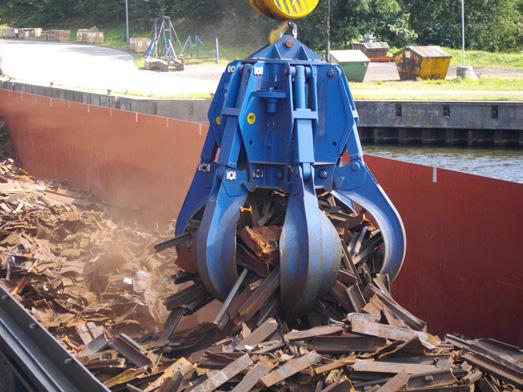
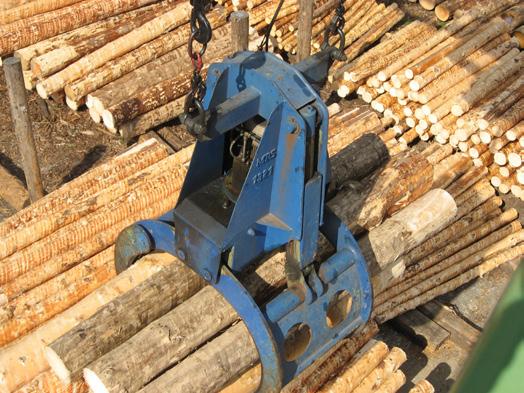
Rope-, Motor- and Hydraulic Grabs
Our experience - Your advantage
Daniel Marshall, Martin Engineering, explains how innovative external wearliner design enhances conveyor safety, simplifies maintenance, and cuts operational downtime.
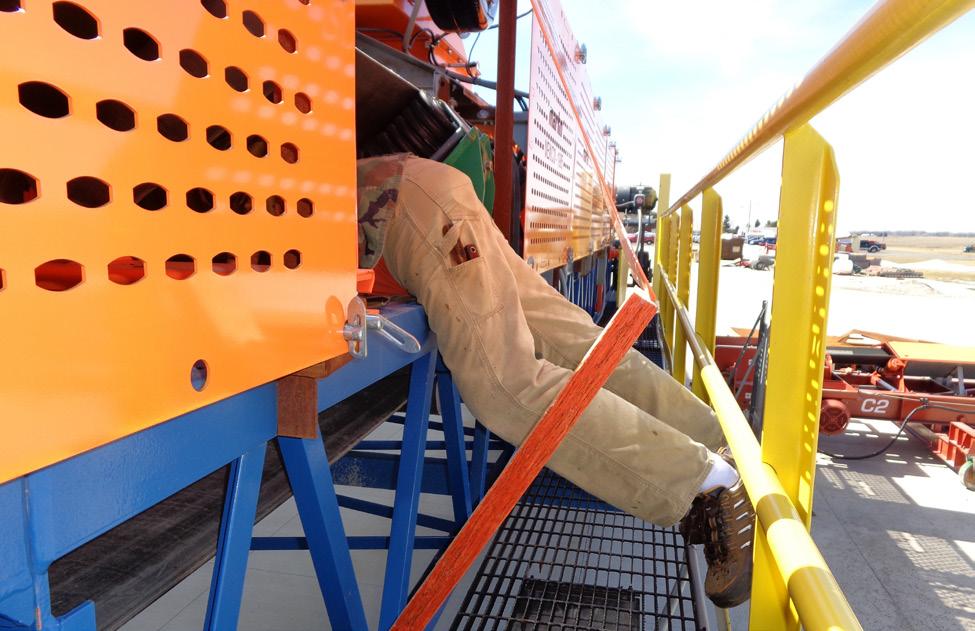
hen quarry operators load the conveyor with heavy raw material, the wear liner on a belt conveyor transfer point protects the loading zone enclosure from punishing abrasion and is essentially considered a sacrificial layer. Removal and replacement is a gruelling job that could require multiple workers and days of scheduled downtime. Conventional wear liners have historically been installed inside the chute, but modern designs are placed on the outside, improving skirtboard sealing and preventing spillage.
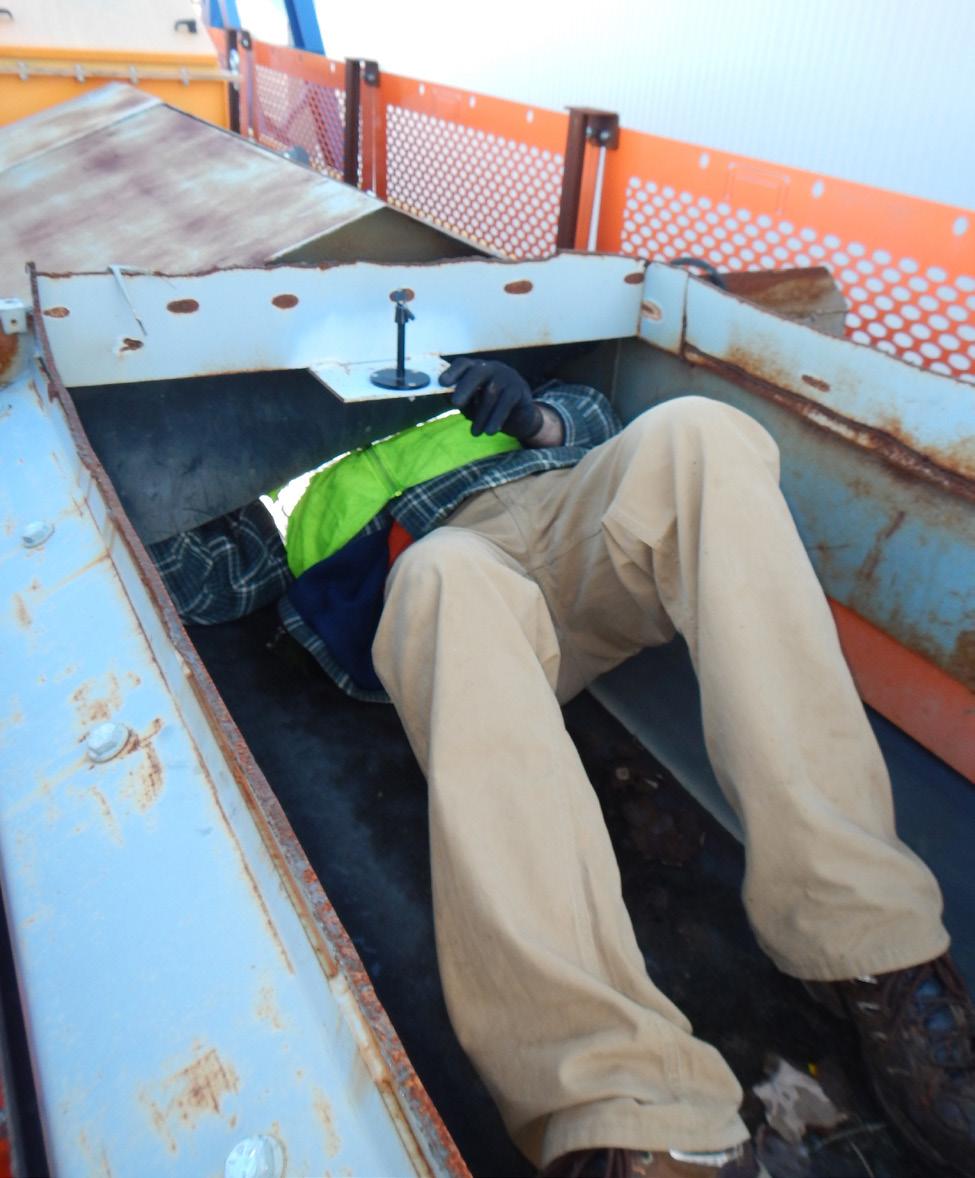
The Occupational Safety & Health Administration (OSHA) considers most transfer chutes to be ‘permit-requiring confined spaces’, mandating that an ‘authorised entrant’ perform the work inside the chute. An attendant must also stand outside monitoring the safety of the person inside while assisting in the removal of material from the chute. In some cases, a supervisor further oversees this procedure.
The goal of the external design is to significantly cut the installation and service time while reducing risk and improving safety. The result is excellent performance with fewer labour hours, no required certification for maintenance, and a lower cost of operation.
Rethinking chute design
Previous designs securely welded the wear liner to the inside of the chute, with only the skirt seal located on the outside. The logic behind the conventional design is for the wear liner to protect the skirtboard, which is typically 0.25 in. sheet metal and not strong enough to withstand the sustained force and abrasion from bulk material.
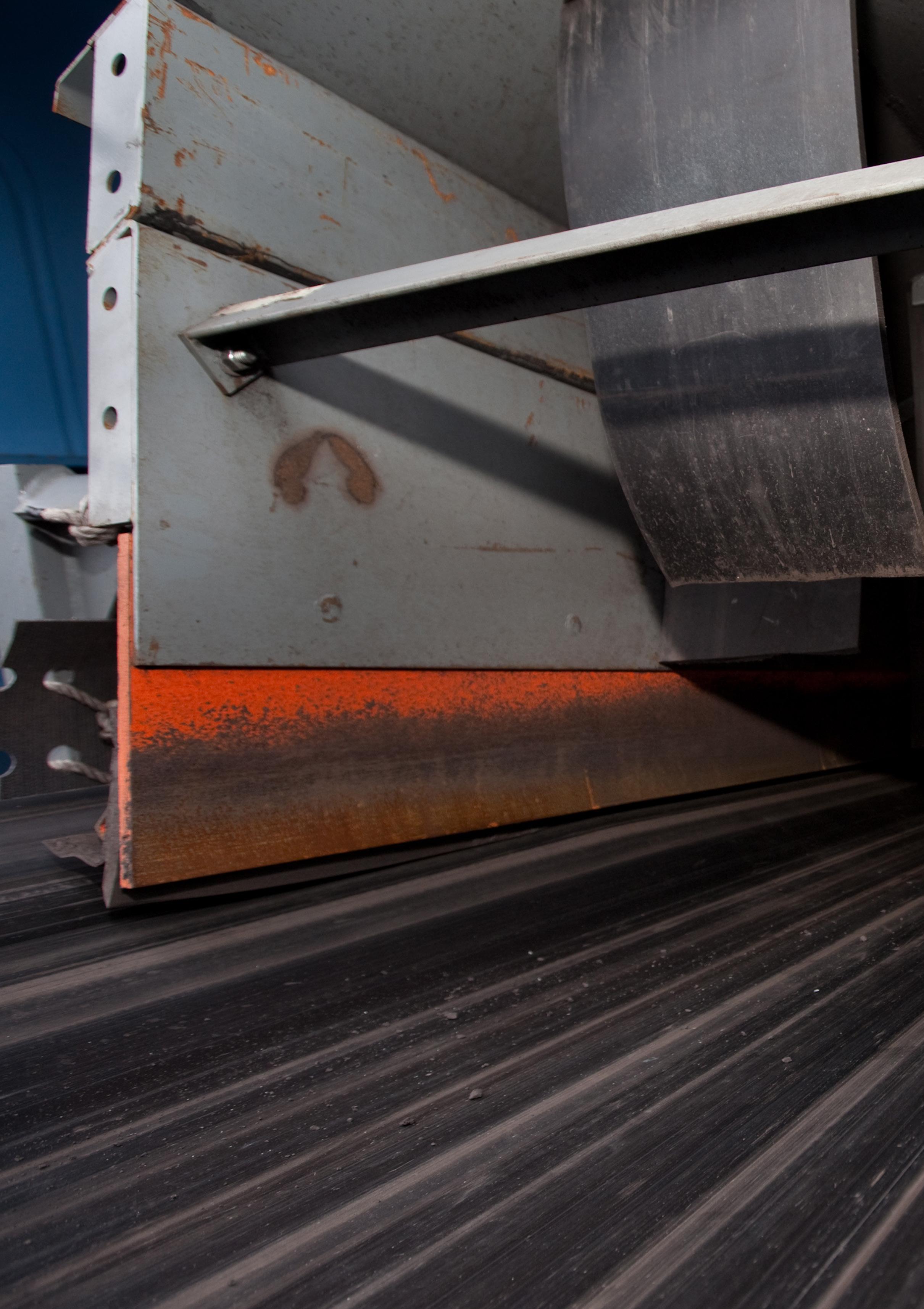
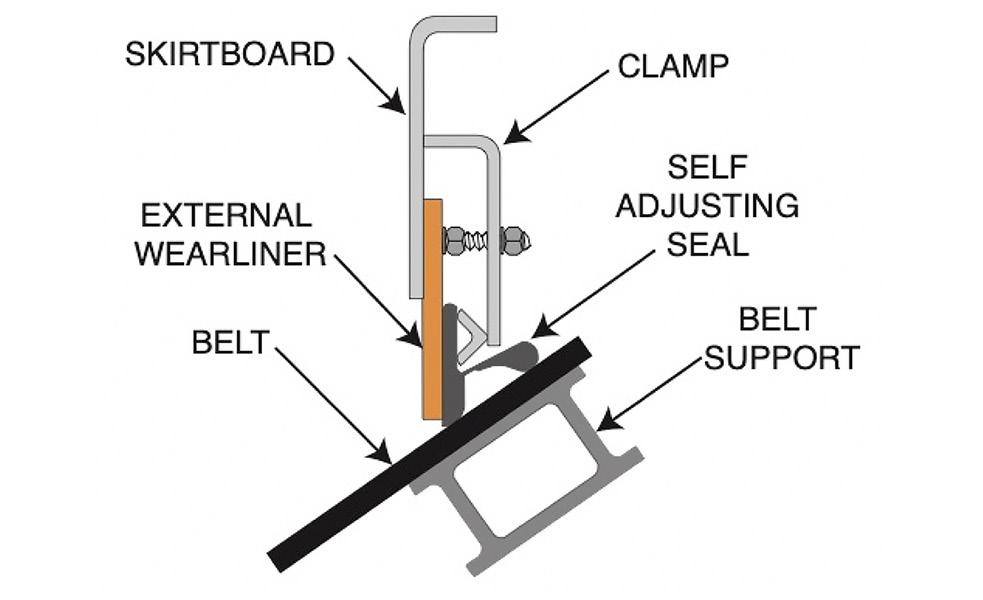
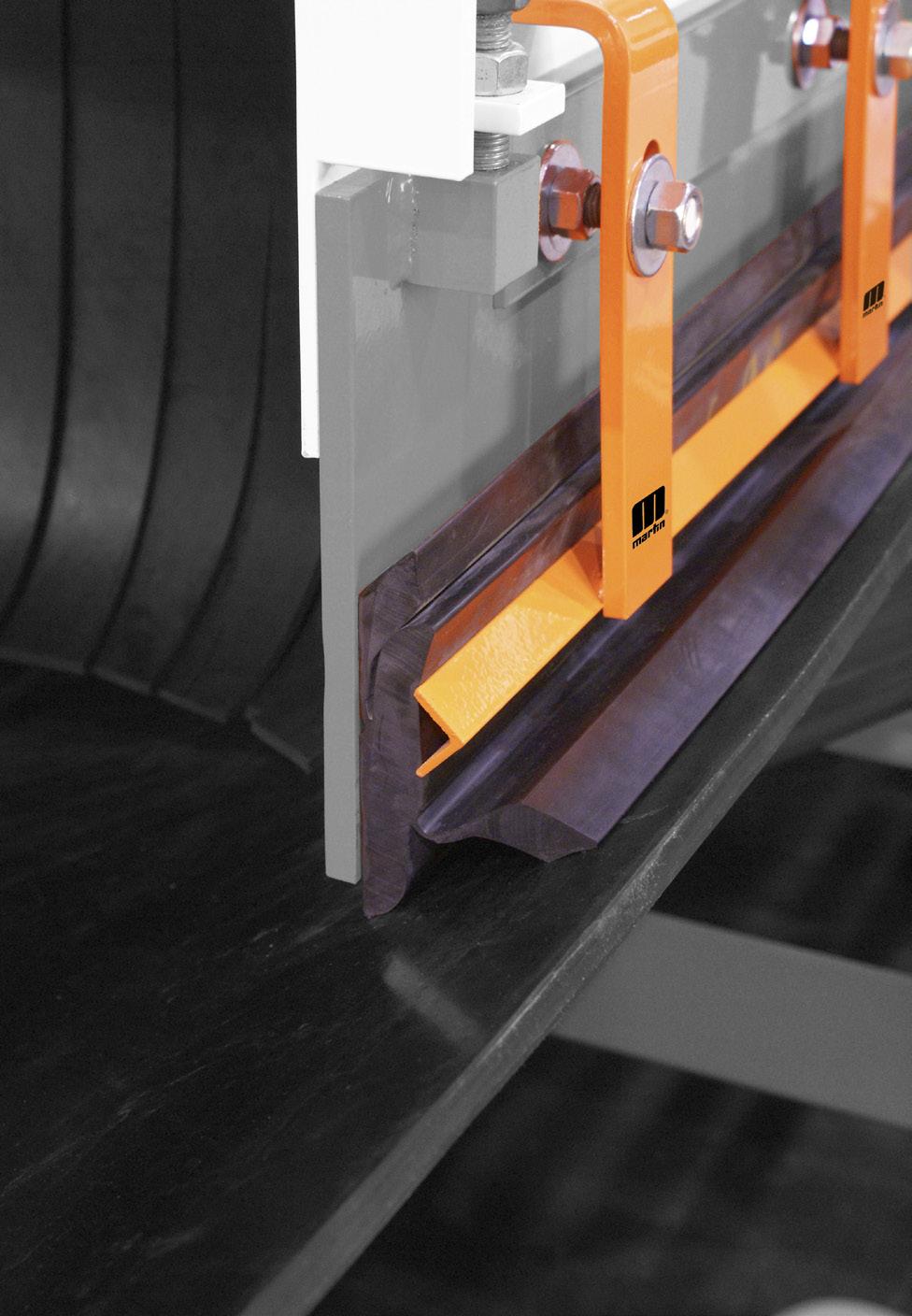
Instead, Martin Engineering designers came up with the idea of raising the chute work about 4 in. above the belt, out of the way of the material, then putting the wear liner on the outside. Using this approach, the material still hits the liner and does not damage the chute. To engineers, it
Confined space entry requires a permit because it is deceptively dangerous and has injured several workers in the past.
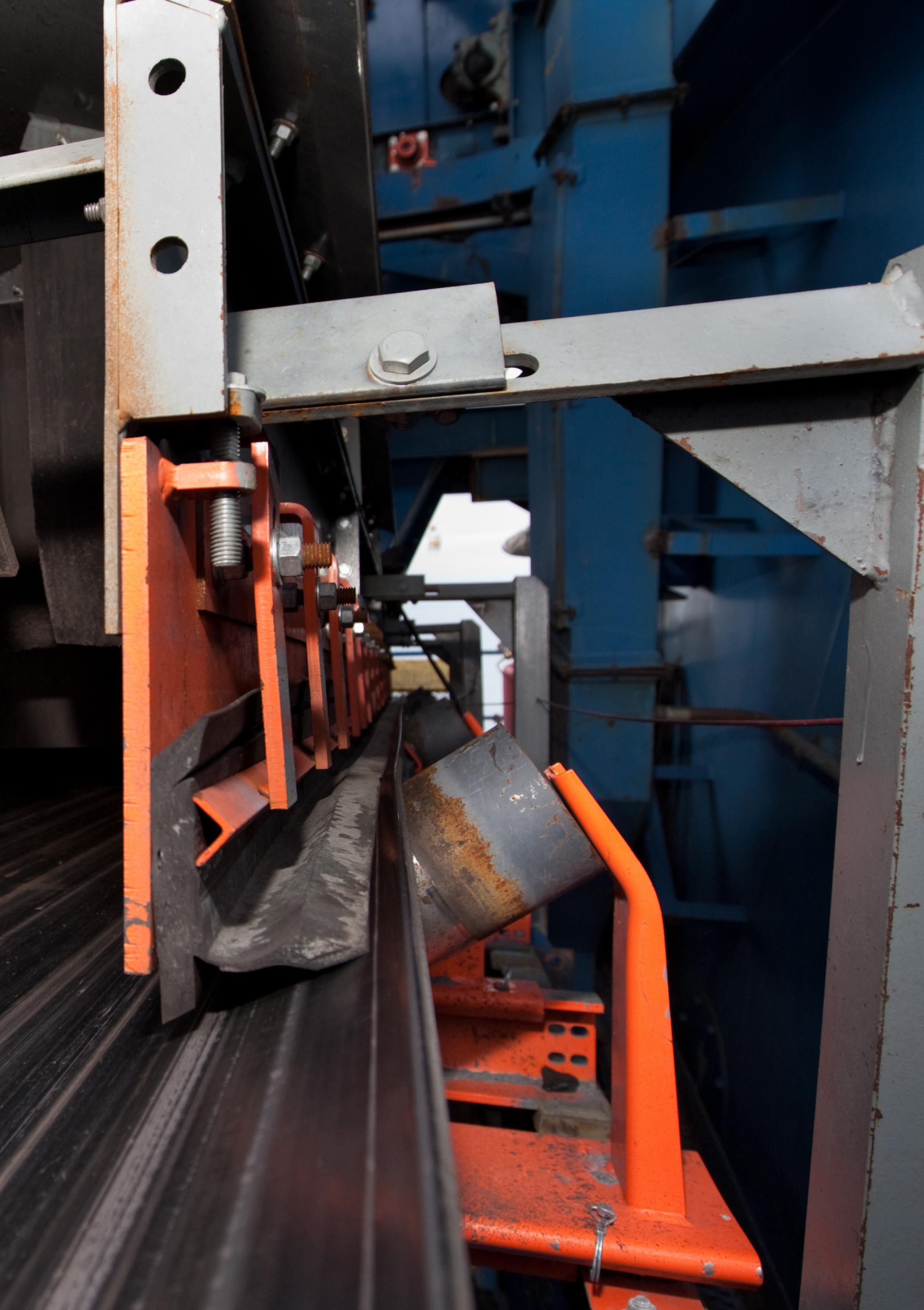
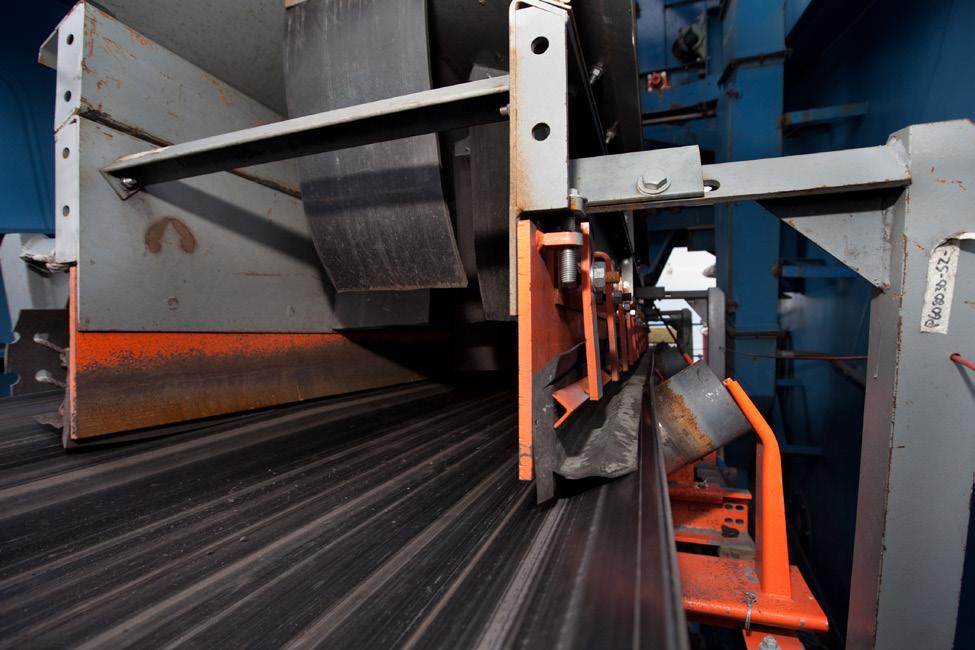
was a real lightbulb moment. The team was surprised that it had never been tried before, given the obvious benefits. After elevating the chute box above the material flow, a 0.375 in. or 0.5 in. (0.95 cm or 1.27 cm) thick abrasion-resistant liner plate (AR500) is mounted on the outside of the chute, followed by the skirt seal. Mounting brackets with jackscrews provide a tight hold, with precision adjustment of the wear liner to reduce spillage. This system closes the gap between the liner and the sealer, thus eliminating abrasion from trapped material without interfering with existing supports. When accompanied by skirting and clamps, the system forms a tight belt seal, delivering outstanding fugitive material control.
Safer by design
When a conventional wear liner loses its edge, the replacement procedure is what operators describe as an undesirable maintenance assignment. The authorised entrant would go into the chute with a grinder to remove the welds and take off the sacrificial liner, which may have required a torch to cut away the existing material.
This can be extremely dangerous for two reasons. First, the liner can weigh several hundred pounds, and when a worker cuts it loose, it can fall and endanger the personnel inside the confined space of the chute. Second, nearly any dust can be explosive under the right conditions, and having to grind or torch-cut the old liner introduces a spark or open flame.
Some companies thoroughly wash out the chute prior to entry to avoid any chance of combustible particulates, making the job even more time-consuming. Once the old liner was removed, the new wear liner was positioned to keep it as close to the belt as possible and welded into place.
Installing an external wear liner
An external liner can be installed and adjusted faster and easier, without the need for a grinder or torch, through the use of special mounting tabs. Clips for bolting the liner are initially welded in place but do not require removal when the liner wears out. Since the work is done from the outside without any grinding sparks or torch flame, the hazard of explosive dust from tool usage is greatly reduced. Replacement liners come in a standard length of 72 in. (1829 mm), and Martin Engineering uses laser cutting technology to create the complex geometries necessary for a custom fit.
The new liner is easily retrofitted onto existing equipment. Installers simply cut back the chute wall on existing chute boxes to accommodate the external wear liner. On new installations, the chute is easily engineered to work with the new liner design, as well as other Martin Engineering components such as dust curtains, track-mounted idlers, and cradles.
Case study – ArcelorMittal port terminal
An ArcelorMittal port terminal in Indiana was experiencing excessive spillage, tail pulley fouling, and belt tracking issues with a petroleum coke transfer point on the stacker/reclaimer boom conveyor. Material spilled out the sides of the chute
The external wear liner and skirting system improve safety, maintenance costs, and equipment life.
Safety by design helps avoid crossing the plane of the conveyor to perform maintenance.
Ship unloaders
Road mobile ship unloaders
Storage & reclaim
Convey units
Truck loading
Ship loaders
and piled onto the floor, creating a hazard, requiring workers to be reassigned from other duties several times per month to clean, ultimately increasing labour costs. Moreover, the spillage was getting onto the return side of the belt and fouling the tail pulley, causing loading and tracking issues. Operators attempted to remedy the situation by having a new transfer chute built. However, once installed, operators realised that the problem was not with the vertical chute, but the loading zone and settling zone equipment. These were
onerous and time-consuming to service, requiring a maintenance team with confined space entry permits which extended downtime and diverted experienced staff from other important tasks.
Managers invited Martin Engineering to examine the issue and offer solutions. After conducting a thorough Walk the Belt™ procedure, technicians installed external wear liners, ApronSeal™ Double Skirting HD (heavy-duty), Trac-Mount™ Idlers, Upper and Lower Trackers, and a V-Plow. The wear liner protects the chute wall against punishing material as the double skirting forms a seal that rides lightly on the belt, keeping fines from escaping. The wear liners and skirts are externally mounted for safe and easy maintenance with no confined space entry required. To retain a true belt path, technicians installed upper and lower tracking technology and 35˚ idlers that slide out for faster one-person maintenance. To protect the tail pulley, a V-Plow was installed to deflect fugitive material on the belt return.
Three Martin technicians and six contractors completed the installation project over two shifts (12 hour and 14 hour). The chute was tested several times and adjusted until the proper trough angle and belt seal were achieved. After several boatloads, the customer reported that ‘not a single pellet has hit the deck’. Along with a near-complete elimination of spillage, operators said that the tracking issues were also resolved and the tail pulley has had no incidents of fouling from return side debris. Moreover, the reduction in labour reduced the cost of operation. Managers are currently working with Martin Engineering on other projects.
Safety in design
An external wear liner could be considered a safety device since it eliminates the need to expose maintenance staff to a potentially hazardous activity, like confined space entry. Moreover, the external wear liner and skirting configuration extend the life of the equipment and the chute, while reducing spillage and dust. Retrofitting the transfer chute with updated equipment improves system performance with no required certification for maintenance, which reduces the number of workers and hours required to replace and service components, in turn lowering the cost of operation.
About the author
Daniel Marshall received his Bachelor of Science degree in Mechanical Engineering from Northern Arizona University. With nearly 20 years at Martin Engineering, Dan has been instrumental in the development and promotion of multiple belt conveyor products. Dan is widely known for his work in dust suppression and is considered a leading expert in this area. A prolific writer, Dan has published over two dozen articles covering various topics for the belt conveyor industry; he has presented at more than fifteen conferences and is sought after for his expertise and advice. He was also one of the principal authors of Martin’s FOUNDATIONS™ The Practical Resource for Cleaner, Safer, and More Productive Dust & Material Control, Fourth Edition, widely used as one of the main learning textbooks for conveyor operation and maintenance.
The dual skirting design runs the entire length of the chute and can be flipped for extended life.
Dust curtains should be strategically placed in zones to slow airflow allowing dust can settle back into the material flow.
Handle bulk with efficiency and reliability
Pneumatic and mechanical ship (un)loaders
Up to 2500 tph for loaders and up to 1200 tph for unloaders.
Low noise & no dust emission
Turnkey solutions for cereals, soy flour, fertilizer, pellets and more...
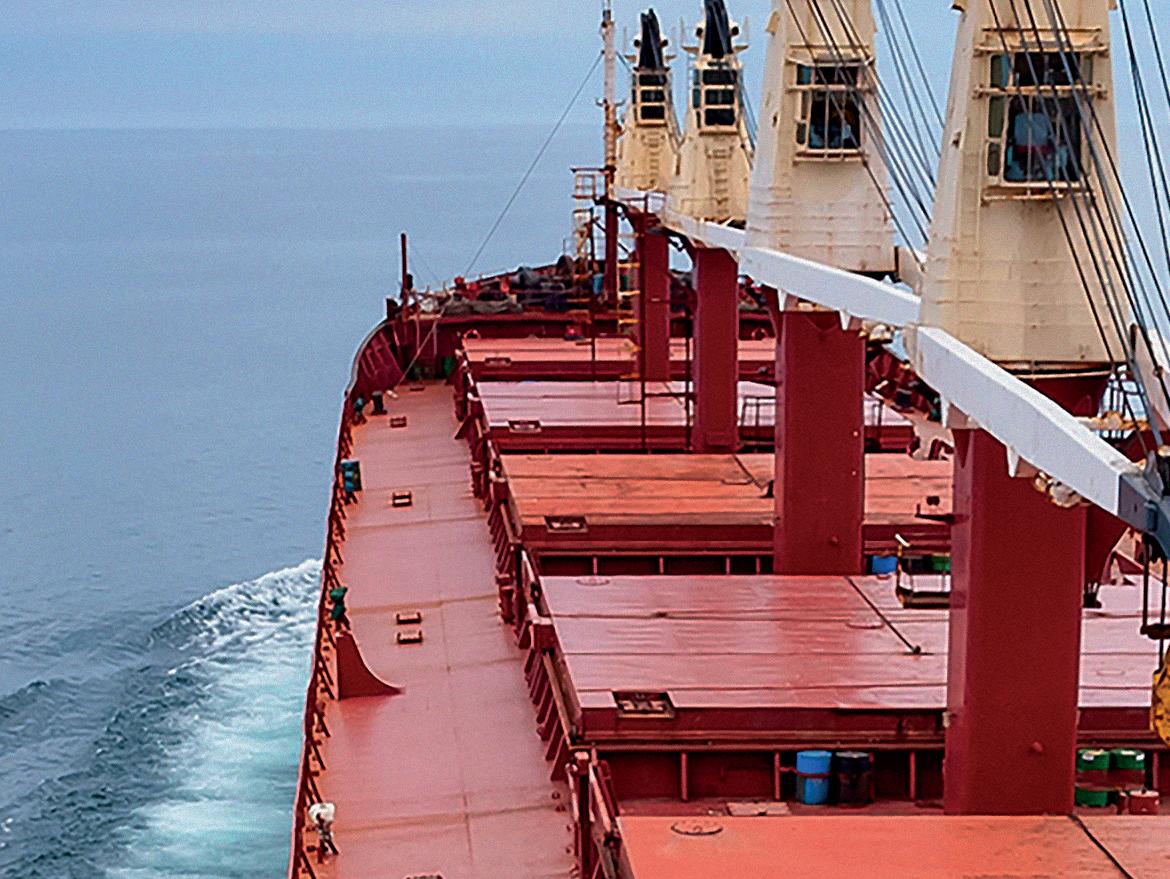
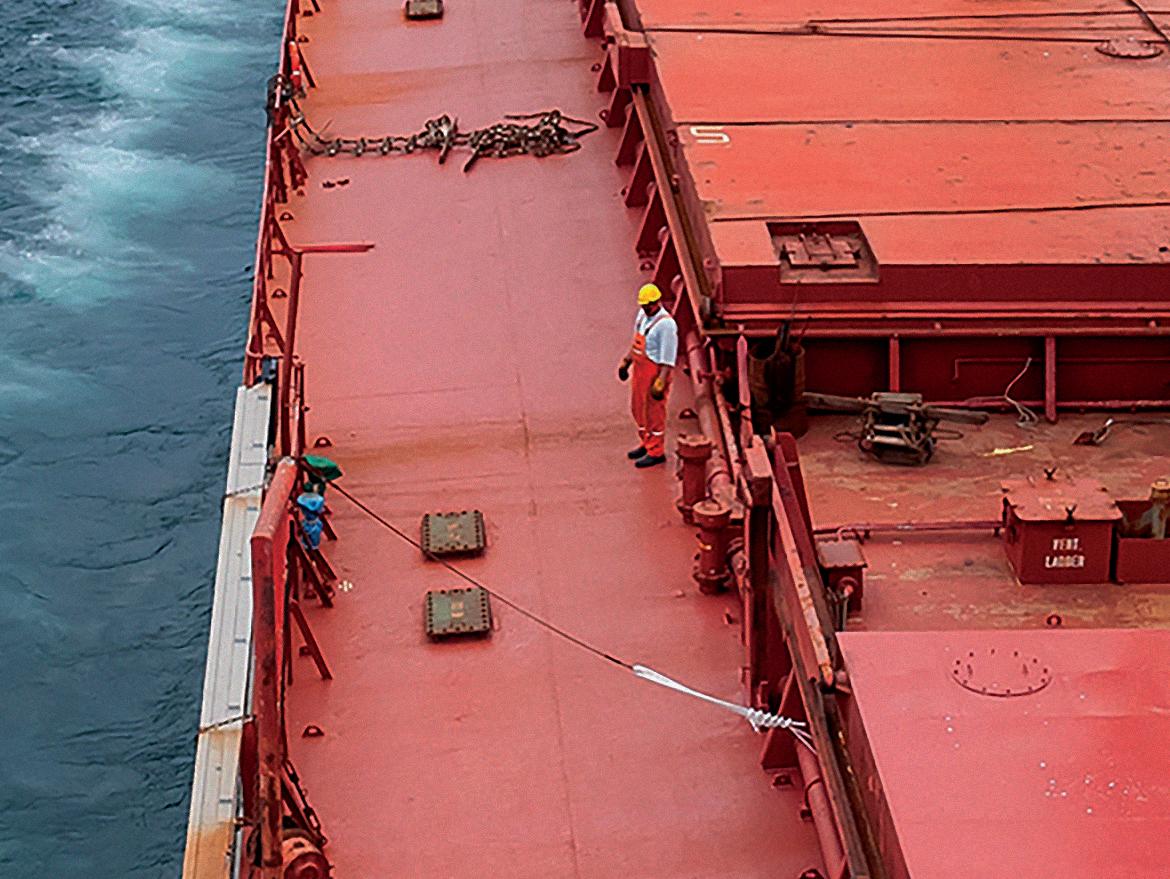
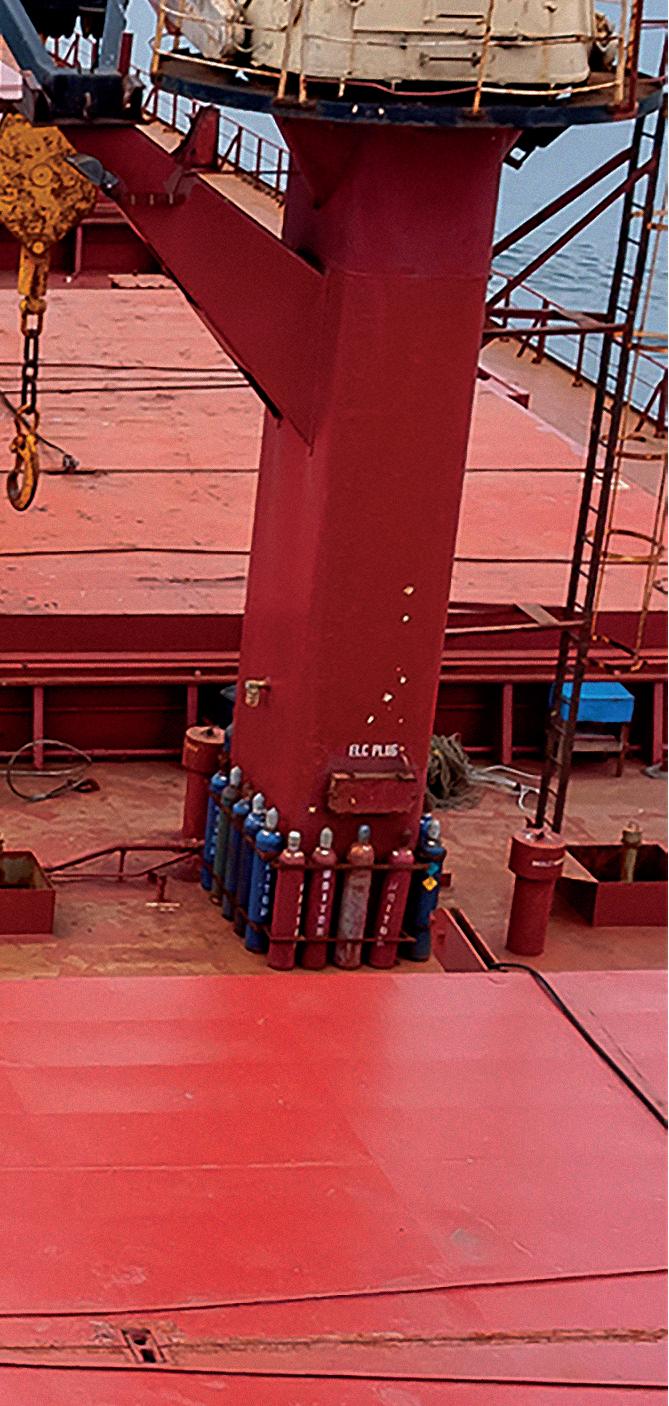
Adam Dennett, SpecTec, explores how digital asset management and proactive maintenance can reduce operational risk in ageing dry bulk fleets.
he dry bulk market is under pressure on two fronts: demand is softening, and the fleet is getting older. At the same time, regulators and industry bodies are tightening their focus on safety and sustainability across the supply chain. In such a volatile environment, operational resilience is no longer optional. For ship owners and operators, effective asset management is both a safeguard for compliance and a decisive commercial advantage.
At the end of last year, RightShip, the vetting agency and self-appointed industry ‘equaliser’ (by the cargo-owning charterers) for safety and environmental standards, sparked controversy and debate when it cut the inspection threshold of dry bulk vessels from 14 to 10 years. While the organisation rowed back a little following industry criticism and concern over timings and flexibility, the initiative has still been rolled out (from March this year), albeit with a more phased approach.
RightShip’s position and message is clear. It believes that dry bulk vessels are lagging significantly behind other sectors in terms of safety standards, and it presented various statistics to prove – in its view – that dry bulk vessels are 10 times more likely to be detained by port state control than other ship classes. Again, according to RightShip’s data, dry
bulk carriers experience the highest incident ratio, including more fatalities. The concern is intensified by the ageing dry bulk fleet and the increased safety risks that are associated with that.
Ageing fleets and rising risk
To be fair, this is a trend that is not just limited to the dry bulk sector. Indeed, the global commercial fleet is the oldest it has been for over 40 years, with the average vessel age at 17.4 years; the average age of a dry bulk vessel is 14.7 years, although fleet ageing is more pronounced in smaller vessel classes where many Handysize and Supramax units are now over 20 years.
While there may be a commercial rationale to expand the lifetime of a vessel, it does not make commercial sense when it has a significant impact on safety and efficiency across the entire maritime supply chain. This was highlighted in a recent DNV annual maritime safety report for 2025, which makes for sobering reading.
According to DNV, in 2024 over half of all safety incidents involved vessels aged 20 years or older. Casualties to crew increased by 358 from 2023 to 2024, with 285 incidents involving ships over 25 years old. 83% of these incidents were down to machinery damage or failure; often due to preventable issues such as improper lubrication, undetected wear, or just skipped inspections. From a dry bulk perspective, due to the heavy nature of their cargo, carriers are also particularly susceptible to corrosion and metal fatigue, especially on the side of the vessels, as well as a loss of shell plating. Fundamentally, it highlights the critical link between ageing hardware and breakdowns, and the real need for properly funded and effectively implemented maintenance plans.
The cost of failure
Ultimately, the cost of failure in terms of downtime and disruption is significantly more than the cost of investing in preventing it from happening in the first place. The recent incident from March this year being a case in point, when ship traffic was suspended in the Bosphorus Strait, one of the world’s most strategic and busiest maritime routes, after a dry cargo vessel suffered an engine failure while travelling northbound. This has also happened to other dry bulk vessels in other major chokepoints for global shipping, such as the M/V Glory and the Supramax vessel Xin Hai Tong 23 in the Suez Canal in 2023. Both were due to engine failure and both resulted in significant and costly disruptions to trade. What is clear is that this issue is not going to go away. The reality is that many vessels in this ageing commercial fleet were built to standards and technologies of a different era. As they continue operating past their intended lifespans, they face greater risks from structural fatigue, obsolete systems, and limited compatibility with modern safety solutions. On top of this, as the industry looks to meet its decarbonisation targets in a future fuels world, and with many vessels predicted to use clean energy such as ammonia, which is highly toxic, the potential negative ecological and safety challenges in the event of equipment or machinery damage becomes even more significant and catastrophic.
Technology and culture as safeguards
However, it does not need to be this way. Proven technology exists to solve these problems, and it is clear that asset and maintenance management software has hugely developed over the past few years in line with the industry’s continued digitalisation. What SpecTec is seeing among forward-thinking ship owners and operators – including those in the dry bulk sector – is a shift from time-based to condition-based maintenance, using real-time data and advanced monitoring to anticipate and prevent issues before failures occur. It is this early detection that prevents small faults turning into major issues that can impact the safety and welfare of the crew and vessel, as well as cause significant expense from unanticipated downtime.
SpecTec has developed AMOS, the industry’s most widely used asset management solution, supporting some of the industry’s leading ship managers, operators, and owners, and approved by seven major classification societies. AMOS provides a fully integrated overview of a customer’s fleet. Data analytics can also be used to evaluate maintenance performance and implement improvements, and maintenance procedures can also be standardised and controlled across other assets to ensure consistency and efficiency.
Fundamentally, it gives ship owners and operators real control of their most valuable assets and sets new standards for safety, reliability, and efficiency. And the results are tangible, with downtime and associated costs reduced by 15%, and equipment failures reduced by 70%. Critically, implementing this kind of technology is not about digitisation for its own sake. It is about giving owners control, foresight, and the ability to turn maintenance into a competitive advantage.
In conjunction with this, while the technology is critical, for it to be truly optimised and effective, it is also vital that there is an attitudinal shift in mindset for safety standards to be properly enforced and the benefits realised; integrating the human element alongside technological advancements to significantly improve safety outcomes. It needs to be driven from the leadership, where safety is championed from the top so that it is embedded in the culture of the organisation. There also needs to be proper training for crews so that they are engaged and confident in using the technology effectively, within an environment that fosters accountability. It is about combining the two critical pillars of technology to drive the proactive maintenance of critical assets with a people-driven culture of onboard safety.
Conclusion
With the dry bulk supply and demand balance expected to weaken for the remainder of 2025 and into 2026, in conjunction with the continued ageing of its fleet and a low orderbook, the sector faces significant commercial challenges.
However, for dry bulk operators, the opportunity is clear. Embracing proven technology and fostering a proactive safety culture can enable the sector to set new benchmarks in efficiency and resilience. Ultimately, in volatile times, the winners will be those who act decisively, not those who delay.
Tor Håkon Svanes, NAVTOR, explores how mobile technology is redefining fleet management and empowering a new era of smart shipping.
oday, there is an app for almost everything. From managing finances to controlling home heating, booking travel tickets, uniting friends, or running global businesses, mobile technology has reshaped how people live and work – creating instant access to information and insight at anytime, anywhere.
The revolution, however, has been somewhat delayed at sea. This is not altogether surprising as shipping, with its strong traditions and fragmented nature, can be slow to adopt the latest land-based technology. As is well known, ‘big vessels take a long time to turn around’, but once they do, progress can be remarkable.
At NAVTOR, this is well understood. Having launched as a start-up in 2011, with a vision to lead the way in smart shipping and maritime technology, the company now serves over 18 000 vessels in the global fleet with solutions designed to make life easier for crews, vessels, and entire maritime organisations. Digital innovations have moved from the drawing board to the bridge and into fleet management facilities at an accelerating pace, helping customers stay ahead of objectives, regulations, and competition. So, what comes next in this voyage of transformation?
Fleet management apps. These are something that everyone, especially within the ever-competitive context of dry bulk, needs to connect with – and sooner rather than later.
From shore to ship to pocket
Recent years have seen shipowners and operators relying more and more on advanced office-based platforms for planning, compliance, and performance management and optimisation. These systems have
become increasingly sophisticated, uniting crews, vessels, fleets, and entire organisations, while empowering better decision making through the integration and utilisation of vast quantities of real-time and historical data. Yet, despite their sophistication, they have obvious restrictions, keeping insights ‘tied up’ with desks, large screens, and the static facilities that house them.
So, the obvious next evolutionary step is untying them – giving users the freedom and flexibility of unlocking fleet benefits whenever, wherever, worldwide. In other words, apps.
It is a step change from centralised monitoring to continuously empowered awareness, giving decision-makers the ability to stay connected to their fleets, receiving the right information at the right time for smarter, faster decisions.
As an example of what is now possible, it is worth highlighting NAVTOR’s most recent launch, the NavFleet mobile app. Rather than being a new standalone development, the app works as an extension of the existing NavFleet desktop platform, connecting seamlessly with both iOS and Android devices. As such it puts both critical data and functionality directly (literally) into the hands of geographically scattered operators, fleet managers, and executives.
Real-time insight for real-world operations
At its core, mobile fleet management is about informed situational awareness.
Dry bulk operations are dynamic and time-sensitive, with schedules influenced by port congestion, weather, and constantly changing charter requirements. The ability to monitor, interpret, and respond to key events as they unfold is a key strategic advantage.
The latest mobile applications have the ability to integrate data from vessels and third-party sources to present a dynamic overview of fleet status
and voyage progress, while offerings like the NavFleet app also provide intelligent notifications to cut through the noise. Users can set parameters for only what they need to know – for example, if a vessel deviates from its planned route, exceeds a defined speed limit, or encounters severe weather – and receive real-time alerts on their mobile devices.
There is no longer a need to reactively sift through reports or emails to address issues after the fact. Real-time alerts enable coordination between teams so that small issues can be addressed before they develop into major problems. This transforms reactive fleet management into proactive control.
In practice, this capability delivers benefits across safety, efficiency, and environmental compliance. For example, if a vessel in a whale-protection zone exceeds speed restrictions, the system can alert relevant personnel immediately. Rather than waiting for post-voyage analysis or environmental audits, operators can act when needed to ensure adherence to regulations and avoid potential penalties.
Similarly, deviations from planned cross-track distances (XTDs) or route corridors can trigger alerts that prevent costly groundings or delays – a particularly valuable safeguard in regions with complex traffic separation schemes or challenging weather conditions.
Platform for collaboration
Beyond awareness, one of the app’s most powerful features lies in its ability to connect people.
Maritime operations involve myriad stakeholders – from ship and shore to commercial, technical, and management teams – all of whom can benefit from access to the same situational data.
Apps such as NavFleet empower this new reality, introducing a secure, interactive environment where events and notifications can be discussed in context. Team members can comment directly on specific alerts, share insights, and document corrective actions, eliminating those fragmented, hard-to-follow email chains and duplicated reporting, that have the potential to complicate already demanding situations.
In short, it simplifies processes, ensuring that decisions are made by the right individuals using verified, high-quality, and up-to-date information.
Data-driven benefits
Digitalisation in shipping is no longer a question of if, but of how effectively. The growing complexity of environmental regulations, charter performance criteria, and commercial pressures means manual processes and delayed reporting are no longer fit for purpose. There is a need for connected, automated efficiency.
This is where integrated data ecosystems and mobile apps can demonstrate their value. By connecting seamlessly with NAVTOR’s digital infrastructure – including e-navigation services,
weather intelligence, and performance monitoring – the NavFleet app becomes part of a wider effort to enable safe, intelligent, and sustainable operations.
Take, for example, fuel efficiency and emissions management, areas of growing scrutiny for the dry bulk sector. A connected mobile platform allows managers to track speed, route optimisation, and weather avoidance decisions in real time. Deviations from fuel or emissions targets can be identified instantly, while operational decisions can be documented and justified within the same digital environment.
This not only enhances transparency but supports compliance with ever-tightening IMO and regional regulations, helping operators meet both commercial and sustainability goals.
Cultural shift
By this stage, it is clear that the emergence of mobile fleet management tools marks not only a technical milestone but also a cultural shift in the way shipping companies operate.
The slow uptake referenced at the beginning of this piece is picking up pace (every day) as new technology is adopted, users unlock the benefits of digitalisation, and more fresh tech is introduced to cater for growing awareness, appreciation, and hunger for progress. A virtuous circle is now turning within the industry.
Ally this with the recruitment of a new generation of managers and operators – individuals who expect the same connectivity and flexibility at work that they experience in their personal lives – this creates fertile ground for transformation.
At NAVTOR, where collaboration with customers has always been a defining principle, there is now an increasing number of users providing feedback and ideas for refining and developing solutions. This demonstrates an openness to change that few would once have associated with this traditionally conservative industry.
In other words, now is the time to go mobile.
The future of connected fleets
As the dry bulk sector continues to navigate a challenging environment – defined by fluctuating markets, evolving environmental targets, and ongoing digital transformation – mobile connectivity offers not only a clear pathway to greater control and competitiveness, but an easy one.
Whether through NAVTOR’s NavFleet app or other emerging platforms, the principle remains the same: empowering people with the tools and insights they need to manage complexity with confidence.
The ‘big ship’ has turned, and the industry is now moving towards continuous, data-driven operations where ships and shore work as one connected team. Mobile technology operates as the bridge that makes that voyage possible.
Now is the time for fleets to be truly at their operators’ fingertips.
Hrishikesh Chatterjee, Everllence, outlines how advanced dual-fuel engine technologies are propelling the decarbonisation of the global bulk carrier fleet.
ulk carriers dominate international waters and are the backbone of seaborne trade, making up over 40% of the total world fleet operating today when measured in deadweight. It is the bulk carriers moving iron ore, coal, grain, and minor bulks across deep sea routes that define global supply chains. This important transport segment continues to grow along with increasing global market volumes, but the sector also needs to adapt to ever-more stringent emission requirements.
Bulk carrier owners need cost-effective propulsion systems to make their operations profitable. Since bulk carriers can sail in environmentally sensitive areas, their engines need to meet strict limits for NOx, SOx, and particulate emissions. With stricter IMO restrictions, finding high-efficiency propulsion systems with low fuel consumption is key. Operators need the best two-stroke engines that meet low RPM demands to achieve ideal ship designs with highly efficient large propellers.
Since the beginning of the millennium, Everllence has provided over 8000 bulk carriers with low-speed engines.
Decarbonising the merchant fleet
Many fuels play important roles in this endeavour, including methane, methanol, and ammonia – among others. Everllence’s strategy is technology-neutral in that it develops propulsion solutions for a broad range of fuels. By 2030, Everllence expects that its engines will help customers to save some 44 million t of CO 2 , more than that emitted annually by the country of Denmark. Everllence sees even greater potential for 2050, by which time it expects that over 500 million tpy of CO 2 can be saved with its technology, equivalent to the annual emissions of Denmark, Sweden, Norway, Finland, and the UK combined.
And this addresses both new and existing ships: shipowners will be able to choose between an array of dual-fuel engines as newbuilds, while existing fuel-oil engines will have the opportunity for retrofit to operate on greener fuels. Everllence is actively working with shipowners and shipyards to ensure that its engines can be integrated problem-free into both existing and newbuilding vessels. Furthermore, Everllence engines are designed for flexibility and easy adaptation to new alternative fuels (AFs) and directives from the IMO and EU.
Year on year, Everllence encounters an increasing demand from customers that wish to future-proof their fleet and, at the same time, reduce their environmental footprint. Of the 33 000 merchant ships in the current world fleet, some 25 000 are already powered by Everllence engines, which gives Everllence a unique opportunity to accelerate the maritime energy transition.
Power solutions for bulk carrier propulsion
Everllence two-stroke engines offer several proven solutions for the propulsion of all kinds of merchant vessels, including bulk carriers.
Gas injection engine
The ME-GI (gas injection) is a highly efficient, flexible propulsion solution. With its introduction, Everllence kick-started a new chapter in diesel history, from which bulker vessels have greatly benefitted.
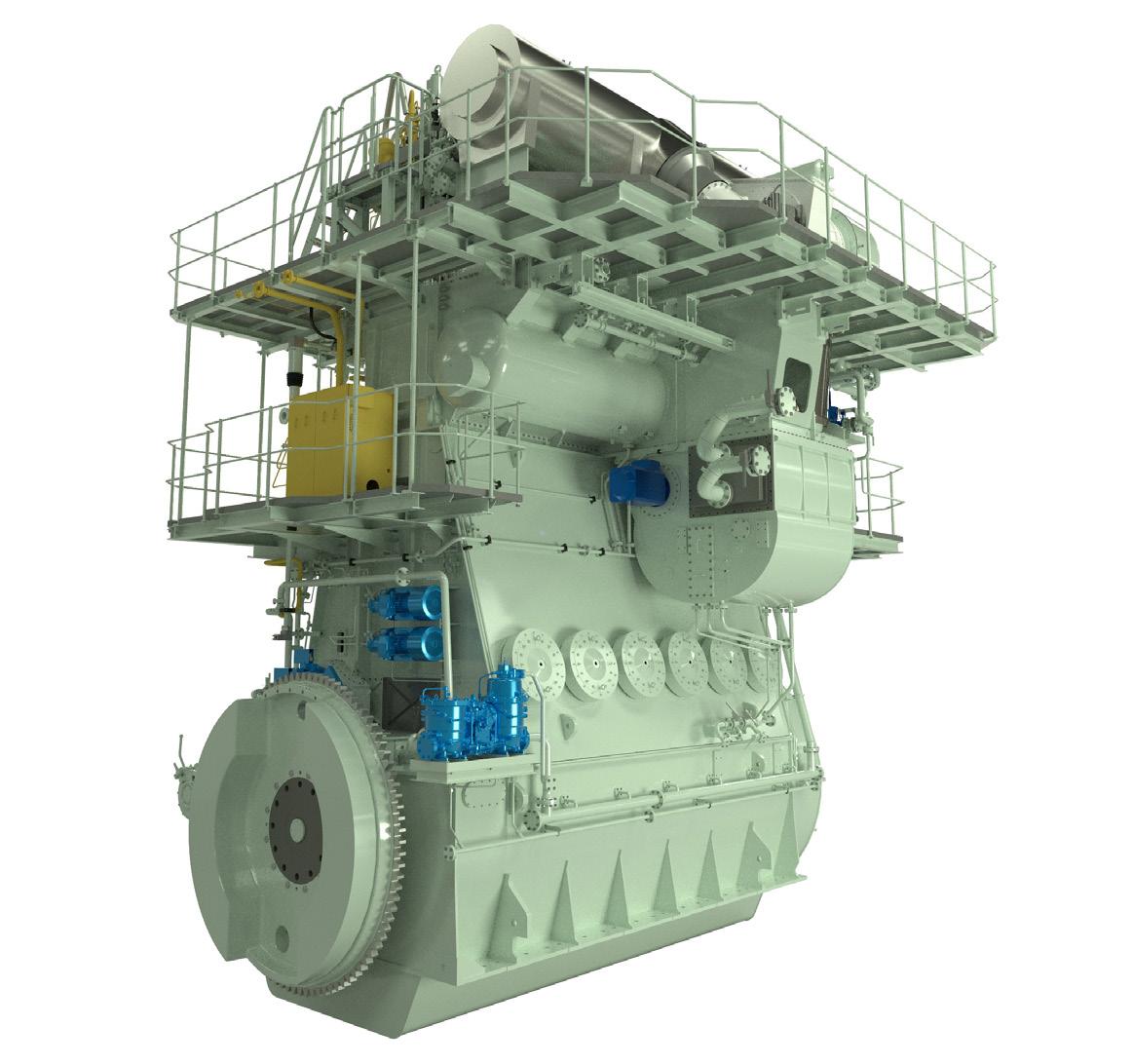
Graphical rendering of the ME-LGIM engine.
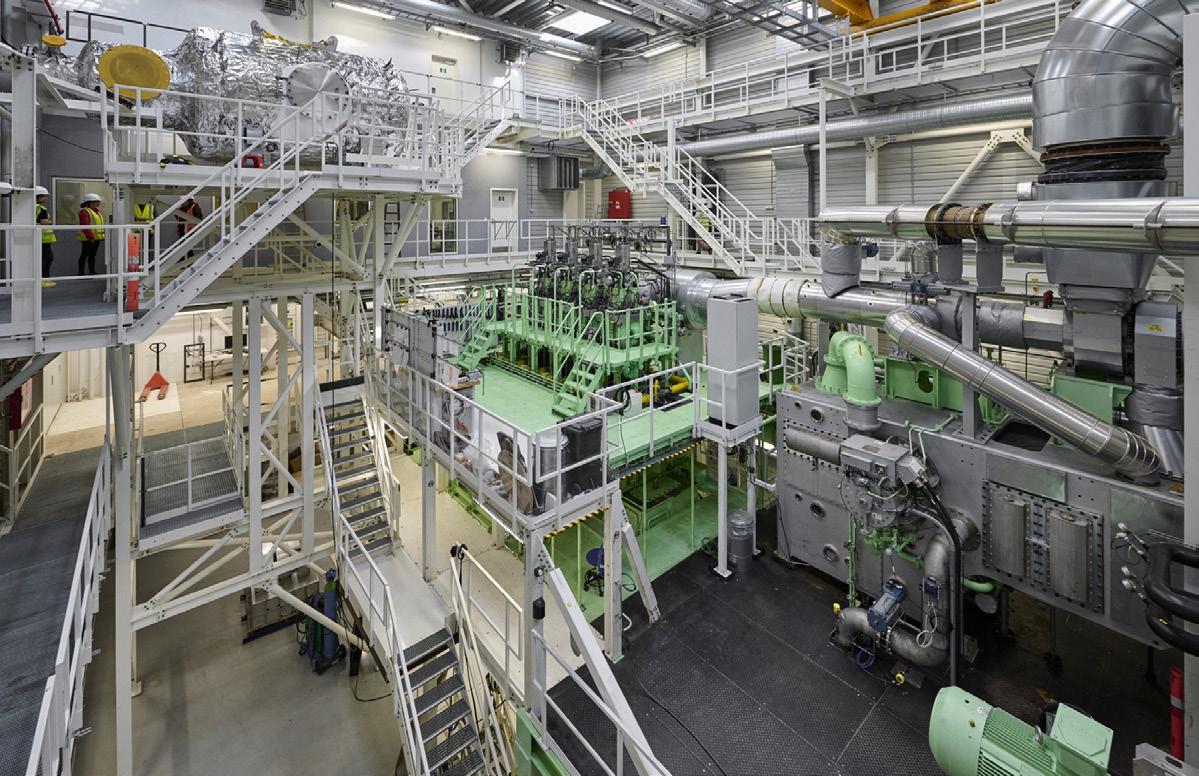
Internal view of the RCC (Research Centre Copenhagen).
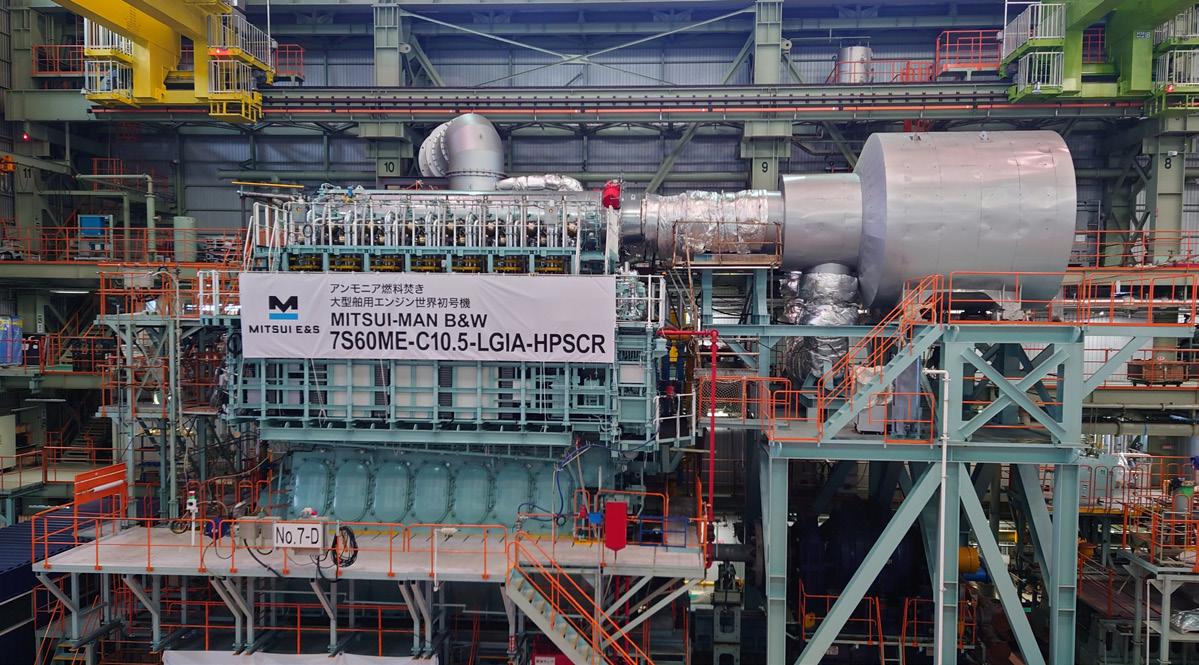
The 7S60ME-LGIA ammonia dual-fuel prototype engine pictured at the Tamano Factory (picture courtesy MITSUI E&S).
Due to the ME-GI engine, vessel owners have the option of using either fuel oil or methane – depending on market prices and availability.
The ME-GI engine has extremely low methane slip and very high fuel efficiency. It is the most environmentally friendly methane-fuelled engine on the market. By the optional use of fuel oil or methane/bio-methane/synthetic natural gas, it represents a highly efficient, flexible, propulsion-plant solution. Technical specifications include:
n Engine speed: RPM to 56 – 167.
n Output: 4350 – 82 440 kW at L1.
Bulker project
In more recent times, Everllence received an order for five 6G70ME-GI Mk10.5 dual-fuel engines in connection with the construction of five 210 000 dwt Newcastlemax bulkcarriers for Eastern Pacific Shipping (EPS), the Singapore-based shipping company.
EPS sealed an agreement to charter the five LNG dual-fuel Newcastlemaxes to Australian mining giant BHP for a period of five years with the vessels scheduled to carry iron ore between Western Australia and China.
Liquid gas injection methanol engine
The ME-LGIM (-liquid gas injection methanol) engine is the world’s first two-stroke dual-fuel methanol engine. It came into service in 2016 and has already reached a strong track record of running hours on methanol. It is well-suited for application on bulk carriers, either as a newbuilding project or as retrofit.
The ME-LGIM is characterised by its high efficiency and capability of operating on methanol. With a proven record of more than 600 000 operating hours on methanol alone, the engine concept provides a high degree of reliability. When fuelled by green methanol, the ME-LGIM engine can offer truly carbon-neutral propulsion, while reducing sulfur and particle matter emissions significantly. Technical specifications include:
n Engine speed: 56 – 125 RPM.
n Output: 6950 – 82 440 kW at L1.
Vale bulker project
In September 2025, Everllence announced that Qingdao Beihai Shipyard had ordered ten 7G80ME-LGIM (liquid gas injection methanol) Mk10.5 engines for the construction of ten 325 000-dwt very large ore carriers (VLOCs) for the Chinese shipping companies Shandong Shipping Corp. and Bohai Ocean Shipping Co. Ltd. Each engine will be equipped with Everllence’s proprietary exhaust gas recirculation –turbocharger cut-out (EGRTC) system to ensure Tier III NOx compliance. Upon delivery, the vessels will be chartered to Vale S.A., the Brazilian multinational mining company, for iron ore transport between Brazil and China.
Ammonia-fuel engine development
Everllence is currently developing an ammonia engine, the ME-LGIA (-liquid gas injection ammonia). Specifically, Everllence believes that ammonia-fuelled engines will prove an important solution for two-stroke engines and expects large tankers and bulk carriers to be early adopters of this new technology.
The ammonia test engine at Everllence’s Research Centre Copenhagen (RCC) is the result of over 150 000 man-hours of work and represents a significant financial investment by Everllence. Since testing started in July 2023, it – along with a test engine at MITSUI E&S in Tamano, Japan – have executed over 800 test runs.
On account of ammonia’s characteristics as a fuel, safety has been a priority since the beginning – both that of Everllence employees and future vessels. The first commercial engine is expected to be delivered in Q1 2026 and to enter commercial service in the second half of the year.
Everllence views the development of the engine as not just a technical achievement but also as a concrete step towards a climate-neutral future for the maritime industry. Everllence has worked closely with the maritime authorities and classification societies alike to ensure that the technology lives up to the highest standards and feels that the testing programme has given it an invaluable insight into the handling of ammonia as a fuel – both technically and operationally. Everllence is also in the process of building up a strong supply chain at the same time as it makes ready to scale engine production up at various manufacturers in China, Korea, and Japan.
Ammonia bulker project
MITSUI E&S announced the beginning of the test phase for the world’s first commercial, two-stroke, dual-fuel ammonia engine in February 2025. The MAN B&W 7S60ME-LGIA (-liquid gas injection ammonia) Mk10.5 prototype engine began its ammonia fuel test-run at MITSUI E&S’s Tamano Factory in Japan.
The 60-bore engine will eventually be installed aboard a 200 000 dwt bulk carrier at Imabari Shipbuilding for a joint venture between 'K' LINE, NS United and ITOCHU Corp. It also features Everllence’s proprietary high pressure selective catalytic reduction (HPSCR) system for IMO Tier III compliance.
Bjarne Foldager, Head of Two-Stroke Business, Everllence, said at the time: “The use of ammonia, which can achieve carbon-neutral combustion when bio-fuel oil is used as pilot oil, is a significant milestone on the path towards decarbonisation, especially in the maritime industry where reducing greenhouse gas emissions is a pressing issue. We have worked closely with MITSUI E&S on this pioneering project and have noted keen interest in its progress from external parties. To date, Everllence has secured several ammonia engine orders throughout Asia and we are confident that ammonia will comprise one of the three major AFs on the market – alongside methanol and methane.”
Pneumatic Through Progress
Pumps
Brian Warmkessel, Fuller Technologies, explains how upgrading an ageing self-discharging barge with a high-performance pneumatic pump brought new flexibility, capacity, and simplicity to cement logistics in Boston.
s cement demand rises across the northeastern US, efficient logistics have become critical to keeping terminals stocked and operations running smoothly. Dragon Cement’s terminal in Boston is equipped with four 10 000 t silos, ready to deliver cement across the northeast region. But Dragon Cement was limited in its ability to easily fill those silos by the capacity of their 5000 t self-discharging barge. Multiple trips to and from the Dragon Cement plant in Maine were required to keep up with demand, as there was no other ship unloader at the terminal and no way to unload from larger vessels.
Dragon Cement approached Fuller Technologies to provide a solution for this bottleneck in their logistics. Mike Greto, Vice President of Supply Chain, Dragon Cement, said “the barge is great and has been working well for approximately 30 years – but we wanted to increase the capacity and efficiency of our operation." He added, “When Fuller told us they could convert the self-discharging Docksider to a Docksider® ship unloader utilising the new FK N Pump – offering a solution to both the capacity problem and improving the simplicity of the operation – we were immediately interested.”
Why the old system had to change
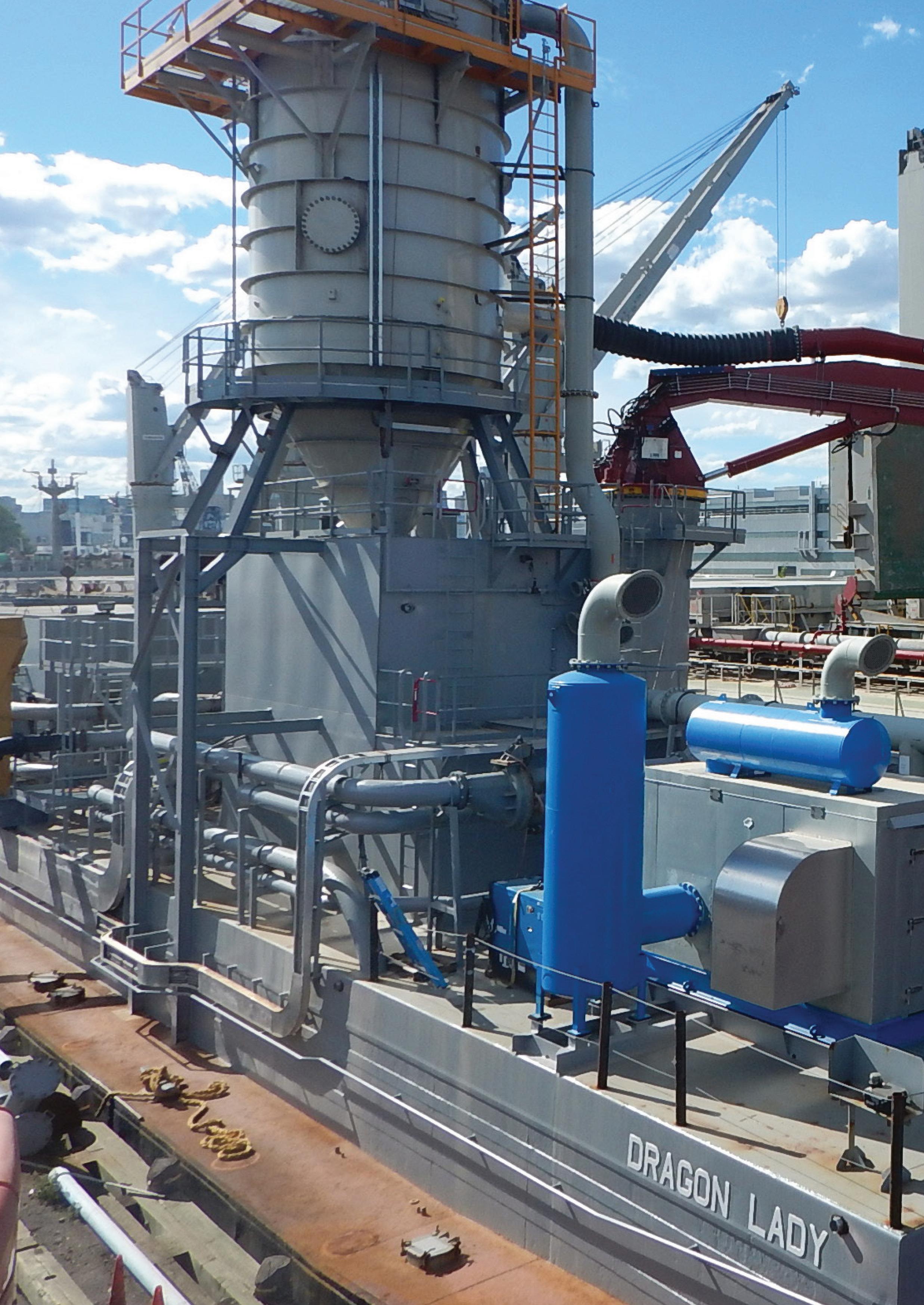
While the Dragon Lady – the self-discharging barge – could discharge from the barge to the silos, it was unable to unload other vessels, so the only option was to keep reloading and unloading the 5000 t capacity barge.
A smarter way to convey
The FK Pump has been a reliable part of materials handling operations for over 100 years, but historically has been limited to short-to-medium distances, making it unsuitable for ship unloading operations. However, with the introduction of the FK N Pump in 2020, new possibilities arose. “The FK N Pump is based on the same design principles as the older M Pump,
delivering the cleanliness and simplicity of pneumatic conveying to dry bulk materials handling operations,” explains Brian Warmkessel, Market Manager and Pneumatic Conveying Specialist, Fuller. “But there are some key differences in this design that improve throughput, flexibility, and efficiency, and make it possible to run over longer distances at higher pressures – exactly what was needed to make this pneumatic conveying solution suitable for ship unloading.”
Changes to the length of the barrel and screw, as well as the flights on the screw and the seal, have increased volumetric efficiency by more than 15% and enable higher-pressure capabilities. The improved seal also results in greater energy savings on the higher-pressure applications (20 – 25 psi and higher) and power savings of up to 15% in like-for-like applications. With improved throughput, higher volumetric efficiency, and higher convey line pressures, as well as power savings and a dual discharge housing as standard, conveying capacities up to 600 mtph are possible, depending on bulk density, over distances greater than 1525 m.
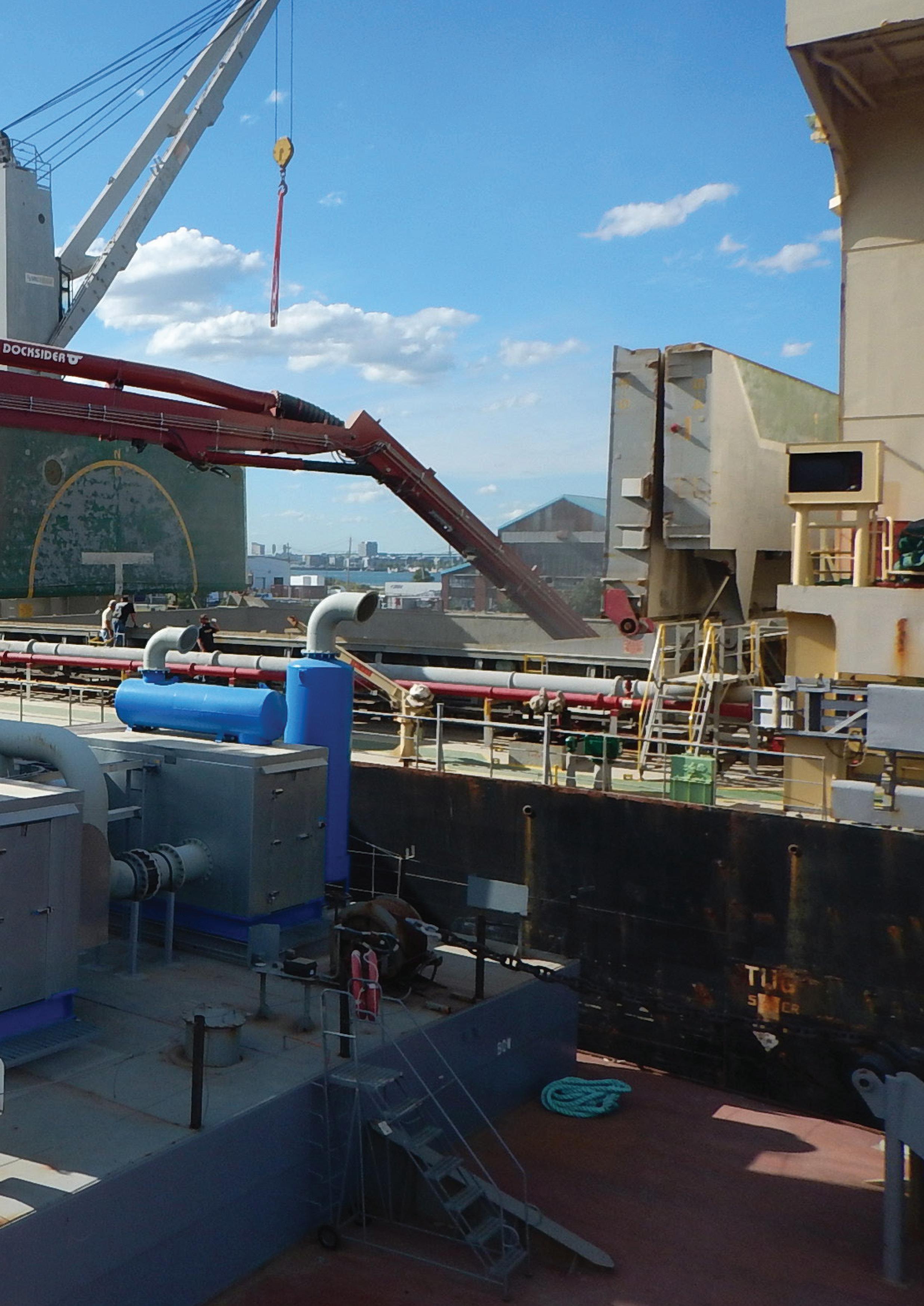
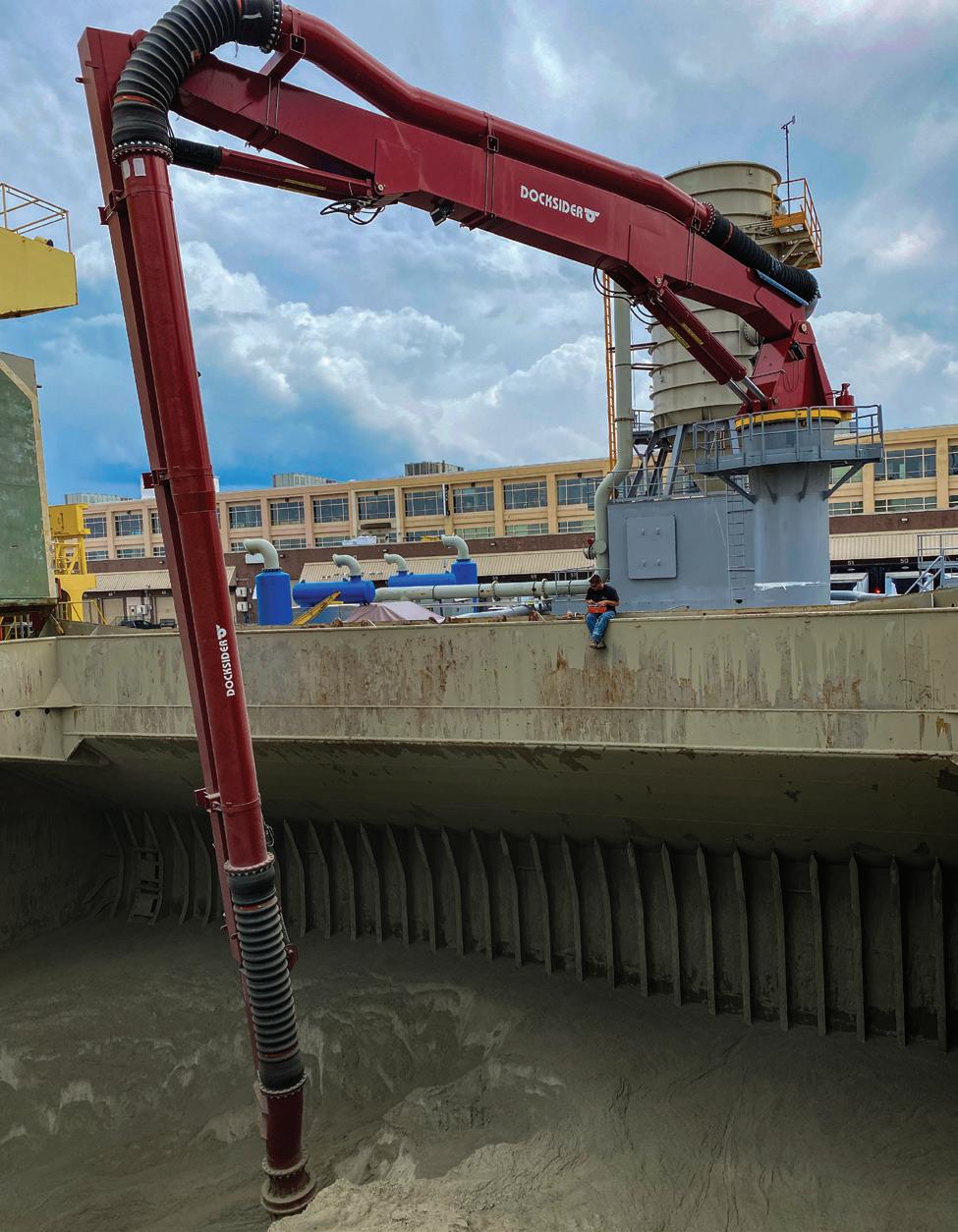
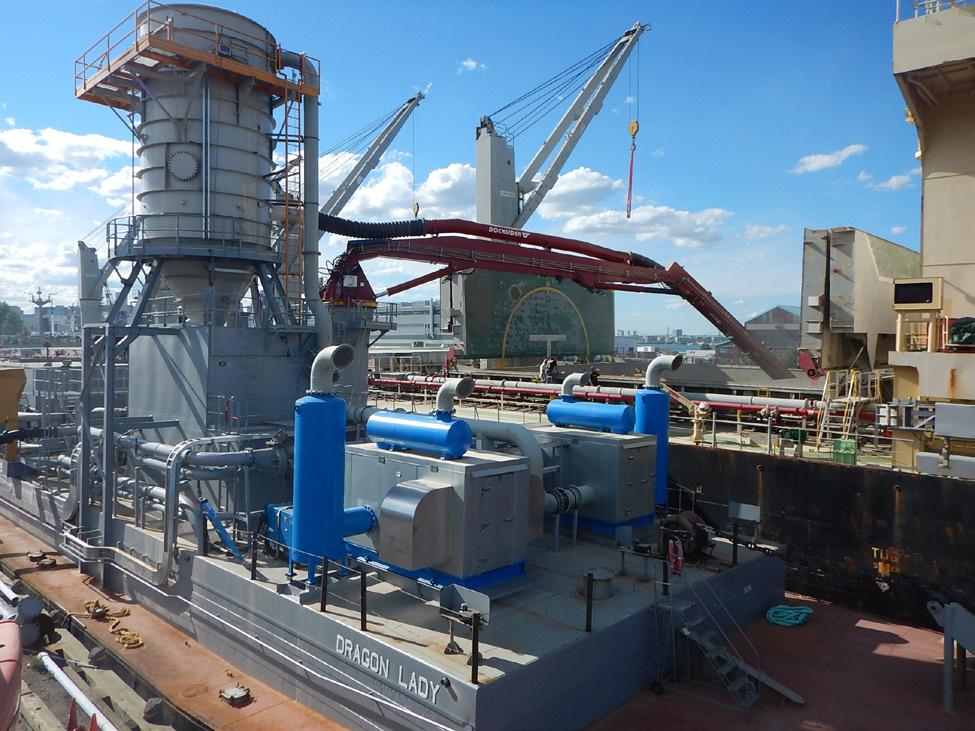
By incorporating a Docksider vacuum arm and an FK N Pump, the terminal could now unload bulk carriers and still maintain the mobility of the self-discharging barge. “Having run through the proposal, it became clear that the FK N Pump could solve our capacity problems without compromising the flexibility we get with the barge,” says Mike Greto, Dragon Cement. “We can operate as we did before, loading and unloading the barge, taking it around to other terminals, etc. But we can also accept deliveries from much larger vessels – up to 35 000 dwt – and unload direct to the silos using the Dragon Lady as a barge-mounted ship unloader. It’s the best of both worlds.”
Built for simplicity and easy maintenance
With every iteration of the FK Pump, effort has gone into reducing maintenance and downtime. The results of these efforts include the 3-piece screw and hot swap bearing assemblies.
n The 3-piece screw makes maintenance both quicker and easier, cutting screw change-out time by up to a third. By splitting the pump screw into three sections – the centre section being the replaceable wear part – there is no need to disconnect the coupling to perform maintenance, so as well as being quicker, there is also a benefit that the bearings and seals will not be exposed to a dusty environment.
n Each Hot Swap is a fully-assembled unit complete with seals, bushings, bearings, and drive or stub shaft. The cost of each assembly is significantly less than buying the individual parts. Hot Swap bearing assemblies can be kept on the shelf, ready to go, reducing downtime to just ~3 hours for a bearing assembly replacement.
While these changes create savings in reduced downtime and inventory, they also simplify the maintenance process, so there is no longer the need for high experience levels. This simplicity will pay off in both the short and long-term as the terminal gets the benefit of greater uptime and reliability.
Docksider arm.
Dragon Lady.
Project scope and supply package
Contracts were signed in Spring 2021 and work began the following year. The scope of the project included:
n A new vacuum arm for the Docksider, including hydraulics, electricals, and mechanical components, such as bearings and seals.
n A new filter receiver/vessel.
n The FK N 300 Pump.
n Feeder, piping, and components.
n Vacuum blower(s) with 450 hp motor.
n Control air compressor and air dryer plus auxiliary equipment.
n Automation system, including PLC and HMI.
n MCCs and other electrical control components.
n A complete set of spare parts.
Fuller was responsible for the detailed equipment design and supply, and provided installation and commissioning assistance. The upgrade was carried out at a shipyard in Virginia and, once complete, the barge was floated back to Boston to begin its new, more flexible life as a ship unloader.
The results: speed, simplicity, and satisfaction
“Once the FK N Pump became available, this was a simple solution – a real no-brainer,” says Mike Greto, Dragon Cement. “There were challenges at the build and installation, but the collaboration between Dragon, the
Naval Architect Netsco, and Fuller was instrumental in making this project what it is today. We couldn’t be happier with how this project has turned out. Before, we were floating the barge back and forth trying to keep up with demand. Now we can bring in a 35 000 dwt vessel and get the job done in one shipment. We were guaranteed 300 tph ship unloading, but the Docksider with FK N Pump regularly outpaces that.”
Though the additional capacity was the driver behind this project, the real win has been the simplicity of operation. “The FK N Pump is a lot easier to operate and maintain than our previous system,” says Mike Greto. “It’s a more robust piece of equipment. And, features such as the 3-piece screw design and Hot Swap bearing assemblies also reduce maintenance downtime to a minimum and keep it simple enough that anyone can manage it.”
Conclusion
“From our side, we’re happy to have a working example of our theory: that FK N Pumps can replace pressure vessels in the majority of ship and barge unloading applications,” says Brian Warmkessel, Fuller. “This will be our go-to solution for new Docksider installations, but we’re also recommending it to existing Docksider customers who are looking to increase availability and simplicity in their operation. Capacity increases and cost savings will vary from one application to another, but everyone can benefit from the ease of operation and maintenance on the FK Pump versus other discharge options.”
Dry Bulk Magazine Online
he idea of using wind to propel ships is, of course, as old as seafaring itself. But today’s wind-assisted propulsion systems (WAPS) are very much focused on the future – technologically advanced, highly efficient, and, crucially, aligned with the new wave of maritime regulations. In an era defined by limiting emissions, carbon pricing, and compliance penalties, wind is no longer a blast from the past. It is a powerful, and commercially competitive, solution.
From targets to tools: delivering on decarbonisation
The date 2050 is familiar to the whole industry. That is the line in the sand drawn by the IMO when, if all goes according to plan, the industry aims to sail into the realm of net zero emissions. That target, and the interim checkpoints ahead of it, send a powerful message, but it does not create change now. This is where regulations come in.
The new breed of regulations sweeping through shipping are essentially the tools with which to enable (some may say ‘force’) progress. The Energy Efficiency Existing Ship Index (EEXI) and Energy Efficiency Design Index (EEDI) measure the emissions per tonne mile for, respectively, existing and new vessels, and, like the Carbon Intensity Indicator (CII), which grades the efficiency of vessels, have been in place since 2023. In 2024, the EU Emissions Trading System (EU ETS) came into force, creating a market-based mechanism (with emissions allowances) placing a direct cost on CO 2 emissions for intra- and
extra-EU voyages.
This was followed by FuelEU Maritime, setting vessel GHG intensity reduction targets (on a well-to-wake (WtW) basis) with severe and escalating, penalties for non-compliance.
What is less widely known, at least at the moment, is that in April 2026, MEPC 83 looks capable of pushing things even further by introducing a new metric, namely greenhouse gas fuel intensity (GFI). This assesses the total lifecycle emissions of energy used onboard and, like FuelEU, adopts the crucial well-to-wake perspective. This is due for final approval and adoption at an extraordinary MEPC session in October 2025. It is worth delving deeper into ‘83’ to get the big picture needed for ongoing compliant, efficient operations.
MEPC 83: a new reality?
The structure of MEPC 83 is both sophisticated and strict. It (as with CII and EU ETS) applies to ships over 5000 gross t, introducing a two-tier compliance scheme. The first level, known as the Base GFI, outlines a minimum emissions trajectory over time. Falling short of this incurs the purchase of tier 2 remedial units, priced at US$380 per t of CO 2
Cristina Aleixendri, bound4blue, explains how wind-assisted propulsion can drive decarbonisation and deliver commercial advantage in bulk shipping.
equivalent. A high cost designed to deter non-compliance.
The second level, the direct compliance GFI, sets a more ambitious target and, as a consequence, has less stringent penalties (tier 1) of US$100 per t of CO 2 emissions.
However, there is a carrot as well as a stick, in the form of a clear incentive structure for those that outperform. Ships that beat the direct compliance targets can generate surplus units – a kind of carbon credit – which can be traded or banked for up to two years. In essence, a new carbon marketplace is emerging, where clean operators can gain not only regulatory clearance but commercial reward.
Importantly, funds raised through the penalty mechanisms will be channelled into the IMO net-zero fund, which is set to finance the development and adoption of low- and zero-emission technologies, such as WAPS.
FuelEU Maritime and a rewarding approach
Wind power, being clean, readily available, and completely free creates regulatory advantage across the board, with less fuel burnt, increased efficiency, and much reduced emissions. This delivers benefits for all aforementioned regulations, with added advantage for the WtW measures, like GFI and FuelEU.
The reason is straightforward. Some alternative fuels are essentially ‘greener’ than others. Take a biofuel for example, which may create zero emissions when burnt (so good for EU ETS) but could carry substantial upstream emissions. This undermines compliance for a regulation like FuelEU. Wind, by contrast, has zero emissions throughout the lifecycle, making it a great choice for both IMO and EU well-to-wake initiatives. And there is more.
FuelEU actively rewards shipping companies for choosing wind with the wind reward factor (WRF). In essence, this relaxes compliance targets for vessels with WAPS by up to 5%, making it both easier to comply while potentially cutting compliance costs substantially.
For any bulk operator with a voyage footprint touching on the EU and EEA, this benefit needs to be front of mind.
WAPS: understanding the tech, reaping the rewards
A book could be written about compliance, but when it comes to wind the real value lies in understanding both the commercial benefits and how to maximise them through the right solutions for each vessel. In short, WAPS take the strain off main engines by harnessing the power of wind for supplementary propulsive force. This cuts fuel consumption. Depending on the system type, vessel, route profile, and weather conditions, fuel savings of up to 30% are possible. And even in more conservative scenarios,
double-digit reductions are eminently achievable for a broad spectrum of vessel types, including dry bulkers.
Given the proportion of OPEX consumed by fuel, any reduction translates into a significant bottom-line bonus. And this is not just potential, this is real-world results, as demonstrated by the many vessels now sailing with bound4blue’s DNV type approved, fully autonomous, suction sail technology.
This brings the discussion to the different types of WAPS available for fleets. Choosing the right system is critical, as each technology has distinct performance characteristics and constraints, with suitability depending on vessel type, operational profile, and deck layout.
Flettner rotors
Flettner rotors employ spinning vertical cylinders to create lift via the Magnus effect. They can provide substantial savings when the vessel encounters crosswind conditions. However, crosswinds generally represent only a small part of real operational profiles; most vessels operate more frequently in upwind or near-upwind conditions, where Flettners are much less effective. The rotors also need to be kept in constant rotation, which results in relatively high auxiliary power consumption and increased OPEX due to mechanical wear, maintenance, and the vibrations generated by the spinning cylinders.
Rigid wings
Rigid wing sails are another option and generally perform well in upwind conditions. However, their aerodynamic efficiency per square metre is relatively low, which means that to deliver similar savings to systems such as Flettner rotors or suction sails, they need to be much larger. This not only increases CAPEX and OPEX, but often pushes the installation beyond the vessel’s airdraft, requiring tilting mechanisms and adding additional complexity and cost. As a result, deck flexibility is reduced, making them less suitable for ships with variable loading patterns, such as bulk carriers. Moreover, as with Flettner rotors, the use of composite materials means that maintenance and repairs are more expensive and cannot always be carried out in standard shipyards.
Kites
Kite systems harness winds at higher altitudes, which are normally stronger and more stable than those encountered by systems installed on deck. Their sweet spot is downwind conditions, but those occur only a small percentage of the time in most trading routes. In addition, in order to operate effectively they require a complex and expensive control system. The kites themselves are typically made from flexible textile materials that need to be replaced frequently – often annually – which adds significant cost. There is also a real operational risk: if the kite falls into the water, the vessel cannot simply
stop to recover it, and it may get entangled with critical equipment such as the radar mast. Moreover, as with wing sails, kite systems usually require major deck modifications, adding weight and potentially reducing bridge visibility.
Soft sails
Soft sails, based on textile materials and often designed to resemble traditional rigs, are lightweight and relatively inexpensive. That said, their performance is limited, and they often require manual or semi-manual operation, which can be a drawback for larger vessels and long-haul routes.
Suction sails
Suction sails, the focus of work at bound4blue, combine the aerodynamic shape of a wing sail with an active airflow control system. Small fans draw air across the surface of the sail, dramatically increasing lift and propulsion efficiency. The result is a system that operates well at a wide range of wind angles, delivers high thrust relative to its size (six to seven times more than a conventional sail of the same size), and is fully autonomous.
This combination makes suction sails particularly suitable for bulk carriers, which benefit from lower operating speeds, consistent routes, and available deck space. Their lower operating speeds enhance the efficiency gains delivered by wind, and their routing patterns are generally consistent, allowing the systems to be optimised for typical operating conditions. The key advantage of suction sails is their high thrust per square metre, which allows fewer and smaller units to be installed, reducing the physical footprint on deck and minimising interference with loading and unloading operations. In addition, they offer favourable performance across a wide range of wind angles, while maintaining low auxiliary power consumption and lightweight construction, making them a highly practical and efficient option for this segment.
Bulking up
In addition, from a chartering perspective, environmental performance is becoming an increasingly important differentiator. Cargo owners are under pressure to decarbonise Scope 3 emissions and are actively seeking vessels that align with their sustainability goals. For bulk operators, this can translate to competitive advantage, with better utilisation, longer contracts, and stronger stakeholder engagement.
Suction sails, such as bound4blue’s eSAIL ® technology, can be retrofitted with minimal disruption, are fully autonomous, requiring no crew training or intervention, and integrate directly with the vessel’s energy management system. Further, suction sails directly reduce a vessel’s GHG intensity, improve CII ratings, and enhance performance under FuelEU Maritime. bound4blue’s methodology for calculating
Pwind – the propulsive power available from WAPS – is fully validated by DNV, providing a reliable means of determining regulatory benefits for vessels prior to installation. All of this is achieved while cutting fuel bills, extending engine life, and positioning ships favourably within competitive markets increasingly shaped by environmental considerations.
A key piece of the puzzle
Wind, and by extension suction sails, has the potential to transform the industry. That said, wind is not shipping’s silver bullet. Wind cannot fully decarbonise shipping, or bulk, on its own. It should not be treated as a substitute for other critical steps, such as adopting zero-carbon fuels, optimising voyages, or improving hull efficiency, amongst other measures. However, it is one of the few tools available today that can materially reduce emissions, simplify compliance with regulations, and generate substantial operational savings — all without major trade-offs. It complements the shift to green fuels by reducing overall energy demand. It enhances efficiency without depending on infrastructure development. And, most importantly, it is ready, and operationally proven. For bulk shipping, wind-assisted propulsion is not just an option, it can be a key strategic enabler, positioning operators to thrive, not just survive, in the compliance-driven, low-carbon transition. It is time for bulk shipping to harness that superpower.
Dennis Blauser, Marietta Silos, explores how proactive inspection and digital innovation are shaping the new standard in silo safety.
n the dry bulk industry, silos and bulk storage containers represent critical, high-value assets. Yet too often, their structural integrity is managed with a reactive mindset.
This perspective ignores a fundamental truth: silo structural failure is often preventable. Visual evidence, such as wall cracking, is not cosmetic. These signs frequently indicate developing structural distress that, if ignored, can escalate into structural failures. The recent grain bin collapse in Martinton, IL, is a clear example of a preventable structural failure and the true cost of neglected inspection and maintenance.
The effort to save money by deferring necessary structural assessments is a false economy.
Cracking concrete does not resolve on its own, and delaying professional inspections or failing to
follow through with recommended repairs only leads to greater expenditure in the future. In addition to unplanned downtime, high-cost emergency repairs, and potential inventory loss, delaying can also result in structural loss, serious injury, and even loss of life. As a result, many insurance companies now require regular professional silo inspections to reduce liability and risk, positioning routine, expert inspections as the new norm for risk management.
To safeguard a concrete silo’s longevity and performance, facility managers must move beyond limited in-house checks and partner with specialists who are capable of not only diagnosing issues but also restoring structural integrity.
Structural stressors and the need for expertise
Concrete is a durable material, but nothing is invincible. Concrete silos are highly complex structures that endure immense and variable loads. Over time, these structures are relentlessly subjected to inherent structural stresses that compromise their integrity.
Key stressors that can lead to structural damage in concrete silos include:
n Eccentric loading. Uneven material flow during filling or discharge applies asymmetrical pressure, creating excessive circumferential forces that lead to wall bowing.
n Load cycling. The constant effect of material being put into the silo (positive pressure) and material being withdrawn (negative pressure), along with the friction forces on the wall during material movement, creates persistent stress cycling that fatigues the wall structure.
n Foundation settlement. Even minor, uneven settlement of the foundation can create stress concentrations in the wall-to-base connection, destabilising the structure.
n Abrasive wear and water intrusion. Material abrasion erodes the interior wall surface. Even hairline cracks can allow water entry through walls or silo roofs, accelerating corrosion of roof beams or reinforcement steel.
Understanding these stressors is essential, yet visual checks by an untrained eye are an inadequate method of identifying potential problems. Only a professional inspection, conducted by an experienced silo professional, can systematically examine all known potential areas of failure. This specialised assessment includes the foundation, walls, discharge cone
Level 1 (Basic) Thorough visual examination of walls, foundation, and roof from the ground or accessible locations.
Level 2 (Augmented) Includes Level 1 procedures plus sounding the concrete for delamination, non-destructive thickness testing (of exposed components), exterior wall examination by the inspector, and interior observation through existing wall/roof openings.
Level 3 (Comprehensive) Includes Levels 1 and 2 procedures, with necessary vessel entry for a complete, up-close interior examination of the full structure, and includes the services of a senior silo design engineer to inspect the silo and provide recommendations.
Table 1. Inspection methodology based on a tiered system designed to ensure the appropriate level of rigour for any structure.
Figure 1. Star or hourglass cracking pattern.
Figure 2. Web cracking pattern.
configuration, and the roof system, using specialised techniques to differentiate between superficial cosmetic wear and areas of immediate concern.
It is not uncommon for silo walls to develop minor, non-active cracks over time. As long as these cracks remain unchanged and are sealed to minimise water entry, they are often not immediately hazardous. However, the presence of specific, advanced crack patterns, or any crack that is active (changing in length or width), signals imminent danger.
Additionally, if a previously sealed crack reopens or any change is observed, the crack must be classified as active. In such a scenario, the silo must be slowly emptied and immediately removed from service until a comprehensive inspection and appropriate repairs are completed.
Based on decades of field experience, the most dangerous concrete silo cracking patterns can be categorised by their technical failure mechanism.
1. ‘Star or hourglass’ cracking (tension failure)
This distinctive pattern is defined by several spaced-apart vertical cracks that converge to form one large crack (Figure 1).
n Structural diagnosis: this indicates severe tension failure, typically due to deficiencies in the horizontal hoop reinforcement, such as missing steel, excessive spacing, or improperly constructed or unstaggered laps.
n Action: immediate engineered repairs are required, or the silo must be permanently taken out of service.
2. ‘Web’ cracking (combined compression and tension failure)
Characterised by intersecting vertical and horizontal cracks in a dense, net-like pattern, this cracking often includes localised bulging or ‘pooching’ of the wall like a structural hernia (Figure 2).
n Structural diagnosis: this represents simultaneous compression and tension failure. The localised deformation significantly reduces wall capacity and can result in wall rupture under continued loading. If left unaddressed, the bulging wall will ultimately fail.
n Action: immediate engineered repairs are required, or the silo must be permanently taken out of service.
3. The corrosion-spalling cascade
Corrosion of embedded reinforcing steel is one of the most progressive and dangerous failure mechanisms in concrete silos. It typically begins when insufficient concrete cover, poor concrete quality, or reinforcement placed too close to the surface allows moisture to reach the steel. Once corrosion starts, the rebar expands as it
forms rust, creating internal pressure that fractures and dislodges the surrounding concrete. This loss of concrete cover, known as spalling, exposes the steel even further, accelerating the deterioration.
As corrosion advances, the reinforcing bars lose cross-section, and the damaged concrete surface continues to spall outward along the length of the bar. With the bond between concrete and steel progressively weakened, the wall loses structural capacity. This is the essence of the corrosion-spalling cascade: corrosion causes spalling, spalling exposes more steel, and the cycle repeats, steadily degrading the wall’s ability to resist load.
The danger is greatly amplified when reinforcing bar laps are placed in a vertical row rather than staggered. In these areas, a single vertical crack can grow in length and width much more rapidly, placing the wall at immediate risk of opening and potential collapse.
Additional indicators of advanced corrosion-related distress include product leaking from one interior silo chamber to another or finding pieces of concrete in the withdrawn material. Either condition warrants immediate removal from service and professional inspection.
Because corrosion-related deterioration can advance behind the surface, thorough professional inspection is essential for identifying the true extent of damage.
Inspection: integrating experience with advanced technology
To achieve comprehensive asset protection, Marietta Silos recommends that all concrete storage silos be inspected by a professional every two to five years, depending on their condition and usage, with annual inspections advised for structures under extreme stress.
Marietta Silos' inspection methodology is based on a tiered system designed to deliver the right level of rigour for any structure:
AI-powered silo inspections
To augment traditional expertise and provide enhanced safety and precision, Marietta Silos leverages technology through its AI Silo Inspection Service.
This service utilises drone capture technology to collect high-resolution images and videos of the entire silo exterior. This data is then processed into an interactive 3D digital twin of the structure. Proprietary AI algorithms analyse the surface of the digital twin to detect and map defects, including cracks, spalling, and deterioration. The software can identify damage as small as 0.1 mm, providing a level of detail that surpasses the human eye.
Each identified defect is recorded on the 3D model, categorised by type, and ranked by severity. This technology allows facility managers to build a robust portfolio that enables year-over-year comparison to accurately track defect progression, streamline maintenance budgeting, and significantly reduce liability
from unexpected failures. This method is faster, safer, and highly consistent, making it an ideal supplemental service to add to any silo inspection level.
Integrated solutions: from report to restoration
An inspection is only the first step. The findings report, provided by a full-service partner, is a technical roadmap. It outlines all discoveries in order of importance, providing a clear list of recommended repairs and a proposal for the associated costs. Structural failure is ultimately caused by inadequate maintenance, the failure to follow through on professional recommendations.
The full-service advantage
Marietta Group, which houses Marietta Silos and USA Silo Service, offers the unique advantage of integrated services. This allows facilities to streamline project management, ensuring a seamless transition from diagnosis to execution. A core benefit is the ability to combine services:
n Single mobilisation efficiency. With the Mobile Inspection Trailer Concept, Marietta can conduct the inspection and complete minor, necessary repairs (e.g., crack sealing) during the same visit. This integrated approach eliminates redundant labour costs, minimises overall time spent on-site, and dramatically reduces downtime.
n Silo cleaning and maintenance. Structural issues are often compounded by operational problems. Scheduling professional silo cleaning and inspection concurrently is the most economical and comprehensive approach. Routine cleaning by an expert (e.g., removing hardened build-up, inspecting, and servicing airflow units) prevents material-related structural stress and blockages that can lead to damaging eccentric loads. Adhering to a set schedule allows facilities to plan for this critical maintenance during slow periods, avoiding unplanned, costly emergency intervention.
Conclusion: proactive safety is good business
Proactive inspection is a core component of responsible risk management. Identifying early warning signs, from tension-based crack patterns to the progressive corrosion-spalling cascade, allows facilities to address issues while they are still manageable. When advanced inspection methods are combined with the experience of trained silo professionals, operators gain a clear, reliable understanding of their structure’s condition and the steps required to keep it safe.
Investing in a comprehensive inspection and maintenance strategy protects both personnel and productivity. Partnering with a silo company that provides integrated, full-service solutions is the best way to ensure that assets are not only maintained but also engineered to endure.
ADVERTISER’S INDEX
Never miss an episode - subscribe to the World Cement Podcast at the link above or on your favourite podcast app.
www.worldcement.com/podcasts
Ke ep your production CLEAN and the skies clear with a Geometrica dome.