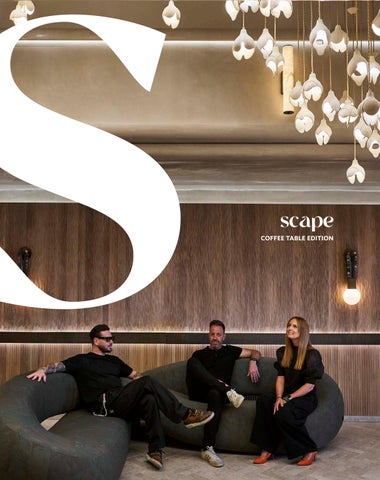
COFFEE TABLE EDITION


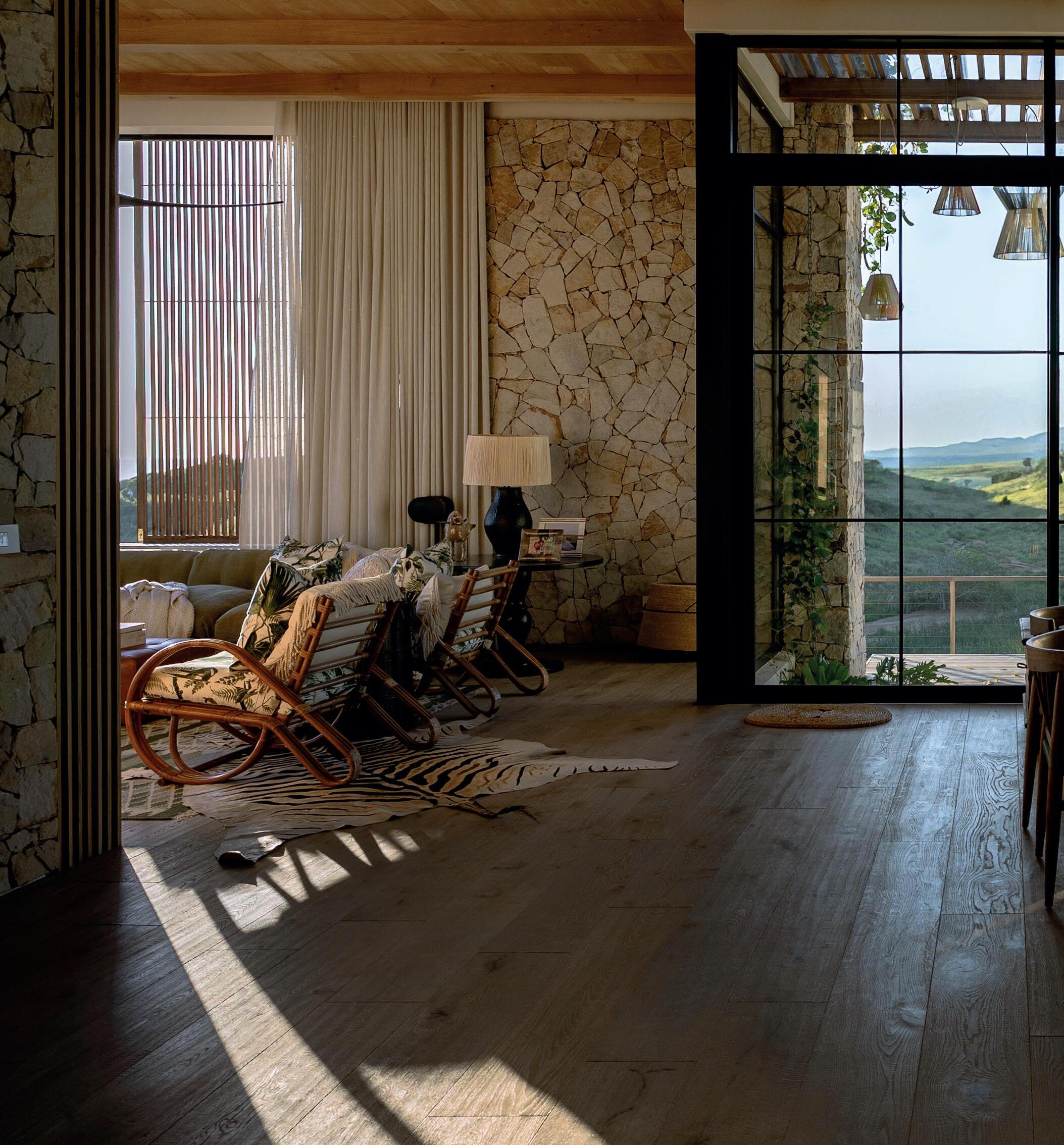
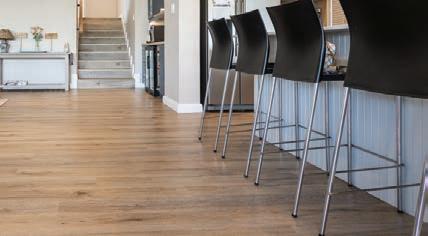
...hand chiselled oak floors for coastal living.
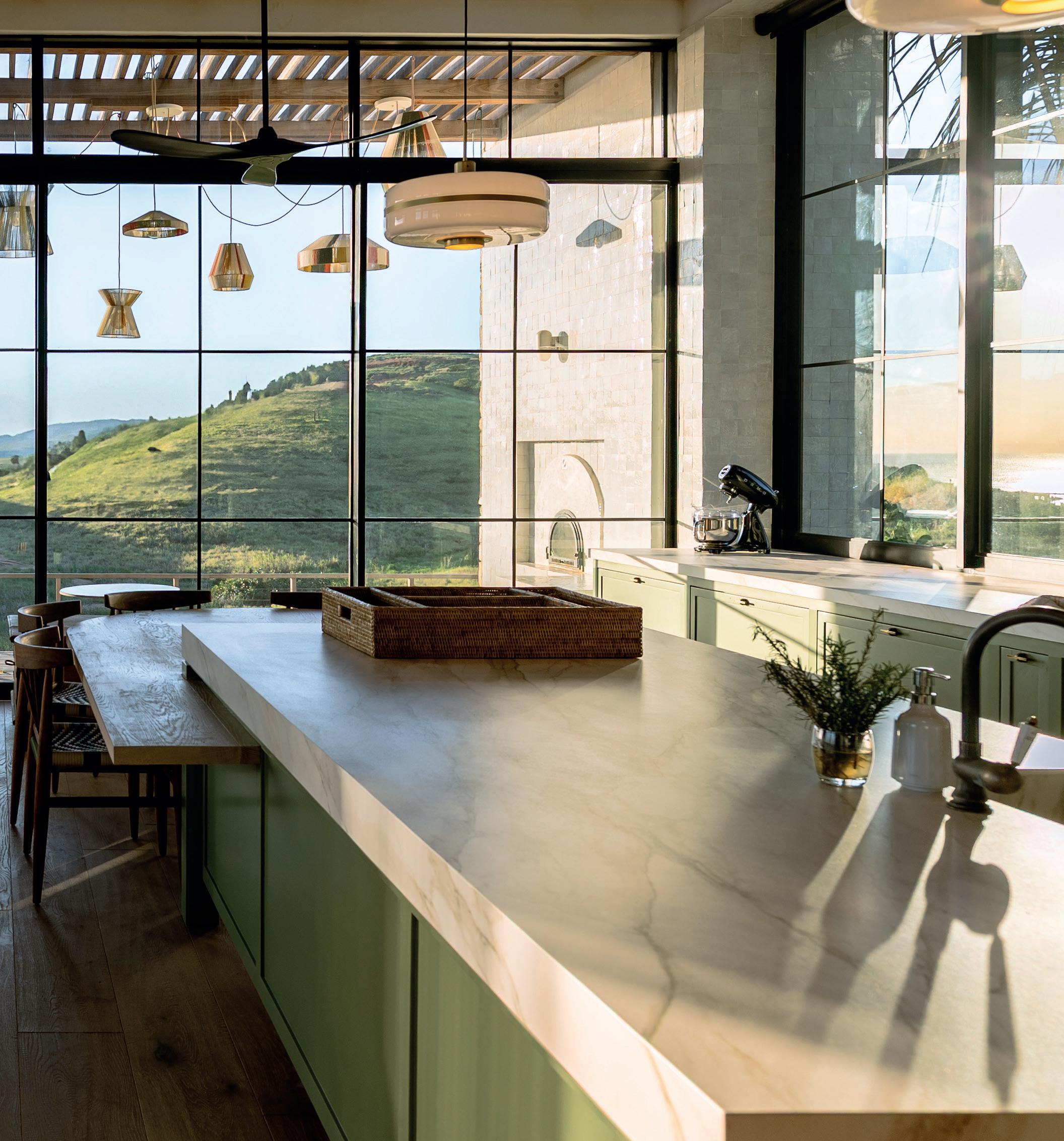
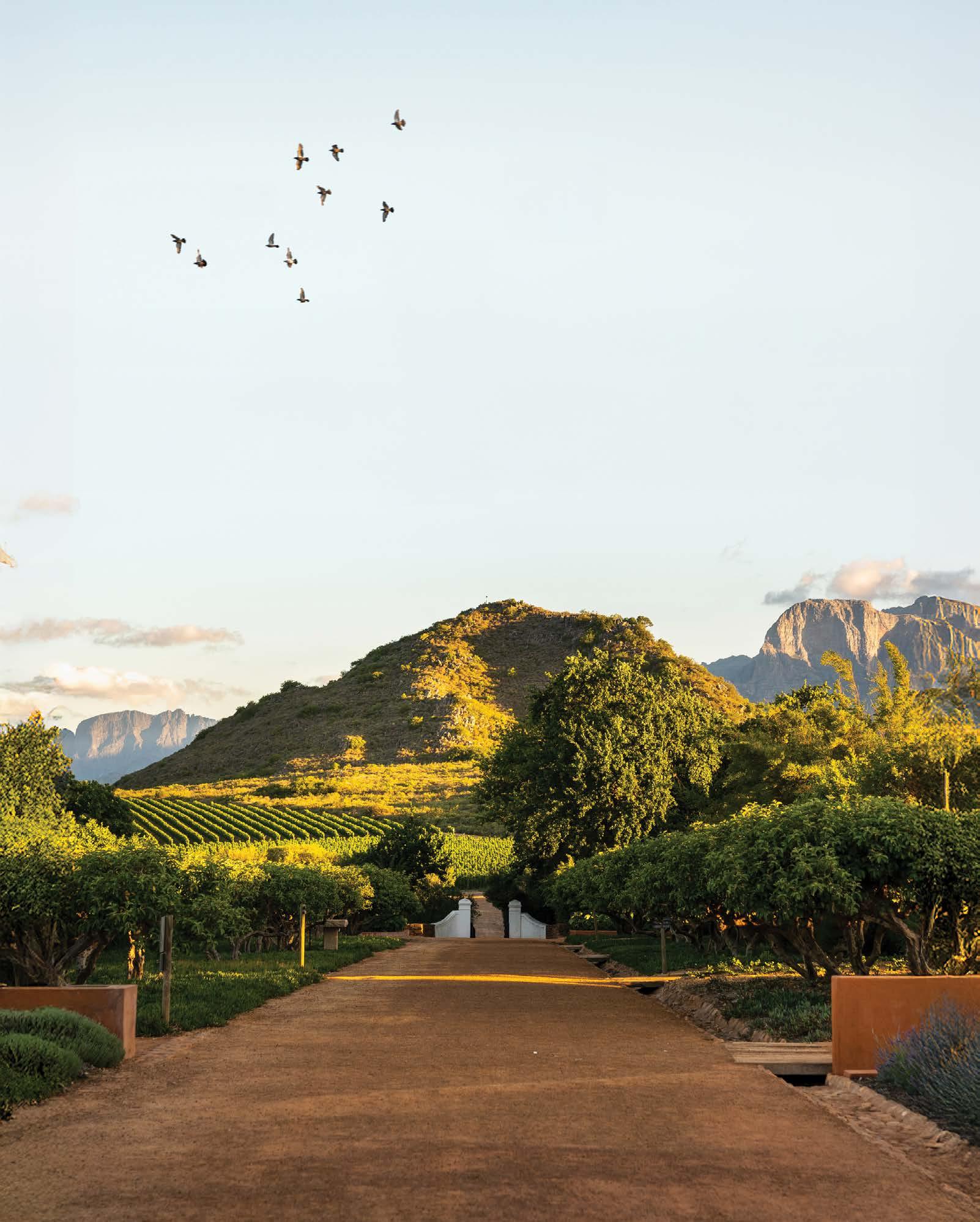
“Actually, Babylonstoren is neither a farm nor a hotel. It’s an experience in multiple dimensions.”
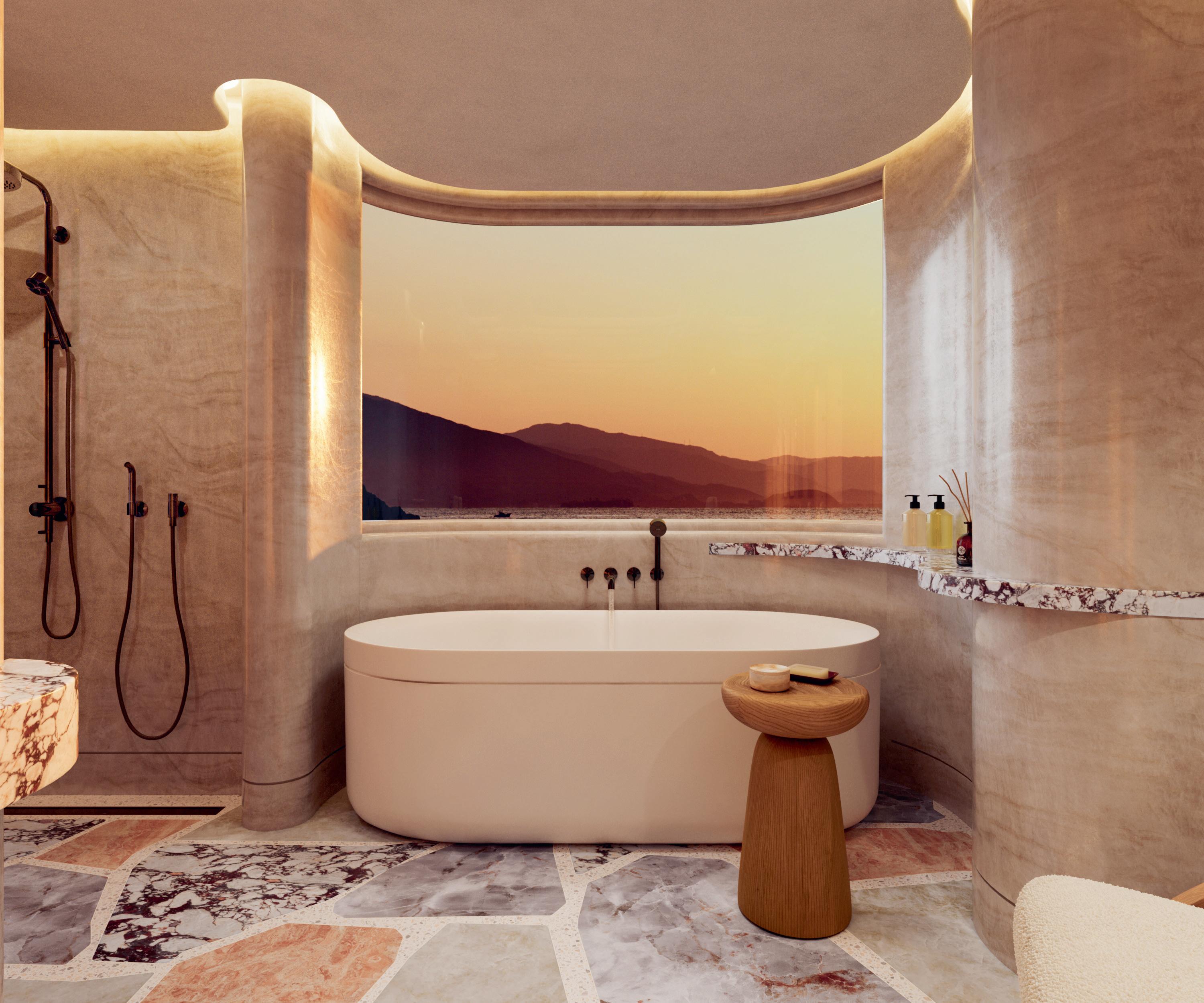
...hand chiselled oak floors for coastal living.
“Actually, Babylonstoren is neither a farm nor a hotel. It’s an experience in multiple dimensions.”
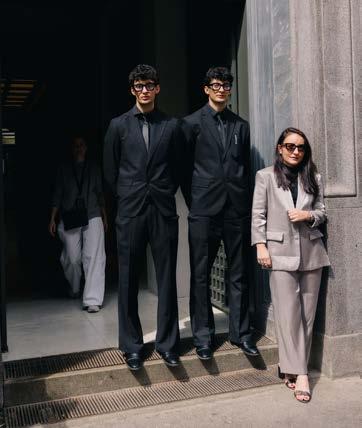
This year, the world of architecture and design felt like it shifted — not quietly, not gradually, but with intention, collaboration, and a renewed hunger for excellence. Across Scape’s ecosystem of trade shows, shortlist gatherings, the Awards of Excellence, and every print conversation in between, one sentiment rang clear: South African design is alive and well.
This Coffee Table Edition captures that momentum. It gathers the homes that rethink sanctuary; the commercial spaces that expand the scale of possibility; the hospitality projects that layer personality with a new, confident eclecticism. Original and appealing. And, as we look towards 2026, the boundaries feel increasingly irrelevant: nothing is off-limits, no commercial vision too expansive, no hospitality build too intricately imagined, no artist or peripheral industry collaboration unconsidered. The discipline is stretching, and the people who shape it are stretching with it.
What sits within these pages is a portrait of a design culture in evolution. A community unafraid of nuance, of pushing the familiar into the extraordinary, yet equally anchored in heritage, place, and memory.
Thank you to the architects, designers, makers, and cherished brands who open their offices, works, and homes to Scape so we can tell your stories. This platform is built upon collaboration, and it is when we pause to take stock of the year that we realise: we’re all moving each other forward. We love that we get to celebrate and spotlight a profession, and show the world, colleagues, and future architects and designers that SA is leading the conversation, not merely keeping up.
Here’s to another year of momentum, mastery, and a design community that refuses to dim its undeniable electricity.
Hang onto your ambitions — we’re on an upward spiral!
Guided by Ohkre Collective, together with Nicholas Plewman Architects, Few & Far Luvhondo emerges naturally from the Soutpansberg Mountains, blending seamlessly with the rugged landscape.

At GweGwe Beach Lodge, Lisa Rorich Architects craft a sanctuary that honours its untouched surroundings.
From the tranquil coastal abode of Atlas to the urban oasis of Tshwane Store, StudioLandt enters into a dialogue with nature and craft.
Through the Kgodumodumo Dinosaur Centre, Office 24-7 Architecture reimagines exhibition design, finding a new way to convey African stories.
The First Nations Heritage Centre by Noero Architects restores a sacred site, creating a balance between the land, river, and its people.

Longing, local craft, and coastal living are woven into a retreat that rises from the dunes at Saudade Boutique Lodge.
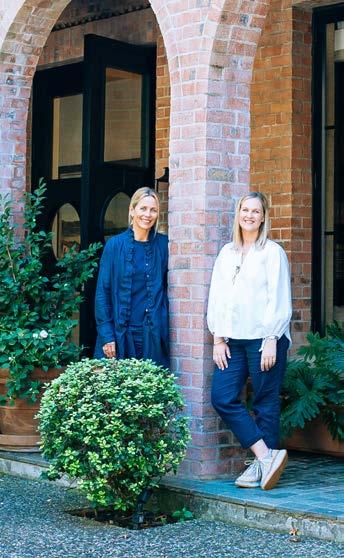
With architecture and interiors by Newman Architecture and Design, Heerenhuijs is designed as a soulful sanctuary rooted in genuine coastal living.

A sustainable addition to the Stellenbosch Institute for Advanced Study by VKDB Architecture and Interior Design provides a creative space for the mind.

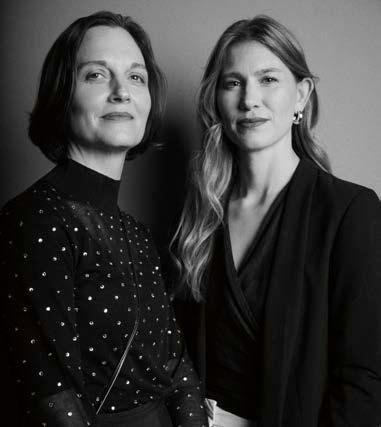
At Soetmelksvlei, Open City Architects breathe new life into a historic Cape farmstead through sensitive restoration and modern interventions.
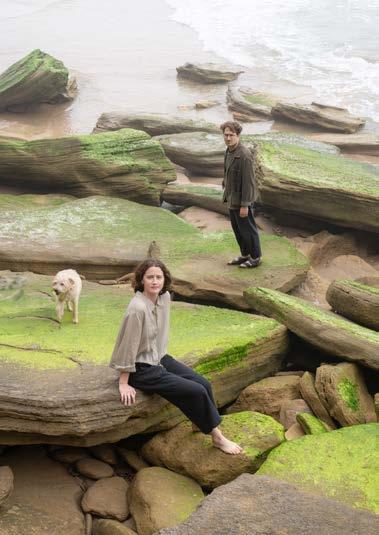
Designed to hold the harmony of three generations, this home by MiMo Architects balances togetherness and retreat.
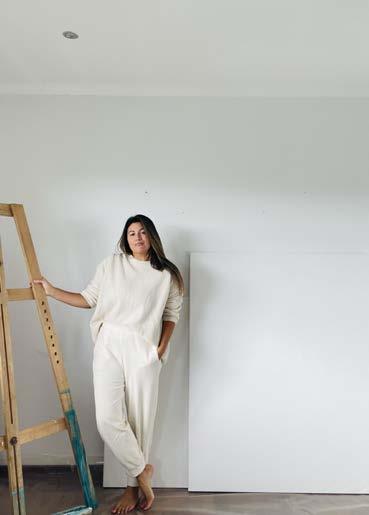
With Villa Lion View, MARIELOUISEKOEN Interiors traces the contours of the Constantiaberg, crafting interiors grounded in landscape, craft, and calm.

At Riverlands Mall, Vivid Architects — led by Trevor Versfeld, Paolo Viotti, Imraan Ho-Yee, and Nic Cloete — create a precinct where ecology, heritage, and contemporary architecture converge.
Cape Town's Longkloof Precinct is revitalised by dhk Architects through a balance of heritage preservation and contemporary architecture.


On the shores of The Bahamas, SAOTA's Mark Bullivant brings a South African design language abroad, and crafts a fresh, modern learning environment at King’s College School.
The design of Amazon Africa Headquarters captures Paragon Architects' vision of a contemporary workplace.
Morea House, with architecture by Scott + Partners and interiors by Tristan du Plessis Studio, is a crafted response to the raw stone and white sands of Camps Bay.
Inspired by the magic of Bwindi, HesseKleinloog delivers a forest refuge at Silverback Lodge.
Le Bistrot de JAN, a playful collaboration between STUDIO. Jana + Koos and Jan Hendrik van der Westhuizen, pairs French avant-garde design with South African soul.
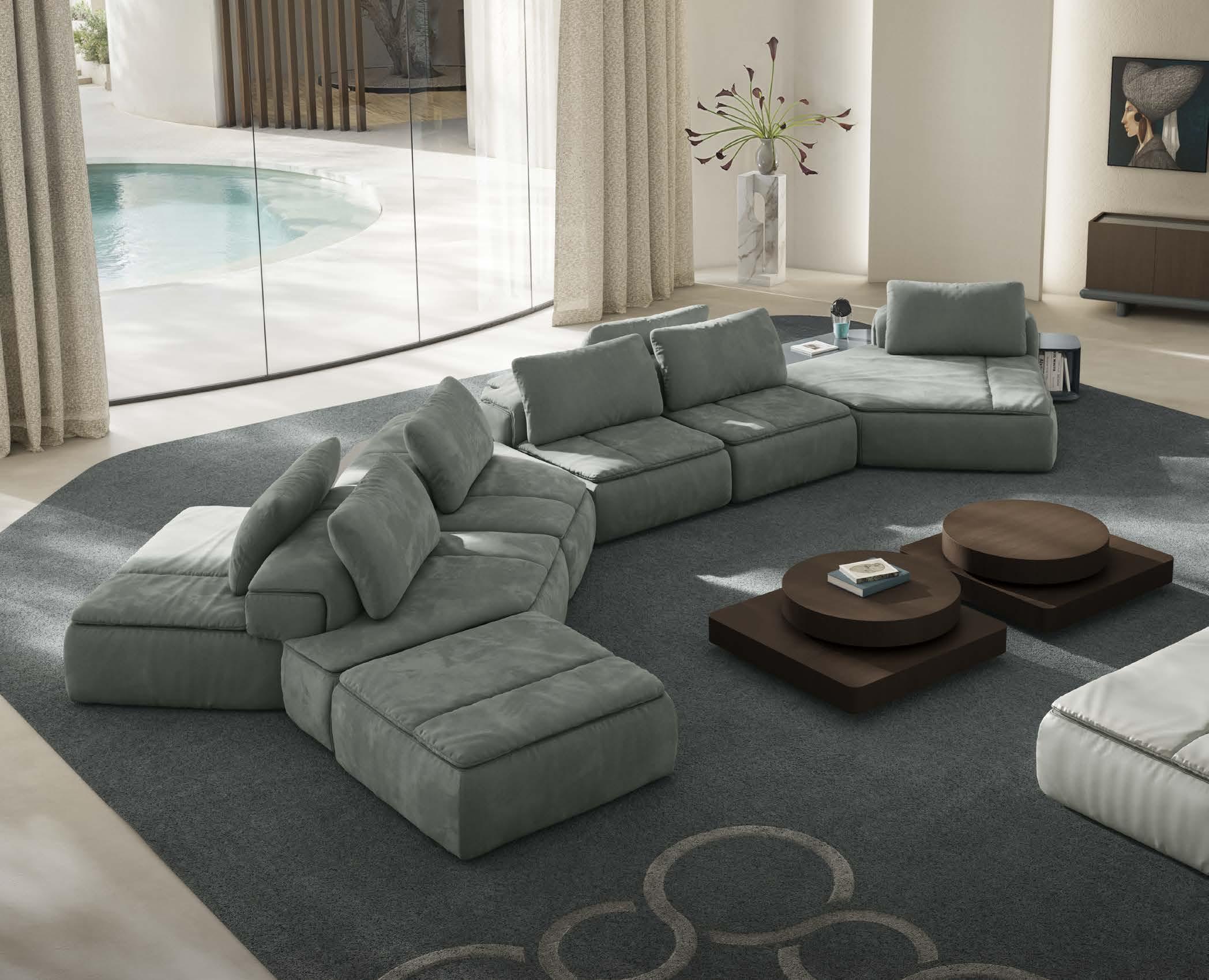
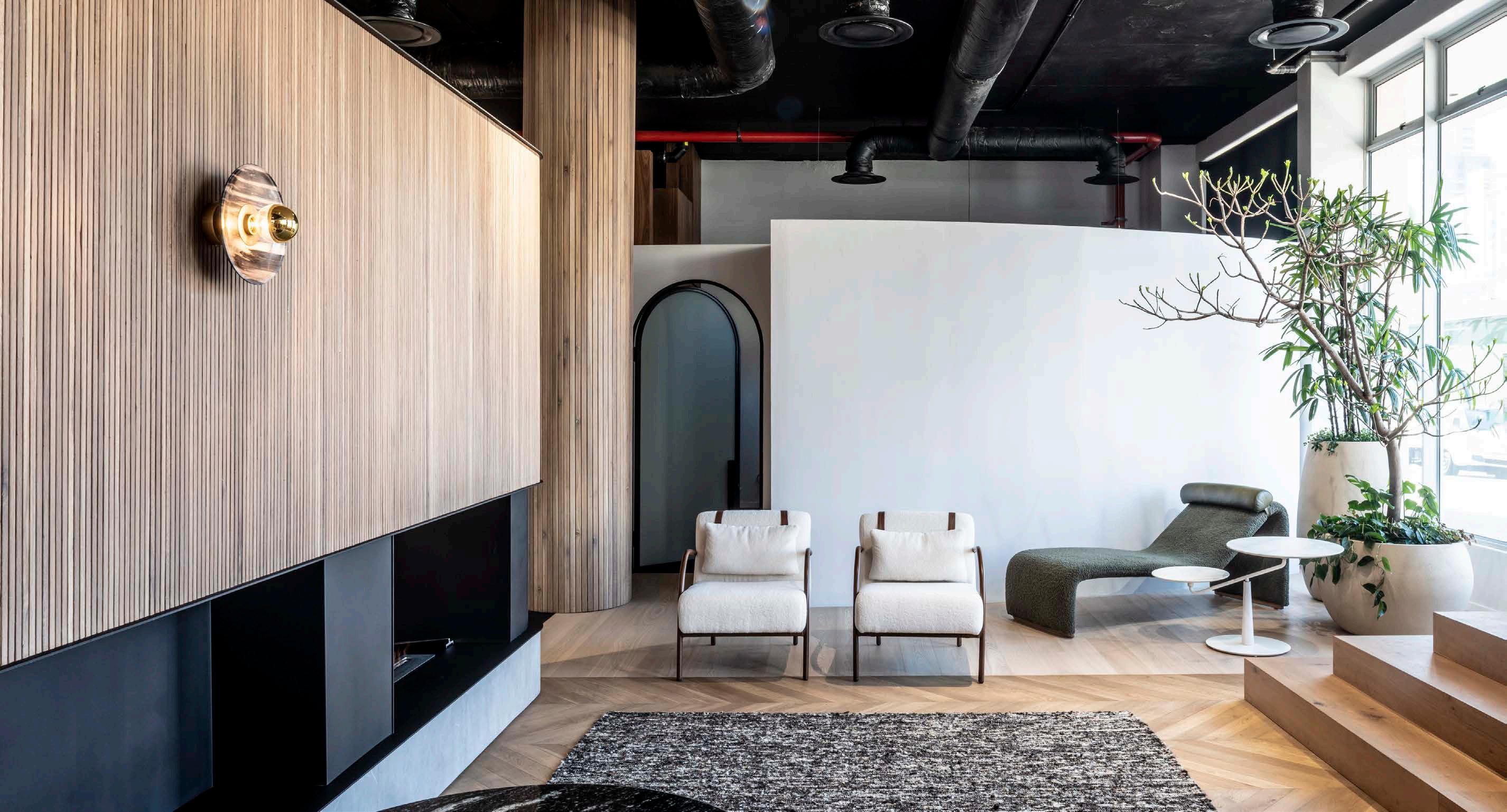
HARMONIOUS LIVING SOLUTIONS ROOTED IN PUGLIA, SINCE 1959.


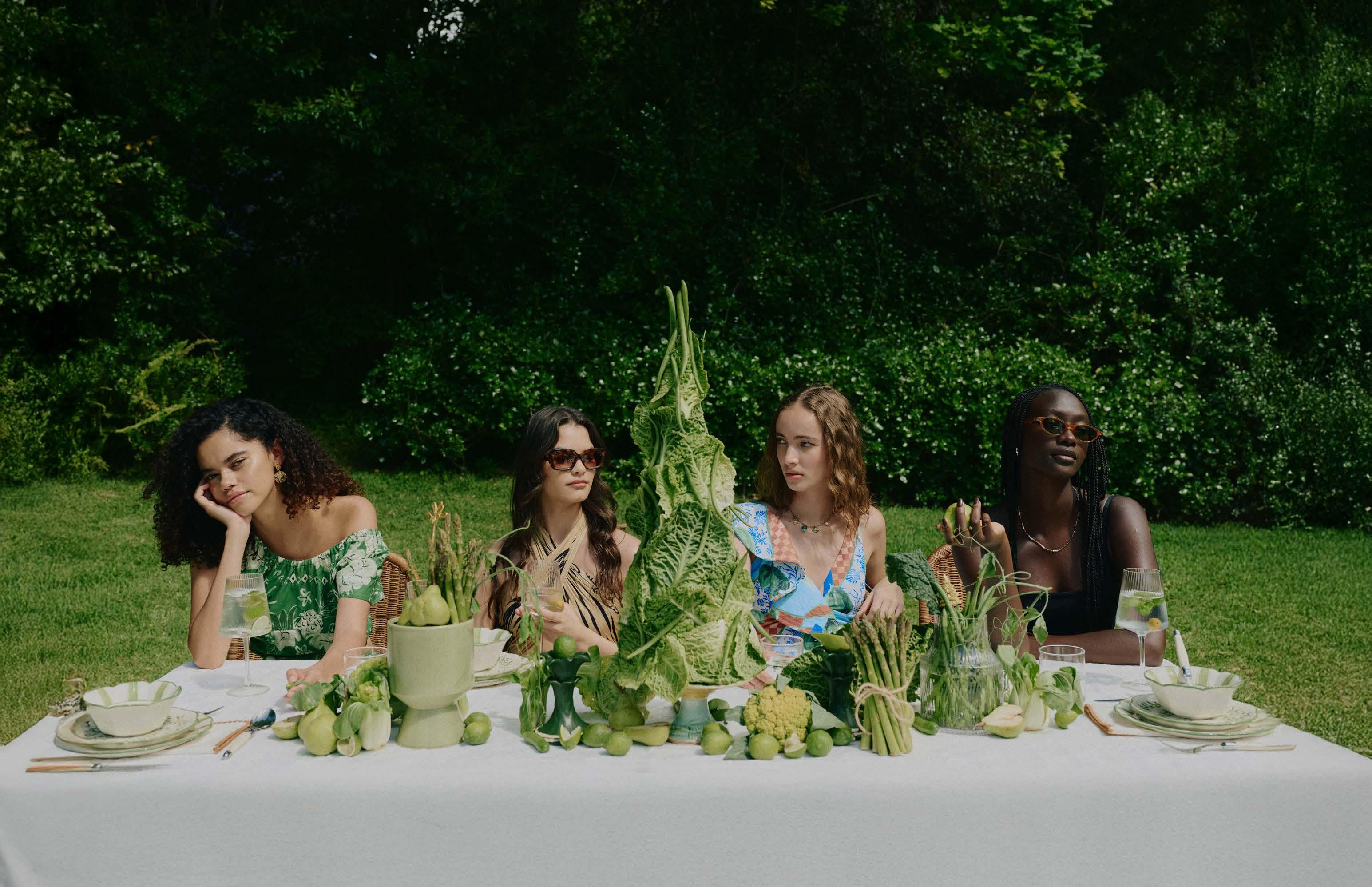
This is Summer Unfolding. A season for slowing down, gathering close and making space for the people who matter most. Discover Poetry of Living’s curated homeware collection in-store and online at www.poetrystores.co.za
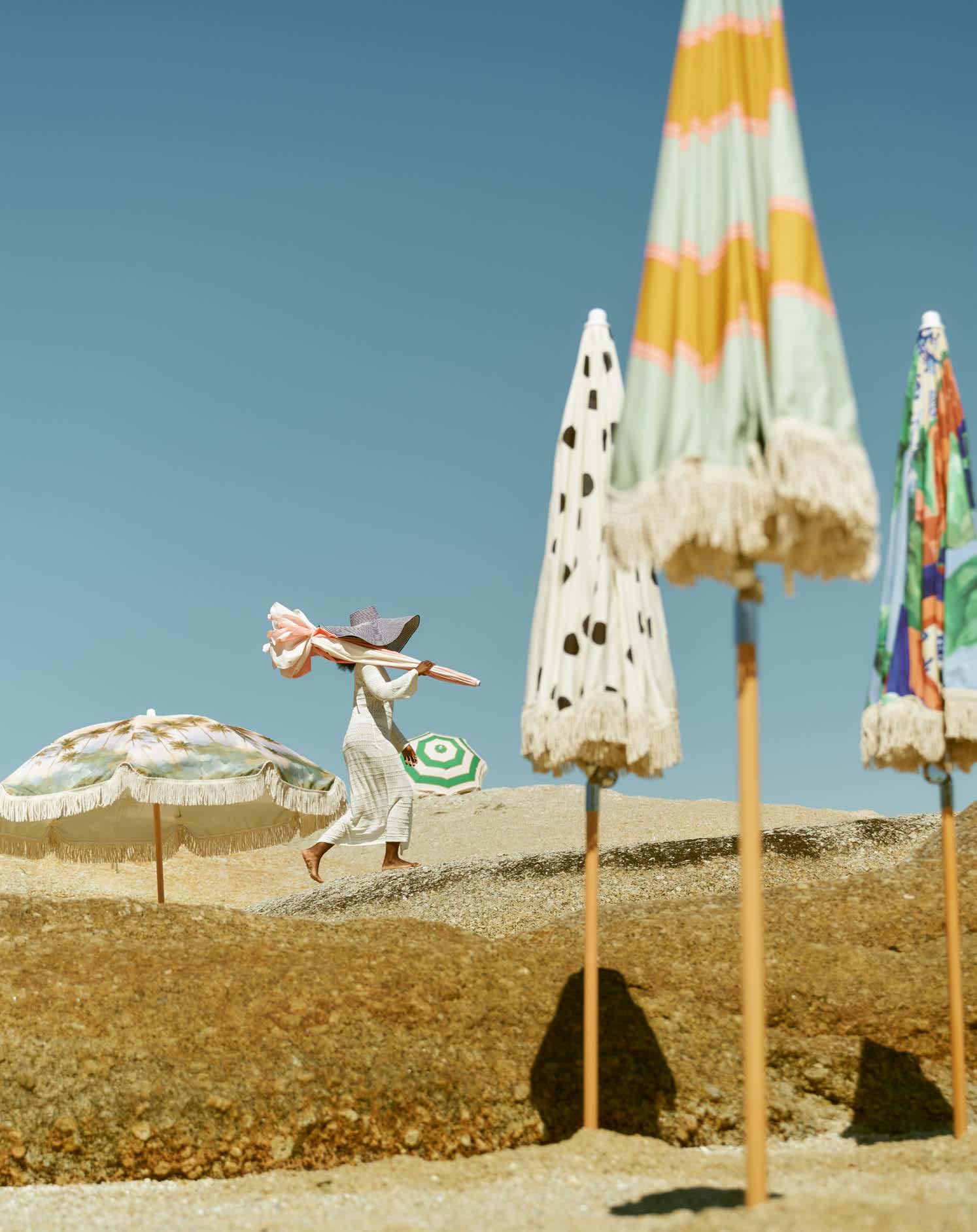
This season, Poetry invites us to rediscover the art of living beautifully. The Summer Furniture Collection is a quiet celebration of craftsmanship, comfort, and connection, bringing together natural textures, timeless form, and a sense of ease. Inspired by the languid rhythm of sunfilled days, each piece captures the feeling of spaces that are lived in, loved, and deeply personal.
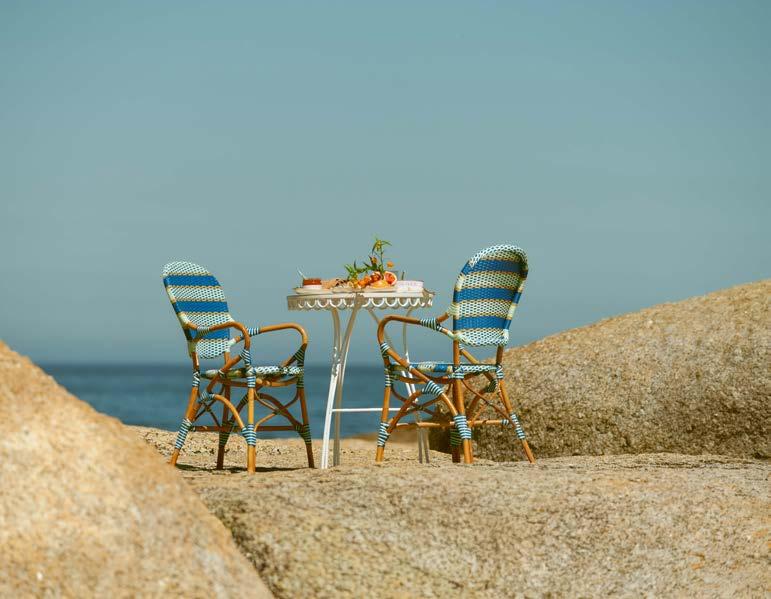
Drawing on South Africa’s sun-warmed coastlines and the gentle pace of outdoor living, the collection captures a mood of effortless sophistication. The palette is grounded and calm, with neutral tones, raw woods, linen, and stone that echo the beauty of nature. Each element works in harmony to create interiors that breathe, spaces where light, air, and texture come together in quiet balance.
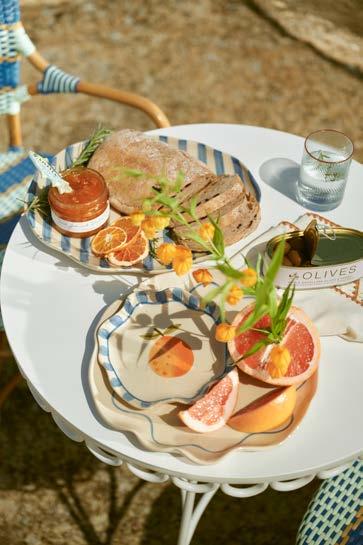
Signature pieces such as the Sarafina Dining Chairs, Willow Coffee Table, and Club House Dining Chairs reflect Poetry’s refined aesthetic of form and function. Clean silhouettes are reinterpreted with a contemporary touch, encouraging layered styling with sculptural décor and natural textiles. The result is furniture that moves easily between indoor and outdoor living, capturing the essence of summer’s simplicity.
Every detail is considered. Solid mango wood, rattan, linen, and handwoven cotton bring texture and integrity, while the hand of the maker is evident throughout. Many pieces are locally crafted, celebrating the skill of South African artisans whose techniques lend each item its distinct character and soul.
Poetry’s Summer Collection invites us to both embrace a slower rhythm and to celebrate the ease and joy of summer. The laughter that drifts through open windows, the sun that lingers, and the simple pleasure of gathering around pieces that feel both familiar and new.
@poetry_of_living_store
www.poetrystores.co.za/c/poetry-living
“It is a place where design listens more than it speaks, where craftsmanship takes priority, and where the soul of a place is not just seen, but also felt.”
- Silverback Lodge
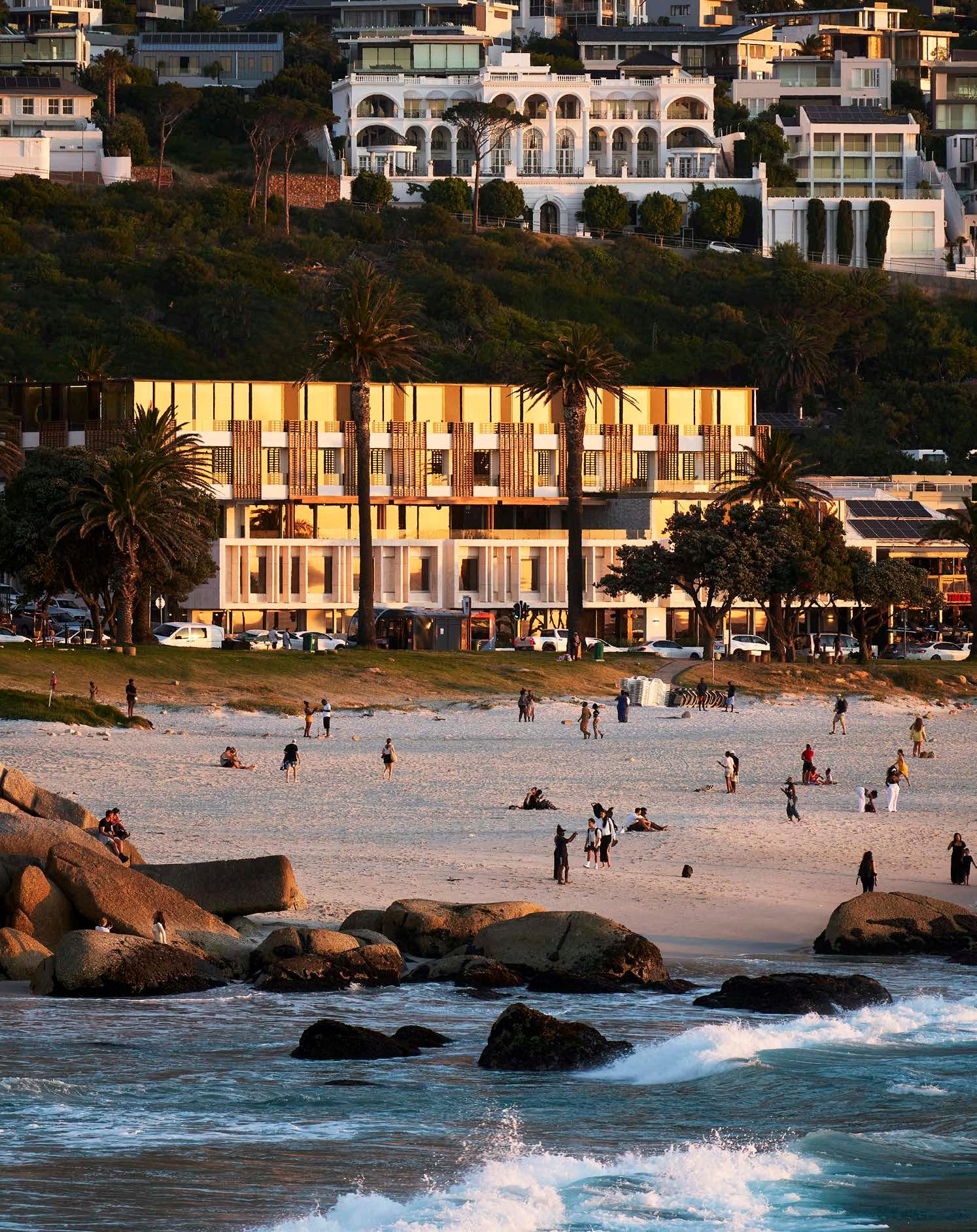
With Architecture by Scott + Partners and Interior Design by Tristan du Plessis Studio, Morea House Embraces the Drama of the Camps Bay Strip — Where Raw Stone and White Sand Meet
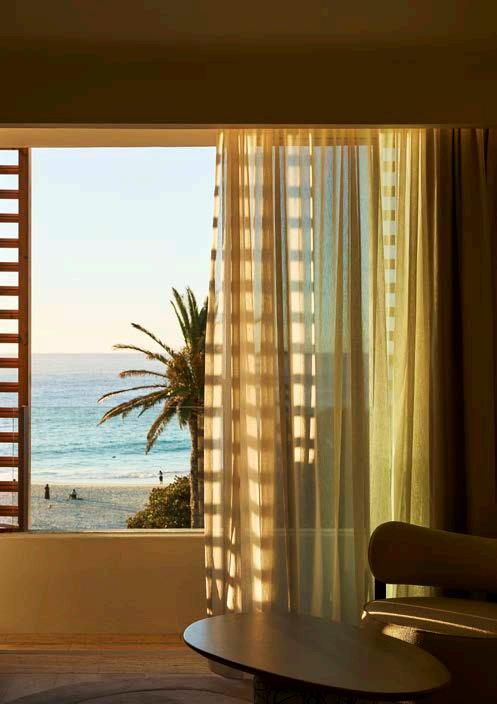
Tristan du Plessis describes it evocatively: ‘Perched along Victoria Road directly facing the shoreline of Camps Bay, Morea House sits where palm trees frame long stretches of white sand and the Atlantic horizon is unending.’ He identifies this site’s unique beauty as emerging from its dramatic contrast — while overlooking the iconic white beach, Table Mountain’s rock face rises steeply behind. At night, guests enjoy views of distinctly Cape Town silhouettes: Lion’s Head and the 12 Apostles.
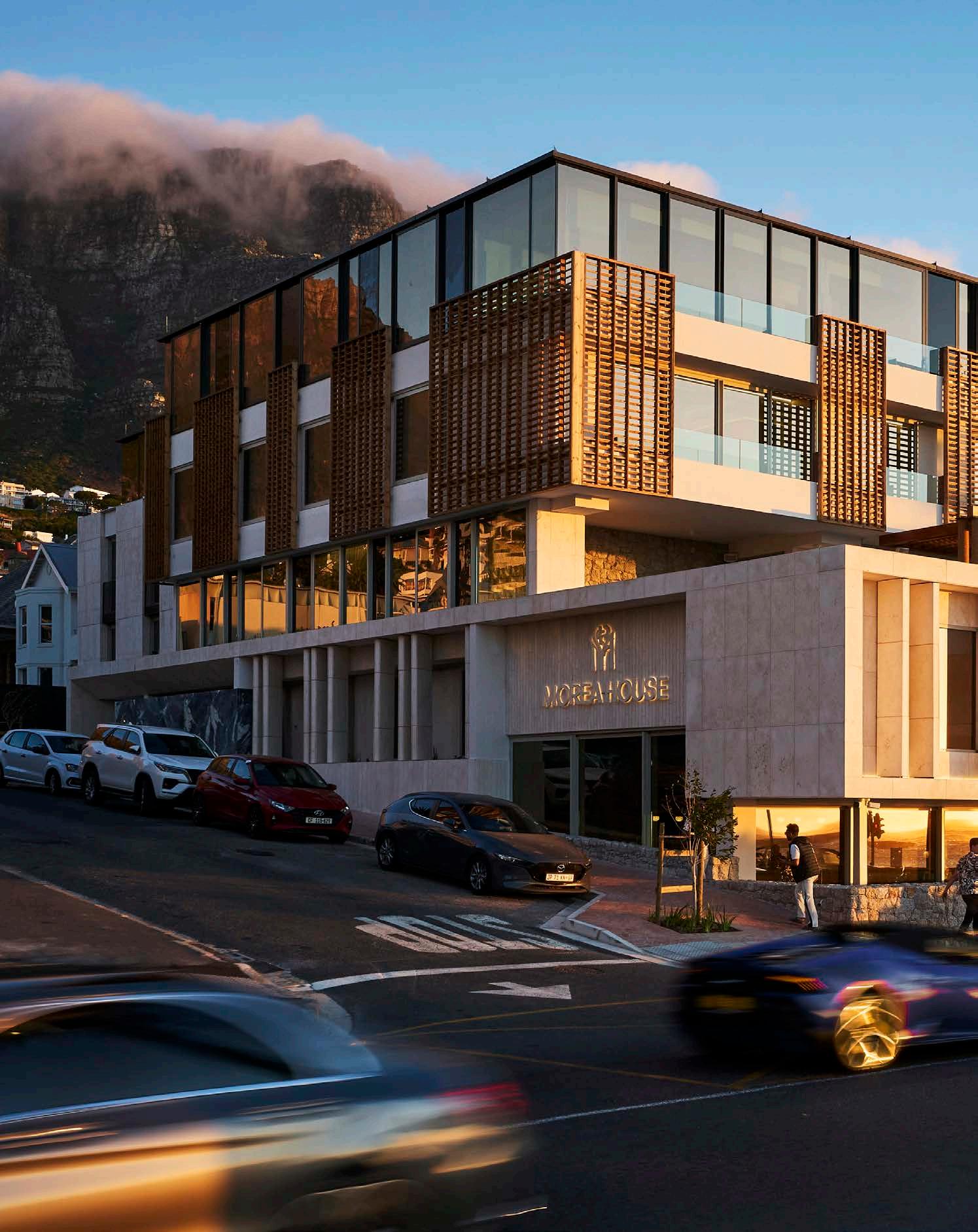
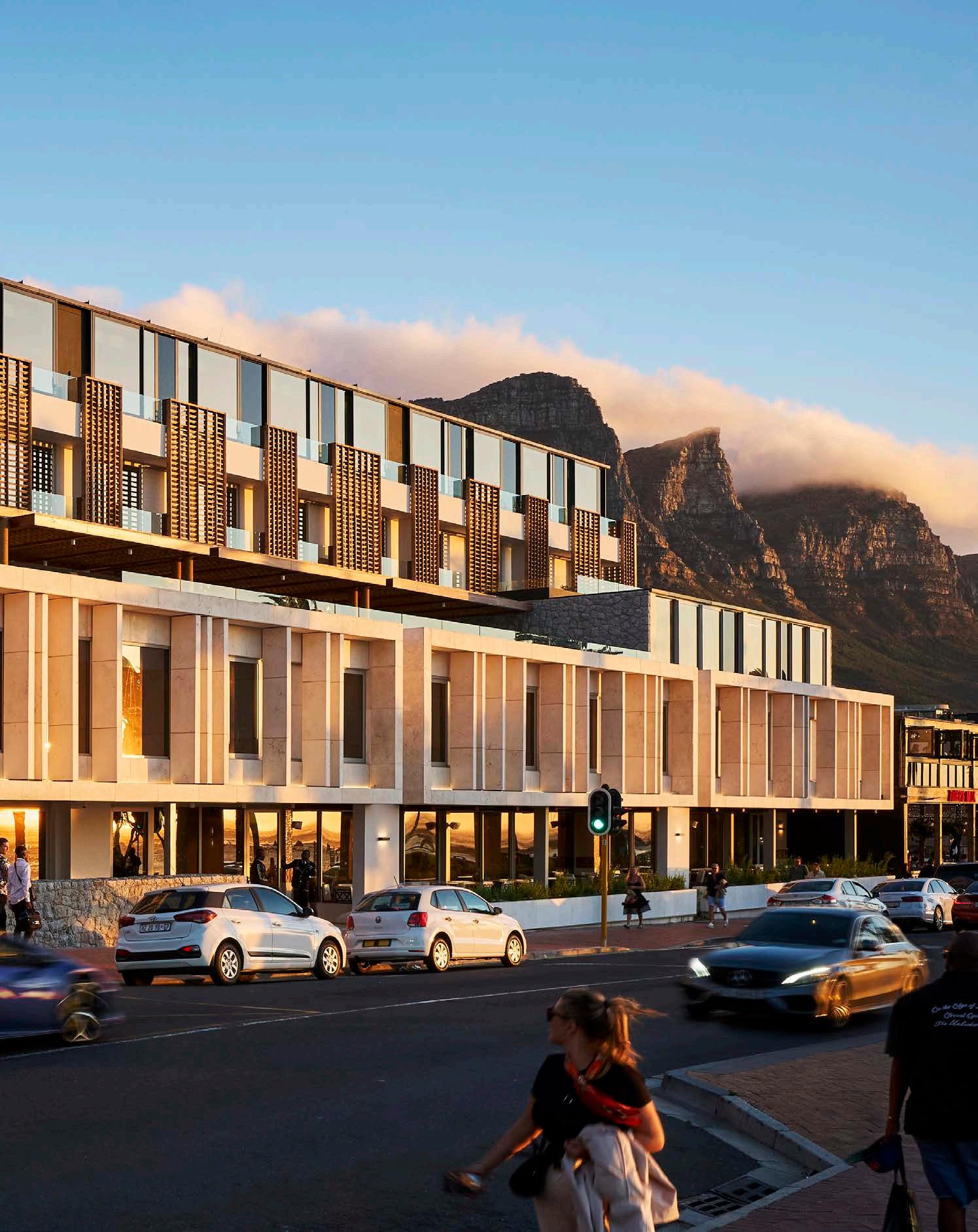
"The materials and colour palette emphasise the hotel’s position between mountain and sea."
Location: Size: Cape Town, South Africa 8 200 m2
Between elements
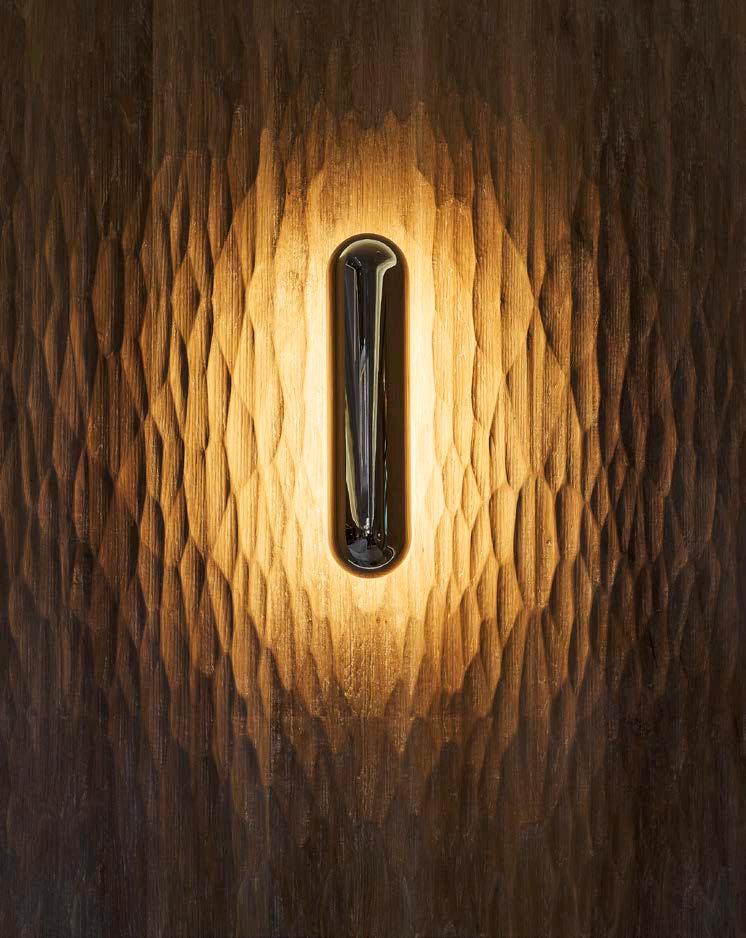
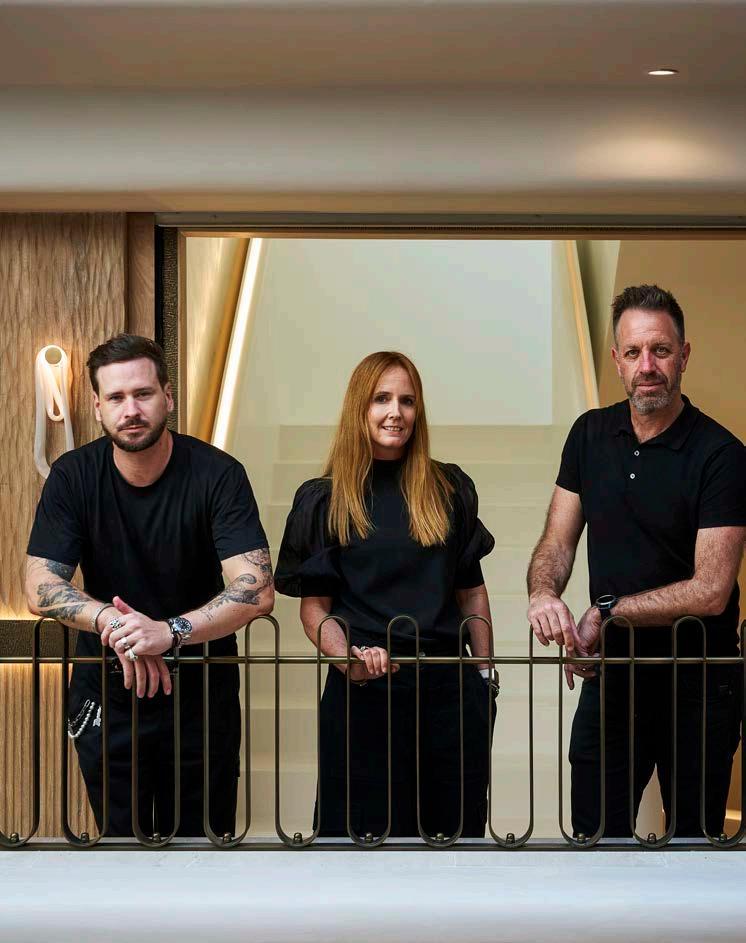
The materials and colour palette emphasise the hotel’s position between mountain and sea. Sandy hues transition into mountain greens through the layering of materials such as natural stone and timber. Greg Scott and Liana Abate of Scott + Partners note that the careful attention to materials is intended to mirror the care and comfort that guests experience. Timber screens and pergolas, for example, are thoughtfully juxtaposed with the stronger stone façades to introduce texture and offer visual relief.
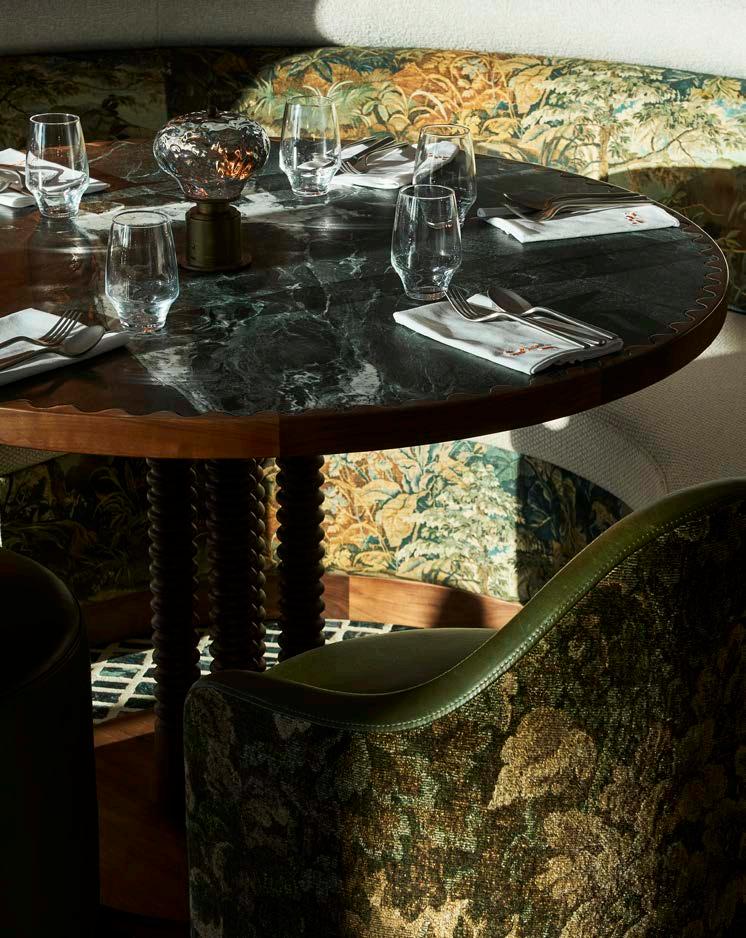
A meeting of extremes — raw weathered geology set against the stillness of the beach — continues indoors through material and atmosphere. Stone, timber, and textured plasters were selected to evoke the landscape’s erosion and permanence, while linen, sand-washed tones, and ambient light create warmth and ease. The project’s four narrative pillars guided this interplay of opposites: ‘Untamed Horizons’ embraces nature’s majesty; ‘The Land’s Edge’ refers to the southernmost tip where land yields to ocean; ‘Coastal Bliss’ captures the calmness of waves coming to rest; and ‘Living Tapestry’ celebrates Cape Town’s cultural diversity.
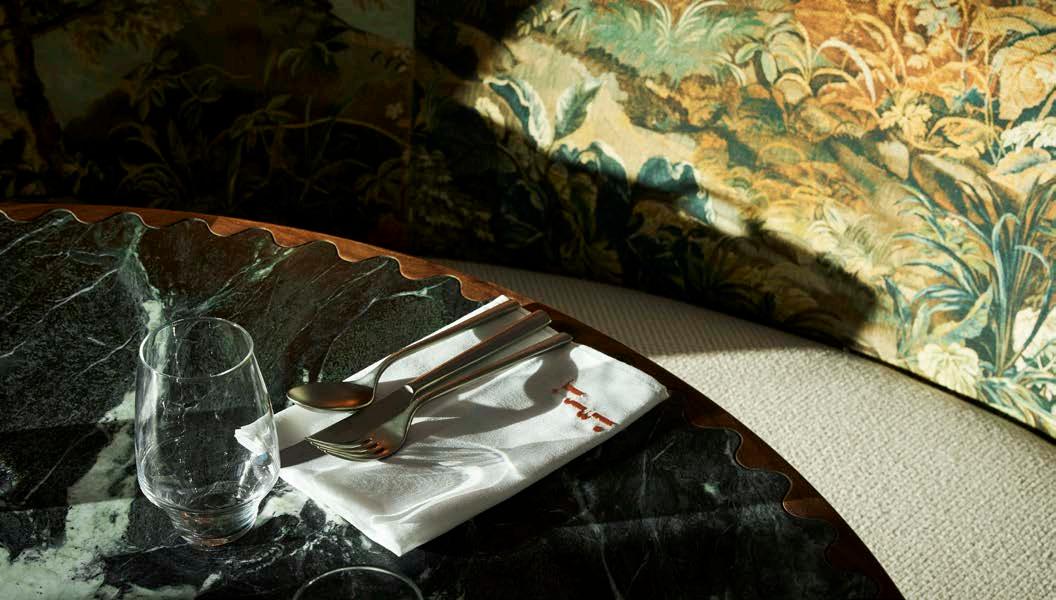
While the materials show a sensitivity to the qualities of the immediate surroundings, the overarching design concept reflects a broader Cape Town context and its layered character. For du Plessis, a highlight was collaborating with local artists. The works of Jan Ernst, WonderBuhle, Ben Orkin, Chris Soal, Jeremy Rose, Julia Pepler, Kalki Ceramics, and the Nigerian artist Lakin Ogunbanwo enrich the space with local creativity.
@scottpluspartners www.scott.partners
@tristanduplessis_studio www.tristanduplessis.com
meet the team
Architect: Scott + Partners | Interior Design: Tristan du Plessis Studio
Contractor: Alpha Omega | Quantity
Surveyor: RLB | Structural Engineer: LH Consulting | Mechanical and Fire Engineer: EKCON Consulting Engineers | Electrical: QDP Lighting and Electrical Design | Project Manager: Igual | Landscape Design: Viridian | Interior Procurement: Brandkonnect | Stone Masonry: Continua | Shopfitting: Trend Group, JL Joiners & Shopfitters, Durban Shopfitting & Interiors
Photographer: Sean Gibson
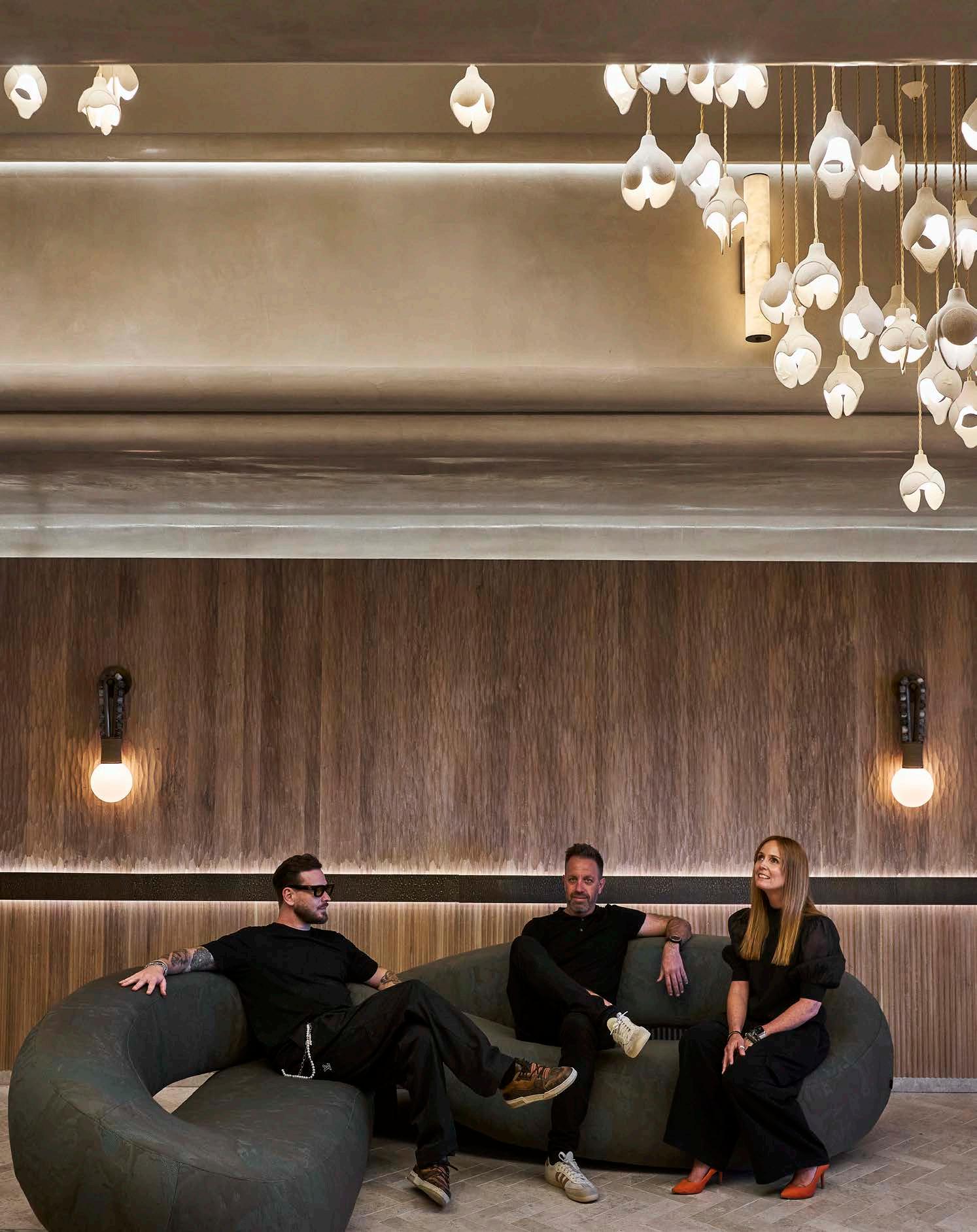
“For Greg Scott, the building’s hidden surprises are perhaps its greatest delight.”

In Cape Town, a significant part of the culture is an active lifestyle. Guests are invited to immerse themselves in the Cape Town experience, whether through ocean plunges or private rock-climbing and yoga sessions. For a more tranquil encounter, guests can enjoy views from a coastal pool or unwind in the Wellness Spa, where treatments such as the Cocoa Bliss Ritual and Cape Malay Massage combine traditional healing with modern wellness.
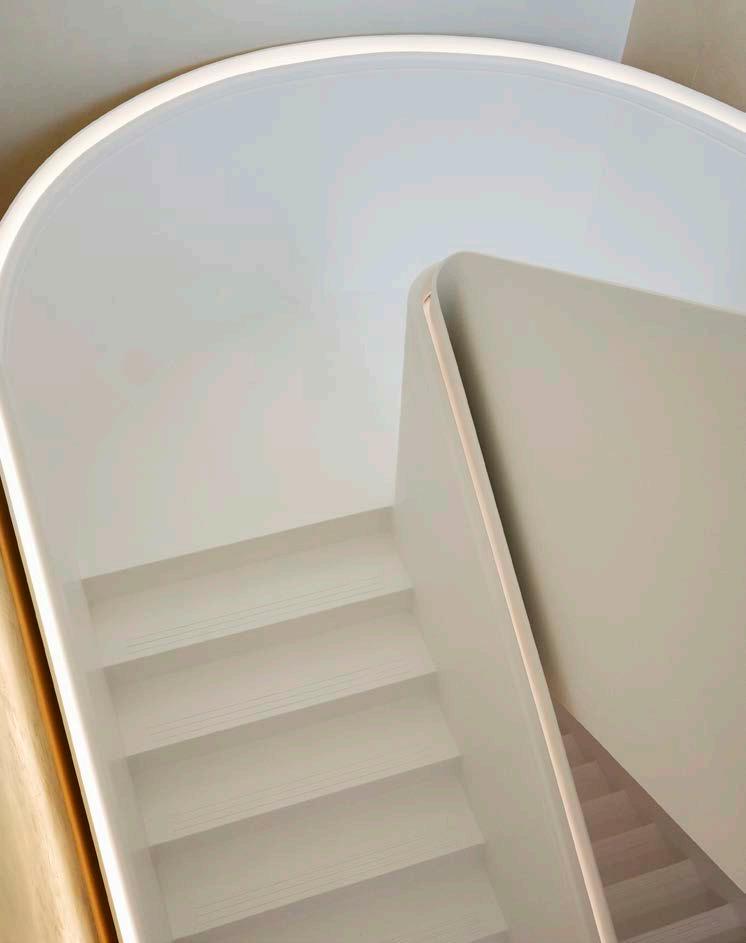
For Scott, the building’s hidden surprises are perhaps its greatest delight. The garden courtyard with views onto the mountains behind and the 5-storey central atrium, which floods the interior with natural light, elevate the offering but only unfold as guests move through the hotel.
One would never guess it now, but the project was not without its challenges. The client changed partway through, and Marriott joined later as the operating partner. The design criteria evolved numerous times, but each shift only elevated the standard. Today, Morea House, with its 90 elegant guestrooms, is part of the Marriott Autograph Hotel Collection, but remains a distinctly Cape Town property.
Timber Screens and Flooring: Oggie
Hardwood Flooring | Natural Stone: Continua | Aluminium Doors and Windows: Q One Fenestration
Switchgear: Legrand | Lifts: Schindler
Steelwork: Prodesign | Taps: Still
Bathrooms | Ironmongery: Contract
Hardware | Fireplaces: Beauty Fires
Pool: Island Pools | Bronze Balustrades: R&R Aesthetics | Skylight and Shower
Screen: Aluglass Cape | Lighting: Crema Design, APPARATUS Studio, Ozone Light | Light Installation
Piece: Jan Ernst | Furniture: Natuzzi, Minotti, Egg Designs, MOOOI Carpets, GuidlineMNF | Art: WonderBuhle, Jan Ernst, Jeremy Rose, Kalki Ceramics


Lisa Rorich Architects’ GweGwe Beach Lodge Honours its Untouched Surroundings
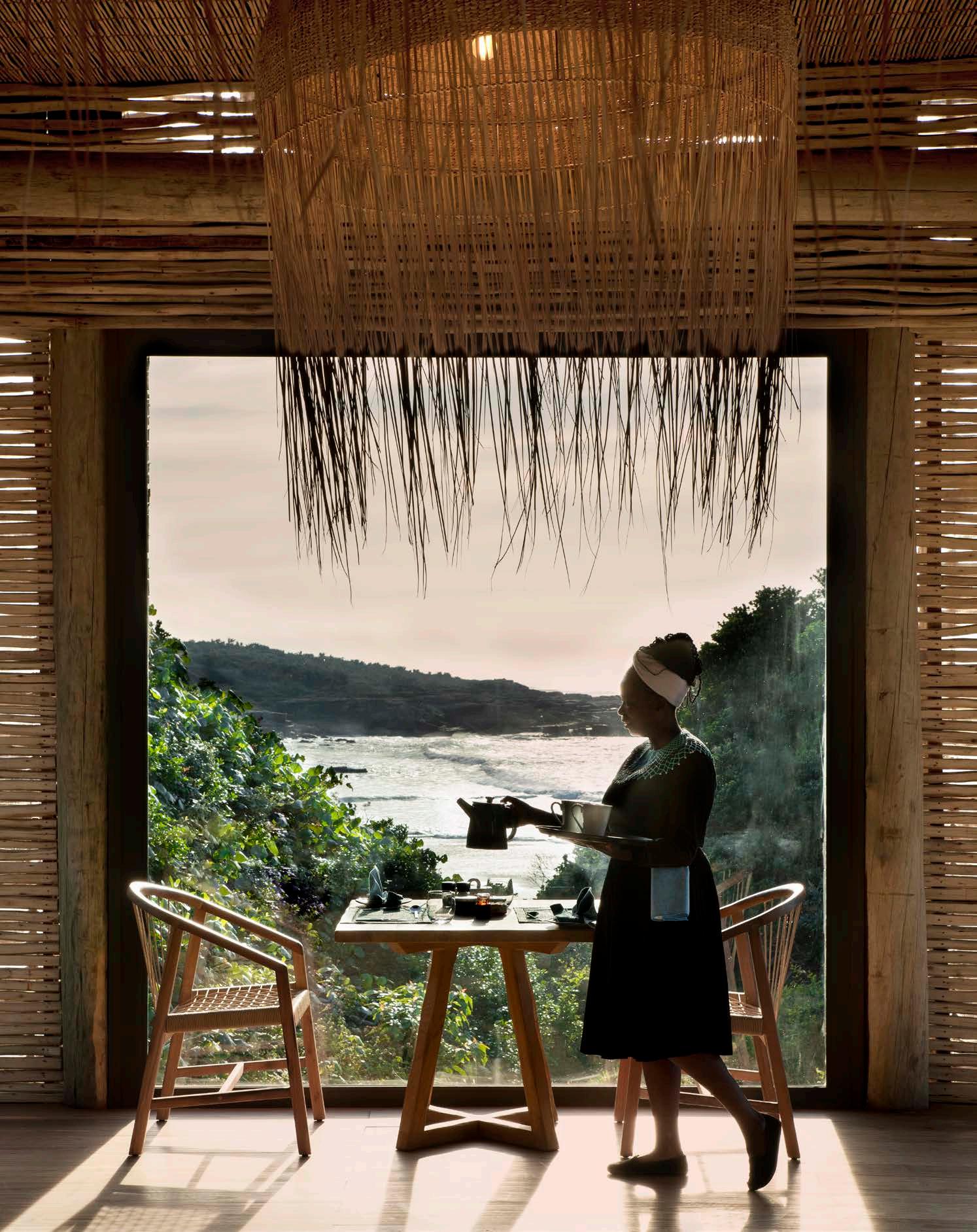
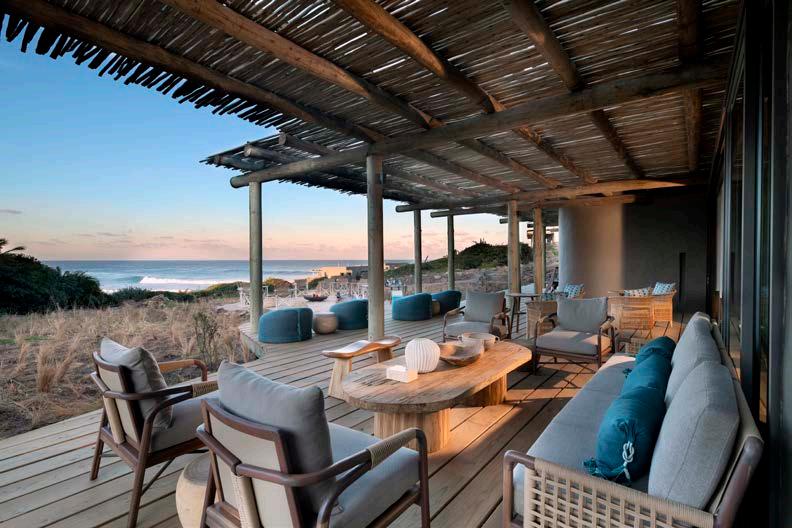
Almost disappearing into the unspoiled coastline of South Africa’s Wild Coast, GweGwe Beach Lodge continues the rhythms of the sea and rolling grasslands surrounding this retreat. Time feels expanded within its undulating spaces that seem at once primordial and futuristic.
Location:
Size: 1500 m2 Mkambati Nature Reserve, Eastern Cape
Lisa Rorich Architects developed this luxury eco-lodge, which accommodates up to 22 guests, in response to the fragile ecological zone of the Mkambati Nature Reserve near Lusikisiki. This region, defined by dense coastal forests, wetlands, and cascading waterfalls, is home to rare flora and fauna — a context that demanded reverence and restraint. Only approved disturbed zones were used for construction to limit excavation and avoid disturbance to endemic wildlife, and local materials were sourced to ensure the project’s environmental responsibility.
The guiding principle was to create low-impact buildings — a kind of ‘non-architecture’ — tucked behind rock outcrops, num-num mounds, and dune forests. A collection of individual units, each accommodating two guests, and family units with two bedrooms are scattered discreetly along the coastline, allowing uninterrupted views of the ocean, beaches, and wild grasslands from every space.
Honouring heritage
Architects & Interior Design: Lisa Rorich Architects | Contractor:
Town & Country Construction
Engineer: NJV Consulting | Quantity
Surveyor: HENCON | Landscaping:
Land Art Studio | Interior Décor: Reflecting Africa
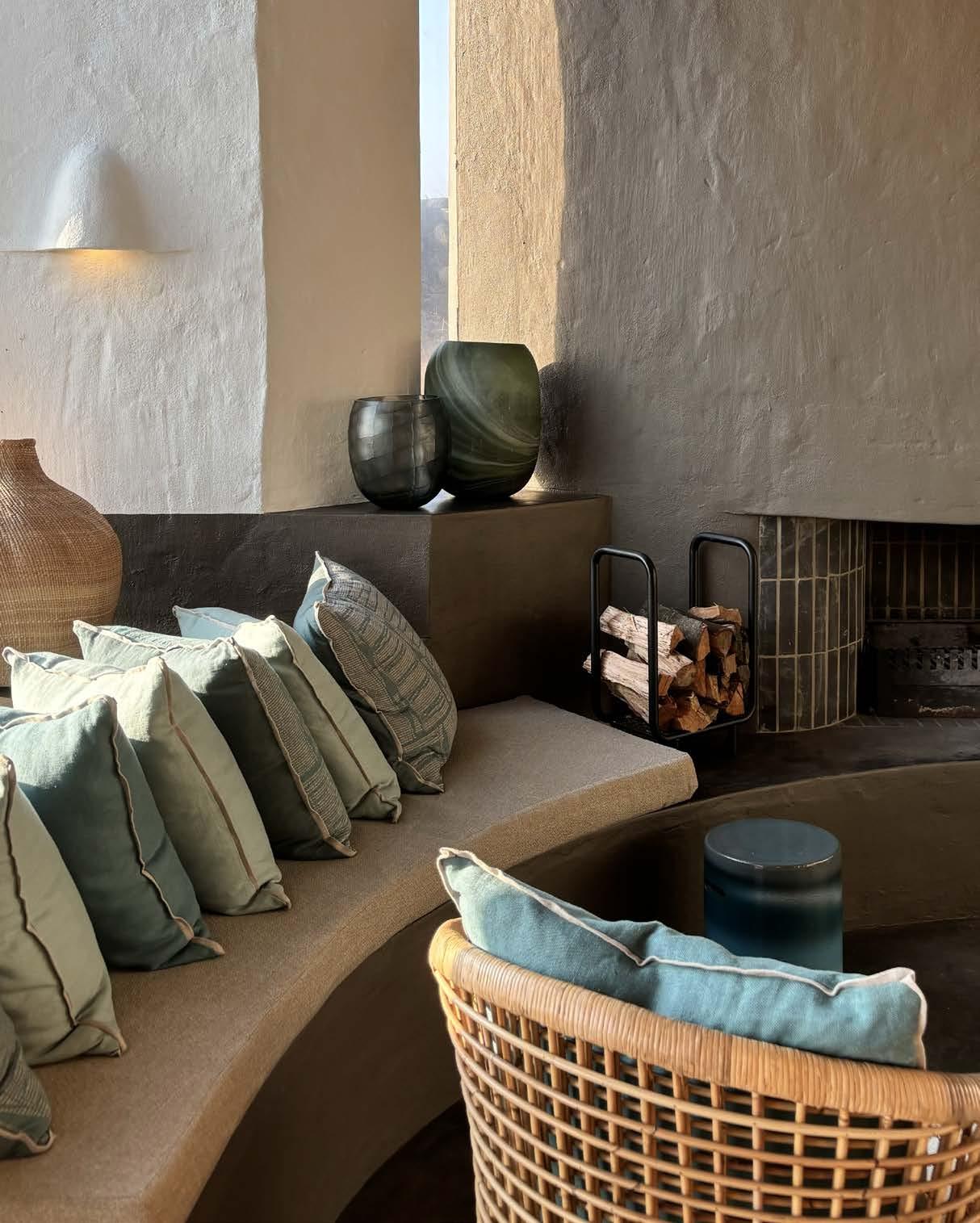
The key architectural concept borrows from the vernacular design language of the Eastern Cape, also known as Pondoland. In particular, the traditional rondawel — a circular, moulded dwelling typically painted in shades of turquoise and chocolate brown — informed the lodge’s soft geometries. These simple, circular forms are reinterpreted through a contemporary lens to create organic-feeling spaces. Undulating curved walls introduce a sculptural component, while the raked and hand-packed plaster of the exteriors creates a textured finish, acknowledging both landscape and culture as reference. Moulded and recessed wall lights are integrated into the plaster to enhance the tactility and warmth of the spaces.
Flooring: Cemcrete | Sanware: Blutide
Custom Basins: Lux Crete | Reed Ceilings: Daliwe Designs | Custom Doors and Joinery: Mambakofi
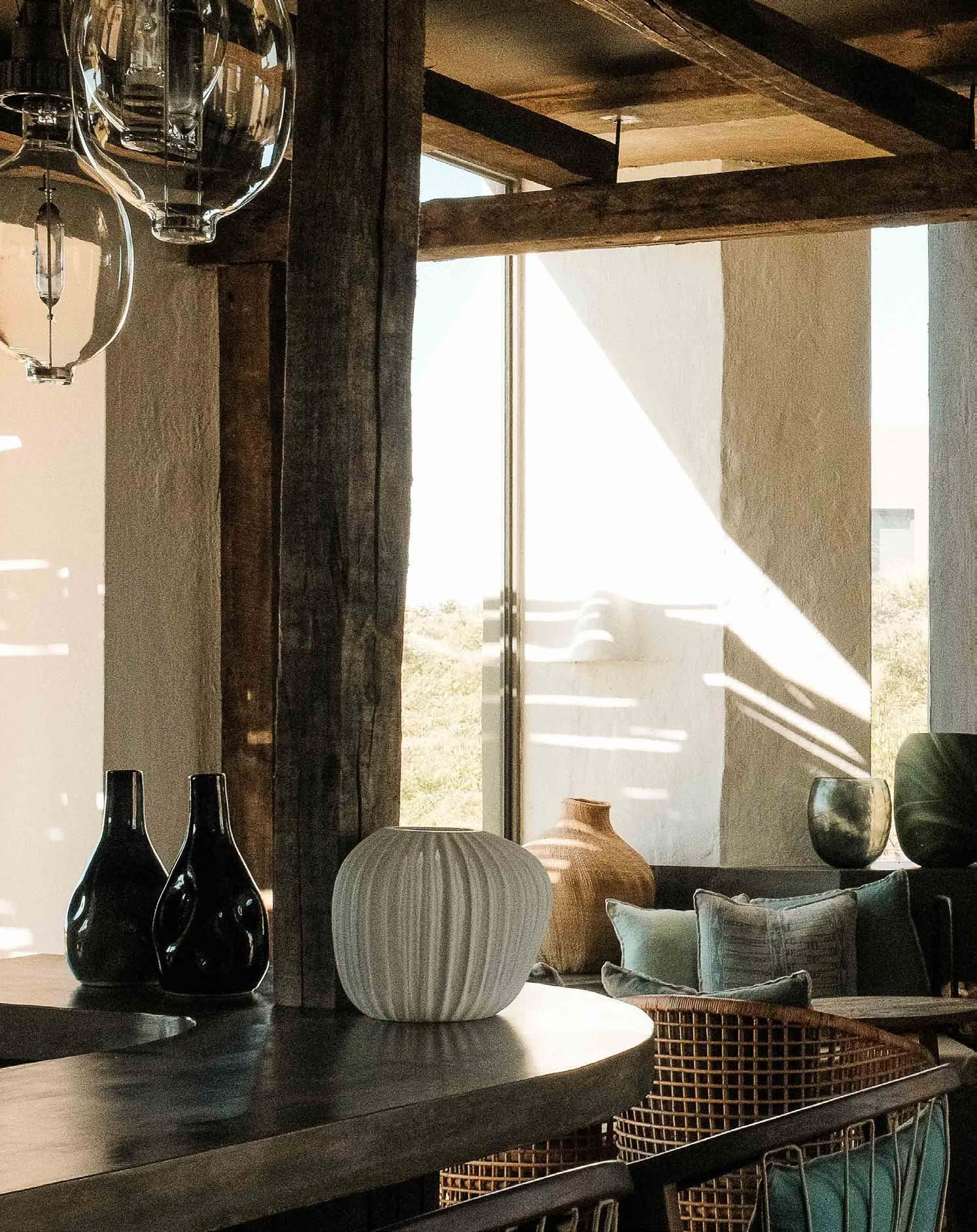
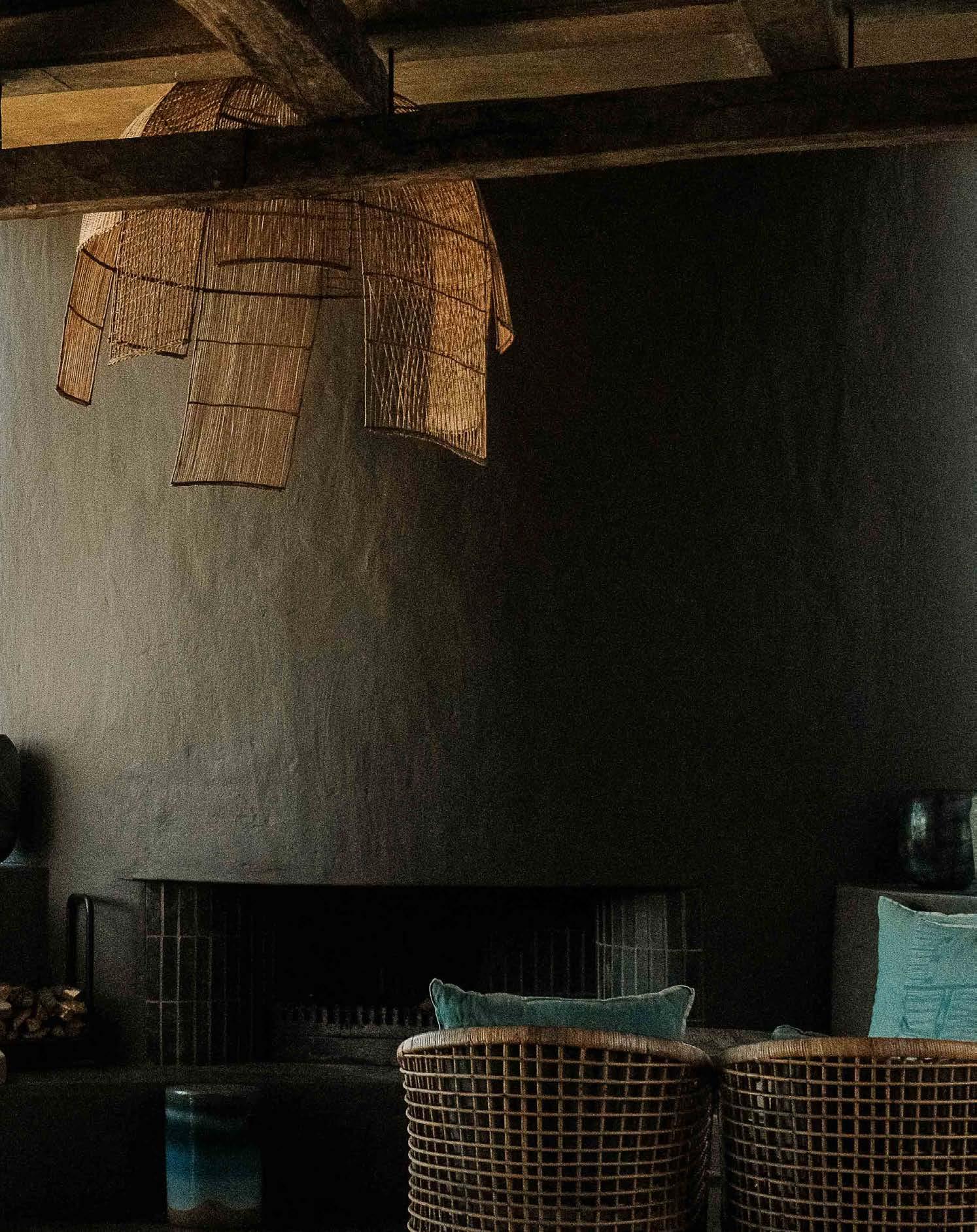
This vernacular sensibility extends beyond architecture into the lodge’s craft detailing. Local basketry and weaving traditions are celebrated in both structure and décor, most notably in the sculptural feature wall of the main space. On arrival, guests encounter a handcrafted sculptural panel of patterned reeds and driftwood. The artwork unites design and narrative by celebrating place, people, and heritage. Local artisans and builders were integral to the lodge’s construction; wherever possible, the project prioritised local labour and skills development, ensuring that the surrounding community directly benefited from the development.
In spirit, the retreat takes inspiration from the rich regional culture, too. Communal living is celebrated in the central hub, which houses the living and dining areas as well as a bar. One side opens toward panoramic views of the sea, while the opposite side leads into a protected subterranean courtyard. This space encourages connection among guests and sensitivity to the landscape in equal measure.
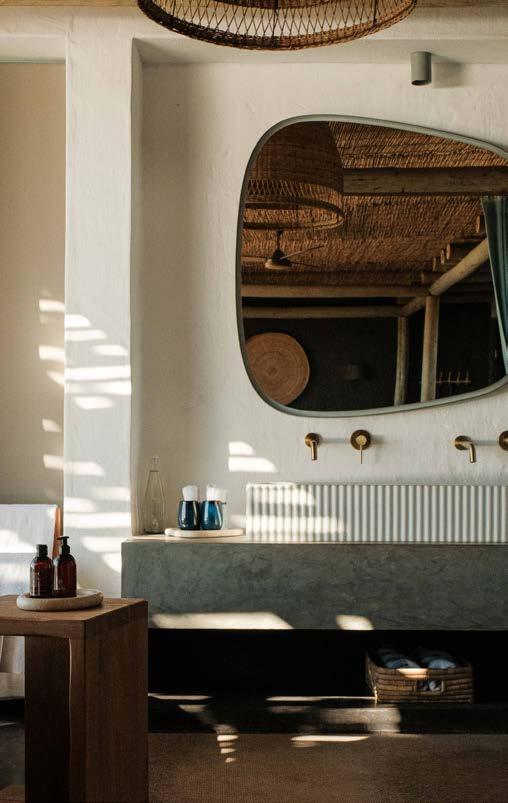
Barely visible, but thoughtful Colour and materiality play an important role in the design’s success. A palette of warm browns and coastal blues and greens mirrors the hues of the surrounding dunes, rocks, sea, and forest. This recognisable palette of the Xhosa traditional aesthetics is combined with materials in their raw form. Blade-marked saligna wood, rough offshutter concrete, raw copper and rusted steel, hand-cut site stone, and earthy screeded floors contribute to the lodge’s authentic feel and its idea of barefoot luxury. Sustainably sourced reclaimed timbers and lataka reeds are used for the ceilings, pergolas, and feature walls.
A deliberate porosity allows gently dappled light to filter through the reeds, while raw-edged materials and the landscape’s grasses nearly touch. The landscape’s pulse flows through this retreat, creating an experience that is rooted, yet subtly elevated.
“This vernacular sensibility extends beyond architecture into the lodge’s craft detailing.”
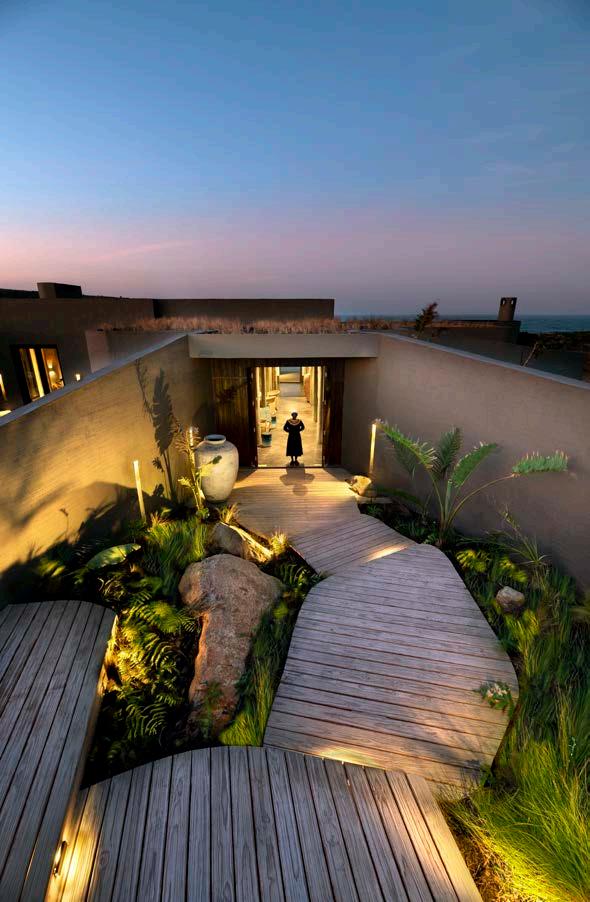


HesseKleinloog Harnesses the Magic of Bwindi to Present a Sanctuary in Silverback Lodge
In the East African country of Uganda, Silverback Lodge is a feat of humble hospitality. Designed by HesseKleinloog, the project gracefully peers through the mist to offer an experience of the Bwindi Impenetrable Forest that is rooted in restraint and the intimacy of the surroundings.
Location:
Size: 3000 m2
@_hkstudio_
www.hkstudio.co.za
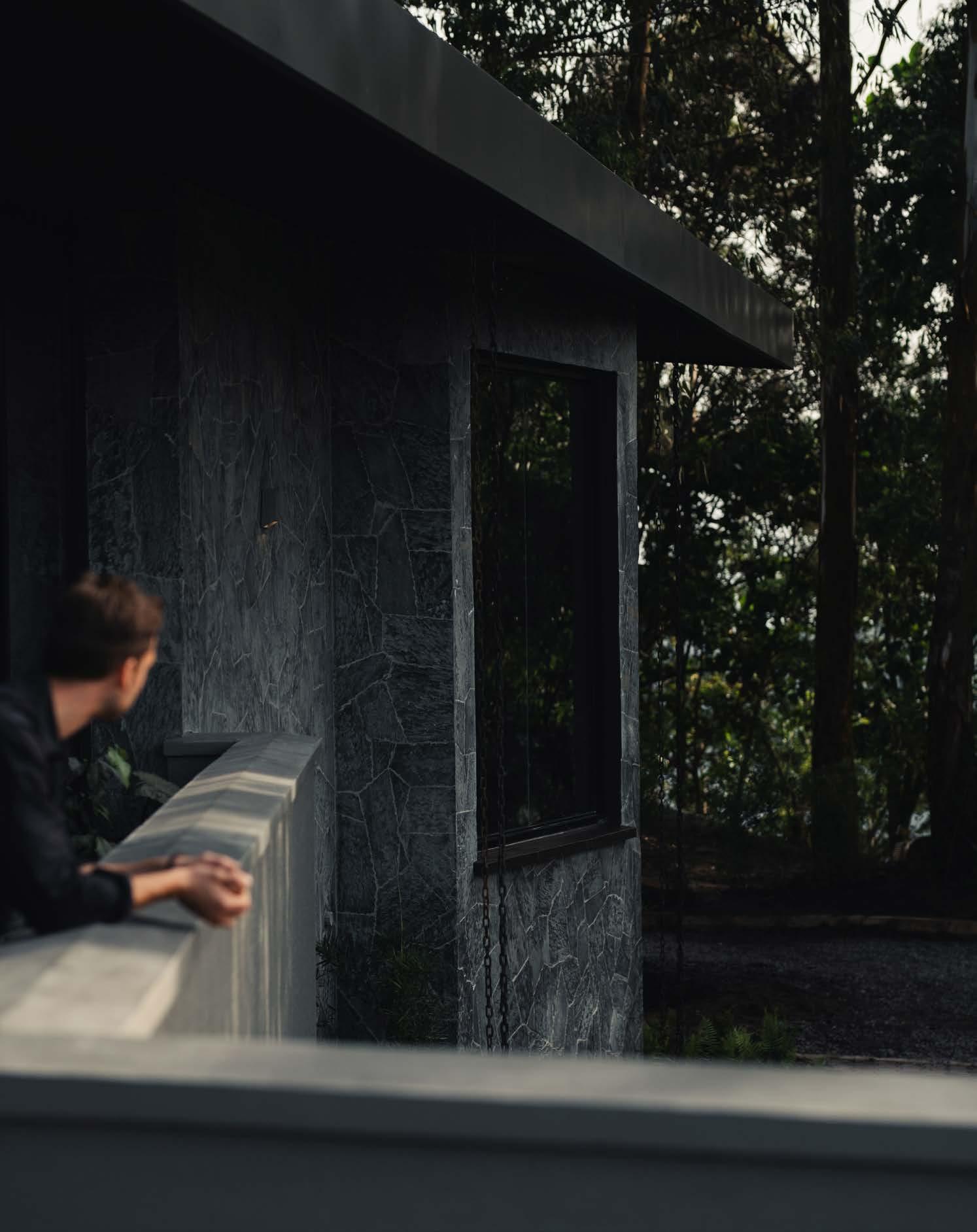
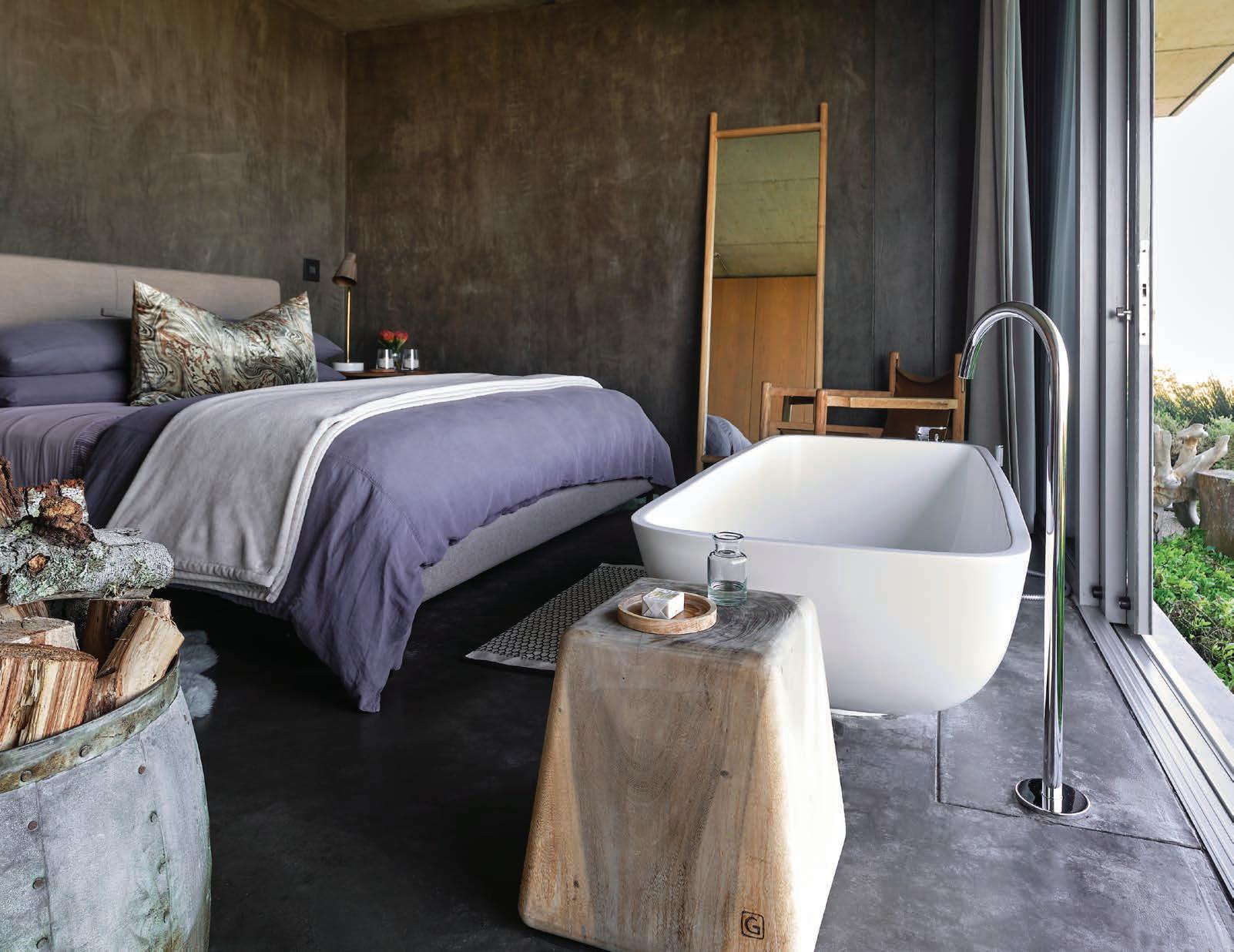
The site’s steep terrain and limited footprint dictated a design that embraced natural constraints rather than overcoming them. The breathtaking view from Silverback Lodge is directly related to this tricky topography, so the team decided to transform the challenge into an advantage. Elegantly perched on the landscape, this ego-less structure offers uninterrupted views of the dense, mist-shrouded forest that serves as home to the legendary silverback gorillas.
In defiance of the expected
The design concept was complex despite its simplicity. HesseKleinloog set out to create the opposite of what could be expected from a Ugandan lodge project, opting instead for a slice in form, a defiance of “African design” stereotypes, and a delicate sensory intervention. The structures were carefully whittled within and around the existing property footprint of roughly 3000 m². 450 m² of the property were luxuriously proportioned for the main area, where framed views are explored and Ugandan-made textures and richly layered moments come to life. In addition to this is The Wellnest, which is a 150 m² secluded home to the tailored spa offering and gym. The individual 47 m² rooms, aptly named Nests, are angled to embrace views of the vertical forest in the foreground, each made complete with their own private hot tub.

“Each space transforms Silverback into a conduit for the deeply personal moments of reflection, refraction, and reform experienced when walking by the side of a family of gorillas.”
Despite aspirations of a design unpredictable to the region, Silverback Lodge is a stage for the immense talent, determination, and craftsmanship found in Uganda. The team was presented with challenges throughout the project, including ever-present shortages of basic equipment and building materials, frustrating logistics, long roads, steep hills, lack of signal, no access to email, and no printers or plotters.
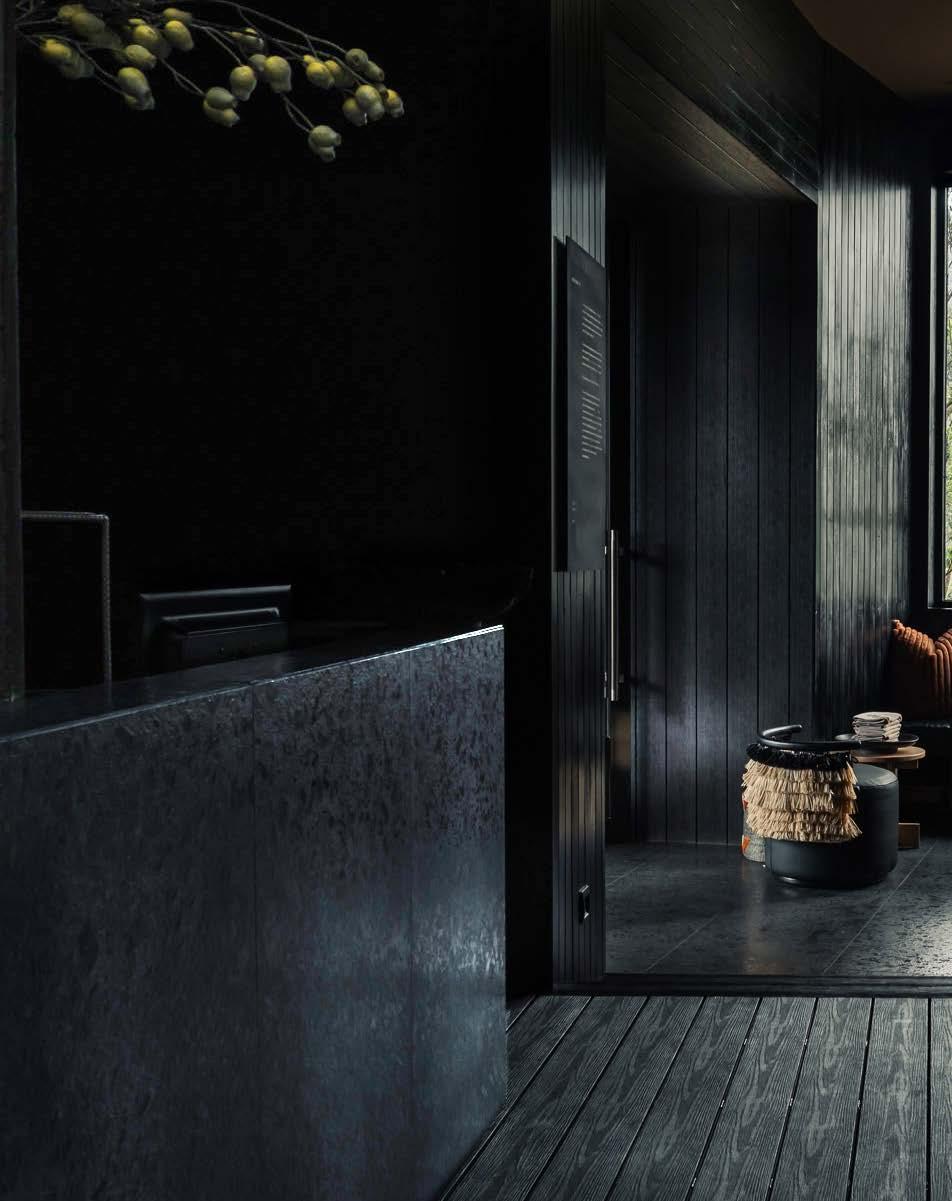
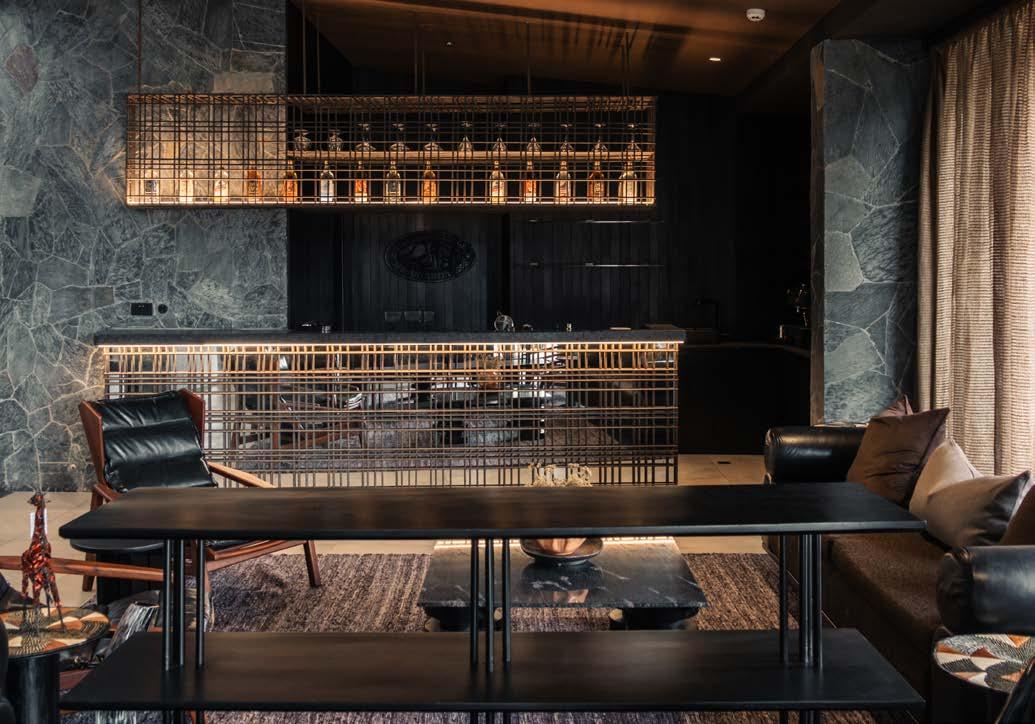
Although Uganda possesses a wealth of natural resources, access to those resources is what made the process complicated. A constant debate throughout the project was material longevity versus sustainability, specifically in the African context. Further, the logistics that were required were extensive, even for the smallest of design elements. Nevertheless, determined to highlight the country’s potential, HesseKleinloog opted for humble local materials that were elevated, such as quarried rock, rebar, plaster, and mild steel. It was imperative that these materials were manipulated, mended, and moulded by hand while still retaining their natural patinas. On the other hand, any essential imported material, like the black decking, was intentionally made to recess into the design shadows.
meet the team
Creative Direction, Architecture, Interior
Architecture & Design: HeseKleinloog
Photographer: Delport Co.

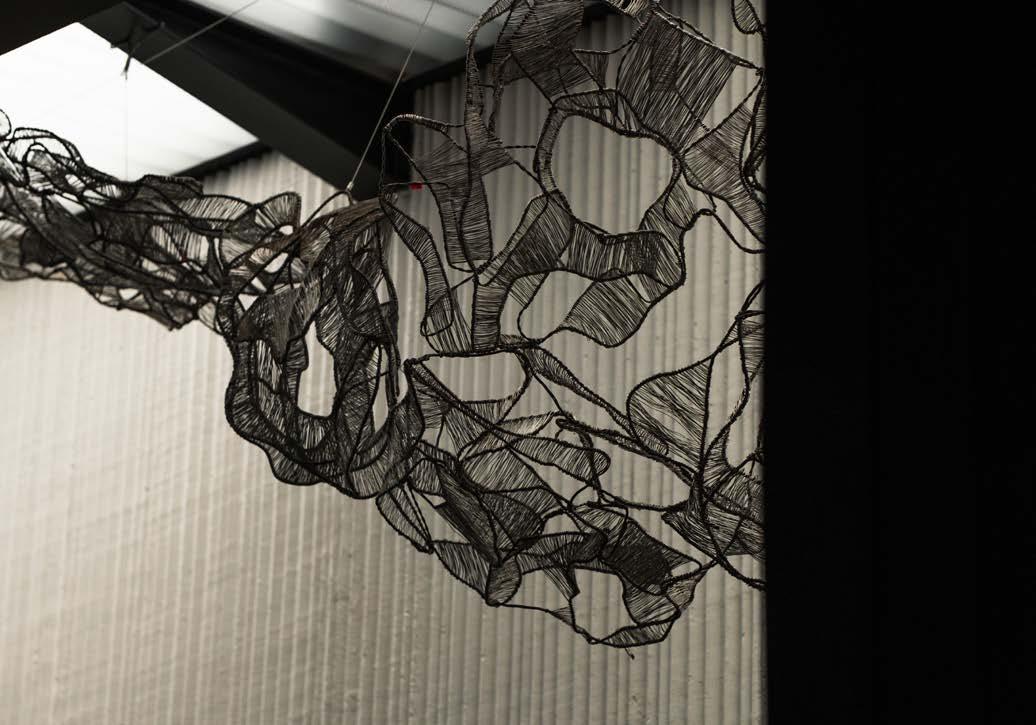
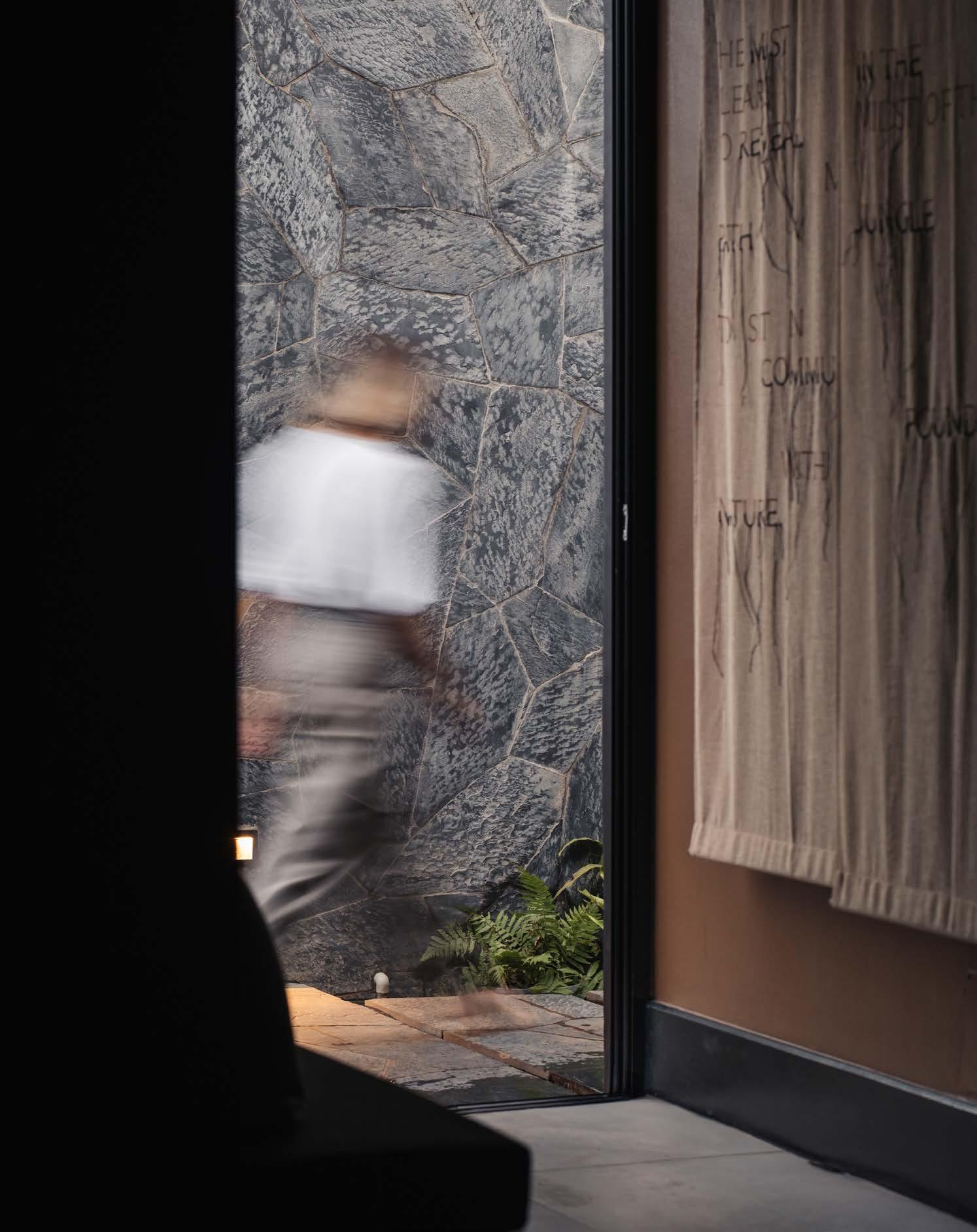
The celebration of hand-crafted design and art is first seen in the lodge’s interiors through delicate banners in the reception area with messages chosen to resonate with guests. The words were gently hand embroidered by The Milaya Project, an initiative empowering women from South Sudan in the Bidibidi Refugee Settlement. Ceramics Uganda created the ceramic artefacts, employing contemporary and experimental forms to offer expressive creativity. In combination with the contemporary clay, traditional horn craft was carefully curated as a nod to the ancient Ugandan craft of using Ankole horns to create vessels, bowls ,and other utensils. Basket drawers for the wardrobes and woven chairs were made by Ride for A Woman, based in Bwindi Village. In addition, sculptures resembling the rolling mist in the area were crafted by Snares for Wares, a group that collects animal snares in the Murchison National Park.
Bwindi is known for its intense mists, but what many might not be aware of is how that mist quickly tumbles into rainfall. The design of Silverback had to allow for quick retreat, which was achieved with deep overhangs which provide a necessary buffer between outdoors and indoors. Simultaneously, when the cloud lifts, the lodge needs to open up to give guests the space to breathe in the dizzying scale of the forest. The solution was a number of interior planters and courtyards which allow the fertile Ugandan soil to create green buffers between the linear lines of the structure.
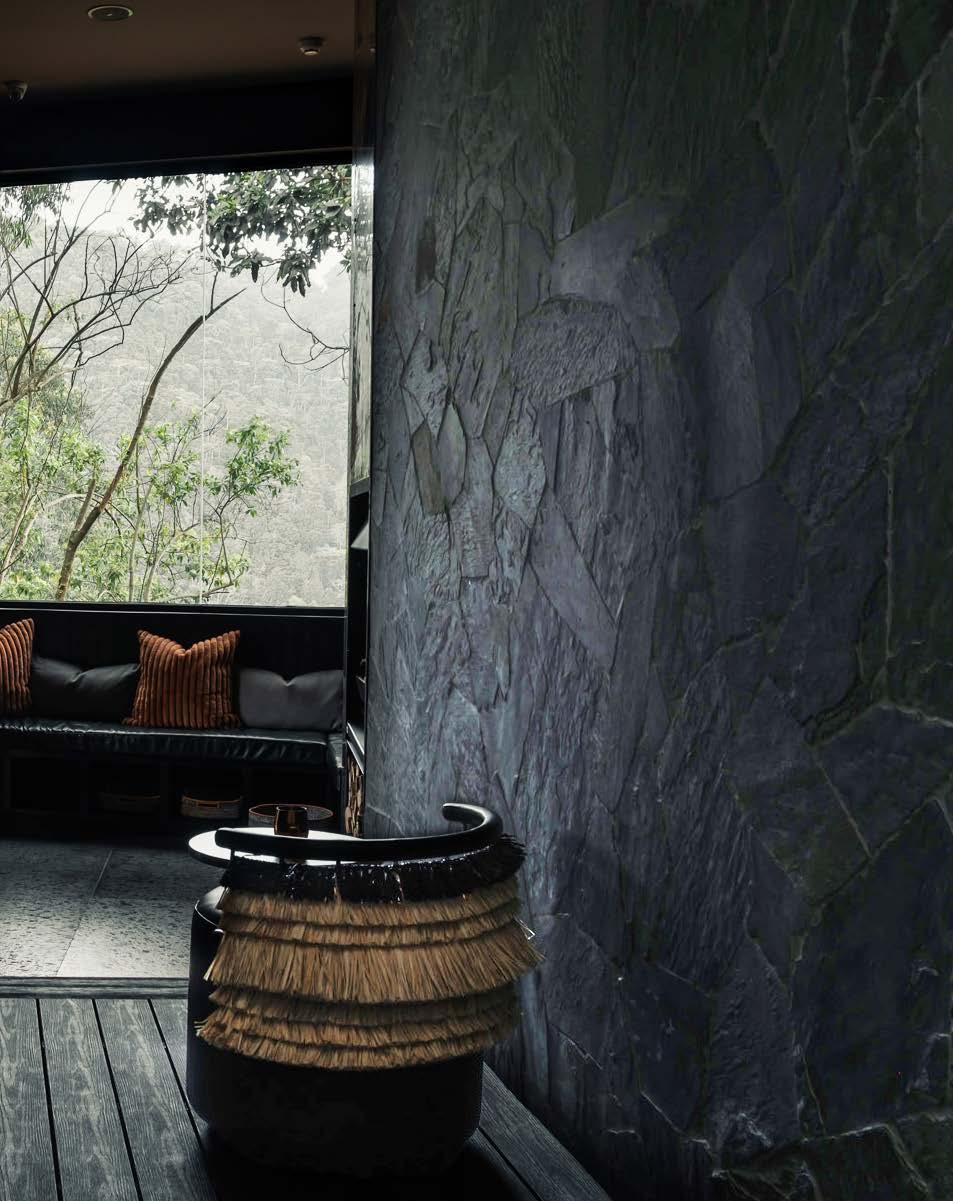
Locals consider meeting a gorilla to be a spiritual, irrevocable moment in one’s life. The poignance of this experience is not only what brings guests to the forest, but it was also the driving factor to the interior design. The windows and portals frame and reflect the breathtaking surroundings. Throughout the circulation pathway, the design presents opportunities for guests to frame their memories of the gorilla tracking experience. Each space transforms Silverback into a conduit for the deeply personal moments of reflection, refraction, and reform experienced when walking by the side of a family of gorillas.
Amidst the quiet movements of the local primates and the whispers of the mist, Silverback Lodge stands as a gentle gesture of reverence toward the forest it inhabits. It is a place where design listens more than it speaks, where craftsmanship takes priority, and where the soul of Uganda is not just seen, but also felt.
suppliers
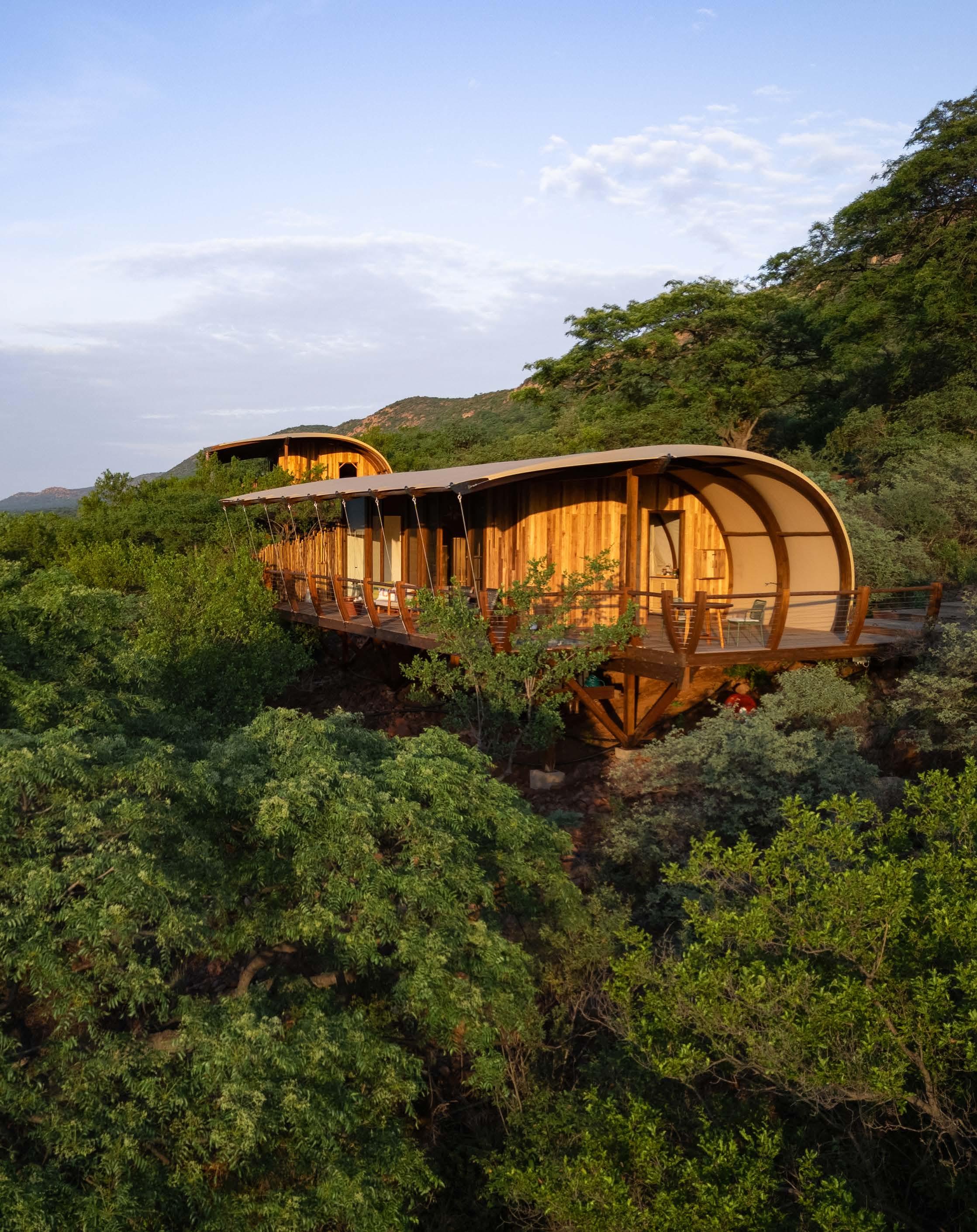
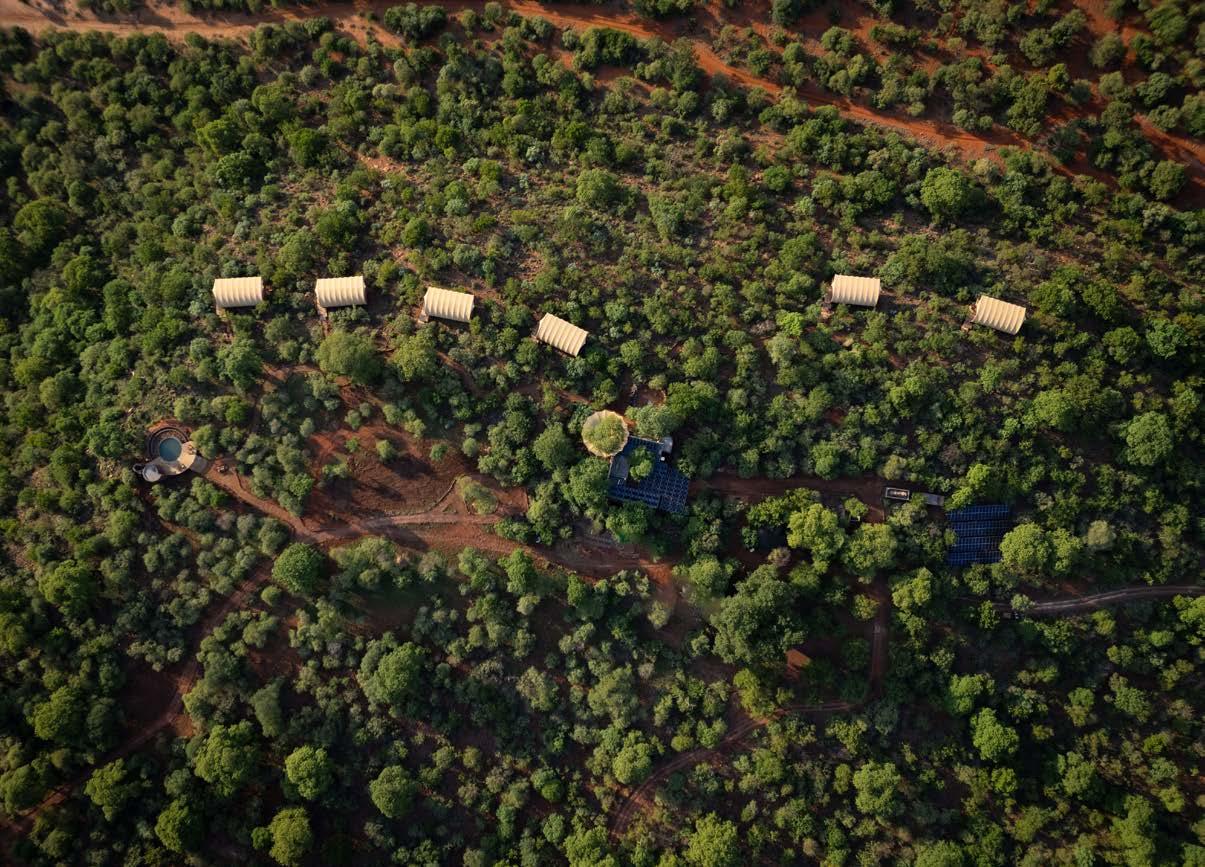
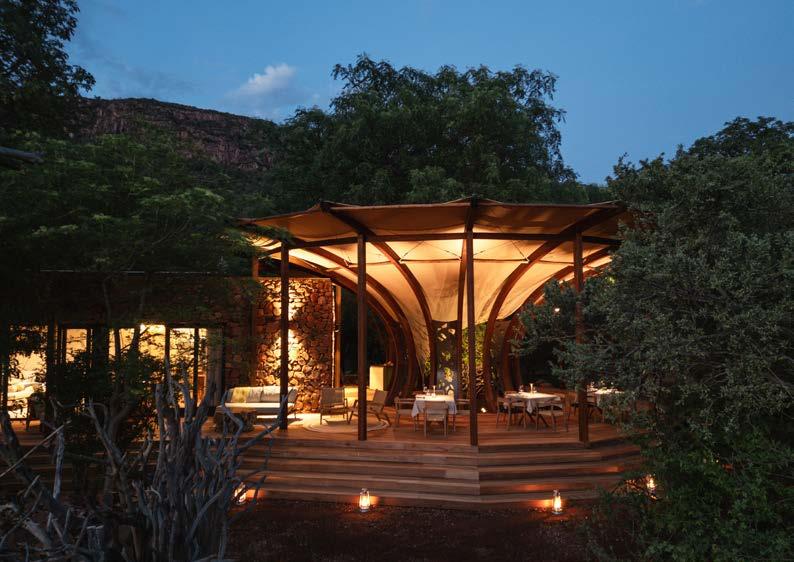
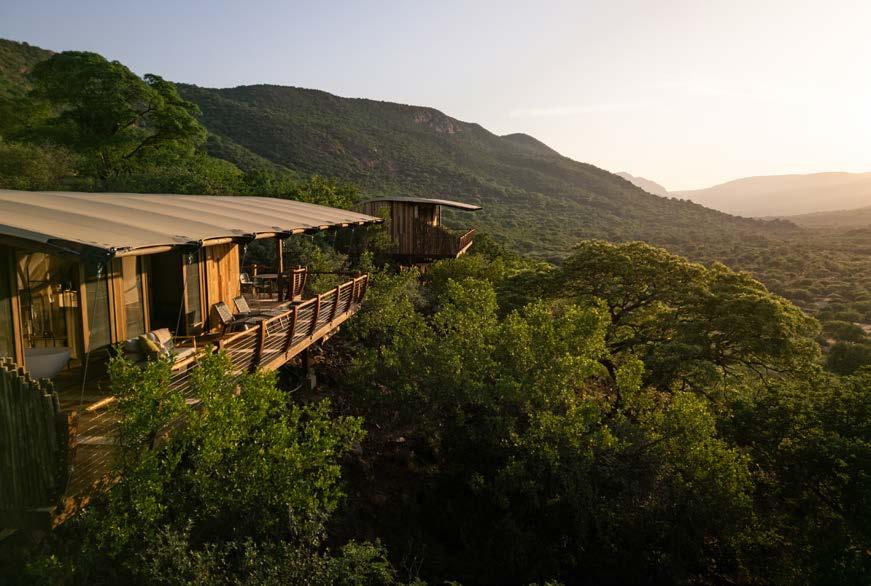
Few & Far Luvhundo is not your average treehouse. Nestled in the Soutpansberg Mountains of Limpopo, this collection of luxury safari lodges by Ohkre Collective, in collaboration with Nicholas Plewman Architects + Associates, appears as though it emerged organically from the stunning landscape. So harmonious is the interplay between what’s built and the mountain’s rugged beauty that they seem as one.
Location:
Waterpoort, Limpopo
Size: 558 m2
@ohkre_collective
www.ohkre.com
“The grandeur of the baobab tree — a symbol of strength and resilience — serves as a guiding reference for the overall design, with suites shaped to embody its iconic silhouette.”
Each architectural element is carefully selected and crafted to echo the mountains: their fertile soil, rock formations, and the stories they hold. Yet, it’s particularly the indigenous trees that are venerated in the designs. The lodge’s overarching form reflects the shadeproviding canopy of the shepherd’s tree, while structural elevations mimic the graceful rise of the sycamore fig. The grandeur of the baobab tree — a symbol of strength and resilience — serves as a guiding reference for the overall design, with suites shaped to embody its iconic silhouette. Functionally, too, the buildings behave like trees as they promote natural cooling and shading, thereby uniting sustainability and aesthetics.
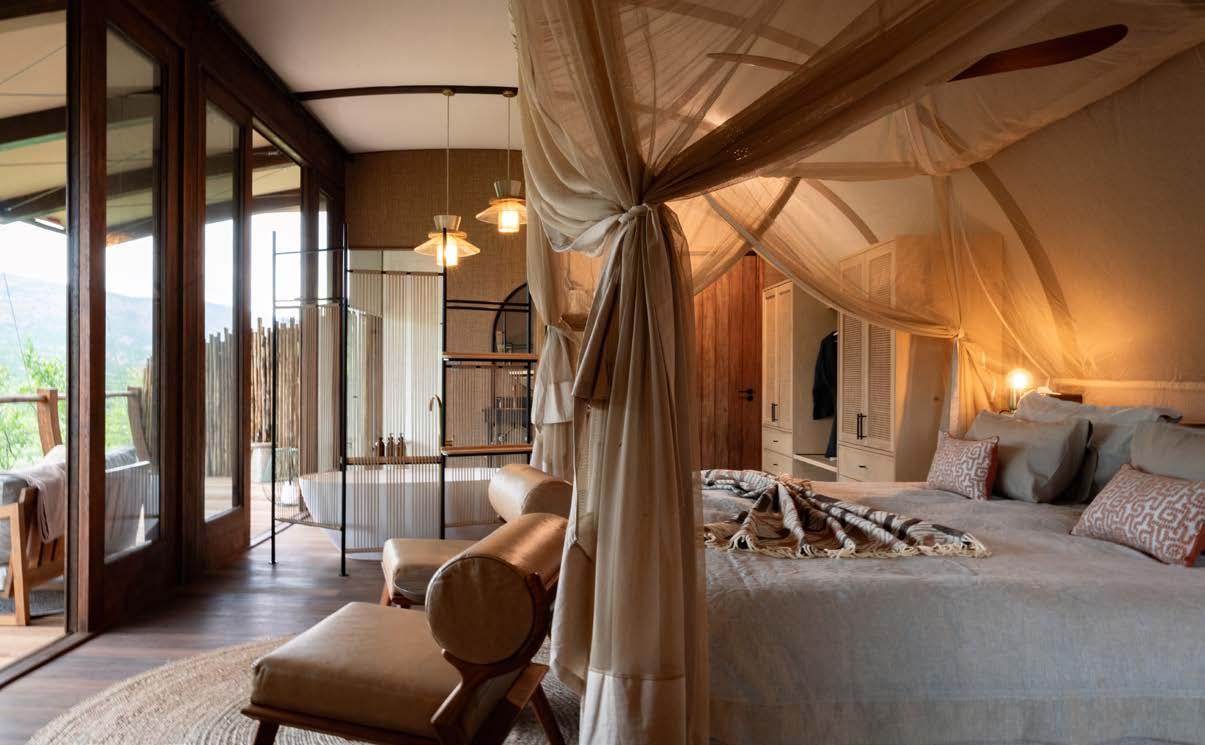
The extraordinary surroundings are further drawn into the interiors through patterns, textures, and colours that mirror the surrounding landscape, creating a tactile and visually rich environment. Rattan furniture, for instance, extends the landscape’s haptic interest. Clay tones establish a connection to the red-tinged soil; citrine hues remind one of the native foliage; and deep blues mirror Africa’s expansive sky and, with it, its tranquillity.
The grounding atmosphere is strengthened by the project’s commitment to South African craftsmanship. Guests are connected to their surroundings, but also to the artisans behind custom casework, hand-crafted furniture, soft furnishings, and artworks. This emphasis on making and the transparency of the design process both enrich the guest experience and foster an appreciation for the region’s rich cultural heritage. The integration of bespoke, locally made pieces adds depth and narrative to the interiors, distinguishing Few & Far from more conventional luxury accommodations.
meet the team
Interior Design and Décor: Ohkre
Collective | Ohkre Collective
Project Team Lead: Willeen Bosch | Architect: Nicholas Plewman Architects + Associates
Photographer: Jemma Wild
suppliers
Joinery: Brush + Pistol Fabrication | Feature Tiles: Union Tiles | Fabric Ceilings: Tsonga Textiles | Sanware: Rossco, Press Up Industries Stone: SGT Granite | Furniture and Décor: 8 Degrees South, Bloc Outdoor Furniture, Cielo, Incanda Furniture, Block & Chisel, Colin Rock Atelier, Coote and Wench, Dail-A-Bed, Evolution Product, Free Edge Design, Hertex Haus, Hoffmann Rugs, Kipikee Studios, La Grange Interiors, MØN Exteriors, Patio Life, Relentless Design, Rock & Stone, Rowley & Hughes, Sotran, Spaces & Places, Tusker Trading, Vogel Design, Weylandts, Wire Maven, Wire World, Wunders, Orms, Anneline’s Decor, Cotton Tree, Mungo, Art of Curation, Cecile & Boyds, Jambo, Vorster & Braye, Tusker Trading, Nammu Ceramics, H&M, Coricraft, Superfloral, Meyer von Wielligh

Sarah von Hone Moves to a Mozambican Rhythm in Her Design of Saudade Boutique Lodge
Saudade: a profound emotional state of longing and nostalgia, evoking a longing to return to a place or relive an experience that once was. Moved by this poignant Portuguese notion, Garden Gallery created their own Saudade, a boutique lodge in Mozambique’s Bazaruto Archipelago, as the embodiment of a space rich in deep connection and solace.
Location: Size: 525 m2
Vilanculos, Mozambique
@saudadecollectionmozambique www.saudademozambique.com
suppliers
A haven for the von Hones
Conceived and designed by the owner, Sarah von Hone of Garden Gallery, the project represents a decade-long vision to create a sophisticated yet serene coastal sanctuary that would honour the traditions of Mozambique while offering contemporary comfort and elegance. Sarah and her husband, Mike, worked together to bring Saudade to life, drawing inspiration from their travels, their time spent living in the area, and their desire to honour the pioneering spirit of the Mozambican seafaring culture.
The couple had always envisaged a contemporary African lodge to call their own, designed to be cocooned by its surroundings and to reflect the elemental beauty of the location. Functionally, it needed to serve both as an intimate haven for Sarah and Mike, and a private retreat for multigenerational family gatherings. It also needed to embrace Mozambique’s costal spirit: informal yet refined, deeply rooted in place, and fully responsive to the tropical climate.
The gentle integration of structure and site
To achieve the desired interplay between structure and site, the dune on which Saudade is built needed to be a primary consideration. Careful cut-and-fill excavations provided space for the structures and maximised the views, all whilst minimising impact on the natural bush and the coconut and lala palm trees. This method allowed the buildings to sit gently on the land and blend into their exquisite natural environment.
Power in partnership
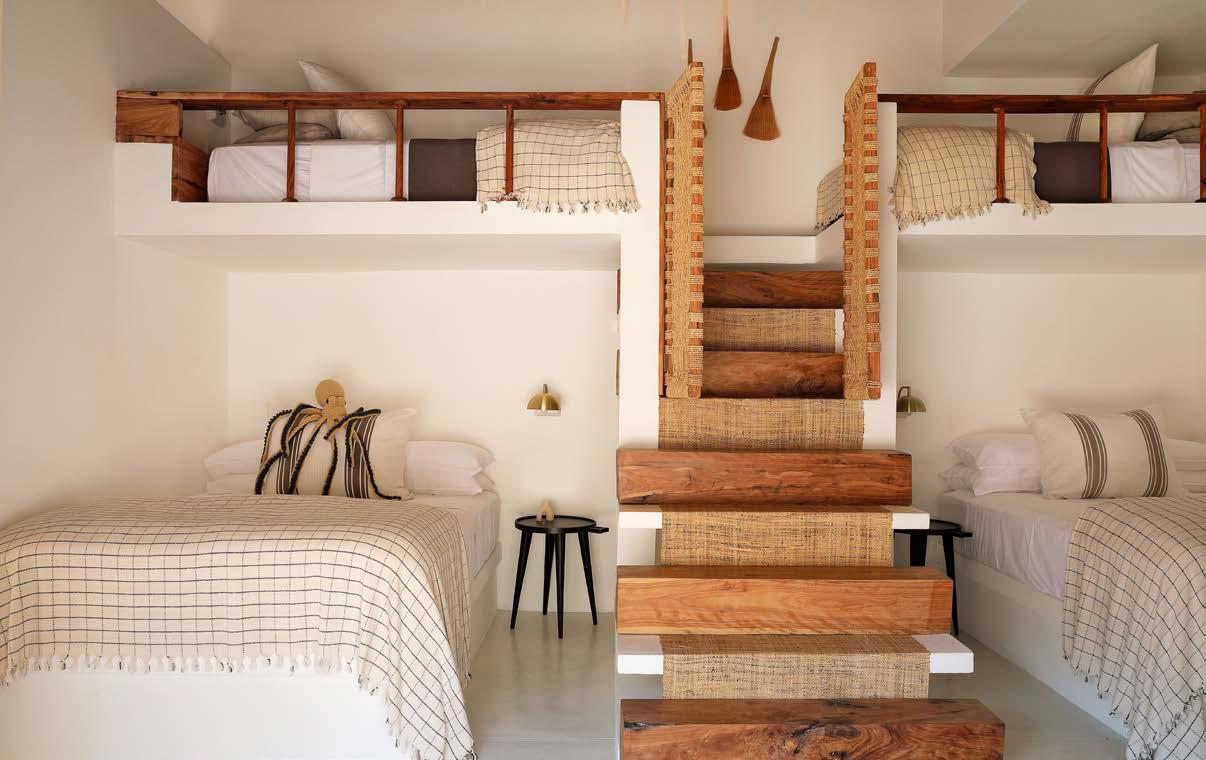
In an area where infrastructure and materials are limited, extraordinary adaptability and ingenuity were crucial. Equally important was the spirit of partnership between the owners and the local artisans, as every element — from the architecture to the fittings — was handmade or bespoke, evolving through countless iterations on site. This was not only a creative decision but a philosophical one; a commitment to community upliftment, authenticity, and legacy.
Creating connection to place
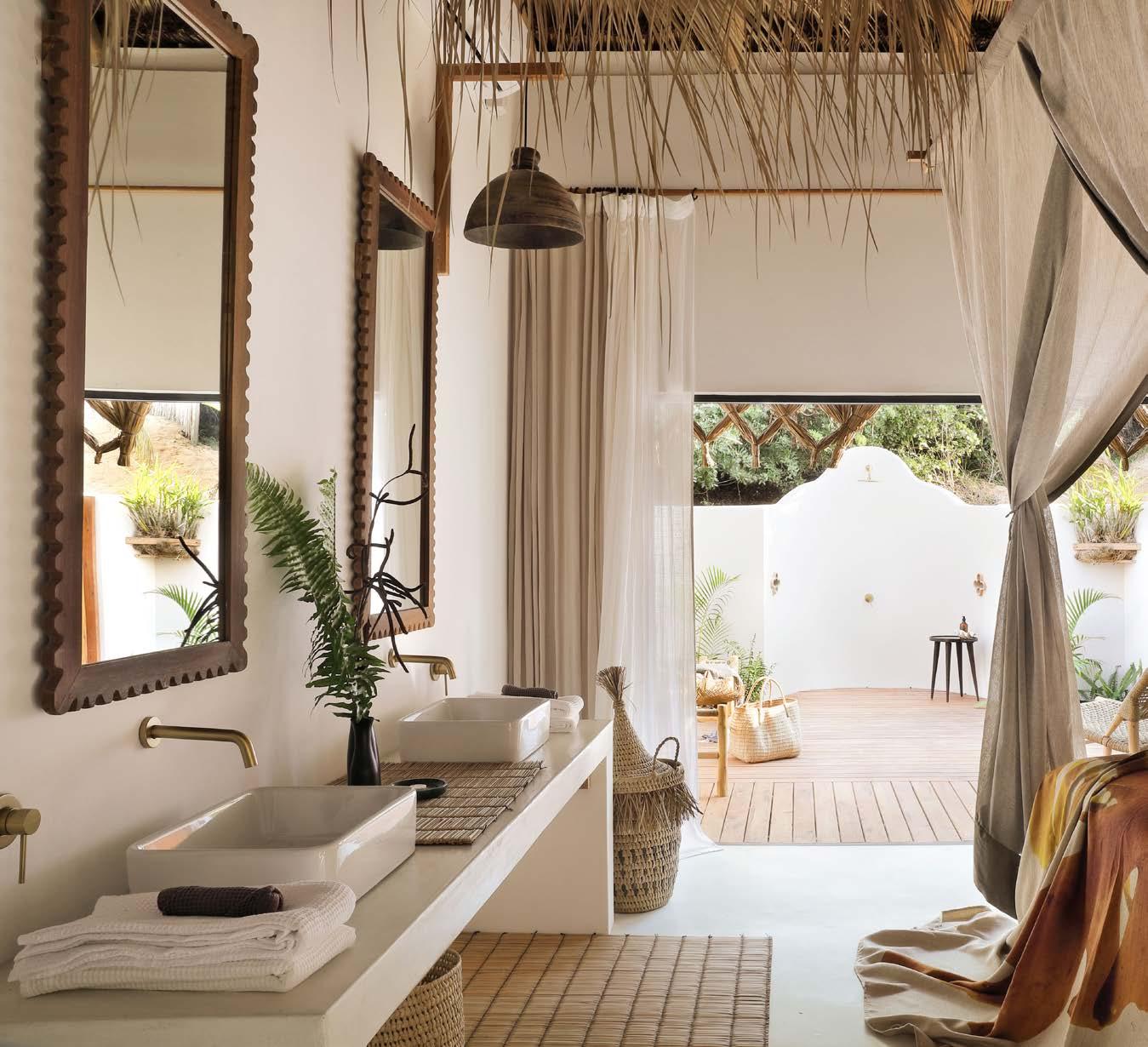
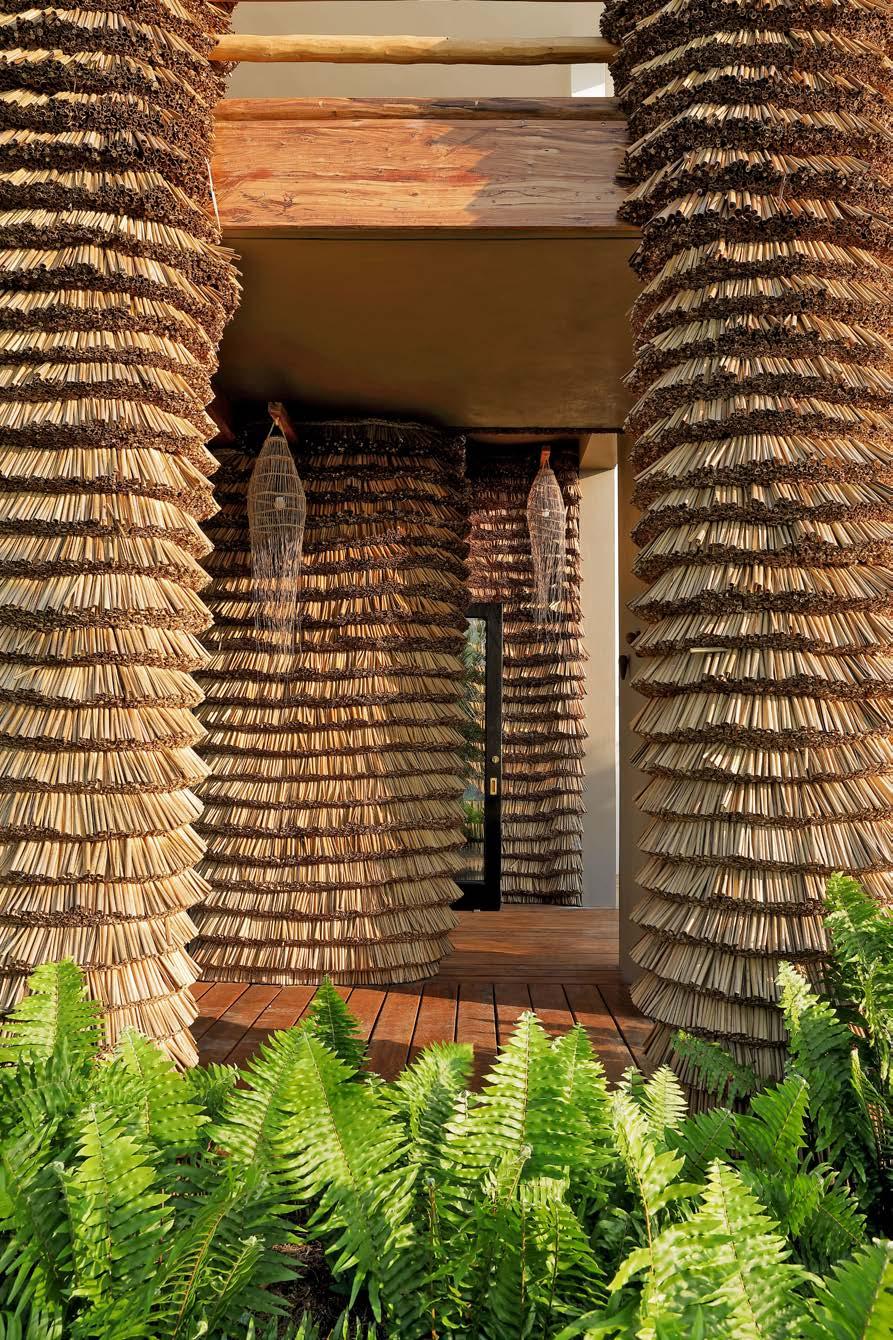
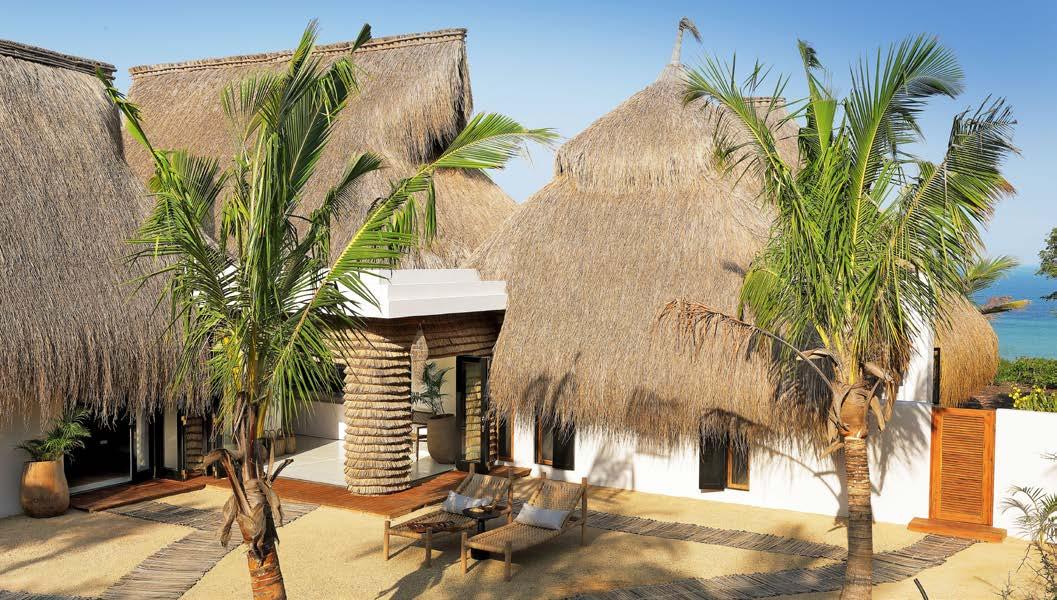
Saudade is a lodge that feels as though it grew organically from the dunes. The structure is low-slung and deliberately nestled within the indigenous vegetation, allowing for minimal environmental disruption and maximum visual harmony with the surrounding landscape. The architecture is defined by clean, contemporary lines softened by traditional Mozambican forms and crafted materials. Locally available “generic” building materials such as cement, bricks, and sand were used extensively. More “specialist” building materials were also sourced locally, including various hardwoods such as Simbiri, chamfuta, and mahogany, local plant-based jeka thatch for roofing, lighting, and carpeting, and lala palm matting. This ensured that the entire project tied the external and internal areas together, creating a feeling of connection to place.
Much of the site needed to be retained and secured to ensure stable platforms for the five individual pitched roof elements that make up the villa. Retaining walls were built of double and triple skin brick, re-bar reinforced, hand-poured concrete. All reinforcing columns, pillars, and lintels had their steel manually hand-tied, shuttered, and hand cast on-site.
meet the team
Architect, Interior & Landscape Design: Garden Gallery | Engineer: MRH Consulting Engineers
Photographer: Henrique Wilding
For the internal floors, white colour hardener Cemcrete was individually hand floated. Because soft woods like SA Pine are unsuitable for substructures in this harsh environment, the external decking floors between the buildings are made from Simbiri hardwood planks on Simbiri hardwood sub-structures.
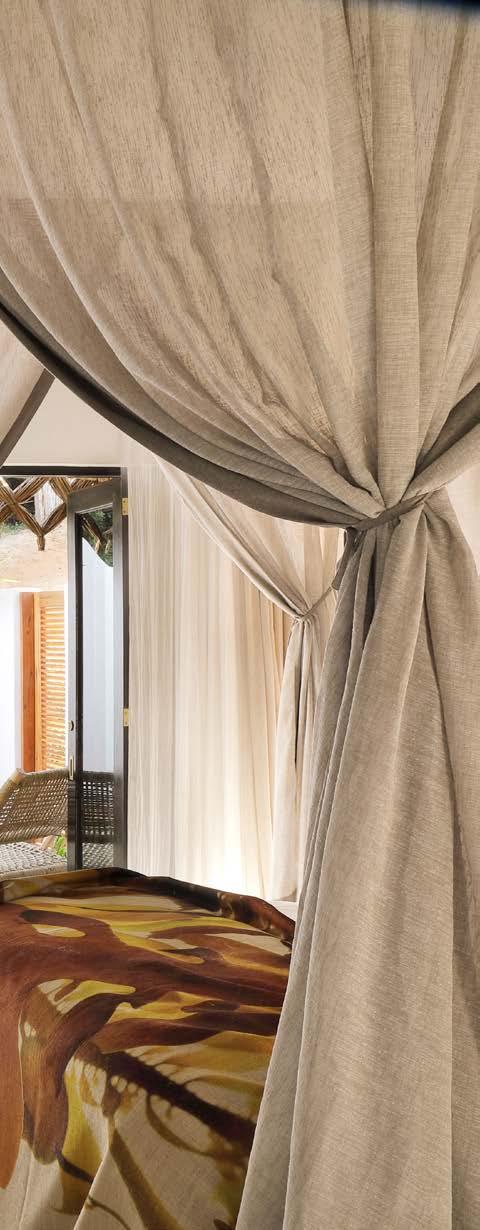
Moving inside, the lodge’s light fittings were individually designed by Sarah and hand crafted to specification using natural basket weaving materials and techniques. Where possible, accent pieces were also designed by Sarah and made on-site in collaboration with skilled local artisans. As for the rest of the soft furnishings, many were manufactured and upholstered in South Africa before being transported to site.
The heart of Saudade
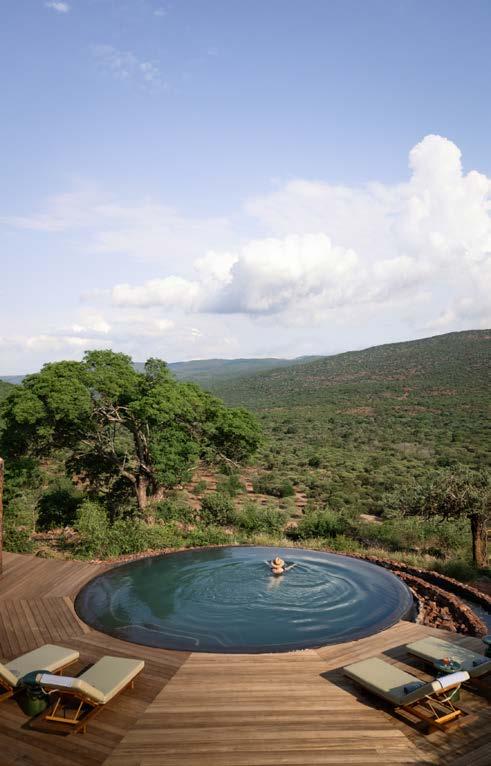
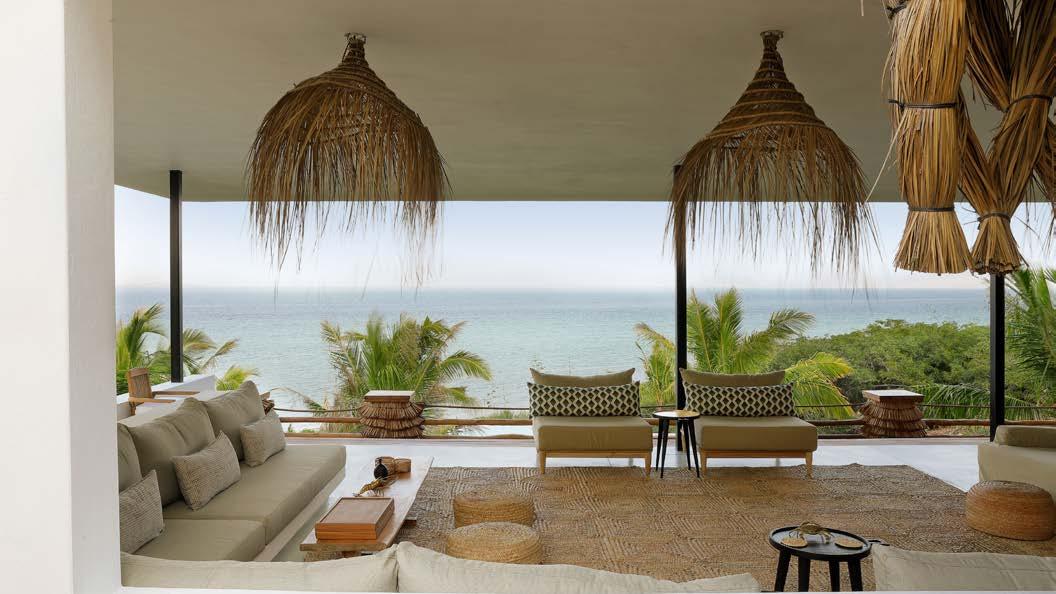
While the entirety of the lodge is an undeniably magnificent body of work, its heart is the expansive covered patio. This sacred space opens onto a tropical garden, an infinity pool, and a cinematic view across the lagoon to the islands of the archipelago beyond. The indoor- outdoor lifestyle that it offers, at once intimate and expansive, lies at the core of the guest experience when visiting the lodge.
Saudade is a home that breathes with the land. It is private yet open, sophisticated yet relaxed, and grounded in tradition yet wholly contemporary. Above all, it is a space of emotional resonance — a place that captures the spirit of Mozambique and invites its guests to feel both anchored and free.
“In an area where infrastructure and materials are limited, extraordinary adaptability and ingenuity were crucial.”
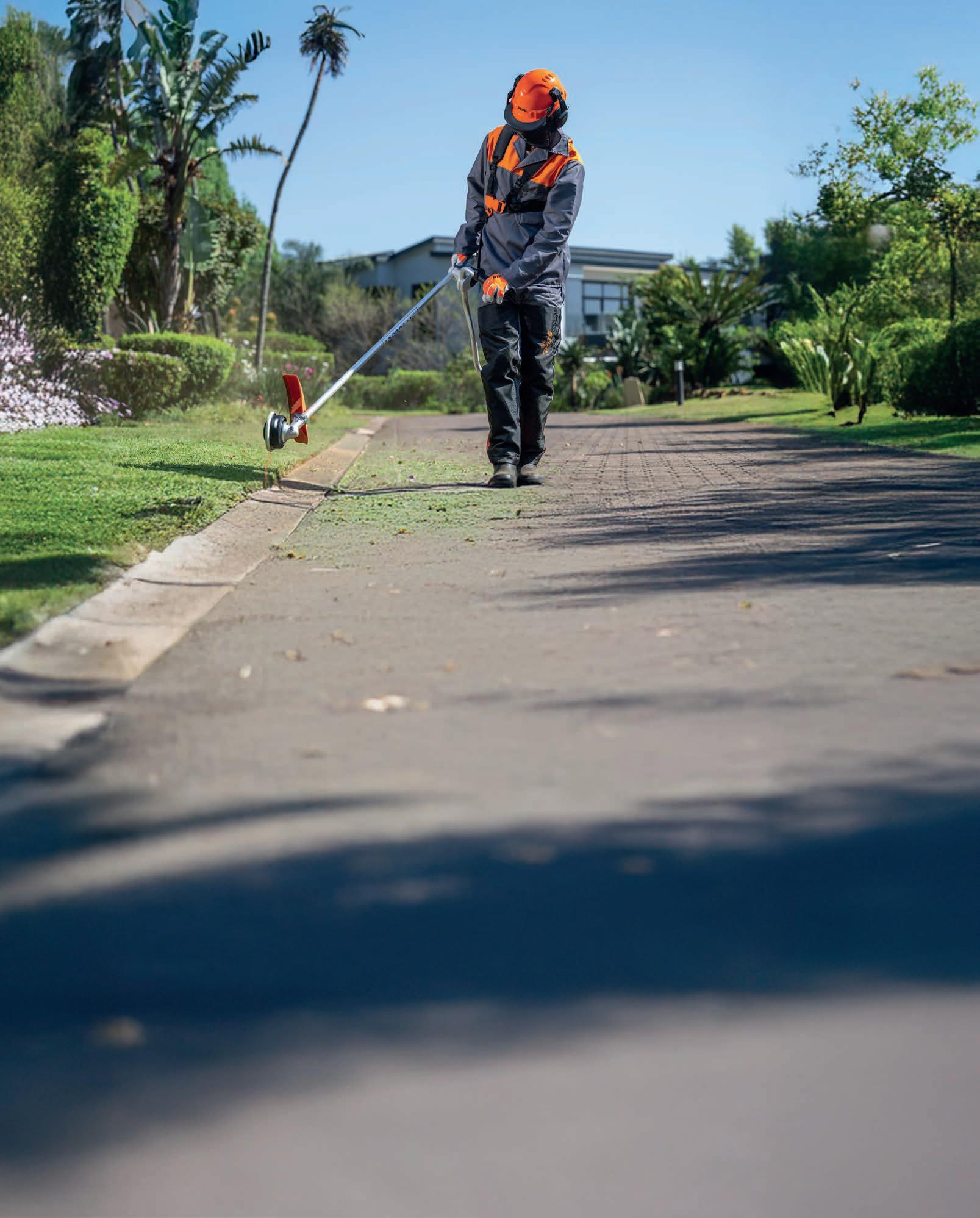
There’s always that stubborn patch of land — thick weeds, hidden stumps, wild grass. The STIHL FS 291 turns it into an easy win. Its high-torque 2-MIX engine powers through dense vegetation. The advanced 2-MIX technology not only delivers exceptional power but also achieves up to 20% fuel savings compared to conventional two-stroke engines — making every shift more efficient and cost-effective.
Built for the Professional
• Effortless starting with ErgoStart
• Lightweight, ergonomic design for long days
• Reduced vibration for comfort and safety
• Durable, professional-grade build
• Precise control for delicate trimming or heavy clearing
• Low-maintenance, tool-free access
From commercial landscaping to municipal grounds, this brushcutter delivers power, efficiency, and reliability — all in one professional tool.
Cut smarter. Save fuel. Own the overgrowth.

Open City Architects Revive a Historic Cape Farmstead
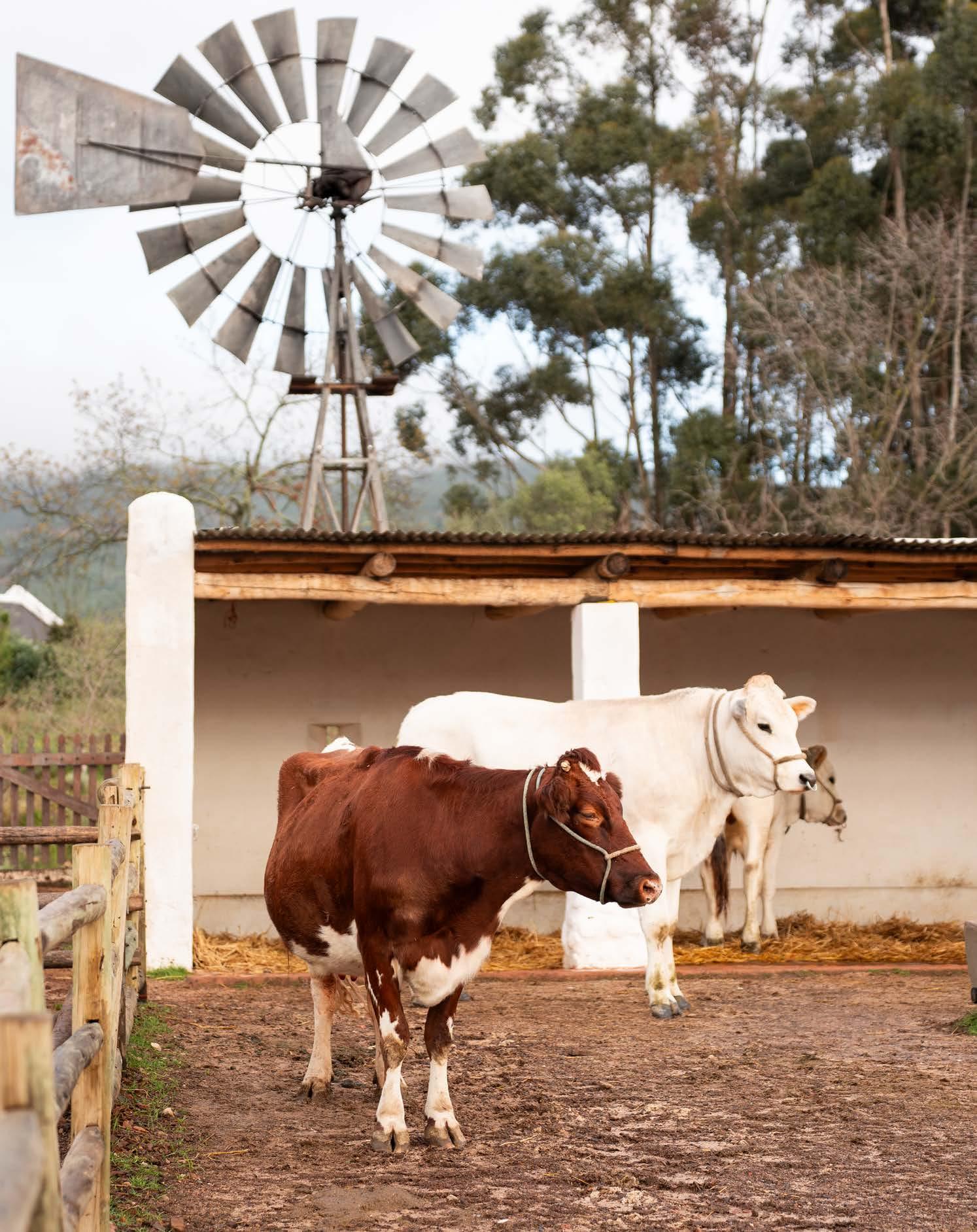
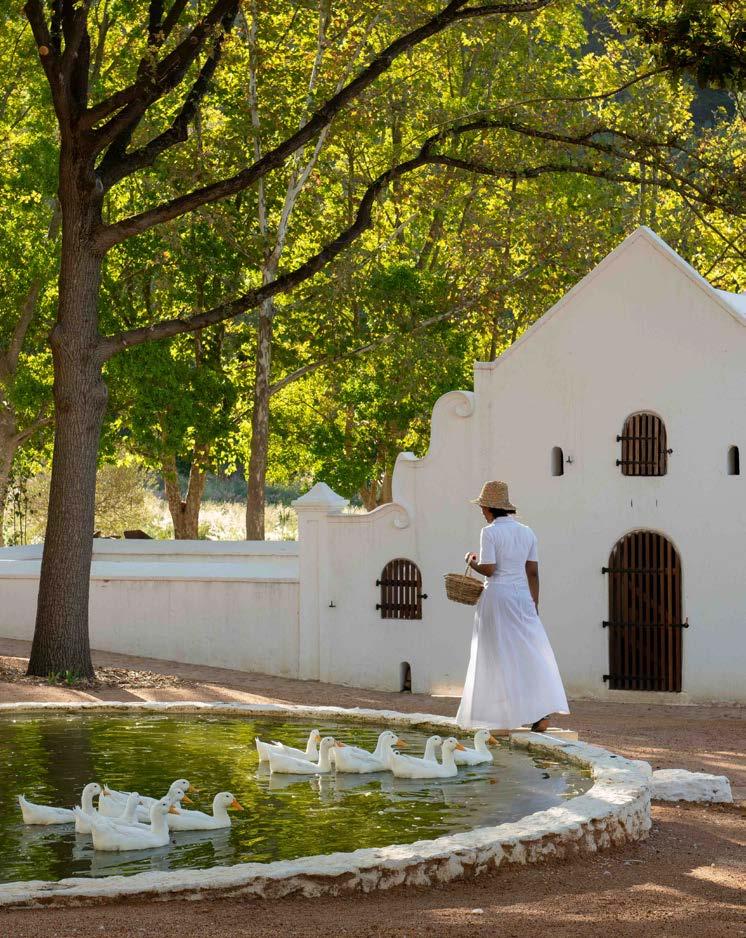
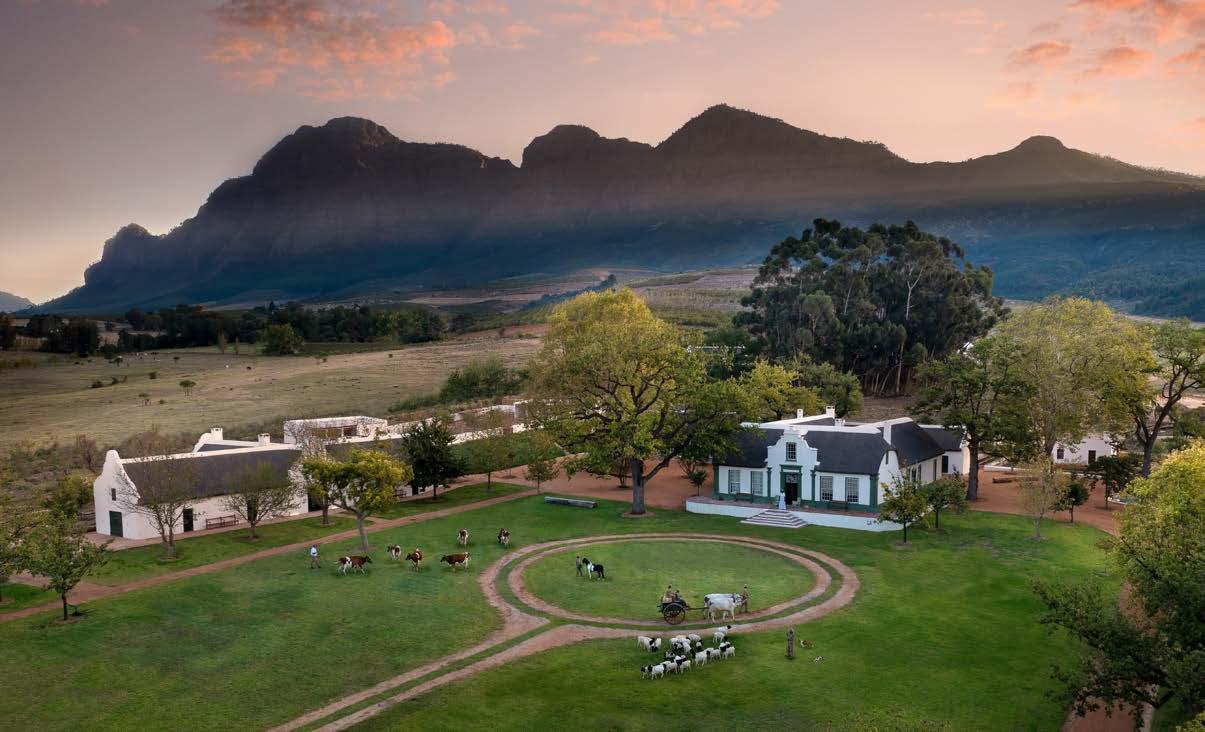
An ambitious new chapter begins at Soetmelksvlei, a historic Cape farmstead coming alive once more. Under new ownership, the werf has been reconceived as a Living Museum Precinct. This precinct does not simply preserve its heritage, but rather, it actively performs it. Here, history is not embalmed and entombed — it is reanimated with care, warmth, and continuity. The vision is simple yet profound: to rekindle the atmosphere of farm life and establish a setting where visitors can immerse themselves in the daily workings of a traditional Cape farmstead, adapted with sensitivity and enhanced by thoughtful modern additions.
Location:
Simondium, Western Cape
Size: 1500 m2
Layered heritage
Open City Architects were tasked with the adaptive reuse of the existing collection of historic buildings alongside the introduction of selected new structures required for the expanded programme. The architectural team’s response was informed by extensive archival and on-site historical analysis. This response acknowledges the werf as a layered composition, opting not to fix it within a certain moment. Recent interventions are deliberately restrained so that the architecture’s heritage character — its spatial order, materiality, and vernacular dimensions — can lead the narrative.
A rigorous heritage inquiry aimed to reveal the spatial makeup of a late-19th-century Cape Dutch farmstead: visualising its arrangement, relationship to landscape, and architectural symbols. This investigation informed both restoration strategy and new construction, ensuring the renewed werf aligns with its historical evolution. With this research underpinning their approach, the architectural team embarked on their undertaking: reinstating derelict structures, stripping clumsy additions, restoring lost elements, and introducing new buildings that support the function of the Living Museum. The result is a precinct where heritage integrity exists in harmony with contemporary intention.
A farmstead reawakened
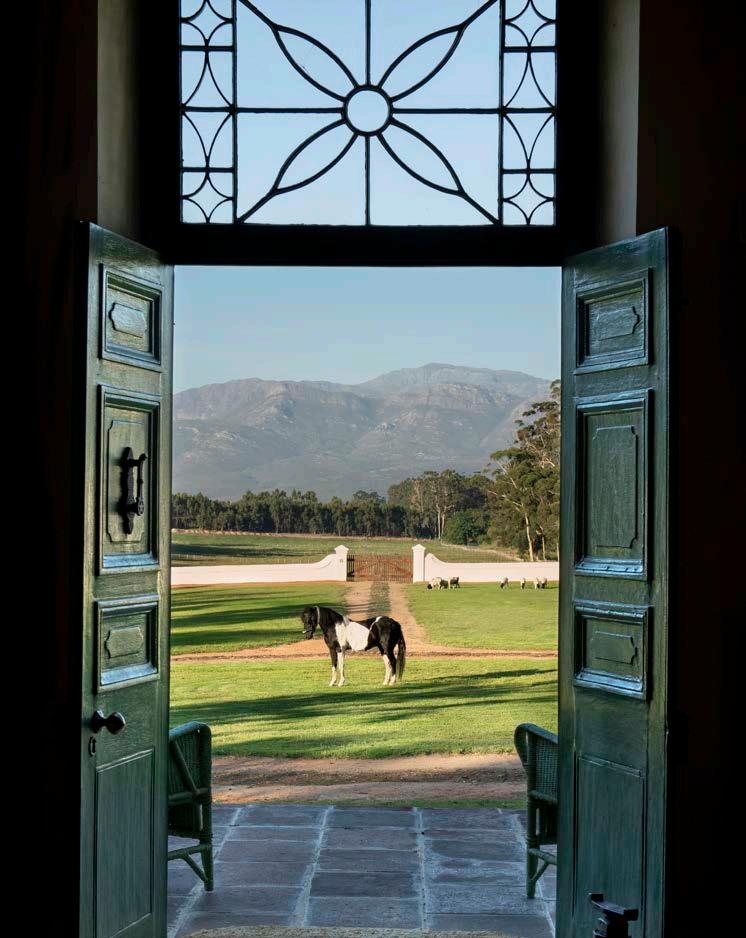
The site is anchored by the homestead’s distinctive 1851 central gable. Its U-shaped form and integral architectural features have been thoroughly reinstated. Four pilasters frame the stoep once more. The original eight-panelled front door and fanlight remain, and the unusual dark green dado, unique to Soetmelksvlei, has been restored. The restoration process was carried out with an uncharacteristic authenticity, owing to the survival of large swathes of the original fabric. The structure assumes a dual role: standing as historic artefact and active participant in the museum’s narrative.
Addressing the old cellar proved less straightforward. Careless modifications had gradually hidden its character — but, once rid of them, an extraordinary interior was uncovered: yellowwood floors and a brandsolder ceiling preserved beneath layers of later interventions. Paint was carefully stripped from the beams and floorboards, returning their natural warmth and patina. Peach-pip flooring was introduced to showcase traditional 19th-century building techniques. The reconstruction of the original clipped gables — guided by a historical photograph — reinstated the building’s original architectural character. Currently, the cellar houses a cabinet-of-curiosities exhibition where its restored fabric functions as an ambient background for the collection.
suppliers
Timber Joinery: Prowell Kitchens, Loubser Wood Components | Doors and Windows: Western Joiners | Stainless Steel Joinery: Solo Stainless Steel | Sanware: Lavo, Waterstone | Lighting: Eagle Lighting | Terracotta Tiles: Leo Tiles | Paint: Breathecoat Furniture: Alan Lutge | Mill Machinery: Andy Selfe & John Stevens
@open_city_architects
www.opencity.co.za
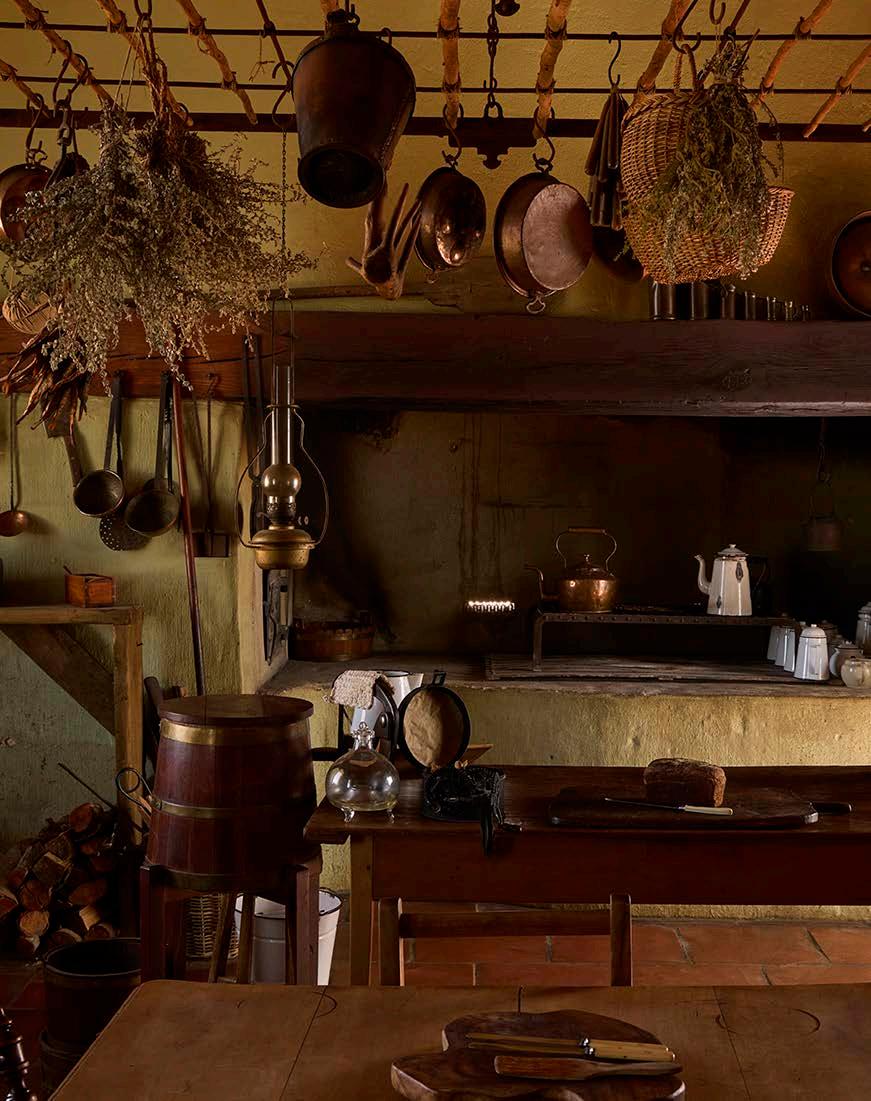
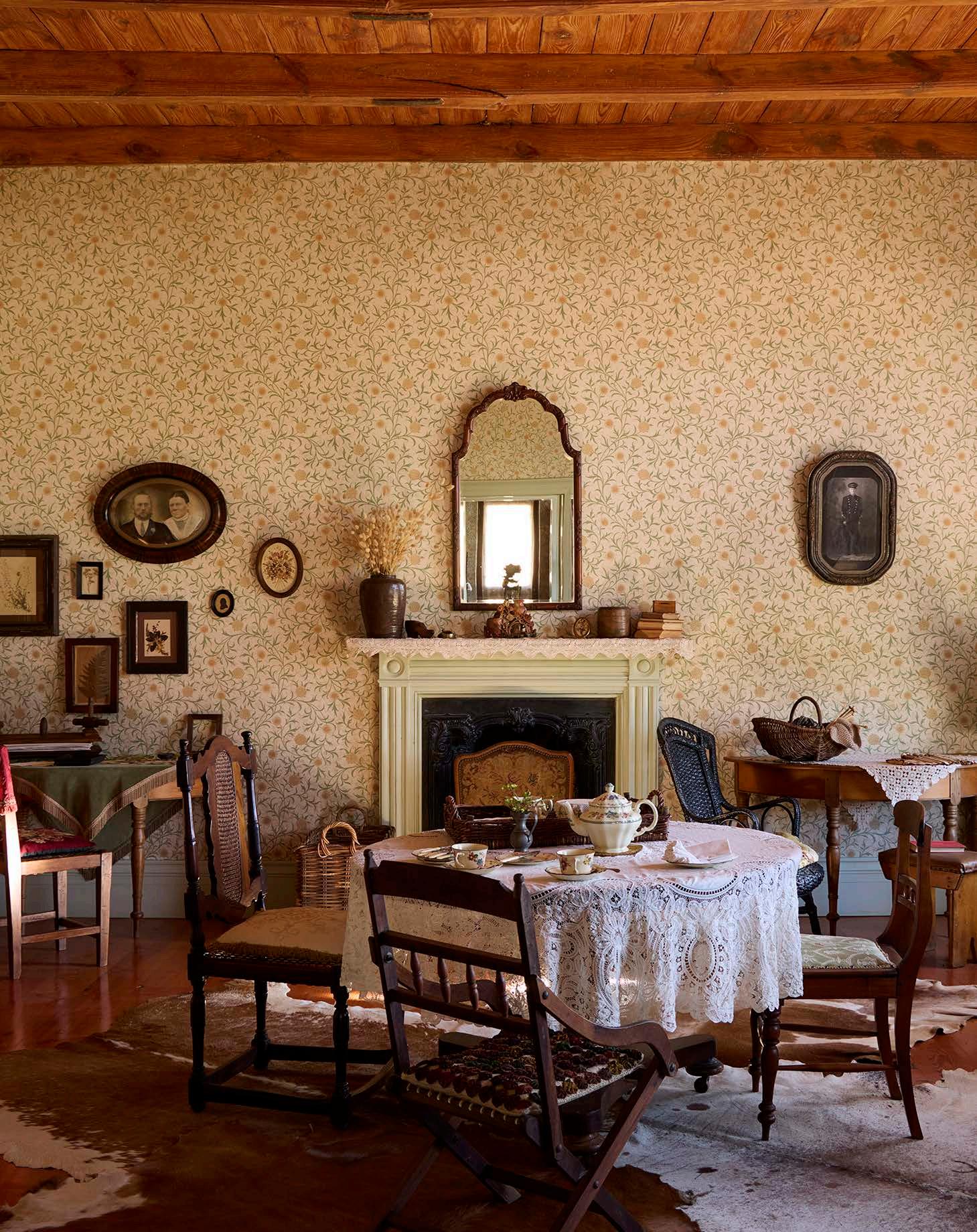
“The challenge with the Soetmelksvlei project was to create an authentic experience without being nostalgic. Visitors are invited to connect with the grit and reality of 19th-century farm life, the textures, imperfections, and rhythm of daily work, rather than a polished museum set piece.” - Bettina Woodward, Open City Architects

Photography by Inge Prins
meet the team
Architects: Open City Architects Town Planning: Willie Steyn Conservation Architect: Graham Jacobs | Interior Design: Etienne Hanekom Interiors | Structural Engineers: DVH Consulting Engineers | Quantity Surveyors: Msingi Quantity Surveyors and Project Managers | Electrical Engineer: Arthur Morris | Mechanical Engineers: Spark Consulting Engineers | Fire Engineers: De Villiers & Moore Consulting Engineers | Landscape Design: DDS Projects | Main contractor: JDV construction | Roof contractor: JNA Group | Museum Curation: Babylonstoren
The old stables have been reenvisioned as a restaurant complemented by a new kitchen. Historical photographs guided the restoration of a simple, symmetrical façade arrangement, including traditional stable doors and a central double door with timber strap hinges. The interior preserves its agricultural character, enriched by discreet contemporary additions such as roof lights that draw natural daylight deep into the space.
A newly constructed workshop accommodates blacksmith and carpenter trades, offering visitors opportunities to observe traditional craft demonstrations. A remarkable addition stands nearby: an original wagon house from Riebeek-Kasteel, loaned to the project and reassembled with faithful precision. Documented through point-cloud scanning and detailed photography, the building was reconstructed exactly as it was found, including its chimney.
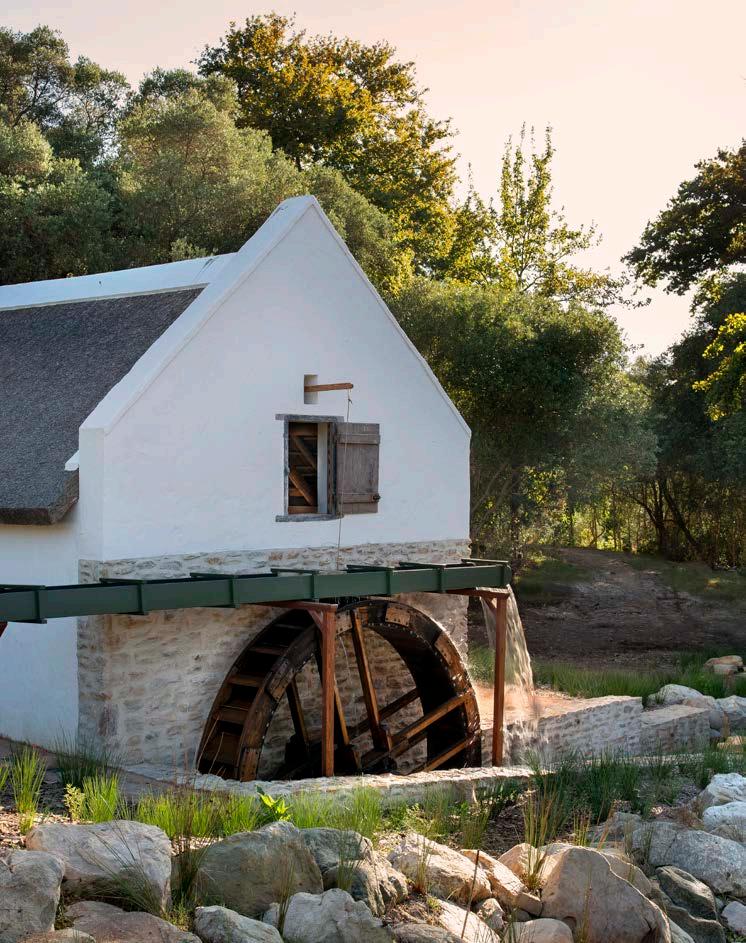
Other additions contribute to the atmosphere of this profoundly layered precinct. The Fowl House, inspired by historic Cape dovecotes, showcases a distinct architectural typology. The watermill, crafted from various historically accurate timbers and local workmanship, reflects the functional mills that once stood on Cape farms.
Collectively, these interventions reinstate Soetmelksvlei’s working character while honouring its architectural legacy. Beyond merely preserving heritage, this project revives it, allowing the werf to emerge as a living, breathing witness to the Cape’s agrarian history.

“Like Cocteau’s disparate creative endeavours, this is a space of combination and juxtaposition — especially of unlikely pairs.”
- Le Bistrot De JAN
StudioLandt Merges Design and Nature in a Celebration of Craftsmanship
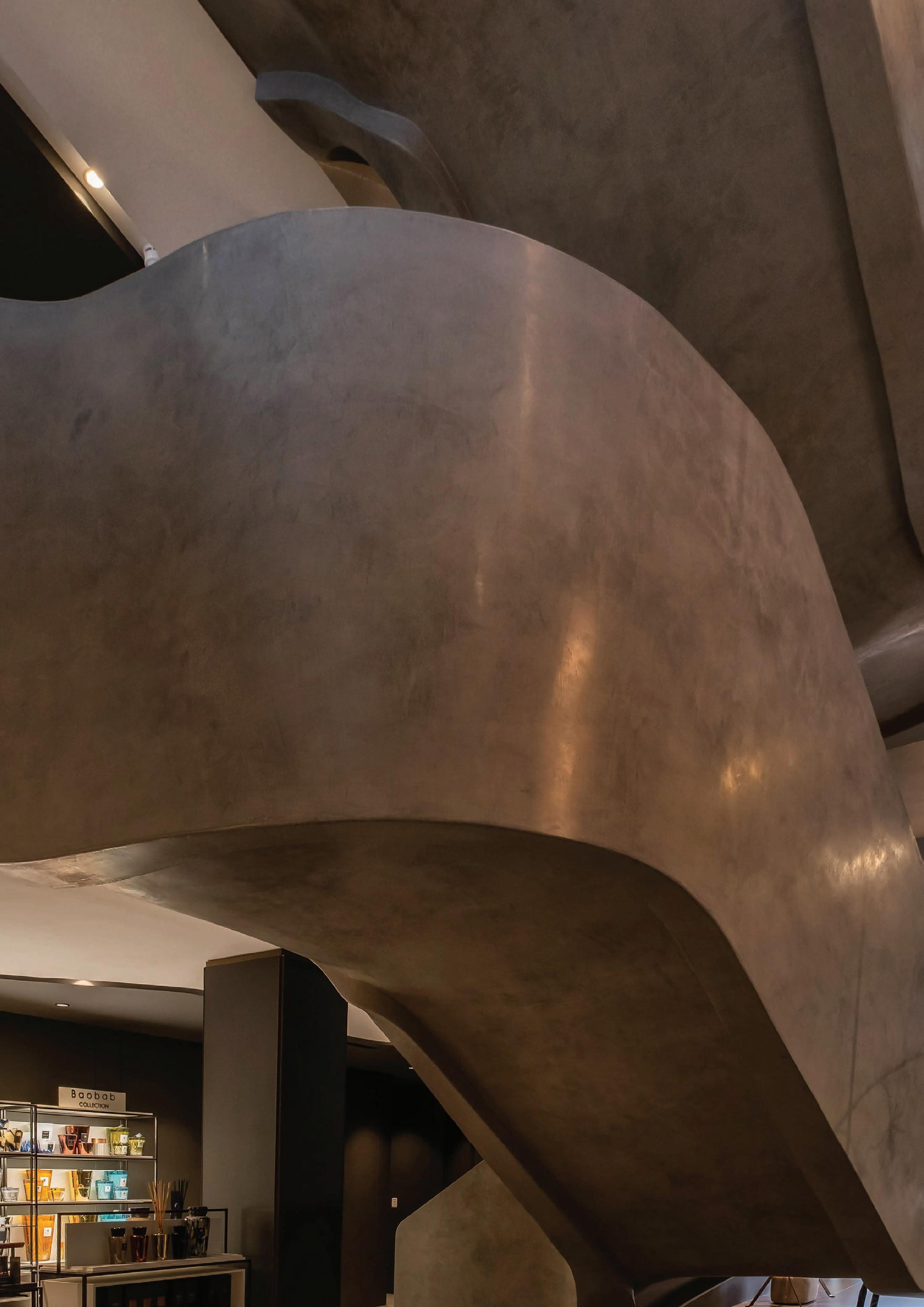
Tshwane Store by StudioLandt offers a respite from the urban bustle of the City of Tshwane, the administrative capital of South Africa. While this furniture showroom responds to its urban context with the contrasting softness of earthy warmth and greenery, it equally showcases the parallels between nature and design. By reconnecting customers to nature, rest and contemplation can ensue. Here, furniture is encountered as it is intended: as objects that support repose, thought, and human connection.
Location:
Size: 2200 m2 Pretoria, Gauteng
meet the team
Architect: Boogertman + Partners
Interior Architects: StudioLandt
Photographer: Sarah de Pina
@studiolandt_ www.studiolandt.com
The brief was to create a retail space that showcases the furniture while remaining faithful to the building’s envelope and retaining the exterior aesthetic that forms part of the larger precinct. This sensitivity to the building’s urban context illustrates the commitment to authenticity that Weylandts, as well as StudioLandt, is known for. While the new design sits comfortably within its urban environment, something unexpected is offered within.
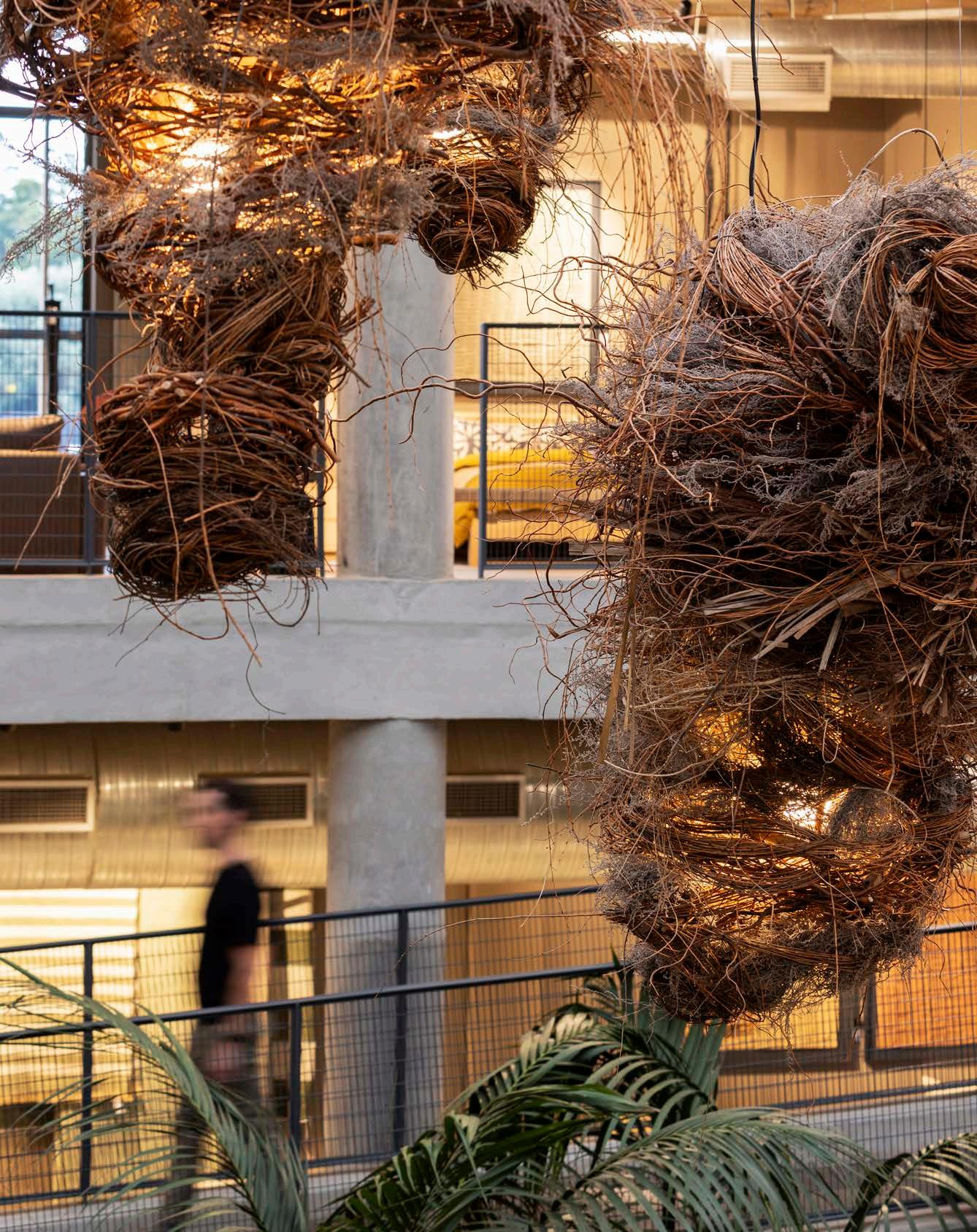
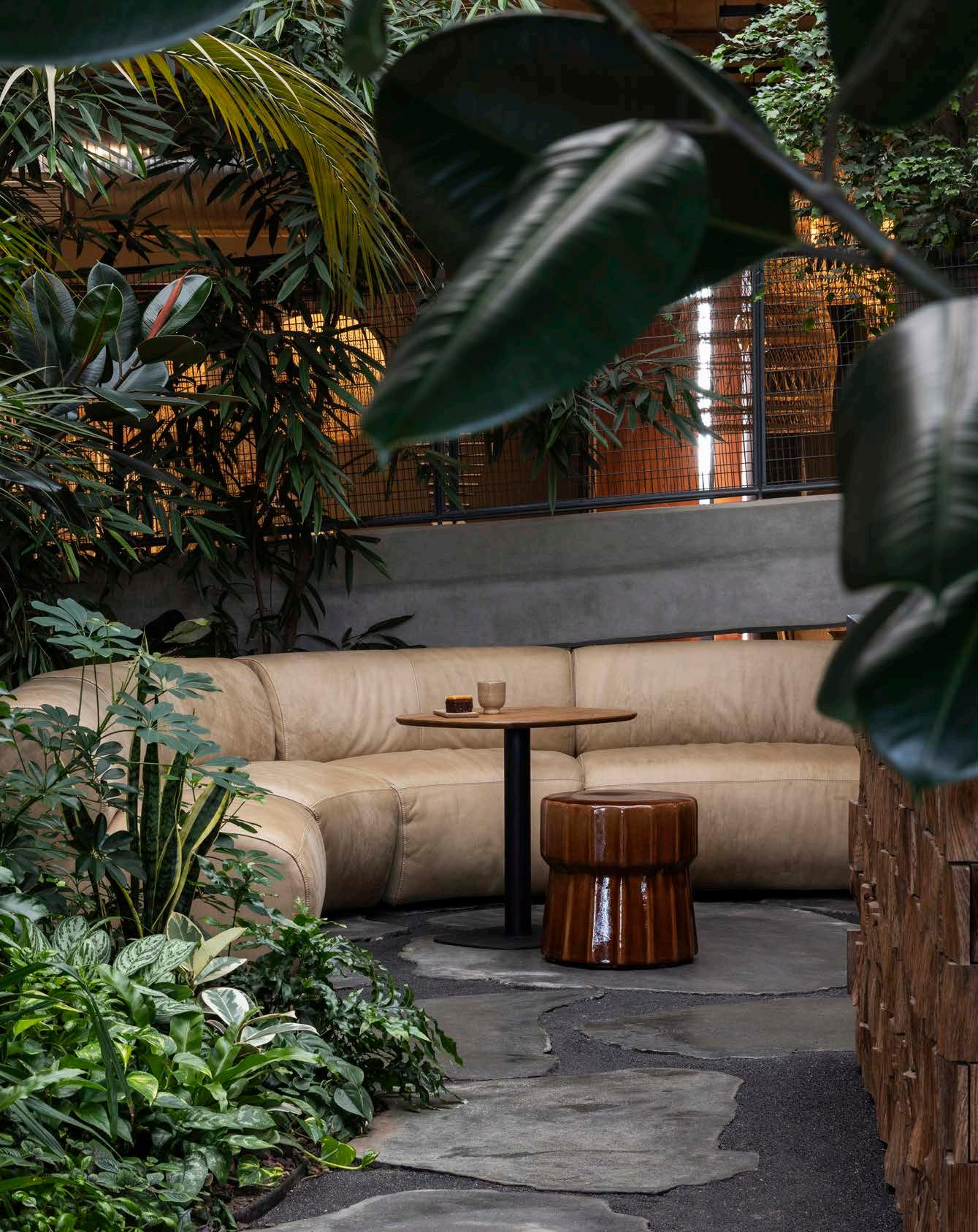
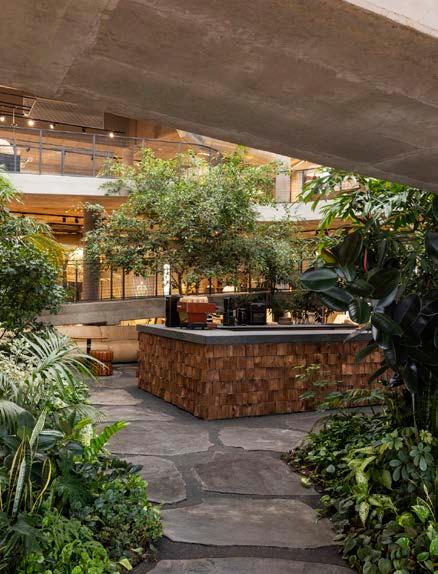
At the heart of the store lies a lush, overgrown internal atrium beneath a dramatic central skylight that draws daylight deep into the space. What sets this showroom apart is its commitment to biophilic design in a dense urban context. The space transcends the traditional retail experience by immersing visitors in an environment where nature and design co-exist. The result is a calm space, awash in gentle, natural light, that offers a moment of sensory relief to the city dweller. The restorative effect of the greenery allows a break from the city’s visual noise, and the oxygen released by the plants enables visitors to breathe more deeply and enjoy the building’s expansiveness.
Encircling the green core is a gently sloped circulation ramp, which activates the double-volume interior and creates a layered, immersive customer journey. A customdesigned natural leather sofa produced by Weylandts elegantly traces the curve of the atrium, blurring the line between display and experience. The interplay between organic and designed forms reminds the customer that nature informs design, rather than standing apart from it. This connection is reinforced by the natural materials chosen for the space.
Feature Wall: Klay
Custom Cast Basins: Rossco | Lights: Botanicus
Landscape: Life Green
Group | Joinery & Custom
Elements: Weylandts
Furniture Creations
Material honesty
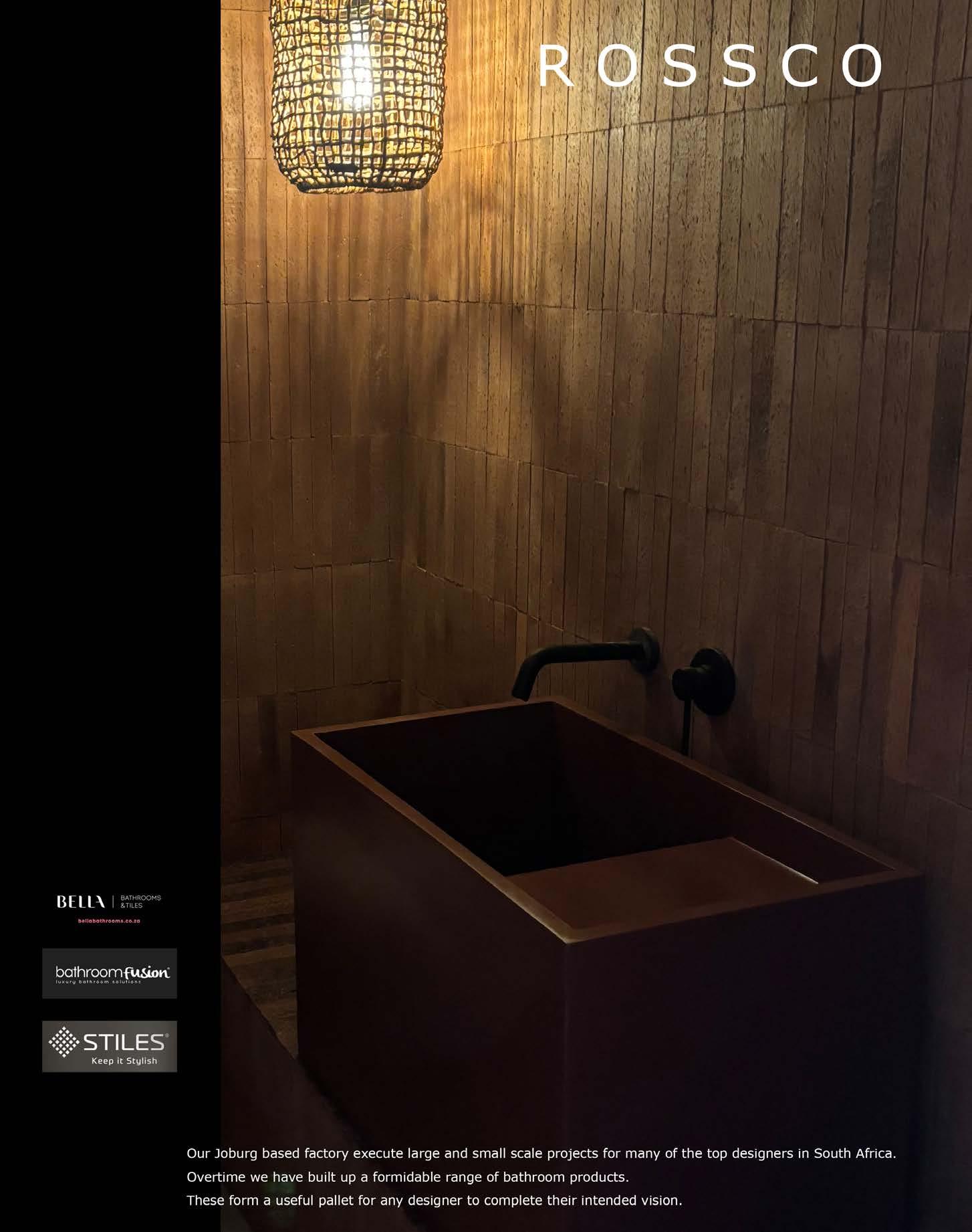
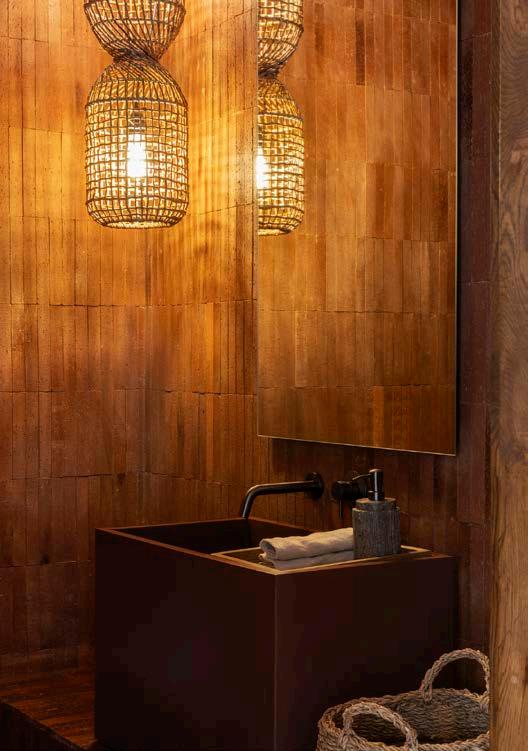
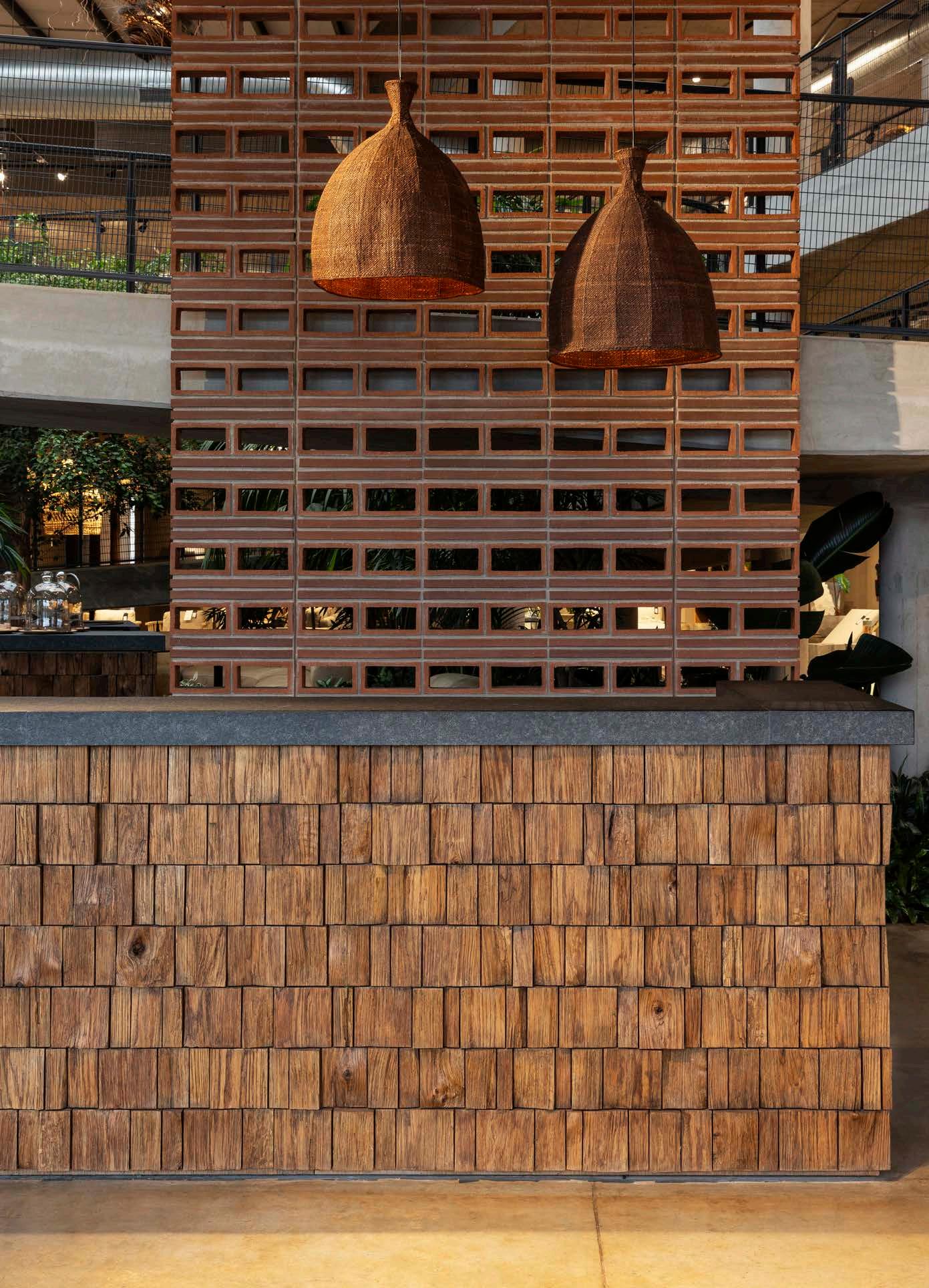
'The design goes beyond displaying furniture; it reflects a deeper connection to nature, craft, and the spirit of the brand. Every material, every texture was chosen to tell that story and invite people to truly experience the space,' notes StudioLandt. A restrained palette of natural materials brings texture, warmth, and authenticity to every detail. This is seen in the imported lava rock slabs used to create a sculptural stepping-stone path through the atrium garden, which grounds the space. Artisanal craftsmanship is highlighted in the hand-axed timber blocks that provide textural cladding for key elements such as the café counter and point-of-sale areas. In the restrooms, custom-fired clay bricks in earthen tones are paired with mud-textured wall finishes to reinforce the tactile, grounded atmosphere that resonates throughout the store.
Eloise Thompson, the creative director of StudioLandt, adds that, 'Together, these materials express StudioLandt’s belief in material honesty and meaningful connection to nature, elevating the retail experience beyond the ordinary.'
Reimagining furniture retail
Before StudioLandt’s holistic reimagining of the existing two-storey retail space, it was defined by extensive perimetre glazing across both floors. Their spatial intervention minimised the external glazing and shaped the atrium that now defines the space. The bold inclusion of greenery and daylight reframes how furniture can facilitate pause, reflection, and human encounter.
This is a far cry from the conventional shopping environment, usually set in a type of non-space, where rapid encounters are encouraged. Instead, the story-driven Tshwane Store establishes a strong sense of place where visitors are invited to linger, stay for a cup of coffee, and gather.
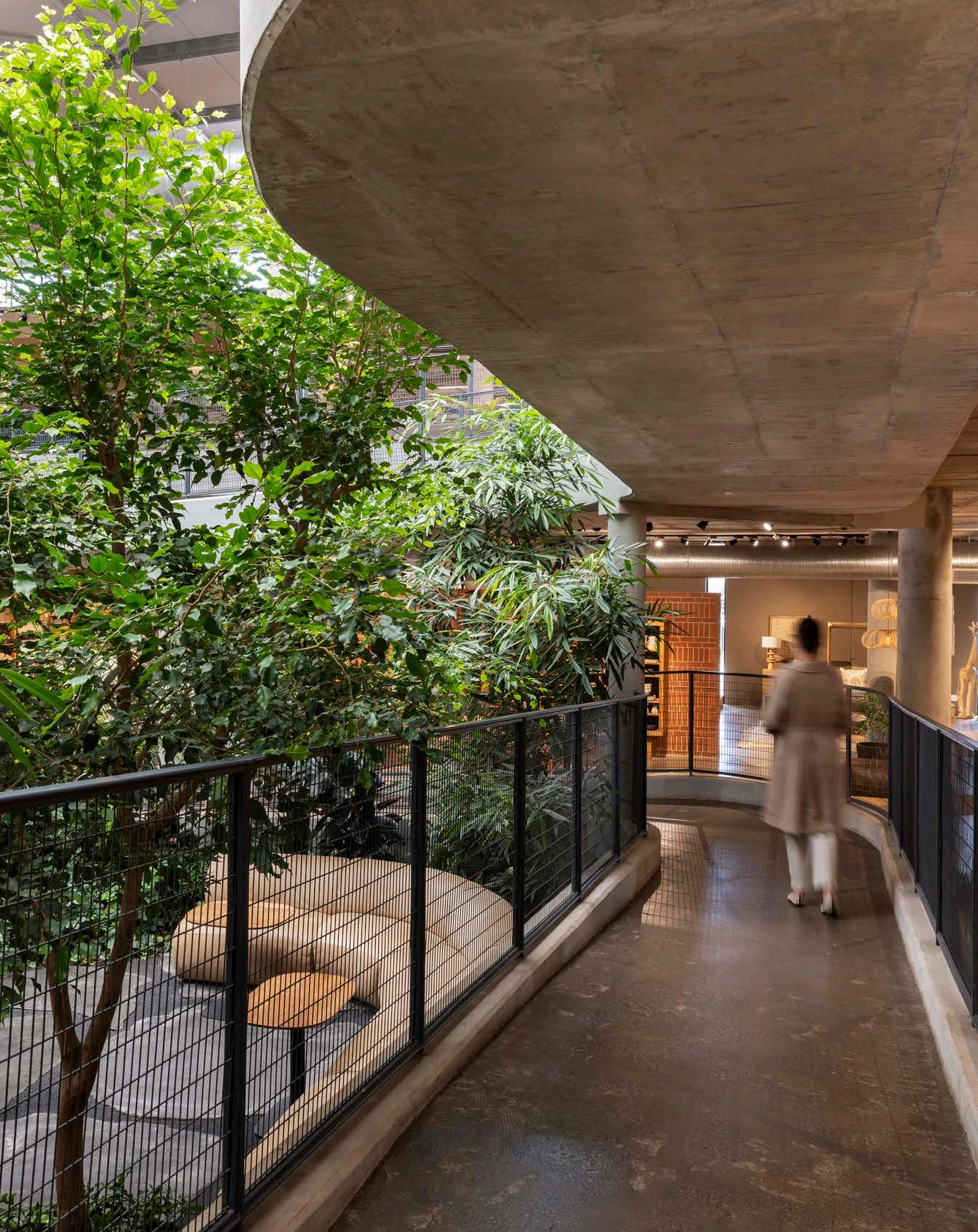
“The interplay between organic and designed forms reminds the customer that nature informs design, rather than standing apart from it.”

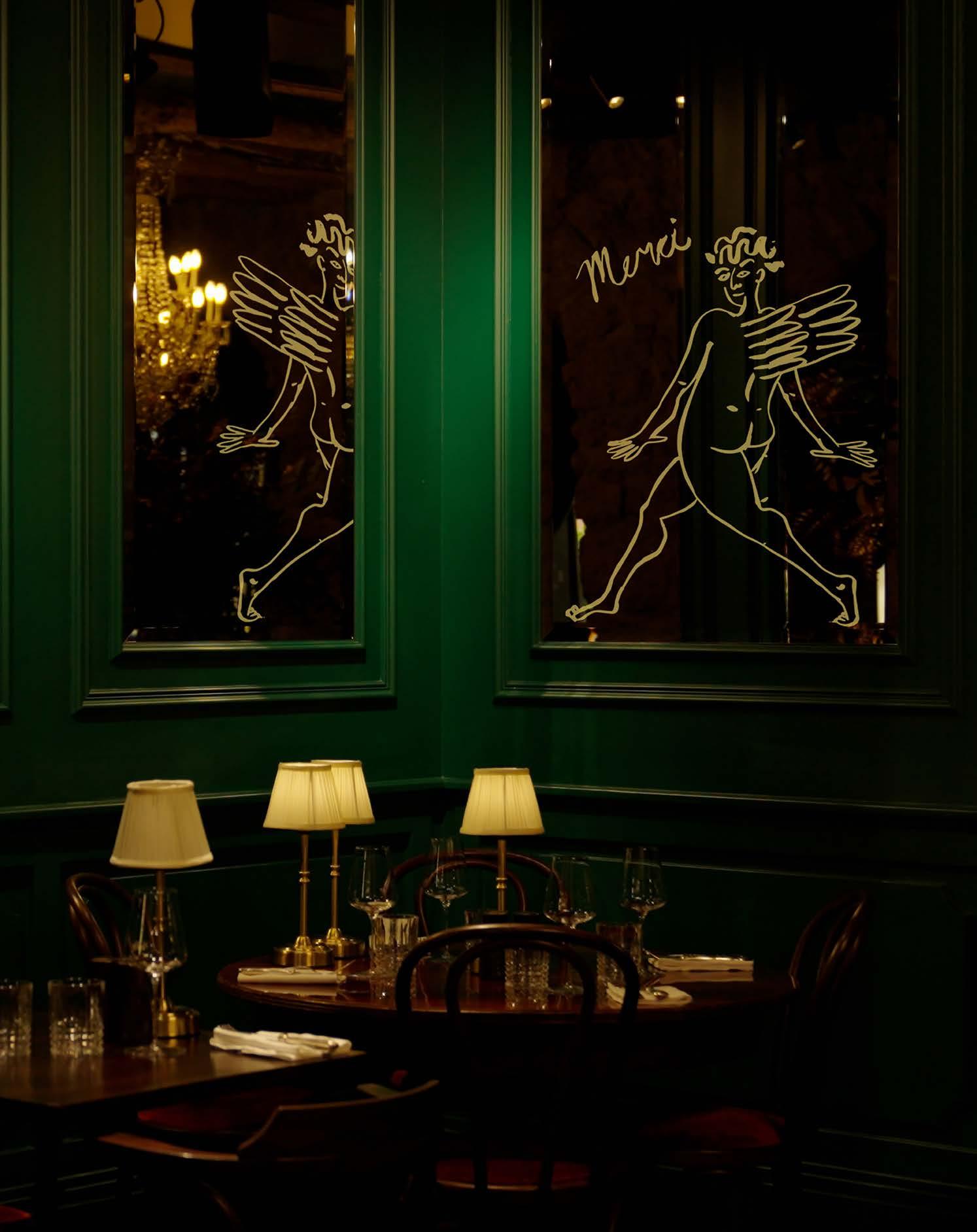
Jan Hendrik van der Westhuizen’s New Restaurant in Nice, France, is a Delightful Mix of French Quirk and South African Spirit
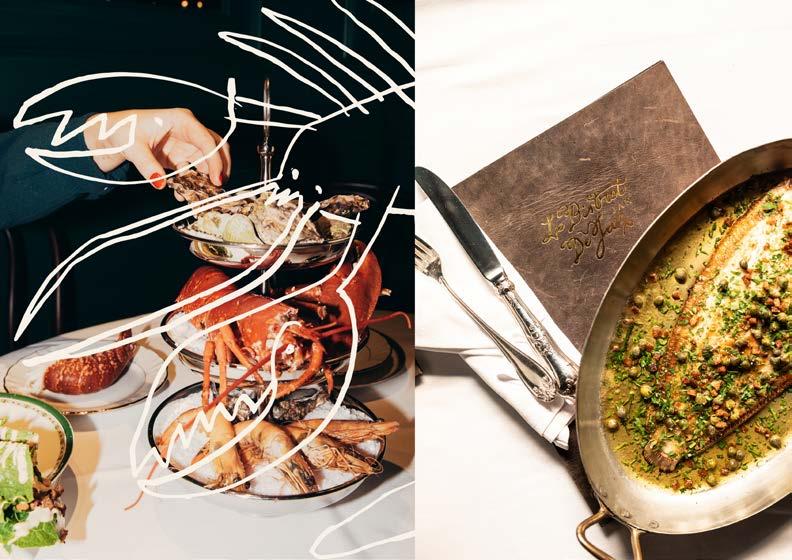
Jean Cocteau, the French avant-garde artist of the twentieth century, once said, ‘Nothing bold exists without disobedience to rules.’ South African Michelin-starred chef Jan Hendrik van der Westhuizen imagines Cocteau as the French counterpart to his own daringness as a chef. Le Bistrot de JAN in Nice, France, is conceived as the younger, naughtier cousin of JAN Restaurant in the same city. Line drawings by Studio Jana + Koos infuse the bistro with a Cocteau-esque aesthetic.
Location: Nice, Fance
@janaandkoos www.janaandkoos.studio
@janhendrikvanderwesthuizen www.janonline.com
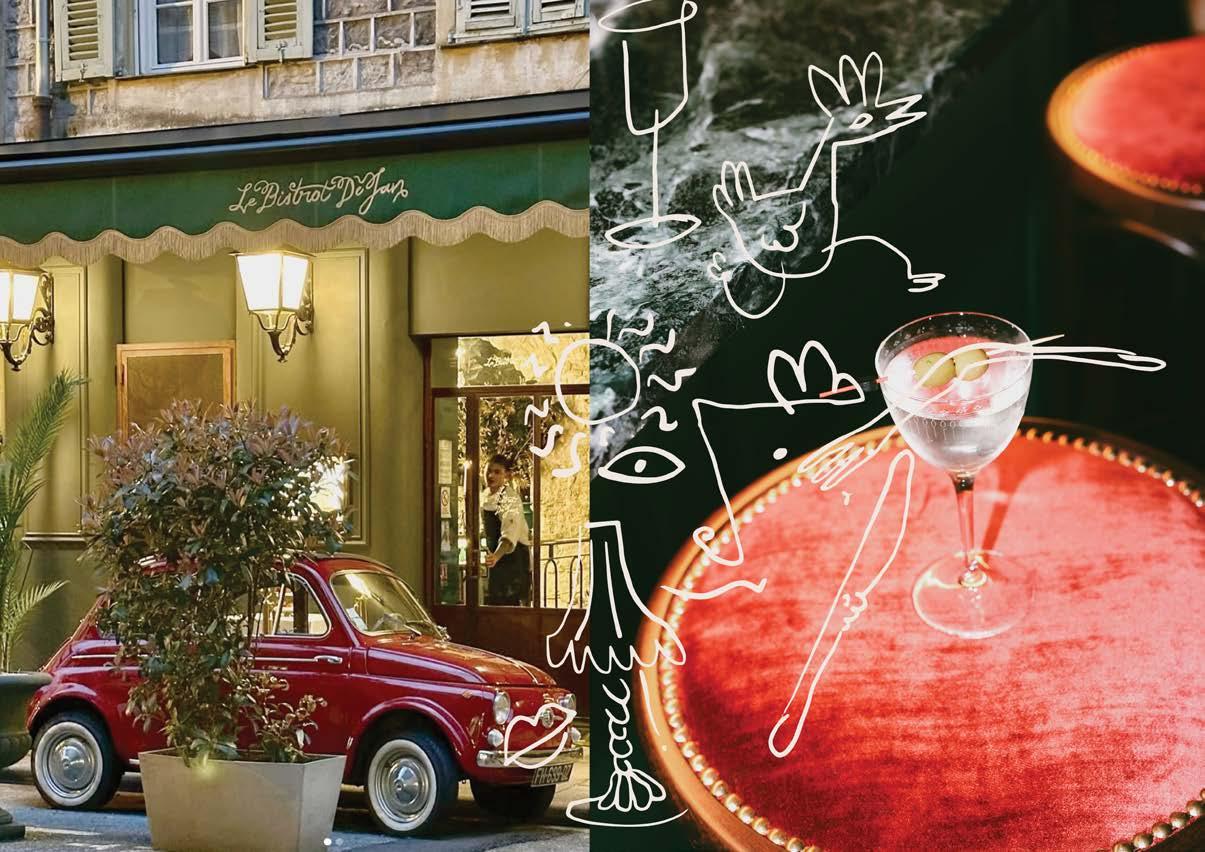
“Everything is tied together by the Cocteau-inspired linework created by Studio Jana + Koos, which adds quirk and playfulness to the overall look, from windows and menus to the restaurant’s social presence.”
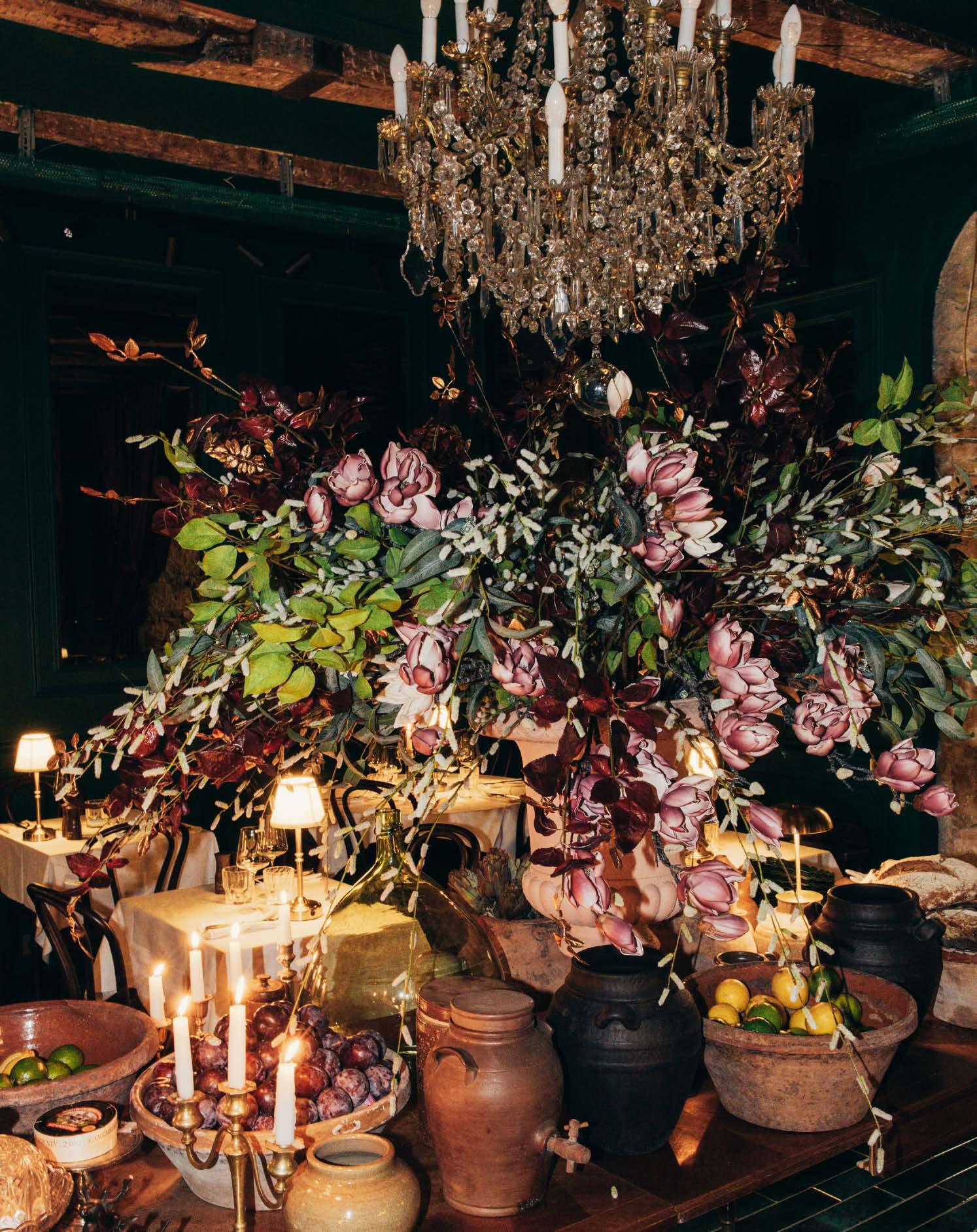
Like Cocteau’s disparate creative endeavours, the bistro is a space of combination and juxtaposition — especially of unlikely pairs. Its somewhat rebellious, playful touch is inspired by the adventurous spirit of Chef Jan’s early culinary explorations. His South African heritage and Afrikaans culture, with their strong attachment to sport, are honoured through the striking colour palette of green and gold, a clear homage to the Springboks. At the bistro, grandmother’s indulgent cooking meets overflowing bubbles. This union of comfort and opulence creates a relaxed setting where guests can enjoy à la carte offerings without the stiffness of traditional tasting menus.
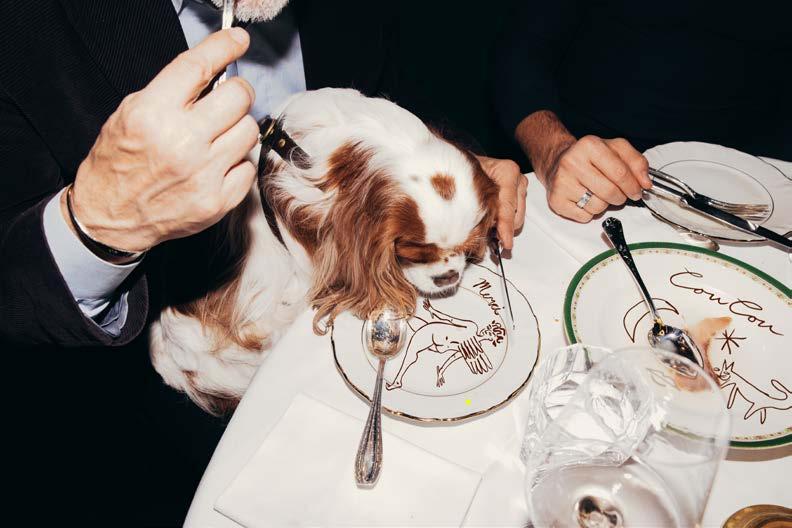
Rather than settling for a compromise between two styles, both South African and French cultures are celebrated fully. White tablecloths lend a touch of formality to the small square tables that line the sidewalk in true French fashion. Each is adorned with a small lamp, and food arrives on ornate plates that could have come from a grandmother’s farm kitchen, yet also carries Cocteau-inspired markings. Chandeliers and abundant flower arrangements convey French extravagance, while the famous country chicken pie is playfully shaped like a stylised sun.
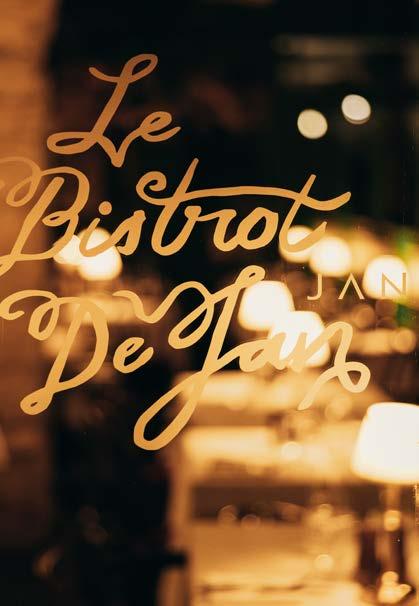
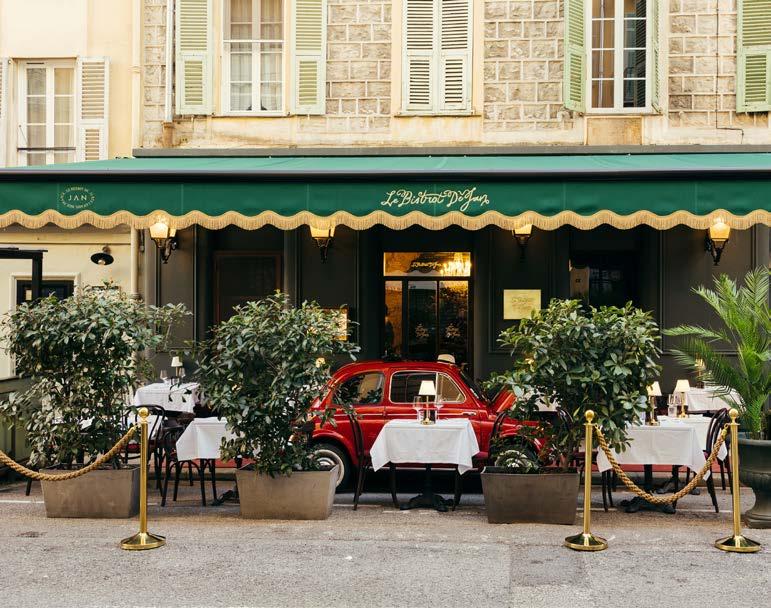
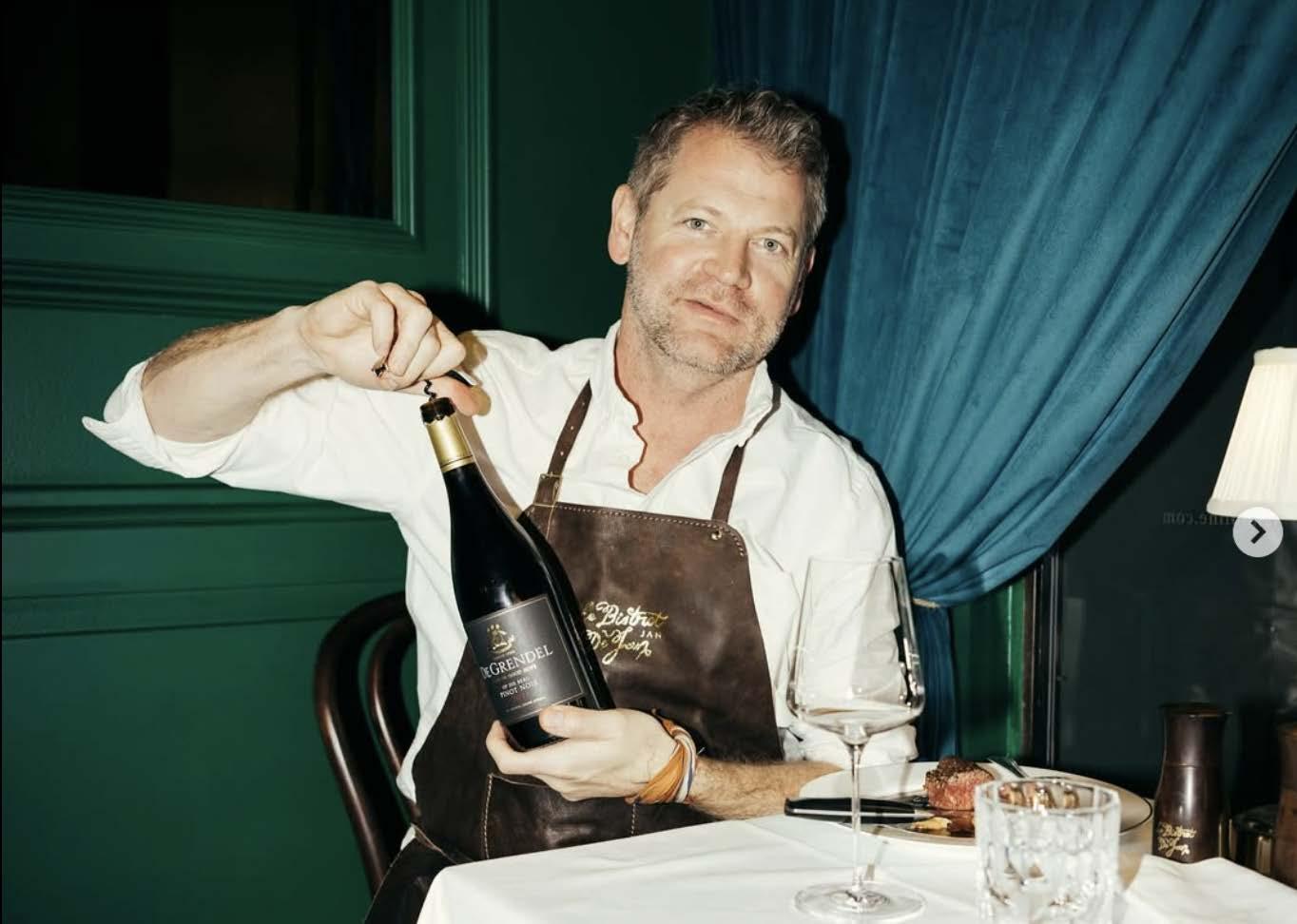
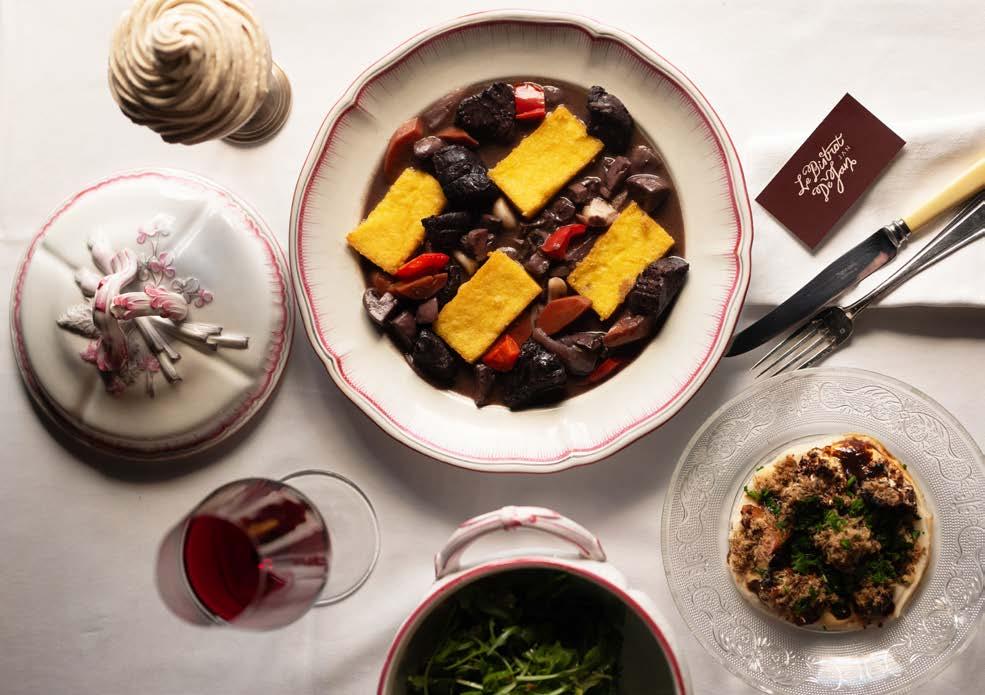
Everything is tied together by the Cocteau-inspired linework created by Studio Jana + Koos, which adds quirk and playfulness to the overall look, from windows and menus to the restaurant’s social presence.
Le Bistrot de JAN is a place that delights in the idiosyncrasies that make for audacious, original lives.




“A titan in its own right, it carries the weight of excellent design with a lightness that is artfully composed and soulfully narrated.”
- Atlas Penthouse
Newman Architecture and Design Reel in the Essence of Retreat with Heerenhuijs
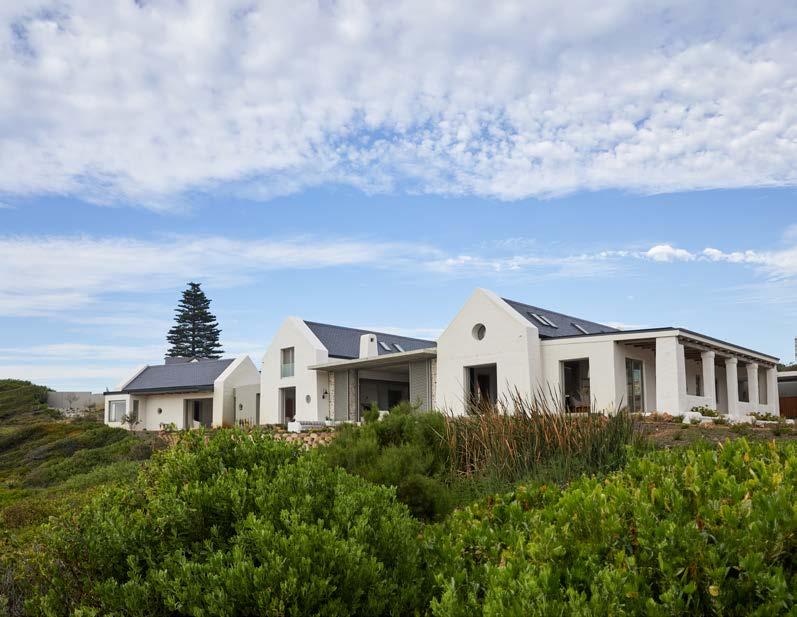
Heerenhuijs is humble and honest, much like the coastal town it calls home. Located in Hermanus, the setting is the epitome of Western Cape laidback luxury, and the structure is no different. With both the architecture and interiors designed by Newman Architecture and Design, this manor is a sanctuary of genuine living imbued with soul.
Location: Size: 990 m2
meet the team
Architects and Interior Design:
Newman Architecture and Design
Client: Heerenhuijs | Contractor: Thorpe Construction | Engineer: Grobler & Vennote | Electrician: Kuyler
Electrical | Plumber: IB Plumbing
Landscaping: Petro Landscaping
Photographer: Greg Cox
suppliers
Sanware: Victorian Bathrooms
Flooring: Lalegno | Lighting: Greg
Marshall Design, Studio Ananta
Custom External Light Fittings:
Ambiente Luce | Architectural
Lights: One to One by Martin Döller
Shutters: Plantation Shutters
Casting a wide net
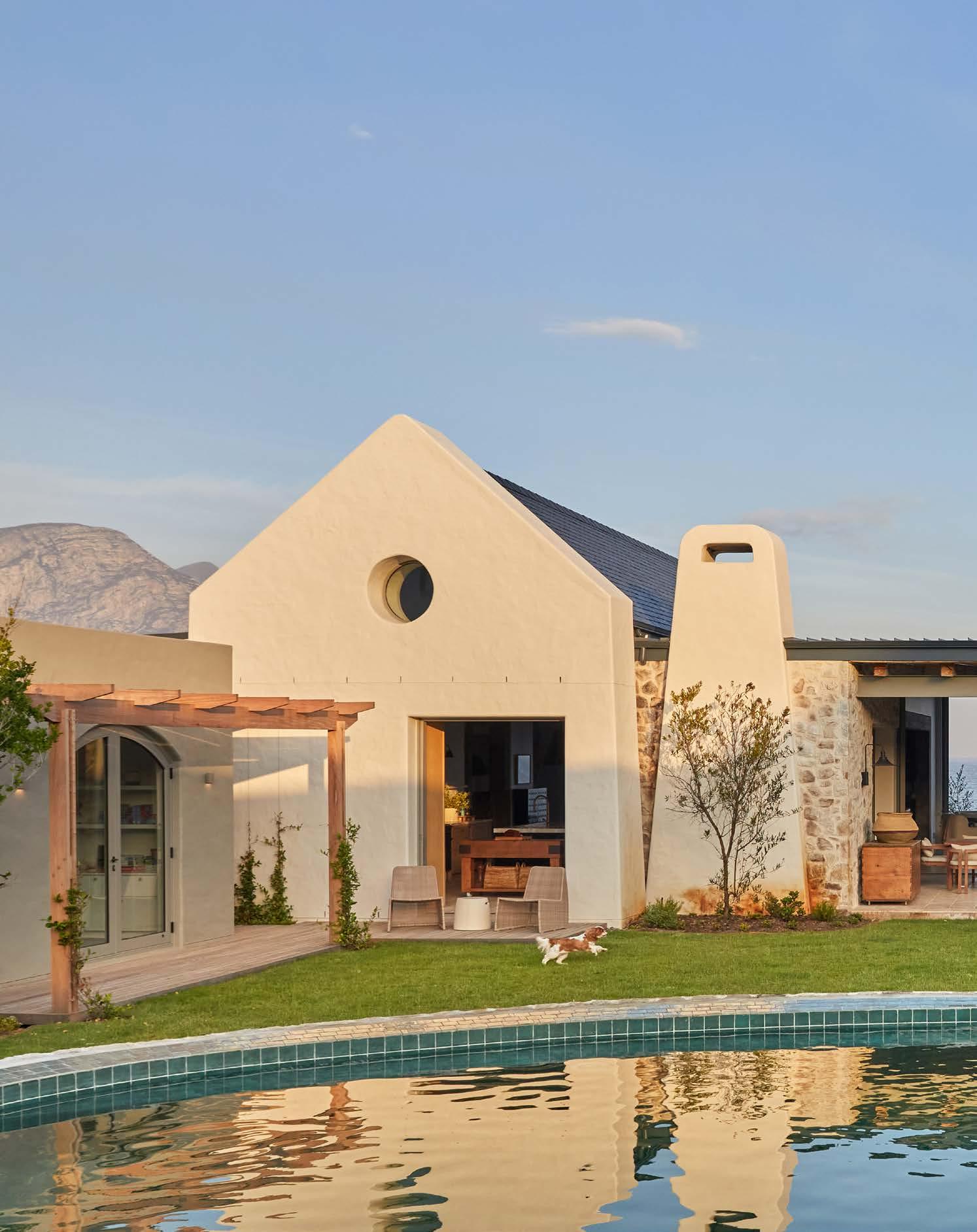
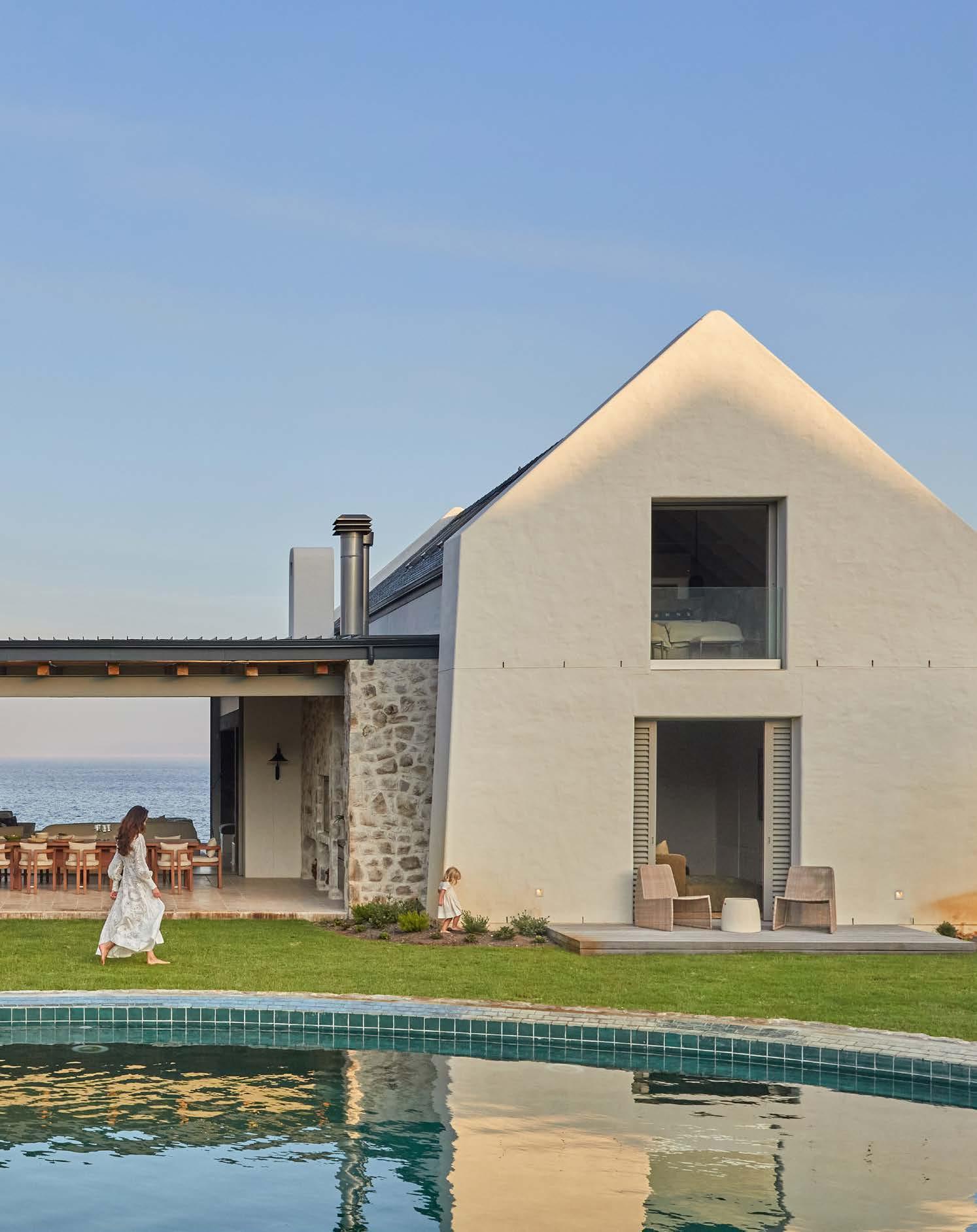
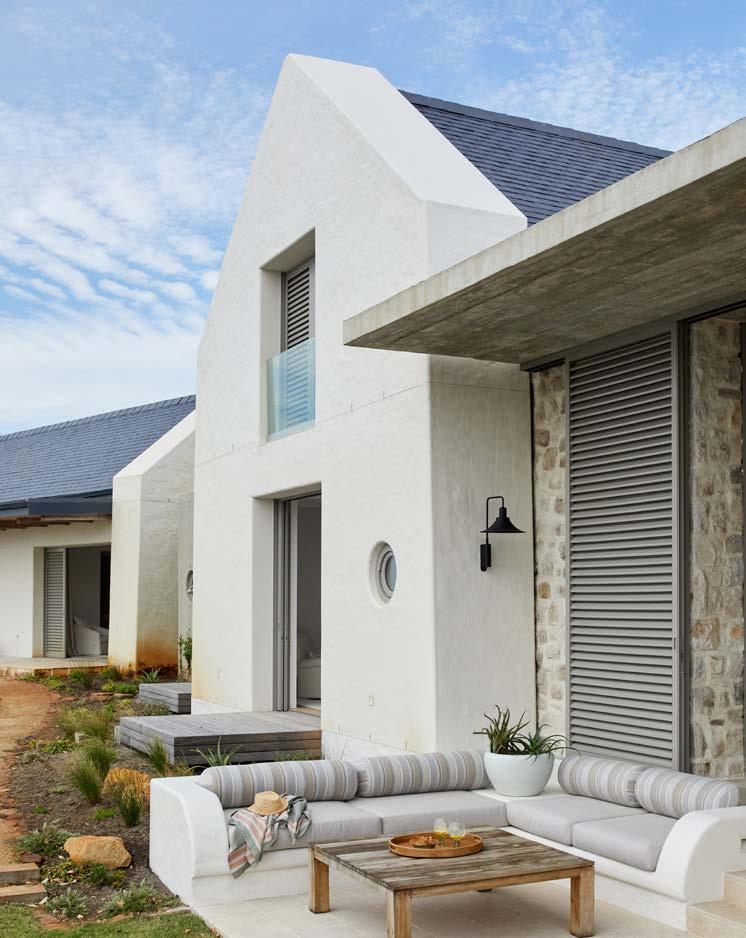
Comprising four separate cottages linked by a single roof, the architecture for Heerenhuijs took inspiration from local fishermen’s cottages of the 20th century. Each cottage, or pavilion, is oriented across a fragmented plan to maximise and frame the awe-inspiring views while still being protected from the coastal elements. The resulting modular approach makes for an elegant balance of intimacy and openness while maintaining minimal site impact; 'silent architecture', if you will. In addition to the four volumes, a stand-out feature is 'The Keep', a marine watchtower that roots the site in its heritage and was restored as a contemporary guest annex — an interplay between past and present that encompasses the project’s unique sensibility.
Elemental and integrated
Newman opted for subtle recessions into the landscape when fixing the structures on the site, complemented by lime-washed walls, low roofs, and a gentle slope in the homes. Further care was extended in the use of primarily natural materials, allowing the home to integrate into the landscape in an elemental, grounded, and private way. The robustness of the materials also gives Heerenhuijs longevity and weather resistance, seen in the timber, stone, and raw finishes reminiscent of the coastal environment. Natural light, framed views, and considered thresholds enhance this by blurring the boundary between indoors and out, allowing the landscape to shape the experience of the spaces.
The language of authentic living
To create this coastal family retreat’s interiors, Newman approached the task as one of building rather than decorating. Their method was simple yet authentic and timeless: the architecture extends inward, with every surface and line belonging to the same language of calm, layered living.
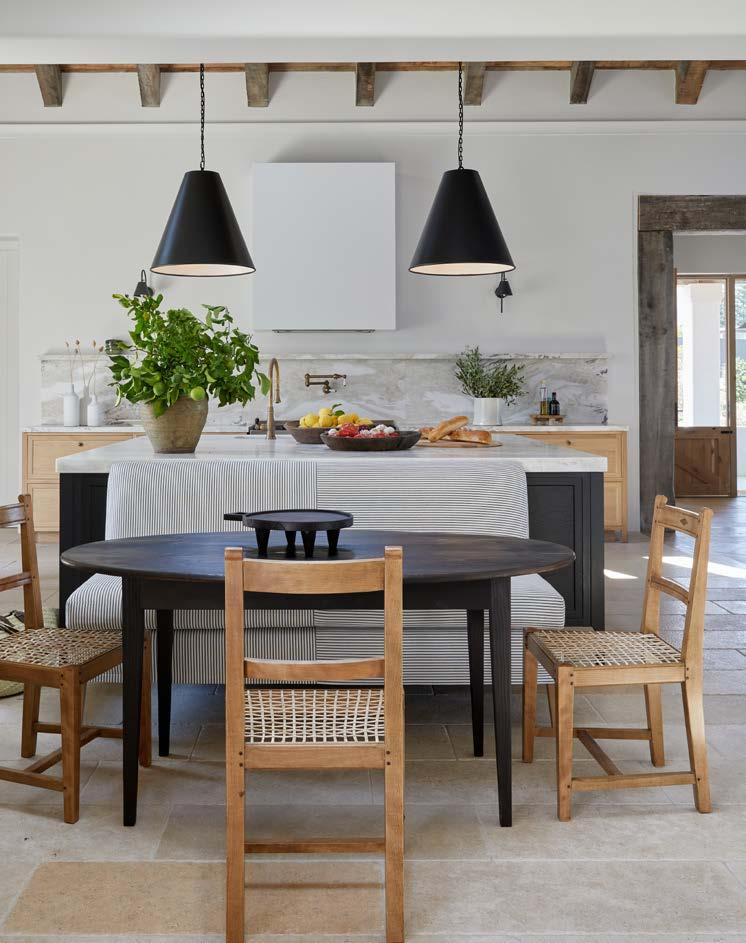
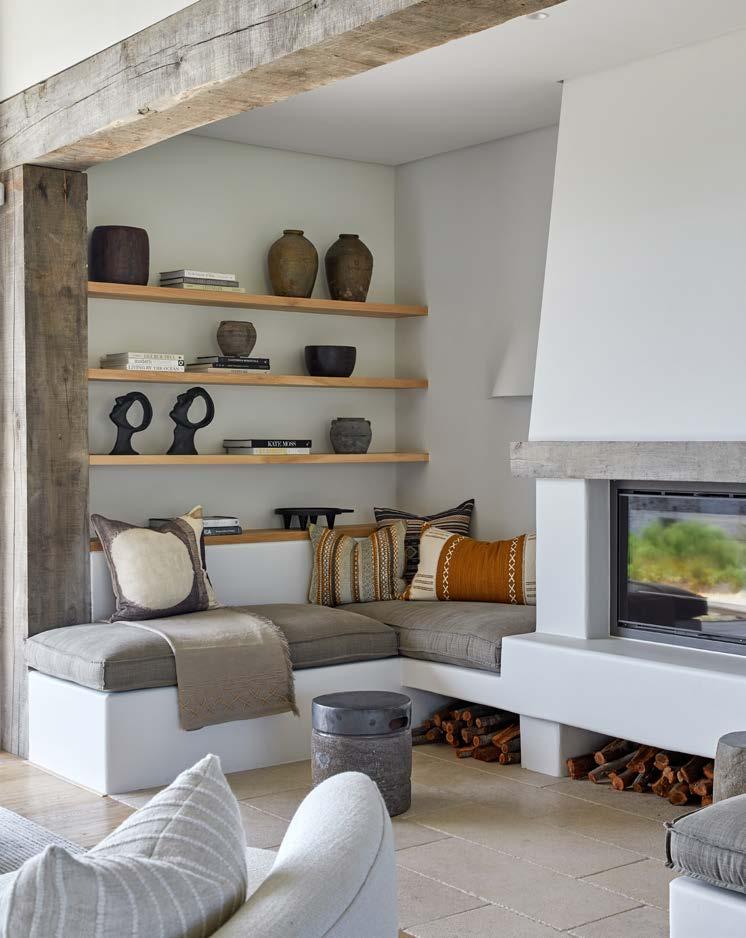
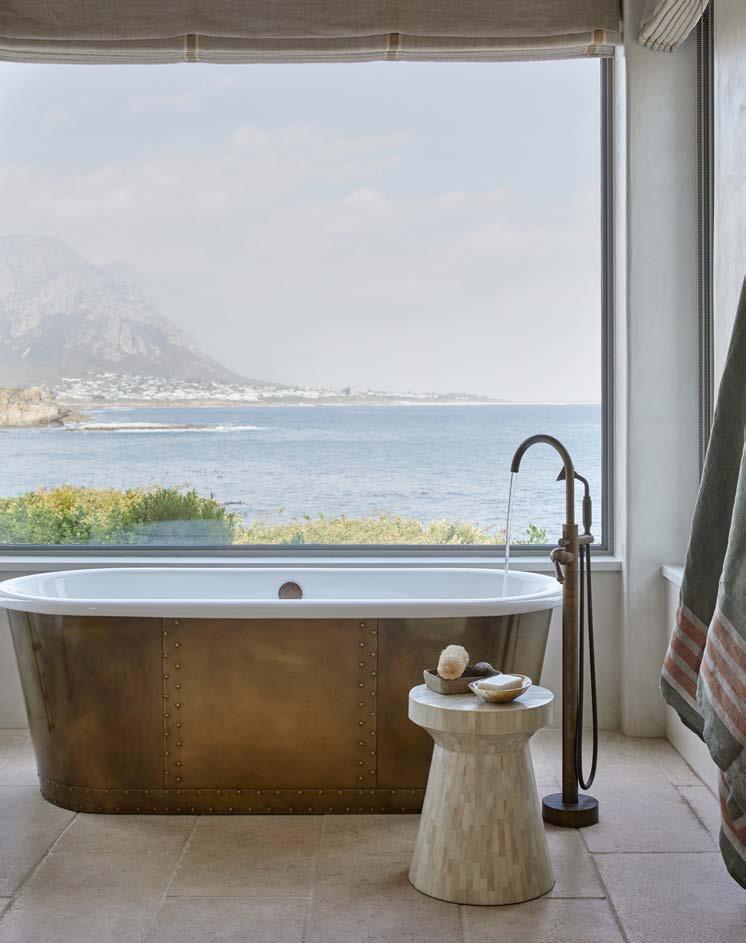
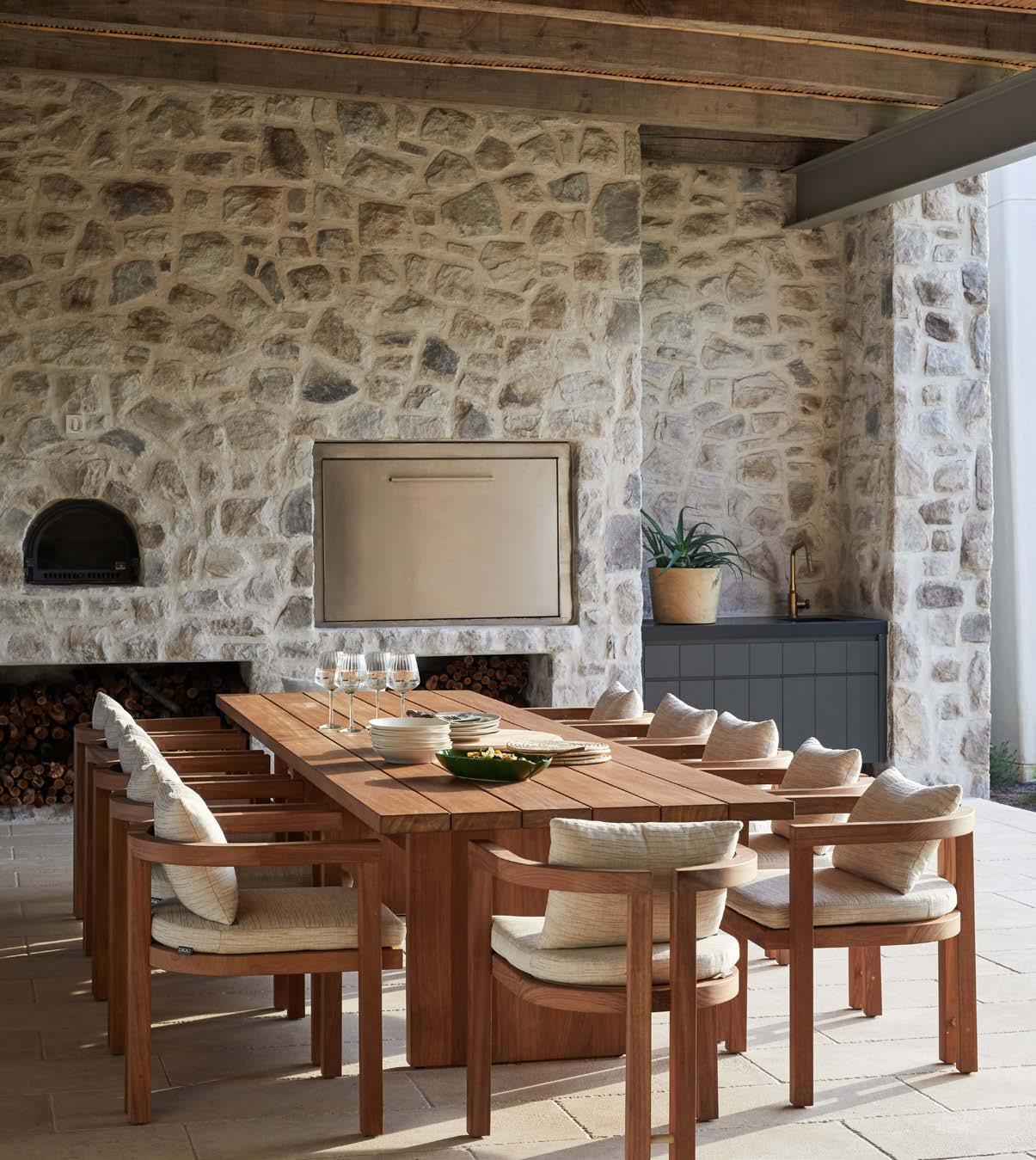
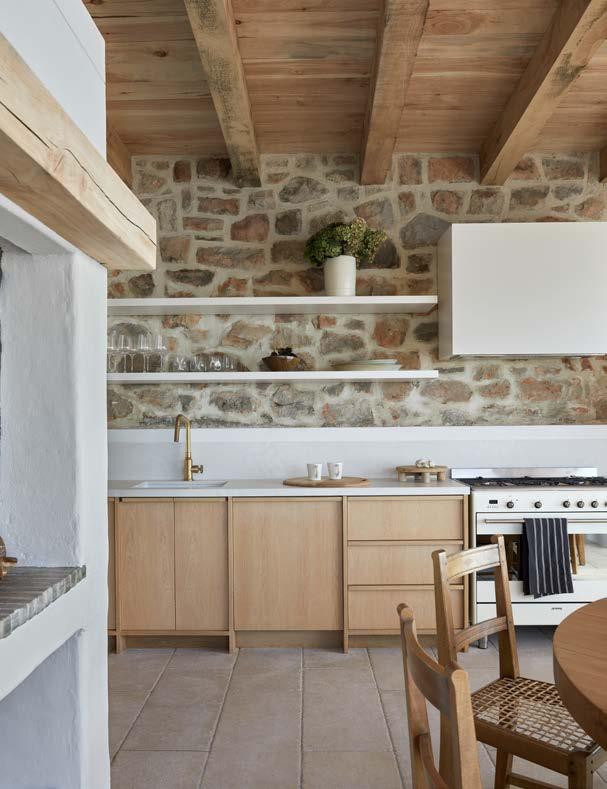
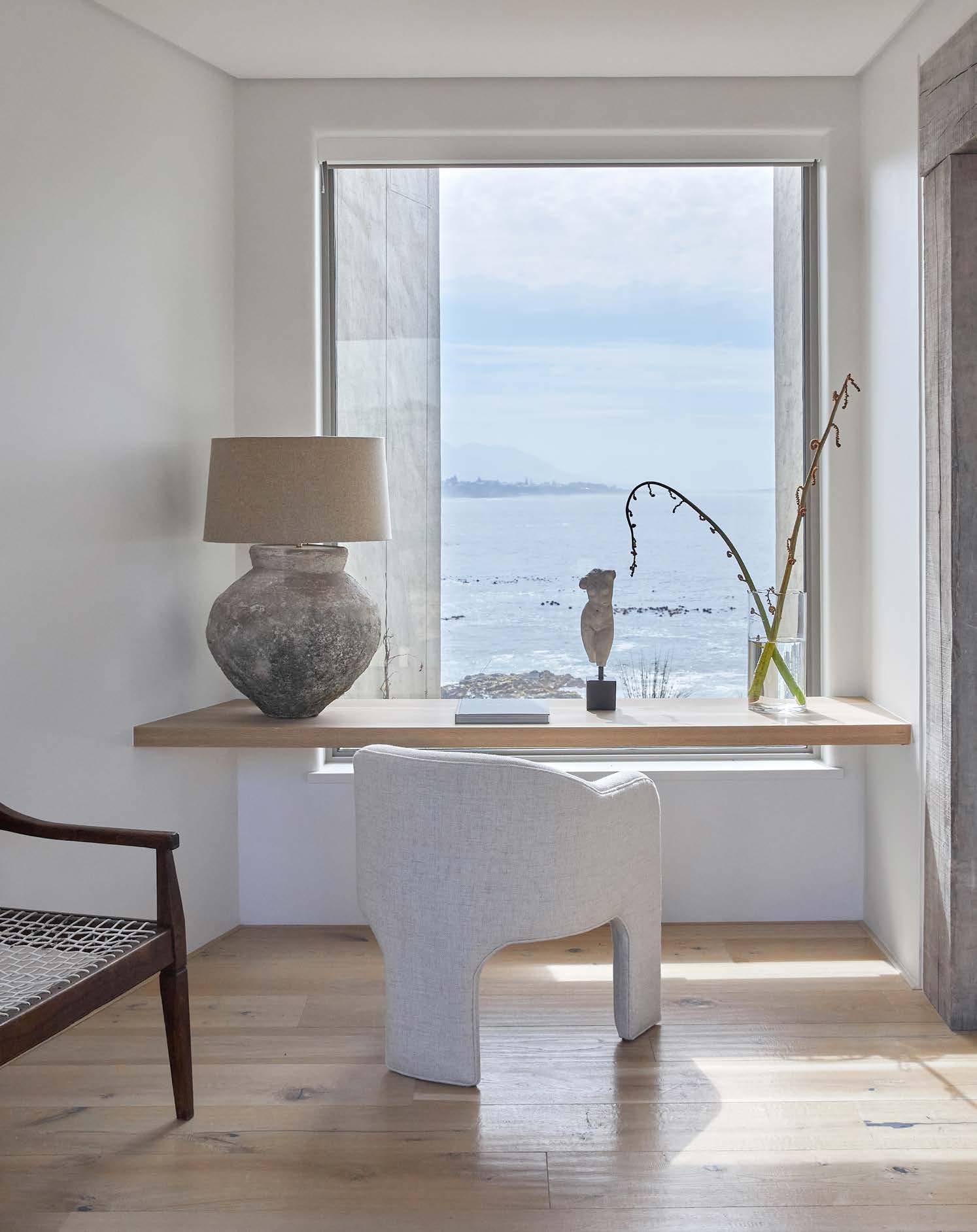
The inside of Heerenhuijs was designed to be a curated but lived-in home. Every object and finish, from the reclaimed wood furniture to the bespoke lighting, was considerately sourced or custom-made to contribute to a holistic experience. In fact, all cabinetry and most of the furniture were designed in-house by Newman and fabricated by Cape Town artisans. The clients wanted interiors that felt warm but unpretentious, expressive but quiet — a lived-in home where nothing felt staged but every detail was considered.
Throughout the four cottages, you’re met with black-oiled oak and reclaimed wood for the built-in cupboards and furnishings. Custom ironwork was sourced for lighting and fixtures, crafted by a local blacksmith. For the soft decor, Newman chose natural linens and wool throws from local makers, accompanied by reused grain sacks as upholstery for benches and ottomans. As a part of honouring local tradition and low-impact living, the team kept functionality at the forefront of every decision, incorporating handmade ceramics, woven baskets, and mineral-based paints.
From the outside in, every element of Heerenhuijs forms part of a holistic design language that prioritises mood, memory, and comfort. Newman chartered this project with expert care and refined purpose to deliver a homestead that is deeply personal yet globally relevant. As the space nourishes its residents, it pays respect to the sand and sea, remaining enduring in its impact.
“Their method was simple yet authentic and timeless: the architecture extends inward, with every surface and line belonging to the same language of calm, layered living.”
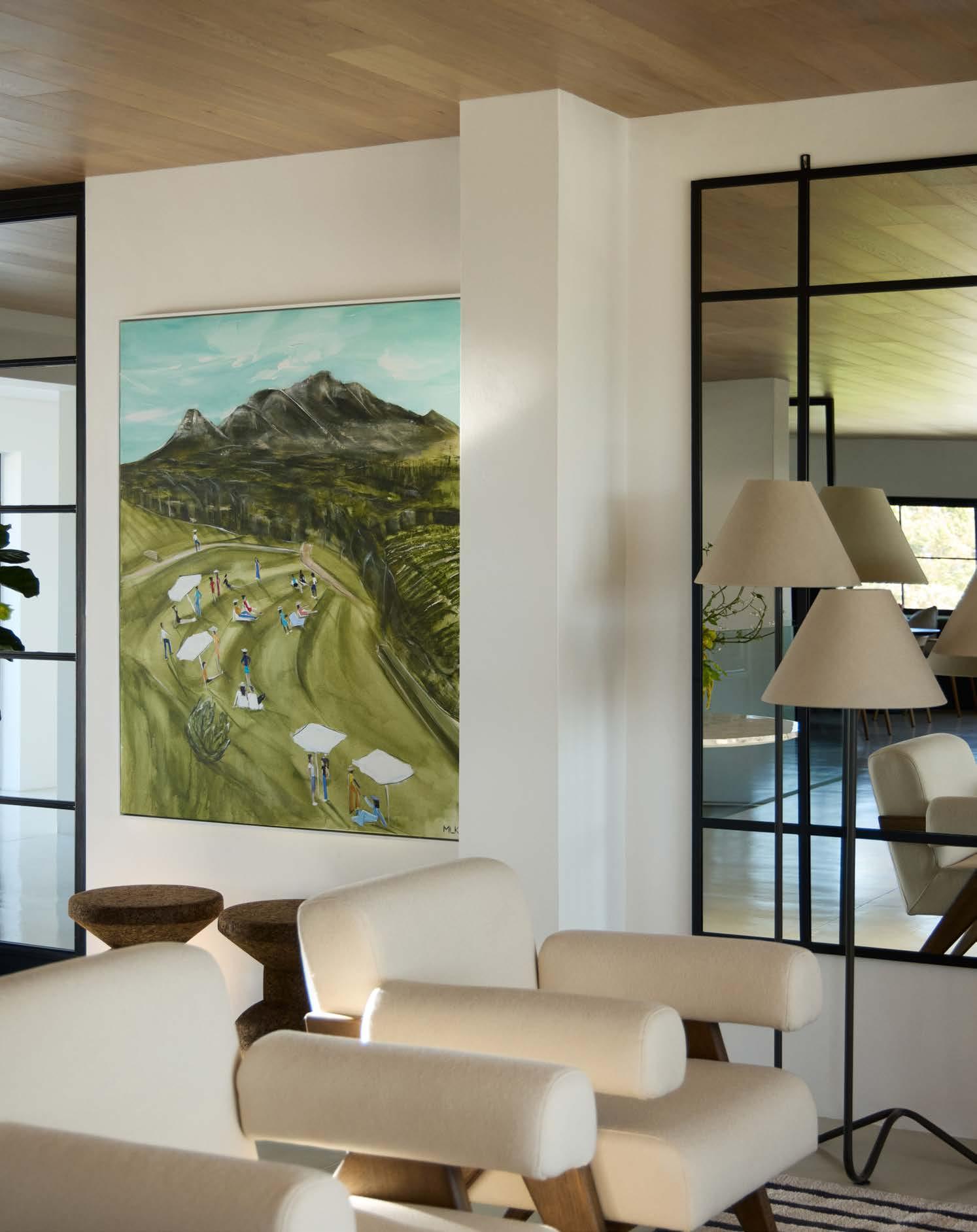
MARIELOUISEKOEN Interiors Creates a Dialogue Between Landscape, Craft, and Calm
Perched high on the sun-flecked slopes of the Constantiaberg, Villa Lion View gazes out over Cape Town, with Lion’s Head standing sentinel in the distance. At once open and intimate, the design of this boutique hotel echoes the calm beauty of the surrounding mountains. The space’s recent renewal marks the return of designer, Marie-Louise Koen to South Africa after several years in New York City — a homecoming captured through a design language grounded in context, craft, and connection to the landscape. From the beginning, her concept was rooted literally and conceptually in the surrounding mountains. A commissioned artwork of the Constantiaberg landscape, painted by the designer herself, became the beating heart of the project, informing its colour palette, texture, and mood.
meet the team
Interior Designer: MARIELOUISEKOEN Interiors | Architect: Masterplan
Architectural Design | Structural Engineer: ADA Consulting Engineers
Landscape Designer: Cara Smith Landscape Design | Contractor: David
Dugmore Projects | Plumber: Enjoi Plumbing | Electrician: Global Electrical
Solutions | Sanware Specification Specialist: Sandy Warner
Guiding it from structural shell to considered completion, her role extended beyond aesthetic refinement; helping shape the very bones of the project. The task was to reenvision the existing guesthouse’s communal interiors and design a new six-suite executive villa addition. Working closely with the drafting architects, build team, and landscape designers, an integrated architectural and interior narrative was composed to link past and present.
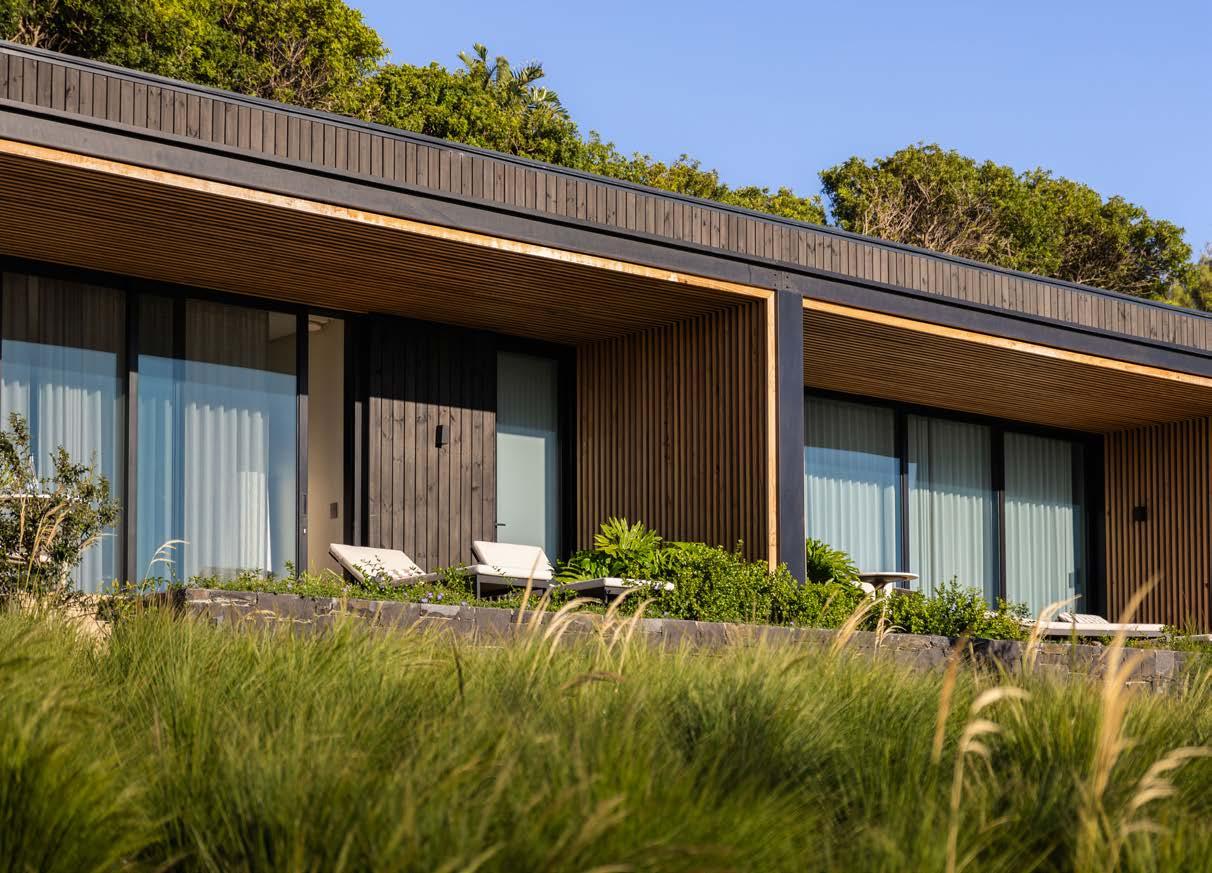
The exterior palette bears imprints of the mountain’s geology and hues: blackened timber cladding and natural slate reference both the original slate-roofed building and the rugged terrain beyond. Slatted timber pergolas, visualised as sculptural yet functional elements, filter light and shadow while posing a tactile contrast to the bold geometry of the architecture. Designed to weather gracefully, they will gradually soften, reflecting the evolution of the mountain itself. Location:
“This recurrent dialogue between expanse and intimacy embodies the essence of Villa Lion View: spaces that feel both open and calm, elegant yet grounded.”
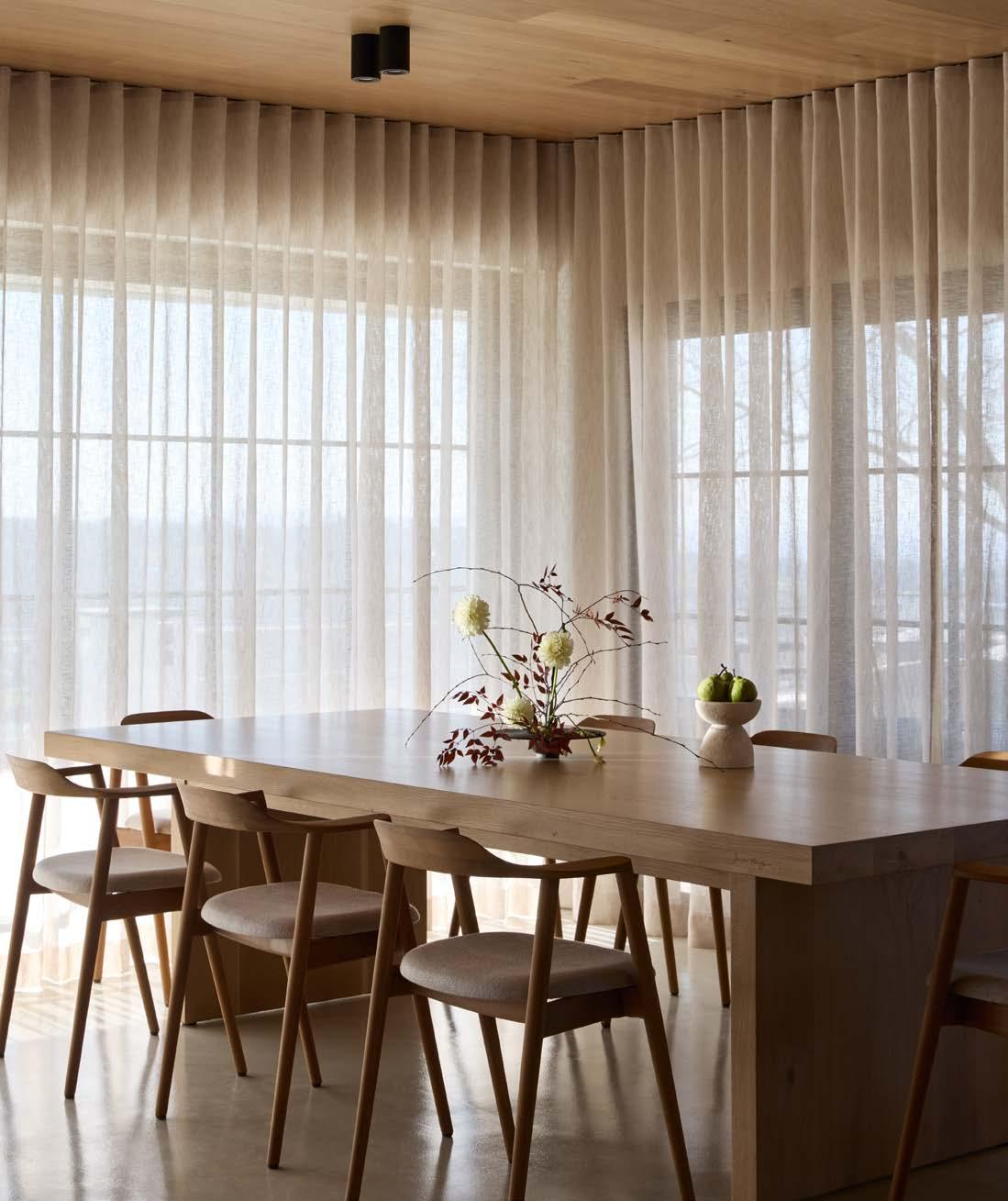
Landscape design, developed in collaboration with Cara Smith Landscape Design, negotiates between architecture and topography. Indigenous planting softens the transition between the existing guesthouse and the new villa, making the building seem as if it has always belonged to the mountainside.
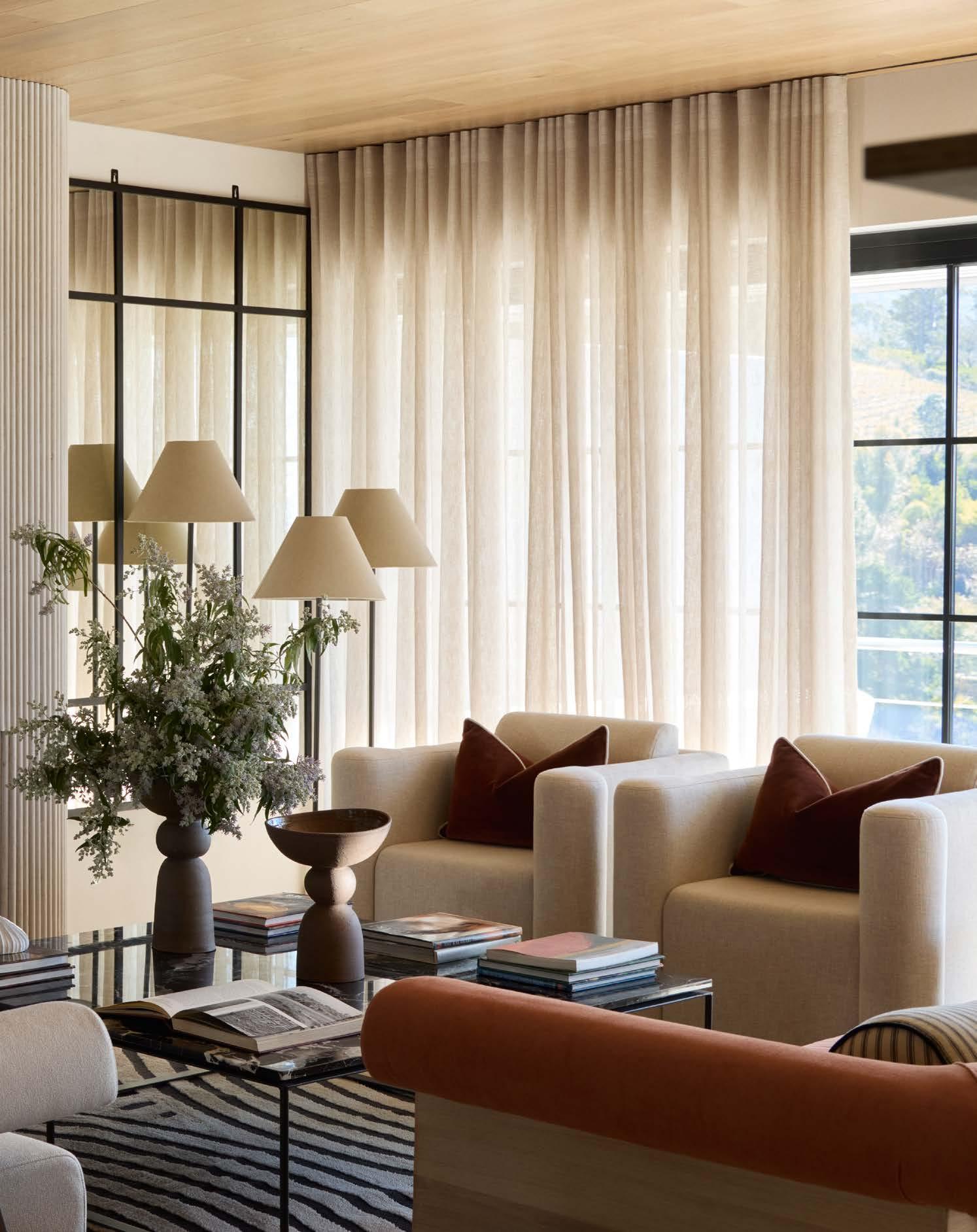
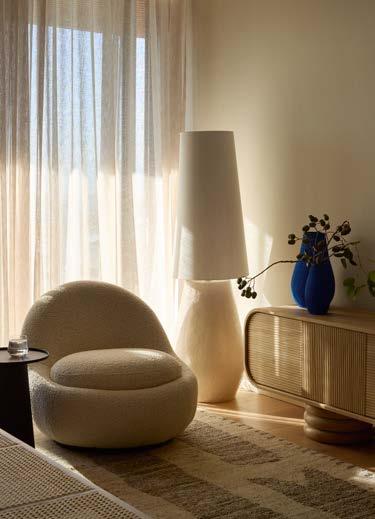
Internally, the design extends this seamless dialogue. Expansive glazing maintains uninterrupted views. A tonal palette prioritising texture and flow allows the landscape to remain the focal point. Timber, raw stone, and marble form establish a serene, cohesive interior order. Bespoke furniture and curated artworks that accentuate spaces, while an understated base palette enhances the impact of selective bursts of colour.
Framing the landscape
Through measured restraint and a refined material palette, this boutique hotel carries the essence of place. Each of the villa’s six suites features a commissioned painting from Marie-Louise’s Cape Town collection. These artworks — lively echoes of the Cape’s landscapes — add moments of energy into otherwise muted interiors.
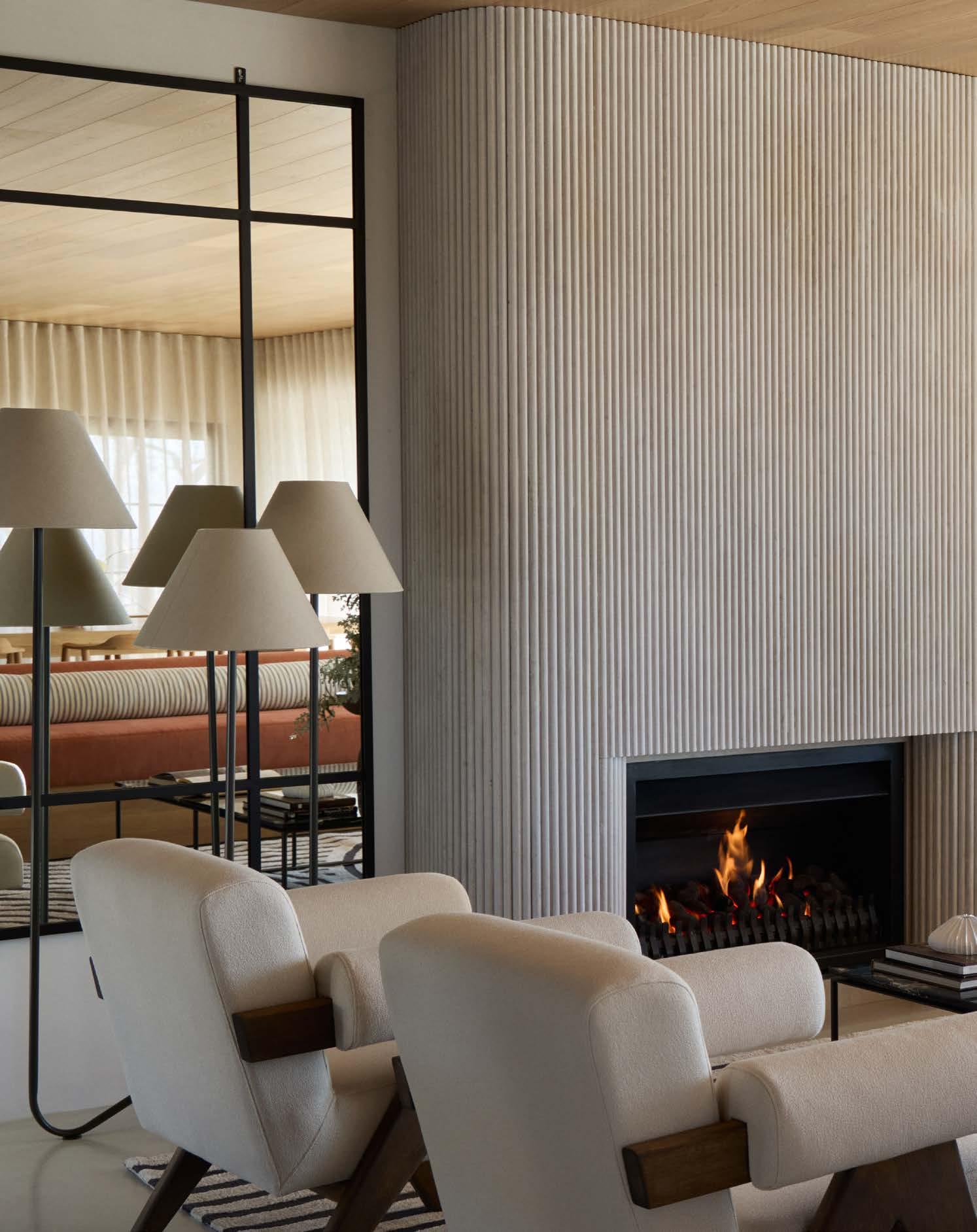
At the heart of the design, local craftsmanship roots the interior scheme in a distinctively South African sensibility. Furniture and detailing introduce texture, eclecticism, and personality to the project. A fluted fireplace and continuous timber ceilings weave through the renovated and newly built spaces, discreetly connecting them through material continuity.
Bathrooms here open to the outdoors, with large windows framing rugged planter boxes that blur the boundaries between interior and exterior. This recurrent dialogue between expanse and intimacy embodies the essence of Villa Lion View: spaces that feel both open and calm, elegant yet grounded.
Villa Lion View exemplifies modern South African refinement — not through excess or elaborate design, but through restraint, material integrity, and a profound relationship with place. Architecture, interior, art, and landscape exist in considered harmony, each elevating the other. This mountain retreat becomes a conduit for the soul of the Cape: a space that responds to its surroundings, exists within them, and, ultimately, becomes one with them.
suppliers
Furniture: Bofred, James Mudge, Wiid Design, SOFACOMPANY, Deft Studios, HoutHakker | Flooring: Oggie Hardwood Flooring | Tiling: Opia Design, Studio Masson | Marble Slabs: Sangengalo | Joinery: Silverbirch Kitchens | Lighting: Hoi P'loy, Greg Marshall Design, Curación Collection | Tapware: Meir | Outdoor Furniture: Alifurn
MiMo Architects Craft a Home That Holds the Harmony of Three Generations
Location:
Johannesburg, Gauteng
Size: 290 m2
@_mimo_architects
www.mimoarchitects.co.za
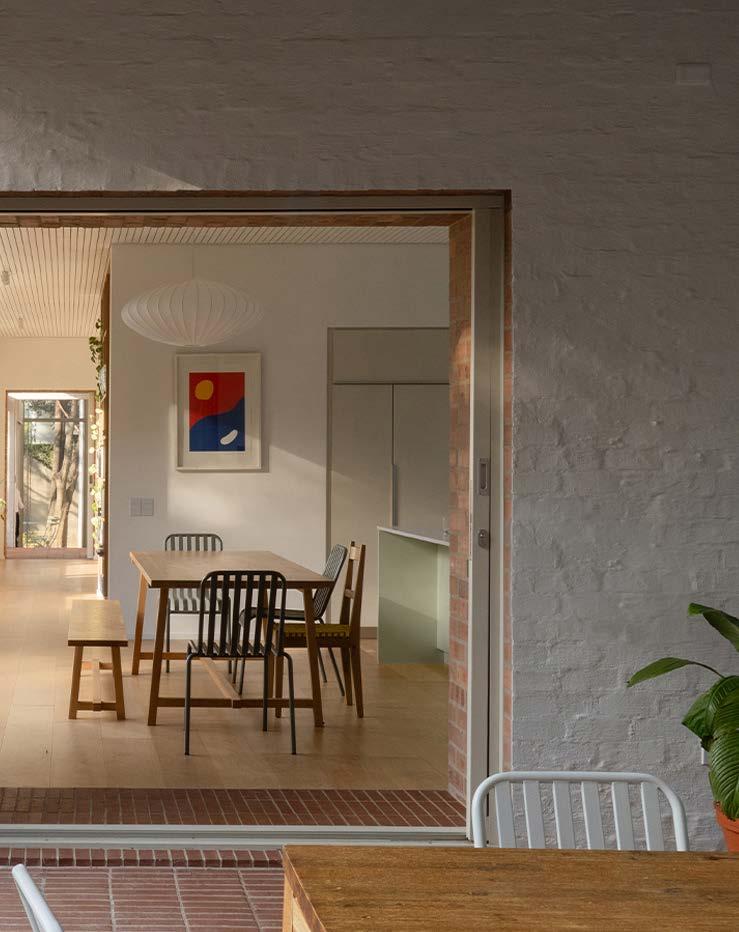
Designed to hold three generations under one roof, this Johannesburg home negotiates a delicate balance between togetherness and retreat. Its rooms bring the family gently into one another’s orbit, yet the plan remains finely tuned to honour the need for separation. At just 290 m2 across a main house and adjacent cottage, the architecture responds to the constraints of its suburban context with an urban economy. Here, generosity is not found in scale, but in volume, proportion, and a choreography of visual connections to outdoor “rooms.” Nothing is wasted; every metre is intentional, considered for what more it can do.

meet the team
Architect: MiMo Architects | Contractor: Reef Building Construction | Structural
Engineer: Cezelle Viljoen | Quantity
Surveyor: Mi-Consulting | Styling: Victoria Moronell | Photographer: Leonard Miller
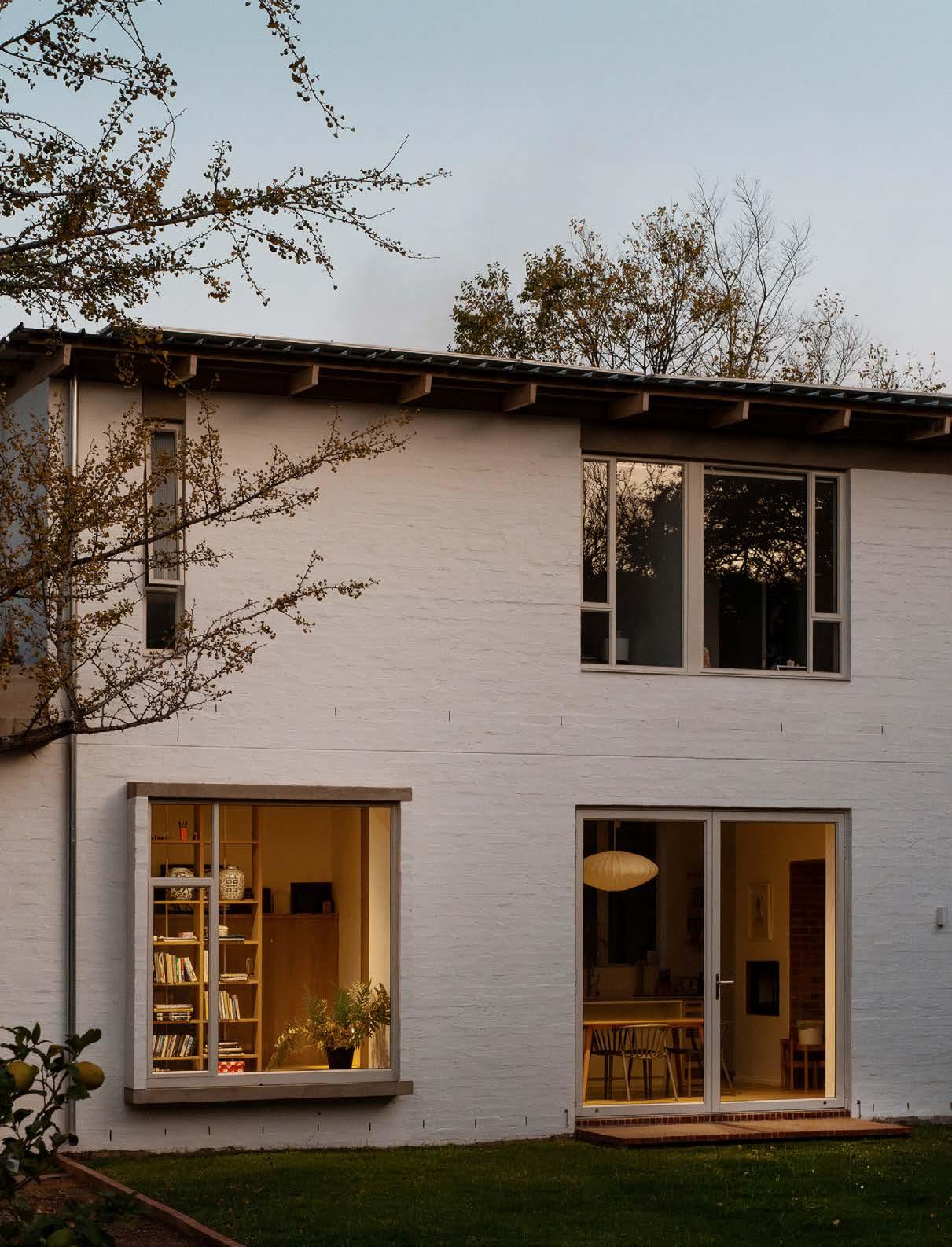
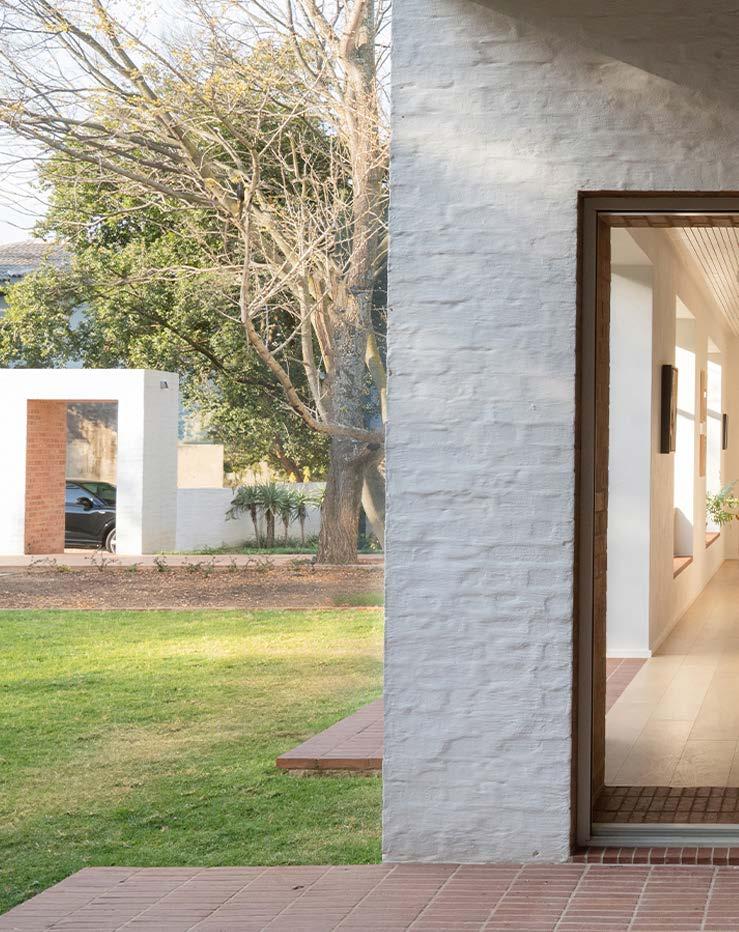
Constructed entirely in clay brick, the house sits firmly within its context. Brick delivers thermal comfort and longevity while lending the home the solid, grounded presence typical of Johannesburg. Its walls hold heat and cast shade. Deep reveals temper the sun while thickened edges keep interiors cool. The architecture is deliberately calm and enduring. Internally, layers are pared back and materials are celebrated in their natural state: timber, face brick, and bagged brick remain exposed, selected for their honesty and the quiet composure they bring to everyday life. This is a home shaped not by embellishment, but by a measured, steady character of elements that endure.
Between closeness and seclusion
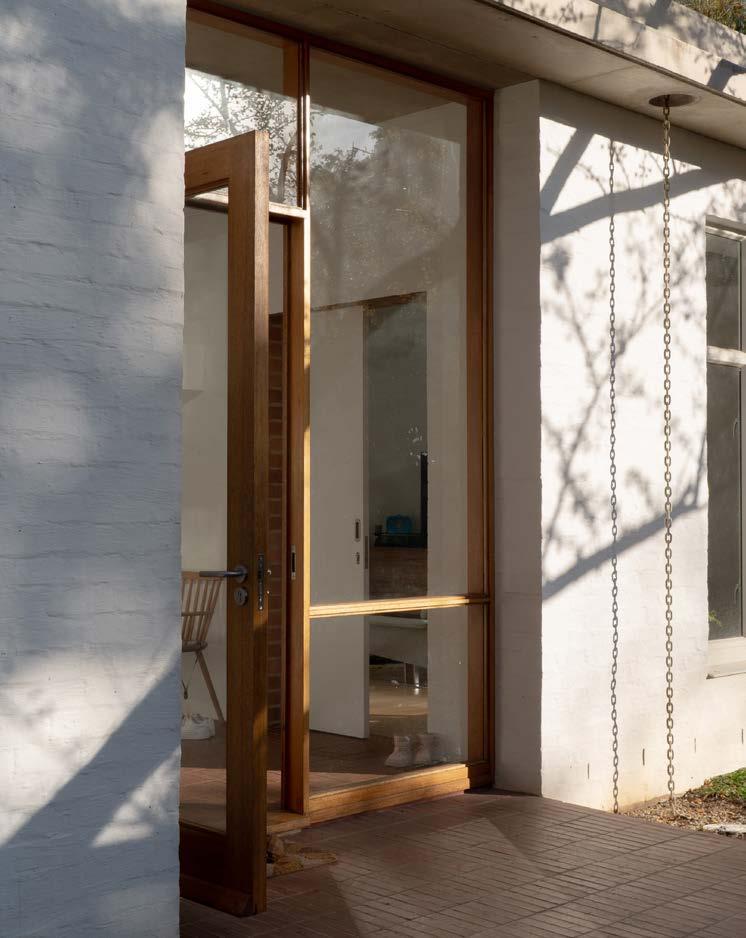
A pair of full-height timber doors establishes a meeting point between the two households. The doors open onto a brick-paved threshold that extends the garden path indoors, forming a semi-outdoor arrival court. Here, the space acts both as a buffer and a bridge: filtered, sheltered, and shared. Each dwelling claims its own front entrance from this court, offering equal proximity and privacy.
suppliers
Flooring: Lalegno, Corobrik, Cemcrete | External Pavers: Corobrik | Tiles: Lime Green Sourcing Solutions, M&J Bricktiles | Insulation: Brits, Knauf, Lambdaboard, Isoboard | Roofing: Global Roofing Solutions | Kitchen Joinery: The Kitchen Studio | Fireplaces: Kratki Sanware: Duravit, Gio, Teka, Blutide
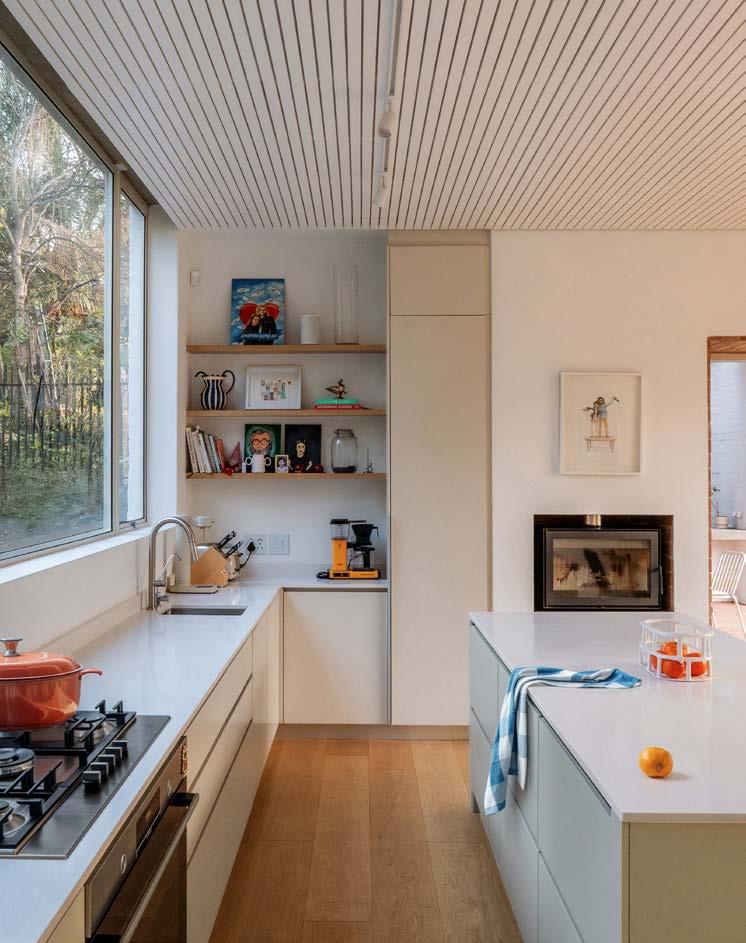
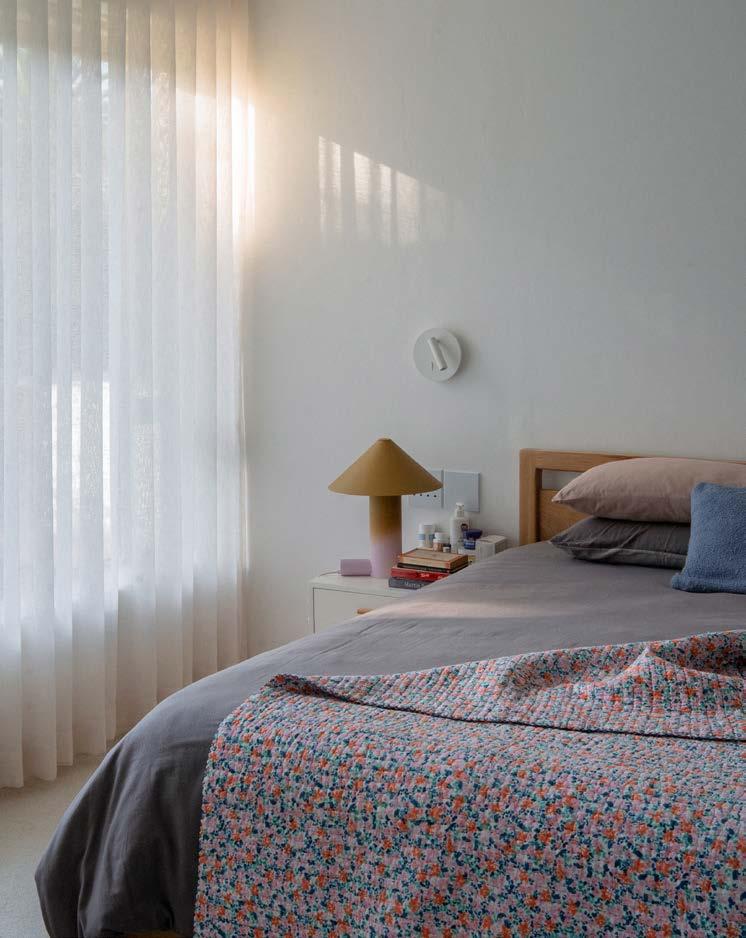
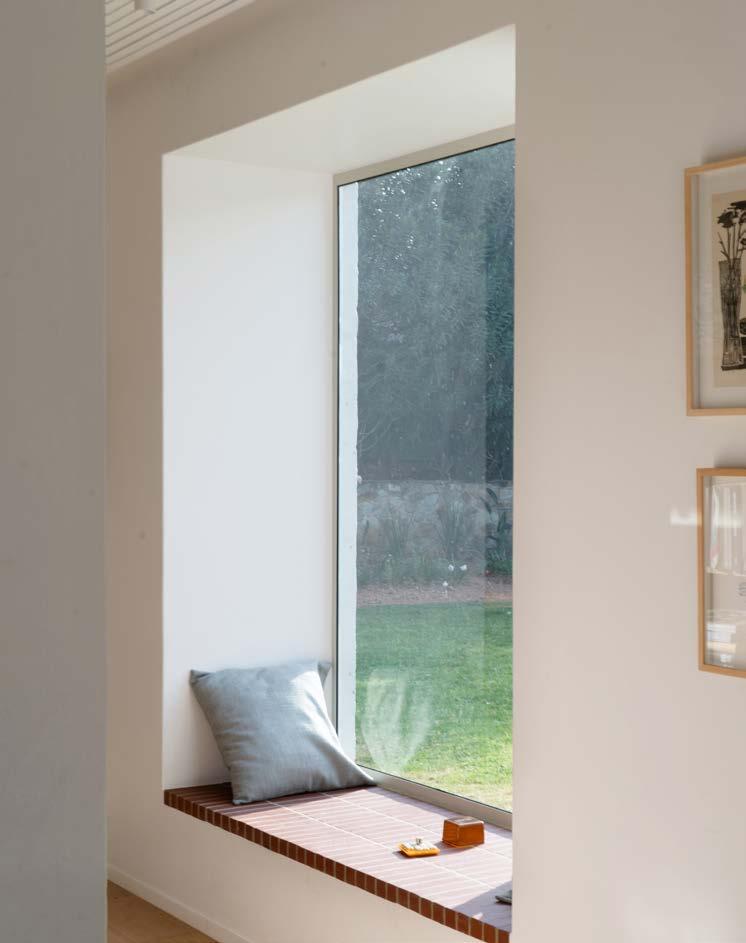
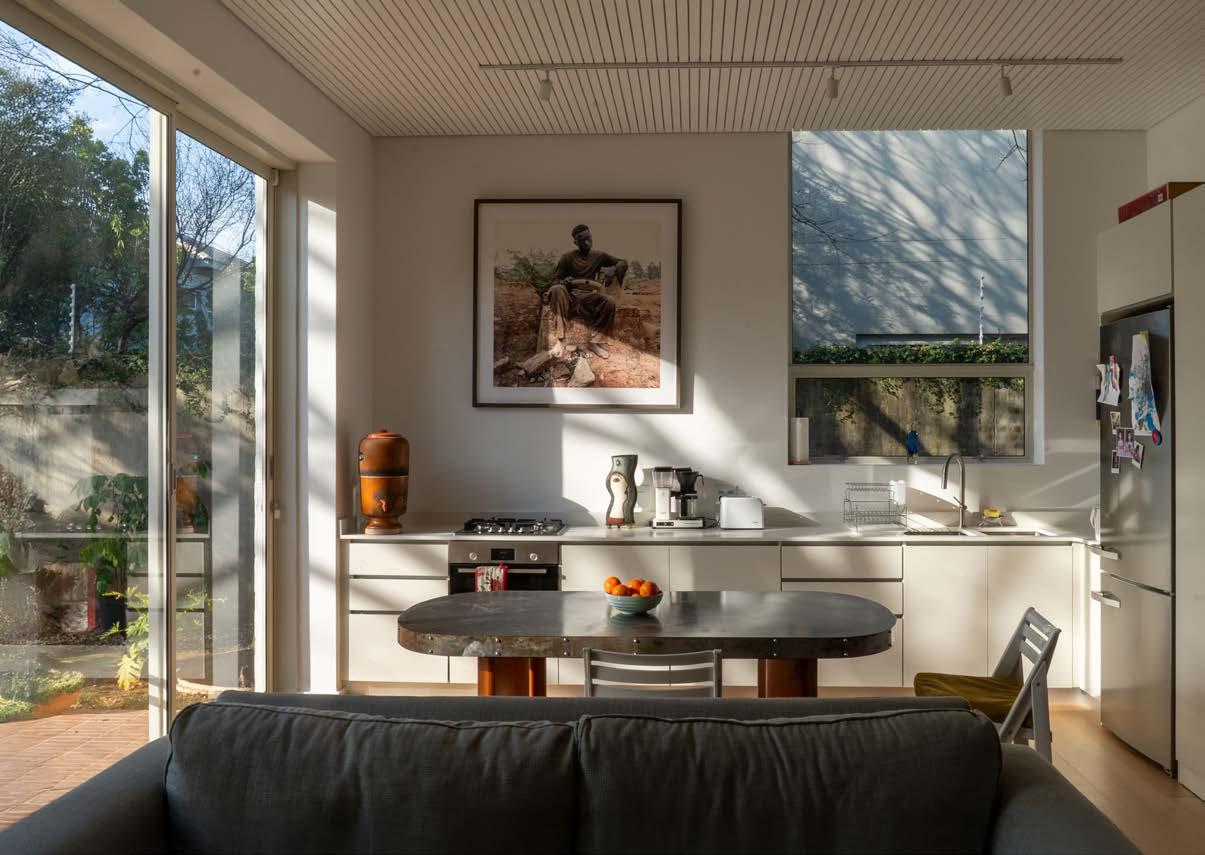
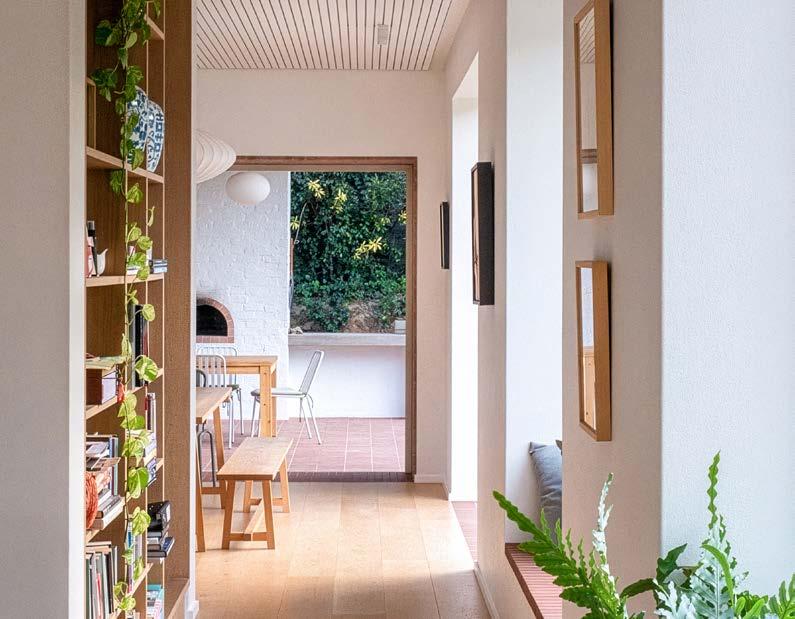
Along the northern edge of the main house, a wide passage becomes a thickened spine drawing together the kitchen, living room, and veranda. More than a corridor, it is an extension of each space: window reveals deepen into daybeds; long views align across openings; light drifts quietly along walls. This is where the architecture leaves room for the gentle rhythms of everyday life: brief conversations, quiet pauses, a moment of warmth in the sun.
A bookshelf turns into a threshold. To reach the stairs, one steps through the shelving, a small act that melds furniture into architecture and signals the shift towards the private realm. Upstairs, a pyjama lounge offers a shared retreat for the immediate household. Beyond it, the two halves of the house meet once more on an upper terrace overlooking a mature Ginkgo tree planted by the grandparents decades before. The plan acknowledges this living anchor with care, framing its presence and granting it a ceremonial role in the life of the house.
Environmental performance is achieved through simple, grounded principles. High thermal mass stabilises temperature. Cavity wall construction creates insulation. Shaded openings regulate heat expansion. Solar panels supplement household power. Acoustically absorbing ceilings, regulated with air gaps and specialist materials, shape the interior soundscape; a key dimension of comfort in a multigenerational home. Through a cavity sliding door, the kitchen spills naturally onto the covered veranda, inviting a drift of fresh air through the passage. This outdoor living room, centred on a pizza oven, plays a dual role: moderating the climate, and gathering people around food, warmth, and conversation.
An architecture of restraint
The project’s innovation is subtle. The architects readjust familiar elements — thresholds, verandas, bookcases, stairwells, daybeds — to support contemporary patterns of living. Wellness is nurtured through proportion, light, and audible calm, rather than excess.
This is a house that does more with less. Seeking not to impress but to endure, it supports the evolving needs of one family with restraint, clarity, and care; an understated architecture for a life shared across generations.
“The architects readjust familiar elements — thresholds, verandas, bookcases, stairwells, daybeds — to support contemporary patterns of living. Wellness is nurtured through proportion, light, and audible calm, rather than excess.”

Architect: SKUUR STUDIO, Colette Pieterse
Contractor: Delta Building Company
Photographer: Colin Stephenson

StudioLandt Enters into Dialogue with Texture and Tranquillity on Umdloti’s Coast
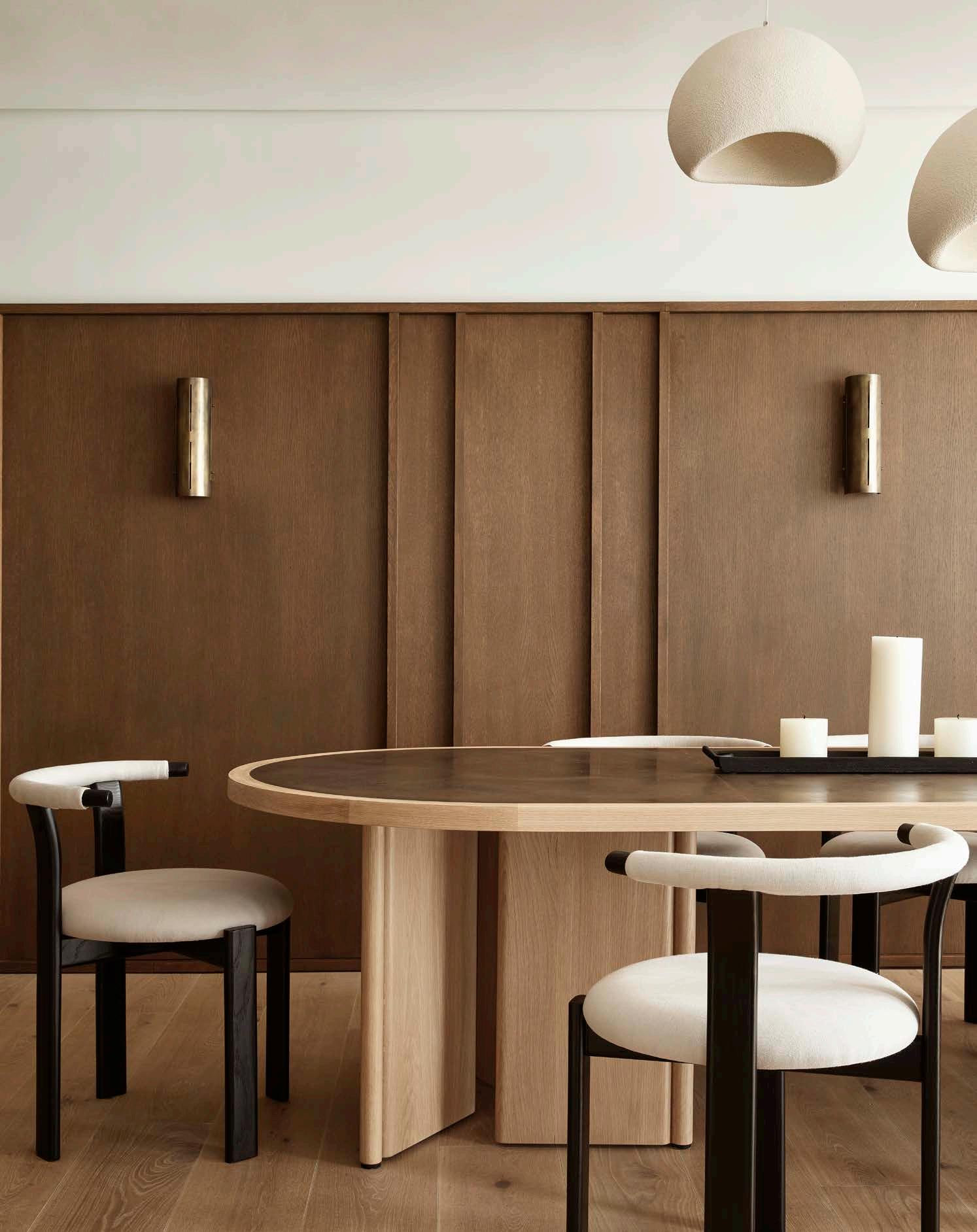
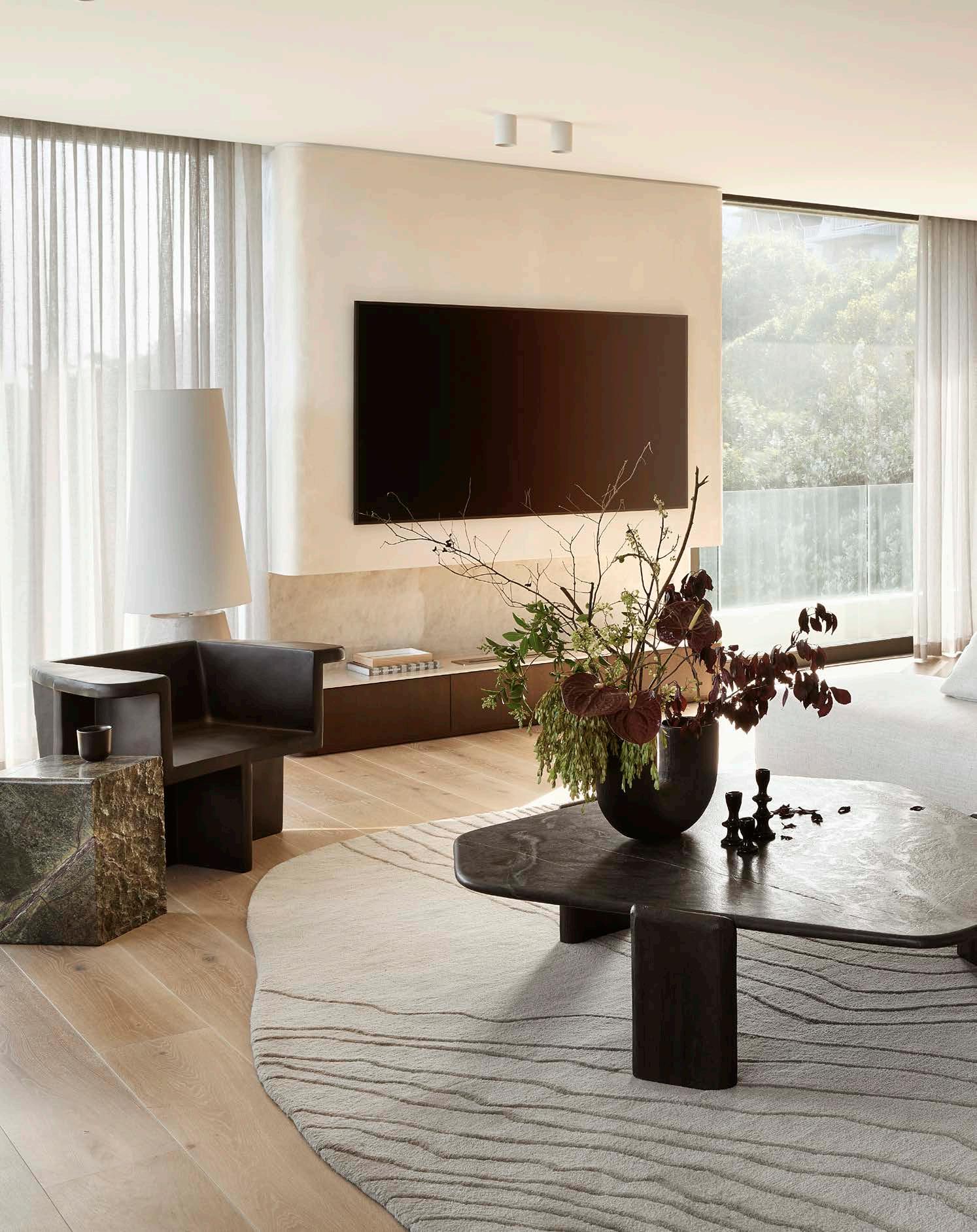
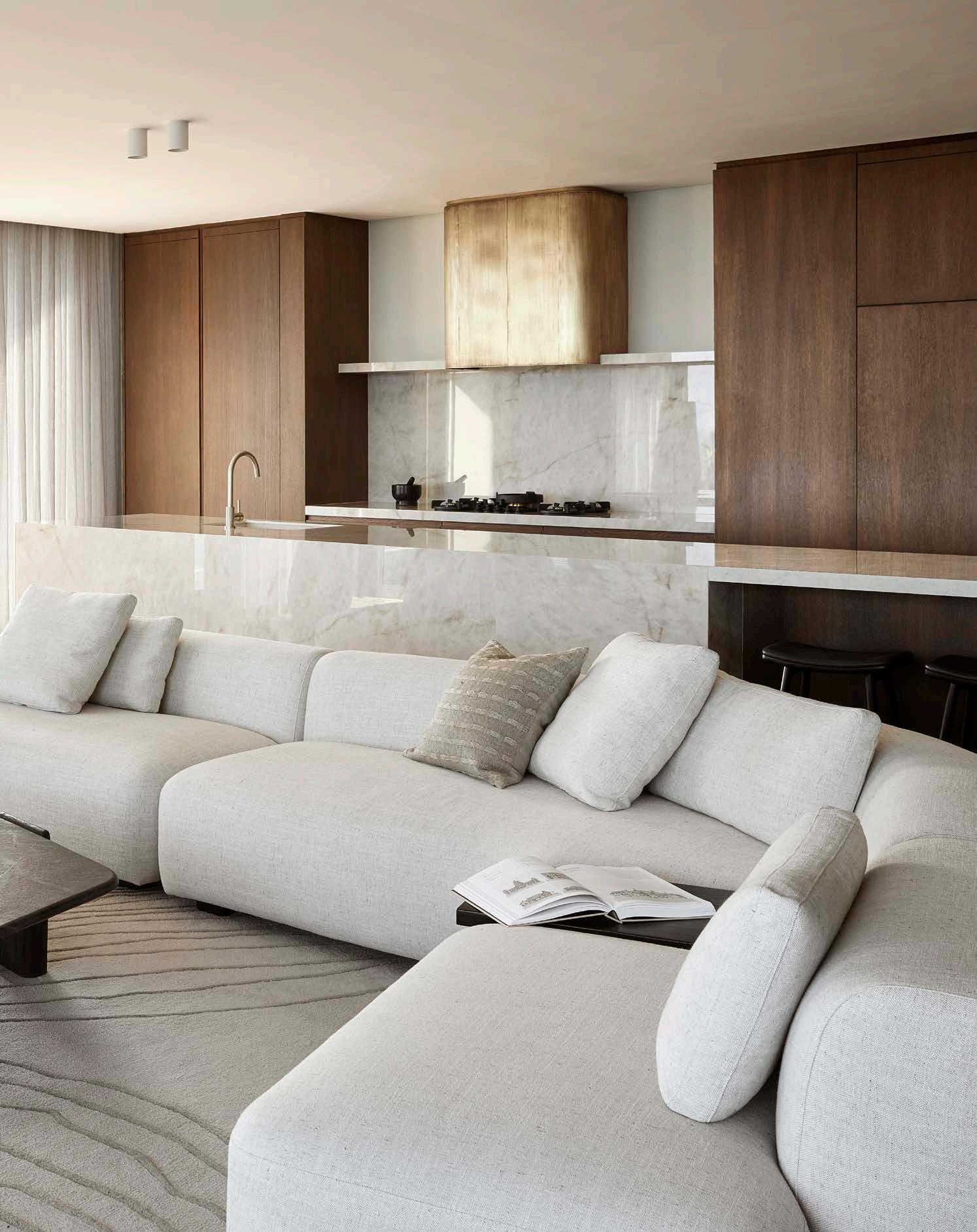
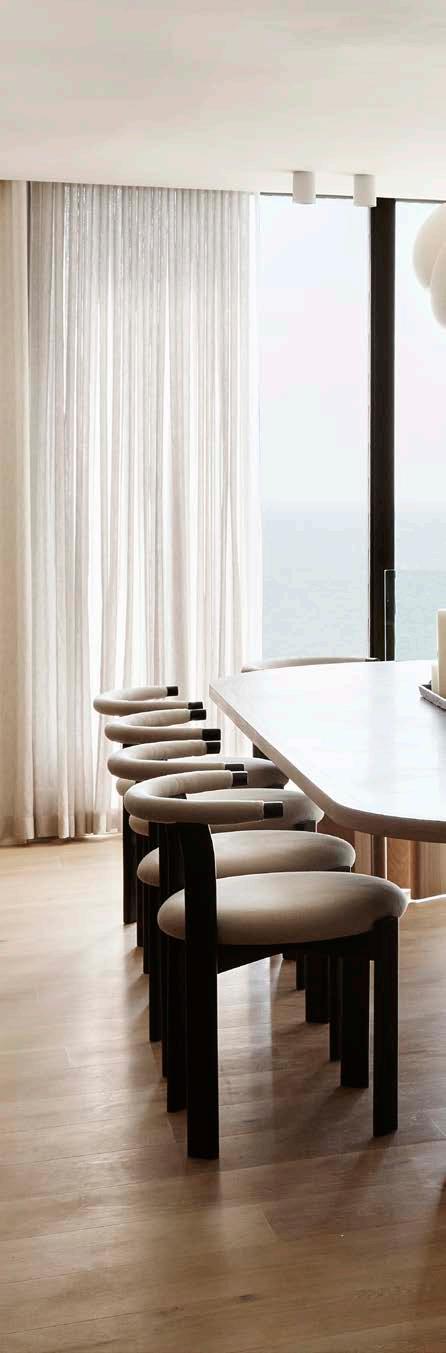
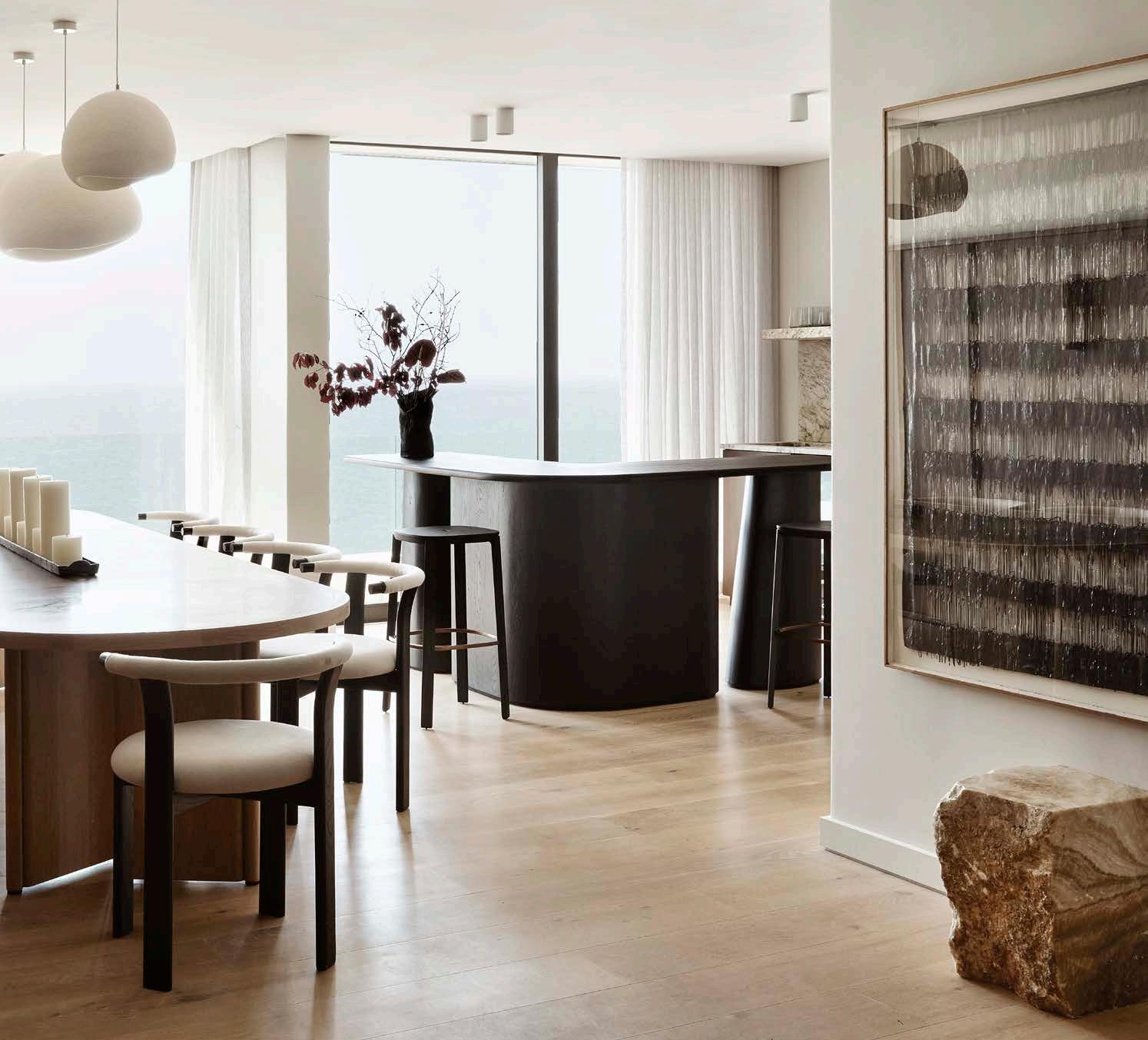
Through expansive windows, Atlas Penthouse absorbs the serene energy of the Umdloti coast, inviting an effortless way of living. Public areas flow seamlessly into private rooms, balancing spaces for gathering with those for rest. Soft curves, gentle natural light, and tactile, earthy materials are combined thoughtfully to create a minimalist yet soulful place to gather and retreat.
Location:
Size: 330 m2
Following the architectural design by Bloc Architects, StudioLandt ventured inside to introduce a bespoke take on coastal living. The goal was to channel refined simplicity and subtle sophistication, continuing the essence of the neighbouring ocean far beyond its shore as soft curves and arches mimic the rhythm of the waves. For Senior Designer Astrid Kingsley of StudioLandt, the task at hand was guided by a balance of functionality and artistry, along with close collaboration with the client’s desire for a space that felt grounded yet fluid.
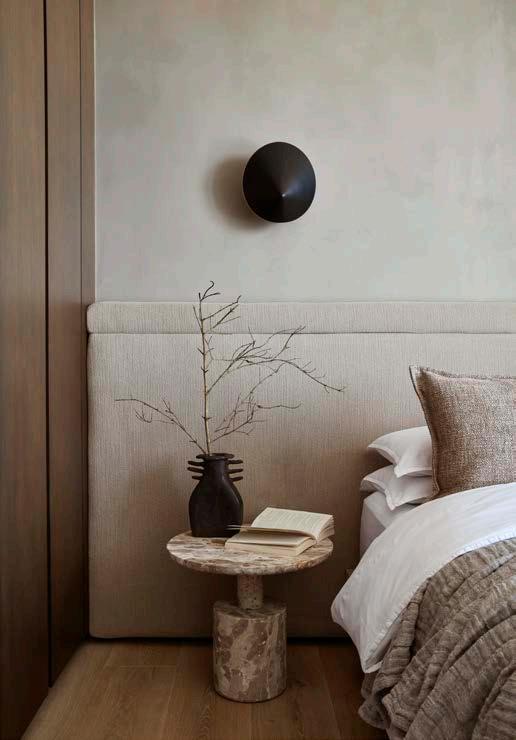
At the foundation of the serene atmosphere that is felt when one enters Atlas lies a calm palette and natural materials. Raw stone wall cladding brings the kitchen to life while timber flooring and cabinetry permeate the home, exuding an organic earthiness. This is complemented by textured plaster walls in the bedrooms and oxidised brass finishes in the dining room lighting and kitchen extractor hood. Bold black accents ground the lightness of the palette, adding contrast and depth. The materiality of Atlas is not about perfection; it’s about character, reflecting a deeper connection to the brand, the client, and the values that matter. Every colour, fixture, and furniture piece was chosen to harmonise with the interior architecture’s distinct elements.
@studiolandt_ www.studiolandt.com
“The design prioritised natural materials, artisanal production, and longlasting, locally crafted furniture and finishes. The collaboration with local artists and designers reinforces a commitment to cultural sustainability and community-driven creativity.” –
Astrid Kingsley
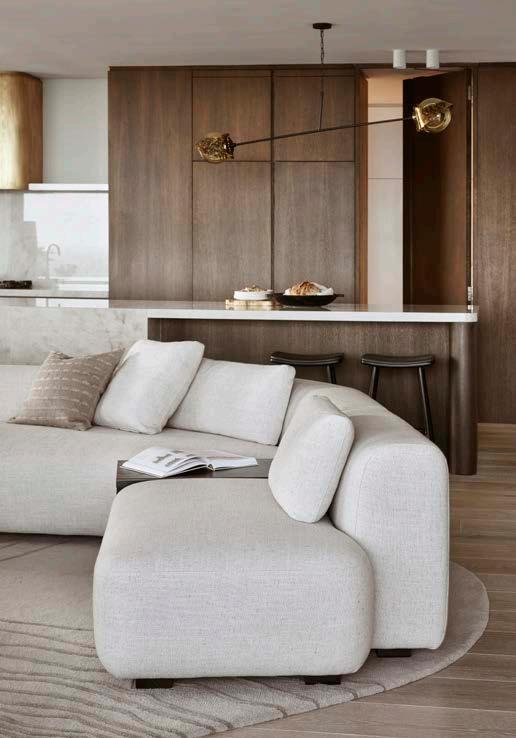
Atlas places both art and design at the forefront of its interiors. StudioLandt worked closely with Source Artistry to curate a collection of works by prominent South African artists and designers, including Michael Taylor, Laurel Holmes, and Amy Rusch. The furniture holds equal local esteem, with a James Mudge dining table inlaid with aged brass taking prime position to admire the panoramic sea views. Each piece that takes its place in this home ensures that no element is predictable and around each corner or curve lies a design delight. This integration of local artistry and craftsmanship anchors the space, fostering a dialogue between natural elements and contemporary sensibilities.
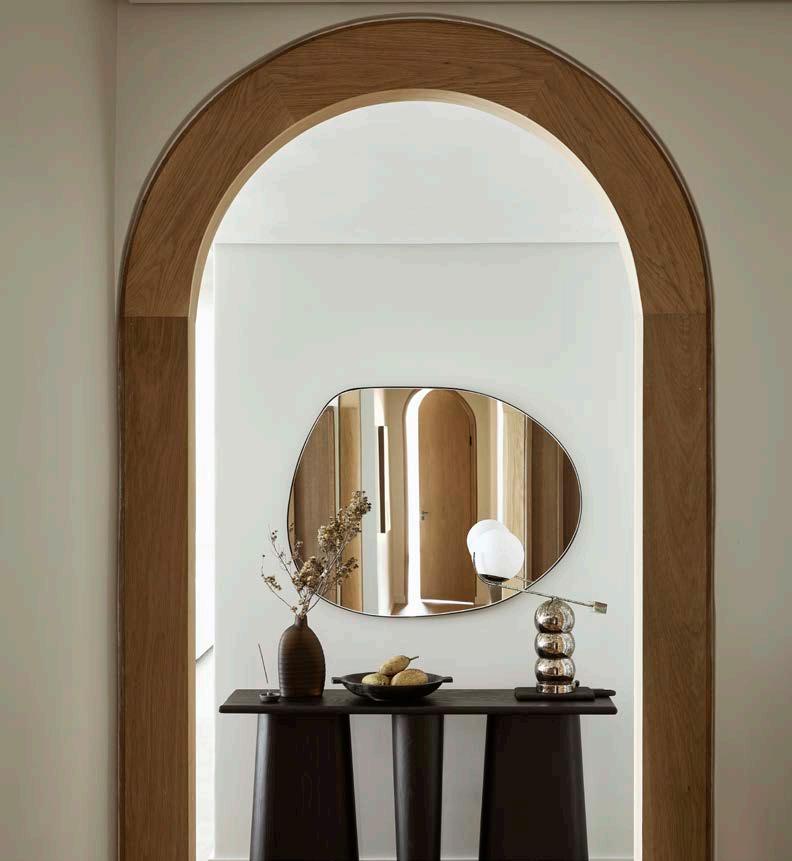
While it may be an aesthetic marvel, the design team also prioritised the functionality and liveability of the penthouse. The openness of the living area layout makes it an inviting space to entertain, enhanced by the organic shapes of the furniture. The rooms are connected by white oak archways, allowing the public and private areas to flow seamlessly, and offering comfort and retreat. The resulting rhythm is effortless while maintaining a sense of distinction.
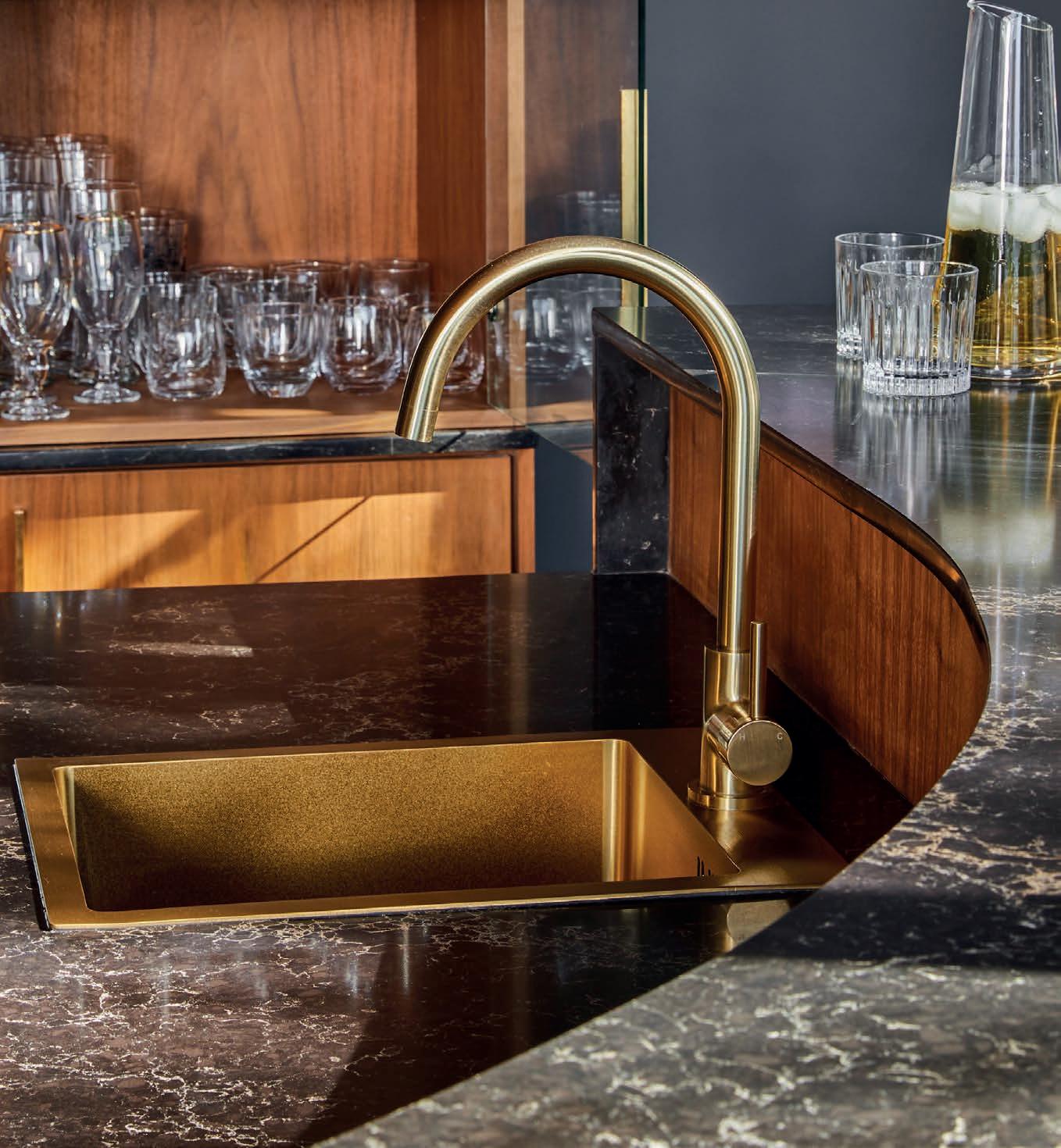
One of the stars of the space, and an entertainer’s dream, is the custom-designed drinks bar in black-stained oak that serves as a focal point when entering the home. Besides its social function, it acts as a grounding element in the space, combining the fluid form that is signature to the interiors with a darker hue that makes it stand boldly against the home’s mostly monochromatic colour palette.
In its interplay of texture, tone, and tranquility, Atlas Penthouse exemplifies StudioLandt’s ability to craft spaces that speak to experience. The design is finely attuned to both its environment and its function, celebrating connected living alongside the ocean. A titan in its own right, it carries the weight of excellent design with a lightness that is artfully composed and soulfully narrated.
suppliers
Chairs and Stools: La Grange Interiors | Custom Lighting and Chairs: Studio 19 Furniture and Homeware: Weylandts | Custom Rug: Rugalia | Dining Table: James Mudge | Lighting: Bofred | Furniture and Lighting: Crema Design | Joinery: Ken Leiman | Artwork: Source Artistry | Castello Oak Flooring: Concept Luxury Finishes Textured Wall Finish: Paintsmiths | Kitchen Countertop: Infinity Surfaces

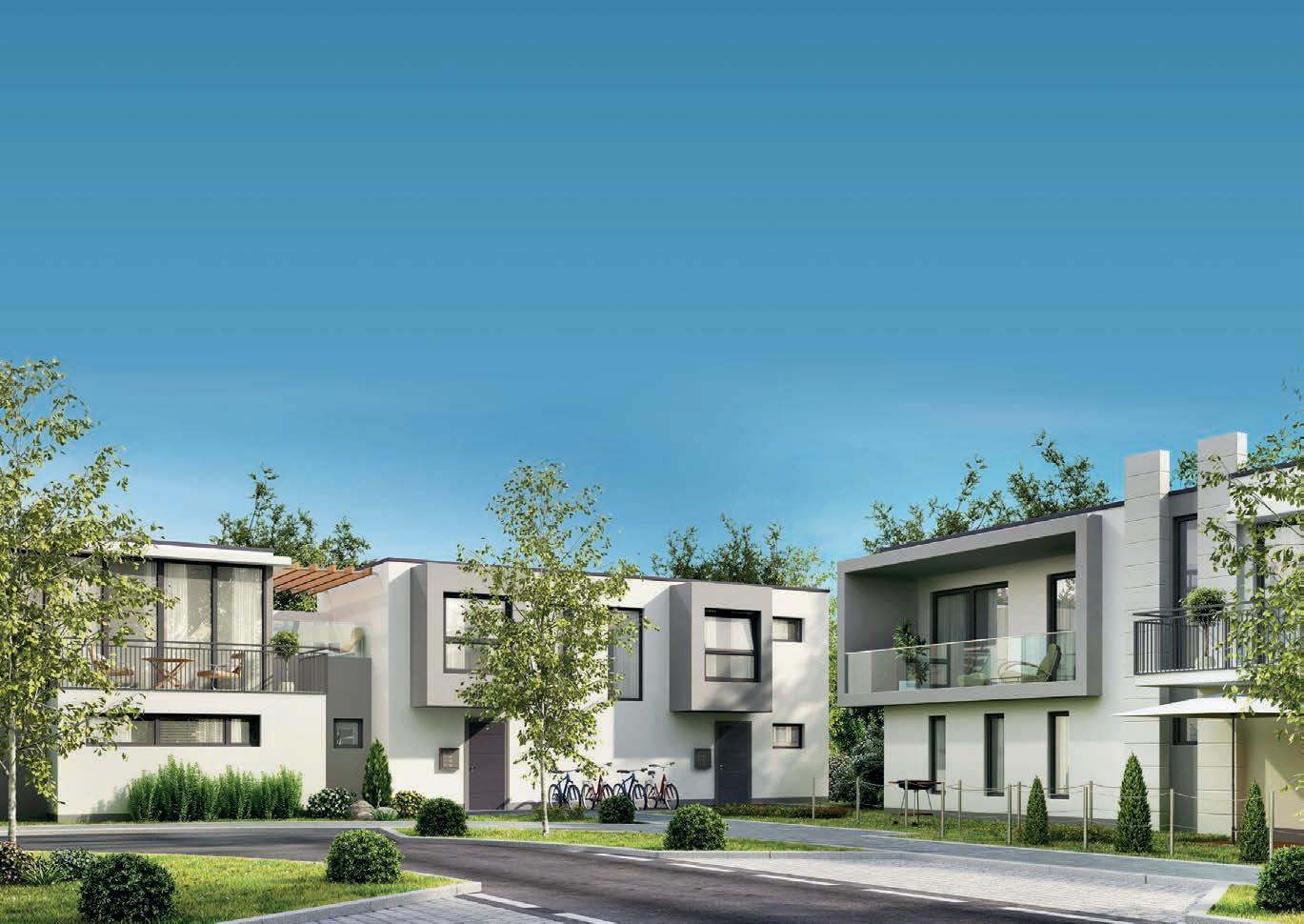



Reliability is at the heart of our industry, and our Professional range is no different. Product innovation coupled with our value added services gives you a distinct advantage.
Our complete coating system, spanning preparation, trim, wall and textured coatings, is designed to ensure guaranteed product performance and value from start to finish.
All Plascon Professional products with the Ecokind logo have VOC levels within the GBCSA standards for Green building ratings.
Designed for professionals.
“Set against luminous horizons and woven into a site shaped by sun, sea, and layered identity, it becomes more than a school: it evolves into a modern, grounded experience of learning.”
- King’s College School
SAOTA Delivers a Campus Rooted in Place and Designed for the Future
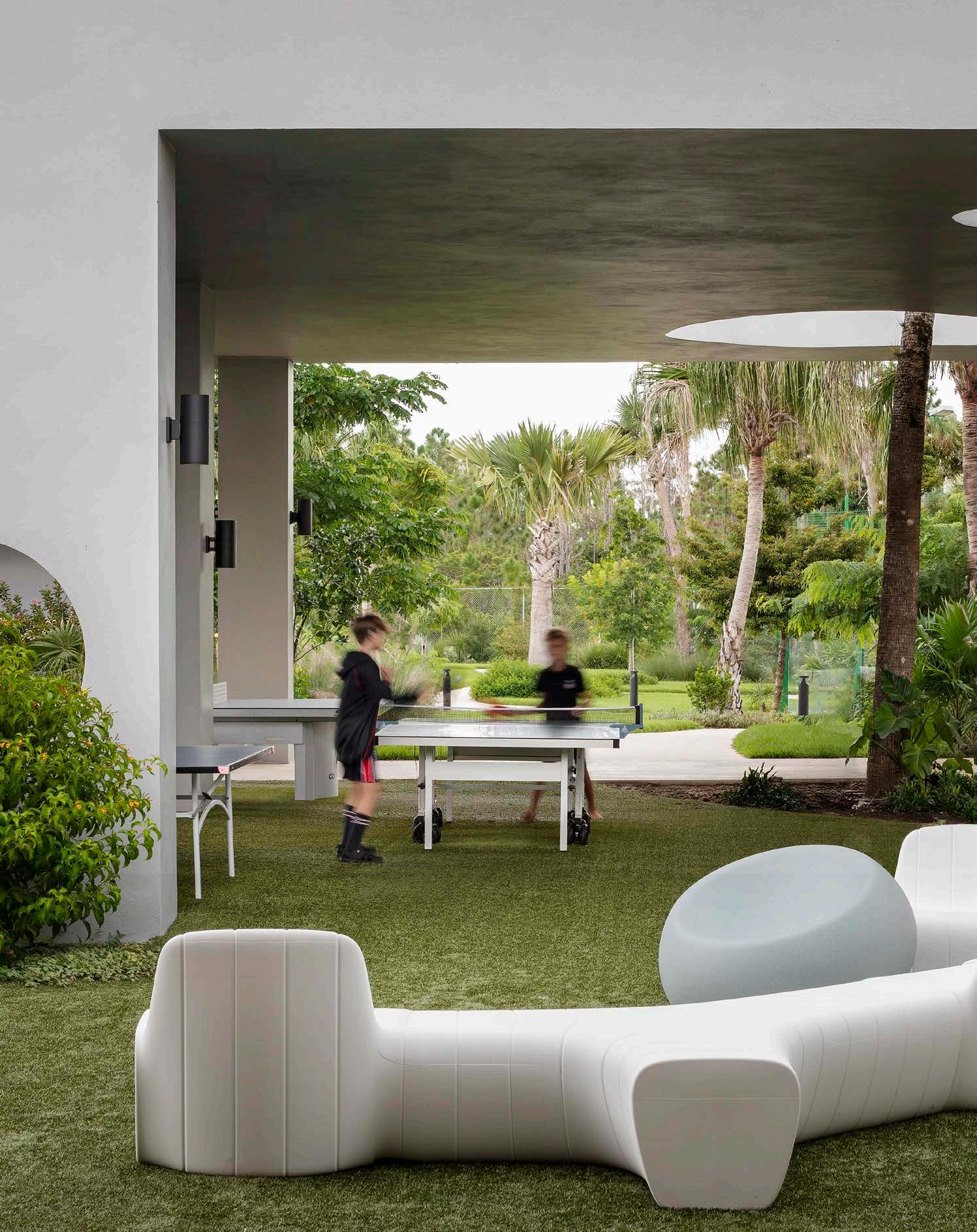
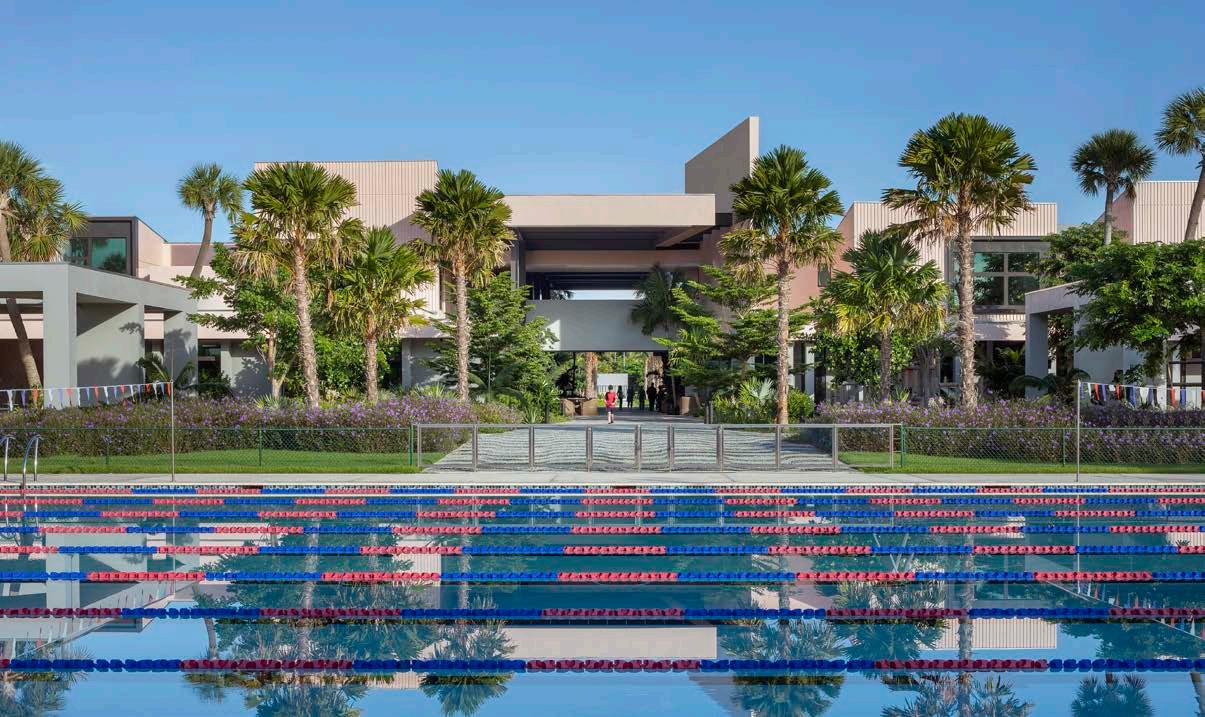
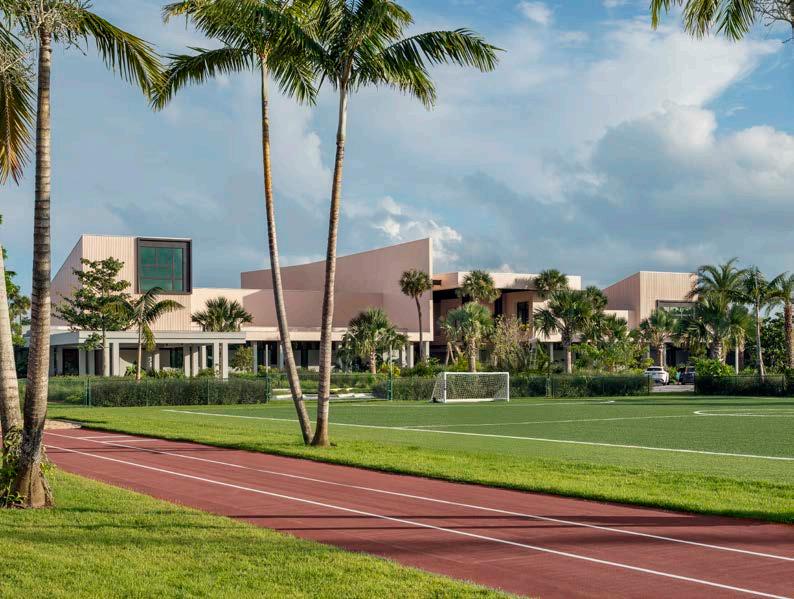
Rising from the island, King’s College School in The Bahamas signals a decisive shift across Caribbean educational landscapes. Designed by South African firm, SAOTA, for the Inspired Education Group, the new campus rejects convention. Rather than defaulting to the traditional symmetry of regional school buildings, the architecture instead responds to climate, culture, and community. Set against luminous horizons and woven into a site shaped by sun, sea, and layered identity, it becomes more than a school: it evolves into a modern, grounded experience of learning.
At the outset, the brief envisioned a space that wouldn’t simply accommodate learning but actively inspire it. Thus, the architecture needed to rest lightly and porously on the land, unmistakably of the Bahamas.
Location:
Nassau, The Bahamas @_saota
www.saota.com
Size: 40468.5 m2
Rooted in the island
The architectural response started by rethinking the Caribbean school standard. Traditionally, educational buildings in the region were symmetrical blocks shaded by deep verandas. At King’s College School, this logic is replaced. A continuous base structure is introduced, acting as a grounding ‘plinth’ that connects the campus into a cohesive whole. Above it, a sequence of classroom volumes rises at staggered heights, creating a dynamic outline that echoes the rhythm of the Bahamian archipelago: separate elements brought together by a unifying geography.
These architectural layers extend beyond a visual metaphor, presenting a climate strategy profoundly guided by vernacular insight. Large overhangs temper the tropical sun while shaded walkways and open-air circulation routes reinforce the regional tradition of living in a fluid relationship with climate and landscape. Rather than relying on a sealed, mechanically cooled building, the school implements a blended passive approach: making use of breezeways, cross-ventilation, covered courtyards, and the careful adjustment of shaded zones. This enables the campus to not only reduce energy consumption but also cultivate a healthier, more connected environment where learning progresses in harmony with the elements.
Landscape plays a key role in this scheme. Designed by renowned landscape architect Raymond Jungles, the grounds build upon the school’s educational vision. Tropical vegetation, sheltered courtyards, and planted walkways dissolve the boundary between built and natural environments, echoing the rhythms of Bahamian life where community is nurtured through movement, gathering, and shared experiences. The creation of outdoor classrooms and social zones provides circulation as well as opportunities for exploration. Rather than being confined within walls, education emerges from the land itself.
meet the team
Architects: SAOTA | Architect of Record: BRON, Century Property Developments | Interior Designer: ZPZ Interiors Project Manager: Century Property Developments | Contractor: Osprey Construction Company | Structural Engineer: BRON | MEP Engineer: Exp Quantity Surveyor: DHP Associates | Landscape Architect: Raymond Jungles | Lighting Design: Exp | Photographer: Adam Letch
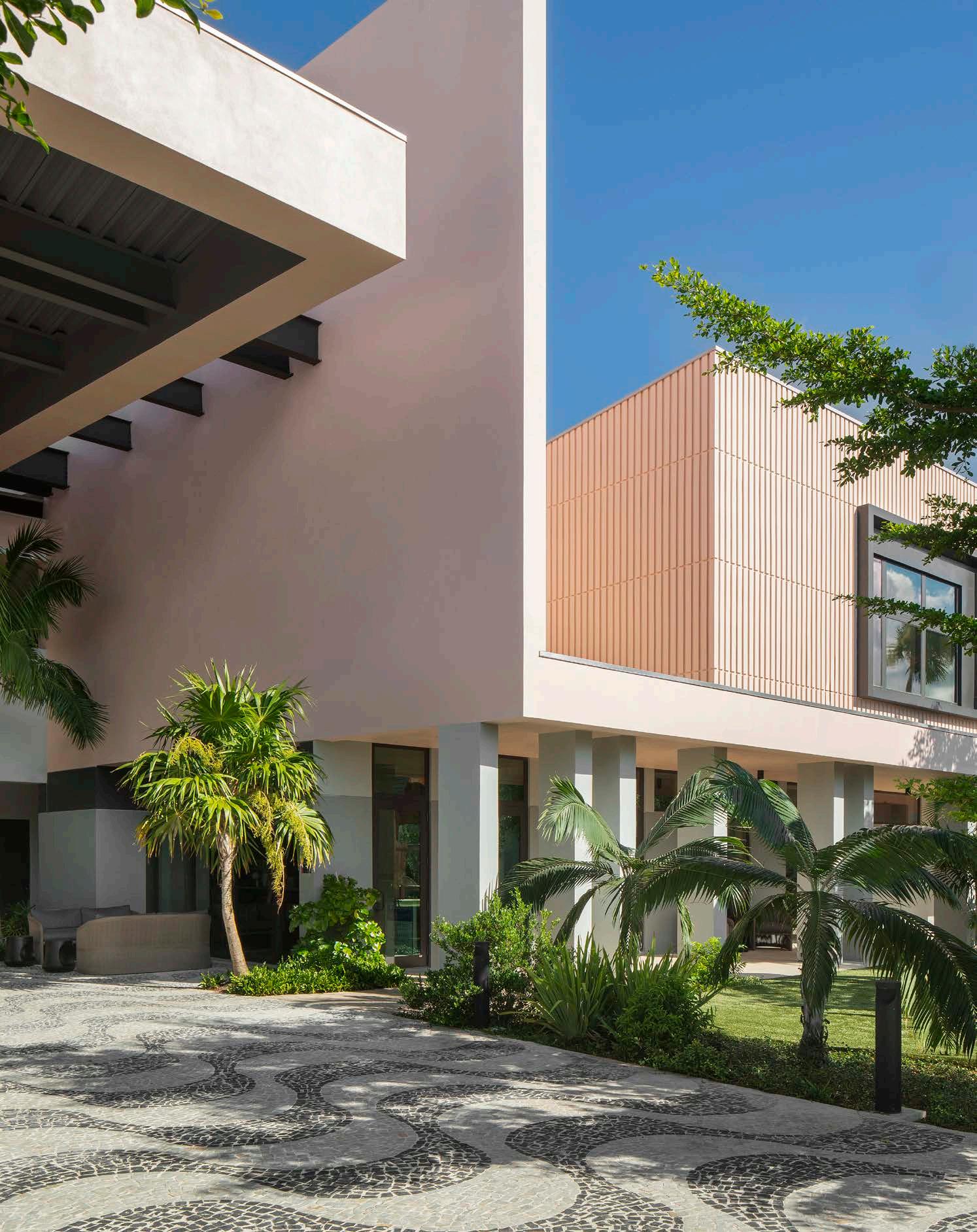
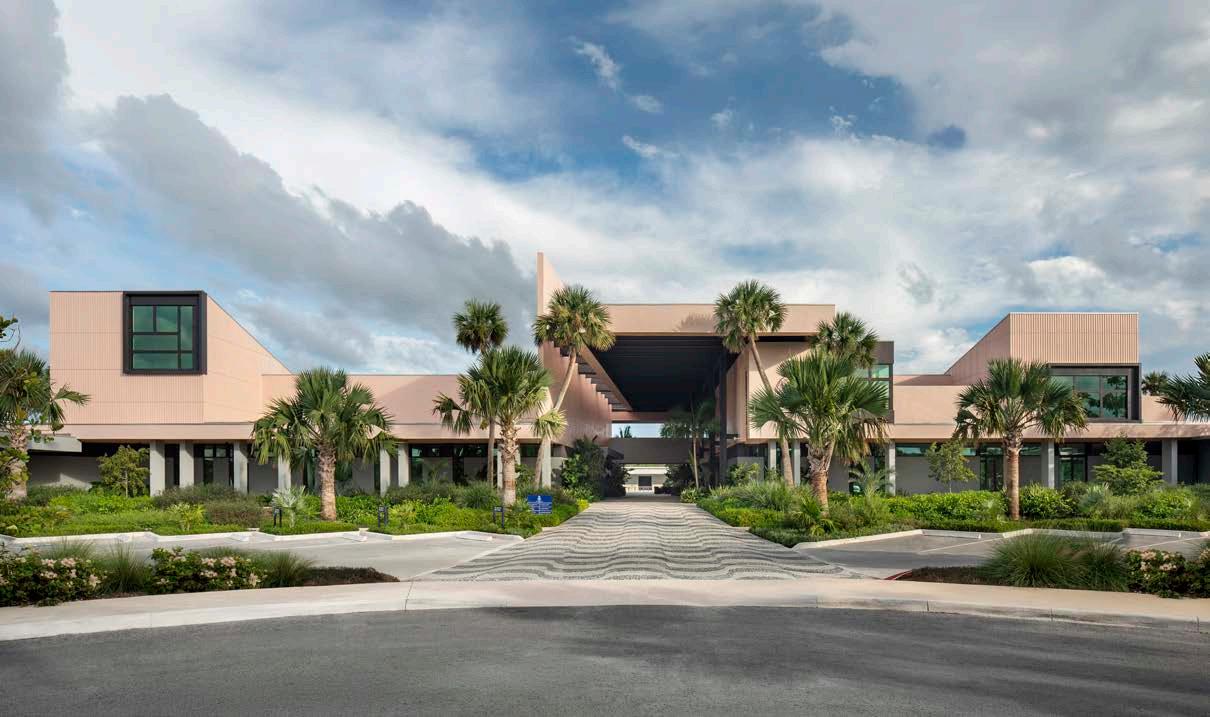
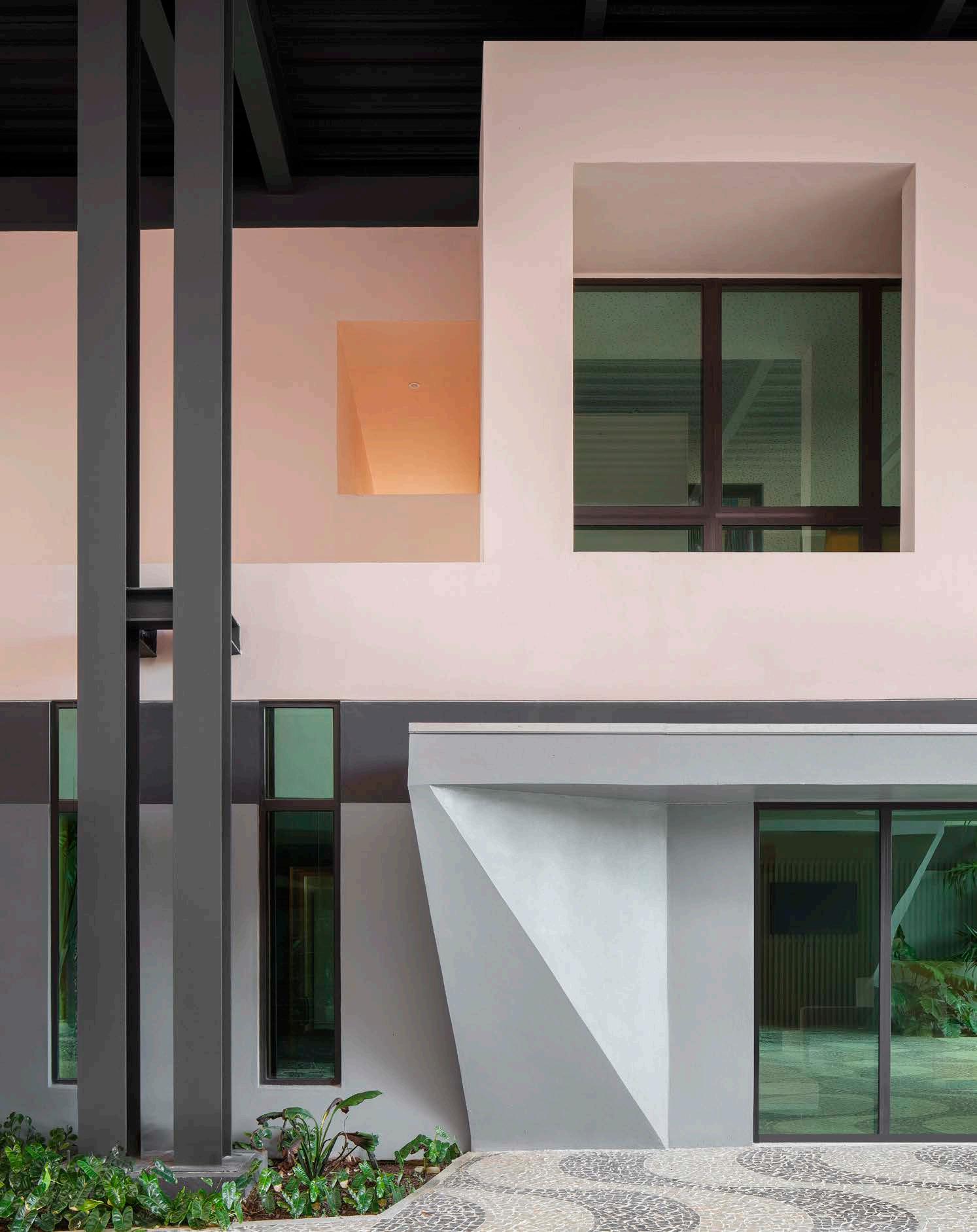
Materiality further grounds the project in its context. A darker-toned plinth supports the architecture, and, in an abstracted way, mirrors the ocean. The lighter hues of the upper levels take chromatic cues from the sandy beaches and the soft pastels characteristic of Bahamian vernacular architecture. Bespoke pigmented concrete floors embedded with seashell aggregate, subtle and tactile, remind the students of the landscape beneath their feet. As poetic as they are practical, these choices of durable, weather-resistant materials ensure resilience in a hurricane-prone climate. The building’s form anticipates the strains of seasonal storms. “These material strategies articulate SAOTA’s design ethos of contextual responsiveness — leveraging materiality and form as operative tools to negotiate cultural, environmental, and programmatic complexities,” says SAOTA Principal, Mark Bullivant.
The design of this learning environment necessitates a deep engagement with both the topography of the archipelago and global trends in contemporary educational spaces. Its conceptual framework — guided by comparative studies and contextual investigations — had to accommodate complex programming while meeting an ambitious two-year construction schedule. This has resulted in a campus that is not only grounded and future-forward, but also responsive to site and other possibilities.
This project has delivered more than an architectural gesture in reimagining what a Caribbean school can be. King’s College School has become a living environment that balances adaptiveness, resilience, and deep contextual attunement, presenting a model for future educational spaces.
“These material strategies articulate SAOTA’s design ethos of contextual responsiveness - leveraging materiality and form as operative tools to negotiate cultural, environmental, and programmatic complexities.” - Mark Bullivant, SAOTA Principal.
4 Liddle Street, De Waterkant, Cape Town Design District, 14A Kramer Road, Kramerville, Sandton
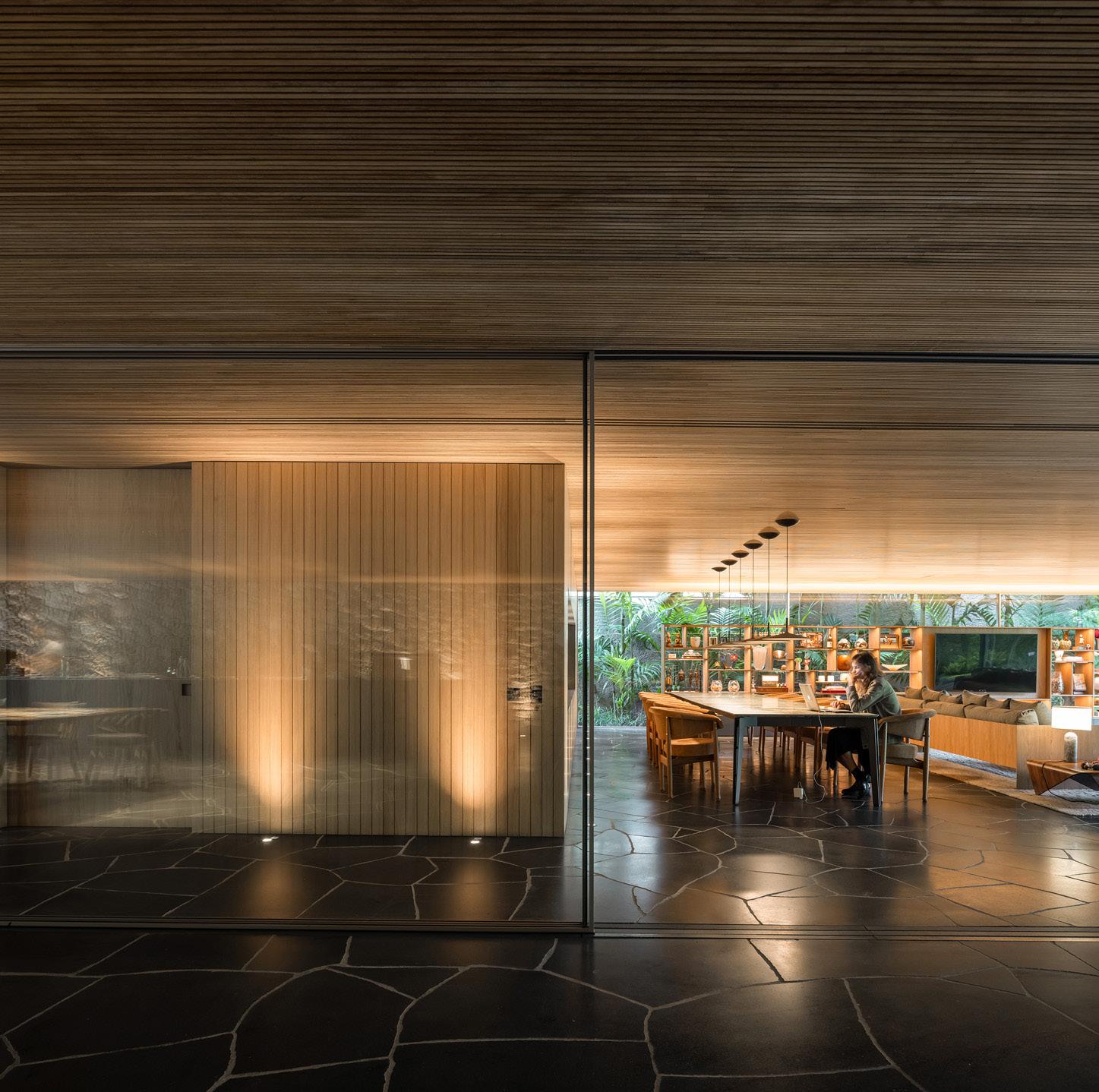
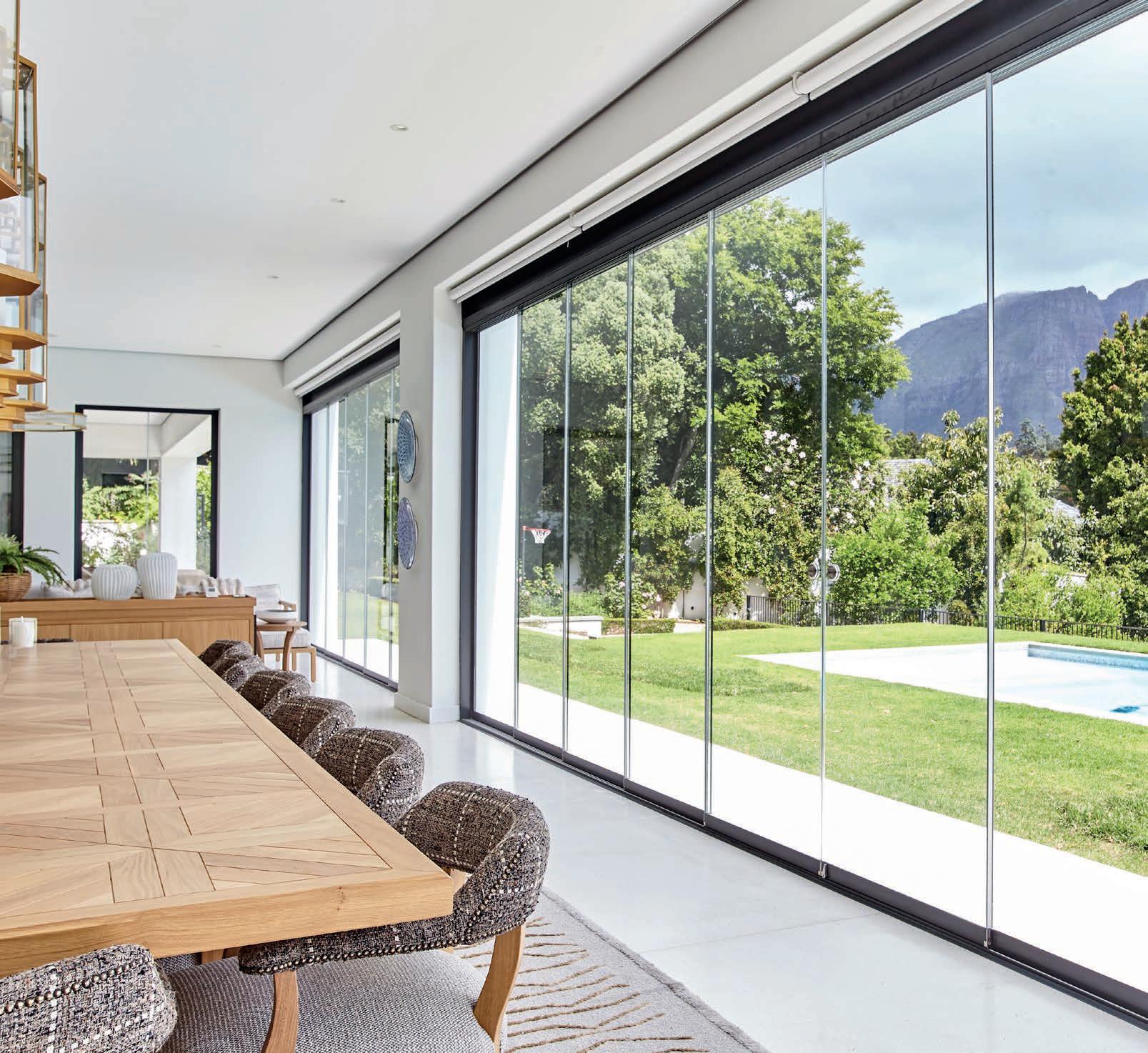
“fabricating & installing the BIGGEST windows & doors in AFRICA...luxury in simplicity”
Unless its a product of q.one fenestration. Then everybody does it
q.one fenestration
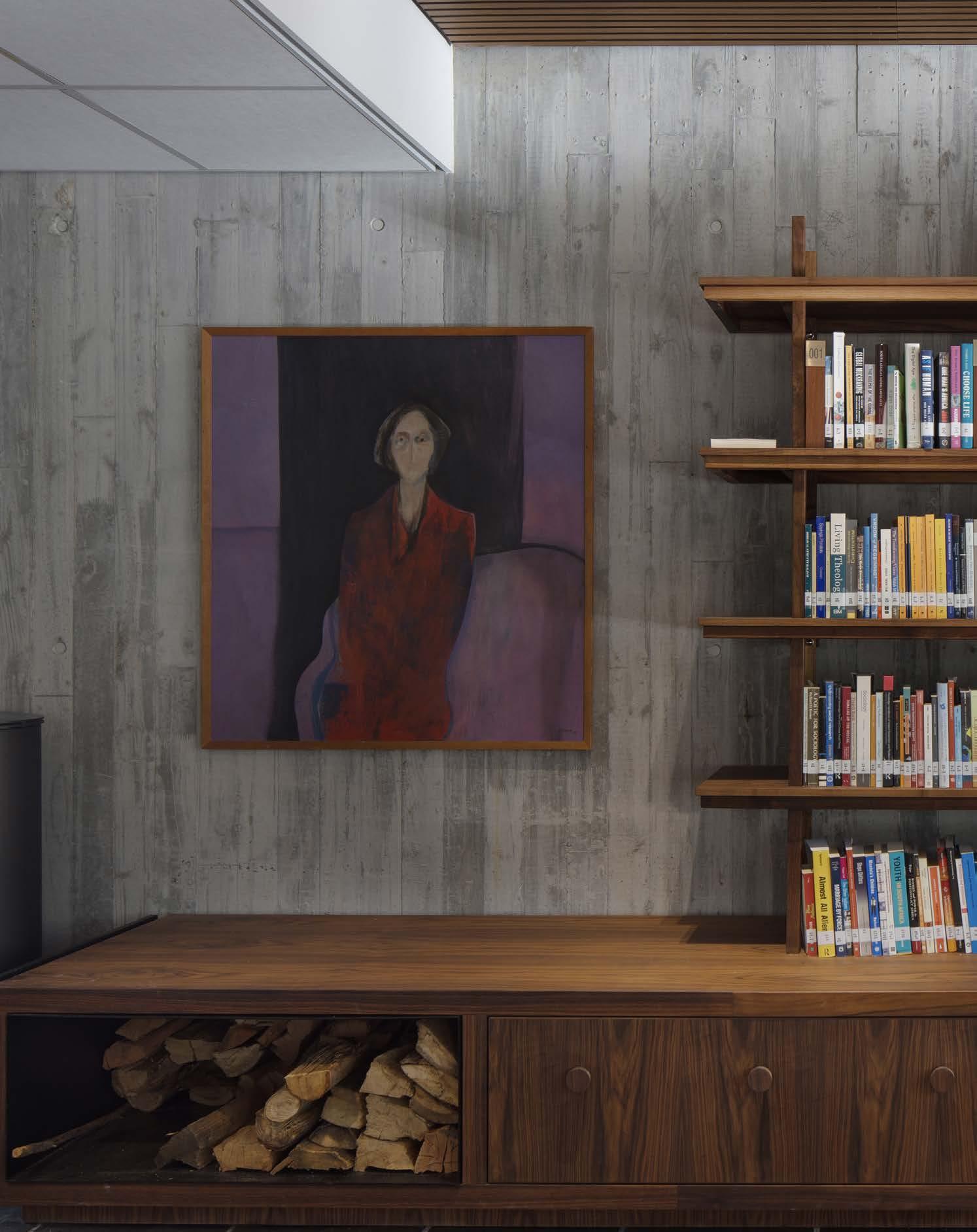
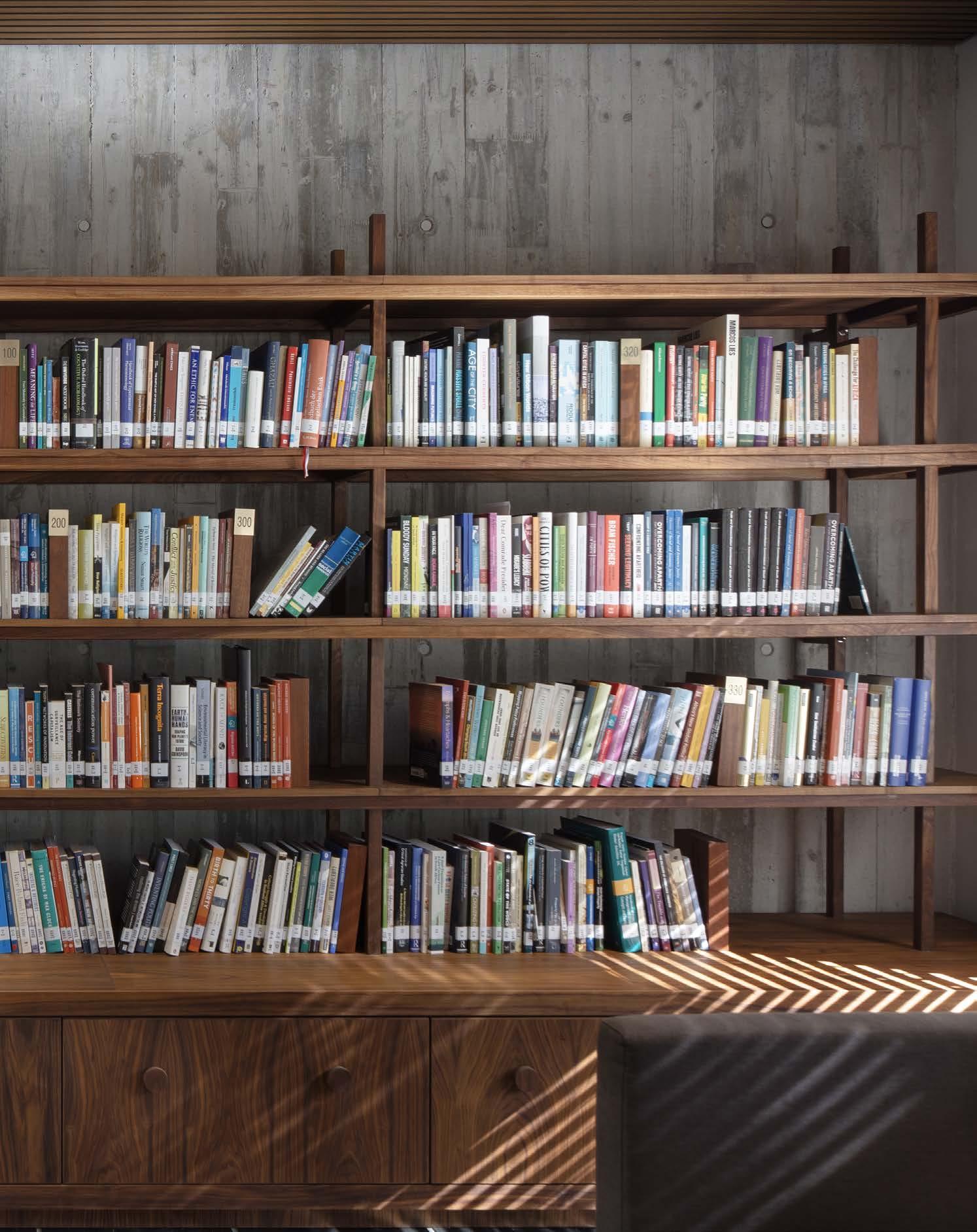
VKDB Architecture and Interior Design Expands the Stellenbosch Institute for Advanced Study with a Sustainable Addition
Location:
Stellenbosch, Western Cape
Size: 1000 m2
@vkdb_design
www.vkdb.co.za
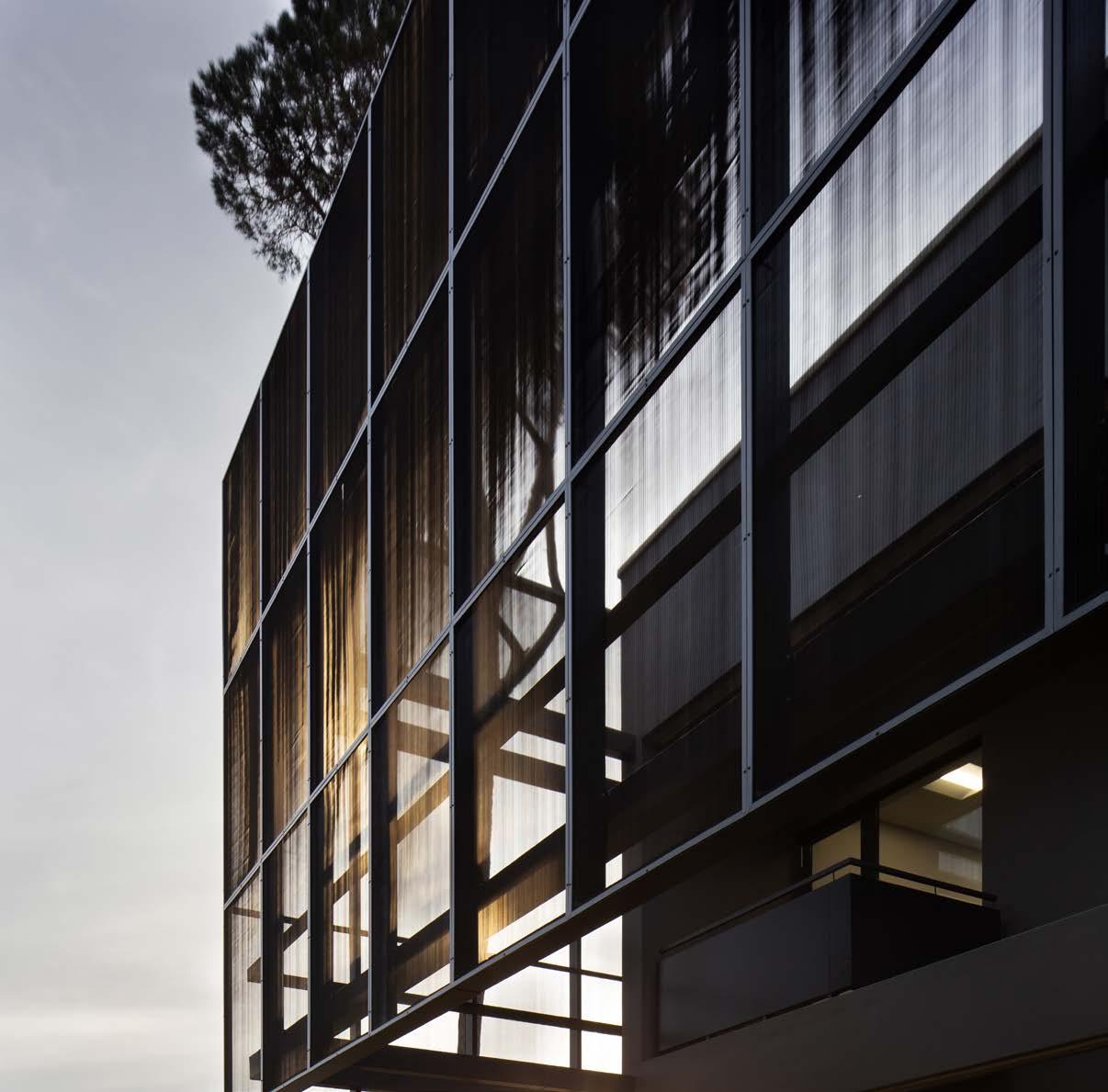
With its world-class university, Stellenbosch has long been associated with innovation. The newly extended STIAS site continues this legacy, offering a dedicated space for reflection just beside Jan S. Marais Park.
The Stellenbosch Institute for Advanced Study (STIAS) sits in the historic town centre of Stellenbosch within the university precinct. It consists of several smaller heritage buildings to the east and the larger, contemporary Wallenberg Centre to the west, divided by a historic werf wall.
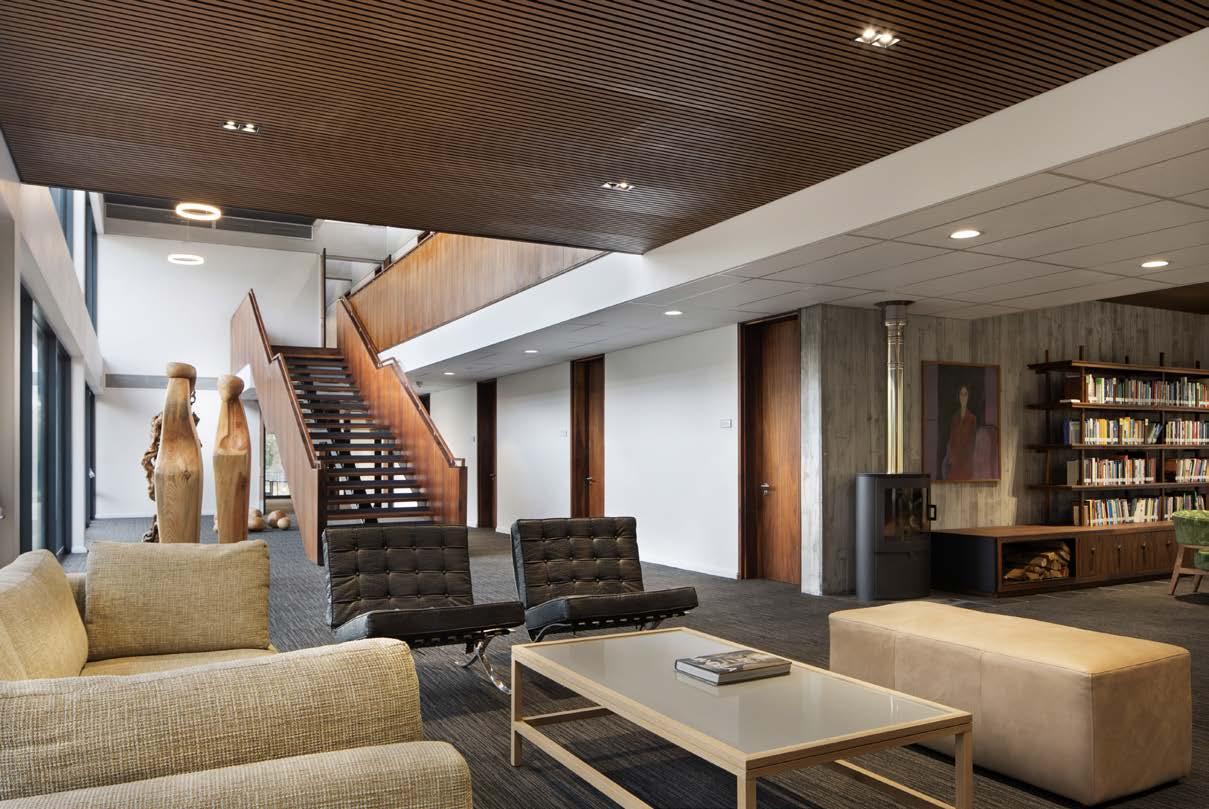
VKDB Architecture and Interior Design completed the STIAS Wallenberg Centre in 2007. Since then, it has hosted researchers and visiting academic fellows from around the world, providing spaces for focussed work and collaboration. Its range of offices, boardrooms, and meeting halls was designed to facilitate the exchange of ideas, reflecting the key underlying principle of the institute; the building provides a creative space for the mind — the current tag line of the institute.
Following the centre’s success, VKDB was approached in 2022 to design and oversee the construction of additions to the centre, consisting of a new wing and courtyard, the enlargement of a dining area, and the conversion of one office suite into a new Media Room for interviews and podcast recording. Construction was completed in 2025.
“A darker colour palette marks the new wing, allowing it to merge with the shadows of the surrounding greenery and vegetation.”
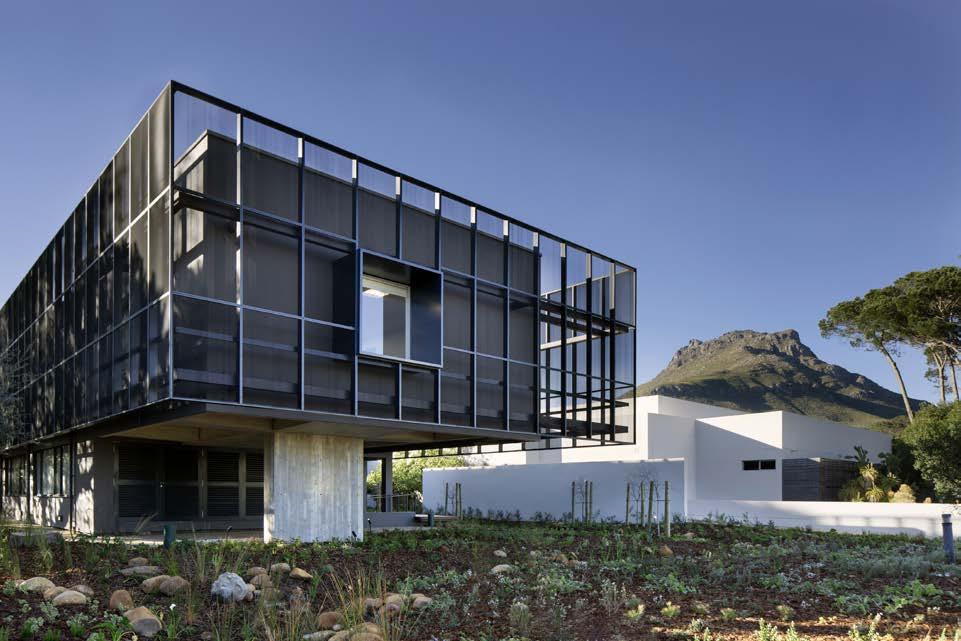
The new wing blends seamlessly with the existing building, offering additional same-sized office suites and expanding informal interactive areas. New amenities include an updated and enlarged coffee hub, an open-air roof terrace with mountain views, and additional acoustically treated meeting rooms. The informal spaces encourage spontaneous exchange between academics, enriching the intellectual community.
To the north lies Jan S. Marais Park, with the existing Wallenberg Centre to the south and the historic half of the site to the east. A contemporary mode that respects the parkland setting and the proportions and tectonics of the existing centre was employed. Yet, the new architecture reads as a distinct unit. A darker colour palette marks the new wing, allowing it to merge with the shadows of the surrounding greenery and vegetation.
Spearheading technological and sustainable development
In line with Stellenbosch University’s sustainability goals, Imbue Sustainability was appointed as an independent green building consultant. Their guidance resulted in a 4-Star Rating and Net Zero Carbon Level 1 (Modelled) Rating from the Green Building Council of South Africa (GBCSA) — a first for the university. The Net Zero Rating confirms that the building sources the energy it uses in a year through on-site, renewable means — most notably through the solar panels that make up a large percentage of the new roof’s area.
Passive and active design components were combined strategically, with electrical lighting and air-conditioning optimised to complement solar control, insulation and the utilisation of natural light to create well-performing sustainable spaces. Solar screens outside of north-facing windows temper the summer heat, while contributing to the textured character of the façade. The natural site topography enabled rainwater harvesting for irrigation. This was achieved in consultation with Square1 Landscape Architects and WML Coast Consulting Engineers through a swale that terminates in a natural basin.
While the brief asked for a ‘creative space for the mind’, VKDB extended such mindfulness to the design and construction process. They hope that this ethos will live on in the completed building.
meet the team
Architect and Interiors: VKDB Architecture and Interior Design | Quantity Surveying: Farrow Laing Quantity Surveyors | Structural and Civil Engineers: WML Coast Consulting Engineers | Electrical Engineer: DSV Consulting Engineers | Electronic Engineer: McWilliam Consulting | Fire and Mechanical Engineer: Power Partners | Heritage Consulting: Arcon Heritage Consulting | Landscape Architecture: Square One Landscape Architects | Occupational Health and Safety Agent: Frontline Health and Safety | Acoustic Engineering: Sound Research Laboratories | Sustainability Consulting: Imbue Sustainability | Main Contractor: Build A Way Construction | Photographer: Markus Jordaan
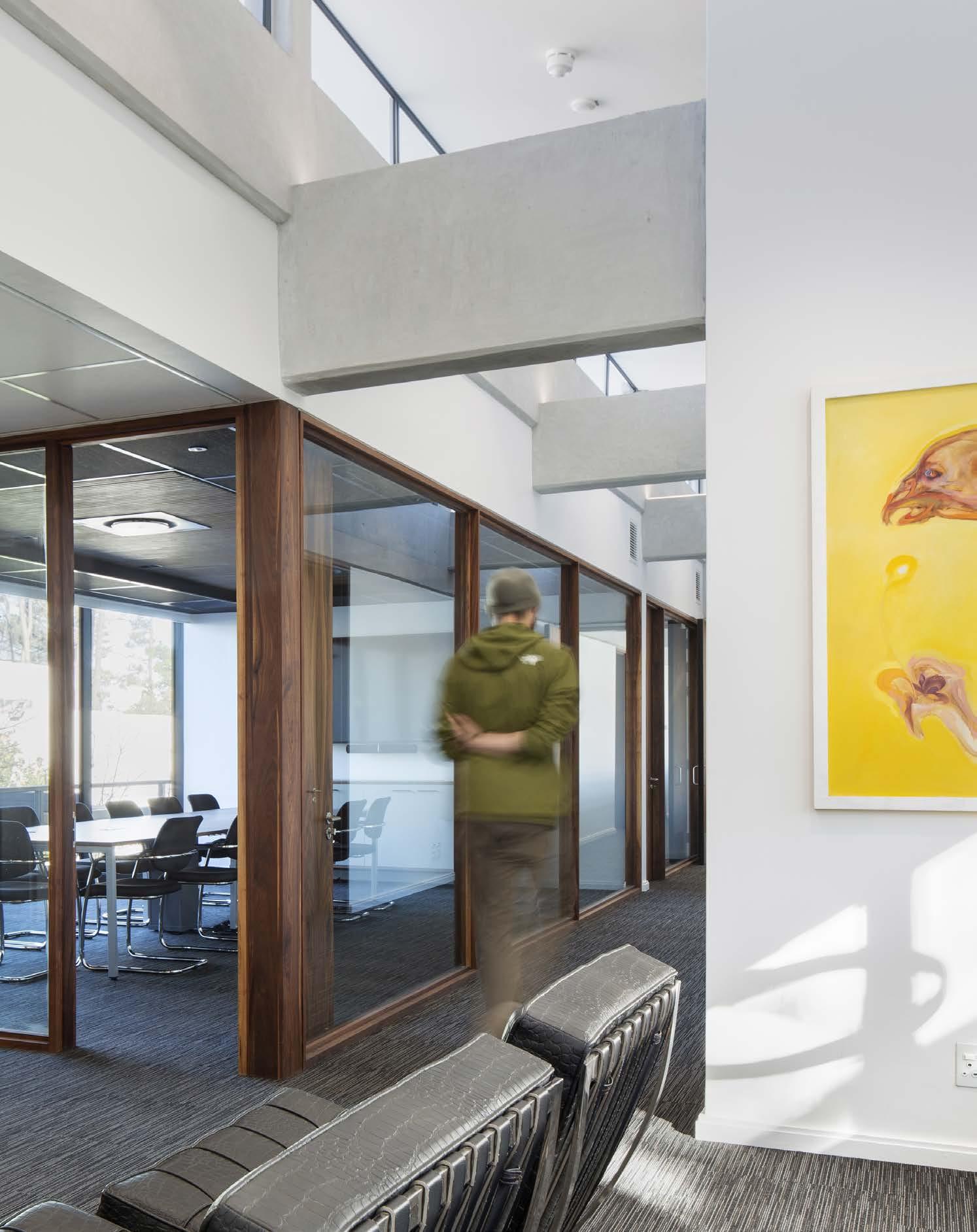
“The informal spaces encourage spontaneous exchange between academics, enriching the intellectual community.”
suppliers
Solar Screening: Etherington Aluminium, MicroLouvre | Carpet: Belgotex | Sanware: Plumbing Warehouse, Geberit | HVAC: Daikin VRV | Acoustic Walls: Gyproc | Acoustic Ceilings: OWA, Lalegno | Joinery: HomeCor | Alumnium Windows & Doors: Glassmen West Coast | Off-shutter Concrete: HP Projects | Tiling: Masterstone
“Here, history and the city’s evolving rhythm coexist in quiet, effortless harmony.”
- Longkloof Precinct
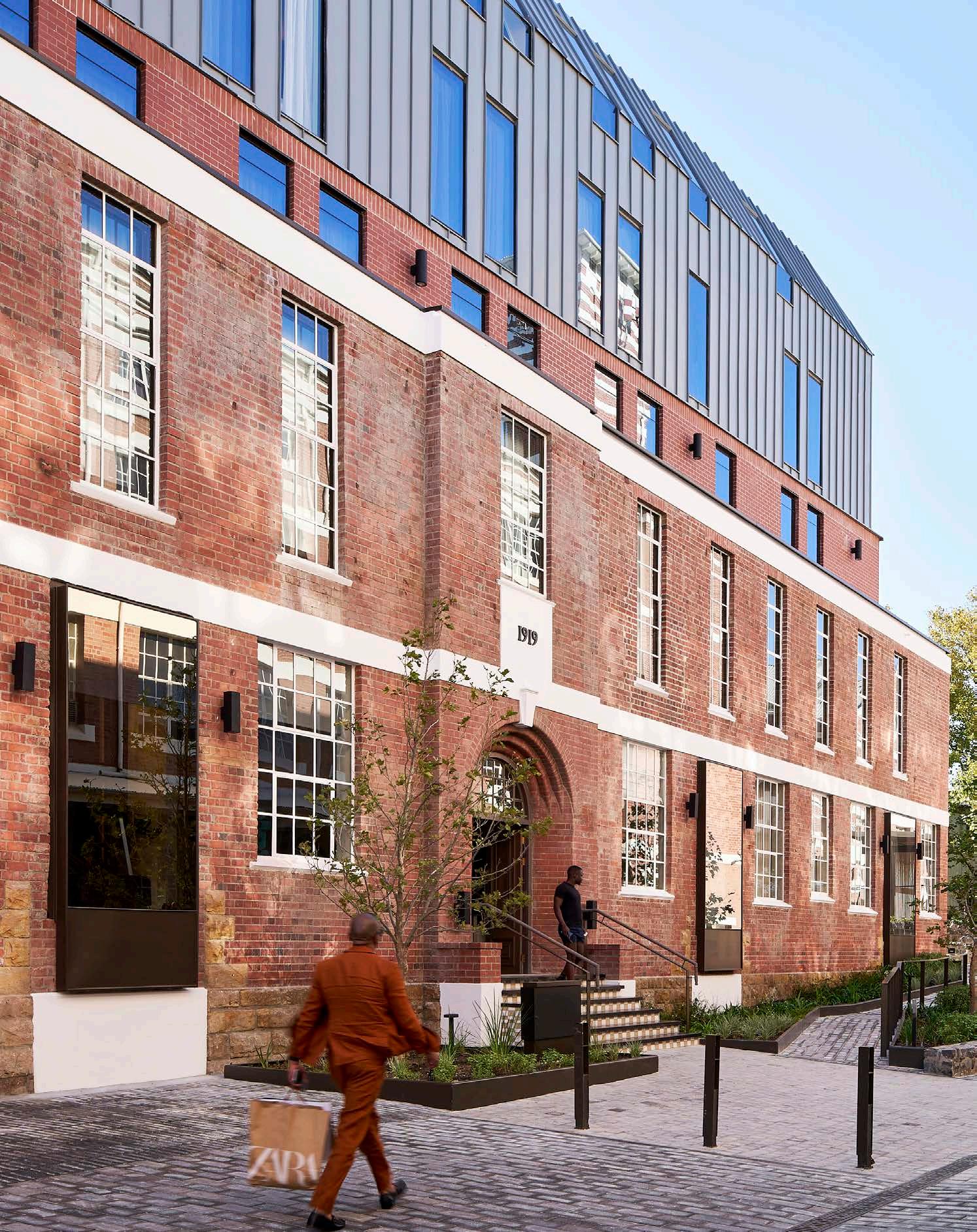
dhk Architects’ Vision for Longkloof’s New Urban Square
A pulse returns to Longkloof. Once overlooked, the precinct in Cape Town’s Gardens now hums with life. Here, cobbled streets and historic façades meet contemporary design. dhk Architects has breathed new life into the area, restoring heritage buildings while layering in new interventions that feel both contemporary and timeless.
Location:
Cape Town, South Africa @dhkarchitects www.dhk.co.za
Size: 16 500 m²
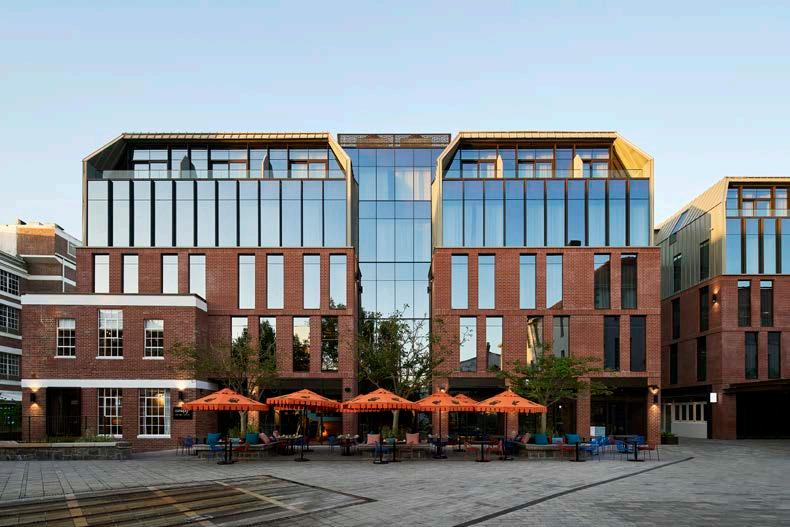
At the heart of the development, a new public square stands — a place for gathering, wandering, and pause. Anchored by a striking R200-million hotel, the masterplan knits the precinct together, placing its past in dialogue with a lively, welcoming present. Here, history and the city’s evolving rhythm coexist in quiet, effortless harmony.
Heritage in focus
Comprised of six separate erven, the historic buildings were originally developed in the early 1900s. Over the years, the precinct became fragmented, lacking spatial cohesion and connectivity.
The protected heritage sites include: two factory buildings once owned by the United Tobacco Company, the West Cliff School, designed by Sir Herbert Baker's studio, MLT House, a former school administration building, and original factory buildings at Longkloof A and 32 on Kloof.
New buildings reference, while not replicating, the historic fabric and the site’s industrial character. The landscape embodies this aesthetic with grey paving from reclaimed granite cobbles, weathered steel elements, and rows of deciduous trees. Red brick façades on the lower levels reflect the historical factory buildings, complemented by the contemporary forms above. Material textures mimic the landmark red brick and white plaster of existing buildings.
suppliers
Tiling: Rudolph & Van Vuuren
Glazed Aluminium: Mazor
Ceilings and Partitions: Scheltema
Timber Decking: Decks 4 Life
Vanities: WOMAG
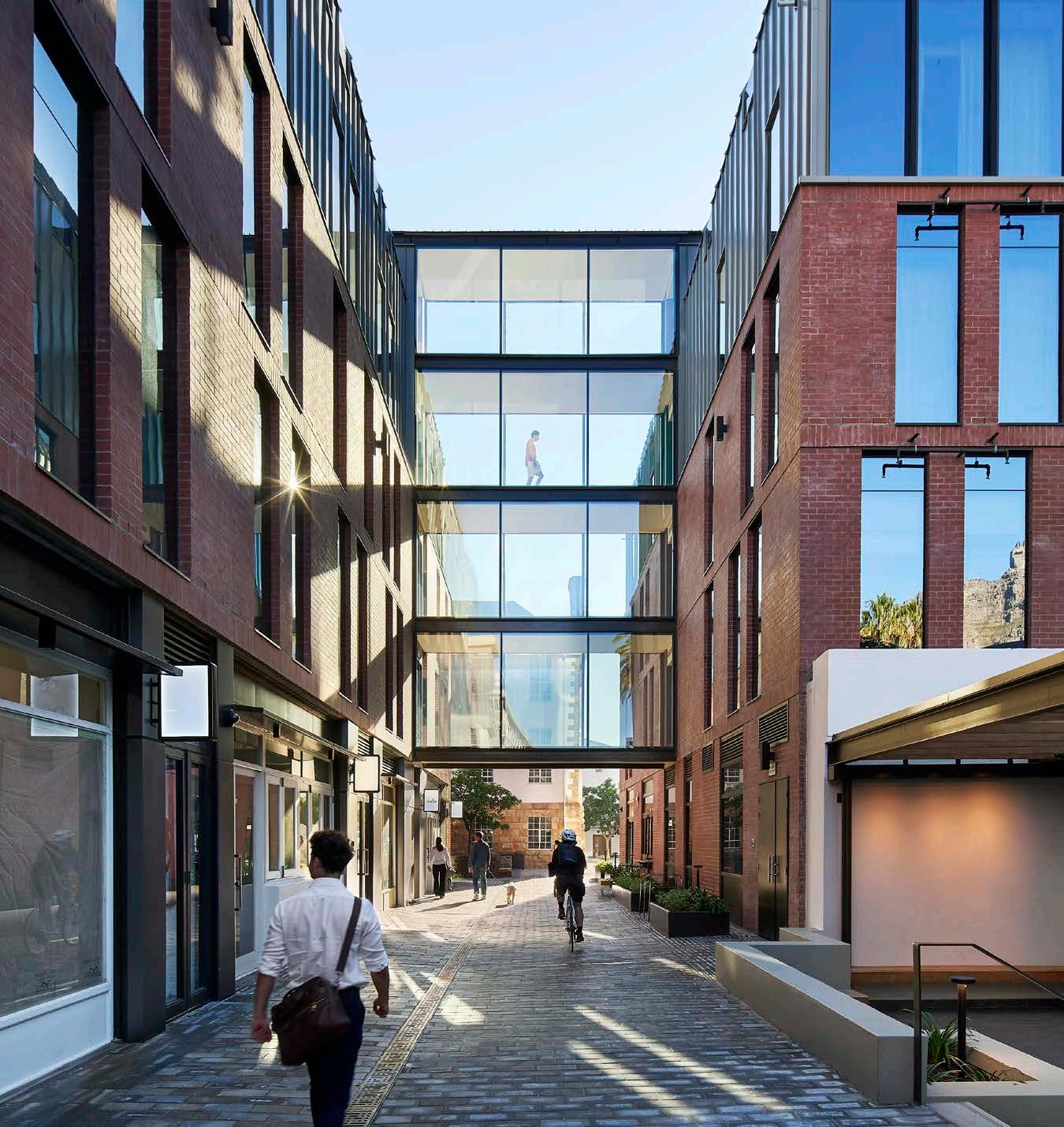
“New buildings reference, while not replicating, the historic fabric and the site’s industrial character.”
‘There is certain value in more difficult developments.We fully believe the redevelopment of the historic Longkloof precinct enhances its surrounds and the city,’ says Neil Schloss, Growthpoint’s Head of Asset Management SA.
The development began in 2010 with an urban design masterplan to create a vibrant, publicly accessible environment, while respecting heritage and the existing streetscape. When the designers inherited the site, irregular geometry and height restrictions posed challenges to creating a direct relationship between buildings and public spaces. Pierre Swanepoel, Partner at dhk Architects, adds: ‘This was a challenging and complex project which unfolded over around 15 years. The result is a sophisticated articulation of multidisciplinary design, achieved through extensive collaboration and creative problem solving.’
As a dynamic mixed-use hub within the city, the site is set within a landscaped public realm. dhk’s scheme revitalised the existing buildings, using ground floor retail to activate street edges, and providing basement parking to resolve congestion issues. With new links through the precinct, the design enhances the active qualities of Park and Kloof Streets and secures a car-free pedestrian environment.
Sustainability was prioritised through the adaptive reuse of existing buildings, preserving embodied energy. High-performance glazing reduces solar gain. Water conservation is achieved through indigenous landscaping and efficient fixtures while the urban design improving pedestrian links reduces vehicle impact.
This flagship project showcases how contemporary architecture and sensitive urban design can enrich historical areas. Derick Henstra, Executive Chairman and co-founder of dhk Architects, says: ‘Longkloof is an outstanding demonstration of how precinct-led urban design and sensitive, considered architectural design can be combined to add value to neglected urban environments. We are absolutely delighted with the results.’
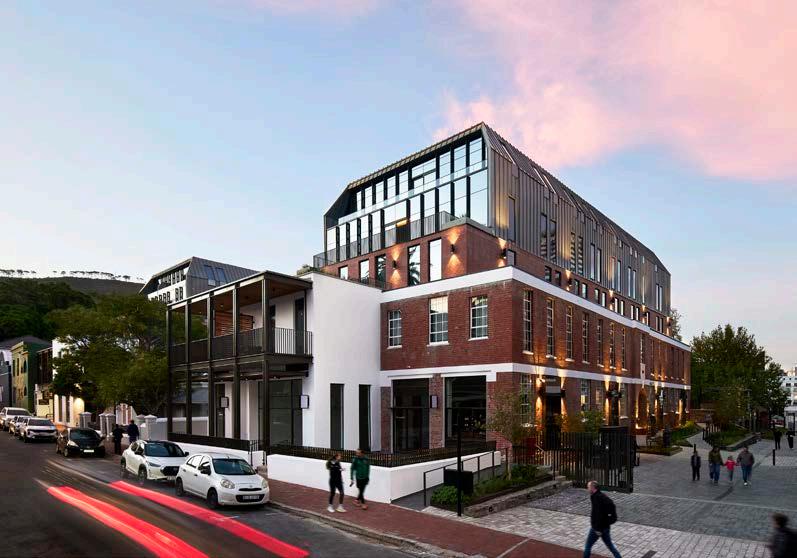
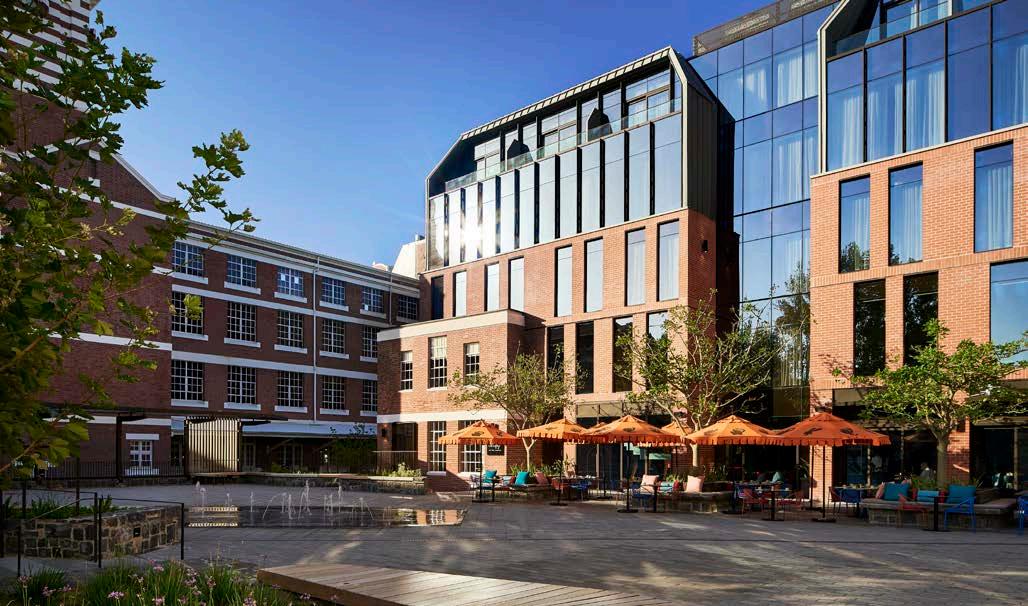
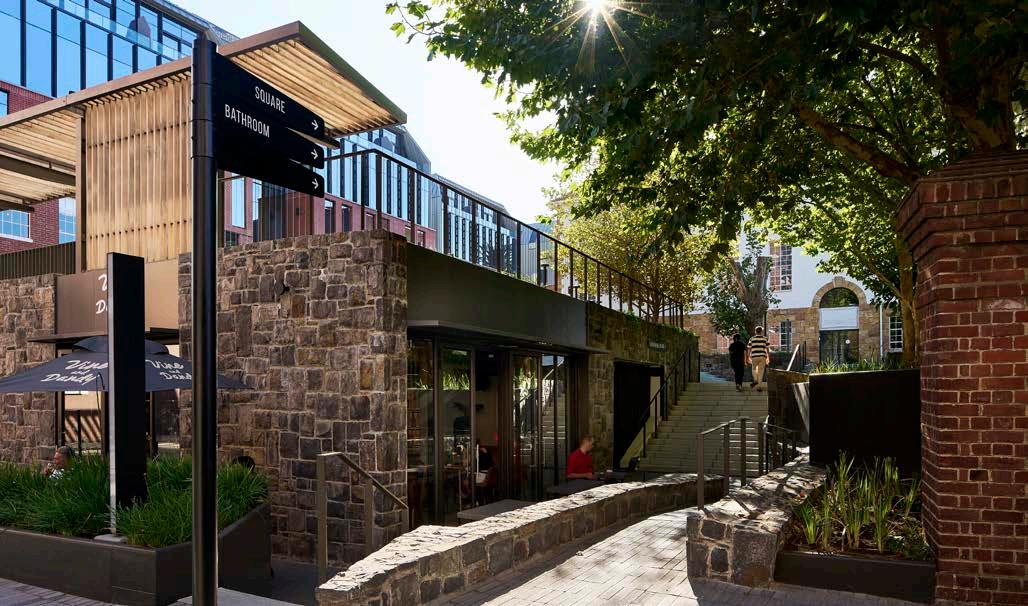
meet the team
Architect, Urban Designer, and Landscape Architect: dhk Architects | Main Contractor: Isipani Construction
Quantity Surveyors: MLC Construction Cost Consultants | Interior Designer: K/M2K Architecture & Interior
Design | Structural Engineers: LH Consulting Engineers | Civil Engineers: LH Consulting Engineers | Electrical, Mechanical, Fire, Structure and Wet Services Engineer: WSP | Project Manager: Atvantage and Orion Project Managers | Electronic Services Consultant: Ethnic Technologies | Green Building Consultant: Ecolution Consulting | Audiovisual and Acoustic Design Consultant: Mtshali-Moss Professional Services | Health and Safety: Safetycon | Enabling Works Contractor: Franki | Photographer: Sean Gibson
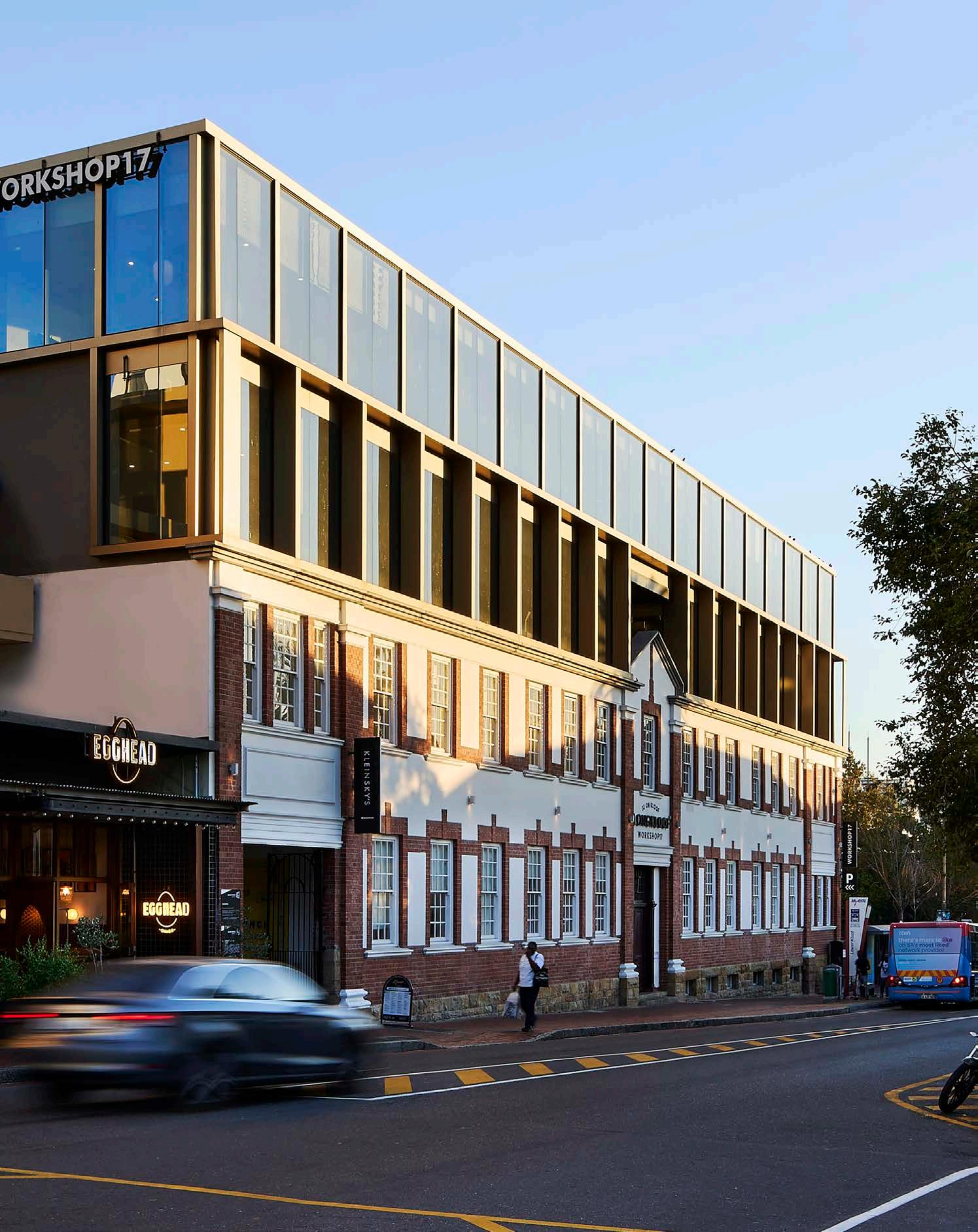
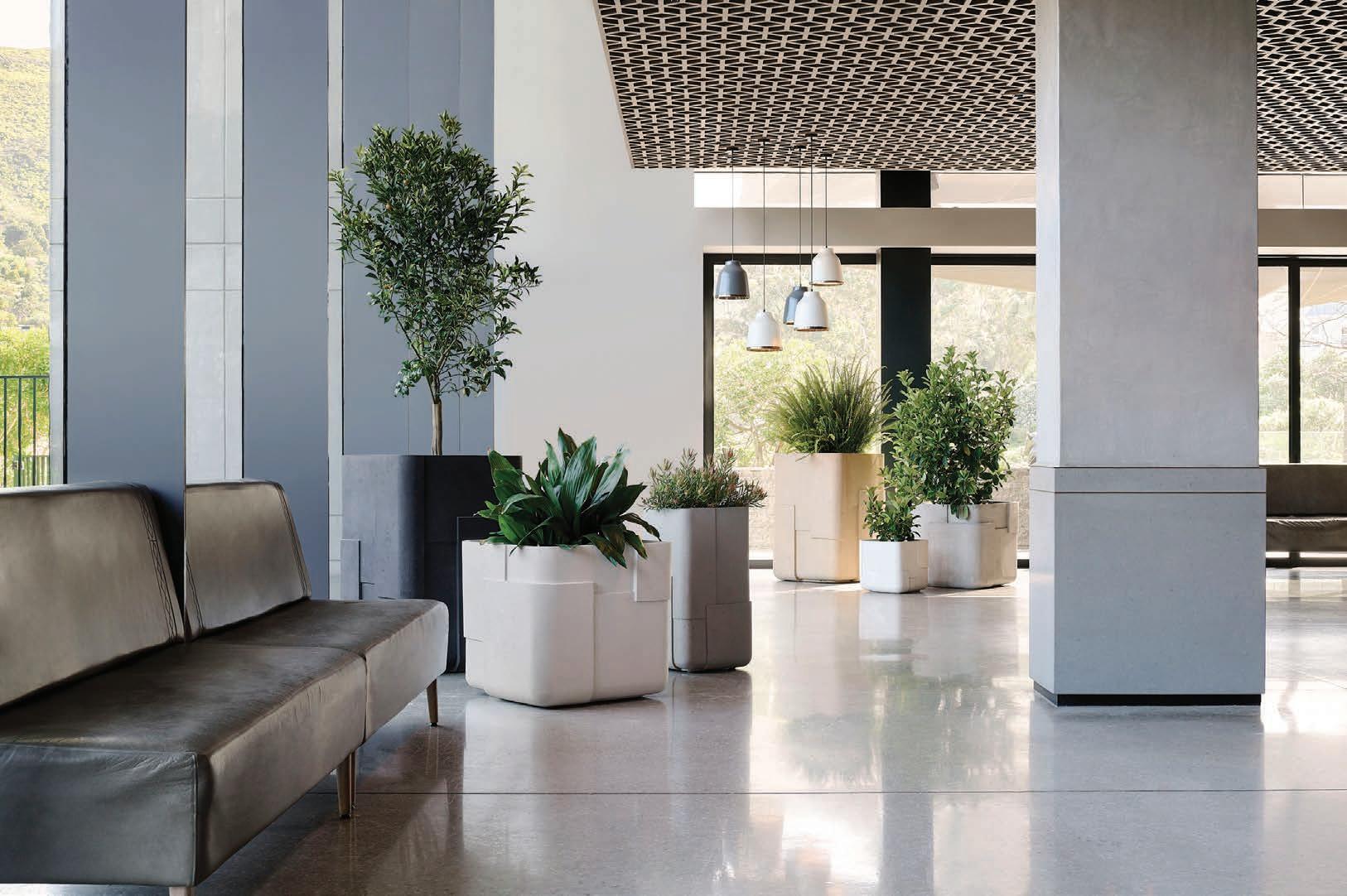

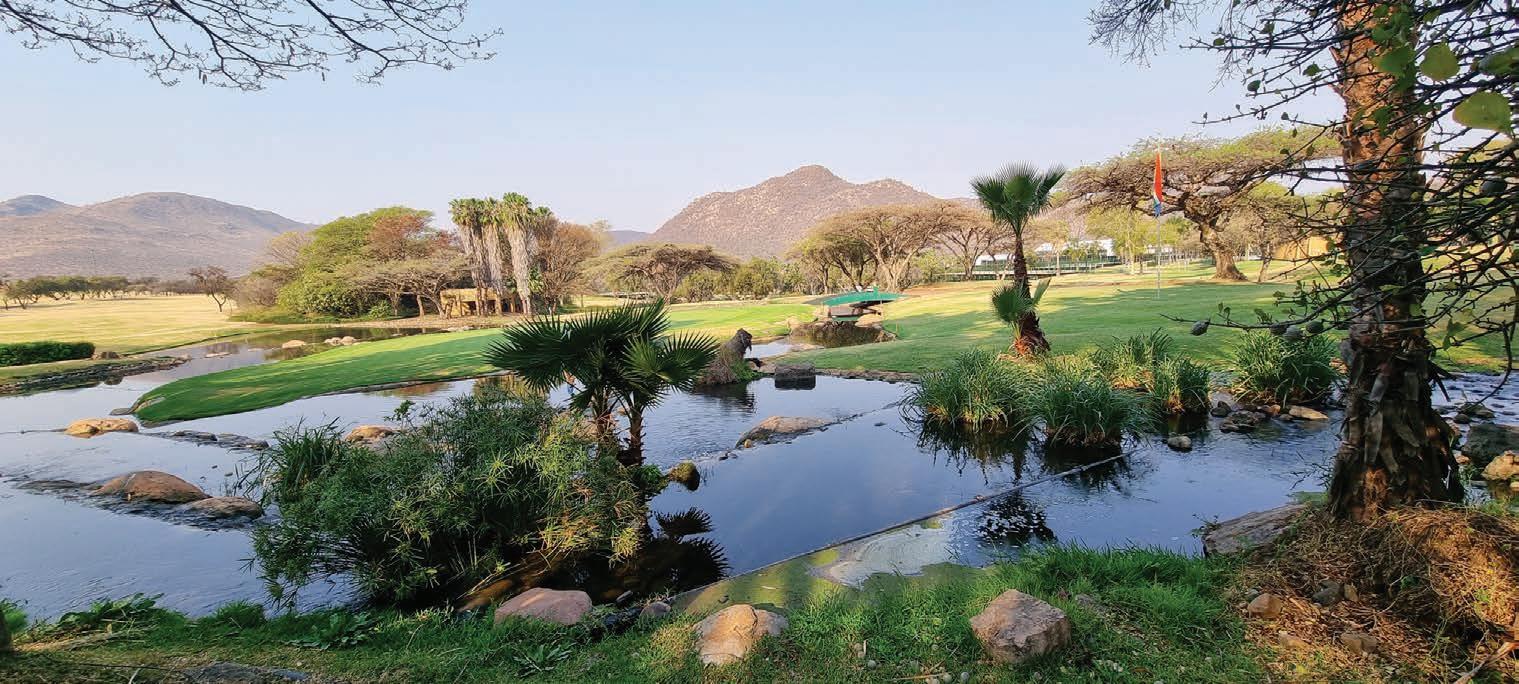
Landscape Designs from an in-house landscape design team to produce low maintenance water-wise gardens from plant cuttings on our own stock. This drives cost-saving and water efficiency. 2D and 3D plans can be provided free of charge
Ad-Hoc Team for Paving and Installation Projects
In-House Tree Felling Team
Irrigation Team
On-Site Biometric System with geolocation features for attendance monitoring

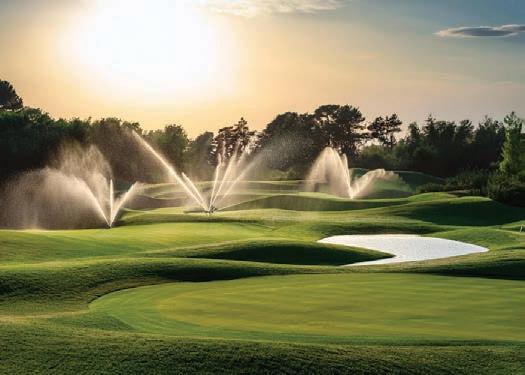
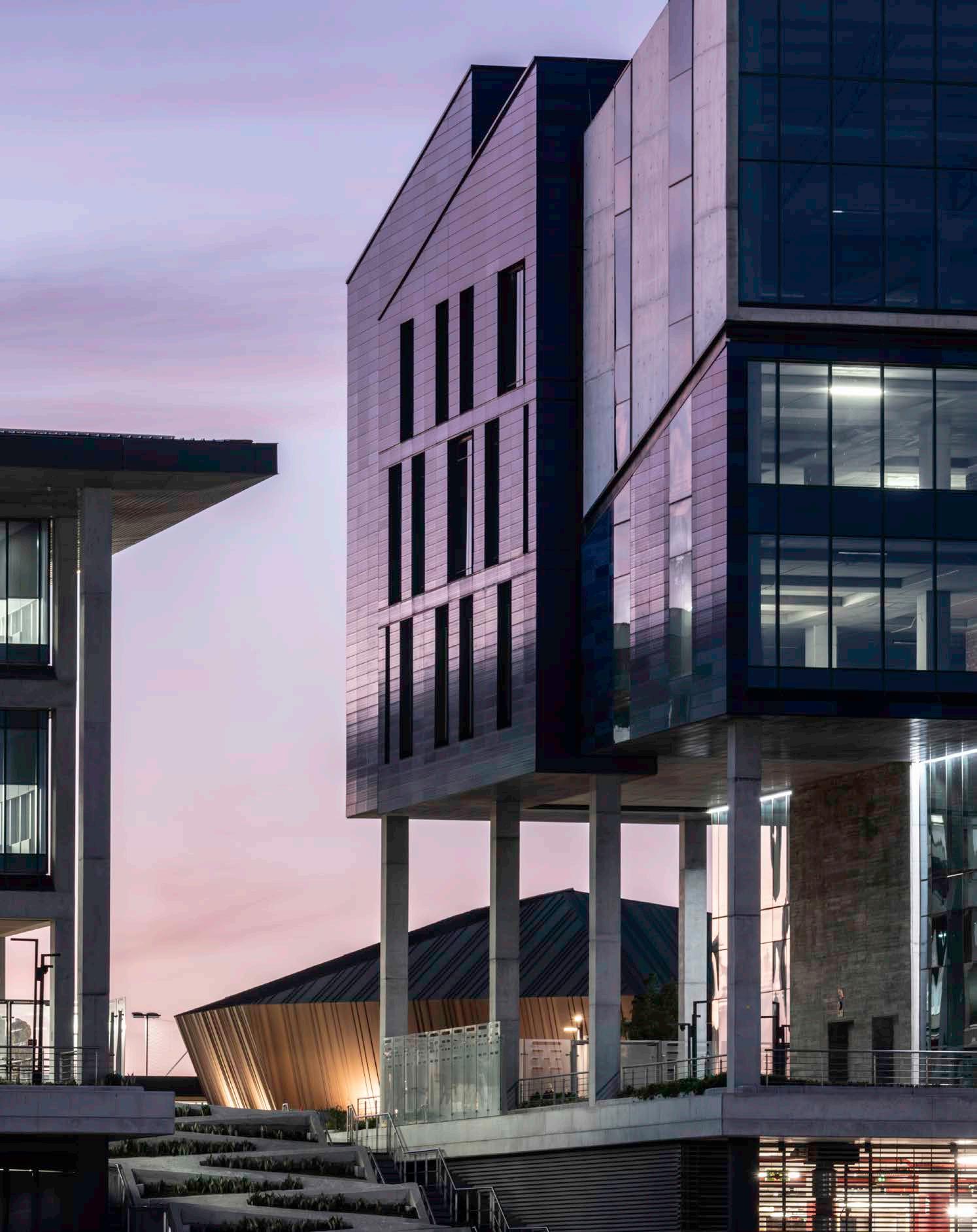
Paragon Architects' Design for the Amazon Africa Headquarters Reimagines the Corporate Grid for Contemporary Work Rhythms
For an office block, the new Amazon Africa Headquarters is surprising. While the simple form of the ‘block’, or grid, is employed as a central design motif, this project renounces the monolithic structure that conventionally houses offices. Instead, Paragon Architects, with interiors by Design Partnership, reimagine the grid as a sign of fragmentation: concrete frames protrude and recede — some empty, others filled with still smaller glass tiles.
Location: Size: 70 000 m²
Cape Town, South Africa
@paragongroupza
www.paragongroup.design
The project comprises a network of mid-rise buildings linked by public courtyards, walkways, and green spaces. The central buildings have a distinctly modern feel: grid-like concrete shells complemented by interiors designed by Design Partnership. Despite occupying 70 000 m² and anchoring the River Club development, the landscape-led design enables openness, flexibility, and visual porosity. By prioritising human-scale design, the complex counters the impersonal monumentality often associated with tech infrastructure. The modular design and interweaving gardens evoke a collage of multiple domestic spaces. As a result, the campus feels like a lively extension of Observatory’s urban fabric rather than an isolated corporate enclave.
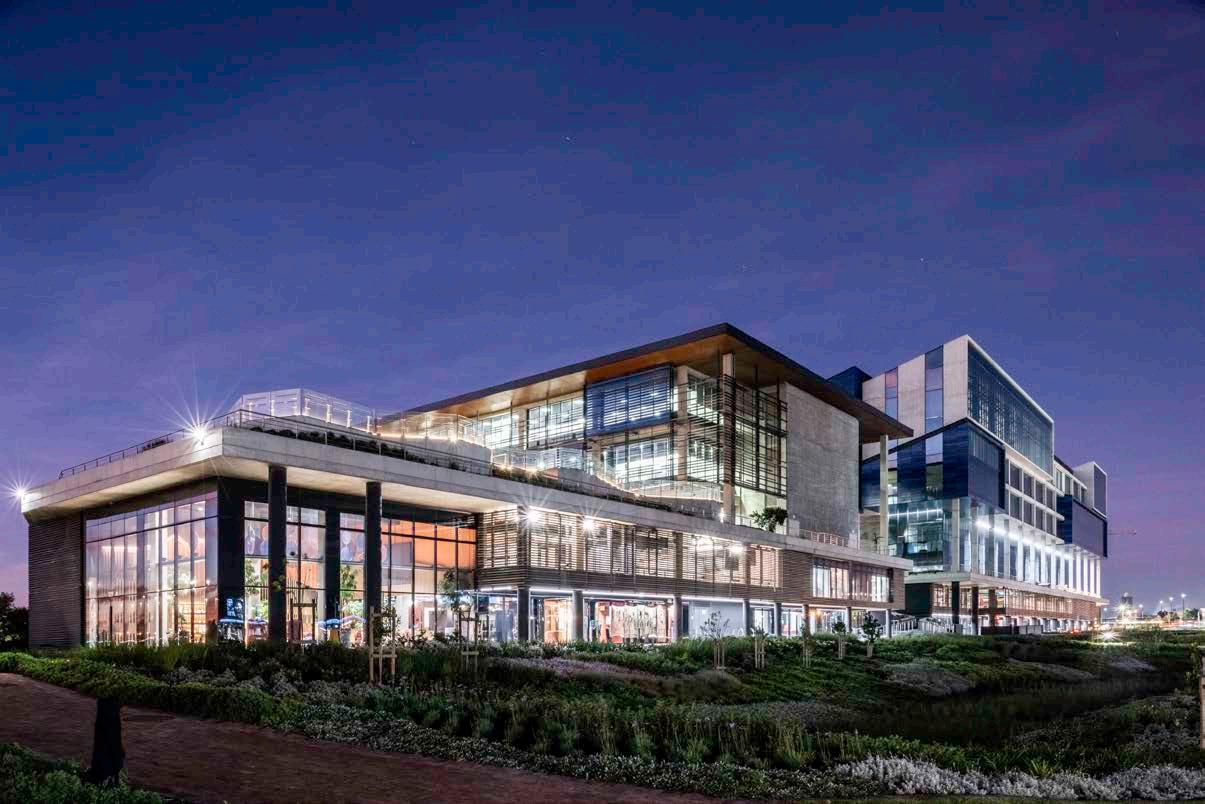
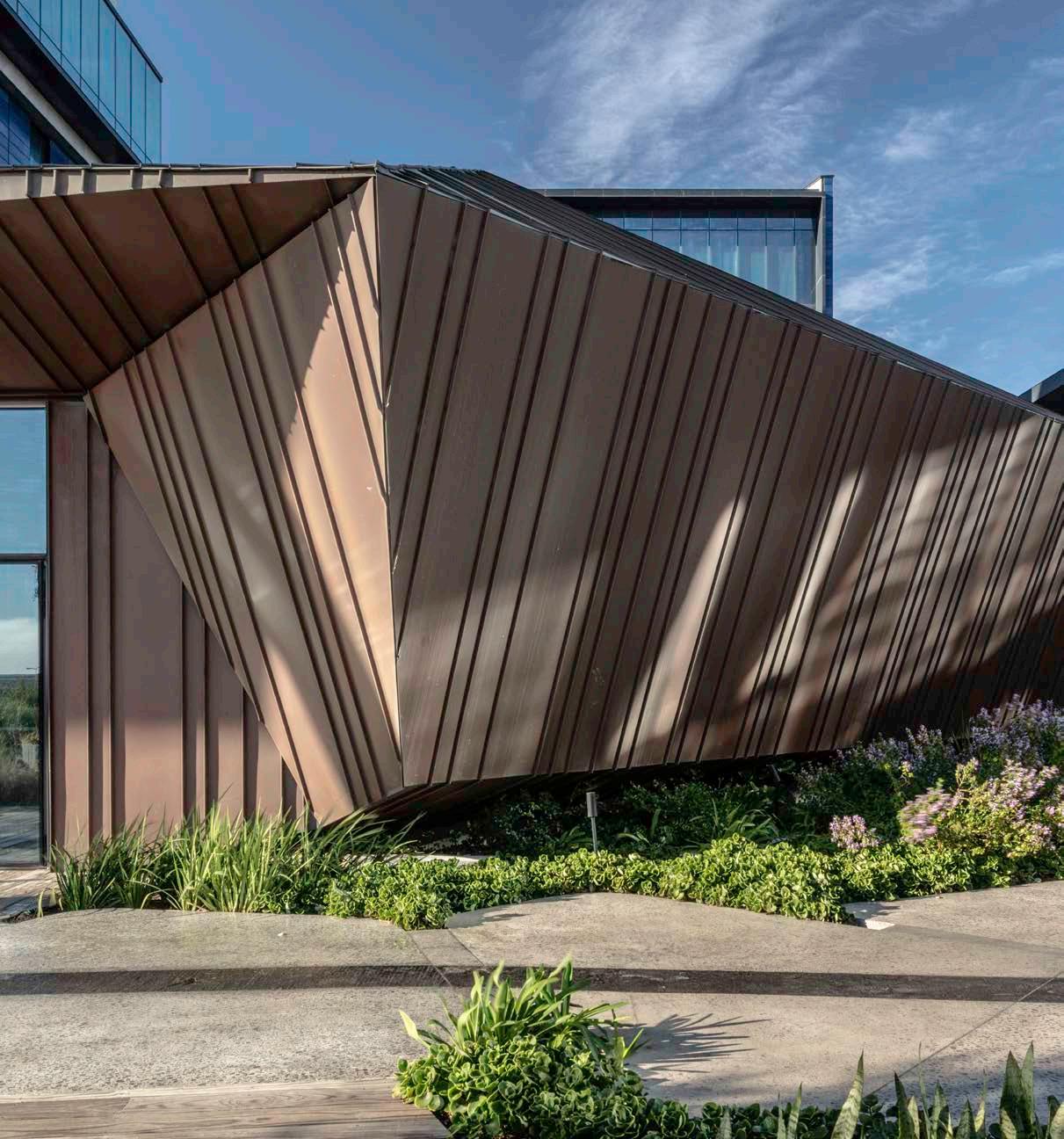
meet the team
Architect: Paragon Architects | Interior Architect: Design Partnership, IA Interior Architects | Developer: LLPT | Project Manager: Capex Projects | Quantity Surveyor: MLC Group | Structural Engineer: Zutari | Electrical Engineer: Sutherland Engineers | Sustainability Consultants: Solid Green Consulting | Wet Services, Mechanical & Fire Engineer: Sutherland Engineers | Main Contractor: WBHO Tenant: Amazon
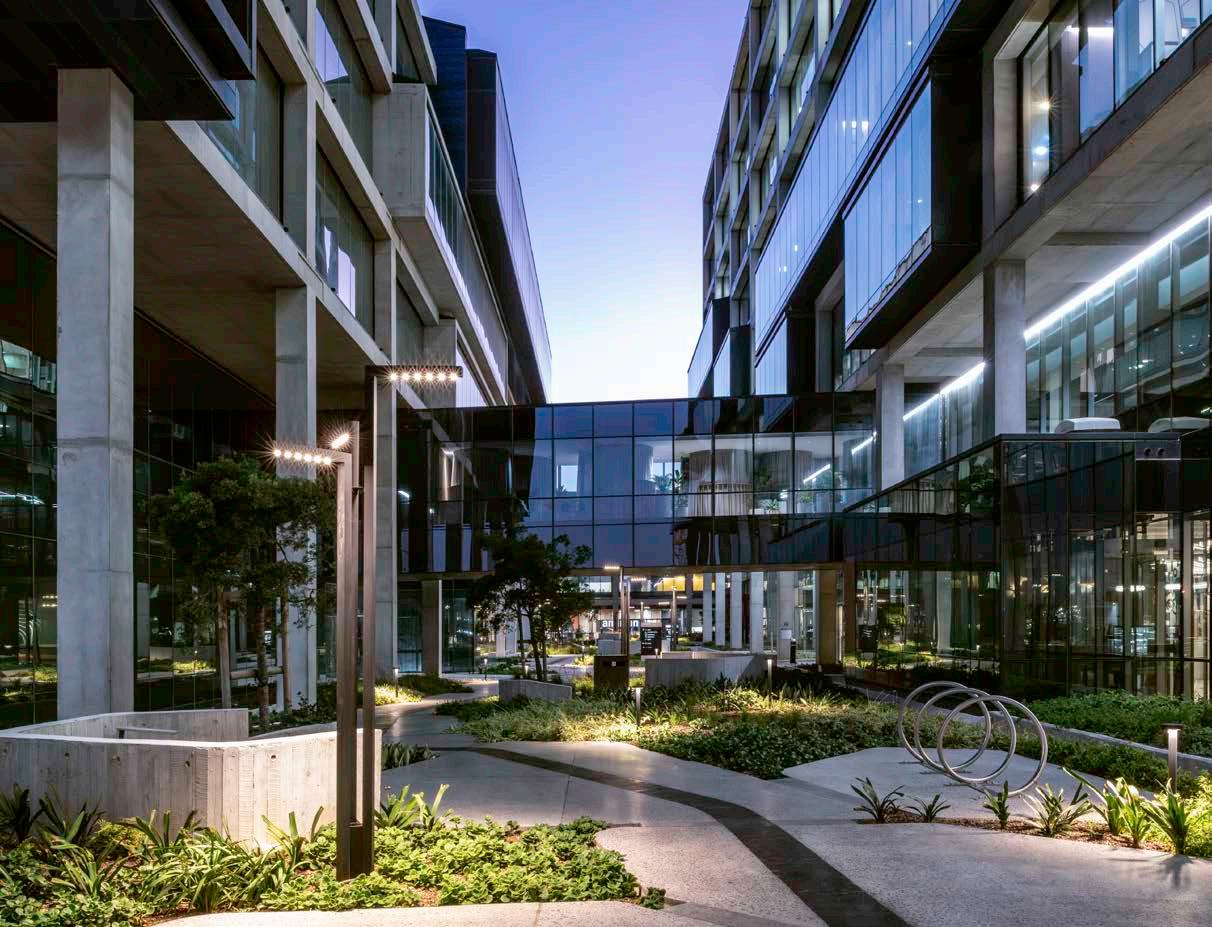
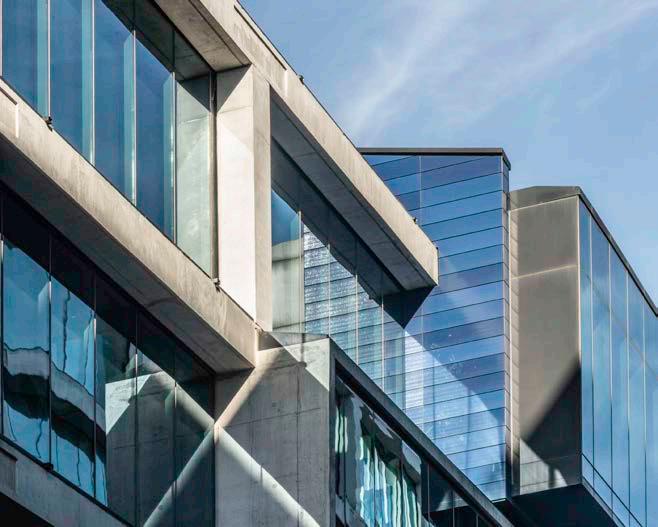
In the aftermath of the COVID-19 pandemic, employee well-being and hybrid work have become global priorities. The new Amazon Africa Headquarters draws inspiration from contemporary work patterns and evolving employee needs. Its permeable edges create seamless transitions between the work environment and the surrounding community, enabling a dynamic interplay of nature, commerce, and civic life.
The design encourages movement, encounter, and outdoor collaboration — activities that protect workers from office fatigue. The podium level is envisioned as a welcoming ‘office forest’: an extensive botanical network of indigenous species that activates every level of the development. Expansive wooden deck platforms emerge from this planted landscape, blurring the boundaries between interior and exterior environments. Rather than the boardroom, these open community spaces serve as the social heart of the development. Such generous gathering areas foster collaboration and connection, from informal interactions to large corporate events. The ‘open field’ concept extends beyond the immediate workplace to create a genuine public amenity in the city’s centre.
Understanding the benefits of natural systems
Indigenous ecology defines the architectural experience: more than 50% of the site consists of green spaces that have been preserved and rehabilitated. The landscape strategy fragments the development to allow nature to flow seamlessly throughout. Whether on a coffee break or mid-brainstorm, workers meandering next to the Liesbeek River might follow concrete stepping-stone walkways that echo lily pad formations. This landscape-driven approach transforms infrastructure into poetic environmental storytelling.
The project exemplifies Paragon’s commitment to passive environmental design. Responsive shading systems, tailored to orientation and climate, enhance both comfort and energy efficiency without detracting from the architecture. The glazed and aluminium panels that fill the concrete frames lend rhythm and refinement, while the blue-toned ceramic tiles of the façade reads almost as a mosaic of tiles in Amazon’s recognisable blue.
Beyond its architectural intelligence, the project is a model of ecological responsibility. The indigenous landscaping, developed in consultation with First Nations communities, provides essential ecological services: improving air quality, managing stormwater, and creating habitat corridors that connect to broader urban green infrastructure. Greywater systems and rooftop solar contribute to the project’s 6-Star Green Star aspiration, positioning it as one of the continent’s leading sustainable developments. In demonstrating that commercial development can also catalyse ecological restoration, Paragon’s design reshapes what a corporate campus can be.
suppliers
Furniture: Pedersen + Lennard, Ergoform, Arkivio, Entrawood, Haldane Martin, Tabletops, Krost Office Products | Stone Top: Sangengalo | Flooring: PentaFloor, Traviata, Polysales | Tiling: RVV Tile Gallery, Kalki Ceramics, Wolkberg Casting Studios, Lime Green Sourcing Solutions | Ironmongery: Assa Abloy | Paint: Dulux, Paintsmiths | Pebble Seats and Tables: Igneous Concrete Planters: Igneous Concrete, Indigenus | Speedgates: Frost International | Bamboo Decking: MOSO Africa, Master Decks | Blinds: Alplas | Waterproofing: Aspect | Fabrics: Hertex, Sunbrella, Home Fabrics, The Mill, Warwick | Wood Finish: Osmo | Joinery: RMS Shopfitting | Lighting: MOS Products, Regent Lighting Solutions | Ceiling: OWA
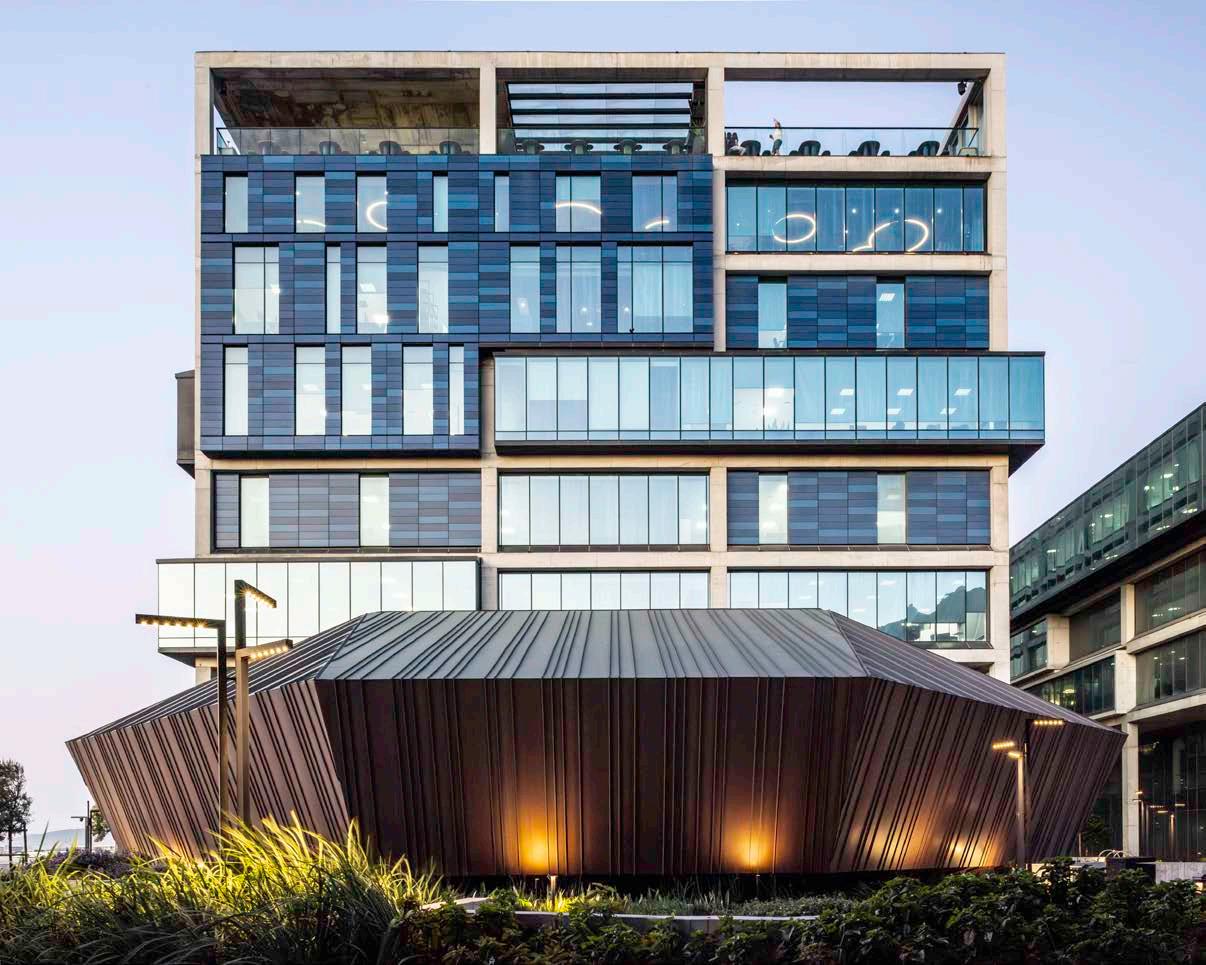
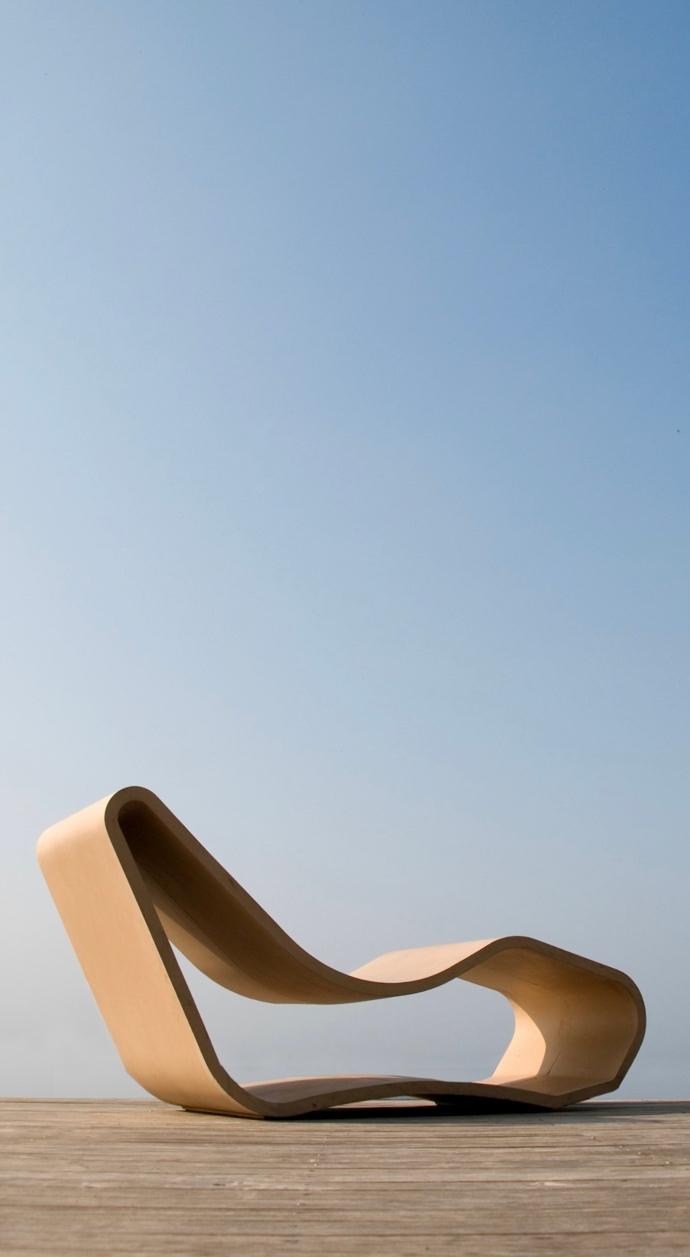
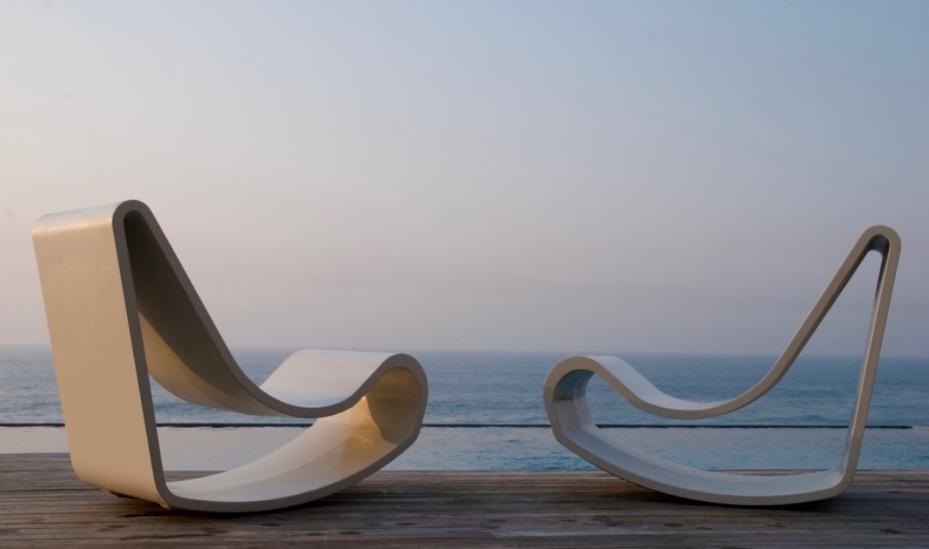
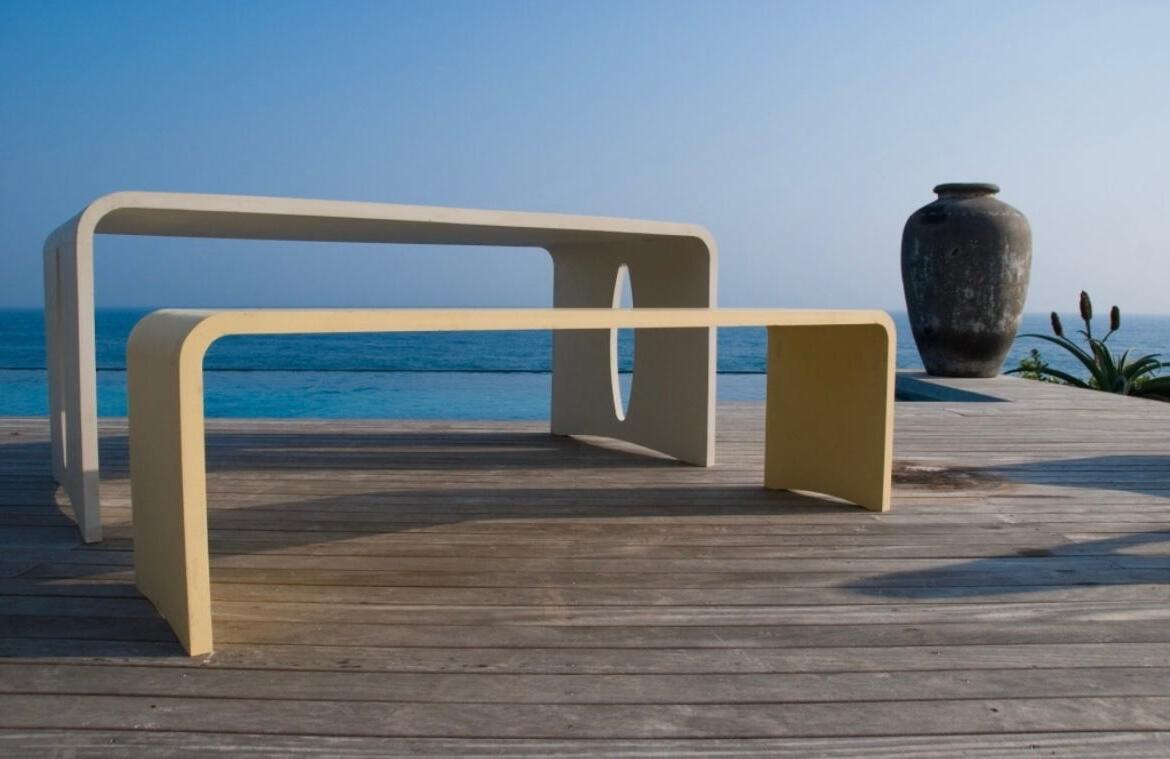

IGNEOUS CONCRETE innovators in all weather, lightweight polyconcrete
+27 (0)82 443 0084 | info@igneous.co.za | www.igneous.co.za | #igneous_concrete
pecialist suppliers of large scale, low maintenance, weather resistant, water repellent, UV stable pots + planters | bench + wall paneling | sea9ng + furniture | bollards, bins, canopies and signage | custom design and landscaping essen9als | indoor and outdoor installa9ons for retail, commercial, leisure and public open spaces
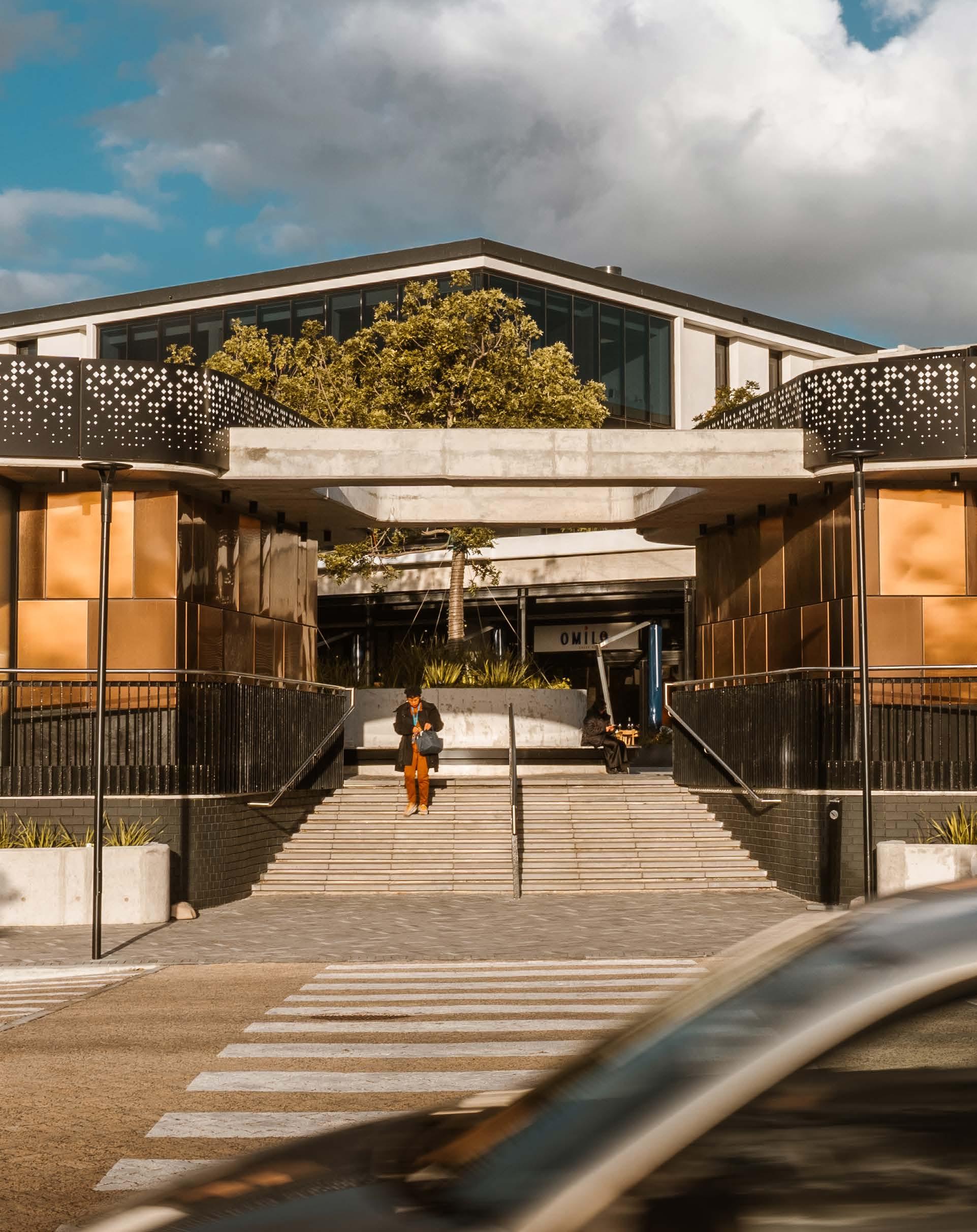
Vivid Architects Shape a Precinct That Responds to Site, Context, and Ecology
Riverlands Mall by Vivid Architects is the beating heart of the ambitious 14-hectare Riverlands Precinct in Observatory, Cape Town. Here, ecology, heritage, and contemporary architecture converge, creating a layered and immersive approach to urban living. Far beyond a conventional retail development, the mall serves as the social and commercial core of a precinct designed to weave sustainability and cultural depth into a cohesive, future-oriented urban fabric.
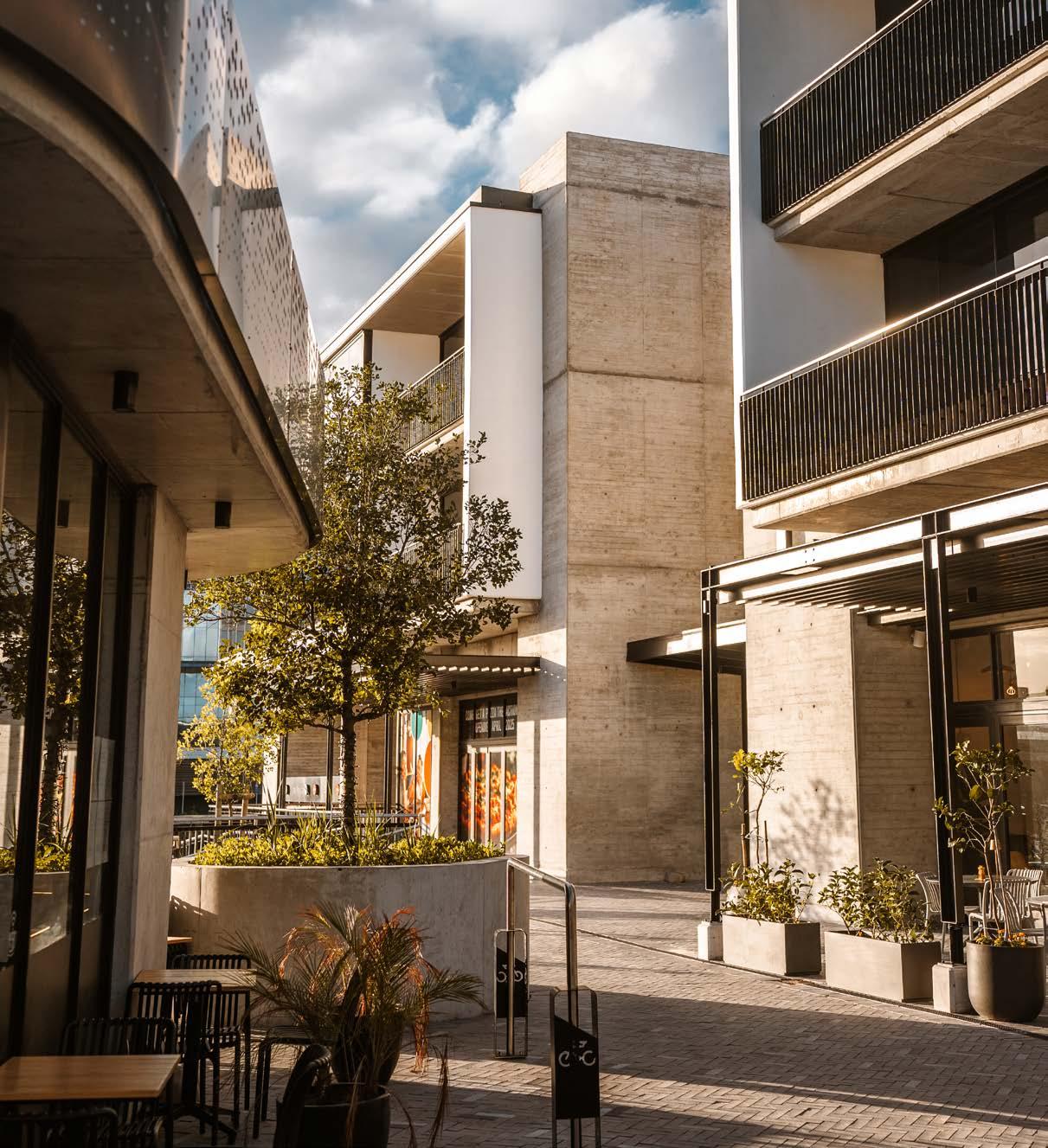
Clean rectilinear forms and expanses of glazing rest lightly on the site, while tactile materiality lends warmth and texture to the experience of moving through the precinct. Tone and texture are treated with discreet precision, creating a subtle pattern across the façades. The architecture feels at once grounded and open, poised yet restrained. Around it, a system of generous outdoor spaces softens every barrier, allowing the built environment to unfold gently into the natural landscape.
At 12 000 m², the lifestyle centre progresses as a selected sequence of spaces rather than a singular volume. FreshX by Checkers and Woolworths anchor the offering, while boutique stores, riverside cafés, and restaurants spill outward onto timber decks and a shaded public piazza. From here, the terrain slopes gently toward the rehabilitated Liesbeek River, where terraces dissolve the boundary between vibrant commercial energy and the tranquil pull of water and vegetation. This effect, a fluid transition, is a biophilic gesture that invites visitors to slow down, linger, and experience the precinct through a more connected, human rhythm.
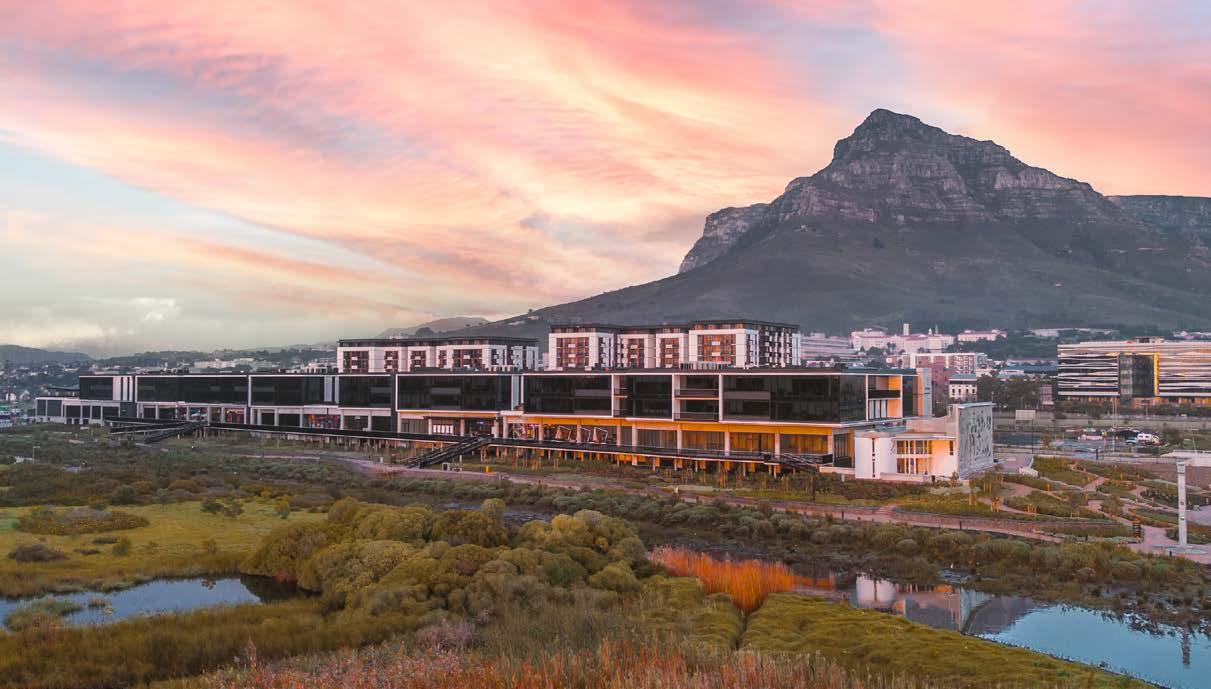
Above the retail podium, four office buildings emerge with deliberate restraint, seamlessly integrated into the mall’s circulation routes, the podium, and a landscaped roof deck. This elevated plane serves both infrastructure and environment. Shaded parking is concealed beneath solar panel structures — a pragmatic design solution that reinforces the project’s sustainable ethos while keeping the presence of vehicles discreet. The built environment adapts between scales, moving from intimate, tactile materiality to the overarching sequence of landscape, architecture, and daily life.
Integrating culture and ecology
Riverlands Mall serves as a soft threshold to the greater precinct: a site where the architecture forms a broader ensemble of programmes and experiences. The ‘Sunbird’ and ‘Kingfisher’ residential towers, also by Vivid Architects, emerge beyond, their forms demonstrating the transition from commercial hub to contemporary urban living. Further along, the precinct unfolds around a major commercial hub anchored by the Amazon Campus, designed by Paragon Architects and Design Partnership. This hub adds a new layer of economic presence to the district.
The dedicated First Nations Heritage Centre by Noero Architects deepens the cultural narrative. Positioned prominently within the precinct, the centre stands as a quietly powerful contrast: a place of memory and gathering that honours the living heritage of the Khoi and San peoples. As a museum, meeting ground, and educational space, it introduces cultural authenticity to the precinct.
suppliers
Tiles: Tilespace | Shopfronts: Facade Solutions, Mazor | Walkout Matt: Coba Sanware: Geberit, Grohe, Vaal Cobble Pavers: Revelstone | Pots and Troughs: Stonecast | Timber Decking: MOSO | HVAC: Daikin
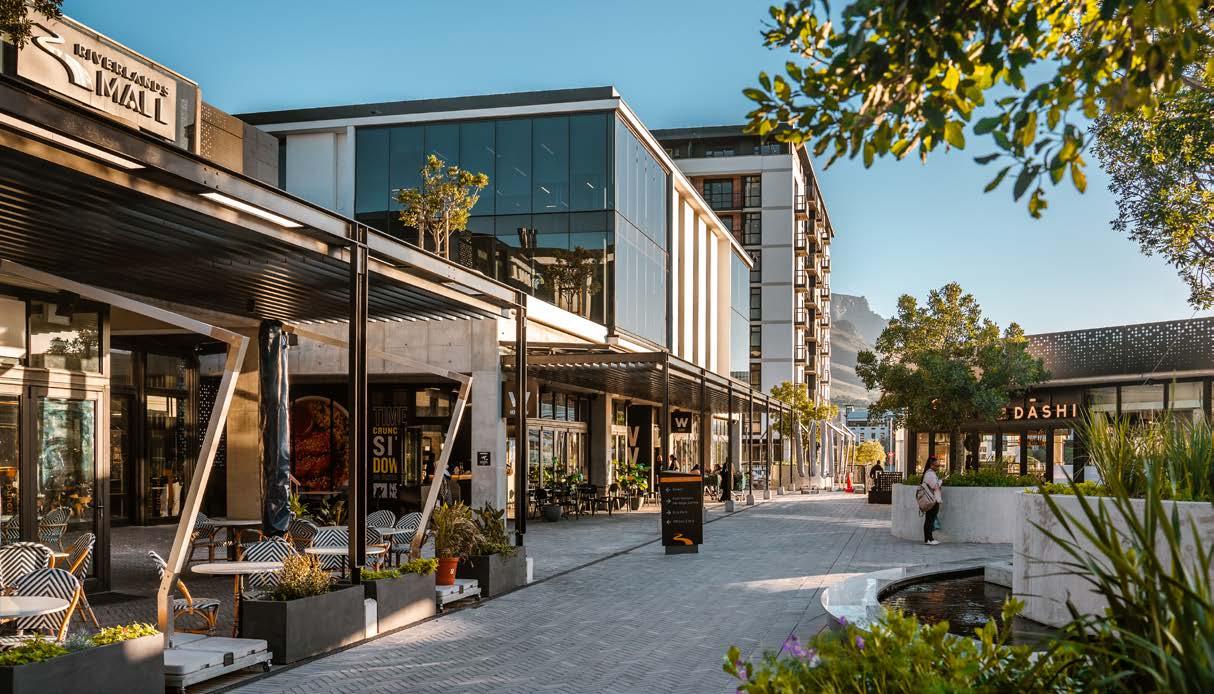
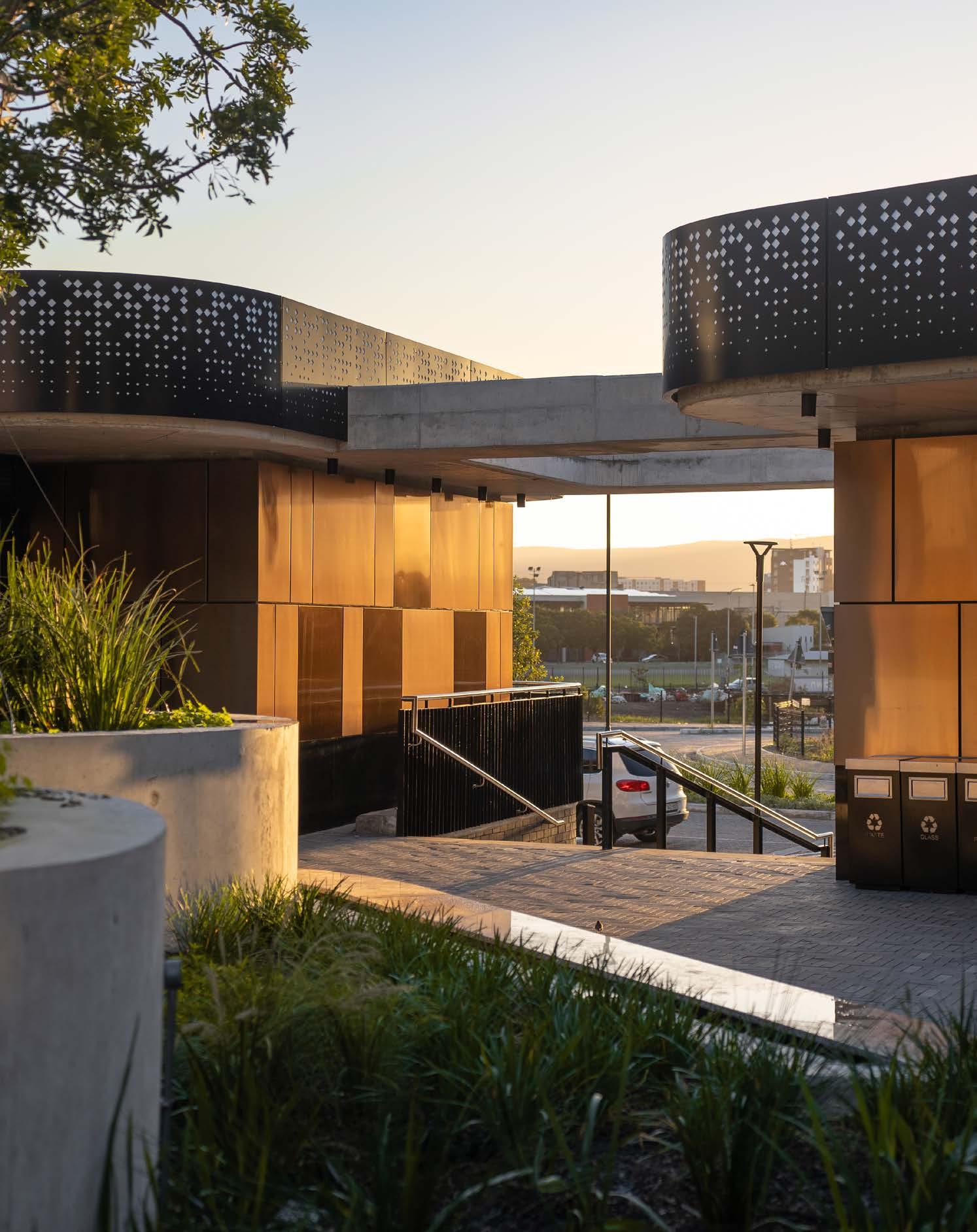
"Ultimately, these interventions transform a once-underutilised urban node into a vibrant, ecologically sensitive precinct. This urban model is distinctly of Cape Town, yet forward-thinking in its ambition."

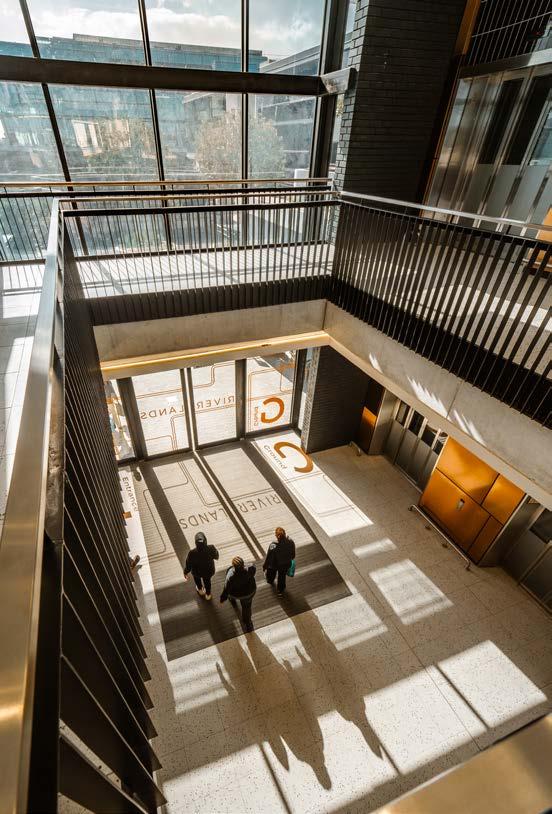
meet the team
Architect: Vivid Architects | Project Manager: PCPM | Quantity Surveyor: MLC Construction Cost Consultants
Structural Engineers: Zutari | Civil Engineers: Zutari | Fire & Wet Services: Zutari | Electrical Engineers: Selkirk and Selkirk Engineering Solutions
Mechanical: GPCE | Landscape
Architects: Planning Partners
Facade: LH Consulting Engineers
Landscape Surveyor: David Hellig & Abrahamse | Lift Engineer: Solutions
For Elevating | Health & Safety: Encore
Safety Management | Sustainability
Consultant: Terramanzi Group | Main
Contractor: WBHO Construction
Photographer: art.hub
An extensive infrastructural renewal supports these architectural responses, reenvisioning how the precinct encounters the land. A new bridge over the Black River improves circulation, while restored stormwater systems and landscaped swales weave resilience and biodiversity into the urban structure. The greatest transformation is the restoration of the Liesbeek River. Once canalised, it flows once more as a living ecosystem, its banks revived by indigenous planting and wetland zones that draw back species such as the endangered Western leopard toad and local sunbirds.
Ultimately, these interventions transform a once-underutilised urban node into a vibrant, ecologically sensitive precinct. This is an approach that feels distinctly of Cape Town; forged by its rivers, histories, and landscapes, yet forward-looking in its ambition. It offers a model for how urban spaces can evolve with understanding, intention, and care.
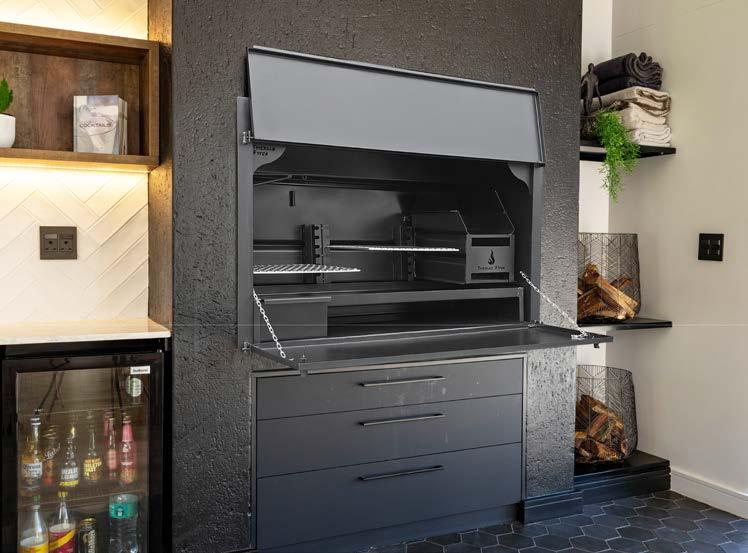
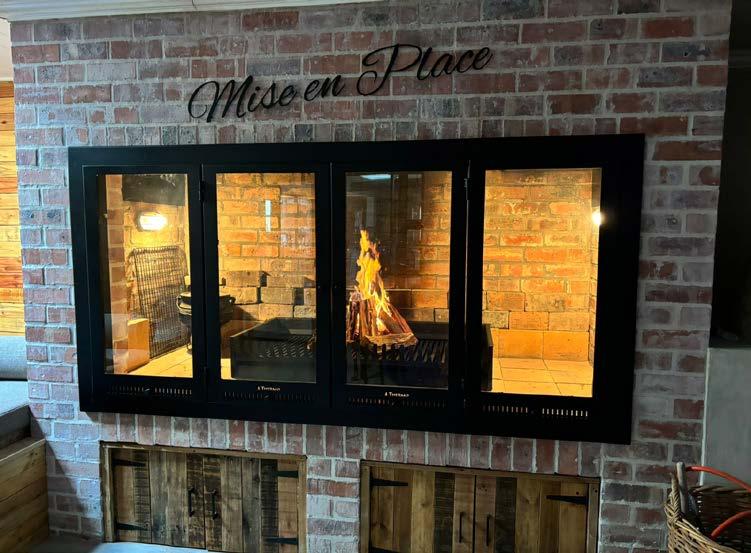
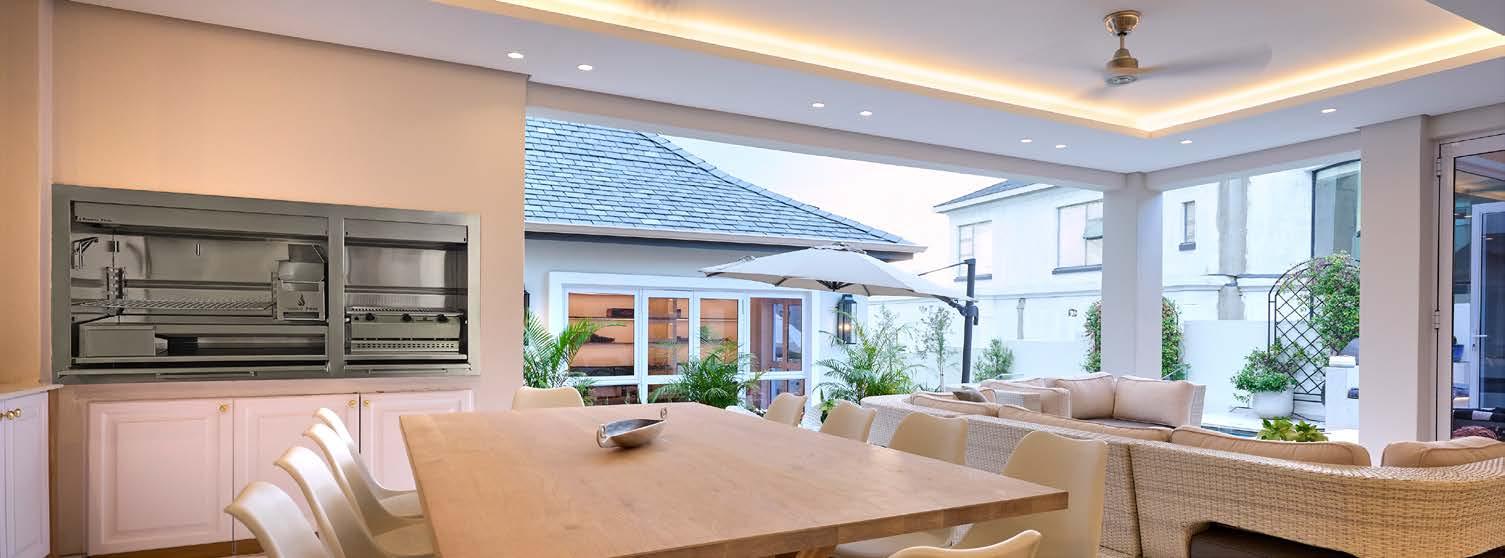
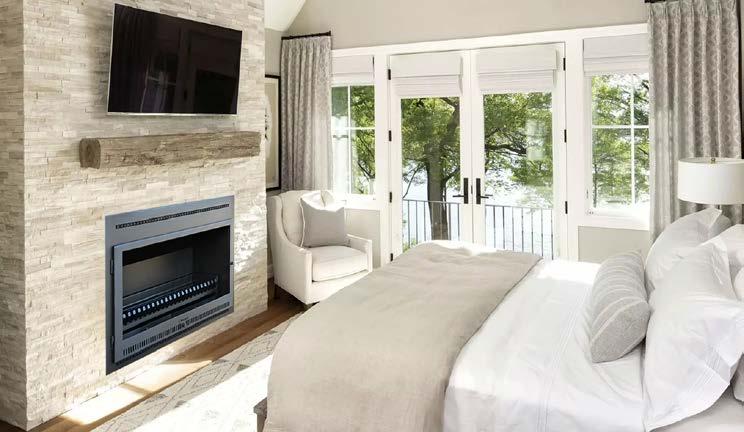
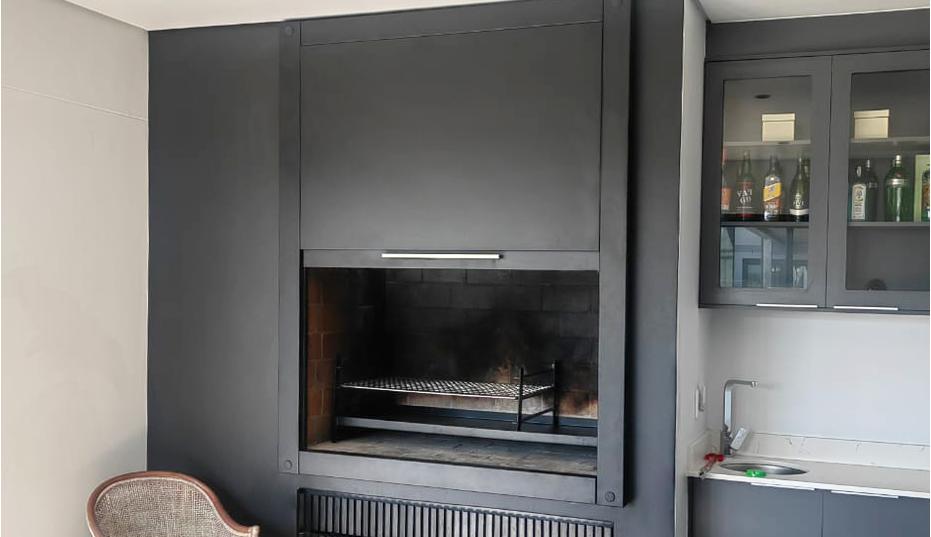
Thermo Fires is a Cape Town-based designer and manufacturer of braais and replaces. We strive to bring our customers the broadest range of good-quality products at competitive prices, coupled with sound knowledge and a wealth of experience. Since 2003, our name has become synonymous with one of the largest ranges of quality and custom products. Our motto, “Leadership through Quality.” embodies our vision to become the preferred supplier to the discerning architect, builder, and customer. Coupled with our 20-year factory workmanship guarantee you simply cannot go wrong


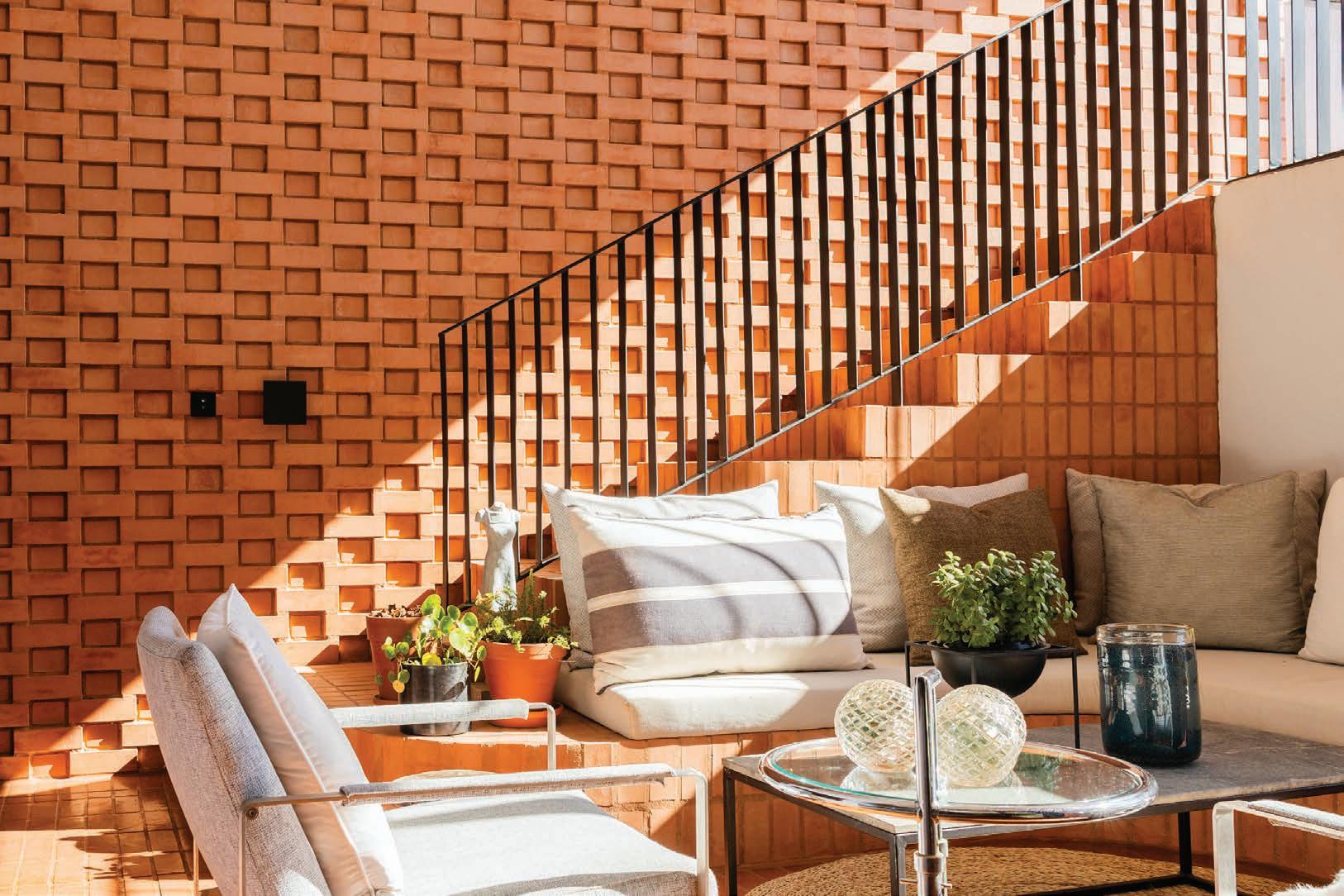


“It is memory work that helps the land to recall.”
- First Nations Heritage Centre
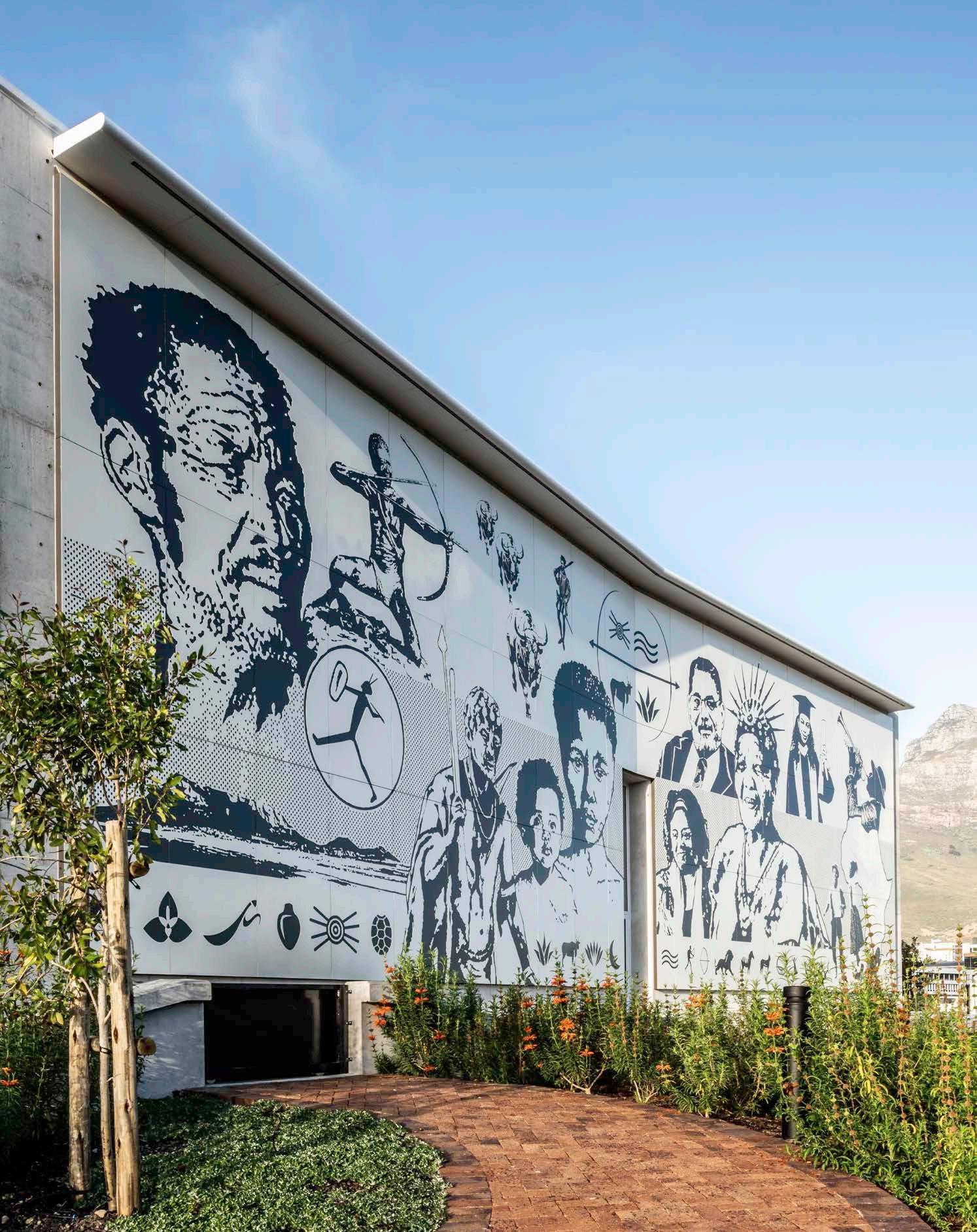
A Heritage Centre on the Liesbeek Restores Equilibrium Between People, Land, and Water
Rising from the Riverlands precinct in Cape Town, the First Nations Heritage Centre, designed by Noero Architects, stands as a new landmark on the bank of the Liesbeek River. This commemorative project is truly reconciliatory in ethos — it seeks to reclaim culture and restore a significant site. Through deep respect for the land, river, and its people, the project offers a glimpse of what this sacred landscape might have been before colonial settlement. It is memory work that helps the land to recall.
Size: 600 m2
From the beginning, this development depended on diplomacy and dialogue between multiple stakeholders. When independent developers secured rights to the site, a period of careful negotiation followed. The First Nations Collective offered consultation to ensure that the centre would speak to the future while carrying the weight of the past. Chief Zenzile emphasised the need to embrace change and the importance of a modern building to reflect this commitment to the future.
The principle of balance is central to the design’s governing idea of modesty. Rather than denoting inhibition or smallness, it refers to the Latin modestum, meaning discipline and appropriate proportion. From this, the design ambition was to create a moderately scaled building with a large civic presence. The main accommodation is housed in a two-storey building behind a wall screen that stretches nine metres high and 27 metres long. This boundary was transformed into a mural — now an iconic aspect of the centre.
The mural of indigenous history
The narrative mural is one of the most prominent features of the centre, portraying five phases that shaped South African history — both tragic and triumphant. It begins with an image of an indigenous ancestor and Hoerikwaggo (Table Mountain), recalling a time when people lived in balance as custodians of the territory.
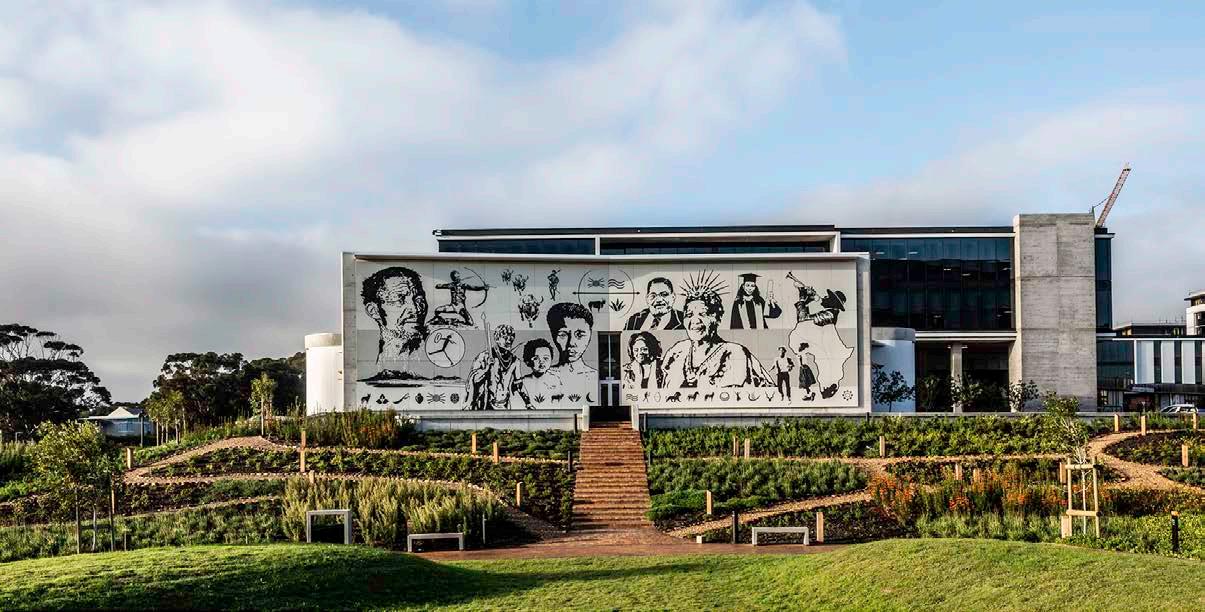
team
“Through deep respect for the land, river, and its people, the project offers a glimpse of what this sacred landscape might have been before colonial settlement. It is memory work that helps the land to recall.”
The second phase reminds us of the assault on indigenous custodianship during the Battle of Gorinhaiqua in 1510, when the Cape Khoi peoples successfully defended themselves against the Portuguese forces. The story progresses into a period of destruction caused by dispossession, including a representation of Sarah Baartman, a Khoi woman who was horrifically abused in Europe.
More recent resilience is celebrated in portraits of Queen Katrina Esau, Diana Ferris, and Professor Jatti Bredekamp, figures who fought for the preservation, artistry, and recognition of the indigenous //Nuu, Khoi, and San languages. The mural concludes with a message of hope as a jubilant anthem is sung in a celebration of an indigenous culture that flourishes once more.
Eco-corridor of remembrance
The centre was housed on the ground floor of the Riverlands shopping centre before migrating to its new 600-square-metre freestanding building within the same development, which opens onto views of both the river and the mountain range. The centre’s mural overlooks the north-facing First Nations Indigenous Garden, which has been planted with traditional Khoi and San medicinal plants, as well as a green Gathering Space that is aligned with the centre’s entrance and provides a place for cultural events.
Beyond attending to the surrounding land, the First Nations Heritage Centre also initiated a rehabilitation of the Liesbeek by reinstating a river long forced into a canal. This gesture of caring for both people and their land helps us to commemorate ancestors who did just that.
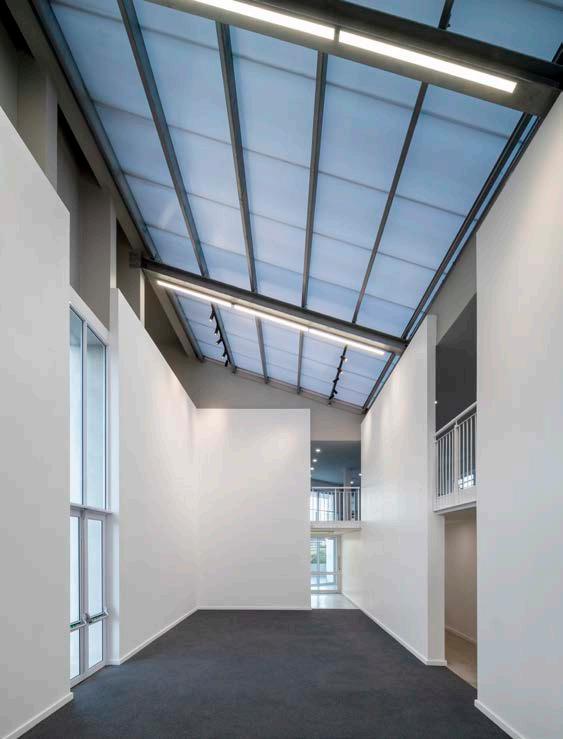
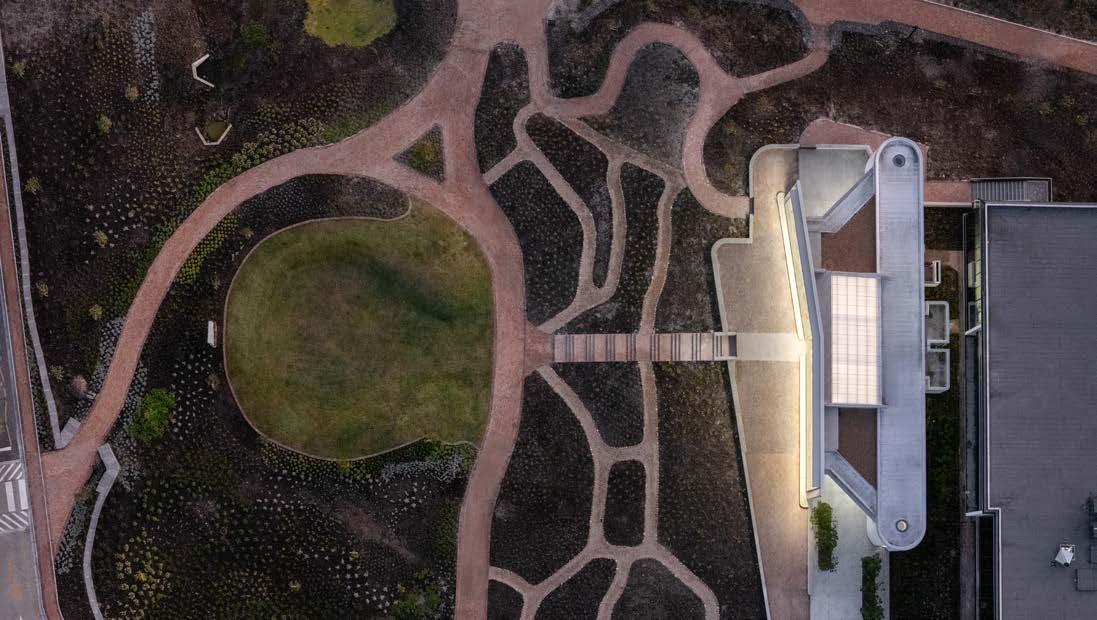
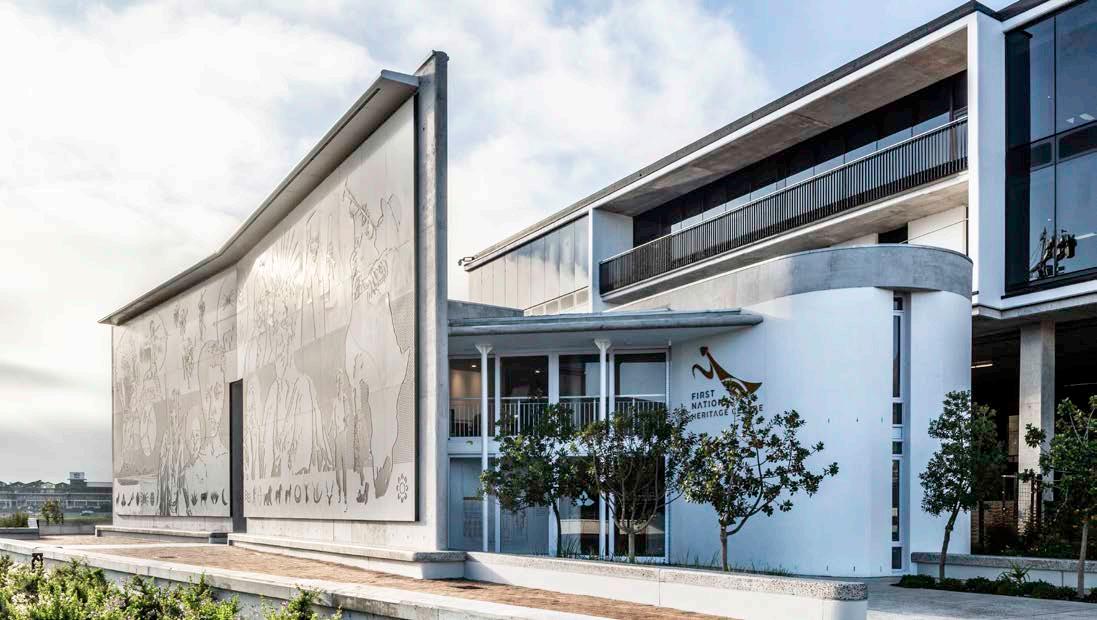
suppliers
Roofing: Danpal | Ceiling: OWA Ceiling Systems, Gyproc | Paint: Plascon | Walls: Johnson Tiles, ACM Aluminium Composite Panels, Mapei | Floors: Polysales, Aquaflow Block, MasterFibre, Rayal Tiles, Belgotex | Drywall: Gyproc
Joinery: Eezi Quartz, Formica Electrical: VETi | Waterproofing: Derbigum, Hydroflex | Light Fittings: Eagle Lighting | Rain Chains: Anchor Industries | Sanware: Lecico, Franke, Geberit, Jensen Nordica, Cobra, Plumline, Amalfi, Clinihealth, HomewareOnline, Nuwkem, Betasan, Volkem, EKO, CTM South Africa, Splashworks | Ironmongery: dormakaba Insulation: Lambdaboard
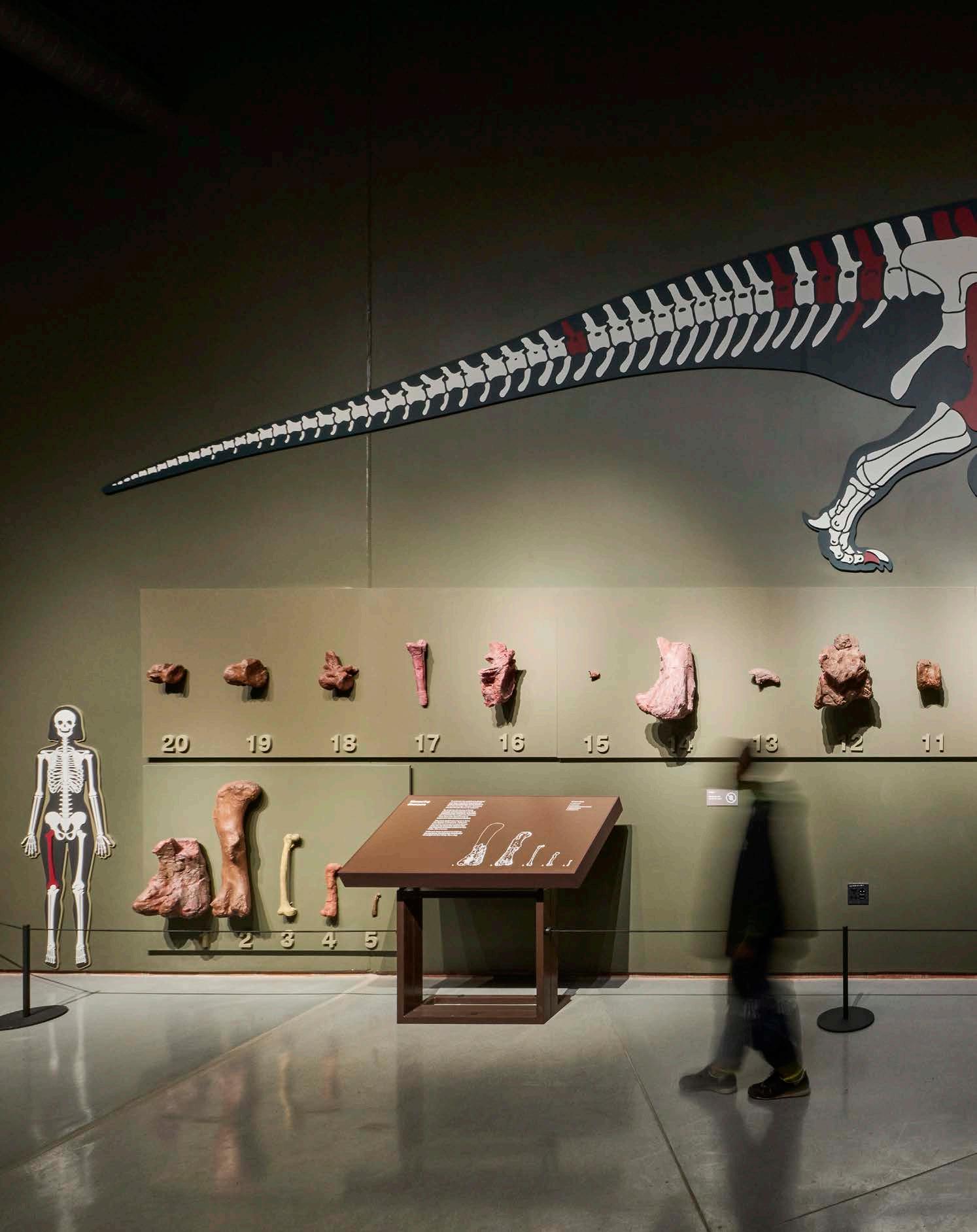
Office 24-7 Architecture Explores How African Design Can Effectively Convey African Stories

The Kgodumodumo Dinosaur Interpretation Centre offers an immersive, exuberant, and informative way to experience and learn about southern African dinosaurs that inhabited our planet millions of years ago.
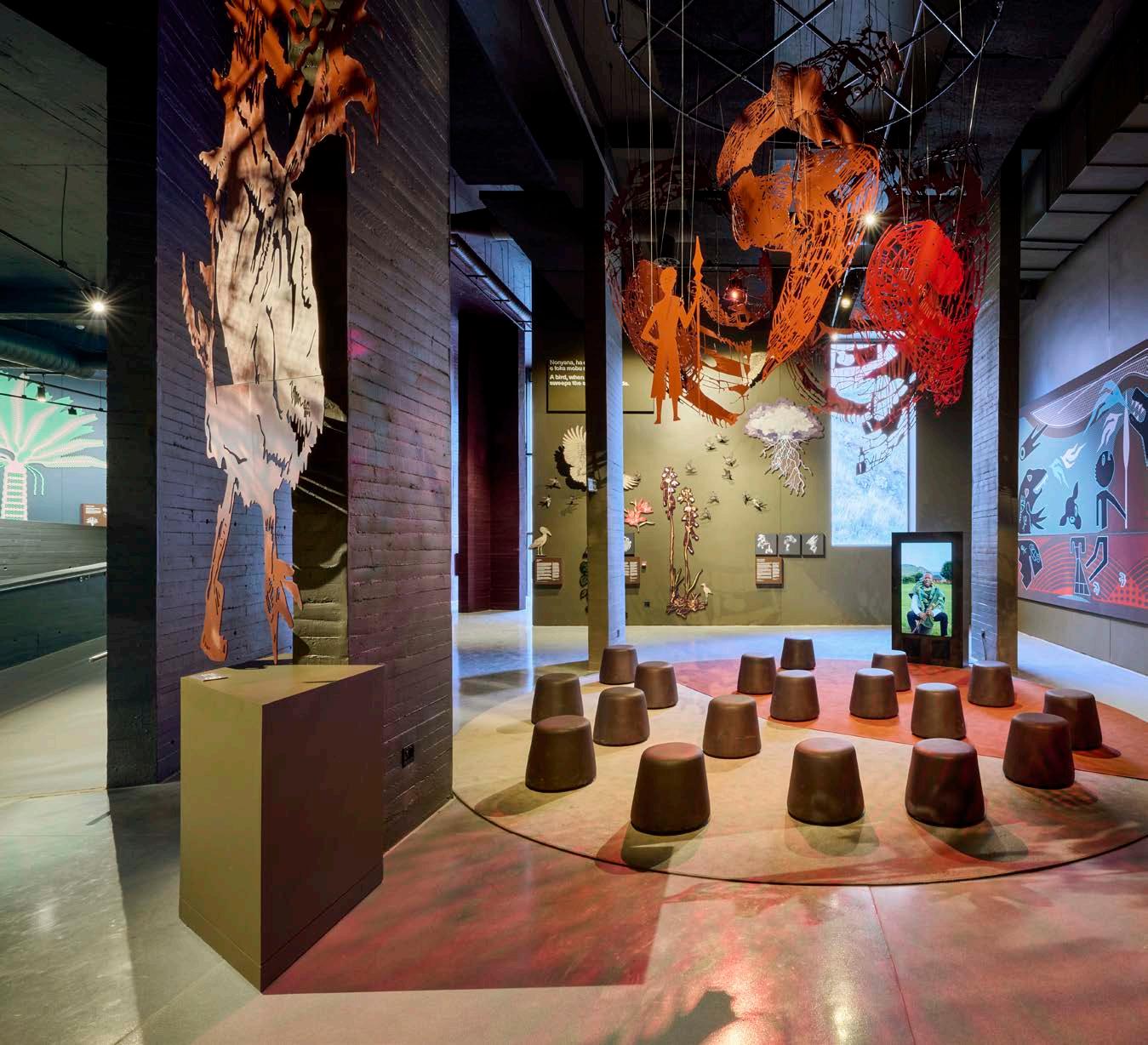
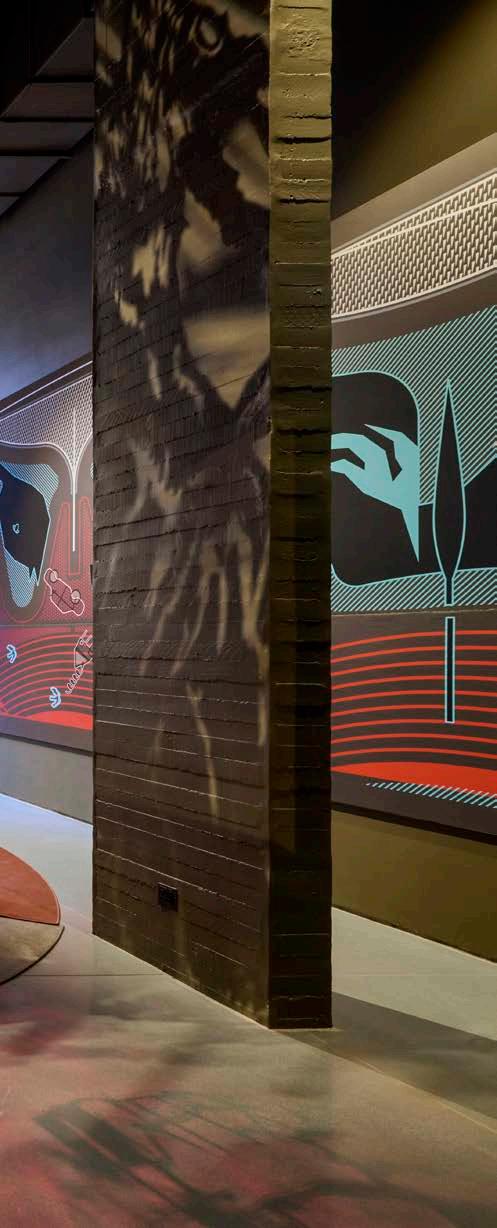
The narrative architecture anchoring this project is inspired by African mythology — a form of indigenous knowledge often undervalued in understanding nature and ecology. Yet it is a rich source for deepening insight into community and conservation. The story of Kgodumodumo is rooted in BaSotho folklore and may reflect early interpretations of dinosaur fossils and trackways by San and BaSotho peoples. This exhibition celebrates the imagination and significance of these stories while foregrounding Africa’s rich paleontological history.
Golden Gate Highlands National Park is notable for the discovery of the oldest known dinosaur eggs and embryos, dating to around 190 million years ago in the Early Jurassic Period.
In the spirit of preserving, reimagining, and passing on African stories, Clarens Primary School children were invited to participate in a creative workshop inspired by the legend of Kgodumodumo. They were asked to draw their own visions of this mythical monster. Combined into a collaged artwork, the drawings created by Grade 3 pupils have been incorporated into the exhibition, with one child’s depiction adapted into a sculptural element. This scaled-up, laser-cut silhouette of Kgodumodumo, and an artwork by architect and afrofuturist artist Phadi Mabe, are dramatically lit to create jagged shadows on the walls and visitors, creating an evocative context for mythology and storytelling.
The BaSotho room of the exhibition uses video to celebrate the oral traditions of the BaSotho people. A film shows a member of the royal clan telling the story of Kgodumodumo, offering yet another interpretation of the exhibition’s narrative throughline.
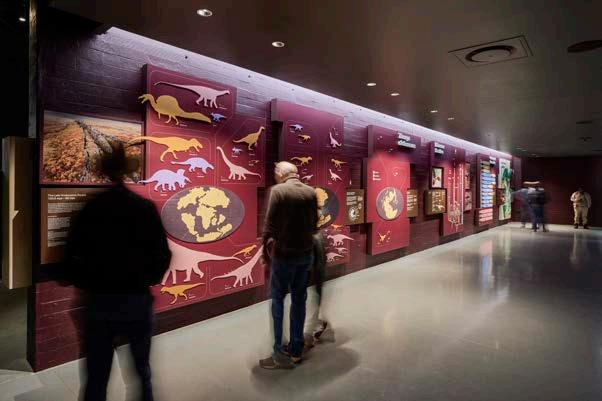
Haptic learning
The exhibition champions innovative and accessible display solutions. Just as a distinctly African approach is reflected in the installation — which places scientifically verified collections in dialogue with its attendant mythologies — touch is prioritised as the primary way of engagement. This stands in direct contrast to problematic historical museum modalities.
Rather than focussing on dense text, the installation uses images, graphics, reconstructions, artefacts, and tactile objects to encourage observations, narrative connections, and exploration. Braille panels and three-dimensional graphics ensure accessibility for visually impaired visitors.
Advanced cutting and manufacturing technologies, such as 3D printing, laser cutting, CNC cutting, and direct-to-substrate printing, are used to achieve a distinctive threedimensional quality. Information panels, which equip visitors with terminology and contextual understanding, use tactile cut-outs, raised lettering, and puzzle-like components to encourage curiosity among visitors of all ages.
Reimagining the dinosaur display
Exhibition cases display fossil evidence drawn from university vaults — the core material of the narrative — alongside installations that invite more up-close engagement. Casts of Ngwevu, Heterodontosaurus, and Massospondylus specimens allow detailed examination of the fossil finds, while a 25%-scaled high-resolution photograph of the road cutting where fossil eggs were discovered invites visitors to search for the embedded fossils within the image.
One of the main attractions of the centre is a scientifically accurate collection of ten life-sized dinosaur reconstructions. Most notably, a fully articulated skeleton of Massospondylus was 3D-printed from scientific digital models.
Rather than absorbing information passively, visitors are encouraged to consolidate knowledge through play. Twenty printed ottomans, for instance, turn seating into a family-friendly puzzle activity.
Through games, sculptural designs, and a reorientation towards storytelling, the exhibition succeeds in animating a distant prehistoric past — allowing visitors to see both fossils and folklore as part of Africa’s heritage.
suppliers
Rugs: Belgotex | Acoustic Panels: Versacoustics | Showcase Displays: Frank Africa
Printed Fabric Panels: Octanorm
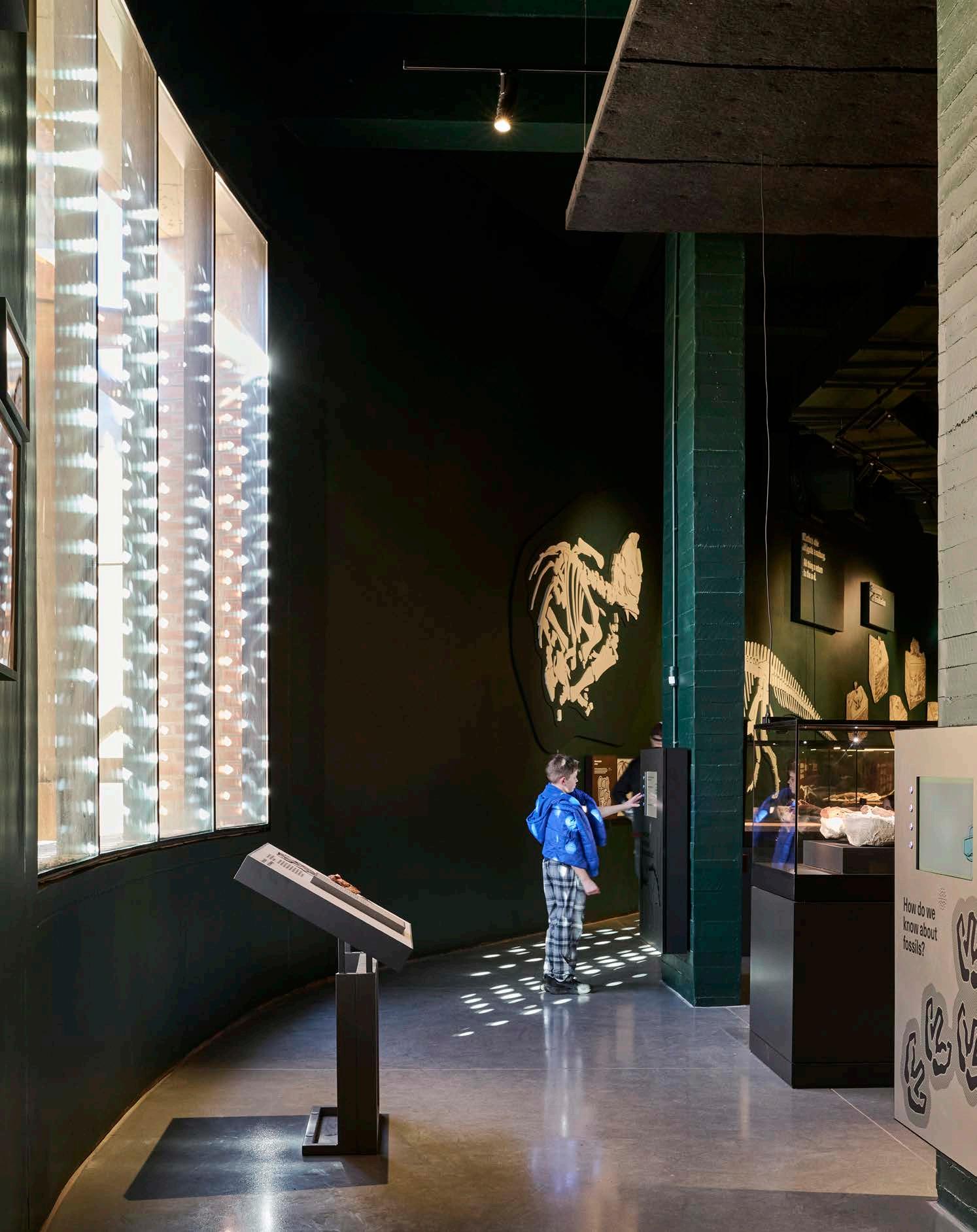
“Visitors are encouraged to piece together the narrative, evoking how paleo-scientists piece together fossils.”
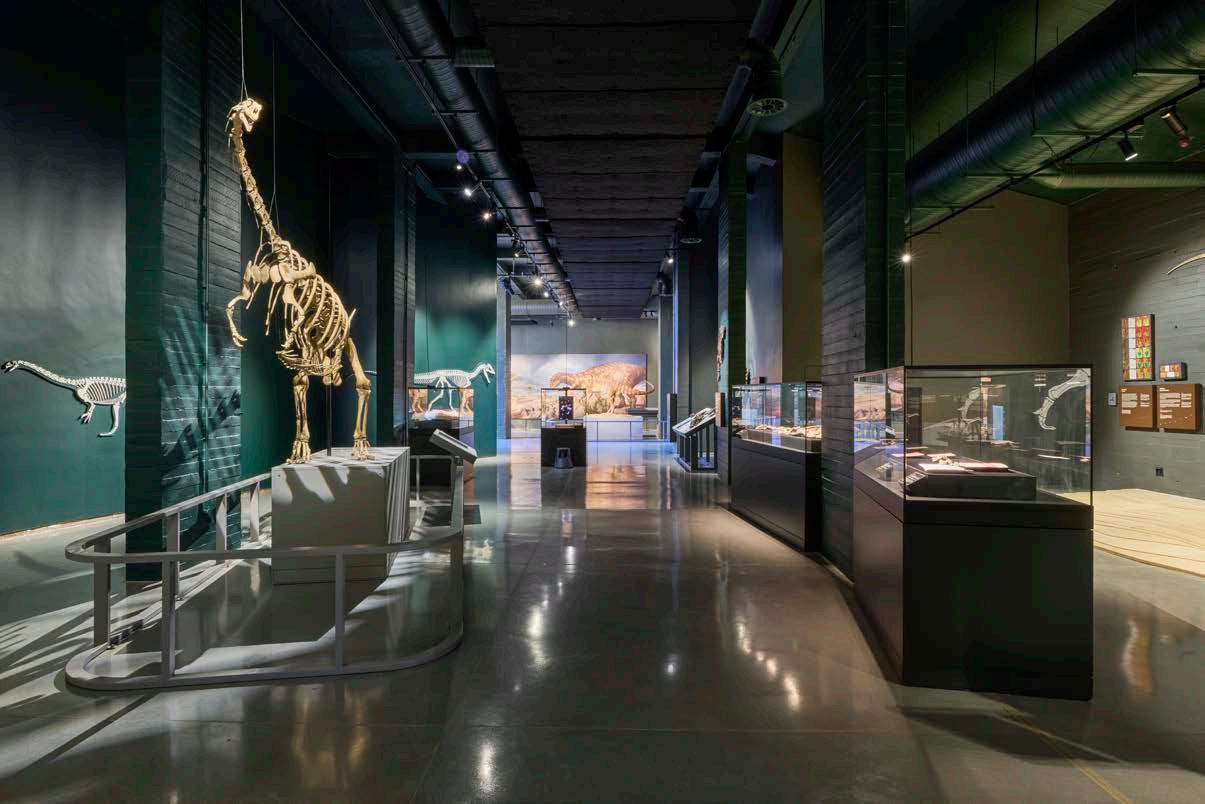
meet the team
Client: South African National Parks | Exhibition Design and Development: Office 24-7 Architecture, Digital Fabric | Exhibition Fabrication: Digital Fabric, Scale Studios, Cristina Salvoldi, MGG Productions | Lead Palaeontologist: Dr Kimi Chapelle | Structural Engineer: The Structural Workshop | Photographer: Anthea Pokroy
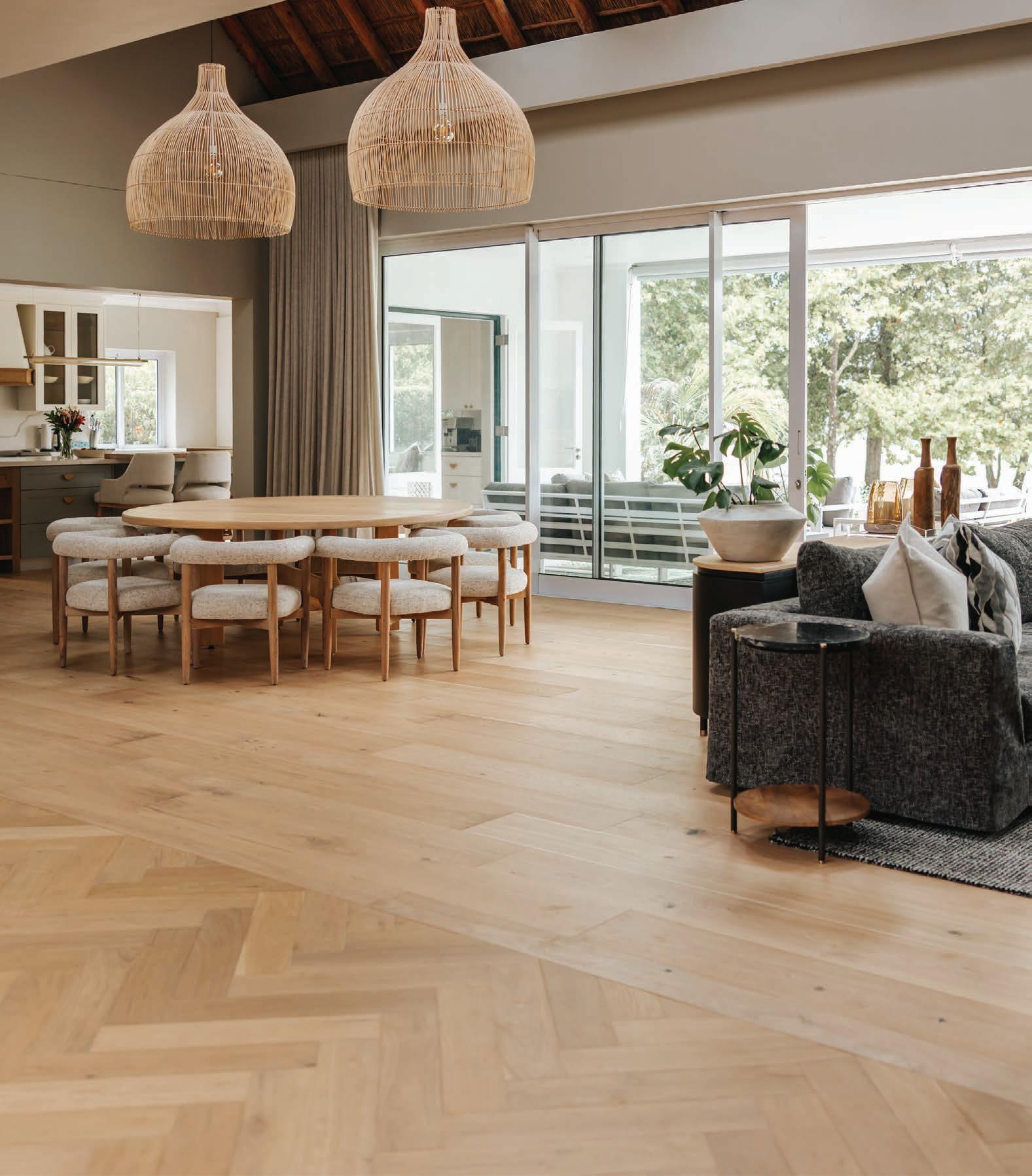

Design is the fusion of form and function
Belgotex.co.za

Twilight rede nes sustainable ooring through design and innovation. Engineered from 100% bio-circular resources with 40% less carbon, it delivers hyper-realistic patterns across three colourways.