Promoting investment and business climate reforms in Jordan’s ICT sector
Summary
The information and communication technology (ICT) sector in Jordan is one of the fastest growing sectors, contributing to about 4% of gross domestic product (GDP). Since the 1990s, Jordan has established itself as a regional ICT hub and aims to further attract investment in this sector. The current National Digital Transformation Strategy & Implementation Plan 2021-25 aims to enhance the digitalisation of government services, improve connectivity, and create at least 50,000 direct jobs in the digital sector by 2025. Between 2010 and the first half of 2021 Jordan attracted USD 1.1 billion of announced cross-border greenfield FDI in ICT and electronics or 4% of total greenfield FDI.
In June 2021, the OECD conducted a virtual private sector dialogue on promoting investment and business climate reforms in Jordan’s ICT sector. Participants discussedthemainchallengesandpolicypriorities to betterenablethe environment for investments in the ICT sector, focusing on three main issues:
Business and regulatory environment. While the legal framework for ICT regulations in Jordan is relatively solid, the implementation and accurate interpretation of these laws and regulations remains a challenge. Often, the regulations are subject to the interpretation of officials of each implementing body, and this has negatively affected the predictability of the current business environment. The current legislative frameworks for ICT market entry and exit were also found to be complicated, lengthy and costly.
Mismatch between demand and supply of skills. The quality and availability of skills are also an important factor affecting investment in ICT. One of the biggest challenge for investors in Jordan is the mismatch between the demand and supply of skills for ICT. For instance, out of the 8 000 annual graduates with specialisation in ICT, only about 21% of them work in their field.
High ICT costs and lack of enabling infrastructure. Jordan has high prices and taxes in the Arab region for fixed broadband basket, mobile voice, and mobile data. This has led to low quality of service, hindering the growth of digital payments and mobile e-commerce. There is also a need for significant InfraTech investments, such as those pertaining to cloud services, fibre optics, IoT, expanding 4G, and introducing 5G, among others.
On 23 June 2022, a public-private dialogue will bring together Jordanian policymakers, representatives from the ICT sector and development partners to share their perspectives on priority reforms to improve the environment for ICT investments in Jordan. The OECD will accompany the reform process through capacity building and sharing of international best practices.
Introduction
Digital transformation, further accelerated by COVID-19, is a major driver of change and innovation in our societies and economies. It can drive the creation of new companies and industries, contribute to the transformation of business models in traditional industries, and foster participation and upgrading in regional and global value chains (GVCs).
As the backbone of the digital economy, information and communication technologies (ICT) enable further technological progress and foster productivity growth in the economy. ICT encompasses different types of communications networks and the technologies used in them. These include new products and services, ranging from digitally enhanced devices such as smart machines (e.g. Internet of things), to digital platforms (e.g. e-commerce, social networks), to frontier technologies (e.g. blockchain) (OECD, 2018[1]) Supporting the development of the ICT sector is crucial to accompany the digital transformation for a modern and sustainable model of economic growth and development.
Advancing the digital transformation agenda has also been a priority for Jordan and other MENA economies over the past years. Additional investments in the digital sector accompanied by the required organisational changes, can yield significant dividends on growth. OECD policy tools and frameworks, including the Going Digital Initiative1 (OECD, 2020[2])andtheFDIQualities in Jordan (OECD,2022[3]) could support the design of adequate policies to accompany the development of the digital economy. This requires governments to adopt cross-cutting, whole-ofgovernment policy approaches aimed at breaking down silos in line with the multifaceted nature of the digital transformation.
The digital economy is a priority for Jordan’s economic and social development
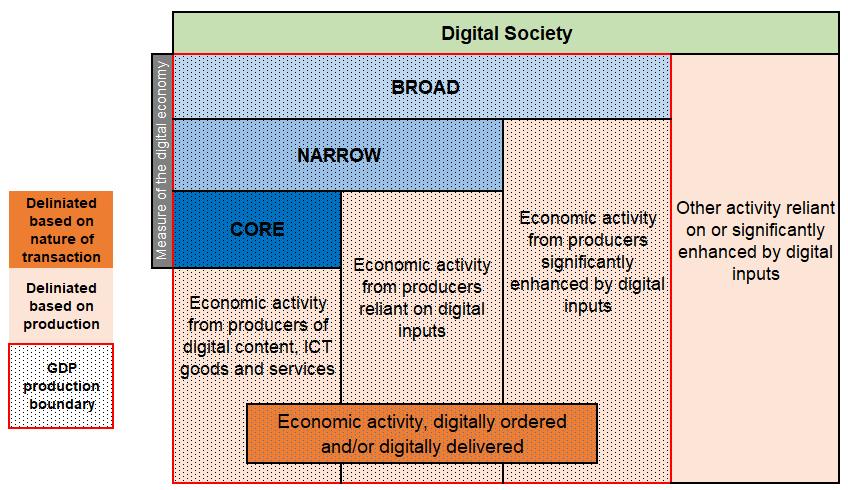
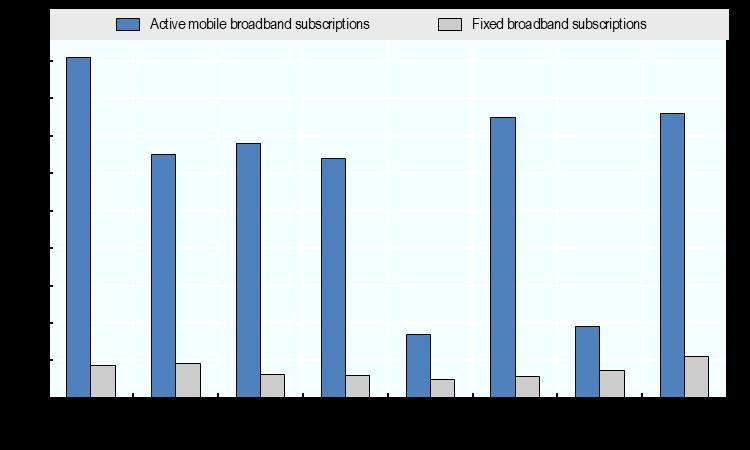
The digital economy (see Figure 1 for definition) today in the Arab region contributes to around 4% of gross domestic product (GDP) compared to a global averageof4.5%to15.5% (Duneja,PeacockandJaiswal,2021[4]).Withinthedigital economy, the ICT sector plays an increasingly important role for economic development. Its estimated total contribution to GDP is estimated at around 4% of GDP (Ministry of Digital Economy and Entrepreneurship, 2021[5])). It is one of the fastest growing sectors in Jordan, including between 600 to 900 companies, most ofwhich aremicro, small ormedium-sizebusinesses (Gerdeon and Qasem, 2019[6]) (Int@j, 2018[7]). Jordan also has one of the highest Internet penetration levels in the region (Figure 2). Together, the ICT and IT-enabled services2 sectors have the highest rate of employment for women (33%), more than any other sectors in the economy (Int@j, 2018[7])
1. Tiered definition of the digital economy
Note: The different tiers in which the Digital Economy can be broken down are the following: The core measure of the Digital Economy only includes economic activity from producers of ICT goods and ICT and information services. The narrow measure includes the core sector as well as economic activity derived from firms that are reliant on digital inputs. The broad measure includes the first two measures as well as economic activity from firms significantly enhanced by the use of inputs. The digital society extends further than the digital economy and incorporates digitalised interactions and activities not included in the GDP production boundary, such as the use of free digital platforms (including public digital platforms). While not considered part of the digital economy per se, this activity is important for effective digital policy by government
Source: OECD (2020[8])
Figure 2. Internet penetration in Jordan is among the highest in MED
Per 100 individuals, 2020
Source: International Telecommunication Union, (2021[9])
The wave of liberalisation reforms that began in 1999 allowed the ICT sector in Jordanto develop relativelyfast, attractingmanyprivatesectorinvestments. Today, Jordan is a regional hub for ICT investments in MENA with one of the highest
Figure
concentrations of technology companies in the Arab region (Privacy Shield Framework, 2018[10]). Factors including political stability, a strategic geographic location, abundance of university graduates, and the presence of a relatively developed ICT sector make the country an attractive destination for investors serving national and regional ICT markets. These include global ICT leaders like Cisco,Expedia,HP,MicrosoftandOracle.Allthreemajorcompaniesthatdominate theJordaniantelecom sector havesignificant levels offoreignparticipation: Orange Jordan, the former public telecom corporation privatised in the early 2000s and currently owned 51% by the French Orange Group (Jordan Telecommunications Company ; Orange, 2019[11]); Zain Jordan, a segment of the Kuwaiti Zain Group; and Umniah, a subsidiary of the Bahraini Batelco.
The Jordanian government has prioritised ICT as a strategic sector for the economy since the late 1990s, through a number of multiannual plans providing a long-term vision and strategy to its development. The government has also established the MinistryofDigitalEconomyandEntrepreneurship(MoDEE)–previouslyMinistry of ICT, with the aim to expand the mandate of the Ministry to spearhead the digital transformation and entrepreneurship in Jordan, overseeing several strategies and policies:
The current National Digital Transformation Strategy & Implementation Plan 2021-253 aims to enhance the country’s digital transformation and improve its global position as an ICT hub, by enhancing the digitalisation of government services, improving connectivity, and creating at least 50 000 direct jobs in the digital sector by 2025
o To increase private sector participation and empower it to propose changes on ICT policy, the Ministry established the National Digital Transformation Committee (NDTC), comprising 70% private sector membership and 30% public sector membership, to jointly develop policies and implement the Strategy. The NDTC has five subcommittees, including a PPP committee headed by the private sector.
o The Jordanian government has also launched the Jordan E-Participation Policy to implement the digital transformation strategy through participation of all stakeholders in decision making.
The 2021 General Entreneurship Policy aims to increase entrepreneurship in ICT and create anadequateentrepreneurial eco-system byincreasingthe access to finance and reducing regulatory barriers.
Jordan’s national development plan “Jordan 2025” also includes an ICT component bulding on the Kingdom’s previous achievements in the ICT sector to enhance digital transformation, the digital economy, infrastructure, finance, entrepreneurship and digital skills.
Box 1. The potential of ICT for women economic empowerment in Jordan
Digitalisation holds a great potential for the economic and social inclusion of women and girls in Jordan. Women have a high presence in the Jordanian ICT sector, representing 27% of the country’s software developers and 21% of the sector’s leadership positions. According to the World Bank, the adoption of digital tools had a positive effect on Jordanian women’s labour force participation, providing opportunities for flexible working conditions and better job matching. According to Viollaz and Winkler (2020), a 1 percentage point increase in internet access increased female labor force participation of 0.8 percentage point (Viollaz, 2020[12])
Yet, despite their relative good performance in ICT sector employment, women and girls in Jordan suffer from a digital gender gap. Overall, participation of women in the labour force in Jordan stands at just 13% ( (World Bank, 2022[13])), one of the lowest rates in the world and significantly lower than the wider-MENA region averageof20%.Whetherasworkersorentrepreneurs,womenfacevastandspecific obstacles that are different from those of their male counterparts, including legal, financial, skills, and social challenges.
In efforts to reduce the digital gender gap, the MoDEE is forming national policies pertainingtodigitaltransformation,suchastheGeneralPolicyforEntrepreneurship in cooperation with the World Bank, to advance women’s economic empowerment and encourage businesses to promote gender equality. Overall, supporting access to digital tools and development of the digital skills of women and girls in Jordan would promote a more inclusive and sustainable development.
Sources: (International Labour Organization, 2021[14]), (World Bank, 2019[15]) (Intaj, 2019[16])
Increased investment in the ICT sector can support job creation and increase competitiveness
Attracting and retaininginvestment is keynot only to supporting the post-pandemic recovery, but also to achieving broad economic growth in Jordan. In particular, foreign direct investment (FDI) is one of the main sources of job creation, and as such, can represent a critical factor of development for the Jordanian ICT sector. In the past decade, greenfield FDI in the ICT sector in Jordan generated almost twice as many jobs per million USD invested than the cross-sector average, and 20 times the amount of jobs per million USD invested as compared to FDI in the energy sector4
Between 2010 and the first half of 2021, Jordan attracted over USD 25.8 billion of announced cross-border greenfield FDI. Energy attracted the large majority of total investments (56% or USD 14.5 billion) while ICT and electronics received only4% of the total (USD 1.1 billion) (Figure 3). More than half of ICT investments (56%)
came from the Gulf Co-operation Council (GCC) region, followed by the United States (21%) and the European Union (11%, or USD 130 million, mainly from France) (Figure 4) (OECD, 2021[17]).
In 2017, ICT goods and service exports only represented 2.1% and 0.3% of overall goods and services exports, respectively. This is significantly lower than other Mediterranean economies, such asTunisia (4.2% for ICT goods and 9% ICT services), and Morocco (2.4% for ICT goods and 8.6% for ICT services) (International Monetary Fund, 2017[18]).
Figure 3. Greenfield FDI in Jordan in the ICT sector remains under potential
Announced capital expenditure, USD millions (Jan 2010 - May 2021)
Source: OECD elaborations based on Financial Times FDI Markets
Figure 4. FDI inflows in the ICT & electronics cluster by source country/region
Announced capital expenditure, USD millions (Jan 2010- May 2021)
Source: OECD elaborations based on Financial Times FDI Markets, as of 18 May 2021
Key challenges continue to negatively affect investments in the ICT sector
Several challenges in the ICT sector currently limit the potential for further investment in Jordan. Tostructure discussions effectively, this public-private sector dialogue will focus on three main sets of policy priorities to tackle: (i) the lack of an adequate business and regulatory environment; (ii) high ICT costs limited complementary infrastructure; and gaps in specific skills (iii), all of which are hindering the growth of a dynamic, competitive private sector.
Policy priority 1: Developing an effective business and regulatory environment
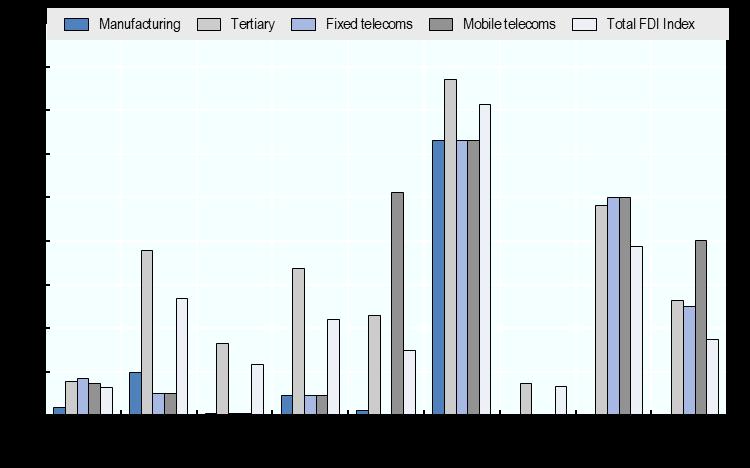
In order for the private sector to participate in ICT projects in Jordan, an adequate and predictable business and regulatory framework is required. Compared to other MENA economies, Jordan is relatively open to FDI According to the OECD FDI RegulatoryRestrictiveness Index for 2019, Jordan maintains onlya few restrictions on FDI(Figure 5). It has lower overall FDI restrictions than the average for Algeria, Libya, and the Palestinian Authority, but higher than Egypt, Lebanon, Morocco,Tunisia and the OECD countries average. In particular, such restrictions are lower than the average of OECD economies and most other MENA economies for mobile and fixed telecom services.
Yet, similar to other MENA economies, Jordan has relatively high restrictions in the services (tertiary) sectors, which can have important implications in terms of ICT investment. The sector may rely intensively on inputs from restricted services sectors, which could limit the quality-of-service provision and affect the productivity of the Jordanian economy.
Closed=1; Open=0 (2020)
Figure 5. OECD FDI Regulatory Restrictiveness Index in selected sectors
Note: Services include: Distribution, Wholesale, Retail, Transport (Surface, Maritime, Air), Hotels & Restaurants, Media (Radio & TV broadcasting, Other media), Financial services (Banking, Insurance, Other finance), Business services (Legal, Accounting & audit, Architectural), Engineering, Real estate investment. Source: OECD FDI Restrictiveness Index, (2020[19])
An additional factor limiting the potential of the ICT sector in Jordan also includes the lack of competition in the investement in digital infrastructure (International Finance Corporation, 2021[20]). Like many other sectors, the ICT sector is mostly dominated by incumbent firms, making it difficult for newly established players with fewer business and personal connections to enter the market (World Bank, 2019[15]). Current challenges include lack of enforcement of digital infrastructure sharing, lack of competitive 5G bidding, as well as ensuring that competitors are not blocked by current mobile network operators (International Finance Corporation, 2021[20]). Such lack of competition in both broadband and mobile markets has led to high prices and low Internet speed (ibid).
The private sector representatives during the ICT dialogue organised by the OECD in June 2021 stated that while the legal framework for ICT regulations in Jordan is relatively solid, the implementation and accurate interpretation of these laws and regulations remains a key challenge. Often, the regulations are subject to the interpretation of officials of each implementing body, and this has negatively affected the predictability of the current business environment.
The current legislative frameworks for ICT market entry and exit were also found to be complicated, lengthy and costly. To overcome such issues, the private sector reported that often many investors decide to register holding companies offshore and then register local subsidiaries in Jordan in order to make it easier for them to do business. Simplifying the legislation with a proper market entry and/or exit would reduce costs, encourage faster turnover, and create jobs.
According to the private sector, the government can reduce uncertainties within the business and regulatory environment, including through regulatory impact assessments and additional policy guidance for implementing entities. Carrying out regulatory impact assessments jointly with private sector stakeholders on the potential of a new regulation could increase transparency and predictability. Furthermore, to ensure seamless policy implementation, additional practical guidance on how to interpret various laws and regulations could be included by the government to decreasediscretion in interpretation ofrules bypublicofficials. Such policy statement could be a result of a dialogue between public and private representatives to identify and agree on challenges, priorities and objectives of the laws.
Policy priority 2: Improving ICT costs and infrastructure
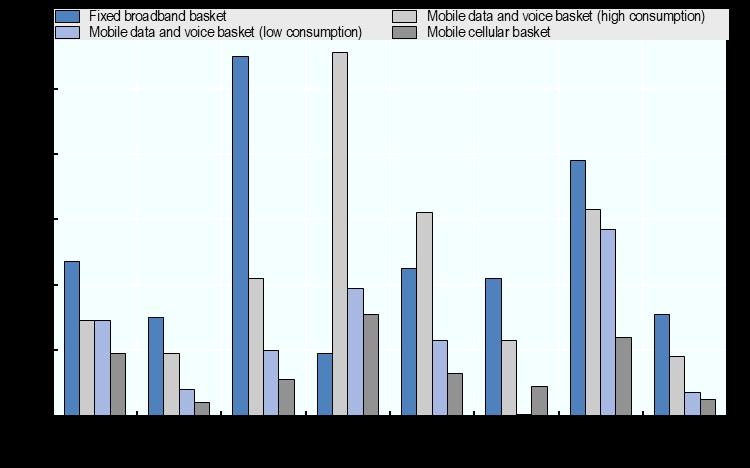
High ICTprices andtaxes arealso factors affectingaffordabilityand ICT expansion in Jordan (GSMA, 2019[21]). While telecommunication and ICT services are generally becoming more affordable in relation to the average income in recent years, Jordanian prices are still among the least affordable in the Arab region for fixed broadband basket, mobile voice, and mobile data. For instance, prices for
fixed broadband basket equaled 11% of GNI per capita in 2021, compared to 3% in Egypt and Tunisia, 4.7% in Algeria, 4.2% in Morocco. Similarly, prices for mobile broadband equaled 3.7% of GNI per capita in 2021, compared to 1.1% in Egypt, 1.3% in Morocco, and 1.2% in Tunisia (Figure 6) (ITU, 2021[22]). Such high ICT prices in Jordan are also above the 2% threshold for entry level broadband access that the UN aims to achieve by 2025 (ITU, 2021[23]) Similarly, tax payments (general and sector specific) made by mobile operators and consumers in Jordan are at 33%, slightly lower than Tunisia’s 34% but above the MENA regional average of 24% (GSMA, 2019[21])
Overall, high taxes and low competition have led to low quality of service, hindering the growth of digital payments and mobile e-commerce, which are also key contributors to the growth of the digital economy. This also hinders the adoption ofe-commerce platformsbySMEs. Accordingto a recent surveyofSMEs in Jordan, 34% have an e-commerce website that enables them to sell products online, but only 11% accept online payments with the majority of companies still oriented towards cash on delivery as a form of payment (Yaseen and Madadaha, 2019[24]).
Figure 6. ICT costs in Jordan are among the highest in MED
Prices as % of GNI per capita (2021)
Source: International Telecommunication Union (2021[9])
In recent years, Jordan has made significant investments in infrastructure, by expanding access to electricity for households, improving access to water sources and sanitation, and nearly doubling the rail network. However, gaps remain both in thequantityandqualityofinfrastructurenecessarytoenablethebusinessoperations of ICT investors. Jordan invests less than 1% of GDP in transport infrastructure,
compared to 1-3% in other middle-income countries (IFC, 2021). The Global Infrastructure Hub recently estimated that Jordan needs USD 81 billion of investment in infrastructure until 2040 under a 3.9% of GDP growth assumption (Global Infrastructure Hub, 2018[25])
Given the current levels of spending, this translates to an investment gap of 1.1% of GDP. The largest needs are in energy(USD 25 billion), road infrastructure (USD 24 billion) and communications infrastructure (USD 18 billion) (Figure 7). On top of new infrastructure, proper maintenance and quality control of the existing assets are also necessary.
Source: Global Infrastructure Hub (2018[25])
More InfraTech infrastructure is also needed. InfraTech is now a viable asset and increasingly essential component of ICT investments. InfraTech includes the integration of digital technologies across the infrastructure lifecycle and reduces project risks by using data and analytics and to evidence-based decisions across the value chain. Due to its increased efficiencyand resilience it attracts higher amounts of investment. In Jordan, there is a need for significant InfraTech investments, such as those pertaining to cloud services, fibre optics, IoT, expanding 4G, and introducing 5G, among others. According to participants in the first ICT private sector dialogue, to develop and rollout 4G and 5G alone, Jordan would need to double the investments, and three times the electricity.
The private sector also highlighted the importance of conducting a strong and transparent economic analysis to identify objectives, direct and indirect impacts, and returnoninvestments ofinfrastructureinvestments. Anincreasedrateforreturn in infrastructure investments can lead to development, boost regional economies, and create opportunities for businesses (ADB, 2019[26]). Conducting impact
Figure 7. Infrastructure investment needs in Jordan, 2016-40
assessments could be an important step towards understanding positive impacts of ICT infrastructure investments and to developping targeted and efficient projects. In addition, they can inform policy making as well as improve coordination among different projects related to infrastructure.
Policy priority 3: Matching supply of and demand for skills
The private sector consultations highlighted the mismatch between demand for and supply of skills in the Jordanian ICT labour market. In addition to the high costs, thequalityand availabilityofskills arealso an important factoraffecting the overall enabling environment for ICT investment. One of the biggest challenge for investors in Jordan is the mismatch between the demand and supply of skills for ICT. Forinstance,out ofthe8000annual graduates with specialisationin ICT,only about 21% of them work in their field. This maybe due to various factors, including the fact that there is a limited understanding of the market needs by the academia and that graduates lack the English language abilities required in ICT jobs.
Other factors of the skills mismatch include: (1) an outdated university curriculum, (2) lack of soft skills, (3) lack of awareness and experience with global technology trends, (4) little to no practical hands-on experience, and (5) brain drain to neighbouring countries. In addition, it is also difficult to update curricula due to government rules, compliance and accreditation processes (World Bank, 2019[15]).
To this end, upskiling and reskilling local talent, engineers, fresh graduates, and womencouldhelpaddresstheskillsmismatch,highunemploymentandbraindrain. This is partly addressed by the Ministry of Digital Economy and Entrepreneurship as part of the World Bank’s Youth, Technology, and Jobs project (2020-2025), which will provide digital skills training to more than 15.000 Jordanian youth. In collaboration with the private sector, it will also support the establishment of the National Skills Council for Information and Communications Technology (NSCICT) to better connect the sector’s needs with what training centres and universities offer.
OECD policy frameworks and tools can support Jordan’s efforts to improve the competitiveness and attractiveness of its ICT sector
Over the years, the OECD has developed a number of policy tools on investment and the digital economy that can help Jordan improve the competitiveness of its ICT sector and its attractiveness for international investors.
Since 2017, the OECD Going Digital Initiative has supported policymakers in the quest to better understand digital transformation and the effects of digital technologies on our economies and societies, in an effort to shape a positive digital future. The project has benefitted from the expertise of almost every policy and measurement community at the OECD, the International Transport Forum and the International Energy Agency. Targeted policy advice in particular areas – labour markets, trade, finance, tax, consumer policy, SMEs, agriculture, health, public governance, competition, the
environment – is complemented by analysis that brings together all of these distinct policy areas into a coherent whole (OECD, 2019[27]).
Today, the Going Digital Toolkit helps countries navigate these changes and the trade-offs that policy makers need to make by mapping a core set of indicators to each of the seven policy dimensions of the Going Digital Integrated Policy Framework. It allows users to interactively explore these data to assess a country’s state of digital development. The Toolkit also contains OECD policy guidance and insights related to each of the policy dimensions to help governments design and implement policies that are fit for the digital age (OECD, 2022[28]). If there are enough resources and internationally comparable data on digital economy, Jordan could join the Toolkit and have its own country page in English and in Arabic.
The FDI Qualities Indicatorsand ongoing work on a Policy Toolkit also address the ways in which MNEs can contribute to digital transformation by transmitting digital technologies to domestic firms, investing in R&D for new technologies and in connectivity infrastructure (OECD, 2022[3]) In this context, the OECD recently launched the FDI Qualities Review of Jordan: strengthening sustainable investment, which provides analysis and policy considerations to increase the positive impact of FDI on sustainable development, including on innovation and productivity (Box 2).
Consolidate the strategic framework for investment, productivity and SME development. Strategies are introduced without cross-referencing those of other state bodies. Information on strategies could be centralised and made available online (including in English).
Ensure that all stakeholders are represented in policy discussions. Councils at the highest level (e.g. the Investment Council) could further ensure that public and private institutions from all relevant policy areas – i.e. investment, innovation and SME development – and all stakeholder groups (including foreign) are represented.
Strengthen coordination and cooperation among policy implementation agencies. Joint programming is currently broadly absent among the Jordan Investment Commission, Jordan Enterprise Development Cooperation and the National Centre for Innovation.
Continue reforming and opening services. Services liberalisation would support productivity objectives defined in Jordan’s Vision 2025 strategy and strengthen productivity in other sectors, including manufacturing. The inclusion of Jordan in the OECD Services Trade Restrictiveness Index would
Box. 2 FDI Qualities Review of Jordan – Selected policy considerations on productivity and innovation
allow identifying reform opportunities for ‘behind-the-border’ regulatory aspects.
Improve support services for SMEs to strengthen their absorptive capacities. Jordan could facilitate access to finance and improve the quality of technical assistance, information and facilitation services provided to Jordanian SMEs. Thiscouldhelp SMEsdeveloptheirinnovationandR&Dcapacitiesandnarrow performance gaps with foreign affiliates.
Sources: (OECD, 2022[3])
The OECD Guidelines on Multinational Enterprises, to which Jordan is an adherentsince2013,containkeyrecommendationsaddressedbygovernments to MNEs operating in or from adhering countries. The Guidelines recognise that MNEs have a responsibility to ensure that their international business operations contribute positively to innovation capacities of the national and local context that they serve. To this end, they recommend practices permitting the transfer and rapid diffusion of technologies and know-how, including by performing science and technology development work, by employing local workforce, and bygranting licenses for the use of intellectual property rights and technologies under reasonable conditions (OECD, 2011[29]).
Other OECD tools touch upon different domains that can contribute to the flourishing of the digital economy and the ICT sector through various channels. These include the Digital Government Policy Framework (DGPF), a policy instrument to help governments identify key determinants for effective design and implementation of strategic approaches to transition towards e-governance (OECD, 2020[2]), as well as the OECDWTO-IMF Handbook on Measuring Digital Trade, which represents an essential tool to define, estimate and share good practices on the measuring of digital trade (OECD, World Trade Organization, International Monetary Fund, 2019[30]).
ADB (2019), Quality Infrastructure Investment: Ways to Increase the Rate of Return for Infrastructure Investments, https://www.adb.org/publications/quality-infrastructureinvestment-ways-increase-rate-return [26]
Duneja, R., M. Peacock and N. Jaiswal (2021), Middle East digital economy outlook, special report : Digital growth opportunities in UAE, Pakistan and Oman, Arthur D. Little, https://www.adlittle.com/sites/default/files/reports/arthur_d_little_me_digital_econom y_outlook.pdf
Gerdeon, S. and L. Qasem (2019), Jordan’s ICT sector analysis and strategy for sectoral improvement, http://icon-institut.eu/news/giz2019-0122en-ict-sector-anaysis-strategyjordan.pdf.
Global Infrastructure Hub (2018), Country Profile : Jordan, https://cdn.gihub.org/outlook/live/countrypages/GIH_Outlook+Flyer_Jordan.pdf.
GSMA (2019), Rethinking mobile taxation to improve connectivity, https://www.gsma.com/publicpolicy/resources/rethinking-mobile-taxation-toimprove-connectivity
Int@j (2018), Jordan’s ICT & ITES sector statistics, https://intaj.net/wpcontent/Studies/2018.pdf
Intaj (2019), “Women occupy around 30% of ICT jobs in Jordan”, The Jordan Times, https://jordantimes.com/news/local/women-occupy-around-30-ict-jobs-jordan%E2%80%94-intj.
International Finance Corporation (2021), Jordan Private Sector Diagnostic, https://www.ifc.org/wps/wcm/connect/546e1011-3f4b-4aed-a849c2e82dfc0a06/CPSD-Jordan-main-report.pdf?MOD=AJPERES&CVID=nQanXR0
International Labour Organization (2021), Labour force participation rate, femaleJordan, https://data.worldbank.org/indicator/SL.TLF.CACT.FE.ZS?locations=JO
International Monetary Fund (2017), ICT service exports (% of service exports, BoP)Jordan, Egypt, Arab Rep., Morocco, Tunisia, https://data.worldbank.org/indicator/BX.GSR.CCIS.ZS?locations=JO-EG-MA-TN.
International Telecom Union (2021), Digital Development Dashboard, https://www.itu.int/en/ITU-D/Statistics/Dashboards/Pages/Digital-Development.aspx. [9]
ITU (2021), Digital Development Dashboard, https://www.itu.int/en/ITUD/Statistics/Dashboards/Pages/Digital-Development.aspx. [22]
ITU (2021), Digital trends in the Arab States region in 2021, https://www.itu.int/dms_pub/itu-d/opb/ind/D-IND-DIG_TRENDS_ARS.01-2021PDF-E.pdf. [23]
Jordan Investment Commission (2019), ICT Sector Profile, https://www.jic.gov.jo/wpcontent/uploads/2019/07/ICT-Sector-Profile-24-4.pdf.
Jordan Telecommunications Company ; Orange (2019), Annual report, https://www.orange.jo/en/documents/annual_report/orange-annual-report-2020en.pdf.
Ministry of Digital Economy and Entrepreneurship (2021), The National Digital Transformation Strategy & Implementation Plan (2021-2025), https://www.modee.gov.jo/ebv4.0/root_storage/en/eb_list_page/dts-2021-eng.pdf
OECD (2022), FDI Qualities Review of Jordan: Strengthening Sustainable Investment, https://doi.org/10.1787/736c77d2-en.
OECD (2022), FDI Qualities Review of Jordan: Strengthening Sustainable Investment, OECD Publishing, Paris, https://doi.org/10.1787/736c77d2-en
OECD (2022), Going Digital Toolkit, https://goingdigital.oecd.org/
OECD (2021), Middle East and North Africa Investment Policy Perspectives, OECD Publishing, https://doi.org/10.1787/6d84ee94-en
OECD (2020), A Roadmap toward a Common Framework for Measuring Digital Economy, https://www.oecd.org/sti/roadmap-toward-a-common-framework-formeasuring-the-digital-economy.pdf.
OECD (2020), “OECD Stat.”, FDI Restrictiveness Index, https://stats.oecd.org/Index.aspx?datasetcode=FDIINDEX#.
OECD (2020), The OECD Digital Government Policy Framework, https://www.oecd.org/governance/the-oecd-digital-government-policy-frameworkf64fed2a-en.htm
OECD (2019), Going Digital: Shaping Policies, Improving Lives, https://www.oecd.org/going-digital/going-digital-shaping-policies-improving-lives9789264312012-en.htm.
OECD (2018), The digital economy, multinational enterprises and international investment policy, https://www.oecd.org/daf/inv/investment-policy/the-digitaleconomy-multinational-enterprises-and-international-investment-policy.htm.
OECD (2015), Policy Framework for Investment, https://www.oecd.org/investment/pfi.htm.
OECD (2011), Guidelines on Multinational Enterprises, http://mneguidelines.oecd.org/guidelines/
OECD, World Trade Organization, International Monetary Fund (2019), Handbook on Measuring Digital Trade, https://www.oecd.org/sdd/its/Handbook-on-MeasuringDigital-Trade-Version-1.pdf.
Privacy Shield Framework (2018), Jordan - Market opportunities, https://www.privacyshield.gov/article?id=Jordan-Market-Opportunities.
Viollaz, M. (2020), Does the Internet Reduce Gender Gaps? The Case of Jordan
World Bank (2022), Labor force participation rate, female (% of female population ages 15+) (modeled ILO estimate), https://data.worldbank.org/indicator/SL.TLF.CACT.FE.ZS.
World Bank (2019), Project Information Document, Jordan Youth, Technology and Jobs Project, https://documents1.worldbank.org/curated/en/799631573209713687/pdf/ProjectInformation-Document-Jordan-Youth-Technology-and-Jobs-Project-P170669.pdf
Yaseen, H. and A. Madadaha (2019), Digital marketing adoption among smes in Jordan: A mixed-method approach.
1 The OECD Going Digital Initiative defines the digital economy that incorporates all economic activity reliant on - or significantly enhanced by the use of digital inputs, including digital technologies, digital infrastructure, digital services and data. It refers to all public and private actors that use digital inputs in their economic activities.
2 IT enabled services are defined as the services that make extensive use of information and communication technologies.
3 The National Digital Strategy & Implementation Plan 2021 – 2025 replaces the previous REACH2025 Initiative.
4 OECD elaboration based on Financial Times FDI Markets database. Data is provided by the OECD Investment Division.