FDI Qualities in the Middle East and
North Africa
A mapping of policies and institutions than can strengthen sustainable investment
Background document for the regional seminar on sustainable investment in the MENA region, 19 and 20 June 2023, OECD Istanbul Centre, Türkiye

Context, objective and methodology
Foreign direct investment (FDI) is an important source of external financing for Middle East and North Africa (MENA) economies and a catalyst of sustainable development. This background note surveys the policies and institutions that aim at strengthening the impact of FDI on sustainable development in the MENA region. The note covers Algeria, Egypt, Jordan, Lebanon, Libya, Morocco, the Palestinian Authority, Tunisia and, for comparative purposes, Canada, Costa Rica, Rwanda, Senegal, Sweden, Thailand, and Uzbekistan. The analysis is based on the FDI Qualities Indicators and Policy Toolkit, which provide governments with the policies, data and expertise to encourage sustainable in four areas:
1. Productivity, innovation and FDI-SMEs
2. Job quality and skills development
3. Gender equality
4. Decarbonisation
The note aims at supporting a policy dialogue at the seminar on Sustainable Investment in the MENA region: focus on incentives and skills development, on 19 and 20 June 2023, OECD Istanbul Centre, Türkiye, in the context of the EU-OECD Programme on Investment in the Mediterranean. The box below provides directions to guide discussions in session 2 “sustainable investment in the MENA region and beyond: trends, policies and practices” and session 3 “harnessing investment for skills development”
The OECD FDI Qualities Initiative
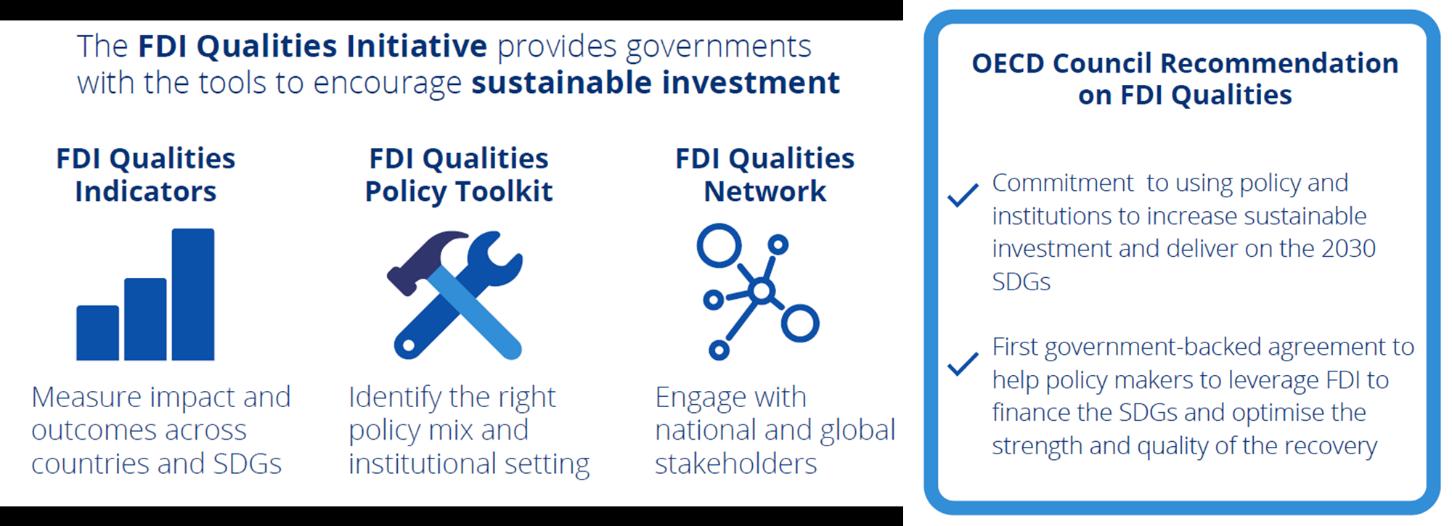
The OECD FDI Qualities Initiative provides governments with the standards and tools they need to encourage sustainable investment (Figure 1) The FDI Qualities Indicators provide the data to measure FDI's sustainability impacts, while the FDI Policy Toolkit is designed to help governments identify priorities for reforms to attract and retain sustainable investment. The Recommendation on FDI Qualities on Sustainable Developments represents the first international standard on using FDI to achieve the SDGs. The FDI Qualities Initiative includes country and regional assessments and programmes bringing global investment policymakers together such as the EU-OECD Programme on Investment in the Mediterranean.
Source: OECD.
Figure 1. Key pillars of the OECD FDI Qualities Initiative
Assessing sustainable investment policies: questions for discussion
Recent strategic reforms or policies introduced to support sustainable investment
• Is there a strategy that provides coherent direction on fostering investment in support of sustainable development? What measures exist to ensure effective implementation?
• How is the government aligning financial and technical support programmes (investment incentives, IPAs and other agencies services, etc.) to prioritise the SDGs?
• What role is the IPA playing in attracting and facilitating sustainable investment? Are there mechanisms to prioritise, monitor and evaluate sustainable investment projects?
Policies and institutional arrangements to harness foreign FDI for skills development
• Is the country’s FDI attraction strategy aligned with strategies on employment and skills development? Are these strategies aligned with national development objectives? Is FDI directly integrated into national employment and skills strategies and vice versa?
• What institutional mechanisms are in place to coordinate investment, labour and skills development policies or programmes? Are investment bodies or IPAs represented in national skills councils? Are labour or skills bodies represented in investment councils or IPAs boards?
• Are investment incentives tied to the performance of firms in terms of jobs created, wages or trained workers, including workers of suppliers? Are they developed with all relevant bodies?
• Do IPAs work with skills development agencies to support foreign firms or their local suppliers with relevant training options? Do they help identifying suppliers with high labour standards?
• Are investment bodies such as IPAs involved in labour market information and skills assessment exercises such as skills anticipation systems? Is information on MNEs’ activity used to produce forward-looking indicators on what jobs and skills will be in demand in the future?
Mapping of sustainable investment policies: methodology
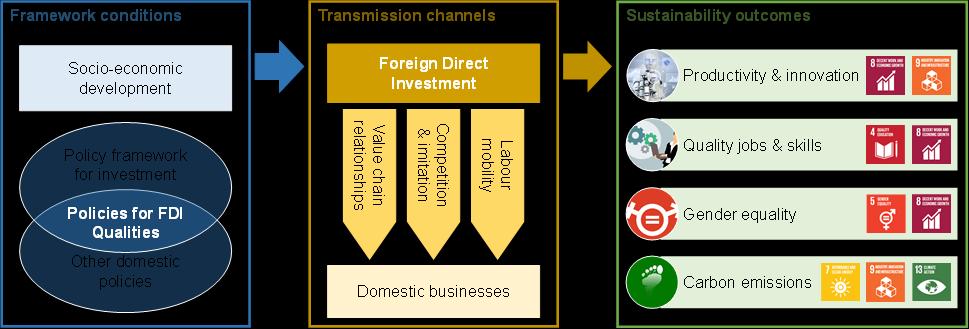
The OECD FDI Qualities indicators and Policy Toolkit identify four main channels of FDI impact (Figure 2). The most important are foreign firms' operations in host countries. For example, through their operations, foreign firms can create quality jobs, including for women, and introduce cleaner technologies. The activities of foreign firms also have spillover effects from three distinct channels: their vertical value chain linkages with domestic firms, both as buyers and suppliers; market interactions through competition and demonstration effects; and labour mobility between foreign and domestic firms. These channels can stimulate knowledge spillovers, which in turn increase productivity and wages and can foster the diffusion of better environmental, labour or gender standards.
The Policy Toolkit provides a novel typology to map or survey policies and institutions at the intersection of investment and sustainable development This mapping provides a compendium of institutional and policy practices that influence the impact of FDI in the four sustainability clusters. The mapping serves several important purposes. Used in country-specific assessments, such as FDI Qualities Reviews, it provides the basis for a comprehensive analysis of the institutional and policy context that influences the impact of FDI on sustainable development, enabling country-specific policy advice. It also allows for the
identification of good practices that can be used for peer learning in the context of national and regional sustainable development assessments.
Figure 2. The transmission channels of FDI impacts on sustainable development
Source: OECD FDI Qualities Policy Toolkit (2022[1]), OECD Publishing, Paris, https://doi.org/10.1787/7ba74100-en
The mapping covers 15 economies, including eight MENA economies, namely Algeria, Canada, Costa Rica, Egypt, Jordan, Lebanon, Libya, Morocco, the Palestinian Authority, Rwanda, Senegal, Sweden, Thailand, Tunisia, and Uzbekistan. This list includes a varied group of economies, with a mix of high, middle and low-income countries and with different sustainable development policy objectives. It looks at a wide range of institutions in domains that go beyond those that are conducive to investment. These include ministries of economy, finance, industry, labour, social and environmental issues, governmental and semi-governmental agencies, central banks, donors, and international organisations working with national governments, as well as academic and civil society institutions. It traces recent and ongoing policy initiatives, in particular those concerning FDI and the potential impacts on the four sustainability clusters. In line with the Toolkit and the policy principles, the mapping covers six main areas (Table 1):
• Governance: The institutional frameworks governing investment and sustainable development. It includes overarching strategies and plans on investments and on different sustainable development goals; institutional coordination mechanisms to ensure effective design and implementation of these strategic frameworks; and mechanisms to help develop, monitor and improve policies, such as public consultations, social dialogue and monitoring and evaluation mechanisms.
• Domestic regulations: National laws and regulations for investment and other sustainable development policies. They set principles and standards in the area of investment and sustainable development, shaping the legal framework in which investors operate and their impacts on sustainable development objectives.
• International agreements & standards: International agreements and standards on investment, trade and sustainable development. They provide a reference framework for signatory countries and may reinforce domestic principles and standards. Trade and investment agreements can also serve as a tool to strengthen national legislation and encourage responsible business conduct.
• Financial support: Financial tools that are conditional on specific criteria or activities that can help promote sustainable development, or incentivise these activities. They include for instance tax incentives, subsidised loans, grants and other measures, which governments tend to use to promote investment in specific activities, sectors and locations.
• Technical support: Technical support either directly provided or subsidised by governments, which can develop domestic capabilities and enhance the potential for FDI spillovers. This includes, for example, development services to businesses and suppliers, science and technology parks, training and skills development.
• Information & facilitation services: Services that help fill information gaps and enable positive impacts and spillovers from FDI. They include, for example, investment promotion services (information on licences and permits, list of local suppliers, etc.), awareness-raising campaigns in the areas of gender equality and the environment, disclosure of social and environmental risks by companies, and social support services.
Table 1. Policy categories and instruments covered by the mapping
1.Governance
2. Domestic regulations
3. International agreements & standards
4. Financial support
5. Technical support
6. Information & facilitation services
1.2 Oversight & coordination bodies
1.3 Data, monitoring & evaluation
1.1 National strategies and plants Principle 1: Provide coherent strategic direction on fostering investment in support of sustainable development, and foster policy continuity and effective implementation of such policies.
2.1 Laws & regulations
2.2 Standards & requirements
2.3 Regulatory incentives
3.1 BITs and Investment Chapters in RTAs
3.2 Other chapters in RTAs
3.3 Other International Instruments
4.1 Fiscal incentives
4.2 Grants, loans & other subsidies
4.3 Measures to correct externalities
4.4 Public procurement
5.1 Business & supplier development services
5.2 Science & technology parks
5.3 Training and skills development services
6.1 Investment promotion tools
6.2 Corporate disclosure and reporting
6.3 Public awareness campaigns
6.4 Investment facilitation & aftercare
6.5 Job information services
6.6 Social support services
Principle 4: Facilitate and promote investment for sustainable development opportunities by addressing information failures and administrative barriers.
Principle 4: Facilitate and promote investment for sustainable development opportunities by addressing information failures and administrative barriers.
Principle 4: Facilitate and promote investment for sustainable development opportunities by addressing information failures and administrative barriers.
Source: OECD FDI Qualities Policy Toolkit (2022[1]), OECD Publishing, Paris, https://doi.org/10.1787/7ba74100-en.
The following sections cover the findings of the mapping across the four areas of sustainable development, with a focus on governance and institutions, as well as financial, technical, and informational supports that are relevant to impacts from FDI. The mapping was conducted through desk research, relying on information from primary sources (e.g. websites of relevant institutions, official documents published online) and secondary sources (reports and papers published by international institutions, universities, research institutes, non-profit organisations and NGOs), including existing databases on institutions and policies (e.g. Women, Business and the Law of the World Bank). Only for Jordan, a pre-filled template was sent to and validated by a task force of Jordanian governmental and non-governmental institutions put
together for the FDI Qualities Review of Jordan (Box 1 1) For the remaining 14 countries, the information has not been validated by national authorities. The collection of data took place between 2021 and 2022.
Box 1.1. FDI Qualities Review of Jordan: Strengthening sustainable investment
The OECD has been working with the Government of Jordan, represented by the Ministry of Investment, on measuring the contribution of FDI to sustainable development and identifying policies to increase the positive impacts of FDI. This co-operation is part of the OECD FDI Qualities Initiative and has contributed to improving the FDI Qualities Policy Toolkit as a hands-on tool for policy analysis and advice. The work has taken place in the context of the EU-OECD Programme on Investment in the Mediterranean, which supports reform efforts to advance sustainable investment in the Middle East and North Africa region. Egypt and Tunisia recently embarked on undertaking FDI Qualities Reviews as well.
The assessment provides tailored policy advice to the government on how to strengthen the impact of FDI in each of the four dimensions of sustainable development covered in the FDI Qualities Policy Toolkit. Based on a detailed mapping of policies and institutions, conducted jointly by the OECD and the government, the study examines to what extent public policies support the channels through which FDI affects these sustainability dimensions.
The nine-month process of this pilot review has involved (i) a preparatory phase, including desk research and setting up an inter-ministerial taskforce, (ii) an analytical phase, including the collection of data, factfinding, consultations, analysis and drafting, and (iii) a policy dialogue phase during which findings and policy recommendations have been discussed in the taskforce and, with peers, in a special session of the FDI Qualities Policy Network (Figure 1 3).
March–April2021
Preparatory phase
Deskresearch by theOECD
TaskForcevirtual meetingtopresent andcoordinatethe study
May– July2021
Datacollection,consultation&analysis
Pre-filledsurveys complementedbyJIC andothergovernment ministries/agencies
Virtualfact-findingmeetings &interviewswithagencies, ministries,stakeholders
Dataandinformation analysis,anddrafting ofcountrystudy
August–November2021 Policydialogue
Presentationofthestudy tothetaskforce,follow-up workonpolicypriorities, peer-learning
The taskforce has included more than 20 government agencies and international partners in Jordan that work at the intersection of investment and sustainable development. The taskforce has provided strategic guidance and ensured that the information collected by the OECD, and included in the mapping of policies and institutions, is accurate and complete. The taskforce met early in 2021 to discuss the main objectives of the study and in September 2021 to present the results and to get feedback on policy priorities. The Ministry of Investment and the OECD have jointly co-ordinated this taskforce.
Source: OECD FDI Qualities Policy Toolkit (2022[1]), OECD Publishing, Paris, https://doi.org/10.1787/7ba74100-en
Figure 1.3. Process of the assessment
1 Productivity and innovation
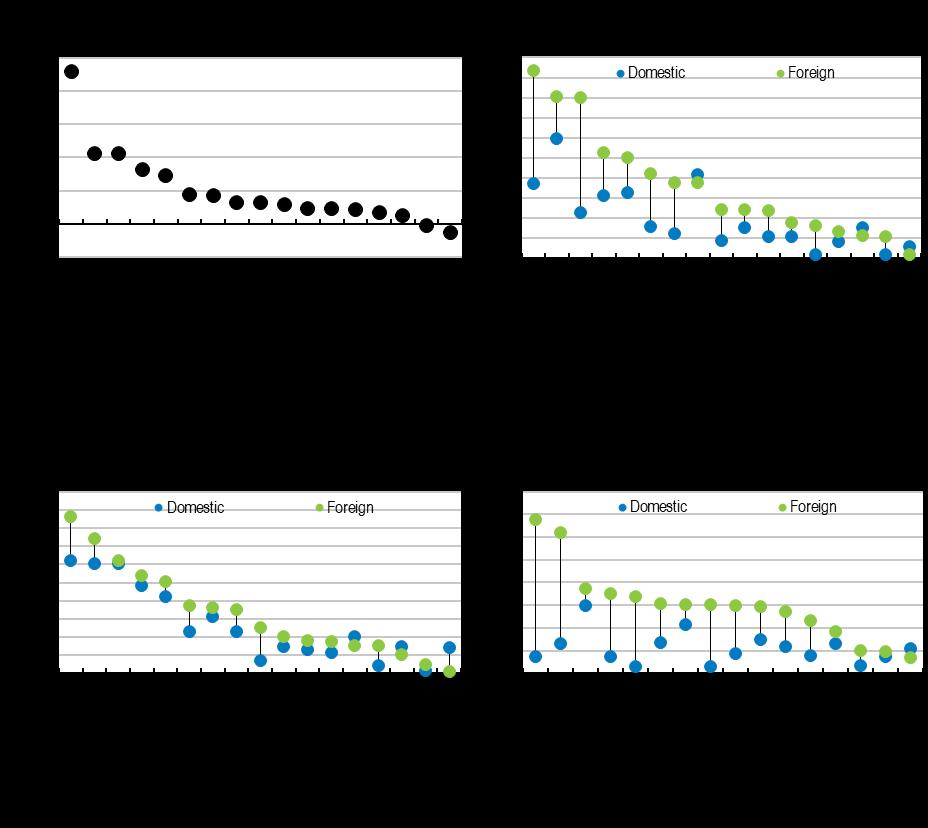
Foreign direct investment (FDI) contributes to enhanced productivity and innovation in MENA economies through the activities of foreign firms (direct impact) and via knowledge and technology spillovers that arise from market interactions with domestic firms (indirect impact). Foreign firms are more productive than domestic firms in nearly all MENA economies, and the gap between the two is particularly large in Morocco, Jordan and Egypt (Figure 1 1, Panel A). They also spend more on R&D activities, particularly in Morocco and Tunisia, and, as a result, are more likely to introduce new products or services (Figure 1.1, Panel B and Panel C). However, spendings on R&D by foreign or domestic firms is lower than in OECD countries. Foreign firms also more often use technologies from other foreign companies in all MENA economies (Figure 1 1, Panel D). While some domestic firms might be too small or credit-constrained to engage in R&D, there is a potential for them to increase their productivity by adopting these foreign technologies.
Figure 1.1. Productivity and innovation outcomes of foreign and domestic firms
2022 or latest year available
Source: OECD calculations based on World Bank Enterprise Surveys.
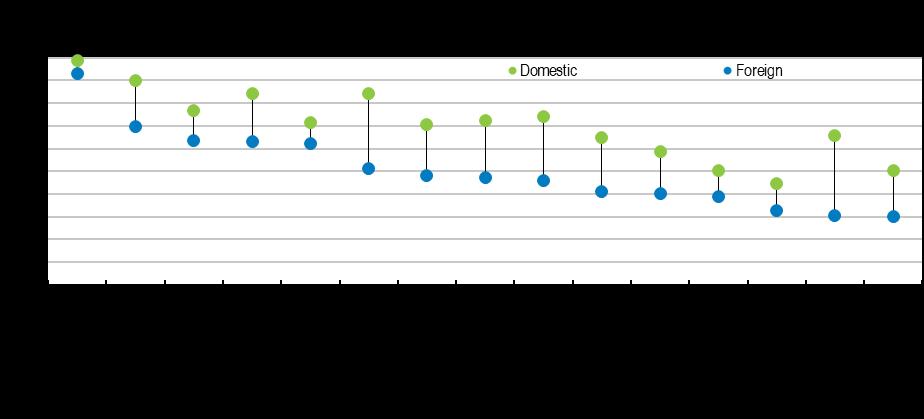
Another channel for increasing productivity through FDI are the interactions of foreign firms with domestic ones, typically with the latter being suppliers of the formers. Domestic firms are often too small to compete on international markets, but they can participate in global value chains (GVCs) by providing inputs to foreign firms. In Morocco and Egypt, foreign firms source more than 60% of their inputs domestically while in the Jordanian, Tunisian and Palestinian economies the rate is at around 30-40% (Figure 1 2). Differences across countries in sourcing from domestic suppliers may also reflect local content requirements or regulatory barriers on imports of intermediate products. Overall, domestic companies rely less than foreign firms on imported inputs due to easier access to the local supply networks and relatively lower costs of domestic inputs. At the same time, domestic shortages of resources could also lead to companies seeking their inputs from abroad.
Figure 1.2. Share of inputs sourced domestically by foreign and domestic firms 2022 or latest year available
Source: OECD calculations based on World Bank Enterprise Surveys.
National strategies in MENA economies provide directions and coherence on investment, innovation and SME development
Policy considerations on productivity and innovation are often at the core of national development strategies, which exist in all fifteen surveyed economies. For instance, Egypt's Vision 2030 strategy aims to hasten Egypt’s transition towards a knowledge-based and digital economy, with a focus on SME development, innovation capacity and R&D. Similar strategies include Uzbekistan’s Vision 2030, which prioritises the increased competitiveness of domestic firms and the diversification of the economy through FDI. Thailand’s 4.0 national strategy aims to turn Thailand into a knowledge-based economy by capturing the development potential of FDI and supporting innovation through incentives for technology-based activities, such as R&D and engineering design, in target sectors. Costa Rica’s National Policy for Knowledge-based Society and Economy 2030 aims for a whole-of-society approach in fostering scientific and technological development, providing a major role for FDI in improving the competitiveness of the economy.
Institutional arrangements that govern FDI impacts on productivity and innovation differ from country to country, but close coordination between investment promotion, SME and innovation agencies and the ministries they report to is essential for strategy implementation. In all fifteen countries, IPAs are at the forefront of facilitating knowledge-intensive FDI. Some IPAs combine broader mandates that go beyond
inward foreign investment promotion, such as promoting innovation and exports, supporting domestic entrepreneurs, and managing industrial, science and technology parks (OECD, 2021[2]) Ministries and government agencies also play a significant role in providing or facilitating financial support for enhancing productivity and innovation. SME and business development agencies, such as MarocPME in Morocco, ANDPME in Algeria and JEDCO in Jordan, provide a mix of financial and technical support, allowing them to have a more nuanced and hands-on approach to strengthening the productive and innovative capacities of domestic firms, and therefore their potential to serve as suppliers and partners of foreign investors
One way to foster coordination on investment, productivity and innovation matters is to establish clear coordination mechanisms. In Egypt, Morocco, Rwanda, Sweden and Thailand, IPAs sit in the board of national innovation or business support agencies and councils. The Egyptian National Competitiveness Council features at least one board official that is affiliated with the Ministry of Investment. In Morocco, the National Committee for the Business Environment – chaired by the Prime Minister – includes representatives from the IPA and SME agencies and the private sector. In Thailand, the Secretary-General of the Bureau of Investment (BOI) sits on the governing board of the National Science and Technology Development Agency. Similarly, in Rwanda, the CEO of the IPA sits as a leading councillor on the National Council for Science and Technology. The Higher Council for Innovation and Excellence of the Palestinian Authority acts as a network across state institutions, academia, the Palestinian diaspora, and the private sector. The Council does not have a representative from the IPA but includes foreign MNEs to facilitate private sector consultations and strengthen cooperation with the innovation agencies of partner countries.
Financial incentives are the most common tool to support knowledge-intensive FDI, and are often complemented with technical support and investment facilitation services
The 15 economies covered by the survey, including MENA economies, use to varying degrees financial and technical support schemes to stimulate knowledge-intensive FDI and support the productive capacities of domestic firms that have the potential to become suppliers and partners of foreign MNEs (Figure 1 3). They also provide information and facilitation services to boost knowledge and technology spillovers from FDI and eliminate information barriers and administrative hurdles. Financial support is the most used policy instrument, while information and facilitation services are less common.
Figure 1.3. Policy categories than support the contribution of FDI to productivity and Innovation
In percent of all surveyed policies
Source: FDI Qualities Mapping
Overall, tax incentives make up most of developing countries’ financial support policies for supporting knowledge-intensive activities Incentives targeting R&D activities are, however, less common in MENA and comparator developing economies, compared to more developed economies (Table 1 1). This may be due to several factors relating to the policy prioritisation of innovation promotion (versus other policy objectives such as job creation, green growth, regional development, etc.); the capacities and performance of domestic innovation and research ecosystems, which may vary significantly across countries; and the availability of a highly skilled workforce that can undertake R&D and make use of foreign technologies brought by investors. Beyond tax benefits, these are all important framework conditions for scaling up investments in innovation, and key factors when foreign firms decide where to locate their R&D activities.
Among MENA economies, Algeria provides a VAT exemption and duties on equipment for R&D, while Tunisia provides an additional deduction of 50% of R&D expenses under corporate agreements concluded with public research establishments In several MENA economies, direct financial support in the form of loans, grants and other subsidies is also provided to support business-to-business collaboration on R&D One such example is the Lebanon Industrial Research Achievements Programme, which strengthens industry-research cooperation, and the Innovation Voucher Programme, which provides grants to support R&D across various types of business and non-business entities Direct funding represents a more selective form of public support as it allows governments to target investment projects that they consider generating public goods (e.g. green technology, social innovation and other novel areas) or have a high potential for knowledge spillovers. Grants and other forms of direct support may therefore be valuable to promote mission-oriented innovation that offers high economic and social returns.
Table 1.1. Tax incentives targeted to specific objectives supporting productivity and innovation
Economy
R&D & innovation activities Less developed regions and Special Economic Zones
Local sourcing and linkages with SMEs
Source: FDI Qualities Mapping and OECD Investment Tax Incentives Database
Other comparator countries provide examples of incentive schemes targeting R&D and high-technology activities that are often combined with technical support and investment facilitation services. For instance, the Board of Investment of Thailand (BOI) implements a set of activity- and merit-based incentives (OECD, 2021[3]). Activity-based incentives are granted for knowledge-based activities as well as investment projects that strengthen supply chain development. Merit-based incentives provide an add-on to the basic scheme with additional CIT exemptions and tax deductions if a project undertakes R&D or skills development activities. An additional set of technology-based incentives was introduced in 2017, granting CIT exemption for up to 10 years to projects with targeted core technology development such as
biotechnology, nanotechnology, advanced materials technology and digital technology (Box 1 1) (OECD, 2022[4]). The Slovak IPA, SARIO, also operates an Innovation Services Platform inter-connecting the needs of its major clients with the competences of the most innovative Slovak technology companies.
Given the knowledge and technology spillovers that FDI can generate in the host economy, MENA countries place particular emphasis on strengthening supplier linkages between foreign and domestic firms. Five out of seven MENA countries offer incentives to prompt foreign firms to source inputs from domestic producers (Table 1 1). In Jordan, companies can receive a CIT reduction when they manufacture products with at least 30% domestic value added and purchase inputs by contracting local suppliers (OECD, 2022[5]). Similarly, Egypt applies a tax holiday in private SEZs if local inputs are at least 30%, while Algeria provides an extension of their tax holiday if an investment project uses inputs sourced locally. Beyond tax incentives, supplier linkages are also encouraged through matchmaking services as well as B2B and networking events. The Jordan Enterprise Development Corporation (JEDCO), in collaboration with local chambers of commerce and business associations, implements the National Linkages Programme, which connects large manufacturers with local SME suppliers, facilitates their interaction and provides technical and financial support to ensure that locally sourced inputs meet the needs of MNEs operating in Jordan. Another example includes Egypt’s IT Innovation programme, which links Egyptian industry and academia with Spanish companies, for joint bilateral R&D.
The establishment of special economic zones as well as science and technology parks that provide a physical environment for foreign MNEs to interact, network, exchange knowledge and collaborate with domestic actors can be instrumental for the development of knowledge-intensive partnerships. As opposed to OECD economies such as Canada and Sweden, SEZs are found in all MENA and comparator developing economies. Tunisia has established free trade zones, known as “Parcs d’Activités Economiques” in Bizerte and Zarzis regions, in which companies are exempted from taxes and customs duties and benefit from unrestricted foreign exchange transactions and duty-free import of inputs. Egypt is home to several state-supported technology parks, such as the Maadi Technology Park, the country’s first specialised investment zone, and Silicon Waha (WE Parks). These parks have allowed foreign firms to expand their business operations and provide thousands of local jobs through the entrance of large multinationals such as IBM.
Box 1.1. Promoting investments in the knowledge economy in selected OECD countries
Support for R&D investments and business linkages in Sweden
Sweden uses grants, loans and technical support to improve domestic R&D and innovation capacities Few tax incentives exist, and those that exist focus on steering FDI towards innovative and R&Dintensive activities. Sweden does not provide most conventional tax incentives such as corporate tax breaks for investing or duty waivers, but instead offers a 19% exemption of the employer’s social security contributions for R&D employees, as well as for the hiring of highly specialised foreign experts. These investment incentives are coupled with technical support aimed at strengthening the productive capacities of domestic firms, as illustrated by the fact that Sweden has the second lowest share of nontax financial and technical supports that target MSMEs (Figure 1 4).
Sweden’s Vinnova, the national innovation agency, offers programmes to facilitate linkages with foreign firms, such as public funding for joint R&D projects between Swedish and German SMEs, with universities and research institutes also eligible as co-participants. Vinnova also leads the International Innovation Initiative, in collaboration with Business Sweden, the IPA, as a cooperation platform to spur joint innovation and R&D, as well as investment attraction. This programme has attracted Swedish corporates such as ABB, AB Volvo, AstraZeneca, Ericsson, the Saab Group, and Scania, as well as multiple Swedish universities and research institutes. This facilitates their linkages with foreign firms and increases Sweden’s attractiveness as a strategic innovation hub and partner.
Leveraging investment promotion towards knowledge-intensive and high-tech sectors
The Slovak Republic shows a high level of economic specialisation. Most of the country’s value added and employment, are concentrated in a few sectors, mainly in the automotive industry, and a number of low-tech sectors (e.g. retail trade, real estate and construction) (OECD, 2022[4]). Although the motor vehicles industry alone is responsible for 20% of total manufacturing value added, foreign affiliates operating in the automotive industry are involved in low value added activities (fabrication and assembly of imported car components) with limited potential for knowledge and technology tranfers.
The Regional Investment Aid Scheme is the main instrument used by the Slovak Government to support investments that help the economy move towards more knowledge intensive and high-tech sectors. The scheme provides aid in the form of grants for tangible and intangible fixed assets, corporate income tax relief, wage subsidies for newly created jobs and discounts in the renting or selling of real estate. The sectoral scope of the scheme illustrates the government’s strategic choice to support FDI-intensive sectors to move higher up the value chain and engage in technologically sophisticated activities with more local content in their products. To benefit from the aid, investment projects should fall under one of the pre-defined investment categories, namely industrial production, technological centres and business services centres, each one of which is linked to priority sectors (e.g. chemicals, electronics, automotive, business services etc.) and relevant smart industry technologies (e.g. robotics, artificial intelligence, big data, cloud, etc.).
In recent years, investment facilitation and aftercare services provided by the Slovak Investment and Trade Agency (SARIO) have also focused on encouraging foreign and domestic firms to collaborate on the implementation of R&D and technology-based projects. SARIO has established an Innovation Services Platform, which connects some of its most technologically advanced foreign clients with innovative Slovak firms to undertake R&D,
Source: FDI Qualities Mapping.
For productivity and innovation spillovers to materialise, domestic firms, particularly SMEs, should have the necessary capacities to become successful suppliers and partners of foreign MNEs and absorb the knowledge, skills and technologies that FDI brings to the host economy (OECD, 2022[1]) MENA countries are home to numerous SME support programmes (Figure 1 4) These are driven significantly by SME agencies or other public financing bodies, such as in Algeria, where the ANDPME, provides both an SME Development Support Programme, acting as a support fund, complemented by a National Upgrade Programme, to improve SME competitiveness, both through funding and professional training. The Bank of Palestine provides direct loans for SMEs and technical assistance through the Fintech Accelerator Programme and Startups in Residence project In Morocco, the MarocPME agency has established a Skills Transfer matchmaking platform comprising more than 1000 entrepreneurship advisors and technical experts that help SMEs upgrade the managerial skills of their employees.
Source: FDI Qualities Mapping
Figure 1.4. Share of non-tax financial and technical support that target MSMEs
2 Job quality and skills development
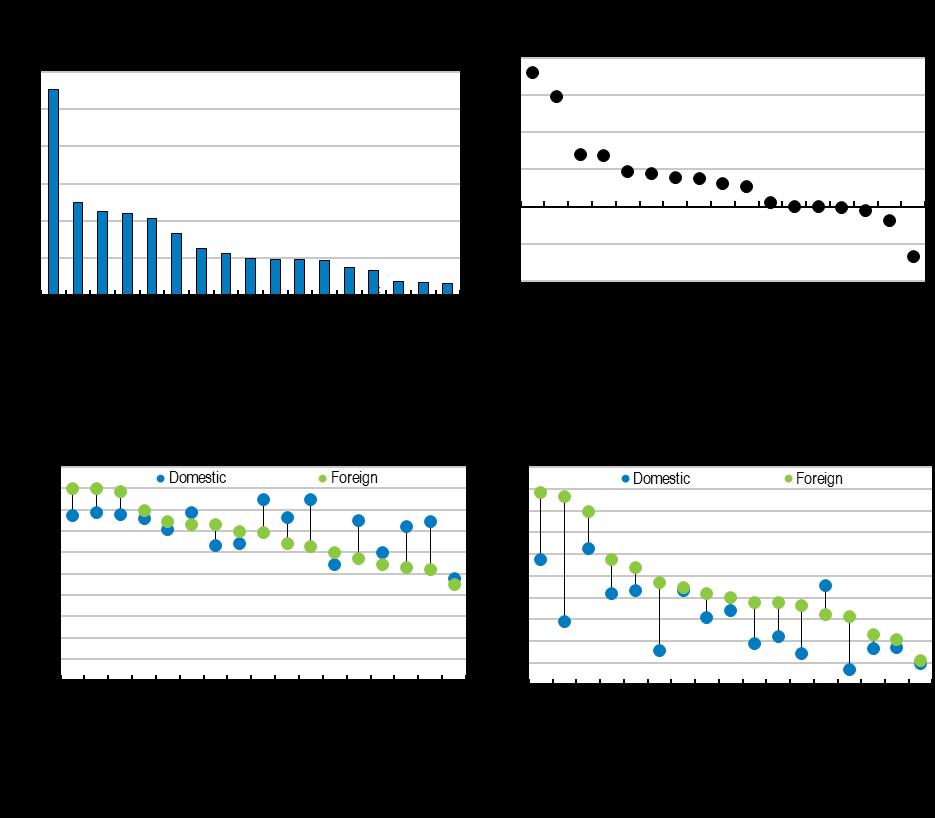
Governments in the MENA region attract FDI with the hope that it creates quality jobs that respond to the aspirations of a young and often education population. The level of employment created can vary significantly between countries and depends on the sectors where FDI is directed. Typically, most jobs will be created in economies with a solid manufacturing sector, while capital-intensive and knowledge-intensive sectors are often associated with lower job intensity creation per USD invested (OECD, 2022[6]) Among MENA countries, the highest intensity of job creation per million of USD in the past ten years was observed in Tunisia and Morocco (Figure 2 1, panel A) In these two countries, around 50% of FDI has been directed towards manufacturing industries (OECD, 2021[2]) In contrast, in Libya, where the job intensity creation has been the lowest, most of the greenfield FDI was received by the real estate and constructions sectors.
Figure 2.1. Labour and skills outcomes of foreign and domestic firms 2022 or latest year available
1. Job creation intensity of FDI corresponds to the number of jobs expected to be created per USD millions of announced CAPEX. Source: OECD calculations based on Financial Times fDi Markets database, and World Bank Enterprise Surveys.
In addition to job creation, FDI has further impacts on the labour market, through improvements in wages and non-wage working conditions, as well as skills development. Higher productivity of foreign firms typically leads to higher wages, resulting in in foreign firms having a wage premium over domestic ones (Figure 2 1, panel B) However, this is true to a lesser extent in the MENA region, even though foreign firms rely slightly more on workers with higher skills (Figure 2 1, panel C). Morocco is a particular case where foreign firms pay lower wages despite being more productive than domestic ones This could be because of high demand for low-skilled labour or because the foreign firms generate productivity-related rents that do not translate in higher wages for their workers (OECD, 2021[2]) Despite the uneven impact on wages, FDI can also improve job quality through other channels, for example through better upskilling and learning within international companies. In most countries – including MENA, workers can experience more training opportunities when working in foreign companies than in domestic firms (Figure 2 1, panel D) These factors can thus lead to an overall improvement of living standards in the host country.
Coordination mechanisms on investment, labour and skills strategies are limited
Governments, together with the private sector and social partners, should articulate a clear vision on the contribution of FDI to job quality and skills by ensuring that national strategies provide coherent and interrelated directions on investment, employment and skills development objectives. Governments tend to develop in isolation their respective strategic priorities on investment, employment and skills development. However, some countries have better integrated than others these dimensions in their national plans and strategies. In Rwanda, for instance, the 2019 National Employment Strategy includes specific goals on investment, such as to support investment in labour-intensive sectors. Meanwhile, Rwanda’s Long Term Investment Framework, includes both job creation and improved skills across its workforce, as a desired outcome of investment impacts in the country. Similarly, the 2011-20 Jordan National Employment Strategy identifies FDI as a key driver of growth, while delivering a diagnosis on its impact, indicating that FDI created mostly short-term job opportunities (OECD, 2022[5]). The strategy provides policy directions on investment, such as to align tax incentives to investors with the country’s ambition of becoming a knowledge-based economy, to support longer-term and higher-skilled jobs.
It is equally important that MENA economies strengthen co-ordination mechanisms – or establish them if inexistent – that support social dialogue and collective solutions to labour market issues driven by FDI. Ministries of labour, economy, education, as well as investment promotion and skills development agencies, employers’ organisations, and trade unions are crucial in the design and implementation of policies at the intersection of investment, job quality and skills However, institutions responsible for investment on one side and those dealing with labour and skills policies on the other side do not always interact together, often due to little or no coordination mechanisms in place Direct institutional coordination exists in Jordan, where the Minister of Labour (now Minister of Planning) sits in the Investment Council, which sets the country’s investment strategy and oversees the work of the IPA (OECD, 2022[5])
The engagement of IPAs with skills-related issues varies across countries Beyond their typical mandate to attract FDI, some agencies are involved in talent attraction or in addressing the skills needs of investors Among the countries surveyed, agencies in the MENA region, Senegal, Sweden, and Uzbekistan, have little or no linkages with skills and talent development. The IPAs of Costa Rica, Rwanda and Thailand appear to pay attention to skill development. Thailand’s Board of Investment is the only IPA involved in both the skill development and skills attraction activities Costa Rica place key importance on skill anticipation, for instance, to make the country more attractive to FDI, especially to innovative MNEs, and guide FDI accordingly towards improving skills in return, through MNE interactions with local workers (Box 2 1) Rwanda is the only country in the survey where a skills body is under the oversight of the IPA. The Rwanda Development Board established the Chief Skills Office in 2018, with the stated goal to align skills development with labour market demand, as well as serving as a skills anticipation body for priority sectors and ahead of key investment projects. The IPA has driven several training initiatives through the Chief Skills Office, with online learning programmes for tech skills and in-class boot camps for soft skills.
Box 2.1. Costa Rica and Thailand as skills leaders among investment promotion agencies
In Costa Rica, Education and human talent is one of CINDE’s – the national IPA – identified strategic pillars. According to the IPA’s 2019-22 strategy, the organisation identifies itself as a key player in supporting skills development for jobs of the future, and in the transitioning towards a knowledge economy. CINDE is fulfilling the strategy to boosting skills in Costa Rica in partnership with ministries, other agencies, universities, technical institutions and the foreign MNEs themselves, allowing the IPA to closely track patterns in emerging human talent.
CINDE also contributes to an overall understanding of the labour market and education outlook of Costa Rica, including skills needs, which encourages programmes that further boost the country’s attractiveness as an FDI destination. One of these programmes is Technological Seedlings, in which CINDE has partnered with Microsoft to boost the talent pool in certain high-tech sectors identified as needing the greatest number of entrants. The training of students is overseen by INA, Costa Rica’s primary agency for learning and skills development. This ecosystem is a part of wider government partnerships with foreign MNEs, such as with Intel and HP, which are collaborating with universities in offering training that caters to private sector needs, thus providing students to seek employment in major MNEs, providing knowledge spill over opportunity
Thailand’s Board of Investment provides skill development services and promotes talent attraction Many of its tax incentives focus on training, such as a five-year CIT exemption for companies investing in the establishment of STEM training institutes. This takes incentives even beyond employee on boarding and training, encouraging companies to invest in the development of wider sectors and their human capital base. In 2019, the BOI entered into an agreement with the Thailand Research Universities Network, as a skills anticipation and coordination strategy, with the two bodies working with the private sector to enhance R&D, cooperative education and high-skilled workforce recruitment.
Regarding talent attraction, the BOI has established a Strategic Talent Center (STC), which identifies foreign specialists and researchers to support R&D and innovation in ten key national industries. The STC is an example of a multi-institutional cooperation on skills attraction, with the BOI working with other organisations on operating the initiative, including the Ministry of Digital Economy and Society, the National Research Council and the Thai Immigration Bureau. Companies that are looking for science and technology talent submit their requirements to the STC, which in turn provides a list of potential candidates, maintains a consulting status in the process of their recruitment and directs them to resources to recognise the qualifications of foreign experts entering Thailand. The STC also supports the facilitation of visas and work permits and complements the BOI’s SMART VISA programme, a specialised visa for highly skilled foreign talent and entrepreneurs looking to enter in priority industries.
Source: FDI Qualities Mapping; OECD Investment Reviews: Thailand (2021[3]) OECD Investment Policy Reviews, OECD Publishing, Paris, https://doi.org/10.1787/c4eeee1c-en
Support measures related to FDI, jobs and skills development differ across MENA economies but focus on young workers and graduates
Investment and active labour market policies, if well designed, can help MENA economies direct FDI to act on specific labour market outcomes such as the creation of jobs for youth. They can also help meet the challenges that automation, digitalisation and low-carbon transition – all accelerated by FDI – impose on the labour market. The mix of policy measures – involving investment incentives (i.e., financial support),
technical support, and information and facilitation services – significantly differ across MENA economies (Figure 2.2).
Figure 2.2. Share of policy initiatives on employment, job quality and skills by type of instrument
Source: FDI Qualities Mapping.
Some MENA economies such as Morocco or Tunisia focus on stimulating labour demand by attracting investment projects in specific sectors or locations through targeted financial support, which can involve grants and loans and measures involving tax relief, such as corporate income tax (CIT) incentives. Compared to OECD countries, MENA and developing economies place more emphasis on providing tax incentives than on other forms of financial support to foster job creation and training. They have less fiscal space than advanced economies in providing direct grants, loans and other subsidies.
Most MENA economies (except Tunisia and Morocco) have at least one existing tax incentives that aims at attracting FDI to foster job creation (particularly to hire local workers) (2 3). For example, in Jordan, firms in the industrial sector can benefit from CIT incentives conditional on hiring a minimum number of Jordanian workers Algeria extends a total CIT exemption for three years to investing firms that create less than 100 jobs, and five years if more than 100 jobs are created. Lebanon provides extensive tax incentives for job creation – covering eight sectors and providing firms with a full CIT exemption for 10 years. Some MENA economies also provide direct financial incentives for job creation. For example, Egypt offers IT companies an EGP 10,000 to 32,000 grant on each new hire for a period of three years.
Tax incentives for skills development are less often used (2 3) Only Egypt and Morocco have tax incentives with the objective to promote job quality and skills. Morocco offers a reduced CIT rate of 20% for vocational training, while Egypt offers a tax allowance to certain firms, provided employee wages exceed 30% of operating costs. Similarly, direct subsidies are less often used to improve job quality and skills, while being likelier to address employment, such as in Tunisia, which has several schemes, especially for younger workers and graduates For example, one scheme offered by ANETI is addressing unemployment of higher education graduates. Tunisian graduates who have been unemployed for over 3 years can be a trainee in a participating company, which would then receive a state-funded hiring bonus and subsidised social security contributions for up to seven years after hiring.
Figure 2.3. More tax incentives in MENA economies target job creation than skills development
Share of economies by income group with at least one CIT incentive
Source: OECD Investment Tax Incentives database, October 2022, based on 467 corporate income tax incentives (157 incentives promoting SDG areas and 310 without SDG target).
Several MENA economies focus on providing technical support, often to support young workers and graduates. This includes the Palestinian Authority, Lebanon and Libya (Figure 2 2) The mapping also shows numerous cases of firms interacting with agencies and specific programmes, to support both skills development and job opportunities for MENA youth. In Jordan, Orange – an ICT company – established a Coding Academy that offers a free training programme, accredited by the competent public authority, to young job seekers interested in digital technology who were unable to complete their university education. Toyota has been implementing its Discover Your Talent programme in Libya since 2012, a three-month vocational training initiative on car maintenance and repairing, computer skills and the English language, with the support of the UNDP and EU, in coordination with the Ministry of Local Governance and various local municipalities. In Egypt, the Siemens Training Academy, in which Siemens, in cooperation with the Ministry of Education and GIZ, has refurbished and upscaled two technical institutes and established the Egyptian German Technical Academy. These training centres support industrial expansion, through a focus on qualifying both engineers and technicians into the Egyptian workforce, especially in the development of skills crucial for the energy sector.
Only a few countries included in the mapping rely on information and facilitation services. These measures include supporting foreign investors in identifying local suppliers with high labour standards, facilitating due diligence checks to assess risks in their supply chain and, more generally, raise awareness about labour standards and incentivise companies to disclose their compliance with them. Corporate disclosure and reporting are crucial to labour market information, with Rwanda being among a growing list of developing countries in having a Labour Market Information System. It is also important for the transparency and betterment of workplace conditions, such as through the Better Work Programme in Jordan The Programme, an initiative implemented by the ILO and IFC in co-operation with the Ministry of Labour, established a transparency portal disclosing the compliance of apparel factories with key labour standards.
MENA
Lower middle income
Upper middle income
3 Gender equality
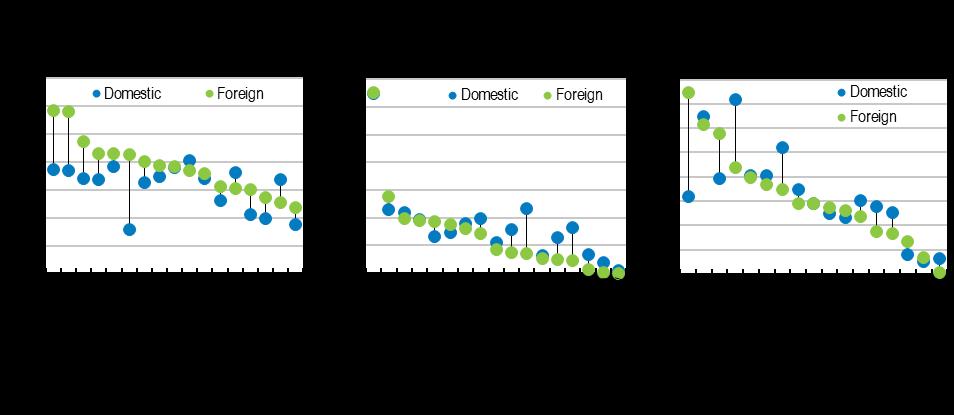
Foreign investment can contribute to reducing the gender imbalances on the labour market of MENA economies in various ways. It can create new jobs for women, help them develop new skills through onthe-job training and support female entrepreneurship, for example by generating new sourcing and export opportunities in domestic value chains. The share of female workers is higher in foreign firms in nearly all MENA countries, except Morocco (Figure 3 1, Panel A). This suggests that FDI is principally located in sectors where there is a higher female participation, such as in the textile industry, but it could also indicate that foreign firms have management practices that favour gender equality. However, and as in most other comparator countries, MENA economies have lower shares of foreign firms with a female top manager or female participation in ownership (Figure 3 1, Panel B and C). Notwithstanding the nationality of the business, gender imbalances are often higher in MENA than in OECD and other developing economies
Figure 3.1. Gender outcomes of foreign and domestic firms
2022 or latest year available
Source: OECD calculations based on World Bank Enterprise Surveys.
The governance framework for gender equality varies greatly across countries
National strategies and plans for gender equality are an important tool to ensure institutional coordination and consistency of gender objectives with broader national development goals. Many of the countries mapped have dedicated national strategies for the promotion of gender equality, particularly women’s economic empowerment. Often gender equality objectives and considerations are also included in broader economic development strategies or other sectoral strategies. For instance, Morocco has two national programmes that aim to support women’s economic empowerment. The first programme highlights entrepreneurship and career advancement opportunities, while the second operates under the framework
of the 2030 SDG Goals, with set objectives for women’s share of the workforce and vocational education graduates. In Egypt, gender equality objectives are explicitly included in Egypt Vision 2030, as also seen in national development strategies in Costa Rica, Rwanda, and Thailand
All fifteen countries mapped have a governmental or semi-governmental body with an explicit mandate to promote gender equality. In some countries, for instance Canada, Sweden, Lebanon and Jordan, such bodies have an exclusive mandate for gender issues and report directly to the head of government. In other countries, like Thailand, Tunisia, Algeria and Senegal, gender equality is the responsibility of a department within a body that deals with a broader umbrella of social issues. Besides these bodies directly in charge of promoting gender equality, relevant policies and programmes also come from other ministries and agencies whose mandate is not directly related to the promotion of gender equality (e.g. Ministry of Industry), professional associations, trade unions, central banks, and NGOs.
Policy coordination between institutions in charge of gender issues and institutions responsible for investment issues also change significantly across the countries mapped. In all countries, IPAs are in a key position to link investment to gender equality objectives. Nevertheless, only recently some IPAs have started attaching importance to gender equality objectives. For example, Business Sweden has introduced a clear code of conduct and vision for gender equality. Invest in Canada has no dedicated strategy, but the federal government supports a gender-focused strategy in outbound FDI, while the IPA of Costa Rica, CINDE, has a stated “commitment to promote greater gender equity as a driver of the country’s economic development” including on ensuring the positive impacts of FDI. CINDE is highly active in women’s skills and training, such as through the Women in Engineering Projects in Community Service programme, in partnership with Arizona State University, the US Embassy in Costa Rica and the Ministry of Education, as well as numerous foreign MNEs, including Boston Scientific, HP and P&G. In this initiative, CINDE leads female high school students on vocational projects in STEM sectors. This is part of CINDE’s wider push to foster skills development in the Costa Rican population, as mentioned in the previous section.
Besides IPAs, National Contact Points (NCPs) for Responsible Business Conduct can also act as a link between investment and sustainable development, including gender equality. NCPs are established by countries who have adhered to the OECD Guidelines for Multinational Enterprises – seven of the fifteen countries mapped, namely Canada, Costa Rica, Egypt, Jordan, Morocco, Sweden, and Tunisia – to promote the Guidelines and handle cases as a non-judicial complaint mechanism. Notably in Egypt, Jordan and Morocco, these NCPs are in the IPAs, respectively at the Ministry of Investment and International Cooperation in Egypt, the Jordan Investment Commission and the Moroccan Investment and Export Development Agency. National strategies and plans for gender equality are an important tool to ensure institutional coordination and consistency of gender objectives with broader national development goals. Many of the countries mapped have dedicated national strategies for the promotion of gender equality. Gender equality objectives are, however, also explicitly included in the country’s National Economic and Social Development Plan, similar to plans in Egypt, Costa Rica, and Rwanda
Most policy instruments promote women’s entrepreneurship and skills development
Most policy instruments in MENA economies – and developing countries more broadly – that are at the intersection of investment and gender support female entrepreneurship and women's career advancement and skills development (Figure 3 2). Fewer instruments promote women’s employment and better wage and non-wage working conditions, since these aspects tend to be regulated by laws and regulations. Furthermore, the analysis reveals that policy instruments that promote female entrepreneurship are often accompanied by measures that support women's career advancement and skills development.
Figure 3.2. Share of policy initiatives by objective – Gender equality
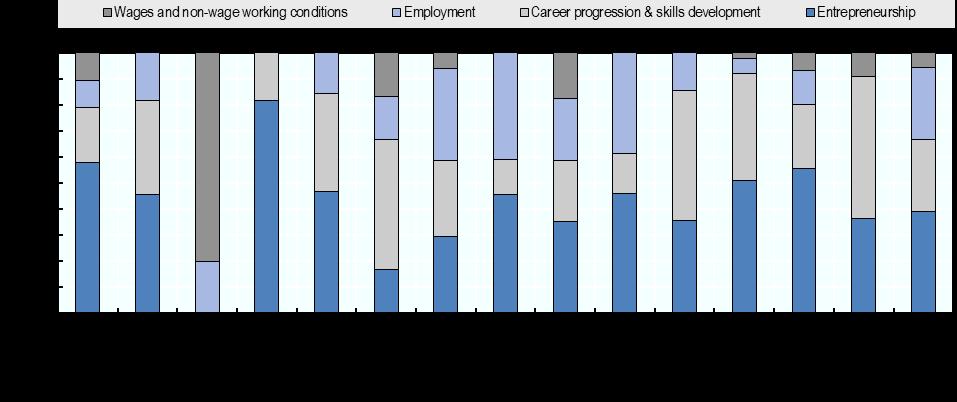
Note: If a policy initiative pursues more than one objective, it is classified more than once.
Source: FDI Qualities Mapping
In MENA countries, policy initiatives to support women’s entrepreneurship are often in more femaledominated activities such as agriculture, fishing and the manufacture of household products. Examples include the ‘InnovAgroWoMed’ programme in Tunisia, which offers entrepreneurial training programmes for women in the agri-food sector and the Palestinian Ministry of National Economy’s ‘Food of Our Homes’ competition in the West Bank, which provides funds and equipment to competitive women agricultural entrepreneurs and cooperatives, especially so that secure greater market linkages. Similarly in Egypt, the National Council of Women’s Traditional Crafts Development Program, guides handicraft entrepreneurs towards market requirements, to increase the competitive capacity of these microenterprises in domestic and international markets. Some countries have programmes that help women entrepreneurs integrate into local and regional value chains and develop linkages with foreign MNEs
In Morocco, the ‘SheTrades Global’ programme in cooperation with local authorities helps women-owned businesses to expand their network, learn new skills and connect with international business partners and investors. The programme specifically targets women in the agribusiness sector, with the aim of connecting female Moroccan suppliers with potential buyers in Canada and Europe. However, policies are emerging to support women entrepreneurs across all sectors, especially in MENA and with the support of international development actors. For instance, in coordination with national governments, the World Bank has financed the Women Entrepreneurs Finance Initiative (We-Fi) in Algeria, Egypt, Jordan, Lebanon, Morocco, and Tunisia. The programme supports women entrepreneurs through access to financial products, networking opportunities and international market linkages. In Lebanon, We-Fi was implemented by the IPA to support 125 women-led SMEs to be active on local and international e-commerce platforms.
Box 3.1. Programmes for women entrepreneurs: experiences from Canada, Jordan, Rwanda, and Morocco
Programmes supporting women entrepreneurship can be grouped into three categories: financial support, technical support, and information and facilitation services.
Financial support: Examples of financial support programmes include Canada’ Women in Trade Investments managed by Export Development Canada, which provide equity growth capital or venture capital funding to women-led businesses that are growing, have moved beyond the commercialisation stage, are exporting or are ready to export Another example if Farm Credit Canada’s Women Entrepreneur Programme, with a three-year allocation of CAD 500 million in low-interest loans and business resources for women farmers and agri-food producers. Jordan also offers several financial incentives to women women-owned businesses. Examples are the loans to small women farmers provided by the Jordan Enterprise Development Corporation and the loans to low-income women provided by the Employment and Development Fund.
Technical support: An example includes Jordan’s Development and Employment Fund, which provides training to women entrepreneurs to strengthen their business skills, often combined with financial assistance Also in Jordan, the US Agency for International Development's (USAID) Workforce Development (WFD) project, implemented through the Ministry of Labour (MoL), supports the development of certification and accreditation centres to increase employment in the private sector, particularly for women.
Information & facilitation services: In Canada, the Supplier Diversity programme is an initiative funded by Women and Gender Equality Canada, which aims to advance business diversity and inclusion in Canada by including women-, Aboriginal-, minority- and LGB-owned businesses in corporate supply chains and procurement. The initiative involves training procurement professionals on the benefits and tools available to expand the supplier network and connect diverse suppliers with procurement opportunities. Another example is SheTrades Global in Rwanda and Morocco, a programme of the Centre for International Trade that helps women-owned businesses grow their network, acquire new skills and develop linkages with business partners and investors. In Rwanda, these programmes focus on connecting different female suppliers with local and regional supply chains. The programme is particularly suited to the horticulture and coffee sectors, where women business owners predominate. In Morocco, the programme is directed mainly to women in the agribusiness sector, with a focus on connecting Moroccan suppliers with potential buyers in both Canada and Europe.
Most MENA economies use a combination of technical and financial support
The survey shows that most countries use a mix of financial support, technical support, information and facilitation measures (Figure 3 3). Among the financial support instruments, loans, grants and credits to promote female entrepreneurship are the most frequently used. Especially in developing countries, these instruments are often provided by banks and private institutions with the support of international donors. In Jordan, for example, Microfund for Women and Tamweelcom, the country's two largest microfinance institutions, have developed microfinance programmes for women entrepreneurs with the financial support of the European Investment Bank. Financial support measures also include tax incentives to promote gender equality goals, although their use is very limited, except in Jordan, which offers a corporate income tax reduction to companies that hire at least 15% Jordanian women and persons with disabilities (25% for companies in the textile and clothing sector). In addition, several countries, including Jordan, Tunisia,
Rwanda, and Thailand, offer tax incentives to companies located in sectors or special economic zones where many women work.
Figure 3.3. Financial and technical support are the most used policy instruments
Number of policy instruments by country and type of instrument (% of total)
Source: FDI Qualities Mapping
MENA countries have also led significantly in skills and job creation programmes for women in higherskilled capacities, such as for digital and ICT skills. For instance, the Egyptian Ministry of Communications and IT has launched “ICT Clubs,” to develop the IT skills of young skills and women through training and capacity building, in cooperation with Microsoft and other IT MNEs. The Palestinian Investment Fund provides training for young job seekers (30% of which are women) in employer-demanded skills across sectors such as healthcare, IT, education, and engineering. This comes along other programmes of the Bank of Palestine, such as banking literacy and digital marketing skills trainings, as well as Mini MBA Programmes, which can especially support female entrepreneurs. Similar state-driven policy mixes can be found across all other MENA countries, including initiatives such as training centres for women in Lebanon, leadership capacity building programmes in Libya, and mass literacy and vocational training programmes for young women in Algeria. These programmes do not have the capacity nor the budget such as of those in Canada, but they are important in supporting the economic empowerment of women in the region, enhancing the absorptive capacity of the female workforce and further enabling them to benefit from FDI, whether by working in foreign companies or engaging in market linkages.
4 Green transition
The renewable energy sector in MENA economies has been recently attracting significant amounts of FDI, which, in turn, is becoming important driver of the energy transition in the region. Over the past decade, there has been a significant shift of FDI from fossil fuels to renewable energy (Figure 4 1, panel A). While investment in fossil fuels constituted 60% of all greenfield FDI in 2013, it decreased to only around 5% in 2022. At the same time, the share of renewable energy in total FDI increased from 1% in 2013 to around 85% in 2022. The shift towards the higher share of renewables was driven by mainly by greenfield FDI in Egypt and Morocco, as well as a drop in fossil fuel FDI in Egypt, Jordan, and Libya. The shift towards renewable energy FDI can also improve the relatively low job-creation potential of FDI in the region as investment renewables typically creates more jobs than fossil fuel investment (OECD, 2022[6])
Figure 4.1. Environmental performance of foreign and domestic firms 2022 or latest year available
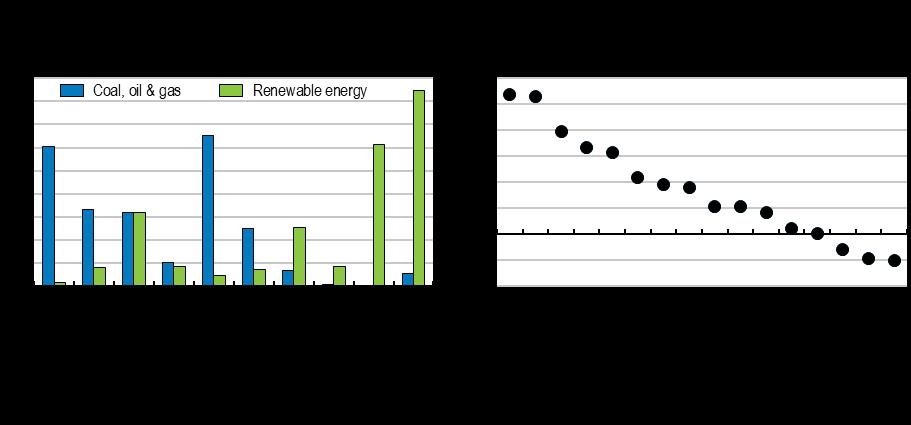
1. The MENA region includes Algeria, Egypt, Jordan, Lebanon, Libya, Morocco, Palestinian Authority, and Tunisia. Source: OECD calculations based on World Bank Enterprise Survey and Financial Times’ fDi Markets database
In addition to financing the energy transition of MENA economies, FDI can contribute to decreasing carbon footprint thanks to a better overall environmental performance of foreign firms, and in particular, energy performance. For example, foreign firms in MENA economies tend to perform better than domestic firms in terms of energy efficiency, measured as the amount of value added produced per unit input of energy (Figure 4 1, panel B). This is particularly evident in the case of Morocco, where foreign firms are on average 2.5 times more energy efficient than domestic ones This means that they produced more than double the output with the same amount of energy used, compared to domestic firms. Furthermore, foreign firms are also more likely to use energy from their own renewable sources, monitor CO2 emissions across its supply chain or implement measures to reduce waste, thus being leaders of the green transition (OECD, 2022[6])
The governance framework for green investment involves a broad range of institutions
Strong MENA government commitment to climate action, underpinned by a coherent policy framework and clear decarbonisation targets, is necessary to provide investors with the right signals to invest in capitaland R&D-intensive green technologies and infrastructure For investors that pursue projects with long time horizons transparent and predictable investment environments are essential to ensure planning certainty and clear expectations on investment and climate policies and actions. National plans and strategies should include a comprehensive and coherent multi-sector approach to ensure that the country’s investment attraction strategy is consistent with its climate ambitions (Table 4 1)
Table 4.1. Types of national strategies and plans on carbon emissions
National strategy/plan
Nature of national strategy/plan Examples
Renewable energy Development of renewable energy capacity, including infrastructure, in general or specific types of RE such as solar, wind, hydroelectricity or bioenergy.
Energy efficiency Reduction of energy use, often in tandem with RE strategies.
Climate change Commitment to climate change action, with policies to reach climate goals and nationally determined contributions.
Green infrastructure Overall commitment to infrastructure greening, including refurbishing and retrofitting of homes, businesses, and public buildings.
Green economy Green mainstreaming of economic sectors, including through the reduction of emissions, the adaptation of clean technologies and the promotion of green jobs, skills, and training.
Green transport Development of hybrid, low-carbon and zero-carbon public and private transport infrastructure; whether by road, air, rail, or bus.
Clean technologies Dedication to R&D and innovation of clean tech in various sectors of the economy.
Green governance & procurement
Green mainstreaming in government policy, as well as sourcing of low-carbon products and services.
Environmental protection General preservation of the environment or in various sectors such as tourism, oceans, and forestry.
Source: OECD elaboration.
Tunisia: Solar Plan (2015-30)
Libya: Renewable Energy Strategic Plan (2018-30)
Senegal: National Domestic Biogas Plan (2021-30)
Jordan: National Energy Efficiency Strategy (2020-30)
Algeria: Action plans for Energy Efficiency in Industry, the Building Sector and the Transport Sector (2016-30)
Morocco: Climate change policy (2014-40)
Egypt: National Climate Change Strategy (2022-50)
Sweden: National Infrastructure Plan (2022-33)
Canada: Long-term Infrastructure Plan (2018-present)
Egypt: National Strategy for Green Economy (2016-30)
Jordan: National Green Growth Plan (2017-30)
Jordan: Transport Sector Green Growth National Action Plan (2021-25)
Canada: Clean Technology Data Strategy
Canada: Green procurement strategy
Tunisia: Strategy for the protection of the environment (2020-present)
Sweden: National Forest Programme (2015-present)
The institutions that oversee and implement national strategies and policies for improving investment impacts on carbon emissions are diverse and vary across countries. Some of the key institutions include heads of state, environmental and energy ministries and authorities, cross-ministerial councils and steering committees, IPAs, central banks, national funds, research centres, and skills development agencies. Ministries of environment and energy are at the forefront of climate action, environmental protection, and the energy transition, and their coordination is indispensable to attract low-carbon FDI, as demonstrated by the experience of Morocco (Box 4 1) Other forms of coordination can be supported by inter-ministerial councils. In Jordan, for instance, the Higher Steering Committee for Green Growth, responsible for the overall strategic framework for green growth, reports directly to the prime minister, who also sits in the high-level investment council, responsible for the country’s investment strategy, ensuring that the strategic directions of the two are aligned. IPAs, as the first point of contact for foreign investors, are critical for
targeting green investment, and their strategies should reflect national climate goals and clean energy targets. In Costa Rica, the National Decarbonisation Plan explicitly states that the priorities related to FDI attraction for decarbonisation will be addressed in co-operation with the Ministry of Trade and Commerce, the IPA and the export promotion agency.
Box 4.1. Institutional coordination in Morocco supports green FDI
Morocco is an attractive destination for renewable energy investments and a regional leader in the decarbonisation of the energy sector, with renewable energy accounting for 37% of its electricity mix at the end of 2021, and expected to rise to 52% by 2030 and 80% by 2050. This achievement is supported by strong government commitment and an institutional set-up that is conducive to coordination across environmental and energy policymakers Unlike many other countries, in Morocco, energy and environmental policy are under the oversight of the Ministry of Energy, Mines, Water and the Environment. This ensures that there is alignment across national strategies, policies and plans related to energy generation, extraction, climate action, and environmental protection, contributing to greater policy coherence and to Morocco’s investment attractiveness.
The country has also taken major steps forward internationally through the Roadmap for Sustainable Electricity Trade between Morocco and the European Internal Energy Market, signed in 2016. As this seeks to integrate the renewable energy market between Morocco and the EU, it has supported a more conducive environment to renewable energy investments in Morocco, especially by European firms that are looking to expand in the Mediterranean region. Morocco is also one of several countries in the MENA region that has an ambitious green hydrogen strategy, aiming to become a major exporter to Europe.
Domestic programmes have played a significant role in raising Morocco’s green economy potential. The publicly supported Research Institute for Solar and Renewable Energies has inaugurated two science and technology parks, the Green Energy Park, and the Green & Smart Building Park (within the Mohammed VI Polytechnic University). These parks bring together Moroccan industry, national research agencies, and domestic and foreign academia, namely from France and Germany, to combine training, research, and technology development efforts. This not only contributes to Morocco’s own lowcarbon innovation and increases its skills and productivity capacity in the green economy, but also encourages an environment that can further benefit from related FDI, especially with the presence of European universities providing interactions between Moroccan and foreign stakeholders.
Source: FDI Qualities Mapping.
Most MENA economies prioritise affordable and clean energy policies
Climate-related priorities can include improved access to affordable and clean energy, decarbonisation and environmental preservation, and low-carbon innovation, among others. The level of importance that countries give to these objectives depend on the country’s context, including its natural resource endowments, and low-carbon capabilities. Most developing countries, including all MENA countries except for Morocco, are still early in their green transition and struggle with access to electricity, particularly in rural areas. For this reason they tend to prioritise access to affordable and clean energy (Figure 4 2) More industrialised economies with ambitious climate goals tend to prioritise decarbonisation of industry, transport and other carbon-intensive sectors, and improve environmental preservation (e.g. Thailand, Costa Rica) Countries with advanced green technology capabilities such as Canada, Sweden and Morocco tend to prioritise low-carbon innovation (Box 4 2).
Figure 4.2. Targeted climate policies by objective
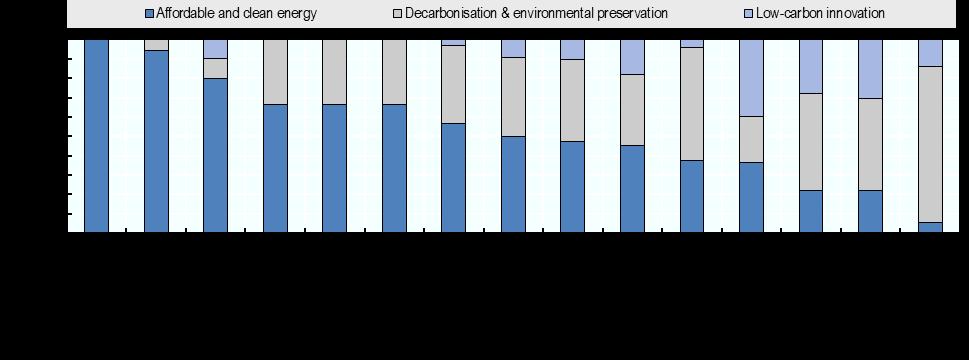
Source: FDI Qualities Mapping.
Financial and technical support can help advance the green transition in the MENA region
Governments in the MENA region can leverage a variety of tools to attract green FDI, including financial and technical support to companies Financial support measures include subsidies and tax relief for green investments, net-metering, feed-in-tariffs, and grants or subsidised loans. They also include measures to correct externalities, namely carbon pricing instruments, as well as approaches to encourage green public procurement, including of green investments. Technical support measures include business and supplier development services through green innovation programs and green technology incubators and accelerators, as well as training programmes that improve much needed green skills ecosystems to support sectors that are crucial to the transition Finally, information and facilitation services include green investment promotion and facilitation programmes through IPAs, corporate environmental disclosure requirements and environmental public awareness campaigns.
Financial support policies, such as fiscal incentives, grants, subsidised loans, and public procurement can be effective tools for attracting investment that supports the green transition (Figure 4 3). Grants, loans, and other subsidies make up the bulk of all financial support policies for green investment. In Sweden and Canada, they largely support low-carbon innovation, while in Costa Rica, environmental preservation is a key motivator, given its level of biodiversity. In other countries, they are largely for building an RE and clean energy foundation. These include mechanisms such as feed-in tariffs to encourage investment in renewable energy, as seen in Algeria, Egypt, Jordan, Morocco, Rwanda, Senegal, and Thailand. Evidence suggests that price-based support schemes such as feed-in-tariffs and premiums are more positively correlated with investors’ ability to raise private finance than quota-based schemes, and therefore may be more appropriate for countries at an earlier stage of the energy transition, which is the case for a majority of MENA countries
Sometimes, development partners play an important role in delivering financial support for green investment. For instance, the Egyptian Ministry of the Environment facilitates the EBRD’s Renewable Energy Financing Framework, which both acts as a technical assistance programme to support the emerging RE industry and as a financial support to scale up investments of RE projects, first through blended financing, followed by inflows from commercial banks and FDI. In Algeria, the government-run Electricity Transmission System Management Company has partnered with USTDA through a subsidy programme to modernise the national electricity grid, allowing it to integrate solar and wind sources. UNIDO’s Industrial Decarbonisation Accelerator, implemented in cooperation with national authorities in
Egypt, Morocco, and the Palestinian Authority, acts as both a financial and technical support program to boost energy efficiency, the use of renewables and net-zero products within industrial sectors. This not only supports the decarbonisation of domestic industry, but also of those of existing subsidiaries of foreign MNEs in the four countries. In the longer-term, these efforts can act as the right signals for foreign firms to pursue clean and sustainable investment, thus allowing for FDI to have a positive impact.
Tax incentives are also often used in an effort to increase investment in green sectors Thailand’s BOI provides a range of green investment incentives, including an 8-year CIT exemption for investments in renewable energy, energy efficiency, electric vehicles, bioplastics, biodiversity and reforestation. MENA countries are also home to similar fiscal incentive schemes for green FDI. Jordan provides a ten-year CIT exemption for FDI in renewable energy infrastructure construction in areas that it is needed in the country, while Tunisia offers a deduction of a portion of taxable profits during the exploitation phase, for up to the fourth year of activity, from 100% in the first year to 25% in the fourth and final year.
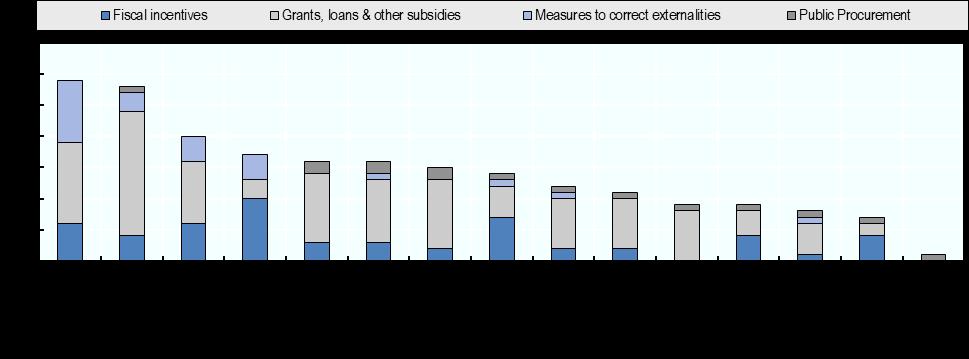
Source: FDI Qualities Mapping.
Technical support includes developing the right skills for green jobs. They are also crucial in supporting policies that meet all three objectives shown in Figure 4.2. Costa Rica is one country that prioritised skills development for green FDI (Box 4 2). In the MENA region, Jordan has a comprehensive policy set that incentivises green skills development across its workforce. For instance, the Vocational Training Corporation provides renewable energy, energy efficiency, water, and environmental vocational training, through two dedicated skill centres of excellence. Other MENA countries tend to focus their programmes more heavily towards energy efficiency training, with examples such as energy efficiency training for corporations in Morocco; support programmes for SMEs in Algeria; and qualification programmes for companies to become more energy efficient in Lebanon. In complement to these efforts, the Lebanese Centre for Energy Conservation, the national energy agency, also runs the COOL_UP Programme, acting as a financing mechanism to incentivise the use of highly energy-efficient Italian home appliances, as well as a technical assistance to transfer Italian know-how to domestic manufacturers and retailers. This supports decarbonisation among Lebanese companies, while also acting as a facilitator for environmentally friendly FDI by Italian firms in the sector.
Figure 4.3. Financial support by policy instrument – Carbon Emissions
Box 4.2. Countries with high renewable energy capacity focus on decarbonising other key sectors and upgrading skills
Only few policies in Canada, Costa Rica and Sweden target affordable and clean energy (Figure 4 2). Costa Rica generates 99% of its energy from renewables, while Sweden leads the EU at 63%, and Canada generates 82% of its electricity from non-emitting sources (although oil and gas production, road transport and residential heating are still highly carbon-intensive), allowing these countries to focus decarbonisation of other key sectors, and low-carbon innovation
Canada is home to a diverse set of programmes to support innovation in key sectors, mostly through financial support, such as Natural Resources Canada’s Energy Innovation Program, which funds the R&D of clean tech in the sector. Low carbon policies, such as the Automotive Innovation Fund, supports general greening and fuel-efficiency innovation in the sector, as well as two key programmes that target electric vehicle infrastructure development. Considering major investment decisions for EV manufacturing in Canada since 2019, by foreign automakers such as GM, Ford, and Volkswagen, policies such as this allow for even stronger spill over and linkage impacts by FDI, thanks to the enhanced absorptive capacity within the domestic EV industry.
In Sweden, the Environmental Protection Agency has introduced the Climate Leap local investment programme (Klimatklivet). Although the reduction of carbon dioxide and other gases is the main goal of the funding, other targeted spill overs include the development of new technologies and early market deployment, helping to increase the competitiveness of Swedish businesses in sustainable sectors. Vinnova, the national innovation agency, also finances ambitious sustainable innovation projects for smart cities, as well as in the FDI-intensive mining and energy sectors. Through policies that make Sweden a suitable environment for low carbon innovation and by making its domestic sectors more sustainable, it raises the potential for FDI to advance this further.
Skills development agencies also play an important role in improving FDI impacts on emissions. In Costa Rica, the National Apprentice Institute (INA) oversees green job training programmes, which include modules in organic agriculture, biogas production, emissions control, and the implementation of sustainable tourist standards. The institute also maintains contact with Costa Rican companies and foreign MNEs as part of its skills needs anticipation, in the framework of the green economic transition.
Source: FDI Qualities Mapping.
References
OECD (2022), FDI Qualities Indicators 2022, OECD Publishing.
OECD (2022), FDI Qualities Policy Toolkit, OECD Publishing, Paris, https://doi.org/10.1787/7ba74100-en
OECD (2022), FDI Qualities Review of Jordan: Strengthening Sustainable Investment, OECD Publishing, Paris.
OECD (2022), Strengthening FDI and SME linkages in Portugal, OECD Publishing, Paris, https://doi.org/10.1787/d718823d-en.
[1]
OECD (2022), Strengthening FDI and SME Linkages in the Slovak Republic, OECD Publishing, Paris, https://doi.org/10.1787/972046f5-en [4]
OECD (2021), Middle East and North Africa Investment Policy Perspectives, OECD Publishing, Paris, https://doi.org/10.1787/6d84ee94-en
OECD (2021), OECD Investment Policy Reviews: Thailand, OECD Investment Policy Reviews, OECD Publishing, Paris, https://doi.org/10.1787/c4eeee1c-en [3]
OECD (2022, forthcoming), Strengthening FDI and SME linkages in the Slovak Republic, OECD Publishing, Paris. [8]