6 | Pascal’s Wager: The Right Way to Repair by Matthew Ciaschini
EXECUTIVE DIRECTOR’S MESSAGE
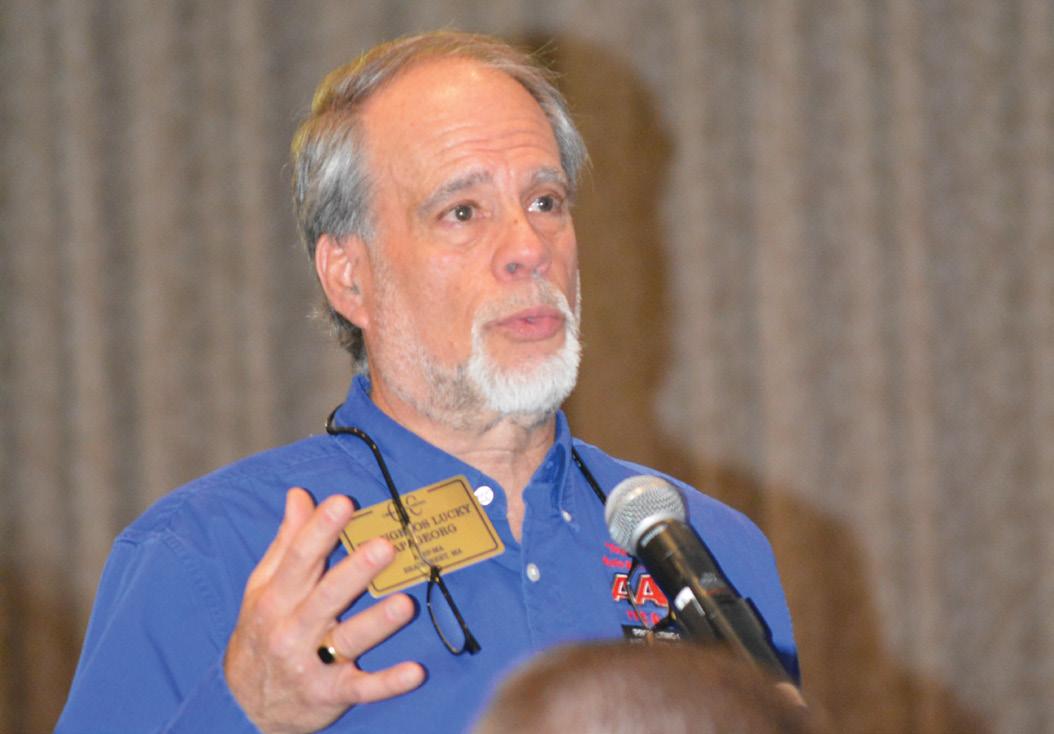
8 | What Was Old Is New Again! by Evangelos “Lucky” Papageorg
10 | AASP/MA Members Gain Value in Total Loss Talks by Alana Quartuccio
14 | Collision Repairers Drive Home the Necessity of Labor Rate Reform by Alana Quartuccio
18 | Sound Off!! NEAR Industry Survey Now Open!
32 | 2025 Coverall Law Year in Review: Scaling Strategy, Strengthening Shops by Sean G. Preston, Esq. Managing Attorney, Coverall Law
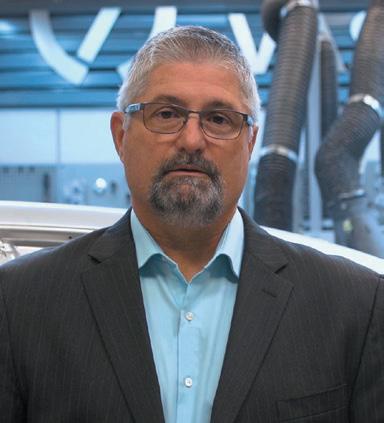
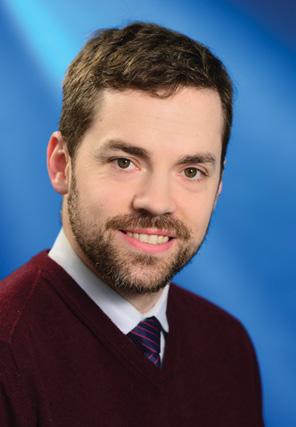
MATTHEW CIASCHINI
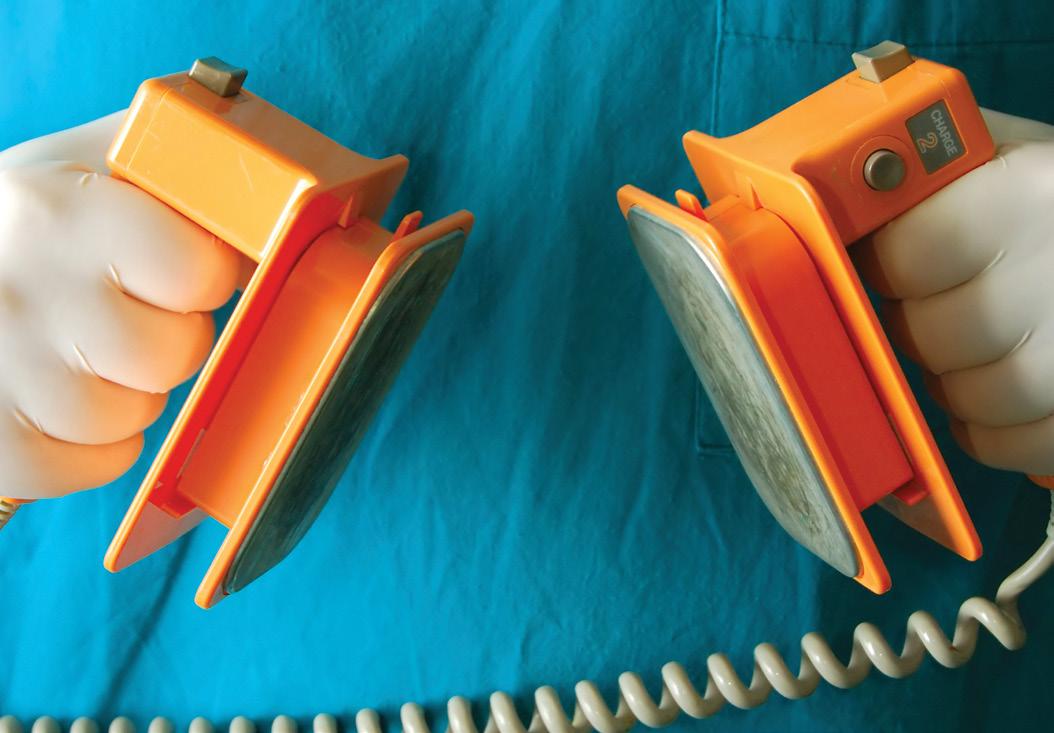
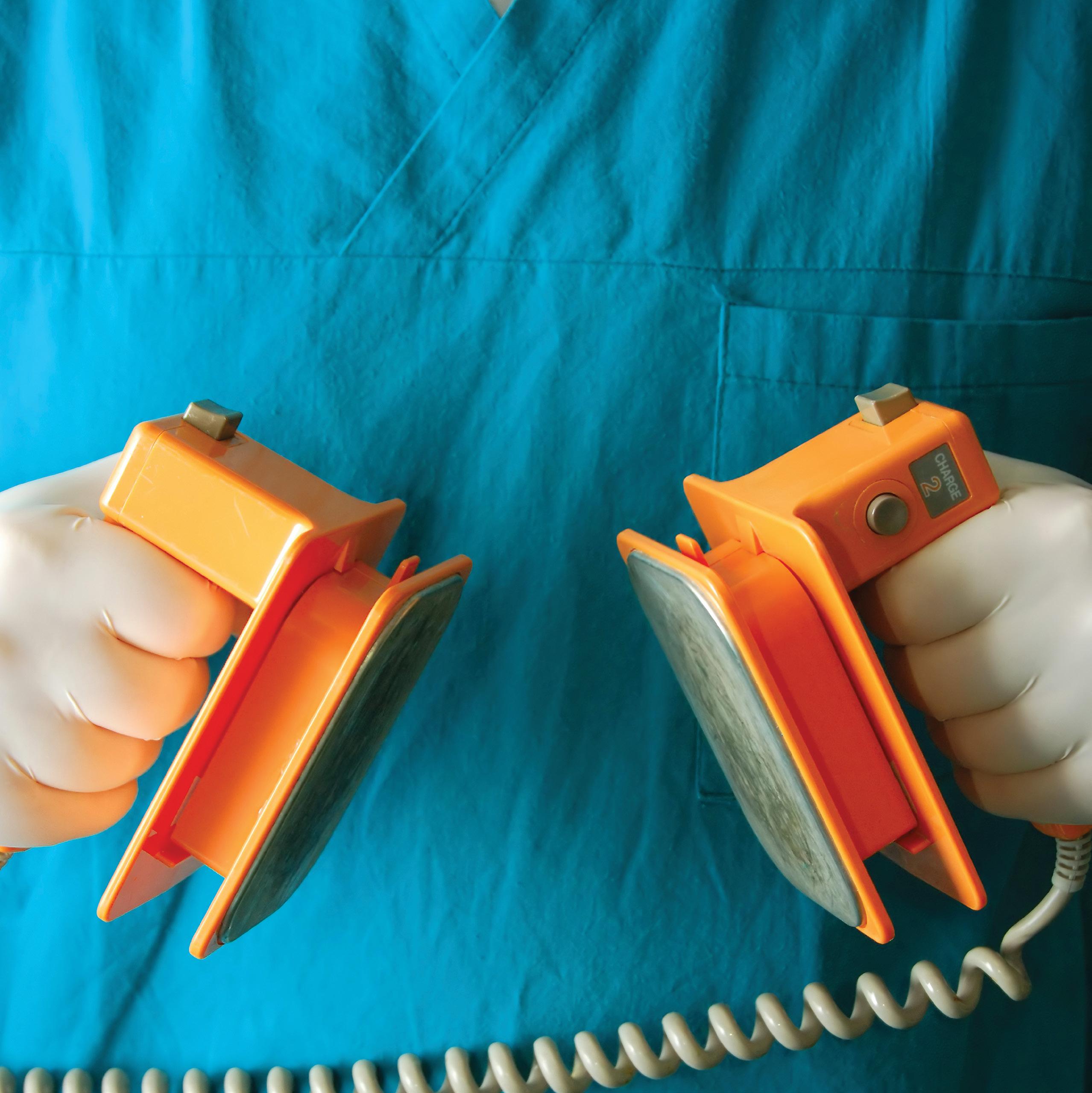
Pascal’s Wager: The Right Way to Repair
Ever find yourself tempted to skip a step “just this once”?
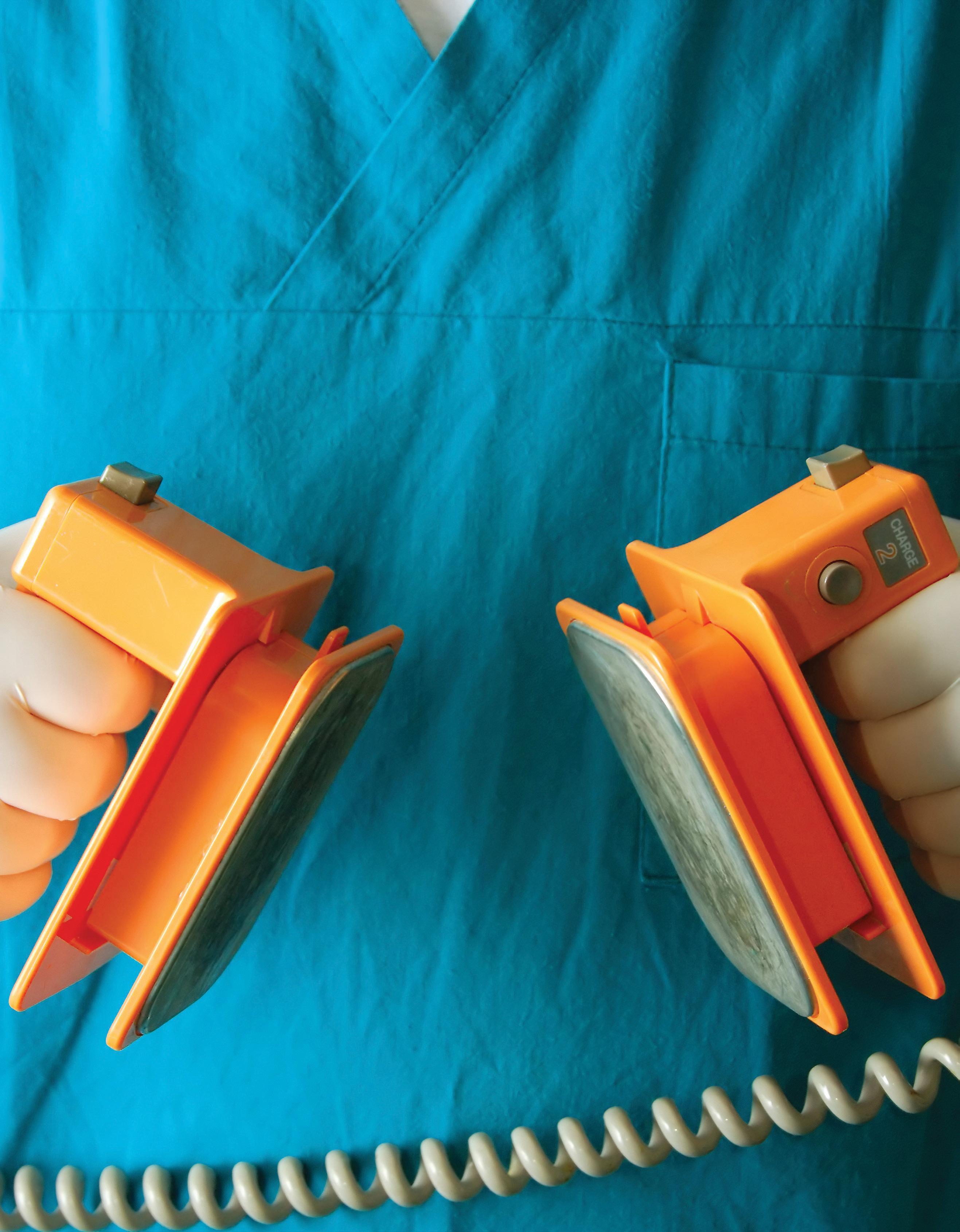
Picture this: a technician finishing up a collision repair wonders if it’s really necessary to recalibrate the car’s advanced safety sensors or if the alignment is “good enough.” The clock is ticking, and the next vehicle is waiting. Do you roll the dice and hope for the best, or do you take the extra time to double-check? In moments like these, I’d like to invoke a little 17th-century philosophy, Pascal’s Wager, because it turns out an idea from Blaise Pascal might be the perfect guide for doing the right thing in our repair bays.
Pascal’s Wager: Always Bet on the Safer Side
Pascal was a mathematician and philosopher who argued that, when faced with uncertainty, the smart move is to err on the side of least risk. In his famous wager, he considered the ultimate highstakes question, whether or not to believe in God, reasoning that belief was the safer “bet” because the potential downside of being wrong is much smaller than the upside of being right.
In simple terms, if the cost of being wrong is catastrophic, you take out an insurance policy (pun intended) against that catastrophe. This precautionary principle, making the choice that minimizes the worst possible loss, is a powerful concept. And it doesn’t just apply to theological debates or gambling; it applies brilliantly to how we approach vehicle repairs and safety.
Safety Is Not a Gamble
In the world of auto repair, every fix can feel like a bit of a wager. We either do the job 100 percent correctly by following OEM procedures, using proper parts and calibrating systems…or we cut a corner and bank on nothing bad happening.
Let’s be blunt: cutting corners in our field is gambling with our
STAFF
PUBLISHER
Thomas Greco | thomas@grecopublishing.com
VICE PRESIDENT/SALES DIRECTOR
Alicia Figurelli | alicia@grecopublishing.com
EDITORIAL DIRECTOR
Alana Quartuccio | alana@grecopublishing.com
OFFICE MANAGER
Donna Greco | donna@grecopublishing.com
PRODUCTION COORDINATOR
Joe Greco | joe@grecopublishing.com
SENIOR CONTRIBUTING EDITOR
Chasidy Rae Sisk | chasidy@grecopublishing.com
PUBLISHED BY: Thomas Greco Publishing, Inc.
244 Chestnut Street, Suite 202, Nutley, NJ 07110
Corporate: (973) 667-6922 / FAX: (973) 235-1963
www.grecopublishing.com
@grecopublishing
AASP/MA
Evangelos “Lucky” Papageorg
customers’ lives. If we take the safe bet (for example, performing that tedious sensor calibration or welding exactly to spec with the correct equipment) and it turns out everything would have been fine anyway, what have we lost? Maybe a little extra time or cost. But if we don’t do it and something does go wrong, the consequences can be devastating. An airbag might fail to deploy, a weakened weld might break or an ADAS camera might misread the road at a critical moment.
Skipping essential steps isn’t just a theoretical risk. If you’re not calibrating after the repair, you’re putting drivers at risk and opening the door to liability. In Pascal’s terms, the downside of doing things right is finite (a bit of effort), but the downside of doing them wrong could be nearly infinite for someone’s safety. There’s only one rational choice: always do the right thing
The High Stakes of Advanced Vehicle System
This philosophy of erring on the safe side is even more crucial as vehicles get more complex. Today’s cars are rolling computers with Advanced Driver Assistance Systems (ADAS), sensors and cameras everywhere. Virtually every vehicle that enters our shops now contains some form of advanced safety tech – yet many shops don’t send cars for recalibrations or perform them in-house when necessary.
That’s staggering when you consider how vital these systems are! Proper calibration of ADAS can literally mean the difference between a car’s automatic emergency braking system engaging to prevent a crash or failing to act when it’s needed most. Even a deviation as small as one degree in a forward-facing camera’s aim can result in false alerts or – worse – no alert at all when danger is ahead.
Membership Application 2025-2026
P.O. BOX 850210
Braintree, MA 02185
Phone: 617-574-0741
Email: admin@aaspma.org
Please complete this form and return to our office via mail or email with your dues payment. Thank You!
As a member in good standing, your shop WILL BE listed on our website Click here � if you do not want your shop listed on our website map for potential customers to find you. If you have any questions about this benefit, call (617) 574-0741, ext. 1.
Yes � Please send me information regarding the following MONEY SAVING BENEFITS: � Healthcare plan � Dental, Vision plan � PFML savings program � Credit card processing � Grant writing/training � Google presence optimization � All benefits
PLEASE ENCLOSE PAYMENT WITH YOUR MEMBERSHIP APPLICATION
Check# : ____________ (IF collision shop please note your RS# on the memo line of the check) OR
CC #: ______________ EXP: ________/___________ CID: _________________
Name On Card: _____________________________________________ Signature: _____
Check here � to opt out of auto renewal using this credit card information for future renewal
Note: A 4 percent convenience fee will be charged for membership renewal via credit card transaction I hereby make this application for membership with the Alliance of Automotive Service Providers of MA (AASP/ MA) for membership dues 2025-2026 as provided for in this contract. *Membership Dues are for a twelve-month period commencing on your anniversary month of membership
REV 12/24 REFERRED BY _________________________ COMPANY_______________________________
SCAN TO JOIN!
EVANGELOS
PAPAGEORG
What Was Old Is New Again!
Change is often driven by the desire to strengthen our image and expand our influence. About 15 years ago, a decision was made to unite the four independent repair groups representing collision repair shops across Massachusetts under one unified banner. The goal at the time was twofold: to create one strong state association that could speak with a single voice for our industry – and to align with a nationally recognized organization that could amplify that voice on both the local and national stages.
That decision led to the formation of the Alliance of Automotive Service Providers of Massachusetts (AASP/MA). By joining the national AASP network, Massachusetts became one of 38 affiliate members representing the collision and mechanical repair industries across the country. That affiliation provided us with a valuable platform for collaboration, discussion and collective action at a national level. It allowed repair professionals from all corners of the country to identify common challenges, rally behind shared goals and support one another in pushing for meaningful industry improvements.
It also gave AASP/MA additional strength here at home. When we’ve testified before legislators or regulators, we’ve been able to do so, not only on behalf of our Massachusetts members, but also on behalf of thousands of business owners nationwide – and the tens of thousands of highly skilled technicians who perform essential work every day. Just as importantly, our advocacy has represented the millions of motorists directly impacted by insurance constraints, repair standards and the many challenges that shape today’s collision repair process.
In recent years, AASP/MA has made tremendous strides in advancing the interests of collision repair professionals here in Massachusetts. Our relationships with legislators, regulators and key decision-makers have never been stronger. Our collective
voice is being heard – and it’s influencing real change.
We’ve had unprecedented meetings with legislative leadership and with heads of the Division of Insurance, Division of Occupational Licensure and Division of Standards. These opportunities reflect not only our credibility as an organization, but also the passion and commitment of our membership.
Your responsiveness to calls for action, contributions to our Lobbying and Legal Fund and support of our PAC have been absolutely vital. The participation of our members, vendors and industry partners continues to fuel our progress and strengthen our ability to represent you effectively.
With all that we’ve accomplished – and all that lies ahead – now is the right time to return to our roots and embrace the identity that best represents who we are and where we’re headed.
Effective January 1, 2026, AASP/MA will proudly return to its original name: the Massachusetts Auto Body Association (MABA).
This decision wasn’t made lightly. Over the past year, your Board of Directors and leadership team engaged in thoughtful discussions about how we can best position our organization for the future. Through those conversations, one thing became clear: the name MABA carries deep meaning, history and recognition within our state’s collision repair community. It reflects the strength, independence and professionalism of Massachusetts repairers – and it’s a name our industry and the public already know and respect.
Our mission and momentum remain the same: to advocate for fair treatment, equitable business conditions and recognition of the vital role collision repair professionals play in keeping motorists safe. What changes is the banner under which we continue that work – one that honors our past while propelling us confidently into the future.
As we approach this exciting transition, you’ll begin to see updates to our communications, branding and materials reflecting the return to MABA. Rest assured, your membership, benefits and the strong advocacy you’ve come to rely on will continue seamlessly.
Together, we’ll build on the foundation we’ve created as AASP/MA – with renewed pride and purpose as the Massachusetts Auto Body Association once again.
Thank you for your continued support, involvement and belief in the power of a united voice. Here’s to the future – and to what’s old becoming new again!
Here’s to 241 years of combined service excellence
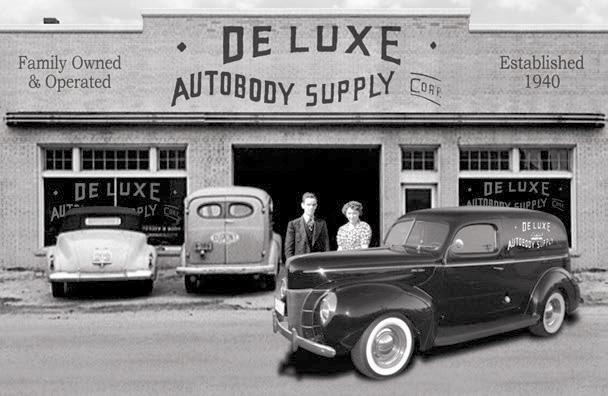
This year, as Albert Kemperle Inc. celebrates its 83rd anniversary, BASF also celebrates its 158th anniversary. We are proud of our decades of partnership with BASF and years of serving the auto paint and body industry together. Kemperle’s founders would be proud of this relationship and the growth their company has experienced because of it.
Today, as we look forward to many more decades of service to our customers, we find ourselves filled with gratitude. The creativity, hard work, and sense of responsibility of the people working for our two companies have made us what we are today.
The phrase “you don’t know what you don’t know” is especially true in the complex collision repair industry. Whether it’s keeping up with the latest technology and training, looking up OEM repair procedures or learning about processes and resources to help battle the day-to-day challenges, auto body professionals need all the knowledge they can possibly get.
Collision repairers from all over the Commonwealth gathered for AASP/MA’s October General Membership meeting at the Doubletree Hilton (Westborough) to soak up as much information as possible about how to retain control when it comes to total loss claims – an unsettling and growing nationwide trend.
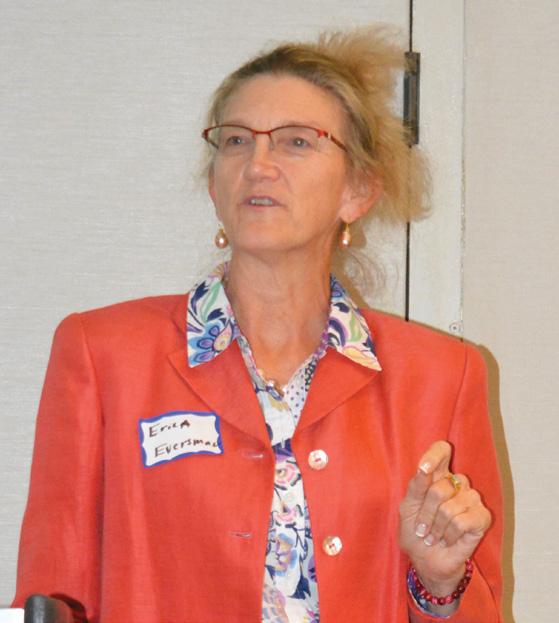
The Alliance welcomed attorneys Erica Eversman (Vehicle Information Services) and Sean Preston (Coverall Law) who opened doors to a whole new world of information on how to manage total loss claims.
Eversman made it clear that she is a consumer advocate. She serves as the consumer liaison with the National Association of Insurance Commissioners (NAIC), a position she’s held since 2019 that makes her “extremely fortunate because I’ve learned a lot of things in addition to being able to provide information. The position allows me to advocate on behalf of consumers and explain to the insurance commissioners what is working and what is not working for consumers, particularly in the auto insurance related area.”
She pointed out, “When I first started working with NAIC, the regulatory staff knew absolutely nothing about your issues, consumer issues and your particular area of pain,” driving home the importance of educating legislators about the industry. As opposed to the small group of 32 consumer advocates representing auto insurance with NAIC, the insurance industry has “a minimum of a thousand people at every meeting” making presentations. She stressed the need for the collision industry to do the same because “all they know is insurance went up this year. Everybody is screaming about premiums. The insurers use that hysteria to manipulate the regulators.”
Regulators need to be made aware of what’s going on, and one way to do that is by drawing their attention to “a number of class action lawsuits currently in play across the US about allegations that insurance companies are in concert with the database providers – CCC, Audatex/Solera or Mitchell – to have deliberately and systematically figured out a way to program the systems to undervalue total loss claims.”
When cases like this are successful, “it can really impact regulators” to step in and take some type of action.
And it’s important for shops and consumers to be aware of these legal actions because “you are the ones who are obviously losing business because of these total losses, and the consumer loses because the insurer won’t pay them the sufficient and appropriate amount to allow them to replace their vehicle.”
Shops can help consumers by encouraging complaints be sent to the Department of Insurance and to perform research into the true value of their vehicle by way of sources like Kelly Blue Book.
“If you don’t know how this specific industry works, you don’t know [insurance companies] are pulling the wool over your eyes,” she stressed about the lack of industry knowledge regulators have.
Discussion also included diminished value as regardless of how well the vehicle was returned to its pre-accident condition, any alteration to the vehicle could decrease its value.
“How can we control the situation to provide the best monetary benefit for ourselves?
Educating your consumers is critical, as well as educating your regulators and educating your legislators. Become a cohesive force that says ‘this is wrong; Massachusetts consumers are being taken advantage of.’ Insurers are supposed to be the experts, so they should be figuring out what the premium is to ensure the correct vehicle value.”
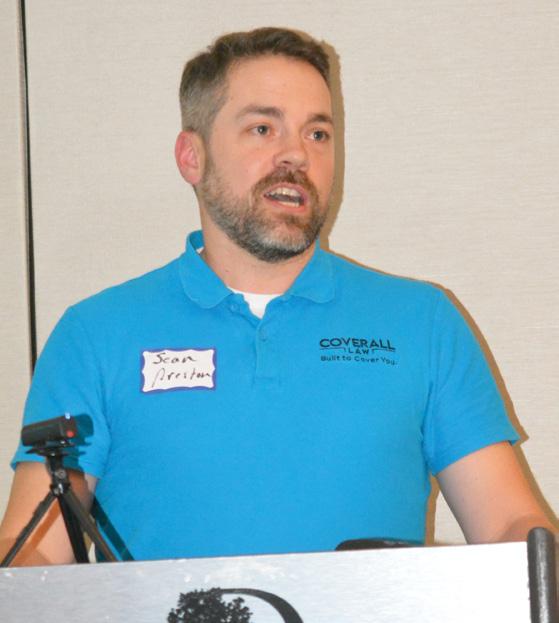
Preston illustrated a deep dive into what is happening with total losses, how they are calculated and what areas to focus on most when advocating for customers.
In Massachusetts, total loss is determined by an equation that looks at “the appraised cost of repair plus estimated salvage. And if that’s in excess of the actual cash value (ACV), the insurer may deem it a total loss.” ACV minus salvage gives “the max repair cost before the insurer may total. If the cost of repair plus the salvage is more than the ACV, it could result in a total loss. A lot of this is at the insurer’s discretion, and they have a lot of wiggle room, so it is and will continue to be a problem.”
Preston examined what steps are and are not considered parts of the repair. For example, ADAS calibrations may not be unless an actual sensor was damaged, needs to be replaced and is indeed part of the repair cost. “In parts seven, eight and nine of a standard Massachusetts insurance policy, it says ‘we will also pay reasonable and necessary expenses for towing, recovery and storage.’ So, that’s not part of the cost of repair. That’s not part of the loss. That’s extra. If they have a rental policy, that’s extra. The three terms that we look at are the cost of repair, the salvage value and the ACV. We work with the hand we are dealt. These are the three areas that we can attack if we’re advocating for our customer’s benefit.”
Consumer protection can also lie in the form of the Right to Appraisal (RTA), which exists in most insurance policies and provides vehicle owners with an alternative dispute resolution without the expense of hiring an attorney to fight for an $800 loss discrepancy, according to Preston. With RTA, each side picks an appraiser and then chooses a “competent and disinterested umpire” if they cannot agree on the repair costs. If the parties can’t agree on an umpire, they will seek a judge to select one. “They are supposed to appraise the loss at a time and place convenient to them, both separately stating two things – the ACV at the time of loss and the amount of
Erica Eversman (Vehicle Information Services)
Sean Preston (Coverall Law)
by Alana Quartuccio
loss. The amount of loss is not the cost of repair. The amount of loss encompasses the cost of repair and then some. If they fail to agree, they submit their differences to the umpire.”
Circling back to the point about the need to educate the consumer, Preston told repairers, “You always want to involve the customer. Everything we do at Coverall Law with the Forever Forms, we’re trying to legally put you and the customer on the same side of the table with the insurer on the other side.”
He cited an example where his firm was able to seek RTA without even involving a customer. “We had an insurer that has continued to abandon total loss vehicles enough times that we wound up with seven or eight of the same cases. The cool thing is that there’s just so much built into our forms that we were able to bring it seven or eight different ways. The vehicle was a total loss, the customer already paid and gone, but the vehicle remained at the shop. We were able to invoke RTA as we had assignment of rights for every single repair.”
Preston stressed that he doesn’t want to see shops “spending $30,000 to $50,000 in litigation. I want to spend much less than that if we can on something that’s going to benefit everybody.” He also pointed out, “Not only do regulators not understand the industry, judges do not either, so you have to keep things as simple as possible.”
Eversman and Preston were joined by Steven Goldstein (Coverall Law) for an interactive question-and-answer session that covered various topics raised by audience members.
AASP/MA members in good standing can purchase a recording of the meeting via the Members Only section of aaspma.org.
Why Join WIN?
WIN offers education, mentoring and leadership development opportunities to build critical skills for success in the collision repair market.
• Local/Regional Networking Events
• Annual Education Conference
• Educational Webinars
• Mentoring Opportunities
womensindustrynetwork.com
• Scholarship Program
• School Outreach Program
• Most Influential Women (MIW) Award
1545 New State Highway Route 44
Raynham, MA 02767
Phone: 508-351-0869
Fax: 508-802-4074 wholesale@mastria.com
TOLL FREE: 800-992-6220 FAX: 800-254-3544 wparts@baliseauto.com www.BaliseWholesaleParts.com One Call, One Truck for 14 Brands!
Collision Repairers Drive Home the Necessity of Labor Rate Reform
By the time this issue reaches publication, the Auto Body Labor Rate Advisory Board (ABLRAB) will have already made their recommendations to send in a final report to the Division of Insurance (DOI) as to what a fair and equitable labor rate should be, with the hopes of putting an end to four decades of labor rate suppression.
Collision repair professionals in the Commonwealth have invested years into making it abundantly clear how crucial this longawaited labor rate reform is. Not only is it necessary in keeping the industry alive, but it’s essential to protecting consumers. Over the years, they rallied on Beacon Hill, called and wrote legislators all in support of the cause, finally getting a seat at the table in the form of the ABLRAB, which was established to bring all related parties together to come up with a way forward.
On October 29, collision repair professionals made their voices loud and clear for the last time, sending their message home during the Board’s final public hearing, held weeks before recommendations were to be reviewed. The in-person hearing was held at Tri-County Regional Vocational Technical High School (Franklin) – a significant location as the school’s collision repair program recently shut its doors, an all too common sign of industry downturn in the Commonwealth.
Board member Rick Starbard (Rick’s Auto Collision; Revere) alluded to the preceding tour given of the “closed collision facility downstairs to see how much money is sitting there, how much of an investment has been made, and it’s just sitting idle.”
Starbard stressed that mechanical shops can charge $200 an hour with no pushback, but collision repairers are stunted at $45. “When I taught vocational school, I’d joke around about other programs and point to the door of the mechanical shop and say, ‘We can do what they can do, but they can’t do what we can do.’ We need to be compensated for what we do.”
“We need a fair labor rate immediately, yesterday, 20 years ago,” insisted Denise Raimo (Annisquam Auto Body; Gloucester), pointing out how many shop owners have had to refinance their homes just to keep their businesses running.
“The insurance industry has had their thumb on the scale for too long,” lamented Kevin Comstock (Nesco Sales; Bondsville). “A $43 labor rate doesn’t go directly to technicians. It goes to all of our expenses – salary, equipment, training. All of it. A lot has to come out of that little amount of money. No reasonable person can look at the situation objectively and not ask themselves why the system is broken and what is the cause of this inequity.”
Don Dowling (Marblehead Collision; Marblehead) brought the Board’s attention to estimates for the exact same repair done in Massachusetts and North Dakota which revealed a huge reimbursement discrepancy. He asked the insurance representatives if they “think that someone from North Dakota is more valuable than someone from Massachusetts.”
Board member Christopher Stark (Massachusetts Insurance Federation) chimed in. “We need to look at all the statistics. It’s important that we see where we’re at on total repair costs in the state and not just labor costs.” AASP/MA Executive Director Lucky Papageorg righted Stark’s comment, stating that, “We’re here to talk
about labor rates, not severity, not cycle time. We’re talking about people’s ability to make a living and to continue to move the collision industry forward.”
Auto body industry supporters also spoke up on the industry’s behalf.
Kate Gallagher, who comes from a long line of family members who worked in the insurance industry and who has personally worked as an appraiser for an insurer and later a body shop, told the Board she was “appalled” to learn that a state like Massachusetts with such a high cost of living had the lowest labor rate in the country. “I’m deeply concerned for the future of this industry and for the lack of young people entering this trade. I’m not naive to the fact that insurance companies must make money to stay in business, but they must also be persuaded to treat consumers and small businesses fairly. I understand the bottom line, and from my perspective, the only way the insurance companies will pay a reasonable rate to auto body shops is if they are forced to do so by legislation.”
Robert O’Koniewski, general counsel and executive vice president of the Massachusetts State Auto Sales Association, called it “unconscionable that the suppressed rates basically subsidize the insurance company’s profits year after year.”
Lorraine Wooten, an experienced automotive analyst, believes body shops should be allowed to be in a position to profit via the labor rate. She learned that GEICO ended 2023 with a $7.8 billion profit and noted that “$3 billion of that came from increases in automobile policy premiums, and the remainder was made up by loss adjustments savings they had compared to the prior year. The insurers are permitted to make a profit. The body shops should be able to not only have a living wage, but they should also be able to dial in some sort of profit to ensure their continuity and ensure for what’s going to come for the future.”
“If the Massachusetts labor rate simply kept pace with inflation over the past four decades, we would not be here today,” Papageorg asserted. “The Board can’t determine what is fair today without acknowledging what has been unfair in the past.”
He implored the Board to review the data not through the lens of fearing that it will result in higher premiums as the “reality is that insurers will continue to raise premiums regardless in order to protect multi-million dollar profits.”
Alluding to the $88 billion in profit the insurance industry achieved in 2023, Papageorg stressed, “We have been forced to subsidize those profits, yet there’s no sharing involved anywhere along the line.”
He also made it clear, “If anyone believes that we’re here simply because there are fewer vehicles to repair in the shops and we’re demanding higher rates to offset the reduced volume, then insurers have succeeded once again with their propaganda. While there may be fewer claims, the complexity and repair technology involved in each repair have grown exponentially. We are technicians working on sophisticated vehicles. We want to be paid for the expertise required and the liability incurred to do those repairs. Yet, insurers continue to ignore the reality. That is why we’re here today and why this advisory board was mandated by the legislature.”
Papageorg pointed out that recent discussion at the financial
services committee stated labor rates have gone up 10 to 40 percent, but even if one were to look at the high end of that range, a $56 labor rate is “still miles below the average shown across the country via National AutoBody Research which shows a national average of $81.”
He stressed that inadequate pay to the body shop businesses can jeopardize the safety of all consumers because “something has to give if you aren’t getting enough money to do the training, keep up with technology and have the right equipment.”
Stark responded, “We don’t want to have to keep doing this; we want to get this right, but as per our data from 2023, in New England, we are only off by 10 percent in total cost of repair. That is not to say that we don’t have work to do. It’s saying that we have to understand the scope of the cost.”
He acknowledged that “no one in this room will be happy with
PRESIDENT’S MESSAGE
continued from pg. 6
We simply cannot gamble with these tolerances.
Every time we repair a bumper, replace a windshield or realign a suspension component, we have to assume that an ADAS calibration is needed and perform it with precision. It’s the safe bet to ensure the vehicle’s safety features work as intended when it counts. If that means investing in special training or tools, so be it; quality and safety have a price, and it’s always less than the cost of a human life or a lawsuit. As Pascal might say, wager on the outcome that avoids the catastrophic loss. In our case, that means always restoring a vehicle’s safety systems to full function.
Preparing the Next Generation – No Shortcuts on Safety
Another aspect of “doing the right thing” is making sure the next generation of technicians embraces this philosophy. Our industry is facing a well-documented shortage of skilled workers. The TechForce Foundation reports a massive shortage of trained auto and diesel technicians, and shops everywhere are scrambling to find skilled workers. Meanwhile, thousands of experienced techs are aging out of the workforce, leaving a wealth of knowledge walking out the door to retirement.
The only way to fill this gap is by bringing new people into the profession through vocational schools, technical colleges and onthe-job training, as well as by mentoring them to do things the right way from day one. If a rookie technician learns early that skipping a calibration is never worth it and that double-checking safety systems is just part of the job, that lesson will stick with them for their entire career. We owe it to them – and to the driving public – to instill a culture where safety and integrity are non-negotiable. That means supporting automotive programs at our vocational schools, advocating for continuous training in emerging technologies (from ADAS to EV systems) and creating shop environments where asking questions and doing thorough work is encouraged, not rushed.
Our association can play a big role here. Whether it’s pushing for educational resources, hosting training seminars on the latest repair techniques or partnering with tech schools, we need to bet big on education. Think of training as our industry’s version of Pascal’s Wager: by investing time and money into learning and doing things correctly, we incur a known cost now, but we avert the far greater costs of accidents, comebacks and reputational damage down the road. It’s the smart bet and the right thing to do. In fact, with modern vehicles, developing these capabilities isn’t optional anymore. As one report put it, ADAS-equipped cars now dominate the market, so
by Alana Quartuccio
$56 because Lucky just testified that it’s ‘miles below the national average.’ At some point, the numbers do matter as we have to justify this to our policyholders. If we are going the direction of making Massachusetts like Rhode Island, then [policyholders] can expect a 24 percent increase in their premiums.”
“All we ask is that you look at it fairly and justly,” responded Papageorg. “Screw the premiums. It’s not about the premiums. It’s about people’s ability to own a business, to make Massachusetts strong and to have a vital industry that protects the motoring public. That’s what we do. That’s the bottom line, and there is a price to pay for that.”
The ABLRAB planned to meet November 24 to review recommendations. Updates will be reported in future issues of New England Automotive Report once details become available.
shops can no longer treat those systems as an “optional” part of repair – the choice isn’t whether to develop ADAS competencies, but how to do it. If we fail to train up new techs (and up-skill existing ones) for these realities, we’re essentially betting against our own future. And that’s a bet no one wins.
The Payoff: Safer Roads and a Stronger Industry
At the end of the day, embracing the Pascal’s Wager mindset in auto repair means our customers drive away in safer vehicles, and we as professionals sleep better at night. When you always choose the course of action that prioritizes safety, even if it’s more effort or costs a bit more, you build trust with customers and confidence within your team. You also elevate the reputation of our industry as a whole. We want the public to know that Massachusetts repairers, especially AASP/MA members, don’t leave things to chance. We do it right, or we don’t do it at all. That kind of commitment not only prevents tragedies but also attracts quality-minded people to join our field. After all, talented young folks want to be part of a profession that values craftsmanship, ethics and yes, a bit of philosophy.
So, the next time you’re faced with a tough call – maybe an insurer pressuring you to use a cheap part or debating whether to repair subtle damage that “probably” won’t matter – remember Pascal. Remember that as automotive professionals, we stake our reputation and our customers’ well-being on every decision. If there’s ever a doubt, choose the path that leaves no regret. Choose the repair that you’d insist on for your own family’s car. That is our “wager,” and it’s one we’re determined to win every single time.
In my role as president of AASP/MA, I’m betting on all of us to keep doing the right thing, to lead with integrity, prioritize safety and invest in the future of our workforce. It’s a bold bet, but I have unwavering faith it will pay off. Pascal’s Wager taught us that the safe bet is the smart bet, and in our industry, the safe bet is doing things the right way.
Let’s continue to set that example. By doing so, we ensure that every repaired vehicle leaving our shops is truly road-ready and every new technician that enters our ranks understands what it means to be a guardian of safety. That’s a philosophy we can all be proud to live by and a winning wager for everyone on the road.
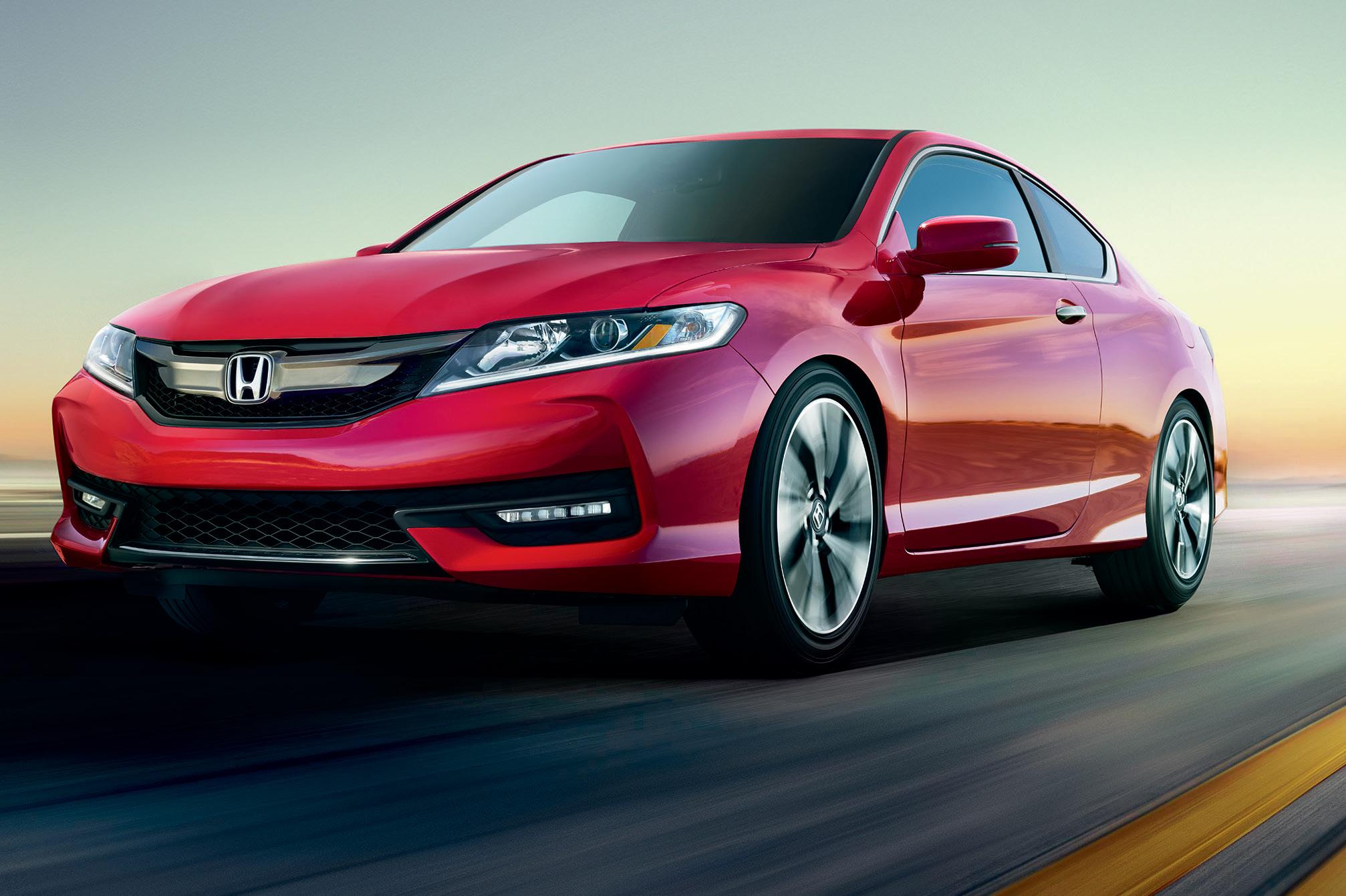
It Takes Genuine Honda Collision Repair Parts To Achieve a Genuine Honda Fit.
Honda collision repair parts are engineered and manufactured to Honda standards. In the collision-repair business, time is money, and you can’t waste time on parts that almost fit properly. Use Genuine Honda replacement parts. Your reputation depends on it.
For Genuine Honda parts, contact these Authorized Honda dealers.
The collision repair industry is certainly not short of its challenges. From insurer woes to training pressure and technology changes, you may find yourself shouting from the rooftop and feel like no one is listening. But you’d be wrong about that last part because someone IS listening! New England Automotive Report WANTS to hear from YOU!!
The New England Automotive Report 2025 Industry Survey is open now through December! Collision repair professionals have the opportunity to sound off – anonymously – about the things that matter most to you about your shop and the industry as a whole.
Every shop is unique in its own way, but as the previous survey results have shown, most encounter the same frustrating experience and voice the same complaints.
Last year, survey takers listed finding good help as one of the top challenges next to labor rate reimbursement. As the 2024 survey revealed, more shops are simply relying on word of mouth with 60 percent having reported this was their most common method for onboarding new employees. Searching online was also up with 37 percent reporting this as an option.
Referral programs have become somewhat of a touchy subject due to the belief that signing up with an insurance company to
work for a set rate sets a really bad precedent for determining a fair and equitable labor rate – something the Alliance has been fighting to achieve for decades. Last year, 81 percent of survey respondents reported they are not on any referrals, and of the nine percent who did say they were on referrals, all of them reported being involved with five or fewer programs.
New questions are added each year to capture the latest industry trends. As NEAR has reported, more shops are bringing ADAS work in house, so it’ll be interesting to see if the 54 percent who reported sending the work out last year will have decreased this year. The survey will help us learn if more shops feel prepared to handle EVs and if more shops are using AI in their day-to-day operations. It’s always interesting to see which insurance companies Massachusetts collision repairers cite as being the most difficult to deal with. Will MAPFRE and Progressive top the list once again?
The survey only takes 10-15 minutes, and the answers make for some interesting reading in the February 2026 issue of New England Automotive Report. And remember, answers will remain anonymous, so don’t hold back in telling us how you really feel!
Your opinion truly does matter! Watch your inbox for details!
BMW of West Springfield 1712 Riverdale St.
West Springfield, MA 01089
PH: 413-746-1722
FAX: 413-304-9009
bmwwestspringfield.com
New Country BMW
1 Weston Park Ave.
Hartford, CT 06120
PH: 860-240-7881
FAX: 860-240-7873
newcountrybmw.com
BMW of Stratham 71 Portsmouth Avenue
Stratham, NH 03885
PH: 603-772-0000
FAX: 603-772-9436
bmwofstratham.com
BMW of Warwick 1515 Bald Hill Rd.
Warwick, RI 02886
PH: 401-821-1510
FAX: 401-823-0530
bmwofwarwick.com
Audi dealers strive to make you an Audi Genuine Parts fan
• Audi Parts professionals are your subject matter experts on collision parts, replacement components and mechanical items.
• Many Audi dealers offer technical service support hotline access that can reduce your repair times and help you meet an on-time promised delivery.
• Installing Audi Genuine Parts contributes toward improved cycle time that helps make both your customer and their insurance company happier.
• Regardless of the age of your customer’s Audi, Audi dealers have access to over 200,000 part numbers. No other supplier comes close.
Helping you do business is our business. Order Audi Genuine Parts from these select dealers.
Audi Natick
549 Worcester Street
Natick, MA 01760
www.bernardiaudi.com
800.247.3033
Fax: 508.651.6841
Hoffman Audi
700 Connecticut Blvd
East Hartford, CT 06108
860.282.0191
Fax: 860.290.6355 www.hoffmanauto.com
Audi Peabody 252 Andover Street Peabody, MA 01960
800.774.8411
Parts Direct: 978.605.2182 email: pwalke@iramotorgroup.com www.audipeabody.com
Mattie Audi 80 William S. Canning Blvd. Fall River, MA 02721
800.678.0914
Fax: 508.730.1283 www.mattieaudi.com
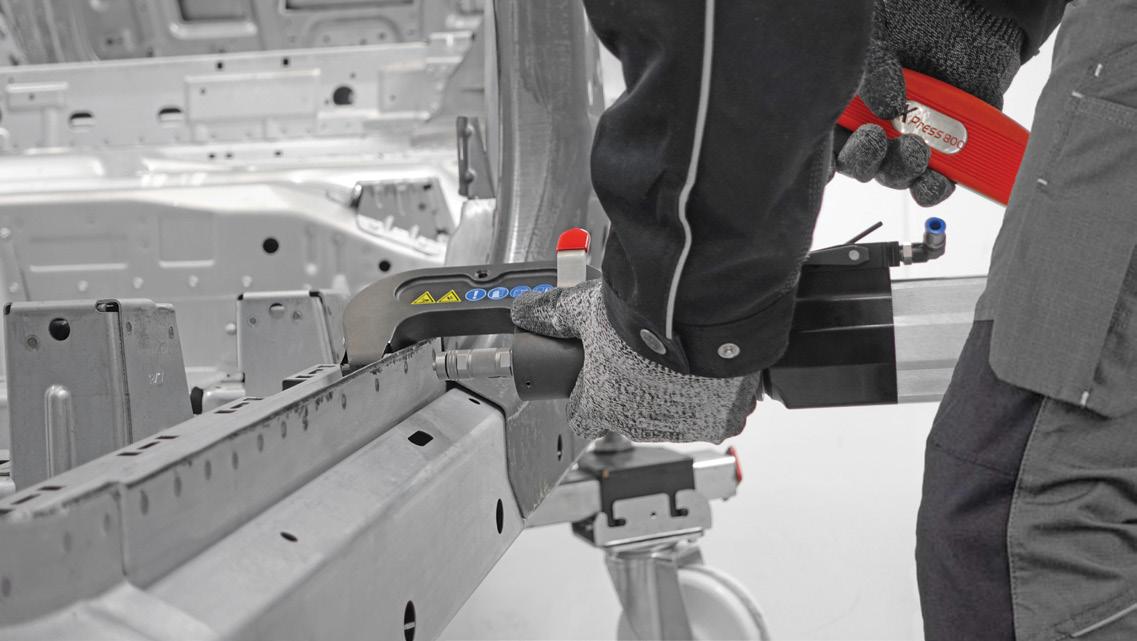
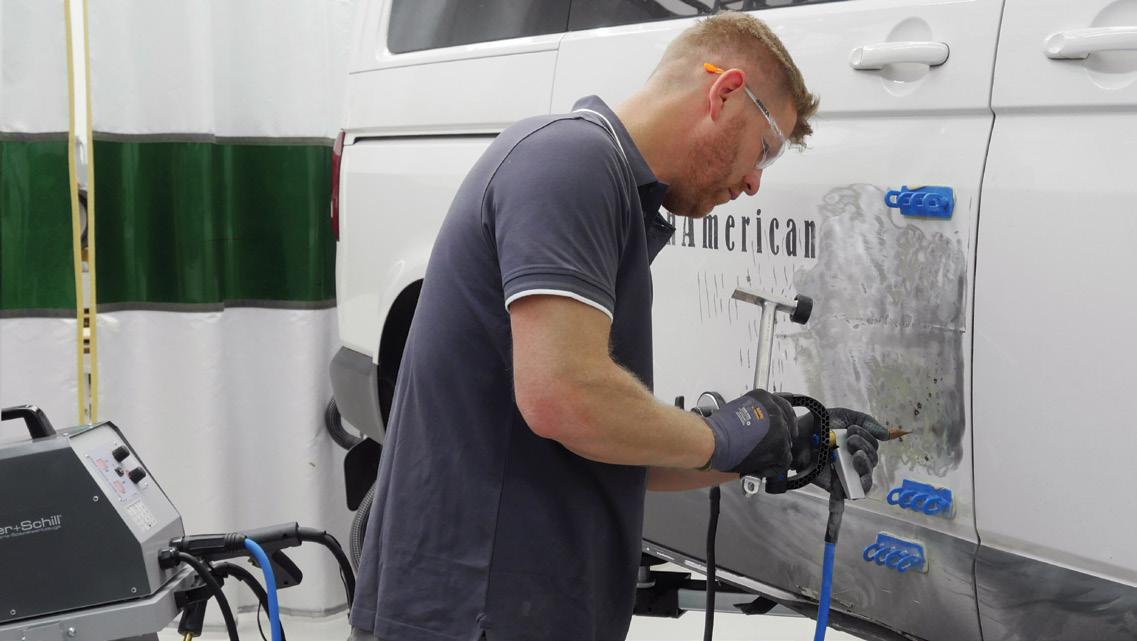
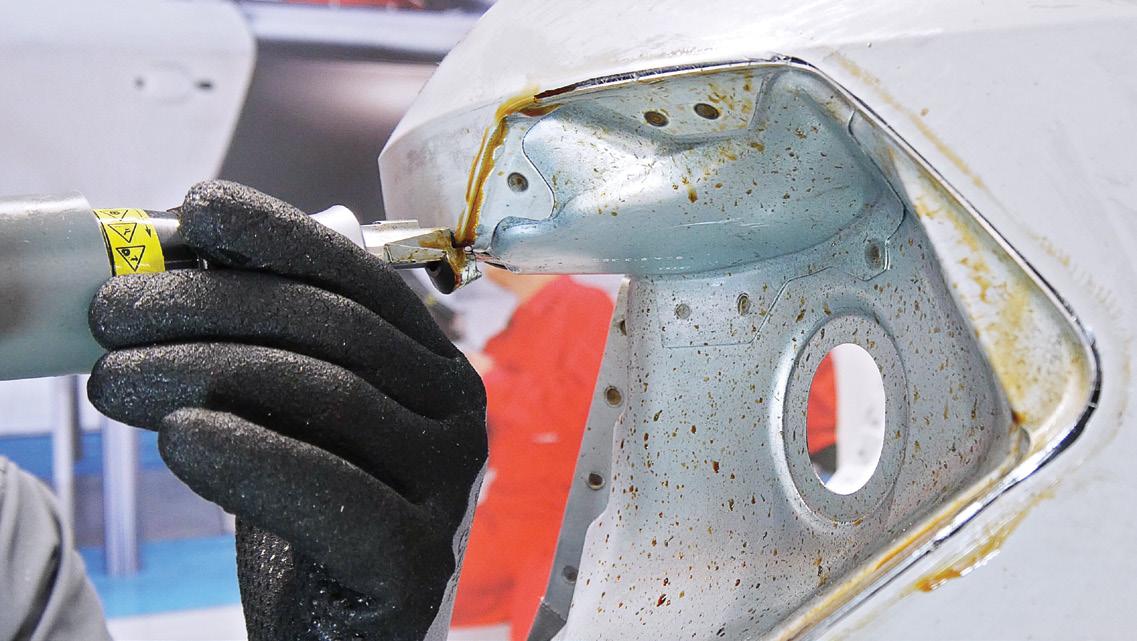
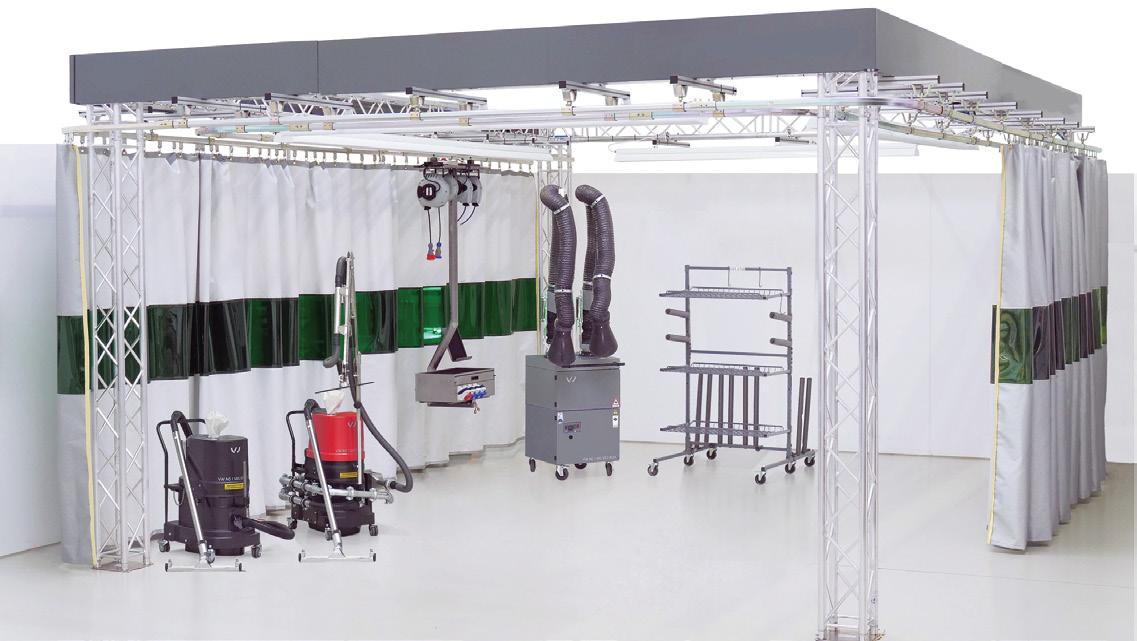
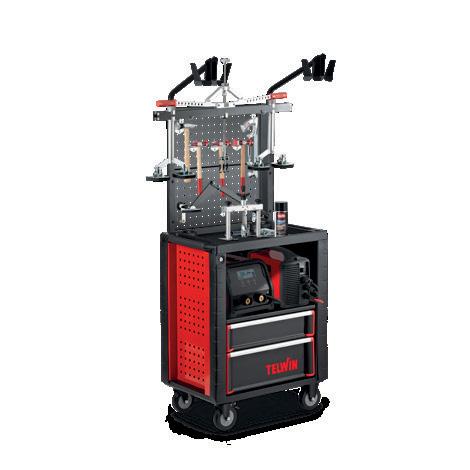
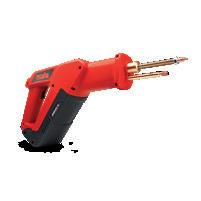
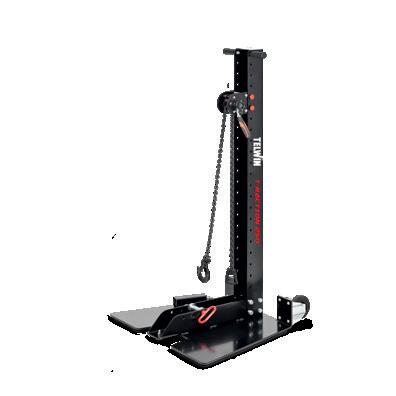
DENT PULLING AND MUCH MORE!
CIC Las Vegas Focuses on Governmental Relations and Consumer Safety
The Collision Industry Conference’s final meeting of the year took place in conjunction with SEMA in Las Vegas last month. From legislative goals to exploring business opportunities, every topic, every discussion, every takeaway was centered on making the industry a better place for the sake of the “empty chair” because protecting consumers is at the forefront of what this industry represents.
Various important points were made on the Las Vegas CIC stage, but most notably perhaps was Aaron Schulenburg’s (Society of Collision Repair Specialists) message that “a growing number of collision repairers from all over the country are voicing concerns about insurers lowering reimbursement rates for essential repair operations.” During the open mic portion, the executive director of the national collision repair association stressed that shops in every region and every state are “facing this pressure. We’re seeing a shift from prevailing competitive price to ‘reasonable rates’ without any definition of what ‘reasonable’ means. Zero documentation is being presented to repair facilities, yet somehow they have simply determined it’s enough, even though they’ve lowered these rates significantly from what they had recognized before.”
Schulenburg suggested all stakeholders need to come together “for the sake of restoring vehicle safety and for the sake of the motoring public who return to the roadways after leaving our businesses every day. The industry has to remain focused on fairness and reasonableness that actually supports and upholds safety, quality and sustainability in this industry. Consumers expect to be made whole, and they expect that every repair upholds the standards that we have addressed today to ensure that their vehicle, trust and safety are restored. It’s important that we talk about it, address it and figure out a path.”
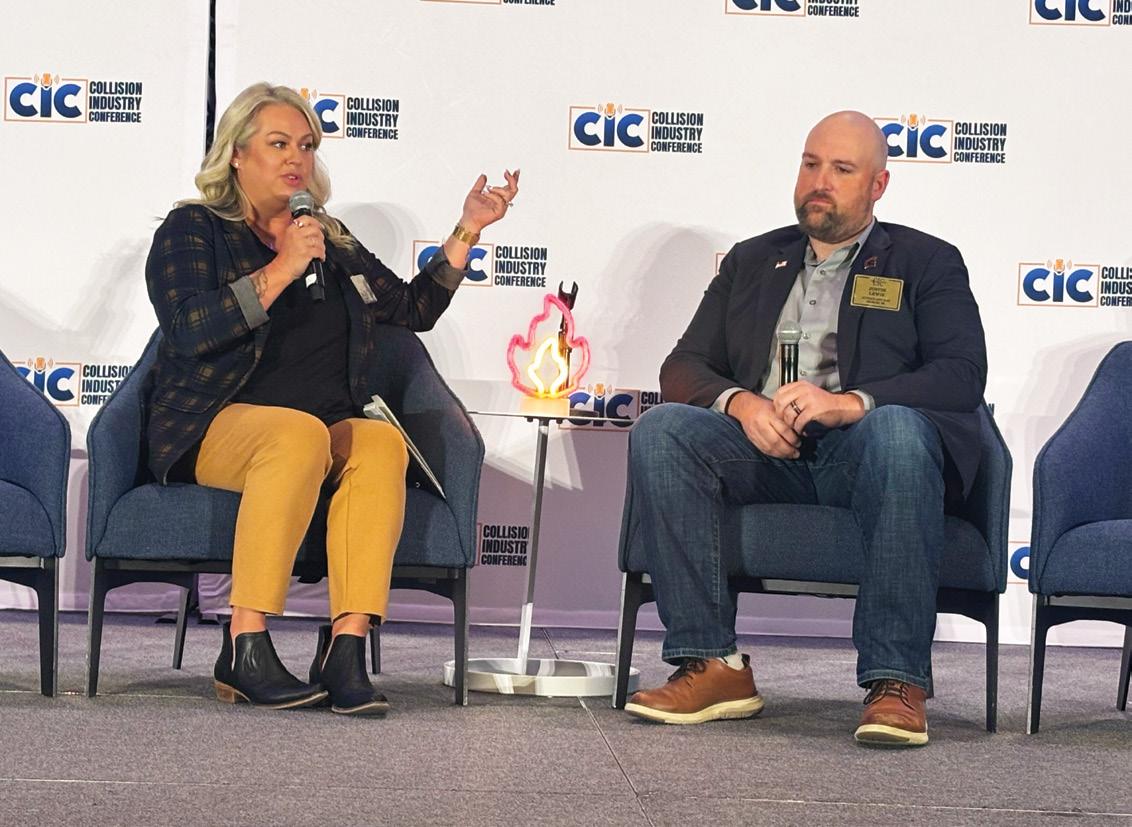
In the words of Jill Tuggle (Auto Body Association of Texas), Right to Appraisal (RTA) is a “hot topic” right now. On behalf of the Governmental Committee, the Texas association’s executive director held a “fireside” chat with Justin Lewis (Accurate Auto Body and Washington Independent Collision Repair Association) to share the processes, struggles and wins both associations experienced getting mandatory RTA legislation passed in their respective states.
As was imminent by a polling of the room, not everyone has a clear understanding of what this consumer right actually is, although it’s been a provision in insurance policies since the 1800s, Tuggle explained. As more consumers began to utilize the Appraisal Clause to recoup some out-of-pocket expenses, insurance companies started removing the clause from their policies. “We saw that trend, and we wanted to help solidify RTA for our customers,” said Lewis.
Great lobbying support was beneficial to both associations, and Tuggle stressed that grassroots efforts were a valuable tool as well.
“Reach out to your local legislators and say you’d love to speak to them about what it looks like to be a collision repairer.” It doesn’t
have to be about any current problem or legislative efforts. Taking the time to establish key relationships “lays the groundwork” for when it’s time for issues to cross their desk.
“If you do bring legislation, be very thorough. Don’t try to rush to try to get things done as it may not wind up being what’s best for consumers,” suggested Lewis.
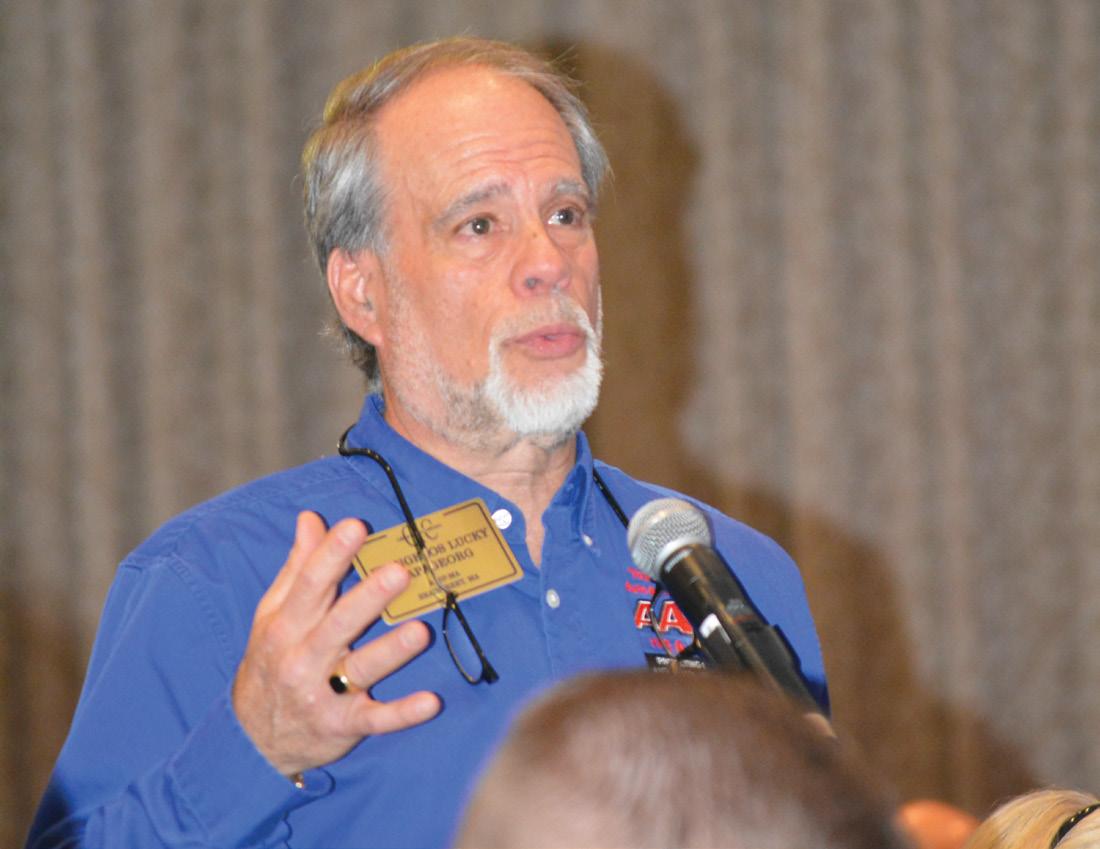
At open mic, AASP/MA Executive Director Lucky Papageorg shared the Alliance’s positive experience working with a lobbyist. “Having the right connections is really key,” he told the CIC audience about their legislative agent, Guy Glodis, a former state senator who also sat on the insurance commission. Papageorg stated feedback from legislators has been encouraging, having been told, “Don’t be afraid to come talk to us; we need to hear from you.”
The government relations theme continued with the podcaststyled “The Industry Experiment” segment, which brought Frank Cote, former chief deputy insurance commission and government affairs director for the Montana Commissioner of Securities and
Association leaders Jill Tuggle and Justin Lewis discuss legislative efforts at CIC
Lucky Papageorg speaks out during the open mic session
Insurance, to the stage to chat with segment host Schulenburg about what works and what doesn’t when it comes to consumer advocacy.
Schulenburg posed the question, “What does consumer protection really mean to the Department of Insurance?” Cote referenced his state’s insurance code which “literally says in the statute that the Montana insurance department shall interpret these laws to the benefit of the consumer. That is very clear to me that we’re not there to represent the insurance industry or the body shops or whoever. We’re there to represent the consumer.”
The main reason consumer complaints would often be denied by the Consumer Affairs Division was because “consumers don’t understand what they are fighting for,” Cote explained. As a solution, they allowed body shops to file complaints on consumers’ behalf, so “an educated person was on the other side to respond to that complaint, and that ultimately helped resolve a lot of complaints in favor of the consumer.”
Cote confirmed that insurance departments are not very educated about issues as well, and he encouraged the collision repair industry to educate them, calling it “critically important.” In the few hours he spent at CIC, he became “fascinated by some of the things discussed on these panels. I’m sitting here wondering why aren’t insurance departments people in the room? It would be beneficial to have them be invited to this program, so they can see and understand the importance of OEM repairs and those kinds of things.”
Cote didn’t even hesitate to answer “No” when Schulenburg asked the million dollar question: “Do you think consumers get the representation that they deserve in the process?” He observed negative changes over the past 20 years which finds state workers underpaid, overworked and lacking education on the issues. He referred to one deputy commissioner who “pushed the department in a way that made it more aligned with the insurance industry that’s going to take years to overcome.”
His words of advice to repair professionals is to “work within your state associations, and make sure to get a good lobbyist. Work amongst yourselves to figure out what are the biggest challenges that you’re seeing and how you can address them. It’s important that you build relationships with the insurance department and your legislature.”
The newly formed Business Operations and Management Committee made their CIC debut with the first part of a series that directly addresses collision repair facilities on how to strategically plan for the future. “You don’t want to wait until your business is in trouble and you’re worried about cash flow to make a plan on how to get out of that,” proposed Jeff Burton (Quality Collision Group) who moderated panelists Chris Chesney (Repairify), Jason “Buck” Zeise (LaMettry’s Collision; MN) and John Walcher (Focus Advisors) on how to diversify one’s business.
Subletting mechanical work is a big thing, but as Zeise suggests, “Let’s keep those dollars inside instead of sending them across the street.” He pointed to “modest growth” projections for the collision repair market of $37 billion (2024) to $42 billion in 2032 versus
by Alana Quartuccio
the “tremendous growth” on the mechanical side with $147 billion to $435 billion in 2032.
“People are keeping their cars longer, and people are fixing their cars. As collision repairers, we need to embrace some mechanical repairs and bring mechanical in-house to broaden the spectrum.”
The collision repair space doesn’t allow much opportunity for a shop owner to develop a relationship with a customer. As Chesney pointed out, it’s not common for a consumer to say “I got a guy” when it comes to the body shop. However, there are ways to develop a bond while the customer is in the shop. “Vehicles are complex, so there are a lot of things that you can do in the time that you have the vehicle in for a collision event to illustrate that there are things wrong with their vehicle, things that need to be serviced and maintained in a way that creates a relationship with them, so that you can perform some of those maintenance services without a huge capital investment in equipment.”
For those who do need to make a financial investment, Walcher suggests making a project plan. “When you’re looking at the ROIs, it isn’t the gross revenue that matters. That won’t get you your payback. It’s the net profit.”
Start making plans now for the first CIC of 2026 when the conference returns to Palm Springs, CA on January 22. For more information, visit ciclink.com
KEEP IT GENUINE
INSIST ON GENUINE GM PARTS
Contact the following dealers for all your Genuine GM Parts needs:
Boch Chevrolet
381 Boston Providence Hwy Route 1, The Automile Norwood, MA 02062
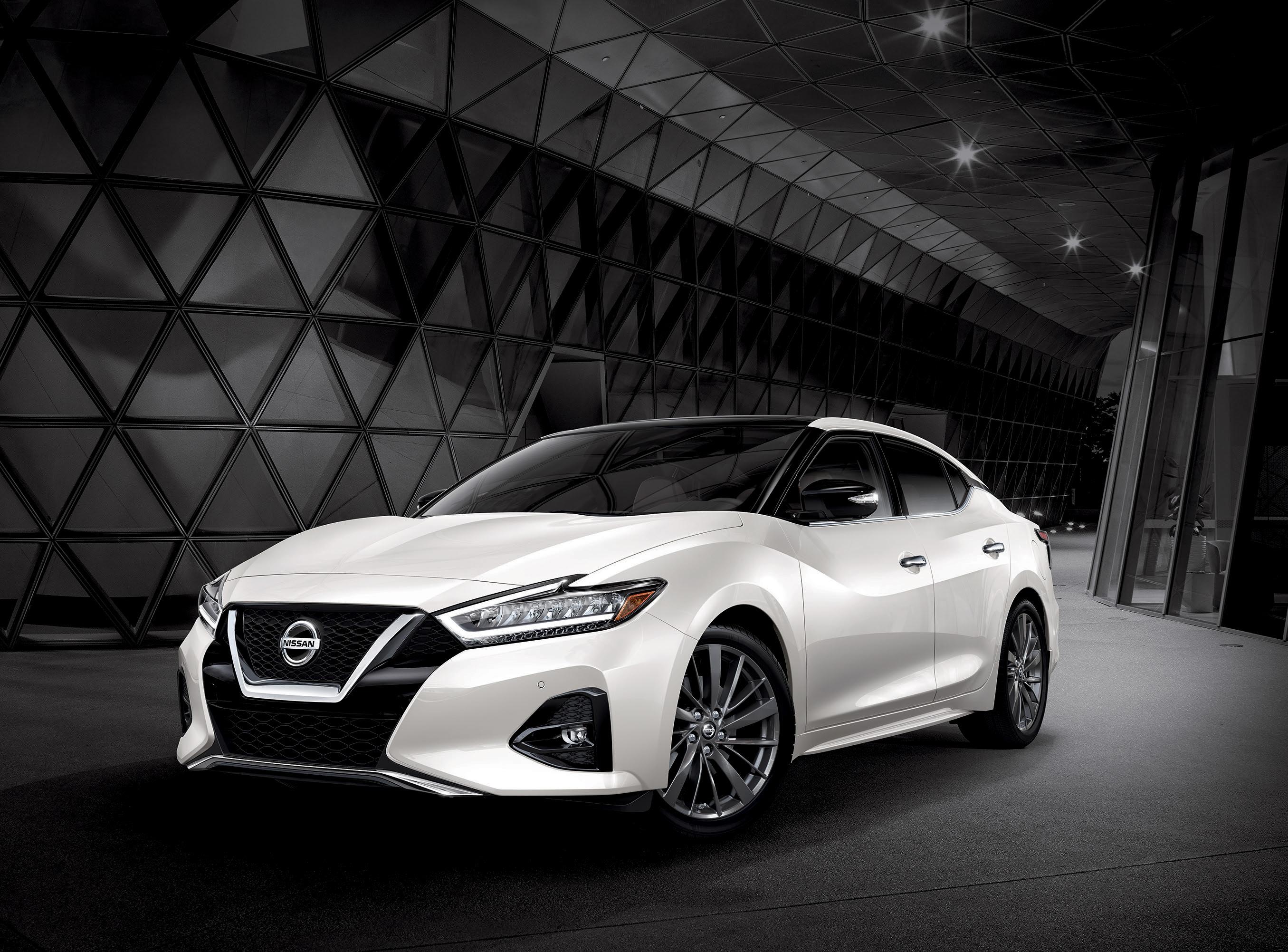
Only Genuine Nissan Parts deliver the fit, reliability, and performance to meet your shop’s collision repair needs. So keep it original, and keep it real with Genuine Nissan Parts.
Contact these Nissan dealers for all your parts needs:
Kelly Nissan of Woburn 95 Cedar Street Woburn, MA 01801
Phone: 781-835-3510
Fax: 781-835-3580
E-mail: mbosma@kellyauto.com www.kellyauto.com
Quirk Auto Dealers 115 E. Howard St. Quincy, MA 02169
Toll Free: 877-707-8475
Balise Nissan of Warwick 1350 Post Rd. Warwick, RI 02888
TOLL FREE: 800-992-6220
FAX: 800-254-3544 wparts@baliseauto.com
www.BaliseWholesaleParts.com
One Call, One Truck for 14 Brands!
Genuine Replacement Parts For
Avoid problems down the road that will cost you time, money and customers. Choose Genuine Subaru Replacement Parts, engineered to fit better today, and perform better tomorrow.
For Genuine Subaru Body Parts, contact the following Authorized Subaru Dealers:
Long Subaru
7 Sutton Rd.
Webster, MA 01570
800-982-2298
Fax: 508-879-1212
tschube@longauto.com
Balise Subaru
561 Quaker Ln.
Warwick, RI 02893
TOLL FREE: 800-992-6220
FAX: 800-254-3544
wparts@baliseauto.com
www.BaliseWholesaleParts.com
One Call, One Truck for 14 Brands!
Patrick Subaru
247 Boston Turnpike
Shrewsbury, MA 01545
508-756-8364
Fax: 508-752-3691
www.patricksubaru.com
bsuffoletto@patrickmotors.com
Collision Repair Education Resuscitating
It’s no secret that collision repair facilities have been struggling to staff their shops for years, so when industry leaders learned that Shawsheen Valley Regional Vocational Technical School (Billerica) was debating whether to eliminate its auto collision repair and refinishing program due to low enrollment, they couldn’t sit back quietly as the future of collision repair took another vicious blow.
After finding that the program was potentially on the chopping block during an advisory board meeting in October, Torque Financial Group’s Rachel James took to social media with a post encouraging students, parents, industry professionals and
members of the community to contact the school. “This program isn’t just about cars – it’s about opportunity, community and providing a pathway to success for students who thrive through hands-on learning,” she wrote. “The auto body program has helped countless students discover their talents, build confidence and develop real-world skills that lead directly to stable, high-paying careers.
“With a national shortage of skilled tradespeople, cutting this program would take away one of the few remaining pipelines into an industry that desperately needs young talent,” she continued,
by Chasidy Rae Sisk
pointing out that “our trades programs are not ‘nice to have’ – they are essential. They serve students who might not see themselves in a four-year college, and they give them a reason to stay engaged in school. For many, it’s the first time they feel seen, capable and proud of their work.”
Her rallying cry generated its desired effects; dozens of students and collision repairers gathered at the school on October 28 to emphasize the importance of the program before the school’s committee cast a vote, and those voices were heard loud and clear – Shawsheen voted to retain the program!
“We’re proud to share that the auto body program at Shawsheen Tech is staying!” Anchor Auto Body (Woburn) announced the victory on Facebook the following morning. “Auto body education is the foundation of our trade’s future, and preserving it means more opportunities for the next generation of skilled technicians. This victory proves what can happen when a community stands united – but it’s only the beginning. There’s still a lot of work ahead to strengthen and modernize the program, support students and ensure they have the tools and training needed to succeed in today’s industry. We’ll continue to do our part – advocating, volunteering and lending our hands where they’re needed most. Let’s keep pushing forward together!”
“We will certainly need [the industry’s] help to improve the program and help enrollment in the coming months,” James agreed.
This isn’t the first time that a Massachusetts vo-tech school came close to losing its auto body program. Several years ago, Northeast Metropolitan Technical Vocational School faced similar enrollment challenges in their auto body program which was saved through industry engagement…and the good fortune of having an administration that was supportive of efforts to keep the program alive. As of 2020, South Shore Regional Vocational Technical High School (Hanover) decided to phase out its collision repair program with the intention of combining it with the automotive program; however, a review of the program’s webpage (southshore.tech/ automotive) shows a course list focused on mechanical work, with no listed classes specifically geared toward auto body.
Although schools often face challenges related to low enrollment in their auto body programs, there’s a definitive need for more technicians in the field.
According to the TechForce Foundation’s 2024 Supply and Demand Report, “For 2023, the [collision] sector added nearly 16,000 additional employees, equating to a very strong gain of 10.4 percent.” The report predicted that the industry will need over 100,000 new technicians between 2024 and 2028, yet supply is not keeping pace. After reporting yearly decreases in the number of students completing their collision degrees since 2014, TechForce Foundation reported a small increase in post-secondary collision completions in 2023 for the second year in a row, though the number of newly-graduated technicians (4,783) fell far short of the industry’s demand for 26,000 new technicians in 2024.
The struggle to hire new technicians seems to be particularly
pervasive in the New England market. Although CRASH Network recently reported that the US collision repair industry has largely recovered from the pandemic, employing 6,000 more workers than its previous historic high of 245,000 in the first quarter of 2020, this trend is not consistent in every state.
While 31 states now boast more collision industry employees, data from the US Bureau of Labor Statistics reveals a reduced collision employee count in the remaining states. Of the six states with the largest reductions, half of them are located in New England. “Vermont, not a large state to begin with, had almost 12 percent fewer auto body employees in December 2024 than it had in February of 2020,” the article indicates, noting that New Hampshire is down around 10 percent, while “Massachusetts remained almost nine percent smaller in terms of employees.”
But it’s not like Commonwealth shops aren’t trying to hire more technicians and grow the workforce! Results from the New England Automotive Report 2024 Industry Survey (grecopublishing.com/near0225coverstory) revealed that 55 percent of respondents indicated that their youngest employee is between 18 and 25 years of age, proving there is a place for the next generation of collision repairers; however, many shops are missing a golden opportunity to staff their facilities as only 37 percent are seeking technicians from local vocational schools.
Even fewer shops are actively involved in supporting those programs, and failing to engage with the schools can prevent collision businesses from recognizing the talent available at their fingertips.
“Local shops are consistently seeking new talent and are eager to hire capable students,” says David Lelievre, collision instructor at Montachusett Regional Vocational Technical High School (Fitchburg). But there’s some give and take. In order to graduate students with the right entry-level skills, schools need feedback from shops on exactly what skills are most important, and those same shops are likely to have the first pick of those new technicians. “Local shops that join our advisory board provide valuable suggestions on our curriculum, equipment and new technology we should be teaching. Our advisory board members are also the first to meet our students for potential hiring opportunities.”
“Our advisory board is vital in shaping our program’s curriculum,” agrees Bob MacGregor, department head of collision repair and refinishing at Northeast Metropolitan Regional Vocational School in Wakefield. “We have a really supportive and active group of collision professionals on the board that provide tool recommendations and keep us informed of industry changes and trends, so we know about the latest tools, equipment and processes that students are going to need to learn. That feedback helps us understand what type of support we should be asking for when we apply for grants.”
Industry support is the cornerstone to any successful collision continued on pg. 30
continued from pg. 29
repair education program, but improving enrollment numbers stretches beyond simply showing up for advisory committee meetings – collision programs need support from industry professionals who are truly engaged and willing to show up in a variety of ways. Many challenges plague collision programs, including funding concerns, so donations of used parts, tools and supplies can go a long way toward helping instructors prepare their students for the workforce.
“We are fortunate to have a well-equipped shop and recently had some big renovations done; however, we still face challenges, including a lack of space and an insufficient number of instructors for the large number of students we have,” Lelievre acknowledges. Fortunately, the school has received a lot of “industry support from companies such as the Collision Repair Education Foundation (CREF), LKQ, MAPFRE Insurance, SEM and other industry partners.”
MacGregor has also been lucky to have a “really supportive” school that funds the program as well as can be expected. “We also have an active grant writer who is excellent at finding additional funds through CREF and other organizations to help us improve the program. We get a ton of supplies through CREF, but additional donations are always helpful. We use a lot of consumable products, especially with our exploratory students, so donations of paint and parts are always welcome.”
It’s also incredibly helpful when industry professionals invest their time and energy into the programs by volunteering to do presentations. “It’s like being a parent; I can tell my students something until I’m blue in the face, but when someone else comes in and tells them the same thing, they’re more likely to actually listen and absorb the information,” MacGregor shares. “It really reinforces the message, plus it gives students a chance to interact with the shops that need new talent and allows them to connect with the industry in a new, exciting way.”
Creating an exciting learning environment can make all the difference in a student’s path to a collision career, and it’s often the most effective way of combatting the negative stereotypes about the
GENUINE GENESIS PARTS.
Contact us for all your Genesis parts needs!
GENESIS OF WEST WARWICK
405 Quaker Lane
West Warwick, RI 02893
TOLL FREE: 800-992-6220
FAX: 800-254-3544
wparts@baliseauto.com
www.BaliseWholesaleParts.com
industry.
“Collision repair is still seen as a dirty trade that requires a lot of hard work,” MacGregor observes. “That perception isn’t changing fast enough, so we have to do what we can to help students see the positive aspects of a collision career. The kids who like cars and see the artistic side of repair are passionate about it and more likely to stick with it; my job is to help them find that passion.”
“We strive to create a fun, safe and fast-paced learning environment,” Lelievre concurs, explaining that luring students to the program begins with “freshman recruitment, which is the cornerstone of our program. Our one-week exploration initiative keeps students actively engaged with projects related to the collision repair industry. To ensure manageable group sizes, students are divided into three smaller groups, each working on different projects. After completing a safety program to familiarize themselves with tools and equipment, students undertake three tasks throughout the week: a welding project, a metal shaping and welding project and a custom paint design project.”
Northeast Metropolitan has a similar exploratory program for freshmen. “During our five-day program, we try to fill the time with as many real-world activities as possible. We start with identifying damage and writing estimates on the first day, and the next day, we take cars apart and put them back together. On the third day, exploratory students sand parts, and we split them into groups on Thursday and Friday to allow them to suit up and paint. Each student gets to airbrush designs on a license plate that they can take home, and that seems to really get a lot of them excited about the idea of working on cars. It’s a busy week, but it provides a pretty comprehensive overview of what the job is really like while having some fun. Most students seem to enjoy the experience, and it has been a successful way of inspiring students with the desire to pursue a collision education.”
It’s important, though, for shops hiring recent graduates to remember that those new technicians are still developing their knowledge and skills; Rome wasn’t built in a day after all, and neither is an A-tech!
“Shops that hire students need to realise that the students are entry-level and are still learning,” Lelievre offers a reminder. “We have found that the shops that have the most success with our students have a mentoring program and/or an incentive program to train and retain new employees.”
Although there may be some training involved, there’s a significant benefit to hiring these entry-level technicians. “These young motivated students are starting out with entry-level training and skills, and though they may not be as experienced as more seasoned techs, they are more open to learning and growing,” MacGregor points out. “Different shops may have different methods of reaching the same outcome, and it’s much easier to train a young mind to do things your way compared to a more experienced technician who may be reluctant to change their ways.”
continued on pg. 42
Sean G. Preston, Esq
2025 Coverall Law Year in Review: Scaling Strategy, Strengthening Shops
At the end of 2024, something important happened. The program Coverall Law had been working on for 18 months – the Forever Forms – started showing real results. Shops were no longer just asking for payment. They were starting to change how things worked with insurance companies.
One big moment came when seven shops in Massachusetts all ran into the same problem. A certain insurance company refused to pay the full repair bill. But because the shops were using the Forever Forms, Coverall Law was able to take each case in a different direction. We tried different legal rules, different strategies and looked at how fast and easy each path was for the shop. This helped us figure out what worked best.
These cases showed how powerful and flexible the Forever Forms really are. It was a turning point – not just for the shops, but for Coverall Law too. We decided it was time to go all in on representing collision repair shops only. That meant we stopped taking cases from individuals, tow companies and anyone else outside the industry. With this new focus, we had more time and energy to build better tools and bigger solutions for the shops we serve.
What We Built in 2025: Tools, Teams, and Territory
After shifting our focus entirely to serving collision repair shops, Coverall Law was able to move faster and build smarter. With new time and energy, we used 2025 to create real tools, grow our team and bring the Forever Forms to new places. It was a year of growth – but growth with a purpose: to make it easier for shops to get paid fairly and legally for the work they do every day.
Launching the Litigation CORPS
The first major project of the year was the creation of the Litigation CORPS, which officially launched in July 2025. CORPS stands for Coordination of Outside Representation for
Protection and Strategy. It’s a network of law firms trained by Coverall Law to take on collision repair cases using the Forever Forms and our broader industry experience and legal strategy. These firms take the lead in court, but Coverall Law stays on each case as co-counsel. That way, the legal work stays aligned with the industry-wide changes we’re pushing toward, and shops stay supported from start to finish.
The CORPS gives us the ability to scale. We can now help more shops, in more places, without lowering our standards. The first major CORPS case is an important one: a direct challenge to get a shop paid its posted labor rate. That case sets the tone for how we’re using the CORPS – to go after key legal issues that impact everyone, not just one shop at a time. Today, we have about a dozen attorneys across multiple firms (and even one out of state) in the CORPS, and we’re actively recruiting more. When a case is handed off to a CORPS firm, Coverall Law provides sample documents and strategy support while also helping with any communication the shop needs.
Building the Coverall Law Platform
With our work now fully focused on the collision repair industry, we had a unique opportunity to ask: What else can we build that helps shops? The answer was the Coverall Law Platform This is a private, members-only site where shops can log in anytime to ask questions, access training and get real answers from our legal team. It’s built specifically to support Forever Forms users and help them apply the tools correctly and confidently.
The platform includes guidance on how to talk to customers, how to handle insurer pushback and how to make sure invoices hold up in court. We also host monthly live events and share legal updates so that our members stay ahead of changes in the industry. One of the biggest things the platform does is show shops they’re not alone. For years, many shop owners have felt like they were the
only one facing these battles. The platform proves that these are shared problems – and that we can solve them together. Right now, about 95 percent of our Forever Forms members are active on the platform. It’s become the place where problems get identified faster and solutions get built quicker.
Growing the Team
As our tools expanded, our team needed to grow with them. At the end of 2024, Coverall Law welcomed Attorney Steve Goldstein, a seasoned litigator with 40 years of courtroom experience and 25 years working with some of the most respected collision repair shops in New York. Steve has been a tremendous asset – not just in litigation, but as a mentor to our younger associates.
In the summer of 2025, we placed one of our junior associates inside a top CORPS firm to gain firsthand litigation experience. That associate now works closely with the CORPS attorneys while continuing to support Forever Forms members. This placement helps ensure that our members have dedicated support in their corner, whenever the Litigation CORPS is called into action in Massachusetts.
We also added a legal researcher last summer. That immediately allowed us to start developing the Forever Forms for other states. This investment in research and development marked the beginning of Coverall Law’s national expansion.
Expanding the Forever Forms – and Our Reach
Our research team’s first project was tackling one of the toughest legal environments in the country: California. In just a few months, we had a proposed version of the Forever Forms ready for use in that state. The new forms took into account the California Bureau of Automotive Repair regulations: strict rules on compliance and documentation. The forms had to be precise, usable for shops and gentle on customers – and that’s what we delivered.
The fourth quarter of 2025 has been about launching the Forever Forms in Tennessee, where interest grew fast after an educational event at the 2025 Music City Collision Conference in Nashville. We’re proud to say that 10 shops in Tennessee are now signed up for the Forever Forms, which were delivered in November 2025 with the same goals of protection, payment and increased throughput.
With California and Tennessee launched, we’ve turned our attention to several other states. Where we go next likely depends on legal opportunity, shop readiness and whether we’ve got a CORPS attorney in place to take on cases.
By the end of 2025, Coverall Law had gone from serving one state to creating the beginning blueprint of a national legal support system for repair shops. And we’re just getting started!
Looking Ahead: Strategy, Litigation and Certified Pricing
After a year of building, testing and expanding, Coverall
You’ve got the right tools, staff, technology and procedures to give your customers the best repair possible. The missing piece of the puzzle? Genuine Volkswagen Collision Parts. Contact an authorized dealer today and find your perfect fit.
Mattie Volkswagen 80 William S. Canning Blvd. Fall River, MA 02771
800-678-0914
fax: 508-730-1283
Lia Volkswagen 140 Elm Street Enfield, CT 06083
860-698-6890
fax: 860-265-7840 www.liavw.com
Volkswagen of Hartford 133 Leibert Road Hartford, CT 06120
Direct Parts: 860-543-6012 fax: 860-728-4408 email: ebautista@vwofhartford.com
Balise Volkswagen 525 Quaker Ln. West Warwick, RI 02893
Mastria Volkwagen 1619 New State Highway Raynham, MA 02767
Toll Free: 888-581-1146
Direct Parts: 508-802-9955 fax: 508-802-9966
email: vwparts@mastria.com www.mastriavw.com Wholesale Parts
PRESENTS
Join Reliable Automotive Equipment’s Dave Gruskos for conversations with industry leaders sharing their insights and the latest from the world of certified collision repair. This month, Dave talks with Mark Allen, manager of Collision, Equipment and EV after sales service at Audi of America.
Certified Collision Repair Q&A With: MARK ALLEN AUDI OF AMERICA
Dave Gruskos: How does Audi recommend shops best approach how they prioritize the investment in tools, equipment or facility upgrades needed to maintain certification and repair to OEM standards?
Mark Allen: Shops need to look at the ROI every time they look at a piece of equipment. They should look to see whether they have future intention of getting onto a program. If I have to invest in a welder, for example, and I’m going to look at becoming Audi, and that may happen, then I want to look at the welder that is required by the program. Some of the programs are not specific; others have certain specifications. If you’re going to one company that only gives you specifics, you can look and see if it fits those specifications, and whether it will fit in a future attempt to get on the program. And you’d do that for every auto manufacturer that you want to serve. Now, it takes homework, and people like Mike Anderson and Collision Advice and others out there are pretty sharp at helping people walk through this. The other thing is knowing how to future-proof yourself when ordering new equipment. Are you using appropriate accounting principles to write off the welder in a short enough time to save money in buying the next welder? Cleanliness and servicing is a way to extend the life of equipment, but accounting principle is how you plan for future investment.
D.G.: A recent press release from the manufacturer noted a strong demand continues for Audi electric vehicle production. On the aftersales side, what guidance do Audi Certified collision centers receive to help them navigate the constantly increasing complexities of EV repair?
M.A.: The standard is to take it to a dealer. We make everyone take high voltage awareness. which advises them on how to recognize whether a vehicle is an EV of some sort, whether it’s a full-on electric or a plug-in hybrid electric vehicle (PHEV) or any of the others, in an effort to build a deeper awareness.
ABOUT THE PROGRAM
Total # of Audi Authorized Collision Repair Facilities: 209
*An additional 41 facilities are currently undergoing the process to become certified.
# of Independent locations: 154 84 Ultra Certified; 70 Hybrid Certified Ultra Certified: Can work on vehicles with advanced materials, such as carbon fiber.
Hybrid Certified: Can work on vehicles constructed with high-strength steel, steel and aluminum.
If you’re not at Audi authorized shop, however, and you’re not a high voltage technician, put your hands in your pockets and walk away from the car. Drive it over to the dealer and have them do the high voltage work, or have the dealer send someone over, and then, get everything out of the way, where it’s safe and de-energized, and then do your work.
D.G.: In your opinion, how does the adherence to OEMrequired equipment and tooling practices, combined with manufacturer-required procedures, contribute to a quality repair?
M.A.: The OEM-required procedures have been crash tested. When you see a several-hundred-thousand-dollar Lamborghini Quattrovalvole run into a wall and rebuilt, it makes your heart hurt. But doing that gives you a repeatable outcome. Just follow the procedure. We’ve even gone so far as to publish a book where we explicitly call out what to do and not to do. No pulling, for example. Do not cut.
If the repair that was done in the John Eagle case was followed that way, there’s a much better chance that the Seebachans may not have been injured, or injured as badly. As a shop, following procedures gives you a level of legal protection, as well. If you do exactly what the OEM said, following the methodology with their products, it puts the onus back on the auto manufacturer, and the independent repairer has a legal leg to stand on.
Mark Allen Audi of America
continued from pg. 33
Law is now looking ahead with sharper focus than ever before. In 2026, shops can expect to see not just more tools – but bigger legal outcomes that support lasting change. One of our core mission objectives remains clear: help shops get paid fairly, defend that payment in court and create a system where insurers can no longer dodge and delay responsibility. We believe in winning the right fights – and now we’re building the kind of cases that can move the whole industry forward.
Narrow Litigation, Broad Impact
In the coming year, the first results of our strategic litigation will begin to emerge from court. These cases are designed to be narrow – each one focusing on just a single legal issue. But together, they build a larger legal framework that helps answer the three biggest questions shops face: What do we get paid for? How much do we get paid? And how do we enforce it?
We’ve already started laying the foundation. Nearly all of the seven test cases from 2024 – the ones that challenged a major insurer’s refusal to pay full invoices – have resolved in the shop’s favor. One of those cases, in particular, has become the model for our strategic litigation going forward. It tests core tools inside the Forever Forms and shows courts exactly why these documents matter.
These are not one-off wins. They are part of a deliberate strategy to educate judges, build case law and create new legal standards that other states can follow. As we continue to grow the Litigation CORPS and expand into new regions, this model will scale. Strategic litigation in Massachusetts is just the beginning.
Courts Are Listening
As we bring more of these cases into the courtroom, judges are beginning to take notice. We are seeing courts ask better questions. They’re becoming more familiar with the language of collision repair. They’re starting to understand why shops need to follow OEM procedures, why posted rates matter and why delay tactics from insurers cause real harm.
Coverall Law’s growing presence in the courts is helping shift the conversation. We’re not just arguing for one shop – we’re explaining how the system works, why it breaks and what needs to change. And courts are starting to listen.
Certifying Fair Pricing for Shops
One of the biggest projects on the horizon is the development of a certified pricing model. This is a new tool that will give shops a strong legal foundation for the rates they charge. Our team accountant, working with an outside consultant, is helping us build a method to formally support a shop’s pricing in court. The tool will take into account posted labor rates, material costs, overhead and market factors – giving each shop a way to show why their prices are fair and fully reimbursable.
This matters because not all shops are the same. Some invest heavily in training and equipment. Others take on more complex repairs or operate in higher-cost areas. This pricing tool will recognize those differences and allow shops to stand behind their invoices with confidence.
Once completed, the pricing certification tool will become a major piece of the Forever Forms system. It will help shops prove
what their work is worth – and give judges something clear and credible to rely on when making decisions.
A Model for the Nation
Everything we’re building – from litigation strategy to pricing tools to state-specific forms – is designed to work state by state, but also to scale across the country. What we prove in Massachusetts, Tennessee and California today will help shops in other states tomorrow.
By keeping our legal actions focused and well-documented, we make it easier for courts to say “yes” to fair compensation. And by staying involved in every case – especially when a CORPS attorney is leading the charge – Coverall Law continues to shape the legal playbook for the industry.
As we move into 2026, we’re laying the groundwork for how collision repair law should work everywhere.
Conclusion: Built for the Long Road Ahead
In just one year, Coverall Law has gone from testing strategies in one state to building a national foundation for change. What began as a bold idea – that collision repair shops could protect themselves and get paid fairly through better legal tools – is now a working system. The Forever Forms are no longer just documents. They’re a full framework. And the shops using them aren’t just defending invoices. They’re part of a legal movement.
With the launch of the Coverall Law platform, the creation of the Litigation CORPS, the expansion into other states and the groundwork laid for pricing certification, 2025 wasn’t about one big win. It was about building something sustainable. Something that will outlast a single case, a single shop or even a single insurer strategy. We’ve proven that focused legal action – when paired with training, support and shared knowledge – can reshape the rules of the game.
As we look ahead to 2026, we’re staying true to what works: narrow litigation, broad impact and strong partnerships with the shops we serve. The courts are beginning to understand the industry. The legal tools are getting sharper. And the shops are more connected and confident than ever before.
Coverall Law was built for this industry – and now it’s helping build the legal system that this industry has desperately needed for decades.
Coverall Law Managing Attorney Sean Preston finished in the top of his law school class at the historic Howard University School of Law in Washington, DC after serving in the United States Army. He went on to excel in business and legal strategy, serving some of the world's most recognizable brands in neighboring industries. Sean recently returned from Berlin, Germany with his family (where he served in Rolls-Royce's General Counsel function) and today resides in Wareham, MA, where he helps to oversee and meaningfully lead efforts in the region for Coverall Law. He can be reached at (508) 635-5329 or via email at spreston@coveralllaw.com.
Telwin Receives RIVIAN Approval
Rivian, a manufacturer of passenger and commercial electric vehicles, has recently approved the Telwin SpA Inverspotter 14000 Smart Aqua Squeeze Type Resistance Welder for structural repairs on its passenger and fleet delivery vehicles. With this approval, the 14000 welders can be used throughout Rivian’s quickly expanding global network of Certified Collision Centers.
“We are proud that Telwin’s Welding Technologies have met the engineering welding requirements set by Rivian,” said Telwin SpA Chief Executive Officer Stefano Spillere. “As we continue to grow in the global market, this approval strengthens our North America offerings.”
The Made-in Telwin technology Smart Autoset allows automatic detection of material and thickness not relying on manual settings or reference tables. Its up to 15,000 amp capabilities allows proper welds every time.
Additionally, the Telwin Technomig 243 Wave three-torch welder has met the specifications set by Rivian and will be offered as an option to the Certified Collision Network as a MIG/MAG welding solution.
Rivian Certified locations have been specifically chosen for their expertise in proper repairs of Rivian vehicles and providing best-in-class collision repair. Rivian Certified Collision Centers must
meet specific training, tooling, and facility requirements to assure that Rivian collision repairs are performed to OEM standards. With the number of people driving Rivian vehicles expanding by the day, Rivian encourages repair centers to join the Rivian Certified Collision Network of repairers. The first step in that process is to submit an application at https://usa.itascore.com/rivian.
About Telwin SpA: For over 60 years Telwin has been a worldwide leader in the manufacturing of welding machines, cutting systems, battery chargers, and starters based in Italy. Telwin is present on all five continents, on over 120 markets with a range of products that, for variety and richness, has no equal on any market; products tailored to all production fields, from the automotive to industry, from the building sector to shipyards, from all professional divisions to DiY. Telwin means state-of-the-art, innovative and technologically advanced solutions, aimed at improving productivity, optimizing intervention times, minimizing operative costs and always guaranteeing excellent performance under any operative condition. For more information, visit telwin.com or contact: Timothy Morgan at t.morgan@telwin.com.
WHY GENUINE PARTS?
IRA Toyota of Manchester
33 Auto Center Road
Manchester, NH 03103
Toll Free: 800-828-6076
Direct: 603-657-2410
Fax: 603-657-2419
stirrell@iramotorgroup.com www.iramotorgroup.com
IRA Toyota Danvers
161 Andover Street
Danvers, MA 01923
PH: 800-774-8411 ext.1
Direct: 978-739-8306
FAX: 978-739-8098
www.iramotorgroup.com
Grieco Toyota 415 Taunton Ave.
East Providence, RI 02914
Direct: 401-438-2206
Fax: 401-431-0673
toyotaparts@griecocars.com www.griecotoyota.com
Wellesley Toyota 216 Worcester Street
Wellesley, MA 02481
PH: 800-734-0006
Direct: 781-237-4042
FAX: 781-237-3481
parts@wellesleytoyota.com www.wellesleytoyota.com
Bernardi Toyota 1626 Worcester Road
Framingham, MA 01702
Parts Direct: 800-247-3033
FAX: 508-879-7895 www.bernarditoyota.com
Balise Toyota 1399 Riverdale St. West Springfield, MA 01089
Investing the time and energy into these new hires is vital to the industry’s future as experienced technicians age out, which will create even more job openings in the near future, but a large hurdle to attracting and retaining these young technicians in Massachusetts often presents itself in the form of their paychecks. According to NEAR’s 2024 Industry Survey, 40 percent of respondents are paying their lowest-level employee less than $35,000 annually. In comparison, an Amazon warehouse worker in Massachusetts earns over $47,000 on average.
“Entry-level pay isn’t as high in collision repair as in some of the other trades,” MacGregor laments, admitting that the gap in compensation may cause some students to defect to other opportunities. “Something has to change,” he insists, and Massachusetts shops agree. AASP/MA has been advocating for a fair labor rate for years, and association leaders are hopeful that change is coming as the Auto Body Labor Rate Advisory Board (ABLRAB) prepares recommendations that are due at the end of the month (recap of October’s ABLRAB meeting on page 14).
Still, MacGregor is convinced that there are plenty of great opportunities in the field for those with the drive and determination to stick with it, and employers may have more success in retaining young technicians if they’re willing to highlight the opportunities that exist. “Reassuring employees that there’s a way to grow and move up the ladder is important, especially when their starting pay is comparatively low. In addition to establishing clear expectations in their current position, develop a clear career path so they understand the earning potential and are motivated to advance. But you can’t just keep dangling the carrot; there needs to be follow through so they recognize the rewards of their efforts. Collision repair may not be the most glamorous job in the world, but for those who enjoy it, it’s a great career!”