Paths towards Circular Economy
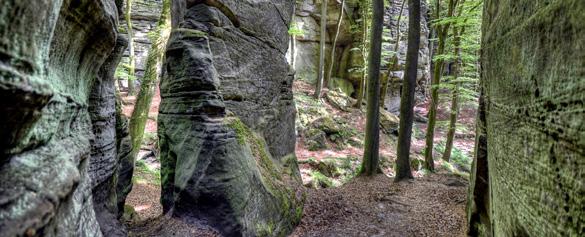
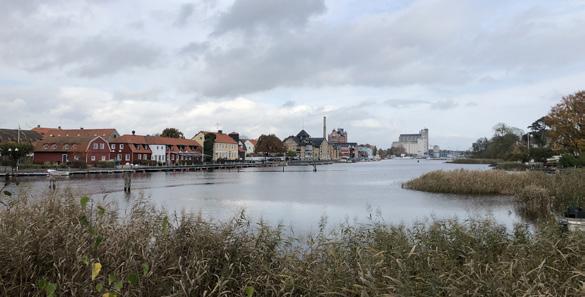
– inspirational examples from three European countries This booklet was produced within the transnational leader cooperation project CIRCLE. Partners: Finland: Kantri ry Leader Luxembourg: LEADER Regioun Mëllerdall and Natur- & Geopark Mëllerdall Sweden: LEADER Sydöstra Skåne and Skånes Ess
Content
What is Circular economy? 4-5
RambornCider production revitalises local economy and wildlife
6-9
Non-profit stakeholder Hello, Elin Bergman! 10-11
NextiiliTextile sorting for the future
Tryde 1303 -
12-15
Mondo del Caffè -
It takes a world (and recyclable packaging) to make great coffee 22-25
Public stakeholder
Youth taking environmental action through entrepreneurship 26-27
GårdsfiskBreeding the planet’s most sustainable fish
Welcoming guests to a sustainable stay 16-19
Sustainable solutions seen in the Circle project
20-21
28-31
Cireco FinlandCircular construction consultants reshaping industry 32-35
Private stakeholder Sustainability for a fact
36-37
The CIRCLE project 38-39
.................................
...............
......................
............................
........................
2
Introduction
In these days of gloomy headlines and reports of climate emergency and declining biodiver sity from around the world, it’s easy to feel discouraged. What will the future hold for us and coming generations? While the challenges that lie ahead are massive, there are people all across the planet taking matters into their own hands, becoming part of a transition of society and economy to a sustainable and circular one.
This booklet is our effort to bring some of the individuals, businesses and organisations that constitute the transition to light. To let them share their insights and recipes for an alter nate path forward, where economic activities are guided by innovative and environmentally beneficial principles and a social responsibil ity, with positive repercussions for local and rural communities.
The cases and individuals portrayed in the booklet have all but one participated in the transnational cooperation project CIRCLE, an
initiative within the EU’s Leader framework.
Four different Leader regions from Finland, Luxembourg and Sweden came together to spark interest in circular economy and pro mote cooperation and networking between local businesses - as well as across borders in Europe.
We hope that the examples we have chosen to highlight will serve as an inspiration for enterprises, lawmakers and officials who want to be part of facilitating and creating a wastefree, regenerative future where people, planet and businesses thrive.
Sincerely, Erik Rosenblad, Project Coordinator
and Kantri ry Leader, LEADER Regioun Mëller dall and Natur- & Geopark Mëllerdall, LEADER Sydöstra Skåne and Skånes Ess
3
What is Circular economy?
In our present linear economy, raw materials are extracted from the surface of the Earth, manufactured into products, and most often these products and valuable resources end up discarded as waste.
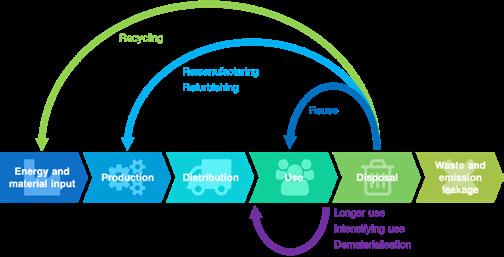
A circular economy is an economic sys tem that breaks from the linearity of the “take-make-dispose” model for growth. It promotes solutions that allows the flow of biological materials to be reintegrated into the biosphere, and technical materials to be recirculated without entering the biosphere. In other words – it aims to close the material loops and flows of our society.
In a circular economy we optimise the use of natural resources, minimising environmental impact, transforming production processes, consumption patterns and supply chains in order to make them intentionally restora tive and regenerative. What this suggests is that the functioning of our economic system should have an overall positive effect on the
environment and the wellbeing of humans.
Sharing, repairing, refurbishing and reusing will be common practice and no resources will go to waste – or become waste. Energy sources will be renewable, since the burning of fossil fuels generate residues that are very difficult to properly reintegrate into the biosphere.
Taking in perspective the challenges many ru ral areas face in addition to the ecological cri sis, the circular economy concept also needs to advance social and economic sustainability, revalorising rural assets and encouraging closer interaction between local actors. A full-scale transition to a circular economy and society will only be brought about if there are settings where we can all take part, interact and collaborate, on just terms.
4
€A simplified model of the concept of circular economy where the new flows (arrows) aim to keep the value of products and materials within the economic system. The priority should be to reuse our products, or even reduce our consumption and use in the first place, since we then minimise the need for energy and material. If a material can be used again, we might be able to remanufac ture something out of it, with a certain amount of work input and transports. Recycling is a better option than discarding, but sometimes requires the material to be disintegrated and remodeled with necessary resource inputs.
5
Cider production revitalises local economy and wildlife
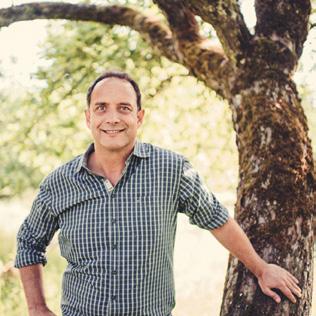
Ramborn Cider company in Luxembourg produces award-winning beverages from old fruit varieties, while regenerating biodiversity-rich orchards, reviving traditional cider making and reframing what it means to be a sustainable business. Founder Carlo Hein wants Ramborn to keep growing as a force of positive change, and use the cider factory and groves to educate about ecosystems and climate - and spark transformational entrepreneurship.
From wasted fruit to award-winning ciders
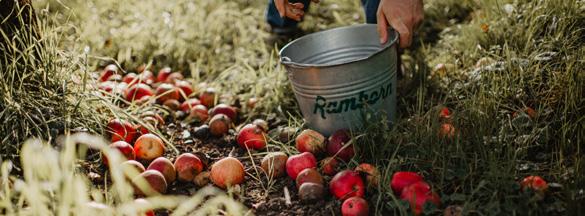
- The idea to start Ramborn came during a trip with friends to England a couple of years ago. While enjoying great cider in a pub, we start ed talking about the old abandoned orchards back home around our village and the tonnes of fruit rotting away every year. We asked ourselves if there shouldn’t be a way to take care of all the fruit, the precious trees and
make Luxembourgish cider, Carlo Hein relates.
All across Luxembourg there used to be tradi tional apple orchards with large mature trees and grazing animals underneath. But over the last century the number of trees has declined with 90%, from approximately 1,2 million to 120,000. With that, significant biodiversity has been lost as these orchards are consid ered hotspots for wildlife, offering a mosaic of habitats and supporting a wide range of species. Around the village where Carlo Hein and his friends grew up, Born, there were still several of these valuable orchards, although in decay. There was also a rundown farmhouse in the middle of the village that could be ren ovated and turned into a cidery. Fortunately, the initial capital to get the ball (or apples!) rolling had already been secured.
- I come from a family of entrepreneurs, we
6
#AGRICULTURE | RAMBORN
invested in the first wind farms in Luxembourg and we are also into real estate and retrofitting buildings. We do every project together, including Ramborn, Carlo Hein explains.
With the local and personal connection, convincing farm ers in the area to deliver fruit was not difficult. No lower limit was imposed in terms of orchard size, even plots with one single tree could be of interest. To make the best use of all the different types of apples and pears, some of them rare varieties with complex flavours with more acidity and tannins, Carlo decided put together the best possible artisanal recipe: professional cider makers from the UK, together with wine mak ers from the Mosel valley, and, on top of that, the old traditions of making “viez”- a regional apple wine possibly dating all the way back to the Romans. And what about the name, Ramborn? It is nothing less than a playful combination of the words ‘Rambo’, an apple variety with Swedish roots, and ‘Born’, the village where the cider factory resides.
- We have an exceptional fruit to work with, and since we started participating in international cider competitions with our ciders, we have won multiple awards. Many of the other brands use concentrates as a base and it’s hard for them to stand a chance, says Carlo Hein.
Just as with the other busi nesses that Carlo and his family is involved in, there is a commitment in Ramborn to environ mental sustainability and social responsibil ity. While the fruit and the cidermaking is in the heart of the company, the wider purpose is to protect and restore the biodiverse orchards and at the same time support the local economy and community. The sale of the Ramborn bev erages is what now provides the resources to do exactly that.
B Corp and organic certification
Although fruit ripens over a summer and the fermentation of cider can be complete in a couple of weeks, centuries of work has gone in to the managing and pruning of trees that now yields all the fruit for the Ramborn
7
"The way we do business makes us bulletproofed for the future.”
#AGRICULTURE | RAMBORN
Carlo Hein, founder of Ramborn
drinks. Some of the trees are as old as 300 years, but with the right care now provided by the Ramborn staff, they will keep giving fruit, providing shelter for animals and storing carbon for decades to come. Ramborn is also planting many new trees that will revive the waning orchards and also give the future generations in Born great fruit, biodiversity and a possible livelihood. But to be able to show themselves and prove to customers that there is a substantial positive impact on people and planet from Ramborn’s operations, they turned to B Lab, the nonprofit that issues the B Corp certification.
- B Corp is not a certification of a product, it is a holistic certification of an entire company that takes everything into account. It took some time for the people there to understand
our idea and the large scope that starts with the trees, but at the same time is not any thing like normal agriculture, says Carlo Hein.
After rigorous vetting, Ramborn received their certification in June 2020. They scored high on many areas, such as employees’ health and wellbeing, local economic development, climate, land & life and were commended for their “environmentally innovate manufactur ing process”. Ramborn have, amongst many other things, strived to make their production circular by design and has worked to minimise water consumption and to produce as little waste as possible. Cider is bottled in reusa ble glass bottles and barrels, and now Carlo Hein and his colleagues have delved into the different ways of using the pressed rests, for biogas or even food supplements.
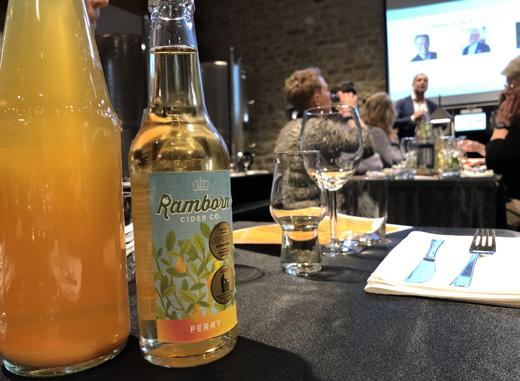
Ramborn Perry, made from traditional pear varieties. It was awarded Gold Medal at the International Cider Awards 2019.
8 #AGRICULTURE | RAMBORN
When it comes to certifying the Ram born beverages as organic, the road ahead is not completely straight. To gain entrance to eco shops, one cider has been duly certified. And it could be argued that all actually are organically produced – nothing is sprayed or chemically fertilised and the outmost environmental care is taken during manufacture. However, to be able to also welcome the smallest of producers and orchards, organic certification is not always on the table. At least not for now.
-It’s not economically viable for small pro ducers to certify, Carlo Hein says. We want to take everyone on board, otherwise it will only be the big ones that survive. Maybe in the future there will be a way to certify everyone as organic, but we feel that B Corp gives us trust and that people know we are doing good on every scale of the company and not only the products, he adds.

Bulletproofed for the future
The Corona pandemic, in all its dreadfulness, also changed many of the preconditions and benchmarks for businesses as venues were shut down and customer behaviour was trans formed. For Ramborn, sales declined significantly in the hospitality sector. On the other hand, sales increased online and in retail, and Carlo Hein does not seem to be anxious about these upheavals, nor the drastically increas ing prices on fuel and energy.
- This is a development that we expected, even if it happened earlier than anticipat ed, he says. But with the way that Ramborn functions, we haven’t seen our production
costs go up that much. We don’t use fertilisers, we source our fruit locally without intermediaries and don’t have much transports. In our view, the way we do business makes us bulletproofed for the future.
So, what awaits around the corner for the Ramborn Cider company? Well, there is no ambition to expand substantially into the wider market. Today Ramborn caters to the Luxembourgish market and to the surround ing regions, and exports are done sensibly. Instead, Carlo Hein would like to further de velop the visitor center at the cidery in Born, and make people come to learn more about circular and sustainable cider production, and the positive impacts it can have on community and environment. He envisions teambuilding events where participants help out in the harvest and become part of the process.
- When people come here and understand what Ramborn is really about they turn into ambassadors for our cause. I’d much rath er invest in this than spending money and resources on costly marketing, Carlo Hein points out with a laugh.
Did you know?
Fruit trees are also particularly good habitats for wildlife because they are “early senescent”. This means they get old relatively quickly and develop veteran features such as hollow trunks, rot holes, dead wood and sap runs.
9#AGRICULTURE | RAMBORN
Read more: ramborn.com
Hello, Elin Bergman!
Who are you?
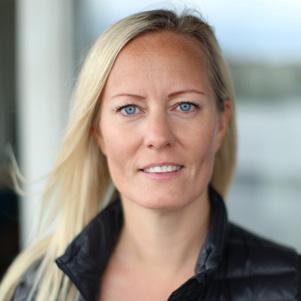
My name is Elin Bergman and I’m the COO and Vice Chair of the Swedish circular economy non-profit network Cradlenet. Cradlenet is one of the oldest circular economy organisa tions in the world and aims to accelerate the transition to circular economy by sharing the latest knowledge about the topic, arranging events and influencing the policy sector, writ ing reports and running projects.
Why is it important for us to transition to a circular economy?
As we are rapidly increasing the amount of energy and materials we use, the circular economy as a concept has attracted increas ing interest in recent years since it is about moving away from take-make-waste systems to resource efficiency and service based
business models and systems. Resource use has more than tripled over the last fifty years and is bound to double again in the coming decades unless something is done to funda mentally change course. The International Re source Panel (IRP) estimates that the extrac tion and processing of materials, fuels and food make up more than half of global carbon emissions and 90% of the loss of biodiversity. To continue business as usual would endanger planetary life-support systems, whether re ferring to climate change, ecosystem decline or resource depletion. By moving from linear to circular production models the pressure on natural systems would lessen considerably.
What could be a first important step for a small or medium-sized business to take on its path towards circularity?
The first step that businesses should take is
10 #STAKEHOLDERS | NON-PROFIT SECTOR
to look at their current business models to see if it is resource efficient or not, if it gen erates a lot of waste and if it is about selling products that breaks fast and if you know what happens to the products once they have stopped being used. The next step is to learn about what other more sustainable alterna tives to your current business models that are available and can suit you.
Do you have any favourite circular business or idea that you have come in contact with lately that you would like share with us?
I would pick the company Swedish Algae Factory, a Swedish privately owned company founded in 2016. They use algae as a raw ma terial and want to be the world-leading pro ducer of advanced materials from algae and a driving force towards a circular and bio-based industry. Their algae product can be used to make silicon solar panels and solar cells more efficient. Each kg of the product used in solar panels reduces C02 emissions with at least 200 tons, according to WWF. It can also clean nutrient rich water from land-based fish farms, and absorb CO2 and key nutrients that can be made into sustainable fish feed. Furthermore, the product is also used as a organically certified personal care ingredient, for moisturising and cleansing skin.
I like them since they have a circular busi ness model as a foundation, and can produce so many different things from their algae because they decided to not have any waste and make the production as environmentally friendly as possible. They have figured out what to with all material streams of the algae and are a truly circular company!
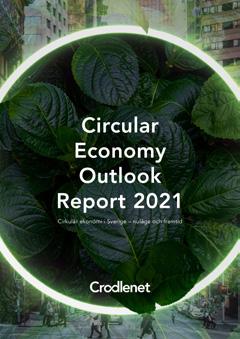
The Circular Economy Outlook Report 2021 is one example of a Cradlenet publication. This report is based on interviews with circular economy experts, researchers, and industry practitioners and aims to give insights on the state of circular economy in Sweden today, and what we should expect going forward. Read more: cradlenet.se/this-is-cradlenet
11#STAKEHOLDERS | NON-PROFIT SECTOR
Textile sorting for the future
Inside the vintage shop of Finnish non-profit Nextiili, in the outskirts of Tampere, customers not only find clothes and shoes, but also lots of second-hand sewing supplies and materials encouraging them to start repairing and fixing themselves. What’s more, in the staff spaces behind the shop a thorough textile sorting is taking place and several of the people at work at the tables are, while on temporary work placement or pay subsidy employment, simultaneously completing vocational courses. Now, Nextiili’s model for collecting, sorting and handling used textile is functioning as a regional pilot in the build-up of a nationwide collection system.
Work force for a circular future
- All the individuals here have been looking for work for a longer time, at least for six months. Some are drawn to the ecological values of Nextiili, some come to find experience and
qualifications to return to the open job market and some come to train their Finnish language skills, says Emppu Nurminen, who works as a sorting instructor and is in charge of the vintage department at Nextiili.
Each year the staff at Nextiili sort through around 300.000 kilos of textiles donated by individuals, determining the condition of each item, classifying them and, providing it is a vintage article of clothing or handicraft supply, assessing its marketability.
- Sorting the way we do and deciding whether something is trendy and sellable takes some skill and is not something machines can do, at least not so far, Emppu Nurminen points out with a smile. Our hopes are that it soon will be considered a normal profession and not always a job carried out under temporary or subsidised employment circumstances.
12 #TEXTILES | NEXTIILI
All employees at Nextiili, regardless of their working status, are eligible for parts of degrees and individual courses through vocational institutes such as Tredu in Tam pere. One example is a 5-credit unique textile sorting course that is taught by Nextilii as a part of the Vocational Qualification in Textiles and Fashion industry. A course that is awaiting approval from the Finnish Board of Education to become a national elective one. Another example is the Specialist Vocational Qualification in Rehabilitation, Support and Guidance Services. This is also a degree that Emppu Nurminen himself has completed while working at Nextiili.
Prioritising local reusing over recycling
According to the EU Waste Framework Directive, member states are obliged to set up separate collection for used clothes and textiles by January 1st 2025. In Finland, the aim is to establish such a system already by
2023, where the bulk of the approximately 85 million kilograms of textile waste generated in the country each year will find new purpos es. While Emppu Nurminen is positive about the EU mandates and ambitions of the Finnish government, he is eager to see the debate moving more towards the reuse of textiles lo cally rather than recycling and he hopes that Nextiili’s model can inspire others.
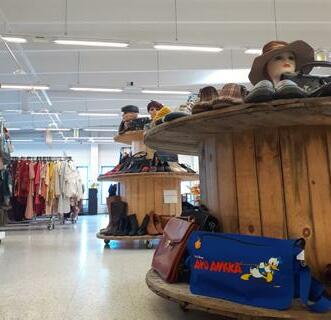
Old cable drums used as clothes stands in the Nextiili store.
- This is all great and it makes me happy that the society has become much more aware of the problems with our used textiles, and currently there’s drive and determination to solve these issues regarding used clothes by way of recycling. New technical achievements are being developed to process used textile into material level. However, we want to draw more attention to all the ways you can first reuse a piece of clothing, for example, before you break it down to cot ton or polyester fibre, says Emppu Nurminen.
13#TEXTILES | NEXTIILI
“Sorting the way we do and deciding whether something is trendy and sellable takes some skill and is not something machines can do.”
Even though big new recycling plants such as the Textile Recycling Center in Paimio has got ten most of the limelight and media attention, Finnish waste laws do mandate reuse over recycling for environmental reasons. A nation al collection with thorough sorting prioritising reuse might also lead to new sorting jobs nationwide. Furthermore, by keeping a textile item intact or sewn into a new garment rather than disintegrating it to its components, you retain and in some sense revere all the work
and resources that once was put in to it. At Nextii li, each piece of clothing will fulfil all its purposes before being sent to the textile grinder.
- We focus on the vintage items for our shop, and direct most of the contemporary to other non-profit partners in Tampere. The best of the best of what we receive is displayed online in a webstore that we man age, Emppu explains. We do some smaller repairs if it’s needed but we also sell articles of clothing that are not in prime condition and encourage people to fix and redo them. Marimekko for ex ample, people buy those pieces even though they are in very bad shape and make new things out of them - and even from old pillow cases and sheets
I’ve seen people make skirts, he adds.
Vintage status on the rise
Building up to a full-fledged national collec tion system, local waste managements all over Finland have launched collection pilots to see how textiles most efficiently can be round up. Nextiili’s scheme for doing this is serving as a pilot in the Tampere region. According to Emppu Nurminen, the manner in which clothes are collected can have a big impact on the overall condition and usability of the textiles.
14 #TEXTILES | NEXTIILI
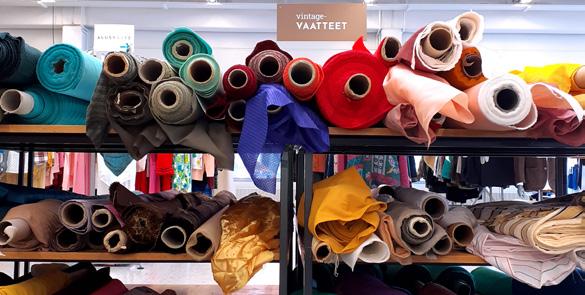
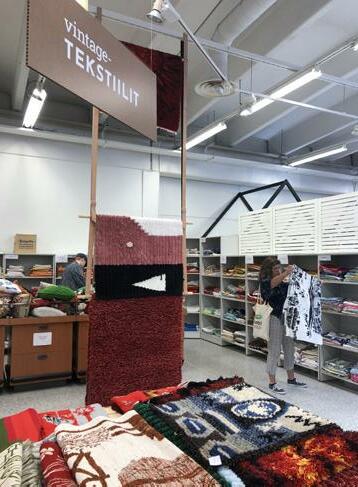
A participant in the CIRCLE project looking at the assortment of second-hand fabrics at Nextiili.
- Here, at Nextiili, clothes are donated faceto-face and our sorting activity is visible to customers and those who come and donate their used textiles to us. We feel that it helps with the quality level. With collection boxes outdoors, there’s sometimes problems with condensation, and you can get wet, moldy stuff, and even find bags with food waste. There’s also something about the mental image of what kind of clothes you can put in the boxes when they’re next to containers for household trash, Emppu continues.
Knowing that Nextiili is only one small player in the vast collection structure that needs to be put in place, Emppu Nurminen sees that not all used textiles can be handed over per son-to-person – the bins and boxes are also required to increase collection and achieve the desired results. However, the placement of these is important to able to signal the lasting value of used clothes and instil new habits in the consumers.
- There is some work to do in helping peo ple to find that circular economy mindset in regard to stuff they no longer need, Emppu
points out. On our part, we try to present the clothing as valuable and handle it with respect. If collection boxes for instance are placed in a shopping mall, amongst fashion stores, people tend to donate a bit more sensibly.
Still, there is a constantly growing number of people who already seem to have adopted a somewhat greener attitude, at least in regard to clothing and style. People from all walks of life are donating to Nextiili, and when it comes to buying and wearing vintage, it is becoming more and more mainstream, especially with younger people.
- I think that we pretty soon will have to find an even bigger place, because our volumes keep growing - which is great, says Emppu Nurminen. But at the same time, I would like to see people stop consuming so much, buy less, and start repairing the stuff that they already have, he adds.
Read more: nextiili.fi
Did you know?
Europeans use nearly 26 kilos of textiles and discard about 11 kilos of them every year.
”We need to help people find that circular economy mindset in regard to stuff they no longer need.”
15#TEXTILES | NEXTIILI
Welcoming guests to a sustainable stay
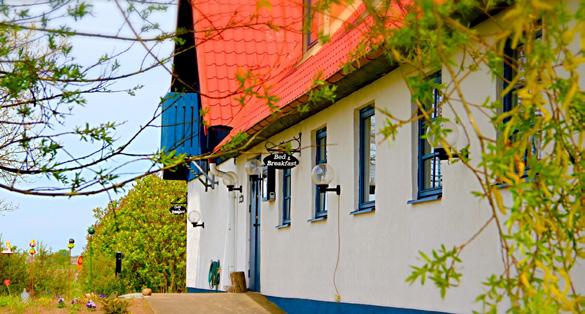
In the beautiful landscapes of Österlen, located in the southernmost part of Sweden, Anna and Juan Villavicencio found their new home and new life as hotel managers. Little did they know their green way of thinking would become a core part in their business, attracting visitors and sparking conversation about sustainability. Now, the ambition is to grow more of the food that is used in the kitchen and invite guests to experience the floral splendor and biodiversity of the gardens and meadows around their B&B, Tryde 1303.
Lack of space opened new paths
For Anna and Juan Villavicencio, running an Eco Bed & Breakfast with café and year-round
restaurant in the Skåne countryside was not part of a thought-out plan. Rather, it was coincidence, providence, or frankly put – art, that led them there.
- Juan is an artist and in the two-room apart ment in Malmö where we lived, there simply wasn’t space for all his projects. We went looking for a house outside the city where he could set up a studio, says Anna Villavicencio.
The property that finally caught their atten tion was a large old farm house an hour east of Malmö, in Tryde, rebuilt to accommodate guests as a bed & breakfast. In it, there would be plenty of room for art projects, and Anna, a
16 #HOSPITALITY | TRYDE 1303
former primary and secondary school teacher, pictured herself managing a small family hotel with Juan while working extra hours as a substitute.
- To be honest, we were quite finished with Malmö and were ready for the countryside and another way of life, Anna Villavicencio admits. And we said to each other, let’s give it a shot, we’ll start a B&B and summer café and see how things work out!
Since there had not been any activity in the house for some years, rooms had to be refurnished and there was a need to set up a proper kitchen. For Anna and Juan, it was only natural to go look for furniture and utensils on the second-hand market. Chairs, beds, tables, lamps and other interior details were sourced from flea markets
and classifieds, giving all guest rooms a cozy and relaxing feeling that perfectly suited the atmosphere of the farm house. Kitchen work tops, cupboards and machines were obtained the same way, saving the couple on their expenses. However, when it came to the food they were planning to serve, price was not the decisive factor.
- Well, from the beginning I said I didn’t want any restaurant, but as we started hosting conferences and events with food, other guests started asking about dining, says Anna Villavicencio. And once I reconsidered and changed my mind, we decided to go all in for locally produced food. Today almost all ingredients we use are from our region and we actually have around forty separate suppliers.
Candid sustainability appreciated by guests
As managers of a hotel and restaurant oper ation in beautiful rural surroundings, the kind of inherent eco attitude that Anna and Juan already had started evolving into a more pro nounced sustainability concept. Guests were very appreciative of all the considerations
17#HOSPITALITY | TRYDE 1303
”Today almost all ingredients we use are from our region and we have around forty separate suppliers. “
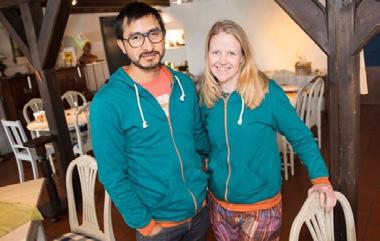
Juan and Anna Villavicencio, the couple behind Tryde 1303.
that went into saving resources and reducing waste, and different eco signs placed across the premises seemed to be met with curiosity and insight.
- Juan put a sign next to the napkins that read “how many do you really need?” and this both spurred discussion and reduced the use of napkins quite a bit. It was the same with the breakfast buffet where the sign encourages people to serve themselves less, and to fill up again if they’re still hungry, says Anna Villav icencio. This makes people more aware and I overheard one mother tell her child: “No, here you can’t throw things, you have to taste!”
Nowadays the sustainability approach is very visible in the marketing, and the slogan for the establishment translates as ‘Simple, Pure and Sustainable’. At the breakfast buffet Anna
or Juan normally makes a short presentation about Tryde 1303 and the guiding princi ples behind the place. They also give some practical advice of how to save resources, as in using the sorting bins for recycling waste or holding on to the same coffee cup during the stay to create less dishes. Some things, however, are better left unsaid, according to Anna Villavicencio.
- When it comes to the buffet at conferences, I usually don’t mention that it is almost exclu sively vegetarian. We trick the participants a bit since there are still many misconceptions regarding vegetarian food. Still, everyone is really delighted about the buffet, she says.
Making the best of the surroundings
The latest development phase of Tryde 1303 involves more of the area around the house
18 #HOSPITALITY | TRYDE 1303
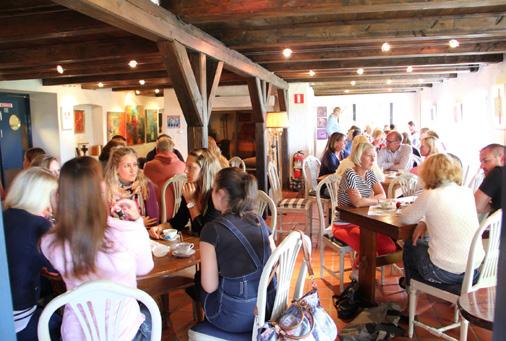
The dining room.
and the ten hectares of land that pertain to the property. The chef Jasim, both skilled in cooking and in cultivation, is now creating a kitchen garden to be able to use truly home grown vegetables in the meals. Anna and Juan are also planting fruit trees and are estab lishing a herb garden and wildflower mead ows with rotational scything and burning to support biodiversity and beautiful flowering.
- We want to have wandering paths in these gardens for guests to stroll around and we think it would attract more visitors. We also imagine teaching courses where we make things out of our veggies and herbs. All this rhymes well with our idea of sustainability, says Anna Villavicencio.
One other plan that is brewing at Tryde 1303 is to install solar panels on roofs and a parcel of the adjacent land. The electricity produced will cover some, if not all, of the energy con sumed by the enterprise. If possible, some will also be destined for charging poles serving e-bikes and the likes. Regardless of how quickly Anna and Juan manage to invest in solar energy, they are keeping – and brushing up – their existing set of ordinary, good old second-hand bikes. These are already avail able free of charge for guests who want to
discover the community pedaling, which is something Anna and Juan certainly would recommend. Still, there is one thing, beyond their control, that is needed to make the district where Tryde 1303 is situated into a complete biking destination.
- Bike paths! You can get from us to the town of Tomelilla but to go elsewhere is difficult, then you need to share a narrow lane with trucks and cars. I really wish our municipality would devote funds to this, it would make a big difference, Anna says.
Read more: tryde1303.com
Did you know?
Reducing food waste is one of the best circular economy practices hotels can adopt, as it both reduces costs and is very appreciated by customers, according to a large international survey with hotels and guests.
19#HOSPITALITY | TRYDE 1303
Sustainable solutions seen in the Circle project
BIOCHAR
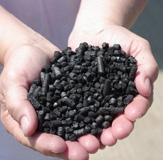
A substance that is capable of raising pH levels in soils, acting as a fertiliser, retaining water and humidity, storing carbon long-term and mitigating heavy metal toxicity – can it really be true? In the southernmost part of Swe den, seed and bioenergy company Skånefrö is reviving an ancient method of burning biomass in low-oxygen conditions, discovered by farming Amazonians centuries ago, yielding a lightweight black residue called biochar. The biochar is both a stable solid and has a porous structure which allows it to function as a sponge and possess many characteristics that can benefit agriculture and even help turning dry, contaminated and barren land arable again. At Skånefrö, crop residues from seed production are now burned oxygen-free in a large pyrolysis gasifier and in addition the produced biochar, destined for farms and fields in the region, the process also gen erates energy for the local district heating network.
ECOPULL
For any business sending and transporting goods, using plastic film to wrap goods on roll containers has been a given. It’s versatile, elas tic and keeps the cargo in place. But it is also fossil-based and once ripped, hardly reusable. Organic food distributor Biogros in the south
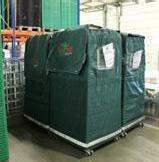
east of Luxembourg concluded there must be a better way to protect the merchandise without compromising the environment. An in-house effort was made by employees to develop an alternative to the plastic wrapping, and what emerged was Ecopull – a reusable polyester transport cover, fastened with Velcro straps, that actually insulates the containers even better. It is designed to last for years and is of course washable. After changing to Ecopull, Biogros is now saving around three tonnes of plas tic film every year.
BLOKGARDEN
Ever felt frustrated with growing your own vegetables? Who hasn’t started out with bold ambitions, only to be disheartened by caterpil lars and frost reducing your harvest to brown gunk. A group of friends in Tampere, Finland, were all in agreement on the hardships of backyard gardening and started thinking about what kind of service they would have appreciated to help them get it right. If someone could provide great soil, seedlings and instructions for how to care for the plants, that would have been amazing.
20 #
Maybe then, also the most reluctant would be willing to try out growing veggies. The friends decided to start a business together, and began sketching on a reusable cultivation box and an app to help home growers get the knack of it. They settled on the name Blokgarden for both boxes and company. Today, they deliver Blokgarden boxes in three different sizes all over Tampere, fully loaded with first-class soil and seedlings of your choice.
SHOU SUGI BAN
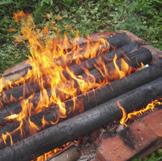
Using wood in building projects is most often considered a sustainable choice. However, preserving the wood in a good way can be a challenge. Applying oils, paint or laquers is the standard solution, but it is time-consuming and needs to be redone every few years. Just as with pressure-treated lumber, another option, it can also involve harsh chemicals. In the Kintulammi natural reserve outside Tampere in Finland, an alternative method has been used to preserve the wood of signposts along hiking trails: Shou Sugi Ban, an age-old Japanese technique of charring wood, making it resistant to fire, insects, fungus, rot and even harmful UV rays for up a hundred years. And giving it a beautiful finish! The trick is to expose the wood to fire long enough to leave a charred layer, but not long enough to burn the wood or dam age its structure. Painting the charred surface with a natural oil every ten years will render the protection even stronger.
STRAW BALE BUILDING
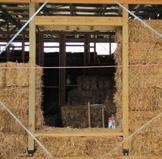
Using straw and clay as building materials was by many deemed obsolete when new modern building techniques and materials emerged
after the industrialisation of society. Now, this method is making a comeback. Turns out, straw and clay is not only affordable and accessible, its insulative properties have proven to be amazing, and using it to build houses can even have a positive climate impact. When a straw bale house eventually needs to be torn down, the bulk of the building elements are easily reintegrated into the biological cycle. At eco learning centre Ecotopia in the south of Sweden, straw bale building courses are regularly held and many of the houses at Ecotopia were erected using different straw bale con struction systems.
EXPERIMENT ROOM
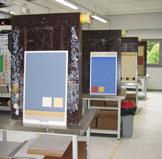
To move towards circular economy business models, some enterprises are taking a thor ough look at their products, going back to the drawing board and making the changes needed to close the loops and avoid environmental externalities. But sometimes this means that products come out a little bit different than we are used to, with new characteristics, and the end user might need a push to move over to the new version. To help clients get acquainted with their range of ecological paints, long-es tablished paint company Peintures Robin in Luxembourg have set up an experiment room where professionals can try out the different products and take courses to learn to apply them properly and get the desired result.
21#
It takes a world (and recyclable packaging) to make great coffee
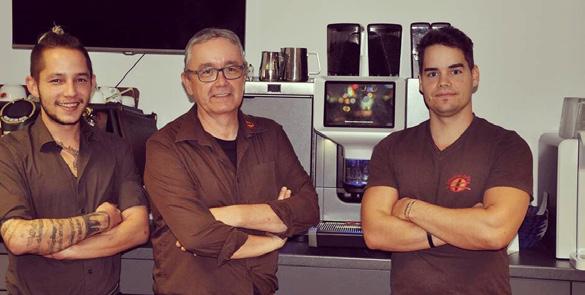
The operations of Mondo del Caffè began with one single coffee shop and founder Alfons Schramer behind the counter. Today it has evolved into a bustling business aiming to bring the most benefit to everyone and everything connected to the coffee – be it farmers, en vironment, customers or employees. But is it possible to run a coffee business and not create trash and waste?
It’s all about the coffee ”Sustainability from plant to cup” is a slogan of the Luxembourg-based company Mondo del Caffè. But during the initial years of Alfons Schramer’s coffee venture, however, the
concept of a sustainable business was not necessarily a driving force for him, nor a fully mature idea.
Prior to founding Mondo del Caffè, Alfons Schramer was employed by a large coffee trading company. In 1997, he decided to make reality of an idea that had been on his mind for some time - to go solo and become a business owner. He was adamant about staying in the realm of coffee but decided to start his own journey with a coffee shop in his hometown of Trier, first learning about the art and craft of coffee making, and subsequent ly educating costumers on the true coffee experience.
22
#PLASTICS | MONDO DEL CAFFÈ
- At this time a cappuccino for most people was filter coffee with cream and a sprinkle of cocoa powder on top, Alfons Schramer laughs. Nowadays in the coffee shops, you have trained baristas making real cap puccinos, and they’re very different!
In his pursuit of serving the best coffee, he was intrigued by not only the craftmanship behind each cup, but also by the art of roasting. And when he eventually mastered that trade, the bewildering process of growing coffee caught his attention. During a trip to Ethiopia in the early 2000’s, Alfons Schramer for the first
time visited a coffee farm.
- I was so fascinated, I never really thought of coffee beans as you see them on the bush, as fresh berries. That’s when I under stood great coffee also has to involve the planting conditions, and the farmers themselves.
With time, Mondo del Caffè has grown from the single coffee shop in Trier to a handful of venues and branched out into importing, roasting and coffee machines. Altogether, the company now employs almost a hundred people. Among them are the four of Alfons Schramer’s children.
23
"We trade directly with the farmers without intermediaries”
#PLASTICS | MONDO DEL CAFFÈ
- One son is in marketing, one is the book keeper, one is into the coffee machines and technology and my daughter just started working with green coffee – she will be the next roaster, Alfons Schramer proudly as serts. During the evenings, we work together, grinding, packing and sticking labels to the coffee bags, he adds.
Transparency and traceability
Despite having grown significantly since it’s foundation, Alfons Schramer prefers the company to stay relatively small, catering to a customer base not larger than what compris es the Luxembourgish population, roughly half a million people. One reason is that he is not running the business for money. It comes down to making a living, to have fun and enjoy life. Furthermore, it also makes the enterprise more manageable in regard to transparency, traceability and the integrity of the establish ment.
- It’s really about respecting the product and all the hands and people that have been part in the process. We trade directly with the farmers without intermediaries and are actually able to let our customers talk directly to them, either by visiting them abroad or by Zoom calls from our coffee shops, and hear about their challenges and their grit, says Alfons Schramer.
In several coffee farms throughout the Tropics, Mondo del Caffè is investing in the production, helping farms improve their infrastructure and adopt environmentally friendly farming practices. Together with the farmers, innovative measures are also taken to thwart erosion and prevent drought. In a global climate with an increasing number of extreme weather events, this is proving more and more important.
Today, Mondo del Caffè can really claim to be involved in and have insight into all stages of the coffee, from plant to cup, ensuring the benefit of all. In order to further support the environmental and financial sustainability of the farms the company is now also importing products that are used as intercropping in the coffee plantations, such as chili peppers and different spices.
- This is very much in the DNA of Mondo del Caffè, that you will have the best coffee when all the people who have been involved in the
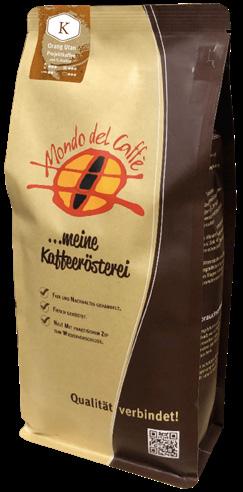
The new mono-material coffee bag.
24
#PLASTICS | MONDO DEL CAFFÈ
production can live well and have a good income, Alfons Schramer says. And when my customers drink and enjoy our coffee, I would really like them to have the farmers on their mind, he points out.
Simple packaging a difficult task
What makes the coffee bean truly unique, especially in its roasted state, is the aromat ic composition and the multitude of volatile flavour compounds. These compounds are what makes freshly ground coffee smell and taste the way it does. However, to preserve the uniqueness of the roast the packaging material must prevent oxidation and protect the coffee. In the case of Mondo del Caffè the package must also be one that minimises the environmental impact.
- We started out with different types of aluminum packaging and went on to try one made solely of paper, but that one didn’t meet our criteria for preserving the coffee. Up until recently, we’ve used a more appropriate and protective, multilayered one made out of paper, corn starch and aluminum. But we were still not completely satisfied as the separa tion of the materials was too difficult, which renders it almost impossible to recycle, Alfons Schramer explains.
Yet, after a meeting with packaging special ist Packiro from Cologne, a new possibility emerged: to develop a mono-material pack aging, consisting only of one type of material, low-density polypropylene (PP). In May of 2022, this new kind of packaging was intro duced with the products of Mondo del Caffè. This single-component bag actually possesses all the protective advantages of a multi-lay ered one. The PP raw material is modified into different components such as coatings, glue and a moisture barrier, shielding the coffee from oxidation, UV-light and preventing all those exquisite aromatic coffee notes from escaping.
- Now we can really say that our packaging is 100% recyclable, and the materials can stay in the economy a long time, being used over and over again, since they are not mixed, Alfons Schramer affirms. The last step for us is to offer our customers the possibility to return the empty bags directly to us, in this way they will be processed and become Mondo del Caffè packaging, once again!
Did you know?
Finland is the top coffee-con suming country in the world. The average per person and year is around 12 kg.
25
#PLASTICS | MONDO DEL CAFFÈ
"Now we can really say that our packaging is 100% recyclable”
Read more: mondodelcaffe.de
Youth taking environmental action through entrepreneurship
- Young people think a lot about the future, but they are often unsure of how to take personal action against something like climate change, says Anna Sarkkinen, former manager of the Leader financed youth project ReWi (Resource Wise) Visions. At the same time, there’s a lot going on in their heads around work life and earning their own money, she adds.
Anna Sarkkinen wanted to initiate a project that could show ways to address several of the worries of young persons at the same time. She was working as the executive direc tor of JAPA ry, an association working closely with the Jyväskylä municipality and residents in promoting a local sustainable develop ment, and already had some contact with the 4H-club in the region, an organisation known for its achievements in helping young people setting up their own “hobby businesses”.
JAPA
and 4H turned out to be a perfect match in terms of involving teenagers.
- With 4H, students learn about entrepre neurship and in the project, we developed workshops to help the participants take the environment into account in their new busi nesses. The focus was to coach these young people in circular economy, to make them learn new skills that would benefit them in their future work life, says Anna Sarkkinen.
As a result of the workshops and guidance from 4H, new and existing youth businesses started to adopt environmental and circular measures into their operations. Joni Hantula started a phone repairing business. Pinja Hämäläinen, who already had a nail studio in her home, replaced all her disposable tools with sustainable and washable ones
26 #STAKEHOLDERS | PUBLIC SECTOR
and bought a biogas car to be able to visit customers. Sara Murtonen and Hilma Wood created a home service company that use only natural products and reusable material in their cleaning. Lauri Pulkkinen started man ufacturing insect hotels within his gardening company and collects material for them from local forests.
- These young individuals have such great thinking going on, says Anna Sarkkinen. Since we cannot only rely on experts we must find ways to support sustainable everyday lives and work, and in the project our goal was to encourage agency.
Within ReWi Visions, more than forty youth companies adopted a circular and sustainable approach, which by far exceeded the initial expectations and hopes. Moreover, the pro ject did not only inspire youth to try out being self-employed sustainable entrepreneurs, it also sought to debunk the lingering precon ception that “no one is doing anything” when it comes to the environment.
- We wanted to show young people what is actually being done, and all the companies making change! We had previously been in touch with a school in Wales, Pembrokeshire college, that also wanted to do a circulari ty project, and we already had
the Muurame high school on board. So we did an exchange where we invited the Welsh students to come and meet Finnish students, visit companies and do joint workshops on circular economy, says Anna Sarkkinen.
At the end of the project, an extensive manual was produced into which all the knowledge and experience from ReWi visions was distilled. The manual is targeted to profes sional educators and those working with young people for promoting circular economy. Considering the project was a huge success, as it really spurred young people to take action on numerous levels, many in and outside Finland have been interested in discovering the lessons learned. In fact, ReWi Visions was selected as the best project in the Rural Inspiration Awards 2021, a competition organised by the Eu ropean Rural Network ENRD.
27#STAKEHOLDERS | PUBLIC SECTOR
"The focus was to coach these young people in circular economy, to make them learn new skills that would benefit them in their future work life”
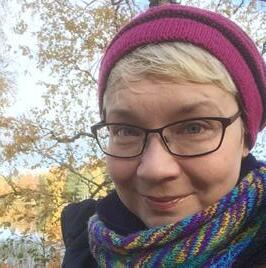
Anna Sarkkinen, project manager for ReWi Visions.
Read more: japary.fi/rewitellen/rewi-visions-in-english
Breeding the planet’s most sustainable fish
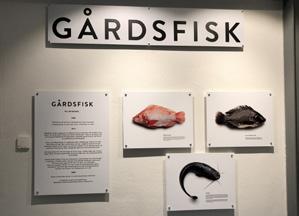
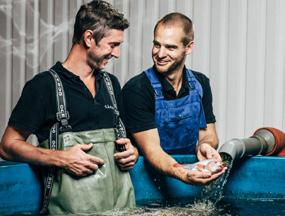
The fish breeding company Gårdsfisk, based in the south of Sweden, has rattled the food busi ness and broken new ground with their landbased, circular and resource efficient produc tion system. Their concept has now developed into a franchise, where farms can set up their own breeding and both increase earnings and close nutrient cycles.
Pioneers in land-based aquaculture
- When I started studying to become a marine biologist, I already knew I wanted to work with aquaculture, says Johan Ljungquist, one of the two founders of Swedish fish breed ing company Gårdsfisk. I saw the standard salmon farming as terrible, with fish diseases, antibiotics and large discharges of nitrogen and phosphorous straight into the oceans. At the same time everyone was expecting fish production to grow substantially in the future to meet increased global demand.
Today, Johan Ljungquist and his longtime
friend and colleague Mikael Olenmark Des salles are at the helm of an internationally renowned and innovative company that is breeding the first climate certified fish in the world, and what’s more – it’s land-based. During the ten years that Gårdsfisk has been in business, much thinking has been done outside the box and a pioneering spirit has characterised the business since the begin ning. Johan has drilled down into the biology and behaviour of the fish while Mikael has been in charge of the technical solutions for water and energy.
- The circularity is at the center of our business. When you breed fish on land, in an enclosed system, you have full control of the flows and streams. And when you work with freshwater fish as we do, you can use residual water on the surrounding farmland as a natural fertiliser, something there is great demand for. There are so many possibilities with this system, but since we are basically
28
#AQUACULTURE | GÅRDSFISK
the first ones in this industry, we’ve had to find everything out for ourselves, says Johan Ljungquist.
The headquarters of the company has been, since 2013, a farm now known as Gre ta’s Farm, with a name reminiscing of the property’s previous owner. At the farm, the cutting-edge ideas of an integrated agri- and aquaculture could finally be set into motion as Johan and Mikael had secured most of the funding they estimated was needed to renovate the farm and establish their first production system. Yet, it wasn’t until after a small detour into another freshwater species that they got on track towards their present model.
- We actually began our venture in Greta’s Farm with European crayfish, which is almost extinct in Swedish waters. We wanted to help make this crayfish available again and maybe assist in reintroducing it in nature. But the authorisation procedure to be able to breed them took forever, and we soon realised that finding a more sustainable way of providing fish and fish protein to a hungry world was much more intriguing and crucial than making this one crayfish appear once again at yearly Swedish crayfish festivities, says Johan Ljungquist.
Tropical fish with Swedish potential
To be able to breed a fish that naturally could allow for developing a sustainable land-based aquaculture system, Johan and Mikael went searching for a herbivore or omnivore species that could thrive on a mainly vegetarian diet. Today, the majority of fish species that are commercially produced are predators and need large amounts of fish in their feed to grow healthily. They browsed the website of FAO (UN’s Food and Agriculture Org.) and
looked at the fish that were further down the food chain and recommended for breeding in terms of high yield and limited resource inputs. One of them immediately caught their attention, and also happened to lead them to a second one.
The Nile tilapia, Oreochromis niloticus
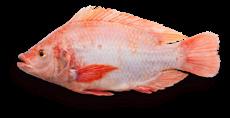
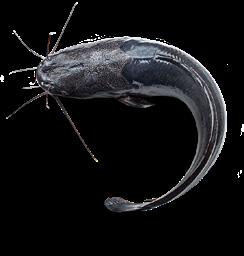
- The Nile tilapia is a warm water fish that grows fast and can live well in a limited space, Johan Ljungquist explains. It also has a very long digestive tract and can be fed a fibre-rich diet. We reached out to one of the tilapia breeding programmes to make an order, and it turned out they were also breeding African sharptooth catfish, a fish with similar require ments as the tilapia. We decided to try both of them, which has proven to be a wise choice.
Since the day in 2013 when the first batch of fish fry was delivered to the loading bay of Greta’s Farm, many things have transpired. The breeding system has undergone multiple changes, upgrades and fine adjustments. And because of the difficulties of getting hold of fry during the pandemic, Johan and Mikael ended up buying both breeding programmes and now handle everything from hatching to packaging of fish meat. During the latest couple of years, the achievements and awards of the company and its novel production methods have received much media atten tion, and everyone seems eager to learn more about the operations of Gårdsfisk. Besides having to affirm that both fish indeed taste great, there are two recurring questions that Johan Ljungquist always gladly answers. One
29
#AQUACULTURE | GÅRDSFISK
concerns the well-being of the fish, and the other involves the energy consumption from the tanks with water kept at a steady 28°C.
- Both these fish naturally live in dense populations, and we have closely monitored them in our system to be able to spot symptoms of stress. I think the fact that we’ve never had to use any medicines or antibiotics whatsoever speaks for itself, he says. And when it comes to the warm water that our fish need, using cold water species instead would paradoxically require more en ergy. The tilapia and sharptooth catfish grow much faster, they’re ready after about seven months in the tanks, and what consumes most of the electricity in our system is actual ly the recirculation and water treatment, and not the heating.
The differences in environmental impact between conventional fish farming and the breeding technique of Gårdsfisk has become increasingly evident for Johan and Mikael with each refinement of the system and modification of the fish feed. With the present predominantly vegetarian feed recipe, only about 170 grams of fish is used to produce 1 kilo of tilapia meat. On top of that, each kilo of meat produced generate enough nutrients to fertilise 10 kilos of farmland crops – nutrients that will not pollute the oceans. In salmon farming, however, every kilo of meat comes with a baggage of
a whopping 3 kilos of small fish.
- Our feed at the moment consists of about 10% of residues from the fishery sector, but we are seeking to make it completely vegeta ble-based. And instead of sourcing ingredients from Norway, we would like to develop a formula with by-products from Swedish food industry, agriculture, breweries, distilleries and so forth, says Johan Ljungquist.
Circular opportunities and challenges
In the beginning, Gårdsfisk started offering their products such as minced fish and fillets to supermarkets in the region. Today the production capacity of the company is at a level that has made it possible to partner with national grocery chains and online food stores delivering all across Sweden. The product range is also growing into the semi-finished segment, as with the most recent fish meat balls - made completely out of natural ingre dients, with no preservatives. Still, this mar ket expansion would not have been possible solely with the limited production spaces of Greta’s Farm. What has taken the company to the next step is in many ways the granting of franchises to farms in the area.
The climate certification seal seen on the Gårdsfisk products.
- To be able to make a dent in the current unsustainable food system we have to ramp up our volumes, which means more production sites, says Johan Ljungquist. We know that many farmers are looking for new investment opportunities, and if they implement our concept
30 #AQUACULTURE | GÅRDSFISK
"The circularity is at the center of our business. When you breed fish on land, in an enclosed system, you have full control of the flows and streams.”
and technical solutions, they can make money from the fish and have plenty of home-pro duced fertiliser for their fields. Adding solar panels to their production facilities makes the system even more circular, and with the increasing energy prices, this is probably something we will demand from future fran chisees, he adds.
So far, three locations are up and running in the region, besides Greta’s Farm. All the fish produced, around 200 tonnes on a yearly ba sis (2022), is processed at the headquarters, where the operations now have veered more towards the breeding programmes and the cleaning and filleting of fish. Together with a company the sells food processing equipment, Gårdsfisk has even co-developed a new tilapia filleting machine, since there was none on the market and manual filleting was becoming overwhelming.
- We try to look at all the problems we bump into as challenges, they’re just something we have to overcome, says Johan Ljungquist. It was the same thing in the beginning, when we realised there were no determined regulations or criteria tailored to our kind of land-based aquaculture. But we still went ahead and suc
cessfully applied for Leader project funding so that we would be able to develop these standards together with authorities.
The Leader project, in which all production conditions were carefully scrutinised, also brought about the world’s first climate certi fication for fish production. Subsequently, an autonomous agency was able to grant Gårds fisk the certificate and today the climate seal is on all of the fish packaging. Neverthe less, Johan Ljungquist and Mikael Olenmark Dessalles keep pursuing more environmental and circular accomplishments. Up until now, fish guts, roe and skin from the cleaning process have gone to biogas production. But the Gårdsfisk founders are certain there are even better ways to utilise it, and are now experimenting with making broth and other fish-based consumer products.
- Our ambition is to always improve, and we’re not just trying to reach some kind of climate neutrality in our system. What we are striving for with the Gårdsfisk concept is to have a positive impact on climate and the environ ment, says Johan Ljungquist.
Did you know?
The global consumption of fish and shellfish is expected to almost double between 2015 and 2050, from 80 million to 155 million tonnes.
Read
31
#AQUACULTURE | GÅRDSFISK
more: gardsfisk.se
The African sharptooth catfish, Clarias gariepinus
Circular construction consultants reshaping industry
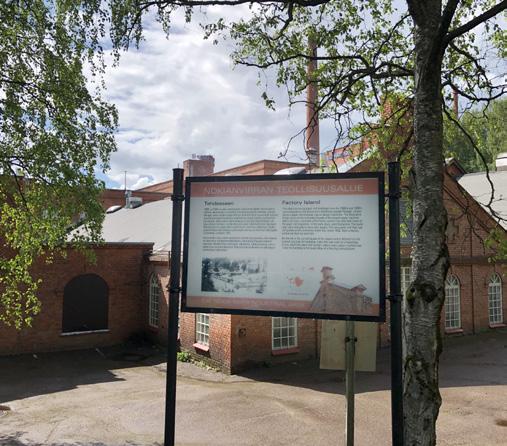
For years, two friends and former colleagues from the Finnish building sector were talking about starting their own construction consulting business, where they would do things differently. Perttu Ketola and Jari Tähtinen were both tired of the, in their eyes, craziness and ignorance of the industry when it came to material use and recycling. In 2019 Perttu decided to set the idea into motion, and Jari was not late to get on board. One of their first projects has today grown into the most acclaimed – the acquisition of the industrial heritage Tehdassaari island and its ongoing transformation to a hub for circular synergies.
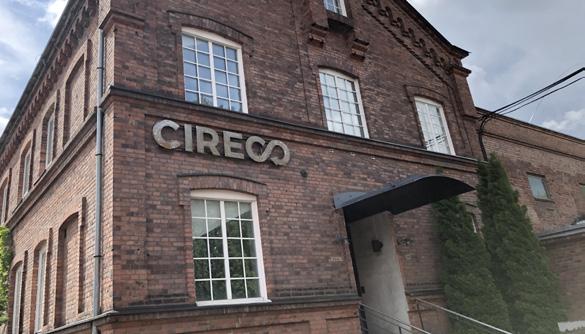
Cireco Finland and Tehdassaari island
Not more than a year after the project was launched, with the name Cireco Finland, an opportunity emerged to buy Tehdassaari island - an industrial area in the Nokia munici pality with several brick buildings, dating back to the end of the 19th century. The proper ty, once the location of the headquarters and prominent rubber and paper industries belonging to the Nokia company, was in decay since many years. Jari and Perttu envisioned how this area with its rich history could be transformed into a living example of the circu lar and green mindset they had been promot ing for years.
32
#CONSTRUCTION | CIRECO FINLAND
- You know, the average lifespan of buildings in Europe is about forty years. Build ings should stand for at least a century, and in Tehdassaari we are try ing to make them last much more than that, Jari Tähtinen points out.
"Buildings should stand for at least a century”
under-utilised waste from one business can be turned into an asset for another. As for the power supply, electricity will be gen erated from renewable sources.
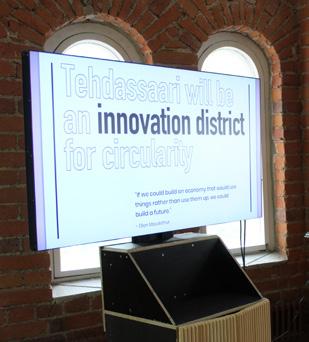
The first step after having acquired the island was to clear and do an overhaul of the 15.000 square meters of industrial facilities, and to fix a new office for Cireco Finland. The next step was to change the city zoning of Tehdas saari from industrial to commercial, to facili tate its development towards a veritable hub for circular economy innovation – the kind of place Jari and Perttu had been imagining. It didn’t take long for the first tenants to enter, and the flexible and dynamic spaces already boast a skate park, a café, an art gallery, an outdoor theater, some shops and artist studi os plus two industrial companies. Events such as concerts, stand-ups and parties are taking place regularly.
As more and more “users” are establishing them selves at Tehdassaari, the potential for circular synergies will gradually grow stronger. Flows of material and energy will be turned into loops as resources are reused. The intention is to match and com bine tenants so that the
- We made a survey with an energy consulting company, and we found seven different ways to produce sustainable energy on the island, says Jari Tähtinen. Quite frankly, we have the possibility to be com pletely self-sustainable!
Circular economy spells value creation
While slowly but surely developing Teh dassaari into a circular model district and showroom for circular economy, the people at Cireco Finland are busy undertaking the main services of the business – area development and construction consulting with a sustain ability focus. By assuming both these fields, the company can run their own projects and at the same time share the gained knowledge through consultancy, frequently teaming up with others.
- We have been able to find people and com panies with similar minds that under stand it is really about changing the entire way
we live; circular economy is not like a green sticker that you put on a project, Jari Tähtinen stresses.
33
#CONSTRUCTION | CIRECO FINLAND
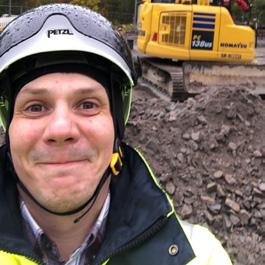
Jari Tähtinen at a construction site.
When Jari and Perttu reach out to potential clients, they emphasise the added value creation that actually comes with designing a construction project within a circular economy framework. First of all, construction costs and time can be reduced when the design is guided by circular economy-based strategies. With the help of a so-called BIM software (Building Information Modeling) material use can also be optimised. Sec ondly, by using local renewable energy potential and adopting energy efficient building tech niques, energy losses can be kept at a minimum which means lower operational costs. A third advan tage is of course a substantially lower environmental load with less waste in the construction process. A flexible and diverse reuse of components enables a longer life cycle for the building parts and a reduced carbon footprint. Last but not least, a project with the well-being of the dwellers at the heart of the design is likely to produce important social values for the area. But despite all these advantages,
many building projects still end up being done business-as-usual.
- Some municipalities we are in contact with seem anxious about integrating their green visions into the procurement process, afraid they won’t get any tenders. But really, you don’t have anything to lose, you can change it if it doesn’t work, says Jari Tähtinen.
Construction industry and the future
According to Jari Tähtinen, there is sometimes a bit of a hype and inflation when it comes to terms like circular economy, sustainability and recycling. Some municipalities and business es are not yet willing to walk the talk. Even in Nokia, as he relates, a municipal subcon tractor building a new residential area would rather demolish and bulldoze century-old handmade bricks and heartwood beams, than donate them to Cireco Finland.
34 #CONSTRUCTION | CIRECO FINLAND
"Circular economy is not like a green sticker that you put on a project”
On the EU level, there are new construction regulations and material recovery targets in the pipeline, all within a holistic approach for the built environment that will be released by the European Commission in the near future. As it accounts for around half of all extracted material and a considerable portion of green house gas emissions, addressing the sector is pivotal.
- I hope that the regulations will force both public and business sectors to take circular ity and sustainability more seriously, so that money and environment are recognised as equally important, Jari says.
Did you know?
Up to 15% of materials delivered to building sites are not used. Transport and weather damage, overbuying and building errors make some of it end up on the dump.
Read more: cireco.fi
35
#CONSTRUCTION | CIRECO FINLAND
Sustainability for a fact
- Is this really a sustainable and circular product?
This is a question that Jeannot Schroeder often asks his clients or his audiences at lec tures. Jeannot is the founder of PositiveIm paKT, a Luxembourgish private consulting company aiming to raise awareness, promote innovation and build networks to help organ isations, businesses and individuals move towards a circular economy. He offers his clients consulting on three separate levels: Circular Discovery; Evaluation and Excellence, ranging from basic awareness-raising to in-depth analysis and implementation of a circular economy strategy.
Many of the companies that Jeannot Schroed er works with really want to push ahead in their transformation towards sustainability,
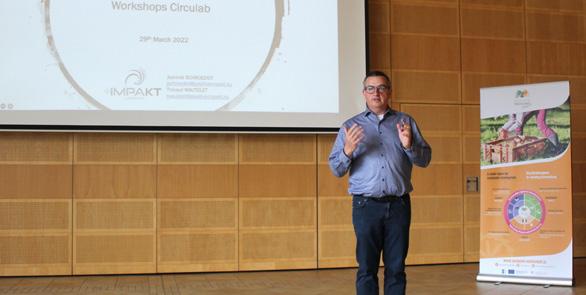
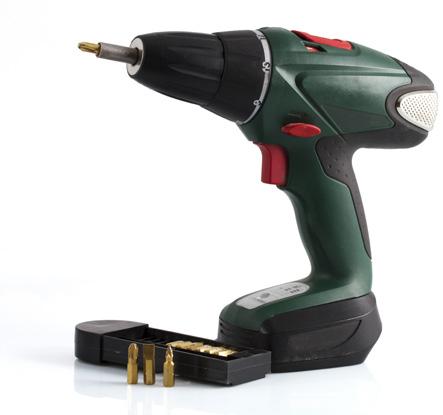
and are trying to simultaneously reduce their environmental impact and production costs. However, some of them are sent back to the drawing board to completely redesign a prod uct or idea that, from a circular perspective, is at a dead end. Jeannot Schroeder likes to exemplify this with a case where a company making power tools needed to cut their manu facturing costs on a screwdriver to be able to lower the price and withstand competition.
- They intended to change all virgin plastic and metal to a 100% recycled plastic and wanted to replace resource-demanding metal screws with cheap, non-reversible clips. They were also proposing to make a cheaper engine, built to last for example 50h instead of 500h, since surveys have shown these tools are only used during a small fraction of their designed capacity, says Jeannot Schroeder.
36 #STAKEHOLDERS | PRIVATE SECTOR
Comparing the new design to the old, and the ecological footprint the machines generate at production, you could make an environmental case for the new version, according to Jean not Schroeder. But as soon as you look deeper you see that the modified one will probably cause unfavourable consumer behaviours and prevent new circular ones.
- Changing metal for plastic will make it break more easily, and with non-reversible clips you can’t take it apart to repair it without also damaging the machine, says Jeannot Schroed er. An engine with a shorter lifespan will make sharing less compelling. Furthermore, with a price that keeps getting lower there’s no incentive to fix it – you can just buy a new one!
Jeannot Schroeder concludes that for the environment it is always preferable to make a product of better quality, and repairable. If an item such as a power tool is also available as a rental machine, the responsibility of repairing and avoiding waste is on the manufacturer’s side. Better quality products will have to be the new standard if we are to move to a circular economy and away from the present profit-driven linear system, where people buy loads of cheap, poor-quality stuff they really don’t need. Future generations will probably be clueless looking back at our society, Jean not Schroeder predicts, and they will ask the obvious question:
- How could you throw away so much?
Did you know?
The average electric screwdriver is only used for about 12 minutes in total before being discarded?
more:
37#STAKEHOLDERS | PRIVATE SECTOR
Read
positiveimpakt.eu/en/
The Circle project
CIRCLE was a transnational cooperation project exchanging experiences in circular economy and environmental-friendly solu tions, running between 2020 and 2022. The aim of the project was to stimulate imple mentations of circular solutions in small and medium-sized enterprises in rural areas.
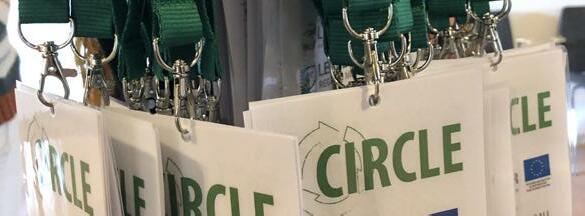
Enterprises play a crucial role in the global transition to sustainable world and through the lens of circular economy, this transition can offer interesting business development opportunities. At the same time, for smaller enterprises, it might be challenging to find the solutions on their own.
Four different Leader regions and one im plementing organisation worked together to realise the project: Kantri ry Leader in Finland, LEADER Regioun Mëllerdall and Natur- & Geopark Mëllerdall in Luxembourg, along with LEADER Sydöstra Skåne and Skånes Ess in Sweden. Within the project several work shops were held and three study tours were carried out, with over fifty participants from the three countries. These tours consisted of presentations, workshops and most impor tantly visits to enterprises, farms and organ isations implementing circular economy or innovative environmental-friendly solutions.
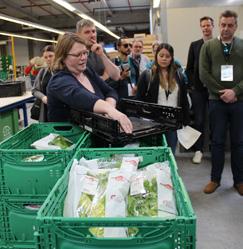
Project participants being introduced to recycla ble and reusable packaging systems at Biogros in Luxembourg.
38 # THE CIRCLE PROJECT
Businesses,
Sweden:
The Absolut Company
Skånefrö
Alltmöjligtverkstaden
Luxembourg:
Group
Ramborn
Mondo
About
Editorial
Texts
PositiveImpaKT
Our choice fashion
Berdorf tourist information
Peintures Robin
Péitche Lauer EcoLodges & Hotel
Beki regional currency
SlowTrips project
Berdorfer Eck
Finland:
Tehdassaari Circular centre
ECO3 Business Area
Hiedanranta edible garden
Nextiili
AhlmanEdu
Vuores wooden district
Kintulammi Hiking area
Cireco Finland
39# THE CIRCLE PROJECT
organisations and initiatives that were visited or gave a presentation during the CIRCLE project:
Gårdsfisk
Economy for the common good Ecotopia
Oikopolis
| Biogros
Del Caffè
|
the booklet Path towards Circular Economyinspirational examples from three European countries:
design: Anette Kulas, Litografen i Vinslöv AB
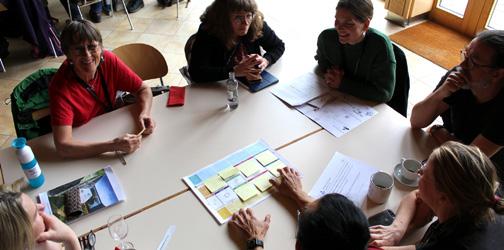
: Erik Rosenblad, Skånes Ess Photos: Julia Falkman, Johanna Grundström, Natur- & Geopark Mëllerdall, Ramborn Cider Co, Cradlenet, Nextiili ry, Tryde 1303, Biogros, Caffè del Mondo, JAPA ry, Gårdsfisk, Cireco Finland Graphics: Page 5: Geissdoerfer, M., Pieroni, M.P., Pi gosso, D.C. and Soufani, K. - Geissdoerfer, M., Pieroni, M.P., Pigosso, D.C. and Soufani, K., 2020. Circular business models: A review. Journal of Cleaner Produc tion, p.123741. https://www.researchgate.net/profile/ Martin_Geissdoerfer2/publication/343810965_Cir cular_business_models_A_review/links/5f628d d092851c07896d7dd3/Circular-business-mod els-A-review.pdf © 2022 Skånes Ess | www.skanesess.se Circular workshop during one of the study tours.
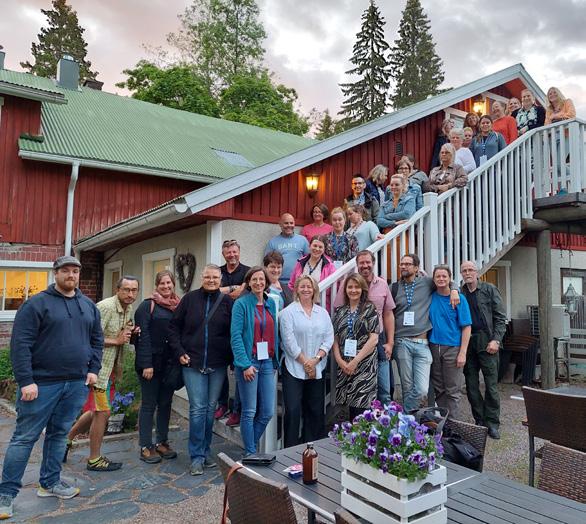


LE ADE R Lokalt ledd utveckling SYDÖSTRA SKÅNE & SKÅNES ESS The European Agricultural Fund for Rural Development: Europe investing in rural areas Participants of the CIRCLE project gathered on a Finnish staircase. Svanenmärkt trycksak, 3041 0390 Litografen i Vinslöv AB
