CITY OF EVANSTON
ENVIRONMENTAL EQUITY INVESTIGATION
EXECUTIVE SUMMARY
12-22-2025


CITY OF EVANSTON
ENVIRONMENTAL EQUITY INVESTIGATION
EXECUTIVE SUMMARY
12-22-2025
The Evanston Environmental Equity Investigation (EEI) centers on environmental equity in Evanston, Illinois, and the impacts that community members face when systemic inequities and burdens exist over many generations. For the purposes of this investigation, the following definition of environmental equity was used:
When all people have the same opportunities for health and prosperity without unfair disadvantages from physical, economic, or social structures.
This study advances the Evanston Environmental Justice Resolution (72-R-20) by deepening an understanding of environmental justice issues present in Evanston today. This work builds upon Evanston’s longstanding climate, justice, and equity efforts that have made the community more sustainable and inclusive. The resolution defines environmental justice as:
When every community member experiences the same degree of access to environmental assets, protection from environmental hazards and health risks, and an opportunity to play an effective role in making decisions that affect the quality of life in Evanston.
Through various methods of rigorous community engagement, key feedback led the investigation to focus on four key topics through the lens of four distinct evaluations. The investigation was informed through a complex understanding of how various topics impact individuals uniquely in both visible and invisible ways.
The following list of goals was developed by Evanston community members, in partnership with City leadership, to guide the process and outcomes of this investigation:
Center community experience, knowledge, and expertise via extensive public engagement, particularly with Black, Latino/ Hispanic, and low-income Evanstonians Document
Provide recommendations that reflect the realities of the City’s planning processes
Ensure recommendations delineate shortand long-term tangible solutions, as well as programmatic and legislative changes that incorporate climate resilience
Ensure recommendations speak to preserving housing affordability and mitigating gentrification
A condition or issue regarded as more important, leading to more urgent use of resources to address.
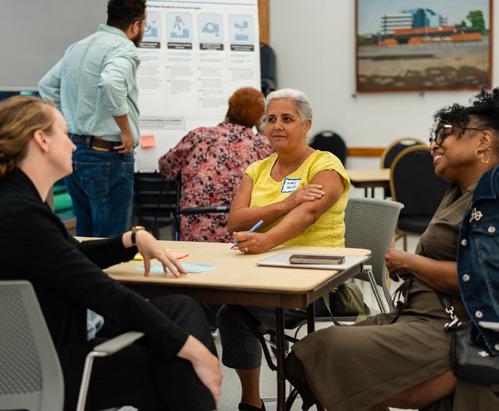
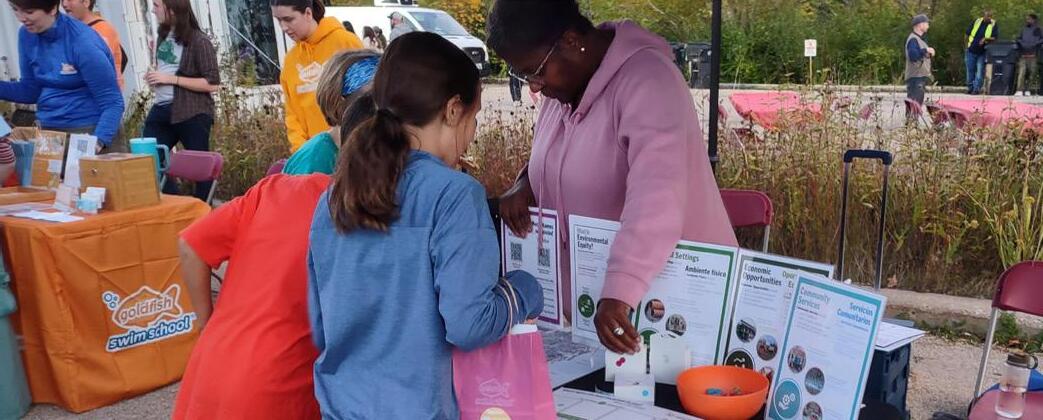
Key groups, representing a diversity of viewpoints, knowledge, and lived experiences provided invaluable feedback and perspective throughout the Investigation process. The following strategies were utilized to reach community members, stakeholders, and department leaders for their feedback, input, and guidance:
Community provided quantitative and qualitative perceptions and priorities on environmental equity.
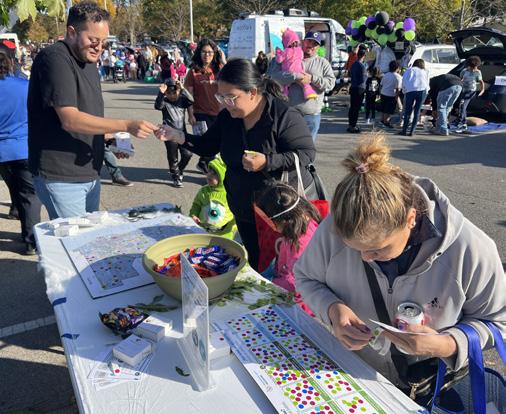
Local pop-up tabling at neighborhood events to gather input from typically underrepresented community members.
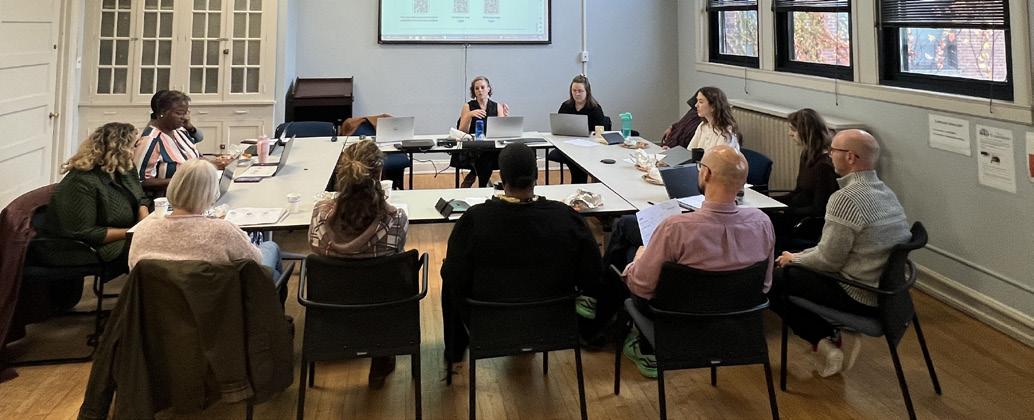
In-depth roundtable conversations to share findings and provide conversational input toward the Investigation.
Four Public Workshops hosted at various community spaces throughout the city.
A seven-member Committee with local expertise in allied organizations guided the Investigation.
City staff, department leaders, and Environmental Justice Evanston leaders met to provide guidance.
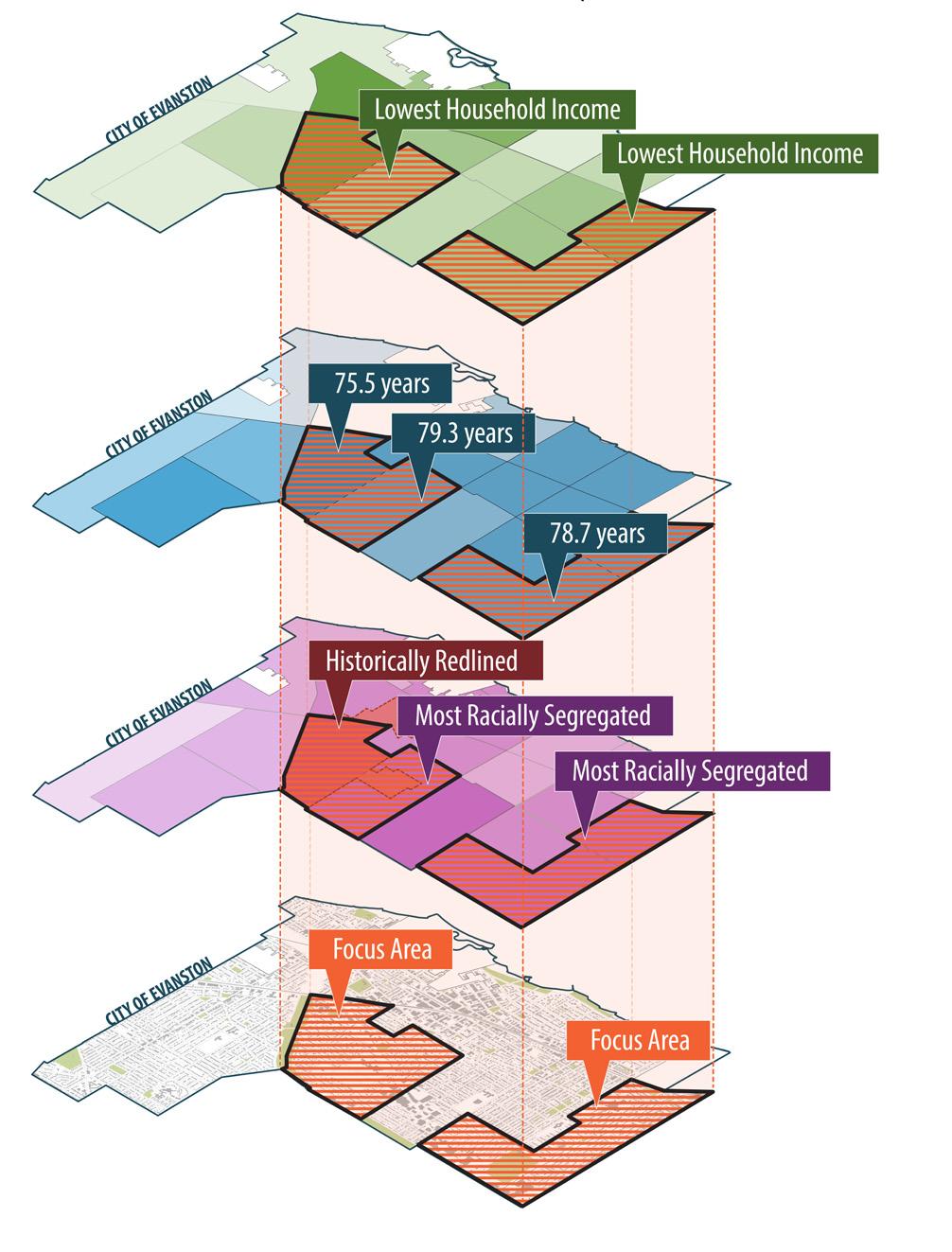
To guide the analysis and evaluations conducted through this process, the Investigation Team worked to identify areas most likely to be impacted by environmental injustice in Evanston, referred to as Focus Areas.
We asked:
Which themes are the highest priority for the investigation to address?
This chart reflects how Community Members voted to prioritize key topics to further analyze and address throughout the process.
unevenlyTreecanopyisdistributedThereisnotenoughgreenspaceNoteveryonehasthesameaccesstoaparkSomeparksdonotmeettheneedsofneighbors
Highvolumetrafficandindustryemitairpollutantsthataffectairquality
Truckandhighvolumetrafficroutes createdisproportionatelyunsafestreets
Pedestrianandbicycleaccessislimited Transit accessand serviceare limited HomesareincloseproximitytoindustryCostsofhousing outpaces household income
Homevaluesare stagnated Housingconditionsexpose familiestoharmful pollutants
Trashoverflowsfrom dumpsters
Peopledonotknowaboutorfeelempoweredtouse311 Streetsdonothave adequatelighting Streetsand sewersflood Alleysarepoorlygradedandindisrepair

The EEI has concluded with a tangible framework for advancing environmental equity through coordinated action at multiple levels. The Investigation has highlighted strategies the City can pursue through policy, investment, and partnerships, in addition to how allied organizations can contribute through education, advocacy, and direct service, as well as opportunities for individual community members to participate in creating a more sustainable, just, and resilient Evanston.
Building on the ongoing work by the City and local community organizations in equity, sustainability, and climate resilience, this report identifies three key pillars (right) to guide and strengthen these efforts.
Directing decisions, resources, and investments to communities and areas most affected by environmental burdens, addressing inequities, and promoting just, positive outcomes.
Empowering community members with knowledge about programs and resources, fostering informed participation and collective action
Enhancing the ability of community members, organizations, and City departments to implement and sustain equitable environmental initiatives, laying a foundation for long-term resilience and shared responsibility.
GE.1. Designate the identified Focus Areas as “Green Zones.” City investments by census tract over time
GE.2. Integrate racial and environmental equity into policy and capital planning.
GE.3. Develop an environmental justice tracking dashboard. Unique visitors to the dashboard website
GE.4. Continue to host environmental justice education and training programs. Attendance of programs
GE.5. Continue to actively engage with and empower underrepresented groups to improve procedural equity.
Open spaces, parks, and trees are more than amenities—they’re lifelines for healthy, vibrant communities. They contribute to cleaner air, cooler neighborhoods, and they protect people from the rising risks of heat and pollution. Parks also offer safe, welcoming places to play, gather, and connect. The topics most frequently discussed among community members and stakeholders include tree canopy coverage, access to parks, and current park conditions.
OS.1. Develop an outreach program to inform property owners about the benefits of healthy trees on their property and parkway.
OS.2. Provide targeted technical assistance to property owners whose lots could support tree planting.
OS.3. Continue to prioritize public tree planting in areas with higher urban heat island effect and higher air pollution.
OS.4. Continue to build capacity among local community groups for sustainable care and maintenance of Evanston’s open spaces and natural resources.

Percentage of tree canopy coverage on private property over time, number of people reached
Percentage of tree canopy coverage on private property over time
Public trees by ward
Number of people trained
OS.5. Explore ways to increase tree canopy cover through the zoning code. Tree canopy coverage over time
OS.6. Develop sustainable funding mechanisms to improve and maintain park facilities. Quality and condition ratings of park facilities over time
OS.7. Work with commercial and industrial property owners to identify potential green infrastructure for their sites.
OS.8. Improve access to Evanston’s beaches and Parks & Recreation programming, especially for community members of the Focus Areas, youth, older adults, and people with disabilities.
OS.9. Pilot a green schoolyards project at a public school in the Focus Areas.
Number of new green infrastructure projects at commercial and industrial properties
Beach pass usage by ward and demographics, number of participants benefiting from fee assistance in the Access Evanston Program
Number of green schoolyards projects - Community Priority
Streets and transportation systems shape how people move, connect, and access opportunity. The design and quality of these systems determine who can travel safely, breathe cleaner air, and reach jobs, schools, and essential services. Historically, many communities have faced disproportionate burdens from highways, traffic, and pollution, while lacking safe sidewalks, bike lanes, and reliable transit.
ST.1. Bolster the public transit network and service in Evanston and explore first-mile/ last-mile transportation solutions to provide better access to transit stops for all community members.
ST.2. Improve existing transit stops to make them more accessible, safe, inviting, and comfortable.
ST.3. Adopt a truck ordinance and strengthen the anti-idling ordinance to reduce nuisances and pollution from freight traffic.
ST.4. Modify design elements of designated truck routes to make them more efficient for freight traffic and to incentivize trucks to utilize the designated routes instead of other roadways.
ST.5. Invest in a low-stress, connected network of cycling and walking facilities across the community for all ages and abilities.
ST.6. Update Neighborhood Traffic Management Policy to incorporate the latest best practices for traffic control measures.
ST.7. Integrate green infrastructure and tree planting into traffic control measures and road diets across Evanston.
ST.8. Explore pilot “green alleys” projects in the Focus Areas to mitigate stormwater runoff and flooding for already overburdened neighbors.
Transit ridership, number of improved transit stops
311 reporting on related issues
Truck traffic on designated routes
Bike counts
Number of new traffic control measures implemented
Number of new green infrastructure projects
Number of green alleys installed
- Community Priority
Access to safe, healthy, and affordable housing remains difficult—mirroring patterns of environmental injustice seen across the country. Historically marginalized communities, particularly Black, Brown, and low-income community members, have been disproportionately impacted by housing conditions - a key determinant of physical, mental, and social well-being - that can impact health outcomes.
HD.1. Develop programs and outreach that help property owners with electrification, energy efficiency, indoor air quality, and weatherization home upgrades.
HD.2. Explore licenses for rental housing instead of the current registration requirements to improve landlord accountability and property maintenance.
HD.3. Build on the Love Your Block program to mobilize neighbors to take an active role in the care, maintenance, and vitality of their blocks.
HD.4. Advocate for inclusionary zoning and increased housing diversity to mitigate housing cost burdens and gentrification that are impacting Evanston’s most vulnerable community members.
HD.5. Expedite the entitlement process for developments that exceed the percentage of inclusionary units required by the Inclusionary Housing Ordinance.
HD.6. Explore the use of Community Benefit Agreements (CBAs) to create mutual benefits from new developments between developers and existing neighbors.
Referral and participation in programs
Number of licenses issued
Number of resident-led block groups and community organizations, code enforcement citations remedied
Number of inclusionary units
- Community Priority
Equitable access to reliable and responsive community services can help protect the health, safety, and well-being of community members, especially those in historically under-invested neighborhoods. By maintaining infrastructure that reduces flooding, conserves energy, and minimizes trash, Evanston can advance resilience for the entire community.
CS.1. Improve the appearance, safety, and functionality of waste enclosures for multifamily residential and commercial properties to reduce waste overflows and enhance neighborhood beautification.
CS.2. Expand programming and education about city services, like the public service guide, to 6+ unit multifamily residential, mixed use, and commercial properties.
CS.3. Continue to support the dissemination of air quality monitors for indoor and outdoor air quality monitoring and partner with organizations to monitor and interpret the data.
CS.4. Prioritize funding for stormwater infrastructure projects within the Focus Areas and in areas with more impervious surfaces.
CS.5. Expand the use of rain barrels in the Focus Areas to mitigate stormwater and flooding for already overburdened neighbors.
CS.6. Align environmental sustainability efforts with local workforce development to encourage people to enter “green” careers.
CS.7. Created targeted outreach programs to increase youth participation in local governance and civic engagement.
CS.8. Establish a citizen academy or educational outreach program to inform and engage community members in local governance and decision-making.

Compliance rate for new developments, number of properties with improved waste enclosures
Participation in city services by dwelling units
Pollution and asthma impacts
Resident 311 reporting on flooding
Participation in city programs
- Community Priority
The work towards a more equitable Evanston does not end with the completion of this report. Rather, environmental equity must be operationalized and ingrained into the efforts of the City of Evanston, allied community organizations, and even individual community members. Turning actions in this report from idea to reality will require collaboration, prioritization, capacity building, and monitoring progress from the following groups:
Community Organizing and Family Issues (COFI)
Evanston/North Shore NAACP
E-Town Sunrise Evanston Cradle to Career Joining Forces for Affordable Housing
Climate Action Evanston
Northwestern University
Faith-based Institutions
City of Evanston Students for Ecological & Environmental Development (SEED)
Evanston Lighthouse Rotary Club
Evanston Community Foundation
State of Illinois School Districts 65 and 202
Cook County
This diagram represents potential community/advocacy organizations, private/ non-profit partners, philanthropic, and governmental entities that may come together to collaborate under one umbrella coalition in the interest of implementing the recommendations of this investigation.
Advancing environmental equity in Evanston will require sustained commitment, shared responsibility, and continued collaboration across multiple sectors. As the City, community organizations, and community members move forward, this report should serve as both a roadmap and a call-to-action; guiding decisions, strengthening partnerships, and supporting transparent progress tracking. By working together to champion these actions, Evanston can build the structures, capacity, and accountability needed to ensure that environmental equity is not just an aspiration, but an enduring and measurable reality for all.
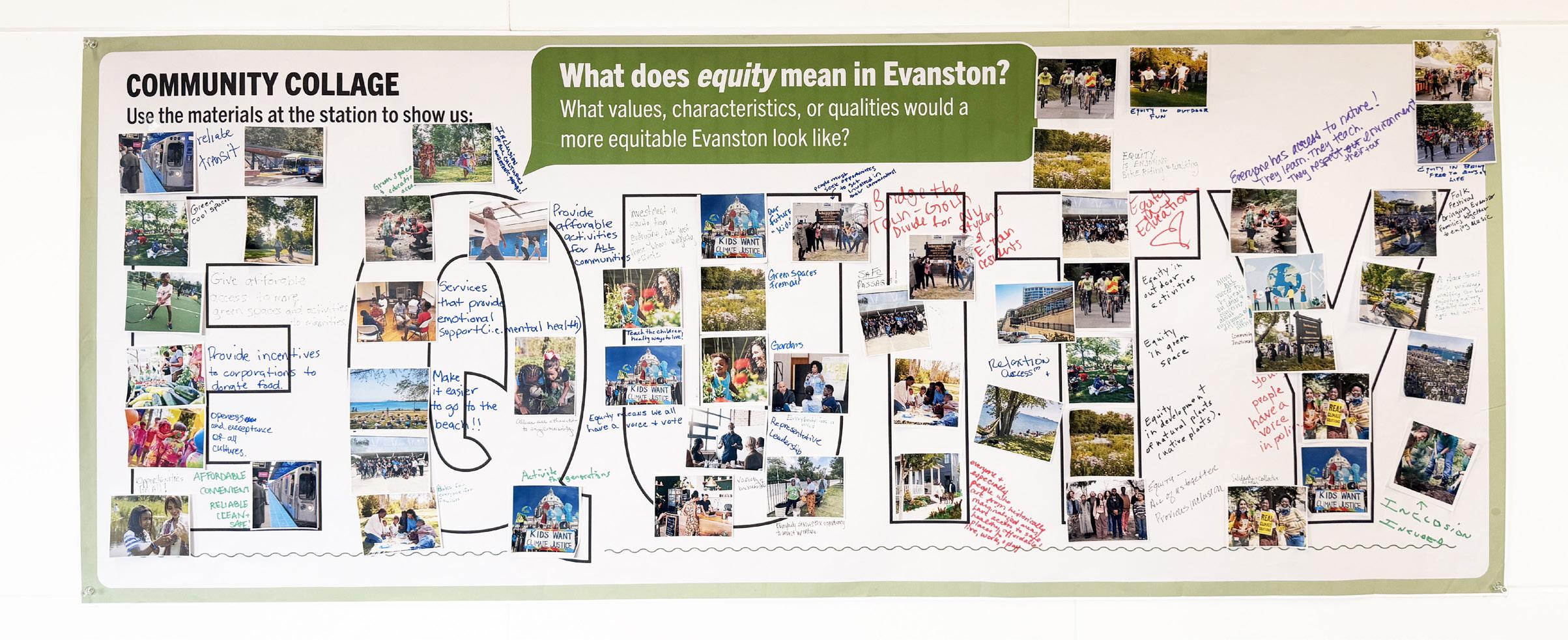
Over the course of several public workshops, community members created a collage communicating what equity means to them; illustrating the values, characteristics, and/or qualities that would be representative of a more equitable Evanston.