“The impact was realizing that everything I went through…could show others what’s possible.”
“True accessibility means more than meeting minimum standards; it’s listening and treating patients with dignity.”
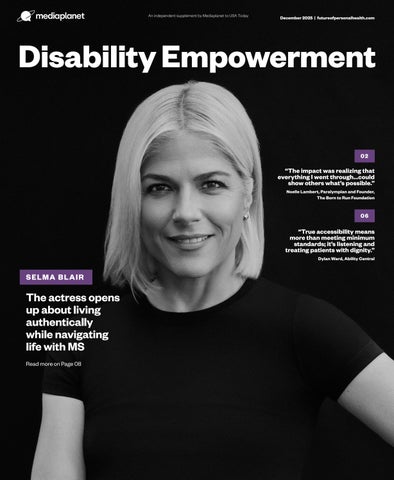
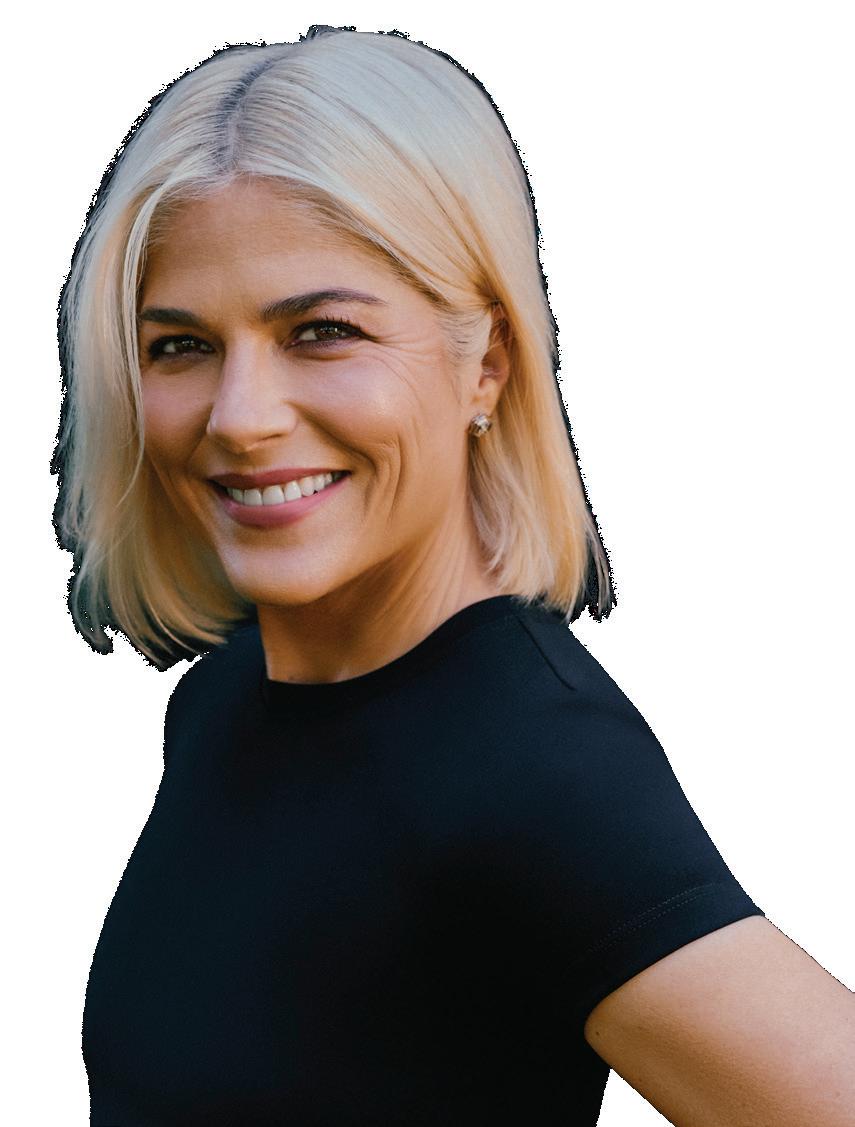
The actress opens up about living authentically while navigating life with MS
Read more on Page 08
SELMA BLAIR
Noelle Lambert, Paralympian and Founder,
Born to Run Foundation
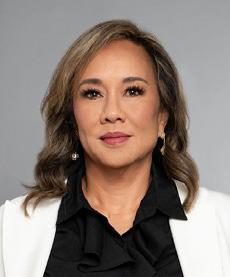
Dylan Ward, Ability Central
Why People Who Have Disabilities Should Be Included in Research and Marketing
Engaging people who have disabilities in research and marketing are essential for creating solutions that work for everyone.
People often say it is hard to find participants who meet the various needs of a study being conducted or a marketing deck that is being designed. However, what we find is our community members, people who have limb loss and limb difference, are often unaware of what opportunities there are and how to participate. If they are not being marketed to, they will continue being excluded and the research and marketing efforts will fail to resonate for a significant portion of the population.
Partnering with trusted organizations and groups to educate and engage communities who are not commonly included, such as reaching individuals who have limb loss and limb difference through the Amputee Coalition Volunteer Research Opportunities platform, extends trust, ensures transparency, and improves outcomes. Providing compensation can also be a way to include participants who come from lower socioeconomic backgrounds, as taking time off of work or finding alternate caregiving solutions can be a financial burden. Research that takes place in rural or virtual settings also opens up opportunities for participants from a wider breadth of backgrounds. These are some ways in which research and marketing could include people who have disabilities, unique health comorbidities, and various needs.
Written by Shree H. Thaker, Director of Communications & Partnerships, Amputee Coalition
What was the biggest adjustment when learning to compete with a prosthetic running blade?
I think the biggest adjustment was getting comfortable with it and figuring out how I could control it. It’s obviously not part of me; it’s just attached to my body. In the beginning, it was rough because I was trying to figure out how to cut back and forth, and how to explode off the blade, but it’s practice and repetition. Eventually, you realize what you can and can’t do with the running blade. The biggest thing was balance and learning how the prosthetic leg worked.
How did your experience as a collegiate lacrosse player affect how you approached training for track and field?
Being a collegiate lacrosse player, I learned work ethic, discipline, and how much hard work it takes to achieve something. The lessons I learned from my coaches and teammates carried over into track and field, even though it’s an individual sport. Being a college athlete also teaches you time management and how to juggle many responsibilities at once. That helped me transition into track and field because this
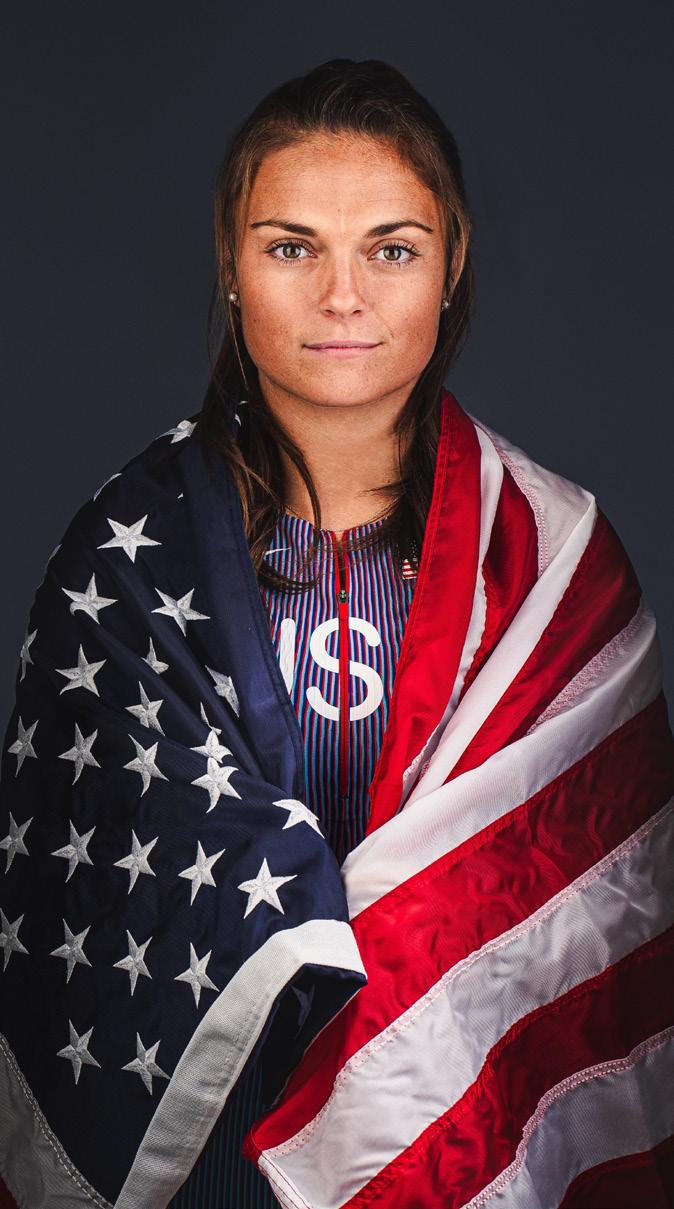
Noelle Lambert on Resilience, Representation, and Reaching the Paralympics
Noelle Lambert, a track and field athlete and founder of The Born to Run Foundation, discusses her journey to the Paralympics.
is my job now, and I know I can juggle a lot while still finding time to train.
What inspired you to begin your journey toward the Paralympics?
When I returned to playing lacrosse, someone from the U.S. Paralympics Track & Field Team reached out and asked if I had ever thought about pursuing the sport. When I lost my leg in 2016, I remember seeing an ad for the Rio Paralympic Games and thinking, “Maybe I could do this someday when I’m ready.” I had never competed in track and field, but the idea of representing my country was exciting. That possibility drove me to pursue it.
What impact did competing on a global stage at the Paralympics have on you?
The impact was realizing that everything I went through — losing my leg, returning to sports, and doing what I love — could show others what’s possible. If I could do this, then so can anyone else going through a difficult time, a similar injury, or living with a disability and doubting themselves. Competing made me believe I could help others on their journeys as well.
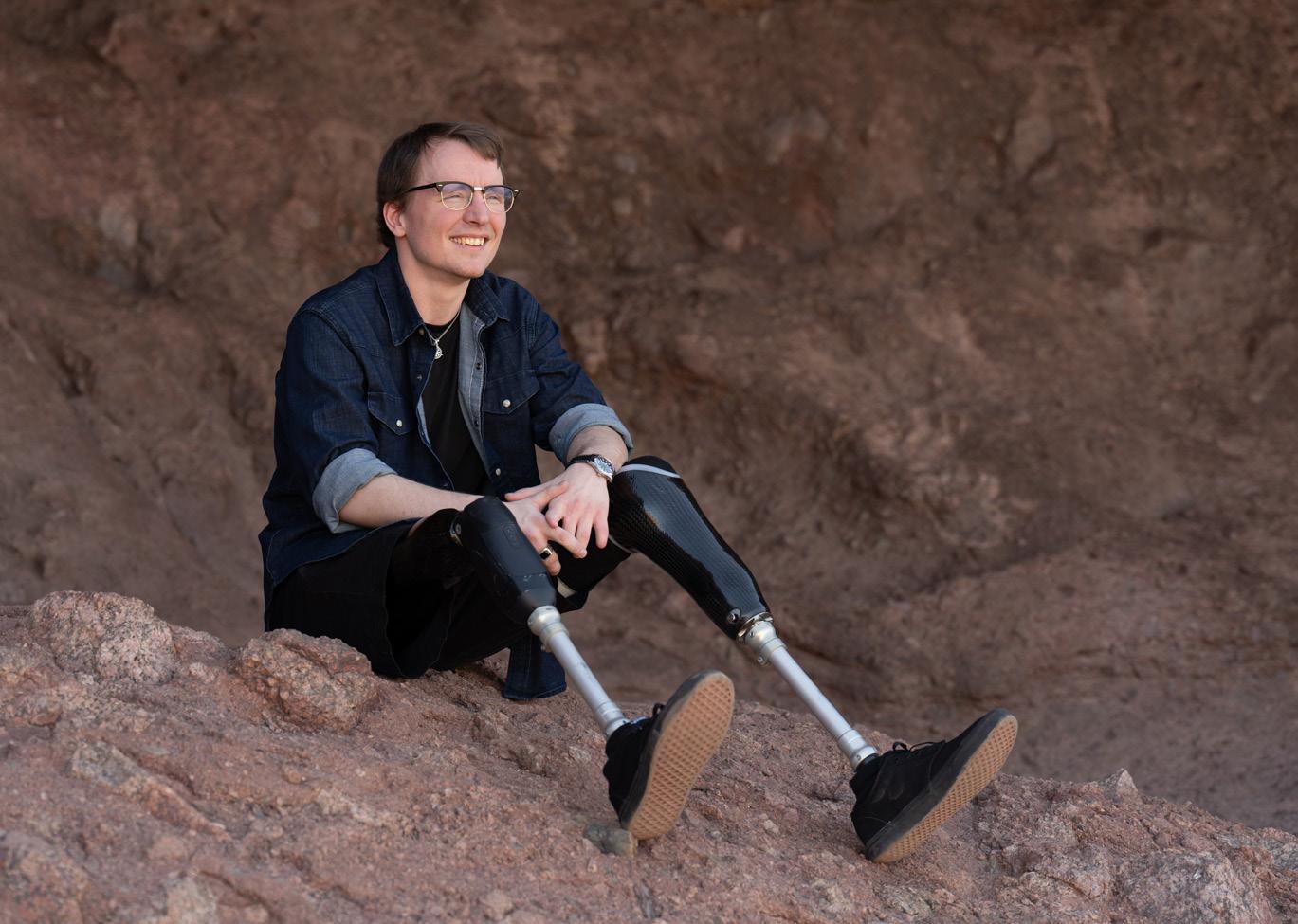
It’s a great privilege to be part of this PAAC community. I’m here to tell you a bit about myself.
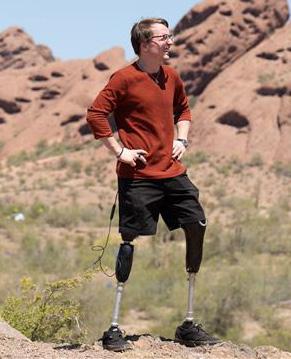
I, of course am a Bilateral amputee, born this way due to a rare condition known as amniotic band syndrome, I have known no other lifestyle. I have an abovethe-knee amputation on my right leg, and a below-the-knee on my left, with some minor deformities on both of my hands. This hasn’t stopped me from living life to the fullest, though!
I have several hobbies that I enjoy. I consider myself an amateur photographer, with a knack for “micro photography.” I like capturing the finer details in life. Other than that, I find nature very comforting. Going on hikes and listening to music is a great way to spend a weekend.
I come from a humble background, but an interesting one, to say the least. I’m originally from Serbia, but I was adopted
at the age of 6. I have 12 siblings, two nieces and two nephews. All my siblings are adopted — six from Russia, six from Bulgaria. I suppose one Serbian was enough for my parents. I honestly owe them everything for giving me a second chance in life. They have an unconditional and insurmountable love for their children.
Most of my siblings have some sort of mental or physical disability, but growing up, our parents never allowed us to use those shortcomings as an excuse. They believe in us and push us to be the very best that we can be. I’m grateful, too, because I know that if I set my mind on something, and work hard enough, anything is possible.
Living without limitations
I’m 26 years old and still figuring out who I am and what I want out of life. I’m a people person, so I pursue work that will have a
meaningful impact on other people’s lives. PROTEOR has helped greatly in this regard. Serving as a patient ambassador/peer-to-peer mentor has allowed me to help others and share my story. I was first introduced to PROTEOR when I had the opportunity to try their QUATTRO Microprocessor Knee.
I’m tough on the products that I use, as I believe one should be able to live life without limitations.
I had done a number on the prior microprocessor knee I was using, so I was in the market for a new one. One of PROTEOR’s sales reps, Brad Flowers, got in touch with my clinician, Frank Loverso, to do a test fitting, and I was immediately in love.
The QUATTRO knee was a game-changer for me. I was suddenly able to descend stairs without having to hold onto the railing. I could get in and out of vehicles a lot easier and didn’t have to actively think about
walking anymore. The fluidity, stability, and durability of this knee is unbelievable!
It’s been a real pleasure to be exposed to this industry and other amputees. Being able to hear other people’s stories and the struggles they’ve overcome is inspiring. That’s what PROTEOR is all about: putting humans first by improving the quality of life for amputees. They value our opinions and make the effort to implement the feedback we give them on the products they manufacture.
Written by Spencer “Bojan” Boyd, Brand Ambassador and Peer-to-Peer Mentor, PROTEOR
Spencer “Bojan” Boyd Photos courtesy of PROTEOR
Making Driving Accessible to Everybody
Torsten Gross wants everyone to have the freedom to get behind the wheel. Volkswagen is doing its part.
Torsten Gross has never let anything stand between him and his goals. After a diving accident left him a C6 Quadriplegic (with no control or sensation in his lower body and limited movement below his neck) at the age of 15, he could have accepted the limitations of his condition. Instead, he became the world’s only quadriplegic rescue scuba diver, and completed 12 marathons in 12 months — among many other achievements.
“I never see obstacles as things that I have to overcome,” he said. “‘No,’ to me, is just a request for more information.”
His most recent achievement — becoming a race car driver — is especially important to him.
“Performance driving is the only sport on the planet that makes us equal to able-bodied people,”
he said. “The car does not care that I’m in a wheelchair. Nobody on track knows that I’m in a wheelchair.”
Just Hands
Gross was determined to share this sense of freedom and equality with other people with disabilities. That desire led him to launch his nonprofit, Just Hands.
“I’ve been in the chair now for 32 years,” he explained. “I want to remove barriers for other people so that they don’t need to start from square one. What we do at Just Hands is, we get adaptive drivers to experience equality. I wanted people to be able to experience what I get to experience.”
The impact has been obvious — and profoundly emotional. “One woman I met, she’s been in the chair for nine years,” Gross said. “She was in a car accident and had
not driven since. I said, well, your streak ends today. And I put her behind the wheel of the car, and we just drove around the paddock for a little while. She burst into tears. That has kind of changed her life.”
I want to remove barriers for other people so that they don’t need to start from square one.
The disability tax
Some of the challenges people with disabilities face when getting behind the wheel of a car are
personal. But many of the obstacles preventing a disabled driver from driving a car are much more practical — and in some ways more difficult to overcome.
“There’s something I call the disability tax,” Gross explained. “Being in a chair comes with a financial burden. If you want to go skiing, it’s $120 for the season rental — but it’s a $5,000 monoski for us. If you want to play basketball, it’s an $80 basketball and you go to the public hoops — but it’s a $6,000 basketball chair for us.”
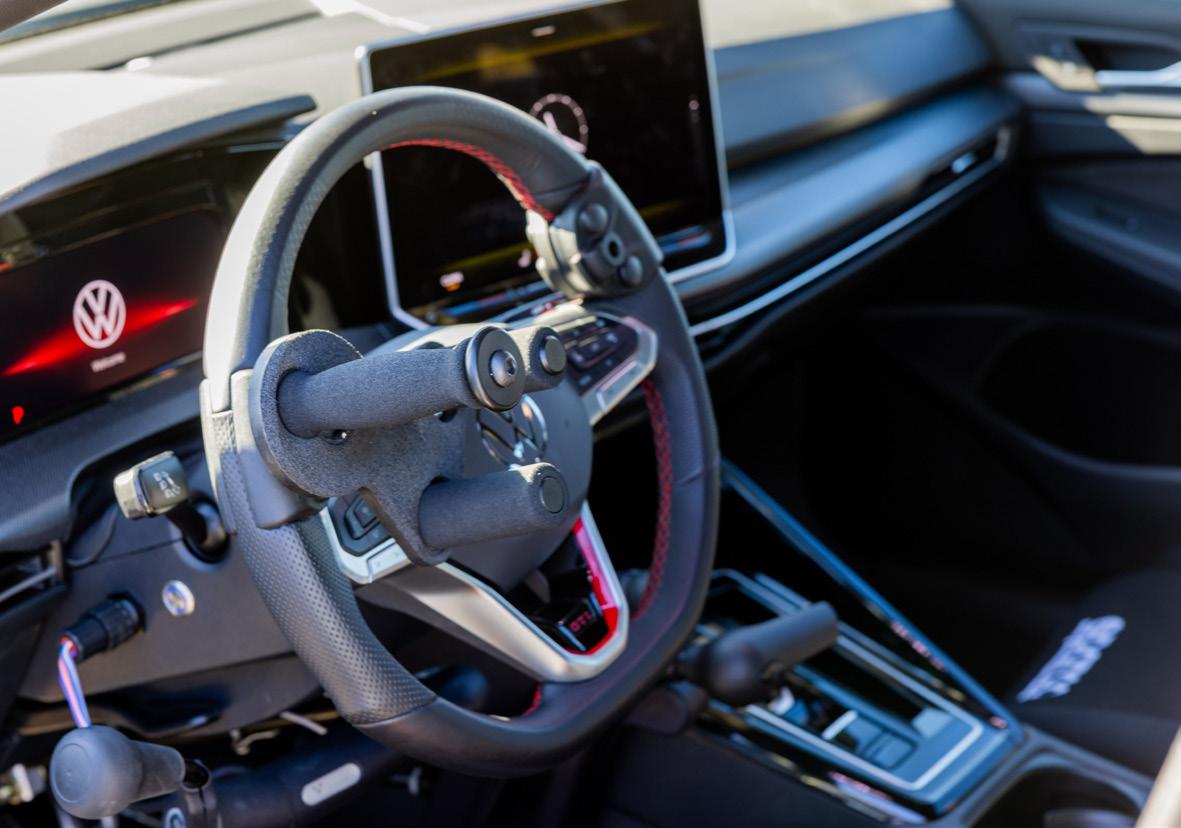
Standard model cars must have adaptive technologies installed to allow people with disabilities to drive them, like hand controls or wheelchair lifts. On top of the cost of the car itself, people often assume these modifications are beyond their budgets.
That’s one reason Gross was excited to join forces with
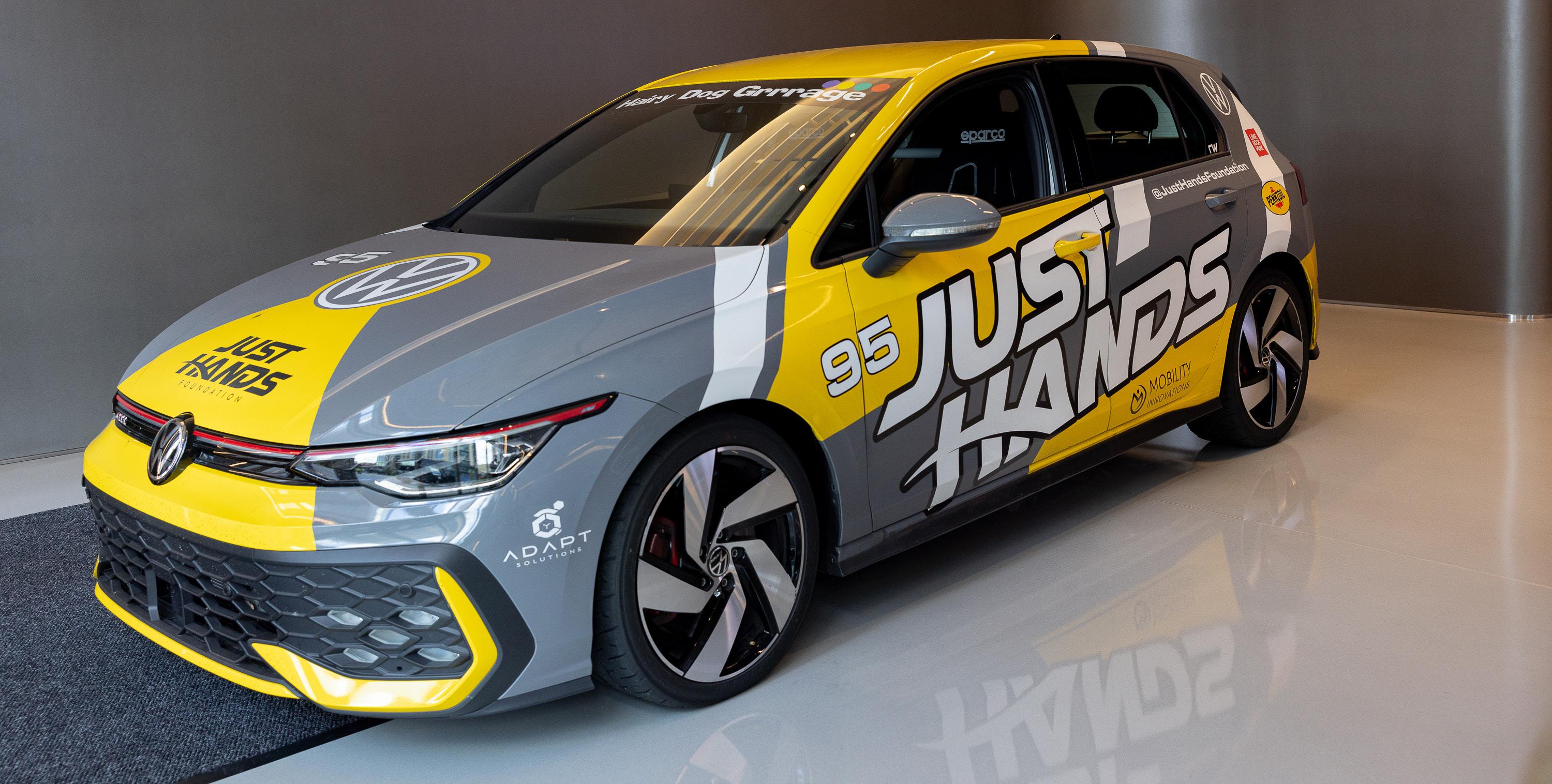
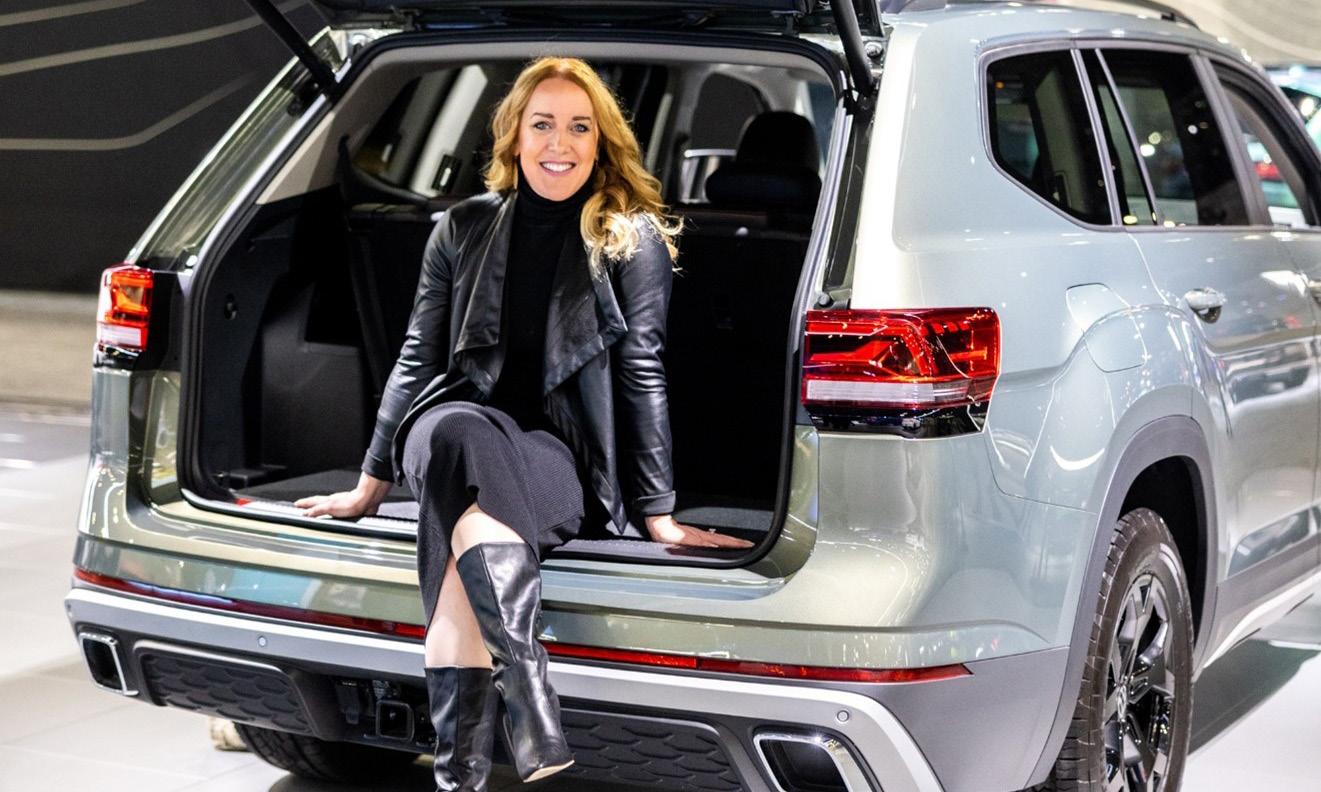
The GTI Volkswagen provided to Just Hands | Photos courtesy of Volkswagen
Volkswagen of America and become a brand ambassador for its Driver Access Program.
Driver Access
“There’s this belief that it costs an astronomical amount to adapt a car,” Gross noted, “and that companies like Volkswagen will not help. And that’s just not true.”
“The whole purpose of Volkswagen’s Driver Access Program is to make sure we’re making Volkswagen accessible,” explained Rachael Zaluzec, senior vice president, customer experience and brand marketing at Volkswagen of America. “We want our vehicles to be accessible for passengers, but also for drivers with disabilities.”
The program provides up to $1,000 in reimbursement for eligible modifications on select vehicles to offset the cost of the adaptive equipment. The process is straightforward: An owner has the modifications done at an adaptive equipment installer of their choice within the program timeframe, then they submit a driver access form (which is found on vw.com) and required documentation within the same timeframe. Once everything is submitted and approved, the reimbursement will
be sent directly to the owner.
“It is a sea of confusion out there when it comes to accessibility and adaptive equipment,” Gross noted. “Volkswagen’s Driver Access Program is easy, and that is not the norm in our community. It’s amazing to have an access program that makes us equal again — not just equal on the track, but equal in everyday life — and you’re now making us equal financially, too.”
Getting it right
Zaluzec and Gross met at an auto show, where they bonded over their marketing careers and shared love of scuba diving. That meeting led to a collaboration that has been mutually powerful.
“Having Torsten’s voice, his input, is so important,” Zaluzec said. “We don’t want to assume. An engineer can sit at a table and say, we think this might be good. Well, great — but until you have a practical application of it, and somebody who has the bold willingness to share their opinion, we’re never going to get it right.”
For his part, Gross is focused on moving the needle for his community. “It is hyper important to have the community involved,” he said. “Things move slowly in
every business, but bring on those people who will help accelerate it. And I’m one of them. I want to improve the product. How would it work for us? How would it work for a C6 quadriplegic?”
Volkswagen supported Just Hands through a marketing collaboration by providing the organization with its own GTI. Just Hands then worked with a third-party installer to add adaptive modifications, helping address the organization’s six-year waiting list caused by a shortage of vehicles.
“You know, I like to think of myself as a fairly manly man,” Gross said with a laugh, “but I cried at that moment, because here’s literally a car rolling up that is the exact same car I drove 30 years ago.”
For Zaluzec, moments like that are what it’s all about. “That’s the power of the relationship we have
with Torsten. Between the things he’s doing to empower so many people to be mobile and what I can do behind that, with the strength of the Volkswagen brand, it’s just unbelievably cool.”
Gross believes he’s found the right team — and a true partner — with Volkswagen. “To have a company that actually cares, and doesn’t just want to use somebody that looks like me as a token, is so special,” he said.
Written by Jeff Somers
For more information about Volkswagen’s Driver Access Program, scan here:
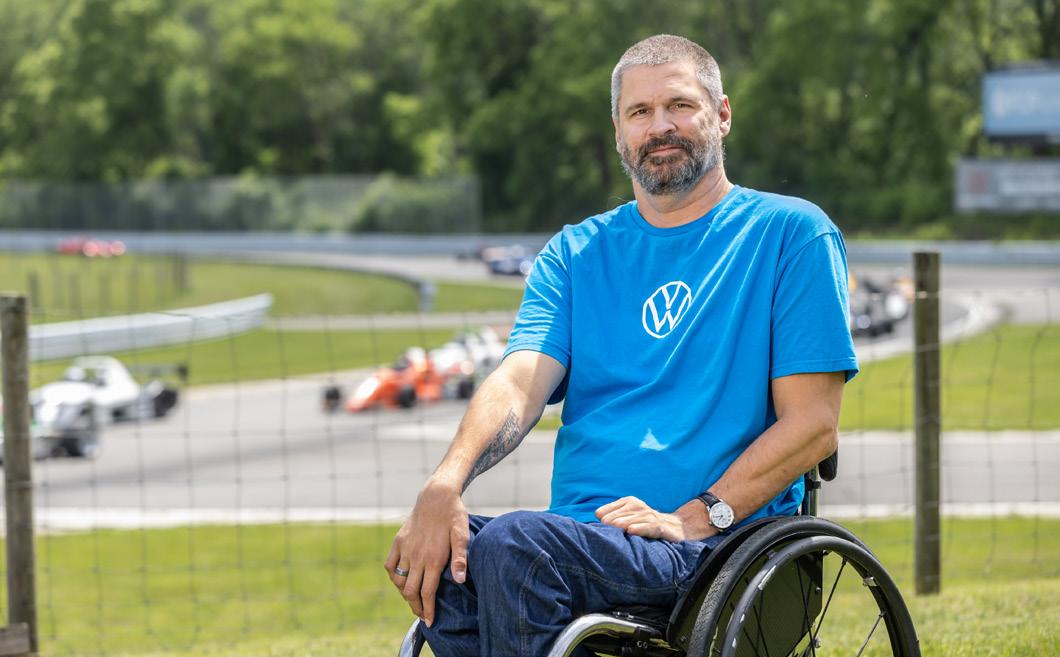
Torsten Gross, Founder, Just Hands
Rachael Zaluzec, Senior Vice President, Customer Experience and Brand Marketing, Volkswagen of America
The interior of the GTI Volkswagen provided to Just Hands
When Healthcare Isn’t Hearing You: The Need for Accessibility
Healthcare facilities often struggle to accommodate patients with hearing loss, underscoring the urgent need for better accessibility and patient-centered communication.
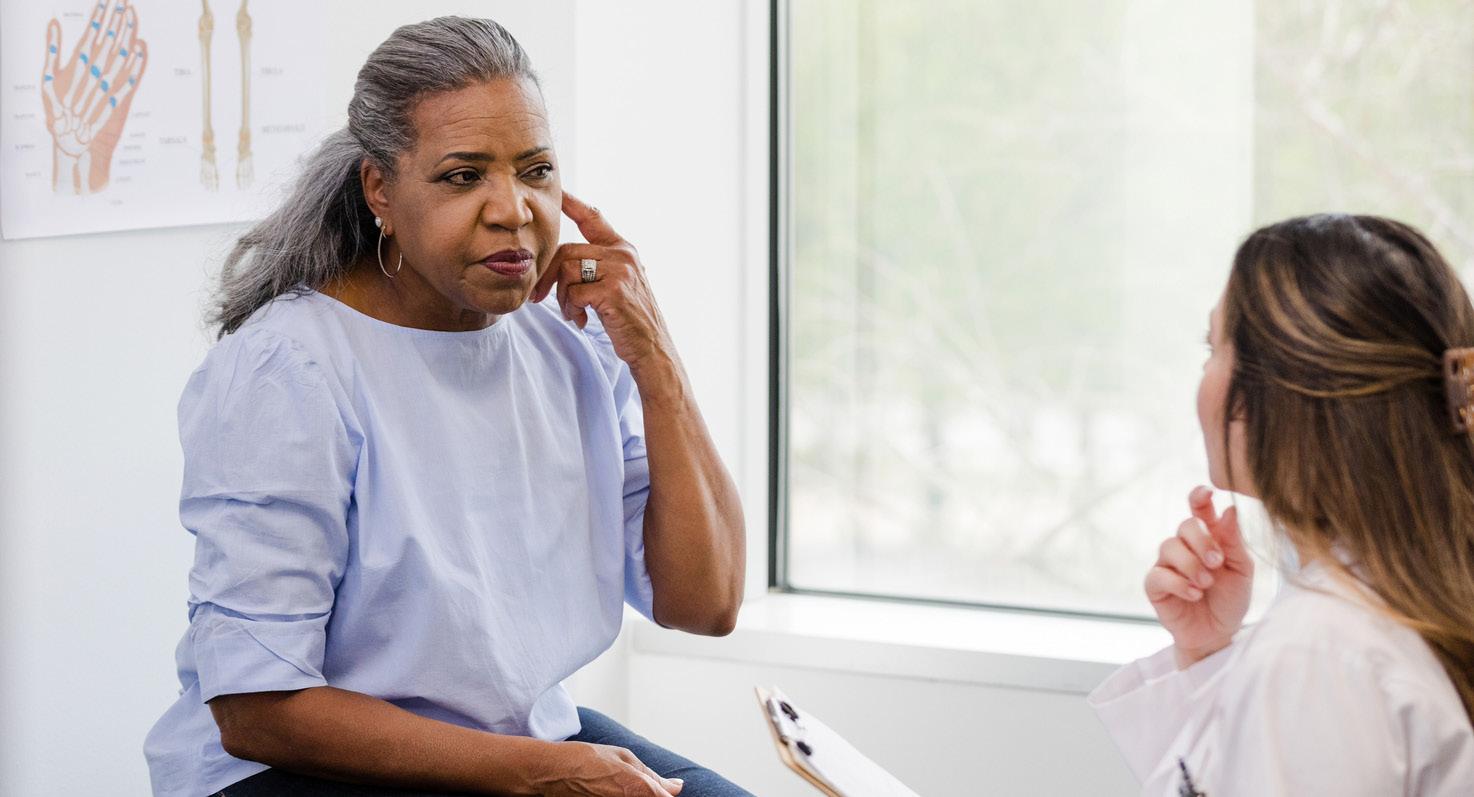
Irecently visited an outpatient center for surgery. I have cochlear implants and use external processors in both ears. Without them, I am completely deaf. I do not use sign language, but I can lip-read. Due to the location of the treatment area, I was unable to wear my processor on my dominant left ear. I could still hear some sounds through my right side and understand a bit of speech by lipreading, but it was far less reliable.
It became nearly impossible when staff wore masks. Once they realized I was struggling, some lowered their masks so I could lip-read. Even though I explained that I am hard of hearing, it wasn’t always understood until every other attempt at communication had failed. These frustrating moments show how unprepared many facilities
remain when it comes to supporting patients with disabilities.
Preparing for your visit
If you’re visiting a facility for the first time, it’s a good idea to contact them in advance. Ask about check-in procedures, share any accessibility needs, and explain what accommodations will help. On the day of your appointment, plan to arrive early to allow for delays, such as parking or long check-in lines. Giving staff advance notice makes it easier for them to assist you.
Advocating for yourself
One mistake I made was not telling the staff in advance about my hearing disability. It’s difficult to explain your needs while being moved through rooms and procedures. Staff may acknowledge your explanation, but that doesn’t mean they fully
understand it. Healthcare workers are trained to manage patient needs, but they are only human and may not grasp the full reality of your lived experience. Bringing a caregiver, family member, or friend can help. A companion provides both emotional support and assistance with communication, especially when instructions for follow-up care are given. Some facilities restrict companions to waiting areas. Be sure to ask ahead, as exceptions may be made if you communicate your specific needs.
Accessibility beyond mobility
The Americans with Disabilities Act requires medical offices to be accessible for people with mobility issues, to provide equal access, and to make reasonable accommodations when needed. While mobility needs are widely addressed, less
visible disabilities — such as deafness, blindness, or neurodivergence — also deserve equitable access. Ensuring accessibility means looking beyond ramps and elevators to meet the needs of all patients.
After your visit
Many medical offices send follow-up surveys. This is your opportunity to share feedback on what worked and what didn’t. By suggesting changes on how they can improve accessibility or adjust their processes, you can help better support patients with disabilities in the future.
True accessibility means more than meeting minimum standards; it’s listening and treating patients with dignity. Inclusion isn’t optional; it’s essential.
Written by Dylan Ward, Ability Central
Photo by SDI Productions
Different, Not Less: The Story of a Special Olympics Athlete
A Special Olympics athlete writes about his own experience being stereotyped, misunderstood, and excluded.
Growing up, I always knew I was different, but I didn’t understand how different until high school, when my mom told me I had Asperger’s syndrome and ADHD. Hearing that helped me finally make sense of a lot of things — the way I thought, the way I learned, and the way I connected with others. It didn’t change who I was, but it did change how I saw myself. Unfortunately, not everyone saw me the same way. I’ve been called names, the R-word being one of them, more times than I can count. Every time, it made me angry. It felt like people were judging me before even getting to know me. That word made me feel like I was being seen as less than human, as if I didn’t belong. But the truth is, I’m not less. I’m just different.
When people use that word, they may think it’s harmless, or even a joke. But to those of us who have been on the receiving end, it’s painful. Words matter. They shape how people see you and how you see yourself. If you take anything from my story, I hope it’s this: Think before you speak. You can always choose a better word, one that builds someone up instead of tearing them down.
Creating change and moving forward
Over the years, I’ve made it my mission to educate others. In high school, I gave talks in my health and child development classes about autism and inclusion. I wanted my classmates to understand that people with disabilities aren’t dumb or incapable; we just think and learn differently.
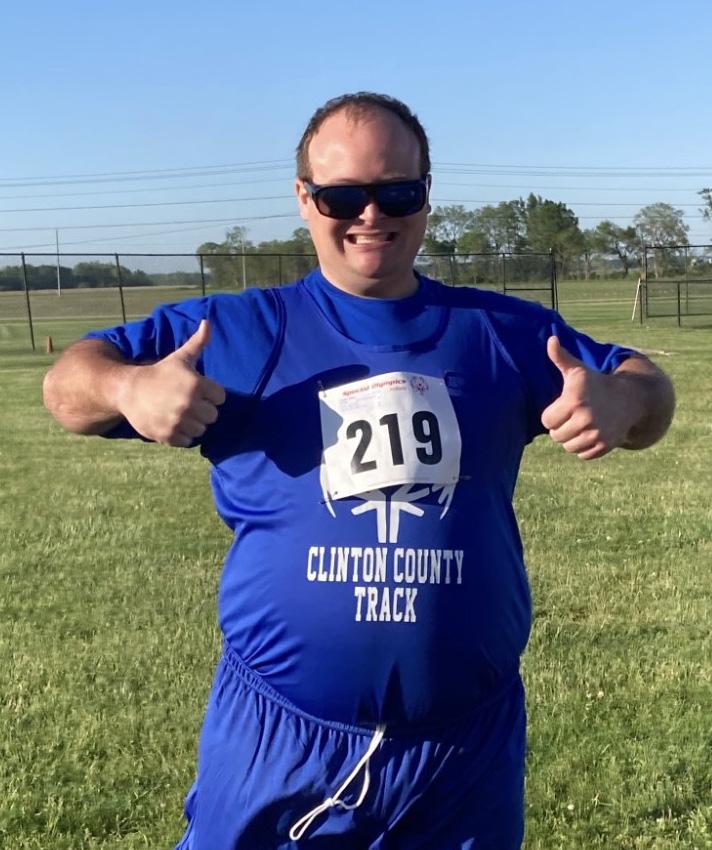
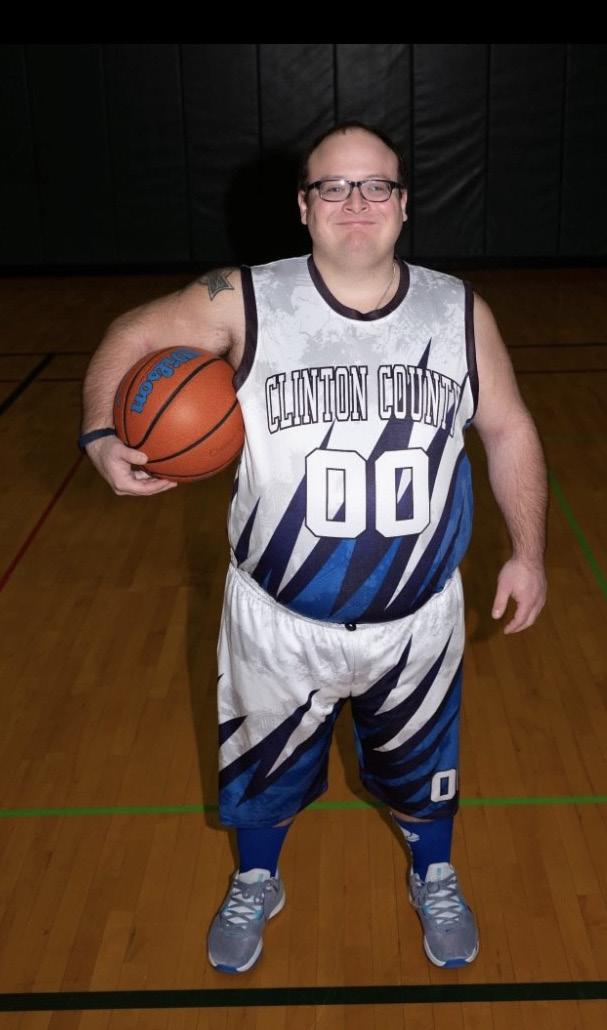
I’ve done things I never imagined I could do. I help my uncle with his kayaking business. I’ve taught Sunday school. I’ve even given a sermon at church. I serve as chair of my county’s Athlete Leadership Council through Special Olympics, something that allows me to help others and represent my community. I’ve even earned medals in Special Olympics sports. Sports used to feel out of reach for me, but I discovered I’m a lot stronger than I thought.
taken patience and persistence. Nothing has come easy, but I’ve learned that some of the best things in life never do.
A homecoming
I also graduated from high school with a regular diploma and earned my driver’s license. Every goal I’ve achieved has
One of my favorite memories was my first time at the Special Olympics Summer Games. When I walked into the opening ceremonies, I was overwhelmed by emotion. I had to step outside because I started crying tears of joy. For the first time in my life, I felt like I truly belonged. I told my mom, “I feel like I’m home.”
That’s what inclusion feels like — like coming home, like being surrounded by people who see you for who you are, not what they think you’re not.
So, to anyone reading this, take time to get to know people before judging them. Respect goes a long way. We don’t all have to be best friends, but we do need to treat each other with kindness.
I’ll keep saying it because it’s who I am and what I believe: I’m different, not less. And no one else is, either.
Written by Taylor Sims, Athlete and Advocate, Special Olympics
Taylor Sims
Disability Inclusion: The Key to FutureReady,
Resilient Workforces
Disability inclusion is reshaping global business strategy, driven by evolving workforce demographics and clear evidence that it fuels innovation, business performance, and brand loyalty.
Accenture and Disability:IN’s report “The Disability Inclusion Imperative” demonstrates that companies leading on disability inclusion are more likely to outperform their peers. These businesses see, on average, 28% higher revenue, twice as much net income, 30% higher economic profit margins, and 25% more productivity.
This isn’t a coincidence; it is the result of investing in systems that enable agility, innovation, performance, and sustainable competitive advantage. People with disabilities are often expert problem solvers, creating alternative approaches to overcome challenges. This mindset has proven to be invaluable in business.
The realities of a modern workforce
An estimated 1.6 billion people identify as people with disabilities, and we know that the numbers are likely much higher and growing. Eighty percent of people acquire a disability during their working years, which means disability inclusion is not a side-of-desk initiative but rather a strategic response to the existing realities of a modern, dynamic workforce.
The data makes the case: Disability inclusion accelerates performance today and prepares organizations for tomorrow. Companies that embrace disability inclusion gain a decisive advantage: attracting the workforce of the future, strengthening their ability to innovate and lead, and positioning themselves for sustainable, long-term growth.
Written by Jill Houghton, President & CEO, Disability:IN
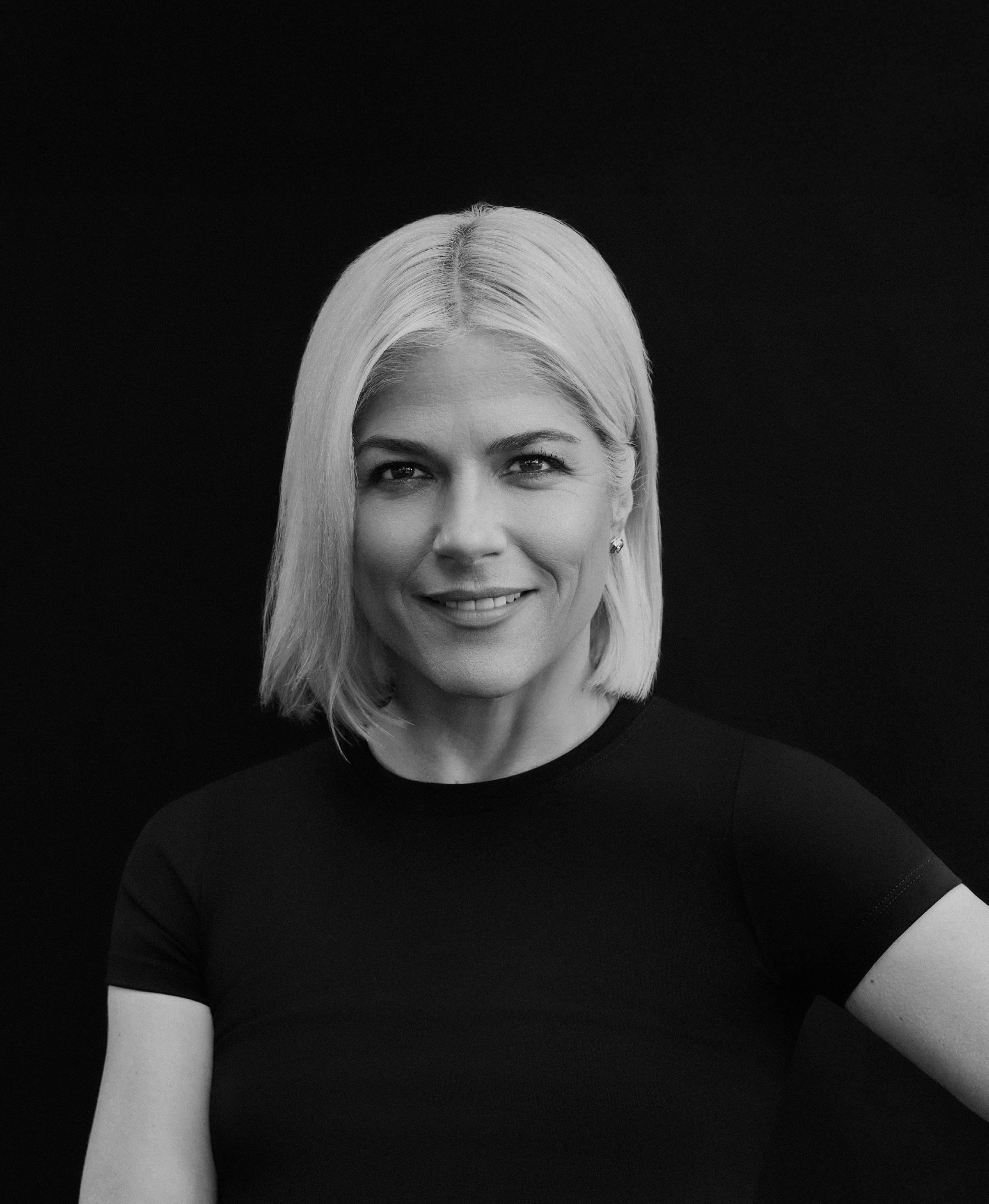
Selma Blair Shares Her Journey Toward Disability Empowerment
Actress Selma Blair reflects on living with multiple sclerosis (MS), sharing how vulnerability, visibility, and community have shaped her approach to advocacy and resilience.
You’ve become one of the faces of MS. What does disability empowerment mean to you?
Disability empowerment means living as best I can on my own terms. It means recognizing the challenges and still showing up as myself. It’s about learning from the community. It’s about dignity, self-advocacy, and refusing to be reduced to limitations.
What role did vulnerability play in your decision to share your journey publicly?
Vulnerability was the turning point, but I felt more vulnerable and misunderstood by people who didn’t know the truth of my condition, yet judged how I moved or talked or acted with a really harmful slant. I believe in the truth, so for me, that was always going to carry vulnerability closely at first. I could stop hiding, and in return, I found connection.
What message do you hope your story sends to others living with invisible illnesses?
Now that I am doing much better, my disabilities are more invisible. Your experience is still valid even if it’s unseen. You don’t need to prove your pain to deserve compassion, and invisibility does not equate to insignificance. I learn more compassion and humility every day, with how much we can change on any given day, for better or for worse.
What has been the most surprising lesson about resilience you’ve learned while living with MS?
Resilience is not toughness; it’s flexibility. It’s learning to adapt, to rest when needed, and to still find joy in the midst of struggle. For me, resilience is integral to my own development.
What would you like people who don’t have disabilities to better understand about living with MS and disability in general?
Everyone, no matter what, will face disability in their lives. Old age will bring impediments. The sooner an individual can embrace the coexistence between the reality of their situation with joy, ambition, and love, the more fulfilled life we will all have. I would like to point out that accessibility and empathy are human rights and not charity. This is something that society would do well to embrace.
If you could redefine “strength” through your own experience, what would it mean?
For me, strength is honesty. It’s asking for help, showing up authentically, and believing in your worth even when you feel vulnerable.
Selma Blair | Photo by Amy Harrity
How to Age in Place With Confidence
Aging in place helps older adults and individuals with disabilities to remain in the comfort of their own homes, surrounded by familiar routines, memories, and community.
While staying at home is often the preferred choice, it can become challenging when the environment is no longer accessible to a person’s changing physical or cognitive needs. Addressing these risks early is essential to maintaining independence, health, and quality of life.
Home environments can become unsafe for many reasons. Stairs can become a daily obstacle, narrow doorways may make mobility devices difficult to use, and poor lighting increases the risk of falls, especially at night.
The good news? Many of these challenges have practical, affordable solutions that can extend someone’s ability to stay at home
safely. For example, home modifications, such as grab bars, ramps, widened doorways, and stair lifts, can make a dramatic difference in preserving independence.
Entrusting professionals
Still, knowing where to start can feel overwhelming. This is where having a professional, like an aging life care manager, can help. These experts specialize in assessing the whole person, not just their home, to create a plan that supports aging in place. An aging life care manager evaluates safety risks, identifies functional challenges, and recommends modifications or assistive devices based on an individual’s unique needs. They can
coordinate with home health providers, occupational therapists, and community resources, ensuring the right solutions are in place. By taking steps today to proactively address home safety and tapping into expertise, you can maintain independence longer, reduce the risk of injury, and continue to live where you feel most at home, safely and with confidence.
A Brief History of Disability in the United States
Industrial Revolution: The first Industrial Revolution coincided with the founding of the United States. There were long working hours, no safety regulations, and little access to medical care, so acquired disability was commonplace.
Reconstruction to World War I: The so-called “Ugly laws” were enacted in many cities — New York, Chicago, Denver, New Orleans, Portland, and more — which sought to prevent begging by disabled people by making it illegal for a person with a visible disability to be seen in public.
1907-1940 eugenics laws: Laws enacted in 30 states allowed for the forced sterilization of the developmentally disabled, mentally ill, and those with substance use disorders. The last recorded involuntary sterilization under these laws occurred in the 1980s.
1938 Fair Labor Standards Act: Made it legal to pay those with disabilities less than minimum wage. This law is still in force.
1968 Architectural Barriers Act: The 1960s saw the launch of the disability rights movement in the United States. This act required federally owned or leased buildings to be accessible to the disabled.
1975 Individuals with Disabilities Act: For the first time, children with disabilities were guaranteed the right to be integrated in public schools.
1990 The Americans with Disabilities Act (ADA): The ADA not only protects the rights to access of persons with disabilities, but also made it illegal to discriminate on the basis of disability for the first time.
WRITTEN
BY
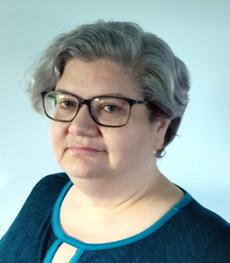
Kasey Minnis Executive Director, Multiple Sclerosis Foundation
Nothing Stronger Than ‘Ohana
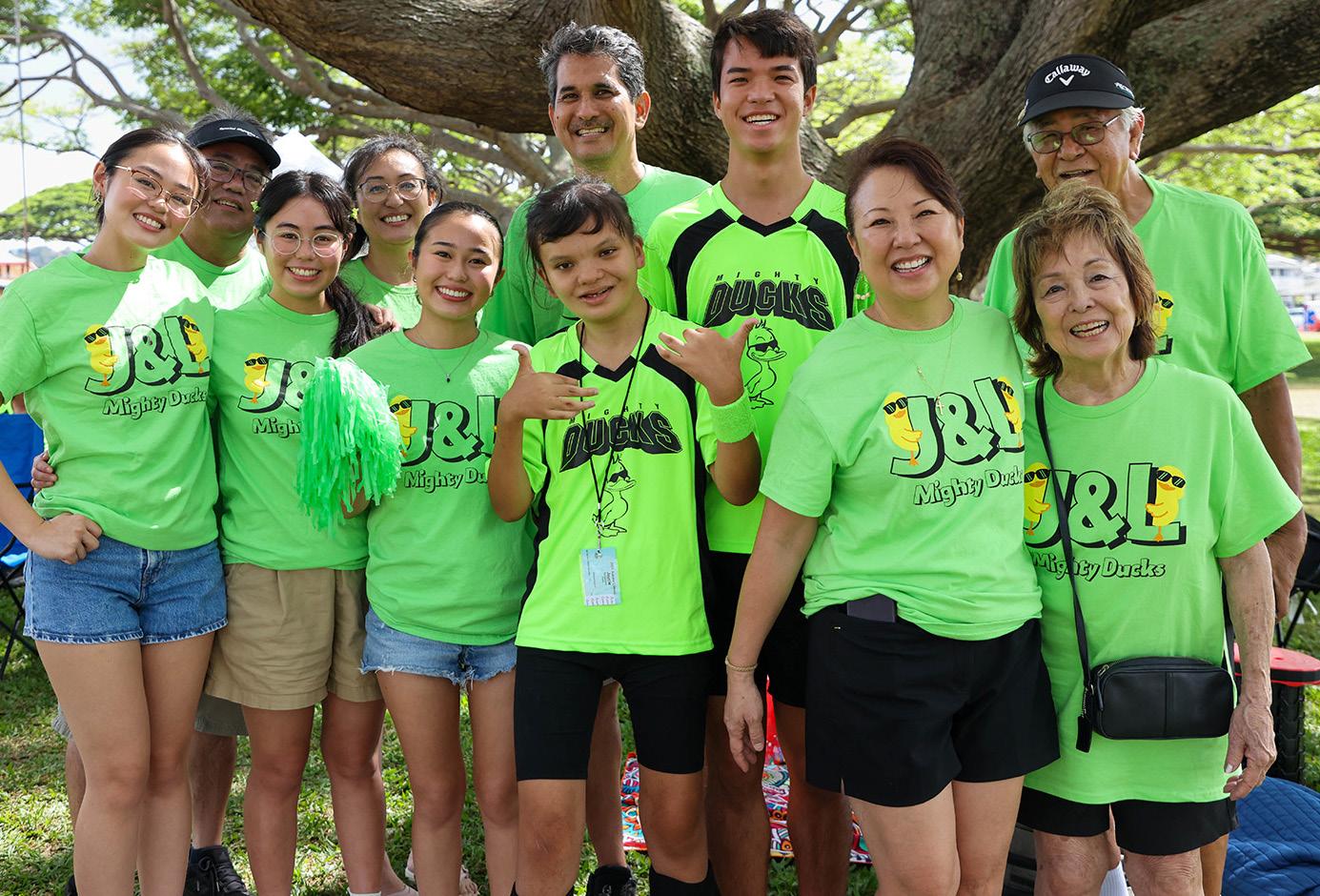
For eight long years, the Anderson family prayed for children. When they learned they were expecting twins, a boy and a girl, they were overjoyed. Luke and Jaycie arrived together, just a minute apart, but their paths unfolded differently.
From the start, doctors noticed something unique about Jaycie. Despite rounds of tests, there was no clear diagnosis. She was nonverbal, faced major developmental delays, and by her first birthday had already undergone multiple surgeries. Still, her spirit was unshaken.
Luke, the older twin, grew quickly into his role as protector and guide. He loved sports, being outdoors, and competing. Jaycie wanted to do everything her brother did.
“She’d ask, ‘What about me?’” her parents recalled. For years, opportunities seemed limited, until one preschool teacher handed them a flyer for the Special Olympics Young Athletes program.
That simple piece of paper changed everything.
An unbreakable bond
At just 3 years old, Luke and Jaycie entered Young Athletes together, playing games, singing songs, and building skills side by side. By age 6, they had transitioned into the traditional Special Olympics program, competing in track and field, bocce, and bowling. Sixteen years later, they are still competing as Unified partners.
“Special Olympics doesn’t just give Jaycie the chance to do things she loves,” Luke shared. “It gives us the chance to do them
together. That’s something so special and almost irreplaceable.”
Although Luke is only one minute older, he has always embraced the role of older brother.
“Just being her brother and always having her there has shaped me beyond anything I can imagine,” he said. Learning to communicate with Jaycie in her own way taught him how to love differently, with more compassion and patience.
Jaycie has inspired everyone around her to push through life’s challenges.
The power of ‘ohana
In Hawaii, ‘ohana means family. However, as the Andersons have discovered, it also means much more. It’s a network of connection, belonging, and support. Through Special Olympics Hawaii’s ‘Ohana Task Force, the Andersons found a community of families walking similar paths.
“At first, we were kind of by ourselves,” recalled Jaycie’s parents, Kimo and Kelly.
“Through ‘Ohana, we met families who told us what worked for them and how to navigate challenges. Special Olympics truly became our hub and our network.”
For this family, ‘ohana is more than a word; it’s a promise, a promise that nobody gets left behind.
Written by Special Olympics International, courtesy of the Samuel Family Foundation
The Anderson family
Photo by Jonathan Schillace
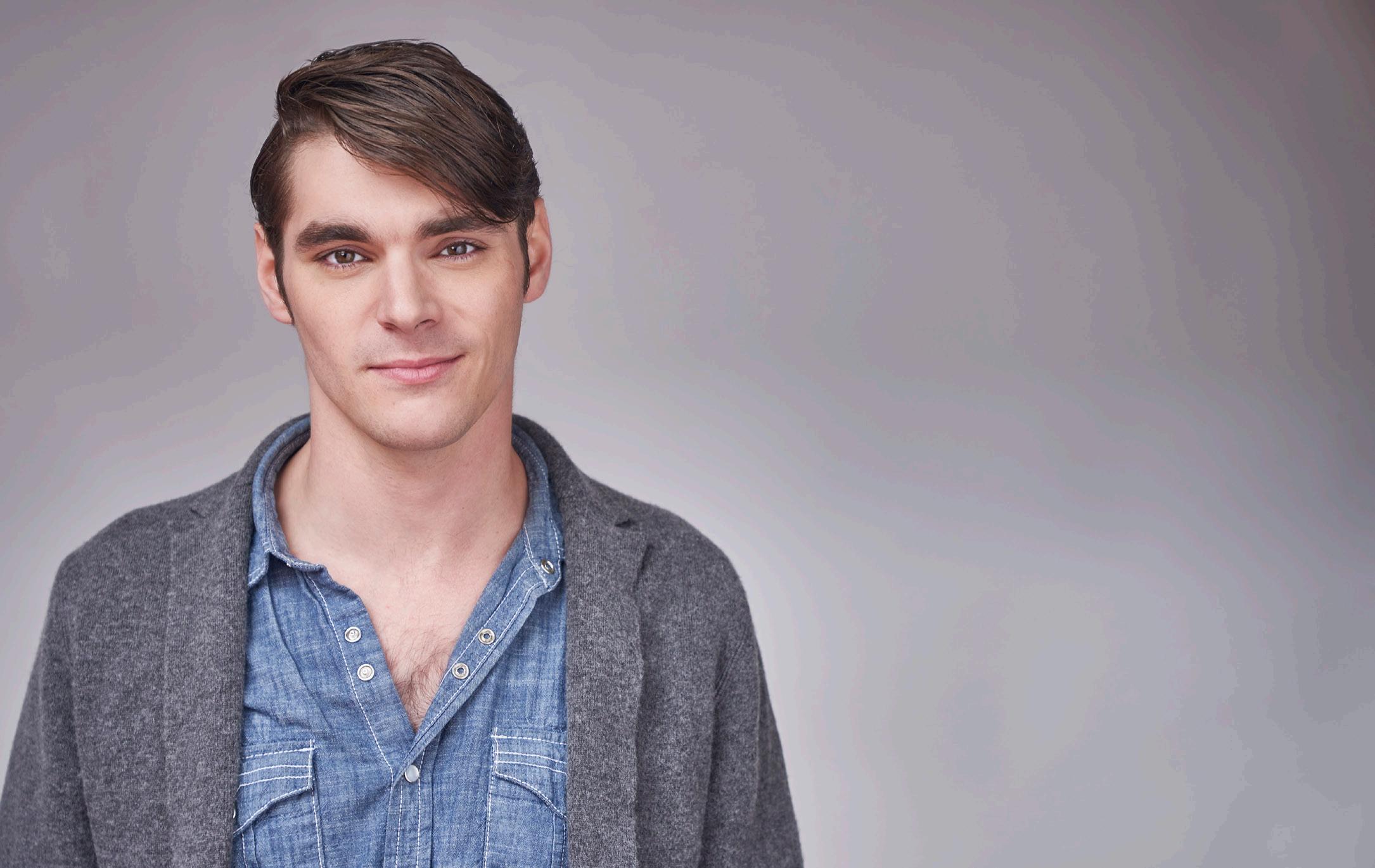
Breaking Barriers: RJ Mitte on Strength, Advocacy, and Representation
Actor RJ Mitte shares how living with cerebral palsy shaped his resilience, fueled his creativity, and continues inspiring his mission for authentic disability representation.
How has living with cerebral palsy (CP) influenced the roles you’ve taken on?
I’ve spent my life learning how to adapt and turn challenges into strengths. Acting became an extension of that. Storytelling allows me to show the world that disability isn’t a limitation; it’s a perspective. Every role I take on is an opportunity to expand what people think is possible.
Living with CP gives me a deep understanding of how my body works, how it moves, and how it adapts. I try to bring that authenticity into every character. I also look for filmmakers who want to represent people with disabilities living full, rewarding, fulfilling lives, not defined by their diagnosis but shaped by their humanity.
How do you manage your CP on a day-to-day basis while
balancing a demanding career?
Anyone with a demanding schedule knows you have to make time for yourself. For me, managing CP has been a lifelong process supported by years of physical, occupational, and speech therapy.
I started therapy at the age of 3 at Shriners Hospitals for Children in Shreveport, La., and the tools they gave me helped me integrate CP management into everyday life. Whether I’m on set, traveling, or working long hours, those foundational practices help me stay grounded and maintain my health.
What adaptive tools or routines have made the biggest difference in your life?
Stretching has been one of the most important tools for me. I also rely on hot showers and
baths to relax my muscles, especially to help manage spasticity. With my travel schedule, I’m not always near a gym, so I’ve learned to build small, sustainable routines that keep my body in balance.
Finding what works for you, and blending those therapies into your daily life, can truly change everything.
What motivates your advocacy for disability rights and inclusion in media?
I’ve seen firsthand how one opportunity can change a life. I’m here today because someone gave me that chance, and I want the next generation of actors with disabilities to have even more.
I believe disability rights and inclusion should matter to everyone because they affect everyone. We all deserve access
to work, dignity, and opportunity, regardless of appearance or ability. I’ve met so many people with disabilities who are incredibly capable and who exceed expectations when someone simply believes in them. That’s what drives me.
What message do you hope young people with disabilities take away from your work?
My hope is to inspire a “never give up” mentality. If there is something you want in life, pursue it no matter how hard it may be. Keep your dreams alive. Don’t lose sight of who you want to become.
Disability is part of my story, but it doesn’t define my story. I want young people, disabled or not, to know their dreams are valid, their voices matter, and there is always a place for them in this world.