

Putting AI to Good Use
APAO 2023 Named Lectures Awardees
 by Hazlin Hassan
The 38th Asia-Pacific Academy of Ophthalmology Congress (APAO 2023) opened with an interesting discussion on harnessing the power of artificial intelligence (AI) to help diagnose retinopathy of prematurity (ROI) in babies in lowerand middle-income countries — overcoming a lack of services and ophthalmologists available.

With the world re-opening after having fought the deadly COVID-19 pandemic, ophthalmologists from around the world packed their bags and gathered at last for the APAO 2023 Congress after a four-year physical hiatus.


The meeting opened yesterday to the beat of majestic Malay kompang drum players,
The engine behind the APAO 2023 Show Daily. We are happy to be here now, reporting live from the show floor to the whole ophthalmic world. Have a great show everyone.
– Team Media MICE2ISSUE
02 | 24 | 23 KUALA LUMPUR CONVENTION CENTRE The Official Congress News of APAO 2023 AI and the Eye What we need to know about artificial intelligence and big data analytics in ophthalmology Turning Down the Dial on IOP The only way to treat glaucoma Trabeculectomy vs. Tube-Shunt How do they compare? Does one have an edge over the other? 08 14 06 HIGHLIGHTS Matt Young CEO & Publisher Hannah Nguyen COO & CFO Gloria D. Gamat Chief Editor Mapet Poso Editor Graphic Designers Maricel Salvador Trung Nguyen Writers Brooke Herron Chow Ee-Tan Hazlin Hassan Khor Hui-Min Matt Herman Sam McCommon Tan Sher Lynn Ruchi Ranga Customer Care International Business Development Brandon Winkeler Robert Anderson Adam Angrisanio Photographer Phua Kin Sheng Media MICE Pte. Ltd. 6001 Beach Road, #09-09 Golden Mile Tower, Singapore 199589 Tel: +65 8186 7677 Email: enquiry@mediamice.com www.mediaMICE.com Published by Cont. on Page 3 >>
discuss utilizing AI in the fight against ROP in respective lectures

as some 4,000 delegates from 78 countries flocked to the Kuala Lumpur Convention Centre, in the heart of Malaysia’s capital.

“This congress will serve to educate our local and foreign ophthalmologists and help raise the level of our service to our patients and greatly improve our research and teaching,” said Congress President, Dr. Kenneth Fong, in his welcome address. “I hope that all our international delegates also find the sessions helpful. And I would like to especially thank international speakers for their generosity in sharing their time and effort with us. I realize how difficult it is to travel now in this day and age.”
There’s no substitute for face-to-face meetings
Despite the proliferation of webinars and online meetings, there is no substitute for a high-quality face-toface medical conference, and the APAO Congress will remain one of the must-attend conferences in everyone’s diaries, Dr. Fong added.
It has been four years since the last physical conference, said APAO President, Prof. Ningli Wang, at the opening. “Each time, Kuala Lumpur manages to amaze us. Over the next
few days, we will have the opportunity to attend informative and inspiring sessions of various topics,” he added.
“We have a long history of collaboration with APAO for many decades,” said American Academy of Ophthalmology (AAO) president, Dr. Daniel Briceland. The AAO is a cosponsor of this year’s APAO Congress, with a number of joint sessions focusing on AI in ophthalmology, research and teaching, pediatric retina, and glaucoma.
“Four years is way too long for us to reconnect and collaborate, as is your theme. So it’s really just fantastic to be back together to reconnect with old friends and meet new friends,” said Dr. Briceland.
“It has been four years since our last physical congress in Bangkok, Thailand. It is absolutely wonderful this morning that you’re all very real. You’re no longer small rectangular boxes on my computer monitor,” APAO Secretary-General Prof. Clement
Tham said in his speech, adding that delegates are also invited to next year’s congress in Bali, Indonesia.
“The COVID-19 pandemic hit us hard. Lockdowns, travel restrictions, closure of eye care facilities, financial impact, manpower relocation, and fear brought a huge impact on eye care and eye surgery services in the region,” said deputy director general of Malaysia’s Ministry of Health Dato’ Dr. Asmayani Khalib, who was the Guest of Honor at the opening ceremony. The role of AI in
ROP
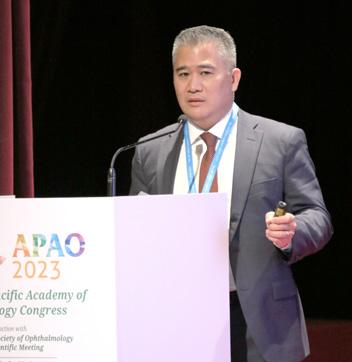
Earlier, delegates were treated to two lectures — the Nakajima Award Lecture: Tele-Ophthalmology and Artificial Intelligence in Developing Countries by Dr. Sanyam Bajimaya, and the Holmes Lecture: The Third Epidemic of ROP by Dr. Muhammad Moin.
ROP is a proliferative retinal vascular disease affecting the retina of premature infants and a leading cause of childhood blindness.
Dr. Bajimaya, who is a cataract and vitreoretinal surgeon and president of the Nepal Vitreo-Retina Surgery (NVRS), Kathmandu, Nepal, shared his experiences of implementing teleophthalmology projects in Nepal, namely the On-Dream Blindness Prevention Program and ROP Telemedicine Network.
Cataracts are the main cause of blindness in the world, at 51%. In Nepal, 75% of blindness was due to cataracts. The lack of services and being unable to afford surgery were among several barriers to cataract surgery among patients who are bilaterally blind due to cataracts.
Sight-threatening ROP, a preventable disease, affects 15.6% of premature newborns. “We are having a third epidemic of ROP in our part of the world as well as in middle-income
3 The Official Congress News of APAO 2023
Cont. from
1
Page
>>
“This congress will serve to educate our local and foreign ophthalmologists and help raise the level of our service to our patients and greatly improve our research and teaching.”
Dr. Kenneth FongYesterday’s APAO 2023 Opening Ceremony was graced by the beat of the majestic Malay kompang drum players.
countries. So, a huge number of babies require screening,” said Dr. Bajimaya.
Challenges of ROP screening include an increasing number of surviving premature infants and a limited number of ophthalmologists. This is where the power of AI can be put to good use, where machine learning or deep learning identifies the disease.
“When AI was implemented for ROP diagnoses in the lower- and middleincome countries, the system was found to have performed well on plus disease diagnosis in Nepal and Mongolia despite being trained on data from North America,” said Dr. Bajimaya.
Performance was as high on images from the Forus camera system compared to the Retcam, despite being trained on the Retcam. The vascular severity score correlates well with the overall International Classification of Retinopathy of Prematurity (ICROP) severity and may be a useful epidemiologic and educational tool to compare the assessment of disease severity across populations, and to standardize the assessment of disease severity.
“My conclusion is that utilizing telemedicine for the diagnosis, management, and education is of paramount importance for preventing blindness in the low- and middleincome countries,” shared Dr. Bajimaya.
The system for screening, diagnosis, and treatment can be expanded and eventually scaled up through subcenters at the district level. “Hopefully, telemedicine and AI screening will help a lot of people who are in countries like ours. And this will enable prevention of blindness, and people do not have to go needlessly blind,” he added.
The third epidemic of ROP
Meanwhile, Prof. Dr. Muhammad Moin, head of the ophthalmology department at the Lahore General Hospital, Pakistan, who was awarded the Holmes Lecture Award, talked further about the third epidemic of ROP.
and middle-income countries,
elements of disease classification, the emergence of innovations in ophthalmic imaging, novel pharmacologic therapies such as antiVEGF growth factor agents with unique regression and reactivation features after treatment compared with ablative therapies, as well as recognition that patterns of ROP in some regions of the world do not fit neatly into the current classification system.
was
to have performed
on plus disease diagnosis in Nepal and Mongolia despite being trained on data from North America.”
The Holmes Lecture Award is the highest award for exceptional contributions to preventive ophthalmology, especially in the prevention of blindness in the AsiaPacific region. It is named in memory of William J. Holmes, the founding Secretary-General of APAO.

Dr. Moin said there is a need for a new classification for ROP, due to concerns about subjectivity in critical
Countries where preterm births were most common are India, China, Nigeria, Pakistan, and Indonesia.
“You can see ROP blindness is more prevalent in countries where premature babies are surviving,” he noted. “Neonatal care services have expanded, and premature babies are now surviving. Levels of neonatal care are not always adequate to prevent ROP, particularly in larger, more mature babies.”
Not all babies at risk are being examined by an ophthalmologist and are being treated. Babies are being exposed to risk factors that are, to a large extent, being controlled in industrialized countries.
“The ROP epidemic has catastrophic outcomes. Over the last eight years, we have started the following initiatives: awareness, human resource training, infrastructure development, and telemedicine,” shared Dr. Moin. “We came up with the idea to identify NICUs, make city-wide networks, and have a coordinator and advisors,” he added.
Pilot programs with training workshops were also organized to raise awareness among ophthalmologists, which led to better screening rates.
“The world is bright. Save our babies’ sight,” he said, concluding his lecture.
24 February 2023 | Issue #2 4
“When AI was implemented for ROP diagnoses in the lower-
the system
found
wellDr. Sanyam Bajimaya APAO executives and dignitaries pose for a group photo during the Opening Ceremony.











INNOVATING SINCE www.bauschsurgical.eu @BauschSurgical Bausch + Lomb Surgical
Trabeculectomy vs. Tube-Shunt
How do they compare? Does one have an edge over the other?
by Tan Sher LynnGlaucoma experts from the Asia-Pacific and North America discuss the use of glaucoma drainage devices (GDD) and trabeculectomy during the APAO-AAO Joint Symposium: Glaucoma, on Day 1 of the APAO Congress.

therefore, involves balancing the risk of complications and the benefit of IOP reduction. The choice of surgical option should not just answer the current needs of the patient, but also consider future management should the current surgery fail. In general, trabeculectomy can precede Tubes not vice versa, and MIGS can precede traditional surgeries but not vice versa,” she concluded.
Considering a reasonable treatment algorithm
Meanwhile, in North America, over the past five to 10 years, there’s been a shift away from the traditional trabeculectomy, noted Dr. Andrew Iwach from the US.
Glaucoma is the leading cause of irreversible blindness in the world, and lowering intraocular pressure (IOP) is the only proven way to prevent visual loss.
According to Dr. Ching Lin Ho from Singapore, traditional transscleral incisional surgeries, like trabeculectomy and tube-shunt surgery (Tube), have been widely used for several decades to lower the IOP.
“They remain the most effective IOP-lowering procedures. However, they have been associated with a significant number of complications, some of which are serious and sightthreatening, including a life-long risk of endophthalmitis,” she said.
She noted that trabeculectomy is currently the most performed glaucoma surgery in Asia (which comprises over half of the glaucoma cases in the world), but this may change with the expansion of tubeshunt and the era of minimally invasive glaucoma surgery (MIGS).
Balancing the risk of complications
Results from the Tube Versus Trabeculectomy (TVT) study affirm better Tube success over trabeculectomy in eyes with prior cataract surgery and failed trabeculectomies.
“However, Tube requires more medication, are significantly costlier, and Tube eyes are at risk of longer-term increase in serious tube-specific complications. On the other hand, the Primary Tube Versus Trabeculectomy (PTVT) study showed that trabeculectomy has better efficacy than Tube as primary surgery in previously unoperated eyes. Lower preoperative IOP is a predictor for tube failure, and this group of patients actually benefited more from trabeculectomy,” she continued.
“A trade-off exists between safety and efficacy with all currently available procedures. Selecting the most appropriate glaucoma procedure,
According to him, the use of Ahmed Glaucoma Valve, a type of aqueous shunt, with subsequent diode cyclophotocoagulation (CPC) when needed, appears to be a reasonable treatment algorithm. “About 10 years ago, after shifting to the approach of using the Ahmed Valve supplemented with limited diode CPC, my postoperative life and my patients’ postoperative life became simpler. There were fewer visits required and less complexities,” he said.
“At our center, given a choice, we will start with medication or selective laser trabeculoplasty (SLT). But if that is not adequate and we need to go for incisional surgery, we can do a MIGS,” Dr. Iwach shared. “If we need to do a standalone incisional surgery for glaucoma, we lean towards a GDD and tell the patient we might be doing a little bit of laser later on, which will keep his vision and him happy for the short-term.”
Additionally, Dr. Ahmad Aref, also from the US, noted that both the trabeculectomy and Tube are not exclusionary. “For a patient that is naive to glaucoma interventions, it makes a lot of sense to start with trabeculectomy. Then, as most of the glaucoma procedures wane in terms of efficacy, one may go on for aqueous shunt surgery or even a second aqueous shunt, or perhaps a CPC,” he said.
24 February 2023 | Issue #2 6

AI and the Eye
What we need to know about artificial intelligence and big data analytics in ophthalmology
 by Chow Ee-Tan
The first symposium on “Artificial Intelligence and Big Data Analytics in Ophthalmology for Global Eye Health: Opportunities and Challenges” kicked off with a panel of seven speakers sharing their findings on this timely topic.
Dr. Marcus Ang, head of Cornea and External Eye Diseases Service, Singapore National Eye Center (SNEC); Dr. Michael Chiang, director of National Eyes Institute, United States; R.V. Paul Chan, chair, Department of Ophthalmology and Visual Sciences at University of Illinois College of Medicine; Dr. Linda Lam, professor of ophthalmology from USC Keck School of Medicine, Los Angeles; Dr. Mohamad Aziz Salowi, ophthalmologist at Selayang Hospital, Selangor, Malaysia; Dr. Jude Stern, head of Knowledge Management at International Agency for the Prevention of Blindness (IAPB); and Wei-Chi Wu, professor and chairman of ophthalmology at Chang Gung Memorial Hospital, Taoyuan, Taiwan, discussed the impacts and challenges of artificial intelligence (AI) and big data analytics in ophthalmology.
Challenges in eye care: AI and Big Data to the rescue?
Dr. Jude Stern began by presenting five bullet points on the challenges in global eye care that can be addressed with AI and Big Data:
• inadequate access to eye care services in many parts of the world;
• shortage of trained eye care professionals in certain regions;
• limited availability of accurate and timely patient data for diagnoses and treatment;
• difficulty in identifying and prioritizing patients for treatment due to a large patient population and limited resources;
• and the need for continuous monitoring and follow-up care for patients with chronic eye conditions.
“There are many opportunities to increase access to eye health services using AI and Big Data,” she said. “AIpowered screening tools can aid early detection of eye diseases, allowing for timely interventions to prevent vision impairment. Big data analytics can enable healthcare providers to identify eye health trends, the development of targeted interventions, and resource location.
Teleophthalmology, enabled by AI, can extend eye health services to remote areas. Not to mention, AI algorithms can assist in personalized treatment plans by analyzing patient data leading to reduced healthcare costs, thus enabling providers to see more patients and overall enhance the efficiency of eye health services.
“We need to make sure that all populations benefit from these developments, and that’s a huge opportunity for anyone in technology or if we have an opportunity in the global
health agenda. This means that they need services [to be] accessible, affordable, and inclusive,” she added.
The role of AR and VR in ophthalmology
Prof. Dr. Linda Lam said that augmented reality (AR) and virtual reality (VR) in eye care can create immersive and interactive experiences in multiple arenas in ophthalmology, including those affecting patient care, surgery, education, and research.
Opportunities for patient care with this technology include visual rehabilitation, patient education, treatment option for immersive simulations, and improved access and in-home disease monitoring.
“With refinements and innovation, wearables in VR and AR for vision rehabilitation now allows for high magnification, text-to-speech or optical character recognition, facial recognition, code readers, and assistive technologies from live people,” she said.
VR and AR, she added, also offer the opportunity in research, by enabling data visualization and clinical trials. Patient conditions can be monitored remotely, reducing the burden of eye care visits when data collection can be done in the comfort of the patient’s home.
Improving access to eye care with AI and telemedicine
In his presentation entitled, The Opportunities of AI ROP (Retinopathy of Prematurity) Screening in Global Eye Settings, Dr. R. V. Paul Chan highlighted some of the research findings on AI’s usage for the prevention and screening of ROP in countries such as India, Mongolia, and Nepal.
He said that on the health equity and disparities in ROP care, there is a need for systematic evaluation to remove the barrier to care.
24 February 2023 | Issue #2 8
“Telemedicine and AI can be part of the solution in ophthalmology and technological innovation for improving access to health care in different patient populations,” he shared. “Prevention of ROP is the ultimate goal, thus there should be advocacy and strong partnerships to train the workforce.”
Dr. Marcus Ang, on the other hand, shared some of the AI opportunities beyond the pandemic, and how SNEC is implementing some of these technologies and the challenges associated with them. At the same time, the institute is looking at the accuracy of assessing refractive error and visual acuity in children based on their telemedicine and home monitoring program.
He shared a ‘virtual clinic’ model for myopia, which features three stages: primary eye care, specialist review, and clinical management. This includes myopia evaluation on early identification of complications,
potential biomarkers for progression, and monitoring treatment.
“Myopia screening now includes new models for detection and triage whereby telemedicine, virtual clinic, and AI work together,” he said.
The need for data sharing and harmonization
While there are now new opportunities, such as imaging plus digital infrastructure, OCT, Widefield imaging, and biomechanics, among others, there are also challenges, including implementation, infrastructure, and integration.
Dr. Michael Chiang said, as we have unprecedented access to large-scale data in many fields, data sharing and establishing standard data representations are important to avoid biases.

He reckoned that some key unanswered research questions in
AI include a variety of findings in individual patients, generalizability and bias, and unclear “ground truth.”
“Another problem is one can’t easily exchange data among imaging systems as there are enormous barriers to clinical care and research involving images,” he shared. “Therefore, we need data sharing and harmonization. We also need a common data model for ophthalmology.”
APAO SYMPOSIUM

CATARACT & RETINA: 3 MAJOR ADVANCES IN LASER THERAPY

Moderator: Prof. Mario DE LA TORRE
FRIDAY 24TH FEBRUARY 2023
13h00 to 14h00 - Room #302-303
VISIT THE LUMIBIRD MEDICAL® BOOTH #6015 AT APAO CONGRESS
Moderator: Prof. Mario DE LA TORRE - Peru
Premium Refractive Outcome Capsulotomy (PROcapTM)
Dr. Paul SINGH - USA

Chronic Central Serous Chorioretinopathy
Dr. Alejandro FILLOY - Spain


Revisiting Laser Treatment for Intermediate AMD
Dr. Lihteh WU - Costa Rica
9 The Official Congress News of APAO 2023
Dr. R.V. Paul Chan
Spotlight on Albinism
Catch the latest in diagnosis and treatment of genetic eye disease in children
 by Brooke Herron
Genetic eye disease in children can often be a precursor to vision loss — even with prompt diagnosis and management. On Day 2 of APAO 2023, get the lowdown on children’s hereditary eye diseases and the latest in diagnosis and treatment.
For the latest strategies to manage one of these sightstealing conditions, we spoke with Prof. Alina V. Dumitrescu, MD, clinical associate professor of pediatric ophthalmology and strabismus, inherited eye disease; clinical associate professor of pediatrics; and Chakraborty Family Professor in pediatric genetic retinal diseases at the University of Iowa Hospitals and Clinic.
Below is an interview-preview of her talk “Overview of Diagnosis and Management of Oculocutaneous Albinism.”
What is albinism?
Prof. Dumitrescu: Albinism
is more than a single disease — it covers a spectrum of inherited hypopigmentation disorders characterized by the reduction or total absence of pigment from the eyes, hair, and skin. There are at least 34 different genes and eight different conditions covered under this spectrum.
What is your diagnostic approach?
Prof. Dumitrescu: The first step is the clinical exam. When possible, OCT of the macula (for foveal hypoplasia) and VEP (for abnormal decussation) are very helpful. There is no conclusive genotype-phenotype correlation, and although the diagnosis can be made clinically in many patients, a
complete diagnosis should include genetic testing to determine the specific pathogenic variants and the gene involved. That will help determine the prognostic, identify potentially syndromic forms of albinism, and provide the family with information about the disease and family planning.
What treatment options are available?
Prof. Dumitrescu: Currently, there is no specific treatment for patients with albinism or hypopigmentation spectrum disorder. All patients with albinism need the appropriate correction of refractive errors (with glasses or contact lenses), and all children should receive treatment for amblyopia and strabismus (when present) to maximize visual potential. Low vision evaluation and aids are recommended for individuals with reduced visual acuity. Surgical correction of the head posture may be indicated for patients with nystagmus
24 February 2023 | Issue #2 10
and compensatory head posture. Sunglasses and other protective gear are recommended to improve photophobia. Standard care treatment for cataracts and glaucoma is recommended when indicated.
Specific therapies that aim to address the decreased dopamine levels in albinism are under development. Animal research suggested that supplementation with a precursor to dopamine, levodopa, may improve visual acuity in albinism by enhancing neural networks. A double-masked, randomized controlled trial of oral levodopa with carbidopa in patients with OCA (oculocutaneous albinism) failed to improve visual acuity significantly after 20 weeks. Oral nitisinone, an inhibitor of tyrosine degradation by competitively binding to 4-hydroxyphenylpyruvate dioxygenase, was trialed in a small study on adults with OCA 1 with statistically, but not clinically, significant improvement in visual acuity.

What is coming next (in research or treatment) for this condition?
Prof. Dumitrescu: The focus of research on albinism aims to improve diagnosis, understand mechanisms, and develop treatments for this group of diseases. Current genetic testing is unable to determine the underlying molecular cause of albinism/hypopigmentation spectrum
disorder in 25% to 30% of patients. Additional genes likely have to be found, and the current testing has to be expanded to include rare conditions presenting with hypopigmentation. Whole genome sequencing and whole exome sequencing are becoming more affordable and easier to use.
Gene therapy using adeno-associated viruses can be used to deliver specific treatment for patients with albinism. Reports of gene therapy treatment for animal models of OA1 and OCA1 demonstrated improvement in melanosome density in the RPE and an increase in pigmentation of the retina, as well as improvement in electroretinogram recordings after subretinal injections. Clustered regularly interspaced short palindromic repeats (CRISPR) and CRISPR-associated nuclease protein (CRISPR/Cas9) systems are efficient genetic editing tools. The use of this technology to edit the TYR gene on animal models has been reported and increased melanin production.
The next step toward treatment is to better understand the structural basis of the reduced acuity in albinism and the relation between the genetics of foveal development and pigmentary changes. Using multimodal in vivo imaging (adaptive optics, coherence tomography, electroretinography, functional MRI) in the assessment of patients with albinism will help answer some of these questions.
Sneak Peek: CRB1associated LCA
by Dr. Xiaoyan Ding, Zhongshan Ophthalmic CenterThe diagnosis of CRB1-associated LCA is confirmed with the detection of CRB1 pathogenic variants, said Dr. Xiaoyan Ding. “The CRB1-associated LCA should be suspected with any one of the following characters: 1) early onset maculopathy, 2) loss of retinal lamination with increased retinal thickness, 3) nummular retinal pigmentation, 4) preservation of the para-arteriolar retinal pigment epithelium, 5) Coatslike vasculopathy and retinal telangiectasia with exudation, and 6) the presence of macular cysts.
Dr. Ding added that, recently, several cases reported the alleviation of inflammation or retinal leakage in patients with CRB1-associated retinopathy by the treatment of TNF-alpha inhibitors. “However, more studies are warranted for the analysis of visual benefit and the long-term effect of this treatment,” she said.
Advances and Future Directions in Diagnosis and Management of Genetic Eye Disease in Children
Date: 24 Feb 2023
Time: 9.00 to 10.30 H
Venue: Meeting Rooms 304-305 (Level 3), KLCC
11 The Official Congress News of APAO 2023
Young and Promising
The anticipated YO Symposium presents a slew of exciting topics
by Tan Sher LynnFrom biosimilars to corneal astigmatism and more, learn what the young ophthalmologists are up to at the Young Ophthalmologists (YO) Symposium, happening today!
As always, one of the most anticipated sessions at APAO is the YO Symposium, and this year is no different. Here are some of the exciting topics you can expect from the sessions.
Razumab — Does it live up to the hype?

The high price of biologic medicines is an obstacle to access to adequate treatment for many patients, especially those with a lower income. Biosimilar products offer therapeutic alternatives to patented biologic drugs without the hefty price tag. But can they live up to the hype?
Catch Dr. Anuja Patil’s talk entitled, “Our Experience With Biosimilar Razumab®: Clinical Efficacy and Safety of Razumab (CESAR) study. The CESAR Study aims to evaluate the efficacy and safety of Razumab (by Intas Pharmaceuticals Ltd.), which is the biosimilar to Ranibizumab (by Genentech/Roche) for the treatment of chorioretinal vascular diseases, such as diabetic macular edema, choroidal neovascular membrane, and macular edema secondary to retinal vein occlusion.1
Retinal hemorrhage and refractive errors: What’s the missing link?
Refractive errors such as myopia, hyperopia, and astigmatism can be particularly harmful to children since vision is developed in the first years of life. Meanwhile, birth-related retinal hemorrhages are found to be common in healthy newborns (prevalent in roughly 23% of infants), according to a Korean study.2
How do these two conditions correlate with one another? Does having retinal hemorrhage subject one to refractive errors?
Dr. Xin Ying Lim examines the relationship between children’s refractive condition and retinal hemorrhage during birth in her talk, “Refractive Status in Children With History of Birth-Related Retinal Hemorrhage.”
Understanding corneal astigmatism
Having non-toric intraocular lenses (IOLs) implanted during phacoemulsification eliminates astigmatism attributable to the lens, but it has no effect on corneal astigmatism.3 Preexisting corneal astigmatism can be corrected at the time of cataract surgery by making limbal or corneal relaxing incisions, or by the implantation of toric IOLs.4 Therefore, it becomes necessary to know the pattern of corneal astigmatism for population groups in order for surgeons and IOL manufacturers to predict patient requirements.
Dr. Maharani Anggraeni investigated the preexisting corneal astigmatism in adult patients with cataracts in Indonesia and shares his findings in his talk, “Prevalence of Corneal
Astigmatism in Pre-Operative Cataract surgery Patients in Indonesia Hospital.” Join him and gain insights into this population group.
Besides insightful talks, there will also be the YO Award presentation, travel grants presentation, and rising star program acknowledgement, as well as updates on their activities during the YO symposium.
References
1. Verma L, Thulasidas M, Purohit A, Gupta A, Narula R, Talwar D. Clinical efficacy and safety of Razumab® (CESAR) study: Our experience with the world’s first biosimilar Ranibizumab. Indian J Ophthalmol. 2021;69(2):347-351.
2. Cho IH, Kim MS, Heo NH, Kim SY. Birth-related retinal hemorrhages: The Soonchunhyang University Cheonan Hospital universal newborn eye screening (SUCH-NES) study. PLoS One. 2021;16(11):e0259378.
3. Isyaku M, Ali SA, Hassan S. Preoperative corneal astigmatism among adult patients with cataract in Northern Nigeria. Indian J Ophthalmol. 2004;62(11):1094-1095.
4. Grunstein LL, Miller KM. Astigmatism management at the time of cataract surgery. Expert Rev Ophthalmol. 2011;6:297-305.
Young Ophthalmologists (YO) Symposium
Date: February 24
Time: 14:30 to 16.00 H
Venue: Meeting Rooms 406-407 (Level 4), KLCC
24 February 2023 | Issue #2 12
Round up on ROP
Experts share strategies in the management of retinopathy of prematurity in Asia-Pacific
by Chow Ee-TanAn international panel of ophthalmologists shed light and new findings on retinopathy of prematurity (ROP), an eye disease that can cause blindness in premature babies, in a symposium entitled “Challenges and Strategies to Reduce Burden of ROP Blindness – Asia-Pacific Perspective.”
To begin, Dr. Rajvardhan Azad from India presented an update on antivascular endothelial growth factor (anti-VEGF) in ROP and findings on an anti-VEGF study ( RAINBOW Trial). Meanwhile, Dr. Peiquan Zhao from China shared findings on surgical management for advanced ROP.
Dr. Zhao reckoned that for stage 4 ROP, laser is always used first; whereas for stage 5 ROP, the iris puncture technique and dry lensectomy technique can be employed.
On the other hand, Dr. Wei-Chi Wu from Taiwan, in his talk Noncontact Smartphone-based Fundus Imaging Comparing to Conventional Fundus Imaging in ROP concluded that RetCam had better image quality. Smartphone-based fundus photography showed moderate agreement for determining the presence or absence of plus disease.
Some of the speakers presented their studies on ROP cases and screenings, methodologies, and results from their respective countries, namely India, Malaysia, Taiwan, and New Zealand.
Some happy news from Hong Kong
Dr. Connie Lai presented the screening audits of 10-year demographic data at
Queen Mary Hospital in Hong Kong, whereby ROP development rate and severity had decreased from 31% to 21% for stage 1 ROP, and from 9% to 4% for stage 3 and above
“We had about 505 cases. The mean gestational age is about 29 weeks, and the main body weight is about 1.2 kilograms. We are happy to know that 77% of our babies did not develop ROP, and the treatment rate was only about 2.9%,” shared Dr. Lai, adding that some cases of infants from Macau were transferred to Hong Kong.
She said during COVID when Hong Kong was closed off to the world, some urgent ROP cases were transferred to Zhuhai, China.
ROP cases in New Zealand
Dr. Cheefoong Chong focused on the national database of New Zealand childhood visual impairment that was published in 2012. The database showed that 4.5% of premature infants born in New Zealand had ROP, and 0.7% to 1.44% of premature infants born in New Zealand require treatment for ROP.
“ROP is the second most potentially preventable cause of vision loss in New Zealand children,” he said, adding that 0.8% of New Zealand live births are <30 weeks GA (gestational age) or <1250g)

of these children, up to 1.44% of them, will require treatment for ROP.
International comparison of ROP grading
Dr. Michael Chiang from the US shared the study
“International Classification of ROP, 3rd Edition (ICROP3): Key findings and Implications,” which he undertook with 34 other contributors.
“Standard disease classification is essential for advancing clinical care and research. The study is an international comparison of ROP grading performance within the benefits of Oxygen Saturation Targeting II trials,” he said.
He then highlighted some key changes in ICROP3 and the future implications and clinical significance of the following:
• Posterior zone II (intermediate category of 2 disc diameter beyond zone 1) and Notch (incursion of 1-2 clock hours into a more posterior zone)
• Stage 5 disease that has been divided into 5A, 5B, and 5C, and their surgical approaches to longterm prognosis
• Vascular spectrum (normal to plus) with the implication of AI, quantitative methods, and clinical significance
• Aggressive ROP, which replaces APROP, and the clinical significance of flat neovascularization
• ROP regression and how to manage persistent vascular retina (PAR)
• ROP reactivation and how to manage and treat it
“Our goal is to improve quality and standardization of ROP care worldwide, and provide a foundation for improving clinical care and research in the future,” Dr. Chiang concluded.
13 The Official Congress News of APAO 2023
Turning Down the Dial on IOP

The only way to treat glaucoma
There’s a lot to look forward to at APAO Congress every year, and the trend continues this year. We’re eagerly anticipating hearing from Dr. Jason Cheng, for example, a Sydney-based glaucoma specialist. Dr. Cheng will lead us through the interim 12-month data from a registry study, assessing the effectiveness of canaloplasty in the treatment of primary angle closure glaucoma (PACG).
The results are pretty exciting and point to positive developments in minimally invasive glaucoma surgery (MIGS) for PACG. Traditionally, MIGS have been restricted to open-angle glaucoma, but the registry data to be presented by Dr. Cheng indicates that MIGS may indeed play an important role in treating PACG.
Before we dive into the data, let’s make
sure we’re all on the same page in definitions and understanding. Not everyone is a glaucoma specialist, and that’s OK.
What are PACG and canaloplasty?
PACG is the second most common form of glaucoma, after primary open-angle glaucoma (POAG). As you might guess from the name, PACG involves angle closure, meaning the eye’s drainage angle is pinched and aqueous outflow is reduced. This is what leads to elevated intraocular pressure (IOP), the main problem in glaucoma. There can be multiple causes for PACG, including pressure differences in different parts of the eye and anatomical anomalies (which would make a good band name).
Currently, some 25 million people
by Sam McCommonworldwide are estimated to suffer PACG, which is often undiagnosed. The problem is growing, and some 34 million are expected to suffer PACG by 2040. People of East and South Asian ethnicity, especially women, are more prone to the condition than other groups.
Reducing IOP is the only proven way to treat glaucoma, and there are many ways to do so. Canaloplasty is a procedure that seeks to improve outflow facility via the conventional outflow pathway, i.e. the Schlemm’s canal (SC), collector channels (CC) and trabecular meshwork (TM). A surgeon uses a microcatheter to first mechanically remove blockages in the SC, before delivering OVD via process of pressurized viscodilation to dilate the SC and stretch the TM. The goal here is to minimize complications and help the eye do its thing as naturally as possible.
24 February 2023 | Issue #2 14
Ab-interno canaloplasty using iTrack
Now that we’ve had the appetizer, let’s get to the main course. Here we’ll be digesting Dr. Cheng’s data evaluating the efficacy and safety of ab-interno canaloplasty (ABiC) using the iTrack™ or iTrack™ Advance from Nova Eye (Fremont, California, USA). Pass the gravy, because we’re getting saucy.
This particular study was a multi-center case series of 41 eyes with PACG that underwent ABiC using the iTrack / iTrack™ Advance. As Dr. Cheng noted, “The microcatheter was advanced 360 degrees through a limbal or clear corneal incision, into the Schlemm’s canal, then pulled back slowly with the pressurized injection of OVD.”
Of the 41 eyes treated, five were treated with iTrack™ Advance and 36 with iTrack™. The patients were evenly split between male and female, with an age range from 44-86, averaging out at 70.5. Eighty nine percent (89%) of eyes achieved a minimum of 270 degrees of microcatheterization and viscodilation, with 360 degrees considered optimal. Three types of OVD were used: Healon GV, Healon, and Healon Pro, with rates between 38-60 micropulses delivered.
One interesting part of this study is that not all patients had ABiC with phacoemulsification (36/41 eyes) as five underwent ABiC alone (5/41 eyes).
So what happens when you combine phaco with ABiC, and how does ABiC stand up on its own? Let’s dig into the data at 12 months post-op, which was pulled from the iTrack™ Global Data Registry, hosted by the International Glaucoma Surgery Registry.
Promising results for canaloplasty
There was a significant reduction in mean IOP and the mean number of glaucoma medications. Specifically, mean IOP dropped from 21.3 mmHg to 15 mmHg, a 29.4% reduction. Crucially, 78% of the patients enjoyed a postoperative IOP of >15 mmHg. IOP dropped significantly at month one, to a mean of 14.2 mmHg, and stabilized at 15 mmHg at 12 months.
How about medications? Before treatment, patients were on a mean of 1.9 medications. Medication use steadily dropped after the procedure, falling to a mean of 1.3 at month one and down to 0.6 by month 12. Simply put, on average, many patients stopped needing their glaucoma medications within a year after ABiC.
But was it the phaco or the ABiC that did the heavy lifting? What about the difference between the patients who had both procedures versus the ones that only had ABiC?
This part is pretty neat. As Dr. Cheng concluded, “ABiC, with or without phacoemulsification, performed in PACG eyes is a safe procedure and resulted in a significant reduction in IOP and medications, with most eyes becoming medication-free at 12 months.”
So it seems that it is not just the phaco component that produces the IOP lowering. Eyes treated with ABiC alone did just as well. Another example to reinforce that point is that none — that’s right, none — of the patients required further glaucoma surgery. And while five of the patients developed microhyphema, all cases resolved spontaneously, with no other complications reported.
Making room for MIGS
What does this study tell us overall? It’s pretty convincing: MIGS procedures can indeed play a role in treating PACG — and more specifically, ABiC appears well suited to the task. Dr. Cheng’s conclusion is that ABiC is an effective treatment with a strong safety profile for PACG. The tools and treatments used in MIGS have come a long way, and perhaps they ought not to be relegated simply to the realm of POAG.

That IOP remained steadily lower at 12 months and most patients could drop their meds is excellent news. Their glaucoma was actually treated rather than simply managed with drops. Furthermore, the procedure helps reduce the risk of unwanted effects from more invasive techniques. And it’s all possible because of some
pretty cool innovations from Nova Eye and forward-thinking doctors like Dr. Cheng.
Things are looking up for MIGS and for glaucoma patients worldwide. Although the condition is on the rise worldwide, the ophthalmic community is staying on their toes to get ahead of the curve. Here’s to keeping that aqueous flowing and keeping eyes healthy. We can’t wait to see what’s next.
Nova Eye’s iTrack™ has been around for more than a decade. It’s been used to treat more than 100,000 glaucoma patients to great success. It’s now evolved further into iTrack™ Advance, which builds on the iTrack™ platform. So what can you look forward to? The iTrack™ Advance keeps the effectiveness, accuracy, and reliability of the original iTrack™ and adds an ergonomic, easy-touse handheld injector – making surgeons’ jobs easier makes patients’ lives better.
Contributing Doctor
Based in Sydney, Australia, Dr Jason Cheng is a glaucoma and cataract specialist with more than 15 years of experience. He performs complex glaucoma surgery and advanced refractive cataract surgery. Dr. Cheng consults privately at various locations in Sydney and has public appoinments as a consultant at Sydney Eye Hospital, St George Hospital and Liverpool Hospital. He completed his residency training at Moorfield’s Eye Hospital, London, fellowship at the University of Toronto, Canada, and worked in Singapore as a consultant for three years before moving to Australia in 2016. Dr. Cheng speaks fluent Cantonese and basic Mandarin.
chengophthalmology@gmail.com
15 The Official Congress News of APAO 2023
Eye Banking in Asia Experiences and challenges in the post-pandemic era
 by Khor Hui Min
Eye banks provide essential corneal tissue for transplantation. Unfortunately, they were greatly impacted during the pandemic. In the “Cornea, External Eye Diseases and Eye Banking Symposium,” speakers discussed the challenges of eye banking in Asia in the post-pandemic era and ways to overcome the shortage of donor tissue.
“The COVID-19 pandemic has impacted eye banking and cornea transplantation in the Asia-Pacific, especially with the temporary cessation of eye banking services and limiting services to emergencies only. This has led to an overall reduction in the number of cornea transplants,” said Assoc. Prof. Marcus Ang from Singapore in his presentation entitled, Impact of COVID-19 on Cornea Transplantation in the Asia Pacific — An Eye Bank Survey. He collated data from eight out of 12 eye banks in the region, in the first-of-its-kind survey in the Asia-Pacific.
Meanwhile, Dr. Ma. Dominga “Minguita” B. Padilla from the Philippines spoke on Reviving Eye Banking in the Philippines while Emerging from the Pandemic. According to Dr. Padilla, peculiar to the Philippines, 86% to 93% of cornea donors from 1995 to 2021 were medicolegal (coroner’s cases), 80% were 40 years old or younger, and the cause of death for 85% of them was trauma. However, that came to a sudden halt when the government of the Philippines enforced one of the longest pandemic lockdowns in the world.
“Currently, one of the strategies employed in the Philippines is to revive the Funeral Home Retrieval Program, renewing mechanisms of action (MOAs) with hospital partners, and entering into MOAs with new hospitals and local health units (LGUs),” she added.
Eye banks help cure blindness by providing quality donor eye tissue for sight-saving cornea transplant procedures, medical education, and ophthalmic research. Nearly 185,000 corneal transplants are performed each year in over 115 different countries. And of the corneal grafts used worldwide, 87% are procured from donors within the same country, while 27 countries (1.2% of corneal transplants) rely
solely on imported corneas to supply their need for corneal allografts. 1
Post-pandemic recovery
As the world emerges from the effects of the pandemic, eye banks are still recovering from the impacts of lockdowns and the inability to harvest eyes from donors, among other challenges.
Meanwhile, according to Prof. Namrata Sharma from India, in her presentation, Eye Banking in the Post-Pandemic Era — Lessons Learnt, the COVID-19 pandemic has presented many challenges for eye banking, including decreased supply of donated eyes, increased risk of infection, reduced capacity for processing, limited access to hospitals, and reduced funding.
“By enhancing infection control measures, adopting technology, and increasing collaboration and donor education, eye banks can continue to provide safe and effective services to those in need. Important lessons learned will help the sector adapt and
24 February 2023 | Issue #2 16
evolve in the post-pandemic era,” said Prof. Sharma.
Addressing the shortage of donor corneas
At present, the global need for corneal donor tissue significantly exceeds the available supply.
“With an estimated 12.7 million people waiting for a corneal transplantation, only one in 70 of the needs are met worldwide,” said Prof. Sharma. She further added that 55% of all corneas for transplantation were procured in the US and India.
“Penetrating keratoplasty (PK) remains the most common type of transplant performed outside of the US despite the decrease in the proportion of PK procedures and increase in endothelial keratoplasty (EK) volume. However, indication data for corneal transplantation internationally is
missing in over 60% of cases,” said Dr. Fasika Woreta from the United States.
So, what can be done to address the needs of those waiting for corneal transplants due to the low supply of donors? Dr. Season Yeung from Australia discussed Dual-Purpose Donor Cornea for Separate Anterior and Endothelial Keratoplasty.
“Splitting a donor cornea for a combination of anterior lamella keratoplasty (ALK) and EK seems to be a possible solution to the shortage of donor tissue. Microkeratomes have allowed the preparation of a corneal anterior lamella suitable for ALK and a posterior lamella suitable
References

for Descemet’s stripping automated endothelial keratoplasty (DSAEK),” explained Dr. Yeung.
In his presentation, Multiple Use of Corneal-Scleral Tissues — Issues and Dilemmas, Prof. Dr. Mohtar Ibrahim from Malaysia also shared his experiences on the multiple uses of corneal-scleral tissue due to the limited availability of the said tissue for transplantation.
In the coming years, efforts towards improvement in eye banking will ensure higher standards of both the quality and quantity of corneal tissue for rehabilitation of corneal blind patients.2
1. Aggarwal H, Gupta N, Garg P, Sharma M, Mittal S, Kant R. Hospital Cornea Retrieval Programme in a startup eye bank - A retrospective analysis and lessons learned. Indian J Ophthalmol. 2021;69(6):1517-1521.
17 The Official Congress News of APAO 2023
2. Vanathi M, Tandon R, Panda A, Vengayil S, Kai S. (2007). Challenges of eye banking in a developing world. Expert Rev Ophthalmol. https://doi.org/10.1586/17469899.2.6.923
Revolutionizing Eye Treatment
new techniques such as intraoperative optical coherence tomography (i-OCT) and robotic injections may increase the accuracy of the injection in the future.
Various gene delivery methods
From gene therapy to 3D visualization system, experts share the latest advances in surgical retina
by Tan Sher LynnExperts shared their experiences and tips for the delivery of revolutionary treatments during the “Latest Advances in Surgical Retina Symposium” on the opening day of the APAO Congress.
Meanwhile, Dr. Joo Yong Lee from South Korea discussed the various gene delivery methods to the target tissue in the eye, which include intravitreal, subretinal, and suprachoroid injections.
According to him, intravitreal injection is minimally invasive, the simplest to perform, and can be done in the office. “Intravitreal injection is advantageous when inner retinal layers and wide areas of the retina are to be treated. However, the use of AAV vectors is limited in penetration across the internal limiting membrane (ILM) and retinal neuronal layers,” he said.
To improve the yield of delivery, Dr. Lee suggested the optimization of viral capsid designs, which allows for better trans-ILM penetration, greater specificity for target cells, increased tropism for photoreceptors, and increased resistance to neutralizing antibodies. He also suggested other methods, like surgical ILM peeling and proteasomal digestion of ILM.
Gene therapy is a promising and emerging treatment for inherited retinal diseases (IRDs). “Recently, real-world data further supported the efficacy of gene therapy in IRD,” said Dr. TaChing Chen from Taipei, Taiwan, noting that most gene therapies are adeno-associated virus (AAV)-based, and subretinal injection is the key procedure.
He proceeded to share tips on performing a successful subretinal injection.
It’s all about the pressure
“Pre-injection, usage of pre-surgery systemic corticosteroid regime is recommended. With vitrectomy, complete posterior hyaloid detachment and lowering of intraocular pressure (IOP) are important. If the pressure is too high, a bleb will not
form smoothly,” shared Dr. Chen. “Choosing the ideal injection site with surface inspection is also important. Do not inject too close to the fovea. Keep at least 2 mm distal to the center of the fovea, and remove the epiretinal membrane around the injection site,” he said.
“During injection, the cannula will be bent and damaged if it’s not introduced straight through the trocar. Pushing too little during injection may result in retinoschisis or injection into the vitreous cavity. However, if we push too hard, the cannula may penetrate the retina,” Dr. Chen continued.
“After the fluid injection, it is recommended to wait five seconds before retracting the cannula from the retinotomy to prevent the reflux of the drug. One should also keep the cannula stable to prevent enlargement of retinotomy,” he said, adding that
Moving on to subretinal delivery via pars plana vitrectomy, he said that it is currently the most commonly utilized route of administration.
“Subretinal injection is generally the preferred approach when the outer retinal layers are targeted, especially when the treatment area is limited and localized,” Dr. Lee shared.

“Meanwhile, nonsurgical, in-office suprachoroidal gene delivery may offer the potential for more excellent surface-area coverage of the posterior segment compared to focal subretinal injection. Future research is warranted to improve the safety and reproducibility of such gene delivery methods,” he continued.
Getting a better view
“All the surgeries that we do will not be possible without a good view,” said Dr.
24 February 2023 | Issue #2 18
Mae-lynn Catherine Bastion, as she shared her experience on the latest techniques available to improve a surgeon’s view during surgery.
First is her experience with the NGENUITY® 3D Visualization System, in which 3D glasses offer significantly better overall satisfaction for visualization compared to conventional microscope oculars for both surgeons and trainees, as it allows for better
communication and workflow, promoting an improved learning environment.
Trainees, in particular, have a better experience with this system compared to traditional viewing in terms of illumination, maneuverability, and physical factors (less glare, eye strain, and neck and back pain), said Dr. Bastion.
Meanwhile, i-OCT offered viewing of the posterior hyaloid, membranes, and retinal layers that facilitate macula surgery. “However, improvements in cost and image quality, especially in terms of artifact reduction (e.g., shadowing from instruments) are needed,” she noted.
Lastly, Dr. Bastion shared a “no view” complex case of a patient with a history of penetrating keratoplasty who developed an infection that resulted in corneal opacification, hence obstructing the view into the eye.
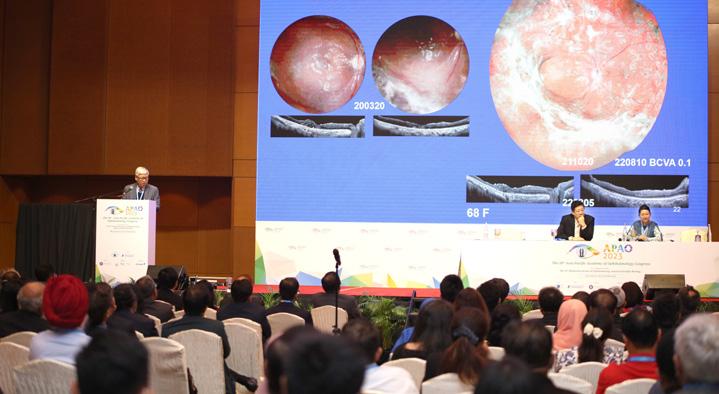
The use of tKPro allowed improved visualization of the inner structure of the eye, so that she and her team can proceed with vitrectomy, removal of inflammatory membranes, and treating the retinal detachment.
“While endoscopy has a role in patients with hazy cornea, when not available, tKPro is an alternative for the vitreoretinal surgeon’s view,” concluded Dr. Bastion.

19 The Official Congress News of APAO 2023


24 February 2023 | Issue #2 20 DIGITAL MARKETING + ADVERTISING + VIDEO PRODUCTION + MEDICAL WRITING + EVENTS Request our 2023 Media Kit Now! Write enquiry@mediamice.com for a copy HQ Office: 6001 Beach Road, #09-09 Golden Mile Tower, Singapore 199589 Phone: +65 8186 7677 Satellite Office: 2 Nuoc Man 2 Street, Da Nang City, Vietnam 50506 Phone: +84 868 063 773 E-mail: enquiry@mediamice.com Web: www.mediamice.com